从此走进深度人生 Deep net, deep life.

作者: deepoo

  • 费曼:科学的价值

     理查德·菲利普斯·费曼(Richard Phillips Feynman,1918-1988),物理学家。本文是费曼在美国科学院的演讲,李沉简译。

       当我年轻的时候,我认为科学会有利于每个人。科学显然很有用,也是很有益的。在第二次世界大战中,我参与了原子弹的制造工作。科学的发展导致了原子弹的产生,这显然是一个具有极其严肃意味的事件:它代表着对人类的毁灭。
       战后,我对原子弹忧心忡忡,既不知未来会怎样,也更不敢肯定人类一定会延存。自然地,一个问题会这样被提出:科学是不是包含着邪恶的成分?
       这个问题也可以这样来问:当我们看到科学也可以带来灾难时,那么我如此热爱,并且毕生孜孜为之的科学事业的价值究竟何在?这是我无法回避的问题。
       这篇“科学的价值”,你们可以把它看成是我在探索这个问题时的所思所悟。
       ——理查德·费曼  

       时常,人们对我提出,科学家应该多多关心社会问题,特别是要考虑科学对于社会的影响。人们似乎相当普遍地认为,只要科学家们对于错综复杂的社会问题加以关注,而不是成天钻在枝尾末节的科学研究之中,那么巨大的成功就会自然到来。
       我以为,我们科学家是很关注这些社会问题的,只不过我们不是把它们当作自己的全职而已。其原因是,对于这些比科学研究复杂千百倍的社会问题,我们也是百思不得其解,绝无灵丹妙药。
       我认为当科学家思考非科学问题时,他和所有的人一样无知;当他要对非科学问题发表见解时,他和所有的门外汉一样幼稚。今天我的讲演“科学的价值”所针对的并不是一个科学课题,而是价值评判;这样看来,我下面将要讲的大概也是粗浅不堪的了。  


       科学的价值的第一点是众所周知的。科学知识使人们能制造许多产品、做许多事业。当然,当人们运用科学做了善事的时候,功劳不仅归于科学本身,而且也归于指导着我们的道德选择。科学知识给予人们能力去行善,也可以作恶,它本身可并没有附带着使用说明。这种能力显然是有价值的,尽管好坏决定于如何使用它。
       在一次去夏威夷的路途中,我学会了一种方法来表达上述问题——一个佛堂的主持向游客们谈及佛学,最后他说他的临别赠言将使游客们永不忘却(我是真的从未忘却)。这赠言是佛经中的一句箴语:“每个人都掌握着一把开启天堂之门的钥匙,这把钥匙也同样能打开地狱之门。”
       如此说来,开启天堂之门的钥匙又有什么价值呢?如果我们没有办法分辨一扇门是通向天堂还是地狱,那么手中的钥匙可是个危险的玩艺儿。
       可是这钥匙又确实有它的价值——没有它,我们无法开启天堂之门;没有它,我们即使明辨了天堂与地狱,也还是束手无策。这样推论下来,尽管科学知识可能被误用以导致灾难,它的这种产生巨大影响的能力本身是一种价值。  


       科学的另一个价值是提供智慧与思辨的享受。这种享受一些人可以从阅读、学习、思考中得到,而另一些人则要从真正的深入研究中方能满足。这种智慧思辨享受的重要性往往被人们忽视,特别是那些喋喋不休地教导我们科学家要承担社会责任的先生们。
       我当然不是说个人在智慧思辨中的享受是科学的全部价值所在。不过,如果我们社会进步的最终目标正是为了让各种人能享受他想做的事,那么科学家们思辨求知的享受也就和其他事具有同等的重要性了。
       另外一个不容低估的科学的价值是它改变了人们对世界的概念。由于科学的发展,我们今天可以想象无穷奇妙的东西,比诗人和梦想者的想象丰富离奇千万倍。自然的想象和多姿比人类要高明得多。比如吧,诗人想象巨大的海龟驮着大象到海里旅行;而科学给了我们一幅图画——天宇中一个巨大的球在旋转;在它的表面,人们被神奇的引力吸住,并附着它在旋转。
       我常常想这些奇妙的东西,这些从前人们根本不可想象,而如今科学知识使我们可以想象的东西。
       曾经,我站在海边的沙滩上,陷入了这样的深思:  

       潮起潮落
       无法计数的分子各自孤独地运行
       相距遥远却又息息相关
       泛起和谐的白浪
       旷代久远  

       在尚无生物的上古
       眼睛还未出现
       年复一年
       惊涛拍岸如今
       为了谁,为了什么?
       在一个死寂的星球
       没有为之欣悦的生命  

       永无休止
       骄阳弥散着能量
       射向无垠的宇宙
       掀动着大海的波浪
       大洋深处
       分子重复不变
       忽然,萌生新的组合
       它们会复制自身
       由此演出了全新的一幕  

       愈变愈大
       愈变愈复杂
       生物,DNA,蛋白质
       它们的舞蹈愈加神奇  

       跃出海洋
       走向陆地
       站立着
       具有认知力的原子
       具有好奇心的物质  

       凭海向洋
       一个好奇者在好奇
       我——
       一个原子的宇宙
       一个宇宙中的原子  

       这样的激动、惊叹和神秘,在我们研究问题时一次又一次地出现。知识的进步总是带来更深、更美妙的神秘,吸引着我们去更深一层地探索。有时探索的结果令人失望,可这又有什么关系?我们总是兴致勃勃而自信地深钻下去,发现无法想象的奇妙和随之而来的更深更美妙的神秘。这难道不是最激动人心的探索么!
       诚然,没有过科学研究经历的人大概不会有这种近似宗教的感受。诗人不会写它,艺术家也无法描述这种奇妙的感受。我很是不解——难道他们都不为我们所发现的宇宙所激动吗?歌唱家现在还不会歌唱科学带来的神奇美妙,科学对于人们来说还是在讲课中接受的,而不是在诗与歌之中。这说明我们还没有进入一个科学的时代。
       这种沉默无歌的原因之一,大概是人们必须懂得如何读这种音乐的乐谱才能歌唱。比如,一篇科学论文说,“鼠的脑中放射标记的磷在两周中减了一半。”这是什么意思呢?
       它的意思是鼠脑中(你、我的脑子也没什么差别)的磷有一半已经不是两周前的原子了,它们已被替换了。那么我要问:“究竟什么是载有意识的分子呢?子虚乌有么?这些全新的分子能承载一年前在我脑中的记忆,可当时发生记忆的分子却早已被置换了!这个发现就像是说我这个体仅仅是一个舞蹈的编排。分子们进入我的大脑,跳了一场舞就离开了;新的分子又进来,还是跳和昨天一模一样的舞蹈——它们能记住!”
       有时我们会从报纸上念到这样的话:“科学家认为这项发现对于治疗肿瘤是十分重要的……”。看,这报道只注重那项发现有什么可利用之处,而完全丢开了它本身的意义。而实际上它是多么奇妙啊!偶尔,小孩子反倒会意识到那些意义;此时,一个科学家的苗子出现了。如果当他们上大学时我们才教他们这些,那就太晚了。我们必须从孩童教起。


       现在,我来谈谈科学的第三个价值——它稍稍有些间接,不过并不牵强。科学家们成天经历的就是无知、疑惑、不确定,这种经历是极其重要的。当科学家不知道答案时,他是无知的;当他心中大概有了猜测时,他是不确定的;即便他满有把握时,他也会永远留下质疑的余地。承认自己的无知,留下质疑的余地,这两者对于任何发展都必不可少。科学知识本身是一个具有不同层次可信度的集合体:有的根本不确定,有的比较确定,但没有什么是完全确定的。
       科学家们对上述情形习以为常,他们自然地由于不确定而质疑,而且承认自己无知。但是我认为大多数人并不明白这一点。在历史上科学与专制权威进行了反复的斗争才渐渐赢得了我们质疑的自由。那是一场多么艰辛、旷日持久的战斗啊!它终于使我们可以提问、可以质疑、可以不确定。我们绝不应该忘记历史,以致丢失千辛万苦争来的自由。这,是我们科学家对社会的责任。
       人类的潜能之大、成就之小,令人想起来未免神伤,总觉得人类可以更好。先人在恶魇中梦想未来;我们(正是他们的未来)则看到他们的梦想有些已经成真,大多却仍然是梦想,一如往日。
       有人说教育的不普及是人类不能前行的原因。可是难道教育普及了,所有的人就都能成为伏尔泰吗?坏的和好的是同样可以被传授的;教育同样拥有趋善或趋恶的巨大能力。
       另一个梦想是国与国之间的充分交流一定会增加互相理解。可是交流的工具是可以被操纵的。如此说来所交流的既可以是真实,也可以是谎言。交流也具有趋善和趋恶双重可能。
       应用科学可以解决人们的物资需求,医药可以控制疾病——看上去总算尽善尽美了吧?可偏偏有不少人在专心致志地制造可怖的毒物、细菌,为化学生物战争做准备。
       几乎谁都不喜欢战争,和平是人类的梦想——人们尽可能地发挥潜能。可没准儿未来的人们发现和平也可好可坏。没准儿和平时代的人因没有挑战而厌倦不堪,于是终日痛饮不止,而醉熏熏的人并不能发挥潜能、成就大业。
       和平显然是一个很大的力量,如同严谨、物资发展、交流,教育、诚实和先人的梦想。与先人相比,我们确实进步了,有更多的能力了。可与我们能够成就的相比,所达到的就相形见绌。
       原因何在?为什么我们就无法战胜自己?
       因为我们发现,巨大的潜能和力量并没有带着如何使用它们的说明书。譬如,对物质世界认识愈多,人们就愈觉得世界真是毫无目的意义可言。科学并无法指导行善或行恶。  


       有史以来,人们一直都在探究生命的意义。他们想:如果有某种意义和方向来指导,人的伟大潜能定会充分发挥。于是有了许多种对生命意义的阐述和教义。这些各自不同的教义有着自己的信徒,而某一种教义的信徒总是怀着恐惧的心情看待其余教义的信徒。这种恐惧来自于信念的互不相容,致使原本良好的出发点都汇入了一条死胡同。事实上,正是从这些历史上错误信仰所制造的巨大谬误中,哲学思考者们慢慢发现了人类美妙无限的能力。人们梦想能发现一条通途。
       那么,这些又有什么意义呢?我们如何来解开存在之谜呢?
       如果把所有的加以考量——不仅是先人所知,而且他们不知而我们今天所知的——那么我认为我们必须坦率地承认,我们还是知之甚微。
       不过,正当我们如此承认的时候,我们便开始找到了通途。
       这并非一个新观念,它是理性时代的观念,也正是它指导着先贤们缔造了我们今日享用的民主制度。正因为相信没有一个人绝对懂得如何管理政府,我们才有这样一个制度来保证新的想法可以产生发展、被尝试运用、并在必要的时候被抛弃;更新的想法又可以如此地轮回运行。这是—种尝试——纠偏的系统方法。这种系统方法的建立,正是因为在18世纪末,科学已经成功地证明了它的可行性。在那时,关注社会的人们已经意识到:对各种可能性持开明态度便带来机会;质疑和讨论是探索未知的关键,如果我们想解决以前未能解决的问题,那我们就必须这样地把通向未知的门开启。
       人类还处在初始阶段,因此我们遇上各种问题是毫不奇怪的。好在未来还有千千万万年。我们的责任是学所能学、为所可为、探索更好的办法,并传给下一代。我们的责任是给未来的人们一双没有束缚自由的双手。在人类鲁莽冲动的青年期,人们常会制造巨大的错误而导致长久的停滞。倘若我们自以为对众多的问题都已有了明白的答案,年轻而无知的我们一定会犯这样的错误。如果我们压制批评,不许讨论,大声宣称“看哪,同胞们,这便是正确的答案,人类得救啦!”我们必然会把人类限制在权威的桎梏和现有想象力之中。这种错误在历史上屡见不鲜。
       作为科学家,我们知道伟大的进展都源于承认无知,源于思想的自由。那么这是我们的责任——宣扬思想自由的价值,教育人们不要惧怕质疑而应该欢迎它、讨论它,而且毫不妥协地坚持拥有这种自由——这是我们对未来千秋万代所负有的责任。


  • 张维迎:非理性的四个陷阱

      经济学告诉我们,理性人不会做“杀敌一千,自损八百”的事。用博弈论的术语,这是“不可置信的威胁”(incredible threat)。诺贝尔经济学奖得主泽尔腾(R. Selten)认为,理性人不会实施“不可置信的威胁”。他把排除掉不可置信威胁的纳什均衡定义为“精炼纳什均衡”(perfect Nash equilibrium),从此,“精炼纳什均衡”就成为经济学家预测理性人行为的基本概念。

      但经济学家的预测与现实中人们的决策有很大距离。现实中,不仅“杀敌一千,自损八百”的事比比皆是,甚至“杀敌八百,自损一千”的事也时有发生。

      作为经济学者,我当然承认理性的力量;我甚至认为,理性是人类的希望。但我也越来越认识到,理性的力量是有限的。比如,理性可以解释某种产品的价格如何随供求条件的变化而变化,但无法解释股票市场的崩溃;理性可以解释交战双方(或多方)为什么会达成停战协议,但无法解释战争为什么发生;理性可以解释希特勒为什么会失败,但无法解释希特勒当初为什么能上台;等等。

      理性的力量之所以有限,是因为真实世界中,人的行为不仅受理性的影响,也有“非理性”的一面。这里的“非理性”,是相对于经济学定义的“工具理性”而言,也就是决策不是基于边际成本和边际收益的计算。当然,如果我们愿意改变经济学关于理性的定义,有些看上去“非理性”的行为可能是理性的,但那样的话,经济学的“理性人模型”就得重新构造。

      结合哈耶克的知识论和心理学家的研究成果,我将这些“非理性”因素概括为四个陷阱:自负陷阱,自尊陷阱,信仰陷阱,群思陷阱。这四个陷阱之所以值得重视,是因为它们不仅影响着个体的生存,更影响着人类的历史进程。无论是过去还是可以预料到的将来,它们不会被理性彻底战胜,也不会因为大数定律被过滤掉。

      自负陷阱

      决策需要信息,但大部分决策需要的信息是不完备的,存在着缺失。特别是,越是重大的、一次性的决策,信息缺失越严重。并且,信息是分散的、主观的、个体化的。这就是哈耶克讲的“无知”(ignorance)。在无知的情况下,决策依赖于个体的想象力和判断;即使两个人有完全相同的信息,由于想象力和判断力不同,他们也会做出完全不同的决策。因此,达到纳什均衡(Nash equilibrium)是很难的。这里,纳什均衡指不同决策是相互兼容的:所有人的预期能同时实现。

      无知使得决策变得非常不容易,而更大的麻烦是,许多人不仅不知道自己的无知,甚至认为自己无所不知,结果就出现了哈耶克讲的“致命的自负”(fatal conceit)。致命的自负常常导致灾难性的决策,我用希特勒上台和第二次世界大战的爆发说明这一点。

      二十世纪三十年代初,德国还是一个非常注重家庭背景和学历的国家。希特勒出身于下层,一个体制外的无业游民,没有受过良好教育,举止粗鲁,毫无政府工作的经验,无论从哪方面看,都不像当总理的料。

      希特勒一九三三年元月能被兴登堡总统任命为总理,很大程度上拜德国精英们的“致命的自负”所赐。正是德国精英们普遍认为希特勒“成不了气候”,最终让希特勒成了“气候”。保守派把希特勒扶上总理之位是为了让他出丑,没想到是引狼入室。

      当时的德国,政府由国家元首任命,无须征求国会多数派意见。兴登堡总统及其幕僚以为,给希特勒个总理头衔,相当于把这个“麻烦制造者”关进笼子里了,用不了多久,他就会出局。内阁里,除希特勒本人外,纳粹党只有威廉·弗兰克一人入阁,执掌内政部,帕彭及其保守同僚属于多数派。帕彭任副总理,周围尽是他的朋友,兴登堡总统对他又是言听计从,所以他认为自己绝对能降伏希特勒。他对个别心存疑虑的同僚说:“我们已经把他收归我们所用了。”“不出两个月,我们就会把他逼到墙角,让他只会尖叫。”与军方关系密切的前总理施莱谢尔自信地说:“如果希特勒打算在德国建立独裁体制,军方将是独裁体制内部的独裁集团。”

      但他们的预期都落空了。希特勒上任不久,就利用“国会纵火案”迫使总统签署了紧急状态法,取缔德国共产党,停止实施《魏玛宪法》中的言论、出版、集会和结社自由。紧接着,希特勒又通过《总统授权法》,获得不经国会同意并且不征求总统意见的情况下的任意立法权,解散了除纳粹党之外的其他政党,取缔了工会。到一九三三年六月,希特勒已经建立起了事实上的独裁统治,年迈多病的总统兴登堡变成了个摆设。一九三四年兴登堡去世后,希特勒把总理和总统的职能合二为一,担任“国家元首”,成为名副其实的独裁者,权力不受任何限制,为所欲为一路狂飙,直到柏林陷落前几天自杀为止。

      许多德国人对自己当初的所作所为深感懊悔,其中最早懊悔的或许是德国共产党。一九三二年十一月选举成立的议会中,社会民主党和共产党是第二和第三大党(分别占121席和100席),合计席位大于纳粹党(196席)。社会民主党和共产党同属于“马克思主义政党”。如果共产党当初不是错误地将社会民主党当作“头号敌人”,而是与其合作,共同对付纳粹党,那么,希特勒不可能有上台的机会,共产党也不会变成一个“非法组织”。

      如果说希特勒上台是因为德国精英们“致命的自负”,第二次世界大战的爆发则是希特勒自己的自负所致。希特勒没有想打一次世界大战,他甚至没有想打一次欧洲战争,他设想的最大规模的战争是国与国之间的局部战争。即使在入侵波兰后,英国和法国发出最后通牒,希特勒仍然不认为这两个国家真的会向德国宣战。经验告诉希特勒,英国人和法国人都是没种的胆小鬼,根本没有胆量向德国宣战。但这一次,他错了。纳粹德国一九三九年九月一日入侵波兰,英国和法国九月三日向德国宣战!第二次世界大战由此爆发。

      希特勒一九四一年六月二十二日对苏联发动闪电战,斯大林毫无准备,惊慌失措,损失惨重,也是“致命的自负”所致。斯大林知道纳粹德国与苏联必有一战,但他认为苏联至少还有一年时间备战。他的推理是:希特勒是个聪明人,不会在两条战线同时作战,在与英国签订停战协定前就对苏联开战,是非理性的。因此,斯大林把来自丘吉尔的警告当作“离间计”,置之不理,对自己情报人员的警告也不屑一顾。可惜,他的判断完全错了。

      希特勒确实希望与英国签订停战协议,但屡屡被丘吉尔拒绝。希特勒认为,自己已经赢了战争(这当然是他的错觉),丘吉尔之所以拒绝签订协议,是因为背后有苏联的支持。只要打垮了苏联,英国就会乖乖签订停战协议。所以必须先对苏联开战。显然,斯大林的预期和希特勒的预期是不兼容的,结果对双方都是一场灾难。

      自尊陷阱

      每个人都有自尊心。常言说的“无功不受禄”,就是自尊心的表现。在生存竞争中,没有自尊心的人,难以生存并繁殖后代。自尊心使得一个人自强、自立、自律,受人尊重,因而获得更多与他人合作的机会。从这个意义上说,自尊心是一种演化理性(不同于工具理性)。

      但自尊也带来一些负面影响。表现之一是,自尊心使得人们常常拒绝接受批评,尤其是公开的指责和来自地位比自己低的人的批评。自尊心越强的人,越容易被批评冒犯。他们习惯于把他人的批评看作对自己人格的不敬、能力的贬低、身份的羞辱和威信的损害。为了维护自己的“尊严”,他们常常会对批评者发起“复仇”行动。在做出反击的时候,他们很少进行理性计算。出于自尊,他们宁可“鸡蛋碰石头”“胳膊拧大腿”。中世纪欧洲贵族间盛行的“决斗”就是一个典型的例子。

      自尊走到极端就是自恋(narcissism)和偏执(paranoid)。自恋者和偏执狂不仅不接受批评,拒绝认错,而且会用新的、更大的错误掩盖旧的、相对小的错误,以证明他们从来就没有犯过任何错误。结果是,错上加错,欲罢不能,灾难不断,直到没有机会再犯更大的错误为止。

      对芸芸众生而言,自恋和偏执损害的只是自己的财富、事业、生活,最多是个人的身家性命,因为他们可用的资源有限。麻烦在于,由于政治游戏更青睐自恋狂,位高权重的人往往有远高于常人的自恋倾向和偏执倾向。他们呼风唤雨,支配大量社会资源,甚至拥有生杀大权。他们的自恋和偏执,他们的错上加错,常常给社会带来巨大的灾难,甚至生灵涂炭。

      希特勒就是一个典型的自恋狂,甚至可以说是人类有史以来最大的自恋狂。他从来容不得别人的批评,包括他最信任的左膀右臂的批评。在入侵波兰之前三天,他的副手赫尔曼·戈林仍然在寻求避免跟英国人的冲突,建议他没有必要“赌上一切”。希特勒回答说:“在我的整个生命中,我总是把所有筹码放在桌上。”入侵波兰挑起世界大战,出乎希特勒的预料,被证明是一个错误,但他没有设法改正这个错误,而是走向一个更大的错误——侵略法国。占领法国后,希特勒觉得自己已经赢得了战争,想诱使英国签订停战协议。丘吉尔不买账,希特勒又发起“不列颠之战”。不列颠之战未能让英国屈服,他又走向一个最大的错误——发起闪电战,计划用三个月时间攻下苏联。他认为,只要拿下苏联,英国人就会乖乖投降,美国就没有可能参战,他之前的所有决策就都将被证明是正确的!

      可惜,他没能如愿,斯大林格勒战役成为他的“滑铁卢”。

      斯大林格勒战役被认为是“二战”最关键也最惨烈的战役,双方死伤人数超过一百六十万。希特勒命令德军不惜一切代价占领斯大林格勒,与其说是为了达到军事目的,不如说是为了希特勒本人的心理满足,因为,这毕竟是一座以“斯大林”命名的城市。对斯大林来说,保卫斯大林格勒,也关乎自己的尊严和荣耀,所以他命令红军“绝不后退一步”,违者杀无赦。在德军第六集团被苏联红军包围后,希特勒仍然固执己见地命令保卢斯将军坚守阵地,不得突围,结果全军覆没,战争局势彻底逆转。

      信仰陷阱

      信仰可能是宗教的,也可能是世俗的(如意识形态、民族主义)。经济学认为人的行为之受利益支配,因而是理性的。但无论历史上还是现实中,人的行为也受信仰的支配。信仰有一种不受个体控制的魔力,驱使人们做出理性计算难以证成的决策,甚至完全违背自身利益的决策。这种决策可能是善的,也可能是恶的。事实上,人类历史上最大的悲剧都是理想主义者追求信仰的结果,而不是现实主义追求利益所致。确实,有时候理想主义只是利益的伪装,但不可否定,许多干坏事的人是真诚的理想主义者。希特勒就是一个理想主义者。他个人生活很简朴。

      信仰的魔力来自其目标的善。理想主义者总是用目标的善证明手段的正当性,就像说“良药苦口利于病”一样,不论这些手段实际上是多么残忍。波尔布特处决所有戴眼镜的高棉人,理由是:因为眼镜证明他们是知识分子,所以是阶级敌人,该杀!

      民族主义和种族主义也是信仰,经常导致种族冲突、战争,甚至种族灭绝。纳粹在集中营屠杀了六百万犹太人,其手段之残忍,令人毛骨悚然。那些执行屠杀命令的纳粹官兵,作为个体也像普通人一样,有善的一面,但他们为什么会干令人发指的反人类勾当?因为希特勒给他们灌输了一种极端的反犹主义信仰:犹太人是德意志民族所有苦难的根源,他们总是用阴谋诡计颠覆德国,他们污染了雅利安种族的纯洁。在具有这种信仰的人眼里,犹太人不是人,是害人虫,是撒旦,是魔鬼,屠杀他们没有罪恶感。

      希特勒上台后,纳粹党在德国大学里搞了一场“焚书坑儒”运动,运动的主力是学生组成的“希特勒青年团”,他们对纳粹党的意识形态坚信不疑。不仅犹太裔的教授被解职,犹太学者的书籍移出图书馆并销毁,甚至像爱因斯坦、赫兹、哈伯这些犹太裔科学家的名字都不能提。纳粹党提出要建立“雅利安物理学”“德意志数学”“德意志化学”;任何国际期刊的内容包含对第三帝国的批评,德国大学图书馆就取消订购,连英国出版的《自然》杂志也不例外。一九三三年五月十日,全国十九座大学城组织了一场“打倒非日耳曼精神的行动”,学生们按照纳粹意识形态标准,编制了一份“非日耳曼”图书清单,把清单上的书一本一本从各种图书馆搜出来,然后堆在公共广场付之一炬。

      在纳粹德国,“希特勒”本人也成了一种信仰,希特勒就是上帝。许多德国人遇到自己没法判断的事,会满怀信心地说“我相信他”,“他总是对的”。在战争即将结束,俄国人已经到了柏林大门口,纳粹败局已定的时候,一位受伤的二等兵还说:“领袖最近刚宣布,我们必胜。他从来没有骗过我们。我相信希特勒。”

      正因如此,纳粹德国战败并不足以让希特勒走下神坛。真正让希特勒走下神坛的是战后的纽伦堡审判。纽伦堡审判让德国人了解了真相。没有纽伦堡审判,纳粹的历史很可能在德国重演。

      群思陷阱

      第二次世界大战爆发后,美国一直保持中立,直到一九四一年十二月七日日本偷袭珍珠港后才参战。即便在当时,任何头脑清醒的人都明白,美国参战,日本必败。所以,“珍珠港事件”令丘吉尔和蒋介石都欣喜若狂。

      难道日本政府的决策者就看不明白这一点吗?他们当然看得明白。在战后的东京审判上谈到对美国开战决策时,铃木贞一(战时任企划院总裁)回忆说:“海军打心底认为与美国开战必败无疑,只是不愿意公开表态。陆军未必真想打仗,但又激烈反对从中国撤军。外务大臣坚定地认为,不答应从中国撤军,与美国交涉断无希望成功。因此,首相若想避免战争,仅存的办法要么是让海军大臣正式公开其真实想法,要么是让陆军理解海军未公开的意图,并同意撤军。我看得出首相很为难,因为从他个人来讲,他觉得自己无力说服海军或陆军。”(伊恩·布鲁玛:《创造日本:1953—1964》第五章)

      这样,一群聪明人做出了一个愚蠢的决定,让日本走上一条自取灭亡的不归路。这就是“群思陷阱”导致的结果。

      “群思陷阱”(groupthink)指的是群体中出现的这样一种现象:群体成员追求“和谐一致”的愿望导致了一个非理性的决策。这里的关键是,和谐的愿望!这种愿望产生了不惜一切代价达成一致的倾向,每个人以团体的立场为自己的立场,不同意见被隐藏起来,或者被置之不理,因而群体表现出高度一致。为了和谐一致,人们甚至忘了群体本来的目标。

      在群体中,个体之所以不愿意表达自己的真实想法,压制自己的良心和理智,首先是因为他渴望被群体成员接受,不想成为另类,不想成为团结的破坏者;其次是因为他没有把握自己的判断一定是正确的,不愿在同事面前暴露自己的“无知”和“固执”;第三是因为没有人愿意承担责任,既然决策是大家的意见,即使错了,自己也不需要对此负责。

      耶鲁大学心理学家埃文·詹尼斯最早对群思陷阱做了系统研究。他认为,具有如下特征的组织最容易陷入群思陷阱:(一)高度追求和谐团结和团队精神;(二)不重视个体的表达自由,不鼓励创新;(三)领导人行事专断,自以为是;(四)群体成员由提拔任命,背景和信仰过于同质化;(五)成员之间信息交流不畅,个体处于孤立状态;(六)决策缺少程序规范;(七)面临强大的外部压力,特别是外部威胁,决策要解决的问题既复杂又紧急;(八)近期决策失误多,降低了个人的自尊(Irving L. Janis, Groupthink: Psychological Studies of Policy Decisions and Fiascoes. Boston: Houghton Mifflin, 1982)。

      前面讲了日本偷袭珍珠港的决策,事实上,在其原著中,詹尼斯把“珍珠港事件”中,美国的措手不及作为群思陷阱的典型案例。驻夏威夷的美国海军将领有一种共同的错觉:日本人不会进攻夏威夷。所以即使来自华盛顿的警告也没有引起他们的重视。一场战役,日美双方都陷入了群思陷阱,日本人的群思陷阱把日本送上自取灭亡的不归路,美国人的群思陷阱让美国太平洋(2.620, 0.05, 1.95%)舰队损失惨重。

      以上我们分别分析了四个非理性决策陷阱。需要指出的是,这四个陷阱不仅是相互关联的,甚至经常是共同发挥作用。如何减少非理性决策导致的灾难?最有效的办法是权力和资源的分散化,以野心对抗野心,以权利约束权力。在竞争性市场中,每个人都可能犯错误,但每个人的资源都是有限的,没有人有机会持续地犯灾难性错误。像埃隆·马斯克这样野心勃勃的人,作为企业家,只有消费者和投资者愿意为他的决策买单,他的商业帝国才能生存和发展;即使他因为决策失误而破产,社会也不会损失太大。但如果他是一个国家的统治者,权力得不到有效制约,就非常可能给人类带来重大的灾难。

    本文来源:《读书》。

  • 恒瑞医药时任董事长周云曙内幕交易案行政处罚决定书

    中国证券监督管理委员会黑龙江监管局行政处罚决定书〔2022〕3号

      当事人:周云曙,男,1971年10月10日出生,江苏恒瑞医药(34.010, -0.12, -0.35%)股份有限公司(以下简称“恒瑞医药”)时任董事长、总经理、董事。住址:上海市浦东新区。

      依据《中华人民共和国证券法》(以下简称《证券法》)的有关规定,我局对周云曙内幕交易“司太立(18.060, -0.24, -1.31%)”股票行为进行了立案调查、审理,并依法向当事人告知了作出行政处罚的事实、理由、依据及当事人依法享有的权利。应当事人周云曙的要求,我局于2022年7月27日举行了听证会,听取了周云曙代理人的陈述和申辩。本案现已调查、审理终结。

      经查明,周云曙存在以下违法事实:

      一、内幕信息的形成及公开过程

      2020年2月,浙江司太立制药股份有限公司(以下简称“司太立”)总裁胡某与恒瑞医药副总经理沈某平联系,提及司太立的碘海醇注射液和碘帕醇注射液近期将获得药监局批号,司太立没有销售团队,沈某平表示可以通过恒瑞医药帮助司太立销售国内试剂。沈某平向周云曙汇报由恒瑞医药独家代理司太立即将获批的碘海醇注射液和碘帕醇注射液,周云曙授权沈某平持续跟进。

      2020年4月17日,恒瑞医药和司太立共同针对合作产品成本的计算方法等事项召开视频会议,司太立的总工程师吴某韦、财务总监丁某、销售总监王某华、销售副总经理蒋某华赴上海浦东新区海科路1288号恒瑞大楼参加会议,恒瑞医药参会人员为副总经理沈某平、副总经理杜某新、姚某煌。

      2020年4月21日,恒瑞医药沈某平和司太立总裁胡某电话沟通了双方合作协议。

      2020年4月22日,司太立总裁胡某通过微信将合作协议发至沈某平,当日,两人通过微信多次沟通合作协议的修改事宜。

      2020年4月26日至4月28日期间,沈某平、戴某斌、蒋某梅、孙某平、刘某含通过电子邮件讨论恒瑞医药与司太立的合作协议细节。

      2020年4月27日,沈某平与周云曙电话沟通合同条款,周云曙认为合同问题不大,尽快往前推进。

      2020年4月29日,沈某平发送邮件至恒瑞医药戴某斌、蒋某梅、孙某平、刘某含,邮件中提及周云曙认为合作协议没有原则性问题,恒瑞医药已经与司太立的合作协议达成一致意见,并拟与司太立签约。胡某通过微信将加盖司太立公章的合作协议照片发给沈某平,沈某平通过微信回复了邮寄地址。

      2020年5月6日,沈某平通过微信将加盖恒瑞医药公章的合作协议照片发给胡某,并发微信“我们法务会和您律师协商公告”。

      2020年5月11日,司太立及全资子公司上海司太立制药有限公司(以下简称“上海司太立”)与恒瑞医药签署《江苏恒瑞医药股份有限公司与浙江司太立制药股份有限公司、上海司太立制药有限公司之合作协议》(以下简称《合作协议》)。

      2020年5月13日,司太立披露了《浙江司太立制药股份有限公司关于与江苏恒瑞医药股份有限公司签署药品合作协议的公告》;恒瑞医药披露了《江苏恒瑞医药股份有限公司关于签署药品合作协议的公告》。

      综上,司太立及上海司太立于2020年5月11日与恒瑞医药签署《合作协议》属于《证券法》第五十二条规定的内幕信息。该内幕信息的形成不晚于2020年4月21日,公开于2020年5月13日。内幕信息知情人为周云曙、沈某平、戴某斌、蒋某梅、孙某平、刘某含、胡某等人。

      二、周云曙控制使用“刘某”账户内幕交易“司太立”

      (一)周云曙为内幕信息知情人

      周云曙系恒瑞医药时任董事长、总经理、董事,任职期间授权沈某平跟进与司太立合作事宜,周云曙不晚于2020年4月27日知悉该内幕信息,属于《证券法》第五十一条规定的内幕信息知情人。

      (二)周云曙控制使用“刘某”账户情况

      “刘某”账户于2003年10月28日开立于中信建投(24.310, -0.54, -2.17%)连云港(4.200, -0.08, -1.87%)龙河南路证券营业部(原华夏证券有限公司),资金账户50XXXX68,下挂沪市股东普通账户号A44XXXX270和深市股东普通账户号010XXXX886。“刘某”中信建投证券账户对应的三方存管同名银行账户为交通银行(4.640, -0.01, -0.22%)连云港浦东支行6222XXXXXXXXXXX0148。刘某为恒瑞医药财务部保险理财分部员工,与周云曙是同学关系,刘某入职恒瑞医药由周云曙办理,两人私人关系密切。

      自2014年1月24日起,“刘某”账户交易的下单手机号除2015年3月4日为158XXXXX800外,其余均为周云曙手机号码180XXXXX777。自2015年1月1日起,除几笔交易对手方名称为“空”的资金往来外,“刘某”三方存管银行账户的资金往来主要是周云曙、赵某人夫妻及“刘某”证券账户。

      (三)周云曙控制使用“刘某”账户内幕交易“司太立”情况

      “刘某”账户在2020年4月29日买入“司太立”,成交22300股,交易金额1,457,560元。4月30日,买入成交4000股,交易金额250,391元。5月6日,买入成交3000股,交易金额189,481元。5月8日,买入成交9000股,交易金额600,450元。5月11日,买入成交7200股,交易金额458,770元。2020年5月13日,45500股全部卖出,交易金额3,429,397元。2020年4月29日至5月11日,“刘某”账户全部为单一买入45500股“司太立”,合计成功买入金额2,956,652元。2020年5月13日,“刘某”账户将持有的45500股“司太立”全部卖出,成交金额3,429,397元,获利450,029.73元。

      “刘某”账户内幕信息敏感期间交易“司太立”的资金全部来自周云曙、赵某人夫妻,2020年4月29日至2020年5月8日,共转账存入“刘某”三方存管同名银行账户325万元,全部转入“刘某”证券账户。2020年5月18日,“刘某”证券账户银证转账转出370万元,2020年5月18日至21日期间,“刘某”三方存管银行账户划转至周云曙、赵某人夫妻合计250万元,剩余资金存储在“刘某”三方存管银行账户。

      (四)账户交易特征分析

      内幕信息敏感期内,周云曙向“刘某”账户突击转入资金,买入“司太立”一只股票,在内幕信息公开后将“司太立”全部卖出,决策果断,买入意图明显,买入卖出意愿坚决,账户持股单一。“刘某”账户交易“司太立”均为手机委托,委托买入的号码均为180XXXXX777,系周云曙使用的手机号码。周云曙利用“刘某”账户交易“司太立”的时间与内幕信息形成、变化、公开时点基本一致,交易行为明显异常。

      上述违法事实,有司太立及恒瑞医药相关公告、相关证券和银行账户资料、交易记录、通讯记录、上交所数据信息、询问笔录等证据证明。

      周云曙的上述行为违反了《证券法》第五十条、第五十三条第一款的规定,构成《证券法》第一百九十一条规定的“证券交易内幕信息的知情人或者非法获取内幕信息的人,违反本法第五十三条的规定从事内幕交易”的行为。

      周云曙代理人在听证和申辩意见中提出如下申辩意见:

      第一,认定周云曙“以他人名义买卖证券”缺乏事实依据。第二,《合作协议》的签署不属于内幕信息。《合作协议》不属于重大合同,《合作协议》不具有非公开性。第三,周云曙不存在内幕交易的主观故意。第四,案涉证券账户交易行为没有造成危害后果。第五,周云曙已对涉嫌内幕交易行为进行深刻检讨,并自愿申请适用行政执法当事人承诺制度。

      经复核,我局认为本案事实清楚、证据充分、法律适用正确,周云曙代理人的申辩意见不能成立:

      第一,内幕信息敏感期内,“刘某”账户交易“司太立”的资金均来源于周云曙、赵某人夫妻;在“司太立”全部卖出之后,“刘某”账户银转证转出370万,通过三方存管银行账户转至周云曙、赵某人夫妻账户累计250万元。“刘某”账户在内幕信息敏感期内交易“司太立”的手机号码均为周云曙的手机号码。周云曙自认其在内幕信息敏感期内通过“刘某”账户购买“司太立”股票。上述事实足以认定周云曙控制使用“刘某”账户内幕交易“司太立”。

      第二,《合作协议》属于《证券法》第八十条第二款第(三)项规定的“重要合同”,司太立及上海司太立与恒瑞医药签署《合作协议》属于《证券法》第五十二条第二款所述的内幕信息。司太立与恒瑞医药就碘海醇注射液与碘帕醇注射液的合作在《合作协议》签署之前并未公开。

      第三,周云曙在敏感期内向“刘某”账户突击转入资金,买入“司太立”一只股票,在内幕信息公开后将“司太立”全部卖出,决策果断,买入意图明显,买入卖出意愿坚决,账户持股单一,足见其从事内幕交易的主观意图。

      第四,《证券法》第五十条明确规定,“禁止证券交易内幕信息的知情人和非法获取内幕信息的人利用内幕信息从事证券交易活动。”周云曙内幕交易“司太立”为法律禁止性行为,应当受到行政处罚。

      根据当事人违法行为的事实、性质、情节与社会危害程度,依据《证券法》第一百九十一条第一款的规定,我局决定:

      没收周云曙违法所得450,029.73元,并处以500,000元罚款。

      上述当事人应自收到本处罚决定书之日起15日内,将罚款汇交中国证券监督管理委员会开户银行:中信银行(4.510, -0.04, -0.88%)北京分行营业部,账号:7111010189800000162,由该行直接上缴国库,并将注有当事人名称的付款凭证复印件送中国证券监督管理委员会行政处罚委员会办公室及我局备案。当事人如果对本处罚决定不服,可在收到本处罚决定书之日起60日内向中国证券监督管理委员会申请行政复议,也可在收到本处罚决定书之日起6个月内直接向有管辖权的人民法院提起行政诉讼。复议和诉讼期间,上述决定不停止执行。

      黑龙江证监局   2022年9月16日    

  • 腐败记事

    王洪文

    先是得到康平路的一套四室公寓,后来又得到一幢三层洋楼,再后来又得到东湖路七号的一个大别墅,里面包含游泳池、网球场,甚至他对这些都不满意,想让上海市革委会把东湖路电影院划拨给他,作为私家影院(徐景贤:我所接触的王洪文)。
    来到北京后,中央为他安排了钓鱼台16号楼,他嫌弃住的地方不够宽敞,让人在郊区建了两个别墅,建筑面积分别达700平米和1700平米。
    王对吃喝也很讲究。1975年他带家人回上海小住,所用食材都要从各地运来最新鲜的,有南通的蛤蜊、宁波的青蟹、苏州的石榴,还从广州空运过来新鲜的菠萝、香蕉等水果。王颇爱西餐,到北京后曾经专门从锦江饭店调去一名厨师做西餐,他最喜欢的有牛尾汤、焗牡蛎等菜。此外,王非常喜欢茅台酒,甚至早餐都喝茅台(徐景贤:我所接触的王洪文)。“四 人帮”失败,查抄王洪文办公室的时候,警卫局工作人员发现里面最显眼是一个大酒柜,柜子里满满的茅台酒和中华烟(陈守信,2009)。
    王把上海轻工业局当做自己的私家供给站,不断地派秘书从那里提取高档手表、家具、家电等东西,仅1975年、1976年两年,他取走的东西共达13多万元。掌权不久后,贫苦出身的王也讲究起来,渐渐看不上国货,上海外贸部门又成为他的供给站,先后派人从那里取走的进口电视、手表、烟酒、日用生活用品达50多万元,就连钓鱼竿和汽车喇叭也都非进口不用(《彻底揭发批判“四人 帮”》3,1977;李海文,2015,第197页)。这些东西按照现在的购买力达数千万元。
    王当上副主席后,通知王秀珍开名单,在中央要害部门安排人,他一口气内定了18个副部级以上干部,都是他上海工人造反派的小兄弟(李海文、王守家,2015,第183页)
    被其提拔的马天水不断让上海市革委会财务部门给予王等生活补助费,甚至还给王秀珍(原中共上海市委书记)等专门拨发“妇女营养费”。“四 人帮”失败后,警卫局查抄王办公室,发现保险柜里有很多信封里装着现金,都是上海一些机关悄悄给他的“生活补贴”,就连王的警卫员也被周到的“照顾”,每月有15元(陈守信,2009)。
    上海造反派领袖徐景贤,喜欢吃进口蔬菜,一次花费9600元;王秀珍为了要几斤特殊毛线,竟开动整个生产线;陈阿大(上海市工交组负责人王的“小兄弟”和“五虎将”之一)占据两套别墅,其中一套是新康花园15号楼(新康花园是上海最著名的高档洋楼之一,张元济、赵丹等文化名人曾经住在这里)。(李海文,2015)。

    姚文元

    到北京后,一家五口住进了一个有60多间房子的四合院,后来嫌弃院子“狭小”,又搬进一个125间房子的大四合院(北京八中隔壁),为了迎接他搬家仅装修就花了13万多。(1978年北京市城镇居民人均可支配年收入365元,当时北京市户均人口4.1人,每户收入1500元左右,这就相当于当时北京市区87户人家一年收入。根据一些经济学研究,那时候人民币1元的购买力,相当于今天的100元左右,这些装修费折合现在人民币1300万左右,放到当下也是令人咋舌。)

    林彪

    其毛家湾大宅面积1.7万平方米,其中林彪私用建筑面积2800平方米,加上“林办”的办公楼,建筑面积达11000多平方米。
    林和叶群1968年至1971年间,先后上百次亲自或派人从文物管理部门取走字画1858件,其中一幅是褚遂良真迹,图书5077册,仅支付766元。此外,林家还从故宫“借”来1000多件上等的玛瑙翡翠、象牙雕塑、瓷器、字画等,密密麻麻堆在卧室里,林彪晚年没事的时候,在家里最大的爱好是摆弄从故宫“借”来的精致的八音盒(武建华,2011)。
    据北京市文物管理部门统计,林集团成员黄永胜拿走文物342件、图书5702册,吴法宪拿走文物151件、图书620册,李作鹏拿走文物579件、图书1494册,邱会作拿走文物188件、图书1161册。黄永胜之妻从原广州市市长朱光那里骗取名人画卷77轴、碑帖8册、线装古书3函另510册,送给叶群。
    画家叶浅予被抄家后,所藏33件名画,林彪获得16件,江青获得古墨、镇尺等3件,陈伯达获得张大干、徐悲鸿画作11件,康生获得潘天寿《野趣图》及名贵印章等共9件,李作鹏、汪东兴各获得1件(何满子,2015)。

    康生

    其竹园四合院,共有115间房子,面积达2万多平方米,这里本来是盛宣怀的府邸,建国之初董必武曾经住在这里,他嫌弃这里太大,短住一段时间就走了,但康生不嫌弃大,一住就是19年。(改革开放后,因为这里设施豪华、环境优美,一度成为接待外宾的场所,匈牙利总理、瑞典副首相等曾经在这里下榻。)
    康喜欢文玩,收罗有图书34000多册、古玩字画印章等5500多件,其中含有大批宋元版和明版的孤本,还有很多周朝的青铜器。康为了达到“合法”占有,对一些重要文物都是以从文管处付款购买的形式获得,宋拓汉石经,仅付10元;黄庭坚的《腊梅三咏》,仅付5元。康曾嫌弃文管处工作人员估价太高,指责他们“没有无产阶级感情”。
    康对当时北京收藏名家的藏品非常在意,常指使造反派以抄家为名获取他们的文物。康曾在邓拓家做客,赏玩过邓拓收藏的善本书和字画,邓拓家被抄后,立即去文物库房“淘宝”。傅惜华是文化界元老,著名藏书家,康多次跑到文管处询问:”傅惜华的书集中起来没有?”康侵占的文物涉及齐燕铭、邓拓、阿英、龙云、章乃器、傅忠谟、赵元方、齐白石、尚小云等96名知名人士以及25个单位。
    1970年5月2日,康率领黄永胜、吴法宪、叶群、李作鹏、邱会作、陈伯达一起拥进文管处库房,挑选各自喜爱的东西,作为专家的康,在一旁做专业指点。
    康之子张子石,从青岛市教育局长蹿升至山东革委会常委,之后又担任浙江省革委会副主任、杭州市委第一书记。

    江青

    据其秘书杨银禄回忆,她吃鸡蛋只吃蛋清,不能有一点儿蛋黄,吃雏鸡要半斤的,鱼要掐头去尾,螃蟹只吃公的不要母的,菠菜要做成菜泥,芹菜要抽掉筋,绿豆芽要掐掉头和尾。江青还很注重保健品,她喜欢服用进口蛋白粉,价格达几十美元。据王稼祥夫人朱仲丽(长期在卫生和保健系统工作)的回忆,江青随便一次索取的滋补品就要价格上万元,都要有关部门从香港采购。
    她对茶饮保健也特别重视,曾心血来潮想在钓鱼台亲自种龙井,于是命令空军派4架大型运输机从浙江的杭州运来上好茶树,冬天为茶树搭上暖房,以防冻死。由于北方的气温低,不适宜茶树的生长,不到一年,那些茶树就枯萎了,她又叫空军用飞机把这些茶树运回杭州(值得一提的是,当时空军几乎成为江的御用“顺丰快递”,1971年2月,她在广州休养,要穿一件小大衣,就让空军专机火速从北京送来;9月初,她住在北京时,想起她在青岛时用过的一个卧榻,又派一架大型运输机把那个卧榻运过来)(杨银禄,2014)。
    她喜欢巴黎的时尚用品,一套假发就价值四千五百法郎(《彻底揭发批判“四人 帮”》3)。
    江特别注意世界名人的穿戴,在电视上看到菲律宾总统马科斯夫人的衣服很漂亮,后来趁马科斯夫人来华访问之机,特意让服装研究部门为她仿制了一件黑色绣花连衣裙和一双云头鞋(杨银禄,2014)。
    江特别注重水质问题,70年代她一度喜欢居住在广州,嫌弃下榻别墅水不好喝,特意命令专门开凿10公里管道,引来山泉水直接供应到她的楼上;她也喜欢白色沙滩,她嫌弃广州的沙子不好,派人专门从海南运来白色的细沙;她嫌弃吉姆车冷风不好,广州有关部门一口气为其采购了6辆奔驰(李子元、闫长贵,2014)。
    江最奢侈的爱好是摄影和看外国电影。大家都知道江青摄影艺术堪称专业级别,但是背后不知花费了多少国库经费,她使用的摄影器材都是国外进口的最顶尖级产品,仅有记录在案的,1972年一次从香港进口6万米伊斯曼胶卷,就花了好几百万元(李捷、于俊道,2013,第81页)。江拍照的道具更是丰富多彩,1975年她为了去山西大寨摆拍,专门让特级裁缝做了一身模仿“大寨农民”的衣服,还特意从北京运来四匹马,其他物品拉了好几卡车。
    其时中外文化隔绝,看外国电影需先支付进口版权。为了满足江的私欲,仅1975年国家有关部门就进口550部外国和香港电影,耗资达1500万元。为了让观影效果更好,张春桥又让人从国外花了100万美元专门采购最先进的放映设备(李海文、王守家,2015,第197页),属高规格文化“特供”。
    据杨银禄回忆,江晚上8时后,常约康生、张春桥、姚文元和王洪文,到钓鱼台17号楼礼堂看电影,看外国原声电影时,还要请外语翻译过来,“一个偌大的礼堂,或是他们五六个人看,或是只有江青一个人看,在微弱的灯光下总是显得空洞而幽深”。
    江先后94次从北京文物管理处,拿走古玩、字画、金表等1087件,古籍4600多册,为这些文物她仅支付了20.64元,其中清宫的文房四宝象牙笔付了1分钱,墨锭付了2分钱(钟史闻,1977)。
    江所欣赏的京剧演员于会泳、浩亮和刘庆棠都被火速提拔成为部长和副部长。(李海文、王守家,2015,第183页)

    张春桥

    上海市革委会常委黄涛,每次进京都必须带着东西,先后带去200多块高档手表给张。1976年,张之女结婚,在上海锦江酒店摆宴席50多桌,收获了大量当时最奢侈的礼品,徐景贤送了一台价值2000多元的西德产彩电,陈阿大送礼金1000元(王守家,2016,第201页)。

    刘青山、张子善

    1950年至1951年二人在担任天津地区领导期间,盗窃地方粮款289151万元(注旧币1万元合新币1元)、防汛水利专款30亿元(还10亿元)、救灾粮款4亿元、干部家属救济粮款14000万元,克扣修理机场民工供应补助粮款54330万元,赚取治河民工供应粮款37473万元,倒卖治河民工食粮从中渔利22亿元。此外还以修建为名骗取银行贷款60亿元,从事非法经营。以上共计1554954万元。他们还借给机关生产名义,进行非法经营,送49亿巨款给奸商倒卖钢材,使国家资产损失14亿元。还派人员冒充解放军,用救灾款从东北套购木材4000立方米,严重影响了灾民的生产和生活。他们在获非法暴利、大量贪污之后,任意挥霍,过着极度腐化的生活。刘吸食毒品成瘾。经调查,刘贪污达1.84亿元(旧币),张贪污达1.94亿元(旧币)。

  • 文言历史文本选编

    先秦

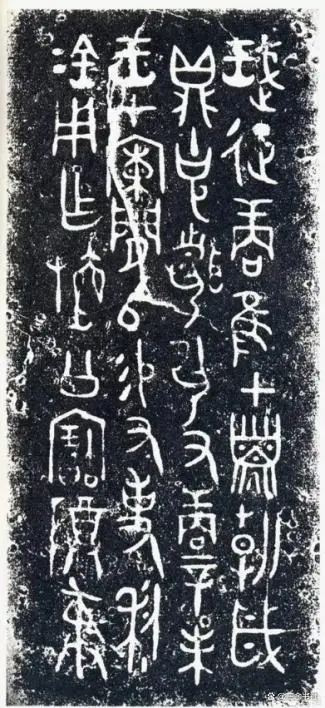
    利簋guǐ铭文

    武王{珷}征商,唯{住}甲子{党}(公元前1046年1月20日),岁{减}(木星)(当空),克昏{旋}{执}(黄昏到次日晨){又}(占)商,辛未(甲子日后七天),王在{才}{器}{自}(地名),赐{易}{又}(右史)(人名)(铜),用作{乍}[先人]{理}公宝尊{蹲}彝。

    石鼓文

    石鼓文是先秦时刻石文字,因其刻石外形似鼓而得名。共计十枚,高约三尺,径约二尺,分别刻有大篆四言诗一首,共十首,计七百一十八字。原石现藏于故宫博物院石鼓馆。


    吾车既工(造好),吾馬既同(齐备)。吾车既好(美好),吾马既阜(丰壮)
    君子員(周围)(猎),員獵員游。麀鹿(母鹿)速速,君子之求。
    骍骍角弓,弓兹以持。吾敺(驱)其特(首鹿),其來趩趩。
    [ ]炱炱,即篽即埘。麀鹿趚趚,其来亦次。
    吾驱其朴,其来[ ],射其猏蜀。

    (河)殹沔沔,烝彼淖渊。鰋鲤处之,君子渔之。
    濿(浅水)有小鱼,其游汕汕。帛(白)鱼皪皪,其盗氐鲜。
    黄帛其鯾,有鲂有鲌。其𦚏zhuāng孔庶。
    (喂)之毚毚,汗汗搏搏。其鱼维何,维鱮维鲤。
    何以苞之,维杨及柳(编筐)

    (猎)车孔安,鋚勒(马辔)冯冯。四众(侍卫)既简,左骖(旗)幡幡,右骖健健。
    吾以跻(登)(高)原,吾戎(队伍)止陕(地)。宫车其泻(流水),秀弓待射。
    麋豕孔庶,麀鹿雉兔。其逋有陈,其[ ]奔奔。
    太子出阁,亚昊襗,执而勿射。
    多庶(众人)跃跃,君子攸乐。

    (君子之)车[ ],贲髤真[ ]。[ ]弓孔硕,彤(红色)矢[ ]。
    四马其泻,六辔骜。徒驭孔庶,鄜宣搏。
    (巡视)车载行,戎徒如章,原隰(低湿之地)阴阳。
    趍趍骆马,射之族族。予如虎,兽鹿如。
    多贤,陈(列)禽,吾获允异。

    癸(日),零雨。流迄滂滂,盈盈渫济(渡河)
    君子即涉,涉马流。汧殹洎洎,萋萋。
    方舟囱逮,自鄜,徒驭汤汤,维舟以行。

    或阴或阳,极深以桨。于水一方。勿止。
    其奔其吾,其事。

    [ ]猷(弯路),作原作[ ]。道(路)澄我司,[ ]除。
    帅彼陂(坡地)[ ],草为卅(三十)里。[ ]微,秩秩攸罟(渔网)
    栗(树),柞(树)(树)其。椶(棕树)(乌桕)祈祈,鸣。
    亚箬其华,为所游优。盩导二日,树五日。
    ,,而师。弓矢孔庶,。
    以。左骖,滔滔是炽。不。
    具获信复,具盱来。其写,小大具。
    来乐,天子来。嗣王始,故我来。

    ,天虹彼,走。济济马荐,栺栺芄芄。
    微微雉(野鸡)立,心其一。之。

    吾水既清,吾道既平。吾既止,嘉树则里,天子永宁。

    日维丙申(日),旭旭薪薪,吾其周道,吾马既陈。
    秀□康康,驾弇,左骖骜骜,右骖趚趚。
    牝,毋不,四翰骊骊。
    ,公谓大,金及如,害不余佑。

    吴人怜亟,朝夕敬。载西载北,忽牿忽代。
    而初[ ],献用[ ]。[ ],[ ]大祝。
    曾受其庸,[ ]种寓逢,中囿孔[ ],[ ]鹿[ ]。
    吾其[ ],緟緟大[ ]。[ ]求有,[ ]是。
    (多缺失)

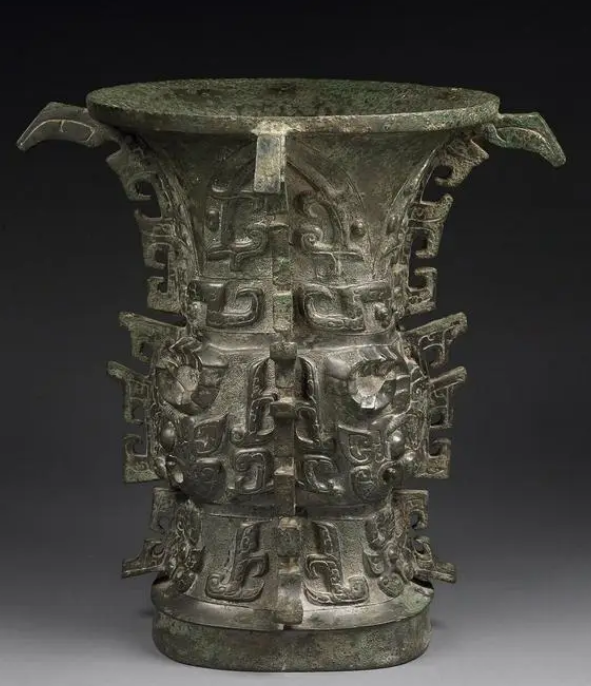
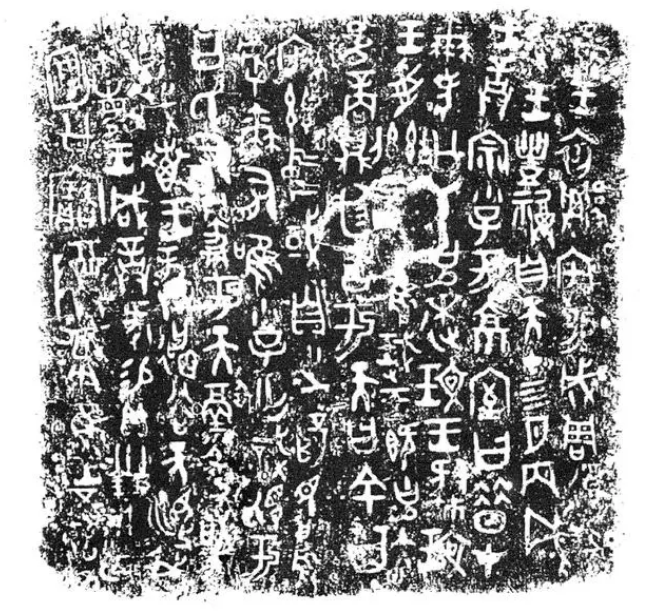
    何尊

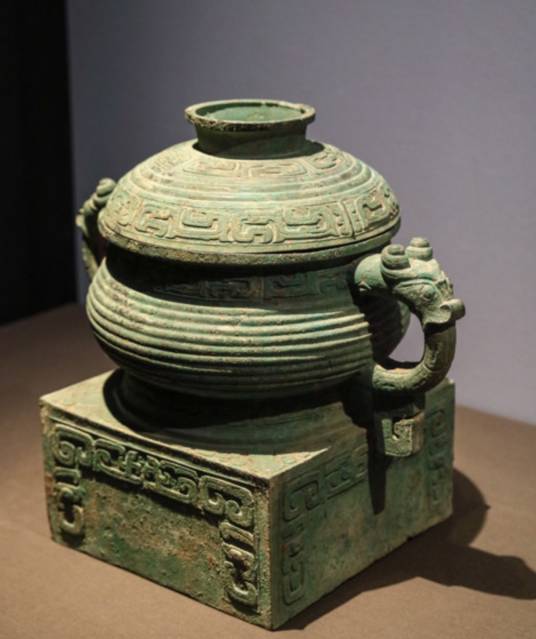
    唯王初堙(迁)宅于成周,复禀武王礼福自天。在四月丙戌,王诰宗小子于京室曰:“昔在尔考公氏,克逑(仇)文王,肆文王受兹大命。唯武王既克大邑商,则廷告于天,曰:‘余其宅兹中或(国),自之乂民。’呜呼,尔有唯小子亡识,视于公氏,有庸于天,彻命敬享哉!助王恭德欲天,临我不敏。”王咸诰何,赐贝卅朋,用作□公宝尊彝。唯王五祀。”

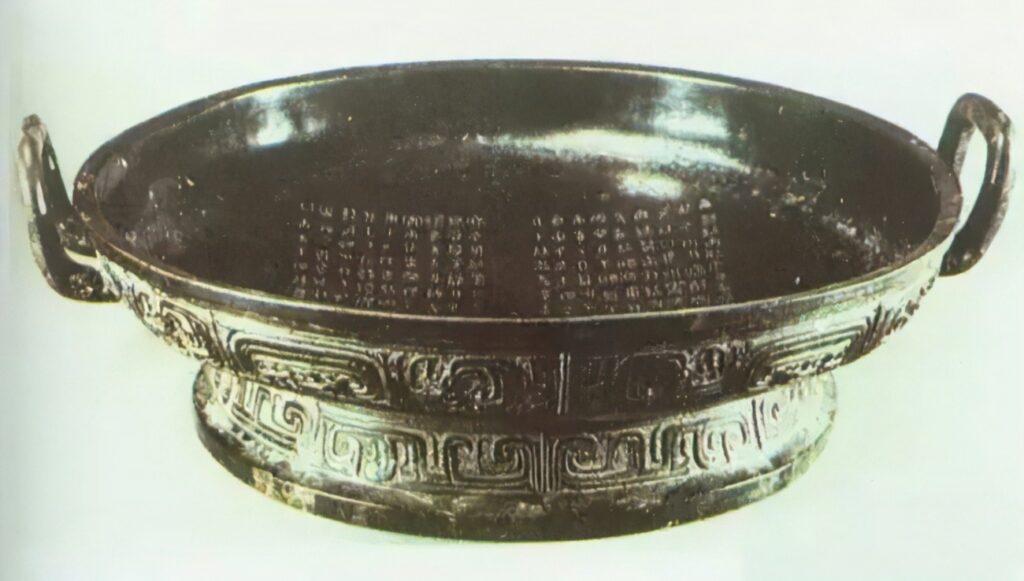
    墙盘

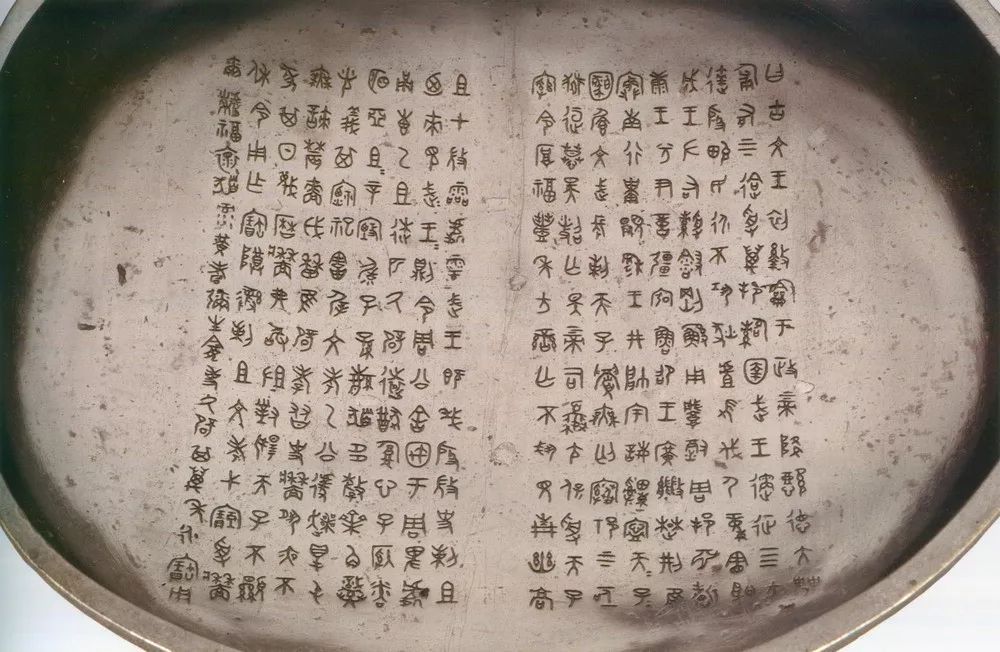
    曰古文王,初盩和於政,上帝降懿德大甹,匍有上下,受萬邦。圉武王,遹征四方,達殷民永,不鞏狄虘,伐屍童。憲聖成王,𠂇右绶剛,用肇徹周邦。康王,兮尹意宖魯邵王,廣楚荊。隹南行。穆王,井帥宇誨。寧天子,天子文武長刺,天子無匄。祁上下,亟慕,吳亡昊。上帝司夒,尣保受天子令,厚福豐年,方亡不窋見。青幽高且,才微霝處。武王既殷,史勅且乃來見武王,武王則令周公舍,於周卑處。乙且,匹氒辟,遠猷心子。明亞且且辛,毓子孫,多孷,角光,義其烟祀。文考乙公,,屯無誎,辳嗇戉隹辟。孝友,史墙夙夜不窋,其日蔑历。弗敢抯,對揚天子丕顯休令,用乍寶彜。刺且文考,弋受爾。福褱錄,黃耇彌生,龕事氒辟,其萬年永寶用。

    宰兽簋

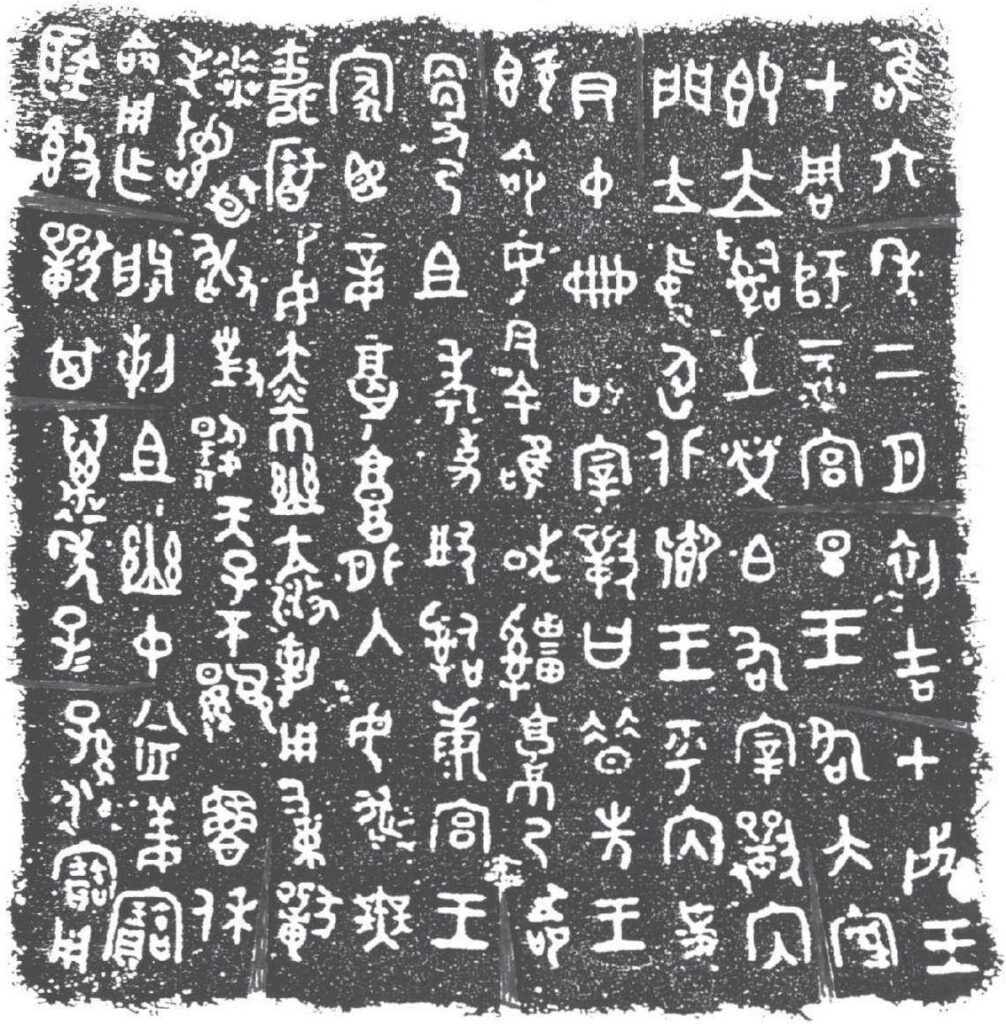
    唯六年二月初吉甲戌,王才(在)周師录宮,旦,王各大(格太)室,即立(位)。(司)土白(榮伯)右宰内(獸入)門立(中)廷,北(嚮)。王乎(呼)内史尹中(仲)冊命宰?(獸)曰:“昔先王既命女(汝),今余唯或?(又申)?乃命,?(賡)乃且(祖)考事,??(司)康宮王家臣妾,奠?(庸)外入(内),母(毋)敢無??(聞知)。易女(錫汝)赤市(鲅)幽亢、?(攸)勒,用事。”???(獸拜稽)首,?(敢)對?(揚)天子不(丕)顯魯休命,用乍?刺且(作朕烈祖)幽中(仲)益姜寶??(簋),??邁(獸其萬)年子子孫永寶用。

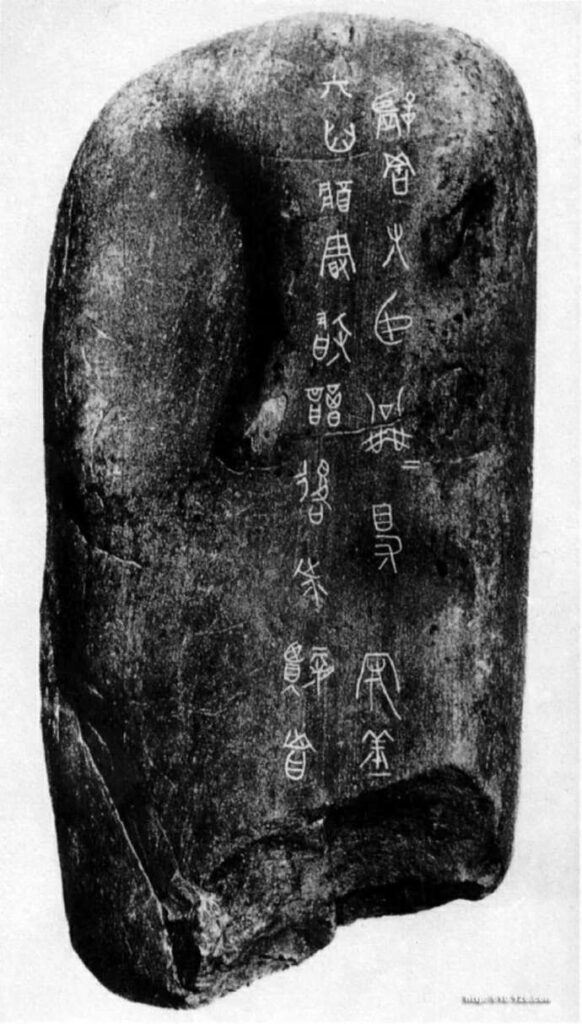
    公乘得守石刻

    監罟(捕鱼)(守,避免与后文重字)臣公乘(姓氏)(名)守丘(战国时期中山国王之陵墓),其臼(年齿)将曼(老迈),敢(盼)(请)後來賢者。

    商鞅:弱民

    民弱国强,国强民弱。故有道之国,务在弱民。朴则强,淫则弱。弱则轨,淫则越志。弱则有用,越志则强。故曰:以强去强者,弱;以弱去强者,强。
    民,善之则亲,利之用则和。用则有任,和则匮,有任乃富于政。上舍法,任民之所善,故奸多。
    民贫则力富,力富则淫,淫则有虱。故民富而不用,则使民以食出,各必有力,则农不偷。农不偷,六虱无萌。故国富而贫治,重强。
    兵易弱难强。民乐生安佚,死难难正,易之则强。事有羞,多奸;寡赏,无失。多奸疑,敌失必,利。兵至强,威;事无羞,利。用兵久処利势,必王。故兵行敌之所不敢行,强;事兴敌之所羞为,利。法有,民安其次;主变,事能得齐。国守安,主操权,利。故主贵多变,国贵少变。
    利出一孔,则国多物;出十孔,则国少物。守一者治,守十者乱。治则强,乱则弱。强则物来,弱则物去。故国致物者强,去物者弱。
    民,辱则贵爵,弱则尊官,贫则重赏。以刑治民,则乐用;以赏战民,则轻死。故战事兵用曰强。民有私荣,则贱列卑官;富则轻赏。治民羞辱以刑,战则战。民畏死、事乱而战,故兵农怠而国弱。

    李斯:挟书律[简]

    丞相李斯[对秦始皇]曰:
    五帝不相复,三代不相袭,各以治,非其相反,时变异也。
    今陛下创大业,建万世之功,固非愚儒所知。且越言乃三代之事,何足法也?
    异时诸侯并争,厚招游学。今天下已定,法令出一,百姓当家则力农工,士则学习法令辟禁。
    今诸生不师今而学古,以非当世,惑乱黔首。
    丞相臣斯昧死言:古者天下散乱,莫之能一,是以诸侯并作,语皆道古以害今,饰虚言以乱实,人善其所私学,以非上之所建立。今皇帝并有天下,别黑白而定一尊。私学而相与非法教,人闻令下,则各以其学议之,入则心非,出则巷议,夸主以为名,异取以为高,率群下以造谤。如此弗禁,则主势降乎上,党与成乎下。禁之[则]便。
    臣请史官非秦记皆烧之。非博士官所职,天下敢有藏诗、书、百家语者,悉诣守、尉杂烧之。有敢偶语诗书者弃[处决][于市集]。以古非今者族。吏见知不举者与同罪。令下三十日不烧,黥[脸上刺字]为城旦。所不去者,医药卜筮种树之书。若欲有学法令,以吏为师。

    附:《史记·秦始皇本纪》
    始皇闻[方术士侯生、卢生]亡,乃大怒曰:“吾前收天下书不中用者尽去之。悉召文学方术士甚众,欲以兴太平,方士欲练以求奇药。今闻韩众去不报,徐巿等费以巨万计,终不得药,徒奸利相告日闻。卢生等吾尊赐之甚厚,今乃诽谤我,以重吾不德也。诸生在咸阳者,吾使人廉问,或为訞言以乱黔首。”
    于是使御史悉案问诸生,诸生传相告引,乃自除犯禁者四百六十余人,皆阬之咸阳,使天下知之,以惩后。

    秦 金布律

    官府受钱者,千钱一畚,以丞、令印印。不盈千者,亦封印之。钱善不善,杂实之。出钱,献封丞、令,乃发用之。百姓市用钱,美恶杂之,勿敢异。
    布袤(长)八尺,幅广二尺五寸。布恶,其广袤不如式者,不行。
    钱十一当一布。其出入钱以当金、布,以律。
    贾市居列者及官府之吏,毋敢择行钱、布;择行钱、布者,列伍长弗告,吏循之不谨,皆有罪。
    有买(卖)及买(也),各婴(系木签标明)其价;小物不能各一钱者,勿婴。
    官相输者,以书告其出计之年,受者以入计之。八月、九月中其有输,计其输所远近,不能逮其输所之计,……移计其後年,计毋相繆(谬)。工献输官者,皆深以其年计之。
    都官有秩吏及离官啬夫,养各一人,其佐、史与共养;十人,车牛一两(辆),见牛者一人。都官之佐、史冗者,十人,养一人;十五人,车牛一辆,见牛者一人;不盈十人者,各与其官长共养、车牛,都官佐、史不盈十五人者,七人以上鼠(予)车牛、仆,不盈七人者,三人以上鼠(予)养一人;小官毋(无)啬夫者,以此鼠(予)仆、车牛。豤(牛仔)生者,食其母日粟一斗,旬五日而止之,别?(分开喂养)以?(假)之(借出)。
    有债於公及赀、赎者居它县,辄移居县责之。公有债百姓未偿,亦移其县,县偿。
    百姓?(假)公器及有债未偿,其日?(?)以收责之,而弗收责,其人死亡;及隶臣妾有亡公器、畜生者,以其日月?其衣食,毋过三分取一,其所亡众,计之,终岁衣食不?(?)以稍偿,令居之,其弗令居之,其人死亡,令其官啬夫及吏主者代偿之。
    县、都官坐效、计以负偿者,已论,啬夫即以其值钱分负其官长及冗吏,而人与参辨券,以效少内,少内以收责之。其入赢者,亦官与辨券,入之。其债毋敢逾岁,逾岁而弗入及不如令者,皆以律论之。

    官啬夫免,复为啬夫,而坐其故官以赀偿及有它债,贫窭毋(无)以偿者,稍?其秩、月食以偿之,弗得居;其免?(也),令以律居之。官啬夫免,效其官而有不备者,令与其稗官分,如其事。吏坐官以负偿,未而死,及有罪以收,抉出其分。其已分而死,及恒作官府以负债,牧将公畜生而杀、亡之,未偿及居之未备而死,皆出之,毋责妻、同居。

    县、都官以七月粪公器不可缮者,有久识者靡?之。其金及铁器入以为铜。都官输大内,内受卖之,尽七月而觱(毕)。都官远大内者输县,县受卖之。粪其有物不可以须时,求先卖,以书时谒其状内史。凡粪其不可卖而可以为薪及盖?〈蘙〉者,用之;毋(无)用,乃燔之。
    传车、大车轮,葆缮参邪,可?(也)。韦革、红器相补缮。取不可葆缮者,乃粪之。
    授衣者,夏衣以四月尽六月禀之,冬衣以九月尽十一月禀之,过时者勿禀。後计冬衣来年。囚有寒者为褐衣。为?布一,用枲三斤。为褐以禀衣;大褐一,用枲十八斤,值六十钱;中褐一,用枲十四斤,值?六钱;小褐一,用枲十一斤,值卅六钱。已禀衣,有馀褐十以上,输大内,与计偕。都官有用其官,隶臣妾、舂城旦毋用。在咸阳者致其衣大内,在它县者致衣从事之县。县、大内皆听其官致,以律禀衣。
    禀衣者,隶臣、府隶之毋(无)妻者及城旦,冬人百一十钱,夏五十五钱;其小者冬七十七钱,夏?四钱。舂冬人五十五钱,夏?四钱;其小者冬?四钱,夏卅三钱。隶臣妾之老及小不能自衣者,如舂衣。 亡、不仁其主及官者,衣如隶臣妾。

    前223年,黑夫,惊给兄衷的家书

    家书一

    二月辛巳,黑夫(男二)、惊(男三)敢再拜问衷(男一),母毋恙也?黑夫、惊毋恙也。
    前日黑夫与惊别,今复会矣。
    黑夫寄益就书曰:遗(给)黑夫钱,母操夏衣来。今书节(即)到,母视安陆丝布贱,可以为襌裙襦(夏衣)者,母必为之,令与钱偕来。其丝布贵,徒(以)钱来,黑夫自以布此。
    黑夫等直佐淮阳,攻反城久,伤未可智(知)也,愿母遗黑夫用勿少。
    书到皆为报,报必言相家爵来未来,告黑夫其未来状。闻王得苟得…

    毋恙也?辞相家爵不也?书衣之南军毋……不也?
    为黑夫、惊多问姑姊、康乐孝须(嬃)故尤长姑外内(?)……
    为黑夫多问东室季须(嬃),苟得毋恙也?
    为黑夫、惊多问婴记季,事可(何)如,定不定?
    为黑夫、惊多问夕阳吕婴、匾里阎诤丈人(二老者)得毋恙……矣。
    惊多问新负(妇)、妴(婉),得毋恙也?新负勉力视瞻丈人,毋与……勉力也。

    家书二

    惊敢大心问衷,母得毋恙也?
    家室外内同……以衷,母力毋恙也?
    与从军,与黑夫居,皆毋恙也。
    ……钱衣,愿母幸遣钱五、六百,布谨善者毋下二丈五尺。……
    (借)用垣柏钱矣,室弗遗,即死矣。急急急。
    惊多问新负、妴皆得毋恙也?新负勉力视瞻两老……

    惊远家故,衷教诏妴,令毋敢远就若取新(薪)(柴),衷令……
    闻新(占)地城多空不实者,且令故民有为不如令者实……
    为惊祠祀(问神灵),若(显示)大发(废)毁,以惊居反城中故。
    惊敢大心问姑秭(姐),姑秭(姐)、(姑)子彦得毋恙……?
    新地(进)入盗,衷唯毋方行新地,急急急。

    (黑夫、惊为秦国士兵,时三男抽二士兵需自备内衣)

    前89年,刘彻:轮台诏

    前有司(政府部门)奏,欲益民赋三十助边用,是重困老弱孤独也。而今又请遣卒田轮台。
    轮台西于车师千余里,前开陵侯击车师时,危须、尉犁、楼兰六国子弟在京师者皆先归,发畜食迎汉军,又自发兵,凡数万人,王各自将,共围车师,降其王。诸国兵便罢,力不能复至道上食汉军。汉军破城,食至多,然士自载不足以竟师,强者尽食畜产,羸者道死数千人。朕发酒泉驴、橐驼负食,出玉门迎军。吏卒起张掖,不甚远,然尚厮留其众。

    曩者,朕之不明,以军候弘上书言:“匈奴缚马前后足,置城下,驰言:‘秦人,我匄若马。‘”又汉使者久留不还,故兴遣贰师将军,欲以为使者威重也。

    古者卿大夫与谋,参以蓍龟,不吉不行。乃者以缚马书遍视丞相、御史、二千石、诸大夫、郎为文学者,乃至郡属国都尉成忠、赵破奴等,皆以“虏自缚其马,不祥甚哉”,或以为“欲以见强,夫不足者视人有余”。
    《易》之卦得《大过》,爻在九五,匈奴困败。公军方士、太史治星望气,及太卜龟蓍,皆以为吉,匈奴必破,时不可再得也。又曰:“北伐行将,于鬴山必克。”
    卦诸将,贰师最吉。故朕亲发贰师下鬴山,诏之必毋深入。今计谋卦兆皆反缪。重合侯得虏候者,言:“闻汉军当来,匈奴使巫埋羊牛所出诸道及水上以诅军。单于遗天子马裘,常使巫祝之。缚马者,诅军事也。”又卜“汉军一将不吉”。
    匈奴常言:“汉极大,然不能饥渴,失一狼,走十羊。” 

    乃者贰师败,军士死略离散,悲痛常在朕心。今请远田轮台,欲起亭隧,是扰劳天下,非所以忧民也,今朕不忍闻。大鸿胪等又议,欲募囚徒送匈奴使者,明封侯之赏以报忿,五伯所弗能为也。且匈奴得汉降者,常提掖搜索,问以所闻。今边塞未正,阑出不禁,障候长吏使卒猎兽,以皮肉为利,卒苦而烽火乏,失亦上集不得,后降者来,若捕生口虏,乃知之。
    当今务,在禁苛暴,止擅赋,力本农,修马复令,以补缺,毋乏武备而已。郡国二千石各上进畜马方略补边状,与计对。

    89年 班固:封燕然山(蒙古国杭爱山)

    (汉和帝)永元元年秋七月,有汉元(汉和帝)舅曰车骑将军窦宪,寅亮圣明,登翼王室,纳于大麓,维清缉熙。
    乃与执金吾(官职名)耿秉,述职巡御。理兵于朔方。
    鹰扬之校,螭虎之士,爰该六师,暨南单于、东胡乌桓、西戎氐羌,侯王君长之群,骁骑三万。
    元戎轻武,长毂四分,云辎蔽路,万有三千余乘。
    勒以八阵,莅以威神,玄甲耀目,朱旗绛天。
    遂陵高阙,下鸡鹿,经碛卤,绝大漠,斩温禺以衅(血染)鼓,血尸逐以染锷(兵刃)。然后四校横徂,星流彗扫,萧条万里,野无遗寇。
    于是域灭区殚,反旆(军旗)而旋,考传验图,穷览其山川。遂逾涿邪[山],跨安侯[河],乘(登)燕然,蹑冒顿之区落(部落),焚老上之龙庭。上以摅高、文之宿愤,光祖宗之玄灵;下以安固后嗣,恢拓境宇,振大汉之天声。
    兹所谓一劳而久逸,暂费而永宁者也,乃遂封山刊(刻)石,昭铭盛德。
    其辞曰:
    铄王师兮征荒裔,
    剿凶虐兮截海外。
    夐其邈兮亘地界,
    封神丘兮建隆嵑,
    熙帝载兮振万世!

    汉恒帝时童谣:察举讽

    举秀才,不知书。举孝廉,父别居。
    寒素清白浊如泥,高第良将怯如鸡。

    210年(建安十五年) 曹操:让县自明本志令

    (我)始举孝廉(官员的后备),年少,自以本非岩穴( 隐居山间)知名之士,恐为海内人之所见凡愚。欲为一郡守,好作政教以建立名誉,使世士明知之。故在济南(东汉王国名,今山东济南东),始除残去秽,平心选举,违忤诸常侍(掌权宦官)。以为强豪所忿,恐致家祸,故以病还。

    去官之后,年纪尚少,顾视同岁(同一批孝廉)中,年有五十,未名为老,内自图之: 从此却去二十年,待天下清,乃与同岁中始举者等耳。故以四时归乡里,于谯(今安徽亳县西)东五十里筑精舍,欲秋夏读书,冬春射猎,求低下之地,欲以泥水自蔽,绝宾客往来之望,然不能得如意。

    后征为都尉,迁典军校尉,意遂更欲为国家讨贼立功,欲望封侯作征西将军,然后题墓道言“汉故征西将军曹侯之墓”,此其志也。而遭值董卓之难,兴举义兵。是时合兵能多得耳,然常自损,不欲多之。所以然者,多兵意盛,与强敌争,倘更为祸始。故汴水之战数千,后还到扬州更募,亦复不过三千人。此其本志有限也。

    后领兖州,破降黄巾三十万众。又袁术僭号(称帝)于九江,下皆称臣,名门曰建号门,衣被皆为天子之制,两妇预争为皇后。志计已定,人有劝术使遂即帝位,露布天下。答言: “曹公尚在,未可也。”后孤讨擒[杀]其四将,获其人众,遂使术穷亡解沮,发病而死。及至袁绍据[黄]河北,兵势强盛,孤自度势,实不敌之。但计投死为国,以义灭身,足垂于后。幸而破绍,枭(斩首)xiāo其二子。又刘表自以为宗室,包藏奸心,乍前乍却,以观世事,据有当州。孤复定之,遂平天下。身为宰相,人臣之贵已极,意望已过矣。今孤言此,若为自大,欲人言尽,故无讳耳。设使国家无有孤,不知当几人称帝,几人称王。

    或者人见孤强盛,又性不信天命之事,恐私心相评,言有不逊之志,妄相忖度,每用耿耿。齐桓、晋文所以垂称至今日者,以其兵势广大,犹能奉事周室也。《论语》云: “三分天下有其二,以服事殷,周之德可谓至德矣。”夫能以大事小也。昔乐毅走赵,赵王欲与之图燕,乐毅伏而垂泣,对曰: “臣事昭王,犹事大王;臣若获戾,放在他国,没世然后已,不忍谋赵之徒隶,况燕后嗣乎?”胡亥之杀蒙恬也,恬曰: “自吾先人及至子孙,积信于秦三世矣。今臣将兵三十馀万,其势足以背叛,然自知必死而守义者,不敢辱先人之教以忘先王也。”孤每读此二人书,未尝不怆然流涕也。孤祖、父以至孤身,皆当亲重之任,可谓见信者矣;以及子桓兄弟,过于三世矣。孤非徒对诸君说此也,常以语妻妾,皆令深知此意。孤谓之言: “顾我万年之后,汝曹皆当出嫁,欲令传道我心,使他人皆知之。”孤此言皆肝膈(内心)之要也。

    所以勤勤恳恳叙心腹者,见周公有《金縢》之书以自明,恐人不信之故。然欲孤便尔委捐所典兵众,以还执事,归就武平侯国,实不可也。何者?诚恐己离兵为人所祸也。既为子孙计,又己败则国家倾危,是以不得慕虚名而处实祸,此所不得为也。前朝恩封三子为侯,固辞不受;今更欲受之,非欲复以为荣,欲以为外援为万安计。孤闻介推之避晋封,申胥之逃楚赏,未尝不舍书而叹,有以自省也。奉国威灵,仗钺征伐,推弱以克强,处小而禽大。意之所图,动无违事,心之所虑,何向不济,遂荡平天下,不辱主命,可谓天助汉室,非人力也。然封兼四县,食户三万,何德堪之!江湖未静,不可让位;至于邑土,可得而辞。今上还阳夏、柘、苦三县户二万,但食武平万户,且以分损谤议,少减孤之责也。

    751年 杜甫:兵车行

    车辚辚,马萧萧,行人弓箭各在腰。
    爷娘妻子走相送,尘埃不见咸阳桥。
    牵衣顿足拦道哭,哭声直上干云霄。
    道旁过者问行人,行人但云点行频。
    或从十五北防河,便至四十西营田。
    去时里正与裹头,归来头白还戍边。
    边庭流血成海水,武皇开边意未已。
    君不闻汉家山东二百州,千村万落生荆杞。
    纵有健妇把锄犁,禾生陇亩无东西。
    况复秦兵耐苦战,被驱不异犬与鸡。
    长者虽有问,役夫敢申恨?
    且如今年冬,未休关西卒。
    县官急索租,租税从何出?
    信知生男恶,反是生女好。
    生女犹得嫁比邻,生男埋没随百草。
    君不见,青海头,古来白骨无人收。
    新鬼烦冤旧鬼哭,天阴雨湿声啾啾!

    759年 杜甫:石壕吏

    暮投石壕村,有吏夜捉人。老翁逾墙走,老妇出门看。
    吏呼一何怒!妇啼一何苦!听妇前致词:三男邺城戍。
    一男附书至,二男新战死。存者且偷生,死者长已矣!
    室中更无人,惟有乳下孙。有孙母未去,出入无完裙。
    老妪力虽衰,请从吏夜归。急应河阳役,犹得备晨炊。
    夜久语声绝,如闻泣幽咽。天明登前途,独与老翁别。

    756年 张巡守城

    《唐书·忠义传》:
    张巡守睢阳(河南省商丘市南)城,尹子奇攻围既久,城中粮尽,易子而食,析骸而爨。
    巡乃出其妾,对三军杀之,以飨军士,曰: “请公等为国家戮力守城,一心无二。巡不能自割肌肤,以啖将士,岂可惜此妇人! ”
    将士皆泣下,不忍食。巡强令食之。括城中妇女;既尽,以男夫老小继之,所食人口二三万。
    《新唐书》:
    巡出爱妾曰:…..。乃杀以大飨,坐者皆泣。巡强令食之,远亦杀奴僮以哺卒……初杀马食,既尽,而及妇人老弱凡食三万口。人知将死,而莫有畔者。城破,遗民止四百而已。
    《资治通鉴·唐纪·唐纪三十六》:
    尹子奇久围睢阳,城中食尽,议弃城东走。
    张巡、许远谋,以为:“睢阳,江、淮之保障,若弃之去,贼必乘胜长驱,是无江、淮也。
    “且我众饥羸,走必不达。古者战国诸侯,尚相救恤,况密迩群帅乎!不如坚守以待之。”
    茶纸既尽,遂食马;马尽,罗雀掘鼠;雀鼠又尽,巡出爱妾,杀以食士,远亦杀其奴;然后括城中妇人食之;既尽,继以男子老弱。人知必死,莫有叛者,所馀才四百人。

    781年 大秦景教流行中国碑

    景教流行中国碑颂〈并序〉 大秦寺僧净述

    粤若常然真寂,先先而无元;窅然灵虚,后后而妙有。总玄枢而造化,妙众圣以元尊者,其唯我三一妙身无元真主阿罗诃欤!判十字以定四方,鼓元风而生二气。暗空易而天地开,日月运而昼夜作。匠成万物,然立初人。别赐良和,令镇化海。浑元之性,虚而不盈。素荡之心,本无希嗜。
    洎乎娑殚施妄,钿饰纯精。间平大于此是之中,隙冥同于彼非之内。是以三百六十五种,肩随结辙。竞织法罗,或指物以托宗,或空有以沦二,或祷祀以邀福,或伐善以矫人。智虑营营,恩情役役。茫然无得,煎迫转烧,积昧亡途,久迷休复。
    于是,我三一分身尊弥施诃,戢隐真威,同人出代。神天宣庆,室女诞圣于大秦;宿告祥,波斯睹耀以来贡。圆廿四圣有说之旧法,理家国之大猷。设三一净风无言之新教,陶良用于正信。制八境之度,链尘成真;启三常之门,开生灭死。悬日以破暗府,魔妄于是乎悉摧;棹慈航以登明宫,含灵于是乎既济。能事斯毕,亭午升真。经留廿七部,张元化以发灵开。
    法浴水风,涤浮华而洁虚白;印持十字,融四照以合无抅。击木震仁惠之音,东礼趣生荣之路。存须所以有外行,削顶所以无内情。不畜臧获,均贵贱于人。不聚货财,示罄遗于我。斋以伏识而成,戒以静慎为固。七时礼赞,大庇存亡。七日一荐,洗心反素。

    真常之道,妙而难名,功用昭彰,强称教。惟道非圣不弘,圣非道不大。道圣符契,天下文明。太宗文皇帝,光华启运,明圣临人,大秦国有上徳曰阿罗本,占青云而载真经,望风律以驰艰险。贞观九祀(635年),至于长安。帝使宰臣房公玄龄,总仗西郊,宾迎入内。翻经书殿,问道禁闱。深知正真,特令传授。
    贞观十有二年秋七月,诏曰︰“道无常名,圣无常体,随方设教,密济群生。大秦国大德阿罗本,远将经像,来献上京,详其教旨,玄妙无为,观其元宗,生成立要。词无繁说,理有忘筌,济物利人,宜行天下。”所司即于京义宁坊造大秦寺一所,度僧廿一人。宗周德丧,青驾西升。巨唐道光,风东扇。旋令有司将 帝写真转摸寺壁。天姿泛彩,英朗门。圣迹腾祥,永辉法界。
    按《西域图记》及汉魏史策,大秦国南统珊瑚之海,北极众宝之山;西望仙境花林,东接长风弱水;其土出火烷布、返魂香、明月珠、夜光璧;俗无寇盗,人有乐康。法非不行,主非德不立。土宇广阔,文物昌明。
    高宗大帝,克恭缵祖,润色真宗;而于诸州各置寺,仍崇阿罗夲为镇国大法主。法流十道,国富元休;寺满百城,家殷福。
    圣历年,释子用壮,腾口于东周。先天末,下士大笑,讪谤于西镐。有若僧首罗含,大德及烈,并金方贵绪,物外高僧,共振玄网,俱维绝纽。 
    玄宗至道皇帝,令宁国等五王,亲临福宇,建立坛场。法栋暂桡而更崇,道石时倾而复正。天宝初,令大将军髙力士,送五圣写真,寺内安置;赐绢百匹,奉庆睿图。龙髯虽逺,弓剑可攀;日角舒光,天颜咫尺。三载,大秦国有僧佶和,瞻星向化,望日朝尊。诏僧罗含、僧普论等一七人,与大德佶和,于兴庆宫修德。于是天题寺榜,额戴龙书;宝装璀翠,灼烁丹霞;睿扎宏空,腾凌激日。宠赉比南山峻极,沛泽与东海齐深。道无不可,所可可名;圣无不作,所作可述。
    肃宗文明皇帝,于灵武等五郡,重立寺。元善资而福祚开,大庆临而皇业建。
    代宗文武皇帝,恢张圣运,从事无为。每于降诞之辰,锡天香以告成,颁御馔以光众。且以美利,故能广生。圣以体元,故能亭毒。
    我建中圣神文武皇帝,披八政以黜陟幽明,阐九畴以惟新命。化通玄理,祝无愧心。
    至于方大而虚,专静而恕,广慈救众苦,善贷被群生者,我修行之大猷,汲引之阶渐也。若使风雨时,天下静,人能理,物能清,存能昌,殁能乐,念生响应,情发目诚者,我力能事之功用也。

    大施主金紫光禄大夫、同朔方节度副使、试殿中监、赐紫袈裟僧伊斯,和而好惠,闻道勤行。逺自王舍之城,聿来中夏,术髙三代,艺博十全。始效节于丹庭,乃策名于王帐。中书令汾阳郡王郭公子仪,初总戎于朔方也,肃宗俾之从迈。虽见亲于卧内,不自异于行间。为公爪牙,作军耳目。能散禄赐,不积于家。献临恩之颇黎,布辞憩之金罽。或仍其旧寺,或重广法堂。崇饰廊宇,如翚斯飞。更效门,依仁施利,每岁集四寺僧徒,虔事精供,备诸五旬。馁者来而饭之,寒者来而衣之,病者疗而起之,死者葬而安之。清节达娑,未闻斯美。白衣士,今见其人。愿刻洪碑,以扬休烈。

    词曰︰
    真主元元,湛寂常然。舆匠化,起地立天。分身出代,救度无边。日升暗灭,咸证真玄。
    赫赫文皇,道冠前王;乘时拨乱,乾廓坤张。明明教,言归我唐。翻经建寺,存殁舟航。百福偕作,万邦之康。
    髙宗纂祖,更筑精宇。和宫敞朗,遍满中土。真道宣明,式封法主。人有乐康,物无灾苦。
    玄宗启圣,克修真正。御榜扬辉,天书蔚映。皇图璀璨,率土高敬。庶绩咸熙,人赖其庆。
    肃宗来复,天威引驾。圣日舒晶,祥风扫夜。祚归皇室,祆氛永谢。止沸尘,造我区夏。
    代宗孝义,德合天地。开贷生成,物资美利。香以报功,仁以作施。旸谷来威,月窟毕萃。
    建中统极,聿修明德。武肃四溟,文清万域。烛临人隐,镜观物色。六合昭苏,百蛮取则。
    道惟广兮应惟宻,强名言兮演三一;主能作兮臣能述,建豊碑兮颂元吉。

    大唐建中二年岁在作噩太蔟月七日大耀森文日建立,时法主僧宁恕知东方之众也。
    朝议郎前行台州司士参军吕秀岩书

    此碑唐建中二年2月4日,由波斯传教士伊斯(Yazdhozid)立于大秦寺院中。碑文由景教士景净撰,朝议郎前行台州司参军吕秀岩书写并题额。碑正面刻着“大秦教流行中国碑并颂”,上有楷书三十二行,行书六十二字,共1780个汉字和古叙利亚文的教士题名。

    约806年,白居易:卖炭翁(苦宫市也)

    卖炭翁,伐薪烧炭南山中。
    满面尘灰烟火色,两鬓苍苍十指黑。
    卖炭得钱何所营?身上衣裳口中食。
    可怜身上衣正单,心忧炭贱愿天寒。
    夜来城外一尺雪,晓驾炭车辗冰辙。
    牛困人饥日已高,市南门外泥中歇。
    翩翩两骑来是谁?黄衣使者白衫儿。
    手把文书口称敕,回车叱牛牵向北。
    一车炭,千余斤,宫使驱将惜不得。
    半匹红纱一丈绫,系向牛头充炭值。

    809年(唐宪宗元和四年) 白居易:新丰折臂翁

    新丰(陕西临潼县东北)东北老翁八十八,头鬓眉须皆似雪。玄孙扶向店前行,左臂凭肩右臂折。问翁臂折来几年,兼问致折何因缘。
    翁云贯属新丰县,生逢圣代无征战。惯听梨园(新丰系骊山华清官所在地)歌管声,不识旗枪与弓箭。无何天宝大征兵,户有三丁点一丁。点得驱将何处去,五月万里云南(南诏)行。闻道云南有泸水,椒花落时瘴烟起。大军徒涉水如汤,未过十人二三死。村南村北哭声哀,儿别爷娘夫别妻。皆云前后征蛮者,千万人行无一回。是时翁年二十四,兵部牒中有名字。夜深不敢使人知,偷将大石捶折臂。张弓簸bǒ(摇)旗俱不堪,从兹始免征云南。骨碎筋伤非不苦,且图拣退归乡土。此臂折来六十年,一肢虽废一身全。至今风雨阴寒夜,直到天明痛不眠。痛不眠,终不悔,且喜老身今独在。不然当时泸水头,身死魂孤骨不收。应作云南望乡鬼,万人冢上哭呦yōu呦。
    老人言,君听取。君不闻开元宰相宋开府(宋璟),不赏边功防黩武。又不闻天宝宰相杨国忠,欲求恩幸立边功。边功未立生人怨,请问新丰折臂翁。

    806年(唐元和元年) 唐故杨府君神道之碑

    该碑1984年4月出土于陕西省泾阳县扫宋乡(现属云阳镇)小户杨村,现存泾阳县博物馆。杨良瑶(735年唐玄宗开元二十三年-806年唐宪宗元和元年),陕西省泾阳县人,唐肃宗至德年间(756年-758年)成为宦官,此时已经有妻子和两个孩子,陪侍过唐肃宗、代宗、德宗、顺宗四位皇帝。

    唐故右三军僻仗、太中大夫、行内侍省内给事,赐紫金鱼袋、上柱国、弘农县开国男、食邑三百户杨公神道碑铭并序

    朝请郎、行虔州南康县丞、云骑尉、翰林待 诏陆邳撰
    承务郎、守郴州司兵参军、云骑尉、翰林待 诏赵良裔书
    给事郎、守洪州都督府兵曹参军、云骑尉、翰林待 诏汤陟篆额

    公讳良瑶,字良瑶,其先周宣王子尚父,受封诸阳,寔曰杨侯。晋灭其国,因以为氏。厥后代济勋德,遂为名家。至若王孙以薄葬称,楼船以大功命,敞因谨畏为相,雄由辞赋荣名。洎乎伯起之慎“四知”,叔节之去“三惑”,大鸟集于葬墓,飞鳣降于讲堂。或朱轮十人,或太尉四代,光照两汉,裕垂后昆,氏族源流,远矣盛矣。于是根蒂旁薄,枝叶蕃昌,有望表弘农,有族居天水,则公之先代,本弘农人也。
    及公曾祖, 为唐元功臣(玄宗朝授参与唐隆政变(710年)的禁军将领功臣封号,后避李隆基讳改“唐隆”为“唐元”),官至云麾将军、右威卫中郎将,以功多赏厚,赐业云阳(陕西省泾阳县),至今家焉。遂为京兆人矣。
    祖怀贞,皇许州别驾。
    考彦昱,处士,高标世利,处士园林,公即处士之第四子也。
    公质状殊观,心灵独立,气概感激,慑于时流。少以节义为志行,长以忠勇为己任,故得入为内养,侍玉墀以承恩;出使外方,将天命而布泽。累经试效,益着功劳;诚素既彰,委任方重。
    当永泰(765年)中,慈、隰等州狼山部落首领塌实力继章,掠众聚兵,逼胁州县,不顾王命,恣行剽煞,虔刘晋郊之士庶,震骇虢略之封疆。于时两河初平,四远犹耸,朝廷难于动众,皇上姑务安人。遂遣中使刘崇进衔命招抚,以公为判官。崇进畏懦而莫前,公乃愤发而独往,口宣恩德,气激凶顽,遂使天威挫其锋铓,皇泽流其骨髓,莫不交臂屈膝,弃甲投弓,革面回心,稽颡受诏。既而复命,阙下大惬,圣衷有诏赐绿,仍授文林郎、行内侍省掖庭局监作。由是恩顾稠叠,委任频繁,奉使必适于所难,临事未尝有不当,是用东西南北,匪遑止宁;险阻艰危,备尝之矣。
    大历六年(771年),加朝议郎、宫闱局丞,守职不渝,在公无替;昼日三接,风雨一心;天颜不违,圣眷斯至。当信重之际,罔敢告劳;安梯航之心,何远不届。遂奉使安南宣慰,降雨露于荒外,委忠信于洪波,往返无疑,匪僭程度。复命至于广府(大历九年,774年),会叛军煞将凶徒阻兵,哥舒晃因纵狼心,将邀王命,承公以剑,求表上闻;公山立嶷然,不可夺志,事解归阙,时望翕然。至十二年,迁宫闱令。内官式叙,中禁肃清,由公是拜也。
    洎建中末,遇銮舆顺动,随驾奉天,勤劳匪躬,始终一致。
    兴元初(784年),天未悔祸,蛇豕横途。皇上轸念于苍生,臣下未遑于定策。公乃感激出涕,请使西戎,乞师而旋,遮寇以进,覆武功之群盗,清盩厔之前途,风云奔从而遂多,山川指程而无拥。兴元既得以驻跸,渭桥因得以立功,再造寰区,不改旧物,繄我公乞师之力也。其年二月,迁内侍省内给事。六月,加朝散大夫。此例骤迁,盖赏劳矣。
    贞元初(785年),既清寇难,天下乂安,四海无波,九译入觐。昔使绝域,西汉难其选;今通区外,皇上思其人。比才类能,非公莫可。以贞元元年四月,赐绯鱼袋,充聘国使于黑衣大食(阿拉伯帝国阿拔斯Abbasid王朝,750年取代倭马亚王朝,为第二个世袭王朝,首都巴格达,1258年被蒙古旭烈兀所灭),备判官、内傔,受国信、诏书。奉命遂行,不畏于远。届乎南海,舍陆登舟。邈尔无惮险之容,懔然有必济之色。义激左右,忠感鬼神。公于是剪髪祭波,指日誓众,遂得阳侯敛浪,屏翳调风,挂帆凌汗漫之空,举棹乘颢淼之气,黑夜则神灯(沿海灯塔)表路,白昼乃仙兽前驱。星霜再周,经过万国,播皇风于异俗,被声教于无垠。往返如期,成命不坠,斯又我公扙忠信之明效也。
    四年六月,转中大夫。七月,封弘农县开国男,食邑三百户。功绩既著,恩宠亦崇;若惊之心,日慎一日。
    十二年,加太中大夫,余如故。
    十四年(798年)春,德宗虔虔孝思,陵寝是恤,将复修葺,再难其人。必求恪恭,祗奉于事。唯公惬旨,受命而行,夙夜在公,日月匪懈。不改经制,惜费省劳。焕乎咸新,无乖睿约。及乎卒事,议功莫俦。以其年八月,赐紫金鱼袋、判、傔等,并加绿绶。非例也,特恩及之。其后贵主亲王,监护丧葬,圣情念切者,必委于公。至于以劳受赐,金帛纷纶,亦不可备纪矣。
    十五年,陈许节使云亡,淮西承衅而动,剽掠阳翟,攻逼许昌,汝洛惊惶,关东大恐,天下激发二十万师,韩全义统之,且挠戎律。国家难于易帅,议者知必无功。时,德宗皇帝负扆兴叹,凝旒轸虑,思安东都宗庙,念济河洛苍生,是用命公监东都畿、汝州军事。闻命而三军增气,戾止而百姓咸宁。公知韩全义无才,乌合众难用,淮西城小而固,遐迩易动难安,遂思远图,独出奇策,使押衙东惟悟孙白身志和,深觇寇情,观衅而返,乃具所谋画,遽献表章,请缓天诛,许其悔过。当皇威未霁,事寝莫行。及全义大崩,诏用前计。遂申恩舍罪,罢讨息人。公乃居安虑危,处否思泰,复请完城聚谷,缮甲理兵,用简易而渐谋,不日月而功就,化怯懦为勇健,变藩篱为金汤。于是远近获安,道路斯泰,皆公之尽力竭忠经略所致也。
    至永贞元年(785年),以事既宁辑,恋阙诚深,恳请归朝,供侍近密。夏五月,以本官领右三军僻仗。公素积威望,久著勋庸,警跸诫严,中外悦服。千官以之加敬,九重以之益深。日出彤庭而臣下朝肃,月闲清禁而天子夜安。国朝之环拱得人,于斯为盛。
    公以躬勤之故,衰朽易侵,心神耗消,体貌癯瘠,疾生而医药不救,善积而命运奈何,寒热内攻,风露外迫,遂至不起,呜呼痛哉!以元和元年秋七月廿二日,终于辅兴里之私第,享年七十有一。
    皇上轸悼,士庶同悲。以其年十月十四日,归葬于云阳县龙云乡之原,顺其先志。盖以公之仲弟忠武将军良彩、季弟游击将军光晖、夫人彭城郡君刘氏皆先公而终,坟墓所在,则临终之日,思及平生,友爱念深,遗命不忘之故也。
    公自至德年中入为内养,永泰之岁出使有功,恩渥日深,委信渐重。至若震忠义以清慈、隰,明勇决以伏哥舒,乞师护于南巡,宣化安于北户,使大食而声教旁畅,监东畿而汝洛小康,供奉四朝,五十余载,议勤劳而前后无比,论渥泽而流辈莫先。故得祚土分茅,纡金拖紫,名高史荣,庆传子孙。况公壮年以忠勇自负,长岁以尽瘁勤王。及乎晚途,归信释氏,修建塔庙,缮写藏经,布金买田,舍衣救病,可谓竭臣子人间之礼,尽生死区外之因,孜孜善心,没齿无倦矣。
    长子升,嗣子承议郎、内侍省内谒者监,赐紫金鱼袋、华清宫使希旻,次子操,移孝为忠,光昭令德,祗奉前训,罔极是思。谓福善无征,风树不止,诚感未达,隙驹莫留。想像既难于攀追,德业实惧于堙没,愿琢贞石,纪勒芳猷,见讬为文,敢不书实。

    铭曰:

    云从龙兮风从武,圣功出兮忠臣辅。
    天降公兮竭心府,历四纪兮奉四主。
    鸡常鸣兮忘风雨,躬尽瘁兮心神苦。
    伏哥舒兮刚不吐,抚慈隰兮慑戎虏。
    西乞师兮清中宇,南奉使兮慰北户。
    聘大食兮声教普,监汝洛兮勋超古。
    校功业兮无俦伍,赐赉繁兮莫得数。
    一命偻兮三命俯,恩弥崇兮孰敢侮。
    垂金章兮结绶组,既分茅兮亦祚土。
    琢贞石兮表忠臣,昭令德兮示后人。

    元和元年岁次景戌十月庚申朔十四日癸酉建 吴郡朱士良刻字

    宋,载郭茂倩《乐府诗集》 胡笳十八拍

    我生之初尚无为,我生之后汉祚衰。天不仁兮降乱离,地不仁兮使我逢此时。干戈日寻兮道路危,民卒流亡兮共哀悲。烟尘蔽野兮胡虏盛,志意乖兮节义亏。对殊俗兮非我宜,遭忍辱兮当告谁?笳一会兮琴一拍,心愤怨兮无人知。
    戎羯逼我兮为室家,将我行兮向天涯。云山万重兮归路遐,疾风千里兮扬尘沙。人多暴猛兮如虺蛇,控弦被甲兮为骄奢。两拍张弦兮弦欲绝,志摧心折兮自悲嗟。
    越汉国兮入胡城,亡家失身兮不如无生。毡裘为裳兮骨肉震惊,羯羶为味兮枉遏我情。鼙鼓喧兮从夜达明,胡风浩浩兮暗塞营。伤今感晋兮三拍成,衔悲畜恨兮何时平。
    无日无夜兮不思我乡土,禀气合生兮莫过我最苦。天灾国乱兮人无主,唯我薄命兮没戎虏。殊俗心异兮身难处,嗜欲不同兮谁可与语!寻思涉历兮多艰阻,四拍成兮益凄楚。
    雁南征兮欲寄边声,雁北归兮为得汉音。雁飞高兮邈难寻,空断肠兮思愔愔。攒眉向月兮抚雅琴,五拍泠泠兮意弥深。
    冰霜凛凛兮身苦寒,饥对肉酪兮不能餐。夜间陇水兮声呜咽,朝见长城兮路杳漫。追思往日兮行李难,六拍悲来兮欲罢弹。
    日暮风悲兮边声四起,不知愁心兮说向谁是!原野萧条兮烽戍万里,俗贱老弱兮少壮为美。逐有水草兮安家葺垒,牛羊满野兮聚如蜂蚁。草尽水竭兮羊马皆徙,七拍流恨兮恶居于此。
    为天有眼兮何不见我独漂流?为神有灵兮何事处我天南海北头?我不负天兮天何配我殊匹?我不负神兮神何殛我越荒州?制兹八拍兮拟排忧,何知曲成兮心转愁。
    天无涯兮地无边,我心愁兮亦复然。人生倏忽兮如白驹之过隙,然不得欢乐兮当我之盛年。怨兮欲问天,天苍苍兮上无缘。举头仰望兮空云烟,九拍怀情兮谁与传?
    城头烽火不曾灭,疆场征战何时歇?杀气朝朝冲塞门,胡风夜夜吹边月。故乡隔兮音尘绝,哭无声兮气将咽。一生辛苦兮缘别离,十拍悲深兮泪成血。
    我非食生而恶死,不能捐身兮心有以。生仍冀得兮归桑梓,死当埋骨兮长已矣。日居月诸兮在戎垒,胡人宠我兮有二子。鞠之育之兮不羞耻,憋之念之兮生长边鄙。十有一拍兮因兹起,哀响缠绵兮彻心髓。
    东风应律兮暖气多,知是汉家天子兮布阳和。羌胡蹈舞兮共讴歌,两国交欢兮罢兵戈。忽遇汉使兮称近诏,遗千金兮赎妾身。喜得生还兮逢圣君,嗟别稚子兮会无因。十有二拍兮哀乐均,去住两情兮难具陈。
    不谓残生兮却得旋归,抚抱胡儿兮注下沾衣。汉使迎我兮四牡騑騑,胡儿号兮谁得知?与我生死兮逢此时,愁为子兮日无光辉,焉得羽翼兮将汝归。一步一远兮足难移,魂消影绝兮恩爱遗。十有三拍兮弦急调悲,肝肠搅刺兮人莫我知。
    身归国兮儿莫知随,心悬悬兮长如饥。四时万物兮有盛衰,唯我愁苦兮不暂移。山高地阔兮见汝无期,更深夜阑兮梦汝来斯。梦中执手兮一喜一悲,觉后痛吾心兮无休歇时。十有四拍兮涕泪交垂,河水东流兮心是思。
    十五拍兮节调促,气填胸兮谁识曲?处穹庐兮偶殊俗。愿得归来兮天从欲,再还汉国兮欢心足。心有怀兮愁转深,日月无私兮曾不照临。子母分离兮意难怪,同天隔越兮如商参,生死不相知兮何处寻!
    十六拍兮思茫茫,我与儿兮各一方。日东月西兮徒相望,不得相随兮空断肠。对萱草兮忧不忘,弹鸣琴兮情何伤!今别子兮归故乡,旧怨平兮新怨长!泣血仰头兮诉苍苍,胡为生兮独罹此殃!
    十七拍兮心鼻酸,关山阻修兮行路难。去时怀土兮心无绪,来时别儿兮思漫漫。塞上黄蒿兮枝枯叶干,沙场白骨兮刀痕箭瘢。风霜凛凛兮春夏寒,人马饥豗兮筋力单。岂知重得兮入长安,叹息欲绝兮泪阑干。
    胡笳本自出胡中,缘琴翻出音律同。十八拍兮曲虽终,响有余兮思无穷。是知丝竹微妙兮均造化之功,哀乐各随人心兮有变则通。胡与汉兮异域殊风,天与地隔兮子西母东。苦我怨气兮浩于长空,六合虽广兮受之应不容!

    1365年,无名氏撰合同婚书

    立合同大吉婚书文字人,领(岭)北傀列(哈喇和林)地面,系太子(爱猷识理达腊)位下所管军户脱欢等。
    今为差发重仲,军情未定,上马不止,身缠厥少,无可打兑照期。
    今有弟脱火赤,军上因病身故,抛下伊妻巴都麻,自为只身,难以独居住坐,日每无甚养济。
    今凭媒证人帖哥作媒,说合于亦集乃路(漠南)屯田张千户所管纳粮军户吴子忠家内,存日从良户(从奴隶户脱籍)下当差吴哈厘(奴隶贯主人姓),抛下长男一名唤哈立巴台,说合作为证(正)妻。对众眷言定财钱市斗,内白米壹石、小麦壹石、大麦壹石、羊酒筵席尽行下足。
    脱欢一面收受了,当择定良辰吉日,迎取到家,成亲之后,并不欠少分文不尽钱财。
    如有脱欢将弟妻巴都麻改嫁中,内别有不尽言词,前夫未曾身故慢妹改嫁,一切为碍,并不干吴子忠之事,系脱欢等一面证人无头词。
    如哈立巴台将伊妻不作妻室台(抬)举,罚小麦壹石。
    如巴都麻不受使用,非理作事,正主婚人罚白米壹石,充官用度。
    恐后无凭,故立大吉合同婚书文字为用。
    至正廿五年(1365年)十一月初七日。

    正主婚人 脱欢
    副主婚人 巴都麻
    取吉大利,同主婚人 塔义儿
    知见人李住哥,同主婚人 帖木儿

    1569 题名鼎建碑:戚继光督建长城防御工程

    石碑发现于河北省滦平县金山岭五道梁长城。

    隆庆三年季秋之吉,总督蓟辽保定等处军务兼理粮饷、兵部左侍郎兼都察院右佥都御史、宜黄谭纶,整饬蓟州等处边备兼巡抚顺天等府地方、都察院右佥都御史、潍县刘应节,巡按直隶监察御史、汝阳房楠,整饬密云等处兵备、山东布政司右参政兼按察司副使、太仓凌云翼,总理练兵兼镇守蓟州等处地方、总兵官中军都督府右都督、凤阳戚继光,协守西路副总兵官、鄱阳李超,曹家寨游击将军、平原王旌,大宁都司领秋班、金山林栋,管工霸州同知王建,通州右卫经历孟思宪,千总、寿州沈炤,把总、江陵印璋,鼎建。

    1598(万历二十六年) 赵秉忠殿试卷(状元卷)

    臣对:
    臣闻帝王之临驭宇内也,必有经理之实政,而后可以约束人群,错综万机,有以致雍熙之治;必有倡率之实心,而后可以淬励百工,振刷庶务,有以臻郅隆之理。立纪纲,饬法度,悬诸象魏之表,着乎令甲之中,首于岩廊朝宁,散于诸司百府,暨及于郡国海隅,经之纬之,鸿巨纤悉,莫不备具,充周严密,毫无渗漏者是也。何谓实心?振怠惰,励精明,发乎渊微之内,起于宥密之间,始于宫闱穆清,风于辇毂邦畿,灌注 于边疆遐陬,沦之洽之,精神意虑,无不畅达,肌肤形骸,毫无壅阏者是也。
    实政陈,则臣下有所禀受,黎氓有所法程,耳目以一,视听不乱,无散漫飘离之忧,而治具彰;实心立,则职司有所默契,苍赤有所潜孚,意气以承,轨度不逾,无丛脞惰窳之患,而治本固。有此治具,则不徒驭天下以势,而且示天下以守,相维相制,而雍熙以渐而臻。有 此治本,则不徒操天下以文,而且喻天下以神,相率相勖,而郅隆不劳而至。自古帝王,所为不下堂阶而化行于风驰,不出庙廊而令应于桴答,用此道耳。厥后,崇清净者深居而九官效职,固以实心行实政也。
    后世语精明者,首推汉宣,彼其吏称民安,可为效矣!而专意于检察,则检察之所不及者,必遗漏焉,故伪增受赏所从来也;语玄默者,首推汉文,彼其简节疏目,可谓阔矣!而注精于修持,则修持之所默化者,必洋溢焉,故四海平安所由然也。
    盖治具虽设而实心不流,则我欲责之臣,臣已窥我之怠而仿效之;我欲求之民,民已窥我之疏而私议之。即纪纲法度灿然明备,而上以文,下以名,上下相蒙,得聪察之利,亦得聪察之害。实心常流而治具少疏,则意动而速于令,臣且孚我之志而靖共焉;神驰而慑于威,民 且囿吾之天而顺从焉。凡注厝、规画悬焉不设,而上以神,下以实,上下交儆,无综核之名,而有廉察之利。彼汉宣不如汉文者,正谓此耳。
    洪惟我太祖高皇帝,睿智原于天授,刚毅本于性生。草昧之初,即创制设谋,定万世之至计;底定之后,益立纲陈纪,贻百代之宏章。考盘之高蹈,颍川之治理,必旌奖之,以风有位;浚民之鹰鹤,虐众之枭虎,必摧折之,以惕庶僚。用能复帝王所自立之,称联之理政务尚综核者,欺蒙虚冒,总事空文。人日以伪,治日以敝,亦何以继帝王之上理,后隆古之休风,而称统理民物、仰承天地之责哉?
    恭惟皇帝陛下,毓聪明睿智之资,备文武圣神之德,握于穆之玄符,承国家之鸿业,八柄以驭臣民而百僚整肃,三重以定谟猷而九围式命,盖已操太阿于掌上,鼓大冶于域中,固可以六五帝、四三王、陋汉以下矣!乃犹进臣等于廷,图循名责实之术,欲以绍唐虞雍熙之化, 甚盛心也!臣草茅贱士,何敢妄言?然亦目击世变矣。顾身托江湖,有闻焉而不可言,言焉而不得尽者。今幸处咫尺之地,得以对扬而无忌,敢不披沥以献!

    臣闻:
    人君一天也,天有覆育之恩,而不能自理天下,故所寄其责者,付之人君。君有统理之权,而实有所承受。故所经其事者,法之吴天。用是所居之位,则曰天位;所司之职,则曰天职;所治之民,则曰天民;所都之邑,则曰天邑。故兴理致治,要必求端于天。今夫天 ,幽深玄远,穆然不可测也;渺茫轻清,聩然莫可窥也。而四时五行,各效其官;山岳河海,共宣其职。人人沾浩荡普济之泽,在在蒙含弘广大之休。无欠缺以亏其化;无阻滞以塞其功者,盖不贰之真默,酝酿于大虚,不已之精潜,流衍于无极,故实有是化工耳。
    然则人君法天之治,宁可专于无为,托以深密静摄哉!是必有六府三事之职司为实政者;人君宪天之心,宁可专于外务,强以法令把持哉?是必有不贰不已之真精为实心者。粤稽唐虞之世,君也垂裳而治,贻协和风动之休;民也画象而理,成《击壤》从欲之俗。君臣相浃,两无猜嫌,明良相信,两无顾忌,万古称无为之治尚矣!而询事考言,敷奏明试,三载九载,屡省乃成,法制又详备无遗焉。盖其浚哲温恭,日以精神流注于堂皇;钦明兢业 ,日以志虑摄持于方寸。故不必综核,而庶府修明,无事约束。底成古今所未有之功,乾坤开而再辟,日月涤而重朗。盖以实心行实政,因此实政致弘勋。
    其载在《祖训》有曰,诸臣民所言有理者,即付所司施行,各衙门勿得沮滞,而敬勤屡致意焉。列圣相承,守其成法,接其意绪,固有加无坠者。至世宗肃皇帝,返委靡者,振之以英断;察废弃者,作之以精明。制礼作乐,议法考文。德之所被,与河海而同深;威之所及, 与雷霆共迅,一时吏治修明,庶绩咸理,赫然中兴,诚有以远绍先烈,垂范后世也。
    今我皇上,任人图治,日以实政,望臣工矣!而诞谩成习,诚有如睿虑所及者。故张官置吏,各有司存。而越职以逞者,贻代庖之讥。有所越于职之外,必不精于职之内矣!则按职而责之事,随事而稽之功,使春官不得参冬署,兵司不得分刑曹,此今日所当亟图者也。
    耻言过行,古昔有训,而竞靡以炫者,招利口之羞。有所逞于外之靡,必不深于中之抱矣,则因言而核之实,考实而责之效,使捷巧不得与浑朴齐声,悃幅不至与轻浮共誉,又今 日所当速返者也。
    巡行者寄朝廷之耳目,以激浊扬清也。而吏习尚偷,既使者分遣,无以尽易其习。为今之计,惟是广咨诹、严殿最,必如张咏之在益州、黄霸之在颍川。斯上荐剡焉,而吏可劝矣。教化者,齐士民之心术,以维风振俗也。而士风尚诡,即申令宣化,无以尽变其风。为今之计 ,惟是广厉学官,独重经术,必如阳城之在国学、胡瑗之在乡学,斯畀重寄焉,而士可风矣。
    四海之穷民,十室九空,非不颁赈恤也,而颠连无告者,则德意未宣;而侵牟者有以壅之,幽隐未达;而渔猎者有以阻之,上费其十,下未得其一。何不重私侵之罚,清出支之籍乎?四夷之内讧,西支东吾,非不诘戎兵也。而挞伐未张者,则守圭纨绔之胄子,无折冲御侮之略;召募挽强之粗才,暗驰张奇正之机。兵费其养,国不得其用,何不严遴选之条,广任用之途乎?民氓之积冤,有以干天地之和,而抑郁不伸,何以召祥?则刑罚不可不重也。故起死人、肉白骨、谳问详明者,待以不次之赏;而刻如秋荼者,置不原焉,而冤无所积矣。天地之生财,本以供国家之用,而虚冒不经,何以恒足?则妄费不可不禁也。故藏竹头、惜木屑、收支有节者,旌以裕国之忠;而犹然冒费者,罪无赦焉,而财无所乏矣。
    盖无稽者黜则百工惕,有功者赏则庶职劝,劝惩既明则政治咸理,又何唐虞之不可并轨哉!而实心为之本矣!实心以任人,而人不敢苟且以应我;实心以图政,而政不至惰窳而弗举。不然,精神不贯,法制虽详,无益也。而臣更有献焉:盖难成而易毁者,此实政也;难操而易舍者,此实心也。是必慎于几微,戒于宥密。不必明堂听政也,而定其志虑,俨如上帝之对;不必宣室致斋也,而约其心神,凛如师保之临。使本原澄彻,如明镜止水,照之而无不见;使方寸轩豁,如空谷虚室,约之而无不容。一念萌,知其出于天理,而充之以期于行;一意动,知其出于人欲,而绝之必期于尽。爱憎也,则察所爱而欲近之与所憎而欲远之者,何人?喜惧也,则察所喜而欲为与所惧而不欲为者,何事?勿曰屋漏人不得知,而天下之视听注焉;勿曰非违人不得禁,而神明之降监存焉。
    一法之置立,曰吾为天守制,而不私议兴革;一钱之出纳,曰吾为天守财,而不私为盈缩。一官之设,曰吾为天命有德;一奸之锄,曰吾为天讨有罪。盖实心先立,实政继举,雍熙之化不难致矣,何言汉宣哉!臣不识忌讳,干冒宸严,不胜战栗陨越之至。
    臣谨对。

    1616(万历四十四年) 陈其猷:饥民图

    陈其猷,诸城人,万历四十三年举人,次年二月应礼部试至京师,时山束大饥;乃绘《饥民图》,伏阙上书,其略曰:
    东省饥荒见—-而臣实目所亲见、身所亲尝者也。—–谨具图二十,聊写万一。
    臣尝往稽载籍,宁讵无数百里之蝗、二三年之旱?然夷考当时所称,不过“流离载道,死伤蔽野,易子析骨,十室九空”止矣。从未有白昼剥割,母子残食,平村落为垒块,贬子女如牛羊,沧桑大变如今日者。
    盖齐鲁之民,蓄积不预,一年之丰则称饱,一年之歉则称饥。齐鲁之地,瘠卤相参,入十日之雨则病水,十日之暘则病旱;前年自夏逾秋,霪霖不歇,田庐禾菽尽没水滨,彼时大麦小麦布种者,不十之二三。由是公储私储耗散者,已十之八九;枵腹望岁甚於平时,悬釜待炊,急救一饱。不意大浸之後,转作骄阳,自前年九月不雨,直至逾年十月,所种三分之麦,不得一分;而春来百谷之播,未收一粒。加以蝗蝻之起,平地尺馀。遂使田苗园蔬,野卓荡然,不剩根芽。鸣呼!灾外加灾,岁复一岁,奈之何民不穷且盗死且相食有如图之所绘者乎?—–独是在籍之丁死逃者已十之七,徵粮之承佃者不十之三;故佃三亩者恐难包十亩之税,充一丁者,恐难包四丁之徭。况三亩之牛种来,己无从一丁之朝夕。
    —–所绘“饥民图”,各缀以五言绝句,且为之叙跋,其叙略云:
    臣自正月离家北上,出境行二十里,见道旁刮人肉者,如屠猪狗,不少避人,人视之亦不为怪。于是毛骨懔懔。又行半日,见老妪持一死儿,且烹且哭,因问曰:既欲食之,何必哭?妪曰:此吾儿,弃之且为人食;故宁自充腹耳。臣因此数日饮食不能甘,此时苟有济于死亡,直不顾顶踵矣。乃入京之初,恶状犹横胸臆间。
    越二三日,朋俦相聚,杯酌相呼,前事若忆若忘。既而声歌诱耳,繁华夺目,昨日之痛心酸鼻者,竟漠然不相关矣。呜呼,臣饥人也,饥之情、饥之味皆其习见而亲尝者,犹且以渐远渐隔而忘之。乃欲九天之上、万里之遥,以从来未见之情形,冀其不告而知、无因而痛,不其难乎?

    1628(崇祯元年) 马懋才:备陈大饥疏

    崇祯元年,陕西大饥荒,马懋才奉命调查,写成《备陈大饥疏》,五月十八日送呈崇祯皇帝。
    自去岁一年无雨,草木枯焦。八、九月间,民争采山间蓬草而食,其粒类糠皮,其味苦而涩,食之仅可延以不死。至十月以后而蓬尽矣,则剥树皮而食。诸树惟榆树差善,杂他树皮以为食,亦可稍缓其死。殆年终而树皮又尽矣,则又掘山中石块而食。其石名青叶,味腥而腻,少食辄饱,不数日则腹胀下坠而死。民有不甘于食石以死者始相聚为盗,而一、二稍有积贮之民遂为所劫,而抢掠无遗矣。有司亦不能禁治。间有获者亦恬不知畏,且曰:“死于饥与死于盗等耳,与其坐而饥死,何若为盗而死,犹得为饱鬼也。”
    最可悯者,如安塞城西有粪场一处,每晨必弃二、三婴儿于其中,有涕泣者,有叫号者,有呼其父母者,有食其粪土者。至次晨则所弃之子已无一生,而又有弃之者矣。”
    更可异者,童穉辈及独行者一出城外,更无踪影。后见门外之人炊人骨以为薪,煮人肉以为食,始知前之人皆为其所食。而食人之人亦不数日面目赤肿,内发燥热而死矣。于是,死者枕藉,臭气薰天。县城外掘数坑,每坑可容数百人,用以掩其遗骸。臣来之时,已满三坑有余,而数里以外不及掩者又不知其几矣。小县如此,大县可知;一处如此,他处可知……
    然臣犹有说焉。国初每十户编为一甲,十甲编为一里。今之里甲寥落,户口萧条,已不复如其初矣。况当九死一生之际,即不蠲不减,民亦有呼之而不应者。官司束于功令之严,不得不严为催科。如一户止有一二人,势必令此一二人而赔一户之钱粮;一甲止有一二户,势必令此一二户而赔一甲之钱粮。等而上之,一里一县无不皆然。则见在之民止有抱恨而逃,飘流异地,栖泊无依,恒产既亡,怀资易尽,梦断乡关之路,魂消沟壑之填,又安得不相率而为盗者乎。此处逃亡于彼,彼处复逃之于此,转相逃则转相为盗。此盗之所以遍秦中也。

    1645,王秀楚:扬州十日记

    1645年四月,清军攻打扬州,遇明将史可法抵抗,清军攻破扬州城后屠戮人数达80余万(数字有争议)。本文为史可法幕僚王秀楚逃出后所著。
         己酉(1645年)夏四月十四日,督镇史可法从白洋河失守,踉跄奔扬州,坚闭城以御敌,至念四日(24日)未破。城前禁门之内,各有兵守,予宅西城,杨姓将守焉。吏卒棋置,予宅寓二卒,左右舍亦然,践踏无所不至,供给日费钱千馀。不继,不得已共谋为主者觞,予更谬为恭敬,酬好渐洽;主者喜,诫卒稍远去。主者喜音律,善琵琶,思得名妓以娱军暇;是夕,邀予饮,满拟纵欢,忽督镇以寸纸至,主者览之色变,遽登城,予众亦散去。
         越次早,督镇牌谕至“内有一人当之,不累百姓”之语,闻者莫不感泣。又传巡军小捷,人人加额焉。午後,有姻氏自瓜洲来避兴平伯逃兵,[兴平伯高杰也,督镇檄之,出城远避。]予妇缘别久,相见唏嘘;而敌兵入城之语,已有一二为予言者。予急出询诸人,或曰:“靖南侯黄得功(黄蜚)援兵至。”旋观城上守城者尚严整不乱,再至市上,人言汹汹,披发跣足者继尘而至,问之,心急口喘莫知所对。忽数十骑自北而南,奔驰狼狈势如波涌,中拥一人则督镇也。盖奔东城外,兵逼城不得出,欲奔南关,故由此。是时,始知敌兵入城无疑矣。突有一骑由北而南,撤缰缓步,仰面哀号,马前二卒依依辔首不舍,至今犹然在目,恨未传其姓字也。骑稍远,守城丁纷纷下窜,悉弃胄抛戈,并有碎首折胫者,回视城橹已一空矣!
         先是督镇以城狭炮具不得展,城垛设一板,前置城径,后接民居,使有馀地,得便安置。至是工未毕,敌兵操弧先登者白刃乱下,守城兵民互相拥挤,前路逼塞,皆奔所置木板,匍匐扳援,得及民屋,新板不固,托足即倾,人如落叶,死者十九;其及屋者,足蹈瓦裂,皆作剑戟相击声,又如雨雹挟弹,铿然鍧hōng然,四应不绝,屋中人惶骇百出,不知所为?而堂室内外深至寝闼,皆守城兵民缘室下者,惶惶觅隙潜匿,主人弗能呵止,外厢比屋闭户,人烟屏息。

         予厅後面城,从窗隙中窥见城上兵循南而西,步武严整,淋雨亦不少紊,疑为节制之师,心稍定。忽叩门声急,则邻人相约共迎王师,设案焚香,示不敢抗,予虽知事不济,然不能拂众议,姑应曰唯唯。於是改易服色,引领而待,良久不至。予复至後窗窥城上,则队伍稍疏或行或止;俄见有拥妇女杂行,阚其服色皆扬俗,予始大骇。还语妇曰:“兵入城,倘有不测,尔当自裁。”妇曰诺。因曰:“前有金若干付汝置之,我辈休想复生人世矣!”涕泣交下,尽出金付予。值乡人进,急呼曰:“至矣,至矣!”予趋出,望北来数骑皆按辔徐行,遇迎王师者,即俯首若有所语。是时,人自为守,往来不通,故虽违咫尺而声息莫闻,迨稍近,始知为逐户索金也。然意颇不奢,稍有所得,即置不问,或有不应,虽操刀相向,尚不及人,後乃知有捐金万两相献而卒受毙者,扬人导之也。

         次及予楣,一骑独指予呼後骑曰:“为我索此蓝衣者。”後骑方下马,而予已飞遁矣;後骑遂弃余上马去,予心计曰:“我粗服类乡人,何独欲予?”已而予弟适至,予兄亦至,因同谋曰:“此居左右皆富贾,彼亦将富贾我,奈何?”遂急从僻迳托伯兄率妇等冒雨至仲兄宅,仲兄宅在何家坟後,胕 zhǒu 肘腋皆窭人居也。予独留後以观动静,俄而伯兄忽至曰:“中衢血溅矣,留此何待?予伯仲生死一处,亦可不恨。”予遂奉先人神主偕伯兄至仲兄宅,当时一兄一弟,一嫂一侄,又一妇一子,二外姨,一内弟,同避仲兄家。天渐暮,敌兵杀人声已彻门外,因乘屋暂避;雨尤甚,十数人共拥一毡,丝发皆湿;门外哀痛之声悚耳慑魄,延至夜静,乃敢扳檐下屋,敲火炊食。城中四周火起,近者十馀处,远者不计其数,赤光相映如雷电,辟卜声轰耳不绝;又隐隐闻击楚声,哀顾断续,惨不可状。饭熟,相顾惊怛不能下一箸,亦不能设一谋。予妇取前金碎之,析为四,兄弟各藏其一,髻履衣带内皆有;妇又觅破衲敝履为予易讫,遂张目达旦。是夜也,有鸟在空中如笙簧声,又如小儿呱泣声者,皆在人首不远,後询诸人皆闻之。

         念六日,顷之,火势稍息。天渐明,复乘高升屋躲避,已有十数人伏天沟内。忽东厢一人缘墙直上,一卒持刃随之,追蹑如飞;望见予众,随舍所追而奔予。予惶迫,即下窜,兄继之,弟又继之,走百馀步而後止。自此遂与妇子相失,不复知其生死矣。诸黠卒恐避匿者多,绐众人以安民符节,不诛,匿者竞出从之,共集至五六十人,妇女参半,兄谓余曰:“我落落四人,或遇悍卒,终不能免;不若投彼大群势众则易避,即不幸,亦生死相聚,不恨也。”当是时,方寸已乱,更不知何者为救生良策?共曰唯唯,相与就之。领此者三满卒也,遍索金帛,予兄弟皆罄尽,而独遗予未搜;忽妇人中有呼予者,视之乃余友朱书兄之二妾也,予急止之。二妾皆散发露肉,足深入泥中没胫,一妾犹抱一女,卒鞭而掷之泥中,旋即驱走。一卒提刀前导,一卒横槊後逐,一卒居中,或左或右以防逃逸。数十人如驱犬羊,稍不前,即加捶挞,或即杀之;诸妇女长索系颈,累累如贯珠,一步一蹶,遍身泥土;满地皆婴儿,或衬马蹄,或藉人足,肝脑涂地,泣声盈野。行过一沟一池,堆尸贮积,手足相枕,血入水碧赭,化为五色,塘为之平。至一宅,乃廷尉永言姚公居也,从其後门直入,屋宇深邃,处处皆有积尸,予意此间是我死所矣;乃逶迤达前户,出街复至一宅,为西商乔承望之室,即三卒巢穴也。入门,已有一卒拘数美妇在内简检筐篚彩缎如山,见三卒至,大笑,即驱予辈数十人至後厅,留诸妇女置旁室;中列二方几,三衣匠一中年妇人制衣;妇扬人,浓抹丽妆,鲜衣华饰,指挥言笑。欣然有得色,每遇好物,即向卒乞取,曲尽媚态,不以为耻;予恨不能夺卒之刀,断此淫孽。卒尝谓人曰:“我辈征高丽,掳妇女数万人,无一失节者,何堂堂中国,无耻至此?”呜呼,此中国之所以乱也。

         三卒随令诸妇女尽解湿衣,自表至里,自顶至踵,并令制衣妇人相修短,量宽窄,易以鲜新;诸妇女因威逼不已,遂至裸体相向,隐私尽露,羞涩欲死之状,难以言喻。易衣毕,乃拥之饮酒,哗笑不已;一卒忽横刀跃起向後疾呼曰:“蛮子来,蛮子来!”近前数人已被缚,吾伯兄在焉。仲兄曰:“势已至此,夫复何言?”急持予手前,予弟亦随之,是时男子被执者共五十馀人,提刀一呼,魂魄已飞,无一人不至前者;予随仲兄出厅,见外面杀人,众皆次第待命,予初念亦甘就缚,忽心动若有神助,潜身一遁,复至後厅,而五十馀人不知也。

         厅後宅西房尚存诸老妇,不能躲避,由中堂穿至後室,中尽牧驼马,复不能逾走;心愈急,遂俯就驼马腹下,历数驼马腹匍匐而出;若惊驼马,稍一举足,即成泥矣。又历宅数层,皆无走路,惟旁有弄可通後门,而弄门已为卒加长锥钉固;予复由後弄至前,闻前堂杀人声,愈惶怖无策,回顾左侧有厨,中四人盖亦被执治庖者也,予求收入,使得参司火掌汲之役,或可幸免。四人峻拒曰:“我四人点而役者也,使再点而增人,必疑有诈,祸且及我!”予哀吁不已,乃更大怒,欲执予赴外,予乃出,心益急,视阶前有架,架上有瓮,去屋不甚远,乃援架而上,手方及瓮,身已倾仆,盖瓮中虚而用力猛故也。无可奈何,仍急趋旁弄门,两手棒锥摇撼百度,终莫能动,击以石,则响达外庭,恐觉;不得已复竭力摇撼之,指裂血流,淋漏两肘,锥忽动,尽力拔之,锥已在握,急掣门㧀jí 门闩,㧀木槿也,濡雨而涨,其坚涩倍于锥,予迫甚,但力取㧀,㧀不能出而门枢忽折,扉倾垣颓,声如雷震,予急耸身飞越,亦不知力之何来也。疾趋後门出,即为城脚。时兵骑充斥,触处皆是,前进不能,即于乔宅之左邻後门挨身而入;凡可避处皆有人,必不肯容,由後至前,凡五进皆如是。直至大门,已临通衢,兵丁往来络绎不绝,人以为危地而弃之。予乃急入,得一榻,榻颠有仰顶,因缘柱登之,屈身向里,喘息方定,忽闻隔墙吾弟哀号声,又闻举刀砍击声,凡三击遂寂然。少间复闻仲兄哀恳曰:“吾有金在家地窖中,放我,当取献。”一击复寂然;予此时神已离舍,心若焚膏,眼枯无泪,肠结欲断,不复自主也。旋有卒挟一妇人直入,欲宿此榻,妇不肯,强而後可,妇曰:“此地近市,不可居。”卒复携之去,予几不免焉。室有仰屏,以席为之,不胜人,然缘之可以及梁,予以手两扳梁上桁条而上,足托驼梁,下有席蔽,中黑如漆,仍有兵至,以矛上搠,知是空虚,料无人在上,予始得竟日未遇兵;然在下被刃者几何人?街前每数骑过,必有数十男妇哀号随其後。是日虽不雨,亦无日色,不知旦暮。至夕,军骑稍疏,左右惟闻人声悲泣,思吾弟兄已伤其半,伯兄亦未卜存亡?予妇予子不知何处?欲踪迹之,或得一见;且使知兄弟死所。乃附梁徐下,蹑足至前街,街中枕尸相藉,天暝莫辨为谁?俯尸遍呼,漠无应者。遥见南首数火炬蜂拥而来,予急避之,循郭而走。城下积尸如鳞,数蹶,声与相触,不能措足,则俯伏以手代步,每有所惊,即仆地如僵尸,久之始通于衢。衢前後举火者数处,照耀如白昼,逡巡累时,而後越,得达小路,路人昏夜互触相惊骇,路不满百步,自酉至亥方及兄家。

         宅门闭不敢遽叩,俄闻妇人声,知为吾嫂,始轻击,应门者即予妇也。伯兄已先返,吾妇子俱在,予与伯兄哭,然犹未敢遽告仲兄季弟之被杀也。嫂询予,予依违答之。予询妇何以得免?妇曰:“方卒之追逐也,子先奔,众人继之,独遗我,我抱彭儿投屋下不得死,吾妹踢伤足亦卧焉。卒持我二人至一室,屋中男妇几十人皆鱼贯而缚之。卒因嘱我于诸妇曰:‘看守之,无使逸去。’卒持刀出,又一卒入,劫吾妹去;久之,不见前卒至,遂绐诸妇得出。出即遇洪妪,相携至故处,故幸免。”洪妪者仲兄内亲也。妇询予,告以故,唏嘘良久。洪妪携宿饭相劝。哽咽不可下。外复四面火起,倍于昨夕,予不自安,潜出户外,田中横尸交砌,喘息犹存;遥见何家坟中,树木阴森,哭音成籁,或父呼子,或夫觅妻,呱呱之声,草畔溪间,比比皆是,惨不忍闻。回至兄宅,妇谓予曰:“今日之事,惟有一死,请先子一死,以绝子累;彭儿在,子好为之!”予知妇之果於死也,因与语竟夜,不得间,东方白矣。

         念七日,问妇避所,引予委曲至一柩後,古瓦荒砖,久绝人迹,予蹲腐草中,置彭儿于柩上,覆以苇席,妇偻居于前,我曲附于後;扬首则露顶,展足则踵见,屏气灭息,拘手足为一裹,魂少定而杀声逼至,刀环响处,怆呼乱起,齐声乞命者或数十人或百馀人;遇一卒至,南人不论多寡,皆垂首匐伏,引颈受刃,无一敢逃者;至于纷纷子女,百口交啼,哀鸣动地,更无论矣!日向午,杀掠愈甚,积尸愈多,耳所难闻,目不忍视,妇乃悔畴昔之夜,误予言未死也。然幸获至夕,予等逡巡走出,彭儿酣卧柩上,自朝至暮,不啼不言,亦不欲食,或渴欲饮,取片瓦掬沟水润之,稍惊则仍睡去,至是呼之醒,抱与俱去;洪妪亦至,知吾嫂又被劫去,吾侄在襁褓竟失所在,呜呼痛哉!甫三日而兄嫂弟侄已亡其四,茕茕孑遗者,予伯兄及予妇子四人耳!相与觅臼中馀米,不得,遂与伯兄枕股忍饥达旦。是夜予妇觅死几毙,赖洪妪救得免。

         念八日,予谓伯兄曰:“今日不卜谁存?吾兄幸无恙,乞与彭儿保其残喘。”兄垂泪慰勉,遂别,逃他处。洪妪谓予妇曰:“我昨匿破柜中,终日贴然,当与子易而避之。”妇坚不欲,仍至柩後偕匿焉。未几,数卒入,破柜劫妪去,捶击百端,卒不供出一人,予甚德之,後仲兄产百金,予所留馀亦数十金,并付洪妪,感此也。少间,兵来益多,及予避所者前後接踵,然或一至屋後,望见柩而去。忽有十数卒恫喝而来,其势甚猛,俄见一人至柩前,以长竿搠予足,予惊而出,乃扬人之为彼乡导者,面则熟而忘其姓,予向之乞怜,彼索金,授金,乃释予,犹曰:“便宜尔妇也。”出语诸卒曰:“姑舍是。”诸卒乃散去。喘惊未定,忽一红衣少年掺长刃直抵予所,大呼索予,出,举锋相向,献以金,复索予妇,妇时孕九月矣,死伏地不起。予绐之曰:“妇孕多月,昨乘屋坠下,孕因之坏,万不能坐,安能起来?”红衣者不信,因启腹视之,兼验以先涂之血裤,遂不顾。所掳一少妇一幼女一小儿,小儿呼母索食,卒怒一击,脑裂而死,复挟妇与女去。

         予谓此地人迳已熟,不能存身,当易善地处之;而妇坚欲自尽,予亦惶迫无主,两人遂出,并缢于梁;忽项下两绳一时俱绝,并跌于地。未及起,而兵又盈门,直趋堂上,未暇过两廊。予与妇急趋门外,逃奔一草房,中悉村间妇女,留妇而却予,予急奔南首草房中,其草堆积连屋,予登其颠,俯首伏匿,复以乱草覆其上,自以为无患矣。须臾卒至,一跃而上,以长矛搠其下,予从草间出乞命,复献以金;卒搜草中,又得数人,皆有所献而免。卒既去,数人复入草间,予窥其中,置大方桌数张,外围皆草,其中廓然而虚,可容二三十人。予强窜入,自谓得计,不意败垣从半腰忽崩一穴,中外洞然,已为他卒窥见,乃自穴外以长矛直刺;当其前者无不被大创,而予後股亦伤。於是近穴者从隙中膝行出,尽为卒缚,後者倒行排草而出。

         予复至妇所,妇与众妇皆伏卧积薪,以血膏体,缀发以煤,饰面形如鬼魅,鉴别以声。予乞众妇,得入草底,众妇拥卧其上,予闭息不敢动,几闷绝,妇以一竹筒授予,口衔其末,出其端于上,气方达,得不死。户外有卒一,时手杀二人,其事甚怪,笔不能载。草上诸妇无不股栗,忽哀声大举,卒已入室,复大步出,不旋顾。天亦渐暝,诸妇起,予始出草中,汗如雨。至夕,复同妇至洪宅,洪老洪妪皆在,伯兄亦来,云是日被劫去负担,赏以千钱,仍付令旗放还;途中乱尸山叠,血流成渠,口难尽述。复闻有王姓将爷居本坊昭阳李宅,以钱数万日给难民,其党杀人,往往劝阻,多所全活。是夜悲咽之馀,昏昏睡去。次日,则念九矣。

         自念五日起,至此已五日,或可冀幸遇赦,乃纷纷传洗城之说,城中残黎冒死缒城者大半,旧有官沟壅塞不能通流,至是如坦途,夜行昼伏,以此反罹其锋。城外亡命利城中所有,辄结伴夜入官沟盘诘,搜其金银,人莫敢谁何。予等念既不能越险以逃,而伯兄又为予不忍独去;延至平旦,其念遂止;原蔽处知不可留,而予妇以孕故屡屡获全,遂独以予匿池畔深草中,妇与彭儿裹卧其上,有数卒至,为劫出者再,皆少献赂而去。继一狠卒来,鼠头鹰眼,其状甚恶,欲劫予妇;妇偃蹇以前语告之,不听,逼使立起,妇旋转地上,死不肯起,卒举刀背乱打,血溅衣裳,表里渍透。先是妇戒予曰:“倘遇不幸,吾必死,不可以夫妇故乞哀,并累子;我死则必死子目,俾子亦心死。”至是予远躲草中,若为不与者,亦谓妇将死,而卒仍不舍,屡擢妇发周数匝于臂,怒叱横曳而去。由田陌至深巷一箭地,环曲以出大街,行数武必击数下。突遇众骑至,中一人与卒满语一二,遂舍予妇去。始得匍匐而返,大哭一番,身无完肤矣!

         忽又烈火四起,何家坟前後多草房,燃则立刻成烬;其有寸壤隙地,一二漏网者,为火一逼,无不奔窜四出,出则遇害,百无免一。其闭户自焚者由数口至数百口,一室之中,正不知积骨多少矣!大约此际无处可避,亦不能避,避则或一犯之,无金死,有金亦死;惟出露道旁,或与尸骸杂处,生死反未可知。予因与妇子并往卧冢後,泥首涂足,殆无人形。时火势愈炽,墓木皆焚,光如电灼,声如山摧,悲风怒号,令人生噤,赤日惨淡,为之无光,目前如见无数夜叉鬼母驱杀千百地狱人而驰逐之。惊悸之馀,时作昏眩,盖已不知此身之在人世间矣。

         骤闻足声腾猛,惨呼震心,回顾墙畔,则予伯兄复被获,遥见兄与卒相持,兄力大,撇而得脱,卒走逐出田巷,半晌不至;予心方摇摇,乃忽走一人来前,赤体散发。视之,则伯兄也;而追伯兄之卒,即前之劫吾妇而中途舍去者也。伯兄因为卒所逼,不得已向予索金救命,予仅存一锭,出以献卒,而卒怒未已,举刀击兄,兄辗转地上,沙血相渍,注激百步。彭儿拉卒衣涕泣求免,[时年五岁]卒以儿衣拭刀血再击而兄将死矣。旋拉予发索金,刀背乱击不止,予诉金尽,曰:“必欲金即甘死,他物可也。”卒牵予发至洪宅。予妇衣饰置两瓮中,倒置阶下,尽发以供其取,凡金珠之类莫不取,而衣服择好者取焉。既毕,视儿项下有银锁,将刀割去,去时顾予曰:“吾不杀尔,自有人杀尔也。”知洗城之说已确,料必死矣。置儿于宅,同妇急出省兄,前後项皆砍伤,深入寸许,胸前更烈,启之洞内府;予二人扶至洪宅,问之,亦不知痛楚,神魂忽瞶忽苏。安置毕,予夫妇复至故处躲避,邻人俱卧乱尸众中,忽从乱尸中作人语曰:“明日洗城,必杀一尽,当弃汝妇与吾同走。”妇亦固劝余行,余念伯兄垂危,岂忍舍去?又前所恃者犹有馀金,今金已尽,料不能生,一痛气绝,良久而苏。

         火亦渐灭,遥闻炮声三,往来兵丁渐少,予妇彭儿坐粪窖中,洪妪亦来相依。有数卒掳四五个妇人,内二老者悲泣,两少者嘻笑自若;後有二卒追上夺妇,自相奋击,内一卒劝解作满语,忽一卒将少妇负至树下野合,馀二妇亦就被污,老妇哭泣求免,两少妇恬不为耻,数十人互为奸淫,仍交与追来二卒,而其中一少妇已不能起走矣。予认知为焦氏之媳,其家平日所为,应至於此,惊骇之下,不胜叹息。

         忽见一人红衣佩剑,满帽皂靴,年不及三十,姿容俊爽,随从一人,衣黄背甲,貌亦魁梧,後有数南人负重追随。红衣者熟视予,指而问曰:“视予,尔非若俦辈,实言何等人?”予念时有以措大而获全者,亦有以措大而立毙者,不敢不以实告,红衣者遂大笑谓黄衣者曰:“汝服否?吾固知此蛮子非常等人也。”复指洪妪及予问为谁?具告之,红衣者曰:“明日王爷下令封刀,汝等得生矣!幸勿自毙。”命随人付衣几件,金一锭,问:“汝等几日不食?”予答以五日,则曰:“随我来。”予与妇且行且疑,又不敢不行,行至一宅,室虽小而赀畜甚富,鱼米充轫,中一老妪,一子方十二三岁,见众至,骇甚,哀号触地。红衣者曰:“予贷汝命,汝为我待此四人者,否则杀汝,汝此子当付我去。”遂挈其子与予作别而去。

         老妪者郑姓也,疑予与红衣者为亲,因谬慰之,谓子必返。天已暮,予内弟复为一卒劫去,不知存亡?妇伤之甚。少顷,老妪搬出鱼饭食予;宅去洪居不远,予取鱼饭食吾兄,兄喉不能咽,数箸而止,予为兄拭发洗血,心如万磔矣!是日,以红衣告予语遍告诸未出城者,众心始稍定。次日为五月朔日,势虽稍减,然亦未尝不杀人,未尝不掠取;而穷僻处或少安;富家大室方且搜括无馀,子女由六七岁至十馀岁抢掠无遗种。是日,兴平兵复入扬城,而寸丝半粟,尽入虎口,前梳後篦,良有以也。

         初二日,传府道州县已置官吏,执安民牌遍谕百姓,毋得惊惧。又谕各寺院僧人焚化积尸;而寺院中藏匿妇女亦复不少,亦有惊饿死者,查焚尸簿载其数,前後约计八十万馀,其落井投河,闭户自焚,及深入自缢者不与焉。是日,烧绵絮灰及人骨以疗兄创;至晚,始以仲兄季弟之死哭告予兄,兄颔之而已。

         初三日,出示放赈,偕洪妪至缺口关领米;米即督镇所储军粮,如丘陵,数千石转瞬一空。其往来负戴者俱焦头烂额,断臂折胫,刀痕遍体,血渍成块,满面如烛泪成行,碎烂鹑衣,腥秽触鼻,人扶一杖,挟一蒲袋,正如神庙中窜狱冤鬼;稍可观者犹是卑田院乞儿也。夺米之际,虽至亲知交不顾,强者往而复返,弱者竟日不得升斗。

         初四日,天始霁,道路积尸既经积雨暴涨,而青皮如蒙鼓,血肉内溃。秽臭逼人,复经日炙,其气愈甚,前後左右,处处焚灼,室中氤氲,结成如雾,腥闻百里。盖此百万生灵,一朝横死,虽天地鬼神,不能不为之愁惨也!

         初五日,幽僻之人始悄悄走出,每相遇,各泪下不能作一语。予等五人虽获稍苏,终不敢居宅内,晨起早食,即出处野畔,其妆饰一如前日;盖往来打粮者日不下数十辈,虽不操戈,而各制挺恐吓,诈人财物,每有毙杖下者;一遇妇女,仍肆掳劫,初不知为清兵为镇兵为乱民也?是日,伯兄因伤重,刀疮迸裂而死,伤哉,痛不可言!忆予初被难时,兄弟嫂侄妇子亲共八人,今仅存三人,其内外姨又不复论。计扬之人如予之家水知凡几?其数濒於死,幸死而不死,如予与妇者甚少,然而愁苦万状矣!

         自四月二十五日起,至五月五日止,共十日,其间皆身所亲历,目所亲睹,故漫记之如此,远处风闻者不载也。後之人幸生太平之世,享无事之乐;不自修省,一味暴殄者,阅此当惊惕焉耳!

    1793,乾隆给英王信, 敕英咭利国王谕
    Qianlong’s Letter to George III

    奉天承运,皇帝敕谕,英吉利国王知悉:
    咨尔国王,远在重洋,倾心向化,特遣使[马戛尔尼]恭赍表章,航海来廷,叩祝万寿,并备进方物,用将忱悃。朕披阅表文,词意肫恳,具见国王恭顺之诚,深为嘉许。所有赍到表贡之正副使臣,念其奉使远涉,推恩加礼。已令大臣带领瞻觐,赐予筵宴,叠加赏赉,用示怀柔。其已回[宁波]珠山之管船官役人等六百余名,虽未来京,朕亦优加赏赐,俾得普沾恩惠,一视同仁。
    You, O King, live beyond the confines of many seas. Nevertheless, impelled by your humble desire to partake of the benefits of our civilisation, you have dispatched a mission respectfully bearing your memorial. Your Envoy has crossed the seas and paid his respects at my Court on the anniversary of my birthday. To show your devotion, you have also sent offerings of your country’s produce.
    I have perused your memorial: the earnest terms in which it is couched reveal a respectful humility on your part, which is highly praiseworthy. In consideration of the fact that your Ambassador and his deputy have come a long way with your memorial and tribute, I have shown them high favour and have allowed them to be introduced into my presence. To manifest my indulgence, I have entertained them at a banquet and made them numerous gifts. I have also caused presents to be forwarded to the Naval Commander and six hundred of his officers and men, although they did not come to Peking, so that they too may share in my all-embracing kindness.

    至尔国王表内恳请派一尔国之人住居天朝,照管尔国买卖一节,此则与天朝体制不合,断不可行。向来西洋各国有愿来天朝当差之人,原准其来京,但既来之后,即遵用天朝服色,安置堂内,永远不准复回本国,此系天朝定制,想尔国王亦所知悉。今尔国王欲求派一尔国之人居住京城,既不能若来京当差之西洋人,在京居住不归本国,又不可听其往来,常通信息,实为无益之事。且天朝所管地方至为广远,凡外藩使臣到京,驿馆供给,行止出入,俱有一定体制,从无听其自便之例。今尔国若留人在京,言语不通,服饰殊制,无地可以安置。若必似来京当差之西洋人,令其一律改易服饰,天朝亦不肯强人以所难。设天朝欲差人常驻尔国,亦岂尔国所能遵行?况西洋诸国甚多,非止尔一国,若俱似尔国王恳请派人留京,岂能一一听许?是此事断难准行。岂能因尔国王一人之请,以至更张天朝百余年法度。
    As to your entreaty to send one of your nationals to be accredited to my Celestial Court and to be in control of your country’s trade with China, this request is contrary to all usage of my dynasty and cannot possibly be entertained. It is true that Europeans, in the service of the dynasty, have been permitted to live at Peking, but they are compelled to adopt Chinese dress, they are strictly confined to their own precincts and are never permitted to return home. You are presumably familiar with our dynastic regulations. Your proposed Envoy to my Court could not be placed in a position similar to that of European officials in Peking who are forbidden to leave China, nor could he, on the other hand, be allowed liberty of movement and the privilege of corresponding with his own country; so that you would gain nothing by his residence in our midst.

    若云尔国王为照料买卖起见,则尔国人在澳门贸易非止一日,原无不加以恩视。即如从前博尔都噶尔亚[葡萄牙]、意达哩亚[意大利]等国屡次遣使来朝,亦曾以照料贸易为请。天朝鉴其悃忱,优加体恤。凡遇该国等贸易之事,无不照料周备。前次广东商人吴昭平有拖欠洋船价值银两者,俱饬令该管总督由官库内先行动支帑项代为清还,并将拖欠商人重治其罪。想此事尔国亦闻知矣,外国又何必派人留京,为此越例断不可行之请?况留人在京,距澳门贸易处所几及万里,伊亦何能照料耶?若云仰慕天朝,欲其观习教化,则天朝自有天朝礼法,与尔国各不相同。尔国所留之人即能习学,尔国自有风俗制度,亦断不能效法中国,即学会亦属无用。
    Moreover, our Celestial dynasty possesses vast territories, and tribute missions from the dependencies are provided for by the Department for Tributary States, which ministers to their wants and exercises strict control over their movements. It would be quite impossible to leave them to their own devices. Supposing that your Envoy should come to our Court, his language and national dress differ from that of our people, and there would be no place in which to bestow him. It may be suggested that he might imitate the Europeans permanently resident in Peking and adopt the dress and customs of China, but, it has never been our dynasty’s wish to force people to do things unseemly and inconvenient. Besides, supposing I sent an Ambassador to reside in your country, how could you possibly make for him the requisite arrangements? Europe consists of many other nations besides your own: if each and all demanded to be represented at our Court, how could we possibly consent? The thing is utterly impracticable. How can our dynasty alter its whole procedure and system of etiquette, established for more than a century, in order to meet your individual views? If it be said that your object is to exercise control over your country’s trade, your nationals have had full liberty to trade at Canton for many a year, and have received the greatest consideration at our hands. Missions have been sent by Portugal and Italy, preferring similar requests. The Throne appreciated their sincerity and loaded them with favours, besides authorising measures to facilitate their trade with China. You are no doubt aware that, when my Canton merchant, Wu Chao-ping, who was in debt to foreign ships. I made the Viceroy advance the monies due, out of the provincial treasury, and ordered him to punish the culprit severely. Why then should foreign nations advance this utterly unreasonable request to be represented at my Court? Peking is nearly two thousand miles from Canton, and at such a distance what possible control could any British representative exercise?
    If you assert that your reverence for Our Celestial dynasty fills you with a desire to acquire our civilisation, our ceremonies and code of laws differ so completely from your own that, even if your Envoy were able to acquire the rudiments of our civilisation, you could not possibly transplant our manners and customs to your alien soil. Therefore, however adept the Envoy might become, nothing would be gained thereby.

    天朝抚有四海,惟励精图治,办理政务,奇珍异宝,并不贵重。尔国王此次赍进各物,念其诚心远献,特谕该管衙门收纳。其实天朝德威远被,万国来王,种种贵重之物,梯[运][运]毕集,无所下有,尔之正使等所亲见。然从不贵奇巧,并无更需尔国制办物件。是尔国王所请派人留京一事,于天朝体制既属不合,而于尔国亦殊觉无益。特此详晰开示,遣令该使等安程回国。尔国王惟当善体朕意,益励款诚,永矢恭顺,以保义尔有邦,共享太平之福。除正副使臣以下各官及通事兵役人等正贯加赏各物件另单赏给外,兹因尔国使臣归国,特颁敕谕,并赐赍尔国王文绮珍物,具如常仪,加赐彩缎罗绮、文玩器具诸珍,另有清单。王其祗受,悉朕眷怀。
    特此敕谕。
    Swaying the wide world, I have but one aim in view, namely, to maintain a perfect governance and to fulfil the duties of the State: strange and costly objects do not interest me. If I have commanded that the tribute offerings sent by you, O King, are to be accepted, this was solely in consideration for the spirit which prompted you to dispatch them from afar. Our dynasty’s majestic virtue has penetrated unto every country under Heaven, and Kings of all nations have offered their costly tribute by land and sea. As your Ambassador can see for himself, we possess all things. I set no value on objects strange or ingenious, and have no use for your country’s manufactures. This then is my answer to your request to appoint a representative at my Court, a request contrary to our dynastic usage, which would only result in inconvenience to yourself. I have expounded my wishes in detail and have commanded your tribute Envoys to leave in peace on their homeward journey. It behoves you, O King, to respect my sentiments and to display even greater devotion and loyalty in future, so that, by perpetual submission to our Throne, you may secure peace and prosperity for your country hereafter. Besides making gifts (of which I enclose an inventory) to each member of your Mission, I confer upon you, O King, valuable presents in excess of the number usually bestowed on such occasions, including silks and curios-a list of which is likewise enclosed. Do you reverently receive them and take note of my tender goodwill towards you!
    A special mandate.

    1839 林则徐:谕英国国王书(Letter to Queen Victoria)

    洪惟我大皇帝抚绥中外,一视同仁,利则与天下公之,害则为天下去之。盖以天地之心为心也。贵国王累世相传,皆称恭顺。观历次进贡表文云:凡本国人到中国贸易,均蒙大皇帝一体公平恩待等语。窃喜贵国王深明大义,感激天恩,是以天朝柔远绥怀,倍加优礼。贸易之利,垂二百年。该国所由以富庶称者,赖有此也。

    唯是通商已久,众夷良莠不齐,遂有夹带,诱惑华民,以致毒流各省者。似此但知利己,不顾害人,乃天理所不容,人情所共愤。大皇帝闻而震怒。特遣本大臣来至广东,与本总督部堂巡抚部院,会同查办。凡内地民人贩食者,皆应处死。若追究夷人历年贩卖之罪,则其贻害深而攫利重,本为法所当诛。惟念众夷尚知悔罪乞诚,将趸船二万二百八十三箱,由领事官义律,禀请缴收,全行毁化。叠经本大臣等据实具奏。幸蒙大皇帝格外施恩,以自首者,情尚可原,姑宽免罪。再犯者法难屡贷,立定新章。谅贵国王向化倾心,定能谕令众夷,兢兢奉法。但必晓以利害,乃知天朝法度,断不可以不懔遵也。

    查该国距内地六七万里,而夷船争来贸易者,为获利之厚故耳。以中国之利利外夷,是夷人所获之厚利,皆从华民分去。岂有反以毒物害华民之理。即夷人未必有心为害,而贪利之极,不顾害人,试问天良安在?闻该国禁食甚严,是固明知之为害也。既不使为害于该国,则他国尚不可移害,况中国乎?

    中国所行于外国者,无一非利人之物。利于食,利于用,并利于转卖,皆利也。中国曾有一物为害外国否?况如茶叶大黄,外国所不可一日无也。中国若靳其利而不恤其害,则夷人何以为生?又外国之呢羽哔叽,非得中国丝斤不能成织。若中国亦靳其利,夷人何利可图?其余食物,自糖料姜桂而外,用物自绸缎磁器而外,外国所必需者,曷可胜数。而外来之物,皆不过以供玩好,可有可无。既非中国要需,何难闭关绝市。乃天朝于茶丝诸货,悉任其贩运流通,绝不靳惜。无他,利与天下公之也。该国带去内地货物,不特自资食用,且得以分售各国,获利三倍。即不卖,而其三倍之利自在。何忍更以害人之物,恣无厌之求乎?设使别国有人贩至英国,诱人买食;当亦贵国王所深恶而痛绝之也。

    向闻贵国王存心仁厚,自不肯以己所不欲者,施之于人。并闻来粤之船,皆经颁给条约,有不许携带禁物之语。是贵国王之政令本属严明。只因商船众多,前此或未加察。今行文照会,明知天朝禁令之严,定必使之不敢再犯。且闻贵国王所邻之兰顿,及嘶噶兰、嗳伦等处,本皆不产。惟所辖印度地方,如孟啊啦、曼哒啦萨、孟买、叭哒拏默拏、嘛尔洼数处,连山栽种,开池制造。累月经年,以厚其毒。臭秽上达,天怒神恫。贵国王诚能于此等处拔尽根株,尽锄其地,改种五谷。有敢再图种造者,重治其罪。此真兴利除害之大仁政,天所佑而神所福,延年寿,长子孙,必在此举矣。

    至夷商来至内地,饮食居处,无非天朝之恩膏,积聚丰盈,无非天朝之乐利。其在该国之日犹少,而在粤东之日转多。弼教明刑,古今通义。譬如别国人到英国贸易,尚须遵英国法度,况天朝乎?今定华民之例,卖者死,食者亦死。试思夷人若无带来,则华民何由转卖,何由吸食?是奸夷实陷华民于死,岂能独予以生?彼害人一命者,尚须以命抵之,况之害人,岂止一命已乎?故新例于带来内地之夷人,定以斩绞之罪。所谓为天下去害者此也。复查本年二月间,据该国领事义律,以禁令森严,禀求宽限。凡印度港脚属地,请限五月,英国本地,请限十月。然后即以新例遵行等语。今本大臣等奏蒙大皇帝,格外天恩,倍加体恤。凡在一年六个月之内,误带,但能自首全缴者,免其治罪。若过此限期,仍有带来,则是明知故犯,即行正法,断不宽宥。可谓仁之至义之尽矣。

    我天朝君临万国,尽有不测神威,然不忍不教而诛。故特明宣定例。该国夷商欲图长久贸易,必当懔遵宪典,将永断来源,切勿以身试法。王其诘奸除慝,以保刈尔有邦,益昭恭顺之忱,共享太平之福,幸甚,幸甚!接到此文之后,即将杜绝缘由,速行移覆,切勿诿延。

    His Majesty the Emperor comforts and cherishes foreigners as well as Chinese: he loves all the people in the world without discrimination. Whenever profit is found, he wishes to share it with all men; whenever harm appears, he likewise will eliminate it on behalf of all of mankind. His heart is in fact the heart of the whole universe.

    Generally speaking, the succeeding rulers of your honorable country have been respectful and obedient. Time and again they have sent petitions to China, saying: “We are grateful to His Majesty the Emperor for the impartial and favorable treatment he has granted to the citizens of my country who have come to China to trade,” etc. I am pleased to learn that you, as the ruler of your honorable country, are thoroughly familiar with the principle of righteousness and are grateful for the favor that His Majesty the Emperor has bestowed upon your subjects. Because of this fact, the Celestial Empire, following its traditional policy of treating foreigners with kindness, has been doubly considerate towards the people from England. You have traded in China for almost 200 years, and as a result, your country has become wealthy and prosperous.

    As this trade has lasted for a long time, there are bound to be unscrupulous as well as honest traders. Among the unscrupulous are those who bring opium to China to harm the Chinese; they succeed so well that this poison has spread far and wide in all the provinces. You, I hope, will certainly agree that people who pursue material gains to the great detriment of the welfare of others can be neither tolerated by Heaven nor endured by men. . . .

    Your country is more than 60,000 li from China. The purpose of your ships in coming to China is to realize a large profit. Since this profit is realized in China and is in fact taken away from the Chinese people, how can foreigners return injury for the benefit they have received by sending this poison to harm their benefactors? They may not intend to harm others on purpose, but the fact remains that they are so obsessed with material gain that they have no concern whatever for the harm they can cause to others. Have they no conscience? I have heard that you strictly prohibit opium in your own country, indicating unmistakably that you know how harmful opium is. You do not wish opium to harm your own country, but you choose to bring that harm to other countries such as China. Why?

    The products that originate from China are all useful items. They are good for food and other purposes and are easy to sell. Has China produced one item that is harmful to foreign countries? For instance, tea and rhubarb are so important to foreigners’ livelihood that they have to consume them every day. Were China to concern herself only with her own advantage without showing any regard for other people’s welfare, how could foreigners continue to live? Foreign products like woolen cloth and beiges rely on Chinese raw materials such as silk for their manufacturing. Had China sought only her own advantage, where would the foreigners’ profit come from? The products that foreign countries need and have to import from China are too numerous to enumerate: from food products such as molasses, ginger, and cassia to useful necessities such as silk and porcelain. The imported goods from foreign countries, on the other hand, are merely playthings which can be easily dispensed with without causing any ill effect. Since we do not need these things really, what harm would come if we should decide to stop foreign trade altogether? The reason why we unhesitantly allow foreigners to ship out such Chinese products as tea and silk is that we feel that wherever there is an advantage, it should be shared by all the people in the world. . . .

    I have heard that you are a kind, compassionate monarch. I am sure that you will not do to others what you yourself do not desire. I have also heard that you have instructed every British ship that sails for Canton not to bring any prohibited goods to China. It seems that your policy is as enlightened as it is proper. The fact that British ships have continued to bring opium to China results perhaps from the impossibility of making a thorough inspection of all of them owing to their large numbers. I am sending you this letter to reiterate the seriousness with which we enforce the law of the Celestial Empire and to make sure that merchants from your honorable country will not attempt to violate it again.

    I have heard that the areas under your direct jurisdiction such as London, Scotland, and Ireland do not produce opium; it is produced instead in your Indian possessions such as Bengal, Madras, Bombay, Patna, and Malwa. In these possessions the English people not only plant opium poppies that stretch from one mountain to another but also open factories to manufacture this terrible drug. As months accumulate and years pass by, the poison they have produced increases in its wicked intensity, and its repugnant odor reaches as high as the sky. Heaven is furious with anger, and all the gods are moaning with pain! It is hereby suggested that you destroy and plow under all of these opium plants and grow food crops instead, while issuing an order to punish severely anyone who dares to plant opium poppies again. If you adopt this policy of love so as to produce good and exterminate evil, Heaven will protect you, and gods will bring you good fortune. Moreover, you will enjoy a long life and be rewarded with a multitude of children and grandchildren! In short, by taking this one measure, you can bring great happiness to others as well as yourself. Why do you not do it?

    The right of foreigners to reside in China is a special favor granted by the Celestial Empire, and the profits they have made are those realized in China. As time passes by, some of them stay in China for a longer period than they do in their own country. For every government, past or present, one of its primary functions is to educate all the people living within its jurisdiction, foreigners as well as its own citizens, about the law and to punish them if they choose to violate it. Since a foreigner who goes to England to trade has to obey the English law, how can an Englishman not obey the Chinese law when he is physically within China? The present law calls for the imposition of the death sentence on any Chinese who has peddled or smoked opium. Since a Chinese could not peddle or smoke opium if foreigners had not brought it to China, it is clear that the true culprits of a Chinese’s death as a result of an opium conviction are the opium traders from foreign countries. Being the cause of other people’s death, why should they themselves be spared from capital punishment? A murderer of one person is subject to the death sentence; just imagine how many people opium has killed! This is the rationale behind the new law which says that any foreigner who brings opium to China will be sentenced to death by hanging or beheading. Our purpose is to eliminate this poison once and for all and to the benefit of all mankind. . . .

    Our Celestial Empire towers over all other countries in virtue and possesses a power great and awesome enough to carry out its wishes. But we will not prosecute a person without warning him in advance; that is why we have made our law explicit and clear. If the merchants of your honorable country wish to enjoy trade with us on a permanent basis, they must fearfully observe our law by cutting off, once and for all, the supply of opium. Under no circumstance should they test our intention to enforce the law by deliberately violating it. You, as the ruler of your honorable country, should do your part to uncover the hidden and unmask the wicked. It is hoped that you will continue to enjoy your country and become more and more respectful and obeisant. How wonderful it is that we can all enjoy the blessing of peace!

    1848,徐继畬shē记述华盛顿文

    钦命福建巡抚部院大中丞徐继畬所著《瀛寰志略》曰:
    按:
    华盛顿,异人也。起事勇于胜广,割据雄于曹刘。
    既已提三尺剑,开疆万里,乃不僭位号,不传子孙,而创为推举之法,几于天下为公,骎骎乎三代之遗意。
    其治国崇让善俗,不尚武功,亦迥与诸国异。
    余尝见其画像,气魄雄毅绝伦。呜呼!可不谓人杰矣哉。
    米利坚合众国以为国,幅员万里,不设王侯之号,不循世及之规,公器付之公论,创古今未有之局,一何奇也!
    泰西古今人物,能不以华盛顿为称首哉!
    (该文咸丰三年[1853年]六月初七,被大清浙江宁波府人张斯桂刻制成石碑,由美国传教士丁韪良携至美国赠予华盛顿纪念馆,镶嵌在华盛顿纪念碑的第十层上)

    1852,洪秀永安突围诏令

    “ 通军男将女将,千祈尊天令,欢喜踊跃,坚耐威武,放胆诛妖。任那妖魔千万算,难走天父真手段。江山六日尚造成,各信魂爷为好汉。高天差尔诛妖魔,天父天兄时顾看。男将女将尽持刀,现身着衣仅替换。同心放胆同杀妖,金宝包袱在所缓。脱尽凡情顶高天,金砖金屋光焕焕。高天享福极威风,最小最卑尽绸缎。男着龙袍女插花,各做忠臣劳马汗。钦此!”

    1857,洪秀全“十该打”条规

    1857年太平天国刊印的《天父诗》,收录了500首洪秀全作品,其中476首是洪写给后妃的。

    服事不虔诚一该打。硬颈不听教二该打。
    起眼看丈夫三该打。问王不虔诚四该打。
    躁气不纯静五该打。讲话极大声六该打。
    有唤不应声七该打。面情不喜欢八该打。
    眼左望右九该打。讲话不悠然十该打。

    1898年左右,义和团传单

    神助拳,义和团,只因鬼子闹中原。
    不下雨,地发干,都是教堂遮住天。
    女无洁意男不嫌,鬼孩不是人所产。
    如不信,仔细观,鬼子眼珠俱发蓝。
    天无雨,地焦旱,全是教堂止住天。
    神也怒,仙也烦,一等下山把拳传。
    非是邪,非白莲,念咒语,法真言,
    升黄表,敬香烟,请来各洞众神仙。
    仙出洞,神下山,附着人体把拳传。
    不用兵,只用拳,要废鬼子不为难。
    挑铁路,拔电杆,海中去翻火轮船。
    大法国,心胆寒,英美俄德哭连连。
    洋鬼子,全杀尽,大清一统并将山。

    1949,国民党昆山县政府:告人民解放军

    一、昆山的民众是善良的,愿你们多加爱护;
    二、我们为了尊重自己的立场,未便照着你们的办法移交,谨致歉意;
    三、我们合理的撤退,愿你们合理的接收;
    四、昆山的民众是无罪的,希望你们作风开明合理;
    五、我们希望昆山三十万群众,今后仍旧生活安乐、精神愉快;
    六、我们的立场虽不同,但工作目标是一致的;
    七、惭愧得很四年了我们在昆山毫无建树,愿你们今后有更进一步的表现,昆山三十万民众是在期待着。
    现存昆山博物馆

  • 雷马克《西线无战事》

    埃里奇·马里亚·雷马克(Erich Mara Remarque,1898-1970)。

    本书既不是对战争的控诉,也不是内心的自白,仅仅想以此告知后人曾经有那么一些人,他们在罪恶的硝烟中苟延残喘着,却最终还是静静地倒下了。

    1

    我们是昨天才从火线后面九公里的地方换防的。而此时肚子里早己添满了菜豆煮牛肉,感觉非常惬意。更何况还有满饭盆的东西可以在晚上享用,就连香肠面包皮也是双份。这种事情已经远离我们太久了,长着西红柿脑袋的炊事员不停地招呼并用长柄多给每个走过的人舀一大勺菜。对于好吃懒做的恰德和谨慎细心的米罗来说就更为欣喜了,他俩用脸盆装了满满一盆。不过总令人费解的是恰德却永远瘦得像一条鲱鱼,尽管他食欲大得惊人。

    这一切对于我来说,最庆幸的莫过于给每人发了十支雪茄和二十支纸烟,再加上我又用两块嚼烟换得的克托辛斯基的纸烟,这样就共有四十支纸烟,足以供我抽一天的了。其实要不是那个愚蠢的普鲁士人计算错误,我们才不会捞到这么多好东西呢!

    我们是在十四天前被调防到前线的。好在这里没什么战争,所以军需官备足了全连一百五十人的生活资料等我们回去后用。可天有难测风云,偏偏就在最后一天,我们遭受到了英国人的突然袭击。最后活着回来的只剩下八十多人了,——损失相当惨重。

    昨天夜里我们终于撤了回来,稍作安置,便倒头睡觉了。正如克托辛斯基所言,只要能好好饱睡一觉也就不枉打这一仗了。十四天来,几乎天天都是睁着双眼度过的,大家实在是太困乏

    一觉醒来已值正午,大家都不约而同拿了饭盒到伙房前排队,菜的香味在空气中弥漫着,有些叫喊着早来的自然是肚子叫的最响的:小阿尔贝特、克络普,一个有头脑的思想者,所以才只是个一等兵;第五位是梦想着考试的米罗,就连硝烟密集的战火中他还在喋喋不休地背诵着物理定律;留络腮胡 子的是热衷于谈论军官妓院的家伙罗尔,他认为妓女们都应穿绸缎衫,接待上尉以上客人时应先洗个澡;而我,保罗·薄依慕,就排在第四位。我们四人是同班同学,刚满十九岁便参军当了志愿兵。

    再往后是瘦钳工恰德,二十来岁,却极为能吃;海依·威思托洪,跟我们同龄,挖泥煤出身,他的大手能轻而易举地抓满一整块面包皮;后面庄稼汉德特林整天只惦记土地和妻子别的并不去多想;排在队尾的四十岁中年人叫斯坦尼斯劳斯·克托辛斯基,长着一张土灰色的脸,深邃的眼睛,和一个出色的能辨别空气和食物的好鼻子。因为他沉稳、机灵而被我们当成是头目。这几个家伙都是我们的朋友。

    很长时间,炊事员不出来。大家都有些烦躁了有些生气。我们一伙排在最前面,见那家伙仍是若无其事的样子。“快把汤勺拿出来打饭吧,海因里希!”克托辛斯基在后面喊起来,“饭菜早就煮熟能吃了,还等什么呢?”

    “怎么就来这么些人,得等都到齐了才能打饭。”海因里希摇着头说。

    “就这么多人了,其余的去野战医院和群葬墓地不会回来啦。”

    听完这句话,炊事员愣住了,他的口气也有些变:“可是,我准备的是一百五十个人的东西呀。”

    “那这次,我们该吃顿饱饭了,快开饭吧。”克络普边说边往他腰上推了一把。

    恰德狡黠地笑了一下,眯缝着眼凑过去低声说:“你可真是个死脑筋,这么说,面包皮和香肠你都领了一百五十个人的,是吧?”

    “嗯。”炊事员神情木然地点了点头。

    恰德颚骨轻轻抖动着:“还有纸烟也是吗?”

    “都是,都一样。”

    “嘿,我们交 好运了。”恰德乐得眉飞色舞起来,“我想一想——嘿,没错。恰好每人够分两份东西。”

    “不行,那可绝对不行。”西红柿这才恍然大悟。

    大家也都激动起来,纷纷围过去指责他。

    “一百五十人的东西,决不能让八十个人来分。”这家伙固执地说。

    “小心回头收拾你。”米罗也跟着冲他嘀咕了一句。

    “饭菜你们尽管吃,可东西就发八十人的。”那家伙还是坚持着不肯让步。

    “这次你应该大方点,对不对?要知道东西是发给二连的,我们不就是二连的嘛,你又不是先领八十个人的,就发扬发扬风格快分吧。”克托辛斯基也生气了。

    我们都上去动手推打这个家伙,很早就想揍他一顿了:好几次因他胆小怕死,送到前线的菜都成冰的了。而一连的胖子布尔克却在关键时刻能亲自抬着锅到前线沿的阵地上来。我们把平日里的气愤全部准备发泄出来。大家推推搡搡情绪很激动。混乱中,连长过来才喝止住这场争端,他问了问原委,看了看周围,轻轻地说了一句:“我们确实死了不少人。”

    “嗯,菜还不赖,”少尉掀开锅盖看了看转身边走边说,“过一会儿给我送一满盘菜来,把东西都分了吧,我们是很需要这些东西的。”

    恰德高兴得眉开眼笑起来。那个少尉是刚从军士提起来的,他明白该怎么做。

    “快动手吧,胖家伙,这东西又不是你个人的,心慌什么,可千万别数错了?

    “你最该被绞死!”西红柿气急败坏地骂道,他已经崩溃了,每当他遇到不可理喻的事情时,他就索性放弃,但还是无奈地分发了各种东西。同时为了证明他的宽容大度,又多给每人发了半磅人造蜜。

    今天真是个难得的好日子。几乎人人都收到几封信和报纸。大家转到营棚后的草地上,围坐一圈。克络普的胳膊下面带着个人造黄油桶的圆盖。

    右侧是一座方方正正的很大的公厕。主要是新兵用的,他们还不会像我们一样把那些闲置的又方正又干净的木箱子充分享用。我们却都有更舒适的处所。到处零散地分布着一只只矮矮的小箱子,它们很干净,座位舒服得很。旁边还有拉手,可四处搬动。

    搬来三只木箱大家围拢着,尽情地坐着,一会儿两个小时便过去了,我们才懒懒地直起腰来。

    那时,我们刚入伍,都得在公厕方便,可厕所又没门,像坐火车似的并排着。从外面一眼就能看清每一张脸,觉得很不好意思,有些别扭,而且,时刻会有人监视着。

    现在上厕所全然是一种尽情的享受,虽然是露天却丝毫也不觉得害臊。本来就像一日三餐一样非常正常的事,而那时偏又觉得那么新奇。

    对于士兵,跟胃和肠之间有着一种特殊的感情。无论是对喜悦的表达还是对愤怒的发泄,你都能从这里体会到一种别致的含蕴。除此之外,似乎很难找到比它们更准确、更清楚的表达方式了。而所有这些东西如果在家人和老师那里简直是不可想像的,在这里却最普通不过了。

    正像玩牌时拿一手“同花顺”,痛痛快快地解决一下,对于我们来说已是很纯洁很愉快的事情了。而且这里还是我们肆无忌惮胡 编乱侃的公共休息室和许多“茅坑新闻”的主要发祥地呢。

    此时此刻的感觉远远胜过砌着白瓷砖的豪华厕所,那里只是卫生一些,而这里却是心旷神怡。

    天边飘动着浅黄色的侦察气球和高射炮弹散放出阵阵白色的烟雾缓缓地时隐时现,在陽光的照射下格外明亮。间或在攻击一架飞机时,烟雾就好像一束麦穗般升了起来。而此时此刻我们却什么都不用去想,一切都已抛在脑后了,尽情地任心情去放纵。

    时而从前方传过沉闷的隆隆声,像远处滚动地雷鸣一样,但成群的野蜂嗡嗡地飞过时,就把这种声音淹没了。

    我们把军帽放在身边的草丛中嘴里叨着香烟专心致致地读书、看报,任微风轻拂着我们的头发,抚摸着我们的语言和智慧。周围,簇簇繁花怒放,洁白的蝴蝶在青草和鲜花间尽情地飞舞,附和着温 柔的暖日,时起时落,轻盈跳跃。

    三只箱子就放在闪着光、红得诱人的野罂栗花中间。

    克络普又拿出了纸牌,这样大家更感到一切都那么美好,我们把黄油盖子放到膝盖上当桌子还不停地穿插游戏,时间很快便过去了。

    阵阵手风琴的声音随风从营棚中飘来,我们不由自主放下纸牌,四望周围。接着便有人说:“上次真是死里逃生……。”于是大家都沉默不语。一种压抑、愁闷的情绪油然而生,或许此刻的一切事物都可能随时会告别,包皮括每一样东西:食物、纸烟、和暖人的和风甚至屁股下的几口箱子。

    “见过克姆里奇吗?”克络普的声音打破沉默。

    “在圣约瑟夫医院。”我说。

    “他大腿中了弹,可以因此回家了。”米罗说。

    “下午我们去看看他。”我说。

    “坎通列克还向我们问好呢。”克络普掏出一封信说。

    我们相视而笑,米罗扔掉烟头说:“他可不会在这里。”

    坎通列克是我们的班主任,瘦小但精力很旺盛,最为特别的他那只像老鼠一样的尖嘴。他总穿一件灰色燕尾服,却是一个难以接近而且非常严厉的人。

    他在体育课上给我们作了长篇报告,然后大家都跟他到指挥部去报名参了军。之后坎通列克就用感人的声音说:“你不愿意参军吗,同学?”这些我一直记忆犹新。

    这些教师常常是将他们的内心情感收藏在背心口袋里准备随时拿出来,按课时向人家夸耀。但在那时,这一点我们却从未想到。

    胖胖的脾气温 和的约瑟夫·贝姆并不情愿当兵。吞吞吐吐地有些想推脱但还是被说服了。否则,就连父母都会说“你真懦弱”之类的话,那你真是无脸见人了。大家对于我们出来干什么一点都没去想。或许穷人还晓得战争的危害,而条件较好的人却多数都认不清后果,盲目地乐观。

    克托辛斯基说我们都是教育的中毒者。他的话总是有一定道理。

    不幸的事终于发生在温 和、肥胖的贝姆身上了。一次冲锋时,他眼睛受了伤,别人以为他死了没有注意,而他又找不到掩体。当发现后去施救时,他已经被活活打死了。

    坎通列克的教育,送走了贝姆。而他和他的同仁却一直都相信自己是在做好事,无可非议的好事,所用的也是对自己丝毫无损的办法。但这也正是我们眼睁睁瞧着他们下台的原因。

    而我们这些才十八岁的毛头小伙,本把他们的观念知识看成是真心信赖的东西,看成是我们日趋成熟走向工作、生活、职责的进步的指导者,贝姆的死使那些泡沫最终破灭了。我们认识到我们这些人比起他们来更为正直,而他们只能去不停地空洞地叫喊和发出虚伪圆滑的声音。在硝烟炮火中他们教育的世界观彻底崩溃了。

    我们在不停地一天天地向死亡靠近,而他们却仍然在写,在说。我们对死的恐惧与日俱增,尽管他们照旧在说,国家是最重要的。我们畏惧死亡,但我们却更忠于我们的祖国,从来不会背叛她,不管她。在英勇作战中我们学会观察认识问题,认清了他们的所指的世界的虚无,但对孤独的恐惧也日益强烈了。

    在繁忙不堪的野战医院,我们带着克姆里奇的东西走到一间气味混浊浓郁的房里见到了他。他看上去很憔悴。见我们来了,又兴奋又失落。而在昏迷时有人偷走了他的手表。

    米罗埋怨他说:“我早提醒过你别带这种好表,你总不听。”米罗有些粗鲁、不精明。不然的话他就不会吱声了。因为每个人都看出来了,克姆里奇是不会活着出去了。那块表呢,早己没多大意义了。

    “感觉怎么样,弗兰茨。”克络普问。

    克姆里奇耷拉着头说:“别的倒无所谓,就是脚疼得很厉害。”

    他的腿藏在一只铁丝网篓底下,被子绕在上面。幸亏我踢了米罗脚跟一下,要不然还会把护理员的话,“克姆里奇已没有脚了”也说出来的。

    克姆里奇脸色惨黄、苍白,脸上那条熟悉的纹络我已见过几百次了,——这是他的样儿。死神笼罩着他的双眼,皮肤下的脉搏有气无力地跳动着。我们的伙伴克姆里奇,昨天还和我们一块儿烤马肉一起上战场,而此刻却仿佛换了一个人似的,看上去那么疲倦无力,就连嗓子都显得那么沙哑凄惨。他的神情那么呆滞模糊。

    记得一块儿离家时,他善良的母亲泪流满面地拖着肥胖的身体送他到站台,眼睛哭得又红又肿,人像散了架似的,她再三恳求我照顾好弗兰茨。而克姆也真如一个孩子,显得那么柔弱,四个星期的行军,双脚便磨平了。可战争中,谁又能有心照顾别人呢!

    “快回家吧,弗兰茨!到你休假少说也得等三四个月呢?”克络普说。

    克姆里奇点了点头。他的双手像蜡一样,战壕的污泥在他指甲间变得蓝里透黑像毒药一般。而此时有一个怪念头突然在我脑子里出现,那些指甲和他的头发在克姆里奇死后还像开瓶时螺旋盖一样往上长,一会儿变成了青草,许多嫩绿的青草……。

    “弗兰茨,你的东西先掖床 下吧?”米罗问。

    克姆里奇点点头,然后又提起那块表来,显然有几分疑心是我们拿的。

    “弗兰茨,这双皮鞋你带走吗?”米罗直起腰来,手里拿着一双厚的柔软的黄鞋,高背飞行员皮靴,不停摆弄着有些爱不释手,还不住地与自己那双笨头皮鞋对比着。

    大家都想:鞋对于他已没有用了,他就算病愈出院也只能穿一只鞋。更何况现在的样子。

    米罗又问“弗兰茨,我想拿东西换这双靴子,在前线用得着它,你看怎么样?”

    克姆里奇摇了摇头。这已是他最值钱的东西了。我踢了米罗一脚,他才不情愿地把靴子放回去。

    “好好保养,我们该走了。”克络普接着说。

    克姆点点头。

    我们要离开时,他突然呻吟起来,看样子好像是在发烧。我们忙跑出去抓住一个护理员,要他去打一针。

    “哪有吗啡给这么多人开呢……”他说。

    “你们眼里只看军官。”克络普冲他嚷道。

    我赶忙反复说好话,给他递了几支纸烟,他才点头:“也好,我去看看。”

    克络普很怀疑他,也跟着过去了。

    米罗还在想着那双靴子!“给我穿最合适不过了,我这双笨鞋又大又重脚上只起泡,可是他明天要是去了,那双长统靴子不就——。”

    阿尔贝特走过来说:“你们觉得怎么样?”

    “不行了。”米罗断言说。

    返回的路上大家心事重重。我在想着如何给克姆里奇的母亲去信。身体像冰冻了一样,真想马上就喝几杯烈酒,米罗嘴里嚼着几根草一声不吭。突然,就见克络普使劲把烟一扔,狠狠地用脚踩着,脸上聚集着一股怨气,说道:“他妈的,什么玩意。”

    走了很长时间克络普才平静下来,在前线,很多士兵都有这种精神失常的表现。在这里不少人会这样。

    “坎通列克信里还说什么?”米罗问。

    克络普笑了,“他说我们是英雄的年轻人。”

    我们无奈而嘲讽地笑了。

    是的,他们应该是这样想的,坎通列克这些人总在这样说。可我们这些不满二十的青年,还年轻吗!年轻已是过去的事了,而我们却都已经是老人了。

    从前,记不清有多少个夜里,我曾埋头于一些诗文的创作而不知疲倦。至今还有那本刚起头的剧本《扫罗》和一叠诗稿一直珍藏在书桌的抽屉里。这些东西,几乎我们每个人都曾经历过,而现在这一切却已变得那么朦胧模糊了,那么虚无遥远了。

    早年的生活已被军旅生活轻而易举地彻底洗刷干净了。我们曾经想整理一下过去的日子对历史作些小小评价,可并未遂愿。在我们这些二十岁的小伙子身上克络普、米罗、罗尔和我,一切都变得若有若无。那些年纪大的人,他们拥有过去的生活,有自己的根,有妻儿、职业爱好与他们紧紧相连,这些东西是连战争都损坏不了的。而我们这些人仅有的就是父亲和母亲,好点儿的还会有个女朋友。但他们又怎么能控制我们这种年纪的人呢?在这个年岁里,父母的管束力是微小。除此之外,就只剩下几许热情,一点爱好。还有那所学校了。可这一切是早被冲蚀得无影无踪了。

    坎通列克说,我们正在生活的门沿边上,或者是对的。我们还没能站稳,就被战争匆匆地卷走了。年纪大的人或许可以预料往后的事。我们呢?未来怎样?以后又会发生什么却一无所知。现在我们已经从那种忧伤的情境中成为一个粗俗平庸的人了。

    米罗依旧惦记着克姆里奇那双长统靴子,不过他的同情心不允许他在别人痛苦中再想这样的事,但他会区别考虑。那双鞋要是对克姆里奇还有作用的话,他宁愿光着脚在铁网上走,也不敢想去弄到它。但现在克姆里奇已是危在旦夕了。而比起护理员来他更有权利得到它。更何况靴子对于士兵的意义是很重要的。因此,米罗一直在关注着,生怕它因克姆里奇猝死而白白丧失。

    2

    其余的联络,我们就不是很清楚了,除了事实之外一切都是以虚假的,只有利益才是真的。况且,那确实是一双漂亮的靴子。

    过去可不这样,就在刚入伍走进营房前,全班二十人,有许多都兴高采烈地一块刮了胡 子。根本没有一个对将来的设想,也只少数人对工作、职业有些打算。在我们脑子里绘制的是对人生乃至战争的理想蓝图,或者又增添了几许浪漫主义的色彩。

    十个星期的军事训练是对经历了十年学生时代教育的重新塑造。我们明白了一颗明亮的纽扣要超过四卷叔本华的意义。起先是惊奇和懊恼,或无所谓。之后我们就渐渐懂得了在这里靴子、制度,操练的作用永远胜过精神主义、思想和自由 。三个星期过去后,我们单纯的愿望和热情就被这些所抹杀掉了,而且最终便习 以为常了。一个邮递员的感召力远远超出了父母、老师还有柏拉图和歌德的权威。我们渐渐认清了老师们口中那种对于祖国的传统观念在这里已成了对人性的侮辱和扼制,甚至还不如对待一个卑微的奴仆。敬礼、立正、举槍致意、向左转、靠脚并腿、辱骂再连同各种折磨被堂而皇之称为英雄主义训练,如同驯马一样。可是我们已经渐渐地习惯了。而且也认为有些事是理所应当如此的。在这方面,士兵们却是有着一个优秀的鼻子呀。

    同班来的分别跟弗西希安的渔民,工人、农夫一起分散编别各排里。我、米罗、克姆里奇和克络普都分在第九排,排长是奇姆思托斯军士。

    这是个有名的凶残的家伙。他身材矮小却结实健壮,嘴角两撇油光滑亮的红胡 子,服役已经十二年了,过去是个邮递员。他讨厌克络普、恰德、克托辛斯基和我,因为我们都在无声地拒绝着他。

    我曾在一个早晨为他整了十四次床 铺。每次他都挑毛病,把叠好的又散乱。我还用二十个小时揉他那双又脏又硬的像石头一样的皮靴,揉到软得像黄油;我又被指派用牙刷去擦排长们的宿舍;克络普和我还奉命去清扫庭院里的积雪,幸尔被一名少尉碰到才制止住了,还训斥了奇姆思托斯一顿,否则我们准会干到冻死为止,但之后他却更加怀恨在心;后来有次周日叫我去站岗;我背着槍在翻耕的泥地里训练直到成为一个泥团 精疲力尽,洗完衣服又向奇姆思托斯报告而擦破的双手还在淌血;我们四个光着手在严寒中一“立正”就是一刻钟;我只穿着一件衬衣连续八次从营房顶层跑到庭院,奇姆思托斯还故意往我光脚趾头上乱踩;他还拿一支轻木槍让我用沉重的铁武器训练拼刺对打,打得我浑身伤痕;有一次,我气急了奋力一头撞过去把他狠狠摔了个跟头。他便到连长那告状,连长也知道他的为人,笑着要他以后多注意才是;我还练就了爬小橱柜和屈膝的动作;本来我们最害怕听到他的声音,可这头蠢马终久制服 不了我们。

    一个星期天,克络普和我用扛子抬着一个尿桶,正巧奇姆思托斯打扮得油光可鉴站在我们前头,问我们喜不喜欢这样,我们趁机装作绊了一下把一桶东西全都泼散到他腿上,他气急败坏吼到:“我关你们禁闭。”

    我们也忍无可忍:“我们会把一切说出来的。”

    “你敢这样说话,”奇姆思托斯肺都要气炸了,“会有人审问你的!等着瞧吧!你们还敢顶撞上级。”

    “好,那我就把排长先生的事全揭发出来。”克络普针锋相对说,手又对着裤子接缝处①。

    奇姆思托斯看我们是故意的,怒气冲冲地走了,留下一句话:“我肯定会算这笔账的。”但他的不可一世的形象已经遭到了一次动摇。后来我们在执行命令时或者消极缓慢,或者用别的方法应付,他又气又恨,却只能暴跳如雷大喊大叫,结果我们还没出汗而他的声音已经嘶哑了。

    从那以后,他便对我们客气多了,威风骄横的劲头收敛了一些。

    但凡是营房军事训练只要有机会便会派到我们头上来。有人因此得了病,沃尔夫便死于肺炎。但我们并没有因此屈服于他,相反这使我们变得冷酷、多疑、粗俗,这些或许也是过去我们身上所没有的。要不是这么训练上了战场大部分人都会发了疯。这种锻炼使我们为日后做了准备。

    我们勇敢地走了下来。坚强地去适应着、更为可贵的是在我们内心世界培育出了浓郁的集体精神,这种凝聚力在战场上便转变成为美好的情感同志关系!

    克姆里奇日益颓唐。一列火车将运送走一批伤病员,里面一批伤员也相应被逐一批出来,转移走了,周围非常嘈杂,医生经过克姆里奇床 边时看都没看他。

    “等一会,弗兰茨。”我说。

    “他们截掉了我的一条腿,保尔。”他用小臂支在枕头上半坐①这是种侮辱的手势起来。

    我点了点头,“你就快出院了,弗兰茨,多高兴的啊。”

    他沉默了。

    我又说:“你应庆幸保住了一条腿,韦格洛连右胳膊都没了,情况比你要严重得多。而且,你就快回家了。”

    他重复了两遍:“我看不一定,我看不一定吧。”

    “弗兰茨,千万别瞎想,你只不过是少了一条腿,而那些比你更厉害的伤都能缝合治好呢。只要手术完成。你很快就能恢复健康。”

    “你看我的手指。”他举起一只手说。

    “动手术都会这样,好好休息多吃饭很快就能恢复原状。”

    他示意我看他吃饭的碟子,里头还有一半东西没动。我激动地说:“只有吃好,才能恢复,你一定得多吃,我看这些东西也挺不错的呀,弗兰茨。”

    “我原先是想当一个林区管理员呢!”他想了一阵换了话题说。

    “你还能做呀,”我说,“可以装假肢直接按在肌肉上,能活动能干活,和真的一样。”

    他躺着安静了一会儿,说:“把那双皮靴带给米罗吧!”

    我想安慰他可又不知该说什么,他嘴张开来,露出白色的牙齿。颧骨突出,额头隆起,眼睛深陷黯淡无光。

    我们一块儿长大关系还是不一样的。那时,我还抄过他的作文。上学时他总穿一件深棕色外套还系着一根带子,袖口磨得油光铮亮。在我们几个当中只他能做单杠大翻身。坎通列克最欣赏他。他又不吸烟,再加上细皮白嫩跟个女孩似的。

    我们只有在洗澡时脱下那宽大的靴筒和衣物才原形毕露,外表那魁梧健壮的军人形象在里面却那么纤细枯干,肩膀是那么瘦小双腿又那么瘦长,连自己都感到己跟普通老百姓没什么不同了。

    而在洗澡时,弗兰茨更显得那么瘦弱,更像个未成熟的孩子。可命运偏偏让他躺在这儿,死神时刻在召唤他。而他才只有十九岁半。他真的不想这么早死去。

    我思绪零乱。四周浓浓的石炭酸和脏臭的味道充斥肺腑,涨得让人难以透气,空气也混混沌沌的。

    天逐渐暗了。克姆里奇脸色惨白发亮,他从枕头抬起来,嘴角抽动了一下。我忙迎了过去。他低声说:“要是找到我的那块表,就捎回家去吧。”

    我看着他那高高隆起的额头,尖尖的鼻子和白闪闪的牙齿,登时一句话也说不出来。我只有眼睁睁地看他消亡而束手无策。又想起那流泪的女人,和她肥胖的身体。明天一定写信给她。

    医生和护理员来回穿梭着,有个人总要到克姆里奇这儿看一会儿再走开,看来是等着想要他那张床 位了。

    我俯身对弗兰茨说,也许你可能要去克络斯特堡休养所去。你住在别墅中间向窗外眺望整齐的大树和辽阔的田野,在这个收获的时节你还可以尽情享受那柔和的陽光和水族馆里的鱼儿,甚至还能弹几首钢琴曲呢。

    我边说边看克姆里奇的表情,他的泪水却己流湿了满脸。我不禁后悔心里暗暗责备自己,为什么如此愚蠢,说话一点没有仔细考虑。

    “弗兰茨睡吧,”我拥抱着他,把脸贴在一起,“睡一会儿就好些了。”

    他只是哭,泪水像决堤了似的,从腮边滴落,我没有用脏手巾去擦他的眼泪。

    我又在他旁边坐了一个钟头,生怕他会突然说些什么话来,让我不知如何回答。然而他只是不停地流泪,又把头转过去也并不讲他的母亲、兄弟,一声也不吭。他只是个十九岁的小生命却要孤零零一个人了。或者他在为预想到生命的总结而悲伤哭泣。

    蒂德延在最后一瞬时拼命地呼喊着他的母亲,眼睛里充满了惊恐的神情,手里还紧紧地拿着一把刺刀不让任何人靠近,这样一直到没了呼吸。而他的死却也不像今天这样使人心乱和难过。

    克姆里奇忽然呻吟起来,喉咙不停地咯咯响动。

    我急忙奔出去边喊着:“医生,医生呢?”然后一把抓住一个经过的白大褂说,“快,弗兰茨不行了。”

    他摆脱开我的手向一个护理员说:“哪一个?”

    “二十六号,截掉一条大腿。”

    “今天我截掉了五条腿,我怎么会知道哪个?”医生吼道,然后对那个护理员说,“你去看一下。”说完便很快溜到手术室去

    我跟着那个护理员快步往里走,浑身气得直发抖。

    “今天已经死了十六个,他是第十七个,大概一天要有二十个呢.”

    我脑子忽然一片空白,觉得一切都是徒劳的了。我站在克姆里奇床 边,他死了。脸上残留着泪迹,眼睛半睁半合,肤色蜡黄。

    护理员推了我一把。“他的这些东西你带去吗?”

    3

    我木然地点点头。

    收拾好他的东西,弄下他的士兵证章。离开了医院,而弗兰茨早已被转移到一张篷布上了。

    黑暗中微风轻送,从脸上掠过,我深深地呼吸着感受着它的轻爽和温 暖。姑娘,鲜花,青草,白云这些东西电影 般飞过脑海。我只知道脚还在前后运动,其余一切都没了感觉。周围士兵们指手画脚的谈论声我却一句都听不清楚。心底仿佛融入了大地涌起的动力,透过脚底直至全身。前方沉闷的轰鸣声此起彼伏,就像闪电似的滚动着。我觉得呼吸局促,关节充满了劲力,通体格外地舒展。黑夜还在继续,而我的生命也在继续。此时我正觉得有些饿了,而这却又不同于光从肚子里诱发出的那种饥饿。

    米罗已在营房口等着我了,我把鞋给他。一试,他穿着还挺合脚。

    他又把自己的宝贝——一段可口的干腊肠送给我。此外还有热茶和朗姆甜酒。

    增援部队赶到了。占满了营房的空位和草垫。除了部分老兵之外,从野战军营又送来二十五个新兵,大部分都比我们小一岁。克络普拽着我说:“瞧又一批新兵蛋子。”

    我点点头。大家感觉自己是久经沙场的老兵似的,炫耀地袖着手,在醒目的场所刮着胡 子。

    克托辛斯基和我们一起闲逛,到了增援部队那里,他们刚发了防毒面具和咖啡,克托便问一个新兵:“这种‘好东西’很久没吃到了吧。”

    “早上吃萝卜面包皮,中午萝卜杂烩,晚上萝卜大饼和萝卜生菜。”他扮个鬼脸,撇了撇嘴说。

    克托打个口哨说:“不错了,要是白菜豆,你爱吃吗,给你来点。”

    小伙子红着脸:“您别拿我开玩笑了。”

    克托辛斯基只说:“去拿你的饭盒来。”

    他带我们到他的草垫旁。然后打开一个桶,里面竟装着半桶的花菜豆煮牛肉。他俨然是个首长的神态说:“要眼疾手快,像普鲁士人所说的那样。”

    原来他用三块降落伞绸料跟那个西红柿做了一笔交 易。

    “下次再来你得一块儿带上饭盒和纸烟或者嚼烟知道了吗?”边说边伸手给那年轻人取了一份。

    他又转身对我们说:“当然你们可以随便吃啦。”

    克托辛斯基成为我们的核心,他过去是鞋匠,可懂得各种手艺。我所认识的人里最机敏的就是他了,他有第六感官可以告诉我们怎样。而克络普和我还有海依·威思托洪都是他的朋友和崇拜者。不过海依总是在克托的指挥下用拳头去解决问题。而且他也善于如此。

    譬如,上次我们开到一个陌生的小城镇已是晚上,发现这里空得只剩下墙壁和街道了,驻进一家小工厂里。为了驻兵方便他们用几根板条绑上铁丝网做成简易床 。铁丝网很硬又没东西可以垫着睡。

    克托扫视了一番,便带着海依·威思托洪出去了。这个地方我们都是初来乍到,都不熟悉。但很快仅过了半小时,他们便挟着大捆稻草回来了。其实克托早留意到马房有稻草了。但可恶饥饿不时地驱赶着睡意,肚子直叫唤。

    克络普问一个炮兵说:“你过去来的时候周围有没有食堂或能吃饭的地方?”

    他笑着说:“这个地方连面包皮皮都找不着,还能有什么呢。”

    “那,就没人住吗?”

    他吐了口唾沫。“有是有可他们几个都得成天在炊事房打转,想找东西吃呢。”

    大家一听都泄了气,只好勒紧裤带,等着第二天军粮送来

    克托不声不响戴了帽子对我说要到周围去转转,了解了解情况。

    炮兵嘲讽地笑了笑,“去也白去,没什么希望,去了也得空手回来。”

    大家像被浇了一盆凉水都无奈地躺下来试着去睡觉了。

    克络普把一根烟折下一半给我抽。恰德则大吹他的家乡名菜:大菜豆肥肉。要用香薄荷调制,再把土豆,菜豆肥肉之类一块煮味道极佳。说着双眼放光。有人坚决制止恰德再讲下去。屋子鸦雀无声,只有几支蜡烛摇摇晃晃地放光亮,那炮兵还在不厌其烦地吐着唾沫。

    我迷迷糊糊以为在梦中,只见克托推门进来腋下夹着两块面包皮。手里拎着血乎乎的沙包皮马肉。

    炮兵烟斗从嘴里掉下来。上前摸了摸面包皮:“还是热的,真是面包皮呀。”

    克托辛斯基并不言语。他到不在意别的什么事情。只管东西已经到手就行了。他真是神通广大,或者,就连在荒凉的大沙漠里他也能在一个钟头内从外边带回椰子、烤肉和美酒,饱餐一顿的。

    “海依,找些碎木柴来。”他说。

    他想得非常周全——外衣下面拿出一个平底煎锅。口袋里掏出一把食盐。居然还有块猪油。那边海依生起火来照得空荡荡的大厂房如同白昼。我们也都从床 上坐了起来。

    炮兵灰溜溜看着,本想称赞克托辛斯基拍两句马屁分些东西吃。但克托根本不去搭理他,便也只好作罢了,悻悻地离开了。

    克托辛斯基很善于烤马肉。他先用水煮一会儿,再把它放到锅里煎,这样就不会使肉老而变味,吃起来又鲜又嫩。我们纷纷拿出小刀围坐过来,风卷残云一般很快就吃得肚子涨起来了。

    克托就是这样的人,他能在一个陌生地方用一个钟头的功夫准确无误地找到所要吃的东西。而每次他都是先戴好帽子再一声不吭离开,之后满载而归。

    就连严寒的天气,他也能弄来热水、劈柴、干草、桌椅,特别是吃的东西。太难以置信了。别人会说他是个能从空气中获取东西的魔术师。他的代表作是那四盒大海虾。而我更喜欢一块猪油。味。 我们住在向陽的一面。这里弥散着焦油和夏天的臭脚的气味。

    克托开始和我聊天,因为恰德忘了给一个少校敬礼,中午只好反复练习 ,克托总想不通说:“我赌我们打败仗,因为敬的礼太标准了。”

    克络普晾好洗过的袜子,赤着脚卷着裤腿走过来。听见克托放了一个响屁,然后颇有韵味地说:“是小豆子,就能发出声音。”

    他们为预测下面的空战胜负争论开来,并且还以一瓶啤酒作为赌注。

    克托坚持自己的观点他还编了几句:“同样的饭菜,同样的薪水,就能远离战争。”

    克络普反倒俨然是个思想家。他认为现在的战争不公道,太复杂。让本不该打仗的人上了战场。他提议,交 战应和过节、买门票、用乐团 、像斗牛那样。让交 战团 部长将军穿泳裤,拿棍子公平决战。活着的,代表国家是强胜者。

    一会儿又扯到操练上去了。

    营院里正午的陽光毒射着,热流在广场上空环绕,营房空无一人,一切都懒懒地昏睡了,惟独传来鼓手们呆笨的、单调乏味的弹奏声。炽热的正午营前的广场和鼓手们的练习 正如奏放着一支优美的三和弦!

    营房的门窗黑乎乎什么都没有,几条帆布裤子搭挂着。多少人都渴望他们。里面是有几分凉的。

    很难想像霉了的寝室、铁床 架、花格床 单、板凳和木柜,现在竟成为渴求奢侈的目标!这一切在前线居然还弥漫着家乡的浓郁气息。

    克托辛斯基用丰富的语言绘制了这一切,表达中充满光泽和激情。要是能回到那里,我们真愿付出所有!再往后,我们就不敢幻想下去了——。

    那次晨练——“九八式步槍的组成”午后体操课——“钢琴手出列。右转弯跑步走到伙房前边去。”

    我们在逝去的往事中沉浸着。克络普又笑着说:“在勒纳换车。”

    这个游戏是奇姆思托斯的吉利。他总是叫我们在宿舍里练习 换车时的动作。勒纳是一个火车中转站,奇姆思托斯老担心我们休假转车时在那里找不着路。在勒纳车站要转到支线必须穿过一条地道。训练时就让我们拿床 当地道,各自在自己床 位左侧立正站好,当听到“在勒纳换车!”的指令后使闪电般从床 下爬到对面。为练这个简单的把戏我们整整花了一个钟头。

    4

    克络普还是气恼地把输了的啤酒钱掏了出来,因为刚才有架德军飞机被击落了,还拖着长长的彗星一样的尾巴。

    “我想奇姆斯托斯在当邮递员时,一定很和蔼虚心,可一成了军士怎么立刻就变得像个虐待狂呢?”我看见阿尔贝特情绪渐渐稳定后便说。

    “这又岂只奇姆思托斯一个,这种人太多了。他们只要一佩戴上表现军阶的条件,或再佩上一把军刀马上就改头换面了,变得像钢筋水泥似的又冷又硬。”克络普滔滔不绝地说。

    “我想可能是换了军装的原因吧。”我说。

    “有一定道理,”克托俨然要来个专题演讲,“最主要的还不如此。举个例子,一只狗,天天训练它吃土豆,但你若再放一块肉,它还照样扑向那块肉,这都是天生的。就算给一个普通人,丁点权力,他也一样充分利用的。人首先是头牲畜,和动物区别在于他能给自己包皮装上一层面具,如抹了黄油的面包皮,变得道貌岸然一点而已。部队也同样:总要有人要利用权力,只是对权力的操纵太充分了了、兵受军士欺侮,军士被少尉欺侮,而一个上尉足可以把一个中尉折磨成疯子。久而久之彼此习 以为常了。比方说我们经过痛苦的训练准备带回来了,可偏又要再唱歌,这也罢了,扛着槍有气无力地唱歌也还能忘了疲劳利于走路。但刚一会儿,上面又让带回去再训练一个钟头,之后回来时还要唱歌。这样无非是连长的权力欲在作梗。如此上面非但不会埋怨反而会更看重他了。好多事情也是这样的干篇一律。你想想在和平年代,哪有什么事情能让人随便来而不被约束呢?惟独军营!满脑子都是这些玩意!老百姓本无所谓的事情,但在他们那里却想的最多。”

    “是啊,这不就是他们说的纪律吗?”克络普不屑地说。

    “他们总是这么说,当然也需要这样。”克托愤愤不平地说,“但这也太蛮横了点。如果跟一个钳工,雇农或工人甚至小兵去解释我们大多都是这样的人;但只是我们受了折磨后上了前线,便心如明镜知道自己该做些什么了。他奇怪的是那些单纯无知的战士还能在前线坚持住,太不可思议了!真不可思议!”

    我们也都明白,只有在战壕里才能告别枯燥的操练;但只要离开火线几公里,又得反复地去进行那些索然无味的敬礼和分列行进。这似乎已是形成的一个固定规律:士兵在驻防时候都不能闲下来。”

    恰德满面春风闯进来,喘着气兴奋地说:“好消息,奇姆思托斯也上了前线,听说很快就要到了。”

    奇姆思托斯曾经很自信地用一种很特殊方法来整治恰德的遗尿病,而且他还一口咬定恰德是偷懒装的。为此恰德对他充满了刻骨铭心的仇恨。

    奇姆思托斯把另一个营房也患遗尿病的人,吉德华托,调来和恰德睡一块儿。让他们轮流着睡上下铺,下面的人就要遭罪受了,这样可以互相报复对方。奇姆称之为自我疗法,并引以为荣。

    这种缺德的方法,他却自认为构思很巧妙。不过因为患者都不是奇姆思托斯所想像的那样是在偷懒装蒜,所以一点作用都没有。相反后来其中一个人只有躺在地上去睡,于是他就总是感冒。

    海依坐过来向我挤挤眼,又握了握拳。我已经会意了,几星期之前我们就发誓要跟奇姆尔思托算笔总账,克络普甚至想到战事结束后分到邮政系统工作,这样就可能在奇姆重操旧业后 做他的上司,好好收拾他一番。我们报仇的心切一直延续哪怕战争结束,不过机会终于等到了,我们都为那个美丽的夜晚而兴奋不已。

    我们决定狠揍他一顿,反正他不会认出来,明天一大早便动身走了。

    我们经过周密地计划,搞清楚他每天都要去一家酒馆,然后从一条陰暗偏僻小路返回。在那附近的一块大石头后面,我拿了一条床 单和其他几个轻轻藏起来。大家心砰砰乱跳,都担心他会不会是一个人回来。终于渐渐听到他那讨厌的脚步声远远地传过来:这声音我们太熟悉了,过去,总是在早晨出现,随后就听见房门一开,他便大吼一声“起床 !”

    “就一个?”克络普压低声音说。

    “一个!”恰德和我悄悄绕到了石头前面。

    奇姆思托斯真有些醉了,嘴里正哼着小曲儿摇晃着丝毫没有防范,腰间的扣环在黑暗中闪闪发光。

    我们从他后面跳起来,张开床 单用拌地蒙住他的头,又把下面捆上,这样他就像装在一个白口袋里,胳膊手都不能动了。他的歌声也戛然而止了。

    海依冲过来一把推开我们,摆了个姿势,挥起胳膊,用那双煤锹一样的大手,对着白布袋狠狠就是一拳,力气之大简直能打死一头公牛。

    奇姆思托斯像球一样滚了五尺远,之后便大喊大叫。我们已早有准备,海依很快用事先带好的坐垫照准奇姆思托斯的头一下子压了上去。叫喊声便闷住了,过一会儿海依便让他透一口气,便又听到一阵吼叫,但马上就被捂住了。

    恰德也不甘示弱上去便抽掉奇姆思托斯的腰带,还扒了他的裤子,嘴里含着一根鞭子。直起身来,便开始大打出手。

    像是彩色图画:海依把奇姆思托斯头放在膝盖上,面目狰狞地笑着,咧着大嘴,而里面双腿紧缩在衬裤里头,每挨一鞭里面便特别的蠕动一番。而那个恰德更像个伐木工人般专业地挥舞着。我们只好把他推开,才能轮上出手。

    海依如获至宝、单独享受起来。他轮足右膊的神情好像上天揽月一般,奇姆思托斯便惜惜叫着应声而倒。海依又把他拽起来,摆个姿势左手紧接着如闪电般划过狠狠地又是一下。奇姆思托斯凄惨的号叫着,连滚带爬地逃走了,屁股在月光下映衬着美丽的条纹。

    我们也赶紧往回跑。

    海浪更是余兴未尽,口沫横飞地炫耀着。

    奇姆思托斯的相互教育被我们在他身上充分利用了一回。其实他应高兴才是,毕竟我们学以致用了嘛。

    他一直没能查明是谁给了他那次热情的优待处。更何况我们那天用的床 单他后来又回头白捡走了。

    那天夜里使我们次日行程时感到格外兴奋。连大胡 子那个老家伙还啧啧称赞我们是英雄少年呢。

    我们圭命到前线构筑堑壕工事。夜幕降临我们上了载重汽车,这个夜晚感觉很暖和,天空像一张幕布,掩护着我们。我们这些人的命运已串到一块儿了,就连恰德一改往日的吝啬,竟给了我一支烟和一个火。

    我们紧贴着挤在一块站着,根本不可能坐下。而且也都没了坐的习 好。米罗穿上了那双新皮靴,少见得兴奋起来。

    汽车吱吱嘎嘎地叫唤着向前行进。路坑坑洼洼,高地不平很不好走。我们又是摸黑行进的,有几次险些从车上颠下来。这倒也没什么大不小的,断条胳膊总比上前线在肚上穿个洞要好。更何况还真的有人希望能如此以便可以借故回家了。

    旁边与我们结伴而行的是一长列载着军火 的车队,他们还不时超过我们,彼此照面时就打招呼,开个玩笑。

    不远处一道墙壁跃入眼帘,好像是路后面一座房子的。突然又传来一阵连续的鹅叫声,隐隐约约拨动着我的耳膜。我转身向克托辛斯基挤了下眼,他也用眼告诉我;俩人已心照不宣了。

    “克托,好像有什么东西想要到煎锅里洗澡呢?”

    “我听到了,等回来再理会它们吧。”克托答道。

    对于克托辛斯基,方园二十公里以内有几只鹅腿他都能了如指掌。

    汽车到了炮兵阵地。为了麻痹飞行员,炮台都用灌木伪装起来,仿佛是军队里的结茅节①。若不是藏着大炮,远看真像一座精巧的亭台。

    伴随着炮火的浓烟和迷雾,混混沌沌的空气融入舌头上味道异样的苦涩。汽车随着排炮的轰鸣而晃动,声音像车轮一样隆隆地滚到后,一切都被它吼的颤动起来。每个人的神情都在脸上微妙地变化着,仿佛是在预示着我们虽只是在构筑工事并非在战壕里,但却已是处在前线了。

    倒不是恐慌。对于我们曾多次上过战场的人来说早就习 以为常了。只是那些新兵有些手忙脚乱了。克托说:“30.5厘米口径,听它的轰鸣声,就要发射了。”

    不过那沉闷地爆炸声还没有传到我们这儿早早就被前线的混乱给吞没了。“肯定有一场炮击,就在今晚。”克托说。

    我们都侧耳顿听着。前方实在太激烈了。克络普说:“他们早已经开始轰炸了。”

    位于我们右侧英国炮兵连,炮击起始时间比我们推测提前了一个小时。声音响彻整个前线战场。

    “妈的,他们的表肯定快了。”米罗嚷嚷着。①结茅节犹太人追忆摩西遍游阿拉伯,纪念他过旷野天幕生活的节日

    “跟你们说炮击就要来了,我已感觉到了。”克托挺了一下胸说。

    火光呼啸着飞驰而去划破了夜幕,炮声嘶吼着、轰鸣着。在我们旁边三发炮弹炸响了。我们虽然浑身发抖,但一想到只要熬过今天晚上就能返回营棚心情也就变得轻松了。

    每一张面孔都在变化着。并不是惨白,也不是通红;不是紧张也非松懈,但它们确实变了样子。血液像潮水一样涌流沟通了各种感觉。是真的,只有前线才能有这样的沟通。就在第一批炮弹急驰着,撕开天幕的一瞬,我们的热血和双手,还有睁大的双眼都充满了期盼。预防警觉和本能的敏捷,浑身器官也都高度地戒备起来,每一根神经都绷得紧紧的。

    我想或者是激动纷乱的空气,或是前线放射出的莫名的电流悄无声响地刺激着我们那不知名的中枢神经,使它们全副武装、一触即发。

    总是这样,来前线时或忧心忡忡或手舞足蹈;之后便是一批炮座,随即我们再讲每一句话每一个字便同往常有了不同音响效果。

    克托先前所说“今夜会有炮裂”的话如果是在这儿说的,那无异于黑暗中拿一把利刀插入我们的思想和心灵深处,会把我潜藏着的莫名的东西赋予某种极为含蓄的底蕴。——“今晚会有炮裂,”或者正是我们潜藏的生活,也是在激荡着的抗争的生活。

    5

    我把前线当成一个神秘的漩涡,它强大的牵引力缓缓地却不容摆脱地把我从平静的水边往正中心吸引。

    大地和空气把防御的力量注入我们的心里,当然更多是大地给予的。大地最偏爱士兵。她用博大宽广胸怀长久地紧紧地接纳着每一名士兵,让他们躲避着炮火的轰炸,寻找到生存的慰藉。这时她是他们惟一的朋友和依托,甚至是他们的兄弟,或者更确切些应该是他们的母亲。他们的恐惧、叫喊、绝望都汇入她那慈祥、安静的躯体中得到镇定和希望,十秒钟,再活十秒钟;但她再次拥抱住他们时也许真的便永远地离不开了……

    啊!大地!

    你的每一处洞孔,每一处洼坑,甚至每一处皱褶;人们都可以毫不犹豫地一头扎进去动也不动!大地,是你从恐怖的无奈和灭亡的边界,在硝烟炮火中给我们以新生的力量!虽然我们在邪恶的弹雨中被撕碎却又从你那里找到新的存在。因此,我们才在获救之后深情地依偎在你怀里,无言地度过难熬的几分钟时间。

    一声轰响,炮弹已将我们存在的一部分催回到一千年前的情形。那种潜藏的动物本能在指引保护着我们,这种感觉比意识更迅速,更可信。谁也说不清为什么。譬如,一个人正无所事事地走着,突然却扑倒在一个弹坑里,随后是纷飞地碎片从头顶经过。是听到炮弹飞至还是本来就准备扑倒呢?恐怕连他自己也搞不明白。不过一点,若非如此,他必定会是化为灰烬了,正是这种特别的感觉,让我们的扑倒救了我们的性命。可自己也说不明到底为什么会那样。否则;从佛兰德和孚日①我们早就死光了。

    带着愁云笼罩的脸或轻松愉快的心情我们这批士兵向前出发了。一到前方;我们便已成为一群被动物化的人了。

    汽车穿过一片疏稀的树林,再经过流动军厨,便到了树林后面,等我们都爬出来以后,它便返回去了,要到次日凌晨才会来接我们。

    月光下,隐隐约约有部队正成纵队行进着。草地上还拉散着浓郁的雾气和硝烟白茫茫一片。他们的钢盔在月色下反射出暗淡的光泽成一条直线延伸着。一会儿看清有人头和步槍在夜幕中时隐时现。①佛兰德和孚日:比利时的地名

    再向前,雾渐渐地开了,一切都看得更清了。衣服,裤子,长统靴都从迷雾的地里展现出来。他们走成纵队,直直地向前行进,渐渐变成了一个长木条,很快就分不清人样了。黑漆漆地木条移动着,融入了白色的雾池之中。

    轻型大炮和弹库马车在一条横路上行进。轻柔的月光下,马的曲线显得很优美,脊背闪动着,脑袋不时地上下抖动,眼睛一眨一眨的。在明月清风中这些大炮与马车让人不由得想起身着披盔甲骑着宝马的古代骑士的英武风姿。

    到了工兵库房,我们就把那些弯曲尖细的铁桩扛上肩膀,也有人把铁丝网用铁棍穿起来,便又出发了。这些东西让人厌烦。

    地面坑坑坎坎,有人警告:“当心前边有弹坑!”——“注意战壕!”

    大家瞪大眼睛,先用脚尖和手中的木条试着前头路面,再踏实走上去一会儿又听到前边有人在谩骂,说是脸撞在前头那人的铁丝网上了。

    路上横七竖八地停放着几辆被炮击毁的汽车。前边传话:“把纸烟和烟头熄灭!”——我们很快就要到战壕了。

    周围黑漆漆的,绕过一片小树丛。前线已在我们眼前了。

    一束红光在地平线上毫无规律地运动着不时被浓浓的炮火割断。一连串闪亮的圆球高高地蹿到天空,接着银白色火红的圆圆便在上空炸得粉碎,五颜六色的星星像雨点一样洒落。天空中一顶顶降落伞在随着法国火箭上升时散放出来缓缓飘落下来。世界如同白昼,我们也在亮光中从地面上看到自己的身影晃动了大约一刻钟,降落伞便消失了,但很快新的又随火箭飞荡开来,接着又飘洒下红的绿的蓝的星星来,像一盏盏亮丽的彩灯。

    “糟糕”克托说了一句。

    大炮沉闷地轰鸣声和爆炸声巨响之后便四分五裂地飞散开来。机关槍密集的吱嘎声持缓地喷射着。它们咆哮着、呼喊着、嘶吼着从我们头顶飞过,连同大口径重炮的巨响声汇合一处就像激扬的小提琴在整夜地鸣奏。这些东西从远处滚动着、穿梭着仿佛发情的公鹿一般放纵地吼叫着狂奔而去。

    在黑蒙蒙的上空探照灯的强光像一个个巨长的直板来的滑动着闪动着。有一道白光停下来,轻轻地抖动了一下,另一道白光接踵而至,在它们交 叉处一只黑色甲虫正飞快地逃遁。但很快就被击中,在强光的照射下摇摇晃晃地掉了下来;是一架不幸的侦察飞机。

    只用了几个钟头,我们很均匀地把铁桩稳稳地扎进地里,并且把又尖又刺的铁丝网给拉开来。我不习惯拉网,手被扎破了。但还得等些时候,载重车才会开来。天太冷了,不少人便躺着睡觉。我也闭上眼睛,但很快就会被冻醒,而且又靠近海边更是寒气逼人。

    一次,我好容易入睡却忽然从梦中惊醒,迷迷糊糊地搞不清自己在那儿。天空中飞舞着的星星、火箭使我误以为在花园里过节时睡着了。我便躺在凌晨或傍晚的薄暮中的那灰白色的摇篮里,期盼着那已等了很久的温 柔的声音。我哭了吗?我的手怎么捂着眼睛?真奇怪呀,我就像个稚嫩的孩子。但仅隔三秒钟便看到了克托辛斯基的身影。这个老兵,安静地抽着烟斗一动不动地坐着。他见我醒来他说:“你肯定纳闷呢,别大惊小怪,刚才有一个烟幕弹掉到那边灌木丛里头了。”

    我坐起身来,感到异样的孤独。好在克托就在旁边。他若有所思地看着前方说:“要是当焰火,还真好看呢。”

    正好有一颗就落在我们身后。几个新兵吓得不由自主跳了起来显得有些惊慌失措。几分钟后又一颗掉下来。就落在我们不远的地方。“猛烈的炮袭快来了。”克托边说边指敲打着烟斗,把里面的灰磕了出来。

    炮袭真的开始了。大家竭力想离开,偏偏几颗正好落到我们当中。

    有人尖叫起来。绿绿的火箭向天际飞蹿而上。碎片、泥土交 错劈头盖脸地向四面八方散落。轰炸过去很久了,我们才能听见大炮的轰隆声。

    旁边一个淡黄头发新兵吓坏了,双手捂着脸,钢盔掉落在一旁。本想拿来我给他戴上,但他看了一眼,便推开了,孩子似的钻到我胳膊下面,头紧贴着我的胸脯。肩膀还在不停地颤动着。他使我想起克姆里奇的肩膀。

    我又把他的钢盔盖到他屁股上。并不是想跟开玩笑,确实那是他身体最突出的地方,况且也不能白白浪费了一顶钢盔。那儿虽然皮厚肉实却也经不住弹片的亲吻,何况那样的话他还要爬在医院里躺上一个来月,之后便只能一跛一拐地走路了。

    在霹雳般的响声中,人们此起彼伏的呼号声也充满了整个战场。

    响声稍稍平息一些。头顶上炮火飞蹿着直扑向最后边的我们预备队战壕里。我们冒险抬头观望,却见天空中红红的火箭在飘动。或许又将有一次猛攻了。

    渐渐地我们这边平静下来。我起身晃晃了那个新兵的肩:“好啦,没事啦小家伙.一切又过去了!”

    他显得惊恐未定,不安地注视着周围。

    “你很快就能习惯的。”我对他说。

    他戴上钢盔,逐渐平静下来,显然有几份害羞,脸涨得红红的。他轻轻地伸手摸了摸屁股,神情很痛苦。我知道这是槍炮声引起的精神失常症。我也并不是因此才把钢盔扣到他屁股上的。“没什么,不少人第一次经历也弄得满裤子都是,很正常的。去吧,到灌木丛后面扔掉你的内裤,去吧。”我劝慰他说。

    他去了。一切都那么安静。只是听见嘶叫声阵阵结束。“阿尔贝特,那儿怎么啦。”我问。

    “有几个纵队被袭击了。”

    嘶叫声很凄惨,但却不像是人发出的,越发清晰地传来。

    “是马受伤了。”克托说。

    叫声太悲凉了,让人难以置信这是受伤的马嘶声。世界把太多的不幸带给了这些可怜的生灵而它们却只有歇斯底里地呻吟着,听的人毛发悚然。这声音在暗淡的、宁静的夜色里到处渗透着弥漫着。“这太难受了,开槍打死吧!”德特林站起来怒气十足地喊道。

    他是个酷爱马匹的庄稼汉。现在他终于怒不可遏了。炮火似乎也在故意捉弄人,轰鸣声变得更加微弱了,而马的哀鸣却显得更加清晰了。德特林怒火冲天。在这样一个谧静、晴朗的景致中那声音像电波一般回荡在天宇之间,幽灵似的潜入了每只耳膜。“打死!把它们都打死,你们这些家伙。”德特林已出离愤怒

    “可还有人先要料理呀。”克托说。

    我们站起来想看看那些畜生所处位置。这样我们会稍微好受一些。迈尔拿出他的望远境。那边一群护理员抬着担架,还有一堆黑糊糊的东西在挪动。这些受创的马。有的向远处发疯似的狂奔着,有的肠子从肚子里拖了出来痛苦挣扎着。有的被绊倒后又站起来继续肆意地奔跑。

    德特林本想举槍射击,被克托推开槍口制止住了。“你疯了吗?”克托嚷道。

    德特林哆嗦着把槍扔到地上。

    实在让人心碎,那可怕的、悲哀的声音仍能透过我们的紧捂着双手涌入耳朵里。真让人难以忍受,大家汗水涔涔直流。真想一口气跑得远远的,只要不再听到这凄惨得令人发指的哀鸣声。虽然它们并不是人,仅仅几匹马而矣。

    担架在黑乎乎的一堆东西中穿梭着。几声槍响那高大的黑团 便倒下去了。动了一会儿,便平静下去。终于发生了!那些追不到的马惊恐地狂奔着嘶吼着。有人半蹲着开槍打倒一匹,又开了一槍。最后那一匹马痛苦地转来转去,脊背淌着血支持着身子像木马一般旋转着。有个士兵过去对准它开了一槍它便温 顺地、缓缓地,倒在地上了。

    松开双手,耳朵里只间或传入长长的临死前的哀伤和叹息。四周一片沉寂。隔一会儿又有火箭,炮弹和星星欢唱着在空中飞舞着。声音非常奇妙。

    “它们是悲哀无辜的受难者。”德特林踱来踱去义愤地骂着。他仍然难以从刚才的混乱中平静下来。声音因激动而发颤:“把马带到战场是最无耻的行为。”

    天朦朦亮,大约凌晨三点钟左右,估计载重车快到了。我们便开始往回赶。清风送爽,微雾迷离 。我们的脸都蒙上了一层面纱。

    拖着沉重的步伐,我们排成单行跨过一条条战壕和一个个弹坑艰难地走进了一块飘散着迷雾的地域。克托来四处张望着,显得心事重重,好像预感有什么事要发生。

    “没事吧,克托。”克络普问。

    6

    “我真想一脚迈进家门!”我知道他说的是营房。

    “很快了,克托。”

    “是吗?是吗?”他显得很焦躁。

    过了交 通壕,是一片牧场。终于临近了那片可爱的小树林。这里的每一寸土地都那么亲切。房边整齐地排放着一堆堆土墩和一个个黑色十字架。

    忽然,感觉一阵嘶嘶声音从身后逼近最后竟又成了那讨厌的塌裂声和隆隆的轰鸣声。我们赶忙扑倒,就在前方十多米处,火光直顺着冲上天空。

    几秒钟,随着再一次轰鸣,树林里枝草飞射,三四棵树被连根拔起直冲林丛的顶部,然后被肢解的四分五裂。炮弹咝咝飞蹿,像锅炉被打开门一样,非常密集。

    “趴下!”有人大喊,“快隐蔽!”

    除了墓地和土墩没有什么掩体了。草太低了,树林又太远。而且很危险我们跌跌撞撞靠了过去,像胶水一样紧紧粘贴到土墩后面,一动不动地等待着。

    一片可怕的漆黑,滚动着,呼啸着笼罩过来恐惧的黑暗像巨人的步伐冲了过来又从我们顶咆哮而去。爆炸的火光不时给墓地上空点起一盏盏闪光的明灯。

    看到不能离开,我们只好借着弹火的光亮向草地张望。那里简直是一片澎湃的海洋,炮弹的火舌像海浪般不停地飞驰跳跃着。而我们从草地上穿过的想法也被破灭了。

    顷刻间树林已夷为平地,被炸的粉身碎骨。我们就只剩下这块墓地可以躲藏了。

    天崩地裂了!泥沙像倾盆大雨般到处洒落,我们面前弹片横飞,我的衣袖也被划裂了就感觉被什么东西扎了一下很疼。于是我使劲捏紧拳头,到并不觉得疼。我还有些担心万一是已经麻木没察觉呢。我便把整个胳膊摸了一遍,才发现只是擦伤点儿皮,没什么事。几乎与此同时,忽然感觉脑袋嗡的一声被什么东西狠狠打了一下,开始天旋地转了。但我尽力镇定下来,我的意识在反复地告诉我:一定要保持清醒!钢盔被远道而来的碎弹片狠狠砸了一下,好在力量已减弱,并没有戳穿。我擦掉眼里的泥沙,隐隐约约看见咫尺之遥的地方居然炸开一个大坑。凭经验我知道通常炮弹不会击中相同一个土坑两次的,于是我便顺势向前一蹿一扑,像钓上来的鱼一样紧紧地趴贴在地上。随后一阵嘶嘶声便由远而近急促地飞来,我本能地从左手一边抓住什么东西挡了一下,便感觉天塌地陷一样,热浪在身上冲击着。我慢慢地爬到旁边一个东西下面,也不知是块木头,还是块布,只知道它可以用来掩盖,用来躲避那呼啸而来的纷飞的弹片。

    睁开双眼,我这才发现手里竟抓着一条断膊。我还以为是个伤兵便喊他,却并不见动静也没有应答。仔细一看,原来早已经死了。我又从周围摸到一些碎木头片这才想起来我们此刻还呆在墓地里呢。

    密集的炮火麻木了我此时的知觉。我努力爬到棺材下面尽量往深往里。因为只有它才能拯救我保护我。虽然此时此刻我就依偎在死神的身边。

    弹坑像一张大嘴在我眼前张开。我想我一定是纵身一跃才钻了进来。那时好像有人搧了我一巴掌,一只手在抓我的肩膀,莫非真的死人又活了?那手拽着我摇动我回头看去,却是克托辛斯基的脸在正火光中跳跃。但我听不到他在喊什么,只能看见他的嘴冲着我大喊着。他又摇了摇我的肩凑过身子来,乘炮声稍弱一瞬间冲着我的耳朵大声说:“快传过去有毒——毒气;快!”

    我迅速取出我的防毒面具。发觉稍远一点的地方还有个人躺着不动。我想一定得让那个知道有毒气。

    我使劲呼喊,又靠过去用背包皮击打他,却丝毫没有反应,只是埋着头。我估计是个新兵。克托已带好防毒面具,我也赶紧带好它。我的钢盔滑下来正好在脸上。情急之下,我伸手把那人的背包皮解开取出防毒面具套在他头上,他这才明白过来。然后我纵身跳到那个弹坑里。

    毒气弹的沉闷声炸弹的巨响声以及锣鼓金属器碰撞敲打声铺天盖地的掺杂在一起狂乱地鸣奏着威胁警告人们:毒气!注意毒气!

    突然有三个人从我背后相继跳了下来,擦去面具上的水汽我才看清楚原来是克托辛斯基、克络普和另一个人,我们人,我们四个人屏着气,疏缓地呼吸着,心都在呼呼乱跳,一动不动地躺在那儿。

    我记起医院所见的可怕一幕,中毒伤员不停地咳嗽着把烧伤的肺一块块吐出来,连续几天都是如此。因此开始几分钟,防毒面具是否封闭严密很可能决定着人的生死。

    我轻轻地把嘴放到活瓣儿上呼吸。毒气在地面上舒展着,会集到每一个坑洞里。它懒懒地蜿蜒着像一条正游动着的巨大的水蛇,很快便潜到我们的弹坑里悠闲地徘徊着。我示意克托到上面去,因为高处要比这儿的毒气稀得多。可紧接着一次凶猛的炮击阻止了我们的行为。而这一次却更像是大地在愤怒地发泄

    随着“嘣”的一声响一个黑乎乎的东西从半空径直朝我们扑将过来。恰好就落到我们身旁:竟然是一口倒扣过来的棺材。

    我爬到克托那边。另外那个人的胳膊正好被飞落过来的棺材给压住。他本能地用另一只手去摘防毒面具。克络普赶紧上去死死地按住。又把那只手扭到背后牢牢抓住。

    克托和我忙上去动手往外拉出那条胳膊。那棺材早已松松垮垮了,我们轻而易举便把它掀开了,倒出里面的尸体推到下面的土坑里,然后设法去铲开下面的土。

    过了一会儿等那人昏死过去后克络普也过来一起帮忙,大家放开手脚使劲干,齐心协力把铲子插到棺材底下,使它松动开来。

    天已大亮了。我们用自己所有的绷带把一块棺材板绑到那条胳膊下面固定住。而且也只能做到这样了。

    我简直就快被闷死了。大脑像要炸裂了似的,在防毒面具里嗡嗡直响,胸涨得很厉害,呼出的空气都那么灼热,混浊,额头上的青筋暴露出来根根怒张着。

    一阵微风轻轻掠过墓地,一道微弱的光线射到我们身上。我跳出坑墙,爬出弹坑。透过杂乱的暗淡的晨光,一条完完整整的腿横摆着,套在上面的长统靴还很新。这时我看见在我咫尺的地方有人站了起来。我因为过于兴奋,面具的镜片擦了几次都还模模糊糊的。透过镜片后边我看见有人已摘下防毒面具了。

    过了几分钟,我看他还没倒下而且还继续前进,于是我也把面具摘下来,躺倒在地上。倾听咕噜作响。风吹走毒气,过滤了空气。空气便如凉水汇入我体内,就感觉眼睛一黑一切便都记不起来了。

    等炮击完了,我招呼弹坑里其他人。大家也都跳出弹坑,摘下防毒面具,然后有几个人把那受伤的家伙抬起来有人还托着他的那条受伤的胳膊。于是我们便摇晃着离开了。

    墓地乱七八糟,棺木中的尸首随处可见,他们又死了一次。不过被炸飞的每一具尸首都曾救护着我们的性命与安全。

    篱笆让炸毁了,军车铁道也被彻底破坏了,弯成一个个圆拱高高直立起来。还有人躺在前面呻吟着我们都停了下来。而克络普仍旧扶着那个受伤的人在向前默默地走着。

    地上躺着的正好又是个新兵。样子很疲倦,痛苦地看着我们血顺是屁股向外滴渗。我本想用水壶里的甜酒和茶帮他擦掉血水但克托一把制止了我。随后他凑上去弓着身子问:“朋友,你哪儿挂彩了。”

    新兵眼珠动了一下,嘴唇稍动了一下他已毫无说话的气力

    我们小心翼翼地扒下他的裤子。他呻吟了几句:“慢点,轻些,好吗?”

    要是伤在肚腹,他可就不能喝任何东西了。不所幸的是他倒没有呕吐。他的屁股被打的血肉模糊,裸露出来。因为关节被击中,他可能再不能行走了。

    我用指头蘸水轻轻地沾湿他的太陽穴,又拿东西给他喝了一大口。他这才好容易眨了眨眼睛。我们发现他的右胳膊还正淌着血呢。

    克托用绷带铺开尽量把伤口都包皮住。没找到松轻点东西,我只好撕开这家伙的裤管,想从他衬裤上剪下一条作绷带,谁知他却没穿衬裤。我又重新仔细打量一看才认出他就是开始那个淡黄头发的新兵。这时克托已从一个死人口袋里找出一条绷带。我们便小心地把那处伤口包皮扎起来。小家伙怯生生看着我们,我说:“我们得帮你找个担架来。”

    他并没听明白,有气无力地说:“别扔下我——。”

    “我们就会过来,现在必须帮你找副担架。”克托说。

    他好像还是没听清我们的话,只是泪汪汪地哭着用手拉住我们,一个地劲说:“请,别离开——。”

    “我看干脆给他一槍算了。”克托看了看嚷嚷着。

    这可怜的小家伙已经危在旦夕了,最多只能再坚持几天,肯定受不了来回的折腾了。他现在神志模糊,所感觉得煎熬要比临死前要好的多。一个钟头里,他会巨痛难忍而尖叫。但只要活一天,他就要忍受一天疯狂的折磨。况且他的死活又跟谁有关系呢7

    “克托,我看就依你给他一槍算了。”

    “好吧。”他说完,愣了一会儿好像决心已定。这时又一群人也向这边过来,弹坑和战壕里人头晃动。

    我们为他找来一副担架。

    克托不停地摇着头低沉地说:“他太年轻了,”然后又说了一遍,“太年轻了,他毕竟还是个孩子呢。”

    死了五个,伤了八个,这个代价比开始我们推测的要好一些。但这仅仅是短短的一次炮袭。有两个正好死在被炮弹炸开的墓穴中:我们铲些泥土把他们就地掩埋了。

    大家排成一行,默默地往回缓缓前进,伤员被送进医疗站了。天陰沉沉的,抬担架的正忙不迭失地查看名卡和牌号。担架上不时有人哽咽着。雨也开始飘洒起来。

    7

    大约一个钟头,我们才爬上运输汽车。车里比来的时候宽敞多了。

    雨越下越大。我们打开帐篷布盖在顶上。瓢泼大雨汇成一道道水流从两侧急泻而下。我们就朦朦胧胧在半睡半醒之间随着运输汽车摇晃而前后摇动。

    有两个人靠近车厢不时拿很长的木权去排起架设太低的电话线,以免它们会挂了我们的脑袋。间或便听到有人喊“当心——电线。”我们就在半梦半醒中机械地弯弯腿,然后再竖直起来。

    运输车乏味地晃荡着,“当心——电话线”的声音不时乏味地传后来。雨水也乏味地滴嗒流淌不休。它飘洒着掠过我们头发,降落到死去者的头上浸透了那年少的新兵的衣衫,而他的伤口正好在屁股当中,淋漓在克姆里奇那凸兀的孤坟上。它无声地冲刷着我们的心房。强烈的爆炸声把我们神经重新紧张起来,大家屏心静气不约而同张开双手,随时准备顺势跳下汽车,滚到路旁泥沟里去。

    好在有惊无险,并没有发生什么意外。于是那单调乏味地喊叫声:“当心!——电线!”又时而传出。我们却蜷缩着已半睡半醒了。

    身上养了密密麻麻地虱子,要用指甲一个个地掐死,可时间一长就感觉毫无兴趣了。还是恰德想了好法子,他用鞋油盒的盖子吊在铁丝上,同时下面点上一段蜡烛。只要把那些结实坚硬的寄生虫往里一扔,“毕剥一声就了结了。

    屋里暖洋洋的我们就把衬衫放在膝盖上圈坐一圈,裸露着上体,两只手不停地进行着前面的动作。海依说他从特豪托医院的军医主任哪儿带来了品种优质的虱子。——它们的头上都长有红色的十字架。他还开了自认为非常高明的玩笑说:他将用鞋盒里越集越多的虱子油来擦他的长统靴。就为了这句话,他居然一个劲儿笑了整整半个钟头。

    不过别人都没心思附和他,因为大家都在想着另一种更重要的事呢。

    原来奇姆思托斯昨天真的也到了这儿。那个声音我们太熟悉了。听说他在家乡照旧残酷地训练新兵但正巧其中有一个是地方官员的公子也遭此厄运。于是便只有自认倒霉了。

    实际上,还有许多麻烦在等着他呢。那个恰德早就开始苦苦思索用怎样的方法来嘲讽他。而海依显然又想起上次的殴打,眼睛瞅着自己的大鱼鳍①,对于他那真是一次快事,甚至做梦都在想起呢。他狡黠地跟我挤了一下眼。

    克络普和米罗正津津有味地聊天。克络普可能从工兵炊事班或其他地方弄来满满一饭盆扁豆,引得米罗双眼发直,总情不自禁地注视着看一会儿,但很快又装着若无其事的样子。过了一会儿米罗忽然冒出句话:“阿尔贝特,要是和平了,你准备干什么?”

    “哪会有和平呢?”阿尔贝特干脆地说。

    “我说如果,你会有什么打算呢?”米罗坚持又问。

    克络普怒气十足说:“那就远离这鬼日子。”

    “这我知道,可再往后呢?”

    “喝得一醉方休。”阿尔贝特说。

    “说正经的,别瞎扯……。”

    “本来就是嘛,”克络普说,“你说我还能干什么呢?”

    克托也加入了他们的谈论。他向克络普拿了些扁豆。边吃边想,然后说:“那就先大喝一场,然后再坐下一班列车回家,我的兄弟,那可是和平啦,阿尔贝特……。”

    “这是我老婆。”突然他从油布信夹里拿出一张照片给大家传着看。然后便大骂道,“王八蛋!战争……。”

    “是啊!”我说,“你是有老婆孩子的人。”

    “没错。”他点头说,“可我却还让他们饿着肚子呢。”

    我们笑了。“他们是饿不着的,克托,总会有地方给征发的。”①鱼鳍意思是手,这是开玩笑的说法

    米罗并不满意这些回答。他又推醒梦中的海依问:“海依要是和平了你做什么?”

    “我真想踢你一脚,尽是白日做梦。”我说,“怎么可能有和平呢?”

    “那房顶上怎么能长出牛屎呢?”米罗反驳了我,仍看着海依的脸,期待他说话。

    海依显得很费脑筋:“你是说打完仗是吗?”

    “是啊。”

    “那不就有女人了吗?”海依想了想眯缝着眼睛说。

    “对呀。”

    “那不就得了。”海依灿烂地笑了,“我找个健壮的街妓但必须是真正的厨娘,然后就跳到床 上去那里满身都有那么多东西去抓。我会在那张铺着羽毛褥垫的弹簧床 上,那样,我就一个礼拜也不穿裤子。”

    我们都静静地遐想着这诱人的画卷,身上泛起一层鸡皮疙瘩。还是米罗先清醒过来又问“那之后呢,又怎样?”

    顿了一会儿,海依不好意思说:“我宁愿服满军役。”

    “海依,你有病吗?”我说。

    “你应该先去试着挖挖泥煤然后便什么都能理解了。”他微笑着说。接着又从靴筒里抽出一把小勺子,伸进阿尔贝特的饭盒里。

    “可至少要比在香巴尼①挖战壕要强一些吧。”我说。

    海依嘴忙着咀嚼,脸上泛起笑容:“只比在那里的时间长一些。还有就是只要进去就别想再出来。”

    “不过,家里自然是舒服的了,海依。”

    “或许吧,某些地方是吧。”他边说边张着大嘴陷入了思考之中。①香巴尼:法国东部的个地方

    透过他的脸,能明白他的思想。可以看到那所沼泽中的破散的草屋,早出晚归的燥热 中辛勤的劳动,以及廉价的薪水和他那脏得发亮的工作服……。

    “在和平时期军队是很轻闲的,什么也不用担心,有饭吃,有床 睡,每周发一件新衬衣,当个军士还能捞一身漂亮制服 ,夜里再自由 自在地泡到小酒店里去。”

    他已完全沉浸在他美妙的想像中了,接着又说:“只要服完十二年军役还能拿一笔退役金回去当个警察;整天闲逛了。”

    他洋溢着难以言表的喜悦:“你想谁不愿意结交 一个警察呢?他们还会用白兰地和啤酒来款待你呢。”

    “可你怎么知道你会成为一个军士呢,海依。”克托打断他的话。

    海依便觉得索然无味了,不再吭声。但他依然还在幻想着皎洁的秋夜,丰收的田野,小村庄的钟声,以及他和女仆们开怀逗乐,还有那涂了猪油的烤荠麦大饼,和在餐馆里尽情吹侃的时光……

    他不情愿地丢开这些美丽的构想,愤愤地对米罗说:“你尽问这些没用的废话。”说完穿好了衣服,把军服衣扣扣好不在搭腔。

    “那你呢,恰德?”克络普问。

    恰德的心里似乎永远只装一件事:“我会好好教训奇姆思托斯这个浑蛋。”

    他简直恨不能把奇姆装进一个笼子里然后每天早上先用棍棒狠揍他一顿。“我要是你,就一定想法当成个少尉,然后天天整那个家伙。”他兴奋地对克络普说。

    “德特林,你呢?”米罗不愿放过每一个人,他好像天生就是个爱提问的老师。

    8

    这个很少开口说话的人看了看天,只说了一句:“正赶上割麦子。”说完便起身离开了。

    他总在担心农场,老婆和孩子。他总是习惯性地翻翻报纸,看看他家乡那边是否有雨水、家里的干草还没有人收呢。”

    奇姆思托斯的突然出现打断我们的交 谈。恰德的脸一下子涨得通红,见他走来,便平躺下去,气恼地闭上眼。

    犹豫了一下,奇姆思托斯还是大步走了过来。我们都若无其事地坐着谁都没想起立。克络普好奇地抬眼盯着他看。奇姆等了一会儿,见没人搭理他便问:“这儿怎么样啊?”

    等了很长时间并无人理会他,有些不知如何是好。便又想摆出在训练场上的威风,但并不对着我们全体,而是对离他最近的克络普试探他说:“噢,你也来了。”

    但阿尔贝特并不是那么友好,淡淡地答了一句:“好像早你一会儿。”

    他嘴角上的红胡 子抽动了一下说:“你还能认识我吗?”

    “我可忘不了。”恰德睁开眼说道。

    “这不是恰德吗?”奇姆思托斯转过身去看着他说。

    恰德抬起头来很傲慢地说:“知道你自己是什么东西吗?”

    “我们怎么这么亲切了,都用‘你’来称呼了?你莫非忘了我们还曾一起躺在路旁的一条小沟里了吗?”

    这局面让他难堪,甚至有些不知所措。他没想到会有人公开敌视他。好在之前他也听说有人要报复他,便多了几分提防。

    但沟沟的事马上惹恼了恰德。但这次他却显得很斯文,幽默地说:“我想是你自己去过哪儿吧。”

    奇姆思托斯脸一下子就涨得通红一副怒气十足的样子,但还是恰德更是得势不饶人抢先发作了,他把奇姆对他的谩骂全倒了出来:“你这个癞皮狗,我很坦白想对你说,你就是条令人恶心的癞皮狗,懂吗?”

    说完这句话一种发自肺腑的喜悦从他那迟疑的猪眼里流露出来,几个月来的所有的快乐都堆集他那张脸上了。

    “你这个狗崽子,无耻的泥煤工?你给我起立,两脚跟靠拢和长官讲话!”奇姆思托斯气急败坏地说。

    奇姆思托斯甚至比德国皇帝还难以忍受被人侮辱情形。他大声地咆哮着:“恰德,我现在正式命令你:起立!”

    “你还有其他的指示吗,长官?”恰德问。

    “难道你想违抗命令吗?”

    恰德居然很坦然地引用了一句著名经典名句来作答复。而他自己却都没有意识到。然后他又转身冲着奇姆思托斯放了个响屁。

    “等着军法处置你吧!”奇姆思托斯简直是气冲牛斗了,说完这句话他转身大步朝办公室那边去了。

    海依、恰德像挖泥煤工人一样肆无忌惮地叫嚷着。海依笑得前仰后合不留神竟把下巴都笑错位了,傻傻地张着大嘴一动不动无可奈何地呆立着。等阿尔贝特上前一拳打过去,牙床 才又打复到原位。

    “要是告上去,事弄大可就麻烦了。”克托担心起来。

    “他会去报告吗?”恰德问。

    “会,一定会。”我说。

    克托想了想说:“你恐怕至少要受禁闭五天的处罚。”

    “不就是去休养五天嘛。”恰德一点到无所谓,不急不躁。

    “可,要是送你到要塞去怎么办呢?”米罗一本正经地问。

    “那更好,这仗对于我不就结束了。”

    恰德总是无忧无虑很开朗乐观。好像没什么值得他烦恼的事情。为了不让那些人气恼时找到自己,恰德便拉着海依和罗尔一起出去了。

    米罗又拽住克络普没完没了地继续他的问题:“阿尔贝特,现在你要是就在家里,准备干些什么呢?”

    克络普已经填饱了肚子,有说话也变得温 和了许多:“咱们班一共出来多少人?”

    大家一块数了数在我们二十人当中已经死了七个,四个受伤,还有一个一道住在病人院。现在最多也就十二个。

    “还有三个少尉,他们是不用再理会坎通列克的侮骂了吧!”米罗补充说。

    我们都认为不会了,连我们都难以再忍受别人的训斥了。

    “你们想想《威廉·退尔》①三重情节是什么意思?”克络普忽然想起那件事,不禁一个人哈哈大笑起来。

    “格廷根派②诗人流派的风格是什么?”米罗板着脸说。

    我也不紧不慢地说了一句:“达旦卡尔③到底几个孩子。”

    “你真没出息,薄依慕。”米罗叫嚷着。

    “扎马战役④的时间?”克络普问。

    “利古尔格⑤的国家观念是什么?”米罗扶了一下他的夹鼻眼镜轻声问。

    “请问是该说咱们德国人敬畏上帝,除此之外别的一切东西都无所畏惧呢?还是该说……”我接着提问。

    “你说说墨尔本⑥的城市人口有多少?”米罗反唇相问。

    “连这都说不上来,一辈子就注定要失败了。”我气愤地问阿尔贝特。

    “什么是内聚力⑦?”他打出了一张王牌。

    这些毫无用处的东西,我们已记了无数条。然而上学时,并没人教过我们如何在狂风暴雨中点着纸烟,又如何把湿木柴生

    ①《威廉·退尔》德国作家希勒(1759-1805)于一八〇四年的一个剧本。

    ②格廷根派:德国十八世纪七十年代狂飙突进运动的一个支流,格延根派的诗人们在克罗人史托克(1724-1803)的影响下写出反封建的歌颂自由 的诗歌。

    ③达胆卡尔(1433-1477)布尔贡德的公爵。

    ④扎马战役公元前二〇二年罗马人打败迦太基统帅汉尼拔(前二十四-前 一八三或一八二)的一 次著名战役。扎马是古代北非洲的一个城市在迦太基之西。

    ⑤利古尔格:传说中古代斯巴达的立法者,约在公元前八二十年。

    ⑥墨尔本:澳大利亚的个城市。

    ⑦内聚力:物理术语,指同种物质内部相邻各部分间的吸引力,它使物质聚集成液体或固体。着火,更没有人告诉我们在战场上刺刀只有往肚子里刺才不会被卡住。

    9

    “那又怎样呢?我们终久是要重返课堂的。”米罗沉思一阵说。

    “除非会有一次对我们放宽要求的考试。”我觉得希望不大。

    “就算一番辛苦勉强考过了,日子并不会轻松的,如果没钱还不是一样得埋头苦读。”

    “可总比现在好一点吧。但也未必他们会教你各种东西。”

    克络普同意我们的说法:“从前线下来的人是不会认真想这种事的。”

    “那你还是应该有份工作嘛。”米罗俨然一副坎通列克的神情。

    我们奇怪地看着阿尔贝特用小刀细心地修剔着他的手指甲。沉思一会他接着说:“对呀。克托、德特林、海依你们都会重操旧职,毕竟你们有自己的老本行可以去做就连奇姆思托斯也是如此。但我们又干过什么呢?经过这样的生活,”他指了指前线的方向说,“回去还能习惯其他生活方式吗?”

    “我们应领取养老金而后在小林里自在地生活——”话一出口我便后悔自己尽是不切实际的痴心妄想。

    “可我们以后回去究竟该怎么办呢?”米罗惘然而无奈地说道。

    “先别想那么多,只要能回去自然什么都会知道了。”克络普抖动了一下肩膀。

    我们也都茫茫然了。“回去到底能做什么呢?”我又问。

    “我什么也不去做,别傻了,我们这些人是不会活着离开的迟早都会客死在外的。”克络普低声低气说。

    “可我一想假如和平真的实现,阿尔贝特,”沉默了一阵子,我朝天躺下看着顶棚说,“我甚至有些不敢听到‘和平,的字眼,它会久久地困惑我,让我不知所措。我总也想不出要是和平了自 着火,更没有人告诉我们在战场上刺刀只有往肚子里刺才不会被卡住。

    “那又怎样呢?我们终久是要重返课堂的。”米罗沉思一阵说。

    “除非会有一次对我们放宽要求的考试。”我觉得希望不大。

    “就算一番辛苦勉强考过了,日子并不会轻松的,如果没钱还不是一样得埋头苦读。”

    “可总比现在好一点吧。但也未必他们会教你各种东西。”

    克络普同意我们的说法:“从前线下来的人是不会认真想这种事的。”

    “那你还是应该有份工作嘛。”米罗俨然一副坎通列克的神情。

    我们奇怪地看着阿尔贝特用小刀细心地修剔着他的手指甲。沉思一会他接着说:“对呀。克托、德特林、海依你们都会重操旧职,毕竟你们有自己的老本行可以去做就连奇姆思托斯也是如此。但我们又干过什么呢?经过这样的生活,”他指了指前线的方向说,“回去还能习惯其他生活方式吗?”

    “我们应领取养老金而后在小林里自在地生活——”话一出口我便后悔自己尽是不切实际的痴心妄想。

    “可我们以后回去究竟该怎么办呢?”米罗惘然而无奈地说道。

    “先别想那么多,只要能回去自然什么都会知道了。”克络普抖动了一下肩膀。

    我们也都茫茫然了。“回去到底能做什么呢?”我又问。

    “我什么也不去做,别傻了,我们这些人是不会活着离开的迟早都会客死在外的。”克络普低声低气说。

    “可我一想假如和平真的实现,阿尔贝特,”沉默了一阵子,我朝天躺下看着顶棚说,“我甚至有些不敢听到‘和平,的字眼,它会久久地困惑我,让我不知所措。我总也想不出要是和平了自着火,更没有人告诉我们在战场上刺刀只有往肚子里刺才不会被卡住。

    “那又怎样呢?我们终久是要重返课堂的。”米罗沉思一阵说。

    “除非会有一次对我们放宽要求的考试。”我觉得希望不大。

    “就算一番辛苦勉强考过了,日子并不会轻松的,如果没钱还不是一样得埋头苦读。”

    “可总比现在好一点吧。但也未必他们会教你各种东西。”

    克络普同意我们的说法:“从前线下来的人是不会认真想这种事的。”

    “那你还是应该有份工作嘛。”米罗俨然一副坎通列克的神情。

    我们奇怪地看着阿尔贝特用小刀细心地修剔着他的手指甲。沉思一会他接着说:“对呀。克托、德特林、海依你们都会重操旧职,毕竟你们有自己的老本行可以去做就连奇姆思托斯也是如此。但我们又干过什么呢?经过这样的生活,”他指了指前线的方向说,“回去还能习惯其他生活方式吗?”

    “我们应领取养老金而后在小林里自在地生活——”话一出口我便后悔自己尽是不切实际的痴心妄想。

    “可我们以后回去究竟该怎么办呢?”米罗惘然而无奈地说道。

    “先别想那么多,只要能回去自然什么都会知道了。”克络普抖动了一下肩膀。

    我们也都茫茫然了。“回去到底能做什么呢?”我又问。

    “我什么也不去做,别傻了,我们这些人是不会活着离开的迟早都会客死在外的。”克络普低声低气说。

    “可我一想假如和平真的实现,阿尔贝特,”沉默了一阵子,我朝天躺下看着顶棚说,“我甚至有些不敢听到‘和平,的字眼,它会久久地困惑我,让我不知所措。我总也想不出要是和平了自己还能干什么。在这儿再苦十倍我也认了,可以后怎样呢?现在我一听谈论到工作、学习 、薪水就不安,我现在非常讨厌听到它们。我无以为业,无以为业呀,阿尔贝特。”

    一切都让我感到十分渺茫,脑子里一片空白。

    克络普点了点头。“我们以后都会活得很累的。可谁又会关心这些呢?多年的硝烟炮火会很快淡忘的。”

    我们都看清了每个人,每个与我们年龄相仿的人,无论何处,或多或少都一样,这其实是我们这代人的共同命运。

    “是战争毁掉了我们的一切。”阿尔贝特概括了我们的思想。

    他的话是有道理的。我们的心已不再年轻已没有激情去面对这个世界,在自我和人生的道路上我们逃避退缩,当我们刚刚对世界充满希望的时候,才十八岁便早早地粉碎了这一切,随着第一声炮弹的爆炸声,心灵一切美好都被无情地毁灭了。我们丧失了理念和追求,除了战争我们一切都不愿相信了。

    奇姆思托斯活跃了整个办公室的气氛。那个胖乎乎的中士走在纵队的前头,奇姆思托斯后头跟从着。他脚上的皮靴在陽光下熠熠放光。

    我们都站起来,那胖中士劈头就问:“恰德呢?”

    我们都说没见。奇姆思托斯复仇心切,怒气冲冲地瞪着我们说:“你们别想包皮庇他,我知道你们都清楚他在哪儿赶快说出来吧.”

    10

    中士环视一番后说:“让那个恰德在十分钟之内赶到我办公室来。”说完转身走了,奇姆思托斯跟在他屁股后,也气呼呼地离开了。

    “我提议下次构筑工事时我们应该帮奇姆思托斯在大腿绕一卷铁丝网。”克络普说了他的想法。

    “还有好多游戏要跟他一起玩呢。”米罗笑着说。

    大家都想好好治治那个蛮横无理的邮递员。

    我给恰德报了信,让他躲起来。

    我们又另找了一处躺着玩牌的地方。玩牌、脏话、打仗这些都已成了我们的专长。对于一群刚刚群二十岁的人说这些并不算多,但似乎却已经太多了。

    半小时后,奇姆思托斯来了,见没人理他,只好又问起恰德,我们都冲他摇摇头。“那你们去给我找人。”他说。

    “请问什么是你们?”克络普抓住他的话柄。

    “你们怎么啦?”

    “请您别再跟我们用‘你,这个词。”克络普就像个上校一样板着脸说。

    奇姆思托斯有些慌乱。“有谁这么叫你们了?”

    “对不起,就是您!”

    “是我吗?”

    “嗯。”

    他想了一会儿看着克络普,显得有些犹豫。但还是嘴软了几分。“你们找到他了吗?”

    克络普又躺下来然后慢条斯理地说,“请问长官在此以前您上过前线吗?”

    “这与你无关,”奇姆思托斯愤然地说,“你先回答我的问题。”

    克络普站起来说:“那好吧,您看见上空那些小团 小团 的白云了吗?我们就是在那里,在那边的高射炮火下死掉五个,有八个受了伤。这倒也很正常。但那时要是您也在前线,临死前,我们一定会站到您面前,脚跟靠拢脚尖稍张然后向您请示:‘报告,我可以死了吗?’在这儿我们已经等了您很久了。”

    他再坐下来时,却发现奇姆思托斯早已一溜烟不见了。

    “你至少要关三天禁闭。”克托推算说。

    “我来下一回。”我跟阿尔贝特说。

    但当晚,贝尔廷克少尉便开始一个一个的对我们进行审讯。

    作为证人我也被叫去出席,除了说明恰德违反命令的理由之外,我又把他遗尿的事情经过也作了详尽地揭露。于是奇姆思托斯也被叫进来,我便又当着他的面重复了一遍刚才的证词。

    “是这样吗?”贝尔廷克问他。

    他开始还想搪塞,但当克络普又作了同样陈词后他也只好承认了。

    “那时怎么不及时向上级反映报告呢?”贝尔廷克问。

    我们都不言语;事实上谁会去理睬这样的鸡毛小事呢?况且,通常在军队又怎能向上提出申诉呢?其实这一点他也清楚。少尉训斥了奇姆思托斯一顿,并一再警告他前线可不同于营房的操场。恰德除被严厉地狠批一通外被处罚禁闭三天。贝尔廷克又看了克络普一眼说:“对不起,你也得坐一天禁闭。”

    过去一个旧鸡棚被用来作为关一般禁闭。在里面倒挺舒服的;我们有办法能溜进去。但关重禁闭就要去坐牢了。在以前还要把人绑到树上,现在不允许了。只有这种规定我们才感觉自己还被人家当人看。

    一个钟头后,我们来到了关着恰德和克络普的铁丝网里。恰德高兴得像公鸡打鸣一样欢迎我们。大家又玩起牌来直到深夜,恰德这个迷糊蛋又赢了。

    临结束时克托小声问我:“咱们去烤鹅吃怎么样。”

    “真是好主意。”我说。

    递了两根纸烟后,我们便爬到一辆运送弹药的车上。克托早就认准了那个地方。他便给我指明了路线和注意事项,我主动答应进去偷鹅。到了棚子那边,有堵墙,我踩着克托的手爬了过去,他就在外边望风,作接应。

    等眼睛在黑暗中能适应之后,我便小心翼翼地摸到棚外头拔掉那根木栓,打开门便进去了。

    我发现有两块白色的雪团 ,断定就是两只鹅,但马上就犯难 了:如果我抓住一只,另一只肯定会嘎嘎乱叫。不如干脆手疾眼快给它来个双管齐下来个一箭双鹅。

    我一个箭步,伸手抓住一只又迅速擒住第二只。我本想使劲往墙上把他们撞晕过去,但我力气又不够。两个家伙叫起来,腿脚翅膀乱踢腾。我全力抓紧想尽快制服 它们,但这两个家伙实在太大了,它们在黑暗中拼命地挣扎,我的胳膊也随着不停摆动,我感觉手里像拴着两个大气球似的飘来荡去。

    有一只鹅换了口气又死命嘎嘎大叫起来。我正手忙脚乱时外面又闯进一个黑影一下子就把我撞倒了,接着便是一阵狂乱的“汪汪”声,居然又来一只狗。它直往我的身上扑了过来。我赶忙把下巴缩到衣服里,一动不动躺着。

    这头烈犬很长时间才缩回脑袋顺势蹲到我身旁。只要我一动,它就狂叫不止。我紧张地思考着对策。看来只有用那只小手槍了。因为我必须在没人发现时离开这里。

    我一厘米一厘米地伸手去摸槍,但稍动一下那畜牲便警告地叫几声,最后我终于抓住了槍柄。我的手却已抖个不停了。我爬在地上谋划着打定主意:先迅雷不及掩耳趁他扑来就开槍,然后拔腿就跑。

    我深呼吸一口,然后屏住气,突然举槍对准那家伙“呼”地就是一槍。它便汪汪着跳到一边,我起身飞速逃跑,却反被一只鹅给绊倒了。

    我忙抓起它抡圆胳膊把它扔过墙去,自己也爬了上去,那狗便紧随而至,向我扑上来。我忙翻身下去,不远处克托胳膊下夹着那只大鹅见我过来了打个招呼我们转身便跑。

    停下来,我们都已累得气喘吁吁了。那只鹅早就死了。我们从营房找来铁锅木柴,又发现一间封闭很严实的装东西的小屋。用几块砖和铁板搭成的炉灶,便生起火来。准备马上就动手烤,免得被人给发现。

    克托麻利地拔着鹅毛,又洗了个干净。而我已想好了用那些鹅毛做个小枕头然后再写两行字:舒舒服服在炮火下入睡吧!

    前线大炮声传来,火光照射我们,墙上黑暗不停地运动着,一声沉闷的爆炸响过震得整个小屋会都跟着颤动。盘旋在上空的飞机不停地向下投掷着炸弹,有时我们隐约会听到有中弹后的叫喊声从那边营棚里传来。

    这里是不会有光亮透出去的,一切都很隐蔽,也就不必担心飞机在上方嗡嗡乱叫,机关槍哒哒个不休了。

    我们俩在这深夜里相对而坐,都穿着一身破旧不堪的衣服,一起烤鹅,虽不多言谈,但却相互能关心照顾,这是种更胜过恋人的一种感觉。我们仅仅是两个被黑暗和死亡围绕的微小的生命的火花。虽危险却又很安全,油珠从我们手上滴落,我们内心世界是那么亲切友爱。在这小屋之中柔柔的火光那么温 暖,映衬在墙上的我们的情感火花和影子也在轻轻晃动着。虽然我们彼此了解对方的那么少,思想上没有什么沟通,而我们此刻却能共享着香喷喷的烤鹅,有时候感情融汇,甚至不必用语言来表达。

    尽管是一只肥肥嫩嫩的雏鹅,烤起来却还挺费工夫,我俩便轮流上班:一个人涂油,另一个人就躺着睡。诱人的香味飘溢四周,扩散在整个小屋里。

    我的梦乡也把外面的强烈喧嚣声一起带入。但我仍能记起,在朦胧中克托添调着佐料,一点一点。我甚至喜欢他和他宽厚肩膀以及他那棱角分明,且有几分伛偻的轮廓;他身后的树丛和星空轻声地对我诉说着悄悄话,我,普通一兵,穿大统靴,扎腰带,挎背包皮,沿着面前那条让高空怀抱的道路走着,一块都已抛到了九霄云外,只知道在无边的夜幕下不停地走。

    普通一兵和轻轻地说话声假使有人想安慰他。他也不会懂的,这个士兵有一双长统靴和一颗无助的心,他向前走着。他只知道走,别的都不在记忆中了。远方,那个开满鲜花的地方,那份恬静,勾起士兵泪水盈眶。他永远记得那未曾体会便已逝去的怡人景致。他的二十个夏日就是在那儿渡过的。

    我的眼睛有些潮湿吗?这是什么地方?克托那魁梧、伛偻的身影好像在微笑,还是说话,他站在炉灶旁,身影轻轻地在我身上遮掩着,不停地晃动。

    “能吃了。”克托说。

    “噢,克托。”

    11

    我打起精神,那褐色的鹅肉闪放着诱人光泽,我们掏出叉子和小刀自己动手割下鹅腿,再加上部队发的面包皮泡到肉汤里,真是一顿丰盛的晚餐。我们尽情地享用着这美丽的夜晚和可口的佳肴。

    “味道如何,克托。”

    “嗯,挺好,你觉得呢?”

    “太美了,克托。”

    我们彼此割了最肥硕好吃的部位给对方。又点上两支香烟。鹅肉还剩了不少。

    “咱们给克络普和恰德带点回去吃吧,克托?”

    “好啊。”他说。于是我们就切了一块用纸包皮好。其余得要带回营棚去。克托笑着说了一句:“恰德。”

    把鹅毛拾掇完,带着各种东西我们朝着鸡棚关他们的铁丝网走去,我们进去把他们从睡梦中叫起来。

    他俩奇妙地看着我们满眼惊羡。但很快便手口并用起来,恰德吹口琴一样啃着只大翅膀,还不停地喝着锅汤。随后舔着大嘴说:“我会永远记住你们的!”

    拂晓时分我们往营棚返去。天空那么高远,布满星斗,晨风微送。我,一个普通士兵穿着硕大的长统靴,腆着隆起的肚子,在下面走着,旁边相伴的还有一位稍微佝偻,有些迟缓的我的哥们克托。

    天快亮时,我们看清楚住所,就好像是做了一场美梦。

    听人传闻说要发起进攻了。我们比以往提前两天开往前线。沿途我们路过一所遭受炮袭的学校。较长一边有两层东西高高堆起,原来都是些正散发着树脂、松树木头味儿的油漆了的淡色棺材,共约一百来具。

    “这些都是为我们这次战斗所准备的。”米罗奇怪地说。

    “还不是都为咱们这些人做的。”德特林不满地说。

    “别瞎扯。”克托斥责他一句。

    “有这样的棺材就是死了也值的。”恰德咧着大嘴笑着说,又露出他那两行大牙,“我们这身臭皮囊只配人家用旧篷布一裹便完事!”

    大家都开着这种令人心头不快的玩笑。可我们还能怎样呢?这些棺材确实都是给这次战斗准备好的。而且还有专职的机构会出色地完成。

    整个前方都沸腾了。头一天夜里,我们想先摸清自己的方位。在夜深人静的时候,是能听到敌火线后有运输车来回跑动的声音,一直响到天亮。克托说这是他们在往前线增运部队,军火 和炮弹。

    我们已很快侦察到英国炮兵力量正在不断加强。四个中队二十点五厘米口径的大炮增强到农场右翼,杨树后面多添了追击炮。同时还装备了法国的瞬发导火线武器。

    而我们这边情绪却很低落,四个星期内已经有三次把炮弹打到自己战壕里。我们仅两个小时便又遇到一次这种情形。原因并不是瞄准偏离,而是由于炮筒坏了,炮弹失去准确性。这就不能不影响大家的心情,况且已有两个人在今晚被自己人误伤

    我们仿佛置身于一个铁笼之中,在里面提心吊胆地等候各种难以预测的事情。炮弹交 错在我们顶上,编织成一个个弧状的巨网,而我们却只有无可奈何地存在着,心里一片茫然。头顶上穿梭着不可预测的弹片。我们只能在炮弹飞来时俯身躲藏,而它到底会青睐哪里,我们却无法获悉,更不可能定夺。

    我们对于这种难以预测的事情已经司空见惯了。数月之前,我在这边的掩蔽壕玩完牌,过了一会去另一边找个朋友。可再回来时,这边却已成了一片空荡荡的废墟和一些炸得粉碎的弹片。我只好又回另一战壕里边,可这边的人却也正在挖掘塌陷下去的堑壕。就这么来回之间,这里便也由战壕变成了一片土坑。

    炸死或苟活,对于我们都那么难以确定。在防弹战壕我会瞬间就成为肉泥,相反如果置身于旷野,或许却能十几个小时而安然无恙。我们都无数次地在偶然中残喘着,可谁又能在总是如此而活着呢?不过这种偶然已经成为士兵信赖的惟一希望了。

    战壕杂乱,老鼠猖獗,使我们又得注意面包皮的安全。德特林认为,这预示着我们将要大难临头了。

    这儿的老鼠很肥硕,样子却很讨厌。长得奇丑无比,浑身灰不留秋的,但却是些陰险狡诈的东西我们叫它们死耗子。尤其那裸露着的长尾巴让人感到很恶心。

    它们能搜索到每一块面包皮来填充它们饥饿的肚子。克络普只得用篷布包皮好,枕在头下面,可入睡后它们就在他脸上蹿来蹿去。德特林想出一个怪招,他用一根细铁丝缠住他的面包皮然后悬挂在顶棚上。但夜里,他打开手电时却发现面包皮上骑坐着一只肥大的老鼠还一摆一摆的……

    我们总算想了个对策。大家把那块面包皮上被咬过的地方小心切除掉,因为有一部分还要当次日的早餐呢。我们的食品已经快耗尽了,丝毫都不舍得浪费。

    我们把切除的碎面包皮片聚到地板当中,然后就手持着铁铲,躺下来准备进行一次彻底的大围攻。德特林、克络普、克托则拿着手电随触即亮。

    几分钟后,一阵“叽叽咕咕”地响动,接着便又毕毕剥剥地吵杂着。我们小心地等声响越来越乱时手电突然照亮,几把铁铲齐挥,这帮家伙吱吱叫唤着,四散逃离。等清除完那些被打死的家伙,我们又平躺下来故计重施。

    连续实施几次后,这帮家伙也学精了,也可能是闻到了血腥味,便不再上当了。可第二天早晨醒来发现地板当中的那些碎面包皮屑还是被一扫而空了。

    甚至在旁边战壕里,有两只大猪和一条狗都惨遭攻袭,竟被它们活活咬死后,吃的一干二净。

    第二天,几乎每人都领取了四分之一块埃达姆①干酪。但味美可口的埃达姆干酪却涂有红色油脂球体,而这却长期以来都被看成是一种灾难的预兆。等发到烧酒之后我们心中这种不祥之感就更浓烈了。酒虽下了肚但心情却很沉重。

    白天除了闲散乱走,就是比赛抓耗子。槍弹手榴弹成箱成捆,我们的槍刺钝的一面有锯齿,如果在被俘之后手里还拿着这种槍刺那就肯定必死无疑了。旁边那段战壕有几个士兵鼻子都被割掉了,眼睛被挖出——就是用他们手中的锯齿槍刺。他们嘴和鼻子填满了锯末,被活活致死,样子惨不忍睹。

    我们检查完槍刺,给几个新兵重又换上了普通的槍刺。

    事实上,槍刺好些时候并不需要。它已逐步被手榴弹和铁铲所代替。发动猛攻时,锋利的铁铲更具有方便、灵活的特性,而更多的为大家所接受;它既可以直刺对方下颏,又适于挥舞击打,一铲下去若正中脖颈与肩头中央的部位,那就很可能会把人的①埃达姆荷兰个城市前胸都劈裂了。而槍刺的不便在于很容易被卡在里面,又不好立刻拔出,很可能你就会因此而被刺。况且槍刺锋刃又经常会断开。

    毒气在晚上从那边蔓延过来。我们都已提前戴好防毒面具躺着不动,只等一有人开始活动便把它摘下来。

    一夜 无事,天光放亮。敌方前线往后持续不断地结束令人烦乱的隆隆声,火车、载重汽车一辆接一辆,不知他们在会集什么东西?尽管我们这边的炮弹不休地轰炸过去,但对方却毫无反应,丝毫不停。

    我们不敢看见彼此的脸,真有些疲惫不堪了。“我在家漠河战役中经历了连续七个白昼的轰袭。”克托郁闷地说,克托到这儿以后显得忧郁,少了往日的幽默风趣。他能凭老兵特有的经验感觉出什么事快要发生了。心情高兴的只有恰德,他很满足于手中的那份可口食品和甜酒,而笑个不停,他甚至乐观地认为什么情况都不会发生的只等着回去睡觉了。

    的确如此,一天天地也就这么过去。夜里,在听音哨的掩体里我蜷曲着身子,看着上空火箭,照明弹上下蹿动,时而屏声静气,时而手足无措,心砰砰直跳。我那夜光表的时针懒懒地微微挪动。眼睛不由自主往回合拢,我运动着靴子里的脚趾,生怕睡觉。尽管那边轰隆个没休。在我值班中间却一切平安,很快,我们的心情便渐渐平静下来,开始整日玩纸牌打扑克。真可能走运还赢他几把呢。

    侦察气球整天在上空徘徊。又有人传闻,对方可能要动用坦克和步兵专用飞机。不过这些东西对于我们都不像当初听到新式喷火器那样兴奋。

    猛烈的炮袭震得地动山摇,我们从睡梦中惊醒。时值半夜,大家都躲在角落里分辨着炮弹的口径。

    我们不时查看自己物品是否还在,都用手紧紧抓住。深夜被剧烈的响声和火光划破,掩蔽壕的泥土脱落。乘着快速闪过的火光,我们看到一个个都面面相觑、脸色惨白,不停摇头抱怨着。

    炮弹疯狂地击打战壕的前墙,震撼着里面每个人。感觉像要掀翻战壕的内坡,冲透顶上的混凝土预制板。每一颗炮弹飞驰而至,总是带着浓郁的、室闷的热浪疯狂地野兽般张牙舞爪扑将下来。天亮前,有几个新兵已经面色铁青,开始呕吐了。他们确实太需要磨练一下了。

    灰暗的光线缓缓绕到坑道里,炮火的强光也稍稍淡了一些。就在天亮时分,地雷爆炸和炮火攻击同时发出震耳欲聋的声响,感觉整个天都要塌陷下来了似的。于是又有一群坟堆高高隆起。

    接班员换回了到点的观察员。他摇摇晃晃,浑身泥渍进来,还在不停地哆嗦着。角落里有个人正一声不吭地吃着东西;而那个增援的后备兵呜呜直哭——连续两次他都被热浪推到坑道外面好在只是神经受了点震动。

    他的情绪感染了别的新兵,他们看着他,有的嘴唇也开始抖动了。这些我们都注意留心观察着。好在天已大亮;但很难说中午之前不会有进攻。

    炮火依旧不断,有的打到前沿后面。泥沙、土石、铁块像喷发的涌泉直直地向上蹿起。就连那边一处很宽阔的地方也应声而倒掉了。

    炮火仍在疯狂继续着,可进攻还没有开始。我们暂时都失去了听觉。大家谁也不再讲话,因为都清楚根本就听不到对方在说些什么。

    我们的战壕几乎全部崩溃了。有的地方仅半公尺高,各种创孔把它砌成高高低低杂乱无章的形状。这时一颗炮弹炸起的土石把我们埋到了里面,眼前一片黑暗。一个钟头后我们才重又挖,手里干着活儿,心情才稍稍地踏实了一点。

    12

    连长先从外边钻了进来对我们说,我们的两个掩蔽壕都被炸成一堆乱土。那几个新兵见了他镇静了不少。他还说晚上要去弄点东西吃。

    他的话好像给大家注了镇定剂一样。此前也就恰德还能想起要东西吃。而现在,我们仿佛又看到了一线希望。有了东西吃,事情就会好一些的,新兵们这样的想法实际上很容易破灭。因为我们知道食品和弹药同样都是很重要的东西,所以才要送点来是不行的。

    三番五次都未能成功,最后就连老克托亲自出马也是空手而归。在那样密集强大的炮火中恐怕苍蝇都难以飞过,人实在是不可能穿过去。

    大家只有用老办法勒紧裤带,然后非常仔细地嚼碎几乎每一丁点食品。尽管如此还是饿得人心都发慌。我先把面包皮白的部分分吃一点,等一会儿再从背包皮里搜出点硬皮放到嘴里吃很小点。

    黑夜让人心乱,我们都难以入眠,只能目不转睛地盯着前方不停地打盹。对于被老鼠偷食的那些碎面包皮片,恰德一直耿耿于怀,如果那时把它们保藏好,现在还能吃着该有多香。虽然也缺水,但那情形还没有到迫在眉睫的程度。

    第二天早上,天还没有大亮,突然一大群老鼠从入口处纷纷涌入,都往墙上蹿爬,顿时里面一片嘈杂。在火把的照明下,人们怨骂着喊打着沉寂了几个钟头的愤怒和仇恨全发泄到这些家伙身上。大家陰着脸伸手挥拳,开始大肆地围歼。坑道里一片混乱;人们喊叫着,老鼠吱吱地乱蹿,折腾了很久才停住。甚至自己人之间差点也控制不住而发生了争执。

    大家气喘吁吁又躺了下来。不过有一件事我们自己都觉得有些奇怪,这个并不太深的掩蔽壕里到现在为止竟无一人伤亡,这在那么多坑道当中确实还是比较少见的。

    有人滚了进来,是个带着一个面包皮的军士,他趁夜侥幸过去弄了点吃的来。他们说,我们的炮兵阵地正经受着对方连续持久猛烈的轰炸。但我们都纳闷这么多的大炮,他们又是从何而来的呢?

    我们无可奈何地一直从早上等到中午,终于有个新兵爆发了。正如我想的那样。开始时我就发现他不停地磨牙切齿,双手也不停地时张时拢,他那种机敏、活跃不安地眼神我们已经见过好些了,也自然明白其中的事情。看得出,好几个小时里他都是在竭力克制自己,外边看上去很自然很正常。但此刻,他已经彻底地崩溃了,像被侵蚀的树木,刹那间便突然倒掉了。

    他不声不响地站起来,稍微顿了一下,就径直往出口方向走了过去。我赶忙上前一把拉住他问:“你想干什么?”

    “我出去一下马上回来。”他边说边用手推开我。

    “快结束了,再呆一会儿吧。”

    听完我的话他眼睛猛地一亮。但很快便又直勾勾地像疯狗一样黯淡无光。他一声不吭用力把我推开。

    “站住,朋友。”我喊他。此时克托也发现了,他蹿过来和我一起上去把那家伙奋力抓住。

    “你们闪开,让我出去,我想出去?”他挣扎着喊叫起来。

    他疯了似的又打又闹,吐沫乱溅还不停地胡 言乱语大声叫喊。在前线这种幽闭恐怖症也是不少见的。——他只认为自己很快就会闷死在这里,就是想拼命地出去,但一出去以后便什么也不管到处奔跑,在他之前也有这样的事发生。

    他不停地翻着白眼,实在没招,我们只有又快又狠地揍了他一顿,他方渐渐安静下来,老老实实地坐着,其他人都被这场面吓得面色苍白。也不知管不管用。他们都从新兵征募站直接就被送到了紧张混乱的前线确实有些经受不了,尤其是那么持久密集的炮火,就连不少老兵的头发急得一夜 染白呢。

    战壕里空气顿时变得令人局促而压抑,我们的神经简直都要马上崩裂了。感觉自己就置身于一个即将用沙土填埋起来的坟穴之中。

    忽然,一颗炮弹呼啸着带着火光直接命中了掩蔽壕,边角的接缝处吱嘎乱响,好在混凝土底坐还够结实能经得住一颗轻磅炮弹的打击。里面金属器皿到处乱飞,墙壁不停摇动,步槍、钢盔、混沙也四处飞射。浓郁的硝烟从外面弥散进来。若不是这个掩蔽壕比较牢固,要换了前日修的那种精巧坑道;我们恐怕都要命丧黄泉了。

    里面又混乱起来。刚才的情形促使那个新兵再次发作了,而且又多了两个也是同样的举动。我们正忙着制服 着其中两个,另一个已跳起来冲了出去。我赶紧朝他追扑过去,正犹豫着想给他腿上来一槍时,一阵急促地“嘶鸣”声从上边由远而近急驰过来,我忙扑倒在地可。当我再起身时却发现坑道上的碎片还在冒烟,血肉和撕碎的军服到处都是。我转身爬了回去。

    那个新兵仿佛一头得疯病的公羊,拼命挣扎着,我们一松开手,他就把脑袋猛往墙上撞。我们只好把他捆起来等晚上再送到后方去。当然打的是活结,万一被袭,还得给他松开。

    为了放松一下情绪,克托拿出纸牌。但却没什么效果,每一次就近的炮击声都督促我们出错牌。于是只好就此结束了。我们感觉自己正置身于一个沸腾的锅炉中,而它的四周正被猛烈敲打撞击着。

    又到了夜幕降临。我们已失去了觉察,焦躁,恐慌和麻木像魔鬼一般纠缠着,它用一把钝刃的小刀刺扎着我们的脊髓。我们却呆若木鸡,手不停地颤抖。我们浑身只剩下一张皮囊,恐惧压抑,疯狂,在下面克制着时刻都会爆发出来。我们只能用吼叫来发泄。每个人都逃避着对方的眼神,深恐有难以想像的事情又将发生。我咬着牙不停地安慰自己:一切都将过去,事情即将结束,我们也会平安无事的。

    近处爆炸突然停止了。大炮还在继续攻击着后面的地方,而我们的战壕总算安全了。于是我们把手榴弹一个个扔到掩蔽壕 前,接着又相继从后边跳了出去。炮火渐渐稀疏了许多,现在敌人主要火力正在向我们的后面密集发射。进攻打响了。

    没人会料到,竟然会有那么多钢盔从这块坑洼不平的淤地四周突然冒出来,那边五十公尺远的地方已架好的一挺机关槍疯狂地吐着火舌。

    钢丝网被打得粉碎。不过还能发挥些障碍作用。冲锋队正向前推进。我们的炮兵部队开始攻击。机关槍和步槍疯狂地喷射着。等他们的冲锋队悄悄靠近时,海依和克络普便又狠又快地挥掷起手榴弹来。我们则拉好引爆线,往他们手里递。以前测量的海依投掷距离是六十公尺。克络普为五十公尺。而敌人在奔跑时是毫无威力的,大概要到了三十公尺左右才能有消灭能力。

    我们看清了法国人那扭曲的脸和平扁的头盔。等他们接近铁丝网时,已受到了惨重的代价。成行成列的人在我们机关槍嘶吼中倒了下去。不过每当我们机关槍卡壳时,他们就迅速逼近一步。

    此时我注意到有个人掉进刺铁丝栅栏是双手扒着,脸向上高高仰起,身体己失去控制,向下滑落双手像是在作祈祷垂挂在上面。过了一会儿,他猛地往下一沉,铁丝上只吊着他那被打成两段的胳膊和一双手。

    正当我们要回撤时,我发现地上抬起三个面孔。其中一顶头盔下一簇黑乎乎的山羊胡 须正冲着我,眼神非常怪异。我挥臂甩去却没能打到他,周围一片狂乱,脑子里像走马戏一样转来转去,而它却目不转睛地盯着前方。忽然,那钢盔猛地抬起来,一只手迅速地抓取着,我的手榴弹便像箭一样落到他那山羊胡 子上去了。

    我们迅速向后撤退,把带刺的防护栏抬到战壕里,我们后边换个摆好了拉开引爆线的手榴弹,以确保火力掩护。与此同时另外一个据点机关槍又已经开始恼怒地扫射了。

    我们已变成了只为求保全自己能活命的凶残的野兽。死神 随时在呼唤着我们戴着头盔,伸着双手紧追不放,手榴弹麻木地投掷,脑子丝毫不知道人是什么东西。三天了,我们第一次知道死的模样,并奋力地抵抗他。我们再也无法坐以待毙了。积压的怒火在胸中熊熊燃烧。我们要抗争、残杀,保全自己,并且还要疯狂地向他们报复。

    我们不停地在每个角落,每道铁丝网防护栏后隐蔽。总是先向逼近的敌人投去一包皮包皮炸药,然后才向回撤退。在手榴弹的凶猛的爆炸中我们弯着腰像猫一样向前奔跑着。轰响声汹涌着在身后袭来,我们变得异常凶残,都变成了暴徒土匪,变成可怖的恶魔,这种感觉替代了我们所有的恐慌、病变和怯懦。一切都只是为了活下去,为了保全自己而拼杀疯狂着。倘若自己亲爹也在他们当中,你也会毫不留情地向他抛过去一枚手榴弹。

    前面的战壕已荡然无存了。它们已被炸得伤痕累累。仅有一些断断续续地由壕道连接着的一个个大大小小的窟窿,只剩下这些了。敌人也已死伤惨重了。他们根本想不到会遭遇到如此猛烈的抵抗。

    中午的烈日火辣辣地炙烤着大地,汗水蜇得我们眼睛都出了血,隐隐作痛,还得不停用衣服擦掉。我们转移到一处看上去相对较好的战壕,这里驻扎的部队吸收了我们,他们准备着发起反攻了。从炮兵阵地发射出的强大火力已阻止住了敌人的进攻。

    敌人的攻势在我们强大炮兵火力的摧毁下瓦解,他们已无法继续向前推进。我们估计等炮火向后移动了一百公尺左右时,又大举发起了反攻。我身旁有个一等兵被打的脑浆崩裂,身子向前跑了几步,血便像水注一样从脖口根一涌而出。

    不等双方进入肉搏对抗,他们便已经抵抗不住了,开始向后迅速溃退,我们再一次夺回那段已经零乱破败的战壕,并一跃而过继续向前冲锋。

    重新回头返攻真让人感慨万分!我们真想再爬到那些掩蔽的后备部队阵地中,躲的远远的。但此刻我们却必须再次参加到心惊肉跳的战斗中去。我们的思想像机器一般麻木地指挥着。使我们忘了疲惫,脑子里一片空白。只是跟着队伍向前不停冲杀,毫无知觉,只知道疯狂野蛮地屠杀 ,面前这些敌人。因为他们随时在用步槍手榴弹向我们瞄准对我们投掷。此时我们要是不去杀死他们,反过来就会被他们杀死。

    我们已成为一群毫无感觉的机械,在脚下这片破碎、伤痕累累的褐色的大地上,在这片陽光下闪放着亮光的大地上不知疲倦、单调乏味地劳作着。我们不停地喘息着粗气,干嘴唇已经干裂开了。我们的神志如同醉酒后的夜晚混沌一片。我们摇摇晃晃地前进着而眼前那一幅幅催人泪下的感人场景却深深地震撼着我们那麻木的灵魂;充满陽光的灰褐色的大地上,那些痛苦的士兵,垂死挣扎着却又无奈地倒在那里,只要一有人从他身上跳过,他们便嘶吼着去抓他们的腿。

    我们已麻木了相互间的感情,我几乎忍受不了把一个别的情状引入视线。奇怪的是,我们这些行尸走肉却不知有什么伎俩或魔法竟仍在追逐、冲杀。

    一个没跟上部队的法国小兵是我们追上来,忙把双手高高举起,但一只手里还握着一支左轮手槍。是他想开槍?还是要投降呢?——一铁锹不由分说就狠狠地劈开了他的脸面。另一个法国兵见事不妙,拔腿就想跑,没多远后脊背就稳稳地插入一把槍刺。他伸开胳膊,大声嚷叫着,跌跌撞撞向前,槍刺还在他背上抖动着。第三个家伙干脆把槍一扔,双手捂着眼睛,蹲了下去,他幸运地捡了一条命,去和其他战俘被留下来,抬运伤员。

    转眼间,我们已追到了敌军的阵地前。

    我们紧随敌后,几乎和他们同时到了那边。因此大大减少了我方的损失。一颗手榴弹扔过去就堵住了那边机关槍哒哒乱叫的嘴。但几秒之内我们仍有五个人在腹部中弹受了伤。克托冲上去把一个机关槍手的脸狠狠地用步槍柄砸了个四分五裂。其他人手榴弹还没到手便已在我们的槍刺下便命入黄泉了。我们便端起他们用来冷却机关槍的水大口大口地喝了起来。

    钢丝钳响声一片,木板横置于铁丝网上。通过狭窄的入口我们进入了战壕。海依把一个强壮的法国兵用铁锹从脖颈中央劈成两半,随即还把他的头一颗手榴弹抛了出去。我们忙躲到一道土墙后。几秒钟之后我们前面那段战壕便成为一片废墟了。再一枚手榴弹又把一条通道也给消除了。我们一路奔跑着,一路又抛掷着手榴弹,大地上硝烟弥漫,弹片横飞震荡个不停。一堆一堆光滑的肉体和一具具赢弱的身躯阻碍着我们前进。我不留神正好摔在一个开膛破肚的人身上,有一顶军官帽又新又干净的在那上边放着。

    战火渐熄,我们和敌人已拉大了距离。此地不能久留必须马上在炮兵掩护下快速返回。当听说到这声命令,所有人都蜂拥着敏锐地涌向最近的掩蔽壕,闪电般地把能看到各种罐头食品,特别是咸牛肉和黄油,在撤退之前一扫而空。

    我们顺利撤回,敌军并未作反击。整整一个钟头大家静静躺着一声不吭地喘着粗气,休息着。肚子饿得发慌,但都没想到用那些罐头充饥,所有人都已筋疲力竭了。到后来我们才慢慢地恢复过来有了正常人的感受。

    那边有闻名前线的咸牛肉,这也是我们时常偷袭他们的一个主要原因。相比之下我们这边饮食就实在太差了,而且我们还经常连肚子都吃不饱呢。

    我们共装回五个罐头。相比起我们这些可怜虫来,他们简直太讲究又太舒服了,我们成天吃萝卜酱,而他们是吃不完的大鱼大肉。海依把一块法国薄面包皮在腰带后用东西捆着,像把铁锹似的它的一个角上还有些鲜血,得切掉才行。

    我们感到很欣慰,毕竟这一趟没有徒劳,还弄到这么多好东西可以饱食一阵子。食品对于我们是和一条坚实的掩蔽壕一样重要的东西,我们之所以狼吞虎咽也是因为它能保全延续我们 的性命。

    我们又传着喝光了恰德获得的两个盛满法国白兰地的水壶。

    日薄西山,夜幕降临。一团 团 迷雾幽灵般从坑洼坎坷的弹坑里缓缓地升起,到处弥漫着。雾蒙蒙的水汽小心翼翼地试探着向四周延伸,之后马上就又很坦然地从上边缘遁散开了。于是弹坑之间用一条长长纽带给贯穿起来了。

    凉风习 习 ,我在黑暗中专注地放着哨。每次战斗结束,我气力都快枯竭了。就连一个人独处思考的精力和兴致也没了。所谓思考其实也仅仅是当疲倦时不由自主涌上心来的一些往事。

    13

    上空零星地蹿起几颗照明弹,在它的光亮中我又看见那所大教堂的十字长廊,在盛夏的暮霭中,长廊花园当中几株高大玫瑰树芬芳地绽开着美丽的花朵,这里也是教堂圣职人员的基地。受难的耶稣的石雕像环绕着围墙四周。玫瑰花香飘散在这片宁静庄重的四方院落里,厚实的灰石板上柔和的陽光安详地栖息着。双手能从它上面感到丝丝温 暖。石板瓦房顶右侧,大教堂的绿色塔尖高高地穿插在黄昏那淡蓝色的天幕中。十字回廊的支柱中间熠熠闪光,透示着教堂所独特的那种微陰冷的氛围。我静静思索着,自己会不会在二十岁时找到一位姑娘与我共同编织一段令人害羞的恋情。

    我几乎沉醉于这美妙的景象之中,直到它被轻轻地熔化在一颗信号弹燃放出的火花里去了。

    我仔细检查了一下手中的步槍,看是不是能很好地出发了,然后用手指头擦掉了槍管上的潮湿的水雾。

    我们城市背后,一条小溪蜿蜒在几片青草之间,一行笔直的白杨耸立在小溪旁边,老远就能看见,我们给它起个名字叫白杨路。儿时的我们深爱着这行老树,它们引诱着我们经常逃学到这儿戏嬉打闹。那时我们总坐在溪岸边,光着脚在清澈湍急的水中 荡漾,倾听着树叶沙沙地响。我们童年幻想在静静的流水和白杨树的随风轻拂的节拍中飞翔着。每当想起童年往事,我的心便激动不已。

    连自己都不明白,为什么涌上心头的陈年往事总是有两个共性。最为突出的是它们都流露着非常安详宁静的格调,好些想像中的事甚至比事实更清静、更安宁。它们是悄无声息的幻觉,其中每一个动作,每一个神情都在与我默默地沟通交 融,虽然无声却更要胜过有干言万语,它们不停地震撼着我的心灵,这种感觉使我不得不挽起衣袖,拿好步槍来抵御它的诱惑,使我清楚过来,摆脱那些美好往事的幻觉,不至于一直沉醉不醒。

    它们的宁静而安详让我们有些吃惊。在炮火纷飞的前线宁静早已被驱逐和遗忘了,这里只有混乱和呼喊充斥着一切,无法摆脱。就连在偏远的战壕和休息营房,轰鸣的炮弹也隆隆不休地占据着我们耳道。我们从未远离这里,可以放弃这种感觉。但这两天,我却真的难以忍受了。

    这些安静与宁静,这些对岁月往事的追忆所引起我们心灵的感受。如果说是渴望倒不如说是悲哀,那种难以抗拒的巨大的郁郁不快的心绪,我们曾经真实地拥有过这种渴望。而后来便成过眼烟云,永远不再属于我们,永远地消逝了。那时在兵营里,这种感觉还曾激发起我们背叛、粗野的思想,那时我们依然把它们当成生命的一部分,当成我们生命的所属。它融进军歌里,每天在晨曦中和陰暗的树丛中一起齐步向前,每当到野外操练,都会环绕在上空,这是一种潜藏的发自心底的怀想与纪念。

    在前线,在战壕里,我们已磨灭了这种怀念。它渐渐地从我们心底消逝,我们早已是一堆行尸走肉,而它却像一道天际的彩虹若隐若现,愈发显得神秘,不断在我们脑海里环绕,使我既恐慌又对它充满了渴望。它强烈地刺激着我们,我们的期盼幻想也更加浓郁。可我们都明白,它是不会属于我们的。这一切正如说我们能成为将军那样是一个个美丽的肥皂泡罢了。

    更何况假如真的美丽的美梦成真。年轻时那些情事又回到现实,回到我们眼前,我们也会不知所措。那种生活的适应能力,那种神秘柔弱的力量早已埋在战壕里永远不会再醒过来了。我们也许会默默地走进去,无言地回忆着它们,恋恋不舍,甚至激动得心潮澎湃,就像凝眸一张亡友的遗照;他的容颜和特征依旧清晰,而回忆中共 同走过的那段日子却已不在与现实生活相符了;因为,那已经不再是原来的他了。

    我们再也不能在那种景象中恢复到过去的感觉了。并不是因为我们沉浸在它们的美丽和它们所含蕴的情感当中去了,更主要的是那种在硝烟之后所发生的真挚情谊,那种对生命有特殊理解的兄弟之情,已把我们这些人给分开来,使我们对父母他们那一代人的行动感到难以理喻;——那时我们朝气澎湃,热情温 存,一切微小的事物都可以流淌到永恒的长河之中去。或者年轻人就只是永远如此;而直到今天我们还寻觅不到一个终结,不知道它所确实的大小;我们流淌不息的血液时刻都在期盼着沟通起我们和过去岁月的桥梁。

    我们已把年轻时代的历程当成旅行途中的一个驿站。在历尽磨难后我们逐渐变成一个能区分东西好坏的商人或一个珍视屠杀 的屠夫。我们时常心事重重却又总是漠不关心。我们或许可能生活在那里。但事实上我本来就应该生活在那里。

    我们孤寂而悲伤像个孩童,我们沉稳刚毅却又像个老人;我们野蛮,却又衰弱,忧郁却又浅薄,——这一切都迫使我们深信,我们已经真的不可救药了。

    我冷得浑身哆嗦,双手冰凉冰凉的;但那却是一个暖人的夜晚。迷雾朦朦胧胧地透着凉气。从死人头上缓缓掠过,幽灵般把他们残喘着的余息吸的一干二净。天亮时,他们就会成为惨白、凄凉的样子,滴滴的血也凝结成血黑的混合物。

    高空中飞散着的照明弹放射出冰冷的寒光划破这安宁的、死气沉沉的景致,地上凝结着遍布的弹坑和陰冷的光芒,仿佛一轮皎洁的明月,恐慌、焦躁随同血液缓缓地流入我的思想中。而那些思想已经疲软无力,懦弱停滞了,渴望着被人关爱、安慰和生命。我的思想只能依赖那虚无的幻觉和无助的安慰才继续存在,否则便会惊慌无助地在空旷的野外彻底崩溃。

    里面传出饭盒的碰撞响动声,马上沟起了我强烈的食欲。但它又会回到现实当中去,心情也渐渐平淡下来。我耐着性子终于等到有人过来换班了。

    一进掩蔽壕,我就急着找来一大杯用油脂浸好的大麦,慢慢地吃起来,味道很可口。我一声不吭,虽然里面人的情绪因为炮轰停止而好了起来。

    日子悄悄地过去了,真不知每时每分是如何飞逝的,进攻转变成防守反击,死人像山丘一样在双方战壕间的弹坑里一层层高高地隆起。离得比较近的伤员,我们基本上能抢抬进去。但有好几个在隔了一段时间后,便在绝望中呻吟着死去了。

    有两天,我们一直都在仔细地到处找寻一个伤兵,而一无所获。他或许是趴在地上,翻转不过来。否则,我们就不可能找不到他;因为只有当嘴巴贴紧闷到地面里时,声音才不容易被人发觉和确定到。

    估计他的伤一定比较痛苦,既不至于严重到让他马上就昏迷过去奄奄一息,但又不会促使他稍稍忍受一点疼痛之后就渐渐恢复过来那么轻微。克托说他要么是骨盆折裂要么就是脊椎被打碎了。他叫喊声长久有力就证明他的胸脯那里还没有重伤。而如果要是别的地方受伤,他还是可以慢慢挪动挣扎的。

    他那嘶哑的叫喊声越来越凄惨,仿佛战场四周都在发出这种声响。那天夜里,我们派人在外面找了他三次。每次都是顺着声音,轻轻快爬到时,忽然又像是从别处传来一样,难以确定。

    直到天亮时分,我们都没发现一点迹象。我们甚至用望远镜仔细专注翻来覆去把各个地方都尽可能地搜索了整整一天,可依旧一无所获。到第二天,他的喊叫声越发微弱了,或许嘴唇和舌头都喊干了。

    连长还许诺说谁要能找回他,等下次轮休就多批给他几天特殊假。其实根本用不着这样专门的诱惑,我们也会为那凄凉的叫喊声而全力以赴的,它实在让人心碎。克托和克罗普连下午都豁出去了,到处寻找。尽管有阿尔贝特费尽心力甚至被打掉一个耳垂的代价都无济于事,丝毫不见影踪。

    我们清晰地听着他的叫喊声一声声接连不断,开始只是不停地呼唤着救命。可到第二天夜里他便总是喊叫着他妻子和孩子的名字,好些次听到呼喊着一个叫伊丽兹的名字。而今天他竟连续从早晨一直哭到了黄昏,直到声音嘶哑而渐渐微弱下去了。但却又已断续了一整夜。夜风从从容容地把那声音带进战壕吹入了我们耳际。凌晨,传来一阵阵强烈的咳喘声告诉我们他并没有就此一睡不醒,他还仍活着。

    一具具死尸在烈日下横躺竖卧着,没有埋掉。我们知道即使把他们拖运回来,也没法处理掉,而在外边炮弹却会为他们送终掩埋的。很多尸体的肚子像气球一样地高高地隆涨起来。他们咝咝响动,还不时地打着嗝儿,轻轻地挪动着躯干。已经充斥进去的气体,从身子里发出各种声音。

    天空湛蓝,万里无云。临近日薄西山,空气沉闷,地面径直向上散出浓浓的热流。轻风把一股浓重的血腥味儿从弹坑里传送到我们这边来,仿佛是氯仿和腐烂的混合物,吸进去令人肠胃反转直想呕吐。

    夜色愈浓,我们便出去找寻炮弹上的铜传动带和法国照明弹弃下的绸降落伞。其实大家都不明白这东西到底有何用途。不过听收集的人说,那些都是极值钱的东西。于是有人便捡了一大堆,而等我们从外边回来时,人已在那沉重的压力下不停地气喘 吁吁,腰都险些直不起来了。

    海依说了一个非常别致的用途:他要把这些东西送给他女友作袜带。他的这句话逗得那帮班弗里斯人捧腹大笑;他们拍着膝,前仰后合。恰德更是忍俊不禁,他拿一个最大的环子,间或往自己大腿上套,再看看还有多大空隙。“海依,那她必须得有这样两条腿,这样……”他边说边比划着但很快又联想到了别的地方,“对,她还有大象,大象一样的肥硕屁股。”

    “要能跟她玩捉迷藏的游戏多好啊……”恰德意犹未尽喋喋不休地说。

    海依因自己女友赢得了大家的纷纷赞誉而洋洋自得起来,神情愉悦而难以自制,只说了一句:“而且她长得还很结实很丰满呢!”

    降落伞倒很有实用价值。它可以用三四个做成不同胸码的女人穿的短小上衣。克络普和我用来做了块手绢。其他人都给家里寄回去了。然而为拾到这些薄薄纱片而面对的危险,要是真传到女人们耳朵里,一定会害怕地叫出声来。

    恰德的举动甚至让克托都感到有些吃惊,

    他居然很从容迟缓地正把一颗还没有爆炸的弹上的环子往下敲打呢。要是别人去干这活,那东西肯定会立马炸开。但恰德却始终是一个事事如意的幸运儿。

    有一天,战壕前有两只蝴蝶翩翩飞舞着。整整一个上午,这两只蝴蝶扑展着黄色的翅膀,上边还点缀着红色的斑点。可在这一片荒野之中,即没有任何植物也没有一寸花草,它们也只盲目地飞来飞去,一无所获。它们在一个骷髅的牙齿上停歇着,飞翔的鸟儿也对战争的硝烟弥漫的氛围习 以为常了。云雀每天早晨都准时地从真空地点飞起来。我们看着它们筑巢、繁衍,一年间那些雏鸟都已长大了。

    战壕里的老鼠渐渐安静了,我们觉得现在倒宁静多了。我们都知道它们已转移到了前面的真空地带去了。我们每次看见这些肥硕的家伙,就猛地给它一槍,敌方阵地的隆隆轰响滚动着在夜晚重新响起在我们的耳边。我们整天仅有很普通的炮火,所以还能不断加固修补我们的战壕。飞行时常殷勤地在上空为我们表演娱乐。总会有连续不断地交 战,吸引我们观看。

    我们对战斗机还能忍受,但却像憎恨瘟疫一样地痛恨侦察机。炮火就是由它们不断引导到我们头上来的。榴光弹、手榴弹会跟着它们的出现而即刻轰炸过来。我们每天都要因此而遭受十一个人的损失,其中有五个担架兵。两个竟被炸得一片稀烂,恰德说你可以拿个饭盒把它们从墙上用汤匙刮到里面,埋怨起来。还有一个,下身和他的两条腿都炸成几截了。他胸脯靠在战壕上,柠檬一样的脸,一支纸烟在他络腮胡 子中间闪动着,火一直燃到嘴唇边才熄灭。

    在一个很宽敞的弹坑里,我们分三层把那些尸体堆放起来。

    炮击又突然从远处袭来。我们都怀着无聊地蹉跎时光的那种紧张、麻木的心情,坐起身来。

    进攻、反攻,冲锋、反冲锋,这些看似简单的词语却充分地包皮含着许许多多深刻内容。我们这边损失大量的人员,好些都是刚入伍不久的新兵,还有后备增援的兄弟部队派到这一地区来的。他们几乎全部都是由前不久才刚刚应征入伍的年轻小伙子组成的新编的那个团 队的。他们几乎没有受过正规的新兵训练,仅仅在理论知识上掌握一丁点便被送到战场去了。他们或者已知道了手榴弹是个什么样的东西,却对如何掩护,隐藏到什么地方合适,新兵太年轻了对这样的事一窍不通。他们因辨别不出榴光弹和手榴弹而有的被炸死;他们这次又是因为只顾注意那些远方而来的大口径炮弹的嘶吼,不去注意那些贴着地面的小东西的小声“嘘嘘”声,所以被大批扫射。他们有的紧紧地像绵羊一般拥挤在一块儿,有些伤员甚者也像兔子一样被飞行员在上空监视跟踪者给击倒了。

    这些新增援的士兵,给我们带来的麻烦比他们的用处还要多。他们在这样一个残酷的战场毫无办法,只有成批成批地像苍蝇一般倒下了。现在打阵地战也更应具有智慧和经验。会灵活掌握地形特点,能大体辨别炮弹的响声和性质,知道它们大致的落点,爆炸的情形,和躲避的方法等等。这些东西都是他们非常缺乏的。

    他们的面色苍白、瘦长可怜,双手紧紧握着。这些家伙已经被吓破胆了,一副畏缩的样子。他们面对冲锋和进攻吓得连高声叫喊冲杀都不敢发出,看着自己的胸部、肚皮、胳膊和腿被炸得四分五裂,嘴里只是不听地哭喊着,细微地嚷着亲娘,但只要一发现有人看着他们,立即将不出声了!

    他们脸色陰郁,恐惧,上面布满密密匝J匝Im的细细的茸毛,像猝死的孩童那种毫无血色和表情。他们的制服 是由长统靴、裤子和灰上衣组成,因为太过宽大,身体像中空似的悬吊着。他们的军装定做的太不合身了,肩膀紧缩,衣服却很肥大。

    你会为他们那种冲杀,奔跑,倒下的过程而气恼。真想把他们狠揍一顿,恼恨他们竟如此笨拙。简直是蠢到了极点。更想上去把他们扔得远远地再告诉他们不要在这儿多管闲事了。

    一个老兵要是死了,那新兵就可能死五到十个。

    一次毒气突袭而至,会致死一大批人,预防自救的一些东西他们并不太懂。在一个掩蔽壕里,我们发现里面尸体成山,个个脑袋青紫,嘴唇浓黑,层层叠叠躺着。他们根本不知道在角落坑洼的地方毒气很容易聚集却又很难扩散,过早的揭去防毒面具;他们看见别人不用防毒面具,便也迫不及待地摘掉,毒气便被迅速吸入,于是肺便被烧伤了。这样便已无可救药,只有在吐血、郁闷中窒息而死。 在一条战壕里,奇姆思托斯突然闯入我的视线。我们低着头起躲进一个掩蔽壕。我们互相靠着喘着粗气,等待冲锋开始。

    我情绪有些兴奋,但我们再次冲出去时我感觉好像不见了奇姆思托斯,我忙一跃又跳回掩蔽壕,奇姆就像遭人毒打了似的,陰沉着脸、惊恐地畏缩在一个角落里。他只是破了点皮,我知道是故意装出一副受了重伤的样子。我从他的神色眼光里看出他这是第一次上战场,可一个个年幼的新兵都冲上去了,他反倒躲在一边贪生怕死。我不由得火冒三丈。

    “滚出去,快!”我冲他吼叫。

    他一动不动地蜷缩着,嘴唇、胡 子不停地抖动着。

    “快出去!”我怒吼着。

    他像狗一样地龇牙咧嘴,紧缩着双腿,在墙角贴靠着。

    14

    我用力抓他的胳膊,他便大声狂叫。我再也忍不住了。掐住他后颈像敲鼓一样来回摆晃。他竟也无耻地跟着摆动。我用最难听的话冲他喊道:“你这条癞皮狗,胆小鬼,你想用装死来逃脱吗?”他竟像个可怜虫哀求地看着我。我把他的头往坑墙上碰撞,“你是个猪狗不如的畜生!”我冲他肋骨就是一脚,“你真是头猪!”我狠狠地把他推出坑道。

    冲锋部队又增援了一批。一名少尉也在指挥,冲着我们喊:“都过来,全部向前冲!”就这几句话却远远胜出我打骂侮辱的几十倍,奇姆思托斯听到这声命令,仿佛从梦中惊醒一样环视了周围一下,奋力冲了过去。

    我看着他的后影,似乎又找到那个训练场上英勇干练的奇姆思托斯军士的身影,他甚至还一马当先地冲锋在最前面。把少尉都甩在了身后。

    密集炮火,阻止攻势。弹幕射击,地雷,毒气,坦克,机关槍,手榴弹——每个词语都意味着可怕的恐怖和所有的毁灭。

    炮火的硝烟和战壕的泥土堆积在我们脸上,脑子里一片混乱,大家全都已经极度困乏了;每次下达命令冲锋进攻时,我们又不得不用拳头打醒别的许多人,让他们振作起来继续投入战斗。我们眼圈通红,双手划开一道道口子,鲜血顺着双腿从膝盖向外流淌,胳膊肘早已是伤痕累累。

    这种日子持续多久了呢?几星期?几月?还是几年?然而才刚过几天的时间,却仿佛隔了很久很久。时光无情地送走了那些垂死挣扎的人并从他们脸上永远地消失了。我们机械地填充着食物,盲目地向前奔跑冲锋,不停地屠杀 和射击。然后我们便又就地而卧。每个人都开始感觉身体疲倦。越发变得衰弱了。而且没有任何可以依赖的东西。仅仅残留着那些更加无助、颓废衰竭的人的身体和他们绝望、期盼的眼神,他们一次次将获生的希望重新寄托在我们身上。

    在间断的休息的时候,我们还得反复对他们讲:“特别要注意如果是遇到那种有尖尖弹头的迫击炮弹袭来就赶紧卧倒,那么,它会从你们的头发上面划过。但如果要是,就打到这边,就得赶快躲开。”

    我们努力培养锻炼他们的听觉,使它们甚至能够听出小型炮弹那种微弱的难以辨别的声音;他们能把这声音从喧闹中单独挑剔出来;我们告诉他们,比起那种带着巨响炮弹这种炮弹威力更大更危险。我们又给他们作了如何迅速躲避敌人的飞机,如何在被敌人紧紧追击时赶快装死,如何计算,手榴弹投出后着地半秒之前就爆炸的时间方法——我们又教会他们怎样在炮弹袭来时迅速扑到坑洼中去,如何使用一捆手榴弹打开一条战壕;告诉他们敌军手榴弹雷管长短与我方的不同之处,教给他们判断毒气弹的方法和几种活命的妙招。

    他们专心致致地倾听着,可以说是聚精会神了。但一上了战场;他们便又兴奋地忘了我们交代的各种事情。

    海依·韦斯托胡 斯背负重伤马上要撤离,他一动不动地平躺着,呼吸时能通过伤口看见肺在不停跳动。我悲伤地紧紧抓住他的手一言不发,“保罗,我看一切都要结束了。”他强忍着剧痛呻吟着说。

    还有那么多人苟活着;那些头盖被炸裂的士兵;那被炸断双脚却仍在奔跑的士兵;那些拄着拐杖一瘸一拐拖着残肢的伤员;那个膝盖炸烂用手却仍在地上拼命向前爬行了两公里的一等兵,和另一个急救所护理床 上双手捧满从肚里掉的肠子的一等兵;那些少了嘴巴,毁了面孔的,没了耳鼻的伤员;他们还这样继续活了。坚强而痛苦地维持着生命的延长。我们发现为了能活下去,不至失血过度有个士兵竟然用牙齿代死咬着胳膊上的动脉血管整整两钟头。太陽归西,可怕的黑夜接踵而至笼罩着大地,炮弹便又开始狂乱地嘶吼、咆哮。或者这便已接近了生命的最边缘。

    但我们竭尽全力坚守着这块被炸得破败的土地,抵御着优势敌人的强大的火力猛攻。我们虽然仅仅沦陷了几百公尺的阵地,但每一公尺土地都埋葬着一个年青的生命。

    调防了。车轮吱嘎滚动,我们痴痴地呆立着,只有在“当心——电线!”的声音响起时,才不由自立地弯下腰去。我们开始出发。来的时候,正逢夏日,草木青绿,树丛悠悠,郁郁葱葱而现在却已值秋季,夜雾凄迷,湿气笼罩。汽车停住后,我们轻轻地便爬了下来。外面乱哄哄的,人群涌动到处都是幸存下来的部队。两边的人黑乎乎一片来回奔走呼叫着各自部队的番号。随着叫喊也便有人跟着答复然后应声而往。我们都不过是些破烂惨淡的士兵,小得令人吃惊,一些弱卒残兵罢了。

    这时,听到在喊叫我们连的番号呢:顺着熟悉的声音我们找到了连长,他用绷带吊着胳膊,在前线总算死里逃生了。见到了老友克托和阿尔贝特登时什么话也说不出口,只是相互深情地拥抱着,紧紧地依靠着,彼此之间真诚地凝视着。

    我们连的番号连续叫了很久也没人应答。他便一直这样呼喊着,可那些在医院的和土壕弹坑里的是听不到他的声音的。

    声音又一次传出:“二连的,都到这边来报到!”

    之后又轻声地喊了一句:“二连还有人吗?”

    他沉默了。顿了一会才沙哑地说:“只有这么多人了吗?”

    “都有,报数。”他声音有些颤抖。

    早晨灰雾蒙蒙,我们一百五十来个人到的时候还是夏天,而转眼之间便已有了几分凉意,秋天来了。秋风沙沙地吹动着树叶,嗓子里发出低沉的声音:“一……二……三……四……”到三十二时便不再延续。过了好一会儿他又问了一句:“人都在吗?”顿了一阵,便轻声说,“成小队——”没有说完,便咽回去了。好容易才挤出几个字来:“二连——”又吃力地说,“二连——齐步走!”

    一行人,短短的一行人拖着沉重的步伐在清晨的光明中缓缓前进。

    三十二人。

    我们被送到更远一些的一个野战兵站,我们因此而需要重新整编,连队还应再增加一百来名士兵。

    这些天,除了值班站岗外,大家便四处逛荡。两三天后,正好见到了奇姆思托斯。他从前线回来之后,就像换了个人一样变得和蔼起来,丝毫没有那种骄横跋扈的神情了,他主动与我们友好,要我们多接受他,我很高兴,我曾亲眼看见是他把背部受伤的海依·韦斯特胡 斯送回来的。现在他非常大方,我们缺钱那阵子,还主动请我们到兵营食堂吃过饭,不过恰德却仍然对他心存芥蒂。

    不过很快他也改变了态度,奇姆思托斯在军厨炊事长休假回家期间曾代理他的工作,为了表示友好,还当场分给我们两磅糖,专门多给了恰德半磅黄油,之后他又想办法让我们到伙房帮厨,负责削土豆和萝卜。这样我们也可以享受一下长官的火的待遇。

    那阵子我们一下得到士兵最现实的两种渴求:吃好又睡好。对于前几年这本来是最基本的要求,甚至会有些鄙夷自己的想法,可现在我已经非常知足了。我们早就习 以为常了,在前方战场也是这样。

    我们能很快适应习惯一种环境,而忘却过去。昨天还在浴血奋战,今天却傻乎乎的在村庄找寻粮食,而过了今夜我,又将赶赴前线战壕去了。但我们又怎能忘掉呢?只不过,我们无法离开战争,而火线的日子一结束,心底便像缀着一颗石块,太可怕,太悲惨,让我们不敢也不来及去思考。要不是这样,我们肯定已成为炮灰了。在前线让我明白麻木顺从听天由命还可以忍受住恐怖和残酷的现实,如果一再思索推想则必将死于非命。

    正如在战场上我们像一头发疯的困兽,只为了活命;可一开始休息我们又成了爱说爱笑嬉戏打闹的人。而此外又能做些什么呢?一切都为情势所逼,为了生存我们不惜一切代价;又怎敢用和平时那种思虑万千的情感来加大自己的精神压力呢?在这里感情是多余的。克姆里奇惨死在医院,海依·韦斯托胡 斯昏迷不醒,汉斯·克洛姆尔奄奄一息;本来还要去照顾劝慰他一番,可他又挨了致命一弹;马特斯失去双腿,迈尔死了,马克斯、拜耳、海姆林他们都死了,其余一百二十个身负伤痛还躺在不同地方治着养伤;这一切都那么惨痛,凄楚,但此刻和我们能有什么关系呢?不管怎样,我们还能活着回来。我们并没能全力去救援他们,因为我们知道如果那样自己也性命难保;如果尽力去干,我们也不会有何怨言的;我们已不知道什么是可怕;至于怕死,那就另当别论了。

    我们的同一战壕的伙伴死了,我们却无能为力,他们可以安静的长眠了,我们呢?将有什么命运等待发生呢?我们只想眼前过得开心一点,舒服一些,睡好觉,吃饱饭,让肚子最充分地容纳消化,当然还要抽烟、喝酒、每一寸时光都要珍惜,因为生命太短暂了。

    我们不再回想前线的恐怖,让它暂时消逝在土地上,我们创造了许多龌龊的、气愤的笑料;我们会用夹起屁股来替代他己死了,还有不少我们也编成同样的笑话,我们会因此而轻松一点,才不会发疯,而能够战胜它。

    有些事我们是记得的!在战地新闻中说在火线前还有人排练跳舞,竟是瞎扯,他们这种可笑的幽默太难能可贵了。我们这种幽默完全是为了麻痹自己,否则我们会很快崩溃的!可就是如此我们也渐渐颓废下去了,毕竟这种幽默一个月一个月变得悲凉而凄楚了。

    有一点我很清楚:一切事情在战场上我们都像石头一样深埋在心底,可战争结束,就会慢慢地重新复苏,只有那时,我才考虑生与死这个永恒的问题。

    过去在这里度过的岁月、日日月月,很快就又会重复开始,那些死去伙伴也将复活,与我们共同往前,我们渐渐会清醒,找到一个目的地,死去的战友倍伴着我们继续大步前进,身后是长长的前线的岁月:——又向谁?目标是谁呢?

    不久以前,这附近有过一家前线剧院。广告牌上仍粘贴着花花绿绿的演出海报。我和克络普瞪大眼睛看着。太不可相信了,眼前一个穿浅色衣服,系红色漆皮腰带的姑娘微笑着亭亭玉立在那儿。她一只手扶在栏杆上,另一只手抓着草帽的边缘。一双乳白色高跟鞋带着扣看上去很精巧,往上是洁白的长统袜,身后是一片汹涌起伏碧海汪洋,海边是一处闪亮的湾湾,真是个貌美绝伦的姑娘;优美的身线,高雅的鼻子,淡红的双唇,修长的腿,那么匀称而整洁;她皮肤艳泽,一定是坚持泡澡的原因,指甲缝中那么干净,或者也只点缀几粒海滩的粉沙而已。

    身旁有个绅士,白裤子、蓝色短外套,戴一顶水手的便帽,可他并没有多少地方吸引我们。

    对于我们的眼睛来说能看到广告牌上的姑娘是真难得而美妙的事。我们到现在仍不敢相信当时的感觉。太多年了,我已没有这种感受,没有那种新奇、快活、动人的感受。到了和平时期,应该是如此的,我们想着心潮起伏。

    “可她穿这么一双精巧的高跟鞋怎么能行军又怎么能走一里路呢?”说完,我觉得很可笑,面对这么漂亮的姑娘,又想什么行军打仗,真是疯了。

    “猜她有多大?”克络普说。

    “不会超过二十二岁吧,阿尔贝特。”我推测说。

    “猜不出来吧,她不会比我们大,最多十七岁。”

    他的话让我感到发麻:“那不很好吗?阿尔贝特,你说呢?”

    “其实,我家也有一条这样的白裤子。”克络普若有所思点头说。

    “也像她一样吗……”我问。

    我们相视一眼,却又无奈地苦笑,没有任何东西值得我们炫耀,褴褛破旧,油衣闪闪的一身肮脏的军服。我们不敢再幻想去追求了。

    于是我们过去小心翼翼地把那个白裤子从广告牌上掀下来。“要不给她抓点虱子。”克络普说。

    我感到没什么兴趣,这样做会更粘脏了衣服而且虱子很快就又能生出来。但我们又细细品味这张海报后我改变了主意,“我们也试试看能不能也找一件这么干净的内衣 ……”

    “要是能有一双短袜更好。”阿尔贝特说。

    “短袜应该会有,我们去找找看。”

    不远,罗尔、恰德闲游过来,他们看见海报上的姑娘,下流的词语便开始发挥了。我们班罗尔最先跟女人上过床 ,他眉飞色舞讲起那令人心跳的过程。眼睛猥亵地看着那幅画,恰德像哈巴儿狗一样随声附和着。

    我们并没有厌恶他们,在当兵的中间没有不这样的;但我们却无暇顾及他们,侧过身子往除虱站去了,心情格外舒畅,就像要到漂亮的男士服装店一样。

    我们宿营的地方紧邻一条运河。河边分布着几个池塘,周围环绕着白杨树;河对面有一群女人。

    15

    我们这边的房子是空的,只有对面一边还零星住着几户人家。

    傍晚,我们相约去游泳,大家都没穿泳衣。河岸上三个女人若无其事在慢慢地散着步,眼睛还不时瞟向我们。

    罗尔跟她们招呼示意。她们竟停下来冲着我们笑,我们都感觉浑身暖乎乎的,争着用蹩脚的法国话与她们搭腔,全是些鸡毛蒜皮的话,因为都怕她们转身离开。她们并没有特别的动人之处,但在这个地方,见到这样的已是很难得了。

    有个姑娘身材高挑,肤色浅黑,微笑时洁白的牙齿闪闪发亮。她动作麻利,活泼大方,裙子随轻风自由 自在地飘动。冰冷的河水丝毫没有浇灭我们那兴奋的热情,为了引起她们注意,在这儿多留一会儿我们努力同她们讲话做手势。还开了一些玩笑,她们也冲我们讲话谈笑,但我们却不懂说的是什么。我们扑腾着边笑边向她们招手。恰德灵机一动,跑回去拿来一块军粮面包皮,向她们举起来挥动着。

    这一招果然奏效,她们呼唤着招手点头要我们游过去。我们都不敢去,因为这是严令禁止的。桥上岗哨虎视眈眈看着。只有拿证件 才能通过,我们有些失望。又向她们招手,示意到我们这边;她们也无可奈何地摇着头,手指着桥上。她们也不允许到这边来。

    等了一会儿,她们转身走到运河边,我们在水里随着她们往前游。沿着岸边大约几百公尺,她们拐了个弯,用手指着远处隐 隐约约在树林灌丛后面的房子。罗尔问她们那是她们家。

    姑娘们都笑了。的确,她们就住在那里。

    我们冲她们大声叫喊,告诉她们晚上岗哨看不见的时候,我们要到她们那里作客。也许就今天晚上。

    她们微笑着,合手捂住脸,眼睛闭了起来。她们听明白了我们的话。一个金发姑娘还在叫喊着:“别忘了,面包皮——。”

    我们兴奋地对她们说,我们肯定不会忘记,而且还会带上更美味的食品,我们边说边用手势向他们表达。罗尔高喊了声“一条香肠”就被河水给吞没了。他几乎给喂了鱼。我们还许诺要是她们需要就干脆把军需仓库的食物全送给她们。她们满意地流露着兴奋的目光,边走边回头张望,一直到很远。我们上了自己一边的河岸,眺望她们是不是会走到那所房子里,生怕我们会被欺骗。然后,我们高兴地游了回来。

    没证件 是不允许过去的,因此我们只能趁天黑潜水过去才行。大家太亢奋了,实在有些等不及了。最后我们去营房食堂,找了点啤酒和甜饮料消磨时间。

    大家津津有味地边喝边讲述自己的有趣故事。但总是催促人家快讲,好让自己开口说出一段内容更丰富的经典往事压倒别人。我们挟着烟卷的手不停地上下运动着。克络普的话又引起我们的兴奋之情:“我提议,咱们带些烟卷去找她们。”于是,我们在军帽里塞进了几根纸烟。

    天空好像未熟的苹果绿茸茸一片。我们共四个人,而她们只有三人,所以必须把恰德留下,于是我们都跟他喝朗姆糖酒和混合饮料,很快他就前仰后合,一副醉态。天色渐黑,我们抬着恰德返回宿舍。一路上热血汹涌,满脑子都想着那种风流 韵事。我们提前进行了分配,那个身段高挑,皮肤浅黑的给我。

    恰德回来往草垫上一躺,倒头大睡一会儿就鼾声震天了。有时忽然像醒着似的,咧着嘴露出狡黠的笑容,把我们吓了一跳,都怕他吃了喝了再调戏我们一番。不过很快呼噜声又有节奏地响起,他确实睡死了。

    我们每人用报纸包皮了一整块面包皮和几支烟卷。另外还有那天晚上发得可口食物——肝酱灌肠。这可是我都不舍得享用的东西,都一并带上。

    为了不至于上岸后光着脚在铁丝和玻璃上走,我们专门带上长统靴,并小心翼翼地把那些礼品塞在里面,因为得潜水所以衣服也没多穿,不过天黑路近也无所谓被人看见。

    我们迫不及待地拎着长统靴出发了。我们都游过去,把长统靴高高举起,觉得路似乎远了好多。

    我们轻轻悄悄地摸黑爬到了岗上,先取出长统靴里的那些东西,然后把它穿到脚上。我们便赤裸裸、水淋淋地挟着东西向那幢房子急忽忽地飞奔而去。穿过黑漆漆小树丛,我们很快便找到了那个地方。罗尔过于激动,一不留神还栽了个跟头,擦破了胳膊。但他迅速爬起来,乐呵呵地说:“没事、没事。”他显得很激动。

    屋子百叶窗紧闭,我们就蹑手蹑脚地绕着房子转想找个有缝隙的地方偷偷窥视一下。但后来实在有些等的心急了。“要是有少校也跟他们在里头,那我们该如何是好呢?”克络普有些紧张地说。

    “那我们就赶紧溜开呗,”罗尔咧着大嘴边乐边说,“也许我们这儿有部队的番号和标记会被他们认出来呢。”说着他还撅起屁股拍打了两下。

    大门原本就敞开着,我们“咚咚”的靴筒声传了进去,屋门开了,一道光从里面直射出来,一个女人吓得尖叫起来。“喔,喔!Camrade·bon·ami”①我们边说边高高地晃动着我们带来的礼包皮。①法文:Camrade为Camarade的误读,意思是“同志”,bon ami的意思是“好朋友”。

    屋门展开,另外两个姑娘也听到外面的动静,一起走出来我们被屋里的亮光照得清清楚楚。她们也认出了我们,见我们这个样子三个人都哈哈大笑起来,简直难以克制,泪水都出来了。而我们却早己被她们的样子而陶醉了。多么迷人的神态啊!

    “un moment,” ①她们便进去然后从屋里扔出几件衣服,我们赶忙美滋滋地套在身上,她们才让我们进去了。屋里暖洋洋的,一盏小灯柔柔地缓缓燃烧着,香水的气味淡淡弥散在空气里。我们打开礼包皮,把见面礼拿给她们。她们眼睛专注地闪放着亮光,样子像个几天没吃饭的花猫。

    大家都有些不知如何是好,甚至有些尴尬地坐着。罗尔笑着冲大家做了一个吃饭的动作。于是她们迅速又活跃起来了,纷纷取出了餐刀和托盘,直扑那些东西。她们虽然有些狼吞虎咽,但每次总是先把一段肝酱灌肠举起在手上,大加称赞,啧啧不断。我们感觉非常舒服非常自豪地在旁边坐着。

    她们像鸟一样叽喳不停,但我们只听懂几句,但却很专注,我们从语气中觉得他们是欢迎我们的。我们都是些毛头小伙子,样子很年轻,那个皮肤浅黑,身材细高的姑娘轻轻地抚摸着我的头说了句流行于所有法国女人中的话:“La——guerre——grand malhear——Paurers garcons——”②

    我一把抓住她的手膊,嘴唇紧紧贴压在她手背上。她便用手指摩挲着我的脸,我的心狂乱地跳动,她的眼睛那么迷人,皮肤那么光滑柔和,嘴唇红红的。她的话我根本听不懂,她的眼神我也没有完全理解,好像包皮含着更多更特殊的内容。

    我看见隔壁房间罗尔正美滋滋地搂着那个金发女郎,大声地说笑着。他可是风月老手,那我是第一次体验,手忙脚乱却又急不可耐。好奇、紧张、渴求、等等感觉搅成一团 ,使我有些头晕,①法文:意思是“等下”。②法文:意思是“战争——大的灾难——可怜的小伙子”这里没有男人可以依靠抓取的任何东西。连长统靴也在进屋时换成了拖鞋,作为士兵所信赖的保护伞一样都没有:步槍、武装带、没有了,军服、军帽也没有了。我仿佛置身于一个茫然无知的地方,不知发生着什么。但还是难以克制地紧张,甚至有些害怕。

    她身材匀称,皮肤浅黑,沉思时眉毛轻轻的抖动,而交 谈时却像两弯月牙儿一动不动。她的话语,往往没等出口,就过去了,有时只说了一半,便被我拒于耳外了,仿佛只搭了半边的拱桥,或者一弯一巷,或滑落的流星。我什么都不懂,一直都不懂,从前、现在。这些不明意义的外国话,使我混混沌沌,一片宁静。屋子好像昏暗下来,光线摇摇晃晃隐隐约约。眼前只有那张紧贴着我的脸还那么充满生气,明亮润滑。

    脸的色彩和感觉是瞬息变幻的,一个钟头之前它还并不相识,而此刻却那么温 存亲切,它会集了黑暗、世俗、和燃烧的血液,一切这种事物熠熠放光。屋子里的东西也因它的影响而显得别致奇特。灯光轻拂着我的浅色肌肤上,那只柔软的、冰凉的手在上面游动着,我不由自主的生起一种崇尚之情。

    在士兵妓院的情况就不同了,我们要排着长队才准进去,我告诫自己不要胡 思乱想,但浓郁的欲火使我不能自己,我有些恐慌,那些过去的经历或许真的摆脱不掉了。

    我的感觉被那高挑浅黑的姑娘的红嘴唇惊醒了,于是我也努起嘴唇紧贴上去,我紧闭双眼,一片混乱,这一切我真的想把它们擦除掉,战火、恐慌、邪恶这一切东西,好让年华幸福重新再来;海报上那个白裤子姑娘,我曾真的闪过一个念头:只有把她得手,我或许才能活着。真的,如果我和紧紧怀抱着我的胳膊再亲呢一些,意料之外的事也许就会发生。

    过了不久,我们又围聚一块儿了。说说笑笑,打情骂俏,罗尔情绪高涨,美不自禁。穿上长统靴,我们恋恋不舍地告别了她们。夜风吹送,凉凉地抚摸着我们刚刚热烘烘的身体。白杨树比肩而立黑暗中发生沙沙地响声。月亮闪闪地在天幕下,也在运河的流水中静静地浮动着。我们并肩快步向回返。

    罗尔说:“一份军粮面包皮看来没有白花。”

    我一路沉默没心情说话,其实我并不感到满足快活。

    这时,前边有急速的脚步声,我们顺势藏到一颗大树后边。

    随着脚步声的接近,一个光着身子赤裸裸的士兵穿着和我们相同的长统靴,他胳膊下也挟一个包皮包皮向前奔跑着,一会儿便踪影全无了。看样子应该是恰德。

    我们暗暗发笑。明天早上他肯定责骂我们。

    悄悄地我们又潜回到自己草垫上了。一切都像根本没发生过一样。

    到了办公室,连长把一张休假证和一张通行证递给我,还祝愿我旅途顺利。我一看假期才十七天,含路途三天。我小心地请求看他能不能多给我两天路途假。贝尔廷克没说话,只是指了指我的证件 ,我才知道休假结束后,我不用很快就返回前线,而是要到一个野外营区去接受一种专门课程的训练。

    听到这个消息,伙伴们纷纷向我道贺。克托目光殷切他还吩咐我努力去混个基地的活儿干。“要是肯动脑子,你就能在那儿常干下去。”

    但我更希望再过八天才开始休假,在这里无所事事的生活还有那么久呢,也挺舒服啊。——

    临行前请大家在营房食堂喝顿酒已是顺理成章的事了。我们都有几分醉意了。而此刻我却很不平静,心情复杂;离开的六个星期间,我自然是幸运的了,可再重返时,他们会怎样呢?我还能这样与他们一起吗?海依和克姆里奇都相继走了,又该轮到谁呢?

    喝酒的功夫,我细细地看了每个人一眼。阿尔贝特一声不吭地在我身旁抽着烟,这是我形影不离的好伙伴;克托耷拉着肩膀,粗实的大拇指,有节奏地讲着话;米罗笑得牙齿还在闪光;恰德的老鼠眼转来转去;罗尔的胡 子密密匝匝像个四五十岁的小老头。

    浓烈的香烟味在半空悬浮。只要有士兵的地方就不会见不到烟草。营房食堂是我们这些普遍士兵的宣泄逃避的场所,啤酒不单单是一种饮料,因为它人们可以随意摆动,摇晃放松。我们有些像进行着一种仪式似的,长伸着双腿,随意地吐痰,就采用这种形式。人要是过了今夜就要离开,那么各种事情都会接踵而至的出现在眼前!

    夜里,我们又来到那所房子。我真不敢讲我对那个身材高挑,肤色浅黑的姑娘说要离开了,而回来后,也将和这儿相隔很远,我们或许这是最后一面了。听完,她只是漠然地点点头,似乎很正常。我正不明白,但当我想起罗尔的话:我如果要上战场,她会对我说“Paurre arfon”;但休假回家她并不觉得感兴趣。该死的长舌头女人。人本来想像着会发生奇迹可事实却不过是一只只方方正正的干面包皮。

    次日一大早,除完虱子。阿尔贝特和克托一块儿送我到军用铁路终点站去。在停车站,还得等三个钟头火车才会开。他俩又得赶回去站岗值勤,于是大家相拥道别。

    “愿你走运,克托;愿你走运;阿尔贝特。”

    他们转身走了,挥了两次手,便越来越小。那走路动作和身影我曾经那么熟悉,无论多远我都能分辨得出,他们很快便消失

    我一个人坐在背包皮上等着。

    突然,我感到异常烦躁,真想赶紧上车离开。

    16

    记不清自己曾躺过多少车站的月台、站过多少流动厨房;还有不计其数地蹲坐在木板长椅,终于那熟悉却又朦胧,放松却又压抑的景致跃入视线。车窗像电影 屏幕一样掠过一座座村庄,房顶一半用木材盖成像一个戴在上面的白帽子,一片片田野,在斜陽的映衬下仿佛一块块闪烁的珍珠似的,一方方浓密的果园,一所所丰实的谷仓,一株株茂盛的菩提树……。

    站牌的名字在眼前跳跃,才让我有所感悟。心像激荡的音符,好像要飞出胸口一样,我站到车窗前,紧抓窗框,随着列车向前滚进,我却愈来愈难以控制,这些站牌,它们是我年轻时的分界限。

    一望无垠的草地、原野、农场;一架马车孤单地在湛蓝的天空下,在笔直的道路上向地平线的尽头挪动,一道拦路木栅,把农民们隔在铁道外面,姑娘们热情地向列车招手,孩子们追逐着在路边玩耍,他们身后通往村子的大道平整宽阔向后伸展,这可不像炮兵部队的行军路。

    夕陽渐落,己至黄昏。列车走路时的轰鸣声消失了,我禁不住想喊出声来。视眼豁然开朗,原野一马平川,山脉郁郁葱葱,从原处铺展开来。我看到了多尔本贝尔格所具的特殊气质,树林的上空巍然屹立起一把锯齿形梳子。大概就快临近城市了。

    夕陽温 柔地把大地万物染上一抹红色,列车叮叮咣咣转动着它那细长的身躯;挺拔成行的白杨从很远的地方恭迎着,但它们却又那么朦胧,那么漆黑地向前倾倒,仿佛是一副融入陰暗、亮丽、希望的景物画。

    田野蜿蜒曲折,列车环绕行进,树木便也跟着变化,一会儿没有了距离成了很长一整块,一会儿便只剩一棵,但很快它们又出现在最前面那株树后,与天幕相连,变成一堵长长的墙壁,一直消失在第一批房子后面。

    到了一个交 叉路口,大家都麻利地拾掇着行李物品等车入站,而我却望着窗外恋恋不舍一个人默默念叨着路过的大街:不来梅街,不来梅街。

    在下面有些灰雾的街道和另一条朦胧的地下通道,自行车,马车和行人往来穿梭着。我的心又开始激荡起来,母亲的面容轻轻地浮现在我眼前。

    火车缓缓收住脚步。外面一片吵杂,叫喊声,喧哗声此起彼伏,车站里还有我亲切地岗哨在值勤。背好背包皮,扣好背带,拿起步槍,我摇摇晃晃下了火车的阶梯。

    我停下来在月台上寻觅,在往来的人流之中,我没有认识的人。一个红十字会女护士 给我喝一杯东西。我忙转身道谢,她冲我微笑了一下,样子很难看,她一定在炫耀自己:“看见了吗?我拿咖啡给一名军人喝呢。我却很不乐意她一个劲叫我‘同志,。”

    车站外面那条从磨坊桥的水闸流出来的潺潺细流正向前延伸着。年久的嘹望楼方方正正地端坐在斑斑驳驳的伟岸高大的菩提树和苍茫的薄暮之间。

    多年以前,我们是经常坐在这儿的。每次过桥时,桥下脏乱的流水传出浓烈地腐臭味,我们在水闸边向下边的的臭水弯下腰看着悬挂在桥墩上的藤蔓和水藻;天很炎热时我们到另一边去端视着不停涌现的水泡沫,嘴里议论着学校老师的奇闻轶事。

    我从桥上走过,向周围张望;浓浓的墨绿的水藻像是一张地毯满满地铺在河面上,依旧闪射出弧形的光芒向下湍流;洗烫衣务的女工照旧露着膀子摆弄着干净的内衣 ,熨衣服的热气一缕缕地从这所嘹望楼的窗户里扩散下来。一只狗懒懒地在大街上走着,门口闲站着不少人用特别的目光看着我,好像觉得我太褴褛东西又太笨重了。

    我们经常到前边那家水果店买冰吃,而且还学会了抽烟。这条街道我太熟悉了,沿途的每一个门面都那么亲切,食品杂货店、药店、面包皮坊。随着感觉我在一扇己损坏把手的褐色院门前站住了,手里仿佛悬着干钧重担。我轻轻地推开门,跃入眼帘的竟是那么萧条,那陌生,我的眼渐渐潮湿了。

    听到我长统靴“咚咚”的上楼声,上面有扇门开了,有人扶住栏杆向下看,厨房里香味扑鼻而来,是煎土豆饼的味道、我想今天肯定是礼拜六,凭栏张望的那人一准是我姐姐。瞬时,我心如 鼓,竟有几分腼腆,低下头来,终于我脱下钢盔,仰面细看。是大姐,真是大姐!

    “保罗,”她叫着我,“保罗——!”

    我拼命地点着头,血液沸腾,背包皮撞在栏杆上,趔趄了几下,手中步槍有干钧重量。

    “妈妈,妈妈,保罗回家了!”大姐转身冲着门里高喊,声音有些破裂。

    我的脚仿佛粘在楼梯上,身子一下定住了。妈妈、妈妈,您的儿子回来了,保罗回来啦。

    我全然没了力气,身子往墙上一靠,费尽全力紧抓着钢盔和步槍。但双脚却钉在上面,无法迈进,楼梯逐渐变得模糊很快就消失了,我咬紧牙关,用槍托支住身体,然而嗓子也麻木了,一个字都出不来,大姐那句话仿佛电击了我一下,浑身无力,我拼命想笑一笑,说句话但什么都不能做。我静静地站在楼梯上,哀伤、凄楚、思念,种种情绪一拥而上,身体不由自主地抖动,泪水早已夺眶而出。

    姐姐忙走过来,问:“你怎么啦,保罗?”

    我重新振作,一步一顿地上了楼。把槍靠在墙角,背包皮脱下,放下钢盔,皮带之类都解下来;然后我喘着大气说:“给我拿条毛巾来。”

    她进厨房给我拿来,我边擦脸,边注视头顶墙上那个玻璃镜框,里面夹藏着我过去做的彩色蝴蝶标本。

    母亲的声音从卧室里传出,中断了我的目光。

    “妈妈还没起来吗?”我问姐姐。

    “她病啦……”

    我进了卧室,伸手给她,克制着说:“妈妈,我回来了。”

    暮色沉沉,她安详地躺着。她看着我不声响,过了一会儿小心地问我:“孩子,你是不是受伤回来的?”

    “不是,我是回来休假的。”

    母亲面色苍白,我没勇气点燃灯。“我怎么流泪呢,”她说,“应该好好高兴才是啊。”

    “你病了吗,妈妈?”我问。

    “我今天要起来一会儿。”她说着,转身找我姐姐,姐姐不时地往厨房里去烧饭菜,“还有一罐你爱吃的果酱,去拿来吧。”

    “我老长时间没吃到它了,妈妈。”

    “好像算到你要回来似的,”姐姐边笑着说,“全是你爱吃的,土豆煎饼,越桔果酱。”

    “还是周末呢。”我又说。

    “快,孩子坐过来。”妈妈说。

    我默默地坐在妈妈身边,她细细地端详着我,她的手比我的手苍白而干瘦。她只是看着我什么也不说不问,而我呢?我的一切愿望在这一瞬间都已经成为现实了,我顺利地返回,坐在母亲身旁。姐姐一个人在厨房里做着饭,哼着歌。

    “我的孩子。”母亲缓缓地说。

    穷人家庭都很辛劳勤苦,小有烦恼,各种情感都深藏在心底。他们只会把能感觉到的事轻易地表现出来。我们家也是如此。但当母亲说那句“我的好孩子”时,我能感受到这其中包皮含着的各种含义比任何人说出来都更为丰富。我明白她是把仅有的一罐越桔果酱专门省下来为我保存着,还有那些甚至变了点味儿的饼干。这些连她自己都不好弄来的东西,却都全部留着等我回来。

    对面饭店老板家花园的栗树,映现进我的窗口,闪放出金褐色的光彩。我努力深呼一口气,自言自语说:“我回家了,我真的已经回家了”。但这并没有使我觉得舒适和轻松,相反却有一种陌生的感觉正在笼罩着我。有我的母亲,我的姐姐,有我的存放标本的镜框和我的桃花心木制钢琴,然而我呢?这已不是原来的我了,过去和现在的我之间已经有了一层隔膜,一块帘布。

    我出去把背包皮里带的东西拿出来:一块是克托给我弄来的 荷兰干酪,两条军粮面包皮,还有多半磅黄油,两罐肝酱灌肠,一磅猪油和一袋米。

    “这些家里都是需要的。”

    她们说是。“家里供粮质量很差吧?”我问。

    “对,这些都供应不足,你在前线能吃得饱吗?”

    我指了指那些带回来的东西笑着说:“当然不是天天都能吃到这么多种了,不过生活基本上还说的过去。”

    艾那把食品收拾走了。母亲猛地抓住我的手,迟缓而凝重地问:“前方生活一定很苦吧,保罗?”

    让我怎么回答您呢?妈妈,你是不会也永远不可能明白的。要知道艰苦的意义,在前线有着特别的含义呢,妈妈您是永远也不必去理解的,我的妈妈。我摇着头说:“不,妈妈,那儿并不是很恶劣,我们许多都在一起,并不觉得有什么大苦的。”

    “可上次海依里奇·布络迈尔说在前线,恐怖的很,各种各样的花样,还用毒气呢,是吗?”

    母亲说完这些话。但这不过是她担心我罢了。她并不明白什么叫做各种花样。可我又怎能告诉她,那次在敌人的战壕里,那些士兵都像中风了似的直挺挺地僵立在那里,样子千姿百态;有的靠着墙,有的在坑道里钻着,有站着的,有躺着的他们都待在原位,但却个个面色青肿,全部都死掉了。

    “哪有那么可怕呢?妈妈,您别听他们瞎说八道。”我说,“布络迈尔也不一定就说的是实话。你看我现的样子我不就很健康壮实吗……”。

    17

    我心情平静下来,宽慰着母亲的焦虑和忧愁。我已经控制住了自己,并能随意来回走动,谈天说地,跟母亲自由 地聊天而且也不必担心自己会血液滚滚而变得那么疲软无力,再浑身虚弱地再倚靠到墙上了。

    趁母亲起床 ,我到厨房姐姐那边和她聊了一会儿,又说:“妈妈究竟怎么了?”

    姐姐垂下头说:“她已经躺了两个多月了,我们不想给你写信告诉你,好几个医生都来给她看过病。其中有一个说,也可能得的是癌症。”

    要去地区指挥部报到。我踱着步闲逛着。时而有人跟我打招呼。我也只敷衍一下,我不乐意和人聊天。

    从营房返回,忽然看见有个大嗓门冲我喊叫,我正在思考着,忙醒过来转身仔细一看,原来面前正站着个少校。“你没练过行礼吗?”他恼怒地说。

    “真抱歉,少校同志,”我忙解释说,“我刚才没注意到您。”

    他放大嗓音吼道:“你不知该怎样使用礼貌用语吗?

    我真恨不得上去搧他一巴掌,但终于克制住了,因为这会影响我休假的时间,于是我使劲靠脚立正然后报告说:“我刚才没注意到您,少校同志。”

    “睁大眼,告诉我你的名字。”他显得仍然恶气难平。

    我回答了他。

    怒气仍在他那红通通的胖脸上遗留着:“你的部队在哪儿?”

    我赶忙按照规定,从头到尾全都告诉了他。但他仍不放过我继续刁难,“你们的驻军在什么地方。”

    我实在忍无可忍了,便说:“郎格玛克和比克朔特中间。”

    “嗯?”他又些疑问,愣住了。

    我忙解释说我休假刚到家还不到两个钟头。我本想他听完后会不再计较。但相反他却更耍起威风来:“别以为从前线残下来就应不守规矩,我们不认你这套。对不起,好在我们这里还是有纪律的!”

    他大声向我下达命令:“后退二十步,齐步走!”

    我简直怒火中烧了。但我只有一声不吭去按他的意思做,否则他一不高兴就可能把我抓起来。我跑步退后之后重新向他走过来,约离他六七步远,一挥手给他打了敬礼,走过他六步之后 才放下来。

    这下,他叫我回来,和悦地表示他对这一次比较满意,可以从轻处理了。我赶忙道谢。“解散?”他很威风地下了命令。我迅速转身,离开了。

    整个晚上我都没了心情。返回家便立刻脱下军装,扔到墙角,又从衣橱里取出一套便装,把它穿上了。

    这套便装穿着已很不合身了,又紧又短。因为我入伍之后个头儿又长高了一些。衣领和领带很不好系。最后还是姐姐过来帮我打了个领结。但比起军装来,这套衣服真是太轻了,好像身上就穿一条衬衫和一件衬裤,别的什么都没有似的。

    我,格外亲切。但父亲想让我还穿军装,他就可以带我去拜访他的朋友。

    我没答应。

    一个人静静地呆在一个地方,譬如饭店主人的花园里,苍劲高大的栗树下面,是件很惬意的事情。落叶零星地轻轻飘落到地上、桌上,只那么几片。桌上摆一杯啤酒,是入伍后学会喝得。一半已经入肚,仍然能享用几大口,舒舒服服地。高兴了,便再来第二杯,第三杯。远离了号音和讨厌的炮声,几个孩子在九柱戏球道上嬉戏,我膝盖上还躺着一条狗。湛蓝的天空和金黄色的栗树叶间高高耸立着圣玛加丽特教堂那绿绿的大尖塔。

    我很喜欢这样一个人独处。母亲很少问我那些烦事。而父亲却对前线的事充满好奇并要我讲给他听。他的举动让我有些感染但最多的是他的愚蠢。我只给讲,再也没有真正的沟通,他总是听得很着迷,但他却不懂有些事情是不能讲的,尽管我都愿意说给他听;然而当把现实描绘成语言后就会变化,令人心跳。要是能说清楚前线的各种事情,那我们的样子不知还会如何变化呢.

    我尽量克制着多给他讲一些有趣的事。但他却突然问我,有没有跟敌人来过肉搏战,我说了句“没有”起身就走了出来。

    这样也无济于事。电车在大街上的嘶吼声特别像飞驰而来的炮弹的声音,吓得我心怦怦直跳。这时我的肩膀被人拍打了一下。转身我才发现是我的德文老师,他也尽问些跟别人一样的问题,“前边怎样?很恐怖,可怕是吧?不过听说你们伙食不错。保罗,人都壮实了,面色也不错。内地相比可就差远了,这也应该,把营养好的东西给前线战士是对的!”

    他又拉着我到一些围坐着的许多熟面孔的桌子旁边。大家都很热情,其中一位校长还起身同我握手说:“你从前线回来?咱们的士气振奋吗?好样的,好样的,对吧?”

    我也寒暄作答,毕竟回来了,人人都高兴。

    听完我的话,他开怀而笑:“我能理解!但你们得狠狠地教训那些法佬!会抽烟了吧,来,抽一支,伙计,给我们的前线战士来杯啤酒。”

    我责备自己不该抽那只雪茄,还得跟他们敷衍几句。而且他们实在有些过分热情了,让我难以推却。虽然这样,我还是气恼地猛吸着烟,眼前升起一柱烟雾。一口气我喝干了那杯啤酒以表达我的感激之情。但很快又满上第二杯;他们一定感觉到从军人那里得到太多东西了。接着便议论谋划着我们以后的战略方向。校长露出他那钢制表链发表了非常坚定的观点,至少应拥有整个比利时、法国的煤矿区,和俄罗斯的大块领地。他还很充分地分析了自己的依据,并迫使反对者同意他的话。他又自信地指出应把法国的某一处当成突破口,他转身看着我说:“那么,只要把你们那种传统的阵地战稍作挪动,赶走那些混蛋,和平很快便将实现。”

    我对他解释,现在的形势已经不可能再突破了。一方面敌人的后备部队太多,另一方面战争有其自身的不可预测性。

    他狂妄地否定了我的话,并指责我不太懂这些事。“你的话只不过是局部情况,”他说,“它会影响大局。你是不会明白这些的。你只是在用点概全罢了。不过你为国尽忠,舍生忘死是应获得铁十字勋章这样的最高荣誉的。但现在,你们应先在佛兰德突破敌军防御,然后大军开进。”

    他补充了一下呼吸,捋了下胡 子说:“应该挥旗席卷,直逼巴黎。”

    我感到惊诧,这些他都是怎么想到的。第三杯啤酒也已不由自主地入肚了。他又叫伙计上了一杯。

    我没想到休假是这种情况。事实上,若在一年前肯定不会如此。这段时间我有了变化,已在现在和过去之间有了一层隔膜。那时,我们在一个和平的地方驻守,对战争毫无认识。而现在我已渐渐被侵蚀了。这里对于我已成为一个客栈,一个陌生的场所。有人爱问,有人却很漠然,那些三缄其口的人往往还有一种什么都通晓的神态,指出这些事无须谈论。而且他们为此而自鸣得意。

    我正希望别有人干扰我,独自呆一会儿。因为他们问来问去无非战事如何,有利吗?不利吗?一个人一种问法,但终归会回到与自己利益相关的内容上。过去,我也曾想他们那样的生活,但现在我们已经没有语言沟通了。

    他们太多言谈了,而我却不能认同他们的烦恼、追求和希望。我经常在饭店主人的小花园里找他们中一个人聊天,想跟他们说一种感觉:只要你寂静地坐着。他们都知道,甚至都有过这种感觉,但他们总是一半在体验,一半却进行着其他事情。他们是无法静下心来去专注地投入到这种感觉中去的;事实上我自己都搞不懂是什么意思。

    我真的想忘却战争,特别是当我置身于他们的活动场所比如房子、办公室、或工作岗位中时我就强烈地想留在这里;但很快又感到厌烦了,这些都太局限,活着太单调了,都应被拆毁;他们怎么能这样呢?前线还在流血,弹片横飞,照明弹高悬乱射,伤员用篷布送回,战友们穿梭在弹坑之间,他们却这样生活着;我无法接受他们,甚至又些蔑视他们。情不自禁使我想起我的战友们,阿尔贝特、米罗和恰德。他们现在怎样呢?在营房食堂里呢?还是在河水中玩水呢?很快,他们又要上前线了。

    我坐在房间那张棕红沙发上,前面摆放着一张书桌。

    墙上钉满了剪画,许多是我从报纸上找到的。夹在图片之间是一张张可爱的明信片和图画,那时我真的充满了好奇和纯真。屋角搁一只铁炉。我以前的书本还摆放在靠墙的书架里。

    在家时,我总住在这间小屋里。有不少书是教课挣钱买的。不少已很旧了,比方古典名著之类。我喜欢买全集,因为我觉得选集的编辑对好作品的眼光不一定准确。我一丝不苟地看完那上面几乎所有的书,但对我影响深远地却没几本。相比之下,我更愿意读价格偏贵的现代作品。有几本书来历有些惭愧,因为爱不释手所以借了人家的却没有去归还。

    课本统一在一格书架里,因为收藏不注意而有些破损了,甚至有几页已被撕掉了。书的下一格是乱堆一起的书刊、报纸和书信一类。

    当年的情景仿佛又回到眼前。它依据保留在房间里,在墙壁四周。我坐在沙发里,手放在扶手上,身体自由 地放松伸展着,跷着双腿这种感觉很自在舒坦。透过敞开着的小窗,街道的各种熟悉景致,远处高耸的教堂塔顶尽收眼底。这里的一切如昔,桌上摆放几束鲜花,钢笔、铅笔、墨水瓶、还有一个贝壳……什么都没变。

    我如果能在战争中侥幸尚存,再回来,一直生活着,也一定是这种景致。我也会这样坐着,耐心地欣赏着自己的房间,静静地候着等待。

    我竭力压抑着自己激动起来的心情。我要平静地使自己再回到过去那种无忧无虑、充满生机活力的轻狂冲动的感觉中去,以前只要我投入到书本中时就会油然而生。它把各式各样的书本融汇成暖暖的微风洗刷掉我心头沉淀的忧郁、困惑,把对未来的希望憧憬和少年人的欢快轻盈重新唤醒;把我早己尘封的对青春的激情又寻找回来。

    我静静地,等待着。

    我忽然想到应该去克姆里奇家去看看她母亲;或者去米特尔思铁那里瞧一瞧,他肯定就在营房住着。窗外,金色的陽光铺洒在街道上,向后是连绵起伏的丘陵,隐隐约约向后延续,直到无际。我仿佛又看到那个爽朗的秋天:我和克托·阿尔贝托围坐在炉火旁,谈笑风生;手里还拿着烤土豆……。

    我不再去想那些事情,我把它们抛开了。我能感觉到这所小屋在控制着我,拽着我,让我明白我是这里的主人,我在思考,我在明白在我返回前线时,战争已经结束,那激动人心的返乡的人潮已把它吞没,永远地消逝,远离我们的身体,成为与我们毫无瓜葛的东西。

    书是我按顺序排列成的,我仍然清楚记得每一本的位置。我强烈地祈愿:它们再与我沟通,与我的年轻的心交 融!把它们那轻快明亮的优美节奏与我接纳!……

    我静静地坐着,等待着!

    18

    眼前一张张画面掠过,稍纵即逝,它们都是些琐碎的灰色的回忆。 一无所有,一无所有。 我愈发的焦躁起来。 我一阵紧张空虚,我已无路可退、无计可施了;我拼命地祈求,但没人应答,我垂头丧气、郁郁寡欢地坐着,像一个罪犯在审判后,过去远远地离他而去了。可我又不愿有过多希望我的明天将会如何,我毫无把握。我还是一个兵,我牢记着这一点。

    我心烦意乱,起身向窗外眺望。然后从书架上找了一本书,翻看了几页,就把它丢在一边,又搜出一本。有些字句,我还做了注记。我边翻边开,又拿了另一本。转眼间身边已堆了厚厚一摞书。之后又有报纸、杂志、信件也堆了上去。

    我默然地仿佛面对审判一样站在那里。

    丧失了勇气。

    字、词、句——什么都无法对我表达。

    我迟钝地把书整理好,放回原位。

    一切都平静了,都过去了。

    轻轻悄悄地,我走出房去。

    我没有过分失落,还有希望嘛。我虽然不再到我房间去了,但我仍然宽慰自己,刚几天没必要早下定论的。今后,将来,有的是时间供我适应再判断呢。我独自到米特尔思铁那所士兵营找他,他屋子有一种令人不愉快的气氛,我对此却非常熟悉。

    米特尔思铁给我讲了一个他很早就知道的新闻,却让我大吃一惊。他对我说,坎通列克被征募到国民军了。他拿出几根名雪茄,得意地说:“你想,我从医院回来就碰上他了。他出爪子,声音像鸭子似的!‘你好,米特尔思铁。’——我瞪了他一眼,说:‘坎通列克国民军,请注意分清场合,要知道跟一位上级军官讲话应该立正’。——他又气又急;脸色像调色板,一会儿涨得像没爆炸的炮弹,一会儿又像黄瓜蘸了醋。他想用往事来与我套近乎,但我不买账,更猛烈地训斥了他一通。他终于受不了,反而威胁我说:‘我可不愿意因为我的影响而让你去参加应变考试。,他居然用这事情吓唬我。我听完火气冲天,我对他说:‘坎通列克国民军,是你在两年前鼓动我们报名参军;那时有人不愿去,他叫约瑟夫·贝姆。但在他正式入伍前三个月,便阵亡了。若不是你的原因,他是不会那么早死的。现在,好,再见。我们会有机会谈心的!我轻易地要求分到他们所属连队。我的第一件事就是带他到储藏室换上一套非常合身的衣服。待会儿我们去看看。”’

    他带我到外面场地上。连队己集合站好。米特尔思铁下了稍息口令后,开始逐个检查。

    当看到坎通列克,我几乎笑出声来。他的样子太滑稽了,上身是一件旧的蓝军服,背心袖子布满了一个个大补钉。上衣就像罩着一件宽松的大衣。而下身的破旧的黑裤子短的只到小腿肚子一半。脚上套着一双宽大而且粗硬的破旧便鞋。鞋尖向上翻起,上面的鞋带歪系在一旁。脚指头光秃秃地露出外面。与之相反的是那顶圆桶平底帽,却是又紧又小又脏旧,根本不像戴着一顶制式的军帽。他从头到脚整个人感觉就是一个落难的可怜虫。

    米特尔思铁径直迈步走到他跟前,停下来看着他大声说:“坎通列克国民军,你这些纽扣能不能再往干净擦一点,难道就这个标准吗?我看你是真的一辈子都很难学会了。我说你呀,可得用心啊,别整天无所事事,可得用心呀,坎通列克。”

    我心里简直都快要乐开花了。记得上学时,坎通列克就总是用这样的神情和语气来训斥米特尔思铁的!“别整天无所事事了,得多用心啊,多下点功夫,米特尔思铁,你可得多用心呀。”

    米特尔思铁接着又挖苦他说:“你就应该多向人家伯特希尔学学,他现在是你各方面的表率。”

    我真的难以置信,那个以前专门为我们学校看守大门的伯特希尔竟然也在里面。而且,居然也成了别人学习 的表率!坎通列克愤怒地狠狠瞪了我一眼,大有想咬牙切齿把我活活吞到肚子里的意思。我便装着若无其事的样子冲他淡淡地一笑,就好像我们俩是彼此互不相识的陌生人一样。

    他的那身打扮实在太荒唐可笑了!可曾几何时他还威风不可一世地站在讲台前,高高在上地面对我们这些唯唯诺诺的学生。因为我们不会使用法文规则,他竟用铅笔往我们身上乱戳。可事实上,我们到了法国也没有用过他讲得一个单词。两年过去了,此刻的国民军坎通列克却威风扫地,黯然失色,样子十分狼狈。他弯曲着膝盖,胳膊像锅刷一样,纽扣灰淡淡的,样子滑稽,丝毫不成体统。比起两年前的坎通列克我真有些不敢相信,简直可以说是判若俩人。我有些迟疑,我这个老兵要是又被这个可怜的家伙突然再问一句:“博伊慕尔,你给我好好想一下把‘aller’的imparfait①出来。”该怎么办。

    米特尔思铁要求现在开始操练,课目是单兵训练,并特意指定要坎通列克担任他们的训练班长。

    这有奥秘呢。班长在散兵操练时的位置应始终是在队列前二十步的地方;当命令:向后转——齐步走!时队列只要转身即可,而班长则必须迅速跑步到队伍前二十步的距离。那么来回他就多跑了四十步。可马上再下“向后转——齐步走!”的口令,他就得赶紧再多跑四十步。因此队列的人只不过转个身而班长却已跑了很长,像在窗帘木杆上放的屁一样来回滚动。这一招,是米特尔思铁的许多绝活中的普通一招。

    坎通列克跟着米特尔思铁就只有自认倒霉。

    我很不理解,坎通列克居然那么温 顺,尤其在体操课上,米特尔思铁故意模仿他的样子,当他引体向上时,米特尔思铁一把拽住他的裤裆这样他下巴刚露过横木,随即使是一番充满哲理的教育。而那时坎通列克最先把这方法运用在他身上的。

    随后又分派公差勤务:“坎通列克和伯特希尔用于推车去拉面包皮!”

    几分钟后,俩人一个怨气十足一个兴高采烈推着车去了。坎通列克实在受不了了,而那个门卫却因为有这样轻松的勤务而高兴。

    面包皮厂在城市另一端,推车来回要经过整个市镇。

    “他们一块儿去过两三次了,”米特尔得意地狞笑着,“早有人在等着他们了。”

    “你真行,”我说,“但他就不会去告你。”

    ①aller和lmparfait 都是法语。aller的意思是“去”,动词;imparfait的意思是未完成式。

    “当然去过,但我们的上司听完讲述之后哈哈大笑。他才懒得去管教师的事呢。况且我和她!~7~1,F#D恋着呢。”

    “他会在你考试时做手脚的。”

    “我无所谓,”米特尔思铁一副满不在乎的神情说,“他有苦也说不出来,我可以表示给他要安排的都是很轻松的公差勤务。”

    “你可以改变一下方式让他稍微改掉一些呀?”我说。

    “他愚不可耐,我实在没那份闲心。”米特尔思铁严肃而傲慢地说。

    休假是为了什么?它使本来的平静被打乱被破坏罢了。离别的氛围渐渐弥散开来,母亲无言地端详着我,数着每一天所剩的日期;她暗暗地伤心。我知道,特别是新的一天开始时。她把我的背包皮拿走;不想让它影响自己的情绪。

    有心事时,时间便一小时一小时从思考中溜走了。我振作起来和姐姐到肉店排队。这种情况太珍贵了,所以队伍很长人很多。有的人甚至昏倒在地。

    不幸的是,排了三个小时后,里面已经没有了,我们也只好随人流散开了。

    好在我领到一份军粮总算能吃到一点还算可口的东西。

    一天比一天沉重,母亲的眼神也日益哀伤。在这里的时间,仅有四天了。我决定去看望克姆里奇的母亲。

    我真不知如何说起。她流着泪,颤抖着双手不停地晃动我,向我哭诉着:“你还好好活着,为什么他却死了!”她泪如雨下,呼喊着泣不成声,“你莫非没见到他吗?孩子,当他……,”她一下子跌坐在一张长椅上,抱头痛哭,“孩子,你见他了吗?当时你在吗?告诉我,他是怎么死的?”

    我告诉她,他心脏被击中,当场便死了。她直直盯着我,神情冷漠:“你瞎说。我早就知道了。我早感觉到他死时候的痛苦。晚上,我听见他的哭泣和煎熬。把实情讲给我听,告诉我真实过程。”

    “不,”我说,“他当时,他死时我就在旁边,他是立即死去的。”

    她几乎在哀求我:“别隐瞒说吧。不要以此安慰我,要知道你不告诉我实情我会更加痛苦的。我真的忍受不了胡 乱猜测地情况。你快告诉我吧,他是怎么死的,就是很惨也没事。你不告诉我,我自己瞎想会更难受的。”

    我就是被剁碎成了肉泥也不会告诉她的。我能理解她。但她已有些失去理智,有些想不开。其实,她知不知道又能怎样,反正人已经死了。我已目睹了太多死亡,再也理解不了,为什么只对一个如此悲伤。因而我有些烦乱说:“他一下子便死了,死时又快又平静。”

    她沉默了。“你肯发誓吗?”她陰着脸慢腾腾地说。

    “当然肯。”

    “就拿你最神圣的东西发誓吗?”

    可对于我哪一样是最神圣的呢?一切都会变化的。

    “我肯定,他一下子便死了。”

    “要不是实情,你就永不回来了吗?

    “若不是一下子死的,我便永不回来。”

    一切东西我都可以放到誓言里。但她终于相信了我的话。我只有编织一个自己都信以为真的故事去应付她那歇斯底里的哭喊声和难以自控的悲叹声。

    19

    作别时,她吻了我,并送给我一张克姆的照片。他身着一身崭新的入伍军服,靠着一张圆桌。身后是一片布尔上的树林,桌上摆着一杯啤酒。这是最后一个在家度过的夜晚。大家都沉默不语。我早早地上了床 ,把头埋在枕头下,紧紧压住。我不知道日后还会不会再睡在这暖洋洋的鸭绒垫子上!

    夜很深了,母亲轻轻地走到我床 边。她以为我睡熟了,我也装着做梦的样子。我真不知俩人坐着说话会多难受呢。

    她一直坐着快到天亮了,有时候腰有些酸痛,她就轻轻地扭一扭。我终于克制不住了,装着睡醒坐了起来。

    “妈妈,回去吧,当心受凉。”

    她说:“没事,我多的是睡觉时间。”

    “我先不去前线,妈妈。我要在训练营呆四个星期。或者趁星期天我还会回来呢。”

    她沉默了一会,又说:“你怕吗,孩子。”

    “不,不怕,妈妈。”

    “孩子,千万小心那边的法国女人,她们可不安好心。”

    我亲爱的母亲!在您眼里我永远是个孩子呀,我真想把头伏在您膝盖上,大痛一场来得到一丝慰藉。其实,我也真是个孩子呢,衣柜里短小童装,仿佛就在昨天,而这一切全都过去了。

    我努力克制着自己说:“妈妈,我们驻守那儿根本见不到一个女人。”

    “上了战场,要多留心啊,保罗。”

    我亲爱的母亲呦!我真恨不得和您拥抱着一块儿死掉,我们都是如此悲哀、无奈让人怜惜啊!

    “妈妈,您放心吧!我一定多留心。”

    “我会每天为你祷告的,保罗。”

    我最亲爱的母亲啊!我真想和您穿过时光的隧道,回到我们朝夕相处的岁月中去,永远不再饱尝这些苦难,自在地生活啊!

    “你能不能去到一个不太危险的部门呢?”

    “也许吧,妈妈,我试着往炊事班调动一下。”

    “那你就试试吧,但会不会被人家议论呢?”

    “我不会在意的,妈妈。”

    她长出了一口气。夜色中我看见她脸上闪出一束白光。

    “妈妈,你去休息吧。”

    她依然坐着没说话。我起身给她披上被子,她拽着我的手,身上开始病痛了。我忙扶她到自己房间里去。然后我陪她坐着,心里很不是滋味。“妈妈,您很快就会痊愈的,您多保重身体。”

    “好的,妈知道了。”

    “妈,以后别给我邮寄东西了,我们在前线饿不着,你们更需要它们。”

    妈妈伤心地躺着,样子那么可怜。她对我的爱胜过了一切。我正要轻轻走开,她忙又说,“我给你买了两条羊毛衬裤,挺保暖的,千万别忘了放到你背包皮里。

    妈妈,我晓得为了这两条衬裤,您曾无数次地去等待、去请求、多少个来来回回啊!我最亲爱的母亲,如今我却一定要离你而去了,多么让人难以接受啊!这世界只有您能在我临行前提出那么多要求和注意。我此刻就坐在你身旁,心中干言万语却就是什么也说不出来

    “晚安,妈妈。”

    “晚安,孩子。”

    夜黑漆漆的。母亲的咳喘声不时地传出。一片寂静,只听得见钟表不停地嘀嗒着。窗外风声乍起,栗树沙沙响动。

    楼梯过道上的背包皮把我绊了一下,背包皮已经准备好了,明天它就将随我离开了。

    我埋头咬着枕头,紧握着拳头,搁在床 粱上。我真后悔休假回家。在前方,一切都无所谓,不去幻想、不去希望期盼;而今后,就再也办不到了。我不是个纯粹的士兵,已成为为母亲、为自己、为莫名其妙的感觉而痛苦挣扎的人了。

    我真的不该休假回家。

    我早己习惯了野外营房这种临时帐篷。那时,奇姆思托斯曾整治过恰德。而现在,却都是些陌生的面孔。只偶尔能碰到几个似曾相识的人。

    我每天很麻木地完成着日常公差勤务。一到晚上,我就抢着到军人俱乐部去,并不是为了那些摆放的杂志,主要是我很高兴去弹奏那架钢琴。两个姑娘负责这里,而且有一个很年轻。

    营棚用铁丝网绕了圈,很高。万一从军人俱乐部回来晚了,必须出示通行证,除非,他与岗哨认识,可以随时出入。

    我们坚持要在荒地上的松树和桦树中进行连队操练。心中一切都破灭了,便能忍耐任何东西。跑步行进而突然卧倒时,鼻子喘气的风吹得花草摇摇晃晃。脸贴近地面,才明白细沙也是由更微小的卵石聚集而成的,很干净。以前很少注意这种事情,人们都把手深深插到了里面。

    而那边密密匝匝的桦树林,才最为漂亮。色彩像调色板一样有层次地交 错变幻着。树干先是洁白色的,上面飘动着轻柔的墨绿的树叶,一阵微风掠过,绿叶跟着向一边飞舞慢慢抹上一层淡淡的蓝色。紧随其后的浮云经过挡住陽光下面便像着了重墨,一切几乎都变成了黑色的。但这片陰影只稍作逗留,便从树干间离开了,缓缓地飘向天际,那些桦树又重见天日,更加亮丽明快像飘动在白旗杆上的艳丽多姿的彩旗。有些树叶已早早地被秋风染扮成血红的或金黄的颜色。

    我总是沉湎于那暖洋洋的陽光和飘浮的祥云聚精会神而险些没听见口令;人只有孤独、寂寞时才更能领略大自然的美好。我在这儿很少与人交往,也不愿意过分亲密。彼此互不深知见面闲聊几句,晚上打几圈牌,掷掷骰子也就可以了。

    我们营棚紧挨着一所很大的俄国战俘营。虽然隔着一道铁丝网,但他们仍能走到我们这边来。样子很谨慎、畏惧,与他们那种大胡 子,虎背熊腰的外表很不谐调;更像是被驯服的服服帖帖的圣伯尔纳雪山狗。

    他们偷偷地溜到我们这边,翻捡着垃圾桶的东西。我们的剩饭剩菜,肮脏的胡 萝卜,零星的芜菁块;而他们最钟爱的要数已经发霉的土豆和米汤里漂剩的牛肉末了,但这些又太难找到了。

    他们干干净净地吃掉每一样东西。有个别吃不掉自己那份的,周围早有十多个随时准备助人为乐的。那些垃圾多是用长把勺子都舀不到的剩渣才冲洗掉的。或者也有腐烂变质的芜菁皮和面包皮块等等。

    而那些俘虏却非常急切细心地热衷于对这些脏乱、腐臭的汤水进行搜寻。他们毫不知足地从那腐烂霉臭的垃圾桶里挑剔出需要的东西,往制服 下一塞便溜了回去。

    太奇怪了,离我们的敌人竟在咫尺之间。他们一副老实厚道的面孔,宽额头,高鼻子,大嘴唇,粗糙的双手,杂乱的头发,地地道道种地农民的形象。他们更应该去耕田、种植、收获果实。他们的模样有些像我们善良勤劳的弗里斯兰农民。

    他们的动作低三下四的乞讨,让人于心不忍。他们已极度衰弱,那点东西,只能让他们苟延残喘几天罢了。更何况,我们自己都有些吃不好呢。痢疾在他们中蔓延,有人惊恐地悄悄拉出沾着血水的衬衣给人看。他们都站不直,脊背、脖子、连膝盖都是弓着的,脑袋低垂着,有时还用几句拗口的德语向人乞讨,干枯的双手微微向前伸出,样子十分可怜。而我却从他们低沉、怯懦的低音里想起了家里暖和的火炉和舒适的小屋。

    当他们过分卑微作贱地冲着别人时,有人会因生气而一脚把他们踢倒。一般遇到他们这样,多数人都若无其事地走开了,并不理会。而他们那两只拇指大小的眼睛里,却隐匿着无数的苦涩与酸楚。

    夜晚,他们会拿自己的实物到营棚这边做交 易,换面包皮。而且进行都很成功。他们的长统靴对我们的诱惑是很大的。比起我们脚上的劣质靴子,他们的长统靴又高又软非常舒服。我们有不少收到家里寄来的可口食物便拿来与他们交 换。一双长统靴通常可以换取三块自己的发面包皮,或一块面包皮和一条细而硬的瘦肉香肠。

    但多数俄国人早已变得一贫如洗了。他们衣衫褴褛,神情可怜,用弹片和子弹壳做成小饰物或雕刻品也过来碰碰运气。然而这些并不受我们的欢迎,尽管他们花了很多功夫,做工也很精致但最多也只能换一两块面包皮片罢了。我们这边的庄稼人虽然脾气很倔,却很狡猾。他们把面包皮和香肠伸到俄国人鼻子下面晃来晃去,那人看得直流口水、脸色惨白、双目发呆、便一股脑儿把好东西都拿去换了。我们的农民又用东西把战利品包皮好,再拿小刀为自己的胜利向从存粮中切下一片面包皮,就着香脆的香肠作为对自己的犒劳。看他们那副狡黠的样子,感觉很不舒服,真想劈头狠狠敲他们两下。他们只能算计别人,什么东西都不会给人。我们沟通的太贫乏了。

    我总被指派看守那些俄国农民。夜里他们就像一只只病鸟蜷曲着身体,又像是只巨兽弓着上肢。他们总是把脸贴在铁丝网上,双手钓在网上,目光呆滞、神情木然。他们排在一行,享受着荒地上树林里徐徐吹来的干爽的晚风。

    20

    他们很少有人开口说话,有时也只是三言两语。但我感觉他们相处的比我们这边要融洽和睡得多。反正战争在他们那里已经结束了。不过一旦得了痢疾,人也很痛苦。

    听看守过他们的老国民军讲,刚来那阵他们也挺热闹。打架争斗,动刀子的纠纷也时有发生。而现在,他们像斗败的公鸡一样垂头丧气,迟缓漠然,好多人已懒得去手婬,他们已经太疲软而孱弱了,不过有时也会再出现这种事,满屋的人都动起来乱哄哄的。

    他们紧挨着并排在铁丝网后,一个接一个。一有空位,就会有人很快补上。他们一声不吭;偶尔有人想讨个纸烟烟头抽。

    他们的身影在黑暗中定格而立。杂乱的长须在晚风中摇动。我丝毫不能了解他们,只想着眼前都是一群战俘,并为此而兴奋不已。他们一生平平淡淡地生活,劳作,却被无缘无故送上前线沦为战俘。要是多了解他们一些,知道他们姓名、过去、家庭以及他们的心愿、苦恼,我可能会改变看法,会可怜同情他们。而此刻我只觉得生命的苦难、人生的艰辛和人与之间的残酷。

    我们会在一声令下之后把他们当成敌人,又可能因一声令下而与他们结为朋友。那些人轻轻地拿笔在桌上写了几行字,于是我们过去所认为的世人不耻的卑鄙的手段却成为新的追求方式。但每每眼睁睁看着他们满脸稚气,和蓄着教徒式胡 须的面孔,我无法用敌友来加以区别!在新兵的眼中每一个低级军官,在学生眼中每一个高级教师都是最憎恶的敌人,但在我们眼里他们这些人要更为可恶。只要他们重返自由 ,我们之间又会相互视为敌人,把槍口再瞄向对方。

    我为这可怕的联想感到恐慌,几乎要陷入迷途。虽还不至如此,但我没有遗忘这些想法,我会把它留在记忆深处,一直到打完仗。我心情激动不已:难道我弥漫于硝烟时所思考过的,在经历战场洗礼之后所残存的追求的那种高尚、伟大的目标吗?难道就是不白流逝岁月而必须完成的一项任务吗?

    我把一支香烟分成两段,递给俄国人。他们感激地向我恭恭敬敬地弯下腰去,贪的把烟点燃。红光便闪闪的映衬在他们脸上。我的心稍稍舒坦了一些;仿佛夜幕中的农舍;透过小小窗口洋溢出平静舒心的点着灯火的小屋。

    时间无言而逝。在一个迷雾的早晨,又埋掉一个死去的俄国人;平均每天都会有人死亡。我站岗时正赶上他被掩埋。混浊不清的赞美诗像旷野中的风琴传来的声音,俄国农民围成一圈木木地歌唱着。

    就这样一次葬礼很快完成了。

    夜里,铁丝网前,他们静静地站立着,任桦树林中的冷风吹动。天上布满了冷冷的星光。

    有几个稍微懂德语的俄国人,接触了几次相互便渐渐熟识起来。有个过去曾在柏林当小提琴手的音乐家,在闲聊中得知我会钢琴后,就取出他的家当演奏起来。周围的人便都背靠着铁丝网静静地倾听着。他尽情地站在那里来回拉动着,眼睛时而轻轻地合拢,样子非常陶醉好像全然忘了自己周围的一切而沉浸在那美妙的琴声中了;他还友好地冲我有节奏地演奏他的乐器。

    人们随着他奏出的悠扬的俄罗斯民歌轻轻地附和着小声哼唱。声音凝重而浑厚仿佛是从很深的地下传出,而那些俄罗斯人黑压压地更像一片隆起的丘陵。琴声清脆、含蓄恰似面前站着一个羞答答的少女那么柔弱单薄。琴声依旧在夜风中吹送着,少了歌声伴唱,多少有几许哀伤,软弱乏力。在屋外空旷的氛围中琴声让人感觉孤独忧郁。

    休过一次长假以后,通常就不允许回家过礼拜天了。在这儿的最后一个星期天,父亲带着姐姐一块儿来看我。因为我马上就又要重返前线了。那天我们一直在军人俱乐部坐着聊天,我讨厌在营棚里呆着,又没有别的去处。快晌午时,我们又在野地里转了一圈儿。

    我们都好像无话可说,几个钟头真难熬。话题始终不离母亲的病体。她已确证为癌症,老早便住院了,过几天就快动手术了。医院人员都说她会康复的,但我们却感觉很渺茫,还没有听说能治好癌症的病例呢。

    “我妈现在在哪儿?”我问。

    “路易萨医院里。”父亲答道。

    “几等病房?”

    “三等。手术费还不知要多少,所以先没确定。而且她也要在三等病房,好有人说说话。收费也少一些。”

    “那她屋里都是得一样病的啦。不过她能休息好就可以了。”

    父亲点头说是。母亲长期患病,他一个人忙碌维持全家人的生活。虽然实在不行了,母亲才答应住院,但花销也少不了,父亲这么多年都花在那里了。他显得很疲倦苍老,脸上布满了皱纹。

    “也不知手术费收多少。”他说。

    “你该去问一下。”

    “不行。不能很冒失地向医生提及这些,否则他会猜想的,无论怎样他还是要给你妈开刀动手术的。”

    我感到很悲哀,穷人注定就是如此。他们干什么都瞻前顾后,不敢问高价,而心里却乱打鼓整日心神不宁;与他们相反,那些花钱如流的富人反倒事先讲定了价格。就连那些医院的医生也都觉得这并不是什么冒失而是很顺理成章的事情。

    “手术完成以后包皮扎费用也很高。”父亲语气里充满了无奈。

    “可是职工住院得病应该享有一点补助金的呀?”我说。

    “你妈的病拖得太长了。”

    “爸,你现在有些积蓄吗?”

    他摇摇头:“哪有啊!倒是自己加班加点多做点工可以补贴一些。”

    这我是知道的,他很辛劳。他会利用所有时间站在桌子边不停地裁剪、粘叠一直到深夜。他会在下午以后吃点干巴巴的用票证换来的东西。再服一些头痛粉,便一声不吭继续一个劲干手中的活儿。

    他太不容易了,为让他稍稍高兴一些,我又找了些话题,讲了一些刚好想起的故事,我们在营房时所说的一些笑话等等,以及将军、中士之类的一些事情。

    时间不早了,我便和他们一同去火车站,送上列车。临走时,父亲和姐姐把一杯果酱和一包皮油炸土豆饼塞给我,这些都是母亲亲手为我赶做的。

    他们乘车返回了,我茫然若失地一个人回到营棚。

    当天夜里,我就把母亲的煎饼涂上果酱,吃了不少。不过吃着总觉得没味儿,便想拿出去送给那几个俄国人吃。但很快转念一想,为做这些东西母亲一定强忍着病痛,烤着炙热的炉火很长时间才煎完。想到这里,我把那包皮吃的放进背包皮里,只从里边拿了两块煎饼给了俄国人。

    我们连续赶了几天的路。上空第一批飞机经过。追上运输车队时看见它们满载着重型火炮。我和他们一块儿搭了辆军车,我的团 队不知开往什么地方了,打听许多人都摆摆手表示不清楚。我只好到处寻找,找到什么地方就在那里住下;次日,带些干粮继续查问,好多回答都是模棱两可似是而非。我只能四处乱问,扛着背包皮和步槍,边走边寻问。

    我费尽周折赶到那处被炸毁的战壕时,他们已经不在了,周围有人说己被改编成一支突击师,随时增援最吃紧的地方。听完这个消息我甚至有些扫兴和失望。他们说我们的部队已经惨遭重创。我又问知不知关于克托和阿尔贝特这俩人的消息,他们都表示没听说过。

    我风餐露宿,四下查寻,连续几个日日夜夜像个游牧的印第安人但杳无音讯。正当我垂头丧气时终于获得一个准确的信息,当天下午便急匆匆地去连队报了到。

    有个中士接待了我,要我先留住一两天,连队就快返回了,我现在去了也没用。“怎么样,在家休假还可以吧。”他问我。

    “开始还行。”我回答他。

    “都是这样,”他长叹一声说,“如果能一直在家呆着或许最好了。假期后面的日子,就是因为这些而很烦乱。”

    在连队回来之前,我便一个人到处乱逛。那天他们返回时,个个陰沉着脸,蓬头垢面,显得无精打采。我忙一跃而起,从中间挤进去挨个儿寻找,我一眼看见了恰德,接着是正在擤鼻涕的米罗,稍远处是克托和克络普。人们都默默地先把草垫被褥铺齐。我顿时感到有几分内疚,也不知为什么。熄灯睡觉前,我拿出背包皮里的油炸土豆饼和果酱给他们吃,每人分那么一点。

    我把两块已经有些发霉的靠外边的煎饼自己留着吃,挑了几张新鲜的递给克托和克络普,让他们吃。

    克托嘴里嚼着,一边又问:“是你妈给你煎做的吧?”

    我点头说是。

    “挺好吃的,”克托又说,“我第一口就觉着味道不错。”

    我竭力克制着自己的泪水。现在我又和老朋友克托、阿尔贝特一起吃住了,一切都会好的,这才是我的归宿。

    “你赶得真巧,”临睡前克络普凑上来小声对我说,“听说,过些日子我们就快开往俄国那边了。”

    俄国那边,听说没有什么战争。

    滚动的轰炸声从前线远处那边传来,整个营棚都跟着颤动。

    21

    我们开始大规模彻底清洁整修,仔细地查看每一处部件。只要稍有损坏都重新换新的。我还白捡了一件全新的上衣,克托就更不用说了,竟拥有了一身崭新的制服 。不同的传说此起彼伏。有的说可能打完仗了,很快就要和平了。不过有一种消息更让人相信;我们就要到俄国那边去了。但还是令人置疑去那边我们又何必把所有东西都换新呢?到后来更确切的答案传出:皇帝陛下要亲临我们这儿巡视。难怪检查一次接着一次。

    我们仿佛又过了整整八天的新兵营生活,自始至终不间断的操作训练。人们几乎不堪忍受了,心情烦躁而激动。开始的大量清洁检查就已让人非常厌恶了。现在又要重新搞那套枯燥的分列前进阅兵式训练,我们甚至比上前线更为愤怒。

    最终到了那个时刻!我们整齐地立正着迎接皇帝的驾到。大家满心好奇都希望能亲眼目睹一下皇帝的风采。他在队列中昂首挺胸地向前走去,但我却不免大失所望,以前从图片上见他比现在的样子更伟岸更高大,而且我想他应该是声如宏钟铿锵有力才对。

    他把十字勋章分发下去,同时和人们问候,讲几句话。之后我们齐步离开了。

    很长时间大家都议论纷纷,七嘴八舌争议着。恰德更是一肚子的吃惊:“这就是万人之上受人仰慕尊敬的皇帝陛下。在他面前任何人都要恭恭敬敬地立正站好。”他眼睛里充满敬仰与疑惑心里想着便又问:“就连兴登堡①本人难道也得在他面前立正吗?”

    “那是自然啦。”克托十分肯定地说。

    恰德还在狐疑,想了一会儿接着又问:“要是一个君主是不是也要在国王面前立正站好呢?”

    这下大家都说不准了,但我们觉得不应该那样了。他们都是世人仰慕的尊贵之躯,不会强迫对方也像别人那样毕恭毕敬地站立在自己面前。

    “你尽瞎说八道些什么。”克托冲他说,“你首先要知道的是,你自己必须立正站好就行了。”

    恰德仿佛陷入其中不能自拔,满脑子毫无意义的幻想:“但你们知道吗,”他几乎喊着说,“我简直无法相信,尊贵的皇帝上厕所时也跟我们一样。”

    “这个你尽管相信好了。”克络普也为他的迂腐逗乐了。

    ①兴登堡(1847-1934)德国元帅。第一次世界大战初,任第八军军长,坦能堡之战后,升任东线司令。一九六年起任参谋总长,陆军总司令。一九二五年和一九三二年;两度当选为总统。一九三三年授命希特勒组织政府,使政权转入纳粹手中。

    “你真是个二百五。”克托对他说,“你现在是个木头脑袋,里面有了蛀虫,知道吗恰德,先到厕所好好冲一冲你的死脑筋,别再问些婴幼儿的东西了。”

    恰德一溜烟不见了。

    “不过你们说要是皇上一声令下咱们这仗就能不再往下打了吗?”阿尔贝特问道。

    “仗肯定还会打的。”我接过他的话,“你没听说一开始他就反对我们打仗吗?”

    “可要是世界上其他像他一样的人也都起来反对打仗呢?”

    “我想那可能就不打了。”我说,“但问题是他们现在都赞成打仗。”

    “那就让人奇怪了。”克络普又说,“我们舍生忘死打仗是为了保家卫国。而他们法国士兵也同样是保家为国。说来说去,谁对谁又错了呢?”

    “可能两边都对吧。”我说,但我心里却很怀疑。

    “就算如此,”阿尔贝特一副究根问底的样子,好像是一定要难住我,“可咱们那些教师、学者、牧师、新闻报纸却只认为我们这边是高尚的,正如我们心里期望的那样;而他们那边的学者、牧师、报纸又只说他们是高尚的,你说这又如何解释呢?”

    “这我又怎么知道,”我回答道,“但别忘了,我们还照例在打仗,而且越打越大,又有好些国家也都先后加入进来了。”

    恰德又过来了,仍然兴奋不已,很快又加入我们的交 谈,他问我们,为什么会爆发战争有什么起因。

    “通常都是一个国家侵犯了另一个国家引起的。”阿尔贝特多少有点得意地说。

    恰德也假装莫名其妙的神情说:“你说一个国家,怎么可能呢?德国的山不会跑去侵占法国的山。连同河流、树林、田野这些都不会过那边去侵犯人家吧。”

    “也不知你是真糊涂还是故意拿我开涮呢?”克络普嘟囔着埋怨他说,“我的话是说一个民族侵犯了另一个民族……”

    “可与我何干呢?”恰登说道,“我倒没觉得被人家侵犯了什么。”

    “跟你说吧,乡巴佬,这些并不是由你说了算。”阿尔贝特生硬地说。

    “要依你的话,我现在就能回家了。”恰德并不妥协,一本正经地说,我们听着都不禁乐了。

    “你真是个弱智的人,民族就是一个大集体,我们整个国家——”米罗也看不下去了急着对他解释说。

    “什么是国家,”恰德掰动着手指关节“巴巴”直响,“所谓军队,警察,税款,就是你们心目中的国家。那我就无话可说了!”

    克托终于发言了:“恰德你终于说对了一句。国家和我们的故乡是有差别的。”

    “但二者又应紧密相连的,”克络普还是强调自己的观点,“至少国家应该是我们故乡的前提保障。”

    “你说得很对,但我们大家都去想一下,我们只不过都是一些普通公民,而那边的法国人也大部分都是一般工人、做手工的和小职员,可为什么会打到一块呢?这都是决策者造成的。在此之前,我们都未曾见法国人,法国人多数也没见过我们。大家谁又愿意去关心要不要打一仗呢?”

    “那你说,为什么要打仗呢?”恰德问。

    “还不是有人会从中谋取好处呀。”克托伸了伸腰平心静气地说。

    “我可没有得到任何好处,不是那些人。”恰德咧着大嘴笑着说。

    “不但你,我们这儿每一个是。”

    “可那会是些什么人呢?”恰德迫不及待地往下问,“要说皇帝,他还要什么呢?该有的他一样都不缺。”

    “这也难说,”克托回答道,“他上任以来他没打过仗呢,历史

    上每个有成就的皇帝都要有一场大仗才会名传千古。不信你就去翻翻课本。”

    “那些带兵指挥的将军元帅们也要打仗方能声名远扬。”德特林说。

    “他们有的比皇帝名气还要大呢。”克托补充了一句。

    “后方也肯定有人需要战争来谋取利益。”德特林又小声嘀咕了一句。

    “就像一种寒热病,”阿尔贝特说,“大家都讨厌它,它却突然而至。我们许多人也都不想打仗,它却偏要把我们卷入。”

    “但法国人那边更能哄骗人,”我说,“那些俘虏身上带的传单居然说拿比利时小孩当饭吃。那些出主意的人才更应该被送上绞刑架,他们才是战争的罪人。”

    这时米罗起身说:“但只要看看那些杂乱的弹坑我们就该庆幸仗是这儿而不是在德国打的了。”

    “是啊,”恰德赞同说,“可要是不打仗不是更好吗。”

    他显得很得意,毕竟说服了我们这些只须服一年役的应征兵士①。况且他的话翻来覆去别人是不可能驳倒的,我们都是些普通士兵,对许多其他影响确实知道的太有限了。军人所特有的民族情结就是他已在这个地方了。而这也正是那种情结的尾声,此外所有的东西就只用是否用得着来对待了。

    22

    阿尔贝特抱头往草地上一躺:“别再提这些无聊的事好吗?”

    “说了也没什么用。”克托也跟着说。

    我们更为生气的是,那些发下来的新东西又得上交 收走了,而开始穿的破烂还照旧领了回来。那些东西也只不过是为了应付检阅而暂时配发的。

    ①这是指九五年以前;根据德国的法律规定通过一种考试而确定的只须服役年的应征兵士。

    事实上我们是重上了前线而不是要开往俄国去。沿途有片树林支离破碎,东倒西斜,到处都是炸开的弹坑,还有几处巨大的窟窿。“什么东西能打成这个样呢?”我问克托。

    “是迫击炮。”克托说着又用手向前边一棵树指去。

    树枝上吊挂着奇形怪状的几具尸体。有个士兵浑身赤裸,只有头上还戴着顶钢盔,上半身卡在树权上,而他的双腿都被炸飞

    “怎么会这样呢?”我问。

    “他的衣服怎么被剥的一丝不剩。”恰德小声嘀咕着。

    克托说:“我也总纳闷,我已不止一次遇到这种情形了。迫击炮的热浪确实会在命中之后把目标的衣物炸得一干二净的。”

    我仔细环顾四周,正如他所说的那样,到处都飘挂着一片片被撕碎的军服,另外有个地方交 错着、块块血肉模糊的躯体部件。有一具死体横躺着,只有一条腿还套着一片衬裤,上衣的领子缠在脖子上,其余的衣服都被分解到树上去了,几乎是一丝不挂。两条胳膊都彻底没了,其中一条被甩在二十步远的一个灌木丛中去了。

    那具尸体脸朝地趴着,从受伤的胳膊渗流出的血水把旁边的泥土染的黑红黑红的。好像临死前曾经奋力挣扎过,脚下的树叶被弄得很散乱。

    “这可是对真格的,一点不夸张呀,克托。”我说。

    “都一样,炮弹弹片戳穿肚皮不也一点没夸张吗?”他很平静地答道,同时伸了伸腰。

    “但心不能太软了呀。”恰德说。

    血都还是鲜红的呢,说明他们是前不久才死的。所有人都死掉了,我们也就无需再浪费时间了,找人赶快把此事告知附近的一个医疗站。我们并不是用来清理战场,抬担架的勤务人员。我刚休假回来,感觉和大家非常密切,所以主动要求和他们一起组成一个巡逻队接受上级赋予的侦察敌人前沿阵地武器兵力的任务。大家一块儿商量好一个行动方案,便从铁丝网悄悄钻出来,然后分散向前爬行。我很快发现一个比较浅的弹坑,位置正好。我便缓缓匍匐进去,小心地向前方观察

    这里机关槍火力虽然不太密集,但四周的子弹都扫过来也还是压制着,根本不可能直起身来。

    照明弹在上空爆炸出的惨白的亮光,使大地看上去像一块冷冷的坟场。但很快黑暗又吞没下来,周围越发的漆黑。出发前,有人说前边一带有黑人部队。如果真如此还真不好对付,他们容易隐蔽,而且又善于侦察。不过,有些时候他们又很蠢笨,克托和克络普都曾歼灭整支敌人的巡逻队。主要是那些家伙爬行时居然还要过把烟瘾。这边只要对准烟头那燃起的小亮点开槍就解决了。

    我没听到一颗炸弹向我附近飞来的声音,而它己炸开了,我很吃惊。一瞬时忽然不由自主地惊恐起来。在这一片黑暗中,就我一个人呆着,或者早已有一双眼睛在另一处弹坑中盯了我很久而且手中的手榴弹随时准备向我抛来。我努力使自己摆脱恐慌振奋起精神来。我已不止一次接受过巡逻任务,而此时的情况并不是很危险。但却是我休假归队后的首次,更何况我太不熟悉这一带的环境。

    我暗暗宽慰自己不能胡 思乱想,更不必无谓的惊恐,不可能有人在夜暮中窥视我的,否则,他们的子弹也不会飞得这么低

    尽管如此,我还是难以自制。脑子里一片混乱,各种情形在脑子里像炸开锅一样——母亲临别前的告诫的话又在耳畔回响,俄国士兵靠贴在铁丝网栅上胡 须随风飘洒,营房食堂的安乐椅和瓦朗西安①的那家电影 院都浮现在眼前;我心乱如麻充满 ①瓦朗西安(valenciennes):法国北部的一个城市了惊恐和苦楚,总想有一支步槍的灰色、寒冷的槍口还在不停地随我的脑袋来回轻轻地挪移。我想着已经汗水涔涔直流了。

    我隐蔽在浅坑里俯爬着。时间刚过去几分钟。我已经额头冒出汗来,眼窝处都有些潮湿喘着气,两只手轻轻地抖动,我已经太害怕了像动物一样的本能的表现,我真有些不敢探出头去,不敢再向前爬进。

    我不愿再动,只想像米汤一样把所有的辛劳凝固;什么都别去做,只要把身体紧贴在地面上;我想试着停止自己的想法,但却没能实现。身体和地面仿佛连为一体了,我没法前进,于是便打定主意就趴在这里。

    涌来的热流把我使劲撞击了一下,让我感觉一阵惭愧、懊悔。于是我抬高身子,向周围张望。时间久了,眼睛都在黑暗中盯得有些火辣辣地灼痛。又向上空蹿起一颗照明弹,我忙爬伏回坑坡上。

    我脑海里开始激烈地斗争着,一方面告诫自己出了这个弹坑向前进,心里想:“这些可都是你的好战友好伙伴,你没有理由不出去,况且这又并不是别人给你的指示,”——但转念又一想,“他们与我又何干呢?我可只有这一条命呀……”

    休假之后我变了态度,这使我对自己这种开脱责任的行为感到愤怒。但我却始终战胜不了自己,变得怯懦柔弱不敢面对。我小心翼翼地抬高身体两臂向前把身体一半儿拖出弹坑,另一半在里边。

    一阵响动声传过,我赶紧又缩了进去。我仔细从炮火的轰炸中倾听里面的其他声响,好像是从我后面的地方传出的。是我们的人在战壕里来回走动。有人小声在说话,我屏住呼吸判断应该就是克托。

    我感觉浑身一股强烈的暖流涌动。那些传来的偶尔小声的支言片语和战壕里来回走动的脚步声,像救命稻草一样把我从濒临绝望和恐惧中拯救出来。这些东西比母爱、比畏缩甚至比人的生命更具意义。它是最具有感召力和鼓舞力的让人从孤独、绝望中振作起来的最普通却最亲切的战友的声音。

    我不再孤单无助地在漆黑中瑟瑟发抖,我有他们的力量和支持,他们也同样拥有我,我们在这纷乱的世界里相互依存、共同分担着道路上的风风雨雨,我们已被不由自主地联系在了一起。我能紧紧地深埋着面孔,沉浸在那些亲切地把一个充满恐惧的灵魂唤醒、且还将继续给他以力量和帮助的声音和话语之中。

    我畏畏缩缩地从弹坑边爬出去,向前蜿蜒蛇行。我非常缓慢地小心挪动了一段,向周围扫视确定了一下方向和位置,找准了炮火的密集和稀薄地域,打算返回战壕去。我冲周围呼叫了一会儿,想和同伴联系上。

    我的心还是有些恐慌,但我内心却很清楚很理智,思想高度戒备很小心。炮火在夜风的吹拂中不规则地闪动,稍纵即逝。透过光亮往往想看到的却发现很少,而杂乱无章的东西却看到太多。即便屏心静气全神贯注也经常无所捕获。我晕头转向地向前移动了很长的路程,却又绕了个大圈回到原位来了。我始终没能联络到任何人。每离我们战壕近一步,我都发自内心地高兴一阵,前进的速度也就加快一些。我真的担心,如果此时被当头一击,那可就坏透了。

    恐慌再一次围绕了我,我却偏偏一下子忘记了自己的方位。只好又静静地躲到一个弹坑里面,思忖着所处的位置。经常会发生有人冒冒失失地爬进一条战壕,却发现自己返入了虎穴的事情。

    我平静了一会儿,侧耳倾听着上面的声响,但我丝毫没有把握。弹坑横七竖八一片狼藉很难判断出哪条路是对的。或许正与战壕并排平行地前进呢,真是这样,那我就永远也不会找到它。想到这里,我一狠心便又转过身子,绕了个大弯,重选择了个方向。

    满天的照明弹此起彼落,照得人丝毫都不敢挪动,否则在你四周子弹就会像雨点一样下来。大约一个钟头它们都在不停地闪亮着。

    我实在无可奈何了,硬着头皮向前缓缓爬行,浑身酸疼,锋利的刀刃样的弹片把我双手划的血流不止。我总是模糊地感觉好像远方的地平线上空逐渐明亮起来了,但很快就明白是自己的幻觉罢了。我终于明白选择好方向前进是关系到自己生死的事情。

    一声炮弹巨响,又连续两发炸裂。世界便一片混乱了。战斗已经打响!急促的炮击,持续不断地机关槍响把夜幕划成一道道裂痕。我只有无奈地紧贴在地面。照明弹不停地蹿上高空,或许已经发动进攻了。

    我在一个很宽大的弹坑里蜷曲着,下面的脏水满到肚子上。准备只要进攻一开始,就马上钻到水里装死。只要稍能透出一点气就行,脸也扎在淤泥中去。

    猛的一声炮响,我赶忙把钢盔挂到脖子上嘴恰好搭在上面吸气,其余部分都藏到水里面去了。

    我心怦怦直跳,一动不动地趴在地上。就听见“叮叮当当”地有脚步声越来越清晰,我的每一个毛孔都张开了,一阵冰凉。杂乱的声响从我头顶上终于渐渐远去了,这就是经过的第一批部队。我却始终在思考:要是有人也进了弹坑该如何是好?我把一柄匕首抽出来,连手一块儿藏到污泥里。我已拿定主意,只要一有人进来;我立马就扑上去用利刃戳穿他的喉咙,不让他喊出声来。我反复这样盘算着,也只有用这种办法了;如果他也惊慌失措的话,那动手格斗起来,我应该是占主动的。

    炮兵连开始反击了。正好有一发炮弹在我附近爆炸,险些把我给炸飞了,直气得我咬牙切齿,狠狠骂了几句。但愤怒稍息,我还是轻轻地为自己祷告起来。

    耳朵里充斥着炮弹剧烈的爆炸声。我只期望我们那边来一次反击,我就能解脱了。我趴在地上倾听着开山采矿般沉闷的轰鸣声,又仰头谛听上面杂乱的响动。

    机关槍的声音更加疯狂起来。我清楚我们的铁丝网障碍非常牢固,很难摧毁;况且有些地方还带着高压 电。我听到步槍更为密集地扫射声,断定他们一定没有突破,很快就会溃退回来。

    我又缩进水里,心跳如鼓,呼气急促。外面的各种响动,相互碰撞、轻快地脚步,以及东西颤动种种声音都听的一清二楚。一片混乱声中不时夹杂一声尖细刺耳的叫喊。他们肯定进攻受阻,被火力击退了。

    东方微白。一批批的脚步从我头顶上急速而过。这是一批,又是一批。我默默地等待着。机关槍的扫射声持续不断。正当我刚要稍微活动一下的时候,有一个很重的东西啪一声从我头上摔了进来,顺势滑到我身上,横压着我,仔细一瞧,却是一个人。

    我不假思索,狠狠地冲他一拳打去,他便抽动了一下,柔软地瘫在我上面了。我再清醒时,一只手上又湿又粘不知什么东西。

    我听见他在长长地喘息着,感觉好像是疯狂而凶猛地嘶吼一样,实际上只不过是我心在剧烈地跳动罢了。我真想把泥团 塞到他嘴巴里,再捅他一刀,那样他才不会暴露我,才能彻底安静下来。可我忽然变得心软起来,竟先制住自己没有勇气再对他下手了。

    我便爬到一处离他很远的角落,注视着他紧握着匕首,只等他稍动一下便冲过去,给他一下。但他的轻柔断续地喘息声已经表明他再也不会那样了。

    渐渐地我已能隐约看清他了。我只想马上离开,否则天一亮就不可能走了,现在赶紧出发也已经很危险了。但当我抬头观望时,马上便打消了念头,枝权的火网到处喷出火舌,或许还没跃起便已是干疮百孔了。

    我把钢盔摘下来向上举起,以此测定一下槍弹离地面的高度,很快就有一颗子弹从我手里把它击落了。火力几乎是贴着地面在喷射。我离敌人阵地很近,可能跑不远几步就被他们的狙击手抓住了。

    天已亮起来了。我的心情非常烦乱,只祈祷着我们的部队赶快发起进攻。我期望着停止扫射,战友们都冲杀过来,一双手紧紧握着,指关节都没了血色变白了。

    我就这样看着时间渐渐过去了,没有勇气去注视那个躺着的黑影。我到处张望着,默默地等待着。上面持续不断的子弹像网一样笼罩着。

    23

    我看清了自己粘满污血的那只手,一阵恶心,赶紧用污泥在皮肤上擦拭。手上便尽是些肮脏的污泥,没有了血迹。

    双方的炮火丝毫没有减弱,更加凶猛地咆哮着。我的伙伴们一定以为我早就找不到了。

    早晨天空晴朗,空气中弥散着灰暗的烟雾。那人不停地咳喘着,我捂住耳朵,但如此一来什么声音都消失了,我又忙放开双手。

    对面那个家伙轻轻地动弹起来,使我又紧张起来。我目不转睛地注视着他,那家伙头耷拉在一条弯曲的胳膊上,小胡 子整齐地分布在嘴唇上下,显得垂死无力。另一只血淋淋的折放在胸口

    他已是个死人了,我自言自语着,他死了不会有什么感觉了;只不过僵死的身躯还不停地喘息。但一会儿,他的头轻轻地动着试图要抬起来,呻吟声很急促,头又很快跌到胳膊上。他已经奄奄一息了,但还没有死。我慢慢地撑着身体小心爬了过去,却感觉这点距离令人充满恐惧。我还是一点一点地靠近了他。

    他似乎听到我的声音了,睁开眼睛惊慌失措地冲我看着。他一动不动地躺倒在那里,但我却感觉他的眼睛里有一种正思索着企图逃跑的神色,使我相信他甚至还有气力拖着身躯出去。但他却再也没动静了,弹坑里出奇地安静,没有丝毫声息,不停地咳喘声也渐渐停止了。而我从他的眼睛里已感觉到了痛苦、绝望和无声的号叫,那里充满了他全部生命的活力,他恐惧地看着我、看着一切,竭力凝聚力量准备最后一次逃跑。

    我双腿一软,便朝下倒了,忙用两肘支起身来。“没事的,没事。”我自言自语道。

    就见他胸口的手缓缓地向下滑落。虽然只稍稍一点,但却一切都结束了,他眼睛里那种丰富的神情便永远消逝了,变得软弱无力。我靠近他俯下头,冲他摇头道说:“没事的,没事的,不会有事的。”我向他举手示意我的友好,又在他额头上摸了摸。

    他见我伸手过去,眼睛便友善轻松了,眼皮恢复正常人的样子,已没有了先前那种惊恐的情状。我又帮他解开衣领,扶着他头枕到一个更缓和的地方。

    他半张着嘴好像要说话。双唇已有了干皮,我正巧没带军用水壶。只好爬到弹坑下面用手绢展开吸了点水,然后挤到手心里,水是土黄色的。

    他一口就咽到肚里,我又去给他弄了一点。我内心有些惭愧,便解开他的上衣,打算看看能不能包皮扎一下他的伤口。他们那边见我如此友好,即使抓住我,也不至于一槍把我结果了。他只挣扎了一下,便不动了。他的衬衫是后背扣上的,从前边又不好撕开已经粘到身上了,只能找剪刀剪开了。

    我找出小刀,抓住他的衬衫往开割。他突然睁开眼睛,用充满惊恐、求救的目光哀求着我,我只好把那里给盖起来,不露缝隙,我不停地嘟囔着:“别急,我会帮助你;朋友,朋友——”我只求他能原谅我,并理解我现在的举动。

    我用急救药包皮把他身上的三个伤口遮住,血顺着它下边渗了出来,我用力压紧,他嘴里便哼哼地呻吟着。

    我也只能到此为止了,剩下的就只有静静地去等待。

    几个钟头简直太漫长了。他依旧不停地咳喘着。人要是真正都完全死去并不是那么迅速的事。他的死就太艰难了!我很清楚他确实已经不可救药了。我真的渴望看到他能继续活下来,但他中午时弥留的呻吟声使我的想法落空了。现在手中要是还留着那支手槍,我肯定会给他一槍。但我却没勇气用匕首杀死他。

    中午时,我开始有了新的思想感受。那难耐的饥饿让我头晕目眩,差点儿让我急出泪来。与饥饿相抗争的滋味是最痛苦的;我只能不停地用手绢给那家伙弄点水喝,有时自个儿也沾点儿。

    在此之前我从未曾亲手杀死过人,他是我第一个杀死的人,我此刻能看真他的全部。别人包皮括克托、克络普、米罗都曾下手用槍打死对手,也有不少人在肉搏战中刺死对方,而我却是第一次。

    我心情极为矛盾,每一次呼吸我都觉得这个弥留不久的人还在用一把无形的小匕首狠狠刺着我的灵魂,也刺着每一寸时光。

    我真想帮他活下去。在这个大泥坑里一声不吭地听他的声音,看他模样,让我想到非常难受。

    他大约是在午后三点多钟死去的。

    很短一段时间里我觉得很轻松,呼吸顺畅。但很快孤独的寂静更让我陷入煎熬。我真想那不休的咳喘声又时高时低,时长时短的在周围响起。

    我不愿意一动不动地等待,虽然在这里任何事情都没有实在意义。我把那个死人扶到一个合适舒服的位置让他躺下。把他那双浅褐色的眼睛用手合拢,把他那乌黑的卷发上的污泥轻轻弹去。

    两撇胡 子下边是一张厚实的嘴巴,稍稍隆圆的高鼻粱,皮肤不再像他垂死前那么惨白了,变得有些棕色。他的脸有一瞬间显

    得那么光泽健康,但片刻工夫便塌陷下去,没了血色变成一张死人的脸,我已经看多了这种情形,几乎都是一个样子。

    他家里妻子正盼着他去信,一定不会知道已将临了这样的灾难,她整日都在思念自己的丈夫。而他也总给她三两天去一封信;明天也许一周之后她或许又能收到他的信,更远一点儿再过个把月还会有一封曲折邮递的书信。她能看到信里他正和她诉说深情呢。

    我无法抑止自己的思想到处飘荡。他妻子是不是长得有些像运河岸边那个皮肤浅黑细身材的姑娘呢?她应该是我的呢?她就应该属于我!坎通列克你怎么不在我身边!妈妈你还活着吗?……。要是我不再改变方向,记对路线或者他不被绊倒掉进弹坑里来,他,这个死亡的人一定已经在自己一边的战壕里坐着给心爱的妻子写信呢?也许他还能活三十年呢。

    我停止胡 思乱想,我们这些人注定都将这样结束,克姆里奇往右把腿移十公分,海依往前下方再偏五公分,一切都不会这样

    周围一片寂静,而且静得出奇。我要说出来,一定得说些话。我转脸跟他交 谈起来:“知道吗?朋友我真不想那样做。要是你还能再跳进一次,也不与我计较的话,我是决不那样的。但开始,我并不知道你,只把你当成一个模糊的想像,是我那时的幻觉。我也只当是向那个幻觉猛刺了一刀。但我终于明白了,我们都是一模一样的人,你不只是我过去想的那种武器;手榴弹和手中的步槍,同样你也让我看到了你的妻子、面孔、和我们都具有的东西。朋友,我真惭愧!我只怪自己为什么这么晚才认清了这一点。为什么从来没有人告诉我们,咱们都同样是一群可怜虫,我们都有担心我们的母亲,我们都恐惧死亡,都会死亡,都有悲伤痛苦。朋友,你能原谅我吗?为什么我们会成为敌人呢?如果没有那些步槍、制服 ,你一定和克托、克络普一样成为我的好哥们。我宁愿让你一同把我二十年的生命也带走,朋友,你起来吧,一切都带去吧,我即使苟且留下这条性命可又能去做些什么呢?”

    外边也很沉寂。只有断续的步槍射击出“啪、啪”的声音。他们并不是无的放矢,而是集中火力瞄准发现的目标。我想跑出去是不可能了。

    “我一定给你妻子去信,”我对那死人讲,“她很快会收到我的信,知道你的情况,也知道我刚才对你讲的话都告诉她,你放心,她会平安的,我以后一定帮助她,还有照顾你的父亲母和子女们……”

    很容易从他敞开的上衣里找出他的皮夹,我犹豫着没有把它打开。皮夹里的小本子记录着他的姓名和情况。我若不知道他的名字,这一切或许会随着时间推移而忘掉。否则他的姓名会深深铭刻在我心里,像一枚钉子永远都别想再拔掉。它会随时让我浮想起眼前这一幕情景,就在面前围绕着我。

    我心神不定一不小心竟把手里地皮夹滑到地下,正巧展开了。散落下几张相片和几封书信。我把这些东西重新捡起放回原处。我正处于各种痛苦的纠缠和极度难耐的境况之中。饥饿,恐惧,与死人共度几个钟头,这些几乎要磨灭了我所有的斗志和毅力。我恨不能马上把一切都遗忘从而远离这种痛苦的折磨,正如把受伤的手去猛烈击打树表皮,什么东西都不顾及了。

    看得出照片是业余爱好者拍的,一堵长满常青藤的墙前面站在一个妇女和一个小女孩。我又把那几封信拿出来,我不懂法文,只认识几个单词,但当我试着翻译了几个字,就能感觉整个无法辨别的正文的大意,它们就像一颗颗子弹穿透了我的胸膛,也像匕首刺进我的肺腑。

    从信中我那曾被严重刺激的头脑也清楚地认识到我起先准备给他们那种去信的内容是不行的。从照片上就能看出,她们并不富裕。我倒不如匿名给她们寄些钱去。只要今后稍微有些收入,我就一定这么做。我今后的路已经和这个死人紧紧联系到一块儿了。我将努力去为他做每件事,只要能拯救自己负罪的灵魂,我甘愿为他起誓,我往后只为了他和他的全家人而继续生存;我不厌其烦地想安慰他那长眠的思想。潜意识里我却是在为自己开脱以求能赎回自己所犯的错误。只要我能活着回去,我一定努力这么做,履行自己的誓言。我把夹本打开念着他的姓名:吉罗尔德·多弗恩,打字员。

    我从死者身上找了支铅笔,在一个信封上抄下地址,然后忙不迭地把每样东西都塞在他上衣军装里。

    是我亲手杀害了这个普通的印刷工人。我深深地自责与内疚,我竟然想今后无论如何也要当一名印刷工人,这个念头一直持续着。

    下午我也平静了许多。恐惧和害怕的情绪也好多了。脑子不像开始那么紊乱了,那个名字也能让我镇静下来,而不再惊慌失措了。“我的朋友,”我低声地对那个死人说,“现在你走了,将来就会轮到我。要是我走运回去,我一定和这件事坚决对抗,它毁灭了我们两个人。夺去了你的生命,也毁灭了我的生命。请你放心,我的朋友,我不会再重犯这样的错事了。”

    日薄西山。我人困体乏,又饿得发慌。脑子一片混沌。自己感觉就像一场大雾一样,现在看来回去是不可能了。我便斜躺着不一会儿竟睡着了,没想到现在夜幕降临的这么快,夏天还要三个钟头,现在一个钟头便黑了。

    我不由自主地紧张起来,真不知这段时间又将发生什么事情。那个死人现在已经对我影响不那么厉害了。此刻我什么都不想,开始满脑子的东西己丢得干干净净了,只想着能活下去。为了使自己顺利一些我只是无关紧要地说:“你放心,我一定去做我答应你的每件事。”我也不过是敷衍他,而免遭霉运。其实我很明白我肯定不会去做的。

    我又猛地想到,我现在若真的爬回去,那些战友们也看不清是我,定会向我射击,我应向他们叫喊一直趴在战壕前,等他们知道是我,作出回答为止。

    天上亮起一颗星星。战场周围一片沉寂。我心情激动不己。长长吸了一口气又告诫自己:“现在一定得稳住,千万不能冲动,你一定得控制好自己,保罗,想活命就要镇静,保罗。”我唠叨着自己的名字,好像有人在劝慰我一样要能克制住。

    夜幕黑压压笼罩着大地,我静下心来,小心谨慎地躺着等待。一支火箭直蹿上空,我便顺势爬上弹坑。那个死人我早不放在心上了。我在无尽地长夜和凄惨的原野中孤独地寻觅着。我又看见一个附近的弹坑,火光熄灭的瞬间我瞄准那里扑了进去,然后再往前,跳到另一个弹坑,曲背弯腰、低着头,飞快地向前跃进,走了很远一段。

    我越离越近了。在火箭的光亮中,我突然发现有东西在铁丝网里晃动,很快又不动了。我静静地躺下来,小心地注视着。等了一阵子他们才又出现,我认出是我战壕的人。为防万一,我又细细地观察了半天,终于看清楚有我们的钢盔,才激动地喊叫起来。

    那边很快有了接应,传过来问:“保罗——是保罗吗?”

    我连续不断朝他们喊叫着,就见克托和阿尔贝特走了过来,俩人还抬着一副担架呢。

    “你受伤了吗,保罗?”

    “没,没有。”

    一进战壕,我就迫不及待地要了点食品,风卷残云般吃了个干净。我一边接过米罗给的纸烟一边大概地把事情前前后后讲述了一番。这样的事大家都遇到多次了,也并不足为奇。而克托有一回在俄国敌方阵线整整呆了两天,才从敌防线逃回来。

    我没跟他们讲那个死去的印刷工人。

    但我实在憋不住了,次日一大早我就把这件事很激动地给克托和阿尔贝特讲了一遍。他们听完后只是安慰我:“你也只能那样做了,否则还能怎么办呢?再说,上前线当兵不也就为的是它嘛!”

    24

    这样我才感到平静了许多,克托和阿尔贝特使我感觉很安全,很欣慰。想起弹坑里,我实在是一派瞎说八道。

    “就比方那儿。”克托指着一个方向说。

    有几个狙击手正通过步槍的瞄准镜站在战壕的堤上观察着敌方情况。不时扣动扳机,子弹便“啪”地飞出。

    他们正得意地叫喊着。“又打中一个!”——“他跳跃的姿势真有趣。”厄尔旅奇中士趾高气扬地反过来,作了一个记录。他今天以准确无误地三槍命中而在射击记录上保持领先。他自己也非常洋洋自得。

    “可这又如何解释呢?”克托问我

    我点点头。

    “如果保持这样,他晚上肯定会得到一只小彩鸟①了。”克络普说。

    “也许就快提拔当副军长啦。”克托说。

    我们彼此相视。“我是不去干的。”我说。

    “都是一样的。”克托说

    厄尔中士还拿着步槍来回搜索着。

    “你又何必为那事而失眠呢?”阿尔贝特也劝我说。

    此刻,我一片混乱,什么都不懂了。

    “我在那里与那家伙呆得太长的缘故。”我说。但无论怎么解释,战争就是战争。

    厄尔中士的步槍还在不停地扣动着响动着。 ①小彩鸟:士兵行语,指勋章

    有一份很好的差事分派给我们八个人,任务是去守卫一个已经放弃了的被轰击的支离破碎的小村子。

    那边军粮库还没完全清空,所以我们的主要对象也就是照管它了。那个军粮库同样也为我们提供给养保障。这是我们几个最专长的工作,除了海依早死之外,其他几个包皮括克托、阿尔贝特、米罗、恰德、罗尔、德特林,都到齐了。我们都很庆幸,因为好几个部队,损失远比我们惨重。

    我们找了个地窖当掩蔽壕,从上到下都有台阶相通,主要是用混凝土加固了四周。为加强防护,我们又在入口地方树立一道用混凝土砌成的土墙。

    我们终于能有时间放松一下了。这确实是一个全身心稍稍解脱一下的难得的机会。我们都不愿放过这样的时间来舒展一番,毕竟我们仿佛身陷绝境根本没有思考忧愁的工夫。而现在的情况就好一些了。可一切都还是离不了切中实际。每次头脑中偶尔闪出战时的一些想法都会让我不寒而栗。但很快就会过去

    我们刻意地去把一切都看开一些。所以总是找出各种闲言碎语来抚慰扎根在心底的恐慌担心。我们也只有用这种方法来麻醉劝勉自己,我们精神十足地工作,把日子装扮的像在农庄一样,怡然自得,成天就是尽情地去吃去睡,别的都不去想。

    我们从其余几所房间里把褥垫抽出来在住的小木屋里铺好。每个人都愿意让屁股舒服一点儿。只剩下屋子当中一处空闲了。我们又到村子里找来了毛毯、羽毛垫子,和别的高档舒适的东西,反正这里什么都能找来。阿尔贝特和我还找来一张搭着蓝绸帐铺着花边床 单的而且便于折叠的桃花心木床 。我满头大汗地把它搬到屋里,虽然如此也不能白白让它浪费在外呀,谁知道什么时候它还是不是这样完美,可能早已经支离破碎了。

    我和克托一块到几个屋子里挨着转了一圈。没多大工夫,我们便满载着十二只鸡蛋和两磅非常鲜美的黄油回来。正说着话呢,冷不丁就听见客厅一声“轰”响,一只铁炉子从墙中飞入,又从我们头顶经过,然后穿过我们一公尺远的后墙飞出去了,正好打了两个大洞。原来是对面的房子被炮弹击中,碰巧打在那东西的上面。“王八蛋,”克托笑着咒骂了一句。我们又出去捕寻。突然又一声特别的响动传入耳畔,我们急步赶过去。眼前的情景竟让我们惊呆了,原来居然有两只活蹦乱跳的小猪在猪圈里“哼哼”呢。我们真无法相信自己的眼睛,仔细一瞅确确实实是两只小猪,它们就在面前。我俩上去一把抓住,是两只实实在在的小肥猪呢。

    我们掩蔽壕约五十步左右有一所原来供军官住宿的小房子。我们想好去那里做一餐丰盛的美味佳肴。厨房是应有尽有;有两个格栅,其余锅、碗、瓢、盆、壶样样俱全。甚至木栅栏里连碎劈柴都准备齐了。这里真是个舒适的好地方。

    我们分好工,早上我去野外农田里找来土豆、胡 萝卜和扁豆。我们全部都用鲜菜,军粮库的罐头制品连动都没动,厨房里已经早准备好了两个大大的卷心花菜。

    克托动手把两个小猪都宰杀了。我们本想和烤肉调配做些油炸土豆饼,但又没削皮刀削土豆皮。不过很快便有了主意。我把一个罐头盖用钉子打了许多眼。然后戴上厚皮手套,保护好手指,很快便动手削起来,没多大工夫就完成了。

    分好工,克托负责小猪和胡 萝卜、扁豆、菜花。我专管油炸土豆饼,每次炸四张。克托还给菜花添了白酱油做佐料。我干了十分钟便找到一个窍门儿,炸好一面以后,把锅往上一掀土豆饼就会自动在空中抛起翻过个来,又落到锅来。烤小猪时,我们像在祭祀神灵一样围成一圈看着,它们整只猪身油光可鉴的情景。

    我们又热情地请来两个无线电报务员到这里来做客,客厅里有一架钢琴。他们便一人弹奏,另一人和唱起《威尔河上》。他的歌声宛转而充满深情,甚至还有乡土的萨克森味。但它还是感染了我们的情绪,我们站在摆好的美味佳肴前充满了感触。

    但我们很快意识到,要有倒霉事过来了。炮弹已根据侦察气球指引的我们烟囟冒出的烟柱的方位向这边袭来。那些东西看上去小,而且落地后也只不过一个小坑洞,但却能向四周扩散,紧贴地面。连续不断地散片落在我们附近,一次比一次离得近了。我们又不忍心丢下这些东西不管。弹片不停地飞射过来。甚至有几块已打穿厨房的顶窗。烤完了小猪,但土豆饼就不好往下炸了。炮弹更加急促,弹片纷纷打在厨房墙壁上,窗户里。一有东西破窗而入,我就赶紧端着煎锅和炸饼弯腰在窗子边的墙根蹲下,躲一会儿。然后再抓紧时间继续炸烤下一张。

    一块弹片打中钢琴,结束了两个萨克人的表演。一切都完成就绪后,大家决定把东西带到掩蔽壕里去,每次等轰炸过后;俩人带些东西迅速跑五十公尺的距离进入掩蔽壕里。不一会儿他俩就不见了。

    爆炸一来,大家都蹲下躲避好,马上便有俩人飞快地拎着两大瓶高档咖啡跑出去了。等爆炸再来时进入掩蔽壕。

    紧接着,克托和克络普把最为重要的东西:两只棕黄色烤乳猪,用锅端着弓着身子;高呼一声,箭一般穿过空旷的原野直扑五十公尺外的掩蔽壕。

    我耐着性子煎完最后四张饼,为此我甚至只好爬在地上,我终于完成了四个我最爱吃的土豆炸饼。

    我贴靠在房门背后,两手各端一盘隆得很高的油炸饼。只待炮弹飞驰而来,一声轰响我便迅速把盘子用双手抱紧,贴在胸部,飞奔而去。眼看越来越近,就听见空气中有什么声音呼啸而来,我像逃命的小鹿飞步狂奔,炮弹的碎片飞射到那墙防护的水泥墙上。在下地下室时我不小心摔下台阶,还擦伤了胳膊肘但油炸饼却都纹丝没动,就连盘子也都完好无损。

    我们从两点多开始聚餐,一直持续到六点钟。接着又拿出军粮库中为军官们准备的高档咖啡和纸烟、雪茄开始慢条斯理地享用,又进行到七点半。然后,便又开始吃晚饭。我们把小猪骨头扔到屋外已经差不多十点钟了。高涅克白兰地和朗姆甜酒也都是军粮库的好东西,随后还有长而且粗的中间贴着商标的高级雪茄烟。恰德咧着大嘴说现在惟独美中不足就是军官中心的妓女。

    夜阑人静,听到有猫叫的声音。发现确实门口蹲着一只小灰猫。我拿吃的东西把它引进来,喂给它吃。但却又勾起了我们自己的食欲。于是大家边嚼吃着东西,边躺在垫子上睡了。

    但我们满肚子都是油脂,整整一个晚上都没休息好。鲜美的烤乳猪折腾着我们的肠胃。人们来回进来出去个不停。一会儿就有两三个人放下裤子,在外面一边蹲着,一边还骂个没完,而我已经蹲了九次了。早上四点多,我们满屋的人,包皮括客人和卫兵十一个人都在外面蹲着。

    外边被点燃的房子像个红红的大火炬。不时听到炮弹轰鸣着飞来,又向四周散落。大街上弹药车队飞快地行驶着。军粮库一面临街,被炮弹给炸开了。车队司机见此情景,竟蜂拥而入,好像纷飞的弹片根本没有似的,只顾大肆地抢拿着面包皮。我们都干看着,不敢吭气,否则必将被狠揍一顿。我们只好想了个别的主意。对他们说,我们是些卫兵,所以知道一些这里的事情,我们用罐头食品去换取这里没有的东西。反正都无所谓,不知什么时候这些都会被炸得一无所有的。我们把库房里拿来的一些巧克力掰开吃了。克托告诉大家吃这东西有利于肠胃。

    我们成天就是吃、喝、闲荡,无所事事。慢慢地已不知不觉过了十四天,没人过问过我们。我们无忧无虑地生活着,习 以为常地眼看着这个村庄被炮火渐渐毁灭。对我们来说,只要军粮库还没有被完全炸掉,我们就什么都不在乎,我们还真希望就在这里住着直到战争结束。

    恰德居然变得奢侈起来,整整一只雪茄刚抽一半就顺手扔了,还很傲慢地说,他己养成这种习惯了。克托更是容光焕发。他总是在早晨说的第一句话就是:“快把鱼子酱和咖啡给我端过来,埃米尔。”我们都扮演出一副有身份的阔绰形象,都让别人做自己使唤、命令的公务员。“克络普,快把脚底下的虱子抓走,痒死了。”罗尔学着电影 里的女演员把一条腿伸到他那边,克络普抓住这条腿便往台阶上拖去。“恰德!”——“怎么啦?”——“稍息吧,以后别用‘怎么啦’,要改成‘是,遵命’!——那么好,恰德!”恰德就很熟练地脱口说出歌德《葛兹·冯·贝里欣根》剧本中的那句名言来答复他。

    我们的快乐日子又继续了八天。上级来命令要我们调回去。我们是专门被两辆大型载重汽车接运走的,车上有堆得很高的许多木板,但阿尔贝特还是和我把那张能折叠的床 ,还有那顶蓝绸帐,垫褥以及花边床 单都拖了上去,一并带走。又把一大袋最好的食物放到床 头后边。袋里各种美味:结实的瘦肉香肠,可口的肝酱灌肠、各种罐头,成箱的纸烟。每次摸进去,就总会乐得喜出望外。大家每人都装了满满一袋随身携运。

    我和克络普还抓紧时间又拿来两把大红靠椅。把它们往那张床 上一放,然后俩人都舒展开往里一坐,就像包皮厢一样。头顶上蓝色床 帐被风高高扬起,像贵族的华盖。我们嘴里都叼着一支大雪茄,坐在高高的汽车上尽情地领略着野外的风景。

    我们把那只猫也带来了,装在一只小鸟笼子里。它咪咪地细声叫着,面前还摆放好一盘肉食。

    我们自由 自在地唱起歌来。汽车向前慢慢地行驶着。身后那所遗弃的村庄里,一缕缕泥灰被炮弹地威力高高掀起。

    几天后,我们受命要去撤走一个村庄。沿途尽是些流离失所的难民。他们用手推车,婴儿车,或肩膀后背,拖带着各种生活用

    …品和财物,他们躬腰驼背,满脸忧郁,哀伤和痛苦无奈的神情。他们成群成伙地在一块儿,妈妈拉着孩子,大一点的女孩领着稍年幼一点的,步伐沉重地边走边回头看着。还有的带着玩具娃娃已经不成形状了。我们与这些人擦肩而过时,都变得沉默寡言了。

    我们走成一列。那边应该不会轰击一个还居住大量居民的村庄的。但我们的想法却错了。仅隔了一瞬间,就听见空气中一声巨响,大地随之动摇,喊叫声一片混乱,在队尾处正好有一发炮弹爆炸了。大家往四周一散,便扑倒在地。但我马上意识到我昔日在炮火中安然无事地机敏却突然没有了;“你完了,”我脑子划过一个念头,惊恐和无奈登时都闪现出来。刹时我感觉左腿好像被鞭子狠狠抽打了一下。身旁传来阿尔贝特的尖叫声。

    “起来,快跑,阿尔贝特!”我冲他大声喊叫,我们刚才的地方太平整了,没有任何东西可以遮掩。

    他跌跌绊绊地向前跑,我就紧随其后。前边有一处篱笆,我们跑了过去,它比我们高出一些。克络普抓住树枝,我把他的腿举起,他大叫一声便翻了过去,我也跳上去,又翻下来。但那边却是一处池塘。

    我们沾了满脸水藻和污泥。这里倒适合隐蔽。我们身体都泡在水里,只探出头来。一听到有“嘶嘘”地响动,我们就把头也扎到水里头。

    25

    连续十多次,我们都累得上气不接下气了。阿尔贝特埋怨着说:“咱们还是出去吧,我快被沉下水里淹死了。”

    “你哪儿受伤了?”我问。

    “好像是膝盖那儿。”

    “你还能跑步吧?”

    “好像能——”

    “那好,咱们离开这儿吧。”

    我们到了路边一条沟边,弓着腰沿着它就往前跑。身后炮火紧紧跟着我们。但我们很快改变了主意,斜对角往野地农田里横插过去。因为先头那条路靠近军火 库,要是那爆炸了,我们肯定必死无疑了。

    阿尔贝特越来越慢:“你先走吧,我一会就跟上。”边说着,身体便倒了下去。

    我赶紧摇着他的胳膊说:“阿尔贝特快起来,再坚持一会儿,我扶你,一躺下就很难站起来了。”

    我们总算躲进一个小掩蔽壕里。克络普一下瘫倒在里面,我就给他把伤口包皮扎好,伤口正好在膝盖偏上一点的地方。这时才发现。我自己的裤子和胳膊也都在淌血。阿尔贝特又用他的急救包皮帮我把伤口包皮扎上。他的腿已显然不能动了。我们甚至感到不可思议,自己是怎么从那么远跑过来的。这种情况只有在极度恐惧和紧张的情形中才可能发生;甚至双腿全无了,还能用残留的部位继续向前拼命地奔跑呢。

    我勉强爬出去一段路,叫喊住一辆经过的救护车,他们把我们一块拉走了。车里坐满了伤员,有个一等兵护理员给我们胸口打了一支预防破伤风的针。

    到野战医院后,我们解决了一下,然后肩并肩躺着。我们每人又分了一碗稀汤,便一口气吃了个精光。虽然我们过了很长时间的好日子,吃的是好东西,但在这里却不同了,毕竟我们己饿得饥不择食了。

    “我们可以回家了,阿尔贝特。”我说。

    “希望是这样,”他说,“我只想知道我的伤势怎样。”

    伤口巨痛,绷带下火辣辣的。我们一杯接一杯地喝着水。

    “我的伤口,离膝盖有多远?”克络普问我。

    “十多公分吧,阿尔贝特。”我欺骗他说。事实上可能就三公分左右。

    “要是没辙,一定得给我截肢锯腿,我就干脆一走了之。我不愿意残废着活后半辈子。”他坚定地说。

    我们都心潮起伏,静静地躺下来,等待着。

    我们被送到“刑场”已经是傍晚了。我不禁一愣,但很快明白我应怎么做;野战医院医生给伤员动不动就总切除手术,这一点大家都有耳闻了。在伤员繁多的情况下,切除往往比修补简单快捷的多。克姆里奇的影子一下跃到我眼前。我就是疼到动手抓他们的头也决不去注麻药。

    还算可以。那个医生把我伤口挑动了半天直疼得我双眼发黑。“别装蒜了,”他狠狠地骂了一句,又开始扎起来。手中的器械像疯狂地野兽在灯光下闪亮着。我钻心般疼痛。旁边一边一个护士 紧紧抓住我的胳膊,但还是被挣脱一只。那家伙发现我挥拳往他眼镜砸去,往后一跳躲开了。“快给这个混蛋注射麻药。”他歇斯底里地吼叫着。

    我便恢复了平静:“对不起医生,我肯定不再动了,请别给我上麻药。”

    “那就这样,”他笑出声来。这个家伙不到三十岁,金黄头发,脸上有几块伤疤,一副眼镜让人看了难受。他拿起医疗工具,开始动手。但我很快感觉到他是故意在戏弄我。一边不停地挑动我的伤口,一边用斜眼偷偷地透过眼镜看我。我强咬牙关,双手拼命地抓着把手,宁死我也不在他面前叫喊。

    他把挖出的弹片扔到我身上。现在他看上去对我的举动比较满意,他还细微地给我上好夹板并对我说:“你明天可以回家了。”然后我又打上石膏。我准备见到克络普时对他说:“明天早晨也许会开来一列运送伤兵的火车。”

    “我们得找找那个中士医生,好把我们弄到一块儿,阿尔贝特。”

    我递给那医生那支中间贴着商标的大雪茄,事情就解决了。我把我的想法告诉他,他只闻了闻雪茄说:“你还有这玩意吗?”

    “好多呢,”我对他说,“那是我的朋友,”我又用手指指克络普,“他更多,不过我们想明天从运伤兵的火车窗口递到你手中。”

    他一听就明白了,又深深闻了一下雪茄说:“好吧。”

    我们俩彻夜未眠。整个晚上,我们病房里先后死了七个人。有一个临终前残喘着粗气,呻吟着,还用又高又尖的破嗓子唱了一个钟头的男高音赞美诗。另一个,从病床 摸索到窗前好像再也看不到外面了似的,又沮丧地躺到床 上去了。

    我们被担架抬到月台上等待火车驶来。下起雨来,月台上没有地方可以蔽雨,我们的被单又窄又薄。在这里已经整整淋了一个钟头,还没来车。

    我预感会有什么意外,心里坎坷不安。那个中士医生像母亲一样精心地照料着我们,我不时地假装整理背包皮给他看,还先给了他一支雪茄。那中士为了表示感谢又给我们盖了一层帐篷布在上面。

    “阿尔贝特,”我又忽然想到一件事情,“咱们那张折叠的大床 ,和笼子里的那只猫还有……”

    “从活动中心搬来的那两把安乐靠椅。”他接着说。

    那几把舒舒服服的用红丝绒包皮装的活动中心的安乐靠椅,它曾和我们一块儿度过好几个夜晚,我们像雍荣华贵的王侯一样端坐其中,还想以后用它们出租挣钱呢。隔一个钟头抽一颗烟,的确可以无忧无虑以此为业来轻闲度日呢。

    “阿尔贝特,”我又想起一件事说,“那袋食品也留下了。”

    说完俩人都神色沮丧起来。我们还很需要那些东西呢。克托肯定会明天把东西都带来给我们的,只可惜火车不会推迟一天的时间再出发。

    命该如此了。医院里的伙食尽是些干巴巴地面食,可惜我们那装着罐头食品、烤猪肉和其他美味的几个袋子。但现在我们却显得很安静,身体己极度虚弱了,情绪也变得稳定了。

    担架已经湿透了,火车才在早上开到。我们被那中士安排到同一节车厢里。还有一些红十字会的护士 也在里面。克络普睡在下铺,我被特意安置到他上铺去,他们把我小心地抬了进去。

    “我的老天!”我惊叫起来。

    “怎么啦?”护士 问我。

    我铺位上的雪白色亚麻布床 单新新的,一个褶皱都没有,而我的衬衣却又脏又旧在身上连续穿了六个礼拜了。

    “你行动不方便是吗?”那护士 关切地问我。

    “没事,”我汗往下淌,“您可以把被褥抽走吗?”

    “怎么啦?”

    我自己浑身像一头脏兮兮的猪似的,怎么睡进去呀?“那里太——”我犹豫着说。

    “怕脏了是吗?”她怕我不好意思,说,“没事我们还会再洗干净的。”

    “我,我不是那个——”我有些结巴。她的热情,我竟有些不习惯。

    “你们在战壕都睡过,我们还怎么在乎洗一洗床 单呢。”她轻柔地说。

    她是个年轻貌美的姑娘,皮肤健康细腻,我真难以置信,她为什么不去服侍军官呢?他们肯定会不平衡,或者有些不可理喻呢。我悄悄看了她一眼。

    她是在跟我做游戏,让我不得己说出实情来。“可那是——”我说了一半,我想她应该听懂我的意思了。

    26

    “我不明白是什么呀?”

    “我有虱子嘛。”我还是憋不住喊了出来。

    她忍不住笑了:“它们也应放假休息休息了吗?”

    我也不在乎了,躺在铺上,把被子拉开钻了进去。

    中士的手在被子上搜寻着,然后带着雪茄下去了。

    大约一个钟头,我们感觉到外边的东西在推移。我们行驶开船。

    夜深人静,我却辗转难眠。克络普也在下边翻来覆去动着。外面火车有节奏地在铁轨上滚进。我的心难以平静,发生的一切都难以置信:那张床 ,这列军车,还有家。“阿尔贝特,”我轻轻地向下喊他。

    “嗯——”

    “你说去那边方便?”

    “我想,在车门右侧有厕所。”

    “我得去一趟。”车厢一片漆黑,我摸索着从床 边慢慢往下踩,但脚没法找东西,腿上了石膏却也没多大用,“咚”的一声便掉了下去。

    “妈的,真没用。”我小声骂道。

    “你撞伤了吧?”克络普问。

    “你没听见吗?刚才我的头都——”我小声地埋怨着。

    那个女护士 拎着一盏灯,从后面车厢门里进来,盯着我看。

    “他刚才从上面掉了下来。”

    她先看了看我的脉搏,又把手放到我额头,然后说:“你并没有发烧。” “没有。”我点头说。 “你一定做了个噩梦吧?”她又问。 “好像是……”我想引开她的提问,她却不停地往下仔细追问,一双晶莹的眼睛那么漂亮地冲我眨着。我无论如何都不愿告诉她,她实在太整洁大方了。

    她又把扶上铺位。但要是她一离开,我还得再爬下来。要是面前是老太太,我会不假思索地告诉她,我想干什么,但她却顶多二十五岁,那么年轻,我真不好意思去开口说这些事情。

    还是阿尔贝特帮助了我,他并不怕别人会不会害臊,反正他自己无所谓。“护士 小姐,”他向那个女护士 喊道,等人家转过身来他又说“他好像要——”。这时阿尔贝特也觉得难为情不知如何文明含蓄地表达给人家。在前线,只说一个词就解决了,但在这儿,尤其还跟一位女士那可不行。他似乎受到了什么启发,用学校里常用的方式说完了刚才的话:“我想他是要出去一下,护士 小姐。”

    “是这样,”护士 很温 和地说,“但带着石膏就别再乱动了。好啦,您打算怎样?”她又冲着我问。

    我吃了一惊,被她问闷了。我不知道她们称那为“怎样”,是职业用语。不过她看出了我的疑惑。

    “小的还是大的?”

    真难为情!我脸通红,汗水往外直冒,吞吞吐吐地说:“只来小的——”

    无论如何,我总算解决了一道难题。

    我可以利用一个小瓶子。几个钟头后,不单我,许多人也都得到了。早晨时,我们便习惯了这些事情,说话要求也都自自然然不再难为情了。

    火车缓慢地行驶着。还总是停车,抬走在上面死了的人。

    阿尔贝特开始高烧。我倒不至于,但隐隐感觉有些疼痛,还可能有些虱子在石膏绷带下痒得我浑身不自在,又不容易搔到。

    我们连续几天都躺着睡觉。野外风景快速地从车窗上闪过,我们在第三天的晚上到了赫伯斯塔尔。护士 说阿尔贝特高烧不退;下一站要抬下去。“还有多远的行程?”我问。

    “到科隆。”

    “阿尔贝特,你等着。我们不会分开的。”我说。

    等听到护士 又巡视过来,我憋住气。脸涨得通红。她见了停下来问:“是不是有些疼啦。”

    “嗯,”我呻吟着,“突然就疼起来了。”

    她递给我一支体温 计,便看别的病人去了,但我早已从克托那里学到了许多奇方异招。这种军用体温 计,不适应那些经验丰富的老兵。只要里面水银柱子升上去,就会在真空管里保持住,再不下落。

    我向下斜着把温 度计挟在胳膊下,然后不停地用手指弹击它。渐渐地它便升到三十七度九,再当我用一根火柴非常小心地加热一点它便升成了三十八度七。

    我喘着粗气,呼吸紧张;眼睛死呆呆地盯着她,无奈地眨动着;有气无力地说:“我实在不行了。”

    于是我的名字也被她写到一张字条上。当我的石膏绷带被再拆开时,我便踏实了许多,若非特殊情况那是不允许的。

    我俩被一起抬下了火车。

    一所天主教会的医院接纳了我们,还把我们分到同一病房。我们也暗自庆幸自己所在的这所医院是有名的具有良好治疗素质和可口饭菜的综合医疗机构。我们列车上的病人把这里挤得满满地的,有些重病患者也先后被带入。由于医生人手不够,我们今天并有被检查。常常有橡皮轮平板车来来回回地在走廊里推着一个个平展展躺下来的躯体匆匆地经过。

    我们几乎整夜都被乱糟糟的声响吵得没有睡好,天快亮了,我才稍微迷糊了一会儿。早晨大亮了,我才睁开眼睛。有个已经来了两三天的病号对我们说:“走廊里每天早晨都有护士 做祷告,并把我们病房门都打开,以便使所有人都能得到保佑。”

    但这种良好的祝福反而使我们浑身都觉得酸疼。

    “我们都在熟睡,她们却愚昧地干这些事。”我说。

    “正因为那些伤病较轻的人都在这里,才选中在这儿作祷告的。”

    我气急了,看着阿尔贝特不停地呻吟忍不住喊道:“你们能不能让我们清静一会儿。”

    大概过了一分钟,那个穿着像咖啡壶一样的黑白相间的护士 进来了。“护士 小姐,您可以帮我们带上门吗?”有人问。

    “我们要把开门为大家做祈祷呢。”她回答。

    “那还让不让我们再睡觉了——”

    “睡觉能和祈祷相比吗,”她友善地瞪大眼微笑着说,“反正都七点钟了。”

    那边阿尔贝特呻吟声又开始了。我愤怒地吼道:“快关上门!”

    她吓得不知所措了。但还是不明白为什么这样。“我们做祈祷也是为了你们呀?”

    “还不是那样,你先关上门!”

    她没有关门转身出去了。外边此起彼伏的祷告仍然在继续。我不由地怒火中烧,便冲外面喊道:“要是我数三下之内,你们还吵吵,我就往外扔东西了。”

    27

    “我也不客气。”又一个人也随后大声说。

    我数完五以后,毫不犹豫抓起一个瓶子照准门口扔了出去。摔得一片粉碎。那些护士 涌进来纷纷指责我们。

    “关上门!”我们齐声吆喝着说。

    那些人离去了,先头那个矮个护士 说了一声“外教徒,”便带上门最后一个走了。我们终于战胜了。

    医院巡查中午时进来,严肃地训斥我们一番。并拿关禁闭作威胁来吓唬我们。但我们谁都不在乎,因为医院检查员和军粮处检查员一样都是文职军官。这一点连新兵都知道了。“即使他们去告去说,又能把我们这些人怎样呢?”

    “是谁扔得瓶子?”他问。

    “我!”我还在思考要不要承认,却听见有人答应道。

    就见一个胡 子拉茬的人从床 上坐起来。他为什么要往自己身上揽呢,大家都不禁捏了一把汗。

    “你?”

    “是我。她们无聊的吵闹声使我们无法入睡,神志不清,自己都不知道当时做了什么。”他一口气很流畅地说了一大堆。

    “告诉我你的姓名。”

    “增援部队后备兵约索夫·霍姆赫尔。”

    检查员离开了。

    我们满腹疑惑,奇怪地看着他,问道:“你干吗要把事情尽往自己的身上揽呢?何必那样说呢?”

    他微微一笑:“什么事都不会有,我有狩猎资格证书①。”

    我们这才恍然大悟。原来有了狩猎资格证书就可以不受限制,想怎么就怎么样。

    “他们说我脑袋瓜不太正常,就给我开了一张证书。并指出我不能控制自己的行为。因此我就舒服多了,谁都害怕招惹我。没人敢对我怎样。我感觉刚才下面那一下恼气十足,猛摔猛砸很过瘾,我很高兴,便自然应为他承担责任。要是明天她们再把房门打开;我们还得继续砸给她看。”

    大家登时兴奋起来。这下我们什么都不怕了,只要有约索夫·霍姆赫尔在就足够了。

    平板车不声不响地进来,把我们推走了。

    我们被紧紧的绷带粘着,公牛般大声地嚎叫起来。

    我们八个人住一间病房。满头黑色卷发的叫彼得,他肺部中弹,伤势很重,而且比较复杂,旁边那个胳膊受伤中弹的叫弗兰茨·威希托尔。他的伤势开始很不甚于太重,但第三天夜里,便大喊大叫要我们按铃,说他在不停地滴血。

    我没完没了的按铃,也没见夜班护士 进来。大家都换了新绷带非常疼痛,所以那天晚上她忙坏了。这边刚要求把腿放在那边,而那边的人却又喊着这么放,还有人又要她端水喝,第四个枕头太实又要她弄松软一些;最后老太婆不停地咒骂着,一甩门走了。她又以为还是那些事,便装没听见不过来。①狩猎资格证书(Jagchevn):士兵的行话,意思是精神错乱的医院证明书

    等了一会儿,弗兰茨说:“再试一下。”

    我又一个劲地按,她还是没过来。这儿就这么一个夜间值班护士 ,可能是去其他病房了吧。“弗兰茨,你真的是出血了吗?”我问他,“可别让她再骂我们。”

    “都湿透绷带了,不信谁给开灯看看。”

    开关在门口,我们没人能起来去打开它。我就用大拇指按在铃钮上一直不放,让它响个不停。也可能她是工作量太繁多,一天天地又得做祷告,现在疲劳过度给睡着了,听不到铃响。

    “干脆再往外扔个瓶子。”那个持有狩猎资格证的约索夫·霍姆赫尔说。

    “铃声她都听不见,更何况这个呢。”

    好一阵子,门“砰”地开了。老太婆一筹莫展的样子走了进来。但看见弗兰茨的伤势后有些急了,还埋怨着说:“怎么也没有个人告诉我呀?”

    “我们按了铃。这儿又谁都没法走动。”

    她忙着替他包皮扎。血确实流的太多了。头一天睡觉前他还很健康呢,第二天早晨脸色已变得瘦小蜡黄了。有个护士 便来来回回进来看看。

    有时候一些亲切可爱的红十字会志愿护士 会来护班。但她们都笨手笨脚的。每次换床 时总要疼得我们伤口发麻,而她们便吓得手忙脚乱,结果疼得更厉害了。

    修女们都能很灵活准确地处理我们的各种情况,但我们更希望她们多少再活泼开朗一点就更好了。不过也确实有几个幽默大方的很出色的修女。丽贝亭就是这样的一个人,她能使每一处的病房都充满欢快轻松的气氛,甚至离她很远都能感受到。还有好几个跟她差不多,为了她,我们甚至甘愿奋不顾身。修女们让我们没有理由再埋怨,她们像平民百姓一样对待我们。这与野战医院那令人心烦意乱的情况恰恰相反。

    弗兰茨·威希托尔终于没能好转。一天有几个把他抬走后,便再没回来。“我们不会再见他了。他已转到死亡病室中了。”

    “死亡病室?什么意思?”

    “就是那些重伤快咽气的伤员住的病房呗。”

    “那它到底怎样呢?”

    “快死的人都先被送到这边拐弯的一间很小的病房里,屋里摆着两张床 。人们都管它叫死亡病室。”

    “可为什么要这么做呢?”

    “到那后,他们可以省去不少麻烦,而且离去太平间的电梯又很近。何况他们也为别的病人考虑,不至于影响别的病人的情绪。到那里他一个呆着。他们照料起来也能更方便、更细心。”

    “他难道没感觉吗?”

    约索夫向上伸了伸腰说:“他们通常都不会有什么不好。”

    “已经有好些都听说这个事吧?”

    “住久一点的人,基本上都知道。”

    下午,又一个病人抬到了弗兰茨·威希托尔那个铺位上。他只呆没两三天就被抬走了。约索夫耐人寻味地挥了挥手。很多人不停地进进出出。

    那些泪流满面,不停地叮嘱久久不愿离开的亲人坐在床 边的情形接二连三地进行着。有个老太太一直坐着舍不得走开,但又在这里陪着过一夜 。第二天她一大早便赶来时,已经好些更早的人都来了。那个铺位上却已换了一张面孔。她木木地把苹果分给我们,往太平间那边去了。

    小彼得情况开始糟糕了。体温 记录卡上已一天比一天严重。那天,他们推着平板车停到了他的床 边。“要去哪儿”他恐慌地问。 “到包皮扎病室。” 于是他被抬出去了。但那个护士 用一只手拿下他的衣帽和军装时,彼得拼命地在手推车上挣扎着想滚下来。嘴里还大喊大叫着:“我不去,我要留在这里!”

    他的肺被子弹打穿了。声音有气没力地发出:“我不去死亡病室里去。”她们用手按住他。

    “我们是去包皮扎室的。”

    “那又干吗要连军服一块儿带上呢?”他已经无话可说了,嘶哑着,颤抖着说,“就让我呆在这儿吧!”

    28

    她们执意把他推走了,快到门口时,他又挣扎着想起来,眼里泪水如注,乌黑的卷发随着身体甩来甩去。“我不会走太久的!我很快会回来!”他哭着那么哀伤悲凉。

    安静了,门关着,大家心情复杂一言不发地躺着。只有约索夫还在说着:“出去时总是那么说,可进去了是不可能再出来的。”

    手术后,我连着两天呕吐不止。医生的文牍员说我的骨头还没合上。还有两个人骨头弯了没长到一块儿,后来又断了。很令人感到晦气。

    主任医师在病房检查时发现我们当中有两个年轻士兵长着扁平足,他非常兴奋。“你们的脚在这里很快就能矫正,”他微笑着对他们说,“只要给你们动一个小手术,你们的双脚便很快能跟正常人一样行走自如了。”护士 小姐,请替我把他们记下。

    约索夫见他一出去就忙不迭失地告诫他们:“那个老东西对科学技术非常狂热,像个变态 者。说什么也不能让他给你们动手术。他专爱给人做手术开刀,简直着了迷。要是他给你们矫正扁平足,放心,脚是不平了,但也成畸形了。那以后你们就只能和拐杖扶手打交 道了。”

    “那你说我们该怎么办呢?”有人关切地问。

    “就直接告诉他不愿意做!你们只想治疗槍伤。反正上了战场你们都不曾感到脚有什么不舒服。要是给那个老东西带上手术台,你们就成为一个连路都走不了的残废了。他只不过是想拿你们作试验研究。战争是他和其他所有医生的资源宝库,往往他们会因此而辉煌起来。你们到下边看看现在还有十几个人走起路来一瘸一拐的,都是他手术矫正的。有好些是一九一四、一九一五年来的。这些年来没有一个比开刀以前更好走,而且多数腿上还打着石膏。老家伙每六个月便把他们重新找来;弄断骨头然后说这次一定能好起来。记住,只要你们不点头;说一个“不”字,他就不敢让你动手术的。”

    “好陰险呀,一个人听完说。但另一个早就厌烦了约索夫。他说:“那也比上战场丢了脑袋强呀。这儿最多残废一只脚,但我可以因此回家了,总比死在前线舒服多了。他想给我做手术,就由他做好了。”

    另一个和我们差不多的小伙子却不肯答应。老头次日一早就叫他们过去了。软硬兼施,又讲道理,又恐吓,好一阵子之后他们便答应下来了。他们仅仅是两个普通士兵,在这样一个有身份有地位的人面前又能怎样呢?当他们送回时上面绷着石膏而且用了麻药。

    阿尔贝特病情加重,伤势恶化。被他们抬走做了截肢手术。一条腿全部被锯了去了。之后,他更加沉默寡言了。甚至他说要是有一天手里再有一把槍,那他将首先给自己一颗子弹。

    我们病房又从刚到的运输车队里送来两个病号。他们都己双目失明。还有一个年纪很轻的音乐师。为了以防万一,护士 不用刀具给他喂饭,他曾突然从护士 手里抢过一把。但不幸还是发生了。护士 给他喂晚饭时把餐具放到他旁边的桌上,有人喊她便出去了。那音乐师迅捷地抓起餐叉,用尽全力穿到心脏上,又拼命地用一只大鞋往里敲打。有三个男人听到我们的呼救声跑进来用大力气才把那把餐叉拔出来。叉刺很钝,但他用力过猛扎得非常深。我们整夜都被他骂的难以入睡。天一亮,他便开始痛苦地嚎叫了。

    又空下一个床 位。我们就一天天地在绝望、惊恐、呻吟等痛苦地氛围中度过。在我们病房里,有人天不亮就死了。护士 还没来的及去处理。太平间空间太小,都有些周转停放不开了。

    有一天,忽然有人推开房门,只见那个满头卷发的彼得笔直地坐在担架上,嘴乐得合不拢,他看上去那么虚弱,面色苍白。后面丽贝亭护士 也笑逐颜开地推着他到开始的床 位上。我们都以为去了死亡病室他便真的再也不可能回来了。

    他来回看了看周围说:“你们还要说些什么呢?”

    约索夫也奇怪不已,就连他也第一次碰到了这种事。

    过了些日子,有几个允许站起来了。我还可以拄着拐杖一瘸一拐地来回走动了。阿尔贝特总是有些愤恨地瞪着我,所以我便很少在房间里走动。我实在受不了他那种怪异的眼神。有时我便悄悄来到走廊上,可以随意地走动。

    腹部和脊椎受了伤,头部受了伤的在楼下一层,还有一些是双腿或双臂做了截肢手术的。右边住的是颚骨受伤,中了毒气,或耳朵、鼻子、脖子有伤的士兵。那些伤了肺、瞎了眼、盆骨被击中,关节被损伤以及伤势在肾脏和胃部的都住在左侧一边。看过这些地方就会明白原来人的每一个部位都会中弹受伤的。

    有两个破伤风病人死的时候,面色惨白、身体僵直,其中一个连眼都没合上,瞪着这个世界就去了。许多床 上都吊起伤兵的受伤的四肢,并在下面放一个盆,伤口渗出的脓水便滴到里面。很快便会积满,过两个钟头就得倒一次。躺在伸缩绷带里的人,一头用一个大铁磅挂在床 上。那些伤到肚腹肠子上的,里面尽是淤集的粪便。我从医生文牍员那里看到一些拍着被粉碎的头骨、膝盖和肩膀的X光照片,惨不忍睹。

    在一个伤痕累累血肉模糊的身子上,居然还会有一张人的面孔,而且还能证明他还继续一天天地活着。这真的让人无法相信。整个德国、法国、俄国会有无数这样的情形,而这里却仅仅是一个部门,一所很普通的医院罢了,一切事情都在这种险恶的情形中,没有了去说、去写、去做的必要,那都是毫无意义的。全部都是瞎编乱造的,不知所云的东西。这种血腥的灾难,这种痛苦的折磨极大的嘲讽着有了几千年悠远文化的历史。仅仅一所战后的医院便是对战争的强烈控诉。

    我还是二十岁的年轻小伙子,却过早地饱尝着命运的恐惧、绝望、死亡和对伤痛后的茫然之外,对于人生我没有别的概念。在我眼里只有麻木无知地顺从凶残,民族与民族之间,人与人之间的相互敌视和争斗。而有人却在创造更精明的武器撰写更辉煌的文章不断泡制和延长着他们的仇恨和屠杀 。我们那些遍布各方的同龄人都亲耳亲眼亲身经历了这些事情,现在我们把这件事讲诉给我们的父辈们,他们又将作何解释和答复呢?倘若战争结束了,他们还会对我们有什么希望呢?我们已在这些年中成为一个个职业的刽子手,只知道杀人。我只懂得人生与死亡是紧密相联在一起的。此后怎样?将来我们又会怎样呢?

    莱万多夫斯基是我们这个病房年岁最大的,已经四十了。他在医院十个多月了,等着重伤的腹部渐渐治愈。他的伤势在最近几个星期开始慢慢好转,有时还能一瘸一拐地弓着背走几圈。

    她远在波兰的妻子给他来一封信。信的内容让他连续几天激动不已,信中说,她攒了些钱,准备当做探望他的路费。

    她已经出发了,很可能随时就到,莱万多夫斯基茶不思饭不想,甚至把只吃了两三口的赤蓝香肠也大方地给了人。那封传看了几十遍的信,在他手来不停翻来折去,举在眼前绕着病房踱来踱去。邮戳的数字日期已经推算过好些次了。手上的油脂和脏物已经把信封上的地址磨得模糊难辨了。莱万多夫斯基终于熬不住发烧了,只得再躺倒床 上焦虑,期盼地等待着。

    在他和他妻子分开两年期间,她有了他的孩子,并一起要带到这儿来。可有一些别的事却让莱万多夫斯基联想不断。他原计划等老婆来了以后到外边呆一阵子,毕竟双方分离得太久,要有条件还是要相互在一块儿温 存一番,干些别的事情呢。

    我们曾听过莱万多夫斯基给我们大量灌输这种事情。在部队这又是很公开的。大家都觉得这很正常。有几个外出过的人说有几块很隐蔽的地方,根本没人知道,甚至有个人还能说出一所很安全的小屋的地址呢。

    莱万多夫斯基愁云笼罩着,那些主意一点儿用都没有。对于他来说那种事已成为他生活中惟一的乐趣了。我们看他如此,都安慰他都表示一定能帮助他。

    他的妻子是第二天下午赶来的。这个女人羞答答地站着,身材矮小,头发纷乱,眼睛在来回寻觅着,她披着一件已经很旧的带花边和饰带的黑斗篷。

    她不好意识地站在门口,不停地小声自言自语着。我们屋里的六个男人把她给唬住了。

    “你进来吧,玛尔雅,他们都很欢迎你呢。”莱万多夫斯基居然试着咽下一口唾液冲她说。

    她先绕着跟每个人友好地握了握手。她伸手把小孩抱起时,小东西正好把尿布又弄脏了。她从一只花色手提包皮里拿一块布给孩子铺好垫上。她开始自在一些了,他们便亲热地谈起话来。

    莱万多夫斯基心急如焚,总是向我们哀伤无奈地眨眼。

    医生查房过后,比较安全。有时也不过进来一个护士 看看便走了。有个人出去观察了一会儿便朝莱万多夫斯基点点头说:“约翰;外边什么人都没有,很安全,你们开始吧。”

    他们小声聊着。那女人不好意思地涨红了脸。我们摆摆手冲她一笑,告诉她无所谓,别在乎这些。我们才不管那些闲话呢。在这里被槍弹残废的细木工人约翰·莱万多夫斯基与他的妻子在一起谁晓得下次见面会在什么时候呢?他们需要好好地亲热亲热了。

    为防护士 干扰好事,我们让两个人站在门口望风,只要她们一过就设法拖住。两个人在外边大概看守了一刻钟。

    我们又把几个枕头堆垫在莱万多夫斯基侧着的身后,小孩由阿尔贝特照看。于是我们转身背对着他们,黑斗篷很快便钻到被窝里去了。我们这边也有说有笑海阔天空地谈论着,还拿出牌来。

    我手气不错,拿了一手梅花牌,有四张杰克,一圈便赢了。我们几乎想不起那边的莱万多夫斯基夫妇。不一会儿,阿尔贝特用尽一切办法都止不住那孩子的哭声了。细细地吸吮声音响起,我无意抬头,只见那孩子已在母亲怀抱里了,嘴上还咬着一个奶瓶。约翰的事情已经完成。

    我们好像是一个大家似的,彼此又近了一步。莱万多夫斯基眉开眼笑了,汗水早已满身都是,而那女人却一副精神十足的样子。

    约翰把花提包皮里的鲜嫩的香肠,挥舞小刀分切成片,让他的矮女人微笑着分给我们吃,她头发蓬乱但却漂亮多了,我们都叫她妈妈。她便很亲热地为我们打一打枕头。

    几个礼拜过去了,每天早上我得到山德尔学校去接受治疗。我要在那里把勒得硬绷绷地一条腿变得能够活动起来。胳膊已经痊愈了很长时间了。

    再从前线送来的病号,便由过去布料绷带改用白色皱纸绷带了。前线非常匮乏那种纱布绷带。

    阿尔贝特的腿也很快恢复起来了。已基本上愈合了伤口。听说就要给他接人工假肢了。但那些日子他却越发陰沉着脸,沉默寡言了。经常说着话便戛然而止,呆滞地盯着前方,要没我们这些人,他早就死了。不过这两天,他已渐渐有所好转了。也经常凑过来看我们一块玩牌。

    我准许休假回去几天。

    母亲更憔悴了,她拉着不让我走开。

    不久我便又被调到团 里,再次奔赴前线。

    我真有些不舍得阿尔贝特·克络普,他是我真正的好朋友但这种朋友在部队已经很平常了。

    我们已不习惯一周一周地计算时间了,刚来时还是冰封的冬日,炮弹炸起的弹片和冻土四处飞射都很危险,转眼间,却已草木嫩绿了。我们却在战场和营棚之间来回地调换生活着。我们对于战争和死亡之间的关系已经习 以为常了。就像癌症和结核,重感冒和拉痢疾一样,只是在战场上死亡来的更快、更残酷、手段更多一些罢了。

    我们大脑就像一块可以随意改变形状的泥团 。平时它平平整整地很完好,一打仗上了战场它便被轰炸的光怪陆离了。

    过去所知道的很多东西都毫无用处,差不多都淡忘了。所有的人都是如此。几乎每个人都没什么依据可以区别,学识、修养并没有什么不同了。这些东西有利的一面可以因此而占据一些环境;但也有不利的因素,会自然不自然地束缚人的思想。打个比方就如过去是每个省自己铸造发行硬币,后来统一了模式,把它们都溶化了。那就只能验明金属才能发现与过去的不同。我们也同样,先是个兵,再才是一个个具有温 和而怪异等特性独立的人。

    歌曲唱的那种亲密无间的关系以及犯人间的凝聚力和相互帮助相互关心的死囚之间的可爱品质汇合成了这种博大而宽容的手足之情。它诱惑我们从那种紧张、危险充满恐慌和孤单的情境中所脱出来取而代之的是看破一切乐观轻松的生活态度。它既是高尚的又是卑微的,但又怎能那样去生活呢?

    29

    也许就是因为这一点,每次敌人进攻的消息一传过来,他就迅速把那碗肥肉青豆汤和其他东西用小汤勺送到肚里。他也不敢相信自己一个钟头后还能不能活着。我们也为此而有过激烈的争论。克托不同意那种看法,他说要是腹部受伤的话,肚里满满的就比空着肚子更危险。

    这确实是现实存在的困难,对于我们都很重要,但却只能这样了。最普遍而平常的东西往往决定着死亡与生存,别的都只不过像是在睡梦中飘浮而已;我渴望在那里得到存活和继续本能的要求。我们若能很清楚地认识到这一切,早已进入疯人院、当逃兵或一命呜呼了。正如瞄准北极去考察,所有视线都会聚到那一点上,一切都为继续活下去。不管别的东西,免得分心而遭受不必要的损失。只有这样才能使我们获救。夜阑人静,回忆过去我们思考自己此刻的境况,我们仿佛对自己都很陌生,始终都想不明白,那个难以把握的生命中所蓬勃的东西,却与这个形态能息息相通。别的东西都藏在意识底层“冬眠”起来,对死亡的亲切关爱,生活时刻都在保持警惕。我们被它塑造成愚蠢的动物,使我们天生就能防范危机。我们接受着它的引导,从而在面对恐怖时能多坚持一会儿。恐怖时常作梗,我们一愣过神来,有些明白它就发作。我们能不急于沉浸在孤独寂寞当中,它还燃起我们心底那种同肩作战的战友的感情。为了无论什么情况都处于一种主动的环节,它使我们像野兽一样无情。或者就联结一体,来应付空洞的攻击。我们的生活简单乏味艰辛肤浅,只偶然地会有些不同凡响的事情发生。很快就会发出不可思议的凶猛的对世界充满期盼的熊熊烈火。

    那个时刻是万分危急的,它只是非常勉强地显示出适应来,那并不只是平常那样单纯的休息,而是为争取努力休息继续投入更为紧张的奋斗。我们单从生活形式的表象上来看,几乎和丛林里居住的黑人毫无差异。但是那些黑人却可以一直保持这种情况,因为这是他们与生就有的,最多也不多开发出他们的一些智慧和精神力量,可能还会有一定的进步和发展。我们却正好相反:我们所具有的内在力量不是作用于更新而是着眼于落后退化。他们那种原始蒙昧的生活是合乎他们逻辑的,而我们却是经过一番努力和抗争非常不情愿地过着这样的原始生活。

    夜里从睡梦中惊醒,被一拥而上的许多幻觉所压倒,睡梦蛊惑,便会奇怪地感觉脚下的立足点摇摇欲坠,面前那道黑暗所形成的阻碍又是那么不堪一击。我们只不过是一些细小的火苗,仅仅靠一道单薄的残垣断壁来挡住那疯狂的毁灭和袭击。我们在猛烈的攻击和压制下,不停地摇曳着,有时几乎很快就要熄灭了。战斗的令人室息的沉闷的吼叫声像一个环子把我们紧紧地困在其中,无法摆脱出来。我们也都一块儿不由自主地爬了进去,瞪大双眼目不转睛地注视着这黑暗的夜幕。惟一能给我们一丝宽慰和鼓励的东西便是周围一片沉寂,传来了熟睡后的战友们那均匀的呼吸声,就这样我们一直等到天亮。

    我渐渐地失去了那种支撑我精神的东西,几乎每天,每时,每发炮弹每次死亡都在缓缓地吞噬着它,时光很快就会让它在我四周慢慢倒掉。

    德特林犯了致命的愚昧的一次错误。

    他太喜欢独自一人走动了。一颗花园里的樱桃树成为他不幸的开端。我们从前线返回,忽然偶尔发现在新宿营地近旁有一株樱桃树,就在过路的拐角处,只有一团 雪白的花丛并没有绿叶衬托。

    傍晚时分,德特林便出去了。之后很久他才拿着几支鲜艳亮泽的樱桃花返回来。我们便调笑地说他肯定是要举行一场别致的婚礼了。他只顾把花小心地放在床 上,一声不吭。半夜他的一阵响动把我惊醒,仔细听好像是在包皮好什么东西。感觉有些不妙,我便走近他。他见我来了,作出一副很坦然什么事也没发生的样子。“你可要多长个心眼呀,德特林。”我对他说。

    “没什么,就是睡不着而矣。”

    “你折那些樱桃树枝有什么用吗?”

    “我想折就去折呗,”他生硬地回答道,想了一会儿又说,“原先我家的果园里也栽着樱桃树。现在这个时节最合适站在存放干草的阁楼上向下眺望,一片雪白的景象。”

    “你很快就可以休假回家了,而且又是种地的农民,也可能被允许在家干农田呢。”

    他麻木地点了点头,早已在想他自己的心事了。他神不守舍,表情怪异。一会儿神气十足充满希望,一会儿又呆滞迟疑。我想转移他的注意力,便故意管他要一块面包皮,但一向非常小气的他,这次却毫不犹豫地递给我。令我感到越发有问题。我一夜 未合眼。到了第二天什么事也没有,而且他又很正常了。

    他一定感觉我在留心他的举动了。他还是在第三天早晨逃走了。我一直都盯着他,但并没有声张。就想多给他一会儿时间,也许还真能溜过去呢。已经有不少人从这里逃到荷兰去了。

    直到点名,别人才发现他不见了。一个星期后传来他被战地宪兵抓获的消息。他非常愚蠢地往本国的那边前进,自然是不可能的。这里所有人都知道他是因为太思乡了大脑一时浑浊而开的小差,但这些上前线后面一百公里的军事法庭上是没用的。后来德特林便从此杳无音讯了。

    被压抑太长的东西,有时甚至会换一种方式爆发出来,好像锅炉燃烧过度一样同样危险。贝格尔就是这样的结果。

    我们就在前线组成一条可以来回扩展收缩的防线,原来的战壕早就被炸得荡然无存了。我们也就无所谓什么阵地战了。双方来来回回互为攻守,主要就在零乱的战线和各种弹坑之间的猛烈争夺。前面的防线被冲散了,各个部队便随处都有自己的立足点,只有在一个个弹坑之间展开交 战了。

    英国部队从我们弹坑的侧翼夹击包皮抄过来,我们背部的阵地很快要被攻入。他们围困着我们。烟雾缭绕连举手投降都看不清。何况我们并不想投降,在这种情形下,人们连自己都分不清。手榴弹的爆炸声接二连三向我们逼近。我们的机关槍成弧状疯狂扫视。很快冷却水都耗尽了。只好把每个人的尿聚到一个盒子里,然后不停地喷射。身后槍声大作,敌人越来越近了。用不了几分钟,我们就要玩完了。

    干钧一发之际,贝格尔又弄来一挺机关槍架在我们旁边一个弹坑里,向离得最近的一端射击起来。于是从后面反攻开始了,我们才算自由 了而且联系到了后方。

    我们躺到一个安全疏散的地方。送饭的炊事员对我们说,那边有只受伤的警犬倒在离这儿两三百步的地方

    “什么地方?”贝格尔问。

    那人话音一落,贝格尔转身就往那边出发了,他准备抓那只狗,要不就直接打死他。半年前他是一个十分理智的人从不过问与己之外的事情。我们拦都拦不住他。他这种前线疯狂,应有人马上上去把他摔倒在地,然后按住。否则他会非常可怕。贝格尔又粗又壮,一米八的大个,没人能突然制服 他。

    他发疯似的不顾一切往上面的火网狂奔过去,没几步远,就被头顶上的子弹给击中了。他更加狂乱地吼叫着,向前奔跑。还有几个人也同样跟他一块这样。有一个人则手、脚嘴并用拼命往外挖土,想往地里钻。

    当然有时候是在装蒜,但却也是一种不祥之兆。贝格尔不但没见着那条狗,反而自己被打伤骨盆。有人出去抢抬他时,小腿肚子也被打伤了。

    米罗被离得很近的一发信号弹射穿肚子后便死了。起初八个钟头,他神志很清晰,痛苦万分。死前他把一只皮夹给了我,并又把克姆里奇那双长统靴也给我留下了。我穿到脚上也挺合适。我还跟恰德说,我要死了这双靴子就归他。

    把米罗埋葬后,我们的战线开始撤退。米罗在地下也不会平安地长眠,英美军队增援了大批生力团 队,还有罐头咸牛肉、白面包皮和最新型大炮和飞架。

    我们这边却在闹饥荒呢,我们的劣质伙食里还掺着大量代用品,许多人都吃出病来了。德国工厂老板用我们疼痛难忍的痢疾腹泻堆积成了腰缠巨富的大富豪。满满的一个挨一个的人蹲挤在茅坑大便池上。一张张灰浅蜡黄瘦小尖细的脸真应该让后方的人好好瞻仰一番。人们蜷缩着,甚至肚子痛得直拉血;嘴唇不停颤动几乎变形了,自我解嘲地苦笑一下说:“拉起裤子吧,什么东西都没了……。”

    我们由于炮弹数量不足,炮筒严重受损,弹片分散;找不准目标,有时候就打到自己人群里去了,所以炮兵连干脆停止用炮轰。连马都没有多少匹,一些营养不良 ,体质弱差的小孩却被运来当我们的后援生力部队,他们背包皮都背不动,来了就去送死。他们什么都不知道只是往前冲着一死了之。看上去成千上万的。可只要上面飞行员来回转几圈,就能报效掉两个连的人。他们还没学过一丁点隐蔽便直接从车上赶到这里来了。

    “德国,很快就会变成一所空城。”克托叹口气说。

    我们再也不去幻想着“总会有结束的那一天”这种自欺欺人的想法了。并不需要想得太远可能正好撞在一个子弹上便死了,也可能受伤后把军医院当成新的开端了。但只要没有截肢军医官便会晃动着胸前的战争功勋十字章对他说:“没事,一条腿稍短一点,上了前线用不着怎么奔跑,你要太有胆量就再K.V.rl|吧,去吧!”

    有一个故事从孚日到佛兰德整个前线都广为流传。克托讲给我们听,说一个军医官正不断宣读着一份体检名单,他并不看从他面前经过的每一个人只是机械地反复说:“K.V.,前线还要①K.V.: Kriegsrewendungsfahig的缩写,德语,意思是用于作战的。人去呢?”他连一个装木腿的人都没注意到。依旧是“K.V.”。克托说到这儿提高了嗓门,那人便说:“我己带着木腿上去了,但这次他们却把我的头打了下来,等我装上木头脑袋后,却变成了一个军医官。”听完这句话,我们哈哈大笑。

    也有不少很好的医生,但士兵在上百次的体检中,总会不小心碰到一位造就英雄的医生手里,有很多是这样的人,他们乐此不疲,把名单上a.v.①和g.v.②都想办法给说成K.V.。

    有许多这类尖锐讽刺的故事。但这些并不是招摇惑众和诬陷诽谤,仅仅是实话实说罢了;在部队欺诈、狡猾、卑鄙下流的事比比皆是。虽然那么多支团 队一次次冲锋陷阵,但却无法扭转溃败的大势。可进攻还是一个接一个,这不都是很正常的事吗?

    我们再不能嘲笑那些装着铁甲,排成长列滚滚驰来的笨重的坦克了。它们已经成为一种可为恐怖的战争机器了。

    敌军的大炮虽密集但我们却看不见,步兵也和我们一样是些活生生的人。但坦克却是能到处宛转驰骋的机器,它们若无其事地从弹坑里滚进爬出,一路锐不可挡,喷烟吐火,到处毁灭。它们身披铁甲,刀槍不入,像一支铁做的凶残饿兽。我们惊慌、恐惧、无可奈何,我们显得微不足道。面对这些庞然大物,我们的四肢不过是几根稻草,而手榴弹也变成了一支火柴罢了。

    炮火,毒气硝烟和坦克群——粉碎,腐烂,死亡。

    痢疾,流感,伤寒——喘病,发烧,死亡

    战壕,医院,奔向坟场——没有别的可能性。

    我们连长贝尔廷克在向前冲锋发起进攻时阵亡了。他是很杰出的一个前线军官,只要有危险局面他总能挺身而出。在带我们两年时间里,他从不受伤,但最后并未能幸免。我们被紧紧地包皮围在一个弹坑里。油和汽油的臭味,伴随着火药的浓烟吹了过 ①a. v.:缩写,德语,意思是用于工作的。 ②g.v:缩写,德语,意思是用于防卫的。来。有两个人一个背箱子,另一个抓着软管,向前喷着火舌,他们越来越靠近我们。要是火能喷到我们可就全完了,我们根本不可能撤退逃跑。

    我们举槍射击却无济于事,他们步步紧逼情况越发危急。贝尔廷克和我们躺在一块儿,见对方火力压制太密,我们又不好瞄准他们,便自己拎起步槍,机敏地爬上弹坑,用胳膊肘撑着上肢卧倒,小心地举槍瞄准。他猛扣了一下扳机,一颗子弹飞出,但与次同时他已被人发觉,挨了一槍。他若无其事地重新举槍瞄准屏住呼吸,缓缓地调整着,好一阵才扣动了扳机。然后手一松,说了声“好”便掉进弹坑里了,槍扔在外面。那两个用火焰喷射器到处扫视的人中前面一个被打倒了,后一个不留神软管滑落,火焰乱射,他便被活活烧死了。

    贝尔廷克被击中胸部。不大工夫,他的下巴颏又被一块飞来的碎片给打伤,而且还正好扎到罗尔屁股里。罗尔惨叫着,鲜血直流,他用一条胳膊撑着上身,但谁都救不了他。他就像逐渐被抽干的皮管,一会儿便摊倒在地上了。他原本是一位优秀的数学教师,但这又能给他带来什么好处呢。

    很快又逝去几个月的时;一九一八年的夏日血流成河,暴尸万里。日子一天天地像是身披蓝衣的天使静静地呆立在那个灾难深重的圆环上面。大家都明白,我们最终失败了。我们只是不停地溃退,至于那件事,都不愿提及,当我们发起这次攻势以后已经软弱无力了,兵员和弹药的严重不足注定我们不可能再发动什么进攻了。

    但这一切都无法阻止战争的延续,无法阻止死亡的发生。

    我们永远忘不了一九一八年那个残酷的夏天。我们迫切地渴望过去从未体验过的对生活的要求;红簇簇的罂粟环抱着营房周围,甲虫到处爬动,房间里陰森潮湿,傍晚时树木黑漆漆一片幽暗晦色。星星狡黠地眨动,下面细流哗哗地流淌;静静地酣睡和缤纷的梦乡;一切都如此,人生啊!

    我永远不能忘记一九一八年的那个夏日。我们对重返前线显得那么哀伤和悲凉,无言地抗争默默地承受。我们的心绪已被不时流传的战争与和平的呼声弄得烦乱如麻,竟如此地厌恶重返前线。

    我永远都不会忘记一九一八年的那个夏日,暴力、血腥,在炮火的轰击中变得更加明显,令人心寒肉跳。脸色苍白惊恐地深埋在污泥之中。脑子里只有一个念头闪过:不会发生!现在不会发生!一切都要结束了!

    我永远都不会忘却一九一八年的那个夏天。战场上横尸遍野,硝烟弥散。暖人的轻风徐徐吹过。心情极度焦虑,期盼,等待,失落,对死亡的更加恐惧纷纷困扰。内心一直在大声置疑:为什么?他们还要往下打?为什么那么多人都说战争就要结束了?

    上空飞机成群结队的自由 飞翔着。它们常常像苍鹰捕捉野兔一样追击一个仓惶逃跑的人。他们用五架以上英、美飞机围歼一架德国飞机,用五个身强力壮的士兵攻击一个精疲力竭的德国兵。我们仅有一条军粮面包皮,他们却享用五十听罐头肉。我们都是勇猛顽强、富有经验的优秀士兵,怕的并不是槍炮的攻击,我们是被敌人的气势给冲垮了。

    好几个星期陰雨连绵。天空灰雾迷蒙,地上污泥遍野,死亡步步紧追。只要一出屋子外套和衣服就会被湿个透心。浑身雨水浸透地在前线窥视对方。好些日子,身上都一直湿淋淋的。有穿长统靴的为了减少泥沙流入就用沙袋缠在上面。雨水不停地流淌着、飘洒着锈蚀了槍筒。把军服粘在了一处。大地便成了一块烂水泥沟,黄澄澄地淤池和蜿蜒流动的血水在上面分割成乱七八糟的东西。它渐渐地吞没了那些已死去的,受伤的和幸存的人。

    风雨交 加,弹片夹杂在雨点中在陰暗的空气中和黄色的大地上到处飞溅。受伤的人在混乱中凄楚、尖锐地叫喊着。那些伤痕累累的躯体一到晚上便呻吟着向夜幕哭泣。

    我们被雨水淋着,浑身泥尘,粘满脏水。眼睛里湿汪汪地集流着雨水。我们都不知自己现在是否还活着。

    30

    潮湿、闷热、憋闷在雨水之后很快被占据了我们的弹坑。一个接近尾声的夏天,克托给人送饭时,突然倒了下去。只剩我和他了,我给他包皮扎好伤口。他被击碎了胫骨。克托深情悲伤绝望,低声哼叫着:“就是时候了,该到时候了。”

    我劝慰他说:“克托,你倒是因此得救了,这仗不知还得打多久才完呢——”

    血像小水流一样从伤口淌出。我不能为找担架而把克托丢在这里。而且我也不知道医疗站在什么地方。

    我便驮着瘦小的克托,赶到了急救所。

    我歇了两次。他痛得不停呻吟着。我们一路上都少吭声。我气喘吁吁累得汗流浃背,便把上衣领子都解开。我因用力憋气,脸都肿胀起来了。但我还是要他一定得离开这个危险的地方。

    “我们还往前赶吗?克托?”

    “赶吧,保罗。”

    “那好我们走吧。”

    我扶他起身。他靠在一棵树上,用另一条好腿站着。我先轻轻地用胳膊肘绕住他那条中弹的腿,然后他向上一跃,另一条好腿也弯曲着套在我胳膊肘上。

    我们艰难地向前行进,身后炮弹仿佛就在跟前嘶鸣着。克托已经开始往地上淌血了,我咬紧牙大步地向前赶。也顾不上去躲避炮弹的轰炸,往往还没来的及隐蔽它便呼啸着过去了。

    我们在一处小弹坑里停歇下来,等待着炮轰停止。我拿军用水壶给克托喝了点茶。默不作声地抽了一支纸烟。我伤感地说:“克托,也许我们不能在一块了。”

    他听完呆看着我,一声没吭。

    “我不会忘记咱们一块烤鹅肉。你从还在我困难时帮助我,我第一次受伤时,还是个不懂事的新兵呢,我不停地抹着眼泪。那应该是三年前的事了吧,克托。”

    他点着头。

    我顿时感到一阵伤感和孤独,要是克托没了,我就不再有一个朋友了。

    “克托,要是和平之前你没能回来,那我们终久会再见面的。”

    “你说我的胫骨伤会不会又成为K.V.?”他有些苦楚。

    “你只要休养一阵就能痊愈了,关节又没事。我想没准能复原呢。”

    “我想抽支烟。”他又说。

    “咱们回去后合作做些事吧,克托。”我知道眼下他这种情况已经不可能了,说话时心情很不好受。我的战友,克托,瘦小的肩膀,湿透了的胡 须,他是我最知心最了解的亲人,这么多年我们风雨同舟,也许很快我们就要永别了。

    “克托,无论如何把你家地址给我一个,这是我的。”

    我在笔记本上抄好他的地址,心里一片凄凉与孤独。我真想给自己腿上也打一槍,和他一块离开。

    克托忽然不停地咳喘起来,很急促。脸色变得又青又黄。“咱们往前赶吧。”他轻声说了一句。

    我起身,把他小心地背了起来,扣紧他的双腿大步向前跑去。

    我拼命地咬着牙往前赶,只觉得喉咙在冒烟,眼前直闪着各色的金星。最后我终于跌跌撞撞赶到了医疗站。

    一到那儿,我仿佛力气耗尽,直挺挺扑通一声跪倒在地,双手抓紧他那条瘦腿。好一阵子我才缓缓站起来。浑身不由自主地颤抖。于是我摸索着打开军用水壶,可这是就连嘴唇也不停地颤动着。但我还是情不自禁地微笑起来,毕竟克托有救了。

    好一阵子,我才能听清原来周围是如此杂乱混沌。

    “你其实不必要那样拼命。一个卫生员对我说。

    我纳闷地看着他。

    “这个人早已经死了。”他用手指了指旁边的克托说。

    我不知道他在说什么。“可他的伤口是胫骨上边呀。”我说。

    卫生员直挺挺站着说:“都一个样……”

    我眼睛朦朦胧胧的,汗水又从头上滑入眼里。我抹了一下,又仔细看了看躺着的克托。“他是昏过去吧。”

    卫生员“嘘”了一声说:“我还是能判断出这一点的。不信我们赌一赌,他确实死了。”

    我麻木地摇头说:“怎么可能呢?我在十分钟前还和他说话聊天呢。一定是昏迷过去了吧。”

    我伸手摸去克托的手还温 热着,我从他肩膀下伸手想用茶叶擦他的太陽穴。但感觉手上湿乎乎的,我从他脑袋后把手拿出来一看却已粘满了鲜血,卫生员小声说了一句:“你自己看见了吧……”

    我只顾奔跑,根本不知道克托后脑上被一个弹片扎穿,打开一个小小的洞。或许只不过是一个非常细小的碎片,却已经了结了。克托死掉了。

    我木然地站起身来。

    “他的士兵证和随身物品你要带走吗?”旁边那个一等兵问我。

    我点了点头,从他手把东西接过。

    卫生员有些奇怪。“他不是你的亲属吧?”

    我和他都不是亲属,我们根本不是亲属。

    我在往哪?脚是在走吗?我抬起头任它们到处乱转。过了很久我又停下脚步,周围一切如故。只不过是死掉一个国民军斯坦尼斯劳斯·克托辛斯基。

    我便不知自己又怎么样了。

    秋风萧瑟。老兵已经寥寥无几了。我们一块七个人就剩下我自己了。

    和平与停战已成为大家最热衷的话题。大家众目期盼着,惟独这点希望还给他们以生存的力量,都已经经不起失落的打击了。要是没有什么大的事件,这种众心所向的愿望是不会被破灭的。失去了和平,就很可能爆发内乱。

    我中了点毒气,允许休息十四天。我便成天在一个小花园里沐浴着柔和的陽光。就要和平了,我也开始深信这一传闻。我们很快就能回家了。

    我一直只想着这些,不愿意在思考其他。我的感情的潮水以巨大的能量让我为之遐想,为之等待。那里包皮含着对生命的珍惜,对家庭故乡的渴望,和对亲人们的思念之情。我终于开始沉浸在被解放的愉悦中,但却没有一个明确的目的。

    一九一六年要是我回家,那么我会把所受的痛苦和磨练成的各种力量浓集成一场革命。但现在我们便只有疲倦、绝望、悲观、和无助了。我们脚下已经无路可去了。

    谁都无法理解我们此刻的心情。那些年纪大一点的,虽然和我们一块呆了这么多年,但他们很快会因工作、家庭把战争淡忘。而我们之后的年轻人,像我们那时一样,与我们无法沟通,会把我们置之不理。我们自己都觉得自己呆着是很索然无味的。我们会因年龄增长而去适应,去顺服,但我们终将有多半的人茫然若失在岁月的推移中毁灭。

    但我的所有想像在我又站在沙沙作响的白杨树下时便成为过眼烟云了。我们久久地想那些温 柔,那些朦朦胧胧、扑朔迷离 的东西。五彩缤纷的世界,以及和女人们亲切偎依的感觉都在脑子里幻灭了,是不能的;但也并没有在强烈的炮火和怅然绝望或军官妓院中变得无影无踪了

    金黄色的树叶在秋风中闪放着亮丽夺目的色泽,通红的山楂的果子在一簇簇绿叶非常饱满地挺拔着。一条宽敞而笔直地大路光亮洁白地向远处地平的尽头延伸着。营房食堂像一窝蜂似的都在喋喋不休地争吵着种种有关和平的传闻。

    我站起来。

    心情异常的平静。是啊,岁月轮回、时光荏冉,可对于我它又能带走些什么呢?孤寂、绝望已经使我非常坦然地面对着眼前的一切。脑海中所浮现起这些年来所饱尝的各种辛酸与痛苦,屈辱与愤怒,依旧历历在目。我并不在乎我是否已经把它征服,但只要它还存在,便总会有一条新的道路,也不管我内心里的那“真正的我”会想些什么。

    他阵亡了,在一九一八年的十月。那里,整整一天都出奇的安静与沉寂。也就在当日的战报新闻上,仅仅用一句话做了概述:西线无战事。

    他死时轻轻地向前扑倒,静静地躺着。像是沉睡在梦乡中一样。当人们把他翻过来时,他的表情那么从容、那么安详、那么惬意,没有流露出丝毫的痛苦与悲伤。毕竟从此一切也都结束了。

  • Kingolare:小露珠

    “啊,我们是一颗一颗的小露珠!”

    清晨的太阳出来了,小露珠们一齐高兴的喊着。

    在小草尖上的露珠们已经摇摇晃晃的开始活动了;

    那些在花蕊上的露珠们还在睡眼朦胧的呢。

    “早哇,你们叫什么名字,你们是从哪里来的啊?”路过的虫子热情和这些太阳底下光芒四射的可爱的小家伙们打起招呼来。

    “我们叫小露珠,从哪里来嘛,我们也不太清楚啊。”小露珠们齐声回答。

    “夜里我们觉得冷的时候,就慢慢的从天上降下来,在树叶上、草尖上,还有花瓣上睡一会儿。”

    “那你们是从星星上掉下来的吗?是星星哭的时候掉下来的吗?是星星的小宝宝吗?”虫子们很好奇。

    “不是。”小露珠们摇摇头。

    “那么你们是钻石或者珍珠吗,是别人放在这里的吗?你们的颜色多么漂亮啊!”虫子们继续问道。

    “不是,不是。”小露珠们仍然摇着头。 虫子们有点失望了。

    小露珠们仍然快乐的摇来摇去:

    “我们都是晚上来,白天就走的。啊,太阳晒起来好温暖啊,让我们全身都痒痒的。”

    “夜里我们会躺下来,睡着了。然后我们就越长越大。白天呢,太阳升起来之后,我们就会醒。最后我们就不见了。” 虫子们对小露珠们好奇极了。

    “那你们会去哪里呢?你们肚子饿了吗?”虫子们问。

    “我们也不知道去哪里啊,不过我们不会饿,太阳晒的我们非常热了!”小露珠们对虫子们说,

    “我们能交个朋友吗?”

    “交个朋友?当然可以,不过现在我们饿极了,我们要先去吃早餐了。”虫子们有些迟疑。

    “等吃完早餐,我们再一起玩吧。”虫子们开始四散开来,去寻找食物了。

    “好吧,等会儿见!希望我们还能再见面!”小露珠们有些遗憾,但仍然和虫子们认真的告别了。他们继续在树叶中、草尖上和花心里滚来滚去,做着游戏。

    阳光实在是太好了,天空蓝的和大海一样。

    很少有人经过,小露珠们也不用忙着和别人打招呼了,虽然这让他们有点点遗憾。

    轻轻的风带来了各种各样的声音,有虫子们吃早餐的声音,有小鸟在唱歌,有蝉在“知了知了”的叫,还有小鱼儿在水面上蹿来蹿去的声音。

    小露珠们快乐的全身都沸腾了!

    虫子们都吃的饱饱的,天很热了。他们想找个地方去睡觉了。

    “去看看小露珠吧,看看他们在哪儿,或者我们可以一起玩啊。”有个小虫子想起来了,大声提议道。

    他们又回到了小露珠们呆的地方,不过什么都没有看到。

    “小露珠们去哪儿了呢?”虫子们有点遗憾。

    “小露珠们回家了吗?”

    “他们一定去了一个很美丽的地方!”虫子们大声嚷嚷。 “不管去了哪儿,他们应该和我们一样,吃饱了,很开心吧!”

    这时候天空里飘过了一朵朵美丽的白云,在微风中轻轻摇晃着,像小露珠们在草尖上和树叶上一样的。

    它们发出的声音也和小露珠们的笑声一样呢。

    它们在唱:

    我在嫩绿嫩绿的草叶尖上
    我在刚刚张开睡眼的花心里
    我没有向人们说:“勿忘我”
    清晨和黑夜
    我自生又自灭

    我不是星星的眼泪
    也不是璀璨的明珠
    我就是我
    一滴纯洁的露

    很少人注意我,我不抱怨
    那——又有什么要紧?
    阳光妩媚的清早
    我会变成一朵
    美丽的洁白的云

  • 浑水研究:瑞幸咖啡财务造假报告(摘要)

     2020年1月31日,浑水研究(MuddyWaters Research)公布:“我们收到了一份长达89页的不明身份的报告,声称瑞幸咖啡是个骗局:‘在2019年第三季度和2019年第四季度,每店每日商品数量分别夸大了至少69%和88%,有11,260小时的门店流量视频为证。’我们认为这项工作是可信的。”报告作者委派了92个全职和1400个兼职调查员,收集了25000多张小票。该报告还指出,瑞幸将2019年第三季度的广告支出夸大了150%以上,尤其是在分众传媒上的支出。

    Executive Summary
    摘要

      当瑞幸咖啡2019年5月上市的时候,它就基本上是个通过高额折扣和免费赠送向中国用户灌输喝咖啡文化的失败生意了。

      在其6.45亿美元的首次公开募股之后,该公司从2019年第三季度开始捏造财务和运营数据,已经演变成了一场骗局。该公司公布的一系列业绩显示,其业务出现了戏剧性的拐点,股价在两个多月的时间里上涨了160%以上。毫不奇怪,它在2020年1月成功地筹集了11亿美元(包括二次配售)。

      瑞幸确切地知道投资者在寻找什么,如何将自己定位成一个有精彩故事的成长型股票,以及操纵哪些关键指标来最大化投资者信心。

      这份报告由两部分组成:欺诈和基本崩溃的业务,我们分别展示了瑞幸是如何伪造数据的,以及为什么其商业模式存在固有的缺陷。

      Part One: The Fraud第一部分:始于2019年第三季度的欺诈铁证Smoking Gun Evidence #1Number of items per store per day inflated by 69% in 2019 3Q and 88% in 2019 4Q, supported by 11,260 hours of store traffic video

      每家商店每天的商品数量在2019年第三季度增长了69%,在2019年第四季度增长了88%,并有11260小时的商店交通视频支持。

      我们从2019年第4季度开始在线下追踪了981个店铺,每家门店单日销售商品数仅为263件。(瑞幸文件中显示2019年Q3每家门店单日销售商品数为444件,预计Q4位483-506件)

      我们动员了92名全职和1418名兼职人员在现场进行监控,成功记录了981个店铺日的客流量,覆盖了620家店铺100%的营业时间。门店选择方法基于城市和地点类型的分布,与瑞幸的4507家直营店预计2019年底开业的情况相同。瑞幸的4507家门店分布在53个城市,我们覆盖了38个城市,其中96%的门店都位于这些城市。通过分析瑞幸店铺的详细地址来确定店铺的位置类型:我们将店铺分为办公室、商场、学校、住宅、交通、酒店等。

      我们统计了每家店的客流量,并记录了从开门到关门的视频,平均每天11.5小时。当我们再次检查人流量和记录的视频时,如果视频监控丢失了超过10分钟的片段,我们就会丢弃一整天的数据。我们的成功率只有54%,因此所有成功的数据都是100%的完整。

      ……(关于数据严谨性的论述)

      这是2019年11月23日通知商店经理注意提货数量激增的证据。

      然而,这里有一个聪明的部分:公司管理层可能认为,越来越多的投资者和数据公司开始跟踪他们的订单号码,作为尽职调查过程的一部分,所以“跳跃式订单”是误导投资者的简单方法。

      为了了解线上订单膨胀的规模,我们随机选取151家线下跟踪店-天来跟踪他们的线上订单。我们在商店营业时间的开始和结束时分别下了一份订单,以获得当天的在线订单数量。我们发现,同一家商店在同一天的在线订单数量膨胀范围从34到232,平均每天106个订单或72%的离线订单平均。

      Smoking Gun Evidence #2Luckin’s “Items per order” has declined from 1.38 in 2019 2Q to 1.14 in 2019 4Q

      瑞幸的“单品”从2019年第二季度的1.38下降到2019年第四季度的1.14件。

      从2019年第四季度开始,我们收集了来自45个城市2213家商店10119名顾客的25843张收据。25,843张收据显示,每个订单的提货和送货单分别为1.08张和1.75张,或混合1.14张(99%置信水平)。这标志着每笔订单的单品数量持续下降,从2018年第一季度的1.74件下降到2019年第一季度的1.14件。

      这一趋势可以归因于送货单贡献的下降,因为人们自然倾向于购买更多的物品来满足免费送货的要求。瑞幸表示,通过走访我们的商店,我们发现,大多数上门收件的顾客只买一种现磨饮料,因为在大多数情况下,优惠券只能用于订单中的一种商品。根据公司介绍和管理层沟通,交付订单的比例确实从2018年第一季度的61.7%下降到2019年第三季度的12.8%,1月初进一步下降到约10%。

      Smoking Gun Evidence #3:We gathered 25,843 customer receipts and found that Luckin inflated its net selling price per item by at least RMB 1.23 or 12.3% to artificially sustain the business model. In the real case, the store level loss is high at 24.7%-28%. Excluding free products, actual selling price was 46% of listed price, instead of 55% claimed by management.

      我们收集了25843份客户收据,发现瑞幸将每件商品的净售价至少提高了1.23元或12.3%,人为地维持了这种商业模式。在实际情况中,商店层面的损失高达24.7%-28%。不包括免费产品,实际销售价格为上市价格的46%,而不是管理层声称的55%。

      瑞幸报告称,2019年第三季度每件商品的净售价为11.2元人民币。在2019年11月13日的收益电话会议上,瑞幸的首席财务官兼首席运营官Reinout Schakel为2019年第四季度指引了更高的价格。然而,我们的25843张收据显示的净售价只有9.97元人民币,也就是说,与报告的情况相比,通货膨胀率为12.3%(99%的置信水平和1%的统计误差,意味着我们99%确定价格在9.87- 10.07元人民币之间,1%的误差。

      不包括免费产品,现磨饮料和其他产品的售价分别为10.94元和9.16元,与报道的情况相比,通货膨胀率分别为12.3%和32%。不包括免费产品,实际销售价格为上市价格的46%,而不是管理层声称的55%。

      在上述收益电话会议上,瑞幸的首席财务官Reinout Schakel回避了有关加大促销力度的问题。然而,我们的收据显示,他们甚至从2019年第四季度开始向现有用户提供免费的饮料券,而之前只向新用户和邀请他们的用户提供免费的饮料券。据推测,每一家公司提交的文件中,免费项目的比例正在下降。

      瑞幸的首席财务官Reinout Schakel表示,他们继续增加已经在支付他们希望支付的价格的人数。我们的收据显示正好相反,即使在成熟的市场,有更成熟的客户,有效价格停滞在10元人民币,不包括免费产品。每件商品的净售价与经营月份之间不存在正相关关系。

      瑞幸首席财务官Reinout Schakel在1月份花旗银行最近的一次会议上提到,超过63%的客户为每杯咖啡支付15-16元人民币。在2019年第三季度公司的报告中,他们指出63%的产品售价超过零售价的50%。然而,这些都太好了,不可能是真的,而且与我们的收据发现相矛盾。

      我们的收据显示,只有28.7%的商品以超过标价50%的价格售出。事实上,大部分商品的售价都在标价的28%-38%之间。瑞幸的核心客户对价格仍然非常敏感。只有39.2%的顾客支付的价格高于12元人民币,18.9%的顾客每杯咖啡支付的价格高于15元人民币。

      为什么ASP很重要?如果投资者还记得Luckin在演讲中对商店盈利能力的敏感性分析,他们会发现ASP是商店盈利能力的关键因素。他们指出,在每家店每天400件商品的情况下,每件商品售价16元人民币,店级利润率可高达28.4%。在管理层的分析中,较接近实际情况的每股收益低于12元的下限,不知怎么被忽略了,这代表着一个更加艰难的盈利前景。

      在实际情况下,即每家店每天263件,净售价为9.97元,根据管理报表,店级损失为28.0%。注意,所有的数字都是由管理层提供的。退一步说,我们给公司一些信用,通过送免费咖啡实现规模经济,并在2019年第二季度报告的数字中降低成本,商店层面的损失仍然高达24.7%。在目前的价格水平上,他们只能通过每天每家店销售800件商品来实现门店水平的盈利,否则他们必须将有效售价提高到最低13元人民币。这就是为什么他们需要编造ASP数字来维持他们的商业模式。

      Smoking Gun Evidence #4:Third party media tracking showed that Luckin overstated its 2019 3Q advertising expenses by over 150%, especially its spending on Focus Media

      第三方媒体跟踪显示,瑞幸将2019年第三季度的广告支出夸大了150%以上,尤其是在分众传媒上的支出。

      瑞幸在招股说明书中披露了2019年3月31日前的季度广告支出。IPO后,其广告费用可以通过其季度盈利报告中新客户获取成本的分项来计算。

      在2019年第二季度财报电话会议上,公司首次披露分众传媒在2019年第二季度2.4亿元+广告支出总额中占1.4亿元(他们仅解释了1.545亿元,占2.42亿元广告支出总额的64%)。

      CTR市场研究跟踪的数据显示,瑞幸将2019年第三季度的广告支出多报了150%以上:2019年第三季度,CTR暗示分众传媒支出为4600万人民币,仅占瑞幸广告支出的12%,远低于前几个季度。假设瑞幸在2019年第三季度的非分众传媒广告支出与此相当,那么瑞幸将其广告支出夸大了158%。

      CTR市场研究跟踪实际广告广播不同的品牌在各种媒体渠道,包括所有三大媒体的分众传媒渠道:液晶显示器网络(办公楼电梯),海报/数字框架网络(住宅电梯),和电影院网络——占82%、17%和1%分众传媒的总收入在2019年上半年,分别基于分众传媒2019年的中期报告。

      下面是CTR对瑞幸广告支出在分众传媒渠道的月度跟踪结果。Luckin的支出在2019年9月至11月降至最低水平,但在2019年12月反弹。

      CTR原始数据中的美元金额是媒体列表价格,这可能远远高于实际的广告支出。

      为了计算列表价格和广告支出之间的转化率,我们计算了CTR跟踪分众传媒(002027 CH)报告收入的总分众传媒播出广告的转化率。根据2019年第一季度至第三季度的数据,分众传媒的实际收入约为CTR跟踪媒体列表价格的8%。

      根据分众传媒财务报告中列出的会计政策,分众传媒的广告收入是在“广告播出时”确认的,与CTR跟踪的广告播出时间相同,瑞幸应该在什么时候预定广告费用。

      CTR还根据追踪结果在其网站上发布月度、季度和年度最大广告客户报告。例如,在2019年5月(Link), CTR指出瑞幸是其追踪的所有媒体渠道(包括传统户外、电视、广播和分众传媒使用最多的三个渠道)的最大广告商。值得注意的是,Luckin当月跟踪广告预算的83%用于LCD显示网络,12%用于海报/数字框架网络,5%用于影院网络。

      然而,瑞幸在液晶显示和海报/数字框广告方面的排名在2019年6月和7月迅速下滑,甚至从2019年8月开始跌出前10名(链接)。

      那么钱都花到哪里去了呢?

      从被夸大的店面利润和广告费用中也可以找到类似的线索。

      瑞幸声称在2019年第三季度实现了“门店水平的盈利”。结合确凿的证据1至3,瑞幸实际上将门店层面的损失隐藏在门店层面以下,而不是真正超过门店层面的盈亏平衡点。

      瑞幸店级结果的真实案例是每天每家店263件商品的销售额,ASP为9.97元人民币。对比真实案例和报道案例,瑞幸集团在2019年第三季度将门店营业利润夸大了3.97亿元。巧的是,瑞幸报告的广告支出与央视跟踪的分众传媒实际支出的差额为3.36亿元,与被夸大的门店营业利润相差无几。此外,从2019年第三季度开始,这两个错误陈述变得明显起来。瑞幸有可能将其夸大的广告费用重新用于欺诈收入和店面利润。

      Smoking Gun Evidence #5Luckin’s revenue contribution from “other products” was only about 6% in 2019 3Q, representing a nearly 400% inflation, as shown by 25,843 customer receipts and its reported VAT numbers.

      瑞幸从“其他产品”获得的收入贡献在2019年第三季度仅为6%,根据25,843份客户收据和报告的增值税数字,这代表了近400%的通货膨胀。

      瑞幸的雄心绝不是开一家咖啡公司。它的使命是“每个人的日常生活,从咖啡开始!”这使得“其他产品”,即非现煮饮料,如便餐、果汁、坚果、马克杯等成为一个重要的产品——据报道,其收入贡献从2018年第二季度的7%增加到2019年第三季度的23%,项目贡献相应从6%增加到22%。

      然而,在我们追踪的981个工作日中,只有2%的提货订单中发现了非现制产品。25843张收据进一步显示,收派订单中4.9%及17.5%为“其他产品”,占6.2%,即膨胀近400%。再一次,人们自然倾向于购买更多的“其他产品”来满足免费送货的要求。但是,如果2018年第二季度的订单率从62%大幅下降到现在的近10%,为什么同期“来自其他产品的收入百分比”从7%上升到23% ?

      瑞幸最新的F-1表格中的增值税税率也支持了我们的调查结果:根据中华人民共和国国家税务总局,销售商品和服务的增值税税率是不同的。对于提供服务,例如出售现酿产品或送货,增值税税率均为6%。对于销售商品,例如销售包装食品和饮料,即“其他产品”,在瑞幸的案例中,自2019年4月以来增值税税率为13%(或之前的16%)。我们在瑞幸购物后收到的增值税发票进一步证实了这一点(见下面的样品)。根据瑞幸的收入分类,我们可以计算一个混合的增值税税率,并与公司报告进行比较。

      按产品类别加权平均净收入贡献%,我们发现计算的增值税率与上市前2018年第4季度、2018年全年和2019年第1季度的报告情况完全吻合(见下图)。

      然而,在2019年2-3季度,这一差距突然扩大,报告的增值税税率为6.5%,而实际计算为7.6%。从另一个角度来看,为了与报道的6.5%的增值税相一致,其他产品的收入贡献实际上将是7%,这与25843张发票的6.2%非常接近,而公司报道的是22%-23%。

      在这种情况下,“其他产品”在2019年第三季度的实际收入贡献为6%-7%,或者瑞幸有逃税行为。

      为了确认其他产品的增值税税率为13%,我们在瑞幸购买了一些产品,并要求提供增值税记录。它清楚地显示了13%的增值税为坚果,松饼,果汁等,和6%的新鲜酿造饮料和送货费。任何想要这些信息的人都可以在购买后通过瑞幸的应用程序要求增值税记录。

      Red Flag #1: Luckin’s management has cashed out on 49% of their stock holdings (or 24% of total shares outstanding) through stock pledges, exposing investors to the risk of margin call induced price plunges

      瑞幸的管理层已经通过股票质押兑现了49%的股票持有量(或已发行股票总数的24%),令投资者面临追缴保证金导致股价暴跌的风险。瑞幸的管理层强调,他们从未出售过公司的任何股份;然而,他们已经通过股票质押融资套现。抵押的股份数量几乎是他们全部股份的一半,按当前价格价值25亿美元。

      Red Flag #2: CAR (699 HK) déjà vu: Charles Zhengyao Lu and the same group of closely-connected private equity investors walked away with USD 1.6 billion from CAR (699 HK) while minority shareholders took heavy losses

      似曾相识:陆正耀(Charles Zhengyao Lu)和同一批关系密切的私人股本投资者从中非(699 HK)手中拿走了16亿美元,而少数股东蒙受了巨大损失。

      Red Flag #3: Through acquisition of Borgward, Luckin’s Chairman Charles Zhengyao Lu transferred RMB 137 million from UCAR (838006 CH) to his related party, Baiyin Wang. UCAR, Borgward, and Baiyin Wang are on the hook to pay BAIC-Foton Motors RMB 5.95 billion over the next 12 months. Now Baiyin Wang owns a recently founded coffee machine vendor located next door to Luckin’s Headquarter

      瑞幸集团董事长陆正耀通过收购宝沃,将1.37亿元人民币从UCAR (838006 CH)转移到其关联方——王白银。UCAR、Borgward和Baiyin Wang将在未来12个月向百富顿汽车支付59.5亿元人民币。现在,在瑞幸总部的隔壁,有一家刚成立不久的咖啡机供应商。

      Red Flag #4: Luckin recently raised USD 865 million through a follow-on offering and a convertible bond offering to develop its “unmanned retail” strategy, which is more likely a convenient way for management to siphon large amount of cash from the company

      瑞幸最近通过增发和发行可转换债券筹集了8.65亿美元,以发展其“无人零售”战略,这更可能是管理层从公司吸走大量现金的便捷方式。

      Red Flag #5: Luckin’s independent board member, Sean Shao, is/was on the board of some very questionable Chinese companies listed in the US that have incurred significant losses on their public investors

      瑞幸的独立董事肖恩·邵(Sean Shao)是一些非常可疑的在美上市中国公司的董事,这些公司的公开投资者蒙受了重大损失。

      瑞幸的招股说明书显示,其独立董事邵绍锋(Sean Shao)在德勤(Deloitte)工作10年后,曾在多家在美上市的中国公司担任董事。我们详细研究这些公司,发现的18家公司,肖恩•邵曾在董事会4被指控的欺诈行为(CHME,阿迪,GRO和勇)和5是反向收购——臭名昭著的生成大批中国欺诈公司早在2011年- 2012年。

      Red Flag #6: Luckin co-founder & Chief Marketing Officer, Fei Yang, was once sentenced to 18 months’ imprisonment for crime of illegal business operations when he was the co-founder and general manager of Beijing Koubei Interactive Marketing & Planning Co.,Ltd. (“iWOM”). Afterwards, iWOM became a related party with Beijing QWOM Technology Co., Ltd. (“QWOM”), which is now an affiliate of CAR and is doing related party transactions with Luckin

      瑞幸联合创始人兼首席营销官杨飞曾因非法经营罪被判处有期徒刑18个月,当时他是北京口碑互动营销策划有限公司的联合创始人兼总经理。(“iWOM”)。此后,iWOM与北京QWOM科技有限公司(“QWOM”)成为关联方,后者现在是CAR的子公司,并与瑞幸金进行关联方交易

      Part Two: The Fundamentally Broken Business Before 3rd Quarter, 2019第二部分:2019年第三季度之前基本崩溃的业务Business Model Flaw #1: Luckin’s proposition to target core functional coffee demand is wrong: China’s caffeine intake level of 86mg/day per capita is comparable to other Asian countries already, with 95% of the intake from tea. The market of core functional coffee product in China is small and moderately growing in China.

      商业模式缺陷#1:瑞幸针对核心功能咖啡需求的主张是错误的:中国人均86毫克/天的咖啡因摄入量已经与其他亚洲国家相当,95%的摄入量来自茶叶。在中国,核心功能咖啡产品的市场规模较小,且正在适度增长。

      Business Model Flaw #2: Luckin’s customers are highly price sensitive and retention is driven by generous price promotion; Luckin’s attempt to decrease discount level (i.e. raise effective price) and increase same store sales at the same time is mission impossible

      商业模式缺陷#2:瑞幸的客户对价格高度敏感,慷慨的价格推广是留住他们的动力;瑞幸试图降低折扣水平(即提高有效价格),同时增加同店销售额是不可能完成的任务

      Business Model Flaw #3: Flawed unit economics that has no chance to see profit: Luckin’s broken business model is bound to collapse

      商业模式缺陷#3:有缺陷的单位经济没有机会看到利润:瑞幸破碎的商业模式注定要崩溃。

      Business Model Flaw #4: Luckin’s dream “to be part of everyone’s everyday life, starting with coffee” is unlikely to come true, as it lacks core competence in non-coffee products as well. Its “platform” is full of opportunist customers without brand loyalty. Its labor-light store model is only suitable for making “Generation 1.0” tea drinks that have been in the market for more than a decade, while leading fresh tea players have pioneered “Generation 3.0” products five years ago.

      商业模式缺陷#4:瑞幸“从咖啡开始,成为每个人日常生活的一部分”的梦想不太可能实现,因为它在非咖啡产品方面也缺乏核心竞争力。它的“平台”充满了没有品牌忠诚度的机会主义客户。它的lab -light商店模式只适用于生产已经上市十多年的“1.0代”茶饮料,而领先的鲜茶生产商五年前就率先推出了“3.0代”产品。

      Business Model Flaw #5: The franchise business of Luckin Tea is subject to high compliance risk as it’s not registered with relevant authority as required by law, because Luckin Tea launched its franchise business in September 2019 without having at least two directly-operated stores fully operational for at least 1 year.

      商业模式缺陷# 5:Luckin茶受到高的特许经营业务合规风险,因为它不是在有关机关依法注册,因为Luckin茶2019年9月推出了特许经营业务完全没有至少两个直接经营的店铺运营至少1年。

  • 国际学术不端

    2023.12 斯坦福大学第11任校长马克·泰西耶·拉维涅(Marc Tessier Lavigne)撤回多篇论文

      2023年12月18日,《自然》期刊在线发表撤回声明称,马克·泰西耶·拉维涅等作者撤回一篇论文。其中,部分图像重复使用,相关生物统计计算被发现部分存在错误。该声明称,最近还发现了另外一些异常,比如,图1d和图5e、补充资料图9c和补充资料图7c、补充资料图 6d中均发现部分图像重复使用;此外,涉事论文一些图片中的生物统计计算存在错误。该论文于2009年2月19日在线发表在国际学术期刊《自然》(Nature)上。后续研究证实了该论文中的一些观点,同时也显示,涉事论文的一些结论是不正确的,尤其是关于半胱天冬酶-3(caspase-3)的作用、APP-DR6结合需要beta分泌酶活性以及APP-DR6相互作用的模型。

      涉事论文的标题是《APP与DR6结合,通过不同的半胱天冬酶触发轴突修剪和神经元死亡》(APP binds DR6 to trigger axon pruning and neuron death via distinct caspases)。马克·泰西耶·拉维涅是该论文的通讯作者。

      这是他继撤回1篇《细胞》(Cell)期刊论文、2篇《科学》(Science)期刊论文之后,又撤回的1篇论文。该论文于2009年2月19日在线发表在国际学术期刊《自然》(Nature)上。

      此外,针对第5篇论文——马克·泰西耶·拉维涅宣布辞职当天,当地时间2023年7月19日,在其实验室网页公告中提及的第5篇论文,也在前述《自然》期刊论文被撤回当天,《自然》期刊编辑部在线发表了相关的“编辑关切”(editorial expression)。

      因为校报——斯坦福日报(The Stanford Daily)率先发难,指责马克·泰西耶·拉维涅存在篡改论文数据和图片等学术不端行为,在经历8个月的审查后,2023年7月19日,审查报告公布当天,马克·泰西尔-拉维尼宣布辞职。但他将继续担任该校生物系终身教授。他是阿尔茨海默病研究领域的“明星”专家。斯坦福大学官网介绍称,马克·泰西尔-拉维尼是大脑发育和修复研究领域的世界领先者。他的研究重点是阿尔茨海默病和帕金森症等退行性脑部疾病的病因和治疗,以及脊髓损伤的治疗。  

      12月18日,《自然》期刊还针对马克·泰西耶·拉维涅的另一篇论文发表了“编辑关切”。该声明称,“提醒读者注意,该论文的部分数据被提出存在图像完整性问题。一份提交给斯坦福大学董事会的报告认为,这篇文章反映了研究数据被操纵的证据。我们考虑了这些问题,发现补充图2E顶部和底部面板的最左侧通道的图像似乎是重复的。鉴于该论文的年代久远,没有足够的信息来最终评估相关图像重复是如何发生的。不过,作者提供的同期复制数据证实了补充图2E中数据的有效性。”涉事论文的标题是《网状蛋白受体 UNC5B 介导控制血管系统形态发生的引导事件》(The netrin receptor UNC5B mediates guidance events controlling morphogenesis of the vascular system),于2004年10月27日在线发表。马克·泰西耶·拉维涅是该论文的两位通讯作者之一。

      3个月前,当地时间8月31日,马克·泰西耶·拉维涅的辞职正式生效当天,国际学术期刊《科学》(Science)在线发表了2篇几乎相同的撤回声明:因被质疑图像操纵、图像重复等问题,拉维涅作为通讯作者的两篇研究论文被主动撤回。

      国际学术期刊《细胞》(Cell)也在线发表了1篇类似的撤回声明,撤回24年前发表的一篇论文。

    2023.7.19 坦福大学校长马克·泰西耶-拉维涅宣布辞职

    斯坦福大学董事会去年12月成立特别委员会启动对泰西耶-拉维涅学术不当行为指控的调查。经过数月的全面核查,特别委员会19日发布详细报告。报告称,调查人员着重审核了12篇泰西耶-拉维涅参与署名的论文,在其作为主要作者的5篇论文中,发现有确凿证据表明,他负责的实验室里一些成员不当操纵科研数据或实验操作有问题,导致论文存在重大缺陷,而泰西耶-拉维涅未能采取必要措施纠正相关错误。泰西耶-拉维涅表示接受该报告结论,对相关论文进行更正、撤回处理,并做出辞职决定。

    Healsan Consultign LLC:2022年度学术期刊撤稿概览

    截止到2022年12月31日,世界范围内总共有41,642篇SCI撤稿;2022年1月1日到2022年12月31日期间,全球就有5,488篇SCI撤稿。
    1. 中国SCI论文撤稿占到所有撤稿的46.64%
    在全球共41,642篇SCI撤稿中,中国有19,421篇,占全球所有撤稿的46.64%;第二位美国的5,607篇。
    2. 近十年来,中国SCI撤稿数量和比例持续增长
    中国的SCI论文曾在2010-2011年出现过可怕的撤稿风暴;其中2010年为4,200篇,2011年为2,306篇。
    2012年撤稿数达低谷的156篇之后,中国撤稿数量再次呈现持续增长,2022年撤稿数量竟达2,879篇。
    美国的撤稿数量在2012年-2015年亦有增长,从186篇涨到414篇;不过2015年之后,美国的年度撤稿数量保持大致稳定,在426篇上下波动。
    从2012年到2018年,中美两国SCI论文撤稿数量差别不大;但2019年之后,中国SCI论文撤稿数量开始远超美国,并且越拉越大。
    2022年,中国的撤稿数量(2,879),是美国(450篇)的6.4倍。
    相对应,中国SCI论文撤稿占全球所有撤稿的比例也持续增高,在经历了2021年令人震惊的63%之后,2022年仍高达52%。
    3. 2022年中国SCI撤稿数量远高于其他国家
    2022年中国有2,879篇SCI论文撤稿,而美国有450篇SCI论文撤稿。除此之外,印度2022年撤稿达1,020篇,日本有178篇,伊朗137篇,英国116篇,意大利109篇,德国撤稿103篇。
    4. 同行评议造假、数据不可靠、由论文工厂伪造和抄袭是中国SCI论文撤稿的四大主要原因
    2022年上半年开始,中国部分作者伪造审稿人被出版集团所注意,并启动了全面的审查;所以2022年下半年有更多因同行评议造假而导致撤稿。在2,879篇针对中国作者的撤稿中,1,430篇涉嫌同行评议造假,1,186篇撤稿涉嫌数据不可靠,900篇撤稿涉嫌由论文工厂伪造,747篇撤稿涉嫌剽窃,另外220篇撤稿涉嫌错误。
    同行评议、数据不可靠、由论文工厂伪造和抄袭,是导致中国论文撤稿的四个主要原因;有2,723篇论文涉及这四个问题的一个或多个问题,占95%。

    2022.11.28 神经生物学家Marc Tessier-Lavigne论文被怀疑存在学术不端行为

    据斯坦福日报消息,美国神经生物学家、美国科学院院士、斯坦福大学校长 Marc Tessier-Lavigne 作为资深作者或通讯作者的 4 篇论文被怀疑存在图像操纵等学术不端行为,其中 1 篇正在接受调查。4 篇问题论文中包括 1 篇 The EMBO Journal(资深作者之一,非通讯), 2 篇《科学》(Science)(均为通讯), 1 篇《自然》(Nature)(资深作者之一,非通讯),发表时间从 2001 年到 2008 年。在过去的 7 年里,关于这 4 篇论文的指控在 PubPeer 上被揭露,著名职业学术打假人 Elisabeth Bik 指出 Tessier-Lavigne 发表在《科学》和《自然》上的 3 篇文章存在严重问题。

    据 STAT news 消息,Tessier-Lavigne 在 2016 年被任命为斯坦福大学校长前,曾在基因泰克和再生元制药公司任高层职位,2011 年开始担任洛克菲勒大学(Rockefeller University)校长。11 月 28 日,斯坦福大学在一份声明中承认了论文中的问题,不过校方发言人称 Tessier-Lavigne 要么没有参与问题图像的工作,要么问题不影响论文的数据和结论。不过 Bik 表示,这些论文中似乎有很多明显的错误,一些重复内容暗示存在有意误导。目前,The EMBO Journal  已经启动调查。据美国高等教育纪事报消息,斯坦福大学正在对 Tessier-Lavigne 进行调查。

    2022年11月18日,《科学》撤稿“天使粒子”

    《科学》杂志发布“编辑撤稿”声明,撤回了一篇关于“天使粒子”的论文。这是继2021年3月《自然》撤回一篇该领域研究论文后,马约拉纳费米子研究又一次遭遇国际顶刊撤稿。此次被撤回的论文发表于2017年7月21日。论文显示,研究人员在实验中观测到了手性马约拉纳费米子 (即“天使粒子”) 。论文的通讯作者有4位,分别是何庆林、寇煦丰、张首晟、王康隆。撤稿声明中提到:“该论文刊发后,未能重现研究结果的读者要求作者提供原始数据文件。随后,原始数据来源受到质疑;而且,对原始数据和已公布数据的分析,揭示了严重的违规行为和差异。这些问题导致《科学》杂志的编辑对论文结论失去了信心,因此我们进行编辑撤稿。”
    撤稿声明由《科学》杂志主编H. Holden Thorp署名,声明显示,该论文的20位作者中有14位不同意撤稿,4位通讯作者中,张首晟于2018年12月去世,何庆林、寇煦丰、王康隆均不同意撤稿。

    2021年7月30日,《科学》杂志发布“编辑关注”,提醒读者注意2020年3月27日发表的《全壳体纳米线中的通量诱导拓扑超导性》一文,原因是有读者发现“原始论文中公布的隧道光谱数据不能代表与本项目相关的全部数据”。但目前论文暂未撤回。该论文由来自哥本哈根大学、加州大学圣塔芭芭拉分校等机构的研究人员合作完成,研究称在一种被超导体完全包裹的半导体纳米线中,找到了“与马约拉纳零能模的出现相一致的证据”。

    2021年3月8日,《自然》曾撤回过一篇马约拉纳费米子论文。该论文刊发于2018年3月28日,题为“量子化的马约拉纳电导”,由荷兰代尔夫特理工大学物理学教授、受雇于微软的Leo Kouwenhoven带领团队完成。论文显示,他们在半导体纳米线中观测到马约拉纳费米子存在的证据。论文刊发后遭受质疑。2020年4月29日,《自然》对该论文表达了“编辑关注”,作者表示其在处理这篇论文的原始数据的方式上存在潜在的问题,编辑则提示读者“勿使用该研究的结果”。《自然》的正式撤稿声明由作者撰写。他们在撤稿声明中承认了数据处理不当的问题,指出“论文中有两个图的数据都对电荷跳跃进行了不必要的校正,并且其中一个图的图轴还被错误标记”。

    2022.9.26 《自然》撤稿封面论文

    2020年10月14日,美国罗切斯特大学物理学家兰加·迪亚斯(Ranga P.Dias)和他的同事在Nature杂志上发表了一篇轰动整个物理界的成果,并登上了当期封面。他们声称发现了一种新型氢化物,在15℃的温度下可以观察到超导现象。
    通讯作者之一兰加·迪亚斯是罗切斯特大学物理系助理教授。凭借室温超导体研究,获得美国国家科学基金会颁发的CAREER奖。他也是首个金属氢成果的第一作者。2017年,Science报道了来自哈佛大学艾萨克·席维拉团队的成果,迪亚斯是团队成员之一。他们将氢气样本冷却到了略高于绝对零度的温度,在极高压条件下,用金刚石对氢气进行压缩,成功获得了一小块金属氢,这块金属氢样本被保存在两块微小的金刚石之间。然而,论文发表后,实验室却称由于操作失误,该金属氢样本已损毁或消失。因此也有不少学者怀疑这块金属氢是否真的存在过。

    通讯作者之二阿什坎·萨拉玛特 (Ashkan Salamat),内达华大学拉斯维加斯分校助理教授。

    2022年7月27日,《科学报告》对两篇论文表达“编辑关切”

    近日,知名开放获取期刊《科学报告》(Scientific Reports)接连对该刊两篇论文表达“编辑关切”。其原因主要为作者身份问题
    《中国科学报》记者检索发现,两文作者群体大都来自印尼、伊朗、俄罗斯,其中一篇还涉及一名中国一作。同时,两文均有作者所在专业领域与发表论文主题“风马牛不相及”。几个月前,类似原因还导致该刊另外一篇论文被撤稿。
    德国柏林自由大学社会学学者Anna Abalkina今年3月发表的一项研究中提到,俄罗斯有一家专门出售论文署名的经纪公司,根据署名位置和期刊的影响因子等,其作者身份有不同的定价,费用从1700元到近5万元人民币不等,第一作者的位置通常更贵,起价3000元
    据报道,这类跨国生意的版图近年来正在不断扩张,相关论文已渗透至许多大型学术出版机构下属期刊,让期刊编辑防不胜防。
    作者身份造假:两文被关切,一文被撤稿
    根据其官网介绍,《科学报告》是世界第五大被引期刊,2021年被引用超过69万次。不过,一些学术吹哨人认为,该刊可能已经被“买卖作者身份”的机构盯上了。
    7月14日,《科学报告》对一篇关于纳米流体流动数值研究的论文(以下简称A文)表达关注。其通讯作者Meisam Babanezhad所列机构为伊朗伊斯兰阿扎德大学机械工程学院和德黑兰山德曼工业战略公司人工智能部门。

    7月14日被表达关切的A文。论文第一作者来自印尼棉兰区域大学数据科学和计算机智能专业;第二和第三作者来自北苏门答腊大学计算机专业。第四五六位作者来自俄罗斯医学、经济和和金融领域。通讯作者来自伊朗。

    尽管阿扎德大学很容易检索到,但所谓的山德曼工业战略公司,网上似乎没有任何关于其存在的蛛丝马迹。

    山德曼只是伊朗一个地区的名字。《撤稿观察》网站在出版数据库中找到了13个“山德曼”相关条目,包括两本书的章节和11篇期刊论文。

    其中,Babanezhad是所有这些期刊论文的共同作者。蹊跷的是,他在ORCID(开放研究者与贡献者身份识别码)网站的通信地址是越南维新大学(Duy Tan University),而非伊朗的相关机构。

    该论文的几位其他作者也引人注意。

    例如,Mariya Kuznetsova是莫斯科国立谢东诺夫第一医科大学的一名医生;Andrey Leonidovich Poltarykhin来自莫斯科普列汉诺夫经济大学农业管理领域;Vadim V. Ponkratov则来自俄罗斯联邦金融大学。他们过去从未发表过任何与纳米流体和粒子有关的论文。

    对此,《科学报告》主编Rafal Marszalek表示,“有读者联系我们,表达了对一些作者的专业知识似乎与论文内容很不一致的担忧。我们把问题反馈给作者,收到他们的解释后,发布了编辑关切声明。”

    该声明警示读者:A文作者身份存在不规范的迹象,一些作者的专业知识与论文主题不匹配的情况已经引起关注。尽管作者在论文提交过程中提供了增加其他作者的解释,但并未详细记录所有作者的贡献。

    对于编辑关切申明,Babanezhad及其他4位A文作者都不认同,Kuznetsova和Poltarykhin则未对该刊编辑的信件做出回复。

    值得注意的是,今年2月,A文团队成员发表在《科学报告》的另一篇关于电价预测的论文(以下简称B文),因为抄袭、作者贡献度等方面的质疑,已被撤稿。

    2022年2月10日,B文被撤

    B文和A文的一作,均是来自棉兰区域大学数据科学和计算机智能领域的Rahmad Syah。

    不止如此,7月5日,《科学报告》对另一篇关于利用分子动力学模拟碳纳米颗粒改善常规混凝土力学性能的研究(以下简称C文),也表达了与A文类似的担忧。

    该文第一兼通讯作者为长江师范学院土木建筑工程学院教师赵亮。其他作者来自伊朗、印尼和俄罗斯的机械工程或计算机领域。其中,第五作者Pavel Kamenskov是莫斯科第一国立医科大学的一名牙科医生。

    在收到编辑关切信件后,C文通讯作者Davood Toghraie同意编辑关切,其他作者均未做出回应。

    7月5日被表达关切的C文

    “来自牙科的专家发表机械工程领域的论文,来自经济、金融和医学领域的专家发表流体力学的论文,想象一下这些主题与作者的专业知识之间有多远。你不觉得这看起来是在买卖作者身份吗?”学术打假“侦探”、莫斯科斯科尔科沃科技学院的Alexander Magazinov质疑道。

    《科学报告》并未就这种观点作出回应。但《撤稿观察》表示,最近的很多线索说明,这几篇涉事稿件均与此类学术造假有关。

    一作开价3000元起,论文挂名做成生意

    Magazinov所指的“作者身份买卖”并非无的放矢。

    2019年,《撤稿观察》曝光过一家俄罗斯经纪公司,其声称曾在2000多篇论文中为一万多名研究人员代理作者身份。随后,专业信息咨询服务机构科睿唯安向其发出勒令停止函,但这并未对其生意产生任何影响。

    从那时起,德国柏林自由大学社会学家Anna Abalkina一直在关注这家公司所运营的网站(www.123mi.ru)。她在今年3月发表于预印本服务器arXiv上的一项研究中,分析了该公司“繁荣”的业务。

    通过分析发布在该网站的1000多个广告,她发现至少有419个广告可能与后来出现在几十种不同期刊上的手稿相匹配。

    其中100多篇被确定的论文发表在由知名出版商运营的68本期刊上,大多数是专业出版物。

    Abalkina表示,在该网站最近签订的合同中,俄罗斯作者的数量超过了其他国家。其作者身份价格取决于在作者列表中的位置以及期刊的影响因子,费用从1700元到近5万元不等,第一作者的位置通常更贵,定价3000元起。基于相关统计,Abalkina估计从2019年到2021年,该公司共赚取了逾4300万元。

    《科学》杂志曾多次联系该公司,后者称其总部位于莫斯科,并在乌克兰、哈萨克斯坦和伊朗设有办事处。其领英主页显示,其主编是乌克兰语言学者Ksenia Badziun。

    最近,《撤稿观察》还发现另外两个与俄罗斯公司相似的机构:位于伊朗的网站Teziran.org和拉脱维亚的科学出版商SIA。它们均声称可以出售作者身份,提供各种主题的现成文章出版服务。

    而前述《科学报告》涉事论文作者群体所在的国家也出奇地相似,均包括俄罗斯、伊朗、印尼。一些专家认为,那里极可能是进行作者身份买卖的“论文工厂”所在地。

    那么,作者身份买卖是如何躲过期刊审稿人把关的?

    科睿唯安数据库Web of Science主编Nandita Quaderi认为,其运作策略可能利用了出版过程中的一个漏洞,即允许作者在手稿被接受后添加其他人的名字。这使得一些作者在论文手稿被接收后,将相关信息告知论文作者身份买卖网站,由其向外兜售论文署名权。

    不过,有专家指出,一些无底线的掠夺性期刊可能也参与了论文买卖。上述俄罗斯网站就赤裸裸地声明:该网站已经与一些期刊分享了相关收入,以确保其参与该计划。

    正如Abalkina所说,这种操作的规模和厚颜无耻难以想象。让更多科学家担心的是,这些伪造作者身份的论文,将会破坏公众对科学的信心。

    防不胜防,难以遏制的产业

    针对作者身份买卖现象,一些期刊出版商表示,他们正在调查一些引起关注的论文,并加强出版流程的审查。

    “‘论文工厂’对研究和出版界都不利。”施普林格•自然的研究诚信主管Chris Graf表示,除了调查个别案件和撤回有问题的论文,他们一直在审查出版流程,并在技术上进行投资,以帮助识别企图操纵其出版系统的行为。

    出版伦理委员会和国际医学期刊编辑委员会也发布了指导意见,帮助期刊编辑阻止购买作者身份的行为。他们建议,编辑应要求那些提交手稿后想添加名字的作者,提供所有署名作者的各自贡献和签名许可。

    目前,让期刊编辑在论文出版前找出有相关欺诈行为的作者,仍有挑战。

    Abalkina表示,为了使交易更为隐蔽,很多论文工厂的合同都有保密条款。即便确认一些论文存在作者身份买卖情况,相关作者也不会据实以告。

    另外,为了避免编辑的审查,涉及论文买卖的国际出版商采取了一种策略,即不再重复针对同一种期刊发文,这让编辑很难察觉到一些异常。

    但她表示,也有一些线索可以发现这些行为,比如一篇论文作者来自多个不相关的学术部门,意味着他们现实中不太可能合作。另外,作者的专业与论文手稿的主题不匹配也是线索之一。

    2022年7月22日,Sylvain Lesné 2006的论文被调查

    Science发表了一篇历时6个月的调查报告,指称美国明尼苏达大学神经学家Sylvain Lesné发表的20多篇论文中可能存在学术不端行为,其中就包括2006年在Nature发表的这篇开创性论文。这牵涉到本世纪被引用最多的阿尔茨海默病研究之一。
    诺贝尔奖得主、美国斯坦福大学神经科学家Thomas Südhof说:“最直接、最明显的损害是浪费了NIH(美国国立卫生研究院)的资金和该领域的思维,因为人们把这些结果作为自己实验的起点。”
    最坏的影响可能是,误导了全世界的阿尔茨海默病研究长达16年。
    2021年8月,美国范德堡大学的神经学家兼医生Matthew Schrag意识到,自己可能会陷入学术不端行为的漩涡。
    他的同事想要他与一位律师联系,该律师正在调查一种治疗阿尔茨海默病的实验性药物——Simufilam。该药物的开发商Cassava Sciences公司声称,它可以改善认知能力,部分原因是修复了一种蛋白质,这种蛋白质可以阻断大脑中β淀粉样蛋白(Aβ)沉积。

    要知道,“淀粉样蛋白假说”是阿尔茨海默病几大发病机制假说之一。该假说认为,脑组织中的Aβ斑块是导致这种毁灭性疾病的主要原因,这种疾病折磨着全球数千万人。许多研究热点多是基于这一假说来开发新的药物。

    这名律师向美国食品药品监督管理局(FDA)提交了一份请愿书,要求暂停Cassava Sciences公司关于Simufilam药物的两项III期临床试验,并认为该药物背后的一些研究可能是“欺诈性”的。

    现年37岁的Schrag,此前已经因为公开批评FDA批准抗Aβ药物Aduhelm而声名狼藉,他自己的研究也反驳了Cassava Sciences公司的一些说法。他担心正在参与Simufilam药物试验的1800多名志愿者会面临副作用的风险,且得不到任何好处。因此,他运用自己的技术和医学知识储备,对有关药物及其基础科学的公开图像进行了调查。他在数十篇期刊论文中发现了篡改或重复的图像以及可疑的数据。随后,他把所有调查档案都寄给了NIH,该机构已经在这项研究上投入了数千万美元。

    2021年12月,Schrag访问了学术打假网站PubPeer,试图调查与Cassava Sciences公司有关的科学家。

    在PubPeer上搜索“阿尔茨海默病”时,关于The Journal of Neuroscience几篇论文的帖子引起了Schrag的注意。帖子评论称,论文里几个条带似乎是重复的。Schrag利用软件工具证实了这种猜测,并在同一篇论文中发现了其他印迹的类似问题。

    其中三篇论文将Schrag从未听说过的Lesné列为第一作者或通讯作者。由此,Lesné进入了Schrag的调查视野。Schrag很快发现,另一篇Lesné的论文也在PubPeer上受到了质疑,于是他将搜索范围扩大到了没有被标记的Lesné论文。

    最终,Schrag偶然发现了这篇2006年发表在Nature上的开创性论文,这是许多其他论文的根基。它似乎也包含了多张经过篡改的图像。

    他的发现,威胁到本世纪被引用最多的阿尔茨海默病研究之一和无数相关实验。如果Schrag的怀疑是正确的,那么Lesné的研究就是一个精心设计的海市蜃楼。

    Nature这篇开创性论文的第一作者正是Lesné,通讯作者则是他的导师——著名神经科学家、明尼苏达大学教授Karen Ashe。这项研究为有争议的“淀粉样蛋白假说”提供了有力支撑。

    Ashe曾作为加州大学旧金山分校的住院医师,为诺贝尔奖得主Stanley Prusiner在朊病毒方面的开创性工作做出了贡献。在20世纪90年代中期,Ashe创造了一种转基因小鼠,能够大量产生人类Aβ,这种物质会在动物的大脑中形成斑块。这只老鼠还表现出类似痴呆的症状,它成为了很受欢迎的阿尔茨海默病模型。

    在转基因小鼠的大脑中,科研团队发现了一种此前未知的寡聚体,被命名为Aβ*56。该团队分离出Aβ*56,并将其注射到幼鼠体内,发现幼鼠回忆简单的、之前学过的信息的能力下降了。

    Ashe在个人网站上吹捧Aβ*56是“在阿尔茨海默病研究领域,在脑组织中发现的第一种被证明会导致记忆障碍的物质”。Nature的一篇社论称,Aβ*56是阿尔茨海默病的“头号嫌疑人”。在论文发表后不到2周,Ashe就获得了久负盛名的神经科学波坦金奖。

    根据Web of Science数据库的数据,Nature的这篇论文已被约2300多篇学术论文引用,比2006年以来发表的其他4篇阿尔茨海默病基础研究报告都多。从那时起,NIH对“淀粉样蛋白、寡聚物和阿尔茨海默病”研究的支持,从零上升到2021年的2.87亿美元。2009年,Lesné与NIH资助的实验室一起加入了明尼苏达大学,Aβ*56仍然是主要的研究焦点。2020年,Lesné成为了明尼苏达大学神经科学研究生项目的领导者。就在Schrag将他的担忧传达给NIH的4个月后,Lesné从该机构获得了令人垂涎的R01资助,支持时间长达5年。NIH负责该项目的官员Austin Yang,同时也是2006年这篇Nature论文的合著者之一。

    在这篇具有里程碑意义的论文发表后的16年里,Lesné和Ashe分别或联合发表了许多关于这项研究的论文。然而,只有少数其他研究小组报告发现了Aβ*56。

    Ashe通过电子邮件拒绝了Science的采访,她写道,“我仍然对Aβ*56有信心”,并提到她正在进行的研究Aβ寡聚体结构的工作。“我们已经取得了初步结果。我仍然对这项工作感到兴奋,并相信它有可能解释为什么Aβ疗法仍然有效,尽管最近针对淀粉样斑块的治疗失败了。”

    但其实在Schrag调查之前,Aβ*56在阿尔茨海默病中发挥作用的零星证据,就已经引起了人们的关注。

    长期以来,美国肯塔基大学阿尔茨海默病专家Donna Wilcock一直对声称使用“纯化”的Aβ*56研究持怀疑态度。这种寡聚体是出了名的不稳定,会自发地转化为其他寡聚体类型。她指出,即使经过纯化,样品中也可能存在多种类型,因此很难说任何认知衰退都是由Aβ*56单独造成的。而且,还有个重要前提,就是Aβ*56要真实存在。

    事实上,Wilcock和其他人表示,一些实验室已经尝试过,但未能找到Aβ*56,也很少有人发表这些发现。因为期刊通常对负面结果不感兴趣,研究人员可能也不愿意反驳一位著名的研究者。

    有意思的是,“淀粉样蛋白假说”的主要倡导者、哈佛大学的Dennis Selkoe至少引用了这篇Nature论文13次。但在2008年的两篇论文中,Selkoe提到他在人类体液或组织中也没有找到Aβ*56。

    这些发现似乎说明了问题。Selkoe表示,在科学领域,一旦你发布了你的数据,如果它不容易被重复,便会担忧它是不正确或不真实的。目前,几乎没有明确的证据表明Aβ*56存在。

    图像被篡改过,研究可能误导整个领域

    Science为期6个月的调查,为Schrag的怀疑提供了强有力的支持,并对Lesné的研究提出了质疑。

    Science邀请了著名独立图像分析师和顶尖的阿尔茨海默病研究人员审阅了Schrag的调查档案,其中包括德克萨斯大学圣安东尼奥分校的神经学家George Perry和加州大学旧金山分校博士John Forsayeth。他们同意Schrag的总体结论,对数百张图像提出了质疑,其中包括Lesné以往发表论文中的70多张。

    Schrag指出,发表在Nature上的版本显示了切割痕迹。一些条带看起来异常相似。图片来源:Science

    Schrag指出,发表在Nature上的版本显示了切割痕迹。一些条带看起来异常相似。图片来源:Science

    分子生物学家、著名的学术打假人Elisabeth Bik说,“这些似乎是作者通过将不同实验的部分图片拼凑在一起来合成的图像。”她还表示,“获得的实验结果可能不是预期的结果,这些数据可能已被更改为更好地符合一个假设。”

    细胞生物学家Denis Vivien表示,他曾与Lesné一起,为Nature Neuroscience撰写一篇关于Aβ的论文。在最后的修改过程中,他看到Lesné提供的图像很可疑,于是他要求其他学生来重复这些发现,结果却失败了。他质疑了Lesné,但Lesné否认有不当行为。尽管Vivien缺乏“铁证”,但他还是在发表前撤回了论文,以维护自己的科学诚信,并断绝了与Lesné的所有联系。

    Selkoe应Science的要求,查阅了Schrag关于Lesné论文的调查档案,并表示调查结果是可信的。他并没有在每一张可疑的图像中都看到PS痕迹,但他说,“肯定有至少12或15张图像,我认为除了操纵之外没有其他解释”。Selkoe说,那篇Nature论文中一张展示纯化Aβ*56的图像,显示出“非常令人担忧”的篡改痕迹。

    5年后,同一张图像再次出现在另一篇不同的论文中,该论文由Lesné和Ashe合著。

    总之,Schrag确定了20多篇可疑的Lesné论文,其中10篇与Aβ*56有关。在提交给NIH的报告中,Schrag明确了利害关系:这份档案只是审查公开数据时容易看到的一小部分,这项可疑的工作被引用数千次,因此很有可能误导整个研究领域。

    在本年度,NIH在涉及淀粉样蛋白的项目上花费了约16亿美元,约占阿尔茨海默病总资金的一半。诺贝尔奖得主Thomas Südhof说:“最直接、最明显的损害是浪费了NIH的资金和该领域的思维,因为人们把这些结果作为自己实验的起点。”

    更为严重的是,一些专家现在怀疑Lesné的研究误导了16年来阿尔茨海默病的研究。

    Schrag向Science分享了NIH的回复,其中指出,被认为可信的投诉将被送往美国卫生与公众服务部下属的科研诚信办公室(ORI)进行审查。然后,该机构可以指示受资助的大学在最终的ORI审查之前进行调查,这一过程可能需要数年时间。NIH对Science表示会严肃对待科研不端行为,明尼苏达大学的一位发言人表示学校正在审查对Lesné工作的投诉。

    Nature的一位发言人表示,该杂志认真对待人们对其论文提出的担忧,但除此之外没有发表任何评论。在Science进行调查的几天后,Nature发表了一份声明,称正在调查Lesné在2006年发表的论文,并建议谨慎对待其结果。

    Science主编Holden Thorp说,这些杂志对图像进行了越来越多的审查,“2017年应该是更多关注这一问题的开始,不仅仅是我们,而是整个科学出版行业。”

    Selkoe则更担心,在这个质疑和攻击不断增加的时代,Lesné事件可能会进一步削弱公众对科学的信任。但他表示,科学家必须证明他们能够发现并纠正罕见的、明显的不当行为。“我们需要宣布这些案例,并警告全世界。”

    2022年7月20日,卡洛·克罗齐团队11篇被撤回

    克罗齐是美国国家科学院院士,俄亥俄州立大学(OSU)研究员,主要研究领域为基因在癌症中的作用。作为首席研究员,克罗齐在他的职业生涯中获得美国联邦拨款超过1亿美元,还获得了很多奖项。
    5年前,OSU就启动了对克罗齐实验室的调查。但时至今日,该大学尚未宣布调查结果。Nature近日从该校的正式调查中获悉,其中有两次调查确认,来自克罗齐实验室的两位科学家米琪拉·加罗法洛和弗拉维娅·皮基奥里发表的论文存在学术不端行为,包括抄袭论文和伪造数据。去年第三次正式调查得出结论,该校查明克罗齐本人不存在学术不端行为,但要从管理不当层面对其进行处罚。
    加罗法洛和皮基奥里对上述调查提出质疑,认为调查存在弄虚作假和歧视性偏见,二人均表示将采取法律行动。与此同时,克罗齐正在起诉OSU董事会,试图恢复讲席教授一职,并要求赔偿100多万美元。
    去年9月,OSU撤销了克罗齐的讲席教授和John W. Wolfe人类癌症遗传学主席的职位,但他仍然受聘于该校,年薪超82万美元,并承担来自美国国立卫生研究院逾84.3万美元的拨款,用于研究可能导致癌症的遗传学改变。
    最初的指控
    2017年,《纽约时报》首次报道了对克罗齐实验室学术不端行为的指控,引起了广泛关注。报道称早在2013年,就有举报者向期刊发送电子邮件,质疑克罗齐实验室的相关文章。但是,OSU排除了克罗齐学术不端的嫌疑。

    随后,克罗齐状告《纽约时报》诽谤,还将普渡大学西拉法叶校区的生物学家戴维·桑德斯也列为被告——因为在前述报道中引用了桑德斯对克罗齐研究的质疑。

    不过,克罗齐最终输掉了上述两起诉讼案。

    此后,桑德斯不仅给相关期刊提出了担忧,也向OSU递交了举报材料。其他举报者也纷纷表示关切,迫使学校对克罗齐实验室的工作展开了新的调查。

    那时候,加罗法洛和皮基奥里已经离开了OSU。

    加罗法洛于2014年加入曼彻斯特大学的英国曼彻斯特癌症研究所,但该研究所表示她已于2020年离开,她拒绝告诉Nature她目前在何处就职。

    皮基奥里于2016年加入位于美国杜瓦迪市的希望之城国家医疗中心。她目前承担了200多万美元的联邦拨款项目,研究骨髓癌和骨髓瘤的治疗方法。

    学术不端调查的结果

    OSU成立了一个专门的委员会,对克罗齐实验室展开正式调查。根据委员会的最终报告,截至2020年4月,皮基奥里需要对3篇论文中发现的9起学术不端行为负责——这些学术不端行为涉及到在生成图形时伪造研究数据。其中一项研究是皮基奥里在克罗齐实验室做博后时发表的,她后来一度成为OSU的首席研究员。

    在学校启动调查之初,皮基奥里承认她的研究工作有点杂乱无章,重复使用了一些图像,辩称她当时实在忙得不可开交,克罗齐还给她施加压力,催促完成论文。

    然而,当调查接近尾声时,皮基奥里推翻了最初的说法,改称她对学术不端行为的指控不承担责任。她还表示,在克罗齐实验室期间,她并没有接受过如何处理数据的培训。在给Nature的声明中,她重申自己对有争议的研究中涉及的错误不承担责任,其科学结果仍然有效。

    对加罗法洛的调查中,发现她在克罗齐实验室工作期间发表的8篇论文中,有11起学术不端行为,其中7起涉及抄袭论文,4起涉及伪造图形。在这8篇论文中,有7篇论文与克罗齐合作完成。

    2021年10月,加罗法洛向调查委员会陈述,直到2015年受到相关指控,她才意识到剽窃的含义,当时她已经加入曼彻斯特大学。她还补充道:“克罗齐实验室缺乏监督机制。”

    在调查报告中,克罗齐表示,他多次向研究人员重申剽窃事关重大,实验室也向他们提供了足够的培训。调查人员建议学校不再雇用加罗法洛和皮基奥里。

    加罗法洛向Nature发声明表示,OSU“故意忽视”了一些证据,这些证据本可以免除她对抄袭行为的责任,因此他们有可能在“编造学术不端事件”。她补充道,抄袭行为是轻微的,不应该上升到学术不端行为的程度,而且论文中的图像缺陷不会影响研究。

    针对克罗齐的调查

    根据这份调查报告,OSU调查委员会决定,对克罗齐的指控不上升为学术不端行为,因为他没有亲自抄袭论文或伪造数据。

    但调查人员注意到许多论文中存在问题,包括已经实锤的加罗法洛和皮基奥里伪造数据或抄袭的情况。他们相信那些不当行为,应该部分归咎于克罗齐实验室缺乏指导和监督。

    克罗齐告诉调查人员,围绕抄袭和科研伦理,他对团队进行过多次培训。他还审查了团队的原始数据。但调查委员会称,实验室的许多成员否认了接受过培训。而且,如果克罗齐审查了原始数据,他应该能注意到一些成员对数据管理不善。

    根据2021年9月的一封调查信,OSU医学院院长卡洛·布拉德福德向克罗齐指出,调查人员“对您实验室的管理非常苦恼”。在审查了调查报告后,她对克罗齐继续履行首席研究员工作持有“深度保留意见”。

    布拉德福德在调查信中写道,根据调查人员的建议,她正在撤销克罗齐的名誉教授职位。OSU表示,这个职位没有任何工资。这也是克罗齐第二次被取消职位。第一次是2018年11月,OSU解除了他癌症生物学和遗传学系主任的职位。他在法庭上对罢免事宜提出质疑,但最终输了官司。

    布拉德福德还要求克罗齐制定数据管理计划,接受额外培训,并由三名教职员工组成的委员会对其实验室的原始数据进行为期3年的监测。

    但克罗齐通过他的律师称,他已对学术不端行为的指控“免除责任”,他将在法庭上对OSU采取的行动提出质疑,并要求赔偿,以及恢复其被撤销的职位。他还要求法院下令,迫使OSU“在与《纽约时报》同等的权威媒体上发公告”,称他被免除了学术不端行为的指控。

    在编号为2022-00187JD的俄亥俄州法院申诉案件中,克罗齐称,OSU调查委员会存在利益冲突,调查花费的时间比预期要长。该案件正在调查中。

    知名学术打假人伊丽莎白·比克表示,调查研究论文的不当行为、错误和其他问题的科学家们对OSU的调查结果十分关注。她说:“对一个实验室而言,由于缺乏对数据完整性的指导和检查,实验室成员在得出某些结论的时候也面临着巨大的压力。克罗齐应该对他署名发表的所有文章负责。”

    克罗齐向Nature回应说,目前他的11篇被撤回论文中,只有1篇研究论文的内容主要来自他的实验室。

    问题论文并未撤稿

    OSU在调查中发现,很少有涉嫌抄袭、伪造数据或有其他错误的论文被撤回或更正。

    2020年4月,OSU在对皮基奥里学术不端行为调查的最后报告中建议,撤回两篇已更正的论文,一篇发表于Cancer Cell,一篇发表于JEM。然而,直到2022年7月,这两篇论文仍未撤回。

    Nature在OSU调查的其他18篇论文中也发现了问题,并建议至少更正其中15篇,或者某些无法根据研究记录核实数据的情况下直接撤回论文。此前,其中6项研究已经进行过更正。但调查人员表示,他们还需要进一步校正。

    到目前为止,仅有一篇论文撤回,两篇论文正在进一步更正中,其中一篇论文收到了编辑说明。

    OSU表示,它向美国政府研究诚信办公室(ORI)通报了这起学术不端行为的调查结果。目前尚不清楚的是,该办公室是否会对OSU的调查采取进一步行动。

    ORI是美国卫生与公众服务部(HHS)的一部分,可以审查大学的调查,有时还可以要求其重新进行调查。在HHS的资助下,ORI可以就学术不端行为展开独立调查。HHS会根据调查结果对研究人员宣布制裁,包括禁止其获得联邦资金。

    当被问及如何评价OSU调查时,ORI的一位发言人告诉 Nature,ORI不对不确定的事件发表评论。

    2020.7.28 李永熙(Young Hee Lee)课题组数据涉嫌造假

    2020年7月28日,韩国基础科学研究院/成均馆大学李永熙(Young Hee Lee)和国立釜山大学Se-Young Jeong等人在Nature Nanotechnology发表研究论文,提出了一种通过巧妙的CVD策略,通过铜硅合金的形成来控制晶圆级多层石墨烯薄膜的层厚度和晶体学堆叠。

    李为韩国科学院院士、ACS Nano 副主编,是国际纳米材料领域的顶级科学家,韩国的国家学者(National Scholars)之一。

     论文发表不久后被质疑拉曼数据和透射电镜选区电子衍射数据涉嫌造假、石墨烯取向对齐缺乏大范围数据支持。

  • 中信证券团队:从拆解Model3看智能电动汽车发展趋势

    一个产业的进步和变革,往往是供给和需求两方面因素共同驱动的。当新航路带来的 新市场遇到珍妮纺纱机,就足够引发一场工业革命;出行的需求遇上热机,就产生了各类 交通工具。集成电路出现以来,人们对电子化、自动化、智能化的需求越来越高,其根源 还是对低成本美好生活的需求,这种需求与不断发展的 IT 技术供给相结合,相继诞生了 PC、智能手机、智能家居等诸多大型产业,如今又开始推动汽车往智能化方向演进。 汽车的智能化的大方向已经成为了产业共识和市场共识,然而什么叫智能化却没有一 个明确的定义。我们认为,智能化的关键在于智能汽车的软件“可迭代、可演进”。比如 说 2008 年安卓 1.0 发布之初,使用体验是比较一般的,经过不断的数据收集、用户反馈 和持续迭代,最终交互和用户体验越来越好,逐步向我们理想中的“智能终端”逼近。

    无论每个人如何去定义自己心目中的汽车智能化,但我们相信会有一个共识,那就是 现在仅仅只是汽车智能化的起点,离终局还非常遥远,这中间软件需要不断进行升级迭代。 而汽车过去的 E/E 架构,是由多个厂商提供 ECU 组成的电子电气架构,正 因为硬件和软件功能都被切割成很多块分布在不同厂家提供的 ECU 里,使得软件 OTA 的 难度非常大。这使得很多型号的汽车从出厂到最终报废,软件功能都没有升级过,都没有 迭代,又何谈智能?

    显而易见,汽车如果要能像手机一样持续根据数据和用户反馈进行软件迭代,现有的 E/E 架构势必然是要进行大的变革的。软件和硬件必须解耦,算力必须从分布走向集中, 特斯拉的 Model3 率先由分布式架构转向了分域的集中式架构,这是其智能化水平遥遥领 先于许多车厂的主要原因,我们接下来就对特斯拉的车身域、座舱域、驾驶域进行详细的 解读。

    车身域:按位置而非功能进行分区,彻底实现软件定义车身

    同样是域控制器,特斯拉的域控制器思路始终是更为领先的。举例来说,作为传统汽 车供应链中最核心的供应商之一,博世是最早提出域控制器概念的企业之一。但博世的思 路仍然受到传统的模块化电子架构影响,其在 2016 年提出了按照功能分区的五域架构, 将整车的 ECU 整合为驾驶辅助、安全、车辆运动、娱乐信息、车身电子 5 个域,不同域 之间通过域控制器和网关进行连接。在当时看来,这一方案已经能够大大减少 ECU 数量, 然而用今天的眼光来看,每个域内部仍然需要较为复杂的线束连接,整车线束复杂度仍然 较高。

    与博世形成对比,特斯拉 model 3 在 2016 年发布,2017 年量产上市,与博世的报告 几乎处于同一时期。然而,model 3 的域控制器架构核心直接从功能变成了位置,3 个车 身控制器就集中体现了特斯拉造车的新思路。按照特斯拉的思路,每个控制器应该负责控 制其附近的元器件,而非整车中的所有同类元器件,这样才能最大化减少车身布线复杂度, 充分发挥当今芯片的通用性和高性能,降低汽车开发和制造成本。所以特斯拉的三个车身 域控制器分别分布在前车身、左前门和右前门前,实现就近控制。这样的好处是可以降低 布线的复杂度,但是也要求三个车身域要实现彻底的软硬件解耦,对厂商的软件能力的要 求大大提高。

    前车身控制器:全车电子电气配电单元以及核心安全 ECU 连接

    前车身控制器位于前舱中,主要负责的功能是前车体元件控制以及主要的配电工作。 该控制器离蓄电池比较近,方便取电。其主要负责三类电子电气的配电和控制:1、安全 相关:i-booster、ESP 车身稳定系统、EPS 助力转向、前向毫米波雷达;2、热管理相关: 如冷却液泵、五通阀、换热器、冷媒温度压力传感器等;3、前车身其它功能:车头灯、 机油泵、雨刮等。除此之外,它还给左右车身控制器供电,这一功能十分重要,因为左右 车身控制器随后还将用这两个接口中的能量来驱动各自控制的车身零部件。

    将其拆开来看,具体功能实现方面,需要诸多芯片和电子元件来配合完成。核心的芯 片主要完成控制和配电两方面的工作。 先说控制部分,主要由一颗意法半导体的 MCU 来执行。此外,由于涉及 到冷却液泵、制动液液压阀等各类电机控制,所以板上搭载有安森美的直流电机驱动芯片 ,这类芯片通常搭配一定数量的大功率 MOSFET 即可驱动 电机。 配电功能方面,一方面需要实时监测各部件中电流的大小,另一方面也需要根据监测 的结果对电流通断和电流大小进行控制。电流监测方面,AMS 的双 ADC 数据采集芯片和 电流传感器配套芯片(黄色框 AMS 中的芯片)可以起到重要作用。而要控制电流的状态, 一方面是通过 MOSFET 的开关,另一方面也可以通过 HSD 芯片(High Side Driver,高 边开关),这种芯片可以控制从电源正极流出的电流通断。

    这一块控制器电路板共使用了 52个安森美的大功率 MOSFET,9个功率整流器芯片, 以及 ST 和英飞凌的共计 21 个 HSD 芯片。在前车身控制器上我们可以看到,特斯拉已经 在很大程度上用半导体元件取代了传统电气元件。

    左车身域控制器:负责车身左侧电子电气调度

    左车身控制器位于驾驶员小腿左前方位置,贴合车体纵向放置,采用塑料壳体封装, 可以在一定程度上节约成本。左车身控制器负责管理驾驶舱及后部的左侧车身部件,充分 体现了尽可能节约线束长度以控制成本的指导思想。 左车身控制器主要负责了几类电子电气的配电和控制:1、左侧相关:包括仪表板、 方向盘位置调节、照脚灯;2、座椅和车门:,左前座椅、左后座椅、前门、后排车门、座 椅、尾灯等。

    左车身域控制的核心芯片主要也分为控制和配电。核心控制功能使用两颗 ST 的 32 位 MCU 以及一颗 TI 的 32 位单片机来实现。左车身的灯具和电机比较多,针对灯具类应 用,特斯拉选用了一批 HSD 芯片来进行控制,主要采用英飞凌的 BTS 系列芯片。针对电 机类应用,特斯拉则选用了 TI 的电机控制芯片和安森美的大功率 MOSFET。

    右车身域控制器:负责车身右侧电子电气调度

    右车身控制器与左车身基本对称,接口的布局大体相同,也有一些不同点。右车身域 负责超声波雷达以及空调,同时右车身承担的尾部控制功能更多一些,包括后方的高位刹 车灯和后机油泵都在此控制。

    具体电路实现方面,由于功能较为相似,电路配置也与左车身较为相似。一个不同点 在于右车身信号较多,所以将主控单片机从左车身的 ST 换成了瑞萨的高端单片机 RH850 系列。此外由于右车身需要较多的空调控制功能,所以增加了三片英飞凌的半桥驱动器芯 片。

    特斯拉车身域的思路:彻底地软件定义汽车,用芯片替代保险丝和继电器

    车身域是特斯拉相比传统汽车变化最大的地方,传统汽车采用了大量 ECU,而特斯拉 通过三个域实现了对整车的一个控制。虽然都是往域控制器方向走,但特斯拉没有采用博 世的功能域做法,而是完全按区域来进行划分,将硬件尽量标准化,通过软件来定义汽车 的思路体现得淋漓尽致。除此之外,特斯拉还将一些电气化的部件尽量芯片化,如车身域 中采用了大量 HSD 芯片替代了继电器和保险丝,可靠性提高,而且可以编程,能更好实 现软件定义汽车。

    特斯拉控制器的未来走向:走向更高集成度,优化布置持续降本

    从特斯拉车身控制器能够体现出的另一个发展趋势是器件的持续集成和持续降本。早 期版本的 model S 和 model X 并无如此集中的车身控制器架构,但如今较新的 model 3 和 model Y 已经体现出集成度增加的趋势。

    另外 2020 款 model Y 的 PCB 板也得到进一步节约。初代 PCB 板由于形状不规则, 必然有一部分 PCB 材料被浪费,推高了成本。而第三代控制器的 PCB 形状能够紧密贴合, 两个左右车身控制器可以合并成为一个矩形,因此 PCB 材料的利用率得到有效提升,也 能够在一定程度上降低成本。

    未来车身控制器会如何发展,是否会走向一台统一的控制器?至少目前来看,特斯拉 用产品对此做出了否定的回答。我们可以看到,2021 年交付的 model S plAId,其第四代 车身控制器仍旧使用了分离的两片左右车身控制器。

    而且在第四代车身控制器设计中,前车身控制器也分成了两片,一片负责能量管理和 配电,另一片负责车身管理、热管理以及少量配电工作。整体来看,第四代控制器的元件 密度仍旧很高,体现出了集成降本的趋势。另外,第四代控制器的元件连接采用 Press-Fit 技术取代了传统焊接,进一步提高了良率,也有利于实现更高的元器件密度。

    整体来看,统一的中央计算机虽然集成度高,但不可避免地带来了控制器和受控器件 的距离增加,从而增加线束长度,提高成本,而且元件集成密度也有一定的限制,我们无 法在有限的空间内无限制集成,因此集中化也是有上限和最优解的,目前看来特斯拉正逐 渐改善设计和工艺来逼近这个最优解。 硬件方面的持续集成也为软件的集成和发展创造了条件。传统汽车产业链当中不同功 能独立性很高,各功能的 ECU 都来自不同厂商,难以协同工作。但特斯拉将大量 ECU 集 成后,车身上只需保留负责各个功能的执行器,而主要的控制功能都统一在域控制器中, 采用少量的 MCU,更多使用软件来完成功能控制。比如特斯拉 model 3 的左右车身域控 制器中各有 3 个 MCU,数量大大减少,不同控制功能采用软件的形式进行交互,能够有 更大的协同创新空间。比如特斯拉可以协同全车空调出风口来调节车内风场,或对副驾驶 座位上的乘客进行体重检测,判断其是否属于儿童,从而灵活调整安全气囊策略,而不是 像传统车企一样只能让儿童坐在后排。而且特斯拉可以从软件控制当中收集数据,并持续 不断改善控制功能,改善用户体验。

    驾驶域:FSD 芯片和算法构成主要壁垒,NPU 芯片效率更优

    特斯拉的另一个重要特色就是其智能驾驶,这部分功能是通过其自动驾驶域控制器 (AP)来执行的。本部分的核心在于特斯拉自主开发的 FSD 芯片,其余配置则与当前其 他自动驾驶控制器方案没有本质区别。 在 model 3 所用的 HW3.0 版本的 AP 中,配备两颗 FSD 芯片,每颗配置 4 个三星 2GB 内存颗粒,单 FSD总计 8GB,同时每颗 FSD配备一片东芝的 32GB闪存以及一颗 Spansion 的 64MB NOR flash 用于启动。网络方面,AP 控制器内部包含 Marvell 的以太网交换机和 物理层收发器,此外还有 TI 的高速 CAN 收发器。对于自动驾驶来说,定位也十分重要, 因此配备了一个 Ublox 的 GPS 定位模块。 外围接口方面,model 3 整车的所有摄像头都直接连接到 AP 控制器,与这些相机配 合的还有 TI 的视频串行器和解串器。此外还有供电接口、以太网接口和 CAN 接口使得 AP 控制器能够正常运作。作为一款车载控制器,特斯拉的自动驾驶域控制器还考虑到了紧急 情况,因此配备了紧急呼叫音频接口,为此搭配了 TI 的音频放大器和故障 CAN 收发器。

    另外一点值得注意的是,为了保障驾驶安全,AP 控制器必须时刻稳定运行,因此特 斯拉在 AP 控制器中加入了相当大量的被动元件,正面有 8 颗安森美的智能功率模块,并 搭配大量的电感和电容。背面更为明显,在几乎没有太多控制芯片的情况下将被动元件铺 满整个电路板,密度之高远超其他控制器,也明显高于生活中各种常见的智能终端。从这 一点来看,随着智能汽车的发展,我国被动元器件企业也有望获益。

    为了实现自动驾驶,特斯拉提出了一整套以视觉为基础,以 FSD 芯片为核心的解决 方案,其外围传感器主要包含 12 个超声传感器(Valeo)、8 个摄像头(风挡玻璃顶 3 个前 视,B 柱 2 个拍摄侧前方,前翼子板 2 个后视,车尾 1 个后视摄像头,以及 1 个 DMS 摄 像头)、1 个毫米波雷达(大陆)。

    其最核心的前视三目摄像头包含中间的主摄像头以及两侧的长焦镜头和广角镜头,形 成不同视野范围的搭配,三个摄像头用的是相同的安森美图像传感器。

    毫米波雷达放置于车头处车标附近,包含一块电路板和一块天线板。该毫米波雷达内 部采用的是一颗 Freescale 控制芯片以及一颗 TI 的稳压电源管理芯片。

    而整个 AP 控制器的真正核心其实就是 FSD 芯片,这也是特斯拉实现更高 AI 性能和 更低成本的的一个重点。与当前较为主流的英伟达方案不同,特斯拉 FSD 芯片内部占据 最大面积的并非CPU和GPU,而是NPU。虽然此类设计完全是为神经网络算法进行优化, 通用性和灵活性相对不如英伟达的 GPU 方案,但在当前 AI 算法尚未出现根本性变化的情 况下,NPU 的适用性并不会受到威胁。

    NPU 单元能够对常见视觉算法中的卷积运算和矩阵乘法运算进行有效加速,因此特斯 拉 FSD 芯片能够使用三星 14nm 工艺,达到 144TOPS 的 AI 算力,而面积只有约 260 平 方毫米。相比而言,英伟达 Xavier 使用台积电 12nm 工艺,使用 350 平方毫米的芯片面 积却只得到 30TOPS 的 AI 算力。这样的差距也是特斯拉从 HW2.5 版本的英伟达 Parker SoC 切换到 HW3.0 的自研 FSD 芯片的原因。因此,在算法不发生根本性变革的情况下, 特斯拉 FSD 能取得成本和性能的双重优势,这也构成了特斯拉自动驾驶方案的竞争力。

    AI 算法方面,根据特斯拉官网人工智能与自动驾驶页面的描述,AutoPilot 神经网络的 完整构建涉及 48 个网络,每天依据其上百万辆车产生的数据进行训练,需要训练 70000 GPU 小时。基础代码层面,特斯拉具备可以 OTA 的引导程序,还有自定义的 Linux 内核 (具有实时性补丁),也有大量内存高效的低层级代码。 未来自动驾驶域的创新仍然会集中在芯片端,另外传感器的创新如激光雷达、4D 毫 米波雷达等也能够很大程度上推动智能驾驶。在可见的未来,专用 AI 芯片将能够成为与英 伟达竞争的重要力量,我国 AI 芯片企业有望借助智能汽车的东风获得更好发展。(报告来源:未来智库)

    座舱域:特斯拉更多将座舱视为 PC 而非手机

    座舱域是用户体验的重要组成部分,特斯拉的座舱控制平台也在不断进化中。本次拆 解的特斯拉 model 3 2020 款采用的是第二代座舱域控制器(MCU2)。 MCU2 由两块电路板构成,一块是主板,另一块是固定在主板上的一块小型无线通信 电路板。这一块通信电路板包含了 LTE 模组、以太网控制芯片、天线 接口等,相当于传统汽车中用于对外无线通信的 T-box,此次将其集成在 MCU 中,能够 节约空间和成本。我们本次拆解的 2020 款 model 3 采用了 Telit 的 LTE 模组,在 2021 款 以后特斯拉将无线模组供应商切换成移远通信。 MCU2 的主板采用了双面 PCB 板,正面主要布局各种网络相关芯片,例如 Intel 和 Marvell 的以太网芯片,Telit 的 LTE 模组,TI 的视频串行器等。正面的另一个重要作用是 提供对外接口,如蓝牙/WiFi/LTE 的天线接口、摄像头输入输出接口、音频接口、USB 接 口、以太网接口等。

    而 MCU2 的背面更为重要,其核心是一颗 Intel Atom A3950 芯片,搭配总计 4GB 的 Micron 内存和同样是 Micron 提供的 64GB eMMC 存储芯片。此外还有 LG Innotek 提供的 WiFi/蓝牙模块等。

    在座舱平台上,特斯拉基于开源免费的 Linux 操作系统开发了其自有的车机操作系统, 由于 Linux 操作系统生态不如 Android 生态丰富,特斯拉需要自己进行一部分主流软件的 开发或适配。 座舱域的重要作用就是信息娱乐,MCU2 在这一方面表现尚显不足。伴随 A3950 芯 片低价的是其性能有限,据车东西测试称,在 MCU2 上启动腾讯视频或 bilibili 的时间都超 过了 20 秒,且地图放大缩小经常卡顿。卡顿的原因是多方面的,一方面 A3950 本身算力 有限,集成显卡 HD505 性能也比较弱,处理器测评网站 NotebookCheck 对英特尔 HD 505 的评价是,截至 2016 年的游戏,即使是在最低画质设置下,也很少能流畅运行。另一方 面,速度较慢、寿命较短的 eMMC(embedded MultiMedia Card)闪存也会拖累系统性 能。eMMC 相对机械硬盘具备速度和抗震优势,但擦写寿命可能只有数百次,随着使用次 数增多,坏块数量增加,eMMC 的性能将逐渐恶化,在使用周期较长的汽车上这一弊端可 能会得到进一步放大,导致读写速度慢,使用卡顿,2021 年年初,特斯拉召回初代 MCU eMMC 可以佐证这一点。综合来看,特斯拉 MCU2 相比同时期采用高通 820A 的车机,属 于偏弱的水平。

    但特斯拉作为一家重视车辆智能水平的企业,并不会坐视落后的局面一直保持下去。 2021 年发布的所有新款车型都换装 AMD CPU(zen+架构)和独立显卡(RDNA2 架构), GPU 算力提升超过 50 倍,存储也从 eMMC 换成了 SSD,读写性能和寿命都得到大幅改 善。整体来看,相比 MCU2,MCU3 性能获得明显提升,提升幅度比第一代到第二代的跨 度更大。

    提升的配置也让使用体验得到大幅提升。根据车东西的测试,MCU3 加载 bilibili 的时 间缩短到 9 秒,浏览器启动时间为 4 秒,地图也能够流畅操作,虽然相比手机加载速度仍 然不够,但已经有明显改善。另外 MCU3 的庞大算力让其能够运行大型游戏,比如 2021 年 6 月新款特斯拉 model S 交付仪式上,特斯拉工作人员就现场展示了用手柄和车机玩赛 博朋克 2077。而且特斯拉官网上,汽车内部渲染图中,车机屏幕上显示的是巫师 3。这两 个案例已经说明,MCU3 能够充分支持 3A 游戏,使用体验一定程度上已经可以与 PC 或 游戏主机相比较。

    从特斯拉车机与游戏的不断靠拢我们可以看到未来座舱域的发展第一个方向,即继续 推进大算力与强生态。目前除特斯拉采用 x86 座舱芯片外,其他车企采用 ARM 体系较多, 但同样呈现出算力快速增长的趋势,这一点从主流的高通 820A 到 8155,乃至下一代的 8295 都能够得到明显体现。高通下一代座舱芯片 8295 性能基本与笔记本电脑所用的 8cx 相同。可以看到无论是特斯拉用的 AMD 芯片还是其他车企用的高通芯片,目前趋势都是 从嵌入式的算力水平向 PC 的算力水平靠拢,未来也有可能进一步超越 PC 算力。

    而且高算力让座舱控制器能够利用现有的软件生态。特斯拉选用 x86,基于 Linux 开 发操作系统,利用现有的PC游戏平台,其他厂商更多利用现有的ARM-Android移动生态。 这一方向发展到一定阶段后,可能会给车企带来商业模式的改变,汽车将成为流量入口, 车企可以凭借车载的应用商店等渠道获得大量软件收入,并且大幅提高毛利率。 座舱域控制器的第二个发展方向则是可能与自动驾驶控制器的融合。首先,当前座舱 控制器的算力普遍出现了过剩,剩余的算力完全可以用于满足一些驾驶类的应用,例如自 动泊车辅助等。其次,一些自动驾驶功能尤其是泊车相关功能需要较多人机交互,这正是 座舱控制器的强项。而且,座舱控制器与自动驾驶控制器的融合还能够带来一定的资源复 用和成本节约,停车期间可以将主要算力用于进行游戏娱乐,行驶期间则将算力用于保障自动驾驶功能,而且这种资源节约能够让汽车少一个域控制器,按照 MCU3 的价格,或许 能够为每台车节约上百美元的成本。目前已经出现了相当多二者融合的迹象,比如博世、 电装等主流供应商纷纷在座舱域控制器中集成 ADAS 功能,未来这一趋势有望普及。

    电控域:IGBT 宏图大展,SiC 锋芒初露

    IGBT:汽车电力系统中的“CPU”,广泛受益于电气化浪潮

    IGBT 相当于电力电子领域的“CPU”,属于功率器件门槛最高的赛道之一。功率半导 体又称为电力电子器件,是电力电子装置实现电能转换、电路控制的核心器件,按集成度 可分为功率 IC、功率模块和功率分立器件三大类,其中功率器件又包括二极管、晶闸管、 MOSFET 和 IGBT 等。 应用场景的增量扩张使得汽车领域成为市场规模最大,增长速度最快的 IGBT 应用领 域。根据集邦咨询数据,新能源汽车(含充电桩)是 IGBT 最主要的应用领域,其占比达 31%。IGBT 在汽车中主要用于三个领域,分别是电机驱动的主逆变器、充电相关的车载 充电器(OBC)与直流电压转换器(DC/DC)、完成辅助应用的模块。

    1)主逆变器:主逆变器是电动车上最大的 IGBT 应用场景,其功能是将电池输出的大 功率直流电流转换成交流电流,从而驱动电机的运行。除 IGBT 外,SiC MOSFET 也能完 成主逆变器中的转换需求。 2)车载充电器(OBC)与直流电压转换器(DC/DC):车载充电器搭配外界的充电 桩,共同完成车辆电池的充电工作,因此 OBC 内的功率器件需要完成交-直流转换和高低 压变换工作。DC/DC 转换器则是将电池输出的高压电(400-500V)转换成多媒体、空调、 车灯能够使用的低压电(12-48V),常用到的功率半导体为 IGBT 与 MOSFET。 3)辅助模块:汽车配备大量的辅助模块(如:车载空调、天窗驱动、车窗升降、油 泵等),其同样需要功率半导体完成小功率的直流/交流逆变。这些模块工作电压不高,单 价也相对较低,主要用到的功率半导体为 IGBT 与 IPM。

    以逆变器为例,Model S 的动力总成有两种,分别为 Large Drive Unit(LDU)和 Small Drive Unit(SDU),前者装配在“单电机后驱版本”中的后驱、“双电机高性能四驱版本” 中的后驱,后者装配在“双电机四驱版本”中的前后驱、“双电机高性能四驱版本”中的 前驱。

    LDU 尺寸较大,输出功率也较大,内部的逆变器包含 84 个 IGBT。LDU 的逆变器呈 现三棱镜构造,每个半桥位于三棱镜的每个面上,每个半桥的 PCB 驱动板(三角形)位 于三棱镜的顶部,电池流出的高压直流电由顶部输入,逆变后的高压交流电由底部输出。

    Model S(单电机版本)全车共有 96 个 IGBT,其中有 84 个 IGBT 位于逆变器中,为 其三相感应电机供电,84 个 IGBT 的型号为英飞凌的 IKW75N60T。若以每个 IGBT 5 美 元计算,Model S 逆变器所使用的 IGBT 价格约为 420 美元。

    SiC:Model 3 开创应用先河,与 IGBT 各有千秋

    与 IGBT 类似,SiC 同样具有高电压额定值、高电流额定值以及低导通和开关损耗等 特点,因此非常适合大功率应用。SiC 的工作频率可达 100kHz 以上,耐压可达 20kV,这 些性能都优于传统的硅器件。其于上世纪 70 年代开始研发,2010 年 SiC MOSFET 开始 商用,但目前并未大规模推广。

    Model 3 为第一款采用全 SiC 功率模块电机控制器的纯电动汽车,开创 SiC 应用的先 河。基于 IGBT 的诸多优势,在 Model 3 问世之前,世面上的新能源车均采用 IGBT 方案。 而 Model 3 利用 SiC 模块替换 IGBT 模块,这一里程碑式的创新大大加速了 SiC 等宽禁带 半导体在汽车领域的推广与应用。根据 SystemPlus consulting 拆解报告,Model 3 的主逆 变器上共有 24 个 SiC 模块,每个模块包含 2 颗 SiC 裸晶(Die),共 48 颗 SiC MOSFET。

    Model 3 所用的 SiC 型号为意法半导体的 ST GK026。在相同功率等级下,这款 SiC 模块采用激光焊接将 SiC MOSFET、输入母排和输出三相铜进行连接,封装尺寸也明显小 于硅模块,并且开关损耗降低 75%。采用 SiC 模块替代 IGBT 模块,其系统效率可以提高 5%左右,芯片数量及总面积也均有所减少。如果仍采用 Model X 的 IGBT,则需要 54-60 颗 IGBT。

    24 个模组每个半桥并联四个,利用水冷进行散热。24 个模块排列紧密,每相 8 个, 单个开关并联 4 个。模组下方紧贴水冷散热器,并利用其进行散热。可以看到,模块所在 位置的背面有多根棒状排列的散热器(扰流柱散热器),利用冷却水进行水冷。水通道由 稍大的盖板覆盖和密封。

    Model 3 形成“示范效应”后,多家车厂陆续跟进 SiC 方案。在 Model 3 成功量产并 使用后,其他厂商开始逐渐认识到 SiC 在性能上的优越性,并积极跟进相关方案的落地。 2019 年 9 月,科锐与德尔福科技宣布开展有关车用 SiC 器件的合作,科锐于 2020 年 12 月成为大众 FAST 项目 SiC 独家合作伙伴;2020 年,比亚迪“汉”EV 车型下线,该车搭 载了比亚迪自主研发的的 SiC MOSFET 模块,加速性能与续航显著提升;2021 年,比亚 迪在其“唐”EV 车型中加入 SiC 电控系统;2021 年 4 月,蔚来推出的轿车 ET7 搭载具 备 SiC 功率模块的第二代高效电驱平台;小鹏、理想、捷豹、路虎也在逐渐布局 SiC。

    相比 IGBT,SiC 能够带动多个性能全面提升,优势显著。由于 Si-IGBT 和 Si-FRD 组成的 IGBT 模块在追求低损耗的道路上走到极致,意法半导体、英飞凌等功率器件厂商 纷纷开始研发 SiC 技术。与 Si 基材料相比,SiC 器件的优势集中体现在:1)SiC 带隙宽, 工作结温在 200℃以上,耐压可达 20kV;2)SiC 器件体积可以减少至 IGBT 的 1/3~1/5, 重量减少至 40%~60%;3)功耗降低 60%~80%,效率提升 1%~3%,续航提升约 10%。 在多项工况测试下,SiC MOSFET 相比 Si-IGBT 在功耗和效率上优势显著。

    但 SiC 的高成本制约普及节奏,未来 SiC 与 Si-IGBT 可能同步发展,相互补充。与 IGBT 相比,SiC 材料同样存在亟待提升之处。1)目前 SiC 成品率低、成本高,是 IGBT 的 4~8 倍;2)SiC 和 SiO2 界面缺陷多,栅氧可靠性存在问题。受限于高成本,SiC 器件 普及仍需时日,叠加部分应用场景更加看重稳定性,我们认为 SiC 在逐步渗透的过程中将 与 Si-IGBT 一同成长,未来两者均有广阔的应用场景与增长空间。

    由于应用落地较慢,目前整个 SiC 市场仍处于发展阶段,国外厂商占据主要份额。根 据 Cree(现公司名为 Wolfspeed)数据,2018 年全球 SiC 器件销售额为 4.2 亿美元,预 计 2024 年销售额将达 50 亿美元。SiC 产业分链可分为衬底、外延、模组&器件、应用四 大环节,意法半导体、英飞凌、Cree、Rohm 以及安森美等国外龙头主要以 IDM 模式经营, 覆盖产业链所有环节,五家龙头占据的市场份额分别为 40%、22%、14%、10%、7%。 国内三安光电、中车时代电气、扬杰科技、华润微等厂商以 IDM 模式经营,而天岳先进、 露笑科技、华天科技等厂商则专注于某一细分环节。(报告来源:未来智库)

    动力域:主从架构 BMS 为躯干,精细电池管理为核心

    Model 3 作为电动车,电能和电池的管理十分重要,而负责管理电池组的 BMS 是一 个高难度产品。BMS 最大的难点之一在于,锂电池安全高效运行的条件是十分苛刻的。 当今的锂电池,无论正负极还是电解液都十分脆弱。正负极均为多孔材料,充放电时锂离子就在正极和负极的孔隙中移动,导致正负极材料膨胀或收缩,当锂电池电压过高或过低, 就意味着锂离子过度集中在正负极其中之一,导致这一边的电极过度膨胀而破碎,还容易 产生锂枝晶刺破电池结构,而另一边的电极由于缺乏锂离子支撑,会发生结构坍塌,如此 正负极都会受到永久性损害。电解液和三元正极材料都对温度比较敏感,温度过高则容易 发生分解和反应,乃至燃烧、爆炸。因此,使用锂电池的前提就是确保其能工作在合适的 温度和电压窗口下。如果以电压为横轴,温度为纵轴绘制一张图,这就意味着锂电池必须 运行在图中一个较小的区域内。 BMS 的第二大难点在于,不同的锂电池之间必然存在不一致性。这种不一致性就导 致同一时间,在同一电池组内,不同的电池仍然工作在不同的温度、电压、电流下。

    在诸多厂家的 BMS 中,特斯拉的 BMS 系统是复杂度和技术难度最高的之一,这主 要是由于特斯拉独特的大量小圆柱电池成组设计。 为什么特斯拉选用难以控制的小圆柱电池?早在特斯拉成立的早期,日本厂商在 18650 小圆柱电池上积累了丰富的经验,一年出货量达到几十亿节,因而这类电池一致性较好,有利于电池管理。因此特斯拉在 model S 上选用了小圆柱电池。出于技术积累等 方面的原因,特斯拉在 model 3 上使用了仅比 18650 略大的 2170 电池,并且至今还在使 用圆柱形电池。

    由于特斯拉一直采用数量庞大的小圆柱电池来构造电池组,导致其 BMS 系统的复杂 度较高。在 model S 时代,特斯拉全车使用了 7104 节电池,BMS 对其进行控制是需要一 定软件水平的。根据汽车电子工程师叶磊的表述,在 model S 当中,采用每 74 节电池并 联检测一次电压,每 444 节电池设置 2 个温度探测点。

    未来特斯拉的 BMS 是否会维持这样的复杂度?从目前趋势来看,随着采用的电池越 来越大,BMS 需要管理的电池数量是越来越少的,BMS 的难度也有所降低。比如从 model S 到 model 3,由于改用 2170 电池,电芯数量出现了较明显的下降,长续航版电芯数量缩 减到 4416 颗,中续航版 3648 颗,标准续航版 2976 颗。本次拆解的标准续航版配置 96 个电压采样点,数量与 model S 相同,平均每 31 节电池并联测量一个电压值。整车 4 个电池组,每个都由 24 串 31 并的电池组组成,对电流均衡等方面提出了较高的要求。未来, 随着 4680 大圆柱电池的应用,单车电芯数量将进一步减少,有利于 BMS 更精确地进行 控制,或许能够进一步强化特斯拉的 BMS 表现。 尽管面临着最高的 BMS 技术难度,但特斯拉仍旧在这一领域做到优秀水准,而且还 有超越其他公司的独到之处。比如特斯拉在电池管理的思路方面显得更加大胆,热管理方 面是一个典型体现。特斯拉会在充电期间启动热管理系统将电池加热到 55 度的理论最佳 温度,并在此温度下进行持续充电,相比而言,其他厂商往往更在意电池是否会过热,不 会采用此类策略,这更加显现出特斯拉在 BMS 方面的实力。

    特斯拉在充电或电能利用方面的用户体验设计是其 BMS 系统的另一个独到之处。比 如特斯拉会用车身电池来使其他重要控制器实现“永不下电”,提高启动速度,改善用户 体验。充电时,特斯拉采取的策略也更加灵活,会在充电刚开始时将电流提高到极大的程 度,迅速提升电池电量,随后再逐渐减小充电电流到一个可以长期持续的水平,比如 model Y 可以在 40 秒内达到 600A 的超大电流充电。相比而言,一般的 车企甚至消费电子厂商通常会用一个可以长期持续的电流进行恒流充电。考虑到车主有时 需要在几分钟内迅速补充电池电量,特斯拉的这种策略无疑是更有优势的,这也体现出特 斯拉比传统车企思路更灵活,更能产生创新。

    而具体如何实现这样优秀的 BMS 功能?前文所说的种种 BMS 管理策略依赖于软件, 软件的基础在于特斯拉的 BMS硬件设计。特斯拉 model 3 的硬件设计包括了核心主控板、 采样板、能量转换系统(PCS,由 OBC 和 DCDC 两部分组成)以及位于充电口的充电控 制单元。BMS 部分所有电路均覆盖有透明三防漆以保护电路,导致电路元件外观光滑且反 光。 主控板负责管理所有 BMS 相关芯片,共设置 7 组对外接口,包含了对充电控制器(CP)、 能量转换系统(PCS)的控制信号,以及到采样板(BMB)的信号,另外还包含专门的电 流电压采集信号。电路板上包含高压隔离电源、采样电路等电路模块。元器件方面,有 Freescale 和 TI 的单片机,以及运放、参考电压源、隔离器、数据采样芯片等。

    具体到 BMB 电路方面,标准续航版和长续航版也有所不同,我们以元器件较多的 4 号采样板为例进行说明。首先,在采样点数量方面就有所不同,标准续航版共设置 24 个 采样点,因此 FPC 上有 24 个触点与 BMB 进行对应。长续航版的电池组顶格设置,4 个 电池组当中,中间两组较长,左右各设置 25 个采样点,共 50 个,两边的电池组略短一些, 共设置 47 个采样点,一侧 24 个,另一侧 23 个,因此长续航版的 BMB 需要在两侧都设 置触点。 其次,电路布置和元器件数量也有较大不同。经过触点传来的信号需要由 AFE(模拟 前端)芯片进行处理,这是整个 BMB 电路的核心。标准续航版每个 BMB 有两颗定制的 AFE 芯片,其配置有些类似 Linear Technology(ADI)的 LTC6813 芯片但不完全相同, 同时配置了 3 颗 XFMRS 的 BMS LAN 芯片用于与其他电路板的信号传输。长续航版 BMB 由于两侧均有触点,信号数量较多,因此为每个 AFE 另外配置了两颗简化版的 AFE 芯片 ,用来辅助信号处理。同时 BMS LAN 芯片的数量也增加了 1 颗。

    BMS 体系的另一个重要组成部分是充电控制,特斯拉为此开发了充电控制器,位于左 后翼子板充电口附近。该控制器有三个对外接口,负责控制充电口盖、充电枪连接状态与 锁定、充电信号灯、快慢充控制及过热检测等。电路方面则包括了 Freescale 的 MCU 和 ST 的 HSD 芯片等。

    BMS 还有一个重要功能就是电能转换,包括将高压直流电转化成低压直流电来供给车 内设备,或者将高压交流电转化为高压直流电用于充电等,这一部分是通过能量转换系统 (PCS,也称高压配电盒)完成的。PCS 包括两个主要部分,分别是将交流电转化成直流 电的 OBC(车载充电器,On Board Charger)和进行直流电压变换的 DCDC。这部分电 路中主要是各种大电容和大电感,也包含了整车中十分罕见的保险丝。

    从元器件层面来看BMS系统,最核心的主要就是AFE芯片和各类功率器件/被动元件。 其中 AFE 芯片领域,国内最主流的是三家美国公司产品,Linear Technology(被 ADI 收 购)、Maxim(被 ADI 收购)、TI,所以其实还是归结于全球最大的两家模拟芯片公司。此 外 NXP/Freescale、Intersil 等大型厂商也有一定份额。随着国内产业发展,国产 AFE 芯 片通道数和产品稳定性逐渐提高,也有望获得发展空间。功率器件方面,我国产业已经有 一定市场地位,在汽车领域仍可以进一步突破。 从电路和系统层面来看,依据汽车电子工程师朱玉龙的说法,BMS 真正的核心价值, 其实是在电池的测试,评价,建模和后续的算法。整个 EE 的软硬件架构,已经基本是红 海,未来产业不需要大量的 BMS 公司,长久来看还是电池厂商和车厂能够在 BMS 领域获 得较高的地位。随着汽车产业崛起,未来我国电动汽车厂商在 BMS 领域也有望获得更深 厚的积累。

    线束和连接器:高压线束和连接器是最大增量,集中式 E/E 架构减少线束用量

    线束:架构革新缩短线束长度,轻量化为车厂降本提效关键

    车结构日益复杂,功能日益多样,导致线束长度与复杂度提升。线束是汽车电路的网 络主体,其连接车上的各个组件,负责相关电力与电信号的传输,被誉为“汽车神经”。 汽车智能化与电气化程度的提升,依赖于汽车传感器、ECU(电子控制单元)数量的增加, 90 年代一辆车的 ECU 数量大约为十几个,而目前单车 ECU 数量已增至上百个。控制单 元的数量的增加使得网线结构日益复杂,大大增加了车辆中的线束长度。

    降低线束复杂程度,依赖电子电气架构的革新。根据博世的电子电气架构战略图,汽 车的电子电气架构主要分为三大类:分布式电子电气架构、域集中式电子电气架构与车辆 集中式电子电气架构。传统汽车主要采用分布式架构,该架构由多个相对独立的 ECU 组 成,各个 ECU 与功能一一对应。而线束则负责将不同的 ECU 进行连接,以实现信息的交 互。因此在传统的分布式架构下,ECU 模块数量的增多与分散化的布局,不可避免地会导 致线束长度的增加,提高制造成本。目前传统分布式架构汽车的线束长度大约为 5km。

    特斯拉早期的 Model S 与 Model X 对架构进行改革,根据功能划分域控制器,整体 架构介于分布式和域集中式之间。Model S 与 Model X 车内仅由驾驶域、动力域、底盘域、座舱域、车身域等域控制器构成,因此极大减少 ECU 的数量并同步缩短了 CAN 总线的长 度,Model S 线束长度约为 3km。

    而 Model 3 对“域”进行重新划分,在 Model S 与 Model X 的基础上进行跨域融合。 各个 ECU 不再按功能进行划分,而是以物理位置直接分为 CCM(中央处理模块)、BCM LH (左车身控制模块,LBCM)、FBCM(前车身控制模块)、BCM RH(右车身控制模块, RBCM)四大部分。CCM 负责原本驾驶域与座舱域的功能需求,包括自动驾驶模块、信 息娱乐模块、车内外通信连接等;BCM LH 负责左侧车身转向、制动、稳定控制等;FBCM 负责电源分配、逻辑控制等;BCM RH 负责动力系统、热管理等。利用少量的高性能计算 单元替代分散的 ECU,把需要实现的功能通过软件迁移到几大模块中,从而进一步提升集 成度,因此,Model 3 的线束长度进一步缩短到 1.5km。

    缩短线束长度是提升产品续航与制造效率的共同需求。传统汽车线束的重量约占整车 的 5%,长度的缩短能够为汽车设计让出更多的物理空间,并能减轻汽车总重从而减少油 耗提升续航。同时,线束种类多样、布局复杂且质地较软,因此线束的生产与安装都主要 依赖于人工。根据佐思汽研数据,95%的线束需要人工生产,线束低自动化的生产模式限 制了车厂进一步扩大产能。针对这一问题,Model 3 通过革新架构缩短线束长度,减少其 对产能提升的阻滞。

    除了架构调整缩短线束长度,拆解发现,Model 3 在高压线束中采用铝导线代替传统 的铜导线,进一步实现轻量化。铝与铜的密度分别为 2.7kg/m³、8.9 kg/m³,且铝料的成本 较铜便宜一半以上。即使考虑铝在导电性能上的劣势,增大线径的铝导线(增大约 1.6 倍) 依旧可以进一步减少车身重量(约 21%),降低制造成本。

    从行业看,线束行业的单车价值量相对稳定,单价主要受车型的不同、项目定价的差 异及结构影响。在新车型和改款车型上市的初期,由于车辆的售价较高,相应的零部件定 价也相应较高。而随着推出时间的增长及新车型的推出,整车厂会对原有车型进行降价, 同时也要求汽车零部件生产商降价,从而降低公司产品的销售价格。根据沪光股份招股说 明书,2019 年公司成套线束(构成车身的主要线束组合,不包括发动机相关的线束)、发 动机线束、其他线束单价分别为 1587 元/套、199 元/件、29 元/件。相同车型的线束单价 相对稳定,单价差异主要取决于车型的不同,2019 年,公司不同车型成套线束的单价普 遍在 1000 到 3000 元之间。

    Model 3 等新能源车发展方兴未艾,量价提升打开线束行业成长空间。目前线束行业 为存量市场,市场规模依赖下游汽车的销售情况,汽车“新四化”趋势下 2021 年我国汽 车产销量分别为 2608.2 万辆与 2627.5 万辆,结束了 2018 年以来连续三年的下降局面。 同时,高压线束的增量需求与轻量化趋势提升单车价值量,行业空间进一步打开。根据华 经产业研究院数据,传统低、中、高端汽车的线束单车价值量约为 2500、3500、4500 元, 而新能源车线束单车价值平均提升至 5000 元左右。若以 3000 元的单车价值量计算,2021 年线束市场规模可达 782 亿元。 从盈利上看,成本冲击使得行业毛利率表现不佳。线束行业属于劳动密集型行业、产 品成本受铜等原材料价格影响严重,因此行业内公司毛利率较低。在人力成本与原料成本 的负面冲击下,近年来线束行业毛利率呈现下降趋势。

    而从格局上看,线束行业与整车厂商合作稳定,市场集中度较高。汽车线束行业发展 高度依赖汽车行业,大部分品牌车厂拥有较成熟稳定的汽车配套体系。长期以来,对零部 件的高标准要求使得线束供应商与汽车企业的合作相对稳定。目前,全球汽车线束市场主 要由日本的矢崎、住友电气、藤仓,韩国的欲罗、京信以及欧美的莱尼、安波福、科仑伯 格舒伯特公司、德克斯米尔、李尔等线束厂商主导。根据前瞻产业研究院,2018 年前五 大厂商矢崎、住友电气、德尔福、莱尼、李尔分别占比 29.81%、24.38%、16.71%、6.05%、 4.70%,CR5 为 81.65%。(报告来源:未来智库)

    连接器:电气化催生增量应用,设计革新持续优化

    连接器常在导线的两段,同样用于两个有源器件之间的连接,其形式和结构多样,但 通常由接触件、绝缘件、壳体、附件组成。接触件是连接器完成功能的核心零件,其通过 阴、阳两个接触件的插合完成电连接;壳体是汽车连接器的外罩,提供机械保护与固定连 接器的作用;绝缘体的作用是使接触件按规定的位置和间距排列,并提供绝缘保护;附件 可进一步分为结构附件和安装附件,结构附件包括卡圈、定位键、定位销、导向销、联接 环等,安装附件包括螺钉、螺母、螺杆、弹簧圈等。按照性能及应用场景的不同,车用连 接器可以分为高速连接器、低压连接器和高压连接器。

    高压连接器是汽车电气化背景下的关键组件。根据线束世界资料,一台现代车辆包含 的连接器数量多达 700 个。而在汽车电气化趋势下,车内 60V 电压以上的场景迅速增加。 车辆的驱动离不开高电压大电流电路的驱动,这为高压连接器提供巨大的增量需求。拆解 发现,Model 3 中的高压连接器数量也线性增加,功能与形态也有相应的变化。

    在高压快充连接器上,Model 3 使用的是由 TE(泰科)定制的插片式高压连接器 HC Stak 35,其作用是连接汽车电池与充电线束。插片结构是特斯拉一贯的选择,其能够增 加铝导线的焊接选择,与同等的圆柱式端子相比,其尺寸更小,载流更好(提升约 20%), 能为电气系统布局尽可能地节约空间。

    从设计上看,HC Stak 35 的端子通过铜板(35mm 厚)与 35 片刀叉型端子连接,由 于插座端的端子是由 35 片 DEFCON 端子叠加形成,所以其能类似积木一样,根据不同端 口的需求不同,通过改变叠片数量来构成不同型号的连接器,这一模块化设计方式能够进 一步降低端子加工成本。HC Stak 35 搭配 95 mm²的高压线束,能够支持 Model 3 充电 15 分钟增加 279 公里的快速充电与长效续航。但插片式连接器同样有其缺点,其不耐拔插, 插片容易变形导致正负极插片无法保持在同一水平面上。

    在动力电池—电驱高压线束的连接器上,Model 3 采用的是 TE 的 HC Stak 25。其 结构和功能与 HC Stak 35类似,不同点在于尺寸的大小,可以看到,HC Stak 25比 HC Stak 35 更小,因此 HC Stak 25 插座端的端子是 20 片 DEFCON 端子组成(HC Stak 35 为 35 片),不同的型号共用相同的连接器端子。连接器端子通过数量堆叠的变化能够快速完成 不同型号的组装,这体现了连接器模块化生产带来的成本管控优势。

    材料方面,Model 3 连接器材料为尼龙塑料材料,但我们认为金属合金外壳的应用未 来会愈加普及。虽然金属材料连接器相比尼龙材料的成本更高,但其强度更高,不会出现 插件受力处开裂或冲击后断裂的情况;同时快充功能要求连接器短时间内能够耐受更高的 电流,金属材料的良导热性有利于更好地进行升温控制,因此我们认为,金属外壳在未来 的应用中会愈加普及。可能也正是基于以上考虑,特斯拉的 Model Y 已将其高压连接器外 壳由塑料材料替换成金属材料。

    从竞争格局来看,汽车是连接器最大应用场景,行业竞争充分,海外龙头积淀深厚。 2020 年,汽车领域连接器规模占连接器总规模的 22%,是最大的连接器细分市场,电气 化与智能化趋势有望进一步提高汽车连接器市场空间。同时,行业内厂商头部化趋势愈加 明显,1980 年全球前 10 大连接器供应商的市场份额为 38.0%,而在 2019 年前十大供应 商的份额提升至 60.2%。2019 年全球前十大连接器厂商分别为泰科、安费诺、莫仕、安 波福、鸿海精密、立讯精密、矢崎、JAE、JST、罗森伯格。

    电池:技术代际领先,未来向耐用消费品发展

    电池包外观对比:集成度领先同时期车型,目前仍然处于领先地位

    Model 3 电池包采用 4 块大模组,与同期的 iD.4 X,宝马 iX3 的电池包相比,采用大 模组技术,集成度更高,内部布局更为整洁,电池包技术目前仍处于领先地位。

    集成方式:小模组→大模组→无模组 CTC,集成度不断提提升,降本增效

    集成度提升,减少非必要零件,降低成本,提高续航里程。在旧款的 Model S 中,电 池包采用 16 个小电池模组,分模组进行电池管理;在 2022 款 Model S 中,电池包采用 5 块大模组方式集成,电池包中结构件数量减少,重量减轻,系统能量密度提升,在同样采 用 100kWh 的 1865 电池的情况下,整车续航里程从 335 英里增加至 405 英里,提升 21%; 在最新的 CTC 技术中,直接由电芯作为车身的一部分,电池包上盖与车身地板融合,取 消模组设计,进一步提高系统集成效率,成本降低 6%,续航里程提高 16%。

    适配性:兼容不同数量、类型的电芯,多材料体系、多供应商方案共存

    当前特斯拉电池包系统,多材料、多供应商、多类型电池共存。目前特斯拉电池包采 用多材料体系、多供应商方案。当前,特斯拉的标续版车型中采用磷酸铁锂电池材料体系, 长续航和高性能车型中采用三元锂电池材料体系,形成了多种材料体系并存的格局。供应 商方面,北美工厂生产的车型采用松下的圆柱电池,上海工厂生产的车型采用宁德时代的 方形电池以及 LGES 的圆柱形电池,多供应商下多种电池类型共存。

    电池包空间灵活排布,兼容多材料体系。铁锂版标续 Model 3 出现之前,三元版标续 Model 3 采用不占满电池包的方式,保留长续版 188L 的电池包体积,仅占用约 3/4 的电池 包空间,放入 53kWh 电池;切换到铁锂版标续 Model 3 后,用磷酸铁锂电芯将电池包空 间全部填满,由于磷酸铁锂电芯的能量密度低于三元电芯,对应带电量 55kWh,达到与此 前三元版标续 Model 3 相同的续航能力。

    冷却管路设计:蛇形冷却→直线冷却,缩短冷管长度,更快、更充分冷却

    特斯拉早期的 Model S/X 电池模组中,冷却管路采用蛇形布置的冷却管,即长冷却 管穿越于整个电池模组中。

    Model 3 开始,特斯拉采用直线冷却。冷却液从模组一侧分 7 根直线冷却管流入,从 另一端流出,单根冷却管覆盖 164 颗电芯。单根冷却管覆盖数减少,冷却效果更充分;冷 管长度减小,冷却更快。核心原因,一方面 Model 3 升级为大模组方案,模组内需冷却的 电芯数增加;另一方面,在快充的需求下,对于电芯更快、更充分的冷却需求提升。

    在最新的 2022 款 Model S 上,直线冷却进一步升级为 U 型直线冷却。U 型是指横向 来看,每根冷却管在竖直方向 U 型折叠,单侧流入流出;直线是指俯视来看,U 型冷却管 直线布置。纵向 U 型排布的好处是,对于不同位置的电芯的冷却效果更加均匀;直线排布 则是保持单管更少的电芯覆盖量,2022 款 Model S 模组内布置 11 根 U 型冷却管,单管覆 盖电芯数进一步下降至单管 144 颗。

    横向对比来看,国内市场电动车方案以方形为主,方形电芯方案下,主流方案是在电 池包下方铺设冷板,通过界面导热材料将电芯中的热量导至冷板,实现冷却。随着电池能 量密度、充放电功率要求的提升,对于电池冷却的需求提升,宁德时代最新发布的麒麟电 池中,将隔热垫、水冷板、横纵梁整合为一体,冷板从水平放置变为类似特斯拉冷却管的 竖直、间隔放置,换热面积扩大 4 倍,支持 4C 快充,同时起到冷却与支撑作用。

    导热阻燃设计:增加灌封胶与防火泡棉,导热阻燃升级

    灌封胶加发泡泡棉,导热阻燃设计升级。早期 Model S/X 中依靠液冷及热管理系统对 电池包热失控进行软防控。随着电动车自燃事故的发生以及法规层面对热失控要求趋严, 特斯拉采用了灌封胶加发泡泡棉的阻燃方案。类似于电子元件中灌封的概念,特斯拉在动 力电池包中采用灌封胶填充圆柱电池间的空隙,起到避免电芯间传热、提高对冲击的稳定 性,提高电池包整体的热稳定性和机械稳定性。同时,特斯拉在上盖中加入隔热发泡泡棉, 将热量阻绝在客舱外。

    市面上多种阻燃设计方案共存,尚未达成共识。当前防火阻燃方案众多,例如凯迪拉 克 Lyriq 和广汽埃安采用气凝胶薄片隔绝电芯之间传热,同时达到轻量化的效果;极狐在 电池包上覆盖陶瓷纤维防火毯;Rivian 中采用金云母板覆盖在电池包上放;岚图的“琥珀” 和“云母”电池系统,分别对应在电池包内加入气凝胶和层状云母的方式达到隔热阻燃效 果。

    电芯:从 18650 到 2170 再到 4680,成本降低、续航里程提升

    4680 电池,续航里程提升下的降本最优解。最早特斯拉采用直径 18mm,高 65mm 的 1865 电池,后续采用直径 21mm,高 70mm 的 2170 电池,相较于 1865 电池能量密 度提升,成本下降。2020 年特斯拉电池日上,特斯拉发布 4680 电池,相较于此前采用的 2170 电池,4680 电池的电芯容量是其 5 倍,能够提高相应车型 16%的续航里程,输出功 率 6 倍于 2170 电池。其中电池直径为 46mm 是做大电池后成本降低和续航里程提升同时 达到最优得出。

    4680 搭配全极耳,提升能量密度的同时,为功率密度提升打开空间。由于全极耳比 单极耳多出两块集流盘,而小电池中集流盘占到电池体积比例更高,影响能量密度,因此 大电池更适配全极耳。在产热方面,全极耳结构的电池由于电流在集流体上流过的电流路 径更短,电阻减小而产热减小为单极耳结构的 20%;散热方面,全极耳结构电池沿径向形 成强导热路径,热管理难度与能耗降低。因此 4680 电池扩大尺寸提升容量的同时,全极 耳结构减小了电阻发热和电池冷却所带来的损耗,最终电池的有效能量及能量密度增加。 另外,由于全极耳产热小、散热快,为 4680 电池实现大功率快充创造了物理条件。

    4680 电池通过新结构、新材料应用,实现“能量密度高、倍率高、成本低”的不可 能三角。在实现高能量密度、高倍率的情况下,4680 的大电芯摊薄非活性物质成本,尽 可能做高能量密度摊薄总体单 Wh 成本,生产过程简化节省成本。

    电机电控:集成度高,持续向高能效优化

    总成:驱动单元集成度高,系统效率提升

    Model 3/Y 搭载驱动电机、电机控制器、单挡变速箱三合一驱动系统,集成度高。电 机方面,标准续航版后轮搭载永磁同步电机,四驱高性能版后轮搭载永磁同步电机,前轮 搭载交流异步电机,采用定子+转自复合油冷系统,Model Y 还采用扁线电机,电机功率 密度较大程度改善,成本亦有降低。电控方面,Model 3/Y 搭载 SiC MOSFET,较 Model X/S Si IGBT 方案逆变器功率密度显著提高。同时受益于驱动系统集成化提高、电机电控 等关键零部件升级,Model 3/Y 驱动系统效率达 89%,较 Model S/X 提高了 6pcts。

    电机:向高功率、低能耗演进,性能和成本持续优化

    Model S/XModel 3:由感应电机转向永磁同步电机。2012 年特斯拉 Model S 上市, 该车型定位高性能(197kW),彼时大功率车用永磁电机尚未成熟。而大功率感应电机相 对成熟、成本低,且不受稀土资源制约,亦无高温下退磁的担忧。因此 Model S 搭载的是 感应电机而没有选择永磁电机。感应电机具备成本低、功率高等优势,但同时也存在体积 大、效率低而影响续航等缺点。随着电动化推进,在 2017 年推出的 Model 3 中开始转向 使用永磁同步电机。相比感应电机,永磁同步电机体积小更紧凑,效率高而有利于续航且 更易控制,在 Model Y 中,特斯拉继续亦采用永磁同步电机方案。

    Model3Model Y:由圆线向扁线切换。目前电机多为圆线电机,绕组一般采用圆形 细铜线。扁线电机相比圆线电机的优势在于:1)槽满率 20%提升可使电机体积减小;2) 宽截面使其电阻/温升减小 50%/10%左右,输出功率更高,峰值功率密度可达 4.4kW/kg, 显著高于目前圆线电机的 3.2-3.3kW/kg;3)在电机损耗中,铜耗占到 65%,而在扁线电 机中裸铜槽满率提高,有效绕组电阻降低,进而降低铜损耗。 Model Y 搭载扁线电机,电机体积和功率密度皆有所优化。目前特斯拉在国内共推出 5 款电机,其中扁线永磁同步电机最大功率从 202kW 提升至 220kW,最大扭矩从 404Nm 提升至 440Nm。Model Y 后电机采用扁线方案,扁线漆包线重量约 5.78kg,焊接一致性 和饱满性较优,转子体积和重量也皆有降低。我们预计 Model 3 亦会跟进,示范效应下扁 线电机有望加速渗透,比亚迪、蔚来、理想、大众等车企皆开始切换扁线电机。

    Model SModel 3:由水冷向油冷切换。早期 Model S 采用水冷系统进行电机热管 理,但因是机壳液冷无法对绕组直接冷却,冷却效率较低。后特斯拉电机均以油路冷却方 案为主,散热能力和电机功率密度明显提高。 Model 3:采用“定子冷却+转子冷却”复合方案。一方面定子铁芯表面开有 162 个 方形油道,与机壳过盈形成油路,两端安装塑料油环(圆周均布 16 油孔)进行绕组两端 喷油冷却。另一方面转子轴中空且开有甩油孔,转子主动冷却同时,能通过转子甩油实现 定子绕组内圈冷却。Model 3 复合式油冷技术使得电机的功率密度和转矩密度明显提升, 相较普通的水冷电机,持续转矩能够提升 40%-50%。 Model Y:整体延用了 Model 3 的油冷方案,在定转子细节上进行优化。新定子铁芯 取消了外表面的横纵油道设计,并采用激光焊接,外壳定子进油口和后油环结构发生调整。 转子油孔位置和数量更具针对性,甩油效果提高。(报告来源:未来智库)

    小三电:和电池包集成,空间布局更为紧凑

    “小三电”和电池包集成,结构紧凑成本更低。将车载充电机(OBC)和 12V-DC/DC 变换器集成为电源转换系统(PCS),并与 PDU、BMS 等和电池包集成在一起,高压三合 一内壳体采用轻而薄的铝材,与电池包共用外壳体,减少动力电池与三合一之间的布线长 度和电缆用量,重量可降低约 5%。 同时,零部件集成一起便于电子元器件的维修。Model Y 整体沿用了 Model 3 的集成方案,上壳加入防拆卸设计和安全互锁,低压连接器需通过 上底壳连接电路,提高防盗能力和安全性。同时将电路板为上下板,上板组装电气部件, 下板则与电池模组固定,便于流水线作业,提高电池系统组装速度。

    快充:搭载 V3 大电流超充技术,快充水平持续提高

    采用第三代大电流快充技术,充电功率大幅提高。快充技术有两种实现途径,一是使 用高电压提高功率,代表是保时捷 Taycan 的 800V 方案,另一种是通过大电流实现快充, 代表是特斯拉超级快充,该种方案对热管理要求较高。Model 3 配套特斯拉第三代超级快 充充电桩,采用水冷散热设计,充电过程中峰值电流为 600A,最大充电功率可达 250kW, 较 V2 充电桩峰值功率提高了 72.4%,在该功率环境中,Model 3 的 5 分钟充电量可支持 120km 续航,40 分钟 SOC 即可由 8%充至 90%。第四代超充技术或将推出,峰值电流 900A,峰值功率有望达到 350kW,将与 4680 兼容,或首先搭载 Plaid 和 Cybertruck 中。

    热管理:跨域集成,向系统性工程升级

    拓扑结构:结构持续创新,系统集成逐渐深化

    特斯拉热管理系统经历 4代发展,在结构集成上不断创新。按照时间序列和匹配车型, 特斯拉电动汽车热管理系统技术可以分为 4 代。特斯拉第一代车型传承于燃油车热管理的 传统思路,各个热管理回路相对独立。第二代车型中引入四通换向阀,实现电机回路与电 池回路的串并联,开始结构集成。第三代 Model 3 开始进行统一的热源管理,引入电机堵 转加热,取消水暖 PTC,并采用集成式储液罐,集成冷却回路,简化热管理系统结构。第 四代 Model Y 在结构上采用高度集成的八通阀,对多个热管理系统部件进行集成,以实现 热管理系统工作模式的切换。从特斯拉车型的演进来看,其热管理系统集成度不断提升。

    1)第一代热管理系统相对独立,结构集成初步显现。 特斯拉第一代热管理系统不同回路相对独立。特斯拉第一代热管理系统应用于 Tesla Roadster 车型,包含电机回路、电池回路、HVAC(空调暖通)回路和空调回路,各回路相对独立,与传统内燃机汽车架构类似。电机回路上布置驱动电机、电子控制单元、电子 水泵、膨胀水箱等,对电机回路上电子部件进行散热。电池回路上布置动力电池、热交换 器、膨胀水箱、高压 PTC 等,实现高低温下电池性能的稳定。HVAC 回路布置散热器、高 压 PTC 等,调节乘员舱温度。空调系统布置压缩机、冷凝器、膨胀阀和热交换器等,通 过压缩机进行制冷循环,并通过热交换器对系统回路和 HVAC 回路进行制冷。

    2)二代热管理系统引入四通阀,电机电池回路实现交互。 第二代热管理系统引入四通阀,实现电池回路和电机回路的交互。在整车冷启动工况 下,当电池系统有加热需求,可调节四通阀开启状态,实现电机回路和电池回路串联,使 用电机系统预热为电池系统进行加热,减少高压 PTC 为电池加热消耗电能。当电池有冷 却需求时,如电机回路温度低于电池回路,则通过电机回路散热器为电池系统冷却。如整 车工况、两系统工作状态不满足串联模式热管理时,则控制四通阀实现并联,进行独立控 制。

    3)三代热源统一管理,集成式储液罐加强系统集成。 第三代热管理系统结构设计凸显集成,统一热源管理加强系统联系。Model 3 在拓扑 结构上相较第二代热管理系统没有本质差别,但在驱动电机和储液罐结构实现技术创新, 在结构设计上更加集成,实现三个管路的热量交换。在该系统下,取消电池回路的高压 PTC, 利用电机电控设备废热进行加热,同时功率电子冷却系统与空调系统链接,节省系统成本。

    引入冷却液储罐发挥整合优势,集成式储液罐设计进一步联系各系统。采用集成式储 液罐(Superbottle)设计,实现膨胀水箱与热管理系统的加热与冷却部件高度集成。 Superbotlle 核心部件为冷却液储罐 CR(Coolant Reservoir),此外该集成模块包含四通 阀、电机水泵、电池水泵、Chiller 热交换器、散热器和执行器等部件。1)冷却模式下, 冷却液在抽取至冷却液储存罐中时,分别在两条路径由 Chiller 和散热器冷却,实现对电池 和对电机设备及电机的循环冷却。2)加热模式下,电池与功率电子管路切换成串联电路, 冷却液进入管理模块、驱动单元的油冷却热交换器吸收其工作中所产生的热量,经过集成 阀流经 chiller 为电池进行加热。

    4)四代系统八通阀结构创新,热管理整车集成化。 第四代热管理系统使用八通阀集成冷却和制热回路,实现整车热管理集成化。Model Y 的热管理系统中使用了一个八通阀(Octovalve),引入热泵空调系统、空调系统和鼓风机 电机的低效制热模式,将整车热管理集成化,并通过车载计算机精确的控制各元器件的运 转情况。冷却环节,沿用三代冷却剂回路方案。通过冷却液循环系统,冷却液在各系统之 间流动。在制热环节,采用热泵空调系统通过热交换器和管路连接,与电池回路和电机回 路进行耦合,实现整个热管理系统的热量交互。

    技术持续创新,特斯拉热管理系统集成逐渐深化。综合来看,特斯拉热管理通过四通 阀、集成式储液罐、热泵系统和八通阀等技术创新,实现结构集成,提升了系统的能量利 用效率。以加热方式为例,特斯拉从仅利用电池电能产热(PTC),到利用电池产热+利用 电机电控余热,再到电池产热+车内各可产热的部件+环境产热,通过整车热源集成及技术 升级完善热能利用。

    同行比较:高集成热管理为行业共识,传统车厂和新势力逐步追赶

    1)大众 ID.4:搭载二氧化碳热泵,集成度有待提升。 搭载二氧化碳热泵和水路热力阀,实现电池电机部分集成。大众汽车在 ID 系列车型 上搭载了二氧化碳热泵空调,其结构设计延用了普通热泵的结构,其架构主要采用直冷直 热架构,制冷蒸发器与热泵冷凝器直接进入乘员舱,并采用电磁阀和双向电子膨胀阀的组 合方式对制冷剂回路进行控制,配合舱内 PTC 实乘员舱温度条件。制冷剂回路使用 CO2 冷媒水路循环使用三通阀、水路热力阀连接电池和电机,利用电机余热加热电池,降低电 池制热下水路高压 PTC 需求,但制冷剂回路与冷却水路之间的交互较少,相对独立,未 采用热泵加热电池的模式。

    2)蔚来:热泵系统逐渐覆盖,整车热管理向集成发展 。2022 款全新 ES8 采用热泵系统。蔚来 ES6 采用智能热泵系统。在制热模式下,系统 从低温环境中吸取热量,并通过回路输送乘客舱,以达到高效制热效果。2022 年 4 月 19 日,蔚来汽车宣布 2022 款全新蔚来 ES8 正式开启交付,全新蔚来 ES8 不再使用 PTC 热 敏电阻的空调加热方式,使用了跟蔚来 ES6 一样的热泵制热方式。

    3)小鹏:储液罐一体化及四通阀实现整车热循环,热管理集成继续发展。 小鹏 P7 储液罐一体化设计,四通阀集成实现整车热循环。小鹏 P7 为小鹏汽车的第 2款纯电车型,整车热管理系统采用一体化储液罐设计和单 PTC 加热方案,利用一个四通 阀实现整车系统级的热循环。在储液罐设计上,小鹏 P7 采用电机、电池、乘客舱三者的 膨胀罐一体化设计,变为膨胀罐总成,减少零部件数量。同时利用四通阀,将电机冷却水 路与电池温控水路串接,使用电机余热加热电池,降低系统能量损失。

    研发朝向系统进一步集成与能量利用。小鹏在其专利中公开了一种热管理集成单元, 包括流道板、泵组件、阀组件、水冷冷凝器、水水换热器和电池冷却器。阀组件连通动力 电池的出口和电机水泵的进口,并且连通电池水泵的进口和电驱部件的出口,电池水泵和 /或电机水泵将冷却液输送至电驱部件以吸收电驱部件的热量,被加热后的冷却液流经动力 电池以对动力电池进行保温,实现低温工况下电驱部件热量对动力电池进行保温,对电驱 部件的废热进行利用。

    4)比亚迪:乘员舱加热取消 PTC,热管理系统集成一体化不断完善。 一体化热管理不断完善。目前,比亚迪 e 平台 3.0 在热管理上采取了类似特斯拉集成 化的阀岛方案,对冷媒回路进行了大规模集成。采用集成的热泵技术,将驾驶舱制暖预热 交给热泵电动空调系统以及来自“8 合 1”电驱电控系统的余热,取消对应 PTC 模组,动 力电池低温需求则由热泵电空调(包含风暖 PTC)支持,冷媒直接换热,一体化程度提高。

    国内车厂竞相追赶,热管理集成为行业共识。从设计逻辑横向对比来看,国内各车厂 都不同程度地向类似特斯拉所采用的集成式热管理系统迭代,采取四通阀、热泵系统等方 式管理车内热源或冷却剂,通过整车或部分系统集成提高热管理效率。目前,国内各车厂 热管理所处阶段类似于特斯拉第二或第三代热管理系统,呈现追赶特斯拉的特点。

    电子膨胀阀:热管理精细化管控重要部件,技术壁垒较高

    电子膨胀阀为电动车热管理精细化管控的重要部件。电子膨胀阀由控制器、执行器和 传感器 3 部分构成。由于电子膨胀阀的感温部件为热电偶或热电阻,可以在低温下准确反 映出温度的变化,提供更准确的流量调节,同时电子膨胀阀流量控制范围大、调节精细, 弥补了毛细管和热力膨胀阀不能调节的缺点,更适合电动车电子化与热管理精细化的管控。

    车用电子膨胀阀技术难点在于稳定性、精度要求高,同时阀件工艺存在门槛。1)稳 定性要求高:车用电子膨胀阀需安装在高速行驶、震动等相对动态场景,要求运行稳定、 耐震动、轻量化、宽温度范围适用、高可靠性和安全性,且空间紧凑,要求设计体积更小、 安装方便和可靠。2)精度要求高:车用的热管理系统比目前家用或商用空调系统更为复 杂,特别是在电池的热管理上对电子膨胀阀有更高的精度要求。3)工艺要求高:一般来 说,一只阀件由几十个精密细小的零部件构成,需 30 余个工序制作,且在制造中需满足 公差极限和测试要求,工艺要求高。受限于电子膨胀阀本身技术壁垒,全球电子膨胀阀市 场呈现寡头垄断局面,2021 年三花智控、不二工机和盾安环境电子膨胀阀份额合计约 90%。

    八通阀:热管理系统集成核心部件,回路转换提升效率

    八通阀可调节各回路,实现热管理效率提升。八通阀可以改变 9 个管路的链接方式, 从而实现不同循环回路,并进一步形成 12 种制热模式和 3 种制冷模式。举例来说,1)当 电池系统温度高于循环中其他部件(DCDC、电机控制器、电机等)温度时,电池循环系 统和电机循环系统并联。2)当电机循环系统温度高于电池系统时,两系统串联,实现余 热管理。3)当电池与乘员舱有制热需求时,分别可通过电机堵转快速加热,热泵系统通 过水箱散热器吸收环境热。(报告来源:未来智库)

    汽车车身:一体压铸减重,线控底盘提效

    从 Model 3 的拆车情况来看,传统零部件维度,Model 3 及特斯拉其他车型在车身材 料及工艺、车灯、玻璃和底盘上有许多新技术应用。我们在零部件端进行了进一步的拆解 分析,具体如下。

    车身材料及工艺:轻量化协同一体压铸,节能、提效最优解

    Model 3 采用钢铝混合车身,制造工艺以冲压焊接为主。经过对 Model 3 的拆解,我 们发现 Model 3 车身制造工艺采用冲压焊接技术,车身材料为钢铝混合,具体分为:铝材、 低碳钢、高强度钢、超高强度钢。铝材具有低密度特性,主要集中于 Model 3 车身尾部及 壳体,以平衡车体前后重量分布。车身其余部位根据设计强度要求,采用三种不同强度的 钢铝合金,其中乘客舱骨架(车身纵梁、AB 柱、车顶纵梁、底板梁)采用强度最大的超 高强度钢,用以保护乘客安全。铝材的使用令汽车在轻量化方向上迈出重要一步。

    轻量化满足节能及提高续航诉求,“以铝代钢”是最佳选择。全铝车身是特斯拉家族 主流,目前 Model Y、Model S、Model X 均已采用。铝合金相较于钢铁密度更低,普通 B 级车钢制白车身重量通常在 300-400kg,采用铝合金可使车身重量降低 30%-40%。除减 重外,车身选用铝合金还可大幅降低能耗,提供更大的动力输出,据世界铝业协会报告, NEDC 工况下汽车自重每减少 10%,能减少 6%-8%的能耗。铝合金在新能源车轻量化的 进程中优势明显,是车身材料的首选,但因其造价相对较高,目前全铝车身主要应用于中 高档车型,低档车型及 Model 3 等“以量取胜”车型只是部分采用铝材,随着铝合金加工 工艺不断进步,其价格将逐渐降低,铝合金材料已成为车身轻量化发展的新趋势。

    高压压铸是铝合金材料最高效的成型方法,特斯拉率先提出一体压铸。金属制品主要 采用机床铣削、钣金成型焊接、铸造三种工艺生产。其中铸造主要生产内部结构复杂,难 以用钣金成型或机床铣削不具有经济性的零件。压铸全称压力铸造,是一种将金属熔液压 入钢制模具内施以高压并冷却成型的一种精密铸造法。压铸适合铸造结构复杂、薄壁、精 度要求较高、熔点比钢低的金属零件(铝、锌、铜等)。特斯拉于 2019 年率先提出一体压 铸技术制造工艺,即通过大吨位压铸机将单独、零散的零部件高度集成后一次成型压铸成 大型结构件,目前主要应用于车身结构件中。2020 年,一体铸造技术开始在 Model Y 上 应用,2021 年十月,Model Y 一体压铸前舱落地柏林工厂,Cybertruck 后地板亦将应用。

    一体压铸降本增效明显,大势所趋。相较于传统的冲压焊接工艺,一体化压铸技术的 主要优势在降本增效。冲压+焊接技术需要先冲压出零部件,再经焊装、涂装、总装后形 成零件,一体压铸则是直接将零部件压铸成一个零件,效率明显提升。人工方面,压铸机 替代了大部分焊装车间员工,相同产量下,一体压铸车间员工数量仅为传统车企焊装车间 的 10%左右,人工成本大幅下降的同时,人效显著提升。轻量化方面, 采用一体压铸技 术可使整车减重约 10%,续航里程提升约 14%。一体化压铸在降本增效及轻量化方面的 优势明显,继特斯拉之后,蔚来、理想、小鹏等造车新势力及大众、奔驰等全球主流车企 纷纷跟进,一体压铸大势所趋。

    车灯:消费升级、智能化升级两大属性驱动技术迭代

    Model 3 外饰搭配兼具科技感与美感,车灯选用矩阵式 LED 光源。Model 3 整车车长 4694mm,宽度 1850mm,轴距 2875mm,典型的轿跑造型,前脸沿用特斯拉“家族式” 的封闭格栅设计,车门采用隐藏式门把手式设计,饰条选用铝材,车灯应用全 LED 光源, 灯体内部为矩阵式构架,科技感及美感十足。

    车灯既是功能件又是外观件,消费升级、智能化升级两大属性驱动技术迭代。车灯早 期功能仅限于为行车提供照明,保障夜间行车的安全。近年来,需求端车主对智能和美观 的诉求逐渐加大的同时,供给端也在不断挖掘车灯潜在的“噱头”,共同推动车灯技术的 迭代和外观的进化,汽车车灯开始从静态被动的安全功能系统,变成了主动响应增进驾驶 体验的智能配置,单车价值量不断提升。具体而言,一方面,光源端向更优质、节能、更 小体积方向迭代;另一方面,智能车灯从 LED 到 ADB 再到 DLP,功能从方便司机拓展到 实现与其他车辆、行人的信息交互。目前,欧洲生产 Model Y 已确定采用 DLP 车灯。

    智能化升级:从 AFS 到 ADB 再到 DLP,智能化程度不断加深。汽车行驶过程中驾 驶员需要应对的环境瞬息万变,静态的汽车车灯照明很难实时满足驾驶员的观察需求。在 这一背景下,AFS(或 AFLS,Adaptive Front-lighting System)和 ADB(Adaptive Driving Beam)等技术应运而生,近两年,DLP(Digital Lighting Process,数字投影灯光)技术也 开始应用在一些车型上。 1)AFS 前灯:能够根据汽车的加速、刹车和转向等工况调节大灯照射角度,确保照 明范围能持续覆盖驾驶员需要观察的区域,减少盲区。前瞻产业研究院数据显示 2019 年 我国 AFS 大灯渗透率为 18%。 2)ADB 前灯:能够通过摄像头探测汽车前方的车辆和行人,并依据探测结果控制远 光灯的分区照射,避免来车驾驶员和行人因被远光灯照射而产生炫目。前瞻产业研究院数 据显示 2019 年我国 ADB 大灯的渗透率为 1.8%。3)DLP 前灯:工作原理和投影机基本一致,就是通过镜片反射数字微镜芯片 DMD, 投射数字编辑的信息到车前的地面,像素高达百万级。由于 DLP 车灯的关键零部件数字微 型反射镜元件(Digital Micromirror Device,简称 DMD)、德州仪器的数字光处理控制器芯 片(DLPC)、功率微控制器芯片(PMIC),均由德州仪器独家垄断,成本相对较高。

    汽车玻璃:Model 3 天幕引领行业趋势,渗透率有望持续提升

    代传统天窗,特斯拉全景天幕引领行业趋势。2016 年,特斯拉宣布旗下 Model S 和 Model 3 两大车型的最新款更换全景天幕玻璃。其中 Model 3 采用了分段式的天幕玻璃, 在车顶中部采用了加强横梁,对视野仍有一定的影响,而 Model S 和 Model Y 更是取消了 中间的横梁,采用了一体式的天幕玻璃。我们认为全玻璃车顶在造型设计上更加时尚和具 有视觉冲击力,为车内提供更加广阔的视野,采光性能更好,乘坐体验提升显著。同时天 幕玻璃省去电机、滑轨、齿轮等复杂结构后,制造成本更低。特斯拉所使用的天幕玻璃采 用高强度的夹层玻璃保证安全,并通过镀膜技术阻挡近 98%的紫外线和 81%的热量进入 车内。特斯拉的天幕设计受到了消费者的广泛好评,料将成为未来趋势。

    天幕工艺、性能要求提高,推动产业链价值重构。特斯拉的天幕设计逐渐开始被其他 品牌跟进,蔚来、小鹏、理想和比亚迪等国内主机厂均在旗舰车型上开始搭载天幕。从汽 车天窗的发展历程来看,从最早的无天窗设计,到小天窗和全景天窗,再到天幕,汽车玻 璃的单车使用面积不断提升。天幕玻璃较多采用钢化玻璃,由于其面积比普通玻璃更大, 工艺难度更高,单平米价格水平普遍更高。此外,天幕玻璃对隔热、隔音等方面都有更高 要求,如采用夹层设计、具备防红外线功能、具备智能调光功能等,其单价也显著高于普 通的钢化或夹层玻璃。对于传统汽车玻璃天窗而言,玻璃供应商是 Tier2,天窗机械及密 封部件贡献主要价值量,天窗系统整体单车价值量约为 2000-4000 元。而天幕玻璃单车价 值量约为 1500 元,玻璃供应商升级为 Tier-1,不仅满足了消费者需求,同时降低了主机 厂的成本。因此,主机厂更有动力提升全玻璃车顶的配置率。因此,天幕玻璃将为汽车玻 璃行业打开新的增长空间。

    底盘:线控底盘是实现高级别自动驾驶的必由之路

    Model 3 底盘逐步实现线控化。经过对 Model 3 底盘结构的拆解,我们看到:悬架方 面,特斯拉全车型均采用前轮双叉臂式独立悬架搭配后轮多连杆式独立悬架的配置,未配 置空气悬架;制动系统方面,特斯拉车系使用最前沿技术,即线控制动系统 Ibooster;转 向系统方面,Model 3 仍沿用传统的电动助力转向。

    线控底盘是实现自动驾驶 SAE L3 的“执行”基石。自动驾驶系统共分为感知、决策、 控制和执行四个部分,其中底盘系统属于自动驾驶中的“执行”机构,是最终实现自动驾 驶的核心功能模块。L3 及 L3 以上更高级别自动驾驶的实现离不开底盘执行机构的快速响 应和精确执行,以达到和上层的感知、决策和控制的高度协同。而底盘系统的升级也意味 着其中驱动系统、制动系统和转向系统等功能模块的升级。所以,线控底盘作为更高级别 自动驾驶的执行基石,是发展自动驾驶的具体抓手。

    制动系统:线控制动是 L3 及以上高级别自动驾驶的必然选择。发展至今,汽车制动 领域先后历经四个阶段:机械制动、发动机动力制动、脱离发动机的电力制动和数控制动, 以及现阶段具备完备冗余机制的线控制动。相较于使用电子真空泵,第四代的线控制动能 进行能量回收,在能耗降低的同时,效率提升。随着汽车行业智能化、自动化发展,线控 制动是必然选择。

    转向系统:线控转向是汽车转向系统未来趋势。汽车转向系统经历“机械-电子辅助线控”三段式发展,第三代线控转向系统(Steer-By-Wire,SBW)在电子助力转向系统 (Electric Power Steering, EPS)的基础之上发展而来,将驾驶员的操纵输入转化为电 信号,无需通过机械连接装置,转向时方向盘上的阻力矩也由电机模拟产生,可以自由地 设计转向系统的角传递特性和力传递特性,完全实现由电线或者电信号实现指令传递从而 操纵汽车。线控转向模式下,方向盘与转向机完全解耦,转向精准度提升,同时节约驾驶 舱空间,是 L4 及以上自动驾驶的必选项。

    悬架:空气悬架是核心趋势,配置价格区间明显下探。传统汽车的悬架一般由螺旋弹 簧和减振器组成,被动地进行受力缓冲和反弹力消减。空气悬架是一种主动悬架,它可以 控制车身底盘高度、车身倾斜度和减振阻尼系数等。与传统钢制汽车悬架系统相比较,空 气悬架在提高车身稳定性及乘坐舒适性方面有显著优势,是汽车悬架的核心趋势。空气悬 架系统此前多配置于 BBA 等高端豪华品牌,标配价格在 70 万元以上。随着国内自主主机 厂不断推出高端品牌,同时希望给消费者带来“性价比”,空悬成为其增配的主要产品, 国内自主品牌空悬配置价格区间明显下探。

  • Geoffrey Chaucer《The Canterbury Tales and Other Poems》2

    Other Poems
    THE ASSEMBLY OF FOWLS
    THE HOUSE OF FAME
    TROILUS AND CRESSIDA
    THE PROLOGUE TO THE LEGEND OF GOOD WOMEN
    CHAUCER’S A.B.C.
    MISCELLANEOUS POEMS
    THE ASSEMBLY OF FOWLS.

    [In “The Assembly of Fowls” — which Chaucer’s “Retractation” describes as “The Book of Saint Valentine’s Day, or of the Parliament of Birds” — we are presented with a picture of the mediaeval “Court of Love” far closer to the reality than we find in Chaucer’s poem which bears that express title. We have a regularly constituted conclave or tribunal, under a president whose decisions are final. A difficult question is proposed for the consideration and judgment of the Court — the disputants advancing and vindicating their claims in person. The attendants upon the Court, through specially chosen mouthpieces, deliver their opinions on the cause; and finally a decision is authoritatively pronounced by the president — which, as in many of the cases actually judged before the Courts of Love in France, places the reasonable and modest wish of a sensitive and chaste lady above all the eagerness of her lovers, all the incongruous counsels of representative courtiers. So far, therefore, as the poem reproduces the characteristic features of procedure in those romantic Middle Age halls of amatory justice, Chaucer’s “Assembly of Fowls” is his real “Court of Love;” for although, in the castle and among the courtiers of Admetus and Alcestis, we have all the personages and machinery necessary for one of those erotic contentions, in the present poem we see the personages and the machinery actually at work, upon another scene and under other guises. The allegory which makes the contention arise out of the loves, and proceed in the assembly, of the feathered race, is quite in keeping with the fanciful yet nature-loving spirit of the poetry of Chaucer’s time, in which the influence of the Troubadours was still largely present. It is quite in keeping, also, with the principles that regulated the Courts, the purpose of which was more to discuss and determine the proper conduct of love affairs, than to secure conviction or acquittal, sanction or reprobation, in particular cases — though the jurisdiction and the judgments of such assemblies often closely concerned individuals. Chaucer introduces us to his main theme through the vestibule of a fancied dream — a method which be repeatedly employs with great relish, as for instance in “The House of Fame.” He has spent the whole day over Cicero’s account of the Dream of Scipio (Africanus the Younger); and, having gone to bed, he dreams that Africanus the Elder appears to him — just as in the book he appeared to his namesake — and carries him into a beautiful park, in which is a fair garden by a river-side. Here the poet is led into a splendid temple, through a crowd of courtiers allegorically representing the various instruments, pleasures, emotions, and encouragements of Love; and in the temple Venus herself is found, sporting with her porter Richess. Returning into the garden, he sees the Goddess of Nature seated on a hill of flowers; and before her are assembled all the birds — for it is Saint Valentine’s Day, when every fowl chooses her mate. Having with a graphic touch enumerated and described the principal birds, the poet sees that on her hand Nature bears a female eagle of surpassing loveliness and virtue, for which three male eagles advance contending claims. The disputation lasts all day; and at evening the assembled birds, eager to be gone with their mates, clamour for a decision. The tercelet, the goose, the cuckoo, and the turtle —for birds of prey, waterfowl, worm-fowl, and seed-fowl respectively — pronounce their verdicts on the dispute, in speeches full of character and humour; but Nature refers the decision between the three claimants to the female eagle herself, who prays that she may have a year’s respite. Nature grants the prayer, pronounces judgment accordingly, and dismisses the assembly; and after a chosen choir has sung a roundel in honour of the Goddess, all the birds fly away, and the poet awakes. It is probable that Chaucer derived the idea of the poem from a French source; Mr Bell gives the outline of a fabliau, of which three versions existed, and in which a contention between two ladies regarding the merits of their respective lovers, a knight and a clerk, is decided by Cupid in a Court composed of birds, which assume their sides according to their different natures.

    Whatever the source of the idea, its management, and the whole workmanship of the poem, especially in the more humorous passages, are essentially Chaucer’s own.]

    THE life so short, the craft so long to learn, Th’assay so hard, so sharp the conquering, The dreadful joy, alway that *flits so yern; fleets so fast*

    All this mean I by* Love, that my feeling with reference to Astoneth with his wonderful working, amazes So sore, y-wis, that, when I on him think, Naught wit I well whether I fleet or sink, float For all be* that I know not Love indeed, albeit, although

    Nor wot how that he *quiteth folk their hire, rewards folk for Yet happeth me full oft in books to read their service*

    Of his miracles, and of his cruel ire; There read I well, he will be lord and sire; I dare not saye, that his strokes be sore; But God save such a lord! I can no more.

    Of usage, what for lust and what for lore, On bookes read I oft, as I you told.

    But wherefore speak I alle this? Not yore Agone, it happed me for to behold

    Upon a book written with letters old;

    And thereupon, a certain thing to learn, The longe day full fast I read and yern. eagerly For out of the old fieldes, as men saith, Cometh all this new corn, from year to year; And out of olde bookes, in good faith, Cometh all this new science that men lear. learn But now to purpose as of this mattere: To reade forth it gan me so delight,

    That all the day me thought it but a lite. little while This book, of which I make mention,

    Entitled was right thus, as I shall tell; “Tullius, of the Dream of Scipion:” <1>

    Chapters seven it had, of heav’n, and hell, And earth, and soules that therein do dwell; Of which, as shortly as I can it treat, Of his sentence I will you say the great. important part First telleth it, when Scipio was come To Africa, how he met Massinisse,

    That him for joy in armes hath y-nome. taken <2>

    Then telleth he their speech, and all the bliss That was between them till the day gan miss. fail And how his ancestor Africane so dear

    Gan in his sleep that night to him appear.

    Then telleth it, that from a starry place How Africane hath him Carthage y-shew’d, And warned him before of all his grace, <3>

    And said him, what man, learned either lewd, ignorant That loveth *common profit,* well y-thew’d, the public advantage

    He should unto a blissful place wend, go Where as the joy is without any end.

    Then asked he,* if folk that here be dead *i.e. the younger Scipio Have life, and dwelling, in another place?

    And Africane said, “Yea, withoute dread;” doubt And how our present worldly lives’ space Meant but a manner death, <4> what way we trace; And rightful folk should go, after they die, To Heav’n; and showed him the galaxy.

    Then show’d he him the little earth that here is, *To regard* the heaven’s quantity; *by comparison with And after show’d he him the nine spheres; <5>

    And after that the melody heard he,

    That cometh of those spheres thrice three, That wells of music be and melody

    In this world here, and cause of harmony.

    Then said he him, since earthe was so lite, small And full of torment and of *harde grace, evil fortune That he should not him in this world delight.

    Then told he him, in certain yeares’ space, That ev’ry star should come into his place, Where it was first; and all should *out of mind, perish from memory*

    That in this world is done of all mankind.

    Then pray’d him Scipio, to tell him all The way to come into that Heaven’s bliss; And he said: “First know thyself immortal, And look aye busily that thou work and wiss guide affairs To common profit, and thou shalt not miss To come swiftly unto that place dear,

    That full of bliss is, and of soules clear. noble <6>

    “And breakers of the law, the sooth to sayn, And likerous* folk, after that they be dead, lecherous Shall whirl about the world always in pain, Till many a world be passed, out of dread; without doubt*

    And then, forgiven all their wicked deed, They shalle come unto that blissful place, To which to come God thee sende grace!”

    The day gan failen, and the darke night, That reaveth* beastes from their business, *taketh away Berefte me my book for lack of light,

    And to my bed I gan me for to dress, prepare Full fill’d of thought and busy heaviness; For both I hadde thing which that I n’old, would not And eke I had not that thing that I wo’ld.

    But, finally, my spirit at the last,

    Forweary* of my labour all that day, utterly wearied Took rest, that made me to sleepe fast; And in my sleep I mette, as that I say, dreamed How Africane, right in the self array same garb*

    That Scipio him saw before that tide, time Was come, and stood right at my bedde’s side.

    The weary hunter, sleeping in his bed, To wood again his mind goeth anon;

    The judge dreameth how his pleas be sped; The carter dreameth how his cartes go’n; The rich of gold, the knight fights with his fone; foes The sicke mette he drinketh of the tun; <7>

    The lover mette he hath his lady won.

    I cannot say, if that the cause were,

    For* I had read of Africane beforn, because That made me to mette that he stood there; But thus said he; “Thou hast thee so well borne In looking of mine old book all to-torn, Of which Macrobius raught not a lite, recked not a little*

    That *somedeal of thy labour would I quite.” I would reward you for some of your labour*

    Cytherea, thou blissful Lady sweet!

    That with thy firebrand dauntest *when thee lest, when you please*

    That madest me this sweven* for to mette, *dream Be thou my help in this, for thou may’st best!

    As wisly* as I saw the north-north-west, <8> *surely When I began my sweven for to write,

    So give me might to rhyme it and endite. write down This foresaid Africane me hent* anon, *took And forth with him unto a gate brought Right of a park, walled with greene stone; And o’er the gate, with letters large y-wrought, There were verses written, as me thought, On either half, of full great difference, Of which I shall you say the plain sentence. meaning “Through me men go into the blissful place <9>

    Of hearte’s heal and deadly woundes’ cure; Through me men go unto the well of grace; Where green and lusty May shall ever dure; This is the way to all good adventure; Be glad, thou reader, and thy sorrow off cast; All open am I; pass in and speed thee fast.”

    “Through me men go,” thus spake the other side, “Unto the mortal strokes of the spear, Of which disdain and danger is the guide; There never tree shall fruit nor leaves bear; This stream you leadeth to the sorrowful weir, Where as the fish in prison is all dry; <10>

    Th’eschewing is the only remedy.”

    These verses of gold and azure written were, On which I gan astonish’d to behold;

    For with that one increased all my fear, And with that other gan my heart to bold; take courage That one me het,* that other did me cold; heated No wit had I, for error, for to choose *perplexity, confusion To enter or fly, or me to save or lose.

    Right as betwixten adamantes* two *magnets Of even weight, a piece of iron set,

    Ne hath no might to move to nor fro;

    For what the one may hale,* the other let;* attract **restrain So far’d I, that *n’ist whether me was bet knew not whether it was T’ enter or leave, till Africane, my guide, better for me*

    Me hent* and shov’d in at the gates wide. caught And said, “It standeth written in thy face, Thine error, though thou tell it not to me; perplexity, confusion But dread thou not to come into this place; For this writing is nothing meant by* thee, does not refer to

    Nor by none, but* he Love’s servant be; *unless For thou of Love hast lost thy taste, I guess, As sick man hath of sweet and bitterness.

    “But natheless, although that thou be dull, That thou canst not do, yet thou mayest see; For many a man that may not stand a pull, Yet likes it him at wrestling for to be, And deeme* whether he doth bet,** or he; judge *better And, if thou haddest cunning* to endite, skill I shall thee showe matter of to write.” to write about*

    With that my hand in his he took anon, Of which I comfort caught,* and went in fast. *took But, Lord! so I was glad and well-begone! fortunate For *over all,* where I my eyen cast, everywhere

    Were trees y-clad with leaves that ay shall last, Each in his kind, with colour fresh and green As emerald, that joy it was to see’n.

    The builder oak; and eke the hardy ash; The pillar elm, the coffer unto carrain; The box, pipe tree; the holm, to whippe’s lash The sailing fir; the cypress death to plain; The shooter yew; the aspe for shaftes plain; Th’olive of peace, and eke the drunken vine; The victor palm; the laurel, too, divine. <11>

    A garden saw I, full of blossom’d boughes,
    Upon a river, in a greene mead,
    Where as sweetness evermore enow is,
    With flowers white, blue, yellow, and red,
    And colde welle* streames, nothing dead, *fountain
    That swamme full of smalle fishes light,
    With finnes red, and scales silver bright.

    On ev’ry bough the birdes heard I sing, With voice of angels in their harmony, That busied them their birdes forth to bring; The pretty conies* to their play gan hie; rabbits *haste And further all about I gan espy

    The dreadful* roe, the buck, the hart, and hind, *timid Squirrels, and beastes small, of gentle kind. nature Of instruments of stringes in accord

    Heard I so play a ravishing sweetness, That God, that Maker is of all and Lord, Ne hearde never better, as I guess:

    Therewith a wind, unneth* it might be less, scarcely Made in the leaves green a noise soft, Accordant the fowles’ song on loft.* in keeping with **above Th’air of the place so attemper* was, mild That ne’er was there grievance of hot nor cold; annoyance There was eke ev’ry wholesome spice and grass, Nor no man may there waxe sick nor old: Yet was there more joy a thousand fold *moreover Than I can tell, or ever could or might; There ever is clear day, and never night.

    Under a tree, beside a well, I sey saw Cupid our lord his arrows forge and file; polish And at his feet his bow all ready lay; And well his daughter temper’d, all the while, The heades in the well; and with her wile cleverness She couch’d* them after, as they shoulde serve *arranged in order Some for to slay, and some to wound and kerve. carve, cut Then was I ware of Pleasance anon right, And of Array, and Lust, and Courtesy,

    And of the Craft, that can and hath the might To do* by force a wight to do folly; make Disfigured was she, I will not lie; *disguised And by himself, under an oak, I guess, Saw I Delight, that stood with Gentleness.

    Then saw I Beauty, with a nice attire, And Youthe, full of game and jollity,

    Foolhardiness, Flattery, and Desire,

    Messagerie, and Meed, and other three; <12>

    Their names shall not here be told for me: And upon pillars great of jasper long

    I saw a temple of brass y-founded strong.

    And [all] about the temple danc’d alway Women enough, of whiche some there were Fair of themselves, and some of them were gay In kirtles* all dishevell’d went they there; tunics That was their office ever, from year to year; *duty, occupation And on the temple saw I, white and fair, Of doves sitting many a thousand pair. <13>

    Before the temple door, full soberly,

    Dame Peace sat, a curtain in her hand; And her beside, wonder discreetely,

    Dame Patience sitting there I fand, found With face pale, upon a hill of sand;

    And althernext, within and eke without, Behest,* and Art, and of their folk a rout.* Promise **crowd Within the temple, of sighes hot as fire I heard a swough,* that gan aboute ren,* murmur **run Which sighes were engender’d with desire, That made every hearte for to bren burn Of newe flame; and well espied I then, That all the cause of sorrows that they dree endure Came of the bitter goddess Jealousy.

    The God Priapus <14> saw I, as I went

    Within the temple, in sov’reign place stand, In such array, as when the ass him shent* <15> *ruined With cry by night, and with sceptre in hand: Full busily men gan assay and fand endeavour Upon his head to set, of sundry hue,

    Garlandes full of freshe flowers new.

    And in a privy corner, in disport,

    Found I Venus and her porter Richess,

    That was full noble and hautain* of her port; *haughty <16>

    Dark was that place, but afterward lightness I saw a little, unneth* it might be less; *scarcely And on a bed of gold she lay to rest,

    Till that the hote sun began to west. decline towards the wesr Her gilded haires with a golden thread Y-bounden were, untressed,* as she lay; *loose And naked from the breast unto the head Men might her see; and, soothly for to say, The remnant cover’d, welle to my pay, satisfaction <17>

    Right with a little kerchief of Valence;<18>

    There was no thicker clothe of defence.

    The place gave a thousand savours swoot; sweet And Bacchus, god of wine, sat her beside; And Ceres next, that *doth of hunger boot;*<19> relieves hunger

    And, as I said, amiddes* lay Cypride, <20> *in the midst To whom on knees the younge folke cried To be their help: but thus I let her lie, And farther in the temple gan espy,

    <See note 21 for the stories of the lovers in the next two stanzas>

    That, in despite of Diana the chaste,

    Full many a bowe broke hung on the wall, Of maidens, such as go their time to waste In her service: and painted over all

    Of many a story, of which I touche shall A few, as of Calist’, and Atalant’,

    And many a maid, of which the name I want. do not have Semiramis, Canace, and Hercules,

    Biblis, Dido, Thisbe and Pyramus,

    Tristram, Isoude, Paris, and Achilles, Helena, Cleopatra, Troilus,

    Scylla, and eke the mother of Romulus; All these were painted on the other side, And all their love, and in what plight they died.

    When I was come again into the place

    That I of spake, that was so sweet and green, Forth walk’d I then, myselfe to solace: Then was I ware where there sat a queen, That, as of light the summer Sunne sheen Passeth the star, right so *over measure out of all proportion*

    She fairer was than any creature.

    And in a lawn, upon a hill of flowers, Was set this noble goddess of Nature;

    Of branches were her halles and her bowers Y-wrought, after her craft and her measure; Nor was there fowl that comes of engendrure That there ne were prest,* in her presence, *ready <22>

    To *take her doom,* and give her audience. receive her decision

    For this was on Saint Valentine’s Day, When ev’ry fowl cometh to choose her make, mate Of every kind that men thinken may;

    And then so huge a noise gan they make, That earth, and sea, and tree, and ev’ry lake, So full was, that unnethes* there was space *scarcely For me to stand, so full was all the place.

    And right as Alain, in his Plaint of Kind, <23>

    Deviseth* Nature of such array and face; *describeth In such array men mighte her there find.

    This noble Emperess, full of all grace, Bade ev’ry fowle take her owen place,

    As they were wont alway, from year to year, On Saint Valentine’s Day to stande there.

    That is to say, the *fowles of ravine birds of prey*

    Were highest set, and then the fowles smale, That eaten as them Nature would incline; As worme-fowl, of which I tell no tale; But waterfowl sat lowest in the dale,

    And fowls that live by seed sat on the green, And that so many, that wonder was to see’n.

    There mighte men the royal eagle find, That with his sharpe look pierceth the Sun; And other eagles of a lower kind,

    Of which that *clerkes well devise con; which scholars well There was the tyrant with his feathers dun can describe*

    And green, I mean the goshawk, that doth pine cause pain To birds, for his outrageous ravine. slaying, hunting The gentle falcon, that with his feet distraineth grasps The kinge’s hand; <24> the hardy* sperhawk eke, pert The quaile’s foe; the merlion <25> that paineth Himself full oft the larke for to seek; There was the dove, with her eyen meek; The jealous swan, against his death that singeth; in anticipation of The owl eke, that of death the bode bringeth. *omen The crane, the giant, with his trumpet soun’; The thief the chough; and eke the chatt’ring pie; The scorning jay; <26> the eel’s foe the heroun; The false lapwing, full of treachery; <27>

    The starling, that the counsel can betray; The tame ruddock,* and the coward kite; robin-redbreast The cock, that horologe is of *thorpes lite. clock *little villages*

    The sparrow, Venus’ son; <28> the nightingale, That calleth forth the freshe leaves new; <29>

    The swallow, murd’rer of the bees smale, That honey make of flowers fresh of hue; The wedded turtle, with his hearte true; The peacock, with his angel feathers bright; <30>

    The pheasant, scorner of the cock by night; <31>

    The waker goose; <32> the cuckoo ever unkind; <33>

    The popinjay,* full of delicacy; *parrot The drake, destroyer of his owen kind; <34>

    The stork, the wreaker* of adultery; <35> *avenger The hot cormorant, full of gluttony; <36>

    The raven and the crow, with voice of care; <37>

    The throstle old;* and the frosty fieldfare.<38> *long-lived What should I say? Of fowls of ev’ry kind That in this world have feathers and stature, Men mighten in that place assembled find, Before that noble goddess of Nature;

    And each of them did all his busy cure care, pains Benignely to choose, or for to take,

    By her accord,* his formel <39> or his make.* consent **mate But to the point. Nature held on her hand A formel eagle, of shape the gentilest That ever she among her workes fand,

    The most benign, and eke the goodliest; In her was ev’ry virtue at its rest, highest point So farforth that Nature herself had bliss To look on her, and oft her beak to kiss.

    Nature, the vicar of th’Almighty Lord, —

    That hot, cold, heavy, light, and moist, and dry, Hath knit, by even number of accord, —

    In easy voice began to speak, and say: “Fowles, take heed of my sentence,”* I pray; *opinion, discourse And for your ease, in furth’ring of your need, As far as I may speak, I will me speed.

    “Ye know well how, on Saint Valentine’s Day, By my statute, and through my governance, Ye choose your mates, and after fly away With them, as I you *pricke with pleasance; inspire with pleasure*

    But natheless, as by rightful ordinance, May I not let,* for all this world to win, *hinder But he that most is worthy shall begin.

    “The tercel eagle, as ye know full weel, well The fowl royal, above you all in degree, The wise and worthy, secret, true as steel, The which I formed have, as ye may see, In ev’ry part, as it best liketh me, —

    It needeth not his shape you to devise,* — describe He shall first choose, and speaken in his guise. in his own way*

    “And, after him, by order shall ye choose, After your kind, evereach as you liketh; And as your hap* is, shall ye win or lose; *fortune But which of you that love most entriketh, entangles <40>

    God send him her that sorest for him siketh.” sigheth And therewithal the tercel gan she call, And said, “My son, the choice is to thee fall.

    “But natheless, in this condition

    Must be the choice of ev’reach that is here, That she agree to his election,

    Whoso he be, that shoulde be her fere; companion This is our usage ay, from year to year; And whoso may at this time have this grace, *In blissful time* he came into this place.” in a happy hour

    With head inclin’d, and with full humble cheer, demeanour This royal tercel spake, and tarried not: “Unto my sov’reign lady, and not my fere, companion I chose and choose, with will, and heart, and thought, The formel on your hand, so well y-wrought, Whose I am all, and ever will her serve, Do what her list, to do me live or sterve. die “Beseeching her of mercy and of grace, As she that is my lady sovereign,

    Or let me die here present in this place, For certes long may I not live in pain; *For in my heart is carven ev’ry vein: every vein in my heart is Having regard only unto my truth, wounded with love*

    My deare heart, have on my woe some ruth. pity “And if that I be found to her untrue, Disobeisant,* or wilful negligent, disobedient Avaunter, or in process love a new, braggart in the course I pray to you, this be my judgement, of time*

    That with these fowles I be all to-rent, torn to pieces That ilke* day that she me ever find *same To her untrue, or in my guilt unkind.

    “And since none loveth her so well as I, Although she never of love me behet, promised Then ought she to be mine, through her mercy; For *other bond can I none on her knit; I can bind her no other way*

    For weal or for woe, never shall I let cease, fail To serve her, how far so that she wend; go Say what you list, my tale is at an end.”

    Right as the freshe redde rose new
    Against the summer Sunne colour’d is,
    Right so, for shame, all waxen gan the hue Of this formel, when she had heard all this; *Neither she answer’d well, nor said amiss, she answered nothing, So sore abashed was she, till Nature either well or ill*

    Said, “Daughter, dread you not, I you assure.” confirm, support Another tercel eagle spake anon,

    Of lower kind, and said that should not be; “I love her better than ye do, by Saint John!

    Or at the least I love her as well as ye, And longer have her serv’d in my degree; And if she should have lov’d for long loving, To me alone had been the guerdoning. reward “I dare eke say, if she me finde false, Unkind, janglere,* rebel in any wise, boastful Or jealous, do me hange by the halse; hang me by the neck*

    And but* I beare me in her service *unless As well ay as my wit can me suffice,

    From point to point, her honour for to save, Take she my life and all the good I have.”

    A thirde tercel eagle answer’d tho: then “Now, Sirs, ye see the little leisure here; For ev’ry fowl cries out to be ago

    Forth with his mate, or with his lady dear; And eke Nature herselfe will not hear, For tarrying her, not half that I would say; And but* I speak, I must for sorrow dey.* unless **die Of long service avaunt* I me no thing, *boast But as possible is me to die to-day,

    For woe, as he that hath been languishing This twenty winter; and well happen may A man may serve better, and *more to pay, with more satisfaction*

    In half a year, although it were no more.

    Than some man doth that served hath *full yore. for a long time*

    “I say not this by me for that I can

    Do no service that may my lady please; But I dare say, I am her truest man, liegeman, servant As to my doom, and fainest would her please; in my judgement At shorte words,* until that death me seize, in one word

    I will be hers, whether I wake or wink.
    And true in all that hearte may bethink.”

    Of all my life, since that day I was born, So gentle plea, in love or other thing, such noble pleading

    Ye hearde never no man me beforn;

    Whoso that hadde leisure and cunning skill For to rehearse their cheer and their speaking: And from the morrow gan these speeches last, Till downward went the Sunne wonder fast.

    The noise of fowles for to be deliver’d set free to depart So loude rang, “Have done and let us wend,” go That well ween’d I the wood had all to-shiver’d: been shaken to “Come off!” they cried; “alas! ye will us shend!* pieces ruin When will your cursed pleading have an end?

    How should a judge either party believe, For yea or nay, withouten any preve?” proof The goose, the duck, and the cuckoo also, So cried “keke, keke,” “cuckoo,” “queke queke,” high, That through mine ears the noise wente tho. then The goose said then, “All this n’is worth a fly!

    But I can shape hereof a remedy;

    And I will say my verdict, fair and swith, speedily For waterfowl, whoso be wroth or blith.” glad “And I for worm-fowl,” said the fool cuckow; For I will, of mine own authority,

    For common speed,* take on me the charge now; *advantage For to deliver us is great charity.”

    “Ye may abide a while yet, pardie,” by God Quoth then the turtle; “if it be your will A wight may speak, it were as good be still.

    “I am a seed-fowl, one th’unworthiest, That know I well, and the least of cunning; But better is, that a wight’s tongue rest, Than *entremette him of* such doing meddle with <41>

    Of which he neither rede* can nor sing; *counsel And who it doth, full foul himself accloyeth, embarrasseth For office uncommanded oft annoyeth.”

    Nature, which that alway had an ear

    To murmur of the lewedness behind,

    With facond* voice said, “Hold your tongues there, eloquent, fluent And I shall soon, I hope, a counsel find, You to deliver, and from this noise unbind; I charge of ev’ry flock ye shall one call, *class of fowl To say the verdict of you fowles all.”

    The tercelet* said then in this mannere; *male hawk “Full hard it were to prove it by reason, Who loveth best this gentle formel here; For ev’reach hath such replication, reply That by skilles* may none be brought adown; *arguments I cannot see that arguments avail;

    Then seemeth it that there must be battaile.”

    “All ready!” quoth those eagle tercels tho; then “Nay, Sirs!” quoth he; “if that I durst it say, Ye do me wrong, my tale is not y-do, done For, Sirs, — and *take it not agrief,* I pray, — be not offended

    It may not be as ye would, in this way: Ours is the voice that have the charge in hand, And *to the judges’ doom ye muste stand. ye must abide by the judges’ decision*

    “And therefore ‘Peace!’ I say; as to my wit, Me woulde think, how that the worthiest Of knighthood, and had longest used it, Most of estate, of blood the gentilest, Were fitting most for her, *if that her lest; if she pleased*

    And, of these three she knows herself, I trow, am sure Which that he be; for it is light* to know.” easy The waterfowles have their heades laid Together, and of short advisement, after brief deliberation*

    When evereach his verdict had y-said

    They saide soothly all by one assent,

    How that “The goose with the *facond gent, refined eloquence*

    That so desired to pronounce our need,* business Shall tell our tale;” and prayed God her speed.

    And for those waterfowles then began

    The goose to speak. and in her cackeling She saide, “Peace, now! take keep* ev’ry man, *heed And hearken what reason I shall forth bring; My wit is sharp, I love no tarrying;

    I say I rede him, though he were my brother, But* she will love him, let him love another!” *unless “Lo! here a perfect reason of a goose!”

    Quoth the sperhawke. “Never may she the! thrive Lo such a thing ‘tis t’have a tongue loose!

    Now, pardie: fool, yet were it bet* for thee *better Have held thy peace, than show’d thy nicety; foolishness It lies not in his wit, nor in his will, But sooth is said, a fool cannot be still.”

    The laughter rose of gentle fowles all; And right anon the seed-fowls chosen had The turtle true, and gan her to them call, And prayed her to say the *soothe sad serious truth*

    Of this mattere, and asked what she rad; counselled And she answer’d, that plainly her intent She woulde show, and soothly what she meant.

    “Nay! God forbid a lover shoulde change!”

    The turtle said, and wax’d for shame all red: “Though that his lady evermore be strange, disdainful Yet let him serve her ay, till he be dead; For, sooth, I praise not the goose’s rede counsel For, though she died, I would none other make; mate I will be hers till that the death me take.”

    *“Well bourded!” quoth the ducke, “by my hat! a pretty joke!*

    That men should loven alway causeless, Who can a reason find, or wit, in that?

    Danceth he merry, that is mirtheless?

    Who shoulde *reck of that is reckeless? care for one who has Yea! queke yet,” quoth the duck, “full well and fair! no care for him*

    There be more starres, God wot, than a pair!” <42>

    “Now fy, churl!” quoth the gentle tercelet, “Out of the dunghill came that word aright; Thou canst not see which thing is well beset; Thou far’st by love, as owles do by light,—

    The day them blinds, full well they see by night; Thy kind is of so low a wretchedness,

    That what love is, thou caust not see nor guess.”

    Then gan the cuckoo put him forth in press, in the crowd For fowl that eateth worm, and said belive: quickly “So I,” quoth he, “may have my mate in peace, I recke not how longe that they strive.

    Let each of them be solain* all their life; *single <43>

    This is my rede,* since they may not accord; *counsel This shorte lesson needeth not record.”

    “Yea, have the glutton fill’d enough his paunch, Then are we well!” saide the emerlon; merlin “Thou murd’rer of the heggsugg,* on the branch *hedge-sparrow That brought thee forth, thou most rueful glutton, <44>

    Live thou solain, worme’s corruption!

    *For no force is to lack of thy nature; the loss of a bird of your Go! lewed be thou, while the world may dare!” depraved nature is no matter of regret.*

    “Now peace,” quoth Nature, “I commande here; For I have heard all your opinion,

    And in effect yet be we ne’er the nere. nearer But, finally, this is my conclusion, —

    That she herself shall have her election Of whom her list, whoso be *wroth or blith; angry or glad*

    Him that she chooseth, he shall her have as swith. quickly “For since it may not here discussed be Who loves her best, as said the tercelet, Then will I do this favour t’ her, that she Shall have right him on whom her heart is set, And he her, that his heart hath on her knit: This judge I, Nature, for* I may not lie because To none estate; I have none other eye. can see the matter in no other light*

    “But as for counsel for to choose a make, If I were Reason, [certes] then would I Counsaile you the royal tercel take,

    As saith the tercelet full skilfully, reasonably As for the gentilest, and most worthy, Which I have wrought so well to my pleasance, That to you it ought be *a suffisance.” to your satisfaction*

    With dreadful* voice the formel her answer’d: *frightened “My rightful lady, goddess of Nature,

    Sooth is, that I am ever under your yerd, rod, or government As is every other creature,

    And must be yours, while that my life may dure; And therefore grante me my firste boon, favour And mine intent you will I say right soon.”

    “I grant it you,” said she; and right anon This formel eagle spake in this degree: manner “Almighty queen, until this year be done I aske respite to advise me;

    And after that to have my choice all free; This is all and some that I would speak and say; Ye get no more, although ye *do me dey. slay me*

    “I will not serve Venus, nor Cupide,

    For sooth as yet, by no manner [of] way.”

    “Now since it may none other ways betide,” happen Quoth Dame Nature, “there is no more to say; Then would I that these fowles were away, Each with his mate, for longer tarrying here.”

    And said them thus, as ye shall after hear.

    “To you speak I, ye tercels,” quoth Nature; “Be of good heart, and serve her alle three; A year is not so longe to endure;

    And each of you pain him in his degree strive

    For to do well, for, God wot, quit is she From you this year, what after so befall; This entremess is dressed for you all.” dish is prepared

    And when this work y-brought was to an end, To ev’ry fowle Nature gave his make,

    By even accord, and on their way they wend: fair agreement

    And, Lord! the bliss and joye that they make!

    For each of them gan other in his wings take, And with their neckes each gan other wind, enfold, caress Thanking alway the noble goddess of Kind.

    But first were chosen fowles for to sing,—

    As year by year was alway their usance,* — *custom To sing a roundel at their departing,

    To do to Nature honour and pleasance;

    The note, I trowe, maked was in France; The wordes were such as ye may here find The nexte verse, as I have now in mind: Qui bien aime, tard oublie. <45>

    “Now welcome summer, with thy sunnes soft, That hast these winter weathers overshake dispersed, overcome Saint Valentine, thou art full high on loft, Which driv’st away the longe nightes blake; black Thus singe smalle fowles for thy sake: Well have they cause for to gladden* oft, *be glad, make mirth Since each of them recover’d hath his make; mate Full blissful may they sing when they awake.”

    And with the shouting, when their song was do, done That the fowls maden at their flight away, I woke, and other bookes took me to,
    To read upon; and yet I read alway.
    I hope, y-wis, to reade so some day,
    That I shall meete something for to fare The bet;* and thus to read I will not spare. *better

    Explicit. the end Notes to The Assembly of Fowls
    1. “The Dream of Scipio” — “Somnium Scipionis” — occupies most of the sixth book of Cicero’s “Republic;” which, indeed, as it has come down to us, is otherwise imperfect. Scipio Africanus Minor is represented as relating a dream which he had when, in B.C. 149, he went to Africa as military tribune to the fourth legion. He had talked long and earnestly of his adoptive grandfather with Massinissa, King of Numidia, the intimate friend of the great Scipio; and at night his illustrious ancestor appeared to him in a vision, foretold the overthrow of Carthage and all his other triumphs, exhorted him to virtue and patriotism by the assurance of rewards in the next world, and discoursed to him concerning the future state and the immortality of the soul. Macrobius, about AD. 500, wrote a Commentary upon the “Somnium Scipionis,” which was a favourite book in the Middle Ages. See note 17 to The Nun’s Priest’s Tale.
    2. Y-nome: taken; past participle of “nime,” from Anglo-Saxon, “niman,” to take.
    3. His grace: the favour which the gods would show him, in delivering Carthage into his hands.
    4. “Vestra vero, quae dicitur, vita mors est.” (“Truly, as is said, your life is a death”)
    5. The nine spheres are God, or the highest heaven, constraining and containing all the others; the Earth, around which the planets and the highest heaven revolve; and the seven planets: the revolution of all producing the “music of the spheres.”

    6. Clear: illustrious, noble; Latin, “clarus.”

    7. The sicke mette he drinketh of the tun: The sick man dreams that he drinks wine, as one in health.

    8. The significance of the poet’s looking to the NNW is not plain; his window may have faced that way.

    9. The idea of the twin gates, leading to the Paradise and the Hell of lovers, may have been taken from the description of the gates of dreams in the Odyssey and the Aeneid; but the iteration of “Through me men go” far more directly suggests the legend on Dante’s gate of Hell:—
    Per me si va nella citta dolente,
    Per me si va nell’ eterno dolore;
    Per me si va tra la perduta gente.
    (“Through me is the way to the city of sorrow, Through me is the way to eternal suffering; Through me is the way of the lost people”) The famous line, “Lasciate ogni speranza, voi che entrate” —“All hope abandon, ye who enter here” — is evidently paraphrased in Chaucer’s words “Th’eschewing is the only remedy;” that is, the sole hope consists in the avoidance of that dismal gate.
    10. A powerful though homely description of torment; the sufferers being represented as fish enclosed in a weir from which all the water has been withdrawn.

    11. Compare with this catalogue raisonne of trees the ampler list given by Spenser in “The Faerie Queen,” book i. canto i. In several instances, as in “the builder oak” and “the sailing pine,”

    the later poet has exactly copied the words of the earlier.

    The builder oak: In the Middle Ages the oak was as distinctively the building timber on land, as it subsequently became for the sea.

    The pillar elm: Spenser explains this in paraphrasing it into “the vineprop elm” — because it was planted as a pillar or prop to the vine; it is called “the coffer unto carrain,” or “carrion,”

    because coffins for the dead were made from it.

    The box, pipe tree: the box tree was used for making pipes or horns.

    Holm: the holly, used for whip-handles.

    The sailing fir: Because ships’ masts and spars were made of its wood.

    The cypress death to plain: in Spenser’s imitation, “the cypress funeral.”

    The shooter yew: yew wood was used for bows.

    The aspe for shaftes plain: of the aspen, or black poplar, arrows were made.

    The laurel divine: So called, either because it was Apollo’s tree — Horace says that Pindar is “laurea donandus Apollinari” (“to be given Apollo’s laurel”) — or because the honour which it signified, when placed on the head of a poet or conqueror, lifted a man as it were into the rank of the gods.

    12. If Chaucer had any special trio of courtiers in his mind when he excluded so many names, we may suppose them to be Charms, Sorcery, and Leasings who, in The Knight’s Tale, come after Bawdry and Riches — to whom Messagerie (the carrying of messages) and Meed (reward, bribe) may correspond.

    13. The dove was the bird sacred to Venus; hence Ovid enumerates the peacock of Juno, Jove’s armour bearing bird, “Cythereiadasque columbas” (“And the Cythereian doves”) —

    “Metamorphoses. xv. 386

    14. Priapus: fitly endowed with a place in the Temple of Love, as being the embodiment of the principle of fertility in flocks and the fruits of the earth. See note 23 to the Merchant’s Tale.

    15. Ovid, in the “Fasti” (i. 433), describes the confusion of Priapus when, in the night following a feast of sylvan and Bacchic deities, the braying of the ass of Silenus wakened the company to detect the god in a furtive amatory expedition.

    16. Hautain: haughty, lofty; French, “hautain.”

    17. Well to my pay: Well to my satisfaction; from French, “payer,” to pay, satisfy; the same word often occurs, in the phrases “well apaid,” and “evil apaid.”

    18. Valentia, in Spain, was famed for the fabrication of fine and transparent stuffs.

    19. The obvious reference is to the proverbial “Sine Cerere et Libero friget Venus,” (“Love is frozen without freedom and food”) quoted in Terence, “Eunuchus,” act iv. scene v.

    20. Cypride: Venus; called “Cypria,” or “Cypris,” from the island of Cyprus, in which her worship was especially celebrated.

    21. Callisto, daughter of Lycaon, was seduced by Jupiter, turned into a bear by Diana, and placed afterwards, with her son, as the Great Bear among the stars.

    Atalanta challenged Hippomenes, a Boetian youth, to a race in which the prize was her hand in marriage — the penalty of failure, death by her hand. Venus gave Hippomenes three golden apples, and he won by dropping them one at a time because Atalanta stopped to pick them up.

    Semiramis was Queen of Ninus, the mythical founder of Babylon; Ovid mentions her, along with Lais, as a type of voluptuousness, in his “Amores,” 1.5, 11.

    Canace, daughter of Aeolus, is named in the prologue to The Man of Law’s Tale as one of the ladies whose “cursed stories”

    Chaucer refrained from writing. She loved her brother Macareus, and was slain by her father.

    Hercules was conquered by his love for Omphale, and spun wool for her in a woman’s dress, while she wore his lion’s skin.

    Biblis vainly pursued her brother Caunus with her love, till she was changed to a fountain; Ovid, “Metamorphoses.” lib. ix.

    Thisbe and Pyramus: the Babylonian lovers, whose death, through the error of Pyramus in fancying that a lion had slain his mistress, forms the theme of the interlude in the “Midsummer Night’s Dream.”

    Sir Tristram was one of the most famous among the knights of King Arthur, and La Belle Isoude was his mistress. Their story is mixed up with the Arthurian romance; but it was also the subject of separate treatment, being among the most popular of the Middle Age legends.

    Achilles is reckoned among Love’s conquests, because, according to some traditions, he loved Polyxena, the daughter of Priam, who was promised to him if he consented to join the Trojans; and, going without arms into Apollo’s temple at Thymbra, he was there slain by Paris.

    Scylla: Love-stories are told of two maidens of this name; one the daughter of Nisus, King of Megara, who, falling in love with Minos when he besieged the city, slew her father by pulling out the golden hair which grew on the top of his head, and on which which his life and kingdom depended. Minos won the city, but rejected her love in horror. The other Scylla, from whom the rock opposite Charybdis was named, was a beautiful maiden, beloved by the sea-god Glaucus, but changed into a monster through the jealousy and enchantments of Circe.

    The mother of Romulus: Silvia, daughter and only living child of Numitor, whom her uncle Amulius made a vestal virgin, to preclude the possibility that his brother’s descendants could wrest from him the kingdom of Alba Longa. But the maiden was violated by Mars as she went to bring water from a fountain; she bore Romulus and Remus; and she was drowned in the Anio, while the cradle with the children was carried down the stream in safety to the Palatine Hill, where the she-wolf adopted them.

    22. Prest: ready; French, “pret.”

    23. Alanus de Insulis, a Sicilian poet and orator of the twelfth century, who wrote a book “De Planctu Naturae” — “The Complaint of Nature.”

    24. The falcon was borne on the hand by the highest personages, not merely in actual sport, but to be caressed and petted, even on occasions of ceremony, Hence also it is called the “gentle” falcon — as if its high birth and breeding gave it a right to august society.

    25. The merlion: elsewhere in the same poem called “emerlon;”

    French, “emerillon;” the merlin, a small hawk carried by ladies.

    26. The scorning jay: scorning humbler birds, out of pride of his fine plumage.

    27. The false lapwing: full of stratagems and pretences to divert approaching danger from the nest where her young ones are.

    28. The sparrow, Venus’ son: Because sacred to Venus.

    29. Coming with the spring, the nightingale is charmingly said to call forth the new leaves.

    30. Many-coloured wings, like those of peacocks, were often given to angels in paintings of the Middle Ages; and in accordance with this fashion Spenser represents the Angel that guarded Sir Guyon (“Faerie Queen,” book ii. canto vii.) as having wings “decked with diverse plumes, like painted jay’s.”

    31. The pheasant, scorner of the cock by night: The meaning of this passage is not very plain; it has been supposed, however, to refer to the frequent breeding of pheasants at night with domestic poultry in the farmyard — thus scorning the sway of the cock, its rightful monarch.

    32. The waker goose: Chaucer evidently alludes to the passage in Ovid describing the crow of Apollo, which rivalled the spotless doves, “Nec servataris vigili Capitolia voce cederet anseribus” — “nor would it yield (in whiteness) to the geese destined with wakeful or vigilant voice to save the Capitol”

    (“Metam.,” ii. 538) when about to be surprised by the Gauls in a night attack.

    33. The cuckoo ever unkind: the significance of this epithet is amply explained by the poem of “The Cuckoo and the Nightingale.”

    34. The drake, destroyer: of the ducklings — which, if not prevented, he will kill wholesale.

    35. The stork is conspicuous for faithfulness to all family obligations, devotion to its young, and care of its parent birds in their old age. Mr Bell quotes from Bishop Stanley’s “History of Birds” a little story which peculiarly justifies the special character Chaucer has given: — “A French surgeon, at Smyrna, wishing to procure a stork, and finding great difficulty, on account of the extreme veneration in which they are held by the Turks, stole all the eggs out of a nest, and replaced them with those of a hen: in process of time the young chickens came forth, much to the astonishment of Mr and Mrs Stork. In a short time Mr S. went off, and was not seen for two or three days, when he returned with an immense crowd of his companions, who all assembled in the place, and formed a circle, taking no notice of the numerous spectators whom so unusual an occurrence had collected. Mrs Stork was brought forward into the midst of the circle, and, after some consultation, the whole flock fell upon her and tore her to pieces; after which they immediately dispersed, and the nest was entirely abandoned.”

    36. The cormorant feeds upon fish, so voraciously, that when the stomach is crammed it will often have the gullet and bill likewise full, awaiting the digestion of the rest.

    37. So called from the evil omens supposed to be afforded by their harsh cries.

    38. The fieldfare visits this country only in hard wintry weather.

    39. “Formel,” strictly or originally applied to the female of the eagle and hawk, is here used generally of the female of all birds; “tercel” is the corresponding word applied to the male.

    40. Entriketh: entangles, ensnares; french, “intriguer,” to perplex; hence “intricate.”

    41. Entremette him of: meddle with; French, ‘ entremettre,” to interfere.

    42. The duck exhorts the contending lovers to be of light heart and sing, for abundance of other ladies were at their command.

    43. Solain: single, alone; the same word originally as “sullen.”

    44. The cuckoo is distinguished by its habit of laying its eggs in the nests of other and smaller birds, such as the hedge-sparrow (“heggsugg”); and its young, when hatched, throw the eggs or nestlings of the true parent bird out of the nest, thus engrossing the mother’s entire care. The crime on which the emerlon comments so sharply, is explained by the migratory habits of the cuckoo, which prevent its bringing up its own young; and nature has provided facilities for the crime, by furnishing the young bird with a peculiarly strong and broad back, indented by a hollow in which the sparrow’s egg is lifted till it is thrown out of the nest.

    45. “Who well loves, late forgets;” the refrain of the roundel inculcates the duty of constancy, which has been imposed on the three tercels by the decision of the Court.

    THE HOUSE OF FAME

    [Thanks partly to Pope’s brief and elegant paraphrase, in his “Temple of Fame,” and partly to the familiar force of the style and the satirical significance of the allegory, “The House of Fame” is among the best known and relished of Chaucer’s minor poems. The octosyllabic measure in which it is written — the same which the author of “Hudibras” used with such admirable effect — is excellently adapted for the vivid descriptions, the lively sallies of humour and sarcasm, with which the poem abounds; and when the poet actually does get to his subject, he treats it with a zest, and a corresponding interest on the part of the reader, which are scarcely surpassed by the best of The Canterbury Tales. The poet, however, tarries long on the way to the House of Fame; as Pope says in his advertisement, the reader who would compare his with Chaucer’s poem, “may begin with [Chaucer’s] third Book of Fame, there being nothing in the two first books that answers to their title.” The first book opens with a kind of prologue (actually so marked and called in earlier editions) in which the author speculates on the causes of dreams; avers that never any man had such a dream as he had on the tenth of December; and prays the God of Sleep to help him to interpret the dream, and the Mover of all things to reward or afflict those readers who take the dream well or ill.

    Then he relates that, having fallen asleep, he fancied himself within a temple of glass — the abode of Venus — the walls of which were painted with the story of Aeneas. The paintings are described at length; and then the poet tells us that, coming out of the temple, he found himself on a vast sandy plain, and saw high in heaven an eagle, that began to descend towards him.

    With the prologue, the first book numbers 508 lines; of which 192 only — more than are actually concerned with or directly lead towards the real subject of the poem — are given here. The second book, containing 582 lines, of which 176 will be found in this edition, is wholly devoted to the voyage from the Temple of Venus to the House of Fame, which the dreamer accomplishes in the eagle’s claws. The bird has been sent by Jove to do the poet some “solace” in reward of his labours for the cause of Love; and during the transit through the air the messenger discourses obligingly and learnedly with his human burden on the theory of sound, by which all that is spoken must needs reach the House of Fame; and on other matters suggested by their errand and their observations by the way. The third book (of 1080 lines, only a score of which, just at the outset, have been omitted) brings us to the real pith of the poem. It finds the poet close to the House of Fame, built on a rock of ice engraved with names, many of which are half-melted away.

    Entering the gorgeous palace, he finds all manner of minstrels and historians; harpers, pipers, and trumpeters of fame; magicians, jugglers, sorcerers, and many others. On a throne of ruby sits the goddess, seeming at one moment of but a cubit’s stature, at the next touching heaven; and at either hand, on pillars, stand the great authors who “bear up the name” of ancient nations. Crowds of people enter the hall from all regions of earth, praying the goddess to give them good or evil fame, with and without their own deserts; and they receive answers favourable, negative, or contrary, according to the caprice of Fame. Pursuing his researches further, out of the region of reputation or fame proper into that of tidings or rumours, the poet is led, by a man who has entered into conversation with him, to a vast whirling house of twigs, ever open to the arrival of tidings, ever full of murmurings, whisperings, and clatterings, coming from the vast crowds that fill it — for every rumour, every piece of news, every false report, appears there in the shape of the person who utters it, or passes it on, down in earth.

    Out at the windows innumerable, the tidings pass to Fame, who gives to each report its name and duration; and in the house travellers, pilgrims, pardoners, couriers, lovers, &c., make a huge clamour. But here the poet meets with a man “of great authority,” and, half afraid, awakes; skilfully — whether by intention, fatigue, or accident — leaving the reader disappointed by the nonfulfilment of what seemed to be promises of further disclosures. The poem, not least in the passages the omission of which has been dictated by the exigencies of the present volume, is full of testimony to the vast acquaintance of Chaucer with learning ancient and modern; Ovid, Virgil, Statius, are equally at his command to illustrate his narrative or to furnish the groundwork of his descriptions; while architecture, the Arabic numeration, the theory of sound, and the effects of gunpowder, are only a few among the topics of his own time of which the poet treats with the ease of proficient knowledge.

    Not least interesting are the vivid touches in which Chaucer sketches the routine of his laborious and almost recluse daily life; while the strength, individuality, and humour that mark the didactic portion of the poem prove that “The House of Fame”

    was one of the poet’s riper productions.]

    GOD turn us ev’ry dream to good!

    For it is wonder thing, by the Rood, Cross <1>

    To my witte, what causeth swevens, dreams Either on morrows or on evens;

    And why th’effect followeth of some,

    And of some it shall never come;

    Why this is an avision

    And this a revelation;

    Why this a dream, why that a sweven,

    And not to ev’ry man *like even;* alike

    Why this a phantom, why these oracles, I n’ot; but whoso of these miracles

    The causes knoweth bet than I,

    Divine* he; for I certainly define Ne can them not,* nor ever think do not know them

    To busy my wit for to swink labour To know of their significance

    The genders, neither the distance

    Of times of them, nor the causes

    For why that this more than that cause is; Or if folke’s complexions

    Make them dream of reflections;

    Or elles thus, as others sayn,

    For too great feebleness of the brain

    By abstinence, or by sickness,

    By prison, strife, or great distress,

    Or elles by disordinance derangement Of natural accustomance; mode of life That some men be too curious

    In study, or melancholious,

    Or thus, so inly full of dread,

    That no man may them *boote bede; afford them relief*

    Or elles that devotion

    Of some, and contemplation,

    Causeth to them such dreames oft;

    Or that the cruel life unsoft

    Of them that unkind loves lead,

    That often hope much or dread,

    That purely their impressions

    Cause them to have visions;

    Or if that spirits have the might

    To make folk to dream a-night;

    Or if the soul, of *proper kind, its own nature*

    Be so perfect as men find,

    That it forewot* what is to come, *foreknows And that it warneth all and some

    Of ev’reach of their adventures,

    By visions, or by figures,

    But that our fleshe hath no might

    To understanden it aright,

    For it is warned too darkly;

    But why the cause is, not wot I.

    Well worth of this thing greate clerks, <2>

    That treat of this and other works;

    For I of none opinion

    Will as now make mention;

    But only that the holy Rood

    Turn us every dream to good.

    For never since that I was born,

    Nor no man elles me beforn,

    Mette,* as I trowe steadfastly, *dreamed So wonderful a dream as I,

    The tenthe day now of December;

    The which, as I can it remember,

    I will you tellen ev’ry deal. whit But at my beginning, truste weel, well I will make invocation,

    With special devotion,

    Unto the god of Sleep anon,

    That dwelleth in a cave of stone, <3>

    Upon a stream that comes from Lete,

    That is a flood of hell unsweet,

    Beside a folk men call Cimmerie;

    There sleepeth ay this god unmerry,

    With his sleepy thousand sones,

    That alway for to sleep their won* is; wont, custom And to this god, that I of read, tell of*

    Pray I, that he will me speed

    My sweven for to tell aright,

    If ev’ry dream stands in his might.

    And he that Mover is of all

    That is, and was, and ever shall,

    So give them joye that it hear,

    Of alle that they dream to-year; this year And for to standen all in grace favour Of their loves, or in what place

    That them were liefest* for to stand, *most desired And shield them from povert’ and shand, shame And from ev’ry unhap and disease,

    And send them all that may them please, That take it well, and scorn it not,

    Nor it misdeemen* in their thought, *misjudge Through malicious intention;

    And whoso, through presumption.

    Or hate, or scorn, or through envy,

    Despite, or jape,* or villainy, *jesting Misdeem it, pray I Jesus God,

    That dream he barefoot, dream he shod, That ev’ry harm that any man

    Hath had since that the world began,

    Befall him thereof, ere he sterve, die And grant that he may it deserve, earn, obtain Lo! with such a conclusion

    As had of his avision

    Croesus, that was the king of Lyde,<4>

    That high upon a gibbet died;

    This prayer shall he have of me;

    I am *no bet in charity. no more charitable*

    Now hearken, as I have you said,

    What that I mette ere I abraid, awoke Of December the tenthe day;

    When it was night to sleep I lay,

    Right as I was wont for to do’n,

    And fell asleepe wonder soon,

    As he that *weary was for go*<5> was weary from going

    On pilgrimage miles two

    To the corsaint* Leonard, *relics of <6>

    To make lithe that erst was hard.

    But, as I slept, me mette I was

    Within a temple made of glass;

    In which there were more images

    Of gold, standing in sundry stages,

    And more riche tabernacles,

    And with pierrie* more pinnacles, *gems And more curious portraitures,

    And *quainte manner* of figures strange kinds

    Of golde work, than I saw ever.

    But, certainly, I wiste* never *knew Where that it was, but well wist I

    It was of Venus readily,

    This temple; for in portraiture

    I saw anon right her figure

    Naked floating in a sea, <7>

    And also on her head, pardie,

    Her rose garland white and red,

    And her comb to comb her head,

    Her doves, and Dan Cupido,

    Her blinde son, and Vulcano, <8>

    That in his face was full brown.

    As he “roamed up and down,” the dreamer saw on the wall a tablet of brass inscribed with the opening lines of the Aeneid; while the whole story of Aeneas was told in the “portraitures”

    and gold work. About three hundred and fifty lines are devoted to the description; but they merely embody Virgil’s account of Aeneas’ adventures from the destruction of Troy to his arrival in Italy; and the only characteristic passage is the following reflection, suggested by the death of Dido for her perfidious but fate-compelled guest:

    Lo! how a woman doth amiss,

    To love him that unknowen is!

    For, by Christ, lo! thus it fareth,

    It is not all gold that glareth. glitters For, all so brook I well my head,

    There may be under goodlihead fair appearance Cover’d many a shrewed* vice; *cursed Therefore let no wight be so nice foolish To take a love only for cheer, looks Or speech, or for friendly mannere;

    For this shall ev’ry woman find,

    That some man, *of his pure kind, by force of his nature Will showen outward the fairest,

    Till he have caught that which him lest; pleases And then anon will causes find,

    And sweare how she is unkind,

    Or false, or privy* double was. secretly All this say I by Aeneas with reference to And Dido, and her nice lest, foolish pleasure*

    That loved all too soon a guest;

    Therefore I will say a proverb,

    That he that fully knows the herb

    May safely lay it to his eye;

    Withoute dread,* this is no lie. *doubt When the dreamer had seen all the sights in the temple, he became desirous to know who had worked all those wonders, and in what country he was; so he resolved to go out at the wicket, in search of somebody who might tell him.

    When I out at the doores came,

    I fast aboute me beheld;

    Then saw I but a large feld, open country As far as that I mighte see,

    WIthoute town, or house, or tree,

    Or bush, or grass, or ered* land, *ploughed <9>

    For all the field was but of sand,

    As small* as men may see it lie *fine In the desert of Libye;

    Nor no manner creature

    That is formed by Nature,

    There saw I, me to *rede or wiss. advise or direct*

    “O Christ!” thought I, “that art in bliss, From *phantom and illusion vain fancy and deception*

    Me save!” and with devotion

    Mine eyen to the heav’n I cast.

    Then was I ware at the last

    That, faste by the sun on high,

    As kennen might I with mine eye, as well as I might discern

    Me thought I saw an eagle soar,

    But that it seemed muche more larger Than I had any eagle seen;

    This is as sooth as death, certain,

    It was of gold, and shone so bright,

    That never saw men such a sight,

    But if* the heaven had y-won, *unless All new from God, another sun;

    So shone the eagle’s feathers bright:

    And somewhat downward gan it light. descend, alight The Second Book opens with a brief invocation of Venus and of Thought; then it proceeds:

    This eagle, of which I have you told,

    That shone with feathers as of gold,

    Which that so high began to soar,

    I gan beholde more and more,

    To see her beauty and the wonder;

    But never was there dint of thunder,

    Nor that thing that men calle foudre, thunderbolt That smote sometimes a town to powder, And in his swifte coming brenn’d, burned That so swithe* gan descend, *rapidly As this fowl, when that it beheld

    That I a-roam was in the feld;

    And with his grim pawes strong,

    Within his sharpe nailes long,

    Me, flying, at a swap* he hent,* swoop *seized And with his sours <10> again up went, Me carrying in his clawes stark strong As light as I had been a lark,

    How high, I cannot telle you,

    For I came up, I wist not how.

    The poet faints through bewilderment and fear; but the eagle, speaking with the voice of a man, recalls him to himself, and comforts him by the assurance that what now befalls him is for his instruction and profit. Answering the poet’s unspoken inquiry whether he is not to die otherwise, or whether Jove will him stellify, the eagle says that he has been sent by Jupiter out of his “great ruth,”

    “For that thou hast so truely

    So long served ententively with attentive zeal His blinde nephew* Cupido, *grandson And faire Venus also,

    Withoute guuerdon ever yet,

    And natheless hast set thy wit

    (Although that in thy head full lite* is) *little To make bookes, songs, and ditties,

    In rhyme or elles in cadence,

    As thou best canst, in reverence

    Of Love, and of his servants eke,

    That have his service sought, and seek, And pained thee to praise his art,

    Although thou haddest never part; <11>

    Wherefore, all so God me bless,

    Jovis holds it great humbless,

    And virtue eke, that thou wilt make

    A-night full oft thy head to ache,

    In thy study so thou writest,

    And evermore of love enditest,

    In honour of him and praisings,

    And in his folke’s furtherings,

    And in their matter all devisest, relates And not him nor his folk despisest,

    Although thou may’st go in the dance

    Of them that him list not advance.

    Wherefore, as I said now, y-wis,

    Jupiter well considers this;

    And also, beausire,* other things; *good sir That is, that thou hast no tidings

    Of Love’s folk, if they be glad,

    Nor of naught elles that God made;

    And not only from far country

    That no tidings come to thee,

    But of thy very neighebours,

    That dwellen almost at thy doors,

    Thou hearest neither that nor this.

    For when thy labour all done is,

    And hast y-made thy reckonings, <12>

    Instead of rest and newe things,

    Thou go’st home to thy house anon,

    And, all so dumb as any stone,

    Thou sittest at another book,

    Till fully dazed* is thy look; *blinded And livest thus as a hermite

    Although thine abstinence is lite.”* <13> *little Therefore has Jove appointed the eagle to take the poet to the House of Fame, to do him some pleasure in recompense for his devotion to Cupid; and he will hear, says the bird, “When we be come there as I say,

    More wondrous thinges, dare I lay, bet Of Love’s folke more tidings,

    Both *soothe sawes and leasings; true sayings and lies*

    And more loves new begun,

    And long y-served loves won,

    And more loves casually

    That be betid,* no man knows why, *happened by chance But as a blind man starts a hare;

    And more jollity and welfare,

    While that they finde *love of steel, love true as steel*

    As thinketh them, and over all weel;

    More discords, and more jealousies,

    More murmurs, and more novelties,

    And more dissimulations,

    And feigned reparations;

    And more beardes, in two hours,

    Withoute razor or scissours

    Y-made, <14> than graines be of sands; And eke more holding in hands, embracings And also more renovelances renewings Of old *forleten acquaintances; broken-off acquaintanceships*

    More lovedays,<15> and more accords, agreements Than on instruments be chords;

    And eke of love more exchanges

    Than ever cornes were in granges.” barns The poet can scarcely believe that, though Fame had all the pies [magpies] and all the spies in a kingdom, she should hear so much; but the eagle proceeds to prove that she can.

    First shalt thou heare where she dwelleth; And, so as thine own booke telleth, <16>

    Her palace stands, as I shall say,

    Right ev’n in middes of the way

    Betweene heav’n, and earth, and sea,

    That whatsoe’er in all these three

    Is spoken, *privy or apert, secretly or openly*

    The air thereto is so overt, clear And stands eke in so just* a place, *suitable That ev’ry sound must to it pace,

    Or whatso comes from any tongue,

    Be it rowned,* read, or sung, *whispered Or spoken in surety or dread, doubt Certain *it must thither need.” it must needs go thither*

    The eagle, in a long discourse, demonstrates that, as all natural things have a natural place towards which they move by natural inclination, and as sound is only broken air, so every sound must come to Fame’s House, “though it were piped of a mouse”

    — on the same principle by which every part of a mass of water is affected by the casting in of a stone. The poet is all the while borne upward, entertained with various information by the bird; which at last cries out —

    “Hold up thy head, for all is well!

    Saint Julian, lo! bon hostel! <17>

    See here the House of Fame, lo

    May’st thou not heare that I do?”

    “What?” quoth I. “The greate soun’,”

    Quoth he, “that rumbleth up and down

    In Fame’s House, full of tidings,

    Both of fair speech and of chidings,

    And of false and sooth compouned; compounded, mingled Hearken well; it is not rowned. whispered Hearest thou not the greate swough?” confused sound “Yes, pardie!” quoth I, “well enough.”

    And what sound is it like?” quoth he

    “Peter! the beating of the sea,”

    Quoth I, “against the rockes hollow,

    When tempests do the shippes swallow.

    And let a man stand, out of doubt,

    A mile thence, and hear it rout. roar Or elles like the last humbling dull low distant noise After the clap of a thund’ring,

    When Jovis hath the air y-beat;

    But it doth me for feare sweat.”

    “Nay, dread thee not thereof,” quoth he; “It is nothing will bite thee,

    Thou shalt no harme have, truly.”

    And with that word both he and I

    As nigh the place arrived were,

    As men might caste with a spear.

    I wist not how, but in a street

    He set me fair upon my feet,

    And saide: “Walke forth apace,

    And take *thine adventure or case, thy chance of what That thou shalt find in Fame’s place.” may befall*

    “Now,” quoth I, “while we have space

    To speak, ere that I go from thee,

    For the love of God, as telle me,

    In sooth, that I will of thee lear, learn If this noise that I hear

    Be, as I have heard thee tell,

    Of folk that down in earthe dwell,

    And cometh here in the same wise

    As I thee heard, ere this, devise?

    And that there living body n’is is not In all that house that yonder is,

    That maketh all this loude fare?” hubbub, ado “No,” answered he, “by Saint Clare,

    And all *so wisly God rede me; so surely god But one thing I will warne thee, guide me*

    Of the which thou wilt have wonder.

    Lo! to the House of Fame yonder,

    Thou know’st how cometh ev’ry speech;

    It needeth not thee eft* to teach. *again But understand now right well this;

    When any speech y-comen is

    Up to the palace, anon right

    It waxeth* like the same wight* becomes **person Which that the word in earthe spake,

    Be he cloth’d in red or black;

    And so weareth his likeness,

    And speaks the word, that thou wilt guess fancy That it the same body be,

    Whether man or woman, he or she.

    And is not this a wondrous thing?”

    “Yes,” quoth I then, “by Heaven’s king!”

    And with this word, “Farewell,” quoth he, And here I will abide* thee, *wait for And God of Heaven send thee grace

    Some good to learen* in this place.” *learn And I of him took leave anon,

    And gan forth to the palace go’n.

    At the opening of the Third Book, Chaucer briefly invokes Apollo’s guidance, and entreats him, because “the rhyme is light and lewd,” to “make it somewhat agreeable, though some verse fail in a syllable.” If the god answers the prayer, the poet promises to kiss the next laurel-tree <18> he sees; and he proceeds:

    When I was from this eagle gone,

    I gan behold upon this place;

    And certain, ere I farther pace,

    I will you all the shape devise describe Of house and city; and all the wise

    How I gan to this place approach,

    That stood upon so high a roche, rock <19>

    Higher standeth none in Spain;

    But up I climb’d with muche pain,

    And though to climbe *grieved me, cost me painful effort*

    Yet I ententive* was to see, attentive And for to pore wondrous low, *gaze closely If I could any wise know

    What manner stone this rocke was,

    For it was like a thing of glass,

    But that it shone full more clear

    But of what congealed mattere

    It was, I wist not readily,

    But at the last espied I,

    And found that it was *ev’ry deal entirely*

    A rock of ice, and not of steel.

    Thought I, “By Saint Thomas of Kent, <20>

    This were a feeble fundament foundation *To builden* a place so high; on which to build He ought him lite to glorify *little That hereon built, God so me save!”

    Then saw I all the half y-grave <21>

    With famous folke’s names fele, many That hadde been in muche weal, good fortune And their fames wide y-blow.

    But well unnethes* might I know *scarcely Any letters for to read

    Their names by; for out of dread doubt They were almost off thawed so,

    That of the letters one or two

    Were molt* away of ev’ry name, melted So unfamous was wox their fame; *become But men say, “What may ever last?”

    Then gan I in my heart to cast conjecture That they were molt away for heat,

    And not away with stormes beat;

    For on the other side I sey saw Of this hill, that northward lay,

    How it was written full of names

    Of folke that had greate fames

    Of olde times, and yet they were

    As fresh as men had writ them there

    The selfe day, right ere that hour

    That I upon them gan to pore.

    But well I wiste what it made; meant It was conserved with the shade,

    All the writing which I sigh, saw Of a castle that stood on high;

    And stood eke on so cold a place,

    That heat might it not deface. injure, destroy Then gan I on this hill to go’n,

    And found upon the cop* a won,* summit <22> **house That all the men that be alive

    Have not the *cunning to descrive skill to describe*

    The beauty of that like place,

    Nor coulde *caste no compass find no contrivance*

    Such another for to make,

    That might of beauty be its make, match, equal Nor one so wondrously y-wrought,

    That it astonieth yet my thought,

    And maketh all my wit to swink, labour Upon this castle for to think;

    So that the greate beauty,

    Cast,* craft, and curiosity, *ingenuity Ne can I not to you devise; describe My witte may me not suffice.

    But natheless all the substance

    I have yet in my remembrance;

    For why, me thoughte, by Saint Gile,

    Alle was of stone of beryle,

    Bothe the castle and the tow’r,

    And eke the hall, and ev’ry bow’r, chamber Withoute pieces or joinings,

    But many subtile compassings, contrivances As barbicans* and pinnacles, *watch-towers Imageries and tabernacles,

    I saw; and eke full of windows,

    As flakes fall in greate snows.

    And eke in each of the pinnacles

    Were sundry habitacles, apartments or niches In which stooden, all without,

    Full the castle all about,

    Of all manner of minstrales

    And gestiours,<23> that telle tales

    Both of weeping and of game, mirth Of all that longeth unto Fame.

    There heard I play upon a harp,

    That sounded bothe well and sharp,

    Him, Orpheus, full craftily;

    And on this side faste by

    Satte the harper Arion,<24>

    And eke Aeacides Chiron <25>

    And other harpers many a one,

    And the great Glasgerion; <26>

    And smalle harpers, with their glees, instruments Satten under them in sees, seats And gan on them upward to gape,

    And counterfeit them as an ape,

    Or as *craft counterfeiteth kind. art counterfeits nature*

    Then saw I standing them behind,

    Afar from them, all by themselve,

    Many thousand times twelve,

    That made loude minstrelsies

    In cornmuse and eke in shawmies, <27>

    And in many another pipe,

    That craftily began to pipe,

    Both in dulcet <28> and in reed,

    That be at feastes with the bride.

    And many a flute and lilting horn,

    And pipes made of greene corn,

    As have these little herde-grooms, shepherd-boys That keepe beastes in the brooms.

    There saw I then Dan Citherus,

    And of Athens Dan Pronomus, <29>

    And Marsyas <30> that lost his skin,

    Both in the face, body, and chin,

    For that he would envyen, lo!

    To pipe better than Apollo.

    There saw I famous, old and young,

    Pipers of alle Dutche tongue, <31>

    To learne love-dances and springs,

    Reyes, <32> and these strange things.

    Then saw I in another place,

    Standing in a large space,

    Of them that make bloody* soun’, martial In trumpet, beam, and clarioun; *horn <33>

    For in fight and blood-sheddings

    Is used gladly clarionings.

    There heard I trumpe Messenus. <34>

    Of whom speaketh Virgilius.

    There heard I Joab trump also, <35>

    Theodamas, <36> and other mo’,

    And all that used clarion

    In Catalogne and Aragon,

    That in their times famous were

    To learne, saw I trumpe there.

    There saw I sit in other sees,

    Playing upon sundry glees,

    Whiche that I cannot neven, name More than starres be in heaven;

    Of which I will not now rhyme,

    For ease of you, and loss of time:

    For time lost, this knowe ye,

    By no way may recover’d be.

    There saw I play jongelours, jugglers <37>

    Magicians, and tregetours,<38>

    And Pythonesses, <39> charmeresses,

    And old witches, and sorceresses,

    That use exorcisations,

    And eke subfumigations; <40>

    And clerkes* eke, which knowe well *scholars All this magic naturel,

    That craftily do their intents,

    To make, in certain ascendents, <41>

    Images, lo! through which magic

    To make a man be whole or sick.

    There saw I the queen Medea, <42>

    And Circes <43> eke, and Calypsa.<44>

    There saw I Hermes Ballenus, <45>

    Limote, <46> and eke Simon Magus. <47>

    There saw I, and knew by name,

    That by such art do men have fame.

    There saw I Colle Tregetour <46>

    Upon a table of sycamore

    Play an uncouth* thing to tell; *strange, rare I saw him carry a windmell

    Under a walnut shell.

    Why should I make longer tale

    Of all the people I there say, saw From hence even to doomesday?

    When I had all this folk behold,

    And found me *loose, and not y-hold, at liberty and unrestrained*

    And I had mused longe while

    Upon these walles of beryle,

    That shone lighter than any glass,

    And made well more than it was *much greater To seemen ev’rything, y-wis,

    As kindly* thing of Fame it is; <48> *natural I gan forth roam until I fand found The castle-gate on my right hand,

    Which all so well y-carven was,

    That never such another n’as; was not And yet it was by Adventure chance Y-wrought, and not by *subtile cure. careful art*

    It needeth not you more to tell,

    To make you too longe dwell,

    Of these gates’ flourishings,

    Nor of compasses,* nor carvings, *devices Nor how they had in masonries,

    As corbets, <49> full of imageries.

    But, Lord! so fair it was to shew,

    For it was all with gold behew. coloured But in I went, and that anon;

    There met I crying many a one

    “A largess! largess! <50> hold up well!

    God save the Lady of this pell, palace Our owen gentle Lady Fame,

    And them that will to have name

    Of us!” Thus heard I cryen all,

    And fast they came out of the hall,

    And shooke *nobles and sterlings, coins <51>

    And some y-crowned were as kings,

    With crownes wrought fall of lozenges; And many ribands, and many fringes,

    Were on their clothes truely

    Then at the last espied I

    That pursuivantes and herauds, heralds That cry riche folke’s lauds, praises They weren all; and ev’ry man

    Of them, as I you telle can,

    Had on him throwen a vesture

    Which that men call a coat-armure, <52>

    Embroidered wondrously rich,

    As though there were *naught y-lich; nothing like it*

    But naught will I, so may I thrive,

    *Be aboute to descrive concern myself with describing*

    All these armes that there were,

    That they thus on their coates bare,

    For it to me were impossible;

    Men might make of them a bible

    Twenty foote thick, I trow.

    For, certain, whoso coulde know

    Might there all the armes see’n

    Of famous folk that have been

    In Afric’, Europe, and Asie,

    Since first began the chivalry.

    Lo! how should I now tell all this?

    Nor of the hall eke what need is

    To telle you that ev’ry wall

    Of it, and floor, and roof, and all,

    Was plated half a foote thick

    Of gold, and that was nothing wick’, counterfeit But for to prove in alle wise

    As fine as ducat of Venise, <53>

    Of which too little in my pouch is?

    And they were set as thick of nouches ornaments Fine, of the finest stones fair,

    That men read in the Lapidaire, <54>

    As grasses growen in a mead.

    But it were all too long to read declare The names; and therefore I pass.

    But in this rich and lusty place,

    That Fame’s Hall y-called was,

    Full muche press of folk there n’as, was not Nor crowding for too muche press.

    But all on high, above a dais,

    Set on a see* imperial, <55> *seat That made was of ruby all,

    Which that carbuncle is y-call’d,

    I saw perpetually install’d

    A feminine creature;

    That never formed by Nature

    Was such another thing y-sey. seen For altherfirst,* sooth to say, *first of all Me thoughte that she was so lite, little That the length of a cubite

    Was longer than she seem’d to be;

    But thus soon in a while she

    Herself then wonderfully stretch’d,

    That with her feet the earth she reach’d, And with her head she touched heaven,

    Where as shine the starres seven. <56>

    And thereto* eke, as to my wit, *moreover I saw a greater wonder yet,

    Upon her eyen to behold;

    But certes I them never told.

    For *as fele eyen* hadde she, as many eyes

    As feathers upon fowles be,

    Or were on the beastes four

    That Godde’s throne gan honour,

    As John writ in th’Apocalypse. <57>

    Her hair, that *oundy was and crips, wavy <58> and crisp*

    As burnish’d gold it shone to see;

    And, sooth to tellen, also she

    Had all so fele* upstanding ears, *many And tongues, as on beasts be hairs;

    And on her feet waxen saw I

    Partridges’ winges readily.<59>

    But, Lord! the pierrie* and richess *gems, jewellery I saw sitting on this goddess,

    And the heavenly melody

    Of songes full of harmony,

    I heard about her throne y-sung,

    That all the palace walles rung!

    (So sung the mighty Muse, she

    That called is Calliope,

    And her eight sisteren* eke, *sisters That in their faces seeme meek);

    And evermore eternally

    They sang of Fame as then heard I:

    “Heried* be thou and thy name, *praised Goddess of Renown and Fame!”

    Then was I ware, lo! at the last,

    As I mine eyen gan upcast,

    That this ilke noble queen

    On her shoulders gan sustene sustain Both the armes, and the name

    Of those that hadde large fame;

    Alexander, and Hercules,

    That with a shirt his life lese.* <60> *lost Thus found I sitting this goddess,

    In noble honour and richess;

    Of which I stint* a while now, *refrain (from speaking) Of other things to telle you.

    Then saw I stand on either side,

    Straight down unto the doores wide,

    From the dais, many a pillere

    Of metal, that shone not full clear;

    But though they were of no richess,

    Yet were they made for great nobless,

    And in them greate sentence. significance And folk of digne* reverence, worthy, lofty Of which I will you telle fand, I will try to tell you*

    Upon the pillars saw I stand.

    Altherfirst, lo! there I sigh saw Upon a pillar stand on high,

    That was of lead and iron fine,

    Him of the secte Saturnine, <61>

    The Hebrew Josephus the old,

    That of Jewes’ gestes* told; *deeds of braver And he bare on his shoulders high

    All the fame up of Jewry.

    And by him stooden other seven,

    Full wise and worthy for to neven, name To help him bearen up the charge, burden It was so heavy and so large.

    And, for they writen of battailes,

    As well as other old marvailes,

    Therefore was, lo! this pillere,

    Of which that I you telle here,

    Of lead and iron both, y-wis;

    For iron Marte’s metal is, <62>

    Which that god is of battaile;

    And eke the lead, withoute fail,

    Is, lo! the metal of Saturn,

    That hath full large wheel* to turn. *orbit Then stoode forth, on either row,

    Of them which I coulde know,

    Though I them not by order tell,

    To make you too longe dwell.

    These, of the which I gin you read,

    There saw I standen, out of dread,

    Upon an iron pillar strong,

    That painted was all endelong from top to bottom*

    With tiger’s blood in ev’ry place,

    The Tholosan that highte Stace, <63>

    That bare of Thebes up the name

    Upon his shoulders, and the fame

    Also of cruel Achilles.

    And by him stood, withoute lease, falsehood Full wondrous high on a pillere

    Of iron, he, the great Homere;

    And with him Dares and Dytus, <64>

    Before, and eke he, Lollius, <65>

    And Guido eke de Colempnis, <66>

    And English Gaufrid <67> eke, y-wis.

    And each of these, as I have joy,

    Was busy for to bear up Troy;

    So heavy thereof was the fame,

    That for to bear it was no game.

    But yet I gan full well espy,

    Betwixt them was a little envy.

    One said that Homer made lies,

    Feigning in his poetries,

    And was to the Greeks favourable;

    Therefore held he it but a fable.

    Then saw I stand on a pillere

    That was of tinned iron clear,

    Him, the Latin poet Virgile,

    That borne hath up a longe while

    The fame of pious Aeneas.

    And next him on a pillar was

    Of copper, Venus’ clerk Ovide,

    That hath y-sowen wondrous wide

    The greate god of Love’s fame.

    And there he bare up well his name

    Upon this pillar all so high,

    As I might see it with mine eye;

    For why? this hall whereof I read

    Was waxen in height, and length, and bread, breadth Well more by a thousand deal times Than it was erst, that saw I weel.

    Then saw I on a pillar by,

    Of iron wrought full sternely,

    The greate poet, Dan Lucan,

    That on his shoulders bare up than,

    As high as that I might it see,

    The fame of Julius and Pompey; <68>

    And by him stood all those clerks

    That write of Rome’s mighty works,

    That if I would their names tell,

    All too longe must I dwell.

    And next him on a pillar stood

    Of sulphur, like as he were wood, mad Dan Claudian, <69> the sooth to tell,

    That bare up all the fame of hell,

    Of Pluto, and of Proserpine,

    That queen is of *the darke pine the dark realm of pain*

    Why should I telle more of this?

    The hall was alle fulle, y-wis,

    Of them that writen olde gests, histories of great deeds As be on trees rookes’ nests;

    But it a full confus’d mattere

    Were all these gestes for to hear,

    That they of write, and how they hight. are called But while that I beheld this sight,

    I heard a noise approache blive, quickly That far’d* as bees do in a hive, *went Against their time of outflying;

    Right such a manner murmuring,

    For all the world, it seem’d to me.

    Then gan I look about, and see

    That there came entering the hall

    A right great company withal,

    And that of sundry regions,

    Of all kinds and conditions

    That dwell in earth under the moon,

    Both poor and rich; and all so soon

    As they were come into the hall,

    They gan adown on knees to fall,

    Before this ilke* noble queen, *same And saide, “Grant us, Lady sheen, bright, lovely Each of us of thy grace a boon.” favour And some of them she granted soon,

    And some she warned* well and fair, *refused And some she granted the contrair contrary Of their asking utterly;

    But this I say you truely,

    What that her cause was, I n’ist; wist not, know not For of these folk full well I wist,

    They hadde good fame each deserved,

    Although they were diversely served.

    Right as her sister, Dame Fortune,

    Is wont to serven *in commune. commonly, usually*

    Now hearken how she gan to pay

    Them that gan of her grace to pray;

    And right, lo! all this company

    Saide sooth,* and not a lie. *truth “Madame,” thus quoth they, “we be

    Folk that here beseeche thee

    That thou grant us now good fame,

    And let our workes have good name

    In full recompensatioun

    Of good work, give us good renown

    “I warn* it you,” quoth she anon; *refuse “Ye get of me good fame none,

    By God! and therefore go your way.”

    “Alas,” quoth they, “and wellaway!

    Tell us what may your cause be.”

    “For that it list* me not,” quoth she, *pleases No wight shall speak of you, y-wis,

    Good nor harm, nor that nor this.”

    And with that word she gan to call

    Her messenger, that was in hall,

    And bade that he should faste go’n,

    Upon pain to be blind anon,

    For Aeolus, the god of wind;

    “In Thrace there ye shall him find,

    And bid him bring his clarioun,

    That is full diverse of his soun’,

    And it is called Cleare Laud,

    With which he wont is to heraud proclaim Them that me list y-praised be,

    And also bid him how that he

    Bring eke his other clarioun,

    That hight* Slander in ev’ry town, *is called With which he wont is to diffame defame, disparage Them that me list, and do them shame.”

    This messenger gan faste go’n,

    And found where, in a cave of stone,

    In a country that highte Thrace,

    This Aeolus, *with harde grace, Evil favour attend him!*

    Helde the windes in distress, constraint And gan them under him to press,

    That they began as bears to roar,

    He bound and pressed them so sore.

    This messenger gan fast to cry,

    “Rise up,” quoth he, “and fast thee hie, Until thou at my Lady be,

    And take thy clarions eke with thee,

    And speed thee forth.” And he anon

    Took to him one that hight Triton, <70>

    His clarions to beare tho, then And let a certain winde go,

    That blew so hideously and high,

    That it lefte not a sky cloud <71>

    In all the welkin* long and broad. *sky This Aeolus nowhere abode delayed Till he was come to Fame’s feet,

    And eke the man that Triton hete, is called And there he stood as still as stone.

    And therewithal there came anon

    Another huge company

    Of goode folk, and gan to cry,

    “Lady, grant us goode fame,

    And let our workes have that name,

    Now in honour of gentleness;

    And all so God your soule bless;

    For we have well deserved it,

    Therefore is right we be well quit.” requited “As thrive I,” quoth she, “ye shall fail; Good workes shall you not avail

    To have of me good fame as now;

    But, wot ye what, I grante you.

    That ye shall have a shrewde* fame, evil, cursed And wicked los, and worse name, *reputation <72>

    Though ye good los have well deserv’d; Now go your way, for ye be serv’d.

    And now, Dan Aeolus,” quoth she,

    “Take forth thy trump anon, let see,

    That is y-called Slander light,

    And blow their los, that ev’ry wight

    Speak of them harm and shrewedness, wickedness, malice Instead of good and worthiness;

    For thou shalt trump all the contrair

    Of that they have done, well and fair.”

    Alas! thought I, what adventures (evil) fortunes Have these sorry creatures,

    That they, amonges all the press,

    Should thus be shamed guilteless?

    But what! it muste needes be.

    What did this Aeolus, but he

    Took out his blacke trump of brass,

    That fouler than the Devil was,

    And gan this trumpet for to blow,

    As all the world ‘t would overthrow.

    Throughout every regioun

    Went this foule trumpet’s soun’,

    As swift as pellet out of gun

    When fire is in the powder run.

    And such a smoke gan out wend, go Out of this foule trumpet’s end,

    Black, blue, greenish, swart,* and red, *black <73>

    As doth when that men melt lead,

    Lo! all on high from the tewell; chimney <74>

    And thereto* one thing saw I well, *also That the farther that it ran,

    The greater waxen it began,

    As doth the river from a well, fountain And it stank as the pit of hell.

    Alas! thus was their shame y-rung,

    And guilteless, on ev’ry tongue.

    Then came the thirde company,

    And gan up to the dais to hie, hasten And down on knees they fell anon,

    And saide, “We be ev’ry one

    Folk that have full truely

    Deserved fame right fully,

    And pray you that it may be know

    Right as it is, and forth y-blow.”

    “I grante,” quoth she, “for me list

    That now your goode works be wist; known And yet ye shall have better los,

    In despite of all your foes,

    Than worthy* is, and that anon. *merited Let now,” quoth she, “thy trumpet go’n, Thou Aeolus, that is so black,

    And out thine other trumpet take,

    That highte Laud, and blow it so

    That through the world their fame may go, Easily and not too fast,

    That it be knowen at the last.”

    “Full gladly, Lady mine,” he said;

    And out his trump of gold he braid pulled forth Anon, and set it to his mouth,

    And blew it east, and west, and south, And north, as loud as any thunder,

    That ev’ry wight had of it wonder,

    So broad it ran ere that it stent. ceased And certes all the breath that went

    Out of his trumpet’s mouthe smell’d

    As* men a pot of balme held *as if Among a basket full of roses;

    This favour did he to their loses. reputations And right with this I gan espy

    Where came the fourthe company.

    But certain they were wondrous few;

    And gan to standen in a rew, row And saide, “Certes, Lady bright,

    We have done well with all our might,

    But we *not keep* to have fame; *care not Hide our workes and our name,

    For Godde’s love! for certes we

    Have surely done it for bounty, goodness, virtue And for no manner other thing.”

    “I grante you all your asking,”

    Quoth she; “let your workes be dead.”

    With that I turn’d about my head,

    And saw anon the fifthe rout, company That to this Lady gan to lout, bow down And down on knees anon to fall;

    And to her then besoughten all

    To hide their good workes eke,

    And said, they gave* not a leek *cared For no fame, nor such renown;

    For they for contemplatioun

    And Godde’s love had y-wrought,

    Nor of fame would they have aught.

    “What!” quoth she, “and be ye wood?

    And *weene ye* for to do good, do ye imagine

    And for to have of that no fame?

    Have ye despite to have my name? do ye despise

    Nay, ye shall lie every one!

    Blow thy trump, and that anon,”

    Quoth she, “thou Aeolus, I hote, command And ring these folkes works by note,

    That all the world may of it hear.”

    And he gan blow their los* so clear *reputation Within his golden clarioun,

    That through the worlde went the soun’, All so kindly, and so soft,

    That their fame was blown aloft.

    And then came the sixth company,

    And gunnen* fast on Fame to cry; *began Right verily in this mannere

    They saide; “Mercy, Lady dear!

    To telle certain as it is,

    We have done neither that nor this,

    But idle all our life hath be; been But natheless yet praye we

    That we may have as good a fame,

    And great renown, and knowen* name, *well-known As they that have done noble gests, feats.

    And have achieved all their quests, enterprises; desires As well of Love, as other thing;

    All* was us never brooch, nor ring, *although Nor elles aught from women sent,

    Nor ones in their hearte meant

    To make us only friendly cheer,

    But mighte *teem us upon bier; might lay us on our bier Yet let us to the people seem (by their adverse demeanour)*

    Such as the world may of us deem, judge That women loven us for wood. madly It shall us do as muche good,

    And to our heart as much avail,

    The counterpoise,* ease, and travail, *compensation As we had won it with labour;

    For that is deare bought honour,

    *At the regard of* our great ease. in comparison with

    And yet ye must us more please; in addition

    Let us be holden eke thereto

    Worthy, and wise, and good also,

    And rich, and happy unto love,

    For Godde’s love, that sits above;

    Though we may not the body have

    Of women, yet, so God you save,

    Let men glue* on us the name; *fasten Sufficeth that we have the fame.”

    “I grante,” quoth she, “by my troth;

    Now Aeolus, withoute sloth,

    Take out thy trump of gold,” quoth she, “And blow as they have asked me,

    That ev’ry man ween* them at ease, believe Although they go in full bad leas.” sorry plight*

    This Aeolus gan it so blow,

    That through the world it was y-know.

    Then came the seventh rout anon,

    And fell on knees ev’ry one,

    And saide, “Lady, grant us soon

    The same thing, the same boon,

    Which this next folk you have done.” the people just before us

    “Fy on you,” quoth she, “ev’ry one!

    Ye nasty swine, ye idle wretches,

    Full fill’d of rotten slowe tetches! blemishes <75>

    What? false thieves! ere ye would

    *Be famous good,* and nothing n’ould have good fame

    Deserve why, nor never raught, recked, cared (to do so) Men rather you to hangen ought.

    For ye be like the sleepy cat,

    That would have fish; but, know’st thou what?

    He woulde no thing wet his claws.

    Evil thrift come to your jaws,

    And eke to mine, if I it grant,

    Or do favour you to avaunt. boast your deeds Thou Aeolus, thou King of Thrace,

    Go, blow this folk a *sorry grace,” disgrace Quoth she, “anon; and know’st thou how?

    As I shall telle thee right now,

    Say, these be they that would honour

    Have, and do no kind of labour,

    Nor do no good, and yet have laud,

    And that men ween’d that Belle Isaude <76>

    *Could them not of love wern; could not refuse them her love*

    And yet she that grinds at the quern mill <77>

    Is all too good to ease their heart.”

    This Aeolus anon upstart,

    And with his blacke clarioun

    He gan to blazen out a soun’

    As loud as bellows wind in hell;

    And eke therewith, the sooth to tell,

    This sounde was so full of japes, jests As ever were mows* in apes; *grimaces And that went all the world about,

    That ev’ry wight gan on them shout,

    And for to laugh as they were wood; mad *Such game found they in their hood.* <78> so were they ridiculed

    Then came another company,

    That hadde done the treachery,

    The harm, and the great wickedness,

    That any hearte coulde guess;

    And prayed her to have good fame,

    And that she would do them no shame,

    But give them los and good renown,

    And do it blow in clarioun. cause it to be blown

    “Nay, wis!” quoth she, “it were a vice; All be there in me no justice,

    Me liste not to do it now,

    Nor this will I grant to you.”

    Then came there leaping in a rout, crowd And gan to clappen* all about *strike, knock Every man upon the crown,

    That all the hall began to soun’;

    And saide; “Lady lefe* and dear, *loved We be such folk as ye may hear.

    To tellen all the tale aright,

    We be shrewes* every wight, *wicked, impious people And have delight in wickedness,

    As goode folk have in goodness,

    And joy to be y-knowen shrews,

    And full of vice and *wicked thews; evil qualities*

    Wherefore we pray you *on a row, all together*

    That our fame be such y-know

    In all things right as it is.”

    “I grant it you,” quoth she, “y-wis.

    But what art thou that say’st this tale, That wearest on thy hose a pale, vertical stripe And on thy tippet such a bell?”

    “Madame,” quoth he, “sooth to tell,

    I am *that ilke shrew,* y-wis, the same wretch

    That burnt the temple of Isidis,

    In Athenes, lo! that city.” <79>

    “And wherefore didst thou so?” quoth she.

    “By my thrift!” quoth he, “Madame,

    I woulde fain have had a name

    As other folk had in the town;

    Although they were of great renown

    For their virtue and their thews, good qualities Thought I, as great fame have shrews

    (Though it be naught) for shrewdeness, As good folk have for goodeness;

    And since I may not have the one,

    The other will I not forgo’n.

    So for to gette *fame’s hire, the reward of fame*

    The temple set I all afire.

    *Now do our los be blowen swithe,

    As wisly be thou ever blithe.” see note <80>

    “Gladly,” quoth she; “thou Aeolus,

    Hear’st thou what these folk prayen us?”

    “Madame, I hear full well,” quoth he,

    “And I will trumpen it, pardie!”

    And took his blacke trumpet fast,

    And gan to puffen and to blast,

    Till it was at the worlde’s end.

    With that I gan *aboute wend, turn*

    For one that stood right at my back

    Me thought full goodly* to me spake, *courteously, fairly And saide, “Friend, what is thy name?

    Art thou come hither to have fame?”

    “Nay, *for soothe,* friend!” quoth I; surely

    “I came not hither, *grand mercy, great thanks*

    For no such cause, by my head!

    Sufficeth me, as I were dead,

    That no wight have my name in hand.

    I wot myself best how I stand,

    For what I dree,* or what I think, *suffer I will myself it alle drink,

    Certain, for the more part,

    As far forth as I know mine art.”

    “What doest thou here, then,” quoth he.

    Quoth I, “That will I telle thee;

    The cause why I stande here,

    Is some new tidings for to lear, learn Some newe thing, I know not what,

    Tidings either this or that,

    Of love, or suche thinges glad.

    For, certainly, he that me made

    To come hither, said to me

    I shoulde bothe hear and see

    In this place wondrous things;

    But these be not such tidings

    As I meant of.” “No?” quoth he.

    And I answered, “No, pardie!

    For well I wot ever yet,

    Since that first I hadde wit,

    That some folk have desired fame

    Diversely, and los, and name;

    But certainly I knew not how

    Nor where that Fame dwelled, ere now

    Nor eke of her description,

    Nor also her condition,

    Nor *the order of her doom, the principle of her judgments*

    Knew I not till I hither come.”

    “Why, then, lo! be these tidings,

    That thou nowe hither brings,

    That thou hast heard?” quoth he to me.

    “But now no force, for well I see no matter

    What thou desirest for to lear.”

    Come forth, and stand no longer here.

    And I will thee, withoute dread, doubt Into another place lead,

    Where thou shalt hear many a one.”

    Then gan I forth with him to go’n

    Out of the castle, sooth to say.

    Then saw I stand in a vally,

    Under the castle faste by,

    A house, that domus Daedali,

    That Labyrinthus <81> called is,

    N’as* made so wondrously, y-wis, was not Nor half so quaintly was y-wrought. *strangely And evermore, as swift as thought,

    This quainte* house aboute went, strange That nevermore it stille stent; ceased to move*

    And thereout came so great a noise,

    That had it stooden upon Oise, <82>

    Men might have heard it easily

    To Rome, I *trowe sickerly. confidently believe*

    And the noise which I heard,

    For all the world right so it far’d

    As doth the routing* of the stone rushing noise

    That from the engine<83> is let go’n.

    And all this house of which I read tell you Was made of twigges sallow,* red, *willow And green eke, and some were white,

    Such as men *to the cages twight, pull to make cages*

    Or maken of these panniers,

    Or elles hutches or dossers; back-baskets That, for the swough* and for the twigs, *rushing noise This house was all so full of gigs, sounds of wind And all so full eke of chirkings, creakings And of many other workings;

    And eke this house had of entries

    As many as leaves be on trees,

    In summer when that they be green,

    And on the roof men may yet see’n

    A thousand holes, and well mo’,

    To let the soundes oute go.

    And by day *in ev’ry tide continually*

    Be all the doores open wide,

    And by night each one unshet; unshut, open Nor porter there is none to let hinder No manner tidings in to pace;

    Nor ever rest is in that place,

    That it n’is* fill’d full of tidings, *is not Either loud, or of whisperings;

    And ever all the house’s angles

    Are full of *rownings and of jangles, whisperings and chatterings*

    Of wars, of peace, of marriages,

    Of rests, of labour, of voyages,

    Of abode, of death, of life,

    Of love, of hate, accord, of strife,

    Of loss, of lore, and of winnings,

    Of health, of sickness, of buildings,

    Of faire weather and tempests,

    Of qualm* of folkes and of beasts; *sickness Of divers transmutations

    Of estates and of regions;

    Of trust, of dread,* of jealousy, *doubt Of wit, of cunning, of folly,

    Of plenty, and of great famine,

    Of *cheap, of dearth,* and of ruin; cheapness & dearness (of food)

    Of good or of misgovernment,

    Of fire, and diverse accident.

    And lo! this house of which I write,

    Sicker be ye, it was not lite; be assured small For it was sixty mile of length,

    All* was the timber of no strength; *although Yet it is founded to endure,

    *While that it list to Adventure, while fortune pleases*

    That is the mother of tidings,

    As is the sea of wells and springs;

    And it was shapen like a cage.

    “Certes,” quoth I, “in all mine age, life Ne’er saw I such a house as this.”

    And as I wonder’d me, y-wis,

    Upon this house, then ware was I

    How that mine eagle, faste by,

    Was perched high upon a stone;

    And I gan straighte to him go’n,

    And saide thus; “I praye thee

    That thou a while abide* me, *wait for For Godde’s love, and let me see

    What wonders in this place be;

    For yet parauntre* I may lear* peradventure **learn Some good thereon, or somewhat hear,

    That lefe me were, ere that I went.” were pleasing to me

    “Peter! that is mine intent,”

    Quoth he to me; “therefore I dwell; tarry But, certain, one thing I thee tell,

    That, but* I bringe thee therein, unless Thou shalt never can begin be able*

    To come into it, out of doubt,

    So fast it whirleth, lo! about.

    But since that Jovis, of his grace,

    As I have said, will thee solace

    Finally with these ilke* things, *same These uncouth sightes and tidings,

    To pass away thy heaviness,

    Such ruth* hath he of thy distress *compassion That thou suff’rest debonairly, gently And know’st thyselven utterly

    Desperate of alle bliss,

    Since that Fortune hath made amiss

    The fruit of all thy hearte’s rest

    Languish, and eke *in point to brest; on the point of breaking*

    But he, through his mighty merite,

    Will do thee ease, all be it lite, little And gave express commandement,

    To which I am obedient,

    To further thee with all my might,

    And wiss* and teache thee aright, *direct Where thou may’st moste tidings hear,

    Shalt thou anon many one lear.”

    And with this word he right anon

    Hent* me up betwixt his tone,* caught **toes And at a window in me brought,

    That in this house was, as me thought; And therewithal me thought it stent, stopped And nothing it aboute went;

    And set me in the floore down.

    But such a congregatioun

    Of folk, as I saw roam about,

    Some within and some without,

    Was never seen, nor shall be eft, again, hereafter That, certes, in the world n’ is* left *is not So many formed by Nature,

    Nor dead so many a creature,

    That well unnethes* in that place *scarcely Had I a foote breadth of space;

    And ev’ry wight that I saw there

    Rown’d* evereach in other’s ear *whispered A newe tiding privily,

    Or elles told all openly

    Right thus, and saide, “Know’st not thou What is betid,* lo! righte now?” *happened “No,” quoth he; “telle me what.”

    And then he told him this and that,

    And swore thereto, that it was sooth;

    “Thus hath he said,” and “Thus he do’th,”

    And “Thus shall ‘t be,” and “Thus heard I say “That shall be found, that dare I lay;” wager That all the folk that is alive

    Have not the cunning to descrive describe The thinges that I hearde there,

    What aloud, and what in th’ear.

    But all the wonder most was this;

    When one had heard a thing, y-wis,

    He came straight to another wight,

    And gan him tellen anon right

    The same tale that to him was told,

    Or it a furlong way was old, <84>

    And gan somewhat for to eche eke, add To this tiding in his speech,

    More than it ever spoken was.

    And not so soon departed n’as was He from him, than that he met

    With the third; and *ere he let

    Any stound,* he told him als’; without delaying a momen

    Were the tidings true or false,

    Yet would he tell it natheless,

    And evermore with more increase

    Than it was erst.* Thus north and south *at first Went ev’ry tiding from mouth to mouth, And that increasing evermo’,

    As fire is wont to *quick and go become alive, and spread*

    From a spark y-sprung amiss,

    Till all a city burnt up is.

    And when that it was full up-sprung,

    And waxen* more on ev’ry tongue *increased Than e’er it was, it went anon

    Up to a window out to go’n;

    Or, but it mighte thereout pass,

    It gan creep out at some crevass, crevice, chink And fly forth faste for the nonce.

    And sometimes saw I there at once

    *A leasing, and a sad sooth saw, a falsehood and an earnest That gan *of adventure* draw true saying by chance Out at a window for to pace;

    And when they metten in that place,

    They were checked both the two,

    And neither of them might out go;

    For other so they gan *to crowd, push, squeeze, each other*

    Till each of them gan cryen loud,

    “Let me go first!” — “Nay, but let me!

    And here I will ensure thee,

    With vowes, if thou wilt do so,

    That I shall never from thee go,

    But be thine owen sworen brother!

    We will us medle* each with other, *mingle That no man, be he ne’er so wroth,

    Shall have one of us two, but both

    At ones, as *beside his leave, despite his desire*

    Come we at morning or at eve,

    Be we cried or *still y-rowned.” quietly whispered*

    Thus saw I false and sooth, compouned, compounded Together fly for one tiding.

    Then out at holes gan to wring squeeze, struggle Every tiding straight to Fame;

    And she gan give to each his name

    After her disposition,

    And gave them eke duration,

    Some to wax and wane soon,

    As doth the faire white moon;

    And let them go. There might I see

    Winged wonders full fast flee,

    Twenty thousand in a rout, company As Aeolus them blew about.

    And, Lord! this House in alle times

    Was full of shipmen and pilgrimes, <85>

    With *scrippes bretfull of leasings, wallets brimful of falsehoods*

    Entremedled with tidings true stories And eke alone by themselve.

    And many thousand times twelve

    Saw I eke of these pardoners,<86>

    Couriers, and eke messengers,

    With boistes* crammed full of lies *boxes As ever vessel was with lyes. lees of wine And as I altherfaste* went *with all speed About, and did all mine intent

    Me *for to play and for to lear, to amuse and instruct myself*

    And eke a tiding for to hear

    That I had heard of some country,

    That shall not now be told for me; —

    For it no need is, readily;

    Folk can sing it better than I.

    For all must out, or late or rath, soon All the sheaves in the lath; barn <87>

    I heard a greate noise withal

    In a corner of the hall,

    Where men of love tidings told;

    And I gan thitherward behold,

    For I saw running ev’ry wight

    As fast as that they hadde might,

    And ev’reach cried, “What thing is that?”

    And some said, “I know never what.”

    And when they were all on a heap,

    Those behinde gan up leap,

    And clomb* upon each other fast, <88> *climbed And up the noise on high they cast,

    And trodden fast on others’ heels,

    And stamp’d, as men do after eels.

    But at the last I saw a man,

    Which that I not describe can;

    But that he seemed for to be

    A man of great authority.

    And therewith I anon abraid awoke Out of my sleepe, half afraid;

    Rememb’ring well what I had seen,

    And how high and far I had been

    In my ghost; and had great wonder

    Of what the mighty god of thunder

    Had let me know; and gan to write

    Like as ye have me heard endite.

    Wherefore to study and read alway

    I purpose to do day by day.

    And thus, in dreaming and in game,

    Endeth this little book of Fame.

    Here endeth the Book of Fame

    Notes to The House of Fame

    1. Rood: the cross on which Christ was crucified; Anglo-Saxon, “Rode.”

    2. Well worth of this thing greate clerks: Great scholars set much worth upon this thing — that is, devote much labour, attach much importance, to the subject of dreams.

    3. The poet briefly refers to the description of the House of Somnus, in Ovid’s “Metamorphoses,” 1. xi. 592, et seqq.; where the cave of Somnus is said to be “prope Cimmerios,” (“near the Cimmerians”) and “Saxo tamen exit ab imo Rivus aquae Lethes.” (“A stream of Lethe’s water issues from the base of the rock”)

    4. See the account of the vision of Croesus in The Monk’s Tale.

    5. The meaning of the allusion is not clear; but the story of the pilgrims and the peas is perhaps suggested by the line following — “to make lithe [soft] what erst was hard.” St Leonard was the patron of captives.

    5. Corsaint: The “corpus sanctum” — the holy body, or relics, preserved in the shrine.

    7. So, in the Temple of Venus described in The Knight’s Tale, the Goddess is represented as “naked floating in the large sea”.

    8. Vulcano: Vulcan, the husband of Venus.

    9. Ered: ploughed; Latin, “arare,” Anglo-Saxon, “erean,”

    plough.

    10. Sours: Soaring ascent; a hawk was said to be “on the soar”

    when he mounted, “on the sours” or “souse” when he descended on the prey, and took it in flight.

    11. This is only one among many instances in which Chaucer disclaims the pursuits of love; and the description of his manner of life which follows is sufficient to show that the disclaimer was no mere mock-humble affectation of a gallant.

    12. This reference, approximately fixing the date at which the poem was composed, points clearly to Chaucer’s daily work as Comptroller of the Customs — a post which he held from 1374

    to 1386.

    13. This is a frank enough admission that the poet was fond of good cheer; and the effect of his “little abstinence” on his corporeal appearance is humorously described in the Prologue to the Tale of Sir Thopas, where the Host compliments Chaucer on being as well shapen in the waist as himself.

    14. “To make the beard” means to befool or deceive. See note 15 to the Reeve’s Tale. Precisely the same idea is conveyed in the modern slang word “shave” — meaning a trick or fraud.

    15. Lovedays: see note 21 to the Prologue to the Canterbury Tales.

    16. If this reference is to any book of Chaucer’s in which the House of Fame was mentioned, the book has not come down to us. It has been reasonably supposed, however, that Chaucer means by “his own book” Ovid’s “Metamorphoses,” of which he was evidently very fond; and in the twelfth book of that poem the Temple of Fame is described.

    17. Saint Julian was the patron of hospitality; so the Franklin, in the Prologue to The Canterbury Tales is said to be “Saint Julian in his country,” for his open house and liberal cheer. The eagle, at sight of the House of Fame, cries out “bon hostel!” — “a fair lodging, a glorious house, by St Julian!”

    18. The laurel-tree is sacred to Apollo. See note 11 to The Assembly of Fowls.

    19. French, “roche,” a rock.

    20. St. Thomas of Kent: Thomas a Beckett, whose shrine was at Canterbury.

    21. The half or side of the rock which was towards the poet, was inscribed with, etc.

    22. Cop: summit; German, “kopf”; the head.

    23. Gestiours: tellers of stories; reciters of brave feats or “gests.”

    24. Arion: the celebrated Greek bard and citharist, who, in the seventh century before Christ, lived at the court of Periander, tyrant of Corinth. The story of his preservation by the dolphin, when the covetous sailors forced him to leap into the sea, is well known.

    25. Chiron the Centaur was renowned for skill in music and the arts, which he owed to the teaching of Apollo and Artemis. He became in turn the instructor of Peleus, Achilles, and other descendants of Aeacus; hence he is called “Aeacides” — because tutor to the Aeacides, and thus, so to speak, of that “family.”

    26. Glasgerion is the subject of a ballad given in “Percy’s Reliques,” where we are told that

    “Glasgerion was a king’s own son,

    And a harper he was good;

    He harped in the king’s chamber,

    Where cup and candle stood.”

    27. Cornemuse: bagpipe; French, “cornemuse.” Shawmies: shalms or psalteries; an instrument resembling a harp.

    28. Dulcet: a kind of pipe, probably corresponding with the “dulcimer;” the idea of sweet — French, “doux;” Latin, “dulcis”

    — is at the root of both words.

    29. In the early printed editions of Chaucer, the two names are “Citherus” and “Proserus;” in the manuscript which Mr Bell followed (No. 16 in the Fairfax collection) they are “Atileris”

    and “Pseustis.” But neither alternative gives more than the slightest clue to identification. “Citherus” has been retained in the text; it may have been employed as an appellative of Apollo, derived from “cithara,” the instrument on which he played; and it is not easy to suggest a better substitute for it than “Clonas” –

    – an early Greek poet and musician who flourished six hundred years before Christ. For “Proserus,” however, has been substituted “Pronomus,” the name of a celebrated Grecian player on the pipe, who taught Alcibiades the flute, and who therefore, although Theban by birth, might naturally be said by the poet to be “of Athens.”

    30. Marsyas: The Phrygian, who, having found the flute of Athena, which played of itself most exquisite music, challenged Apollo to a contest, the victor in which was to do with the vanquished as he pleased. Marsyas was beaten, and Apollo flayed him alive.

    31. The German (Deutsche) language, in Chaucer’s time, had not undergone that marked literary division into German and Dutch which was largely accomplished through the influence of the works of Luther and the other Reformers. Even now, the flute is the favourite musical instrument of the Fatherland; and the devotion of the Germans to poetry and music has been celebrated since the days of Tacitus.

    32. Reyes: a kind of dance, or song to be accompanied with dancing.

    33. Beam: horn, trumpet; Anglo-Saxon, “bema.”

    34. Messenus: Misenus, son of Aeolus, the companion and trumpeter of Aeneas, was drowned near the Campanian headland called Misenum after his name. (Aeneid, vi. 162 et seqq.)

    35. Joab’s fame as a trumpeter is founded on two verses in 2

    Samuel (ii. 28, xx. 22), where we are told that he “blew a trumpet,” which all the people of Israel obeyed, in the one case desisting from a pursuit, in the other raising a siege.

    36. Theodamas or Thiodamas, king of the Dryopes, plays a prominent part in the tenth book of Statius’ “Thebaid.” Both he and Joab are also mentioned as great trumpeters in The Merchant’s Tale.

    37. Jongelours: jugglers; French, “jongleur.”

    38. Tregetours: tricksters, jugglers. For explanation of this word, see note 14 to the Franklin’s tale.

    39. Pythonesses: women who, like the Pythia in Apollo’s temple at Delphi, were possessed with a spirit of divination or prophecy. The barbarous Latin form of the word was “Pythonissa” or “Phitonissa.” See note 9 to the Friar’s Tale.

    40. Subfumigations: a ceremony employed to drive away evil spirits by burning incense; the practice of smoking cattle, corn, &c., has not died out in some country districts.

    41. In certain ascendents: under certain planetary influences.

    The next lines recall the alleged malpractices of witches, who tortured little images of wax, in the design of causing the same torments to the person represented — or, vice versa, treated these images for the cure of hurts or sickness.

    42. Medea: celebrated for her magical power, through which she restored to youth Aeson, the father of Jason; and caused the death of Jason’s wife, Creusa, by sending her a poisoned garment which consumed her to ashes.

    43. Circes: the sorceress Circe, who changed the companions of Ulysses into swine.

    44. Calypsa: Calypso, on whose island of Ogygia Ulysses was wrecked. The goddess promised the hero immortality if he remained with her; but he refused, and, after a detention of seven years, she had to let him go.

    45. Hermes Ballenus: this is supposed to mean Hermes Trismegistus (of whom see note 19 to the Canon’s Yeoman’s Tale); but the explanation of the word “Ballenus” is not quite obvious. The god Hermes of the Greeks (Mercurius of the Romans) had the surname “Cyllenius,” from the mountain where he was born — Mount Cyllene, in Arcadia; and the alteration into “Ballenus” would be quite within the range of a copyist’s capabilities, while we find in the mythological character of Hermes enough to warrant his being classed with jugglers and magicians.

    46. Limote and Colle Tregetour seem to have been famous sorcerers or jugglers, but nothing is now known of either.

    47. Simon Magus: of whom we read in Acts viii. 9, et seqq.

    48. “And made well more than it was

    To seemen ev’rything, y-wis,

    As kindly thing of Fame it is;”

    i.e. It is in the nature of fame to exaggerate everything.

    49. Corbets: the corbels, or capitals of pillars in a Gothic building; they were often carved with fantastic figures and devices.

    50. A largess!: the cry with which heralds and pursuivants at a tournament acknowledged the gifts or largesses of the knights whose achievements they celebrated.

    51. Nobles: gold coins of exceptional fineness. Sterlings: sterling coins; not “luxemburgs”, but stamped and authorised money. See note 9 to the Miller’s Tale and note 6 to the Prologue to the Monk’s tale.

    52. Coat-armure: the sleeveless coat or “tabard,” on which the arms of the wearer or his lord were emblazoned.

    53. “But for to prove in alle wise

    As fine as ducat of Venise”

    i.e. In whatever way it might be proved or tested, it would be found as fine as a Venetian ducat.

    54. Lapidaire: a treatise on precious stones.

    55. See imperial: a seat placed on the dais, or elevated portion of the hall at the upper end, where the lord and the honoured guests sat.

    56. The starres seven: Septentrion; the Great Bear or Northern Wain, which in this country appears to be at the top of heaven.

    57. The Apocalypse: The last book of the New Testament, also called Revelations. The four beasts are in chapter iv. 6.

    58. “Oundy” is the French “ondoye,” from “ondoyer,” to undulate or wave.

    59. Partridges’ wings: denoting swiftness.

    60. Hercules lost his life with the poisoned shirt of Nessus, sent to him by the jealous Dejanira.

    61. Of the secte Saturnine: Of the Saturnine school; so called because his history of the Jewish wars narrated many horrors, cruelties, and sufferings, over which Saturn was the presiding deity. See note 71 to the Knight’s tale.

    62. Compare the account of the “bodies seven” given by the Canon’s Yeoman:

    “Sol gold is, and Luna silver we threpe; Mars iron, Mercury quicksilver we clepe; Saturnus lead, and Jupiter is tin,

    And Venus copper, by my father’s kin.”

    63. Statius is called a “Tholosan,” because by some, among them Dante, he was believed to have been a native of Tolosa, now Toulouse. He wrote the “Thebais,” in twelve books, and the “Achilleis,” of which only two were finished.

    64. Dares Phrygius and Dictys Cretensis were the names attached to histories of the Trojan War pretended to have been written immediately after the fall of Troy.

    65. Lollius: The unrecognisable author whom Chaucer professes to follow in his “Troilus and Cressida,” and who has been thought to mean Boccaccio.

    66. Guido de Colonna, or de Colempnis, was a native of Messina, who lived about the end of the thirteenth century, and wrote in Latin prose a history including the war of Troy.

    67. English Gaufrid: Geoffrey of Monmouth, who drew from Troy the original of the British race. See Spenser’s “Faerie Queen,” book ii. canto x.

    68. Lucan, in his “Pharsalia,” a poem in ten books, recounted the incidents of the war between Caesar and Pompey.

    69. Claudian of Alexandria, “the most modern of the ancient poets,” lived some three centuries after Christ, and among other works wrote three books on “The Rape of Proserpine.”

    70. Triton was a son of Poseidon or Neptune, and represented usually as blowing a trumpet made of a conch or shell; he is therefore introduced by Chaucer as the squire of Aeolus.

    71. Sky: cloud; Anglo-Saxon, “scua;” Greek, “skia.”

    72. Los: reputation. See note 5 to Chaucer’s Tale of Meliboeus.

    73. Swart: black; German, “schwarz.”

    74. Tewell: the pipe, chimney, of the furnace; French “tuyau.”

    In the Prologue to The Canterbury Tales, the Monk’s head is described as steaming like a lead furnace.

    75. Tetches: blemishes, spots; French, “tache.”

    76. For the story of Belle Isaude see note 21 to the Assembly of Fowls.

    77. Quern: mill. See note 6 to the Monk’s Tale.

    78. To put an ape into one’s hood, upon his head, is to befool him; see the prologue to the Prioresses’s Tale, l.6.

    79. Obviously Chaucer should have said the temple of Diana, or Artemis (to whom, as Goddess of the Moon, the Egyptian Isis corresponded), at Ephesus. The building, famous for its splendour, was set on fire, in B.C. 356, by Erostatus, merely that he might perpetuate his name.

    80. “Now do our los be blowen swithe,

    As wisly be thou ever blithe.” i.e.

    Cause our renown to be blown abroad quickly, as surely as you wish to be glad.

    81. The Labyrinth at Cnossus in Crete, constructed by Dedalus for the safe keeping of the Minotaur, the fruit of Pasiphae’s unnatural love.

    82. The river Oise, an affluent of the Seine, in France.

    83. The engine: The machines for casting stones, which in Chaucer time served the purpose of great artillery; they were called “mangonells,” “springolds,” &c.; and resembled in construction the “ballistae” and “catapultae” of the ancients.

    84. Or it a furlong way was old: before it was older than the space of time during which one might walk a furlong; a measure of time often employed by Chaucer.

    85. Shipmen and pilgrimes: sailors and pilgrims, who seem to have in Chaucer’s time amply warranted the proverbial imputation against “travellers’ tales.”

    86. Pardoners: of whom Chaucer, in the Prologue to The Canterbury Tales, has given us no flattering typical portrait 87. Lath: barn; still used in Lincolnshire and some parts of the north. The meaning is, that the poet need not tell what tidings he wanted to hear, since everything of the kind must some day come out — as sooner or later every sheaf in the barn must be brought forth (to be threshed).

    88. A somewhat similar heaping-up of people is de scribed in Spenser’s account of the procession of Lucifera (“The Faerie Queen,” book i. canto iv.), where, as the royal dame passes to her coach,

    “The heaps of people, thronging in the hall, Do ride each other, upon her to gaze.”

    TROILUS AND CRESSIDA.

    [In several respects, the story of “Troilus and Cressida” may be regarded as Chaucer’s noblest poem. Larger in scale than any other of his individual works — numbering nearly half as many lines as The Canterbury Tales contain, without reckoning the two in prose — the conception of the poem is yet so closely and harmoniously worked out, that all the parts are perfectly balanced, and from first to last scarcely a single line is superfluous or misplaced. The finish and beauty of the poem as a work of art, are not more conspicuous than the knowledge of human nature displayed in the portraits of the principal characters. The result is, that the poem is more modern, in form and in spirit, than almost any other work of its author; the chaste style and sedulous polish of the stanzas admit of easy change into the forms of speech now current in England; while the analytical and subjective character of the work gives it, for the nineteenth century reader, an interest of the same kind as that inspired, say, by George Eliot’s wonderful study of character in “Romola.” Then, above all, “Troilus and Cressida”

    is distinguished by a purity and elevation of moral tone, that may surprise those who judge of Chaucer only by the coarse traits of his time preserved in The Canterbury Tales, or who may expect to find here the Troilus, the Cressida, and the Pandarus of Shakspeare’s play. It is to no trivial gallant, no woman of coarse mind and easy virtue, no malignantly subservient and utterly debased procurer, that Chaucer introduces us. His Troilus is a noble, sensitive, generous, pure-souled, manly, magnanimous hero, who is only confirmed and stimulated in all virtue by his love, who lives for his lady, and dies for her falsehood, in a lofty and chivalrous fashion. His Cressida is a stately, self-contained, virtuous, tender-hearted woman, who loves with all the pure strength and trustful abandonment of a generous and exalted nature, and who is driven to infidelity perhaps even less by pressure of circumstances, than by the sheer force of her love, which will go on loving — loving what it can have, when that which it would rather have is for the time unattainable. His Pandarus is a gentleman, though a gentleman with a flaw in him; a man who, in his courtier-like good-nature, places the claims of comradeship above those of honour, and plots away the virtue of his niece, that he may appease the love-sorrow of his friend; all the time conscious that he is not acting as a gentleman should, and desirous that others should give him that justification which he can get but feebly and diffidently in himself. In fact, the “Troilus and Cressida” of Chaucer is the “Troilus and Cressida” of Shakespeare transfigured; the atmosphere, the colour, the spirit, are wholly different; the older poet presents us in the chief characters to noble natures, the younger to ignoble natures in all the characters; and the poem with which we have now to do stands at this day among the noblest expositions of love’s workings in the human heart and life. It is divided into five books, containing altogether 8246

    lines. The First Book (1092 lines) tells how Calchas, priest of Apollo, quitting beleaguered Troy, left there his only daughter Cressida; how Troilus, the youngest brother of Hector and son of King Priam, fell in love with her at first sight, at a festival in the temple of Pallas, and sorrowed bitterly for her love; and how his friend, Cressida’s uncle, Pandarus, comforted him by the promise of aid in his suit. The Second Book (1757 lines) relates the subtle manoeuvres of Pandarus to induce Cressida to return the love of Troilus; which he accomplishes mainly by touching at once the lady’s admiration for his heroism, and her pity for his love-sorrow on her account. The Third Book (1827

    lines) opens with an account of the first interview between the lovers; ere it closes, the skilful stratagems of Pandarus have placed the pair in each other’s arms under his roof, and the lovers are happy in perfect enjoyment of each other’s love and trust. In the Fourth Book (1701 lines) the course of true love ceases to run smooth; Cressida is compelled to quit the city, in ransom for Antenor, captured in a skirmish; and she sadly departs to the camp of the Greeks, vowing that she will make her escape, and return to Troy and Troilus within ten days. The Fifth Book (1869 lines) sets out by describing the court which Diomedes, appointed to escort her, pays to Cressida on the way to the camp; it traces her gradual progress from indifference to her new suitor, to incontinence with him, and it leaves the deserted Troilus dead on the field of battle, where he has sought an eternal refuge from the new grief provoked by clear proof of his mistress’s infidelity. The polish, elegance, and power of the style, and the acuteness of insight into character, which mark the poem, seem to claim for it a date considerably later than that adopted by those who assign its composition to Chaucer’s youth: and the literary allusions and proverbial expressions with which it abounds, give ample evidence that, if Chaucer really wrote it at an early age, his youth must have been precocious beyond all actual record. Throughout the poem there are repeated references to the old authors of Trojan histories who are named in “The House of Fame”; but Chaucer especially mentions one Lollius as the author from whom he takes the groundwork of the poem. Lydgate is responsible for the assertion that Lollius meant Boccaccio; and though there is no authority for supposing that the English really meant to designate the Italian poet under that name, there is abundant internal proof that the poem was really founded on the “Filostrato” of Boccaccio. But the tone of Chaucer’s work is much higher than that of his Italian “auctour;” and while in some passages the imitation is very close, in all that is characteristic in “Troilus and Cressida,” Chaucer has fairly thrust his models out of sight. In the present edition, it has been possible to give no more than about one-fourth of the poem —

    274 out of the 1178 seven-line stanzas that compose it; but pains have been taken to convey, in the connecting prose passages, a faithful idea of what is perforce omitted.]

    THE FIRST BOOK.

    THE double sorrow <1> of Troilus to tell, That was the King Priamus’ son of Troy, In loving how his adventures* fell fortunes From woe to weal, and after out of joy, *afterwards My purpose is, ere I you parte froy. from Tisiphone,<2> thou help me to indite

    These woeful words, that weep as I do write.

    To thee I call, thou goddess of torment!

    Thou cruel wight, that sorrowest ever in pain; Help me, that am the sorry instrument

    That helpeth lovers, as I can, to plain. complain For well it sits,* the soothe for to sayn, *befits Unto a woeful wight a dreary fere, companion And to a sorry tale a sorry cheer. countenance For I, that God of Love’s servants serve, Nor dare to love for mine unlikeliness,* <3> unsuitableness Praye for speed, although I shoulde sterve,* success **die So far I am from his help in darkness; But natheless, might I do yet gladness To any lover, or any love avail, advance Have thou the thank, and mine be the travail.

    But ye lovers that bathen in gladness, If any drop of pity in you be,

    Remember you for old past heaviness,

    For Godde’s love, and on adversity

    That others suffer; think how sometime ye Founde how Love durste you displease;

    Or elles ye have won it with great ease.

    And pray for them that been in the case Of Troilus, as ye may after hear,

    That Love them bring in heaven to solace; delight, comfort And for me pray also, that God so dear May give me might to show, in some mannere, Such pain or woe as Love’s folk endure, In Troilus’ *unseely adventure unhappy fortune*

    And pray for them that eke be despair’d In love, that never will recover’d be; And eke for them that falsely be appair’d slandered Through wicked tongues, be it he or she: Or thus bid* God, for his benignity, *pray To grant them soon out of this world to pace, pass, go That be despaired of their love’s grace.

    And bid also for them that be at ease

    In love, that God them grant perseverance, And send them might their loves so to please, That it to them be *worship and pleasance; honour and pleasure*

    For so hope I my soul best to advance, To pray for them that Love’s servants be, And write their woe, and live in charity; And for to have of them compassion,

    As though I were their owen brother dear.

    Now listen all with good entention, attention For I will now go straight to my mattere, In which ye shall the double sorrow hear Of Troilus, in loving of Cresside,

    And how that she forsook him ere she died.

    In Troy, during the siege, dwelt “a lord of great authority, a great divine,” named Calchas; who, through the oracle of Apollo, knew that Troy should be destroyed. He stole away secretly to the Greek camp, where he was gladly received, and honoured for his skill in divining, of which the besiegers hoped to make use. Within the city there was great anger at the treason of Calchas; and the people declared that he and all his kin were worthy to be burnt. His daughter, whom he had left in the city, a widow and alone, was in great fear for her life.

    Cressida was this lady’s name aright;

    As to my doom, in alle Troy city in my judgment

    So fair was none, for over ev’ry wight So angelic was her native beauty,

    That like a thing immortal seemed she, As sooth a perfect heav’nly creature,

    That down seem’d sent in scorning of Nature.

    In her distress, “well nigh out of her wit for pure fear,” she appealed for protection to Hector; who, “piteous of nature,”

    and touched by her sorrow and her beauty, assured her of safety, so long as she pleased to dwell in Troy. The siege went on; but they of Troy did not neglect the honour and worship of their deities; most of all of “the relic hight Palladion, <4> that was their trust aboven ev’ry one.” In April, “when clothed is the mead with newe green, of jolly Ver [Spring] the prime,” the Trojans went to hold the festival of Palladion — crowding to the temple, “in all their beste guise,” lusty knights, fresh ladies, and maidens bright.

    Among the which was this Cresseida,

    In widow’s habit black; but natheless, Right as our firste letter is now A,

    In beauty first so stood she makeless; matchless Her goodly looking gladded all the press; crowd Was never seen thing to be praised derre, dearer, more worthy Nor under blacke cloud so bright a sterre, star As she was, as they saiden, ev’ry one

    That her behelden in her blacke weed; garment And yet she stood, full low and still, alone, Behind all other folk, *in little brede, inconspicuously*

    And nigh the door, ay *under shame’s drede; for dread of shame*

    Simple of bearing, debonair* of cheer, gracious With a full sure looking and mannere. *assured Dan Troilus, as he was wont to guide

    His younge knightes, led them up and down In that large temple upon ev’ry side,

    Beholding ay the ladies of the town;

    Now here, now there, for no devotioun

    Had he to none, to *reave him* his rest, deprive him of

    But gan to *praise and lacke whom him lest; praise and disparage whom he pleased*

    And in his walk full fast he gan to wait watch, observe If knight or squier of his company

    Gan for to sigh, or let his eyen bait feed On any woman that he could espy;

    Then he would smile, and hold it a folly, And say him thus: “Ah, Lord, she sleepeth soft For love of thee, when as thou turnest oft.

    “I have heard told, pardie, of your living, Ye lovers, and your lewed* observance, *ignorant, foolish And what a labour folk have in winning Of love, and in it keeping with doubtance; doubt And when your prey is lost, woe and penance; suffering Oh, very fooles! may ye no thing see?

    Can none of you aware by other be?”

    But the God of Love vowed vengeance on Troilus for that despite, and, showing that his bow was not broken, “hit him at the full.”

    Within the temple went he forth playing, This Troilus, with ev’ry wight about,

    On this lady and now on that looking,

    Whether she were of town, or *of without; from beyond the walls*

    And upon cas befell, that through the rout by chance crowd His eye pierced, and so deep it went,

    Till on Cresside it smote, and there it stent; stayed And suddenly wax’d wonder sore astoned, amazed And gan her bet* behold in busy wise: *better “Oh, very god!” <5> thought he; “where hast thou woned dwelt That art so fair and goodly to devise? describe Therewith his heart began to spread and rise; And soft he sighed, lest men might him hear, And caught again his former *playing cheer. jesting demeanour*

    *She was not with the least of her stature, she was tall*

    But all her limbes so well answering

    Were to womanhood, that creature

    Was never lesse mannish in seeming.

    And eke *the pure wise of her moving by very the way She showed well, that men might in her guess she moved*

    Honour, estate,* and womanly nobless. *dignity Then Troilus right wonder well withal

    Began to like her moving and her cheer, countenance Which somedeal dainous* was, for she let fall disdainful Her look a little aside, in such mannere Ascaunce “What! may I not stande here?” *as if to say <6>

    And after that *her looking gan she light, her expression became That never thought him see so good a sight. more pleasant*

    And of her look in him there gan to quicken So great desire, and strong affection, That in his hearte’s bottom gan to sticken Of her the fix’d and deep impression;

    And though he erst* had pored** up and down, previously *looked Then was he glad his hornes in to shrink; Unnethes* wist he how to look or wink. *scarcely Lo! he that held himselfe so cunning,

    And scorned them that Love’s paines drien, suffer Was full unware that love had his dwelling Within the subtile streames* of her eyen; *rays, glances That suddenly he thought he felte dien, Right with her look, the spirit in his heart; Blessed be Love, that thus can folk convert!

    She thus, in black, looking to Troilus, Over all things he stoode to behold;

    But his desire, nor wherefore he stood thus, He neither *cheere made,* nor worde told; showed by his countenance

    But from afar, *his manner for to hold, to observe due courtesy*

    On other things sometimes his look he cast, And eft* <7> on her, while that the service last.* again **lasted And after this, not fully all awhaped, daunted Out of the temple all easily be went,

    Repenting him that ever he had japed jested Of Love’s folk, lest fully the descent Of scorn fell on himself; but what he meant, Lest it were wist on any manner side,

    His woe he gan dissemble and eke hide.

    Returning to his palace, he begins hypocritically to smile and jest at Love’s servants and their pains; but by and by he has to dismiss his attendants, feigning “other busy needs.” Then, alone in his chamber, he begins to groan and sigh, and call up again Cressida’s form as he saw her in the temple — “making a mirror of his mind, in which he saw all wholly her figure.” He thinks no travail or sorrow too high a price for the love of such a goodly woman; and, “full unadvised of his woe coming,”

    Thus took he purpose Love’s craft to sue, follow And thought that he would work all privily, First for to hide his desire all *in mew in a cage, secretly From every wight y-born, all utterly,

    *But he might aught recover’d be thereby; unless he gained by it*

    Rememb’ring him, that love *too wide y-blow too much spoken of*

    Yields bitter fruit, although sweet seed be sow.

    And, over all this, muche more he thought What thing to speak, and what to holden in; And what to arten* her to love, he sought; *constrain <8>

    And on a song anon right to begin,

    And gan loud on his sorrow for to win; overcome For with good hope he gan thus to assent resolve Cressida for to love, and not repent.

    The Song of Troilus. <9>

    “If no love is, O God! why feel I so?

    And if love is, what thing and which is he?

    If love be good, from whence cometh my woe?

    If it be wick’, a wonder thinketh me

    Whence ev’ry torment and adversity

    That comes of love *may to me savoury think: seem acceptable to me*

    For more I thirst the more that I drink.

    “And if I *at mine owen luste bren burn by my own will*

    From whence cometh my wailing and my plaint?

    If maugre me,<10> whereto plain I then? to what avail do I complain?

    I wot ner* why, unweary, that I faint. *neither O quicke death! O sweete harm so quaint! strange How may I see in me such quantity,

    But if that I consent that so it be?

    “And if that I consent, I wrongfully

    Complain y-wis: thus pushed to and fro, All starreless within a boat am I,

    Middes the sea, betwixte windes two,

    That in contrary standen evermo’.

    Alas! what wonder is this malady! —

    For heat of cold, for cold of heat, I die!”

    Devoting himself wholly to the thought of Cressida — though he yet knew not whether she was woman or goddess — Troilus, in spite of his royal blood, became the very slave of love. He set at naught every other charge, but to gaze on her as often as he could; thinking so to appease his hot fire, which thereby only burned the hotter. He wrought marvellous feats of arms against the Greeks, that she might like him the better for his renown; then love deprived him of sleep, and made his food his foe; till he had to “borrow a title of other sickness,” that men might not know he was consumed with love. Meantime, Cressida gave no sign that she heeded his devotion, or even knew of it; and he was now consumed with a new fear — lest she loved some other man. Bewailing his sad lot — ensnared, exposed to the scorn of those whose love he had ridiculed, wishing himself arrived at the port of death, and praying ever that his lady might glad him with some kind look — Troilus is surprised in his chamber by his friend Pandarus, the uncle of Cressida. Pandarus, seeking to divert his sorrow by making him angry, jeeringly asks whether remorse of conscience, or devotion, or fear of the Greeks, has caused all this ado. Troilus pitifully beseeches his friend to leave him to die alone, for die he must, from a cause which he must keep hidden; but Pandarus argues against Troilus’ cruelty in hiding from a friend such a sorrow, and Troilus at last confesses that his malady is love. Pandarus suggests that the beloved object may be such that his counsel might advance his friend’s desires; but Troilus scouts the suggestion, saying that Pandarus could never govern himself in love.

    “Yea, Troilus, hearken to me,” quoth Pandare, “Though I be nice;* it happens often so, foolish That one that access doth full evil fare, *in an access of fever By good counsel can keep his friend therefro’.

    I have my selfe seen a blind man go

    Where as he fell that looke could full wide; A fool may eke a wise man often guide.

    “A whetstone is no carving instrument, But yet it maketh sharpe carving tooles; And, if thou know’st that I have aught miswent, erred, failed Eschew thou that, for such thing to thee school* is. *schooling, lesson Thus oughte wise men to beware by fooles; If so thou do, thy wit is well bewared; By its contrary is everything declared.

    “For how might ever sweetness have been know To him that never tasted bitterness?

    And no man knows what gladness is, I trow, That never was in sorrow or distress:

    Eke white by black, by shame eke worthiness, Each set by other, *more for other seemeth, its quality is made As men may see; and so the wise man deemeth.” more obvious by the contrast*

    Troilus, however, still begs his friend to leave him to mourn in peace, for all his proverbs can avail nothing. But Pandarus insists on plying the lover with wise saws, arguments, reproaches; hints that, if he should die of love, his lady may impute his death to fear of the Greeks; and finally induces Troilus to admit that the well of all his woe, his sweetest foe, is called Cressida. Pandarus breaks into praises of the lady, and congratulations of his friend for so well fixing his heart; he makes Troilus utter a formal confession of his sin in jesting at lovers and bids him think well that she of whom rises all his woe, hereafter may his comfort be also.

    “For thilke* ground, that bears the weedes wick’ that same Bears eke the wholesome herbes, and full oft Next to the foule nettle, rough and thick, The lily waxeth, white, and smooth, and soft; grows And next the valley is the hill aloft, And next the darke night is the glad morrow, And also joy is next the fine of sorrow.” *end, border Pandarus holds out to Troilus good hope of achieving his desire; and tells him that, since he has been converted from his wicked rebellion against Love, he shall be made the best post of all Love’s law, and most grieve Love’s enemies. Troilus gives utterance to a hint of fear; but he is silenced by Pandarus with another proverb — “Thou hast full great care, lest that the carl should fall out of the moon.” Then the lovesick youth breaks into a joyous boast that some of the Greeks shall smart; he mounts his horse, and plays the lion in the field; while Pandarus retires to consider how he may best recommend to his niece the suit of Troilus.

    THE SECOND BOOK.

    IN the Proem to the Second Book, the poet hails the clear weather that enables him to sail out of those black waves in which his boat so laboured that he could scarcely steer — that is, “the tempestuous matter of despair, that Troilus was in; but now of hope the kalendes begin.” He invokes the aid of Clio; excuses himself to every lover for what may be found amiss in a book which he only translates; and, obviating any lover’s objection to the way in which Troilus obtained his lady’s grace –

    – through Pandarus’ mediation — says it seems to him no wonderful thing:

    “For ev’ry wighte that to Rome went

    Held not one path, nor alway one mannere; Eke in some lands were all the game y-shent If that men far’d in love as men do here, As thus, in open dealing and in cheer, In visiting, in form, or saying their saws; speeches For thus men say: Each country hath its laws.

    “Eke scarcely be there in this place three That have in love done or said *like in all;” alike in all respects*

    And so that which the poem relates may not please the reader —

    but it actually was done, or it shall yet be done. The Book sets out with the visit of Pandarus to Cressida:—

    In May, that mother is of monthes glade, glad When all the freshe flowers, green and red, Be quick* again, that winter deade made, *alive And full of balm is floating ev’ry mead; When Phoebus doth his brighte beames spread Right in the white Bull, so it betid happened As I shall sing, on Maye’s day the thrid, <11>

    That Pandarus, for all his wise speech, Felt eke his part of Love’s shottes keen, That, could he ne’er so well of Love preach, It made yet his hue all day full green; pale So *shope it,* that him fell that day a teen it happened access In love, for which full woe to bed he went, And made ere it were day full many a went. turning <12>

    The swallow Progne, <13> with a sorrowful lay, When morrow came, gan make her waimenting, lamenting Why she foshapen* was; and ever lay *transformed Pandare a-bed, half in a slumbering,

    Till she so nigh him made her chittering, How Tereus gan forth her sister take,

    That with the noise of her he did awake, And gan to call, and dress* him to arise, prepare Rememb’ring him his errand was to do’n From Troilus, and eke his great emprise; And cast, and knew in good plight* was the Moon favourable aspect

    To do voyage, and took his way full soon Unto his niece’s palace there beside

    Now Janus, god of entry, thou him guide!

    Pandarus finds his niece, with two other ladies, in a paved parlour, listening to a maiden who reads aloud the story of the Siege of Thebes. Greeting the company, he is welcomed by Cressida, who tells him that for three nights she has dreamed of him. After some lively talk about the book they had been reading, Pandarus asks his niece to do away her hood, to show her face bare, to lay aside the book, to rise up and dance, “and let us do to May some observance.” Cressida cries out, “God forbid!” and asks if he is mad — if that is a widow’s life, whom it better becomes to sit in a cave and read of holy saints’ lives.

    Pandarus intimates that he could tell her something which could make her merry; but he refuses to gratify her curiosity; and, by way of the siege and of Hector, “that was the towne’s wall, and Greekes’ yerd” or scourging-rod, the conversation is brought round to Troilus, whom Pandarus highly extols as “the wise worthy Hector the second.” She has, she says, already heard Troilus praised for his bravery “of them that her were liefest praised be” [by whom it would be most welcome to her to be praised].

    “Ye say right sooth, y-wis,” quoth Pandarus; For yesterday, who so had with him been, Might have wonder’d upon Troilus;

    For never yet so thick a swarm of been bees Ne flew, as did of Greekes from him flee’n; And through the field, in ev’ry wighte’s ear, There was no cry but ‘Troilus is here.’

    “Now here, now there, he hunted them so fast, There was but Greekes’ blood; and Troilus Now him he hurt, now him adown he cast; Ay where he went it was arrayed thus:

    He was their death, and shield of life for us, That as that day there durst him none withstand, While that he held his bloody sword in hand.”

    Pandarus makes now a show of taking leave, but Cressida detains him, to speak of her affairs; then, the business talked over, he would again go, but first again asks his niece to arise and dance, and cast her widow’s garments to mischance, because of the glad fortune that has befallen her. More curious than ever, she seeks to find out Pandarus’ secret; but he still parries her curiosity, skilfully hinting all the time at her good fortune, and the wisdom of seizing on it when offered. In the end he tells her that the noble Troilus so loves her, that with her it lies to make him live or die — but if Troilus dies, Pandarus shall die with him; and then she will have “fished fair.” <14> He beseeches mercy for his friend:

    “*Woe worth* the faire gemme virtueless! <15> evil befall!

    Woe worth the herb also that *doth no boot! has no remedial power*

    Woe worth the beauty that is rutheless! merciless Woe worth that wight that treads each under foot!

    And ye that be of beauty *crop and root perfection <16>

    If therewithal in you there be no ruth, pity Then is it harm ye live, by my truth!”

    Pandarus makes only the slight request that she will show Troilus somewhat better cheer, and receive visits from him, that his life may be saved; urging that, although a man be soon going to the temple, nobody will think that he eats the images; and that “such love of friends reigneth in all this town.”

    Cressida, which that heard him in this wise, Thought: “I shall feele* what he means, y-wis;” test “Now, eme quoth she, “what would ye me devise? uncle What is your rede that I should do of this?” counsel, opinion “That is well said,” quoth he;” certain best it is That ye him love again for his loving, As love for love is skilful guerdoning. reasonable recompense*

    “Think eke how elde* wasteth ev’ry hour *age In each of you a part of your beauty;

    And therefore, ere that age do you devour, Go love, for, old, there will no wight love thee Let this proverb a lore* unto you be: lesson ‘“Too late I was ware,” quoth beauty when it past; And elde daunteth danger* at the last.’ old age overcomes disdain

    “The kinge’s fool is wont to cry aloud, When that he thinks a woman bears her high, ‘So longe may ye liven, and all proud, Till crowes’ feet be wox* under your eye! grown And send you then a mirror in to pry to look in*

    In which ye may your face see a-morrow! in the morning *I keep then wishe you no more sorrow.’” I care to wish you nothing worse*

    Weeping, Cressida reproaches her uncle for giving her such counsel; whereupon Pandarus, starting up, threatens to kill himself, and would fain depart, but that his niece detains him, and, with much reluctance, promises to “make Troilus good cheer in honour.” Invited by Cressida to tell how first he know her lover’s woe, Pandarus then relates two soliloquies which he had accidentally overheard, and in which Troilus had poured out all the sorrow of his passion.

    With this he took his leave, and home he went Ah! Lord, so was he glad and well-begone! happy Cresside arose, no longer would she stent, stay But straight into her chamber went anon, And sat her down, as still as any stone, And ev’ry word gan up and down to wind That he had said, as it came to her mind.

    And wax’d somedeal astonish’d in her thought, Right for the newe case; but when that she *Was full advised,* then she found right naught had fully considered

    Of peril, why she should afeared be:

    For a man may love, of possibility,

    A woman so, that his heart may to-brest, break utterly And she not love again, *but if her lest. unless it so please her*

    But as she sat alone, and thoughte thus, In field arose a skirmish all without; And men cried in the street then:”

    Troilus hath right now put to flight the Greekes’ rout.” host With that gan all the meinie* for to shout: *(Cressida’s) household “Ah! go we see, cast up the lattice wide, For through this street he must to palace ride; “For other way is from the gates none, Of Dardanus,<18> where open is the chain.” <19>

    With that came he, and all his folk anon, An easy pace riding, in *routes twain, two troops*

    Right as his happy day was, sooth to sayn: good fortune <20>

    For which men say may not disturbed be What shall betiden* of necessity. *happen This Troilus sat upon his bay steed

    All armed, save his head, full richely, And wounded was his horse, and gan to bleed, For which he rode a pace full softely

    But such a knightly sighte* truly *aspect As was on him, was not, withoute fail, To look on Mars, that god is of Battaile.

    So like a man of armes, and a knight,

    He was to see, full fill’d of high prowess; For both he had a body, and a might

    To do that thing, as well as hardiness; courage And eke to see him in his gear* him dress, armour So fresh, so young, so wieldy seemed he, *active It was a heaven on him for to see. look His helmet was to-hewn in twenty places, That by a tissue* hung his back behind; riband His shield to-dashed was with swords and maces, In which men might many an arrow find, That thirled had both horn, and nerve, and rind; <21> *pierced And ay the people cried, “Here comes our joy, And, next his brother, <22> holder up of Troy.”

    For which he wax’d a little red for shame, When he so heard the people on him cryen That to behold it was a noble game,

    How soberly he cast adown his eyen:

    Cresside anon gan all his cheer espien, And let it in her heart so softly sink, That to herself she said, “Who gives me drink?”<23>

    For of her owen thought she wax’d all red, Rememb’ring her right thus: “Lo! this is he Which that mine uncle swears he might be dead, But* I on him have mercy and pity:” *unless And with that thought for pure shame she Gan in her head to pull, and that full fast, While he and all the people forth by pass’d.

    And gan to cast,* and rollen up and down *ponder Within her thought his excellent prowess, And his estate, and also his renown,

    His wit, his shape, and eke his gentleness But most her favour was, for his distress Was all for her, and thought it were ruth To slay such one, if that he meant but truth.

    … … … .

    And, Lord! so gan she in her heart argue Of this mattere, of which I have you told And what to do best were, and what t’eschew, That plaited she full oft in many a fold.<24>

    Now was her hearte warm, now was it cold.

    And what she thought of, somewhat shall I write, As to mine author listeth to endite.

    She thoughte first, that Troilus’ person She knew by sight, and eke his gentleness; And saide thus: *“All were it not to do’n,’ although it were To grant him love, yet for the worthiness impossible*

    It were honour, with play* and with gladness, *pleasing entertainment In honesty with such a lord to deal,

    For mine estate,* and also for his heal.* reputation **health “Eke well I wot* my kinge’s son is he; *know And, since he hath to see me such delight, If I would utterly his sighte flee,

    Parauntre* he might have me in despite, *peradventure Through which I mighte stand in worse plight. <25>

    Now were I fool, me hate to purchase obtain for myself Withoute need, where I may stand in grace, favour “In ev’rything, I wot, there lies measure; a happy medium For though a man forbidde drunkenness, He not forbids that ev’ry creature

    Be drinkeless for alway, as I guess;

    Eke, since I know for me is his distress, I oughte not for that thing him despise, Since it is so he meaneth in good wise.

    “Now set a case, that hardest is, y-wis, Men mighte deeme* that he loveth me; *believe What dishonour were it unto me, this?

    May I *him let of* that? Why, nay, pardie! prevent him from

    I know also, and alway hear and see,

    Men love women all this town about;

    Be they the worse? Why, nay, withoute doubt!

    “Nor me to love a wonder is it not;

    For well wot I myself, so God me speed! —

    All would I that no man wist of this thought — although I would

    I am one of the fairest, without drede, doubt And goodlieste, who so taketh heed;

    And so men say in all the town of Troy; What wonder is, though he on me have joy?

    “I am mine owen woman, well at ease,

    I thank it God, as after mine estate,

    Right young, and stand untied in *lusty leas, pleasant leash Withoute jealousy, or such debate: (of love)*

    Shall none husband say to me checkmate; For either they be full of jealousy,

    Or masterful, or love novelty.

    “What shall I do? to what fine* live I thus? *end Shall I not love, in case if that me lest?

    What? pardie! I am not religious;<26>

    And though that I mine hearte set at rest And keep alway mine honour and my name, By all right I may do to me no shame.”

    But right as when the sunne shineth bright In March, that changeth oftentime his face, And that a cloud is put with wind to flight, Which overspreads the sun as for a space; A cloudy thought gan through her hearte pace, pass That overspread her brighte thoughtes all, So that for fear almost she gan to fall.

    The cloudy thought is of the loss of liberty and security, the stormy life, and the malice of wicked tongues, that love entails: [But] after that her thought began to clear, And saide, “He that nothing undertakes Nothing achieveth, be him *loth or dear.” unwilling or desirous*

    And with another thought her hearte quakes; Then sleepeth hope, and after dread awakes, Now hot, now cold; but thus betwixt the tway two She rist* her up, and wente forth to play.* rose **take recreation Adown the stair anon right then she went Into a garden, with her nieces three,

    And up and down they made many a went, winding, turn <12>

    Flexippe and she, Tarke, Antigone,

    To playe, that it joy was for to see;

    And other of her women, a great rout, troop Her follow’d in the garden all about.

    This yard was large, and railed the alleys, And shadow’d well with blossomy boughes green, And benched new, and sanded all the ways, In which she walked arm and arm between; Till at the last Antigone the sheen bright, lovely Gan on a Trojan lay to singe clear,

    That it a heaven was her voice to hear.

    Antigone’s song is of virtuous love for a noble object; and it is singularly fitted to deepen the impression made on the mind of Cressida by the brave aspect of Troilus, and by her own cogitations. The singer, having praised the lover and rebuked the revilers of love, proceeds:

    “What is the Sunne worse of his *kind right, true nature*

    Though that a man, for feebleness of eyen, May not endure to see on it for bright? <27>

    Or Love the worse, tho’ wretches on it cryen?

    No weal* is worth, that may no sorrow drien;** <28> happiness *endure And forthy,* who that hath a head of verre,* therefore **glass <29>

    From cast of stones ware him in the werre. <30>

    “But I, with all my heart and all my might, As I have lov’d, will love unto my last My deare heart, and all my owen knight, In which my heart y-growen is so fast, And his in me, that it shall ever last All dread I first to love him begin, although I feared

    Now wot I well there is no pain therein.”

    Cressida sighs, and asks Antigone whether there is such bliss among these lovers, as they can fair endite; Antigone replies confidently in the affirmative; and Cressida answers nothing, “but every worde which she heard she gan to printen in her hearte fast.” Night draws on:

    The daye’s honour, and the heaven’s eye, The nighte’s foe, — all this call I the Sun, —

    Gan westren* fast, and downward for to wry,* go west <31> **turn As he that had his daye’s course y-run; And white thinges gan to waxe dun

    For lack of light, and starres to appear; Then she and all her folk went home in fere. in company So, when it liked her to go to rest,

    And voided* were those that voiden ought, *gone out (of the house) She saide, that to sleepe well her lest. pleased Her women soon unto her bed her brought; When all was shut, then lay she still and thought Of all these things the manner and the wise; Rehearse it needeth not, for ye be wise.

    A nightingale upon a cedar green,

    Under the chamber wall where as she lay, Full loude sang against the moone sheen, Parauntre,* in his birde’s wise, a lay perchance Of love, that made her hearte fresh and gay; Hereat hark’d she so long in good intent, *listened Till at the last the deade sleep her hent. seized And as she slept, anon right then *her mette she dreamed*

    How that an eagle, feather’d white as bone, Under her breast his longe clawes set, And out her heart he rent, and that anon, And did* his heart into her breast to go’n, caused Of which no thing she was abash’d nor smert; amazed nor hurt*

    And forth he flew, with hearte left for heart.

    Leaving Cressida to sleep, the poet returns to Troilus and his zealous friend — with whose stratagems to bring the two lovers together the remainder of the Second Book is occupied.

    Pandarus counsels Troilus to write a letter to his mistress, telling her how he “fares amiss,” and “beseeching her of ruth;”

    he will bear the letter to his niece; and, if Troilus will ride past Cressida’s house, he will find his mistress and his friend sitting at a window. Saluting Pandarus, and not tarrying, his passage will give occasion for some talk of him, which may make his ears glow. With respect to the letter, Pandarus gives some shrewd hints:

    “Touching thy letter, thou art wise enough, I wot thou *n’ilt it dignely endite wilt not write it haughtily*

    Or make it with these argumentes tough, Nor scrivener-like, nor craftily it write; Beblot it with thy tears also a lite; little And if thou write a goodly word all soft, Though it be good, rehearse it not too oft.

    “For though the beste harper *pon live alive Would on the best y-sounded jolly harp That ever was, with all his fingers five Touch ay one string, or *ay one warble harp, always play one tune*

    Were his nailes pointed ne’er so sharp, He shoulde maken ev’ry wight to dull to grow bored To hear his glee, and of his strokes full.

    “Nor jompre* eke no discordant thing y-fere,* jumble **together As thus, to use termes of physic;

    In love’s termes hold of thy mattere

    The form alway, and *do that it be like; make it consistent*

    For if a painter woulde paint a pike

    With ass’s feet, and head it as an ape,<32>

    It ‘cordeth not, so were it but a jape.” is not harmonious

    Troilus writes the letter, and next morning Pandarus bears it to Cressida. She refuses to receive “scrip or bill that toucheth such mattere;” but he thrusts it into her bosom, challenging her to throw it away. She retains it, takes the first opportunity of escaping to her chamber to read it, finds it wholly good, and, under her uncle’s dictation, endites a reply telling her lover that she will not make herself bound in love; “but as his sister, him to please, she would aye fain [be glad] to do his heart an ease.”

    Pandarus, under pretext of inquiring who is the owner of the house opposite, has gone to the window; Cressida takes her letter to him there, and tells him that she never did a thing with more pain than write the words to which he had constrained her. As they sit side by side, on a stone of jasper, on a cushion of beaten gold, Troilus rides by, in all his goodliness. Cressida waxes “as red as rose,” as she sees him salute humbly, “with dreadful cheer, and oft his hues mue [change];” she likes “all y-fere, his person, his array, his look, his cheer, his goodly manner, and his gentleness;” so that, however she may have been before, “to goode hope now hath she caught a thorn, she shall not pull it out this nexte week.” Pandarus, striking the iron when it is hot, asks his niece to grant Troilus an interview; but she strenuously declines, for fear of scandal, and because it is all too soon to allow him so great a liberty — her purpose being to love him unknown of all, “and guerdon [reward] him with nothing but with sight.” Pandarus has other intentions; and, while Troilus writes daily letters with increasing love, he contrives the means of an interview. Seeking out Deiphobus, the brother of Troilus, he tells him that Cressida is in danger of violence from Polyphete, and asks protection for her.

    Deiphobus gladly complies, promises the protection of Hector and Helen, and goes to invite Cressida to dinner on the morrow.

    Meantime Pandarus instructs Troilus to go to the house of Deiphobus, plead an access of his fever for remaining all night, and keep his chamber next day. “Lo,” says the crafty promoter of love, borrowing a phrase from the hunting-field; “Lo, hold thee at thy tristre [tryst <33>] close, and I shall well the deer unto thy bowe drive.” Unsuspicious of stratagem, Cressida comes to dinner; and at table, Helen, Pandarus, and others, praise the absent Troilus, until “her heart laughs” for very pride that she has the love of such a knight. After dinner they speak of Cressida’s business; all confirm Deiphobus’ assurances of protection and aid; and Pandarus suggests that, since Troilus is there, Cressida shall herself tell him her case. Helen and Deiphobus alone accompany Pandarus to Troilus’ chamber; there Troilus produces some documents relating to the public weal, which Hector has sent for his opinion; Helen and Deiphobus, engrossed in perusal and discussion, roam out of the chamber, by a stair, into the garden; while Pandarus goes down to the hall, and, pretending that his brother and Helen are still with Troilus, brings Cressida to her lover. The Second Book leaves Pandarus whispering in his niece’s ear counsel to be merciful and kind to her lover, that hath for her such pain; while Troilus lies “in a kankerdort,” <34> hearing the whispering without, and wondering what he shall say for this “was the first time that he should her pray of love; O! mighty God! what shall he say?”

    THE THIRD BOOK.

    To the Third Book is prefixed a beautiful invocation of Venus, under the character of light:

    O Blissful light, of which the beames clear Adornen all the thirde heaven fair!

    O Sunne’s love, O Jove’s daughter dear!

    Pleasance of love, O goodly debonair, lovely and gracious*

    In gentle heart ay* ready to repair!** always *enter and abide O very* cause of heal** and of gladness, true *welfare Y-heried* be thy might and thy goodness! *praised In heav’n and hell, in earth and salte sea.

    Is felt thy might, if that I well discern; As man, bird, beast, fish, herb, and greene tree, They feel in times, with vapour etern, <35>

    God loveth, and to love he will not wern forbid And in this world no living creature

    Withoute love is worth, or may endure. <36>

    Ye Jove first to those effectes glad,

    Through which that thinges alle live and be, Commended; and him amorous y-made

    Of mortal thing; and as ye list,* ay ye pleased Gave him, in love, ease or adversity, pleasure And in a thousand formes down him sent For love in earth; and whom ye list he hent. he seized whom you wished*

    Ye fierce Mars appeasen of his ire,

    And as you list ye make heartes dign* <37> worthy Algates them that ye will set afire, at all events They dreade shame, and vices they resign Ye do him courteous to be, and benign; make, cause And high or low, after a wight intendeth, *according as The joyes that he hath your might him sendeth.

    Ye holde realm and house in unity;

    Ye soothfast* cause of friendship be also; true Ye know all thilke cover’d quality secret power*

    Of thinges which that folk on wonder so, When they may not construe how it may go She loveth him, or why he loveth her,

    As why this fish, not that, comes to the weir.*<38> *fish-trap Knowing that Venus has set a law in the universe, that whoso strives with her shall have the worse, the poet prays to be taught to describe some of the joy that is felt in her service; and the Third Book opens with an account of the scene between Troilus and Cressida:

    Lay all this meane while Troilus

    Recording* his lesson in this mannere; memorizing “My fay!” thought he, “thus will I say, and thus; by my faith!*

    Thus will I plain* unto my lady dear; *make my plaint That word is good; and this shall be my cheer This will I not forgetten in no wise;”

    God let him worken as he can devise.

    And, Lord! so as his heart began to quap, quake, pant Hearing her coming, and *short for to sike; make short sighs*

    And Pandarus, that led her by the lap, skirt Came near, and gan in at the curtain pick, peep And saide: “God do boot* alle sick! *afford a remedy to See who is here you coming to visite;

    Lo! here is she that is *your death to wite!”      to blame for your death*

    Therewith it seemed as he wept almost.

    “Ah! ah! God help!” quoth Troilus ruefully; “Whe’er* me be woe, O mighty God, thou know’st! *whether Who is there? for I see not truely.”

    “Sir,” quoth Cresside, “it is Pandare and I; “Yea, sweete heart? alas, I may not rise To kneel and do you honour in some wise.”

    And dressed him upward, and she right tho then Gan both her handes soft upon him lay.

    “O! for the love of God, do ye not so

    To me,” quoth she; “ey! what is this to say?

    For come I am to you for causes tway; two First you to thank, and of your lordship eke Continuance* I woulde you beseek.”* protection **beseech This Troilus, that heard his lady pray Him of lordship, wax’d neither quick nor dead; Nor might one word for shame to it say, <39>

    Although men shoulde smiten off his head.

    But, Lord! how he wax’d suddenly all red!

    And, Sir, his lesson, that he *ween’d have con, thought he knew To praye her, was through his wit y-run. by heart*

    Cresside all this espied well enow, —

    For she was wise, — and lov’d him ne’er the less, All n’ere he malapert, nor made avow,

    Nor was so bold to sing a foole’s mass;<40>

    But, when his shame began somewhat to pass, His wordes, as I may my rhymes hold,

    I will you tell, as teache bookes old.

    In changed voice, right for his very dread, Which voice eke quak’d, and also his mannere Goodly* abash’d, and now his hue is red, becomingly Now pale, unto Cresside, his lady dear, With look downcast, and humble yielden cheer, submissive face*

    Lo! *altherfirste word that him astert, the first word he said*

    Was twice: “Mercy, mercy, my dear heart!”

    And stent* a while; and when he might *out bring, stopped *speak*

    The nexte was: “God wote, for I have,

    *As farforthly as I have conning, as far as I am able*

    Been youres all, God so my soule save, And shall, till that I, woeful wight, *be grave; die*

    And though I dare not, cannot, to you plain, Y-wis, I suffer not the lesse pain.

    “This much as now, O womanlike wife!

    I may out bring, and if it you displease, speak out

    That shall I wreak* upon mine owne life, avenge Right soon, I trow, and do your heart an ease, If with my death your heart I may appease: But, since that ye have heard somewhat say, Now reck I never how soon that I dey.” die Therewith his manly sorrow to behold

    It might have made a heart of stone to rue; And Pandare wept as he to water wo’ld, <41>

    And saide, “Woebegone* be heartes true,” in woeful plight And procur’d his niece ever new and new, urged “For love of Godde, make of him an end, put him out of pain*

    Or slay us both at ones, ere we wend.” go “Ey! what?” quoth she; “by God and by my truth, I know not what ye woulde that I say;”

    “Ey! what?” quoth he; “that ye have on him ruth, pity For Godde’s love, and do him not to dey.” *die “Now thenne thus,” quoth she, “I would him pray To telle me the *fine of his intent; end of his desire*

    Yet wist* I never well what that he meant.” *knew “What that I meane, sweete hearte dear?”

    Quoth Troilus, “O goodly, fresh, and free!

    That, with the streames* of your eyne so clear, beams, glances Ye woulde sometimes on me rue and see, take pity and look on me*

    And then agreen* that I may be he, *take in good part Withoute branch of vice, in any wise,

    In truth alway to do you my service,

    “As to my lady chief, and right resort, With all my wit and all my diligence;

    And for to have, right as you list, comfort; Under your yerd,* equal to mine offence, rod, chastisement As death, if that I breake your defence; do what you And that ye deigne me so much honour, forbid <42>*

    Me to commanden aught in any hour.

    “And I to be your very humble, true,

    Secret, and in my paines patient,

    And evermore desire, freshly new,

    To serven, and be alike diligent,

    And, with good heart, all wholly your talent Receive in gree,* how sore that me smart; *gladness Lo, this mean I, mine owen sweete heart.”

    … … … .

    With that she gan her eyen on him* cast, <43> *Pandarus Full easily and full debonairly, graciously *Advising her,* and hied* not too fast, *considering *went With ne’er a word, but said him softely, “Mine honour safe, I will well truely, And in such form as ye can now devise, Receive him* fully to my service; *Troilus “Beseeching him, for Godde’s love, that he Would, in honour of truth and gentleness, As I well mean, eke meane well to me;

    And mine honour, with *wit and business, wisdom and zeal*

    Aye keep; and if I may do him gladness, From henceforth, y-wis I will not feign: Now be all whole, no longer do ye plain.

    “But, natheless, this warn I you,” quoth she, “A kinge’s son although ye be, y-wis,

    Ye shall no more have sovereignety

    Of me in love, than right in this case is; Nor will I forbear, if ye do amiss,

    To wrathe* you, and, while that ye me serve, be angry with, chide To cherish you, right after ye deserve. as you deserve*

    “And shortly, deare heart, and all my knight, Be glad, and drawe you to lustiness, pleasure And I shall truely, with all my might, Your bitter turnen all to sweeteness;

    If I be she that may do you gladness,

    For ev’ry woe ye shall recover a bliss:”

    And him in armes took, and gan him kiss.

    Pandarus, almost beside himself for joy, falls on his knees to thank Venus and Cupid, declaring that for this miracle he hears all the bells ring; then, with a warning to be ready at his call to meet at his house, he parts the lovers, and attends Cressida while she takes leave of the household — Troilus all the time groaning at the deceit practised on his brother and Helen. When he has got rid of them by feigning weariness, Pandarus returns to the chamber, and spends the night with him in converse. The zealous friend begins to speak “in a sober wise” to Troilus, reminding him of his love-pains now all at an end.

    “So that through me thou standest now in way To fare well; I say it for no boast;

    And know’st thou why? For, shame it is to say, For thee have I begun a game to play,

    Which that I never shall do eft* for other,* again **another Although he were a thousand fold my brother.

    “That is to say, for thee I am become, Betwixte game and earnest, such a mean means, instrument As make women unto men to come;

    Thou know’st thyselfe what that woulde mean; For thee have I my niece, of vices clean, pure, devoid So fully made thy gentleness* to trust, nobility of nature That all shall be right as thyselfe lust. as you please*

    “But God, that all wot, take I to witness, knows everything

    That never this for covetise* I wrought, greed of gain But only to abridge thy distress, *abate For which well nigh thou diedst, as me thought; But, goode brother, do now as thee ought, For Godde’s love, and keep her out of blame; Since thou art wise, so save thou her name.

    “For, well thou know’st, the name yet of her, Among the people, as who saith hallow’d is; For that man is unborn, I dare well swear, That ever yet wist* that she did amiss; *knew But woe is me, that I, that cause all this, May thinke that she is my niece dear,

    And I her eme,* and traitor eke y-fere.* uncle <17> **as well “And were it wist that I, through mine engine, arts, contrivance Had in my niece put this fantasy fancy To do thy lust,* and wholly to be thine, *pleasure Why, all the people would upon it cry, And say, that I the worste treachery

    Did in this case, that ever was begun, And she fordone,* and thou right naught y-won.” *ruined Therefore, ere going a step further, Pandarus prays Troilus to give him pledges of secrecy, and impresses on his mind the mischiefs that flow from vaunting in affairs of love. “Of kind,”[by his very nature] he says, no vaunter is to be believed: “For a vaunter and a liar all is one;

    As thus: I pose* a woman granteth me *suppose, assume Her love, and saith that other will she none, And I am sworn to holden it secre,

    And, after, I go tell it two or three; Y-wis, I am a vaunter, at the least,

    And eke a liar, for I break my hest.*<44> *promise “Now looke then, if they be not to blame, Such manner folk; what shall I call them, what?

    That them avaunt of women, and by name, That never yet behight* them this nor that, *promised (much Nor knowe them no more than mine old hat? less granted) No wonder is, so God me sende heal, prosperity Though women dreade with us men to deal!

    “I say not this for no mistrust of you, Nor for no wise men, but for fooles nice; silly <45>

    And for the harm that in the world is now, As well for folly oft as for malice;

    For well wot I, that in wise folk that vice No woman dreads, if she be well advised; For wise men be by fooles’ harm chastised.” corrected, instructed So Pandarus begs Troilus to keep silent, promises to be true all his days, and assures him that he shall have all that he will in the love of Cressida: “thou knowest what thy lady granted thee; and day is set the charters up to make.”

    Who mighte telle half the joy and feast Which that the soul of Troilus then felt, Hearing th’effect of Pandarus’ behest?

    His olde woe, that made his hearte swelt, faint, die Gan then for joy to wasten and to melt, And all the reheating <46> of his sighes sore At ones fled, he felt of them no more.

    But right so as these *holtes and these hayes, woods and hedges*

    That have in winter deade been and dry, Reveste them in greene, when that May is, When ev’ry lusty listeth best to play; pleasant (one) wishes

    Right in that selfe wise, sooth to say, Wax’d suddenly his hearte full of joy, That gladder was there never man in Troy.

    Troilus solemnly swears that never, “for all the good that God made under sun,” will he reveal what Pandarus asks him to keep secret; offering to die a thousand times, if need were, and to follow his friend as a slave all his life, in proof of his gratitude.

    “But here, with all my heart, I thee beseech, That never in me thou deeme* such folly *judge As I shall say; me thoughte, by thy speech, That this which thou me dost for company, friendship I shoulde ween it were a bawdery; a bawd’s action *I am not wood, all if I lewed be; I am not mad, though It is not one, that wot I well, pardie! I be unlearned*

    “But he that goes for gold, or for richess, On such messages, call him *as thee lust; what you please*

    And this that thou dost, call it gentleness, Compassion, and fellowship, and trust; Depart it so, for widewhere is wist

    How that there is diversity requer’d

    Betwixte thinges like, as I have lear’d. <47>

    “And that thou know I think it not nor ween, suppose That this service a shame be or a jape, *subject for jeering I have my faire sister Polyxene,

    Cassandr’, Helene, or any of the frape; set <48>

    Be she never so fair, or well y-shape, Telle me which thou wilt of ev’ry one, To have for thine, and let me then alone.”

    Then, beseeching Pandarus soon to perform out the great enterprise of crowning his love for Cressida, Troilus bade his friend good night. On the morrow Troilus burned as the fire, for hope and pleasure; yet “he not forgot his wise governance [self-control];”

    But in himself with manhood gan restrain Each rakel* deed, and each unbridled cheer,* rash **demeanour That alle those that live, sooth to sayn, Should not have wist,* by word or by mannere, *suspicion What that he meant, as touching this mattere; From ev’ry wight as far as is the cloud He was, so well dissimulate he could.

    And all the while that I now devise describe, narrate This was his life: with all his fulle might, By day he was in Marte’s high service, That is to say, in armes as a knight;

    And, for the moste part, the longe night He lay, and thought how that he mighte serve His lady best, her thank* for to deserve. *gratitude I will not swear, although he laye soft, That in his thought he n’as somewhat diseas’d; troubled Nor that he turned on his pillows oft, And would of that him missed have been seis’d; possessed But in such case men be not alway pleas’d, For aught I wot, no more than was he;

    That can I deem* of possibility. *judge But certain is, to purpose for to go,

    That in this while, as written is in gest, the history of He saw his lady sometimes, and also these events She with him spake, when that she *durst and lest; dared and pleased*

    And, by their both advice,* as was the best, consultation Appointed full warily* in this need, made careful preparations

    So as they durst, how far they would proceed.

    But it was spoken in so short a wise, so briefly, and always in such In such await alway, and in such fear, vigilance and fear of being Lest any wight divinen or devise* found out by anyone*

    Would of their speech, or to it lay an ear, *That all this world them not so lefe were, they wanted more than As that Cupido would them grace send anything in the world*

    To maken of their speeches right an end.

    But thilke little that they spake or wrought, His wise ghost* took ay of all such heed, *spirit It seemed her he wiste what she thought Withoute word, so that it was no need

    To bid him aught to do, nor aught forbid; For which she thought that love, all* came it late, *although Of alle joy had open’d her the gate.

    Troilus, by his discretion, his secrecy, and his devotion, made ever a deeper lodgment in Cressida’s heart; so that she thanked God twenty thousand times that she had met with a man who, as she felt, “was to her a wall of steel, and shield from ev’ry displeasance;” while Pandarus ever actively fanned the fire. So passed a “time sweet” of tranquil and harmonious love the only drawback being, that the lovers might not often meet, “nor leisure have, their speeches to fulfil.” At last Pandarus found an occasion for bringing them together at his house unknown to anybody, and put his plan in execution.

    For he, with great deliberation,

    Had ev’ry thing that hereto might avail be of service Forecast, and put in execution,

    And neither left for cost nor for travail; effort Come if them list, them shoulde nothing fail, *Nor for to be in aught espied there,

    That wiste he an impossible were. he knew it was impossible*

    that they could be discovered there*

    And dreadeless* it clear was in the wind *without doubt Of ev’ry pie, and every let-game; <49>

    Now all is well, for all this world is blind, In this mattere, bothe fremd* and tame; <50> wild This timber is all ready for to frame; Us lacketh naught, but that we weete wo’ld *know A certain hour in which we come sho’ld. <51>

    Troilus had informed his household, that if at any time he was missing, he had gone to worship at a certain temple of Apollo, “and first to see the holy laurel quake, or that the godde spake out of the tree.” So, at the changing of the moon, when “the welkin shope him for to rain,” [when the sky was preparing to rain] Pandarus went to invite his niece to supper; solemnly assuring her that Troilus was out of the town — though all the time he was safely shut up, till midnight, in “a little stew,”

    whence through a hole he joyously watched the arrival of his mistress and her fair niece Antigone, with half a score of her women. After supper Pandaras did everything to amuse his niece; “he sung, he play’d, he told a tale of Wade;” <52> at last she would take her leave; but

    The bente Moone with her hornes pale,

    Saturn, and Jove, in Cancer joined were, <53>

    That made such a rain from heav’n avail, descend That ev’ry manner woman that was there Had of this smoky rain <54> a very fear; At which Pandarus laugh’d, and saide then “Now were it time a lady to go hen!” hence He therefore presses Cressida to remain all night; she complies with a good grace; and after the sleeping cup has gone round, all retire to their chambers — Cressida, that she may not be disturbed by the rain and thunder, being lodged in the “inner closet” of Pandarus, who, to lull suspicion, occupies the outer chamber, his niece’s women sleeping in the intermediate apartment. When all is quiet, Pandarus liberates Troilus, and by a secret passage brings him to the chamber of Cressida; then, going forward alone to his niece, after calming her fears of discovery, he tells her that her lover has “through a gutter, by a privy went,” [a secret passage] come to his house in all this rain, mad with grief because a friend has told him that she loves Horastes. Suddenly cold about her heart, Cressida promises that on the morrow she will reassure her lover; but Pandarus scouts the notion of delay, laughs to scorn her proposal to send her ring in pledge of her truth, and finally, by pitiable accounts of Troilus’ grief, induces her to receive him and reassure him at once with her own lips.

    This Troilus full soon on knees him set, Full soberly, right by her bedde’s head, And in his beste wise his lady gret greeted But Lord! how she wax’d suddenly all red, And thought anon how that she would be dead; She coulde not one word aright out bring, So suddenly for his sudden coming.

    Cressida, though thinking that her servant and her knight should not have doubted her truth, yet sought to remove his jealousy, and offered to submit to any ordeal or oath he might impose; then, weeping, she covered her face, and lay silent. “But now,”

    exclaims the poet —

    But now help, God, to quenchen all this sorrow!

    So hope I that he shall, for he best may; For I have seen, of a full misty morrow, morn Followen oft a merry summer’s day,

    And after winter cometh greene May;

    Folk see all day, and eke men read in stories, That after sharpe stoures* be victories. *conflicts, struggles Believing his mistress to be angry, Troilus felt the cramp of death seize on his heart, “and down he fell all suddenly in swoon.” Pandarus “into bed him cast,” and called on his niece to pull out the thorn that stuck in his heart, by promising that she would “all forgive.” She whispered in his ear the assurance that she was not wroth; and at last, under her caresses, he recovered consciousness, to find her arm laid over him, to hear the assurance of her forgiveness, and receive her frequent kisses.

    Fresh vows and explanations passed; and Cressida implored forgiveness of “her own sweet heart,” for the pain she had caused him. Surprised with sudden bliss, Troilus put all in God’s hand, and strained his lady fast in his arms. “What might or may the seely [innocent] larke say, when that the sperhawk [sparrowhawk] hath him in his foot?”

    Cressida, which that felt her thus y-take, As write clerkes in their bookes old,

    Right as an aspen leaf began to quake, When she him felt her in his armes fold; But Troilus, all *whole of cares cold, cured of painful sorrows*<55>

    Gan thanke then the blissful goddes seven. <56>

    Thus sundry paines bringe folk to heaven.

    This Troilus her gan in armes strain,

    And said, “O sweet, as ever may I go’n, prosper Now be ye caught, now here is but we twain, Now yielde you, for other boot* is none.” *remedy To that Cresside answered thus anon,

    “N’ had I ere now, my sweete hearte dear, *Been yolden,* y-wis, I were now not here!” yielded myself

    O sooth is said, that healed for to be Of a fever, or other great sickness,

    Men muste drink, as we may often see,

    Full bitter drink; and for to have gladness Men drinken often pain and great distress!

    I mean it here, as for this adventure, That thorough pain hath founden all his cure.

    And now sweetnesse seemeth far more sweet, That bitterness assayed* was beforn; *tasted <57>

    For out of woe in blisse now they fleet, float, swim None such they felte since that they were born; Now is it better than both two were lorn! <58>

    For love of God, take ev’ry woman heed To worke thus, if it come to the need!

    Cresside, all quit from ev’ry dread and teen, pain As she that juste cause had him to trust, Made him such feast,<59> it joy was for to see’n, When she his truth and *intent cleane wist; knew the purity And as about a tree, with many a twist, of his purpose*

    Bitrent and writhen is the sweet woodbind, plaited and wreathed

    Gan each of them in armes other wind. embrace, encircle And as the *new abashed* nightingale, newly-arrived and timid

    That stinteth,* first when she beginneth sing, stops When that she heareth any herde’s tale, the talking of a shepherd*

    Or in the hedges any wight stirring;

    And, after, sicker* out her voice doth ring; confidently Right so Cressida, when her dreade stent, her doubt ceased*

    Open’d her heart, and told him her intent. mind And might as he that sees his death y-shapen, prepared And dien must, *in aught that he may guess, for all he can tell*

    And suddenly *rescouse doth him escapen, he is rescued and escapes*

    And from his death is brought *in sickerness; to safety*

    For all the world, in such present gladness Was Troilus, and had his lady sweet;

    With worse hap God let us never meet!

    Her armes small, her straighte back and soft, Her sides longe, fleshly, smooth, and white, He gan to stroke; and good thrift* bade full oft *blessing On her snow-white throat, her breastes round and lite; small Thus in this heaven he gan him delight, And therewithal a thousand times her kist, That what to do for joy *unneth he wist. he hardly knew*

    The lovers exchanged vows, and kisses, and embraces, and speeches of exalted love, and rings; Cressida gave to Troilus a brooch of gold and azure, “in which a ruby set was like a heart;”

    and the too short night passed.

    “When that the cock, commune astrologer, <60>

    Gan on his breast to beat, and after crow, And Lucifer, the daye’s messenger,

    Gan for to rise, and out his beames throw; And eastward rose, to him that could it know, Fortuna Major, <61> then anon Cresseide, With hearte sore, to Troilus thus said: “My hearte’s life, my trust, and my pleasance!

    That I was born, alas! that me is woe, That day of us must make disseverance!

    For time it is to rise, and hence to go, Or else I am but lost for evermo’.

    O Night! alas! why n’ilt thou o’er us hove, hover As long as when Alcmena lay by Jove? <62>

    “O blacke Night! as folk in bookes read That shapen* art by God, this world to hide, *appointed At certain times, with thy darke weed, robe That under it men might in rest abide, Well oughte beastes plain, and folke chide, That where as Day with labour would us brest, burst, overcome There thou right flee’st, and deignest* not us rest. grantest “Thou dost, alas! so shortly thine office, duty Thou rakel* Night! that God, maker of kind, *rash, hasty Thee for thy haste and thine unkinde vice, So fast ay to our hemisphere bind,

    That never more under the ground thou wind; turn, revolve For through thy rakel hieing* out of Troy hasting Have I forgone thus hastily my joy!” *lost This Troilus, that with these wordes felt, As thought him then, for piteous distress, The bloody teares from his hearte melt, As he that never yet such heaviness

    Assayed had out of so great gladness,

    Gan therewithal Cresside, his lady dear, In armes strain, and said in this mannere: “O cruel Day! accuser of the joy

    That Night and Love have stol’n, and *fast y-wrien! closely Accursed be thy coming into Troy! concealed*

    For ev’ry bow’r* hath one of thy bright eyen: *chamber Envious Day! Why list thee to espyen?

    What hast thou lost? Why seekest thou this place?

    There God thy light so quenche, for his grace!

    “Alas! what have these lovers thee aguilt? offended, sinned against Dispiteous* Day, thine be the pains of hell! *cruel, spiteful For many a lover hast thou slain, and wilt; Thy peering in will nowhere let them dwell: What! proff’rest thou thy light here for to sell?

    Go sell it them that smalle seales grave! cut devices on We will thee not, us needs no day to have.”

    And eke the Sunne, Titan, gan he chide, And said, “O fool! well may men thee despise!

    That hast the Dawning <63> all night thee beside, And suff’rest her so soon up from thee rise, For to disease* us lovers in this wise! annoy What! hold thy bed, both thou, and eke thy Morrow! keep I bidde God so give you bothe sorrow!” *pray The lovers part with many sighs and protestations of unswerving and undying love; Cressida responding to the vows of Troilus with the assurance —

    “That first shall Phoebus* falle from his sphere, *the sun And heaven’s eagle be the dove’s fere, And ev’ry rock out of his place start, Ere Troilus out of Cressida’s heart.”

    When Pandarus visits Troilus in his palace later in the day, he warns him not to mar his bliss by any fault of his own: “For, of Fortune’s sharp adversity,

    The worste kind of infortune is this,

    A man to have been in prosperity,

    And it remember when it passed is.<64>

    Thou art wise enough; forthy,*” do not amiss; therefore Be not too rakel, though thou sitte warm; *rash, over-hasty For if thou be, certain it will thee harm.

    “Thou art at ease, and hold thee well therein; For, all so sure as red is ev’ry fire, As great a craft is to keep weal as win; <65>

    Bridle alway thy speech and thy desire, For worldly joy holds not but by a wire; That proveth well, it breaks all day so oft, Forthy need is to worke with it soft.”

    Troilus sedulously observes the counsel; and the lovers have many renewals of their pleasure, and of their bitter chidings of the Day. The effects of love on Troilus are altogether refining and ennobling; as may be inferred from the song which he sung often to Pandarus:

    The Second Song of Troilus.

    “Love, that of Earth and Sea hath governance!

    Love, that his hestes* hath in Heaven high! *commandments Love, that with a right wholesome alliance Holds people joined, as him list them guy! guide Love, that knitteth law and company,

    And couples doth in virtue for to dwell, Bind this accord, that I have told, and tell!

    “That the worlde, with faith which that is stable, Diverseth so, his *stoundes according; according to its seasons*

    That elementes, that be discordable, discordant Holden a bond perpetually during;

    That Phoebus may his rosy day forth bring; And that the Moon hath lordship o’er the night; —

    All this doth Love, ay heried* be his might! praised “That the sea, which that greedy is to flowen, Constraineth to a certain ende so limit His floodes, that so fiercely they not growen To drenchen earth and all for evermo’; drown And if that Love aught let his bridle go, All that now loves asunder shoulde leap, And lost were all that Love holds now to heap. together <66>*

    “So woulde God, that author is of kind, That with his bond Love of his virtue list To cherish heartes, and all fast to bind, That from his bond no wight the way out wist!

    And heartes cold, them would I that he twist, turned To make them love; and that him list ay rue have pity On heartes sore, and keep them that be true.”

    But Troilus’ love had higher fruits than singing: In alle needes for the towne’s werre war He was, and ay the first in armes dight, equipped, prepared And certainly, but if that bookes err, Save Hector, most y-dread* of any wight; dreaded And this increase of hardiness and might *courage Came him of love, his lady’s grace to win, That altered his spirit so within.

    In time of truce, a-hawking would he ride, Or elles hunt the boare, bear, lioun;

    The smalle beastes let he go beside;<67>

    And when he came riding into the town, Full oft his lady, from her window down, As fresh as falcon coming out of mew, cage <68>

    Full ready was him goodly to salue. salute And most of love and virtue was his speech, And *in despite he had all wretchedness he held in scorn all And doubtless no need was him to beseech despicable actions*

    To honour them that hadde worthiness,

    And ease them that weren in distress;

    And glad was he, if any wight well far’d, That lover was, when he it wist or heard.

    For he held every man lost unless he were in Love’s service; and, so did the power of Love work within him, that he was ay [always] humble and benign, and “pride, envy, ire, and avarice, he gan to flee, and ev’ry other vice.”

    THE FOURTH BOOK

    A BRIEF Proem to the Fourth Book prepares us for the treachery of Fortune to Troilus; from whom she turned away her bright face, and took of him no heed, “and cast him clean out of his lady’s grace, and on her wheel she set up Diomede.”

    Then the narrative describes a skirmish in which the Trojans were worsted, and Antenor, with many of less note, remained in the hands of the Greeks. A truce was proclaimed for the exchange of prisoners; and as soon as Calchas heard the news, he came to the assembly of the Greeks, to “bid a boon.” Having gained audience, he reminded the besiegers how he had come from Troy to aid and encourage them in their enterprise; willing to lose all that he had in the city, except his daughter Cressida, whom he bitterly reproached himself for leaving behind. And now, with streaming tears and pitiful prayer, he besought them to exchange Antenor for Cressida; assuring them that the day was at hand when they should have both town and people. The soothsayer’s petition was granted; and the ambassadors charged to negotiate the exchange, entering the city, told their errand to King Priam and his parliament.

    This Troilus was present in the place

    When asked was for Antenor Cresside;

    For which to change soon began his face, As he that with the wordes well nigh died; But natheless he no word to it seid; said Lest men should his affection espy,

    With manne’s heart he gan his sorrows drie; endure And, full of anguish and of grisly dread, Abode what other lords would to it say, And if they woulde grant, — as God forbid! —

    Th’exchange of her, then thought he thinges tway: two First, for to save her honour; and what way He mighte best th’exchange of her withstand; This cast he then how all this mighte stand.

    Love made him alle *prest to do her bide, eager to make her stay*

    And rather die than that she shoulde go; But Reason said him, on the other side, “Without th’assent of her, do thou not so, Lest for thy worke she would be thy foe; And say, that through thy meddling is y-blow divulged, blown abroad Your bothe love, where it was *erst unknow.” previously unknown*

    For which he gan deliberate for the best, That though the lordes woulde that she went, He woulde suffer them grant what *them lest, they pleased*

    And tell his lady first what that they meant; And, when that she had told him her intent, Thereafter would he worken all so blive, speedily Though all the world against it woulde strive.

    Hector, which that full well the Greekes heard, For Antenor how they would have Cresseide, Gan it withstand, and soberly answer’d; “Sirs, she is no prisoner,” he said;

    “I know not on you who this charge laid; But, for my part, ye may well soon him tell, We use* here no women for to sell.” are accustomed The noise of the people then upstart at once, As breme as blaze of straw y-set on fire violent, furious For Infortune woulde for the nonce *Misfortune They shoulde their confusion desire

    “Hector,” quoth they, “what ghost* may you inspire spirit This woman thus to shield, and do us* lose cause us to

    Dan Antenor? — a wrong way now ye choose, —

    “That is so wise, and eke so bold baroun; And we have need of folk, as men may see He eke is one the greatest of this town; O Hector! lette such fantasies be!

    O King Priam!” quoth they, “lo! thus say we, That all our will is to forego Cresseide;”

    And to deliver Antenor they pray’d.

    Though Hector often prayed them “nay,” it was resolved that Cressida should be given up for Antenor; then the parliament dispersed. Troilus hastened home to his chamber, shut himself up alone, and threw himself on his bed.

    And as in winter leaves be bereft,

    Each after other, till the tree be bare, So that there is but bark and branch y-left, Lay Troilus, bereft of each welfare,

    Y-bounden in the blacke bark of care,

    Disposed *wood out of his wit to braid, to go out of his senses*

    So sore him sat the changing of Cresseide. so ill did he bear

    He rose him up, and ev’ry door he shet, shut And window eke; and then this sorrowful man Upon his bedde’s side adown him set,

    Full like a dead image, pale and wan,

    And in his breast the heaped woe began Out burst, and he to worken in this wise, In his woodness,* as I shall you devise.* madness **relate Right as the wilde bull begins to spring, Now here, now there, y-darted* to the heart, *pierced with a dart And of his death roareth in complaining; Right so gan he about the chamber start, Smiting his breast aye with his fistes smart; painfully, cruelly His head to the wall, his body to the ground, Full oft he swapt,* himselfe to confound. *struck, dashed His eyen then, for pity of his heart,

    Out streameden as swifte welles* tway; fountains The highe sobbes of his sorrow’s smart His speech him reft; unnethes might he say, scarcely “O Death, alas! why n’ilt thou do me dey? why will you not Accursed be that day which that Nature make me die?*

    Shope* me to be a living creature!” *shaped Bitterly reviling Fortune, and calling on Love to explain why his happiness with Cressicla should be thus repealed, Troilus declares that, while he lives, he will bewail his misfortune in solitude, and will never see it shine or rain, but will end his sorrowful life in darkness, and die in distress.

    “O weary ghost, that errest to and fro!

    Why n’ilt* thou fly out of the woefulest *wilt not Body that ever might on grounde go?

    O soule, lurking in this woeful nest!

    Flee forth out of my heart, and let it brest, burst And follow alway Cresside, thy lady dear!

    Thy righte place is now no longer here.

    “O woeful eyen two! since your disport delight Was all to see Cressida’s eyen bright, What shall ye do, but, for my discomfort, Stande for naught, and weepen out your sight, Since she is quench’d, that wont was you to light?

    In vain, from this forth, have I eyen tway Y-formed, since your virtue is away!

    “O my Cresside! O lady sovereign

    Of thilke* woeful soule that now cryeth! *this Who shall now give comfort to thy pain?

    Alas! no wight; but, when my hearte dieth, My spirit, which that so unto you hieth, hasteneth Receive *in gree,* for that shall ay you serve; with favour

    Forthy no force is though the body sterve. therefore no matter*

    *die “O ye lovers, that high upon the wheel Be set of Fortune, in good adventure,

    God lene* that ye find ay** love of steel,<69> grant *always And longe may your life in joy endure!

    But when ye come by my sepulture, sepulchre Remember that your fellow resteth there; For I lov’d eke, though I unworthy were.

    “O old, unwholesome, and mislived man, Calchas I mean, alas! what ailed thee

    To be a Greek, since thou wert born Trojan?

    O Calchas! which that will my bane* be, *destruction In cursed time wert thou born for me!

    As woulde blissful Jove, for his joy,

    That I thee hadde where I would in Troy!”

    Soon Troilus, through excess of grief, fell into a trance; in which he was found by Pandarus, who had gone almost distracted at the news that Cressida was to be exchanged for Antenor. At his friend’s arrival, Troilus “gan as the snow against the sun to melt;” the two mingled their tears a while; then Pandarus strove to comfort the woeful lover. He admitted that never had a stranger ruin than this been wrought by Fortune: “But tell me this, why thou art now so mad To sorrow thus? Why li’st thou in this wise, Since thy desire all wholly hast thou had, So that by right it ought enough suffice?

    But I, that never felt in my service

    A friendly cheer or looking of an eye, Let me thus weep and wail until I die. <70>

    “And over all this, as thou well wost* thy selve, knowest This town is full of ladies all about, And, to my doom,* fairer than suche twelve in my judgment

    As ever she was, shall I find in some rout, company Yea! one or two, withouten any doubt:

    Forthy* be glad, mine owen deare brother! *therefore If she be lost, we shall recover another.

    “What! God forbid alway that each pleasance In one thing were, and in none other wight; If one can sing, another can well dance; If this be goodly, she is glad and light; And this is fair, and that can good aright; Each for his virtue holden is full dear, Both heroner, and falcon for rivere. <71>

    “And eke as writ Zausis,<72> that was full wise, The newe love out chaseth oft the old, And upon new case lieth new advice; <73>

    Think eke thy life to save thou art hold; bound Such fire *by process shall of kinde cold; shall grow cold by For, since it is but casual pleasance, process of nature*

    Some case* shall put it out of remembrance. *chance “For, all so sure as day comes after night, The newe love, labour, or other woe,

    Or elles seldom seeing of a wight,

    Do old affections all *over go; overcome*

    And for thy part, thou shalt have one of tho those T’abridge with thy bitter paine’s smart; Absence of her shall drive her out of heart.”

    These wordes said he *for the nones all, only for the nonce*

    To help his friend, lest he for sorrow died; For, doubteless, to do his woe to fall, make his woe subside*

    He raughte* not what unthrift** that he said; cared *folly But Troilus, that nigh for sorrow died, Took little heed of all that ever he meant; One ear it heard, at th’other out it went.

    But, at the last, he answer’d and said, “Friend, This leachcraft, or y-healed thus to be, Were well sitting* if that I were a fiend, recked To traisen her that true is unto me: *betray I pray God, let this counsel never the, thrive But do me rather sterve* anon right here, *die Ere I thus do, as thou me wouldest lear!” teach Troilus protests that his lady shall have him wholly hers till death; and, debating the counsels of his friend, declares that even if he would, he could not love another. Then he points out the folly of not lamenting the loss of Cressida because she had been his in ease and felicity — while Pandarus himself, though he thought it so light to change to and fro in love, had not done busily his might to change her that wrought him all the woe of his unprosperous suit.

    “If thou hast had in love ay yet mischance, And canst it not out of thine hearte drive, I that lived in lust* and in pleasance *delight With her, as much as creature alive,

    How should I that forget, and that so blive? quickly O where hast thou been so long hid in mew,*<74> *cage That canst so well and formally argue!”

    The lover condemns the whole discourse of his friend as unworthy, and calls on Death, the ender of all sorrows, to come to him and quench his heart with his cold stroke. Then he distils anew in tears, “as liquor out of alembic;” and Pandarus is silent for a while, till he bethinks him to recommend to Troilus the carrying off of Cressida. “Art thou in Troy, and hast no hardiment [daring, boldness] to take a woman which that loveth thee?” But Troilus reminds his counsellor that all the war had come from the ravishing of a woman by might (the abduction of Helen by Paris); and that it would not beseem him to withstand his father’s grant, since the lady was to be changed for the town’s good. He has dismissed the thought of asking Cressida from his father, because that would be to injure her fair fame, to no purpose, for Priam could not overthrow the decision of “so high a place as parliament;” while most of all he fears to perturb her heart with violence, to the slander of her name — for he must hold her honour dearer than himself in every case, as lovers ought of right:

    “Thus am I in desire and reason twight: twisted Desire, for to disturbe her, me redeth; counseleth And Reason will not, so my hearte dreadeth.” is in doubt Thus weeping, that he coulde never cease He said, “Alas! how shall I, wretche, fare?

    For well feel I alway my love increase, And hope is less and less alway, Pandare!

    Increasen eke the causes of my care;

    So wellaway! *why n’ ill my hearte brest? why will not For us in love there is but little rest.” my heart break?*

    Pandare answered, “Friend, thou may’st for me Do as thee list;* but had I it so hot, please And thine estate, she shoulde go with me! rank Though all this town cried on this thing by note, I would not set all that noise a groat; *value For when men have well cried, then will they rown, whisper Eke wonder lasts but nine nights ne’er in town.

    “Divine not in reason ay so deep,

    Nor courteously, but help thyself anon; Bet* is that others than thyselfe weep; *better And namely, since ye two be all one,

    Rise up, for, by my head, she shall not go’n!

    And rather be in blame a little found, Than sterve* here as a gnat withoute wound! die “It is no shame unto you, nor no vice, Her to withholde, that ye loveth most; Parauntre she might holde thee for nice,* peradventure **foolish To let her go thus unto the Greeks’ host; Think eke, Fortune, as well thyselfe wost, Helpeth the hardy man to his emprise,

    And weiveth* wretches for their cowardice. forsaketh “And though thy lady would a lite her grieve, *little Thou shalt thyself thy peace thereafter make; But, as to me, certain I cannot ‘lieve That she would it as now for evil take: Why shoulde then for fear thine hearte quake?

    Think eke how Paris hath, that is thy brother, A love; and why shalt thou not have another?

    “And, Troilus, one thing I dare thee swear, That if Cressida, which that is thy lief, love Now loveth thee as well as thou dost her, God help me so, she will not take agrief amiss Though thou *anon do boot in* this mischief; provide a remedy And if she willeth from thee for to pass, immediately

    Then is she false, so love her well the lass. less “Forthy,* take heart, and think, right as a knight, therefore Through love is broken all day ev’ry law; Kithe now somewhat thy courage and thy might; show Have mercy on thyself, for any awe; in spite of any fear*

    Let not this wretched woe thine hearte gnaw; But, manly, set the world on six and seven, <75>

    And, if thou die a martyr, go to heaven.”

    Pandarus promises his friend all aid in the enterprise; it is agreed that Cressida shall be carried off, but only with her own consent; and Pandarus sets out for his niece’s house, to arrange an interview. Meantime Cressida has heard the news; and, caring nothing for her father, but everything for Troilus, she burns in love and fear, unable to tell what she shall do.

    But, as men see in town, and all about, That women use* friendes to visite, *are accustomed So to Cresside of women came a rout, troop For piteous joy, and *weened her delight, thought to please her*

    And with their tales, *dear enough a mite, not worth a mite*

    These women, which that in the city dwell, They set them down, and said as I shall tell.

    Quoth first that one, “I am glad, truely, Because of you, that shall your father see;”

    Another said, “Y-wis, so am not I,

    For all too little hath she with us be.” been Quoth then the third, “I hope, y-wis, that she Shall bringen us the peace on ev’ry side; Then, when she goes, Almighty God her guide!”

    Those wordes, and those womanishe thinges, She heard them right as though she thennes* were, thence; in some For, God it wot, her heart on other thing is; other place Although the body sat among them there, Her advertence is always elleswhere; *attention For Troilus full fast her soule sought; Withoute word, on him alway she thought.

    These women that thus weened her to please, Aboute naught gan all their tales spend; Such vanity ne can do her no ease,

    As she that all this meane while brenn’d Of other passion than that they wend; weened, supposed So that she felt almost her hearte die For woe, and weary* of that company. *weariness For whiche she no longer might restrain Her teares, they began so up to well,

    That gave signes of her bitter pain,

    In which her spirit was, and muste dwell, Rememb’ring her from heav’n into which hell She fallen was, since she forwent* the sight *lost Of Troilus; and sorrowfully she sight. sighed And thilke fooles, sitting her about,

    Weened that she had wept and siked* sore, *sighed Because that she should out of that rout company Depart, and never playe with them more; And they that hadde knowen her of yore Saw her so weep, and thought it kindeness, And each of them wept eke for her distress.

    And busily they gonnen* her comfort *began Of thing, God wot, on which she little thought; And with their tales weened her disport, And to be glad they her besought;

    But such an ease therewith they in her wrought, Right as a man is eased for to feel,

    For ache of head, to claw him on his heel.

    But, after all this nice* vanity, *silly They took their leave, and home they wenten all; Cressida, full of sorrowful pity,

    Into her chamber up went out of the hall, And on her bed she gan for dead to fall, In purpose never thennes for to rise;

    And thus she wrought, as I shall you devise. narrate She rent her sunny hair, wrung her hands, wept, and bewailed her fate; vowing that, since, “for the cruelty,” she could handle neither sword nor dart, she would abstain from meat and drink until she died. As she lamented, Pandarus entered, making her complain a thousand times more at the thought of all the joy which he had given her with her lover; but he somewhat soothed her by the prospect of Troilus’s visit, and by the counsel to contain her grief when he should come. Then Pandarus went in search of Troilus, whom he found solitary in a temple, as one that had ceased to care for life: For right thus was his argument alway: He said he was but lorne,* wellaway! lost, ruined “For all that comes, comes by necessity; Thus, to be lorn, it is my destiny. *lost, ruined “For certainly this wot I well,” he said, “That foresight of the divine purveyance providence Hath seen alway me to forgo* Cresseide, lose Since God sees ev’ry thing, out of doubtance, without doubt*

    And them disposeth, through his ordinance, In their merites soothly for to be,

    As they should come by predestiny.

    “But natheless, alas! whom shall I ‘lieve?

    For there be greate clerkes* many one scholars That destiny through argumentes preve, prove And some say that needly* there is none, *necessarily But that free choice is giv’n us ev’ry one; O wellaway! so sly are clerkes old,

    That I n’ot* whose opinion I may hold. <76> *know not “For some men say, if God sees all beforn, Godde may not deceived be, pardie!

    Then must it fallen,* though men had it sworn, befall, happen That purveyance hath seen before to be; Wherefore I say, that from etern if he eternity Hath wist before our thought eke as our deed, *known We have no free choice, as these clerkes read. maintain “For other thought, nor other deed also, Might never be, but such as purveyance, Which may not be deceived never mo’,

    Hath feeled* before, without ignorance; *perceived For if there mighte be a variance,

    To writhen out from Godde’s purveying, There were no prescience of thing coming, “But it were rather an opinion

    Uncertain, and no steadfast foreseeing; And, certes, that were an abusion, illusion That God should have no perfect clear weeting, knowledge More than we men, that have *doubtous weening; dubious opinion*

    But such an error *upon God to guess, to impute to God*

    Were false, and foul, and wicked cursedness. impiety “Eke this is an opinion of some

    That have their top full high and smooth y-shore, <77>

    They say right thus, that thing is not to come, For* that the prescience hath seen before *because That it shall come; but they say, that therefore That it shall come, therefore the purveyance Wot it before, withouten ignorance.

    “And, in this manner, this necessity

    *Returneth in his part contrary again; reacts in the opposite For needfully behoves it not to be, direction*

    That thilke thinges *fallen in certain, certainly happen*

    That be purvey’d; but needly, as they sayn, Behoveth it that thinges, which that fall, That they in certain be purveyed all.

    “I mean as though I labour’d me in this To inquire which thing cause of which thing be; As, whether that the prescience of God is The certain cause of the necessity

    Of thinges that to come be, pardie!

    Or if necessity of thing coming

    Be cause certain of the purveying.

    “But now enforce I me not in shewing I do not lay stress

    How th’order of causes stands; but well wot I, That it behoveth, that the befalling

    Of thinges wiste* before certainly, known Be necessary, all seem it not* thereby, though it does not appear

    That prescience put falling necessair

    To thing to come, all fall it foul or fair.

    “For, if there sit a man yond on a see, seat Then by necessity behoveth it

    That certes thine opinion sooth be,

    That weenest, or conjectest,* that he sit; *conjecturest And, furtherover, now againward yet,

    Lo! right so is it on the part contrary; As thus, — now hearken, for I will not tarry; —

    “I say that if th’opinion of thee

    Be sooth, for that he sits, then say I this, That he must sitte by necessity;

    And thus necessity in either is,

    For in him need of sitting is, y-wis,

    And, in thee, need of sooth; and thus forsooth There must necessity be in you both.

    “But thou may’st say he sits not therefore That thine opinion of his sitting sooth But rather, for the man sat there before, Therefore is thine opinion sooth, y-wis; And I say, though the cause of sooth of this Comes of his sitting, yet necessity

    Is interchanged both in him and thee.

    “Thus in the same wise, out of doubtance, I may well maken, as it seemeth me,

    My reasoning of Godde’s purveyance,

    And of the thinges that to come be;

    By whiche reason men may well y-see

    That thilke* thinges that in earthe fall,* those **happen That by necessity they comen all.

    “For although that a thing should come, y-wis, Therefore it is purveyed certainly,

    Not that it comes for it purveyed is;

    Yet, natheless, behoveth needfully

    That thing to come be purvey’d truely; Or elles thinges that purveyed be,

    That they betide* by necessity. happen “And this sufficeth right enough, certain, For to destroy our free choice ev’ry deal; But now is this abusion, to sayn *illusion, self-deception That falling of the thinges temporel

    Is cause of Godde’s prescience eternel; Now truely that is a false sentence, opinion, judgment That thing to come should cause his prescience.

    “What might I ween, an’* I had such a thought, *if But that God purveys thing that is to come, For that it is to come, and elles nought?

    So might I ween that thinges, all and some, That *whilom be befall and overcome, have happened Be cause of thilke sov’reign purveyance, in times past*

    That foreknows all, withouten ignorance.

    “And over all this, yet say I more thereto, —

    That right as when I wot there is a thing, Y-wis, that thing must needfully be so; Eke right so, when I wot a thing coming, So must it come; and thus the befalling Of thinges that be wist before the tide, time They may not be eschew’d* on any side.” *avoided While Troilus was in all this heaviness, disputing with himself in this matter, Pandarus joined him, and told him the result of the interview with Cressida; and at night the lovers met, with what sighs and tears may be imagined. Cressida swooned away, so that Troilus took her for dead; and, having tenderly laid out her limbs, as one preparing a corpse for the bier, he drew his sword to slay himself upon her body. But, as God would, just at that moment she awoke out of her swoon; and by and by the pair began to talk of their prospects. Cressida declared the opinion, supporting it at great length and with many reasons, that there was no cause for half so much woe on either part. Her surrender, decreed by the parliament, could not be resisted; it was quite easy for them soon to meet again; she would bring things about that she should be back in Troy within a week or two; she would take advantage of the constant coming and going while the truce lasted; and the issue would be, that the Trojans would have both her and Antenor; while, to facilitate her return, she had devised a stratagem by which, working on her father’s avarice, she might tempt him to desert from the Greek camp back to the city. “And truly,” says the poet, having fully reported her plausible speech,

    And truely, as written well I find,

    That all this thing was said *of good intent, sincerely*

    And that her hearte true was and kind

    Towardes him, and spake right as she meant, And that she starf* for woe nigh when she went, *died And was in purpose ever to be true;

    Thus write they that of her workes knew.

    This Troilus, with heart and ears y-sprad, all open Heard all this thing devised to and fro, And verily it seemed that he had

    *The selfe wit;* but yet to let her go the same opinion

    His hearte misforgave* him evermo’; *misgave But, finally, he gan his hearte wrest compel To truste her, and took it for the best.

    For which the great fury of his penance suffering Was quench’d with hope, and therewith them between Began for joy the amorouse dance;

    And as the birdes, when the sun is sheen, *bright Delighten in their song, in leaves green, Right so the wordes that they spake y-fere together Delighten them, and make their heartes cheer. glad Yet Troilus was not so well at ease, that he did not earnestly entreat Cressida to observe her promise; for, if she came not into Troy at the set day, he should never have health, honour, or joy; and he feared that the stratagem by which she would try to lure her father back would fail, so that she might be compelled to remain among the Greeks. He would rather have them steal away together, with sufficient treasure to maintain them all their lives; and even if they went in their bare shirt, he had kin and friends elsewhere, who would welcome and honour them.

    Cressida, with a sigh, right in this wise Answer’d; “Y-wis, my deare hearte true, We may well steal away, as ye devise,

    And finde such unthrifty wayes new;

    But afterward full sore *it will us rue; we will regret it*

    And help me God so at my moste need

    As causeless ye suffer all this dread!

    “For thilke* day that I for cherishing that same Or dread of father, or of other wight, Or for estate, delight, or for wedding, Be false to you, my Troilus, my knight, Saturne’s daughter Juno, through her might, As wood as Athamante <78> do me dwell *mad Eternally in Styx the pit of hell!

    “And this, on ev’ry god celestial

    I swear it you, and eke on each goddess, On ev’ry nymph, and deity infernal,

    On Satyrs and on Faunes more or less,

    That *halfe goddes* be of wilderness; *demigods And Atropos my thread of life to-brest, break utterly If I be false! now trow* me if you lest.* believe **please “And thou Simois, <79> that as an arrow clear Through Troy ay runnest downward to the sea, Bear witness of this word that said is here!

    That thilke day that I untrue be

    To Troilus, mine owen hearte free,

    That thou returne backward to thy well, And I with body and soul sink in hell!”

    Even yet Troilus was not wholly content, and urged anew his plan of secret flight; but Cressida turned upon him with the charge that he mistrusted her causelessly, and demanded of him that he should be faithful in her absence, else she must die at her return. Troilus promised faithfulness in far simpler and briefer words than Cressida had used.

    “Grand mercy, good heart mine, y-wis,” quoth she; “And blissful Venus let me never sterve, die Ere I may stand *of pleasance in degree in a position to reward To quite him* that so well can deserve; him well with pleasure*

    And while that God my wit will me conserve, I shall so do; so true I have you found, That ay honour to me-ward shall rebound.

    “For truste well that your estate* royal, *rank Nor vain delight, nor only worthiness

    Of you in war or tourney martial,

    Nor pomp, array, nobley, nor eke richess, Ne made me to rue* on your distress; *take pity But moral virtue, grounded upon truth, That was the cause I first had on you ruth. pity “Eke gentle heart, and manhood that ye had, And that ye had, — as me thought, — in despite Every thing that *sounded unto* bad, tended unto, accorded with

    As rudeness, and peoplish* appetite, *vulgar And that your reason bridled your delight; This made, aboven ev’ry creature,

    That I was yours, and shall while I may dure.

    “And this may length of yeares not fordo, destroy, do away Nor remuable* Fortune deface; *unstable But Jupiter, that of his might may do

    The sorrowful to be glad, so give us grace, Ere nightes ten to meeten in this place, So that it may your heart and mine suffice!

    And fare now well, for time is that ye rise.”

    The lovers took a heart-rending adieu; and Troilus, suffering unimaginable anguish, “withoute more, out of the chamber went.”

    THE FIFTH BOOK.

    APPROACHE gan the fatal destiny

    That Jovis hath in disposition,

    And to you angry Parcae,* Sisters three, *The Fates Committeth to do execution;

    For which Cressida must out of the town, And Troilus shall dwelle forth in pine, pain Till Lachesis his thread no longer twine. twist The golden-tressed Phoebus, high aloft, Thries* had alle, with his beames clear, thrice The snowes molt, and Zephyrus as oft melted Y-brought again the tender leaves green, Since that the son of Hecuba the queen Troilus <80>*

    Began to love her first, for whom his sorrow Was all, that she depart should on the morrow In the morning, Diomede was ready to escort Cressida to the Greek host; and Troilus, seeing him mount his horse, could with difficulty resist an impulse to slay him — but restrained himself, lest his lady should be also slain in the tumult. When Cressida was ready to go,

    This Troilus, in guise of courtesy,

    With hawk on hand, and with a huge rout retinue, crowd Of knightes, rode, and did her company, Passing alle the valley far without;

    And farther would have ridden, out of doubt, Full fain,* and woe was him to go so soon, *gladly But turn he must, and it was eke to do’n.

    And right with that was Antenor y-come Out of the Greekes’ host, and ev’ry wight Was of it glad, and said he was welcome; And Troilus, *all n’ere his hearte light, although his heart He pained him, with all his fulle might, was not light*

    Him to withhold from weeping at the least; And Antenor he kiss’d and made feast.

    And therewithal he must his leave take, And cast his eye upon her piteously,

    And near he rode, his cause* for to make *excuse, occasion To take her by the hand all soberly;

    And, Lord! so she gan weepe tenderly!

    And he full soft and slily gan her say, “Now hold your day, and *do me not to dey.” do not make me die*

    With that his courser turned he about, With face pale, and unto Diomede

    No word he spake, nor none of all his rout; Of which the son of Tydeus <81> tooke heed, As he that couthe* more than the creed <82> *knew In such a craft, and by the rein her hent; took And Troilus to Troye homeward went.

    This Diomede, that led her by the bridle, When that he saw the folk of Troy away, Thought, “All my labour shall not be *on idle, in vain*

    If that I may, for somewhat shall I say; For, at the worst, it may yet short our way; I have heard say eke, times twice twelve, He is a fool that will forget himselve.”

    But natheless, this thought he well enough, That “Certainly I am aboute naught,

    If that I speak of love, or *make it tough; make any violent For, doubteless, if she have in her thought immediate effort*

    Him that I guess, he may not be y-brought So soon away; but I shall find a mean, That she not wit as yet shall what I mean.” shall not yet know

    So he began a general conversation, assured her of not less friendship and honour among the Greeks than she had enjoyed in Troy, and requested of her earnestly to treat him as a brother and accept his service — for, at last he said, “I am and shall be ay, while that my life may dure, your own, aboven ev’ry creature.

    “Thus said I never e’er now to woman born; For, God mine heart as wisly* gladden so! *surely I loved never woman herebeforn,

    As paramours, nor ever shall no mo’;

    And for the love of God be not my foe, All* can I not to you, my lady dear, *although Complain aright, for I am yet to lear. teach “And wonder not, mine owen lady bright, Though that I speak of love to you thus blive; soon For I have heard ere this of many a wight That loved thing he ne’er saw in his live; Eke I am not of power for to strive

    Against the god of Love, but him obey

    I will alway, and mercy I you pray.”

    Cressida answered his discourses as though she scarcely heard them; yet she thanked him for his trouble and courtesy, and accepted his offered friendship — promising to trust him, as well she might. Then she alighted from her steed, and, with her heart nigh breaking, was welcomed to the embrace of her father.

    Meanwhile Troilus, back in Troy, was lamenting with tears the loss of his love, despairing of his or her ability to survive the ten days, and spending the night in wailing, sleepless tossing, and troublous dreams. In the morning he was visited by Pandarus, to whom he gave directions for his funeral; desiring that the powder into which his heart was burned should be kept in a golden urn, and given to Cressida. Pandarus renewed his old counsels and consolations, reminded his friend that ten days were a short time to wait, argued against his faith in evil dreams, and urged him to take advantage of the truce, and beguile the time by a visit to King Sarpedon (a Lycian Prince who had come to aid the Trojans). Sarpedon entertained them splendidly; but no feasting, no pomp, no music of instruments, no singing of fair ladies, could make up for the absence of Cressida to the desolate Troilus, who was for ever poring upon her old letters, and recalling her loved form. Thus he “drove to an end” the fourth day, and would have then returned to Troy, but for the remonstrances of Pandarus, who asked if they had visited Sarpedon only to fetch fire? At last, at the end of a week, they returned to Troy; Troilus hoping to find Cressida again in the city, Pandarus entertaining a scepticism which he concealed from his friend. The morning after their return, Troilus was impatient till he had gone to the palace of Cressida; but when he found her doors all closed, “well nigh for sorrow adown he gan to fall.”

    Therewith, when he was ware, and gan behold How shut was ev’ry window of the place, As frost him thought his hearte *gan to cold; began to grow cold*

    For which, with changed deadly pale face, Withoute word, he forth began to pace; And, as God would, he gan so faste ride, That no wight of his countenance espied.

    Then said he thus: “O palace desolate!

    O house of houses, *whilom beste hight! formerly called best*

    O palace empty and disconsolate!

    O thou lantern, of which quench’d is the light!

    O palace, whilom day, that now art night!

    Well oughtest thou to fall, and I to die, Since she is gone that wont was us to guy! guide, rule “O palace, whilom crown of houses all, Illumined with sun of alle bliss!

    O ring, from which the ruby is out fall!

    O cause of woe, that cause hast been of bliss!

    Yet, since I may no bet, fain would I kiss Thy colde doores, durst I for this rout; And farewell shrine, of which the saint is out!”

    … … … . .

    From thence forth he rideth up and down, And ev’ry thing came him to remembrance, As he rode by the places of the town,

    In which he whilom had all his pleasance; “Lo! yonder saw I mine own lady dance; And in that temple, with her eyen clear, Me caughte first my righte lady dear.

    “And yonder have I heard full lustily

    My deare hearte laugh; and yonder play: Saw I her ones eke full blissfully;

    And yonder ones to me gan she say,

    ‘Now, goode sweete! love me well, I pray;’

    And yond so gladly gan she me behold,

    That to the death my heart is to her hold. holden, bound “And at that corner, in the yonder house, Heard I mine allerlevest* lady dear, *dearest of all So womanly, with voice melodious,

    Singe so well, so goodly and so clear, That in my soule yet me thinks I hear

    The blissful sound; and in that yonder place My lady first me took unto her grace.”

    Then he went to the gates, and gazed along the way by which he had attended Cressida at her departure; then he fancied that all the passers-by pitied him; and thus he drove forth a day or two more, singing a song, of few words, which he had made to lighten his heart:

    “O star, of which I lost have all the light, With hearte sore well ought I to bewail, That ever dark in torment, night by night, Toward my death, with wind I steer and sail; For which, the tenthe night, if that I fail miss; be left without The guiding of thy beames bright an hour, My ship and me Charybdis will devour.”

    By night he prayed the moon to run fast about her sphere; by day he reproached the tardy sun — dreading that Phaethon had come to life again, and was driving the chariot of Apollo out of its straight course. Meanwhile Cressida, among the Greeks, was bewailing the refusal of her father to let her return, the certainty that her lover would think her false, and the hopelessness of any attempt to steal away by night. Her bright face waxed pale, her limbs lean, as she stood all day looking toward Troy; thinking on her love and all her past delights, regretting that she had not followed the counsel of Troilus to steal away with him, and finally vowing that she would at all hazards return to the city.

    But she was fated, ere two months, to be full far from any such intention; for Diomede now brought all his skill into play, to entice Cressida into his net. On the tenth day, Diomede, “as fresh as branch in May,” came to the tent of Cressida, feigning business with Calchas.

    Cresside, at shorte wordes for to tell, Welcomed him, and down by her him set, And he was *eath enough to make dwell; easily persuaded to stay*

    And after this, withoute longe let, delay The spices and the wine men forth him fet, fetched And forth they speak of this and that y-fere, together As friendes do, of which some shall ye hear.

    He gan first fallen of the war in speech Between them and the folk of Troye town, And of the siege he gan eke her beseech To tell him what was her opinioun;

    From that demand he so descended down

    To aske her, if that her strange thought The Greekes’ guise,* and workes that they wrought. fashion And why her father tarried so long *delayed To wedde her unto some worthy wight.

    Cressida, that was in her paines strong For love of Troilus, her owen knight,

    So farforth as she cunning* had or might, *ability Answer’d him then; but, as for his intent, purpose It seemed not she wiste* what he meant. knew But natheless this ilke Diomede same Gan in himself assure,* and thus he said; grow confident

    “If I aright have *taken on you heed, observed you*

    Me thinketh thus, O lady mine Cresside, That since I first hand on your bridle laid, When ye out came of Troye by the morrow, Ne might I never see you but in sorrow.

    “I cannot say what may the cause be,

    But if for love of some Trojan it were; *The which right sore would a-thinke me which it would much That ye for any wight that dwelleth there pain me to think*

    Should [ever] spill* a quarter of a tear, *shed Or piteously yourselfe so beguile; deceive For dreadeless* it is not worth the while. *undoubtedly “The folk of Troy, as who saith, all and some In prison be, as ye yourselfe see;

    From thence shall not one alive come

    For all the gold betwixte sun and sea; Truste this well, and understande me;

    There shall not one to mercy go alive, All* were he lord of worldes twice five. *although … … … …

    “What will ye more, lovesome lady dear?

    Let Troy and Trojan from your hearte pace; Drive out that bitter hope, and make good cheer, And call again the beauty of your face, That ye with salte teares so deface;

    For Troy is brought into such jeopardy, That it to save is now no remedy.

    “And thinke well, ye shall in Greekes find A love more perfect, ere that it be night, Than any Trojan is, and more kind,

    And better you to serve will do his might; And, if ye vouchesafe, my lady bright, I will be he, to serve you, myselve, —

    Yea, lever* than be a lord of Greekes twelve!” *rather And with that word he gan to waxe red, And in his speech a little while he quoke, quaked; trembled And cast aside a little with his head, And stint a while; and afterward he woke, And soberly on her he threw his look,

    And said, “I am, albeit to you no joy, As gentle* man as any wight in Troy. *high-born “But, hearte mine! since that I am your man, leigeman, subject And [you] be the first of whom I seeke grace, (in love) To serve you as heartily as I can,

    And ever shall, while I to live have space, So, ere that I depart out of this place, Ye will me grante that I may, to-morrow, At better leisure, telle you my sorrow.”

    Why should I tell his wordes that he said?

    He spake enough for one day at the mest; most It proveth well he spake so, that Cresseide Granted upon the morrow, at his request, Farther to speake with him, at the least, So that he would not speak of such mattere; And thus she said to him, as ye may hear: As she that had her heart on Troilus

    So faste set, that none might it arace; uproot <83>

    And strangely* she spake, and saide thus; *distantly, unfriendlily “O Diomede! I love that ilke place

    Where I was born; and Jovis, for his grace, Deliver it soon of all that doth it care! afflict God, for thy might, so *leave it* well to fare!” grant it

    She knows that the Greeks would fain wreak their wrath on Troy, if they might; but that shall never befall: she knows that there are Greeks of high condition — though as worthy men would be found in Troy: and she knows that Diomede could serve his lady well.

    “But, as to speak of love, y-wis,” she said, “I had a lord, to whom I wedded was, <84>

    He whose mine heart was all, until he died; And other love, as help me now Pallas, There in my heart nor is, nor ever was; And that ye be of noble and high kindred, I have well heard it tellen, out of dread. doubt “And that doth* me to have so great a wonder *causeth That ye will scornen any woman so;

    Eke, God wot, love and I be far asunder; I am disposed bet, so may I go, fare or prosper Unto my death to plain and make woe;

    What I shall after do I cannot say,

    But truely as yet *me list not play. I am not disposed *for sport “Mine heart is now in tribulatioun;

    And ye in armes busy be by day;

    Hereafter, when ye wonnen have the town, Parauntre* then, so as it happen may, peradventure That when I see that I never ere sey, saw before*

    Then will I work that I never ere wrought; This word to you enough sufficen ought.

    “To-morrow eke will I speak with you fain, willingly So that ye touche naught of this mattere; And when you list, ye may come here again, And ere ye go, thus much I say you here: As help me Pallas, with her haires clear, If that I should of any Greek have ruth, It shoulde be yourselfe, by my truth!

    “I say not therefore that I will you love; *Nor say not nay;* but, in conclusioun, nor say I that I meane well, by God that sits above!” I will not

    And therewithal she cast her eyen down, And gan to sigh, and said; “O Troye town!

    Yet bid* I God, in quiet and in rest pray I may you see, or do my hearte brest!” cause my heart to break*

    But in effect, and shortly for to say, This Diomede all freshly new again

    Gan pressen on, and fast her mercy pray; And after this, the soothe for to sayn, Her glove he took, of which he was full fain, And finally, when it was waxen eve,

    And all was well, he rose and took his leave.

    Cressida retired to rest:

    Returning in her soul ay up and down

    The wordes of this sudden Diomede,<85>

    His great estate,* the peril of the town, *rank And that she was alone, and hadde need Of friendes’ help; and thus began to dread The causes why, the soothe for to tell, That she took fully the purpose for to dwell. remain (with the Greeks) The morrow came, and, ghostly* for to speak, *plainly This Diomede is come unto Cresseide;

    And shortly, lest that ye my tale break, So well he for himselfe spake and said, That all her sighes sore adown he laid; And finally, the soothe for to sayn,

    He refte* her the great** of all her pain. took away *the greater part of And after this, the story telleth us

    That she him gave the faire baye steed The which she ones won of Troilus;

    And eke a brooch (and that was little need) That Troilus’ was, she gave this Diomede; And eke, the bet from sorrow him to relieve, She made him wear a pensel* of her sleeve. *pendant <86>

    I find eke in the story elleswhere,

    When through the body hurt was Diomede By Troilus, she wept many a tear,

    When that she saw his wide woundes bleed, And that she took to keepe* him good heed, tend, care for And, for to heal him of his sorrow’s smart, Men say, I n’ot, that she gave him her heart. *know not And yet, when pity had thus completed the triumph of inconstancy, she made bitter moan over her falseness to one of the noblest and worthiest men that ever was; but it was now too late to repent, and at all events she resolved that she would be true to Diomede — all the while weeping for pity of the absent Troilus, to whom she wished every happiness. The tenth day, meantime, had barely dawned, when Troilus, accompanied by Pandarus, took his stand on the walls, to watch for the return of Cressida. Till noon they stood, thinking that every corner from afar was she; then Troilus said that doubtless her old father bore the parting ill, and had detained her till after dinner; so they went to dine, and returned to their vain observation on the walls. Troilus invented all kinds of explanations for his mistress’s delay; now, her father would not let her go till eve; now, she would ride quietly into the town after nightfall, not to be observed; now, he must have mistaken the day. For five or six days he watched, still in vain, and with decreasing hope.

    Gradually his strength decayed, until he could walk only with a staff; answering the wondering inquiries of his friends, by saying that he had a grievous malady about his heart. One day he dreamed that in a forest he saw Cressida in the embrace of a boar; and he had no longer doubt of her falsehood. Pandarus, however, explained away the dream to mean merely that Cressida was detained by her father, who might be at the point of death; and he counselled the disconsolate lover to write a letter, by which he might perhaps get at the truth. Troilus complied, entreating from his mistress, at the least, a “letter of hope;” and the lady answered, that she could not come now, but would so soon as she might; at the same time “making him great feast,” and swearing that she loved him best — “of which he found but bottomless behest [which he found but groundless promises].” Day by day increased the woe of Troilus; he laid himself in bed, neither eating, nor drinking, nor sleeping, nor speaking, almost distracted by the thought of Cressida’s unkindness. He related his dream to his sister Cassandra, who told him that the boar betokened Diomede, and that, wheresoever his lady was, Diornede certainly had her heart, and she was his: “weep if thou wilt, or leave, for, out of doubt, this Diomede is in, and thou art out.” Troilus, enraged, refused to believe Cassandra’s interpretation; as well, he cried, might such a story be credited of Alcestis, who devoted her life for her husband; and in his wrath he started from bed, “as though all whole had him y-made a leach [physician],” resolving to find out the truth at all hazards. The death of Hector meanwhile enhanced the sorrow which he endured; but he found time to write often to Cressida, beseeching her to come again and hold her truth; till one day his false mistress, out of pity, wrote him again, in these terms:

    “Cupide’s son, ensample of goodlihead, beauty, excellence O sword of knighthood, source of gentleness!

    How might a wight in torment and in dread, And healeless,* you send as yet gladness? *devoid of health I hearteless, I sick, I in distress?

    Since ye with me, nor I with you, may deal, You neither send I may nor heart nor heal.

    “Your letters full, the paper all y-plainted, covered with Commoved have mine heart’s pitt; complainings I have eke seen with teares all depainted Your letter, and how ye require me

    To come again; the which yet may not be; But why, lest that this letter founden were, No mention I make now for fear.

    “Grievous to me, God wot, is your unrest, Your haste,* and that the goddes’ ordinance impatience It seemeth not ye take as for the best; Nor other thing is in your remembrance, As thinketh me, but only your pleasance; But be not wroth, and that I you beseech, For that I tarry is all for wicked speech. to avoid malicious gossip*

    “For I have heard well more than I wend weened, thought Touching us two, how thinges have stood, Which I shall with dissimuling amend;

    And, be not wroth, I have eke understood How ye ne do but holde me on hand; <87>

    But now no force, I cannot in you guess no matter

    But alle truth and alle gentleness.

    “Comen I will, but yet in such disjoint jeopardy, critical I stande now, that what year or what day position That this shall be, that can I not appoint; But in effect I pray you, as I may,

    For your good word and for your friendship ay; For truely, while that my life may dure, As for a friend, ye may *in me assure. depend on me*

    “Yet pray I you, *on evil ye not take do not take it ill*

    That it is short, which that I to you write; I dare not, where I am, well letters make; Nor never yet ne could I well endite;

    Eke *great effect men write in place lite; men write great matter Th’ intent is all, and not the letter’s space; in little space*

    And fare now well, God have you in his grace!

    “La Vostre C.”

    Though he found this letter “all strange,” and thought it like “a kalendes of change,” <88> Troilus could not believe his lady so cruel as to forsake him; but he was put out of all doubt, one day that, as he stood in suspicion and melancholy, he saw a “coat-armour” borne along the street, in token of victory, before Deiphobus his brother. Deiphobus had won it from Diomede in battle that day; and Troilus, examining it out of curiosity, found within the collar a brooch which he had given to Cressida on the morning she left Troy, and which she had pledged her faith to keep for ever in remembrance of his sorrow and of him. At this fatal discovery of his lady’s untruth, Great was the sorrow and plaint of Troilus; But forth her course Fortune ay gan to hold; Cressida lov’d the son of Tydeus,

    And Troilus must weep in cares cold.

    Such is the world, whoso it can behold!

    In each estate is little hearte’s rest; God lend* us each to take it for the best! *grant In many a cruel battle Troilus wrought havoc among the Greeks, and often he exchanged blows and bitter words with Diomede, whom he always specially sought; but it was not their lot that either should fall by the other’s hand. The poet’s purpose, however, he tells us, is to relate, not the warlike deeds of Troilus, which Dares has fully told, but his love-fortunes: Beseeching ev’ry lady bright of hue,

    And ev’ry gentle woman, *what she be, whatsoever she be*

    Albeit that Cressida was untrue,

    That for that guilt ye be not wroth with me; Ye may her guilt in other bookes see;

    And gladder I would writen, if you lest, Of Penelope’s truth, and good Alceste.

    Nor say I not this only all for men,

    But most for women that betrayed be

    Through false folk (God give them sorrow, Amen!) That with their greate wit and subtilty Betraye you; and this commoveth me

    To speak; and in effect you all I pray, Beware of men, and hearken what I say.

    Go, little book, go, little tragedy!

    There God my maker, yet ere that I die, So send me might to make some comedy!

    But, little book, *no making thou envy, be envious of no poetry* <89>

    But subject be unto all poesy;

    And kiss the steps, where as thou seest space, Of Virgil, Ovid, Homer, Lucan, Stace.

    And, for there is so great diversity

    In English, and in writing of our tongue, So pray I God, that none miswrite thee, Nor thee mismetre for default of tongue!

    And read whereso thou be, or elles sung, That thou be understanden, God I ‘seech! beseech But yet to purpose of my *rather speech. earlier subject* <90>

    The wrath, as I began you for to say,

    Of Troilus the Greekes boughte dear;

    For thousandes his handes *made dey, made to die*

    As he that was withouten any peer,

    Save in his time Hector, as I can hear; But, wellaway! save only Godde’s will, Dispiteously him slew the fierce Achill’.

    And when that he was slain in this mannere, His lighte ghost* full blissfully is went *spirit Up to the hollowness of the seventh sphere <91>

    In converse leaving ev’ry element;

    And there he saw, with full advisement, observation, understanding Th’ erratic starres heark’ning harmony, With soundes full of heav’nly melody.

    And down from thennes fast he gan advise consider, look on This little spot of earth, that with the sea Embraced is; and fully gan despise

    This wretched world, and held all vanity, *To respect of the plein felicity in comparison with That is in heav’n above; and, at the last, the full felicity*

    Where he was slain his looking down he cast.

    And in himself he laugh’d right at the woe Of them that wepte for his death so fast; And damned* all our works, that follow so condemned The blinde lust, the which that may not last, And shoulden all our heart on heaven cast; while we should And forth he wente, shortly for to tell, Where as Mercury sorted him to dwell. *allotted <92>

    Such fine* hath, lo! this Troilus for love! end Such fine hath all his greate worthiness! exalted royal rank*

    Such fine hath his estate royal above!

    Such fine his lust,* such fine hath his nobless! *pleasure Such fine hath false worlde’s brittleness! fickleness, instability And thus began his loving of Cresside, As I have told; and in this wise he died.

    O young and freshe folke, *he or she, of either sex*

    In which that love upgroweth with your age, Repaire home from worldly vanity,

    And *of your heart upcaste the visage “lift up the countenance To thilke God, that after his image of your heart.”*

    You made, and think that all is but a fair, This world that passeth soon, as flowers fair!

    And love Him, the which that, right for love, Upon a cross, our soules for to bey, buy, redeem First starf,* and rose, and sits in heav’n above; died For he will false no wight, dare I say, *deceive, fail That will his heart all wholly on him lay; And since he best to love is, and most meek, What needeth feigned loves for to seek?

    Lo! here of paynims* cursed olde rites! *pagans Lo! here what all their goddes may avail!

    Lo! here this wretched worlde’s appetites! *end and reward Lo! here the fine and guerdon for travail, of labour*

    Of Jove, Apollo, Mars, and such rascaille rabble <93>

    Lo! here the form of olde clerkes’ speech, In poetry, if ye their bookes seech! seek, search L’Envoy of Chaucer.

    O moral Gower! <94> this book I direct.

    To thee, and to the philosophical Strode, <95>

    To vouchesafe, where need is, to correct, Of your benignities and zeales good.

    And to that soothfast Christ that *starf on rood died on the cross*

    With all my heart, of mercy ever I pray, And to the Lord right thus I speak and say: “Thou One, and Two, and Three, *etern on live, eternally living*

    That reignest ay in Three, and Two, and One, Uncircumscrib’d, and all may’st circumscrive, comprehend From visible and invisible fone foes Defend us in thy mercy ev’ry one;

    So make us, Jesus, *for thy mercy dign, worthy of thy mercy*

    For love of Maid and Mother thine benign!”

    Explicit Liber Troili et Cresseidis. <96>

    Notes to Troilus and Cressida

    1. The double sorrow: First his suffering before his love was successful; and then his grief after his lady had been separated from him, and had proved unfaithful.

    2. Tisiphone: one of the Eumenides, or Furies, who avenged on men in the next world the crimes committed on earth. Chaucer makes this grim invocation most fitly, since the Trojans were under the curse of the Eumenides, for their part in the offence of Paris in carrying off Helen, the wife of his host Menelaus, and thus impiously sinning against the laws of hospitality.

    3. See Chaucer’s description of himself in “The House Of Fame,” and note 11 to that poem.

    4. The Palladium, or image of Pallas (daughter of Triton and foster-sister of Athena), was said to have fallen from heaven at Troy, where Ilus was just beginning to found the city; and Ilus erected a sanctuary, in which it was preserved with great honour and care, since on its safety was supposed to depend the safety of the city. In later times a Palladium was any statue of the goddess Athena kept for the safeguard of the city that possessed it.

    5. “Oh, very god!”: oh true divinity! — addressing Cressida.

    6. Ascaunce: as if to say — as much as to say. The word represents “Quasi dicesse” in Boccaccio. See note 5 to the Sompnour’s Tale.

    7. Eft: another reading is “oft.”

    8. Arten: constrain — Latin, “arceo.”

    9. The song is a translation of Petrarch’s 88th Sonnet, which opens thus:

    “S’amor non e, che dunque e quel ch’i’sento.”

    10. If maugre me: If (I burn) in spite of myself. The usual reading is, “If harm agree me” = if my hurt contents me: but evidently the antithesis is lost which Petrarch intended when, after “s’a mia voglia ardo,” he wrote “s’a mal mio grado” = if against my will; and Urry’s Glossary points out the probability that in transcription the words “If that maugre me” may have gradually changed into “If harm agre me.”

    11. The Third of May seems either to have possessed peculiar favour or significance with Chaucer personally, or to have had a special importance in connection with those May observances of which the poet so often speaks. It is on the third night of May that Palamon, in The Knight’s Tale, breaks out of prison, and at early morn encounters in the forest Arcita, who has gone forth to pluck a garland in honour of May; it is on the third night of May that the poet hears the debate of “The Cuckoo and the Nightingale”; and again in the present passage the favoured date recurs.

    12. Went: turning; from Anglo-Saxon, “wendan;” German, “wenden.” The turning and tossing of uneasy lovers in bed is, with Chaucer, a favourite symptom of their passion. See the fifth “statute,” in The Court of Love.

    13. Procne, daughter of Pandion, king of Attica, was given to wife to Tereus in reward for his aid against an enemy; but Tereus dishonoured Philomela, Procne’s sister; and his wife, in revenge, served up to him the body of his own child by her.

    Tereus, infuriated, pursued the two sisters, who prayed the gods to change them into birds. The prayer was granted; Philomela became a nightingale, Procne a swallow, and Tereus a hawk.

    14. Fished fair: a proverbial phrase which probably may be best represented by the phrase “done great execution.”

    15. The fair gem virtueless: possessing none of the virtues which in the Middle Ages were universally believed to be inherent in precious stones.

    16. The crop and root: the most perfect example. See note 29

    to the Knight’s Tale.

    17. Eme: uncle; the mother’s brother; still used in Lancashire.

    Anglo-Saxon, “eame;” German, “Oheim.”

    18. Dardanus: the mythical ancestor of the Trojans, after whom the gate is supposed to be called.

    19. All the other gates were secured with chains, for better defence against the besiegers.

    20. Happy day: good fortune; French, “bonheur;” both “happy day” and “happy hour” are borrowed from the astrological fiction about the influence of the time of birth.

    21. Horn, and nerve, and rind: The various layers or materials of the shield — called boagrion in the Iliad — which was made from the hide of the wild bull.

    22. His brother: Hector.

    23. Who gives me drink?: Who has given me a love-potion, to charm my heart thus away?

    24. That plaited she full oft in many a fold: She deliberated carefully, with many arguments this way and that.

    25. Through which I mighte stand in worse plight: in a worse position in the city; since she might through his anger lose the protection of his brother Hector.

    26. I am not religious: I am not in holy vows. See the complaint of the nuns in “The Court of Love.”

    27. The line recalls Milton’s “dark with excessive bright.”

    28. No weal is worth, that may no sorrow drien: the meaning is, that whosoever cannot endure sorrow deserves not happiness.

    29. French, “verre;” glass.

    30. From cast of stones ware him in the werre: let him beware of casting stones in battle. The proverb in its modern form warns those who live in glass houses of the folly of throwing stones.

    31. Westren: to west or wester — to decline towards the west; so Milton speaks of the morning star as sloping towards heaven’s descent “his westering wheel.”

    32. A pike with ass’s feet etc.: this is merely another version of the well-known example of incongruity that opens the “Ars Poetica” of Horace.

    33. Tristre: tryst; a preconcerted spot to which the beaters drove the game, and at which the sportsmen waited with their bows.

    34. A kankerdort: a condition or fit of perplexed anxiety; probably connected with the word “kink” meaning in sea phrase a twist in an rope — and, as a verb, to twist or entangle.

    35. They feel in times, with vapour etern: they feel in their seasons, by the emission of an eternal breath or inspiration (that God loves, &c.)

    36. The idea of this stanza is the same with that developed in the speech of Theseus at the close of The Knight’s Tale; and it is probably derived from the lines of Boethius, quoted in note 91

    to that Tale.

    37. In this and the following lines reappears the noble doctrine of the exalting and purifying influence of true love, advanced in “The Court of Love,” “The Cuckoo and the Nightingale,” &c.

    38. Weir: a trap or enclosed place in a stream, for catching fish.

    See note 10 to The Assembly of Fowls.

    39. Nor might one word for shame to it say: nor could he answer one word for shame (at the stratagem that brought Cressida to implore his protection)

    40. “All n’ere he malapert, nor made avow Nor was so bold to sing a foole’s mass;”

    i.e. although he was not over-forward and made no confession (of his love), or was so bold as to be rash and ill-advised in his declarations of love and worship.

    41. Pandarus wept as if he would turn to water; so, in The Squire’s Tale, did Canace weep for the woes of the falcon.

    42. If I breake your defence: if I transgress in whatever you may forbid; French, “defendre,” to prohibit.

    43. These lines and the succeeding stanza are addressed to Pandarus, who had interposed some words of incitement to Cressida.

    44. In “The Court of Love,” the poet says of Avaunter, that “his ancestry of kin was to Lier; and the stanza in which that line occurs expresses precisely the same idea as in the text.

    Vain boasters of ladies’ favours are also satirised in “The House of Fame”.

    45. Nice: silly, stupid; French, “niais.”

    46.“Reheating” is read by preference for “richesse,” which stands in the older printed editions; though “richesse” certainly better represents the word used in the original of Boccaccio —

    “dovizia,” meaning abundance or wealth.

    47. “Depart it so, for widewhere is wist How that there is diversity requer’d Betwixte thinges like, as I have lear’d:”

    i.e. make this distinction, for it is universally known that there is a great difference between things that seem the same, as I have learned.

    48. Frepe: the set, or company; French, “frappe,” a stamp (on coins), a set (of moulds).

    49. To be “in the wind” of noisy magpies, or other birds that might spoil sport by alarming the game, was not less desirable than to be on the “lee-side” of the game itself, that the hunter’s presence might not be betrayed by the scent. “In the wind of,”

    thus signifies not to windward of, but to leeward of — that is, in the wind that comes from the object of pursuit.

    50. Bothe fremd and tame: both foes and friends — literally, both wild and tame, the sporting metaphor being sustained.

    51. The lovers are supposed to say, that nothing is wanting but to know the time at which they should meet.

    52. A tale of Wade: see note 5 to the Merchant’s Tale.

    53. Saturn, and Jove, in Cancer joined were: a conjunction that imported rain.

    54. Smoky rain: An admirably graphic description of dense rain.

    55. For the force of “cold,” see note 22 to the Nun’s Priest’s Tale.

    56. Goddes seven: The divinities who gave their names to the seven planets, which, in association with the seven metals, are mentioned in The Canon’s Yeoman’s Tale.

    57. Assayed: experienced, tasted. See note 6 to the Squire’s Tale.

    58. Now is it better than both two were lorn: better this happy issue, than that both two should be lost (through the sorrow of fruitless love).

    59. Made him such feast: French, “lui fit fete” — made holiday for him.

    60. The cock is called, in “The Assembly of Fowls,” “the horologe of thorpes lite;” [the clock of little villages] and in The Nun’s Priest’s Tale Chanticleer knew by nature each ascension of the equinoctial, and, when the sun had ascended fifteen degrees, “then crew he, that it might not be amended.” Here he is termed the “common astrologer,” as employing for the public advantage his knowledge of astronomy.

    61. Fortuna Major: the planet Jupiter.

    62. When Jupiter visited Alcmena in the form of her husband Amphitryon, he is said to have prolonged the night to the length of three natural nights. Hercules was the fruit of the union.

    63. Chaucer seems to confound Titan, the title of the sun, with Tithonus (or Tithon, as contracted in poetry), whose couch Aurora was wont to share.

    64. So, in “Locksley Hall,” Tennyson says that “a sorrow’s crown of sorrow is rememb’ring better things.” The original is in Dante’s words:- –

    “Nessun maggior dolore

    Che ricordarsi del tempo felice

    Nella miseria.” — “Inferno,” v. 121.

    (“There is no greater sorrow than to remember happy times when in misery”)

    65. As great a craft is to keep weal as win: it needs as much skill to keep prosperity as to attain it.

    66. To heap: together. See the reference to Boethius in note 91

    to the Knight’s Tale.

    67. The smalle beastes let he go beside: a charming touch, indicative of the noble and generous inspiration of his love.

    68. Mew: the cage or chamber in which hawks were kept and carefully tended during the moulting season.

    69. Love of steel: love as true as steel.

    70. Pandarus, as it repeatedly appears, was an unsucsessful lover.

    71. “Each for his virtue holden is full dear, Both heroner, and falcon for rivere”:—

    That is, each is esteemed for a special virtue or faculty, as the large gerfalcon for the chase of heron, the smaller goshawk for the chase of river fowl.

    72. Zausis: An author of whom no record survives.

    73. And upon new case lieth new advice: new counsels must be adopted as new circumstances arise.

    74. Hid in mew: hidden in a place remote from the world — of which Pandarus thus betrays ignorance.

    75. The modern phrase “sixes and sevens,” means “in confusion:” but here the idea of gaming perhaps suits the sense better — “set the world upon a cast of the dice.”

    76. The controversy between those who maintained the doctrine of predestination and those who held that of free-will raged with no less animation at Chaucer’s day, and before it, than it has done in the subsequent five centuries; the Dominicans upholding the sterner creed, the Franciscans taking the other side. Chaucer has more briefly, and with the same care not to commit himself, referred to the discussion in The Nun’s Priest’s Tale.

    77. That have their top full high and smooth y-shore: that are eminent among the clergy, who wear the tonsure.

    78. Athamante: Athamas, son of Aeolus; who, seized with madness, under the wrath of Juno for his neglect of his wife Nephele, slew his son Learchus.

    79. Simois: one of the rivers of the Troad, flowing into the Xanthus.

    80. Troilus was the son of Priam and Hecuba.

    81. The son of Tydeus: Diomedes; far oftener called Tydides, after his father Tydeus, king of Argos.

    82. Couthe more than the creed: knew more than the mere elements (of the science of Love).

    83. Arache: wrench away, unroot (French, “arracher”); the opposite of “enrace,” to root in, implant.

    84. It will be remembered that, at the beginning of the first book, Cressida is introduced to us as a widow.

    85. Diomede is called “sudden,” for the unexpectedness of his assault on Cressida’s heart — or, perhaps, for the abrupt abandonment of his indifference to love.

    86. Penscel: a pennon or pendant; French, “penoncel.” It was the custom in chivalric times for a knight to wear, on days of tournament or in battle, some such token of his lady’s favour, or badge of his service to her.

    87. She has been told that Troilus is deceiving her.

    88. The Roman kalends were the first day of the month, when a change of weather was usually expected.

    89. Maker, and making, words used in the Middle Ages to signify the composer and the composition of poetry, correspond exactly with the Greek “poietes” and “poiema,” from “poieo,” I make.

    90. My rather speech: my earlier, former subject; “rather” is the cormparative of the old adjective “rath,” early.

    91. Up to the hollowness of the seventh sphere: passing up through the hollowness or concavity of the spheres, which all revolve round each other and are all contained by God (see note 5 to the Assembly of Fowls), the soul of Troilus, looking downward, beholds the converse or convex side of the spheres which it has traversed.

    92. Sorted: allotted; from Latin, “sors,” lot, fortune.

    93. Rascaille: rabble; French, “racaille” — a mob or multitude, the riff-raff; so Spencer speaks of the “rascal routs” of inferior combatants.

    94. John Gower, the poet, a contemporary and friend of Chaucer’s; author, among other works, of the “Confessio Amantis.” See note 1 to the Man of Law’s Tale.

    95. Strode was an eminent scholar of Merton College, Oxford, and tutor to Chaucer’s son Lewis.

    96. Explicit Liber Troili et Cresseidis: “The end of the book of Troilus and Cressida.”

    THE PROLOGUE TO THE LEGEND OF GOOD WOMEN.

    [SOME difference of opinion exists as to the date at which Chaucer wrote “The Legend of Good Women.” Those who would fix that date at a period not long before the poet’s death — who would place the poem, indeed, among his closing labours — support their opinion by the fact that the Prologue recites most of Chaucer’s principal works, and glances, besides, at a long array of other productions, too many to be fully catalogued.

    But, on the other hand, it is objected that the “Legend” makes no mention of “The Canterbury Tales” as such; while two of those Tales — the Knight’s and the Second Nun’s — are enumerated by the titles which they bore as separate compositions, before they were incorporated in the great collection: “The Love of Palamon and Arcite,” and “The Life of Saint Cecile” (see note 1

    to the Second Nun’s tale). Tyrwhitt seems perfectly justified in placing the composition of the poem immediately before that of Chaucer’s magnum opus, and after the marriage of Richard II to his first queen, Anne of Bohemia. That event took place in 1382; and since it is to Anne that the poet refers when he makes Alcestis bid him give his poem to the queen “at Eltham or at Sheen,” the “Legend” could not have been written earlier. The old editions tell us that “several ladies in the Court took offence at Chaucer’s large speeches against the untruth of women; therefore the queen enjoin’d him to compile this book in the commendation of sundry maidens and wives, who show’d themselves faithful to faithless men. This seems to have been written after The Flower and the Leaf.” Evidently it was, for distinct references to that poem are to be found in the Prologue; but more interesting is the indication which it furnishes, that “Troilus and Cressida” was the work, not of the poet’s youth, but of his maturer age. We could hardly expect the queen — whether of Love or of England — to demand seriously from Chaucer a retractation of sentiments which he had expressed a full generation before, and for which he had made atonement by the splendid praises of true love sung in “The Court of Love,” “The Cuckoo and the Nightingale,” and other poems of youth and middle life. But “Troilus and Cressida” is coupled with “The Romance of the Rose,” as one of the poems which had given offence to the servants and the God of Love; therefore we may suppose it to have more prominently engaged courtly notice at a later period of the poet’s life, than even its undoubted popularity could explain. At whatever date, or in whatever circumstances, undertaken, “The Legend of Good Women” is a fragment. There are several signs that it was designed to contain the stories of twenty-five ladies, although the number of the good women is in the poem itself set down at nineteen; but nine legends only were actually composed, or have come down to us. They are, those of Cleopatra Queen of Egypt (126 lines), Thisbe of Babylon (218), Dido Queen of Carthage (442), Hypsipyle and Medea (312), Lucrece of Rome (206), Ariadne of Athens (340), Phiomela (167), Phyllis (168), and Hypermnestra (162).

    Prefixed to these stories, which are translated or imitated from Ovid, is a Prologue containing 579

    lines — the only part of the “Legend” given in the present edition. It is by far the most original, the strongest, and most pleasing part of the poem; the description of spring, and of his enjoyment of that season, are in Chaucer’s best manner; and the political philosophy by which Alcestis mitigates the wrath of Cupid, adds another to the abounding proofs that, for his knowledge of the world, Chaucer fairly merits the epithet of “many-sided”

    which Shakespeare has won by his knowledge of man.]

    A THOUSAND times I have hearde tell,

    That there is joy in heav’n, and pain in hell; And I accord* it well that it is so; grant, agree But, natheless, yet wot I well also, *know That there is none dwelling in this country That either hath in heav’n or hell y-be; been Nor may of it no other wayes witten know But as he hath heard said, or found it written; For by assay* there may no man it preve.* practical trial **prove, test But God forbid but that men should believe Well more thing than men have seen with eye!

    Men shall not weenen ev’ry thing a lie But if himself it seeth, or else do’th; *unless For, God wot, thing is never the less sooth, true Though ev’ry wighte may it not y-see.

    Bernard, the Monke, saw not all, pardie! <1>

    Then muste we to bookes that we find

    (Through which that olde thinges be in mind), And to the doctrine of these olde wise, Give credence, in ev’ry skilful* wise, reasonable That tellen of these old approved stories, Of holiness, of regnes, of victories, *reigns, kingdoms Of love, of hate, and other sundry things Of which I may not make rehearsings;

    And if that olde bookes were away,

    Y-lorn were of all remembrance the key.

    Well ought we, then, to honour and believe These bookes, where we have none other preve. proof And as for me, though that I know but lite, little On bookes for to read I me delight,

    And to them give I faith and good credence, And in my heart have them in reverence, So heartily, that there is *game none* <2> no amusement

    That from my bookes maketh me to go’n, But it be seldom on the holyday;

    Save, certainly, when that the month of May Is comen, and I hear the fowles sing,

    And that the flowers ginnen for to spring, Farewell my book and my devotion!

    Now have I then such a condition,

    That, above all the flowers in the mead, Then love I most these flowers white and red, Such that men calle Day’s-eyes in our town; To them have I so great affectioun,

    As I said erst, when comen is the May, That in my bed there dawneth me no day That I n’am* up, and walking in the mead, *am not To see this flow’r against the sunne spread, When it upriseth early by the morrow;

    That blissful sight softeneth all my sorrow, So glad am I, when that I have presence Of it, to do it alle reverence,

    As she that is of alle flowers flow’r, Fulfilled of all virtue and honour,

    And ever alike fair, and fresh of hue; As well in winter, as in summer new,

    This love I ever, and shall until I die; All* swear I not, of this I will not lie, *although There loved no wight hotter in his life.

    And when that it is eve, I runne blife, quickly, eagerly As soon as ever the sun begins to west, decline westward To see this flow’r, how it will go to rest, For fear of night, so hateth she darkness!

    Her cheer* is plainly spread in the brightness *countenance Of the sunne, for there it will unclose.

    Alas! that I had English, rhyme or prose, Sufficient this flow’r to praise aright!

    But help me, ye that have *cunning or might; skill or power*

    Ye lovers, that can make of sentiment, In this case ought ye to be diligent

    To further me somewhat in my labour,

    Whether ye be with the Leaf or the Flow’r; <3>

    For well I wot, that ye have herebefore Of making ropen,* and led away the corn; <4> *reaped And I come after, gleaning here and there, And am full glad if I may find an ear

    Of any goodly word that you have left.

    And though it hap me to rehearsen eft again What ye have in your freshe songes said, Forbeare me, and be not *evil apaid, displeased*

    Since that ye see I do it in th’honour Of love, and eke in service of the flow’r Whom that I serve as I have wit or might. <5>

    She is the clearness, and the very* light, true That in this darke world me winds and leads; *turns, guides The heart within my sorrowful breast you dreads, And loves so sore, that ye be, verily, The mistress of my wit, and nothing I.

    My word, my works, are knit so in your bond, That, as a harp obeyeth to the hand,

    That makes it sound after his fingering, Right so may ye out of my hearte bring Such voice, right as you list, to laugh or plain; complain, mourn Be ye my guide, and lady sovereign.

    As to mine earthly god, to you I call, Both in this work, and in my sorrows all.

    But wherefore that I spake to give credence To old stories, and do them reverence, And that men muste more things believe Than they may see at eye, or elles preve, prove That shall I say, when that I see my time; I may not all at ones speak in rhyme.

    My busy ghost,* that thirsteth always new *spirit To see this flow’r so young, so fresh of hue, Constrained me with so greedy desire,

    That in my heart I feele yet the fire, That made me to rise ere it were day, —

    And this was now the first morrow of May, —

    With dreadful heart, and glad devotion, For to be at the resurrection

    Of this flower, when that it should unclose Against the sun, that rose as red as rose, That in the breast was of the beast* that day *the sign of the Bull That Agenore’s daughter led away. <6>

    And down on knees anon right I me set, And as I could this freshe flow’r I gret, greeted Kneeling alway, till it unclosed was,

    Upon the smalle, softe, sweete grass,

    That was with flowers sweet embroider’d all, Of such sweetness and such odour *o’er all,* everywhere

    That, for to speak of gum, or herb, or tree, Comparison may none y-maked be;

    For it surmounteth plainly all odours, And for rich beauty the most gay of flow’rs.

    Forgotten had the earth his poor estate Of winter, that him naked made and mate, dejected, lifeless And with his sword of cold so sore grieved; Now hath th’attemper* sun all that releaved* temperate **furnished That naked was, and clad it new again. anew with leaves The smalle fowles, of the season fain, glad That of the panter* and the net be scap’d, *draw-net Upon the fowler, that them made awhap’d terrified, confounded In winter, and destroyed had their brood, In his despite them thought it did them good To sing of him, and in their song despise The foule churl, that, for his covetise, greed Had them betrayed with his sophistry deceptions This was their song: “The fowler we defy, And all his craft:” and some sunge clear Layes of love, that joy it was to hear, In worshipping* and praising of their make;* honouring **mate And for the blissful newe summer’s sake, Upon the branches full of blossoms soft, In their delight they turned them full oft, And sunge, “Blessed be Saint Valentine! <7>

    For on his day I chose you to be mine, Withoute repenting, my hearte sweet.”

    And therewithal their heals began to meet, Yielding honour, and humble obeisances, To love, and did their other observances That longen unto Love and to Nature;

    Construe that as you list, I *do no cure. care nothing*

    And those that hadde *done unkindeness, committed offence As doth the tidife, <8> for newfangleness, against natural laws*

    Besoughte mercy for their trespassing

    And humblely sange their repenting,

    And swore upon the blossoms to be true; So that their mates would upon them rue, take pity And at the laste made their accord. reconciliation All* found they Danger** for a time a lord, although *disdain Yet Pity, through her stronge gentle might, Forgave, and made mercy pass aright

    Through Innocence, and ruled Courtesy.

    But I ne call not innocence folly

    Nor false pity, for virtue is the mean, As Ethic <9> saith, in such manner I mean.

    And thus these fowles, void of all malice, Accorded unto Love, and lefte vice

    Of hate, and sangen all of one accord, “Welcome, Summer, our governor and lord!”

    And Zephyrus and Flora gentilly

    Gave to the flowers, soft and tenderly, Their sweete breath, and made them for to spread, As god and goddess of the flow’ry mead; In which me thought I mighte, day by day, Dwellen alway, the jolly month of May, Withoute sleep, withoute meat or drink.

    Adown full softly I began to sink,

    And, leaning on mine elbow and my side The longe day I shope* to abide, *resolved, prepared For nothing elles, and I shall not lie But for to look upon the daisy;

    That men by reason well it calle may

    The Daye’s-eye, or else the Eye of Day, The empress and the flow’r of flowers all I pray to God that faire may she fall!

    And all that love flowers, for her sake: But, nathelesse, *ween not that I make do not fancy that I In praising of the Flow’r against the Leaf, write this poem*

    No more than of the corn against the sheaf; For as to me is lever none nor lother, I n’am withholden yet with neither n’other.<10>

    Nor I n’ot who serves Leaf, nor who the Flow’r; nor do I know

    Well brooke they their service or labour! may they profit by

    For this thing is all of another tun, <11>

    Of old story, ere such thing was begun.

    When that the sun out of the south gan west, And that this flow’r gan close, and go to rest, For darkness of the night, the which she dread; dreaded Home to my house full swiftly I me sped, To go to rest, and early for to rise,

    To see this flower spread, as I devise. describe And in a little arbour that I have,

    That benched was of turfes fresh y-grave,* <12> *cut out I bade men shoulde me my couche make;

    For dainty* of the newe summer’s sake, *pleasure I bade them strowe flowers on my bed.

    When I was laid, and had mine eyen hid, I fell asleep; within an hour or two,

    Me mette* how I lay in the meadow tho,* dreamed **then To see this flow’r that I love so and dread.

    And from afar came walking in the mead The God of Love, and in his hand a queen; And she was clad in royal habit green; A fret* of gold she hadde next her hair, band And upon that a white corown she bare, With flowrons small, and, as I shall not lie, *florets <13>

    For all the world right as a daisy

    Y-crowned is, with white leaves lite, small So were the flowrons of her crowne white.

    For of one pearle, fine, oriential,

    Her white crowne was y-maked all,

    For which the white crown above the green Made her like a daisy for to see’n, look upon Consider’d eke her fret of gold above.

    Y-clothed was this mighty God of Love

    In silk embroider’d, full of greene greves, boughs In which there was a fret of red rose leaves, The freshest since the world was first begun.

    His gilt hair was y-crowned with a sun, lnstead of gold, for* heaviness and weight; to avoid Therewith me thought his face shone so bright, That well unnethes might I him behold; And in his hand me thought I saw him hold Two fiery dartes, as the gledes red; *glowing coals And angel-like his winges saw I spread.

    And *all be* that men say that blind is he, although

    Algate* me thoughte that he might well see; *at all events For sternly upon me he gan behold,

    So that his looking *did my hearte cold. made my heart And by the hand he held this noble queen, grow cold*

    Crowned with white, and clothed all in green, So womanly, so benign, and so meek,

    That in this worlde, though that men would seek.

    Half of her beauty shoulde they not find In creature that formed is by Kind; Nature And therefore may I say, as thinketh me, This song in praising of this lady free: “Hide, Absolon, thy gilte* tresses clear; *golden Esther, lay thou thy meekness all adown; Hide, Jonathan, all thy friendly mannere, Penelope, and Marcia Catoun,<14>

    Make of your wifehood no comparisoun;

    Hide ye your beauties, Isoude <15> and Helene; My lady comes, that all this may distain. outdo, obscure “Thy faire body let it not appear,

    Lavine; <16> and thou, Lucrece of Rome town; And Polyxene, <17> that boughte love so dear, And Cleopatra, with all thy passioun,

    Hide ye your truth of love, and your renown; And thou, Thisbe, that hadst of love such pain My lady comes, that all this may distain.

    “Hero, Dido, Laodamia, y-fere, together And Phyllis, hanging for Demophoon,

    And Canace, espied by thy cheer,

    Hypsipyle, betrayed by Jasoun,

    Make of your truthe neither boast nor soun’; Nor Hypermnestr’ nor Ariadne, ye twain; My lady comes, that all this may distain.”

    This ballad may full well y-sungen be, As I have said erst, by my lady free;

    For, certainly, all these may not suffice *T’appaire with* my lady in no wise; surpass in beauty For, as the sunne will the fire distain, or honour

    So passeth all my lady sovereign,

    That is so good, so fair, so debonair, I pray to God that ever fall her fair!

    For n’hadde comfort been of her presence, had I not the I had been dead, without any defence, comfort of

    For dread of Love’s wordes, and his cheer; As, when time is, hereafter ye shall hear.

    Behind this God of Love, upon the green, I saw coming of Ladies nineteen,

    In royal habit, a full easy pace;

    And after them of women such a trace, train That, since that God Adam had made of earth, The thirde part of mankind, or the ferth, fourth *Ne ween’d I not* by possibility, I never fancied

    Had ever in this wide world y-be; been And true of love these women were each one.

    Now whether was that a wonder thing, or non, not That, right anon as that they gan espy This flow’r, which that I call the daisy, Full suddenly they stenten* all at once, stopped And kneeled down, as it were for the nonce, And sange with one voice, “Heal and honour To truth of womanhead, and to this flow’r, That bears our aller prize in figuring; that in its figure bears Her white crowne bears the witnessing!” the prize from us all*

    And with that word, *a-compass enviroun all around in a ring*

    They sette them full softely adown.

    First sat the God of Love, and since* his queen, afterwards With the white corowne, clad in green; And sithen all the remnant by and by, then As they were of estate, full courteously; And not a word was spoken in the place, The mountance of a furlong way of space. *extent <18>

    I, kneeling by this flow’r, in good intent Abode, to knowe what this people meant, As still as any stone, till, at the last, The God of Love on me his eyen cast,

    And said, “Who kneeleth there? “and I answer’d Unto his asking, when that I it heard, And said, “It am I,” and came to him near, And salued* him. Quoth he, “What dost thou here, *saluted So nigh mine owen flow’r, so boldely?

    It were better worthy, truely,

    A worm to nighe* near my flow’r than thou.” *approach, draw nigh “And why, Sir,” quoth I, “an’ it liketh you?”

    “For thou,” quoth he, “art thereto nothing able, It is my relic,* dign** and delectable, emblem <19> *worthy And thou my foe, and all my folk warrayest, molestest, censurest And of mine olde servants thou missayest, And hind’rest them, with thy translation, And lettest* folk from their devotion *preventest To serve me, and holdest it folly

    To serve Love; thou may’st it not deny; For in plain text, withoute need of glose, comment, gloss Thu hast translated the Romance of the Rose, That is a heresy against my law,

    And maketh wise folk from me withdraw; And of Cresside thou hast said as thee list, That maketh men to women less to trust, That be as true as e’er was any steel.

    Of thine answer *advise thee right weel; consider right well*

    For though that thou *renied hast my lay, abjured my law As other wretches have done many a day, or religion*

    By Sainte Venus, that my mother is,

    If that thou live, thou shalt repente this, So cruelly, that it shall well be seen.”

    Then spake this Lady, clothed all in green, And saide, “God, right of your courtesy, Ye mighte hearken if he can reply

    Against all this, that ye have *to him meved; advanced against him*

    A godde shoulde not be thus aggrieved, But of his deity he shall be stable,

    And thereto gracious and merciable. merciful And if ye n’ere* a god, that knoweth all, *were not Then might it be, as I you telle shall, This man to you may falsely be accused, Whereas by right him ought to be excused; For in your court is many a losengeour, deceiver <20>

    And many a *quaint toteler accusour, strange prating accuser <21>*

    That tabour* in your eares many a soun’, *drum Right after their imaginatioun,

    To have your dalliance,* and for envy; pleasant conversation, These be the causes, and I shall not lie, company Envy is lavender of the Court alway, *laundress For she departeth neither night nor day <22>

    Out of the house of Caesar, thus saith Dant’; Whoso that go’th, algate* she shall not want. at all events And eke, parauntre, for this man is nice,* peradventure **foolish He mighte do it guessing* no malice; *thinking For he useth thinges for to make; compose poetry Him *recketh naught of what mattere he take; cares nothing for*

    Or he was bidden *make thilke tway compose those two*

    Of* some person, and durst it not withsay; by **refuse, deny Or him repenteth utterly of this.

    He hath not done so grievously amiss,

    To translate what olde clerkes write,

    As though that he of malice would endite, write down *Despite of* Love, and had himself it wrought. contempt for

    This should a righteous lord have in his thought, And not be like tyrants of Lombardy,

    That have no regard but at tyranny.

    For he that king or lord is naturel,

    Him oughte not be tyrant or cruel, <23>

    As is a farmer, <24> to do the harm he can; He muste think, it is his liegeman,

    And is his treasure, and his gold in coffer; This is the sentence* of the philosopher: *opinion, sentiment A king to keep his lieges in justice,

    Withoute doubte that is his office.

    All* will he keep his lords in their degree, — although As it is right and skilful that they be, *reasonable Enhanced and honoured, and most dear,

    For they be halfe* in this world here, — *demigods Yet must he do both right to poor and rich, All be that their estate be not y-lich; alike And have of poore folk compassion.

    For lo! the gentle kind of the lion;

    For when a fly offendeth him, or biteth, He with his tail away the flye smiteth, All easily; for of his gentery nobleness Him deigneth not to wreak him on a fly, As doth a cur, or else another beast.

    *In noble corage ought to be arrest, in a noble nature ought And weighen ev’rything by equity, to be self-restraint*

    And ever have regard to his degree.

    For, Sir, it is no mastery for a lord

    To damn* a man, without answer of word; condemn And for a lord, that is full foul to use. most infamous practice*

    And it be so he* may him not excuse, the offender But asketh mercy with a dreadful heart, *fearing, timid And proffereth him, right in his bare shirt, To be right at your owen judgement,

    Then ought a god, by short advisement, deliberation Consider his own honour, and his trespass; For since no pow’r of death lies in this case, You ought to be the lighter merciable; Lette* your ire, and be somewhat tractable! *restrain This man hath served you of his cunning, ability, skill And further’d well your law in his making. composing poetry Albeit that he cannot well endite,

    Yet hath he made lewed* folk delight *ignorant To serve you, in praising of your name.

    He made the book that hight the House of Fame, And eke the Death of Blanche the Duchess, And the Parliament of Fowles, as I guess, And all the Love of Palamon and Arcite, <25>

    Of Thebes, though the story is known lite; little And many a hymne for your holydays,

    That highte ballads, roundels, virelays.

    And, for to speak of other holiness,

    He hath in prose translated Boece, <26>

    And made the Life also of Saint Cecile; He made also, gone is a greate while,

    Origenes upon the Magdalene. <27>

    Him oughte now to have the lesse pain; penalty He hath made many a lay, and many a thing.

    Now as ye be a god, and eke a king,

    I your Alcestis, <28> whilom queen of Thrace, I aske you this man, right of your grace, That ye him never hurt in all his life; And he shall sweare to you, and that blife, quickly He shall no more aguilten* in this wise, *offend But shall maken, as ye will him devise, Of women true in loving all their life, Whereso ye will, of maiden or of wife, And further you as much as he missaid

    Or* in the Rose, or elles in Cresseide.” *either The God of Love answered her anon:

    “Madame,” quoth he, “it is so long agone That I you knew, so charitable and true, That never yet, since that the world was new, To me ne found I better none than ye;

    If that I woulde save my degree,

    I may nor will not warne* your request; *refuse All lies in you, do with him as you lest.

    I all forgive withoute longer space; delay For he who gives a gift, or doth a grace, Do it betimes, his thank is well the more; <29>

    And deeme* ye what he shall do therefor. *adjudge Go thanke now my Lady here,” quoth he.

    I rose, and down I set me on my knee,

    And saide thus; “Madame, the God above Foryielde* you that ye the God of Love *reward Have made me his wrathe to forgive;

    And grace* so longe for to live, *give me grace That I may knowe soothly what ye be,

    That have me help’d, and put in this degree!

    But truely I ween’d, as in this case,

    Naught t’ have aguilt,* nor done to Love trespass;* offended For why? a true man, withoute dread, **offence Hath not to parte with a thieve’s deed. any share in

    Nor a true lover oughte me to blame,

    Though that I spoke a false lover some shame.

    They oughte rather with me for to hold, For that I of Cressida wrote or told,

    Or of the Rose, *what so mine author meant; made a true translation*

    Algate, God wot, it was mine intent *by all ways To further truth in love, and it cherice, cherish And to beware from falseness and from vice, By such example; this was my meaning.”

    And she answer’d; “Let be thine arguing, For Love will not counterpleaded be <30>

    In right nor wrong, and learne that of me; Thou hast thy grace, and hold thee right thereto.

    Now will I say what penance thou shalt do For thy trespass;* and understand it here: *offence Thou shalt, while that thou livest, year by year, The moste partie of thy time spend

    In making of a glorious Legend

    Of Goode Women, maidenes and wives,

    That were true in loving all their lives; And tell of false men that them betray, That all their life do naught but assay How many women they may do a shame;

    For in your world that is now *held a game. considered a sport*

    And though thou like not a lover be, <31>

    Speak well of love; this penance give I thee.

    And to the God of Love I shall so pray, That he shall charge his servants, by any way, To further thee, and well thy labour quite: requite Go now thy way, thy penance is but lite.

    And, when this book ye make, give it the queen On my behalf, at Eltham, or at Sheen.”

    The God of Love gan smile, and then he said: “Know’st thou,” quoth he, “whether this be wife or maid, Or queen, or countess, or of what degree, That hath so little penance given thee, That hath deserved sorely for to smart?

    But pity runneth soon in gentle* heart; <32> nobly born That may’st thou see, she kitheth what she is. *showeth And I answer’d: “Nay, Sir, so have I bliss, No more but that I see well she is good.”

    “That is a true tale, by my hood,”

    Quoth Love; “and that thou knowest well, pardie!

    If it be so that thou advise* thee. bethink Hast thou not in a book, li’th in thy chest, *(that) lies The greate goodness of the queen Alceste, That turned was into a daisy

    She that for her husbande chose to die, And eke to go to hell rather than he;

    And Hercules rescued her, pardie!

    And brought her out of hell again to bliss?”

    And I answer’d again, and saide; “Yes, Now know I her; and is this good Alceste, The daisy, and mine own hearte’s rest?

    Now feel I well the goodness of this wife, That both after her death, and in her life, Her greate bounty* doubleth her renown. virtue Well hath she quit me mine affectioun *recompensed That I have to her flow’r the daisy;

    No wonder is though Jove her stellify, <33>

    As telleth Agathon, <34> for her goodness; Her white crowne bears of it witness;

    For all so many virtues hadde she

    As smalle flowrons in her crowne be.

    In remembrance of her, and in honour,

    Cybele made the daisy, and the flow’r, Y-crowned all with white, as men may see, And Mars gave her a crowne red, pardie!

    Instead of rubies set among the white.”

    Therewith this queen wax’d red for shame a lite When she was praised so in her presence.

    Then saide Love: “A full great negligence Was it to thee, that ilke* time thou made that same ‘Hide Absolon thy tresses,’ in ballade, That thou forgot her in thy song to set, Since that thou art so greatly in her debt, And knowest well that calendar is she *guide, example To any woman that will lover be:

    For she taught all the craft of true loving, And namely* of wifehood the living, especially And all the boundes that she ought to keep: Thy little wit was thilke time asleep. *that But now I charge thee, upon thy life,

    That in thy Legend thou make* of this wife, *poetise, compose When thou hast other small y-made before; And fare now well, I charge thee no more.

    But ere I go, thus much I will thee tell, —

    Never shall no true lover come in hell.

    These other ladies, sitting here a-row, Be in my ballad, if thou canst them know, And in thy bookes all thou shalt them find; Have them in thy Legend now all in mind; I mean of them that be in thy knowing.

    For here be twenty thousand more sitting Than that thou knowest, goode women all, And true of love, for aught that may befall; Make the metres of them as thee lest;

    I must go home, — the sunne draweth west, —

    To Paradise, with all this company:

    And serve alway the freshe daisy.

    At Cleopatra I will that thou begin,

    And so forth, and my love so shalt thou win; For let see now what man, that lover be, Will do so strong a pain for love as she.

    I wot well that thou may’st not all it rhyme, That suche lovers didden in their time; It were too long to readen and to hear; Suffice me thou make in this mannere,

    That thou rehearse of all their life the great, substance After* these old authors list for to treat; *according as For whoso shall so many a story tell,

    Say shortly, or he shall too longe dwell.”

    And with that word my bookes gan I take, And right thus on my Legend gan I make.

    Thus endeth the Prologue.

    Notes to The prologue to The Legend of Good Women

    1. Bernard, the Monke, saw not all, pardie!: a proverbial saying, signifying that even the wisest, or those who claim to be the wisest, cannot know everything. Saint Bernard, who was the last, or among the last, of the Fathers, lived in the first half of the twelfth century.

    2. Compare Chaucer’s account of his habits, in “The House of Fame.”

    3. See introductory note to “The Flower and the Leaf.”

    4. “ye have herebefore Of making ropen, and led away the corn”

    The meaning is, that the “lovers” have long ago said all that can be said, by way of poetry, or “making” on the subject. See note 89 to “Troilus and Cressida” for the etymology of “making”

    meaning “writing poetry.”

    5. The poet glides here into an address to his lady.

    6. Europa was the daughter of Agenores, king of Phrygia. She was carried away to Crete by Jupiter, disguised as a lovely and tame bull, on whose back Europa mounted as she was sporting with her maidens by the sea-shore. The story is beautifully told in Horace, Odes, iii. 27.

    7. See “The Assembly of Fowls,” which was supposed to happen on St. Valentine’s day.

    8. The tidife: The titmouse, or any other small bird, which sometimes brings up the cuckoo’s young when its own have been destroyed. See note 44 to “The Assembly of Fowls.”

    9. Ethic: the “Ethics” of Aristotle.

    10. “For as to me is lever none nor lother, I n’am withholden yet with neither n’other.”

    i.e For as neither is more liked or disliked by me, I am not bound by, holden to, either the one or the other.

    11. All of another tun i.e. wine of another tun — a quite different matter.

    12. Compare the description of the arbour in “The Flower and the Leaf.”

    13. Flowrons: florets; little flowers on the disk of the main flower; French “fleuron.”

    14. Mr Bell thinks that Chaucer here praises the complaisance of Marcia, the wife of Cato, in complying with his will when he made her over to his friend Hortensius. It would be in better keeping with the spirit of the poet’s praise, to believe that we should read “Porcia Catoun” — Porcia the daughter of Cato, who was married to Brutus, and whose perfect wifehood has been celebrated in The Franklin’s Tale. See note 25 to the Franklin’s Tale.

    15. Isoude: See note 21 to “The Assembly of Fowls”.

    16. Lavine: Lavinia, the heroine of the Aeneid, who became the wife of Aeneas.

    17. Polyxena, daughter of Priam, king of Troy, fell in love with Achilles, and, when he was killed, she fled to the Greek camp, and slew herself on the tomb of her hero-lover.

    18. Mountance: extent, duration. See note 84 to “The House of Fame”.

    19. Relic: emblem; or cherished treasure; like the relics at the shrines of saints.

    20. Losengeour: deceiver. See note 31 to the Nun’s Priest’s Tale.

    21. “Toteler” is an old form of the word “tatler,” from the Anglo-Saxon, “totaelan,” to talk much, to tattle.

    22. Envy is lavender of the court alway: a “lavender” is a washerwoman or laundress; the word represents “meretrice”in Dante’s original — meaning a courtezan; but we can well understand that Chaucer thought it prudent, and at the same time more true to the moral state of the English Court, to change the character assigned to Envy. He means that Envy is perpetually at Court, like some garrulous, bitter old woman employed there in the most servile offices, who remains at her post through all the changes among the courtiers. The passage cited from Dante will be found in the “Inferno,” canto xiii. 64 —

    69.

    23. Chaucer says that the usurping lords who seized on the government of the free Lombard cities, had no regard for any rule of government save sheer tyranny — but a natural lord, and no usurper, ought not to be a tyrant.

    24. Farmer: one who merely farms power or revenue for his own purposes and his own gain.

    25. This was the first version of the Knight’s tale. See the introductory note, above

    26. Boece: Boethius’ “De Consolatione Philosophiae;” to which frequent reference is made in The Canterbury Tales. See, for instances, note 91 to the Knight’s Tale; and note 34 to the Squire’s Tale.

    27. A poem entitled “The Lamentation of Mary Magdalene,”

    said to have been “taken out of St Origen,” is included in the editions of Chaucer; but its authenticity, and consequently its identity with the poem here mentioned, are doubted.

    28. For the story of Alcestis, see note 11 to “The Court of Love.”

    29. “For he who gives a gift, or doth a grace, Do it betimes, his thank is well the more”

    A paraphrase of the well-known proverb, “Bis dat qui cito dat.”

    (“He gives twice who gives promptly”)

    30. The same prohibition occurs in the Fifteenth Statute of “The Court of Love.”

    31. Chaucer is always careful to allege his abstinence from the pursuits of gallantry; he does so prominently in “The Court of Love,” “The Assembly of Fowls,” and “The House of Fame.”

    32. Pity runneth soon in gentle heart: the same is said of Theseus, in The Knight’s Tale, and of Canace, by the falcon, in The Squire’s Tale.

    33. Stellify: assign to a place among the stars; as Jupiter did to Andromeda and Cassiopeia.

    34. Agathon: there was an Athenian dramatist of this name, who might have made the virtues and fortunes of Alcestis his theme; but the reference is too vague for the author to be identified with any confidence.

    CHAUCER’S A. B. C. <1>

    CALLED

    LA PRIERE DE NOSTRE DAME <2>

    A.

    ALMIGHTY and all-merciable* Queen, *all-merciful To whom all this world fleeth for succour, To have release of sin, of sorrow, of teen! affliction Glorious Virgin! of all flowers flow’r, To thee I flee, confounded in errour!

    Help and relieve, almighty debonair, gracious, gentle Have mercy of my perilous languour!

    Vanquish’d me hath my cruel adversair.

    B.

    Bounty* so fix’d hath in thy heart his tent, goodness, charity That well I wot thou wilt my succour be; Thou canst not warne that* with good intent refuse he who

    Asketh thy help, thy heart is ay so free!

    Thou art largess* of plein** felicity, liberal bestower *full Haven and refuge of quiet and rest!

    Lo! how that thieves seven <3> chase me!

    Help, Lady bright, ere that my ship to-brest! be broken to pieces C.

    Comfort is none, but in you, Lady dear!

    For lo! my sin and my confusion,

    Which ought not in thy presence to appear, Have ta’en on me a grievous action, control Of very right and desperation!

    And, as by right, they mighte well sustene That I were worthy my damnation,

    Ne were it mercy of you, blissful Queen!

    D.

    Doubt is there none, Queen of misericorde, compassion That thou art cause of grace and mercy here; God vouchesaf’d, through thee, with us t’accord; to be reconciled For, certes, Christe’s blissful mother dear!

    Were now the bow y-bent, in such mannere As it was first, of justice and of ire, The rightful God would of no mercy hear; But through thee have we grace as we desire.

    E.

    Ever hath my hope of refuge in thee be’; For herebefore full oft in many a wise Unto mercy hast thou received me.

    But mercy, Lady! at the great assize,

    When we shall come before the high Justice!

    So little fruit shall then in me be found, That,* thou ere that day correcte me, *unless Of very right my work will me confound.

    F.

    Flying, I flee for succour to thy tent, Me for to hide from tempest full of dread; Beseeching you, that ye you not absent, Though I be wick’. O help yet at this need!

    All* have I been a beast in wit and deed, although Yet, Lady! thou me close in with thy grace; Thine enemy and mine,* — Lady, take heed! — the devil

    Unto my death in point is me to chase.

    G.

    Gracious Maid and Mother! which that never Wert bitter nor in earthe nor in sea, <4>

    But full of sweetness and of mercy ever, Help, that my Father be not wroth with me!

    Speak thou, for I ne dare Him not see; So have I done in earth, alas the while!

    That, certes, but if thou my succour be, To sink etern He will my ghost exile.

    H.

    He vouchesaf’d, tell Him, as was His will, Become a man, *as for our alliance, to ally us with god*

    And with His blood He wrote that blissful bill Upon the cross, as general acquittance To ev’ry penitent in full creance; belief And therefore, Lady bright! thou for us pray; Then shalt thou stenten* alle His grievance, *put an end to And make our foe to failen of his prey.

    I.

    I wote well thou wilt be our succour,

    Thou art so full of bounty in certain; For, when a soule falleth in errour,

    Thy pity go’th, and haleth* him again; draweth Then makest thou his peace with his Sov’reign, And bringest him out of the crooked street: Whoso thee loveth shall not love in vain, That shall he find as he the life shall lete. when he leaves life*

    K.

    Kalendares illumined be they brilliant exemplars

    That in this world be lighted with thy name; And whoso goeth with thee the right way, Him shall not dread in soule to be lame; Now, Queen of comfort! since thou art the same To whom I seeke for my medicine,

    Let not my foe no more my wound entame; injure, molest My heal into thy hand all I resign.

    L.

    Lady, thy sorrow can I not portray

    Under that cross, nor his grievous penance; But, for your bothe’s pain, I you do pray, Let not our *aller foe* make his boastance, *the foe of us all —

    That he hath in his listes, with mischance, Satan*

    Convicte that ye both have bought so dear; ensnared that which

    As I said erst, thou ground of all substance!

    Continue on us thy piteous eyen clear.

    M.

    Moses, that saw the bush of flames red Burning, of which then never a stick brenn’d, burned Was sign of thine unwemmed* maidenhead. *unblemished Thou art the bush, on which there gan descend The Holy Ghost, the which that Moses wend weened, supposed Had been on fire; and this was in figure. <5>

    Now, Lady! from the fire us do defend, Which that in hell eternally shall dure.

    N.

    Noble Princess! that never haddest peer; Certes if any comfort in us be,

    That cometh of thee, Christe’s mother dear!

    We have none other melody nor glee, pleasure Us to rejoice in our adversity;

    Nor advocate, that will and dare so pray For us, and for as little hire as ye,

    That helpe for an Ave-Mary or tway.

    O.

    O very light of eyen that be blind!

    O very lust* of labour and distress! *relief, pleasure O treasurer of bounty to mankind!

    The whom God chose to mother for humbless!

    From his ancill* <6> he made thee mistress handmaid Of heav’n and earth, our billes up to bede; offer up our petitions*

    This world awaiteth ever on thy goodness; For thou ne failedst never wight at need.

    P.

    Purpose I have sometime for to enquere Wherefore and why the Holy Ghost thee sought, When Gabrielis voice came to thine ear; He not to war* us such a wonder wrought, *afflict But for to save us, that sithens us bought: Then needeth us no weapon us to save,

    But only, where we did not as we ought, Do penitence, and mercy ask and have.

    Q.

    Queen of comfort, right when I me bethink That I aguilt* have bothe Him and thee, *offended And that my soul is worthy for to sink, Alas! I, caitiff, whither shall I flee?

    Who shall unto thy Son my meane* be? *medium of approach Who, but thyself, that art of pity well? fountain Thou hast more ruth on our adversity

    Than in this world might any tongue tell!

    R.

    Redress me, Mother, and eke me chastise!

    For certainly my Father’s chastising

    I dare not abiden in no wise,

    So hideous is his full reckoning.

    Mother! of whom our joy began to spring, Be ye my judge, and eke my soule’s leach; physician For ay in you is pity abounding

    To each that will of pity you beseech.

    S.

    Sooth is it that He granteth no pity

    Withoute thee; for God of his goodness Forgiveth none, *but it like unto thee; unless it please He hath thee made vicar and mistress thee*

    Of all this world, and eke governess

    Of heaven; and represseth his justice

    After* thy will; and therefore in witness *according to He hath thee crowned in so royal wise.

    T.
    Temple devout! where God chose his wonning,
    abode From which, these misbeliev’d deprived be,
    To you my soule penitent I bring;
    Receive me, for I can no farther flee.
    With thornes venomous, O Heaven’s Queen!
    For which the earth accursed was full yore,
    I am so wounded, as ye may well see,
    That I am lost almost, it smart so sore!

    V.
    Virgin! that art so noble of apparail,
    aspect That leadest us into the highe tow’r
    Of Paradise, thou me *wiss and counsail direct and counsel*
    How I may have thy grace and thy succour;
    All have I been in filth and in errour,
    Lady! *on that country thou me adjourn, take me to that place*
    That called is thy bench of freshe flow’r,
    There as that mercy ever shall sojourn.

    X.
    Xpe <7> thy Son, that in this world alight,
    Upon a cross to suffer his passioun,
    And suffer’d eke that Longeus his heart pight,*
    <8> *pierced And made his hearte-blood to run adown;
    And all this was for my salvatioun:
    And I to him am false and eke unkind,
    And yet he wills not my damnation;
    *This thank I you,* succour of all mankind!
    for this I am indebted to you

    Y.
    Ysaac was figure of His death certain,
    That so farforth his father would obey,
    That him ne raughte nothing to be slain; he cared not
    Right so thy Son list as a lamb to dey: die
    Now, Lady full of mercy! I you pray,
    Since he his mercy ‘sured me so large,
    Be ye not scant, for all we sing and say,
    That ye be from vengeance alway our targe. shield, defence

    Z.
    Zachary you calleth the open well <9>
    That washed sinful soul out of his guilt;
    Therefore this lesson out I will to tell,
    That, n’ere* thy tender hearte, we were spilt.* were it not for
    Now, Lady brighte! since thou canst and wilt, *destroyed, undone*
    Be to the seed of Adam merciable; merciful
    Bring us unto that palace that is built
    To penitents that be *to mercy able! fit to receive mercy*

    Explicit. The end Notes to Chaucer’s A. B. C.

    1. Chaucer’s A. B. C. — a prayer to the Virgin, in twenty three verses, beginning with the letters of the alphabet in their order — is said to have been written “at the request of Blanche, Duchess of Lancaster, as a prayer for her private use, being a woman in her religion very devout.” It was first printed in Speght’s edition of 1597.
    2. La Priere De Nostre Dame: French, “The Prayer of Our Lady.”
    3. Thieves seven: i.e. the seven deadly sins 4. Mary’s name recalls the waters of “Marah” or bitterness (Exod. xv. 23), or the prayer of Naomi in her grief that she might be called not Naomi, but “Mara” (Ruth i. 20). Mary, however, is understood to mean “exalted.”
    5. A typical representation. See The Prioress’s Tale, third stanza.
    6. The reference evidently is to Luke i. 38 — “Ecce ancilla Domini,” (“Behold the handmaid of the Lord”) the Virgin’s humble answer to Gabriel at the Annunciation.
    7. “Xpe” represents the Greek letters chi rho epsilon, and is a contraction for “Christe.”
    8. According to tradition, the soldier who struck the Saviour to the heart with his spear was named Longeus, and was blind; but, touching his eyes by chance with the mingled blood and water that flowed down the shaft upon his hands, he was instantly restored to sight.
    9. “In that day there shall be a fountain opened to the house of David and to the inhabitants of Jerusalem for sin and for uncleanness” (Zech. xiii. 1).

    A GOODLY BALLAD OF CHAUCER.<1>

    MOTHER of nurture, best belov’d of all, And freshe flow’r, to whom good thrift God send Your child, if it lust* you me so to call, please All be I* unable myself so to pretend, *although I be To your discretion I recommend

    My heart and all, with ev’ry circumstance, All wholly to be under your governance.

    Most desire I, and have and ever shall, Thinge which might your hearte’s ease amend Have me excus’d, my power is but small; Nathless, of right, ye oughte to commend My goode will, which fame would entend attend, strive To do you service; for my suffisance contentment Is wholly to be under your governance.

    Mieux un in heart which never shall apall, <2>

    Ay fresh and new, and right glad to dispend My time in your service, what so befall, Beseeching your excellence to defend

    My simpleness, if ignorance offend

    In any wise; since that mine affiance

    Is wholly to be under your governance.

    Daisy of light, very ground of comfort, The sunne’s daughter ye light, as I read; For when he west’reth, farewell your disport!

    By your nature alone, right for pure dread Of the rude night, that with his *boistous weed rude garment*

    Of darkness shadoweth our hemisphere,

    Then close ye, my life’s lady dear!

    Dawneth the day unto his kind resort,

    And Phoebus your father, with his streames red, Adorns the morrow, consuming the sort crowd Of misty cloudes, that would overlade

    True humble heartes with their mistihead. dimness, mistiness New comfort adaws,* when your eyen clear *dawns, awakens Disclose and spread, my life’s lady dear.

    Je voudrais* — but the greate God disposeth, *I would wish And maketh casual, by his Providence,

    Such thing as manne’s fraile wit purposeth, All for the best, if that your conscience Not grudge it, but in humble patience

    It receive; for God saith, withoute fable, A faithful heart ever is acceptable.

    Cauteles* whoso useth gladly, gloseth;* cautious speeches To eschew such it is right high prudence; **deceiveth What ye said ones mine heart opposeth, That my writing japes* in your absence *jests, coarse stories Pleased you much better than my presence: Yet can I more; ye be not excusable;

    A faithful heart is ever acceptable.

    Quaketh my pen; my spirit supposeth

    That in my writing ye will find offence; Mine hearte welketh* thus; anon it riseth; *withers, faints Now hot, now cold, and after in fervence; That is amiss, is caus’d of negligence, And not of malice; therefore be merciable; A faithful heart is ever acceptable.

    L’Envoy.

    Forthe, complaint! forth, lacking eloquence; Forth little letter, of enditing lame!

    I have besought my lady’s sapience

    On thy behalfe, to accept in game

    Thine inability; do thou the same.

    Abide! have more yet! *Je serve Joyesse! I serve Joy*

    Now forth, I close thee in holy Venus’ name!

    Thee shall unclose my hearte’s governess.

    Notes To a Goodly Ballad Of Chaucer

    1. This elegant little poem is believed to have been addressed to Margaret, Countess of Pembroke, in whose name Chaucer found one of those opportunities of praising the daisy he never lost. (Transcriber’s note: Modern scholars believe that Chaucer was not the author of this poem)

    2. Mieux un in heart which never shall apall: better one who in heart shall never pall — whose love will never weary.

    A BALLAD SENT TO KING RICHARD.

    SOMETIME this world was so steadfast and stable, That man’s word was held obligation;

    And now it is so false and deceivable, deceitful That word and work, as in conclusion,

    Be nothing one; for turned up so down

    Is all this world, through meed* and wilfulness, *bribery That all is lost for lack of steadfastness.

    What makes this world to be so variable, But lust* that folk have in dissension? *pleasure For now-a-days a man is held unable fit for nothing But if he can, by some collusion,** unless *fraud, trick Do his neighbour wrong or oppression.

    What causeth this but wilful wretchedness, That all is lost for lack of steadfastness?

    Truth is put down, reason is holden fable; Virtue hath now no domination;

    Pity exil’d, no wight is merciable;

    Through covetise is blent* discretion; *blinded The worlde hath made permutation

    From right to wrong, from truth to fickleness, That all is lost for lack of steadfastness.

    L’Envoy.

    O Prince! desire to be honourable;

    Cherish thy folk, and hate extortion;

    Suffer nothing that may be reprovable a subject of reproach To thine estate, done in thy region; kingdom Show forth the sword of castigation;

    Dread God, do law, love thorough worthiness, And wed thy folk again to steadfastness!

    L’ENVOY OF CHAUCER TO BUKTON. <1>

    My Master Bukton, when of Christ our King Was asked, What is truth or soothfastness?

    He not a word answer’d to that asking, As who saith, no man is all true, I guess; And therefore, though I highte* to express *promised The sorrow and woe that is in marriage, I dare not write of it no wickedness,

    Lest I myself fall eft* in such dotage.* again **folly I will not say how that it is the chain Of Satanas, on which he gnaweth ever;

    But I dare say, were he out of his pain, As by his will he would be bounden never.

    But thilke* doated fool that eft had lever *that Y-chained be, than out of prison creep, God let him never from his woe dissever, Nor no man him bewaile though he weep!

    But yet, lest thou do worse, take a wife; Bet is to wed than burn in worse wise; <2>

    But thou shalt have sorrow on thy flesh *thy life, all thy life*

    And be thy wife’s thrall, as say these wise.

    And if that Holy Writ may not suffice, Experience shall thee teache, so may hap, That thee were lever to be taken in Frise, <3>

    Than eft* to fall of wedding in the trap. again This little writ, proverbes, or figure, I sende you; take keep of it, I read! heed “Unwise is he that can no weal endure; If thou be sicker, put thee not in dread.”* in security **danger The Wife of Bath I pray you that you read, Of this mattere which that we have on hand.

    God grante you your life freely to lead In freedom, for full hard is to be bond.

    Notes to L’Envoy of Chaucer to Bukton.

    1. Tyrwhitt, founding on the reference to the Wife of Bath, places this among Chaucer’s latest compositions; and states that one Peter de Bukton held the office of king’s escheator for Yorkshire in 1397. In some of the old editions, the verses were made the Envoy to the Book of the Duchess Blanche — in very bad taste, when we consider that the object of that poem was to console John of Gaunt under the loss of his wife.

    2. “But if they cannot contain, let them marry: for it is better to marry than to burn.” 1 Cor. vii. 9

    3. Lever to be taken in Frise: better to be taken prisoner in Friesland — where probably some conflict was raging at the time.

    A BALLAD OF GENTLENESS.

    THE firste stock-father of gentleness, <1>

    What man desireth gentle for to be,

    Must follow his trace, and all his wittes dress, apply Virtue to love, and vices for to flee; For unto virtue longeth dignity,

    And not the reverse, safely dare I deem, *All wear he* mitre, crown, or diademe. whether he wear

    This firste stock was full of righteousness, True of his word, sober, pious, and free, Clean of his ghost, and loved business, pure of spirit

    Against the vice of sloth, in honesty; And, but his heir love virtue as did he, He is not gentle, though he riche seem, All wear he mitre, crown, or diademe.

    Vice may well be heir to old richess,

    But there may no man, as men may well see, Bequeath his heir his virtuous nobless; That is appropried* to no degree, *specially reserved But to the first Father in majesty,

    Which makes his heire him that doth him queme, please All wear he mitre, crown, or diademe.

    Notes to A Ballad of Gentleness

    1. The firste stock-father of gentleness: Christ THE COMPLAINT OF CHAUCER TO HIS PURSE.

    To you, my purse, and to none other wight, Complain I, for ye be my lady dear!

    I am sorry now that ye be so light,

    For certes ye now make me heavy cheer; Me were as lief be laid upon my bier.

    For which unto your mercy thus I cry,

    Be heavy again, or elles must I die!

    Now vouchesafe this day, ere it be night, That I of you the blissful sound may hear, Or see your colour like the sunne bright, That of yellowness hadde peer.

    Ye be my life! Ye be my hearte’s steer! rudder Queen of comfort and of good company!

    Be heavy again, or elles must I die!

    Now, purse! that art to me my life’s light And savour, as down in this worlde here, Out of this towne help me through your might, Since that you will not be my treasurere; For I am shave as nigh as any frere. <1>

    But now I pray unto your courtesy,

    Be heavy again, or elles must I die!

    Chaucer’s Envoy to the King.

    O conqueror of Brute’s Albion, <2>

    Which by lineage and free election

    Be very king, this song to you I send; And ye which may all mine harm amend,

    Have mind upon my supplication!

    Notes to The Complaint of Chaucer to his Purse 1. “I am shave as nigh as any frere” i.e. “I am as bare of coin as a friar’s tonsure of hair.”

    2. Brute, or Brutus, was the legendary first king of Britain.

    GOOD COUNSEL OF CHAUCER. <1>

    FLEE from the press, and dwell with soothfastness; Suffice thee thy good, though it be small; For hoard hath hate, and climbing tickleness, instability Press hath envy, and *weal is blent* o’er all, prosperity is blinded

    Savour* no more than thee behove shall; have a taste for Read well thyself, that other folk canst read; *counsel And truth thee shall deliver, it is no dread. doubt Paine thee not each crooked to redress, In trust of her that turneth as a ball; <2>

    Great rest standeth in little business: Beware also to spurn against a nail; <3>

    Strive not as doth a crocke* with a wall; earthen pot Deeme thyself that deemest others’ deed, *judge And truth thee shall deliver, it is no dread.

    What thee is sent, receive in buxomness; submission The wrestling of this world asketh a fall; Here is no home, here is but wilderness.

    Forth, pilgrim! Forthe beast, out of thy stall!

    Look up on high, and thank thy God of all!

    *Weive thy lust,* and let thy ghost* thee lead, forsake thy And truth thee shall deliver, it is no dread. inclinations

    *spirit Notes to Good Counsel of Chaucer

    1. This poem is said to have been composed by Chaucer “upon his deathbed, lying in anguish.”

    2. Her that turneth as a ball: Fortune.

    3. To spurn against a nail; “against the pricks.”

    PROVERBS OF CHAUCER. <1>

    WHAT should these clothes thus manifold, Lo! this hot summer’s day?

    After great heate cometh cold;

    No man cast his pilche* away. *pelisse, furred cloak Of all this world the large compass

    Will not in mine arms twain;

    Who so muche will embrace,

    Little thereof he shall distrain. grasp The world so wide, the air so remuable, unstable The silly man so little of stature;

    The green of ground and clothing so mutable, The fire so hot and subtile of nature; The water *never in one* — what creature never the same

    That made is of these foure <2> thus flitting, May steadfast be, as here, in his living?

    The more I go, the farther I am behind; The farther behind, the nearer my war’s end; The more I seek, the worse can I find; The lighter leave, the lother for to wend; <3>

    The better I live, the more out of mind; Is this fortune, n’ot I, or infortune; I know not misfortune Though I go loose, tied am I with a loigne. line, tether Notes to Proverbs of Chaucer

    1. (Transcriber’s Note: Modern scholars believe that Chaucer’s may have been the author of the first stanza of this poem, but was not the author of the second and third).

    2. These foure: that is, the four elements, of which man was believed to be composed.

    3. The lighter leave, the lother for to wend: The more easy (through age) for me to depart, the less willing I am to go.

    VIRELAY. <1>

    ALONE walking

    In thought plaining,

    And sore sighing;

    All desolate,

    Me rememb’ring

    Of my living;

    My death wishing

    Both early and late.

    Infortunate

    Is so my fate,

    That, wot ye what?

    Out of measure

    My life I hate;

    Thus desperate,

    In such poor estate,

    Do I endure.

    Of other cure

    Am I not sure;

    Thus to endure

    Is hard, certain;

    Such is my ure, destiny <2>

    I you ensure;

    What creature

    May have more pain?

    My truth so plain

    Is taken in vain,

    And great disdain

    In remembrance;

    Yet I full fain

    Would me complain,

    Me to abstain

    From this penance.

    But, in substance,

    None alleggeance alleviation Of my grievance

    Can I not find;

    Right so my chance,

    With displeasance,

    Doth me advance;

    And thus an end.

    Notes to Virelay

    1. (Transcriber’s note: Modern scholars believe that Chaucer was not the author of this poem)

    2. Ure: “heur,” or destiny; the same word that enters into “bonheur” and “malheur.” (French: happiness & unhappiness) “SINCE I FROM LOVE.” <1>

    SINCE I from Love escaped am so fat,

    I ne’er think to be in his prison ta’en; Since I am free, I count him not a bean.

    He may answer, and saye this and that; I *do no force,* I speak right as I mean; care not

    Since I from Love escaped am so fat.

    Love hath my name struck out of his slat, slate, list And he is struck out of my bookes clean, For ever more; there is none other mean; Since I from Love escaped am so fat.

    Notes to “Since I from Love”

    1. (Transcriber’s note: Modern scholars believe that Chaucer was not the author of this poem)

    CHAUCER’S WORDS TO HIS SCRIVENER.

    ADAM Scrivener, if ever it thee befall Boece or Troilus for to write anew,

    Under thy long locks thou may’st have the scall scab But *after my making* thou write more true! according to my So oft a day I must thy work renew, composing

    It to correct, and eke to rub and scrape; And all is through thy negligence and rape. haste CHAUCER’S PROPHECY. <1>

    WHEN priestes *failen in their saws, come short of their And lordes turne Godde’s laws profession*

    Against the right; And lechery is holden as *privy solace, secret delight*

    And robbery as free purchase,

    Beware then of ill!

    Then shall the Land of Albion

    Turne to confusion,

    As sometime it befell.

    Ora pro Anglia Sancta Maria, quod

    Thomas Cantuaria. <2>

    Sweet Jesus, heaven’s King,

    Fair and best of all thing,

    You bring us out of this mourning,

    To come to thee at our ending!

    Notes to Chaucer’s Prophecy.

    1. (Transcriber’s note: Modern scholars believe that Chaucer was not the author of this poem)

    2. “Holy Mary, pray for England, as does Thomas of Canterbury” (i.e. St Thomas a Beckett) The end of the Project Gutenberg e-text of The Canterbury Tales and Other Poems by Geoffrey Chaucer.

  • Geoffrey Chaucer《The Canterbury Tales and Other Poems》1

    THE CANTERBURY TALES
    The General Prologue
    The Knight’s Tale
    The Miller’s tale
    The Reeve’s Tale
    The Cook’s Tale
    The Man of Law’s Tale
    The Wife of Bath’s Tale
    The Friar’s Tale
    The Sompnour’s Tale
    The Clerk’s Tale
    The Merchant’s Tale
    The Squire’s Tale
    The Franklin’s Tale
    The Doctor’s Tale
    The Pardoner’s Tale
    The Shipman’s Tale
    The Prioress’s Tale
    Chaucer’s Tale of Sir Thopas
    Chaucer’s Tale of Meliboeus
    The Monk’s Tale
    The Nun’s Priest’s Tale
    The Second Nun’s Tale
    The Canon’s Yeoman’s Tale
    The Manciple’s Tale
    The Parson’s Tale
    Preces de Chauceres

    THE PROLOGUE

    WHEN that Aprilis, with his showers swoot, sweet
    The drought of March hath pierced to the root,
    And bathed every vein in such licour,
    Of which virtue engender’d is the flower;
    When Zephyrus eke with his swoote breath
    Inspired hath in every holt* and heath grove, forest
    The tender croppes and the younge sun *twigs, boughs
    Hath in the Ram <1> his halfe course y-run,
    And smalle fowles make melody,
    That sleepen all the night with open eye, (So pricketh them nature in their corages*); *hearts, inclinations
    Then longe folk to go on pilgrimages,
    And palmers <2> for to seeke strange strands,
    To *ferne hallows couth* in sundry lands; distant saints known<3>
    And specially, from every shire’s end
    Of Engleland, to Canterbury they wend,
    The holy blissful Martyr for to seek,
    That them hath holpen*, when that they were sick. *helped

    Befell that, in that season on a day,
    In Southwark at the Tabard <4> as I lay,
    Ready to wenden on my pilgrimage
    To Canterbury with devout corage,
    At night was come into that hostelry
    Well nine and twenty in a company
    Of sundry folk, *by aventure y-fall who had by chance fallen In fellowship, and pilgrims were they all, into company.* <5>
    That toward Canterbury woulde ride.

    The chamber, and the stables were wide,
    And well we weren eased at the best. we were well provided
    And shortly, when the sunne was to rest, with the best
    So had I spoken with them every one,
    That I was of their fellowship anon,
    And made forword* early for to rise, promise
    To take our way there as I you devise. *describe, relate
    But natheless, while I have time and space,
    Ere that I farther in this tale pace,
    Me thinketh it accordant to reason,
    To tell you alle the condition
    Of each of them, so as it seemed me,
    And which they weren, and of what degree;
    And eke in what array that they were in:
    And at a Knight then will I first begin.

    A KNIGHT there was, and that a worthy man,
    That from the time that he first began
    To riden out, he loved chivalry,
    Truth and honour, freedom and courtesy.
    Full worthy was he in his Lorde’s war,
    And thereto had he ridden, no man farre, farther
    As well in Christendom as in Heatheness,
    And ever honour’d for his worthiness
    At Alisandre <6> he was when it was won.
    Full often time he had the board begun
    Above alle nations in Prusse.<7>
    In Lettowe had he reysed,* and in Russe, *journeyed
    No Christian man so oft of his degree.
    In Grenade at the siege eke had he be
    Of Algesir, and ridden in Belmarie. <8>

    At Leyes was he, and at Satalie,
    When they were won; and in the Greate Sea
    At many a noble army had he be.
    At mortal battles had he been fifteen,
    And foughten for our faith at Tramissene.
    In listes thries, and aye slain his foe.
    This ilke* worthy knight had been also *same <9>
    Some time with the lord of Palatie,
    Against another heathen in Turkie:
    And evermore *he had a sovereign price*.
    He was held in very And though that he was worthy he was wise, high esteem.
    And of his port as meek as is a maid.

    He never yet no villainy ne said
    In all his life, unto no manner wight.
    He was a very perfect gentle knight.
    But for to telle you of his array,
    His horse was good, but yet he was not gay.
    Of fustian he weared a gipon*, short doublet
    Alle besmotter’d with his habergeon,* soiled by his coat of mail.

    For he was late y-come from his voyage,
    And wente for to do his pilgrimage.
    With him there was his son, a younge SQUIRE,
    A lover, and a lusty bacheler,
    With lockes crulle* as they were laid in press. *curled
    Of twenty year of age he was I guess.

    Of his stature he was of even length,
    And *wonderly deliver*, and great of strength. wonderfully nimble
    And he had been some time in chevachie, cavalry raids In Flanders, in Artois, and Picardie,
    And borne him well, *as of so little space*, in such a short time
    In hope to standen in his lady’s grace.

    Embroider’d was he, as it were a mead
    All full of freshe flowers, white and red.
    Singing he was, or fluting all the day;
    He was as fresh as is the month of May.
    Short was his gown, with sleeves long and wide.
    Well could he sit on horse, and faire ride.
    He coulde songes make, and well indite, Joust, and eke dance, and well pourtray and write.
    So hot he loved, that by nightertale night-time
    He slept no more than doth the nightingale.
    Courteous he was, lowly, and serviceable,
    And carv’d before his father at the table.<10>

    A YEOMAN had he, and servants no mo’
    At that time, for *him list ride so* it pleased him so to ride
    And he was clad in coat and hood of green.
    A sheaf of peacock arrows<11> bright and keen
    Under his belt he bare full thriftily.
    Well could he dress his tackle yeomanly: His arrows drooped not with feathers low; And in his hand he bare a mighty bow.

    A nut-head <12> had he, with a brown visiage: Of wood-craft coud* he well all the usage: knew Upon his arm he bare a gay bracer, *small shield And by his side a sword and a buckler, And on that other side a gay daggere,
    Harnessed well, and sharp as point of spear:
    A Christopher on his breast of silver sheen.
    An horn he bare, the baldric was of green:
    A forester was he soothly* as I guess. *certainly
    There was also a Nun, a PRIORESS,
    That of her smiling was full simple and coy; Her greatest oathe was but by Saint Loy; And she was cleped* Madame Eglentine. *called Full well she sang the service divine, Entuned in her nose full seemly;
    And French she spake full fair and fetisly properly After the school of Stratford atte Bow, For French of Paris was to her unknow.

    At meate was she well y-taught withal;
    She let no morsel from her lippes fall,
    Nor wet her fingers in her sauce deep.
    Well could she carry a morsel, and well keep,
    That no droppe ne fell upon her breast.
    In courtesy was set full much her lest*. *pleasure Her over-lippe wiped she so clean,
    That in her cup there was no farthing* seen speck
    Of grease, when she drunken had her draught;
    Full seemely after her meat she raught: reached out her hand
    And sickerly she was of great disport*, surely she was of a lively
    And full pleasant, and amiable of port, disposition
    And pained her to counterfeite cheer took pains to assume
    Of court,* and be estately of mannere, a courtly disposition*
    And to be holden digne* of reverence. *worthy
    But for to speaken of her conscience,
    She was so charitable and so pitous, full of pity
    She woulde weep if that she saw a mouse
    Caught in a trap, if it were dead or bled.
    Of smalle houndes had she, that she fed
    With roasted flesh, and milk, and *wastel bread.* finest white bread

    But sore she wept if one of them were dead,
    Or if men smote it with a yarde* smart: *staff
    And all was conscience and tender heart.
    Full seemly her wimple y-pinched was;
    Her nose tretis;* her eyen gray as glass;<13> *well-formed
    Her mouth full small, and thereto soft and red;
    But sickerly she had a fair forehead.

    It was almost a spanne broad I trow;
    For *hardily she was not undergrow*. certainly she was not small
    Full fetis* was her cloak, as I was ware. *neat
    Of small coral about her arm she bare
    A pair of beades, gauded all with green;
    And thereon hung a brooch of gold full sheen,
    On which was first y-written a crown’d A, And after, *Amor vincit omnia.* love conquers all
    Another Nun also with her had she,[That was her chapelleine, and PRIESTES three.]
    A MONK there was, a fair for the mast’ry, above all others<14>
    An out-rider, that loved venery*; *hunting A manly man, to be an abbot able.

    Full many a dainty horse had he in stable: And when he rode, men might his bridle hear Jingeling <15> in a whistling wind as clear, And eke as loud, as doth the chapel bell, There as this lord was keeper of the cell.

    The rule of Saint Maur and of Saint Benet, <16>
    Because that it was old and somedeal strait This ilke* monk let olde thinges pace, *same
    And held after the newe world the trace.
    He *gave not of the text a pulled hen,* he cared nothing
    That saith, that hunters be not holy men: for the text
    Ne that a monk, when he is cloisterless; Is like to a fish that is waterless;
    This is to say, a monk out of his cloister.

    This ilke text held he not worth an oyster;
    And I say his opinion was good.
    Why should he study, and make himselfe wood mad <17>

    Upon a book in cloister always pore,
    Or swinken* with his handes, and labour, *toil As Austin bid? how shall the world be served?
    Let Austin have his swink to him reserved.

    Therefore he was a prickasour* aright: hard rider Greyhounds he had as swift as fowl of flight; Of pricking and of hunting for the hare riding Was all his lust, for no cost would he spare. pleasure I saw his sleeves purfil’d at the hand worked at the end with a With gris, and that the finest of the land. fur called “gris”*

    And for to fasten his hood under his chin, He had of gold y-wrought a curious pin; A love-knot in the greater end there was.

    His head was bald, and shone as any glass, And eke his face, as it had been anoint; He was a lord full fat and in good point; His eyen steep,* and rolling in his head, *deep-set That steamed as a furnace of a lead.

    His bootes supple, his horse in great estate, Now certainly he was a fair prelate;

    He was not pale as a forpined* ghost; *wasted A fat swan lov’d he best of any roast.

    His palfrey was as brown as is a berry.

    A FRIAR there was, a wanton and a merry, A limitour <18>, a full solemne man.

    In all the orders four is none that can knows So much of dalliance and fair language.

    He had y-made full many a marriage
    Of younge women, at his owen cost.
    Unto his order he was a noble post;
    Full well belov’d, and familiar was he With franklins *over all* in his country, everywhere
    And eke with worthy women of the town:
    For he had power of confession,
    As said himselfe, more than a curate,
    For of his order he was licentiate.
    Full sweetely heard he confession,
    And pleasant was his absolution.
    He was an easy man to give penance,
    There as he wist to have a good pittance: where he know he would For unto a poor order for to give get good payment

    Is signe that a man is well y-shrive.

    For if he gave, he durste make avant, dared to boast

    He wiste* that the man was repentant. *knew For many a man so hard is of his heart, He may not weep although him sore smart.

    Therefore instead of weeping and prayeres, Men must give silver to the poore freres.

    His tippet was aye farsed* full of knives *stuffed And pinnes, for to give to faire wives; And certainly he had a merry note:
    Well could he sing and playen *on a rote*; from memory
    Of yeddings* he bare utterly the prize. *songs His neck was white as is the fleur-de-lis.

    Thereto he strong was as a champion,
    And knew well the taverns in every town.
    And every hosteler and gay tapstere,
    Better than a lazar* or a beggere, *leper For unto such a worthy man as he
    Accordeth not, as by his faculty,
    To have with such lazars acquaintance.
    It is not honest, it may not advance,
    As for to deale with no such pouraille*, offal, refuse But all with rich, and sellers of vitaille. victuals And ov’r all there as* profit should arise, *in every place where&

    Courteous he was, and lowly of service; There n’as no man nowhere so virtuous.

    He was the beste beggar in all his house:
    And gave a certain farme for the grant, <19>
    None of his bretheren came in his haunt.
    For though a widow hadde but one shoe,
    So pleasant was his In Principio,<20>
    Yet would he have a farthing ere he went;
    His purchase was well better than his rent.

    And rage he could and play as any whelp, In lovedays <21>; there could he muchel* help. *greatly For there was he not like a cloisterer, With threadbare cope as is a poor scholer; But he was like a master or a pope.

    Of double worsted was his semicope, short cloak
    That rounded was as a bell out of press.
    Somewhat he lisped for his wantonness, To make his English sweet upon his tongue; And in his harping, when that he had sung, His eyen* twinkled in his head aright, *eyes As do the starres in a frosty night.

    This worthy limitour <18> was call’d Huberd.

    A MERCHANT was there with a forked beard, In motley, and high on his horse he sat, Upon his head a Flandrish beaver hat.

    His bootes clasped fair and fetisly*. *neatly His reasons aye spake he full solemnly, Sounding alway th’ increase of his winning.

    He would the sea were kept <22> for any thing Betwixte Middleburg and Orewell<23>

    Well could he in exchange shieldes* sell *crown coins <24>

    This worthy man full well his wit beset*; employed
    There wiste no wight** that he was in debt, knew *man
    So estately was he of governance so well he managed
    With his bargains, and with his chevisance*. *business contract For sooth he was a worthy man withal,
    But sooth to say, I n’ot* how men him call. know not A CLERK there was of Oxenford also, Oxford That unto logic hadde long y-go. *devoted himself As leane was his horse as is a rake,
    And he was not right fat, I undertake; But looked hollow*, and thereto soberly**. thin; *poorly
    Full threadbare was his overest courtepy, uppermost short cloak
    For he had gotten him yet no benefice, Ne was not worldly, to have an office.

    For him was lever* have at his bed’s head *rather Twenty bookes, clothed in black or red, Of Aristotle, and his philosophy,
    Than robes rich, or fiddle, or psalt’ry.
    But all be that he was a philosopher,
    Yet hadde he but little gold in coffer, But all that he might of his friendes hent, obtain On bookes and on learning he it spent, And busily gan for the soules pray

    Of them that gave him <25> wherewith to scholay study Of study took he moste care and heed.

    Not one word spake he more than was need; And that was said in form and reverence, And short and quick, and full of high sentence.

    Sounding in moral virtue was his speech, And gladly would he learn, and gladly teach.

    A SERGEANT OF THE LAW, wary and wise,
    That often had y-been at the Parvis, <26>
    There was also, full rich of excellence.

    Discreet he was, and of great reverence:
    He seemed such, his wordes were so wise, Justice he was full often in assize,
    By patent, and by plein* commission; *full For his science, and for his high renown, Of fees and robes had he many one.

    So great a purchaser was nowhere none.

    All was fee simple to him, in effect
    His purchasing might not be in suspect suspicion
    Nowhere so busy a man as he there was
    And yet he seemed busier than he was
    In termes had he case’ and doomes* all *judgements
    That from the time of King Will. were fall.
    Thereto he could indite, and make a thing
    There coulde no wight *pinch at* his writing. find fault with
    And every statute coud* he plain by rote knew He rode but homely in a medley coat, multicoloured Girt with a seint of silk, with barres small; *sash Of his array tell I no longer tale.

    A FRANKELIN* was in this company; *Rich landowner White was his beard, as is the daisy.

    Of his complexion he was sanguine.

    Well lov’d he in the morn a sop in wine.

    To liven in delight was ever his won, wont For he was Epicurus’ owen son,

    That held opinion, that plein* delight *full Was verily felicity perfite.

    An householder, and that a great, was he; Saint Julian<27> he was in his country.

    His bread, his ale, was alway after one; pressed on one

    A better envined* man was nowhere none; *stored with wine Withoute bake-meat never was his house, Of fish and flesh, and that so plenteous, It snowed in his house of meat and drink, Of alle dainties that men coulde think.

    After the sundry seasons of the year,

    So changed he his meat and his soupere.

    Full many a fat partridge had he in mew, cage <28>

    And many a bream, and many a luce* in stew**<29> pike *fish-pond Woe was his cook, but if his sauce were unless

    Poignant and sharp, and ready all his gear.

    His table dormant* in his hall alway *fixed Stood ready cover’d all the longe day.

    At sessions there was he lord and sire.

    Full often time he was *knight of the shire* Member of Parliament

    An anlace*, and a gipciere** all of silk, dagger *purse Hung at his girdle, white as morning milk.

    A sheriff had he been, and a countour<30>

    Was nowhere such a worthy vavasour<31>.

    An HABERDASHER, and a CARPENTER,

    A WEBBE*, a DYER, and a TAPISER**, weaver *tapestry-maker Were with us eke, cloth’d in one livery, Of a solemn and great fraternity.

    Full fresh and new their gear y-picked* was. spruce Their knives were y-chaped not with brass, mounted But all with silver wrought full clean and well, Their girdles and their pouches every deal*. in every part

    Well seemed each of them a fair burgess, To sitten in a guild-hall, on the dais. <32>

    Evereach, for the wisdom that he can*, knew Was shapely for to be an alderman. *fitted For chattels hadde they enough and rent, And eke their wives would it well assent: And elles certain they had been to blame.

    It is full fair to be y-clep’d madame, And for to go to vigils all before,

    And have a mantle royally y-bore.<33>

    A COOK they hadde with them for the nones, occasion To boil the chickens and the marrow bones, And powder merchant tart and galingale.

    Well could he know a draught of London ale.

    He could roast, and stew, and broil, and fry, Make mortrewes, and well bake a pie.

    But great harm was it, as it thoughte me, That, on his shin a mormal* hadde he. *ulcer For blanc manger, that made he with the best <34>

    A SHIPMAN was there, *wonned far by West*: who dwelt far For ought I wot, be was of Dartemouth. to the West

    He rode upon a rouncy*, as he couth, hack All in a gown of falding to the knee. *coarse cloth A dagger hanging by a lace had he

    About his neck under his arm adown;

    The hot summer had made his hue all brown; And certainly he was a good fellaw.

    Full many a draught of wine he had y-draw From Bourdeaux-ward, while that the chapmen sleep; Of nice conscience took he no keep.

    If that he fought, and had the higher hand, *By water he sent them home to every land.* he drowned his But of his craft to reckon well his tides, prisoners

    His streames and his strandes him besides, His herberow*, his moon, and lodemanage**, harbourage There was none such, from Hull unto Carthage *pilotage<35>
    Hardy he was, and wise, I undertake:
    With many a tempest had his beard been shake.
    He knew well all the havens, as they were, From Scotland to the Cape of Finisterre, And every creek in Bretagne and in Spain: His barge y-cleped was the Magdelain.
    With us there was a DOCTOR OF PHYSIC;
    In all this worlde was there none him like To speak of physic, and of surgery:
    For he was grounded in astronomy.
    He kept his patient a full great deal

    In houres by his magic natural.

    Well could he fortune* the ascendent *make fortunate Of his images for his patient,.

    He knew the cause of every malady,

    Were it of cold, or hot, or moist, or dry, And where engender’d, and of what humour.

    He was a very perfect practisour
    The cause y-know,* and of his harm the root, known Anon he gave to the sick man his boot *remedy Full ready had he his apothecaries,

    To send his drugges and his lectuaries For each of them made other for to win Their friendship was not newe to begin Well knew he the old Esculapius,
    And Dioscorides, and eke Rufus;
    Old Hippocras, Hali, and Gallien;
    Serapion, Rasis, and Avicen;
    Averrois, Damascene, and Constantin;

    Bernard, and Gatisden, and Gilbertin. <36>

    Of his diet measurable was he,

    For it was of no superfluity,

    But of great nourishing, and digestible.

    His study was but little on the Bible.

    In sanguine* and in perse** he clad was all red *blue Lined with taffeta, and with sendall*. fine silk And yet he was but easy of dispense*: he spent very little

    He kept that he won in the pestilence. the money he made For gold in physic is a cordial; during the plague

    Therefore he loved gold in special.

    A good WIFE was there OF beside BATH,

    But she was somedeal deaf, and that was scath*. damage; pity Of cloth-making she hadde such an haunt, *skill She passed them of Ypres, and of Gaunt. <37>

    In all the parish wife was there none, That to the off’ring* before her should gon, *the offering at mass And if there did, certain so wroth was she, That she was out of alle charity

    Her coverchiefs* were full fine of ground *head-dresses I durste swear, they weighede ten pound <38>

    That on the Sunday were upon her head.

    Her hosen weren of fine scarlet red,

    Full strait y-tied, and shoes full moist* and new *fresh <39>

    Bold was her face, and fair and red of hue.

    She was a worthy woman all her live,

    Husbands at the church door had she had five, Withouten other company in youth;

    But thereof needeth not to speak as nouth*. *now And thrice had she been at Jerusalem;

    She hadde passed many a strange stream At Rome she had been, and at Bologne,

    In Galice at Saint James, <40> and at Cologne; She coude* much of wand’rng by the Way. knew Gat-toothed was she, soothly for to say. *Buck-toothed<41>

    Upon an ambler easily she sat,

    Y-wimpled well, and on her head an hat As broad as is a buckler or a targe.

    A foot-mantle about her hippes large,

    And on her feet a pair of spurres sharp.

    In fellowship well could she laugh and carp* jest, talk Of remedies of love she knew perchance For of that art she coud the olde dance. *knew A good man there was of religion,

    That was a poore PARSON of a town:

    But rich he was of holy thought and werk*. *work He was also a learned man, a clerk,

    That Christe’s gospel truly woulde preach.

    His parishens* devoutly would he teach. *parishioners Benign he was, and wonder diligent,

    And in adversity full patient:

    And such he was y-proved *often sithes*. oftentimes

    Full loth were him to curse for his tithes, But rather would he given out of doubt, Unto his poore parishens about,

    Of his off’ring, and eke of his substance.

    He could in little thing have suffisance. he was satisfied with Wide was his parish, and houses far asunder, very little

    But he ne left not, for no rain nor thunder, In sickness and in mischief to visit

    The farthest in his parish, much and lit, great and small

    Upon his feet, and in his hand a staff.

    This noble ensample to his sheep he gaf, gave That first he wrought, and afterward he taught.

    Out of the gospel he the wordes caught, And this figure he added yet thereto,

    That if gold ruste, what should iron do?

    For if a priest be foul, on whom we trust, No wonder is a lewed* man to rust: *unlearned And shame it is, if that a priest take keep, To see a shitten shepherd and clean sheep: Well ought a priest ensample for to give, By his own cleanness, how his sheep should live.

    He sette not his benefice to hire,

    And left his sheep eucumber’d in the mire, And ran unto London, unto Saint Paul’s, To seeke him a chantery<42> for souls, Or with a brotherhood to be withold: detained But dwelt at home, and kepte well his fold, So that the wolf ne made it not miscarry.

    He was a shepherd, and no mercenary.

    And though he holy were, and virtuous, He was to sinful men not dispitous* severe Nor of his speeche dangerous nor dign *disdainful But in his teaching discreet and benign.

    To drawen folk to heaven, with fairness, By good ensample, was his business:

    *But it were* any person obstinate, but if it were

    What so he were of high or low estate, Him would he snibbe* sharply for the nones**. reprove *nonce,occasion A better priest I trow that nowhere none is.

    He waited after no pomp nor reverence, Nor maked him a spiced conscience, artificial conscience

    But Christe’s lore, and his apostles’ twelve, He taught, and first he follow’d it himselve.

    With him there was a PLOUGHMAN, was his brother, That had y-laid of dung full many a fother*. ton A true swinker and a good was he, *hard worker Living in peace and perfect charity.

    God loved he beste with all his heart

    At alle times, were it gain or smart, pain, loss And then his neighebour right as himselve.

    He woulde thresh, and thereto dike*, and delve, *dig ditches For Christe’s sake, for every poore wight, Withouten hire, if it lay in his might.

    His tithes payed he full fair and well, Both of his *proper swink*, and his chattel** his own labour **goods In a tabard* he rode upon a mare. *sleeveless jerkin There was also a Reeve, and a Millere, A Sompnour, and a Pardoner also,

    A Manciple, and myself, there were no mo’.

    The MILLER was a stout carle for the nones, Full big he was of brawn, and eke of bones; That proved well, for *ov’r all where* he came, wheresoever

    At wrestling he would bear away the ram.<43>

    He was short-shouldered, broad, a thicke gnarr*, stump of wood There was no door, that he n’old heave off bar, *could not Or break it at a running with his head.

    His beard as any sow or fox was red,

    And thereto broad, as though it were a spade.

    Upon the cop* right of his nose he had *head <44>

    A wart, and thereon stood a tuft of hairs Red as the bristles of a sowe’s ears.

    His nose-thirles* blacke were and wide. *nostrils <45>

    A sword and buckler bare he by his side.

    His mouth as wide was as a furnace.

    He was a jangler, and a goliardais, buffoon <46>

    And that was most of sin and harlotries.

    Well could he steale corn, and tolle thrice And yet he had a thumb of gold, pardie.<47>

    A white coat and a blue hood weared he A baggepipe well could he blow and soun’, And therewithal he brought us out of town.

    A gentle MANCIPLE <48> was there of a temple, Of which achatours* mighte take ensample buyers For to be wise in buying of vitaille. victuals For whether that he paid, or took by taile*, on credit Algate he waited so in his achate**, always *purchase That he was aye before in good estate.

    Now is not that of God a full fair grace That such a lewed* mannes wit shall pace** unlearned *surpass The wisdom of an heap of learned men?

    Of masters had he more than thries ten, That were of law expert and curious:

    Of which there was a dozen in that house, Worthy to be stewards of rent and land Of any lord that is in Engleland,

    To make him live by his proper good,

    In honour debtless, but if he were wood, unless he were mad

    Or live as scarcely as him list desire; And able for to helpen all a shire

    In any case that mighte fall or hap;

    And yet this Manciple set their aller cap outwitted them all

    The REEVE <49> was a slender choleric man His beard was shav’d as nigh as ever he can.

    His hair was by his eares round y-shorn; His top was docked like a priest beforn Full longe were his legges, and full lean Y-like a staff, there was no calf y-seen Well could he keep a garner* and a bin storeplaces for grain There was no auditor could on him win

    Well wist he by the drought, and by the rain, The yielding of his seed and of his grain His lorde’s sheep, his neat*, and his dairy cattle His swine, his horse, his store, and his poultry, Were wholly in this Reeve’s governing, And by his cov’nant gave he reckoning, Since that his lord was twenty year of age; There could no man bring him in arrearage There was no bailiff, herd, nor other hine servant That he ne knew his sleight and his covine* tricks and cheating

    They were adrad* of him, as of the death in dread His wonning was full fair upon an heath *abode With greene trees y-shadow’d was his place.

    He coulde better than his lord purchase Full rich he was y-stored privily

    His lord well could he please subtilly, To give and lend him of his owen good, And have a thank, and yet* a coat and hood. also In youth he learned had a good mistere trade He was a well good wright, a carpentere This Reeve sate upon a right good stot, steed That was all pomely gray, and highte** Scot. dappled *called A long surcoat of perse* upon he had, *sky-blue And by his side he bare a rusty blade.

    Of Norfolk was this Reeve, of which I tell, Beside a town men clepen* Baldeswell, *call Tucked he was, as is a friar, about,

    And ever rode the *hinderest of the rout*. hindmost of the group

    A SOMPNOUR* was there with us in that place, *summoner <50>

    That had a fire-red cherubinnes face,

    For sausefleme* he was, with eyen narrow. red or pimply As hot he was and lecherous as a sparrow, With scalled browes black, and pilled beard: *scanty Of his visage children were sore afeard.

    There n’as quicksilver, litharge, nor brimstone, Boras, ceruse, nor oil of tartar none, Nor ointement that woulde cleanse or bite, That him might helpen of his whelkes* white, pustules Nor of the knobbes sitting on his cheeks. *buttons Well lov’d he garlic, onions, and leeks, And for to drink strong wine as red as blood.

    Then would he speak, and cry as he were wood; And when that he well drunken had the wine, Then would he speake no word but Latin.

    A fewe termes knew he, two or three,

    That he had learned out of some decree; No wonder is, he heard it all the day.

    And eke ye knowen well, how that a jay Can clepen* “Wat,” as well as can the Pope. call But whoso would in other thing him grope, *search Then had he spent all his philosophy,

    Aye, Questio quid juris,<51> would he cry.

    He was a gentle harlot* and a kind; *a low fellow<52>

    A better fellow should a man not find.

    He woulde suffer, for a quart of wine, A good fellow to have his concubine

    A twelvemonth, and excuse him at the full.

    Full privily a *finch eke could he pull*. “fleece” a man

    And if he found owhere* a good fellaw, *anywhere He woulde teache him to have none awe

    In such a case of the archdeacon’s curse; But if a manne’s soul were in his purse; unless

    For in his purse he should y-punished be.

    “Purse is the archedeacon’s hell,” said he.

    But well I wot, he lied right indeed:

    Of cursing ought each guilty man to dread, For curse will slay right as assoiling* saveth; *absolving And also ‘ware him of a significavit<53>.

    In danger had he at his owen guise

    The younge girles of the diocese, <54>

    And knew their counsel, and was of their rede*. *counsel A garland had he set upon his head,

    As great as it were for an alestake*: *The post of an alehouse sign A buckler had he made him of a cake.

    With him there rode a gentle PARDONERE <55>

    Of Ronceval, his friend and his compere, That straight was comen from the court of Rome.

    Full loud he sang, “Come hither, love, to me”

    This Sompnour *bare to him a stiff burdoun*, sang the bass

    Was never trump of half so great a soun’.

    This Pardoner had hair as yellow as wax, But smooth it hung, as doth a strike* of flax: *strip By ounces hung his lockes that he had, And therewith he his shoulders oversprad.

    Full thin it lay, by culpons* one and one, *locks, shreds But hood for jollity, he weared none,

    For it was trussed up in his wallet.

    Him thought he rode all of the *newe get*, latest fashion<56>

    Dishevel, save his cap, he rode all bare.

    Such glaring eyen had he, as an hare.

    A vernicle* had he sew’d upon his cap. *image of Christ <57>

    His wallet lay before him in his lap,

    Bretful* of pardon come from Rome all hot. *brimful A voice he had as small as hath a goat.

    No beard had he, nor ever one should have.

    As smooth it was as it were new y-shave; I trow he were a gelding or a mare.

    But of his craft, from Berwick unto Ware, Ne was there such another pardonere.

    For in his mail* he had a pillowbere**, bag <58> *pillowcase Which, as he saide, was our Lady’s veil: He said, he had a gobbet* of the sail piece That Sainte Peter had, when that he went Upon the sea, till Jesus Christ him hent. took hold of He had a cross of latoun full of stones, *copper And in a glass he hadde pigge’s bones.

    But with these relics, whenne that he fond A poore parson dwelling upon lond,

    Upon a day he got him more money

    Than that the parson got in moneths tway; And thus with feigned flattering and japes, jests He made the parson and the people his apes.

    But truely to tellen at the last,

    He was in church a noble ecclesiast.

    Well could he read a lesson or a story, But alderbest* he sang an offertory: best of all For well he wiste, when that song was sung, He muste preach, and well afile his tongue, *polish To winne silver, as he right well could: Therefore he sang full merrily and loud.

    Now have I told you shortly in a clause Th’ estate, th’ array, the number, and eke the cause Why that assembled was this company

    In Southwark at this gentle hostelry,

    That highte the Tabard, fast by the Bell.<59>

    But now is time to you for to tell

    *How that we baren us that ilke night*, what we did that same night

    When we were in that hostelry alight.

    And after will I tell of our voyage,

    And all the remnant of our pilgrimage.

    But first I pray you of your courtesy, That ye arette it not my villainy, count it not rudeness in me

    Though that I plainly speak in this mattere.

    To tellen you their wordes and their cheer; Not though I speak their wordes properly.

    For this ye knowen all so well as I,

    Whoso shall tell a tale after a man,

    He must rehearse, as nigh as ever he can, Every word, if it be in his charge,

    All speak he ne’er so rudely and so large; let him speak

    Or elles he must tell his tale untrue, Or feigne things, or finde wordes new.

    He may not spare, although he were his brother; He must as well say one word as another.

    Christ spake Himself full broad in Holy Writ, And well ye wot no villainy is it.

    Eke Plato saith, whoso that can him read, The wordes must be cousin to the deed.

    Also I pray you to forgive it me,

    All have I not set folk in their degree, although I have

    Here in this tale, as that they shoulden stand: My wit is short, ye may well understand.

    Great cheere made our Host us every one, And to the supper set he us anon:

    And served us with victual of the best.

    Strong was the wine, and well to drink us lest*. *pleased A seemly man Our Hoste was withal

    For to have been a marshal in an hall.

    A large man he was with eyen steep, deep-set.

    A fairer burgess is there none in Cheap<60>: Bold of his speech, and wise and well y-taught, And of manhoode lacked him right naught.

    Eke thereto was he right a merry man,

    And after supper playen he began,

    And spake of mirth amonges other things, When that we hadde made our reckonings; And saide thus; “Now, lordinges, truly Ye be to me welcome right heartily:

    For by my troth, if that I shall not lie, I saw not this year such a company

    At once in this herberow*, am is now. *inn <61>

    Fain would I do you mirth, an* I wist* how. if I knew

    And of a mirth I am right now bethought.

    To do you ease*, and it shall coste nought. *pleasure Ye go to Canterbury; God you speed,

    The blissful Martyr *quite you your meed*; grant you what And well I wot, as ye go by the way, you deserve

    Ye shapen you to talken and to play: intend to

    For truely comfort nor mirth is none

    To ride by the way as dumb as stone:

    And therefore would I make you disport, As I said erst, and do you some comfort.

    And if you liketh all by one assent

    Now for to standen at my judgement,

    And for to worken as I shall you say

    To-morrow, when ye riden on the way,

    Now by my father’s soule that is dead, But ye be merry, smiteth off mine head. unless you are merry, Hold up your hands withoute more speech. smite off my head

    Our counsel was not longe for to seech*: seek Us thought it was not worth to make it wise*, discuss it at length

    And granted him withoute more avise, consideration And bade him say his verdict, as him lest.

    Lordings (quoth he), now hearken for the best; But take it not, I pray you, in disdain; This is the point, to speak it plat* and plain. *flat That each of you, to shorten with your way In this voyage, shall tellen tales tway, To Canterbury-ward, I mean it so,

    And homeward he shall tellen other two, Of aventures that whilom have befall.

    And which of you that bear’th him best of all, That is to say, that telleth in this case Tales of best sentence and most solace, Shall have a supper *at your aller cost* at the cost of you all

    Here in this place, sitting by this post, When that ye come again from Canterbury.

    And for to make you the more merry,

    I will myselfe gladly with you ride,

    Right at mine owen cost, and be your guide.

    And whoso will my judgement withsay,

    Shall pay for all we spenden by the way.

    And if ye vouchesafe that it be so,

    Tell me anon withoute wordes mo’, more And I will early shape me therefore.”

    This thing was granted, and our oath we swore With full glad heart, and prayed him also, That he would vouchesafe for to do so, And that he woulde be our governour,

    And of our tales judge and reportour,

    And set a supper at a certain price;

    And we will ruled be at his device,

    In high and low: and thus by one assent, We be accorded to his judgement.

    And thereupon the wine was fet* anon. *fetched.

    We drunken, and to reste went each one, Withouten any longer tarrying

    A-morrow, when the day began to spring, Up rose our host, and was *our aller cock, the cock to wake us all*

    And gather’d us together in a flock,

    And forth we ridden all a little space, Unto the watering of Saint Thomas<62>: And there our host began his horse arrest, And saide; “Lordes, hearken if you lest.

    Ye weet your forword, and I it record. know your promise

    If evensong and morning-song accord,

    Let see now who shall telle the first tale.

    As ever may I drinke wine or ale,

    Whoso is rebel to my judgement,

    Shall pay for all that by the way is spent.

    Now draw ye cuts*, ere that ye farther twin**. lots *go He which that hath the shortest shall begin.”

    “Sir Knight (quoth he), my master and my lord, Now draw the cut, for that is mine accord.

    Come near (quoth he), my Lady Prioress, And ye, Sir Clerk, let be your shamefastness, Nor study not: lay hand to, every man.”

    Anon to drawen every wight began,

    And shortly for to tellen as it was,

    Were it by a venture, or sort*, or cas*, lot **chance The sooth is this, the cut fell to the Knight, Of which full blithe and glad was every wight; And tell he must his tale as was reason, By forword, and by composition,

    As ye have heard; what needeth wordes mo’?

    And when this good man saw that it was so, As he that wise was and obedient

    To keep his forword by his free assent, He said; “Sithen* I shall begin this game, *since Why, welcome be the cut in Godde’s name.

    Now let us ride, and hearken what I say.”

    And with that word we ridden forth our way; And he began with right a merry cheer

    His tale anon, and said as ye shall hear.

    Notes to the Prologue

    1. Tyrwhitt points out that “the Bull” should be read here, not “the Ram,” which would place the time of the pilgrimage in the end of March; whereas, in the Prologue to the Man of Law’s Tale, the date is given as the “eight and twenty day of April, that is messenger to May.”

    2. Dante, in the “Vita Nuova,” distinguishes three classes of pilgrims: palmieri – palmers who go beyond sea to the East, and often bring back staves of palm-wood; peregrini, who go the shrine of St Jago in Galicia; Romei, who go to Rome. Sir Walter Scott, however, says that palmers were in the habit of passing from shrine to shrine, living on charity — pilgrims on the other hand, made the journey to any shrine only once, immediately returning to their ordinary avocations. Chaucer uses “palmer” of all pilgrims.

    3. “Hallows” survives, in the meaning here given, in All Hallows — All-Saints — day. “Couth,” past participle of “conne” to know, exists in “uncouth.”

    4. The Tabard — the sign of the inn — was a sleeveless coat, worn by heralds. The name of the inn was, some three centuries after Chaucer, changed to the Talbot.

    5. In y-fall,” “y” is a corruption of the Anglo-Saxon “ge”

    prefixed to participles of verbs. It is used by Chaucer merely to help the metre In German, “y-fall,” or y-falle,” would be “gefallen”, “y-run,” or “y-ronne”, would be “geronnen.”

    6. Alisandre: Alexandria, in Egypt, captured by Pierre de Lusignan, king of Cyprus, in 1365 but abandoned immediately afterwards. Thirteen years before, the same Prince had taken Satalie, the ancient Attalia, in Anatolia, and in 1367 he won Layas, in Armenia, both places named just below.

    7. The knight had been placed at the head of the table, above knights of all nations, in Prussia, whither warriors from all countries were wont to repair, to aid the Teutonic Order in their continual conflicts with their heathen neighbours in “Lettowe”

    or Lithuania (German. “Litthauen”), Russia, &c.

    8. Algesiras was taken from the Moorish king of Grenada, in 1344: the Earls of Derby and Salisbury took part in the siege.

    Belmarie is supposed to have been a Moorish state in Africa; but “Palmyrie” has been suggested as the correct reading. The Great Sea, or the Greek sea, is the Eastern Mediterranean.

    Tramissene, or Tremessen, is enumerated by Froissart among the Moorish kingdoms in Africa. Palatie, or Palathia, in Anatolia, was a fief held by the Christian knights after the Turkish conquests — the holders paying tribute to the infidel.

    Our knight had fought with one of those lords against a heathen neighbour.

    9. Ilke: same; compare the Scottish phrase “of that ilk,” —

    that is, of the estate which bears the same name as its owner’s title.

    10. It was the custom for squires of the highest degree to carve at their fathers’ tables.

    11. Peacock Arrows: Large arrows, with peacocks’ feathers.

    12. A nut-head: With nut-brown hair; or, round like a nut, the hair being cut short.

    13. Grey eyes appear to have been a mark of female beauty in Chaucer’s time.

    14. “for the mastery” was applied to medicines in the sense of “sovereign” as we now apply it to a remedy.

    15. It was fashionable to hang bells on horses’ bridles.

    16. St. Benedict was the first founder of a spiritual order in the Roman church. Maurus, abbot of Fulda from 822 to 842, did much to re-establish the discipline of the Benedictines on a true Christian basis.

    17. Wood: Mad, Scottish “wud”. Felix says to Paul, “Too much learning hath made thee mad”.

    18. Limitour: A friar with licence or privilege to beg, or exercise other functions, within a certain district: as, “the limitour of Holderness”.

    19. Farme: rent; that is, he paid a premium for his licence to beg.

    20. In principio: the first words of Genesis and John, employed in some part of the mass.

    21. Lovedays: meetings appointed for friendly settlement of differences; the business was often followed by sports and feasting.

    22. He would the sea were kept for any thing: he would for anything that the sea were guarded. “The old subsidy of tonnage and poundage,” says Tyrwhitt, “was given to the king ‘pour la saufgarde et custodie del mer.’ — for the safeguard and keeping of the sea” (12 E. IV. C.3).

    23. Middleburg, at the mouth of the Scheldt, in Holland; Orwell, a seaport in Essex.

    24. Shields: Crowns, so called from the shields stamped on them; French, “ecu;” Italian, “scudo.”

    25. Poor scholars at the universities used then to go about begging for money to maintain them and their studies.

    26. Parvis: The portico of St. Paul’s, which lawyers frequented to meet their clients.

    27. St Julian: The patron saint of hospitality, celebrated for supplying his votaries with good lodging and good cheer.

    28. Mew: cage. The place behind Whitehall, where the king’s hawks were caged was called the Mews.

    29. Many a luce in stew: many a pike in his fish-pond; in those Catholic days, when much fish was eaten, no gentleman’s mansion was complete without a “stew”.

    30. Countour: Probably a steward or accountant in the county court.

    31. Vavasour: A landholder of consequence; holding of a duke, marquis, or earl, and ranking below a baron.

    32. On the dais: On the raised platform at the end of the hall, where sat at meat or in judgement those high in authority, rank or honour; in our days the worthy craftsmen might have been described as “good platform men”.

    33. To take precedence over all in going to the evening service of the Church, or to festival meetings, to which it was the fashion to carry rich cloaks or mantles against the homecoming.

    34. The things the cook could make: “marchand tart”, some now unknown ingredient used in cookery; “galingale,” sweet or long rooted cyprus; “mortrewes”, a rich soup made by stamping flesh in a mortar; “Blanc manger”, not what is now called blancmange; one part of it was the brawn of a capon.

    35. Lodemanage: pilotage, from Anglo-Saxon “ladman,” a leader, guide, or pilot; hence “lodestar,” “lodestone.”

    36. The authors mentioned here were the chief medical text-books of the middle ages. The names of Galen and Hippocrates were then usually spelt “Gallien” and “Hypocras” or “Ypocras”.

    37. The west of England, especially around Bath, was the seat of the cloth-manufacture, as were Ypres and Ghent (Gaunt) in Flanders.

    38. Chaucer here satirises the fashion of the time, which piled bulky and heavy waddings on ladies’ heads.

    39. Moist; here used in the sense of “new”, as in Latin, “mustum” signifies new wine; and elsewhere Chaucer speaks of “moisty ale”, as opposed to “old”.

    40. In Galice at Saint James: at the shrine of St Jago of Compostella in Spain.

    41. Gat-toothed: Buck-toothed; goat-toothed, to signify her wantonness; or gap-toothed — with gaps between her teeth.

    42. An endowment to sing masses for the soul of the donor.

    43. A ram was the usual prize at wrestling matches.

    44. Cop: Head; German, “Kopf”.

    45. Nose-thirles: nostrils; from the Anglo-Saxon, “thirlian,” to pierce; hence the word “drill,” to bore.

    46. Goliardais: a babbler and a buffoon; Golias was the founder of a jovial sect called by his name.

    47. The proverb says that every honest miller has a thumb of gold; probably Chaucer means that this one was as honest as his brethren.

    48. A Manciple — Latin, “manceps,” a purchaser or contractor –

    – was an officer charged with the purchase of victuals for inns of court or colleges.

    49. Reeve: A land-steward; still called “grieve” — Anglo-Saxon, “gerefa” in some parts of Scotland.

    50. Sompnour: summoner; an apparitor, who cited delinquents to appear in ecclesiastical courts.

    51. Questio quid juris: “I ask which law (applies)”; a cant law-Latin phrase.

    52 Harlot: a low, ribald fellow; the word was used of both sexes; it comes from the Anglo-Saxon verb to hire.

    53. Significavit: an ecclesiastical writ.

    54. Within his jurisdiction he had at his own pleasure the young people (of both sexes) in the diocese.

    55. Pardoner: a seller of pardons or indulgences.

    56. Newe get: new gait, or fashion; “gait” is still used in this sense in some parts of the country.

    57. Vernicle: an image of Christ; so called from St Veronica, who gave the Saviour a napkin to wipe the sweat from His face as He bore the Cross, and received it back with an impression of His countenance upon it.

    58. Mail: packet, baggage; French, “malle,” a trunk.

    59. The Bell: apparently another Southwark tavern; Stowe mentions a “Bull” as being near the Tabard.

    60. Cheap: Cheapside, then inhabited by the richest and most prosperous citizens of London.

    61. Herberow: Lodging, inn; French, “Herberge.”

    62. The watering of Saint Thomas: At the second milestone on the old Canterbury road.

    THE KNIGHT’S TALE <1>

    WHILOM*, as olde stories tellen us, formerly There was a duke that highte Theseus. *was called <2>

    Of Athens he was lord and governor,

    And in his time such a conqueror

    That greater was there none under the sun.

    Full many a riche country had he won.

    What with his wisdom and his chivalry, He conquer’d all the regne of Feminie,<3>

    That whilom was y-cleped Scythia;

    And weddede the Queen Hippolyta

    And brought her home with him to his country With muchel* glory and great solemnity, *great And eke her younge sister Emily,

    And thus with vict’ry and with melody

    Let I this worthy Duke to Athens ride, And all his host, in armes him beside.

    And certes, if it n’ere* too long to hear, were not I would have told you fully the mannere, How wonnen was the regne of Feminie, <4> *won By Theseus, and by his chivalry;

    And of the greate battle for the nonce Betwixt Athenes and the Amazons;

    And how assieged was Hippolyta,

    The faire hardy queen of Scythia;

    And of the feast that was at her wedding And of the tempest at her homecoming.

    But all these things I must as now forbear.

    I have, God wot, a large field to ear plough<5>; And weake be the oxen in my plough;

    The remnant of my tale is long enow.

    I will not *letten eke none of this rout*. hinder any of Let every fellow tell his tale about, this company

    And let see now who shall the supper win.

    There as I left, I will again begin. where I left off

    This Duke, of whom I make mentioun,

    When he was come almost unto the town, In all his weal, and in his moste pride, He was ware, as he cast his eye aside, Where that there kneeled in the highe way A company of ladies, tway and tway,

    Each after other, clad in clothes black: But such a cry and such a woe they make, That in this world n’is creature living, That hearde such another waimenting lamenting <6>

    And of this crying would they never stenten, desist Till they the reines of his bridle henten*. *seize “What folk be ye that at mine homecoming Perturben so my feaste with crying?”

    Quoth Theseus; “Have ye so great envy

    Of mine honour, that thus complain and cry?

    Or who hath you misboden*, or offended? *wronged Do telle me, if it may be amended;

    And why that ye be clad thus all in black?”

    The oldest lady of them all then spake, When she had swooned, with a deadly cheer, countenance That it was ruthe* for to see or hear. *pity She saide; “Lord, to whom fortune hath given Vict’ry, and as a conqueror to liven,

    Nought grieveth us your glory and your honour; But we beseechen mercy and succour.

    Have mercy on our woe and our distress; Some drop of pity, through thy gentleness, Upon us wretched women let now fall.

    For certes, lord, there is none of us all That hath not been a duchess or a queen; Now be we caitives*, as it is well seen: captives Thanked be Fortune, and her false wheel, That none estate ensureth to be wele*. assures no continuance of And certes, lord, t’abiden your presence prosperous estate

    Here in this temple of the goddess Clemence We have been waiting all this fortenight: Now help us, lord, since it lies in thy might.

    “I, wretched wight, that weep and waile thus, Was whilom wife to king Capaneus,

    That starf* at Thebes, cursed be that day: *died <7>

    And alle we that be in this array,

    And maken all this lamentatioun,

    We losten all our husbands at that town, While that the siege thereabouten lay.

    And yet the olde Creon, wellaway!

    That lord is now of Thebes the city,

    Fulfilled of ire and of iniquity,

    He for despite, and for his tyranny,

    To do the deade bodies villainy, insult Of all our lorde’s, which that been y-slaw, *slain Hath all the bodies on an heap y-draw, And will not suffer them by none assent Neither to be y-buried, nor y-brent, burnt But maketh houndes eat them in despite.”

    And with that word, withoute more respite They fallen groff,* and cryden piteously; *grovelling “Have on us wretched women some mercy, And let our sorrow sinken in thine heart.”

    This gentle Duke down from his courser start With hearte piteous, when he heard them speak.

    Him thoughte that his heart would all to-break, When he saw them so piteous and so mate abased That whilom weren of so great estate.

    And in his armes he them all up hent, raised, took And them comforted in full good intent, And swore his oath, as he was true knight, He woulde do *so farforthly his might* as far as his power went

    Upon the tyrant Creon them to wreak, avenge That all the people of Greece shoulde speak, How Creon was of Theseus y-served,

    As he that had his death full well deserved.

    And right anon withoute more abode* delay His banner he display’d, and forth he rode To Thebes-ward, and all his, host beside: No ner Athenes would he go nor ride, *nearer Nor take his ease fully half a day,

    But onward on his way that night he lay: And sent anon Hippolyta the queen,

    And Emily her younge sister sheen bright, lovely Unto the town of Athens for to dwell:

    And forth he rit*; there is no more to tell. rode The red statue of Mars with spear and targe *shield So shineth in his white banner large

    That all the fieldes glitter up and down: And by his banner borne is his pennon

    Of gold full rich, in which there was y-beat stamped The Minotaur<8> which that he slew in Crete Thus rit this Duke, thus rit this conqueror And in his host of chivalry the flower, Till that he came to Thebes, and alight Fair in a field, there as he thought to fight.

    But shortly for to speaken of this thing, With Creon, which that was of Thebes king, He fought, and slew him manly as a knight In plain bataille, and put his folk to flight: And by assault he won the city after,

    And rent adown both wall, and spar, and rafter; And to the ladies he restored again

    The bodies of their husbands that were slain, To do obsequies, as was then the guise*. custom But it were all too long for to devise *describe The greate clamour, and the waimenting, lamenting Which that the ladies made at the brenning burning Of the bodies, and the great honour

    That Theseus the noble conqueror

    Did to the ladies, when they from him went: But shortly for to tell is mine intent.

    When that this worthy Duke, this Theseus, Had Creon slain, and wonnen Thebes thus, Still in the field he took all night his rest, And did with all the country as him lest*. pleased To ransack in the tas of bodies dead, heap Them for to strip of harness and of **weed, armour *clothes The pillers* did their business and cure, *pillagers <9>

    After the battle and discomfiture.

    And so befell, that in the tas they found, Through girt with many a grievous bloody wound, Two younge knightes *ligging by and by* lying side by side

    Both in one armes, wrought full richely: the same armour

    Of whiche two, Arcita hight that one,

    And he that other highte Palamon.

    Not fully quick*, nor fully dead they were, alive But by their coat-armour, and by their gear, The heralds knew them well in special, As those that weren of the blood royal Of Thebes, and of sistren two y-born*. born of two sisters

    Out of the tas the pillers have them torn, And have them carried soft unto the tent Of Theseus, and he full soon them sent To Athens, for to dwellen in prison

    Perpetually, he n’olde no ranson. would take no ransom

    And when this worthy Duke had thus y-done, He took his host, and home he rit anon With laurel crowned as a conquerour;

    And there he lived in joy and in honour Term of his life; what needeth wordes mo’?

    And in a tower, in anguish and in woe, Dwellen this Palamon, and eke Arcite,

    For evermore, there may no gold them quite set free Thus passed year by year, and day by day, Till it fell ones in a morn of May

    That Emily, that fairer was to seen

    Than is the lily upon his stalke green, And fresher than the May with flowers new (For with the rose colour strove her hue; I n’ot* which was the finer of them two), *know not Ere it was day, as she was wont to do, She was arisen, and all ready dight, dressed For May will have no sluggardy a-night; The season pricketh every gentle heart, And maketh him out of his sleep to start, And saith, “Arise, and do thine observance.”

    This maketh Emily have remembrance

    To do honour to May, and for to rise.

    Y-clothed was she fresh for to devise; Her yellow hair was braided in a tress, Behind her back, a yarde long I guess.

    And in the garden at *the sun uprist sunrise She walketh up and down where as her list.

    She gathereth flowers, party* white and red, mingled To make a sotel garland for her head, *subtle, well-arranged And as an angel heavenly she sung.

    The greate tower, that was so thick and strong, Which of the castle was the chief dungeon<10>

    (Where as these knightes weren in prison, Of which I tolde you, and telle shall), Was even joinant* to the garden wall, *adjoining There as this Emily had her playing.

    Bright was the sun, and clear that morrowning, And Palamon, this woful prisoner,

    As was his wont, by leave of his gaoler, Was ris’n, and roamed in a chamber on high, In which he all the noble city sigh, saw And eke the garden, full of branches green, There as this fresh Emelia the sheen

    Was in her walk, and roamed up and down.

    This sorrowful prisoner, this Palamon

    Went in his chamber roaming to and fro, And to himself complaining of his woe: That he was born, full oft he said, Alas!

    And so befell, by aventure or cas, chance That through a window thick of many a bar Of iron great, and square as any spar, He cast his eyes upon Emelia,

    And therewithal he blent* and cried, Ah! *started aside As though he stungen were unto the heart.

    And with that cry Arcite anon up start, And saide, “Cousin mine, what aileth thee, That art so pale and deadly for to see?

    Why cried’st thou? who hath thee done offence?

    For Godde’s love, take all in patience Our prison*, for it may none other be. *imprisonment Fortune hath giv’n us this adversity’.

    Some wick’* aspect or disposition *wicked Of Saturn<11>, by some constellation,

    Hath giv’n us this, although we had it sworn, So stood the heaven when that we were born, We must endure; this is the short and plain.

    This Palamon answer’d, and said again: “Cousin, forsooth of this opinion

    Thou hast a vain imagination.

    This prison caused me not for to cry;

    But I was hurt right now thorough mine eye Into mine heart; that will my bane* be. *destruction The fairness of the lady that I see

    Yond in the garden roaming to and fro, Is cause of all my crying and my woe.

    I *n’ot wher* she be woman or goddess, know not whether

    But Venus is it, soothly* as I guess, *truly And therewithal on knees adown he fill, And saide: “Venus, if it be your will

    You in this garden thus to transfigure Before me sorrowful wretched creature, Out of this prison help that we may scape.

    And if so be our destiny be shape

    By etern word to dien in prison,

    Of our lineage have some compassion,

    That is so low y-brought by tyranny.”

    And with that word Arcita *gan espy* began to look forth

    Where as this lady roamed to and fro

    And with that sight her beauty hurt him so, That if that Palamon was wounded sore, Arcite is hurt as much as he, or more.

    And with a sigh he saide piteously:

    “The freshe beauty slay’th me suddenly Of her that roameth yonder in the place.

    And but* I have her mercy and her grace, *unless That I may see her at the leaste way,

    I am but dead; there is no more to say.”

    This Palamon, when he these wordes heard, Dispiteously* he looked, and answer’d: *angrily “Whether say’st thou this in earnest or in play?”

    “Nay,” quoth Arcite, “in earnest, by my fay*. faith God help me so, me lust full ill to play*.” I am in no humour This Palamon gan knit his browes tway. for jesting

    “It were,” quoth he, “to thee no great honour For to be false, nor for to be traitour To me, that am thy cousin and thy brother Y-sworn full deep, and each of us to other, That never for to dien in the pain <12>, Till that the death departen shall us twain, Neither of us in love to hinder other, Nor in none other case, my leve* brother; *dear But that thou shouldest truly farther me In every case, as I should farther thee.

    This was thine oath, and mine also certain; I wot it well, thou dar’st it not withsayn, deny Thus art thou of my counsel out of doubt, And now thou wouldest falsely be about To love my lady, whom I love and serve, And ever shall, until mine hearte sterve die Now certes, false Arcite, thou shalt not so I lov’d her first, and tolde thee my woe As to my counsel, and my brother sworn To farther me, as I have told beforn.

    For which thou art y-bounden as a knight To helpe me, if it lie in thy might,

    Or elles art thou false, I dare well sayn,”

    This Arcita full proudly spake again:

    “Thou shalt,” quoth he, “be rather* false than I, *sooner And thou art false, I tell thee utterly; For par amour I lov’d her first ere thou.

    What wilt thou say? *thou wist it not right now* even now thou Whether she be a woman or goddess. knowest not

    Thine is affection of holiness,

    And mine is love, as to a creature:

    For which I tolde thee mine aventure

    As to my cousin, and my brother sworn

    I pose*, that thou loved’st her beforn: suppose Wost thou not well the olde clerke’s saw<13>, *know’st That who shall give a lover any law?

    Love is a greater lawe, by my pan,

    Than may be giv’n to any earthly man:

    Therefore positive law, and such decree, Is broke alway for love in each degree A man must needes love, maugre his head.

    He may not flee it, though he should be dead, *All be she* maid, or widow, or else wife. whether she be

    And eke it is not likely all thy life

    To standen in her grace, no more than I For well thou wost thyselfe verily,

    That thou and I be damned to prison

    Perpetual, us gaineth no ranson.

    We strive, as did the houndes for the bone; They fought all day, and yet their part was none.

    There came a kite, while that they were so wroth, And bare away the bone betwixt them both.

    And therefore at the kinge’s court, my brother, Each man for himselfe, there is no other.

    Love if thee list; for I love and aye shall And soothly, leve brother, this is all.

    Here in this prison musten we endure,

    And each of us take his Aventure.”

    Great was the strife and long between these tway, If that I hadde leisure for to say;

    But to the effect: it happen’d on a day (To tell it you as shortly as I may),

    A worthy duke that hight Perithous<14>

    That fellow was to the Duke Theseus

    Since thilke* day that they were children lite** that *little Was come to Athens, his fellow to visite, And for to play, as he was wont to do; For in this world he loved no man so;

    And he lov’d him as tenderly again.

    So well they lov’d, as olde bookes sayn, That when that one was dead, soothly to sayn, His fellow went and sought him down in hell: But of that story list me not to write.

    Duke Perithous loved well Arcite,

    And had him known at Thebes year by year: And finally at request and prayere

    Of Perithous, withoute ranson

    Duke Theseus him let out of prison,

    Freely to go, where him list over all, In such a guise, as I you tellen shall This was the forword*, plainly to indite, *promise Betwixte Theseus and him Arcite:

    That if so were, that Arcite were y-found Ever in his life, by day or night, one stound moment<15>

    In any country of this Theseus,

    And he were caught, it was accorded thus, That with a sword he shoulde lose his head; There was none other remedy nor rede*. counsel But took his leave, and homeward he him sped; Let him beware, his necke lieth to wed*. in pledge

    How great a sorrow suff’reth now Arcite!

    The death he feeleth through his hearte smite; He weepeth, waileth, crieth piteously; To slay himself he waiteth privily.

    He said; “Alas the day that I was born!

    Now is my prison worse than beforn:

    Now is me shape eternally to dwell it is fixed for me

    Not in purgatory, but right in hell.

    Alas! that ever I knew Perithous.

    For elles had I dwelt with Theseus

    Y-fettered in his prison evermo’.

    Then had I been in bliss, and not in woe.

    Only the sight of her, whom that I serve, Though that I never may her grace deserve, Would have sufficed right enough for me.

    O deare cousin Palamon,” quoth he,

    “Thine is the vict’ry of this aventure, Full blissfully in prison to endure:

    In prison? nay certes, in paradise.

    Well hath fortune y-turned thee the dice, That hast the sight of her, and I th’ absence.

    For possible is, since thou hast her presence, And art a knight, a worthy and an able, That by some cas*, since fortune is changeable, *chance Thou may’st to thy desire sometime attain.

    But I that am exiled, and barren

    Of alle grace, and in so great despair, That there n’is earthe, water, fire, nor air, Nor creature, that of them maked is,

    That may me helpe nor comfort in this, Well ought I *sterve in wanhope* and distress. die in despair

    Farewell my life, my lust*, and my gladness. pleasure Alas, why plainen men so in commune why do men so often complain Of purveyance of God, or of Fortune, of God’s providence?*

    That giveth them full oft in many a guise Well better than they can themselves devise?

    Some man desireth for to have richess, That cause is of his murder or great sickness.

    And some man would out of his prison fain, That in his house is of his meinie* slain. *servants <16>

    Infinite harmes be in this mattere.

    We wot never what thing we pray for here.

    We fare as he that drunk is as a mouse.

    A drunken man wot well he hath an house, But he wot not which is the right way thither, And to a drunken man the way is slither*. *slippery And certes in this world so fare we.

    We seeke fast after felicity,

    But we go wrong full often truely.

    Thus we may sayen all, and namely* I, especially That ween’d, and had a great opinion, *thought That if I might escape from prison

    Then had I been in joy and perfect heal, Where now I am exiled from my weal.

    Since that I may not see you, Emily,

    I am but dead; there is no remedy.”

    Upon that other side, Palamon,

    When that he wist Arcita was agone,

    Much sorrow maketh, that the greate tower Resounded of his yelling and clamour

    The pure* fetters on his shinnes great *very <17>

    Were of his bitter salte teares wet.

    “Alas!” quoth he, “Arcita, cousin mine, Of all our strife, God wot, the fruit is thine.

    Thou walkest now in Thebes at thy large, And of my woe thou *givest little charge*. takest little heed

    Thou mayst, since thou hast wisdom and manhead, manhood, courage Assemble all the folk of our kindred,

    And make a war so sharp on this country That by some aventure, or some treaty, Thou mayst have her to lady and to wife, For whom that I must needes lose my life.

    For as by way of possibility,

    Since thou art at thy large, of prison free, And art a lord, great is thine avantage, More than is mine, that sterve here in a cage.

    For I must weep and wail, while that I live, With all the woe that prison may me give, And eke with pain that love me gives also, That doubles all my torment and my woe.”

    Therewith the fire of jealousy upstart Within his breast, and hent* him by the heart seized So woodly, that he like was to behold *madly The box-tree, or the ashes dead and cold.

    Then said; “O cruel goddess, that govern This world with binding of your word etern eternal And writen in the table of adamant

    Your parlement* and your eternal grant, consultation What is mankind more unto you y-hold* by you esteemed Than is the sheep, that rouketh in the fold! lie huddled together For slain is man, right as another beast; And dwelleth eke in prison and arrest, And hath sickness, and great adversity, And oftentimes guilteless, pardie *by God What governance is in your prescience, That guilteless tormenteth innocence?

    And yet increaseth this all my penance, That man is bounden to his observance

    For Godde’s sake to *letten of his will, restrain his desire*

    Whereas a beast may all his lust fulfil.

    And when a beast is dead, he hath no pain; But man after his death must weep and plain, Though in this worlde he have care and woe: Withoute doubt it maye standen so.

    “The answer of this leave I to divines, But well I wot, that in this world great pine* is; *pain, trouble Alas! I see a serpent or a thief

    That many a true man hath done mischief, Go at his large, and where him list may turn.

    But I must be in prison through Saturn, And eke through Juno, jealous and eke wood, mad That hath well nigh destroyed all the blood Of Thebes, with his waste walles wide.

    And Venus slay’th me on that other side For jealousy, and fear of him, Arcite.”

    Now will I stent* of Palamon a lite*, pause **little And let him in his prison stille dwell, And of Arcita forth I will you tell.

    The summer passeth, and the nightes long Increase double-wise the paines strong Both of the lover and the prisonere.

    I n’ot* which hath the wofuller mistere**. know not *condition For, shortly for to say, this Palamon

    Perpetually is damned to prison,

    In chaines and in fetters to be dead;

    And Arcite is exiled on his head on peril of his head

    For evermore as out of that country,

    Nor never more he shall his lady see.

    You lovers ask I now this question,<18>

    Who lieth the worse, Arcite or Palamon?

    The one may see his lady day by day,

    But in prison he dwelle must alway.

    The other where him list may ride or go, But see his lady shall he never mo’.

    Now deem all as you liste, ye that can, For I will tell you forth as I began.

    When that Arcite to Thebes comen was,

    Full oft a day he swelt*, and said, “Alas!” *fainted For see this lady he shall never mo’.

    And shortly to concluden all his woe,

    So much sorrow had never creature

    That is or shall be while the world may dure.

    His sleep, his meat, his drink is *him byraft, taken away from him*

    That lean he wex*, and dry as any shaft. *became His eyen hollow, grisly to behold,

    His hue sallow, and pale as ashes cold, And solitary he was, ever alone,

    And wailing all the night, making his moan.

    And if he hearde song or instrument,

    Then would he weepen, he might not be stent*. *stopped So feeble were his spirits, and so low, And changed so, that no man coulde know His speech, neither his voice, though men it heard.

    And in his gear* for all the world he far’d *behaviour <19>

    Not only like the lovers’ malady

    Of Eros, but rather y-like manie madness Engender’d of humours melancholic,

    Before his head in his cell fantastic.<20>

    And shortly turned was all upside down, Both habit and eke dispositioun,

    Of him, this woful lover Dan* Arcite. *Lord <21>

    Why should I all day of his woe indite?

    When he endured had a year or two

    This cruel torment, and this pain and woe, At Thebes, in his country, as I said,

    Upon a night in sleep as he him laid,

    Him thought how that the winged god Mercury Before him stood, and bade him to be merry.

    His sleepy yard* in hand he bare upright; *rod <22>

    A hat he wore upon his haires bright.

    Arrayed was this god (as he took keep*) notice As he was when that Argus<23> took his sleep; And said him thus: “To Athens shalt thou wend; go There is thee shapen of thy woe an end.” *fixed, prepared And with that word Arcite woke and start.

    “Now truely how sore that e’er me smart,”

    Quoth he, “to Athens right now will I fare.

    Nor for no dread of death shall I not spare To see my lady that I love and serve;

    In her presence *I recke not to sterve.*” do not care if I die

    And with that word he caught a great mirror, And saw that changed was all his colour, And saw his visage all in other kind.

    And right anon it ran him ill his mind, That since his face was so disfigur’d

    Of malady the which he had endur’d,

    He mighte well, if that he bare him low, lived in lowly fashion

    Live in Athenes evermore unknow,

    And see his lady wellnigh day by day.

    And right anon he changed his array,

    And clad him as a poore labourer.

    And all alone, save only a squier,

    That knew his privity* and all his cas*, secrets **fortune Which was disguised poorly as he was,

    To Athens is he gone the nexte* way. *nearest <24>

    And to the court he went upon a day,

    And at the gate he proffer’d his service, To drudge and draw, what so men would devise*. *order And, shortly of this matter for to sayn, He fell in office with a chamberlain,

    The which that dwelling was with Emily.

    For he was wise, and coulde soon espy

    Of every servant which that served her.

    Well could he hewe wood, and water bear, For he was young and mighty for the nones, occasion And thereto he was strong and big of bones To do that any wight can him devise.

    A year or two he was in this service,

    Page of the chamber of Emily the bright; And Philostrate he saide that he hight.

    But half so well belov’d a man as he

    Ne was there never in court of his degree.

    He was so gentle of conditioun,

    That throughout all the court was his renown.

    They saide that it were a charity

    That Theseus would *enhance his degree, elevate him in rank*

    And put him in some worshipful service, There as he might his virtue exercise.

    And thus within a while his name sprung Both of his deedes, and of his good tongue, That Theseus hath taken him so near,

    That of his chamber he hath made him squire, And gave him gold to maintain his degree; And eke men brought him out of his country From year to year full privily his rent.

    But honestly and slyly* he it spent, *discreetly, prudently That no man wonder’d how that he it had.

    And three year in this wise his life be lad, led And bare him so in peace and eke in werre, war There was no man that Theseus had so derre*. dear And in this blisse leave I now Arcite, And speak I will of Palamon a lite. *little In darkness horrible, and strong prison, This seven year hath sitten Palamon,

    Forpined*, what for love, and for distress. pined, wasted away Who feeleth double sorrow and heaviness But Palamon? that love distraineth so, afflicts That wood out of his wits he went for woe, *mad And eke thereto he is a prisonere

    Perpetual, not only for a year.

    Who coulde rhyme in English properly

    His martyrdom? forsooth*, it is not I; *truly Therefore I pass as lightly as I may.

    It fell that in the seventh year, in May The thirde night (as olde bookes sayn, That all this story tellen more plain), Were it by a venture or destiny

    (As when a thing is shapen* it shall be), *settled, decreed That soon after the midnight, Palamon

    By helping of a friend brake his prison, And fled the city fast as he might go, For he had given drink his gaoler so

    Of a clary <25>, made of a certain wine, With *narcotise and opie* of Thebes fine, narcotics and opium

    That all the night, though that men would him shake, The gaoler slept, he mighte not awake: And thus he fled as fast as ever he may.

    The night was short, and faste by the day close at hand was That needes cast he must himself to hide*. the day during which And to a grove faste there beside he must cast about, or contrive, With dreadful foot then stalked Palamon. to conceal himself.*

    For shortly this was his opinion,

    That in the grove he would him hide all day, And in the night then would he take his way To Thebes-ward, his friendes for to pray On Theseus to help him to warray*. *make war <26>

    And shortly either he would lose his life, Or winnen Emily unto his wife.

    This is th’ effect, and his intention plain.

    Now will I turn to Arcita again,

    That little wist how nighe was his care, Till that Fortune had brought him in the snare.

    The busy lark, the messenger of day,

    Saluteth in her song the morning gray; And fiery Phoebus riseth up so bright, That all the orient laugheth at the sight, And with his streames* drieth in the greves** rays *groves The silver droppes, hanging on the leaves; And Arcite, that is in the court royal With Theseus, his squier principal,

    Is ris’n, and looketh on the merry day.

    And for to do his observance to May,

    Remembering the point* of his desire, *object He on his courser, starting as the fire, Is ridden to the fieldes him to play,

    Out of the court, were it a mile or tway.

    And to the grove, of which I have you told, By a venture his way began to hold,

    To make him a garland of the greves, groves Were it of woodbine, or of hawthorn leaves, And loud he sang against the sun so sheen*. *shining bright “O May, with all thy flowers and thy green, Right welcome be thou, faire freshe May, I hope that I some green here getten may.”

    And from his courser*, with a lusty heart, *horse Into the grove full hastily he start,

    And in a path he roamed up and down,

    There as by aventure this Palamon

    Was in a bush, that no man might him see, For sore afeard of his death was he.

    Nothing ne knew he that it was Arcite; God wot he would have *trowed it full lite*. full little believed it

    But sooth is said, gone since full many years, The field hath eyen*, and the wood hath ears, eyes It is full fair a man to bear him even, to be on his guard*

    For all day meeten men at unset steven. *unexpected time <27>

    Full little wot Arcite of his fellaw,

    That was so nigh to hearken of his saw, saying, speech For in the bush he sitteth now full still.

    When that Arcite had roamed all his fill, And *sungen all the roundel* lustily, sang the roundelay<28>

    Into a study he fell suddenly,

    As do those lovers in their *quainte gears, odd fashions*

    Now in the crop*, and now down in the breres**, <29> tree-top Now up, now down, as bucket in a well. *briars Right as the Friday, soothly for to tell, Now shineth it, and now it raineth fast, Right so can geary* Venus overcast changeful The heartes of her folk, right as her day Is gearful, right so changeth she array. *changeful Seldom is Friday all the weeke like.

    When Arcite had y-sung, he gan to sike, sigh And sat him down withouten any more:

    “Alas!” quoth he, “the day that I was bore!

    How longe, Juno, through thy cruelty

    Wilt thou warrayen* Thebes the city? *torment Alas! y-brought is to confusion

    The blood royal of Cadm’ and Amphion:

    Of Cadmus, which that was the firste man, That Thebes built, or first the town began, And of the city first was crowned king.

    Of his lineage am I, and his offspring By very line, as of the stock royal;

    And now I am *so caitiff and so thrall, wretched and enslaved*

    That he that is my mortal enemy,

    I serve him as his squier poorely.

    And yet doth Juno me well more shame,

    For I dare not beknow* mine owen name, *acknowledge <30>

    But there as I was wont to hight Arcite, Now hight I Philostrate, not worth a mite.

    Alas! thou fell Mars, and alas! Juno,

    Thus hath your ire our lineage all fordo undone, ruined Save only me, and wretched Palamon,

    That Theseus martyreth in prison.

    And over all this, to slay me utterly, Love hath his fiery dart so brenningly burningly Y-sticked through my true careful heart, That shapen was my death erst than my shert. <31>

    Ye slay me with your eyen, Emily;

    Ye be the cause wherefore that I die.

    Of all the remnant of mine other care

    Ne set I not the *mountance of a tare, value of a straw*

    So that I could do aught to your pleasance.”

    And with that word he fell down in a trance A longe time; and afterward upstart

    This Palamon, that thought thorough his heart He felt a cold sword suddenly to glide: For ire he quoke*, no longer would he hide. quaked And when that he had heard Arcite’s tale, As he were wood, with face dead and pale, *mad He start him up out of the bushes thick, And said: “False Arcita, false traitor wick’, wicked Now art thou hent*, that lov’st my lady so, caught For whom that I have all this pain and woe, And art my blood, and to my counsel sworn, As I full oft have told thee herebeforn, And hast bejaped here Duke Theseus, *deceived, imposed upon And falsely changed hast thy name thus; I will be dead, or elles thou shalt die.

    Thou shalt not love my lady Emily,

    But I will love her only and no mo’;

    For I am Palamon thy mortal foe.

    And though I have no weapon in this place, But out of prison am astart* by grace, escaped I dreade not that either thou shalt die, *doubt Or else thou shalt not loven Emily.

    Choose which thou wilt, for thou shalt not astart.”

    This Arcite then, with full dispiteous* heart, *wrathful When he him knew, and had his tale heard, As fierce as lion pulled out a swerd,

    And saide thus; “By God that sitt’th above, *N’ere it* that thou art sick, and wood for love, were it not

    And eke that thou no weap’n hast in this place, Thou should’st never out of this grove pace, That thou ne shouldest dien of mine hand.

    For I defy the surety and the band,

    Which that thou sayest I have made to thee.

    What? very fool, think well that love is free; And I will love her maugre* all thy might. despite But, for thou art a worthy gentle knight, And wilnest to darraine her by bataille, will reclaim her Have here my troth, to-morrow I will not fail, by combat*

    Without weeting* of any other wight, knowledge That here I will be founden as a knight, And bringe harness right enough for thee; *armour and arms And choose the best, and leave the worst for me.

    And meat and drinke this night will I bring Enough for thee, and clothes for thy bedding.

    And if so be that thou my lady win,

    And slay me in this wood that I am in, Thou may’st well have thy lady as for me.”

    This Palamon answer’d, “I grant it thee.”

    And thus they be departed till the morrow, When each of them hath *laid his faith to borrow*. pledged his faith

    O Cupid, out of alle charity!

    O Regne* that wilt no fellow have with thee! *queen <32>

    Full sooth is said, that love nor lordeship Will not, *his thanks*, have any fellowship. thanks to him

    Well finden that Arcite and Palamon.

    Arcite is ridd anon unto the town,

    And on the morrow, ere it were daylight, Full privily two harness hath he dight, prepared Both suffisant and meete to darraine contest The battle in the field betwixt them twain.

    And on his horse, alone as he was born, He carrieth all this harness him beforn; And in the grove, at time and place y-set, This Arcite and this Palamon be met.

    Then change gan the colour of their face; Right as the hunter in the regne* of Thrace *kingdom That standeth at a gappe with a spear

    When hunted is the lion or the bear,

    And heareth him come rushing in the greves, groves And breaking both the boughes and the leaves, Thinketh, “Here comes my mortal enemy, Withoute fail, he must be dead or I;

    For either I must slay him at the gap; Or he must slay me, if that me mishap:”

    So fared they, in changing of their hue *As far as either of them other knew*. When they recognised each There was no good day, and no saluting, other afar off

    But straight, withoute wordes rehearsing, Evereach of them holp to arm the other, As friendly, as he were his owen brother.

    And after that, with sharpe speares strong They foined* each at other wonder long. thrust Thou mightest weene, that this Palamon think In fighting were as a wood lion, *mad And as a cruel tiger was Arcite:

    As wilde boars gan they together smite, That froth as white as foam, *for ire wood*. mad with anger

    Up to the ancle fought they in their blood.

    And in this wise I let them fighting dwell, And forth I will of Theseus you tell.

    The Destiny, minister general,

    That executeth in the world o’er all

    The purveyance*, that God hath seen beforn; foreordination So strong it is, that though the world had sworn The contrary of a thing by yea or nay, Yet some time it shall fallen on a day That falleth not eft in a thousand year. *again For certainly our appetites here,

    Be it of war, or peace, or hate, or love, All is this ruled by the sight* above. *eye, intelligence, power This mean I now by mighty Theseus,

    That for to hunten is so desirous —

    And namely* the greate hart in May — *especially That in his bed there dawneth him no day That he n’is clad, and ready for to ride With hunt and horn, and houndes him beside.

    For in his hunting hath he such delight, That it is all his joy and appetite

    To be himself the greate harte’s bane destruction For after Mars he serveth now Diane.

    Clear was the day, as I have told ere this, And Theseus, with alle joy and bliss,

    With his Hippolyta, the faire queen,

    And Emily, y-clothed all in green,

    On hunting be they ridden royally.

    And to the grove, that stood there faste by, In which there was an hart, as men him told, Duke Theseus the straighte way doth hold, And to the laund* he rideth him full right, *plain <33>

    There was the hart y-wont to have his flight, And over a brook, and so forth on his way.

    This Duke will have a course at him or tway With houndes, such as him lust* to command. *pleased And when this Duke was come to the laund, Under the sun he looked, and anon

    He was ware of Arcite and Palamon,

    That foughte breme*, as it were bulles two. *fiercely The brighte swordes wente to and fro

    So hideously, that with the leaste stroke It seemed that it woulde fell an oak,

    But what they were, nothing yet he wote*. knew This Duke his courser with his spurres smote, And at a start* he was betwixt them two, suddenly

    And pulled out a sword and cried, “Ho!

    No more, on pain of losing of your head.

    By mighty Mars, he shall anon be dead

    That smiteth any stroke, that I may see!

    But tell to me what mister* men ye be, *manner, kind <34>

    That be so hardy for to fighte here

    Withoute judge or other officer,

    As though it were in listes royally. <35>

    This Palamon answered hastily,

    And saide: “Sir, what needeth wordes mo’?

    We have the death deserved bothe two,

    Two woful wretches be we, and caitives, That be accumbered* of our own lives, *burdened And as thou art a rightful lord and judge, So give us neither mercy nor refuge.

    And slay me first, for sainte charity, But slay my fellow eke as well as me.

    Or slay him first; for, though thou know it lite, little This is thy mortal foe, this is Arcite That from thy land is banisht on his head, For which he hath deserved to be dead.

    For this is he that came unto thy gate And saide, that he highte Philostrate.

    Thus hath he japed* thee full many year, *deceived And thou hast made of him thy chief esquier; And this is he, that loveth Emily.

    For since the day is come that I shall die I make pleinly* my confession, fully, unreservedly That I am thilke woful Palamon, *that same <36>

    That hath thy prison broken wickedly.

    I am thy mortal foe, and it am I

    That so hot loveth Emily the bright,

    That I would die here present in her sight.

    Therefore I aske death and my jewise*. *judgement But slay my fellow eke in the same wise, For both we have deserved to be slain.”

    This worthy Duke answer’d anon again,

    And said, “This is a short conclusion.

    Your own mouth, by your own confession Hath damned you, and I will it record; It needeth not to pain you with the cord; Ye shall be dead, by mighty Mars the Red.<37>

    The queen anon for very womanhead

    Began to weep, and so did Emily,

    And all the ladies in the company.

    Great pity was it as it thought them all, That ever such a chance should befall, For gentle men they were, of great estate, And nothing but for love was this debate They saw their bloody woundes wide and sore, And cried all at once, both less and more, “Have mercy, Lord, upon us women all.”

    And on their bare knees adown they fall And would have kissed his feet there as he stood, Till at the last *aslaked was his mood* his anger was (For pity runneth soon in gentle heart); appeased

    And though at first for ire he quoke and start He hath consider’d shortly in a clause The trespass of them both, and eke the cause: And although that his ire their guilt accused Yet in his reason he them both excused; As thus; he thoughte well that every man Will help himself in love if that he can, And eke deliver himself out of prison.

    Of women, for they wepten ever-in-one: continually And eke his hearte had compassion

    And in his gentle heart he thought anon, And soft unto himself he saide: “Fie

    Upon a lord that will have no mercy,

    But be a lion both in word and deed,

    To them that be in repentance and dread, As well as-to a proud dispiteous* man *unpitying That will maintaine what he first began.

    That lord hath little of discretion,

    That in such case *can no division*: can make no distinction

    But weigheth pride and humbless after one.” alike

    And shortly, when his ire is thus agone, He gan to look on them with eyen light, gentle, lenient*

    And spake these same wordes all on height. aloud

    “The god of love, ah! benedicite, bless ye him How mighty and how great a lord is he!

    Against his might there gaine* none obstacles, *avail, conquer He may be called a god for his miracles For he can maken at his owen guise

    Of every heart, as that him list devise.

    Lo here this Arcite, and this Palamon, That quietly were out of my prison,

    And might have lived in Thebes royally, And weet* I am their mortal enemy, knew And that their death li’th in my might also, And yet hath love, maugre their eyen two, in spite of their eyes*

    Y-brought them hither bothe for to die.

    Now look ye, is not this an high folly?

    Who may not be a fool, if but he love?

    Behold, for Godde’s sake that sits above, See how they bleed! be they not well array’d?

    Thus hath their lord, the god of love, them paid Their wages and their fees for their service; And yet they weene for to be full wise, That serve love, for aught that may befall.

    But this is yet the beste game* of all, *joke That she, for whom they have this jealousy, Can them therefor as muchel thank as me.

    She wot no more of all this *hote fare, hot behaviour*

    By God, than wot a cuckoo or an hare.

    But all must be assayed hot or cold;

    A man must be a fool, or young or old; I wot it by myself full yore agone: long years ago

    For in my time a servant was I one.

    And therefore since I know of love’s pain, And wot how sore it can a man distrain, distress As he that oft hath been caught in his last, snare <38>

    I you forgive wholly this trespass,

    At request of the queen that kneeleth here, And eke of Emily, my sister dear.

    And ye shall both anon unto me swear,

    That never more ye shall my country dere injure Nor make war upon me night nor day,

    But be my friends in alle that ye may.

    I you forgive this trespass *every deal*. completely

    And they him sware his asking fair and well, what he asked

    And him of lordship and of mercy pray’d, And he them granted grace, and thus he said: “To speak of royal lineage and richess, Though that she were a queen or a princess, Each of you both is worthy doubteless

    To wedde when time is; but natheless

    I speak as for my sister Emily,

    For whom ye have this strife and jealousy, Ye wot* yourselves, she may not wed the two know At once, although ye fight for evermo: But one of you, all be him loth or lief,* whether or not he wishes

    He must go pipe into an ivy leaf: “go whistle”

    This is to say, she may not have you both, All be ye never so jealous, nor so wroth.

    And therefore I you put in this degree, That each of you shall have his destiny As him is shape; and hearken in what wise as is decreed for him

    Lo hear your end of that I shall devise.

    My will is this, for plain conclusion

    Withouten any replication, reply If that you liketh, take it for the best, That evereach of you shall go where *him lest, he pleases Freely without ransom or danger;

    And this day fifty weekes, *farre ne nerre, neither more nor less*

    Evereach of you shall bring an hundred knights, Armed for listes up at alle rights

    All ready to darraine* her by bataille, contend for And this behete I you withoute fail *promise Upon my troth, and as I am a knight,

    That whether of you bothe that hath might, That is to say, that whether he or thou May with his hundred, as I spake of now, Slay his contrary, or out of listes drive, Him shall I given Emily to wive,

    To whom that fortune gives so fair a grace.

    The listes shall I make here in this place.

    *And God so wisly on my soule rue, may God as surely have As I shall even judge be and true. mercy on my soul*

    Ye shall none other ende with me maken Than one of you shalle be dead or taken.

    And if you thinketh this is well y-said, Say your advice*, and hold yourselves apaid**. opinion *satisfied This is your end, and your conclusion.”

    Who looketh lightly now but Palamon?

    Who springeth up for joye but Arcite?

    Who could it tell, or who could it indite, The joye that is maked in the place

    When Theseus hath done so fair a grace?

    But down on knees went every *manner wight, kind of person*

    And thanked him with all their heartes’ might, And namely* these Thebans ofte sithe. *especially oftentimes

    And thus with good hope and with hearte blithe They take their leave, and homeward gan they ride To Thebes-ward, with his old walles wide.

    I trow men woulde deem it negligence,

    If I forgot to telle the dispence expenditure Of Theseus, that went so busily

    To maken up the listes royally,

    That such a noble theatre as it was,

    I dare well say, in all this world there n’as*. *was not The circuit a mile was about,

    Walled of stone, and ditched all without.

    *Round was the shape, in manner of compass, Full of degrees, the height of sixty pas* see note <39>

    That when a man was set on one degree

    He letted* not his fellow for to see. *hindered Eastward there stood a gate of marble white, Westward right such another opposite.

    And, shortly to conclude, such a place Was never on earth made in so little space, For in the land there was no craftes-man, That geometry or arsmetrike* can*, arithmetic **knew Nor pourtrayor*, nor carver of images, *portrait painter That Theseus ne gave him meat and wages The theatre to make and to devise.

    And for to do his rite and sacrifice

    He eastward hath upon the gate above,

    In worship of Venus, goddess of love,

    *Done make* an altar and an oratory; caused to be made

    And westward, in the mind and in memory Of Mars, he maked hath right such another, That coste largely of gold a fother*. *a great amount And northward, in a turret on the wall, Of alabaster white and red coral

    An oratory riche for to see,

    In worship of Diane of chastity,

    Hath Theseus done work in noble wise.

    But yet had I forgotten to devise describe The noble carving, and the portraitures, The shape, the countenance of the figures That weren in there oratories three.

    First in the temple of Venus may’st thou see Wrought on the wall, full piteous to behold, The broken sleepes, and the sikes* cold, *sighes The sacred teares, and the waimentings, lamentings The fiery strokes of the desirings,

    That Love’s servants in this life endure; The oathes, that their covenants assure.

    Pleasance and Hope, Desire, Foolhardiness, Beauty and Youth, and Bawdry and Richess, Charms and Sorc’ry, Leasings* and Flattery, *falsehoods Dispence, Business, and Jealousy,

    That wore of yellow goldes* a garland, *sunflowers <40>

    And had a cuckoo sitting on her hand,

    Feasts, instruments, and caroles and dances, Lust and array, and all the circumstances Of Love, which I reckon’d and reckon shall In order, were painted on the wall,

    And more than I can make of mention.

    For soothly all the mount of Citheron,<41>

    Where Venus hath her principal dwelling, Was showed on the wall in pourtraying, With all the garden, and the lustiness*. *pleasantness Nor was forgot the porter Idleness,

    Nor Narcissus the fair of *yore agone, olden times*

    Nor yet the folly of King Solomon,

    Nor yet the greate strength of Hercules, Th’ enchantments of Medea and Circes,

    Nor of Turnus the hardy fierce courage, The rich Croesus caitif in servage. <42> abased into slavery

    Thus may ye see, that wisdom nor richess, Beauty, nor sleight, nor strength, nor hardiness Ne may with Venus holde champartie, divided possession <43>

    For as her liste the world may she gie*. guide Lo, all these folk so caught were in her las *snare Till they for woe full often said, Alas!

    Suffice these ensamples one or two,

    Although I could reckon a thousand mo’.

    The statue of Venus, glorious to see

    Was naked floating in the large sea,

    And from the navel down all cover’d was With waves green, and bright as any glass.

    A citole <44> in her right hand hadde she, And on her head, full seemly for to see, A rose garland fresh, and well smelling, Above her head her doves flickering

    Before her stood her sone Cupido,

    Upon his shoulders winges had he two;

    And blind he was, as it is often seen; A bow he bare, and arrows bright and keen.

    Why should I not as well eke tell you all The portraiture, that was upon the wall Within the temple of mighty Mars the Red?

    All painted was the wall in length and brede* breadth Like to the estres of the grisly place interior chambers That hight the great temple of Mars in Thrace, In thilke cold and frosty region, *that There as Mars hath his sovereign mansion.

    In which there dwelled neither man nor beast, With knotty gnarry* barren trees old *gnarled Of stubbes sharp and hideous to behold; In which there ran a rumble and a sough, groaning noise As though a storm should bursten every bough: And downward from an hill under a bent slope There stood the temple of Mars Armipotent, Wrought all of burnish’d steel, of which th’ entry Was long and strait, and ghastly for to see.

    And thereout came *a rage and such a vise, such a furious voice*

    That it made all the gates for to rise.

    The northern light in at the doore shone, For window on the walle was there none Through which men mighten any light discern.

    The doors were all of adamant etern,

    Y-clenched overthwart and endelong crossways and lengthways

    With iron tough, and, for to make it strong, Every pillar the temple to sustain

    Was tunne-great*, of iron bright and sheen. *thick as a tun (barrel) There saw I first the dark imagining

    Of felony, and all the compassing;

    The cruel ire, as red as any glede, live coal The picke-purse<45>, and eke the pale dread; The smiler with the knife under the cloak, The shepen* burning with the blacke smoke *stable <46>

    The treason of the murd’ring in the bed, The open war, with woundes all be-bled; Conteke* with bloody knife, and sharp menace. contention, discord All full of chirking was that sorry place. creaking, jarring noise The slayer of himself eke saw I there, His hearte-blood had bathed all his hair: The nail y-driven in the shode at night, *hair of the head <47>

    The colde death, with mouth gaping upright.

    Amiddes of the temple sat Mischance,

    With discomfort and sorry countenance; Eke saw I Woodness* laughing in his rage, Madness Armed Complaint, Outhees, and fierce Outrage; Outcry The carrain in the bush, with throat y-corve*, corpse **slashed A thousand slain, and not of qualm y-storve; dead of sickness

    The tyrant, with the prey by force y-reft; The town destroy’d, that there was nothing left.

    Yet saw I brent* the shippes hoppesteres, <48> burnt The hunter strangled with the wilde bears: The sow freting the child right in the cradle; *devouring <49>

    The cook scalded, for all his longe ladle.

    Nor was forgot, *by th’infortune of Mart* through the misfortune The carter overridden with his cart; of war

    Under the wheel full low he lay adown.

    There were also of Mars’ division,

    The armourer, the bowyer*, and the smith, maker of bows That forgeth sharp swordes on his stith. *anvil And all above depainted in a tower

    Saw I Conquest, sitting in great honour, With thilke* sharpe sword over his head *that Hanging by a subtle y-twined thread.

    Painted the slaughter was of Julius<50>, Of cruel Nero, and Antonius:

    Although at that time they were yet unborn, Yet was their death depainted there beforn, By menacing of Mars, right by figure,

    So was it showed in that portraiture,

    As is depainted in the stars above,

    Who shall be slain, or elles dead for love.

    Sufficeth one ensample in stories old, I may not reckon them all, though I wo’ld.

    The statue of Mars upon a carte* stood *chariot Armed, and looked grim as he were wood, mad And over his head there shone two figures Of starres, that be cleped in scriptures, That one Puella, that other Rubeus. <51>

    This god of armes was arrayed thus:

    A wolf there stood before him at his feet With eyen red, and of a man he eat:

    With subtle pencil painted was this story, In redouting* of Mars and of his glory. *reverance, fear Now to the temple of Dian the chaste

    As shortly as I can I will me haste,

    To telle you all the descriptioun.

    Depainted be the walles up and down

    Of hunting and of shamefast chastity.

    There saw I how woful Calistope,<52>

    When that Dian aggrieved was with her, Was turned from a woman to a bear,

    And after was she made the lodestar*: pole star Thus was it painted, I can say no far; *farther Her son is eke a star as men may see.

    There saw I Dane <53> turn’d into a tree, I meane not the goddess Diane,

    But Peneus’ daughter, which that hight Dane.

    There saw I Actaeon an hart y-maked, made For vengeance that he saw Dian all naked: I saw how that his houndes have him caught, And freten* him, for that they knew him not. *devour Yet painted was, a little farthermore

    How Atalanta hunted the wild boar;

    And Meleager, and many other mo’,

    For which Diana wrought them care and woe.

    There saw I many another wondrous story, The which me list not drawen to memory.

    This goddess on an hart full high was set, seated With smalle houndes all about her feet, And underneath her feet she had a moon, Waxing it was, and shoulde wane soon.

    In gaudy green her statue clothed was, With bow in hand, and arrows in a case*. *quiver Her eyen caste she full low adown,

    Where Pluto hath his darke regioun.

    A woman travailing was her beforn,

    But, for her child so longe was unborn, Full piteously Lucina <54> gan she call, And saide; “Help, for thou may’st best of all.”

    Well could he painte lifelike that it wrought; With many a florin he the hues had bought.

    Now be these listes made, and Theseus, That at his greate cost arrayed thus

    The temples, and the theatre every deal, part <55>

    When it was done, him liked wonder well.

    But stint* I will of Theseus a lite*, cease speaking **little And speak of Palamon and of Arcite.

    The day approacheth of their returning, That evereach an hundred knights should bring, The battle to darraine* as I you told; *contest And to Athens, their covenant to hold, Hath ev’reach of them brought an hundred knights, Well-armed for the war at alle rights.

    And sickerly* there trowed** many a man, surely <56> *believed That never, sithen* that the world began, *since For to speaken of knighthood of their hand, As far as God hath maked sea and land, Was, of so few, so noble a company.

    For every wight that loved chivalry,

    And would, *his thankes, have a passant name, thanks to his own Had prayed, that he might be of that game, efforts, have a And well was him, that thereto chosen was. surpassing name*

    For if there fell to-morrow such a case, Ye knowe well, that every lusty knight, That loveth par amour, and hath his might Were it in Engleland, or elleswhere,

    They would, their thankes, willen to be there, T’ fight for a lady; Benedicite,

    It were a lusty* sighte for to see. *pleasing And right so fared they with Palamon;

    With him there wente knightes many one.

    Some will be armed in an habergeon,

    And in a breastplate, and in a gipon*; *short doublet.

    And some will have *a pair of plates* large; back and front armour

    And some will have a Prusse* shield, or targe; *Prussian Some will be armed on their legges weel; Some have an axe, and some a mace of steel.

    There is no newe guise*, but it was old. *fashion Armed they weren, as I have you told,

    Evereach after his opinion.

    There may’st thou see coming with Palamon Licurgus himself, the great king of Thrace: Black was his beard, and manly was his face.

    The circles of his eyen in his head

    They glowed betwixte yellow and red,

    And like a griffin looked he about,

    With kemped* haires on his browes stout; *combed<57>

    His limbs were great, his brawns were hard and strong, His shoulders broad, his armes round and long.

    And as the guise* was in his country, *fashion Full high upon a car of gold stood he, With foure white bulles in the trace.

    Instead of coat-armour on his harness, With yellow nails, and bright as any gold, He had a beare’s skin, coal-black for old*. *age His long hair was y-kempt behind his back, As any raven’s feather it shone for black.

    A wreath of gold *arm-great*, of huge weight, thick as a man’s arm

    Upon his head sate, full of stones bright, Of fine rubies and clear diamants.

    About his car there wente white alauns, greyhounds <58>

    Twenty and more, as great as any steer, To hunt the lion or the wilde bear,

    And follow’d him, with muzzle fast y-bound, Collars of gold, and torettes* filed round. rings An hundred lordes had he in his rout *retinue Armed full well, with heartes stern and stout.

    With Arcita, in stories as men find,

    The great Emetrius the king of Ind,

    Upon a *steede bay* trapped in steel, bay horse

    Cover’d with cloth of gold diapred* well, *decorated Came riding like the god of armes, Mars.

    His coat-armour was of *a cloth of Tars, a kind of silk*

    Couched* with pearls white and round and great *trimmed His saddle was of burnish’d gold new beat; A mantelet on his shoulders hanging,

    Bretful* of rubies red, as fire sparkling. *brimful His crispe hair like ringes was y-run, And that was yellow, glittering as the sun.

    His nose was high, his eyen bright citrine, pale yellow His lips were round, his colour was sanguine, A fewe fracknes* in his face y-sprent*, freckles **sprinkled Betwixte yellow and black somedeal y-ment mixed <59>

    And as a lion he *his looking cast* cast about his eyes

    Of five and twenty year his age I cast reckon His beard was well begunnen for to spring; His voice was as a trumpet thundering.

    Upon his head he wore of laurel green

    A garland fresh and lusty to be seen;

    Upon his hand he bare, for his delight, An eagle tame, as any lily white.

    An hundred lordes had he with him there, All armed, save their heads, in all their gear, Full richely in alle manner things.

    For trust ye well, that earles, dukes, and kings Were gather’d in this noble company,

    For love, and for increase of chivalry.

    About this king there ran on every part Full many a tame lion and leopart.

    And in this wise these lordes *all and some* all and sundry

    Be on the Sunday to the city come

    Aboute prime<60>, and in the town alight.

    This Theseus, this Duke, this worthy knight When he had brought them into his city, And inned* them, ev’reach at his degree, lodged He feasteth them, and doth so great labour To easen them*, and do them all honour, make them comfortable

    That yet men weene* that no mannes wit think Of none estate could amenden it. *improve The minstrelsy, the service at the feast, The greate giftes to the most and least, The rich array of Theseus’ palace,

    Nor who sate first or last upon the dais.<61>

    What ladies fairest be, or best dancing Or which of them can carol best or sing, Or who most feelingly speaketh of love; What hawkes sitten on the perch above, What houndes liggen* on the floor adown, *lie Of all this now make I no mentioun

    But of th’effect; that thinketh me the best Now comes the point, and hearken if you lest. please The Sunday night, ere day began to spring, When Palamon the larke hearde sing,

    Although it were not day by houres two, Yet sang the lark, and Palamon right tho* then With holy heart, and with an high courage, Arose, to wenden on his pilgrimage *go Unto the blissful Cithera benign,

    I meane Venus, honourable and digne*. worthy And in her hour <62> he walketh forth a pace Unto the listes, where her temple was, And down he kneeleth, and with humble cheer *demeanour And hearte sore, he said as ye shall hear.

    “Fairest of fair, O lady mine Venus,

    Daughter to Jove, and spouse of Vulcanus, Thou gladder of the mount of Citheron!<41>

    For thilke love thou haddest to Adon <63>

    Have pity on my bitter teares smart,

    And take mine humble prayer to thine heart.

    Alas! I have no language to tell

    Th’effecte, nor the torment of mine hell; Mine hearte may mine harmes not betray; I am so confused, that I cannot say.

    But mercy, lady bright, that knowest well My thought, and seest what harm that I feel.

    Consider all this, and *rue upon* my sore, take pity on

    As wisly* as I shall for evermore *truly Enforce my might, thy true servant to be, And holde war alway with chastity:

    That make I mine avow*, so ye me help. vow, promise I keepe not of armes for to yelp, boast Nor ask I not to-morrow to have victory, Nor renown in this case, nor vaine glory Of prize of armes*, blowing up and down, praise for valour

    But I would have fully possessioun

    Of Emily, and die in her service;

    Find thou the manner how, and in what wise.

    I recke not but it may better be do not know whether

    To have vict’ry of them, or they of me, So that I have my lady in mine arms.

    For though so be that Mars is god of arms, Your virtue is so great in heaven above, That, if you list, I shall well have my love.

    Thy temple will I worship evermo’,

    And on thine altar, where I ride or go, I will do sacrifice, and fires bete*. *make, kindle And if ye will not so, my lady sweet,

    Then pray I you, to-morrow with a spear That Arcita me through the hearte bear Then reck I not, when I have lost my life, Though that Arcita win her to his wife.

    This is th’ effect and end of my prayere, —
    Give me my love, thou blissful lady dear.”
    When th’ orison was done of Palamon,
    His sacrifice he did, and that anon,
    Full piteously, with alle circumstances, *All tell I not as now* his observances. although I tell not now
    But at the last the statue of Venus shook, And made a signe, whereby that he took That his prayer accepted was that day.

    For though the signe shewed a delay,
    Yet wist he well that granted was his boon;
    And with glad heart he went him home full soon.

    The third hour unequal <64> that Palamon Began to Venus’ temple for to gon,
    Up rose the sun, and up rose Emily,
    And to the temple of Dian gan hie.

    Her maidens, that she thither with her lad, led Th’ incense, the clothes, and the remnant all That to the sacrifice belonge shall,
    The hornes full of mead, as was the guise;
    There lacked nought to do her sacrifice.

    Smoking* the temple full of clothes fair, *draping <65>
    This Emily with hearte debonnair gentle
    Her body wash’d with water of a well.

    But how she did her rite I dare not tell;
    But* it be any thing in general; unless
    And yet it were a game to hearen all pleasure
    To him that meaneth well it were no charge:
    But it is good a man to be at large*. do as he will
    Her bright hair combed was, untressed all.

    A coronet of green oak cerriall <66>
    Upon her head was set full fair and meet.
    Two fires on the altar gan she bete,
    And did her thinges, as men may behold In Stace of
    Thebes <67>, and these bookes old.

    When kindled was the fire, with piteous cheer
    Unto Dian she spake as ye may hear.
    “O chaste goddess of the woodes green,
    To whom both heav’n and earth and sea is seen,
    Queen of the realm of Pluto dark and low,
    Goddess of maidens, that mine heart hast know
    Full many a year, and wost* what I desire, knowest
    To keep me from the vengeance of thine ire,
    That Actaeon aboughte cruelly: *earned; suffered from
    Chaste goddess, well wottest thou that I
    Desire to be a maiden all my life,
    Nor never will I be no love nor wife.

    I am, thou wost*, yet of thy company, *knowest
    A maid, and love hunting and venery, field sports
    And for to walken in the woodes wild,
    And not to be a wife, and be with child.
    Nought will I know the company of man.

    Now help me, lady, since ye may and can,
    For those three formes <68> that thou hast in thee.
    And Palamon, that hath such love to me,
    And eke Arcite, that loveth me so sore,
    This grace I pray thee withoute more,
    As sende love and peace betwixt them two:
    And from me turn away their heartes so, That all their hote love, and their desire, And all their busy torment, and their fire, Be queint*, or turn’d into another place. *quenched And if so be thou wilt do me no grace, Or if my destiny be shapen so

    That I shall needes have one of them two,
    So send me him that most desireth me.
    Behold, goddess of cleane chastity,
    The bitter tears that on my cheekes fall.
    Since thou art maid, and keeper of us all,
    My maidenhead thou keep and well conserve,
    And, while I live, a maid I will thee serve.

    The fires burn upon the altar clear,
    While Emily was thus in her prayere:
    But suddenly she saw a sighte quaint*. strange
    For right anon one of the fire’s queint
    And quick’d* again, and after that anon went out and revived
    That other fire was queint, and all agone:
    And as it queint, it made a whisteling,
    As doth a brande wet in its burning.

    And at the brandes end outran anon
    As it were bloody droppes many one:
    For which so sore aghast was Emily,
    That she was wellnigh mad, and gan to cry,
    For she ne wiste what it signified;
    But onely for feare thus she cried,
    And wept, that it was pity for to hear.
    And therewithal Diana gan appear
    With bow in hand, right as an hunteress, And saide; “Daughter, stint* thine heaviness. *cease Among the goddes high it is affirm’d,

    And by eternal word writ and confirm’d, Thou shalt be wedded unto one of tho those That have for thee so muche care and woe: But unto which of them I may not tell.
    Farewell, for here I may no longer dwell.

    The fires which that on mine altar brenn, burn Shall thee declaren, ere that thou go henne, hence Thine aventure of love, as in this case.”

    And with that word, the arrows in the case quiver
    Of the goddess did clatter fast and ring,
    And forth she went, and made a vanishing,
    For which this Emily astonied was,
    And saide; “What amounteth this, alas!
    I put me under thy protection,
    Diane, and in thy disposition.”
    And home she went anon the nexte* way. *nearest
    This is th’ effect, there is no more to say.
    The nexte hour of Mars following this
    Arcite to the temple walked is
    Of fierce Mars, to do his sacrifice
    With all the rites of his pagan guise.
    With piteous* heart and high devotion *pious
    Right thus to Mars he said his orison
    “O stronge god, that in the regnes* old realms Of Thrace honoured art, and lord y-hold held And hast in every regne, and every land Of armes all the bridle in thine hand, And them fortunest as thee list devise, send them fortune Accept of me my piteous sacrifice. as you please*

    If so be that my youthe may deserve,
    And that my might be worthy for to serve
    Thy godhead, that I may be one of thine,
    Then pray I thee to *rue upon my pine, pity my anguish*
    For thilke* pain, and thilke hote fire, that
    In which thou whilom burned’st for desire
    Whenne that thou usedest the beauty *enjoyed
    Of faire young Venus, fresh and free,
    And haddest her in armes at thy will:
    And though thee ones on a time misfill, were unlucky
    When Vulcanus had caught thee in his las, net <69>
    And found thee ligging* by his wife, alas! lying For thilke sorrow that was in thine heart, Have ruth as well upon my paine’s smart. pity I am young and unconning, as thou know’st, ignorant, simple And, as I trow, with love offended most *believe That e’er was any living creature:

    For she, that doth* me all this woe endure, causes Ne recketh ne’er whether I sink or fleet *swim And well I wot, ere she me mercy hete, promise, vouchsafe I must with strengthe win her in the place: And well I wot, withoute help or grace Of thee, ne may my strengthe not avail: Then help me, lord, to-morr’w in my bataille, For thilke fire that whilom burned thee, As well as this fire that now burneth me; And do* that I to-morr’w may have victory. *cause Mine be the travail, all thine be the glory.

    Thy sovereign temple will I most honour
    Of any place, and alway most labour
    In thy pleasance and in thy craftes strong.
    And in thy temple I will my banner hong, hang
    And all the armes of my company,
    And evermore, until that day I die,
    Eternal fire I will before thee find
    And eke to this my vow I will me bind:
    My beard, my hair that hangeth long adown,
    That never yet hath felt offension indignity
    Of razor nor of shears, I will thee give,
    And be thy true servant while I live.
    Now, lord, have ruth upon my sorrows sore,
    Give me the victory, I ask no more.”

    The prayer stint* of Arcita the strong, *ended
    The ringes on the temple door that hong, And eke the doores, clattered full fast, Of which Arcita somewhat was aghast.

    The fires burn’d upon the altar bright, That it gan all the temple for to light; A sweete smell anon the ground up gaf, gave And Arcita anon his hand up haf, lifted And more incense into the fire he cast, With other rites more and at the last

    The statue of Mars began his hauberk ring; And with that sound he heard a murmuring Full low and dim, that saide thus, “Victory.”

    For which he gave to Mars honor and glory.
    And thus with joy, and hope well to fare,
    Arcite anon unto his inn doth fare.

    As fain* as fowl is of the brighte sun. glad
    And right anon such strife there is begun
    For thilke granting, in the heav’n above, *that
    Betwixte Venus the goddess of love,
    And Mars the sterne god armipotent,
    That Jupiter was busy it to stent*: *stop
    Till that the pale Saturnus the cold,<70>
    That knew so many of adventures old,
    Found in his old experience such an art,
    That he full soon hath pleased every part.

    As sooth is said, eld* hath great advantage, age In eld is bothe wisdom and usage: experience Men may the old out-run, but not out-rede. outwit Saturn anon, to stint the strife and drede, Albeit that it is against his kind, *nature Of all this strife gan a remedy find.

    “My deare daughter Venus,” quoth Saturn, “My course*, that hath so wide for to turn, *orbit <71>
    Hath more power than wot any man.

    Mine is the drowning in the sea so wan; Mine is the prison in the darke cote, cell Mine the strangling and hanging by the throat, The murmur, and the churlish rebelling, The groyning*, and the privy poisoning. discontent I do vengeance and plein correction, *full I dwell in the sign of the lion.

    Mine is the ruin of the highe halls,
    The falling of the towers and the walls
    Upon the miner or the carpenter:
    I slew Samson in shaking the pillar:
    Mine also be the maladies cold,
    The darke treasons, and the castes* old: *plots
    My looking is the father of pestilence.

    Now weep no more, I shall do diligence That Palamon, that is thine owen knight, Shall have his lady, as thou hast him hight*. *promised Though Mars shall help his knight, yet natheless Betwixte you there must sometime be peace: All be ye not of one complexion,
    That each day causeth such division,
    I am thine ayel*, ready at thy will; *grandfather <72>
    Weep now no more, I shall thy lust* fulfil.” pleasure Now will I stenten of the gods above, *cease speaking Of Mars, and of Venus, goddess of love, And telle you as plainly as I can
    The great effect, for which that I began.

    Great was the feast in Athens thilke* day; *that
    And eke the lusty season of that May
    Made every wight to be in such pleasance, That all that Monday jousten they and dance, And spenden it in Venus’ high service.

    But by the cause that they shoulde rise
    Early a-morrow for to see that fight,
    Unto their reste wente they at night.

    And on the morrow, when the day gan spring, Of horse and harness* noise and clattering armour There was in the hostelries all about: And to the palace rode there many a rout *train, retinue Of lordes, upon steedes and palfreys.

    There mayst thou see devising* of harness decoration So uncouth and so rich, and wrought so weel unkown, rare Of goldsmithry, of brouding, and of steel; embroidery The shieldes bright, the testers, and trappures* helmets<73>

    Gold-hewen helmets, hauberks, coat-armures; **trappings Lordes in parements* on their coursers, *ornamental garb <74>; Knightes of retinue, and eke squiers,

    Nailing the spears, and helmes buckeling, Gniding* of shieldes, with lainers** lacing; *polishing <75>

    There as need is, they were nothing idle: **lanyards The foamy steeds upon the golden bridle Gnawing, and fast the armourers also

    With file and hammer pricking to and fro; Yeomen on foot, and knaves* many one servants With shorte staves, thick as they may gon**; close *walk Pipes, trumpets, nakeres*, and clariouns, *drums <76>

    That in the battle blowe bloody souns; The palace full of people up and down, There three, there ten, holding their questioun, conversation Divining* of these Theban knightes two. conjecturing Some saiden thus, some said it shall he so; Some helden with him with the blacke beard, Some with the bald, some with the thick-hair’d; Some said he looked grim, and woulde fight: He had a sparth of twenty pound of weight. double-headed axe Thus was the halle full of divining *conjecturing Long after that the sunne gan up spring.

    The great Theseus that of his sleep is waked With minstrelsy, and noise that was maked, Held yet the chamber of his palace rich, Till that the Theban knightes both y-lich* alike Honoured were, and to the palace fet. *fetched Duke Theseus is at a window set,

    Array’d right as he were a god in throne: The people presseth thitherward full soon Him for to see, and do him reverence,

    And eke to hearken his hest* and his sentence**. command *speech An herald on a scaffold made an O, <77>

    Till the noise of the people was y-do*: *done And when he saw the people of noise all still, Thus shewed he the mighty Duke’s will.

    “The lord hath of his high discretion

    Considered that it were destruction

    To gentle blood, to fighten in the guise Of mortal battle now in this emprise:

    Wherefore to shape* that they shall not die, *arrange, contrive He will his firste purpose modify.

    No man therefore, on pain of loss of life, No manner* shot, nor poleaxe, nor short knife *kind of Into the lists shall send, or thither bring.

    Nor short sword for to stick with point biting No man shall draw, nor bear it by his side.

    And no man shall unto his fellow ride

    But one course, with a sharp y-grounden spear: *Foin if him list on foot, himself to wear. He who wishes can And he that is at mischief shall be take, fence on foot to defend And not slain, but be brought unto the stake, himself, and he that That shall be ordained on either side; is in peril shall be taken*

    Thither he shall by force, and there abide.

    And if so fall the chiefetain be take should happen

    On either side, or elles slay his make, equal, match No longer then the tourneying shall last.

    God speede you; go forth and lay on fast.

    With long sword and with mace fight your fill.

    Go now your way; this is the lordes will.

    The voice of the people touched the heaven, So loude cried they with merry steven*: *sound God save such a lord that is so good,

    He willeth no destruction of blood.

    Up go the trumpets and the melody,

    And to the listes rode the company

    *By ordinance*, throughout the city large, in orderly array

    Hanged with cloth of gold, and not with sarge*. *serge <78>

    Full like a lord this noble Duke gan ride, And these two Thebans upon either side: And after rode the queen and Emily,

    And after them another company

    Of one and other, after their degree.

    And thus they passed thorough that city And to the listes came they by time:

    It was not of the day yet fully prime*. *between 6 & 9 a.m.

    When set was Theseus full rich and high, Hippolyta the queen and Emily,

    And other ladies in their degrees about, Unto the seates presseth all the rout.

    And westward, through the gates under Mart, Arcite, and eke the hundred of his part, With banner red, is enter’d right anon; And in the selve* moment Palamon selfsame Is, under Venus, eastward in the place, With banner white, and hardy cheer and face expression In all the world, to seeken up and down So even without variatioun *equal There were such companies never tway.

    For there was none so wise that coulde say That any had of other avantage

    Of worthiness, nor of estate, nor age, So even were they chosen for to guess.

    And *in two ranges faire they them dress*. they arranged themselves When that their names read were every one, in two rows

    That in their number guile* were there none, fraud Then were the gates shut, and cried was loud; “Do now your devoir, younge knights proud The heralds left their pricking up and down *spurring their horses Now ring the trumpet loud and clarioun.

    There is no more to say, but east and west In go the speares sadly* in the rest; *steadily In go the sharpe spurs into the side.

    There see me who can joust, and who can ride.

    There shiver shaftes upon shieldes thick; He feeleth through the hearte-spoon<79> the prick.

    Up spring the speares twenty foot on height; Out go the swordes as the silver bright.

    The helmes they to-hewen, and to-shred*; *strike in pieces <80>

    Out burst the blood, with sterne streames red.

    With mighty maces the bones they to-brest*. burst He <81> through the thickest of the throng gan threst. *thrust There stumble steedes strong, and down go all.

    He rolleth under foot as doth a ball.

    He foineth* on his foe with a trunchoun, *forces himself And he him hurtleth with his horse adown.

    He through the body hurt is, and *sith take, afterwards captured*

    Maugre his head, and brought unto the stake, As forword* was, right there he must abide. *covenant Another led is on that other side.

    And sometime doth* them Theseus to rest, caused Them to refresh, and drinken if them lest. pleased Full oft a day have thilke Thebans two these Together met and wrought each other woe: Unhorsed hath each other of them tway twice There is no tiger in the vale of Galaphay, <82>

    When that her whelp is stole, when it is lite little So cruel on the hunter, as Arcite

    For jealous heart upon this Palamon:

    Nor in Belmarie <83> there is no fell lion, That hunted is, or for his hunger wood mad Or for his prey desireth so the blood, As Palamon to slay his foe Arcite.

    The jealous strokes upon their helmets bite; Out runneth blood on both their sides red, Sometime an end there is of every deed For ere the sun unto the reste went,

    The stronge king Emetrius gan hent sieze, assail This Palamon, as he fought with Arcite, And made his sword deep in his flesh to bite, And by the force of twenty is he take, Unyielding, and is drawn unto the stake.

    And in the rescue of this Palamon

    The stronge king Licurgus is borne down: And king Emetrius, for all his strength Is borne out of his saddle a sword’s length, So hit him Palamon ere he were take:

    But all for nought; he was brought to the stake: His hardy hearte might him helpe naught, He must abide when that he was caught, By force, and eke by composition*. *the bargain Who sorroweth now but woful Palamon

    That must no more go again to fight?

    And when that Theseus had seen that sight Unto the folk that foughte thus each one, He cried, Ho! no more, for it is done!

    I will be true judge, and not party.

    Arcite of Thebes shall have Emily,

    That by his fortune hath her fairly won.”

    Anon there is a noise of people gone,

    For joy of this, so loud and high withal, It seemed that the listes shoulde fall.

    What can now faire Venus do above?

    What saith she now? what doth this queen of love?

    But weepeth so, for wanting of her will, Till that her teares in the listes fill fall She said: “I am ashamed doubteless.”

    Saturnus saide: “Daughter, hold thy peace.

    Mars hath his will, his knight hath all his boon, And by mine head thou shalt be eased soon.”

    The trumpeters with the loud minstrelsy, The heralds, that full loude yell and cry, Be in their joy for weal of Dan* Arcite. *Lord But hearken me, and stinte noise a lite, What a miracle there befell anon

    This fierce Arcite hath off his helm y-done, And on a courser for to shew his face

    He *pricketh endelong* the large place, rides from end to end

    Looking upward upon this Emily;

    And she again him cast a friendly eye

    (For women, as to speaken *in commune, generally*

    They follow all the favour of fortune), And was all his in cheer*, as his in heart. *countenance Out of the ground a fire infernal start, From Pluto sent, at request of Saturn

    For which his horse for fear began to turn, And leap aside, and founder* as he leap *stumble And ere that Arcite may take any keep, care He pight* him on the pummel** of his head. pitched *top That in the place he lay as he were dead.

    His breast to-bursten with his saddle-bow.

    As black he lay as any coal or crow,

    So was the blood y-run into his face.

    Anon he was y-borne out of the place

    With hearte sore, to Theseus’ palace.

    Then was he carven* out of his harness. cut And in a bed y-brought full fair and blive *quickly For he was yet in mem’ry and alive,

    And always crying after Emily.

    Duke Theseus, with all his company,

    Is come home to Athens his city,

    With alle bliss and great solemnity.

    Albeit that this aventure was fall, befallen He woulde not discomforte* them all *discourage Then said eke, that Arcite should not die, He should be healed of his malady.

    And of another thing they were as fain*. glad That of them alle was there no one slain, All were they sorely hurt, and namely** one, although *especially That with a spear was thirled* his breast-bone. *pierced To other woundes, and to broken arms,

    Some hadden salves, and some hadden charms: And pharmacies of herbs, and eke save sage, Salvia officinalis They dranken, for they would their lives have.

    For which this noble Duke, as he well can, Comforteth and honoureth every man,

    And made revel all the longe night,

    Unto the strange lordes, as was right.

    Nor there was holden no discomforting, But as at jousts or at a tourneying;

    For soothly there was no discomfiture, For falling is not but an aventure*. *chance, accident Nor to be led by force unto a stake

    Unyielding, and with twenty knights y-take One person all alone, withouten mo’,

    And harried* forth by armes, foot, and toe, *dragged, hurried And eke his steede driven forth with staves, With footmen, bothe yeomen and eke knaves, servants It was *aretted him no villainy:* counted no disgrace to him

    There may no man clepen it cowardy. call it cowardice

    For which anon Duke Theseus let cry, — caused to be proclaimed

    To stenten* alle rancour and envy, — stop The gree as well on one side as the other, *prize, merit And either side alike as other’s brother: And gave them giftes after their degree, And held a feaste fully dayes three:

    And conveyed the kinges worthily

    Out of his town a journee* largely *day’s journey And home went every man the righte way, There was no more but “Farewell, Have good day.”

    Of this bataille I will no more indite But speak of Palamon and of Arcite.

    Swelleth the breast of Arcite and the sore Increaseth at his hearte more and more.

    The clotted blood, for any leache-craft* surgical skill Corrupteth and is in his bouk y-laft* left in his body

    That neither *veine blood nor ventousing, blood-letting or cupping*

    Nor drink of herbes may be his helping.

    The virtue expulsive or animal,

    From thilke virtue called natural,

    Nor may the venom voide, nor expel

    The pipes of his lungs began to swell

    And every lacert* in his breast adown sinew, muscle Is shent with venom and corruption. destroyed Him gaineth neither, for to get his life, *availeth Vomit upward, nor downward laxative;

    All is to-bursten thilke region;

    Nature hath now no domination.

    And certainly where nature will not wirch,* work Farewell physic: go bear the man to chirch. *church This all and some is, Arcite must die.

    For which he sendeth after Emily,

    And Palamon, that was his cousin dear, Then said he thus, as ye shall after hear.

    “Nought may the woful spirit in mine heart Declare one point of all my sorrows’ smart To you, my lady, that I love the most: But I bequeath the service of my ghost To you aboven every creature,

    Since that my life ne may no longer dure.

    Alas the woe! alas, the paines strong

    That I for you have suffered and so long!

    Alas the death, alas, mine Emily!

    Alas departing* of our company! *the severance Alas, mine hearte’s queen! alas, my wife!

    Mine hearte’s lady, ender of my life!

    What is this world? what aske men to have?

    Now with his love, now in his colde grave Al one, withouten any company.

    Farewell, my sweet, farewell, mine Emily, And softly take me in your armes tway, For love of God, and hearken what I say.

    I have here with my cousin Palamon

    Had strife and rancour many a day agone, For love of you, and for my jealousy.

    And Jupiter so *wis my soule gie, surely guides my soul*

    To speaken of a servant properly,

    With alle circumstances truely,

    That is to say, truth, honour, and knighthead, Wisdom, humbless*, estate, and high kindred, *humility Freedom, and all that longeth to that art, So Jupiter have of my soul part,

    As in this world right now I know not one, So worthy to be lov’d as Palamon,

    That serveth you, and will do all his life.

    And if that you shall ever be a wife,

    Forget not Palamon, the gentle man.”

    And with that word his speech to fail began.

    For from his feet up to his breast was come The cold of death, that had him overnome*. *overcome And yet moreover in his armes two

    The vital strength is lost, and all ago*. *gone Only the intellect, withoute more,

    That dwelled in his hearte sick and sore, Gan faile, when the hearte felte death; Dusked* his eyen two, and fail’d his breath. *grew dim But on his lady yet he cast his eye;

    His laste word was; “Mercy, Emily!”

    His spirit changed house, and wente there, As I came never I cannot telle where.<84>

    Therefore I stent*, I am no divinister**; refrain *diviner Of soules find I nought in this register.

    Ne me list not th’ opinions to tell

    Of them, though that they writen where they dwell; Arcite is cold, there Mars his soule gie. guide Now will I speake forth of Emily.

    Shriek’d Emily, and howled Palamon,

    And Theseus his sister took anon

    Swooning, and bare her from the corpse away.

    What helpeth it to tarry forth the day, To telle how she wept both eve and morrow?

    For in such cases women have such sorrow, When that their husbands be from them y-go, gone That for the more part they sorrow so, Or elles fall into such malady,

    That at the laste certainly they die.

    Infinite be the sorrows and the tears

    Of olde folk, and folk of tender years, In all the town, for death of this Theban: For him there weepeth bothe child and man.

    So great a weeping was there none certain, When Hector was y-brought, all fresh y-slain, To Troy: alas! the pity that was there, Scratching of cheeks, and rending eke of hair.

    “Why wouldest thou be dead?” these women cry, “And haddest gold enough, and Emily.”

    No manner man might gladden Theseus,

    Saving his olde father Egeus,

    That knew this worlde’s transmutatioun, As he had seen it changen up and down, Joy after woe, and woe after gladness; And shewed him example and likeness.

    “Right as there died never man,” quoth he, “That he ne liv’d in earth in some degree, rank, condition Right so there lived never man,” he said, “In all this world, that sometime be not died.

    This world is but a throughfare full of woe, And we be pilgrims, passing to and fro: Death is an end of every worldly sore.”

    And over all this said he yet much more To this effect, full wisely to exhort

    The people, that they should them recomfort.

    Duke Theseus, with all his busy cure, care *Casteth about*, where that the sepulture deliberates

    Of good Arcite may best y-maked be,

    And eke most honourable in his degree.

    And at the last he took conclusion,

    That there as first Arcite and Palamon Hadde for love the battle them between, That in that selve* grove, sweet and green, *selfsame There as he had his amorous desires,

    His complaint, and for love his hote fires, He woulde make a fire*, in which th’ office *funeral pyre Of funeral he might all accomplice;

    And *let anon command* to hack and hew immediately gave orders

    The oakes old, and lay them on a rew in a row

    In culpons*, well arrayed for to brenne**. logs *burn His officers with swifte feet they renne run And ride anon at his commandement.

    And after this, Duke Theseus hath sent After a bier, and it all oversprad

    With cloth of gold, the richest that he had; And of the same suit he clad Arcite.

    Upon his handes were his gloves white, Eke on his head a crown of laurel green, And in his hand a sword full bright and keen.

    He laid him *bare the visage* on the bier, with face uncovered

    Therewith he wept, that pity was to hear.

    And, for the people shoulde see him all, When it was day he brought them to the hall, That roareth of the crying and the soun’.

    Then came this woful Theban, Palamon,

    With sluttery beard, and ruggy ashy hairs,<85>

    In clothes black, y-dropped all with tears, And (passing over weeping Emily)

    The ruefullest of all the company.

    And inasmuch as the service should be in order that

    The more noble and rich in its degree, Duke Theseus let forth three steedes bring, That trapped were in steel all glittering.

    And covered with the arms of Dan Arcite.

    Upon these steedes, that were great and white, There satte folk, of whom one bare his shield, Another his spear in his handes held;

    The thirde bare with him his bow Turkeis, Turkish.

    Of brent* gold was the case** and the harness: burnished *quiver And ride forth a pace with sorrowful cheer** at a foot pace

    Toward the grove, as ye shall after hear. **expression The noblest of the Greekes that there were Upon their shoulders carried the bier, With slacke pace, and eyen red and wet, Throughout the city, by the master* street, *main <86>

    That spread was all with black, and wondrous high Right of the same is all the street y-wrie. covered <87>

    Upon the right hand went old Egeus,

    And on the other side Duke Theseus,

    With vessels in their hand of gold full fine, All full of honey, milk, and blood, and wine; Eke Palamon, with a great company;

    And after that came woful Emily,

    With fire in hand, as was that time the guise, custom To do th’ office of funeral service.

    High labour, and full great appareling preparation Was at the service, and the pyre-making, That with its greene top the heaven raught, reached And twenty fathom broad its armes straught*: *stretched This is to say, the boughes were so broad.

    Of straw first there was laid many a load.

    But how the pyre was maked up on height, And eke the names how the trees hight, were called As oak, fir, birch, asp*, alder, holm, poplere, aspen Willow, elm, plane, ash, box, chestnut, lind, laurere, linden, lime Maple, thorn, beech, hazel, yew, whipul tree, How they were fell’d, shall not be told for me; Nor how the goddes rannen up and down *the forest deities Disinherited of their habitatioun,

    In which they wonned* had in rest and peace, *dwelt Nymphes, Faunes, and Hamadryades;

    Nor how the beastes and the birdes all Fledden for feare, when the wood gan fall; Nor how the ground aghast* was of the light, terrified That was not wont to see the sunne bright; Nor how the fire was couched first with stre*, laid **straw And then with dry stickes cloven in three, And then with greene wood and spicery, spices And then with cloth of gold and with pierrie, precious stones And garlands hanging with full many a flower, The myrrh, the incense with so sweet odour; Nor how Arcita lay among all this,

    Nor what richess about his body is;

    Nor how that Emily, as was the guise, custom *Put in the fire* of funeral service<88>; appplied the torch

    Nor how she swooned when she made the fire, Nor what she spake, nor what was her desire; Nor what jewels men in the fire then cast When that the fire was great and burned fast; Nor how some cast their shield, and some their spear, And of their vestiments, which that they wear, And cuppes full of wine, and milk, and blood, Into the fire, that burnt as it were wood*; mad Nor how the Greekes with a huge rout *procession Three times riden all the fire about <89>

    Upon the left hand, with a loud shouting, And thries with their speares clattering; And thries how the ladies gan to cry;

    Nor how that led was homeward Emily;

    Nor how Arcite is burnt to ashes cold; Nor how the lyke-wake* was y-hold *wake <90>

    All thilke* night, nor how the Greekes play that The wake-plays, ne keep** I not to say: funeral games *care Who wrestled best naked, with oil anoint, Nor who that bare him best in no disjoint. in any contest

    I will not tell eke how they all are gone Home to Athenes when the play is done; But shortly to the point now will I wend, come And maken of my longe tale an end.

    By process and by length of certain years All stinted* is the mourning and the tears *ended Of Greekes, by one general assent.

    Then seemed me there was a parlement

    At Athens, upon certain points and cas*: *cases Amonge the which points y-spoken was

    To have with certain countries alliance, And have of Thebans full obeisance.

    For which this noble Theseus anon

    Let* send after the gentle Palamon, caused Unwist of him what was the cause and why: *unknown But in his blacke clothes sorrowfully

    He came at his commandment *on hie*; in haste

    Then sente Theseus for Emily.

    When they were set*, and hush’d was all the place seated And Theseus abided had a space waited Ere any word came from his wise breast His eyen set he there as was his lest, he cast his eyes And with a sad visage he sighed still, wherever he pleased*

    And after that right thus he said his will.

    “The firste mover of the cause above

    When he first made the faire chain of love, Great was th’ effect, and high was his intent; Well wist he why, and what thereof he meant: For with that faire chain of love he bond bound The fire, the air, the water, and the lond In certain bondes, that they may not flee:<91>

    That same prince and mover eke,” quoth he, “Hath stablish’d, in this wretched world adown, Certain of dayes and duration

    To all that are engender’d in this place, Over the whiche day they may not pace, pass All may they yet their dayes well abridge.

    There needeth no authority to allege

    For it is proved by experience;

    But that me list declare my sentence*. opinion Then may men by this order well discern, That thilke mover stable is and etern. *the same Well may men know, but that it be a fool, That every part deriveth from its whole.

    For nature hath not ta’en its beginning Of no *partie nor cantle* of a thing, part or piece

    But of a thing that perfect is and stable, Descending so, till it be corruptable.

    And therefore of His wise purveyance* providence He hath so well beset his ordinance,

    That species of things and progressions Shallen endure by successions,

    And not etern, withouten any lie:

    This mayst thou understand and see at eye.

    Lo th’ oak, that hath so long a nourishing From the time that it ‘ginneth first to spring, And hath so long a life, as ye may see, Yet at the last y-wasted is the tree.

    Consider eke, how that the harde stone Under our feet, on which we tread and gon, walk Yet wasteth, as it lieth by the way.

    The broade river some time waxeth drey*. dry The greate townes see we wane and wend. *go, disappear Then may ye see that all things have an end.

    Of man and woman see we well also, —

    That needes in one of the termes two, —

    That is to say, in youth or else in age,-

    He must be dead, the king as shall a page; Some in his bed, some in the deepe sea, Some in the large field, as ye may see: There helpeth nought, all go that ilke* way: *same Then may I say that alle thing must die.

    What maketh this but Jupiter the king?

    The which is prince, and cause of alle thing, Converting all unto his proper will,

    From which it is derived, sooth to tell And hereagainst no creature alive,

    Of no degree, availeth for to strive.

    Then is it wisdom, as it thinketh me,

    To make a virtue of necessity,

    And take it well, that we may not eschew, escape And namely what to us all is due.

    And whoso grudgeth* ought, he doth folly, murmurs at And rebel is to him that all may gie. *direct, guide And certainly a man hath most honour

    To dien in his excellence and flower,

    When he is sicker* of his goode name. certain Then hath he done his friend, nor him, no shame himself And gladder ought his friend be of his death, When with honour is yielded up his breath, Than when his name appalled is for age*; decayed by old age

    For all forgotten is his vassalage*. *valour, service Then is it best, as for a worthy fame, To dien when a man is best of name.

    The contrary of all this is wilfulness.

    Why grudge we, why have we heaviness,

    That good Arcite, of chivalry the flower, Departed is, with duty and honour,

    Out of this foule prison of this life?

    Why grudge here his cousin and his wife Of his welfare, that loved him so well?

    Can he them thank? nay, God wot, neverdeal*, — *not a jot That both his soul and eke themselves offend, hurt And yet they may their lustes* not amend**. desires *control What may I conclude of this longe serie, string of remarks But after sorrow I rede* us to be merry, *counsel And thanke Jupiter for all his grace?

    And ere that we departe from this place, I rede that we make of sorrows two

    One perfect joye lasting evermo’:

    And look now where most sorrow is herein, There will I first amenden and begin.

    “Sister,” quoth he, “this is my full assent, With all th’ advice here of my parlement, That gentle Palamon, your owen knight, That serveth you with will, and heart, and might, And ever hath, since first time ye him knew, That ye shall of your grace upon him rue, take pity And take him for your husband and your lord: Lend me your hand, for this is our accord.

    *Let see* now of your womanly pity. make display

    He is a kinge’s brother’s son, pardie*. *by God And though he were a poore bachelere,

    Since he hath served you so many a year, And had for you so great adversity,

    It muste be considered, *‘lieveth me*. believe me

    For gentle mercy oweth to passen right.” ought to be rightly Then said he thus to Palamon the knight; directed

    “I trow there needeth little sermoning To make you assente to this thing.

    Come near, and take your lady by the hand.”

    Betwixte them was made anon the band,

    That hight matrimony or marriage,

    By all the counsel of the baronage.

    And thus with alle bliss and melody

    Hath Palamon y-wedded Emily.

    And God, that all this wide world hath wrought, Send him his love, that hath it dearly bought.

    For now is Palamon in all his weal,

    Living in bliss, in riches, and in heal*. *health And Emily him loves so tenderly,

    And he her serveth all so gentilly,

    That never was there worde them between Of jealousy, nor of none other teen*. *cause of anger Thus endeth Palamon and Emily

    And God save all this faire company.

    Notes to The Knight’s Tale.

    1. For the plan and principal incidents of the “Knight’s Tale,”

    Chaucer was indebted to Boccaccio, who had himself borrowed from some prior poet, chronicler, or romancer. Boccaccio speaks of the story as “very ancient;” and, though that may not be proof of its antiquity, it certainly shows that he took it from an earlier writer. The “Tale” is more or less a paraphrase of Boccaccio’s “Theseida;” but in some points the copy has a distinct dramatic superiority over the original. The “Theseida”

    contained ten thousand lines; Chaucer has condensed it into less than one-fourth of the number. The “Knight’s Tale” is supposed to have been at first composed as a separate work; it is undetermined whether Chaucer took it direct from the Italian of Boccaccio, or from a French translation.

    2. Highte: was called; from the Anglo-Saxon “hatan”, to bid or call; German, “Heissen”, “heisst”.

    3. Feminie: The “Royaume des Femmes” — kingdom of the Amazons. Gower, in the “Confessio Amantis,” styles Penthesilea the “Queen of Feminie.”

    4. Wonnen: Won, conquered; German “gewonnen.”

    5. Ear: To plough; Latin, “arare.” “I have abundant matter for discourse.” The first, and half of the second, of Boccaccio’s twelve books are disposed of in the few lines foregoing.

    6. Waimenting: bewailing; German, “wehklagen”

    7. Starf: died; German, “sterben,” “starb”.

    8. The Minotaur: The monster, half-man and half-bull, which yearly devoured a tribute of fourteen Athenian youths and maidens, until it was slain by Theseus.

    9. Pillers: pillagers, strippers; French, “pilleurs.”

    10. The donjon was originally the central tower or “keep” of feudal castles; it was employed to detain prisoners of importance. Hence the modern meaning of the word dungeon.

    11. Saturn, in the old astrology, was a most unpropitious star to be born under.

    12. To die in the pain was a proverbial expression in the French, used as an alternative to enforce a resolution or a promise.

    Edward III., according to Froissart, declared that he would either succeed in the war against France or die in the pain —

    “Ou il mourroit en la peine.” It was the fashion in those times to swear oaths of friendship and brotherhood; and hence, though the fashion has long died out, we still speak of “sworn friends.”

    13. The saying of the old scholar Boethius, in his treatise “De Consolatione Philosophiae”, which Chaucer translated, and from which he has freely borrowed in his poetry. The words are “Quis legem det amantibus?

    Major lex amor est sibi.”

    (“Who can give law to lovers? Love is a law unto himself, and greater”)

    14. “Perithous” and “Theseus” must, for the metre, be pronounced as words of four and three syllables respectively —

    the vowels at the end not being diphthongated, but enunciated separately, as if the words were printed Pe-ri-tho-us, The-se-us.

    The same rule applies in such words as “creature” and “conscience,” which are trisyllables.

    15. Stound: moment, short space of time; from Anglo-Saxon, “stund;” akin to which is German, “Stunde,” an hour.

    16. Meinie: servants, or menials, &c., dwelling together in a house; from an Anglo-Saxon word meaning a crowd. Compare German, “Menge,” multitude.

    17. The pure fetters: the very fetters. The Greeks used “katharos”, the Romans “purus,” in the same sense.

    18. In the medieval courts of Love, to which allusion is probably made forty lines before, in the word “parlement,” or “parliament,” questions like that here proposed were seriously discussed.

    19. Gear: behaviour, fashion, dress; but, by another reading, the word is “gyre,” and means fit, trance — from the Latin, “gyro,” I turn round.

    20. Before his head in his cell fantastic: in front of his head in his cell of fantasy. “The division of the brain into cells, according to the different sensitive faculties,” says Mr Wright, “is very ancient, and is found depicted in mediaeval manuscripts.” In a manuscript in the Harleian Library, it is stated, “Certum est in prora cerebri esse fantasiam, in medio rationem discretionis, in puppi memoriam” (it is certain that in the front of the brain is imagination, in the middle reason, in the back memory) — a classification not materially differing from that of modern phrenologists.

    21. Dan: Lord; Latin, “Dominus;” Spanish, “Don.”

    22. The “caduceus.”

    23. Argus was employed by Juno to watch Io with his hundred eyes but he was sent to sleep by the flute of Mercury, who then cut off his head.

    24. Next: nearest; German, “naechste”.

    25. Clary: hippocras, wine made with spices.

    26. Warray: make war; French “guerroyer”, to molest; hence, perhaps, “to worry.”

    27. All day meeten men at unset steven: every day men meet at unexpected time. “To set a steven,” is to fix a time, make an appointment.

    28. Roundelay: song coming round again to the words with which it opened.

    29. Now in the crop and now down in the breres: Now in the tree-top, now down in the briars. “Crop and root,” top and bottom, is used to express the perfection or totality of anything.

    30. Beknow: avow, acknowledge: German, “bekennen.”

    31. Shapen was my death erst than my shert: My death was decreed before my shirt ws shaped — that is, before any clothes were made for me, before my birth.

    32. Regne: Queen; French, “Reine;” Venus is meant. The common reading, however, is “regne,” reign or power.

    33. Launde: plain. Compare modern English, “lawn,” and French, “Landes” — flat, bare marshy tracts in the south of France.

    34. Mister: manner, kind; German “muster,” sample, model.

    35. In listes: in the lists, prepared for such single combats between champion and accuser, &c.

    36. Thilke: that, contracted from “the ilke,” the same.

    37. Mars the Red: referring to the ruddy colour of the planet, to which was doubtless due the transference to it of the name of the God of War. In his “Republic,” enumerating the seven planets, Cicero speaks of the propitious and beneficent light of Jupiter: “Tum (fulgor) rutilis horribilisque terris, quem Martium dicitis” — “Then the red glow, horrible to the nations, which you say to be that of Mars.” Boccaccio opens the “Theseida” by an invocation to “rubicondo Marte.”

    38. Last: lace, leash, noose, snare: from Latin, “laceus.”

    39. “Round was the shape, in manner of compass, Full of degrees, the height of sixty pas”

    The building was a circle of steps or benches, as in the ancient amphitheatre. Either the building was sixty paces high; or, more probably, there were sixty of the steps or benches.

    40. Yellow goldes: The sunflower, turnsol, or girasol, which turns with and seems to watch the sun, as a jealous lover his mistress.

    41. Citheron: The Isle of Venus, Cythera, in the Aegean Sea; now called Cerigo: not, as Chaucer’s form of the word might imply, Mount Cithaeron, in the south-west of Boetia, which was appropriated to other deities than Venus — to Jupiter, to Bacchus, and the Muses.

    42. It need not be said that Chaucer pays slight heed to chronology in this passage, where the deeds of Turnus, the glory of King Solomon, and the fate of Croesus are made memories of the far past in the time of fabulous Theseus, the Minotaur-slayer.

    43. Champartie: divided power or possession; an old law-term, signifying the maintenance of a person in a law suit on the condition of receiving part of the property in dispute, if recovered.

    44. Citole: a kind of dulcimer.

    45. The picke-purse: The plunderers that followed armies, and gave to war a horror all their own.

    46. Shepen: stable; Anglo-Saxon, “scypen;” the word “sheppon” still survives in provincial parlance.

    47. This line, perhaps, refers to the deed of Jael.

    48. The shippes hoppesteres: The meaning is dubious. We may understand “the dancing ships,” “the ships that hop” on the waves; “steres” being taken as the feminine adjectival termination: or we may, perhaps, read, with one of the manuscripts, “the ships upon the steres” — that is, even as they are being steered, or on the open sea — a more picturesque notion.

    49. Freting: devouring; the Germans use “Fressen” to mean eating by animals, “essen” by men.

    50. Julius: i.e. Julius Caesar

    51. Puella and Rubeus were two figures in geomancy, representing two constellations-the one signifying Mars retrograde, the other Mars direct.

    52. Calistope: or Callisto, daughter of Lycaon, seduced by Jupiter, turned into a bear by Diana, and placed afterwards, with her son, as the Great Bear among the stars.

    53. Dane: Daphne, daughter of the river-god Peneus, in Thessaly; she was beloved by Apollo, but to avoid his pursuit, she was, at her own prayer, changed into a laurel-tree.

    54. As the goddess of Light, or the goddess who brings to light, Diana — as well as Juno — was invoked by women in childbirth: so Horace, Odes iii. 22, says:—

    “Montium custos nemorumque, Virgo,

    Quae laborantes utero puellas

    Ter vocata audis adimisque leto,

    Diva triformis.”

    (“Virgin custodian of hills and groves, three-formed goddess who hears and saves from death young women who call upon her thrice when in childbirth”)

    55. Every deal: in every part; “deal” corresponds to the German “Theil” a portion.

    56. Sikerly: surely; German, “sicher;” Scotch, “sikkar,” certain.

    When Robert Bruce had escaped from England to assume the Scottish crown, he stabbed Comyn before the altar at Dumfries; and, emerging from the church, was asked by his friend Kirkpatrick if he had slain the traitor. “I doubt it,” said Bruce.

    “Doubt,” cried Kirkpatrick. “I’ll mak sikkar;” and he rushed into the church, and despatched Comyn with repeated thrusts of his dagger.

    57. Kemped: combed; the word survives in “unkempt.”

    58. Alauns: greyhounds, mastiffs; from the Spanish word “Alano,” signifying a mastiff.

    59. Y-ment: mixed; German, “mengen,” to mix.

    60. Prime: The time of early prayers, between six and nine in the morning.

    61. On the dais: see note 32 to the Prologue.

    62. In her hour: in the hour of the day (two hours before daybreak) which after the astrological system that divided the twenty-four among the seven ruling planets, was under the influence of Venus.

    63. Adon: Adonis, a beautiful youth beloved of Venus, whose death by the tusk of a boar she deeply mourned.

    64. The third hour unequal: In the third planetary hour; Palamon had gone forth in the hour of Venus, two hours before daybreak; the hour of Mercury intervened; the third hour was that of Luna, or Diana. “Unequal” refers to the astrological division of day and night, whatever their duration, into twelve parts, which of necessity varied in length with the season.

    65. Smoking: draping; hence the word “smock;” “smokless,” in Chaucer, means naked.

    66. Cerrial: of the species of oak which Pliny, in his “Natural History,” calls “cerrus.”

    67. Stace of Thebes: Statius, the Roman who embodied in the twelve books of his “Thebaid” the ancient legends connected with the war of the seven against Thebes.

    68. Diana was Luna in heaven, Diana on earth, and Hecate in hell; hence the direction of the eyes of her statue to “Pluto’s dark region.” Her statue was set up where three ways met, so that with a different face she looked down each of the three; from which she was called Trivia. See the quotation from Horace, note 54.

    69. Las: net; the invisible toils in which Hephaestus caught Ares and the faithless Aphrodite, and exposed them to the “inextinguishable laughter” of Olympus.

    70. Saturnus the cold: Here, as in “Mars the Red” we have the person of the deity endowed with the supposed quality of the planet called after his name.

    71. The astrologers ascribed great power to Saturn, and predicted “much debate” under his ascendancy; hence it was “against his kind” to compose the heavenly strife.

    72. Ayel: grandfather; French “Aieul”.

    73. Testers: Helmets; from the French “teste”, “tete”, head.

    74. Parements: ornamental garb, French “parer” to deck.

    75. Gniding: Rubbing, polishing; Anglo-Saxon “gnidan”, to rub.

    76. Nakeres: Drums, used in the cavalry; Boccaccio’s word is “nachere”.

    77. Made an O: Ho! Ho! to command attention; like “oyez”, the call for silence in law-courts or before proclamations.

    78. Sarge: serge, a coarse woollen cloth 79. Heart-spoon: The concave part of the breast, where the lower ribs join the cartilago ensiformis.

    80. To-hewen and to-shred: “to” before a verb implies extraordinary violence in the action denoted.

    81. He through the thickest of the throng etc.. “He” in this passage refers impersonally to any of the combatants.

    82. Galaphay: Galapha, in Mauritania.

    83. Belmarie is supposed to have been a Moorish state in Africa; but “Palmyrie” has been suggested as the correct reading.

    84. As I came never I cannot telle where: Where it went I cannot tell you, as I was not there. Tyrwhitt thinks that Chaucer is sneering at Boccacio’s pompous account of the passage of Arcite’s soul to heaven. Up to this point, the description of the death-scene is taken literally from the “Theseida.”

    85. With sluttery beard, and ruggy ashy hairs: With neglected beard, and rough hair strewn with ashes. “Flotery” is the general reading; but “sluttery” seems to be more in keeping with the picture of abandonment to grief.

    86. Master street: main street; so Froissart speaks of “le souverain carrefour.”

    87. Y-wrie: covered, hid; Anglo-Saxon, “wrigan,” to veil.

    88. Emily applied the funeral torch. The “guise” was, among the ancients, for the nearest relative of the deceased to do this, with averted face.

    89. It was the custom for soldiers to march thrice around the funeral pile of an emperor or general; “on the left hand” is added, in reference to the belief that the left hand was propitious — the Roman augur turning his face southward, and so placing on his left hand the east, whence good omens came.

    With the Greeks, however, their augurs facing the north, it was just the contrary. The confusion, frequent in classical writers, is complicated here by the fact that Chaucer’s description of the funeral of Arcite is taken from Statius’ “Thebaid” — from a Roman’s account of a Greek solemnity.

    90. Lyke-wake: watching by the remains of the dead; from Anglo-Saxon, “lice,” a corpse; German, “Leichnam.”

    91. Chaucer here borrows from Boethius, who says: “Hanc rerum seriem ligat,

    Terras ac pelagus regens,

    Et coelo imperitans, amor.”

    (Love ties these things together: the earth, and the ruling sea, and the imperial heavens)

    THE MILLER’S TALE.

    THE PROLOGUE.

    When that the Knight had thus his tale told In all the rout was neither young nor old, That he not said it was a noble story, And worthy to be *drawen to memory*; recorded

    And namely the gentles every one. especially the gentlefolk

    Our Host then laugh’d and swore, “So may I gon,* prosper This goes aright; unbuckled is the mail;* the budget is opened

    Let see now who shall tell another tale: For truely this game is well begun.

    Now telleth ye, Sir Monk, if that ye conne, know Somewhat, to quiten* with the Knighte’s tale.” match The Miller that fordrunken was all pale, So that unnethes upon his horse he sat, with difficulty He would avalen neither hood nor hat, uncover Nor abide no man for his courtesy, give way to But in Pilate’s voice<1> he gan to cry, And swore by armes, and by blood, and bones, “I can a noble tale for the nones occasion, With which I will now quite the Knighte’s tale.” match Our Host saw well how drunk he was of ale, And said; “Robin, abide, my leve brother, *dear Some better man shall tell us first another: Abide, and let us worke thriftily.”

    By Godde’s soul,” quoth he, “that will not I, For I will speak, or elles go my way!”

    Our Host answer’d; “*Tell on a devil way*; devil take you!

    Thou art a fool; thy wit is overcome.”

    “Now hearken,” quoth the Miller, “all and some: But first I make a protestatioun.

    That I am drunk, I know it by my soun’: And therefore if that I misspeak or say, Wite it the ale of Southwark, I you pray: blame it on<2>

    For I will tell a legend and a life

    Both of a carpenter and of his wife,

    How that a clerk hath set the wrighte’s cap.” fooled the carpenter

    The Reeve answer’d and saide, “*Stint thy clap, hold your tongue*

    Let be thy lewed drunken harlotry.

    It is a sin, and eke a great folly

    To apeiren* any man, or him defame, *injure And eke to bringe wives in evil name.

    Thou may’st enough of other thinges sayn.”

    This drunken Miller spake full soon again, And saide, “Leve brother Osewold,

    Who hath no wife, he is no cuckold.

    But I say not therefore that thou art one; There be full goode wives many one.

    Why art thou angry with my tale now?

    I have a wife, pardie, as well as thou, Yet *n’old I*, for the oxen in my plough, I would not

    Taken upon me more than enough,

    To deemen* of myself that I am one; *judge I will believe well that I am none.

    An husband should not be inquisitive

    Of Godde’s privity, nor of his wife.

    So he may finde Godde’s foison* there, *treasure Of the remnant needeth not to enquere.”

    What should I more say, but that this Millere He would his wordes for no man forbear, But told his churlish* tale in his mannere; *boorish, rude Me thinketh, that I shall rehearse it here.

    And therefore every gentle wight I pray, For Godde’s love to deem not that I say Of evil intent, but that I must rehearse Their tales all, be they better or worse, Or elles falsen* some of my mattere. falsify And therefore whoso list it not to hear, Turn o’er the leaf, and choose another tale; For he shall find enough, both great and smale, Of storial thing that toucheth gentiless, *historical, true And eke morality and holiness.

    Blame not me, if that ye choose amiss.

    The Miller is a churl, ye know well this, So was the Reeve, with many other mo’, And harlotry* they tolde bothe two. ribald tales Avise you* now, and put me out of blame; be warned

    And eke men should not make earnest of game*. *jest, fun Notes to the Prologue to the Miller’s Tale 1. Pilate, an unpopular personage in the mystery-plays of the middle ages, was probably represented as having a gruff, harsh voice.

    2. Wite: blame; in Scotland, “to bear the wyte,” is to bear the blame.

    THE TALE.

    Whilom there was dwelling in Oxenford

    A riche gnof*, that *guestes held to board, miser *took in boarders*

    And of his craft he was a carpenter.

    With him there was dwelling a poor scholer, Had learned art, but all his fantasy

    Was turned for to learn astrology.

    He coude* a certain of conclusions knew To deeme by interrogations, *determine If that men asked him in certain hours, When that men should have drought or elles show’rs: Or if men asked him what shoulde fall

    Of everything, I may not reckon all.

    This clerk was called Hendy* Nicholas; gentle, handsome Of derne love he knew and of solace; *secret, earnest And therewith he was sly and full privy, And like a maiden meek for to see.

    A chamber had he in that hostelry

    Alone, withouten any company,

    Full *fetisly y-dight* with herbes swoot, neatly decorated*

    And he himself was sweet as is the root sweet Of liquorice, or any setewall. valerian His Almagest,<1> and bookes great and small, His astrolabe,<2> belonging to his art, His augrim stones,<3> layed fair apart On shelves couched at his bedde’s head, laid, set His press y-cover’d with a falding red. *coarse cloth And all above there lay a gay psalt’ry On which he made at nightes melody,

    So sweetely, that all the chamber rang: And Angelus ad virginem<4> he sang.

    And after that he sung the kinge’s note; Full often blessed was his merry throat.

    And thus this sweete clerk his time spent After *his friendes finding and his rent.* Attending to his friends, and providing for the cost of his lodging

    This carpenter had wedded new a wife,

    Which that he loved more than his life: Of eighteen year, I guess, she was of age.

    Jealous he was, and held her narr’w in cage, For she was wild and young, and he was old, And deemed himself belike* a cuckold. *perhaps He knew not Cato,<5> for his wit was rude, That bade a man wed his similitude.

    Men shoulde wedden after their estate, For youth and eld* are often at debate. *age But since that he was fallen in the snare, He must endure (as other folk) his care.

    Fair was this younge wife, and therewithal As any weasel her body gent* and small. slim, neat A seint she weared, barred all of silk, girdle A barm-cloth eke as white as morning milk *apron<6>

    Upon her lendes*, full of many a gore**. loins *plait White was her smock*, and broider’d all before, *robe or gown And eke behind, on her collar about

    Of coal-black silk, within and eke without.

    The tapes of her white volupere head-kerchief <7>

    Were of the same suit of her collere;

    Her fillet broad of silk, and set full high: And sickerly* she had a likerous** eye. certainly *lascivious Full small y-pulled were her browes two, And they were bent*, and black as any sloe. arched She was well more blissful on to see* pleasant to look upon

    Than is the newe perjenete* tree; *young pear-tree And softer than the wool is of a wether.

    And by her girdle hung a purse of leather, Tassel’d with silk, and *pearled with latoun*. set with brass pearls

    In all this world to seeken up and down There is no man so wise, that coude thenche* fancy, think of So gay a popelot, or such a wench. *puppet <8>

    Full brighter was the shining of her hue, Than in the Tower the noble* forged new. *a gold coin <9>

    But of her song, it was as loud and yern, lively <10>

    As any swallow chittering on a bern*. barn Thereto she coulde skip, and make a game also romp*

    As any kid or calf following his dame.

    Her mouth was sweet as braket,<11> or as methe mead Or hoard of apples, laid in hay or heath.

    Wincing* she was as is a jolly colt, *skittish Long as a mast, and upright as a bolt.

    A brooch she bare upon her low collere, As broad as is the boss of a bucklere.

    Her shoon were laced on her legges high; She was a primerole,* a piggesnie <12>, primrose For any lord t’ have ligging in his bed, *lying Or yet for any good yeoman to wed.

    Now, sir, and eft* sir, so befell the case, *again That on a day this Hendy Nicholas

    Fell with this younge wife to rage* and play, *toy, play the rogue While that her husband was at Oseney,<13>

    As clerkes be full subtle and full quaint.

    And privily he caught her by the queint,* cunt And said; “Y-wis, but if I have my will, assuredly For derne love of thee, leman, I spill.” for earnest love of thee And helde her fast by the haunche bones, my mistress, I perish*

    And saide “Leman, love me well at once, Or I will dien, all so God me save.”

    And she sprang as a colt doth in the trave<14>: And with her head she writhed fast away, And said; “I will not kiss thee, by my fay*. *faith Why let be,” quoth she, “let be, Nicholas, Or I will cry out harow and alas!<15>

    Do away your handes, for your courtesy.”

    This Nicholas gan mercy for to cry,

    And spake so fair, and proffer’d him so fast, That she her love him granted at the last, And swore her oath by Saint Thomas of Kent, That she would be at his commandement, When that she may her leisure well espy.

    “My husband is so full of jealousy,

    That but* ye waite well, and be privy, *unless I wot right well I am but dead,” quoth she.

    “Ye muste be full derne* as in this case.” secret “Nay, thereof care thee nought,” quoth Nicholas: “A clerk had litherly beset his while, ill spent his time*

    But if he could a carpenter beguile.” *unless And thus they were accorded and y-sworn To wait a time, as I have said beforn.

    When Nicholas had done thus every deal, whit And thwacked her about the lendes* well, *loins He kiss’d her sweet, and taketh his psalt’ry And playeth fast, and maketh melody.

    Then fell it thus, that to the parish church, Of Christe’s owen workes for to wirch, work This good wife went upon a holy day;

    Her forehead shone as bright as any day, So was it washen, when she left her werk.

    Now was there of that church a parish clerk, The which that was y-cleped Absolon.

    Curl’d was his hair, and as the gold it shone, And strutted* as a fanne large and broad; stretched Full straight and even lay his jolly shode. head of hair His rode was red, his eyen grey as goose, *complexion With Paule’s windows carven on his shoes <16>

    In hosen red he went full fetisly*. daintily, neatly Y-clad he was full small and properly, All in a kirtle of a light waget*; girdle *sky blue Full fair and thicke be the pointes set, And thereupon he had a gay surplice,

    As white as is the blossom on the rise*. *twig <17>

    A merry child he was, so God me save;

    Well could he letten blood, and clip, and shave, And make a charter of land, and a quittance.

    In twenty manners could he trip and dance, After the school of Oxenforde tho*,<18> *then And with his legges caste to and fro;

    And playen songes on a small ribible*; *fiddle Thereto he sung sometimes a loud quinible treble And as well could he play on a gitern. guitar In all the town was brewhouse nor tavern, That he not visited with his solas, mirth, sport There as that any *garnard tapstere* was. licentious barmaid

    But sooth to say he was somedeal squaimous squeamish Of farting, and of speeche dangerous.

    This Absolon, that jolly was and gay,

    Went with a censer on the holy day,

    Censing* the wives of the parish fast; burning incense for And many a lovely look he on them cast, And namely on this carpenter’s wife: *especially To look on her him thought a merry life.

    She was so proper, and sweet, and likerous.

    I dare well say, if she had been a mouse, And he a cat, he would *her hent anon*. have soon caught her

    This parish clerk, this jolly Absolon, Hath in his hearte such a love-longing!

    That of no wife took he none offering; For courtesy he said he woulde none.

    The moon at night full clear and brighte shone, And Absolon his gitern hath y-taken,

    For paramours he thoughte for to waken, And forth he went, jolif* and amorous, *joyous Till he came to the carpentere’s house, A little after the cock had y-crow,

    And *dressed him* under a shot window <19>, stationed himself.

    That was upon the carpentere’s wall.

    He singeth in his voice gentle and small; “Now, dear lady, if thy will be,

    I pray that ye will rue* on me;” *take pity Full well accordant to his giterning.

    This carpenter awoke, and heard him sing, And spake unto his wife, and said anon, What Alison, hear’st thou not Absolon, That chanteth thus under our bower* wall?” *chamber And she answer’d her husband therewithal; “Yes, God wot, John, I hear him every deal.”

    This passeth forth; what will ye bet* than well? *better From day to day this jolly Absolon

    So wooeth her, that him is woebegone.

    He waketh all the night, and all the day, To comb his lockes broad, and make him gay.

    He wooeth her *by means and by brocage, by presents and by agents*

    And swore he woulde be her owen page.

    He singeth brokking* as a nightingale. quavering He sent her piment <20>, mead, and spiced ale, And wafers piping hot out of the glede**: cakes *coals And, for she was of town, he proffer’d meed.<21>

    For some folk will be wonnen for richess, And some for strokes, and some with gentiless.

    Sometimes, to show his lightness and mast’ry, He playeth Herod <22> on a scaffold high.

    But what availeth him as in this case?

    So loveth she the Hendy Nicholas,

    That Absolon may blow the bucke’s horn: “go whistle”

    He had for all his labour but a scorn.

    And thus she maketh Absolon her ape,

    And all his earnest turneth to a jape*. *jest Full sooth is this proverb, it is no lie; Men say right thus alway; the nighe sly Maketh oft time the far lief to be loth. <23>

    For though that Absolon be wood* or wroth *mad Because that he far was from her sight, This nigh Nicholas stood still in his light.

    Now bear thee well, thou Hendy Nicholas, For Absolon may wail and sing “Alas!”

    And so befell, that on a Saturday

    This carpenter was gone to Oseney,

    And Hendy Nicholas and Alison

    Accorded were to this conclusion,

    That Nicholas shall *shape him a wile devise a stratagem*

    The silly jealous husband to beguile;

    And if so were the game went aright,

    She shoulde sleepen in his arms all night; For this was her desire and his also.

    And right anon, withoute wordes mo’,

    This Nicholas no longer would he tarry, But doth full soft unto his chamber carry Both meat and drinke for a day or tway.

    And to her husband bade her for to say, If that he asked after Nicholas,

    She shoulde say, “She wist* not where he was; knew Of all the day she saw him not with eye; She trowed he was in some malady, *believed For no cry that her maiden could him call He would answer, for nought that might befall.”

    Thus passed forth all thilke* Saturday, that That Nicholas still in his chamber lay, And ate, and slept, and didde what him list Till Sunday, that the sunne went to rest. when This silly carpenter had great marvaill wondered greatly*

    Of Nicholas, or what thing might him ail, And said; “I am adrad*, by Saint Thomas! *afraid, in dread It standeth not aright with Nicholas:

    *God shielde* that he died suddenly. heaven forbid!

    This world is now full fickle sickerly*. certainly I saw to-day a corpse y-borne to chirch, That now on Monday last I saw him wirch. work “Go up,” quod he unto his knave, “anon; *servant.

    Clepe* at his door, or knocke with a stone: *call Look how it is, and tell me boldely.”

    This knave went him up full sturdily,

    And, at the chamber door while that he stood, He cried and knocked as that he were wood: mad “What how? what do ye, Master Nicholay?

    How may ye sleepen all the longe day?”

    But all for nought, he hearde not a word.

    An hole he found full low upon the board, Where as the cat was wont in for to creep, And at that hole he looked in full deep, And at the last he had of him a sight.

    This Nicholas sat ever gaping upright, As he had kyked* on the newe moon. *looked <24>

    Adown he went, and told his master soon, In what array he saw this ilke* man. same This carpenter to blissen him* began, bless, cross himself

    And said: “Now help us, Sainte Frideswide.<25>

    A man wot* little what shall him betide. *knows This man is fall’n with his astronomy

    Into some woodness* or some agony. *madness I thought aye well how that it shoulde be.

    Men should know nought of Godde’s privity*. secrets Yea, blessed be alway a lewed man, unlearned That nought but only his believe can*. knows no more So far’d another clerk with astronomy: than his “credo.”

    He walked in the fieldes for to *pry

    Upon* the starres, what there should befall, keep watch on

    Till he was in a marle pit y-fall.<26>

    He saw not that. But yet, by Saint Thomas!

    Me rueth sore of Hendy Nicholas: I am very sorry for

    He shall be rated of his studying, chidden for

    If that I may, by Jesus, heaven’s king!

    Get me a staff, that I may underspore lever up While that thou, Robin, heavest off the door: He shall out of his studying, as I guess.”

    And to the chamber door he gan him dress apply himself.

    His knave was a strong carl for the nonce, And by the hasp he heav’d it off at once; Into the floor the door fell down anon.

    This Nicholas sat aye as still as stone, And ever he gap’d upward into the air.

    The carpenter ween’d* he were in despair, thought And hent him by the shoulders mightily, *caught And shook him hard, and cried spitously; angrily “What, Nicholas? what how, man? look adown: Awake, and think on Christe’s passioun.

    I crouche thee<27> from elves, and from wights*. *witches Therewith the night-spell said he anon rights, properly On the four halves* of the house about, *corners And on the threshold of the door without.

    “Lord Jesus Christ, and Sainte Benedight, Blesse this house from every wicked wight, From the night mare, the white Pater-noster; Where wonnest* thou now, Sainte Peter’s sister?” *dwellest And at the last this Hendy Nicholas

    Gan for to sigh full sore, and said; “Alas!

    Shall all time world be lost eftsoones* now?” *forthwith This carpenter answer’d; “What sayest thou?

    What? think on God, as we do, men that swink.*” *labour This Nicholas answer’d; “Fetch me a drink; And after will I speak in privity

    Of certain thing that toucheth thee and me: I will tell it no other man certain.”

    This carpenter went down, and came again, And brought of mighty ale a large quart; And when that each of them had drunk his part, This Nicholas his chamber door fast shet, shut And down the carpenter by him he set,

    And saide; “John, mine host full lief* and dear, loved Thou shalt upon thy truthe swear me here, That to no wight thou shalt my counsel wray: *betray For it is Christes counsel that I say, And if thou tell it man, thou art forlore: lost<28>

    For this vengeance thou shalt have therefor, That if thou wraye* me, thou shalt be wood**.” betray *mad “Nay, Christ forbid it for his holy blood!”

    Quoth then this silly man; “I am no blab, talker Nor, though I say it, am I *lief to gab*. fond of speech

    Say what thou wilt, I shall it never tell To child or wife, by him that harried Hell.” <29>

    “Now, John,” quoth Nicholas, “I will not lie, I have y-found in my astrology,

    As I have looked in the moone bright,

    That now on Monday next, at quarter night, Shall fall a rain, and that so wild and wood, mad That never half so great was Noe’s flood.

    This world,” he said, “in less than half an hour Shall all be dreint*, so hideous is the shower: drowned Thus shall mankinde drench, and lose their life.” *drown This carpenter answer’d; “Alas, my wife!

    And shall she drench? alas, mine Alisoun!”

    For sorrow of this he fell almost adown, And said; “Is there no remedy in this case?”

    “Why, yes, for God,” quoth Hendy Nicholas; “If thou wilt worken after *lore and rede*; learning and advice

    Thou may’st not worken after thine own head.

    For thus saith Solomon, that was full true: Work all by counsel, and thou shalt not rue*. *repent And if thou worke wilt by good counseil, I undertake, withoute mast or sail,

    Yet shall I save her, and thee, and me.

    Hast thou not heard how saved was Noe, When that our Lord had warned him beforn, That all the world with water *should be lorn*?” should perish

    “Yes,” quoth this carpenter,” full yore ago.” long since

    “Hast thou not heard,” quoth Nicholas, “also The sorrow of Noe, with his fellowship, That he had ere he got his wife to ship?<30>

    *Him had been lever, I dare well undertake, At thilke time, than all his wethers black, That she had had a ship herself alone. see note <31>

    And therefore know’st thou what is best to be done?

    This asketh haste, and of an hasty thing Men may not preach or make tarrying.

    Anon go get us fast into this inn house A kneading trough, or else a kemelin, brewing-tub For each of us; but look that they be large, In whiche we may swim* as in a barge: *float And have therein vitaille suffisant

    But for one day; fie on the remenant;

    The water shall aslake* and go away slacken, abate Aboute prime upon the nexte day. *early morning But Robin may not know of this, thy knave, servant Nor eke thy maiden Gill I may not save: Ask me not why: for though thou aske me I will not telle Godde’s privity.

    Sufficeth thee, *but if thy wit be mad, unless thou be To have as great a grace as Noe had; out of thy wits*

    Thy wife shall I well saven out of doubt.

    Go now thy way, and speed thee hereabout.

    But when thou hast for her, and thee, and me, Y-gotten us these kneading tubbes three, Then shalt thou hang them in the roof full high, So that no man our purveyance* espy: *foresight, providence And when thou hast done thus as I have said, And hast our vitaille fair in them y-laid, And eke an axe to smite the cord in two When that the water comes, that we may go, And break an hole on high upon the gable Into the garden-ward, over the stable, That we may freely passe forth our way, When that the greate shower is gone away.

    Then shalt thou swim as merry, I undertake, As doth the white duck after her drake: Then will I clepe,* ‘How, Alison? How, John? *call Be merry: for the flood will pass anon.’

    And thou wilt say, ‘Hail, Master Nicholay, Good-morrow, I see thee well, for it is day.’

    And then shall we be lordes all our life Of all the world, as Noe and his wife.

    But of one thing I warne thee full right, Be well advised, on that ilke* night, same When we be enter’d into shippe’s board, That none of us not speak a single word, Nor clepe nor cry, but be in his prayere, For that is Godde’s owen heste dear. *command Thy wife and thou must hangen far atween, asunder For that betwixte you shall be no sin, No more in looking than there shall in deed.

    This ordinance is said: go, God thee speed To-morrow night, when men be all asleep, Into our kneading tubbes will we creep, And sitte there, abiding Godde’s grace.

    Go now thy way, I have no longer space To make of this no longer sermoning:

    Men say thus: Send the wise, and say nothing: Thou art so wise, it needeth thee nought teach.

    Go, save our lives, and that I thee beseech.”

    This silly carpenter went forth his way, Full oft he said, “Alas! and Well-a-day!,’

    And to his wife he told his privity,

    And she was ware, and better knew than he What all this *quainte cast was for to say*. strange contrivance But natheless she fear’d as she would dey, meant

    And said: “Alas! go forth thy way anon.

    Help us to scape, or we be dead each one.

    I am thy true and very wedded wife;

    Go, deare spouse, and help to save our life.”

    Lo, what a great thing is affection!

    Men may die of imagination,

    So deeply may impression be take.

    This silly carpenter begins to quake:

    He thinketh verily that he may see

    This newe flood come weltering as the sea To drenchen* Alison, his honey dear. drown He weepeth, waileth, maketh sorry cheer*; dismal countenance

    He sigheth, with full many a sorry sough. groan He go’th, and getteth him a kneading trough, And after that a tub, and a kemelin,

    And privily he sent them to his inn:

    And hung them in the roof full privily.

    With his own hand then made he ladders three, To climbe by *the ranges and the stalks the rungs and the uprights*

    Unto the tubbes hanging in the balks*; *beams And victualed them, kemelin, trough, and tub, With bread and cheese, and good ale in a jub, jug Sufficing right enough as for a day.

    But ere that he had made all this array, He sent his knave*, and eke his wench** also, servant *maid Upon his need* to London for to go. business And on the Monday, when it drew to night, He shut his door withoute candle light, And dressed every thing as it should be. *prepared And shortly up they climbed all the three.

    They satte stille well *a furlong way*. the time it would take “Now, Pater noster, clum,”<32> said Nicholay, to walk a furlong

    And “clum,” quoth John; and “clum,” said Alison: This carpenter said his devotion,

    And still he sat and bidded his prayere, Awaking on the rain, if he it hear.

    The deade sleep, for weary business,

    Fell on this carpenter, right as I guess, About the curfew-time,<33> or little more, For travail of his ghost he groaned sore, anguish of spirit

    *And eft he routed, for his head mislay. and then he snored, Adown the ladder stalked Nicholay; for his head lay awry*

    And Alison full soft adown she sped.

    Withoute wordes more they went to bed, There as the carpenter was wont to lie: where

    There was the revel, and the melody.

    And thus lay Alison and Nicholas,

    In business of mirth and in solace,

    Until the bell of laudes* gan to ring, *morning service, at 3.a.m.

    And friars in the chancel went to sing.

    This parish clerk, this amorous Absolon, That is for love alway so woebegone,

    Upon the Monday was at Oseney

    With company, him to disport and play; And asked upon cas* a cloisterer* occasion **monk Full privily after John the carpenter; And he drew him apart out of the church, And said, “I n’ot;* I saw him not here wirch** know not *work Since Saturday; I trow that he be went For timber, where our abbot hath him sent.

    And dwellen at the Grange a day or two: For he is wont for timber for to go,

    Or else he is at his own house certain.

    Where that he be, I cannot soothly sayn.” say certainly

    This Absolon full jolly was and light, And thought, “Now is the time to wake all night, For sickerly* I saw him not stirring *certainly About his door, since day began to spring.

    So may I thrive, but I shall at cock crow Full privily go knock at his window,

    That stands full low upon his bower* wall: *chamber To Alison then will I tellen all

    My love-longing; for I shall not miss

    That at the leaste way I shall her kiss.

    Some manner comfort shall I have, parfay, by my faith My mouth hath itched all this livelong day: That is a sign of kissing at the least.

    All night I mette* eke I was at a feast. *dreamt Therefore I will go sleep an hour or tway, And all the night then will I wake and play.”

    When that the first cock crowed had, anon Up rose this jolly lover Absolon,

    And him arrayed gay, *at point devise. with exact care*

    But first he chewed grains<34> and liquorice, To smelle sweet, ere he had combed his hair.

    Under his tongue a true love <35> he bare, For thereby thought he to be gracious.

    Then came he to the carpentere’s house, And still he stood under the shot window; Unto his breast it raught*, it was so low; *reached And soft he coughed with a semisoun’. low tone “What do ye, honeycomb, sweet Alisoun?

    My faire bird, my sweet cinamome, cinnamon, sweet spice Awaken, leman* mine, and speak to me. *mistress Full little thinke ye upon my woe,

    That for your love I sweat there as I go. wherever No wonder is that I do swelt and sweat. *faint I mourn as doth a lamb after the teat

    Y-wis*, leman, I have such love-longing, certainly That like a turtle true is my mourning. *turtle-dove I may not eat, no more than a maid.”

    “Go from the window, thou jack fool,” she said: “As help me God, it will not be, ‘come ba* me.’ *kiss I love another, else I were to blame”, Well better than thee, by Jesus, Absolon.

    Go forth thy way, or I will cast a stone; And let me sleep; *a twenty devil way*. twenty devils take ye!

    “Alas!” quoth Absolon, “and well away!

    That true love ever was so ill beset:

    Then kiss me, since that it may be no bet, better For Jesus’ love, and for the love of me.”

    “Wilt thou then go thy way therewith?” , quoth she.

    “Yea, certes, leman,” quoth this Absolon.

    “Then make thee ready,” quoth she, “I come anon.”

    [And unto Nicholas she said *full still*: in a low voice

    “Now peace, and thou shalt laugh anon thy fill.”]<36>

    This Absolon down set him on his knees, And said; “I am a lord at all degrees: For after this I hope there cometh more; Leman, thy grace, and, sweete bird, thine ore.*” *favour The window she undid, and that in haste.

    “Have done,” quoth she, “come off, and speed thee fast, Lest that our neighebours should thee espy.”

    Then Absolon gan wipe his mouth full dry.

    Dark was the night as pitch or as the coal, And at the window she put out her hole, And Absolon him fell ne bet ne werse,

    But with his mouth he kiss’d her naked erse Full savourly. When he was ware of this, Aback he start, and thought it was amiss; For well he wist a woman hath no beard.

    He felt a thing all rough, and long y-hair’d, And saide; “Fy, alas! what have I do?”

    “Te he!” quoth she, and clapt the window to; And Absolon went forth at sorry pace.

    “A beard, a beard,” said Hendy Nicholas; “By God’s corpus, this game went fair and well.”

    This silly Absolon heard every deal, word And on his lip he gan for anger bite;

    And to himself he said, “I shall thee quite*. requite, be even with Who rubbeth now, who frotteth now his lips *rubs With dust, with sand, with straw, with cloth, with chips, But Absolon? that saith full oft, “Alas!

    My soul betake I unto Sathanas,

    But me were lever* than all this town,” quoth he rather I this despite awroken for to be. revenged Alas! alas! that I have been y-blent.” *deceived His hote love is cold, and all y-quent. quenched For from that time that he had kiss’d her erse, Of paramours he *sette not a kers, cared not a rush*

    For he was healed of his malady;

    Full often paramours he gan defy,

    And weep as doth a child that hath been beat.

    A softe pace he went over the street

    Unto a smith, men callen Dan* Gerveis, *master That in his forge smithed plough-harness; He sharped share and culter busily.

    This Absolon knocked all easily,

    And said; “Undo, Gerveis, and that anon.”

    “What, who art thou?” “It is I, Absolon.”

    “What? Absolon, what? Christe’s sweete tree, cross Why rise so rath*? hey! Benedicite, *early What aileth you? some gay girl,<37> God it wote, Hath brought you thus upon the viretote:<38>

    By Saint Neot, ye wot well what I mean.”

    This Absolon he raughte* not a bean *recked, cared Of all his play; no word again he gaf, spoke For he had more tow on his distaff<39>

    Than Gerveis knew, and saide; “Friend so dear, That hote culter in the chimney here

    Lend it to me, I have therewith to don*: *do I will it bring again to thee full soon.”

    Gerveis answered; “Certes, were it gold, Or in a poke* nobles all untold, *purse Thou shouldst it have, as I am a true smith.

    Hey! Christe’s foot, what will ye do therewith?”

    “Thereof,” quoth Absolon, “be as be may; I shall well tell it thee another day:”

    And caught the culter by the colde stele*. *handle Full soft out at the door he gan to steal, And went unto the carpentere’s wall

    He coughed first, and knocked therewithal Upon the window, light as he did ere*. *before <40>

    This Alison answered; “Who is there

    That knocketh so? I warrant him a thief.”

    “Nay, nay,” quoth he, “God wot, my sweete lefe, love I am thine Absolon, my own darling.

    Of gold,” quoth he, “I have thee brought a ring, My mother gave it me, so God me save!

    Full fine it is, and thereto well y-grave*: *engraved This will I give to thee, if thou me kiss.”

    Now Nicholas was risen up to piss,

    And thought he would *amenden all the jape*; improve the joke

    He shoulde kiss his erse ere that he scape: And up the window did he hastily,

    And out his erse he put full privily

    Over the buttock, to the haunche bone.

    And therewith spake this clerk, this Absolon, “Speak, sweete bird, I know not where thou art.”

    This Nicholas anon let fly a fart,

    As great as it had been a thunder dent*; peal, clap That with the stroke he was well nigh y-blent; *blinded But he was ready with his iron hot,

    And Nicholas amid the erse he smote.

    Off went the skin an handbreadth all about.

    The hote culter burned so his tout, breech That for the smart he weened* he would die; thought As he were wood, for woe he gan to cry, *mad “Help! water, water, help for Godde’s heart!”

    This carpenter out of his slumber start, And heard one cry “Water,” as he were wood, mad And thought, “Alas! now cometh Noe’s flood.”

    He sat him up withoute wordes mo’

    And with his axe he smote the cord in two; And down went all; he found neither to sell Nor bread nor ale, till he came to the sell, threshold <41>

    Upon the floor, and there in swoon he lay.

    Up started Alison and Nicholay,

    And cried out an “harow!” <15> in the street.

    The neighbours alle, bothe small and great In ranne, for to gauren* on this man, *stare That yet in swoone lay, both pale and wan: For with the fall he broken had his arm.

    But stand he must unto his owen harm,

    For when he spake, he was anon borne down With Hendy Nicholas and Alisoun.

    They told to every man that he was wood*; mad He was aghaste so of Noe’s flood, *afraid Through phantasy, that of his vanity

    He had y-bought him kneading-tubbes three, And had them hanged in the roof above; And that he prayed them for Godde’s love To sitten in the roof for company.

    The folk gan laughen at his phantasy.

    Into the roof they kyken* and they gape, *peep, look.

    And turned all his harm into a jape*. *jest For whatsoe’er this carpenter answer’d, It was for nought, no man his reason heard.

    With oathes great he was so sworn adown, That he was holden wood in all the town.

    For every clerk anon right held with other; They said, “The man was wood, my leve* brother;” *dear And every wight gan laughen at his strife.

    Thus swived* was the carpentere’s wife, enjoyed For all his keeping and his jealousy; *care And Absolon hath kiss’d her nether eye; And Nicholas is scalded in the tout.

    This tale is done, and God save all the rout*. *company Notes to the Miller’s Tale

    1. Almagest: The book of Ptolemy the astronomer, which formed the canon of astrological science in the middle ages.

    2. Astrolabe: “Astrelagour,” “astrelabore”; a mathematical instrument for taking the altitude of the sun or stars.

    3. “Augrim” is a corruption of algorithm, the Arabian term for numeration; “augrim stones,” therefore were probably marked with numerals, and used as counters.

    4. Angelus ad virginem: The Angel’s salutation to Mary; Luke i.

    28. It was the “Ave Maria” of the Catholic Church service.

    5. Cato: Though Chaucer may have referred to the famous Censor, more probably the reference is merely to the “Moral Distichs,” which go under his name, though written after his time; and in a supplement to which the quoted passage may be found.

    6. Barm-cloth: apron; from Anglo-Saxon “barme,” bosom or lap.

    7. Volupere: Head-gear, kerchief; from French, “envelopper,”

    to wrap up.

    8. Popelet: Puppet; but chiefly; young wench.

    9. Noble: nobles were gold coins of especial purity and brightness; “Ex auro nobilissimi, unde nobilis vocatus,” (made from the noblest (purest) gold, and therefore called nobles) says Vossius.

    10. Yern: Shrill, lively; German, “gern,” willingly, cheerfully.

    11. Braket: bragget, a sweet drink made of honey, spices, &c.

    In some parts of the country, a drink made from honeycomb, after the honey is extracted, is still called “bragwort.”

    12. Piggesnie: a fond term, like “my duck;” from Anglo-Saxon, “piga,” a young maid; but Tyrwhitt associates it with the Latin, “ocellus,” little eye, a fondling term, and suggests that the “pigs-eye,” which is very small, was applied in the same sense.

    Davenport and Butler both use the word pigsnie, the first for “darling,” the second literally for “eye;” and Bishop Gardner, “On True Obedience,” in his address to the reader, says: “How softly she was wont to chirpe him under the chin, and kiss him; how prettily she could talk to him (how doth my sweet heart, what saith now pig’s-eye).”

    13. Oseney: A once well-known abbey near Oxford.

    14. Trave: travis; a frame in which unruly horses were shod.

    15. Harow and Alas: Haro! was an old Norman cry for redress or aid. The “Clameur de Haro” was lately raised, under peculiar circumstances, as the prelude to a legal protest, in Jersey.

    16. His shoes were ornamented like the windows of St. Paul’s, especially like the old rose-window.

    17. Rise: Twig, bush; German, “Reis,” a twig; “Reisig,” a copse.

    18. Chaucer satirises the dancing of Oxford as he did the French of Stratford at Bow.

    19. Shot window: A projecting or bow window, whence it was possible shoot at any one approaching the door.

    20. Piment: A drink made with wine, honey, and spices.

    21. Because she was town-bred, he offered wealth, or money reward, for her love.

    22. Parish-clerks, like Absolon, had leading parts in the mysteries or religious plays; Herod was one of these parts, which may have been an object of competition among the amateurs of the period.

    23 .“The nighe sly maketh oft time the far lief to be loth”: a proverb; the cunning one near at hand oft makes the loving one afar off to be odious.

    24. Kyked: Looked; “keek” is still used in some parts in the sense of “peep.”

    25. Saint Frideswide was the patroness of a considerable priory at Oxford, and held there in high repute.

    26. Plato, in his “Theatetus,” tells this story of Thales; but it has since appeared in many other forms.

    27. Crouche: protect by signing the sign of the cross.

    28. Forlore: lost; german, “verloren.”

    29. Him that harried Hell: Christ who wasted or subdued hell: in the middle ages, some very active exploits against the prince of darkness and his powers were ascribed by the monkish tale-tellers to the saviour after he had “descended into hell.”

    30. According to the old mysteries, Noah’s wife refused to come into the ark, and bade her husband row forth and get him a new wife, because he was leaving her gossips in the town to drown. Shem and his brothers got her shipped by main force; and Noah, coming forward to welcome her, was greeted with a box on the ear.

    31. “Him had been lever, I dare well undertake, At thilke time, than all his wethers black, That she had had a ship herself alone.”

    i.e.

    “At that time he would have given all his black wethers, if she had had an ark to herself.”

    32. “Clum,” like “mum,” a note of silence; but otherwise explained as the humming sound made in repeating prayers; from the Anglo-Saxon, “clumian,” to mutter, speak in an under-tone, keep silence.

    33. Curfew-time: Eight in the evening, when, by the law of William the Conqueror, all people were, on ringing of a bell, to extinguish fire and candle, and go to rest; hence the word curfew, from French, “couvre-feu,” cover-fire.

    34. Absolon chewed grains: these were grains of Paris, or Paradise; a favourite spice.

    35. Under his tongue a true love he bare: some sweet herb; another reading, however, is “a true love-knot,” which may have been of the nature of a charm.

    36. The two lines within brackets are not in most of the editions: they are taken from Urry; whether he supplied them or not, they serve the purpose of a necessary explanation.

    37. Gay girl: As applied to a young woman of light manners, this euphemistic phrase has enjoyed a wonderful vitality.

    38. Viretote: Urry reads “meritote,” and explains it from Spelman as a game in which children made themselves giddy by whirling on ropes. In French, “virer” means to turn; and the explanation may, therefore, suit either reading. In modern slang parlance, Gerveis would probably have said, “on the rampage,”

    or “on the swing” — not very far from Spelman’s rendering.

    39. He had more tow on his distaff: a proverbial saying: he was playing a deeper game, had more serious business on hand.

    40. Ere: before; German, “eher.”

    41. Sell: sill of the door, threshold; French, “seuil,” Latin, “solum,” the ground.

    THE REEVE’S TALE.

    THE PROLOGUE.

    WHEN folk had laughed all at this nice case Of Absolon and Hendy Nicholas,

    Diverse folk diversely they said,

    But for the more part they laugh’d and play’d; were diverted And at this tale I saw no man him grieve, But it were only Osewold the Reeve.

    Because he was of carpenteres craft,

    A little ire is in his hearte laft*; left He gan to grudge and blamed it a lite.* murmur **little.

    “So the* I,” quoth he, “full well could I him quite* thrive **match With blearing* of a proude miller’s eye, *dimming <1>

    If that me list to speak of ribaldry.

    But I am old; me list not play for age; <2>

    Grass time is done, my fodder is now forage.

    This white top* writeth mine olde years; head Mine heart is also moulded as mine hairs; grown mouldy And I do fare as doth an open-erse; *medlar <3>

    That ilke* fruit is ever longer werse, same Till it be rotten in mullok or in stre*. on the ground or in straw

    We olde men, I dread, so fare we;

    Till we be rotten, can we not be ripe; We hop* away, while that the world will pipe; dance For in our will there sticketh aye a nail, To have an hoary head and a green tail, As hath a leek; for though our might be gone, Our will desireth folly ever-in-one: *continually For when we may not do, then will we speak, Yet in our ashes cold does fire reek. smoke<4>

    Four gledes* have we, which I shall devise*, coals ** describe Vaunting, and lying, anger, covetise*. *covetousness These foure sparks belongen unto eld.

    Our olde limbes well may be unweld, unwieldy But will shall never fail us, that is sooth.

    And yet have I alway a coltes tooth,<5>

    As many a year as it is passed and gone Since that my tap of life began to run; For sickerly*, when I was born, anon *certainly Death drew the tap of life, and let it gon: And ever since hath so the tap y-run,

    Till that almost all empty is the tun.

    The stream of life now droppeth on the chimb.<6>

    The silly tongue well may ring and chime Of wretchedness, that passed is full yore*: *long With olde folk, save dotage, is no more. <7>

    When that our Host had heard this sermoning, He gan to speak as lordly as a king,

    And said; “To what amounteth all this wit?

    What? shall we speak all day of holy writ?

    The devil made a Reeve for to preach,

    As of a souter* a shipman, or a leach**. *cobbler <8>

    Say forth thy tale, and tarry not the time: **surgeon <9>

    Lo here is Deptford, and ‘tis half past prime:<10>

    Lo Greenwich, where many a shrew is in.

    It were high time thy tale to begin.”

    “Now, sirs,” quoth then this Osewold the Reeve, I pray you all that none of you do grieve, Though I answer, and somewhat set his hove, hood <11>

    For lawful is *force off with force to shove. to repel force This drunken miller hath y-told us here by force*

    How that beguiled was a carpentere,

    Paraventure* in scorn, for I am one: *perhaps And, by your leave, I shall him quite anon.

    Right in his churlish termes will I speak, I pray to God his necke might to-break.

    He can well in mine eye see a stalk,

    But in his own he cannot see a balk.”<12>

    Notes to the Prologue to the Reeves Tale.

    1. “With blearing of a proude miller’s eye”: dimming his eye; playing off a joke on him.

    2. “Me list not play for age”: age takes away my zest for drollery.

    3. The medlar, the fruit of the mespilus tree, is only edible when rotten.

    4. Yet in our ashes cold does fire reek: “ev’n in our ashes live their wonted fires.”

    5. A colt’s tooth; a wanton humour, a relish for pleasure.

    6. Chimb: The rim of a barrel where the staves project beyond the head.

    7. With olde folk, save dotage, is no more: Dotage is all that is left them; that is, they can only dwell fondly, dote, on the past.

    8. Souter: cobbler; Scottice, “sutor;”’ from Latin, “suere,” to sew.

    9. “Ex sutore medicus” (a surgeon from a cobbler) and “ex sutore nauclerus” (a seaman or pilot from a cobbler) were both proverbial expressions in the Middle Ages.

    10. Half past prime: half-way between prime and tierce; about half-past seven in the morning.

    11. Set his hove; like “set their caps;” as in the description of the Manciple in the Prologue, who “set their aller cap”. “Hove”

    or “houfe,” means “hood;” and the phrase signifies to be even with, outwit.

    12. The illustration of the mote and the beam, from Matthew.

    THE TALE.<1>

    At Trompington, not far from Cantebrig, Cambridge There goes a brook, and over that a brig, Upon the whiche brook there stands a mill: And this is *very sooth* that I you tell. complete truth

    A miller was there dwelling many a day, As any peacock he was proud and gay:

    Pipen he could, and fish, and nettes bete, prepare And turne cups, and wrestle well, and shete*. *shoot Aye by his belt he bare a long pavade, poniard And of his sword full trenchant was the blade.

    A jolly popper* bare he in his pouch; *dagger There was no man for peril durst him touch.

    A Sheffield whittle* bare he in his hose. small knife Round was his face, and camuse was his nose. *flat <2>

    As pilled* as an ape’s was his skull. *peeled, bald.

    He was a market-beter* at the full. *brawler There durste no wight hand upon him legge, lay That he ne swore anon he should abegge*. *suffer the penalty A thief he was, for sooth, of corn and meal, And that a sly, and used well to steal.

    His name was *hoten deinous Simekin called “Disdainful Simkin”*

    A wife he hadde, come of noble kin:

    The parson of the town her father was.

    With her he gave full many a pan of brass, For that Simkin should in his blood ally.

    She was y-foster’d in a nunnery:

    For Simkin woulde no wife, as he said, But she were well y-nourish’d, and a maid, To saven his estate and yeomanry:

    And she was proud, and pert as is a pie*. *magpie A full fair sight it was to see them two; On holy days before her would he go

    With his tippet* y-bound about his head; hood And she came after in a gite of red, *gown <3>

    And Simkin hadde hosen of the same.

    There durste no wight call her aught but Dame: None was so hardy, walking by that way, That with her either durste *rage or play, use freedom*

    But if he would be slain by Simekin *unless With pavade, or with knife, or bodekin.

    For jealous folk be per’lous evermo’:

    Algate* they would their wives wende so. unless so behave*

    And eke for she was somewhat smutterlich, dirty She was as dign* as water in a ditch, nasty And all so full of hoker, and bismare**. ill-nature *abusive speech Her thoughte that a lady should her spare, not judge her hardly What for her kindred, and her nortelrie nurturing, education That she had learned in the nunnery.

    One daughter hadde they betwixt them two Of twenty year, withouten any mo,

    Saving a child that was of half year age, In cradle it lay, and was a proper page. boy This wenche thick and well y-growen was, With camuse* nose, and eyen gray as glass; *flat With buttocks broad, and breastes round and high; But right fair was her hair, I will not lie.

    The parson of the town, for she was fair, In purpose was to make of her his heir Both of his chattels and his messuage, And *strange he made it* of her marriage. he made it a matter His purpose was for to bestow her high of difficulty

    Into some worthy blood of ancestry.

    For holy Church’s good may be dispended spent On holy Church’s blood that is descended.

    Therefore he would his holy blood honour Though that he holy Churche should devour.

    Great soken* hath this miller, out of doubt, toll taken for grinding With wheat and malt, of all the land about; And namely there was a great college *especially Men call the Soler Hall at Cantebrege,<4>

    There was their wheat and eke their malt y-ground.

    And on a day it happed in a stound, suddenly Sick lay the manciple* of a malady, *steward <5>

    Men *weened wisly* that he shoulde die. thought certainly

    For which this miller stole both meal and corn An hundred times more than beforn.

    For theretofore he stole but courteously, But now he was a thief outrageously.

    For which the warden chid and made fare, fuss But thereof *set the miller not a tare*; he cared not a rush

    He crack’d his boast, and swore it was not so. talked big

    Then were there younge poore scholars two, That dwelled in the hall of which I say; Testif* they were, and lusty for to play; *headstrong <6>

    And only for their mirth and revelry

    Upon the warden busily they cry,

    To give them leave for but a *little stound, short time*

    To go to mill, and see their corn y-ground: And hardily* they durste lay their neck, *boldly The miller should not steal them half a peck Of corn by sleight, nor them by force bereave take away And at the last the warden give them leave: John hight the one, and Alein hight the other, Of one town were they born, that highte Strother,<7>

    Far in the North, I cannot tell you where.

    This Alein he made ready all his gear, And on a horse the sack he cast anon:

    Forth went Alein the clerk, and also John, With good sword and with buckler by their side.

    John knew the way, him needed not no guide, And at the mill the sack adown he lay’th.

    Alein spake first; “All hail, Simon, in faith, How fares thy faire daughter, and thy wife.”

    “Alein, welcome,” quoth Simkin, “by my life, And John also: how now, what do ye here?”

    “By God, Simon,” quoth John, “need has no peer*. *equal Him serve himself behoves that has no swain, servant Or else he is a fool, as clerkes sayn.

    Our manciple I hope* he will be dead, expect So workes aye the wanges in his head: *cheek-teeth <8>

    And therefore is I come, and eke Alein, To grind our corn and carry it home again: I pray you speed us hence as well ye may.”

    “It shall be done,” quoth Simkin, “by my fay.

    What will ye do while that it is in hand?”

    “By God, right by the hopper will I stand,”

    Quoth John, “and see how that the corn goes in.

    Yet saw I never, by my father’s kin,

    How that the hopper wagges to and fro.”

    Alein answered, “John, and wilt thou so?

    Then will I be beneathe, by my crown,

    And see how that the meale falls adown Into the trough, that shall be my disport*: *amusement For, John, in faith I may be of your sort; I is as ill a miller as is ye.”

    This miller smiled at their nicety, simplicity And thought, “All this is done but for a wile.

    They weenen* that no man may them beguile, *think But by my thrift yet shall I blear their eye,<9>

    For all the sleight in their philosophy.

    The more *quainte knackes* that they make, odd little tricks

    The more will I steal when that I take.

    Instead of flour yet will I give them bren*. *bran The greatest clerks are not the wisest men, As whilom to the wolf thus spake the mare: <10>

    Of all their art ne count I not a tare.”

    Out at the door he went full privily,

    When that he saw his time, softely.

    He looked up and down, until he found

    The clerkes’ horse, there as he stood y-bound Behind the mill, under a levesell: arbour<11>

    And to the horse he went him fair and well, And stripped off the bridle right anon.

    And when the horse was loose, he gan to gon Toward the fen, where wilde mares run, Forth, with “Wehee!” through thick and eke through thin.

    This miller went again, no word he said, But did his note*, and with these clerkes play’d, *business <12>

    Till that their corn was fair and well y-ground.

    And when the meal was sacked and y-bound, Then John went out, and found his horse away, And gan to cry, “Harow, and wellaway!

    Our horse is lost: Alein, for Godde’s bones, Step on thy feet; come off, man, all at once: Alas! our warden has his palfrey lorn.*” lost This Alein all forgot, both meal and corn; All was out of his mind his husbandry. careful watch over “What, which way is he gone?” he gan to cry. the corn

    The wife came leaping inward at a renne, run She said; “Alas! your horse went to the fen With wilde mares, as fast as he could go.

    Unthank* come on his hand that bound him so *ill luck, a curse And his that better should have knit the rein.”

    “Alas!” quoth John, “Alein, for Christes pain Lay down thy sword, and I shall mine also.

    I is full wight*, God wate**, as is a roe. swift *knows By Godde’s soul he shall not scape us bathe*. *both <13>

    Why n’ had thou put the capel* in the lathe**? horse<14> *barn Ill hail, Alein, by God thou is a fonne.*” *fool These silly clerkes have full fast y-run Toward the fen, both Alein and eke John; And when the miller saw that they were gone, He half a bushel of their flour did take, And bade his wife go knead it in a cake.

    He said; I trow, the clerkes were afeard, Yet can a miller *make a clerkes beard, cheat a scholar* <15>

    For all his art: yea, let them go their way!

    Lo where they go! yea, let the children play: They get him not so lightly, by my crown.”

    These silly clerkes runnen up and down With “Keep, keep; stand, stand; jossa*, warderere. turn Go whistle thou, and I shall keep him here.” *catch But shortly, till that it was very night They coulde not, though they did all their might, Their capel catch, he ran alway so fast: Till in a ditch they caught him at the last.

    Weary and wet, as beastes in the rain, Comes silly John, and with him comes Alein.

    “Alas,” quoth John, “the day that I was born!

    Now are we driv’n till hething* and till scorn. mockery Our corn is stol’n, men will us fonnes call, fools Both the warden, and eke our fellows all, And namely the miller, wellaway!” especially Thus plained John, as he went by the way Toward the mill, and Bayard in his hand. the bay horse The miller sitting by the fire he fand. found For it was night, and forther might they not, go their way But for the love of God they him besought Of herberow and ease, for their penny. *lodging The miller said again,” If there be any, Such as it is, yet shall ye have your part.

    Mine house is strait, but ye have learned art; Ye can by arguments maken a place

    A mile broad, of twenty foot of space.

    Let see now if this place may suffice, Or make it room with speech, as is your guise.*” *fashion “Now, Simon,” said this John, “by Saint Cuthberd Aye is thou merry, and that is fair answer’d.

    I have heard say, man shall take of two things, Such as he findes, or such as he brings.

    But specially I pray thee, hoste dear, Gar <16> us have meat and drink, and make us cheer, And we shall pay thee truly at the full: With empty hand men may not hawkes tull*. *allure Lo here our silver ready for to spend.”

    This miller to the town his daughter send For ale and bread, and roasted them a goose, And bound their horse, he should no more go loose: And them in his own chamber made a bed.

    With sheetes and with chalons* fair y-spread, *blankets<17>

    Not from his owen bed ten foot or twelve: His daughter had a bed all by herselve, Right in the same chamber *by and by*: side by side

    It might no better be, and cause why,

    There was no roomer herberow in the place. roomier lodging

    They suppen, and they speaken of solace, And drinken ever strong ale at the best.

    Aboute midnight went they all to rest.

    Well had this miller varnished his head; Full pale he was, fordrunken, and nought red. without his wits

    He yoxed*, and he spake thorough the nose, hiccuped As he were in the quakke, or in the pose**. grunting *catarrh To bed he went, and with him went his wife, As any jay she light was and jolife, jolly So was her jolly whistle well y-wet.

    The cradle at her beddes feet was set, To rock, and eke to give the child to suck.

    And when that drunken was all in the crock pitcher<18>

    To bedde went the daughter right anon, To bedde went Alein, and also John.

    There was no more; needed them no dwale.<19>

    This miller had, so wisly* bibbed ale, certainly That as a horse he snorted in his sleep, Nor of his tail behind he took no keep. heed His wife bare him a burdoun, a full strong; *bass <20>

    Men might their routing* hearen a furlong. *snoring The wenche routed eke for company.

    Alein the clerk, that heard this melody, He poked John, and saide: “Sleepest thou?

    Heardest thou ever such a song ere now?

    Lo what a compline<21> is y-mell* them all. *among A wilde fire upon their bodies fall,

    Who hearken’d ever such a ferly* thing? *strange <22>

    Yea, they shall have the flow’r of ill ending!

    This longe night there *tides me* no rest. comes to me

    But yet no force*, all shall be for the best. matter For, John,” said he, “as ever may I thrive, If that I may, yon wenche will I swive. enjoy carnally Some easement has law y-shapen** us satisfaction *provided For, John, there is a law that sayeth thus, That if a man in one point be aggriev’d, That in another he shall be relievd.

    Our corn is stol’n, soothly it is no nay, And we have had an evil fit to-day.

    And since I shall have none amendement Against my loss, I will have easement: By Godde’s soul, it shall none, other be.”

    This John answer’d; Alein, avise thee: have a care

    The miller is a perilous man,” he said, “And if that he out of his sleep abraid, awaked He mighte do us both a villainy*.” *mischief Alein answer’d; “I count him not a fly.

    And up he rose, and by the wench he crept.

    This wenche lay upright, and fast she slept, Till he so nigh was, ere she might espy, That it had been too late for to cry:

    And, shortly for to say, they were at one.

    Now play, Alein, for I will speak of John.

    This John lay still a furlong way <23> or two, And to himself he made ruth* and woe. wail “Alas!” quoth he, “this is a wicked jape; *trick Now may I say, that I is but an ape.

    Yet has my fellow somewhat for his harm; He has the miller’s daughter in his arm: He auntred* him, and hath his needes sped, *adventured And I lie as a draff-sack in my bed;

    And when this jape is told another day, I shall be held a daffe* or a cockenay <24> coward I will arise, and auntre it, by my fay: *attempt Unhardy is unsely, <25> as men say.”

    And up he rose, and softely he went

    Unto the cradle, and in his hand it hent, took And bare it soft unto his beddes feet.

    Soon after this the wife *her routing lete, stopped snoring*

    And gan awake, and went her out to piss And came again and gan the cradle miss And groped here and there, but she found none.

    “Alas!” quoth she, “I had almost misgone I had almost gone to the clerkes’ bed.

    Ey! Benedicite, then had I foul y-sped.”

    And forth she went, till she the cradle fand.

    She groped alway farther with her hand And found the bed, and *thoughte not but good had no suspicion*

    Because that the cradle by it stood,

    And wist not where she was, for it was derk; But fair and well she crept in by the clerk, And lay full still, and would have caught a sleep.

    Within a while this John the Clerk up leap And on this goode wife laid on full sore; So merry a fit had she not had full yore. for a long time

    He pricked hard and deep, as he were mad.

    This jolly life have these two clerkes had, Till that the thirde cock began to sing.

    Alein wax’d weary in the morrowing,

    For he had swonken* all the longe night, *laboured And saide; “Farewell, Malkin, my sweet wight.

    The day is come, I may no longer bide, But evermore, where so I go or ride,

    I is thine owen clerk, so have I hele.*” health “Now, deare leman,” quoth she, “go, fare wele: *sweetheart But ere thou go, one thing I will thee tell.

    When that thou wendest homeward by the mill, Right at the entry of the door behind

    Thou shalt a cake of half a bushel find, That was y-maked of thine owen meal,

    Which that I help’d my father for to steal.

    And goode leman, God thee save and keep.”

    And with that word she gan almost to weep.

    Alein uprose and thought, “Ere the day daw I will go creepen in by my fellaw:”

    And found the cradle with his hand anon.

    “By God!” thought he, “all wrong I have misgone: My head is *totty of my swink* tonight, giddy from my labour

    That maketh me that I go not aright.

    I wot well by the cradle I have misgo’; Here lie the miller and his wife also.”

    And forth he went a twenty devil way

    Unto the bed, there as the miller lay.

    He ween’d* t’ have creeped by his fellow John, *thought And by the miller in he crept anon,

    And caught him by the neck, and gan him shake, And said; “Thou John, thou swines-head, awake For Christes soul, and hear a noble game!

    For by that lord that called is Saint Jame, As I have thries in this shorte night

    Swived the miller’s daughter bolt-upright, While thou hast as a coward lain aghast*.” *afraid “Thou false harlot,” quoth the miller, “hast?

    Ah, false traitor, false clerk,” quoth he, “Thou shalt be dead, by Godde’s dignity, Who durste be so bold to disparage disgrace My daughter, that is come of such lineage?”

    And by the throate-ball* he caught Alein, Adam’s apple And he him hent dispiteously** again, seized *angrily And on the nose he smote him with his fist; Down ran the bloody stream upon his breast: And in the floor with nose and mouth all broke They wallow, as do two pigs in a poke.

    And up they go, and down again anon,

    Till that the miller spurned* on a stone, *stumbled And down he backward fell upon his wife, That wiste nothing of this nice strife: For she was fall’n asleep a little wight while With John the clerk, that waked had all night: And with the fall out of her sleep she braid*. *woke “Help, holy cross of Bromeholm,” <26> she said; “In manus tuas! <27> Lord, to thee I call.

    Awake, Simon, the fiend is on me fall; Mine heart is broken; help; I am but dead: There li’th one on my womb and on mine head.

    Help, Simkin, for these false clerks do fight”

    This John start up as fast as e’er he might, And groped by the walles to and fro

    To find a staff; and she start up also, And knew the estres* better than this John, apartment And by the wall she took a staff anon: And saw a little shimmering of a light, For at an hole in shone the moone bright, And by that light she saw them both the two, But sickerly she wist not who was who, *certainly But as she saw a white thing in her eye.

    And when she gan this white thing espy, She ween’d* the clerk had wear’d a volupere**; supposed *night-cap And with the staff she drew aye nere* and nere, nearer And ween’d to have hit this Alein at the full, And smote the miller on the pilled* skull; *bald That down he went, and cried,” Harow! I die.”

    These clerkes beat him well, and let him lie, And greithen* them, and take their horse anon, *make ready, dress And eke their meal, and on their way they gon: And at the mill door eke they took their cake Of half a bushel flour, full well y-bake.

    Thus is the proude miller well y-beat, And hath y-lost the grinding of the wheat; And payed for the supper *every deal every bit Of Alein and of John, that beat him well; His wife is swived, and his daughter als*; *also Lo, such it is a miller to be false.

    And therefore this proverb is said full sooth, “*Him thar not winnen well* that evil do’th, he deserves not to gain

    A guiler shall himself beguiled be:”

    And God that sitteth high in majesty

    Save all this Company, both great and smale.

    Thus have I quit* the Miller in my tale. *made myself quits with Notes to the Reeve’s Tale

    1. The incidents of this tale were much relished in the Middle Ages, and are found under various forms. Boccaccio has told them in the ninth day of his “Decameron”.

    2. Camuse: flat; French “camuse”, snub-nosed.

    3. Gite: gown or coat; French “jupe.”

    4. Soler Hall: the hall or college at Cambridge with the gallery or upper storey; supposed to have been Clare Hall.

    (Transcribers note: later commentators identify it with King’s Hall, now merged with Trinity College) 5. Manciple: steward; provisioner of the hall. See also note 47

    to the prologue to the Tales.

    6. Testif: headstrong, wild-brained; French, “entete.”

    7. Strother: Tyrwhitt points to Anstruther, in Fife: Mr Wright to the Vale of Langstroth, in the West Riding of Yorkshire.

    Chaucer has given the scholars a dialect that may have belonged to either district, although it more immediately suggests the more northern of the two.

    (Transcribers note: later commentators have identified it with a now vanished village near Kirknewton in Northumberland.

    There was a well-known Alein of Strother in Chaucer’s lifetime.)

    8. Wanges: grinders, cheek-teeth; Anglo-Saxon, “Wang,” the cheek; German, “Wange.”

    9. See note 1 to the Prologue to the Reeves Tale 10. In the “Cento Novelle Antiche,” the story is told of a mule, which pretends that his name is written on the bottom of his hind foot. The wolf attempts to read it, the mule kills him with a kick in the forehead; and the fox, looking on, remarks that “every man of letters is not wise.” A similar story is told in “Reynard the Fox.”

    11. Levesell: an arbour; Anglo-Saxon, “lefe-setl,” leafy seat.

    12. Noth: business; German, “Noth,” necessity.

    13. Bathe: both; Scottice, “baith.”

    14. Capel: horse; Gaelic, “capall;” French, “cheval;” Italian, “cavallo,” from Latin, “caballus.”

    15. Make a clerkes beard: cheat a scholar; French, “faire la barbe;” and Boccaccio uses the proverb in the same sense.

    16. “Gar” is Scotch for “cause;” some editions read, however, “get us some”.

    17. Chalons: blankets, coverlets, made at Chalons in France.

    18. Crock: pitcher, cruse; Anglo-Saxon, “crocca;” German, “krug;” hence “crockery.”

    19. Dwale: night-shade, Solanum somniferum, given to cause sleep.

    20. Burdoun: bass; “burden” of a song. It originally means the drone of a bagpipe; French, “bourdon.”

    21. Compline: evensong in the church service; chorus.

    22. Ferly: strange. In Scotland, a “ferlie” is an unwonted or remarkable sight.

    23. A furlong way: As long as it might take to walk a furlong.

    24. Cockenay: a term of contempt, probably borrowed from the kitchen; a cook, in base Latin, being termed “coquinarius.”

    compare French “coquin,” rascal.

    25. Unhardy is unsely: the cowardly is unlucky; “nothing venture, nothing have;” German, “unselig,” unhappy.

    26. Holy cross of Bromeholm: A common adjuration at that time; the cross or rood of the priory of Bromholm, in Norfolk, was said to contain part of the real cross and therefore held in high esteem.

    27. In manus tuas: Latin, “in your hands”.

    THE COOK’S TALE.

    THE PROLOGUE.

    THE Cook of London, while the Reeve thus spake, For joy he laugh’d and clapp’d him on the back: “Aha!” quoth he, “for Christes passion, This Miller had a sharp conclusion,

    Upon this argument of herbergage. lodging Well saide Solomon in his language,

    Bring thou not every man into thine house, For harbouring by night is perilous.

    *Well ought a man avised for to be a man should take good heed*

    Whom that he brought into his privity.

    I pray to God to give me sorrow and care If ever, since I highte* Hodge of Ware, was called Heard I a miller better set a-work*; handled He had a jape of malice in the derk. trick But God forbid that we should stinte here, *stop And therefore if ye will vouchsafe to hear A tale of me, that am a poore man,

    I will you tell as well as e’er I can

    A little jape that fell in our city.”

    Our Host answer’d and said; “I grant it thee.

    Roger, tell on; and look that it be good, For many a pasty hast thou letten blood, And many a Jack of Dover<1> hast thou sold, That had been twice hot and twice cold.

    Of many a pilgrim hast thou Christe’s curse, For of thy parsley yet fare they the worse.

    That they have eaten in thy stubble goose: For in thy shop doth many a fly go loose.

    Now tell on, gentle Roger, by thy name, But yet I pray thee be not *wroth for game*; angry with my jesting

    A man may say full sooth in game and play.”

    “Thou sayst full sooth,” quoth Roger, “by my fay; But sooth play quad play,<2> as the Fleming saith, And therefore, Harry Bailly, by thy faith, Be thou not wroth, else we departe* here, *part company Though that my tale be of an hostelere. innkeeper But natheless, I will not tell it yet, But ere we part, y-wis* thou shalt be quit.”<3> *assuredly And therewithal he laugh’d and made cheer,<4>

    And told his tale, as ye shall after hear.

    Notes to the Prologue to the Cook’s Tale 1. Jack of Dover: an article of cookery. (Transcriber’s note: suggested by some commentators to be a kind of pie, and by others to be a fish)

    2. Sooth play quad play: true jest is no jest.

    3. It may be remembered that each pilgrim was bound to tell two stories; one on the way to Canterbury, the other returning.

    4. Made cheer: French, “fit bonne mine;” put on a pleasant countenance.

    THE TALE.

    A prentice whilom dwelt in our city,

    And of a craft of victuallers was he:

    Galliard* he was, as goldfinch in the shaw*, lively **grove Brown as a berry, a proper short fellaw: With lockes black, combed full fetisly. daintily And dance he could so well and jollily, That he was called Perkin Revellour.

    He was as full of love and paramour,

    As is the honeycomb of honey sweet;

    Well was the wenche that with him might meet.

    At every bridal would he sing and hop; He better lov’d the tavern than the shop.

    For when there any riding was in Cheap,<1>

    Out of the shoppe thither would he leap, And, till that he had all the sight y-seen, And danced well, he would not come again; And gather’d him a meinie* of his sort, company of fellows To hop and sing, and make such disport: And there they sette steven* for to meet made appointment

    To playen at the dice in such a street.

    For in the towne was there no prentice That fairer coulde cast a pair of dice Than Perkin could; and thereto he was free he spent money liberally Of his dispence, in place of privity.* where he would not be seen*

    That found his master well in his chaffare, merchandise For oftentime he found his box full bare.

    For, soothely, a prentice revellour,

    That haunteth dice, riot, and paramour, His master shall it in his shop abie, suffer for All* have he no part of the minstrelsy. although For theft and riot they be convertible, All can they play on gitern or ribible. guitar or rebeck*

    Revel and truth, as in a low degree,

    They be full wroth* all day, as men may see. at variance This jolly prentice with his master bode, Till he was nigh out of his prenticehood, All were he snubbed both early and late, *rebuked And sometimes led with revel to Newgate.

    But at the last his master him bethought, Upon a day when he his paper<2> sought, Of a proverb, that saith this same word; Better is rotten apple out of hoard,

    Than that it should rot all the remenant: So fares it by a riotous servant;

    It is well lesse harm to let him pace, pass, go Than he shend* all the servants in the place. *corrupt Therefore his master gave him a quittance, And bade him go, with sorrow and mischance.

    And thus this jolly prentice had his leve*: desire Now let him riot all the night, or leave. *refrain And, for there is no thief without a louke,<3>

    That helpeth him to wasten and to souk spend Of that he bribe* can, or borrow may, *steal Anon he sent his bed and his array

    Unto a compere* of his owen sort, comrade That loved dice, and riot, and disport; And had a wife, that held for countenance for appearances*

    A shop, and swived* for her sustenance. *prostituted herself … … . <4>

    Notes to the Cook’s Tale

    1. Cheapside, where jousts were sometimes held, and which was the great scene of city revels and processions.

    2. His paper: his certificate of completion of his apprenticeship.

    3. Louke: The precise meaning of the word is unknown, but it is doubtless included in the cant term “pal”.

    4. The Cook’s Tale is unfinished in all the manuscripts; but in some, of minor authority, the Cook is made to break off his tale, because “it is so foul,” and to tell the story of Gamelyn, on which Shakespeare’s “As You Like It” is founded. The story is not Chaucer’s, and is different in metre, and inferior in composition to the Tales. It is supposed that Chaucer expunged the Cook’s Tale for the same reason that made him on his deathbed lament that he had written so much “ribaldry.”

    THE MAN OF LAW’S TALE.

    THE PROLOGUE.

    Our Hoste saw well that the brighte sun Th’ arc of his artificial day had run

    The fourthe part, and half an houre more; And, though he were not deep expert in lore, He wist it was the eight-and-twenty day Of April, that is messenger to May;

    And saw well that the shadow of every tree Was in its length of the same quantity That was the body erect that caused it; And therefore by the shadow he took his wit, knowledge That Phoebus, which that shone so clear and bright, Degrees was five-and-forty clomb on height; And for that day, as in that latitude, It was ten of the clock, he gan conclude; And suddenly he plight* his horse about. *pulled <1>

    “Lordings,” quoth he, “I warn you all this rout, company The fourthe partie of this day is gone.

    Now for the love of God and of Saint John Lose no time, as farforth as ye may.

    Lordings, the time wasteth night and day, And steals from us, what privily sleeping, And what through negligence in our waking, As doth the stream, that turneth never again, Descending from the mountain to the plain.

    Well might Senec, and many a philosopher, Bewaile time more than gold in coffer.

    For loss of chattels may recover’d be, But loss of time shendeth* us, quoth he. destroys It will not come again, withoute dread,

    No more than will Malkin’s maidenhead,<2>

    When she hath lost it in her wantonness.

    Let us not moulde thus in idleness.

    “Sir Man of Law,” quoth he, “so have ye bliss, Tell us a tale anon, as forword* is. *the bargain Ye be submitted through your free assent To stand in this case at my judgement.

    Acquit you now, and *holde your behest*; keep your promise

    Then have ye done your devoir* at the least.” *duty “Hoste,” quoth he, “de par dieux jeo asente; <3>

    To breake forword is not mine intent.

    Behest is debt, and I would hold it fain, All my behest; I can no better sayn.

    For such law as a man gives another wight, He should himselfe usen it by right.

    Thus will our text: but natheless certain I can right now no thrifty* tale sayn, worthy But Chaucer (though he can but lewedly knows but imperfectly*

    On metres and on rhyming craftily)

    Hath said them, in such English as he can, Of olde time, as knoweth many a man.

    And if he have not said them, leve* brother, *dear In one book, he hath said them in another For he hath told of lovers up and down, More than Ovide made of mentioun

    In his Epistolae, that be full old.

    Why should I telle them, since they he told?

    In youth he made of Ceyx and Alcyon,<4>

    And since then he hath spoke of every one These noble wives, and these lovers eke.

    Whoso that will his large volume seek

    Called the Saintes’ Legend of Cupid:<5>

    There may he see the large woundes wide Of Lucrece, and of Babylon Thisbe;

    The sword of Dido for the false Enee;

    The tree of Phillis for her Demophon;

    The plaint of Diane, and of Hermion,

    Of Ariadne, and Hypsipile;

    The barren isle standing in the sea;

    The drown’d Leander for his fair Hero; The teares of Helene, and eke the woe

    Of Briseis, and Laodamia;

    The cruelty of thee, Queen Medea,

    Thy little children hanging by the halse, neck For thy Jason, that was of love so false.

    Hypermnestra, Penelop’, Alcest’,

    Your wifehood he commendeth with the best.

    But certainly no worde writeth he

    Of *thilke wick’ example of Canace, that wicked*

    That loved her own brother sinfully;

    (Of all such cursed stories I say, Fy), Or else of Tyrius Apollonius,

    How that the cursed king Antiochus

    Bereft his daughter of her maidenhead; That is so horrible a tale to read,

    When he her threw upon the pavement.

    And therefore he, *of full avisement, deliberately, advisedly*

    Would never write in none of his sermons Of such unkind* abominations; *unnatural Nor I will none rehearse, if that I may.

    But of my tale how shall I do this day?

    Me were loth to be liken’d doubteless

    To Muses, that men call Pierides<6>

    (Metamorphoseos <7> wot what I mean),

    But natheless I recke not a bean,

    Though I come after him with hawebake*; *lout <8>

    I speak in prose, and let him rhymes make.”

    And with that word, he with a sober cheer Began his tale, and said as ye shall hear.

    Notes to the Prologue to The Man of Law’s Tale 1. Plight: pulled; the word is an obsolete past tense from “pluck.”

    2. No more than will Malkin’s maidenhead: a proverbial saying; which, however, had obtained fresh point from the Reeve’s Tale, to which the host doubtless refers.

    3. De par dieux jeo asente: “by God, I agree”. It is characteristic that the somewhat pompous Sergeant of Law should couch his assent in the semi-barbarous French, then familiar in law procedure.

    4. Ceyx and Alcyon: Chaucer treats of these in the introduction to the poem called “The Book of the Duchess.” It relates to the death of Blanche, wife of John of Gaunt, Duke of Lancaster, the poet’s patron, and afterwards his connexion by marriage.

    5. The Saintes Legend of Cupid: Now called “The Legend of Good Women”. The names of eight ladies mentioned here are not in the “Legend” as it has come down to us; while those of two ladies in the “legend” — Cleopatra and Philomela — are her omitted.

    6. Not the Muses, who had their surname from the place near Mount Olympus where the Thracians first worshipped them; but the nine daughters of Pierus, king of Macedonia, whom he called the nine Muses, and who, being conquered in a contest with the genuine sisterhood, were changed into birds.

    7. Metamorphoseos: Ovid’s.

    8. Hawebake: hawbuck, country lout; the common proverbial phrase, “to put a rogue above a gentleman,” may throw light on the reading here, which is difficult.

    THE TALE. <1>

    O scatheful harm, condition of poverty, With thirst, with cold, with hunger so confounded; To aske help thee shameth in thine hearte; If thou none ask, so sore art thou y-wounded, That very need unwrappeth all thy wound hid.

    Maugre thine head thou must for indigence Or steal, or beg, or borrow thy dispence*. expense Thou blamest Christ, and sayst full bitterly, He misdeparteth riches temporal; allots amiss Thy neighebour thou witest sinfully, blamest And sayst, thou hast too little, and he hath all: “Parfay (sayst thou) sometime he reckon shall, When that his tail shall brennen in the glede, burn in the fire*

    For he not help’d the needful in their need.”

    Hearken what is the sentence of the wise: Better to die than to have indigence.

    Thy selve neighebour will thee despise, that same

    If thou be poor, farewell thy reverence.

    Yet of the wise man take this sentence, Alle the days of poore men be wick’, wicked, evil Beware therefore ere thou come to that prick*. *point If thou be poor, thy brother hateth thee, And all thy friendes flee from thee, alas!

    O riche merchants, full of wealth be ye, O noble, prudent folk, as in this case, Your bagges be not fill’d with *ambes ace, two aces*

    But with six-cinque, that runneth for your chance;<2> six-five

    At Christenmass well merry may ye dance.

    Ye seeke land and sea for your winnings, As wise folk ye knowen all th’ estate

    Of regnes*; ye be fathers of tidings, kingdoms And tales, both of peace and of debate: *contention, war I were right now of tales desolate, barren, empty.

    But that a merchant, gone in many a year, Me taught a tale, which ye shall after hear.

    In Syria whilom dwelt a company

    Of chapmen rich, and thereto sad* and true, *grave, steadfast Clothes of gold, and satins rich of hue.

    That widewhere* sent their spicery, to distant parts Their chaffare was so thriftly** and so new, wares *advantageous That every wight had dainty* to chaffare* pleasure **deal With them, and eke to selle them their ware.

    Now fell it, that the masters of that sort Have shapen them to Rome for to wend, determined, prepared

    Were it for chapmanhood* or for disport, *trading None other message would they thither send, But come themselves to Rome, this is the end: And in such place as thought them a vantage For their intent, they took their herbergage. lodging Sojourned have these merchants in that town A certain time as fell to their pleasance: And so befell, that th’ excellent renown Of th’ emperore’s daughter, Dame Constance, Reported was, with every circumstance, Unto these Syrian merchants in such wise, From day to day, as I shall you devise relate This was the common voice of every man “Our emperor of Rome, God him see, look on with favour A daughter hath, that since the the world began, To reckon as well her goodness and beauty, Was never such another as is she:

    I pray to God in honour her sustene, sustain And would she were of all Europe the queen.

    “In her is highe beauty without pride, And youth withoute greenhood* or folly: *childishness, immaturity To all her workes virtue is her guide; Humbless hath slain in her all tyranny: She is the mirror of all courtesy,

    Her heart a very chamber of holiness,

    Her hand minister of freedom for almess*.” almsgiving And all this voice was sooth, as God is true; But now to purpose let us turn again. *our tale <3>

    These merchants have done freight their shippes new, And when they have this blissful maiden seen, Home to Syria then they went full fain, And did their needes*, as they have done yore, business **formerly And liv’d in weal*; I can you say no more. *prosperity Now fell it, that these merchants stood in grace favour Of him that was the Soudan* of Syrie: *Sultan For when they came from any strange place He would of his benigne courtesy

    Make them good cheer, and busily espy inquire Tidings of sundry regnes*, for to lear* realms **learn The wonders that they mighte see or hear.

    Amonges other thinges, specially

    These merchants have him told of Dame Constance So great nobless, in earnest so royally, That this Soudan hath caught so great pleasance pleasure To have her figure in his remembrance, That all his lust*, and all his busy cure*, pleasure **care Was for to love her while his life may dure.

    Paraventure in thilke* large book, *that Which that men call the heaven, y-written was With starres, when that he his birthe took, That he for love should have his death, alas!

    For in the starres, clearer than is glass, Is written, God wot, whoso could it read, The death of every man withoute dread. doubt In starres many a winter therebeforn

    Was writ the death of Hector, Achilles, Of Pompey, Julius, ere they were born; The strife of Thebes; and of Hercules, Of Samson, Turnus, and of Socrates

    The death; but mennes wittes be so dull, That no wight can well read it at the full.

    This Soudan for his privy council sent, And, *shortly of this matter for to pace, to pass briefly by*

    He hath to them declared his intent,

    And told them certain, but* he might have grace *unless To have Constance, within a little space, He was but dead; and charged them in hie haste To shape* for his life some remedy. *contrive Diverse men diverse thinges said;

    And arguments they casten up and down; Many a subtle reason forth they laid;

    They speak of magic, and abusion*; *deception But finally, as in conclusion,

    They cannot see in that none avantage, Nor in no other way, save marriage.

    Then saw they therein such difficulty

    By way of reason, for to speak all plain, Because that there was such diversity

    Between their bothe lawes, that they sayn, They trowe* that no Christian prince would fain* believe **willingly Wedden his child under our lawe sweet, That us was given by Mahound* our prophete. *Mahomet And he answered: “Rather than I lose

    Constance, I will be christen’d doubteless I must be hers, I may none other choose, I pray you hold your arguments in peace,<4>

    Save my life, and be not reckeless

    To gette her that hath my life in cure, keeping For in this woe I may not long endure.”

    What needeth greater dilatation?

    I say, by treaty and ambassadry,

    And by the Pope’s mediation,

    And all the Church, and all the chivalry, That in destruction of Mah’metry, Mahometanism And in increase of Christe’s lawe dear, They be accorded* so as ye may hear; agreed How that the Soudan, and his baronage, And all his lieges, shall y-christen’d be, And he shall have Constance in marriage, And certain gold, I n’ot what quantity, *know not And hereto find they suffisant surety.

    The same accord is sworn on either side; Now, fair Constance, Almighty God thee guide!

    Now woulde some men waiten, as I guess, That I should tellen all the purveyance, provision The which the emperor of his noblesse

    Hath shapen* for his daughter, Dame Constance. *prepared Well may men know that so great ordinance May no man tellen in a little clause,

    As was arrayed for so high a cause.

    Bishops be shapen with her for to wend, Lordes, ladies, and knightes of renown, And other folk enough, this is the end.

    And notified is throughout all the town, That every wight with great devotioun

    Should pray to Christ, that he this marriage Receive *in gree*, and speede this voyage. with good will, favour

    The day is comen of her departing, —

    I say the woful fatal day is come,

    That there may be no longer tarrying,

    But forward they them dressen* all and some. prepare to set out

    Constance, that was with sorrow all o’ercome, Full pale arose, and dressed her to wend, For well she saw there was no other end.

    Alas! what wonder is it though she wept, That shall be sent to a strange nation From friendes, that so tenderly her kept, And to be bound under subjection

    of one, she knew not his condition?

    Husbands be all good, and have been *of yore, of old*

    That knowe wives; I dare say no more.

    “Father,” she said, “thy wretched child Constance, Thy younge daughter, foster’d up so soft, And you, my mother, my sov’reign pleasance Over all thing, out-taken* Christ *on loft, except *on high*

    Constance your child her recommendeth oft Unto your grace; for I shall to Syrie, Nor shall I ever see you more with eye.

    “Alas! unto the barbarous nation

    I must anon, since that it is your will: But Christ, that starf* for our redemption, died So give me grace his hestes to fulfil. commands I, wretched woman, no force though I spill! no matter though Women are born to thraldom and penance, I perish*

    And to be under mannes governance.”

    I trow at Troy when Pyrrhus brake the wall, Or Ilion burnt, or Thebes the city,

    Nor at Rome for the harm through Hannibal, That Romans hath y-vanquish’d times three, Was heard such tender weeping for pity, As in the chamber was for her parting; But forth she must, whether she weep or sing.

    O firste moving cruel Firmament,<5>

    With thy diurnal sway that crowdest* aye, *pushest together, drivest And hurtlest all from East till Occident That naturally would hold another way; Thy crowding set the heav’n in such array At the beginning of this fierce voyage, That cruel Mars hath slain this marriage.

    Unfortunate ascendant tortuous,

    Of which the lord is helpless fall’n, alas!

    Out of his angle into the darkest house; O Mars, O Atyzar,<6> as in this case;

    O feeble Moon, unhappy is thy pace. progress Thou knittest thee where thou art not receiv’d, Where thou wert well, from thennes art thou weiv’d. <7>

    Imprudent emperor of Rome, alas!

    Was there no philosopher in all thy town?

    Is no time bet* than other in such case? *better Of voyage is there none election,

    Namely* to folk of high condition, especially Not when a root is of a birth y-know? when the nativity is known*

    Alas! we be too lewed*, or too slow. *ignorant To ship was brought this woeful faire maid Solemnely, with every circumstance:

    “Now Jesus Christ be with you all,” she said.

    There is no more,but “Farewell, fair Constance.”

    She *pained her* to make good countenance. made an effort

    And forth I let her sail in this manner, And turn I will again to my matter.

    The mother of the Soudan, well of vices, Espied hath her sone’s plain intent,

    How he will leave his olde sacrifices: And right anon she for her council sent, And they be come, to knowe what she meant, And when assembled was this folk *in fere, together*

    She sat her down, and said as ye shall hear.

    “Lordes,” she said, “ye knowen every one, How that my son in point is for to lete forsake The holy lawes of our Alkaron, Koran Given by God’s messenger Mahomete:

    But one avow to greate God I hete, promise Life shall rather out of my body start, Than Mahomet’s law go out of mine heart.

    “What should us tiden* of this newe law, *betide, befall But thraldom to our bodies, and penance, And afterward in hell to be y-draw,

    For we *renied Mahound our creance? denied Mahomet our belief*

    But, lordes, will ye maken assurance,

    As I shall say, assenting to my lore*? *advice And I shall make us safe for evermore.”

    They sworen and assented every man

    To live with her and die, and by her stand: And every one, in the best wise he can, To strengthen her shall all his friendes fand. endeavour<8>

    And she hath this emprise taken in hand, Which ye shall heare that I shall devise*; *relate And to them all she spake right in this wise.

    “We shall first feign us *Christendom to take*; embrace Christianity

    Cold water shall not grieve us but a lite*: *little And I shall such a feast and revel make, That, as I trow, I shall the Soudan quite. requite, match For though his wife be christen’d ne’er so white, She shall have need to wash away the red, Though she a fount of water with her led.”

    O Soudaness*, root of iniquity, *Sultaness Virago thou, Semiramis the second!

    O serpent under femininity,

    Like to the serpent deep in hell y-bound!

    O feigned woman, all that may confound Virtue and innocence, through thy malice, Is bred in thee, as nest of every vice!

    O Satan envious! since thilke day

    That thou wert chased from our heritage, Well knowest thou to woman th’ olde way.

    Thou madest Eve to bring us in servage*: bondage Thou wilt fordo this Christian marriage: *ruin Thine instrument so (wellaway the while!) Mak’st thou of women when thou wilt beguile.

    This Soudaness, whom I thus blame and warray, oppose, censure Let privily her council go their way:

    Why should I in this tale longer tarry?

    She rode unto the Soudan on a day,

    And said him, that she would *reny her lay, renounce her creed*

    And Christendom of priestes’ handes fong, take<9>

    Repenting her she heathen was so long; Beseeching him to do her that honour,

    That she might have the Christian folk to feast: “To please them I will do my labour.”

    The Soudan said, “I will do at your hest,*” desire And kneeling, thanked her for that request; So glad he was, he wist not what to say. *knew She kiss’d her son, and home she went her way.

    Arrived be these Christian folk to land In Syria, with a great solemne rout,

    And hastily this Soudan sent his sond, message First to his mother, and all the realm about, And said, his wife was comen out of doubt, And pray’d them for to ride again* the queen, to meet The honour of his regne to sustene. *realm Great was the press, and rich was the array Of Syrians and Romans met in fere. in company

    The mother of the Soudan rich and gay

    Received her with all so glad a cheer face As any mother might her daughter dear

    And to the nexte city there beside

    A softe pace solemnely they ride.

    Nought, trow I, the triumph of Julius

    Of which that Lucan maketh such a boast, Was royaller, or more curious,

    Than was th’ assembly of this blissful host But O this scorpion, this wicked ghost, spirit The Soudaness, for all her flattering

    Cast* under this full mortally to sting. *contrived The Soudan came himself soon after this, So royally, that wonder is to tell,

    And welcomed her with all joy and bliss.

    And thus in mirth and joy I let them dwell.

    The fruit of his matter is that I tell; When the time came, men thought it for the best That revel stint,* and men go to their rest. *cease The time is come that this old Soudaness Ordained hath the feast of which I told, And to the feast the Christian folk them dress In general, yea, bothe young and old.

    There may men feast and royalty behold, And dainties more than I can you devise; But all too dear they bought it ere they rise.

    O sudden woe, that ev’r art successour To worldly bliss! sprent* is with bitterness sprinkled Th’ end of our joy, of our worldly labour; Woe occupies the fine* of our gladness. seizes the end

    Hearken this counsel, for thy sickerness*: *security Upon thy glade days have in thy mind

    The unware* woe of harm, that comes behind. unforeseen For, shortly for to tell it at a word, The Soudan and the Christians every one Were all to-hewn and sticked* at the board, cut to pieces

    But it were only Dame Constance alone.

    This olde Soudaness, this cursed crone, Had with her friendes done this cursed deed, For she herself would all the country lead.

    Nor there was Syrian that was converted, That of the counsel of the Soudan wot, knew That was not all to-hewn, ere he asterted*: *escaped And Constance have they ta’en anon foot-hot, immediately And in a ship all steereless,* God wot, without rudder They have her set, and bid her learn to sail Out of Syria againward to Itale. back to Italy*

    A certain treasure that she thither lad, took And, sooth to say, of victual great plenty, They have her giv’n, and clothes eke she had And forth she sailed in the salte sea: O my Constance, full of benignity,

    O emperores younge daughter dear,

    He that is lord of fortune be thy steer*! rudder, guide She bless’d herself, and with full piteous voice Unto the cross of Christ thus saide she; “O dear, O wealful altar, holy cross, blessed, beneficent Red of the Lambes blood, full of pity, That wash’d the world from old iniquity, Me from the fiend and from his clawes keep, That day that I shall drenchen in the deepe. *drown “Victorious tree, protection of the true, That only worthy were for to bear

    The King of Heaven, with his woundes new, The white Lamb, that hurt was with a spear; Flemer* of fiendes out of him and her *banisher, driver out On which thy limbes faithfully extend,<10>

    Me keep, and give me might my life to mend.”

    Yeares and days floated this creature

    Throughout the sea of Greece, unto the strait Of Maroc*, as it was her a venture: *Morocco; Gibraltar On many a sorry meal now may she bait, After her death full often may she wait, expect Ere that the wilde waves will her drive Unto the place there as she shall arrive. *where Men mighten aske, why she was not slain?

    Eke at the feast who might her body save?

    And I answer to that demand again,

    Who saved Daniel in the horrible cave, Where every wight, save he, master or knave, servant Was with the lion frett*, ere he astart?* devoured ** escaped No wight but God, that he bare in his heart.

    God list* to shew his wonderful miracle *it pleased In her, that we should see his mighty workes: Christ, which that is to every harm triacle, remedy, salve By certain meanes oft, as knowe clerkes, scholars Doth thing for certain ende, that full derk is To manne’s wit, that for our, ignorance Ne cannot know his prudent purveyance*. *foresight Now since she was not at the feast y-slaw, slain Who kepte her from drowning in the sea?

    Who kepte Jonas in the fish’s maw,

    Till he was spouted up at Nineveh?

    Well may men know, it was no wight but he That kept the Hebrew people from drowning, With drye feet throughout the sea passing.

    Who bade the foure spirits of tempest,<11>

    That power have t’ annoye land and sea, Both north and south, and also west and east, Annoye neither sea, nor land, nor tree?

    Soothly the commander of that was he

    That from the tempest aye this woman kept, As well when she awoke as when she slept.

    Where might this woman meat and drinke have?

    Three year and more how lasted her vitaille*? *victuals Who fed the Egyptian Mary in the cave

    Or in desert? no wight but Christ *sans faille. without fail*

    Five thousand folk it was as great marvaille With loaves five and fishes two to feed God sent his foison* at her greate need. *abundance She drived forth into our ocean

    Throughout our wilde sea, till at the last Under an hold*, that nempnen** I not can, castle *name Far in Northumberland, the wave her cast And in the sand her ship sticked so fast That thennes would it not in all a tide: <12>

    The will of Christ was that she should abide.

    The Constable of the castle down did fare go To see this wreck, and all the ship he sought, searched And found this weary woman full of care; He found also the treasure that she brought: In her language mercy she besought,

    The life out of her body for to twin, divide Her to deliver of woe that she was in.

    A manner Latin corrupt <13> was her speech, But algate* thereby was she understond. *nevertheless The Constable, when him list no longer seech, search This woeful woman brought he to the lond.

    She kneeled down, and thanked *Godde’s sond*; what God had sent

    But what she was she would to no man say For foul nor fair, although that she should dey. die She said, she was so mazed in the sea, That she forgot her minde, by her truth.

    The Constable had of her so great pity And eke his wife, that they wept for ruth: pity She was so diligent withoute slouth

    To serve and please every one in that place, That all her lov’d, that looked in her face.

    The Constable and Dame Hermegild his wife Were Pagans, and that country every where; But Hermegild lov’d Constance as her life; And Constance had so long sojourned there In orisons, with many a bitter tear,

    Till Jesus had converted through His grace Dame Hermegild, Constabless of that place.

    In all that land no Christians durste rout; assemble All Christian folk had fled from that country Through Pagans, that conquered all about The plages* of the North by land and sea. regions, coasts To Wales had fled the Christianity the Old Britons who Of olde Britons, dwelling in this isle; were Christians*

    There was their refuge for the meanewhile.

    But yet n’ere* Christian Britons so exiled, there were That there n’ere some which in their privity not Honoured Christ, and heathen folk beguiled; And nigh the castle such there dwelled three: And one of them was blind, and might not see, But* it were with thilk* eyen of his mind, except *those With which men maye see when they be blind.

    Bright was the sun, as in a summer’s day, For which the Constable, and his wife also, And Constance, have y-take the righte way Toward the sea a furlong way or two,

    To playen, and to roame to and fro;

    And in their walk this blinde man they met, Crooked and old, with eyen fast y-shet. shut “In the name of Christ,” cried this blind Briton, “Dame Hermegild, give me my sight again!”

    This lady *wax’d afrayed of that soun’, was alarmed by that cry*

    Lest that her husband, shortly for to sayn, Would her for Jesus Christe’s love have slain, Till Constance made her hold, and bade her wirch work The will of Christ, as daughter of holy Church The Constable wax’d abashed* of that sight, astonished And saide; “What amounteth all this fare?” what means all Constance answered; “Sir, it is Christ’s might, this ado?*

    That helpeth folk out of the fiendes snare:”

    And so farforth she gan our law declare, with such effect

    That she the Constable, ere that it were eve, Converted, and on Christ made him believe.

    This Constable was not lord of the place Of which I speak, there as he Constance fand, found But kept it strongly many a winter space, Under Alla, king of Northumberland,

    That was full wise, and worthy of his hand Against the Scotes, as men may well hear; But turn I will again to my mattere.

    Satan, that ever us waiteth to beguile, Saw of Constance all her perfectioun,

    And *cast anon how he might quite her while; considered how to have And made a young knight, that dwelt in that town, revenge on her*

    Love her so hot of foul affectioun,

    That verily him thought that he should spill perish But* he of her might ones have his will. *unless He wooed her, but it availed nought;

    She woulde do no sinne by no way:

    And for despite, he compassed his thought To make her a shameful death to dey; die He waiteth when the Constable is away, And privily upon a night he crept

    In Hermegilda’s chamber while she slept.

    Weary, forwaked* in her orisons, *having been long awake Sleepeth Constance, and Hermegild also.

    This knight, through Satanas’ temptation; All softetly is to the bed y-go, gone And cut the throat of Hermegild in two, And laid the bloody knife by Dame Constance, And went his way, there God give him mischance.

    Soon after came the Constable home again, And eke Alla that king was of that land, And saw his wife dispiteously* slain, *cruelly For which full oft he wept and wrung his hand; And ill the bed the bloody knife he fand By Dame Constance: Alas! what might she say?

    For very woe her wit was all away.

    To King Alla was told all this mischance And eke the time, and where, and in what wise That in a ship was founden this Constance, As here before ye have me heard devise: describe The kinges heart for pity *gan agrise, to be grieved, to tremble*

    When he saw so benign a creature

    Fall in disease* and in misaventure. distress For as the lamb toward his death is brought, So stood this innocent before the king: This false knight, that had this treason wrought, Bore her in hand* that she had done this thing: accused her falsely

    But natheless there was great murmuring Among the people, that say they cannot guess That she had done so great a wickedness.

    For they had seen her ever virtuous,

    And loving Hermegild right as her life: Of this bare witness each one in that house, Save he that Hermegild slew with his knife: This gentle king had *caught a great motife been greatly moved Of this witness, and thought he would inquere by the evidence*

    Deeper into this case, the truth to lear. learn Alas! Constance, thou has no champion, Nor fighte canst thou not, so wellaway!

    But he that starf for our redemption, *died And bound Satan, and yet li’th where he lay, So be thy stronge champion this day:

    For, but Christ upon thee miracle kithe, show Withoute guilt thou shalt be slain *as swithe. immediately*

    She set her down on knees, and thus she said; “Immortal God, that savedest Susanne

    From false blame; and thou merciful maid, Mary I mean, the daughter to Saint Anne, Before whose child the angels sing Osanne, Hosanna If I be guiltless of this felony,

    My succour be, or elles shall I die.”

    Have ye not seen sometime a pale face

    (Among a press) of him that hath been lad led Toward his death, where he getteth no grace, And such a colour in his face hath had, Men mighte know him that was so bestad bested, situated Amonges all the faces in that rout?

    So stood Constance, and looked her about.

    O queenes living in prosperity,

    Duchesses, and ye ladies every one,

    Have some ruth* on her adversity! *pity An emperor’s daughter, she stood alone; She had no wight to whom to make her moan.

    O blood royal, that standest in this drede, danger Far be thy friendes in thy greate need!

    This king Alla had such compassioun,

    As gentle heart is full filled of pity, That from his eyen ran the water down

    “Now hastily do fetch a book,” quoth he; “And if this knight will sweare, how that she This woman slew, yet will we us advise consider Whom that we will that shall be our justice.”

    A Briton book, written with Evangiles, the Gospels Was fetched, and on this book he swore anon She guilty was; and, in the meanewhiles, An hand him smote upon the necke bone, That down he fell at once right as a stone: And both his eyen burst out of his face In sight of ev’rybody in that place.

    A voice was heard, in general audience, That said; “Thou hast deslander’d guilteless The daughter of holy Church in high presence; Thus hast thou done, and yet *hold I my peace?” shall I be silent?*

    Of this marvel aghast was all the press, As mazed folk they stood every one

    For dread of wreake,* save Constance alone. *vengeance Great was the dread and eke the repentance Of them that hadde wrong suspicion

    Upon this sely* innocent Constance; *simple, harmless And for this miracle, in conclusion,

    And by Constance’s mediation,

    The king, and many another in that place, Converted was, thanked be Christe’s grace!

    This false knight was slain for his untruth By judgement of Alla hastily;

    And yet Constance had of his death great ruth; compassion And after this Jesus of his mercy

    Made Alla wedde full solemnely

    This holy woman, that is so bright and sheen, And thus hath Christ y-made Constance a queen.

    But who was woeful, if I shall not lie, Of this wedding but Donegild, and no mo’, The kinge’s mother, full of tyranny?

    Her thought her cursed heart would burst in two; She would not that her son had done so; Her thought it a despite that he should take So strange a creature unto his make. mate, consort Me list not of the chaff nor of the stre straw Make so long a tale, as of the corn.

    What should I tellen of the royalty

    Of this marriage, or which course goes beforn, Who bloweth in a trump or in an horn?

    The fruit of every tale is for to say; They eat and drink, and dance, and sing, and play.

    They go to bed, as it was skill* and right; *reasonable For though that wives be full holy things, They muste take in patience at night

    Such manner* necessaries as be pleasings kind of To folk that have y-wedded them with rings, And lay a lite* their holiness aside a little of

    As for the time, it may no better betide.

    On her he got a knave* child anon, *male <14>

    And to a Bishop and to his Constable eke He took his wife to keep, when he is gone To Scotland-ward, his foemen for to seek.

    Now fair Constance, that is so humble and meek, So long is gone with childe till that still She held her chamb’r, abiding Christe’s will The time is come, a knave child she bare; Mauricius at the font-stone they him call.

    This Constable *doth forth come* a messenger, caused to come forth

    And wrote unto his king that clep’d was All’, How that this blissful tiding is befall, And other tidings speedful for to say

    He* hath the letter, and forth he go’th his way. i.e. the messenger This messenger, to do his avantage, promote his own interest*

    Unto the kinge’s mother rideth swithe, swiftly And saluteth her full fair in his language.

    “Madame,” quoth he, “ye may be glad and blithe, And thanke God an hundred thousand sithe; times My lady queen hath child, withoute doubt, To joy and bliss of all this realm about.

    “Lo, here the letter sealed of this thing, That I must bear with all the haste I may: If ye will aught unto your son the king, I am your servant both by night and day.”

    Donegild answer’d, “As now at this time, nay; But here I will all night thou take thy rest, To-morrow will I say thee what me lest.*” pleases This messenger drank sadly ale and wine, *steadily And stolen were his letters privily

    Out of his box, while he slept as a swine; And counterfeited was full subtilly

    Another letter, wrote full sinfully,

    Unto the king, direct of this mattere

    From his Constable, as ye shall after hear.

    This letter said, the queen deliver’d was Of so horrible a fiendlike creature,

    That in the castle none so hardy* was *brave That any while he durst therein endure: The mother was an elf by aventure

    Become, by charmes or by sorcery,

    And every man hated her company.

    Woe was this king when he this letter had seen, But to no wight he told his sorrows sore, But with his owen hand he wrote again, “Welcome the sond* of Christ for evermore will, sending To me, that am now learned in this lore: Lord, welcome be thy lust and thy pleasance, *will, pleasure My lust I put all in thine ordinance.

    “Keepe* this child, albeit foul or fair, *preserve And eke my wife, unto mine homecoming: Christ when him list may send to me an heir More agreeable than this to my liking.”

    This letter he sealed, privily weeping.

    Which to the messenger was taken soon, And forth he went, there is no more to do’n. do O messenger full fill’d of drunkenness, Strong is thy breath, thy limbes falter aye, And thou betrayest alle secretness;

    Thy mind is lorn,* thou janglest as a jay; *lost Thy face is turned in a new array; aspect Where drunkenness reigneth in any rout, company There is no counsel hid, withoute doubt.

    O Donegild, I have no English dign worthy Unto thy malice, and thy tyranny:

    And therefore to the fiend I thee resign, Let him indite of all thy treachery

    ‘Fy, mannish,* fy! O nay, by God I lie; *unwomanly woman Fy, fiendlike spirit! for I dare well tell, Though thou here walk, thy spirit is in hell.

    This messenger came from the king again, And at the kinge’s mother’s court he light, alighted And she was of this messenger full fain, glad And pleased him in all that e’er she might.

    He drank, and *well his girdle underpight*; stowed away (liquor) He slept, and eke he snored in his guise under his girdle

    All night, until the sun began to rise.

    Eft* were his letters stolen every one, *again And counterfeited letters in this wise: The king commanded his Constable anon, On pain of hanging and of high jewise, judgement That he should suffer in no manner wise Constance within his regne* for to abide *kingdom Three dayes, and a quarter of a tide;

    But in the same ship as he her fand,

    Her and her younge son, and all her gear, He shoulde put, and crowd* her from the land, *push And charge her, that she never eft come there.

    O my Constance, well may thy ghost* have fear, *spirit And sleeping in thy dream be in penance, pain, trouble When Donegild cast* all this ordinance.* contrived **plan, plot This messenger, on morrow when he woke, Unto the castle held the nexte* way, *nearest And to the constable the letter took;

    And when he this dispiteous* letter sey,* cruel **saw Full oft he said, “Alas, and wellaway!

    Lord Christ,” quoth he, “how may this world endure?

    So full of sin is many a creature.

    “O mighty God, if that it be thy will, Since thou art rightful judge, how may it be That thou wilt suffer innocence to spill, be destroyed And wicked folk reign in prosperity?

    Ah! good Constance, alas! so woe is me, That I must be thy tormentor, or dey die A shameful death, there is no other way.

    Wept bothe young and old in all that place, When that the king this cursed letter sent; And Constance, with a deadly pale face, The fourthe day toward her ship she went.

    But natheless she took in good intent

    The will of Christ, and kneeling on the strond strand, shore She saide, “Lord, aye welcome be thy sond whatever thou sendest “He that me kepte from the false blame, While I was in the land amonges you,

    He can me keep from harm and eke from shame In the salt sea, although I see not how As strong as ever he was, he is yet now, In him trust I, and in his mother dere, That is to me my sail and eke my stere.” rudder, guide Her little child lay weeping in her arm And, kneeling, piteously to him she said “Peace, little son, I will do thee no harm:”

    With that her kerchief off her head she braid, took, drew And over his little eyen she it laid,

    And in her arm she lulled it full fast, And unto heav’n her eyen up she cast.

    “Mother,” quoth she, “and maiden bright, Mary, Sooth is, that through a woman’s eggement incitement, egging on Mankind was lorn,* and damned aye to die; *lost For which thy child was on a cross y-rent: torn, pierced Thy blissful eyen saw all his torment, Then is there no comparison between

    Thy woe, and any woe man may sustene.

    “Thou saw’st thy child y-slain before thine eyen, And yet now lives my little child, parfay: by my faith Now, lady bright, to whom the woeful cryen, Thou glory of womanhood, thou faire may, maid Thou haven of refuge, bright star of day, Rue* on my child, that of thy gentleness take pity Ruest on every rueful in distress. *sorrowful person “O little child, alas! what is thy guilt, That never wroughtest sin as yet, pardie? par Dieu; by God Why will thine harde* father have thee spilt?* cruel **destroyed O mercy, deare Constable,” quoth she,

    “And let my little child here dwell with thee: And if thou dar’st not save him from blame, So kiss him ones in his father’s name.”

    Therewith she looked backward to the land, And saide, “Farewell, husband rutheless!”

    And up she rose, and walked down the strand Toward the ship, her following all the press: multitude And ever she pray’d her child to hold his peace, And took her leave, and with an holy intent She blessed her, and to the ship she went.

    Victualed was the ship, it is no drede, doubt Abundantly for her a full long space:

    And other necessaries that should need be needed She had enough, heried* be Godde’s grace: *praised <15>

    For wind and weather, Almighty God purchase, provide And bring her home; I can no better say; But in the sea she drived forth her way.

    Alla the king came home soon after this Unto the castle, of the which I told,

    And asked where his wife and his child is; The Constable gan about his heart feel cold, And plainly all the matter he him told As ye have heard; I can tell it no better; And shew’d the king his seal, and eke his letter And saide; “Lord, as ye commanded me

    On pain of death, so have I done certain.”

    The messenger tormented* was, till he tortured Muste beknow, and tell it flat and plain, *confess <16>

    From night to night in what place he had lain; And thus, by wit and subtle inquiring, Imagin’d was by whom this harm gan spring.

    The hand was known that had the letter wrote, And all the venom of the cursed deed;

    But in what wise, certainly I know not.

    Th’ effect is this, that Alla, *out of drede, without doubt*

    His mother slew, that may men plainly read, For that she traitor was to her liegeance: allegiance Thus ended olde Donegild with mischance.

    The sorrow that this Alla night and day Made for his wife, and for his child also, There is no tongue that it telle may.

    But now will I again to Constance go,

    That floated in the sea in pain and woe Five year and more, as liked Christe’s sond, decree, command Ere that her ship approached to the lond. land Under an heathen castle, at the last,

    Of which the name in my text I not find, Constance and eke her child the sea upcast.

    Almighty God, that saved all mankind,

    Have on Constance and on her child some mind, That fallen is in heathen hand eftsoon again *In point to spill,* as I shall tell you soon! in danger of perishing

    Down from the castle came there many a wight To gauren* on this ship, and on Constance: *gaze, stare But shortly from the castle, on a night, The lorde’s steward, — God give him mischance, —

    A thief that had *renied our creance, denied our faith*

    Came to the ship alone, and said he would Her leman* be, whether she would or n’ould. illicit lover Woe was this wretched woman then begone; Her child cri’d, and she cried piteously: But blissful Mary help’d her right anon, For, with her struggling well and mightily, The thief fell overboard all suddenly, And in the sea he drenched for vengeance, drowned And thus hath Christ unwemmed kept Constance. *unblemished O foul lust of luxury! lo thine end!

    Not only that thou faintest* manne’s mind, *weakenest But verily thou wilt his body shend. destroy Th’ end of thy work, or of thy lustes blind, Is complaining: how many may men find, That not for work, sometimes, but for th’ intent To do this sin, be either slain or shent?

    How may this weake woman have the strength Her to defend against this renegate?

    O Goliath, unmeasurable of length,

    How mighte David make thee so mate? overthrown So young, and of armour so desolate, devoid How durst he look upon thy dreadful face?

    Well may men see it was but Godde’s grace.

    Who gave Judith courage or hardiness

    To slay him, Holofernes, in his tent,

    And to deliver out of wretchedness

    The people of God? I say for this intent That right as God spirit of vigour sent To them, and saved them out of mischance, So sent he might and vigour to Constance.

    Forth went her ship throughout the narrow mouth Of *Jubaltare and Septe,* driving alway, Gibraltar and Ceuta

    Sometime west, and sometime north and south, And sometime east, full many a weary day: Till Christe’s mother (blessed be she aye) Had shaped* through her endeless goodness *resolved, arranged To make an end of all her heaviness.

    Now let us stint* of Constance but a throw,* cease speaking And speak we of the Roman emperor, **short time That out of Syria had by letters know

    The slaughter of Christian folk, and dishonor Done to his daughter by a false traitor, I mean the cursed wicked Soudaness,

    That at the feast *let slay both more and less. caused both high and low to be killed*

    For which this emperor had sent anon

    His senator, with royal ordinance,

    And other lordes, God wot, many a one, On Syrians to take high vengeance:

    They burn and slay, and bring them to mischance Full many a day: but shortly this is th’ end, Homeward to Rome they shaped them to wend.

    This senator repaired with victory

    To Rome-ward, sailing full royally,

    And met the ship driving, as saith the story, In which Constance sat full piteously: And nothing knew he what she was, nor why She was in such array; nor she will say Of her estate, although that she should dey. die He brought her unto Rome, and to his wife He gave her, and her younge son also:

    And with the senator she led her life.

    Thus can our Lady bringen out of woe

    Woeful Constance, and many another mo’: And longe time she dwelled in that place, In holy works ever, as was her grace.

    The senatores wife her aunte was,

    But for all that she knew her ne’er the more: I will no longer tarry in this case,

    But to King Alla, whom I spake of yore, That for his wife wept and sighed sore, I will return, and leave I will Constance Under the senatores governance.

    King Alla, which that had his mother slain, Upon a day fell in such repentance;

    That, if I shortly tell it shall and plain, To Rome he came to receive his penitance, And put him in the Pope’s ordinance

    In high and low, and Jesus Christ besought Forgive his wicked works that he had wrought.

    The fame anon throughout the town is borne, How Alla king shall come on pilgrimage, By harbingers that wente him beforn,

    For which the senator, as was usage,

    Rode *him again,* and many of his lineage, to meet him

    As well to show his high magnificence, As to do any king a reverence.

    Great cheere* did this noble senator *courtesy To King Alla and he to him also;

    Each of them did the other great honor; And so befell, that in a day or two

    This senator did to King Alla go

    To feast, and shortly, if I shall not lie, Constance’s son went in his company.

    Some men would say,<17> at request of Constance This senator had led this child to feast: I may not tellen every circumstance,

    Be as be may, there was he at the least: But sooth is this, that at his mother’s hest behest Before Alla during *the meates space, meal time*

    The child stood, looking in the kinges face.

    This Alla king had of this child great wonder, And to the senator he said anon,

    “Whose is that faire child that standeth yonder?”

    “I n’ot,” quoth he, “by God and by Saint John; know not A mother he hath, but father hath he none, That I of wot:” and shortly in a stound short time <18>

    He told to Alla how this child was found.

    “But God wot,” quoth this senator also, “So virtuous a liver in all my life

    I never saw, as she, nor heard of mo’

    Of worldly woman, maiden, widow or wife: I dare well say she hadde lever* a knife *rather Throughout her breast, than be a woman wick’, wicked There is no man could bring her to that prick. point Now was this child as like unto Constance As possible is a creature to be:

    This Alla had the face in remembrance

    Of Dame Constance, and thereon mused he, If that the childe’s mother *were aught she could be she*

    That was his wife; and privily he sight, sighed And sped him from the table *that he might. as fast as he could*

    “Parfay,” thought he, “phantom* is in mine head. by my faith I ought to deem, of skilful judgement, *a fantasy That in the salte sea my wife is dead.”

    And afterward he made his argument,

    “What wot I, if that Christ have hither sent My wife by sea, as well as he her sent To my country, from thennes that she went?”

    And, after noon, home with the senator.

    Went Alla, for to see this wondrous chance.

    This senator did Alla great honor,

    And hastily he sent after Constance:

    But truste well, her liste not to dance.

    When that she wiste wherefore was that sond, summons Unneth* upon her feet she mighte stand. *with difficulty When Alla saw his wife, fair he her gret, greeted And wept, that it was ruthe for to see, For at the firste look he on her set

    He knew well verily that it was she:

    And she, for sorrow, as dumb stood as a tree: So was her hearte shut in her distress, When she remember’d his unkindeness.

    Twice she swooned in his owen sight,

    He wept and him excused piteously:

    “Now God,” quoth he, “and all his hallows bright saints So wisly* on my soule have mercy, *surely That of your harm as guilteless am I,

    As is Maurice my son, so like your face, Else may the fiend me fetch out of this place.”

    Long was the sobbing and the bitter pain, Ere that their woeful heartes mighte cease; Great was the pity for to hear them plain, lament Through whiche plaintes gan their woe increase.

    I pray you all my labour to release,

    I may not tell all their woe till to-morrow, I am so weary for to speak of sorrow.

    But finally, when that the *sooth is wist, truth is known*

    That Alla guiltless was of all her woe, I trow an hundred times have they kiss’d, And such a bliss is there betwixt them two, That, save the joy that lasteth evermo’, There is none like, that any creature

    Hath seen, or shall see, while the world may dure.

    Then prayed she her husband meekely

    In the relief of her long piteous pine, sorrow That he would pray her father specially, That of his majesty he would incline

    To vouchesafe some day with him to dine: She pray’d him eke, that he should by no way Unto her father no word of her say.

    Some men would say,<17> how that the child Maurice Did this message unto the emperor:

    But, as I guess, Alla was not so nice, foolish To him that is so sovereign of honor

    As he that is of Christian folk the flow’r, Send any child, but better ‘tis to deem He went himself; and so it may well seem.

    This emperor hath granted gentilly

    To come to dinner, as he him besought: And well rede* I, he looked busily *guess, know Upon this child, and on his daughter thought.

    Alla went to his inn, and as him ought Arrayed* for this feast in every wise, prepared As farforth as his cunning* may suffice. as far as his skill

    The morrow came, and Alla gan him dress, make ready And eke his wife, the emperor to meet: And forth they rode in joy and in gladness, And when she saw her father in the street, She lighted down and fell before his feet.

    “Father,” quoth she, “your younge child Constance Is now full clean out of your remembrance.

    “I am your daughter, your Constance,” quoth she, “That whilom ye have sent into Syrie;

    It am I, father, that in the salt sea

    Was put alone, and damned* for to die. *condemned Now, goode father, I you mercy cry,

    Send me no more into none heatheness,

    But thank my lord here of his kindeness.”

    Who can the piteous joye tellen all,

    Betwixt them three, since they be thus y-met?

    But of my tale make an end I shall,

    The day goes fast, I will no longer let. hinder These gladde folk to dinner be y-set;

    In joy and bliss at meat I let them dwell, A thousand fold well more than I can tell.

    This child Maurice was since then emperor Made by the Pope, and lived Christianly, To Christe’s Churche did he great honor: But I let all his story passe by,

    Of Constance is my tale especially,

    In the olde Roman gestes* men may find *histories<19>

    Maurice’s life, I bear it not in mind.

    This King Alla, when he his time sey, saw With his Constance, his holy wife so sweet, To England are they come the righte way, Where they did live in joy and in quiet.

    But little while it lasted, I you hete, promise Joy of this world for time will not abide, From day to night it changeth as the tide.

    Who liv’d ever in such delight one day, That him not moved either conscience,

    Or ire, or talent, or *some kind affray, some kind of disturbance*

    Envy, or pride, or passion, or offence?

    I say but for this ende this sentence, judgment, opinion*

    That little while in joy or in pleasance Lasted the bliss of Alla with Constance.

    For death, that takes of high and low his rent, When passed was a year, even as I guess, Out of this world this King Alla he hent, snatched For whom Constance had full great heaviness.

    Now let us pray that God his soule bless: And Dame Constance, finally to say,

    Toward the town of Rome went her way.

    To Rome is come this holy creature,

    And findeth there her friendes whole and sound: Now is she scaped all her aventure:

    And when that she her father hath y-found, Down on her knees falleth she to ground, Weeping for tenderness in hearte blithe She herieth* God an hundred thousand sithe.* praises **times In virtue and in holy almes-deed

    They liven all, and ne’er asunder wend; Till death departeth them, this life they lead: And fare now well, my tale is at an end Now Jesus Christ, that of his might may send Joy after woe, govern us in his grace

    And keep us alle that be in this place.

    Notes to the Man of Law’s Tale

    1. This tale is believed by Tyrwhitt to have been taken, with no material change, from the “Confessio Amantis” of John Gower, who was contemporary with Chaucer, though somewhat his senior. In the prologue, the references to the stories of Canace, and of Apollonius Tyrius, seem to be an attack on Gower, who had given these tales in his book; whence Tyrwhitt concludes that the friendship between the two poets suffered some interruption in the latter part of their lives. Gower was not the inventor of the story, which he found in old French romances, and it is not improbable that Chaucer may have gone to the same source as Gower, though the latter undoubtedly led the way.

    (Transcriber’s note: later commentators have identified the introduction describing the sorrows of poverty, along with the other moralising interludes in the tale, as translated from “De Contemptu Mundi” (“On the contempt of the world”) by Pope Innocent.)

    2. Transcriber’ note: This refers to the game of hazard, a dice game like craps, in which two (“ambes ace”) won, and eleven (“six-cinque”) lost.

    3. Purpose: discourse, tale: French “propos”.

    4. “Peace” rhymed with “lese” and “chese”, the old forms of “lose” and “choose”.

    5. According to Middle Age writers there were two motions of the first heaven; one everything always from east to west above the stars; the other moving the stars against the first motion, from west to east, on two other poles.

    6. Atyzar: the meaning of this word is not known; but “occifer”, murderer, has been suggested instead by Urry, on the authority of a marginal reading on a manuscript.

    (Transcriber’s note: later commentators explain it as derived from Arabic “al-ta’thir”, influence – used here in an astrological sense)

    7. “Thou knittest thee where thou art not receiv’d, Where thou wert well, from thennes art thou weiv’d”

    i.e.

    “Thou joinest thyself where thou art rejected, and art declined or departed from the place where thou wert well.” The moon portends the fortunes of Constance.

    8. Fand: endeavour; from Anglo-Saxon, “fandian,” to try 9. Feng: take; Anglo-Saxon “fengian”, German, “fangen”.

    10. Him and her on which thy limbes faithfully extend: those who in faith wear the crucifix.

    11. The four spirits of tempest: the four angels who held the four winds of the earth and to whom it was given to hurt the earth and the sea (Rev. vii. 1, 2).

    12. Thennes would it not in all a tide: thence would it not move for long, at all.

    13. A manner Latin corrupt: a kind of bastard Latin.

    14. Knave child: male child; German “Knabe”.

    15. Heried: honoured, praised; from Anglo-Saxon, “herian.”

    Compare German, “herrlich,” glorious, honourable.

    16. Beknow: confess; German, “bekennen.”

    17. The poet here refers to Gower’s version of the story.

    18. Stound: short time; German, “stunde”, hour.

    19. Gestes: histories, exploits; Latin, “res gestae”.

    THE WIFE OF BATH’S TALE.

    THE PROLOGUE. <1>

    Experience, though none authority authoritative texts Were in this world, is right enough for me To speak of woe that is in marriage:

    For, lordings, since I twelve year was of age, (Thanked be God that *is etern on live), lives eternally*

    Husbands at the church door have I had five,<2>

    For I so often have y-wedded be,

    And all were worthy men in their degree.

    But me was told, not longe time gone is That sithen* Christe went never but ones since To wedding, in the Cane of Galilee, Cana That by that ilk example taught he me, *same That I not wedded shoulde be but once.

    Lo, hearken eke a sharp word for the nonce, occasion Beside a welle Jesus, God and man,

    Spake in reproof of the Samaritan:

    “Thou hast y-had five husbandes,” said he; “And thilke* man, that now hath wedded thee, *that Is not thine husband:” <3> thus said he certain; What that he meant thereby, I cannot sayn.

    But that I aske, why the fifthe man

    Was not husband to the Samaritan?

    How many might she have in marriage?

    Yet heard I never tellen *in mine age in my life*

    Upon this number definitioun.

    Men may divine, and glosen* up and down; *comment But well I wot, express without a lie, God bade us for to wax and multiply;

    That gentle text can I well understand.

    Eke well I wot, he said, that mine husband Should leave father and mother, and take to me; But of no number mention made he,

    Of bigamy or of octogamy;

    Why then should men speak of it villainy? as if it were a disgrace Lo here, the wise king Dan* Solomon, *Lord <4>

    I trow that he had wives more than one; As would to God it lawful were to me

    To be refreshed half so oft as he!

    What gift* of God had he for all his wives? *special favour, licence No man hath such, that in this world alive is.

    God wot, this noble king, *as to my wit, as I understand*

    The first night had many a merry fit

    With each of them, so *well was him on live. so well he lived*

    Blessed be God that I have wedded five!

    Welcome the sixth whenever that he shall.

    For since I will not keep me chaste in all, When mine husband is from the world y-gone, Some Christian man shall wedde me anon.

    For then th’ apostle saith that I am free To wed, a’ God’s half, where it liketh me. on God’s part

    He saith, that to be wedded is no sin; Better is to be wedded than to brin. burn What recketh* me though folk say villainy** care *evil Of shrewed* Lamech, and his bigamy? *impious, wicked I wot well Abraham was a holy man,

    And Jacob eke, as far as ev’r I can. know And each of them had wives more than two; And many another holy man also.

    Where can ye see, *in any manner age, in any period*

    That highe God defended* marriage *forbade <5>

    By word express? I pray you tell it me; Or where commanded he virginity?

    I wot as well as you, it is no dread, doubt Th’ apostle, when he spake of maidenhead, He said, that precept thereof had he none: Men may counsel a woman to be one, a maid But counseling is no commandement;

    He put it in our owen judgement.

    For, hadde God commanded maidenhead,

    Then had he damned* wedding out of dread;* condemned **doubt And certes, if there were no seed y-sow, sown Virginity then whereof should it grow?

    Paul durste not commanden, at the least, A thing of which his Master gave no hest. command The dart* is set up for virginity; *goal <6>

    Catch whoso may, who runneth best let see.

    But this word is not ta’en of every wight, *But there as* God will give it of his might. except where

    I wot well that th’ apostle was a maid, But natheless, although he wrote and said, He would that every wight were such as he, All is but counsel to virginity.

    And, since to be a wife he gave me leave Of indulgence, so is it no repreve scandal, reproach To wedde me, if that my make* should die, mate, husband Without exception of bigamy; charge, reproach All were it* good no woman for to touch though it might be

    (He meant as in his bed or in his couch), For peril is both fire and tow t’assemble Ye know what this example may resemble.

    This is all and some, he held virginity More profit than wedding in frailty:

    (*Frailty clepe I, but if* that he and she frailty I call it, Would lead their lives all in chastity), unless

    I grant it well, I have of none envy

    Who maidenhead prefer to bigamy;

    It liketh them t’ be clean in body and ghost; soul Of mine estate* I will not make a boast. *condition For, well ye know, a lord in his household Hath not every vessel all of gold; <7>

    Some are of tree, and do their lord service.

    God calleth folk to him in sundry wise, And each one hath of God a proper gift, Some this, some that, as liketh him to shift. appoint, distribute Virginity is great perfection,

    And continence eke with devotion:

    But Christ, that of perfection is the well, fountain Bade not every wight he should go sell All that he had, and give it to the poor, And in such wise follow him and his lore: doctrine He spake to them that would live perfectly, —

    And, lordings, by your leave, that am not I; I will bestow the flower of mine age

    In th’ acts and in the fruits of marriage.

    Tell me also, to what conclusion end, purpose Were members made of generation,

    And of so perfect wise a wight* y-wrought? *being Trust me right well, they were not made for nought.

    Glose whoso will, and say both up and down, That they were made for the purgatioun Of urine, and of other thinges smale,

    And eke to know a female from a male:

    And for none other cause? say ye no?

    Experience wot well it is not so.

    So that the clerkes* be not with me wroth, scholars I say this, that they were made for both, That is to say, for office, and for ease for duty and Of engendrure, there we God not displease. for pleasure*

    Why should men elles in their bookes set, That man shall yield unto his wife her debt?

    Now wherewith should he make his payement, If he us’d not his silly instrument?

    Then were they made upon a creature

    To purge urine, and eke for engendrure.

    But I say not that every wight is hold, obliged That hath such harness* as I to you told, *equipment To go and use them in engendrure;

    Then should men take of chastity no cure. care Christ was a maid, and shapen* as a man, *fashioned And many a saint, since that this world began, Yet ever liv’d in perfect chastity.

    I will not vie* with no virginity. contend Let them with bread of pured wheat be fed, *purified And let us wives eat our barley bread.

    And yet with barley bread, Mark tell us can,<8>

    Our Lord Jesus refreshed many a man.

    In such estate as God hath *cleped us, called us to I’ll persevere, I am not precious, over-dainty In wifehood I will use mine instrument As freely as my Maker hath it sent.

    If I be dangerous* God give me sorrow; *sparing of my favours Mine husband shall it have, both eve and morrow, When that him list come forth and pay his debt.

    A husband will I have, I *will no let, will bear no hindrance*

    Which shall be both my debtor and my thrall, slave And have his tribulation withal

    Upon his flesh, while that I am his wife.

    I have the power during all my life

    Upon his proper body, and not he;

    Right thus th’ apostle told it unto me, And bade our husbands for to love us well; All this sentence me liketh every deal. whit Up start the Pardoner, and that anon;

    “Now, Dame,” quoth he, “by God and by Saint John, Ye are a noble preacher in this case.

    I was about to wed a wife, alas!

    What? should I bie* it on my flesh so dear? suffer for Yet had I lever wed no wife this year.” rather “Abide,” quoth she; “my tale is not begun *wait in patience Nay, thou shalt drinken of another tun Ere that I go, shall savour worse than ale.

    And when that I have told thee forth my tale Of tribulation in marriage,

    Of which I am expert in all mine age,

    (This is to say, myself hath been the whip), Then mayest thou choose whether thou wilt sip Of *thilke tunne,* that I now shall broach. that tun

    Beware of it, ere thou too nigh approach, For I shall tell examples more than ten: Whoso will not beware by other men,

    By him shall other men corrected be:

    These same wordes writeth Ptolemy;

    Read in his Almagest, and take it there.”

    “Dame, I would pray you, if your will it were,”

    Saide this Pardoner, “as ye began,

    Tell forth your tale, and spare for no man, And teach us younge men of your practique.”

    “Gladly,” quoth she, “since that it may you like.

    But that I pray to all this company,

    If that I speak after my fantasy,

    To take nought agrief* what I may say; *to heart For mine intent is only for to play.

    Now, Sirs, then will I tell you forth my tale.

    As ever may I drinke wine or ale

    I shall say sooth; the husbands that I had Three of them were good, and two were bad The three were goode men, and rich, and old *Unnethes mighte they the statute hold they could with difficulty In which that they were bounden unto me. obey the law*

    Yet wot well what I mean of this, pardie. by God As God me help, I laugh when that I think How piteously at night I made them swink, labour But, *by my fay, I told of it no store: by my faith, I held it They had me giv’n their land and their treasor, of no account*

    Me needed not do longer diligence

    To win their love, or do them reverence.

    They loved me so well, by God above,

    That I tolde no dainty of their love. cared nothing for

    A wise woman will busy her ever-in-one constantly To get their love, where that she hath none.

    But, since I had them wholly in my hand, And that they had me given all their land, Why should I take keep* them for to please, care But it were for my profit, or mine ease? *unless I set them so a-worke, by my fay,

    That many a night they sange, wellaway!

    The bacon was not fetched for them, I trow, That some men have in Essex at Dunmow.<9>

    I govern’d them so well after my law,

    That each of them full blissful was and fawe fain To bringe me gay thinges from the fair.

    They were full glad when that I spake them fair, For, God it wot, I *chid them spiteously. rebuked them angrily*

    Now hearken how I bare me properly.

    Ye wise wives, that can understand,

    Thus should ye speak, and *bear them wrong on hand, make them For half so boldely can there no man believe falsely*

    Swearen and lien as a woman can.

    (I say not this by wives that be wise, But if it be when they them misadvise.)* unless act unadvisedly A wise wife, if that she can her good, knows Shall beare them on hand* the cow is wood, make them believe

    And take witness of her owen maid

    Of their assent: but hearken how I said.

    “Sir olde kaynard,<10> is this thine array?

    Why is my neigheboure’s wife so gay?

    She is honour’d over all where she go’th, wheresoever I sit at home, I have no thrifty cloth. good clothes*

    What dost thou at my neigheboure’s house?

    Is she so fair? art thou so amorous?

    What rown’st* thou with our maid? benedicite, whisperest Sir olde lechour, let thy japes be. *tricks And if I have a gossip, or a friend

    (Withoute guilt), thou chidest as a fiend, If that I walk or play unto his house.

    Thou comest home as drunken as a mouse, And preachest on thy bench, with evil prefe: proof Thou say’st to me, it is a great mischief To wed a poore woman, for costage: expense And if that she be rich, of high parage; birth <11>

    Then say’st thou, that it is a tormentry To suffer her pride and melancholy.

    And if that she be fair, thou very knave, Thou say’st that every holour* will her have; *whoremonger She may no while in chastity abide,

    That is assailed upon every side.

    Thou say’st some folk desire us for richess, Some for our shape, and some for our fairness, And some, for she can either sing or dance, And some for gentiless and dalliance,

    Some for her handes and her armes smale: Thus goes all to the devil, by thy tale; Thou say’st, men may not keep a castle wall That may be so assailed *over all.* everywhere

    And if that she be foul, thou say’st that she Coveteth every man that she may see;

    For as a spaniel she will on him leap, Till she may finde some man her to cheap; buy And none so grey goose goes there in the lake, (So say’st thou) that will be without a make. mate And say’st, it is a hard thing for to weld *wield, govern A thing that no man will, *his thankes, held. hold with his goodwill*

    Thus say’st thou, lorel,* when thou go’st to bed, *good-for-nothing And that no wise man needeth for to wed, Nor no man that intendeth unto heaven.

    With wilde thunder dint* and fiery leven* stroke **lightning Mote* thy wicked necke be to-broke. *may Thou say’st, that dropping houses, and eke smoke, And chiding wives, make men to flee

    Out of their owne house; ah! ben’dicite, What aileth such an old man for to chide?

    Thou say’st, we wives will our vices hide, Till we be fast,* and then we will them shew. *wedded Well may that be a proverb of a shrew. ill-tempered wretch Thou say’st, that oxen, asses, horses, hounds, They be *assayed at diverse stounds, tested at various Basons and lavers, ere that men them buy, seasons Spoones, stooles, and all such husbandry, And so be pots, and clothes, and array, raiment But folk of wives make none assay,

    Till they be wedded, — olde dotard shrew! —

    And then, say’st thou, we will our vices shew.

    Thou say’st also, that it displeaseth me, But if * that thou wilt praise my beauty, unless And but thou pore alway upon my face, unless And call me faire dame in every place; And but thou make a feast on thilke** day unless *that That I was born, and make me fresh and gay; And but thou do to my norice* honour, *nurse <12>

    And to my chamberere* within my bow’r, *chamber-maid And to my father’s folk, and mine allies; relations Thus sayest thou, old barrel full of lies.

    And yet also of our prentice Jenkin,

    For his crisp hair, shining as gold so fine, And for he squireth me both up and down, Yet hast thou caught a false suspicioun: I will him not, though thou wert dead to-morrow.

    But tell me this, why hidest thou, *with sorrow, sorrow on thee!*

    The keyes of thy chest away from me?

    It is my good* as well as thine, pardie. *property What, think’st to make an idiot of our dame?

    Now, by that lord that called is Saint Jame, Thou shalt not both, although that thou wert wood, furious Be master of my body, and my good, property The one thou shalt forego, maugre* thine eyen. *in spite of What helpeth it of me t’inquire and spyen?

    I trow thou wouldest lock me in thy chest.

    Thou shouldest say, ‘Fair wife, go where thee lest; Take your disport; I will believe no tales; I know you for a true wife, Dame Ales.’ Alice We love no man, that taketh keep* or charge *care Where that we go; we will be at our large.

    Of alle men most blessed may he be,

    The wise astrologer Dan* Ptolemy, *Lord That saith this proverb in his Almagest:<13>

    ‘Of alle men his wisdom is highest,

    That recketh not who hath the world in hand.

    By this proverb thou shalt well understand, Have thou enough, what thar* thee reck or care *needs, behoves How merrily that other folkes fare?

    For certes, olde dotard, by your leave, Ye shall have [pleasure] <14> right enough at eve.

    He is too great a niggard that will werne forbid A man to light a candle at his lantern; He shall have never the less light, pardie.

    Have thou enough, thee thar* not plaine** thee need *complain Thou say’st also, if that we make us gay With clothing and with precious array, That it is peril of our chastity.

    And yet, — with sorrow! — thou enforcest thee, And say’st these words in the apostle’s name: ‘In habit made with chastity and shame modesty Ye women shall apparel you,’ quoth he,<15>

    ‘And not in tressed hair and gay perrie, jewels As pearles, nor with gold, nor clothes rich.’

    After thy text nor after thy rubrich

    I will not work as muchel as a gnat.

    Thou say’st also, I walk out like a cat; For whoso woulde singe the catte’s skin Then will the catte well dwell in her inn; house And if the catte’s skin be sleek and gay, She will not dwell in house half a day, But forth she will, ere any day be daw’d, To shew her skin, and go a caterwaw’d. caterwauling This is to say, if I be gay, sir shrew, I will run out, my borel* for to shew. *apparel, fine clothes Sir olde fool, what helpeth thee to spyen?

    Though thou pray Argus with his hundred eyen To be my wardecorps,* as he can best body-guard In faith he shall not keep me, but me lest: unless I please*

    Yet could I make his beard, so may I the. make a jest of him

    “Thou sayest eke, that there be thinges three, *thrive Which thinges greatly trouble all this earth, And that no wighte may endure the ferth: fourth O lefe* sir shrew, may Jesus short** thy life. pleasant *shorten Yet preachest thou, and say’st, a hateful wife Y-reckon’d is for one of these mischances.

    Be there *none other manner resemblances no other kind of That ye may liken your parables unto, comparison*

    But if a silly wife be one of tho? those Thou likenest a woman’s love to hell;

    To barren land where water may not dwell.

    Thou likenest it also to wild fire;

    The more it burns, the more it hath desire To consume every thing that burnt will be.

    Thou sayest, right as wormes shend* a tree, *destroy Right so a wife destroyeth her husbond; This know they well that be to wives bond.”

    Lordings, right thus, as ye have understand, *Bare I stiffly mine old husbands on hand, made them believe*

    That thus they saiden in their drunkenness; And all was false, but that I took witness On Jenkin, and upon my niece also.

    O Lord! the pain I did them, and the woe, ‘Full guilteless, by Godde’s sweete pine; pain For as a horse I coulde bite and whine; I coulde plain,* an’** I was in the guilt, complain *even though Or elles oftentime I had been spilt ruined Whoso first cometh to the nilll, first grint; is ground I plained first, so was our war y-stint. stopped They were full glad to excuse them full blive quickly Of things that they never *aguilt their live. were guilty in their lives*

    Of wenches would I *beare them on hand, falsely accuse them*

    When that for sickness scarcely might they stand, Yet tickled I his hearte for that he

    Ween’d* that I had of him so great cherte:* though **affection<16>

    I swore that all my walking out by night Was for to espy wenches that he dight: adorned Under that colour had I many a mirth.

    For all such wit is given us at birth; Deceit, weeping, and spinning, God doth give To women kindly, while that they may live. *naturally And thus of one thing I may vaunte me, At th’ end I had the better in each degree, By sleight, or force, or by some manner thing, As by continual murmur or grudging, complaining Namely* a-bed, there hadde they mischance, *especially There would I chide, and do them no pleasance: I would no longer in the bed abide,

    If that I felt his arm over my side,

    Till he had made his ransom unto me,

    Then would I suffer him do his nicety. folly <17>

    And therefore every man this tale I tell, Win whoso may, for all is for to sell; With empty hand men may no hawkes lure; For winning would I all his will endure, And make me a feigned appetite,

    And yet in bacon* had I never delight: *i.e. of Dunmow <9>

    That made me that I ever would them chide.

    For, though the Pope had sitten them beside, I would not spare them at their owen board, For, by my troth, I quit* them word for word *repaid As help me very God omnipotent,

    Though I right now should make my testament I owe them not a word, that is not quit repaid I brought it so aboute by my wit,

    That they must give it up, as for the best Or elles had we never been in rest.

    For, though he looked as a wood* lion, *furious Yet should he fail of his conclusion.

    Then would I say, “Now, goode lefe* tak keep* dear **heed How meekly looketh Wilken oure sheep!

    Come near, my spouse, and let me ba* thy cheek *kiss <18>

    Ye shoulde be all patient and meek,

    And have a *sweet y-spiced* conscience, tender, nice

    Since ye so preach of Jobe’s patience.

    Suffer alway, since ye so well can preach, And but* ye do, certain we shall you teach unless That it is fair to have a wife in peace.

    One of us two must bowe* doubteless: *give way And since a man is more reasonable

    Than woman is, ye must be suff’rable.

    What aileth you to grudge* thus and groan? *complain Is it for ye would have my [love] <14> alone?

    Why, take it all: lo, have it every deal, whit Peter! <19> shrew* you but ye love it well curse For if I woulde sell my belle chose, beautiful thing*

    I coulde walk as fresh as is a rose,

    But I will keep it for your owen tooth.

    Ye be to blame, by God, I say you sooth.”

    Such manner wordes hadde we on hand.

    Now will I speaken of my fourth husband.

    My fourthe husband was a revellour;

    This is to say, he had a paramour,

    And I was young and full of ragerie, wantonness Stubborn and strong, and jolly as a pie. magpie Then could I dance to a harpe smale,

    And sing, y-wis,* as any nightingale, *certainly When I had drunk a draught of sweete wine.

    Metellius, the foule churl, the swine, That with a staff bereft his wife of life For she drank wine, though I had been his wife, Never should he have daunted me from drink: And, after wine, of Venus most I think.

    For all so sure as cold engenders hail, A liquorish mouth must have a liquorish tail.

    In woman vinolent* is no defence,* full of wine *resistance This knowe lechours by experience.

    But, lord Christ, when that it rememb’reth me Upon my youth, and on my jollity,

    It tickleth me about mine hearte-root; Unto this day it doth mine hearte boot, good That I have had my world as in my time.

    But age, alas! that all will envenime, poison, embitter Hath me bereft my beauty and my pith: vigour Let go; farewell; the devil go therewith.

    The flour is gon, there is no more to tell, The bran, as I best may, now must I sell.

    But yet to be right merry will I fand. try Now forth to tell you of my fourth husband, I say, I in my heart had great despite, That he of any other had delight;

    But he was quit,* by God and by Saint Joce:<21> *requited, paid back I made for him of the same wood a cross; Not of my body in no foul mannere,

    But certainly I made folk such cheer,

    That in his owen grease I made him fry For anger, and for very jealousy.

    By God, in earth I was his purgatory,

    For which I hope his soul may be in glory.

    For, God it wot, he sat full oft and sung, When that his shoe full bitterly him wrung. pinched There was no wight, save God and he, that wist In many wise how sore I did him twist.<20>

    He died when I came from Jerusalem,

    And lies in grave under the *roode beam: cross*

    Although his tomb is not so curious

    As was the sepulchre of Darius,

    Which that Apelles wrought so subtlely.

    It is but waste to bury them preciously.

    Let him fare well, God give his soule rest, He is now in his grave and in his chest.

    Now of my fifthe husband will I tell:

    God let his soul never come into hell.

    And yet was he to me the moste shrew; cruel, ill-tempered That feel I on my ribbes all *by rew, in a row And ever shall, until mine ending day.

    But in our bed he was so fresh and gay, And therewithal so well he could me glose, flatter When that he woulde have my belle chose, Though he had beaten me on every bone, Yet could he win again my love anon.

    I trow, I lov’d him better, for that he Was of his love so dangerous* to me. *sparing, difficult We women have, if that I shall not lie, In this matter a quainte fantasy.

    Whatever thing we may not lightly have, Thereafter will we cry all day and crave.

    Forbid us thing, and that desire we;

    Press on us fast, and thenne will we flee.

    With danger* utter we all our chaffare;* difficulty **merchandise Great press at market maketh deare ware, And too great cheap is held at little price; This knoweth every woman that is wise.

    My fifthe husband, God his soule bless, Which that I took for love and no richess, He some time was *a clerk of Oxenford, a scholar of Oxford*

    And had left school, and went at home to board With my gossip,* dwelling in oure town: *godmother God have her soul, her name was Alisoun.

    She knew my heart, and all my privity, Bet than our parish priest, so may I the. thrive To her betrayed I my counsel all;

    For had my husband pissed on a wall,

    Or done a thing that should have cost his life, To her, and to another worthy wife,

    And to my niece, which that I loved well, I would have told his counsel every deal. jot And so I did full often, God it wot,

    That made his face full often red and hot For very shame, and blam’d himself, for he Had told to me so great a privity. secret And so befell that ones in a Lent

    (So oftentimes I to my gossip went,

    For ever yet I loved to be gay,

    And for to walk in March, April, and May From house to house, to heare sundry tales), That Jenkin clerk, and my gossip, Dame Ales, And I myself, into the fieldes went.

    Mine husband was at London all that Lent; I had the better leisure for to play,

    And for to see, and eke for to be sey seen Of lusty folk; what wist I where my grace favour Was shapen for to be, or in what place? *appointed Therefore made I my visitations

    To vigilies,* and to processions, *festival-eves<22>

    To preachings eke, and to these pilgrimages, To plays of miracles, and marriages,

    And weared upon me gay scarlet gites. gowns These wormes, nor these mothes, nor these mites On my apparel frett* them never a deal* fed **whit And know’st thou why? for they were used* well. *worn Now will I telle forth what happen’d me: I say, that in the fieldes walked we,

    Till truely we had such dalliance,

    This clerk and I, that of my purveyance foresight I spake to him, and told him how that he, If I were widow, shoulde wedde me.

    For certainly, I say for no bobance, boasting<23>

    Yet was I never without purveyance foresight Of marriage, nor of other thinges eke: I hold a mouse’s wit not worth a leek, That hath but one hole for to starte* to,<24> *escape And if that faile, then is all y-do. done [*I bare him on hand* he had enchanted me falsely assured him

    (My dame taughte me that subtilty);

    And eke I said, I mette* of him all night, *dreamed He would have slain me, as I lay upright, And all my bed was full of very blood; But yet I hop’d that he should do me good; For blood betoken’d gold, as me was taught.

    And all was false, I dream’d of him right naught, But as I follow’d aye my dame’s lore,

    As well of that as of other things more.] <25>

    But now, sir, let me see, what shall I sayn?

    Aha! by God, I have my tale again.

    When that my fourthe husband was on bier, I wept algate* and made a sorry cheer,** always *countenance As wives must, for it is the usage;

    And with my kerchief covered my visage; But, for I was provided with a make, mate I wept but little, that I undertake promise To churche was mine husband borne a-morrow With neighebours that for him made sorrow, And Jenkin, oure clerk, was one of tho: those As help me God, when that I saw him go After the bier, methought he had a pair Of legges and of feet so clean and fair, That all my heart I gave unto his hold. keeping He was, I trow, a twenty winter old,

    And I was forty, if I shall say sooth, But yet I had always a colte’s tooth.

    Gat-toothed* I was, and that became me well, *see note <26>

    I had the print of Sainte Venus’ seal.

    [As help me God, I was a lusty one,

    And fair, and rich, and young, and *well begone: in a good way*

    For certes I am all venerian under the influence of Venus In feeling, and my heart is martian; under the influence of Mars Venus me gave my lust and liquorishness, And Mars gave me my sturdy hardiness.] <25>

    Mine ascendant was Taure,* and Mars therein: *Taurus Alas, alas, that ever love was sin!

    I follow’d aye mine inclination

    By virtue of my constellation:

    That made me that I coulde not withdraw My chamber of Venus from a good fellaw.

    [Yet have I Marte’s mark upon my face, And also in another privy place.

    For God so wisly* be my salvation, *certainly I loved never by discretion,

    But ever follow’d mine own appetite,

    All* were he short, or long, or black, or white, whether I took no keep, so that he liked me, *heed How poor he was, neither of what degree.] <25>

    What should I say? but that at the month’s end This jolly clerk Jenkin, that was so hend, courteous Had wedded me with great solemnity,

    And to him gave I all the land and fee That ever was me given therebefore:

    But afterward repented me full sore.

    He woulde suffer nothing of my list. pleasure By God, he smote me ones with his fist, For that I rent out of his book a leaf, That of the stroke mine eare wax’d all deaf.

    Stubborn I was, as is a lioness,

    And of my tongue a very jangleress, prater And walk I would, as I had done beforn, From house to house, although he had it sworn: had sworn to For which he oftentimes woulde preach prevent it And me of olde Roman gestes* teach *stories How that Sulpitius Gallus left his wife And her forsook for term of all his

    For nought but open-headed* he her say* bare-headed **saw Looking out at his door upon a day.

    Another Roman <27> told he me by name, That, for his wife was at a summer game Without his knowing, he forsook her eke.

    And then would he upon his Bible seek

    That ilke* proverb of Ecclesiast, *same Where he commandeth, and forbiddeth fast, Man shall not suffer his wife go roll about.

    Then would he say right thus withoute doubt: “Whoso that buildeth his house all of sallows, willows And pricketh his blind horse over the fallows, And suff’reth his wife to *go seeke hallows, make pilgrimages*

    Is worthy to be hanged on the gallows.”

    But all for nought; I *sette not a haw cared nothing for*

    Of his proverbs, nor of his olde saw;

    Nor would I not of him corrected be.

    I hate them that my vices telle me,

    And so do more of us (God wot) than I.

    This made him wood* with me all utterly; furious I woulde not forbear him in no case. *endure Now will I say you sooth, by Saint Thomas, Why that I rent out of his book a leaf, For which he smote me, so that I was deaf.

    He had a book, that gladly night and day For his disport he would it read alway; He call’d it Valerie,<28> and Theophrast, And with that book he laugh’d alway full fast.

    And eke there was a clerk sometime at Rome, A cardinal, that highte Saint Jerome,

    That made a book against Jovinian,

    Which book was there; and eke Tertullian, Chrysippus, Trotula, and Heloise,

    That was an abbess not far from Paris; And eke the Parables* of Solomon, Proverbs Ovide’s Art, <29> and bourdes many one; *jests And alle these were bound in one volume.

    And every night and day was his custume (When he had leisure and vacation

    From other worldly occupation)

    To readen in this book of wicked wives.

    He knew of them more legends and more lives Than be of goodde wives in the Bible.

    For, trust me well, it is an impossible That any clerk will speake good of wives, (But if it be of holy saintes’ lives) *unless Nor of none other woman never the mo’.

    Who painted the lion, tell it me, who?

    By God, if women haddde written stories, As clerkes have within their oratories, They would have writ of men more wickedness Than all the mark of Adam <30> may redress The children of Mercury and of Venus,<31>

    Be in their working full contrarious.

    Mercury loveth wisdom and science,

    And Venus loveth riot and dispence. extravagance And for their diverse disposition,

    Each falls in other’s exaltation.

    As thus, God wot, Mercury is desolate

    In Pisces, where Venus is exaltate,

    And Venus falls where Mercury is raised. <32>

    Therefore no woman by no clerk is praised.

    The clerk, when he is old, and may not do Of Venus’ works not worth his olde shoe, Then sits he down, and writes in his dotage, That women cannot keep their marriage.

    But now to purpose, why I tolde thee

    That I was beaten for a book, pardie.

    Upon a night Jenkin, that was our sire, goodman Read on his book, as he sat by the fire, Of Eva first, that for her wickedness

    Was all mankind brought into wretchedness, For which that Jesus Christ himself was slain, That bought us with his hearte-blood again.

    Lo here express of women may ye find

    That woman was the loss of all mankind.

    Then read he me how Samson lost his hairs Sleeping, his leman cut them with her shears, Through whiche treason lost he both his eyen.

    Then read he me, if that I shall not lien, Of Hercules, and of his Dejanire,

    That caused him to set himself on fire.

    Nothing forgot he of the care and woe

    That Socrates had with his wives two;

    How Xantippe cast piss upon his head.

    This silly man sat still, as he were dead, He wip’d his head, and no more durst he sayn, But, “Ere the thunder stint* there cometh rain.” ceases Of Phasiphae, that was queen of Crete, For shrewedness he thought the tale sweet. *wickedness Fy, speak no more, it is a grisly thing, Of her horrible lust and her liking.

    Of Clytemnestra, for her lechery

    That falsely made her husband for to die, He read it with full good devotion.

    He told me eke, for what occasion

    Amphiorax at Thebes lost his life:

    My husband had a legend of his wife

    Eryphile, that for an ouche* of gold *clasp, collar Had privily unto the Greekes told,

    Where that her husband hid him in a place, For which he had at Thebes sorry grace.

    Of Luna told he me, and of Lucie;

    They bothe made their husbands for to die, That one for love, that other was for hate.

    Luna her husband on an ev’ning late

    Empoison’d had, for that she was his foe: Lucia liquorish lov’d her husband so,

    That, for he should always upon her think, She gave him such a manner* love-drink, sort of That he was dead before it were the morrow: And thus algates husbands hadde sorrow. *always Then told he me how one Latumeus

    Complained to his fellow Arius

    That in his garden growed such a tree, On which he said how that his wives three Hanged themselves for heart dispiteous.

    “O leve* brother,” quoth this Arius, dear “Give me a plant of thilke blessed tree, *that And in my garden planted shall it be.”

    Of later date of wives hath he read,

    That some have slain their husbands in their bed, And let their *lechour dight them* all the night, lover ride them

    While that the corpse lay on the floor upright: And some have driven nails into their brain, While that they slept, and thus they have them slain: Some have them given poison in their drink: He spake more harm than hearte may bethink.

    And therewithal he knew of more proverbs, Than in this world there groweth grass or herbs.

    “Better (quoth he) thine habitation

    Be with a lion, or a foul dragon,

    Than with a woman using for to chide.

    Better (quoth he) high in the roof abide, Than with an angry woman in the house, They be so wicked and contrarious:

    They hate that their husbands loven aye.”

    He said, “A woman cast her shame away

    When she cast off her smock;” and farthermo’, “A fair woman, but* she be chaste also, *except Is like a gold ring in a sowe’s nose.

    Who coulde ween,* or who coulde suppose *think The woe that in mine heart was, and the pine? pain And when I saw that he would never fine finish To readen on this cursed book all night, All suddenly three leaves have I plight plucked Out of his book, right as he read, and eke I with my fist so took him on the cheek, That in our fire he backward fell adown.

    And he up start, as doth a wood* lion, *furious And with his fist he smote me on the head, That on the floor I lay as I were dead.

    And when he saw how still that there I lay, He was aghast, and would have fled away, Till at the last out of my swoon I braid, woke “Oh, hast thou slain me, thou false thief?” I said “And for my land thus hast thou murder’d me?

    Ere I be dead, yet will I kisse thee.”

    And near he came, and kneeled fair adown, And saide”, “Deare sister Alisoun,

    As help me God, I shall thee never smite: That I have done it is thyself to wite, blame Forgive it me, and that I thee beseek.” beseech And yet eftsoons* I hit him on the cheek, *immediately; again And saidde, “Thief, thus much am I awreak. avenged Now will I die, I may no longer speak.”

    But at the last, with muche care and woe We fell accorded* by ourselves two: *agreed He gave me all the bridle in mine hand To have the governance of house and land, And of his tongue, and of his hand also.

    I made him burn his book anon right tho. then And when that I had gotten unto me

    By mast’ry all the sovereignety,

    And that he said, “Mine owen true wife, Do *as thee list,* the term of all thy life, as pleases thee

    Keep thine honour, and eke keep mine estate; After that day we never had debate.

    God help me so, I was to him as kind

    As any wife from Denmark unto Ind,

    And also true, and so was he to me:

    I pray to God that sits in majesty

    So bless his soule, for his mercy dear.

    Now will I say my tale, if ye will hear. —

    The Friar laugh’d when he had heard all this: “Now, Dame,” quoth he, “so have I joy and bliss, This is a long preamble of a tale.”

    And when the Sompnour heard the Friar gale, speak “Lo,” quoth this Sompnour, “Godde’s armes two, A friar will intermete* him evermo’: *interpose <33>

    Lo, goode men, a fly and eke a frere

    Will fall in ev’ry dish and eke mattere.

    What speak’st thou of perambulation? preamble What? amble or trot; or peace, or go sit down: Thou lettest* our disport in this mattere.” *hinderesst “Yea, wilt thou so, Sir Sompnour?” quoth the Frere; “Now by my faith I shall, ere that I go, Tell of a Sompnour such a tale or two, That all the folk shall laughen in this place.”

    “Now do, else, Friar, I beshrew* thy face,” curse Quoth this Sompnour; “and I beshrewe me, But if I telle tales two or three *unless Of friars, ere I come to Sittingbourne, That I shall make thine hearte for to mourn: For well I wot thy patience is gone.”

    Our Hoste cried, “Peace, and that anon;”

    And saide, “Let the woman tell her tale.

    Ye fare* as folk that drunken be of ale. *behave Do, Dame, tell forth your tale, and that is best.”

    “All ready, sir,” quoth she, “right as you lest, please If I have licence of this worthy Frere.”

    “Yes, Dame,” quoth he, “tell forth, and I will hear.”

    Notes to the Prologue to the Wife of Bath’s Tale 1. Among the evidences that Chaucer’s great work was left incomplete, is the absence of any link of connexion between the Wife of Bath’s Prologue and Tale, and what goes before. This deficiency has in some editions caused the Squire’s and the Merchant’s Tales to be interposed between those of the Man of Law and the Wife of Bath; but in the Merchant’s Tale there is internal proof that it was told after the jolly Dame’s. Several manuscripts contain verses designed to serve as a connexion; but they are evidently not Chaucer’s, and it is unnecessary to give them here. Of this Prologue, which may fairly be regarded as a distinct autobiographical tale, Tyrwhitt says: “The extraordinary length of it, as well as the vein of pleasantry that runs through it, is very suitable to the character of the speaker.

    The greatest part must have been of Chaucer’s own invention, though one may plainly see that he had been reading the popular invectives against marriage and women in general; such as the ‘Roman de la Rose,’ ‘Valerius ad Rufinum, De non Ducenda Uxore,’ (‘Valerius to Rufinus, on not being ruled by one’s wife’) and particularly ‘Hieronymus contra Jovinianum.’ (‘Jerome against Jovinianus’) St Jerome, among other things designed to discourage marriage, has inserted in his treatise a long passage from ‘Liber Aureolus Theophrasti de Nuptiis.’ (‘Theophrastus’s Golden Book of Marriage’).”

    2. A great part of the marriage service used to be performed in the church-porch.

    3. Jesus and the Samaritan woman: John iv. 13.

    4. Dan: Lord; Latin, “dominus.” Another reading is “the wise man, King Solomon.”

    5. Defended: forbade; French, “defendre,” to prohibit.

    6. Dart: the goal; a spear or dart was set up to mark the point of victory.

    7. “But in a great house there are not only vessels of gold and silver, but also of wood and of earth; and some to honour, and some to dishonour.” — 2 Tim. ii 20.

    8. Jesus feeding the multitude with barley bread: Mark vi. 41, 42.

    9. At Dunmow prevailed the custom of giving, amid much merry making, a flitch of bacon to the married pair who had lived together for a year without quarrel or regret. The same custom prevailed of old in Bretagne.

    10. “Cagnard,” or “Caignard,” a French term of reproach, originally derived from “canis,” a dog.

    11. Parage: birth, kindred; from Latin, “pario,” I beget.

    12. Norice: nurse; French, “nourrice.”

    13. This and the previous quotation from Ptolemy are due to the Dame’s own fancy.

    14. (Transcriber’s note: Some Victorian censorship here. The word given in [brackets] should be “queint” i.e. “cunt”.) 15. Women should not adorn themselves: see I Tim. ii. 9.

    16. Cherte: affection; from French, “cher,” dear.

    17. Nicety: folly; French, “niaiserie.”

    18. Ba: kiss; from French, “baiser.”

    19. Peter!: by Saint Peter! a common adjuration, like Marie!

    from the Virgin’s name.

    20. St. Joce: or Judocus, a saint of Ponthieu, in France.

    21. “An allusion,” says Mr Wright, “to the story of the Roman sage who, when blamed for divorcing his wife, said that a shoe might appear outwardly to fit well, but no one but the wearer knew where it pinched.”

    22. Vigilies: festival-eves; see note 33 to the Prologue to the Tales.

    23. Bobance: boasting; Ben Jonson’s braggart, in “Every Man in his Humour,” is named Bobadil.

    24. “I hold a mouse’s wit not worth a leek, That hath but one hole for to starte to”

    A very old proverb in French, German, and Latin.

    25. The lines in brackets are only in some of the manuscripts.

    26. Gat-toothed: gap-toothed; goat-toothed; or cat-or separate toothed. See note 41 to the prologue to the Tales.

    27. Sempronius Sophus, of whom Valerius Maximus tells in his sixth book.

    28. The tract of Walter Mapes against marriage, published under the title of “Epistola Valerii ad Rufinum.”

    29. “Ars Amoris.”

    30. All the mark of Adam: all who bear the mark of Adam i.e.

    all men.

    31. The Children of Mercury and Venus: those born under the influence of the respective planets.

    32. A planet, according to the old astrologers, was in “exaltation” when in the sign of the Zodiac in which it exerted its strongest influence; the opposite sign, in which it was weakest, was called its “dejection.” Venus being strongest in Pisces, was weakest in Virgo; but in Virgo Mercury was in “exaltation.”

    33. Intermete: interpose; French, “entremettre.”

    THE TALE. <1>

    In olde dayes of the king Arthour,

    Of which that Britons speake great honour, All was this land full fill’d of faerie; fairies The Elf-queen, with her jolly company, Danced full oft in many a green mead

    This was the old opinion, as I read;

    I speak of many hundred years ago;

    But now can no man see none elves mo’, For now the great charity and prayeres Of limitours,* and other holy freres, *begging friars <2>

    That search every land and ev’ry stream As thick as motes in the sunne-beam,

    Blessing halls, chambers, kitchenes, and bowers, Cities and burghes, castles high and towers, Thorpes* and barnes, shepens** and dairies, villages <3> *stables This makes that there be now no faeries: For there as wont to walke was an elf, where

    There walketh now the limitour himself, In undermeles* and in morrowings*, evenings <4> **mornings And saith his matins and his holy things, As he goes in his limitatioun. begging district Women may now go safely up and down,

    In every bush, and under every tree;

    There is none other incubus <5> but he; And he will do to them no dishonour.

    And so befell it, that this king Arthour Had in his house a lusty bacheler,

    That on a day came riding from river: <6>

    And happen’d, that, alone as she was born, He saw a maiden walking him beforn,

    Of which maiden anon, maugre* her head, *in spite of By very force he reft her maidenhead:

    For which oppression was such clamour, And such pursuit unto the king Arthour, That damned* was this knight for to be dead *condemned By course of law, and should have lost his head; (Paraventure such was the statute tho), then But that the queen and other ladies mo’

    So long they prayed the king of his grace, Till he his life him granted in the place, And gave him to the queen, all at her will To choose whether she would him save or spill destroy The queen thanked the king with all her might; And, after this, thus spake she to the knight, When that she saw her time upon a day.

    “Thou standest yet,” quoth she, “in such array, a position That of thy life yet hast thou no surety; I grant thee life, if thou canst tell to me What thing is it that women most desiren: Beware, and keep thy neck-bone from the iron executioner’s axe And if thou canst not tell it me anon, Yet will I give thee leave for to gon

    A twelvemonth and a day, to seek and lear learn An answer suffisant* in this mattere. *satisfactory And surety will I have, ere that thou pace, go Thy body for to yielden in this place.”

    Woe was the knight, and sorrowfully siked; sighed But what? he might not do all as him liked.

    And at the last he chose him for to wend, depart And come again, right at the yeare’s end, With such answer as God would him purvey: provide And took his leave, and wended forth his way.

    He sought in ev’ry house and ev’ry place, Where as he hoped for to finde grace,

    To learne what thing women love the most: But he could not arrive in any coast,

    Where as he mighte find in this mattere Two creatures *according in fere. agreeing together*

    Some said that women loved best richess, Some said honour, and some said jolliness, Some rich array, and some said lust* a-bed, *pleasure And oft time to be widow and be wed.

    Some said, that we are in our heart most eased When that we are y-flatter’d and y-praised.

    He *went full nigh the sooth,* I will not lie; came very near A man shall win us best with flattery; the truth

    And with attendance, and with business Be we y-limed,* bothe more and less. caught with bird-lime And some men said that we do love the best For to be free, and do right as us lest, whatever we please*

    And that no man reprove us of our vice, But say that we are wise, and nothing nice, foolish <7>

    For truly there is none among us all,

    If any wight will *claw us on the gall, see note <8>*

    That will not kick, for that he saith us sooth: Assay,* and he shall find it, that so do’th. *try For be we never so vicious within,

    We will be held both wise and clean of sin.

    And some men said, that great delight have we For to be held stable and eke secre, discreet And in one purpose steadfastly to dwell, And not bewray* a thing that men us tell. *give away But that tale is not worth a rake-stele. rake-handle Pardie, we women canne nothing hele, hide <9>

    Witness on Midas; will ye hear the tale?

    Ovid, amonges other thinges smale small Saith, Midas had, under his longe hairs, Growing upon his head two ass’s ears;

    The whiche vice he hid, as best he might, Full subtlely from every man’s sight,

    That, save his wife, there knew of it no mo’; He lov’d her most, and trusted her also; He prayed her, that to no creature

    She woulde tellen of his disfigure.

    She swore him, nay, for all the world to win, She would not do that villainy or sin, To make her husband have so foul a name: She would not tell it for her owen shame.

    But natheless her thoughte that she died, That she so longe should a counsel hide; Her thought it swell’d so sore about her heart That needes must some word from her astart And, since she durst not tell it unto man Down to a marish fast thereby she ran, Till she came there, her heart was all afire: And, as a bittern bumbles* in the mire, *makes a humming noise She laid her mouth unto the water down “Bewray me not, thou water, with thy soun’”

    Quoth she, “to thee I tell it, and no mo’, Mine husband hath long ass’s eares two!

    Now is mine heart all whole; now is it out; I might no longer keep it, out of doubt.”

    Here may ye see, though we a time abide, Yet out it must, we can no counsel hide.

    The remnant of the tale, if ye will hear, Read in Ovid, and there ye may it lear. learn This knight, of whom my tale is specially, When that he saw he might not come thereby, That is to say, what women love the most, Within his breast full sorrowful was his ghost. spirit But home he went, for he might not sojourn, The day was come, that homeward he must turn.

    And in his way it happen’d him to ride, In all his care,* under a forest side, *trouble, anxiety Where as he saw upon a dance go

    Of ladies four-and-twenty, and yet mo’, Toward this ilke* dance he drew full yern,* same **eagerly <10>

    The hope that he some wisdom there should learn; But certainly, ere he came fully there, Y-vanish’d was this dance, he knew not where; No creature saw he that bare life,

    Save on the green he sitting saw a wife, A fouler wight there may no man devise. imagine, tell Against* this knight this old wife gan to rise, to meet And said, “Sir Knight, hereforth lieth no way. *from here Tell me what ye are seeking, by your fay.

    Paraventure it may the better be:

    These olde folk know muche thing.” quoth she.

    My leve* mother,” quoth this knight, “certain, dear I am but dead, but if that I can sayn unless What thing it is that women most desire: Could ye me wiss, I would well *quite your hire.” instruct <11>

    “Plight me thy troth here in mine hand,” quoth she, *reward you*

    “The nexte thing that I require of thee Thou shalt it do, if it be in thy might, And I will tell it thee ere it be night.”

    “Have here my trothe,” quoth the knight; “I grant.”

    “Thenne,” quoth she, “I dare me well avaunt, boast, affirm Thy life is safe, for I will stand thereby, Upon my life the queen will say as I:

    Let see, which is the proudest of them all, That wears either a kerchief or a caul, That dare say nay to that I shall you teach.

    Let us go forth withoute longer speech Then *rowned she a pistel* in his ear, she whispered a secret

    And bade him to be glad, and have no fear.

    When they were come unto the court, this knight Said, he had held his day, as he had hight, promised And ready was his answer, as he said.

    Full many a noble wife, and many a maid, And many a widow, for that they be wise, —

    The queen herself sitting as a justice, —

    Assembled be, his answer for to hear,

    And afterward this knight was bid appear.

    To every wight commanded was silence,

    And that the knight should tell in audience, What thing that worldly women love the best.

    This knight he stood not still, as doth a beast, But to this question anon answer’d

    With manly voice, that all the court it heard, “My liege lady, generally,” quoth he,

    “Women desire to have the sovereignty

    As well over their husband as their love And for to be in mast’ry him above.

    This is your most desire, though ye me kill, Do as you list, I am here at your will.”

    In all the court there was no wife nor maid Nor widow, that contraried what he said, But said, he worthy was to have his life.

    And with that word up start that olde wife Which that the knight saw sitting on the green.

    “Mercy,” quoth she, “my sovereign lady queen, Ere that your court departe, do me right.

    I taughte this answer unto this knight, For which he plighted me his trothe there, The firste thing I would of him requere, He would it do, if it lay in his might.

    Before this court then pray I thee, Sir Knight,”

    Quoth she, “that thou me take unto thy wife, For well thou know’st that I have kept* thy life. *preserved If I say false, say nay, upon thy fay.” faith This knight answer’d, “Alas, and wellaway!

    I know right well that such was my behest. promise For Godde’s love choose a new request

    Take all my good, and let my body go.”

    “Nay, then,” quoth she, “I shrew* us bothe two, curse For though that I be old, and foul, and poor, I n’ould for all the metal nor the ore, would not That under earth is grave, or lies above *buried But if thy wife I were and eke thy love.”

    “My love?” quoth he, “nay, my damnation, Alas! that any of my nation

    Should ever so foul disparaged be.

    But all for nought; the end is this, that he Constrained was, that needs he muste wed, And take this olde wife, and go to bed.

    Now woulde some men say paraventure

    That for my negligence I do no cure take no pains To tell you all the joy and all th’ array That at the feast was made that ilke* day. *same To which thing shortly answeren I shall: I say there was no joy nor feast at all, There was but heaviness and muche sorrow: For privily he wed her on the morrow;

    And all day after hid him as an owl,

    So woe was him, his wife look’d so foul Great was the woe the knight had in his thought When he was with his wife to bed y-brought; He wallow’d, and he turned to and fro.

    This olde wife lay smiling evermo’,

    And said, “Dear husband, benedicite,

    Fares every knight thus with his wife as ye?

    Is this the law of king Arthoures house?

    Is every knight of his thus dangerous? fastidious, niggardly I am your owen love, and eke your wife I am she, which that saved hath your life And certes yet did I you ne’er unright.

    Why fare ye thus with me this firste night?

    Ye fare like a man had lost his wit.

    What is my guilt? for God’s love tell me it, And it shall be amended, if I may.”

    “Amended!” quoth this knight; “alas, nay, nay, It will not be amended, never mo’;

    Thou art so loathly, and so old also,

    And thereto* comest of so low a kind, *in addition That little wonder though I wallow and wind; writhe, turn about So woulde God, mine hearte woulde brest!” burst “Is this,” quoth she, “the cause of your unrest?”

    “Yea, certainly,” quoth he; “no wonder is.”

    “Now, Sir,” quoth she, “I could amend all this, If that me list, ere it were dayes three, *So well ye mighte bear you unto me. if you could conduct But, for ye speaken of such gentleness yourself well As is descended out of old richess, towards me*

    That therefore shalle ye be gentlemen; Such arrogancy is *not worth a hen. worth nothing Look who that is most virtuous alway,

    *Prive and apert,* and most intendeth aye in private and public

    To do the gentle deedes that he can;

    And take him for the greatest gentleman.

    Christ will,* we claim of him our gentleness, wills, requires Not of our elders for their old richess. *ancestors For though they gave us all their heritage, For which we claim to be of high parage, birth, descent Yet may they not bequeathe, for no thing, To none of us, their virtuous living

    That made them gentlemen called to be, And bade us follow them in such degree.

    Well can the wise poet of Florence,

    That highte Dante, speak of this sentence: sentiment Lo, in such manner* rhyme is Dante’s tale. kind of ‘Full seld’ upriseth by his branches smale *seldom Prowess of man, for God of his goodness Wills that we claim of him our gentleness;’ <12>

    For of our elders may we nothing claim But temp’ral things that man may hurt and maim.

    Eke every wight knows this as well as I, If gentleness were planted naturally

    Unto a certain lineage down the line,

    Prive and apert, then would they never fine cease To do of gentleness the fair office

    Then might they do no villainy nor vice.

    Take fire, and bear it to the darkest house Betwixt this and the mount of Caucasus, And let men shut the doores, and go thenne, thence Yet will the fire as fair and lighte brenne burn As twenty thousand men might it behold; *Its office natural aye will it hold, it will perform its On peril of my life, till that it die. natural duty*

    Here may ye see well how that gentery gentility, nobility Is not annexed to possession,

    Since folk do not their operation

    Alway, as doth the fire, lo, *in its kind from its very nature*

    For, God it wot, men may full often find A lorde’s son do shame and villainy.

    And he that will have price* of his gent’ry, esteem, honour For he was boren of a gentle house, *because And had his elders noble and virtuous, And will himselfe do no gentle deedes, Nor follow his gentle ancestry, that dead is, He is not gentle, be he duke or earl;

    For villain sinful deedes make a churl.

    For gentleness is but the renomee renown Of thine ancestors, for their high bounte, goodness, worth Which is a strange thing to thy person: Thy gentleness cometh from God alone.

    Then comes our very* gentleness of grace; *true It was no thing bequeath’d us with our place.

    Think how noble, as saith Valerius,

    Was thilke* Tullius Hostilius, *that That out of povert’ rose to high

    Read in Senec, and read eke in Boece,

    There shall ye see express, that it no drede* is, *doubt That he is gentle that doth gentle deedes.

    And therefore, leve* husband, I conclude, *dear Albeit that mine ancestors were rude,

    Yet may the highe God, — and so hope I, —

    Grant me His grace to live virtuously: Then am I gentle when that I begin

    To live virtuously, and waive* sin. *forsake “And whereas ye of povert’ me repreve, reproach The highe God, on whom that we believe, In wilful povert’ chose to lead his life: And certes, every man, maiden, or wife May understand that Jesus, heaven’s king, Ne would not choose a virtuous living.

    *Glad povert’ is an honest thing, certain; poverty cheerfully This will Senec and other clerkes sayn endured*

    Whoso that holds him paid of his povert’, is satisfied with

    I hold him rich though he hath not a shirt.

    He that coveteth is a poore wight

    For he would have what is not in his might But he that nought hath, nor coveteth to have, Is rich, although ye hold him but a knave. slave, abject wretch *Very povert’ is sinne,* properly. the only true poverty is sin

    Juvenal saith of povert’ merrily:

    The poore man, when he goes by the way Before the thieves he may sing and play <13>

    Povert’ is hateful good,<14> and, as I guess, A full great *bringer out of business; deliver from trouble*

    A great amender eke of sapience

    To him that taketh it in patience.

    Povert’ is this, although it seem elenge strange <15>

    Possession that no wight will challenge Povert’ full often, when a man is low, Makes him his God and eke himself to know Povert’ a spectacle* is, as thinketh me a pair of spectacles Through which he may his very friendes see. *true And, therefore, Sir, since that I you not grieve, Of my povert’ no more me repreve. reproach “Now, Sir, of elde* ye repreve me: *age And certes, Sir, though none authority text, dictum Were in no book, ye gentles of honour

    Say, that men should an olde wight honour, And call him father, for your gentleness; And authors shall I finden, as I guess.

    Now there ye say that I am foul and old, Then dread ye not to be a cokewold. cuckold For filth, and elde, all so may I the, thrive Be greate wardens upon chastity.

    But natheless, since I know your delight, I shall fulfil your wordly appetite.

    Choose now,” quoth she, “one of these thinges tway, To have me foul and old till that I dey, die And be to you a true humble wife,

    And never you displease in all my life: Or elles will ye have me young and fair, And take your aventure of the repair resort That shall be to your house because of me, —

    Or in some other place, it may well be?

    Now choose yourselfe whether that you liketh.

    This knight adviseth* him and sore he siketh,* considered **sighed But at the last he said in this mannere; “My lady and my love, and wife so dear, I put me in your wise governance,

    Choose for yourself which may be most pleasance And most honour to you and me also;

    I do no force the whether of the two: *care not For as you liketh, it sufficeth me.”

    “Then have I got the mastery,” quoth she, “Since I may choose and govern as me lest.” pleases “Yea, certes wife,” quoth he, “I hold it best.”

    “Kiss me,” quoth she, “we are no longer wroth, at variance For by my troth I will be to you both; This is to say, yea, bothe fair and good.

    I pray to God that I may *sterve wood, die mad*

    But* I to you be all so good and true, unless As ever was wife since the world was new; And but I be to-morrow as fair to seen, *unless As any lady, emperess or queen,

    That is betwixt the East and eke the West Do with my life and death right as you lest. please Cast up the curtain, and look how it is.”

    And when the knight saw verily all this, That she so fair was, and so young thereto, For joy he hent* her in his armes two: *took His hearte bathed in a bath of bliss,

    A thousand times *on row* he gan her kiss: in succession

    And she obeyed him in every thing

    That mighte do him pleasance or liking.

    And thus they live unto their lives’ end In perfect joy; and Jesus Christ us send Husbandes meek and young, and fresh in bed, And grace to overlive them that we wed.

    And eke I pray Jesus to short their lives, That will not be governed by their wives.

    And old and angry niggards of dispence, expense God send them soon a very pestilence!

    Notes to the Wife of Bath’s Tale

    1. It is not clear whence Chaucer derived this tale. Tyrwhitt thinks it was taken from the story of Florent, in the first book of Gower’s “Confessio Amantis;” or perhaps from an older narrative from which Gower himself borrowed. Chaucer has condensed and otherwise improved the fable, especially by laying the scene, not in Sicily, but at the court of our own King Arthur.

    2. Limitours: begging friars. See note 18 to the prologue to the Tales.

    3. Thorpes: villages. Compare German, “Dorf,”; Dutch, “Dorp.”

    4. Undermeles: evening-tides, afternoons; “undern” signifies the evening; and “mele,” corresponds to the German “Mal” or “Mahl,” time.

    5. Incubus: an evil spirit supposed to do violence to women; a nightmare.

    6. Where he had been hawking after waterfowl. Froissart says that any one engaged in this sport “alloit en riviere.”

    7. Nice: foolish; French, “niais.”

    8. Claw us on the gall: Scratch us on the sore place. Compare, “Let the galled jade wince.” Hamlet iii. 2.

    9. Hele: hide; from Anglo-Saxon, “helan,” to hide, conceal.

    10. Yern: eagerly; German, “gern.”

    11. Wiss: instruct; German, “weisen,” to show or counsel.

    12. Dante, “Purgatorio”, vii. 121.

    13. “Cantabit vacuus coram latrone viator” — “Satires,” x. 22.

    14. In a fabulous conference between the Emperor Adrian and the philosopher Secundus, reported by Vincent of Beauvais, occurs the passage which Chaucer here paraphrases: — “Quid est Paupertas? Odibile bonum; sanitas mater; remotio Curarum; sapientae repertrix; negotium sine damno; possessio absque calumnia; sine sollicitudinae felicitas.” (What is Poverty? A hateful good; a mother of health; a putting away of cares; a discoverer of wisdom; business without injury; ownership without calumny; happiness without anxiety) 15. Elenge: strange; from French “eloigner,” to remove.

    THE FRIAR’S TALE.

    THE PROLOGUE.<1>

    This worthy limitour, this noble Frere, He made always a manner louring cheer countenance Upon the Sompnour; but for honesty courtesy No villain word as yet to him spake he: But at the last he said unto the Wife: “Dame,” quoth he, “God give you right good life, Ye have here touched, all so may I the, thrive In school matter a greate difficulty.

    Ye have said muche thing right well, I say; But, Dame, here as we ride by the way, Us needeth not but for to speak of game, And leave authorities, in Godde’s name, To preaching, and to school eke of clergy.

    But if it like unto this company,

    I will you of a Sompnour tell a game;

    Pardie, ye may well knowe by the name, That of a Sompnour may no good be said; I pray that none of you be *evil paid; dissatisfied*

    A Sompnour is a runner up and down

    With mandements* for fornicatioun, mandates, summonses

    And is y-beat at every towne’s end.”

    Then spake our Host; “Ah, sir, ye should be hend civil, gentle And courteous, as a man of your estate; In company we will have no debate:

    Tell us your tale, and let the Sompnour be.”

    “Nay,” quoth the Sompnour, “let him say by me What so him list; when it comes to my lot, By God, I shall him quiten* every groat! *pay him off I shall him telle what a great honour

    It is to be a flattering limitour

    And his office I shall him tell y-wis”.

    Our Host answered, “Peace, no more of this.”

    And afterward he said unto the frere,

    “Tell forth your tale, mine owen master dear.”

    Notes to the Prologue to the Friar’s tale 1. On the Tale of the Friar, and that of the Sompnour which follows, Tyrwhitt has remarked that they “are well engrafted upon that of the Wife of Bath. The ill-humour which shows itself between these two characters is quite natural, as no two professions at that time were at more constant variance. The regular clergy, and particularly the mendicant friars, affected a total exemption from all ecclesiastical jurisdiction, except that of the Pope, which made them exceedingly obnoxious to the bishops and of course to all the inferior officers of the national hierarchy.” Both tales, whatever their origin, are bitter satires on the greed and worldliness of the Romish clergy.

    THE TALE.

    Whilom* there was dwelling in my country *once on a time An archdeacon, a man of high degree,

    That boldely did execution,

    In punishing of fornication,

    Of witchecraft, and eke of bawdery,

    Of defamation, and adultery,

    Of churche-reeves,* and of testaments, churchwardens Of contracts, and of lack of sacraments, And eke of many another manner crime, *sort of Which needeth not rehearsen at this time, Of usury, and simony also;

    But, certes, lechours did he greatest woe; They shoulde singen, if that they were hent; caught And smale tithers<1> were foul y-shent, troubled, put to shame If any person would on them complain;

    There might astert them no pecunial pain.<2>

    For smalle tithes, and small offering, He made the people piteously to sing;

    For ere the bishop caught them with his crook, They weren in the archedeacon’s book;

    Then had he, through his jurisdiction, Power to do on them correction.

    He had a Sompnour ready to his hand,

    A slier boy was none in Engleland;

    For subtlely he had his espiaille, espionage That taught him well where it might aught avail.

    He coulde spare of lechours one or two, To teache him to four and twenty mo’.

    For, — though this Sompnour wood* be as a hare, — *furious, mad To tell his harlotry I will not spare, For we be out of their correction,

    They have of us no jurisdiction,

    Ne never shall have, term of all their lives.

    “Peter; so be the women of the stives,” stews Quoth this Sompnour, “y-put out of our cure.” care “Peace, with mischance and with misaventure,”

    Our Hoste said, “and let him tell his tale.

    Now telle forth, and let the Sompnour gale, whistle; bawl Nor spare not, mine owen master dear.”

    This false thief, the Sompnour (quoth the Frere), Had always bawdes ready to his hand,

    As any hawk to lure in Engleland,

    That told him all the secrets that they knew, —

    For their acquaintance was not come of new; They were his approvers* privily. *informers He took himself at great profit thereby: His master knew not always what he wan. won Withoute mandement, a lewed* man *ignorant He could summon, on pain of Christe’s curse, And they were inly glad to fill his purse, And make him greate feastes at the nale. alehouse And right as Judas hadde purses smale, small And was a thief, right such a thief was he, His master had but half *his duety. what was owing him*

    He was (if I shall give him his laud)

    A thief, and eke a Sompnour, and a bawd.

    And he had wenches at his retinue,

    That whether that Sir Robert or Sir Hugh, Or Jack, or Ralph, or whoso that it were That lay by them, they told it in his ear.

    Thus were the wench and he of one assent; And he would fetch a feigned mandement, And to the chapter summon them both two, And pill* the man, and let the wenche go. *plunder, pluck Then would he say, “Friend, I shall for thy sake Do strike thee out of oure letters blake; black Thee thar* no more as in this case travail; *need I am thy friend where I may thee avail.”

    Certain he knew of bribers many mo’

    Than possible is to tell in yeare’s two: For in this world is no dog for the bow,<3>

    That can a hurt deer from a whole know, Bet* than this Sompnour knew a sly lechour, *better Or an adult’rer, or a paramour:

    And, for that was the fruit of all his rent, Therefore on it he set all his intent.

    And so befell, that once upon a day.

    This Sompnour, waiting ever on his prey, Rode forth to summon a widow, an old ribibe,<4>

    Feigning a cause, for he would have a bribe.

    And happen’d that he saw before him ride A gay yeoman under a forest side:

    A bow he bare, and arrows bright and keen, He had upon a courtepy* of green, *short doublet A hat upon his head with fringes blake. black “Sir,” quoth this Sompnour, “hail, and well o’ertake.”

    “Welcome,” quoth he, “and every good fellaw; Whither ridest thou under this green shaw?”* shade Saide this yeoman; “wilt thou far to-day?”

    This Sompnour answer’d him, and saide, “Nay.

    Here faste by,” quoth he, “is mine intent To ride, for to raisen up a rent,

    That longeth to my lorde’s duety.”

    “Ah! art thou then a bailiff?” “Yea,” quoth he.

    He durste not for very filth and shame Say that he was a Sompnour, for the name.

    “De par dieux,” <5> quoth this yeoman, “leve* brother, *dear Thou art a bailiff, and I am another.

    I am unknowen, as in this country.

    Of thine acquaintance I will praye thee, And eke of brotherhood, if that thee list. please I have gold and silver lying in my chest; If that thee hap to come into our shire, All shall be thine, right as thou wilt desire.”

    “Grand mercy,”* quoth this Sompnour, “by my faith.” *great thanks Each in the other’s hand his trothe lay’th, For to be sworne brethren till they dey. die<6>

    In dalliance they ride forth and play.

    This Sompnour, which that was as full of jangles, chattering As full of venom be those wariangles, butcher-birds <7>

    And ev’r inquiring upon every thing,

    “Brother,” quoth he, “where is now your dwelling, Another day if that I should you seech?” seek, visit This yeoman him answered in soft speech; Brother,” quoth he, “far in the North country,<8>

    Where as I hope some time I shall thee see Ere we depart I shall thee so well wiss, inform That of mine house shalt thou never miss.”

    Now, brother,” quoth this Sompnour, “I you pray, Teach me, while that we ride by the way, (Since that ye be a bailiff as am I,)

    Some subtilty, and tell me faithfully

    For mine office how that I most may win.

    And *spare not* for conscience or for sin, conceal nothing

    But, as my brother, tell me how do ye.”

    Now by my trothe, brother mine,” said he, As I shall tell to thee a faithful tale: My wages be full strait and eke full smale; My lord is hard to me and dangerous, niggardly And mine office is full laborious;

    And therefore by extortion I live,

    Forsooth I take all that men will me give.

    Algate* by sleighte, or by violence, *whether From year to year I win all my dispence; I can no better tell thee faithfully.”

    Now certes,” quoth this Sompnour, “so fare* I; *do I spare not to take, God it wot,

    But if it be too heavy or too hot. unless

    What I may get in counsel privily,

    No manner conscience of that have I.

    N’ere* mine extortion, I might not live, were it not for For of such japes will I not be shrive.* tricks **confessed Stomach nor conscience know I none;

    I shrew* these shrifte-fathers** every one. curse *confessors Well be we met, by God and by St Jame.

    But, leve brother, tell me then thy name,”

    Quoth this Sompnour. Right in this meane while This yeoman gan a little for to smile.

    “Brother,” quoth he, “wilt thou that I thee tell?

    I am a fiend, my dwelling is in hell,

    And here I ride about my purchasing,

    To know where men will give me any thing.

    *My purchase is th’ effect of all my rent what I can gain is my Look how thou ridest for the same intent sole revenue*

    To winne good, thou reckest never how, Right so fare I, for ride will I now

    Into the worlde’s ende for a prey.”

    “Ah,” quoth this Sompnour, “benedicite! what say y’?

    I weened ye were a yeoman truly. *thought Ye have a manne’s shape as well as I

    Have ye then a figure determinate

    In helle, where ye be in your estate?” at home “Nay, certainly,” quoth he, there have we none, But when us liketh we can take us one, Or elles make you seem* that we be shape *believe Sometime like a man, or like an ape;

    Or like an angel can I ride or go;

    It is no wondrous thing though it be so, A lousy juggler can deceive thee.

    And pardie, yet can I more craft* than he.” *skill, cunning “Why,” quoth the Sompnour, “ride ye then or gon In sundry shapes and not always in one?”

    “For we,” quoth he, “will us in such form make.

    As most is able our prey for to take.”

    “What maketh you to have all this labour?”

    “Full many a cause, leve Sir Sompnour,”

    Saide this fiend. “But all thing hath a time; The day is short and it is passed prime, And yet have I won nothing in this day; I will intend* to winning, if I may, *apply myself And not intend our thinges to declare: For, brother mine, thy wit is all too bare To understand, although I told them thee.

    But for thou askest why laboure we: because

    For sometimes we be Godde’s instruments And meanes to do his commandements,

    When that him list, upon his creatures, In divers acts and in divers figures:

    Withoute him we have no might certain, If that him list to stande thereagain. against it And sometimes, at our prayer have we leave Only the body, not the soul, to grieve: Witness on Job, whom that we did full woe, And sometimes have we might on both the two, —

    This is to say, on soul and body eke,

    And sometimes be we suffer’d for to seek Upon a man and do his soul unrest

    And not his body, and all is for the best, When he withstandeth our temptation,

    It is a cause of his salvation,

    Albeit that it was not our intent

    He should be safe, but that we would him hent. catch And sometimes be we servants unto man, As to the archbishop Saint Dunstan,

    And to th’apostle servant eke was I.”

    “Yet tell me,” quoth this Sompnour, “faithfully, Make ye you newe bodies thus alway

    Of th’ elements?” The fiend answered, “Nay: Sometimes we feign, and sometimes we arise With deade bodies, in full sundry wise, And speak as reas’nably, and fair, and well, As to the Pythoness<9> did Samuel:

    And yet will some men say it was not he.

    I *do no force of* your divinity. set no value upon

    But one thing warn I thee, I will not jape,* jest Thou wilt algates weet how we be shape: assuredly know

    Thou shalt hereafterward, my brother dear, Come, where thee needeth not of me to lear. learn For thou shalt by thine own experience *Conne in a chair to rede of this sentence, learn to understand Better than Virgil, while he was alive, what I have said*

    Or Dante also. <10> Now let us ride blive, briskly For I will holde company with thee,

    Till it be so that thou forsake me.”

    “Nay,” quoth this Sompnour, “that shall ne’er betide.

    I am a yeoman, that is known full wide; My trothe will I hold, as in this case; For though thou wert the devil Satanas, My trothe will I hold to thee, my brother, As I have sworn, and each of us to other, For to be true brethren in this case,

    And both we go *abouten our purchase. seeking what we Take thou thy part, what that men will thee give, may pick up*

    And I shall mine, thus may we bothe live.

    And if that any of us have more than other, Let him be true, and part it with his brother.”

    “I grante,” quoth the devil, “by my fay.”

    And with that word they rode forth their way, And right at th’ent’ring of the towne’s end, To which this Sompnour shope* him for to wend,* shaped **go They saw a cart, that charged was with hay, Which that a carter drove forth on his way.

    Deep was the way, for which the carte stood: The carter smote, and cried as he were wood, mad “Heit Scot! heit Brok! what, spare ye for the stones?

    The fiend (quoth he) you fetch body and bones, As farforthly* as ever ye were foal’d, *sure So muche woe as I have with you tholed. endured <11>

    The devil have all, horses, and cart, and hay.”

    The Sompnour said, “Here shall we have a prey,”

    And near the fiend he drew, *as nought ne were, as if nothing Full privily, and rowned* in his ear: were the matter*

    “Hearken, my brother, hearken, by thy faith, *whispered Hearest thou not, how that the carter saith?

    Hent* it anon, for he hath giv’n it thee, seize Both hay and cart, and eke his capels three.” *horses <12>

    “Nay,” quoth the devil, “God wot, never a deal,* whit It is not his intent, trust thou me well; Ask him thyself, if thou not trowest* me, believest Or elles stint a while and thou shalt see.” *stop The carter thwack’d his horses on the croup, And they began to drawen and to stoop.

    “Heit now,” quoth he; “there, Jesus Christ you bless, And all his handiwork, both more and less!

    That was well twight,* mine owen liart,** boy, pulled *grey<13>

    I pray God save thy body, and Saint Loy!

    Now is my cart out of the slough, pardie.”

    “Lo, brother,” quoth the fiend, “what told I thee?

    Here may ye see, mine owen deare brother, The churl spake one thing, but he thought another.

    Let us go forth abouten our voyage;

    Here win I nothing upon this carriage.”

    When that they came somewhat out of the town, This Sompnour to his brother gan to rown; “Brother,” quoth he, “here wons* an old rebeck,<14> *dwells That had almost as lief to lose her neck.

    As for to give a penny of her good.

    I will have twelvepence, though that she be wood, mad Or I will summon her to our office;

    And yet, God wot, of her know I no vice.

    But for thou canst not, as in this country, Winne thy cost, take here example of me.”

    This Sompnour clapped at the widow’s gate: “Come out,” he said, “thou olde very trate; trot <15>

    I trow thou hast some friar or priest with thee.”

    “Who clappeth?” said this wife; “benedicite, God save you, Sir, what is your sweete will?”

    “I have,” quoth he, “of summons here a bill.

    Up* pain of cursing, looke that thou be *upon To-morrow before our archdeacon’s knee, To answer to the court of certain things.”

    “Now Lord,” quoth she, “Christ Jesus, king of kings, So wis1y* helpe me, *as I not may. surely *as I cannot*

    I have been sick, and that full many a day.

    I may not go so far,” quoth she, “nor ride, But I be dead, so pricketh it my side.

    May I not ask a libel, Sir Sompnour,

    And answer there by my procuratour

    To such thing as men would appose* me?” *accuse “Yes,” quoth this Sompnour, “pay anon, let see, Twelvepence to me, and I will thee acquit.

    I shall no profit have thereby but lit: little My master hath the profit and not I.

    Come off, and let me ride hastily;

    Give me twelvepence, I may no longer tarry.”

    “Twelvepence!” quoth she; “now lady Sainte Mary So wisly* help me out of care and sin, *surely This wide world though that I should it win, No have I not twelvepence within my hold.

    Ye know full well that I am poor and old; *Kithe your almes* upon me poor wretch.” show your charity

    “Nay then,” quoth he, “the foule fiend me fetch, If I excuse thee, though thou should’st be spilt.” ruined “Alas!” quoth she, “God wot, I have no guilt.”

    “Pay me,” quoth he, “or, by the sweet Saint Anne, As I will bear away thy newe pan

    For debte, which thou owest me of old, —

    When that thou madest thine husband cuckold, —

    I paid at home for thy correction.”

    “Thou liest,” quoth she, “by my salvation; Never was I ere now, widow or wife,

    Summon’d unto your court in all my life; Nor never I was but of my body true.

    Unto the devil rough and black of hue

    Give I thy body and my pan also.”

    And when the devil heard her curse so

    Upon her knees, he said in this mannere; “Now, Mabily, mine owen mother dear,

    Is this your will in earnest that ye say?”

    “The devil,” quoth she, “so fetch him ere he dey, die And pan and all, but* he will him repent.” unless “Nay, olde stoat, that is not mine intent,” *polecat Quoth this Sompnour, “for to repente me For any thing that I have had of thee; I would I had thy smock and every cloth.”

    “Now, brother,” quoth the devil, “be not wroth; Thy body and this pan be mine by right.

    Thou shalt with me to helle yet tonight, Where thou shalt knowen of our privity secrets More than a master of divinity.”

    And with that word the foule fiend him hent. seized Body and soul, he with the devil went, Where as the Sompnours have their heritage; And God, that maked after his image

    Mankinde, save and guide us all and some, And let this Sompnour a good man become.

    Lordings, I could have told you (quoth this Frere), Had I had leisure for this Sompnour here, After the text of Christ, and Paul, and John, And of our other doctors many a one,

    Such paines, that your heartes might agrise, be horrified Albeit so, that no tongue may devise,* — *relate Though that I might a thousand winters tell, —

    The pains of thilke* cursed house of hell *that But for to keep us from that cursed place Wake we, and pray we Jesus, of his grace, So keep us from the tempter, Satanas.

    Hearken this word, beware as in this case.

    The lion sits *in his await* alway on the watch <16>

    To slay the innocent, if that he may.

    Disposen aye your heartes to withstond The fiend that would you make thrall and bond; He may not tempte you over your might, For Christ will be your champion and your knight; And pray, that this our Sompnour him repent Of his misdeeds ere that the fiend him hent. seize Notes to the Friar’s Tale

    1. Small tithers: people who did not pay their full tithes. Mr Wright remarks that “the sermons of the friars in the fourteenth century were most frequently designed to impress the ahsolute duty of paying full tithes and offerings”.

    2. There might astert them no pecunial pain: they got off with no mere pecuniary punishment. (Transcriber’s note: “Astert”

    means “escape”. An alternative reading of this line is “there might astert him no pecunial pain” i.e. no fine ever escaped him (the archdeacon))

    3. A dog for the bow: a dog attending a huntsman with bow and arrow.

    4. Ribibe: the name of a musical instrument; applied to an old woman because of the shrillness of her voice.

    5. De par dieux: by the gods.

    6. See note 12 to the Knight’s Tale.

    7. Wariangles: butcher-birds; which are very noisy and ravenous, and tear in pieces the birds on which they prey; the thorn on which they do this was said to become poisonous.

    8. Medieval legends located hell in the North.

    9. The Pythoness: the witch, or woman, possesed with a prophesying spirit; from the Greek, “Pythia.” Chaucer of course refers to the raising of Samuel’s spirit by the witch of Endor.

    10. Dante and Virgil were both poets who had in fancy visited Hell.

    11. Tholed: suffered, endured; “thole” is still used in Scotland in the same sense.

    12. Capels: horses. See note 14 to the Reeve’s Tale.

    13. Liart: grey; elsewhere applied by Chaucer to the hairs of an old man. So Burns, in the “Cotter’s Saturday Night,” speaks of the gray temples of “the sire” — “His lyart haffets wearing thin and bare.”

    14. Rebeck: a kind of fiddle; used like “ribibe,” as a nickname for a shrill old scold.

    15. Trot; a contemptuous term for an old woman who has trotted about much, or who moves with quick short steps.

    16. In his await: on the watch; French, “aux aguets.”

    THE SOMPNOUR’S TALE.

    THE PROLOGUE.

    The Sompnour in his stirrups high he stood, Upon this Friar his hearte was so wood, furious That like an aspen leaf he quoke* for ire: *quaked, trembled “Lordings,” quoth he, “but one thing I desire; I you beseech, that of your courtesy,

    Since ye have heard this false Friar lie, As suffer me I may my tale tell

    This Friar boasteth that he knoweth hell, And, God it wot, that is but little wonder, Friars and fiends be but little asunder.

    For, pardie, ye have often time heard tell, How that a friar ravish’d was to hell

    In spirit ones by a visioun,

    And, as an angel led him up and down,

    To shew him all the paines that there were, In all the place saw he not a frere;

    Of other folk he saw enough in woe.

    Unto the angel spake the friar tho; then ‘Now, Sir,’ quoth he, ‘have friars such a grace, That none of them shall come into this place?’

    ‘Yes’ quoth the angel; ‘many a millioun:’

    And unto Satanas he led him down.

    ‘And now hath Satanas,’ said he, ‘a tail Broader than of a carrack<1> is the sail.

    Hold up thy tail, thou Satanas,’ quoth he, ‘Shew forth thine erse, and let the friar see Where is the nest of friars in this place.’

    And *less than half a furlong way of space immediately* <2>

    Right so as bees swarmen out of a hive, Out of the devil’s erse there gan to drive A twenty thousand friars *on a rout. in a crowd*

    And throughout hell they swarmed all about, And came again, as fast as they may gon, And in his erse they creeped every one: He clapt his tail again, and lay full still.

    This friar, when he looked had his fill Upon the torments of that sorry place, His spirit God restored of his grace

    Into his body again, and he awoke;

    But natheless for feare yet he quoke,

    So was the devil’s erse aye in his mind; That is his heritage, *of very kind by his very nature*

    God save you alle, save this cursed Frere; My prologue will I end in this mannere.

    Notes to the Prologue to the Sompnour’s Tale 1. Carrack: A great ship of burden used by the Portuguese; the name is from the Italian, “cargare,” to load 2. In less than half a furlong way of space: immediately; literally, in less time than it takes to walk half a furlong (110

    yards).

    THE TALE.

    Lordings, there is in Yorkshire, as I guess, A marshy country called Holderness,

    In which there went a limitour about

    To preach, and eke to beg, it is no doubt.

    And so befell that on a day this frere Had preached at a church in his mannere, And specially, above every thing,

    Excited he the people in his preaching To trentals, <1> and to give, for Godde’s sake, Wherewith men mighte holy houses make, There as divine service is honour’d,

    Not there as it is wasted and devour’d, Nor where it needeth not for to be given, As to possessioners, <2> that may liven, Thanked be God, in wealth and abundance.

    “Trentals,” said he, “deliver from penance Their friendes’ soules, as well old as young, Yea, when that they be hastily y-sung, —

    Not for to hold a priest jolly and gay, He singeth not but one mass in a day.

    “Deliver out,” quoth he, “anon the souls.

    Full hard it is, with flesh-hook or with owls awls To be y-clawed, or to burn or bake: <3>

    Now speed you hastily, for Christe’s sake.”

    And when this friar had said all his intent, With qui cum patre<4> forth his way he went, When folk in church had giv’n him what them lest; pleased He went his way, no longer would he rest, With scrip and tipped staff, *y-tucked high: with his robe tucked In every house he gan to pore* and pry, up high peer And begged meal and cheese, or elles corn.

    His fellow had a staff tipped with horn, A pair of tables* all of ivory, writing tablets And a pointel y-polish’d fetisly,* pencil **daintily And wrote alway the names, as he stood; Of all the folk that gave them any good, Askaunce* that he woulde for them pray. *see note <5>

    “Give us a bushel wheat, or malt, or rey, rye A Godde’s kichel,* or a trip** of cheese, little cake<6> *scrap Or elles what you list, we may not chese; choose A Godde’s halfpenny, <6> or a mass penny; Or give us of your brawn, if ye have any; A dagon* of your blanket, leve dame, *remnant Our sister dear, — lo, here I write your name,—

    Bacon or beef, or such thing as ye find.”

    A sturdy harlot* went them aye behind, *manservant <7>

    That was their hoste’s man, and bare a sack, And what men gave them, laid it on his back And when that he was out at door, anon He *planed away* the names every one, rubbed out

    That he before had written in his tables: He served them with nifles* and with fables. — *silly tales “Nay, there thou liest, thou Sompnour,” quoth the Frere.

    “Peace,” quoth our Host, “for Christe’s mother dear; Tell forth thy tale, and spare it not at all.”

    “So thrive I,” quoth this Sompnour, “so I shall.” —

    So long he went from house to house, till he Came to a house, where he was wont to be Refreshed more than in a hundred places Sick lay the husband man, whose that the place is, Bed-rid upon a couche low he lay:

    *“Deus hic,” quoth he; “O Thomas friend, good day,” God be here*

    Said this friar, all courteously and soft.

    “Thomas,” quoth he, “God yield it you, full oft reward you for

    Have I upon this bench fared full well, Here have I eaten many a merry meal.”

    And from the bench he drove away the cat, And laid adown his potent* and his hat, *staff <8>

    And eke his scrip, and sat himself adown: His fellow was y-walked into town

    Forth with his knave,* into that hostelry servant Where as he shope him that night to lie. *shaped, purposed “O deare master,” quoth this sicke man, “How have ye fared since that March began?

    I saw you not this fortenight and more.”

    “God wot,” quoth he, “labour’d have I full sore; And specially for thy salvation

    Have I said many a precious orison,

    And for mine other friendes, God them bless.

    I have this day been at your church at mess, mass And said sermon after my simple wit,

    Not all after the text of Holy Writ;

    For it is hard to you, as I suppose,

    And therefore will I teach you aye the glose. gloss, comment Glosing is a full glorious thing certain, For letter slayeth, as we clerkes* sayn. *scholars There have I taught them to be charitable, And spend their good where it is reasonable.

    And there I saw our dame; where is she?”

    “Yonder I trow that in the yard she be,”

    Saide this man; “and she will come anon.”

    “Hey master, welcome be ye by Saint John,”

    Saide this wife; “how fare ye heartily?”

    This friar riseth up full courteously, And her embraceth *in his armes narrow, closely And kiss’th her sweet, and chirketh as a sparrow With his lippes: “Dame,” quoth he, “right well, As he that is your servant every deal. whit Thanked be God, that gave you soul and life, Yet saw I not this day so fair a wife

    In all the churche, God so save me,”

    “Yea, God amend defaultes, Sir,” quoth she; “Algates* welcome be ye, by my fay.” *always “Grand mercy, Dame; that have I found alway.

    But of your greate goodness, by your leave, I woulde pray you that ye not you grieve, I will with Thomas speak *a little throw: a little while*

    These curates be so negligent and slow To grope tenderly a conscience.

    In shrift* and preaching is my diligence *confession And study in Peter’s wordes and in Paul’s; I walk and fishe Christian menne’s souls, To yield our Lord Jesus his proper rent; To spread his word is alle mine intent.”

    “Now by your faith, O deare Sir,” quoth she, “Chide him right well, for sainte charity.

    He is aye angry as is a pismire, ant Though that he have all that he can desire, Though I him wrie* at night, and make him warm, *cover And ov’r him lay my leg and eke mine arm, He groaneth as our boar that lies in sty: Other disport of him right none have I, I may not please him in no manner case.”

    “O Thomas, *je vous dis,* Thomas, Thomas, I tell you

    This maketh the fiend, this must be amended. is the devil’s work

    Ire is a thing that high God hath defended, forbidden And thereof will I speak a word or two.”

    “Now, master,” quoth the wife, “ere that I go, What will ye dine? I will go thereabout.”

    “Now, Dame,” quoth he, “je vous dis sans doute, <9>

    Had I not of a capon but the liver,

    And of your white bread not but a shiver, thin slice And after that a roasted pigge’s head, (But I would that for me no beast were dead,) Then had I with you homely suffisance.

    I am a man of little sustenance.

    My spirit hath its fost’ring in the Bible.

    My body is aye so ready and penible painstaking To wake,* that my stomach is destroy’d. *watch I pray you, Dame, that ye be not annoy’d, Though I so friendly you my counsel shew; By God, I would have told it but to few.”

    “Now, Sir,” quoth she, “but one word ere I go; My child is dead within these weeke’s two, Soon after that ye went out of this town.”

    “His death saw I by revelatioun,”

    Said this friar, “at home in our dortour. dormitory <10>

    I dare well say, that less than half an hour Mter his death, I saw him borne to bliss In mine vision, so God me wiss. direct So did our sexton, and our fermerere, infirmary-keeper That have been true friars fifty year, —

    They may now, God be thanked of his love, Make their jubilee, and walk above.<12>

    And up I rose, and all our convent eke, With many a teare trilling on my cheek, Withoute noise or clattering of bells, Te Deum was our song, and nothing else, Save that to Christ I bade an orison,

    Thanking him of my revelation.

    For, Sir and Dame, truste me right well, Our orisons be more effectuel,

    And more we see of Christe’s secret things, Than *borel folk,* although that they be kings. laymen<13>

    We live in povert’, and in abstinence, And borel folk in riches and dispence

    Of meat and drink, and in their foul delight.

    We have this worlde’s lust* all in despight* pleasure **contempt Lazar and Dives lived diversely,

    And diverse guerdon* hadde they thereby. reward Whoso will pray, he must fast and be clean, And fat his soul, and keep his body lean We fare as saith th’ apostle; cloth and food *clothing Suffice us, although they be not full good.

    The cleanness and the fasting of us freres Maketh that Christ accepteth our prayeres.

    Lo, Moses forty days and forty night

    Fasted, ere that the high God full of might Spake with him in the mountain of Sinai: With empty womb* of fasting many a day *stomach Received he the lawe, that was writ

    With Godde’s finger; and Eli,<14> well ye wit, know In Mount Horeb, ere he had any speech

    With highe God, that is our live’s leech, physician, healer He fasted long, and was in contemplance.

    Aaron, that had the temple in governance, And eke the other priestes every one,

    Into the temple when they shoulde gon

    To praye for the people, and do service, They woulde drinken in no manner wise

    No drinke, which that might them drunken make, But there in abstinence pray and wake, Lest that they died: take heed what I say —

    But* they be sober that for the people pray — *unless Ware that, I say — no more: for it sufficeth.

    Our Lord Jesus, as Holy Writ deviseth, narrates Gave us example of fasting and prayeres: Therefore we mendicants, we sely* freres, *simple, lowly Be wedded to povert’ and continence,

    To charity, humbless, and abstinence,

    To persecution for righteousness,

    To weeping, misericorde,* and to cleanness. *compassion And therefore may ye see that our prayeres (I speak of us, we mendicants, we freres), Be to the highe God more acceptable

    Than youres, with your feastes at your table.

    From Paradise first, if I shall not lie, Was man out chased for his gluttony,

    And chaste was man in Paradise certain.

    But hark now, Thomas, what I shall thee sayn; I have no text of it, as I suppose,

    But I shall find it in *a manner glose; a kind of comment*

    That specially our sweet Lord Jesus

    Spake this of friars, when he saide thus, ‘Blessed be they that poor in spirit be’

    And so forth all the gospel may ye see, Whether it be liker our profession,

    Or theirs that swimmen in possession;

    Fy on their pomp, and on their gluttony, And on their lewedness! I them defy.

    Me thinketh they be like Jovinian,<15>

    Fat as a whale, and walking as a swan; All vinolent* as bottle in the spence;* full of wine **store-room Their prayer is of full great reverence; When they for soules say the Psalm of David, Lo, ‘Buf’ they say, Cor meum eructavit.<16>

    Who follow Christe’s gospel and his lore doctrine But we, that humble be, and chaste, and pore, poor Workers of Godde’s word, not auditours? hearers Therefore right as a hawk *upon a sours rising*

    Up springs into the air, right so prayeres Of charitable and chaste busy freres

    Make their sours to Godde’s eares two. rise

    Thomas, Thomas, so may I ride or go,

    And by that lord that called is Saint Ive, *N’ere thou our brother, shouldest thou not thrive; see note <17>*

    In our chapiter pray we day and night

    To Christ, that he thee sende health and might, Thy body for to *wielde hastily. soon be able to move freely*

    “God wot,” quoth he, “nothing thereof feel I; So help me Christ, as I in fewe years

    Have spended upon *divers manner freres friars of various sorts*

    Full many a pound, yet fare I ne’er the bet; better Certain my good have I almost beset: spent Farewell my gold, for it is all ago.” gone The friar answer’d, “O Thomas, dost thou so?

    What needest thou diverse friars to seech? seek What needeth him that hath a perfect leech, healer To seeken other leeches in the town?

    Your inconstance is your confusioun.

    Hold ye then me, or elles our convent, To praye for you insufficient?

    Thomas, that jape* it is not worth a mite; jest Your malady is for we have too lite. because we have Ah, give that convent half a quarter oats; too little*

    And give that convent four and twenty groats; And give that friar a penny, and let him go!

    Nay, nay, Thomas, it may no thing be so.

    What is a farthing worth parted on twelve?

    Lo, each thing that is oned* in himselve *made one, united Is more strong than when it is y-scatter’d.

    Thomas, of me thou shalt not be y-flatter’d, Thou wouldest have our labour all for nought.

    The highe God, that all this world hath wrought, Saith, that the workman worthy is his hire Thomas, nought of your treasure I desire As for myself, but that all our convent To pray for you is aye so diligent:

    And for to builde Christe’s owen church.

    Thomas, if ye will learne for to wirch, work Of building up of churches may ye find If it be good, in Thomas’ life of Ind.<18>

    Ye lie here full of anger and of ire,

    With which the devil sets your heart on fire, And chide here this holy innocent

    Your wife, that is so meek and patient.

    And therefore trow* me, Thomas, if thee lest,* believe **please Ne strive not with thy wife, as for the best.

    And bear this word away now, by thy faith, Touching such thing, lo, what the wise man saith: ‘Within thy house be thou no lion;

    To thy subjects do none oppression;

    Nor make thou thine acquaintance for to flee.’

    And yet, Thomas, eftsoones* charge I thee, *again Beware from ire that in thy bosom sleeps, Ware from the serpent, that so slily creeps Under the grass, and stingeth subtilly.

    Beware, my son, and hearken patiently, That twenty thousand men have lost their lives For striving with their lemans* and their wives. *mistresses Now since ye have so holy and meek a wife, What needeth you, Thomas, to make strife?

    There is, y-wis,* no serpent so cruel, *certainly When men tread on his tail nor half so fell, fierce As woman is, when she hath caught an ire; Very* vengeance is then all her desire. *pure, only Ire is a sin, one of the greate seven, Abominable to the God of heaven,

    And to himself it is destruction.

    This every lewed* vicar and parson *ignorant Can say, how ire engenders homicide;

    Ire is in sooth th’ executor* of pride. *executioner I could of ire you say so muche sorrow, My tale shoulde last until to-morrow.

    And therefore pray I God both day and ight, An irous* man God send him little might. *passionate It is great harm, and certes great pity To set an irous man in high degree.

    “Whilom* there was an irous potestate,* once **judge<19>

    As saith Senec, that during his estate term of office Upon a day out rode knightes two;

    And, as fortune would that it were so, The one of them came home, the other not.

    Anon the knight before the judge is brought, That saide thus; ‘Thou hast thy fellow slain, For which I doom thee to the death certain.’

    And to another knight commanded he;

    ‘Go, lead him to the death, I charge thee.’

    And happened, as they went by the way

    Toward the place where as he should dey, die The knight came, which men weened* had been dead *thought Then thoughte they it was the beste rede counsel To lead them both unto the judge again.

    They saide, ‘Lord, the knight hath not y-slain His fellow; here he standeth whole alive.’

    ‘Ye shall be dead,’ quoth he, ‘so may I thrive, That is to say, both one, and two, and three.’

    And to the firste knight right thus spake he: ‘I damned thee, thou must algate* be dead: *at all events And thou also must needes lose thine head, For thou the cause art why thy fellow dieth.’

    And to the thirde knight right thus he sayeth, ‘Thou hast not done that I commanded thee.’

    And thus he did do slay them alle three.

    Irous Cambyses was eke dronkelew, a drunkard And aye delighted him to be a shrew. vicious, ill-tempered And so befell, a lord of his meinie, suite That loved virtuous morality,

    Said on a day betwixt them two right thus: ‘A lord is lost, if he be vicious.

    [An irous man is like a frantic beast, In which there is of wisdom *none arrest*;] no control

    And drunkenness is eke a foul record

    Of any man, and namely* of a lord. especially There is full many an eye and many an ear Awaiting on* a lord, he knows not where. *watching For Godde’s love, drink more attemperly: temperately Wine maketh man to lose wretchedly

    His mind, and eke his limbes every one.’

    ‘The reverse shalt thou see,’ quoth he, ‘anon, And prove it by thine own experience,

    That wine doth to folk no such offence.

    There is no wine bereaveth me my might Of hand, nor foot, nor of mine eyen sight.’

    And for despite he dranke muche more

    A hundred part* than he had done before, times And right anon this cursed irous wretch This knighte’s sone let before him fetch, *caused Commanding him he should before him stand: And suddenly he took his bow in hand,

    And up the string he pulled to his ear, And with an arrow slew the child right there.

    ‘Now whether have I a sicker* hand or non?’* sure **not Quoth he; ‘Is all my might and mind agone?

    Hath wine bereaved me mine eyen sight?’

    Why should I tell the answer of the knight?

    His son was slain, there is no more to say.

    Beware therefore with lordes how ye play, use freedom Sing placebo;<20> and I shall if I can, But if it be unto a poore man: *unless To a poor man men should his vices tell, But not t’ a lord, though he should go to hell.

    Lo, irous Cyrus, thilke* Persian, *that How he destroy’d the river of Gisen,<21>

    For that a horse of his was drowned therein, When that he wente Babylon to win:

    He made that the river was so small,

    That women mighte wade it *over all. everywhere Lo, what said he, that so well teache can, ‘Be thou no fellow to an irous man,

    Nor with no wood* man walke by the way, *furious Lest thee repent;’ I will no farther say.

    “Now, Thomas, leve* brother, leave thine ire, *dear Thou shalt me find as just as is as squire; Hold not the devil’s knife aye at thine heaat; Thine anger doth thee all too sore smart; pain But shew to me all thy confession.”

    “Nay,” quoth the sicke man, “by Saint Simon I have been shriven* this day of my curate; *confessed I have him told all wholly mine estate.

    Needeth no more to speak of it, saith he, But if me list of mine humility.”

    “Give me then of thy good to make our cloister,”

    Quoth he, “for many a mussel and many an oyster, When other men have been full well at ease, Hath been our food, our cloister for to rese: raise, build And yet, God wot, unneth* the foundement* scarcely **foundation Performed is, nor of our pavement

    Is not a tile yet within our wones: habitation By God, we owe forty pound for stones.

    Now help, Thomas, for *him that harrow’d hell, Christ <22>

    For elles must we oure bookes sell,

    And if ye lack our predication,

    Then goes this world all to destruction.

    For whoso from this world would us bereave, So God me save, Thomas, by your leave, He would bereave out of this world the sun For who can teach and worken as we conne? know how to do And that is not of little time (quoth he), But since Elijah was, and Elisee, Elisha Have friars been, that find I of record, In charity, y-thanked be our Lord.

    Now, Thomas, help for sainte charity.”

    And down anon he set him on his knee,

    The sick man waxed wellnigh wood* for ire, *mad He woulde that the friar had been a-fire With his false dissimulation.

    “Such thing as is in my possession,”

    Quoth he, “that may I give you and none other: Ye say me thus, how that I am your brother.”

    “Yea, certes,” quoth this friar, “yea, truste well; I took our Dame the letter of our seal”<23>

    “Now well,” quoth he, “and somewhat shall I give Unto your holy convent while I live;

    And in thine hand thou shalt it have anon, On this condition, and other none,

    That thou depart* it so, my deare brother, *divide That every friar have as much as other: This shalt thou swear on thy profession, Withoute fraud or cavillation.” quibbling “I swear it,” quoth the friar, “upon my faith.”

    And therewithal his hand in his he lay’th; “Lo here my faith, in me shall be no lack.”

    “Then put thine hand adown right by my back,”

    Saide this man, “and grope well behind, Beneath my buttock, there thou shalt find A thing, that I have hid in privity.”

    “Ah,” thought this friar, “that shall go with me.”

    And down his hand he launched to the clift, cleft In hope for to finde there a gift.

    And when this sicke man felte this frere About his taile groping there and here, Amid his hand he let the friar a fart; There is no capel* drawing in a cart, *horse That might have let a fart of such a soun’.

    The friar up start, as doth a wood* lioun: *fierce “Ah, false churl,” quoth he, “for Godde’s bones, This hast thou in despite done for the nones: on purpose Thou shalt abie* this fart, if that I may.” suffer for His meinie, which that heard of this affray, *servants Came leaping in, and chased out the frere, And forth he went with a full angry cheer countenance And fetch’d his fellow, there as lay his store: He looked as it were a wilde boar,

    And grounde with his teeth, so was he wroth.

    A sturdy pace down to the court he go’th, Where as there wonn’d* a man of great honour, *dwelt To whom that he was always confessour: This worthy man was lord of that village.

    This friar came, as he were in a rage, Where as this lord sat eating at his board: Unnethes* might the friar speak one word, *with difficulty Till at the last he saide, “God you see.” save This lord gan look, and said, “Ben’dicite!

    What? Friar John, what manner world is this?

    I see well that there something is amiss; Ye look as though the wood were full of thieves.

    Sit down anon, and tell me what your grieve* is, *grievance, grief And it shall be amended, if I may.”

    “I have,” quoth he, “had a despite to-day, God *yielde you,* adown in your village, *reward you That in this world is none so poor a page, That would not have abominatioun

    Of that I have received in your town:

    And yet ne grieveth me nothing so sore, As that the olde churl, with lockes hoar, Blasphemed hath our holy convent eke.”

    “Now, master,” quoth this lord, “I you beseek” —

    “No master, Sir,” quoth he, “but servitour, Though I have had in schoole that honour. <24>

    God liketh not, that men us Rabbi call Neither in market, nor in your large hall.”

    *“No force,” quoth he; “but tell me all your grief.” no matter*

    Sir,” quoth this friar, “an odious mischief This day betid* is to mine order and me, *befallen And so par consequence to each degree

    Of holy churche, God amend it soon.”

    “Sir,” quoth the lord, “ye know what is to doon: do *Distemp’r you not,* ye be my confessour. be not impatient

    Ye be the salt of th’ earth, and the savour; For Godde’s love your patience now hold; Tell me your grief.” And he anon him told As ye have heard before, ye know well what.

    The lady of the house aye stiller sat, Till she had hearde what the friar said, “Hey, Godde’s mother;” quoth she, “blissful maid, Is there ought elles? tell me faithfully.”

    “Madame,” quoth he, “how thinketh you thereby?”

    “How thinketh me?” quoth she; “so God me speed, I say, a churl hath done a churlish deed, What should I say? God let him never the; thrive His sicke head is full of vanity;

    I hold him in *a manner phrenesy.” a sort of frenzy*

    “Madame,” quoth he, “by God, I shall not lie, But I in other wise may be awreke, revenged I shall defame him *ov’r all there* I speak; *wherever This false blasphemour, that charged me To parte that will not departed be,

    To every man alike, with mischance.”

    The lord sat still, as he were in a trance, And in his heart he rolled up and down, “How had this churl imaginatioun

    To shewe such a problem to the frere.

    Never ere now heard I of such mattere; I trow* the Devil put it in his mind. believe In all arsmetrik shall there no man find, *arithmetic Before this day, of such a question.

    Who shoulde make a demonstration,

    That every man should have alike his part As of the sound and savour of a fart?

    O nice* proude churl, I shrew** his face. foolish *curse Lo, Sires,” quoth the lord, “with harde grace, Who ever heard of such a thing ere now?

    To every man alike? tell me how.

    It is impossible, it may not be.

    Hey nice* churl, God let him never the.* foolish **thrive The rumbling of a fart, and every soun’, Is but of air reverberatioun,

    And ever wasteth lite* and lite* away; little There is no man can deemen, by my fay, judge, decide If that it were departed equally. *divided What? lo, my churl, lo yet how shrewedly impiously, wickedly Unto my confessour to-day he spake;

    I hold him certain a demoniac.

    Now eat your meat, and let the churl go play, Let him go hang himself a devil way!”

    Now stood the lorde’s squier at the board, That carv’d his meat, and hearde word by word Of all this thing, which that I have you said.

    “My lord,” quoth he, “be ye not *evil paid, displeased*

    I coulde telle, for a gowne-cloth, cloth for a gown*

    To you, Sir Friar, so that ye be not wrot, How that this fart should even* dealed be *equally Among your convent, if it liked thee.”

    “Tell,” quoth the lord, “and thou shalt have anon A gowne-cloth, by God and by Saint John.”

    “My lord,” quoth he, “when that the weather is fair, Withoute wind, or perturbing of air,

    Let* bring a cart-wheel here into this hall, cause*

    But looke that it have its spokes all; Twelve spokes hath a cart-wheel commonly; And bring me then twelve friars, know ye why?

    For thirteen is a convent as I guess;<25>

    Your confessor here, for his worthiness, Shall perform up the number of his convent. complete

    Then shall they kneel adown by one assent, And to each spoke’s end, in this mannere, Full sadly* lay his nose shall a frere; *carefully, steadily Your noble confessor there, God him save, Shall hold his nose upright under the nave.

    Then shall this churl, with belly stiff and tought tight As any tabour,* hither be y-brought; *drum And set him on the wheel right of this cart Upon the nave, and make him let a fart, And ye shall see, on peril of my life, By very proof that is demonstrative,

    That equally the sound of it will wend, go And eke the stink, unto the spokes’ end, Save that this worthy man, your confessour’

    (Because he is a man of great honour), Shall have the firste fruit, as reason is; The noble usage of friars yet it is,

    The worthy men of them shall first be served, And certainly he hath it well deserved; He hath to-day taught us so muche good With preaching in the pulpit where he stood, That I may vouchesafe, I say for me,

    He had the firste smell of fartes three; And so would all his brethren hardily; He beareth him so fair and holily.”

    The lord, the lady, and each man, save the frere, Saide, that Jankin spake in this mattere As well as Euclid, or as Ptolemy.

    Touching the churl, they said that subtilty And high wit made him speaken as he spake; He is no fool, nor no demoniac.

    And Jankin hath y-won a newe gown;

    My tale is done, we are almost at town.

    Notes to the Sompnour’s Tale

    1. Trentals: The money given to the priests for performing thirty masses for the dead, either in succession or on the anniversaries of their death; also the masses themselves, which were very profitable to the clergy.

    2. Possessioners: The regular religious orders, who had lands and fixed revenues; while the friars, by their vows, had to depend on voluntary contributions, though their need suggested many modes of evading the prescription.

    3. In Chaucer’s day the most material notions about the tortures of hell prevailed, and were made the most of by the clergy, who preyed on the affection and fear of the survivors, through the ingenious doctrine of purgatory. Old paintings and illuminations represent the dead as torn by hooks, roasted in fires, boiled in pots, and subjected to many other physical torments.

    4. Qui cum patre: “Who with the father”; the closing words of the final benediction pronounced at Mass.

    5. Askaunce: The word now means sideways or asquint; here it means “as if;” and its force is probably to suggest that the second friar, with an ostentatious stealthiness, noted down the names of the liberal, to make them believe that they would be remembered in the holy beggars’ orisons.

    6. A Godde’s kichel/halfpenny: a little cake/halfpenny, given for God’s sake.

    7. Harlot: hired servant; from Anglo-Saxon, “hyran,” to hire; the word was commonly applied to males.

    8. Potent: staff; French, “potence,” crutch, gibbet.

    9. Je vous dis sans doute: French; “I tell you without doubt.”

    10. Dortour: dormitory; French, “dortoir.”

    12. The Rules of St Benedict granted peculiar honours and immunities to monks who had lived fifty years — the jubilee period — in the order. The usual reading of the words ending the two lines is “loan” or “lone,” and “alone;” but to walk alone does not seem to have been any peculiar privilege of a friar, while the idea of precedence, or higher place at table and in processions, is suggested by the reading in the text.

    13. Borel folk: laymen, people who are not learned; “borel”

    was a kind of coarse cloth.

    14. Eli: Elijah (1 Kings, xix.)

    15. An emperor Jovinian was famous in the mediaeval legends for his pride and luxury

    16. Cor meum eructavit: literally, “My heart has belched forth;”

    in our translation, (i.e. the Authorised “King James” Version –

    Transcriber) “My heart is inditing a goodly matter.” (Ps. xlv.

    1.). “Buf” is meant to represent the sound of an eructation, and to show the “great reverence” with which “those in possession,”

    the monks of the rich monasteries, performed divine service, 17. N’ere thou our brother, shouldest thou not thrive: if thou wert not of our brotherhood, thou shouldst have no hope of recovery.

    18. Thomas’ life of Ind: The life of Thomas of India – i.e. St.

    Thomas the Apostle, who was said to have travelled to India.

    19. Potestate: chief magistrate or judge; Latin, “potestas;”

    Italian, “podesta.” Seneca relates the story of Cornelius Piso; “De Ira,” i. 16.

    20. Placebo: An anthem of the Roman Church, from Psalm cxvi. 9, which in the Vulgate reads, “Placebo Domino in regione vivorum” — “I will please the Lord in the land of the living”

    21. The Gysen: Seneca calls it the Gyndes; Sir John Mandeville tells the story of the Euphrates. “Gihon,” was the name of one of the four rivers of Eden (Gen. ii, 13).

    22. Him that harrowed Hell: Christ. See note 14 to the Reeve’s Tale.

    23. Mr. Wright says that “it was a common practice to grant under the conventual seal to benefactors and others a brotherly participation in the spiritual good works of the convent, and in their expected reward after death.”

    24. The friar had received a master’s degree.

    25. The regular number of monks or friars in a convent was fixed at twelve, with a superior, in imitation of the apostles and their Master; and large religious houses were held to consist of so many convents.

    THE CLERK’S TALE.

    THE PROLOGUE.

    “SIR Clerk of Oxenford,” our Hoste said, “Ye ride as still and coy, as doth a maid That were new spoused, sitting at the board: This day I heard not of your tongue a word.

    I trow ye study about some sophime: sophism But Solomon saith, every thing hath time.

    For Godde’s sake, be of *better cheer, livelier mien*

    It is no time for to study here.

    Tell us some merry tale, by your fay; faith For what man that is entered in a play, He needes must unto that play assent.

    But preache not, as friars do in Lent, To make us for our olde sinnes weep,

    Nor that thy tale make us not to sleep.

    Tell us some merry thing of aventures.

    Your terms, your coloures, and your figures, Keep them in store, till so be ye indite High style, as when that men to kinges write.

    Speake so plain at this time, I you pray, That we may understande what ye say.”

    This worthy Clerk benignely answer’d;

    “Hoste,” quoth he, “I am under your yerd, rod <1>

    Ye have of us as now the governance,

    And therefore would I do you obeisance, As far as reason asketh, hardily: boldly, truly I will you tell a tale, which that I

    Learn’d at Padova of a worthy clerk,

    As proved by his wordes and his werk.

    He is now dead, and nailed in his chest, I pray to God to give his soul good rest.

    Francis Petrarc’, the laureate poet,<2>

    Highte* this clerk, whose rhetoric so sweet *was called Illumin’d all Itale of poetry,

    As Linian <3> did of philosophy,

    Or law, or other art particulere:

    But death, that will not suffer us dwell here But as it were a twinkling of an eye,

    Them both hath slain, and alle we shall die.

    “But forth to tellen of this worthy man, That taughte me this tale, as I began, I say that first he with high style inditeth (Ere he the body of his tale writeth)

    A proem, in the which describeth he

    Piedmont, and of Saluces <4> the country, And speaketh of the Pennine hilles high, That be the bounds of all West Lombardy: And of Mount Vesulus in special,

    Where as the Po out of a welle small

    Taketh his firste springing and his source, That eastward aye increaseth in his course T’Emilia-ward, <5> to Ferraro, and Venice, The which a long thing were to devise. narrate And truely, as to my judgement,

    Me thinketh it a thing impertinent, irrelevant Save that he would conveye his mattere: But this is the tale, which that ye shall hear.”

    Notes to the Prologue to the Clerk’s Tale 1. Under your yerd: under your rod; as the emblem of government or direction.

    2. Francesco Petrarca, born 1304, died 1374; for his Latin epic poem on the carer of Scipio, called “Africa,” he was solemnly crowned with the poetic laurel in the Capitol of Rome, on Easter-day of 1341.

    3. Linian: An eminent jurist and philosopher, now almost forgotten, who died four or five years after Petrarch.

    4. Saluces: Saluzzo, a district of Savoy; its marquises were celebrated during the Middle Ages.

    5. Emilia: The region called Aemilia, across which ran the Via Aemilia — made by M. Aemilius Lepidus, who was consul at Rome B.C. 187. It continued the Flaminian Way from Ariminum (Rimini) across the Po at Placentia (Piacenza) to Mediolanum (Milan), traversing Cisalpine Gaul.

    THE TALE.<1>

    *Pars Prima. First Part*

    There is, right at the west side of Itale, Down at the root of Vesulus<2> the cold, A lusty* plain, abundant of vitaille; pleasant **victuals There many a town and tow’r thou may’st behold, That founded were in time of fathers old, And many another delectable sight;

    And Saluces this noble country hight.

    A marquis whilom lord was of that land, As were his worthy elders* him before, *ancestors And obedient, aye ready to his hand,

    Were all his lieges, bothe less and more: Thus in delight he liv’d, and had done yore, long Belov’d and drad,* through favour of fortune, *held in reverence Both of his lordes and of his commune. commonalty Therewith he was, to speak of lineage, The gentilest y-born of Lombardy,

    A fair person, and strong, and young of age, And full of honour and of courtesy:

    Discreet enough his country for to gie, guide, rule Saving in some things that he was to blame; And Walter was this younge lordes name.

    I blame him thus, that he consider’d not In time coming what might him betide,

    But on his present lust* was all his thought, *pleasure And for to hawk and hunt on every side; Well nigh all other cares let he slide, And eke he would (that was the worst of all) Wedde no wife for aught that might befall.

    Only that point his people bare so sore, That flockmel* on a day to him they went, *in a body And one of them, that wisest was of lore (Or elles that the lord would best assent That he should tell him what the people meant, Or elles could he well shew such mattere), He to the marquis said as ye shall hear.

    “O noble Marquis! your humanity

    Assureth us and gives us hardiness,

    As oft as time is of necessity,

    That we to you may tell our heaviness: Accepte, Lord, now of your gentleness, What we with piteous heart unto you plain, complain of And let your ears my voice not disdain.

    “All* have I nought to do in this mattere *although More than another man hath in this place, Yet forasmuch as ye, my Lord so dear,

    Have always shewed me favour and grace, I dare the better ask of you a space

    Of audience, to shewen our request,

    And ye, my Lord, to do right *as you lest. as pleaseth you*

    “For certes, Lord, so well us like you And all your work, and ev’r have done, that we Ne coulde not ourselves devise how

    We mighte live in more felicity:

    Save one thing, Lord, if that your will it be, That for to be a wedded man you lest;

    Then were your people *in sovereign hearte’s rest. completely “Bowe your neck under the blissful yoke Of sovereignty, and not of service,

    Which that men call espousal or wedlock: And thinke, Lord, among your thoughtes wise, How that our dayes pass in sundry wise; For though we sleep, or wake, or roam, or ride, Aye fleeth time, it will no man abide.

    “And though your greene youthe flow’r as yet, In creepeth age always as still as stone, And death menaceth every age, and smit smiteth In each estate, for there escapeth none: And all so certain as we know each one That we shall die, as uncertain we all Be of that day when death shall on us fall.

    “Accepte then of us the true intent, mind, desire That never yet refused youre hest, command And we will, Lord, if that ye will assent, Choose you a wife, in short time at the lest, least Born of the gentilest and of the best

    Of all this land, so that it ought to seem Honour to God and you, as we can deem.

    “Deliver us out of all this busy dread, doubt And take a wife, for highe Godde’s sake: For if it so befell, as God forbid,

    That through your death your lineage should slake, become extinct And that a strange successor shoulde take Your heritage, oh! woe were us on live: alive Wherefore we pray you hastily to wive.”

    Their meeke prayer and their piteous cheer Made the marquis for to have pity.

    “Ye will,” quoth he, “mine owen people dear, To that I ne’er ere* thought constraine me. *before I me rejoiced of my liberty,

    That seldom time is found in rnarriage; Where I was free, I must be in servage! servitude “But natheless I see your true intent, And trust upon your wit, and have done aye: Wherefore of my free will I will assent To wedde me, as soon as e’er I may.

    But whereas ye have proffer’d me to-day To choose me a wife, I you release

    That choice, and pray you of that proffer cease.

    “For God it wot, that children often been Unlike their worthy elders them before, Bounte* comes all of God, not of the strene* goodness Of which they be engender’d and y-bore: **stock, race I trust in Godde’s bounte, and therefore My marriage, and mine estate and rest, I him betake; he may do as him lest. *commend to him “Let me alone in choosing of my wife;

    That charge upon my back I will endure: But I you pray, and charge upon your life, That what wife that I take, ye me assure To worship* her, while that her life may dure, *honour In word and work both here and elleswhere, As she an emperore’s daughter were.

    “And farthermore this shall ye swear, that ye Against my choice shall never grudge* nor strive. *murmur For since I shall forego my liberty

    At your request, as ever may I thrive, Where as mine heart is set, there will I live And but* ye will assent in such mannere, *unless I pray you speak no more of this mattere.”

    With heartly will they sworen and assent To all this thing, there said not one wight nay: Beseeching him of grace, ere that they went, That he would grante them a certain day Of his espousal, soon as e’er he rnay, For yet always the people somewhat dread were in fear or doubt Lest that the marquis woulde no wife wed.

    He granted them a day, such as him lest, On which he would be wedded sickerly, certainly And said he did all this at their request; And they with humble heart full buxomly, obediently <3>

    Kneeling upon their knees full reverently, Him thanked all; and thus they have an end Of their intent, and home again they wend.

    And hereupon he to his officers

    Commanded for the feaste to purvey. provide And to his privy knightes and squiers

    Such charge he gave, as him list on them lay: And they to his commandement obey,

    And each of them doth all his diligence To do unto the feast all reverence.

    *Pars Secunda Second Part*

    Not far from thilke* palace honourable, that Where as this marquis shope his marriage, prepared; resolved on There stood a thorp, of sighte delectable, *hamlet In which the poore folk of that village Hadde their beastes and their harbourage, dwelling And of their labour took their sustenance, After the earthe gave them abundance.

    Among this poore folk there dwelt a man Which that was holden poorest of them all; But highe God sometimes sende can

    His grace unto a little ox’s stall;

    Janicola men of that thorp him call.

    A daughter had he, fair enough to sight, And Griseldis this younge maiden hight.

    But for to speak of virtuous beauty,

    Then was she one the fairest under sun: Full poorely y-foster’d up was she;

    No *likerous lust* was in her heart y-run; luxurious pleasure

    Well ofter of the well than of the tun She drank, <4> and, for* she woulde virtue please *because She knew well labour, but no idle ease.

    But though this maiden tender were of age; Yet in the breast of her virginity

    There was inclos’d a *sad and ripe corage; steadfast and mature And in great reverence and charity spirit*

    Her olde poore father foster’d she.

    A few sheep, spinning, on the field she kept, She woulde not be idle till she slept.

    And when she homeward came, she would bring Wortes,* and other herbes, times oft, *plants, cabbages The which she shred and seeth’d for her living, And made her bed full hard, and nothing soft: And aye she kept her father’s life on loft up, aloft With ev’ry obeisance and diligence,

    That child may do to father’s reverence.

    Upon Griselda, this poor creature,

    Full often sithes* this marquis set his eye, *times As he on hunting rode, paraventure: by chance And when it fell that he might her espy, He not with wanton looking of folly

    His eyen cast on her, but in sad* wise serious Upon her cheer he would him oft advise;* countenance **consider Commending in his heart her womanhead, And eke her virtue, passing any wight

    Of so young age, as well in cheer as deed.

    For though the people have no great insight In virtue, he considered full right

    Her bounte,* and disposed that he would *goodness Wed only her, if ever wed he should.

    The day of wedding came, but no wight can Telle what woman that it shoulde be;

    For which marvail wonder’d many a man, And saide, when they were in privity,

    “Will not our lord yet leave his vanity?

    Will he not wed? Alas, alas the while!

    Why will he thus himself and us beguile?”

    But natheless this marquis had *done make* caused to be made

    Of gemmes, set in gold and in azure,

    Brooches and ringes, for Griselda’s sake, And of her clothing took he the measure Of a maiden like unto her stature,

    And eke of other ornamentes all

    That unto such a wedding shoulde fall. befit The time of undern* of the same day *evening <5>

    Approached, that this wedding shoulde be, And all the palace put was in array,

    Both hall and chamber, each in its degree, Houses of office stuffed with plenty

    There may’st thou see of dainteous vitaille, victuals, provisions That may be found, as far as lasts Itale.

    This royal marquis, richely array’d,

    Lordes and ladies in his company,

    The which unto the feaste were pray’d, And of his retinue the bach’lery,

    With many a sound of sundry melody,

    Unto the village, of the which I told, In this array the right way did they hold.

    Griseld’ of this (God wot) full innocent, That for her shapen* was all this array, *prepared To fetche water at a well is went,

    And home she came as soon as e’er she may.

    For well she had heard say, that on that day The marquis shoulde wed, and, if she might, She fain would have seen somewhat of that sight.

    She thought, “I will with other maidens stand, That be my fellows, in our door, and see The marchioness; and therefore will I fand strive To do at home, as soon as it may be,

    The labour which belongeth unto me,

    And then I may at leisure her behold,

    If she this way unto the castle hold.”

    And as she would over the threshold gon, The marquis came and gan for her to call, And she set down her water-pot anon

    Beside the threshold, in an ox’s stall, And down upon her knees she gan to fall, And with sad* countenance kneeled still, *steady Till she had heard what was the lorde’s will.

    The thoughtful marquis spake unto the maid Full soberly, and said in this mannere: “Where is your father, Griseldis?” he said.

    And she with reverence, *in humble cheer, with humble air*

    Answered, “Lord, he is all ready here.”

    And in she went withoute longer let delay And to the marquis she her father fet. fetched He by the hand then took the poore man, And saide thus, when he him had aside: “Janicola, I neither may nor can

    Longer the pleasance of mine hearte hide; If that thou vouchesafe, whatso betide, Thy daughter will I take, ere that I wend, go As for my wife, unto her life’s end.

    “Thou lovest me, that know I well certain, And art my faithful liegeman y-bore, born And all that liketh me, I dare well sayn It liketh thee; and specially therefore Tell me that point, that I have said before, —

    If that thou wilt unto this purpose draw, To take me as for thy son-in-law.”

    This sudden case* the man astonied so, event That red he wax’d, abash’d, and all quaking amazed He stood; unnethes said he wordes mo’, *scarcely But only thus; “Lord,” quoth he, “my willing Is as ye will, nor against your liking I will no thing, mine owen lord so dear; Right as you list governe this mattere.”

    “Then will I,” quoth the marquis softely, “That in thy chamber I, and thou, and she, Have a collation;* and know’st thou why? *conference For I will ask her, if her will it be

    To be my wife, and rule her after me:

    And all this shall be done in thy presence, I will not speak out of thine audience.” hearing And in the chamber while they were about The treaty, which ye shall hereafter hear, The people came into the house without, And wonder’d them in how honest mannere And tenderly she kept her father dear; But utterly Griseldis wonder might,

    For never erst* ne saw she such a sight. *before No wonder is though that she be astoned, astonished To see so great a guest come in that place, She never was to no such guestes woned; accustomed, wont For which she looked with full pale face.

    But shortly forth this matter for to chase, push on, pursue These are the wordes that the marquis said To this benigne, very,* faithful maid. *true <6>

    “Griseld’,” he said, “ye shall well understand, It liketh to your father and to me

    That I you wed, and eke it may so stand, As I suppose ye will that it so be:

    But these demandes ask I first,” quoth he, “Since that it shall be done in hasty wise; Will ye assent, or elles you advise? consider “I say this, be ye ready with good heart To all my lust,* and that I freely may, pleasure As me best thinketh, do you* laugh or smart, cause you to

    And never ye to grudge,* night nor day, *murmur And eke when I say Yea, ye say not Nay, Neither by word, nor frowning countenance?

    Swear this, and here I swear our alliance.”

    Wond’ring upon this word, quaking for dread, She saide; “Lord, indigne and unworthy Am I to this honour that ye me bede, offer But as ye will yourself, right so will I: And here I swear, that never willingly In word or thought I will you disobey, For to be dead; though me were loth to dey.” die “This is enough, Griselda mine,” quoth he.

    And forth he went with a full sober cheer, Out at the door, and after then came she, And to the people he said in this mannere: “This is my wife,” quoth he, “that standeth here.

    Honoure her, and love her, I you pray, Whoso me loves; there is no more to say.”

    And, for that nothing of her olde gear She shoulde bring into his house, he bade That women should despoile* her right there; *strip Of which these ladies were nothing glad To handle her clothes wherein she was clad: But natheless this maiden bright of hue From foot to head they clothed have all new.

    Her haires have they comb’d that lay untress’d loose Full rudely, and with their fingers small A crown upon her head they have dress’d, And set her full of nouches <7> great and small: Of her array why should I make a tale?

    Unneth* the people her knew for her fairness, *scarcely When she transmuted was in such richess.

    The marquis hath her spoused with a ring Brought for the same cause, and then her set Upon a horse snow-white, and well ambling, And to his palace, ere he longer let delayed With joyful people, that her led and met, Conveyed her; and thus the day they spend In revel, till the sunne gan descend.

    And, shortly forth this tale for to chase, I say, that to this newe marchioness

    God hath such favour sent her of his grace,
    That it ne seemed not by likeliness
    That she was born and fed in rudeness, —
    As in a cot, or in an ox’s stall, —
    But nourish’d in an emperore’s hall.

    To every wight she waxen* is so dear grown And worshipful, that folk where she was born, That from her birthe knew her year by year, Unnethes trowed* they, but durst have sworn, scarcely believed

    That to Janicol’ of whom I spake before, She was not daughter, for by conjecture Them thought she was another creature.

    For though that ever virtuous was she, She was increased in such excellence

    Of thewes* good, y-set in high bounte, qualities And so discreet, and fair of eloquence, So benign, and so digne of reverence, *worthy And coulde so the people’s heart embrace, That each her lov’d that looked on her face.

    Not only of Saluces in the town
    Published was the bounte of her name,
    But eke besides in many a regioun;
    If one said well, another said the same:
    So spread of here high bounte the fame,
    That men and women, young as well as old,
    Went to Saluces, her for to behold.

    Thus Walter lowly, — nay, but royally,-
    Wedded with fortn’ate honestete, virtue
    In Godde’s peace lived full easily
    At home, and outward grace enough had he:
    And, for he saw that under low degree
    Was honest virtue hid, the people him held
    A prudent man, and that is seen full seld’. seldom
    Not only this Griseldis through her wit *Couth all the feat* of wifely homeliness, knew all the duties

    But eke, when that the case required it,
    The common profit coulde she redress:
    There n’as discord, rancour, nor heaviness In all the land, that she could not appease, And wisely bring them all in rest and ease Though that her husband absent were or non, not If gentlemen or other of that country, Were wroth,* she woulde bringe them at one, *at feud So wise and ripe wordes hadde she,
    And judgement of so great equity,

    That she from heaven sent was, as men wend, weened, imagined People to save, and every wrong t’amend Not longe time after that this Griseld’

    Was wedded, she a daughter had y-bore; All she had lever* borne a knave** child, rather *boy Glad was the marquis and his folk therefore; For, though a maiden child came all before, She may unto a knave child attain

    By likelihood, since she is not barren.

    *Pars Tertia. Third Part*

    There fell, as falleth many times mo’, When that his child had sucked but a throw,* little while This marquis in his hearte longed so

    To tempt his wife, her sadness* for to know, *steadfastness That he might not out of his hearte throw This marvellous desire his wife t’asssay; try Needless,* God wot, he thought her to affray.* without cause **alarm, disturb He had assayed her anough before,

    And found her ever good; what needed it Her for to tempt, and always more and more?

    Though some men praise it for a subtle wit, But as for me, I say that *evil it sit it ill became him*

    T’assay a wife when that it is no need, And putte her in anguish and in dread.

    For which this marquis wrought in this mannere: He came at night alone there as she lay, With sterne face and with full troubled cheer, And saide thus; “Griseld’,” quoth he “that day That I you took out of your poor array, And put you in estate of high nobless, Ye have it not forgotten, as I guess.

    “I say, Griseld’, this present dignity, In which that I have put you, as I trow believe Maketh you not forgetful for to be

    That I you took in poor estate full low, For any weal you must yourselfe know.

    Take heed of every word that I you say, There is no wight that hears it but we tway. two “Ye know yourself well how that ye came here Into this house, it is not long ago;

    And though to me ye be right lefe* and dear, loved Unto my gentles ye be nothing so: *nobles, gentlefolk They say, to them it is great shame and woe For to be subject, and be in servage,

    To thee, that born art of small lineage.

    “And namely* since thy daughter was y-bore *especially These wordes have they spoken doubteless; But I desire, as I have done before,

    To live my life with them in rest and peace: I may not in this case be reckeless;

    I must do with thy daughter for the best, Not as I would, but as my gentles lest. please “And yet, God wot, this is full loth* to me: *odious But natheless withoute your weeting knowing I will nought do; but this will I,” quoth he, “That ye to me assenten in this thing.

    Shew now your patience in your working, That ye me hight* and swore in your village *promised The day that maked was our marriage.”

    When she had heard all this, she not amev’d changed Neither in word, in cheer, nor countenance (For, as it seemed, she was not aggriev’d); She saide; “Lord, all lies in your pleasance, My child and I, with hearty obeisance

    Be youres all, and ye may save or spill destroy Your owen thing: work then after your will.

    “There may no thing, so God my soule save, *Like to* you, that may displease me: be pleasing
    Nor I desire nothing for to have,
    Nor dreade for to lose, save only ye:
    This will is in mine heart, and aye shall be, No length of time, nor death, may this deface, Nor change my corage* to another place.” *spirit, heart Glad was the marquis for her answering, But yet he feigned as he were not so;

    All dreary was his cheer and his looking When that he should out of the chamber go.

    Soon after this, a furlong way or two,<8>
    He privily hath told all his intent
    Unto a man, and to his wife him sent.

    A *manner sergeant* was this private* man, kind of squire

    The which he faithful often founden had *discreet In thinges great, and eke such folk well can Do execution in thinges bad:

    The lord knew well, that he him loved and drad. dreaded And when this sergeant knew his lorde’s will, Into the chamber stalked he full still.

    “Madam,” he said, “ye must forgive it me, Though I do thing to which I am constrain’d; Ye be so wise, that right well knowe ye *That lordes’ hestes may not be y-feign’d; see note <9>*

    They may well be bewailed and complain’d, But men must needs unto their lust* obey; *pleasure And so will I, there is no more to say.

    “This child I am commanded for to take.”

    And spake no more, but out the child he hent seized Dispiteously,* and gan a cheer** to make unpityingly *show, aspect As though he would have slain it ere he went.

    Griseldis must all suffer and consent: And as a lamb she sat there meek and still, And let this cruel sergeant do his will Suspicious* was the diffame** of this man, ominous *evil reputation Suspect his face, suspect his word also, Suspect the time in which he this began: Alas! her daughter, that she loved so, She weened* he would have it slain right tho,* thought **then But natheless she neither wept nor siked, sighed Conforming her to what the marquis liked.

    But at the last to speake she began,

    And meekly she unto the sergeant pray’d, So as he was a worthy gentle man,

    That she might kiss her child, ere that it died: And in her barme* this little child she laid, *lap, bosom With full sad face, and gan the child to bless, cross And lulled it, and after gan it kiss.

    And thus she said in her benigne voice: Farewell, my child, I shall thee never see; But since I have thee marked with the cross, Of that father y-blessed may’st thou be That for us died upon a cross of tree: Thy soul, my little child, I *him betake, commit unto him*

    For this night shalt thou dien for my sake.

    I trow* that to a norice** in this case believe *nurse It had been hard this ruthe* for to see: *pitiful sight Well might a mother then have cried, “Alas!”

    But natheless so sad steadfast was she,
    That she endured all adversity,
    And to the sergeant meekely she said,
    “Have here again your little younge maid.
    “Go now,” quoth she, “and do my lord’s behest.
    And one thing would I pray you of your grace,
    But if my lord forbade you at the least, unless
    Bury this little body in some place,
    That neither beasts nor birdes it arace.” tear <10>

    But he no word would to that purpose say,
    But took the child and went upon his way.
    The sergeant came unto his lord again, And of Griselda’s words and of her cheer demeanour He told him point for point, in short and plain, And him presented with his daughter dear.

    Somewhat this lord had ruth in his mannere, But natheless his purpose held he still, As lordes do, when they will have their will; And bade this sergeant that he privily Shoulde the child full softly wind and wrap, With alle circumstances tenderly,
    And carry it in a coffer, or in lap;
    But, upon pain his head off for to swap, strike That no man shoulde know of his intent, Nor whence he came, nor whither that he went; But at Bologna, to his sister dear,

    That at that time of Panic’* was Countess, *Panico He should it take, and shew her this mattere, Beseeching her to do her business

    This child to foster in all gentleness, And whose child it was he bade her hide From every wight, for aught that might betide.

    The sergeant went, and hath fulfill’d this thing.
    But to the marquis now returne we;
    For now went he full fast imagining
    If by his wife’s cheer he mighte see,
    Or by her wordes apperceive, that she
    Were changed; but he never could her find, But ever-in-one* alike sad** and kind. constantly *steadfast As glad, as humble, as busy in service, And eke in love, as she was wont to be, Was she to him, in every *manner wise; sort of way*

    And of her daughter not a word spake she; *No accident for no adversity no change of humour resulting Was seen in her, nor e’er her daughter’s name from her affliction*
    She named, or in earnest or in game.

    *Pars Quarta Fourth Part*

    In this estate there passed be four year Ere she with childe was; but, as God wo’ld, A knave* child she bare by this Waltere, *boy Full gracious and fair for to behold;

    And when that folk it to his father told, Not only he, but all his country, merry Were for this child, and God they thank and hery. praise When it was two year old, and from the breast Departed* of the norice, on a day taken, weaned This marquis caughte yet another lest was seized by yet To tempt his wife yet farther, if he may. another desire*

    Oh! needless was she tempted in as say; trial But wedded men *not connen no measure, know no moderation*

    When that they find a patient creature.

    “Wife,” quoth the marquis, “ye have heard ere this My people sickly bear our marriage; regard with displeasure

    And namely* since my son y-boren is, *especially Now is it worse than ever in all our age: The murmur slays mine heart and my corage, For to mine ears cometh the voice so smart, painfully That it well nigh destroyed hath mine heart.

    “Now say they thus, ‘When Walter is y-gone, Then shall the blood of Janicol’ succeed, And be our lord, for other have we none:’

    Such wordes say my people, out of drede. doubt Well ought I of such murmur take heed, For certainly I dread all such sentence, expression of opinion Though they not *plainen in mine audience. complain in my hearing*

    “I woulde live in peace, if that I might; Wherefore I am disposed utterly,

    As I his sister served ere* by night, *before Right so think I to serve him privily.

    This warn I you, that ye not suddenly
    Out of yourself for no woe should outraie; become outrageous, rave Be patient, and thereof I you pray.”

    “I have,” quoth she, “said thus, and ever shall, I will no thing, nor n’ill no thing, certain, But as you list; not grieveth me at all Though that my daughter and my son be slain At your commandement; that is to sayn, I have not had no part of children twain, But first sickness, and after woe and pain.

    “Ye be my lord, do with your owen thing Right as you list, and ask no rede of me: For, as I left at home all my clothing When I came first to you, right so,” quoth she, “Left I my will and all my liberty,

    And took your clothing: wherefore I you pray, Do your pleasance, I will your lust* obey. *will “And, certes, if I hadde prescience

    Your will to know, ere ye your lust* me told, *will I would it do withoute negligence:

    But, now I know your lust, and what ye wo’ld, All your pleasance firm and stable I hold; For, wist I that my death might do you ease, Right gladly would I dien you to please.

    “Death may not make no comparisoun
    Unto your love.” And when this marquis say saw The constance of his wife, he cast adown His eyen two, and wonder’d how she may In patience suffer all this array;

    And forth he went with dreary countenance; But to his heart it was full great pleasance.

    This ugly sergeant, in the same wise
    That he her daughter caught, right so hath he (Or worse, if men can any worse devise,) Y-hent* her son, that full was of beauty: seized And ever-in-one so patient was she, *unvaryingly
    That she no cheere made of heaviness,
    But kiss’d her son, and after gan him bless.

    Save this she prayed him, if that he might,
    Her little son he would in earthe grave, bury
    His tender limbes, delicate to sight,
    From fowles and from beastes for to save.
    But she none answer of him mighte have;
    He went his way, as him nothing ne raught, cared
    But to Bologna tenderly it brought.
    The marquis wonder’d ever longer more
    Upon her patience; and, if that he
    Not hadde soothly knowen therebefore
    That perfectly her children loved she, He would have ween’d* that of some subtilty, *thought And of malice, or for cruel corage, disposition She hadde suffer’d this with sad* visage. *steadfast, unmoved But well he knew, that, next himself, certain She lov’d her children best in every wise.

    But now of women would I aske fain,
    If these assayes mighte not suffice?
    What could a sturdy* husband more devise *stern
    To prove her wifehood and her steadfastness,
    And he continuing ev’r in sturdiness?
    But there be folk of such condition,
    That, when they have a certain purpose take, Thiey cannot stint* of their intention, *cease But, right as they were bound unto a stake, They will not of their firste purpose slake: slacken, abate Right so this marquis fully hath purpos’d To tempt his wife, as he was first dispos’d.

    He waited, if by word or countenance
    That she to him was changed of corage: spirit
    But never could he finde variance,
    She was aye one in heart and in visage, And aye the farther that she was in age, The more true (if that it were possible) She was to him in love, and more penible. painstaking in devotion For which it seemed thus, that of them two There was but one will; for, as Walter lest, pleased The same pleasance was her lust* also; *pleasure And, God be thanked, all fell for the best.

    She shewed well, for no worldly unrest,
    A wife as of herself no thinge should
    Will, in effect, but as her husbaud would.
    The sland’r of Walter wondrous wide sprad,
    That of a cruel heart he wickedly,
    For* he a poore woman wedded had, *because
    Had murder’d both his children privily:
    Such murmur was among them commonly.

    No wonder is: for to the people’s ear
    There came no word, but that they murder’d were.
    For which, whereas his people therebefore Had lov’d him well, the sland’r of his diffame infamy Made them that they him hated therefore.
    To be a murd’rer is a hateful name.
    But natheless, for earnest or for game, He of his cruel purpose would not stent; To tempt his wife was set all his intent.

    When that his daughter twelve year was of age, He to the Court of Rome, in subtle wise Informed of his will, sent his message, messenger Commanding him such bulles to devise

    As to his cruel purpose may suffice,
    How that the Pope, for his people’s rest, Bade him to wed another, if him lest. wished I say he bade they shoulde counterfeit The Pope’s bulles, making mention

    That he had leave his firste wife to lete, leave To stinte* rancour and dissension *put an end to Betwixt his people and him: thus spake the bull, The which they have published at full.

    The rude people, as no wonder is,

    Weened* full well that it had been right so: *thought, believed But, when these tidings came to Griseldis.

    I deeme that her heart was full of woe; But she, alike sad* for evermo’, *steadfast Disposed was, this humble creature,

    Th’ adversity of fortune all t’ endure; Abiding ever his lust and his pleasance, To whom that she was given, heart and all, As *to her very worldly suffisance. to the utmost extent But, shortly if this story tell I shall, of her power*

    The marquis written hath in special

    A letter, in which he shewed his intent, And secretly it to Bologna sent.

    To th’ earl of Panico, which hadde tho there Wedded his sister, pray’d he specially To bringe home again his children two

    In honourable estate all openly:

    But one thing he him prayed utterly,

    That he to no wight, though men would inquere, Shoulde not tell whose children that they were, But say, the maiden should y-wedded be Unto the marquis of Saluce anon.

    And as this earl was prayed, so did he, For, at day set, he on his way is gone Toward Saluce, and lorde’s many a one

    In rich array, this maiden for to guide, —

    Her younge brother riding her beside.

    Arrayed was toward* her marriage *as if for This freshe maiden, full of gemmes clear; Her brother, which that seven year was of age, Arrayed eke full fresh in his mannere: And thus, in great nobless, and with glad cheer, Toward Saluces shaping their journey,

    From day to day they rode upon their way.

    *Pars Quinta. Fifth Part*

    Among all this, after his wick’ usage, while all this was The marquis, yet his wife to tempte more going on

    To the uttermost proof of her corage,

    Fully to have experience and lore knowledge If that she were as steadfast as before, He on a day, in open audience,

    Full boisterously said her this sentence: “Certes, Griseld’, I had enough pleasance To have you to my wife, for your goodness, And for your truth, and for your obeisance, Not for your lineage, nor for your richess; But now know I, in very soothfastness, That in great lordship, if I well advise, There is great servitude in sundry wise.

    “I may not do as every ploughman may:

    My people me constraineth for to take

    Another wife, and cryeth day by day;

    And eke the Pope, rancour for to slake, Consenteth it, that dare I undertake:

    And truely, thus much I will you say,

    My newe wife is coming by the way.

    “Be strong of heart, and *void anon* her place; immediately vacate

    And thilke* dower that ye brought to me, *that Take it again, I grant it of my grace.

    Returne to your father’s house,” quoth he; “No man may always have prosperity;

    With even heart I rede* you to endure *counsel The stroke of fortune or of aventure.”

    And she again answer’d in patience:

    “My Lord,” quoth she, “I know, and knew alway, How that betwixte your magnificence

    And my povert’ no wight nor can nor may Make comparison, it *is no nay; cannot be denied*

    I held me never digne* in no mannere *worthy To be your wife, nor yet your chamberere. chamber-maid “And in this house, where ye me lady made, (The highe God take I for my witness,

    And all so wisly* he my soule glade),* surely **gladdened I never held me lady nor mistress,

    But humble servant to your worthiness, And ever shall, while that my life may dure, Aboven every worldly creature.

    “That ye so long, of your benignity,

    Have holden me in honour and nobley, nobility Where as I was not worthy for to be,

    That thank I God and you, to whom I pray Foryield* it you; there is no more to say: *reward Unto my father gladly will I wend, go And with him dwell, unto my lifes end, “Where I was foster’d as a child full small, Till I be dead my life there will I lead, A widow clean in body, heart, and all.

    For since I gave to you my maidenhead, And am your true wife, it is no dread, doubt God shielde* such a lordes wife to take *forbid Another man to husband or to make. mate “And of your newe wife, God of his grace So grant you weal and all prosperity:

    For I will gladly yield to her my place, In which that I was blissful wont to be.

    For since it liketh you, my Lord,” quoth she, “That whilom weren all mine hearte’s rest, That I shall go, I will go when you lest.

    “But whereas ye me proffer such dowaire As I first brought, it is well in my mind, It was my wretched clothes, nothing fair, The which to me were hard now for to find.

    O goode God! how gentle and how kind

    Ye seemed by your speech and your visage, The day that maked was our marriage!

    “But sooth is said, — algate* I find it true, *at all events For in effect it proved is on me, —

    Love is not old as when that it is new.

    But certes, Lord, for no adversity,

    To dien in this case, it shall not be

    That e’er in word or work I shall repent That I you gave mine heart in whole intent.

    “My Lord, ye know that in my father’s place Ye did me strip out of my poore weed, raiment And richely ye clad me of your grace;

    To you brought I nought elles, out of dread, But faith, and nakedness, and maidenhead; And here again your clothing I restore, And eke your wedding ring for evermore.

    “The remnant of your jewels ready be

    Within your chamber, I dare safely sayn: Naked out of my father’s house,” quoth she, “I came, and naked I must turn again.

    All your pleasance would I follow fain: cheerfully But yet I hope it be not your intent

    That smockless* I out of your palace went. naked “Ye could not do so dishonest a thing, dishonourable That thilke womb, in which your children lay, *that Shoulde before the people, in my walking, Be seen all bare: and therefore I you pray, Let me not like a worm go by the way:

    Remember you, mine owen Lord so dear,

    I was your wife, though I unworthy were.

    “Wherefore, in guerdon* of my maidenhead, *reward Which that I brought and not again I bear, As vouchesafe to give me to my meed reward But such a smock as I was wont to wear, That I therewith may wrie* the womb of her *cover That was your wife: and here I take my leave Of you, mine owen Lord, lest I you grieve.”

    “The smock,” quoth he, “that thou hast on thy back, Let it be still, and bear it forth with thee.”

    But well unnethes* thilke word he spake, *with difficulty But went his way for ruth and for pity.

    Before the folk herselfe stripped she, And in her smock, with foot and head all bare, Toward her father’s house forth is she fare. gone The folk her follow’d weeping on her way, And fortune aye they cursed as they gon: go But she from weeping kept her eyen drey, dry Nor in this time worde spake she none.

    Her father, that this tiding heard anon, Cursed the day and time, that nature

    Shope* him to be a living creature. *formed, ordained For, out of doubt, this olde poore man Was ever in suspect of her marriage:

    For ever deem’d he, since it first began, That when the lord *fulfill’d had his corage, had gratified his whim*

    He woulde think it were a disparage disparagement To his estate, so low for to alight,

    And voide* her as soon as e’er he might. dismiss Against his daughter hastily went he to meet (For he by noise of folk knew her coming), And with her olde coat, as it might be, He cover’d her, full sorrowfully weeping: But on her body might he it not bring, For rude was the cloth, and more of age By dayes fele than at her marriage. *many <11>

    Thus with her father for a certain space Dwelled this flow’r of wifely patience, That neither by her words nor by her face, Before the folk nor eke in their absence, Ne shewed she that her was done offence, Nor of her high estate no remembrance

    Ne hadde she, *as by* her countenance. to judge from

    No wonder is, for in her great estate

    Her ghost* was ever in plein** humility; spirit *full No tender mouth, no hearte delicate,

    No pomp, and no semblant of royalty;

    But full of patient benignity,

    Discreet and prideless, aye honourable, And to her husband ever meek and stable.

    Men speak of Job, and most for his humbless, As clerkes, when them list, can well indite, Namely* of men; but, as in soothfastness, *particularly Though clerkes praise women but a lite, little There can no man in humbless him acquite As women can, nor can be half so true

    As women be, *but it be fall of new. unless it has lately come to pass*

    *Pars Sexta Sixth Part*

    From Bologn’ is the earl of Panic’ come, Of which the fame up sprang to more and less; And to the people’s eares all and some Was know’n eke, that a newe marchioness He with him brought, in such pomp and richess That never was there seen with manne’s eye So noble array in all West Lombardy.

    The marquis, which that shope* and knew all this, *arranged Ere that the earl was come, sent his message messenger For thilke poore sely* Griseldis; *innocent And she, with humble heart and glad visage, Nor with no swelling thought in her corage, mind Came at his hest,* and on her knees her set, *command And rev’rently and wisely she him gret. greeted “Griseld’,” quoth he, “my will is utterly, This maiden, that shall wedded be to me, Received be to-morrow as royally

    As it possible is in my house to be;

    And eke that every wight in his degree Have *his estate* in sitting and service, what befits his And in high pleasance, as I can devise. condition

    “I have no women sufficient, certain,

    The chambers to array in ordinance

    After my lust;* and therefore would I fain *pleasure That thine were all such manner governance: Thou knowest eke of old all my pleasance; Though thine array be bad, and ill besey, poor to look on *Do thou thy devoir at the leaste way.” do your duty in the quickest manner*

    “Not only, Lord, that I am glad,” quoth she, “To do your lust, but I desire also

    You for to serve and please in my degree, Withoute fainting, and shall evermo’:

    Nor ever for no weal, nor for no woe,

    Ne shall the ghost* within mine hearte stent* spirit **cease To love you best with all my true intent.”

    And with that word she gan the house to dight, arrange And tables for to set, and beds to make, And *pained her* to do all that she might, she took pains

    Praying the chambereres* for Godde’s sake *chamber-maids To hasten them, and faste sweep and shake, And she the most serviceable of all

    Hath ev’ry chamber arrayed, and his hall.

    Aboute undern* gan the earl alight, *afternoon <5>

    That with him brought these noble children tway; For which the people ran to see the sight Of their array, so *richely besey; rich to behold*

    And then at erst amonges them they say, for the first time

    That Walter was no fool, though that him lest pleased To change his wife; for it was for the best.

    For she is fairer, as they deemen* all, *think Than is Griseld’, and more tender of age, And fairer fruit between them shoulde fall, And more pleasant, for her high lineage: Her brother eke so fair was of visage, That them to see the people hath caught pleasance, Commending now the marquis’ governance.

    “O stormy people, unsad* and ev’r untrue, variable And undiscreet, and changing as a vane, Delighting ev’r in rumour that is new, For like the moon so waxe ye and wane: Aye full of clapping, dear enough a jane, worth nothing <12>*

    Your doom* is false, your constance evil preveth,* judgment **proveth A full great fool is he that you believeth.”

    Thus saide the sad* folk in that city, *sedate When that the people gazed up and down; For they were glad, right for the novelty, To have a newe lady of their town.

    No more of this now make I mentioun,

    But to Griseld’ again I will me dress, And tell her constancy and business.

    Full busy was Griseld’ in ev’ry thing

    That to the feaste was appertinent;

    Right nought was she abash’d* of her clothing, *ashamed Though it were rude, and somedeal eke to-rent; tattered But with glad cheer* unto the gate she went *expression With other folk, to greet the marchioness, And after that did forth her business.

    With so glad cheer* his guestes she receiv’d expression And so conningly each in his degree, *cleverly, skilfully That no defaulte no man apperceiv’d,

    But aye they wonder’d what she mighte be That in so poor array was for to see,

    And coude* such honour and reverence; *knew, understood And worthily they praise her prudence.

    In all this meane while she not stent ceased This maid, and eke her brother, to commend With all her heart in full benign intent, So well, that no man could her praise amend: But at the last, when that these lordes wend go To sitte down to meat, he gan to call

    Griseld’, as she was busy in the hall.

    “Griseld’,” quoth he, as it were in his play, “How liketh thee my wife, and her beauty?”

    “Right well, my Lord,” quoth she, “for, in good fay, faith A fairer saw I never none than she:

    I pray to God give you prosperity;

    And so I hope, that he will to you send Pleasance enough unto your lives end.

    “One thing beseech I you, and warn also, That ye not pricke with no tormenting

    This tender maiden, as ye have done mo: me <13>

    For she is foster’d in her nourishing

    More tenderly, and, to my supposing,

    She mighte not adversity endure

    As could a poore foster’d creature.”

    And when this Walter saw her patience, Her gladde cheer, and no malice at all, And* he so often had her done offence, although And she aye sad and constant as a wall, *steadfast Continuing ev’r her innocence o’er all, The sturdy marquis gan his hearte dress prepare To rue upon her wifely steadfastness.

    “This is enough, Griselda mine,” quoth he, “Be now no more *aghast, nor evil paid, afraid, nor displeased*

    I have thy faith and thy benignity

    As well as ever woman was, assay’d,

    In great estate and poorely array’d:

    Now know I, deare wife, thy steadfastness;”

    And her in arms he took, and gan to kiss.

    And she for wonder took of it no keep; notice She hearde not what thing he to her said: She far’d as she had start out of a sleep, Till she out of her mazedness abraid. awoke “Griseld’,” quoth he, “by God that for us died, Thou art my wife, none other I have,

    Nor ever had, as God my soule save.

    “This is thy daughter, which thou hast suppos’d To be my wife; that other faithfully

    Shall be mine heir, as I have aye dispos’d; Thou bare them of thy body truely:

    At Bologna kept I them privily:

    Take them again, for now may’st thou not say That thou hast lorn* none of thy children tway. *lost “And folk, that otherwise have said of me, I warn them well, that I have done this deed For no malice, nor for no cruelty,

    But to assay in thee thy womanhead:

    And not to slay my children (God forbid), But for to keep them privily and still, Till I thy purpose knew, and all thy will.”

    When she this heard, in swoon adown she falleth For piteous joy; and after her swooning, She both her younge children to her calleth, And in her armes piteously weeping

    Embraced them, and tenderly kissing,

    Full like a mother, with her salte tears She bathed both their visage and their hairs.

    O, what a piteous thing it was to see

    Her swooning, and her humble voice to hear!

    “Grand mercy, Lord, God thank it you,” quoth she, That ye have saved me my children dear; Now reck* I never to be dead right here; care Since I stand in your love, and in your grace, No force of* death, nor when my spirit pace. no matter for pass “O tender, O dear, O young children mine, Your woeful mother *weened steadfastly believed firmly*

    That cruel houndes, or some foul vermine, Had eaten you; but God of his mercy,

    And your benigne father tenderly

    Have done you keep:” and in that same stound caused you to All suddenly she swapt** down to the ground. be preserved*

    hour *fell And in her swoon so sadly* holdeth she firmly Her children two, when she gan them embrace, That with great sleight and great difficulty *art The children from her arm they can arace, pull away O! many a tear on many a piteous face

    Down ran of them that stoode her beside, Unneth’* aboute her might they abide. *scarcely Walter her gladdeth, and her sorrow slaketh: assuages She riseth up abashed* from her trance, *astonished And every wight her joy and feaste maketh, Till she hath caught again her countenance.

    Walter her doth so faithfully pleasance, That it was dainty for to see the cheer Betwixt them two, since they be met in fere. together The ladies, when that they their time sey, saw Have taken her, and into chamber gone, And stripped her out of her rude array, And in a cloth of gold that brightly shone, And with a crown of many a riche stone Upon her head, they into hall her brought: And there she was honoured as her ought.

    Thus had this piteous day a blissful end; For every man and woman did his might

    This day in mirth and revel to dispend, Till on the welkin* shone the starres bright: *firmament For more solemn in every mannes sight

    This feaste was, and greater of costage, expense Than was the revel of her marriage.

    Full many a year in high prosperity

    Lived these two in concord and in rest; And richely his daughter married he

    Unto a lord, one of the worthiest

    Of all Itale; and then in peace and rest His wife’s father in his court he kept, Till that the soul out of his body crept.

    His son succeeded in his heritage,

    In rest and peace, after his father’s day: And fortunate was eke in marriage,

    All* he put not his wife in great assay: although This world is not so strong, it is no nay, not to be denied*

    As it hath been in olde times yore;

    And hearken what this author saith, therefore; This story is said, <14> not for that wives should Follow Griselda in humility,

    For it were importable* though they would; *not to be borne But for that every wight in his degree Shoulde be constant in adversity,

    As was Griselda; therefore Petrarch writeth This story, which with high style he inditeth.

    For, since a woman was so patient

    Unto a mortal man, well more we ought

    Receiven all in gree* that God us sent. goodwill *For great skill is he proved that he wrought: see note <15>*

    But he tempteth no man that he hath bought, As saith Saint James, if ye his ‘pistle read; He proveth folk all day, it is no dread. doubt And suffereth us, for our exercise,

    With sharpe scourges of adversity

    Full often to be beat in sundry wise;

    Not for to know our will, for certes he, Ere we were born, knew all our frailty; And for our best is all his governance; Let us then live in virtuous sufferance.

    But one word, lordings, hearken, ere I go: It were full hard to finde now-a-days

    In all a town Griseldas three or two:

    For, if that they were put to such assays, The gold of them hath now so bad allays alloys With brass, that though the coin be fair *at eye, to see*

    It woulde rather break in two than ply. bend For which here, for the Wife’s love of Bath, —

    Whose life and all her sex may God maintain In high mast’ry, and elles were it scath,* — *damage, pity I will, with lusty hearte fresh and green, Say you a song to gladden you, I ween: And let us stint of earnestful mattere.

    Hearken my song, that saith in this mannere.

    L’Envoy of Chaucer.

    “Griseld’ is dead, and eke her patience, And both at once are buried in Itale:

    For which I cry in open audience,

    No wedded man so hardy be t’ assail

    His wife’s patience, in trust to find

    Griselda’s, for in certain he shall fail.

    “O noble wives, full of high prudence, Let no humility your tongues nail:

    Nor let no clerk have cause or diligence To write of you a story of such marvail, As of Griselda patient and kind,

    Lest Chichevache<16> you swallow in her entrail.

    “Follow Echo, that holdeth no silence, But ever answereth at the countertail; counter-tally <17>

    Be not bedaffed* for your innocence, *befooled But sharply take on you the governail; helm Imprinte well this lesson in your mind, For common profit, since it may avail.

    “Ye archiwives,* stand aye at defence, *wives of rank Since ye be strong as is a great camail, camel Nor suffer not that men do you offence.

    And slender wives, feeble in battail,

    Be eager as a tiger yond in Ind;

    Aye clapping as a mill, I you counsail.

    “Nor dread them not, nor do them reverence; For though thine husband armed be in mail, The arrows of thy crabbed eloquence

    Shall pierce his breast, and eke his aventail;<18>

    In jealousy I rede* eke thou him bind, advise And thou shalt make him couch as doth a quail. *submit, shrink “If thou be fair, where folk be in presence Shew thou thy visage and thine apparail: If thou be foul, be free of thy dispence; To get thee friendes aye do thy travail: Be aye of cheer as light as leaf on lind, linden, lime-tree And let him care, and weep, and wring, and wail.”

    Notes to the Clerk’s Tale

    1. Petrarch, in his Latin romance, “De obedientia et fide uxoria Mythologia,” (Of obedient and faithful wives in Mythology) translated the charming story of “the patient Grizel” from the Italian of Bocaccio’s “Decameron;” and Chaucer has closely followed Petrarch’s translation, made in 1373, the year before that in which he died. The fact that the embassy to Genoa, on which Chaucer was sent, took place in 1372-73, has lent countenance to the opinion that the English poet did actually visit the Italian bard at Padua, and hear the story from his own lips. This, however, is only a probability; for it is a moot point whether the two poets ever met.

    2. Vesulus: Monte Viso, a lofty peak at the junction of the Maritime and Cottian Alps; from two springs on its east side rises the Po.

    3. Buxomly: obediently; Anglo-Saxon, “bogsom,” old English, “boughsome,” that can be easily bent or bowed; German, “biegsam,” pliant, obedient.

    4. Well ofter of the well than of the tun she drank: she drank water much more often than wine.

    5. Undern: afternoon, evening, though by some “undern”

    is understood as dinner-time — 9 a. m. See note 4 to the Wife of Bath’s Tale.

    6. Very: true; French “vrai”.

    7. Nouches: Ornaments of some kind not precisely known; some editions read “ouches,” studs, brooches. (Transcriber’s note: The OED gives “nouches” as a form of “ouches,”

    buckles)

    8. A furlong way or two: a short time; literally, as long as it takes to walk one or two furlongs (a furlong is 220 yards) 9. Lordes’ hestes may not be y-feign’d: it will not do merely to feign compliance with a lord’s commands.

    10. Arace: tear; French, “arracher.”

    11. Fele: many; German, “viel.”

    12. Dear enough a jane: worth nothing. A jane was a small coin of little worth, so the meaning is “not worth a red cent”.

    13. Mo: me. “This is one of the most licentious corruptions of orthography,” says Tyrwhitt, “that I remember to have observed in Chaucer;” but such liberties were common among the European poets of his time, when there was an extreme lack of certainty in orthography.

    14. The fourteen lines that follow are translated almost literally from Petrarch’s Latin.

    15. For great skill is he proved that he wrought: for it is most reasonable that He should prove or test that which he made.

    16. Chichevache, in old popular fable, was a monster that fed only on good women, and was always very thin from scarcity of such food; a corresponding monster, Bycorne, fed only on obedient and kind husbands, and was always fat. The origin of the fable was French; but Lydgate has a ballad on the subject.

    “Chichevache” literally means “niggardly” or “greedy cow.”

    17. Countertail: Counter-tally or counter-foil; something exactly corresponding.

    18. Aventail: forepart of a helmet, vizor.

    THE MERCHANT’S TALE.

    THE PROLOGUE.<l>

    “Weeping and wailing, care and other sorrow, I have enough, on even and on morrow,”

    Quoth the Merchant, “and so have other mo’, That wedded be; I trow* that it be so; *believe For well I wot it fareth so by me.

    I have a wife, the worste that may be, For though the fiend to her y-coupled were, She would him overmatch, I dare well swear.

    Why should I you rehearse in special

    Her high malice? she is *a shrew at all. thoroughly, in There is a long and large difference everything wicked*

    Betwixt Griselda’s greate patience,

    And of my wife the passing cruelty.

    Were I unbounden, all so may I the, thrive I woulde never eft* come in the snare. *again We wedded men live in sorrow and care; Assay it whoso will, and he shall find That I say sooth, by Saint Thomas of Ind,<2>

    As for the more part; I say not all, —

    God shielde* that it shoulde so befall. *forbid Ah! good Sir Host, I have y-wedded be

    These moneths two, and more not, pardie; And yet I trow* that he that all his life *believe Wifeless hath been, though that men would him rive wound Into the hearte, could in no mannere

    Telle so much sorrow, as I you here

    Could tellen of my wife’s cursedness.” wickedness “Now,” quoth our Host, “Merchant, so God you bless, Since ye so muche knowen of that art,

    Full heartily I pray you tell us part.”

    “Gladly,” quoth he; “but of mine owen sore, For sorry heart, I telle may no more.”

    Notes to the Prologue to the Merchant’s Tale 1. Though the manner in which the Merchant takes up the closing words of the Envoy to the Clerk’s Tale, and refers to the patience of Griselda, seems to prove beyond doubt that the order of the Tales in the text is the right one, yet in some manuscripts of good authority the Franklin’s Tale follows the Clerk’s, and the Envoy is concluded by this stanza: —

    “This worthy Clerk when ended was his tale, Our Hoste said, and swore by cocke’s bones ‘Me lever were than a barrel of ale

    My wife at home had heard this legend once; This is a gentle tale for the nonce;

    As, to my purpose, wiste ye my will.

    But thing that will not be, let it be still.’”

    In other manuscripts of less authority the Host proceeds, in two similar stanzas, to impose a Tale on the Franklin; but Tyrwhitt is probably right in setting them aside as spurious, and in admitting the genuineness of the first only, if it be supposed that Chaucer forgot to cancel it when he had decided on another mode of connecting the Merchant’s with the Clerk’s Tale.

    2. Saint Thomas of Ind: St. Thomas the Apostle, who was believed to have travelled in India.

    THE TALE.<l>

    Whilom there was dwelling in Lombardy

    A worthy knight, that born was at Pavie, In which he liv’d in great prosperity; And forty years a wifeless man was he, And follow’d aye his bodily delight

    On women, where as was his appetite,

    As do these fooles that be seculeres.<2>

    And, when that he was passed sixty years, Were it for holiness, or for dotage,

    I cannot say, but such a great corage inclination Hadde this knight to be a wedded man,

    That day and night he did all that he can To espy where that he might wedded be; Praying our Lord to grante him, that he Mighte once knowen of that blissful life That is betwixt a husband and his wife, And for to live under that holy bond

    With which God firste man and woman bond.

    “None other life,” said he, “is worth a bean; For wedlock is so easy, and so clean,

    That in this world it is a paradise.”

    Thus said this olde knight, that was so wise.

    And certainly, as sooth* as God is king, true To take a wife it is a glorious thing, And namely when a man is old and hoar, *especially Then is a wife the fruit of his treasor; Then should he take a young wife and a fair, On which he might engender him an heir, And lead his life in joy and in solace; mirth, delight Whereas these bachelors singen “Alas!”

    When that they find any adversity

    In love, which is but childish vanity.

    And truely it sits* well to be so, becomes, befits That bachelors have often pain and woe: On brittle ground they build, and brittleness They finde when they weene sickerness: think that there They live but as a bird or as a beast, is security*

    In liberty, and under no arrest; check, control Whereas a wedded man in his estate

    Liveth a life blissful and ordinate,

    Under the yoke of marriage y-bound;

    Well may his heart in joy and bliss abound.

    For who can be so buxom* as a wife? *obedient Who is so true, and eke so attentive

    To keep* him, sick and whole, as is his make?* care for **mate For weal or woe she will him not forsake: She is not weary him to love and serve, Though that he lie bedrid until he sterve. die And yet some clerkes say it is not so; Of which he, Theophrast, is one of tho: those *What force* though Theophrast list for to lie? what matter

    “Take no wife,” quoth he, <3> “for husbandry, thrift As for to spare in household thy dispence; A true servant doth more diligence

    Thy good to keep, than doth thine owen wife, For she will claim a half part all her life.

    And if that thou be sick, so God me save, Thy very friendes, or a true knave, servant Will keep thee bet than she, that *waiteth aye ahways waits to After thy good, and hath done many a day.” inherit your property*

    This sentence, and a hundred times worse, Writeth this man, there God his bones curse.

    But take no keep* of all such vanity, notice Defy Theophrast, and hearken to me. *distrust A wife is Godde’s gifte verily;

    All other manner giftes hardily, truly As handes, rentes, pasture, or commune, common land Or mebles,* all be giftes of fortune, *furniture <4>

    That passen as a shadow on the wall:

    But dread* thou not, if plainly speak I shall, *doubt A wife will last, and in thine house endure, Well longer than thee list, paraventure. perhaps Marriage is a full great sacrament;

    He which that hath no wife, I hold him shent; ruined He liveth helpless, and all desolate

    (I speak of folk *in secular estate*): who are not And hearken why, I say not this for nought, — of the clergy

    That woman is for manne’s help y-wrought.

    The highe God, when he had Adam maked, And saw him all alone belly naked,

    God of his greate goodness saide then, Let us now make a help unto this man

    Like to himself; and then he made him Eve.

    Here may ye see, and hereby may ye preve, prove That a wife is man s help and his comfort, His paradise terrestre and his disport.

    So buxom* and so virtuous is she, *obedient, complying They muste needes live in unity;

    One flesh they be, and one blood, as I guess, With but one heart in weal and in distress.

    A wife? Ah! Saint Mary, ben’dicite,

    How might a man have any adversity

    That hath a wife? certes I cannot say

    The bliss the which that is betwixt them tway, There may no tongue it tell, or hearte think.

    If he be poor, she helpeth him to swink; labour She keeps his good, and wasteth never a deal; whit All that her husband list, her liketh* well; *pleaseth She saith not ones Nay, when he saith Yea; “Do this,” saith he; “All ready, Sir,” saith she.

    O blissful order, wedlock precious!

    Thou art so merry, and eke so virtuous, And so commended and approved eke,

    That every man that holds him worth a leek Upon his bare knees ought all his life To thank his God, that him hath sent a wife; Or elles pray to God him for to send

    A wife, to last unto his life’s end.

    For then his life is set in sickerness, security He may not be deceived, as I guess,

    So that he work after his wife’s rede; counsel Then may he boldely bear up his head,

    They be so true, and therewithal so wise.

    For which, if thou wilt worken as the wise, Do alway so as women will thee rede. counsel Lo how that Jacob, as these clerkes read, By good counsel of his mother Rebecc’

    Bounde the kiddes skin about his neck; For which his father’s benison* he wan. *benediction Lo Judith, as the story telle can,

    By good counsel she Godde’s people kept, And slew him, Holofernes, while he slept.

    Lo Abigail, by good counsel, how she

    Saved her husband Nabal, when that he

    Should have been slain. And lo, Esther also By counsel good deliver’d out of woe

    The people of God, and made him, Mardoche, Of Assuere enhanced* for to be. advanced in dignity There is nothing in gree superlative of higher esteem*

    (As saith Senec) above a humble wife.

    Suffer thy wife’s tongue, as Cato bit; bid She shall command, and thou shalt suffer it, And yet she will obey of courtesy.

    A wife is keeper of thine husbandry:

    Well may the sicke man bewail and weep, There as there is no wife the house to keep.

    I warne thee, if wisely thou wilt wirch, work Love well thy wife, as Christ loveth his church: Thou lov’st thyself, if thou lovest thy wife.

    No man hateth his flesh, but in his life He fost’reth it; and therefore bid I thee Cherish thy wife, or thou shalt never the. thrive Husband and wife, what *so men jape or play, although men joke Of worldly folk holde the sicker* way; and jeer certain They be so knit there may no harm betide, And namely* upon the wife’s side. * especially For which this January, of whom I told, Consider’d hath within his dayes old,

    The lusty life, the virtuous quiet,

    That is in marriage honey-sweet.

    And for his friends upon a day he sent To tell them the effect of his intent.

    With face sad,* his tale he hath them told: grave, earnest He saide, “Friendes, I am hoar and old, And almost (God wot) on my pitte’s brink, *grave’s Upon my soule somewhat must I think.

    I have my body foolishly dispended,

    Blessed be God that it shall be amended; For I will be certain a wedded man,

    And that anon in all the haste I can,

    Unto some maiden, fair and tender of age; I pray you shape* for my marriage * arrange, contrive All suddenly, for I will not abide:

    And I will fond* to espy, on my side, *try To whom I may be wedded hastily.

    But forasmuch as ye be more than,

    Ye shalle rather* such a thing espy

    Than I, and where me best were to ally.

    But one thing warn I you, my friendes dear, I will none old wife have in no mannere: She shall not passe sixteen year certain.

    Old fish and younge flesh would I have fain.

    Better,” quoth he, “a pike than a pickerel, young pike And better than old beef is tender veal.

    I will no woman thirty year of age,

    It is but beanestraw and great forage.

    And eke these olde widows (God it wot) They conne* so much craft on Wade’s boat,<5> know So muche brooke harm when that them lest, they can do so much That with them should I never live in rest. harm when they wish*

    For sundry schooles make subtle clerkes; Woman of many schooles half a clerk is.

    But certainly a young thing men may guy, guide Right as men may warm wax with handes ply. bend,mould Wherefore I say you plainly in a clause, I will none old wife have, right for this cause.

    For if so were I hadde such mischance, That I in her could have no pleasance, Then should I lead my life in avoutrie, adultery And go straight to the devil when I die.

    Nor children should I none upon her getten: Yet *were me lever* houndes had me eaten I would rather

    Than that mine heritage shoulde fall

    In strange hands: and this I tell you all.

    I doubte not I know the cause why

    Men shoulde wed: and farthermore know I There speaketh many a man of marriage

    That knows no more of it than doth my page, For what causes a man should take a wife.

    If he ne may not live chaste his life, Take him a wife with great devotion,

    Because of lawful procreation

    Of children, to th’ honour of God above, And not only for paramour or love;

    And for they shoulde lechery eschew,

    And yield their debte when that it is due: Or for that each of them should help the other In mischief,* as a sister shall the brother, *trouble And live in chastity full holily.

    But, Sires, by your leave, that am not I, For, God be thanked, I dare make avaunt, boast I feel my limbes stark* and suffisant *strong To do all that a man belongeth to:

    I wot myselfe best what I may do.

    Though I be hoar, I fare as doth a tree, That blossoms ere the fruit y-waxen* be; *grown The blossomy tree is neither dry nor dead; I feel me now here hoar but on my head.

    Mine heart and all my limbes are as green As laurel through the year is for to seen. see And, since that ye have heard all mine intent, I pray you to my will ye would assent.”

    Diverse men diversely him told

    Of marriage many examples old;

    Some blamed it, some praised it, certain; But at the haste, shortly for to sayn

    (As all day* falleth altercation *constantly, every day Betwixte friends in disputation),

    There fell a strife betwixt his brethren two, Of which that one was called Placebo,

    Justinus soothly called was that other.

    Placebo said; “O January, brother,

    Full little need have ye, my lord so dear, Counsel to ask of any that is here:

    But that ye be so full of sapience,

    That you not liketh, for your high prudence, To waive* from the word of Solomon. *depart, deviate This word said he unto us every one;

    Work alle thing by counsel, — thus said he, —

    And thenne shalt thou not repente thee But though that Solomon spake such a word, Mine owen deare brother and my lord,

    So wisly* God my soule bring at rest, *surely I hold your owen counsel is the best.

    For, brother mine, take of me this motive; advice, encouragement I have now been a court-man all my life, And, God it wot, though I unworthy be, I have standen in full great degree

    Aboute lordes of full high estate;

    Yet had I ne’er with none of them debate; I never them contraried truely.

    I know well that my lord can* more than I; *knows What that he saith I hold it firm and stable, I say the same, or else a thing semblable.

    A full great fool is any counsellor

    That serveth any lord of high honour

    That dare presume, or ones thinken it; That his counsel should pass his lorde’s wit.

    Nay, lordes be no fooles by my fay.

    Ye have yourselfe shewed here to day

    So high sentence,* so holily and well judgment, sentiment That I consent, and confirm every deal in every point*

    Your wordes all, and your opinioun

    By God, there is no man in all this town Nor in Itale, could better have y-said.

    Christ holds him of this counsel well apaid. satisfied And truely it is a high courage

    Of any man that stopen* is in age, *advanced <6>

    To take a young wife, by my father’s kin; Your hearte hangeth on a jolly pin.

    Do now in this matter right as you lest, For finally I hold it for the best.”

    Justinus, that aye stille sat and heard, Right in this wise to Placebo answer’d.

    “Now, brother mine, be patient I pray, Since ye have said, and hearken what I say.

    Senec, among his other wordes wise,

    Saith, that a man ought him right well advise, consider To whom he gives his hand or his chattel.

    And since I ought advise me right well To whom I give my good away from me,

    Well more I ought advise me, pardie,

    To whom I give my body: for alway

    I warn you well it is no childe’s play To take a wife without advisement.

    Men must inquire (this is mine assent) Whe’er she be wise, or sober, or dronkelew, given to drink Or proud, or any other ways a shrew,

    A chidester,* or a waster of thy good, *a scold Or rich or poor; or else a man is wood. mad Albeit so, that no man finde shall

    None in this world, that *trotteth whole in all, is sound in No man, nor beast, such as men can devise,* every point describe But nathehess it ought enough suffice

    With any wife, if so were that she had More goode thewes* than her vices bad: * qualities And all this asketh leisure to inquere.

    For, God it wot, I have wept many a tear Full privily, since I have had a wife.

    Praise whoso will a wedded manne’s life, Certes, I find in it but cost and care, And observances of all blisses bare.

    And yet, God wot, my neighebours about, And namely* of women many a rout,** especially *company Say that I have the moste steadfast wife, And eke the meekest one, that beareth life.

    But I know best where wringeth* me my shoe, *pinches Ye may for me right as you like do

    Advise you, ye be a man of age,

    How that ye enter into marriage;

    And namely* with a young wife and a fair, * especially By him that made water, fire, earth, air, The youngest man that is in all this rout company Is busy enough to bringen it about

    To have his wife alone, truste me:

    Ye shall not please her fully yeares three, This is to say, to do her full pleasance.

    A wife asketh full many an observance.

    I pray you that ye be not *evil apaid.” displeased*

    “Well,” quoth this January, “and hast thou said?

    Straw for thy Senec, and for thy proverbs, I counte not a pannier full of herbs

    Of schoole termes; wiser men than thou, As thou hast heard, assented here right now To my purpose: Placebo, what say ye?”

    “I say it is a cursed* man,” quoth he, ill-natured, wicked “That letteth matrimony, sickerly.” *hindereth And with that word they rise up suddenly, And be assented fully, that he should

    Be wedded when him list, and where he would.

    High fantasy and curious business

    From day to day gan in the soul impress imprint themselves Of January about his marriage

    Many a fair shape, and many a fair visage There passed through his hearte night by night.

    As whoso took a mirror polish’d bright, And set it in a common market-place,

    Then should he see many a figure pace

    By his mirror; and in the same wise

    Gan January in his thought devise

    Of maidens, which that dwelte him beside: He wiste not where that he might abide. stay, fix his choice For if that one had beauty in her face, Another stood so in the people’s grace For her sadness* and her benignity, *sedateness That of the people greatest voice had she: And some were rich and had a badde name.

    But natheless, betwixt earnest and game, He at the last appointed him on one,

    And let all others from his hearte gon, And chose her of his own authority;

    For love is blind all day, and may not see.

    And when that he was into bed y-brought, He pourtray’d in his heart and in his thought Her freshe beauty, and her age tender, Her middle small, her armes long and slender, Her wise governance, her gentleness,

    Her womanly bearing, and her sadness. sedateness And when that he *on her was condescended, had selected her*

    He thought his choice might not be amended; For when that he himself concluded had, He thought each other manne’ s wit so bad, That impossible it were to reply

    Against his choice; this was his fantasy.

    His friendes sent he to, at his instance, And prayed them to do him that pleasance, That hastily they would unto him come; He would abridge their labour all and some: Needed no more for them to go nor ride,<7>

    *He was appointed where he would abide. he had definitively Placebo came, and eke his friendes soon, made his choice*

    And *alderfirst he bade them all a boon, first of all he asked That none of them no arguments would make a favour of them*

    Against the purpose that he had y-take: Which purpose was pleasant to God, said he, And very ground of his prosperity.

    He said, there was a maiden in the town, Which that of beauty hadde great renown; All* were it so she were of small degree, although Sufficed him her youth and her beauty; Which maid, he said, he would have to his wife, To lead in ease and holiness his life; And thanked God, that he might have her all, That no wight with his blisse parte shall; *have a share And prayed them to labour in this need, And shape that he faile not to speed:

    For then, he said, his spirit was at ease.

    “Then is,” quoth he, “nothing may me displease, Save one thing pricketh in my conscience, The which I will rehearse in your presence.

    I have,” quoth he, “heard said, full yore* ago, *long There may no man have perfect blisses two, This is to say, on earth and eke in heaven.

    For though he keep him from the sinne’s seven, And eke from every branch of thilke tree,<8>

    Yet is there so perfect felicity,

    And so great *ease and lust,* in marriage, comfort and pleasure

    That ev’r I am aghast,* now in mine age *ashamed, afraid That I shall head now so merry a life, So delicate, withoute woe or strife,

    That I shall have mine heav’n on earthe here.

    For since that very heav’n is bought so dear, With tribulation and great penance,

    How should I then, living in such pleasance As alle wedded men do with their wives, Come to the bliss where Christ *etern on live is? lives eternally*

    This is my dread;* and ye, my brethren tway, doubt Assoile me this question, I you pray.” *resolve, answer Justinus, which that hated his folly,

    Answer’d anon right in his japery; mockery, jesting way And, for he would his longe tale abridge, He woulde no authority* allege, *written texts But saide; “Sir, so there be none obstacle Other than this, God of his high miracle, And of his mercy, may so for you wirch, work That, ere ye have your rights of holy church, Ye may repent of wedded manne’s life,

    In which ye say there is no woe nor strife: And elles God forbid, but if he sent *unless A wedded man his grace him to repent

    Well often, rather than a single man.

    And therefore, Sir, *the beste rede I can, this is the best counsel Despair you not, but have in your memory, that I know*

    Paraventure she may be your purgatory; She may be Godde’s means, and Godde’s whip; And then your soul shall up to heaven skip Swifter than doth an arrow from a bow.

    I hope to God hereafter ye shall know

    That there is none so great felicity

    In marriage, nor ever more shall be,

    That you shall let* of your salvation; hinder So that ye use, as skill is and reason, The lustes of your wife attemperly,* pleasures **moderately And that ye please her not too amorously, And that ye keep you eke from other sin.

    My tale is done, for my wit is but thin.

    Be not aghast* hereof, my brother dear, *aharmed, afraid But let us waden out of this mattere,

    The Wife of Bath, if ye have understand, Of marriage, which ye have now in hand, Declared hath full well in little space; Fare ye now well, God have you in his grace.”

    And with this word this Justin’ and his brother Have ta’en their leave, and each of them of other.

    And when they saw that it must needes be, They wroughte so, by sleight and wise treaty, That she, this maiden, which that *Maius hight, was named May*

    As hastily as ever that she might,

    Shall wedded be unto this January.

    I trow it were too longe you to tarry, If I told you of every *script and band written bond*

    By which she was feoffed in his hand;

    Or for to reckon of her rich array

    But finally y-comen is the day

    That to the churche bothe be they went, For to receive the holy sacrament,

    Forth came the priest, with stole about his neck, And bade her be like Sarah and Rebecc’

    In wisdom and in truth of marriage;

    And said his orisons, as is usage,

    And crouched* them, and prayed God should them bless, crossed And made all sicker enough with holiness. *certain Thus be they wedded with solemnity;

    And at the feaste sat both he and she, With other worthy folk, upon the dais.

    All full of joy and bliss is the palace, And full of instruments, and of vitaille, victuals, food The moste dainteous* of all Itale. *delicate Before them stood such instruments of soun’, That Orpheus, nor of Thebes Amphioun,

    Ne made never such a melody.

    At every course came in loud minstrelsy, That never Joab trumped for to hear,

    Nor he, Theodomas, yet half so clear

    At Thebes, when the city was in doubt.

    Bacchus the wine them skinked* all about. *poured <9>

    And Venus laughed upon every wight

    (For January was become her knight,

    And woulde both assaye his courage

    In liberty, and eke in marriage),

    And with her firebrand in her hand about Danced before the bride and all the rout.

    And certainly I dare right well say this, Hymeneus, that god of wedding is,

    Saw never his life so merry a wedded man.

    Hold thou thy peace, thou poet Marcian,<10>

    That writest us that ilke* wedding merry *same Of her Philology and him Mercury,

    And of the songes that the Muses sung; Too small is both thy pen, and eke thy tongue For to describen of this marriage.

    When tender youth hath wedded stooping age, There is such mirth that it may not be writ; Assay it youreself, then may ye wit know If that I lie or no in this mattere.

    Maius, that sat with so benign a cheer, countenance Her to behold it seemed faerie;

    Queen Esther never look’d with such an eye On Assuere, so meek a look had she;

    I may you not devise all her beauty;

    But thus much of her beauty tell I may, That she was hike the bright morrow of May Full filled of all beauty and pleasance.

    This January is ravish’d in a trance,

    At every time he looked in her face;

    But in his heart he gan her to menace, That he that night in armes would her strain Harder than ever Paris did Helene.

    But natheless yet had he great pity

    That thilke night offende her must he, And thought, “Alas, O tender creature, Now woulde God ye mighte well endure

    All my courage, it is so sharp and keen; I am aghast* ye shall it not sustene. *afraid But God forbid that I did all my might.

    Now woulde God that it were waxen night, And that the night would lasten evermo’.

    I would that all this people were y-go.” gone away And finally he did all his labour,

    As he best mighte, saving his honour,

    To haste them from the meat in subtle wise.

    The time came that reason was to rise; And after that men dance, and drinke fast, And spices all about the house they cast, And full of joy and bliss is every man, All but a squire, that highte Damian,

    Who carv’d before the knight full many a day; He was so ravish’d on his lady May,

    That for the very pain he was nigh wood; mad Almost he swelt* and swooned where he stood, *fainted So sore had Venus hurt him with her brand, As that she bare it dancing in her hand.

    And to his bed he went him hastily;

    No more of him as at this time speak I; But there I let him weep enough and plain, bewail Till freshe May will rue upon his pain.

    O perilous fire, that in the bedstraw breedeth!

    O foe familiar,* that his service bedeth!* domestic <11> **offers O servant traitor, O false homely hewe, servant <12>

    Like to the adder in bosom shy untrue, God shield us alle from your acquaintance!

    O January, drunken in pleasance

    Of marriage, see how thy Damian,

    Thine owen squier and thy boren* man, *born <13>

    Intendeth for to do thee villainy: dishonour, outrage God grante thee thine *homehy foe* t’ espy. enemy in the household

    For in this world is no worse pestilence Than homely foe, all day in thy presence.

    Performed hath the sun his arc diurn, daily No longer may the body of him sojourn

    On the horizon, in that latitude:

    Night with his mantle, that is dark and rude, Gan overspread the hemisphere about:

    For which departed is this *lusty rout pleasant company*

    From January, with thank on every side.

    Home to their houses lustily they ride, Where as they do their thinges as them lest, And when they see their time they go to rest.

    Soon after that this hasty* January *eager Will go to bed, he will no longer tarry.

    He dranke hippocras, clarre, and vernage <14>

    Of spices hot, to increase his courage; And many a lectuary* had he full fine, *potion Such as the cursed monk Dan Constantine<15>

    Hath written in his book *de Coitu; of sexual intercourse*

    To eat them all he would nothing eschew: And to his privy friendes thus said he: “For Godde’s love, as soon as it may be, Let voiden all this house in courteous wise.” everyone leave

    And they have done right as he will devise.

    Men drinken, and the travers* draw anon; *curtains The bride is brought to bed as still as stone; And when the bed was with the priest y-bless’d, Out of the chamber every wight him dress’d, And January hath fast in arms y-take

    His freshe May, his paradise, his make. mate He lulled her, he kissed her full oft; With thicke bristles of his beard unsoft, Like to the skin of houndfish,* sharp as brere* dogfish **briar (For he was shav’n all new in his mannere), He rubbed her upon her tender face,

    And saide thus; “Alas! I must trespace To you, my spouse, and you greatly offend, Ere time come that I will down descend.

    But natheless consider this,” quoth he, “There is no workman, whatsoe’er he be, That may both worke well and hastily:

    This will be done at leisure perfectly.

    It is no force how longe that we play; no matter

    In true wedlock coupled be we tway;

    And blessed be the yoke that we be in, For in our actes may there be no sin.

    A man may do no sinne with his wife,

    Nor hurt himselfe with his owen knife; For we have leave to play us by the law.”

    Thus labour’d he, till that the day gan daw, And then he took a sop in fine clarre, And upright in his bedde then sat he.

    And after that he sang full loud and clear, And kiss’d his wife, and made wanton cheer.

    He was all coltish, full of ragerie wantonness And full of jargon as a flecked pie.<16>

    The slacke skin about his necke shaked, While that he sang, so chanted he and craked. quavered But God wot what that May thought in her heart, When she him saw up sitting in his shirt In his night-cap, and with his necke lean: She praised not his playing worth a bean.

    Then said he thus; “My reste will I take Now day is come, I may no longer wake; And down he laid his head and slept till prime.

    And afterward, when that he saw his time, Up rose January, but freshe May

    Helde her chamber till the fourthe day, As usage is of wives for the best.

    For every labour some time must have rest, Or elles longe may he not endure;

    This is to say, no life of creature,

    Be it of fish, or bird, or beast, or man.

    Now will I speak of woeful Damian,

    That languisheth for love, as ye shall hear; Therefore I speak to him in this manneare.

    I say. “O silly Damian, alas!

    Answer to this demand, as in this case, How shalt thou to thy lady, freshe May, Telle thy woe? She will alway say nay; Eke if thou speak, she will thy woe bewray; betray God be thine help, I can no better say.

    This sicke Damian in Venus’ fire

    So burned that he died for desire;

    For which he put his life *in aventure, at risk*

    No longer might he in this wise endure; But privily a penner* gan he borrow, *writing-case And in a letter wrote he all his sorrow, In manner of a complaint or a lay,

    Unto his faire freshe lady May.

    And in a purse of silk, hung on his shirt, He hath it put, and laid it at his heart.

    The moone, that at noon was thilke* day *that That January had wedded freshe May,

    In ten of Taure, was into Cancer glided;<17>

    So long had Maius in her chamber abided, As custom is unto these nobles all.

    A bride shall not eaten in the ball

    Till dayes four, or three days at the least, Y-passed be; then let her go to feast.

    The fourthe day complete from noon to noon, When that the highe masse was y-done,

    In halle sat this January, and May,

    As fresh as is the brighte summer’s day.

    And so befell, how that this goode man Remember’d him upon this Damian.

    And saide; “Saint Mary, how may this be, That Damian attendeth not to me?

    Is he aye sick? or how may this betide?”

    His squiers, which that stoode there beside, Excused him, because of his sickness,

    Which letted* him to do his business: *hindered None other cause mighte make him tarry.

    “That me forthinketh,”* quoth this January *grieves, causes “He is a gentle squier, by my truth; uneasiness If that he died, it were great harm and ruth.

    He is as wise, as discreet, and secre’, secret, trusty As any man I know of his degree,

    And thereto manly and eke serviceble,

    And for to be a thrifty man right able.

    But after meat, as soon as ever I may

    I will myself visit him, and eke May,

    To do him all the comfort that I can.”

    And for that word him blessed every man, That of his bounty and his gentleness

    He woulde so comforten in sickness

    His squier, for it was a gentle deed.

    “Dame,” quoth this January, “take good heed, At after meat, ye with your women all

    (When that ye be in chamb’r out of this hall), That all ye go to see this Damian:

    Do him disport, he is a gentle man;

    And telle him that I will him visite,

    *Have I nothing but rested me a lite: when only I have rested And speed you faste, for I will abide me a little*

    Till that ye sleepe faste by my side.”

    And with that word he gan unto him call A squier, that was marshal of his hall, And told him certain thinges that he wo’ld.

    This freshe May hath straight her way y-hold, With all her women, unto Damian.

    Down by his beddes side sat she than, then Comforting him as goodly as she may.

    This Damian, when that his time he say, saw In secret wise his purse, and eke his bill, In which that he y-written had his will, Hath put into her hand withoute more,

    Save that he sighed wondrous deep and sore, And softely to her right thus said he: “Mercy, and that ye not discover me:

    For I am dead if that this thing be kid.” discovered <18>

    The purse hath she in her bosom hid,

    And went her way; ye get no more of me; But unto January come is she,

    That on his bedde’s side sat full soft.

    He took her, and he kissed her full oft, And laid him down to sleep, and that anon.

    She feigned her as that she muste gon

    There as ye know that every wight must need; And when she of this bill had taken heed, She rent it all to cloutes* at the last, *fragments And in the privy softely it cast.

    Who studieth* now but faire freshe May? *is thoughtful Adown by olde January she lay,

    That slepte, till the cough had him awaked: Anon he pray’d her strippe her all naked, He would of her, he said, have some pleasance; And said her clothes did him incumbrance.

    And she obey’d him, be her *lefe or loth. willing or unwilling*

    But, lest that precious* folk be with me wroth, *over-nice <19>

    How that he wrought I dare not to you tell, Or whether she thought it paradise or hell; But there I let them worken in their wise Till evensong ring, and they must arise.

    Were it by destiny, or aventure, chance Were it by influence, or by nature,

    Or constellation, that in such estate

    The heaven stood at that time fortunate As for to put a bill of Venus’ works

    (For alle thing hath time, as say these clerks), To any woman for to get her love,

    I cannot say; but greate God above,

    That knoweth that none act is causeless, *He deem* of all, for I will hold my peace. let him judge

    But sooth is this, how that this freshe May Hath taken such impression that day

    Of pity on this sicke Damian,

    That from her hearte she not drive can The remembrance for *to do him ease. to satisfy “Certain,” thought she, “whom that this thing displease his desire*

    I recke not, for here I him assure,

    To love him best of any creature,

    Though he no more haddee than his shirt.”

    Lo, pity runneth soon in gentle heart.

    Here may ye see, how excellent franchise generosity In women is when they them *narrow advise. closely consider*

    Some tyrant is, — as there be many a one, —

    That hath a heart as hard as any stone, Which would have let him sterven* in the place *die Well rather than have granted him her grace; And then rejoicen in her cruel pride.

    And reckon not to be a homicide.

    This gentle May, full filled of pity,

    Right of her hand a letter maked she,

    In which she granted him her very grace; There lacked nought, but only day and place, Where that she might unto his lust suffice: For it shall be right as he will devise.

    And when she saw her time upon a day

    To visit this Damian went this May,

    And subtilly this letter down she thrust Under his pillow, read it if him lust. pleased She took him by the hand, and hard him twist So secretly, that no wight of it wist, And bade him be all whole; and forth she went To January, when he for her sent.

    Up rose Damian the nexte morrow,

    All passed was his sickness and his sorrow.

    He combed him, he proined <20> him and picked, He did all that unto his lady liked;

    And eke to January he went as low

    As ever did a dogge for the bow.<21>

    He is so pleasant unto every man

    (For craft is all, whoso that do it can), Every wight is fain to speak him good; And fully in his lady’s grace he stood.

    Thus leave I Damian about his need,

    And in my tale forth I will proceed.

    Some clerke* holde that felicity writers, scholars Stands in delight; and therefore certain he, This noble January, with all his might In honest wise as longeth to a knight, belongeth Shope him to live full deliciously: *prepared, arranged His housing, his array, as honestly honourably, suitably To his degree was maked as a king’s.

    Amonges other of his honest things

    He had a garden walled all with stone; So fair a garden wot I nowhere none.

    For out of doubt I verily suppose

    That he that wrote the Romance of the Rose <22>

    Could not of it the beauty well devise; describe Nor Priapus <23> mighte not well suffice, Though he be god of gardens, for to tell The beauty of the garden, and the well fountain That stood under a laurel always green.

    Full often time he, Pluto, and his queen Proserpina, and all their faerie,

    Disported them and made melody

    About that well, and danced, as men told.

    This noble knight, this January old

    Such dainty* had in it to walk and play, *pleasure That he would suffer no wight to bear the key, Save he himself, for of the small wicket He bare always of silver a cliket, key With which, when that him list, he it unshet. opened And when that he would pay his wife’s debt, In summer season, thither would he go, And May his wife, and no wight but they two; And thinges which that were not done in bed, He in the garden them perform’d and sped.

    And in this wise many a merry day

    Lived this January and fresh May,

    But worldly joy may not always endure

    To January, nor to no creatucere.

    O sudden hap! O thou fortune unstable!

    Like to the scorpion so deceivable, deceitful That fhatt’rest with thy head when thou wilt sting; Thy tail is death, through thine envenoming.

    O brittle joy! O sweete poison quaint! strange O monster, that so subtilly canst paint Thy giftes, under hue of steadfastness, That thou deceivest bothe *more and less!* great and small

    Why hast thou January thus deceiv’d,

    That haddest him for thy full friend receiv’d?

    And now thou hast bereft him both his eyen, For sorrow of which desireth he to dien.

    Alas! this noble January free,

    Amid his lust* and his prosperity *pleasure Is waxen blind, and that all suddenly.

    He weeped and he wailed piteously;

    And therewithal the fire of jealousy

    (Lest that his wife should fall in some folly) So burnt his hearte, that he woulde fain, That some man bothe him and her had slain; For neither after his death, nor in his life, Ne would he that she were no love nor wife, But ever live as widow in clothes black, Sole as the turtle that hath lost her make. mate But at the last, after a month or tway, His sorrow gan assuage, soothe to say.

    For, when he wist it might none other be, He patiently took his adversity:

    Save out of doubte he may not foregon

    That he was jealous evermore-in-one: continually Which jealousy was so outrageous,

    That neither in hall, nor in none other house, Nor in none other place never the mo’

    He woulde suffer her to ride or go,

    But if that he had hand on her alway. *unless For which full often wepte freshe May, That loved Damian so burningly

    That she must either dien suddenly,

    Or elles she must have him as her lest: pleased She waited* when her hearte woulde brest.* expected **burst Upon that other side Damian

    Becomen is the sorrowfullest man

    That ever was; for neither night nor day He mighte speak a word to freshe May,

    As to his purpose, of no such mattere, But if that January must it hear, unless

    That had a hand upon her evermo’.

    But natheless, by writing to and fro,

    And privy signes, wist he what she meant, And she knew eke the fine* of his intent. *end, aim O January, what might it thee avail,

    Though thou might see as far as shippes sail?

    For as good is it blind deceiv’d to be, As be deceived when a man may see.

    Lo, Argus, which that had a hundred eyen, <24>

    For all that ever he could pore or pryen, Yet was he blent;* and, God wot, so be mo’, deceived That weene wisly* that it be not so: think confidently

    Pass over is an ease, I say no more.

    This freshe May, of which I spake yore, previously In warm wax hath *imprinted the cliket taken an impression That January bare of the small wicket of the key*

    By which into his garden oft he went;

    And Damian, that knew all her intent,

    The cliket counterfeited privily;

    There is no more to say, but hastily

    Some wonder by this cliket shall betide, Which ye shall hearen, if ye will abide.

    O noble Ovid, sooth say’st thou, God wot, What sleight is it, if love be long and hot, That he’ll not find it out in some mannere?

    By Pyramus and Thisbe may men lear; learn Though they were kept full long and strait o’er all, They be accorded,* rowning** through a wall, agreed       *whispering Where no wight could have found out such a sleight.

    But now to purpose; ere that dayes eight Were passed of the month of July, fill it befell That January caught so great a will,

    Through egging* of his wife, him for to play *inciting In his garden, and no wight but they tway, That in a morning to this May said he: <25>

    “Rise up, my wife, my love, my lady free; The turtle’s voice is heard, mine owen sweet; The winter is gone, with all his raines weet. wet Come forth now with thine *eyen columbine eyes like the doves*

    Well fairer be thy breasts than any wine.

    The garden is enclosed all about;

    Come forth, my white spouse; for, out of doubt, Thou hast me wounded in mine heart, O wife: No spot in thee was e’er in all thy life.

    Come forth, and let us taken our disport; I choose thee for my wife and my comfort.”

    Such olde lewed* wordes used he. *foolish, ignorant On Damian a signe made she,

    That he should go before with his cliket.

    This Damian then hath opened the wicket, And in he start, and that in such mannere That no wight might him either see or hear; And still he sat under a bush. Anon

    This January, as blind as is a stone,

    With Maius in his hand, and no wight mo’, Into this freshe garden is y-go,

    And clapped to the wicket suddenly.

    “Now, wife,” quoth he, “here is but thou and I; Thou art the creature that I beste love: For, by that Lord that sits in heav’n above, Lever* I had to dien on a knife, *rather Than thee offende, deare true wife.

    For Godde’s sake, think how I thee chees, chose Not for no covetise* doubteless, * covetousness But only for the love I had to thee.

    And though that I be old, and may not see, Be to me true, and I will tell you why.

    Certes three thinges shall ye win thereby: First, love of Christ, and to yourself honour, And all mine heritage, town and tow’r.

    I give it you, make charters as you lest; This shall be done to-morrow ere sun rest, So wisly* God my soule bring to bliss! *surely I pray you, on this covenant me kiss.

    And though that I be jealous, wite* me not; blame Ye be so deep imprinted in my thought, That when that I consider your beauty, And therewithal th’unlikely eld* of me, dissimilar age

    I may not, certes, though I shoulde die, Forbear to be out of your company,

    For very love; this is withoute doubt: Now kiss me, wife, and let us roam about.”

    This freshe May, when she these wordes heard, Benignely to January answer’d;

    But first and forward she began to weep: “I have,” quoth she, “a soule for to keep As well as ye, and also mine honour,

    And of my wifehood thilke* tender flow’r *that same Which that I have assured in your hond, When that the priest to you my body bond: Wherefore I will answer in this mannere, With leave of you mine owen lord so dear.

    I pray to God, that never dawn the day That I *no sterve,* as foul as woman may, do not die

    If e’er I do unto my kin that shame,

    Or elles I impaire so my name,

    That I bee false; and if I do that lack, Do strippe me, and put me in a sack,

    And in the nexte river do me drench: drown I am a gentle woman, and no wench.

    Why speak ye thus? but men be e’er untrue, And women have reproof of you aye new.

    Ye know none other dalliance, I believe, But speak to us of untrust and repreve.” reproof And with that word she saw where Damian Sat in the bush, and coughe she began; And with her finger signe made she,

    That Damian should climb upon a tree

    That charged was with fruit; and up he went: For verily he knew all her intent,

    And every signe that she coulde make,

    Better than January her own make. mate For in a letter she had told him all

    Of this matter, how that he worke shall.

    And thus I leave him sitting in the perry, pear-tree And January and May roaming full merry.

    Bright was the day, and blue the firmament; Phoebus of gold his streames down had sent To gladden every flow’r with his warmness; He was that time in Geminis, I guess,

    But little from his declination

    Of Cancer, Jove’s exaltation.

    And so befell, in that bright morning-tide, That in the garden, on the farther side, Pluto, that is the king of Faerie,

    And many a lady in his company

    Following his wife, the queen Proserpina, —

    Which that he ravished out of Ethna,<26>

    While that she gather’d flowers in the mead (In Claudian ye may the story read,

    How in his grisly chariot he her fet*), — *fetched This king of Faerie adown him set

    Upon a bank of turfes fresh and green, And right anon thus said he to his queen.

    “My wife,” quoth he, “there may no wight say nay, —

    Experience so proves it every day, —

    The treason which that woman doth to man.

    Ten hundred thousand stories tell I can Notable of your untruth and brittleness inconstancy O Solomon, richest of all richess,

    Full fill’d of sapience and worldly glory, Full worthy be thy wordes of memory

    To every wight that wit and reason can. knows Thus praised he yet the bounte* of man: *goodness ‘Among a thousand men yet found I one, But of all women found I never none.’ <27>

    Thus said this king, that knew your wickedness; And Jesus, Filius Sirach, <28> as I guess, He spake of you but seldom reverence.

    A wilde fire and corrupt pestilence

    So fall upon your bodies yet tonight!

    Ne see ye not this honourable knight?

    Because, alas! that he is blind and old, His owen man shall make him cuckold.

    Lo, where he sits, the lechour, in the tree.

    Now will I granten, of my majesty,

    Unto this olde blinde worthy knight,

    That he shall have again his eyen sight, When that his wife will do him villainy; Then shall be knowen all her harlotry, Both in reproof of her and other mo’.”

    “Yea, Sir,” quoth Proserpine,” and will ye so?

    Now by my mother Ceres’ soul I swear

    That I shall give her suffisant answer, And alle women after, for her sake;

    That though they be in any guilt y-take, With face bold they shall themselves excuse, And bear them down that woulde them accuse.

    For lack of answer, none of them shall dien.

    All* had ye seen a thing with both your eyen, although Yet shall we visage it* so hardily, confront it

    And weep, and swear, and chide subtilly, That ye shall be as lewed* as be geese. *ignorant, confounded What recketh me of your authorities?

    I wot well that this Jew, this Solomon, Found of us women fooles many one:

    But though that he founde no good woman, Yet there hath found many another man

    Women full good, and true, and virtuous; Witness on them that dwelt in Christes house; With martyrdom they proved their constance.

    The Roman gestes <29> make remembrance Of many a very true wife also.

    But, Sire, be not wroth, albeit so,

    Though that he said he found no good woman, I pray you take the sentence* of the man: opinion, real meaning He meant thus, that in sovereign bounte perfect goodness Is none but God, no, neither *he nor she. man nor woman*

    Hey, for the very God that is but one, Why make ye so much of Solomon?

    What though he made a temple, Godde’s house?

    What though he were rich and glorious?

    So made he eke a temple of false goddes; How might he do a thing that more forbode* is? *forbidden Pardie, as fair as ye his name emplaster, plaster over, “whitewash”

    He was a lechour, and an idolaster, idohater And in his eld he very* God forsook. the true And if that God had not (as saith the book) Spared him for his father’s sake, he should Have lost his regne rather** than he would. kingdom *sooner I sette not of all the villainy value not

    That he of women wrote, a butterfly.

    I am a woman, needes must I speak,

    Or elles swell until mine hearte break.

    For since he said that we be jangleresses, chatterers As ever may I brooke* whole my tresses, *preserve I shall not spare for no courtesy

    To speak him harm, that said us villainy.”

    “Dame,” quoth this Pluto, “be no longer wroth; I give it up: but, since I swore mine oath That I would grant to him his sight again, My word shall stand, that warn I you certain: I am a king; it sits* me not to lie.” *becomes, befits “And I,” quoth she, “am queen of Faerie.

    Her answer she shall have, I undertake, Let us no more wordes of it make.

    Forsooth, I will no longer you contrary.”

    Now let us turn again to January,

    That in the garden with his faire May

    Singeth well merrier than the popinjay: parrot “You love I best, and shall, and other none.”

    So long about the alleys is he gone,

    Till he was come to *that ilke perry, the same pear-tree*

    Where as this Damian satte full merry

    On high, among the freshe leaves green.

    This freshe May, that is so bright and sheen, Gan for to sigh, and said, “Alas my side!

    Now, Sir,” quoth she, “for aught that may betide, I must have of the peares that I see,

    Or I must die, so sore longeth me

    To eaten of the smalle peares green;

    Help, for her love that is of heaven queen!

    I tell you well, a woman in my plight <30>

    May have to fruit so great an appetite, That she may dien, but* she of it have. ” *unless “Alas!” quoth he, “that I had here a knave servant That coulde climb; alas! alas!” quoth he, “For I am blind.” “Yea, Sir, *no force,”* quoth she; no matter

    “But would ye vouchesafe, for Godde’s sake, The perry in your armes for to take

    (For well I wot that ye mistruste me), Then would I climbe well enough,” quoth she, “So I my foot might set upon your back.”

    “Certes,” said he, “therein shall be no lack, Might I you helpe with mine hearte’s blood.”

    He stooped down, and on his back she stood, And caught her by a twist,* and up she go’th. twig, bough (Ladies, I pray you that ye be not wroth, I cannot glose, I am a rude man): *mince matters And suddenly anon this Damian

    Gan pullen up the smock, and in he throng. rushed <31>

    And when that Pluto saw this greate wrong, To January he gave again his sight,

    And made him see as well as ever he might.

    And when he thus had caught his sight again, Was never man of anything so fain:

    But on his wife his thought was evermo’.

    Up to the tree he cast his eyen two,

    And saw how Damian his wife had dress’d, In such mannere, it may not be express’d, But if I woulde speak uncourteously. unless

    And up he gave a roaring and a cry,

    As doth the mother when the child shall die; “Out! help! alas! harow!” he gan to cry; “O stronge, lady, stowre! <32> what doest thou?”

    And she answered: “Sir, what aileth you?

    Have patience and reason in your mind, I have you help’d on both your eyen blind.

    On peril of my soul, I shall not lien, As me was taught to helpe with your eyen, Was nothing better for to make you see, Than struggle with a man upon a tree:

    God wot, I did it in full good intent.”

    “Struggle!” quoth he, “yea, algate* in it went. *whatever way God give you both one shame’s death to dien!

    He swived* thee; I saw it with mine eyen; *enjoyed carnally And elles be I hanged by the halse.” neck “Then is,” quoth she, “my medicine all false; For certainly, if that ye mighte see,

    Ye would not say these wordes unto me.

    Ye have some glimpsing,* and no perfect sight.” *glimmering “I see,” quoth he, “as well as ever I might, (Thanked be God!) with both mine eyen two, And by my faith me thought he did thee so.”

    “Ye maze,* ye maze, goode Sir,” quoth she; *rave, are confused “This thank have I for I have made you see: Alas!” quoth she, “that e’er I was so kind.”

    “Now, Dame,” quoth he, “let all pass out of mind; Come down, my lefe,* and if I have missaid, love God help me so, as I am evil apaid. dissatisfied*

    But, by my father’s soul, I ween’d have seen How that this Damian had by thee lain, And that thy smock had lain upon his breast.”

    “Yea, Sir,” quoth she, “ye may *ween as ye lest: think as you But, Sir, a man that wakes out of his sleep, please*

    He may not suddenly well take keep notice Upon a thing, nor see it perfectly,

    Till that he be adawed* verily. *awakened Right so a man, that long hath blind y-be, He may not suddenly so well y-see,

    First when his sight is newe come again, As he that hath a day or two y-seen.

    Till that your sight establish’d be a while, There may full many a sighte you beguile.

    Beware, I pray you, for, by heaven’s king, Full many a man weeneth to see a thing, And it is all another than it seemeth; He which that misconceiveth oft misdeemeth.”

    And with that word she leapt down from the tree.

    This January, who is glad but he?

    He kissed her, and clipped* her full oft, *embraced And on her womb he stroked her full soft; And to his palace home he hath her lad. led Now, goode men, I pray you to be glad.

    Thus endeth here my tale of January,

    God bless us, and his mother, Sainte Mary.

    Notes to The Merchant’s Tale

    1. If, as is probable, this Tale was translated from the French, the original is not now extant. Tyrwhitt remarks that the scene “is laid in Italy, but none of the names, except Damian and Justin, seem to be Italian, but rather made at pleasure; so that I doubt whether the story be really of Italian growth. The adventure of the pear-tree I find in a small collection of Latin fables, written by one Adoiphus, in elegiac verses of his fashion, in the year 1315… . Whatever was the real origin of the Tale, the machinery of the fairies, which Chaucer has used so happily, was probably added by himself; and, indeed, I cannot help thinking that his Pluto and Proserpina were the true progenitors of Oberon and Titania; or rather, that they themselves have, once at least, deigned to revisit our poetical system under the latter names.”

    2. Seculeres: of the laity; but perhaps, since the word is of two-fold meaning, Chaucer intends a hit at the secular clergy, who, unlike the regular orders, did not live separate from the world, but shared in all its interests and pleasures — all the more easily and freely, that they had not the civil restraint of marriage.

    3. This and the next eight lines are taken from the “Liber aureolus Theophrasti de nuptiis,” (“Theophrastus’s Golden Book of Marriage”) quoted by Hieronymus, “Contra Jovinianum,” (“Against Jovinian”) and thence again by John of Salisbury.

    4. Mebles: movables, furniture, &c.; French, “meubles.”

    5. “Wade’s boat” was called Guingelot; and in it, according to the old romance, the owner underwent a long series of wild adventures, and performed many strange exploits. The romance is lost, and therefore the exact force of the phrase in the text is uncertain; but Mr Wright seems to be warranted in supposing that Wade’s adventures were cited as examples of craft and cunning — that the hero, in fact, was a kind of Northern Ulysses, It is possible that to the same source we may trace the proverbial phrase, found in Chaucer’s “Remedy of Love,” to “bear Wattis pack” signifying to be duped or beguiled.

    6. Stopen: advanced; past participle of “step.” Elsewhere “y-stept in age” is used by Chaucer.

    7. They did not need to go in quest of a wife for him, as they had promised.

    8. Thilke tree: that tree of original sin, of which the special sins are the branches.

    9. Skinked: poured out; from Anglo-Saxon, “scencan.”

    10. Marcianus Capella, who wrote a kind of philosophical romance, “De Nuptiis Mercurii et Philologiae” (Of the Marriage of Mercury and Philology) . “Her” and “him,” two lines after, like “he” applied to Theodomas, are prefixed to the proper names for emphasis, according to the Anglo-Saxon usage.

    11. Familiar: domestic; belonging to the “familia,” or household.

    12. Hewe: domestic servant; from Anglo-Saxon, “hiwa.”

    Tyrwhitt reads “false of holy hue;” but Mr Wright has properly restored the reading adopted in the text.

    13. Boren man: born; owing to January faith and loyalty because born in his household.

    14. Hippocras: spiced wine. Clarre: also a kind of spiced wine.

    Vernage: a wine believed to have come from Crete, although its name — Italian, “Vernaccia” — seems to be derived from Verona.

    15. Dan Constantine: a medical author who wrote about 1080; his works were printed at Basle in 1536.

    16. Full of jargon as a flecked pie: he chattered like a magpie 17. Nearly all the manuscripts read “in two of Taure;” but Tyrwhitt has shown that, setting out from the second degree of Taurus, the moon, which in the four complete days that Maius spent in her chamber could not have advanced more than fifty-three degrees, would only have been at the twenty-fifth degree of Gemini — whereas, by reading “ten,” she is brought to the third degree of Cancer.

    18. Kid; or “kidde,” past participle of “kythe” or “kithe,” to show or discover.

    19. Precious: precise, over-nice; French, “precieux,” affected.

    20. Proined: or “pruned;” carefully trimmed and dressed himself. The word is used in falconry of a hawk when she picks and trims her feathers.

    21. A dogge for the bow: a dog attending a hunter with the bow.

    22 The Romance of the Rose: a very popular mediaeval romance, the English version of which is partly by Chaucer. It opens with a description of a beautiful garden.

    23. Priapus: Son of Bacchus and Venus: he was regarded as the promoter of fertility in all agricultural life, vegetable and animal; while not only gardens, but fields, flocks, bees — and even fisheries — were supposed to be under his protection.

    24. Argus was employed by Juno to watch Io with his hundred eyes but he was sent to sleep by the flute of Mercury, who then cut off his head.

    25. “My beloved spake, and said unto me, Rise up, my love, my fair one, and come away. For lo, the winter is past, the rain is over and gone: The flowers appear on the earth, the time of the singing of the birds is come, and the voice of the turtle is heard in our land.”

    — Song of Solomon, ii. 10-12.

    26. “That fair field,

    Of Enna, where Proserpine, gath’ring flowers, Herself a fairer flow’r, by gloomy Dis Was gather’d.”

    — Milton, Paradise Lost, iv. 268

    27. “Behold, this have I found, saith the preacher, counting one by one, to find out the account:

    Which yet my soul seeketh, but I find not: one man amongst a thousand have I found, but a woman among all those I have not found.

    Lo, this only have I found, that God hath made man upright.”

    Ecclesiastes vii. 27-29.

    28. Jesus, the son of Sirach, to whom is ascribed one of the books of the Apochrypha — that called the “Wisdom of Jesus the Son of Sirach, or Ecclesiasticus;” in which, especially in the ninth and twenty-fifth chapters, severe cautions are given against women.

    29. Roman gestes: histories; such as those of Lucretia, Porcia, &c.

    30. May means January to believe that she is pregnant, and that she has a craving for unripe pears.

    31. At this point, and again some twenty lines below, several verses of a very coarse character had been inserted in later manuscripts; but they are evidently spurious, and are omitted in the best editions.

    32. “Store” is the general reading here, but its meaning is not obvious. “Stowre” is found in several manuscripts; it signifies “struggle” or “resist;” and both for its own appropriateness, and for the force which it gives the word “stronge,” the reading in the text seems the better.

    THE SQUIRE’S TALE.

    THE PROLOGUE.

    “HEY! Godde’s mercy!” said our Hoste tho, then “Now such a wife I pray God keep me fro’.

    Lo, suche sleightes and subtilities

    In women be; for aye as busy as bees

    Are they us silly men for to deceive,

    And from the soothe* will they ever weive,* truth **swerve, depart As this Merchante’s tale it proveth well.

    But natheless, as true as any steel,

    I have a wife, though that she poore be; But of her tongue a labbing* shrew is she; chattering And yet she hath a heap of vices mo’. moreover Thereof no force;* let all such thinges go. no matter

    But wit* ye what? in counsel** be it said, know *secret, confidence Me rueth sore I am unto her tied;

    For, an’ I shoulde reckon every vice if Which that she hath, y-wis* I were too nice;** certainly *foolish And cause why, it should reported be

    And told her by some of this company

    (By whom, it needeth not for to declare, Since women connen utter such chaffare <1>), And eke my wit sufficeth not thereto

    To tellen all; wherefore my tale is do. done Squier, come near, if it your wille be, And say somewhat of love, for certes ye *Conne thereon* as much as any man.” know about it

    “Nay, Sir,” quoth he; “but such thing as I can, With hearty will, — for I will not rebel Against your lust,* — a tale will I tell. *pleasure Have me excused if I speak amiss;

    My will is good; and lo, my tale is this.”

    Notes to the Prologue to the Squire’s Tale 1. Women connen utter such chaffare: women are adepts at giving circulation to such wares. The Host evidently means that his wife would be sure to hear of his confessions from some female member of the company.

    THE TALE.<1>

    *Pars Prima. First part*

    At Sarra, in the land of Tartary,

    There dwelt a king that warrayed* Russie, <2> *made war on Through which there died many a doughty man; This noble king was called Cambuscan,<3>

    Which in his time was of so great renown, That there was nowhere in no regioun

    So excellent a lord in alle thing:

    Him lacked nought that longeth to a king, As of the sect of which that he was born.

    He kept his law to which he was y-sworn, And thereto* he was hardy, wise, and rich, *moreover, besides And piteous and just, always y-lich; alike, even-tempered True of his word, benign and honourable; *Of his corage as any centre stable; firm, immovable of spirit*

    Young, fresh, and strong, in armes desirous As any bachelor of all his house.

    A fair person he was, and fortunate,

    And kept alway so well his royal estate, That there was nowhere such another man.

    This noble king, this Tartar Cambuscan, Hadde two sons by Elfeta his wife,

    Of which the eldest highte Algarsife,

    The other was y-called Camballo.

    A daughter had this worthy king also,

    That youngest was, and highte Canace:

    But for to telle you all her beauty,

    It lies not in my tongue, nor my conning; skill I dare not undertake so high a thing:

    Mine English eke is insufficient,

    It muste be a rhetor* excellent, orator That couth his colours longing for that art, see <4>*

    If he should her describen any part;

    I am none such, I must speak as I can.

    And so befell, that when this Cambuscan Had twenty winters borne his diadem,

    As he was wont from year to year, I deem, He let *the feast of his nativity his birthday party*

    Do crye, throughout Sarra his city, be proclaimed

    The last Idus of March, after the year.

    Phoebus the sun full jolly was and clear, For he was nigh his exaltation

    In Marte’s face, and in his mansion <5>

    In Aries, the choleric hot sign:

    Full lusty* was the weather and benign; *pleasant For which the fowls against the sunne sheen, bright What for the season and the younge green, Full loude sange their affections:

    Them seemed to have got protections

    Against the sword of winter keen and cold.

    This Cambuscan, of which I have you told, In royal vesture, sat upon his dais,

    With diadem, full high in his palace;

    And held his feast so solemn and so rich, That in this worlde was there none it lich. like Of which if I should tell all the array, Then would it occupy a summer’s day;

    And eke it needeth not for to devise describe At every course the order of service.

    I will not tellen of their strange sewes, dishes <6>

    Nor of their swannes, nor their heronsews. young herons <7>

    Eke in that land, as telle knightes old, There is some meat that is full dainty hold, That in this land men *reck of* it full small: care for

    There is no man that may reporten all.

    I will not tarry you, for it is prime, And for it is no fruit, but loss of time; Unto my purpose* I will have recourse. *story <8>

    And so befell that, after the third course, While that this king sat thus in his nobley, noble array Hearing his ministreles their thinges play Before him at his board deliciously,

    In at the halle door all suddenly

    There came a knight upon a steed of brass, And in his hand a broad mirror of glass; Upon his thumb he had of gold a ring,

    And by his side a naked sword hanging: And up he rode unto the highe board.

    In all the hall was there not spoke a word, For marvel of this knight; him to behold Full busily they waited,* young and old. *watched This strange knight, that came thus suddenly, All armed, save his head, full richely, Saluted king, and queen, and lordes all, By order as they satten in the hall,

    With so high reverence and observance, As well in speech as in his countenance, That Gawain <9> with his olde courtesy, Though he were come again out of Faerie, Him *coulde not amende with a word. could not better him And after this, before the highe board, by one word*

    He with a manly voice said his message, After the form used in his language,

    Withoute vice* of syllable or letter. *fault And, for his tale shoulde seem the better, Accordant to his worde’s was his cheer, demeanour As teacheth art of speech them that it lear. learn Albeit that I cannot sound his style,

    Nor cannot climb over so high a stile, Yet say I this, as to *commune intent, general sense or meaning*

    Thus much amounteth all that ever he meant, this is the sum of

    If it so be that I have it in mind.

    He said; “The king of Araby and Ind,

    My liege lord, on this solemne day

    Saluteth you as he best can and may,

    And sendeth you, in honour of your feast, By me, that am all ready at your hest, command This steed of brass, that easily and well Can in the space of one day naturel

    (This is to say, in four-and-twenty hours), Whereso you list, in drought or else in show’rs, Beare your body into every place

    To which your hearte willeth for to pace, pass, go Withoute wem* of you, through foul or fair. *hurt, injury Or if you list to fly as high in air

    As doth an eagle, when him list to soar, This same steed shall bear you evermore Withoute harm, till ye be where *you lest it pleases you*

    (Though that ye sleepen on his back, or rest), And turn again, with writhing* of a pin. twisting He that it wrought, he coude many a gin;** knew *contrivance <10>

    He waited* in any a constellation, *observed Ere he had done this operation,

    And knew full many a seal <11> and many a bond This mirror eke, that I have in mine hond, Hath such a might, that men may in it see When there shall fall any adversity

    Unto your realm, or to yourself also,

    And openly who is your friend or foe.

    And over all this, if any lady bright

    Hath set her heart on any manner wight, If he be false, she shall his treason see, His newe love, and all his subtlety,

    So openly that there shall nothing hide.

    Wherefore, against this lusty summer-tide, This mirror, and this ring that ye may see, He hath sent to my lady Canace,

    Your excellente daughter that is here.

    The virtue of this ring, if ye will hear, Is this, that if her list it for to wear Upon her thumb, or in her purse it bear, There is no fowl that flyeth under heaven, That she shall not well understand his steven, speech, sound And know his meaning openly and plain, And answer him in his language again:

    And every grass that groweth upon root She shall eke know, to whom it will do boot, remedy All be his woundes ne’er so deep and wide.

    This naked sword, that hangeth by my side, Such virtue hath, that what man that it smite, Throughout his armour it will carve and bite, Were it as thick as is a branched oak: And what man is y-wounded with the stroke Shall ne’er be whole, till that you list, of grace, To stroke him with the flat in thilke* place *the same Where he is hurt; this is as much to sayn, Ye muste with the flatte sword again

    Stroke him upon the wound, and it will close.

    This is the very sooth, withoute glose; deceit It faileth not, while it is in your hold.”

    And when this knight had thus his tale told, He rode out of the hall, and down he light.

    His steede, which that shone as sunne bright, Stood in the court as still as any stone.

    The knight is to his chamber led anon, And is unarmed, and to meat y-set. seated These presents be full richely y-fet,* — *fetched This is to say, the sword and the mirrour, —

    And borne anon into the highe tow’r,

    With certain officers ordain’d therefor; And unto Canace the ring is bore

    Solemnely, where she sat at the table; But sickerly, withouten any fable,

    The horse of brass, that may not be remued. removed <12>

    It stood as it were to the ground y-glued; There may no man out of the place it drive For no engine of windlass or polive; pulley And cause why, for they *can not the craft; know not the cunning And therefore in the place they have it laft, of the mechanism*

    Till that the knight hath taught them the mannere To voide* him, as ye shall after hear. remove Great was the press, that swarmed to and fro To gauren on this horse that stoode so: *gaze For it so high was, and so broad and long, So well proportioned for to be strong, Right as it were a steed of Lombardy;

    Therewith so horsely, and so quick of eye, As it a gentle Poileis <13> courser were: For certes, from his tail unto his ear Nature nor art ne could him not amend

    In no degree, as all the people wend. weened, thought But evermore their moste wonder was

    How that it coulde go, and was of brass; It was of Faerie, as the people seem’d.

    Diverse folk diversely they deem’d;

    As many heads, as many wittes been.

    They murmured, as doth a swarm of been, bees And made skills* after their fantasies, *reasons Rehearsing of the olde poetries,

    And said that it was like the Pegasee, Pegasus The horse that hadde winges for to flee; fly Or else it was the Greeke’s horse Sinon,<14>

    That broughte Troye to destruction,

    As men may in the olde gestes* read. *tales of adventures Mine heart,” quoth one, “is evermore in dread; I trow some men of armes be therein,

    That shape* them this city for to win: *design, prepare It were right good that all such thing were know.”

    Another rowned* to his fellow low, *whispered And said, “He lies; for it is rather like An apparence made by some magic,

    As jugglers playen at these feastes great.”

    Of sundry doubts they jangle thus and treat.

    As lewed* people deeme commonly *ignorant Of thinges that be made more subtilly

    Than they can in their lewdness comprehend; They *deeme gladly to the badder end. are ready to think And some of them wonder’d on the mirrour, the worst*

    That borne was up into the master* tow’r, *chief <15>

    How men might in it suche thinges see.

    Another answer’d and said, it might well be Naturally by compositions

    Of angles, and of sly reflections;

    And saide that in Rome was such a one.

    They speak of Alhazen and Vitellon,<16>

    And Aristotle, that wrote in their lives Of quainte* mirrors, and of prospectives, *curious As knowe they that have their bookes heard.

    And other folk have wonder’d on the swerd, sword That woulde pierce throughout every thing; And fell in speech of Telephus the king, And of Achilles for his quainte spear, <17>

    For he could with it bothe heal and dere, wound Right in such wise as men may with the swerd Of which right now ye have yourselves heard.

    They spake of sundry hard’ning of metal, And spake of medicines therewithal,

    And how, and when, it shoulde harden’d be, Which is unknowen algate* unto me. *however Then spake they of Canacee’s ring,

    And saiden all, that such a wondrous thing Of craft of rings heard they never none, Save that he, Moses, and King Solomon, Hadden *a name of conning* in such art. a reputation for Thus said the people, and drew them apart. knowledge

    Put natheless some saide that it was

    Wonder to maken of fern ashes glass,

    And yet is glass nought like ashes of fern; But for they have y-knowen it so ferne* because **before <18>

    Therefore ceaseth their jangling and their wonder.

    As sore wonder some on cause of thunder, On ebb and flood, on gossamer and mist, And on all things, till that the cause is wist. known Thus jangle they, and deemen and devise, Till that the king gan from his board arise.

    Phoebus had left the angle meridional, And yet ascending was the beast royal, The gentle Lion, with his Aldrian, <19>

    When that this Tartar king, this Cambuscan, Rose from the board, there as he sat full high Before him went the loude minstrelsy,

    Till he came to his chamber of parements,<20>

    There as they sounded diverse instruments, That it was like a heaven for to hear.

    Now danced lusty Venus’ children dear: For in the Fish* their lady sat full *Pisces And looked on them with a friendly eye. <21>

    This noble king is set upon his throne; This strange knight is fetched to him full sone, soon And on the dance he goes with Canace.

    Here is the revel and the jollity,

    That is not able a dull man to devise: describe He must have knowen love and his service, And been a feastly* man, as fresh as May, *merry, gay That shoulde you devise such array.

    Who coulde telle you the form of dances So uncouth,* and so freshe countenances* unfamliar **gestures Such subtle lookings and dissimulances, For dread of jealous men’s apperceivings?

    No man but Launcelot,<22> and he is dead.

    Therefore I pass o’er all this lustihead pleasantness I say no more, but in this jolliness

    I leave them, till to supper men them dress.

    The steward bids the spices for to hie haste And eke the wine, in all this melody;

    The ushers and the squiers be y-gone,

    The spices and the wine is come anon;

    They eat and drink, and when this hath an end, Unto the temple, as reason was, they wend; The service done, they suppen all by day What needeth you rehearse their array?

    Each man wot well, that at a kinge’s feast Is plenty, to the most*, and to the least, *highest And dainties more than be in my knowing.

    At after supper went this noble king

    To see the horse of brass, with all a rout Of lordes and of ladies him about.

    Such wond’ring was there on this horse of brass, That, since the great siege of Troye was, There as men wonder’d on a horse also, Ne’er was there such a wond’ring as was tho. there But finally the king asked the knight

    The virtue of this courser, and the might, And prayed him to tell his governance. mode of managing him The horse anon began to trip and dance, When that the knight laid hand upon his rein, And saide, “Sir, there is no more to sayn, But when you list to riden anywhere,

    Ye muste trill* a pin, stands in his ear, *turn <23>

    Which I shall telle you betwixt us two; Ye muste name him to what place also,

    Or to what country that you list to ride.

    And when ye come where you list abide, Bid him descend, and trill another pin (For therein lies th’ effect of all the gin*), *contrivance <10>

    And he will down descend and do your will, And in that place he will abide still; Though all the world had the contrary swore, He shall not thence be throwen nor be bore.

    Or, if you list to bid him thennes gon, Trill this pin, and he will vanish anon Out of the sight of every manner wight, And come again, be it by day or night, When that you list to clepe* him again *call In such a guise, as I shall to you sayn Betwixte you and me, and that full soon.

    Ride <24> when you list, there is no more to do’n.’

    Informed when the king was of the knight, And had conceived in his wit aright

    The manner and the form of all this thing, Full glad and blithe, this noble doughty king Repaired to his revel as beforn.

    The bridle is into the tower borne,

    And kept among his jewels lefe* and dear; cherished The horse vanish’d, I n’ot in what mannere, *know not Out of their sight; ye get no more of me: But thus I leave in lust and jollity

    This Cambuscan his lordes feastying, entertaining <25>

    Until well nigh the day began to spring.

    *Pars Secunda. Second Part*

    The norice* of digestion, the sleep, *nurse Gan on them wink, and bade them take keep, heed That muche mirth and labour will have rest.

    And with a gaping* mouth he all them kest,* yawning **kissed And said, that it was time to lie down, For blood was in his dominatioun: <26>

    “Cherish the blood, nature’s friend,” quoth he.

    They thanked him gaping, by two and three; And every wight gan draw him to his rest; As sleep them bade, they took it for the best.

    Their dreames shall not now be told for me; Full are their heades of fumosity,<27>

    That caused dreams *of which there is no charge: of no significance*

    They slepte; till that, it was *prime large, late morning*

    The moste part, but* it was Canace; except She was full measurable, as women be: *moderate For of her father had she ta’en her leave To go to rest, soon after it was eve;

    Her liste not appalled* for to be; to look pale Nor on the morrow unfeastly for to see; to look sad, depressed*

    And slept her firste sleep; and then awoke.

    For such a joy she in her hearte took

    Both of her quainte a ring and her mirrour,.

    That twenty times she changed her colour; And in her sleep, right for th’ impression Of her mirror, she had a vision.

    Wherefore, ere that the sunne gan up glide, She call’d upon her mistress’ her beside, governesses And saide, that her liste for to rise.

    These olde women, that be gladly wise

    As are her mistresses answer’d anon,

    And said; “Madame, whither will ye gon Thus early? for the folk be all in rest.”

    “I will,” quoth she, “arise; for me lest No longer for to sleep, and walk about.”

    Her mistresses call’d women a great rout, And up they rose, well a ten or twelve; Up rose freshe Canace herselve,

    As ruddy and bright as is the yonnge sun That in the Ram is four degrees y-run; No higher was he, when she ready was;

    And forth she walked easily a pace,

    Array’d after the lusty* season swoot,* pleasant **sweet Lightely for to play, and walk on foot, Nought but with five or six of her meinie; And in a trench* forth in the park went she. *sunken path The vapour, which up from the earthe glode, glided Made the sun to seem ruddy and broad:

    But, natheless, it was so fair a sight That it made all their heartes for to light, be lightened, glad What for the season and the morrowning, And for the fowles that she hearde sing.

    For right anon she wiste* what they meant *knew Right by their song, and knew all their intent.

    The knotte,* why that every tale is told, nucleus, chief matter If it be tarried till the list* be cold delayed *inclination Of them that have it hearken’d *after yore, for a long time*

    The savour passeth ever longer more;

    For fulsomness of the prolixity:

    And by that same reason thinketh me.

    I shoulde unto the knotte condescend,

    And maken of her walking soon an end.

    Amid a tree fordry*, as white as chalk, *thoroughly dried up There sat a falcon o’er her head full high, That with a piteous voice so gan to cry; That all the wood resounded of her cry, And beat she had herself so piteously

    With both her winges, till the redde blood Ran endelong* the tree, there as she stood from top to bottom And ever-in-one alway she cried and shright;* incessantly **shrieked And with her beak herselfe she so pight, wounded That there is no tiger, nor cruel beast, That dwelleth either in wood or in forest; But would have wept, if that he weepe could, For sorrow of her; she shriek’d alway so loud.

    For there was never yet no man alive,

    If that he could a falcon well descrive; describe That heard of such another of fairness As well of plumage, as of gentleness;

    Of shape, of all that mighte reckon’d be.

    A falcon peregrine seemed she,

    Of fremde* land; and ever as she stood *foreign <28>

    She swooned now and now for lack of blood; Till wellnigh is she fallen from the tree.

    This faire kinge’s daughter Canace,

    That on her finger bare the quainte ring, Through which she understood well every thing That any fowl may in his leden* sayn, **language <29>

    And could him answer in his leden again; Hath understoode what this falcon said, And wellnigh for the ruth* almost she died;. *pity And to the tree she went, full hastily, And on this falcon looked piteously;

    And held her lap abroad; for well she wist The falcon muste falle from the twist twig, bough When that she swooned next, for lack of blood.

    A longe while to waite her she stood;

    Till at the last she apake in this mannere Unto the hawk, as ye shall after hear: “What is the cause, if it be for to tell, That ye be in this furial* pain of hell?” *raging, furious Quoth Canace unto this hawk above;

    “Is this for sorrow of of death; or loss of love?

    For; as I trow,* these be the causes two; *believe That cause most a gentle hearte woe:

    Of other harm it needeth not to speak.

    For ye yourself upon yourself awreak; inflict Which proveth well, that either ire or dread fear Must be occasion of your cruel deed,

    Since that I see none other wight you chase: For love of God, as *do yourselfe grace; have mercy on Or what may be your help? for, west nor east, yourself*

    I never saw ere now no bird nor beast

    That fared with himself so piteously

    Ye slay me with your sorrow verily;

    I have of you so great compassioun.

    For Godde’s love come from the tree adown And, as I am a kinge’s daughter true,

    If that I verily the causes knew

    Of your disease,* if it lay in my might, distress I would amend it, ere that it were night, So wisly help me the great God of kind. surely **nature And herbes shall I right enoughe find, To heale with your hurtes hastily.”

    Then shriek’d this falcon yet more piteously Than ever she did, and fell to ground anon, And lay aswoon, as dead as lies a stone, Till Canace had in her lap her take,

    Unto that time she gan of swoon awake: And, after that she out of swoon abraid, awoke Right in her hawke’s leden thus she said: “That pity runneth soon in gentle heart (Feeling his simil’tude in paines smart), Is proved every day, as men may see,

    As well *by work as by authority; by experience as by doctrine*

    For gentle hearte kitheth* gentleness. *sheweth I see well, that ye have on my distress Compassion, my faire Canace,

    Of very womanly benignity

    That nature in your princples hath set.

    But for no hope for to fare the bet, better But for t’ obey unto your hearte free, And for to make others aware by me,

    As by the whelp chastis’d* is the lion, *instructed, corrected Right for that cause and that conclusion, While that I have a leisure and a space, Mine harm I will confessen ere I pace.” depart And ever while the one her sorrow told, The other wept, *as she to water wo’ld, as if she would dissolve Till that the falcon bade her to be still, into water*

    And with a sigh right thus she said *her till: to her*

    “Where I was bred (alas that ilke* day!) *same And foster’d in a rock of marble gray

    So tenderly, that nothing ailed me,

    I wiste* not what was adversity, knew Till I could flee full high under the sky. fly Then dwell’d a tercelet <30> me faste by, That seem’d a well of alle gentleness; All were he* full of treason and falseness, although he was

    It was so wrapped *under humble cheer, under an aspect And under hue of truth, in such mannere, of humility*

    Under pleasance, and under busy pain,

    That no wight weened that he coulde feign, So deep in grain he dyed his colours.

    Right as a serpent hides him under flow’rs, Till he may see his time for to bite,

    Right so this god of love’s hypocrite

    Did so his ceremonies and obeisances,

    And kept in semblance all his observances, That sounden unto gentleness of love. are consonant to

    As on a tomb is all the fair above,

    And under is the corpse, which that ye wet, Such was this hypocrite, both cold and hot; And in this wise he served his intent, That, save the fiend, none wiste what he meant: Till he so long had weeped and complain’d, And many a year his service to me feign’d, Till that mine heart, too piteous and too nice, foolish, simple All innocent of his crowned malice,

    *Forfeared of his death,* as thoughte me, greatly afraid lest Upon his oathes and his surety he should die

    Granted him love, on this conditioun,

    That evermore mine honour and renown

    Were saved, bothe *privy and apert; privately and in public*

    This is to say, that, after his desert, I gave him all my heart and all my thought (God wot, and he, that other wayes nought), in no other way

    And took his heart in change of mine for aye.

    But sooth is said, gone since many a day, A true wight and a thiefe *think not one. do not think alike*

    And when he saw the thing so far y-gone, That I had granted him fully my love,

    In such a wise as I have said above,

    And given him my true heart as free

    As he swore that he gave his heart to me, Anon this tiger, full of doubleness,

    Fell on his knees with so great humbleness, With so high reverence, as by his cheer, mien So like a gentle lover in mannere,

    So ravish’d, as it seemed, for the joy, That never Jason, nor Paris of Troy, —

    Jason? certes, nor ever other man,

    Since Lamech <31> was, that alderfirst* began *first of all To love two, as write folk beforn,

    Nor ever since the firste man was born, Coulde no man, by twenty thousand

    Counterfeit the sophimes* of his art; *sophistries, beguilements Where doubleness of feigning should approach, Nor worthy were t’unbuckle his galoche, shoe <32>

    Nor could so thank a wight, as he did me.

    His manner was a heaven for to see

    To any woman, were she ne’er so wise;

    So painted he and kempt, at point devise, combed, studied As well his wordes as his countenance. *with perfect precision*

    And I so lov’d him for his obeisance,

    And for the truth I deemed in his heart, That, if so were that any thing him smart, pained All were it ne’er so lite,* and I it wist, *little Methought I felt death at my hearte twist.

    And shortly, so farforth this thing is went, gone That my will was his wille’s instrument; That is to say, my will obey’d his will In alle thing, as far as reason fill, fell; allowed Keeping the boundes of my worship ever; And never had I thing *so lefe, or lever, so dear, or dearer*

    As him, God wot, nor never shall no mo’.

    “This lasted longer than a year or two, That I supposed of him naught but good.

    But finally, thus at the last it stood, That fortune woulde that he muste twin depart, separate Out of that place which that I was in.

    Whe’er* me was woe, it is no question; *whether I cannot make of it description.

    For one thing dare I telle boldely,

    I know what is the pain of death thereby; Such harm I felt, for he might not byleve. stay <33>

    So on a day of me he took his leave,

    So sorrowful eke, that I ween’d verily, That he had felt as muche harm as I,

    When that I heard him speak, and saw his hue.

    But natheless, I thought he was so true, And eke that he repaire should again

    Within a little while, sooth to sayn,

    And reason would eke that he muste go

    For his honour, as often happ’neth so, That I made virtue of necessity,

    And took it well, since that it muste be.

    As I best might, I hid from him my sorrow, And took him by the hand, Saint John to borrow, witness, pledge And said him thus; ‘Lo, I am youres all; Be such as I have been to you, and shall.’

    What he answer’d, it needs not to rehearse; Who can say bet* than he, who can do worse? *better When he had all well said, then had he done.

    Therefore behoveth him a full long spoon, That shall eat with a fiend; thus heard I say.

    So at the last he muste forth his way, And forth he flew, till he came where him lest.

    When it came him to purpose for to rest, I trow that he had thilke text in mind, That alle thing repairing to his kind

    Gladdeth himself; <34> thus say men, as I guess; *Men love of [proper] kind newfangleness, see note <35>*

    As birdes do, that men in cages feed.

    For though thou night and day take of them heed, And strew their cage fair and soft as silk, And give them sugar, honey, bread, and milk, Yet, *right anon as that his door is up, immediately on his He with his feet will spurne down his cup, door being opened*

    And to the wood he will, and wormes eat; So newefangle be they of their meat,

    And love novelties, of proper kind;

    No gentleness of bloode may them bind.

    So far’d this tercelet, alas the day!

    Though he were gentle born, and fresh, and gay, And goodly for to see, and humble, and free, He saw upon a time a kite flee, fly And suddenly he loved this kite so,

    That all his love is clean from me y-go: And hath his trothe falsed in this wise.

    Thus hath the kite my love in her service, And I am lorn* withoute remedy.” lost, undone And with that word this falcon gan to cry, And swooned eft in Canacee’s barme* again **lap Great was the sorrow, for that hawke’s harm, That Canace and all her women made;

    They wist not how they might the falcon glade. gladden But Canace home bare her in her lap,

    And softely in plasters gan her wrap,

    There as she with her beak had hurt herselve.

    Now cannot Canace but herbes delve

    Out of the ground, and make salves new Of herbes precious and fine of hue,

    To heale with this hawk; from day to night She did her business, and all her might.

    And by her bedde’s head she made a mew, bird cage And cover’d it with velouettes* blue,<36> velvets In sign of truth that is in woman seen; And all without the mew is painted green, In which were painted all these false fowls, As be these tidifes, tercelets, and owls; *titmice And pies, on them for to cry and chide, Right for despite were painted them beside.

    Thus leave I Canace her hawk keeping.

    I will no more as now speak of her ring, Till it come eft* to purpose for to sayn *again How that this falcon got her love again Repentant, as the story telleth us,

    By mediation of Camballus,

    The kinge’s son of which that I you told.

    But henceforth I will my process hold

    To speak of aventures, and of battailes, That yet was never heard so great marvailles.

    First I will telle you of Cambuscan,

    That in his time many a city wan;

    And after will I speak of Algarsife,

    How he won Theodora to his wife,

    For whom full oft in great peril he was, *N’had he* been holpen by the horse of brass. had he not

    And after will I speak of Camballo, <37>

    That fought in listes with the brethren two For Canace, ere that he might her win; And where I left I will again begin.

    … . <38>

    Notes to the Squire’s Tale

    1. The Squire’s Tale has not been found under any other form among the literary remains of the Middle Ages; and it is unknown from what original it was derived, if from any. The Tale is unfinished, not because the conclusion has been lost, but because the author left it so.

    2. The Russians and Tartars waged constant hostilities between the thirteenth and sixteenth centuries.

    3. In the best manuscripts the name is “Cambynskan,” and thus, no doubt, it should strictly be read. But it is a most pardonable offence against literal accuracy to use the word which Milton has made classical, in “Il Penseroso,” speaking of “him that left half-told

    The story of Cambuscan bold,

    Of Camball, and of Algarsife,

    And who had Canace to wife,

    That owned the virtuous Ring and Glass, And of the wondrous Horse of Brass,

    On which the Tartar King did ride”

    Surely the admiration of Milton might well seem to the spirit of Chaucer to condone a much greater transgression on his domain than this verbal change — which to both eye and ear is an unquestionable improvement on the uncouth original.

    4. Couth his colours longing for that art: well skilled in using the colours — the word-painting — belonging to his art.

    5. Aries was the mansion of Mars — to whom “his” applies.

    Leo was the mansion of the Sun.

    6. Sewes: Dishes, or soups. The precise force of the word is uncertain; but it may be connected with “seethe,” to boil, and it seems to describe a dish in which the flesh was served up amid a kind of broth or gravy. The “sewer,” taster or assayer of the viands served at great tables, probably derived his name from the verb to “say” or “assay;” though Tyrwhitt would connect the two words, by taking both from the French, “asseoir,” to place — making the arrangement of the table the leading duty of the “sewer,” rather than the testing of the food.

    7. Heronsews: young herons; French, “heronneaux.”

    8. Purpose: story, discourse; French, “propos.”

    9. Gawain was celebrated in mediaeval romance as the most courteous among King Arthur’s knights.

    10. Gin: contrivance; trick; snare. Compare Italian, “inganno,”

    deception; and our own “engine.”

    11. Mr Wright remarks that “the making and arrangement of seals was one of the important operations of mediaeval magic.”

    12. Remued: removed; French, “remuer,” to stir.

    13. Polies: Apulian. The horses of Apulia — in old French “Poille,” in Italian “Puglia” — were held in high value.

    14. The Greeke’s horse Sinon: the wooden horse of the Greek Sinon, introduced into Troy by the stratagem of its maker.

    15. Master tower: chief tower; as, in the Knight’s Tale, the principal street is called the “master street.” See note 86 to the Knight’s Tale.

    16. Alhazen and Vitellon: two writers on optics — the first supposed to have lived about 1100, the other about 1270.

    Tyrwhitt says that their works were printed at Basle in 1572, under the title “Alhazeni et Vitellonis Opticae.”

    17. Telephus, a son of Hercules, reigned over Mysia when the Greeks came to besiege Troy, and he sought to prevent their landing. But, by the art of Dionysus, he was made to stumble over a vine, and Achilles wounded him with his spear. The oracle informed Telephus that the hurt could be healed only by him, or by the weapon, that inflicted it; and the king, seeking the Grecian camp, was healed by Achilles with the rust of the charmed spear.

    18. Ferne: before; a corruption of “forne,” from Anglo-Saxon, “foran.”

    19. Aldrian: or Aldebaran; a star in the neck of the constellation Leo.

    20. Chamber of parements: Presence-chamber, or chamber of state, full of splendid furniture and ornaments. The same expression is used in French and Italian.

    21. In Pisces, Venus was said to be at her exaltation or greatest power. A planet, according to the old astrologers, was in “exaltation” when in the sign of the Zodiac in which it exerted its strongest influence; the opposite sign, in which it was weakest, was called its “dejection.”

    22. Launcelot: Arthur’s famous knight, so accomplished and courtly, that he was held the very pink of chivalry.

    23. Trill: turn; akin to “thirl”, “drill.”

    24. Ride: another reading is “bide,” alight or remain.

    25. Feastying: entertaining; French, “festoyer,” to feast.

    26. The old physicians held that blood dominated in the human body late at night and in the early morning. Galen says that the domination lasts for seven hours.

    27. Fumosity: fumes of wine rising from the stomach to the head.

    28. Fremde: foreign, strange; German, “fremd” in the northern dialects, “frem,” or “fremmed,” is used in the same sense.

    29. Leden: Language, dialect; from Anglo-Saxon, “leden” or “laeden,” a corruption from “Latin.”

    30. Tercelet: the “tassel,” or male of any species of hawk; so called, according to Cotgrave, because he is one third (“tiers”) smaller than the female.

    31. “And Lamech took unto him two wives: the name of the one Adah, and the name of the other Zillah” (Gen. iv. 19).

    32. Galoche: shoe; it seems to have been used in France, of a “sabot,” or wooden shoe. The reader cannot fail to recall the same illustration in John i. 27, where the Baptist says of Christ: “He it is, who coming after me is preferred before me; whose shoe’s latchet I am not worthy to unloose.”

    33. Byleve; stay; another form is “bleve;” from Anglo-Saxon, “belitan,” to remain. Compare German, “bleiben.”

    34. This sentiment, as well as the illustration of the bird which follows, is taken from the third book of Boethius, “De Consolatione Philosophiae,” metrum 2. It has thus been rendered in Chaucer’s translation: “All things seek aye to their proper course, and all things rejoice on their returning again to their nature.”

    35. Men love of proper kind newfangleness: Men, by their own — their very — nature, are fond of novelty, and prone to inconstancy.

    36. Blue was the colour of truth, as green was that of inconstancy. In John Stowe’s additions to Chaucer’s works, printed in 1561, there is “A balade whiche Chaucer made against women inconstaunt,” of which the refrain is, “In stead of blue, thus may ye wear all green.”

    37. Unless we suppose this to be a namesake of the Camballo who was Canace’s brother — which is not at all probable — we must agree with Tyrwhitt that there is a mistake here; which no doubt Chaucer would have rectified, if the tale had not been “left half-told,” One manuscript reads “Caballo;” and though not much authority need be given to a difference that may be due to mere omission of the mark of contraction over the “a,” there is enough in the text to show that another person than the king’s younger son is intended. The Squire promises to tell the adventures that befell each member of Cambuscan’s family; and in thorough consistency with this plan, and with the canons of chivalric story, would be “the marriage of Canace to some knight who was first obliged to fight for her with her two brethren; a method of courtship,” adds Tyrwhitt, “very consonant to the spirit of ancient chivalry.”

    38. (Trancriber’s note) In some manuscripts the following two lines, being the beginning of the third part, are found: –

    Apollo whirleth up his chair so high,

    Till that Mercurius’ house, the sly…

    THE FRANKLIN’S TALE.

    THE PROLOGUE. <1>

    “IN faith, Squier, thou hast thee well acquit, And gentilly; I praise well thy wit,”

    Quoth the Franklin; “considering thy youthe So feelingly thou speak’st, Sir, I aloue* thee, allow, approve As to my doom,* there is none that is here so far as my judgment Of eloquence that shall be thy peer, goes

    If that thou live; God give thee goode chance, And in virtue send thee continuance,

    For of thy speaking I have great dainty. value, esteem I have a son, and, by the Trinity;

    *It were me lever* than twenty pound worth land, I would rather

    Though it right now were fallen in my hand, He were a man of such discretion

    As that ye be: fy on possession,

    But if a man be virtuous withal. unless I have my sone snibbed and yet shall, *rebuked; “snubbed.”

    For he to virtue *listeth not t’intend, does not wish to But for to play at dice, and to dispend, apply himself*

    And lose all that he hath, is his usage; And he had lever talke with a page,

    Than to commune with any gentle wight, There he might learen gentilless aright.”

    Straw for your gentillesse!” quoth our Host.

    “What? Frankelin, pardie, Sir, well thou wost knowest That each of you must tellen at the least A tale or two, or breake his behest.” promise “That know I well, Sir,” quoth the Frankelin; “I pray you have me not in disdain,

    Though I to this man speak a word or two.”

    “Tell on thy tale, withoute wordes mo’.”

    “Gladly, Sir Host,” quoth he, “I will obey Unto your will; now hearken what I say; I will you not contrary* in no wise, *disobey As far as that my wittes may suffice.

    I pray to God that it may please you,

    Then wot I well that it is good enow.

    “These olde gentle Bretons, in their days, Of divers aventures made lays,<2>

    Rhymeden in their firste Breton tongue; Which layes with their instruments they sung, Or elles reade them for their pleasance; And one of them have I in remembrance, Which I shall say with good will as I can.

    But, Sirs, because I am a borel* man, *rude, unlearned At my beginning first I you beseech

    Have me excused of my rude speech.

    I learned never rhetoric, certain;

    Thing that I speak, it must be bare and plain.

    I slept never on the mount of Parnasso, Nor learned Marcus Tullius Cicero.

    Coloures know I none, withoute dread, doubt But such colours as growen in the mead, Or elles such as men dye with or paint; Colours of rhetoric be to me quaint; strange My spirit feeleth not of such mattere.

    But, if you list, my tale shall ye hear.”

    Notes to the Prologue to the Franklin’s Tale 1. In the older editions, the verses here given as the prologue were prefixed to the Merchant’s Tale, and put into his mouth.

    Tyrwhitt was abundantly justified, by the internal evidence afforded by the lines themselves, in transferring them to their present place.

    2. The “Breton Lays” were an important and curious element in the literature of the Middle Ages; they were originally composed in the Armorican language, and the chief collection of them extant was translated into French verse by a poetess calling herself “Marie,” about the middle of the thirteenth century. But though this collection was the most famous, and had doubtless been read by Chaucer, there were other British or Breton lays, and from one of those the Franklin’s Tale is taken.

    Boccaccio has dealt with the same story in the “Decameron”

    and the “Philocopo,” altering the circumstances to suit the removal of its scene to a southern clime.

    THE TALE.

    In Armoric’, that called is Bretagne,

    There was a knight, that lov’d and *did his pain devoted himself, To serve a lady in his beste wise; strove*

    And many a labour, many a great emprise, enterprise He for his lady wrought, ere she were won: For she was one the fairest under sun, And eke thereto come of so high kindred, That *well unnethes durst this knight for dread, see note <1>*

    Tell her his woe, his pain, and his distress But, at the last, she for his worthiness, And namely* for his meek obeisance, *especially Hath such a pity caught of his penance, suffering, distress That privily she fell of his accord

    To take him for her husband and her lord (Of such lordship as men have o’er their wives); And, for to lead the more in bliss their lives, Of his free will he swore her as a knight, That never in all his life he day nor night Should take upon himself no mastery

    Against her will, nor kithe* her jealousy, *show But her obey, and follow her will in all, As any lover to his lady shall;

    Save that the name of sovereignety

    That would he have, for shame of his degree.

    She thanked him, and with full great humbless She saide; “Sir, since of your gentleness Ye proffer me to have so large a reign, *Ne woulde God never betwixt us twain, As in my guilt, were either war or strife: see note <2>*

    Sir, I will be your humble true wife,

    Have here my troth, till that my hearte brest.” burst Thus be they both in quiet and in rest.

    For one thing, Sires, safely dare I say, That friends ever each other must obey, If they will longe hold in company.

    Love will not be constrain’d by mastery.

    When mast’ry comes, the god of love anon Beateth <3> his wings, and, farewell, he is gone.

    Love is a thing as any spirit free.

    Women of kind desire liberty, by nature

    And not to be constrained as a thrall, slave And so do men, if soothly I say shall.

    Look who that is most patient in love, He *is at his advantage all above. enjoys the highest Patience is a high virtue certain, advantages of all*

    For it vanquisheth, as these clerkes sayn, Thinges that rigour never should attain.

    For every word men may not chide or plain.

    Learne to suffer, or, so may I go, prosper Ye shall it learn whether ye will or no.

    For in this world certain no wight there is, That he not doth or saith sometimes amiss.

    Ire, or sickness, or constellation, the influence of Wine, woe, or changing of complexion, the planets*

    Causeth full oft to do amiss or speaken: On every wrong a man may not be wreaken. revenged After* the time must be temperance according to To every wight that can of* governance. is capable of

    And therefore hath this worthy wise knight (To live in ease) sufferance her behight; promised And she to him full wisly* gan to swear *surely That never should there be default in her.

    Here may men see a humble wife accord; Thus hath she ta’en her servant and her lord, Servant in love, and lord in marriage.

    Then was he both in lordship and servage?

    Servage? nay, but in lordship all above, Since he had both his lady and his love: His lady certes, and his wife also,

    The which that law of love accordeth to.

    And when he was in this prosperrity,

    Home with his wife he went to his country, Not far from Penmark,<4> where his dwelling was, And there he liv’d in bliss and in solace. delight Who coulde tell, but* he had wedded be, *unless The joy, the ease, and the prosperity, That is betwixt a husband and his wife?

    A year and more lasted this blissful life, Till that this knight, of whom I spake thus, That of Cairrud <5> was call’d Arviragus, Shope* him to go and dwell a year or twain *prepared, arranged In Engleland, that call’d was eke Britain, To seek in armes worship and honour

    (For all his lust* he set in such labour); *pleasure And dwelled there two years; the book saith thus.

    Now will I stint* of this Arviragus, *cease speaking And speak I will of Dorigen his wife,

    That lov’d her husband as her hearte’s life.

    For his absence weepeth she and siketh, sigheth As do these noble wives when them liketh; She mourneth, waketh, waileth, fasteth, plaineth; Desire of his presence her so distraineth, That all this wide world she set at nought.

    Her friendes, which that knew her heavy thought, Comforte her in all that ever they may; They preache her, they tell her night and day, That causeless she slays herself, alas!

    And every comfort possible in this case They do to her, with all their business, assiduity And all to make her leave her heaviness.

    By process, as ye knowen every one,

    Men may so longe graven in a stone,

    Till some figure therein imprinted be: So long have they comforted her, till she Received hath, by hope and by reason,

    Th’ imprinting of their consolation,

    Through which her greate sorrow gan assuage; She may not always duren in such rage.

    And eke Arviragus, in all this care,

    Hath sent his letters home of his welfare, And that he will come hastily again,

    Or elles had this sorrow her hearty-slain.

    Her friendes saw her sorrow gin to slake, slacken, diminish And prayed her on knees for Godde’s sake To come and roamen in their company,

    Away to drive her darke fantasy;

    And finally she granted that request,

    For well she saw that it was for the best.

    Now stood her castle faste by the sea, And often with her friendes walked she, Her to disport upon the bank on high,

    There as many a ship and barge sigh, saw Sailing their courses, where them list to go.

    But then was that a parcel* of her woe, part For to herself full oft, “Alas!” said she, Is there no ship, of so many as I see, Will bringe home my lord? then were my heart All warish’d of this bitter paine’s smart.” *cured <6>

    Another time would she sit and think,

    And cast her eyen downward from the brink; But when she saw the grisly rockes blake, black For very fear so would her hearte quake, That on her feet she might her not sustene sustain Then would she sit adown upon the green, And piteously *into the sea behold, look out on the sea*

    And say right thus, with careful sikes cold: painful sighs

    “Eternal God! that through thy purveyance Leadest this world by certain governance, In idle, as men say, ye nothing make; idly, in vain

    But, Lord, these grisly fiendly rockes blake, That seem rather a foul confusion

    Of work, than any fair creation

    Of such a perfect wise God and stable, Why have ye wrought this work unreasonable?

    For by this work, north, south, or west, or east, There is not foster’d man, nor bird, nor beast: It doth no good, to my wit, but *annoyeth. works mischief* <7>

    See ye not, Lord, how mankind it destroyeth?

    A hundred thousand bodies of mankind

    Have rockes slain, *all be they not in mind; though they are Which mankind is so fair part of thy work, forgotten*

    Thou madest it like to thine owen mark. image Then seemed it ye had a great cherte love, affection Toward mankind; but how then may it be That ye such meanes make it to destroy?

    Which meanes do no good, but ever annoy.

    I wot well, clerkes will say as them lest, please By arguments, that all is for the best, Although I can the causes not y-know;

    But thilke* God that made the wind to blow, *that As keep my lord, this is my conclusion: To clerks leave I all disputation:

    But would to God that all these rockes blake Were sunken into helle for his sake

    These rockes slay mine hearte for the fear.”

    Thus would she say, with many a piteous tear.

    Her friendes saw that it was no disport To roame by the sea, but discomfort,

    And shope* them for to playe somewhere else. *arranged They leade her by rivers and by wells, And eke in other places delectables;

    They dancen, and they play at chess and tables. backgammon So on a day, right in the morning-tide, Unto a garden that was there beside,

    In which that they had made their ordinance provision, arrangement Of victual, and of other purveyance,

    They go and play them all the longe day: And this was on the sixth morrow of May, Which May had painted with his softe showers This garden full of leaves and of flowers: And craft of manne’s hand so curiously Arrayed had this garden truely,

    That never was there garden of such price, value, praise But if it were the very Paradise. unless

    Th’odour of flowers, and the freshe sight, Would have maked any hearte light

    That e’er was born, but if too great sickness unless

    Or too great sorrow held it in distress; So full it was of beauty and pleasance.

    And after dinner they began to dance

    And sing also, save Dorigen alone

    Who made alway her complaint and her moan, For she saw not him on the dance go

    That was her husband, and her love also; But natheless she must a time abide

    And with good hope let her sorrow slide.

    Upon this dance, amonge other men,

    Danced a squier before Dorigen

    That fresher was, and jollier of array As to my doom, than is the month of May. in my judgment

    He sang and danced, passing any man,

    That is or was since that the world began; Therewith he was, if men should him descrive, One of the beste faring men alive, most accomplished

    Young, strong, and virtuous, and rich, and wise, And well beloved, and holden in great price. esteem, value And, shortly if the sooth I telle shall, *Unweeting of* this Dorigen at all, unknown to

    This lusty squier, servant to Venus,

    Which that y-called was Aurelius,

    Had lov’d her best of any creature

    Two year and more, as was his aventure; fortune But never durst he tell her his grievance; Withoute cup he drank all his penance.

    He was despaired, nothing durst he say, Save in his songes somewhat would he wray betray His woe, as in a general complaining;

    He said, he lov’d, and was belov’d nothing.

    Of suche matter made he many lays,

    Songes, complaintes, roundels, virelays <8>

    How that he durste not his sorrow tell, But languished, as doth a Fury in hell; And die he must, he said, as did Echo

    For Narcissus, that durst not tell her woe.

    In other manner than ye hear me say,

    He durste not to her his woe bewray,

    Save that paraventure sometimes at dances, Where younge folke keep their observances, It may well be he looked on her face

    In such a wise, as man that asketh grace, But nothing wiste she of his intent.

    Nath’less it happen’d, ere they thennes* went, thence (from the Because that he was her neighebour, garden)

    And was a man of worship and honour,

    And she had knowen him *of time yore, for a long time*

    They fell in speech, and forth aye more and more Unto his purpose drew Aurelius;

    And when he saw his time, he saide thus: Madam,” quoth he, “by God that this world made, So that I wist it might your hearte glade, gladden I would, that day that your Arviragus

    Went over sea, that I, Aurelius,

    Had gone where I should never come again; For well I wot my service is in vain.

    My guerdon* is but bursting of mine heart. *reward Madame, rue upon my paine’s smart,

    For with a word ye may me slay or save.

    Here at your feet God would that I were grave.

    I have now no leisure more to say:

    Have mercy, sweet, or you will *do me dey.” cause me to die*

    She gan to look upon Aurelius;

    “Is this your will,” quoth she, “and say ye thus?

    Ne’er erst,” quoth she, “I wiste what ye meant: before But now, Aurelius, I know your intent.

    By thilke* God that gave me soul and life, *that Never shall I be an untrue wife

    In word nor work, as far as I have wit; I will be his to whom that I am knit;

    Take this for final answer as of me.”

    But after that *in play* thus saide she. playfully, in jest

    “Aurelius,” quoth she, “by high God above, Yet will I grante you to be your love

    (Since I you see so piteously complain); Looke, what day that endelong* Bretagne from end to end of Ye remove all the rockes, stone by stone, That they not lette ship nor boat to gon, *prevent I say, when ye have made this coast so clean Of rockes, that there is no stone seen, Then will I love you best of any man;

    Have here my troth, in all that ever I can; For well I wot that it shall ne’er betide.

    Let such folly out of your hearte glide.

    What dainty* should a man have in his life *value, pleasure For to go love another manne’s wife,

    That hath her body when that ever him liketh?”

    Aurelius full often sore siketh; sigheth Is there none other grace in you?” quoth he, “No, by that Lord,” quoth she, “that maked me.

    Woe was Aurelius when that he this heard, And with a sorrowful heart he thus answer’d.

    “Madame, quoth he, “this were an impossible.

    Then must I die of sudden death horrible.”

    And with that word he turned him anon.

    Then came her other friends many a one, And in the alleys roamed up and down,

    And nothing wist of this conclusion,

    But suddenly began to revel new,

    Till that the brighte sun had lost his hue, For th’ horizon had reft the sun his light (This is as much to say as it was night); And home they go in mirth and in solace; Save only wretch’d Aurelius, alas

    He to his house is gone with sorrowful heart.

    He said, he may not from his death astart. escape Him seemed, that he felt his hearte cold.

    Up to the heav’n his handes gan he hold, And on his knees bare he set him down.

    And in his raving said his orisoun. prayer For very woe out of his wit he braid; wandered He wist not what he spake, but thus he said; With piteous heart his plaint hath he begun Unto the gods, and first unto the Sun.

    He said; “Apollo God and governour

    Of every plante, herbe, tree, and flower, That giv’st, after thy declination,

    To each of them his time and his season, As thine herberow* changeth low and high; *dwelling, situation Lord Phoebus: cast thy merciable eye

    On wretched Aurelius, which that am but lorn. undone Lo, lord, my lady hath my death y-sworn, Withoute guilt, but* thy benignity *unless Upon my deadly heart have some pity.

    For well I wot, Lord Phoebus, if you lest, please Ye may me helpe, save my lady, best.

    Now vouchsafe, that I may you devise tell, explain How that I may be holp,* and in what wise. *helped Your blissful sister, Lucina the sheen, <9>

    That of the sea is chief goddess and queen, —

    Though Neptunus have deity in the sea, Yet emperess above him is she; —

    Ye know well, lord, that, right as her desire Is to be quick’d* and lighted of your fire, *quickened For which she followeth you full busily, Right so the sea desireth naturally

    To follow her, as she that is goddess

    Both in the sea and rivers more and less.

    Wherefore, Lord Phoebus, this is my request, Do this miracle, or *do mine hearte brest; cause my heart That flow, next at this opposition, to burst*

    Which in the sign shall be of the Lion, As praye her so great a flood to bring, That five fathom at least it overspring The highest rock in Armoric Bretagne,

    And let this flood endure yeares twain: Then certes to my lady may I say,

    “Holde your hest,” the rockes be away.

    Lord Phoebus, this miracle do for me,

    Pray her she go no faster course than ye; I say this, pray your sister that she go No faster course than ye these yeares two: Then shall she be even at full alway,

    And spring-flood laste bothe night and day.

    And but she vouchesafe in such mannere if she do not

    To grante me my sov’reign lady dear,

    Pray her to sink every rock adown

    Into her owen darke regioun

    Under the ground, where Pluto dwelleth in Or nevermore shall I my lady win.

    Thy temple in Delphos will I barefoot seek.

    Lord Phoebus! see the teares on my cheek And on my pain have some compassioun.”

    And with that word in sorrow he fell down, And longe time he lay forth in a trance.

    His brother, which that knew of his penance, distress Up caught him, and to bed he hath him brought, Despaired in this torment and this thought Let I this woeful creature lie;

    Choose he for me whe’er* he will live or die. *whether Arviragus with health and great honour (As he that was of chivalry the flow’r) Is come home, and other worthy men.

    Oh, blissful art thou now, thou Dorigen!

    Thou hast thy lusty husband in thine arms, The freshe knight, the worthy man of arms, That loveth thee as his own hearte’s life: *Nothing list him to be imaginatif he cared not to fancy*

    If any wight had spoke, while he was out, To her of love; he had of that no doubt; fear, suspicion He not intended* to no such mattere, *occupied himself with But danced, jousted, and made merry cheer.

    And thus in joy and bliss I let them dwell, And of the sick Aurelius will I tell

    In languor and in torment furious

    Two year and more lay wretch’d Aurelius, Ere any foot on earth he mighte gon;

    Nor comfort in this time had he none,

    Save of his brother, which that was a clerk. scholar He knew of all this woe and all this work; For to none other creature certain

    Of this matter he durst no worde sayn; Under his breast he bare it more secree Than e’er did Pamphilus for Galatee.<10>

    His breast was whole withoute for to seen, But in his heart aye was the arrow keen, And well ye know that of a sursanure <11>

    In surgery is perilous the cure,

    But* men might touch the arrow or come thereby. *except His brother wept and wailed privily,

    Till at the last him fell in remembrance, That while he was at Orleans <12> in France, —

    As younge clerkes, that be likerous* — *eager To readen artes that be curious,

    Seeken in every *halk and every hern nook and corner* <13>

    Particular sciences for to learn,—

    He him remember’d, that upon a day

    At Orleans in study a book he say saw Of magic natural, which his fellaw,

    That was that time a bachelor of law

    All* were he there to learn another craft, *though Had privily upon his desk y-laft;

    Which book spake much of operations

    Touching the eight and-twenty mansions That longe to the Moon, and such folly As in our dayes is not worth a fly;

    For holy church’s faith, in our believe, belief, creed Us suff’reth none illusion to grieve.

    And when this book was in his remembrance Anon for joy his heart began to dance, And to himself he saide privily;

    “My brother shall be warish’d* hastily cured For I am sicker that there be sciences, *certain By which men make divers apparences,

    Such as these subtle tregetoures play. *tricksters <14>

    For oft at feaste’s have I well heard say, That tregetours, within a halle large, Have made come in a water and a barge, And in the halle rowen up and down.

    Sometimes hath seemed come a grim lioun, And sometimes flowers spring as in a mead; Sometimes a vine, and grapes white and red; Sometimes a castle all of lime and stone; And, when them liked, voided* it anon: *vanished Thus seemed it to every manne’s sight.

    Now then conclude I thus; if that I might At Orleans some olde fellow find,

    That hath these Moone’s mansions in mind, Or other magic natural above.

    He should well make my brother have his love.

    For with an appearance a clerk* may make, learned man To manne’s sight, that all the rockes blake Of Bretagne were voided every one, *removed And shippes by the brinke come and gon, And in such form endure a day or two;

    Then were my brother warish’d* of his woe, cured Then must she needes holde her behest, keep her promise*

    Or elles he shall shame her at the least.”

    Why should I make a longer tale of this?

    Unto his brother’s bed he comen is,

    And such comfort he gave him, for to gon To Orleans, that he upstart anon,

    And on his way forth-ward then is he fare, gone In hope for to be lissed* of his care. *eased of <15>

    When they were come almost to that city, *But if it were* a two furlong or three, all but

    A young clerk roaming by himself they met, Which that in Latin *thriftily them gret. greeted them And after that he said a wondrous thing; civilly*

    I know,” quoth he, “the cause of your coming;”

    Aud ere they farther any foote went,

    He told them all that was in their intent.

    The Breton clerk him asked of fellaws

    The which he hadde known in olde daws, days And he answer’d him that they deade were, For which he wept full often many a tear.

    Down off his horse Aurelius light anon, And forth with this magician is be gone Home to his house, and made him well at ease; Them lacked no vitail* that might them please. *victuals, food So well-array’d a house as there was one, Aurelius in his life saw never none.

    He shewed him, ere they went to suppere, Forestes, parkes, full of wilde deer.

    There saw he hartes with their hornes high, The greatest that were ever seen with eye.

    He saw of them an hundred slain with hounds, And some with arrows bleed of bitter wounds.

    He saw, when voided* were the wilde deer, *passed away These falconers upon a fair rivere,

    That with their hawkes have the heron slain.

    Then saw he knightes jousting in a plain.

    And after this he did him such pleasance, That he him shew’d his lady on a dance, In which himselfe danced, as him thought.

    And when this master, that this magic wrought, Saw it was time, he clapp’d his handes two, And farewell, all the revel is y-go. gone, removed And yet remov’d they never out of the house, While they saw all the sightes marvellous; But in his study, where his bookes be, They satte still, and no wight but they three.

    To him this master called his squier,

    And said him thus, “May we go to supper?

    Almost an hour it is, I undertake,

    Since I you bade our supper for to make, When that these worthy men wente with me Into my study, where my bookes be.”

    “Sir,” quoth this squier, “when it liketh you.

    It is all ready, though ye will right now.”

    “Go we then sup,” quoth he, “as for the best; These amorous folk some time must have rest.”

    At after supper fell they in treaty

    What summe should this master’s guerdon* be, *reward To remove all the rockes of Bretagne,

    And eke from Gironde <16> to the mouth of Seine.

    He made it strange,* and swore, so God him save, a matter of Less than a thousand pound he would not have, difficulty

    *Nor gladly for that sum he would not gon. see note <17>*

    Aurelius with blissful heart anon

    Answered thus; “Fie on a thousand pound!

    This wide world, which that men say is round, I would it give, if I were lord of it.

    This bargain is full-driv’n, for we be knit; agreed Ye shall be payed truly by my troth.

    But looke, for no negligence or sloth, Ye tarry us here no longer than to-morrow.”

    “Nay,” quoth the clerk, *“have here my faith to borrow.” I pledge my To bed is gone Aurelius when him lest, faith on it*

    And wellnigh all that night he had his rest, What for his labour, and his hope of bliss, His woeful heart *of penance had a liss. had a respite from suffering*

    Upon the morrow, when that it was day, Unto Bretagne they took the righte way, Aurelius and this magician beside,

    And be descended where they would abide: And this was, as the bookes me remember, The colde frosty season of December.

    Phoebus wax’d old, and hued like latoun, brass That in his hote declinatioun

    Shone as the burned gold, with streames* bright; *beams But now in Capricorn adown he light,

    Where as he shone full pale, I dare well sayn.

    The bitter frostes, with the sleet and rain, Destroyed have the green in every yard. *courtyard, garden Janus sits by the fire with double beard, And drinketh of his bugle horn the wine: Before him stands the brawn of tusked swine And “nowel” crieth every lusty man Noel <18>

    Aurelius, in all that ev’r he can,

    Did to his master cheer and reverence, And prayed him to do his diligence

    To bringe him out of his paines smart, Or with a sword that he would slit his heart.

    This subtle clerk such ruth* had on this man, *pity That night and day he sped him, that he can, To wait a time of his conclusion;
    This is to say, to make illusion,
    By such an appearance of jugglery
    (I know no termes of astrology),
    That she and every wight should ween and say,
    That of Bretagne the rockes were away,
    Or else they were sunken under ground.

    So at the last he hath a time found
    To make his japes* and his wretchedness tricks
    Of such a superstitious cursedness. detestable villainy*
    His tables Toletanes <19> forth he brought, Full well corrected, that there lacked nought,
    Neither his collect, nor his expanse years,
    Neither his rootes, nor his other gears,
    As be his centres, and his arguments,
    And his proportional convenients
    For his equations in everything.

    And by his eighte spheres in his working,
    He knew full well how far Alnath <20> was shove
    From the head of that fix’d Aries above,
    That in the ninthe sphere consider’d is.
    Full subtilly he calcul’d all this.
    When he had found his firste mansion,
    He knew the remnant by proportion;
    And knew the rising of his moone well,
    And in whose face, and term, and every deal;
    And knew full well the moone’s mansion
    Accordant to his operation;
    And knew also his other observances,
    For such illusions and such meschances, wicked devices
    As heathen folk used in thilke days.

    For which no longer made he delays;
    But through his magic, for a day or tway, <21>
    It seemed all the rockes were away.
    Aurelius, which yet despaired is
    Whe’er* he shall have his love, or fare amiss, whether
    Awaited night and day on this miracle:
    And when he knew that there was none obstacle,
    That voided were these rockes every one, *removed
    Down at his master’s feet he fell anon,
    And said; “I, woeful wretch’d Aurelius,
    Thank you, my Lord, and lady mine Venus,
    That me have holpen from my cares cold.”
    And to the temple his way forth hath he hold,
    Where as he knew he should his lady see.

    And when he saw his time, anon right he With dreadful* heart and with full humble cheer* fearful **mien Saluteth hath his sovereign lady dear.

    “My rightful Lady,” quoth this woeful man, “Whom I most dread, and love as I best can, And lothest were of all this world displease, Were’t not that I for you have such disease, distress, affliction That I must die here at your foot anon, Nought would I tell how me is woebegone.

    But certes either must I die or plain; bewail Ye slay me guilteless for very pain.

    But of my death though that ye have no ruth,
    Advise you, ere that ye break your truth:
    Repente you, for thilke God above,
    Ere ye me slay because that I you love.

    For, Madame, well ye wot what ye have hight; promised
    Not that I challenge anything of right Of you, my sovereign lady, but of grace: But in a garden yond’, in such a place, Ye wot right well what ye behighte* me, *promised And in mine hand your trothe plighted ye, To love me best; God wot ye saide so,
    Albeit that I unworthy am thereto;
    Madame, I speak it for th’ honour of you,
    More than to save my hearte’s life right now;
    I have done so as ye commanded me,
    And if ye vouchesafe, ye may go see.

    Do as you list, have your behest in mind, For, quick or dead, right there ye shall me find; In you hes all to *do me live or dey; cause me to But well I wot the rockes be away.” live or die*

    He took his leave, and she astonish’d stood; In all her face was not one drop of blood: She never ween’d t’have come in such a trap.

    “Alas!” quoth she, “that ever this should hap!
    For ween’d I ne’er, by possibility,
    That such a monster or marvail might be;
    It is against the process of nature.”
    And home she went a sorrowful creature; For very fear unnethes* may she go. *scarcely
    She weeped, wailed, all a day or two,
    And swooned, that it ruthe was to see:
    But why it was, to no wight tolde she, For out of town was gone Arviragus.

    But to herself she spake, and saide thus, With face pale, and full sorrowful cheer, In her complaint, as ye shall after hear.

    “Alas!” quoth she, “on thee, Fortune, I plain, complain That unware hast me wrapped in thy chain, From which to scape, wot I no succour, Save only death, or elles dishonour;
    One of these two behoveth me to choose.

    But natheless, yet had I lever* lose *sooner, rather
    My life, than of my body have shame,
    Or know myselfe false, or lose my name; And with my death *I may be quit y-wis. I may certainly purchase Hath there not many a noble wife, ere this, my exemption*
    And many a maiden, slain herself, alas!
    Rather than with her body do trespass?
    Yes, certes; lo, these stories bear witness. <22>

    When thirty tyrants full of cursedness wickedness Had slain Phidon in Athens at the feast, They commanded his daughters to arrest, And bringe them before them, in despite, All naked, to fulfil their foul delight; And in their father’s blood they made them dance Upon the pavement, — God give them mischance.

    For which these woeful maidens, full of dread, Rather than they would lose their maidenhead, They privily *be start* into a well, *suddenly leaped And drowned themselves, as the bookes tell.

    They of Messene let inquire and seek
    Of Lacedaemon fifty maidens eke,
    On which they woulde do their lechery: But there was none of all that company That was not slain, and with a glad intent Chose rather for to die, than to assent To be oppressed* of her maidenhead. *forcibly bereft Why should I then to dien be in dread?

    Lo, eke the tyrant Aristoclides,
    That lov’d a maiden hight Stimphalides, When that her father slain was on a night, Unto Diana’s temple went she right,
    And hent* the image in her handes two, *caught, clasped From which image she woulde never go;

    No wight her handes might off it arace, pluck away by force Till she was slain right in the selfe* place. *same Now since that maidens hadde such despite To be defouled with man’s foul delight, Well ought a wife rather herself to sle, slay Than be defouled, as it thinketh me.

    What shall I say of Hasdrubale’s wife, That at Carthage bereft herself of life?

    For, when she saw the Romans win the town, She took her children all, and skipt adown Into the fire, and rather chose to die, Than any Roman did her villainy.
    Hath not Lucretia slain herself, alas!

    At Rome, when that she oppressed* was *ravished Of Tarquin? for her thought it was a shame To live, when she hadde lost her name.

    The seven maidens of Milesie also

    Have slain themselves for very dread and woe, Rather than folk of Gaul them should oppress.

    More than a thousand stories, as I guess, Could I now tell as touching this mattere.

    When Abradate was slain, his wife so dear <23>
    Herselfe slew, and let her blood to glide In Abradate’s woundes, deep and wide,
    And said, ‘My body at the leaste way
    There shall no wight defoul, if that I may.’
    Why should I more examples hereof sayn?
    Since that so many have themselves slain, Well rather than they would defouled be, I will conclude that it is bet* for me *better To slay myself, than be defouled thus.

    I will be true unto Arviragus,
    Or elles slay myself in some mannere,
    As did Demotione’s daughter dear,
    Because she woulde not defouled be.
    O Sedasus, it is full great pity
    To reade how thy daughters died, alas!

    That slew themselves *for suche manner cas. in circumstances of As great a pity was it, or well more, the same kind*
    The Theban maiden, that for Nicanor
    Herselfe slew, right for such manner woe.
    Another Theban maiden did right so;
    For one of Macedon had her oppress’d,
    She with her death her maidenhead redress’d. vindicated What shall I say of Niceratus’ wife,
    That for such case bereft herself her life?
    How true was eke to Alcibiades
    His love, that for to dien rather chese, chose
    Than for to suffer his body unburied be?
    Lo, what a wife was Alceste?” quoth she.
    “What saith Homer of good Penelope?
    All Greece knoweth of her chastity.

    Pardie, of Laedamia is written thus,
    That when at Troy was slain Protesilaus, <24>
    No longer would she live after his day.
    The same of noble Porcia tell I may;
    Withoute Brutus coulde she not live,
    To whom she did all whole her hearte give. <25>
    The perfect wifehood of Artemisie <26>
    Honoured is throughout all Barbarie.

    O Teuta <27> queen, thy wifely chastity To alle wives may a mirror be.” <28>
    Thus plained Dorigen a day or tway,
    Purposing ever that she woulde dey; die
    But natheless upon the thirde night
    Home came Arviragus, the worthy knight,
    And asked her why that she wept so sore.
    And she gan weepen ever longer more.
    “Alas,” quoth she, “that ever I was born!
    Thus have I said,” quoth she; “thus have I sworn. “
    And told him all, as ye have heard before: It needeth not rehearse it you no more.

    This husband with glad cheer,* in friendly wise, *demeanour Answer’d and said, as I shall you devise. relate “Is there aught elles, Dorigen, but this?”

    “Nay, nay,” quoth she, “God help me so, *as wis assuredly*

    This is too much, an* it were Godde’s will.” *if “Yea, wife,” quoth he, “let sleepe what is still, It may be well par’venture yet to-day.

    Ye shall your trothe holde, by my fay.

    For, God so wisly* have mercy on me, certainly I had well lever sticked for to be, I had rather be slain*

    For very love which I to you have,
    But if ye should your trothe keep and save.
    Truth is the highest thing that man may keep.”
    But with that word he burst anon to weep, And said; “I you forbid, on pain of death, That never, while you lasteth life or breath, To no wight tell ye this misaventure;
    As I may best, I will my woe endure,
    Nor make no countenance of heaviness,
    That folk of you may deeme harm, or guess.”

    And forth he call’d a squier and a maid.
    “Go forth anon with Dorigen,” he said, “And bringe her to such a place anon.”

    They take their leave, and on their way they gon: But they not wiste why she thither went; He would to no wight telle his intent.

    This squier, which that hight Aurelius, On Dorigen that was so amorous,
    Of aventure happen’d her to meet
    Amid the town, right in the quickest* street, nearest
    As she was bound to go the way forthright *prepared, going <29>
    Toward the garden, there as she had hight. promised
    And he was to the garden-ward also;
    For well he spied when she woulde go
    Out of her house, to any manner place;
    But thus they met, of aventure or grace,
    And he saluted her with glad intent,
    And asked of her whitherward she went.

    And she answered, half as she were mad,
    “Unto the garden, as my husband bade,
    My trothe for to hold, alas! alas!”
    Aurelius gan to wonder on this case,
    And in his heart had great compassion
    Of her, and of her lamentation,
    And of Arviragus, the worthy knight,
    That bade her hold all that she hadde hight; So loth him was his wife should break her truth troth, pledged word And in his heart he caught of it great ruth, pity Considering the best on every side,
    *That from his lust yet were him lever abide, see note <30>*

    Than do so high a churlish wretchedness wickedness Against franchise,* and alle gentleness; *generosity For which in fewe words he saide thus; “Madame, say to your lord Arviragus,
    That since I see the greate gentleness Of him, and eke I see well your distress, That him were lever* have shame (and that were ruth)* rather **pity Than ye to me should breake thus your truth, I had well lever aye* to suffer woe, forever Than to depart the love betwixt you two. sunder, split up I you release, Madame, into your hond, Quit ev’ry surement and ev’ry bond, *surety That ye have made to me as herebeforn, Since thilke time that ye were born.

    Have here my truth, I shall you ne’er repreve reproach *Of no behest;* and here I take my leave, of no (breach of) As of the truest and the beste wife promise
    That ever yet I knew in all my life.
    But every wife beware of her behest;
    On Dorigen remember at the least.
    Thus can a squier do a gentle deed,
    As well as can a knight, withoute drede.” doubt
    She thanked him upon her knees bare,
    And home unto her husband is she fare, gone
    And told him all, as ye have hearde said;
    And, truste me, he was so *well apaid, satisfied*
    That it were impossible me to write.
    Why should I longer of this case indite?
    Arviragus and Dorigen his wife
    In sov’reign blisse ledde forth their life;
    Ne’er after was there anger them between; He cherish’d her as though she were a queen, And she was to him true for evermore;
    Of these two folk ye get of me no more.

    Aurelius, that his cost had *all forlorn, utterly lost*
    Cursed the time that ever he was born.
    “Alas!” quoth he, “alas that I behight promised Of pured* gold a thousand pound of weight *refined To this philosopher! how shall I do?

    I see no more, but that I am fordo. ruined, undone Mine heritage must I needes sell,
    And be a beggar; here I will not dwell, And shamen all my kindred in this place, But* I of him may gette better grace. *unless
    But natheless I will of him assay
    At certain dayes year by year to pay,
    And thank him of his greate courtesy.
    My trothe will I keep, I will not he.”
    With hearte sore he went unto his coffer, And broughte gold unto this philosopher, The value of five hundred pound, I guess, And him beseeched, of his gentleness,
    To grant him *dayes of* the remenant; time to pay up
    And said; “Master, I dare well make avaunt, I failed never of my truth as yet.

    For sickerly my debte shall be quit
    Towardes you how so that e’er I fare
    To go abegging in my kirtle bare:
    But would ye vouchesafe, upon surety,
    Two year, or three, for to respite me, Then were I well, for elles must I sell Mine heritage; there is no more to tell.”

    This philosopher soberly* answer’d, *gravely And saide thus, when he these wordes heard; “Have I not holden covenant to thee?”
    “Yes, certes, well and truely,” quoth he.
    “Hast thou not had thy lady as thee liked?”
    “No, no,” quoth he, and sorrowfully siked. sighed “What was the cause? tell me if thou can.”

    Aurelius his tale anon began,
    And told him all as ye have heard before, It needeth not to you rehearse it more.

    He said, “Arviragus of gentleness
    Had lever* die in sorrow and distress, *rather Than that his wife were of her trothe false.”

    The sorrow of Dorigen he told him als’, also How loth her was to be a wicked wife,
    And that she lever had lost that day her life; And that her troth she swore through innocence; She ne’er erst* had heard speak of apparence* before **see note <31>
    That made me have of her so great pity, And right as freely as he sent her to me, As freely sent I her to him again:
    This is all and some, there is no more to sayn.”

    The philosopher answer’d; “Leve* brother, *dear Evereach of you did gently to the other; Thou art a squier, and he is a knight, But God forbidde, for his blissful might, But if a clerk could do a gentle deed

    As well as any of you, it is no drede doubt Sir, I release thee thy thousand pound, As thou right now were crept out of the ground, Nor ever ere now haddest knowen me.

    For, Sir, I will not take a penny of thee For all my craft, nor naught for my travail; labour, pains Thou hast y-payed well for my vitaille; It is enough; and farewell, have good day.”

    And took his horse, and forth he went his way.

    Lordings, this question would I aske now, Which was the moste free,* as thinketh you? *generous <32>

    Now telle me, ere that ye farther wend.

    I can* no more, my tale is at an end. *know, can tell Notes to The Franklin’s Tale

    1. Well unnethes durst this knight for dread: This knight hardly dared, for fear (that she would not entertain his suit.) 2. “Ne woulde God never betwixt us twain, As in my guilt, were either war or strife”

    Would to God there may never be war or strife between us, through my fault.

    3. Perhaps the true reading is “beteth” — prepares, makes ready, his wings for flight.

    4. Penmark: On the west coast of Brittany, between Brest and L’Orient. The name is composed of two British words, “pen,”

    mountain, and “mark,” region; it therefore means the mountainous country

    5. Cairrud: “The red city;” it is not known where it was situated.

    6. Warished: cured; French, “guerir,” to heal, or recover from sickness.

    7. Annoyeth: works mischief; from Latin, “nocco,” I hurt.

    8. Virelays: ballads; the “virelai” was an ancient French poem of two rhymes.

    9. Lucina the sheen: Diana the bright. See note 54 to the Knight’s Tale.

    10. In a Latin poem, very popular in Chaucer’s time, Pamphilus relates his amour with Galatea, setting out with the idea adopted by our poet in the lines that follow.

    11. Sursanure: A wound healed on the surface, but festering beneath.

    12. Orleans: Where there was a celebrated and very famous university, afterwards eclipsed by that of Paris. It was founded by Philip le Bel in 1312.

    13. Every halk and every hern: Every nook and corner, Anglo-Saxon, “healc,” a nook; “hyrn,” a corner.

    14. Tregetoures: tricksters, jugglers. The word is probably derived — in “treget,” deceit or imposture — from the French “trebuchet,” a military machine; since it is evident that much and elaborate machinery must have been employed to produce the effects afterwards described. Another derivation is from the Low Latin, “tricator,” a deceiver.

    15. Lissed of: eased of; released from; another form of “less” or “lessen.”

    16. Gironde: The river, formed by the union of the Dordogne and Garonne, on which Bourdeaux stands.

    17. Nor gladly for that sum he would not gon: And even for that sum he would not willingly go to work.

    18. “Noel,” the French for Christmas — derived from “natalis,”

    and signifying that on that day Christ was born — came to be used as a festive cry by the people on solemn occasions.

    19. Tables Toletanes: Toledan tables; the astronomical tables composed by order Of Alphonso II, King of Castile, about 1250

    and so called because they were adapted to the city of Toledo.

    20. “Alnath,” Says Mr Wright, was “the first star in the horns of Aries, whence the first mansion of the moon is named.”

    21. Another and better reading is “a week or two.”

    22. These stories are all taken from the book of St Jerome “Contra Jovinianum,” from which the Wife of Bath drew so many of her ancient instances. See note 1 to the prologue to the Wife of Bath’s Tale.

    23. Panthea. Abradatas, King of Susa, was an ally of the Assyrians against Cyrus; and his wife was taken at the conquest of the Assyrian camp. Struck by the honourable treatment she received at the captors hands, Abradatas joined Cyrus, and fell in battle against his former alhes. His wife, inconsolable at his loss, slew herself immediately.

    24. Protesilaus was the husband of Laedamia. She begged the gods, after his death, that but three hours’ converse with him might be allowed her; the request was granted; and when her dead husband, at the expiry of the time, returned to the world of shades, she bore him company.

    25. The daughter of Cato of Utica, Porcia married Marcus Brutus, the friend and the assassin of Julius Caesar; when her husband died by his own hand after the battle of Philippi, she committed suicide, it is said, by swallowing live coals — all other means having been removed by her friends.

    26. Artemisia, Queen of Caria, who built to her husband Mausolus, the splendid monument which was accounted among the wonders of the world; and who mingled her husband’s ashes with her daily drink. “Barbarie” is used in the Greek sense, to designate the non-Hellenic peoples of Asia.

    27. Teuta: Queen of Illyria, who, after her husband’s death, made war on and was conquered by the Romans, B.C 228.

    28. At this point, in some manuscripts, occur thefollowing two lines: —

    “The same thing I say of Bilia,

    Of Rhodegone and of Valeria.”

    29. Bound: prepared; going. To “boun” or “bown” is a good old word, whence comes our word “bound,” in the sense of “on the way.”

    30. That from his lust yet were him lever abide: He would rather do without his pleasure.

    31. Such apparence: such an ocular deception, or apparition —

    more properly, disappearance — as the removal of the rocks.

    32. The same question is stated a the end of Boccaccio’s version of the story in the “Philocopo,” where the queen determines in favour of Aviragus. The question is evidently one of those which it was the fashion to propose for debate in the mediaeval “courts of love.”

    THE DOCTOR’S TALE.

    THE PROLOGUE. <1>

    [“YEA, let that passe,” quoth our Host, “as now.
    Sir Doctor of Physik, I praye you,
    Tell us a tale of some honest mattere.”
    “It shall be done, if that ye will it hear,”
    Said this Doctor; and his tale gan anon.
    “Now, good men,” quoth he, “hearken everyone.”]

    Notes to the Prologue to the Doctor’s Tale 1. The authenticity of the prologue is questionable. It is found in one manuscript only; other manuscripts give other prologues, more plainly not Chaucer’s than this; and some manuscripts have merely a colophon to the effect that “Here endeth the Franklin’s Tale and beginneth the Physician’s Tale without a prologue.” The Tale itself is the well-known story of Virginia, with several departures from the text of Livy. Chaucer probably followed the “Romance of the Rose” and Gower’s “Confessio Amantis,” in both of which the story is found.

    THE TALE.

    There was, as telleth Titus Livius, <1>
    A knight, that called was Virginius,
    Full filled of honour and worthiness,
    And strong of friendes, and of great richess.
    This knight one daughter hadde by his wife;
    No children had he more in all his life.
    Fair was this maid in excellent beauty
    Aboven ev’ry wight that man may see:
    For nature had with sov’reign diligence Y-formed her in so great excellence,
    As though she woulde say, “Lo, I, Nature, Thus can I form and paint a creature,
    When that me list; who can me counterfeit?

    Pygmalion? not though he aye forge and beat, Or grave or painte: for I dare well sayn, Apelles, Zeuxis, shoulde work in vain, Either to grave, or paint, or forge, or beat, If they presumed me to counterfeit.

    For he that is the former principal,
    Hath made me his vicar-general
    To form and painten earthly creatures
    Right as me list, and all thing in my cure* is, *care Under the moone, that may wane and wax.

    And for my work right nothing will I ax ask My lord and I be full of one accord.

    I made her to the worship* of my lord; So do I all mine other creatures,
    What colour that they have, or what figures.”

    Thus seemeth me that Nature woulde say.
    This maiden was of age twelve year and tway, two In which that Nature hadde such delight.

    For right as she can paint a lily white, And red a rose, right with such painture She painted had this noble creature,
    Ere she was born, upon her limbes free, Where as by right such colours shoulde be: And Phoebus dyed had her tresses great, Like to the streames* of his burned heat. *beams, rays And if that excellent was her beauty,
    A thousand-fold more virtuous was she.

    In her there lacked no condition,
    That is to praise, as by discretion.
    As well in ghost* as body chaste was she: *mind, spirit For which she flower’d in virginity,
    With all humility and abstinence,
    With alle temperance and patience,
    With measure* eke of bearing and array. *moderation Discreet she was in answering alway,
    Though she were wise as Pallas, dare I sayn; Her faconde* eke full womanly and plain, *speech <2>

    No counterfeited termes hadde she
    To seeme wise; but after her degree
    She spake, and all her worde’s more and less Sounding in virtue and in gentleness.

    Shamefast she was in maiden’s shamefastness, Constant in heart, and ever *in business diligent, eager*

    To drive her out of idle sluggardy:
    Bacchus had of her mouth right no mast’ry.

    For wine and slothe <3> do Venus increase, As men in fire will casten oil and grease.

    And of her owen virtue, unconstrain’d, She had herself full often sick y-feign’d, For that she woulde flee the company,
    Where likely was to treaten of folly,
    As is at feasts, at revels, and at dances, That be occasions of dalliances.

    Such thinges make children for to be
    Too soone ripe and bold, as men may see, Which is full perilous, and hath been yore; of old For all too soone may she learne lore
    Of boldeness, when that she is a wife.

    And ye mistresses,* in your olde life *governesses, duennas That lordes’ daughters have in governance, Take not of my wordes displeasance
    Thinke that ye be set in governings
    Of lordes’ daughters only for two things;
    Either for ye have kept your honesty,
    Or else for ye have fallen in frailty
    And knowe well enough the olde dance,
    And have forsaken fully such meschance wickedness <4>
    For evermore; therefore, for Christe’s sake, To teach them virtue look that ye not slake. be slack, fail A thief of venison, that hath forlaft forsaken, left His lik’rousness,* and all his olde craft, *gluttony Can keep a forest best of any man;
    Now keep them well, for if ye will ye can.

    Look well, that ye unto no vice assent, Lest ye be damned for your wick’* intent, *wicked, evil For whoso doth, a traitor is certain;
    And take keep* of that I shall you sayn; *heed Of alle treason, sov’reign pestilence
    Is when a wight betrayeth innocence.

    Ye fathers, and ye mothers eke also,
    Though ye have children, be it one or mo’, Yours is the charge of all their surveyance, supervision While that they be under your governance.

    Beware, that by example of your living, Or by your negligence in chastising,
    That they not perish for I dare well say, If that they do, ye shall it dear abeye. pay for, suffer for Under a shepherd soft and negligent
    The wolf hath many a sheep and lamb to-rent.

    Suffice this example now as here,
    For I must turn again to my mattere.

    This maid, of which I tell my tale express, She kept herself, her needed no mistress; For in her living maidens mighte read, As in a book, ev’ry good word and deed That longeth to a maiden virtuous;
    She was so prudent and so bounteous.

    For which the fame out sprang on every side Both of her beauty and her bounte* wide: *goodness That through the land they praised her each one That loved virtue, save envy alone,
    That sorry is of other manne’s weal,
    And glad is of his sorrow and unheal* — *misfortune The Doctor maketh this descriptioun. — <5>

    This maiden on a day went in the town
    Toward a temple, with her mother dear,
    As is of younge maidens the mannere.

    Now was there then a justice in that town,
    That governor was of that regioun:
    And so befell, this judge his eyen cast Upon this maid, avising* her full fast, *observing As she came forth by where this judge stood; Anon his hearte changed and his mood,
    So was he caught with beauty of this maid And to himself full privily he said,
    “This maiden shall be mine *for any man.” despite what any Anon the fiend into his hearte ran, man may do*
    And taught him suddenly, that he by sleight This maiden to his purpose winne might.

    For certes, by no force, nor by no meed, bribe, reward Him thought he was not able for to speed; For she was strong of friendes, and eke she Confirmed was in such sov’reign bounte, That well he wist he might her never win, As for to make her with her body sin.

    For which, with great deliberatioun,
    He sent after a clerk <6> was in the town,
    The which he knew for subtle and for bold.

    This judge unto this clerk his tale told In secret wise, and made him to assure He shoulde tell it to no creature,
    And if he did, he shoulde lose his head.

    And when assented was this cursed rede, counsel, plot Glad was the judge, and made him greate cheer, And gave him giftes precious and dear.

    When shapen* was all their conspiracy *arranged From point to point, how that his lechery Performed shoulde be full subtilly,
    As ye shall hear it after openly,
    Home went this clerk, that highte Claudius.

    This false judge, that highte Appius, —
    (So was his name, for it is no fable,
    But knowen for a storial* thing notable; historical, authentic The sentence of it sooth** is out of doubt); — account *true This false judge went now fast about
    To hasten his delight all that he may.

    And so befell, soon after on a day,
    This false judge, as telleth us the story, As he was wont, sat in his consistory, And gave his doomes* upon sundry case’; judgments This false clerk came forth a full great pace, in haste And saide; Lord, if that it be your will, As do me right upon this piteous bill, petition In which I plain upon Virginius.

    And if that he will say it is not thus, I will it prove, and finde good witness, That sooth is what my bille will express.”

    The judge answer’d, “Of this, in his absence, I may not give definitive sentence.

    Let do* him call, and I will gladly hear; *cause Thou shalt have alle right, and no wrong here.”

    Virginius came to weet* the judge’s will, *know, learn And right anon was read this cursed bill; The sentence of it was as ye shall hear “To you, my lord, Sir Appius so clear, Sheweth your poore servant Claudius,
    How that a knight called Virginius,
    Against the law, against all equity,
    Holdeth, express against the will of me, My servant, which that is my thrall* by right, *slave Which from my house was stolen on a night, While that she was full young; I will it preve prove By witness, lord, so that it you *not grieve; be not displeasing*
    She is his daughter not, what so he say.

    Wherefore to you, my lord the judge, I pray, Yield me my thrall, if that it be your will.”

    Lo, this was all the sentence of the bill.

    Virginius gan upon the clerk behold;
    But hastily, ere he his tale told,
    And would have proved it, as should a knight, And eke by witnessing of many a wight, That all was false that said his adversary, This cursed judge would no longer tarry, Nor hear a word more of Virginius,
    But gave his judgement, and saide thus: “I deem* anon this clerk his servant have; *pronounce, determine Thou shalt no longer in thy house her save.

    Go, bring her forth, and put her in our ward The clerk shall have his thrall: thus I award.”

    And when this worthy knight, Virginius, Through sentence of this justice Appius, Muste by force his deare daughter give Unto the judge, in lechery to live,
    He went him home, and sat him in his hall, And let anon his deare daughter call;
    And with a face dead as ashes cold

    Upon her humble face he gan behold,
    With father’s pity sticking* through his heart, piercing All would he from his purpose not convert.** although *turn aside “Daughter,” quoth he, “Virginia by name, There be two wayes, either death or shame, That thou must suffer, — alas that I was bore! born For never thou deservedest wherefore

    To dien with a sword or with a knife,
    O deare daughter, ender of my life,
    Whom I have foster’d up with such pleasance That thou were ne’er out of my remembrance; O daughter, which that art my laste woe, And in this life my laste joy also,
    O gem of chastity, in patience

    Take thou thy death, for this is my sentence: For love and not for hate thou must be dead; My piteous hand must smiten off thine head.

    Alas, that ever Appius thee say! saw Thus hath he falsely judged thee to-day.”

    And told her all the case, as ye before Have heard; it needeth not to tell it more.

    “O mercy, deare father,” quoth the maid.

    And with that word she both her armes laid About his neck, as she was wont to do, (The teares burst out of her eyen two), And said, “O goode father, shall I die?

    Is there no grace? is there no remedy?”

    “No, certes, deare daughter mine,” quoth he.

    “Then give me leisure, father mine, quoth she, “My death for to complain* a little space *bewail For, pardie, Jephthah gave his daughter grace For to complain, ere he her slew, alas! <7>

    And, God it wot, nothing was her trespass, offence But for she ran her father first to see, To welcome him with great solemnity.”

    And with that word she fell a-swoon anon; And after, when her swooning was y-gone, She rose up, and unto her father said: “Blessed be God, that I shall die a maid.

    Give me my death, ere that I have shame; Do with your child your will, in Godde’s name.”

    And with that word she prayed him full oft That with his sword he woulde smite her soft; And with that word, a-swoon again she fell.

    Her father, with full sorrowful heart and fell, stern, cruel Her head off smote, and by the top it hent, took And to the judge he went it to present, As he sat yet in doom* in consistory. *judgment And when the judge it saw, as saith the story, He bade to take him, and to hang him fast.

    But right anon a thousand people *in thrast rushed in*

    To save the knight, for ruth and for pity For knowen was the false iniquity.

    The people anon had suspect* in this thing, *suspicion By manner of the clerke’s challenging, That it was by th’assent of Appius;

    They wiste well that he was lecherous.

    For which unto this Appius they gon,

    And cast him in a prison right anon,

    Where as he slew himself: and Claudius, That servant was unto this Appius,

    Was doomed for to hang upon a tree;

    But that Virginius, of his pity,

    So prayed for him, that he was exil’d; And elles certes had he been beguil’d; see note <8>

    The remenant were hanged, more and less, That were consenting to this cursedness. villainy Here men may see how sin hath his merite: deserts Beware, for no man knows how God will smite In no degree, nor in which manner wise The worm of conscience may agrise* frighten, horrify Of wicked life, though it so privy be, That no man knows thereof, save God and he; For be he lewed* man or elles lear’d,* ignorant **learned He knows not how soon he shall be afear’d; Therefore I rede* you this counsel take, *advise Forsake sin, ere sinne you forsake.

    Notes to the Doctor’s Tale

    1. Livy, Book iii. cap. 44, et seqq.

    2. Faconde: utterance, speech; from Latin, “facundia,”

    eloquence.

    3. Slothe: other readings are “thought” and “youth.”

    4. Meschance: wickedness; French, “mechancete.”

    5. This line seems to be a kind of aside thrown in by Chaucer himself.

    6. The various readings of this word are “churl,” or “cherl,” in the best manuscripts; “client” in the common editions, and “clerk” supported by two important manuscripts. “Client”

    would perhaps be the best reading, if it were not awkward for the metre; but between “churl” and ”clerk” there can be little doubt that Mr Wright chose wisely when he preferred the second.

    7. Judges xi. 37, 38. “And she said unto her father, Let … me alone two months, that I may go up and down upon the mountains, and bewail my virginity, I and my fellows. And he said, go.”

    8. Beguiled: “cast into gaol,” according to Urry’s explanation; though we should probably understand that, if Claudius had not been sent out of the country, his death would have been secretly contrived through private detestation.

    THE PARDONER’S TALE.

    THE PROLOGUE.

    OUR Hoste gan to swear as he were wood; “Harow!” quoth he, “by nailes and by blood, <1>

    This was a cursed thief, a false justice.

    As shameful death as hearte can devise Come to these judges and their advoca’s. advocates, counsellors Algate* this sely** maid is slain, alas! nevertheless *innocent Alas! too deare bought she her beauty.

    Wherefore I say, that all day man may see That giftes of fortune and of nature

    Be cause of death to many a creature.

    Her beauty was her death, I dare well sayn; Alas! so piteously as she was slain.

    [Of bothe giftes, that I speak of now

    Men have full often more harm than prow,*] *profit But truely, mine owen master dear,

    This was a piteous tale for to hear;

    But natheless, pass over; ‘tis *no force. no matter*

    I pray to God to save thy gentle corse, body And eke thine urinals, and thy jordans, Thine Hippocras, and eke thy Galliens, <2>

    And every boist* full of thy lectuary, *box <3>

    God bless them, and our lady Sainte Mary.

    So may I the’,* thou art a proper man, *thrive And like a prelate, by Saint Ronian;

    Said I not well? Can I not speak *in term? in set form*

    But well I wot thou dost* mine heart to erme,* makest **grieve<4>

    That I have almost caught a cardiacle: heartache <5>

    By corpus Domini <6>, but* I have triacle,* unless **a remedy Or else a draught of moist and corny <7> ale, Or but* I hear anon a merry tale, unless Mine heart is brost for pity of this maid. burst, broken Thou bel ami,* thou Pardoner,” he said, good friend

    “Tell us some mirth of japes* right anon.” *jokes “It shall be done,” quoth he, “by Saint Ronion.

    But first,” quoth he, “here at this alestake alehouse sign <8>

    I will both drink, and biten on a cake.”

    But right anon the gentles gan to cry, “Nay, let him tell us of no ribaldry.

    Tell us some moral thing, that we may lear learn Some wit,* and thenne will we gladly hear.” wisdom, sense “I grant y-wis,” quoth he; “but I must think *surely Upon some honest thing while that I drink.”

    Notes to the Prologue to the Pardoner’s Tale 1. The nails and blood of Christ, by which it was then a fashion to swear.

    2. Mediaeval medical writers; see note 36 to the Prologue to the Tales.

    3. Boist: box; French “boite,” old form “boiste.”

    4. Erme: grieve; from Anglo-Saxon, “earme,” wretched.

    5. Cardiacle: heartache; from Greek, “kardialgia.”

    6. Corpus Domini: God’s body.

    7. Corny ale: New and strong, nappy. As to “moist,” see note 39 to the Prologue to the Tales.

    8. (Transcriber’s Note)In this scene the pilgrims are refreshing themselves at tables in front of an inn. The pardoner is drunk, which explains his boastful and revealing confession of his deceits.

    THE TALE <1>

    Lordings (quoth he), in churche when I preach, I paine me to have an hautein* speech, take pains *loud <2>

    And ring it out, as round as doth a bell, For I know all by rote that I tell.

    My theme is always one, and ever was;

    Radix malorum est cupiditas.<3>

    First I pronounce whence that I come,

    And then my bulles shew I all and some; Our liege lorde’s seal on my patent,

    That shew I first, *my body to warrent, for the protection That no man be so hardy, priest nor clerk, of my person*

    Me to disturb of Christe’s holy werk.

    And after that then tell I forth my tales.

    Bulles of popes, and of cardinales,

    Of patriarchs, and of bishops I shew,

    And in Latin I speak a wordes few,

    To savour with my predication,

    And for to stir men to devotion

    Then show I forth my longe crystal stones, Y-crammed fall of cloutes* and of bones; rags, fragments Relics they be, as weene they* each one. as my listeners think

    Then have I in latoun* a shoulder-bone *brass Which that was of a holy Jewe’s sheep.

    “Good men,” say I, “take of my wordes keep; heed If that this bone be wash’d in any well, If cow, or calf, or sheep, or oxe swell, That any worm hath eat, or worm y-stung, Take water of that well, and wash his tongue, And it is whole anon; and farthermore

    Of pockes, and of scab, and every sore Shall every sheep be whole, that of this well Drinketh a draught; take keep* of that I tell. *heed “If that the goodman, that the beastes oweth, owneth Will every week, ere that the cock him croweth, Fasting, y-drinken of this well a draught, As thilke holy Jew our elders taught,

    His beastes and his store shall multiply.

    And, Sirs, also it healeth jealousy;

    For though a man be fall’n in jealous rage, Let make with this water his pottage,

    And never shall he more his wife mistrist, mistrust *Though he the sooth of her defaulte wist; though he truly All had she taken priestes two or three. <4> knew her sin*

    Here is a mittain* eke, that ye may see; *glove, mitten He that his hand will put in this mittain, He shall have multiplying of his grain, When he hath sowen, be it wheat or oats, So that he offer pence, or elles groats.

    And, men and women, one thing warn I you; If any wight be in this churche now

    That hath done sin horrible, so that he Dare not for shame of it y-shriven* be; *confessed Or any woman, be she young or old,

    That hath y-made her husband cokewold, cuckold Such folk shall have no power nor no grace To offer to my relics in this place.

    And whoso findeth him out of such blame, He will come up and offer in God’s name; And I assoil* him by the authority *absolve Which that by bull y-granted was to me.”

    By this gaud* have I wonne year by year *jest, trick A hundred marks, since I was pardonere.

    I stande like a clerk in my pulpit,

    And when the lewed* people down is set, *ignorant I preache so as ye have heard before,

    And telle them a hundred japes* more. *jests, deceits Then pain I me to stretche forth my neck, And east and west upon the people I beck, As doth a dove, sitting on a bern; barn My handes and my tongue go so yern, briskly That it is joy to see my business.

    Of avarice and of such cursedness wickedness Is all my preaching, for to make them free To give their pence, and namely* unto me. *especially For mine intent is not but for to win, And nothing for correction of sin.

    I recke never, when that they be buried, Though that their soules go a blackburied.<5>

    For certes *many a predication preaching is often inspired Cometh ofttime of evil intention; by evil motives*

    Some for pleasance of folk, and flattery, To be advanced by hypocrisy;

    And some for vainglory, and some for hate.

    For, when I dare not otherwise debate, Then will I sting him with my tongue smart sharply In preaching, so that he shall not astart escape To be defamed falsely, if that he

    Hath trespass’d* to my brethren or to me. *offended For, though I telle not his proper name, Men shall well knowe that it is the same By signes, and by other circumstances.

    Thus *quite I* folk that do us displeasances: I am revenged on

    Thus spit I out my venom, under hue

    Of holiness, to seem holy and true.

    But, shortly mine intent I will devise, I preach of nothing but of covetise.

    Therefore my theme is yet, and ever was, —

    Radix malorum est cupiditas. <3>

    Thus can I preach against the same vice Which that I use, and that is avarice.

    But though myself be guilty in that sin, Yet can I maken other folk to twin depart From avarice, and sore them repent.

    But that is not my principal intent;

    I preache nothing but for covetise.

    Of this mattere it ought enough suffice.

    Then tell I them examples many a one,

    Of olde stories longe time gone;

    For lewed* people love tales old; *unlearned Such thinges can they well report and hold.

    What? trowe ye, that whiles I may preach And winne gold and silver for* I teach, *because That I will live in povert’ wilfully?

    Nay, nay, I thought it never truely.

    For I will preach and beg in sundry lands; I will not do no labour with mine hands, Nor make baskets for to live thereby,

    Because I will not beggen idlely.

    I will none of the apostles counterfeit; imitate (in poverty) I will have money, wool, and cheese, and wheat, All* were it given of the poorest page, even if Or of the pooreste widow in a village: All should her children sterve for famine. *die Nay, I will drink the liquor of the vine, And have a jolly wench in every town.

    But hearken, lordings, in conclusioun; Your liking is, that I shall tell a tale Now I have drunk a draught of corny ale, By God, I hope I shall you tell a thing That shall by reason be to your liking; For though myself be a full vicious man, A moral tale yet I you telle can,

    Which I am wont to preache, for to win.

    Now hold your peace, my tale I will begin.

    In Flanders whilom was a company

    Of younge folkes, that haunted folly,

    As riot, hazard, stewes,* and taverns; *brothels Where as with lutes, harpes, and giterns, guitars They dance and play at dice both day and night, And eat also, and drink over their might; Through which they do the devil sacrifice Within the devil’s temple, in cursed wise, By superfluity abominable.

    Their oathes be so great and so damnable, That it is grisly* for to hear them swear. *dreadful <6>

    Our blissful Lorde’s body they to-tear; tore to pieces <7>

    Them thought the Jewes rent him not enough, And each of them at other’s sinne lough. laughed And right anon in come tombesteres <8>

    Fetis* and small, and younge fruitesteres.* dainty **fruit-girls Singers with harpes, baudes,* waferers,* revellers **cake-sellers Which be the very devil’s officers,

    To kindle and blow the fire of lechery, That is annexed unto gluttony.

    The Holy Writ take I to my witness,

    That luxury is in wine and drunkenness. <9>

    Lo, how that drunken Lot unkindely unnaturally Lay by his daughters two unwittingly,

    So drunk he was he knew not what he wrought.

    Herodes, who so well the stories sought, <10>

    When he of wine replete was at his feast, Right at his owen table gave his hest command To slay the Baptist John full guilteless.

    Seneca saith a good word, doubteless:

    He saith he can no difference find

    Betwixt a man that is out of his mind, And a man whiche that is drunkelew: a drunkard <11>

    But that woodness,* y-fallen in a shrew, madness **one evil-tempered Persevereth longer than drunkenness.

    O gluttony, full of all cursedness;

    O cause first of our confusion,

    Original of our damnation,

    Till Christ had bought us with his blood again!

    Looke, how deare, shortly for to sayn, Abought* was first this cursed villainy: *atoned for Corrupt was all this world for gluttony.

    Adam our father, and his wife also,

    From Paradise, to labour and to woe,

    Were driven for that vice, it is no dread. doubt For while that Adam fasted, as I read, He was in Paradise; and when that he

    Ate of the fruit defended* of the tree, *forbidden <12>

    Anon he was cast out to woe and pain.

    O gluttony! well ought us on thee plain.

    Oh! wist a man how many maladies

    Follow of excess and of gluttonies,

    He woulde be the more measurable moderate Of his diete, sitting at his table.

    Alas! the shorte throat, the tender mouth, Maketh that east and west, and north and south, In earth, in air, in water, men do swink labour To get a glutton dainty meat and drink.

    Of this mattere, O Paul! well canst thou treat Meat unto womb,* and womb eke unto meat, *belly Shall God destroye both, as Paulus saith. <13>

    Alas! a foul thing is it, by my faith, To say this word, and fouler is the deed, When man so drinketh of the *white and red, i.e. wine*

    That of his throat he maketh his privy Through thilke cursed superfluity

    The apostle saith, <14> weeping full piteously, There walk many, of which you told have I, —

    I say it now weeping with piteous voice, —

    That they be enemies of Christe’s crois; cross Of which the end is death; womb* is their God. *belly O womb, O belly, stinking is thy cod, bag <15>

    Full fill’d of dung and of corruptioun; At either end of thee foul is the soun.

    How great labour and cost is thee to find! supply These cookes how they stamp, and strain, and grind, And turne substance into accident,

    To fulfill all thy likerous talent!

    Out of the harde bones knocke they

    The marrow, for they caste naught away That may go through the gullet soft and swoot sweet Of spicery and leaves, of bark and root, Shall be his sauce y-maked by delight, To make him have a newer appetite.

    But, certes, he that haunteth such delices Is dead while that he liveth in those vices.

    A lecherous thing is wine, and drunkenness Is full of striving and of wretchedness.

    O drunken man! disfgur’d is thy face,<16>

    Sour is thy breath, foul art thou to embrace: And through thy drunken nose sowneth the soun’, As though thous saidest aye, Samsoun! Samsoun!

    And yet, God wot, Samson drank never wine.

    Thou fallest as it were a sticked swine; Thy tongue is lost, and all thine honest cure; care For drunkenness is very sepulture tomb Of manne’s wit and his discretion.

    In whom that drink hath domination,

    He can no counsel keep, it is no dread. doubt Now keep you from the white and from the red, And namely* from the white wine of Lepe,<17> *especially That is to sell in Fish Street <18> and in Cheap.

    This wine of Spaine creepeth subtilly —

    In other wines growing faste by,

    Of which there riseth such fumosity,

    That when a man hath drunken draughtes three, And weeneth that he be at home in Cheap, He is in Spain, right at the town of Lepe, Not at the Rochelle, nor at Bourdeaux town; And thenne will he say, Samsoun! Samsoun!

    But hearken, lordings, one word, I you pray, That all the sovreign actes, dare I say, Of victories in the Old Testament,

    Through very God that is omnipotent,

    Were done in abstinence and in prayere: Look in the Bible, and there ye may it lear. learn Look, Attila, the greate conqueror,

    Died in his sleep, <19> with shame and dishonour, Bleeding aye at his nose in drunkenness: A captain should aye live in soberness And o’er all this, advise* you right well *consider, bethink What was commanded unto Lemuel; <20>

    Not Samuel, but Lemuel, say I.

    Reade the Bible, and find it expressly Of wine giving to them that have justice.

    No more of this, for it may well suffice.

    And, now that I have spoke of gluttony, Now will I you *defende hazardry. forbid gambling*

    Hazard is very mother of leasings, lies And of deceit, and cursed forswearings: Blasphem’ of Christ, manslaughter, and waste also Of chattel* and of time; and furthermo’ property It is repreve, and contrar’ of honour, *reproach For to be held a common hazardour.

    And ever the higher he is of estate,

    The more he is holden desolate. undone, worthless If that a prince use hazardry,

    In alle governance and policy

    He is, as by common opinion,

    Y-hold the less in reputation.

    Chilon, that was a wise ambassador,

    Was sent to Corinth with full great honor From Lacedemon, <21> to make alliance; And when he came, it happen’d him, by chance, That all the greatest that were of that land, Y-playing atte hazard he them fand. found For which, as soon as that it mighte be, He stole him home again to his country And saide there, “I will not lose my name, Nor will I take on me so great diffame, reproach You to ally unto no hazardors. gamblers Sende some other wise ambassadors,

    For, by my troth, me were lever* die, *rather Than I should you to hazardors ally.

    For ye, that be so glorious in honours, Shall not ally you to no hazardours,

    As by my will, nor as by my treaty.”

    This wise philosopher thus said he.

    Look eke how to the King Demetrius

    The King of Parthes, as the book saith us, Sent him a pair of dice of gold in scorn, For he had used hazard therebeforn:

    For which he held his glory and renown At no value or reputatioun.

    Lordes may finden other manner play

    Honest enough to drive the day away.

    Now will I speak of oathes false and great A word or two, as olde bookes treat.

    Great swearing is a thing abominable,

    And false swearing is more reprovable.

    The highe God forbade swearing at all; Witness on Matthew: <22> but in special Of swearing saith the holy Jeremie, <23>

    Thou thalt swear sooth thine oathes, and not lie: And swear in doom* and eke in righteousness; *judgement But idle swearing is a cursedness. wickedness Behold and see, there in the firste table Of highe Godde’s hestes* honourable, commandments How that the second best of him is this, Take not my name in idle or amiss. in vain Lo, rather he forbiddeth such swearing, sooner Than homicide, or many a cursed thing; I say that as by order thus it standeth; This knoweth he that his hests understandeth, *commandments How that the second hest of God is that.

    And farthermore, I will thee tell all plat, flatly, plainly That vengeance shall not parte from his house, That of his oathes is outrageous.

    “By Godde’s precious heart, and by his nails, <24>

    And by the blood of Christ, that is in Hailes, <25>

    Seven is my chance, and thine is cinque and trey: By Godde’s armes, if thou falsely play, This dagger shall throughout thine hearte go.”

    This fruit comes of the *bicched bones two, two cursed bones (dice)*

    Forswearing, ire, falseness, and homicide.

    Now, for the love of Christ that for us died, Leave your oathes, bothe great and smale.

    But, Sirs, now will I ell you forth my tale.

    These riotoures three, of which I tell, Long erst than prime rang of any bell, *before Were set them in a tavern for to drink; And as they sat, they heard a belle clink Before a corpse, was carried to the grave.

    That one of them gan calle to his knave, servant “Go bet,” <26> quoth he, “and aske readily What corpse is this, that passeth here forth by; And look that thou report his name well.”

    “Sir,” quoth the boy, “it needeth never a deal; whit It was me told ere ye came here two hours; He was, pardie, an old fellow of yours, And suddenly he was y-slain tonight;

    Fordrunk* as he sat on his bench upright, *completely drunk There came a privy thief, men clepe Death, That in this country all the people slay’th, And with his spear he smote his heart in two, And went his way withoute wordes mo’.

    He hath a thousand slain this pestilence; And, master, ere you come in his presence, Me thinketh that it were full necessary For to beware of such an adversary;

    Be ready for to meet him evermore.

    Thus taughte me my dame; I say no more.”

    “By Sainte Mary,” said the tavernere,

    “The child saith sooth, for he hath slain this year, Hence ov’r a mile, within a great village, Both man and woman, child, and hind, and page; I trow his habitation be there;

    To be advised* great wisdom it were, watchful, on one’s guard Ere that he did a man a dishonour.” *lest “Yea, Godde’s armes,” quoth this riotour, “Is it such peril with him for to meet?

    I shall him seek, by stile and eke by street.

    I make a vow, by Godde’s digne* bones.” *worthy Hearken, fellows, we three be alle ones: at one Let each of us hold up his hand to other, And each of us become the other’s brother, And we will slay this false traitor Death; He shall be slain, he that so many slay’th, By Godde’s dignity, ere it be night.”

    Together have these three their trothe plight To live and die each one of them for other As though he were his owen sworen brother.

    And up they start, all drunken, in this rage, And forth they go towardes that village Of which the taverner had spoke beforn, And many a grisly* oathe have they sworn, *dreadful And Christe’s blessed body they to-rent; tore to pieces <7>

    “Death shall be dead, if that we may him hent.” catch When they had gone not fully half a mile, Right as they would have trodden o’er a stile, An old man and a poore with them met.

    This olde man full meekely them gret, greeted And saide thus; “Now, lordes, God you see!” look on graciously The proudest of these riotoures three

    Answer’d again; “What? churl, with sorry grace, Why art thou all forwrapped* save thy face? *closely wrapt up Why livest thou so long in so great age?”

    This olde man gan look on his visage,

    And saide thus; “For that I cannot find A man, though that I walked unto Ind,

    Neither in city, nor in no village go, That woulde change his youthe for mine age; And therefore must I have mine age still As longe time as it is Godde’s will.

    And Death, alas! he will not have my life.

    Thus walk I like a resteless caitife, miserable wretch And on the ground, which is my mother’s gate, I knocke with my staff, early and late, And say to her, ‘Leve* mother, let me in. *dear Lo, how I wane, flesh, and blood, and skin; Alas! when shall my bones be at rest?

    Mother, with you I woulde change my chest, That in my chamber longe time hath be, Yea, for an hairy clout to *wrap in me.’ wrap myself in*

    But yet to me she will not do that grace, For which fall pale and welked* is my face. *withered But, Sirs, to you it is no courtesy

    To speak unto an old man villainy,

    But* he trespass in word or else in deed. *except In Holy Writ ye may yourselves read;

    ‘Against* an old man, hoar upon his head, *to meet Ye should arise:’ therefore I you rede, advise Ne do unto an old man no harm now,

    No more than ye would a man did you

    In age, if that ye may so long abide.

    And God be with you, whether ye go or ride I must go thither as I have to go.”

    “Nay, olde churl, by God thou shalt not so,”

    Saide this other hazardor anon;

    “Thou partest not so lightly, by Saint John.

    Thou spakest right now of that traitor Death, That in this country all our friendes slay’th; Have here my troth, as thou art his espy; spy Tell where he is, or thou shalt it abie, suffer for By God and by the holy sacrament;

    For soothly thou art one of his assent To slay us younge folk, thou false thief.”

    “Now, Sirs,” quoth he, “if it be you so lief desire To finde Death, turn up this crooked way, For in that grove I left him, by my fay, Under a tree, and there he will abide; Nor for your boast he will him nothing hide.

    See ye that oak? right there ye shall him find.

    God save you, that bought again mankind, And you amend!” Thus said this olde man; And evereach of these riotoures ran,

    Till they came to the tree, and there they found Of florins fine, of gold y-coined round, Well nigh a seven bushels, as them thought.

    No longer as then after Death they sought; But each of them so glad was of the sight, For that the florins were so fair and bright, That down they sat them by the precious hoard.

    The youngest of them spake the firste word: “Brethren,” quoth he, “*take keep* what I shall say; heed

    My wit is great, though that I bourde* and play *joke, frolic This treasure hath Fortune unto us given In mirth and jollity our life to liven; And lightly as it comes, so will we spend.

    Hey! Godde’s precious dignity! who wend weened, thought Today that we should have so fair a grace?

    But might this gold he carried from this place Home to my house, or elles unto yours

    (For well I wot that all this gold is ours), Then were we in high felicity.

    But truely by day it may not be;

    Men woulde say that we were thieves strong, And for our owen treasure do us hong. have us hanged This treasure muste carried be by night, As wisely and as slily as it might.

    Wherefore I rede,* that cut** among us all advise *lots We draw, and let see where the cut will fall: And he that hath the cut, with hearte blithe Shall run unto the town, and that full swithe, quickly And bring us bread and wine full privily: And two of us shall keepe subtilly

    This treasure well: and if he will not tarry, When it is night, we will this treasure carry, By one assent, where as us thinketh best.”

    Then one of them the cut brought in his fist, And bade them draw, and look where it would fall; And it fell on the youngest of them all; And forth toward the town he went anon.

    And all so soon as that he was y-gone, The one of them spake thus unto the other; “Thou knowest well that thou art my sworn brother, *Thy profit* will I tell thee right anon. what is for thine Thou knowest well that our fellow is gone, advantage

    And here is gold, and that full great plenty, That shall departed* he among us three. divided But natheless, if I could shape it so *contrive That it departed were among us two,

    Had I not done a friende’s turn to thee?”

    Th’ other answer’d, “I n’ot* how that may be; *know not He knows well that the gold is with us tway.

    What shall we do? what shall we to him say?”

    “Shall it be counsel?”* said the firste shrew;* secret **wretch “And I shall tell to thee in wordes few What we shall do, and bring it well about.”

    “I grante,” quoth the other, “out of doubt, That by my truth I will thee not bewray.” betray “Now,” quoth the first, “thou know’st well we be tway, And two of us shall stronger be than one.

    Look; when that he is set,* thou right anon sat down Arise, as though thou wouldest with him play; And I shall rive him through the sides tway, *stab While that thou strugglest with him as in game; And with thy dagger look thou do the same.

    And then shall all this gold departed* be, divided My deare friend, betwixte thee and me: Then may we both our lustes all fulfil, *pleasures And play at dice right at our owen will.”

    And thus accorded* be these shrewes** tway agreed *wretches To slay the third, as ye have heard me say.

    The youngest, which that wente to the town, Full oft in heart he rolled up and down The beauty of these florins new and bright.

    “O Lord!” quoth he, “if so were that I might Have all this treasure to myself alone, There is no man that lives under the throne Of God, that shoulde have so merry as I.”

    And at the last the fiend our enemy

    Put in his thought, that he should poison buy, With which he mighte slay his fellows twy. two For why, the fiend found him *in such living, leading such a That he had leave to sorrow him to bring. (bad) life*

    For this was utterly his full intent

    To slay them both, and never to repent.

    And forth he went, no longer would he tarry, Into the town to an apothecary,

    And prayed him that he him woulde sell Some poison, that he might *his rattes quell, kill his rats*

    And eke there was a polecat in his haw, farmyard, hedge <27>

    That, as he said, his eapons had y-slaw: slain And fain he would him wreak,* if that he might, *revenge Of vermin that destroyed him by night.

    Th’apothecary answer’d, “Thou shalt have A thing, as wisly* God my soule save, surely In all this world there is no creature That eat or drank hath of this confecture, Not but the mountance of a corn of wheat, amount That he shall not his life anon forlete; immediately lay down*

    Yea, sterve* he shall, and that in lesse while die Than thou wilt go apace* nought but a mile: quickly

    This poison is so strong and violent.”

    This cursed man hath in his hand y-hent taken This poison in a box, and swift he ran Into the nexte street, unto a man,

    And borrow’d of him large bottles three; And in the two the poison poured he;

    The third he kepte clean for his own drink, For all the night he shope him* for to swink* purposed **labour In carrying off the gold out of that place.

    And when this riotour, with sorry grace, Had fill’d with wine his greate bottles three, To his fellows again repaired he.

    What needeth it thereof to sermon* more? talk, discourse For, right as they had cast his death before, *plotted Right so they have him slain, and that anon.

    And when that this was done, thus spake the one; “Now let us sit and drink, and make us merry, And afterward we will his body bury.”

    And with that word it happen’d him *par cas by chance To take the bottle where the poison was, And drank, and gave his fellow drink also, For which anon they sterved* both the two. *died But certes I suppose that Avicen

    Wrote never in no canon, nor no fen, <28>

    More wondrous signes of empoisoning,

    Than had these wretches two ere their ending.

    Thus ended be these homicides two,

    And eke the false empoisoner also.

    O cursed sin, full of all cursedness!

    O trait’rous homicide! O wickedness!

    O glutt’ny, luxury, and hazardry!

    Thou blasphemer of Christ with villany, outrage, impiety And oathes great, of usage and of pride!

    Alas! mankinde, how may it betide,

    That to thy Creator, which that thee wrought, And with his precious hearte-blood thee bought, Thou art so false and so unkind,* alas! unnatural Now, good men, God forgive you your trespass, And ware you from the sin of avarice. *keep Mine holy pardon may you all warice, heal So that ye offer *nobles or sterlings, gold or silver coins*

    Or elles silver brooches, spoons, or rings.

    Bowe your head under this holy bull.

    Come up, ye wives, and offer of your will; Your names I enter in my roll anon;

    Into the bliss of heaven shall ye gon; I you assoil* by mine high powere, *absolve <29>

    You that will offer, as clean and eke as clear As ye were born. Lo, Sires, thus I preach; And Jesus Christ, that is our soules’ leech, healer So grante you his pardon to receive;

    For that is best, I will not deceive.

    But, Sirs, one word forgot I in my tale; I have relics and pardon in my mail,

    As fair as any man in Engleland,

    Which were me given by the Pope’s hand.

    If any of you will of devotion

    Offer, and have mine absolution,

    Come forth anon, and kneele here adown And meekely receive my pardoun.

    Or elles take pardon, as ye wend, go All new and fresh at every towne’s end, So that ye offer, always new and new,

    Nobles or pence which that be good and true.

    ‘Tis an honour to evereach* that is here, each one That ye have a suffisant pardonere suitable T’assoile you in country as ye ride, *absolve For aventures which that may betide.

    Paraventure there may fall one or two

    Down of his horse, and break his neck in two.

    Look, what a surety is it to you all,

    That I am in your fellowship y-fall,

    That may assoil* you bothe *more and lass, absolve When that the soul shall from the body pass. great and small

    I rede* that our Hoste shall begin, *advise For he is most enveloped in sin.

    Come forth, Sir Host, and offer first anon, And thou shalt kiss; the relics every one, Yea, for a groat; unbuckle anon thy purse.

    “Nay, nay,” quoth he, “then have I Christe’s curse!

    Let be,” quoth he, “it shall not be, *so the’ch. so may I thrive*

    Thou wouldest make me kiss thine olde breech, And swear it were a relic of a saint,

    Though it were with thy *fundament depaint’. stained by your bottom*

    But, by the cross which that Saint Helen fand, found <30>

    I would I had thy coilons* in mine hand, *testicles Instead of relics, or of sanctuary.

    Let cut them off, I will thee help them carry; They shall be shrined in a hogge’s turd.”

    The Pardoner answered not one word;

    So wroth he was, no worde would he say.

    “Now,” quoth our Host, “I will no longer play With thee, nor with none other angry man.”

    But right anon the worthy Knight began (When that he saw that all the people lough*), *laughed “No more of this, for it is right enough.

    Sir Pardoner, be merry and glad of cheer; And ye, Sir Host, that be to me so dear, I pray you that ye kiss the Pardoner;

    And, Pardoner, I pray thee draw thee ner, nearer And as we didde, let us laugh and play.”

    Anon they kiss’d, and rode forth their way.

    Notes to the Pardoner’s Tale

    1. The outline of this Tale is to be found in the “Cento Novelle Antiche,” but the original is now lost. As in the case of the Wife of Bath’s Tale, there is a long prologue, but in this case it has been treated as part of the Tale.

    2. Hautein: loud, lofty; from French, “hautain.”

    3. Radix malorum est cupiditas: “the love of money is the root of all evil” (1 Tim.vi. 10)

    4.All had she taken priestes two or three: even if she had committed adultery with two or three priests.

    5. Blackburied: The meaning of this is not very clear, but it is probably a periphrastic and picturesque way of indicating damnation.

    6. Grisly: dreadful; fitted to “agrise” or horrify the listener.

    7. Mr Wright says: “The common oaths in the Middle Ages were by the different parts of God’s body; and the popular preachers represented that profane swearers tore Christ’s body by their imprecations.” The idea was doubtless borrowed from the passage in Hebrews (vi. 6), where apostates are said to “crucify to themselves the Son of God afresh, and put Him to an open shame.”

    8. Tombesteres: female dancers or tumblers; from Anglo-Saxon, “tumban,” to dance.

    9. “Be not drunk with wine, wherein is excess.” Eph. v.18.

    10. The reference is probably to the diligent inquiries Herod made at the time of Christ’s birth. See Matt. ii. 4-8

    11. A drunkard. “Perhaps,” says Tyrwhitt, “Chaucer refers to Epist. LXXXIII., ‘Extende in plures dies illum ebrii habitum; nunquid de furore dubitabis? nunc quoque non est minor sed brevior.’” (“Prolong the drunkard’s condition to several days; will you doubt his madness? Even as it is, the madness is no less; merely shorter.”)

    12. Defended: forbidden; French, “defendu.” St Jerome, in his book against Jovinian, says that so long as Adam fasted, he was in Paradise; he ate, and he was thrust out.

    13. “Meats for the belly, and the belly for meats; but God shall destroy both it and them.” 1 Cor. vi. 13.

    14. “For many walk, of whom I have told you often, and now tell you even weeping, that they are the enemies of the cross of Christ: Whose end is destruction, whose God is their belly, and whose glory is in their shame, who mind earthly things.” Phil.

    iii. 18, 19.

    15. Cod: bag; Anglo-Saxon, “codde;” hence peas-cod, pin-cod (pin-cushion), &c.

    16. Compare with the lines which follow, the picture of the drunken messenger in the Man of Law’s Tale.

    17. Lepe: A town near Cadiz, whence a stronger wine than the Gascon vintages afforded was imported to England. French wine was often adulterated with the cheaper and stronger Spanish.

    18. Another reading is “Fleet Street.”

    19. Attila was suffocated in the night by a haemorrhage, brought on by a debauch, when he was preparing a new invasion of Italy, in 453.

    20. “It is not for kings, O Lemuel, it is not for kings to drink wine, nor for princes strong drink; lest they drink, and forget the law, and pervert the judgment of any of the afflicted.” Prov.

    xxxi. 4, 5.

    21. Most manuscripts, evidently in error, have “Stilbon” and “Calidone” for Chilon and Lacedaemon. Chilon was one of the seven sages of Greece, and flourished about B.C. 590.

    According to Diogenes Laertius, he died, under the pressure of age and joy, in the arms of his son, who had just been crowned victor at the Olympic games.

    22. “Swear not at all;” Christ’s words in Matt. v. 34.

    23. “And thou shalt swear, the lord liveth in truth, in judgement, and in righteousness.” Jeremiah iv. 2

    24. The nails that fastened Christ on the cross, which were regarded with superstitious reverence.

    25. Hailes: An abbey in Gloucestershire, where, under the designation of “the blood of Hailes,” a portion of Christ’s blood was preserved.

    26. Go bet: a hunting phrase; apparently its force is, “go beat up the game.”

    27. Haw; farmyard, hedge Compare the French, “haie.”

    28. Avicen, or Avicenna, was among the distinguished physicians of the Arabian school in the eleventh century, and very popular in the Middle Ages. His great work was called “Canon Medicinae,” and was divided into “fens,” “fennes,” or sections.

    29. Assoil: absolve. compare the Scotch law-term “assoilzie,”

    to acquit.

    30. Saint Helen, according to Sir John Mandeville, found the cross of Christ deep below ground, under a rock, where the Jews had hidden it; and she tested the genuineness of the sacred tree, by raising to life a dead man laid upon it.

    THE SHIPMAN’S TALE.<1>

    THE PROLOGUE

    Our Host upon his stirrups stood anon, And saide; “Good men, hearken every one, This was a thrifty* tale for the nones. discreet, profitable Sir Parish Priest,” quoth he, “for Godde’s bones, Tell us a tale, as was thy forword yore: promise formerly*

    I see well that ye learned men in lore Can* muche good, by Godde’s dignity.” *know The Parson him answer’d, “Ben’dicite!

    What ails the man, so sinfully to swear?”

    Our Host answer’d, “O Jankin, be ye there?

    Now, good men,” quoth our Host, “hearken to me.

    I smell a Lollard <2> in the wind,” quoth he.

    “Abide, for Godde’s digne* passion, *worthy For we shall have a predication:

    This Lollard here will preachen us somewhat.”

    “Nay, by my father’s soul, that shall he not, Saide the Shipman; “Here shall he not preach, He shall no gospel glose* here nor teach. *comment upon We all believe in the great God,” quoth he.

    “He woulde sowe some difficulty,

    Or springe cockle <3> in our cleane corn.

    And therefore, Host, I warne thee beforn, My jolly body shall a tale tell,

    And I shall clinke you so merry a bell, That I shall waken all this company;

    But it shall not be of philosophy,

    Nor of physic, nor termes quaint of law; There is but little Latin in my maw.” belly Notes to the Prologue to the Shipman’s Tale 1. The Prologue here given was transferred by Tyrwhitt from the place, preceding the Squire’s Tale, which it had formerly occupied; the Shipman’s Tale having no Prologue in the best manuscripts.

    2. Lollard: A contemptuous name for the followers of Wyckliffe; presumably derived from the Latin, “lolium,” tares, as if they were the tares among the Lord’s wheat; so, a few lines below, the Shipman intimates his fear lest the Parson should “spring cockle in our clean corn.”

    3. Cockle: A weed, the “Agrostemma githago” of Linnaeus; perhaps named from the Anglo-Saxon, “ceocan,” because it chokes the corn.

    (Transcriber’s note: It is also possible Chaucer had in mind Matthew 13:25, where in some translations, an enemy sowed “cockle” amongst the wheat. (Other translations have “tares”

    and “darnel”.))

    THE TALE. <1>

    A Merchant whilom dwell’d at Saint Denise, That riche was, for which men held him wise.

    A wife he had of excellent beauty,

    And *companiable and revellous* was she, fond of society and Which is a thing that causeth more dispence merry making

    Than worth is all the cheer and reverence That men them do at feastes and at dances.

    Such salutations and countenances

    Passen, as doth the shadow on the wall; Put woe is him that paye must for all.

    The sely* husband algate** he must pay, innocent *always He must us <2> clothe and he must us array All for his owen worship richely:

    In which array we dance jollily.

    And if that he may not, paraventure,

    Or elles list not such dispence endure, But thinketh it is wasted and y-lost,

    Then must another paye for our cost,

    Or lend us gold, and that is perilous.

    This noble merchant held a noble house; For which he had all day so great repair, resort of visitors For his largesse, and for his wife was fair, That wonder is; but hearken to my tale.

    Amonges all these guestes great and smale, There was a monk, a fair man and a bold, I trow a thirty winter he was old,

    That ever-in-one* was drawing to that place. *constantly This younge monk, that was so fair of face, Acquainted was so with this goode man, Since that their firste knowledge began, That in his house as familiar was he

    As it is possible any friend to be.

    And, for as muchel as this goode man,

    And eke this monk of which that I began, Were both the two y-born in one village, The monk *him claimed, as for cousinage, claimed kindred And he again him said not once nay, with him*

    But was as glad thereof as fowl of day; “For to his heart it was a great pleasance.

    Thus be they knit with etern’ alliance, And each of them gan other to assure

    Of brotherhood while that their life may dure.

    Free was Dan <3> John, and namely* of dispence,** especially *spending As in that house, and full of diligence To do pleasance, and also *great costage; liberal outlay*

    He not forgot to give the leaste page

    In all that house; but, after their degree, He gave the lord, and sithen* his meinie,* afterwards **servants When that he came, some manner honest thing; For which they were as glad of his coming As fowl is fain when that the sun upriseth.

    No more of this as now, for it sufficeth.

    But so befell, this merchant on a day

    Shope* him to make ready his array *resolved, arranged Toward the town of Bruges <4> for to fare, To buye there a portion of ware; merchandise For which he hath to Paris sent anon

    A messenger, and prayed hath Dan John

    That he should come to Saint Denis, and play enjoy himself With him, and with his wife, a day or tway, Ere he to Bruges went, in alle wise.

    This noble monk, of which I you devise, tell Had of his abbot, as him list, licence, (Because he was a man of high prudence, And eke an officer out for to ride,

    To see their granges and their barnes wide); <5>

    And unto Saint Denis he came anon.

    Who was so welcome as my lord Dan John, Our deare cousin, full of courtesy?

    With him he brought a jub* of malvesie, *jug And eke another full of fine vernage, <6>

    And volatile,* as aye was his usage: *wild-fowl And thus I let them eat, and drink, and play, This merchant and this monk, a day or tway.

    The thirde day the merchant up ariseth, And on his needeis sadly him adviseth; And up into his countour-house* went he, *counting-house <7>

    To reckon with himself as well may be, Of thilke* year, how that it with him stood, *that And how that he dispended bad his good, And if that he increased were or non.

    His bookes and his bagges many a one

    He laid before him on his counting-board.

    Full riche was his treasure and his hoard; For which full fast his countour door he shet; And eke he would that no man should him let hinder Of his accountes, for the meane time:

    And thus he sat, till it was passed prime.

    Dan John was risen in the morn also,

    And in the garden walked to and fro,

    And had his thinges said full courteously.

    The good wife came walking full privily Into the garden, where he walked soft, And him saluted, as she had done oft;

    A maiden child came in her company,

    Which as her list she might govern and gie, guide For yet under the yarde* was the maid. *rod <8>

    “O deare cousin mine, Dan John,” she said, “What aileth you so rath* for to arise?” *early “Niece,” quoth he, “it ought enough suffice Five houres for to sleep upon a night;’

    But* it were for an old appalled** wight, unless *pallid, wasted As be these wedded men, that lie and dare, stare As in a forme sits a weary hare,

    Alle forstraught* with houndes great and smale; *distracted, confounded But, deare niece, why be ye so pale?

    I trowe certes that our goode man

    Hath you so laboured, since this night began, That you were need to reste hastily.”

    And with that word he laugh’d full merrily, And of his owen thought he wax’d all red.

    This faire wife gan for to shake her head, And saide thus; “Yea, God wot all” quoth she.

    “Nay, cousin mine, it stands not so with me; For by that God, that gave me soul and life, In all the realm of France is there no wife That lesse lust hath to that sorry play; For I may sing alas and wellaway!

    That I was born; but to no wight,” quoth she, “Dare I not tell how that it stands with me.

    Wherefore I think out of this land to wend, Or elles of myself to make an end,

    So full am I of dread and eke of care.”

    This monk began upon this wife to stare, And said, “Alas! my niece, God forbid

    That ye for any sorrow, or any dread,

    Fordo* yourself: but telle me your grief, *destroy Paraventure I may, in your mischief, distress Counsel or help; and therefore telle me All your annoy, for it shall be secre.

    For on my portos* here I make an oath, breviary That never in my life, for lief nor loth, willing or unwilling*

    Ne shall I of no counsel you bewray.”

    “The same again to you,” quoth she, “I say.

    By God and by this portos I you swear, Though men me woulden all in pieces tear, Ne shall I never, for* to go to hell, though I should Bewray one word of thing that ye me tell, *betray For no cousinage, nor alliance,

    But verily for love and affiance.” confidence, promise Thus be they sworn, and thereupon they kiss’d, And each of them told other what them list.

    “Cousin,” quoth she, “if that I hadde space, As I have none, and namely* in this place, specially Then would I tell a legend of my life, What I have suffer’d since I was a wife With mine husband, all be he your cousin. *although “Nay,” quoth this monk, “by God and Saint Martin, He is no more cousin unto me,

    Than is the leaf that hangeth on the tree; I call him so, by Saint Denis of France, To have the more cause of acquaintance Of you, which I have loved specially

    Aboven alle women sickerly, surely This swear I you *on my professioun; by my vows of religion Tell me your grief, lest that he come adown, And hasten you, and go away anon.”

    “My deare love,” quoth she, “O my Dan John, Full lief* were me this counsel for to hide, *pleasant But out it must, I may no more abide.

    My husband is to me the worste man

    That ever was since that the world began; But since I am a wife, it sits* not me *becomes To telle no wight of our privity,

    Neither in bed, nor in none other place; God shield* I shoulde tell it for his grace; *forbid A wife shall not say of her husband

    But all honour, as I can understand;

    Save unto you thus much I telle shall; As help me God, he is nought worth at all In no degree, the value of a fly.

    But yet me grieveth most his niggardy. stinginess And well ye wot, that women naturally

    Desire thinges six, as well as I.

    They woulde that their husbands shoulde be Hardy,* and wise, and rich, and thereto free, brave And buxom to his wife, and fresh in bed. yielding, obedient But, by that ilke Lord that for us bled, *same For his honour myself for to array,

    On Sunday next I muste needes pay

    A hundred francs, or elles am I lorn. ruined, undone Yet *were me lever* that I were unborn, I would rather

    Than me were done slander or villainy.

    And if mine husband eke might it espy, I were but lost; and therefore I you pray, Lend me this sum, or elles must I dey. die Dan John, I say, lend me these hundred francs; Pardie, I will not faile you, *my thanks, if I can help it*

    If that you list to do that I you pray; For at a certain day I will you pay,

    And do to you what pleasance and service That I may do, right as you list devise.

    And but* I do, God take on me vengeance, *unless As foul as e’er had Ganilion <9> of France.”

    This gentle monk answer’d in this mannere; “Now truely, mine owen lady dear,

    I have,” quoth he, “on you so greate ruth, pity That I you swear, and plighte you my truth, That when your husband is to Flanders fare, gone I will deliver you out of this care,

    For I will bringe you a hundred francs.”

    And with that word he caught her by the flanks, And her embraced hard, and kissed her oft.

    “Go now your way,” quoth he, “all still and soft, And let us dine as soon as that ye may, For by my cylinder* ‘tis prime of day; *portable sundial Go now, and be as true as I shall be .”

    “Now elles God forbidde, Sir,” quoth she; And forth she went, as jolly as a pie, And bade the cookes that they should them hie, make haste So that men mighte dine, and that anon.

    Up to her husband is this wife gone,

    And knocked at his contour boldely.

    *“Qui est la?” quoth he. “Peter! it am I,” who is there?*

    Quoth she; “What, Sir, how longe all will ye fast?

    How longe time will ye reckon and cast Your summes, and your bookes, and your things?

    The devil have part of all such reckonings!

    Ye have enough, pardie, of Godde’s sond. sending, gifts Come down to-day, and let your bagges stond. stand Ne be ye not ashamed, that Dan John

    Shall fasting all this day elenge* gon? *see note <10>

    What? let us hear a mass, and go we dine.”

    “Wife,” quoth this man, “little canst thou divine The curious businesse that we have;

    For of us chapmen,* all so God me save, *merchants And by that lord that cleped is Saint Ive, Scarcely amonges twenty, ten shall thrive Continually, lasting unto our age.

    We may well make cheer and good visage, And drive forth the world as it may be, And keepen our estate in privity,

    Till we be dead, or elles that we play A pilgrimage, or go out of the way.

    And therefore have I great necessity

    Upon this quaint* world to advise** me. strange *consider For evermore must we stand in dread

    Of hap and fortune in our chapmanhead. trading To Flanders will I go to-morrow at day, And come again as soon as e’er I may:

    For which, my deare wife, I thee beseek *beseech As be to every wight buxom* and meek, *civil, courteous And for to keep our good be curious,

    And honestly governe well our house.

    Thou hast enough, in every manner wise, That to a thrifty household may suffice.

    Thee lacketh none array, nor no vitail; Of silver in thy purse thou shalt not fail.”

    And with that word his contour door he shet, shut And down he went; no longer would he let; delay, hinder And hastily a mass was there said,

    And speedily the tables were laid,

    And to the dinner faste they them sped, And richely this monk the chapman fed.

    And after dinner Dan John soberly

    This chapman took apart, and privily

    He said him thus: “Cousin, it standeth so, That, well I see, to Bruges ye will go; God and Saint Austin speede you and guide.

    I pray you, cousin, wisely that ye ride: Governe you also of your diet

    Attemperly,* and namely** in this heat. moderately Betwixt us two needeth no strange fare; ado, ceremony*

    Farewell, cousin, God shielde you from care.

    If any thing there be, by day or night, If it lie in my power and my might,

    That ye me will command in any wise,

    It shall be done, right as ye will devise.

    But one thing ere ye go, if it may be; I woulde pray you for to lend to me

    A hundred frankes, for a week or twy,

    For certain beastes that I muste buy,

    To store with a place that is ours

    (God help me so, I would that it were yours); I shall not faile surely of my day,

    Not for a thousand francs, a mile way.

    But let this thing be secret, I you pray; For yet tonight these beastes must I buy.

    And fare now well, mine owen cousin dear; Grand mercy of your cost and of your cheer.” great thanks

    This noble merchant gentilly* anon *like a gentleman Answer’d and said, “O cousin mine, Dan John, Now sickerly this is a small request:

    My gold is youres, when that it you lest, And not only my gold, but my chaffare; merchandise Take what you list, *God shielde that ye spare. God forbid that you But one thing is, ye know it well enow should take too little*

    Of chapmen, that their money is their plough.

    We may creance* while we have a name, *obtain credit But goldless for to be it is no game.

    Pay it again when it lies in your ease; After my might full fain would I you please.”

    These hundred frankes set he forth anon, And privily he took them to Dan John;

    No wight in all this world wist of this loan, Saving the merchant and Dan John alone.

    They drink, and speak, and roam a while, and play, Till that Dan John rode unto his abbay.

    The morrow came, and forth this merchant rideth To Flanders-ward, his prentice well him guideth, Till he came unto Bruges merrily.

    Now went this merchant fast and busily About his need, and buyed and creanced; got credit He neither played at the dice, nor danced; But as a merchant, shortly for to tell, He led his life; and there I let him dwell.

    The Sunday next* the merchant was y-gone, *after To Saint Denis y-comen is Dan John,

    With crown and beard all fresh and newly shave, In all the house was not so little a knave, servant-boy Nor no wight elles that was not full fain For that my lord Dan John was come again.

    And shortly to the point right for to gon, The faire wife accorded with Dan John, That for these hundred francs he should all night Have her in his armes bolt upright;

    And this accord performed was in deed.

    In mirth all night a busy life they lead, Till it was day, that Dan John went his way, And bade the meinie* “Farewell; have good day.” *servants For none of them, nor no wight in the town, Had of Dan John right no suspicioun;

    And forth he rode home to his abbay,

    Or where him list; no more of him I say.

    The merchant, when that ended was the fair, To Saint Denis he gan for to repair,

    And with his wife he made feast and cheer, And tolde her that chaffare* was so dear, *merchandise That needes must he make a chevisance; loan <11>

    For he was bound in a recognisance

    To paye twenty thousand shields* anon. *crowns, ecus For which this merchant is to Paris gone, To borrow of certain friendes that he had A certain francs, and some with him he lad. took And when that he was come into the town, For great cherte* and great affectioun *love Unto Dan John he wente first to play;

    Not for to borrow of him no money,

    Bat for to weet* and see of his welfare, *know And for to telle him of his chaffare,

    As friendes do, when they be met in fere. company Dan John him made feast and merry cheer; And he him told again full specially,

    How he had well y-bought and graciously (Thanked be God) all whole his merchandise; Save that he must, in alle manner wise, Maken a chevisance, as for his best;

    And then he shoulde be in joy and rest.

    Dan John answered, “Certes, I am fain glad That ye in health be come borne again: And if that I were rich, as have I bliss, Of twenty thousand shields should ye not miss, For ye so kindely the other day

    Lente me gold, and as I can and may

    I thanke you, by God and by Saint Jame.

    But natheless I took unto our Dame,

    Your wife at home, the same gold again, Upon your bench; she wot it well, certain, By certain tokens that I can her tell

    Now, by your leave, I may no longer dwell; Our abbot will out of this town anon,

    And in his company I muste gon.

    Greet well our Dame, mine owen niece sweet, And farewell, deare cousin, till we meet.

    This merchant, which that was full ware and wise, *Creanced hath,* and paid eke in Paris had obtained credit

    To certain Lombards ready in their hond The sum of gold, and got of them his bond, And home he went, merry as a popinjay. parrot For well he knew he stood in such array That needes must he win in that voyage A thousand francs, above all his costage. expenses His wife full ready met him at the gate, As she was wont of old usage algate always And all that night in mirthe they beset; spent For he was rich, and clearly out of debt.

    When it was day, the merchant gan embrace His wife all new, and kiss’d her in her face, And up he went, and maked it full tough.

    “No more,” quoth she, “by God ye have enough;”

    And wantonly again with him she play’d, Till at the last this merchant to her said.

    “By God,” quoth he, “I am a little wroth With you, my wife, although it be me loth; And wot ye why? by God, as that I guess, That ye have made a *manner strangeness a kind of estrangement*

    Betwixte me and my cousin, Dan John.

    Ye should have warned me, ere I had gone, That he you had a hundred frankes paid By ready token; he *had him evil apaid was displeased*

    For that I to him spake of chevisance, borrowing (He seemed so as by his countenance);

    But natheless, by God of heaven king,

    I thoughte not to ask of him no thing.

    I pray thee, wife, do thou no more so.

    Tell me alway, ere that I from thee go, If any debtor hath in mine absence

    Y-payed thee, lest through thy negligence I might him ask a thing that he hath paid.”

    This wife was not afeared nor afraid,

    But boldely she said, and that anon;

    “Mary! I defy that false monk Dan John, I keep* not of his tokens never a deal:** care *whit He took me certain gold, I wot it well. —

    What? evil thedom* on his monke’s snout! — *thriving For, God it wot, I ween’d withoute doubt That he had given it me, because of you, To do therewith mine honour and my prow, profit For cousinage, and eke for belle cheer That he hath had full often here.

    But since I see I stand in such disjoint, awkward position I will answer you shortly to the point.

    Ye have more slacke debtors than am I; For I will pay you well and readily,

    From day to day, and if so be I fail,

    I am your wife, score it upon my tail, And I shall pay as soon as ever I may.

    For, by my troth, I have on mine array, And not in waste, bestow’d it every deal.

    And, for I have bestowed it so well,

    For your honour, for Godde’s sake I say, As be not wroth, but let us laugh and play.

    Ye shall my jolly body have *to wed;* in pledge

    By God, I will not pay you but in bed; Forgive it me, mine owen spouse dear;

    Turn hitherward, and make better cheer.”

    The merchant saw none other remedy;

    And for to chide, it were but a folly, Since that the thing might not amended be.

    “Now, wife,” he said, “and I forgive it thee; But by thy life be no more so large; liberal, lavish Keep better my good, this give I thee in charge.”

    Thus endeth now my tale; and God us send Taling enough, until our lives’ end!

    Notes to the Shipman’s Tale

    1. In this Tale Chaucer seems to have followed an old French story, which also formed the groundwork of the first story in the eighth day of the “Decameron.”

    2. “He must us clothe”: So in all the manuscripts and from this and the following lines, it must be inferred that Chaucer had intended to put the Tale in the mouth of a female speaker.

    3. Dan: a title bestowed on priests and scholars; from “Dominus,” like the Spanish “Don”.

    4. Bruges was in Chaucer’s time the great emporium of European commerce.

    5. The monk had been appointed by his abbot to inspect and manage the rural property of the monastery.

    6. Malvesie or Malmesy wine derived its name from Malvasia, a region of the Morea near Cape Malea, where it was made, as it also was on Chios and some other Greek islands. Vernage was “vernaccia”, a sweet Italian wine.

    7. Contour-house: counting-house; French, “comptoir.”

    8. Under the yarde: under the rod; in pupillage; a phrase properly used of children, but employed by the Clerk in the prologue to his tale. See note 1 to the Prologue to the Clerk’s Tale.

    9. Genelon, Ganelon, or Ganilion; one of Charlemagne’s officers, whose treachery was the cause of the disastrous defeat of the Christians by the Saracens at Roncevalles; he was torn to pieces by four horses.

    10. Elenge: From French, “eloigner,” to remove; it may mean either the lonely, cheerless condition of the priest, or the strange behaviour of the merchant in leaving him to himself.

    11. Make a chevisance: raise money by means of a borrowing agreement; from French, “achever,” to finish; the general meaning of the word is a bargain, an agreement.

    THE PRIORESS’S TALE.

    THE PROLOGUE.

    “WELL said, by *corpus Domini,” quoth our Host; the Lord’s body*

    “Now longe may’st thou saile by the coast, Thou gentle Master, gentle Marinere.

    God give the monk *a thousand last quad year! ever so much evil* <1>

    Aha! fellows, beware of such a jape. trick The monk *put in the manne’s hood an ape, fooled him*

    And in his wife’s eke, by Saint Austin.

    Drawe no monkes more into your inn.

    But now pass over, and let us seek about, Who shall now telle first of all this rout Another tale;” and with that word he said, As courteously as it had been a maid;

    “My Lady Prioresse, by your leave,

    So that I wist I shoulde you not grieve, offend I woulde deeme* that ye telle should *judge, decide A tale next, if so were that ye would.

    Now will ye vouchesafe, my lady dear?”

    “Gladly,” quoth she; and said as ye shall hear.

    Notes to the Prologue to the Prioress’s Tale.

    1. A thousand last quad year: ever so much evil. “Last” means a load, “quad,” bad; and literally we may read “a thousand weight of bad years.” The Italians use “mal anno” in the same sense.

    THE TALE. <1>

    O Lord our Lord! thy name how marvellous Is in this large world y-spread! <2> (quoth she) For not only thy laude* precious *praise Performed is by men of high degree,

    But by the mouth of children thy bounte goodness Performed is, for on the breast sucking Sometimes showe they thy herying.* <3> *glory Wherefore in laud, as I best can or may Of thee, and of the white lily flow’r

    Which that thee bare, and is a maid alway, To tell a story I will do my labour;

    Not that I may increase her honour,

    For she herselven is honour and root

    Of bounte, next her son, and soules’ boot. help O mother maid, O maid and mother free! bounteous O bush unburnt, burning in Moses’ sight, That ravished’st down from the deity,

    Through thy humbless, the ghost that in thee light; <4>

    Of whose virtue, when he thine hearte light, lightened, gladdened Conceived was the Father’s sapience;

    Help me to tell it to thy reverence.

    Lady! thy bounty, thy magnificence,

    Thy virtue, and thy great humility,

    There may no tongue express in no science: For sometimes, Lady! ere men pray to thee, Thou go’st before, of thy benignity,

    And gettest us the light, through thy prayere, To guiden us unto thy son so dear.

    My conning* is so weak, O blissful queen, *skill, ability For to declare thy great worthiness,

    That I not may the weight of it sustene; But as a child of twelvemonth old, or less, That can unnethes* any word express, *scarcely Right so fare I; and therefore, I you pray, Guide my song that I shall of you say.

    There was in Asia, in a great city,

    Amonges Christian folk, a Jewery,<5>

    Sustained by a lord of that country,

    For foul usure, and lucre of villainy, Hateful to Christ, and to his company; And through the street men mighte ride and wend, go, walk For it was free, and open at each end.

    A little school of Christian folk there stood Down at the farther end, in which there were Children an heap y-come of Christian blood, That learned in that schoole year by year Such manner doctrine as men used there; This is to say, to singen and to read, As smalle children do in their childhead.

    Among these children was a widow’s son, A little clergion,* seven year of age, young clerk or scholar That day by day to scholay was his won,* study **wont And eke also, whereso he saw th’ image Of Christe’s mother, had he in usage,

    As him was taught, to kneel adown, and say Ave Maria as he went by the way.

    Thus had this widow her little son y-taught Our blissful Lady, Christe’s mother dear, To worship aye, and he forgot it not;

    For sely* child will always soone lear.* innocent **learn But aye when I remember on this mattere, Saint Nicholas <6> stands ever in my presence; For he so young to Christ did reverence.

    This little child his little book learning, As he sat in the school at his primere, He Alma redemptoris <7> hearde sing,

    As children learned their antiphonere; <8>

    And as he durst, he drew him nere and nere, nearer And hearken’d aye the wordes and the note, Till he the firste verse knew all by rote.

    Nought wist he what this Latin was tosay, meant For he so young and tender was of age; But on a day his fellow gan he pray

    To expound him this song in his language, Or tell him why this song was in usage: This pray’d he him to construe and declare, Full oftentime upon his knees bare.

    His fellow, which that elder was than he, Answer’d him thus: “This song, I have heard say, Was maked of our blissful Lady free,

    Her to salute, and eke her to pray

    To be our help and succour when we dey. die I can no more expound in this mattere: I learne song, I know but small grammere.”

    “And is this song y-made in reverence

    Of Christe’s mother?” said this innocent; Now certes I will do my diligence

    To conne* it all, ere Christemas be went; *learn; con Though that I for my primer shall be shent, disgraced And shall be beaten thries in an hour, I will it conne, our Lady to honour.”

    His fellow taught him homeward* privily on the way home From day to day, till he coud it by rote, *knew And then he sang it well and boldely

    From word to word according with the note; Twice in a day it passed through his throat; To schoole-ward, and homeward when he went; On Christ’s mother was set all his intent.

    As I have said, throughout the Jewery, This little child, as he came to and fro, Full merrily then would he sing and cry, O Alma redemptoris, evermo’;

    The sweetness hath his hearte pierced so Of Christe’s mother, that to her to pray He cannot stint* of singing by the way. *cease Our firste foe, the serpent Satanas,

    That hath in Jewes’ heart his waspe’s nest, Upswell’d and said, “O Hebrew people, alas!

    Is this to you a thing that is honest, creditable, becoming That such a boy shall walken as him lest In your despite, and sing of such sentence, Which is against your lawe’s reverence?”

    From thenceforth the Jewes have conspired This innocent out of the world to chase; A homicide thereto have they hired,

    That in an alley had a privy place,

    And, as the child gan forth by for to pace, This cursed Jew him hent,* and held him fast *seized And cut his throat, and in a pit him cast.

    I say that in a wardrobe* he him threw, *privy Where as the Jewes purged their entrail.

    O cursed folk! O Herodes all new!

    What may your evil intente you avail?

    Murder will out, certain it will not fail, And namely* where th’ honour of God shall spread; *especially The blood out crieth on your cursed deed.

    O martyr souded* to virginity, *confirmed <9>

    Now may’st thou sing, and follow ever-in-one continually The white Lamb celestial (quoth she),

    Of which the great Evangelist Saint John In Patmos wrote, which saith that they that gon Before this Lamb, and sing a song all new, That never fleshly woman they ne knew.<10>

    This poore widow waited all that night After her little child, but he came not; For which, as soon as it was daye’s light, With face pale, in dread and busy thought, She hath at school and elleswhere him sought, Till finally she gan so far espy,

    That he was last seen in the Jewery.

    With mother’s pity in her breast enclosed, She went, as she were half out of her mind, To every place, where she hath supposed By likelihood her little child to find: And ever on Christ’s mother meek and kind She cried, and at the laste thus she wrought, Among the cursed Jewes she him sought.

    She freined,* and she prayed piteously asked <11>

    To every Jew that dwelled in that place, To tell her, if her childe went thereby; They saide, “Nay;” but Jesus of his grace Gave in her thought, within a little space, That in that place after her son she cried, Where he was cast into a pit beside.

    O greate God, that preformest thy laud By mouth of innocents, lo here thy might!

    This gem of chastity, this emeraud, emerald And eke of martyrdom the ruby bright,

    Where he with throat y-carven* lay upright, *cut He Alma Redemptoris gan to sing

    So loud, that all the place began to ring.

    The Christian folk, that through the streete went, In came, for to wonder on this thing:

    And hastily they for the provost sent.

    He came anon withoute tarrying,

    And heried* Christ, that is of heaven king, praised And eke his mother, honour of mankind; And after that the Jewes let he bind. caused With torment, and with shameful death each one The provost did these Jewes for to sterve* caused **die That of this murder wist, and that anon; He woulde no such cursedness observe overlook Evil shall have that evil will deserve; Therefore with horses wild he did them draw, And after that he hung them by the law.

    The child, with piteous lamentation,

    Was taken up, singing his song alway:

    And with honour and great procession,

    They crry him unto the next abbay.

    His mother swooning by the biere lay;

    Unnethes* might the people that were there *scarcely This newe Rachel bringe from his bier.

    Upon his biere lay this innocent

    Before the altar while the masses last’; lasted And, after that, th’ abbot with his convent Have sped them for to bury him full fast; And when they holy water on him cast,

    Yet spake this child, when sprinkled was the water, And sang, O Alma redemptoris mater!

    This abbot, which that was a holy man, As monkes be, or elles ought to be,

    This younger child to conjure he began, And said; “O deare child! I halse* thee, *implore <12>

    In virtue of the holy Trinity;

    Tell me what is thy cause for to sing, Since that thy throat is cut, to my seeming.”

    “My throat is cut unto my necke-bone,”

    Saide this child, “and, as *by way of kind, in course of nature*

    I should have died, yea long time agone; But Jesus Christ, as ye in bookes find, Will that his glory last and be in mind; And, for the worship* of his mother dear, *glory Yet may I sing O Alma loud and clear.

    “This well* of mercy, Christe’s mother sweet, *fountain I loved alway, after my conning: knowledge And when that I my life should forlete, leave To me she came, and bade me for to sing This anthem verily in my dying,

    As ye have heard; and, when that I had sung, Me thought she laid a grain upon my tongue.

    “Wherefore I sing, and sing I must certain, In honour of that blissful maiden free, Till from my tongue off taken is the grain.

    And after that thus saide she to me;

    ‘My little child, then will I fetche thee, When that the grain is from thy tongue take: Be not aghast,* I will thee not forsake.’” *afraid This holy monk, this abbot him mean I, His tongue out caught, and took away the grain; And he gave up the ghost full softely.

    And when this abbot had this wonder seen, His salte teares trickled down as rain: And groff* he fell all flat upon the ground, *prostrate, grovelling And still he lay, as he had been y-bound.

    The convent* lay eke on the pavement all the monks Weeping, and herying Christ’s mother dear. *praising And after that they rose, and forth they went, And took away this martyr from his bier, And in a tomb of marble stones clear

    Enclosed they his little body sweet;

    Where he is now, God lene* us for to meet. *grant O younge Hugh of Lincoln!<13> slain also With cursed Jewes, — as it is notable, For it is but a little while ago, —

    Pray eke for us, we sinful folk unstable, That, of his mercy, God so merciable merciful On us his greate mercy multiply,

    For reverence of his mother Mary.

    Notes to the Prioress’s Tale

    1. Tales of the murder of children by Jews were frequent in the Middle Ages, being probably designed to keep up the bitter feeling of the Christians against the Jews. Not a few children were canonised on this account; and the scene of the misdeeds was laid anywhere and everywhere, so that Chaucer could be at no loss for material.

    2. This is from Psalm viii. 1, “Domine, dominus noster,quam admirabile est nomen tuum in universa terra.”

    3. “Out of the mouths of babes and sucklings hast Thou ordained strength.” — Psalms viii. 2.

    4. The ghost that in thee light: the spirit that on thee alighted; the Holy Ghost through whose power Christ was conceived.

    5. Jewery: A quarter which the Jews were permitted to inhabit; the Old Jewry in London got its name in this way.

    6. St. Nicholas, even in his swaddling clothes — so says the “Breviarium Romanum” —gave promise of extraordinary virtue and holiness; for, though he sucked freely on other days, on Wednesdays and Fridays he applied to the breast only once, and that not until the evening.

    7. “O Alma Redemptoris Mater,” (“O soul mother of the Redeemer”) — the beginning of a hymn to the Virgin.

    8. Antiphonere: A book of anthems, or psalms, chanted in the choir by alternate verses.

    9. Souded; confirmed; from French, “soulde;” Latin, “solidatus.”

    10. “And they sung as it were a new song before the throne, and before the four beasts, and the elders: and no man could learn that song but the hundred and forty and four thousand, which were redeemed from the earth.

    These are they which were not defiled with women; for they are virgins. These are they which follow the Lamb whithersoever he goeth. These were redeemed from among men, being the firstfruits unto God and to the Lamb.”

    — Revelations xiv. 3, 4.

    11. Freined: asked, inquired; from Anglo-Saxon, “frinan,”

    “fraegnian.” Compare German, “fragen.”

    12. Halse: embrace or salute; implore: from Anglo-Saxon “hals,” the neck.

    14 A boy said to have been slain by the Jews at Lincoln in 1255, according to Matthew Paris. Many popular ballads were made about the event, which the diligence of the Church doubtless kept fresh in mind at Chaucer’s day.

    CHAUCER’S TALE OF SIR THOPAS.

    THE PROLOGUE.<1>

    WHEN said was this miracle, every man

    As sober* was, that wonder was to see, serious Till that our Host to japen he began, *talk lightly And then at erst he looked upon me, for the first time

    And saide thus; “What man art thou?” quoth he; “Thou lookest as thou wouldest find an hare, For ever on the ground I see thee stare.

    “Approache near, and look up merrily.

    Now ware you, Sirs, and let this man have place.

    He in the waist is shapen as well as I; <2>

    This were a puppet in an arm t’embrace For any woman small and fair of face.

    He seemeth elvish* by his countenance, *surly, morose For unto no wight doth he dalliance.

    “Say now somewhat, since other folk have said; Tell us a tale of mirth, and that anon.”

    “Hoste,” quoth I, “be not evil apaid, dissatisfied For other tale certes can* I none, know Eut of a rhyme I learned yore agone.” *long “Yea, that is good,” quoth he; “now shall we hear Some dainty thing, me thinketh by thy cheer.” expression, mien Notes to the Prologue to Chaucer’s Tale of Sir Thopas 1. This prologue is interesting, for the picture which it gives of Chaucer himself; riding apart from and indifferent to the rest of the pilgrims, with eyes fixed on the ground, and an “elvish”, morose, or rather self-absorbed air; portly, if not actually stout, in body; and evidently a man out of the common, as the closing words of the Host imply.

    2. Referring to the poet’s corpulency.

    THE TALE <1>

    The First Fit part Listen, lordings, in good intent,

    And I will tell you verrament truly Of mirth and of solas, delight, solace All of a knight was fair and gent, gentle In battle and in tournament,

    His name was Sir Thopas.

    Y-born he was in far country,

    In Flanders, all beyond the sea,

    At Popering <2> in the place;

    His father was a man full free,

    And lord he was of that country,

    As it was Godde’s grace. <3>

    Sir Thopas was a doughty swain,

    White was his face as paindemain, <4>

    His lippes red as rose.

    His rode* is like scarlet in grain, *complexion And I you tell in good certain

    He had a seemly nose.

    His hair, his beard, was like saffroun, That to his girdle reach’d adown,

    His shoes of cordewane:<5>

    Of Bruges were his hosen brown;

    His robe was of ciclatoun,<6>

    That coste many a jane.<7>

    He coulde hunt at the wild deer,

    And ride on hawking *for rivere by the river*

    With gray goshawk on hand: <8>

    Thereto he was a good archere,

    Of wrestling was there none his peer,

    Where any ram <9> should stand.

    Full many a maiden bright in bow’r

    They mourned for him par amour,

    When them were better sleep;

    But he was chaste, and no lechour,

    And sweet as is the bramble flow’r

    That beareth the red heep. hip And so it fell upon a day,

    For sooth as I you telle may,

    Sir Thopas would out ride;

    He worth* upon his steede gray, *mounted And in his hand a launcegay, spear <10>

    A long sword by his side.

    He pricked through a fair forest,

    Wherein is many a wilde beast,

    Yea, bothe buck and hare;

    And as he pricked north and east,

    I tell it you, him had almest *almost Betid* a sorry care. *befallen There sprange herbes great and small,

    The liquorice and the setewall, valerian And many a clove-gilofre, <12>

    And nutemeg to put in ale,

    Whether it be moist* or stale, *new Or for to lay in coffer.

    The birdes sang, it is no nay,

    The sperhawk* and the popinjay,* sparrowhawk **parrot <13>

    That joy it was to hear;

    The throstle-cock made eke his lay,

    The woode-dove upon the spray

    She sang full loud and clear.

    Sir Thopas fell in love-longing

    All when he heard the throstle sing,

    And *prick’d as he were wood; rode as if he His faire steed in his pricking were mad*

    So sweated, that men might him wring,

    His sides were all blood.

    Sir Thopas eke so weary was

    For pricking on the softe grass,

    So fierce was his corage, inclination, spirit That down he laid him in that place,

    To make his steed some solace,

    And gave him good forage.

    “Ah, Saint Mary, ben’dicite,

    What aileth thilke* love at me *this To binde me so sore?

    Me dreamed all this night, pardie,

    An elf-queen shall my leman* be, *mistress And sleep under my gore. shirt An elf-queen will I love, y-wis, assuredly For in this world no woman is

    Worthy to be my make mate In town;

    All other women I forsake,

    And to an elf-queen I me take

    By dale and eke by down.” <14>

    Into his saddle he clomb anon,

    And pricked over stile and stone

    An elf-queen for to spy,

    Till he so long had ridden and gone,

    That he found in a privy wonne haunt The country of Faery,

    So wild;

    For in that country was there none

    That to him durste ride or gon,

    Neither wife nor child.

    Till that there came a great giaunt,

    His name was Sir Oliphaunt,<15>

    A perilous man of deed;

    He saide, “Child,* by Termagaunt, <16> *young man But if thou prick out of mine haunt, *unless Anon I slay thy steed

    With mace.

    Here is the Queen of Faery,

    With harp, and pipe, and symphony,

    Dwelling in this place.”

    The Child said, “All so may I the, thrive To-morrow will I meete thee,

    When I have mine armor;

    And yet I hope, *par ma fay, by my faith*

    That thou shalt with this launcegay

    Abyen* it full sore; *suffer for Thy maw belly Shall I pierce, if I may,

    Ere it be fully prime of day,

    For here thou shalt be slaw.” slain Sir Thopas drew aback full fast;

    This giant at him stones cast

    Out of a fell staff sling:

    But fair escaped Child Thopas,

    And all it was through Godde’s grace,

    And through his fair bearing. <17>

    Yet listen, lordings, to my tale,

    Merrier than the nightingale,

    For now I will you rown, whisper How Sir Thopas, with sides smale, small <18>

    Pricking over hill and dale,

    Is come again to town.

    His merry men commanded he

    To make him both game and glee;

    For needes must he fight

    With a giant with heades three,

    For paramour and jollity

    Of one that shone full bright.

    “*Do come,*” he saide, “my minstrales summon

    And gestours* for to telle tales. *story-tellers Anon in mine arming,

    Of romances that be royales, <19>

    Of popes and of cardinales,

    And eke of love-longing.”

    They fetch’d him first the sweete wine, And mead eke in a maseline, drinking-bowl And royal spicery; of maple wood <20>

    Of ginger-bread that was full fine,

    And liquorice and eke cumin,

    With sugar that is trie. refined He didde,* next his white lere,* put on **skin Of cloth of lake* fine and clear, *fine linen A breech and eke a shirt;

    And next his shirt an haketon, cassock And over that an habergeon, coat of mail For piercing of his heart;

    And over that a fine hauberk, plate-armour Was all y-wrought of Jewes’* werk, *magicians’

    Full strong it was of plate;

    And over that his coat-armour, knight’s surcoat As white as is the lily flow’r, <21>

    In which he would debate. fight His shield was all of gold so red

    And therein was a boare’s head,

    A charboucle* beside; *carbuncle <22>

    And there he swore on ale and bread,

    How that the giant should be dead,

    Betide whatso betide.

    His jambeaux* were of cuirbouly, <23> *boots His sworde’s sheath of ivory,

    His helm of latoun* bright, *brass His saddle was of rewel <24> bone,

    His bridle as the sunne shone,

    Or as the moonelight.

    His speare was of fine cypress,

    That bodeth war, and nothing peace;

    The head full sharp y-ground.

    His steede was all dapple gray,

    It went an amble in the way

    Full softely and round

    In land.

    Lo, Lordes mine, here is a fytt;

    If ye will any more of it,

    To tell it will I fand. try The Second Fit

    Now hold your mouth for charity,

    Bothe knight and lady free,

    And hearken to my spell; tale <25>

    Of battle and of chivalry,

    Of ladies’ love and druerie, gallantry Anon I will you tell.

    Men speak of romances of price worth, esteem Of Horn Child, and of Ipotis,

    Of Bevis, and Sir Guy, <26>

    Of Sir Libeux, <27> and Pleindamour,

    But Sir Thopas, he bears the flow’r

    Of royal chivalry.

    His goode steed he all bestrode,

    And forth upon his way he glode, shone As sparkle out of brand; torch Upon his crest he bare a tow’r,

    And therein stick’d a lily flow’r; <28>

    God shield his corse* from shand!* body **harm And, for he was a knight auntrous, adventurous He woulde sleepen in none house,

    But liggen* in his hood, *lie His brighte helm was his wanger, pillow <29>

    And by him baited* his destrer* fed **horse <30>

    Of herbes fine and good.

    Himself drank water of the well,

    As did the knight Sir Percivel, <31>

    So worthy under weed;

    Till on a day – …

    Notes to Chaucer’s Tale of Sir Thopas

    1. “The Rhyme of Sir Thopas,” as it is generally called, is introduced by Chaucer as a satire on the dull, pompous, and prolix metrical romances then in vogue. It is full of phrases taken from the popular rhymesters in the vein which he holds up to ridicule; if, indeed — though of that there is no evidence — it be not actually part of an old romance which Chaucer selected and reproduced to point his assault on the prevailing taste in literature.

    Transcriber’s note: The Tale is full of incongruities of every kind, which Purves does not refer to; I point some of them out in the notes which follow – marked TN.

    2. Poppering, or Poppeling, a parish in the marches of Calais of which the famous antiquary Leland was once Rector. TN: The inhabitants of Popering had a reputation for stupidity.

    3. TN: The lord of Popering was the abbot of the local monastery – who could, of course, have no legitimate children.

    4. Paindemain: Either “pain de matin,” morning bread, or “pain de Maine,” because it was made best in that province; a kind of fine white bread.

    5. Cordewane: Cordovan; fine Spanish leather, so called from the name of the city where it was prepared 6. Ciclatoun: A rich Oriental stuff of silk and gold, of which was made the circular robe of state called a “ciclaton,” from the Latin, “cyclas.” The word is French.

    7. Jane: a Genoese coin, of small value; in our old statutes called “gallihalpens,” or galley halfpence.

    8. TN: In Mediaeval falconry the goshawk was not regarded as a fit bird for a knight. It was the yeoman’s bird.

    9. A ram was the usual prize of wrestling contests. TN: Wrestling and archery were sports of the common people, not knightly accomplishments.

    10. Launcegay: spear; “azagay” is the name of a Moorish weapon, and the identity of termination is singular.

    12. Clove-gilofre: clove-gilliflower; “Caryophyllus hortensis.”

    13. TN: The sparrowhawk and parrot can only squawk unpleasantly.

    14. TN: The sudden and pointless changes in the stanza form are of course part of Chaucer’s parody.

    15. Sir Oliphaunt: literally, “Sir Elephant;” Sir John Mandeville calls those animals “Olyfauntes.”

    16. Termagaunt: A pagan or Saracen deity, otherwise named Tervagan, and often mentioned in Middle Age literature. His name has passed into our language, to denote a ranter or blusterer, as be was represented to be.

    17. TN: His “fair bearing” would not have been much defence against a sling-stone.

    18. TN: “Sides small”: a conventional description for a woman, not a man.

    19. Romances that be royal: so called because they related to Charlemagne and his family.

    20. TN: A knight would be expected to have a gold or silver drinking vessel.

    21. TN: The coat-armour or coat of arms should have had his heraldic emblems on it, not been pure white 22. Charboucle: Carbuncle; French, “escarboucle;” a heraldic device resembling a jewel.

    23. Cuirbouly: “Cuir boulli,” French, boiled or prepared leather; also used to cover shields, &c.

    24. Rewel bone: No satisfactory explanation has been furnished of this word, used to describe some material from which rich saddles were made. TN: The OED defines it as narwhal ivory.

    25. Spell: Tale, discourse, from Anglo-Saxon, “spellian,” to declare, tell a story.

    26. Sir Bevis of Hampton, and Sir Guy of Warwick, two knights of great renown.

    27. Libeux: One of Arthur’s knights, called “Ly beau desconus,” “the fair unknown.”

    28. TN: The crest was a small emblem worn on top of a knight’s helmet. A tower with a lily stuck in it would have been unwieldy and absurd.

    29. Wanger: pillow; from Anglo-Saxon, “wangere,” because the “wanges;” or cheeks, rested on it.

    30. Destrer: “destrier,” French, a war-horse; in Latin, “dextrarius,” as if led by the right hand.

    31. Sir Percival de Galois, whose adventures were written in more than 60,000 verses by Chretien de Troyes, one of the oldest and best French romancers, in 1191.

    CHAUCER’S TALE OF MELIBOEUS.

    THE PROLOGUE.

    “No more of this, for Godde’s dignity!”

    Quoth oure Hoste; “for thou makest me

    So weary of thy very lewedness, stupidity, ignorance <1>

    That, all so wisly* God my soule bless, surely Mine eares ache for thy drafty speech. *worthless <2>

    Now such a rhyme the devil I beteche: commend to This may well be rhyme doggerel,” quoth he.

    “Why so?” quoth I; “why wilt thou lette* me *prevent More of my tale than any other man,

    Since that it is the best rhyme that I can?” know “By God!” quoth he, “for, plainly at one word, Thy drafty rhyming is not worth a tord: Thou dost naught elles but dispendest* time. *wastest Sir, at one word, thou shalt no longer rhyme.

    Let see whether thou canst tellen aught *in gest, by way of Or tell in prose somewhat, at the least, narrative*

    In which there be some mirth or some doctrine.”

    “Gladly,” quoth I, “by Godde’s sweete pine, suffering I will you tell a little thing in prose, That oughte like* you, as I suppose, *please Or else certes ye be too dangerous. fastidious It is a moral tale virtuous,

    *All be it* told sometimes in sundry wise although it be

    By sundry folk, as I shall you devise.

    As thus, ye wot that ev’ry Evangelist, That telleth us the pain* of Jesus Christ, *passion He saith not all thing as his fellow doth; But natheless their sentence is all soth, true And all accorden as in their sentence, meaning All be there in their telling difference; For some of them say more, and some say less, When they his piteous passion express; I mean of Mark and Matthew, Luke and John; But doubteless their sentence is all one.

    Therefore, lordinges all, I you beseech, If that ye think I vary in my speech,

    As thus, though that I telle somedeal more Of proverbes, than ye have heard before Comprehended in this little treatise here, *T’enforce with* the effect of my mattere, with which to And though I not the same wordes say enforce

    As ye have heard, yet to you all I pray Blame me not; for as in my sentence

    Shall ye nowhere finde no difference

    From the sentence of thilke* treatise lite,* this **little After the which this merry tale I write.

    And therefore hearken to what I shall say, And let me tellen all my tale, I pray.”

    Notes to the Prologue to Chaucer’s Tale of Meliboeus.

    1. Chaucer crowns the satire on the romanticists by making the very landlord of the Tabard cry out in indignant disgust against the stuff which he had heard recited — the good Host ascribing to sheer ignorance the string of pompous platitudes and prosaic details which Chaucer had uttered.

    2. Drafty: worthless, vile; no better than draff or dregs; from the Anglo-Saxon, “drifan” to drive away, expel.

    THE TALE.<1>

    A young man called Meliboeus, mighty and rich, begat upon his wife, that called was Prudence, a daughter which that called was Sophia. Upon a day befell, that he for his disport went into the fields him to play. His wife and eke his daughter hath he left within his house, of which the doors were fast shut. Three of his old foes have it espied, and set ladders to the walls of his house, and by the windows be entered, and beaten his wife, and wounded his daughter with five mortal wounds, in five sundry places; that is to say, in her feet, in her hands, in her ears, in her nose, and in her mouth; and left her for dead, and went away.

    When Meliboeus returned was into his house, and saw all this mischief, he, like a man mad, rending his clothes, gan weep and cry. Prudence his wife, as farforth as she durst, besought him of his weeping for to stint: but not forthy [notwithstanding] he gan to weep and cry ever longer the more.

    This noble wife Prudence remembered her upon the sentence of Ovid, in his book that called is the “Remedy of Love,” <2>

    where he saith: He is a fool that disturbeth the mother to weep in the death of her child, till she have wept her fill, as for a certain time; and then shall a man do his diligence with amiable words her to recomfort and pray her of her weeping for to stint [cease]. For which reason this noble wife Prudence suffered her husband for to weep and cry, as for a certain space; and when she saw her time, she said to him in this wise: “Alas! my lord,”

    quoth she, “why make ye yourself for to be like a fool? For sooth it appertaineth not to a wise man to make such a sorrow.

    Your daughter, with the grace of God, shall warish [be cured]

    and escape. And all [although] were it so that she right now were dead, ye ought not for her death yourself to destroy.

    Seneca saith, ‘The wise man shall not take too great discomfort for the death of his children, but certes he should suffer it in patience, as well as he abideth the death of his own proper person.’”

    Meliboeus answered anon and said: “What man,” quoth he, “should of his weeping stint, that hath so great a cause to weep?

    Jesus Christ, our Lord, himself wept for the death of Lazarus his friend.” Prudence answered, “Certes, well I wot, attempered [moderate] weeping is nothing defended [forbidden]

    to him that sorrowful is, among folk in sorrow but it is rather granted him to weep. The Apostle Paul unto the Romans writeth, ‘Man shall rejoice with them that make joy, and weep with such folk as weep.’ But though temperate weeping be granted, outrageous weeping certes is defended. Measure of weeping should be conserved, after the lore [doctrine] that teacheth us Seneca. ‘When that thy friend is dead,’ quoth he, ‘let not thine eyes too moist be of tears, nor too much dry: although the tears come to thine eyes, let them not fall. And when thou hast forgone [lost] thy friend, do diligence to get again another friend: and this is more wisdom than to weep for thy friend which that thou hast lorn [lost] for therein is no boot [advantage]. And therefore if ye govern you by sapience, put away sorrow out of your heart. Remember you that Jesus Sirach saith, ‘A man that is joyous and glad in heart, it him conserveth flourishing in his age: but soothly a sorrowful heart maketh his bones dry.’ He said eke thus, ‘that sorrow in heart slayth full many a man.’ Solomon saith ‘that right as moths in the sheep’s fleece annoy [do injury] to the clothes, and the small worms to the tree, right so annoyeth sorrow to the heart of man.’ Wherefore us ought as well in the death of our children, as in the loss of our goods temporal, have patience. Remember you upon the patient Job, when he had lost his children and his temporal substance, and in his body endured and received full many a grievous tribulation, yet said he thus: ‘Our Lord hath given it to me, our Lord hath bereft it me; right as our Lord would, right so be it done; blessed be the name of our Lord.”’

    To these foresaid things answered Meliboeus unto his wife Prudence: “All thy words,” quoth he, “be true, and thereto [also] profitable, but truly mine heart is troubled with this sorrow so grievously, that I know not what to do.” “Let call,”

    quoth Prudence, “thy true friends all, and thy lineage, which be wise, and tell to them your case, and hearken what they say in counselling, and govern you after their sentence [opinion].

    Solomon saith, ‘Work all things by counsel, and thou shall never repent.’” Then, by counsel of his wife Prudence, this Meliboeus let call [sent for] a great congregation of folk, as surgeons, physicians, old folk and young, and some of his old enemies reconciled (as by their semblance) to his love and to his grace; and therewithal there come some of his neighbours, that did him reverence more for dread than for love, as happeneth oft. There come also full many subtle flatterers, and wise advocates learned in the law. And when these folk together assembled were, this Meliboeus in sorrowful wise showed them his case, and by the manner of his speech it seemed that in heart he bare a cruel ire, ready to do vengeance upon his foes, and suddenly desired that the war should begin, but nevertheless yet asked he their counsel in this matter. A surgeon, by licence and assent of such as were wise, up rose, and to Meliboeus said as ye may hear. “Sir,” quoth he, “as to us surgeons appertaineth, that we do to every wight the best that we can, where as we be withholden, [employed] and to our patient that we do no damage; wherefore it happeneth many a time and oft, that when two men have wounded each other, one same surgeon healeth them both; wherefore unto our art it is not pertinent to nurse war, nor parties to support [take sides]. But certes, as to the warishing [healing] of your daughter, albeit so that perilously she be wounded, we shall do so attentive business from day to night, that, with the grace of God, she shall be whole and sound, as soon as is possible.” Almost right in the same wise the physicians answered, save that they said a few words more: that right as maladies be cured by their contraries, right so shall man warish war (by peace). His neighbours full of envy, his feigned friends that seemed reconciled, and his flatterers, made semblance of weeping, and impaired and agregged [aggravated]

    much of this matter, in praising greatly Meliboeus of might, of power, of riches, and of friends, despising the power of his adversaries: and said utterly, that he anon should wreak him on his foes, and begin war.

    Up rose then an advocate that was wise, by leave and by counsel of other that were wise, and said, “Lordings, the need [business] for which we be assembled in this place, is a full heavy thing, and an high matter, because of the wrong and of the wickedness that hath been done, and eke by reason of the great damages that in time coming be possible to fall for the same cause, and eke by reason of the great riches and power of the parties both; for which reasons, it were a full great peril to err in this matter. Wherefore, Meliboeus, this is our sentence [opinion]; we counsel you, above all things, that right anon thou do thy diligence in keeping of thy body, in such a wise that thou want no espy nor watch thy body to save. And after that, we counsel that in thine house thou set sufficient garrison, so that they may as well thy body as thy house defend. But, certes, to move war or suddenly to do vengeance, we may not deem [judge] in so little time that it were profitable. Wherefore we ask leisure and space to have deliberation in this case to deem; for the common proverb saith thus; ‘He that soon deemeth soon shall repent.’ And eke men say, that that judge is wise, that soon understandeth a matter, and judgeth by leisure. For albeit so that all tarrying be annoying, algates [nevertheless] it is no reproof [subject for reproach] in giving of judgement, nor in vengeance taking, when it is sufficient and, reasonable. And that shewed our Lord Jesus Christ by example; for when that the woman that was taken in adultery was brought in his presence to know what should be done with her person, albeit that he wist well himself what he would answer, yet would he not answer suddenly, but he would have deliberation, and in the ground he wrote twice. And by these causes we ask deliberation and we shall then by the grace of God counsel the thing that shall be profitable.”

    Up started then the young folk anon at once, and the most part of that company have scorned these old wise men and begun to make noise and said, “Right as while that iron is hot men should smite, right so men should wreak their wrongs while that they be fresh and new:” and with loud voice they cried. “War! War!”

    Up rose then one of these old wise, and with his hand made countenance [a sign, gesture] that men should hold them still, and give him audience. “Lordings,” quoth he, “there is full many a man that crieth, ‘War! war!’ that wot full little what war amounteth. War at his beginning hath so great an entering and so large, that every wight may enter when him liketh, and lightly [easily] find war: but certes what end shall fall thereof it is not light to know. For soothly when war is once begun, there is full many a child unborn of his mother, that shall sterve [die] young by cause of that war, or else live in sorrow and die in wretchedness; and therefore, ere that any war be begun, men must have great counsel and great deliberation.” And when this old man weened [thought, intended] to enforce his tale by reasons, wellnigh all at once began they to rise for to break his tale, and bid him full oft his words abridge. For soothly he that preacheth to them that list not hear his words, his sermon them annoyeth. For Jesus Sirach saith, that music in weeping is a noyous [troublesome] thing. This is to say, as much availeth to speak before folk to whom his speech annoyeth, as to sing before him that weepeth. And when this wise man saw that him wanted audience, all shamefast he sat him down again. For Solomon saith, ‘Where as thou mayest have no audience, enforce thee not to speak.’ “I see well,” quoth this wise man, “that the common proverb is sooth, that good counsel wanteth, when it is most need.” Yet [besides, further] had this Meliboeus in his council many folk, that privily in his ear counselled him certain thing, and counselled him the contrary in general audience. When Meliboeus had heard that the greatest part of his council were accorded [in agreement] that he should make war, anon he consented to their counselling, and fully affirmed their sentence [opinion, judgement].

    (Dame Prudence, seeing her husband’s resolution thus taken, in full humble wise, when she saw her time, begins to counsel him against war, by a warning against haste in requital of either good or evil. Meliboeus tells her that he will not work by her counsel, because he should be held a fool if he rejected for her advice the opinion of so many wise men; because all women are bad; because it would seem that he had given her the mastery over him; and because she could not keep his secret, if he resolved to follow her advice. To these reasons Prudence answers that it is no folly to change counsel when things, or men’s judgements of them, change — especially to alter a resolution taken on the impulse of a great multitude of folk, where every man crieth and clattereth what him liketh; that if all women had been wicked, Jesus Christ would never have descended to be born of a woman, nor have showed himself first to a woman after his resurrection and that when Solomon said he had found no good woman, he meant that God alone was supremely good; <3> that her husband would not seem to give her the mastery by following her counsel, for he had his own free choice in following or rejecting it; and that he knew well and had often tested her great silence, patience, and secrecy. And whereas he had quoted a saying, that in wicked counsel women vanquish men, she reminds him that she would counsel him against doing a wickedness on which he had set his mind, and cites instances to show that many women have been and yet are full good, and their counsel wholesome and profitable. Lastly, she quotes the words of God himself, when he was about to make woman as an help meet for man; and promises that, if her husband will trust her counsel, she will restore to him his daughter whole and sound, and make him have honour in this case. Meliboeus answers that because of his wife’s sweet words, and also because he has proved and assayed her great wisdom and her great truth, he will govern him by her counsel in all things. Thus encouraged, Prudence enters on a long discourse, full of learned citations, regarding the manner in which counsellors should be chosen and consulted, and the times and reasons for changing a counsel. First, God must be besought for guidance. Then a man must well examine his own thoughts, of such things as he holds to be best for his own profit; driving out of his heart anger, covetousness, and hastiness, which perturb and pervert the judgement. Then he must keep his counsel secret, unless confiding it to another shall be more profitable; but, in so confiding it, he shall say nothing to bias the mind of the counsellor toward flattery or subserviency. After that he should consider his friends and his enemies, choosing of the former such as be most faithful and wise, and eldest and most approved in counselling; and even of these only a few. Then he must eschew the counselling of fools, of flatterers, of his old enemies that be reconciled, of servants who bear him great reverence and fear, of folk that be drunken and can hide no counsel, of such as counsel one thing privily and the contrary openly; and of young folk, for their counselling is not ripe. Then, in examining his counsel, he must truly tell his tale; he must consider whether the thing he proposes to do be reasonable, within his power, and acceptable to the more part and the better part of his counsellors; he must look at the things that may follow from that counselling, choosing the best and waiving all besides; he must consider the root whence the matter of his counsel is engendered, what fruits it may bear, and from what causes they be sprung. And having thus examined his counsel and approved it by many wise folk and old, he shall consider if he may perform it and make of it a good end; if he be in doubt, he shall choose rather to suffer than to begin; but otherwise he shall prosecute his resolution steadfastly till the enterprise be at an end. As to changing his counsel, a man may do so without reproach, if the cause cease, or when a new case betides, or if he find that by error or otherwise harm or damage may result, or if his counsel be dishonest or come of dishonest cause, or if it be impossible or may not properly be kept; and he must take it for a general rule, that every counsel which is affirmed so strongly, that it may not be changed for any condition that may betide, that counsel is wicked.

    Meliboeus, admitting that his wife had spoken well and suitably as to counsellors and counsel in general, prays her to tell him in especial what she thinks of the counsellors whom they have chosen in their present need. Prudence replies that his counsel in this case could not properly be called a counselling, but a movement of folly; and points out that he has erred in sundry wise against the rules which he had just laid down. Granting that he has erred, Meliboeus says that he is all ready to change his counsel right as she will devise; for, as the proverb runs, to do sin is human, but to persevere long in sin is work of the Devil. Prudence then minutely recites, analyses, and criticises the counsel given to her husband in the assembly of his friends.

    She commends the advice of the physicians and surgeons, and urges that they should be well rewarded for their noble speech and their services in healing Sophia; and she asks Meliboeus how he understands their proposition that one contrary must be cured by another contrary. Meliboeus answers, that he should do vengeance on his enemies, who had done him wrong.

    Prudence, however, insists that vengeance is not the contrary of vengeance, nor wrong of wrong, but the like; and that wickedness should be healed by goodness, discord by accord, war by peace. She proceeds to deal with the counsel of the lawyers and wise folk that advised Meliboeus to take prudent measures for the security of his body and of his house. First, she would have her husband pray for the protection and aid of Christ; then commit the keeping of his person to his true friends; then suspect and avoid all strange folk, and liars, and such people as she had already warned him against; then beware of presuming on his strength, or the weakness of his adversary, and neglecting to guard his person — for every wise man dreadeth his enemy; then he should evermore be on the watch against ambush and all espial, even in what seems a place of safety; though he should not be so cowardly, as to fear where is no cause for dread; yet he should dread to be poisoned, and therefore shun scorners, and fly their words as venom. As to the fortification of his house, she points out that towers and great edifices are costly and laborious, yet useless unless defended by true friends that be old and wise; and the greatest and strongest garrison that a rich man may have, as well to keep his person as his goods, is, that he be beloved by his subjects and by his neighbours. Warmly approving the counsel that in all this business Meliboeus should proceed with great diligence and deliberation, Prudence goes on to examine the advice given by his neighbours that do him reverence without love, his old enemies reconciled, his flatterers that counselled him certain things privily and openly counselled him the contrary, and the young folk that counselled him to avenge himself and make war at once. She reminds him that he stands alone against three powerful enemies, whose kindred are numerous and close, while his are fewer and remote in relationship; that only the judge who has jurisdiction in a case may take sudden vengeance on any man; that her husband’s power does not accord with his desire; and that, if he did take vengeance, it would only breed fresh wrongs and contests. As to the causes of the wrong done to him, she holds that God, the causer of all things, has permitted him to suffer because he has drunk so much honey <4> of sweet temporal riches, and delights, and honours of this world, that he is drunken, and has forgotten Jesus Christ his Saviour; the three enemies of mankind, the flesh, the fiend, and the world, have entered his heart by the windows of his body, and wounded his soul in five places — that is to say, the deadly sins that have entered into his heart by the five senses; and in the same manner Christ has suffered his three enemies to enter his house by the windows, and wound his daughter in the five places before specified. Meliboeus demurs, that if his wife’s objections prevailed, vengeance would never be taken, and thence great mischiefs would arise; but Prudence replies that the taking of vengeance lies with the judges, to whom the private individual must have recourse. Meliboeus declares that such vengeance does not please him, and that, as Fortune has nourished and helped him from his childhood, he will now assay her, trusting, with God’s help, that she will aid him to avenge his shame. Prudence warns him against trusting to Fortune, all the less because she has hitherto favoured him, for just on that account she is the more likely to fail him; and she calls on him to leave his vengeance with the Sovereign Judge, that avengeth all villainies and wrongs. Meliboeus argues that if he refrains from taking vengeance he will invite his enemies to do him further wrong, and he will be put and held over low; but Prudence contends that such a result can be brought about only by the neglect of the judges, not by the patience of the individual. Supposing that he had leave to avenge himself, she repeats that he is not strong enough, and quotes the common saw, that it is madness for a man to strive with a stronger than himself, peril to strive with one of equal strength, and folly to strive with a weaker. But, considering his own defaults and demerits, — remembering the patience of Christ and the undeserved tribulations of the saints, the brevity of this life with all its trouble and sorrow, the discredit thrown on the wisdom and training of a man who cannot bear wrong with patience —

    he should refrain wholly from taking vengeance. Meliboeus submits that he is not at all a perfect man, and his heart will never be at peace until he is avenged; and that as his enemies disregarded the peril when they attacked him, so he might, without reproach, incur some peril in attacking them in return, even though he did a great excess in avenging one wrong by another. Prudence strongly deprecates all outrage or excess; but Meliboeus insists that he cannot see that it might greatly harm him though he took a vengeance, for he is richer and mightier than his enemies, and all things obey money. Prudence thereupon launches into a long dissertation on the advantages of riches, the evils of poverty, the means by which wealth should be gathered, and the manner in which it should be used; and concludes by counselling her husband not to move war and battle through trust in his riches, for they suffice not to maintain war, the battle is not always to the strong or the numerous, and the perils of conflict are many. Meliboeus then curtly asks her for her counsel how he shall do in this need; and she answers that certainly she counsels him to agree with his adversaries and have peace with them. Meliboeus on this cries out that plainly she loves not his honour or his worship, in counselling him to go and humble himself before his enemies, crying mercy to them that, having done him so grievous wrong, ask him not to be reconciled. Then Prudence, making semblance of wrath, retorts that she loves his honour and profit as she loves her own, and ever has done; she cites the Scriptures in support of her counsel to seek peace; and says she will leave him to his own courses, for she knows well he is so stubborn, that he will do nothing for her. Meliboeus then relents; admits that he is angry and cannot judge aright; and puts himself wholly in her hands, promising to do just as she desires, and admitting that he is the more held to love and praise her, if she reproves him of his folly) Then Dame Prudence discovered all her counsel and her will unto him, and said: “I counsel you,” quoth she, “above all things, that ye make peace between God and you, and be reconciled unto Him and to his grace; for, as I have said to you herebefore, God hath suffered you to have this tribulation and disease [distress, trouble] for your sins; and if ye do as I say you, God will send your adversaries unto you, and make them fall at your feet, ready to do your will and your commandment.

    For Solomon saith, ‘When the condition of man is pleasant and liking to God, he changeth the hearts of the man’s adversaries, and constraineth them to beseech him of peace of grace.’ And I pray you let me speak with your adversaries in privy place, for they shall not know it is by your will or your assent; and then, when I know their will and their intent, I may counsel you the more surely.” ‘“Dame,” quoth Meliboeus, ‘“do your will and your liking, for I put me wholly in your disposition and ordinance.”

    Then Dame Prudence, when she saw the goodwill of her husband, deliberated and took advice in herself, thinking how she might bring this need [affair, emergency] unto a good end.

    And when she saw her time, she sent for these adversaries to come into her into a privy place, and showed wisely into them the great goods that come of peace, and the great harms and perils that be in war; and said to them, in goodly manner, how that they ought have great repentance of the injuries and wrongs that they had done to Meliboeus her Lord, and unto her and her daughter. And when they heard the goodly words of Dame Prudence, then they were surprised and ravished, and had so great joy of her, that wonder was to tell. “Ah lady!” quoth they, “ye have showed unto us the blessing of sweetness, after the saying of David the prophet; for the reconciling which we be not worthy to have in no manner, but we ought require it with great contrition and humility, ye of your great goodness have presented unto us. Now see we well, that the science and conning [knowledge] of Solomon is full true; for he saith, that sweet words multiply and increase friends, and make shrews [the ill-natured or angry] to be debonair [gentle, courteous] and meek. Certes we put our deed, and all our matter and cause, all wholly in your goodwill, and be ready to obey unto the speech and commandment of my lord Meliboeus. And therefore, dear and benign lady, we pray you and beseech you as meekly as we can and may, that it like unto your great goodness to fulfil in deed your goodly words. For we consider and acknowledge that we have offended and grieved my lord Meliboeus out of measure, so far forth that we be not of power to make him amends; and therefore we oblige and bind us and our friends to do all his will and his commandment. But peradventure he hath such heaviness and such wrath to usward, [towards us] because of our offence, that he will enjoin us such a pain [penalty] as we may not bear nor sustain; and therefore, noble lady, we beseech to your womanly pity to take such advisement [consideration]

    in this need, that we, nor our friends, be not disinherited and destroyed through our folly.”

    “Certes,” quoth Prudence, “it is an hard thing, and right perilous, that a man put him all utterly in the arbitration and judgement and in the might and power of his enemy. For Solomon saith, ‘Believe me, and give credence to that that I shall say: to thy son, to thy wife, to thy friend, nor to thy brother, give thou never might nor mastery over thy body, while thou livest.’ Now, since he defendeth [forbiddeth] that a man should not give to his brother, nor to his friend, the might of his body, by a stronger reason he defendeth and forbiddeth a man to give himself to his enemy. And nevertheless, I counsel you that ye mistrust not my lord: for I wot well and know verily, that he is debonair and meek, large, courteous and nothing desirous nor envious of good nor riches: for there is nothing in this world that he desireth save only worship and honour.

    Furthermore I know well, and am right sure, that he shall nothing do in this need without counsel of me; and I shall so work in this case, that by the grace of our Lord God ye shall be reconciled unto us.”

    Then said they with one voice, ““Worshipful lady, we put us and our goods all fully in your will and disposition, and be ready to come, what day that it like unto your nobleness to limit us or assign us, for to make our obligation and bond, as strong as it liketh unto your goodness, that we may fulfil the will of you and of my lord Meliboeus.”

    When Dame Prudence had heard the answer of these men, she bade them go again privily, and she returned to her lord Meliboeus, and told him how she found his adversaries full repentant, acknowledging full lowly their sins and trespasses, and how they were ready to suffer all pain, requiring and praying him of mercy and pity. Then said Meliboeus, “He is well worthy to have pardon and forgiveness of his sin, that excuseth not his sin, but acknowledgeth, and repenteth him, asking indulgence. For Seneca saith, ‘There is the remission and forgiveness, where the confession is; for confession is neighbour to innocence.’ And therefore I assent and confirm me to have peace, but it is good that we do naught without the assent and will of our friends.” Then was Prudence right glad and joyful, and said, “Certes, Sir, ye be well and goodly advised; for right as by the counsel, assent, and help of your friends ye have been stirred to avenge you and make war, right so without their counsel shall ye not accord you, nor have peace with your adversaries. For the law saith, ‘There is nothing so good by way of kind, [nature] as a thing to be unbound by him that it was bound.’”

    And then Dame Prudence, without delay or tarrying, sent anon her messengers for their kin and for their old friends, which were true and wise; and told them by order, in the presence of Meliboeus, all this matter, as it is above expressed and declared; and prayed them that they would give their advice and counsel what were best to do in this need. And when Meliboeus’ friends had taken their advice and deliberation of the foresaid matter, and had examined it by great business and great diligence, they gave full counsel for to have peace and rest, and that Meliboeus should with good heart receive his adversaries to forgiveness and mercy. And when Dame Prudence had heard the assent of her lord Meliboeus, and the counsel of his friends, accord with her will and her intention, she was wondrous glad in her heart, and said: “There is an old proverb that saith, ‘The goodness that thou mayest do this day, do it, and abide not nor delay it not till to-morrow:’ and therefore I counsel you that ye send your messengers, such as be discreet and wise, unto your adversaries, telling them on your behalf, that if they will treat of peace and of accord, that they shape [prepare] them, without delay or tarrying, to come unto us.” Which thing performed was indeed.

    And when these trespassers and repenting folk of their follies, that is to say, the adversaries of Meliboeus, had heard what these messengers said unto them, they were right glad and joyful, and answered full meekly and benignly, yielding graces and thanks to their lord Meliboeus, and to all his company; and shaped them without delay to go with the messengers, and obey to the commandment of their lord Meliboeus. And right anon they took their way to the court of Meliboeus, and took with them some of their true friends, to make faith for them, and for to be their borrows [sureties].

    And when they were come to the presence of Meliboeus, he said to them these words; “It stands thus,” quoth Meliboeus, “and sooth it is, that ye causeless, and without skill and reason, have done great injuries and wrongs to me, and to my wife Prudence, and to my daughter also; for ye have entered into my house by violence, and have done such outrage, that all men know well that ye have deserved the death: and therefore will I know and weet of you, whether ye will put the punishing and chastising, and the vengeance of this outrage, in the will of me and of my wife, or ye will not?” Then the wisest of them three answered for them all, and said; “Sir,” quoth he, “we know well, that we be I unworthy to come to the court of so great a lord and so worthy as ye be, for we have so greatly mistaken us, and have offended and aguilt [incurred guilt] in such wise against your high lordship, that truly we have deserved the death. But yet for the great goodness and debonairte [courtesy, gentleness]

    that all the world witnesseth of your person, we submit us to the excellence and benignity of your gracious lordship, and be ready to obey to all your commandments, beseeching you, that of your merciable [merciful] pity ye will consider our great repentance and low submission, and grant us forgiveness of our outrageous trespass and offence; for well we know, that your liberal grace and mercy stretch them farther into goodness, than do our outrageous guilt and trespass into wickedness; albeit that cursedly [wickedly] and damnably we have aguilt [incurred guilt] against your high lordship.” Then Meliboeus took them up from the ground full benignly, and received their obligations and their bonds, by their oaths upon their pledges and borrows, [sureties] and assigned them a certain day to return unto his court for to receive and accept sentence and judgement, that Meliboeus would command to be done on them, by the causes aforesaid; which things ordained, every man returned home to his house.

    And when that Dame Prudence saw her time she freined [inquired] and asked her lord Meliboeus, what vengeance he thought to take of his adversaries. To which Meliboeus answered, and said; “Certes,” quoth he, “I think and purpose me fully to disinherit them of all that ever they have, and for to put them in exile for evermore.” “Certes,” quoth Dame Prudence, “this were a cruel sentence, and much against reason. For ye be rich enough, and have no need of other men’s goods; and ye might lightly [easily] in this wise get you a covetous name, which is a vicious thing, and ought to be eschewed of every good man: for, after the saying of the Apostle, covetousness is root of all harms. And therefore it were better for you to lose much good of your own, than for to take of their good in this manner. For better it is to lose good with worship [honour], than to win good with villainy and shame. And every man ought to do his diligence and his business to get him a good name.

    And yet [further] shall he not only busy him in keeping his good name, but he shall also enforce him alway to do some thing by which he may renew his good name; for it is written, that the old good los [reputation <5>] of a man is soon gone and passed, when it is not renewed. And as touching that ye say, that ye will exile your adversaries, that thinketh ye much against reason, and out of measure, [moderation] considered the power that they have given you upon themselves. And it is written, that he is worthy to lose his privilege, that misuseth the might and the power that is given him. And I set case [if I assume] ye might enjoin them that pain by right and by law (which I trow ye may not do), I say, ye might not put it to execution peradventure, and then it were like to return to the war, as it was before. And therefore if ye will that men do you obeisance, ye must deem [decide] more courteously, that is to say, ye must give more easy sentences and judgements. For it is written, ‘He that most courteously commandeth, to him men most obey.’

    And therefore I pray you, that in this necessity and in this need ye cast you [endeavour, devise a way] to overcome your heart.

    For Seneca saith, that he that overcometh his heart, overcometh twice. And Tullius saith, ‘There is nothing so commendable in a great lord, as when he is debonair and meek, and appeaseth him lightly [easily].’ And I pray you, that ye will now forbear to do vengeance, in such a manner, that your good name may be kept and conserved, and that men may have cause and matter to praise you of pity and of mercy; and that ye have no cause to repent you of thing that ye do. For Seneca saith, ‘He overcometh in an evil manner, that repenteth him of his victory.’

    Wherefore I pray you let mercy be in your heart, to the effect and intent that God Almighty have mercy upon you in his last judgement; for Saint James saith in his Epistle, ‘Judgement without mercy shall be done to him, that hath no mercy of another wight.’”

    When Meliboeus had heard the great skills [arguments, reasons]

    and reasons of Dame Prudence, and her wise information and teaching, his heart gan incline to the will of his wife, considering her true intent, he conformed him anon and assented fully to work after her counsel, and thanked God, of whom proceedeth all goodness and all virtue, that him sent a wife of so great discretion. And when the day came that his adversaries should appear in his presence, he spake to them full goodly, and said in this wise; “Albeit so, that of your pride and high presumption and folly, an of your negligence and unconning, [ignorance] ye have misborne [misbehaved] you, and trespassed [done injury]

    unto me, yet forasmuch as I see and behold your great humility, and that ye be sorry and repentant of your guilts, it constraineth me to do you grace and mercy. Wherefore I receive you into my grace, and forgive you utterly all the offences, injuries, and wrongs, that ye have done against me and mine, to this effect and to this end, that God of his endless mercy will at the time of our dying forgive us our guilts, that we have trespassed to him in this wretched world; for doubtless, if we be sorry and repentant of the sins and guilts which we have trespassed in the sight of our Lord God, he is so free and so merciable [merciful], that he will forgive us our guilts, and bring us to the bliss that never hath end.” Amen.

    Notes to Chaucer’s Tale of Meliboeus.

    1. The Tale of Meliboeus is literally translated from a French story, or rather “treatise,” in prose, entitled “Le Livre de Melibee et de Dame Prudence,” of which two manuscripts, both dating from the fifteenth century, are preserved in the British Museum. Tyrwhitt, justly enough, says of it that it is indeed, as Chaucer called it in the prologue, “‘a moral tale virtuous,’ and was probably much esteemed in its time; but, in this age of levity, I doubt some readers will be apt to regret that he did not rather give us the remainder of Sir Thopas.” It has been remarked that in the earlier portion of the Tale, as it left the hand of the poet, a number of blank verses were intermixed; though this peculiarity of style, noticeable in any case only in the first 150 or 200 lines, has necessarily all but disappeared by the changes of spelling made in the modern editions. The Editor’s purpose being to present to the public not “The Canterbury Tales” merely, but “The Poems of Chaucer,” so far as may be consistent with the limits of this volume, he has condensed the long reasonings and learned quotations of Dame Prudence into a mere outline, connecting those portions of the Tale wherein lies so much of story as it actually possesses, and the general reader will probably not regret the sacrifice, made in the view of retaining so far as possible the completeness of the Tales, while lessening the intrusion of prose into a volume or poems. The good wife of Meliboeus literally overflows with quotations from David, Solomon, Jesus the Son of Sirach, the Apostles, Ovid, Cicero, Seneca, Cassiodorus, Cato, Petrus Alphonsus — the converted Spanish Jew, of the twelfth century, who wrote the “Disciplina Clericalis” — and other authorities; and in some passages, especially where husband and wife debate the merits or demerits of women, and where Prudence dilates on the evils of poverty, Chaucer only reproduces much that had been said already in the Tales that preceded — such as the Merchant’s and the Man of Law’s.

    2. The lines which follow are a close translation of the original Latin, which reads:

    “Quis matrem, nisi mentis inops, in funere nati Flere vetet? non hoc illa monenda loco.

    Cum dederit lacrymas, animumque expleverit aegrum, Ille dolor verbis emoderandus erit.”

    Ovid, “Remedia Amoris,” 127-131.

    3. See the conversation between Pluto and Proserpine, in the Merchant’s Tale.

    4. “Thy name,” she says, “is Meliboeus; that is to say, a man that drinketh honey.”

    5. Los: reputation; from the past participle of the Anglo-Saxon, “hlisan” to celebrate. Compare Latin, “laus.”

    THE MONK’S TALE.

    THE PROLOGUE

    WHEN ended was my tale of Melibee,

    And of Prudence and her benignity,

    Our Hoste said, “As I am faithful man, And by the precious corpus Madrian,<1>

    I had lever* than a barrel of ale, rather That goode lefe my wife had heard this tale; *dear For she is no thing of such patience

    As was this Meliboeus’ wife Prudence.

    By Godde’s bones! when I beat my knaves She bringeth me the greate clubbed staves, And crieth, ‘Slay the dogges every one, And break of them both back and ev’ry bone.’

    And if that any neighebour of mine

    Will not in church unto my wife incline, Or be so hardy to her to trespace, offend When she comes home she rampeth* in my face, springs And crieth, ‘False coward, wreak thy wife *avenge By corpus Domini, I will have thy knife, And thou shalt have my distaff, and go spin.’

    From day till night right thus she will begin.

    ‘Alas!’ she saith, ‘that ever I was shape destined To wed a milksop, or a coward ape,

    That will be overlad* with every wight! *imposed on Thou darest not stand by thy wife’s right.’

    “This is my life, but if that I will fight; *unless And out at door anon I must me dight, betake myself Or elles I am lost, but if that I

    Be, like a wilde lion, fool-hardy.

    I wot well she will do* me slay some day make Some neighebour and thenne go my way; take to flight*

    For I am perilous with knife in hand,

    Albeit that I dare not her withstand;

    For she is big in armes, by my faith!

    That shall he find, that her misdoth or saith. <2>

    But let us pass away from this mattere.

    My lord the Monk,” quoth he, “be merry of cheer, For ye shall tell a tale truely.

    Lo, Rochester stands here faste by.

    Ride forth, mine owen lord, break not our game.

    But by my troth I cannot tell your name; Whether shall I call you my lord Dan John, Or Dan Thomas, or elles Dan Albon?

    Of what house be ye, by your father’s kin?

    I vow to God, thou hast a full fair skin; It is a gentle pasture where thou go’st; Thou art not like a penant* or a ghost. *penitent Upon my faith thou art some officer,

    Some worthy sexton, or some cellarer.

    For by my father’s soul, *as to my dome, in my judgement*

    Thou art a master when thou art at home; No poore cloisterer, nor no novice,

    But a governor, both wily and wise,

    And therewithal, of brawnes* and of bones, *sinews A right well-faring person for the nonce.

    I pray to God give him confusion

    That first thee brought into religion.

    Thou would’st have been a treadefowl* aright; *cock Hadst thou as greate leave, as thou hast might, To perform all thy lust in engendrure, generation, begettting Thou hadst begotten many a creature.

    Alas! why wearest thou so wide a cope? <3>

    God give me sorrow, but, an* I were pope, *if Not only thou, but every mighty man,

    Though he were shorn full high upon his pan,* <4> *crown Should have a wife; for all this world is lorn; undone, ruined Religion hath ta’en up all the corn

    Of treading, and we borel* men be shrimps: *lay Of feeble trees there come wretched imps. shoots <5>

    This maketh that our heires be so slender And feeble, that they may not well engender.

    This maketh that our wives will assay

    Religious folk, for they may better pay Of Venus’ payementes than may we:

    God wot, no lusheburghes <6> paye ye.

    But be not wroth, my lord, though that I play; Full oft in game a sooth have I heard say.”

    This worthy Monk took all in patience, And said, “I will do all my diligence, As far as *souneth unto honesty, agrees with good manners*

    To telle you a tale, or two or three.

    And if you list to hearken hitherward, I will you say the life of Saint Edward; Or elles first tragedies I will tell,

    Of which I have an hundred in my cell.

    Tragedy is to say a certain story, means

    As olde bookes maken us memory,

    Of him that stood in great prosperity, And is y-fallen out of high degree

    In misery, and endeth wretchedly.

    And they be versified commonly

    Of six feet, which men call hexametron; In prose eke* be indited many a one, *also And eke in metre, in many a sundry wise.

    Lo, this declaring ought enough suffice.

    Now hearken, if ye like for to hear.

    But first I you beseech in this mattere, Though I by order telle not these things, Be it of popes, emperors, or kings,

    *After their ages,* as men written find, in chronological order

    But tell them some before and some behind, As it now cometh to my remembrance,

    Have me excused of mine ignorance.”

    Notes to the Prologue to The Monk’s Tale 1. The Corpus Madrian: the body of St. Maternus, of Treves.

    2. That her misdoth or saith: that does or says any thing to offend her.

    3. Cope: An ecclesiastcal vestment covering all the body like a cloak.

    4. Though he were shorn full high upon his pan: though he were tonsured, as the clergy are.

    5. Imps: shoots, branches; from Anglo-Saxon, “impian,”

    German, “impfen,” to implant, ingraft. The word is now used in a very restricted sense, to signify the progeny, children, of the devil.

    6. Lusheburghes: base or counterfeit coins; so called because struck at Luxemburg. A great importation of them took place during the reigns of the earlier Edwards, and they caused much annoyance and complaint, till in 1351 it was declared treason to bring them into the country.

    THE TALE. <1>

    I will bewail, in manner of tragedy,

    The harm of them that stood in high degree, And felle so, that there was no remedy To bring them out of their adversity.

    For, certain, when that Fortune list to flee, There may no man the course of her wheel hold: Let no man trust in blind prosperity;

    Beware by these examples true and old.

    At LUCIFER, though he an angel were,

    And not a man, at him I will begin.

    For though Fortune may no angel dere, hurt From high degree yet fell he for his sin Down into hell, where as he yet is in.

    O Lucifer! brightest of angels all,

    Now art thou Satanas, that may’st not twin depart Out of the misery in which thou art fall.

    Lo ADAM, in the field of Damascene <2>

    With Godde’s owen finger wrought was he, And not begotten of man’s sperm unclean; And welt* all Paradise saving one tree: *commanded Had never worldly man so high degree

    As Adam, till he for misgovernance misbehaviour Was driven out of his prosperity

    To labour, and to hell, and to mischance.

    Lo SAMPSON, which that was annunciate

    By the angel, long ere his nativity; <3>

    And was to God Almighty consecrate,

    And stood in nobless while that he might see; Was never such another as was he,

    To speak of strength, and thereto hardiness; courage But to his wives told he his secre,

    Through which he slew himself for wretchedness.

    Sampson, this noble and mighty champion, Withoute weapon, save his handes tway, He slew and all to-rente* the lion, *tore to pieces Toward his wedding walking by the way.

    His false wife could him so please, and pray, Till she his counsel knew; and she, untrue, Unto his foes his counsel gan bewray,

    And him forsook, and took another new.

    Three hundred foxes Sampson took for ire, And all their tailes he together band, And set the foxes’ tailes all on fire, For he in every tail had knit a brand, And they burnt all the combs of that lend, And all their oliveres* and vines eke. *olive trees <4>

    A thousand men he slew eke with his hand, And had no weapon but an ass’s cheek.

    When they were slain, so thirsted him, that he Was *wellnigh lorn,* for which he gan to pray near to perishing

    That God would on his pain have some pity, And send him drink, or elles must he die; And of this ass’s check, that was so dry, Out of a wang-tooth* sprang anon a well, *cheek-tooth Of which, he drank enough, shortly to say.

    Thus help’d him God, as Judicum <5> can tell.

    By very force, at Gaza, on a night,

    Maugre* the Philistines of that city, *in spite of The gates of the town he hath up plight, plucked, wrenched And on his back y-carried them hath he High on an hill, where as men might them see.

    O noble mighty Sampson, lefe* and dear, *loved Hadst thou not told to women thy secre, In all this world there had not been thy peer.

    This Sampson never cider drank nor wine, Nor on his head came razor none nor shear, By precept of the messenger divine;

    For all his strengthes in his haires were; And fully twenty winters, year by year, He had of Israel the governance;

    But soone shall he weepe many a tear,

    For women shall him bringe to mischance.

    Unto his leman* Dalila he told, mistress That in his haires all his strengthe lay; And falsely to his foemen she him sold, And sleeping in her barme upon a day *lap She made to clip or shear his hair away, And made his foemen all his craft espien.

    And when they founde him in this array, They bound him fast, and put out both his eyen.

    But, ere his hair was clipped or y-shave, There was no bond with which men might him bind; But now is he in prison in a cave,

    Where as they made him at the querne* grind. *mill <6>

    O noble Sampson, strongest of mankind!

    O whilom judge in glory and richess!

    Now may’st thou weepe with thine eyen blind, Since thou from weal art fall’n to wretchedness.

    Th’end of this caitiff* was as I shall say; *wretched man His foemen made a feast upon a day,

    And made him as their fool before them play; And this was in a temple of great array.

    But at the last he made a foul affray, For he two pillars shook, and made them fall, And down fell temple and all, and there it lay, And slew himself and eke his foemen all; This is to say, the princes every one; And eke three thousand bodies were there slain With falling of the great temple of stone.

    Of Sampson now will I no more sayn;

    Beware by this example old and plain,

    That no man tell his counsel to his wife Of such thing as he would *have secret fain, wish to be secret*

    If that it touch his limbes or his life.

    Of HERCULES the sov’reign conquerour

    Singe his workes’ land and high renown; For in his time of strength he bare the flow’r.

    He slew and reft the skin of the lion

    He of the Centaurs laid the boast adown; He Harpies <7> slew, the cruel birdes fell; He golden apples reft from the dragon

    He drew out Cerberus the hound of hell.

    He slew the cruel tyrant Busirus. <8>

    And made his horse to fret* him flesh and bone; *devour He slew the fiery serpent venomous;

    Of Achelous’ two hornes brake he one.

    And he slew Cacus in a cave of stone;

    He slew the giant Antaeus the strong;

    He slew the grisly boar, and that anon; And bare the heav’n upon his necke long. <9>

    Was never wight, since that the world began, That slew so many monsters as did he;

    Throughout the wide world his name ran, What for his strength, and for his high bounte; And every realme went he for to see;

    He was so strong that no man might him let; withstand At both the worlde’s ends, as saith Trophee, <10>

    Instead of boundes he a pillar set.

    A leman had this noble champion,

    That highte Dejanira, fresh as May;

    And, as these clerkes make mention,

    She hath him sent a shirte fresh and gay; Alas! this shirt, alas and wellaway!

    Envenomed was subtilly withal,

    That ere that he had worn it half a day, It made his flesh all from his bones fall.

    But natheless some clerkes her excuse

    By one, that highte Nessus, that it maked; Be as he may, I will not her accuse;

    But on his back this shirt he wore all naked, Till that his flesh was for the venom blaked. blackened And when he saw none other remedy,

    In hote coals he hath himselfe raked,

    For with no venom deigned he to die.

    Thus sterf* this worthy mighty Hercules. died Lo, who may trust on Fortune any throw? for a moment*

    For him that followeth all this world of pres, near <11>

    Ere he be ware, is often laid full low; Full wise is he that can himselfe know.

    Beware, for when that Fortune list to glose Then waiteth she her man to overthrow, By such a way as he would least suppose.

    The mighty throne, the precious treasor, The glorious sceptre, and royal majesty, That had the king NABUCHODONOSOR

    With tongue unnethes* may described be. *scarcely He twice won Jerusalem the city,

    The vessels of the temple he with him lad; took away At Babylone was his sov’reign see, seat In which his glory and delight he had.

    The fairest children of the blood royal Of Israel he *did do geld* anon, caused to be castrated

    And maked each of them to be his thrall. slave Amonges others Daniel was one,

    That was the wisest child of every one; For he the dreames of the king expounded, Where in Chaldaea clerkes was there none That wiste to what fine* his dreames sounded. *end This proude king let make a statue of gold Sixty cubites long, and seven in bread’, To which image hathe young and old

    Commanded he to lout,* and have in dread, *bow down to Or in a furnace, full of flames red,

    He should be burnt that woulde not obey: But never would assente to that deed

    Daniel, nor his younge fellows tway.

    This king of kinges proud was and elate; lofty He ween’d* that God, that sits in majesty, *thought Mighte him not bereave of his estate;

    But suddenly he lost his dignity,

    And like a beast he seemed for to be,

    And ate hay as an ox, and lay thereout In rain, with wilde beastes walked he, Till certain time was y-come about.

    And like an eagle’s feathers wax’d his hairs, His nailes like a birde’s clawes were, Till God released him at certain years, And gave him wit; and then with many a tear He thanked God, and ever his life in fear Was he to do amiss, or more trespace:

    And till that time he laid was on his bier, He knew that God was full of might and grace.

    His sone, which that highte BALTHASAR, That *held the regne* after his father’s day, possessed the kingdom

    He by his father coulde not beware,

    For proud he was of heart and of array; And eke an idolaster was he aye.

    His high estate assured* him in pride; *confirmed But Fortune cast him down, and there he lay, And suddenly his regne gan divide.

    A feast he made unto his lordes all

    Upon a time, and made them blithe be,

    And then his officeres gan he call;

    “Go, bringe forth the vessels,” saide he, “Which that my father in his prosperity Out of the temple of Jerusalem reft,

    And to our highe goddes thanks we

    Of honour, that our elders* with us left.” *forefathers His wife, his lordes, and his concubines Aye dranke, while their appetites did last, Out of these noble vessels sundry wines.

    And on a wall this king his eyen cast, And saw an hand, armless, that wrote full fast; For fear of which he quaked, and sighed sore.

    This hand, that Balthasar so sore aghast, dismayed Wrote Mane, tekel, phares, and no more.

    In all that land magician was there none That could expounde what this letter meant.

    But Daniel expounded it anon,

    And said, “O King, God to thy father lent Glory and honour, regne, treasure, rent; revenue And he was proud, and nothing God he drad; dreaded And therefore God great wreche* upon him sent, *vengeance And him bereft the regne that he had.

    “He was cast out of manne’s company;

    With asses was his habitation

    And ate hay, as a beast, in wet and dry, Till that he knew by grace and by reason That God of heaven hath domination

    O’er every regne, and every creature;

    And then had God of him compassion,

    And him restor’d his regne and his figure.

    “Eke thou, that art his son, art proud also, And knowest all these thinges verily;

    And art rebel to God, and art his foe.

    Thou drankest of his vessels boldely;

    Thy wife eke, and thy wenches, sinfully Drank of the same vessels sundry wines, And heried* false goddes cursedly; praised Therefore to thee y-shapen full great pine is. great punishment is prepared for thee*

    “This hand was sent from God, that on the wall Wrote Mane, tekel, phares, truste me;

    Thy reign is done; thou weighest naught at all; Divided is thy regne, and it shall be

    To Medes and to Persians giv’n,” quoth he.

    And thilke same night this king was slaw slain And Darius occupied his degree,

    Though he thereto had neither right nor law.

    Lordings, example hereby may ye take,

    How that in lordship is no sickerness; security For when that Fortune will a man forsake, She bears away his regne and his richess, And eke his friendes bothe more and less, For what man that hath friendes through fortune, Mishap will make them enemies, I guess; This proverb is full sooth, and full commune.

    ZENOBIA, of Palmyrie the queen, <12>

    As write Persians of her nobless,

    So worthy was in armes, and so keen,

    That no wight passed her in hardiness, Nor in lineage, nor other gentleness. noble qualities Of the king’s blood of Perse* is she descended; *Persia I say not that she hadde most fairness, But of her shape she might not he amended.

    From her childhood I finde that she fled Office of woman, and to woods she went, And many a wilde harte’s blood she shed With arrows broad that she against them sent; She was so swift, that she anon them hent. caught And when that she was older, she would kill Lions, leopards, and beares all to-rent, torn to pieces And in her armes wield them at her will.

    She durst the wilde beastes’ dennes seek, And runnen in the mountains all the night, And sleep under a bush; and she could eke Wrestle by very force and very might

    With any young man, were he ne’er so wight; active, nimble There mighte nothing in her armes stond.

    She kept her maidenhood from every wight, To no man deigned she for to be bond.

    But at the last her friendes have her married To Odenate, <13> a prince of that country; All were it so, that she them longe tarried.

    And ye shall understande how that he

    Hadde such fantasies as hadde she;

    But natheless, when they were knit in fere, together They liv’d in joy, and in felicity,

    For each of them had other lefe* and dear. *loved Save one thing, that she never would assent, By no way, that he shoulde by her lie

    But ones, for it was her plain intent

    To have a child, the world to multiply; And all so soon as that she might espy That she was not with childe by that deed, Then would she suffer him do his fantasy Eftsoon,* and not but ones, *out of dread. again without doubt

    And if she were with child at thilke* cast, *that No more should he playe thilke game

    Till fully forty dayes were past;

    Then would she once suffer him do the same.

    All* were this Odenatus wild or tame, *whether He got no more of her; for thus she said, It was to wives lechery and shame

    In other case* if that men with them play’d. on other terms Two sones, by this Odenate had she,

    The which she kept in virtue and lettrure. learning But now unto our tale turne we;

    I say, so worshipful a creature,

    And wise therewith, and large* with measure,* bountiful **moderation So penible* in the war, and courteous eke, *laborious Nor more labour might in war endure,

    Was none, though all this worlde men should seek.

    Her rich array it mighte not be told,

    As well in vessel as in her clothing:

    She was all clad in pierrie* and in gold, jewellery And eke she lefte not,* for no hunting, did not neglect

    To have of sundry tongues full knowing, When that she leisure had, and for t’intend apply To learne bookes was all her liking,

    How she in virtue might her life dispend.

    And, shortly of this story for to treat, So doughty was her husband and eke she, That they conquered many regnes great

    In th’Orient, with many a fair city

    Appertinent unto the majesty

    Of Rome, and with strong hande held them fast, Nor ever might their foemen do* them flee, *make Aye while that Odenatus’ dayes last’.

    Her battles, whoso list them for to read, Against Sapor the king, <14> and other mo’, And how that all this process fell in deed, Why she conquer’d, and what title thereto, And after of her mischief* and her woe, *misfortune How that she was besieged and y-take,

    Let him unto my master Petrarch go,

    That writes enough of this, I undertake.

    When Odenate was dead, she mightily

    The regne held, and with her proper hand Against her foes she fought so cruelly, That there n’as* king nor prince in all that land, *was not That was not glad, if be that grace fand That she would not upon his land warray; make war With her they maden alliance by bond,

    To be in peace, and let her ride and play.

    The emperor of Rome, Claudius,

    Nor, him before, the Roman Gallien,

    Durste never be so courageous,

    Nor no Armenian, nor Egyptien,

    Nor Syrian, nor no Arabien,

    Within the fielde durste with her fight, Lest that she would them with her handes slen, slay Or with her meinie* putte them to flight. *troops In kinges’ habit went her sones two,

    As heires of their father’s regnes all; And Heremanno and Timolao

    Their names were, as Persians them call But aye Fortune hath in her honey gall; This mighty queene may no while endure; Fortune out of her regne made her fall To wretchedness and to misadventure.

    Aurelian, when that the governance

    Of Rome came into his handes tway, <15>

    He shope* upon this queen to do vengeance; *prepared And with his legions he took his way

    Toward Zenobie, and, shortly for to say, He made her flee, and at the last her hent, took And fetter’d her, and eke her children tway, And won the land, and home to Rome he went.

    Amonges other thinges that he wan,

    Her car, that was with gold wrought and pierrie, jewels This greate Roman, this Aurelian

    Hath with him led, for that men should it see.

    Before in his triumphe walked she

    With gilte chains upon her neck hanging; Crowned she was, as after* her degree, *according to And full of pierrie her clothing.

    Alas, Fortune! she that whilom was

    Dreadful to kinges and to emperours,

    Now galeth* all the people on her, alas! yelleth And she that helmed was in starke stowres, wore a helmet in And won by force townes strong and tow’rs, obstinate battles*

    Shall on her head now wear a vitremite; <16>

    And she that bare the sceptre full of flow’rs Shall bear a distaff, *her cost for to quite. to make her living*

    Although that NERO were so vicious

    As any fiend that lies full low adown, Yet he, as telleth us Suetonius,<17>

    This wide world had in subjectioun,

    Both East and West, South and Septentrioun.

    Of rubies, sapphires, and of pearles white Were all his clothes embroider’d up and down, For he in gemmes greatly gan delight.

    More delicate, more pompous of array,

    More proud, was never emperor than he; That ilke cloth that he had worn one day, same robe

    After that time he would it never see; Nettes of gold thread had he great plenty, To fish in Tiber, when him list to play; His lustes* were as law, in his degree, *pleasures For Fortune as his friend would him obey.

    He Rome burnt for his delicacy; pleasure The senators he slew upon a day,

    To heare how that men would weep and cry; And slew his brother, and by his sister lay.

    His mother made he in piteous array;

    For he her wombe slitte, to behold

    Where he conceived was; so wellaway!

    That he so little of his mother told. valued No tear out of his eyen for that sight Came; but he said, a fair woman was she.

    Great wonder is, how that he could or might Be doomesman* of her deade beauty: *judge The wine to bringe him commanded he,

    And drank anon; none other woe he made, When might is joined unto cruelty,

    Alas! too deepe will the venom wade.

    In youth a master had this emperour,

    To teache him lettrure* and courtesy; *literature, learning For of morality he was the flow’r,

    As in his time, but if bookes lie. *unless And while this master had of him mast’ry, He made him so conning and so souple, subtle That longe time it was ere tyranny,

    Or any vice, durst in him uncouple. be let loose This Seneca, of which that I devise, tell Because Nero had of him suche dread,

    For he from vices would him aye chastise Discreetly, as by word, and not by deed; “Sir,” he would say, “an emperor must need Be virtuous, and hate tyranny.”

    For which he made him in a bath to bleed On both his armes, till he muste die.

    This Nero had eke of a custumance habit In youth against his master for to rise; stand in his presence Which afterward he thought a great grievance; Therefore he made him dien in this wise.

    But natheless this Seneca the wise

    Chose in a bath to die in this mannere, Rather than have another tormentise; torture And thus hath Nero slain his master dear.

    Now fell it so, that Fortune list no longer The highe pride of Nero to cherice; cherish For though he were strong, yet was she stronger.

    She thoughte thus; “By God, I am too nice foolish To set a man, that is full fill’d of vice, In high degree, and emperor him call!

    By God, out of his seat I will him trice! thrust <18>

    When he least weeneth,* soonest shall he fall.” *expecteth The people rose upon him on a night,

    For his default; and when he it espied, Out of his doors anon he hath him dight betaken himself Alone, and where he ween’d t’have been allied, regarded with He knocked fast, and aye the more he cried friendship The faster shutte they their doores all; Then wist he well he had himself misgied, misled And went his way, no longer durst he call.

    The people cried and rumbled up and down, That with his eares heard he how they said; “Where is this false tyrant, this Neroun?”

    For fear almost out of his wit he braid, went And to his goddes piteously he pray’d

    For succour, but it mighte not betide

    For dread of this he thoughte that died, And ran into a garden him to hide.

    And in this garden found he churles tway, That satte by a fire great and red;

    And to these churles two he gan to pray To slay him, and to girdon* off his head, *strike That to his body, when that he were dead, Were no despite done for his defame. infamy Himself he slew, *he coud no better rede; he knew no better Of which Fortune laugh’d and hadde game. counsel*

    Was never capitain under a king,

    That regnes more put in subjectioun,

    Nor stronger was in field of alle thing As in his time, nor greater of renown, Nor more pompous in high presumptioun, Than HOLOFERNES, whom Fortune aye kiss’d So lik’rously, and led him up and down, Till that his head was off *ere that he wist. before he knew it*

    Not only that this world had of him awe, For losing of richess and liberty;

    But he made every man *reny his law. renounce his religion <19>

    Nabuchodonosor was God, said he;

    None other Godde should honoured be.

    Against his hest* there dare no wight trespace, *command Save in Bethulia, a strong city,

    Where Eliachim priest was of that place.

    But take keep* of the death of Holofern; *notice Amid his host he drunken lay at night

    Within his tente, large as is a bern; barn And yet, for all his pomp and all his might, Judith, a woman, as he lay upright

    Sleeping, his head off smote, and from his tent Full privily she stole from every wight, And with his head unto her town she went.

    What needeth it of king ANTIOCHUS <20>

    To tell his high and royal majesty,

    His great pride, and his workes venomous?

    For such another was there none as he; Reade what that he was in Maccabee.

    And read the proude wordes that he said, And why he fell from his prosperity,

    And in an hill how wretchedly he died.

    Fortune him had enhanced so in pride,

    That verily he ween’d he might attain

    Unto the starres upon every side,

    And in a balance weighen each mountain, And all the floodes of the sea restrain.

    And Godde’s people had he most in hate Them would he slay in torment and in pain, Weening that God might not his pride abate.

    And for that Nicanor and Timothee

    With Jewes were vanquish’d mightily, <21>

    Unto the Jewes such an hate had he,

    That he bade *graith his car* full hastily, prepare his chariot

    And swore and saide full dispiteously, Unto Jerusalem he would eftsoon, immediately To wreak his ire on it full cruelly

    But of his purpose was he let* full soon. *prevented God for his menace him so sore smote,

    With invisible wound incurable,

    That in his guttes carf* it so and bote,* cut **gnawed Till that his paines were importable; unendurable And certainly the wreche* was reasonable, vengeance For many a manne’s guttes did he pain; But from his purpose, curs’d and damnable, impious For all his smart he would him not restrain; But bade anon apparaile his host. *prepare And suddenly, ere he was of it ware,

    God daunted all his pride, and all his boast For he so sore fell out of his chare, chariot That it his limbes and his skin to-tare, So that he neither mighte go nor ride

    But in a chaire men about him bare,

    Alle forbruised bothe back and side.

    The wreche* of God him smote so cruelly, *vengeance That through his body wicked wormes crept, And therewithal he stank so horribly

    That none of all his meinie* that him kept, *servants Whether so that he woke or elles slept, Ne mighte not of him the stink endure.

    In this mischief he wailed and eke wept, And knew God Lord of every creature.

    To all his host, and to himself also,

    Full wlatsem* was the stink of his carrain;* loathsome **body No manne might him beare to and fro.

    And in this stink, and this horrible pain, He starf* full wretchedly in a mountain. dies Thus hath this robber, and this homicide, That many a manne made to weep and plain, Such guerdon as belongeth unto pride. *reward The story of ALEXANDER is so commune,

    That ev’ry wight that hath discretion

    Hath heard somewhat or all of his fortune.

    This wide world, as in conclusion,

    He won by strength; or, for his high renown, They were glad for peace to him to send.

    The pride and boast of man he laid adown, Whereso he came, unto the worlde’s end.

    Comparison yet never might be maked

    Between him and another conqueror;

    For all this world for dread of him had quaked He was of knighthood and of freedom flow’r: Fortune him made the heir of her honour.

    Save wine and women, nothing might assuage His high intent in arms and labour,

    So was he full of leonine courage.

    What praise were it to him, though I you told Of Darius, and a hundred thousand mo’, Of kinges, princes, dukes, and earles bold, Which he conquer’d, and brought them into woe?

    I say, as far as man may ride or go,

    The world was his, why should I more devise? tell For, though I wrote or told you evermo’, Of his knighthood it mighte not suffice.

    Twelve years he reigned, as saith Maccabee Philippe’s son of Macedon he was,

    That first was king in Greece the country.

    O worthy gentle* Alexander, alas *noble That ever should thee falle such a case!

    Empoison’d of thine owen folk thou were; Thy six <22> fortune hath turn’d into an ace, And yet for thee she wepte never a tear.

    Who shall me give teares to complain

    The death of gentiless, and of franchise, generosity That all this worlde had in his demaine, dominion And yet he thought it mighte not suffice, So full was his corage* of high emprise? *spirit Alas! who shall me helpe to indite

    False Fortune, and poison to despise?

    The whiche two of all this woe I wite. blame By wisdom, manhood, and by great labour, From humbleness to royal majesty

    Up rose he, JULIUS the Conquerour,

    That won all th’ Occident,* by land and sea, *West By strength of hand or elles by treaty, And unto Rome made them tributary;

    And since* of Rome the emperor was he, *afterwards Till that Fortune wax’d his adversary.

    O mighty Caesar, that in Thessaly

    Against POMPEIUS, father thine in law, <23>

    That of th’ Orient had all the chivalry, As far as that the day begins to daw,

    That through thy knighthood hast them take and slaw,* slain*

    Save fewe folk that with Pompeius fled; Through which thou put all th’ Orient in awe; <24>

    Thanke Fortune that so well thee sped.

    But now a little while I will bewail

    This Pompeius, this noble governor

    Of Rome, which that fled at this battaile I say, one of his men, a false traitor, His head off smote, to winne him favor Of Julius, and him the head he brought; Alas! Pompey, of th’ Orient conqueror, That Fortune unto such a fine* thee brought! *end To Rome again repaired Julius,

    With his triumphe laureate full high;

    But on a time Brutus and Cassius,

    That ever had of his estate envy,

    Full privily have made conspiracy

    Against this Julius in subtle wise

    And cast* the place in which he shoulde die, arranged With bodekins, as I shall you devise.* daggers **tell This Julius to the Capitole went

    Upon a day, as he was wont to gon;

    And in the Capitol anon him hent seized This false Brutus, and his other fone, foes And sticked him with bodekins anon

    With many a wound, and thus they let him lie.

    But never groan’d he at no stroke but one, Or else at two, but if the story lie. *unless So manly was this Julius of heart,

    And so well loved *estately honesty dignified propriety

    That, though his deadly woundes sore smart, pained him His mantle o’er his hippes caste he,

    That ne man shoulde see his privity

    And as he lay a-dying in a trance,

    And wiste verily that dead was he,

    Of honesty yet had he remembrance.

    Lucan, to thee this story I recommend, And to Sueton’, and Valerie also,

    That of this story write *word and end the whole* <25>

    How that to these great conquerores two Fortune was first a friend, and since* a foe. *afterwards No manne trust upon her favour long,

    But *have her in await for evermo’; ever be watchful against her*

    Witness on all these conquerores strong.

    The riche CROESUS, <26> whilom king of Lyde, —

    Of which Croesus Cyrus him sore drad,* — dreaded Yet was he caught amiddes all his pride, And to be burnt men to the fire him lad; But such a rain down from the welkin shad, poured from the sky*

    That slew the fire, and made him to escape: But to beware no grace yet he had,

    Till fortune on the gallows made him gape.

    When he escaped was, he could not stint refrain For to begin a newe war again;

    He weened well, for that Fortune him sent Such hap, that he escaped through the rain, That of his foes he mighte not be slain.

    And eke a sweven* on a night he mette,* dream **dreamed Of which he was so proud, and eke so fain, glad That he in vengeance all his hearte set.

    Upon a tree he was set, as he thought, Where Jupiter him wash’d, both back and side, And Phoebus eke a fair towel him brought To dry him with; and therefore wax’d his pride.

    And to his daughter that stood him beside, Which he knew in high science to abound, He bade her tell him what it signified; And she his dream began right thus expound.

    “The tree,” quoth she, “the gallows is to mean, And Jupiter betokens snow and rain,

    And Phoebus, with his towel clear and clean, These be the sunne’s streames* sooth to sayn; *rays Thou shalt y-hangeth be, father, certain; Rain shall thee wash, and sunne shall thee dry.”

    Thus warned him full plat and eke full plain His daughter, which that called was Phanie.

    And hanged was Croesus the proude king; His royal throne might him not avail.

    Tragedy is none other manner thing,

    Nor can in singing crien nor bewail,

    But for that Fortune all day will assail With unware stroke the regnes* that be proud:<27> *kingdoms For when men truste her, then will she fail, And cover her bright face with a cloud.

    O noble, O worthy PEDRO, <28> glory OF SPAIN, Whem Fortune held so high in majesty,

    Well oughte men thy piteous death complain.

    Out of thy land thy brother made thee flee, And after, at a siege, by subtlety,

    Thou wert betray’d, and led unto his tent, Where as he with his owen hand slew thee, Succeeding in thy regne* and in thy rent.* kingdom *revenues The field of snow, with th’ eagle of black therein, Caught with the lion, red-colour’d as the glede, burning coal He brew’d this cursedness,* and all this sin; *wickedness, villainy The wicked nest was worker of this deed; Not Charles’ Oliver, <29> that took aye heed Of truth and honour, but of Armorike

    Ganilien Oliver, corrupt for meed, reward, bribe Broughte this worthy king in such a brike. breach, ruin O worthy PETRO, King of CYPRE <30> also, That Alexandre won by high mast’ry,

    Full many a heathnen wroughtest thou full woe, Of which thine owen lieges had envy;

    And, for no thing but for thy chivalry, They in thy bed have slain thee by the morrow; Thus can Fortune her wheel govern and gie, guide And out of joy bringe men into sorrow.

    Of Milan greate BARNABO VISCOUNT,<30>

    God of delight, and scourge of Lombardy, Why should I not thine clomben* wert so high? *climbed Thy brother’s son, that was thy double ally, For he thy nephew was and son-in-law,

    Within his prison made thee to die,

    But why, nor how, *n’ot I* that thou were slaw. I know not slain*

    Of th’ Earl HUGOLIN OF PISE the languour agony There may no tongue telle for pity.

    But little out of Pisa stands a tow’r, In whiche tow’r in prison put was he,

    Aud with him be his little children three; The eldest scarcely five years was of age; Alas! Fortune, it was great cruelty

    Such birdes for to put in such a cage.

    Damned was he to die in that prison;

    For Roger, which that bishop was of Pise, Had on him made a false suggestion,

    Through which the people gan upon him rise, And put him in prison, in such a wise

    As ye have heard; and meat and drink he had So small, that well unneth* it might suffice, *scarcely And therewithal it was full poor and bad.

    And on a day befell, that in that hour When that his meate wont was to be brought, The jailor shut the doores of the tow’r; He heard it right well, but he spake nought.

    And in his heart anon there fell a thought, That they for hunger woulde *do him dien; cause him to die*

    “Alas!” quoth he, “alas that I was wrought!” made, born Therewith the teares fell from his eyen.

    His youngest son, that three years was of age, Unto him said, “Father, why do ye weep?

    When will the jailor bringen our pottage?

    Is there no morsel bread that ye do keep?

    I am so hungry, that I may not sleep.

    Now woulde God that I might sleepen ever!

    Then should not hunger in my wombe* creep; *stomach There is no thing, save bread, that one were lever.” dearer Thus day by day this child begun to cry, Till in his father’s barme* adown he lay, *lap And saide, “Farewell, father, I must die;”

    And kiss’d his father, and died the same day.

    And when the woeful father did it sey, see For woe his armes two he gan to bite,

    And said, “Alas! Fortune, and wellaway!

    To thy false wheel my woe all may I wite.” blame His children ween’d that it for hunger was That he his armes gnaw’d, and not for woe, And saide, “Father, do not so, alas!

    But rather eat the flesh upon us two.

    Our flesh thou gave us, our flesh take us fro’, And eat enough;” right thus they to him said.

    And after that, within a day or two,

    They laid them in his lap adown, and died.

    Himself, despaired, eke for hunger starf. died Thus ended is this Earl of Pise;

    From high estate Fortune away him carf. cut off Of this tragedy it ought enough suffice Whoso will hear it *in a longer wise, at greater length*

    Reade the greate poet of ltale,

    That Dante hight, for he can it devise <32>

    From point to point, not one word will he fail.

    Notes to the Monk’s Tale

    1. The Monk’s Tale is founded in its main features on Bocccacio’s work, “De Casibus Virorum Illustrium;” (“Stories of Illustrious Men”) but Chaucer has taken the separate stories of which it is composed from different authors, and dealt with them after his own fashion.

    2. Boccaccio opens his book with Adam, whose story is told at much greater length than here. Lydgate, in his translation from Boccaccio, speaks of Adam and Eve as made “of slime of the erth in Damascene the felde.”

    3. Judges xiii. 3. Boccaccio also tells the story of Samson; but Chaucer seems, by his quotation a few lines below, to have taken his version direct from the sacred book.

    4. Oliveres: olive trees; French, “oliviers.”

    5. “Liber Judicum,” the Book of Judges; chap. xv.

    6. Querne: mill; from Anglo-Saxon, “cyrran,” to turn, “cweorn,” a mill,

    7.Harpies: the Stymphalian Birds, which fed on human flesh.

    8. Busiris, king of Egypt, was wont to sacrifice all foreigners coming to his dominions. Hercules was seized, bound, and led to the altar by his orders, but the hero broke his bonds and slew the tyrant.

    9. The feats of Hercules here recorded are not all these known as the “twelve labours;” for instance, the cleansing of the Augean stables, and the capture of Hippolyte’s girdle are not in this list — other and less famous deeds of the hero taking their place. For this, however, we must accuse not Chaucer, but Boethius, whom he has almost literally translated, though with some change of order.

    10. Trophee: One of the manuscripts has a marginal reference to “Tropheus vates Chaldaeorum” (“Tropheus the prophet of the Chaldees”); but it is not known what author Chaucer meant — unless the reference is to a passage in the “Filostrato” of Boccaccio, on which Chaucer founded his “Troilus and Cressida,” and which Lydgate mentions, under the name of “Trophe,” as having been translated by Chaucer.

    11. Pres: near; French, “pres;” the meaning seems to be, this nearer, lower world.

    12 Chaucer has taken the story of Zenobia from Boccaccio’s work “De Claris Mulieribus.” (“Of Illustrious Women”) 13. Odenatus, who, for his services to the Romans, received from Gallienus the title of “Augustus;” he was assassinated in A.D. 266 — not, it was believed, without the connivance of Zenobia, who succeeded him on the throne.

    14. Sapor was king of Persia, who made the Emperor Valerian prisoner, conquered Syria, and was pressing triumphantly westward when he was met and defeated by Odenatus and Zenobia.

    15. Aurelain became Emperor in A.D. 270.

    16. Vitremite: The signification of this word, which is spelled in several ways, is not known. Skinner’s explanation, “another attire,” founded on the spelling “autremite,” is obviously insufficient.

    17. Great part of this “tragedy” of Nero is really borrowed, however, from the “Romance of the Rose.”

    18. Trice: thrust; from Anglo-Saxon, “thriccan.”

    19. So, in the Man of Law’s Tale, the Sultaness promises her son that she will “reny her lay.”

    20. As the “tragedy” of Holofernes is founded on the book of Judith, so is that of Antiochus on the Second Book of the Maccabees, chap. ix.

    21. By the insurgents under the leadership of Judas Maccabeus; 2 Macc. chap. viii.

    22. Six: the highest cast on a dicing-cube; here representing the highest favour of fortune.

    23. Pompey had married his daughter Julia to Caesar; but she died six years before Pompey’s final overthrow.

    24. At the battle of Pharsalia, B.C. 48.

    25. Word and end: apparently a corruption of the Anglo-Saxon phrase, “ord and end,” meaning the whole, the beginning and the end.

    26. At the opening of the story of Croesus, Chaucer has copied from his own translation of Boethius; but the story is mainly taken from the “Romance of the Rose”

    27. “This reflection,” says Tyrwhttt, “seems to have been suggested by one which follows soon after the mention of Croesus in the passage just cited from Boethius. ‘What other thing bewail the cryings of tragedies but only the deeds of fortune, that with an awkward stroke, overturneth the realms of great nobley?’” — in some manuscripts the four “tragedies” that follow are placed between those of Zenobia and Nero; but although the general reflection with which the “tragedy” of Croesus closes might most appropriately wind up the whole series, the general chronological arrangement which is observed in the other cases recommends the order followed in the text.

    Besides, since, like several other Tales, the Monk’s tragedies were cut short by the impatience of the auditors, it is more natural that the Tale should close abruptly, than by such a rhetorical finish as these lines afford.

    28. Pedro the Cruel, King of Aragon, against whom his brother Henry rebelled. He was by false pretences inveigled into his brother’s tent, and treacherously slain. Mr Wright has remarked that “the cause of Pedro, though he was no better than a cruel and reckless tyrant, was popular in England from the very circumstance that Prince Edward (the Black Prince) had embarked in it.”

    29. Not the Oliver of Charlemagne — but a traitorous Oliver of Armorica, corrupted by a bribe. Ganilion was the betrayer of the Christian army at Roncevalles (see note 9 to the Shipman’s Tale); and his name appears to have been for a long time used in France to denote a traitor. Duguesclin, who betrayed Pedro into his brother’s tent, seems to be intended by the term “Ganilion Oliver,” but if so, Chaucer has mistaken his name, which was Bertrand — perhaps confounding him, as Tyrwhttt suggests, with Oliver du Clisson, another illustrious Breton of those times, who was also Constable of France, after Duguesclin. The arms of the latter are supposed to be described a little above 30. Pierre de Lusignan, King of Cyprus, who captured Alexandria in 1363 (see note 6 to the Prologue to the Tales).

    He was assassinated in 1369.

    31. Bernabo Visconti, Duke of Milan, was deposed and imprisoned by his nephew, and died a captive in 1385. His death is the latest historical fact mentioned in the Tales; and thus it throws the date of their composition to about the sixtieth year of Chaucer’s age.

    32. The story of Ugolino is told in the 33rd Canto of the “Inferno.”

    THE NUN’S PRIEST’S TALE.

    THE PROLOGUE.

    “Ho!” quoth the Knight, “good sir, no more of this; That ye have said is right enough, y-wis, of a surety And muche more; for little heaviness

    Is right enough to muche folk, I guess.

    I say for me, it is a great disease, source of distress, annoyance Where as men have been in great wealth and ease, To hearen of their sudden fall, alas!

    And the contrary is joy and great solas, delight, comfort As when a man hath been in poor estate, And climbeth up, and waxeth fortunate, And there abideth in prosperity;

    Such thing is gladsome, as it thinketh me, And of such thing were goodly for to tell.”

    “Yea,” quoth our Hoste, “by Saint Paule’s bell.

    Ye say right sooth; this monk hath clapped* loud; *talked He spake how Fortune cover’d with a cloud I wot not what, and als’ of a tragedy

    Right now ye heard: and pardie no remedy It is for to bewaile, nor complain

    That that is done, and also it is pain, As ye have said, to hear of heaviness.

    Sir Monk, no more of this, so God you bless; Your tale annoyeth all this company;

    Such talking is not worth a butterfly, For therein is there no sport nor game; Therefore, Sir Monke, Dan Piers by your name, I pray you heart’ly, tell us somewhat else, For sickerly, n’ere* clinking of your bells, *were it not for the That on your bridle hang on every side, By heaven’s king, that for us alle died, I should ere this have fallen down for sleep, Although the slough had been never so deep; Then had your tale been all told in vain.

    For certainly, as these clerkes sayn,

    Where as a man may have no audience,

    Nought helpeth it to telle his sentence.

    And well I wot the substance is in me, If anything shall well reported be.

    Sir, say somewhat of hunting, <1> I you pray.”

    “Nay,” quoth the Monk, “I have *no lust to play; no fondness for Now let another tell, as I have told.” jesting*

    Then spake our Host with rude speech and bold, And said unto the Nunne’s Priest anon, “Come near, thou Priest, come hither, thou Sir John, <2>

    Tell us such thing as may our heartes glade. gladden Be blithe, although thou ride upon a jade.

    What though thine horse be bothe foul and lean?

    If he will serve thee, reck thou not a bean; Look that thine heart be merry evermo’.”

    “Yes, Host,” quoth he, “so may I ride or go, But* I be merry, y-wis I will be blamed.” *unless And right anon his tale he hath attamed commenced <3>

    And thus he said unto us every one,

    This sweete priest, this goodly man, Sir John.

    Notes to the Prologue to the Nun’s Priest’s Tale 1. The request is justified by the description of Monk in the Prologue as “an out-rider, that loved venery.”

    2. On this Tyrwhitt remarks; “I know not how it has happened, that in the principal modern languages, John, or its equivalent, is a name of contempt or at least of slight. So the Italians use ‘Gianni,’ from whence ‘Zani;’ the Spaniards ‘Juan,’ as ‘Bobo Juan,’ a foolish John; the French ‘Jean,’ with various additions; and in English, when we call a man ‘a John,’ we do not mean it as a title of honour.” The title of “Sir” was usually given by courtesy to priests.

    3. Attamed: commenced, broached. Compare French, “entamer”, to cut the first piece off a joint; thence to begin.

    THE TALE. <1>

    A poor widow, *somedeal y-stept* in age, somewhat advanced

    Was whilom dwelling in a poor cottage, Beside a grove, standing in a dale.

    This widow, of which I telle you my tale, Since thilke day that she was last a wife, In patience led a full simple life,

    For little was *her chattel and her rent. her goods and her income*

    By husbandry* of such as God her sent, thrifty management She found herself, and eke her daughters two. *maintained Three large sowes had she, and no mo’; Three kine, and eke a sheep that highte Mall.

    Full sooty was her bow’r,* and eke her hall, *chamber In which she ate full many a slender meal.

    Of poignant sauce knew she never a deal. whit No dainty morsel passed through her throat; Her diet was *accordant to her cote. in keeping with her cottage*

    Repletion her made never sick;

    Attemper* diet was all her physic, moderate And exercise, and hearte’s suffisance. contentment of heart*

    The goute *let her nothing for to dance, did not prevent her Nor apoplexy shente* not her head. from dancing hurt No wine drank she, neither white nor red: Her board was served most with white and black, Milk and brown bread, in which she found no lack, Seind* bacon, and sometimes an egg or tway; singed For she was as it were a manner dey. kind of day labourer* <2>

    A yard she had, enclosed all about

    With stickes, and a drye ditch without, In which she had a cock, hight Chanticleer; In all the land of crowing *n’as his peer. was not his equal*

    His voice was merrier than the merry orgon, organ <3>

    On masse days that in the churches gon.

    Well sickerer* was his crowing in his lodge, more punctual

    Than is a clock, or an abbay horloge. clock <4>

    By nature he knew each ascension

    Of th’ equinoctial in thilke town;

    For when degrees fiftene were ascended, Then crew he, that it might not be amended.

    His comb was redder than the fine coral, Embattell’d <5> as it were a castle wall.

    His bill was black, and as the jet it shone; Like azure were his legges and his tone; toes His nailes whiter than the lily flow’r, And like the burnish’d gold was his colour, This gentle cock had in his governance Sev’n hennes, for to do all his pleasance, Which were his sisters and his paramours, And wondrous like to him as of colours.

    Of which the fairest-hued in the throat Was called Damoselle Partelote,

    Courteous she was, discreet, and debonair, And companiable,* and bare herself so fair, *sociable Since the day that she sev’n night was old, That truely she had the heart in hold

    Of Chanticleer, locked in every lith; limb He lov’d her so, that well was him therewith, But such a joy it was to hear them sing, When that the brighte sunne gan to spring, In sweet accord, *“My lefe is fare in land.” <6> my love is For, at that time, as I have understand, gone abroad*

    Beastes and birdes coulde speak and sing.

    And so befell, that in a dawening,

    As Chanticleer among his wives all

    Sat on his perche, that was in the hall, And next him sat this faire Partelote, This Chanticleer gan groanen in his throat, As man that in his dream is dretched* sore, oppressed And when that Partelote thus heard him roar, She was aghast, and saide, “Hearte dear, *afraid What aileth you to groan in this mannere?

    Ye be a very sleeper, fy for shame!”

    And he answer’d and saide thus; “Madame, I pray you that ye take it not agrief; amiss, in umbrage By God, *me mette* I was in such mischief,* I dreamed *trouble Right now, that yet mine heart is sore affright’.

    Now God,” quoth he, “my sweven* read aright *dream, vision.

    And keep my body out of foul prisoun.

    *Me mette,* how that I roamed up and down I dreamed

    Within our yard, where as I saw a beast Was like an hound, and would have *made arrest siezed*

    Upon my body, and would have had me dead.

    His colour was betwixt yellow and red; And tipped was his tail, and both his ears, With black, unlike the remnant of his hairs.

    His snout was small, with glowing eyen tway; Yet of his look almost for fear I dey; died This caused me my groaning, doubteless.”

    “Away,” <7> quoth she, “fy on you, hearteless! coward Alas!” quoth she, “for, by that God above!

    Now have ye lost my heart and all my love; I cannot love a coward, by my faith.

    For certes, what so any woman saith,

    We all desiren, if it mighte be,

    To have husbandes hardy, wise, and free, And secret,* and no niggard nor no fool, discreet Nor him that is aghast of every tool,* afraid **rag, trifle Nor no avantour,* by that God above! *braggart How durste ye for shame say to your love That anything might make you afear’d?

    Have ye no manne’s heart, and have a beard?

    Alas! and can ye be aghast of swevenes? dreams Nothing but vanity, God wot, in sweven is, Swevens *engender of repletions, are caused by over-eating*

    And oft of fume,* and of complexions, *drunkenness When humours be too abundant in a wight.

    Certes this dream, which ye have mette tonight, Cometh of the great supefluity

    Of youre rede cholera,* pardie, bile Which causeth folk to dreaden in their dreams Of arrows, and of fire with redde beams, Of redde beastes, that they will them bite, Of conteke, and of whelpes great and lite;* contention **little Right as the humour of melancholy

    Causeth full many a man in sleep to cry, For fear of bulles, or of beares blake, Or elles that black devils will them take, Of other humours could I tell also,

    That worke many a man in sleep much woe; That I will pass as lightly as I can.

    Lo, Cato, which that was so wise a man, Said he not thus, ‘Ne do no force of dreams,’<8>  attach no weight to

    Now, Sir,” quoth she, “when we fly from these beams, For Godde’s love, as take some laxatife; On peril of my soul, and of my life,

    I counsel you the best, I will not lie, That both of choler, and melancholy,

    Ye purge you; and, for ye shall not tarry, Though in this town is no apothecary,

    I shall myself two herbes teache you,

    That shall be for your health, and for your prow; profit And in our yard the herbes shall I find, The which have of their property by kind nature To purge you beneath, and eke above.

    Sire, forget not this for Godde’s love; Ye be full choleric of complexion;

    Ware that the sun, in his ascension,

    You finde not replete of humours hot;

    And if it do, I dare well lay a groat, That ye shall have a fever tertiane,

    Or else an ague, that may be your bane, A day or two ye shall have digestives

    Of wormes, ere ye take your laxatives, Of laurel, centaury, <9> and fumeterere, <10>

    Or else of elder-berry, that groweth there, Of catapuce, <11> or of the gaitre-berries, <12>

    Or herb ivy growing in our yard, that merry is: Pick them right as they grow, and eat them in, Be merry, husband, for your father’s kin; Dreade no dream; I can say you no more.”

    “Madame,” quoth he, “grand mercy of your lore, But natheless, as touching *Dan Catoun, Cato That hath of wisdom such a great renown, Though that he bade no dreames for to dread, By God, men may in olde bookes read

    Of many a man more of authority

    Than ever Cato was, so may I the, thrive That all the reverse say of his sentence, opinion And have well founden by experience

    That dreames be significations

    As well of joy, as tribulations

    That folk enduren in this life present.

    There needeth make of this no argument; The very preve* sheweth it indeed. *trial, experience One of the greatest authors that men read <13>

    Saith thus, that whilom two fellowes went On pilgrimage in a full good intent;

    And happen’d so, they came into a town Where there was such a congregatioun

    Of people, and eke so *strait of herbergage, without lodging*

    That they found not as much as one cottage In which they bothe might y-lodged be: Wherefore they musten of necessity,

    As for that night, departe company;

    And each of them went to his hostelry, inn And took his lodging as it woulde fall.

    The one of them was lodged in a stall, Far in a yard, with oxen of the plough; That other man was lodged well enow,

    As was his aventure, or his fortune,

    That us governeth all, as in commune.

    And so befell, that, long ere it were day, This man mette* in his bed, there: as he lay, *dreamed How that his fellow gan upon him call, And said, ‘Alas! for in an ox’s stall

    This night shall I be murder’d, where I lie Now help me, deare brother, or I die;

    In alle haste come to me,’ he said.

    This man out of his sleep for fear abraid; started But when that he was wak’d out of his sleep, He turned him, and *took of this no keep; paid this no attention*

    He thought his dream was but a vanity.

    Thus twies* in his sleeping dreamed he, *twice And at the thirde time yet his fellaw again Came, as he thought, and said, ‘I am now slaw; slain Behold my bloody woundes, deep and wide.

    Arise up early, in the morning, tide,

    And at the west gate of the town,’ quoth he, ‘A carte full of dung there shalt: thou see, In which my body is hid privily.

    Do thilke cart arroste* boldely. *stop My gold caused my murder, sooth to sayn.’

    And told him every point how he was slain, With a full piteous face, and pale of hue.

    “And, truste well, his dream he found full true; For on the morrow, as soon as it was day, To his fellowes inn he took his way;

    And when that he came to this ox’s stall, After his fellow he began to call.

    The hostelere answered him anon,

    And saide, ‘Sir, your fellow is y-gone, As soon as day he went out of the town.’

    This man gan fallen in suspicioun,

    Rememb’ring on his dreames that he mette, dreamed And forth he went, no longer would he let, delay Unto the west gate of the town, and fand found A dung cart, as it went for to dung land, That was arrayed in the same wise

    As ye have heard the deade man devise; describe And with an hardy heart he gan to cry, ‘Vengeance and justice of this felony: My fellow murder’d in this same night

    And in this cart he lies, gaping upright.

    I cry out on the ministers,’ quoth he.

    ‘That shoulde keep and rule this city; Harow! alas! here lies my fellow slain.’

    What should I more unto this tale sayn?

    The people out start, and cast the cart to ground And in the middle of the dung they found The deade man, that murder’d was all new.

    O blissful God! that art so good and true, Lo, how that thou bewray’st murder alway.

    Murder will out, that see we day by day.

    Murder is so wlatsom* and abominable loathsome To God, that is so just and reasonable, That he will not suffer it heled be; *concealed <14>

    Though it abide a year, or two, or three, Murder will out, this is my conclusioun, And right anon, the ministers of the town Have hent* the carter, and so sore him pined,* seized **tortured And eke the hostelere so sore engined, racked That they beknew* their wickedness anon, *confessed And were hanged by the necke bone.

    “Here may ye see that dreames be to dread.

    And certes in the same book I read,

    Right in the nexte chapter after this

    (I gabbe* not, so have I joy and bliss), *talk idly Two men that would, have passed over sea, For certain cause, into a far country, If that the wind not hadde been contrary, That made them in a city for to tarry, That stood full merry upon an haven side; But on a day, against the even-tide,

    The wind gan change, and blew right *as them lest. as they wished*

    Jolly and glad they wente to their rest, And caste* them full early for to sail. resolved But to the one man fell a great marvail That one of them, in sleeping as he lay, He mette a wondrous dream, against the day: *dreamed He thought a man stood by his bedde’s side, And him commanded that he should abide; And said him thus; ‘If thou to-morrow wend, Thou shalt be drown’d; my tale is at an end.’

    He woke, and told his follow what he mette, And prayed him his voyage for to let; delay As for that day, he pray’d him to abide.

    His fellow, that lay by his bedde’s side, Gan for to laugh, and scorned him full fast.

    ‘No dream,’ quoth he,‘may so my heart aghast, frighten That I will lette* for to do my things. delay I sette not a straw by thy dreamings,

    For swevens* be but vanities and japes.* dreams **jokes,deceits Men dream all day of owles and of apes, And eke of many a maze* therewithal; *wild imagining Men dream of thing that never was, nor shall.

    But since I see, that thou wilt here abide, And thus forslothe* wilfully thy tide,* idle away **time God wot, it rueth me; and have good day.’ I am sorry for it

    And thus he took his leave, and went his way.

    But, ere that he had half his course sail’d, I know not why, nor what mischance it ail’d, But casually* the ship’s bottom rent, *by accident And ship and man under the water went, In sight of other shippes there beside That with him sailed at the same tide.

    “And therefore, faire Partelote so dear, By such examples olde may’st thou lear, learn That no man shoulde be too reckeless

    Of dreames, for I say thee doubteless, That many a dream full sore is for to dread.

    Lo, in the life of Saint Kenelm <15> I read, That was Kenulphus’ son, the noble king Of Mercenrike, <16> how Kenelm mette a thing.

    A little ere he was murder’d on a day, His murder in his vision he say. saw His norice* him expounded every deal* nurse **part His sweven, and bade him to keep* him well guard For treason; but he was but seven years old, And therefore little tale hath he told he attached little Of any dream, so holy was his heart. significance to*

    By God, I hadde lever than my shirt

    That ye had read his legend, as have I.

    Dame Partelote, I say you truely,

    Macrobius, that wrote the vision

    In Afric’ of the worthy Scipion, <17>

    Affirmeth dreames, and saith that they be ‘Warnings of thinges that men after see.

    And furthermore, I pray you looke well In the Old Testament, of Daniel,

    If he held dreames any vanity.

    Read eke of Joseph, and there shall ye see Whether dreams be sometimes (I say not all) Warnings of thinges that shall after fall.

    Look of Egypt the king, Dan Pharaoh,

    His baker and his buteler also,

    Whether they felte none effect* in dreams. *significance Whoso will seek the acts of sundry remes realms May read of dreames many a wondrous thing.

    Lo Croesus, which that was of Lydia king, Mette he not that he sat upon a tree,

    Which signified he shoulde hanged be? <18>

    Lo here, Andromache, Hectore’s wife, <19>

    That day that Hector shoulde lose his life, She dreamed on the same night beforn,

    How that the life of Hector should be lorn, lost If thilke day he went into battaile;

    She warned him, but it might not avail; He wente forth to fighte natheless,

    And was y-slain anon of Achilles.

    But thilke tale is all too long to tell; And eke it is nigh day, I may not dwell.

    Shortly I say, as for conclusion,

    That I shall have of this avision

    Adversity; and I say furthermore,

    That I ne *tell of laxatives no store, hold laxatives For they be venomous, I wot it well; of no value*

    I them defy,* I love them never a del.* distrust **whit “But let us speak of mirth, and stint* all this; *cease Madame Partelote, so have I bliss,

    Of one thing God hath sent me large* grace; liberal For when I see the beauty of your face, Ye be so scarlet-hued about your eyen, I maketh all my dreade for to dien,

    For, all so sicker* as In principio,<20> *certain Mulier est hominis confusio.<21>

    Madam, the sentence* of of this Latin is, *meaning Woman is manne’s joy and manne’s bliss.

    For when I feel at night your softe side, —

    Albeit that I may not on you ride,

    For that our perch is made so narrow, Alas!

    I am so full of joy and of solas, delight That I defy both sweven and eke dream.”

    And with that word he flew down from the beam, For it was day, and eke his hennes all; And with a chuck he gan them for to call, For he had found a corn, lay in the yard.

    Royal he was, he was no more afear’d;

    He feather’d Partelote twenty time,

    And as oft trode her, ere that it was prime.

    He looked as it were a grim lion,

    And on his toes he roamed up and down; He deigned not to set his feet to ground; He chucked, when he had a corn y-found, And to him ranne then his wives all.

    Thus royal, as a prince is in his hall, Leave I this Chanticleer in his pasture; And after will I tell his aventure.

    When that the month in which the world began, That highte March, when God first maked man, Was complete, and y-passed were also,

    Since March ended, thirty days and two, Befell that Chanticleer in all his pride, His seven wives walking him beside,

    Cast up his eyen to the brighte sun,

    That in the sign of Taurus had y-run

    Twenty degrees and one, and somewhat more; He knew by kind,* and by none other lore,* nature **learning That it was prime, and crew with blissful steven. voice “The sun,” he said, “is clomben up in heaven Twenty degrees and one, and more y-wis. assuredly Madame Partelote, my worlde’s bliss,

    Hearken these blissful birdes how they sing, And see the freshe flowers how they spring; Full is mine heart of revel and solace.”

    But suddenly him fell a sorrowful case; casualty For ever the latter end of joy is woe: God wot that worldly joy is soon y-go: And, if a rhetor* coulde fair indite, orator He in a chronicle might it safely write, As for a sov’reign notability a thing supremely notable*
    Now every wise man, let him hearken me; This story is all as true, I undertake, As is the book of Launcelot du Lake,
    That women hold in full great reverence.

    Now will I turn again to my sentence.
    A col-fox, <22> full of sly iniquity,
    That in the grove had wonned* yeares three, *dwelt
    By high imagination forecast,
    The same night thorough the hedges brast burst Into the yard, where Chanticleer the fair Was wont, and eke his wives, to repair; And in a bed of wortes* still he lay, *cabbages Till it was passed undern <23> of the day, Waiting his time on Chanticleer to fall: As gladly do these homicides all,
    That in awaite lie to murder men.

    O false murd’rer! Rouking* in thy den! *crouching, lurking O new Iscariot, new Ganilion! <24>

    O false dissimuler, O Greek Sinon,<25>
    That broughtest Troy all utterly to sorrow!
    O Chanticleer! accursed be the morrow
    That thou into thy yard flew from the beams; rafters
    Thou wert full well y-warned by thy dreams
    That thilke day was perilous to thee.

    But what that God forewot* must needes be, *foreknows
    After th’ opinion of certain clerkes.
    Witness on him that any perfect clerk is,
    That in school is great altercation
    In this matter, and great disputation,
    And hath been of an hundred thousand men.

    But I ne cannot *boult it to the bren, examine it thoroughly <26>*
    As can the holy doctor Augustine,
    Or Boece, or the bishop Bradwardine,<27>
    Whether that Godde’s worthy foreweeting foreknowledge *
    Straineth me needly* for to do a thing forces me
    (Needly call I simple necessity),
    Or elles if free choice be granted me
    To do that same thing, or do it not,
    Though God forewot* it ere that it was wrought; knew in advance
    Or if his weeting straineth never a deal, his knowing constrains
    But by necessity conditionel. not at all*

    I will not have to do of such mattere;
    My tale is of a cock, as ye may hear,
    That took his counsel of his wife, with sorrow,
    To walken in the yard upon the morrow
    That he had mette the dream, as I you told.

    Womane’s counsels be full often cold; mischievous, unwise Womane’s counsel brought us first to woe, And made Adam from Paradise to go,
    There as he was full merry and well at case.

    But, for I n’ot* to whom I might displease *know not If I counsel of women woulde blame,
    Pass over, for I said it in my game. jest Read authors, where they treat of such mattere And what they say of women ye may hear.

    These be the cocke’s wordes, and not mine; I can no harm of no woman divine. conjecture, imagine Fair in the sand, to bathe* her merrily, *bask Lies Partelote, and all her sisters by, Against the sun, and Chanticleer so free Sang merrier than the mermaid in the sea; For Physiologus saith sickerly, certainly How that they singe well and merrily. <28>

    And so befell that, as he cast his eye Among the wortes,* on a butterfly, *cabbages He was ware of this fox that lay full low.

    Nothing *ne list him thenne* for to crow, he had no inclination

    But cried anon “Cock! cock!” and up he start, As man that was affrayed in his heart.

    For naturally a beast desireth flee
    From his contrary,* if be may it see, enemy
    Though he ne’er erst* had soon it with his eye never before
    This Chanticleer, when he gan him espy, He would have fled, but that the fox anon Said, “Gentle Sir, alas! why will ye gon?

    Be ye afraid of me that am your friend?
    Now, certes, I were worse than any fiend, If I to you would harm or villainy.
    I am not come your counsel to espy.
    But truely the cause of my coming
    Was only for to hearken how ye sing;
    For truely ye have as merry a steven, voice
    As any angel hath that is in heaven;
    Therewith ye have of music more feeling,
    Than had Boece, or any that can sing.

    My lord your father (God his soule bless) And eke your mother of her gentleness, Have in mnine house been, to my great ease: satisfaction And certes, Sir, full fain would I you please.

    But, for men speak of singing, I will say, So may I brooke* well mine eyen tway, *enjoy, possess, or use Save you, I hearde never man so sing

    As did your father in the morrowning.
    Certes it was of heart all that he sung.

    And, for to make his voice the more strong, He would *so pain him,* that with both his eyen make such an exertion
    He muste wink, so loud he woulde cryen, And standen on his tiptoes therewithal, And stretche forth his necke long and small.

    And eke he was of such discretion,

    That there was no man, in no region,

    That him in song or wisdom mighte pass.

    I have well read in Dan Burnel the Ass, <29>

    Among his verse, how that there was a cock That, for* a prieste’s son gave him a knock *because Upon his leg, while he was young and nice, foolish He made him for to lose his benefice.
    But certain there is no comparison
    Betwixt the wisdom and discretion
    Of youre father, and his subtilty.
    Now singe, Sir, for sainte charity,
    Let see, can ye your father counterfeit?”

    This Chanticleer his wings began to beat, As man that could not his treason espy, So was he ravish’d with his flattery.

    Alas! ye lordes, many a false flattour flatterer <30>
    Is in your court, and many a losengeour, deceiver <31>
    That please you well more, by my faith,
    Than he that soothfastness* unto you saith. *truth Read in Ecclesiast’ of flattery;
    Beware, ye lordes, of their treachery.

    This Chanticleer stood high upon his toes, Stretching his neck, and held his eyen close, And gan to crowe loude for the nonce
    And Dan Russel <32> the fox start up at once, And *by the gorge hente* Chanticleer, seized by the throat
    And on his back toward the wood him bare.
    For yet was there no man that him pursu’d.
    O destiny, that may’st not be eschew’d! escaped Alas, that Chanticleer flew from the beams!

    Alas, his wife raughte* nought of dreams! *regarded And on a Friday fell all this mischance.

    O Venus, that art goddess of pleasance, Since that thy servant was this Chanticleer And in thy service did all his powere, More for delight, than the world to multiply, Why wilt thou suffer him on thy day to die?

    O Gaufrid, deare master sovereign, <33>
    That, when thy worthy king Richard was slain With shot, complainedest his death so sore, Why n’had I now thy sentence and thy lore, The Friday for to chiden, as did ye?

    (For on a Friday, soothly, slain was he), Then would I shew you how that I could plain lament For Chanticleere’s dread, and for his pain.

    Certes such cry nor lamentation
    Was ne’er of ladies made, when Ilion
    Was won, and Pyrrhus with his straighte sword, When he had hent* king Priam by the beard, seized And slain him (as saith us Eneidos),<34> *The Aeneid As maden all the hennes in the close, yard When they had seen of Chanticleer the sight.

    But sov’reignly* Dame Partelote shright,* above all others Full louder than did Hasdrubale’s wife, **shrieked When that her husband hadde lost his life, And that the Romans had y-burnt Carthage; She was so full of torment and of rage, That wilfully into the fire she start, And burnt herselfe with a steadfast heart.

    O woeful hennes! right so cried ye,
    As, when that Nero burned the city
    Of Rome, cried the senatores’ wives,
    For that their husbands losten all their lives;
    Withoute guilt this Nero hath them slain.

    Now will I turn unto my tale again;
    The sely* widow, and her daughters two, *simple, honest Hearde these hennes cry and make woe,
    And at the doors out started they anon, And saw the fox toward the wood is gone, And bare upon his back the cock away:
    They cried, “Out! harow! and wellaway!

    Aha! the fox!” and after him they ran, And eke with staves many another man
    Ran Coll our dog, and Talbot, and Garland; And Malkin, with her distaff in her hand Ran cow and calf, and eke the very hogges So fear’d they were for barking of the dogges, And shouting of the men and women eke.

    They ranne so, them thought their hearts would break.
    They yelled as the fiendes do in hell; The duckes cried as men would them quell; kill, destroy The geese for feare flewen o’er the trees, Out of the hive came the swarm of bees, So hideous was the noise, ben’dicite!

    Certes he, Jacke Straw,<35> and his meinie, followers Ne made never shoutes half so shrill
    When that they woulden any Fleming kill, As thilke day was made upon the fox.

    Of brass they broughte beames* and of box, *trumpets <36>
    Of horn and bone, in which they blew and pooped, *tooted And therewithal they shrieked and they hooped; It seemed as the heaven shoulde fall
    Now, goode men, I pray you hearken all; Lo, how Fortune turneth suddenly
    The hope and pride eke of her enemy.

    This cock, that lay upon the fox’s back, In all his dread unto the fox he spake, And saide, “Sir, if that I were as ye, Yet would I say (as wisly* God help me), *surely ‘Turn ye again, ye proude churles all; A very pestilence upon you fall.

    Now am I come unto the woode’s side,
    Maugre your head, the cock shall here abide; I will him eat, in faith, and that anon.’”

    The fox answer’d, “In faith it shall be done:
    ”And, as he spake the word, all suddenly The cock brake from his mouth deliverly, nimbly And high upon a tree he flew anon.
    And when the fox saw that the cock was gone, “Alas!” quoth he, “O Chanticleer, alas!
    I have,” quoth he, “y-done to you trespass, offence Inasmuch as I maked you afear’d,
    When I you hent,* and brought out of your yard; *took But, Sir, I did it in no wick’ intent; Come down, and I shall tell you what I meant.
    I shall say sooth to you, God help me so.”
    “Nay then,” quoth he, “I shrew* us both the two, *curse And first I shrew myself, both blood and bones, If thou beguile me oftener than once.

    Thou shalt no more through thy flattery Do* me to sing and winke with mine eye; *cause For he that winketh when he shoulde see, All wilfully, God let him never the.” thrive “Nay,” quoth the fox; “but God give him mischance That is so indiscreet of governance,
    That jangleth* when that he should hold his peace.” *chatters Lo, what it is for to be reckeless
    And negligent, and trust on flattery.

    But ye that holde this tale a folly,
    As of a fox, or of a cock or hen,
    Take the morality thereof, good men.
    For Saint Paul saith, That all that written is, *To our doctrine it written is y-wis.* <37> is surely written for Take the fruit, and let the chaff be still. our instruction
    Now goode God, if that it be thy will, As saith my Lord, <38> so make us all good men; And bring us all to thy high bliss. Amen.

    Notes to the Nun’s Priest’s Tale
    1. The Tale of the Nun’s Priest is founded on the fifth chapter of an old French metrical “Romance of Renard;” the same story forming one of the fables of Marie, the translator of the Breton Lays. (See note 2 to the Prologue to the Franklin’s Tale.) Although Dryden was in error when he ascribed the Tale to Chaucer’s own invention, still the materials on which he had to operate were out of cornparison more trivial than the result.

    2. Tyrwhitt quotes two statutes of Edward III, in which “deys”

    are included among the servants employed in agricultural pursuits; the name seems to have originally meant a servant who gave his labour by the day, but afterwards to have been appropriated exclusively to one who superintended or worked in a dairy.

    3. Orgon: here licentiously used for the plural, “organs” or “orgons,” corresponding to the plural verb “gon” in the next line.

    4. Horloge: French, “clock.”

    5. Embattell’d: indented on the upper edge like the battlements of a castle.

    6. My lefe is fare in land: This seems to have been the refrain of some old song, and its precise meaning is uncertain. It corresponds in cadence with the morning salutation of the cock; and may be taken as a greeting to the sun, which is beloved of Chanticleer, and has just come upon the earth — or in the sense of a more local boast, as vaunting the fairness of his favourite hen above all others in the country round.

    Transcriber’s note: Later commentators explain “fare in land” as “gone abroad” and have identified the song: My lefe is fare in lond

    Alas! Why is she so?

    And I am so sore bound

    I may not come her to.

    She hath my heart in hold

    Where ever she ride or go

    With true love a thousand-fold.

    (Printed in The Athenaeum, 1896, Vol II, p. 566).

    7. “Avoi!” is the word here rendered “away!” It was frequently used in the French fabliaux, and the Italians employ the word “via!” in the same sense.

    8. “Ne do no force of dreams:” “Somnia ne cares;” — Cato “De Moribus,” 1 ii, dist. 32

    9. Centaury: the herb so called because by its virtue the centaur Chiron was healed when the poisoned arrow of Hercules had accidentally wounded his foot.

    10. Fumetere: the herb “fumitory.”

    11. Catapuce: spurge; a plant of purgative qualities. To its name in the text correspond the Italian “catapuzza,” and French “catapuce” — words the origin of which is connected with the effects of the plant.

    12. Gaitre-berries: dog-wood berries.

    13. One of the greatest authors that men read: Cicero, who in his book “De Divinatione” tells this and the following story, though in contrary order and with many differences.

    14. Haled or hylled; from Anglo-Saxon “helan” hid, concealed 15. Kenelm succeeded his father as king of the Saxon realm of Mercia in 811, at the age of seven years; but he was slain by his ambitious aunt Quendrada. The place of his burial was miraculously discovered, and he was subsequently elevated to the rank of a saint and martyr. His life is in the English “Golden Legend.”

    16. Mercenrike: the kingdom of Mercia; Anglo-Saxon, Myrcnarice. Compare the second member of the compound in the German, “Frankreich,” France; “Oesterreich,” Austria.

    17. Cicero (“De Republica,” lib. vi.) wrote the Dream of Scipio, in which the Younger relates the appearance of the Elder Africanus, and the counsels and exhortations which the shade addressed to the sleeper. Macrobius wrote an elaborate “Commentary on the Dream of Scipio,” — a philosophical treatise much studied and relished during the Middle Ages.

    18. See the Monk’s Tale for this story.

    19. Andromache’s dream will not be found in Homer; It is related in the book of the fictitious Dares Phrygius, the most popular authority during the Middle Ages for the history of the Trojan War.

    20. In principio: In the beginning; the first words of Genesis and of the Gospel of John.

    21. Mulier est hominis confusio: This line is taken from the same fabulous conference between the Emperor Adrian and the philosopher Secundus, whence Chaucer derived some of the arguments in praise of poverty employed in the Wife of Bath’s Tale proper. See note 14 to the Wife of Bath’s tale. The passage transferred to the text is the commencement of a description of woman. “Quid est mulier? hominis confusio,” &c.

    (“What is Woman? A union with man”, &c.) 22. Col-fox: a blackish fox, so called because of its likeness to coal, according to Skinner; though more probably the prefix has a reproachful meaning, and is in some way connected with the word “cold” as, some forty lines below, it is applied to the prejudicial counsel of women, and as frequently it is used to describe “sighs” and other tokens of grief, and “cares” or “anxieties.”

    23. Undern: In this case, the meaning of “evening” or “afternoon” can hardly be applied to the word, which must be taken to signify some early hour of the forenoon. See also note 4 to the Wife of Bath’s tale and note 5 to the Clerk’s Tale.

    24. Ganilion: a traitor. See note 9 to the Shipman’s Tale and note 28 to the Monk’s Tale.

    25. Greek Sinon: The inventor of the Trojan Horse. See note 14 to the Squire’s Tale

    26. Boult it from the bren: Examine the matter thoroughly; a metaphor taken from the sifting of meal, to divide the fine flour from the bran.

    27. Thomas Bradwardine, Archbishop of Canterbury in the thirteenth century, who wrote a book, “De Causa Dei,” in controversy with Pelagius; and also numerous other treatises, among them some on predestination.

    28. In a popular mediaveal Latin treatise by one Theobaldus, entitled “Physiologus de Naturis XII. Animalium” (“A description of the nature of twelve animals”), sirens or mermaids are described as skilled in song, and drawing unwary mariners to destruction by the sweetness of their voices.

    29. “Nigellus Wireker,” says Urry’s Glossary, “a monk and precentor of Canterbury, wrote a Latin poem intituled ‘Speculum Speculorum,’ (‘The mirror of mirrors’) dedicated to William Longchamp, Bishop of Ely, and Lord Chancellor; wherein, under the fable of an Ass (which he calls ‘Burnellus’) that desired a longer tail, is represented the folly of such as are not content with their own condition. There is introduced a tale of a cock, who having his leg broke by a priest’s son (called Gundulfus) watched an opportunity to be revenged; which at last presented itself on this occasion: A day was appointed for Gundulfus’s being admitted into holy orders at a place remote from his father’s habitation; he therefore orders the servants to call him at first cock-crowing, which the cock overhearing did not crow at all that morning. So Gundulfus overslept himself, and was thereby disappointed of his ordination, the office being quite finished before he came to the place.” Wireker’s satire was among the most celebrated and popular Latin poems of the Middle Ages. The Ass was probably as Tyrwhitt suggests, called “Burnel” or “Brunel,” from his brown colour; as, a little below, a reddish fox is called “Russel.”

    30. Flattour: flatterer; French, “flatteur.”

    31. Losengeour: deceiver, cozener; the word had analogues in the French “losengier,” and the Spanish “lisongero.” It is probably connected with “leasing,” falsehood; which has been derived from Anglo-Saxon “hlisan,” to celebrate — as if it meant the spreading of a false renown

    32. Dan Russel: Master Russet; a name given to the fox, from his reddish colour.

    33. Geoffrey de Vinsauf was the author of a well-known mediaeval treatise on composition in various poetical styles of which he gave examples. Chaucer’s irony is therefore directed against some grandiose and affected lines on the death of Richard I., intended to illustrate the pathetic style, in which Friday is addressed as “O Veneris lachrymosa dies” (“O tearful day of Venus”).

    34. “Priamum altaria ad ipsa trementem Traxit, et in multo lapsantem sanguine nati Implicuitque comam laeva, dextraque coruscum Extulit, ac lateri capulo tenus abdidit ensem. Haec finis Priami fatorum.”

    (“He dragged Priam trembling to his own altar, slipping on the blood of his child; He took his hair in his left hand, and with the right drew the flashing sword, and hid it to the hilt [in his body]. Thus an end was made of Priam”)

    — Virgil, Aeneid. ii. 550.

    35. Jack Straw: The leader of a Kentish rising, in the reign of Richard II, in 1381, by which the Flemish merchants in London were great sufferers.

    36. Beams: trumpets; Anglo-Saxon, “bema.”

    37. “All scripture is given by inspiration of God, and is profitable for doctrine, for reproof, for correction, for instruction in righteousness: that the man of God may be perfect, throughly furnished unto all good works.” — 2 Tim. iii.

    16.

    THE EPILOGUE <1>

    “Sir Nunne’s Priest,” our hoste said anon, “Y-blessed be thy breech, and every stone; This was a merry tale of Chanticleer.

    But by my truth, if thou wert seculere, a layman Thou wouldest be a treadefowl* aright; *cock For if thou have courage as thou hast might, Thee were need of hennes, as I ween,
    Yea more than seven times seventeen.

    See, whate brawnes* hath this gentle priest, *muscles, sinews So great a neck, and such a large breast He looketh as a sperhawk with his eyen Him needeth not his colour for to dyen With Brazil, nor with grain of Portugale.

    But, Sir, faire fall you for your tale’.”

    And, after that, he with full merry cheer Said to another, as ye shall hear.

    Notes to the Epilogue to the Nun’s Priest’s Tale 1. The sixteen lines appended to the Tale of the Nun’s Priest seem, as Tyrwhitt observes, to commence the prologue to the succeeding Tale — but the difficulty is to determine which that Tale should be. In earlier editions, the lines formed the opening of the prologue to the Manciple’s Tale; but most of the manuscripts acknowledge themselves defective in this part, and give the Nun’s Tale after that of the Nun’s Priest. In the Harleian manuscript, followed by Mr Wright, the second Nun’s Tale, and the Canon’s Yeoman’s Tale, are placed after the Franklin’s tale; and the sixteen lines above are not found — the Manciple’s prologue coming immediately after the “Amen” of the Nun’s Priest. In two manuscripts, the last line of the sixteen runs thus: “Said unto the Nun as ye shall hear;” and six lines more evidently forged, are given to introduce the Nun’s Tale. All this confusion and doubt only strengthen the certainty, and deepen the regret, that “The Canterbury Tales” were left at Chaucer’s, death not merely very imperfect as a whole, but destitute of many finishing touches that would have made them complete so far as the conception had actually been carried into performance.

    THE SECOND NUN’S TALE <1>

    The minister and norice* unto vices, *nurse Which that men call in English idleness, The porter at the gate is of delices; delights T’eschew, and by her contrar’ her oppress, —

    That is to say, by lawful business,* — occupation, activity Well oughte we to do our all intent apply ourselves*

    Lest that the fiend through idleness us hent. seize For he, that with his thousand cordes sly Continually us waiteth to beclap, entangle, bind When he may man in idleness espy,

    He can so lightly catch him in his trap, Till that a man be hent* right by the lappe,* seize **hem He is not ware the fiend hath him in hand; Well ought we work, and idleness withstand.

    And though men dreaded never for to die, Yet see men well by reason, doubteless, That idleness is root of sluggardy,

    Of which there cometh never good increase; And see that sloth them holdeth in a leas, leash <2>

    Only to sleep, and for to eat and drink, And to devouren all that others swink. labour And, for to put us from such idleness, That cause is of so great confusion,

    I have here done my faithful business, After the Legend, in translation

    Right of thy glorious life and passion, —

    Thou with thy garland wrought of rose and lily, Thee mean I, maid and martyr, Saint Cecilie.

    And thou, thou art the flow’r of virgins all, Of whom that Bernard list so well to write, <3>
    To thee at my beginning first I call;
    Thou comfort of us wretches, do me indite Thy maiden’s death, that won through her merite Th’ eternal life, and o’er the fiend victory, As man may after readen in her story.

    Thou maid and mother, daughter of thy Son, Thou well of mercy, sinful soules’ cure, In whom that God of bounte chose to won; dwell Thou humble and high o’er every creature, Thou nobilest, *so far forth our nature, as far as our nature admits*
    That no disdain the Maker had of kind, nature His Son in blood and flesh to clothe and wind. wrap Within the cloister of thy blissful sides Took manne’s shape th’ eternal love and peace, That of *the trine compass* Lord and guide is the trinity
    Whom earth, and sea, and heav’n, *out of release, unceasingly *Aye hery;* and thou, Virgin wemmeless, forever praise immaculate Bare of thy body, and dweltest maiden pure, The Creator of every creature.

    Assembled is in thee magnificence <4>

    With mercy, goodness, and with such pity, That thou, that art the sun of excellence, Not only helpest them that pray to thee, But oftentime, of thy benignity,

    Full freely, ere that men thine help beseech, Thou go’st before, and art their lives’ leech. healer, saviour.

    Now help, thou meek and blissful faire maid, Me, flemed* wretch, in this desert of gall; *banished, outcast Think on the woman Cananee that said

    That whelpes eat some of the crumbes all That from their Lorde’s table be y-fall;<5>

    And though that I, unworthy son of Eve,<6>

    Be sinful, yet accepte my believe. faith And, for that faith is dead withoute werkes, For to worke give me wit and space,

    That I be *quit from thennes that most derk is; freed from the most O thou, that art so fair and full of grace, dark place (Hell)*

    Be thou mine advocate in that high place, Where as withouten end is sung Osanne, Thou Christe’s mother, daughter dear of Anne.

    And of thy light my soul in prison light, That troubled is by the contagion

    Of my body, and also by the weight
    Of earthly lust and false affection;
    O hav’n of refuge, O salvation
    Of them that be in sorrow and distress, Now help, for to my work I will me dress.

    Yet pray I you, that reade what I write, <6>

    Forgive me that I do no diligence

    This ilke* story subtilly t’ indite. *same For both have I the wordes and sentence Of him that at the sainte’s reverence

    The story wrote, and follow her legend; And pray you that you will my work amend.

    First will I you the name of Saint Cecilie Expound, as men may in her story see.

    It is to say in English, Heaven’s lily,<7>

    For pure chasteness of virginity;

    Or, for she whiteness had of honesty, purity And green of conscience, and of good fame The sweete savour, Lilie was her name.

    Or Cecilie is to say, the way of blind;<7>
    For she example was by good teaching;
    Or else Cecilie, as I written find,
    Is joined by a manner conjoining
    Of heaven and Lia, <7> and herein figuring The heaven is set for thought of holiness, And Lia for her lasting business.

    Cecilie may eke be said in this mannere, Wanting of blindness, for her greate light Of sapience, and for her thewes* clear. *qualities Or elles, lo, this maiden’s name bright Of heaven and Leos <7> comes, for which by right Men might her well the heaven of people call, Example of good and wise workes all;

    For Leos people in English is to say;
    And right as men may in the heaven see The sun and moon, and starres every way, Right so men ghostly,* in this maiden free, *spiritually Sawen of faith the magnanimity,

    And eke the clearness whole of sapience, And sundry workes bright of excellence.

    And right so as these philosophers write, That heav’n is swift and round, and eke burning, Right so was faire Cecilie the white

    Full swift and busy in every good working, And round and whole in good persevering, <8>

    And burning ever in charity full bright; Now have I you declared *what she hight. why she had her name*

    This maiden bright Cecile, as her life saith, Was come of Romans, and of noble kind, And from her cradle foster’d in the faith Of Christ, and bare his Gospel in her mind: She never ceased, as I written find,

    Of her prayere, and God to love and dread, Beseeching him to keep her maidenhead.

    And when this maiden should unto a man Y-wedded be, that was full young of age, Which that y-called was Valerian,

    And come was the day of marriage,

    She, full devout and humble in her corage, heart Under her robe of gold, that sat full fair, Had next her flesh y-clad her in an hair. garment of haircloth And while the organs made melody,

    To God alone thus in her heart sang she; “O Lord, my soul and eke my body gie guide Unwemmed,* lest that I confounded be.” *unblemished And, for his love that died upon the tree, Every second or third day she fast’,

    Aye bidding* in her orisons full fast. *praying The night came, and to bedde must she gon With her husband, as it is the mannere; And privily she said to him anon;

    “O sweet and well-beloved spouse dear, There is a counsel,* an’** ye will it hear, secret *if Which that right fain I would unto you say, So that ye swear ye will it not bewray.” betray Valerian gan fast unto her swear

    That for no case nor thing that mighte be, He never should to none bewrayen her;

    And then at erst* thus to him saide she; *for the first time “I have an angel which that loveth me, That with great love, whether I wake or sleep, Is ready aye my body for to keep;

    “And if that he may feelen, *out of dread, without doubt*

    That ye me touch or love in villainy,

    He right anon will slay you with the deed, And in your youthe thus ye shoulde die.

    And if that ye in cleane love me gie,” guide He will you love as me, for your cleanness, And shew to you his joy and his brightness.”

    Valerian, corrected as God wo’ld,

    Answer’d again, “If I shall truste thee, Let me that angel see, and him behold; And if that it a very angel be,

    Then will I do as thou hast prayed me; And if thou love another man, forsooth Right with this sword then will I slay you both.”

    Cecile answer’d anon right in this wise; “If that you list, the angel shall ye see, So that ye trow* Of Christ, and you baptise; *know Go forth to Via Appia,” quoth she,

    That from this towne stands but miles three, And to the poore folkes that there dwell Say them right thus, as that I shall you tell, “Tell them, that I, Cecile, you to them sent To shewe you the good Urban the old,

    For secret needes,* and for good intent; *business And when that ye Saint Urban have behold, Tell him the wordes which I to you told And when that he hath purged you from sin, Then shall ye see that angel ere ye twin depart Valerian is to the place gone;

    And, right as he was taught by her learning He found this holy old Urban anon

    Among the saintes’ burials louting; lying concealed <9>

    And he anon, withoute tarrying,

    Did his message, and when that he it told, Urban for joy his handes gan uphold.

    The teares from his eyen let he fall;

    “Almighty Lord, O Jesus Christ,”

    Quoth he, “Sower of chaste counsel, herd* of us all; shepherd The fruit of thilke seed of chastity *that That thou hast sown in Cecile, take to thee Lo, like a busy bee, withoute guile,

    Thee serveth aye thine owen thrall* Cicile, servant “For thilke spouse, that she took but now, lately*

    Full like a fierce lion, she sendeth here, As meek as e’er was any lamb to owe.”

    And with that word anon there gan appear An old man, clad in white clothes clear, That had a book with letters of gold in hand, And gan before Valerian to stand.

    Valerian, as dead, fell down for dread, When he him saw; and he up hent* him tho,* took **there And on his book right thus he gan to read; “One Lord, one faith, one God withoute mo’, One Christendom, one Father of all also, Aboven all, and over all everywhere.”

    These wordes all with gold y-written were.

    When this was read, then said this olde man, “Believ’st thou this or no? say yea or nay.”

    “I believe all this,” quoth Valerian,

    “For soother* thing than this, I dare well say, *truer Under the Heaven no wight thinke may.”

    Then vanish’d the old man, he wist not where And Pope Urban him christened right there.

    Valerian went home, and found Cecilie

    Within his chamber with an angel stand; This angel had of roses and of lily

    Corones* two, the which he bare in hand, *crowns And first to Cecile, as I understand,

    He gave the one, and after gan he take The other to Valerian her make. mate, husband “With body clean, and with unwemmed* thought, *unspotted, blameless Keep aye well these corones two,” quoth he; “From Paradise to you I have them brought, Nor ever more shall they rotten be,

    Nor lose their sweet savour, truste me, Nor ever wight shall see them with his eye, But he be chaste, and hate villainy.

    “And thou, Valerian, for thou so soon

    Assented hast to good counsel, also

    Say what thee list,* and thou shalt have thy boon.”* wish **desire “I have a brother,” quoth Valerian tho, then “That in this world I love no man so;

    I pray you that my brother may have grace To know the truth, as I do in this place.”

    The angel said, “God liketh thy request, And bothe, with the palm of martyrdom, Ye shalle come unto this blissful rest.”

    And, with that word, Tiburce his brother came.

    And when that he the savour undernome perceived Which that the roses and the lilies cast, Within his heart he gan to wonder fast; And said; “I wonder, this time of the year, Whence that sweete savour cometh so

    Of rose and lilies, that I smelle here; For though I had them in mine handes two, The savour might in me no deeper go;

    The sweete smell, that in my heart I find, Hath changed me all in another kind.”

    Valerian said, “Two crownes here have we, Snow-white and rosered, that shine clear, Which that thine eyen have no might to see; And, as thou smellest them through my prayere, So shalt thou see them, leve* brother dear, *beloved If it so be thou wilt withoute sloth

    Believe aright, and know the very troth. “

    Tiburce answered, “Say’st thou this to me In soothness, or in dreame hear I this?”

    “In dreames,” quoth Valorian, “have we be Unto this time, brother mine, y-wis

    But now at erst in truth our dwelling is.” for the first time

    How know’st thou this,” quoth Tiburce; “in what wise?”

    Quoth Valerian, “That shall I thee devise describe “The angel of God hath me the truth y-taught, Which thou shalt see, if that thou wilt reny renounce The idols, and be clean, and elles nought.”

    [And of the miracle of these crownes tway Saint Ambrose in his preface list to say; Solemnely this noble doctor dear

    Commendeth it, and saith in this mannere “The palm of martyrdom for to receive, Saint Cecilie, full filled of God’s gift, The world and eke her chamber gan to weive; forsake Witness Tiburce’s and Cecilie’s shrift, confession To which God of his bounty woulde shift Corones two, of flowers well smelling, And made his angel them the crownes bring.

    “The maid hath brought these men to bliss above; The world hath wist what it is worth, certain, Devotion of chastity to love.”] <10>

    Then showed him Cecilie all open and plain, That idols all are but a thing in vain, For they be dumb, and thereto* they be deave;* therefore **deaf And charged him his idols for to leave.

    “Whoso that troweth* not this, a beast he is,” *believeth Quoth this Tiburce, “if that I shall not lie.”

    And she gan kiss his breast when she heard this, And was full glad he could the truth espy: “This day I take thee for mine ally.” chosen friend Saide this blissful faire maiden dear; And after that she said as ye may hear.

    “Lo, right so as the love of Christ,” quoth she, “Made me thy brother’s wife, right in that wise Anon for mine ally here take I thee,

    Since that thou wilt thine idoles despise.

    Go with thy brother now and thee baptise, And make thee clean, so that thou may’st behold The angel’s face, of which thy brother told.”

    Tiburce answer’d, and saide, “Brother dear, First tell me whither I shall, and to what man?”

    “To whom?” quoth he, “come forth with goode cheer, I will thee lead unto the Pope Urban.”

    “To Urban? brother mine Valerian,”

    Quoth then Tiburce; “wilt thou me thither lead?

    Me thinketh that it were a wondrous deed.

    “Meanest thou not that Urban,” quoth he tho, then “That is so often damned to be dead,

    And wons* in halkes** always to and fro, dwells *corners And dare not ones putte forth his head?

    Men should him brennen* in a fire so red, *burn If he were found, or if men might him spy: And us also, to bear him company.

    “And while we seeke that Divinity

    That is y-hid in heaven privily,

    Algate* burnt in this world should we be.” *nevertheless To whom Cecilie answer’d boldely;

    “Men mighte dreade well and skilfully reasonably This life to lose, mine owen deare brother, If this were living only, and none other.

    “But there is better life in other place, That never shall be loste, dread thee nought; Which Godde’s Son us tolde through his grace That Father’s Son which alle thinges wrought; And all that wrought is with a skilful* thought, reasonable The Ghost, that from the Father gan proceed, Holy Spirit Hath souled them, withouten any drede.* endowed them with a soul **doubt By word and by miracle, high God’s Son, When he was in this world, declared here.

    That there is other life where men may won.” dwell To whom answer’d Tiburce, “O sister dear, Saidest thou not right now in this mannere, There was but one God, Lord in soothfastness, truth And now of three how may’st thou bear witness?”

    “That shall I tell,” quoth she, “ere that I go.

    Right as a man hath sapiences* three, mental faculties Memory, engine, and intellect also, *wit <11>

    So in one being of divinity

    Three persones there maye right well be.”

    Then gan she him full busily to preach Of Christe’s coming, and his paines teach, And many pointes of his passion;

    How Godde’s Son in this world was withhold employed To do mankinde plein* remission, *full That was y-bound in sin and cares cold. wretched <12>

    All this thing she unto Tiburce told,

    And after that Tiburce, in good intent, With Valerian to Pope Urban he went.

    That thanked God, and with glad heart and light He christen’d him, and made him in that place Perfect in his learning, and Godde’s knight.

    And after this Tiburce got such grace, That every day he saw in time and space Th’ angel of God, and every manner boon request, favour That be God asked, it was sped* full anon. granted, successful It were full hard by order for to sayn How many wonders Jesus for them wrought, But at the last, to telle short and plain, The sergeants of the town of Rome them sought, And them before Almach the Prefect brought, Which them apposed, and knew all their intent, *questioned And to th’image of Jupiter them sent.

    And said, “Whoso will not do sacrifice, Swap* off his head, this is my sentence here.” strike Anon these martyrs, that I you devise, of whom I tell you*

    One Maximus, that was an officere

    Of the prefect’s, and his corniculere <13>

    Them hent,* and when he forth the saintes lad,* seized **led Himself he wept for pity that he had.

    When Maximus had heard the saintes lore, doctrine, teaching He got him of the tormentores* leave, torturers And led them to his house withoute more; And with their preaching, ere that it were eve, They gonnen from the tormentors to reave,* began **wrest, root out And from Maxim’, and from his folk each one, The false faith, to trow* in God alone. believe Cecilia came, when it was waxen night, With priestes, that them christen’d all in fere; in a company*

    And afterward, when day was waxen light, Cecile them said with a full steadfast cheer, mien “Now, Christe’s owen knightes lefe* and dear, *beloved Cast all away the workes of darkness,

    And arme you in armour of brightness.

    Ye have forsooth y-done a great battaile, Your course is done, your faith have ye conserved; <14>

    O to the crown of life that may not fail; The rightful Judge, which that ye have served Shall give it you, as ye have it deserved.”

    And when this thing was said, as I devise,* relate Men led them forth to do the sacrifice.

    But when they were unto the place brought To telle shortly the conclusion,

    They would incense nor sacrifice right nought But on their knees they sette them adown, With humble heart and sad* devotion, *steadfast And loste both their heades in the place; Their soules wente to the King of grace.

    This Maximus, that saw this thing betide, With piteous teares told it anon right, That he their soules saw to heaven glide With angels, full of clearness and of light Andt with his word converted many a wight.

    For which Almachius *did him to-beat see note <15>*

    With whip of lead, till he his life gan lete. quit Cecile him took, and buried him anon

    By Tiburce and Valerian softely,

    Within their burying-place, under the stone.

    And after this Almachius hastily

    Bade his ministers fetchen openly

    Cecile, so that she might in his presence Do sacrifice, and Jupiter incense. burn incense to But they, converted at her wise lore, teaching Wepte full sore, and gave full credence Unto her word, and cried more and more; “Christ, Godde’s Son, withoute difference, Is very God, this is all our sentence, opinion That hath so good a servant him to serve Thus with one voice we trowe,* though we sterve.* believe **die Almachius, that heard of this doing,

    Bade fetch Cecilie, that he might her see; And alderfirst,* lo, this was his asking; *first of all “What manner woman arte thou?” quoth he, “I am a gentle woman born,” quoth she.

    “I aske thee,” quoth he,“though it thee grieve, Of thy religion and of thy believe.”

    “Ye have begun your question foolishly,”

    Quoth she, “that wouldest two answers conclude In one demand? ye aske lewedly.” ignorantly Almach answer’d to that similitude,

    “Of whence comes thine answering so rude?”

    “Of whence?” quoth she, when that she was freined, asked “Of conscience, and of good faith unfeigned.”

    Almachius saide; “Takest thou no heed

    Of my power?” and she him answer’d this; “Your might,” quoth she, “full little is to dread; For every mortal manne’s power is

    But like a bladder full of wind, y-wis; certainly For with a needle’s point, when it is blow’, May all the boast of it be laid full low.”

    “Full wrongfully begunnest thou,” quoth he, “And yet in wrong is thy perseverance.

    Know’st thou not how our mighty princes free Have thus commanded and made ordinance, That every Christian wight shall have penance, punishment But if that he his Christendom withsay, deny And go all quit, if he will it renay?” renounce “Your princes erren, as your nobley* doth,” nobility Quoth then Cecile, “and with a wood sentence mad judgment*

    Ye make us guilty, and it is not sooth: true For ye that knowe well our innocence,

    Forasmuch as we do aye reverence

    To Christ, and for we bear a Christian name, Ye put on us a crime and eke a blame.

    “But we that knowe thilke name so

    For virtuous, we may it not withsay.”

    Almach answered, “Choose one of these two, Do sacrifice, or Christendom renay,

    That thou may’st now escape by that way.”

    At which the holy blissful faire maid

    Gan for to laugh, and to the judge said; “O judge, *confused in thy nicety, confounded in thy folly*

    Wouldest thou that I reny innocence?

    To make me a wicked wight,” quoth she, “Lo, he dissimuleth* here in audience; dissembles He stareth and woodeth in his advertence.”* grows furious **thought To whom Almachius said, “Unsely* wretch, *unhappy Knowest thou not how far my might may stretch?

    “Have not our mighty princes to me given Yea bothe power and eke authority

    To make folk to dien or to liven?

    Why speakest thou so proudly then to me?”

    “I speake not but steadfastly,” quoth she, Not proudly, for I say, as for my side, We hate deadly* thilke vice of pride. mortally “And, if thou dreade not a sooth to hear, *truth Then will I shew all openly by right,

    That thou hast made a full great leasing* here. falsehood Thou say’st thy princes have thee given might Both for to slay and for to quick a wight, — *give life to Thou that may’st not but only life bereave; Thou hast none other power nor no leave.

    “But thou may’st say, thy princes have thee maked Minister of death; for if thou speak of mo’, Thou liest; for thy power is full naked.”

    “Do away thy boldness,” said Almachius tho, then “And sacrifice to our gods, ere thou go.

    I recke not what wrong that thou me proffer, For I can suffer it as a philosopher.

    “But those wronges may I not endure,

    That thou speak’st of our goddes here,” quoth he.

    Cecile answer’d, “O nice* creature, *foolish Thou saidest no word, since thou spake to me, That I knew not therewith thy nicety, folly And that thou wert in *every manner wise every sort of way*

    A lewed* officer, a vain justice. ignorant “There lacketh nothing to thine outward eyen That thou art blind; for thing that we see all That it is stone, that men may well espyen, That ilke stone a god thou wilt it call. very, selfsame I rede thee let thine hand upon it fall, advise And taste it well, and stone thou shalt it find; *examine, test Since that thou see’st not with thine eyen blind.

    “It is a shame that the people shall

    So scorne thee, and laugh at thy folly; For commonly men *wot it well over all, know it everywhere*

    That mighty God is in his heaven high; And these images, well may’st thou espy, To thee nor to themselves may not profite, For in effect they be not worth a mite.”

    These wordes and such others saide she, And he wax’d wroth, and bade men should her lead Home to her house; “And in her house,” quoth he, “Burn her right in a bath, with flames red.”

    And as he bade, right so was done the deed; For in a bath they gan her faste shetten, shut, confine And night and day great fire they under betten. kindled, applied The longe night, and eke a day also,

    For all the fire, and eke the bathe’s heat, She sat all cold, and felt of it no woe, It made her not one droppe for to sweat; But in that bath her life she must lete. leave For he, Almachius, with full wick’ intent, To slay her in the bath his sonde* sent. *message, order Three strokes in the neck he smote her tho, there The tormentor,* but for no manner chance *executioner He might not smite her faire neck in two: And, for there was that time an ordinance That no man should do man such penance, severity, torture The fourthe stroke to smite, soft or sore, This tormentor he durste do no more;

    But half dead, with her necke carven* there *gashed He let her lie, and on his way is went.

    The Christian folk, which that about her were, With sheetes have the blood full fair y-hent; *taken up Three dayes lived she in this torment, And never ceased them the faith to teach, That she had foster’d them, she gan to preach.

    And them she gave her mebles* and her thing, goods And to the Pope Urban betook them tho;* commended **then And said, “I aske this of heaven’s king, To have respite three dayes and no mo’, To recommend to you, ere that I go,

    These soules, lo; and that *I might do wirch cause to be made*

    Here of mine house perpetually a church.”

    Saint Urban, with his deacons, privily The body fetch’d, and buried it by night Among his other saintes honestly;

    Her house the church of Saint Cecilie hight; is called Saint Urban hallow’d it, as he well might; In which unto this day, in noble wise, Men do to Christ and to his saint service.

    Notes to the Nun’s Priest’s Tale

    1. This Tale was originally composed by Chaucer as a separate work, and as such it is mentioned in the “Legend of Good Women” under the title of “The Life of Saint Cecile”. Tyrwhitt quotes the line in which the author calls himself an “unworthy son of Eve,” and that in which he says, “Yet pray I you, that reade what I write”, as internal evidence that the insertion of the poem in the Canterbury Tales was the result of an afterthought; while the whole tenor of the introduction confirms the belief that Chaucer composed it as a writer or translator — not, dramatically, as a speaker. The story is almost literally translated from the Life of St Cecilia in the “Legenda Aurea.”

    2. Leas: leash, snare; the same as “las,” oftener used by Chaucer.

    3. The nativity and assumption of the Virgin Mary formed the themes of some of St Bernard’s most eloquent sermons.

    4. Compare with this stanza the fourth stanza of the Prioress’s Tale, the substance of which is the same.

    5. “But he answered and said, it is not meet to take the children’s bread, and cast it to dogs. And she said, Truth, Lord: yet the dogs eat of the crumbs which fall from their master’s table.” — Matthew xv. 26, 27.

    6. See note 1.

    7. These are Latin puns: Heaven’s lily – “Coeli lilium”; The way of blind – “Caeci via”; Heaven and Lia – from “Coeli”, heaven, and “Ligo,” to bind; Heaven and Leos – from Coeli and “Laos,”

    (Ionian Greek) or “Leos” (Attic Greek), the people. Such punning derivations of proper names were very much in favour in the Middle Ages. The explanations of St Cecilia’s name are literally taken from the prologue to the Latin legend.

    8. This passage suggests Horace’s description of the wise man, who, among other things, is “in se ipse totus, teres, atque rotundus.” (“complete in himself, polished and rounded”) —

    Satires, 2, vii. 80.

    9. Louting: lingering, or lying concealed; the Latin original has “Inter sepulchra martyrum latiantem” (“hiding among the tombs of martyrs”)

    10. The fourteen lines within brackets are supposed to have been originally an interpolation in the Latin legend, from which they are literally translated. They awkwardly interrupt the flow of the narration.

    11. Engine: wit; the devising or constructive faculty; Latin, “ingenium.”

    12. Cold: wretched, distressful; see note 22 to the Nun’s Priest’s Tale.

    13. Corniculere: The secretary or registrar who was charged with publishing the acts, decrees and orders of the prefect.

    14. “I have fought a good fight, I have finished my course, I have kept the faith: Henceforth there is laid up for me a crown of righteousness” — 2 Tim. iv. 7, 8.

    15. Did him to-beat: Caused him to be cruelly or fatally beaten; the force of the “to” is intensive.

    THE CANON’S YEOMAN’S TALE. <1>

    THE PROLOGUE.

    WHEN ended was the life of Saint Cecile, Ere we had ridden fully five mile, <2>

    At Boughton-under-Blee us gan o’ertake A man, that clothed was in clothes black, And underneath he wore a white surplice.

    His hackenay,* which was all pomely-gris,* nag **dapple-gray So sweated, that it wonder was to see; It seem’d as he had pricked* miles three. spurred The horse eke that his yeoman rode upon So sweated, that unnethes might he gon.* hardly **go About the peytrel <3> stood the foam full high; He was of foam, as *flecked as a pie. spotted like a magpie*

    A maile twyfold <4> on his crupper lay; It seemed that he carried little array; All light for summer rode this worthy man.

    And in my heart to wonder I began

    What that he was, till that I understood How that his cloak was sewed to his hood; For which, when I had long advised* me, *considered I deemed him some Canon for to be.

    His hat hung at his back down by a lace, cord For he had ridden more than trot or pace; He hadde pricked like as he were wood. mad A clote-leaf* he had laid under his hood, * burdock-leaf For sweat, and for to keep his head from heat.

    But it was joye for to see him sweat;

    His forehead dropped as a stillatory still Were full of plantain or of paritory. wallflower And when that he was come, he gan to cry, “God save,” quoth he, “this jolly company.

    Fast have I pricked,” quoth he, “for your sake, Because that I would you overtake,

    To riden in this merry company.”

    His Yeoman was eke full of courtesy,

    And saide, “Sirs, now in the morning tide Out of your hostelry I saw you ride,

    And warned here my lord and sovereign, Which that to ride with you is full fain, For his disport; he loveth dalliance.”

    “Friend, for thy warning God give thee good chance,” fortune Said oure Host; “certain it woulde seem Thy lord were wise, and so I may well deem; He is full jocund also, dare I lay;

    Can he aught tell a merry tale or tway, With which he gladden may this company?”

    “Who, Sir? my lord? Yea, Sir, withoute lie, He can* of mirth and eke of jollity knows Not but* enough; also, Sir, truste me, not less than

    An* ye him knew all so well as do I, *if Ye would wonder how well and craftily

    He coulde work, and that in sundry wise.

    He hath take on him many a great emprise, task, undertaking Which were full hard for any that is here To bring about, but* they of him it lear.* unless **learn As homely as he rides amonges you,

    If ye him knew, it would be for your prow: advantage Ye woulde not forego his acquaintance

    For muche good, I dare lay in balance

    All that I have in my possession.

    He is a man of high discretion.

    I warn you well, he is a passing* man.” surpassing, extraordinary Well,” quoth our Host, “I pray thee tell me than, Is he a clerk, or no? Tell what he is.” *scholar, priest “Nay, he is greater than a clerk, y-wis,” certainly Saide this Yeoman; “and, in wordes few, Host, of his craft somewhat I will you shew, I say, my lord can* such a subtlety knows (But all his craft ye may not weet of me, *learn And somewhat help I yet to his working), That all the ground on which we be riding Till that we come to Canterbury town,

    He could all cleane turnen up so down, And pave it all of silver and of gold.”

    And when this Yeoman had this tale told Unto our Host, he said; “Ben’dicite!

    This thing is wonder marvellous to me, Since that thy lord is of so high prudence, Because of which men should him reverence, That of his worship* recketh he so lite;* honour **little His overest slop it is not worth a mite upper garment

    As in effect to him, so may I go;

    It is all baudy* and to-tore also. *slovenly Why is thy lord so sluttish, I thee pray, And is of power better clothes to bey, buy If that his deed accordeth with thy speech?

    Telle me that, and that I thee beseech.”

    “Why?” quoth this Yeoman, “whereto ask ye me?

    God help me so, for he shall never the thrive (But I will not avowe* that I say, *admit And therefore keep it secret, I you pray); He is too wise, in faith, as I believe.

    Thing that is overdone, it will not preve stand the test Aright, as clerkes say; it is a vice;

    Wherefore in that I hold him *lewd and nice.” ignorant and foolish*

    For when a man hath over great a wit,

    Full oft him happens to misusen it;

    So doth my lord, and that me grieveth sore.

    God it amend; I can say now no more.”

    “Thereof no force, good Yeoman, “quoth our Host; no matter

    “Since of the conning* of thy lord, thou know’st, *knowledge Tell how he doth, I pray thee heartily, Since that be is so crafty and so sly. wise Where dwelle ye, if it to telle be?”

    “In the suburbes of a town,” quoth he, “Lurking in hernes* and in lanes blind, *corners Where as these robbers and these thieves by kind nature Holde their privy fearful residence,

    As they that dare not show their presence, So fare we, if I shall say the soothe.” truth “Yet,” quoth our Hoste, “let me talke to thee; Why art thou so discolour’d of thy face?”

    “Peter!” quoth he, “God give it harde grace, I am so us’d the hote fire to blow,

    That it hath changed my colour, I trow; I am not wont in no mirror to pry,

    But swinke* sore, and learn to multiply. <5> labour We blunder ever, and poren** in the fire, toil *peer And, for all that, we fail of our desire For ever we lack our conclusion

    To muche folk we do illusion,

    And borrow gold, be it a pound or two, Or ten or twelve, or many summes mo’,

    And make them weenen,* at the leaste way, *fancy That of a pounde we can make tway.

    Yet is it false; and aye we have good hope It for to do, and after it we grope: search, strive But that science is so far us beforn,

    That we may not, although we had it sworn, It overtake, it slides away so fast;

    It will us make beggars at the last.”

    While this Yeoman was thus in his talking, This Canon drew him near, and heard all thing Which this Yeoman spake, for suspicion Of menne’s speech ever had this Canon: For Cato saith, that he that guilty is, <6>

    Deemeth all things be spoken of him y-wis; surely Because of that he gan so nigh to draw To his Yeoman, that he heard all his saw; And thus he said unto his Yeoman tho then “Hold thou thy peace,and speak no wordes mo’: For if thou do, thou shalt *it dear abie. pay dearly for it*

    Thou slanderest me here in this company And eke discoverest that thou shouldest hide.”

    “Yea,” quoth our Host, “tell on, whatso betide; Of all his threatening reck not a mite.”

    “In faith,” quoth he, “no more do I but lite.” little And when this Canon saw it would not be But his Yeoman would tell his privity, secrets He fled away for very sorrow and shame.

    “Ah!” quoth the Yeoman, “here shall rise a game; some diversion All that I can anon I will you tell,

    Since he is gone; the foule fiend him quell! destroy For ne’er hereafter will I with him meet, For penny nor for pound, I you behete. promise He that me broughte first unto that game, Ere that he die, sorrow have he and shame.

    For it is earnest* to me, by my faith; *a serious matter That feel I well, what so any man saith; And yet for all my smart, and all my grief, For all my sorrow, labour, and mischief, trouble I coulde never leave it in no wise.

    Now would to God my witte might suffice To tellen all that longeth to that art!

    But natheless yet will I telle part;

    Since that my lord is gone, I will not spare; Such thing as that I know, I will declare.”

    Notes to the Prologue to the Canon’s Yeoman’s Tale 1. “The introduction,” says Tyrwhitt, “of the Canon’s Yeoman to tell a Tale at a time when so many of the original characters remain to be called upon, appears a little extraordinary. It should seem that some sudden resentment had determined Chaucer to interrupt the regular course of his work, in order to insert a satire against the alchemists. That their pretended science was much cultivated about this time, and produced its usual evils, may fairly be inferred from the Act, which was passed soon after, 5 H. IV. c. iv., to make it felony ‘to multiply gold or silver, or to use the art of multiplication.’” Tyrwhitt finds in the prologue some colour for the hypothesis that this Tale was intended by Chaucer to begin the return journey from Canterbury; but against this must be set the fact that the Yeoman himself expressly speaks of the distance to Canterbury yet to be ridden.

    2. Fully five mile: From some place which the loss of the Second Nun’s Prologue does not enable us to identify.

    3. Peytrel: the breastplate of a horse’s harness; French, “poitrail.”

    4. A maile twyfold: a double valise; a wallet hanging across the crupper on either side of the horse.

    5. Multiply: transmute metals, in the attempt to multiply gold and silver by alchemy.

    6. “Conscius ipse sibi de se putat omnia dici” (“The conspirator believes that everything spoken refers to himself”) — “De Moribus,” I. i. dist. 17.

    THE TALE. <1>

    With this Canon I dwelt have seven year, And of his science am I ne’er the near nearer All that I had I have lost thereby,

    And, God wot, so have many more than I.

    Where I was wont to be right fresh and gay Of clothing, and of other good array

    Now may I wear an hose upon mine head; And where my colour was both fresh and red, Now is it wan, and of a leaden hue

    (Whoso it useth, sore shall he it rue); And of my swink* yet bleared is mine eye; *labour Lo what advantage is to multiply!

    That sliding* science hath me made so bare, slippery, deceptive That I have no good, where that ever I fare; *property And yet I am indebted so thereby

    Of gold, that I have borrow’d truely,

    That, while I live, I shall it quite* never; *repay Let every man beware by me for ever.

    What manner man that casteth* him thereto, betaketh If he continue, I hold his thrift y-do; prosperity at an end*

    So help me God, thereby shall he not win, But empty his purse, and make his wittes thin.

    And when he, through his madness and folly, Hath lost his owen good through jupartie, hazard <2>

    Then he exciteth other men thereto,

    To lose their good as he himself hath do’.

    For unto shrewes* joy it is and ease *wicked folk To have their fellows in pain and disease. trouble Thus was I ones learned of a clerk;

    Of that no charge;* I will speak of our work. *matter When we be there as we shall exercise

    Our elvish* craft, we seeme wonder wise, fantastic, wicked Our termes be so clergial and quaint. learned and strange I blow the fire till that mine hearte faint.

    Why should I tellen each proportion

    Of thinges, whiche that we work upon,

    As on five or six ounces, may well be, Of silver, or some other quantity?

    And busy me to telle you the names,

    As orpiment, burnt bones, iron squames, scales <3>

    That into powder grounden be full small?

    And in an earthen pot how put is all,

    And, salt y-put in, and also peppere,

    Before these powders that I speak of here, And well y-cover’d with a lamp of glass?

    And of much other thing which that there was?

    And of the pots and glasses engluting, sealing up That of the air might passen out no thing?

    And of the easy* fire, and smart** also, slow *quick Which that was made? and of the care and woe That we had in our matters subliming,

    And in amalgaming, and calcining

    Of quicksilver, called mercury crude?

    For all our sleightes we can not conclude.

    Our orpiment, and sublim’d mercury,

    Our ground litharge* eke on the porphyry, *white lead Of each of these of ounces a certain, certain proportion Not helpeth us, our labour is in vain.

    Nor neither our spirits’ ascensioun,

    Nor our matters that lie all fix’d adown, May in our working nothing us avail;

    For lost is all our labour and travail, And all the cost, a twenty devil way,

    Is lost also, which we upon it lay.

    There is also full many another thing

    That is unto our craft appertaining,

    Though I by order them not rehearse can, Because that I am a lewed* man; *unlearned Yet will I tell them as they come to mind, Although I cannot set them in their kind, As sal-armoniac, verdigris, borace;

    And sundry vessels made of earth and glass; <4>

    Our urinales, and our descensories,

    Phials, and croslets, and sublimatories, Cucurbites, and alembikes eke,

    And other suche, *dear enough a leek, worth less than a leek*

    It needeth not for to rehearse them all.

    Waters rubifying, and bulles’ gall,

    Arsenic, sal-armoniac, and brimstone,

    And herbes could I tell eke many a one, As egremoine,* valerian, and lunary,* agrimony **moon-wort And other such, if that me list to tarry; Our lampes burning bothe night and day, To bring about our craft if that we may; Our furnace eke of calcination,

    And of waters albification,

    Unslaked lime, chalk, and *glair of an ey, egg-white Powders diverse, ashes, dung, piss, and clay, Seared pokettes,<5> saltpetre, and vitriol; And divers fires made of wood and coal; Sal-tartar, alkali, salt preparate,

    And combust matters, and coagulate;

    Clay made with horse and manne’s hair, and oil Of tartar, alum, glass, barm, wort, argoil, potter’s clay<6>

    Rosalgar,* and other matters imbibing; *flowers of antimony And eke of our matters encorporing, incorporating And of our silver citrination, <7>

    Our cementing, and fermentation,

    Our ingots,* tests, and many thinges mo’. *moulds <8>

    I will you tell, as was me taught also, The foure spirits, and the bodies seven, By order, as oft I heard my lord them neven. name The first spirit Quicksilver called is; The second Orpiment; the third, y-wis, Sal-Armoniac, and the fourth Brimstone.

    The bodies sev’n eke, lo them here anon.

    Sol gold is, and Luna silver we threpe name <9>

    Mars iron, Mercury quicksilver we clepe; call Saturnus lead, and Jupiter is tin,

    And Venus copper, by my father’s kin.

    This cursed craft whoso will exercise, He shall no good have that him may suffice; For all the good he spendeth thereabout, He lose shall, thereof have I no doubt.

    Whoso that list to utter* his folly, display Let him come forth and learn to multiply: And every man that hath aught in his coffer, Let him appear, and wax a philosopher; Ascaunce that craft is so light to lear.* as if **learn Nay, nay, God wot, all be he monk or frere, Priest or canon, or any other wight;

    Though he sit at his book both day and night; In learning of this elvish nice lore, fantastic, foolish All is in vain; and pardie muche more, Is to learn a lew’d man this subtlety; *ignorant Fie! speak not thereof, for it will not be.

    And *conne he letterure,* or conne he none, if he knows learning

    As in effect, he shall it find all one; For bothe two, by my salvation,

    Concluden in multiplication transmutation by alchemy Alike well, when they have all y-do;

    This is to say, they faile bothe two.

    Yet forgot I to make rehearsale

    Of waters corrosive, and of limaile, metal filings And of bodies’ mollification,

    And also of their induration,

    Oiles, ablutions, metal fusible,

    To tellen all, would passen any Bible

    That owhere* is; wherefore, as for the best, *anywhere Of all these names now will I me rest; For, as I trow, I have you told enough To raise a fiend, all look he ne’er so rough.

    Ah! nay, let be; the philosopher’s stone, Elixir call’d, we seeke fast each one; For had we him, then were we sicker* enow; *secure But unto God of heaven I make avow, confession For all our craft, when we have all y-do, And all our sleight, he will not come us to.

    He hath y-made us spende muche good,

    For sorrow of which almost we waxed wood, mad But that good hope creeped in our heart, Supposing ever, though we sore smart,

    To be relieved by him afterward.

    Such supposing and hope is sharp and hard.

    I warn you well it is to seeken ever.

    That future temps* hath made men dissever,* time **part from In trust thereof, from all that ever they had, Yet of that art they cannot waxe sad, repentant For unto them it is a bitter sweet;

    So seemeth it; for had they but a sheet Which that they mighte wrap them in at night, And a bratt* to walk in by dayelight, *cloak<10>

    They would them sell, and spend it on this craft; They cannot stint,* until no thing be laft. *cease And evermore, wherever that they gon,

    Men may them knowe by smell of brimstone; For all the world they stinken as a goat; Their savour is so rammish and so hot, That though a man a mile from them be, The savour will infect him, truste me.

    Lo, thus by smelling and threadbare array, If that men list, this folk they knowe may.

    And if a man will ask them privily,

    Why they be clothed so unthriftily, shabbily They right anon will rownen* in his ear, *whisper And sayen, if that they espied were,

    Men would them slay, because of their science: Lo, thus these folk betrayen innocence!

    Pass over this; I go my tale unto.

    Ere that the pot be on the fire y-do placed Of metals, with a certain quantity

    My lord them tempers,* and no man but he *adjusts the proportions (Now he is gone, I dare say boldely);

    For as men say, he can do craftily,

    Algate* I wot well he hath such a name, *although And yet full oft he runneth into blame; And know ye how? full oft it happ’neth so, The pot to-breaks, and farewell! all is go’. gone These metals be of so great violence,

    Our walles may not make them resistence, But if they were wrought of lime and stone; unless

    They pierce so, that through the wall they gon; And some of them sink down into the ground (Thus have we lost by times many a pound), And some are scatter’d all the floor about; Some leap into the roof withoute doubt.

    Though that the fiend not in our sight him show, I trowe that he be with us, that shrew; impious wretch In helle, where that he is lord and sire, Is there no more woe, rancour, nor ire.

    When that our pot is broke, as I have said, Every man chides, and holds him *evil apaid. dissatisfied*

    Some said it was long on the fire-making; because of <11>

    Some saide nay, it was on the blowing

    (Then was I fear’d, for that was mine office); “Straw!” quoth the third, “ye be lewed and *nice, ignorant *foolish It was not temper’d* as it ought to be.” mixed in due proportions “Nay,” quoth the fourthe, “stint and hearken me; stop Because our fire was not y-made of beech, That is the cause, and other none, so the’ch. so may I thrive*

    I cannot tell whereon it was along,

    But well I wot great strife is us among.”

    “What?” quoth my lord, “there is no more to do’n, Of these perils I will beware eftsoon. another time I am right sicker* that the pot was crazed.* sure **cracked Be as be may, be ye no thing amazed. confounded As usage is, let sweep the floor as swithe; quickly Pluck up your heartes and be glad and blithe.”

    The mullok* on a heap y-sweeped was, *rubbish And on the floor y-cast a canevas,

    And all this mullok in a sieve y-throw, And sifted, and y-picked many a throw. time “Pardie,” quoth one, “somewhat of our metal Yet is there here, though that we have not all.

    And though this thing *mishapped hath as now, has gone amiss Another time it may be well enow. at present*

    We muste *put our good in adventure; risk our property*

    A merchant, pardie, may not aye endure, Truste me well, in his prosperity:

    Sometimes his good is drenched* in the sea, *drowned, sunk And sometimes comes it safe unto the land.”

    “Peace,” quoth my lord; “the next time I will fand endeavour To bring our craft *all in another plight, to a different conclusion*

    And but I do, Sirs, let me have the wite; blame There was default in somewhat, well I wot.”

    Another said, the fire was over hot.

    But be it hot or cold, I dare say this, That we concluden evermore amiss;

    We fail alway of that which we would have; And in our madness evermore we rave.

    And when we be together every one,

    Every man seemeth a Solomon.

    But all thing, which that shineth as the gold, It is not gold, as I have heard it told; Nor every apple that is fair at eye,

    It is not good, what so men clap* or cry. *assert Right so, lo, fareth it amonges us.

    He that the wisest seemeth, by Jesus,

    Is most fool, when it cometh to the prefe; proof, test And he that seemeth truest, is a thief.

    That shall ye know, ere that I from you wend; By that I of my tale have made an end.

    There was a canon of religioun

    Amonges us, would infect* all a town, deceive Though it as great were as was Nineveh, Rome, Alisandre, Troy, or other three. Alexandria His sleightes and his infinite falseness cunning tricks There coulde no man writen, as I guess, Though that he mighte live a thousand year; In all this world of falseness n’is his peer. *there is not For in his termes he will him so wind, And speak his wordes in so sly a kind, When he commune shall with any wight,

    That he will make him doat* anon aright, become foolishly But it a fiende be, as himself is. fond of him

    Full many a man hath he beguil’d ere this, And will, if that he may live any while; And yet men go and ride many a mile

    Him for to seek, and have his acquaintance, Not knowing of his false governance. deceitful conduct And if you list to give me audience,

    I will it telle here in your presence.

    But, worshipful canons religious,

    Ne deeme not that I slander your house, Although that my tale of a canon be.

    Of every order some shrew is, pardie;

    And God forbid that all a company

    Should rue a singular* manne’s folly. *individual To slander you is no thing mine intent; But to correct that is amiss I meant.

    This tale was not only told for you,

    But eke for other more; ye wot well how That amonges Christe’s apostles twelve There was no traitor but Judas himselve; Then why should all the remenant have blame, That guiltless were? By you I say the same.

    Save only this, if ye will hearken me, If any Judas in your convent be,

    Remove him betimes, I you rede, counsel If shame or loss may causen any dread.

    And be no thing displeased, I you pray; But in this case hearken what I say.

    In London was a priest, an annualere, <12>

    That therein dwelled hadde many a year, Which was so pleasant and so serviceable Unto the wife, where as he was at table, That she would suffer him no thing to pay For board nor clothing, went he ne’er so gay; And spending silver had he right enow; Thereof no force;* will proceed as now, *no matter And telle forth my tale of the canon,

    That brought this prieste to confusion.

    This false canon came upon a day

    Unto the prieste’s chamber, where he lay, Beseeching him to lend him a certain

    Of gold, and he would quit it him again.

    “Lend me a mark,” quoth he, “but dayes three, And at my day I will it quite thee.

    And if it so be that thou find me false, Another day hang me up by the halse.” neck This priest him took a mark, and that as swithe, quickly And this canon him thanked often sithe, times And took his leave, and wente forth his way; And at the thirde day brought his money; And to the priest he took his gold again, Whereof this priest was wondrous glad and fain. pleased “Certes,” quoth he, *“nothing annoyeth me I am not unwiling*

    To lend a man a noble, or two, or three, Or what thing were in my possession,

    When he so true is of condition,

    That in no wise he breake will his day; To such a man I never can say nay.”

    “What,” quoth this canon, “should I be untrue?

    Nay, that were *thing y-fallen all of new! a new thing to happen*

    Truth is a thing that I will ever keep, Unto the day in which that I shall creep Into my grave; and elles God forbid;

    Believe this as sicker* as your creed. sure God thank I, and in good time be it said, That there was never man yet evil apaid displeased, dissatisfied*

    For gold nor silver that he to me lent, Nor ever falsehood in mine heart I meant.

    And Sir,” quoth he, “now of my privity, Since ye so goodly have been unto me,

    And kithed* to me so great gentleness, *shown Somewhat, to quite with your kindeness, I will you shew, and if you list to lear, learn I will you teache plainly the mannere

    How I can worken in philosophy.

    Take good heed, ye shall well see *at eye with your own eye*

    That I will do a mas’try ere I go.”

    “Yea,” quoth the priest; “yea, Sir, and will ye so?

    Mary! thereof I pray you heartily.”

    “At your commandement, Sir, truely,”

    Quoth the canon, “and elles God forbid.”

    Lo, how this thiefe could his service bede! offer Full sooth it is that such proffer’d service Stinketh, as witnesse *these olde wise; those wise folk of old*
    And that full soon I will it verify
    In this canon, root of all treachery,
    That evermore delight had and gladness (Such fiendly thoughtes in his heart impress) press into his heart
    How Christe’s people he may to mischief bring.

    God keep us from his false dissimuling!

    What wiste this priest with whom that he dealt?
    Nor of his harm coming he nothing felt.
    O sely* priest, O sely innocent! *simple With covetise anon thou shalt be blent; blinded; beguiled O graceless, full blind is thy conceit!

    For nothing art thou ware of the deceit Which that this fox y-shapen* hath to thee; contrived His wily wrenches thou not mayest flee. *snares Wherefore, to go to the conclusioun

    That referreth to thy confusion,

    Unhappy man, anon I will me hie hasten To telle thine unwit* and thy folly, stupidity And eke the falseness of that other wretch, As farforth as that my conning will stretch. *knowledge This canon was my lord, ye woulde ween; imagine Sir Host, in faith, and by the heaven’s queen, It was another canon, and not he,

    That can* an hundred fold more subtlety. *knows He hath betrayed folkes many a time;

    Of his falseness it doleth* me to rhyme. *paineth And ever, when I speak of his falsehead, For shame of him my cheekes waxe red;

    Algates* they beginne for to glow, *at least For redness have I none, right well I know, In my visage; for fumes diverse

    Of metals, which ye have me heard rehearse, Consumed have and wasted my redness.

    Now take heed of this canon’s cursedness. villainy “Sir,” quoth he to the priest, “let your man gon For quicksilver, that we it had anon;

    And let him bringen ounces two or three; And when he comes, as faste shall ye see A wondrous thing, which ye saw ne’er ere this.”

    “Sir,” quoth the priest, “it shall be done, y-wis.” certainly He bade his servant fetche him this thing, And he all ready was at his bidding,

    And went him forth, and came anon again With this quicksilver, shortly for to sayn; And took these ounces three to the canoun; And he them laide well and fair adown, And bade the servant coales for to bring, That he anon might go to his working.

    The coales right anon weren y-fet, fetched And this canon y-took a crosselet crucible Out of his bosom, and shew’d to the priest.

    “This instrument,” quoth he, “which that thou seest, Take in thine hand, and put thyself therein Of this quicksilver an ounce, and here begin, In the name of Christ, to wax a philosopher.

    There be full few, which that I woulde proffer To shewe them thus much of my science; For here shall ye see by experience

    That this quicksilver I will mortify,<13>

    Right in your sight anon withoute lie, And make it as good silver, and as fine, As there is any in your purse, or mine, Or elleswhere; and make it malleable,
    And elles holde me false and unable

    Amonge folk for ever to appear.

    I have a powder here that cost me dear, Shall make all good, for it is cause of all My conning,* which that I you shewe shall. knowledge Voide your man, and let him be thereout; *send away And shut the doore, while we be about

    Our privity, that no man us espy,

    While that we work in this phiosophy.”

    All, as he bade, fulfilled was in deed.

    This ilke servant right anon out yede, went And his master y-shut the door anon,

    And to their labour speedily they gon.

    This priest, at this cursed canon’s biddIng, Upon the fire anon he set this thing,

    And blew the fire, and busied him full fast.

    And this canon into the croslet cast

    A powder, I know not whereof it was

    Y-made, either of chalk, either of glass, Or somewhat elles, was not worth a fly, To blinden* with this priest; and bade him hie* deceive **make haste The coales for to couchen* all above lay in order The croslet; “for, in token I thee love,”

    Quoth this canon, “thine owen handes two Shall work all thing that here shall be do’.”

    “Grand mercy,” quoth the priest, and was full glad, great thanks

    And couch’d the coales as the canon bade.

    And while he busy was, this fiendly wretch, This false canon (the foule fiend him fetch), Out of his bosom took a beechen coal,

    In which full subtifly was made a hole, And therein put was of silver limaile filings An ounce, and stopped was withoute fail The hole with wax, to keep the limaile in.

    And understande, that this false gin contrivance Was not made there, but it was made before; And other thinges I shall tell you more, Hereafterward, which that he with him brought; Ere he came there, him to beguile he thought, And so he did, ere that they *went atwin; separated*

    Till he had turned him, could he not blin. cease <14>

    It doleth* me, when that I of him speak; *paineth On his falsehood fain would I me awreak, revenge myself If I wist how, but he is here and there; He is so variant,* he abides nowhere. *changeable But take heed, Sirs, now for Godde’s love.

    He took his coal, of which I spake above, And in his hand he bare it privily,

    And while the prieste couched busily

    The coales, as I tolde you ere this,
    This canon saide, “Friend, ye do amiss; This is not couched as it ought to be, But soon I shall amenden it,” quoth he.

    “Now let me meddle therewith but a while, For of you have I pity, by Saint Gile.

    Ye be right hot, I see well how ye sweat; Have here a cloth, and wipe away the wet.”

    And while that the prieste wip’d his face, This canon took his coal, — *with sorry grace,* — evil fortune And layed it above on the midward attend him!

    Of the croslet, and blew well afterward, Till that the coals beganne fast to brenn. burn “Now give us drinke,” quoth this canon then, “And swithe* all shall be well, I undertake. *quickly Sitte we down, and let us merry make.”

    And whenne that this canon’s beechen coal Was burnt, all the limaile out of the hole Into the crosselet anon fell down;

    And so it muste needes, by reasoun,

    Since it above so *even couched* was; exactly laid

    But thereof wist the priest no thing, alas!

    He deemed all the coals alike good,

    For of the sleight he nothing understood.

    And when this alchemister saw his time, “Rise up, Sir Priest,” quoth he, “and stand by me; And, for I wot well ingot* have ye none; *mould Go, walke forth, and bring me a chalk stone; For I will make it of the same shape

    That is an ingot, if I may have hap.

    Bring eke with you a bowl, or else a pan, Full of water, and ye shall well see than then How that our business shall *hap and preve succeed*

    And yet, for ye shall have no misbelieve mistrust Nor wrong conceit of me, in your absence, I wille not be out of your presence,

    But go with you, and come with you again.”

    The chamber-doore, shortly for to sayn, They opened and shut, and went their way, And forth with them they carried the key; And came again without any delay.

    Why should I tarry all the longe day?

    He took the chalk, and shap’d it in the wise Of an ingot, as I shall you devise; describe I say, he took out of his owen sleeve

    A teine* of silver (evil may he cheve!**) little piece *prosper Which that ne was but a just ounce of weight.

    And take heed now of his cursed sleight; He shap’d his ingot, in length and in brede breadth Of this teine, withouten any drede, doubt So slily, that the priest it not espied; And in his sleeve again he gan it hide; And from the fire he took up his mattere, And in th’ ingot put it with merry cheer; And in the water-vessel he it cast,

    When that him list, and bade the priest as fast Look what there is; “Put in thine hand and grope; There shalt thou finde silver, as I hope.”

    What, devil of helle! should it elles be?

    Shaving of silver, silver is, pardie.

    He put his hand in, and took up a teine Of silver fine; and glad in every vein Was this priest, when he saw that it was so.

    “Godde’s blessing, and his mother’s also,
    And alle hallows,* have ye, Sir Canon!” *saints Saide this priest, “and I their malison curse But, an’* ye vouchesafe to teache me *if This noble craft and this subtility,
    I will be yours in all that ever I may.”

    Quoth the canon, “Yet will I make assay The second time, that ye may take heed, And be expert of this, and, in your need, Another day assay in mine absence

    This discipline, and this crafty science.

    Let take another ounce,” quoth he tho, then “Of quicksilver, withoute wordes mo’,

    And do therewith as ye have done ere this With that other, which that now silver is. “

    The priest him busied, all that e’er he can, To do as this canon, this cursed man,

    Commanded him, and fast he blew the fire For to come to th’ effect of his desire.

    And this canon right in the meanewhile All ready was this priest eft* to beguile, again and, for a countenance, in his hande bare stratagem An hollow sticke (take keep and beware); *heed Of silver limaile put was, as before

    Was in his coal, and stopped with wax well For to keep in his limaile every deal. particle And while this priest was in his business, This canon with his sticke gan him dress apply To him anon, and his powder cast in,

    As he did erst (the devil out of his skin Him turn, I pray to God, for his falsehead, For he was ever false in thought and deed), And with his stick, above the crosselet, That was ordained* with that false get,* provided **contrivance He stirr’d the coales, till relente gan The wax against the fire, as every man, But he a fool be, knows well it must need.

    And all that in the sticke was out yede, went And in the croslet hastily* it fell. quickly Now, goode Sirs, what will ye bet than well? *better When that this priest was thus beguil’d again, Supposing naught but truthe, sooth to sayn, He was so glad, that I can not express In no mannere his mirth and his gladness; And to the canon he proffer’d eftsoon forthwith; again Body and good. “Yea,” quoth the canon soon, “Though poor I be, crafty* thou shalt me find; *skilful I warn thee well, yet is there more behind.

    Is any copper here within?” said he.

    “Yea, Sir,” the prieste said, “I trow there be.”

    “Elles go buy us some, and that as swithe. swiftly Now, goode Sir, go forth thy way and hie* thee.” *hasten He went his way, and with the copper came, And this canon it in his handes name, took <15>

    And of that copper weighed out an ounce.

    Too simple is my tongue to pronounce,
    As minister of my wit, the doubleness
    Of this canon, root of all cursedness.

    He friendly seem’d to them that knew him not; But he was fiendly, both in work and thought.

    It wearieth me to tell of his falseness;
    And natheless yet will I it express,
    To that intent men may beware thereby,
    And for none other cause truely.

    He put this copper in the crosselet,
    And on the fire as swithe* he hath it set, *swiftly And cast in powder, and made the priest to blow, And in his working for to stoope low,

    As he did erst,* and all was but a jape;* before **trick Right as him list the priest *he made his ape. befooled him*

    And afterward in the ingot he it cast, And in the pan he put it at the last

    Of water, and in he put his own hand;
    And in his sleeve, as ye beforehand

    Hearde me tell, he had a silver teine; small piece He silly took it out, this cursed heine wretch (Unweeting* this priest of his false craft), *unsuspecting And in the panne’s bottom he it laft left And in the water rumbleth to and fro,

    And wondrous privily took up also

    The copper teine (not knowing thilke priest), And hid it, and him hente* by the breast, *took And to him spake, and thus said in his game; “Stoop now adown; by God, ye be to blame; Helpe me now, as I did you whilere; before Put in your hand, and looke what is there.”

    This priest took up this silver teine anon; And thenne said the canon, “Let us gon, With these three teines which that we have wrought, To some goldsmith, and *weet if they be aught: find out if they are For, by my faith, I would not for my hood worth anything*

    But if they were silver fine and good, unless And that as swithe well proved shall it be.” *quickly Unto the goldsmith with these teines three They went anon, and put them in assay proof To fire and hammer; might no man say nay, But that they weren as they ought to be.

    This sotted* priest, who gladder was than he? *stupid, besotted Was never bird gladder against the day; Nor nightingale in the season of May

    Was never none, that better list to sing; Nor lady lustier in carolling,

    Or for to speak of love and womanhead; Nor knight in arms to do a hardy deed, To standen in grace of his lady dear,

    Than had this priest this crafte for to lear; And to the canon thus he spake and said; “For love of God, that for us alle died, And as I may deserve it unto you,

    What shall this receipt coste? tell me now.”

    “By our Lady,” quoth this canon, “it is dear.

    I warn you well, that, save I and a frere, In Engleland there can no man it make.”

    *“No force,” quoth he; “now, Sir, for Godde’s sake, no matter What shall I pay? telle me, I you pray.”

    “Y-wis,” quoth he, “it is full dear, I say. certainly Sir, at one word, if that you list it have, Ye shall pay forty pound, so God me save; And n’ere* the friendship that ye did ere this *were it not for To me, ye shoulde paye more, y-wis.”

    This priest the sum of forty pound anon Of nobles fet,* and took them every one *fetched To this canon, for this ilke receipt.

    All his working was but fraud and deceit.

    “Sir Priest,” he said, “I keep* to have no los** care *praise <16>

    Of my craft, for I would it were kept close; And as ye love me, keep it secre:

    For if men knewen all my subtlety,

    By God, they woulde have so great envy To me, because of my philosophy,

    I should be dead, there were no other way.”

    “God it forbid,” quoth the priest, “what ye say.

    Yet had I lever* spenden all the good rather Which that I have (and elles were I wood), *mad Than that ye shoulde fall in such mischief.”

    “For your good will, Sir, have ye right good prefe,” results of your Quoth the canon; “and farewell, grand mercy.” *experiments*

    He went his way, and never the priest him sey saw After that day; and when that this priest should Maken assay, at such time as he would, Of this receipt, farewell! it would not be.

    Lo, thus bejaped* and beguil’d was he; *tricked Thus made he his introduction

    To bringe folk to their destruction.

    Consider, Sirs, how that in each estate Betwixte men and gold there is debate, So farforth that *unnethes is there none. scarcely is there any*

    This multiplying blint* so many a one, *blinds, deceive That in good faith I trowe that it be

    The cause greatest of such scarcity.

    These philosophers speak so mistily

    In this craft, that men cannot come thereby, For any wit that men have how-a-days.

    They may well chatter, as do these jays, And in their termes set their *lust and pain, pleasure and exertion*

    But to their purpose shall they ne’er attain.

    A man may lightly* learn, if he have aught, *easily To multiply, and bring his good to naught.

    Lo, such a lucre* is in this lusty** game; profit *pleasant A manne’s mirth it will turn all to grame, sorrow <17>

    And empty also great and heavy purses, And make folke for to purchase curses

    Of them that have thereto their good y-lent.

    Oh, fy for shame! they that have been brent, burnt Alas! can they not flee the fire’s heat?

    Ye that it use, I rede* that ye it lete,* advise **leave Lest ye lose all; for better than never is late; Never to thrive, were too long a date.

    Though ye prowl aye, ye shall it never find; Ye be as bold as is Bayard the blind,

    That blunders forth, and *peril casteth none; perceives no danger*

    He is as bold to run against a stone,

    As for to go beside it in the way:

    So fare ye that multiply, I say.

    If that your eyen cannot see aright,

    Look that your minde lacke not his sight.

    For though you look never so broad, and stare, Ye shall not win a mite on that chaffare, traffic, commerce But wasten all that ye may *rape and renn. get by hook or crook*

    Withdraw the fire, lest it too faste brenn; burn Meddle no more with that art, I mean;

    For if ye do, your thrift* is gone full clean. prosperity And right as swithe I will you telle here *quickly What philosophers say in this mattere.

    Lo, thus saith Arnold of the newe town, <18>

    As his Rosary maketh mentioun,

    He saith right thus, withouten any lie; “There may no man mercury mortify,<13>

    But* it be with his brother’s knowledging.” *except Lo, how that he, which firste said this thing, Of philosophers father was, Hermes;<19>

    He saith, how that the dragon doubteless He dieth not, but if that he be slain

    With his brother. And this is for to sayn, By the dragon, Mercury, and none other, He understood, and Brimstone by his brother, That out of Sol and Luna were y-draw. drawn, derived “And therefore,” said he, “take heed to my saw. *saying Let no man busy him this art to seech, study, explore But if that he th’intention and speech *unless Of philosophers understande can;

    And if he do, he is a lewed* man. ignorant, foolish For this science and this conning,” quoth he, *knowledge “Is of the secret of secrets <20> pardie.”

    Also there was a disciple of Plato,

    That on a time said his master to,

    As his book, Senior, <21> will bear witness, And this was his demand in soothfastness: “Tell me the name of thilke* privy** stone.” that *secret And Plato answer’d unto him anon;

    “Take the stone that Titanos men name.”

    “Which is that?” quoth he. “Magnesia is the same,”

    Saide Plato. “Yea, Sir, and is it thus?

    This is ignotum per ignotius. <22>

    What is Magnesia, good Sir, I pray?”

    “It is a water that is made, I say,

    Of th’ elementes foure,” quoth Plato.

    “Tell me the roote, good Sir,” quoth he tho, then “Of that water, if that it be your will.”

    “Nay, nay,” quoth Plato, “certain that I n’ill. will not The philosophers sworn were every one, That they should not discover it to none, Nor in no book it write in no mannere; For unto God it is so lefe* and dear, *precious That he will not that it discover’d be, But where it liketh to his deity

    Man for to inspire, and eke for to defend’ protect Whom that he liketh; lo, this is the end.”

    Then thus conclude I, since that God of heaven Will not that these philosophers neven name How that a man shall come unto this stone, I rede* as for the best to let it gon. *counsel For whoso maketh God his adversary,

    As for to work any thing in contrary

    Of his will, certes never shall he thrive, Though that he multiply term of his live. <23>

    And there a point;* for ended is my tale. end God send ev’ry good man boot of his bale. remedy for his sorrow*

    Note to the Canon’s Yeoman’s Tale

    1. The Tale of the Canon’s Yeoman, like those of the Wife of Bath and the Pardoner, is made up of two parts; a long general introduction, and the story proper. In the case of the Wife of Bath, the interruptions of other pilgrims, and the autobiographical nature of the discourse, recommend the separation of the prologue from the Tale proper; but in the other cases the introductory or merely connecting matter ceases wholly where the opening of “The Tale” has been marked in the text.

    2. Jupartie: Jeopardy, hazard. In Froissart’s French, “a jeu partie” is used to signify a game or contest in which the chances were exactly equal for both sides.

    3. Squames: Scales; Latin, “squamae.”

    4. Descensories: vessels for distillation “per descensum;” they were placed under the fire, and the spirit to be extracted was thrown downwards.

    Croslets: crucibles; French, “creuset.”.

    Cucurbites: retorts; distilling-vessels; so called from their likeness in shape to a gourd — Latin, “cucurbita.”

    Alembikes:stills, limbecs.

    5. Seared pokettes: the meaning of this phrase is obscure; but if we take the reading “cered poketts,” from the Harleian manuscript, we are led to the supposition that it signifies receptacles — bags or pokes — prepared with wax for some process. Latin, “cera,” wax.

    6. Argoil: potter’s clay, used for luting or closing vessels in the laboratories of the alchemists; Latin, “argilla;” French, “argile.”

    7. Citrination: turning to a citrine colour, or yellow, by chemical action; that was the colour which proved the philosopher’s stone.

    8. Ingots: not, as in its modern meaning, the masses of metal shaped by pouring into moulds; but the moulds themslves into which the fused metal was poured. Compare Dutch, “ingieten,” part. “inghehoten,” to infuse; German, “eingiessen,” part. “eingegossen,” to pour in.

    9. Threpe: name; from Anglo-Saxon, “threapian.”

    10. Bratt: coarse cloak; Anglo-Saxon, “bratt.” The word is still used in Lincolnshire, and some parts of the north, to signify a coarse kind of apron.

    11. Long on: in consequence of; the modern vulgar phrase “all along of,” or “all along on,” best conveys the force of the words in the text.

    12. Annualere: a priest employed in singing “annuals” or anniversary masses for the dead, without any cure of souls; the office was such as, in the Prologue to the Tales, Chaucer praises the Parson for not seeking: Nor “ran unto London, unto Saint Poul’s, to seeke him a chantery for souls.”

    13. Mortify: a chemical phrase, signifying the dissolution of quicksilver in acid.

    14. Blin: cease; from Anglo-Saxon, “blinnan,” to desist.

    15. Name: took; from Anglo-Saxon, “niman,” to take.

    Compare German, “nehmen,” “nahm.”

    16. Los: praise, reputataion. See note 5 to Chaucer’s tale of Meliboeus.

    17. Grame: sorrow; Anglo-Saxon, “gram;” German, “Gram.”

    18. Arnaldus Villanovanus, or Arnold de Villeneuve, was a distinguished French chemist and physician of the fourteenth century; his “Rosarium Philosophorum” was a favourite text-book with the alchemists of the generations that succeeded.

    19. Hermes Trismegistus, counsellor of Osiris, King of Egypt, was credited with the invention of writing and hieroglyphics, the drawing up of the laws of the Egyptians, and the origination of many sciences and arts. The Alexandrian school ascribed to him the mystic learning which it amplified; and the scholars of the Middle Ages regarded with enthusiasm and reverence the works attributed to him —

    notably a treatise on the philosopher’s stone.

    20. Secret of secrets: “Secreta Secretorum;” a treatise, very popular in the Middle Ages, supposed to contain the sum of Aristotle’s instructions to Alexander. Lydgate translated about half of the work, when his labour was interrupted by his death about 1460; and from the same treatise had been taken most of the seventh book of Gower’s “Confessio Amantis.”

    21. Tyrwhitt says that this book was printed in the “Theatrum Chemicum,” under the title, “Senioris Zadith fi. Hamuelis tabula chymica” (“The chemical tables of Senior Zadith, son of Hamuel”); and the story here told of Plato and his disciple was there related of Solomon, but with some variations.

    22. Ignotum per ignotius: To explain the unknown by the more unknown.

    23. Though he multiply term of his live: Though he pursue the alchemist’s art all his days.

    THE MANCIPLE’S TALE.

    THE PROLOGUE.

    WEET* ye not where there stands a little town, *know
    Which that y-called is Bob-up-and-down, <1>
    Under the Blee, in Canterbury way?
    There gan our Hoste for to jape and play,
    And saide, “Sirs, what? Dun is in the mire.<2>
    Is there no man, for prayer nor for hire,
    That will awaken our fellow behind?
    A thief him might full* rob and bind *easily
    See how he nappeth, see, for cocke’s bones,
    As he would falle from his horse at ones.
    Is that a Cook of London, with mischance? <3>
    Do* him come forth, he knoweth his penance; *make
    For he shall tell a tale, by my fay, faith
    Although it be not worth a bottle hay.
    Awake, thou Cook,” quoth he; “God give thee sorrow
    What aileth thee to sleepe *by the morrow? in the day time*
    Hast thou had fleas all night, or art drunk?
    Or had thou with some quean* all night y-swunk,* whore **laboured So that thou mayest not hold up thine head?”

    The Cook, that was full pale and nothing red,
    Said to Host, “So God my soule bless,
    As there is fall’n on me such heaviness,
    I know not why, that me were lever* sleep, *rather
    Than the best gallon wine that is in Cheap.”

    “Well,” quoth the Manciple, “if it may do ease To thee, Sir Cook, and to no wight displease Which that here rideth in this company, And that our Host will of his courtesy, I will as now excuse thee of thy tale; For in good faith thy visage is full pale: Thine eyen daze,* soothly as me thinketh, *are dim And well I wot, thy breath full soure stinketh, That sheweth well thou art not well disposed; Of me certain thou shalt not be y-glosed. flattered See how he yawneth, lo, this drunken wight, As though he would us swallow anon right.

    Hold close thy mouth, man, by thy father’s kin;
    The devil of helle set his foot therein!
    Thy cursed breath infecte will us all:
    Fy! stinking swine, fy! foul may thee befall.

    Ah! take heed, Sirs, of this lusty man.
    Now, sweete Sir, will ye joust at the fan?<4>
    Thereto, me thinketh, ye be well y-shape.
    I trow that ye have drunken wine of ape,<5>
    And that is when men playe with a straw.”

    And with this speech the Cook waxed all wraw, wrathful
    And on the Manciple he gan nod fast
    For lack of speech; and down his horse him cast,
    Where as he lay, till that men him up took.
    This was a fair chevachie* of a cook: *cavalry expedition
    Alas! that he had held him by his ladle!
    And ere that he again were in the saddle There was great shoving bothe to and fro To lift him up, and muche care and woe, So unwieldy was this silly paled ghost.

    And to the Manciple then spake our Host:
    “Because that drink hath domination
    Upon this man, by my salvation
    I trow he lewedly* will tell his tale. stupidly
    For were it wine, or old or moisty ale, *new
    That he hath drunk, he speaketh in his nose,
    And sneezeth fast, and eke he hath the pose <6>
    He also hath to do more than enough
    To keep him on his capel* out of the slough; *horse
    And if he fall from off his capel eftsoon, again
    Then shall we alle have enough to do’n
    In lifting up his heavy drunken corse.
    Tell on thy tale, of him *make I no force. I take no account*
    But yet, Manciple, in faith thou art too nice foolish
    Thus openly to reprove him of his vice;
    Another day he will paraventure
    Reclaime thee, and bring thee to the lure; <7>
    I mean, he speake will of smalle things,
    As for to *pinchen at* thy reckonings, pick flaws in
    That were not honest, if it came to prefe.” test, proof
    Quoth the Manciple, “That were a great mischief;
    So might he lightly bring me in the snare.
    Yet had I lever* paye for the mare *rather
    Which he rides on, than he should with me strive.
    I will not wrathe him, so may I thrive) That that I spake, I said it in my bourde. jest And weet ye what? I have here in my gourd
    A draught of wine, yea, of a ripe grape,
    And right anon ye shall see a good jape. trick
    This Cook shall drink thereof, if that I may;
    On pain of my life he will not say nay.”

    And certainly, to tellen as it was,
    Of this vessel the cook drank fast (alas!
    What needed it? he drank enough beforn),
    And when he hadde *pouped in his horn, belched*
    To the Manciple he took the gourd again.

    And of that drink the Cook was wondrous fain,
    And thanked him in such wise as he could.
    Then gan our Host to laughe wondrous loud,
    And said, “I see well it is necessary
    Where that we go good drink with us to carry;
    For that will turne rancour and disease trouble, annoyance
    T’accord and love, and many a wrong appease.

    O Bacchus, Bacchus, blessed be thy name,
    That so canst turnen earnest into game!
    Worship and thank be to thy deity.
    Of that mattere ye get no more of me.
    Tell on thy tale, Manciple, I thee pray.”
    “Well, Sir,” quoth he, “now hearken what I say.”

    1. Bob-up-and-down: Mr Wright supposes this to be the village of Harbledown, near Canterbury, which is situated on a hill, and near which there are many ups and downs in the road. Like Boughton, where the Canon and his Yeoman overtook the pilgrims, it stood on the skirts of the Kentish forest of Blean or Blee.

    2. Dun is in the mire: a proverbial saying. “Dun” is a name for an ass, derived from his colour.

    3. The mention of the Cook here, with no hint that he had already told a story, confirms the indication given by the imperfect condition of his Tale, that Chaucer intended to suppress the Tale altogether, and make him tell a story in some other place.

    4. The quintain; called “fan” or “vane,” because it turned round like a weathercock.

    5. Referring to the classification of wine, according to its effects on a man, given in the old “Calendrier des Bergiers,” The man of choleric temperament has “wine of lion;” the sanguine, “wine of ape;” the phlegmatic, “wine of sheep;” the melancholic, “wine of sow.” There is a Rabbinical tradition that, when Noah was planting vines, Satan slaughtered beside them the four animals named; hence the effect of wine in making those who drink it display in turn the characteristics of all the four.

    6. The pose: a defluxion or rheum which stops the nose and obstructs the voice.

    7. Bring thee to his lure: A phrase in hawking — to recall a hawk to the fist; the meaning here is, that the Cook may one day bring the Manciple to account, or pay him off, for the rebuke of his drunkenness.

    THE TALE. <1>

    When Phoebus dwelled here in earth adown,
    As olde bookes make mentioun,
    He was the moste lusty* bacheler pleasant
    Of all this world, and eke the best archer. *also He slew Python the serpent, as he lay
    Sleeping against the sun upon a day;
    And many another noble worthy deed
    He with his bow wrought, as men maye read.

    Playen he could on every minstrelsy,
    And singe, that it was a melody
    To hearen of his cleare voice the soun’.
    Certes the king of Thebes, Amphioun,
    That with his singing walled the city,
    Could never singe half so well as he.

    Thereto he was the seemlieste man
    That is, or was since that the world began;
    What needeth it his features to descrive?
    For in this world is none so fair alive.
    He was therewith full fill’d of gentleness,
    Of honour, and of perfect worthiness.
    This Phoebus, that was flower of bach’lery, As well in freedom* as in chivalry, *generosity For his disport, in sign eke of victory Of Python, so as telleth us the story, Was wont to bearen in his hand a bow.

    Now had this Phoebus in his house a crow, Which in a cage he foster’d many a day, And taught it speaken, as men teach a jay.

    White was this crow, as is a snow-white swan, And counterfeit the speech of every man He coulde, when he shoulde tell a tale.

    Therewith in all this world no nightingale Ne coulde by an hundred thousand deal part Singe so wondrous merrily and well.

    Now had this Phoebus in his house a wife;
    Which that he loved more than his life.
    And night and day did ever his diligence
    Her for to please, and do her reverence:
    Save only, if that I the sooth shall sayn,
    Jealous he was, and would have kept her fain.

    For him were loth y-japed* for to be; *tricked, deceived
    And so is every wight in such degree;
    But all for nought, for it availeth nought.

    A good wife, that is clean of work and thought, Should not be kept in none await* certain: *observation And truely the labour is in vain

    To keep a shrewe,* for it will not be. *ill-disposed woman This hold I for a very nicety, sheer folly To spille* labour for to keepe wives; *lose Thus writen olde clerkes in their lives.

    But now to purpose, as I first began.

    This worthy Phoebus did all that he can To please her, weening, through such pleasance, And for his manhood and his governance, That no man should have put him from her grace; But, God it wot, there may no man embrace As to distrain* a thing, which that nature *succeed in constraining Hath naturally set in a creature.

    Take any bird, and put it in a cage,
    And do all thine intent, and thy corage, what thy heart prompts To foster it tenderly with meat and drink Of alle dainties that thou canst bethink, And keep it all so cleanly as thou may; Although the cage of gold be never so gay, Yet had this bird, by twenty thousand fold, Lever* in a forest, both wild and cold, *rather Go eate wormes, and such wretchedness.

    For ever this bird will do his business T’escape out of his cage when that he may: His liberty the bird desireth aye. <2>

    Let take a cat, and foster her with milk And tender flesh, and make her couch of silk, And let her see a mouse go by the wall, Anon she weiveth* milk, and flesh, and all, *forsaketh And every dainty that is in that house, Such appetite hath she to eat the mouse.

    Lo, here hath kind* her domination, nature And appetite flemeth discretion. *drives out A she-wolf hath also a villain’s kind

    The lewedeste wolf that she may find,

    Or least of reputation, will she take

    In time when *her lust* to have a make. she desires *mate All these examples speak I by* these men *with reference to That be untrue, and nothing by women.

    For men have ever a lik’rous appetite

    On lower things to perform their delight Than on their wives, be they never so fair, Never so true, nor so debonair. gentle, mild Flesh is so newefangled, *with mischance, ill luck to it*

    That we can in no thinge have pleasance
    That souneth unto virtue any while. *accords with This Phoebus, which that thought upon no guile, Deceived was for all his jollity;

    For under him another hadde she,
    A man of little reputation,
    Nought worth to Phoebus in comparison.
    The more harm is; it happens often so,
    Of which there cometh muche harm and woe.
    And so befell, when Phoebus was absent, His wife anon hath for her leman* sent. *unlawful lover Her leman! certes that is a knavish speech.

    Forgive it me, and that I you beseech.
    The wise Plato saith, as ye may read,
    The word must needs accorde with the deed;
    If men shall telle properly a thing,
    The word must cousin be to the working.

    I am a boistous* man, right thus I say. *rough-spoken, downright There is no difference truely
    Betwixt a wife that is of high degree
    (If of her body dishonest she be),
    And any poore wench, other than this
    (If it so be they worke both amiss),
    But, for* the gentle is in estate above, *because
    She shall be call’d his lady and his love;
    And, for that other is a poor woman,
    She shall be call’d his wench and his leman:
    And God it wot, mine owen deare brother,
    Men lay the one as low as lies the other.

    Right so betwixt a *titleless tyrant usurper*
    And an outlaw, or else a thief errant, wandering The same I say, there is no difference (To Alexander told was this sentence), But, for the tyrant is of greater might By force of meinie for to slay downright, *followers And burn both house and home, and make all plain, level Lo, therefore is he call’d a capitain; And, for the outlaw hath but small meinie, And may not do so great an harm as he, Nor bring a country to so great mischief, Men calle him an outlaw or a thief.

    But, for I am a man not textuel, *learned in texts I will not tell of texts never a deal; whit I will go to my tale, as I began.

    When Phoebus’ wife had sent for her leman,
    Anon they wroughten all their *lust volage. light or rash pleasure*

    This white crow, that hung aye in the cage, Beheld their work, and said never a word; And when that home was come Phoebus the lord, This crowe sung, “Cuckoo, cuckoo, cuckoo!”

    “What? bird,” quoth Phoebus, “what song sing’st thou now?

    Wert thou not wont so merrily to sing,
    That to my heart it was a rejoicing
    To hear thy voice? alas! what song is this?”

    “By God,” quoth he, “I singe not amiss.
    Phoebus,” quoth he, “for all thy worthiness,
    For all thy beauty, and all thy gentleness, For all thy song, and all thy minstrelsy, *For all thy waiting, bleared is thine eye despite all thy watching, With one of little reputation, thou art befooled*
    Not worth to thee, as in comparison,
    The mountance* of a gnat, so may I thrive; *value
    For on thy bed thy wife I saw him swive.”

    What will ye more? the crow anon him told, By sade* tokens, and by wordes bold, *grave, trustworthy How that his wife had done her lechery, To his great shame and his great villainy; And told him oft, he saw it with his eyen.

    This Phoebus gan awayward for to wrien; turn aside Him thought his woeful hearte burst in two.

    His bow he bent, and set therein a flo, arrow And in his ire he hath his wife slain; This is th’ effect, there is no more to sayn.

    For sorrow of which he brake his minstrelsy, Both harp and lute, gitern* and psaltery; *guitar And eke he brake his arrows and his bow; And after that thus spake he to the crow.

    “Traitor,” quoth he, “with tongue of scorpion, Thou hast me brought to my confusion;

    Alas that I was wrought!* why n’ere** I dead? made *was not O deare wife, O gem of lustihead, pleasantness That wert to me so sad,* and eke so true, *steadfast Now liest thou dead, with face pale of hue, Full guilteless, that durst I swear y-wis! certainly O rakel* hand, to do so foul amiss *rash, hasty O troubled wit, O ire reckeless,
    That unadvised smit’st the guilteless!

    O wantrust,* full of false suspicion! *distrust <3>

    Where was thy wit and thy discretion?

    O! every man beware of rakelness, rashness
    Nor trow* no thing withoute strong witness. believe
    Smite not too soon, ere that ye weete why, know
    And be advised* well and sickerly* consider surely
    Ere ye *do any execution take any action
    Upon your ire for suspicion. upon your anger*
    Alas! a thousand folk hath rakel ire
    Foully fordone, and brought them in the mire.
    Alas! for sorrow I will myself slee slay
    And to the crow, “O false thief,” said he, “I will thee quite anon thy false tale.

    Thou sung whilom* like any nightingale, *once on a time Now shalt thou, false thief, thy song foregon, lose And eke thy white feathers every one,

    Nor ever in all thy life shalt thou speak;
    Thus shall men on a traitor be awreak. *revenged
    Thou and thine offspring ever shall be blake, black
    Nor ever sweete noise shall ye make,
    But ever cry against* tempest and rain, *before, in warning of In token that through thee my wife is slain.”

    And to the crow he start,* and that anon, sprang And pull’d his white feathers every one, And made him black, and reft him all his song, And eke his speech, and out at door him flung Unto the devil, which I him betake; to whom I commend him*
    And for this cause be all crowes blake.

    Lordings, by this ensample, I you pray, Beware, and take keep* what that ye say; *heed Nor telle never man in all your life
    How that another man hath dight his wife;
    He will you hate mortally certain.

    Dan Solomon, as wise clerkes sayn,
    Teacheth a man to keep his tongue well;
    But, as I said, I am not textuel.
    But natheless thus taughte me my dame;
    “My son, think on the crow, in Godde’s name.
    My son, keep well thy tongue, and keep thy friend; A wicked tongue is worse than is a fiend: My sone, from a fiend men may them bless. defend by crossing My son, God of his endeless goodness themselves Walled a tongue with teeth, and lippes eke, For* man should him advise,** what he speak. because *consider My son, full often for too muche speech Hath many a man been spilt,* as clerkes teach; *destroyed But for a little speech advisedly

    Is no man shent,* to speak generally. ruined
    My son, thy tongue shouldest thou restrain
    At alle time, but when thou dost thy pain except when you do
    To speak of God in honour and prayere. your best effort*
    The firste virtue, son, if thou wilt lear, learn
    Is to restrain and keepe well thy tongue;(This is quoted in the French “Romance of the Rose,” from Cato “De Moribus,” 1. i., dist. 3: “Virtutem primam esse puta compescere linguam.” (“The first virtue is to be able to control the tongue”))
    Thus learne children, when that they be young.

    My son, of muche speaking evil advis’d,
    Where lesse speaking had enough suffic’d,
    Cometh much harm; thus was me told and taught;
    In muche speeche sinne wanteth not.
    Wost* thou whereof a rakel** tongue serveth? knowest *hasty
    Right as a sword forcutteth and forcarveth
    An arm in two, my deare son, right so
    A tongue cutteth friendship all in two.

    A jangler* is to God abominable. *prating man
    Read Solomon, so wise and honourable;
    Read David in his Psalms, and read Senec’.
    My son, speak not, but with thine head thou beck, beckon, nod
    Dissimule as thou wert deaf, if that thou hear
    A jangler speak of perilous mattere.
    The Fleming saith, and learn *if that thee lest, *if it please thee*
    That little jangling causeth muche rest.
    My son, if thou no wicked word hast said,
    *Thee thar not dreade for to be bewray’d; thou hast no need to
    But he that hath missaid, I dare well sayn, fear to be betrayed*
    He may by no way call his word again.
    Thing that is said is said, and forth it go’th, (“Semel emissum volat irrevocabile verbum.” (“A word once uttered flies away and cannot be called back”) — Horace, Epist. 1., 18, 71.)
    Though him repent, or be he ne’er so loth;
    He is his thrall,* to whom that he hath said slave
    A tale, of which he is now evil apaid. which he now regrets*
    My son, beware, and be no author new
    Of tidings, whether they be false or true;(This caution is also from Cato “De Moribus,” 1. i., dist.12: “Rumoris fuge ne incipias novus auctor haberi.” (“Do not pass on rumours or be the author of new ones”))
    Whereso thou come, amonges high or low,
    Keep well thy tongue, and think upon the crow.”

    1. “The fable of ‘The Crow,’ says Tyrwhitt, “which is the subject of the Manciple’s Tale, has been related by so many authors, from Ovid down to Gower, that it is impossible to say whom Chaucer principally followed. His skill in new dressing an old story was never, perhaps, more successfully exerted.”

    2. See the parallel to this passage in the Squire’s Tale, and note 34 to that tale.

    3. Wantrust: distrust — want of trust; so “wanhope,” despair — want of hope.

    THE PARSON’S TALE.

    THE PROLOGUE.

    By that the Manciple his tale had ended, The sunne from the south line was descended So lowe, that it was not to my sight
    Degrees nine-and-twenty as in height.

    Four of the clock it was then, as I guess, For eleven foot, a little more or less, My shadow was at thilke time, as there, Of such feet as my lengthe parted were In six feet equal of proportion.

    Therewith the moone’s exaltation, rising *In meane* Libra, gan alway ascend, in the middle of
    As we were ent’ring at a thorpe’s* end. *village’s For which our Host, as he was wont to gie, govern As in this case, our jolly company,
    Said in this wise; “Lordings every one, Now lacketh us no more tales than one.

    Fulfill’d is my sentence and my decree; I trow that we have heard of each degree.* from each class or rank Almost fulfilled is mine ordinance; in the company I pray to God so give him right good chance That telleth us this tale lustily.

    Sir Priest,” quoth he, “art thou a vicary? vicar Or art thou a Parson? say sooth by thy fay. faith Be what thou be, breake thou not our play; For every man, save thou, hath told his tale.
    Unbuckle, and shew us what is in thy mail. wallet
    For truely me thinketh by thy cheer
    Thou shouldest knit up well a great mattere.
    Tell us a fable anon, for cocke’s bones.”

    This Parson him answered all at ones;
    “Thou gettest fable none y-told for me,
    For Paul, that writeth unto Timothy,
    Reproveth them that *weive soothfastness, forsake truth*
    And telle fables, and such wretchedness.
    Why should I sowe draff* out of my fist, *chaff, refuse
    When I may sowe wheat, if that me list?
    For which I say, if that you list to hear
    Morality and virtuous mattere,
    And then that ye will give me audience, I would full fain at Christe’s reverence
    Do you pleasance lawful, as I can.

    But, truste well, I am a southern man,
    I cannot gest, rom, ram, ruf,(Rom, ram, ruf: a contemptuous reference to the alliterative poetry which was at that time very popular, in preference even, it would seem, to rhyme, in the northern parts of the country, where the language was much more barbarous and unpolished than in the south.) by my letter; relate stories
    And, God wot, rhyme hold I but little better.
    And therefore if you list, I will not glose, mince matters I will you tell a little tale in prose, To knit up all this feast, and make an end.

    And Jesus for his grace wit me send
    To shewe you the way, in this voyage,
    Of thilke perfect glorious pilgrimage, (Perfect glorious pilgrimage: the word is used here to signify the shrine, or destination, to which pilgrimage is made.)
    That hight Jerusalem celestial.

    And if ye vouchesafe, anon I shall
    Begin upon my tale, for which I pray
    Tell your advice,* I can no better say. *opinion
    But natheless this meditation
    I put it aye under correction
    Of clerkes,* for I am not textuel; scholars I take but the sentence, trust me well. *meaning, sense Therefore I make a protestation,
    That I will stande to correction.”

    Upon this word we have assented soon;
    For, as us seemed, it was *for to do’n, a thing worth doing*
    To enden in some virtuous sentence, discourse And for to give him space and audience; And bade our Host he shoulde to him say That alle we to tell his tale him pray.

    Our Hoste had. the wordes for us all:
    “Sir Priest,” quoth he, “now faire you befall; Say what you list, and we shall gladly hear.”
    And with that word he said in this mannere;
    “Telle,” quoth he, “your meditatioun,
    But hasten you, the sunne will adown.
    Be fructuous,* and that in little space; *fruitful; profitable
    And to do well God sende you his grace.”

    THE TALE. <1>

    [The Parson begins his “little treatise” -(which, if given at length, would extend to about thirty of these pages, and which cannot by any stretch of courtesy or fancy be said to merit the title of a “Tale”) in these words: —]

    Our sweet Lord God of Heaven, that no man will perish, but will that we come all to the knowledge of him, and to the blissful life that is perdurable [everlasting], admonishes us by the prophet Jeremiah, that saith in this wise: “Stand upon the ways, and see and ask of old paths, that is to say, of old sentences, which is the good way, and walk in that way, and ye shall find refreshing for your souls,” <2> &c. Many be the spiritual ways that lead folk to our Lord Jesus Christ, and to the reign of glory; of which ways there is a full noble way, and full convenable, which may not fail to man nor to woman, that through sin hath misgone from the right way of Jerusalem celestial; and this way is called penitence. Of which men should gladly hearken and inquire with all their hearts, to wit what is penitence, and whence it is called penitence, and in what manner, and in how many manners, be the actions or workings of penitence, and how many species there be of penitences, and what things appertain and behove to penitence, and what things disturb penitence.

    [Penitence is described, on the authority of Saints Ambrose, Isidore, and Gregory, as the bewailing of sin that has been wrought, with the purpose never again to do that thing, or any other thing which a man should bewail; for weeping and not ceasing to do the sin will not avail — though it is to be hoped that after every time that a man falls, be it ever so often, he may find grace to arise through penitence. And repentant folk that leave their sin ere sin leave them, are accounted by Holy Church sure of their salvation, even though the repentance be at the last hour. There are three actions of penitence; that a man be baptized after he has sinned; that he do no deadly sin after receiving baptism; and that he fall into no venial sins from day to day. “Thereof saith St Augustine, that penitence of good and humble folk is the penitence of every day.” The species of penitence are three: solemn, when a man is openly expelled from Holy Church in Lent, or is compelled by Holy Church to do open penance for an open sin openly talked of in the country; common penance, enjoined by priests in certain cases, as to go on pilgrimage naked or barefoot; and privy penance, which men do daily for private sins, of which they confess privately and receive private penance. To very perfect penitence are behoveful and necessary three things: contrition of heart, confession of mouth, and satisfaction; which are fruitful penitence against delight in thinking, reckless speech, and wicked sinful works.

    Penitence may be likened to a tree, having its root in contrition, biding itself in the heart as a tree-root does in the earth; out of this root springs a stalk, that bears branches and leaves of confession, and fruit of satisfaction. Of this root also springs a seed of grace, which is mother of all security, and this seed is eager and hot; and the grace of this seed springs of God, through remembrance on the day of judgment and on the pains of hell. The heat of this seed is the love of God, and the desire of everlasting joy; and this heat draws the heart of man to God, and makes him hate his sin. Penance is the tree of life to them that receive it. In penance or contrition man shall understand four things: what is contrition; what are the causes that move a man to contrition; how he should be contrite; and what contrition availeth to the soul. Contrition is the heavy and grievous sorrow that a man receiveth in his heart for his sins, with earnest purpose to confess and do penance, and never more to sin. Six causes ought to move a man to contrition: 1.

    He should remember him of his sins; 2. He should reflect that sin putteth a man in great thraldom, and all the greater the higher is the estate from which he falls; 3. He should dread the day of doom and the horrible pains of hell; 4. The sorrowful remembrance of the good deeds that man hath omitted to do here on earth, and also the good that he hath lost, ought to make him have contrition; 5. So also ought the remembrance of the passion that our Lord Jesus Christ suffered for our sins; 6.

    And so ought the hope of three things, that is to say, forgiveness of sin, the gift of grace to do well, and the glory of heaven with which God shall reward man for his good deeds. —

    All these points the Parson illustrates and enforces at length; waxing especially eloquent under the third head, and plainly setting forth the sternly realistic notions regarding future punishments that were entertained in the time of Chaucer:-] <3>

    Certes, all the sorrow that a man might make from the beginning of the world, is but a little thing, at retard of [in comparison with] the sorrow of hell. The cause why that Job calleth hell the land of darkness; <4> understand, that he calleth it land or earth, for it is stable and never shall fail, and dark, for he that is in hell hath default [is devoid] of light natural; for certes the dark light, that shall come out of the fire that ever shall burn, shall turn them all to pain that be in hell, for it sheweth them the horrible devils that them torment. Covered with the darkness of death; that is to say, that he that is in hell shall have default of the sight of God; for certes the sight of God is the life perdurable [everlasting]. The darkness of death, be the sins that the wretched man hath done, which that disturb [prevent] him to see the face of God, right as a dark cloud doth between us and the sun. Land of misease, because there be three manner of defaults against three things that folk of this world have in this present life; that is to say, honours, delights, and riches. Against honour have they in hell shame and confusion: for well ye wot, that men call honour the reverence that man doth to man; but in hell is no honour nor reverence; for certes no more reverence shall be done there to a king than to a knave [servant]. For which God saith by the prophet Jeremiah; “The folk that me despise shall be in despite.” Honour is also called great lordship. There shall no wight serve other, but of harm and torment. Honour is also called great dignity and highness; but in hell shall they be all fortrodden [trampled under foot] of devils. As God saith, “The horrible devils shall go and come upon the heads of damned folk;” and this is, forasmuch as the higher that they were in this present life, the more shall they be abated [abased] and defouled in hell. Against the riches of this world shall they have misease [trouble, torment] of poverty, and this poverty shall be in four things: in default [want] of treasure; of which David saith, “The rich folk that embraced and oned [united] all their heart to treasure of this world, shall sleep in the sleeping of death, and nothing shall they find in their hands of all their treasure.” And moreover, the misease of hell shall be in default of meat and drink. For God saith thus by Moses, “They shall be wasted with hunger, and the birds of hell shall devour them with bitter death, and the gall of the dragon shall be their drink, and the venom of the dragon their morsels.” And furthermore, their misease shall be in default of clothing, for they shall be naked in body, as of clothing, save the fire in which they burn, and other filths; and naked shall they be in soul, of all manner virtues, which that is the clothing of the soul.

    Where be then the gay robes, and the soft sheets, and the fine shirts? Lo, what saith of them the prophet Isaiah, that under them shall be strewed moths, and their covertures shall be of worms of hell. And furthermore, their misease shall be in default of friends, for he is not poor that hath good friends: but there is no friend; for neither God nor any good creature shall be friend to them, and evereach of them shall hate other with deadly hate.

    The Sons and the daughters shall rebel against father and mother, and kindred against kindred, and chide and despise each other, both day and night, as God saith by the prophet Micah.

    And the loving children, that whom loved so fleshly each other, would each of them eat the other if they might. For how should they love together in the pains of hell, when they hated each other in the prosperity of this life? For trust well, their fleshly love was deadly hate; as saith the prophet David; “Whoso loveth wickedness, he hateth his own soul:” and whoso hateth his own soul, certes he may love none other wight in no manner: and therefore in hell is no solace nor no friendship, but ever the more kindreds that be in hell, the more cursing, the more chiding, and the more deadly hate there is among them.

    And furtherover, they shall have default of all manner delights; for certes delights be after the appetites of the five wits [senses]; as sight, hearing, smelling, savouring [tasting], and touching. But in hell their sight shall be full of darkness and of smoke, and their eyes full of tears; and their hearing full of waimenting [lamenting] and grinting [gnashing] of teeth, as saith Jesus Christ; their nostrils shall be full of stinking; and, as saith Isaiah the prophet, their savouring [tasting] shall be full of bitter gall; and touching of all their body shall be covered with fire that never shall quench, and with worms that never shall die, as God saith by the mouth of Isaiah. And forasmuch as they shall not ween that they may die for pain, and by death flee from pain, that may they understand in the word of Job, that saith, “There is the shadow of death.” Certes a shadow hath the likeness of the thing of which it is shadowed, but the shadow is not the same thing of which it is shadowed: right so fareth the pain of hell; it is like death, for the horrible anguish; and why?

    for it paineth them ever as though they should die anon; but certes they shall not die. For, as saith Saint Gregory, “To wretched caitiffs shall be given death without death, and end without end, and default without failing; for their death shall always live, and their end shall evermore begin, and their default shall never fail.” And therefore saith Saint John the Evangelist, “They shall follow death, and they shall not find him, and they shall desire to die, and death shall flee from them.” And eke Job saith, that in hell is no order of rule. And albeit that God hath created all things in right order, and nothing without order, but all things be ordered and numbered, yet nevertheless they that be damned be not in order, nor hold no order. For the earth shall bear them no fruit (for, as the prophet David saith, “God shall destroy the fruit of the earth, as for them”); nor water shall give them no moisture, nor the air no refreshing, nor the fire no light. For as saith Saint Basil, “The burning of the fire of this world shall God give in hell to them that be damned, but the light and the clearness shall be given in heaven to his children; right as the good man giveth flesh to his children, and bones to his hounds.” And for they shall have no hope to escape, saith Job at last, that there shall horror and grisly dread dwell without end. Horror is always dread of harm that is to come, and this dread shall ever dwell in the hearts of them that be damned.

    And therefore have they lost all their hope for seven causes.

    First, for God that is their judge shall be without mercy to them; nor they may not please him; nor none of his hallows [saints]; nor they may give nothing for their ransom; nor they have no voice to speak to him; nor they may not flee from pain; nor they have no goodness in them that they may shew to deliver them from pain.

    [Under the fourth head, of good works, the Parson says: —]

    The courteous Lord Jesus Christ will that no good work be lost, for in somewhat it shall avail. But forasmuch as the good works that men do while they be in good life be all amortised [killed, deadened] by sin following, and also since all the good works that men do while they be in deadly sin be utterly dead, as for to have the life perdurable [everlasting], well may that man that no good works doth, sing that new French song, J’ai tout perdu —

    mon temps et mon labour <5>. For certes, sin bereaveth a man both the goodness of nature, and eke the goodness of grace.

    For soothly the grace of the Holy Ghost fareth like fire, that may not be idle; for fire faileth anon as it forleteth [leaveth] its working, and right so grace faileth anon as it forleteth its working. Then loseth the sinful man the goodness of glory, that only is to good men that labour and work. Well may he be sorry then, that oweth all his life to God, as long as he hath lived, and also as long as he shall live, that no goodness hath to pay with his debt to God, to whom he oweth all his life: for trust well he shall give account, as saith Saint Bernard, of all the goods that have been given him in his present life, and how he hath them dispended, insomuch that there shall not perish an hair of his head, nor a moment of an hour shall not perish of his time, that he shall not give thereof a reckoning.

    [Having treated of the causes, the Parson comes to the manner, of contrition — which should be universal and total, not merely of outward deeds of sin, but also of wicked delights and thoughts and words; “for certes Almighty God is all good, and therefore either he forgiveth all, or else right naught.” Further, contrition should be “wonder sorrowful and anguishous,” and also continual, with steadfast purpose of confession and amendment. Lastly, of what contrition availeth, the Parson says, that sometimes it delivereth man from sin; that without it neither confession nor satisfaction is of any worth; that it “destroyeth the prison of hell, and maketh weak and feeble all the strengths of the devils, and restoreth the gifts of the Holy Ghost and of all good virtues, and cleanseth the soul of sin, and delivereth it from the pain of hell, and from the company of the devil, and from the servage [slavery] of sin, and restoreth it to all goods spiritual, and to the company and communion of Holy Church.”

    He who should set his intent to these things, would no longer be inclined to sin, but would give his heart and body to the service of Jesus Christ, and thereof do him homage. “For, certes, our Lord Jesus Christ hath spared us so benignly in our follies, that if he had not pity on man’s soul, a sorry song might we all sing.”

    The Second Part of the Parson’s Tale or Treatise opens with an explanation of what is confession — which is termed “the second part of penitence, that is, sign of contrition;” whether it ought needs be done or not; and what things be convenable to true confession. Confession is true shewing of sins to the priest, without excusing, hiding, or forwrapping [disguising] of anything, and without vaunting of good works. “Also, it is necessary to understand whence that sins spring, and how they increase, and which they be.” From Adam we took original sin; “from him fleshly descended be we all, and engendered of vile and corrupt matter;” and the penalty of Adam’s transgression dwelleth with us as to temptation, which penalty is called concupiscence. “This concupiscence, when it is wrongfully disposed or ordained in a man, it maketh him covet, by covetise of flesh, fleshly sin by sight of his eyes, as to earthly things, and also covetise of highness by pride of heart.” The Parson proceeds to shew how man is tempted in his flesh to sin; how, after his natural concupiscence, comes suggestion of the devil, that is to say the devil’s bellows, with which he bloweth in man the fire of con cupiscence; and how man then bethinketh him whether he will do or no the thing to which he is tempted. If he flame up into pleasure at the thought, and give way, then is he all dead in soul; “and thus is sin accomplished, by temptation, by delight, and by consenting; and then is the sin actual.” Sin is either venial, or deadly; deadly, when a man loves any creature more than Jesus Christ our Creator, venial, if he love Jesus Christ less than he ought. Venial sins diminish man’s love to God more and more, and may in this wise skip into deadly sin; for many small make a great. “And hearken this example: A great wave of the sea cometh sometimes with so great a violence, that it drencheth [causes to sink] the ship: and the same harm do sometimes the small drops, of water that enter through a little crevice in the thurrok [hold, bilge], and in the bottom of the ship, if men be so negligent that they discharge them not betimes. And therefore, although there be difference betwixt these two causes of drenching, algates [in any case] the ship is dreint [sunk]. Right so fareth it sometimes of deadly sin,”

    and of venial sins when they multiply in a man so greatly as to make him love worldly things more than God. The Parson then enumerates specially a number of sins which many a man peradventure deems no sins, and confesses them not, and yet nevertheless they are truly sins: — ]

    This is to say, at every time that a man eateth and drinketh more than sufficeth to the sustenance of his body, in certain he doth sin; eke when he speaketh more than it needeth, he doth sin; eke when he heareth not benignly the complaint of the poor; eke when he is in health of body, and will not fast when other folk fast, without cause reasonable; eke when he sleepeth more than needeth, or when he cometh by that occasion too late to church, or to other works of charity; eke when he useth his wife without sovereign desire of engendrure, to the honour of God, or for the intent to yield his wife his debt of his body; eke when he will not visit the sick, or the prisoner, if he may; eke if he love wife, or child, or other worldly thing, more than reason requireth; eke if he flatter or blandish more than he ought for any necessity; eke if he minish or withdraw the alms of the poor; eke if he apparail [prepare] his meat more deliciously than need is, or eat it too hastily by likerousness [gluttony]; eke if he talk vanities in the church, or at God’s service, or that he be a talker of idle words of folly or villainy, for he shall yield account of them at the day of doom; eke when he behighteth [promiseth] or assureth to do things that he may not perform; eke when that by lightness of folly he missayeth or scorneth his neighbour; eke when he hath any wicked suspicion of thing, that he wot of it no soothfastness: these things, and more without number, be sins, as saith Saint Augustine.

    [No earthly man may eschew all venial sins; yet may he refrain him, by the burning love that he hath to our Lord Jesus Christ, and by prayer and confession, and other good works, so that it shall but little grieve. “Furthermore, men may also refrain and put away venial sin, by receiving worthily the precious body of Jesus Christ; by receiving eke of holy water; by almsdeed; by general confession of Confiteor at mass, and at prime, and at compline [evening service]; and by blessing of bishops and priests, and by other good works.” The Parson then proceeds to weightier matters:— ]

    Now it is behovely [profitable, necessary] to tell which be deadly sins, that is to say, chieftains of sins; forasmuch as all they run in one leash, but in diverse manners. Now be they called chieftains, forasmuch as they be chief, and of them spring all other sins. The root of these sins, then, is pride, the general root of all harms. For of this root spring certain branches: as ire, envy, accidie <6> or sloth, avarice or covetousness (to common understanding), gluttony, and lechery: and each of these sins hath his branches and his twigs, as shall be declared in their chapters following. And though so be, that no man can tell utterly the number of the twigs, and of the harms that come of pride, yet will I shew a part of them, as ye shall understand.

    There is inobedience, vaunting, hypocrisy, despite, arrogance, impudence, swelling of hearte, insolence, elation, impatience, strife, contumacy, presumption, irreverence, pertinacity, vainglory and many another twig that I cannot tell nor declare… .]

    And yet [moreover] there is a privy species of pride that waiteth first to be saluted ere he will salute, all [although] be he less worthy than that other is; and eke he waiteth [expecteth] or desireth to sit or to go above him in the way, or kiss the pax, <7> or be incensed, or go to offering before his neighbour, and such semblable [like] things, against his duty peradventure, but that he hath his heart and his intent in such a proud desire to be magnified and honoured before the people. Now be there two manner of prides; the one of them is within the heart of a man, and the other is without. Of which soothly these foresaid things, and more than I have said, appertain to pride that is within the heart of a man and there be other species of pride that be without: but nevertheless, the one of these species of pride is sign of the other, right as the gay levesell [bush] at the tavern is sign of the wine that is in the cellar. And this is in many things: as in speech and countenance, and outrageous array of clothing; for certes, if there had been no sin in clothing, Christ would not so soon have noted and spoken of the clothing of that rich man in the gospel. And Saint Gregory saith, that precious clothing is culpable for the dearth [dearness] of it, and for its softness, and for its strangeness and disguising, and for the superfluity or for the inordinate scantness of it; alas! may not a man see in our days the sinful costly array of clothing, and namely [specially] in too much superfluity, or else in too disordinate scantness? As to the first sin, in superfluity of clothing, which that maketh it so dear, to the harm of the people, not only the cost of the embroidering, the disguising, indenting or barring, ounding, paling, <8> winding, or banding, and semblable [similar] waste of cloth in vanity; but there is also the costly furring [lining or edging with fur] in their gowns, so much punching of chisels to make holes, so much dagging [cutting] of shears, with the superfluity in length of the foresaid gowns, trailing in the dung and in the mire, on horse and eke on foot, as well of man as of woman, that all that trailing is verily (as in effect) wasted, consumed, threadbare, and rotten with dung, rather than it is given to the poor, to great damage of the foresaid poor folk, and that in sundry wise: this is to say, the more that cloth is wasted, the more must it cost to the poor people for the scarceness; and furthermore, if so be that they would give such punched and dagged clothing to the poor people, it is not convenient to wear for their estate, nor sufficient to boot [help, remedy] their necessity, to keep them from the distemperance [inclemency] of the firmament. Upon the other side, to speak of the horrible disordinate scantness of clothing, as be these cutted slops or hanselines [breeches] , that through their shortness cover not the shameful member of man, to wicked intent alas!

    some of them shew the boss and the shape of the horrible swollen members, that seem like to the malady of hernia, in the wrapping of their hosen, and eke the buttocks of them, that fare as it were the hinder part of a she-ape in the full of the moon.

    And more over the wretched swollen members that they shew through disguising, in departing [dividing] of their hosen in white and red, seemeth that half their shameful privy members were flain [flayed]. And if so be that they depart their hosen in other colours, as is white and blue, or white and black, or black and red, and so forth; then seemeth it, by variance of colour, that the half part of their privy members be corrupt by the fire of Saint Anthony, or by canker, or other such mischance. And of the hinder part of their buttocks it is full horrible to see, for certes, in that part of their body where they purge their stinking ordure, that foul part shew they to the people proudly in despite of honesty [decency], which honesty Jesus Christ and his friends observed to shew in his life. Now as of the outrageous array of women, God wot, that though the visages of some of them seem full chaste and debonair [gentle], yet notify they, in their array of attire, likerousness and pride. I say not that honesty [reasonable and appropriate style] in clothing of man or woman unconvenable but, certes, the superfluity or disordinate scarcity of clothing is reprovable. Also the sin of their ornament, or of apparel, as in things that appertain to riding, as in too many delicate horses, that be holden for delight, that be so fair, fat, and costly; and also in many a vicious knave, [servant] that is sustained because of them; in curious harness, as in saddles, cruppers, peytrels, [breastplates] and bridles, covered with precious cloth and rich bars and plates of gold and silver. For which God saith by Zechariah the prophet, “I will confound the riders of such horses.” These folk take little regard of the riding of God’s Son of heaven, and of his harness, when he rode upon an ass, and had no other harness but the poor clothes of his disciples; nor we read not that ever he rode on any other beast.

    I speak this for the sin of superfluity, and not for reasonable honesty [seemliness], when reason it requireth. And moreover, certes, pride is greatly notified in holding of great meinie [retinue of servants], when they be of little profit or of right no profit, and namely [especially] when that meinie is felonous [violent ] and damageous [harmful] to the people by hardiness [arrogance] of high lordship, or by way of office; for certes, such lords sell then their lordship to the devil of hell, when they sustain the wickedness of their meinie. Or else, when these folk of low degree, as they that hold hostelries, sustain theft of their hostellers, and that is in many manner of deceits: that manner of folk be the flies that follow the honey, or else the hounds that follow the carrion. Such foresaid folk strangle spiritually their lordships; for which thus saith David the prophet, “Wicked death may come unto these lordships, and God give that they may descend into hell adown; for in their houses is iniquity and shrewedness, [impiety] and not God of heaven.” And certes, but if [unless] they do amendment, right as God gave his benison [blessing] to Laban by the service of Jacob, and to Pharaoh by the service of Joseph; right so God will give his malison [condemnation] to such lordships as sustain the wickedness of their servants, but [unless] they come to amendment. Pride of the table apaireth [worketh harm] eke full oft; for, certes, rich men be called to feasts, and poor folk be put away and rebuked; also in excess of divers meats and drinks, and namely [specially]

    such manner bake-meats and dish-meats burning of wild fire, and painted and castled with paper, and semblable [similar]

    waste, so that it is abuse to think. And eke in too great preciousness of vessel, [plate] and curiosity of minstrelsy, by which a man is stirred more to the delights of luxury, if so be that he set his heart the less upon our Lord Jesus Christ, certain it is a sin; and certainly the delights might be so great in this case, that a man might lightly [easily] fall by them into deadly sin.

    [The sins that arise of pride advisedly and habitually are deadly; those that arise by frailty unadvised suddenly, and suddenly withdraw again, though grievous, are not deadly. Pride itself springs sometimes of the goods of nature, sometimes of the goods of fortune, sometimes of the goods of grace; but the Parson, enumerating and examining all these in turn, points out how little security they possess and how little ground for pride they furnish, and goes on to enforce the remedy against pride —

    which is humility or meekness, a virtue through which a man hath true knowledge of himself, and holdeth no high esteem of himself in regard of his deserts, considering ever his frailty.]

    Now be there three manners [kinds] of humility; as humility in heart, and another in the mouth, and the third in works. The humility in the heart is in four manners: the one is, when a man holdeth himself as nought worth before God of heaven; the second is, when he despiseth no other man; the third is, when he recketh not though men hold him nought worth; the fourth is, when he is not sorry of his humiliation. Also the humility of mouth is in four things: in temperate speech; in humility of speech; and when he confesseth with his own mouth that he is such as he thinketh that he is in his heart; another is, when he praiseth the bounte [goodness] of another man and nothing thereof diminisheth. Humility eke in works is in four manners: the first is, when he putteth other men before him; the second is, to choose the lowest place of all; the third is, gladly to assent to good counsel; the fourth is, to stand gladly by the award [judgment] of his sovereign, or of him that is higher in degree: certain this is a great work of humility.

    [The Parson proceeds to treat of the other cardinal sins, and their remedies: (2.) Envy, with its remedy, the love of God principally and of our neighbours as ourselves: (3.) Anger, with all its fruits in revenge, rancour, hate, discord, manslaughter, blasphemy, swearing, falsehood, flattery, chiding and reproving, scorning, treachery, sowing of strife, doubleness of tongue, betraying of counsel to a man’s disgrace, menacing, idle words, jangling, japery or buffoonery, &c. — and its remedy in the virtues called mansuetude, debonairte, or gentleness, and patience or sufferance: (4.) Sloth, or “Accidie,” which comes after the sin of Anger, because Envy blinds the eyes of a man, and Anger troubleth a man, and Sloth maketh him heavy, thoughtful, and peevish. It is opposed to every estate of man —

    as unfallen, and held to work in praising and adoring God; as sinful, and held to labour in praying for deliverance from sin; and as in the state of grace, and held to works of penitence. It resembles the heavy and sluggish condition of those in hell; it will suffer no hardness and no penance; it prevents any beginning of good works; it causes despair of God’s mercy, which is the sin against the Holy Ghost; it induces somnolency and neglect of communion in prayer with God; and it breeds negligence or recklessness, that cares for nothing, and is the nurse of all mischiefs, if ignorance is their mother. Against Sloth, and these and other branches and fruits of it, the remedy lies in the virtue of fortitude or strength, in its various species of magnanimity or great courage; faith and hope in God and his saints; surety or sickerness, when a man fears nothing that can oppose the good works he has under taken; magnificence, when he carries out great works of goodness begun; constancy or stableness of heart; and other incentives to energy and laborious service: (5.) Avarice, or Covetousness, which is the root of all harms, since its votaries are idolaters, oppressors and enslavers of men, deceivers of their equals in business, simoniacs, gamblers, liars, thieves, false swearers, blasphemers, murderers, and sacrilegious. Its remedy lies in compassion and pity largely exercised, and in reasonable liberality — for those who spend on “fool-largesse,” or ostentation of worldly estate and luxury, shall receive the malison [condemnation] that Christ shall give at the day of doom to them that shall be damned: (6.) Gluttony; — of which the Parson treats so briefly that the chapter may be given in full: — ]

    After Avarice cometh Gluttony, which is express against the commandment of God. Gluttony is unmeasurable appetite to eat or to drink; or else to do in aught to the unmeasurable appetite and disordered covetousness [craving] to eat or drink. This sin corrupted all this world, as is well shewed in the sin of Adam and of Eve. Look also what saith Saint Paul of gluttony: “Many,” saith he, “go, of which I have oft said to you, and now I say it weeping, that they be enemies of the cross of Christ, of which the end is death, and of which their womb [stomach] is their God and their glory;” in confusion of them that so savour [take delight in] earthly things. He that is usant [accustomed, addicted] to this sin of gluttony, he may no sin withstand, he must be in servage [bondage] of all vices, for it is the devil’s hoard, [lair, lurking-place] where he hideth him in and resteth.

    This sin hath many species. The first is drunkenness, that is the horrible sepulture of man’s reason: and therefore when a man is drunken, he hath lost his reason; and this is deadly sin. But soothly, when that a man is not wont to strong drink, and peradventure knoweth not the strength of the drink, or hath feebleness in his head, or hath travailed [laboured], through which he drinketh the more, all [although] be he suddenly caught with drink, it is no deadly sin, but venial. The second species of gluttony is, that the spirit of a man waxeth all troubled for drunkenness, and bereaveth a man the discretion of his wit. The third species of gluttony is, when a man devoureth his meat, and hath no rightful manner of eating. The fourth is, when, through the great abundance of his meat, the humours of his body be distempered. The fifth is, forgetfulness by too much drinking, for which a man sometimes forgetteth by the morrow what be did at eve. In other manner be distinct the species of gluttony, after Saint Gregory. The first is, for to eat or drink before time. The second is, when a man getteth him too delicate meat or drink. The third is, when men take too much over measure [immoderately]. The fourth is curiosity [nicety] with great intent [application, pains] to make and apparel [prepare]

    his meat. The fifth is, for to eat too greedily. These be the five fingers of the devil’s hand, by which he draweth folk to the sin.

    Against gluttony the remedy is abstinence, as saith Galen; but that I hold not meritorious, if he do it only for the health of his body. Saint Augustine will that abstinence be done for virtue, and with patience. Abstinence, saith he, is little worth, but if [unless] a man have good will thereto, and but it be enforced by patience and by charity, and that men do it for God’s sake, and in hope to have the bliss in heaven. The fellows of abstinence be temperance, that holdeth the mean in all things; also shame, that escheweth all dishonesty [indecency, impropriety], sufficiency, that seeketh no rich meats nor drinks, nor doth no force of [sets no value on] no outrageous apparelling of meat; measure [moderation] also, that restraineth by reason the unmeasurable appetite of eating; soberness also, that restraineth the outrage of drink; sparing also, that restraineth the delicate ease to sit long at meat, wherefore some folk stand of their own will to eat, because they will eat at less leisure.

    [At great length the Parson then points out the many varieties of the sin of (7.) Lechery, and its remedy in chastity and continence, alike in marriage and in widowhood; also in the abstaining from all such indulgences of eating, drinking, and sleeping as inflame the passions, and from the company of all who may tempt to the sin. Minute guidance is given as to the duty of confessing fully and faithfully the circumstances that attend and may aggravate this sin; and the Treatise then passes to the consideration of the conditions that are essential to a true and profitable confession of sin in general. First, it must be in sorrowful bitterness of spirit; a condition that has five signs —

    shamefastness, humility in heart and outward sign, weeping with the bodily eyes or in the heart, disregard of the shame that might curtail or garble confession, and obedience to the penance enjoined. Secondly, true confession must be promptly made, for dread of death, of increase of sinfulness, of forgetfulness of what should be confessed, of Christ’s refusal to hear if it be put off to the last day of life; and this condition has four terms; that confession be well pondered beforehand, that the man confessing have comprehended in his mind the number and greatness of his sins and how long he has lain in sin, that he be contrite for and eschew his sins, and that he fear and flee the occasions for that sin to which he is inclined. — What follows under this head is of some interest for the light which it throws on the rigorous government wielded by the Romish Church in those days —]

    Also thou shalt shrive thee of all thy sins to one man, and not a parcel [portion] to one man, and a parcel to another; that is to understand, in intent to depart [divide] thy confession for shame or dread; for it is but strangling of thy soul. For certes Jesus Christ is entirely all good, in him is none imperfection, and therefore either he forgiveth all perfectly, or else never a deal [not at all]. I say not that if thou be assigned to thy penitencer <9> for a certain sin, that thou art bound to shew him all the remnant of thy sins, of which thou hast been shriven of thy curate, but if it like thee [unless thou be pleased] of thy humility; this is no departing [division] of shrift. And I say not, where I speak of division of confession, that if thou have license to shrive thee to a discreet and an honest priest, and where thee liketh, and by the license of thy curate, that thou mayest not well shrive thee to him of all thy sins: but let no blot be behind, let no sin be untold as far as thou hast remembrance. And when thou shalt be shriven of thy curate, tell him eke all the sins that thou hast done since thou wert last shriven. This is no wicked intent of division of shrift. Also, very shrift [true confession]

    asketh certain conditions. First, that thou shrive thee by thy free will, not constrained, nor for shame of folk, nor for malady [sickness], or such things: for it is reason, that he that trespasseth by his free will, that by his free will he confess his trespass; and that no other man tell his sin but himself; nor he shall not nay nor deny his sin, nor wrath him against the priest for admonishing him to leave his sin. The second condition is, that thy shrift be lawful, that is to say, that thou that shrivest thee, and eke the priest that heareth thy confession, be verily in the faith of Holy Church, and that a man be not despaired of the mercy of Jesus Christ, as Cain and Judas were. And eke a man must accuse himself of his own trespass, and not another: but he shall blame and wite [accuse] himself of his own malice and of his sin, and none other: but nevertheless, if that another man be occasion or else enticer of his sin, or the estate of the person be such by which his sin is aggravated, or else that be may not plainly shrive him but [unless] he tell the person with which he hath sinned, then may he tell, so that his intent be not to backbite the person, but only to declare his confession. Thou shalt not eke make no leasings [falsehoods] in thy confession for humility, peradventure, to say that thou hast committed and done such sins of which that thou wert never guilty. For Saint Augustine saith, “If that thou, because of humility, makest a leasing on thyself, though thou were not in sin before, yet art thou then in sin through thy leasing.” Thou must also shew thy sin by thine own proper mouth, but [unless] thou be dumb, and not by letter; for thou that hast done the sin, thou shalt have the shame of the confession. Thou shalt not paint thy confession with fair and subtle words, to cover the more thy sin; for then beguilest thou thyself, and not the priest; thou must tell it plainly, be it never so foul nor so horrible. Thou shalt eke shrive thee to a priest that is discreet to counsel thee; and eke thou shalt not shrive thee for vainglory, nor for hypocrisy, nor for no cause but only for the doubt [fear] of Jesus’ Christ and the health of thy soul. Thou shalt not run to the priest all suddenly, to tell him lightly thy sin, as who telleth a jape [jest] or a tale, but advisedly and with good devotion; and generally shrive thee oft; if thou oft fall, oft arise by confession. And though thou shrive thee oftener than once of sin of which thou hast been shriven, it is more merit; and, as saith Saint Augustine, thou shalt have the more lightly [easily] release and grace of God, both of sin and of pain. And certes, once a year at the least way, it is lawful to be houseled, <10> for soothly once a year all things in the earth renovelen [renew themselves].

    [Here ends the Second Part of the Treatise; the Third Part, which contains the practical application of the whole, follows entire, along with the remarkable “Prayer of Chaucer,” as it stands in the Harleian Manuscript:—]

    De Tertia Parte Poenitentiae. [Of the third part of penitence]

    Now have I told you of very [true] confession, that is the second part of penitence: The third part of penitence is satisfaction, and that standeth generally in almsdeed and bodily pain. Now be there three manner of almsdeed: contrition of heart, where a man offereth himself to God; the second is, to have pity of the default of his neighbour; the third is, in giving of good counsel and comfort, ghostly and bodily, where men have need, and namely [specially] sustenance of man’s food.

    And take keep [heed] that a man hath need of these things generally; he hath need of food, of clothing, and of herberow [lodging], he hath need of charitable counsel and visiting in prison and malady, and sepulture of his dead body. And if thou mayest not visit the needful with thy person, visit them by thy message and by thy gifts. These be generally alms or works of charity of them that have temporal riches or discretion in counselling. Of these works shalt thou hear at the day of doom.

    This alms shouldest thou do of thine own proper things, and hastily [promptly], and privily [secretly] if thou mayest; but nevertheless, if thou mayest not do it privily, thou shalt not forbear to do alms, though men see it, so that it be not done for thank of the world, but only for thank of Jesus Christ. For, as witnesseth Saint Matthew, chap. v., “A city may not be hid that is set on a mountain, nor men light not a lantern and put it under a bushel, but men set it on a candlestick, to light the men in the house; right so shall your light lighten before men, that they may see your good works, and glorify your Father that is in heaven.”

    Now as to speak of bodily pain, it is in prayer, in wakings, [watchings] in fastings, and in virtuous teachings. Of orisons ye shall understand, that orisons or prayers is to say a piteous will of heart, that redresseth it in God, and expresseth it by word outward, to remove harms, and to have things spiritual and durable, and sometimes temporal things. Of which orisons, certes in the orison of the Pater noster hath our Lord Jesus Christ enclosed most things. Certes, it is privileged of three things in its dignity, for which it is more digne [worthy] than any other prayer: for Jesus Christ himself made it: and it is short, for [in order] it should be coude the more lightly, [be more easily conned or learned] and to withhold [retain] it the more easy in heart, and help himself the oftener with this orison; and for a man should be the less weary to say it; and for a man may not excuse him to learn it, it is so short and so easy: and for it comprehendeth in itself all good prayers. The exposition of this holy prayer, that is so excellent and so digne, I betake [commit] to these masters of theology; save thus much will I say, when thou prayest that God should forgive thee thy guilts, as thou forgivest them that they guilt to thee, be full well ware that thou be not out of charity. This holy orison aminisheth [lesseneth] eke venial sin, and therefore it appertaineth specially to penitence. This prayer must be truly said, and in very faith, and that men pray to God ordinately, discreetly, and devoutly; and always a man shall put his will to be subject to the will of God. This orison must eke be said with great humbleness and full pure, and honestly, and not to the annoyance of any man or woman. It must eke be continued with the works of charity. It availeth against the vices of the soul; for, assaith Saint Jerome, by fasting be saved the vices of the flesh, and by prayer the vices of the soul

    After this thou shalt understand, that bodily pain stands in waking [watching]. For Jesus Christ saith “Wake and pray, that ye enter not into temptation.” Ye shall understand also, that fasting stands in three things: in forbearing of bodily meat and drink, and in forbearing of worldly jollity, and in forbearing of deadly sin; this is to say, that a man shall keep him from deadly sin in all that he may. And thou shalt understand eke, that God ordained fasting; and to fasting appertain four things: largeness [generosity] to poor folk; gladness of heart spiritual; not to be angry nor annoyed nor grudge [murmur] for he fasteth; and also reasonable hour for to eat by measure; that is to say, a man should not eat in untime [out of time], nor sit the longer at his meal for [because] he fasteth. Then shalt thou understand, that bodily pain standeth in discipline, or teaching, by word, or by writing, or by ensample. Also in wearing of hairs [haircloth] or of stamin [coarse hempen cloth], or of habergeons [mail-shirts]

    <11> on their naked flesh for Christ’s sake; but ware thee well that such manner penance of thy flesh make not thine heart bitter or angry, nor annoyed of thyself; for better is to cast away thine hair than to cast away the sweetness of our Lord Jesus Christ. And therefore saith Saint Paul, “Clothe you, as they that be chosen of God in heart, of misericorde [with compassion], debonairte [gentleness], sufferance [patience], and such manner of clothing,” of which Jesus Christ is more apaid [better pleased] than of hairs or of hauberks. Then is discipline eke in knocking of thy breast, in scourging with yards [rods], in kneelings, in tribulations, in suffering patiently wrongs that be done to him, and eke in patient sufferance of maladies, or losing of worldly catel [chattels], or of wife, or of child, or of other friends.

    Then shalt thou understand which things disturb penance, and this is in four things; that is dread, shame, hope, and wanhope, that is, desperation. And for to speak first of dread, for which he weeneth that he may suffer no penance, thereagainst is remedy for to think that bodily penance is but short and little at the regard of [in comparison with] the pain of hell, that is so cruel and so long, that it lasteth without end. Now against the shame that a man hath to shrive him, and namely [specially] these hypocrites, that would be holden so perfect, that they have no need to shrive them; against that shame should a man think, that by way of reason he that hath not been ashamed to do foul things, certes he ought not to be ashamed to do fair things, and that is confession. A man should eke think, that God seeth and knoweth all thy thoughts, and all thy works; to him may nothing be hid nor covered. Men should eke remember them of the shame that is to come at the day of doom, to them that be not penitent and shriven in this present life; for all the creatures in heaven, and in earth, and in hell, shall see apertly [openly] all that he hideth in this world.

    Now for to speak of them that be so negligent and slow to shrive them; that stands in two manners. The one is, that he hopeth to live long, and to purchase [acquire] much riches for his delight, and then he will shrive him: and, as he sayeth, he may, as him seemeth, timely enough come to shrift: another is, the surquedrie [presumption <12>] that he hath in Christ’s mercy. Against the first vice, he shall think that our life is in no sickerness, [security] and eke that all the riches in this world be in adventure, and pass as a shadow on the wall; and, as saith St Gregory, that it appertaineth to the great righteousness of God, that never shall the pain stint [cease] of them, that never would withdraw them from sin, their thanks [with their goodwill], but aye continue in sin; for that perpetual will to do sin shall they have perpetual pain. Wanhope [despair] is in two manners [of two kinds]. The first wanhope is, in the mercy of God: the other is, that they think they might not long persevere in goodness.

    The first wanhope cometh of that he deemeth that he sinned so highly and so oft, and so long hath lain in sin, that he shall not be saved. Certes against that cursed wanhope should he think, that the passion of Jesus Christ is more strong for to unbind, than sin is strong for to bind. Against the second wanhope he shall think, that as oft as he falleth, he may arise again by penitence; and though he never so long hath lain in sin, the mercy of Christ is always ready to receive him to mercy.

    Against the wanhope that he thinketh he should not long persevere in goodness, he shall think that the feebleness of the devil may nothing do, but [unless] men will suffer him; and eke he shall have strength of the help of God, and of all Holy Church, and of the protection of angels, if him list.

    Then shall men understand, what is the fruit of penance; and after the word of Jesus Christ, it is the endless bliss of heaven, where joy hath no contrariety of woe nor of penance nor grievance; there all harms be passed of this present life; there as is the sickerness [security] from the pain of hell; there as is the blissful company, that rejoice them evermore each of the other’s joy; there as the body of man, that whilom was foul and dark, is more clear than the sun; there as the body of man that whilom was sick and frail, feeble and mortal, is immortal, and so strong and so whole, that there may nothing apair [impair, injure] it; there is neither hunger, nor thirst, nor cold, but every soul replenished with the sight of the perfect knowing of God. This blissful regne [kingdom] may men purchase by poverty spiritual, and the glory by lowliness, the plenty of joy by hunger and thirst, the rest by travail, and the life by death and mortification of sin; to which life He us bring, that bought us with his precious blood! Amen.

    1. The Parson’s Tale is believed to be a translation, more or less free, from some treatise on penitence that was in favour about Chaucer’s time. Tyrwhitt says: “I cannot recommend it as a very entertaining or edifying performance at this day; but the reader will please to remember, in excuse both of Chaucer and of his editor, that, considering The Canterbury Tales as a great picture of life and manners, the piece would not have been complete if it had not included the religion of the time.” The Editor of the present volume has followed the same plan adopted with regard to Chaucer’s Tale of Meliboeus, and mainly for the same reasons. (See note 1 to that Tale). An outline of the Parson’s ponderous sermon — for such it is — has been drawn; while those passages have been given in full which more directly illustrate the social and the religious life of the time — such as the picture of hell, the vehement and rather coarse, but, in an antiquarian sense, most curious and valuable attack on the fashionable garb of the day, the catalogue of venial sins, the description of gluttony and its remedy, &c. The brief third or concluding part, which contains the application of the whole, and the “Retractation” or “Prayer” that closes the Tale and the entire “magnum opus” of Chaucer, have been given in full.

    2. Jeremiah vi. 16.

    3. See Note 3 to the Sompnour’s Tale.

    4. Just before, the Parson had cited the words of Job to God (Job x. 20-22), “Suffer, Lord, that I may a while bewail and weep, ere I go without returning to the dark land, covered with the darkness of death; to the land of misease and of darkness, where as is the shadow of death; where as is no order nor ordinance, but grisly dread that ever shall last.”

    5. “I have lost everything – my time and my work.”

    6. Accidie: neglectfulness or indifference; from the Greek, akedeia.

    7. The pax: an image which was presented to the people to be kissed, at that part of the mass where the priest said, “Pax Domini sit semper vobiscum.” (“May the peace of the Lord be always with you”) The ceremony took the place, for greater convenience, of the “kiss of peace,” which clergy and people, at this passage, used to bestow upon each other.

    8. Three ways of ornamenting clothes with lace, &c.; in barring it was laid on crossways, in ounding it was waved, in paling it was laid on lengthways.

    9. Penitencer: a priest who enjoined penance in extraordinary cases.

    10. To be houseled: to receive the holy sacrament; from Anglo-Saxon, “husel;” Latin, “hostia,” or “hostiola,” the host.

    11. It was a frequent penance among the chivalric orders to wear mail shirts next the skin.

    12. Surquedrie: presumption; from old French, “surcuider,” to think arrogantly, be full of conceit.

    PRECES DE CHAUCERES(Prayer of Chaucer)

    The genuineness and real significance of this “Prayer of Chaucer,” usually called his “Retractation,” have been warmly disputed. On the one hand, it has been declared that the monks forged the retractation. and procured its insertion among the works of the man who had done so much to expose their abuses and ignorance, and to weaken their hold on popular credulity: on the other hand, Chaucer himself at the close of his life, is said to have greatly lamented the ribaldry and the attacks on the clergy which marked especially “The Canterbury Tales,” and to have drawn up a formal retractation of which the “Prayer” is either a copy or an abridgment. The beginning and end of the “Prayer,” as Tyrwhitt points out, are in tone and terms quite appropriate in the mouth of the Parson, while they carry on the subject of which he has been treating; and, despite the fact that Mr Wright holds the contrary opinion, Tyrwhitt seems to be justified in setting down the “Retractation” as interpolated into the close of the Parson’s Tale. Of the circumstances under which the interpolation was made, or the causes by which it was dictated, little or nothing can now be confidently affirmed; but the agreement of the manuscripts and the early editions in giving it, render it impossible to discard it peremptorily as a declaration of prudish or of interested regret, with which Chaucer himself had nothing whatever to do.

    Now pray I to you all that hear this little treatise or read it, that if there be anything in it that likes them, that thereof they thank our Lord Jesus Christ, of whom proceedeth all wit and all goodness; and if there be anything that displeaseth them, I pray them also that they arette [impute] it to the default of mine unconning [unskilfulness], and not to my will, that would fain have said better if I had had conning; for the book saith, all that is written for our doctrine is written. Wherefore I beseech you meekly for the mercy of God that ye pray for me, that God have mercy on me and forgive me my guilts, and namely [specially] my translations and of inditing in worldly vanities, which I revoke in my Retractions, as is the Book of Troilus, the Book also of Fame, the Book of Twenty-five Ladies, the Book of the Duchess, the Book of Saint Valentine’s Day and of the Parliament of Birds, the Tales of Canter bury, all those that sounen unto sin, [are sinful, tend towards sin] the Book of the Lion, and many other books, if they were in my mind or remembrance, and many a song and many a lecherous lay, of the which Christ for his great mercy forgive me the sins. But of the translation of Boece de Consolatione, and other books of consolation and of legend of lives of saints, and homilies, and moralities, and devotion, that thank I our Lord Jesus Christ, and his mother, and all the saints in heaven, beseeching them that they from henceforth unto my life’s end send me grace to bewail my guilts, and to study to the salvation of my soul, and grant me grace and space of very repentance, penitence, confession, and satisfaction, to do in this present life, through the benign grace of Him that is King of kings and Priest of all priests, that bought us with his precious blood of his heart, so that I may be one of them at the day of doom that shall be saved:
    Qui cum Patre et Spiritu Sancto vivis et regnas Deus per omnia secula.([You] Who with the Father and the Holy Spirit livest and reignest God for ever and ever.)
    Amen.

  • 骗局经典

    陈世鸿:金融茶

    2023年12月3日,在芳村,有数十名购茶者、茶商聚集在一家名为“昌世茶”的门店外,高喊“退钱”。

    有茶商介绍,昌世茶先推出四款茶叶产品,以“没有书面约定”的回收价格吸引茶商参与,两个多月的时间把产品的单价从每提(茶叶交易单位,每片重357克,每提7片)3万元左右炒到最高7万余元。之后,昌世茶以高价推出第五款产品,吸收一拨资金后,“接盘”动作戛然而止。茶商透露,上述产品在一夜之间“崩盘”,从单价5万多元跌到只剩下两三千元,参与其中的茶商损失惨重。
    据报道,数百家茶叶商户持有的几十万元乃至上百万元的茶叶,一天之内价格“崩塌”,从单价5万多元跌到只剩下两三千元,参与其中的茶商损失惨重。据市场里的茶商初步统计,涉及此次纠纷的茶户数量达五百人以上,涉事金额超过5亿元。这成为芳村茶叶市场里爆发的最大的一起纠纷事件。
    有茶商表示,他们打款账户的户名有李业聪、陈棒磊和陈文帆,前面两个人曾为昌世茶的股东,陈文帆为现任股东。
    多位茶商表示,由于缺乏“承诺回收约定”等证据指证昌世茶,警方尚未立案。

    2023年6月,一家名为广州市昌世茶茶业有限公司的茶叶厂商完成注册,此后进驻芳村茶叶市场,9月正式卖茶,开幕式上500人汇集,横幅林立,醒狮舞动,相当隆重。同时推出产品“昌世茗雅”售价41888元/提,看上去可谓高级。开幕仪式上,昌世茶已建立起庞大的茶叶交易群,当晚就有茶商在里面卖货。

      “41888出1-10提昌世茗雅,现货私聊”,几分钟后又有人“42888出1-10提昌世茗雅”,同时有人回复“拍1”“拍2”,确定下单数量。如此反复等提高到一定价格后才会停止。

      据称,这些交易的人有一些是茶商,是昌世茶的“托”。它们晚上八点半会在群里叫卖,持续时间不超过半个小时,价格一般能高出售价几百元,期间会带节奏、喊口号,似乎参与了就能赚到。

      同时,他们擅长“饥饿营销”,昌世茶的前四批产品都是限购的,散户只能认购2-3提;有茶商想加入加盟商也被拒绝了。

      出完货,这些“托”还不时在群里高价回购,让参与的茶商获利,一个月下来可赚4、5千元。

      昌世茶如此火爆,自然成了芳村茶商们谈论的话题之一。平日里,茶商们打开门做生意,经常有人进店看茶、品茶。大茶桌上,三五朋友围坐喝茶闲聊,讲到昌世茶都会互相问句“你买了没,要不要一起买”,甚至调侃道“一夜赚一万,这都不入,你实力还是差点意思呀”。

      据称,“托”们还会在群里发上百元一个的红包,出手阔绰,中秋节给茶商送月饼。这在外界看来,公司实力相当不错。

      另据一位芳村的茶商向易简财经透露,这些“托”,有些甚至是在市场建立起口碑的平台,一定程度上也给昌世茶提供了信任支撑,看着很有保障。但背后他们可能也跟品牌合作了,微信群里可能500人,400个都是托。

      两个月后,玩家越来越多,昌世茶的价格也水涨船高,每提由原来的3、4万最高涨至7万元。

      打破常规,一夜之间庄家不玩了

      昌世茶的炒作进入看似平稳运营的状态后,其又准备了第五款茶“昌世雄峰”。

      11月28日,“昌世雄峰”发布,售价比以往都高,达到52000元,且不再限购。一些观望已久的茶商也决定上车,据说参与人数是前所未有的。

      但吊诡的是,据称11月30日微信群里的“托”在晚上8点并没有出来叫价,直到十点才现身,且口吻统一“44000找雄峰,有多少要多少,客户上车抄一下底”。

      这次回购竟低于售价,茶商不明就里不敢轻举妄动,而部分敏锐的茶商则忍痛卖了。之后,“托”不再现身,群里出货的价格也越来越低。直至接盘的人仅开价2000元,大家仿佛才被一盆冷水浇醒。

      有茶商指出,所谓金融茶,即制造稀缺和高收藏的假象,承诺高价回收引导茶商入局,让茶叶看起来有升值空间。

      金融茶一般限量出货,方便控盘的同时,茶商也容易拿到定价权,不往市场放货就方便提价,就算喊出100万/提,只要能成交就是新的定价。

      如果有人买来送礼或饮用,100万/提的价格就兑现了消费价值;如果没有人买,就会让茶商带资进来捂盘,抬价继续卖。此举还会促使厂家让托高价回收和卖出,形成完整的交易流程。

      但是,这个过程操盘要稳,需要茶商持仓一到两年,给“托”抬价的时间。不断滚动后让更多人参与,才能让前期投资早的茶商赚到钱。

      而昌世茶3个月就收网,打破了以往的规则。有位参与者就表示:“我知道这是一个赌局,但没想到一夜之间庄家不玩了。”

      昌世茶暴雷后,有部分茶商前往门店维权,有的到公安局报案,但都没有好结果。在警方看来,这是市场自发行为,茶商们也没有昌世茶承诺回购的证据。

      昌世茶的董事长陈世鸿曾回应:“事件自始至终不存在违法行为,纯属生意,公司没有任何人承诺任何回购价格,所有买卖都一手交钱,一手交货。”

      据报道,昌世茶的回购是通过托来实现的,托跟散户之间或有口头承诺,但没有白纸黑字的约定。至于加盟商的话,签约内容也是简单地注明了加入时间、押金和配货金额,没有包括回购在内的承诺。

      对此,有律师表示,如果此次承诺回购是事实的话,没有书面证据,也可以提供相关的微信qq等聊天记录、电子邮件等,哪怕是证人也是可以的。

      00后掌门人惹关注,身份神秘

      昌世茶暴雷后,一时之间在网上引起关注。其董事长陈世鸿也被推到聚光灯下。

      据公开资料,陈世鸿是一个00后潮汕小伙,曾在类似的“金融茶”平台工作过。开幕式上,他身着POLO衫现身,体格瘦削。

      据一位芳村茶商透露,陈世鸿在业内并不出名,而他作为00后估计也是没有操盘炒茶的能力的,猜测是因其潮汕人的身份被推到了台前。

      带有风险的炒茶行为,通过同一地域的人际关系能更快地拓展网络,也更易让人相信自己不会从中吃亏。据上述茶商透露,此次被套的90%是潮汕人。

      而公司的股东,据企查查显示一位是陈文帆、一位是刘嘉豪,但两人均未任职其他企业。

      据报道,涉及此次纠纷的茶户数量达五百人以上,涉事金额超过5亿元。这成为芳村茶叶市场里爆发的最大的一起纠纷事件。

      对此,有金融人士认为,从这个数据看来,估计是雪球还没滚大就崩了。如果把昌益茶的炒作放到股市来看,其实就相当于庄家自己人把价格炒高,本来要拉出8个涨停再出货,正常情况下是要扩散到更多散户接盘的,但昌世茶似乎才拉到2个涨停就崩掉了。

      其还表示,这个可能是因为他们自己资金实力不足,加上年底市场资金紧张,部分人还要回笼资金,一下子就资金链断了。如果要是让他们做大,说不定是百亿级别。

      其还指,市场上炒作最强的,其实是大益茶。其大益班章六星孔雀青饼,一度在2021年炒到6500万元/件,可谓“天价”。假设有100个人买入,涉及的金额就能达到65亿元。

      2020年,炒作大益茶在东莞就制造过大雷。东莞近百茶商和藏家买入一年后无法兑现,据不完全统计涉及本金超过1亿多元。

      现在,市场上暴雷的还有茶有益,陷入争议的有泛茶。在茶商看来,茶叶因为没有标准,难以检测,所以常常被当做炒作对象,认为这种“金融茶”依旧会反复出现。

      芳村的名气,在全国茶圈人尽皆知。它不仅是全国最大的茶叶批发交易市场,更是全国普洱茶的交易重镇。公开资料显示,每年全国普洱茶交易量的八成,都在这个超22万平方米的市场里完成。有茶商认为,炒茶行为已经对芳村的形象带来了影响。

      相似的模式在市场上反复上演,比如藏獒、金钱龟、蚁力神等。

    李业聪曾现身昌世茶的开业典礼。当时的宣传物料显示,其来自广东万基拓展实业集团,该公司在电话里称,李业聪只是该公司一名员工,不是高级管理人员。

    昌世茶崩盘之后,有部分茶商到公安局报案,希望可以立案处理。但是警方认为,这是茶商自发的市场行为,即“自己买茶买亏了,掉价了,现在不服气,找厂家理论”。有茶商认为,更为重要的是,他们没有实际的证据证明这是一起涉嫌非法集资的诈骗事件。无论是加盟商签订的合同,还是微信群里的聊天记录,没有任何承诺回收的字眼。茶商“托”口头上说有承诺,但是茶商在面对面询价交易的时候也没有录音,没办法指证。

    广州市昌世茶茶业有限公司成立不足一年,陈文帆与刘嘉豪分别持股60%于40%。昌世茶董事长陈世鸿是一位“00后”潮汕人,曾在类似的“金融茶”平台工作过。据九派财经报道,12月4日下午1点左右,昌世茶公司董事长陈世鸿由警方带离门店。
    昌世茶第二大股东刘嘉豪称:昌世茶从来没有对外承诺过回购茶叶,没有强买强卖,也从来没有承诺会上涨多少。
    12月8日,陈世鸿表示,没有承诺回收产品,昌世茶的经营都是自己一个人做的,没有其他人。李业聪是自己的朋友,自己的账户不方便使用,所以用了李的账户;陈文帆是自己的亲戚。对于茶商“托”,陈世鸿称,那都是茶商的说法,其实没有托,昌世茶是现货的模式。
    目前,昌世茶的理赔方案暂时只对接自己的加盟商,至于加盟商与其他茶商间的纠纷处理,后续会有方案公布。

    将茶叶做成理财产品,凭借一张“提货单”而非茶叶本身流转盈利,在业内被称之为“金融茶”,一直备受争议与关注。这不是芳村茶叶市场第一次出现“金融茶”崩盘。而对于过去的事件,警方多予以立案,涉案金额一般没有超过1亿元。

    今年7月,有广州市民向记者反映,他们花重金参与了一家茶叶公司推出的普洱茶回购活动,到期后对方却没有按承诺买回茶叶,甚至卖茶公司都已停止经营。

    杨女士今年4月开始接触到广东茶有益茶业有限公司(简称茶有益公司),对方的业务员向她推荐了一些“具有理财价值的”茶叶产品,并且承诺30天之后将由公司回购,届时茶叶价格若有上涨,就作为她投资理财的收益。“他把我拉到一些微信群里,每天都有业务员在里面发茶叶的回收价格,每天的回购价都在涨,搞得行情看起来非常火热。”

    面对高额的回购承诺,杨女士先花3万多元购买了一提(普洱茶常用的包装形态,一提通常有7饼茶叶)某品牌普洱茶“试试水”,30天后公司果然将其回购。在茶有益公司,这款茶叶的回购报价几乎每天都在增长,一进一出之间,杨女士获得了大约2800元的投资利润。有了这次投资经验,她在随后的一段时间里陆续投入大笔资金,共买下16提普洱茶,花费60余万元。

    但这一次,投资者们没有等来茶有益公司的如期回购。6月14日,杨女士和一些投资者在茶有益公司组建的交易群中询问回购安排,却被业务员告知“公司没钱了,不会再回购茶叶”。紧接着,这些每天都在热烈讨论回购茶叶的微信群,也被茶有益公司负责人悄然解散。

    “之前都跟我们承诺回购茶叶,现在又说不要了。”回购热潮停止后,杨女士意识到自己可能被套路了,“大家回过头发现,群里业务员发的消息是最多的,每天都在哄抬茶叶的回购价格,吸引我们去买来持有,等着他们回购。”有投资者表示,没了茶有益公司的回购,他们手上的茶叶根本值不了三四万元一提的价格。因此,他们认为这是茶有益公司谋划的敛财跑路戏码。据投资者们自发统计,目前被茶有益停止回购茶叶的投资者有200多位,累计投入金额约5000万元。

    此前每天都有业务员刷屏的茶叶交易群,已被茶有益负责人解散。

    茶叶涨幅全由老板决定 买卖交易全凭一个“信”字

    涉事的这款名为“拾伍”的普洱茶,在网络上并没有公开售价,在茶有益公司开发的小程序上,这款茶叶的出厂价格显示为4800元一提。该茶叶在茶有益小程序上的行情价格以每天每提100-200元的涨幅不断上涨,截至6月14日,最高行情价格为42400元一提。

    茶有益公司停止营业后,有业务员告诉南都记者,他从今年2月初开始在茶有益做回购“拾伍”等茶叶的业务,这些茶叶的所谓价格涨幅并没有参考依据,涨多涨少全由公司老板当天通知,再由业务员更新到微信群和小程序中。

    值得注意的是,投资者多数是在茶有益业务员的引导下,从包括茶有益在内的四家指定茶商处购买“拾伍”普洱茶,再由茶有益统一回购。回购要求也相当严格,“如果包装被拆,或者不是完整的一提茶叶,公司都会直接拒收。”因此,不少投资者只将其作为一款金融理财项目,投资购茶后也未真正持有茶叶产品,与茶有益公司的所有交易以及约定,都是通过微信对话完成。

    多位受访投资者告诉记者,作为常年在茶叶市场做生意的商家,不少人都没有签合同的习惯,买卖交易全凭一个“信”字。茶有益公司的业务员在推销和回购茶叶的同时,自己也在跟公司购买茶叶,等待被回购赚取利润,有的甚至刷信用卡或借钱去囤积茶叶,“才跟公司做几个月,从来没想到会爆雷”。

    工商登记信息显示,广东茶有益茶业有限公司成立于2020年9月,原法人代表为肖某,2023年4月变更为林某。不少投资者称,之所以会相信茶有益的回购计划,是因为肖某和林某从业多年,具有一定的影响力,大家愿意相信他们。

    6月底,南都记者走访茶有益公司办公地址,现场大门紧闭,透过玻璃窗可看到室内装潢还留有“茶有益”等字样,但门口的招牌已被拆除,旁边墙上还挂有属地街道与派出所、市场监管部门联合制作的“天上不会掉馅饼,谨慎对待投资理财”横幅。现场有投资者称,目前负责人已被警方控制,相关情况正在调查中。

    茶有益公司办公地点,招牌已被拆除。

    据茶有益官方微信公众号7月6日发布的消息显示,该公司负责人确已在事件爆发后,被采取刑事强制措施。该公司为此提出一项和解方案:每提“拾伍茶叶”对应补偿现金人民币2万元加一提同款茶叶,同时拥有者持有的“拾伍茶叶”亦无须退还。至于投资者的回购诉求,茶有益公司未再提及。杨女士等大多数投资者并未接受该方案,“四万多元买的茶,现在变成两万,剩下的损失都要我们自己承担,大家没法接受。”

    政府部门号召广大商户 警惕非法集资,防范违法“炒茶”

    茶有益等公司的“炒茶”行为引起政府部门重视。8月30日,广州市荔湾区发展和改革局向荔湾区茶业产业商户发布《告知书》,号召广大商户警惕非法集资,防范违法“炒茶”,诚信为本,守法经营,担当社会责任。

    《告知书》称,近期发现茶叶市场有涉嫌违法的“炒茶”行为,严重扰乱茶叶市场秩序,影响荔湾区茶产业健康可持续发展。“金融茶”“天价茶”等炒茶行为存在风险,交易中或构成非法吸收公众存款与集资诈骗罪,要求广大商户要坚决抵制以上违法行为,警惕非法集资风险。

    9月11日,南都记者从一名投资者处了解到,目前已有部分“拾伍茶叶”投资者选择接受补偿。该投资者还透露,目前属地公安部门等均已介入调查,投资者们都在等待官方的进一步处理。

    9月14日上午,广州市荔湾区发展和改革局回应南都称,针对茶叶市场“炒茶”线索,区委区政府高度重视,区发改局组织相关部门对茶有益等涉事企业进行走访约谈,对相关线索进行甄别,目前区公安部门已介入调查。此外,荔湾区发改局还联合广州金融风险监测防控中心、律师事务所等第三方服务机构,对涉事主体包括经营方式、经营范围、合同兑付情况等方面进行线索甄别、风险监测。并会同相关单位开展多轮跟踪研判,协调属地街道、派出所等做好风险监测、事件调查研判定性等工作,及时掌握最新情况;密切与区商务、区市场监管等行业主管部门沟通,告诫各商户要自觉遵守商圈自律规则,确保市场秩序健康。

    街道和派出所在茶有益公司外挂起提醒标语。

    “金融茶”基于“滴水滚珠局” 是一种新型的“庞氏骗局”

    12月6日,“广州荔湾发布”发文称,在传统经营利润日益微薄的情况下,茶商通过炒作的方式抬高茶叶价格,高价的“金融茶”往往是资金堆砌和控制发行量的结果,通过锁仓和对敲等手段,不法茶商便能够轻松将茶叶商品转变为金融产品从而获利。新进茶商是“金融茶”市场的主要潜在参与者。与2007年和2014年的炒茶高峰不同,2021年炒茶高峰出现了量在价先的迹象。茶商数量的急剧下降导致增量资金无法持续,进而导致近期来“金融茶”“理财茶”的“爆雷”事件层出不穷。

    “广州荔湾发布”发布的文章提到,部分新设茶叶厂商模仿大厂商发展路径,通过集中宣传造势、招揽加盟商,“另起炉灶”打造新“高端”品牌。为了快速变现,新品牌通过对加盟商的兜底回购条款刺激押款压货数量。原本随行就市的茶叶波动,变成了一种“固定+浮动收益”的理财产品,而新品牌茶叶就是理财产品的“底层资产”。茶叶市场上这种以“注水资产”为基础,通过承诺收益的行为存在高度的诈骗和非法集资风险。

    当下盛行于茶市的“金融茶”骗局基本属于传统上所说的“滴水滚珠局”,是一种新型的“庞氏骗局”。

    “滴水滚珠局”的逻辑是寻找稀缺性资源,或不容易批量生产类型的产品,经过加工赋予其新的特性,然后鼓吹市场前景以及其稀缺性,拉升产品价值,通过造势、捂盘限量投入市场,拉长战线,拉升价值感,分阶段进行品相叠加,最后高位抛盘,提现走人,制造或寻找下一个风口锚点。

    所有“金融茶”骗局都是以高回报为诱饵,承诺的回报率甚至超过20%,但这种承诺都不会写进合同,只是通过聊天等方式进行宣传。由于茶叶交易多以口头商定、微信交付的形式为主,对茶商的信任也源自多年积累的口碑和声誉,一些出面做局的人大都有各种各样的头衔加持。他们像炒股一样,通过“枪手”拉高打低反复收割,甚至茶叶根本没动,只是对单交易。这种以理财为名义的炒茶方式,即使有合同等外衣,实际也可能构成诈骗。

    广州市荔湾区发改局(荔湾区处非办)、区公安分局、区市场监管局及广州金融风险监测防控中心提醒,公众品鉴、收藏茶叶时,应聚焦茶文化和茶本身的价值,拒绝“金融茶”投机活动,防范非法集资风险;切记任何投资都存在风险,要警惕打着“保本”“高收益”旗号的任何形式的理财产品。一旦发现涉嫌市场诈骗、非法集资的行为,广大群众应该及时收集和保留广告宣传资料、录音录像、合同协议、转账凭证等涉嫌非法集资的线索,积极向荔湾区发改局(荔湾区处非办)举报或向公安机关报案,举报一经核实将依法依规予以奖励。


    国内“金融茶”屡爆雷多地监管部门关注

    近年来,屡有媒体报道天价茶叶价格暴跌事件,背后都指向“金融茶”的炒作与崩盘。

    据报道,2021年下半年,以大益茶等普洱茶品牌为主的“金融茶”产品出现崩盘形势,引发普洱茶行业乃至整个茶叶行业震动,不少茶行和炒家资金断裂,一夜蒸发千万资产。调查发现,一款大益2003年批次的“四星班章大白菜散筒”,在2021年3月底行情价为160万元一提,至6月27日价格直接腰斩,仅剩80万一提。彼时有茶叶业内人士认为,“金融茶”产品缺少监管,后台交易数据可以随意操控,为交易市场的爆雷埋下不少隐患。对此有茶商呼吁,“远离炒作茶叶,回归普通消费,注重产品本身品质,让茶叶行业重新回到正道上。”

    同样在2021年下半年,广东、云南等多地监管部门与茶叶行业协会均发布文件,提示金融茶产品风险,指出“金融茶炒买方式和价格泡沫次生风险极大”。今年6月30日,云南省西双版纳州召开“整治普洱茶‘金融茶’乱象”专题座谈会,痛斥“金融茶”乱象危害大、影响深,损害消费者利益,破坏市场流通秩序,不利于茶产业的健康持续发展,参会的茶产业链从业者也纷纷表示,全力配合“金融茶”乱象整治行动。

    走访茶有益公司期间,有茶商认为茶有益公司打造的并非金融茶产品。“我也接触过‘金融茶’,把茶叶按照期货交易的方式进行炒作,盈亏全看市场变化,赔了也心甘情愿。但茶有益的回购是带欺骗性质的,我们认为它就是非法集资,是诈骗行为。”

    也不是没有投资者对茶有益的回购模式提出过质疑,但种种怀疑都被公司法人的背书以及高额的回报所冲淡,有投资者还引用了《狂飙》的台词来诠释自己的想法,“(当初)也知道投它有风险,但都说风浪越大,鱼越贵。”

    6月19日,广东省茶业商会等联合发布倡议书,倡议各会员单位依法依规守法经营,抵制期货交易,不参与非法集资理财经营活动,交易过程中以合同、订货单作为交付凭证,并保证货物的实际交付。

    “拾伍”普洱茶生产厂家广州市斗记茶业有限公司也发布声明称:“斗记从未生产及销售任何以‘理财’为功能属性的产品,市场上出现的该类产品均与斗记无关,属于个人行为。”并呼吁茶叶爱好者谨慎投资,警惕非法集资、诈骗、非法期货交易等违法违规行为带来的风险。

    从大益茶到昌世茶,“金融茶”的前世今生

    金融茶,顾名思义就是“炒茶”,厂商通常将某个品牌的茶叶包装为具有很高的收藏和投资价值,然后通过造势、捂盘限量投入市场,拉长战线,拉升价值感,分阶段进行品相叠加,最后高位抛盘,提现走人。

    “金融茶”玩法和金融产品类似,带来的刺激感也和股市类似。

    而这种玩法早在2000年前后就已经出现,而事件的中心也是广州芳村。

    2007年初,云南茶叶原料价格达到顶峰,炒家们买进卖出以拉升价格,制造着普洱茶市场的虚假繁荣。这种繁荣的景象也吸引了不少普通人入局,但2007年6月,庄家把茶价抬高的同时悄然抛货,大茶商也跟着抛货,普洱生饼一夜暴跌,大批茶商关门跑路,千万级市场就此崩盘,不少普通人血本无归。

    最近一次关于普洱茶的暴涨暴跌是颇有名气的“大益茶”。

    据中新经纬报道,云南大益茶业集团有限公司始创于1940年,其出品的普洱茶按照年份、批次、规格等不同分为千余种。大益集团前掌舵人吴远之在2004年率团队收购勐海茶厂后,开创性采用“期货交易”模式运作,普洱茶的收藏和金融属性被放大。

    2021年3月,大益茶的市场价格一路上涨,一款2003年的“班章六星孔雀青饼”价格甚至达到了6500万元/件的“天价”,“有价无市,一茶难求”。但同年8月起,以大益茶为代表的“金融茶”进入一轮深跌,至2022年8月今仍“跌跌不休”。普洱茶市场爆雷,众多在金融茶“期货市场”上做空的商家血本无归。全国茶叶商协会、广州茶协会、东莞茶协会等也曾联合发布“天价茶”抵制书。

    但追逐“金融茶”带来的快感却从未因一次次现象级暴雷事件消退,类似的事情却总在芳村反复上演。

    加速“收割”,当“金融茶”碰到“互联网”

    虽然万变不离其宗,但本次的昌世茶事件却依然有不少“时代特色”。

    以往“金融茶”布局往往周期在一年以上,有的甚至会将展现尽量拉长,比如2009年前后芳村开始炒作“古树”概念,2009年,芳村推出了名山和古树茶的概念,很多普洱茶新品牌,经过4年的炒作运转,2013年名山茶和古树才进入爆炒期,几万元一饼的新茶层出不穷。2014年,古树茶概念才开始暴跌。

    然而在昌世茶事件中,该公司成立于2023年6月5日,整个炒作周期甚至只有两个月,今年9月20日,昌世茶举办开幕仪式,相关产品的宣传才正式开始。各种行情信息通畅在微信群中传播,非常隐蔽。

    虽然芳村“茶商”深谙此道,但与此同时也不乏赌徒心理,据每日经济新闻报道,虽然微信群“叫价”,但往往真正的“买货”都需要私聊,在全部交易过程中,这些人不会在微信群里输入“一个月保证价格升多少”“以多少钱进行回收”“做期货买卖”等字眼。11月底开始,群风向突变,一片喊涨的微信群开始逐渐有人低价出货,当不少茶商醒悟之时已经不再有人愿意接盘。

    找找茶品牌网数据显示,12月3日左右昌世茶开始价格暴跌,昌世通济跌约30%,昌世亨泰跌超43%。

    翟山鹰:公共骗子?

    “大家好啊,从去年我离开中国到今天,有一些人在网上说我是个骗子。我是做了十几年的金融,在这个环境里大家知道金融嘛几乎都是骗子,身边都是骗子。”
    然后他话锋一转,赞扬起了自己的智慧,嘲讽起了那些被骗的人们。
    “如果有人说我是个骗子,我是挺高兴的。你被骗了,你又不是被抢了,不是被强制性的。你让我骗了以后,你肯定还会被很多比我更有智慧的人骗。我是没有听说过特别蠢的人能骗到有智慧的人的,都是有智慧的人去骗蠢人。”
    一个逃到美国的金融大骗,在公共平台的视频中得意洋洋地讲述着自己的经历。

    这个被一些粉丝视为“神一样的男人”的高论震碎了大家的三观,也震碎了仍然抱有幻想的粉丝。
    自从去年他卷钱跑路之后,多数人便看清了现实,但仍有少些人觉得事有蹊跷。“他是说真话得罪了太多人,被人陷害了。”
    为什么他跑路之后,仍然有粉丝执迷不悟地维护他呢?因为他的人设实在太耀眼。
    他的名字叫翟山鹰。
    他甚至可以称之为“中国最著名的金融防骗专家”。你没有看错,这位金融大骗,是专业防骗的。他全网粉丝近千万,还出版过多本大作:《中国金融生态圈》《金融防骗33天》《中国式融资》《资本内幕》。
    说不定你或身边的朋友,就读过他的作品。

    翟山鹰原名翟红鹰,出生于1970年的北京空军大院,家境不俗。
    高起点的“红三代”翟山鹰,像雄鹰一样有着远大的前程。22岁大学毕业后,从乡镇企业城的主任助理开始,一步步爬到了高处。
    2002年,仅仅十年时间,32岁的他就已经成为香港建银国际公司——中国分公司的总经理。这家公司主营投资银行业务,像什么企业融资、投资咨询、财务顾问等。
    后来的他转战培训师领域,那时讲商业的很多,但讲金融的很少。讲金融的翟老师宛如鹤立鸡群,再加上雄辩的口才,在培训界名声渐起,吸引了许多忠实的学员。
    2013年,有20名学员投资一千多万,开了家文化公司。他们决定让德高望重的翟山鹰老师出任董事长,带领公司扬帆起航。
    结果,他们在满怀期望中,成为了第一批受害者。由于公司长久没有盈利,他们展开了调查,竟发现老师偷偷地又开了一家公司。
    老师把培训所得的收入转到自家公司,所有的支出则走学员公司的账。如此一来,别说赚钱了,反背上600多万的债务。
    由于过了诉讼时效,这600多万债务至今仍由学员们担着。学员之一的陈琪感叹:“他发家就是从我们开始,在我们之后才有资本越玩越大。”

    有了足够多的本钱后,翟山鹰如虎添翼,飞上苍穹俯视大地,成功升级成了更大的祸害。
    2014年,翟山鹰又创立了一家公司——普华商业集团。以此为大本营,不断打造自己的帝国。
    除了激昂的语调外,翟山鹰讲课还有三大特点。
    一是胆大,传授企业经营的捷径。什么捷径呢,比如避税、用专利替代货币进行企业实缴注册资本。
    二是接地气,能够将各种硬核的金融术语,讲得通俗易懂。比如他把银行贴现比作打白条,特别适合想要快速入门的客户学习。
    三是传授防骗技巧,为此专门写了一本《金融防骗33天》的书。他不断地警告大家金融的邪恶,甚至采取咒骂的方式:“地狱十八层,最底下十层都住满搞金融的!”
    由于他屡次在媒体上痛斥资本,许多粉丝怒赞他是“唯一敢说真话、神一样的男人”。

    翟山鹰并不满足于金融防骗大师的名号,又扛起了国学的大旗,蹭起了爱国的流量,并拥有一堆头衔。
    他自称11岁开始修行国学智慧的门派自然禅,如今身价百亿全凭国学修行,现在是自然禅国学门派第18代传承者。
    与此同时,他还直言当今的中国就是世界最强,美国则会在未来十年内崩溃。伴随着时间的推移,他对美国越看越衰,又坚定地把美国崩溃的期限定为六年、五年。
    各种闪瞎眼的头衔就更不用说了,号称“唯一有资格竞争诺贝尔经济学奖的中国人”,还是多所顶级大学的客座教授(目前清华、北大、中央财经大学等高校已辟谣)。
    这样一个正义、爱国、传承文化的金融大师,自然吸引了大量关注。他的微博粉丝数高达600万,抖音粉丝则超100万,再加上其他平台,全网粉丝接近千万。

    成为了他的粉丝,也就离被骗不远了。不过他就像张麻子一样,懒得挣穷人的钱。
    根据北青报记者的采访,翟山鹰主要卖揭露“金融诈骗”的课程,售价高达5000元,以此吸引有钱的客户。
    如果你以为翟老师志在卖课的话,那就太小看他了。卖课收入只是毛毛雨,更大的目的是为了筛选出财力雄厚的学员。对于这些优质学员,翟老师将亲自带他们飞。

    翟老师首先推出了SEA虚拟货币,官方介绍是:“SEA是全球唯一一条跟实体企业相关的公链,专门解决中小企业融资难的问题,数据和银行对接。”
    而且,这个币被翟老师讲得比比特币还牛,年收益能达到16%。只要长期持有,财富就可增值十倍乃至百倍。
    能轻松赚大钱,又能拯救中小企业,利国利民还利己,许多敬仰老师的学员果断买入。没过多久,翟老师又推出了基于区块链技术的BSC云盒。
    这个云盒就更厉害了,号称“接入国家一带一路项目的云存储服务器”。只要往电脑上一插,它就能24小时不间断地产生SEA积分和虚拟币,都能增值和交易。
    这简直就相当于摇钱盒啊,定价多少钱呢?SE版本是4.4万一台,全功能版本的则是8.8万一台,多买还能够打折。

    由于入局的学员越来越多,为了防止提现,翟老师一方面拔高提现门槛,又成立了许多小公司,让大家用积分购买公司股权,到时候将有更高的收益。
    虚拟币、区块链,每一次翟老师都站在了时代的风口浪尖。学员们也满以为跟对了老师,依托最新的技术和政策,轻松地躺赚。
    一位董姓学员表示,她累计投资了240多万元。仅仅是她所在的弟子群,就有大约5000多人,绝大多数人都投资了至少几十万。

    但令他们怎么也想不到的是,温和善良的翟老师,竟然会骗学生的钱。
    2020年年底,有位曹姓学员突然发现,这个云盒产生的积分,根本在国际区块链交易系统查不到,而且积分竟然从高峰期的1.3元跌到了几毛钱。
    她一怒之下拆解了几万买来的云盒,看到里面就是一个简陋的插卡硬件。送到专业机构检测后,发现没有任何区块链技术,就是一个跑分程序,成本只有100多块钱。
    她把视频上传到网络后,许多人意识到被骗,于是联合起来维权,却遭到了普华商业集团的恐吓。
    后来他们找到了“知名打假人”王海,通过王海的微博,防骗专家翟山鹰诈骗事件终于引发了广泛关注。

    “据受害者爆料,普华集团翟山鹰谎称投资其产品一年可获利10倍,2年能获利100倍,大肆诈骗,非法所得或高达数十亿。”
    2021年5月,北京市公安局朝阳分局在接到群众举报后,正式对普华商业集团涉嫌诈骗事件予以立案。
    在警方调查期间,翟山鹰见形势不妙,立即跑到了迪拜,然后辗转抵达了一直厌恶的、“即将崩溃”的美国。
    到达美国的他,好像换脑一般,猛烈抨击起了中国。中国哪是什么世界最强啊,经济没救了,科技命门都在美国手里……
    此情此景,或只能用上《三国演义》里的一句话:我从未见过如此厚颜无耻之人。

    高级的骗术,往往是七分真实,掺三分虚假。真真假假,假假真真,让人防不胜防。

    2022 陈春花们:真的假学位与假的真学位

    2022年7月6日,华为公共及政府事务部在华为“心声社区”发布一则的辟谣声明,该声明称:近期网络上有1万多篇夸大、演绎陈春花教授对华为的解读、评论,反复炒作,基本为不实信息,我们收到不少问询,所以正式声明:华为与陈春花教授无任何关系,华为不了解她,她也不可能了解华为。
    2022年8月3日,北京大学发布声明:近期,我校对陈春花老师的有关情况进行了调查。8月3日,我校国家发展研究院收到了陈春花老师的辞职申请。学校按程序终止其聘用合同。

      陈春花自述的“读博”经历

      2021年6月16日,陈春花教授在自己的公众号发文《陈春花:悼念恩师苏东水先生》,描述了苏东水成为自己恩师的渊源。
      陈春花在香港科技大学的一次研讨会上,结识了新加坡国立大学的曾在本老师,曾在本把她引荐给苏东水。
      于是,陈春花作为晚辈,前往上海拜见已经是泰斗级的苏东水。
      苏东水在家接待了陈春花。
      这是陈春花第一次见到苏东水,谈的很好,苏东水很高兴,不但让太太留饭招待,而且主动提出,陈春花是否愿意当他学生?
      苏东水说,刚好有一个论文博士的项目适合她,于是陈春花毫不犹豫接受了这个推荐,去读了。
      她继续写到:倾听苏老师和复旦其他几位老教授的课程,让我从另外一个角度去看中国企业的管理。

      那么,接下来的问题,自然是,陈春花有可能就是这样“读博”拿到“爱尔兰欧洲大学”的假DBA博士吗?

      显然,师从苏东水的“读博”,和假博士证有大背景的高度吻合。

      首先,《陈春花:悼念恩师苏东水先生》,是她对外唯一正面讲述“读博”经历,可视为其唯一“读博”经历,而她只有一个“博士”头衔。经历和结果的唯一性吻合。

      其次,时间背景高度吻合。她第一次见到苏老师,苏老师就向她推荐了“论文博士”课程项目。当时“苏老师还讲到了他从教40多年的心得”。

      苏东水,复旦大学首席教授,复旦大学东方管理研究院名誉院长。据称为经济学家、管理学家,东方管理学派创始人。苏1956年9月起,在上海社会科学院、上海财经大学等单位任教。1972年1月进入复旦大学工作。2021年6月13日辞世,享年91岁。

      故陈春花第一次见苏东水,对应时间是1997年(从教41年)-2005年(从教49年)。

      她还写到:当时的苏老师已经是复旦大学的首席教授,自己还是一个很普通的年轻老师。她2000-2003年担任华南理工大学管理学院副院长,职称也是副教授/教授,已非普通老师。

      故她第一次见苏东水,时间在1997-2000年。

      陈春花读苏东水“论文博士”又是何时?她1999-2000年读新加坡国立大学EMBA,她不可能先读“论文博士”,再读EMBA,因而“读博”时间不会早于1999年。既然苏东水第一次见面就推荐她读“论文博士”课程,故她“读博”时间很接近,可以推断为1999-2001年。这和她读“爱尔兰欧洲大学”完全吻合。而她可能同时攻读两个“博士”吗?

    苏东水推荐的“论文博士”课程是复旦大学的博士课程吗?很简单,如果是复旦大学的博士课程,那陈春花应该有2001年前后复旦大学的“论文博士”课程结业证书,或者复旦颁发的博士证,对吧。显然她没有。

      以上是根据已知事实,用排除法,证明陈春花师从复旦名师苏东水读“论文博士”课程,和其假博士学历高度吻合。

      那么,有没有直接的事实依据,可直接证明苏东水当时推荐的“论文博士”课程,就是“爱尔兰欧洲大学”的“博士”课程?

      爱尔兰欧洲大学招生简章和课程表

      “中国海峡人才市场”官网上“www.hxrc.com”,2022年7月还挂着“爱尔兰欧洲大学”2001年和2003年的工商管理博士班招生简章。

      以上2003年招生简章截图网址是:“http://app.hxrc.com/services/news/wap/NewsDetail_26356.html”

      再看2001年招生简章:

      以上2001年招生简章截图网址是:“http://app.hxrc.com/services/news/wap/NewsDetail_18251.html”

      这还没完,还有2001年的“爱尔兰欧洲大学”DBA博士课程表。

      以上课程表网址是:“https://app.hxrc.com/services/news/wap/newssearch.aspx?id=18252”

      这3份事实性材料,完整地反映了“爱尔兰欧洲大学”的“入学”条件、“课程”设置、收费标准和发“博士证”,揭示了“爱尔兰欧洲大学”在国内运作的关键事实:

      无需入学考试,申请就行,在国内上课。福州“博士班”在福州上课。
      2年学完,复旦和上海交大7个教授和博导到福州每月面授一次,还有2个“爱尔兰欧洲大学”“教授”。
      凭博士论文通过答辩毕业,“爱尔兰欧洲大学”授予“博士证”。学费6万。
      而且2003年招生简章还透露了,2001年的博士班一共有19人在读。

      这3份事实性资料,发布来源靠谱权威。根据发布网站官网介绍:中国海峡人才市场是福建省人民政府与原国家人事部于1998年1月在福建人才智力开发服务公司(1988年6月成立)基础上共同组建的国家级人才市场,是福建省人民政府所属的事业单位、综合性大型人才服务机构。是一家事业单位。发布网站:“www.hxrc.com”也确实是中国海峡人才市场的官网,有正式的备案号。具体的发布者是中国海峡人才市场下属的事业单位“福建省企业经营管理者评价推荐中心”。根据官网介绍,这是2000年1月由福建省委编办批准成立的事业单位,主要从事社会化考试、人才测评、管理咨询、经营管理人才评价、技能人才评价、人才背景调查以及研修培训等服务的专业机构。  至此可以总结,福建省企业经营管理者评价推荐中心只有人才服务职能,不可能和什么外国大学联合办学。它实际是在福州推销“爱尔兰欧洲大学”“博士”课程项目,也就是卖课。2001年还成功举办了1期,帮助19个学员在2003年拿到“博士证”。

      “爱尔兰欧洲大学”福州博士班的课程表信息量也很大。所列教授名单:两个来自“爱尔兰欧洲大学”

      V.J. Walden教授,爱尔兰欧洲大学校友:自称是音乐家,牧师,公司董事长,本硕博在“爱尔兰欧洲大学”连读!他介绍自己的专长是服务招待行业,比如旅店、酒吧、音乐节等等,可以从事这方面的全职或兼职工作。这位在英国从事服务招待的绅士,2001年作为“教授”,和复旦、上海交大的教授博导一起,给中国学生上财务会计课!

      Vale教授,“爱尔兰欧洲大学”的老板之一

     再看国内的教授,6个复旦大学的教授、博导,1个上海交大的教授、博导,阵容豪华!

    一 管理经济学 孟宪忠教授、博导 上海交通大学管理学院 

    二 银行管理与货币政策 甘当善教授、博导 复旦大学经济学院 

    三 国际市场营销 薛求知教授、博导 复旦大学管理学院 

    四 组织行为与管理文化 苏 勇教授、博导 复旦大学管理学院 

    五 人力资源管理 张文贤教授、博导 复旦大学管理学院 

    六 企业策略与政策 胡建绩教授、博导 复旦大学管理学院 

    九 东方管理专题讲座

    1 中国国民经济管理研究 芮明杰教授、博导 复旦大学管理学院副院长 
    2 企业创新 孟宪忠教授、博导 上海交通大学管理学院

      授课老师里并没有苏东水,为什么招生简历强调有苏东水?  苏东水和这个“爱尔兰欧洲大学”博士班有什么关系?

      国内是谁和“爱尔兰欧洲大学”合作?

      在“淘课网”“www.taoke.com”上,有一个“上海东华国际人才学院”,2006年发布了6个课程,分别是:
      复旦大学职业经理人卓越领导与创新管理高级研修班,2000元。
      国际商务与跨国经营(3月份公开课程),2400元。
      东方精英大讲堂――合作与竞争,价格待定。
      爱尔兰欧洲大学工商管理硕士MBA,45800元。
      工商管理硕士对接班,32000元。
      爱尔兰欧洲大学工商管理博士DBA,66000元(陈春花所读项目)。

      以上截图网址:“https://www.taoke.com/company/1462/course”

      上海东华国际人才学院自我简介是:

      以上截图网址:“https://www.taoke.com/company/1462.htm”

      学院从1999年开始与爱尔兰欧洲大学(简称EUI)合作,举办工商管理硕士(MBA)和工商管理博士(DBA)学位课程班。

      这个上海东华国际人才学院,是什么机构?简单说,它是培训机构。但地位特殊,因为它是苏东水1991年创立并担任院长,某种程度可以把它比作苏东水的化身。

    自1997年开始,由世界管理学者协会联盟(IFSAM)中国委员会、复旦大学东方管理中心、复旦大学经济管理研究所、中国国民经济管理学会、上海管理教育学会、上海东华国际人才学院等机构组织每年举办一次“世界管理论坛及东方管理论坛”,先后在复旦大学、上海外国语大学、上海交通大学、北京大学、河海大学、法国国立艺术及文理学院、国立华侨大学、上海工程技术大学及东华大学等国内外知名学府,举办了23届世界管理论坛暨东方管理论坛,

      以上内容出自世界管理论坛暨东方管理论坛简介:“http://www.omforum.cn/portal/Page/index?id=3”

      上海东华国际人才学院可以和众多一流大学、官方机构一起举办学术研讨活动,地位可见一斑。

      虽然苏东水担任上海东华国际人才学院院长,但1998-2007年期间,苏东水的儿子苏宗伟,担任上海东华国际人才学院的执行院长。

      这个苏宗伟就是《(更新)陈春花教授都有哪些“爱尔兰欧洲大学”校友?上海教授,职场精英,还有一个假民校?》里第一位校友,上海外国语大学工商管理系主任、东方管理研究中心执行副主任。

      也就是说,执行院长苏宗伟才是上海东华国际人才学院的实际操盘者。

      他1998年10月担任执行院长,而1999年上海东华国际人才学院就和“爱尔兰欧洲大学”就开始合作。

      如果这就是最终谜底,那么,“爱尔兰欧洲大学”所有事情都可以完美解释了。

      虽然没有资料可以看出,上海东华国际人才学院和“爱尔兰欧洲大学”是如何在1999年走到一起的。但闭着眼睛也可以料想执行院长苏宗伟独一无二的优势。毕竟父亲苏东水会信任和帮助儿子的,对吧。

      借着苏东水的旗号和影响力,一般人办不了的事不再是难事,包括轻松组织起复旦和上海交大的豪华“授课”团队,找到福建省企业经营管理者评价推荐中心卖课。苏东水是泉州人,1987年牵头发起了上海泉州侨乡开发协会,在福建和泉州的影响力也非常大。

      DBA课程表名单里的7位教授,有确切资料可查的,其中3位教授是苏东水的学生,1位教授是他的好友。

      上海交大孟宪忠教授、博导,1995年-1997年在复旦大学师从苏东水教授做经济学博士后研究。

      以上截图网址:“https://www.sohu.com/a/253292137_488818”

      复旦教授甘当善,是苏东水好友。

      以上截图网址:“http://www.fudanpress.com/news/showdetail.asp?bookid=11518”

      复旦苏勇教授,1991年考取苏东水的博士生。

      以上截图网址:“https://www.fdsm.fudan.edu.cn/anniversary30/30th1393503572878”

      复旦芮明杰教授,是苏东水的硕士生和博士生。

      以上截图网址:“https://weibo.com/p/100202read7317420/author?from=page_100202&mod=TAB”

      第四块拼图:淘课网上的“上海东华国际人才学院”可能被冒名吗?

      和中国海峡人才市场网发布的“爱尔兰欧洲大学”招生简章、课程表不同,上海东华国际人才学院与“爱尔兰欧洲大学”合作办学的信息,并非发布于这个学院的官网,而是发表于“淘课网”。在淘课网上,任何培训机构都可以发布培训课程信息。

      有可能是上海东华国际人才学院被人冒名顶替,发布了假大学的课程?

      理论上可能被冒名,但大量课程细节证据显示不太可能被人冒用,它应当就是本尊。

      淘课网上,上海东华国际人才学院2006年发布了6个课程,除了2个“爱尔兰欧洲大学”课程,还有4个其他课程。

      复旦大学职业经理人卓越领导与创新管理高级研修班,2000元。

      东方精英大讲堂――合作与竞争,价格待定。

      国际商务与跨国经营(3月份公开课程),2400元。

      工商管理硕士对接班,32000元。

      这些课程与上海东华国际人才学院的实际日常活动完全吻合。

      首先看“东方精英大讲堂”课程。

      以上截图网址:“https://www.taoke.com/opencourse/7897.htm”

      根据课程描述,上海东华国际人才学院自2006年3月至12月,每月举办一期“东方精英大讲堂”系列活动,可以给报名企业提供冠名机会,和一定数量入场券,相关活动在“三报两台”报道。活动结束后,复旦大学出版社会结集出书。

      根据百度百科,复旦大学出版社的确在2006年11月,对“东方精英大讲堂”活动出版《东方精英大讲堂:领先与创新专题》,编著者正是苏宗伟。

      《东方精英大讲堂:领先与创新专题》一书的内容,正是来源于“东方精英大讲堂”组织的学术报告记录,付诸出版之前,演讲者对记录稿做了较大修改补充。

      再看“复旦大学职业经理人卓越领导与创新管理高级研修班”课程。

      以上截图网址:“https://www.taoke.com/opencourse/8252.htm”

      这个课程指出,可以通过“东方管理论坛”、“东水同学会”等资源,为学员搭建沟通交流平台。而前面的资料拼图里已经讲过,上海东华国际人才学院地位特殊,可以和一流大学以及官方机构合办“东方管理论坛”;“东水同学会”也是依托上海东华国际人才学院运转的苏东水学生群体。

      以上截图网址:“http://www.donghuaxueyuan.org/dsac_detail.asp?id=41&type=8”

      “东方精英大讲堂”和“复旦大学职业经理人卓越领导与创新管理高级研修班”这两个课程具体内容,和上海东华国际人才学院的日常活动完全一致,足证在淘课网里发布这些课程的是其本尊。

      而且,在一个标注为上海东华国际人才学院的网站上,其课程栏目也列出了“东方精英大讲堂”和“复旦大学职业经理人卓越领导与创新管理高级研修班”。

      以上截图网址:“http://www.donghuaxueyuan.org/lj.asp?id=13&type=4&pageno=4”

      再仔细看,上海东华国际人才学院在“淘课网”的自我简介,甚至有更多彩蛋。

      以上截图网址:“https://www.taoke.com/company/1462.htm”

      彩蛋两处。首先独家透露了上海东华国际人才学院和“爱尔兰欧洲大学”的合作始于1999年,这个时间节点是全网独一份的信息。第二处彩蛋,就是透露了“第二届DBA课程是与福建省组织部所属单位联合举办”。这个信息,恰好完全吻合前面所列的2003年招生简章内容。

      根据2003年招生简章,“爱尔兰欧洲大学”DBA“博士”课程为期2年。1999年-2001年是第一届(陈春花和苏宗伟读的就是这第一届);2001-2003年,是第二届。这第二届就是福建省企业经营管理者评价推荐中心卖出的福州课程班,一共19人参加。

      试问,除了上海东华国际人才学院的真身本尊,谁还能编出这些真实准确的课程详情呢?

      还可以从反面假设:有人2006年“冒用”上海东华国际人才学院名义在淘课网上发布虚假课程,想诈骗钱财。按照淘客网上的数据显示,这些课程的人气值(大概率是浏览量)都是好几千,如果真有人被这些“冒牌”课程骗去财物,从几千到几万元不等,受害者早就举报了,这些“冒牌”课程也早就应该被网站封禁下架了。

      这些课程从2006年发布至今已经16年了,仍然完好地存在,也从侧面说明这些课程是真实有效。

      上海东华国际人才学院

      上海东华国际人才学院成立于1991年,2001年10月办理工商登记,登记名称为上海东华国际人才研修学院。官网是“www.donghua.org”

      实际上,上海东华国际人才学院和上海东华国际人才研修学院,这两个名字平时都是混着用。苏宗伟在个人简历上就写的是上海东华国际人才学院的执行院长。

      很凑巧,它官网“www.donghua.org”最近不能访问了,在本号7月13日发出《(更新)陈春花教授都有哪些“爱尔兰欧洲大学”校友?上海教授,职场精英,还有一个假民校?》,当时还能正常访问。

      不过除了这个官网,还有两个网站可以参考。“www.donghuaxueyuan.org”,“www.dhiti.org”,都写着上海东华国际人才学院。

      以上截图是“www.donghuaxueyuan.org”

      以上截图是“www.dhiti.org”

      这两个网站一模一样。

      按照这些网站对上海东华国际人才学院的介绍,它“与国外院校合作开办工商管理硕士(MBA)和工商管理博士(DBA)学位课程班”。

      这个和“国外院校合办工商管理硕士MBA和工商管理博士DBA学位课程”是不是很熟悉?这个国外院校又是哪个国外院校?

      按照工商管理登记,上海东华国际人才学院只能从事非学历教育,它如何可以开展所谓的学位课程班?

      “www.donghuaxueyuan.org”,“www.dhiti.org”,两个网站都有备案号:沪ICP备06003293。但这个备案号是2006年的备案号,现在已经失效,没有备案数据可查。

      这两个网站和官网“www.donghua.org”是什么关系?

      由于官网“www.donghua.org”暂时不能访问,暂时无法对比。

      但初步分析,“www.donghuaxueyuan.org”,“www.dhiti.org”两个网站,可能是“www.donghua.org”的备份网站。

      如果有什么不轨之徒想要冒充上海东华国际人才学院,发布课程,假冒网站,诈骗钱财,按照上海东华国际人才学院的特殊地位,那些山寨版的不轨之徒一经查实,早就会被有关部门依法查办了,对吧。

      上海东亚管理学院

      苏东水还曾经创办过一个“上海东亚管理学院”,工商注册时间为2001年4月,后来注销了。从注册信息看,这个东亚管理学院是民办大学,主管单位是上海市教育委员会。

      而这个上海东亚管理学院,也有一个网站:“http://www.sheac.org/index.html”

      在这个上海东亚管理学院网站上,也介绍自己是全日制民办大学。

      以上截图网址:“http://www.sheac.org/introduction/4394510.html”

      就在这个介绍里,我们又看到了熟悉的那个外国大学。

      上海东亚管理学院的学生“在本院可继续申请报读爱尔兰欧洲大学等国外院校的工商管理学士(BBA)和工商管理硕士(MBA)”。

      按照这个介绍,东亚管理学院和“爱尔兰欧洲大学”也有某种合作关系。但暂时不能确认这个网站“www.sheac.org”就是上海东亚管理学院的官网。

      上海东华国际人才学院,上海东亚管理学院,这两所原本都是苏东水创办(具体运转未必是苏东水亲自过问)的机构,都可以报读“爱尔兰欧洲大学”的课程呢?可以确认的事实是,上海东亚管理学院后来在2009年终止办学了。

      以上截屏网址:“https://xxgk.shu.edu.cn/info/1338/1373.htm”

      在上海大学的官网上只有这个终止办学的标题,没有具体文件内容。

      为何是上海大学发出民办东亚管理学院的终止办学公告?东亚管理学院是依托上海大学办学吗?

      上海东亚管理学院为何终止办学?

      而这个终止办学,有可能会和“爱尔兰欧洲大学”这个假大学有关系吗?

      这些问题就不得而知了。

      总结

      根据以上六块拼图的资料,可以确认无可辩驳的事实有:

      “爱尔兰欧洲大学”的MBA硕士班、DBA博士班,当时都是在国内开班。

      DBA博士班,是组织了以复旦大学教授博导为主的授课队伍。(实际上课情况是否按照课程表开展,这个无从考证)

      DBA博士班,学期2年。1999年-2001年是第1批,毕业生代表有陈春花和苏宗伟;2001-2003年是第2批,在福州开课,有19人;2003-2005年是第3批,是否办成,不得而知。

      可以有较大理由认为成立的事实有:

      “爱尔兰欧洲大学”在国内的合作方有上海东华国际人才学院。具体操盘是它的执行院长苏宗伟(苏东水之子)。这才能解释“爱尔兰欧洲大学”那时的组织“办学”能力,和收割能量。

      陈春花的“读博”经历,也完全吻合了以上这些事实,和有较大理由可以成立的事实。

      那么接下来,大家显然可以提出的问题是:所有这些曾经的参与者,授课教师,学员教师,职场精英,从头到尾没有怀疑过,“爱尔兰欧洲大学”的真实性吗?这些所谓硕博学位课程授予硕博学位,真地合法合规吗?

      一群以研究企业管理、商业管理为业的一流大学专家教授,最后竟然是参与了一个并不高明的假大学的课程,这是何等巨大的讽刺和伤疤。

    “爱尔兰欧洲大学”一段荒谬的往事

    2000年英国《泰晤士报高等教育副刊》就曾报道,爱尔兰教育部门正在调查一个未经官方批准就自称为“爱尔兰欧洲大学”的机构的运营,这个机构在爱尔兰首都都柏林的一个宿舍地址运营。“爱尔兰欧洲大学”在英国和国际上做广告,招收研究生学历以上的学生,但实际上从未向爱尔兰官方申请“大学”身份的许可。

    另外,2005年,爱尔兰共和国《独立报》曾经揭露了三家贩卖学位的野鸡大学,其中有一家就是“爱尔兰欧洲大学”。

    在国内,“爱尔兰欧洲大学”也没有被官方认可。教育部今年3月更新的爱尔兰高校名单中,总共有25个大学,并没有“爱尔兰欧洲大学”的身影。

    根据爱尔兰工商查询网站的信息,“爱尔兰欧洲大学”的注册时间是1997年6月26日,注销时间为2010年8月20日。不过它的全称是“爱尔兰欧洲大学有限公司”,仅仅是名字看着像一所高校。“爱尔兰欧洲大学”的经营者们有4家共同拥有的公司,但如今没有一家公司存续。

    就是这样一家机构,如何与国内知名大学的教授挂上勾?苏东水扮演了重要角色。

    除了是复旦教授,苏东水还是一家教育机构的法人,这家机构名字为上海东华国际人才研修学院。而这个名字也将苏东水和爱尔兰欧洲大学紧密联系到了一起。

    苏东水成立两家教育机构均与爱尔兰欧洲大学紧密相关

    2006年上海东华国际人才学院曾在淘课网上发布过6个课程,同时该网站上还有上海东华国际人才学院一段介绍。介绍中指出,上海东华国际人才学院从1999年开始与爱尔兰欧洲大学(简称EUI)合作,举办工商管理硕士(MBA)和工商管理博士(DBA)学位课程班。

    以此来看,陈春花是上海东华国际人才学院与爱尔兰欧洲大学合作的第一届博士生。

    “上海东亚管理学院”号称是经过批准的民办大学,堪称互联网化石,最后的更新日期似乎是2013年。

    上海东华国际人才学院全称就是上海东华国际人才研修学院,由苏东水成立。苏东水的儿子苏宗伟从1998年到2007年在上海东华国际人才学院担任执行院长。

    也就是说苏宗伟1999年在爱尔兰欧洲大学攻读博士时,同时是这所“大学”的管理者。

    上海东华国际人才学院官网www.donghua.org,目前已经无法打开。

    另外,苏东水还在2001年成立过另一家教育机构东亚管理学院,不过该学院已经注销。

    东亚管理学院的网站还在。其学院简介上有这样的表述:学生在本院可继续申请报读爱尔兰欧洲大学等国外院校的工商管理学士(BBA)和工商管理硕士(MBA)。

    上述两所机构都是苏东水创立,一个合作举办爱尔兰欧洲大学的相关课程,一个可以申请报读。

    爱尔兰欧洲大学的博士校友们

    校友一 上海外国语大学苏宗伟教授

    陈春花教授的正宗同期校友:上海外国语大学工商管理系主任、东方管理研究中心执行副主任苏宗伟教授。2001年荣获“爱尔兰欧洲大学”工商管理博士学位,和陈春花教授正宗同期校友。

    以上苏宗伟教授的简历地址是:“
    http://www.sbm.shisu.edu.cn/_upload/article/17/25/b8b229544ab4a6de1af6befa5ef4/dd740a92-dbf7-4878-a2d3-39bcb86344c4.pdf

    这位苏宗伟教授简历更大胆,直接在英文页上写自己是Ph.D。(Ph.D全称是哲学博士,是学历架构中最高级的学衔,是学术研究型博士,一般采用全日制学制。DBA工商管理博士学位,属于在职非全日制学制,是工商管理领域最高层次的学位教育项目。)

    校友二:华东政法大学商学院陈燕教授

    陈燕教授在学校官网的简历地址::“
    https://sxy.ecupl.edu.cn/2792/list.htm

    校友三:香港人陈之望

    这位同学的“爱尔兰欧洲大学”“博士证”收获于2007年,在香港当过香港名校培正中小学及幼稚园校监(校长)。

    校友四:以前纳斯达克上市公司(代码CPSL)前CEO Wo Hing Li

    这应该是个香港人。

    校友五:一位捣鼓类似爱尔兰欧洲大学业务的英国“教授”

    这位拿了13个学位,其中2个来自“爱尔兰欧洲大学”,比陈春花教授还早一年。

    校友六:一位英国绅士

    在爱尔兰欧洲大学一路从学士读到了博士。

    校友七:马来西亚一位幼儿园园长

    这位园长一口气从爱尔兰欧洲大学拿了三个证书。

    更多校友:职场精英

    上面这个截图的网址是:“http://qccdata.qichacha.com/ReportData/PDF/560c6e31994933a9704139759091524d.pdf”,是企查查发布的一个企业的董事换届公告

    爱尔兰欧洲大学复旦大学分校?这也太没边了吧,假证上也不至于这么写吧?

    上面截图网址:“http://www.shm.com.cn/2018-07/25/content_4745852.htm

    王靖:从洗浴中心到尼加拉瓜大运河

    王靖1972年12月出生,被称为“中国最神秘的商人”,其履历及财富来源,一直像一个谜。王靖出生于北京,父母都是工人;由于成绩一般,大学就读于江西中医药大学中医专业。王靖大学还没毕业就回到北京寻找机会,时值1993年,他在北京开了个洗浴中心,取名为“北京昌平传统养生文化学校”。其时,养生是新鲜概念,21岁的他出任北京昌平养生学校校长。
    90年代末,王靖关了他的洗浴中心,去香港先后开了香港鼎福投资集团、香港宝丰黄金有限公司和中国新华国安科技有限公司等数家公司,接着又去到柬埔寨开金矿。虽然王靖所开的公司全部倒闭了,但他对金融市场有了丰富的了解。1998年,他回到北京创立了一家投资咨询公司。
    王后来接手了信威集团外,也是天骄航空、香港尼加拉瓜运河开发投资有限公司、中国海外安保集团董事长。

    柬埔寨的30亿订单

    1995年,王靖还在开着洗浴中心时,“巨大中华”之一的大唐电信成立了北京信威,立志把信威打造成中国的高通。信威首任董事长是被称为中国“3G之父”的李世鹤,信威研发了SCDMA、TD-SCDMA和McWiLL三大国际无线通信技术标准,拥有TD-SCDMA技术标准下14项核心专利中的6项。2006年开始,北京信威因经营不善,连年亏损。2009年,大唐电信决定甩掉这个包袱。王靖抓住该机会,以8800万元的价格控制了信威41%的股权,成为信威第一大股东,出任信威集团董事长。

    当时信威债务累累,房租和水电都交不起,门口每天都是讨债者。王靖上任后,第一件事就是从柬埔寨获得了一笔30亿的电信设备订单。信威赚了5.7亿,还清了债务,当年盈利3800万。在获得柬埔寨订单之后,信威集团先后获得了乌克兰、俄罗斯、尼加拉瓜、坦桑尼亚等国家的大宗电信设备订单。2012年上半年,北京信威和尼加拉瓜政府签了一份价值超过3亿美元的合作协议,获得在尼加拉瓜建设并运营覆盖全境的McWiLL公众通信网络和行业专网。一时间,信威的业绩亮眼。同期的标杆电信企业中,中兴的毛利率才到30%,华为也不过40%,而信威却高达88%。因以前的国企背景,信威不仅很快获得了进入特种行业所需要的相关许可证,而且还获得了工信部为其分配的应用频段。

    王在接受采访中多次表示,自己在越南和柬埔寨淘金,两个国家都有金矿、宝石矿等矿业投资,光是金矿估值就有50亿美元。

    不过,后来被发现是一个骗局,这个信威的柬埔寨客户,就是信威子公司重庆信威设立的分公司。信威与柬埔寨信威先签订一份30亿的设备订单,然后信威用现金等做抵押,向国开行申请一笔30亿的贷款,柬埔寨信威用这笔钱来向信威支付货款。而接盘柬埔寨信威这家公司的实际控制人,只是一个代办注册公司业务的越南人,注册花费了2000瑞尔(柬埔寨货币,约合5元人民币)。

    6年发射32颗卫星

    2010年信威与清华大学共同发起“清华—信威空天信息网络联合中心”项目,王靖出任管委会主席,合作研制灵巧通信卫星。2014年9月4日卫星成功发射,主要用于卫星多媒体通信试验,这个卫星被誉为“中国民企第一星”。王靖对外称将在六年之内发射至少32颗卫星,组成全球无缝覆盖的通信卫星星座,此时,马斯克的SpaceX公司才刚刚起步。

    2015年5月,王靖携信威集团通过全资子公司卢森堡空天通信公司实施“尼星一号”项目,面向海外进行卫星运营。2016年,王靖又在尼加拉瓜启动了“尼星一号”项目,拟投资建设尼加拉瓜通信卫星系统并开展商业运营,并借机拓展以拉丁美洲为主、覆盖美洲地区的卫星通信市场。项目原计划2019年4月发射,当年二季度开始运营,2023年达产。不过后来信威集团更改了计划,将发射时间推迟到2022年。2016年8月,信威披露拟以2.85亿美元收购以色列通信卫星运营商SCC100%的股份,将这家上市公司私有化。不过这一收购事项,因几天后马斯克SpaceX 公司的猎鹰 9 号火箭发生爆炸导致 SCC 的Amos-6 卫星全损而“泡汤”了。

    王靖抛出“空天信息网络”战略:3年内,发射“一箭四星”,到2019年,要发射32颗或更多卫星,而他的终极规划是,要让信威集团运营的卫星将覆盖全世界95%的人口分布区域,成为为数不多的、几乎覆盖全球的卫星运营商。

    不过后来有人爆料,信威声称注册资本达70亿的天骄航空厂房一直处于烂尾状态。

    投资400亿美元挖尼加拉瓜运河

    2012年8月,他在香港注册成立香港尼加拉瓜运河开发投资公司(HKND),扬言要投资3300亿人民币开挖尼加拉瓜大运河。此前王靖通过当地电信投资,认识了尼加拉瓜总统丹尼尔·奥尔特加。

    2013年6月14日,王靖与尼加拉瓜总统丹尼尔.奥尔特加签署《尼加拉瓜运河发展项目商业协议》,运河项目投资额高达400亿美元(约合2450亿元人民币),HKND集团拥有独家规划、设计、建设,以及在一百年内运营并管理尼加拉瓜运河和其他潜在项目的权利。根据协议,王靖的私人公司香港尼加拉瓜运河开发投资有限公司将在尼加拉瓜开挖一条全长276公里的跨海运河,连通太平洋和大西洋,并开建两个深水港口,一条输油管道,一个世界级自由贸易区,一个机场。随后,尼加拉瓜国民议会正式批准该商业协议。

    消息一出,震惊世界。南美洲航运主要依赖巴拿马运河,巴拿马运河通航能力严重不足,尼加拉瓜运河将极大提升南美洲的航运吞吐量。但开挖尼加拉瓜运河并不是一件容易的事。王靖在发布会上说,此项目一旦完工,将直接挑战500英里外巴拿马运河的国际地位,改变当时的国际航运格局;信威集团将会获得全球8%的物流定价权,是个持续盈利的大项目。王靖在国内被券商称之为“人中龙凤”。

    2014年,王靖宣布工程开工,项目在五年后完工。

    王靖曾称尼加拉瓜运河项目参与人员多达千人,“公司在尼加拉瓜,单单是科技人员就有500多人,在中国国内还有600多人”。后来的调查却发现:所谓的运河项目,当时对外宣扬的海内外的员工数量达到了上千人,但其团队数量还不到30人,并且整个运河工程只修了一条11公里的石路。就连这条砂石路也出了问题,欠尼加拉瓜运河项目服务公司200,000美元的工程资金,折算成人民币约130万元。因为欠薪,工人们罢了工,逼得尼加拉瓜领导人的儿子跑到信威北京的总部讨债。外交部出来辟谣:“该项目与中国政府无关,是民营企业自主行为”。

    运河没动工,但信威集团在资本市场备受追捧。2014年9月10日,北京信威集团借壳“中创信测”登陆A股市场,12个交易日连续涨停,股价从8.45元一度涨至47.21元,累计涨幅高达458.70%,市值达到2000多亿元,成为A股市值最高的民营科技企业。持股31.66%的王靖身家超过600多亿元,成为位列全球前200名的超级富豪,比2010年入股北京信威时暴增300多倍,被资本市场誉为“运河狂人”。

    王靖因此入选英国《金融时报》“25位最值得关注的中国人”,比肩雷军、马化腾,在2015年的胡润富豪榜上,与贾跃亭以395亿身家并列第7名。

    由此,信威看似走上了快车道,高潮一个接一个,好消息应接不暇,股民们也疯狂追捧,信威的股价持续高升。2015年,信威集团市值突破2000亿。王靖的身价水涨船高,估值高达500亿元,而当时阿里巴巴的马云身价也才286亿元。

    航空发动机与深水港

    2013年12月,王靖还宣布在乌克兰投资“克里米亚海港”项目,计划一期投入30亿美元,二期投资不低于70亿美元。但仅隔了一年,由于地方局势原因,王靖暂停了深水港项目。王靖宣称:“克里米亚深水港建成后,年吞吐量将超过1.5亿吨,直接缩短中国到北欧的运输距离近6000公里,极大地促进中国与亚欧国家的商贸往来。”不过,很快乌克兰政府换届,新总统波罗申科上任,就否决了该项目。

    又比如,2015年,他成立中国海外安保集团公司(空壳)。

    再比如,2014年,成了北京信威集团老板后,王靖陆续成立4家“天骄”系投资平台(空壳):北京天骄航空产业投资有限公司、北京天骄影视产业投资有限公司、北京天骄建设产业投资有限公司、北京天骄体育产业投资有限公司。

    王靖还计划引进乌克兰航空发动机,让中国航空技术进步10年,2014年10月,王靖在北京成立了天骄航空产业投资有限公司。此后,天骄航空与马达西奇建立了全面战略合作关系,双方计划在我国国内合作建设航空发动机生产基地。

    乌克兰的马达西奇公司是世界知名的发动机生产商,主要为固定翼飞机和直升机提供动力系统,在苏联时期,有“苏联航空工业的心脏”之称。苏联(俄罗斯)赫赫有名的安-124、安-225、米-17、米-26、卡-27等飞机都使用它的发动机。苏联解体后,厂长博古拉耶夫将公司收为己有并运作上市。2014年,乌克兰与俄罗斯的关系陷入冰点,政府禁止本国企业向俄罗斯出口军用设备,这导致长期依赖俄罗斯市场的马达西奇公司陷入订单大批被中止,即将破产的境地。博古拉耶夫于是有意将公司出售。航空发动机版块是优质资源,而且这次的性价比比较高,自然就引来不少买家围观。王靖是最终的赢家。

    一方面,北京天骄航空产业投资有限公司借款1亿美元给马达西奇公司补充流动性。王靖通过掌控在巴拿马、塞浦路斯、维京群岛等地的7家离岸公司,悄悄收购博古斯拉耶夫家族手中的马达西奇公司股份,连同在二级市场上隐蔽吸收,最终他持股56%马达西奇公司。

    另一方面,马达西奇公司协助北京天骄在重庆建厂(重庆马达西奇天骄航空动力有限公司),生产和维修马达西奇产的发动机。这个项目得到重庆市政府的大力支持,被寄予了牵引地方航空产业链发展的厚望,成为战略性新兴产业培育的重点项目。

    2015年底,在重庆渝北区的天骄航空动力产业基地项目正式签约,乌克兰第一副总理、乌克兰驻华大使、马达西奇公司总裁等均到场。该基地由乌克兰航发巨头马达西奇提供全套技术方案,规划总投资额200亿元人民币,一期项目建成后,2020年产值就有望达到500亿元。

    王靖计划把北京天骄旗下的马达西奇注入信威(借壳上市),因国内的铺垫己经完成,目标指日可待。

    2017年,王靖向乌克兰证券监管机构(乌克兰反垄断委员会)申请将全部股份(之前通过不同公司购买)归集到北京天骄。如果如愿,回国借壳稳成。由于飞机发动机属于战略技术产品,7月,乌克兰国家安全局以涉嫌“破坏活动”的名义,开始介入马达西奇并购案,对双方合作展开调查。

    2018年3月,乌克兰最高国安会议做出决议,要将马达西奇公司国有化,乌克兰法院冻结了王靖公司的股份。2019年,新总统泽连斯基上台,直接否决了这项收购案。

    在乌克兰那边,2021年3月,总统泽连斯基签署命令将马克西奇公司国有化,即是政府没收马达西奇公司100%的股份,同时,制裁北京天骄公司及其公司控制人王靖:冻结资产、限制交易、禁止进入乌克兰领土等。王靖通过国际仲裁索赔,许多人认为,这只不过是他做做样子而己。

    在重庆,注册资本达70亿元的天骄航空产业园早己处于烂尾状态。

    但王靖将停牌两年半的信威集团复牌,且伴随的是一条“重磅消息”:信威集团将与北京天骄航空产业有限公司重组,引进乌克兰马达西奇发动机技术,解决中国的飞机发动机难题。

    这次投资者美元不买帐,硬着头皮复牌的信威集团迎来连续43个跌停。2020年4月20日,信威集团再次停牌。2021年5月,上交所决定终止信威股票上市,6月1日,被正式摘牌。王靖被上交所公开谴责,要求他10年内不得担任上市公司的董事、监事和高管。2022年2月23日,信威集团被北京近岭资本管理有限公司申请破产清算,法院方正式开始着手选任破产清算管理人的工作。

    信威集团玩完了,输家是超过15万的股民,以及中了王靖套路的那些金融、投资机构。

    王靖早已将持有的信威股票全部减持或质押,套现超过百亿元人民币。

    早在2016年,企业正风光无限的时候,王的老底被人查了个底朝天。此后不到6年时间,信威巨亏268亿,暴雷退市,社保基金都被拉下水,为其提供贷款的国开行280亿资金打了水漂,15万股东人均爆亏24万,总部大楼被拍卖,最终无人问津流拍……

    2015年9月以后,信威集团借壳上市和定向增发的巨额限售股陆续到期解禁,相关的股东套现。2015年,一位名叫“杨全玉”的七旬股民出售信威股票套现41亿元,迅速引起媒体关注。

    当年12月,有媒体刊出长篇报道《信威集团隐匿巨额债务,神秘人套现离场》,迅速把王靖与他的骗局推向了大众的视野。除了指出信威集团债台高筑、财务造假,报道还提到,像“杨全玉”这样的神秘套现人足足有37位。重磅“报料”一出,信威股价应声跌停,次日,信威集团宣布停牌。

    (自此之后,信威集团陷入连年的巨额亏损,自2017年-2020年4年的时间里,信威集团的对应亏损金额分别为17.54亿元、28.98亿元、184.36亿元、33.84亿元。)

    2016年2月,信威集团宣布资产重组。

    王靖开始谋划新业务、新故事装入上市公司,试图拉升股价。他“扯”起几面“大旗”:1. 宣布收购以色列商业航天公司太空通信集团,号称为“一带一路”提供通信保障服务;2. 投入10亿元资金购买大型通信卫星“尼星一号”(尼加拉瓜通信卫星一号),从地面通信设备供应商“一步登天”,转型“空天信息网络”服务商;3. 与湖北省产业投资平台合作,联合打造航空及舰船动力科技园区,争取两机专项(“发动机和燃气轮机重大专项”)国家资源扶持。

    这几个“大动作”(最终是不了了之)没能“吹”出效果,2016年5月复牌后,股价没能提升,2016年12月,公司再次停牌。

    2021年,上交所发文谴责王靖,称其在十年内不适合就任上市公司高级管理职位。

    王靖虽然身败名裂,但他早已套现离场,不知所踪。

    把报效国家做成生意

    王靖在画饼方面炒的是国家战略,企业的发展理念更是简单粗暴——“报效国家”。

    王靖入主信威之后,不仅在信威集团办公大楼前立下“报效国家”的巨幅石碑,更做成巨幅字幕挂在大厅,公司办公室里、会议厅内随处可见爱国语录。甚至公司的广播也是上午播放国歌,下午播放《打靶归来》。

    政府鼓励让民营企业进入空间领域,王靖就放卫星;政府说中国企业要走出去,王靖就去挖尼加拉瓜大运河;政府打造5G技术,王靖就进入5G通信领域。

    王靖的这些行为,让人对他的背景揣测纷纷,甚至有国外的媒体把王靖称之为“帮助大国崛起的神秘大拿”。王靖不仅把爱国故事讲得天花乱坠,而且连尼加拉瓜的领导人也被忽悠成了他表演的陪练。

    只是当王靖画的“大饼”消失后,大家才缓过神来。用“爱国”作为一种手段来推动股价,王靖可以说是商界第一人。

    卢恩光:五假干部

    年龄造假

    卢恩光出生在山东阳谷县,什么时候出生的,除了他没人能说清楚,因为他的年龄存在造假情况。

    履历表上填写的出生年龄是1965年,而认识他的人则说他的实际出生年龄是1957年,竟然少填写了8岁。

    为什么这样?为了当教师。

    卢恩光是1984年才通过不正当手段当上民办教师的,据卢恩光小时候相交的两位人士说,卢恩光是初中毕业,但是学习成绩一般。除了语文成绩尚可,英语、数学和物理考试没有及格过,数学成绩还总是年级倒数,没有考过高分。

    这样一个标准的“差生”,是如何进入学校教书的,已经不得而知,一个流传很广的说法是,他靠两瓶罐头贿赂村支书,当了民办教师。

    为了能当上教师,他将自己的学历填写为高中。

    实际上他到了上高中的年龄,当地还根本没有高中,于是他将年龄推迟了8岁,弄到了一张高中毕业证,如愿以偿当了教师。

    语文成绩相对较好的卢恩光,偏偏被安排到小学五年级担任数学教师,这可让他出了不少洋相。

    他的学生们回忆说,当学生们问卢恩光数学题的时候,他的口头禅有两句:“自己钻研”、“你问我,我问谁?”

    名字造假

    卢恩光不仅年龄造假,名字也造假。

    名字造假又是为了什么?跟过去切割。

    在当民办教师之前,卢恩光只是个街头混混、地痞流氓。他的家乡阳谷是水浒英雄武松打虎之地,因此早年的卢恩光崇尚暴力,到处拜师学艺,学得一身好武艺。

    俗话说,艺高人胆大,武艺在身的卢恩光在家里开始招收徒弟,传授武艺,身边有了一批追随者。

    之后,他有了底气,整天带着一帮弟兄在大街上打打杀杀。

    久而久之,卢恩光就打出了名气,他的名字在阳谷无人不知,无人不晓。因为卢恩光在家里排行老三,发迹后被道上的人唤作“三哥”。

    他的真实年龄,则是通过他当年的小兄弟推断出来的。

    一位喊卢恩光“三哥”的拜把子兄弟,是出生于1958年1月,说明他至少是1957年出生。而曾经的“三哥”到了学校之后,他社会上的兄弟经常去学校找他,在办公室抽烟喝酒,搞得学校里是乌烟瘴气。

    因此,当时村里人没有几个能瞧得起他的,认为他这辈子就那样了,不会有什么出息。谁知道,卢恩光一不小心竟然成功了。

    上世纪90年代,社会上兴起校办企业之风,让卢恩光看到契机。

    1990年,默默无闻的卢恩光找到高庙王中学和当地教育局、财政局领导,吹嘘自己有经商才能,还发明了快速绘图仪,能在一年内创收千百万。

    卢恩光凭着三寸不烂之舌,说动了各位领导,得到了县财政局下拨的20万元贷款,创办了一家校办企业。

    这家企业名为校办企业,其实就是卢恩光的家族企业,从厂长、会计,到出纳、保管,甚至车间主任和门岗,都是他的亲信和当年道上的小兄弟。

    最后,卢恩光这个方丈肥了,20万资金打了水漂,厂子也倒闭了。

    尽管赔得一塌糊涂,但是卢恩光却就此洗白,成为企业家。1994年,阳谷县科仪厂厂长卢恩光被评为山东省十大杰出青年。

    在参加杰出青年评选的时候,卢恩光心说自己不能用自己原来的名字卢方全了,那是自己在道上混的时候用的名字,面子上并不好看。现在自己已经走上正道,当然要与过去切割,避免人们起底他不光彩的历史。

    因此,用了几十年的名字卢方全被弃用,他开始以卢恩光的名字走入新生。从此,江湖上不再有卢方全,政坛新星卢恩光冉冉升起。

    不过要说卢恩光发达全靠造假,也不符合事实。

    比如1997年,卢恩光成立山东阳谷玻璃工艺制品厂后,赚得第一桶金,靠的是掌握了诺亚口杯(即双层玻璃杯)的专利,产品在市场上畅销。

    双层玻璃杯就是我们现在生活中常见的真空杯,它注入开水之后,既可以保温,杯口还不烫嘴,手捧杯体的时候不也烫手,这种产品很快风靡全国,让卢恩光赚足了钱。

    不过他的钱来路是否干净,也有争议。

    吉林农民董玉杰,就指控卢恩光剽窃了自己的专利。他说自己在1993年,就申请了“双壁式口杯”专利,专利到1997年4月失效。但是他发现,卢恩光的企业一直在使用这项技术,牟取不义之财。

    他随即找到卢恩光,要求对方支付专利费100万元。卢恩光假意答应,背地里报警,董玉杰锒铛入狱,阳谷警方以敲诈勒索罪,判处其有期徒刑四年。

    由此可见,卢恩光在整人方面,还是有些“真本事”的。

    古人说,为商者一本百利,为官者一本万利。卢恩光深谙此理,在生意如日中天的时候,果断向官场过渡,当了乡党委书记,阳谷县政协副主席、党组成员。

    卢恩光是什么时候成为党员的?这又引出他的一项造假历史——

    入党资料造假

    卢恩光知道,要想步入政坛,不是党员可不行。但按照程序入党太慢,需要一到两年时间;他觉得太慢了,要只争朝夕。这样的话党龄长,升迁快。

    怎样才能突击入党?只能造假。

    于是他找到时任高庙王乡党委书记的李恒军,将5000元入党介绍费装在玻璃杯里,放到了办公桌上。李恒军见钱眼开、心领神会。

    为了让卢恩光早日入党,他们合伙造假,将《入党申请书》申请书的时间往前提了两年。可是卢恩光造假心切,还是穿帮了,他未卜先知,在1990年的《入党申请书》中 ,就写到了在“南巡精神鼓舞下”云云。众所周知,小平同志是在1992年南巡的,你卢恩光两年前就得知了这个“内幕”,真是滑稽之极。

    由于卢恩光打点到位,开会讨论的时候一致通过。就此,卢恩光如愿以偿入党,仕途平步青云。

    履历文凭造假

    入党之后,卢恩光并没有忘乎所以,他明白这只是万里长征,才走了第一步。要想升迁,自己的“高中学历”和民办教师经历,以及开工厂的经历,都是搁不到桌面上的,要继续造假。

    同样用金钱开道,他轻松地制造了假的档案,假的履历,为自己升迁铺平道路。

    凭着自己的高学历和辉煌履历,他开始进入政坛快车道。1999年5月,山东省政协因人设岗,增设鲁协科技开发服务中心。卢恩光得到消息后,立即带着资金前去“运作”,最后如愿成为中心副主任。

    一年多后,卢恩光又用同样的手段,赢得了领导的重视,担任了中心主任,成了正处级干部。

    反正卢恩光仍然控制着自己的企业,挂着科技开发服务中心的牌子做生意更加方便,税收方面一年少交千八百万不是问题,拿这笔钱来打通关节已经绰绰有余,这样的“买卖”实在是太划算了。

    由于卢恩光财大气粗,能为机关干部发福利创收,完成各项任务,所以大家都对他毕恭毕敬,即使他一年到头不去开发服务中心上班,大家也不管。

    其实,卢恩光造假的手段并不高明,甚至连学历都舍不得让办假证的人去制作,而是自己随便填写,用假公章盖上,一眼就能看穿。

    而且卢恩光的任免文件、工资表等重要内容缺失,牛唇不对马嘴。

    但是因为他打点到了党组会,组织、人事部门也就不好意思提出质疑,就抱着走过场的心态。他们不仅不认真把关,甚至即使从中发现问题,也没有人敢去深究。

    卢恩光从一个街头混混、民办教师逆袭成为处级干部,按理说应该知足了。但是卢恩光有远大志向,根本不满足于现状,他的目标是到北京去做官,好光宗耀祖,让本族人引以为荣。

    2001年,他从自己的企业中拿出500万元,以其他企业的名义捐助给报社,谎称是自己拉来的捐款,因此在华夏时报社买到一个职务,一跃成为副局级。

    2003年,卢恩光他再次拉来了1000万所谓“赞助”,顺利晋升为正局级。

    这天晚上,他高兴得睡不着觉,早知道可以花钱买,何必原地等待这么多年。

    从1997年到2003年,卢恩光仕途最顺利的时期,他像坐火箭一样,一年一升迁,六年提六级,从乡镇一直到京城,从副科级到正局级,让人叹为观止。

    到了京城,成了正局级,卢恩光该满足了吧,其实不然。他认为自己级别虽高,但是报社不是党政机关,有点低人一等的感觉。只有调入政法、组织、纪检等系统,才能挺直腰杆,扬眉吐气。为了这一战略目标,他像管理企业一样,给自己制定了三个“狠抓”、两个“满意”的工作计划。

    三个“狠抓”,就是狠抓工作,狠抓领导,狠抓群众。

    两个“满意”,就是让领导满意,让群众满意。

    说白了,就是让大家得到的利益最大化,给他点赞,为自己的升迁赢得资本。

    功夫不负有心人,2009年05月,喜讯再次传来,卢恩光终于好梦成真,被调到司法部,担任司法部政治部副主任、兼人事警务局局长;2015年11月,卢恩光更上一层楼,担任了司法部政治部主任、党组成员,达到了人生巅峰。

    从乡干部,到部级干部,卢恩光只用了短短18年的时间,升迁速度之快,让人瞠目结舌。

    然而,人们只羡慕卢恩光的成功,而忽略了他的“艰辛”。卢恩光每升迁一步,都是用大量金钱开道。为了到司法部工作,卢恩光的付出更多,不只是金钱,还有精力。

    为了给领导一个好印象,年近花甲的他,每周都到领导家里去。送肉菜水果,送土特产品,耗资虽不多,精力却都搭上了。

    即便是对自己的父母,卢恩光也没有如此孝顺过。

    更让人感慨的是,卢恩光一大把年纪了,像个忠诚的仆人一样,将领导家里的家务活全承包了。什么书架坏了,玻璃破了,花盆小了,下水道不通了,他全管。

    回想一下,卢恩光真不容易。他甚至不敢让自己的孩子叫他爸爸,而是叫“姨夫”。

    之所以如此,是因为他还涉及一个造假行为。

    家庭情况造假

    卢恩光共有七名子女,但只敢填报了两名,因为他怕自己因违反计生政策,影响自己升迁。

    其他五名子女,这些年的户口都跟他不在一起,当然也就不能和他生活在一起,而是通过假手续落户在亲戚家。

    为了不穿帮,到了家里,那5个孩子都不能叫他爸爸,而是叫姨父、姑父。

    用卢恩光的话说,就像干地下工作那样。

    “吃得苦中苦,方做人上人”,卢恩光经过千辛万苦,终于达到了人生的光辉顶点。

    但是,他过得舒心吗?答案是否定的。

    他自己坦诚,过得提心吊胆。

    尤其是成为副部级之后,他活得更累。

    因为这一来,自己是中管干部,成为中央巡视组、中央纪委重点监督的对象。而自己是一路造假过来的,不是靠真才实学和政绩是靠买或靠送得来的官位。

    一切就像建造在沙滩上的楼阁,一有风吹草动,就会倒塌。

    果然,2016年12月中旬,卢恩光突然落马。

    可悲的是,有的官员升迁是为了受贿,而卢恩光仅仅是为了一个虚名而不停行贿,在他的政治生涯中,并没有贪污的记录。

    这些年,他为了当官,行贿出去1278万元。

    最后,乌纱帽被摘,还锒铛入狱,获刑12年,处罚金人民币300万元。看似精明过人、很有生意头脑的的卢恩光,却做了人生一笔最亏本的“买卖”。

    黄德坤:从杀人犯到

    1998年10月17日深夜,凯里某派出所副所长安坤正准备到出租房休息。只是安坤不知道,自己一个副所长早就被人盯上了。

    当安坤一个人走在无人的拐角处时,两个黑影突然冲了出来。两人动作迅速,一个人用钝器击打安坤头部,一个人对着安坤连刺两刀。很快安坤就没了气息。其实整个过程都没超过两分钟。

    这两个人的目的不仅是安坤,还有他腰间那把六四式手枪和一匣子子弹。得手之后,两人就无影无踪了。

    第二天一大早,安坤的尸体被路过的同事发现,而安坤早就没了性命。手段如此恶劣的行径,很快引起了警方注意,只是,警方没想到,破案足足等了18年。

    另类小伙黄德坤

    其实,安坤之所以被害,跟发小黄德坤分不开关系。

    黄德坤是贵州凯里市人,黄家一共有五个孩子,排行老四的黄德坤,从小就是一个异类。跟整个家庭都格格不入。

    黄家是标准的根正苗红,黄德坤的四个兄弟姐妹全都在公安系统工作。因此,黄德坤从小,也被父亲寄予厚望。只是黄德坤志不在此,满心满眼都是武侠梦

    当时的黄德坤,不仅不喜欢学习,每天都梦想着自己做一个逍遥快活的武林高手。因此,黄德坤还跟着武功师傅学习过一段时间,而且力气特别的大。

    所以,黄德坤在外行走的时候,经常一言不合就动手,向来奉行的就是拳头说话。只是,黄德坤不好好学习,稍有不顺就动手,根本没有工作单位愿意收。

    看着儿子的不靠谱,父母非常的着急。于是就托关系把黄德坤送进了凯里运输公司上班。当时,二老想着给国企工作,最起码是个铁饭碗,饿不着。

    只是,黄德坤根本不明白二老的一片苦心,反而干了几年之后就不耐烦了,直接瞒着父母辞职做买卖了。

    可是黄德坤根本不是经商的料,最开始的时候,黄德坤开了一家录像厅,专门给小年轻播放影片赚钱,后来,黄德坤开了一家歌舞厅。一段时间之后,歌舞厅经营得有声有色,可是歌舞厅有个弊端,那就是环境相对闭塞,最容易造成火灾。

    1996年,就在黄德坤歌舞厅开始盈利的时候,一起火灾烧光了黄德坤所有积蓄。无奈之下,黄德坤只好转让给别人,收回本干别的营生。

    没多久,黄德坤开了一家冰淇淋加工厂。可是冰淇淋本来就是季节性食品,而且竞争压力非常的大。因此没多久,黄德坤的加工厂就宣告倒闭了。

    经商失败起贪念

    因为两次经商失败,黄德坤背负巨债,心情烦闷的黄德坤,叫了自己的发小潘凯平出去喝酒。两人是一个在大院长大的发小,而且还曾一起到凯里货运公司上班。

    而且,潘凯平母亲早逝,父亲另娶了一个后妈,当时的潘凯平日子很不好过,在家里被后妈欺负,在学校被同学欺负,每次被欺负的时候,黄德坤都会出手帮忙。所以,打小潘凯平就被默认成了黄德坤的小弟,而跟黄德坤一起长大的,还有安坤。只不过,后来安坤进入了公安系统,三个人的人生轨迹发生了变化。

    听到黄德坤叫自己喝酒,潘凯平想也没想就答应了。两人一边喝酒,一边互相吐露自己的不如意。说着说着就说道了安坤。安坤当时是副所长,每天坐办公室,出门腰里挎着枪,看着就神气。

    本来是羡慕,而是由于酒精的作用,黄德坤对安坤腰里别着的枪起了兴致。还产生了一个念头,如果自己有一把枪,然后抢劫银行还债,就再也不用天天躲债了。

    可是酒醒之后,黄德坤觉得自己很荒谬,早就禁枪了,自己到哪儿去搞一把枪呢?但是,债台高筑的他,已经没有了退路。

    于是,黄德坤再次找到了潘凯平,对他说:我有一个办法来钱快。潘凯平本身就活得不容易,听到发小这个提议,想也没想就同意了。

    周密的夺枪计划

    当黄德坤说出,自己想要夺走安坤的手枪,然后抢银行的时候,潘凯平犹豫了一下,但是苦日子早就过够的潘凯平,还是同意了跟黄德坤合伙。

    可是两人都知道,想要对付一个身手了得,而且警惕心很高的派出所副所长,可不是一件轻松的事情。于是,黄德坤特意买了一把匕首,找了个废弃仓库开始计划。

    黄德坤每天跟踪安坤一家的作息规律,一段时候,黄德坤就发现,安坤最近经常不回家,有时候半夜下班后,就会独自跑到租住的房子里休息。

    于是,就在1998年10月17日这天,安坤照旧到出租房休息,可是走到半路的时候,就被两个人伏击,一个人猛击安坤头部,一个人对安坤身体连刺两刀。最终了解了安坤的生命,夺走了安坤的配枪。

    银行行长灭门案

    就在安坤殉职之后,警方集中警力准备把这伙猖狂的匪徒逮捕。可是由于侦破手段比较落后,一直没有什么线索。

    谁知就在警方焦头烂额的时候,仅仅时隔44天,凯里又发生了一件特殊的火灾。被害人是当地某银行行长乐贵建一家三口和一位邻居。

    当时乐贵建家发生了一起火灾,可是蹊跷的是,火灾现场发现了安坤手枪子弹的弹壳,很显然两起命案是同一伙人所为。

    只是,这个案子跟安坤案一样,一直没能侦破,而且一等就是十多年。

    被指纹泄露的天机

    2016年,凯里澎湖改造办副主任黄德坤,因为严重违纪被纪检委请去调查。

    就在凯里市发生两起重大命案的同时,黄德坤的命运开始步入正轨,黄德坤成为了开发区一把手杨某的专职司机。

    由于黄德坤身手了得,而且办事细致认真。从来不会在领导面前乱说话,所以黄德坤给杨某留下了极其深刻的印象。

    2006年,杨某离任,黄德坤被推荐去给洪金洲开车。而洪金洲也很看好黄德全,一段时间相处之后,就萌生了提拔黄德坤的想法。

    很快,黄德坤就拖累了司机岗位,成了开发区内部职员。从此之后,洪金洲在局里发号施令,而黄德坤就是他手下最得力的实施人。

    2007年,黄德坤由于能力出众,被调任到城管局工作,专管拆迁协调工作。由于黄德坤学习过功夫,在黄德坤的努力之下,拆迁工作异常顺利。

    很快,黄德坤就等来了升职的机会,成为了开发区城管局局长。之后,又被调任为棚改办公室副主任。只是升官之后的黄德坤,很快就露出了真面目。

    深知拆迁容易捞油水,于是,黄德坤开始将手伸到拆迁里,很快就靠赚差价捞了不少好处费。

    有了钱之后,黄德坤开始嫌弃妻子不争气,不满妻子只给自己生下一个女儿,想要有儿子养老的黄德坤,在外包养情妇,还偷偷生下一个私生子。

    只是,黄德坤并没有嚣张太久,很快就被监察部门盯上了。

    由于证据确凿,黄德坤对于自己的违纪行为供认不讳,就在签字画押的时候,指纹识别系统却发生了“异响”。

    闻讯赶来的民警发现,黄德坤的指纹出现异常。发现,黄德坤的指纹居然跟十八年前的旧案指纹一模一样。于是,对黄德坤进行了审查。

    根据黄德坤提供的信息,警方赶往清水河打捞弃枪。看着锈迹斑斑的枪体,一串编号证实了这把枪,就是当初安坤的配枪,也是行长灭门案的重要凶器。

    还原惨状

    十八年前,警察被害案和银行行长灭门案的凶犯正是黄德坤。而轰动一时的凯里双案,终于有了进展。

    根据黄德坤交代,当时之所以对付安坤被,就是想要夺枪抢劫。

    等枪到手之后,黄德坤和潘凯平就准备去抢劫银行,由于安坤被杀而且配枪丢失,所有银行金铺都加强了戒严。

    看到抢劫银行毫无胜算之后,黄德坤注意到了银行行长乐贵建。作为行长,乐贵建家里肯定不缺钱,既然银行去不得,一个乐贵建还是很容易搞定的。于是给潘凯平商量,去抢劫乐贵建的家。

    于是,黄德坤就开始去乐贵建家里踩点。由于黄德坤的妻子,曾经在乐贵建手底下工作过。所以,黄德坤灵机一动,拎着一点礼物就敲开了乐贵建家的大门,装作访客的样子大摇大摆地走了进去。

    只是,百密一疏,黄德坤忘记关防盗门了。就在黄德坤和潘凯平行凶的时候,由于发生了巨大的声响,导致楼下邻居意外夫妻二人在家里打孩子。

    邻居刘某跟乐家关系极好,听到孩子的哭声,就冲了上来,想要劝一下夫妻二人。冲动之下进入屋里后,发现客厅居然有两个陌生人。察觉不对劲的刘某,赶紧往门外跑去。
    情急之下,黄德坤对着刘某就是一枪,然后潘凯平拿着匕首连续刺了几刀。
    乐贵建看到两人手段如此凶残,再跟黄德坤搏斗的时候,逃到了主卧室。看着乐贵建反抗的太激烈,担心事情发生变故,黄德坤直接朝着乐贵建开了两枪,最后乐贵建头部中枪倒地。
    剩下乐贵建的妻女,很快就被解决了。
    最后四个人全部遇害,而乐贵建一家所有的现金和贵重物品,被黄德坤两人全部搜走。为了毁尸灭迹,黄德坤临走之前打开了两瓶白酒,打开了煤气罐阀门,然后点上火就逃走了。
    只是,黄德坤没发现,其实煤气罐根本没有多少气儿。虽然点了火,但是并没有引起火灾,所幸,帮警方保住了不少证据。其中就有黄德坤留下的指纹

    小结

    黄德坤以为自己做得天衣无缝,还错开时间处理了作案枪支。结果,还是被一组指纹暴露了行踪。
    也许,多年前的侦破手段不高,指纹采集并没有完善,但是完善指纹库是迟早的事情。黄德坤最终还是被逮捕归案了。
    2018年,在逃18年的黄德坤潘凯平,最终还是在法庭上认罪了,当年惨绝人寰的凯里双案,终于告一段落。等待两人的,则是法律的惩罚。

    1984年,王洪成发明“水变油”

    自1984年初开始,哈尔滨的公交车司机王洪成正式推出他的“发明”,他在各地进行所谓的“实验展览”,向政府部门与公众介绍“水变油”的发明。当时还引起中央领导的注意,还亲赴哈尔滨去看望王洪成,后来王洪成得到数以亿计的“科研投资”。
    当年王洪成的发明引起科学家很大的轰动,如果真的能让普通的水变成油,将会为国家节省一笔巨大的能源投资,他的发明还被认为是“中国第五大发明”。1995年,全国有41位科技界的政协委员联名呼吁调查“水变油”的情况,一场惊天骗局的真相逐渐浮出水面。
    根据调查统计报告,王洪成发明“水变油”的骗局,直接经济损失达4亿人民币之多,对社会造成了非常恶劣的影响。

    67路公交车

    王洪成,1954年8月出生在黑龙江哈尔滨,由于家庭条件比较差,他只上过4年学,连小学文凭都没有拿到。辍学后,王洪成在人民公社养过猪,学过一段时间的木匠,后来还参军入伍。
    在部队期间,王洪成拿到了汽车驾驶证,从部队退伍后直接在哈尔滨公共汽车公司当司机。日复一日的工作让王洪成觉得非常无趣,他希望自己能够出人头地,并且过上富裕的生活。当时改革开放的浪潮已经涌来,王洪成也在其中看到发展的机遇,希望能够赶上这波发展的浪潮,于是开始琢磨怎样才能赚钱。
    通过某些关系,王洪成还在学校换了一张初中的文凭证书,这样能够在公司发展得更快。王洪成虽然没有什么文化,但他对科学研究有着非常高的兴趣,尽管自己没有过硬的知识作为研究基础,但他的想法还是挺新奇的。比如在书本中看到的“永动机”,在王洪成看来是可行的,他把一切发明的可行性都通过自己脑海中的理论来验证。
    在公共汽车公司工作多年,王洪成突然觉得汽车每次都要加油,这是一笔非常大的开支,能不能用别的东西来替代它呢?当时全国都在提倡大力发展科学技术,在科学的基础上发展,很多科技产品都相继问世。在这样的大背景下,王洪成也是脑洞大开,他决定开始研究替代汽车燃油的材料。
    为了达到成本最低化,王洪成查找了很多化学类的书籍,但只有小学文化程度的他,根本看不懂书本的内容。为了搞懂很多知识,王洪成还特意请教很多老师,但他学到的知识也仅是一点皮毛。想要研究燃油的替代材料,学一点化学知识是没有用的。既然走正道没有用,王洪成便开始想歪门邪道。

    一次偶然机会,王洪成在街头看到表演魔术和杂技的团队,他突然来了灵感,为何不将魔术和杂技的元素融入“研究”呢?

    上世纪80年代,人们的普遍文化水平还非常低,大部分人根本没有上过学,对于很多物理、化学现象的认识程度不足。王洪成正好看到这一点,于是开始油的替代品的研究计划。为了节约成本,王洪成直接用水来进行“转化。他最先在水中滴入几滴油,然后点火,发现油能够正常燃烧,这让他有了一个新的想法。

    既然通过技术手段无法研制出油的替代品,那干脆来个掩耳盗铃,通过水和油的混合物来骗人。为了保证“实验”万无一失,王洪成还用手段将眼前的水完全调换成油,在展示实验前可以让观众品尝容器中的水,当观众确定是水后,他再用手法将水给调换,最后再向水里随便滴几滴液体,便说这是“水变油”的重大发明。

    王洪成的这些手段只能骗一骗文化水平比较低的观众,肯定是骗不过专业人士的眼睛的。为了能让“实验”看起来更加科学,王洪成利用从书本中学到的一点知识,在水中投入电石粉末(碳化钙),二者产生反应后会形成乙炔(C2H2),然后直接点火就能燃烧起来,并且可以冒黑烟。汽油等在燃烧的过程中如果燃烧不充分,也会有比较相似的现象产生。

    如果遇到比较难骗的人,王洪成将会采用更加高级一点的方法,他在水中放入四氢化铝锂,物体与水发生反应后会冒出氢气,还能有许多小气泡冒出,点燃后会发生微爆声,这种方法看着更加能让人信服,但不到特殊情况,王洪成基本上不会用这个方法。既然“水变油”的诀窍已经掌握,王洪成便开始展示自己的“科研成果”。

    1984年3月,公交车司机王洪成向媒体宣布一项重大发明“水变油”,由于从未听说过这种科学产品,从而引起社会各界的关注。根据王洪成的介绍,在四分之三的水中加入四分之一的汽油,然后再加入自己多年的研究产品“洪成基液”,就能够变成为“水基燃料”,用明火一点即燃,热值还要比普通的汽油、柴油还高,更重要的是没有任何污染,成本也非常低。

    王洪成的“科研产品”一经问世,引发了社会各界的广泛讨论,很多人觉得如果产品真的有效,将会节省下很多成本。对于大部分汽车公司而言,也能节约很多燃料费用。普通老百姓用燃油的,也将更加便宜。在相对浮躁的思想环境下,更多的人愿意相信这种产品是可行的。

    为了让自己的“科研产品”更加具有权威性,王洪成竟然还开办了一家新能源公司,聘请了很多“权威专家”,其实都只是一些高中毕业或大学毕业的学生,并不是专业领域的权威。社会上对王洪成的质疑声也非常多,他于是准备先发制人,请人写了一篇题为《王洪成水基燃料是领先世界的常温核聚变创举》的文章。

    文章中还说明:“本文试图用国际上最新的高科技研究成果,常温核聚变反应来解释’以水代油’的形成机理,希望有助于克服中国第五大发明——洪成燃料推广中认为的观念障碍。

    明确来说,王洪成让人写的科学论文完全是胡编滥造的,然而封面上竟然还写着指导教师南京某某大学化学系教授的名字。后来有人去采访这位教授,得知此事后怒不可遏地说:“这是个骗子!一天有人打电话给我,让我指导研究水变成油的问题,我从来不相信水能变成油,就严词拒绝了。”

    王洪成的目的已经达到,并且民众也相信他的研究成果。为了达到宣传的目的,王洪成还不断通过登报的方式来宣传产品,人们更加不敢轻易否定,普通老百姓认为登报的事情真实性比较高,并且还有权威专家的验证,这更加确立了“水变油”的真实性。1984年,黑龙江省副省长与王洪成取得联系,希望能够对“水变油”研究的真实性进行检测,但王洪成以仍在继续研究为由拒绝了。

    同年5月,中央有一位领导亲赴哈尔滨探望王洪成,还观看了实验流程,最终被王洪成的手段所蒙骗。王洪成以科学研究为名,让领导批给他60万科研费用,并且还配了一辆豪华皇冠车。既然有领导的认可,王洪成的研究产品自然就成为了“香饽饽”,一个部队企业还专门为此成立公司,300多家乡镇企业拿出上亿资金给他搞共同开发。

    估计连王洪成本人也没有想到自己能够骗到上亿的资金,他自己甚至都开始觉得“水变油”是真的,并且真的把自己当成了科学家。

    这一场“水变油”的闹剧持续了十多年。1993年,公安部和物资部都发出通告,有关单位立即停止宣传“水变油”事件。原物资部干部严谷梁还在报刊上刊登一篇题为《应该用事实澄清“水变油”真相了》。可并没有引起人们的重视,反而还被王洪成给告上法院,最终王洪成反而成为“受害者”,得到广大民众的同情。

    1986年,王洪成前往中国科学院说要求鉴定,可但准备鉴定时,他又毁约不干。还在中科院专利管理处偷了一份盖有中国科学院公章的文件和印有中国科学院抬头的空白信笺。王洪成回到家中用剪贴和复印的办法伪造了一份中科院发布的《王洪成发明成果证明》的文件,并到各地骗取合作单位的信任,到处招摇撞骗。

    王洪成有了中科院的“权威证明”,于是变得更加自信。当时哈尔滨工业大学还特意组织水变油的鉴定会,参加鉴定的有哈工大和吉林大学的博士生导师等一批专家,当他们看到王洪成手中的中科院证明材料时,于是更加倾向于相信王洪成的科研产品。哈工大的校长和党委书记还因此两次给中央领导写信,非常诚恳地说明水变油是可信的,还希望能够大力发展水变油产业。

    善良的大学教授们碰到了骗子,而恰恰又忘记了自己所应该坚持的科学真理,最终被王洪成所利用。有了大学教授的“权威认证”,王洪成的路更加顺畅了,无论社会上有怎样的质疑声,他都有反驳的资本。

    1993年6月,王洪成正式对外宣布哈尔滨67路公共汽车全部使用“洪成燃料”,很多人都开始说:“洪成时代开始了,这是走向造福社会的里程碑。”为了真的让汽车跑起来,王洪成将各种燃油进行掺杂,还在其中混入肥皂类的物质,搅拌成乳化液,看起来是非常“先进”的物质。这种油的确能够让汽车运作,但它不仅不省油,反而还会腐蚀发动机。

    为了让广大民众相信,王洪成根本不在乎发动机坏不坏,只要能够用这种油然汽车在大街上跑起来就行。在鼓乐声中,十几辆灌上“洪成燃料”的公共汽车都行驶到了大街上,这件事情还被制作成录像带发布在社会上进行宣传。王洪成的确有点得意忘形了,在多年的赞美声中,他已经彻底迷失自我,竟然把自己的“水变油”发明当成真的了。

    没出一个月,哈尔滨很多公交车的发动机全部损坏,人们这才意识到所谓的“水变油”根本不起作用,汽车公司一边让人修理汽车,一边向王洪成索要赔偿,但王洪成根本不理睬。宣传用的录像带仍然继续在社会上播放,骗取人们的投资。谎言骗得了人们一时,却骗不了一世。

    1995年,中科院院士何祚庥、郭正谊等人在全国政协八届会议上,联名提交提案,呼吁调查“水变油”的投资及对经济建设的破坏后果。中科院、哈工大、吉林大学等都是此次事件的受害者,由于王洪成伪造鉴定证明,导致很多人受骗,直接造成上亿元的经济损失。科学界都开始联名声讨王洪成,他的这种行为是在给科学界抹黑,同时还动摇了民众对科学的信任。

    事情发生后,王洪成被收容审查。1997年11月14日,哈尔滨中级法院认为,以虚夸发明并触犯刑律,最终以销售伪劣产品罪,判处王洪成有期徒刑10年。这一场“水变油”的闹剧终于结束,可民间仍然还有人相信水能够变成油,王洪成的这一场骗局影响颇深。

  • 人口与儿童

     焦长权:“换亲”:一种婚姻形式及其运作——来自田野与地方志的分析

    (本文原载2012年《中国乡村研究》)

    杏敏的婚姻

    河南省Z县刚刚脱去国家级贫困县的帽子,但还属于省级贫困县,Z县最穷的乡是JH乡,JH乡最贫穷的是ZK村,而贾玉香家是本村最贫穷的家庭之一。1977年3月,贾玉香的小女儿高兴敏出生时,上面已经有两个哥哥和姐姐。1989年,杏敏的父亲去世,家中失去了顶梁柱。
    农历1997年正月,新年的喜庆氛围尚未散尽。这天晚饭后,杏敏的母亲贾香玉突然抱头痛哭起来。杏敏忙问“妈,这大正月里,你哭啥?”,“小敏,你二哥都快三十的人了,还没说上媳妇,这辈子怕要打光棍哩!妈一想起这事,就忍不住掉眼泪”,“妈,别哭了,明儿个多托几个人给二哥说亲,总有说成的”杏敏安慰到。“你也知道,都托了十几个亲戚了,一家也没说成,人家姑娘都嫌俺家穷,还嫌你二哥个子矮,嘴笨,没本事!”看着满头白发的母亲老泪纵横,杏敏禁不住也跟着哭起来:“妈,您别着急,今年我出去打工,挣钱给哥讨媳妇”。“哎,你大姐二姐出嫁时,娘没啥陪送的,是用彩礼钱把你大嫂取进家,可现在,媳妇娶进门,少说也要花个一两万元,家里还欠着几千块钱,靠你打工那几个子儿,你二哥怕要等到40也娶不上媳妇哩!”说到这里,贾玉香擦了擦眼泪说“妮子,妈倒有个办法,不敢跟你说啊!”,“妈,只要能给哥娶上媳妇,啥办法不能说”,“小敏,妮子呀,妈想着,把李灵韦说给你二哥,灵韦她爸妈都同意了,可是,人家是有条件的,想让你和他们家老大成亲哩!”犹如晴天霹雳,杏敏一下子惊呆了“换亲?嫁给那个33岁的李书力?”,很快,回过神来的杏敏大哭起来:“妈,哥没娶上媳妇,我也心焦,可我死也不嫁给他!您别往这上面操心了?”,“为啥,人家两层楼,在村里算是中上等,比咱家强多了”,“李书力都30多了,咱村出了名的木瓜脑壳,右眼还残疾,您忍心让女儿嫁给他吗?”一向孝顺的杏敏质问母亲。贾香玉又痛哭起来:“小敏啊,你哥不能打一辈子光棍啊!娘求你了,不管咋样,你替娘想想,替你二哥想想”,“光为娃子想,不为闺女想,我就是不同意”,杏敏越说越生气。“小敏,妈给你跪下了!听妈的话,啊?”扑通一声,贾玉香跪在了亲生女儿面前。杏敏吓坏了,慌忙扶起母亲:“妈,别说了,您先睡吧,我先考虑考虑,明天再说”。同一个晚上,与高家仅300米之遥的李振峰家,李灵韦的母亲正跪在25岁的女儿面前痛哭、哀求。思考了一夜的杏敏将自己的决定告诉了母亲,自己已经谈了对象。贾玉香火帽三丈的训斥了女儿,而后又转过来继续哀求女儿答应换亲:“小敏,别怪妈,妈也是没办法啊!你二哥要是打光棍,妈死也不瞑目啊!”。无论贾玉香怎么说,杏敏默不作声,就是不答应。急的团团转的贾玉香病倒了,躺在床上长哭短叹,水火不进。杏敏的两个姐姐说“小妹,妈这是心病,你就听妈的话吧,要不妈这病好不了啊!”。贾玉香病倒的第三天,杏敏跪在了妈妈的床前痛哭一场,终于屈服了:“妈,女儿答应您”。第二天,高、李两家举行了定亲仪式,婚礼定于三月十五举行······
    这是一例典型的“换亲”婚姻的协商场景和过程。可是,谁曾注意到:这种婚姻形式在中国的底层社会中到底有多普遍?2009年7月,罗兴佐教授带领包括笔者在内的24人在安徽省长丰县Z镇的J村等4个村庄开展了22天的集体调研,笔者与另外5位研究者负责在J村驻村调研,在对J村的亲属关系展开的调研中,类似上述小敏的“换亲”婚姻的故事不断出现在笔者的视野之中,让我无法不去正视它的存在并对其作出解释。

    J村的“换亲”

    J村位于安徽省长丰县Z镇,全村有12个村民小组,350户家庭,人口1400余人,全村耕地面积2300余亩,人均耕地1.5亩左右。J村最大的特点就是脆弱的村庄生态。一方面是指它的自然生态较为恶劣,由于正处于江淮分水岭地带,同时又地处淮河蓄洪区,区内自然灾害极为普遍,涝旱灾害经常交替出现,用村里百姓的描述就是“大雨大灾,小雨小灾,无雨旱灾”。另一方面是指其脆弱的社会生态,主要是频繁遭受战争侵袭破坏。长丰地处江淮要冲,历来为兵家必争之地。而就最近100年来说,长丰地区离“徐州—蚌埠”一线非常之近,20世纪在“徐州—蚌埠”一线发生的北伐战争、抗日战争、解放战争都直接席卷G镇地区,抗日战争期间日军与抗日游击队更是以J村为南北分界点长时间对抗。同时,长丰县是1964年才由肥西、肥东、定远、寿县四县交界部分组成,而四部分均为原来各县边缘的贫穷落后地区,县成立不久又开始了文化大革命。而后80年代虽然分田到户,但由于人地矛盾紧张和80年代末以来农民的承重负担,直到90年代中期,J村的整体经济水平都极为低下(《长丰县志》,1991)。J村的换亲正是在这种脆弱的村庄生态中生发了出来。“换亲”在J村又叫做“双亲”。具体做法是在同时有女儿和儿子的两家庭之间,在协商好的情况下,张家的女儿嫁给李家的儿子做媳妇,而同时李家以女儿嫁给张家的儿子做媳妇为“交换”。在70年代末到90年代初,换亲婚姻在J村是十分普遍的,按照村民们的说法是“那个时候的婚姻有一半是换亲”,“我们村换亲的总共怕有100对左右”。而根据我们调查共搜集到换亲婚姻50例,显然是一个不完全的统计,而目前全村的总户数是350户左右,换亲婚姻的家庭在目前的总户数中都占了七分之一。下面看看各个村民组的统计情况:

    由表一可见,J村换亲婚姻是相当普遍的,每个小组都有换亲婚姻存在,而且有的小组换亲户在目前所有的总户数中所占的比例都接近或超过了三分之一,这可见换亲婚姻在他们的同龄婚姻中会占据多大的比例。例如,在我们搜集到的小圩组的换亲案例中,全部6户都是鲍姓中的“广”字辈的一代(广Y,广L,广M,广X,广T,广C),他们都是兄弟或堂兄弟关系,也就是说,在他们的同龄的这一辈人中,有6人是换亲,而他们同龄的广字辈总共也大概只有10余人,换亲婚姻占据了一半。而在油坊组的8个换亲中,有3个是鲍姓“广”字辈(广Z,广G,广N),有5个是鲍姓“士”字辈(士Y,士J,士Y,士红,士团),而“士”字辈正好是“广”字辈的下一辈,也就是说在70年代和80年代完婚的“广”字辈和“士”字辈两代人中,换亲是相当普遍的。又如王西组,4个换亲的全是王姓“绍”字辈人(绍X,绍Y,绍D,绍Z)。可见,这些“换亲”婚姻大部分都是集中发生在紧接着的一两代人身上。

    调查同时发现,换亲婚姻主要集中发生在70年代末到90年代初这段时间,而到90年代中期以后就从没发生过,我们调查发现的最晚的一例“换亲”婚姻是王西组的王绍兴,目前39岁,1991年结婚。这从我们调查的换亲男性目前的年龄分布也可以看出来,相关统计见下表:

    因为“换亲”婚姻中的男性大都是因为年龄越来越大而却还没有找到老婆所以父母用其姐妹去帮助“交换”一个媳妇的情况,所以他们结婚的平均年龄比一般正常的婚姻相对较晚,且大部分都比“交换”过来的媳妇年龄为大。在这种情况下,我们姑且将他们的平均结婚年龄假设为25岁左右。所以由他们目前的年龄减去25岁就是他们的“婚龄”。我们可以发现,他们结婚已经35到40年的为4人,结婚时间是1970年到1975年之间,结婚已经25到35年的有13人,结婚时间是1975年到1985年之间,而结婚已经15到25年的有29人,结婚时间是1985年到1995年之间。我们通过这种估计以及调查中村民们的介绍都可以发现,“换亲”婚姻最为集中出现是在70年代末到90年代初这段时间。由此可见,村民们所说的那时结婚的夫妇中有一半是“换亲”并非虚言。而就在我们调研的其他3个村庄中,我们发现每个村庄都存在着至少10例以上的换亲婚姻。那么,“换亲”婚姻是不是仅仅是J村或其邻近的几个村庄的特殊婚姻形式,它在全国的其他地区有多大的普遍性?

    地方志中的换亲

    为了进一步了解换亲婚姻在安徽省内及全国的普遍性,笔者想到了去查阅20世纪80、90年新出版的全国各地的地方志,试图从中勾勒出换亲婚姻在全国的整体图景。
    首先以安徽省为例。笔者首先去翻阅了《安徽省志》,但是其人口卷、民俗卷、民政卷等可能会涉及到婚姻习俗的部分都没有提及安徽省内有“换亲”婚姻,这让我开始怀疑“换亲”在安徽省内存在的普遍性。但是,当笔者进一步去查阅安徽省内的各地方县(市)志时发现,在很大一部分的县志中都记载了本县中存在的大量的换亲婚姻。在笔者查阅的安徽省内的85本地方县志中,其中有32本都记载了本县中存在的换亲婚姻,这32个县(市)志分别是:《安庆地区志》(1156页)、《六安市志》(61页)《铜陵市郊区志》(328页)、《巢湖市志》(883页)、《凤阳县志》(738页)、《蒙城县志》(466页)、《肥西县志》(462页)、《界首县志》(480页》、《萧县志》(67页)、《霍邱县志》(791页)、《郎溪县志》(159页)、《祁门县志》(758页)、《来安县志》(87页)、《芜湖县志》(736页)、《濉溪县志》(649页)、《金寨县志》(698页)、《南陵县志》(697页)、《亳州市志》(581页)、《临泉县志》(430页)、《枞阳县志》(578页)、《无为县志》(118页)、《凤台县志》(628页)、《阜阳县志》(426页)、《肥西县志》(603页)、《太和县志》(357页)、《铜陵县志》(87页)、《灵璧县志》(92页)、《怀宁县志》(832页)、《潜山县志》(164页)、《定远县志》(140页)、《利辛县志》(450页)、《长丰县志》(643页)。
    这些县(市)区覆盖了安徽省的绝大部分地区,而且这些县志中很多都记载了换亲婚姻在新中国成立以后还存在特别是70年代末以来大量蔓延的情况。如《萧县志》记载“县妇联1986年组织对47个乡镇、132个行政村的3055名30岁以下青年1983—1985年的婚姻状况调查发现,在其中转亲的有64人,占2.09%,换亲的34人,占1.11%,二者合计占3.2%”(《萧县志》:67)。《定远县志》也记载“80年代,旧的婚姻习俗出现‘局部’回潮,1986年对成桥、西卅店两个乡的14个自然村婚姻状况的调查统计发现,1979—1985年共有1256对男女成婚,其中换亲208对,占16.6%”(《定远县志》:140页)。由此可见其在安徽省内的普遍性。笔者通过进一步查阅一些省的地方志发现,“换亲”在中国很多省份的农村中一直普遍存在。在陕西、江苏、福建、河南、湖北、广西、广东等省志中都记载了本省存在的大量的“换亲”婚姻(《陕西省志(民俗卷)》:200;《江苏省志(民政志)》:728;《福建省志(民俗志)》;《河南省志(民俗卷)》:285;《湖北省志(民俗方言志)》;184;《广西通志》(民俗志):261;《广东省志(民俗志)》:78)。而有的地方“换亲”婚姻还占了极高的比例,如《广西通志(民俗志)》中记载,“建国前,在广西田林县凡昌乡地区,双方以自己的女儿交换成亲,全乡有60%的婚姻都是采取这种形式”(《广西通志(民俗志)》:261)。而由前南京国民政府司法行政部为制定一部现代民法典而编的《民事习惯调查报告录》一书中也多处提及了湖北、内蒙古等民间存在的“换亲”婚俗(《民事习惯调查报告录》,2000:下册:771,941)。而笔者对江苏省50余部地方志的翻阅也发现有包括《南京市志》(488页)在内的16部记载了当地存在的换亲婚姻。而如皋市统计局1995年对全市19个乡镇343个村情况进行的抽样调查显示,自1980年以来,这些乡镇结为换亲的夫妇共有1639对,平均每村4.82对,以此推算,该市49个农村乡镇886个村约有换亲夫妇4195对,数量惊人。在1639对换亲夫妇中,1990年以后结婚的有372对,占总数的23%。在19个乡镇中共有个7乡镇超过100对,最多的一个乡有337对。在这些村中,有6个村超过10对,其中3个村超过15对,最多的一个村为29对(吴志强,1995:47)。连云港市妇联对灌云、东海、赣榆三县1985-1987年结婚的夫妇做的初步调查发现,三年结婚的夫妇中换亲、转亲的就有633对(李奎芳,1987)。这些统计可以大致让我们窥见换亲婚姻在江苏省的普遍性。笔者通过翻阅六个省的地方县、市、区志来对换亲婚姻在这些省的情况做一个大致的素描,结果如下:

    注:此表中统计的地方志都没有穷尽本省所有的地方志,只是翻阅了在北京大学地方志阅览室中收藏的关于本省的地方志,同时,由于有些县、市、区出版过各个时期的地方志,笔者在翻阅时全部查阅过,所以在地方志总数一栏中的数字可能比本省真正的县、市、区总数略多,但是在有关换亲婚姻记载的统计一栏中,如果是一个县志的不同年份的版本中都出现记载,则只算一次,所以,有换亲记载的地方志数目基本与有此习俗的县、市、区数相同,因此,有换亲习俗的县、市、区在总共县、市、区中所占的比例要比上表中的比例高。

    由上表可以清晰的发现,换亲婚姻在以上六个省份中是非常普遍的存在的,尤其是在河南、河北、山东、安徽四个省份中,每个省都有超过30个县、市、区志中记载了本地换亲婚姻的习俗,而由于地方志记载的体例不一以及其本身的简略性,我们可以有把握的判断:实际情况比上述的统计应该更加普遍。而且,上述的统计涉及的六个省刚好是黄淮海地区和长江中下游地区,是传统的中原地区与江南地区的主要组成部分。所以,我们已经可以确切的判断,换亲婚姻在传统中原地区以及江南地区的大部都是普遍存在的。而80年代以来大量的以“换亲”为主题的报告文学、小说、话剧、新闻报道、法律争鸣等也从另一个侧面证明了“换亲”这种婚姻形式在整个底层社会的普遍存在(文勃,1988:111-133;常庚西,1986;汪荡平,1989;张攀峰,2006;孔维国,1998;等等)。从上文的整个分析来看,我们应该有把握的认为:换亲婚姻在底层社会的普遍存在性应该是超乎了我们的一般预想,与一般民众和学界对“童养媳”的熟悉和研究热情形成鲜明对比的是,换亲这种普遍存在的婚姻形式却被我们“遗忘了”。这可能真是因为“这种婚姻不易被政府发掘,无法干预,所以沿袭至今”(《利辛县志》:450页)而没有引起我们的兴趣。

    既有的解释

    “换亲”通常又被称为“转亲”、“双亲”、“交换亲”、“姑换嫂”、“互相结婚”等,在学术传统上一般称为交换婚。它是指即将结成姻亲关系且自家都同时有女儿和儿子的家庭用自家的女儿交换到对方家庭为媳妇,以换取对方家庭的女儿做自家媳妇的一种婚姻形态。有学者认为,在人类婚姻史的早期出现的族外群婚,其最主要的特征就是男子互相交换姊妹或其他亲族子女为妻。即甲氏族女子须嫁给乙氏族男子为妻,乙氏族女子须嫁给甲氏族男子为妻。这种婚制在亚洲、澳洲和非洲等世界上的许多地方都可以看到其遗迹,如印度的阿萨姆和缅甸的克钦、奇鲁、库基等部落中都有这种婚俗,而我国云南省的景颇族、独龙族等也保留了这种婚俗。而我国古代的“西周之初,迄于春秋,姬姜两姓世为婚姻”的记载,即为交换婚的痕迹(孙淑敏,2004:41)。人类学者认为,交换婚姻可分为对称交换婚和形式交换婚两种,前者包括对等交换婚、三角交换婚和多边交换婚,后者包括同期交换婚和信用交换婚(优惠交换婚)。
    对等交换婚主要是指一个男子用自己的一位姊妹为自己换来新娘,而这位姐姐或妹妹嫁给新娘的兄弟,由此而形成“对等交换婚”。
    三角交换婚是指一男子娶某一位女子,作为交换,他不是把自己的姐姐或妹妹嫁到妻子家,而是嫁到第三家,这第三家与自己和妻子皆无血缘关系,因而形成“三角交换婚”。如图三所示。如果交换婚在三家或更多的家庭之间进行,则形成“多边交换婚”。笔者在查阅地方志时发现,在国内农村中大家一般将两户直接换亲的叫“换亲”,而将三户以上连环换亲的叫“转亲”,“转亲”最多的有16户相互转亲的情况,其实这都是“换亲”的不同形式而已。如果参加对等交换双方的两个婚礼仪式同时举行,则为“同期交换婚”。如果新郎暂时没有适龄的姊妹或其他女性亲属,许诺将来还给女家一位女子,则形成“信用交换婚”,又称“优惠交换婚”。
    那么,为何“换亲”婚姻会在世界上的许多地方和中国的一些农村地区中普遍存在呢?其本身的运作逻辑又是怎样呢?在国外对“交换婚”的研究较多的在人类学领域进行。1919年,弗雷泽在其《圣经旧约中的民俗》 第二卷中对原始社会各种各样的亲属和婚姻行为进行研究时发现,澳大利亚土著居民明显喜欢交表(cross—Cousin)联姻而不喜欢平行表(parallel—cousin)联姻。在其解释中,弗雷泽引用了“经济动机”的法则:如果一个澳大利亚土著人没有相应的财产去讨老婆,一般情况下他就会被迫用自己的女性亲属(通常是他的姐妹或女儿)进行交换以得到老婆(特纳,2001:261)。这样,物质的或经济的动机成为弗雷泽解释交换联姻的主要依据,即他认为财产的匮乏是导致交换婚姻的主要原因。应该说,这看到了“交换婚”发生的一个重要的原因,但是还很不完全。而列维·斯特劳斯在其经典著作《亲属制度的基本结构》一书中分析了交表婚姻模式,他对弗雷泽关于交表婚姻结构的功能主义分析表示了异议。他首先对弗雷泽的功利主义概念本身提出质疑,他指出,弗雷泽“描述了贫穷的澳大利亚土著人由于没有物品拿来交换而不知如何娶妻子”,并且发现交换方式是解决这一难题的办法,“男人用自己的姐妹来交换以得到妻子,这是最廉价的办法”。相反,列维·斯特劳斯认为“重要的是交换关系本身而不是交换的东西”,必须从其对更大社会功能整合的观点来看待交换。他继而提出了三个基本的交换原则,并指出这些原则提供了一组更有用的概念,可以用来描述交表婚姻模式。因为,现在可以用其对更大的社会结构的功能来看待这些模式。也就是说,特定的婚姻模式和其他亲属关系组织的特征不再只用个体间的直接交换观点来解释,而可以用社会与个体间单项交换的观点来加以解释。这样,通过将交换行为的分析从直接的和相互的交换模式中解放出来,列维·斯特劳斯提出了一个尝试性的理论来解释社会整合和社会团结(特纳,2001:264—265)。他指出,亲属制度的本质在于男人之间对于女人的交换,他认为原始社会人们是通过送礼来表达、建立和确认交换者之间的社会联系,送礼赋予参与者一种信赖和团结的特别关系。而婚姻是礼品交换最基本的形式,女人是最珍贵的礼物,因为通婚能以永久的方式把大家联结起来。在亲属关系的联结过程中,女人被做了交易,赠送和接受女人的两群男人之间则建立了联系。在这种关系中,女人只是建立关系的中介,等同于一件物品,而不是伙伴(Claude levi-strauss,1969)。也就是说,他是以妇女在群体间的流动以创造永久性的联姻来整合群体间关系的机械作用来理解婚姻交换和亲属关系的。所以,“婚姻交换起着自然和文化之间进行调节的作用,而文化与自然最初被看作是分离的。这一联合通过用一个文化系统替换了一个超自然的原始系统而创造了由人操纵的第二自然,即一个中介化了的自然”(列维·斯特劳斯,1987:145—146)。显然,列维·斯特劳斯是从一种抽象的结构主义的角度来讨论交换婚,其更注重从逻辑上解释交换婚对于人类社会整合的可能意义和功能,而并没有从历史经验的角度完全解释交换婚的发生原因以及其具体的运作逻辑。与国外相比,国内学者对于大量存在的交换婚的相关研究极少。孙淑敏在对甘肃赵村的4例“换亲”现象的考察和解释过程中发现交换婚的存在不仅仅是“钱”的问题,而还涉及到配偶供给及其可得性相关的原因(孙淑敏,2005:276-286)。这是一个重要的发现。除此之外,笔者还没有发现过专门对于“换亲”这种婚姻形态进行具体深入的学术研究。在下文中,笔者试图通过对J村50例“换亲”婚姻的具体考察来阐述“换亲”婚姻产生的原因、“换亲”家庭中的权力关系及“换亲”婚姻运行的一些深度逻辑。

    为何“换亲”

    现在,我们可以回到文章开头小敏换亲的故事中来,在这个婚姻中,小敏将来的丈夫是因为是个“木瓜脑壳”同时还有残疾而换亲的。那么,是不是大部分的换亲都是因为身体缺陷?从逻辑上讲,J村在短时期内出现的如此大量的换亲已经否定了这一答案(一个村落中不大可能在一个时刻有这么多身体残疾的人出现),虽然在J村中也有两例换亲是因为身体缺陷而发生的,但是其余绝大部分的换亲却不是因为这一点,而主要是因为下面将要叙述的三个方面的原因:第一,婚龄人口中严重的男女性别比失调。长丰县人口的性别比失调问题一直以来就比较严重,上世纪80年代也是如此。据1982年全国第三次人口普查显示,全县总人口为758086人,年龄在35到49岁的男女悬殊极大,性别比例失调最严重。其中40到49岁的男女比例为153:52,而全县15岁以上人口为468279人,其中男248777人,女219502人,这其中未婚人口145287人,其中男93294人,女51993人,二者比例为179:100。可以看出在80年代适婚而82年未婚的男女性别比严重失调(《长丰县志》,1991:67-73)。而这种长时期延续的性别比失调在日常生活中的一个主要表现就是村庄中“单身户”比例的居高不下,比如1964年全县单身户比例占总户数的10%,而这与上述的1982年统计时40到49岁男女性别比为153:52的严重失调是完全吻合的(因为这批人恰好是60年代初的婚龄人口)。而在J村,与这一点相契合的就是高龄“单条”(光棍)极多,据不完全统计,全村目前已去世或者在世的高龄光棍就有20余人,他们年龄都在70岁左右,而他们在60年代正好是适婚人群,这也验证了60年代适婚人群中的年龄性别比严重失调的现象。而这种性别比失调虽然在80年代的婚龄人口与60年代的婚龄人口相比有一定的缓解,但是确实还是非常严重。一位已经退休的老师的经历可以进一步佐证J村这一时期的严重的出生性别比失调,他告诉我他在本村小学任教时,每个班级(年级)的学生中都是男生多于女生,而且有时多出的比例还非常之高。这种上一代(60年代适婚人群)的严重的性别比失调所留下的如此多的“单条”(光棍)给下一代适婚男性(正好是60年代的儿女,即80年代的婚龄人群)和他们的父母以极大的压力,他们知道如果不抓紧时间“搞到人”(结婚)就会重蹈父辈很多“单条”的命运。所以,解放前就有的换亲、抱养童养媳等相继恢复。而上文已经提及的同时期内换亲婚姻盛行的安徽省萧县,其主要原因之一也是极其严重的性别比失衡,1982年男性比女性多17434人,但婚龄期以下男性比女性多27065人,退出婚龄期以上男性比女性少12387人,这就是说,有27065个婚龄期男性找不到对象。同期本县男性未婚率为31.77%,比女性高9.38%,1982年时30—44岁男性人口84572人,未婚8711人,占10.37%,而同年龄段女性未婚只占0.11%。(《萧县志》:60,67)。第二,80年代以来村民之间日益明显的经济分化和婚姻成本的大幅上升,这是“换亲”婚姻的直接推动力。自80年代初农村改革以来,与集体化时期相比,J村一个非常明显的变化是村民之间的经济分化日益明显。在集体化时期的J村,由于相应的“工分”分配制度及极少的农业外就业机会,这使得村民之间的经济分化较小。而80年代初以来,随着分田到户和相应的国家政策松动导致的农业外就业机会的增加,村民从农业中或农业外获得的经济收入的差距迅速拉大,特别是J村离合肥市较近,一些较早的在农业外兼业的村民就获得了较好的经济收入,这在J村非常明显,从80年代初开始外出打工就已经较为普遍。这种经济分化对J村村民的婚姻产生了明显的影响,最重要的就是经济地位好的家庭在婚姻开支上开始“讲究”,“婚礼”竞争日趋激烈,这使得“婚姻成本”急速上升(集体化时期由于整体的经济水平低下和经济分化不明显,“婚姻成本”相对较低),《长丰县志》也记载,自分田到户以来,长丰县农村婚姻的开销飞速增长,弄得很多父母债台高筑(《长丰县志》,1991:664)。而我们在村庄中调查也发现,J村内为了完婚所需要的开支自80年代初就开始大幅上涨,80年代时结婚花费就得数千元。比如,我们调查的一位阿姨告诉我们,她1985年时结婚的花费是2200多元,其中彩礼就花费了1200元,这在80年代中期的J村是一笔不小的数字,而她特别指出,她当时的婚姻办酒只是按照村里一般的标准,而不是上等的标准。而同时期与长丰县经济水平差不多的安徽省亳州市农村的婚姻成本更是惊人:古城区妇联会1986年针对青年婚姻情况在杨店等4个村进行了调查,杨店村20—25岁的青年121人,其中女青年72人,内要“压书礼”(定亲)500元以上的19人,占26.4%,在“传书”(进一步确亲)时要900元以上的彩礼的21人,占29.2%,在17对已婚青年中,初一对以外,其余15人要彩礼均在500—1000元之间。另外两个村64个女青年,结婚时要砖木结构瓦房三间,其中19个要10套衣服,34人不仅要10套衣服,还要自行车,缝纫机,手表,皮鞋等。经媒人介绍,在订婚,结婚时要彩礼的占绝大多数,所谓“压书”,就是订婚贴,也是索要彩礼的第一环。如杨店村女青年刘某,在“压书”时向男方要10件衣服,鞋4双,猪肉60斤,白酒一箱,见面礼200元,折合人民币500元。接着“传书”时又要衣服30件,鞋袜各4双,猪肉100斤以上,白酒一箱,缝纫机一部,自行车一辆,手表一块,折合人民币900元。这还没有到结婚,结婚时还需花钱。在这种高婚姻成本的压力下,这几个村当年结婚34对新人中就有3对换亲。(《亳州市志》:581)这种高昂的“婚姻成本”对于村庄中经济水平较低的家庭来说确实是一笔沉重的负担。在这种情况下,不同经济阶层的农户对高昂的“婚姻成本”的支付能力的差异迅速体现出来。

    而“换亲”虽然不能从整体上缓解男女性别比失调的问题,但是却减少了能够完成婚姻的男女之间的“婚姻成本”,因为“换亲”婚姻可以使换亲的两个家庭之间既都完成了一对婚姻,同时也省去了大笔的彩礼等各种费用,也就是大大降低了贫穷家庭的男性完成婚姻所需的成本。这就是从一定程度上减少了贫穷家庭的男性成为光棍的可能性,如不如此,经济条件较好的家庭的男性能够支付高额的婚姻成本,从而更容易完成婚姻,而男女性别比失调所导致的“光棍”命运就会更多的落到贫穷家庭的男性身上。在我们调查的案例中有许多都可以说明这一点,下面举两例:
    案例一:小圩组的BGX(老大),BGT(老二)两兄弟都是换亲婚姻,都是他们的两个妹妹帮忙换的媳妇,两个妹夫比换亲过去的妹妹都大很多,所以村里人笑他家换了两个女婿“一个77,一个88”(年龄太大)。而其弟BGJ(老三)因为已经无妹妹帮其换亲,而且家里当时也非常贫穷无力帮其找媳妇,所以一直都没有“搞到人”,目前已经40多岁还是单身,而家里还有一个兄弟被迫到隔壁宿县做上门女婿去了。
    案例二:薛庄组的ZMC三兄弟和一个妹妹,家里也非常的贫穷,当时为了给三个儿子结婚,就让妹妹和林湾村的林家换亲,最后那边觉得ZMC和林家的女儿年龄相差最小,所以就把LYH换给了ZMC做老婆。而ZMC的另外两个兄弟由于家里贫穷,同时也再没有姐妹帮忙换亲,所以一直都没有找到老婆,到目前还是单身(均已经60多岁)。

    一方面,60年代时中国农村正是笼罩在新中国“破四旧”以及文革时期,“换亲”这种婚姻形式在当时被认为是封建残余的典型,是封建时期压迫妇女和男女不平等的一个确凿罪证,所以在那样的社会背景下,即使有人想要这么做,在实际中也不敢为之。而到了80年代,随着农村改革的进行,国家权力和革命主义的意识形态迅速从村庄中撤出,特别是对于人们诸如婚姻之类的日常生活(计划生育除外)干预已经大大减少。在这种情况下,“换亲”这种婚姻形态的出现就有了它的生存空间。

    “换亲”与家庭权力关系

    “常常受感情支配的家庭社会学可能只是政治社会学的一个特例:夫妻在家庭力量关系中的位置,以及他们在家庭权力,以及在对家庭事务的合法性垄断的争夺中获胜的可能性,从来就和他们所拥有或带来的物质和象征资本相关”——(布迪厄,2003:248-249)   J.范.巴尔(J.Van.Baal)在论述交换婚中的女性时认为,“女性并不是与交换中的其他物品相同的东西,她根据自己的意志,选择了有利于自己和自己子女的道路。”。他认为根据互惠性的特点,女性参与交换婚后,她的兄弟就会感激她,有一种欠债似的情感,所以,以后为了她的孩子会尽到做舅舅的义务。再者,她的夫家因为得到了她,也会对她的兄弟有一种欠债的感觉。这样,她的丈夫欠她兄弟的债,而她的兄弟欠她的债,在这连环债中,她是债主,“这种还债的义务是无尽头的”(转引自夏建中,1997:287)。关于他的这种说法,笔者在调查的案例中发现不尽其然。一方面,笔者在调查中发现,换亲中的女性极少是根据自己的意志选择了有利于自己和自己子女的道路,几乎都是在父母“做工作”(父母也是一种没有办法的办法)的情况下为了自己的兄弟的婚姻而做出的牺牲。这里面有两点重要的原因使得女性及其父母都是被迫才走上换亲的路。第一,因为换亲中不仅仅涉及一对夫妇和一个家庭,他至少就涉及到两对夫妇及其父母,一旦一家婚姻有变或者家庭关系有变,就必定会引起另一方连锁反应,而且很多换亲家庭其经济条件都很一般,有些甚至男方有身体残疾等因素,这些都使女性不愿意主动去选择换亲。第二,“换亲”婚姻对于换亲的双方家庭都还有一项重大的“社会关系成本”或者说是损失。在乡村社会中,广阔的亲戚关系成为其最重要是社会关系资源,而一般来说通过婚姻达成的“亲家”关系又是所有社会关系中最为有力的社会关系。但是,“换亲”婚姻的家庭双方都在这方面遭受了极大的损失,那就是,如果不是通过“换亲”,一个家庭的一男一女可以分别与其他家庭建立独立的“亲家”关系,这样总共就通过联姻达成了两处不同的重要社会关系网络,但是“换亲”婚姻却使得双方通过联姻都只获得了一处重要的“亲家”关系网络,这种社会关系的损失对于农村村民的生活影响是很大的。所以,“主动选择换亲”的说法在实际中是极少有的。另一方面,女性的兄弟对其是否会有一种欠债的感觉,这也得因情况而定,这更多的考量其兄弟的个人品质等因素而不存在一种约束机制。但是,笔者在调查中却从换亲后成立的家庭中的权力关系的角度有了一些新的发现。笔者的调查中发现,在很多换亲以后成立的家庭中女性在家庭中的权力都比较大,地位也比较高,这其中主要的原因就是因为家庭中的男性和父母因为媳妇是换亲过来的而对其“迁就”和“忍让”,这其中形成了一种隐性的“迁就机制”。换亲家庭的父母在这个过程中有两重的考虑,一是因为自己家境不好而没有给儿子风光的娶上媳妇而觉得有“愧”,同时对于千辛万苦通过换亲得来的儿媳妇“倍加珍惜”;另一方面,他们还惦记着自己的亲生女儿在对方家庭中的情况,他们知道在换亲过程中女儿所做出的牺牲,同时还担心自己对待儿媳妇不好就会导致对方家庭对自己的亲生女儿不好,这一点比较关键。而男性对于女性的“迁就”也是比较容易理解的。一方面,自己家境或身体的原因难以娶上媳妇,而通过换亲得来的媳妇自然不敢太“大意”,而且在协商换亲的过程中媒人和父母都会强调男性“脾气不错”,同时叮嘱要对将来的媳妇好好对待。同时如果男性对于女性不好好对待或真是把婚姻闹破裂,就意味着要面临着难以再婚的处境和破坏两对婚姻的谴责(一方家庭婚姻的变动会直接导致另一方的变动),特别是后者对男性是一种很强的约束机制。尽管如此,笔者在调查中发现,换亲婚姻刚成立不久的时候家庭中的争吵或者闹矛盾是非常普遍的,明显的比普通婚姻成立的家庭多。以至于有当年换亲的妇女对我说“双亲嘛,刚开始都肯定吵,肯定打架,吵吵不就好了”。在进一步调查和分析后笔者发现,换亲家庭刚刚成立的时候的矛盾,绝大部分都是因为女性对于换亲中的不满意或者觉得“委屈”的一种反应,也就是说很多时候都是家庭中女性所引起的。在这种情况下双方的父母就会去做自己的女儿和儿子的“工作”,一方面要让自家女儿进一步安心在对方家庭做媳妇,另一方面对方父母也会对儿子做工作让他对媳妇“能忍让的就忍让些”,这正如布迪厄描述的家长为了维护家族财产的延续性和整体性时对长子进行的“灌输工作”一样(布迪厄,2003:242-243)。从这种角度来讲,刚成立家庭初期女性的频繁的“吵闹”无形中成了一种进一步加强男性对其“迁就”的约束机制,使女性在新成立的家庭中的权力地位得到慢慢的巩固。上文对换亲家庭中的父母、男性和女性三者成立家庭后的行为逻辑进行了分析,可以发现三方的行为有意无意的形成了一种隐性的约束机制,这种机制不仅约束着男性对待女性的行为,使男性不得不在很多方面对于新成立的家庭中的女性“迁就”,同时,这种机制通过父母的“规劝”和“做工作”以及初婚时女性的“吵闹型反抗”进一步得到形塑。而在具体调查中,有村民就告诉我“这种情况占90%,大多数都是如此,你不让着点她跑了你怎么办?你就搞不到人了!还会影响对方的家庭”。要对上述分析从普遍意义上进行证明并不是一件很容易的事情,也就是说要普遍证明换亲家庭中的女性在家庭中拥有更大的权力和很高的地位是比较困难的。为了对此作出部分的证明,笔者专门对换亲家庭中“由谁来当家”的问题进行了调查。结果如下表:

    500

    在笔者所调查到的45户换亲家庭中,有34户是有由女性来当家,占75.5%,另外有8户是有男性当家,占17.7%,就是在这8户男性当家的家庭中,有一户是因为妻子已经去世,去世前由妻子做主,有一户是因为妻子大脑有问题。剩下的3户是由男女协商。虽然目前在J村一般家庭中妇女当家的比例也非常的高,但是从上面的统计我们还是可以部分的发现和证明妇女在换亲家庭中的权力地位。这种婚后女性在家庭权力关系中的核心地位在某种程度上对女性在换亲开始时对自己选择婚姻的权利的牺牲形成了一种无形的“补偿”。这种对男性的无形约束机制和对女性的无形“补偿”机制在一定程度上维持了换亲婚姻的稳定和均衡。

    “换亲”与婚姻市场

    “如果对于一个家庭来说,每个孩子的婚姻可比作一局牌的一次出牌,那么人们就会看到,这次出牌的价值取决于从双重意义上理解的牌的质量,也就是说取决于发牌,亦即其好坏由牌戏规则决定的全部得到的牌,同时取决于使用这些牌的高明程度”,“婚姻策略的直接目的基本和直接功能是确保家族再生产”——(布迪厄,2003:235)婚姻市场理论认为,婚姻市场由三个主要因素构成:供给、偏好和资源。在婚姻市场上积极寻求配偶的男女代表“供给”,偏好则指择偶男女希望配偶具备哪些条件,如对年龄、身高等的重视程度等,资源则指择偶男女在婚姻市场上所展现的一些特征,如社会地位、收入水平、受教育程度等。一个人所拥有的资源决定了其在婚姻市场上的价值,并决定着其在婚姻市场上的位置(孙淑敏,2004:83)。他们认为,婚姻市场上男女之间的匹配过程在很多方面都类同于劳动力市场上雇主与雇员的匹配过程。因此,在一个紧缩的婚姻市场上,能否找到配偶则取决于择偶者本人及其家庭所拥有的资源总量,这种资源总量决定了其在婚姻市场上的价值和获得配偶的可能性(贝克尔,1998)。应该来说,这些学者将男女的择偶行为进行的经济分析是比较深入的,特别是将择偶男女双方的供给与其拥有的资源总量统合起来考虑在很大的程度上解释了人类择偶行为背后的“隐秘”。具体到本文的换亲研究中,我们可以发现,换亲本身并不能增加当下这个婚姻市场上择偶女性的供给,它只是在一定程度上改变了婚姻市场上的匹配规则(将部分女性自由选择婚姻和配偶的权力给剥夺了)。但是,它却深受婚姻市场上两大因素的影响:一是婚龄男女性别比失衡,导致女性供给不足,二是婚姻市场上“交易成本”(完成婚姻的费用)大增,使得那些拥有的资源总量不足(特别是经济资源)的男性在婚姻市场上处于劣势。按照婚姻市场理论的观点,这时符合逻辑的事情应该是婚姻市场上女性的地位大大提升,他们应该能够有更大更多的选择权来获得自己满意的男性。而那些在婚姻市场上拥有资源相对处于劣势的男性可能就要承担这一市场供求“失衡”所导致的后果,那就是无法获得合适的配偶或者从该婚姻市场以外获得女性供给。但是,事实却是人们自觉或不自觉的改变了婚姻市场上的交易规则,用“换亲”的办法来使拥有资源相对不足的男性获得了部分的配偶。在这一过程中,被换亲的女性在一定程度上成了其所在家庭的一部分“资源”,把她当作其兄弟获得配偶的“资源”交换了出去。那么,这一规则的改变之所以可能,就必须考虑到中国人的家本位的生活原则。李银河研究发现,相对于西方人的个人本位,中国人则是家庭本位的,而生育和繁衍后代则是维持家本位逻辑的最重要一环,人们从一降生人世就落入了“生存繁衍原则”的生活逻辑之中,一生的主要目的就是为了家庭的传宗接代和兴旺发达,在“家”面前,“个人”是微不足道的,个人的享乐是无足轻重的(李银河,1993:90)。而在笔者所调查的J村,在90年代中期以前,村里的“房份”竞争还非常的激烈,而这其中很重要的一项竞争就是看谁家的儿子多,在这种情况下,结婚成家和生育后代成了村民在村庄内“安身立命”的必备要件。在这种情况下,女儿一出生就是属于这个家庭的,而不是一个完全独立的个体,她也承担着为这个家庭“延续香火”的重任,而体现在婚姻中,就是部分贫穷家庭的女儿能够在父母细致的“做工作”后接受换亲以成全自家兄弟的婚姻和整个家族的延续。如此看来,以完全理性人假设为基础的婚姻市场理论在面对换亲时遭遇到了另一种规则和另一种理性,所以它也无法完全按照其本身的逻辑演绎。同时,这也促使我们更加深入的去认识人口性别比失衡这一社会问题。在很多时候,人口性别比失衡的社会后果均会由男性去承担(因为大部分人口性别比失衡的情况是男性比例相对女性过高),直接结果就是有部分男性无法完成婚姻,而在这个供大于求的婚姻市场中,女性会拥有更高的“身价”,会有更大的自主权来选择满意的男性作为配偶。但是,正如上文所述,在一定的社会情境下,性别比失衡的社会后果是针对整个族群或人类的,不仅男性会承担由此引发的社会后果,女性同样会遭受到因婚姻市场交换规则的改变(换亲)所带来的负面影响,也就是说,婚姻市场上的优势不一定就会转化成社会婚姻生活实际中的优势。

    次级婚姻体系与生存策略

     “婚姻策略与财产继承策略、生殖策略,甚至是教育策略,也就是说,与任何集团把权力和世袭特权传给下一代并使之得到维持或增加而采取的全部生物学、文化和社会再生产策略密不可分,故他们的原则不是计算理性,也不是经济必要性的机械决定,而是由生存条件灌输的潜在行为倾向,一种社会地构成的本能,在这种本能的驱使下,人们把一种特殊经济形式的客观上可计算的要求当作义务之不可避免的必然或感情之不可抗拒的呼唤,并付之实施”——(布迪厄,2003:254)沃尔夫与黄介山在研究中国社会的婚姻体系时根据一套不同的权力-义务关系将中国人的婚姻分成了三种形式:主婚姻形式(major marriage),次婚姻形式(minor marriage)和从妻居婚姻(uxorilocal marriage)。其中主婚姻形式是说人们一般所说的成年男子与成年女子之间的正常婚姻,次婚姻形式主要是指童养媳,而从妻居就是“招赘”婚姻。二人的研究还指出,我们只可能结合人们的经济选择和整个的人口变迁才能理解人们在这些不同的婚姻形式中所进行的选择(Wolf & Huang,1980)。其实,在中国底层社会中存在着极多其他形式的婚姻形态,比如童养媳,“一子顶两房”(兼祧),娃娃亲,买卖婚,转房,典妻租妻,指腹婚,等郎媳,招夫养夫,换亲等等(《陕西省志(民俗卷)》;《江苏省志(民政志)》;《福建省志(民俗志)》;《河南省志(民俗卷)》;《湖北省志(民俗方言志)》;《广西通志》(民俗志);《广东省志(民俗志)》等),笔者将这些婚姻形式统称为“次级婚姻体系”,换亲只是其中的一种具体形式。
    在我所调研的J村,还有一种与换亲一样并行的次级婚姻形式就是“抱养女儿”。这种大规模的抱养女儿的现象出现也是70年代末以来的事情,70年代以前也有抱养女儿的行为,但那时并不是特别的普遍,因为在农村改革以前要将抱养的女儿做儿媳妇还有很大的政治压力。而自70年代末以来,全村抱养女儿的家庭就特别多。而且那时由于村民生育中强烈的男孩偏好,所以有很多家庭就将生育的女孩送给人家抱养了。按照老百姓的说法是“那个时候你只要想保养都能抱养到”,比如薛庄组有一个叫做张国多的农民,张比其老婆大12岁,为了生一个儿子,其老婆共生了8个孩子,最后一个才是男孩,前面七个女儿中送给别人抱养的有3个,自己养着3个,还有一个因为大雪天用一个小棉袄包裹放在路边等别人抱养而被冻死了。而前马组的孟凡山老人说,他也抱养了一个女儿,就在他抱养女儿那一年,他们这个小组共有6户人家抱养了女儿。而这种抱养女儿的行为到最近几年都还时有发生,但数量已经大为减少。据我们的粗略统计,金桥村抱养女儿的家庭总数30余户,我们相信实际的数目还要多许多。一个家庭抱养一个女儿可以有三重的打算:最好是做儿媳妇(那就是典型的抱养童养媳),其次可以和其他有女儿的家庭给儿子换亲,再不行还可以做个女儿嫁出去获取彩礼。这种抱养女儿的行为是将“童养媳”、“换亲”结合起来的最典型的次级婚姻形式,在我们调研的换亲案例中,就有两例其本身就是被父母抱养的女儿,后来又走上了换亲的道路。一个家庭抱养了一个女儿就可以大大的增加自家儿子找到媳妇的可能性,因为女儿成了一份极其重要的家族“资源”,特别是抱养的女儿,既可以以后嫁给儿子直接作为媳妇,次之可以与别的家庭的女儿交换以换回媳妇,再次之还可以通过女儿出嫁而交换大笔的彩礼。由此可见,这种抱养的女儿实现了“通货”交换与“物物交换”之间的顺利转化,成了二者之间的中介。除了换亲、抱养童养媳以外,J村还有招赘,买卖婚等次级婚姻形式。由上文的分析可见,由“换亲”、“抱养童养媳”等组成的次级婚姻体系都是村里的贫苦阶层为了完成最基本的人口和家族再生产所采取的一种“集体生存策略”。如果不采取这种策略以改变一般的婚姻交换中的规则,那么贫穷阶层的男性将要承担更多的由性别比失衡所带来的社会后果,其现实表现就是更高比例的“光棍”和更多的家庭“断了香火”,这对于将“传宗接代”作为有一定宗教性使命的中国农民来说,无疑失去了其生活在村落的理由以及其生活的本体性的价值和意义,因此,他们要通过一系列的次级婚姻体系来作为一种生存策略在村落中安身立命。而苏成捷关于中国底层社会中的“一妻多夫”、“典妻”等婚姻形式的开创性研究也得出了同样的判断:“表现形式不尽相同的一妻多夫现象是一种生存策略,是‘小人物’应对社会和经济的重大问题的一种方式······概况的说,这些策略凝聚着更广阔的三种力量,即失衡的性别比例和随之而来的单身男子过剩,遍布各地的妇女和生殖力的市场,以及越来越多的农民家庭的生存危机”。(苏成捷,2009:136)正如布迪厄所言“一种婚姻形式的特征······取决于有关集团之集体策略的目的和手段”(布迪厄,2003:296),这在中国底层社会所采取的所有的次级婚姻形式中得到了最淋漓尽致的展现。

    历史遗留问题

    美国数据显示,从1999年到2017年,共有80162个中国孩子被美国家庭收养。其中2005年的一年里,就收养了7903个。
    根据美国披露的1990年以来的接受弃婴数据,第一来源国,绝大多数年份里都是中国。

    将时间拉得更长些,结合之前的官方记载与媒体报道,从1992年算起,至今已经有近10万中国孩子被美国家庭收养,其中85%是女孩。
    根据加拿大统计数据,2000年到2019年共收养了约28000个国际婴儿,其中最多的就是中国出生的儿童,比例约40%。也就说,现在有超过1万名中国原生的孩子,生活在加拿大。

    全州县卫生健康局
    关于唐月英、邓振生信访事项不予受理告知书

    唐月英、邓振生同志:
    全州县信访局于2022年6月28日将你们向广西壮族自治区信访局反映“要求追究高丽君等人涉嫌拐卖儿童一案,要求公安机关立案侦查”的信访事项转交我局办理。根据20世纪90年代全区计划生育工作严峻形势,严格执行“控制人口数量,提高人口素质”的政策,对违法计生法律法规和政策规定强行超生的子女中,选择一个进行社会调剂,是县委、县政府根据当时区、市计划生育工作会议部署要求和全县严峻的计划生育工作形势需要作出的决定。经核实,你们超生的孩子是由全县统一抱走进行社会调剂,不存在拐卖儿童的行为,为便于和促进全县计划生育工作的开展,当时被全县统一进行社会调剂的超生孩子去向,没有留存任何记录。因此,我局对你们提出的信访事项不予受理。
    特此告知。
    全州县卫生健康局 2022年7月1日

    1990年8月26日,唐月英、邓振生生育的第七个孩子邓小周,因为属于超生,被当地计生部门工作人员强行抱走,自此不知去向。 为此,唐月英、邓振生希望追究当年的计生干部高丽君等人涉嫌拐卖儿童,并要求公安机关立案侦查。为此,夫妻二人不断信访。

    中国青年报2014年5月7日刊发的《超生女孩因家庭交不起罚款被送养 “调剂”23年》报道:
    四川省达州市魁字岩村的姑娘谢先梅,同样是生于一个超生家庭,因为原生家庭交不起“罚款”,而被计生干部抱走,并交给其他人“领养”。
    数十年后,谢先梅通过艰难寻亲,找到了自己的生母。她们想找计生办要个说法,“就算让他们赔给我一块钱都好,不是为钱,就是让他们认个错”。
    但是,没有人向她们认错。

    四川达州中院2017年作出的一份裁定书内容显示:
    达州的罗明弟、张林秀夫妇称,1991年7月,达州市达川区木子乡政府组织该乡计生办、驻村干部、治安室联防队员等人,将夫妻俩超生的儿子罗仕方抱走,并违法调剂给他人收养。
    20多年来,夫妻俩要求乡政府公开儿子被送养的信息情况,一直无果。为此,他们起诉乡政府“不履行法定职责”。

    山东东营市2015年作出的一份裁定书内容显示:
    东营的李永清、苏云英称,1982年8月,东营区六户镇计生办工作人员来到他们家中,将超生女儿强行带走,调剂给别人收养。
    他们多次到计生部门索要孩子,并要求告知孩子下落,但计生部门拒绝告知。

    2011年,央视网、新华网报道:湖南省邵阳市计生部门,为收取社会抚养费,将非婚生育、超生的婴幼儿强行抱走,送入邵阳福利院,统一改姓”邵”。福利院甚至主动和人贩子互相勾结,收买拐卖来的婴幼儿,并将其变为”弃婴”,送入涉外收养渠道从中牟利。2011年5月初,”邵氏弃儿“案引起全社会的关注。

    以下为财新《新世纪》的报道:

    湖南邵阳计生官员抢婴儿牟利 每名3000美元外销

      为收取社会抚养费,十余名“非法”婴幼儿被计生部门强行抱走,送入邵阳福利院,统一改姓“邵”。部分后来找到下落,有些已被收养在海外——不能被尘封的悲剧
    漫漫寻亲路上,湖南人杨理兵随身携带着一张压了层塑膜的照片。照片上的女孩叫杨玲,是他的第一胎孩子,算起来今年应该七岁了。
    2005年,杨玲尚在襁褓中,就离别了亲人。她不是被人贩子拐跑,而是被镇里的计生干部以未交“社会抚养费”为名强行抱走的。
    四年后,杨理兵终于得知女儿的下落——远在美国。
    2009年的一天,杨理兵和妻子曹志美在湖南常德一家酒店里,从一位素不相识的人手中,得到女孩的两张照片,“我一眼就能肯定,她就是我的女儿。”杨理兵说。
    杨家的遭遇并非孤例。多年来,湖南省邵阳市隆回县至少有近20名婴儿曾被计划生育部门抱走,与父母人各天涯。当地计生部门的解释是:这些婴幼儿多是被农民“非法收养”的弃婴。但实际上,有相当多一部分婴幼儿是亲生的;更甚者,有的并非超生儿。
    2002年至2005年间,以计生部门违反计划生育政策为由、强行抱走婴幼儿的行为,在隆回县高平镇达到高潮。多年后,因部分家长锲而不舍的寻亲,类似事件浮出水面,乃至波及美国、荷兰等国。
    上篇:抢婴
    湖南省邵阳市隆回县,是一个国家级贫困县。从县城北行70多公里,到达高平镇。这是一个位于大山群中的乡镇,人口7万多人。
    看似人口不多,长年来,高平镇却面临着计划生育的压力。
    上个世纪70年代初,中国开始推行以“一胎化”为主要标志的计划生育政策。1982年,计划生育政策被确定为基本国策。当时,和全国很多地方一样,湖南省也对计划生育工作实行“一票否决”制。违反《人口与计划生育法》和《湖南省人口与计划生育条例》禁止性规定的,地方政府的主要负责人、人口和计划生育工作分管负责人及责任人和单位,一年内不得评先评奖、晋职晋级、提拔重用、调动。
    隆回县连续十余年,保持湖南省“计划生育工作先进县”的称号,其制定的处罚和考核细则更为严苛。层层考核压力下,基层政府甚至不惜使用暴力手段。在那时的高平镇乡村,常常可以看到诸如“通不通,三分钟;再不通,龙卷风”等标语——乡民们解释称,其意思是计生干部给违反政策的家庭做思想工作,大约只需三分钟时间,之后再没做通,家里值钱的家当就将像被龙卷风过境一样被一扫而空。
    此外,“儿子走了找老子,老子跑了拆房子”的标语,也让人惊悚。因超生问题而被处罚过的西山村农民袁朝仁向财新《新世纪》记者介绍,在1997年以前,对违反计划生育政策的处罚是“打烂房子”“抓大人”。他就曾因超生问题,被拆了房子。
    “2000年以后,不砸房子了,‘没收’小孩。”袁朝仁说。
    袁朝仁所说的“没收小孩”,是高平镇计生部门处理违反计划生育政策的方式之一。其方式是,计生办人员进村入户,将涉嫌违法生育、抚养的婴幼儿抱走。
    因此,每当计生干部下乡入户核查,乡民们便四处逃避。在2002年至2005年间,高平镇出现坊间所称的“抢婴潮”。
    “没收”杨玲
    杨理兵清楚地记得,2004年7月29日下午,女儿在自己家中呱呱坠地。
    那天下午,高平镇凤形村杨理兵妻子曹志美有了生产迹象。父亲叫来了村里的接生婆袁长娥。袁长娥对财新《新世纪》记者回忆说,当她赶到杨理兵家时,杨的母亲正陪在儿媳身旁。“那是下午四五点钟,生产很顺利。”
    女儿降生后,杨家为其取名“杨玲”。哺育女儿到半岁后,杨理兵夫妇便离开老家,南下深圳打工谋生,“孩子交给爷爷奶奶哺养了。”
    2005年5月的一天,杨理兵照例给家里打电话,得到惊人消息,“女儿被人抢走了!”他匆忙从深圳赶回家。但一切已晚。
    对于头胎女儿为什么会被抢走,杨理兵百思不得其解。后来他猜到了原因:因为他们夫妻双双外出打工,女儿由爷爷奶奶抚养,结果计生干部误以为这个女孩是被两个老人收养的,因此也在征收“社会抚养费”之列。
    杨理兵的父亲对财新《新世纪》记者回忆称,2005年4月29日,高平镇计划生育办公室(下称计生办)刘唐山等一行近十人来到杨家。“他们很凶,她奶奶在屋里看到后就抱着孩子躲,后来躲到了猪圈里。”
    计生干部最终发现了被奶奶抱着躲在猪圈里的杨玲,以杨家未交“社会抚养费”为由,要带走这个“非法婴儿”。
    事发当天下午,杨理兵的父亲跟到了高平镇。“他们说,必须交6000块钱才可以把人抱回来。”但四处筹借,只借到4000元,“我第二天再去,计生办的人说,就算交一万块,人也要不回来了。”
    那时,计生办人员已将杨玲送到了邵阳市社会福利院。由于通讯不畅,时隔多日,杨理兵才赶回高平镇。他赶到镇里去要人,小孩已经被送走,争执中还发生了冲突。
    杨理兵回忆说,镇里主管计生工作的干部承诺,只要他不再继续追究此事,以后允许他生两个小孩,还不用交罚款,“他们答应给我办理两个‘准生证’。”
    “准生证”后来被改名为“计划生育服务证”,是中国新生婴儿赖以证明合法身份的主要凭证。为了控制人口需要,育龄夫妇在生育前,必须到当地计生部门办理这一证件,这是合法生育的法定程序。
    杨理兵并不理会这些。他赶到邵阳市社会福利院时,“根本就不知道女儿在哪里。”杨说:“他们‘没收’了我的女儿?!”
    拆散双胞胎
    计生办“没收”的孩子,不仅杨玲一个。早在2002年,同是高平镇的计生干部,就抱走了曾又东夫妇的一个女儿。
    曾又东是高平镇高凤村人,与上黄村的袁赞华结为夫妻。1995年和1997年,袁赞华先后生下两个女儿。二女儿降生后,由于交不起罚款,家里的房子被计生办人员拆掉了屋顶。夫妇俩由此跑到外地谋生,发誓要为曾家生个儿子。
    第三胎怀孕后,曾又东、袁赞华夫妇躲到了岳父家。“为了躲计生办的人,我们在竹林里搭了个棚子住。”曾又东对财新《新世纪》记者说。
    2000年9月15日,在岳父家的小竹林里,曾又东的双胞胎女儿降临人世。给袁赞华接生的,是上黄村的接生婆李桂华。
    在接受财新《新世纪》记者采访时,李桂华对当年的情形历历在目,“是一对双胞胎,一个先出头,第二个先出脚。”
    很难说曾家此时是欢喜还是烦恼。袁赞华发誓:“再生一个,无论是不是男孩,都不再生了。”

    2001年2月,曾又东夫妇决定到重庆打工。四个小孩,“我们决定带三个在身边,留一个在妻子哥哥家代养。”曾又东说。

    于是,袁赞华的兄嫂袁国雄、周秀华夫妇,为曾又东夫妇抚养了双胞胎姐妹中的大女儿。

    厄运于次年发生。2002年5月30日,高平镇计生办陈孝宇、王易等十余人闯进上黄村袁国雄家,将一岁半的小孩带走。一同被带走的,还有袁国雄的妻子周秀华。

    “刚开始他们叫交3000,后来就涨到5000元,再后来就要1万元了。”袁国雄夫妇曾据理力争,向计生办人员坦陈,这是代妹妹家抚养的。但计生部门原则性很强,一口咬定交钱才能赎人。因交不起罚款,双胞胎姐姐被送到了邵阳市社会福利院。

    因通讯不畅,曾又东夫妇当时对此一无所知。那年3月,在重庆朝天门批发市场做小生意的曾又东夫妇,还沉浸在幸福中,袁赞华生下了他们期盼的儿子。

    2003年,因母亲过世回家奔丧的曾又东,才知道女儿被计生办带走的消息。

    如今,曾又东对这对双胞胎女儿中的姐姐已经印象模糊,“右耳朵好像有一点小赘肉?”
    四类婴儿
    杨理兵和曾又东的遭遇并非孤例。高平镇被计生办以“超生”或“非法收养”等名由“抢走”的婴幼儿,不在少数。而领回小孩的条件,无一例外都是交钱。数额多少没有定数,全凭计生干部们张口。
    高平镇西山洞村五组农民袁朝容对财新《新世纪》记者称,2004年8月,他在广东省东莞市一家家具厂打工时,逛街时看到一个包裹,打开一看,是一个奄奄一息的女婴。“这是一条生命啊。”袁朝容将女婴救起。在工友建议下,时年42岁无妻无子的袁朝容,喂养了这名婴儿,并取名“袁庆龄”。
    2004年12月,袁朝容将孩子带回老家,向村长汇报此事,交了些钱,希望村长帮忙办理领养手续。

    第二年,袁朝容每月支付350元生活费,委托姨妈代养孩子,自己再次离家南下打工。

    然而,2005年7月28日,高平镇李子健、陈孝宇等四五名计生干部闯入袁朝容姨妈家,称此女婴为“非法收养”,将袁庆龄抱走,并称必须交8000元才能将人领回。

    袁朝容胞兄袁朝福对财新《新世纪》记者介绍,当时弟弟在广东,自己多次到镇计生办请求放人,得到的答复是“必须先缴纳社会抚养费”。四个月后,当袁朝福回到老家要人时,得到的答复是,小孩已被送到邵阳市社会福利院。

    大石村十组农民袁名友夫妇,生育了两名男孩之后,妻子进行了结扎手术。1999年,他们在湖北省洪湖市沙口镇做生意时,捡到一名被遗弃的女婴收养下来。年底,回乡过年的袁名友将此事向村干部汇报,并委托办理收养手续。
    袁名友说,2002年5月10日,在缴纳了2000元社会抚养费后,该名女婴在高平镇派出所进行了人口登记。在初次户口登记上,女婴取名“袁红”,与户主袁名友的关系是“养女”。
    虽然已缴纳社会抚养费,且上了户口,但是,2002年7月29日,高平镇计生办干部刘唐山等四人还是来到袁家,将袁红抱走。彼时,袁名友夫妇在田地里劳作,看到来刘唐山等人抱着孩子驾车离去,飞奔尾追。
    “他们把我女儿抓到了镇计生办。”袁名友向财新《新世纪》记者回忆说,“说我非法收养,叫我按手模。说要拿4万块钱赎人,否则就不放人。最后说至少要交3万。”

    然而,第二天袁名友凑足钱带到计生办时,女儿已经不见了。“她的脖子底下,左边有颗黑痣,豆子一样大的。”回忆起养女的模样,袁名友眼圈红了起来。

    吊诡的是,袁红被计生办抱走三年后,2005年12月30日,当袁名友家更换新户口本时,袁红仍是袁家的一员。户口本上,袁红与户主的关系是“女儿”。但袁红至今下落不明。

    与袁名友的遭遇类似,高平镇合兴村二组农民李谟华收养的女儿,也于2002年被计生干部抱走。

    早在1998年,李家就为收养的女儿李艳上了户口。彼时施行的《收养法》,尚无“收养应当向县级以上人民政府民政部门登记”的规定(1998年11月法律修订后才增加此规定)。女儿被抱走后,李家无力缴纳罚款,李艳由此不知所踪。

    在黄姓村,2002年上半年,村民周英河与女友唐海梅结婚。当年12月底,夫妻俩为周家生了第一个女孩,取名周娟。

    与中国农村很多地方一样,周英河和唐海梅当时按传统习俗,办过酒席即宣布结婚,暂未到民政部门注册登记。
    三个半月后,周英河夫妇南下广州打工,周的母亲刘素珍(音)承担了哺育孙女的任务。然而,周娟最终还是被高平镇计生办的工作人员“抱走”了。
    据刘素珍向财新《新世纪》记者回忆,那是2003年3月15日,“有八九个干部又来抢小孩,我抱着孙女就跑了,躲在附近的邻居家。”

    计生干部最终找到了被放在床上睡觉的周娟。“他们说,你老人家不会带小孩,我们带比你带好些。”刘素珍跟着他们来到计生办后,按要求照相压手印,“他们就叫我走了。说要交1万5千块才能把孩子抱回来。”刘素珍没有能力筹款,孙女被计生办送到了福利院。

    毛坪村四组的袁新权,头胎女儿也被高平镇计生办工作人员抱走。2005年11月2日,袁新权的女儿降生。当年11月25日,家人抱着女儿在路上行走时,被计生办人员强行将女儿抱走。

    不独隆回县,在邵阳市洞口县,也有类似情况。
    2008年12月2日,该县城关镇的厚永军、肖绚丽夫妇,因超生未及时上交社会抚养费,他们诞生才40天的一名男婴,被当地计生干部抱走,后因找人说情才被还回。
    据曾因超生被处罚过的西山村农民袁朝仁等人初步统计,从2000年至2005年间,湖南省隆回县高平镇至少有16名婴幼儿,被镇计生办以违反计划生育政策的名义强行抱走。
    “被抱走的小孩有四种情况,第一种是‘未婚先育’(一般已按传统习俗摆喜酒,但尚未办理结婚登记)的,第二种是超生。”袁朝仁称,前两种情况,被抱走的婴幼儿都是其父母亲生骨肉。“第三种,就是抱养的,有的可能不符合收养规定;第四种,应该说是合法收养的,因为他们已经上户口了呀!”
    这四类婴幼儿,都是当地计生干部锁定的目标。散落在大山深处的高平镇各地乡村,乡民们谈计生色变。一些乡民称,每当计生干部下乡入户时,家有属于上述四种情况婴幼儿的农户,便闻风而四处逃避。
    依据多位家长描述,计生干部抱走婴幼儿的过程几乎大同小异。
    锁定目标后,计生工作人员少则四五人多则十余人,在村干部的带领下,迅速包围计划对象家庭,将婴幼儿强行抱走。赎回小孩的惟一条件,就是交钱。
    经财新《新世纪》记者采访调查核实,截至2005年,被高平镇计生工作人员强行抱走的婴幼儿,至少有16名。

    中篇:生意经
    隆回县对计划生育国策的执行,经历了一个不断从紧的过程。
    2001年11月,因违反计划生育问题突出,隆回县开始对高平镇进行集中整治。全县抽调230多名干部进驻高平镇,入驻各个乡村督导工作。
    在此期间,原先对违反计划生育人员收取的“计划外生育费”,统一更名为“社会抚养费”。
    扭曲的“社会抚养费”
    按政府给出的定义,社会抚养费是指“为调节自然资源的利用和保护环境,适当补偿政府的社会事业公共投入的经费,对不符合法定条件生育子女的公民征收的费用”;属于行政性收费,具有补偿性和强制性的特点。
    2002年8月2日,国务院经国务院令第357号公布了《社会抚养费征收管理办法》,征收的对象主要是超生家庭,即“不符合人口与计划生育法第十八条的规定生育子女的公民”。
    而依据《湖南省人口与计划生育条例》规定,未婚生育、超生、非法收养的家庭,都要缴纳社会抚养费。

    隆回县在对高平镇计划生育问题进行整治的运动中,为了顺利收取社会抚养费,县法院“计生行政审判合议庭”抽调了七名法官进驻高平镇,派出所抽调四名干警协同,负责强制执行。

    1999年,隆回县“大胆探索”,成立了计划生育行政审判合议庭,由审判员和来自县计生委的公务员(由法院任命为助理审判员)组成,日常工作由计生委管理。这个法庭的主要任务,就是负责对计生行政案件的强制执行——主要就是罚款或收费。这一“成功经验”,后来被全省推介。

    通过整治,高平镇的超生势头得到一定遏制。然而,在经济凋敝的大山深处,乡民们“养儿防老”“男尊女卑”“多子多福”等传统观念并没有因此改变。

    2005年3月22日,隆回县提出了以“县乡村三级联包”的形式加强计划生育管理。除“一票否决”,再以职务升迁和经济奖励的方式,刺激计生干部的工作积极性。

    在此背景之下,县、镇、村三级相关干部的升迁、工资待遇等,均与计生绩效“捆绑”在一起。分管及负责计划生育的干部们,决定“破釜沉舟,背水一战”(当地计生标语——编者注),高平镇的大街小巷再次贴满与计划生育有关的标语,例如“谁敢超生就让他倾家荡产”。

    计生部门为何如此热衷“没收”婴幼儿并送往福利院?除了政绩考量,以收取“社会抚养费”为目的的创收,也是主要动力之一。

    据高平镇官方人士介绍,农业税取消后,该镇维持干部队伍的工资时常捉襟见肘。收取社会抚养费,不仅仅是在落实计生国策,更是为充盈地方财政收入。
    社会抚养费未按规定支出,在湖南省是普遍现象。依据湖南省人口和计划生育委员会的初步统计,仅2004年和2005年,社会抚养费非规定支出的比例分别高达88.04%和87.11%。其中,绝大部分用乡镇机关支出。对于乡镇政府将社会抚养费直接“坐收坐支”的现象,湖南省财政厅曾给予批评。

    在2006年5月17日,隆回县发布当年上半年计划生育督察通报。通报称,“有些乡镇将社会抚养费作为乡镇财政的主要来源,财政所无能开发财源,只能绞尽脑汁管死这笔钱”。

    上述督察通报进而称,“有的乡镇按月定计生办上交社会抚养费指标,否则扣发计生办人员工资。”乡镇计生办“重点工作(孕检、节育措施落实)没人做,难点工作不愿做,有钱的工作(社会抚养费征收)抢着做。”

    2010年,隆回县县长钟义凡在该县人口和计划生育工作春季集中整治活动动员大会上发表讲话时说,在“一票否决”等压力下,“乡镇党委、政府与计生队伍存在较深的利害关系,不敢得罪,导致计生队伍绑架党委和政府”。

    2002年4月,高平镇计生办主任由周小方担任。彼时,主管该镇计生工作的是镇党委副书记刘述德。为了摘掉因计生问题而被“黄牌警告”的帽子,高平镇进行专项集中整治中,主要一项工作就是征收社会抚养费。

    当时,计生办成为高平镇政府第一大部门。镇政府120多名工作人员的建制,计生办就占到30名。据周小方介绍,全镇每年补报生育和超生的婴幼儿在100人左右。

    计生办的工作人员开始搜寻并锁定超生、“非婚生育”和“非法收养”子女家庭。据当地官员介绍,在高平镇刚开始收取社会抚养费时,每人约3000到4000元。而以强行抱走小孩相“要挟”时,价格就涨到1万元甚至几万元。

    “弃婴”收养黑幕
    被计生办工作人员抱走的婴幼儿,不仅仅是征收社会抚养费的筹码。有知情者称,每送一名婴幼儿到福利院,计生干部可得到1000元甚至更多的回报。
    但邵阳市福利院院长蒋德伟在接受财新《新世纪》记者采访时,没有正面回应这一说法。
    邵阳市福利院能够证实的是,在2002年至2005年间,隆回县高平镇民政办、计生办共送来了13名婴儿,其中,一名男婴被领回。其他未被领回的婴幼儿,经民政公示程序被宣布为“弃婴”后,进入社会收养程序——更多是涉外收养渠道。
    “收养人要捐助一笔收养金。”蒋德伟说,正常的行情是,每收养一位中国孤儿(弃婴),外国收养家庭通常需支付3000美元。在湖南省,民政厅收养中心接收到收养人捐助的收养金后,绝大部分回拨给福利院。
    在此利益诱惑下,有人专事贩婴生意。2005年11月,湖南省本地媒体曾披露衡阳祁东县一起团伙贩婴案,幕后指使就是衡阳市多家福利院。福利院与人贩子互相勾结,收买婴幼儿,并将其变为“弃婴”,送入涉外收养渠道,从中牟利。
    自2003年以来,衡南县福利院“买进”婴儿169名,衡山县福利院“买进”232名,衡阳县福利院“买进”的婴儿最多,为409名。
    经湖南省祁东县法院的判决证实,为了多向境外输送可供收养的婴儿,衡阳市各福利院不但给职工下达搜寻婴儿的任务,甚至主动通过人贩子等各种中间人“收购”婴儿。福利院至多支付两三千元人民币“买入”婴幼儿,送养国外后即可获得3000美元。
    前述案件,撕开了“弃婴”收养黑幕一角,福利院成为“洗白”人口贩卖的合法中介。2006年2月22日,湖南省祁东县法院公开审理这一福利院贩婴案时,引起海内外舆论哗然。
    巧合的是,前述衡阳市多家福利院疯狂“买进”婴幼儿的时间段,正是隆回县各乡村爆发“抢婴潮”的时期。
    2009年7月,中国媒体再次披露了计生部门将超生婴儿抢送到福利院,并在涉外领养过程中牟利的事件。在贵州镇远县,计生部门将交不出罚款的超生婴儿强行抱走,送入福利院后再通过“寻亲公告”等程序,将其变为“弃婴”,多名婴儿被送养到美国、荷兰及西班牙等国。
    与多年前衡阳市的多家福利院一样,镇远县福利院每送养一名婴儿,亦可获3000美元“赞助费”。

    “弃婴”制造链
    为了将这些抢抱走的婴幼儿变成合法“弃婴”,高平镇计生办的工作人员伪造或编造了相关文件材料。

    财新《新世纪》记者根据这些资料,就2005年计生办抱走杨理兵女儿的案卷,进行了采访核实。
    当年,该案的案由系杨理兵“非法代养一个孩子”。立案负责人为时任主管计生工作的高平镇党委副书记刘述德,经办人包括计生办的刘唐山、李红旺、罗伟等三人。在案卷中,包括了结案报告、立案呈批报告、综合材料、分别对杨理兵父子的两份讯问笔录、杨理兵本人的申请书、民政办证明、村委会证明、派出所证明、村干部证明等十份材料。

    财新《新世纪》记者通过对相关当事人的采访证实,除了高平镇派出所出具的杨理兵登记结婚的证明是真实材料,其他九份材料均系编造或伪造。

    在对“杨清正”的讯问笔录中,文字资料显示,“杨清正”承认抚养的女婴为“儿子杨理兵从外面捡回来的”,并表示“听人民政府处理”。在笔录上,在多处签字“杨清正”处,印上了鲜红的指模。

    但是,杨家人称,高平镇计生办人员从未对杨父做过笔录,而杨理兵的父亲,正确的姓名应该系“杨亲政”而非“杨清正”。

    在对杨理兵的笔录及其“申请”中,于2005年4月30日签字且按指模的“杨理兵”称,“我自愿申请将捡回的小孩送邵阳市社会福利院抚养,绝不后悔”。但事实是,女儿被抱走一个月后,身在深圳的杨理兵才得知这一消息。
    “这全都是伪造的。”杨理兵对财新《新世纪》记者说。
    “村干部证明”文件,是凤形村支部书记“汪先姣”出具的。证明书称,杨理兵在外打工时“捡到一个女孩,未取名,一直放在家里由他的父亲代养。我村杨理兵还不符合收养条件,他父亲又年事已高,无力抚养小孩”。

    事实上,凤形村支部书记汪先蛟的家,与杨理兵家隔着一座山。“我是给镇里的计生干部说过,杨理兵家养着一个女孩,当时听说好像是捡来的。”汪先蛟对财新《新世纪》记者说:“我当时不太确定情况。但这份证明肯定不是我写的。”

    看到记者提供的“证明材料”复印件后,汪先蛟确认,“我的字不能写那么好的。这个签名、手印也都不是我的。我的名字是蛟龙的‘蛟’。”而“证明书”的落款是“汪先姣”。

    在高平镇向上级部门汇报的“计划生育违法案件”中,与杨理兵的案卷一样,相关材料中,当事人无一例外,均“承认”婴幼儿是捡来的来历不明的“弃婴”。

    对此,曾任高平镇党委书记的陈勇称,被抱走的婴幼儿是有亲生的,但当时村民害怕缴纳社会抚养费,同时又希望继续生育男孩,因此都自称是收养的。

    时任高平镇计生办主任周小方说,生下女婴的家庭,多将婴儿放在亲戚家抚养,以逃避违反计划生育政策的处罚。计生干部在执法时,村民不承认抚养的婴幼儿是亲生的。

    但财新《新世纪》记者对案卷涉及的相关当事人进行采访核实时,有血缘关系的抚养家庭,无一人自称这些婴儿是弃婴。

    “他们抢走的是我孙女啊!”为儿子周英河抚养孙女的刘素珍,回忆起孙女被抱走时的情形时失声痛哭。她说,当时自己与孙女周娟被关在计生办二楼,计生干部让她在一份材料上按了手印,不识字的刘素珍不清楚上面写的是什么内容。

    对于伪造“弃婴”文件一事,当年负责高平镇计生工作的刘述德对财新《新世纪》记者称,“不可能造假。”时任计生办主任周小方则对财新《新世纪》记者说,对于抱走计生对象婴幼儿一事,“当时已有结论,没有他们(指寻找子女的家长——编者注)说的那些事。”

    一夜出炉的调查报告
    经邵阳市社会福利院证实,隆回县高平镇被计生部门带走的13名婴儿中,至少有7名是抚养家庭的亲生骨肉。之后,家长们一直抗争不止。
    在“抢婴潮”中失去孩子的家长们相互打听,找到了遭遇相同的家庭。他们组成维权团体,向当地政府讨要公道。

    2006年3月10晚,隆回县政府得知,多位被抢婴幼儿的家长打算到北京上访维权。时任邵阳市委书记盛茂林,邵阳市委常委、市委秘书长向才昂等人做出批示,要求隆回县调查处理。

    当晚,隆回县县委书记杨建新、县长钟义凡等人分别做出批示,要求成立调查组。次日上午,隆回县从县委办、纪检委、计生局、宣传部等四部门抽调11名人员组成联合调查组,由县委办副主任兼督察室主任陈云鹤带队,赴高平镇展开调查。

    时隔仅仅一天,2006年3月12日,联合调查组的报告即出炉。调查组确认确有12名婴幼儿被计生办工作人员抱走。被调查的12户村民分别为:合兴村魏太喜、大石村袁明友夫妇、白地村王义娥夫妇、黄信村周乐平刘素贞夫妇、金凤山村罗如冰、杏升村聂仙银夫妇、金凤山村周英喜夫妇、回小村袁家石、大田村周英明夫妇、凤形村杨清正、上黄村袁国雄夫妇和毛坪村袁新权。

    前述调查报告称,被计生办抱走的12名小孩中,11名不符合收养条件,又未办理任何收养关系手续,属于非法收养。“在非法收养人主动提出送社会福利院的情况下,全部移送邵阳市社会福利院抚养”。

    调查组承认,只有袁新权与孙歌的女儿为“未婚先育”,“袁新权父子请求计生办工作人员协助……将该女婴送到邵阳市社会福利院。”

    但是,经财新《新世纪》记者采访核实,调查报告中涉及的12户村民中,并非报告所称“婴儿或幼儿的来源情况说不清楚”。包括黄信村周乐平夫妇、凤形村杨清正夫妇、上黄村袁国雄夫妇等家庭,其抚养的婴幼儿均与自己有血缘关系。

    其中,周乐平夫妇抚养的,是其儿子周英河夫妇所生的第一胎孩子;凤形村的“杨清正”,抚养的是前述其子杨理兵的第一胎女儿杨玲;而上黄村袁国雄夫妇抚养的,是前述曾又东、袁赞华双胞胎女儿中的姐姐。

    在调查组所涉名单之外,财新《新世纪》记者通过对家长及当时婴儿接生婆的调查核实,至少有七名被计生办抱走的婴幼儿与抚养家庭有血缘关系。

    下篇:宝贝回家
    魏海龙回家
    在“抢婴潮”中,合兴村五组农民魏太喜的养子,是被计生部门强行带走的小孩之一。
    2005年10月16日上午,高平镇五六名计生干部闯入魏太喜家,将时年五岁的魏海龙带走。计生干部留下话,“交钱(社会抚养费)赎人”——魏家要缴纳6500元,才能领回孩子。
    魏海龙是魏太喜收养的弃婴。2000年,魏太喜与妻子龙蕊(当时尚未办理结婚登记手续)在贵州天柱县凤城镇打工时,捡到了一名出生约十余天的男婴。据魏太喜称,因夫妻俩没有生育能力,便将男婴抱养,取名魏海龙。当年春节,回家过年的魏太喜向一名村干部交了100元钱,希望办理收养申请和登记事宜。

    六年后,当魏海龙已届入小学念书的年龄时,计生办干部李子健、陈孝宇等六人,突然登门,将其从家中带走。

    根据中国《收养法》规定,收养关系成立应当同时具备以下条件:无子女、有抚养教育被收养人的能力、未患有在医学上认为不应当收养子女的疾病、年满30周岁。

    针对民间大量存在的私自收养情况,2008年,民政部、公安部、司法部、卫生部、人口计生委等五部委联合下发《关于解决国内公民私自收养子女有关问题的通知》(民发〔2008〕132号),提出了“区分不同情况,妥善解决”,包括补办手续等手法。其中对于不符合规定的私自收养,由当事人常住户口所在地的乡(镇)人民政府、街道办事处,动员其将弃婴或儿童送交社会福利机构抚养,并没有规定可以从收养人手中强制带走被收养人。

    魏太喜家穷极,拿不出钱,他绕了几个弯之后,找到了时任邵阳市人大代表袁忠福。

    袁忠福是高平镇江魏村种粮专业户,曾培育了杂交水稻新品“五彩稻”,当选为邵阳市第十三届、第十四届人大代表。

    接到魏家的求助后,袁忠福找到了时任高平镇党委副书记、分管计划生育工作的刘述德。刘对袁的答复是,小孩已送福利院,要交1万元社会抚养费方可领回。

    对此,袁忠福利用人大代表的身份,分别向隆回县人大、县政府等部门反映此事。

    针对袁忠福的诉求,高平镇计生办于2005年11月2日向相关上级部门领导专函汇报称:魏太喜未年满30周岁(魏1975年12月生),不符合《收养法》第四款关于收养人须年满30岁的规定;此外,收养人未遵守关于“收养应向县级以上人民政府民政部门登记”的规定;而魏海龙是否为弃婴,也无相关证明。

    高平镇计生办还在前述汇报材料称,因收养关系不成立,魏太喜“主动提出家庭困难,无法抚养小孩,请求镇计生办将小孩送社会福利机构抚养”。

    经财新《新世纪》记者采访核实,计生办出具的魏太喜的“申请书”,如前述提到的杨理兵申请书一样,同系伪造。

    在魏家向计生办讨要魏海龙期间,高平镇计生办却向相关上级部门汇报称,魏太喜听闻公安机关将调查其非法领养一事畏罪潜逃。而事实上,魏太喜及其家人,为了从计生部门手中要回养子而一直抗争。

    得知魏海龙被计生办带走的消息后,其就读的雪界小学曾专门致函高平镇计生办,希望计生办领导“以孩子学业为重,让他赶快重返校园”。对此,计生办不予理会。

    魏海龙是“弃婴”,还是如计生办称系魏太喜“买回”?为了查明真相,袁忠福奔赴贵州等地调查了解情况。据魏太喜当年打工的店主陆跃珍证实,2000年6月的一天晚上,陆跃珍的商店门口传来婴儿的啼哭声。陆等人出门查看,发现裙包里放着一个出生未满一月的男婴。“可能是想送给我养的。”陆跃珍说,“但我不想要。我想到魏太喜爱人无生育能力,我劝他俩捡着带养成人,这也是积德。”

    确证了魏海龙的弃婴身份后,在袁忠福的督促下,2005年11月底,高平镇计生办和派出所将魏海龙从邵阳市社会福利院接回。被带走29天之后,魏海龙终于回到家中。

    寻亲之路
    魏海龙回家的消息,激起了更多家长的寻亲热情。
    女儿被抱走后,曾又东不止一次到高坪镇计生办讨要说法,但总是无功而返。“他们说我女儿是捡来的。之后不管怎么说就是不理我了。我去县公安局报了几次警,警察每次都说会给我一个满意的答复,后来就不管了。”曾又东对财新《新世纪》记者说。
    2006年3月25日,为了防止最小的儿子又被抱走,曾又东主动去计生办缴纳了14400元社会抚养费,为儿子办理了落户手续。

    袁庆龄被抱走后,袁朝容曾从广州赶回老家讨要说法。“他们说我这是非法领养,还把我打了一顿。”袁朝容对财新《新世纪》记者说,“这女儿是我救起的,当时不救她就死了。如果她还在人间,希望她能好好活着。”

    袁朝容的哥哥袁朝福则誓为兄弟讨个公道。袁庆龄被计生办人员抱走四个月后,有一天,原高平镇党委书记田昌金对袁称,袁朝容符合收养条件,但收养需要申请。袁朝福转述了当天田昌金对他的话,“他说,我给你们联系,出点钱另找一个孩子来养吧。原来那个女孩不行了,已经不见了。”
    为此,袁朝福找到了主管计生工作的时任高平镇党委副书记刘述德。刘并没有给袁朝福答复。讨要孩子的代价是,袁朝福被拘留了五天。依据隆回县公安局认定,袁朝福打了刘述德,因此将其行政拘留。

    但袁朝福说,“那是陷害!我们吵了起来,他就叫派出所警察抓我。”为了力证自己被诬陷,2006年3月,袁朝福曾向隆回县公安局提起行政复议。

    袁红被计生办抱走后,袁名友曾据理力争,但计生干部们不予理会。能证实袁名友夫妇合法收养袁红的材料,包括当时捡拾时现场目击者的证明、缴纳的社会抚养费收据、袁红已合法进行户口登记等材料。

    “这些他们都不认,就是叫我交钱。”袁名友对财新《新世纪》记者称。由于经济条件有限,袁名友夫妇追寻女儿的脚步,止步于镇计生办。让袁名友更加愤怒的是,袁红不知所踪九年后,2010年11月,袁家上缴的农村合作医疗费中,仍要缴纳女儿的份额。

    “弃婴”的命运
    “高坪镇民政办现送来女弃婴一名。请接收。”2002年至2005年,邵阳市社会福利院每年都会收到高平镇民政办、计生办的接收弃婴申请书。
    对于这些送来的“弃婴”,福利院照单将其收下。“他们也是政府部门,我们不能怀疑吧。”邵阳市社会福利院院长蒋德伟对财新《新世纪》记者解释说。依照惯例,这些婴幼儿入院的时间成为了他们的生日,姓氏则都统一改成了“邵”——邵阳的邵。

    依照《收养法》、《外国人在中华人民共和国收养子女登记办法》的相关规定,福利院的婴儿、儿童可进入本国及涉外将婴儿涉外送养渠道。2003年,《民政部关于社会福利机构涉外送养工作的若干规定》中明确,“社会福利机构送养弃婴、儿童,省级人民政府民政部门应当在当地省级报纸上刊登查找弃婴、儿童生父母的公告。自公告刊登之日起满60日,弃婴、儿童的生父母或其他监护人未认领的,视为查找不到生父母的弃婴、儿童。”

    财新《新世纪》记者查阅了部分2002年至2005年的《湖南日报》,确有湖南省民政厅发布的单独或包括来自邵阳社会福利院的《寻亲公告》。然而,对于生活在大山深处,或者常年在外乡打工的高坪镇乡民而言,这些公告对他们没有任何意义。
    这意味着,公告60天后,早已取名“杨玲”、“周娟”、“袁庆龄”、“袁红”、“李艳”等婴幼儿,统一变成“邵”姓。由此,当地民政部门和福利院,“将确定其为弃婴,依法予以安置”。

    多年来,家长们向外界寻求帮助,追寻亲生骨肉下落的努力从未停息。湖南邵阳、省会长沙、首都北京等多个地方的相关政府部门,都留下了他们信访的脚印。

    2006年3月10日,高平镇部分婴幼儿被计生办抱走后下落不明的家长,决定集体到北京上访。消息被当地政府获悉,家长们的维权行为被阻止。当年3月21日,香港《南华早报》率先披露消息,高平镇计生办工作人员抢走农民婴幼儿的消息第一次被英文读者所知。

    2007年上半年,家长们找到内地记者反映相关事宜。

    2008年,中国儿童第二大收养国荷兰,其EO电视台在中国孤儿问题电视专题片中,除了检讨荷兰从中国收养婴幼儿可能存在的疏漏,也指责了邵阳市社会福利院涉嫌将高平镇计生办送来的婴幼儿变为“弃婴”的行为。杨理兵的亲生女儿杨玲,在未被计生办人员抢走前的照片,出现在该专题片中。

    2009年9月20日,美国《洛杉矶时报》在关于中国弃婴及收养等相关问题的报道中,再次披露了隆回县高平镇多名农民婴幼儿被抢后送到福利院的消息。美国是收养中国婴幼儿数量最多的国家,该报道引发了美国读者的热议。

    1996年6月,中国收养中心成立,中国涉外收养工作当年正式启动。至今,与中国建立收养合作关系的国家有17个。2011年1月18日,经中央机构编制委员会办公室批准,中国收养中心更名为中国儿童福利和收养中心。

    据该中心披露的最新统计数据,至今共有10万多名中国孤残儿童被外国家庭收养。可以确认的是,被高平镇计生部门送到福利院的“邵氏”婴儿,部分就名列其中。

    “我们都是按着政策规定来的。”邵阳市社会福利院院长蒋德伟对财新《新世纪》记者称,福利院涉外的收养程序符合规定。对于那些“弃婴”下落,蒋称,依据《收养法》规定,不便透露任何信息。现行《收养法》第21条规定,“收养人、送养人要求保守收养秘密的,其他人应当尊重其意愿,不得泄露”。

    人伦悲剧
    最终,部分婴幼儿的下落还是有了眉目。2009年底,有热心的美国读者依据媒体报道,找到了三名情况较为吻合的被收养女孩资料——包括刚到达美国时对的信息和照片、几年后的近照等。

    这三人的照片传真到了邵阳。“这就是我的女儿!”曾又东看到其中一张照片时脱口而出。照片中的女孩,与双胞胎妹妹曾双洁长得近乎一模一样。“她会讲中文吗?会回来认我们吗?”曾又东像在呓语,“不是我们抛弃她,她是被抢走的!”

    经财新《新世纪》记者从多方渠道得知,收养双胞胎姐姐的是一对年龄偏高的美国夫妇,丈夫于2010年病故。养女的信息在网上被披露后,这户家庭原有的联系方式均已失效。

    第二个获悉女儿去向的是杨理兵。他已记不清是2009年的哪一天,一位自称“小叶”的人,说找到了与杨玲信息较为吻合的两个女孩。

    杨理兵和妻子曹志美从打工地湖南郴州赶到常德。当见到小叶提供的两位女孩照片中的一张时,曹志美痛哭不已。“没错!这就是我们的女儿。”杨理兵指着其中一张相片说。

    远在美国的小叶,时常为美国收养家庭做翻译。依据收养地点、时间等相关资料,小叶提供了与杨理兵儿女较为吻合的信息。但或是出于尊重收养伦理的考虑,除了确认杨玲被美国家庭收养,小叶再未提供更多相关情况。

    “小孩在她的美国收养家庭生活得很好,她的收养父母都非常爱她。”小叶对财新《新世纪》记者说。在进行DNA鉴定之前,收养家庭也不能百分之百确定女孩是杨理兵的女儿。“但我相信,将来会有她与亲生父母相认的一天。”小叶说。

    相关知情人士向财新《新世纪》记者透露,邵阳市福利院确认接收的十余名婴儿中,“都已送养到国外”。更多信息较为吻合的照片传真回来,然而,那些丢失孩子的父母,除非进行DNA鉴定,都不敢确认谁是自己的骨肉。
    曾又东夫妇认女儿的依据,是双胞胎姐妹中的妹妹,她们就像一个模子所刻。而杨理兵,则是因为在小孩被抱走之前,曾给女儿拍下过照片。
    给杨理兵拍全家福的照相馆在高平镇的一条街上。杨理兵每次经过,老板娘总会问,“你女儿找回来了吗?”
    寻女多年,杨理兵夫妇已无心营生,家境日渐窘迫。确认女儿仍存活于世、身在美国的消息后,曹志美要求丈夫尽快找回杨玲。2009年底,曹志美不辞而别,离家出走。
    “她留下话说,连女儿被人抢去都找不回来,跟我过还有什么意思?”言及此事,泪水在杨理兵眼眶打转,“只要还活着,我一定要找回自己的女儿。”

    2009年07月01日《南方都市报》:贵州镇远“制造”弃婴送养国外牟取暴利

    脖子上、心窝上的刀疤,显示陆显德是个悲剧人物。他曾经自杀过。这些刀疤是他对四女儿的特殊纪念。
    作为父母,陆显德夫妇均不记得这个女儿的生日,只知道她出生于2003年农历腊月。2004年农历五月,她被当地计生人员强迫送进福利院,从此不知下落。当时,这个女儿尚未取名。
    蒋文(化名)是陆显德的亲戚,在广东闯荡十年。2008年回到故乡时,他听说他的亲戚中,除陆显德外,还有李泽吉、罗幸斌超生的两个女儿,均被当地计生人员抱走,送进福利院。计生人员称,“政府帮他们养。”实际上,这些孩子至今下落不明。
    但多年来,这些父母都没有寻找自己的孩子。对于亲人们的麻木,蒋文发出了鲁迅对闰土式的感叹。今年1月份以来,他在网上多次发布寻人的帖子,随着国外网友的回应和记者的调查,一个在贵州省镇远县隐藏多年的秘密渐渐浮出水面。

    交不起罚款,就抱走孩子
    计生股股长说,抱走孩子就不罚款了,这就和罚款一样的
    “你怎么又生了一个?”
    “(老公)刚动手术了(结扎),这怎么办?”
    “罚款你养得起吗?现在计划生育这么严,要1万多元钱。”
    “要罚款没办法,已经生出来了。”
    “那你要给钱,现在政策这么严,你是知道的。”
    “我交不起钱。”
    “万一你交不起钱,我就(把孩子)抱去。”

    这场当事双方记忆中的对话,发生于2004年6月一个阳光灿烂的中午。对话发生在石光应和杨水英两人之间。石光应是镇远县蕉溪镇计生股股长,杨水英是陆显德的妻子,家在蕉溪镇田溪村阳坝组。

    按照政策,陆显德只能生两个孩子。他希望能生个儿子。但杨水英在生到第四个孩子时,才如愿以偿。

    在这个男孩一岁多时,陆显德去做结扎手术,但此时,杨水英又怀孕两个月了。

    “既然怀孕了就要把她生下来。如果做流产,还要花钱。既然生下来了,就不能把她打死。”杨水英说。凭着这种简单、朴素的想法,杨水英生下了第四个女儿。

    陆显德的家位于高山上,四周都是绵延的群山,交通极为不便,而且这个寨子仅有三五户人家。外界信息的获取和内部信息的传播,都极为不易。因此,虽然计生工作抓得很严,这个女儿仍然在她身边生活了半年。杨水英干活时,就把她背在身后。

    在害怕罚款和重男轻女的山区,弃婴,或者将孩子送给别人的现象都相当普遍,而陆显德夫妇并没有这样做,尽管他们已经超生了三个孩子。
    在2008年7月份以前,蒋文已经有十年没有回家。所以,他只记得陆显德对大女儿十分爱怜。

    “他对大女儿非常好,别人的孩子吃母乳就可以了,他还用白糖调鸡蛋给大女儿喝。经常把她抱起来亲。”蒋文说。

    现在,陆家全年收入不到5000元钱,但是四个孩子无论男女全部上学。对于两个有户口的女儿,陆显德表示,只要她们愿意读书,他会供养她们一直读下去。这些信息都足以说明陆显德并非一个重男轻女的人。

    如果四女儿没有被抱走,她也快到入学的年龄了。但不幸的是,2004年6月份的一天,杨水英背着这个女儿在山坡上放牛时,遇到了石光应。

    “第一回,我从那边过来,她在看牛,我看见她背着小孩,用毛巾搭着头,我看小孩很小,而她的儿子已经长大了。第二回我就去那里问,正好碰到她在吃饭。”石光应说。

    那天,只有杨水英一个人在家。

    5年后的2009年6月19日,杨水英回忆当时的情景说:“石光应说,我就把这个孩子抱去了,以后就不罚款了,这就和罚款一样的。”

    之后,石光应打电话叫蕉溪镇政府派车来,让杨水英抱着孩子到焦溪镇政府,然后去镇远县福利院。“我不去福利院,他们就把我一起带走,还说要罚款几万元钱,我拿不出几万元”。

    为得儿子,舍弃女儿“交不起罚款,就(把超生的孩子)送到福利院。这是县里的政策”

    现年54岁的石光应,早有儿孙,孙子在东莞上小学了。他很想念他的孙子。他有正常的人性和情感。

    而他在解释他制造的骨肉分离的人间悲剧时说:“交不起罚款,就(把超生的孩子)送到福利院。这是县里的政策。”

    “其实,她要是给政府说点好话,说去跟亲戚借钱来交罚款,你们别抱我孩子。这样,我们就不抱。但是她这个人太忠厚……他们那个组就是她家最穷。我们工作上也是很困难。”石光应说。

    那天,杨水英抱着女儿,被蕉溪镇政府的干部、石光应等人带到镇远县城,这是她平生第一次来到县城。在镇远县福利院,一个女护士从她手中接过女儿时问:“妹,女儿养这么大了,你怎么舍得?”

    杨水英回答说:“我没办法,他们要罚款,可我没钱。他们说,以后不来罚款了。”

    那时,女婴正睡得香甜,她没有看见被一群陌生男人包围之中的懦弱的母亲强忍的眼泪。母亲却特意把她抱起来,好好看了一眼。此后,她永远离开了母亲最安全的怀抱。而母亲只能在梦中梦到她。

    回到蕉溪镇后,镇政府的干部们让她做了结扎手术,虽然她的丈夫陆显德之前已经做过结扎手术。第三天,陆显德才将她接回家中。

    陆显德在得知女儿被抱走时,平静地说,“政策有规定,没办法。”这话是在安慰杨水英,也是在安慰他自己。

    李泽吉和陆显德有着相同的遭遇。

    6月19日,他语气激昂地说:“如果他们把我儿子抱走,我砍死他们。”

    他的几个女儿正环绕在他膝边戏耍,他停顿了一下又说:“如果把我女儿抱走,我也会砍死他们,但是,当时我不在家。”

    实际上,他在得知女儿被计生人员抱走时,反应和陆显德相似。

    李泽吉是蕉溪镇田溪村烂桥组人,2004年农历三月十八,妻子顺产一名女婴。之前,他已经有了两个女儿了。为了再生个儿子,夫妻俩将刚满月的三女儿给堂哥代养,然后带着两个女儿去浙江打工。

    当年农历四月二十,蕉溪镇计生办一名计生人员,将这个刚生下一个月零两天的女婴,从李的堂哥家抱走。临走时说,“你们家太穷了养不起这个女婴,我把这个女婴抱去给政府抚养。”

    过了两年,他们在浙江又生了一个女儿之后,终于得到儿子,他们才回到故乡,此时,他们方知当年寄养在堂哥家的那个女儿已经被当地政府抱走了。

    “因为超生,我们也不敢去问,怕罚款。以后也没找过。”6月19日,李泽吉说。

    妻子并未因此后悔当年外出打工的决定。她指着面前摇摇摆摆刚学会走路的儿子,笑着说:“如果我们不出去,怎么会得到这个儿子?”

    生儿子,似乎是他们平生最大的成就。而舍弃女儿似乎成了他们得到儿子应该付出的代价。

    2003年,该县都坪镇新寨村的杨再清的妻子生下了第三个女儿,此时,他的大女儿已经因心脏病和淋巴结夭折。按照政策,这个女儿并非超生,但是为了将来生一个儿子,他让镇计生人员通知镇远县福利院将三女儿抱走。

    6年来,他从未想到过去看望这个失散的女儿,因为“没有时间”。

    制造“弃婴”送养国外外国收养人每领养一个孩子都给福利院3000美元赞助费

    而蒋文在得知这个发生在故乡、发生在亲人身上的残酷现实时,他极为震惊。

    2009年1月份,蒋文开始在网上寻人。这个帖子很快被一个叫做BrianStuy的美国人发现了,他在中国收养了3个孩子,并有一位中国太太。

    Stuy将这个帖子转发给一个叫做W indy的美国女人和一个叫做胡英(音)的中国在美留学生。胡英和W indy是好朋友,W indy收养了一名叫做“古城慧”的中国女孩。

    胡英,杭州人,经常帮助收养中国孤儿的美国家庭做一些翻译。胡英转发来了Brian Stuy所做的调查,他的调查显示:美国和欧洲的一些国家在镇远县福利院领养了不少女婴,其中,2004年有24名,2005年11名,2006年,该院没有被外国人收养的弃婴。因为2005年11月,湖南省祁东县警方在侦破一起团伙贩婴案中,发现其幕后指使竟然是衡阳多家福利院。几年间,这些人贩子与福利院勾结,将数百婴儿送入涉外收养渠道,每名婴儿为福利院获得3000美元的赞助费。该案在2006年审理,引起极大的争议。

    2007年,镇远县福利院又有6名弃婴被外国人收养。

    他们的领养程序完全合法,他们通过外国中介公司将收养申请提交给中国收养中心,而镇远福利院将自己收养孤儿的信息提供给中国收养中心,由中国收养中心审核配对。中国收养中心受中国政府委托,主要负责涉外收养具体事务。

    外国收养人每领养一个孩子都给镇远县福利院3000美元的赞助费。而中国方面把关于孩子的所有相关资料交给养父母,其中包括孤儿的证明材料。

    因为按照《中华人民共和国收养法》规定,不满14周岁丧失父母的孤儿、查找不到生父母的弃婴和儿童、生父母有特殊困难无力抚养的子女,可以作为被收养人。

    并规定,收养查找不到生父母的弃婴和儿童的,办理登记的民政部门应当在登记前予以公告。

    Windy收养了“古城慧”,所以,她保留了一份贵州都市报于2004年3月6日刊发的贵州省民政厅公告,公告中有10名婴儿的照片。公告显示这些孩子捡拾地址均在镇远县的某些乡(镇)政府门口、福利院门口。“古城慧”被捡拾的地点就在羊坪镇政府门前。公告下方注明:其父母及亲人见报后,60日之内请来镇远县福利院认领,逾期将按弃婴安置。
    在这份公告中,陆显德、李泽吉等人并没有发现可能的线索。

    6月15日,胡英转发来一位荷兰养母保留的贵州省民政厅发布的公告,时间为2004年8月14日,星期六,刊发媒体也是贵州都市报,上有十四名中国儿童的照片。公告下方同样注明,亲生父母请于60日之内前来镇远县福利院认领,逾期按弃婴安置。

    这位荷兰母亲收养的女孩叫做古城俊,捡拾地点是该县羊场镇计生办过道。公告显示,这14名儿童中,有5名女婴的捡拾地点在镇计生办、车站、公路边、路口等公共场所,其他儿童均是在村民家门口捡拾的。

    公告显示,古城茜,被遗弃在镇远县焦溪镇田溪村村民陆显德家门前,古城娟,遗弃在青溪镇铺田村彭洪德家门前,古城勇遗弃在大地乡大地施村付开金家门前(付开金即徐林珍丈夫),古城雯遗弃在焦溪镇车溪村李代武家门前(李代武即李泽吉的堂哥)等。

    实际上,他们家门前从未发现过弃婴。虽然事隔多年,彭洪德、徐林珍等人还能确凿地指认出照片上的孩子正是从他们家强行抱走的孩子。而李泽吉、陆显德因为孩子被抱走时太小,而且年份已久,他们已经无法辨认。

    胡英估计,那个所谓在陆显德家捡拾的弃婴可能就是陆显德的亲生女儿。

    多方证据表明,这些从亲生父母,或者养父母手中强行抱走的孩子,被镇远县福利院“制造”成了孤儿。

    “把有父母的婴儿强行送到孤儿院,然后送养到国外的情况,经过我们调查,完全属实。”镇远县计划生育管理局纪检组组长唐剑在接受媒体采访时说。

    真假弃婴“假弃婴”现象在当地相当普遍,因害怕罚款,亲人均称孩子是捡来的

    2003年,彭洪德“捡到”一名女婴。当年8月16日,焦溪镇政府的十几名工作人员,从彭妻手中抱走那名女婴,彭洪德夫妇极力阻止,后被带到派出所,蹲在墙角,并以谩骂干部为名罚款50元钱。

    当时,镇政府的干部们来到他家说,这个女孩长得很漂亮,他若能交3000元钱就可以领养她,但当时,他连300元钱也拿不出。他家只有几分地,老婆在逢集时卖米豆腐(当地的一种小吃)。

    大约20天后,彭洪德去镇远县福利院寻找女婴,福利院不肯告诉他女婴的去向,只说女婴被送给阿姨在外面寄养。

    2009年6月19日,彭洪德坦言,这个女婴是他的亲戚超生的,她害怕罚款,“罚款要是拿不出钱,要拆房子,不拆房子也是要抱人的”,所以亲戚将女婴送给了他。但他始终不肯说出这名女婴亲生父母的姓名和住址。

    这种“假弃婴”现象在当地相当普遍。当计生人员从李泽吉堂哥家、罗幸斌姐姐家抱走他们超生的两个女儿时,他们的亲人因为害怕罚款,均称孩子是捡来的。

    2004年3月,大地乡大地施村坳子上组徐林珍竟然“捡到”一名男婴。徐林珍描述的情节是:孩子们戏耍时,在她妹妹家的烤烟棚里发现了这名弃婴,她的妹妹送给了她。而她有两个女儿,当时,大女儿快到出嫁的年龄,小女儿12岁。她很想有一个儿子。于是,这个男婴就像上天安排的一样,进了她家。她说,“不是我妹妹生的。”

    这几乎是唯一的例外,其他遗弃的,或者送给他人抚养的均是女婴。

    6月19日晚,徐林珍在回忆5年前那名男婴被计生人员抱走的情景时,仍然流下了眼泪。“他们(政府、派出所)来了十几个人,我抱着小孩不放手,我说等过几天找到钱就去上户口,他们说要罚款1万元。他们拖着我走,把我拉上车,我抱着小孩,一直跟到镇远县福利院,三个阿姨从我手上抢去小孩,我不愿意,但是她们是三个人。抢走小孩以后,我不肯走,站在福利院门口,二楼有人下来推我走,我又走到里面去。”

    那天,她粒米未进,镇政府工作人员在饭店吃饭时,叫她吃饭,但她没去。“那孩子我已经养了十几天,舍不得。”

    在山区,男孩的意义并非简单的传宗接代。

    陆显德是家中的长子,他有两个妹妹和一个弟弟。1986年,他在读初三的那年农历大年三十,父亲去世。当年,陆显德成绩优异,尤其擅长字画,班级的黑板报都由他出。可是当地的习俗是,父亲去世后,长子必须把家当起来。因此,陆显德辍学回家,尽管老师为此来做过他母亲的工作,但他还是从此回家务农了。
    当时,他的母亲想再嫁,但正因为陆显德选择退学和族中长辈的劝说,她留了下来。
    如今,虽然过去了20多年,男孩对于一个农村家庭的意义仍然没有太大改变。

    镇远县共12个乡镇,都分布在山区。沿着盘旋向上的山路,到处可见切割得堪称精密的梯田,倒映着青山和蓝天白云,如梦似幻。站在山上向下俯瞰,那些被切割成一块块形状各异的黄色旱地和绿色梯田交织在一起,如同缤纷的锦缎。
    然而,游人眼中的美景,对于生活其间的人们,则意味着繁重的劳动。砍柴、犁田、施肥等,都必须男人才能完成。这就是每个家庭渴望男婴的主要原因之一。
    因此,数额巨大的超生罚款,催生了很多真假弃婴。在镇远县各乡镇随意打听,捡拾弃婴的事例俯仰皆是。
    一位2002年前曾在镇远县某镇主持计生工作的基层干部说,有几年,计划生育工作抓得很严,所以常有丢弃的女婴,他在任期间,就捡到过三四个女婴,都通过民政部门送给不能生育的本地人领养了。

    16年前,江谷乡的秦克勤(化名)捡到一个遗弃的女婴。那时,乡下人经常将女婴遗弃到街上,因为街上的居民比山区富裕。他家就在乡政府附近的街上。

    当时,他已经有了两个儿子,他的妻子抱着这个女婴去上户口时,计生部门不同意。妻子说,那我不养了,你们抱去吧。计生部门只好给这个女婴上户。如今,当年的女婴已经长成漂亮乖巧的小姑娘,刚刚参加完中考。

    “以前捡到婴儿很容易上户,但现在不行了,都被计生部门抱去,送到福利院。”秦克勤说。

    窘困的父母们艰苦的生活,让李泽吉、陆显德们无暇去想失散的女儿

    真假弃婴被强行送往福利院的现象相当普遍,当地人早已司空见惯了,再加上弃婴和将孩子送给他人抚养的现象十分常见,人们对于生命、伦理的理解已经十分扭曲,所以当政府工作人员将超生的女儿从杨水英手中强行抱走时,并没有发生激烈的冲突。陆显德更认为这是政策规定。

    2008年4月份,蒋文回到故乡,在陆显德家里,他见到了陆的三个女儿和一个儿子。陆说,他还有一个女儿,“政府帮我养去了”。

    这时,蒋文感觉眼前的陆显德和十年前完全不一样了,“现在他脑筋很糊涂,以前是个很聪明的人,春节时,很多人找他写对联”。

    蒋文惋惜地说:“他向命运低头了,才变成今天的样子,如果他继续完成学业,只要考上中专,也会分配在单位上班。而我决不向命运低头。”

    蒋文在读大学二年级时,一直主持家务的母亲去世。按照当地习俗,他也应该回家照顾弟妹。但他没有。此后,他没有再花家中一分钱,全靠个人努力和女友的帮助,完成了学业。现在他和妻子拥有一家培训机构和一家销售空气净化设备的公司。

    近年来,在与家人通电话时,蒋文得知陆显德发生了很大的变化,结婚之后,他家田地少,孩子多,吃不饱,陆显德与母亲矛盾日深。2005年以后,陆显德“发癫”了,他常常大声叫喊、拿刀砍人。

    2004年,当女儿被强行送到福利院后,陆显德平生第一次外出打工,但在“遍地黄金”的广东,他连回家的路费也没有挣到,只得借钱回家。

    2005年的一天,他在姑妈家用杀猪刀抹自己的脖子,剜自己的心窝,被姑妈及时发现。

    “就是想不开,女儿失散了,家里经济困难,我觉得自己在社会上没用,活在世上是个渣滓。”6月19日,陆显德说。一只母鸡带着几只小鸡,正在他脚边觅食。

    他家一年养二三十只鸡、二三十只鸭子、四五头猪,另外种植五六亩田地,全年收入不足5000元钱。而四个孩子读书全年花费2000元左右,他们都在学校吃午饭。

    为了增加家庭收入,2002年到2005年,陆显德常年到镇远县单采血浆站卖血,每个月卖七八次,每次可得80元。后来,镇远县单采血浆站站长因为侵吞960万元国有资产被判无期徒刑,陆显德才停止卖血。

    现在,4个孩子中,尚有两个没有上户口,因为上一个户口要罚款12880元。陆显德知道,没有户口,无法读中学,所以他打算让两个没有户口的孩子小学毕业后就休学,因为交不起罚款。

    “千辛万苦生了个儿子,难道就是为了他干农活吗?”

    陆显德的回答是:“对儿子的希望是有的,但是家庭没有经济来源,没有能力供他读书。在这个社会,即使考上大学,也供不起。遗憾的就是这点。”

    李泽吉的4个孩子中,仅1个有户口。计生人员说要罚款4万元,经过讨价还价,降为5000元,但他还是没钱,只借了1000元交给了计生人员。

    当年,在浙江打工时,他每月能挣1000元钱,要养活夫妻俩和4个孩子。但是他仍然认为那时的生活比在家里好。可孩子们需要读书,他们必须回来。

    现在,全家6口人仅有两亩田地,李泽吉在附近做零工,一天能挣五六十元钱,妻子在家喂养五六头猪。

    繁重的劳动、艰苦的生活和沉重的负担,让李泽吉、陆显德们无暇去想那个失散的女儿的下落。

    “古城”牌“弃婴”知多少?80个弃婴,都冠以“古城”系列的名字,如古城慧、古城茜等,其中78名已被欧美家庭收养

    镇远县福利院送养到国外的婴儿登记资料显示,从2001年至今,该院共有80名弃婴,除两名女婴残疾外,其余78名均被美国、比利时、西班牙等国的家庭领养。

    80个弃婴,都冠以“古城”系列的名字,如古城慧、古城茜等。古城是指镇远古城,因为镇远自秦召王30年设县开始,至今已有2280多年的置县历史,其中1300多年作为府、道、专署所在地,1986年被国务院批准为中国历史文化名城。

    这些孤儿中,到底有多少和杨水英的四女儿有相同的命运,不得而知,但曾任焦溪镇计生股股长的石光应的回忆具有十分重要的价值。

    杨水英的四女儿是他送进福利院的第一个孩子。他说,“以前也送,但是别人送。”之后,他每年从焦溪镇送到福利院的超生的孩子有三四个。而且镇远县的“每个乡镇每年都送三四个,12个乡镇都在送,到处都有捡到的(弃婴),也有超生的,罚不起款的,从家里抱走的,不愿意罚款的,双方达成协议,就送。不签(书面)协议。”

    “(抱小孩时)通过他父母,要他们交罚款,但是交不起罚款,那没有别的,只有这样。哭闹的也有,你哭也不行,你交不起罚款,这是政策规定。交得起罚款就养,交不起罚款就送到福利院。”石光应说,“实际上,那几年的罚款只要交五六千元就可以了,超生一个交三千,超生两个七八千(有关系的交五六千),那几年有些人很穷,‘早饭要买早饭米,夜饭也买夜饭米’……怎么交得起罚款。”
    在抱走杨水英的第四个女儿时,杨水英曾问他,“我怀孕的时候你们为什么不来?”石光应回答说,他们不知道。如果知道,她之前超生的两个孩子也要抱走,但那时,已经长大了,没法抱走。

    后因福利院收养的“弃婴”太多,以致感染生病,所以,镇远县福利院出钱(每月300-400元)雇请阿姨,将婴儿带回家代养,直到有外国家庭来收养。

    李倩华(化名)从2003年开始从事这份特殊的职业,但现在她已经“不列入这个队伍了”。她透露说,那时有很多阿姨都从福利院领婴儿代养,“我们把小孩带到家里养,到时候就去福利院领工资”。

    一位姓杨的阿姨于2006年、2007年代养过福利院的“弃婴”,她称,阿姨们全部是镇远县城内的,“福利院有小孩了,就打电话给我们,我们就带回家养……有人来领养,我就抱着小孩和福利院的领导一起到贵阳”。

    “送到外面肯定比在家里好,百分之二百的好……别说是娘家,即使现在的县委书记的家都没人家好,我们城里都没人家好……我们去福利院领小孩养,就是为了一点工资。”李倩华说。

    W indy一直担心她领养的女儿古城慧并非真正的孤儿,而是亲生父母超生后,被政府部门强行抱走的。

    2007年,W indy曾带着女儿找到当时代养过她的阿姨李倩华,试图寻找她的亲生父母,但没有成功。

    “如果我的女儿实际上是某些福利系统人员犯罪的产物,我会最大限度地找到她原来的家人,这有利于她的成长,并且和原家庭分享女儿的生活,比如寄照片、通信、或者每年假期时安排女儿探视他们一次。”W indy在给一位中国记者的电邮中说。

    除了W indy,还有大量中国儿童的外国养父母,通过中国在美留学生胡英、小叶等渠道,帮助她们寻找“中国的根”。2008年5月,胡英还帮一位美国养母在网上发帖,寻找她养女的亲生父母,这个孩子是2003年9月在镇远县涌溪乡“捡到”的。

    可是,当她们的亲生父母,或者在镇远的曾经的短暂的养父母,在得知她们可能的下落时,鲜有人对她们的命运表现出明显的喜忧,哪怕是普通的感叹。6月19日晚,在昏黄的灯光下,徐林珍深深地叹了一口气,却是为她自己的,“不知道我老了怎么办?”
    “把有父母的婴儿强行送到孤儿院,然后送养到国外的情况,经过我们调查,完全属实。”
    ——镇远县计划生育管理局纪检组组长唐剑在接受媒体采访时说

    外一篇:湖南衡阳福利院买八百婴儿送养国外牟暴利

    2005年11月,湖南省祁东县警方在侦破一起团伙贩婴案中,发现其幕后指使竟然是福利院。几年间,这些人贩子与福利院勾结,大肆收买婴儿,将数百婴儿送入涉外收养渠道,从中牟取暴利。
    福利院被判买婴牟利负刑责
    作为被告人的福利院院长辩称,这些婴儿均为弃婴,而非被拐卖儿童。福利院即使收买了“被拐卖儿童”,也不构成犯罪。而将婴儿送入涉外收养渠道,均是按国家相关政策办理。他们收买婴儿之举,客观上拯救了这些弃婴的生命。
    公诉方认为,被告人大肆收买婴儿,进入涉外收养渠道牟取暴利,因此,应依法追究其刑事责任。2006年2月24日,祁东县法院一审判决认定:10名被告人有罪,分别领刑1年到15年。
    3000人民币买入,3000美金“送养”
    据警方调查,自2002年12月以来,陈冶金伙同段家三兄妹、吴家两姐妹等人贩子在广东吴川、湛江等地收购婴儿,然后带回衡阳,以每名婴儿3200元至4300元的价钱,卖给衡阳市的祁东县福利院、衡阳县福利院、衡山县福利院、衡南县福利院、衡东县福利院、常宁市福利院。

    而这些福利院通过涉外领养,将这些婴儿送到国外,3000美元赞助费成为境外人士收养每名婴儿的一项正常支出。

    这在客观上刺激着福利院想方设法搜寻婴儿。衡阳县福利院曾为此下达任务:一个职工一年内抱回3个孩子,即算完成当年的工作任务,工资可以得到全额发放,年终还有奖金。

    后来,他们开始通过中介人从外地买进婴儿。越来越多的福利院卷入贩婴潮中。2003年以来,衡南县福利院买进169名婴儿,衡山县福利院买进232名婴儿,衡阳县福利院买进409名婴儿。

    衡阳6家福利院给买进的婴儿伪造虚假资料,向当地派出所报案谎称婴儿为捡拾得来,得到派出所开具的弃婴证明,并顺利通过儿童来源公证,取得证书。

    “婴儿经济”弱化救助责任

    值得警惕的现象是,“婴儿经济”产生的巨大利益,已经开始弱化一些福利院的福利救助责任。一家福利院为节约成本,曾把一个残疾婴儿抛弃在该县乡野,村民发现并报警后,他们只得抱回孩子。

    衡东县福利院附近的一些老人说,福利院越来越戒备森严,有外人要进去看看孩子或老人,福利院总是以“保护婴儿的安全”为由拒绝。

    福利院工作重心转移到“婴儿经济”后,那些入住的老人似乎成了累赘。批评者说,现在进入福利院的老人需缴纳1万元,福利院说是“押金”。而需要救助的老人事实上是交不起这笔钱的。

  • 奇异校园

    2022.10.31 “家长会”变“妈长会”

    成都一位家长张女士说,自己去给孩子开家长会,发现整个家长会“简直就是已婚妇女的姐妹聚会,一眼望去,来的全是妈,大概只有几位男士”。另一位家长陈女士也注意到了这个情况。陈女士的孩子今年读二年级,从幼儿园到现在,家长会都是由陈女士参加,“(妈妈)至少占90%。”成都理工大学附属小学的李老师也说,自己印象最深的一次家长会,43人的班级,结果来了36位妈妈,只有7位爸爸。李老师还提到,有一次一位爸爸来参加家长会,在教室里坐了十几分钟,始终没听到念孩子的名字,这才发现孩子是隔壁班的。

    2022.9.22 小学老师将礼物清单发至家长群

    江苏盐城向阳路小学二年级一老师,将收礼账本发到家长群,收礼账本上共写有15人名字,收礼金额在500到1000元不等。9月23日,盐城市建湖县教育局专项调查组发布情况通报称,经初步核查清单截图属实,当事人已被停职并接受调查。

    2022.9.2 小学一个班级51人53个班干部岗

    一位四川宜宾的家长陈女士称,自己家儿子刚上(荣升)小学二年级,开学第一天,班主任就在班级群发了“班干部竞选岗位表”,为全班51个孩子设置了53个岗位。

    2022年9月1日 马仲武任副区长

    马仲武,男,回族,1983年3月生,博士研究生学历,在美国加州大学做过近四年的联合培养博士和访问学者,主要从事全球气候变化和碳排放研究,在 Nature 杂志上发表过论文。
    2015年,马仲武放弃天津大学副教授职位和30万元奖学金出国继续深造机会,作为北京大学博士后选调生,来到石嘴山市红崖子乡。2016年,被任命为红翔村第一副书记;2017年11月,平罗县红崖子乡党委委员、副乡长、主任科员马仲武出任市工信局党组成员、副局长,并挂职石嘴山市生态经济开发区党工委委员、管委会副主任;2022年2月,拟任正处级领导职务,石嘴山经济技术开发区(陆港经济区)党工委副书记、管委会常务副主任。

    2022.8.22 上海市公安局浦东分局通报中考数学试题泄露案情

    此案涉及周某(女,39岁,上外印务中心装订车间负责人)和非法获取中考试题的犯罪嫌疑人蔡某(女,47岁,本市某妇幼保健院医生)、孙某杰(男,51岁)夫妇。
    泄题是在试卷印刷阶段。
    周某由于工作具有保密性质,经常要被封闭管理,因此也常把女儿送到朋友蔡某家,让其帮忙照顾。而蔡某之女本年要参加中考,于是劝说周将题目拍出来。周答应后,在印刷厂封闭管理前将一部预先准备好的手机带至厂内单身宿舍藏匿。在试卷印制期间,周利用工作便利,逃避技术监控,将试卷带入宿舍并拍下试题,转发给蔡某。
    蔡某将手机拍下的内容手抄出来,以复习题的名义让女儿去做。
    因其中有两道题无解,孙某杰请父亲孙某权(退休数学教师)帮助解答,孙某权亦无法解出,遂通过微信将题目转至某中学负责退管会工作的金某某,后金某某将题目转至本校数学老师赵某某,赵无法解答后转至外校数学教师朱某某,朱因暂时有事遂将题目发至含29名学生的班级微信群要求学生求解,后朱发现题目有误即通知学生不必解答。
    7.12中考数学考试结束后,朱所任班级学生发现考试有两道题与此前微信群里的两道题非常相似,遂将聊天记录截图转发致学生QQ群内求证,截图在多个学生QQ群内传播引起关注。
    这两道题系数学卷第24、25题,之所以解答不出来,是因为蔡从一开始就将题目部分内容抄错了。
    如果蔡没有抄错题,也许这次泄题事件就不会被发现吧。

    2022.7.27 清华大学博士生武某读博期间发表论文100余篇

    从2017年截止到2022年7月27日,清华大学电子工程系的武某某(博士三年级)已经发表108篇论文,以第一作者发表了67篇,包括arXiv的一作论文。其中,CCF A类推荐会议/期刊共计22篇;CCF B类推荐会议/期刊共计9篇;CCF C类推荐会议/期刊共计4篇;Nature子刊共计3篇。
    简单算平均一年发表论文18篇。发文速度约平均每个月发表2篇论文,10多天就写出一篇paper。
    2022年刚过半,武已经发表/投稿了19篇一作论文,差不多10天就写一篇paper。
    武同学论文的谷歌学术引用为2100余次。

    2022.7.19 符新平航拍举报补课

    53岁的符是杭州一位高三地理老师,暑假期间从杭州开始出发,一路向南经过了金华、衢州、丽水、温州等地,驱车五天四夜经行1398里,利用无人机航遂昌中学、龙泉第一中学、庆元中学、泰顺中学、苍南中学拍等浙江八所学校,拍下了这些学校暑假补课的证据,并且实名举报给当地的教育局。

    2022.7.26 华中科技大学博导10年没有一个博士生毕业

    华中科技大学计算机学院陈汉华十年博导无一博士毕业,那些转投到其他博导的人却能顺利毕业,这说明什么问题。是学生的问题,还是老师的问题,是老师的指导能力问题,还是其他什么问题?

    2022年7月7日,邵阳学院引进菲律宾博士

    该日,邵阳学院人事处在学校网站发布《出国攻读博士毕业返校与同类型拟引进博士名单待遇公示》,拟对出国攻读博士毕业返校博士22名、同类型博士引进1名,按照相关文件落实相关待遇。其中,每位博士引进费35万元,科研启动费15万元,过渡性租房补贴14.4万元,不需解决配偶工作增加引进费20万元,每位博士的引进花费共计84.4万元,总计费用1800多万。
    这23名博士均是2019年8月-2021年12月在亚当森大学完成博士学历,所学专业均为哲学(教育学),除一位音乐舞蹈学院的副教授备注为“校外引进”外,其余22名博士之前便为该校工作人员,备注均为“毕业返校”,他们却分别就职于该校机械与能源工程学院、理学院、体育学院等多个“专业不对口”的二级学院。
    邵阳学院的这份引进人才待遇公示使高校批量培养海外在职博士专业不对口、仅有两年多的在读时间和疫情期间的网课培养模式,令人对其培养质量感到担忧。与此同时,菲律宾亚当森大学被教育部留学服务中心列入“学历学位认证加强认证审查”名单,属于不被推荐留学的高校。派出本校在职老师读博深造,再高薪人才引进;拿博士学位的又是哪些人。

    2022年7月6日,社科院大学博士生下载论文被封ip

    7月6日,中国社科大图书馆发文称,由于该校读者违规使用《Westlaw Classic法律在线》数据库,该校接到数据库商的通报,学校IP受到该数据库商封禁。通报称,经网络中心和图书馆联合调查,确认为该校法学院2018级博士研究生所为。该生在2022年6月16日137分钟内下载842篇文献,6月17日137分钟内下载1736篇文献,即4.5小时下载2578篇论文。
    7月4日,国防科技大学发布通告称,近期学校频繁出现个别人员违规过量下载《科学文库》数据库资源的情况,导致学校相关IP地址被封禁。
    北京大学、中国人民大学、同济大学等高校,此前均因过量下载遭Westlaw数据库封禁IP。
    众多高校图书馆也曾发布禁止过量下载数据库信息的公告,如西安电子科技大学、中国地质大学、云南大学、海南大学等,提醒学生重视和遵守使用电子资源知识产权的有关规定,正常合理使用图书馆订购的各类数据库资源。

    宇宙尽头是编制

    2022年7月6日,中国国家话剧院公示《2022年应届毕业生招聘拟聘人员》,知名艺人易烊千玺、罗一舟、胡先煦等均位列演员1岗,且无需笔试流程直接进入面试,为此前未有之先例。
    2020年9月,中国煤矿文工团公开招聘拟聘用名单公示,刘昊然名字在列。
     2017年,北京丝芭传媒旗下女团SNH48成员陈逸菲考入上海市高级人民法院,进入编制后无需支付违约金便可直接与公司解约。

    2022年7月6日:陈春花与华为

    该日上午,华为公共及政府事务部在心声社区发布《声明》称:“近期网络上有1万多篇夸大、演绎陈春花教授对华为的解读、评论,反复炒作,基本为不实信息,我们收到不少问询,所以正式声明:华为与陈春花教授无任何关系,华为不了解她,她也不可能了解华为。”
    陈春花:任北京大学国家发展研究院BiMBA商学院院长、北京大学王宽诚讲席教授、知室联合创始人等职;其参股公司运营有自媒体“春暖花开”(微信公众号)。
    让人质疑的还有陈春花的学位:她在获得硕士学位( 新加坡国立大学企业管理研究生院工商管理硕士 (2000年) )之后,仅仅一年之后就获得了博士学位( 爱尔兰欧洲大学工商管理博士(2001年) )。
    据称,爱尔兰欧洲大学没有得到爱尔兰任何官方机构的认可,爱尔兰官方认证爱尔兰欧洲大学就是一个“卖学历的工厂”。

    2022年6月12日,尹明昊:牛磺酸泡腾片

    中午12时左右,上海外国语大学德语系2019级卓越学院高级翻译班班长尹明昊(男,21岁),在学校图书馆内趁某女生离开座位之际,向其咖啡杯中投放不明物体。该女生返回座位喝了一口,感觉味道不对,立即吐掉,随机向并向学校保卫部门报告。学校保卫处随即进行报警处理,经过医院相关权威机构鉴定,不明物体是牛磺酸泡腾片。
    尹明昊在大学期间是一位品学兼优的好学生,曾荣获积极入党分子,军训积极分子,班长,保送生等称号。

    2022年6月10日,刘中伟:很正常的故意伤害

    2022年6月10日凌晨2点40分,在唐山市的一家烧烤店里,几名女子遭到九名暴徒惨无人道的殴打,引起舆论的极度关注和愤怒。
    西南政法大学法学院学生刘中伟认为:
    “看师兄师姐、师弟师妹都发了,我也说两句,不喜欢直接把好友删了就行,不用评论区开喷,道不同不相为谋。
    刑法人身犯罪这章没几条温和的,刺激的视频你看不到,236条在你嘴里永远是那几个字,连细节描写都没有,你没见过,估计你也脑补不出来。可以去网上看看虐猫视频,然后再试着脑补一下。
    感觉这个人就运气不是很好吧,被人录下来发出来了,其实喝醉了的男人,我觉得我要是喝大了跟他差不多,也就劲没他大估计。所以说强迫一个喝大的人做什么有理智的行为没必要。
    总是嘛,就一个很正常故意伤害(我觉得想象竞合后应该是这个),没啥可说的。至于受害者,同情弱者是人的本性,但表达同情的同时也劝她反思一下为什么中奖的是她。
    男人喝醉了伤害的是女人的身体。
    女人喝醉了伤害的是男人的心!
    接受删好友,不接受批评。”
    刘被批评之后,开始担心其自己的前途,担心自己不能保研:
    “前途不就完蛋了吗。我真的应该少说话,特别是把女性权益当儿戏这种话憋在心里,以免惹得挨骂,断我仕途。被正义爆破让我真的怕了。谢谢我的老师和同学,他们批评我的同时,还没有把我退学,这种帮助让我觉得我还能洗白,也让我更加有底气写出这篇充满侥幸,避重就轻的小作文!我怕了,我除了挨骂也没有其他挣扎的办法,真的怕了。再次向大家说声我怕了!别影响我的前途!”

    2022年2月8日,邢台学院引进13名韩国博士

    邢台学院公布了一份2021年公开选聘拟聘人员名单,共13人,均为韩国高校女博士,根据名单发现,这批博士此前或为邢台学院在职教师。有人认为“这则面向社会的公开招聘,最终入选的人员均毕业于韩国高校(其中7人为韩国又石大学),而且中国留学生赴韩攻读博士,学的竟是中国学和教育学等专业,未免有些荒唐。”
    据韩国2019年《东亚日报》报导:中国不少地方本科院校与韩国高校合作,组织教师赴韩读博,12天便可读完博士一学期课程。一时间“速成博士”“韩国大学沦为学历加工厂”等话题引发关注。随后韩方要求高校严格管理大学学位制度,相关涉事大学也停止了有关项目。
    从目前形势看,“速成博士”项目依旧在源源不断地招生。

    2021 经过大学学习,批判性思维能力和学术技能水平均出现了下降

    《Nature》子刊《自然人类行为》杂志的一项研究显示:中国学生在经过大学学习后,批判性思维能力和学术技能水平均出现了下降。
    这项名为Supertest的测试由斯坦福大学(Stanford University)、莫斯科国立高等经济学院(HSE University Moscow)、教育考试服务中心(ETS)以及国内北京大学、清华大学和印度的合作大学共同发起。
    在这项针对俄罗斯、中国、印度和美国工科学生学业表现的大规模研究中,研究人员首次跟踪统计了计算机科学和电子工程专业学生在物理、数学和批判性思维能力等方面的进步,并比较4个国家的研究结果。超过3万名本科生参与了这项研究。研究人员收集了来自四个国家的精英大学和大型大学的学生样本,每个国家的学生数量大致相等,该测试对学生们的技能发展进行了3次测量——进入大学时、第二年学习结束时和毕业时。
    从研究数据来看,无论是在大学第一年入学时还是第二年末,中国学生的数学和物理成绩在中印俄三国中一直都处于最高水平。但令人惊讶的是,中国学生经过大学学习后,数学和物理成绩不但没有进步反而出现了退步。俄罗斯学生的数学和物理成绩低于中国学生,但数学成绩高于印度学生。经过两年的学习,俄罗斯和中国学生之间的差距缩小了,而印度学生在数学方面赶上了俄罗斯学生。
    在刚刚入学时,中国学生的批判性思维能力与美国学生差距不大,明显高于印度和俄罗斯学生。但在大学毕业时批判性思维能力显著下降,能力水平被俄罗斯学生反超,而美国学生则在毕业时批判性思维能力有了显著提高,在四国学生中“鹤立鸡群”。
    数据还揭示了一个出人意料的结果——中国精英大学和普通大学的学生能力发展都呈下降趋势。

    2021.8.9 家长请老师补课,孩子入学后举报

    沈阳一家长有一对双胞胎的孩子,因为孩子有些偏科,怕影响升学,于是费尽周折托熟人找了一位老师补课。
    当时这位老师对补课并不情愿,因为她是在编教师。在中间人的劝说下,老师冒险答应了。最后商定的结果是老师打算每节课收费100元,一天补四节课、15天,家长应该支付6000元补课费。一起补课的四个孩子,其中一个是老师的亲戚不收费,总计收费9000元,两个老师分。
    补完课后,孩子成绩进步明显,顺利考入高中。
    到让家长交学费的时候,家长不乐意了,理由是老师给自己的亲戚免费补课了,为什么给自己孩子补还要收费?想少交1000元,老师没有同意。
    当然,这位家长最开始想着给孩子补课,就没想着要交钱。于是,让自己的孩子在课上偷偷拍下老师补课的视频“作为证据”,以及自己给老师的转账截图,要求老师退还6000元的补课费,不然就举报老师。
    家长举报到教育局后,教育局处理意见是全额退款,等待进一步处理。
    老师退还了6000元的补课费。
    这位家长进一步要求老师支付2000元的“安抚费”,老师也同意这位家长的做法。而家长托的那位熟人感觉特别对不住补课老师,他愿意支付其中的1000元,想和家长私了这件事,家长写下了谅解书。
    但这位家长拿了2000元以后,再次向教育局举报这位补课的物理老师。
    老师接到教育局再次去正式写材料的通知,证实了家长的食言。
    从教育局传出一段的对话是这样的:
    “是你主动委托熟人请老师补课,补完了再来举报老师是这样的吗?”
    家长:“是的,亲戚的孩子能免费,为什么我的孩子们不免费呢?她捎带的上就行了?”

    2021.8.4 香港博士生向蜗牛撒盐被捕

    当天傍晚,一名26岁香港理工大学计算机科学系博士拿着食盐撒在草地上的3只蜗牛身上,很快蜗牛脱水而亡。有市民询问,该男子表示蜗牛“危害生态”,所以要消灭它们。该男子的这一行为引来另一市民的不满,遂将该男子行为发至网上并谴责,之后香港当地动物罪案警察专队迅速以涉嫌残酷对待3只蜗牛,将其逮捕。

    学术界的帽子

    一、八大铁帽子
    据不完全统计,目前国家层面的人才计划近20个:“杰出青年科学基金”(俗称“杰青”)、“优秀青年科学基金”(简称“优青”)、“长江学者”(简称“长江”)、“青年长江学者”(俗称“小长江”)、“新世纪优秀人才支持计划”“万人计划”“创新人才推进计划”等。
    其中,院士、千人、长江、杰青、青千、青江、优青、青尖被称为“铁帽子”
    1. 院士:待遇面议,学术江湖的任我行;
    2. 千人:目前国内学术市场通吃选手(其中老千太多),全职薪水行情大约在80-100万之间;【千人又可以分为好多种类:全职千人(A类)、短期千人(B类)与外专千人(C类)】;
    3. 长江学者:这是目前学术市场争议比较少的铁帽子,薪水行情大约在:60-100万之间;
    4. 杰青:目前市场热销的铁帽子,薪水行情大约在:60-80万之间;
    5. 青年千人:这是目前最市场最看好的铁帽子,薪水行情大约在:40-60万之间;
    6. 青年长江:这是目前被市场追捧的新铁帽子,薪水行情目前大约在:40-60万之间;
    7. 优秀青年基金:这是目前市场上认可度很高的铁帽子:薪水行情大约在:30-40万之间;
    8. 青年拔尖人才:这也是目前市场上认可度很高的铁帽子:薪水行情大约在:30-40万之间。
    上述1-4类被称作人才市场的四大天王,也称老铁帽子王;5-8类被称作学术界的四小金刚,也称小铁帽子王。

    二、各种安全帽、礼帽和草帽
    而省市级和各级各类学校的人才计划也不少于100个。
    据不完全统计,“泰山学者”“中原学者”等省市级人才计划至少有27个,“黄河学者”“昆仑学者”等校级人才计划79个。
    这100多个全国各级各类的创新人才计划,就对应着100多顶“帽子”。仅次于国字号的有“安全帽”,大多是省部级人才计划:
    1. 百人计划。这是中科院独家出品【其他分号产的百人计划市场认可度较低】。百人计划薪水行情大约在40-60万之间【与铁帽子5、6相当,其中百人A类大多已经是铁帽子1、2、3类】。
    百人计划也分多钟:百人计划(A类)【学术帅才】,百人计划(B类)【技术英才】百人计划(C类)【青年俊才】,由于中科院的独特地位,这类学者是准国字号。另外,百优待遇与其接近,可惜百优目前已经停产了。
    为什么教育部的人才计划比不过中科院,关键是人家中科院投钱(百人计划启动金200万),教育部没有(比如教育部新世纪人才计划)。
    2. 各类省级“安全帽型”学者,如泰山学者、芙蓉学者、三秦学者、西湖学者等。种类繁多,待遇不可小觑,据网上观察,这些安全帽学者的薪水行情大约在40-50万之间。
    3. 地市级及高校的“礼帽型”学者。这类帽子是有时间限制的,一旦获得,可以快乐安心的生活几年,薪水行情大约在20-50万【幅度比较大,这里分类很细,上限如各学校的特聘教授】。
    4. 学校里的各类“草帽型”学者。【如学科带头人等】薪水行情大约在20-30万之间。

    2021 北大学生心理调查报告

    北京大学心理学教授徐凯文针对北大大一的学生和研一的学生的心理状况做了一个调查,得出来的数字非常震惊:30.4%的学生觉得学习是毫无意义的,很厌学,40.4%的人认为活着没有意义。

    2020.5.25 桂冠三年发表论文180余篇

    美国电气和电子工程师协会(ieee)拥有多种期刊并每年发起或举办数百次专业会议。据ieeexplore网站的检索结果,该网站总共收录南京邮电大学通信与信息工程学院教授、博士生导师桂冠发表的论文197篇,其中仅2017~2020年三年间,就收录文章139篇,包括期刊ieee access 52篇、ieee tvt 21篇。且仅在2020年不到5个月的时间里,桂冠就有25篇论文被该网站收录。
    另据计算机领域的英文文献统计网站dblp统计,桂冠自2017年至2020年在各种期刊、会议上发表的论文共186篇。
    桂冠发了52篇ieeeaccess,ieee tvt 21篇,按照南邮以往的奖励标准,奖金总额应在80万左右。
    其学生黄某基曾冒充北大学生、被清华取消保研资格,成为美国加州理工学院电气工程系2020年在中国大陆录取的唯一一位博士生。黄某基在南京邮电大学读本科时期,就在国际期刊上发表了数篇学术论文。

    2015年9月16日 超过半数高校教师产生了职业倦怠情绪

    麦可思研究院发布《腾讯-麦可思大学教师职业倦怠调查》显示,大学教师教龄越长,职业倦怠发生频率越高,本科院校、高职高专院校的教师产生职业倦怠的原因不尽相同。“超过半数高校教师每个学期都会在实际工作中感到精疲力竭”“高职高专院校约五成副教授、讲师、助教认为‘个人职业成就感低’导致他们产生职业倦怠情绪”。

    2015年5月3日:史上年龄最小的腐败官员

    时年13岁的安徽蚌埠市怀远县火星小学副班长小赐,5年受贿2万多元,成为“史上年龄最小的腐败官员”。
    小赐(2002年出生)向同学索贿、受贿是从2年级开始的,当时他才9岁。小赐所在的班级最开始有20多人,但等到读到6年级时,就只剩下7人。他们分别是:班长小东、副班长兼语文课代表小赐、小运、小然、小岩、小江和小邢。除了小邢13岁外,其余6人都是13岁和14岁(本文涉及的学生均为化名)
    而班主任一直都是语文老师顾利珍,小赐也一直是副班长兼语文课代表。小赐行事作风很强硬,又是语文课代表,还被老师赋予了检查作业和监督背书的权力,所以连班长小东都很怕他。作为副班长兼语文课代表,刚开始小赐还算公平公正,严格检查同学们的作业和背书。奈何小东、小运这6位同学都爱玩,经常会出现作业没完成和书背不出来的情况。如果作业没完成或者是书背不出来,班主任顾利珍就会体罚他们,比如蹲马步,用扫帚打背、打屁股,狠狠地打。因此,同学们都很怕班主任,怕她会体罚自己。在这种情况下,同学们为了能通过背书和检查作业,就会把自己的零食分享给副班长小赐。渐渐地,如果同学们没有零食,小赐就会索要。如果小赐的要求没得到满足,就会把情况告诉给班主任,让班主任来教训同学们。久而久之,同学们都很怕小赐。
    到了3年级的时候,小赐开始沉迷于上网玩游戏,不再满足同学们给零食,开始向同学们索要钱,并让同学们给他买早饭。几块、十块、十几块,同学们把自己的零花钱,都给了小赐。到了4年级,小赐又让有自行车的小江送他上网吧,并让他在规定的时间里来网吧接自己回学校。此外,小赐还规定同学们每周必须要给自己钱。如果要检查作业了,就得额外收更多的钱。到了5年级,小赐的胃口更大了,从十几块到几十块、上百块,甚至几百块。一位已经转学的女孩子小静称,在5年级时,曾一次从家里偷了800块给小赐。小静还是“孝敬”小赐钱最多的同学,总计有1万多。因为她常常帮妈妈在超市卖东西,得手的机会最多。其他6位同学,5年时间里最少的也给了2000多,最多的有4000出头。而小赐把同学“孝敬”的钱,都用来买游戏装备了。据统计,在5年时间里,这个13岁小学副班长小赐,受贿2万多元。据悉,小赐索贿受贿的手段与过程越到后面,越令人震惊,完全不像是个小学生。比如同学们不给钱,小赐就会把同学们做好的作业给撕掉扔掉,就算是背出了书,也不让通过。有家长说,他曾经头天晚上看孩子完成了作业,但第2天仍然接到班主任电话,称孩子作业没完成。最绝的是,小赐会根据每个孩子向家里拿钱得手的难易程度,以及各家的经济状况,制定拿钱的数量。如果家里经济条件不错,钱好拿,那就会要求多拿,反之就少拿。有一次,小邢的家长发现孩子偷钱,找到学校,在小赐的课桌里找到了钱。此后,同学们每次拿来钱,小赐就不再收下,而是先点数,指定一个学生保管,等他用的时候,再拿来。当然了,同学们也不是没反抗过,但没用。他们曾经向班主任顾利珍投诉过小赐3次,可小赐副班长兼语文课代表的职位牢不可撼。小赐后来为了报复同学们,逼他们吃翔喝尿。比如5年级下学期的时候,小赐在教室里朝瓶子里撒了尿,并让小运跟小东也朝里边尿,最后逼迫他们喝掉。6年级的时候,他们又集体喝了一次,理由是作业没写完,不喝不行。除了喝尿,小赐还逼迫同学们吃翔。2015年51放假前几天,同学们因为没有拿到钱,小赐就让他们用零食袋捏出指甲盖大小的翔吃下去。次日,因为小岩在家偷钱被家长发现,没能拿到钱给小赐。然后在小赐的监督下,小运与小岩、小然又吃了一点翔。一句话,这个7个人的小班级,就像是小赐的王国。同学们过不了关也能过;不拿钱,同学们过得了也不能过。逼人吃屎喝尿、打人、“专车”接送、指定“会计”、专人买早餐等等。案发后,小赐还威胁小江:你等着,放假弄死你。
    2013年5月3日家长见面会之后,小赐转学去了其他学校。

    高校的级别

    普通高校没有部级之说,普通本科高校都是正厅级架构。但31所“中管高校”的书记和校长由中组部任命,即个人明确为“副部长级”,因而学校被误传为了“副部级”高校。
    在学术界享受副部级待遇的还有院士(或教授一级岗)。
    中管高校的领导班子配备:
    1. 书记、校长副部长级; 2. 常务副书记、副校长正厅(局)级; 3. 其他副书记、副校长一般是副厅(局)级,个别会高配正厅(局)级; 4. 学校内设工作部门(如总务处、财务处等)及二级学院正处级。
    特殊院校:1. 中央党校(国家行政学院)正部级; 2. 中央社会主义学院(中华文化学院)副部级; 3. 国防大学副战区级; 4. 国防科技大学正军级。

  • 绝妙对联

    联語自成一体,古今累积甚多,然能称“绝妙”二字者殊难,文、情、技三者并有,独立成篇,方为天成,可资品记。

    生活

    室雅何须大,花香不在多

    淡泊以明志,宁静而致远

    静听鱼戏月,笑看鸟谈天

    静坐常思己过,闲谈莫论人非

    万卷古今消永日,一窗昏晓送流年

    三分冷淡存知己,一曲微茫动古今

    自静其心延寿命,无求于物镸精神

    酒常微醺狂言少,心不能静乱梦多

    尘世难逢开口笑,老夫聊发少年狂

    书似青山常乱叠,灯如红豆最相思

    春风大雅能容物,秋水文章不染尘

    假作真时真亦假,无为有处有还无

    人似秋鸿来有信,事如春梦了无痕

    年年海棠花下影,岁岁红楼梦中人

    品性详明,德行坚定;事理通达,心气和平

    开口便笑,笑天下可笑之人;大肚能容,容天下难容之事

    风声雨声读书声,声声入耳;家事国事天下事,事事关心

    志趣

    铁肩担道义,妙手著文章

    海阔凭鱼跃,天高任鸟飞

    海为龙世界,云是凤家乡

    俯仰不愧天地,褒贬自有春秋

    心事如青天白日,立品如光风霁月

    千秋青史几泰岳,万古云霄一羽毛

    胸中有矩乾坤大,心底无私天地宽

    合安利勉而为学,通天地人之谓才

    桃李春风一杯酒,江湖夜雨十年灯

    海纳百川,有容乃大;壁立千仞,无欲则刚

    宠辱不惊,看庭前花开花落;去留无意,望天外云卷云舒

    删繁就简三秋树,领异标新二月花

    苟有恒,何必三更眠五更起;最无益,莫过一日曝十日寒

    书山有路勤为径,学海无涯苦作舟

    宝剑锋从磨砺出,梅花香自苦寒来

    业精于勤而荒于嬉,行成于思而毁于随

    有操守而无盛气,多条理而少大言

    万物静观皆自得,一生爱好是天然

    阐旧邦以辅新命,极高明而道中庸

    因系苍生说人话,莫为帝王唱赞歌

    笔墨写尽天下事,魂魄忧惧误苍生

    文字

    燕燕莺莺,花花叶叶,卿卿朝朝暮暮;
    寻寻觅觅,冷冷清清,凄凄惨惨戚戚

    烟锁池塘柳,炮镇海城楼

    雾锁山巅山锁雾,天连水尾水连天

    踏破磊桥三块石,劈开出路两重山

    六木森森,杨柳梧桐松柏;四火燚燚,烽烟灰烬焱熄

    迎送远近通达道,进退迟速游逍遥

    黄山落叶松叶落山黄,西湖印月塔月印湖西

    寸土为寺,寺旁言詩,詩曰:明月送僧归古寺;
    双木成林,林下示禁,禁云:斧斤以时入山林

    山山水水,处处明明秀秀;晴晴雨雨,时时好好奇奇

    鸡犬过霜桥,一路梅花竹叶;燕莺穿绣幕,半窗玉剪金梭

    水底月为天上月,眼中人是面前人

    千江水流千江月,万里云渡万里天

    十口心思,思人思我思社稷;八目尚賞,賞风賞月賞秋香

    情景

    春水渡旁渡,夕阳山外山

    窗小千年月,泉细万年音

    山光悦鸟性, 潭影空人心

    千年古树为衣架,万里大江作浴盆

    白马西风塞上,杏花烟雨江南

    花气袭人知昼暖,酒香锁梦因春寒

    天若有情天亦老,月如无恨月长圆

    泉自几时冷起,峰从何处飞来

    峰从何处飞来,历历汉阳,正是断魂迷楚雨;
    我欲乘风归去,芒芒禹迹,可能留命待桑田

    四面荷花三面柳,一城山色半城湖

    青山不墨千秋画,绿水无弦万古琴

    汉水接苍茫,看滚滚江涛,流不尽云影天光,万里朝宗东入海;
    锦城通咫尺,听纷纷丝管,送来些鸟声花气,四时引兴此登楼

    楼高但任云飞过,池小能将月送来

    客上天然居,居然天上客;僧游云隐寺,寺隐云游僧

    有亭翼然,可许题诗邀明月;斯人宛在,曾经把酒问青天

    松下围棋,松子每随棋子落;柳边垂钓,柳丝常伴钓丝悬

    何时黄鹤重来,且自把金樽,看洲渚千年芳草;
    今日白云尚在,问谁吹玉笛,落江城五月梅花

    天作棋盘星作子,明明朗朗谁敢下;
    地为琵琶路为弦,清清楚楚孰能弹

    不设樊篱,恐风月被他拘束;大开户牖,放江山入我襟怀

    清风明月自来往,流水高山无古今

    清风明月本无价,近水遥山皆有情

    几点梅花归笛孔,一湾流水入琴心

    一径竹阴云满地,半帘花影月笼纱

    寒潭渡鹤影,冷月葬诗魂

    地镇高岗,一派溪山千古秀;门朝大海,三河合水万年流 

    世态

    江山有代谢,愤怒出诗文

    山雨欲来风满楼,春江水暖鸭先知

    世事洞明皆学问,人情练达即文章

    此曲只应天上有,斯人莫道世间无

    长江后浪推前浪,一代新人换旧人

    人迹似纸张张薄,世事如棋局局新

    看似寻常最奇崛,成如容易却艰辛

    道尽世间名利事,可怜天下父母心

    曲终人散皆是梦,机关算尽终成空

    时来天地皆同力,运去山河不自由

    假作真时真亦假,无为有处有还无

    但愿世间人无病,何惜架上药生尘

    须从根本求生死,莫向支流辩浊清

    可怜无定河边骨,犹是春闺梦里人

    强来但听清风拂山岗,横到且看明月照大江

    墙上芦苇,头重脚轻根底浅;山间竹笋,嘴尖皮厚腹中空

    说你行,你就行,不行也行;说不行,就不行,行也不行

    炮火连天,只为改朝换代;尸横遍野,俱是民家子弟

    为众抱薪,不当冻毙于风雪;自求光亮,亦能照人以清明

    论心不论迹,论迹天下无孝者;论迹不论心,论心世上少完人

    应和

    一元复始,万象更新

    建阳多庆,立春大吉

    新年纳余庆,嘉节号长春

    愿持山作寿,常与鹤为群

    人生得一知已足矣,斯世当以同怀视之

    两卷新诗,廿年旧友,相逢同是天涯,只为佳人难再得;
    一声何满,九点齐烟,化鹤重归华表,应愁高处不胜寒。

    九万里南天鹏翼,直上扶摇,怜他忧患余生,萍水相逢成一梦;
    十八载北地胭脂,自悲沦落,赢得英雄知己,桃花颜色亦千秋。

    宰相合肥天下瘦,司农常熟世间饥

    邻有丧舂不相,里有殡不巷歌

  • KANT《CRITIQUE OF JUDGEMENT》

    TRANSLATED WITH INTRODUCTION AND NOTES BY J. H. BERNARD, D.D., D.C.L.
    BISHOP OF OSSORY SOMETIME FELLOW OF TRINITY COLLEGE, AND ARCHBISHOP KING’S PROFESSOR OF DIVINITY IN THE UNIVERSITY OF DUBLIN
    SECOND EDITION, REVISED
    MACMILLAN AND CO., LIMITED ST. MARTI N’S STREET, LONDON 1914

    CONTENTS
    Editor’s Introduction
    Preface
    Introduction
    I. Of the division of Philosophy
    II. Of the realm of Philosophy in general
    III. Of the Critique of Judgement as a means of combining the two parts of Philosophy into a whole
    IV. Of Judgement as a faculty legislating a priori 17
    V. The principle of the formal purposiveness of nature is a transcendental principle of Judgement 20
    VI. Of the combination of the feeling of pleasure with the concept of the purposiveness of nature 27
    VII. Of the aesthetical representation of the purposiveness of nature 30
    VIII. Of the logical representation of the purposiveness of nature 35
    IX. Of the connexion of the legislation of Understanding with that of Reason by means of the Judgement
    First Part.—Critique of the Aesthetical Judgement
    First Division.—Analytic of the Aesthetical Judgement
    First Book.—Analytic of the Beautiful
    First Moment of the judgement of taste, according to quality
    §  1. The judgement of taste is aesthetical
    §  2. The satisfaction which determines the judgement of taste is disinterested 46

    §  3. The satisfaction in the pleasant is bound up with interest 48

    §  4. The satisfaction in the good is bound up with interest 50

    §  5. Comparison of the three specifically different kinds of satisfaction 53

    Second Moment of the judgement of taste, viz. according to quantity 55

    §  6. The Beautiful is that which apart from concepts is represented as the object of a universal satisfaction 55

    §  7. Comparison of the Beautiful with the Pleasant and the Good by means of the above characteristic 57

    §  8. The universality of the satisfaction is represented in a judgement of Taste only as subjective 59

    §  9. Investigation of the question whether in a judgement of taste the feeling of pleasure precedes or follows the judging of the object 63

    Third Moment of judgements of taste according to the relation of the purposes which are brought into consideration therein 67

    § 10. Of purposiveness in general 67

    § 11. The judgement of taste has nothing at its basis but the form of the purposiveness of an object (or of its mode of representation) 69

    § 12. The judgement of taste rests on a priori grounds 70

    § 13. The pure judgement of taste is independent of charm and emotion 72

    § 14. Elucidation by means of examples 73

    § 15. The judgement of taste is quite independent of the concept of perfection 77

    § 16. The judgement of taste, by which an object is declared to be beautiful under the condition of a definite concept, is not pure 81

    § 17. Of the Ideal of Beauty 84

    Fourth Moment of the judgement of taste, according to the modality of the satisfaction in the object 91

    § 18. What the modality in a judgement of taste is 91

    § 19. The subjective necessity which we ascribe to the judgement of taste is conditioned 92

    § 20. The condition of necessity which a judgement of taste asserts is the Idea of a common sense 92

    § 21. Have we ground for presupposing a common sense? 93

    § 22. The necessity of the universal agreement that is thought in a judgement of taste is a subjective necessity, which is represented as objective under the presupposition of a common sense 94

    General remark on the first section of the Analytic 96

    Second Book.—Analytic of the Sublime 101

    § 23. Transition from the faculty which judges of the Beautiful to that which judges of the Sublime 101

    § 24. Of the divisions of an investigation into the feeling of the Sublime 105

    A.—Of the Mathematically Sublime 106

    § 25. Explanation of the term “Sublime” 106

    § 26. Of that estimation of the magnitude of natural things which is requisite for the Idea of the Sublime 110

    § 27. Of the quality of the satisfaction in our judgements upon the Sublime 119

    B.—Of the Dynamically Sublime in Nature 123

    § 28. Of Nature regarded as Might 123

    § 29. Of the modality of the judgement upon the sublime in nature 130

    General remark upon the exposition of the aesthetical reflective Judgement 132

    Deduction of [pure] aesthetical judgements 150

    § 30. The Deduction of aesthetical judgements on the objects of nature must not be directed to what we call Sublime in nature, but only to the Beautiful 150

    § 31. Of the method of deduction of judgements of taste 152

    § 32. First peculiarity of the judgement of taste 154

    § 33. Second peculiarity of the judgement of taste 157

    § 34. There is no objective principle of taste possible 159

    § 35. The principle of Taste is the subjective principle of Judgement in general 161

    § 36. Of the problem of a Deduction of judgements of Taste 162

    § 37. What is properly asserted a priori of an object in a judgement of taste 164

    § 38. Deduction of judgements of taste 165

    § 39. Of the communicability of a sensation 167

    § 40. Of taste as a kind of sensus communis 169

    § 41. Of the empirical interest in the Beautiful 173

    § 42. Of the intellectual interest in the Beautiful 176

    § 43. Of Art in general 183

    § 44. Of beautiful Art 185

    § 45. Beautiful art is an art in so far as it seems like nature 187

    § 46. Beautiful art is the art of genius 188

    § 47. Elucidation and confirmation of the above explanation of Genius 190

    § 48. Of the relation of Genius to Taste 193

    § 49. Of the faculties of the mind that constitute Genius 197

    § 50. Of the combination of Taste with Genius in the products of beautiful Art 205

    § 51. Of the division of the beautiful arts 206

    § 52. Of the combination of beautiful arts in one and the same product 214

    § 53. Comparison of the respective aesthetical worth of the beautiful arts 215

    § 54. Remark 220

    Second Division.—Dialectic of the Aesthetical Judgement 229

    § 55. 229

    § 56. Representation of the antinomy of Taste 230

    § 57. Solution of the antinomy of Taste 231

    § 58. Of the Idealism of the purposiveness of both Nature and Art as the unique principle of the aesthetical Judgement 241

    § 59. Of Beauty as the symbol of Morality 248

    § 60. Appendix:—Of the method of Taste 253

    Second Part.—Critique of the Teleological Judgement 257

    § 61. Of the objective purposiveness of Nature 259

    First Division.—Analytic of the Teleological Judgement 262

    § 62. Of the objective purposiveness which is merely formal as distinguished from that which is material 262

    § 63. Of the relative, as distinguished from the inner, purposiveness of nature 268

    § 64. Of the peculiar character of things as natural purposes 272

    § 65. Things regarded as natural purposes are organised beings 275

    § 66. Of the principle of judging of internal purposiveness in organised beings 280

    § 67. Of the principle of the teleological judging of nature in general as a system of purposes 282

    § 68. Of the principle of Teleology as internal principle of natural science 287

    Second Division.—Dialectic of the Teleological Judgement 292

    § 69. What is an antinomy of the Judgement? 292

    § 70. Representation of this antinomy 293

    § 71. Preliminary to the solution of the above antinomy 296

    § 72. Of the different systems which deal with the purposiveness of Nature 298

    § 73. None of the above systems give what they pretend 302

    § 74. The reason that we cannot treat the concept of a Technic of nature dogmatically is the fact that a natural purpose is inexplicable 306

    § 75. The concept of an objective purposiveness of nature is a critical principle of Reason for the reflective Judgement 309

    § 76. Remark 313

    § 77. Of the peculiarity of the human Understanding, by means of which the concept of a natural purpose is possible 319

    § 78. Of the union of the principle of the universal mechanism of matter with the teleological principle in the Technic of nature 326

    Appendix.—Methodology of the Teleological Judgement
    § 79. Whether Teleology must be treated as if it belonged to the doctrine of nature
    § 80. Of the necessary subordination of the mechanical to the teleological principle in the explanation of a thing as a natural purpose
    § 81. Of the association of mechanism with the teleological principle in the explanation of a natural purpose as a natural product
    § 82. Of the teleological system in the external relations of organised beings
    § 83. Of the ultimate purpose of nature as a teleological system 352

    § 84. Of the final purpose of the existence of a world, i.e. of creation itself 359

    § 85. Of Physico-theology 362

    § 86. Of Ethico-theology 370

    § 87. Of the moral proof of the Being of God 377

    § 88. Limitation of the validity of the moral proof 384

    § 89. Of the use of the moral argument 392

    § 90. Of the kind of belief in a teleological proof of the Being of God
    § 91. Of the kind of belief produced by a practical faith
    General remark on Teleology

    EDITOR’S INTRODUCTION

    There are not wanting indications that public interest in the Critical Philosophy has been quickened of recent days in these countries, as well as in America. To lighten the toil of penetrating through the wilderness of Kant’s long sentences, the English student has now many aids, which those who began their studies fifteen or twenty years ago did not enjoy. Translations, paraphrases, criticisms, have been published in considerable numbers; so that if it is not yet true that “he who runs may read,” it may at least be said that a patient student of ordinary industry and intelligence has his way made plain before him. And yet the very number of aids is dangerous. Whatever may be the value of short and easy handbooks in other departments of science, it is certain that no man will become a philosopher, no man will even acquire a satisfactory knowledge of the history of philosophy, without personal and prolonged study of the ipsissima verba of the great masters of human thought. “Above all,” said Schopenhauer, “my truth-seeking young friends, beware of letting our professors tell you what is contained in the Critique of the Pure Reason”; and the advice has not become less wholesome with the lapse of years. The fact, however, that many persons have not sufficient familiarity with German to enable them to study German Philosophy in the original with ease, makes translations an educational necessity; and this translation of Kant’s Critique of the faculty of Judgement has been undertaken in the hope that it may promote a more general study of that masterpiece. If any reader wishes to follow Schopenhauer’s advice, he has only to omit the whole of this prefatory matter and proceed at once to the Author’s laborious Introduction.

    It is somewhat surprising that the Critique of Judgement has never yet been made accessible to the English reader. Dr. Watson has indeed translated a few selected passages, so also has Dr. Caird in his valuable account of the Kantian philosophy, and I have found their renderings of considerable service; but the space devoted by both writers to the Critique of Judgement is very small in comparison with that given to the Critiques of Pure and Practical Reason. And yet the work is not an unimportant one. Kant himself regarded it as the coping-stone of his critical edifice; it even formed the point of departure for his successors, Fichte, Schelling and Hegel, in the construction of their respective systems. Possibly the reason of its comparative neglect lies in its repulsive style. Kant was never careful of style, and in his later years he became more and more enthralled by those technicalities and refined distinctions which deter so many from the Critical Philosophy even in its earlier sections. These “symmetrical architectonic amusements,” as Schopenhauer called them, encumber every page of Kant’s later writings, and they are a constant source of embarrassment to his unhappy translator. For, as every translator knows, no single word in one language exactly covers any single word in another; and yet if Kant’s distinctions are to be preserved it is necessary to select with more or less arbitrariness English equivalents for German technical terms, and retain them all through. Instances of this will be given later on; I only remark here on the fact that Kant’s besetting sin of over-technicality is especially conspicuous in this treatise.

    Another fault—an old fault of Kant—apparent after reading even a few pages, is that repetitions are very frequent of the same thought in but slightly varied language. Arguments are repeated over and over again until they become quite wearisome; and then when the reader’s attention has flagged, and he is glancing cursorily down the page, some important new point is introduced without emphasis, as if the author were really anxious to keep his meaning to himself at all hazards. A book written in such fashion rarely attracts a wide circle of readers. And yet, not only did Goethe think highly of it, but it received a large measure of attention in France as well as in Germany on its first appearance. Originally published at Berlin in 1790, a Second Edition was called for in 1793; and a French translation was made by Imhoff in 1796. Other French versions are those by Keratry and Weyland in 1823, and by Barni in 1846. This last I have had before me while performing my task, but I have not found it of much service; the older French translations I have not seen. The existence of these French versions, when taken in connexion with the absence until very recently of any systematic account of the Critique of Judgement in English, may be perhaps explained by the lively interest that was taken on the Continent in the Philosophy of Art in the early part of the century; whereas scientific studies on this subject received little attention in England during the same period.

    The student of the Critique of Pure Reason will remember how closely, in his Transcendental Logic, Kant follows the lines of the ordinary logic of the schools. He finds his whole plan ready made for him, as it were; and he proceeds to work out the metaphysical principles which underlie the process of syllogistic reasoning. And as there are three propositions in every syllogism, he points out that, in correspondence with this triplicity, the higher faculties of the soul may be regarded as threefold. The Understanding or the faculty of concepts gives us our major premise, as it supplies us in the first instance with a general notion. By means of the Judgement we see that a particular case comes under the general rule, and by the Reason we draw our conclusion. These, as three distinct movements in the process of reasoning, are regarded by Kant as indicating three distinct faculties, with which the Analytic of Concepts, the Analytic of Principles, and the Dialectic are respectively concerned. The full significance of this important classification does not seem, however, to have occurred to Kant at the time, as we may see from the order in which he wrote his great books.1 The first problem which arrests the attention of all modern philosophers is, of course, the problem of knowledge, its conditions and its proper objects. And in the Critique of Pure Reason this is discussed, and the conclusion is reached that nature as phenomenon is the only object of which we can hope to acquire any exact knowledge. But it is apparent that there are other problems which merit consideration; a complete philosophy includes practice as well as theory; it has to do not only with logic, but with life. And thus the Critique of Practical Reason was written, in which is unfolded the doctrine of man’s freedom standing in sharp contrast with the necessity of natural law. Here, then, it seems at first sight as if we had covered the whole field of human activity. For we have investigated the sources of knowledge, and at the same time have pointed out the conditions of practical life, and have seen that the laws of freedom are just as true in their own sphere as are the laws of nature.

    But as we reflect on our mental states we find that here no proper account has been given of the phenomena of feeling, which play so large a part in experience. And this Kant saw before he had proceeded very far with the Critique of Practical Reason; and in consequence he adopted a threefold classification of the higher mental faculties based on that given by previous psychologists. Knowledge, feeling, desire, these are the three ultimate modes of consciousness, of which the second has not yet been described. And when we compare this with the former triple division which we took up from the Aristotelian logic, we see that the parallelism is significant. Understanding is par excellence the faculty of knowledge, and Reason the faculty of desire (these points are developed in Kant’s first two Critiques). And this suggests that the Judgement corresponds to the feeling of pleasure and pain; it occupies a position intermediate between Understanding and Reason, just as, roughly speaking, the feeling of pleasure is intermediate between our perception of an object and our desire to possess it.

    And so the Critique of Judgement completes the whole undertaking of criticism; its endeavour is to show that there are a priori principles at the basis of Judgement just as there are in the case of Understanding and of Reason; that these principles, like the principles of Reason, are not constitutive but only regulative of experience, i.e. that they do not teach us anything positive about the characteristics of objects, but only indicate the conditions under which we find it necessary to view them; and lastly, that we are thus furnished with an a priori philosophy of pleasure.

    The fundamental principle underlying the procedure of the Judgement is seen to be that of the purposiveness of Nature; nature is everywhere adapted to ends or purposes, and thus constitutes a κόσμος, a well-ordered whole. By this means, nature is regarded by us as if its particular empirical laws were not isolated and disparate, but connected and in relation, deriving their unity in seeming diversity from an intelligence which is at the source of nature. It is only by the assumption of such a principle that we can construe nature to ourselves; and the principle is then said to be a transcendental condition of the exercise of our judging faculty, but valid only for the reflective, not for the determinant Judgement. It gives us pleasure to view nature in this way; just as the contemplation of chaos would be painful.

    But this purposiveness may be only formal and subjective, or real and objective. In some cases the purposiveness resides in the felt harmony and accordance of the form of the object with the cognitive faculties; in others the form of the object is judged to harmonise with the purpose in view in its existence. That is to say, in the one case we judge the form of the object to be purposive, as in the case of a flower, but could not explain any purpose served by it; in the other case we have a definite notion of what it is adapted for. In the former case the aesthetical Judgement is brought to bear, in the latter the teleological; and it thus appears that the Critique of Judgement has two main divisions; it treats first of the philosophy of Taste, the Beautiful and the Sublime in Nature; and secondly, of the Teleology of nature’s working. It is a curious literary parallel that St. Augustine hints (Confessions iv. 15) that he had written a book, De Pulchro et Ápto, in which these apparently distinct topics were combined; “pulchrum esse, quod per se ipsum; aptum, autem, quod ad aliquid accommodatum deceret.” A beautiful object has no purpose external to itself and the observer; but a useful object serves further ends. Both, however, may be brought under the higher category of things that are reckoned purposive by the Judgement.

    We have here then, in the first place, a basis for an a priori Philosophy of Taste; and Kant works out its details with great elaboration. He borrowed little from the writings of his predecessors, but struck out, as was ever his plan, a line of his own. He quotes with approval from Burke’s Treatise on the Sublime and Beautiful, which was accessible to him in a German translation; but is careful to remark that it is as psychology, not as philosophy, that Burke’s work has value. He may have read in addition Hutcheson’s Inquiry which had also been translated into German; and he was complete master of Hume’s opinions. Of other writers on Beauty, he only names Batteux and Lessing. Batteux was a French writer of repute who had attempted a twofold arrangement of the Arts as they may be brought under Space and under Time respectively, a mode of classification which would naturally appeal to Kant. He does not seem, however, to have read the ancient text-book on the subject, Aristotle’s Poetics, the principles of which Lessing declared to be as certain as Euclid.

    Following the guiding thread of the categories, he declares that the aesthetical judgement about Beauty is according to quality disinterested; a point which had been laid down by such different writers as Hutcheson and Moses Mendelssohn. As to quantity, the judgement about beauty gives universal satisfaction, although it is based on no definite concept. The universality is only subjective; but still it is there. The maxim Trahit sua quemque voluptas does not apply to the pleasure afforded by a pure judgement about beauty. As to relation, the characteristic of the object called beautiful is that it betrays a purposiveness without definite purpose. The pleasure is a priori, independent on the one hand of the charms of sense or the emotions of mere feeling, as Winckelmann had already declared; and on the other hand is a pleasure quite distinct from that taken which we feel when viewing perfection, with which Wolff and Baumgarten had identified it. By his distinction between free and dependent beauty, which we also find in the pages of Hutcheson, Kant further develops his doctrine of the freedom of the pure judgement of taste from the thraldom of concepts.

    Finally, the satisfaction afforded by the contemplation of a beautiful object is a necessary satisfaction. This necessity is not, to be sure, theoretical like the necessity attaching to the Law of Causality; nor is it a practical necessity as is the need to assume the Moral Law as the guiding principle of conduct. But it may be called exemplary; that is, we may set up our satisfaction in a beautiful picture as setting an example to be followed by others. It is plain, however, that this can only be assumed under certain presuppositions. We must presuppose the idea of a sensus communis or common sense in which all men share. As knowledge admits of being communicated to others, so also does the feeling for beauty. For the relation between the cognitive faculties requisite for Taste is also requisite for Intelligence or sound Understanding, and as we always presuppose the latter to be the same in others as in ourselves, so may we presuppose the former.

    The analysis of the Sublime which follows that of the Beautiful is interesting and profound; indeed Schopenhauer regarded it as the best part of the Critique of the Aesthetical Judgement. The general characteristics of our judgements about the Sublime are similar to those already laid down in the case of the Beautiful; but there are marked differences in the two cases. If the pleasure taken in beauty arises from a feeling of the purposiveness of the object in its relation to the subject, that in sublimity rather expresses a purposiveness of the subject in respect of the object. Nothing in nature is sublime; and the sublimity really resides in the mind and there alone. Indeed, as true Beauty is found, properly speaking, only in beauty of form, the idea of sublimity is excited rather by those objects which are formless and exhibit a violation of purpose.

    A distinction not needed in the case of the Beautiful becomes necessary when we proceed to further analyse the Sublime. For in aesthetical judgements about the Beautiful the mind is in restful contemplation; but in the case of the Sublime a mental movement is excited (pp. 105 and 120). This movement, as it is pleasing, must involve a purposiveness in the harmony of the mental powers; and the purposiveness may be either in reference to the faculty of cognition or to that of desire. In the former case the sublime is called the Mathematically Sublime—the sublime of mere magnitude—the absolutely great; in the latter it is the sublime of power, the Dynamically Sublime. Gioberti, an Italian writer on the philosophy of Taste, has pushed this distinction so far as to find in it an explanation of the relation between Beauty and Sublimity. “The dynamical Sublime,” he says, “creates the Beautiful; the mathematical Sublime contains it,” a remark with which probably Kant would have no quarrel.

    In both cases, however, we find that the feeling of the Sublime awakens in us a feeling of the supersensible destination of man. “The very capacity of conceiving the sublime,” he tells us, “indicates a mental faculty that far surpasses every standard of sense.” And to explain the necessity belonging to our judgements about the sublime, Kant points out that as we find ourselves compelled to postulate a sensus communis to account for the agreement of men in their appreciation of beautiful objects, so the principle underlying their consent in judging of the sublime is “the presupposition of the moral feeling in man.” The feeling of the sublimity of our own moral destination is the necessary prerequisite for forming such judgements. The connexion between Beauty and Goodness involved to a Greek in the double sense of the word καλόν is developed by Kant with keen insight. To feel interest in the beauty of Nature he regards as a mark of a moral disposition, though he will not admit that the same inference may be drawn as to the character of the art connoisseur (§ 42). But it is specially with reference to the connexion between the capacity for appreciating the Sublime, and the moral feeling, that the originality of Kant’s treatment becomes apparent.

    The objects of nature, he continues, which we call sublime, inspire us with a feeling of pain rather than of pleasure; as Lucretius has it—
    Me quaedam divina voluptas
    Percipit atque horror.

    But this “horror” must not inspire actual fear. As no extraneous charm must mingle with the satisfaction felt in a beautiful object, if the judgement about beauty is to remain pure; so in the case of the sublime we must not be afraid of the object which yet in certain aspects is fearful.

    This conception of the feelings of sublimity excited by the loneliness of an Alpine peak or the grandeur of an earthquake is now a familiar one; but it was not so in Kant’s day. Switzerland had not then become the recreation-ground of Europe; and though natural beauty was a familiar topic with poets and painters it was not generally recognised that taste has also to do with the sublime. De Saussure’s Travels, Haller’s poem Die Alpen, and this work of Kant’s mark the beginning of a new epoch in our ways of looking at the sublime and terrible aspects of Nature. And it is not a little remarkable that the man who could write thus feelingly about the emotions inspired by grand and savage scenery, had never seen a mountain in his life. The power and the insight of his observations here are in marked contrast to the poverty of some of his remarks about the characteristics of beauty. For instance, he puts forward the curious doctrine that colour in a picture is only an extraneous charm, and does not really add to the beauty of the form delineated, nay rather distracts the mind from it. His criticisms on this point, if sound, would make Flaxman a truer artist than Titian or Paolo Veronese. But indeed his discussion of Painting or Music is not very appreciative; he was, to the end, a creature of pure Reason.

    Upon the analysis he gives of the Arts, little need be said here. Fine Art is regarded as the Art of Genius, “that innate mental disposition through which Nature gives the rule to Art” (§ 46). Art differs from Science in the absence of definite concepts in the mind of the artist. It thus happens that the great artist can rarely communicate his methods; indeed he cannot explain them even to himself. Poeta nascitur, non fit; and the same is true in every form of fine art. Genius is, in short, the faculty of presenting aesthetical Ideas; an aesthetical Idea being an intuition of the Imagination, to which no concept is adequate. And it is by the excitation of such ineffable Ideas that a great work of art affects us. As Bacon tells us, “that is the best part of Beauty which a picture cannot express; no, nor the first sight of the eye.” This characteristic of the artistic genius has been noted by all who have thought upon art; more is present in its productions than can be perfectly expressed in language. As Pliny said of Timanthus the painter of Iphigenia, “In omnibus ejus operibus intelligitur plus super quam pingitur.” But this genius requires to be kept in check by taste; quite in the spirit of the σωφροσύνη of the best Greek art, Kant remarks that if in a work of art some feature must be sacrificed, it is better to lose something of genius than to violate the canons of taste. It is in this self-mastery that “the sanity of true genius” expresses itself.

    The main question with which the Critique of Judgement is concerned is, of course, the question as to the purposiveness, the Zweckmässigkeit, exhibited by nature. That nature appears to be full of purpose is mere matter of fact. It displays purposiveness in respect of our faculties of cognition, in those of its phenomena which we designate beautiful. And also in its organic products we observe methods of operation which we can only explain by describing them as processes in which means are used to accomplish certain ends, as processes that are purposive. In our observation of natural phenomena, as Kuno Fischer puts it, we judge their forms aesthetically, and their life teleologically.

    As regards the first kind of Zweckmässigkeit, that which is ohne Zweck—the purposiveness of a beautiful object which does not seem to be directed to any external end—there are two ways in which we may account for it. We may either say that it was actually designed to be beautiful by the Supreme Force behind Nature, or we may say that purposiveness is not really resident in nature, but that our perception of it is due to the subjective needs of our judging faculty. We have to contemplate beautiful objects as if they were purposive, but they may not be so in reality. And this latter idealistic doctrine is what Kant falls back upon. He appeals in support of it, to the phenomena of crystallisation (pp. 243 sqq.), in which many very beautiful forms seem to be produced by merely mechanical processes. The beauty of a rock crystal is apparently produced without any forethought on the part of nature, and he urges that we are not justified in asserting dogmatically that any laws distinct from those of mechanism are needed to account for beauty in other cases. Mechanism can do so much; may it not do all? And he brings forward as a consideration which ought to settle the question, the fact that in judging of beauty “we invariably seek its gauge in ourselves a priori”; we do not learn from nature, but from ourselves, what we are to find beautiful. Mr. Kennedy in his Donnellan Lectures has here pointed out several weak spots in Kant’s armour. In the first place, the fact that we seek the gauge of beauty in our own mind “may be shown from his own definition to be a necessary result of the very nature of beauty.”2 For Kant tells us that the aesthetical judgement about beauty always involves “a reference of the representation to the subject”; and this applies equally to judgements about the beautiful in Art and the beautiful in Nature. But no one could maintain that from this definition it follows that we are not compelled to postulate design in the mind of the artist who paints a beautiful picture. And thus as the fact that “we always seek the gauge of beauty” in ourselves does not do away with the belief in a designing mind when we are contemplating works of art, it cannot be said to exclude the belief in a Master Hand which moulded the forms of Nature. As Cicero has it, nature is “non artificiosa solum, sed plane artifex.” But the cogency of this reasoning, for the details of which I must refer the reader to Mr. Kennedy’s pages, becomes more apparent when we reflect on that second form of purposiveness, viz. adaptation to definite ends, with which we meet in the phenomena of organic life.

    If we watch, e.g. the growth of a tree we perceive that its various parts are not isolated and unconnected, but that on the contrary they are only possible by reference to the idea of the whole. Each limb affects every other, and is reciprocally affected by it; in short “in such a product of nature every part not only exists by means of the other parts, but is thought as existing for the sake of the others and the whole” (p. 277). The operations of nature in organised bodies seem to be of an entirely different character from mere mechanical processes; we cannot construe them to ourselves except under the hypothesis that nature in them is working towards a designed end. The distinction between nature’s “Technic” or purposive operation, and nature’s Mechanism is fundamental for the explanation of natural law. The language of biology eloquently shows the impossibility of eliminating at least the idea of purpose from our investigations into the phenomena of life, growth, and reproduction. And Kant dismisses with scant respect that cheap and easy philosophy which would fain deny the distinctiveness of nature’s purposive operation. A doctrine, like that of Epicurus, in which every natural phenomenon is regarded as the result of the blind drifting of atoms in accordance with purely mechanical laws, really explains nothing, and least of all explains that illusion in our teleological judgements which leads us to assume purpose where really there is none.

    It has been urged by Kirchmann and others that this distinction between Technic and Mechanism, on which Kant lays so much stress, has been disproved by the progress of modern science. The doctrines, usually associated with the name of Darwin, of Natural Selection and Survival of the Fittest, quite sufficiently explain, it is said, on mechanical principles the semblance of purpose with which nature mocks us. The presence of order is not due to any purpose behind the natural operation, but to the inevitable disappearance of the disorderly. It would be absurd, of course, to claim for Kant that he anticipated the Darwinian doctrines of development; and yet passages are not wanting in his writings in which he takes a view of the continuity of species with which modern science would have little fault to find. “Nature organises itself and its organised products in every species, no doubt after one general pattern but yet with suitable deviations, which self-preservation demands according to circumstances” (p. 279). “The analogy of forms, which with all their differences seem to have been produced according to a common original type, strengthens our suspicions of an actual relationship between them in their production from a common parent, through the gradual approximation of one animal genus to another—from those in which the principle of purposes seems to be best authenticated, i.e. from man, down to the polype and again from this down to mosses and lichens, and finally to crude matter. And so the whole Technic of nature, which is so incomprehensible to us in organised beings that we believe ourselves compelled to think a different principle for it, seems to be derived from matter and its powers according to mechanical laws (like those by which it works in the formation of crystals)” (p. 337). Such a theory he calls “a daring venture of reason,” and its coincidences with modern science are real and striking. But he is careful to add that such a theory, even if established, would not eliminate purpose from the universe; it would indeed suggest that certain special processes having the semblance of purpose may be elucidated on mechanical principles, but on the whole, purposive operation on the part of Mother Nature it would still be needful to assume (p. 338). “No finite Reason can hope to understand the production of even a blade of grass by mere mechanical causes” (p. 326). “It is absurd to hope that another Newton will arise in the future who shall make comprehensible by us the production of a blade of grass according to natural laws which no design has ordered” (p. 312).

    Crude materialism thus affording no explanation of the purposiveness in nature, we go on to ask what other theories are logically possible. We may dismiss at once the doctrine of Hylozoism, according to which the purposes in nature are explained in reference to a world-soul, which is the inner principle of the material universe and constitutes its life. For such a doctrine is self-contradictory, inasmuch as lifelessness, inertia, is the essential characteristic of matter, and to talk of living matter is absurd (p. 304). A much more plausible system is that of Spinoza, who aimed at establishing the ideality of the principle of natural purposes. He regarded the world whole as a complex of manifold determinations inhering in a single simple substance; and thus reduced our concepts of the purposive in nature to our own consciousness of existing in an all-embracing Being. But on reflection we see that this does not so much explain as explain away the purposiveness of nature; it gives us an unity of inherence in one Substance, but not an unity of causal dependence on one Substance (p. 303). And this latter would be necessary in order to explain the unity of purpose which nature exhibits in its phenomenal working. Spinozism, therefore, does not give what it pretends to give; it puts us off with a vague and unfruitful unity of ground, when what we seek is a unity that shall itself contain the causes of the differences manifest in nature.

    We have left then as the only remaining possible doctrine, Theism, which represents natural purposes as produced in accordance with the Will and Design of an Intelligent Author and Governor of Nature. This theory is, in the first place, “superior to all other grounds of explanation” (p. 305), for it gives a full solution of the problem before us and enables us to maintain the reality of the Zweckmässigkeit of nature. “Teleology finds the consummation of its investigations only in Theology” (p. 311). To represent the world and the natural purposes therein as produced by an intelligent Cause is “completely satisfactory from every human point of view for both the speculative and practical use of our Reason” (p. 312). Thus the contemplation of natural purposes, i.e. the common Argument from Design, enables us to reach a highest Understanding as Cause of the world “in accordance with the principles of the reflective Judgement, i.e. in accordance with the constitution of our human faculty of cognition” (p. 416).

    It is in this qualifying clause that Kant’s negative attitude in respect of Theism betrays itself. He regards it as a necessary assumption for the guidance of scientific investigation, no less than for the practical needs of morals; but he does not admit that we can claim for it objective validity. In the language of the Critique of Pure Reason, the Idea of God furnishes a regulative, not a constitutive principle of Reason; or as he prefers to put it in the present work, it is valid only for the reflective, not for the determinant Judgement. We are not justified, Kant maintains, in asserting dogmatically that God exists; there is only permitted to us the limited formula “We cannot otherwise conceive the purposiveness which must lie at the basis of our cognition of the internal possibility of many natural things, than by representing it and the world in general as produced by an intelligent cause, i.e. a God” (p. 312).

    We ask then, whence arises this impossibility of objective statement? It is in the true Kantian spirit to assert that no synthetical proposition can be made with reference to what lies above and behind the world of sense; but there is a difficulty in carrying out this principle into details. Kant’s refusal to infer a designing Hand behind the apparent order of nature is based, he tells us, on the fact that the concept of a “natural purpose” is one that cannot be justified to the speculative Reason. For all we know it may only indicate our way of looking at things, and may point to no corresponding objective reality. That we are forced by the limited nature of our faculties to view nature as working towards ends, as purposive, does not prove that it is really so. We cannot justify such pretended insight into what is behind the veil.

    It is to be observed, however, that precisely similar arguments might be urged against our affirmation of purpose, design, will, as the spring of the actions of other human beings.3 For let us consider why it is that, mind being assumed as the basis of our own individual consciousness, we go on to attribute minds of like character to other men. We see that the external behaviour of other men is similar to our own, and that the most reasonable way of accounting for such behaviour is to suppose that they have minds like ourselves, that they are possessed of an active and spontaneously energising faculty, which is the seat of their personality. But it is instructive to observe that neither on Kantian principles nor on any other can we demonstrate this; to cross the chasm which separates one man’s personality from another’s requires a venture of faith just as emphatically as any theological formula. I can by no means prove to the determinant Judgement that the complex of sensations which I constantly experience, and which I call the Prime Minister, is anything more than a well-ordered machine. It is improbable that this is the case—highly improbable; but the falsity of such an hypothesis cannot be proved in the same way that we would prove the falsity of the assertion that two and two make five. But then though the hypothesis cannot be thus ruled out of court by demonstration of its absurdity, it is not the simplest hypothesis, nor is it that one which best accounts for the facts. The assumption, on the other hand, that the men whom I meet every day have minds like my own, perfectly accounts for all the facts, and is a very simple assumption. It merely extends by induction the sphere of a force which I already know to exist. Or in other words, crude materialism not giving me an intelligent account of my own individual consciousness, I recognise mind, νοῦς, as a vera causa, as something which really does produce effects in the field of experience, and which therefore I may legitimately put forward as the cause of those actions of other men which externally so much resemble my own. But, as has been said before, this argument, though entirely convincing to any sane person, is not demonstrative; in Kantian language and on Kantian principles the reasoning here used would seem to be valid only for the reflective and not for the determinant Judgement. If the principle of design or conscious adaptation of means to ends be not a constitutive principle of experience, but only a regulative principle introduced to account for the facts, what right have we to put it forward dogmatically as affording an explanation of the actions of other human beings?

    It cannot be said that Kant’s attempted answer to such a defence of the Design Argument is quite conclusive. In § 90 of the Methodology (p. 399) he pleads that though it is perfectly legitimate to argue by analogy from our own minds to the minds of other men,—nay further, although we may conclude from those actions of the lower animals which display plan, that they are not, as Descartes alleged, mere machines—yet it is not legitimate to conclude from the apparent presence of design in the operations of nature that a conscious mind directs those operations. For, he argues, that in comparing the actions of men and the lower animals, or in comparing the actions of one man with those of another, we are not pressing our analogy beyond the limits of experience. Men and beasts alike are finite living beings, subject to the limitations of finite existence; and hence the law which governs the one series of operations may be regarded by analogy as sufficiently explaining the other series. But the power at the basis of Nature is utterly above definition or comprehension, and we are going beyond our legitimate province if we venture to ascribe to it a mode of operation with which we are only conversant in the case of beings subject to the conditions of space and time. He urges in short that when speaking about man and his mind we thoroughly understand what we are talking about; but in speaking of the Mind of Deity we are dealing with something of which we have no experience, and of which therefore we have no right to predicate anything.

    But it is apparent that, as has been pointed out, even when we infer the existence of another finite mind from certain observed operations, we are making an inference about something which is as mysterious an x as anything can be. Mind is not a thing that is subject to the laws and conditions of the world of sense; it is “in the world but not of the world.” And so to infer the existence of the mind of any individual except myself is a quite different kind of inference from that by which, for example, we infer the presence of an electro-magnet in a given field. The action of the latter we understand to a large extent; but we do not understand the action of mind, which yet we know from daily experience of ourselves does produce effects in the phenomenal world, often permanent and important effects. Briefly, the action of mind upon matter (to use the ordinary phraseology for the sake of clearness) is—we may assume for our present purpose—an established fact. Hence the causality of mind is a vera causa; we bring it in to account for the actions of other human beings, and by precisely the same process of reasoning we invoke it to explain the operations of nature.

    And it is altogether beside the point to urge, as Kant does incessantly, that in the latter case the intelligence inferred is infinite; in the former only finite. All that the Design Argument undertakes to prove is that mind lies at the basis of nature. It is quite beyond its province to say whether this mind is finite or infinite; and thus Kant’s criticisms on p. 364 are somewhat wide of the mark. There is always a difficulty in any argument which tries to establish the operation of mind anywhere, for mind cannot be seen or touched or felt; but the difficulty is not peculiar to that particular form of argument with which theological interests are involved.

    The real plausibility of this objection arises from a vague idea, often present to us when we speak of infinite wisdom or infinite intelligence, namely that the epithet infinite in some way alters the meaning of the attributes to which it is applied. But the truth is that the word infinite, when applied to wisdom or knowledge or any other intellectual or moral quality, can only properly have reference to the number of acts of wisdom or knowledge that we suppose to have been performed. The only sense in which we have any right to speak of infinite wisdom is that it is that which performs an infinite number of wise acts. And so when we speak of infinite intelligence, we have not the slightest warrant, either in logic or in common sense, for supposing that such intelligence is not similar in kind to that finite intelligence which we know in man.

    To understand Kant’s attitude fully, we must also take into consideration the great weight that he attaches to the Moral Argument for the existence of God. The positive side of his teaching on Theism is summed up in the following sentence (p. 388): “For the theoretical reflective Judgement physical Teleology sufficiently proves from the purposes of Nature an intelligent world-cause; for the practical Judgement moral Teleology establishes it by the concept of a final purpose, which it is forced to ascribe to creation.” That side of his system which is akin to Agnosticism finds expression in his determined refusal to admit anything more than this. The existence of God is for him a “thing of faith”; and is not a fact of knowledge, strictly so called. “Faith” he holds (p. 409) “is the moral attitude of Reason as to belief in that which is unattainable by theoretical cognition. It is therefore the constant principle of the mind to assume as true that which it is necessary to presuppose as condition of the possibility of the highest moral final purpose.” As he says elsewhere (Introduction to Logic, ix. p. 60), “That man is morally unbelieving who does not accept that which, though impossible to know, is morally necessary to suppose.” And as far as he goes a Theist may agree with him, and he has done yeoman’s service to Theism by his insistence on the absolute impossibility of any other working hypothesis as an explanation of the phenomena of nature. But I have endeavoured to indicate at what points he does not seem to me to have gone as far as even his own declared principles would justify him in going. If the existence of a Supreme Mind be a “thing of faith,” this may with equal justice be said of the finite minds of the men all around us; and his attempt to show that the argument from analogy is here without foundation is not convincing.

    Kant, however, in the Critique of Judgement is sadly fettered by the chains that he himself had forged, and frequently chafes under the restraints they impose. He indicates more than once a point of view higher than that of the Critique of Pure Reason, from which the phenomena of life and mind may be contemplated. He had already hinted in that work that the supersensible substrate of the ego and the non-ego might be identical. “Both kinds of objects differ from each other, not internally, but only so far as the one appears external to the other; possibly what is at the basis of phenomenal matter as a thing in itself may not be so heterogeneous after all as we imagine.”4 This hypothesis which remains a bare undeveloped possibility in the earlier work is put forward as a positive doctrine in the Critique of Judgement. “There must,” says Kant, “be a ground of the unity of the supersensible, which lies at the basis of nature, with that which the concept of freedom practically contains” (Introduction, p. 13). That is to say, he maintains that to explain the phenomena of organic life and the purposiveness of nature we must hold that the world of sense is not disparate from and opposed to the world of thought, but that nature is the development of freedom. The connexion of nature and freedom is suggested by, nay is involved in, the notion of natural adaptation; and although we can arrive at no knowledge of the supersensible substrate of both, yet such a common ground there must be. This principle is the starting-point of the systems which followed that of Kant; and the philosophy of later Idealism is little more than a development of the principle in its consequences.

    He approaches the same doctrine by a different path in the Critique of the Teleological Judgement (§ 77), where he argues that the distinction between the mechanical and the teleological working of nature, upon which so much stress has been justly laid, depends for its validity upon the peculiar character of our Understanding. When we give what may be called a mechanical elucidation of any natural phenomenon, we begin with its parts, and from what we know of them we explain the whole. But in the case of certain objects, e.g. organised bodies, this cannot be done. In their case we can only account for the parts by a reference to the whole. Now, were it possible for us to perceive a whole before its parts and derive the latter from the former,5 then an organism would be capable of being understood and would be an object of knowledge in the strictest sense. But our Understanding is not able to do this, and its inadequacy for such a task leads us to conceive the possibility of an Understanding, not discursive like ours, but intuitive, for which knowledge of the whole would precede that of the parts. “It is at least possible to consider the material world as mere phenomenon, and to think as its substrate something like a thing in itself (which is not phenomenon), and to attach to this a corresponding intellectual intuition. Thus there would be, although incognisable by us, a supersensible real ground for nature, to which we ourselves belong” (p. 325). Hence, although Mechanism and Technic must not be confused and must ever stand side by side in our scientific investigation of natural law, yet must they be regarded as coalescing in a single higher principle incognisable by us. The ground of union is “the supersensible substrate of nature of which we can determine nothing positively, except that it is the being in itself of which we merely know the phenomenon.” Thus, then, it appears that the whole force of Kant’s main argument has proceeded upon an assumption, viz. the permanent opposition between Sense and Understanding, which the progress of the argument has shown to be unsound. “Kant seems,” says Goethe,6 “to have woven a certain element of irony into his method. For, while at one time he seemed to be bent on limiting our faculties of knowledge in the narrowest way, at another time he pointed, as it were with a side gesture, beyond the limits which he himself had drawn.” The fact of adaptation of means to ends observable in nature seems to break down the barrier between Nature and Freedom; and if we once relinquish the distinction between Mechanism and Technic in the operations of nature we are led to the Idea of an absolute Being, who manifests Himself by action which, though necessary, is yet the outcome of perfect freedom.

    Kant, however, though he approaches such a position more than once, can never be said to have risen to it. He deprecates unceasingly the attempt to combine principles of nature with the principles of freedom as a task beyond the modest capacity of human reason; and while strenuously insisting on the practical force of the Moral Argument for the Being of God, which is found in the witness of man’s conscience, will not admit that it can in any way be regarded as strengthening the theoretical arguments adduced by Teleology. The two lines of proof, he holds, are quite distinct; and nothing but confusion and intellectual disaster can result from the effort to combine them. The moral proof stands by itself, and it needs no such crutches as the argument from Design can offer. But, as Mr. Kennedy has pointed out in his acute criticism7 of the Kantian doctrine of Theism, it would not be possible to combine a theoretical disbelief in God with a frank acceptance of the practical belief of His existence borne in upon us by the Moral Law. Kant himself admits this: “A dogmatical unbelief,” he says (p. 411), “cannot subsist together with a moral maxim dominant in the mental attitude.” That is, though the theoretical argument be incomplete, we cannot reject the conclusion to which it leads, for this is confirmed by the moral necessities of conscience.

    Kant’s position, then, seems to come to this, that though he never doubts the existence of God, he has very grave doubts that He can be theoretically known by man. That He is, is certain; what He is, we cannot determine. It is a position not dissimilar to current Agnostic doctrines; and as long as the antithesis between Sense and Understanding, between Matter and Mind, is insisted upon as expressing a real and abiding truth, Kant’s reasoning can hardly be refuted with completeness. No doubt it may be urged that since the practical and theoretical arguments both arrive at the same conclusion, the cogency of our reasoning in the latter should confirm our trust in the former. But true conclusions may sometimes seem to follow from quite insufficient premises; and Kant is thus justified in demanding that each argument shall be submitted to independent tests. I have endeavoured to show above that he has not treated the theoretical line of reasoning quite fairly, and that he has underestimated its force; but its value as an argument is not increased by showing that another entirely different process of thought leads to the same result. And that the witness of conscience affords the most powerful and convincing argument for the existence of a Supreme Being, the source of law as of love, is a simple matter of experience. Induction, syllogism, analogy, do not really generate belief in God, though they may serve to justify to reason a faith that we already possess. The poet has the truth of it:

    Wer Gott nicht fühlt in sich und allen Lebenskreisen,

    Dem werdet Ihr Ihn nicht beweisen mit Beweisen.

    * * * * *

    I give at the end of this Introduction a Glossary of the chief philosophical terms used by Kant; I have tried to render them by the same English equivalents all through the work, in order to preserve, as far as may be, the exactness of expression in the original. I am conscious that this makes the translation clumsy in many places, but have thought it best to sacrifice elegance to precision. This course is the more necessary to adopt, as Kant cannot be understood unless his nice verbal distinctions be attended to. Thus real means quite a different thing from wirklich; Hang from Neigung; Rührung from Affekt or Leidenschaft; Anschauung from Empfindung or Wahrnehmung; Endzweck from letzter Zweck; Idee from Vorstellung; Eigenschaft from Attribut or Beschaffenheit; Schranke from Grenze; überreden from überzeugen, etc. I am not satisfied with “gratification” and “grief” as the English equivalents for Vergnügen and Schmerz; but it is necessary to distinguish these words from Lust and Unlust, and “mental pleasure,” “mental pain,” which would nearly hit the sense, are awkward. Again, the constant rendering of schön by beautiful involves the expression “beautiful art” instead of the more usual phrase “fine art.” Purposive is an ugly word, but it has come into use lately; and its employment enables us to preserve the connexion between Zweck and zweckmässig. I have printed Judgement with a capital letter when it signifies the faculty, with a small initial when it signifies the act, of judging. And in like manner I distinguish Objekt from Gegenstand, by printing the word “Object,” when it represents the former, with a large initial.

    The text I have followed is, in the main, that printed by Hartenstein; but occasionally Rosenkranz preserves the better reading. All important variants between the First and Second Editions have been indicated at the foot of the page. A few notes have been added, which are enclosed in square brackets, to distinguish them from those which formed part of the original work. I have in general quoted Kant’s Introduction to Logic and Critique of Practical Reason in Dr. Abbott’s translations.

    My best thanks are due to Rev. J. H. Kennedy and Mr. F. Purser for much valuable aid during the passage of this translation through the press. And I am under even greater obligations to Mr. Mahaffy, who was good enough to read through the whole of the proof; by his acute and learned criticisms many errors have been avoided. Others I have no doubt still remain, but for these I must be accounted alone responsible.

    J. H. BERNARD.

    Trinity College, Dublin,

    May 24, 1892.

    * * * * *

    More than twenty-one years have passed since the first edition of this Translation was published, and during that time much has been written, both in Germany and in England, on the subject of Kant’s Critique of Judgement. In particular, the German text has been critically determined by the labours of Professor Windelband, whose fine edition forms the fifth volume of Kant’s Collected Works as issued by the Royal Prussian Academy of Sciences (Berlin, 1908). It will be indispensable to future students. An excellent account of the significance, in the Kantian system, of the Urtheilskraft, by Mr. R. A. C. Macmillan, appeared in 1912; and Mr. J. C. Meredith has published recently an English edition of the Critique of Aesthetical Judgement, with notes and essays, dealing with the philosophy of art, which goes over the ground very fully.

    Some critics of my first edition took exception to the clumsiness of the word “representation” as the equivalent of Vorstellung, but I have made no change in this respect, as it seems to me (and so far as I have observed to others who have worked on the Critique of Judgement), that it is necessary to preserve in English the relation between the noun Vorstellung and the verb vorstellen, if Kant’s reasoning is to be exhibited clearly. I have, however, abandoned the attempt to preserve the word Kritik in English, and have replaced it by Critique or criticism, throughout. The other changes that have been made are mere corrections or emendations of faulty or obscure renderings, with a few additional notes. I have left my original Introduction as it was written in 1892, without attempting any fresh examination of the problems that Kant set himself.

    JOHN OSSORY.  The Palace, Kilkenny,  January 6, 1914.

    PREFACE

    We may call the faculty of cognition from principles a priori, pure Reason, and the inquiry into its possibility and bounds generally the Critique of pure Reason, although by this faculty we only understand Reason in its theoretical employment, as it appears under that name in the former work; without wishing to inquire into its faculty, as practical Reason, according to its special principles. That [Critique] goes merely into our faculty of knowing things a priori, and busies itself therefore only with the cognitive faculty to the exclusion of the feeling of pleasure and pain and the faculty of desire; and of the cognitive faculties it only concerns itself with Understanding, according to its principles a priori, to the exclusion of Judgement and Reason (as faculties alike belonging to theoretical cognition), because it is found in the sequel that no other cognitive faculty but the Understanding can furnish constitutive principles of cognition a priori. The Critique, then, which sifts them all, as regards the share which each of the other faculties might pretend to have in the clear possession of knowledge from its own peculiar root, leaves nothing but what the Understanding prescribes a priori as law for nature as the complex of phenomena (whose form also is given a priori). It relegates all other pure concepts under Ideas, which are transcendent for our theoretical faculty of cognition, but are not therefore useless or to be dispensed with. For they serve as regulative principles; partly to check the dangerous pretensions of Understanding, as if (because it can furnish a priori the conditions of the possibility of all things which it can know) it had thereby confined within these bounds the possibility of all things in general; and partly to lead it to the consideration of nature according to a principle of completeness, although it can never attain to this, and thus to further the final design of all knowledge.

    It was then properly the Understanding which has its special realm in the cognitive faculty, so far as it contains constitutive principles of cognition a priori, which by the Critique, comprehensively called the Critique of pure Reason, was to be placed in certain and sole possession8 against all other competitors. And so also to Reason, which contains constitutive principles a priori nowhere except simply in respect of the faculty of desire, should be assigned its place in the Critique of practical Reason.

    Whether now the Judgement, which in the order of our cognitive faculties forms a mediating link between Understanding and Reason, has also principles a priori for itself; whether these are constitutive or merely regulative (thus indicating no special realm); and whether they give a rule a priori to the feeling of pleasure and pain, as the mediating link between the cognitive faculty and the faculty of desire (just as the Understanding prescribes laws a priori to the first, Reason to the second); these are the questions with which the present Critique of Judgement is concerned.

    A Critique of pure Reason, i.e. of our faculty of judging a priori according to principles, would be incomplete, if the Judgement, which as a cognitive faculty also makes claim to such principles, were not treated as a particular part of it; although its principles in a system of pure Philosophy need form no particular part between the theoretical and the practical, but can be annexed when needful to one or both as occasion requires. For if such a system is one day to be completed under the general name of Metaphysic (which it is possible to achieve quite completely, and which is supremely important for the use of Reason in every reference), the soil for the edifice must be explored by Criticism as deep down as the foundation of the faculty of principles independent of experience, in order that it may sink in no part, for this would inevitably bring about the downfall of the whole.

    We can easily infer from the nature of the Judgement (whose right use is so necessarily and so universally requisite, that by the name of sound Understanding nothing else but this faculty is meant), that it must be attended with great difficulties to find a principle peculiar to it; (some such it must contain a priori in itself, for otherwise it would not be set apart by the commonest Criticism as a special cognitive faculty). This principle must not be derived a priori from concepts, for these belong to the Understanding, and Judgement is only concerned with their application. It must, therefore, furnish of itself a concept, through which, properly speaking, no thing is cognised, but which only serves as a rule, though not an objective one to which it can adapt its judgement; because for this latter another faculty of Judgement would be requisite, in order to be able to distinguish whether [any given case] is or is not the case for the rule.

    This perplexity about a principle (whether it is subjective or objective) presents itself mainly in those judgements that we call aesthetical, which concern the Beautiful and the Sublime of Nature or of Art. And, nevertheless, the critical investigation of a principle of Judgement in these is the most important part in a Critique of this faculty. For although they do not by themselves contribute to the knowledge of things, yet they belong to the cognitive faculty alone, and point to an immediate reference of this faculty to the feeling of pleasure or pain according to some principle a priori; without confusing this with what may be the determining ground of the faculty of desire, which has its principles a priori in concepts of Reason.—In the logical judging of nature, experience exhibits a conformity to law in things, to the understanding or to the explanation of which the general concept of the sensible does not attain; here the Judgement can only derive from itself a principle of the reference of the natural thing to the unknowable supersensible (a principle which it must only use from its own point of view for the cognition of nature). And so, though in this case such a principle a priori can and must be applied to the cognition of the beings of the world, and opens out at the same time prospects which are advantageous for the practical Reason, yet it has no immediate reference to the feeling of pleasure and pain. But this reference is precisely the puzzle in the principle of Judgement, which renders a special section for this faculty necessary in the Critique; since the logical judging according to concepts (from which an immediate inference can never be drawn to the feeling of pleasure and pain) along with their critical limitation, has at all events been capable of being appended to the theoretical part of Philosophy.

    The examination of the faculty of taste, as the aesthetical Judgement, is not here planned in reference to the formation or the culture of taste (for this will take its course in the future as in the past without any such investigations), but merely in a transcendental point of view. Hence, I trust that as regards the deficiency of the former purpose it will be judged with indulgence, though in the latter point of view it must be prepared for the severest scrutiny. But I hope that the great difficulty of solving a problem so involved by nature may serve as excuse for some hardly avoidable obscurity in its solution, if only it be clearly established that the principle is correctly stated. I grant that the mode of deriving the phenomena of the Judgement from it has not all the clearness which might be rightly demanded elsewhere, viz. in the case of cognition according to concepts; but I believe that I have attained to it in the second part of this work.

    Here then I end my whole critical undertaking. I shall proceed without delay to the doctrinal [part] in order to profit, as far as is possible, by the more favourable moments of my increasing years. It is obvious that in this [part] there will be no special section for the Judgement, because in respect of this faculty Criticism serves instead of Theory; but, according to the division of Philosophy (and also of pure Philosophy) into theoretical and practical, the Metaphysic of Nature and of Morals will complete the undertaking.

    INTRODUCTION

    I. OF THE DIVISION OF PHILOSOPHY

    We proceed quite correctly if, as usual, we divide Philosophy, as containing the principles of the rational cognition of things by means of concepts (not merely, as logic does, principles of the form of thought in general without distinction of Objects), into theoretical and practical. But then the concepts, which furnish their Object to the principles of this rational cognition, must be specifically distinct; otherwise they would not justify a division, which always presupposes a contrast between the principles of the rational cognition belonging to the different parts of a science.

    Now there are only two kinds of concepts, and these admit as many distinct principles of the possibility of their objects, viz. natural concepts and the concept of freedom. The former render possible theoretical cognition according to principles a priori; the latter in respect of this theoretical cognition only supplies in itself a negative principle (that of mere contrast), but on the other hand it furnishes fundamental propositions which extend the sphere of the determination of the will and are therefore called practical. Thus Philosophy is correctly divided into two parts, quite distinct in their principles; the theoretical part or Natural Philosophy, and the practical part or Moral Philosophy (for that is the name given to the practical legislation of Reason in accordance with the concept of freedom). But up to the present a gross misuse of these expressions has prevailed, both in the division of the different principles and consequently also of Philosophy itself. For what is practical according to natural concepts has been identified with the practical according to the concept of freedom; and so with the like titles, ‘theoretical’ and ‘practical’ Philosophy, a division has been made, by which in fact nothing has been divided (for both parts might in such case have principles of the same kind).

    The will, regarded as the faculty of desire, is (in this view) one of the many natural causes in the world, viz. that cause which acts in accordance with concepts. All that is represented as possible (or necessary) by means of a will is called practically possible (or necessary); as distinguished from the physical possibility or necessity of an effect, whose cause is not determined to causality by concepts (but in lifeless matter by mechanism and in animals by instinct). Here, in respect of the practical, it is left undetermined whether the concept which gives the rule to the causality of the will, is a natural concept or a concept of freedom.

    But the last distinction is essential. For if the concept which determines the causality is a natural concept, then the principles are technically practical; whereas, if it is a concept of freedom they are morally practical. And as the division of a rational science depends on the distinction between objects whose cognition needs distinct principles, the former will belong to theoretical Philosophy (doctrine of Nature), but the latter alone will constitute the second part, viz. practical Philosophy (doctrine of Morals).

    All technically practical rules (i.e. the rules of art and skill generally, or of prudence regarded as skill in exercising an influence over men and their wills), so far as their principles rest on concepts, must be reckoned only as corollaries to theoretical Philosophy. For they concern only the possibility of things according to natural concepts, to which belong not only the means which are to be met with in nature, but also the will itself (as a faculty of desire and consequently a natural faculty), so far as it can be determined conformably to these rules by natural motives. However, practical rules of this kind are not called laws (like physical laws), but only precepts; because the will does not stand merely under the natural concept, but also under the concept of freedom, in relation to which its principles are called laws. These with their consequences alone constitute the second or practical part of Philosophy.

    The solution of the problems of pure geometry does not belong to a particular part of the science; mensuration does not deserve the name of practical, in contrast to pure, geometry, as a second part of geometry in general; and just as little ought the mechanical or chemical art of experiment or observation to be reckoned as a practical part of the doctrine of Nature. Just as little, in fine, ought housekeeping, farming, statesmanship, the art of conversation, the prescribing of diet, the universal doctrine of happiness itself, or the curbing of the inclinations and checking of the affections for the sake of happiness, to be reckoned as practical Philosophy, or taken to constitute the second part of Philosophy in general. For all these contain only rules of skill (and are consequently only technically practical) for bringing about an effect that is possible according to the natural concepts of causes and effects, which, since they belong to theoretical Philosophy, are subject to those precepts as mere corollaries from it (viz. natural science), and can therefore claim no place in a special Philosophy called practical. On the other hand, the morally practical precepts, which are altogether based on the concept of freedom to the complete exclusion of the natural determining grounds of the will, constitute a quite special class. These, like the rules which nature obeys, are called simply laws, but they do not, like them, rest on sensuous conditions but on a supersensible principle; and accordingly they require for themselves a quite different part of Philosophy, called practical, corresponding to its theoretical part.

    We hence see that a complex of practical precepts given by Philosophy does not constitute a distinct part of Philosophy, as opposed to the theoretical part, because these precepts are practical; for they might be that, even if their principles were derived altogether from the theoretical cognition of nature (as technically practical rules). [A distinct branch of Philosophy is constituted only] if their principle, as it is not borrowed from the natural concept, which is always sensuously conditioned, rests on the supersensible, which alone makes the concept of freedom cognisable by formal laws. These precepts are then morally practical, i.e. not merely precepts or rules in this or that aspect, but, without any preceding reference to purposes and designs, are laws.

    II. OF THE REALM OF PHILOSOPHY IN GENERAL

    So far as our concepts have a priori application, so far extends the use of our cognitive faculty according to principles, and with it Philosophy.

    But the complex of all objects, to which those concepts are referred, in order to bring about a knowledge of them where it is possible, may be subdivided according to the adequacy or inadequacy of our [cognitive] faculty to this design.

    Concepts, so far as they are referred to objects, independently of the possibility or impossibility of the cognition of these objects, have their field which is determined merely according to the relation that their Object has to our cognitive faculty in general. The part of this field in which knowledge is possible for us is a ground or territory (territorium) for these concepts and the requisite cognitive faculty. The part of this territory, where they are legislative, is the realm (ditio) of these concepts and of the corresponding cognitive faculties. Empirical concepts have, therefore, their territory in nature, as the complex of all objects of sense, but no realm, only a dwelling-place (domicilium); for though they are produced in conformity to law they are not legislative, but the rules based on them are empirical and consequently contingent.

    Our whole cognitive faculty has two realms, that of natural concepts and that of the concept of freedom; for through both it is legislative a priori. In accordance with this, Philosophy is divided into theoretical and practical. But the territory to which its realm extends and in which its legislation is exercised, is always only the complex of objects of all possible experience, so long as they are taken for nothing more than mere phenomena; for otherwise no legislation of the Understanding in respect of them is conceivable.

    Legislation through natural concepts is carried on by means of the Understanding and is theoretical. Legislation through the concept of freedom is carried on by the Reason and is merely practical. It is only in the practical [sphere] that the Reason can be legislative; in respect of theoretical cognition (of nature) it can merely (as acquainted with law by the Understanding) deduce from given laws consequences which always remain within [the limits of] nature. But on the other hand, Reason is not always therefore legislative, where there are practical rules, for they may be only technically practical.

    Understanding and Reason exercise, therefore, two distinct legislations in regard to one and the same territory of experience, without prejudice to each other. The concept of freedom as little disturbs the legislation of nature, as the natural concept influences the legislation through the former.—The possibility of at least thinking without contradiction the co-existence of both legislations, and of the corresponding faculties in the same subject, has been shown in the Critique of pure Reason; for it annulled the objections on the other side by exposing the dialectical illusion which they contain.

    These two different realms then do not limit each other in their legislation, though they perpetually do so in the world of sense. That they do not constitute one realm, arises from this, that the natural concept represents its objects in intuition, not as things in themselves, but as mere phenomena; the concept of freedom, on the other hand, represents in its Object a thing in itself, but not in intuition. Hence, neither of them can furnish a theoretical knowledge of its Object (or even of the thinking subject) as a thing in itself; this would be the supersensible, the Idea of which we must indeed make the basis of the possibility of all these objects of experience, but which we can never extend or elevate into a cognition.

    There is, then, an unbounded but also inaccessible field for our whole cognitive faculty—the field of the supersensible—wherein we find no territory, and, therefore, can have in it, for theoretical cognition, no realm either for concepts of Understanding or Reason. This field we must indeed occupy with Ideas on behalf of the theoretical as well as the practical use of Reason, but we can supply to them in reference to the laws [arising] from the concept of freedom no other than practical reality, by which our theoretical cognition is not extended in the slightest degree towards the supersensible.

    Now even if an immeasurable gulf is fixed between the sensible realm of the concept of nature and the supersensible realm of the concept of freedom, so that no transition is possible from the first to the second (by means of the theoretical use of Reason), just as if they were two different worlds of which the first could have no influence upon the second, yet the second is meant to have an influence upon the first. The concept of freedom is meant to actualise in the world of sense the purpose proposed by its laws, and consequently nature must be so thought that the conformity to law of its form, at least harmonises with the possibility of the purposes to be effected in it according to laws of freedom.—There must, therefore, be a ground of the unity of the supersensible, which lies at the basis of nature, with that which the concept of freedom practically contains; and the concept of this ground, although it does not attain either theoretically or practically to a knowledge of the same, and hence has no peculiar realm, nevertheless makes possible the transition from the mode of thought according to the principles of the one to that according to the principles of the other.

    III. OF THE CRITIQUE OF JUDGEMENT AS A MEANS OF COMBINING THE TWO PARTS OF PHILOSOPHY INTO A WHOLE.

    The Critique of the cognitive faculties, as regards what they can furnish a priori, has properly speaking no realm in respect of Objects, because it is not a doctrine, but only has to investigate whether and how, in accordance with the state of these faculties, a doctrine is possible by their means. Its field extends to all their pretensions, in order to confine them within their legitimate bounds. But what cannot enter into the division of Philosophy may yet enter, as a chief part, into the Critique of the pure faculty of cognition in general, viz. if it contains principles which are available neither for theoretical nor for practical use.

    The natural concepts, which contain the ground of all theoretical knowledge a priori, rest on the legislation of the Understanding.—The concept of freedom, which contains the ground of all sensuously-unconditioned practical precepts a priori, rests on the legislation of the Reason. Both faculties, therefore, besides being capable of application as regards their logical form to principles of whatever origin, have also as regards their content, their special legislations above which there is no other (a priori); and hence the division of Philosophy into theoretical and practical is justified.

    But in the family of the higher cognitive faculties there is a middle term between the Understanding and the Reason. This is the Judgement, of which we have cause for supposing according to analogy that it may contain in itself, if not a special legislation, yet a special principle of its own to be sought according to laws, though merely subjective a priori. This principle, even if it have no field of objects as its realm, yet may have somewhere a territory with a certain character, for which no other principle can be valid.

    But besides (to judge by analogy) there is a new ground for bringing the Judgement into connexion with another arrangement of our representative faculties, which seems to be of even greater importance than that of its relationship with the family of the cognitive faculties. For all faculties or capacities of the soul can be reduced to three, which cannot be any further derived from one common ground: the faculty of knowledge, the feeling of pleasure and pain, and the faculty of desire.9 For the faculty of knowledge the Understanding is alone legislative, if (as must happen when it is considered by itself without confusion with the faculty of desire) this faculty is referred to nature as the faculty of theoretical knowledge; for in respect of nature (as phenomenon) it is alone possible for us to give laws by means of natural concepts a priori, i.e. by pure concepts of Understanding.—For the faculty of desire, as a higher faculty according to the concept of freedom, the Reason (in which alone this concept has a place) is alone a priori legislative.—Now between the faculties of knowledge and desire there is the feeling of pleasure, just as the Judgement is intermediate between the Understanding and the Reason. We may therefore suppose provisionally that the Judgement likewise contains in itself an a priori principle. And as pleasure or pain is necessarily combined with the faculty of desire (either preceding this principle as in the lower desires, or following it as in the higher, when the desire is determined by the moral law), we may also suppose that the Judgement will bring about a transition from the pure faculty of knowledge, the realm of natural concepts, to the realm of the concept of freedom, just as in its logical use it makes possible the transition from Understanding to Reason.

    Although, then, Philosophy can be divided only into two main parts, the theoretical and the practical, and although all that we may be able to say of the special principles of Judgement must be counted as belonging in it to the theoretical part, i.e. to rational cognition in accordance with natural concepts; yet the Critique of pure Reason, which must decide all this, as regards the possibility of the system before undertaking it, consists of three parts; the Critique of pure Understanding, of pure Judgement, and of pure Reason, which faculties are called pure because they are legislative a priori.

    IV. OF JUDGEMENT AS A FACULTY LEGISLATING A PRIORI

    Judgement in general is the faculty of thinking the particular as contained under the Universal. If the universal (the rule, the principle, the law) be given, the Judgement which subsumes the particular under it (even if, as transcendental Judgement, it furnishes a priori, the conditions in conformity with which subsumption under that universal is alone possible) is determinant. But if only the particular be given for which the universal has to be found, the Judgement is merely reflective.

    The determinant Judgement only subsumes under universal transcendental laws given by the Understanding; the law is marked out for it, a priori, and it has therefore no need to seek a law for itself in order to be able to subordinate the particular in nature to the universal.—But the forms of nature are so manifold, and there are so many modifications of the universal transcendental natural concepts left undetermined by the laws given, a priori, by the pure Understanding,—because these only concern the possibility of a nature in general (as an object of sense),—that there must be laws for these [forms] also. These, as empirical, may be contingent from the point of view of our Understanding, and yet, if they are to be called laws (as the concept of a nature requires), they must be regarded as necessary in virtue of a principle of the unity of the manifold, though it be unknown to us.—The reflective Judgement, which is obliged to ascend from the particular in nature to the universal, requires on that account a principle that it cannot borrow from experience, because its function is to establish the unity of all empirical principles under higher ones, and hence to establish the possibility of their systematic subordination. Such a transcendental principle, then, the reflective Judgement can only give as a law from and to itself. It cannot derive it from outside (because then it would be the determinant Judgement); nor can it prescribe it to nature, because reflection upon the laws of nature adjusts itself by nature, and not nature by the conditions according to which we attempt to arrive at a concept of it which is quite contingent in respect of these.

    This principle can be no other than the following: As universal laws of nature have their ground in our Understanding, which prescribes them to nature (although only according to the universal concept of it as nature); so particular empirical laws, in respect of what is in them left undetermined by these universal laws, must be considered in accordance with such a unity as they would have if an Understanding (although not our Understanding) had furnished them to our cognitive faculties, so as to make possible a system of experience according to particular laws of nature. Not as if, in this way, such an Understanding must be assumed as actual (for it is only our reflective Judgement to which this Idea serves as a principle—for reflecting, not for determining); but this faculty thus gives a law only to itself and not to nature.

    Now the concept of an Object, so far as it contains the ground of the actuality of this Object, is the purpose; and the agreement of a thing with that constitution of things, which is only possible according to purposes, is called the purposiveness of its form. Thus the principle of Judgement, in respect of the form of things of nature under empirical laws generally, is the purposiveness of nature in its manifoldness. That is, nature is represented by means of this concept, as if an Understanding contained the ground of the unity of the manifold of its empirical laws.

    The purposiveness of nature is therefore a particular concept, a priori, which has its origin solely in the reflective Judgement. For we cannot ascribe to natural products anything like a reference of nature in them to purposes; we can only use this concept to reflect upon such products in respect of the connexion of phenomena which is given in nature according to empirical laws. This concept is also quite different from practical purposiveness (in human art or in morals), though it is certainly thought according to the analogy of these last.

    V. THE PRINCIPLE OF THE FORMAL PURPOSIVENESS OF NATURE IS A TRANSCENDENTAL PRINCIPLE OF JUDGEMENT.

    A transcendental principle is one by means of which is represented, a priori, the universal condition under which alone things can be in general Objects of our cognition. On the other hand, a principle is called metaphysical if it represents the a priori condition under which alone Objects, whose concept must be empirically given, can be further determined a priori. Thus the principle of the cognition of bodies as substances, and as changeable substances, is transcendental, if thereby it is asserted that their changes must have a cause; it is metaphysical if it asserts that their changes must have an external cause. For in the former case bodies need only be thought by means of ontological predicates (pure concepts of Understanding), e.g. substance, in order to cognise the proposition a priori; but in the latter case the empirical concept of a body (as a movable thing in space) must lie at the basis of the proposition, although once this basis has been laid down, it may be seen completely a priori that this latter predicate (motion only by external causes) belongs to body.—Thus, as I shall presently show, the principle of the purposiveness of nature (in the manifoldness of its empirical laws) is a transcendental principle. For the concept of Objects, so far as they are thought as standing under this principle, is only the pure concept of objects of possible empirical cognition in general and contains nothing empirical. On the other hand, the principle of practical purposiveness, which must be thought in the Idea of the determination of a free will, is a metaphysical principle; because the concept of a faculty of desire as a will must be given empirically (i.e. does not belong to transcendental predicates). Both principles are, however, not empirical, but a priori; because for the combination of the predicate with the empirical concept of the subject of their judgements no further experience is needed, but it can be apprehended completely a priori.

    That the concept of a purposiveness of nature belongs to transcendental principles can be sufficiently seen from the maxims of the Judgement, which lie at the basis of the investigation of nature a priori, and yet do not go further than the possibility of experience, and consequently of the cognition of nature—not indeed nature in general, but nature as determined through a variety of particular laws. These maxims present themselves in the course of this science often enough, though in a scattered way, as sentences of metaphysical wisdom, whose necessity we cannot demonstrate from concepts. “Nature takes the shortest way (lex parsimoniae); at the same time it makes no leaps, either in the course of its changes or in the juxtaposition of specifically different forms (lex continui in natura); its great variety in empirical laws is yet unity under a few principles (principia praeter necessitatem non sunt multiplicanda),” etc.

    If we propose to set forth the origin of these fundamental propositions and try to do so by the psychological method, we violate their sense. For they do not tell us what happens, i.e. by what rule our cognitive powers actually operate, and how we judge, but how we ought to judge; and this logical objective necessity does not emerge if the principles are merely empirical. Hence that purposiveness of nature for our cognitive faculties and their use, which is plainly apparent from them, is a transcendental principle of judgements, and needs therefore also a Transcendental Deduction, by means of which the ground for so judging must be sought in the sources of cognition a priori.

    We find in the grounds of the possibility of an experience in the very first place something necessary, viz. the universal laws without which nature in general (as an object of sense) cannot be thought; and these rest upon the Categories, applied to the formal conditions of all intuition possible for us, so far as it is also given a priori. Now under these laws the Judgement is determinant, for it has nothing to do but to subsume under given laws. For example, the Understanding says that every change has its cause (universal law of nature); the transcendental Judgement has nothing further to do than to supply a priori the condition of subsumption under the concept of the Understanding placed before it, i.e. the succession [in time] of the determinations of one and the same thing. For nature in general (as an object of possible experience) that law is cognised as absolutely necessary.—But now the objects of empirical cognition are determined in many other ways than by that formal time-condition, or, at least as far as we can judge a priori, are determinable. Hence specifically different natures can be causes in an infinite variety of ways, as well as in virtue of what they have in common as belonging to nature in general; and each of these modes must (in accordance with the concept of a cause in general) have its rule, which is a law and therefore brings necessity with it, although we do not at all comprehend this necessity, in virtue of the constitution and the limitations of our cognitive faculties. We must therefore think in nature, in respect of its merely empirical laws, a possibility of infinitely various empirical laws, which are, as far as our insight goes, contingent (cannot be cognised a priori), and in respect of which we judge nature, according to empirical laws and the possibility of the unity of experience (as a system according to empirical laws), to be contingent. But such a unity must be necessarily presupposed and assumed, for otherwise there would be no thoroughgoing connexion of empirical cognitions in a whole of experience. The universal laws of nature no doubt furnish such a connexion of things according to their kind as things of nature in general, but not specifically, as such particular beings of nature. Hence the Judgement must assume for its special use this principle a priori, that what in the particular (empirical) laws of nature is from the human point of view contingent, yet contains a unity of law in the combination of its manifold into an experience possible in itself—a unity not indeed to be fathomed by us, but yet thinkable. Consequently as the unity of law in a combination, which we cognise as contingent in itself, although in conformity with a necessary design (a need) of Understanding, is represented as the purposiveness of Objects (here of nature); so must the Judgement, which in respect of things under possible (not yet discovered) empirical laws is merely reflection, think of nature in respect of the latter according to a principle of purposiveness for our cognitive faculty, which then is expressed in the above maxims of the Judgement. This transcendental concept of a purposiveness of nature is neither a natural concept nor a concept of freedom, because it ascribes nothing to the Object (of nature), but only represents the peculiar way in which we must proceed in reflection upon the objects of nature in reference to a thoroughly connected experience, and is consequently a subjective principle (maxim) of the Judgement. Hence, as if it were a lucky chance favouring our design, we are rejoiced (properly speaking, relieved of a want), if we meet with such systematic unity under merely empirical laws; although we must necessarily assume that there is such a unity without our comprehending it or being able to prove it.

    In order to convince ourselves of the correctness of this Deduction of the concept before us, and the necessity of assuming it as a transcendental principle of cognition, just consider the magnitude of the problem. The problem, which lies a priori in our Understanding, is to make a connected experience out of given perceptions of a nature containing at all events an infinite variety of empirical laws. The Understanding is, no doubt, in possession a priori of universal laws of nature, without which nature could not be an object of experience; but it needs in addition a certain order of nature in its particular rules, which can only be empirically known and which are, as regards the Understanding, contingent. These rules, without which we could not proceed from the universal analogy of a possible experience in general to the particular, must be thought by it as laws (i.e. as necessary), for otherwise they would not constitute an order of nature; although their necessity can never be cognised or comprehended by it. Although, therefore, the Understanding can determine nothing a priori in respect of Objects, it must, in order to trace out these empirical so-called laws, place at the basis of all reflection upon Objects an a priori principle, viz. that a cognisable order of nature is possible in accordance with these laws. The following propositions express some such principle. There is in nature a subordination of genera and species comprehensible by us. Each one approximates to some other according to a common principle, so that a transition from one to another and so on to a higher genus may be possible. Though it seems at the outset unavoidable for our Understanding to assume different kinds of causality for the specific differences of natural operations, yet these different kinds may stand under a small number of principles, with the investigation of which we have to busy ourselves. This harmony of nature with our cognitive faculty is presupposed a priori by the Judgement, on behalf of its reflection upon nature in accordance with its empirical laws; whilst the Understanding at the same time cognises it objectively as contingent, and it is only the Judgement that ascribes it to nature as a trancendental purposiveness (in relation to the cognitive faculty of the subject). For without this presupposition we should have no order of nature in accordance with empirical laws, and consequently no guiding thread for an experience ordered by these in all their variety, or for an investigation of them.

    For it might easily be thought that, in spite of all the uniformity of natural things according to the universal laws, without which we should not have the form of an empirical cognition in general, the specific variety of the empirical laws of nature including their effects might yet be so great, that it would be impossible for our Understanding, to detect in nature a comprehensible order; to divide its products into genera and species, so as to use the principles which explain and make intelligible one for the explanation and comprehension of another; or out of such confused material (strictly we should say, so infinitely various and not to be measured by our faculty of comprehension) to make a connected experience.

    The Judgement has therefore also in itself a principle a priori of the possibility of nature, but only in a subjective aspect; by which it prescribes, not to nature (autonomy), but to itself (heautonomy) a law for its reflection upon nature. This we might call the law of the specification of nature in respect of its empirical laws. The Judgement does not cognise this a priori in nature, but assumes it on behalf of a natural order cognisable by our Understanding in the division which it makes of the universal laws of nature when it wishes to subordinate to these the variety of particular laws. If then we say that nature specifies its universal laws according to the principles of purposiveness for our cognitive faculty, i.e. in accordance with the necessary business of the human Understanding of finding the universal for the particular which perception offers it, and again of finding connexion for the diverse (which however is a universal for each species) in the unity of a principle,—we thus neither prescribe to nature a law, nor do we learn one from it by observation (although such a principle may be confirmed by this means). For it is not a principle of the determinant but merely of the reflective Judgement. We only require that, be nature disposed as it may as regards its universal laws, investigation into its empirical laws may be carried on in accordance with that principle and the maxims founded thereon, because it is only so far as that holds that we can make any progress with the use of our Understanding in experience, or gain knowledge.

    VI. OF THE COMBINATION OF THE FEELING OF PLEASURE WITH THE CONCEPT OF THE PURPOSIVENESS OF NATURE.

    The thought harmony of nature in the variety of its particular laws with our need of finding universality of principles for it, must be judged as contingent in respect of our insight, but yet at the same time as indispensable for the needs of our Understanding, and consequently as a purposiveness by which nature is harmonised with our design, which, however, has only knowledge for its aim. The universal laws of the Understanding, which are at the same time laws of nature, are just as necessary (although arising from spontaneity) as the material laws of motion. Their production presupposes no design on the part of our cognitive faculty, because it is only by means of them that we, in the first place, attain a concept of what the cognition of things (of nature) is, and attribute them necessarily to nature as Object of our cognition in general. But, so far as we can see, it is contingent that the order of nature according to its particular laws, in all its variety and heterogeneity possibly at least transcending our comprehension, should be actually conformable to these [laws]. The discovery of this [order] is the business of the Understanding which is designedly borne towards a necessary purpose, viz. the bringing of unity of principles into nature, which purpose then the Judgement must ascribe to nature, because the Understanding cannot here prescribe any law to it.

    The attainment of that design is bound up with the feeling of pleasure, and since the condition of this attainment is a representation a priori,—as here a principle for the reflective Judgement in general,—therefore the feeling of pleasure is determined by a ground a priori and valid for every man, and that merely by the reference of the Object to the cognitive faculty, the concept of purposiveness here not having the least reference to the faculty of desire. It is thus quite distinguished from all practical purposiveness of nature.

    In fact, although from the agreement of perceptions with laws in accordance with universal natural concepts (the categories), we do not and cannot find in ourselves the slightest effect upon the feeling of pleasure, because the Understanding necessarily proceeds according to its nature without any design; yet, on the other hand, the discovery that two or more empirical heterogeneous laws of nature may be combined under one principle comprehending them both, is the ground of a very marked pleasure, often even of an admiration, which does not cease, though we may be already quite familiar with the objects of it. We no longer find, it is true, any marked pleasure in the comprehensibility of nature and in the unity of its divisions into genera and species, whereby are possible all empirical concepts, through which we cognise it according to its particular laws. But this pleasure has certainly been present at one time, and it is only because the commonest experience would be impossible without it that it is gradually confounded with mere cognition and no longer arrests particular attention. There is then something in our judgements upon nature which makes us attentive to its purposiveness for our Understanding—an endeavour to bring, where possible, its dissimilar laws under higher ones, though still always empirical—and thus, if successful, makes us feel pleasure in that harmony of these with our cognitive faculty, which harmony we regard as merely contingent. On the other hand, a representation of nature would altogether displease, by which it should be foretold to us that in the smallest investigation beyond the commonest experience we should meet with a heterogeneity of its laws, which would make the union of its particular laws under universal empirical laws impossible for our Understanding. For this would contradict the principle of the subjectively-purposive specification of nature in its genera, and also of our reflective Judgement in respect of such principle.

    This presupposition of the Judgement is, however, at the same time so indeterminate as to how far that ideal purposiveness of nature for our cognitive faculty should be extended, that if we were told that a deeper or wider knowledge of nature derived from observation must lead at last to a variety of laws, which no human Understanding could reduce to a principle, we should at once acquiesce. But still we more gladly listen to one who offers hope that the more we know nature internally, and can compare it with external members now unknown to us, the more simple shall we find it in its principles, and that the further our experience reaches the more uniform shall we find it amid the apparent heterogeneity of its empirical laws. For it is a mandate of our Judgement to proceed according to the principle of the harmony of nature with our cognitive faculty so far as that reaches, without deciding (because it is not the determinant Judgement which gives us this rule) whether or not it is bounded anywhere. For although in respect of the rational use of our cognitive faculty we can determine such bounds, this is not possible in the empirical field.

    VII. OF THE AESTHETICAL REPRESENTATION OF THE PURPOSIVENESS OF NATURE.

    That which in the representation of an Object is merely subjective, i.e. which decides its reference to the subject, not to the object, is its aesthetical character; but that which serves or can be used for the determination of the object (for cognition), is its logical validity. In the cognition of an object of sense both references present themselves. In the sense-representation of external things the quality of space wherein we intuite them is the merely subjective [element] of my representation (by which it remains undecided what they may be in themselves as Objects), on account of which reference the object is thought thereby merely as phenomenon. But space, notwithstanding its merely subjective quality, is at the same time an ingredient in the cognition of things as phenomena. Sensation, again (i.e. external sensation), expresses the merely subjective [element] of our representations of external things, but it is also the proper material (reale) of them (by which something existing is given), just as space is the mere form a priori of the possibility of their intuition. Nevertheless, however, sensation is also employed in the cognition of external Objects.

    But the subjective [element] in a representation which cannot be an ingredient of cognition, is the pleasure or pain which is bound up with it; for through it I cognise nothing in the object of the representation, although it may be the effect of some cognition. Now the purposiveness of a thing, so far as it is represented in perception, is no characteristic of the Object itself (for such cannot be perceived), although it may be inferred from a cognition of things. The purposiveness, therefore, which precedes the cognition of an Object, and which, even without our wishing to use the representation of it for cognition, is, at the same time, immediately bound up with it, is that subjective [element] which cannot be an ingredient in cognition. Hence the object is only called purposive, when its representation is immediately combined with the feeling of pleasure; and this very representation is an aesthetical representation of purposiveness.—The only question is whether there is, in general, such a representation of purposiveness.

    If pleasure is bound up with the mere apprehension (apprehensio) of the form of an object of intuition, without reference to a concept for a definite cognition, then the representation is thereby not referred to the Object, but simply to the subject; and the pleasure can express nothing else than its harmony with the cognitive faculties which come into play in the reflective Judgement, and so far as they are in play; and hence can only express a subjective formal purposiveness of the Object. For that apprehension of forms in the Imagination can never take place without the reflective Judgement, though undesignedly, at least comparing them with its faculty of referring intuitions to concepts. If now in this comparison the Imagination (as the faculty of a priori intuitions) is placed by means of a given representation undesignedly in agreement with the Understanding, as the faculty of concepts, and thus a feeling of pleasure is aroused, the object must then be regarded as purposive for the reflective Judgement. Such a judgement is an aesthetical judgement upon the purposiveness of the Object, which does not base itself upon any present concept of the object, nor does it furnish any such. In the case of an object whose form (not the matter of its representation, as sensation), in the mere reflection upon it (without reference to any concept to be obtained of it), is judged as the ground of a pleasure in the representation of such an Object, this pleasure is judged as bound up with the representation necessarily; and, consequently, not only for the subject which apprehends this form, but for every judging being in general. The object is then called beautiful; and the faculty of judging by means of such a pleasure (and, consequently, with universal validity) is called Taste. For since the ground of the pleasure is placed merely in the form of the object for reflection in general—and, consequently, in no sensation of the object, and also without reference to any concept which anywhere involves design—it is only the conformity to law in the empirical use of the Judgement in general (unity of the Imagination with the Understanding) in the subject, with which the representation of the Object in reflection, whose conditions are universally valid a priori, harmonises. And since this harmony of the object with the faculties of the subject is contingent, it brings about the representation of its purposiveness in respect of the cognitive faculties of the subject.

    Here now is a pleasure, which, like all pleasure or pain that is not produced through the concept of freedom (i.e. through the preceding determination of the higher faculties of desire by pure Reason), can never be comprehended from concepts, as necessarily bound up with the representation of an object. It must always be cognised as combined with this only by means of reflective perception; and, consequently, like all empirical judgements, it can declare no objective necessity and lay claim to no a priori validity. But the judgement of taste also claims, as every other empirical judgement does, to be valid for every one; and in spite of its inner contingency this is always possible. The strange and irregular thing is that it is not an empirical concept, but a feeling of pleasure (consequently not a concept at all), which by the judgement of taste is attributed to every one,—just as if it were a predicate bound up with the cognition of the Object—and which is connected with the representation thereof.

    A singular judgement of experience, e.g., when we perceive a moveable drop of water in an ice-crystal, may justly claim that every one else should find it the same; because we have formed this judgement, according to the universal conditions of the determinant faculty of Judgement, under the laws of a possible experience in general. Just in the same way he who feels pleasure in the mere reflection upon the form of an object without respect to any concept, although this judgement be empirical and singular, justly claims the agreement of every one; because the ground of this pleasure is found in the universal, although subjective, condition of reflective judgements, viz., the purposive harmony of an object (whether a product of nature or of art) with the mutual relations of the cognitive faculties (the Imagination and the Understanding), a harmony which is requisite for every empirical cognition. The pleasure, therefore, in the judgement of taste is dependent on an empirical representation, and cannot be bound up a priori with any concept (we cannot determine a priori what object is or is not according to taste; that we must find out by experiment). But the pleasure is the determining ground of this judgement only because we are conscious that it rests merely on reflection and on the universal though only subjective conditions of the harmony of that reflection with the cognition of Objects in general, for which the form of the Object is purposive.

    Thus the reason why judgements of taste according to their possibility are subjected to a Critique is that they presuppose a principle a priori, although this principle is neither one of cognition for the Understanding nor of practice for the Will, and therefore is not in any way determinant a priori.

    Susceptibility to pleasure from reflection upon the forms of things (of Nature as well as of Art), indicates not only a purposiveness of the Objects in relation to the reflective Judgement, conformably to the concept of nature in the subject; but also conversely a purposiveness of the subject in respect of the objects according to their form or even their formlessness, in virtue of the concept of freedom. Hence the aesthetical judgement is not only related as a judgement of taste to the beautiful, but also as springing from a spiritual feeling is related to the sublime; and thus the Critique of the aesthetical Judgement must be divided into two corresponding sections.

    VIII. OF THE LOGICAL REPRESENTATION OF THE PURPOSIVENESS OF NATURE

    Purposiveness may be represented in an object given in experience on a merely subjective ground, as the harmony of its form,—in the apprehension (apprehensio) of it prior to any concept,—with the cognitive faculties, in order to unite the intuition with concepts for a cognition generally. Or it may be represented objectively as the harmony of the form of the object with the possibility of the thing itself, according to a concept of it which precedes and contains the ground of this form. We have seen that the representation of purposiveness of the first kind rests on the immediate pleasure in the form of the object in the mere reflection upon it. But the representation of purposiveness of the second kind, since it refers the form of the Object, not to the cognitive faculties of the subject in the apprehension of it, but to a definite cognition of the object under a given concept, has nothing to do with a feeling of pleasure in things, but only with the Understanding in its judgement upon them. If the concept of an object is given, the business of the Judgement in the use of the concept for cognition consists in presentation (exhibitio), i.e. in setting a corresponding intuition beside the concept. This may take place either through our own Imagination, as in Art when we realise a preconceived concept of an object which is a purpose of ours; or through Nature in its Technic (as in organised bodies) when we supply to it our concept of its purpose in order to judge of its products. In the latter case it is not merely the purposiveness of nature in the form of the thing that is represented, but this its product is represented as a natural purpose.—Although our concept of a subjective purposiveness of nature in its forms according to empirical laws is not a concept of the Object, but only a principle of the Judgement for furnishing itself with concepts amid the immense variety of nature (and thus being able to ascertain its own position), yet we thus ascribe to nature as it were a regard to our cognitive faculty according to the analogy of purpose. Thus we can regard natural beauty as the presentation of the concept of the formal (merely subjective) purposiveness, and natural purposes as the presentation of the concept of a real (objective) purposiveness. The former of these we judge of by Taste (aesthetically, by the medium of the feeling of pleasure), the latter by Understanding and Reason (logically, according to concepts).

    On this is based the division of the Critique of Judgement into the Critique of aesthetical and of teleological Judgement. By the first we understand the faculty of judging of the formal purposiveness (otherwise called subjective) of Nature by means of the feeling of pleasure or pain; by the second the faculty of judging its real (objective) purposiveness by means of Understanding and Reason.

    In a Critique of Judgement the part containing the aesthetical Judgement is essential, because this alone contains a principle which the Judgement places quite a priori at the basis of its reflection upon nature; viz., the principle of a formal purposiveness of nature, according to its particular (empirical) laws, for our cognitive faculty, without which the Understanding could not find itself in nature. On the other hand no reason a priori could be specified,—and even the possibility of a reason would not be apparent from the concept of nature as an object of experience whether general or particular,—why there should be objective purposes of nature, i.e. things which are only possible as natural purposes; but the Judgement, without containing such a principle a priori in itself, in given cases (of certain products), in order to make use of the concept of purposes on behalf of Reason, would only contain the rule according to which that transcendental principle has already prepared the Understanding to apply to nature the concept of a purpose (at least as regards its form).

    But the transcendental principle which represents a purposiveness of nature (in subjective reference to our cognitive faculty) in the form of a thing as a principle by which we judge of nature, leaves it quite undetermined where and in what cases I have to judge of a product according to a principle of purposiveness, and not rather according to universal natural laws. It leaves it to the aesthetical Judgement to decide by taste the harmony of this product (of its form) with our cognitive faculty (so far as this decision rests not on any agreement with concepts but on feeling). On the other hand, the Judgement teleologically employed furnishes conditions determinately under which something (e.g. an organised body) is to be judged according to the Idea of a purpose of nature; but it can adduce no fundamental proposition from the concept of nature as an object of experience authorising it to ascribe to nature a priori a reference to purposes, or even indeterminately to assume this of such products in actual experience. The reason of this is that we must have many particular experiences, and consider them under the unity of their principle, in order to be able to cognise, even empirically, objective purposiveness in a certain object.—The aesthetical Judgement is therefore a special faculty for judging of things according to a rule, but not according to concepts. The teleological Judgement is not a special faculty, but only the reflective Judgement in general, so far as it proceeds, as it always does in theoretical cognition, according to concepts; but in respect of certain objects of nature according to special principles, viz., of a merely reflective Judgement, and not of a Judgement that determines Objects. Thus as regards its application it belongs to the theoretical part of Philosophy; and on account of its special principles which are not determinant, as they must be in Doctrine, it must constitute a special part of the Critique. On the other hand, the aesthetical Judgement contributes nothing towards the knowledge of its objects, and thus must be reckoned as belonging to the criticism of the judging subject and its cognitive faculties, only so far as they are susceptible of a priori principles, of whatever other use (theoretical or practical) they may be. This is the propaedeutic of all Philosophy.

    IX. OF THE CONNEXION OF THE LEGISLATION OF UNDERSTANDING WITH THAT OF REASON BY MEANS OF THE JUDGEMENT

    The Understanding legislates a priori for nature as an Object of sense—for a theoretical knowledge of it in a possible experience. Reason legislates a priori for freedom and its peculiar casuality; as the supersensible in the subject, for an unconditioned practical knowledge. The realm of the natural concept under the one legislation and that of the concept of freedom under the other are entirely removed from all mutual influence which they might have on one another (each according to its fundamental laws) by the great gulf that separates the supersensible from phenomena. The concept of freedom determines nothing in respect of the theoretical cognition of nature; and the natural concept determines nothing in respect of the practical laws of freedom. So far then it is not possible to throw a bridge from the one realm to the other. But although the determining grounds of causality according to the concept of freedom (and the practical rules which it contains) are not resident in nature, and the sensible cannot determine the supersensible in the subject, yet this is possible conversely (not, to be sure, in respect of the cognition of nature, but as regards the effects of the supersensible upon the sensible). This in fact is involved in the concept of a causality through freedom, the effect of which is to take place in the world according to its formal laws. The word cause, of course, when used of the supersensible only signifies the ground which determines the causality of natural things to an effect in accordance with their proper natural laws, although harmoniously with the formal principle of the laws of Reason. Although the possibility of this cannot be comprehended, yet the objection of a contradiction alleged to be found in it can be sufficiently answered.10—The effect in accordance with the concept of freedom is the final purpose which (or its phenomenon in the world of sense) ought to exist; and the condition of the possibility of this is presupposed in nature (in the nature of the subject as a sensible being, that is, as man). The Judgement presupposes this a priori and without reference to the practical; and thus furnishes the mediating concept between the concepts of nature and that of freedom. It makes possible the transition from the conformity to law in accordance with the former to the final purpose in accordance with the latter, and this by the concept of a purposiveness of nature. For thus is cognised the possibility of the final purpose which alone can be actualised in nature in harmony with its laws.

    The Understanding by the possibility of its a priori laws for nature, gives a proof that nature is only cognised by us as phenomenon; and implies at the same time that it has a supersensible substrate, though it leaves this quite undetermined. The Judgement by its a priori principle for the judging of nature according to its possible particular laws, makes the supersensible substrate (both in us and without us) determinable by means of the intellectual faculty. But the Reason by its practical a priori law determines it; and thus the Judgement makes possible the transition from the realm of the concept of nature to that of the concept of freedom.

    As regards the faculties of the soul in general, in their higher aspect, as containing an autonomy; the Understanding is that which contains the constitutive principles a priori for the cognitive faculty (the theoretical cognition of nature). For the feeling of pleasure and pain there is the Judgement, independently of concepts and sensations which relate to the determination of the faculty of desire and can thus be immediately practical. For the faculty of desire there is the Reason which is practical without the mediation of any pleasure whatever. It determines for the faculty of desire, as a superior faculty, the final purpose which carries with it the pure intellectual satisfaction in the Object.—The concept formed by Judgement of a purposiveness of nature belongs to natural concepts, but only as a regulative principle of the cognitive faculty; although the aesthetical judgement upon certain objects (of Nature or Art) which occasions it is, in respect of the feeling of pleasure or pain, a constitutive principle. The spontaneity in the play of the cognitive faculties, the harmony of which contains the ground of this pleasure, makes the above concept [of the purposiveness of nature] fit to be the mediating link between the realm of the natural concept and that of the concept of freedom in its effects; whilst at the same time it promotes the sensibility of the mind for moral feeling.—The following table may facilitate the review of all the higher faculties according to their systematic unity.11

    All the faculties of the mind

    Cognitive faculties. Faculties of desire.

    Feeling of pleasure and pain.

    Cognitive faculties

    Understanding. Judgement. Reason.

    A priori principles

    Conformity to law. Purposiveness. Final purpose.

    Application to

    Nature. Art. Freedom.

    THE CRITIQUE OF JUDGEMENT

    PART I

    CRITIQUE OF THE AESTHETICAL JUDGEMENT

    FIRST DIVISION

    ANALYTIC OF THE AESTHETICAL JUDGEMENT

    FIRST BOOK

    ANALYTIC OF THE BEAUTIFUL

    FIRST MOMENT

    OF THE JUDGEMENT OF TASTE12 ACCORDING TO QUALITY

    § 1. The judgement of taste is aesthetical

    In order to decide whether anything is beautiful or not, we refer the representation, not by the Understanding to the Object for cognition but, by the Imagination (perhaps in conjunction with the Understanding) to the subject, and its feeling of pleasure or pain. The judgement of taste is therefore not a judgement of cognition, and is consequently not logical but aesthetical, by which we understand that whose determining ground can be no other than subjective. Every reference of representations, even that of sensations, may be objective (and then it signifies the real in an empirical representation); save only the reference to the feeling of pleasure and pain, by which nothing in the Object is signified, but through which there is a feeling in the subject, as it is affected by the representation.

    To apprehend a regular, purposive building by means of one’s cognitive faculty (whether in a clear or a confused way of representation) is something quite different from being conscious of this representation as connected with the sensation of satisfaction. Here the representation is altogether referred to the subject and to its feeling of life, under the name of the feeling of pleasure or pain. This establishes a quite separate faculty of distinction and of judgement, adding nothing to cognition, but only comparing the given representation in the subject with the whole faculty of representations, of which the mind is conscious in the feeling of its state. Given representations in a judgement can be empirical (consequently, aesthetical); but the judgement which is formed by means of them is logical, provided they are referred in the judgement to the Object. Conversely, if the given representations are rational, but are referred in a judgement simply to the subject (to its feeling), the judgement is so far always aesthetical.

    § 2. The satisfaction which determines the judgement of taste is disinterested

    The satisfaction which we combine with the representation of the existence of an object is called interest. Such satisfaction always has reference to the faculty of desire, either as its determining ground or as necessarily connected with its determining ground. Now when the question is if a thing is beautiful, we do not want to know whether anything depends or can depend on the existence of the thing either for myself or for any one else, but how we judge it by mere observation (intuition or reflection). If any one asks me if I find that palace beautiful which I see before me, I may answer: I do not like things of that kind which are made merely to be stared at. Or I can answer like that Iroquois sachem who was pleased in Paris by nothing more than by the cook-shops. Or again after the manner of Rousseau I may rebuke the vanity of the great who waste the sweat of the people on such superfluous things. In fine I could easily convince myself that if I found myself on an uninhabited island without the hope of ever again coming among men, and could conjure up just such a splendid building by my mere wish, I should not even give myself the trouble if I had a sufficiently comfortable hut. This may all be admitted and approved; but we are not now talking of this. We wish only to know if this mere representation of the object is accompanied in me with satisfaction, however indifferent I may be as regards the existence of the object of this representation. We easily see that in saying it is beautiful and in showing that I have taste, I am concerned, not with that in which I depend on the existence of the object, but with that which I make out of this representation in myself. Every one must admit that a judgement about beauty, in which the least interest mingles, is very partial and is not a pure judgement of taste. We must not be in the least prejudiced in favour of the existence of the things, but be quite indifferent in this respect, in order to play the judge in things of taste.

    We cannot, however, better elucidate this proposition, which is of capital importance, than by contrasting the pure disinterested13 satisfaction in judgements of taste, with that which is bound up with an interest, especially if we can at the same time be certain that there are no other kinds of interest than those which are now to be specified.

    § 3. The satisfaction in the PLEASANT is bound up with interest

    That which pleases the senses in sensation is PLEASANT. Here the opportunity presents itself of censuring a very common confusion of the double sense which the word sensation can have, and of calling attention to it. All satisfaction (it is said or thought) is itself sensation (of a pleasure). Consequently everything that pleases is pleasant because it pleases (and according to its different degrees or its relations to other pleasant sensations it is agreeable, lovely, delightful, enjoyable, etc.). But if this be admitted, then impressions of Sense which determine the inclination, fundamental propositions of Reason which determine the Will, mere reflective forms of intuition which determine the Judgement, are quite the same, as regards the effect upon the feeling of pleasure. For this would be pleasantness in the sensation of one’s state, and since in the end all the operations of our faculties must issue in the practical and unite in it as their goal, we could suppose no other way of estimating things and their worth than that which consists in the gratification that they promise. It is of no consequence at all how this is attained, and since then the choice of means alone could make a difference, men could indeed blame one another for stupidity and indiscretion, but never for baseness and wickedness. For all, each according to his own way of seeing things, seek one goal, that is, gratification.

    If a determination of the feeling of pleasure or pain is called sensation, this expression signifies something quite different from what I mean when I call the representation of a thing (by sense, as a receptivity belonging to the cognitive faculty) sensation. For in the latter case the representation is referred to the Object, in the former simply to the subject, and is available for no cognition whatever, not even for that by which the subject cognises itself.

    In the above elucidation we understand by the word sensation, an objective representation of sense; and in order to avoid misinterpretation, we shall call that, which must always remain merely subjective and can constitute absolutely no representation of an object, by the ordinary term “feeling.” The green colour of the meadows belongs to objective sensation, as a perception of an object of sense; the pleasantness of this belongs to subjective sensation by which no object is represented, i.e. to feeling, by which the object is considered as an Object of satisfaction (which does not furnish a cognition of it).

    Now that a judgement about an object, by which I describe it as pleasant, expresses an interest in it, is plain from the fact that by sensation it excites a desire for objects of that kind; consequently the satisfaction presupposes not the mere judgement about it, but the relation of its existence to my state, so far as this is affected by such an Object. Hence we do not merely say of the pleasant, it pleases; but, it gratifies. I give to it no mere approval, but inclination is aroused by it; and in the case of what is pleasant in the most lively fashion, there is no judgement at all upon the character of the Object, for those who always lay themselves out only for enjoyment (for that is the word describing intense gratification) would fain dispense with all judgement.

    § 4. The satisfaction in the GOOD is bound up with interest

    Whatever by means of Reason pleases through the mere concept is GOOD. That which pleases only as a means we call good for something (the useful); but that which pleases for itself is good in itself. In both there is always involved the concept of a purpose, and consequently the relation of Reason to the (at least possible) volition, and thus a satisfaction in the presence of an Object or an action, i.e. some kind of interest.

    In order to find anything good, I must always know what sort of a thing the object ought to be, i.e. I must have a concept of it. But there is no need of this, to find a thing beautiful. Flowers, free delineations, outlines intertwined with one another without design and called foliage, have no meaning, depend on no definite concept, and yet they please. The satisfaction in the beautiful must depend on the reflection upon an object, leading to any concept (however indefinite); and it is thus distinguished from the pleasant which rests entirely upon sensation.

    It is true, the Pleasant seems in many cases to be the same as the Good. Thus people are accustomed to say that all gratification (especially if it lasts) is good in itself; which is very much the same as to say that lasting pleasure and the good are the same. But we can soon see that this is merely a confusion of words; for the concepts which properly belong to these expressions can in no way be interchanged. The pleasant, which, as such, represents the object simply in relation to Sense, must first be brought by the concept of a purpose under principles of Reason, in order to call it good, as an object of the Will. But that there is [involved] a quite different relation to satisfaction in calling that which gratifies at the same time good, may be seen from the fact that in the case of the good the question always is, whether it is mediately or immediately good (useful or good in itself); but on the contrary in the case of the pleasant there can be no question about this at all, for the word always signifies something which pleases immediately. (The same is applicable to what I call beautiful.)

    Even in common speech men distinguish the Pleasant from the Good. Of a dish which stimulates the taste by spices and other condiments we say unhesitatingly that it is pleasant, though it is at the same time admitted not to be good; for though it immediately delights the senses, yet mediately, i.e. considered by Reason which looks to the after results, it displeases. Even in the judging of health we may notice this distinction. It is immediately pleasant to every one possessing it (at least negatively, i.e. as the absence of all bodily pains). But in order to say that it is good, it must be considered by Reason with reference to purposes; viz. that it is a state which makes us fit for all our business. Finally in respect of happiness every one believes himself entitled to describe the greatest sum of the pleasantnesses of life (as regards both their number and their duration) as a true, even as the highest, good. However Reason is opposed to this. Pleasantness is enjoyment. And if we were concerned with this alone, it would be foolish to be scrupulous as regards the means which procure it for us, or [to care] whether it is obtained passively by the bounty of nature or by our own activity and work. But Reason can never be persuaded that the existence of a man who merely lives for enjoyment (however busy he may be in this point of view), has a worth in itself; even if he at the same time is conducive as a means to the best enjoyment of others, and shares in all their gratifications by sympathy. Only what he does, without reference to enjoyment, in full freedom and independently of what nature can procure for him passively, gives an [absolute14] worth to his being, as the existence of a person; and happiness, with the whole abundance of its pleasures, is far from being an unconditioned good.15

    However, notwithstanding all this difference between the pleasant and the good, they both agree in this that they are always bound up with an interest in their object. [This is true] not only of the pleasant(§ 3), and the mediate good (the useful) which is pleasing as a means towards pleasantness somewhere, but also of that which is good absolutely and in every aspect, viz. moral good, which brings with it the highest interest. For the good is the Object of will (i.e. of a faculty of desire determined by Reason). But to will something, and to have a satisfaction in its existence, i.e. to take an interest in it, are identical.

    § 5. Comparison of the three specifically different kinds of satisfaction

    The pleasant and the good have both a reference to the faculty of desire; and they bring with them—the former a satisfaction pathologically conditioned (by impulses, stimuli)—the latter a pure practical satisfaction, which is determined not merely by the representation of the object, but also by the represented connexion of the subject with the existence of the object. [It is not merely the object that pleases, but also its existence.16] On the other hand, the judgement of taste is merely contemplative; i.e. it is a judgement which, indifferent as regards the being of an object, compares its character with the feeling of pleasure and pain. But this contemplation itself is not directed to concepts; for the judgement of taste is not a cognitive judgement (either theoretical or practical), and thus is not based on concepts, nor has it concepts as its purpose.

    The Pleasant, the Beautiful, and the Good, designate then, three different relations of representations to the feeling of pleasure and pain, in reference to which we distinguish from each other objects or methods of representing them. And the expressions corresponding to each, by which we mark our complacency in them, are not the same. That which GRATIFIES a man is called pleasant; that which merely PLEASES him is beautiful; that which is ESTEEMED [or approved17] by him, i.e. that to which he accords an objective worth, is good. Pleasantness concerns irrational animals also; but Beauty only concerns men, i.e. animal, but still rational, beings—not merely quâ rational (e.g. spirits), but quâ animal also; and the Good concerns every rational being in general. This is a proposition which can only be completely established and explained in the sequel. We may say that of all these three kinds of satisfaction, that of taste in the Beautiful is alone a disinterested and free satisfaction; for no interest, either of Sense or of Reason, here forces our assent. Hence we may say of satisfaction that it is related in the three aforesaid cases to inclination, to favour, or to respect. Now favour is the only free satisfaction. An object of inclination, and one that is proposed to our desire by a law of Reason, leave us no freedom in forming for ourselves anywhere an object of pleasure. All interest presupposes or generates a want; and, as the determining ground of assent, it leaves the judgement about the object no longer free.

    As regards the interest of inclination in the case of the Pleasant, every one says that hunger is the best sauce, and everything that is eatable is relished by people with a healthy appetite; and thus a satisfaction of this sort does not indicate choice directed by taste. It is only when the want is appeased that we can distinguish which of many men has or has not taste. In the same way there may be manners (conduct) without virtue, politeness without goodwill, decorum without modesty, etc. For where the moral law speaks there is no longer, objectively, a free choice as regards what is to be done; and to display taste in its fulfilment (or in judging of another’s fulfilment of it) is something quite different from manifesting the moral attitude of thought. For this involves a command and generates a want, whilst moral taste only plays with the objects of satisfaction, without attaching itself to one of them.

    EXPLANATION OF THE BEAUTIFUL RESULTING FROM THE FIRST MOMENT

    Taste is the faculty of judging of an object or a method of representing it by an entirely disinterested satisfaction or dissatisfaction. The object of such satisfaction is called beautiful.18

    SECOND MOMENT

    OF THE JUDGEMENT OF TASTE, VIZ. ACCORDING TO QUANTITY

    § 6. The beautiful is that which apart from concepts is represented as the object of a universal satisfaction

    This explanation of the beautiful can be derived from the preceding explanation of it as the object of an entirely disinterested satisfaction. For the fact of which every one is conscious, that the satisfaction is for him quite disinterested, implies in his judgement a ground of satisfaction for every one. For since it does not rest on any inclination of the subject (nor upon any other premeditated interest), but since he who judges feels himself quite free as regards the satisfaction which he attaches to the object, he cannot find the ground of this satisfaction in any private conditions connected with his own subject; and hence it must be regarded as grounded on what he can presuppose in every other man. Consequently he must believe that he has reason for attributing a similar satisfaction to every one. He will therefore speak of the beautiful, as if beauty were a characteristic of the object and the judgement logical (constituting a cognition of the Object by means of concepts of it); although it is only aesthetical and involves merely a reference of the representation of the object to the subject. For it has this similarity to a logical judgement that we can presuppose its validity for every one. But this universality cannot arise from concepts; for from concepts there is no transition to the feeling of pleasure or pain (except in pure practical laws, which bring an interest with them such as is not bound up with the pure judgement of taste). Consequently the judgement of taste, accompanied with the consciousness of separation from all interest, must claim validity for every one, without this universality depending on Objects. That is, there must be bound up with it a title to subjective universality.

    § 7. Comparison of the Beautiful with the Pleasant and the Good by means of the above characteristic

    As regards the Pleasant every one is content that his judgement, which he bases upon private feeling, and by which he says of an object that it pleases him, should be limited merely to his own person. Thus he is quite contented that if he says “Canary wine is pleasant,” another man may correct his expression and remind him that he ought to say “It is pleasant to me.” And this is the case not only as regards the taste of the tongue, the palate, and the throat, but for whatever is pleasant to any one’s eyes and ears. To one violet colour is soft and lovely, to another it is faded and dead. One man likes the tone of wind instruments, another that of strings. To strive here with the design of reproving as incorrect another man’s judgement which is different from our own, as if the judgements were logically opposed, would be folly. As regards the pleasant therefore the fundamental proposition is valid, every one has his own taste (the taste of Sense).

    The case is quite different with the Beautiful. It would (on the contrary) be laughable if a man who imagined anything to his own taste, thought to justify himself by saying: “This object (the house we see, the coat that person wears, the concert we hear, the poem submitted to our judgement) is beautiful for me.” For he must not call it beautiful if it merely pleases himself. Many things may have for him charm and pleasantness; no one troubles himself at that; but if he gives out anything as beautiful, he supposes in others the same satisfaction—he judges not merely for himself, but for every one, and speaks of beauty as if it were a property of things. Hence he says “the thing is beautiful”; and he does not count on the agreement of others with this his judgement of satisfaction, because he has found this agreement several times before, but he demands it of them. He blames them if they judge otherwise and he denies them taste, which he nevertheless requires from them. Here then we cannot say that each man has his own particular taste. For this would be as much as to say that there is no taste whatever; i.e. no aesthetical judgement, which can make a rightful claim upon every one’s assent.

    At the same time we find as regards the Pleasant that there is an agreement among men in their judgements upon it, in regard to which we deny Taste to some and attribute it to others; by this not meaning one of our organic senses, but a faculty of judging in respect of the pleasant generally. Thus we say of a man who knows how to entertain his guests with pleasures (of enjoyment for all the senses), so that they are all pleased, “he has taste.” But here the universality is only taken comparatively; and there emerge rules which are only general (like all empirical ones), and not universal; which latter the judgement of Taste upon the beautiful undertakes or lays claim to. It is a judgement in reference to sociability, so far as this rests on empirical rules. In respect of the Good it is true that judgements make rightful claim to validity for every one; but the Good is represented only by means of a concept as the Object of a universal satisfaction, which is the case neither with the Pleasant nor with the Beautiful.

    § 8. The universality of the satisfaction is represented in a judgement of Taste only as subjective

    This particular determination of the universality of an aesthetical judgement, which is to be met with in a judgement of taste, is noteworthy, not indeed for the logician, but for the transcendental philosopher. It requires no small trouble to discover its origin, but we thus detect a property of our cognitive faculty which without this analysis would remain unknown.

    First, we must be fully convinced of the fact that in a judgement of taste (about the Beautiful) the satisfaction in the object is imputed to every one, without being based on a concept (for then it would be the Good). Further, this claim to universal validity so essentially belongs to a judgement by which we describe anything as beautiful, that if this were not thought in it, it would never come into our thoughts to use the expression at all, but everything which pleases without a concept would be counted as pleasant. In respect of the latter every one has his own opinion; and no one assumes, in another, agreement with his judgement of taste, which is always the case in a judgement of taste about beauty. I may call the first the taste of Sense, the second the taste of Reflection; so far as the first lays down mere private judgements, and the second judgements supposed to be generally valid (public), but in both cases aesthetical (not practical) judgements about an object merely in respect of the relation of its representation to the feeling of pleasure and pain. Now here is something strange. As regards the taste of Sense not only does experience show that its judgement (of pleasure or pain connected with anything) is not valid universally, but every one is content not to impute agreement with it to others (although actually there is often found a very extended concurrence in these judgements). On the other hand, the taste of Reflection has its claim to the universal validity of its judgements (about the beautiful) rejected often enough, as experience teaches; although it may find it possible (as it actually does) to represent judgements which can demand this universal agreement. In fact for each of its judgements of taste it imputes this to every one, without the persons that judge disputing as to the possibility of such a claim; although in particular cases they cannot agree as to the correct application of this faculty.

    Here we must, in the first place, remark that a universality which does not rest on concepts of Objects (not even on empirical ones) is not logical but aesthetical, i.e. it involves no objective quantity of the judgement but only that which is subjective. For this I use the expression general validity which signifies the validity of the reference of a representation, not to the cognitive faculty but, to the feeling of pleasure and pain for every subject. (We can avail ourselves also of the same expression for the logical quantity of the judgement, if only we prefix objective to “universal validity,” to distinguish it from that which is merely subjective and aesthetical.)

    A judgement with objective universal validity is also always valid subjectively; i.e. if the judgement holds for everything contained under a given concept, it holds also for every one who represents an object by means of this concept. But from a subjective universal validity, i.e. aesthetical and resting on no concept, we cannot infer that which is logical; because that kind of judgement does not extend to the Object. Hence the aesthetical universality which is ascribed to a judgement must be of a particular kind, because it does not unite the predicate of beauty with the concept of the Object, considered in its whole logical sphere, and yet extends it to the whole sphere of judging persons.

    In respect of logical quantity all judgements of taste are singular judgements. For because I must refer the object immediately to my feeling of pleasure and pain, and that not by means of concepts, they cannot have the quantity of objective generally valid judgements. Nevertheless if the singular representation of the Object of the judgement of taste in accordance with the conditions determining the latter, were transformed by comparison into a concept, a logically universal judgement could result therefrom. E.g. I describe by a judgement of taste the rose, that I see, as beautiful. But the judgement which results from the comparison of several singular judgements, “Roses in general are beautiful” is no longer described simply as aesthetical, but as a logical judgement based on an aesthetical one. Again the judgement “The rose is pleasant” (to smell) is, although aesthetical and singular, not a judgement of Taste but of Sense. It is distinguished from the former by the fact that the judgement of Taste carries with it an aesthetical quantity of universality, i.e. of validity for every one; which cannot be found in a judgement about the Pleasant. It is only judgements about the Good which—although they also determine satisfaction in an object,—have logical and not merely aesthetical universality; for they are valid of the Object, as cognitive of it, and thus are valid for every one.

    If we judge Objects merely according to concepts, then all representation of beauty is lost. Thus there can be no rule according to which any one is to be forced to recognise anything as beautiful. We cannot press [upon others] by the aid of any reasons or fundamental propositions our judgement that a coat, a house, or a flower is beautiful. We wish to submit the Object to our own eyes, as if the satisfaction in it depended on sensation; and yet if we then call the object beautiful, we believe that we speak with a universal voice, and we claim the assent of every one, although on the contrary all private sensation can only decide for the observer himself and his satisfaction.

    We may see now that in the judgement of taste nothing is postulated but such a universal voice, in respect of the satisfaction without the intervention of concepts; and thus the possibility of an aesthetical judgement that can, at the same time, be regarded as valid for every one. The judgement of taste itself does not postulate the agreement of every one (for that can only be done by a logically universal judgement because it can adduce reasons); it only imputes this agreement to every one, as a case of the rule in respect of which it expects, not confirmation by concepts, but assent from others. The universal voice is, therefore, only an Idea (we do not yet inquire upon what it rests). It may be uncertain whether or not the man, who believes that he is laying down a judgement of taste, is, as a matter of fact, judging in conformity with that Idea; but that he refers his judgement thereto, and, consequently, that it is intended to be a judgement of taste, he announces by the expression “beauty.” He can be quite certain of this for himself by the mere consciousness of the separation of everything belonging to the Pleasant and the Good from the satisfaction which is left; and this is all for which he promises himself the agreement of every one—a claim which would be justifiable under these conditions, provided only he did not often make mistakes, and thus lay down an erroneous judgement of taste.

    § 9. Investigation of the question whether in the judgement of taste the feeling of pleasure precedes or follows the judging of the object

    The solution of this question is the key to the Critique of Taste, and so is worthy of all attention.

    If the pleasure in the given object precedes, and it is only its universal communicability that is to be acknowledged in the judgement of taste about the representation of the object, there would be a contradiction. For such pleasure would be nothing different from the mere pleasantness in the sensation, and so in accordance with its nature could have only private validity, because it is immediately dependent on the representation through which the object is given.

    Hence, it is the universal capability of communication of the mental state in the given representation which, as the subjective condition of the judgement of taste, must be fundamental, and must have the pleasure in the object as its consequent. But nothing can be universally communicated except cognition and representation, so far as it belongs to cognition. For it is only thus that this latter can be objective; and only through this has it a universal point of reference, with which the representative power of every one is compelled to harmonise. If the determining ground of our judgement as to this universal communicability of the representation is to be merely subjective, i.e. is conceived independently of any concept of the object, it can be nothing else than the state of mind, which is to be met with in the relation of our representative powers to each other, so far as they refer a given representation to cognition in general.

    The cognitive powers, which are involved by this representation, are here in free play, because no definite concept limits them to a particular19 rule of cognition. Hence, the state of mind in this representation must be a feeling of the free play of the representative powers in a given representation with reference to a cognition in general. Now a representation by which an object is given, that is to become a cognition in general, requires Imagination, for the gathering together the manifold of intuition, and Understanding, for the unity of the concept uniting the representations. This state of free play of the cognitive faculties in a representation by which an object is given, must be universally communicable; because cognition, as the determination of the Object with which given representations (in whatever subject) are to agree, is the only kind of representation which is valid for every one.

    The subjective universal communicability of the mode of representation in a judgement of taste, since it is to be possible without presupposing a definite concept, can refer to nothing else than the state of mind in the free play of the Imagination and the Understanding (so far as they agree with each other, as is requisite for cognition in general). We are conscious that this subjective relation, suitable for cognition in general, must be valid for every one, and thus must be universally communicable, just as if it were a definite cognition, resting always on that relation as its subjective condition.

    This merely subjective (aesthetical) judging of the object, or of the representation by which it is given, precedes the pleasure in it, and is the ground of this pleasure in the harmony of the cognitive faculties; but on the universality of the subjective conditions for judging of objects is alone based the universal subjective validity of the satisfaction bound up by us with the representation of the object that we call beautiful.

    The power of communicating one’s state of mind, even though only in respect of the cognitive faculties, carries a pleasure with it, as we can easily show from the natural propension of man towards sociability (empirical and psychological). But this is not enough for our design. The pleasure that we feel is, in a judgement of taste, necessarily imputed by us to every one else; as if, when we call a thing beautiful, it is to be regarded as a characteristic of the object which is determined in it according to concepts; though beauty, without a reference to the feeling of the subject, is nothing by itself. But we must reserve the examination of this question until we have answered another, viz. “If and how aesthetical judgements are possible a priori?”

    We now occupy ourselves with the easier question, in what way we are conscious of a mutual subjective harmony of the cognitive powers with one another in the judgement of taste; is it aesthetically by mere internal sense and sensation? or is it intellectually by the consciousness of our designed activity, by which we bring them into play?

    If the given representation, which occasions the judgement of taste, were a concept uniting Understanding and Imagination in the judging of the object, into a cognition of the Object, the consciousness of this relation would be intellectual (as in the objective schematism of the Judgement of which the Critique20 treats). But then the judgement would not be laid down in reference to pleasure and pain, and consequently would not be a judgement of taste. But the judgement of taste, independently of concepts, determines the Object in respect of satisfaction and of the predicate of beauty. Therefore that subjective unity of relation can only make itself known by means of sensation. The excitement of both faculties (Imagination and Understanding) to indeterminate, but yet, through the stimulus of the given sensation, harmonious activity, viz. that which belongs to cognition in general, is the sensation whose universal communicability is postulated by the judgement of taste. An objective relation can only be thought, but yet, so far as it is subjective according to its conditions, can be felt in its effect on the mind; and, of a relation based on no concept (like the relation of the representative powers to a cognitive faculty in general), no other consciousness is possible than that through the sensation of the effect, which consists in the more lively play of both mental powers (the Imagination and the Understanding) when animated by mutual agreement. A representation which, as singular and apart from comparison with others, yet has an agreement with the conditions of universality which it is the business of the Understanding to supply, brings the cognitive faculties into that proportionate accord which we require for all cognition, and so regard as holding for every one who is determined to judge by means of Understanding and Sense in combination (i.e. for every man).

    EXPLANATION OF THE BEAUTIFUL RESULTING FROM THE SECOND MOMENT

    The beautiful is that which pleases universally, without a concept.

    THIRD MOMENT

    OF JUDGEMENTS OF TASTE, ACCORDING TO THE RELATION OF THE PURPOSES WHICH ARE BROUGHT INTO CONSIDERATION THEREIN.

    § 10. Of purposiveness in general

    If we wish to explain what a purpose is according to its transcendental determinations (without presupposing anything empirical like the feeling of pleasure) [we say that] the purpose is the object of a concept, in so far as the concept is regarded as the cause of the object (the real ground of its possibility); and the causality of a concept in respect of its Object is its purposiveness (forma finalis). Where then not merely the cognition of an object, but the object itself (its form and existence) is thought as an effect only possible by means of the concept of this latter, there we think a purpose. The representation of the effect is here the determining ground of its cause and precedes it. The consciousness of the causality of a representation, for maintaining the subject in the same state, may here generally denote what we call pleasure; while on the other hand pain is that representation which contains the ground of the determination of the state of representations into their opposite [of restraining or removing them21].

    The faculty of desire, so far as it is determinable only through concepts, i.e. to act in conformity with the representation of a purpose, would be the Will. But an Object, or a state of mind, or even an action, is called purposive, although its possibility does not necessarily presuppose the representation of a purpose, merely because its possibility can be explained and conceived by us only so far as we assume for its ground a causality according to purposes, i.e. a will which would have so disposed it according to the representation of a certain rule. There can be, then, purposiveness without22 purpose, so far as we do not place the causes of this form in a will, but yet can only make the explanation of its possibility intelligible to ourselves by deriving it from a will. Again, we are not always forced to regard what we observe (in respect of its possibility) from the point of view of Reason. Thus we can at least observe a purposiveness according to form, without basing it on a purpose (as the material of the nexus finalis), and we can notice it in objects, although only by reflection.

    § 11. The judgement of taste has nothing at its basis but the form of the purposiveness of an object (or of its mode of representation)

    Every purpose, if it be regarded as a ground of satisfaction, always carries with it an interest—as the determining ground of the judgement—about the object of pleasure. Therefore no subjective purpose can lie at the basis of the judgement of taste. But neither can the judgement of taste be determined by any representation of an objective purpose, i.e. of the possibility of the object itself in accordance with principles of purposive combination, and consequently it can be determined by no concept of the good; because it is an aesthetical and not a cognitive judgement. It therefore has to do with no concept of the character and internal or external possibility of the object by means of this or that cause, but merely with the relation of the representative powers to one another, so far as they are determined by a representation.

    Now this relation in the determination of an object as beautiful is bound up with the feeling of pleasure, which is declared by the judgement of taste to be valid for every one; hence a pleasantness, accompanying the representation, can as little contain the determining ground [of the judgement] as the representation of the perfection of the object and the concept of the good can. Therefore it can be nothing else than the subjective purposiveness in the representation of an object without any purpose (either objective or subjective); and thus it is the mere form of purposiveness in the representation by which an object is given to us, so far as we are conscious of it, which constitutes the satisfaction that we without a concept judge to be universally communicable; and, consequently, this is the determining ground of the judgement of taste.

    § 12. The judgement of taste rests on a priori grounds

    To establish a priori the connexion of the feeling of a pleasure or pain as an effect, with any representation whatever (sensation or concept) as its cause, is absolutely impossible; for that would be a [particular]23 causal relation which (with objects of experience) can always only be cognised a posteriori, and through the medium of experience itself. We actually have, indeed, in the Critique of practical Reason, derived from universal moral concepts a priori the feeling of respect (as a special and peculiar modification of feeling which will not strictly correspond either to the pleasure or the pain that we get from empirical objects). But there we could go beyond the bounds of experience and call in a causality which rested on a supersensible attribute of the subject, viz. freedom. And even there, properly speaking, it was not this feeling which we derived from the Idea of the moral as cause, but merely the determination of the will. But the state of mind which accompanies any determination of the will is in itself a feeling of pleasure and identical with it, and therefore does not follow from it as its effect. This last must only be assumed if the concept of the moral as a good precede the determination of the will by the law; for in that case the pleasure that is bound up with the concept could not be derived from it as from a mere cognition.

    Now the case is similar with the pleasure in aesthetical judgements, only that here it is merely contemplative and does not bring about an interest in the Object, which on the other hand in the moral judgement it is practical.24 The consciousness of the mere formal purposiveness in the play of the subject’s cognitive powers, in a representation through which an object is given, is the pleasure itself; because it contains a determining ground of the activity of the subject in respect of the excitement of its cognitive powers, and therefore an inner causality (which is purposive) in respect of cognition in general without however being limited to any definite cognition; and consequently contains a mere form of the subjective purposiveness of a representation in an aesthetical judgement. This pleasure is in no way practical, neither like that arising from the pathological ground of pleasantness, nor that from the intellectual ground of the represented good. But yet it involves causality, viz. of maintaining the state of the representation itself, and the exercise of the cognitive powers without further design. We linger over the contemplation of the beautiful, because this contemplation strengthens and reproduces itself, which is analogous to (though not of the same kind as) that lingering which takes place when a [physical] charm in the representation of the object repeatedly arouses the attention, the mind being passive.

    § 13. The pure judgement of taste is independent of charm and emotion

    Every interest spoils the judgement of taste and takes from its impartiality, especially if the purposiveness is not, as with the interest of Reason, placed before the feeling of pleasure but grounded on it. This last always happens in an aesthetical judgement upon anything so far as it gratifies or grieves us. Hence judgements so affected can lay no claim at all to a universally valid satisfaction, or at least so much the less claim, in proportion as there are sensations of this sort among the determining grounds of taste. That taste is still barbaric which needs a mixture of charms and emotions in order that there may be satisfaction, and still more so if it make these the measure of its assent.

    Nevertheless charms are often not only taken account of in the case of beauty (which properly speaking ought merely to be concerned with form) as contributory to the aesthetical universal satisfaction; but they are passed off as in themselves beauties, and thus the matter of satisfaction is substituted for the form. This misconception, however, like so many others which have something true at their basis, may be removed by a careful definition of these concepts.

    A judgement of taste on which charm and emotion have no influence (although they may be bound up with the satisfaction in the beautiful),—which therefore has as its determining ground merely the purposiveness of the form,—is a pure judgement of taste.

    § 14. Elucidation by means of examples

    Aesthetical judgements can be divided just like theoretical (logical) judgements into empirical and pure. The first assert pleasantness or unpleasantness; the second assert the beauty of an object or of the manner of representing it. The former are judgements of Sense (material aesthetical judgements); the latter [as formal25] are alone strictly judgements of Taste.

    A judgement of taste is therefore pure, only so far as no merely empirical satisfaction is mingled with its determining ground. But this always happens if charm or emotion have any share in the judgement by which anything is to be described as beautiful.

    Now here many objections present themselves, which fallaciously put forward charm not merely as a necessary ingredient of beauty, but as alone sufficient [to justify] a thing’s being called beautiful. A mere colour, e.g. the green of a grass plot, a mere tone (as distinguished from sound and noise) like that of a violin, are by most people described as beautiful in themselves; although both seem to have at their basis merely the matter of representations, viz. simply sensation, and therefore only deserve to be called pleasant. But we must at the same time remark that the sensations of colours and of tone have a right to be regarded as beautiful only in so far as they are pure. This is a determination which concerns their form, and is the only [element] of these representations which admits with certainty of universal communicability; for we cannot assume that the quality of sensations is the same in all subjects, and we can hardly say that the pleasantness of one colour or the tone of one musical instrument is judged preferable to that of another in the same26 way by every one.

    If we assume with Euler that colours are isochronous vibrations (pulsus) of the aether, as sounds are of the air in a state of disturbance, and,—what is most important,—that the mind not only perceives by sense the effect of these in exciting the organ, but also perceives by reflection the regular play of impressions (and thus the form of the combination of different representations) which I still do not doubt27—then colours and tone cannot be reckoned as mere sensations, but as the formal determination of the unity of a manifold of sensations, and thus as beauties in themselves.

    But “pure” in a simple mode of sensation means that its uniformity is troubled and interrupted by no foreign sensation, and it belongs merely to the form; because here we can abstract from the quality of that mode of sensation (abstract from the colours and tone, if any, which it represents). Hence all simple colours, so far as they are pure, are regarded as beautiful; composite colours have not this advantage, because, as they are not simple, we have no standard for judging whether they should be called pure or not.

    But as regards the beauty attributed to the object on account of its form, to suppose it to be capable of augmentation through the charm of the object is a common error, and one very prejudicial to genuine, uncorrupted, well-founded taste. We can doubtless add these charms to beauty, in order to interest the mind by the representation of the object, apart from the bare satisfaction [received]; and thus they may serve as a recommendation of taste and its cultivation, especially when it is yet crude and unexercised. But they actually do injury to the judgement of taste if they draw attention to themselves as the grounds for judging of beauty. So far are they from adding to beauty that they must only be admitted by indulgence as aliens; and provided always that they do not disturb the beautiful form, in cases when taste is yet weak and untrained.

    In painting, sculpture, and in all the formative arts—in architecture, and horticulture, so far as they are beautiful arts—the delineation is the essential thing; and here it is not what gratifies in sensation but what pleases by means of its form that is fundamental for taste. The colours which light up the sketch belong to the charm; they may indeed enliven28 the object for sensation, but they cannot make it worthy of contemplation and beautiful. In most cases they are rather limited by the requirements of the beautiful form; and even where charm is permissible it is ennobled solely by this.

    Every form of the objects of sense (both of external sense and also mediately of internal) is either figure or play. In the latter case it is either play of figures (in space, viz. pantomime and dancing), or the mere play of sensations (in time). The charm of colours or of the pleasant tones of an instrument may be added; but the delineation in the first case and the composition in the second constitute the proper object of the pure judgement of taste. To say that the purity of colours and of tones, or their variety and contrast, seems to add to beauty, does not mean that they supply a homogeneous addition to our satisfaction in the form because they are pleasant in themselves; but they do so, because they make the form more exactly, definitely, and completely, intuitible, and besides by their charm [excite the representation, whilst they29] awaken and fix our attention on the object itself.

    Even what we call ornaments [parerga29], i.e. those things which do not belong to the complete representation of the object internally as elements but only externally as complements, and which augment the satisfaction of taste, do so only by their form; as for example [the frames of pictures,29 or] the draperies of statues or the colonnades of palaces. But if the ornament does not itself consist in beautiful form, and if it is used as a golden frame is used, merely to recommend the painting by its charm, it is then called finery and injures genuine beauty.

    Emotion, i.e. a sensation in which pleasantness is produced by means of a momentary checking and a consequent more powerful outflow of the vital force, does not belong at all to beauty. But sublimity [with which the feeling of emotion is bound up29] requires a different standard of judgement from that which is at the foundation of taste; and thus a pure judgement of taste has for its determining ground neither charm nor emotion, in a word, no sensation as the material of the aesthetical judgement.

    § 15. The judgement of taste is quite independent of the concept of perfection

    Objective purposiveness can only be cognised by means of the reference of the manifold to a definite purpose, and therefore only through a concept. From this alone it is plain that the Beautiful, the judging of which has at its basis a merely formal purposiveness, i.e. a purposiveness without purpose, is quite independent of the concept of the Good; because the latter presupposes an objective purposiveness, i.e. the reference of the object to a definite purpose.

    Objective purposiveness is either external, i.e. the utility, or internal, i.e. the perfection of the object. That the satisfaction in an object, on account of which we call it beautiful, cannot rest on the representation of its utility, is sufficiently obvious from the two preceding sections; because in that case it would not be an immediate satisfaction in the object, which is the essential condition of a judgement about beauty. But objective internal purposiveness, i.e. perfection, comes nearer to the predicate of beauty; and it has been regarded by celebrated philosophers30 as the same as beauty, with the proviso, if it is thought in a confused way. It is of the greatest importance in a Critique of Taste to decide whether beauty can thus actually be resolved into the concept of perfection.

    To judge of objective purposiveness we always need not only the concept of a purpose, but (if that purposiveness is not to be external utility but internal) the concept of an internal purpose which shall contain the ground of the internal possibility of the object. Now as a purpose in general is that whose concept can be regarded as the ground of the possibility of the object itself; so, in order to represent objective purposiveness in a thing, the concept of what sort of thing it is to be must come first. The agreement of the manifold in it with this concept (which furnishes the rule for combining the manifold) is the qualitative perfection of the thing. Quite different from this is quantitative perfection, the completeness of a thing after its kind, which is a mere concept of magnitude (of totality).31 In this what the thing ought to be is conceived as already determined, and it is only asked if it has all its requisites. The formal [element] in the representation of a thing, i.e. the agreement of the manifold with a unity (it being undetermined what this ought to be), gives to cognition no objective purposiveness whatever. For since abstraction is made of this unity as purpose (what the thing ought to be), nothing remains but the subjective purposiveness of the representations in the mind of the intuiting subject. And this, although it furnishes a certain purposiveness of the representative state of the subject, and so a facility of apprehending a given form by the Imagination, yet furnishes no perfection of an Object, since the Object is not here conceived by means of the concept of a purpose. For example, if in a forest I come across a plot of sward, round which trees stand in a circle, and do not then represent to myself a purpose, viz. that it is intended to serve for country dances, not the least concept of perfection is furnished by the mere form. But to represent to oneself a formal objective purposiveness without purpose, i.e. the mere form of a perfection (without any matter and without the concept of that with which it is accordant, even if it were merely the Idea of conformity to law in general32) is a veritable contradiction.

    Now the judgement of taste is an aesthetical judgement, i.e. such as rests on subjective grounds, the determining ground of which cannot be a concept, and consequently cannot be the concept of a definite purpose. Therefore in beauty, regarded as a formal subjective purposiveness, there is in no way thought a perfection of the object, as a would-be formal purposiveness, which yet is objective. And thus to distinguish between the concepts of the Beautiful and the Good, as if they were only different in logical form, the first being a confused, the second a clear concept of perfection, but identical in content and origin, is quite fallacious. For then there would be no specific difference between them, but a judgement of taste would be as much a cognitive judgement as the judgement by which a thing is described as good; just as when the ordinary man says that fraud is unjust he bases his judgement on confused grounds, whilst the philosopher bases it on clear grounds, but both on identical principles of Reason. I have already, however, said that an aesthetical judgement is unique of its kind, and gives absolutely no cognition (not even a confused cognition) of the Object; this is only supplied by a logical judgement. On the contrary, it simply refers the representation, by which an Object is given, to the subject; and brings to our notice no characteristic of the object, but only the purposive form in the determination of the representative powers which are occupying themselves therewith. The judgement is called aesthetical just because its determining ground is not a concept, but the feeling (of internal sense) of that harmony in the play of the mental powers, so far as it can be felt in sensation. On the other hand, if we wish to call confused concepts and the objective judgement based on them, aesthetical, we shall have an Understanding judging sensibly or a Sense representing its Objects by means of concepts [both of which are contradictory.33] The faculty of concepts, be they confused or clear, is the Understanding; and although Understanding has to do with the judgement of taste, as an aesthetical judgement (as it has with all judgements), yet it has to do with it not as a faculty by which an object is cognised, but as the faculty which determines the judgement and its representation (without any concept) in accordance with its relation to the subject and the subject’s internal feeling, in so far as this judgement may be possible in accordance with a universal rule.

    § 16. The judgement of taste, by which an object is declared to be beautiful under the condition of a definite concept, is not pure

    There are two kinds of beauty; free beauty (pulchritudo vaga) or merely dependent beauty (pulchritudo adhaerens). The first presupposes no concept of what the object ought to be; the second does presuppose such a concept and the perfection of the object in accordance therewith. The first is called the (self-subsistent) beauty of this or that thing; the second, as dependent upon a concept (conditioned beauty), is ascribed to Objects which come under the concept of a particular purpose.

    Flowers are free natural beauties. Hardly any one but a botanist knows what sort of a thing a flower ought to be; and even he, though recognising in the flower the reproductive organ of the plant, pays no regard to this natural purpose if he is passing judgement on the flower by Taste. There is then at the basis of this judgement no perfection of any kind, no internal purposiveness, to which the collection of the manifold is referred. Many birds (such as the parrot, the humming bird, the bird of paradise), and many sea shells are beauties in themselves, which do not belong to any object determined in respect of its purpose by concepts, but please freely and in themselves. So also delineations à la grecque, foliage for borders or wall-papers, mean nothing in themselves; they represent nothing—no Object under a definite concept,—and are free beauties. We can refer to the same class what are called in music phantasies (i.e. pieces without any theme), and in fact all music without words.

    In the judging of a free beauty (according to the mere form) the judgement of taste is pure. There is presupposed no concept of any purpose, for which the manifold should serve the given Object, and which therefore is to be represented therein. By such a concept the freedom of the Imagination which disports itself in the contemplation of the figure would be only limited.

    But human beauty (i.e. of a man, a woman, or a child), the beauty of a horse, or a building (be it church, palace, arsenal, or summer-house) presupposes a concept of the purpose which determines what the thing is to be, and consequently a concept of its perfection; it is therefore adherent beauty. Now as the combination of the Pleasant (in sensation) with Beauty, which properly is only concerned with form, is a hindrance to the purity of the judgement of taste; so also is its purity injured by the combination with Beauty of the Good (viz. that manifold which is good for the thing itself in accordance with its purpose).

    We could add much to a building which would immediately please the eye, if only it were not to be a church. We could adorn a figure with all kinds of spirals and light but regular lines, as the New Zealanders do with their tattooing, if only it were not the figure of a human being. And again this could have much finer features and a more pleasing and gentle cast of countenance provided it were not intended to represent a man, much less a warrior.

    Now the satisfaction in the manifold of a thing in reference to the internal purpose which determines its possibility is a satisfaction grounded on a concept; but the satisfaction in beauty is such as presupposes no concept, but is immediately bound up with the representation through which the object is given (not through which it is thought). If now the judgement of Taste in respect of the beauty of a thing is made dependent on the purpose in its manifold, like a judgement of Reason, and thus limited, it is no longer a free and pure judgement of Taste.

    It is true that taste gains by this combination of aesthetical with intellectual satisfaction, inasmuch as it becomes fixed; and though it is not universal, yet in respect to certain purposively determined Objects it becomes possible to prescribe rules for it. These, however, are not rules of taste, but merely rules for the unification of Taste with Reason, i.e. of the Beautiful with the Good, by which the former becomes available as an instrument of design in respect of the latter. Thus the tone of mind which is self-maintaining and of subjective universal validity is subordinated to the way of thinking which can be maintained only by painful resolve, but is of objective universal validity. Properly speaking, however, perfection gains nothing by beauty or beauty by perfection; but, when we compare the representation by which an object is given to us with the Object (as regards what it ought to be) by means of a concept, we cannot avoid considering along with it the sensation in the subject. And thus when both states of mind are in harmony our whole faculty of representative power gains.

    A judgement of taste, then, in respect of an object with a definite internal purpose, can only be pure, if either the person judging has no concept of this purpose, or else abstracts from it in his judgement. Such a person, although forming an accurate judgement of taste in judging of the object as free beauty, would yet by another who considers the beauty in it only as a dependent attribute (who looks to the purpose of the object) be blamed, and accused of false taste; although both are right in their own way, the one in reference to what he has before his eyes, the other in reference to what he has in his thought. By means of this distinction we can settle many disputes about beauty between judges of taste; by showing that the one is speaking of free, the other of dependent, beauty,—that the first is making a pure, the second an applied, judgement of taste.

    § 17. Of the Ideal of beauty

    There can be no objective rule of taste which shall determine by means of concepts what is beautiful. For every judgement from this source is aesthetical; i.e. the feeling of the subject, and not a concept of the Object, is its determining ground. To seek for a principle of taste which shall furnish, by means of definite concepts, a universal criterion of the beautiful, is fruitless trouble; because what is sought is impossible and self-contradictory. The universal communicability of sensation (satisfaction or dissatisfaction) without the aid of a concept—the agreement, as far as is possible, of all times and peoples as regards this feeling in the representation of certain objects—this is the empirical criterion, although weak and hardly sufficing for probability, of the derivation of a taste, thus confirmed by examples, from the deep-lying grounds of agreement common to all men, in judging of the forms under which objects are given to them.

    Hence, we consider some products of taste as exemplary. Not that taste can be acquired by imitating others; for it must be an original faculty. He who imitates a model shows, no doubt, in so far as he attains to it, skill; but only shows taste in so far as he can judge of this model itself.34 It follows from hence that the highest model, the archetype of taste, is a mere Idea, which every one must produce in himself; and according to which he must judge every Object of taste, every example of judgement by taste, and even the taste of every one. Idea properly means a rational concept, and Ideal the representation of an individual being, regarded as adequate to an Idea.35 Hence that archetype of taste, which certainly rests on the indeterminate Idea that Reason has of a maximum, but which cannot be represented by concepts, but only in an individual presentation, is better called the Ideal of the beautiful. Although we are not in possession of this, we yet strive to produce it in ourselves. But it can only be an Ideal of the Imagination, because it rests on a presentation and not on concepts, and the Imagination is the faculty of presentation.—How do we arrive at such an Ideal of beauty? A priori, or empirically? Moreover, what species of the beautiful is susceptible of an Ideal?

    First, it is well to remark that the beauty for which an Ideal is to be sought cannot be vague beauty, but is fixed by a concept of objective purposiveness; and thus it cannot appertain to the Object of a quite pure judgement of taste, but to that of a judgement of taste which is in part intellectual. That is, in whatever grounds of judgement an Ideal is to be found, an Idea of Reason in accordance with definite concepts must lie at its basis; which determines a priori the purpose on which the internal possibility of the object rests. An Ideal of beautiful flowers, of a beautiful piece of furniture, of a beautiful view, is inconceivable. But neither can an Ideal be represented of a beauty dependent on definite purposes, e.g. of a beautiful dwelling-house, a beautiful tree, a beautiful garden, etc.; presumably because their purpose is not sufficiently determined and fixed by the concept, and thus the purposiveness is nearly as free as in the case of vague beauty. The only being which has the purpose of its existence in itself is man, who can determine his purposes by Reason; or, where he must receive them from external perception, yet can compare them with essential and universal purposes, and can judge this their accordance aesthetically. This man is, then, alone of all objects in the world, susceptible of an Ideal of beauty; as it is only humanity in his person, as an intelligence, that is susceptible of the Ideal of perfection.

    But there are here two elements. First, there is the aesthetical normal Idea, which is an individual intuition (of the Imagination), representing the standard of our judgement [upon man] as a thing belonging to a particular animal species. Secondly, there is the rational Idea which makes the purposes of humanity, so far as they cannot be sensibly represented, the principle for judging of a figure through which, as their phenomenal effect, those purposes are revealed. The normal Idea of the figure of an animal of a particular race must take its elements from experience. But the greatest purposiveness in the construction of the figure, that would be available for the universal standard of aesthetical judgement upon each individual of this species—the image which is as it were designedly at the basis of nature’s Technic, to which only the whole race and not any isolated individual is adequate—this lies merely in the Idea of the judging [subject]. And this, with its proportions, as an aesthetical Idea, can be completely presented in concreto in a model. In order to make intelligible in some measure (for who can extract her whole secret from nature?) how this comes to pass, we shall attempt a psychological explanation.

    We must remark that, in a way quite incomprehensible by us, the Imagination can not only recall, on occasion, the signs for concepts long past, but can also reproduce the image of the figure of the object out of an unspeakable number of objects of different kinds or even of the same kind. Further, if the mind is concerned with comparisons, the Imagination can, in all probability, actually though unconsciously let one image glide into another, and thus by the concurrence of several of the same kind come by an average, which serves as the common measure of all. Every one has seen a thousand full-grown men. Now if you wish to judge of their normal size, estimating it by means of comparison, the Imagination (as I think) allows a great number of images (perhaps the whole thousand) to fall on one another. If I am allowed to apply here the analogy of optical presentation, it is in the space where most of them are combined and inside the contour, where the place is illuminated with the most vivid colours, that the average size is cognisable; which, both in height and breadth, is equally far removed from the extreme bounds of the greatest and smallest stature. And this is the stature of a beautiful man. (We could arrive at the same thing mechanically, by adding together all thousand magnitudes, heights, breadths, and thicknesses, and dividing the sum by a thousand. But the Imagination does this by means of a dynamical effect, which arises from the various impressions of such figures on the organ of internal sense.) If now in a similar way for this average man we seek the average head, for this head the average nose, etc., such figure is at the basis of the normal Idea in the country where the comparison is instituted. Thus necessarily under these empirical conditions a negro must have a different normal Idea of the beauty of the [human figure] from a white man, a Chinaman a different normal Idea from a European, etc. And the same is the case with the model of a beautiful horse or dog (of a certain breed).—This normal Idea is not derived from proportions got from experience [and regarded] as definite rules; but in accordance with it rules for judging become in the first instance possible. It is the image for the whole race, which floats among all the variously different intuitions of individuals, which nature takes as archetype in her productions of the same species, but which seems not to be fully reached in any individual case. It is by no means the whole archetype of beauty in the race, but only the form constituting the indispensable condition of all beauty, and thus merely correctness in the [mental] presentation of the race. It is, like the celebrated Doryphorus of Polycletus,36 the rule (Myron’s37 Cow might also be used thus for its kind). It can therefore contain nothing specifically characteristic, for otherwise it would not be the normal Idea for the race. Its presentation pleases, not by its beauty, but merely because it contradicts no condition, under which alone a thing of this kind can be beautiful. The presentation is merely correct.38

    We must yet distinguish the normal Idea of the beautiful from the Ideal, which latter, on grounds already alleged, we can only expect in the human figure. In this the Ideal consists in the expression of the moral, without which the object would not please universally and thus positively (not merely negatively in a correct presentation). The visible expression of moral Ideas that rule men inwardly, can indeed only be got from experience; but to make its connexion with all which our Reason unites with the morally good in the Idea of the highest purposiveness,—goodness of heart, purity, strength, peace, etc.,—visible as it were in bodily manifestation (as the effect of that which is internal), requires a union of pure Ideas of Reason with great imaginative power, even in him who wishes to judge of it, still more in him who wishes to present it. The correctness of such an Ideal of beauty is shown by its permitting no sensible charm to mingle with the satisfaction in the Object and yet allowing us to take a great interest therein. This shows that a judgement in accordance with such a standard can never be purely aesthetical, and that a judgement in accordance with an Ideal of beauty is not a mere judgement of taste.

    EXPLANATION OF THE BEAUTIFUL DERIVED FROM THIS THIRD MOMENT

    Beauty is the form of the purposiveness of an object, so far as this is perceived in it without any representation of a purpose.39

    FOURTH MOMENT

    OF THE JUDGEMENT OF TASTE, ACCORDING TO THE MODALITY OF THE SATISFACTION IN THE OBJECT

    § 18. What the modality in a judgement of taste is

    I can say of every representation that it is at least possible that (as a cognition) it should be bound up with a pleasure. Of a representation that I call pleasant I say that it actually excites pleasure in me. But the beautiful we think as having a necessary reference to satisfaction. Now this necessity is of a peculiar kind. It is not a theoretical objective necessity; in which case it would be cognised a priori that every one will feel this satisfaction in the object called beautiful by me. It is not a practical necessity; in which case, by concepts of a pure rational will serving as a rule for freely acting beings, the satisfaction is the necessary result of an objective law and only indicates that we absolutely (without any further design) ought to act in a certain way. But the necessity which is thought in an aesthetical judgement can only be called exemplary; i.e. a necessity of the assent of all to a judgement which is regarded as the example of a universal rule that we cannot state. Since an aesthetical judgement is not an objective cognitive judgement, this necessity cannot be derived from definite concepts, and is therefore not apodictic. Still less can it be inferred from the universality of experience (of a complete agreement of judgements as to the beauty of a certain object). For not only would experience hardly furnish sufficiently numerous vouchers for this; but also, on empirical judgements we can base no concept of the necessity of these judgements.

    § 19. The subjective necessity, which we ascribe to the judgement of taste, is conditioned

    The judgement of taste requires the agreement of every one; and he who describes anything as beautiful claims that every one ought to give his approval to the object in question and also describe it as beautiful. The ought in the aesthetical judgement is therefore pronounced in accordance with all the data which are required for judging and yet is only conditioned. We ask for the agreement of every one else, because we have for it a ground that is common to all; and we could count on this agreement, provided we were always sure that the case was correctly subsumed under that ground as rule of assent.

    § 20. The condition of necessity which a judgement of taste asserts is the Idea of a common sense

    If judgements of taste (like cognitive judgements) had a definite objective principle, then the person who lays them down in accordance with this latter would claim an unconditioned necessity for his judgement. If they were devoid of all principle, like those of the mere taste of sense, we would not allow them in thought any necessity whatever. Hence they must have a subjective principle which determines what pleases or displeases only by feeling and not by concepts, but yet with universal validity. But such a principle could only be regarded as a common sense, which is essentially different from common Understanding which people sometimes call common Sense (sensus communis); for the latter does not judge by feeling but always by concepts, although ordinarily only as by obscurely represented principles.

    Hence it is only under the presupposition that there is a common sense (by which we do not understand an external sense, but the effect resulting from the free play of our cognitive powers)—it is only under this presupposition, I say, that the judgement of taste can be laid down.

    § 21. Have we ground for presupposing a common sense?

    Cognitions and judgements must, along with the conviction that accompanies them, admit of universal communicability; for otherwise there would be no harmony between them and the Object, and they would be collectively a mere subjective play of the representative powers, exactly as scepticism would have it. But if cognitions are to admit of communicability, so must also the state of mind,—i.e. the accordance of the cognitive powers with a cognition generally, and that proportion of them which is suitable for a representation (by which an object is given to us) in order that a cognition may be made out of it—admit of universal communicability. For without this as the subjective condition of cognition, knowledge as an effect could not arise. This actually always takes place when a given object by means of Sense excites the Imagination to collect the manifold, and the Imagination in its turn excites the Understanding to bring about a unity of this collective process in concepts. But this accordance of the cognitive powers has a different proportion according to the variety of the Objects which are given. However, it must be such that this internal relation, by which one mental faculty is excited by another, shall be generally the most beneficial for both faculties in respect of cognition (of given objects); and this accordance can only be determined by feeling (not according to concepts). Since now this accordance itself must admit of universal communicability, and consequently also our feeling of it (in a given representation), and since the universal communicability of a feeling presupposes a common sense, we have grounds for assuming this latter. And this common sense is assumed without relying on psychological observations, but simply as the necessary condition of the universal communicability of our knowledge, which is presupposed in every Logic and in every principle of knowledge that is not sceptical.

    § 22. The necessity of the universal agreement that is thought in a judgement of taste is a subjective necessity, which is represented as objective under the presupposition of a common sense

    In all judgements by which we describe anything as beautiful, we allow no one to be of another opinion; without however grounding our judgement on concepts but only on our feeling, which we therefore place at its basis not as a private, but as a communal feeling.40 Now this common sense cannot be grounded on experience; for it aims at justifying judgements which contain an ought. It does not say that every one will agree with my judgement, but that he ought. And so common sense, as an example of whose judgement I here put forward my judgement of taste and on account of which I attribute to the latter an exemplary validity, is a mere ideal norm, under the supposition of which I have a right to make into a rule for every one a judgement that accords therewith, as well as the satisfaction in an Object expressed in such judgement. For the principle, which concerns the agreement of different judging persons, although only subjective, is yet assumed as subjectively universal (an Idea necessary for every one); and thus can claim universal assent (as if it were objective) provided we are sure that we have correctly subsumed [the particulars] under it.

    This indeterminate norm of a common sense is actually presupposed by us; as is shown by our claim to lay down judgements of taste. Whether there is in fact such a common sense, as a constitutive principle of the possibility of experience, or whether a yet higher principle of Reason makes it only into a regulative principle for producing in us a common sense for higher purposes: whether therefore Taste is an original and natural faculty, or only the Idea of an artificial one yet to be acquired, so that a judgement of taste with its assumption of a universal assent in fact, is only a requirement of Reason for producing such harmony of sentiment; whether the “ought,” i.e. the objective necessity of the confluence of the feeling of any one man with that of every other, only signifies the possibility of arriving at this accord, and the judgement of taste only affords an example of the application of this principle: these questions we have neither the wish nor the power to investigate as yet; we have now only to resolve the faculty of taste into its elements in order to unite them at last in the Idea of a common sense.

    EXPLANATION OF THE BEAUTIFUL RESULTING FROM THE FOURTH MOMENT

    The beautiful is that which without any concept is cognised as the object of a necessary satisfaction.

    GENERAL REMARK ON THE FIRST SECTION OF THE ANALYTIC

    If we seek the result of the preceding analysis we find that everything runs up into this concept of Taste, that it is a faculty for judging an object in reference to the Imagination’s free conformity to law. Now if in the judgement of taste the Imagination must be considered in its freedom, it is in the first place not regarded as reproductive, as it is subject to the laws of association, but as productive and spontaneous (as the author of arbitrary forms of possible intuition). And although in the apprehension of a given object of sense it is tied to a definite form of this Object, and so far has no free play (such as that of poetry) yet it may readily be conceived that the object can furnish it with such a form containing a collection of the manifold, as the Imagination itself, if it were left free, would project in accordance with the conformity to law of the Understanding in general. But that the imaginative power should be free and yet of itself conformed to law, i.e. bringing autonomy with it, is a contradiction. The Understanding alone gives the law. If, however, the Imagination is compelled to proceed according to a definite law, its product in respect of form is determined by concepts as to what it ought to be. But then, as is above shown, the satisfaction is not that in the Beautiful, but in the Good (in perfection, at any rate in mere formal perfection); and the judgement is not a judgement of taste. Hence it is a conformity to law without a law; and a subjective agreement of the Imagination and Understanding,—without such an objective agreement as there is when the representation is referred to a definite concept of an object,—can subsist along with the free conformity to law of the Understanding (which is also called purposiveness without purpose) and with the peculiar feature of a judgement of taste.

    Now geometrically regular figures, such as a circle, a square, a cube, etc., are commonly adduced by critics of taste as the simplest and most indisputable examples of beauty; and yet they are called regular, because we can only represent them by regarding them as mere presentations of a definite concept which prescribes the rule for the figure (according to which alone it is possible). One of these two must be wrong, either that judgement of the critic which ascribes beauty to the said figures, or ours, which regards purposiveness apart from a concept as requisite for beauty.

    Hardly any one will say that a man must have taste in order that he should find more satisfaction in a circle than in a scrawled outline, in an equilateral and equiangular quadrilateral than in one which is oblique, irregular, and as it were deformed, for this belongs to the ordinary Understanding and is not Taste at all. Where, e.g. our design is to judge of the size of an area, or to make intelligible the relation of the parts of it, when divided, to one another and to the whole, then regular figures and those of the simplest kind are needed, and the satisfaction does not rest immediately on the aspect of the figure, but on its availability for all kinds of possible designs. A room whose walls form oblique angles, or a parterre of this kind, even every violation of symmetry in the figure of animals (e.g. being one-eyed), of buildings, or of flower beds, displeases, because it contradicts the purpose of the thing, not only practically in respect of a definite use of it, but also when we pass judgement on it as regards any possible design. This is not the case in the judgement of taste, which when pure combines satisfaction or dissatisfaction,—without any reference to its use or to a purpose,—with the mere consideration of the object.

    The regularity which leads to the concept of an object is indeed the indispensable condition (conditio sine qua non) for grasping the object in a single representation and determining the manifold in its form. This determination is a purpose in respect of cognition, and in reference to this it is always bound up with satisfaction (which accompanies the execution of every, even problematical, design). There is here, however, merely the approval of the solution satisfying a problem, and not a free and indefinite purposive entertainment of the mental powers with what we call beautiful, where the Understanding is at the service of Imagination and not vice versa.

    In a thing that is only possible by means of design,—a building, or even an animal,—the regularity consisting in symmetry must express the unity of the intuition that accompanies the concept of purpose, and this regularity belongs to cognition. But where only a free play of the representative powers (under the condition, however, that the Understanding is to suffer no shock thereby) is to be kept up, in pleasure gardens, room decorations, all kinds of tasteful furniture, etc., regularity that shows constraint is avoided as much as possible. Thus in the English taste in gardens, or in bizarre taste in furniture, the freedom of the Imagination is pushed almost near to the grotesque, and in this separation from every constraint of rule we have the case, where taste can display its greatest perfection in the enterprises of the Imagination.

    All stiff regularity (such as approximates to mathematical regularity) has something in it repugnant to taste; for our entertainment in the contemplation of it lasts for no length of time, but it rather, in so far as it has not expressly in view cognition or a definite practical purpose, produces weariness. On the other hand that with which Imagination can play in an unstudied and purposive manner is always new to us, and one does not get tired of looking at it. Marsden in his description of Sumatra makes the remark that the free beauties of nature surround the spectator everywhere and thus lose their attraction for him.41 On the other hand a pepper-garden, where the stakes on which this plant twines itself form parallel rows, had much attractiveness for him, if he met with it in the middle of a forest. And hence he infers that wild beauty, apparently irregular, only pleases as a variation from the regular beauty of which one has seen enough. But he need only have made the experiment of spending one day in a pepper-garden, to have been convinced that, once the Understanding, by the aid of this regularity, has put itself in accord with the order that it always needs, the object will not entertain for long,—nay rather it will impose a burdensome constraint upon the Imagination. On the other hand, nature, which there is prodigal in its variety even to luxuriance, that is subjected to no constraint of artificial rules, can supply constant food for taste.—Even the song of birds, which we can bring under no musical rule, seems to have more freedom, and therefore more for taste, than a song of a human being which is produced in accordance with all the rules of music; for we very much sooner weary of the latter, if it is repeated often and at length. Here, however, we probably confuse our participation in the mirth of a little creature that we love, with the beauty of its song; for if this were exactly imitated by man (as sometimes the notes of the nightingale are)42 it would seem to our ear quite devoid of taste.

    Again, beautiful objects are to be distinguished from beautiful views of objects (which often on account of their distance cannot be clearly recognised). In the latter case taste appears not so much in what the Imagination apprehends in this field, as in the impulse it thus gets to fiction, i.e. in the peculiar fancies with which the mind entertains itself, whilst it is continually being aroused by the variety which strikes the eye. An illustration is afforded, e.g. by the sight of the changing shapes of a fire on the hearth or of a rippling brook; neither of these has beauty, but they bring with them a charm for the Imagination, because they entertain it in free play.

    SECOND BOOK

    ANALYTIC OF THE SUBLIME

    § 23. Transition from the faculty which judges of the Beautiful to that which judges of the Sublime

    The Beautiful and the Sublime agree in this, that both please in themselves. Further, neither presupposes a judgement of sense nor a judgement logically determined, but a judgement of reflection. Consequently the satisfaction [belonging to them] does not depend on a sensation, as in the case of the Pleasant, nor on a definite concept, as in the case of the Good; but it is nevertheless referred to concepts although indeterminate ones. And so the satisfaction is connected with the mere presentation [of the object] or with the faculty of presentation; so that in the case of a given intuition this faculty or the Imagination is considered as in agreement with the faculty of concepts of Understanding or Reason (in its furtherance of these latter). Hence both kinds of judgements are singular, and yet announce themselves as universally valid for every subject; although they lay claim merely to the feeling of pleasure and not to any knowledge of the object.

    But there are also remarkable differences between the two. The Beautiful in nature is connected with the form of the object, which consists in having boundaries. The Sublime, on the other hand, is to be found in a formless object, so far as in it or by occasion of it boundlessness is represented, and yet its totality is also present to thought. Thus the Beautiful seems to be regarded as the presentation of an indefinite concept of Understanding; the Sublime as that of a like concept of Reason. Therefore the satisfaction in the one case is bound up with the representation of quality, in the other with that of quantity. And the latter satisfaction is quite different in kind from the former, for this [the Beautiful43] directly brings with it a feeling of the furtherance of life, and thus is compatible with charms and with the play of the Imagination. But the other [the feeling of the Sublime43] is a pleasure that arises only indirectly; viz. it is produced by the feeling of a momentary checking of the vital powers and a consequent stronger outflow of them, so that it seems to be regarded as emotion,—not play, but earnest in the exercise of the Imagination.—Hence it is incompatible with charms; and as the mind is not merely attracted by the object but is ever being alternately repelled, the satisfaction in the sublime does not so much involve a positive pleasure as admiration or respect, which rather deserves to be called negative pleasure.

    But the inner and most important distinction between the Sublime and Beautiful is, certainly, as follows. (Here, as we are entitled to do, we only bring under consideration in the first instance the sublime in natural Objects; for the sublime of Art is always limited by the conditions of agreement with Nature.) Natural beauty (which is self-subsisting) brings with it a purposiveness in its form by which the object seems to be, as it were, pre-adapted to our Judgement, and thus constitutes in itself an object of satisfaction. On the other hand, that which excites in us, without any reasoning about it, but in the mere apprehension of it, the feeling of the sublime, may appear as regards its form to violate purpose in respect of the Judgement, to be unsuited to our presentative faculty, and, as it were, to do violence to the Imagination; and yet it is judged to be only the more sublime.

    Now from this we may see that in general we express ourselves incorrectly if we call any object of nature sublime, although we can quite correctly call many objects of nature beautiful. For how can that be marked by an expression of approval, which is apprehended in itself as being a violation of purpose? All that we can say is that the object is fit for the presentation of a sublimity which can be found in the mind; for no sensible form can contain the sublime properly so-called. This concerns only Ideas of the Reason, which, although no adequate presentation is possible for them, by this inadequacy that admits of sensible presentation, are aroused and summoned into the mind. Thus the wide ocean, agitated by the storm, cannot be called sublime. Its aspect is horrible; and the mind must be already filled with manifold Ideas if it is to be determined by such an intuition to a feeling itself sublime, as it is incited to abandon sensibility and to busy itself with Ideas that involve higher purposiveness.

    Self-subsisting natural beauty discovers to us a Technic of nature, which represents it as a system in accordance with laws, the principle of which we do not find in the whole of our faculty of Understanding. That principle is the principle of purposiveness, in respect of the use of our Judgement in regard to phenomena; [which requires] that these must not be judged as merely belonging to nature in its purposeless mechanism, but also as belonging to something analogous to art. It, therefore, actually extends, not indeed our cognition of natural Objects, but our concept of nature; [which is now not regarded] as mere mechanism but as art. This leads to profound investigations as to the possibility of such a form. But in what we are accustomed to call sublime there is nothing at all that leads to particular objective principles and forms of nature corresponding to them; so far from it that for the most part nature excites the Ideas of the sublime in its chaos or in its wildest and most irregular disorder and desolation, provided size and might are perceived. Hence, we see that the concept of the Sublime is not nearly so important or rich in consequences as the concept of the Beautiful; and that in general it displays nothing purposive in nature itself, but only in that possible use of our intuitions of it by which there is produced in us a feeling of a purposiveness quite independent of nature. We must seek a ground external to ourselves for the Beautiful of nature; but seek it for the Sublime merely in ourselves and in our attitude of thought which introduces sublimity into the representation of nature. This is a very needful preliminary remark, which quite separates the Ideas of the sublime from that of a purposiveness of nature, and makes the theory of the sublime a mere appendix to the aesthetical judging of that purposiveness; because by means of it no particular form is represented in nature, but there is only developed a purposive use which the Imagination makes of its representation.

    § 24. Of the divisions of an investigation into the feeling of the sublime

    As regards the division of the moments of the aesthetical judging of objects in reference to the feeling of the sublime, the Analytic can proceed according to the same principle as was adapted in the analysis of judgements of taste. For as an act of the aesthetical reflective Judgement, the satisfaction in the Sublime must be represented just as in the case of the Beautiful,—according to quantity as universally valid, according to quality as devoid of interest, according to relation as subjective purposiveness, and according to modality as necessary. And so the method here will not diverge from that of the preceding section; unless, indeed, we count it a difference that in the case where the aesthetical Judgement is concerned with the form of the Object we began with the investigation of its quality, but here, in view of the formlessness which may belong to what we call sublime, we shall begin with quantity, as the first moment of the aesthetical judgement as to the sublime. The reason for this may be seen from the preceding paragraph.

    But the analysis of the Sublime involves a division not needed in the case of the Beautiful, viz. a division into the mathematically and the dynamically sublime.

    For the feeling of the Sublime brings with it as its characteristic feature a movement of the mind bound up with the judging of the object, while in the case of the Beautiful taste presupposes and maintains the mind in restful contemplation. Now this movement ought to be judged as subjectively purposive (because the sublime pleases us), and thus it is referred through the Imagination either to the faculty of cognition or of desire. In either reference the purposiveness of the given representation ought to be judged only in respect of this faculty (without purpose or interest); but in the first case it is ascribed to the Object as a mathematical determination of the Imagination, in the second as dynamical. And hence we have this twofold way of representing the sublime.

    A.—Of the Mathematically Sublime

    § 25. Explanation of the term “sublime”

    We call that sublime which is absolutely great. But to be great, and to be a great something are quite different concepts (magnitudo and quantitas). In like manner to say simply (simpliciter) that anything is great is quite different from saying that it is absolutely great (absolute, non comparative magnum). The latter is what is great beyond all comparison.—What now is meant by the expression that anything is great or small or of medium size? It is not a pure concept of Understanding that is thus signified; still less is it an intuition of Sense, and just as little is it a concept of Reason, because it brings with it no principle of cognition. It must therefore be a concept of Judgement or derived from one; and a subjective purposiveness of the representation in reference to the Judgement must lie at its basis. That anything is a magnitude (quantum) may be cognised from the thing itself, without any comparison of it with other things; viz. if there is a multiplicity of the homogeneous constituting one thing. But to cognise how great it is always requires some other magnitude as a measure. But because the judging of magnitude depends not merely on multiplicity (number), but also on the magnitude of the unit (the measure), and since, to judge of the magnitude of this latter again requires another as measure with which it may be compared, we see that the determination of the magnitude of phenomena can supply no absolute concept whatever of magnitude, but only a comparative one.

    If now I say simply that anything is great, it appears that I have no comparison in view, at least none with an objective measure; because it is thus not determined at all how great the object is. But although the standard of comparison is merely subjective, yet the judgement none the less claims universal assent; “this man is beautiful,” and “he is tall,” are judgements not limited merely to the judging subject, but, like theoretical judgements, demanding the assent of every one.

    In a judgement by which anything is designated simply as great, it is not merely meant that the object has a magnitude, but that this magnitude is superior to that of many other objects of the same kind, without, however, any exact determination of this superiority. Thus there is always at the basis of our judgement a standard which we assume as the same for every one; this, however, is not available for any logical (mathematically definite) judging of magnitude, but only for aesthetical judging of the same, because it is a merely subjective standard lying at the basis of the reflective judgement upon magnitude. It may be empirical, as, e.g. the average size of the men known to us, of animals of a certain kind, trees, houses, mountains, etc. Or it may be a standard given a priori, which through the defects of the judging subject is limited by the subjective conditions of presentation in concreto; as, e.g. in the practical sphere, the greatness of a certain virtue, or of the public liberty and justice in a country; or, in the theoretical sphere, the greatness of the accuracy or the inaccuracy of an observation or measurement that has been made, etc.

    Here it is remarkable that, although we have no interest whatever in an Object,—i.e. its existence is indifferent to us,—yet its mere size, even if it is considered as formless, may bring a satisfaction with it that is universally communicable, and that consequently involves the consciousness of a subjective purposiveness in the use of our cognitive faculty. This is not indeed a satisfaction in the Object (because it may be formless), as in the case of the Beautiful, in which the reflective Judgement finds itself purposively determined in reference to cognition in general; but [a satisfaction] in the extension of the Imagination by itself.

    If (under the above limitation) we say simply of an object “it is great,” this is no mathematically definite judgement but a mere judgement of reflection upon the representation of it, which is subjectively purposive for a certain use of our cognitive powers in the estimation of magnitude; and we always then bind up with the representation a kind of respect, as also a kind of contempt for what we simply call “small.” Further, the judging of things as great or small extends to everything, even to all their characteristics; thus we describe beauty as great or small. The reason of this is to be sought in the fact that whatever we present in intuition according to the precept of the Judgement (and thus represent aesthetically) is always a phenomenon and thus a quantum.

    But if we call anything not only great, but absolutely great in every point of view (great beyond all comparison), i.e. sublime, we soon see that it is not permissible to seek for an adequate standard of this outside itself, but merely in itself. It is a magnitude which is like itself alone. It follows hence that the sublime is not to be sought in the things of nature, but only in our Ideas; but in which of them it lies must be reserved for the Deduction.

    The foregoing explanation can be thus expressed: the sublime is that in comparison with which everything else is small. Here we easily see that nothing can be given in nature, however great it is judged by us to be, which could not if considered in another relation be reduced to the infinitely small; and conversely there is nothing so small, which does not admit of extension by our Imagination to the greatness of a world, if compared with still smaller standards. Telescopes have furnished us with abundant material for making the first remark, microscopes for the second. Nothing, therefore, which can be an object of the senses, is, considered on this basis, to be called sublime. But because there is in our Imagination a striving towards infinite progress, and in our Reason a claim for absolute totality, regarded as a real Idea, therefore this very inadequateness for that Idea in our faculty for estimating the magnitude of things of sense, excites in us the feeling of a supersensible faculty. And it is not the object of sense, but the use which the Judgement naturally makes of certain objects on behalf of this latter feeling, that is absolutely great; and in comparison every other use is small. Consequently it is the state of mind produced by a certain representation with which the reflective Judgement is occupied, and not the Object, that is to be called sublime.

    We may therefore append to the preceding formulas explaining the sublime this other: the sublime is that, the mere ability to think which, shows a faculty of the mind surpassing every standard of Sense.

    § 26. Of that estimation of the magnitude of natural things which is requisite for the Idea of the Sublime

    The estimation of magnitude by means of concepts of number (or their signs in Algebra) is mathematical; but that in mere intuition (by the measurement of the eye) is aesthetical. Now we can come by definite concepts of how great a thing is, [only]44 by numbers, of which the unit is the measure (at all events by series of numbers progressing to infinity); and so far all logical estimation of magnitude is mathematical. But since the magnitude of the measure must then be assumed known, and this again is only to be estimated mathematically by means of numbers,—the unit of which must be another [smaller] measure,—we can never have a first or fundamental measure, and therefore can never have a definite concept of a given magnitude. So the estimation of the magnitude of the fundamental measure must consist in this, that we can immediately apprehend it in intuition and use it by the Imagination for the presentation of concepts of number. That is, all estimation of the magnitude of the objects of nature is in the end aesthetical (i.e. subjectively and not objectively determined).

    Now for the mathematical estimation of magnitude there is, indeed, no maximum (for the power of numbers extends to infinity); but for its aesthetical estimation there is always a maximum, and of this I say that if it is judged as the absolute measure than which no greater is possible subjectively (for the judging subject), it brings with it the Idea of the sublime and produces that emotion which no mathematical estimation of its magnitude by means of numbers can bring about (except so far as the aesthetical fundamental measure remains vividly in the Imagination). For the former only presents relative magnitude by means of comparison with others of the same kind; but the latter presents magnitude absolutely, so far as the mind can grasp it in an intuition.

    In receiving a quantum into the Imagination by intuition, in order to be able to use it for a measure or as a unit for the estimation of magnitude by means of numbers, there are two operations of the Imagination involved: apprehension (apprehensio) and comprehension (comprehensio aesthetica). As to apprehension there is no difficulty, for it can go on ad infinitum; but comprehension becomes harder the further apprehension advances, and soon attains to its maximum, viz. the aesthetically greatest fundamental measure for the estimation of magnitude. For when apprehension has gone so far that the partial representations of sensuous intuition at first apprehended begin to vanish in the Imagination, whilst this ever proceeds to the apprehension of others, then it loses as much on the one side as it gains on the other; and in comprehension there is a maximum beyond which it cannot go.

    Hence can be explained what Savary45 remarks in his account of Egypt, viz. that we must keep from going very near the Pyramids just as much as we keep from going too far from them, in order to get the full emotional effect from their size. For if we are too far away, the parts to be apprehended (the stones lying one over the other) are only obscurely represented, and the representation of them produces no effect upon the aesthetical judgement of the subject. But if we are very near, the eye requires some time to complete the apprehension of the tiers from the bottom up to the apex; and then the first tiers are always partly forgotten before the Imagination has taken in the last, and so the comprehension of them is never complete.—The same thing may sufficiently explain the bewilderment or, as it were, perplexity which, it is said, seizes the spectator on his first entrance into St. Peter’s at Rome. For there is here a feeling of the inadequacy of his Imagination for presenting the Ideas of a whole, wherein the Imagination reaches its maximum, and, in striving to surpass it, sinks back into itself, by which, however, a kind of emotional satisfaction is produced.

    I do not wish to speak as yet of the ground of this satisfaction, which is bound up with a representation from which we should least of all expect it, viz. a representation which lets us remark its inadequacy and consequently its subjective want of purposiveness for the Judgement in the estimation of magnitude. I only remark that if the aesthetical judgement is pure (i.e. mingled with no teleological judgement or judgement of Reason) and is to be given as a completely suitable example of the Critique of the aesthetical Judgement, we must not exhibit the sublime in products of art (e.g. buildings, pillars, etc.) where human purpose determines the form as well as the size; nor yet in things of nature the concepts of which bring with them a definite purpose (e.g. animals with a known natural destination); but in rude nature (and in this only in so far as it does not bring with it any charm or emotion produced by actual danger) merely as containing magnitude. For in this kind of representation nature contains nothing monstrous (either magnificent or horrible); the magnitude that is apprehended may be increased as much as you wish provided it can be comprehended in a whole by the Imagination. An object is monstrous if by its size it destroys the purpose which constitutes the concept of it. But the mere presentation of a concept is called colossal, which is almost too great for any presentation (bordering on the relatively monstrous); because the purpose of the presentation of a concept is made harder [to realise] by the intuition of the object being almost too great for our faculty of apprehension.—A pure judgement upon the sublime must, however, have no purpose of the Object as its determining ground, if it is to be aesthetical and not mixed up with any judgement of Understanding or Reason.

    * * * * *

    Because everything which is to give disinterested pleasure to the merely reflective Judgement must bring with the representation of it, subjective and, as subjective, universally valid purposiveness—although no purposiveness of the form of the object lies (as in the case of the Beautiful) at the ground of the judgement—the question arises “what is this subjective purposiveness?” And how does it come to be prescribed as the norm by which a ground for universally valid satisfaction is supplied in the mere estimation of magnitude, even in that which is forced up to the point where our faculty of Imagination is inadequate for the presentation of the concept of magnitude?

    In the process of combination requisite for the estimation of magnitude, the Imagination proceeds of itself to infinity without anything hindering it; but the Understanding guides it by means of concepts of number, for which the Imagination must furnish the schema. And in this procedure, as belonging to the logical estimation of magnitude, there is indeed something objectively purposive,—in accordance with the concept of a purpose (as all measurement is),—but nothing purposive and pleasing for the aesthetical Judgement. There is also in this designed purposiveness nothing which would force us to push the magnitude of the measure, and consequently the comprehension of the manifold in an intuition, to the bounds of the faculty of Imagination, or as far as ever this can reach in its presentations. For in the estimation of magnitude by the Understanding (Arithmetic) we only go to a certain point whether we push the comprehension of the units up to the number 10 (as in the decimal scale) or only up to 4 (as in the quaternary scale); the further production of magnitude proceeds by combination or, if the quantum is given in intuition, by apprehension, but merely by way of progression (not of comprehension) in accordance with an assumed principle of progression. In this mathematical estimation of magnitude the Understanding is equally served and contented whether the Imagination chooses for unit a magnitude that we can take in in a glance, e.g. a foot or rod, or a German mile or even the earth’s diameter,—of which the apprehension is indeed possible, but not the comprehension in an intuition of the Imagination (not possible by comprehensio aesthetica, although quite possible by comprehensio logica in a concept of number). In both cases the logical estimation of magnitude goes on without hindrance to infinity.

    But now the mind listens to the voice of Reason which, for every given magnitude,—even for those that can never be entirely apprehended, although (in sensible representation) they are judged as entirely given,—requires totality. Reason consequently desires comprehension in one intuition, and so the presentation of all these members of a progressively increasing series. It does not even exempt the infinite (space and past time) from this requirement; it rather renders it unavoidable to think the infinite (in the judgement of common Reason) as entirely given (according to its totality).

    But the infinite is absolutely (not merely comparatively) great. Compared with it everything else (of the same kind of magnitudes) is small. And what is most important is that to be able only to think it as a whole indicates a faculty of mind which surpasses every standard of Sense. For [to represent it sensibly] would require a comprehension having for unit a standard bearing a definite relation, expressible in numbers, to the infinite; which is impossible. Nevertheless, the bare capability of thinking this infinite without contradiction requires in the human mind a faculty itself supersensible. For it is only by means of this faculty and its Idea of a noumenon,—which admits of no intuition, but which yet serves as the substrate for the intuition of the world, as a mere phenomenon,—that the infinite of the world of sense, in the pure intellectual estimation of magnitude, can be completely comprehended under a concept, although in the mathematical estimation of magnitude by means of concepts of number it can never be completely thought. The faculty of being able to think the infinite of supersensible intuition as given (in its intelligible substrate), surpasses every standard of sensibility, and is great beyond all comparison even with the faculty of mathematical estimation; not of course in a theoretical point of view and on behalf of the cognitive faculty, but as an extension of the mind which feels itself able in another (practical) point of view to go beyond the limit of sensibility.

    Nature is therefore sublime in those of its phenomena, whose intuition brings with it the Idea of their infinity. This last can only come by the inadequacy of the greatest effort of our Imagination to estimate the magnitude of an object. But now in mathematical estimation of magnitude the Imagination is equal to providing a sufficient measure for every object; because the numerical concepts of the Understanding, by means of progression, can make any measure adequate to any given magnitude. Therefore it must be the aesthetical estimation of magnitude in which it is felt that the effort towards comprehension surpasses the power of the Imagination to grasp in a whole of intuition the progressive apprehension; and at the same time is perceived the inadequacy of this faculty, unbounded in its progress, for grasping and using, for the estimation of magnitude, a fundamental measure which could be made available by the Understanding with little trouble. Now the proper unchangeable fundamental measure of nature is its absolute whole; which, regarding nature as a phenomenon, would be infinity comprehended. But since this fundamental measure is a self-contradictory concept (on account of the impossibility of the absolute totality of an endless progress), that magnitude of a natural Object, on which the Imagination fruitlessly spends its whole faculty of comprehension, must carry our concept of nature to a supersensible substrate (which lies at its basis and also at the basis of our faculty of thought). As this, however, is great beyond all standards of sense, it makes us judge as sublime, not so much the object, as our own state of mind in the estimation of it.

    Therefore, just as the aesthetical Judgement in judging the Beautiful refers the Imagination in its free play to the Understanding, in order to harmonise it with the concepts of the latter in general (without any determination of them); so does the same faculty when judging a thing as Sublime refer itself to the Reason in order that it may subjectively be in accordance with its Ideas (no matter what they are):—i.e. that it may produce a state of mind conformable to them and compatible with that brought about by the influence of definite (practical) Ideas upon feeling.

    We hence see also that true sublimity must be sought only in the mind of the [subject] judging, not in the natural Object, the judgement upon which occasions this state. Who would call sublime, e.g. shapeless mountain masses piled in wild disorder upon each other with their pyramids of ice, or the gloomy raging sea? But the mind feels itself elevated in its own judgement if, while contemplating them without any reference to their form, and abandoning itself to the Imagination and to the Reason—which although placed in combination with the Imagination without any definite purpose, merely extends it—it yet finds the whole power of the Imagination inadequate to its Ideas.

    Examples of the mathematically Sublime of nature in mere intuition are all the cases in which we are given, not so much a larger numerical concept as a large unit for the measure of the Imagination (for shortening the numerical series). A tree, [the height of] which we estimate with reference to the height of a man, at all events gives a standard for a mountain; and if this were a mile high, it would serve as unit for the number expressive of the earth’s diameter, so that the latter might be made intuitible. The earth’s diameter [would supply a unit] for the known planetary system; this again for the Milky Way; and the immeasurable number of milky way systems called nebulae,—which presumably constitute a system of the same kind among themselves—lets us expect no bounds here. Now the Sublime in the aesthetical judging of an immeasurable whole like this lies not so much in the greatness of the number [of units], as in the fact that in our progress we ever arrive at yet greater units. To this the systematic division of the universe contributes, which represents every magnitude in nature as small in its turn; and represents our Imagination with its entire freedom from bounds, and with it Nature, as a mere nothing in comparison with the Ideas of Reason, if it is sought to furnish a presentation which shall be adequate to them.

    § 27. Of the quality of the satisfaction in our judgements upon the Sublime

    The feeling of our incapacity to attain to an Idea, which is a law for us, is RESPECT. Now the Idea of the comprehension of every phenomenon that can be given us in the intuition of a whole, is an Idea prescribed to us by a law of Reason, which recognises no other measure, definite, valid for every one, and invariable, than the absolute whole. But our Imagination, even in its greatest efforts, in respect of that comprehension, which we expect from it, of a given object in a whole of intuition (and thus with reference to the presentation of the Idea of Reason), exhibits its own limits and inadequacy; although at the same time it shows that its destination is to make itself adequate to this Idea regarded as a law. Therefore the feeling of the Sublime in nature is respect for our own destination, which by a certain subreption we attribute to an Object of nature (conversion of respect for the Idea of humanity in our own subject into respect for the Object). This makes intuitively evident the superiority of the rational determination of our cognitive faculties to the greatest faculty of our Sensibility.

    The feeling of the Sublime is therefore a feeling of pain, arising from the want of accordance between the aesthetical estimation of magnitude formed by the Imagination and the estimation of the same formed by Reason. There is at the same time a pleasure thus excited, arising from the correspondence with rational Ideas of this very judgement of the inadequacy of our greatest faculty of Sense; in so far as it is a law for us to strive after these Ideas. In fact it is for us a law (of Reason), and belongs to our destination, to estimate as small, in comparison with Ideas of Reason, everything which nature, regarded as an object of Sense, contains that is great for us; and that which arouses in us the feeling of this supersensible destination agrees with that law. Now the greatest effort of the Imagination in the presentation of the unit for the estimation of magnitude indicates a reference to something absolutely great; and consequently a reference to the law of Reason, which bids us take this alone as the supreme measure of magnitude. Therefore the inner perception of the inadequacy of all sensible standards for rational estimation of magnitude indicates a correspondence with rational laws; it involves a pain, which arouses in us the feeling of our supersensible destination, according to which it is purposive and therefore pleasurable to find every standard of Sensibility inadequate to the Ideas of Understanding.

    The mind feels itself moved in the representation of the Sublime in nature; whilst in aesthetical judgements about the Beautiful it is in restful contemplation. This movement may (especially in its beginnings) be compared to a vibration, i.e. to a quickly alternating attraction towards, and repulsion from, the same Object. The transcendent (towards which the Imagination is impelled in its apprehension of intuition) is for the Imagination like an abyss in which it fears to lose itself; but for the rational Idea of the supersensible it is not transcendent but in conformity with law to bring about such an effort of the Imagination, and consequently here there is the same amount of attraction as there was of repulsion for the mere Sensibility. But the judgement itself always remains in this case only aesthetical, because—without having any determinate concept of the Object at its basis—it merely represents the subjective play of the mental powers (Imagination and Reason) as harmonious through their very contrast. For just as Imagination and Understanding, in judging of the Beautiful, generate a subjective purposiveness of the mental powers by means of their harmony, so [here46] Imagination and Reason do so by means of their conflict. That is, they bring about a feeling that we possess pure self-subsistent Reason, or a faculty for the estimation of magnitude, whose pre-eminence can be made intuitively evident only by the inadequacy of that faculty [Imagination] which is itself unbounded in the presentation of magnitudes (of sensible objects).

    The measurement of a space (regarded as apprehension) is at the same time a description of it, and thus an objective movement in the act of Imagination and a progress. On the other hand, the comprehension of the manifold in the unity,—not of thought but of intuition,—and consequently the comprehension of the successively apprehended [elements] in one glance, is a regress, which annihilates the condition of time in this progress of the Imagination and makes coexistence intuitible.47 It is therefore (since the time-series is a condition of the internal sense and of an intuition) a subjective movement of the Imagination, by which it does violence to the internal sense; this must be the more noticeable, the greater the quantum is which the Imagination comprehends in one intuition. The effort, therefore, to receive in one single intuition a measure for magnitudes that requires an appreciable time to apprehend, is a kind of representation, which, subjectively considered, is contrary to purpose: but objectively, as requisite for the estimation of magnitude, it is purposive. Thus that very violence which is done to the subject through the Imagination is judged as purposive in reference to the whole determination of the mind.

    The quality of the feeling of the Sublime is that it is a feeling of pain in reference to the faculty by which we judge aesthetically of an object, which pain, however, is represented at the same time as purposive. This is possible through the fact that the very incapacity in question discovers the consciousness of an unlimited faculty of the same subject, and that the mind can only judge of the latter aesthetically by means of the former.

    In the logical estimation of magnitude the impossibility of ever arriving at absolute totality, by means of the progress of the measurement of things of the sensible world in time and space, was cognised as objective, i.e. as an impossibility of thinking the infinite as entirely given; and not as merely subjective or that there was only an incapacity to grasp it. For there we have not to do with the degree of comprehension in an intuition, regarded as a measure, but everything depends on a concept of number. But in aesthetical estimation of magnitude the concept of number must disappear or be changed, and the comprehension of the Imagination in reference to the unit of measure (thus avoiding the concepts of a law of the successive production of concepts of magnitude) is alone purposive for it.—If now a magnitude almost reaches the limit of our faculty of comprehension in an intuition, and yet the Imagination is invited by means of numerical magnitudes (in respect of which we are conscious that our faculty is unbounded) to aesthetical comprehension in a greater unit, then we mentally feel ourselves confined aesthetically within bounds. But nevertheless the pain in regard to the necessary extension of the Imagination for accordance with that which is unbounded in our faculty of Reason, viz. the Idea of the absolute whole, and consequently the very unpurposiveness of the faculty of Imagination for rational Ideas and the arousing of them, are represented as purposive. Thus it is that the aesthetical judgement itself is subjectively purposive for the Reason as the source of Ideas, i.e. as the source of an intellectual comprehension for which all aesthetical comprehension is small; and there accompanies the reception of an object as sublime a pleasure, which is only possible through the medium of a pain.

    B.—Of the Dynamically Sublime in Nature

    § 28. Of Nature regarded as Might

    Might is that which is superior to great hindrances. It is called dominion if it is superior to the resistance of that which itself possesses might. Nature considered in an aesthetical judgement as might that has no dominion over us, is dynamically sublime.

    If nature is to be judged by us as dynamically sublime, it must be represented as exciting fear (although it is not true conversely that every object which excites fear is regarded in our aesthetical judgement as sublime). For in aesthetical judgements (without the aid of concepts) superiority to hindrances can only be judged according to the greatness of the resistance. Now that which we are driven to resist is an evil, and, if we do not find our faculties a match for it, is an object of fear. Hence nature can be regarded by the aesthetical Judgement as might, and consequently as dynamically sublime, only so far as it is considered an object of fear.

    But we can regard an object as fearful, without being afraid of it; viz. if we judge of it in such a way that we merely think a case in which we would wish to resist it, and yet in which all resistance would be altogether vain. Thus the virtuous man fears God without being afraid of Him; because to wish to resist Him and His commandments, he thinks is a case as to which he need not be anxious. But in every such case that he thinks as not impossible, he cognises Him as fearful.

    He who fears can form no judgement about the Sublime in nature; just as he who is seduced by inclination and appetite can form no judgement about the Beautiful. The former flies from the sight of an object which inspires him with awe; and it is impossible to find satisfaction in a terror that is seriously felt. Hence the pleasurableness arising from the cessation of an uneasiness is a state of joy. But this, on account of the deliverance from danger [which is involved], is a state of joy conjoined with the resolve not to expose ourselves to the danger again; we cannot willingly look back upon our sensations [of danger], much less seek the occasion for them again.

    Bold, overhanging, and as it were threatening, rocks; clouds piled up in the sky, moving with lightning flashes and thunder peals; volcanoes in all their violence of destruction; hurricanes with their track of devastation; the boundless ocean in a state of tumult; the lofty waterfall of a mighty river, and such like; these exhibit our faculty of resistance as insignificantly small in comparison with their might. But the sight of them is the more attractive, the more fearful it is, provided only that we are in security; and we readily call these objects sublime, because they raise the energies of the soul above their accustomed height, and discover in us a faculty of resistance of a quite different kind, which gives us courage to measure ourselves against the apparent almightiness of nature.

    Now, in the immensity of nature, and in the inadequacy of our faculties for adopting a standard proportionate to the aesthetical estimation of the magnitude of its realm, we find our own limitation; although at the same time in our rational faculty we find a different, non-sensuous standard, which has that infinity itself under it as a unit, and in comparison with which everything in nature is small. Thus in our mind we find a superiority to nature even in its immensity. And so also the irresistibility of its might, while making us recognise our own [physical48] impotence, considered as beings of nature, discloses to us a faculty of judging independently of, and a superiority over, nature; on which is based a kind of self-preservation, entirely different from that which can be attacked and brought into danger by external nature. Thus, humanity in our person remains unhumiliated, though the individual might have to submit to this dominion. In this way nature is not judged to be sublime in our aesthetical judgements, in so far as it excites fear; but because it calls up that power in us (which is not nature) of regarding as small the things about which we are solicitous (goods, health, and life), and of regarding its might (to which we are no doubt subjected in respect of these things), as nevertheless without any dominion over us and our personality to which we must bow where our highest fundamental propositions, and their assertion or abandonment, are concerned. Therefore nature is here called sublime merely because it elevates the Imagination to a presentation of those cases in which the mind can make felt the proper sublimity of its destination, in comparison with nature itself.

    This estimation of ourselves loses nothing through the fact that we must regard ourselves as safe in order to feel this inspiriting satisfaction; and that hence, as there is no seriousness in the danger, there might be also (as might seem to be the case) just as little seriousness in the sublimity of our spiritual faculty. For the satisfaction here concerns only the destination of our faculty which discloses itself in such a case, so far as the tendency to this destination lies in our nature, whilst its development and exercise remain incumbent and obligatory. And in this there is truth, however conscious the man may be of his present actual powerlessness, when he stretches his reflection so far.

    No doubt this principle seems to be too far-fetched and too subtly reasoned, and consequently seems to go beyond the scope of an aesthetical judgement; but observation of men proves the opposite, and shows that it may lie at the root of the most ordinary judgements, although we are not always conscious of it. For what is that which is, even to the savage, an object of the greatest admiration? It is a man who shrinks from nothing, who fears nothing, and therefore does not yield to danger, but rather goes to face it vigorously with the fullest deliberation. Even in the most highly civilised state this peculiar veneration for the soldier remains, though only under the condition that he exhibit all the virtues of peace, gentleness, compassion, and even a becoming care for his own person; because even by these it is recognised that his mind is unsubdued by danger. Hence whatever disputes there may be about the superiority of the respect which is to be accorded them, in the comparison of a statesman and a general, the aesthetical judgement decides for the latter. War itself, if it is carried on with order and with a sacred respect for the rights of citizens, has something sublime in it, and makes the disposition of the people who carry it on thus, only the more sublime, the more numerous are the dangers to which they are exposed, and in respect of which they behave with courage. On the other hand, a long peace generally brings about a predominant commercial spirit, and along with it, low selfishness, cowardice, and effeminacy, and debases the disposition of the people.49

    It appears to conflict with this solution of the concept of the sublime, so far as sublimity is ascribed to might, that we are accustomed to represent God as presenting Himself in His wrath and yet in His sublimity, in the tempest, the storm, the earthquake, etc.; and that it would be foolish and criminal to imagine a superiority of our minds over these works of His, and, as it seems, even over the designs of such might. Hence it would appear that no feeling of the sublimity of our own nature, but rather subjection, abasement, and a feeling of complete powerlessness, is a fitting state of mind before the manifestation of such an object, and this is generally bound up with the Idea of it during natural phenomena of this kind. Generally in religion, prostration, adoration with bent head, with contrite, anxious demeanour and voice, seems to be the only fitting behaviour in presence of the Godhead; and hence most peoples have adopted and still observe it. But this state of mind is far from being necessarily bound up with the Idea of the sublimity of a religion and its object. The man who is actually afraid, because he finds reasons for fear in himself, whilst conscious by his culpable disposition of offending against a Might whose will is irresistible and at the same time just, is not in the frame of mind for admiring the divine greatness. For this a mood of calm contemplation and a quite free judgement are needed. Only if he is conscious of an upright disposition pleasing to God do those operations of might serve to awaken in him the Idea of the sublimity of this Being, for then he recognises in himself a sublimity of disposition conformable to His will; and thus he is raised above the fear of such operations of nature, which he no longer regards as outbursts of His wrath. Even humility, in the shape of a stern judgement upon his own faults,—which otherwise, with a consciousness of good intentions, could be easily palliated from the frailty of human nature,—is a sublime state of mind, consisting in a voluntary subjection of himself to the pain of remorse, in order that its causes may be gradually removed. In this way religion is essentially distinguished from superstition. The latter establishes in the mind, not reverence for the Sublime, but fear and apprehension of the all-powerful Being to whose will the terrified man sees himself subject, without according Him any high esteem. From this nothing can arise but a seeking of favour, and flattery, instead of a religion which consists in a good life.50

    Sublimity, therefore, does not reside in anything of nature, but only in our mind, in so far as we can become conscious that we are superior to nature within, and therefore also to nature without us (so far as it influences us). Everything that excites this feeling in us, e.g. the might of nature which calls forth our forces, is called then (although improperly) sublime. Only by supposing this Idea in ourselves, and in reference to it, are we capable of attaining to the Idea of the sublimity of that Being, which produces respect in us, not merely by the might that it displays in nature, but rather by means of the faculty which resides in us of judging it fearlessly and of regarding our destination as sublime in respect of it.

    § 29. Of the modality of the judgement upon the sublime in nature

    There are numberless beautiful things in nature about which we can assume and even expect, without being far mistaken, the harmony of every one’s judgement with our own. But in respect of our judgement upon the sublime in nature, we cannot promise ourselves so easily the accordance of others. For a far greater culture, as well of the aesthetical Judgement as of the cognitive faculties which lie at its basis, seems requisite in order to be able to pass judgement on this pre-eminent quality of natural objects.

    That the mind be attuned to feel the sublime postulates a susceptibility of the mind for Ideas. For in the very inadequacy of nature to these latter, and thus only by presupposing them and by straining the Imagination to use nature as a schema for them, is to be found that which is terrible to sensibility and yet is attractive. [It is attractive] because Reason exerts a dominion over sensibility in order to extend it in conformity with its own realm (the practical) and to make it look out into the Infinite, which is for it an abyss. In fact, without development of moral Ideas, that which we, prepared by culture, call sublime, presents itself to the uneducated man merely as terrible. In the indications of the dominion of nature in destruction, and in the great scale of its might, in comparison with which his own is a vanishing quantity, he will only see the misery, danger, and distress which surround the man who is exposed to it. So the good, and indeed intelligent, Savoyard peasant (as Herr von Saussure51 relates) unhesitatingly called all lovers of snow-mountains fools. And who knows, whether he would have been so completely wrong, if Saussure had undertaken the danger to which he exposed himself merely, as most travellers do, from amateur curiosity, or that he might be able to give a pathetic account of them? But his design was the instruction of men; and this excellent man gave the readers of his Travels, soul-stirring sensations such as he himself had, into the bargain.

    But although the judgement upon the Sublime in nature needs culture (more than the judgement upon the Beautiful), it is not therefore primarily produced by culture and introduced in a merely conventional way into society. Rather has it root in human nature, even in that which, alike with common Understanding, we can impute to and expect of every one, viz. in the tendency to the feeling for (practical) Ideas, i.e. to the moral feeling.

    Hereon is based the necessity of that agreement of the judgement of others about the sublime with our own which we include in the latter. For just as we charge with want of taste the man who is indifferent when passing judgement upon an object of nature that we regard as beautiful; so we say of him who remains unmoved in the presence of that which we judge to be sublime, he has no feeling. But we claim both from every man, and we presuppose them in him if he has any culture at all; only with the difference, that we expect the former directly of every one, because in it the Judgement refers the Imagination merely to the Understanding, the faculty of concepts; but the latter, because in it the Imagination is related to the Reason, the faculty of Ideas, only under a subjective presupposition (which, however, we believe we are authorised in imputing to every one), viz. the presupposition of the moral feeling [in man.52] Thus it is that we ascribe necessity to this aesthetical judgement also.

    In this modality of aesthetical judgements, viz. in the necessity claimed for them, lies an important moment of the Critique of Judgement. For it enables us to recognise in them an a priori principle, and raises them out of empirical psychology, in which otherwise they would remain buried amongst the feelings of gratification and grief (only with the unmeaning addition of being called finer feelings). Thus it enables us too to place the Judgement among those faculties that have a priori principles at their basis, and so to bring it into Transcendental Philosophy.

    GENERAL REMARK UPON THE EXPOSITION OF THE AESTHETICAL REFLECTIVE JUDGEMENT

    In reference to the feeling of pleasure an object is to be classified as either pleasant, or beautiful, or sublime, or good (absolutely), (jucundum, pulchrum, sublime, honestum).

    The pleasant, as motive of desire, is always of one and the same kind, no matter whence it comes and however specifically different the representation (of sense, and sensation objectively considered) may be. Hence in judging its influence on the mind, account is taken only of the number of its charms (simultaneous and successive), and so only of the mass, as it were, of the pleasant sensation; and this can be made intelligible only by quantity. It has no reference to culture, but belongs to mere enjoyment.—On the other hand, the beautiful requires the representation of a certain quality of the Object, that can be made intelligible and reduced to concepts (although it is not so reduced in an aesthetical judgement); and it cultivates us, in that it teaches us to attend to the purposiveness in the feeling of pleasure.—The sublime consists merely in the relation by which the sensible in the representation of nature is judged available for a possible supersensible use.—The absolutely good, subjectively judged according to the feeling that it inspires (the Object of the moral feeling), as capable of determining the powers of the subject through the representation of an absolutely compelling law, is specially distinguished by the modality of a necessity that rests a priori upon concepts. This necessity involves not merely a claim, but a command for the assent of every one, and belongs in itself to the pure intellectual, rather than to the aesthetical Judgement; and is by a determinant and not a mere reflective judgement ascribed not to Nature but to Freedom. But the determinability of the subject by means of this Idea, and especially of a subject that can feel hindrances in sensibility, and at the same time its superiority to them by their subjugation involving a modification of its state—i.e. the moral feeling,—is yet so far cognate to the aesthetical Judgement and its formal conditions that it can serve to represent the conformity to law of action from duty as aesthetical, i.e. as sublime or even as beautiful, without losing its purity. This would not be so, if we were to put it in natural combination with the feeling of the pleasant.

    If we take the result of the foregoing exposition of the two kinds of aesthetical judgements, there arise therefrom the following short explanations:

    The Beautiful is what pleases in the mere judgement (and therefore not by the medium of sensation in accordance with a concept of the Understanding). It follows at once from this that it must please apart from all interest.

    The Sublime is what pleases immediately through its opposition to the interest of sense.

    Both, as explanations of aesthetical universally valid judging, are referred to subjective grounds; in the one case to grounds of sensibility, in favour of the contemplative Understanding; in the other case in opposition to sensibility, but on behalf of the purposes of practical Reason. Both, however, united in the same subject, are purposive in reference to the moral feeling. The Beautiful prepares us to love disinterestedly something, even nature itself; the Sublime prepares us to esteem something highly even in opposition to our own (sensible) interest.

    We may describe the Sublime thus: it is an object (of nature) the representation of which determines the mind to think the unattainability of nature regarded as a presentation of Ideas.

    Literally taken and logically considered, Ideas cannot be presented. But if we extend our empirical representative faculty (mathematically or dynamically) to the intuition of nature, Reason inevitably intervenes, as the faculty expressing the independence of absolute totality,53 and generates the effort of the mind, vain though it be, to make the representation of the senses adequate to this. This effort,—and the feeling of the unattainability of the Idea by means of the Imagination,—is itself a presentation of the subjective purposiveness of our mind in the employment of the Imagination for its supersensible destination; and forces us, subjectively, to think nature itself in its totality as a presentation of something supersensible, without being able objectively to arrive at this presentation.

    For we soon see that nature in space and time entirely lacks the unconditioned, and, consequently, that absolute magnitude, which yet is desired by the most ordinary Reason. It is by this that we are reminded that we only have to do with nature as phenomenon, and that it must be regarded as the mere presentation of a nature in itself (of which Reason has the Idea). But this Idea of the supersensible, which we can no further determine,—so that we cannot know but only think nature as its presentation,—is awakened in us by means of an object, whose aesthetical appreciation strains the Imagination to its utmost bounds, whether of extension (mathematical) or of its might over the mind (dynamical). And this judgement is based upon a feeling of the mind’s destination, which entirely surpasses the realm of the former (i.e. upon the moral feeling), in respect of which the representation of the object is judged as subjectively purposive.

    In fact, a feeling for the Sublime in nature cannot well be thought without combining therewith a mental disposition which is akin to the Moral. And although the immediate pleasure in the Beautiful of nature likewise presupposes and cultivates a certain liberality in our mental attitude, i.e. a satisfaction independent of mere sensible enjoyment, yet freedom is thus represented as in play rather than in that law-directed occupation which is the genuine characteristic of human morality, in which Reason must exercise dominion over Sensibility. But in aesthetical judgements upon the Sublime this dominion is represented as exercised by the Imagination, regarded as an instrument of Reason.

    The satisfaction in the Sublime of nature is then only negative (whilst that in the Beautiful is positive); viz. a feeling that the Imagination is depriving itself of its freedom, while it is purposively determined according to a different law from that of its empirical employment. It thus acquires an extension and a might greater than it sacrifices,—the ground of which, however, is concealed from itself; whilst yet it feels the sacrifice or the deprivation and, at the same time, the cause to which it is subjected. Astonishment, that borders upon terror, the dread and the holy awe which seizes the observer at the sight of mountain peaks rearing themselves to heaven, deep chasms and streams raging therein, deep-shadowed solitudes that dispose one to melancholy meditations—this, in the safety in which we know ourselves to be, is not actual fear, but only an attempt to feel fear by the aid of the Imagination; that we may feel the might of this faculty in combining with the mind’s repose the mental movement thereby excited, and being thus superior to internal nature,—and therefore to external,—so far as this can have any influence on our feeling of well-being. For the Imagination by the laws of Association makes our state of contentment dependent on physical [causes]; but it also, by the principles of the Schematism of the Judgement (being so far, therefore, ranked under freedom), is the instrument of Reason and its Ideas, and, as such, has might to maintain our independence of natural influences, to regard as small what in reference to them is great, and so to place the absolutely great only in the proper destination of the subject. The raising of this reflection of the aesthetical Judgement so as to be adequate to Reason (though without a definite concept of Reason) represents the object as subjectively purposive, even by the objective want of accordance between the Imagination in its greatest extension and the Reason (as the faculty of Ideas).

    We must here, generally, attend to what has been already noted, that in the Transcendental Aesthetic of Judgement we must speak solely of pure aesthetical judgements; consequently our examples are not to be taken from such beautiful or sublime objects of Nature as presuppose the concept of a purpose. For, if so, the purposiveness would be either teleological, or would be based on mere sensations of an object (gratification or grief); and thus would be in the former case not aesthetical, in the latter not merely formal. If then we call the sight of the starry heaven sublime, we must not place at the basis of our judgement concepts of worlds inhabited by rational beings, and regard the bright points, with which we see the space above us filled, as their suns moving in circles purposively fixed with reference to them; but we must regard it, just as we see it, as a distant, all-embracing vault. Only under such a representation can we range that sublimity which a pure aesthetical judgement ascribes to this object. And in the same way, if we are to call the sight of the ocean sublime, we must not think of it as we [ordinarily] do, endowed as we are with all kinds of knowledge (not contained, however, in the immediate intuition). For example, we sometimes think of the ocean as a vast kingdom of aquatic creatures; or as the great source of those vapours that fill the air with clouds for the benefit of the land; or again as an element which, though dividing continents from each other, yet promotes the greatest communication between them: but these furnish merely teleological judgements. To call the ocean sublime we must regard it as poets do, merely by what strikes the eye; if it is at rest, as a clear mirror of water only bounded by the heaven; if it is restless, as an abyss threatening to overwhelm everything. The like is to be said of the Sublime and Beautiful in the human figure. We must not regard as the determining grounds of our judgement the concepts of the purposes which all our limbs serve, and we must not allow this coincidence to influence our aesthetical judgement (for then it would no longer be pure); although it is certainly a necessary condition of aesthetical satisfaction that there should be no conflict between them. Aesthetical purposiveness is the conformity to law of the Judgement in its freedom. The satisfaction in the object depends on the relation in which we wish to place the Imagination; always provided that it by itself entertains the mind in free occupation. If, on the other hand, the judgement be determined by anything else,—whether sensation or concept,—although it may be conformable to law, it cannot be the act of a free Judgement.

    If then we speak of intellectual beauty or sublimity, these expressions are, first, not quite accurate, because beauty and sublimity are aesthetical modes of representation, which would not be found in us at all if we were pure intelligences (or even regarded ourselves as such in thought). Secondly, although both, as objects of an intellectual (moral) satisfaction, are so far compatible with aesthetical satisfaction that they rest upon no interest, yet they are difficult to unite with it, because they are meant to produce an interest. This, if its presentation is to harmonise with the satisfaction in the aesthetical judgement, could only arise by means of a sensible interest that we combine with it in the presentation; and thus damage would be done to the intellectual purposiveness, and it would lose its purity.

    The object of a pure and unconditioned intellectual satisfaction is the Moral Law in that might which it exercises in us over all mental motives that precede it. This might only makes itself aesthetically known to us through sacrifices (which causing a feeling of deprivation, though on behalf of internal freedom, in return discloses in us an unfathomable depth of this supersensible faculty, with consequences extending beyond our ken); thus the satisfaction on the aesthetical side (in relation to sensibility) is negative, i.e. against this interest, but regarded from the intellectual side it is positive and combined with an interest. Hence it follows that the intellectual, in itself purposive, (moral) good, aesthetically judged, must be represented as sublime rather than beautiful, so that it rather awakens the feeling of respect (which disdains charm) than that of love and familiar inclination; for human nature does not attach itself to this good spontaneously, but only by the authority which Reason exercises over Sensibility. Conversely also, that which we call sublime in nature, whether external or internal (e.g. certain affections), is only represented as a might in the mind to overcome [certain]54 hindrances of the Sensibility by means of moral fundamental propositions, and only thus does it interest.

    I will dwell a moment on this latter point. The Idea of the Good conjoined with affection is called enthusiasm. This state of mind seems to be sublime, to the extent that we commonly assert that nothing great could be done without it. Now every affection55 is blind, either in the choice of its purpose, or, if this be supplied by Reason, in its accomplishment; for it is a mental movement which makes it impossible to exercise a free deliberation about fundamental propositions so as to determine ourselves thereby. It can therefore in no way deserve the approval of the Reason. Nevertheless, aesthetically, enthusiasm is sublime, because it is a tension of forces produced by Ideas, which give an impulse to the mind, that operates far more powerfully and lastingly than the impulse arising from sensible representations. But (which seems strange) the absence of affection (apatheia, phlegma in significatu bono) in a mind that vigorously follows its unalterable principles is sublime, and in a far preferable way, because it has also on its side the satisfaction of pure Reason.56 It is only a mental state of this kind that is called noble; and this expression is subsequently applied to things, e.g. a building, a garment, literary style, bodily presence, etc., when these do not so much arouse astonishment (the affection produced by the representation of novelty exceeding our expectations), as admiration (astonishment that does not cease when the novelty disappears); and this is the case when Ideas agree in their presentation undesignedly and artlessly with the aesthetical satisfaction.

    Every affection of the STRENUOUS kind (viz. that excites the consciousness of our power to overcome every obstacle—animi strenui) is aesthetically sublime, e.g. wrath, even despair (i.e. the despair of indignation, not of faintheartedness). But affections of the LANGUID kind (which make the very effort of resistance an object of pain—animum languidum) have nothing noble in themselves, but they may be reckoned under the sensuously beautiful. Emotions, which may rise to the strength of affections, are very different. We have both spirited and tender emotions. The latter, if they rise to the height of affections, are worthless; the propensity to them is called sentimentality. A sympathetic grief that will not admit of consolation, or one referring to imaginary evils to which we deliberately surrender ourselves—being deceived by fancy—as if they were actual, indicates and produces a tender,57 though weak, soul—which shows a beautiful side and which can be called fanciful, though not enthusiastic. Romances, lacrymose plays, shallow moral precepts, which toy with (falsely) so-called moral dispositions, but in fact make the heart languid, insensible to the severe precept of duty, and incapable of all respect for the worth of humanity in our own person, and for the rights of men (a very different thing from their happiness), and in general incapable of all steady principle; even a religious discourse,58 which recommends a cringing, abject seeking of favour and ingratiation of ourselves, which proposes the abandonment of all confidence in our own faculties in opposition to the evil within us, instead of a sturdy resolution to endeavour to overcome our inclinations by means of those powers which with all our frailty yet remain to us; that false humility which sets the only way of pleasing the Supreme Being in self-depreciation, in whining hypocritical repentance and in a mere passive state of mind—these are not compatible with any frame of mind that can be counted beautiful, still less with one which is to be counted sublime.

    But even stormy movements of mind which may be connected under the name of edification with Ideas of religion, or—as merely belonging to culture—with Ideas containing a social interest, can in no way, however they strain the Imagination, lay claim to the honour of being sublime presentations, unless they leave after them a mental mood which, although only indirectly, has influence upon the mind’s consciousness of its strength, and its resolution in reference to that which involves pure intellectual purposiveness (the supersensible). For otherwise all these emotions belong only to motion, which one would fain enjoy for the sake of health. The pleasant exhaustion, consequent upon such disturbance produced by the play of the affections, is an enjoyment of our well-being arising from the restored equilibrium of the various vital forces. This in the end amounts to the same thing as that state which Eastern voluptuaries find so delightful, when they get their bodies as it were kneaded and all their muscles and joints softly pressed and bent; only that in this case the motive principle is for the most part external, in the other case it is altogether internal. Many a man believes himself to be edified by a sermon, when indeed there is no edification at all (no system of good maxims); or to be improved by a tragedy, when he is only glad at his ennui being happily dispelled. So the Sublime must always have reference to the disposition, i.e. to the maxims which furnish to the intellectual [part] and to the Ideas of Reason a superiority over sensibility.

    We need not fear that the feeling of the sublime will lose by so abstract a mode of presentation,—which is quite negative in respect of what is sensible,—for the Imagination, although it finds nothing beyond the sensible to which it can attach itself, yet feels itself unbounded by this removal of its limitations; and thus that very abstraction is a presentation of the Infinite, which can be nothing but a mere negative presentation, but which yet expands the soul. Perhaps there is no sublimer passage in the Jewish Law than the command, Thou shalt not make to thyself any graven image, nor the likeness of anything which is in heaven or on the earth or under the earth, etc. This command alone can explain the enthusiasm that the Jewish people in their moral period felt for their religion, when they compared themselves with other peoples; or explain the pride which Mahommedanism inspires. The same is true of the moral law and of the tendency to morality in us. It is quite erroneous to fear that if we deprive this [tendency] of all that can recommend it to sense it will only involve a cold lifeless assent and no moving force or emotion. It is quite the other way, for where the senses see nothing more before them, and the unmistakable and indelible Idea of morality remains, it would be rather necessary to moderate the impetus of an unbounded Imagination, to prevent it from rising to enthusiasm, than through fear of the powerlessness of these Ideas to seek aid for them in images and childish ritual. Thus governments have willingly allowed religion to be abundantly provided with the latter accessories; and seeking thereby to relieve their subjects of trouble, they have also sought to deprive them of the faculty of extending their spiritual powers beyond the limits that are arbitrarily assigned to them, and by means of which they can be the more easily treated as mere passive59 beings.

    This pure, elevating, merely negative presentation of morality brings with it, on the other hand, no danger of fanaticism, which is a delusion that we can will ourselves to see something beyond all bounds of sensibility, i.e. to dream in accordance with fundamental propositions (or to go mad with Reason); and this is so just because this presentation is merely negative. For the inscrutableness of the Idea of Freedom quite cuts it off from any positive presentation; but the moral law is in itself sufficiently and originally determinant in us, so that it does not permit us to cast a glance at any ground of determination external to itself. If enthusiasm is comparable to madness, fanaticism is comparable to monomania; of which the latter is least of all compatible with the sublime, because in its detail it is ridiculous. In enthusiasm, regarded as an affection, the Imagination is without bridle; in fanaticism, regarded as an inveterate, brooding passion, it is without rule. The first is a transitory accident which sometimes befalls the soundest Understanding; the second is a disease which unsettles it.

    Simplicity (purposiveness without art) is as it were the style of Nature in the sublime, and so also of Morality which is a second (supersensible) nature; of which we only know the laws without being able to reach by intuition that supersensible faculty in ourselves which contains the ground of the legislation.

    Now the satisfaction in the Beautiful, like that in the Sublime, is not alone distinguishable from other aesthetical judgements by its universal communicability, but also because, through this very property, it acquires an interest in reference to society (in which this communication is possible). We must, however, remark that separation from all society is regarded as sublime, if it rests upon Ideas that overlook all sensible interest. To be sufficient for oneself, and consequently to have no need of society, without at the same time being unsociable, i.e. without flying from it, is something bordering on the sublime; as is any dispensing with wants. On the other hand, to fly from men from misanthropy, because we bear ill-will to them, or from anthropophoby (shyness), because we fear them as foes, is partly hateful, partly contemptible. There is indeed a misanthropy (very improperly so-called), the tendency to which frequently appears with old age in many right-thinking men; which is philanthropic enough as far as goodwill to men is concerned, but which through long and sad experience is far removed from satisfaction with men. Evidence of this is afforded by the propensity to solitude, the fantastic wish for a secluded country seat, or (in the case of young persons) by the dream of the happiness of passing one’s life with a little family upon some island unknown to the rest of the world; a dream of which story-tellers or writers of Robinsonades know how to make good use. Falsehood, ingratitude, injustice, the childishness of the purposes regarded by ourselves as important and great, in the pursuit of which men inflict upon each other all imaginable evils, are so contradictory to the Idea of what men might be if they would, and conflict so with our lively wish to see them better, that, in order that we may not hate them (since we cannot love them), the renunciation of all social joys seems but a small sacrifice. This sadness—not the sadness (of which sympathy is the cause) for the evils which fate brings upon others,—but for those things which men do to one another (which depends upon an antipathy in fundamental propositions), is sublime, because it rests upon Ideas, whilst the former can only count as beautiful.—The brilliant and thorough Saussure,60 in his account of his Alpine travels, says of one of the Savoy mountains, called Bonhomme, “There reigns there a certain insipid sadness.” He therefore recognised an interesting sadness, that the sight of a solitude might inspire, to which men might wish to transport themselves that they might neither hear nor experience any more of the world; which, however, would not be quite so inhospitable that it would offer only an extremely painful retreat.—I make this remark solely with the design of indicating again that even depression (not dejected sadness) may be counted among the sturdy affections, if it has its ground in moral Ideas. But if it is grounded on sympathy and, as such, is amiable, it belongs merely to the languid affections. [I make this remark] to call attention to the state of mind which is sublime only in the first case.

    * * * * *

    We can now compare the above Transcendental Exposition of aesthetical judgements with the Physiological worked out by Burke and by many clear-headed men among us, in order to see whither a merely empirical exposition of the Sublime and Beautiful leads. Burke, who deserves to be regarded as the most important author who adopts this mode of treatment, infers by this method “that the feeling of the Sublime rests on the impulse towards self-preservation and on fear, i.e. on a pain, which not going so far as actually to derange the parts of the body, produces movements which, since they purify the finer or grosser vessels of dangerous or troublesome stoppages, are capable of exciting pleasant sensations; not indeed pleasure, but a kind of satisfying horror, a certain tranquillity tinged with terror.”61 The Beautiful, which he founded on love (which he wishes to keep quite separate from desire), he reduces to “the relaxing, slackening, and enervating of the fibres of the body, and a consequent weakening, languor, and exhaustion, a fainting, dissolving, and melting away for enjoyment.”62 And he confirms this explanation not only by cases in which the Imagination in combination with the Understanding can excite in us the feeling of the Beautiful or of the Sublime, but by cases in which it is combined with sensation.—As psychological observations, these analyses of the phenomena of our mind are exceedingly beautiful, and afford rich material for the favourite investigations of empirical anthropology. It is also not to be denied that all representations in us, whether, objectively viewed, they are merely sensible or are quite intellectual, may yet subjectively be united to gratification or grief, however imperceptible either may be; because they all affect the feeling of life, and none of them, so far as it is a modification of the subject, can be indifferent. And so, as Epicurus maintained, all gratification or grief may ultimately be corporeal, whether it arises from the representations of the Imagination or the Understanding; because life without a feeling of bodily organs would be merely a consciousness of existence, without any feeling of well-being or the reverse, i.e. of the furthering or the checking of the vital powers. For the mind is by itself alone life (the principle of life), and hindrances or furtherances must be sought outside it and yet in the man, consequently in union with his body.

    If, however, we place the satisfaction in the object altogether in the fact that it gratifies us by charm or emotion, we must not assume that any other man agrees with the aesthetical judgement which we pass; for as to these each one rightly consults his own individual sensibility. But in that case all censorship of taste would disappear, except indeed the example afforded by the accidental agreement of others in their judgements were regarded as commanding our assent; and this principle we should probably resist, and should appeal to the natural right of subjecting the judgement, which rests on the immediate feeling of our own well-being, to our own sense and not to that of any other man.

    If then the judgement of taste is not to be valid merely egoistically, but according to its inner nature,—i.e. on account of itself and not on account of the examples that others give of their taste,—to be necessarily valid pluralistically, if we regard it as a judgement which may exact the adhesion of every one; then there must lie at its basis some a priori principle (whether objective or subjective) to which we can never attain by seeking out the empirical laws of mental changes. For these only enable us to know how we judge, but do not prescribe to us how we ought to judge. They do not supply an unconditioned command,63 such as judgements of taste presuppose, inasmuch as they require that the satisfaction be immediately connected with the representation. Thus the empirical exposition of aesthetical judgements may be a beginning of a collection of materials for a higher investigation; but a transcendental discussion of this faculty is also possible, and is an essential part of the Critique of Taste. For if it had not a priori principles, it could not possibly pass sentence on the judgements of others, and it could not approve or blame them with any appearance of right.

    The remaining part of the Analytic of the Aesthetical Judgement contains first the

    DEDUCTION OF [PURE64] AESTHETICAL JUDGEMENTS

    § 30. The Deduction of aesthetical judgements on the objects of nature must not be directed to what we call Sublime in nature, but only to the Beautiful.

    The claim of an aesthetical judgement to universal validity for every subject requires, as a judgement resting on some a priori principle, a Deduction (or legitimatising of its pretensions) in addition to its Exposition; if it is concerned with satisfaction or dissatisfaction in the form of the Object. Of this kind are judgements of taste about the Beautiful in Nature. For in that case the purposiveness has its ground in the Object and in its figure, although it does not indicate the reference of this to other objects according to concepts (for a cognitive judgement), but merely has to do in general with the apprehension of this form, so far as it shows itself conformable in the mind to the faculty of concepts and to that of their presentation (which is identical with that of apprehension). We can thus, in respect of the Beautiful in nature, suggest many questions touching the cause of this purposiveness of their forms, e.g. to explain why nature has scattered abroad beauty with such profusion, even in the depth of the ocean, where the human eye (for which alone that purposiveness exists) but seldom penetrates.

    But the Sublime in nature—if we are passing upon it a pure aesthetical judgement, not mixed up with any concepts of perfection or objective purposiveness, in which case it would be a teleological judgement—may be regarded as quite formless or devoid of figure, and yet as the object of a pure satisfaction; and it may display a subjective purposiveness in the given representation. And we ask if, for an aesthetical judgement of this kind,—over and above the Exposition of what is thought in it,—a Deduction also of its claim to any (subjective) a priori principle may be demanded?

    To which we may answer that the Sublime in nature is improperly so called, and that properly speaking the word should only be applied to a state of mind, or rather to its foundation in human nature. The apprehension of an otherwise formless and unpurposive object gives merely the occasion, through which we become conscious of such a state; the object is thus employed as subjectively purposive, but is not judged as such in itself and on account of its form (it is, as it were, a species finalis accepta, non data). Hence our Exposition of judgements concerning the Sublime in nature was at the same time their Deduction. For when we analysed the reflection of the Judgement in such acts, we found in them a purposive relation of the cognitive faculties, which must be ascribed ultimately to the faculty of purposes (the will), and hence is itself purposive a priori. This then immediately involves the Deduction, i.e. the justification of the claim of such a judgement to universal and necessary validity.

    We shall therefore only have to seek for the deduction of judgements of Taste, i.e. of judgements about the Beauty of natural things; we shall thus treat satisfactorily the problem with which the whole faculty of aesthetical Judgement is concerned.

    § 31. Of the method of deduction of judgements of Taste

    A Deduction, i.e. the guarantee of the legitimacy of a class of judgements, is only obligatory if the judgement lays claim to necessity. This it does, if it demands even subjective universality or the agreement of every one, although it is not a judgement of cognition but only one of pleasure or pain in a given object; i.e. it assumes a subjective purposiveness thoroughly valid for every one, which must not be based on any concept of the thing, because the judgement is one of taste.

    We have before us in the latter case no cognitive judgement—neither a theoretical one based on the concept of a Nature in general formed by the Understanding, nor a (pure) practical one based on the Idea of Freedom, as given a priori by Reason. Therefore we have to justify a priori the validity neither of a judgement which represents what a thing is, nor of one which prescribes that I ought to do something in order to produce it. We have merely to prove for the Judgement generally the universal validity of a singular judgement that expresses the subjective purposiveness of an empirical representation of the form of an object; in order to explain how it is possible that a thing can please in the mere act of judging it (without sensation or concept), and how the satisfaction of one man can be proclaimed as a rule for every other; just as the act of judging of an object for the sake of a cognition in general has universal rules.

    If now this universal validity is not to be based on any collecting of the suffrages of others, or on any questioning of them as to the kind of sensations they have, but is to rest, as it were, on an autonomy of the judging subject in respect of the feeling of pleasure (in the given representation), i.e. on his own taste, and yet is not to be derived from concepts; then a judgement like this—such as the judgement of taste is, in fact—has a twofold logical peculiarity. First, there is its a priori universal validity, which is not a logical universality in accordance with concepts, but the universality of a singular judgement. Secondly, it has a necessity (which must always rest on a priori grounds), which however does not depend on any a priori grounds of proof, through the representation of which the assent that every one concedes to the judgement of taste could be exacted.

    The solution of these logical peculiarities, wherein a judgement of taste is different from all cognitive judgements—if we at the outset abstract from all content, viz. from the feeling of pleasure, and merely compare the aesthetical form with the form of objective judgements as logic prescribes it—is sufficient by itself for the deduction of this singular faculty. We shall then represent and elucidate by examples these characteristic properties of taste.

    § 32. First peculiarity of the judgement of Taste

    The judgement of taste determines its object in respect of satisfaction (in its beauty) with an accompanying claim for the assent of every one, just as if it were objective.

    To say that “this flower is beautiful” is the same as to assert its proper claim to satisfy every one. By the pleasantness of its smell it has no such claim. A smell which one man enjoys gives another a headache. Now what are we to presume from this except that beauty is to be regarded as a property of the flower itself, which does not accommodate itself to any diversity of persons or of their sensitive organs, but to which these must accommodate themselves if they are to pass any judgement upon it? And yet this is not so. For a judgement of taste consists in calling a thing beautiful just because of that characteristic in respect of which it accommodates itself to our mode of apprehension.

    Moreover, it is required of every judgement which is to prove the taste of the subject, that the subject shall judge by himself, without needing to grope about empirically among the judgements of others, and acquaint himself previously as to their satisfaction or dissatisfaction with the same object; thus his judgement should be pronounced a priori, and not be a mere imitation because the thing actually gives universal pleasure. One would think, however, that an a priori judgement must contain a concept of the Object, for the cognition of which it contains the principle; but the judgement of taste is not based upon concepts at all, and is in general not a cognitive but an aesthetical judgement.

    Thus a young poet does not permit himself to be dissuaded from his conviction that his poem is beautiful, by the judgement of the public or of his friends; and if he gives ear to them he does so, not because he now judges differently, but because, although (in regard to him) the whole public has false taste, in his desire for applause he finds reason for accommodating himself to the common error (even against his judgement). It is only at a later time, when his Judgement has been sharpened by exercise, that he voluntarily departs from his former judgements; just as he proceeds with those of his judgements which rest upon Reason. Taste [merely]65 claims autonomy. To make the judgements of others the determining grounds of his own would be heteronomy.

    That we, and rightly, recommend the works of the ancients as models and call their authors classical, thus forming among writers a kind of noble class who give laws to the people by their example, seems to indicate a posteriori sources of taste, and to contradict the autonomy of taste in every subject. But we might just as well say that the old mathematicians,—who are regarded up to the present day as supplying models not easily to be dispensed with for the supreme profundity and elegance of their synthetical methods,—prove that our Reason is only imitative, and that we have not the faculty of producing from it in combination with intuition rigid proofs by means of the construction of concepts.66 There is no use of our powers, however free, no use of Reason itself (which must create all its judgements a priori from common sources) which would not give rise to faulty attempts, if every subject had always to begin anew from the rude basis of his natural state, and if others had not preceded him with their attempts. Not that these make mere imitators of those who come after them, but rather by their procedure they put others on the track of seeking in themselves principles and so of pursuing their own course, often a better one. Even in religion—where certainly every one has to derive the rule of his conduct from himself, because he remains responsible for it and cannot shift the blame of his transgressions upon others, whether his teachers or his predecessors—there is never as much accomplished by means of universal precepts, either obtained from priests or philosophers or got from oneself, as by means of an example of virtue or holiness which, exhibited in history, does not dispense with the autonomy of virtue based on the proper and original Idea of morality (a priori), or change it into a mechanical imitation. Following, involving something precedent, not “imitation,” is the right expression for all influence that the products of an exemplary author may have upon others. And this only means that we draw from the same sources as our predecessor did, and learn from him only the way to avail ourselves of them. But of all faculties and talents Taste, because its judgement is not determinable by concepts and precepts, is just that one which most needs examples of what has in the progress of culture received the longest approval; that it may not become again uncivilised and return to the crudeness of its first essays.

    § 33. Second peculiarity of the judgement of Taste

    The judgement of taste is not determinable by grounds of proof, just as if it were merely subjective.

    If a man, in the first place, does not find a building, a prospect, or a poem beautiful, a hundred voices all highly praising it will not force his inmost agreement. He may indeed feign that it pleases him in order that he may not be regarded as devoid of taste; he may even begin to doubt whether he has formed his taste on a knowledge of a sufficient number of objects of a certain kind (just as one, who believes that he recognises in the distance as a forest, something which all others regard as a town, doubts the judgement of his own sight). But he clearly sees that the agreement of others gives no valid proof of the judgement about beauty. Others might perhaps see and observe for him; and what many have seen in one way, although he believes that he has seen it differently, might serve him as an adequate ground of proof of a theoretical and consequently logical judgement. But that a thing has pleased others could never serve as the basis of an aesthetical judgement. A judgement of others which is unfavourable to ours may indeed rightly make us scrutinise our own with care, but it can never convince us of its incorrectness. There is therefore no empirical ground of proof which would force a judgement of taste upon any one.

    Still less, in the second place, can an a priori proof determine according to definite rules a judgement about beauty. If a man reads me a poem of his or brings me to a play, which does not after all suit my taste, he may bring forward in proof of the beauty of his poem Batteux67 or Lessing or still more ancient and famous critics of taste, and all the rules laid down by them; certain passages which displease me may agree very well with rules of beauty (as they have been put forth by these writers and are universally recognised): but I stop my ears, I will listen to no arguments and no reasoning; and I will rather assume that these rules of the critics are false, or at least that they do not apply to the case in question, than admit that my judgement should be determined by grounds of proof a priori. For it is to be a judgement of Taste and not of Understanding or Reason.

    It seems that this is one of the chief reasons why this aesthetical faculty of judgement has been given the name of Taste. For though a man enumerate to me all the ingredients of a dish, and remark that each is separately pleasant to me and further extol with justice the wholesomeness of this particular food—yet am I deaf to all these reasons; I try the dish with my tongue and my palate, and thereafter (and not according to universal principles) do I pass my judgement.

    In fact the judgement of Taste always takes the form of a singular judgement about an Object. The Understanding can form a universal judgement by comparing the Object in point of the satisfaction it affords with the judgement of others upon it: e.g. “all tulips are beautiful.” But then this is not a judgement of taste but a logical judgement, which takes the relation of an Object to taste as the predicate of things of a certain species. That judgement, however, in which I find an individual given tulip beautiful, i.e. in which I find my satisfaction in it to be universally valid, is alone a judgement of taste. Its peculiarity consists in the fact that, although it has merely subjective validity, it claims the assent of all subjects, exactly as it would do if it were an objective judgement resting on grounds of knowledge, that could be established by a proof.

    § 34. There is no objective principle of Taste possible

    By a principle of taste I mean a principle under the condition of which we could subsume the concept of an object and thus infer by means of a syllogism that the object is beautiful. But that is absolutely impossible. For I must feel the pleasure immediately in the representation of the object, and of that I can be persuaded by no grounds of proof whatever. Although, as Hume says,68 all critics can reason more plausibly than cooks, yet the same fate awaits them. They cannot expect the determining ground of their judgement [to be derived] from the force of the proofs, but only from the reflection of the subject upon its own proper state (of pleasure or pain), all precepts and rules being rejected.

    But although critics can and ought to pursue their reasonings so that our judgements of taste may be corrected and extended, it is not with a view to set forth the determining ground of this kind of aesthetical judgements in a universally applicable formula, which is impossible; but rather to investigate the cognitive faculties and their exercise in these judgements, and to explain by examples the reciprocal subjective purposiveness, the form of which, as has been shown above, in a given representation, constitutes the beauty of the object. Therefore the Critique of Taste is only subjective as regards the representation through which an Object is given to us; viz. it is the art or science of reducing to rules the reciprocal relation between the Understanding and the Imagination in the given representation (without reference to any preceding sensation or concept). That is, it is the art or science of reducing to rules their accordance or discordance, and of determining them with regard to their conditions. It is an art, if it only shows this by examples; it is a science if it derives the possibility of such judgements from the nature of these faculties, as cognitive faculties in general. We have here, in Transcendental Criticism, only to do with the latter. It should develop and justify the subjective principle of taste, as an a priori principle of the Judgement. This Critique, as an art, merely seeks to apply, in the judging of objects, the physiological (here psychological), and therefore empirical rules, according to which taste actually proceeds (without taking any account of their possibility); and it criticises the products of beautiful art just as, regarded as a science, it criticises the faculty by which they are judged.

    § 35. The principle of Taste is the subjective principle of Judgement in general

    The judgement of taste is distinguished from a logical judgement in this, that the latter subsumes a representation under the concept of the Object, while the former does not subsume it under any concept; because otherwise the necessary universal agreement [in these judgements] would be capable of being enforced by proofs. Nevertheless it is like the latter in this, that it claims universality and necessity, though not according to concepts of the Object, and consequently a merely subjective necessity. Now, because the concepts in a judgement constitute its content (what belongs to the cognition of the Object), but the judgement of taste is not determinable by concepts, it is based only on the subjective formal condition of a judgement in general. The subjective condition of all judgements is the faculty of Judgement itself. This when used with reference to a representation by which an object is given, requires the accordance of two representative powers: viz. Imagination (for the intuition and comprehension of the manifold) and Understanding (for the concept as a representation of the unity of this comprehension). Now because no concept of the Object lies here at the basis of the judgement, it can only consist in the subsumption of the Imagination itself (in the case of a representation by which an object is given) under the conditions that the Understanding requires to pass from intuition to concepts. That is, because the freedom of the Imagination consists in the fact that it schematises without any concept, the judgement of taste must rest on a mere sensation of the reciprocal activity of the Imagination in its freedom and the Understanding with its conformity to law. It must therefore rest on a feeling, which makes us judge the object by the purposiveness of the representation (by which an object is given) in respect of the furtherance of the cognitive faculty in its free play. Taste, then, as subjective Judgement, contains a principle of subsumption, not of intuitions under concepts, but of the faculty of intuitions or presentations (i.e. the Imagination) under the faculty of the concepts (i.e. the Understanding); so far as the former in its freedom harmonises with the latter in its conformity to law.

    In order to discover this ground of legitimacy by a Deduction of the judgements of taste we can only take as a clue the formal peculiarities of this kind of judgements, and consequently can only consider their logical form.

    § 36. Of the problem of a Deduction of judgements of Taste

    The concept of an Object in general can immediately be combined with the perception of an object, containing its empirical predicates, so as to form a cognitive judgement; and it is thus that a judgement of experience is produced.69 At the basis of this lie a priori concepts of the synthetical unity of the manifold of intuition, by which the manifold is thought as the determination of an Object. These concepts (the Categories) require a Deduction, which is given in the Critique of pure Reason; and by it we can get the solution of the problem, how are synthetical a priori cognitive judgements possible? This problem concerns then the a priori principles of the pure Understanding and its theoretical judgements.

    But with a perception there can also be combined a feeling of pleasure (or pain) and a satisfaction, that accompanies the representation of the Object and serves instead of its predicate; thus there can result an aesthetical non-cognitive judgement. At the basis of such a judgement—if it is not a mere judgement of sensation but a formal judgement of reflection, which imputes the same satisfaction necessarily to every one,—must lie some a priori principle; which may be merely subjective (if an objective one should prove impossible for judgements of this kind), but also as such may need a Deduction, that we may thereby comprehend how an aesthetical judgement can lay claim to necessity. On this is founded the problem with which we are now occupied, how are judgements of taste possible? This problem then has to do with the a priori principles of the pure faculty of Judgement in aesthetical judgements; i.e. judgements in which it has not (as in theoretical ones) merely to subsume under objective concepts of Understanding, and in which it is subject to a law, but in which it is, itself, subjectively, both object and law.

    This problem then may be thus represented: how is a judgement possible, in which merely from our own feeling of pleasure in an object, independently of its concept, we judge that this pleasure attaches to the representation of the same Object in every other subject, and that a priori without waiting for the accordance of others?

    It is easy to see that judgements of taste are synthetical, because they go beyond the concept and even beyond the intuition of the Object, and add to that intuition as predicate something that is not a cognition, viz. a feeling of pleasure (or pain). Although the predicate (of the personal pleasure bound up with the representation) is empirical, nevertheless, as concerns the required assent of every one the judgements are a priori, or desire to be regarded as such; and this is already involved in the expressions of this claim. Thus this problem of the Critique of Judgement belongs to the general problem of transcendental philosophy, how are synthetical a priori judgements possible?

    § 37. What is properly asserted a priori of an object in a judgement of Taste

    That the representation of an object is immediately bound up with pleasure can only be internally perceived, and if we did not wish to indicate anything more than this it would give a merely empirical judgement. For I cannot combine a definite feeling (of pleasure or pain) with any representation except where there is at bottom an a priori principle in the Reason determining the Will. In that case the pleasure (in the moral feeling) is the consequence of the principle, but cannot be compared with the pleasure in taste, because it requires a definite concept of a law; and the latter pleasure, on the contrary, must be bound up with the mere act of judging, prior to all concepts. Hence also all judgements of taste are singular judgements, because they do not combine their predicate of satisfaction with a concept, but with a given individual empirical representation.

    And so it is not the pleasure, but the universal validity of this pleasure, perceived as mentally bound up with the mere judgement upon an object, which is represented a priori in a judgement of taste as a universal rule for the Judgement and valid for every one. It is an empirical judgement [to say] that I perceive and judge an object with pleasure. But it is an a priori judgement [to say] that I find it beautiful, i.e. I attribute this satisfaction necessarily to every one.

    § 38. Deduction of judgements of Taste

    If it be admitted that in a pure judgement of taste the satisfaction in the object is combined with the mere act of judging its form, it is nothing else than its subjective purposiveness for the Judgement which we feel to be mentally combined with the representation of the object. The Judgement, as regards the formal rules of its action, apart from all matter (whether sensation or concept), can only be directed to the subjective conditions of its employment in general (it is applied70 neither to a particular mode of sense nor to a particular concept of the Understanding); and consequently to that subjective [element] which we can presuppose in all men (as requisite for possible cognition in general). Thus the agreement of a representation with these conditions of the Judgement must be capable of being assumed as valid a priori for every one. I.e. we may rightly impute to every one the pleasure or the subjective purposiveness of the representation for the relation between the cognitive faculties in the act of judging a sensible object in general.71

    Remark

    This Deduction is thus easy, because it has no need to justify the objective reality of any concept, for Beauty is not a concept of the Object and the judgement of taste is not cognitive. It only maintains that we are justified in presupposing universally in every man those subjective conditions of the Judgement which we find in ourselves; and further, that we have rightly subsumed the given Object under these conditions. The latter has indeed unavoidable difficulties which do not beset the logical Judgement. There we subsume under concepts, but in the aesthetical Judgement under a merely sensible relation between the Imagination and Understanding mutually harmonising in the representation of the form of the Object,—in which case the subsumption may easily be fallacious. Yet the legitimacy of the claim of the Judgement in counting upon universal assent is not thus annulled; it reduces itself merely to the correctness of the principle of judging validly for every one from subjective grounds. For as to the difficulty or doubt concerning the correctness of the subsumption under that principle, it makes the legitimacy of the claim of an aesthetical judgement in general to such validity and the principle of the same, as little doubtful, as the like faulty (though neither so commonly nor readily faulty) subsumption of the logical Judgement under its principle can make the latter, an objective principle, doubtful. But if the question were to be, how is it possible to assume nature a priori to be a complex of objects of taste? this problem has reference to Teleology, because it must be regarded as a purpose of nature essentially belonging to its concept to exhibit forms that are purposive for our Judgement. But the correctness of this latter assumption is very doubtful, whereas the efficacy of natural beauties is patent to experience.

    § 39. Of the communicability of a Sensation

    If sensation, as the real in perception, is related to knowledge, it is called sensation of the senses; and its specific quality may be represented as generally communicable in a uniform way, if we assume that every one has senses like our own. But this cannot at all be presupposed of any single sensation. To a man who is deficient in the sense of smell, this kind of sensation cannot be communicated; and even if it is not wholly deficient, we cannot be certain that he gets exactly the same sensation from a flower that we have. But even more must we represent men as differing in respect of the pleasantness or unpleasantness involved in the sensation from the same object of sense; and it is absolutely not to be required that every man should take pleasure in the same objects. Pleasure of this kind, because it comes into the mind through the senses, in respect of which therefore we are passive, we may call the pleasure of enjoyment.

    Satisfaction in an action because of its moral character is on the other hand not the pleasure of enjoyment, but of spontaneity and its accordance with the Idea of its destination. But this feeling, called moral, requires concepts, and presents not free purposiveness, but purposiveness that is conformable to law; it therefore admits of being universally communicated only by means of Reason, and, if the pleasure is to be homogeneous for every one, by very definite practical concepts of Reason.

    Pleasure in the Sublime in nature, regarded as a pleasure of rational contemplation, also makes claim to universal participation; but it presupposes, besides, a different feeling, viz. that of our supersensible destination, which, however obscurely, has a moral foundation. But that other men will take account of it, and will find a satisfaction in the consideration of the wild greatness of nature (that certainly cannot be ascribed to its aspect, which is rather terrifying), I am not absolutely justified in supposing. Nevertheless, in consideration of the fact that on every suitable occasion regard should be had to these moral dispositions, I can impute such satisfaction to every man, but only by means of the moral law which on its side again is based on concepts of Reason.

    On the contrary, pleasure in the Beautiful is neither a pleasure of enjoyment nor of a law-abiding activity, nor even of rational contemplation in accordance with Ideas, but of mere reflection. Without having as rule any purpose or fundamental proposition, this pleasure accompanies the ordinary apprehension of an object by the Imagination, as faculty of intuition, in relation with the Understanding, as faculty of concepts, by means of a procedure of the Judgement which it must also exercise on behalf of the commonest experience; only that in the latter case it is in order to perceive an empirical objective concept, in the former case (in aesthetical judgements) merely to perceive the accordance of the representation with the harmonious (subjectively purposive) activity of both cognitive faculties in their freedom, i.e. to feel with pleasure the mental state produced by the representation. This pleasure must necessarily depend for every one on the same conditions, for they are subjective conditions of the possibility of a cognition in general; and the proportion between these cognitive faculties requisite for Taste is also requisite for that ordinary sound Understanding which we have to presuppose in every one. Therefore he who judges with taste (if only he does not go astray in this act of consciousness and mistake matter for form or charm for beauty) may impute to every one subjective purposiveness, i.e. his satisfaction in the Object, and may assume his feeling to be universally communicable and that without the mediation of concepts.

    § 40. Of Taste as a kind of sensus communis

    We often give to the Judgement, if we are considering the result rather than the act of its reflection, the name of a sense, and we speak of a sense of truth, or of a sense of decorum, of justice, etc. And yet we know, or at least we ought to know, that these concepts cannot have their place in Sense, and further, that Sense has not the least capacity for expressing universal rules; but that no representation of truth, fitness, beauty, or justice, and so forth, could come into our thoughts if we could not rise beyond Sense to higher faculties of cognition. The common Understanding of men, which, as the mere sound (not yet cultivated) Understanding, we regard as the least to be expected from any one claiming the name of man, has therefore the doubtful honour of being given the name of common sense (sensus communis); and in such a way that by the name common (not merely in our language, where the word actually has a double signification, but in many others) we understand vulgar, that which is everywhere met with, the possession of which indicates absolutely no merit or superiority.

    But under the sensus communis we must include the Idea of a communal sense, i.e. of a faculty of judgement, which in its reflection takes account (a priori) of the mode of representation of all other men in thought; in order as it were to compare its judgement with the collective Reason of humanity, and thus to escape the illusion arising from the private conditions that could be so easily taken for objective, which would injuriously affect the judgement. This is done by comparing our judgement with the possible rather than the actual judgements of others, and by putting ourselves in the place of any other man, by abstracting from the limitations which contingently attach to our own judgement. This, again, is brought about by leaving aside as much as possible the matter of our representative state, i.e. sensation, and simply having respect to the formal peculiarities of our representation or representative state. Now this operation of reflection seems perhaps too artificial to be attributed to the faculty called common sense; but it only appears so, when expressed in abstract formulae. In itself there is nothing more natural than to abstract from charm or emotion if we are seeking a judgement that is to serve as a universal rule.

    The following Maxims of common human Understanding do not properly come in here, as parts of the Critique of Taste; but yet they may serve to elucidate its fundamental propositions. They are: 1° to think for oneself; 2° to put ourselves in thought in the place of every one else; 3° always to think consistently. The first is the maxim of unprejudiced thought; the second of enlarged thought; the third of consecutive thought.72 The first is the maxim of a Reason never passive. The tendency to such passivity, and therefore to heteronomy of the Reason, is called prejudice; and the greatest prejudice of all is to represent nature as not subject to the rules that the Understanding places at its basis by means of its own essential law, i.e. is superstition. Deliverance from superstition is called enlightenment;73 because although this name belongs to deliverance from prejudices in general, yet superstition specially (in sensu eminenti) deserves to be called a prejudice. For the blindness in which superstition places us, which it even imposes on us as an obligation, makes the need of being guided by others, and the consequent passive state of our Reason, peculiarly noticeable. As regards the second maxim of the mind, we are otherwise wont to call him limited (borné, the opposite of enlarged) whose talents attain to no great use (especially as regards intensity). But here we are not speaking of the faculty of cognition, but of the mode of thought which makes a purposive use thereof. However small may be the area or the degree to which a man’s natural gifts reach, yet it indicates a man of enlarged thought if he disregards the subjective private conditions of his own judgement, by which so many others are confined, and reflects upon it from a universal standpoint (which he can only determine by placing himself at the standpoint of others). The third maxim, viz. that of consecutive thought, is the most difficult to attain, and can only be attained by the combination of both the former, and after the constant observance of them has grown into a habit. We may say that the first of these maxims is the maxim of Understanding, the second of Judgement, and the third of Reason.

    I take up again the threads interrupted by this digression, and I say that Taste can be called sensus communis with more justice than sound Understanding can; and that the aesthetical Judgement rather than the intellectual may bear the name of a communal sense,74 if we are willing to use the word “sense” of an effect of mere reflection upon the mind: for then we understand by sense the feeling of pleasure. We could even define Taste as the faculty of judging of that which makes universally communicable, without the mediation of a concept, our feeling in a given representation.

    The skill that men have in communicating their thoughts requires also a relation between the Imagination and the Understanding in order to associate intuitions with concepts, and concepts again with those concepts, which then combine in a cognition. But in that case the agreement of the two mental powers is according to law, under the constraint of definite concepts. Only where the Imagination in its freedom awakens the Understanding, and is put by it into regular play without the aid of concepts, does the representation communicate itself not as a thought but as an internal feeling of a purposive state of the mind.

    Taste is then the faculty of judging a priori of the communicability of feelings that are bound up with a given representation (without the mediation of a concept).

    If we could assume that the mere universal communicability of a feeling must carry in itself an interest for us with it (which, however, we are not justified in concluding from the character of a merely reflective Judgement), we should be able to explain why the feeling in the judgement of taste comes to be imputed to every one, so to speak, as a duty.

    § 41. Of the empirical interest in the Beautiful

    That the judgement of taste by which something is declared beautiful must have no interest as its determining ground has been sufficiently established above. But it does not follow that after it has been given as a pure aesthetical judgement, no interest can be combined with it. This combination, however, can only be indirect, i.e. taste must first of all be represented as combined with something else, in order that we may unite with the satisfaction of mere reflection upon an object a pleasure in its existence (as that wherein all interest consists). For here also in aesthetical judgements what we say in cognitive judgements (of things in general) is valid; a posse ad esse non valet consequentia. This something else may be empirical, viz. an inclination proper to human nature, or intellectual, as the property of the Will of being capable of a priori determination by Reason. Both these involve a satisfaction in the presence of an Object, and so can lay the foundation for an interest in what has by itself pleased without reference to any interest whatever.

    Empirically the Beautiful interests only in society. If we admit the impulse to society as natural to man, and his fitness for it, and his propension towards it, i.e. sociability, as a requisite for man as a being destined for society, and so as a property belonging to humanity, we cannot escape from regarding taste as a faculty for judging everything in respect of which we can communicate our feeling to all other men, and so as a means of furthering that which every one’s natural inclination desires.

    A man abandoned by himself on a desert island would adorn neither his hut nor his person; nor would he seek for flowers, still less would he plant them, in order to adorn himself therewith. It is only in society that it occurs to him to be not merely a man, but a refined man after his kind (the beginning of civilisation). For such do we judge him to be who is both inclined and apt to communicate his pleasure to others, and who is not contented with an Object if he cannot feel satisfaction in it in common with others. Again, every one expects and requires from every one else this reference to universal communication [of pleasure], as it were from an original compact dictated by humanity itself. Thus, doubtless, in the beginning only those things which attracted the senses, e.g. colours for painting oneself (roucou among the Carabs and cinnabar among the Iroquois), flowers, mussel shells, beautiful feathers, etc.,—but in time beautiful forms also (e.g. in their canoes, and clothes, etc.), which bring with them no gratification, or satisfaction of enjoyment—were important in society, and were combined with great interest. Until at last civilisation, having reached its highest point, makes out of this almost the main business of refined inclination; and sensations are only regarded as of worth in so far as they can be universally communicated. Here, although the pleasure which every one has in such an object is inconsiderable and in itself without any marked interest, yet the Idea of its universal communicability increases its worth in an almost infinite degree.

    But this interest that indirectly attaches to the Beautiful through our inclination to society, and consequently is empirical, is of no importance for us here; because we have only to look to what may have a reference, although only indirectly, to the judgement of taste a priori. For if even in this form an interest bound up therewith should discover itself, taste would discover a transition of our judging faculty from sense-enjoyment to moral feeling; and so not only would we be the better guided in employing taste purposively, but there would be thus presented a link in the chain of the human faculties a priori, on which all legislation must depend. We can only say thus much about the empirical interest in objects of taste and in taste itself. Since it is subservient to inclination, however refined the latter may be, it may easily be confounded with all the inclinations and passions, which attain their greatest variety and highest degree in society; and the interest in the Beautiful, if it is grounded thereon, can only furnish a very ambiguous transition from the Pleasant to the Good. But whether this can or cannot be furthered by taste, taken in its purity, is what we now have to investigate.

    § 42. Of the intellectual interest in the Beautiful

    With the best intentions those persons who refer all activities, to which their inner natural dispositions impel men, to the final purpose of humanity, viz. the morally good, have regarded the taking an interest in the Beautiful in general as a mark of good moral character. But it is not without reason that they have been contradicted by others who rely on experience; for this shows that connoisseurs in taste, not only often but generally, are given up to idle, capricious, and mischievous passions, and that they could perhaps make less claim than others to any pre-eminent attachment to moral principles. Thus it would seem that the feeling for the Beautiful is not only (as actually is the case) specifically different from the Moral feeling; but that the interest which can be bound up with it is hardly compatible with moral interest, and certainly has no inner affinity therewith.

    Now I admit at once that the interest in the Beautiful of Art (under which I include the artificial use of natural beauties for adornment and so for vanity) furnishes no proof whatever of a disposition attached to the morally good or even inclined thereto. But on the other hand, I maintain that to take an immediate interest in the Beauty of Nature (not merely to have taste in judging it) is always a mark of a good soul; and that when this interest is habitual it at least indicates a frame of mind favourable to the moral feeling, if it is voluntarily bound up with the contemplation of nature. It is to be remembered, however, that I here speak strictly of the beautiful forms of Nature, and I set aside the charms, that she is wont to combine so abundantly with them; because, though the interest in the latter is indeed immediate, it is only empirical.

    He who by himself (and without any design of communicating his observations to others) regards the beautiful figure of a wild flower, a bird, an insect, etc., with admiration and love—who would not willingly miss it in Nature, although it may bring him some hurt, who still less wants any advantage from it—he takes an immediate and also an intellectual interest in the beauty of Nature. I.e. it is not merely the form of the product of nature which pleases him, but its very presence pleases him, the charms of sense having no share in this pleasure and no purpose whatever being combined with it.

    But it is noteworthy that if we secretly deceived this lover of the beautiful by planting in the ground artificial flowers (which can be manufactured exactly like natural ones), or by placing artificially carved birds on the boughs of trees, and he discovered the deceit, the immediate interest that he previously took in them would disappear at once; though, perhaps, a different interest, viz. the interest of vanity in adorning his chamber with them for the eyes of others, would take its place. This thought then must accompany our intuition and reflection on beauty, viz. that nature has produced it; and on this alone is based the immediate interest that we take in it. Otherwise, there remains a mere judgement of taste, either devoid of all interest, or bound up with a mediate interest, viz. in that it has reference to society; which latter [interest] furnishes no certain indications of a morally good disposition.

    This superiority of natural to artificial beauty in that it alone arouses an immediate interest, although as regards form the first may be surpassed by the second, harmonises with the refined and well-grounded habit of thought of all men who have cultivated their moral feeling. If a man who has taste enough to judge of the products of beautiful Art with the greatest accuracy and refinement willingly leaves a chamber where are to be found those beauties that minister to vanity or to any social joys, and turns to the beautiful in Nature in order to find, as it were, delight for his spirit in a train of thought that he can never completely evolve, we will regard this choice of his with veneration, and attribute to him a beautiful soul, to which no connoisseur or lover [of Art] can lay claim on account of the interest he takes in his [artistic] objects.—What now is the difference in our estimation of these two different kinds of Objects, which in the judgement of mere taste it is hard to compare in point of superiority?

    We have a faculty of mere aesthetical Judgement by which we judge forms without the aid of concepts, and find a satisfaction in this mere act of judgement; this we make into a rule for every one, without this judgement either being based on or producing any interest.—On the other hand, we have also a faculty of intellectual Judgement which determines an a priori satisfaction for the mere forms of practical maxims (so far as they are in themselves qualified for universal legislation); this we make into a law for every one, without our judgement being based on any interest whatever, though in this case it produces such an interest. The pleasure or pain in the former judgement is called that of taste, in the latter, that of moral feeling.

    But it also interests Reason that the Ideas (for which in moral feeling it arouses an immediate interest) should have objective reality; i.e. that nature should at least show a trace or give an indication that it contains in itself some ground for assuming a regular agreement of its products with our entirely disinterested satisfaction (which we recognise a priori as a law for every one, without being able to base it upon proofs). Hence Reason must take an interest in every expression on the part of nature of an agreement of this kind. Consequently, the mind cannot ponder upon the beauty of Nature without finding itself at the same time interested therein. But this interest is akin to moral, and he who takes such an interest in the beauties of nature can do so only in so far as he previously has firmly established his interest in the morally good. If, therefore, the beauty of Nature interests a man immediately we have reason for attributing to him, at least, a basis for a good moral disposition.

    It will be said that this account of aesthetical judgements, as akin to the moral feeling, seems far too studied to be regarded as the true interpretation of that cipher through which Nature speaks to us figuratively in her beautiful forms. However, in the first place, this immediate interest in the beautiful is actually not common; but is peculiar to those whose mental disposition either has already been cultivated in the direction of the good or is eminently susceptible of such cultivation. In that case the analogy between the pure judgement of taste which, independently of any interest, causes us to feel a satisfaction, and also represents it a priori as suitable to humanity in general, and the moral judgement that does the same thing from concepts without any clear, subtle, and premeditated reflection—this analogy leads to a similar immediate interest in the objects of the former as in those of the latter; only that in the one case the interest is free, in the other it is based on objective laws. To this is to be added our admiration for Nature, which displays itself in its beautiful products as Art, not merely by chance, but as it were designedly, in accordance with a regular arrangement, and as purposiveness without purpose. This latter, as we never meet with it outside ourselves, we naturally seek in ourselves; and, in fact, in that which constitutes the ultimate purpose of our being, viz. our moral destination. (Of this question as to the ground of the possibility of such natural purposiveness we shall first speak in the Teleology.)

    It is easy to explain why the satisfaction in the pure aesthetical judgement in the case of beautiful Art is not combined with an immediate interest as it is in the case of beautiful Nature. For the former is either such an imitation of the latter that it reaches the point of deception and then produces the same effect as natural beauty (for which it is taken); or it is an art obviously directed designedly to our satisfaction. In the latter case the satisfaction in the product would, it is true, be brought about immediately by taste, but it would be only a mediate interest in the cause lying at its root, viz. an art that can only interest by means of its purpose and never in itself. It will, perhaps, be said that this is also the case, if an Object of nature interests us by its beauty only so far as it is associated with a moral Idea. But it is not the Object itself which immediately interests us, but its character in virtue of which it is qualified for such association, which therefore essentially belongs to it.

    The charms in beautiful Nature, which are so often found, as it were, blended with beautiful forms, may be referred to modifications either of light (colours) or of sound (tones). For these are the only sensations that imply not merely a sensible feeling but also reflection upon the form of these modifications of Sense; and thus they involve in themselves as it were a language by which nature speaks to us, which thus seems to have a higher sense. Thus the white colour of lilies seems to determine the mind to Ideas of innocence; and the seven colours in order from the red to the violet seem to suggest the Ideas of (1) Sublimity, (2) Intrepidity, (3) Candour, (4) Friendliness, (5) Modesty, (6) Constancy, (7) Tenderness. The song of birds proclaims gladsomeness and contentment with existence. At least so we interpret nature, whether it have this design or not. But the interest which we here take in beauty has only to do with the beauty of Nature; it vanishes altogether as soon as we notice that we are deceived and that it is only Art—vanishes so completely that taste can no longer find the thing beautiful or sight find it charming. What is more highly praised by poets than the bewitching and beautiful note of the nightingale in a lonely copse on a still summer evening by the soft light of the moon? And yet we have instances of a merry host, where no such songster was to be found, deceiving to their great contentment the guests who were staying with him to enjoy the country air, by hiding in a bush a mischievous boy who knew how to produce this sound exactly like nature (by means of a reed or a tube in his mouth). But as soon as we are aware that it is a cheat, no one will remain long listening to the song which before was counted so charming. And it is just the same with the songs of all other birds. It must be Nature or be regarded as Nature, if we are to take an immediate interest in the Beautiful as such; and still more is this the case if we can require that others should take an interest in it too. This happens as a matter of fact when we regard as coarse and ignoble the mental attitude of those persons who have no feeling for beautiful Nature (for thus we describe a susceptibility to interest in its contemplation), and who confine themselves to eating and drinking—to the mere enjoyments of sense.

    § 43. Of Art in general

    (1). Art is distinguished from Nature, as doing (facere) is distinguished from acting or working generally (agere), and as the product or result of the former is distinguished as work (opus) from the working (effectus) of the latter.

    By right we ought only to describe as Art, production through freedom, i.e. through a will that places Reason at the basis of its actions. For although we like to call the product of bees (regularly built cells of wax) a work of art, this is only by way of analogy: as soon as we feel that this work of theirs is based on no proper rational deliberation, we say that it is a product of Nature (of instinct), and as Art only ascribe it to their Creator.

    If, as sometimes happens, in searching through a bog we come upon a bit of shaped wood, we do not say: this is a product of Nature, but, of Art. Its producing cause has conceived a purpose to which the bit of wood owes its form. Elsewhere too we should see art in everything which is made so that a representation of it in its cause must have preceded its actuality (as even in the case of the bees), though the effect could not have been thought by the cause. But if we call anything absolutely a work of art in order to distinguish it from a natural effect, we always understand by that a work of man.

    (2). Art regarded as human skill differs from science (as can from know) as a practical faculty does from a theoretical, as Technic does from Theory (as mensuration from geometry). And so what we can do, as soon as we merely know what ought to be done and therefore are sufficiently cognisant of the desired effect, is not called Art. Only that which a man, even if he knows it completely, may not therefore have the skill to accomplish, belongs to Art. Camper75 describes very exactly how the best shoes must be made, but he certainly could not make one.76

    (3). Art also differs from handicraft; the first is called free, the other may be called mercenary. We regard the first as if it could only prove purposive as play, i.e. as occupation that is pleasant in itself. But the second is regarded as if it could only be compulsorily imposed upon one as work, i.e. as occupation which is unpleasant (a trouble) in itself, and which is only attractive on account of its effect (e.g. the wage). Whether or not in the graded list of the professions we ought to count watchmakers as artists, but smiths only as handicraftsmen, would require another point of view from which to judge than that which we are here taking up; viz. [we should have to consider] the proportion of talents which must be assumed requisite in these several occupations. Whether or not, again, under the so-called seven free arts some may be included which ought to be classed as sciences, and many that are akin rather to handicraft, I shall not here discuss. But it is not inexpedient to recall that in all free arts there is yet requisite something compulsory, or, as it is called, mechanism, without which the spirit, which must be free in art and which alone inspires the work, would have no body and would evaporate altogether; e.g. in poetry there must be an accuracy and wealth of language, and also prosody and metre. [It is not inexpedient, I say, to recall this], for many modern educators believe that the best way to produce a free art is to remove it from all constraint, and thus to change it from work into mere play.

    § 44. Of beautiful Art

    There is no Science of the Beautiful, but only a Critique of it; and there is no such thing as beautiful Science, but only beautiful Art. For as regards the first point, if it could be decided scientifically, i.e. by proofs, whether a thing was to be regarded as beautiful or not, the judgement upon beauty would belong to science and would not be a judgement of taste. And as far as the second point is concerned, a science which should be beautiful as such is a nonentity. For if in such a science we were to ask for grounds and proofs, we would be put off with tasteful phrases (bon-mots).—The source of the common expression, beautiful science, is without doubt nothing else than this, as it has been rightly remarked, that for beautiful art in its entire completeness much science is requisite; e.g. a knowledge of ancient languages, a learned familiarity with classical authors, history, a knowledge of antiquities, etc. And hence these historical sciences, because they form the necessary preparation and basis for beautiful art, and also partly because under them is included the knowledge of the products of beautiful art (rhetoric and poetry), have come to be called beautiful sciences by a confusion of words.

    If art which is adequate to the cognition of a possible object performs the actions requisite therefore merely in order to make it actual, it is mechanical art; but if it has for its immediate design the feeling of pleasure, it is called aesthetical art. This is again either pleasant or beautiful. It is the first, if its purpose is that the pleasure should accompany the representations [of the object] regarded as mere sensations; it is the second if they are regarded as modes of cognition.

    Pleasant arts are those that are directed merely to enjoyment. Of this class are all those charming arts that can gratify a company at table; e.g. the art of telling stories in an entertaining way, of starting the company in frank and lively conversation, of raising them by jest and laugh to a certain pitch of merriment;77 when, as people say, there may be a great deal of gossip at the feast, but no one will be answerable for what he says, because they are only concerned with momentary entertainment, and not with any permanent material for reflection or subsequent discussion. (Among these are also to be reckoned the way of arranging the table for enjoyment, and, at great feasts, the management of the music. This latter is a wonderful thing. It is meant to dispose to gaiety the minds of the guests, regarded solely as a pleasant noise, without any one paying the least attention to its composition; and it favours the free conversation of each with his neighbour.) Again, to this class belong all games which bring with them no further interest than that of making the time pass imperceptibly.

    On the other hand, beautiful art is a mode of representation which is purposive for itself, and which, although devoid of [definite] purpose, yet furthers the culture of the mental powers in reference to social communication.

    The universal communicability of a pleasure carries with it in its very concept that the pleasure is not one of enjoyment, from mere sensation, but must be derived from reflection; and thus aesthetical art, as the art of beauty, has for standard the reflective Judgement and not sensation.

    § 45. Beautiful Art is an art, in so far as it seems like nature

    In a product of beautiful art we must become conscious that it is Art and not Nature; but yet the purposiveness in its form must seem to be as free from all constraint of arbitrary rules as if it were a product of mere nature. On this feeling of freedom in the play of our cognitive faculties, which must at the same time be purposive, rests that pleasure which alone is universally communicable, without being based on concepts. Nature is beautiful because it looks like Art; and Art can only be called beautiful if we are conscious of it as Art while yet it looks like Nature.

    For whether we are dealing with natural or with artificial beauty we can say generally: That is beautiful which pleases in the mere act of judging it (not in the sensation of it, or by means of a concept). Now art has always a definite design of producing something. But if this something were bare sensation (something merely subjective), which is to be accompanied with pleasure, the product would please in the act of judgement only by mediation of sensible feeling. And again, if the design were directed towards the production of a definite Object, then, if this were attained by art, the Object would only please by means of concepts. But in both cases the art would not please in the mere act of judging; i.e. it would not please as beautiful, but as mechanical.

    Hence the purposiveness in the product of beautiful art, although it is designed, must not seem to be designed; i.e. beautiful art must look like nature, although we are conscious of it as art. But a product of art appears like nature when, although its agreement with the rules, according to which alone the product can become what it ought to be, is punctiliously observed, yet this is not painfully apparent; [the form of the schools does not obtrude itself]78—it shows no trace of the rule having been before the eyes of the artist and having fettered his mental powers.

    § 46. Beautiful Art is the art of genius

    Genius is the talent (or natural gift) which gives the rule to Art. Since talent, as the innate productive faculty of the artist, belongs itself to Nature, we may express the matter thus: Genius is the innate mental disposition (ingenium) through which Nature gives the rule to Art.

    Whatever may be thought of this definition, whether it is merely arbitrary or whether it is adequate to the concept that we are accustomed to combine with the word genius (which is to be examined in the following paragraphs), we can prove already beforehand that according to the signification of the word here adopted, beautiful arts must necessarily be considered as arts of genius.

    For every art presupposes rules by means of which in the first instance a product, if it is to be called artistic, is represented as possible. But the concept of beautiful art does not permit the judgement upon the beauty of a product to be derived from any rule, which has a concept as its determining ground, and therefore has at its basis a concept of the way in which the product is possible. Therefore, beautiful art cannot itself devise the rule according to which it can bring about its product. But since at the same time a product can never be called Art without some precedent rule, Nature in the subject must (by the harmony of its faculties) give the rule to Art; i.e. beautiful Art is only possible as a product of Genius.

    We thus see (1) that genius is a talent for producing that for which no definite rule can be given; it is not a mere aptitude for what can be learnt by a rule. Hence originality must be its first property. (2) But since it also can produce original nonsense, its products must be models, i.e. exemplary; and they consequently ought not to spring from imitation, but must serve as a standard or rule of judgement for others. (3) It cannot describe or indicate scientifically how it brings about its products, but it gives the rule just as nature does. Hence the author of a product for which he is indebted to his genius does not himself know how he has come by his Ideas; and he has not the power to devise the like at pleasure or in accordance with a plan, and to communicate it to others in precepts that will enable them to produce similar products. (Hence it is probable that the word genius is derived from genius, that peculiar guiding and guardian spirit given to a man at his birth, from whose suggestion these original Ideas proceed.) (4) Nature by the medium of genius does not prescribe rules to Science, but to Art; and to it only in so far as it is to be beautiful Art.

    § 47. Elucidation and confirmation of the above explanation of Genius

    Every one is agreed that genius is entirely opposed to the spirit of imitation. Now since learning is nothing but imitation, it follows that the greatest ability and teachableness (capacity) regarded quâ teachableness, cannot avail for genius. Even if a man thinks or invents for himself, and does not merely take in what others have taught, even if he discovers many things in art and science, this is not the right ground for calling such a (perhaps great) head, a genius (as opposed to him who because he can only learn and imitate is called a shallow-pate). For even these things could be learned, they lie in the natural path of him who investigates and reflects according to rules; and they do not differ specifically from what can be acquired by industry through imitation. Thus we can readily learn all that Newton has set forth in his immortal work on the Principles of Natural Philosophy, however great a head was required to discover it; but we cannot learn to write spirited poetry, however express may be the precepts of the art and however excellent its models. The reason is that Newton could make all his steps, from the first elements of geometry to his own great and profound discoveries, intuitively plain and definite as regards consequence, not only to himself but to every one else. But a Homer or a Wieland cannot show how his Ideas, so rich in fancy and yet so full of thought, come together in his head, simply because he does not know and therefore cannot teach others. In Science then the greatest discoverer only differs in degree from his laborious imitator and pupil; but he differs specifically from him whom Nature has gifted for beautiful Art. And in this there is no depreciation of those great men to whom the human race owes so much gratitude, as compared with nature’s favourites in respect of the talent for beautiful art. For in the fact that the former talent is directed to the ever-advancing greater perfection of knowledge and every advantage depending on it, and at the same time to the imparting this same knowledge to others—in this it has a great superiority over [the talent of] those who deserve the honour of being called geniuses. For art stands still at a certain point; a boundary is set to it beyond which it cannot go, which presumably has been reached long ago and cannot be extended further. Again, artistic skill cannot be communicated; it is imparted to every artist immediately by the hand of nature; and so it dies with him, until nature endows another in the same way, so that he only needs an example in order to put in operation in a similar fashion the talent of which he is conscious.

    If now it is a natural gift which must prescribe its rule to art (as beautiful art), of what kind is this rule? It cannot be reduced to a formula and serve as a precept, for then the judgement upon the beautiful would be determinable according to concepts; but the rule must be abstracted from the fact, i.e. from the product, on which others may try their own talent by using it as a model, not to be copied but to be imitated. How this is possible is hard to explain. The Ideas of the artist excite like Ideas in his pupils if nature has endowed them with a like proportion of their mental powers. Hence models of beautiful art are the only means of handing down these Ideas to posterity. This cannot be done by mere descriptions, especially not in the case of the arts of speech, and in this latter classical models are only to be had in the old dead languages, now preserved only as “the learned languages.”

    Although mechanical and beautiful art are very different, the first being a mere art of industry and learning and the second of genius, yet there is no beautiful art in which there is not a mechanical element that can be comprehended by rules and followed accordingly, and in which therefore there must be something scholastic as an essential condition. For [in every art] some purpose must be conceived; otherwise we could not ascribe the product to art at all, and it would be a mere product of chance. But in order to accomplish a purpose, definite rules from which we cannot dispense ourselves are requisite. Now since the originality of the talent constitutes an essential (though not the only) element in the character of genius, shallow heads believe that they cannot better show themselves to be full-blown geniuses than by throwing off the constraint of all rules; they believe, in effect, that one could make a braver show on the back of a wild horse than on the back of a trained animal. Genius can only furnish rich material for products of beautiful art; its execution and its form require talent cultivated in the schools, in order to make such a use of this material as will stand examination by the Judgement. But it is quite ridiculous for a man to speak and decide like a genius in things which require the most careful investigation by Reason. One does not know whether to laugh more at the impostor who spreads such a mist round him that we cannot clearly use our Judgement and so use our Imagination the more, or at the public which naïvely imagines that his inability to cognise clearly and to comprehend the masterpiece before him arises from new truths crowding in on him in such abundance that details (duly weighed definitions and accurate examination of fundamental propositions) seem but clumsy work.

    § 48. Of the relation of Genius to Taste

    For judging of beautiful objects as such, taste is requisite; but for beautiful art, i.e. for the production of such objects, genius is requisite.

    If we consider genius as the talent for beautiful art (which the special meaning of the word implies) and in this point of view analyse it into the faculties which must concur to constitute such a talent, it is necessary in the first instance to determine exactly the difference between natural beauty, the judging of which requires only Taste, and artificial beauty, whose possibility (to which reference must be made in judging such an object) requires Genius.

    A natural beauty is a beautiful thing; artificial beauty is a beautiful representation of a thing.

    In order to judge of a natural beauty as such I need not have beforehand a concept of what sort of thing the object is to be; i.e. I need not know its material purposiveness (the purpose), but its mere form pleases by itself in the act of judging it without any knowledge of the purpose. But if the object is given as a product of art, and as such is to be declared beautiful, then, because art always supposes a purpose in the cause (and its causality), there must be at bottom in the first instance a concept of what the thing is to be. And as the agreement of the manifold in a thing with its inner destination, its purpose, constitutes the perfection of the thing, it follows that in judging of artificial beauty the perfection of the thing must be taken into account; but in judging of natural beauty (as such) there is no question at all about this.—It is true that in judging of objects of nature, especially objects endowed with life, e.g. a man or a horse, their objective purposiveness also is commonly taken into consideration in judging of their beauty; but then the judgement is no longer purely aesthetical, i.e. a mere judgement of taste. Nature is no longer judged inasmuch as it appears like art, but in so far as it is actual (although superhuman) art; and the teleological judgement serves as the basis and condition of the aesthetical, as a condition to which the latter must have respect. In such a case, e.g. if it is said “that is a beautiful woman,” we think nothing else than this: nature represents in her figure the purposes in view in the shape of a woman’s figure. For we must look beyond the mere form to a concept, if the object is to be thought in such a way by means of a logically conditioned aesthetical judgement.

    Beautiful art shows its superiority in this, that it describes as beautiful things which may be in nature ugly or displeasing.79 The Furies, diseases, the devastations of war, etc., may [even regarded as calamitous],80 be described as very beautiful, and even represented in a picture. There is only one kind of ugliness which cannot be represented in accordance with nature, without destroying all aesthetical satisfaction and consequently artificial beauty; viz. that which excites disgust. For in this peculiar sensation, which rests on mere imagination, the object is represented as it were obtruding itself for our enjoyment while we strive against it with all our might. And the artistic representation of the object is no longer distinguished from the nature of the object itself in our sensation, and thus it is impossible that it can be regarded as beautiful. The art of sculpture again, because in its products art is almost interchangeable with nature, excludes from its creations the immediate representation of ugly objects; e.g. it represents death by a beautiful genius, the warlike spirit by Mars, and permits [all such things] to be represented only by an allegory or attribute81 that has a pleasing effect, and thus only indirectly by the aid of the interpretation of Reason, and not for the mere aesthetical Judgement.

    So much for the beautiful representation of an object, which is properly only the form of the presentation of a concept, and the means by which the latter is communicated universally.—But to give this form to the product of beautiful art, mere taste is requisite. By taste, after he has exercised and corrected it by manifold examples from art or nature, the artist checks his work; and after many, often toilsome, attempts to content taste he finds the form which satisfies him. Hence this form is not, as it were, a thing of inspiration or the result of a free swing of the mental powers, but of a slow and even painful process of improvement, by which he seeks to render it adequate to his thought, without detriment to the freedom of the play of his powers.

    But taste is merely a judging and not a productive faculty; and what is appropriate to it is not therefore a work of beautiful art. It may be only a product belonging to useful and mechanical art or even to science, produced according to definite rules that can be learned and must be exactly followed. But the pleasing form that is given to it is only the vehicle of communication, and a mode, as it were, of presenting it, in respect of which we remain free to a certain extent, although it is combined with a definite purpose. Thus we desire that table appointments, a moral treatise, even a sermon, should have in themselves this form of beautiful art, without it seeming to be sought: but we do not therefore call these things works of beautiful art. Under the latter class are reckoned a poem, a piece of music, a picture gallery, etc.; and in some would-be works of beautiful art we find genius without taste, while in others we find taste without genius.

    § 49. Of the faculties of the mind that constitute Genius

    We say of certain products of which we expect that they should at least in part appear as beautiful art, they are without spirit82; although we find nothing to blame in them on the score of taste. A poem may be very neat and elegant, but without spirit. A history may be exact and well arranged, but without spirit. A festal discourse may be solid and at the same time elaborate, but without spirit. Conversation is often not devoid of entertainment, but yet without spirit: even of a woman we say that she is pretty, an agreeable talker, and courteous, but without spirit. What then do we mean by spirit?

    Spirit, in an aesthetical sense, is the name given to the animating principle of the mind. But that whereby this principle animates the soul, the material which it applies to that [purpose], is that which puts the mental powers purposively into swing, i.e. into such a play as maintains itself and strengthens the [mental] powers in their exercise.

    Now I maintain that this principle is no other than the faculty of presenting aesthetical Ideas. And by an aesthetical Idea I understand that representation of the Imagination which occasions much thought, without, however, any definite thought, i.e. any concept, being capable of being adequate to it; it consequently cannot be completely compassed and made intelligible by language.—We easily see that it is the counterpart (pendant) of a rational Idea, which conversely is a concept to which no intuition (or representation of the Imagination) can be adequate.

    The Imagination (as a productive faculty of cognition) is very powerful in creating another nature, as it were, out of the material that actual nature gives it. We entertain ourselves with it when experience proves too commonplace, and by it we remould experience, always indeed in accordance with analogical laws, but yet also in accordance with principles which occupy a higher place in Reason (laws too which are just as natural to us as those by which Understanding comprehends empirical nature). Thus we feel our freedom from the law of association (which attaches to the empirical employment of Imagination), so that the material which we borrow from nature in accordance with this law can be worked up into something different which surpasses nature.

    Such representations of the Imagination we may call Ideas, partly because they at least strive after something which lies beyond the bounds of experience, and so seek to approximate to a presentation of concepts of Reason (intellectual Ideas), thus giving to the latter the appearance of objective reality,—but especially because no concept can be fully adequate to them as internal intuitions. The poet ventures to realise to sense, rational Ideas of invisible beings, the kingdom of the blessed, hell, eternity, creation, etc.; or even if he deals with things of which there are examples in experience,—e.g. death, envy and all vices, also love, fame, and the like,—he tries, by means of Imagination, which emulates the play of Reason in its quest after a maximum, to go beyond the limits of experience and to present them to Sense with a completeness of which there is no example in nature. It is, properly speaking, in the art of the poet, that the faculty of aesthetical Ideas can manifest itself in its full measure. But this faculty, considered in itself, is properly only a talent (of the Imagination).

    If now we place under a concept a representation of the Imagination belonging to its presentation, but which occasions solely by itself more thought than can ever be comprehended in a definite concept, and which therefore enlarges aesthetically the concept itself in an unbounded fashion,—the Imagination is here creative, and it brings the faculty of intellectual Ideas (the Reason) into movement; i.e. a movement, occasioned by a representation, towards more thought (though belonging, no doubt, to the concept of the object) than can be grasped in the representation or made clear.

    Those forms which do not constitute the presentation of a given concept itself but only, as approximate representations of the Imagination, express the consequences bound up with it and its relationship to other concepts, are called (aesthetical) attributes of an object, whose concept as a rational Idea cannot be adequately presented. Thus Jupiter’s eagle with the lightning in its claws is an attribute of the mighty king of heaven, as the peacock is of its magnificent queen. They do not, like logical attributes, represent what lies in our concepts of the sublimity and majesty of creation, but something different, which gives occasion to the Imagination to spread itself over a number of kindred representations, that arouse more thought than can be expressed in a concept determined by words. They furnish an aesthetical Idea, which for that rational Idea takes the place of logical presentation; and thus as their proper office they enliven the mind by opening out to it the prospect into an illimitable field of kindred representations. But beautiful art does this not only in the case of painting or sculpture (in which the term “attribute” is commonly employed): poetry and rhetoric also get the spirit that animates their works simply from the aesthetical attributes of the object, which accompany the logical and stimulate the Imagination, so that it thinks more by their aid, although in an undeveloped way, than could be comprehended in a concept and therefore in a definite form of words.— For the sake of brevity I must limit myself to a few examples only.

    When the great King83 in one of his poems expresses himself as follows:

    “Oui, finissons sans trouble et mourons sans regrets,

    En laissant l’univers comblé de nos bienfaits.

    Ainsi l’astre du jour au bout de sa carrière,

    Répand sur l’horizon une douce lumière;

    Et les derniers rayons qu’il darde dans les airs,

    Sont les derniers soupirs qu’il donne à l’univers;”

    he quickens his rational Idea of a cosmopolitan disposition at the end of life by an attribute which the Imagination (in remembering all the pleasures of a beautiful summer day that are recalled at its close by a serene evening) associates with that representation, and which excites a number of sensations and secondary representations for which no expression is found. On the other hand, an intellectual concept may serve conversely as an attribute for a representation of sense and so can quicken this latter by means of the Idea of the supersensible; but only by the aesthetical [element], that subjectively attaches to the concept of the latter, being here employed. Thus, for example, a certain poet84 says, in his description of a beautiful morning:

    “The sun arose

    As calm from virtue springs.”

    The consciousness of virtue, even if one only places oneself in thought in the position of a virtuous man, diffuses in the mind a multitude of sublime and restful feelings and a boundless prospect of a joyful future, to which no expression measured by a definite concept completely attains.85

    In a word the aesthetical Idea is a representation of the Imagination associated with a given concept, which is bound up with such a multiplicity of partial representations in its free employment, that for it no expression marking a definite concept can be found; and such a representation, therefore, adds to a concept much ineffable thought, the feeling of which quickens the cognitive faculties, and with language, which is the mere letter, binds up spirit also.

    The mental powers, therefore, whose union (in a certain relation) constitutes genius are Imagination and Understanding. In the employment of the Imagination for cognition it submits to the constraint of the Understanding and is subject to the limitation of being conformable to the concept of the latter. On the other hand, in an aesthetical point of view it is free to furnish unsought, over and above that agreement with a concept, abundance of undeveloped material for the Understanding; to which the Understanding paid no regard in its concept, but which it applies, though not objectively for cognition, yet subjectively to quicken the cognitive powers and therefore also indirectly to cognitions. Thus genius properly consists in the happy relation [between these faculties], which no science can teach and no industry can learn, by which Ideas are found for a given concept; and on the other hand, we thus find for these Ideas the expression, by means of which the subjective state of mind brought about by them, as an accompaniment of the concept, can be communicated to others. The latter talent is properly speaking what is called spirit; for to express the ineffable element in the state of mind implied by a certain representation and to make it universally communicable—whether the expression be in speech or painting or statuary—this requires a faculty of seizing the quickly passing play of Imagination and of unifying it in a concept (which is even on that account original and discloses a new rule that could not have been inferred from any preceding principles or examples), that can be communicated without any constraint [of rules].86

    * * * * *

    If after this analysis we look back to the explanation given above of what is called genius, we find: first, that it is a talent for Art, not for Science, in which clearly known rules must go beforehand and determine the procedure. Secondly, as an artistic talent it presupposes a definite concept of the product, as the purpose, and therefore Understanding; but it also presupposes a representation (although an indeterminate one) of the material, i.e. of the intuition, for the presentment of this concept; and, therefore, a relation between the Imagination and the Understanding. Thirdly, it shows itself not so much in the accomplishment of the proposed purpose in a presentment of a definite concept, as in the enunciation or expression of aesthetical Ideas, which contain abundant material for that very design; and consequently it represents the Imagination as free from all guidance of rules and yet as purposive in reference to the presentment of the given concept. Finally, in the fourth place, the unsought undesigned subjective purposiveness in the free accordance of the Imagination with the legality of the Understanding presupposes such a proportion and disposition of these faculties as no following of rules, whether of science or of mechanical imitation, can bring about, but which only the nature of the subject can produce.

    In accordance with these suppositions genius is the exemplary originality of the natural gifts of a subject in the free employment of his cognitive faculties. In this way the product of a genius (as regards what is to be ascribed to genius and not to possible learning or schooling) is an example, not to be imitated (for then that which in it is genius and constitutes the spirit of the work would be lost), but to be followed, by another genius; whom it awakens to a feeling of his own originality and whom it stirs so to exercise his art in freedom from the constraint of rules, that thereby a new rule is gained for art, and thus his talent shows itself to be exemplary. But because a genius is a favourite of nature and must be regarded by us as a rare phenomenon, his example produces for other good heads a school, i.e. a methodical system of teaching according to rules, so far as these can be derived from the peculiarities of the products of his spirit. For such persons beautiful art is so far imitation, to which nature through the medium of a genius supplied the rule.

    But this imitation becomes a mere aping, if the scholar copies everything down to the deformities, which the genius must have let pass only because he could not well remove them without weakening his Idea. This mental characteristic is meritorious only in the case of a genius. A certain audacity in expression—and in general many a departure from common rules—becomes him well, but it is in no way worthy of imitation; it always remains a fault in itself which we must seek to remove, though the genius is as it were privileged to commit it, because the inimitable rush of his spirit would suffer from over-anxious carefulness. Mannerism is another kind of aping, viz. of mere peculiarity (originality) in general; by which a man separates himself as far as possible from imitators, without however possessing the talent to be at the same time exemplary.—There are indeed in general two ways (modi) in which such a man may put together his notions of expressing himself; the one is called a manner (modus aestheticus), the other a method (modus logicus). They differ in this, that the former has no other standard than the feeling of unity in the presentment, but the latter follows definite principles; hence the former alone avails for beautiful art. But an artistic product is said to show mannerism only when the exposition of the artist’s Idea is founded on its very singularity, and is not made appropriate to the Idea itself. The ostentatious (précieux), contorted, and affected [manner, adopted] to differentiate oneself from ordinary persons (though devoid of spirit) is like the behaviour of a man of whom we say, that he hears himself talk, or who stands and moves about as if he were on a stage in order to be stared at; this always betrays a bungler.

    § 50. Of the combination of Taste with Genius in the products of beautiful Art

    To ask whether it is more important for the things of beautiful art that Genius or Taste should be displayed, is the same as to ask whether in it more depends on Imagination or on Judgement. Now, since in respect of the first an art is rather said to be full of spirit, but only deserves to be called a beautiful art on account of the second; this latter is at least, as its indispensable condition (conditio sine qua non), the most important thing to which one has to look in the judging of art as beautiful art. Abundance and originality of Ideas are less necessary to beauty than the accordance of the Imagination in its freedom with the conformity to law of the Understanding. For all the abundance of the former produces in lawless freedom nothing but nonsense; on the other hand, the Judgement is the faculty by which it is adjusted to the Understanding.

    Taste, like the Judgement in general, is the discipline (or training) of Genius; it clips its wings closely, and makes it cultured and polished; but, at the same time, it gives guidance as to where and how far it may extend itself, if it is to remain purposive. And while it brings clearness and order into the multitude of the thoughts, it makes the Ideas susceptible of being permanently and, at the same time, universally assented to, and capable of being followed by others, and of an ever-progressive culture. If, then, in the conflict of these two properties in a product something must be sacrificed, it should be rather on the side of genius; and the Judgement, which in the things of beautiful art gives its decision from its own proper principles, will rather sacrifice the freedom and wealth of the Imagination than permit anything prejudicial to the Understanding.

    For beautiful art, therefore, Imagination, Understanding, Spirit, and Taste are requisite.87

    § 51. Of the division of the beautiful arts

    We may describe beauty in general (whether natural or artificial) as the expression of aesthetical Ideas; only that in beautiful Art this Idea must be occasioned by a concept of the Object; whilst in beautiful Nature the mere reflection upon a given intuition, without any concept of what the object is to be, is sufficient for the awakening and communicating of the Idea of which that Object is regarded as the expression.

    If, then, we wish to make a division of the beautiful arts, we cannot choose a more convenient principle, at least tentatively, than the analogy of art with the mode of expression of which men avail themselves in speech, in order to communicate to one another as perfectly as possible not merely their concepts but also their sensations.88—This is done by word, deportment, and tone (articulation, gesticulation, and modulation). It is only by the combination of these three kinds of expression that communication between the speaker [and his hearers] can be complete. For thus thought, intuition, and sensation are transmitted to others simultaneously and conjointly.

    There are, therefore, only three kinds of beautiful arts; the arts of speech, the formative arts, and the art of the play of sensations (as external sensible impressions). We may also arrange a division by dichotomy; thus beautiful art may be divided into the art of expression of thoughts and of intuitions; and these further subdivided in accordance with their form or their matter (sensation). But this would appear to be too abstract, and not so accordant with ordinary concepts.

    (1) The arts of SPEECH are rhetoric and poetry. Rhetoric is the art of carrying on a serious business of the Understanding as if it were a free play of the Imagination; poetry, the art of conducting a free play of the Imagination as if it were a serious business of the Understanding.

    The orator, then, promises a serious business, and in order to entertain his audience conducts it as if it were a mere play with Ideas. The poet merely promises an entertaining play with Ideas, and yet it has the same effect upon the Understanding as if he had only intended to carry on its business. The combination and harmony of both cognitive faculties, Sensibility and Understanding, which cannot dispense with one another, but which yet cannot well be united without constraint and mutual prejudice, must appear to be undesigned and so to be brought about by themselves: otherwise it is not beautiful art. Hence, all that is studied and anxious must be avoided in it, for beautiful art must be free art in a double sense. It is not a work like that of a tradesman, the magnitude of which can be judged, exacted, or paid for, according to a definite standard; and again, though the mind is occupied, still it feels itself contented and stimulated, without looking to any other purpose (independently of reward.)

    The orator therefore gives something which he does not promise, viz. an entertaining play of the Imagination; but he also fails to supply what he did promise, which is indeed his announced business, viz. the purposive occupation of the Understanding. On the other hand, the poet promises little and announces a mere play with Ideas; but he supplies something which is worth occupying ourselves with, because he provides in this play food for the Understanding, and by the aid of Imagination gives life to his concepts. [Thus the orator on the whole gives less, the poet more, than he promises.]89

    (2) The FORMATIVE arts, or those by which expression is found for Ideas in sensible intuition (not by representations of mere Imagination that are aroused by words), are either arts of sensible truth or of sensible illusion. The former is called Plastic, the latter Painting. Both express Ideas by figures in space; the former makes figures cognisable by two senses, sight and touch (although not by the latter as far as beauty is concerned); the latter only by one, the first of these. The aesthetical Idea (the archetype or original image) is fundamental for both in the Imagination, but the figure which expresses this (the ectype or copy) is either given in its bodily extension (as the object itself exists), or as it paints itself on the eye (according to its appearance when projected on a flat surface). In the first case90 the condition given to reflection may be either the reference to an actual purpose or only the semblance of it.

    To Plastic, the first kind of beautiful formative Art, belong Sculpture and Architecture. The first presents corporeally concepts of things, as they might have existed in nature (though as beautiful art it has regard to aesthetical purposiveness). The second is the art of presenting concepts of things that are possible only through Art, and whose form has for its determining ground not nature but an arbitrary purpose, with the view of presenting them with aesthetical purposiveness. In the latter the chief point is a certain use of the artistic object, by which condition the aesthetical Ideas are limited. In the former the main design is the mere expression of aesthetical Ideas. Thus statues of men, gods, animals, etc., are of the first kind; but temples, splendid buildings for public assemblies, even dwelling-houses, triumphal arches, columns, mausoleums, and the like, erected in honourable remembrance, belong to Architecture. Indeed all house furniture (upholsterer’s work and such like things which are for use) may be reckoned under this art; because the suitability of a product for a certain use is the essential thing in an architectural work. On the other hand, a mere piece of sculpture, which is simply made for show and which is to please in itself, is as a corporeal presentation a mere imitation of nature, though with a reference to aesthetical Ideas; in it sensible truth is not to be carried so far that the product ceases to look like art and looks like a product of the elective will.

    Painting, as the second kind of formative art, which presents a sensible illusion artificially combined with Ideas, I would divide into the art of the beautiful depicting of nature and that of the beautiful arrangement of its products. The first is painting proper, the second is the art of landscape gardening. The first gives only the illusory appearance of corporeal extension; the second gives this in accordance with truth, but only the appearance of utility and availableness for other purposes than the mere play of the Imagination in the contemplation of its forms.91 This latter is nothing else than the ornamentation of the soil with a variety of those things (grasses, flowers, shrubs, trees, even ponds, hillocks, and dells) which nature presents to an observer, only arranged differently and in conformity with certain Ideas. But, again, the beautiful arrangement of corporeal things is only apparent to the eye, like painting; the sense of touch cannot supply any intuitive presentation of such a form. Under painting in the wide sense I would reckon the decoration of rooms by the aid of tapestry, bric-a-brac, and all beautiful furniture which is merely available to be looked at; and the same may be said of the art of tasteful dressing (with rings, snuff-boxes, etc.). For a bed of various flowers, a room filled with various ornaments (including under this head even ladies’ finery), make at a fête a kind of picture; which, like pictures properly so-called (that are not intended to teach either history or natural science), has in view merely the entertainment of the Imagination in free play with Ideas, and the occupation of the aesthetical Judgement without any definite purpose. The detailed work in all this decoration may be quite distinct in the different cases and may require very different artists; but the judgement of taste upon whatever is beautiful in these various arts is always determined in the same way: viz. it only judges the forms (without any reference to a purpose) as they present themselves to the eye either singly or in combination, according to the effect they produce upon the Imagination.—But that formative art may be compared (by analogy) with deportment in speech is justified by the fact that the spirit of the artist supplies by these figures a bodily expression to his thought and its mode, and makes the thing itself as it were speak in mimic language. This is a very common play of our fancy, which attributes to lifeless things a spirit suitable to their form by which they speak to us.

    (3) The art of the BEAUTIFUL PLAY OF SENSATIONS (externally stimulated), which admits at the same time of universal communication, can be concerned with nothing else than the proportion of the different degrees of the disposition (tension) of the sense, to which the sensation belongs, i.e. with its tone. In this far-reaching signification of the word it may be divided into the artistic play of the sensations of hearing and sight, i.e. into Music and the Art of colour.—It is noteworthy that these two senses, besides their susceptibility for impressions so far as these are needed to gain concepts of external objects, are also capable of a peculiar sensation bound up therewith, of which we cannot strictly decide whether it is based on sense or reflection. This susceptibility may sometimes be wanting, although in other respects the sense, as regards its use for the cognition of Objects, is not at all deficient but is peculiarly fine. That is, we cannot say with certainty whether colours or tones (sounds) are merely pleasant sensations or whether they form in themselves a beautiful play of sensations, and as such bring with them in aesthetical judgement a satisfaction in their form. If we think of the velocity of the vibrations of light, or in the second case of the air, which probably far surpasses all our faculty of judging immediately in perception the time interval between them, we must believe that it is only the effect of these vibrations upon the elastic parts of our body that is felt, but that the time interval between them is not remarked or brought into judgement; and thus that only pleasantness and not beauty of composition is bound up with colours and tones. But on the other hand, first, we think of the mathematical [element] which enables us to pronounce on the proportion between these oscillations in music and thus to judge of them; and by analogy with which we easily may judge of the distinctions between colours. Secondly, we recall instances (although they are rare) of men who with the best sight in the world cannot distinguish colours, and with the sharpest hearing cannot distinguish tones; whilst for those who can do this the perception of an altered quality (not merely of the degree of sensation) in the different intensities in the scale of colours and tones is definite; and further, the very number of these is fixed by intelligible differences. Thus we may be compelled to see that both kinds of sensations are to be regarded not as mere sensible impressions, but as the effects of a judgement passed upon the form in the play of divers sensations. The difference in our definition, according as we adopt the one or the other opinion in judging of the grounds of Music, would be just this: either, as we have done, we must explain it as the beautiful play of sensations (of hearing), or else as a play of pleasant sensations. According to the former mode of explanation music is represented altogether as a beautiful art; according to the latter, as a pleasant art (at least in part).

    § 52. Of the combination of beautiful arts in one and the same product

    Rhetoric may be combined with a pictorial presentation of its subjects and objects in a theatrical piece; poetry may be combined with music in a song, and this again with pictorial (theatrical) presentation in an opera; the play of sensations in music may be combined with the play of figures in the dance, and so on. Even the presentation of the sublime, so far as it belongs to beautiful art, may combine with beauty in a tragedy in verse, in a didactic poem, in an oratorio; and in these combinations beautiful art is yet more artistic. Whether it is also more beautiful may in some of these cases be doubted (since so many different kinds of satisfaction cross one another). Yet in all beautiful art the essential thing is the form, which is purposive as regards our observation and judgement, where the pleasure is at the same time cultivation and disposes the spirit to Ideas, and consequently makes it susceptible of still more of such pleasure and entertainment. The essential element is not the matter of sensation (charm or emotion), which has only to do with enjoyment; this leaves behind nothing in the Idea, and it makes the spirit dull, the object gradually distasteful, and the mind, on account of its consciousness of a disposition that conflicts with purpose in the judgement of Reason, discontented with itself and peevish.

    If the beautiful arts are not brought into more or less close combination with moral Ideas, which alone bring with them a self-sufficing satisfaction, this latter fate must ultimately be theirs. They then serve only as a distraction, of which we are the more in need the more we avail ourselves of them to disperse the discontent of the mind with itself; so that we thus render ourselves ever more useless and ever more discontented. The beauties of nature are generally of most benefit in this point of view, if we are early accustomed to observe, appreciate, and admire them.

    § 53. Comparison of the respective aesthetical worth of the beautiful arts

    Of all the arts poetry (which owes its origin almost entirely to genius and will least be guided by precept or example) maintains the first rank. It expands the mind by setting the Imagination at liberty; and by offering within the limits of a given concept amid the unbounded variety of possible forms accordant therewith, that which unites the presentment of this concept with a wealth of thought, to which no verbal expression is completely adequate; and so rising aesthetically to Ideas. It strengthens the mind by making it feel its faculty—free, spontaneous and independent of natural determination—of considering and judging nature as a phenomenon in accordance with aspects which it does not present in experience either for Sense or Understanding, and therefore of using it on behalf of, and as a sort of schema for, the supersensible. It plays with illusion, which it produces at pleasure, but without deceiving by it; for it declares its exercise to be mere play, which however can be purposively used by the Understanding.—Rhetoric, in so far as this means the art of persuasion, i.e. of deceiving by a beautiful show (ars oratoria), and not mere elegance of speech (eloquence and style), is a Dialectic, which borrows from poetry only so much as is needful to win minds to the side of the orator before they have formed a judgement, and to deprive them of their freedom; it cannot therefore be recommended either for the law courts or for the pulpit. For if we are dealing with civil law, with the rights of individual persons, or with lasting instruction and determination of people’s minds to an accurate knowledge and a conscientious observance of their duty, it is unworthy of so important a business to allow a trace of any exuberance of wit and imagination to appear, and still less any trace of the art of talking people over and of captivating them for the advantage of any chance person. For although this art may sometimes be directed to legitimate and praiseworthy designs, it becomes objectionable, when in this way maxims and dispositions are spoiled in a subjective point of view, though the action may objectively be lawful. It is not enough to do what is right; we should practise it solely on the ground that it is right. Again, the mere concept of this species of matters of human concern, when clear and combined with a lively presentation of it in examples, without any offence against the rules of euphony of speech or propriety of expression, has by itself for Ideas of Reason (which collectively constitute eloquence), sufficient influence upon human minds; so that it is not needful to add the machinery of persuasion, which, since it can be used equally well to beautify or to hide vice and error, cannot quite lull the secret suspicion that one is being artfully overreached. In poetry everything proceeds with honesty and candour. It declares itself to be a mere entertaining play of the Imagination, which wishes to proceed as regards form in harmony with the laws of the Understanding; and it does not desire to steal upon and ensnare the Understanding by the aid of sensible presentation.92

    After poetry, if we are to deal with charm and mental movement, I would place that art which comes nearest to the art of speech and can very naturally be united with it, viz. the art of tone. For although it speaks by means of mere sensations without concepts, and so does not, like poetry, leave anything over for reflection, it yet moves the mind in a greater variety of ways and more intensely, although only transitorily. It is, however, rather enjoyment than culture (the play of thought that is incidentally excited by its means is merely the effect of a kind of mechanical association); and in the judgement of Reason it has less worth than any other of the beautiful arts. Hence, like all enjoyment, it desires constant change, and does not bear frequent repetition without producing weariness. Its charm, which admits of universal communication, appears to rest on this, that every expression of speech has in its context a tone appropriate to the sense. This tone indicates more or less an affection of the speaker, and produces it also in the hearer; which affection excites in its turn in the hearer the Idea that is expressed in speech by the tone in question. Thus as modulation is as it were a universal language of sensations intelligible to every man, the art of tone employs it by itself alone in its full force, viz. as a language of the affections, and thus communicates universally according to the laws of association the aesthetical Ideas naturally combined therewith. Now these aesthetical Ideas are not concepts or determinate thoughts. Hence the form of the composition of these sensations (harmony and melody) only serves instead of the form of language, by means of their proportionate accordance, to express the aesthetical Idea of a connected whole of an unspeakable wealth of thought, corresponding to a certain theme which produces the dominating affection in the piece. This can be brought mathematically under certain rules, because it rests in the case of tones on the relation between the number of vibrations of the air in the same time, so far as these tones are combined simultaneously or successively. To this mathematical form, although not represented by determinate concepts, alone attaches the satisfaction that unites the mere reflection upon such a number of concomitant or consecutive sensations with this their play, as a condition of its beauty valid for every man. It is this alone which permits Taste to claim in advance a rightful authority over every one’s judgement.

    But in the charm and mental movement produced by Music, Mathematic has certainly not the slightest share. It is only the indispensable condition (conditio sine qua non) of that proportion of the impressions in their combination and in their alternation by which it becomes possible to gather them together and prevent them from destroying one another, and to harmonise them so as to produce a continual movement and animation of the mind, by means of affections consonant therewith, and thus a delightful personal enjoyment.

    If, on the other hand, we estimate the worth of the Beautiful Arts by the culture they supply to the mind, and take as a standard the expansion of the faculties which must concur in the Judgement for cognition, Music will have the lowest place among them (as it has perhaps the highest among those arts which are valued for their pleasantness), because it merely plays with sensations. The formative arts are far before it in this point of view; for in putting the Imagination in a free play, which is also accordant with the Understanding, they at the same time carry on a serious business. This they do by producing a product that serves for concepts as a permanent self-commendatory vehicle for promoting their union with sensibility and thus, as it were, the urbanity of the higher cognitive powers. These two species of art take quite different courses; the first proceeds from sensations to indeterminate Ideas, the second from determinate Ideas to sensations. The latter produce permanent, the former only transitory impressions. The Imagination can recall the one and entertain itself pleasantly therewith; but the other either vanish entirely, or if they are recalled involuntarily by the Imagination they are rather wearisome than pleasant.93 Besides, there attaches to Music a certain want of urbanity from the fact that, chiefly from the character of its instruments, it extends its influence further than is desired (in the neighbourhood), and so as it were obtrudes itself, and does violence to the freedom of others who are not of the musical company. The Arts which appeal to the eyes do not do this; for we need only turn our eyes away, if we wish to avoid being impressed. The case of music is almost like that of the delight derived from a smell that diffuses itself widely. The man who pulls his perfumed handkerchief out of his pocket attracts the attention of all round him, even against their will, and he forces them, if they are to breathe at all, to enjoy the scent; hence this habit has gone out of fashion.94

    Among the formative arts I would give the palm to painting; partly because as the art of delineation it lies at the root of all the other formative arts, and partly because it can penetrate much further into the region of Ideas, and can extend the field of intuition in conformity with them further than the others can.

    § 54. Remark

    As we have often shown, there is an essential difference between what satisfies simply in the act of judging it, and that which gratifies (pleases in sensation). We cannot ascribe the latter to every one, as we can the former. Gratification (the causes of which may even be situate in Ideas) appears always to consist in a feeling of the furtherance of the whole life of the man, and consequently, also of his bodily well-being, i.e. his health; so that Epicurus, who gave out that all gratification was at bottom bodily sensation, may, perhaps, not have been wrong, but only misunderstood himself when he reckoned intellectual and even practical satisfaction under gratification. If we have this distinction in view we can explain how a gratification may dissatisfy the man who sensibly feels it (e.g. the joy of a needy but well-meaning man at becoming the heir of an affectionate but penurious father); or how a deep grief may satisfy the person experiencing it (the sorrow of a widow at the death of her excellent husband); or how a gratification can in addition satisfy (as in the sciences that we pursue); or how a grief (e.g. hatred, envy, revenge) can moreover dissatisfy. The satisfaction or dissatisfaction here depends on Reason, and is the same as approbation or disapprobation; but gratification and grief can only rest on the feeling or prospect of a possible (on whatever grounds) well-being or its opposite.

    All changing free play of sensations (that have no design at their basis) gratifies, because it promotes the feeling of health. In the judgement of Reason we may or may not have any satisfaction in its object or even in this gratification; and this latter may rise to the height of an affection, although we take no interest in the object, at least none that is proportionate to the degree of the affection. We may subdivide this free play of sensations into the play of fortune [games of chance], the play of tone [music], and the play of thought [wit]. The first requires an interest, whether of vanity or of selfishness; which, however, is not nearly so great as the interest that attaches to the way in which we are striving to procure it. The second requires merely the change of sensations, all of which have a relation to affection, though they have not the degree of affection, and excite aesthetical Ideas. The third springs merely from the change of representations in the Judgement; by it, indeed, no thought that brings an interest with it is produced, but yet the mind is animated thereby.

    How much gratification games must afford, without any necessity of placing at their basis an interested design, all our evening parties show; for hardly any of them can be carried on without a game. But the affections of hope, fear, joy, wrath, scorn, are put in play by them, alternating every moment; and they are so vivid that by them, as by a kind of internal motion, all the vital processes of the body seem to be promoted, as is shown by the mental vivacity excited by them, although nothing is gained or learnt thereby. But as the beautiful does not enter into games of chance, we will here set them aside. On the other hand, music and that which excites laughter are two different kinds of play with aesthetical Ideas, or with representations of the Understanding through which ultimately nothing is thought; and yet they can give lively gratification merely by their changes. Thus we recognise pretty clearly that the animation in both cases is merely bodily, although it is excited by Ideas of the mind; and that the feeling of health produced by a motion of the intestines corresponding to the play in question makes up that whole gratification of a gay party, which is regarded as so refined and so spiritual. It is not the judging the harmony in tones or sallies of wit,—which serves only in combination with their beauty as a necessary vehicle,—but the furtherance of the vital bodily processes, the affection that moves the intestines and the diaphragm, in a word, the feeling of health (which without such inducements one does not feel) that makes up the gratification felt by us; so that we can thus reach the body through the soul and use the latter as the physician of the former.

    In music this play proceeds from bodily sensations to aesthetical Ideas (the Objects of our affections), and then from these back again to the body with redoubled force. In the case of jokes (the art of which, just like music, should rather be reckoned as pleasant than beautiful) the play begins with the thoughts which together occupy the body, so far as they admit of sensible expression; and as the Understanding stops suddenly short at this presentment, in which it does not find what it expected, we feel the effect of this slackening in the body by the oscillation of the organs, which promotes the restoration of equilibrium and has a favourable influence upon health.

    In everything that is to excite a lively convulsive laugh there must be something absurd (in which the Understanding, therefore, can find no satisfaction). Laughter is an affection arising from the sudden transformation of a strained expectation into nothing.95 This transformation, which is certainly not enjoyable by the Understanding, yet indirectly gives it very active enjoyment for a moment. Therefore its cause must consist in the influence of the representation upon the body, and the reflex effect of this upon the mind; not, indeed, through the representation being objectively an object of gratification96 (for how could a delusive expectation gratify?), but simply through it as a mere play of representations bringing about an equilibrium of the vital powers in the body.

    Suppose this story to be told: An Indian at the table of an Englishman in Surat, when he saw a bottle of ale opened and all the beer turned into froth and overflowing, testified his great astonishment with many exclamations. When the Englishman asked him, “What is there in this to astonish you so much?” he answered, “I am not at all astonished that it should flow out, but I do wonder how you ever got it in.” At this story we laugh, and it gives us hearty pleasure; not because we deem ourselves cleverer than this ignorant man, or because of anything else in it that we note as satisfactory to the Understanding, but because our expectation was strained [for a time] and then was suddenly dissipated into nothing. Again: The heir of a rich relative wished to arrange for an imposing funeral, but he lamented that he could not properly succeed; “for” (said he) “the more money I give my mourners to look sad, the more cheerful they look!”97 When we hear this story we laugh loud, and the reason is that an expectation is suddenly transformed into nothing. We must note well that it does not transform itself into the positive opposite of an expected object—for then there would still be something, which might even be a cause of grief—but it must be transformed into nothing. For if a man arouses great expectations in us when telling a story, and at the end we see its falsehood immediately, it displeases us; e.g. the story of the people whose hair in consequence of great grief turned gray in one night. But if a wag, to repair the effect of this story, describes very circumstantially the grief of the merchant returning from India to Europe with all his wealth in merchandise who was forced to throw it overboard in a heavy storm, and who grieved thereat so much that his wig turned gray the same night—we laugh and it gives us gratification. For we treat our own mistake in the case of an object otherwise indifferent to us, or rather the Idea which we are following out, as we treat a ball which we knock to and fro for a time, though our only serious intention is to seize it and hold it fast. It is not the mere rebuff of a liar or a simpleton that arouses our gratification; for the latter story told with assumed seriousness would set a whole company in a roar of laughter, while the former would ordinarily not be regarded as worth attending to.

    It is remarkable that in all such cases the jest must contain something that is capable of deceiving for a moment. Hence, when the illusion is dissipated, the mind turns back to try it once again, and thus through a rapidly alternating tension and relaxation it is jerked back and put into a state of oscillation. This, because the strain on the cord as it were is suddenly (and not gradually) relaxed, must occasion a mental movement, and an inner bodily movement harmonising therewith, which continues involuntarily and fatigues, even while cheering us (the effects of a motion conducive to health).

    For if we admit that with all our thoughts is harmonically combined a movement in the organs of the body, we shall easily comprehend how to this sudden transposition of the mind, now to one now to another standpoint in order to contemplate its object, may correspond an alternating tension and relaxation of the elastic portions of our intestines, which communicates itself to the diaphragm (like that which ticklish people feel). In connexion with this the lungs expel the air at rapidly succeeding intervals, and thus bring about a movement beneficial to health; which alone, and not what precedes it in the mind, is the proper cause of the gratification in a thought that at bottom represents nothing.—Voltaire said that heaven had given us two things to counterbalance the many miseries of life, hope and sleep.98 He could have added laughter, if the means of exciting it in reasonable men were only as easily attainable, and the requisite wit or originality of humour were not so rare, as the talent is common of imagining things which break one’s head, as mystic dreamers do, or which break one’s neck, as your genius does, or which break one’s heart, as sentimental romance-writers (and even moralists of the same kidney) do.

    We may therefore, as it seems to me, readily concede to Epicurus that all gratification, even that which is occasioned through concepts, excited by aesthetical Ideas, is animal, i.e. bodily sensation; without the least prejudice to the spiritual feeling of respect for moral Ideas, which is not gratification at all but an esteem for self (for humanity in us), that raises us above the need of gratification, and even without the slightest prejudice to the less noble [feeling] of taste.

    We find a combination of these two last in naiveté, which is the breaking out of the sincerity originally natural to humanity in opposition to that art of dissimulation which has become a second nature. We laugh at the simplicity that does not understand how to dissemble; and yet we are delighted with the simplicity of the nature which thwarts that art. We look for the commonplace manner of artificial utterance devised with foresight to make a fair show; and behold! it is the unspoiled innocent nature which we do not expect to find, and which he who displays it did not think of disclosing. That the fair but false show which generally has so much influence upon our judgement is here suddenly transformed into nothing, so that, as it were, the rogue in us is laid bare, produces a movement of the mind in two opposite directions, which gives a wholesome shock to the body. But the fact that something infinitely better than all assumed manner, viz. purity of disposition (or at least the tendency thereto), is not quite extinguished yet in human nature, blends seriousness and high esteem with this play of the Judgement. But because it is only a transitory phenomenon and the veil of dissimulation is soon drawn over it again, there is mingled therewith a compassion which is an emotion of tenderness; this, as play, readily admits of combination with a good-hearted laugh, and ordinarily is actually so combined, and withal is wont to compensate him who supplies its material for the embarrassment which results from not yet being wise after the manner of men.—An art that is to be naive is thus a contradiction; but the representation of naiveté in a fictitious personage is quite possible, and is a beautiful though a rare art. Naiveté must not be confounded with open-hearted simplicity, which does not artificially spoil nature solely because it does not understand the art of social intercourse.

    The humorous manner again may be classified as that which, as exhilarating us, is near akin to the gratification that proceeds from laughter; and belongs to the originality of spirit, but not to the talent of beautiful art. Humour in the good sense means the talent of being able voluntarily to put oneself into a certain mental disposition, in which everything is judged quite differently from the ordinary method (reversed, in fact), and yet in accordance with certain rational principles in such a frame of mind. He who is involuntarily subject to such mutations is called a man of humours [launisch]; but he who can assume them voluntarily and purposively (on behalf of a lively presentment brought about by the aid of a contrast that excites a laugh)—he and his manner of speech are called humorous [launigt]. This manner, however, belongs rather to pleasant than to beautiful art, because the object of the latter must always exhibit intrinsic worth, and hence requires a certain seriousness in the presentation, as taste does in the act of judgement.

    SECOND DIVISION

    DIALECTIC OF THE AESTHETICAL JUDGEMENT

    § 55

    A faculty of Judgement that is to be dialectical must in the first place be rationalising, i.e. its judgements must claim universality99 and that a priori; for it is in the opposition of such judgements that Dialectic consists. Hence the incompatibility of aesthetical judgements of Sense (about the pleasant and the unpleasant) is not dialectical. And again, the conflict between judgements of Taste, so far as each man depends merely on his own taste, forms no Dialectic of taste; because no one proposes to make his own judgement a universal rule. There remains therefore no other concept of a Dialectic which has to do with taste than that of a Dialectic of the Critique of taste (not of taste itself) in respect of its principles; for here concepts that contradict one another (as to the ground of the possibility of judgements of taste in general) naturally and unavoidably present themselves. The transcendental Critique of taste will therefore contain a part which can bear the name of a Dialectic of the aesthetical Judgement, only if and so far as there is found an antinomy of the principles of this faculty which renders its conformity to law, and consequently also its internal possibility, doubtful.

    § 56. Representation of the antinomy of Taste

    The first commonplace of taste is contained in the proposition, with which every tasteless person proposes to avoid blame: every one has his own taste. That is as much as to say that the determining ground of this judgement is merely subjective (gratification or grief), and that the judgement has no right to the necessary assent of others.

    The second commonplace invoked even by those who admit for judgements of taste the right to speak with validity for every one is: there is no disputing about taste. That is as much as to say that the determining ground of a judgement of taste may indeed be objective, but that it cannot be reduced to definite concepts, and that consequently about the judgement itself nothing can be decided by proofs, although much may rightly be contested. For contesting [quarrelling] and disputing [controversy] are doubtless the same in this, that by means of the mutual opposition of judgements they seek to produce their accordance; but different in that the latter hopes to bring this about according to definite concepts as determining grounds, and consequently assumes objective concepts as grounds of the judgement. But where this is regarded as impracticable, controversy is regarded as alike impracticable.

    We easily see that between these two commonplaces there is a proposition wanting, which, though it has not passed into a proverb, is yet familiar to every one, viz. there may be a quarrel about taste (although there can be no controversy). But this proposition involves the contradictory of the former one. For wherever quarrelling is permissible, there must be a hope of mutual reconciliation; and consequently we can count on grounds of our judgement that have not merely private validity, and therefore are not merely subjective. And to this the proposition, every one has his own taste, is directly opposed.

    There emerges therefore in respect of the principle of taste the following Antinomy:—

    (1) Thesis. The judgement of taste is not based upon concepts; for otherwise it would admit of controversy (would be determinable by proofs).

    (2) Antithesis. The judgement of taste is based on concepts; for otherwise, despite its diversity, we could not quarrel about it (we could not claim for our judgement the necessary assent of others).

    § 57. Solution of the antinomy of Taste

    There is no possibility of removing the conflict between these principles that underlie every judgement of taste (which are nothing else than the two peculiarities of the judgement of taste exhibited above in the Analytic), except by showing that the concept to which we refer the Object in this kind of judgement is not taken in the same sense in both maxims of the aesthetical Judgement. This twofold sense or twofold point of view is necessary to our transcendental Judgement; but also the illusion which arises from the confusion of one with the other is natural and unavoidable.

    The judgement of taste must refer to some concept; otherwise it could make absolutely no claim to be necessarily valid for every one. But it is not therefore capable of being proved from a concept; because a concept may be either determinable or in itself undetermined and undeterminable. The concepts of the Understanding are of the former kind; they are determinable through predicates of sensible intuition which can correspond to them. But the transcendental rational concept of the supersensible, which lies at the basis of all sensible intuition, is of the latter kind, and therefore cannot be theoretically determined further.

    Now the judgement of taste is applied to objects of Sense, but not with a view of determining a concept of them for the Understanding; for it is not a cognitive judgement. It is thus only a private judgement, in which a singular representation intuitively perceived is referred to the feeling of pleasure; and so far would be limited as regards its validity to the individual judging. The object is for me an object of satisfaction; by others it may be regarded quite differently—every one has his own taste.

    Nevertheless there is undoubtedly contained in the judgement of taste a wider reference of the representation of the Object (as well as of the subject), whereon we base an extension of judgements of this kind as necessary for every one. At the basis of this there must necessarily be a concept somewhere; though a concept which cannot be determined through intuition. But through a concept of this sort we know nothing, and consequently it can supply no proof for the judgement of taste. Such a concept is the mere pure rational concept of the supersensible which underlies the object (and also the subject judging it), regarded as an Object of sense and thus as phenomenon.100 For if we do not admit such a reference, the claim of the judgement of taste to universal validity would not hold good. If the concept on which it is based were only a mere confused concept of the Understanding, like that of perfection, with which we could bring the sensible intuition of the Beautiful into correspondence, it would be at least possible in itself to base the judgement of taste on proofs; which contradicts the thesis.

    But all contradiction disappears if I say: the judgement of taste is based on a concept (viz. the concept of the general ground of the subjective purposiveness of nature for the Judgement); from which, however, nothing can be known and proved in respect of the Object, because it is in itself undeterminable and useless for knowledge. Yet at the same time and on that very account the judgement has validity for every one (though of course for each only as a singular judgement immediately accompanying his intuition); because its determining ground lies perhaps in the concept of that which may be regarded as the supersensible substrate of humanity.

    The solution of an antinomy only depends on the possibility of showing that two apparently contradictory propositions do not contradict one another in fact, but that they may be consistent; although the explanation of the possibility of their concept may transcend our cognitive faculties. That this illusion is natural and unavoidable by human Reason, and also why it is so, and remains so, although it ceases to deceive after the analysis of the apparent contradiction, may be thus explained.

    In the two contradictory judgements we take the concept, on which the universal validity of a judgement must be based, in the same sense; and yet we apply to it two opposite predicates. In the Thesis we mean that the judgement of taste is not based upon determinate concepts; and in the Antithesis that the judgement of taste is based upon a concept, but an indeterminate one (viz. of the supersensible substrate of phenomena). Between these two there is no contradiction.

    We can do nothing more than remove this conflict between the claims and counter-claims of taste. It is absolutely impossible to give a definite objective principle of taste, in accordance with which its judgements could be derived, examined, and established; for then the judgement would not be one of taste at all. The subjective principle, viz. the indefinite Idea of the supersensible in us, can only be put forward as the sole key to the puzzle of this faculty whose sources are hidden from us: it can be made no further intelligible.

    The proper concept of taste, that is of a merely reflective aesthetical Judgement, lies at the basis of the antinomy here exhibited and adjusted. Thus the two apparently contradictory principles are reconciled—both can be true; which is sufficient. If, on the other hand, we assume, as some do, pleasantness as the determining ground of taste (on account of the singularity of the representation which lies at the basis of the judgement of taste), or, as others will have it, the principle of perfection (on account of the universality of the same), and settle the definition of taste accordingly; then there arises an antinomy which it is absolutely impossible to adjust except by showing that both the contrary (though not contradictory) propositions are false. And this would prove that the concept on which they are based is self-contradictory. Hence we see that the removal of the antinomy of the aesthetical Judgement takes a course similar to that pursued by the Critique in the solution of the antinomies of pure theoretical Reason. And thus here, as also in the Critique of practical Reason, the antinomies force us against our will to look beyond the sensible and to seek in the supersensible the point of union for all our a priori faculties; because no other expedient is left to make our Reason harmonious with itself.

    Remark I.

    As we so often find occasion in Transcendental Philosophy for distinguishing Ideas from concepts of the Understanding, it may be of use to introduce technical terms to correspond to this distinction. I believe that no one will object if I propose some.—In the most universal signification of the word, Ideas are representations referred to an object, according to a certain (subjective or objective) principle, but so that they can never become a cognition of it. They are either referred to an intuition, according to a merely subjective principle of the mutual harmony of the cognitive powers (the Imagination and the Understanding), and they are then called aesthetical; or they are referred to a concept according to an objective principle, although they can never furnish a cognition of the object and are called rational Ideas. In the latter case the concept is a transcendent one, which is different from a concept of the Understanding, to which an adequately corresponding experience can always be supplied, and which therefore is called immanent.

    An aesthetical Idea cannot become a cognition, because it is an intuition (of the Imagination) for which an adequate concept can never be found. A rational Idea can never become a cognition, because it involves a concept (of the supersensible), corresponding to which an intuition can never be given.

    Now I believe we might call the aesthetical Idea an inexponible representation of the Imagination, and a rational Idea an indemonstrable concept of Reason. It is assumed of both that they are not generated without grounds, but (according to the above explanation of an Idea in general) in conformity with certain principles of the cognitive faculties to which they belong (subjective principles in the one case, objective in the other).

    Concepts of the Understanding must, as such, always be demonstrable [if by demonstration we understand, as in anatomy, merely presentation];101 i.e. the object corresponding to them must always be capable of being given in intuition (pure or empirical); for thus alone could they become cognitions. The concept of magnitude can be given a priori in the intuition of space, e.g. of a right line, etc.; the concept of cause in impenetrability, in the collision of bodies, etc. Consequently both can be authenticated by means of an empirical intuition, i.e. the thought of them can be proved (demonstrated, verified) by an example; and this must be possible, for otherwise we should not be certain that the concept was not empty, i.e. devoid of any Object.

    In Logic we ordinarily use the expressions demonstrable or indemonstrable only in respect of propositions, but these might be better designated by the titles respectively of mediately and immediately certain propositions; for pure Philosophy has also propositions of both kinds, i.e. true propositions, some of which are susceptible of proof and others not. It can, as philosophy, prove them on a priori grounds, but it cannot demonstrate them; unless we wish to depart entirely from the proper meaning of this word, according to which to demonstrate (ostendere, exhibere) is equivalent to presenting a concept in intuition (whether in proof or merely in definition). If the intuition is a priori this is called construction; but if it is empirical, then the Object is displayed by means of which objective reality is assured to the concept. Thus we say of an anatomist that he demonstrates the human eye, if by a dissection of this organ he makes intuitively evident the concept which he has previously treated discursively.

    It hence follows that the rational concept of the supersensible substrate of all phenomena in general, or even of that which must be placed at the basis of our arbitrary will in respect of the moral law, viz. of transcendental freedom, is already, in kind, an indemonstrable concept and a rational Idea; while virtue is so, in degree. For there can be given in experience, as regards its quality, absolutely nothing corresponding to the former; whereas in the latter case no empirical product attains to the degree of that causality, which the rational Idea prescribes as the rule.

    As in a rational Idea the Imagination with its intuitions does not attain to the given concept, so in an aesthetical Idea the Understanding by its concepts never attains completely to that internal intuition which the Imagination binds up with a given representation. Since, now, to reduce a representation of the Imagination to concepts is the same thing as to expound it, the aesthetical Idea may be called an inexponible representation of the Imagination (in its free play). I shall have occasion in the sequel to say something more of Ideas of this kind; now I only note that both kinds of Ideas, rational and aesthetical, must have their principles; and must have them in Reason—the one in the objective, the other in the subjective principles of its employment.

    We can consequently explain genius as the faculty of aesthetical Ideas; by which at the same time is shown the reason why in the products of genius it is the nature (of the subject) and not a premeditated purpose that gives the rule to the art (of the production of the beautiful). For since the beautiful must not be judged by concepts, but by the purposive attuning of the Imagination to agreement with the faculty of concepts in general, it cannot be rule and precept which can serve as the subjective standard of that aesthetical but unconditioned purposiveness in beautiful art, that can rightly claim to please every one. It can only be that in the subject which is nature and cannot be brought under rules or concepts, i.e. the supersensible substrate of all his faculties (to which no concept of the Understanding extends), and consequently that with respect to which it is the final purpose given by the intelligible [part] of our nature to harmonise all our cognitive faculties. Thus alone is it possible that there should be a priori at the basis of this purposiveness, for which we can prescribe no objective principle, a principle subjective and yet of universal validity.

    Remark II.

    The following important remark occurs here: There are three kinds of Antinomies of pure Reason, which, however, all agree in this, that they compel us to give up the otherwise very natural hypothesis that objects of sense are things in themselves, and force us to regard them merely as phenomena, and to supply to them an intelligible substrate (something supersensible of which the concept is only an Idea, and supplies no proper knowledge). Without such antinomies Reason could never decide upon accepting a principle narrowing so much the field of its speculation, and could never bring itself to sacrifices by which so many otherwise brilliant hopes must disappear. For even now when, by way of compensation for these losses, a greater field in a practical aspect opens out before it, it appears not to be able without grief to part from those hopes, and disengage itself from its old attachment.

    That there are three kinds of antinomies has its ground in this, that there are three cognitive faculties,—Understanding, Judgement, and Reason; of which each (as a superior cognitive faculty) must have its a priori principles. For Reason, in so far as it judges of these principles and their use, inexorably requires, in respect of them all, the unconditioned for the given conditioned; and this can never be found if we consider the sensible as belonging to things in themselves, and do not rather supply to it, as mere phenomenon, something supersensible (the intelligible substrate of nature both external and internal) as the reality in itself [Sache an sich selbst]. There are then: (1) For the cognitive faculty an antinomy of Reason in respect of the theoretical employment of the Understanding extended to the unconditioned; (2) for the feeling of pleasure and pain an antinomy of Reason in respect of the aesthetical employment of the Judgement; and (3) for the faculty of desire an antinomy in respect of the practical employment of the self-legislative Reason; so far as all these faculties have their superior principles a priori, and, in conformity with an inevitable requirement of Reason, must judge and be able to determine their Object, unconditionally according to those principles.

    As for the two antinomies of the theoretical and practical employment of the superior cognitive faculties, we have already shown their unavoidableness, if judgements of this kind are not referred to a supersensible substrate of the given Objects, as phenomena; and also the possibility of their solution, as soon as this is done. And as for the antinomies in the employment of the Judgement, in conformity with the requirements of Reason, and their solution which is here given, there are only two ways of avoiding them. Either: we must deny that any a priori principle lies at the basis of the aesthetical judgement of taste; we must maintain that all claim to necessary universal agreement is a groundless and vain fancy, and that a judgement of taste only deserves to be regarded as correct because it happens that many people agree about it; and this, not because we assume an a priori principle behind this agreement, but because (as in the taste of the palate) of the contingent similar organisation of the different subjects. Or: we must assume that the judgement of taste is really a disguised judgement of Reason upon the perfection discovered in a thing and the reference of the manifold in it to a purpose, and is consequently only called aesthetical on account of the confusion here attaching to our reflection, although it is at bottom teleological. In the latter case we could declare the solution of the antinomies by means of transcendental Ideas to be needless and without point, and thus could harmonise these laws of taste with Objects of sense, not as mere phenomena but as things in themselves. But we have shown in several places in the exposition of judgements of taste how little either of these expedients will satisfy.

    However, if it be granted that our deduction at least proceeds by the right method, although it be not yet plain enough in all its parts, three Ideas manifest themselves. First, there is the Idea of the supersensible in general, without any further determination of it, as the substrate of nature. Secondly, there is the Idea of the same as the principle of the subjective purposiveness of nature for our cognitive faculty. And thirdly, there is the Idea of the same as the principle of the purposes of freedom, and of the agreement of freedom with its purposes in the moral sphere.

    § 58. Of the Idealism of the purposiveness of both Nature and Art as the unique principle of the aesthetical Judgement

    To begin with, we can either place the principle of taste in the fact that it always judges in accordance with grounds which are empirical and therefore are only given a posteriori by sense, or concede that it judges on a priori grounds. The former would be the empiricism of the Critique of Taste; the latter its rationalism. According to the former the Object of our satisfaction would not differ from the pleasant; according to the latter, if the judgement rests on definite concepts, it would not differ from the good. Thus all beauty would be banished from the world, and only a particular name, expressing perhaps a certain mingling of the two above-named kinds of satisfaction, would remain in its place. But we have shown that there are also a priori grounds of satisfaction which can subsist along with the principle of rationalism, although they cannot be comprehended in definite concepts.

    On the other hand, the rationalism of the principle of taste is either that of the realism of the purposiveness, or of its idealism. Because a judgement of taste is not a cognitive judgement, and beauty is not a characteristic of the Object, considered in itself, the rationalism of the principle of taste can never be placed in the fact that the purposiveness in this judgement is thought as objective, i.e. that the judgement theoretically, and therefore also logically (although only in a confused way), refers to the perfection of the Object. It only refers aesthetically to the agreement of the representation of the Object in the Imagination with the essential principles of Judgement in general in the subject. Consequently, even according to the principle of rationalism, the judgement of taste and the distinction between its realism and idealism can only be settled thus. Either in the first case, this subjective purposiveness is assumed as an actual (designed) purpose of nature (or art) harmonising with our Judgement; or, in the second case, as a purposive harmony with the needs of Judgement, in respect of nature and its forms produced according to particular laws, which shows itself, without purpose, spontaneously, and contingently.

    The beautiful formations in the kingdom of organised nature speak loudly for the realism of the aesthetical purposiveness of nature; since we might assume that behind the production of the beautiful there is an Idea of the beautiful in the producing cause, viz. a purpose in respect of our Imagination. Flowers, blossoms, even the shapes of entire plants; the elegance of animal formations of all kinds, unneeded for their proper use, but, as it were, selected for our taste; especially the charming variety so satisfying to the eye and the harmonious arrangement of colours (in the pheasant, in shell-fish, in insects, even in the commonest flowers), which, as it only concerns the surface and not the figure of these creations (though perhaps requisite in regard of their internal purposes), seems to be entirely designed for external inspection; these things give great weight to that mode of explanation which assumes actual purposes of nature for our aesthetical Judgement.

    On the other hand, not only is Reason opposed to this assumption in its maxims, which bid us always avoid as far as possible unnecessary multiplication of principles; but nature everywhere shows in its free formations much mechanical tendency to the productions of forms which seem, as it were, to be made for the aesthetical exercise of our Judgement, without affording the least ground for the supposition that there is need of anything more than its mechanism, merely as nature, according to which, without any Idea lying at their root, they can be purposive for our judgement. But I understand by free formations of nature those whereby from a fluid at rest, through the volatilisation or separation of a portion of its constituents (sometimes merely of caloric), the remainder in becoming solid assumes a definite shape or tissue (figure or texture), which is different according to the specific difference of the material, but in the same material is constant. Here it is always presupposed that we are speaking of a perfect fluid, i.e. that the material in it is completely dissolved, and that it is not a mere medley of solid particles in a state of suspension.

    Formation, then, takes place by a shooting together, i.e. by a sudden solidification, not by a gradual transition from the fluid to the solid state, but all at once by a saltus; which transition is also called crystallisation. The commonest example of this kind of formation is the freezing of water, where first icicles are produced, which combine at angles of 60°, while others attach themselves to each vertex, until it all becomes ice; and so that, while this is going on, the water does not gradually become viscous, but is as perfectly fluid as if its temperature were far higher, although it is absolutely ice-cold. The matter that disengages itself, which is dissipated suddenly at the moment of solidification, is a considerable quantum of caloric, the disappearance of which, as it was only required for preserving fluidity, leaves the new ice not in the least colder than the water which shortly before was fluid.

    Many salts, and also rocks, of a crystalline figure, are produced thus from a species of earth dissolved in water, we do not exactly know how. Thus are formed the glandular configurations of many minerals, the cubical sulphide of lead, the ruby silver ore, etc., in all probability in water and by the shooting together of particles, as they become forced by some cause to dispense with this vehicle and to unite in definite external shapes.

    But also all kinds of matter, which have been kept in a fluid state by heat, and have become solid by cooling, show internally, when fractured, a definite texture. This makes us judge that if their own weight or the disturbance of the air had not prevented it, they would also have exhibited on the outer surface their specifically peculiar shapes. This has been observed in some metals on their inner surface, which have been hardened externally by fusion but are fluid in the interior, by the drawing off the internal fluid and the consequent undisturbed crystallisation of the remainder. Many of these mineral crystallisations, such as spars, hematite, arragonite, etc., often present beautiful shapes, the like of which art can only conceive; and the halo in the cavern of Antiparos102 is merely produced by water trickling down strata of gypsum.

    The fluid state is, to all appearance, older than the solid state, and plants as well as animal bodies are fashioned out of fluid nutritive matter, so far as this forms itself in a state of rest. This last of course primarily combines and forms itself in freedom according to a certain original disposition directed towards purposes (which, as will be shown in Part II., must not be judged aesthetically but teleologically according to the principle of realism), but also perhaps in conformity with the universal law of the affinity of materials. Again, the watery fluids dissolved in an atmosphere that is a mixture of different gases, if they separate from the latter on account of cooling, produce snow figures, which in correspondence with the character of the special mixture of gases, often seem very artistic and are extremely beautiful. So, without detracting from the teleological principle by which we judge of organisation, we may well think that the beauty of flowers, of the plumage of birds, or of shell-fish, both in shape and colour, may be ascribed to nature and its faculty of producing forms in an aesthetically purposive way, in its freedom, without particular purposes adapted thereto, according to chemical laws by the arrangement of the material requisite for the organisation in question.

    But what shows the principle of the Ideality of the purposiveness in the beauty of nature, as that which we always place at the basis of an aesthetical judgement, and which allows us to employ, as a ground of explanation for our representative faculty, no realism of purpose, is the fact that in judging beauty we invariably seek its gauge in ourselves a priori, and that our aesthetical Judgement is itself legislative in respect of the judgement whether anything is beautiful or not. This could not be, on the assumption of the Realism of the purposiveness of nature; because in that case we must have learned from nature what we ought to find beautiful, and the aesthetical judgement would be subjected to empirical principles. For in such an act of judging the important point is not, what nature is, or even, as a purpose, is in relation to us, but how we take it. There would be an objective purposiveness in nature if it had fashioned its forms for our satisfaction; and not a subjective purposiveness which depended upon the play of the Imagination in its freedom, where it is we who receive nature with favour, not nature which shows us favour. The property of nature that gives us occasion to perceive the inner purposiveness in the relation of our mental faculties in judging certain of its products—a purposiveness which is to be explained on supersensible grounds as necessary and universal—cannot be a natural purpose or be judged by us as such; for otherwise the judgement hereby determined would not be free, and would have at its basis heteronomy, and not, as beseems a judgement of taste, autonomy.

    In beautiful Art the principle of the Idealism of purposiveness is still clearer. As in the case of the beautiful in Nature, an aesthetical Realism of this purposiveness cannot be perceived by sensations (for then the art would be only pleasant, not beautiful). But that the satisfaction produced by aesthetical Ideas must not depend on the attainment of definite purposes (as in mechanically designed art), and that consequently, in the very rationalism of the principle, the ideality of the purposes and not their reality must be fundamental, appears from the fact that beautiful Art, as such, must not be considered as a product of Understanding and Science, but of Genius, and therefore must get its rule through aesthetical Ideas, which are essentially different from rational Ideas of definite purposes.

    Just as the ideality of the objects of sense as phenomena is the only way of explaining the possibility of their forms being susceptible of a priori determination, so the idealism of purposiveness, in judging the beautiful in nature and art, is the only hypothesis under which Criticism can explain the possibility of a judgement of taste which demands a priori validity for every one (without grounding on concepts the purposiveness that is represented in the Object).

    § 59. Of Beauty as the symbol of Morality

    Intuitions are always required to establish the reality of our concepts. If the concepts are empirical, the intuitions are called examples. If they are pure concepts of Understanding, the intuitions are called schemata. If we desire to establish the objective reality of rational concepts, i.e. of Ideas, on behalf of theoretical cognition, then we are asking for something impossible, because absolutely no intuition can be given which shall be adequate to them.

    All hypotyposis (presentation, subjectio sub adspectum), or sensible illustration, is twofold. It is either schematical, when to a concept comprehended by the Understanding the corresponding intuition is given a priori; or it is symbolical. In the latter case to a concept only thinkable by the Reason, to which no sensible intuition can be adequate, an intuition is supplied with which accords a procedure of the Judgement analogous to what it observes in schematism: it accords with it, that is, in respect of the rule of this procedure merely, not of the intuition itself; consequently in respect of the form of reflection merely, and not of its content.

    There is a use of the word symbolical that has been adopted by modern logicians, which is misleading and incorrect, i.e. to speak of the symbolical mode of representation as if it were opposed to the intuitive; for the symbolical is only a mode of the intuitive. The latter (the intuitive), that is, may be divided into the schematical and the symbolical modes of representation. Both are hypotyposes, i.e. presentations (exhibitiones); not mere characterisations, or designations of concepts by accompanying sensible signs which contain nothing belonging to the intuition of the Object, and only serve as a means for reproducing the concepts, according to the law of association of the Imagination, and consequently in a subjective point of view. These are either words, or visible (algebraical, even mimetical) signs, as mere expressions for concepts.103

    All intuitions, which we supply to concepts a priori, are therefore either schemata or symbols, of which the former contain direct, the latter indirect, presentations of the concept. The former do this demonstratively; the latter by means of an analogy (for which we avail ourselves even of empirical intuitions) in which the Judgement exercises a double function; first applying the concept to the object of a sensible intuition, and then applying the mere rule of the reflection made upon that intuition to a quite different object of which the first is only the symbol. Thus a monarchical state is represented by a living body, if it is governed by national laws, and by a mere machine (like a hand-mill) if governed by an individual absolute will; but in both cases only symbolically. For between a despotic state and a hand-mill there is, to be sure, no similarity; but there is a similarity in the rules according to which we reflect upon these two things and their causality. This matter has not been sufficiently analysed hitherto, for it deserves a deeper investigation; but this is not the place to linger over it. Our language [i.e. German] is full of indirect presentations of this sort, in which the expression does not contain the proper schema for the concept, but merely a symbol for reflection. Thus the words ground (support, basis), to depend (to be held up from above), to flow from something (instead of, to follow), substance (as Locke expresses it, the support of accidents), and countless others, are not schematical but symbolical hypotyposes and expressions for concepts, not by means of a direct intuition, but only by analogy with it, i.e. by the transference of reflection upon an object of intuition to a quite different concept to which perhaps an intuition can never directly correspond. If we are to give the name of cognition to a mere mode of representation (which is quite permissible if the latter is not a principle of the theoretical determination of what an object is in itself, but of the practical determination of what the Idea of it should be for us and for its purposive use), then all our knowledge of God is merely symbolical; and he who regards it as schematical, along with the properties of Understanding, Will, etc., which only establish their objective reality in beings of this world, falls into Anthropomorphism, just as he who gives up every intuitive element falls into Deism, by which nothing at all is cognised, not even in a practical point of view.

    Now I say the Beautiful is the symbol of the morally Good, and that it is only in this respect (a reference which is natural to every man and which every man postulates in others as a duty) that it gives pleasure with a claim for the agreement of every one else. By this the mind is made conscious of a certain ennoblement and elevation above the mere sensibility to pleasure received through sense, and the worth of others is estimated in accordance with a like maxim of their Judgement. That is the intelligible, to which, as pointed out in the preceding paragraph, Taste looks; with which our higher cognitive faculties are in accord; and without which a downright contradiction would arise between their nature and the claims made by taste. In this faculty the Judgement does not see itself, as in empirical judging, subjected to a heteronomy of empirical laws; it gives the law to itself in respect of the objects of so pure a satisfaction, just as the Reason does in respect of the faculty of desire. Hence, both on account of this inner possibility in the subject and of the external possibility of a nature that agrees with it, it finds itself to be referred to something within the subject as well as without him, something which is neither nature nor freedom, but which yet is connected with the supersensible ground of the latter. In this supersensible ground, therefore, the theoretical faculty is bound together in unity with the practical, in a way which though common is yet unknown. We shall indicate some points of this analogy, while at the same time we shall note the differences.

    (1) The beautiful pleases immediately (but only in reflective intuition, not, like morality, in its concept). (2) It pleases apart from any interest (the morally good is indeed necessarily bound up with an interest, though not with one which precedes the judgement upon the satisfaction, but with one which is first of all produced by it). (3) The freedom of the Imagination (and therefore of the sensibility of our faculty) is represented in judging the beautiful as harmonious with the conformity to law of the Understanding (in the moral judgement the freedom of the will is thought as the harmony of the latter with itself according to universal laws of Reason). (4) The subjective principle in judging the beautiful is represented as universal, i.e. as valid for every man, though not cognisable through any universal concept. (The objective principle of morality is also expounded as universal, i.e. for every subject and for every action of the same subject, and thus as cognisable by means of a universal concept). Hence the moral judgement is not only susceptible of definite constitutive principles, but is possible only by grounding its maxims on these in their universality.

    A reference to this analogy is usual even with the common Understanding [of men], and we often describe beautiful objects of nature or art by names that seem to put a moral appreciation at their basis. We call buildings or trees majestic and magnificent, landscapes laughing and gay; even colours are called innocent, modest, tender, because they excite sensations which have something analogous to the consciousness of the state of mind brought about by moral judgements. Taste makes possible the transition, without any violent leap, from the charm of Sense to habitual moral interest; for it represents the Imagination in its freedom as capable of purposive determination for the Understanding, and so teaches us to find even in objects of sense a free satisfaction apart from any charm of sense.

    APPENDIX

    § 60. Of the method of Taste

    The division of a Critique into Elementology and Methodology, as preparatory to science, is not applicable to the Critique of taste, because there neither is nor can be a science of the Beautiful, and the judgement of taste is not determinable by means of principles. As for the scientific element in every art, which regards truth in the presentation of its Object, this is indeed the indispensable condition (conditio sine qua non) of beautiful art, but not beautiful art itself. There is therefore for beautiful art only a manner (modus), not a method of teaching (methodus). The master must show what the pupil is to do and how he is to do it; and the universal rules, under which at last he brings his procedure, serve rather for bringing the main points back to his remembrance when occasion requires, than for prescribing them to him. Nevertheless regard must be had here to a certain ideal, which art must have before its eyes, although it cannot be completely attained in practice. It is only through exciting the Imagination of the pupil to accordance with a given concept, by making him note the inadequacy of the expression for the Idea, to which the concept itself does not attain because it is an aesthetical Idea, and by severe criticism, that he can be prevented from taking the examples set before him as types and models for imitation, to be subjected to no higher standard or independent judgement. It is thus that genius, and with it the freedom of the Imagination, is stifled by its very conformity to law; and without these no beautiful art, and not even an accurately judging individual taste, is possible.

    The propaedeutic to all beautiful art, regarded in the highest degree of its perfection, seems to lie, not in precepts, but in the culture of the mental powers by means of those elements of knowledge called humaniora, probably because humanity on the one side indicates the universal feeling of sympathy, and on the other the faculty of being able to communicate universally our inmost [feelings]. For these properties taken together constitute the characteristic social spirit104 of humanity by which it is distinguished from the limitations of animal life. The age and peoples, in which the impulse towards a law-abiding social life, by which a people becomes a permanent community, contended with the great difficulties presented by the difficult problem of uniting freedom (and therefore equality also) with compulsion (rather of respect and submission from a sense of duty than of fear)—such an age and such a people naturally first found out the art of reciprocal communication of Ideas between the cultivated and uncultivated classes and thus discovered how to harmonise the large-mindedness and refinement of the former with the natural simplicity and originality of the latter. In this way they first found that mean between the higher culture and simple nature which furnishes that true standard for taste as a sense common to all men which no universal rules can supply.

    With difficulty will a later age dispense with those models, because it will be always farther from nature; and in fine, without having permanent examples before it, a concept will hardly be possible, in one and the same people, of the happy union of the law-abiding constraint of the highest culture with the force and truth of free nature which feels its own proper worth.

    Now taste is at bottom a faculty for judging of the sensible illustration of moral Ideas (by means of a certain analogy involved in our reflection upon both these); and it is from this faculty also and from the greater susceptibility grounded thereon for the feeling arising from the latter (called moral feeling), that the pleasure is derived which taste regards as valid for mankind in general and not merely for the private feeling of each. Hence it appears plain that the true propaedeutic for the foundation of taste is the development of moral Ideas and the culture of the moral feeling; because it is only when sensibility is brought into agreement with this that genuine taste can assume a definite invariable form.

    THE CRITIQUE OF JUDGEMENT

    PART II

    CRITIQUE OF THE TELEOLOGICAL JUDGEMENT

    § 61. Of the objective purposiveness of Nature

    We have on transcendental principles good ground to assume a subjective purposiveness in nature, in its particular laws, in reference to its comprehensibility by human Judgement and to the possibility of the connexion of particular experiences in a system. This may be expected as possible in many products of nature, which, as if they were devised quite specially for our Judgement, contain a specific form conformable thereto; which through their manifoldness and unity serve at once to strengthen and to sustain the mental powers (that come into play in the employment of this faculty); and to which therefore we give the name of beautiful forms.

    But that the things of nature serve one another as means to purposes, and that their possibility is only completely intelligible through this kind of causality—for this we have absolutely no ground in the universal Idea of nature, as the complex of the objects of sense. In the above-mentioned case, the representation of things, because it is something in ourselves, can be quite well thought a priori as suitable and useful for the internally purposive determination of our cognitive faculties; but that purposes, which neither are our own nor belong to nature (for we do not regard nature as an intelligent being), could or should constitute a particular kind of causality, at least a quite special conformity to law,—this we have absolutely no a priori reason for presuming. Yet more, experience itself cannot prove to us the actuality of this; there must then have preceded a rationalising subtlety which only sportively introduces the concept of purpose into the nature of things, but which does not derive it from Objects or from their empirical cognition. To this latter it is of more service to make nature comprehensible according to analogy with the subjective ground of the connexion of our representations, than to cognise it from objective grounds.

    Further, objective purposiveness, as a principle of the possibility of things of nature, is so far removed from necessary connexion with the concept of nature, that it is much oftener precisely that upon which one relies to prove the contingency of nature and of its form. When, e.g. we adduce the structure of a bird, the hollowness of its bones, the disposition of its wings for motion and of its tail for steering, etc., we say that all this is contingent in the highest degree according to the mere nexus effectivus of nature, without calling in the aid of a particular kind of causality, namely that of purpose (nexus finalis). In other words, nature, considered as mere mechanism, could have produced its forms in a thousand other ways without stumbling upon the unity which is in accordance with such a principle. It is not in the concept of nature but quite apart from it that we can hope to find the least ground a priori for this.

    Nevertheless the teleological act of judgement is rightly brought to bear, at least problematically, upon the investigation of nature; but only in order to bring it under principles of observation and inquiry according to the analogy with the causality of purpose, without any pretence to explain it thereby. It belongs therefore to the reflective and not to the determinant judgement. The concept of combinations and forms of nature in accordance with purposes is then at least one principle more for bringing its phenomena under rules where the laws of simply mechanical causality do not suffice. For we bring in a teleological ground, where we attribute causality in respect of an Object to the concept of an Object, as if it were to be found in nature (not in ourselves); or rather when we represent to ourselves the possibility of the Object after the analogy of that causality which we experience in ourselves, and consequently think nature technically as through a special faculty. If we did not ascribe to it such a method of action, its causality would have to be represented as blind mechanism. If, on the contrary, we supply to nature causes acting designedly, and consequently place at its basis teleology, not merely as a regulative principle for the mere judging of phenomena, to which nature can be thought as subject in its particular laws, but as a constitutive principle of the derivation of its products from their causes; then would the concept of a natural purpose no longer belong to the reflective but to the determinant Judgement. Then, in fact, it would not belong specially to the Judgement (like the concept of beauty regarded as formal subjective purposiveness), but as a rational concept it would introduce into natural science a new causality, which we only borrow from ourselves and ascribe to other beings, without meaning to assume them to be of the same kind with ourselves.

    FIRST DIVISION

    ANALYTIC OF THE TELEOLOGICAL JUDGEMENT

    § 62. Of the objective purposiveness which is merely formal as distinguished from that which is material

    All geometrical figures drawn on a principle display a manifold, oft admired, objective purposiveness; i.e. in reference to their usefulness for the solution of several problems by a single principle, or of the same problem in an infinite variety of ways. The purposiveness is here obviously objective and intellectual, not merely subjective and aesthetical. For it expresses the suitability of the figure for the production of many intended figures, and is cognised through Reason. But this purposiveness does not make the concept of the object itself possible, i.e. it is not regarded as possible merely with reference to this use.

    In so simple a figure as the circle lies the key to the solution of a multitude of problems, each of which would demand various appliances; whereas the solution results of itself, as it were, as one of the infinite number of elegant properties of this figure. Are we, for example, asked to construct a triangle, being given the base and vertical angle? The problem is indeterminate, i.e. it can be solved in an infinite number of ways. But the circle embraces them altogether as the geometrical locus of the vertices of triangles satisfying the given conditions. Again, suppose that two lines are to cut one another so that the rectangle under the segments of the one should be equal to the rectangle under the segments of the other; the solution of the problem from this point of view presents much difficulty. But all chords intersecting inside a circle divide one another in this proportion. Other curved lines suggest other purposive solutions of which nothing was thought in the rule that furnished their construction. All conic sections in themselves and when compared with one another are fruitful in principles for the solution of a number of possible problems, however simple is the definition which determines their concept.—It is a true joy to see the zeal with which the old geometers investigated the properties of lines of this class, without allowing themselves to be led astray by the questions of narrow-minded persons, as to what use this knowledge would be. Thus they worked out the properties of the parabola without knowing the law of gravitation, which would have suggested to them its application to the trajectory of heavy bodies (for the motion of a heavy body can be seen to be parallel to the curve of a parabola). Again, they found out the properties of an ellipse without surmising that any of the heavenly bodies had weight, and without knowing the law of force at different distances from the point of attraction, which causes it to describe this curve in free motion. While they thus unconsciously worked for the science of the future, they delighted themselves with a purposiveness in the [essential] being of things which yet they were able to present completely a priori in its necessity. Plato, himself master of this science, hinted at such an original constitution of things in the discovery of which we can dispense with all experience, and at the power of the mind to produce from its supersensible principle the harmony of beings (where the properties of number come in, with which the mind plays in music). This [he touches upon] in the inspiration that raised him above the concepts of experience to Ideas, which seem to him to be explicable only through an intellectual affinity with the origin of all beings. No wonder that he banished from his school the man who was ignorant of geometry, since he thought he could derive from pure intuition, which has its home in the human spirit, that which Anaxagoras drew from empirical objects and their purposive combination. For in the very necessity of that which is purposive, and is constituted just as if it were designedly intended for our use,—but at the same time seems to belong originally to the being of things without any reference to our use—lies the ground of our great admiration of nature, and that not so much external as in our own Reason. It is surely excusable that this admiration should through misunderstanding gradually rise to the height of fanaticism.

    But this intellectual purposiveness, although no doubt objective (not subjective like aesthetical purposiveness), is in reference to its possibility merely formal (not real). It can only be conceived as purposiveness in general without any [definite] purpose being assumed as its basis, and consequently without teleology being needed for it. The figure of a circle is an intuition which is determined by means of the Understanding according to a principle. The unity of this principle which I arbitrarily assume and use as fundamental concept, applied to a form of intuition (space) which is met with in myself as a representation and yet a priori, renders intelligible the unity of many rules resulting from the construction of that concept, which are purposive for many possible designs. But this purposiveness does not imply a purpose or any other ground whatever. It is quite different if I meet with order and regularity in complexes of things, external to myself, enclosed within certain boundaries; as, e.g. in a garden, the order and regularity of the trees, flower-beds, and walks. These I cannot expect to derive a priori from my bounding of space made after a rule of my own; for this order and regularity are existing things which must be given empirically in order to be known, and not a mere representation in myself determined a priori according to a principle. So then the latter (empirical) purposiveness, as real, is dependent on the concept of a purpose.

    But the ground of admiration for a perceived purposiveness, although it be in the being of things (so far as their concepts can be constructed), may very well be seen, and seen to be legitimate. The manifold rules whose unity (derived from a principle) excites admiration, are all synthetical and do not follow from the concept of the Object, e.g. of a circle; but require this Object to be given in intuition. Hence this unity gets the appearance of having empirically an external basis of rules distinct from our representative faculty; as if therefore the correspondence of the Object to that need of rules which is proper to the Understanding were contingent in itself, and therefore only possible by means of a purpose expressly directed thereto. Now because this harmony, notwithstanding all this purposiveness, is not cognised empirically but a priori, it should bring us of itself to this point—that space, through whose determination (by means of the Imagination, in accordance with a concept) the Object is alone possible, is not a characteristic of things external to me, but a mere mode of representation in myself. Hence, in the figure which I draw in conformity with a concept, i.e. in my own mode of representing that which is given to me externally, whatever it may be in itself, it is I that introduce the purposiveness; I get no empirical instruction from the Object about the purposiveness, and so I require in it no particular purpose external to myself. But because this consideration already calls for a critical employment of Reason, and consequently cannot be involved in the judging of the Object according to its properties; so this latter [judging] suggests to me immediately nothing but the unification of heterogeneous rules (even according to their very diversity) in a principle. This principle, without requiring any particular a priori basis external to my concept, or indeed, generally speaking, to my representation, is yet cognised a priori by me as true. Now wonder is a shock of the mind arising from the incompatibility of a representation, and the rule given by its means, with the principles already lying at its basis; which provokes a doubt as to whether we have rightly seen or rightly judged. Admiration, however, is wonder which ever recurs, despite the disappearance of this doubt. Consequently the latter is a quite natural effect of that observed purposiveness in the being of things (as phenomena). It cannot indeed be censured, whilst the unification of the form of sensible intuition (space)—with the faculty of concepts (the Understanding)—is inexplicable to us; and that not only on account of the union being just of the kind that it is, but because it is enlarging for the mind to surmise [the existence of] something lying outside our sensible representations in which, although unknown to us, the ultimate ground of that agreement may be met with. We are, it is true, not necessitated to cognise this if we have only to do a priori with the formal purposiveness of our representations; but the fact that we are compelled to look out beyond it inspires at the same time an admiration for the object that impels us thereto.

    We are accustomed to speak of the above-mentioned properties of geometrical figures or of numbers as beautiful, on account of a certain a priori purposiveness they have for all kinds of cognitive uses, this purposiveness being quite unexpected on account of the simplicity of the construction. We speak, e.g. of this or that beautiful property of the circle, which was discovered in this or that way. But there is no aesthetical act of judgement through which we find it purposive, no act of judgement without a concept which renders noticeable a mere subjective purposiveness in the free play of our cognitive faculties; but an intellectual act according to concepts which enables us clearly to cognise an objective purposiveness, i.e. availableness for all kinds of (infinitely manifold) purposes. We must rather call this relative perfection than a beauty of the mathematical figure. To speak thus of an intellectual beauty cannot in general be permissible; for otherwise the word beauty would lose all determinate significance, or the intellectual satisfaction all superiority over the sensible. We should rather call a demonstration of such properties beautiful, because through it the Understanding as the faculty of concepts, and the Imagination as the faculty of presenting them, feel themselves strengthened a priori. (This, when viewed in connexion with the precision introduced by Reason, is spoken of as elegant.) Here, however, the satisfaction, although it is based on concepts, is subjective; while perfection brings with itself an objective satisfaction.

    § 63. Of the relative, as distinguished from the inner, purposiveness of nature

    Experience leads our Judgement to the concept of an objective and material purposiveness, i.e. to the concept of a purpose of nature, only when105 we have to judge of a relation of cause to effect which we find ourselves able to apprehend as legitimate only by presupposing the Idea of the effect of the causality of the cause as the fundamental condition, in the cause, of the possibility of the effect. This can take place in two ways. We may regard the effect directly as an art product, or only as material for the art of other possible natural beings; in other words, either as a purpose or as a means towards the purposive employment of other causes. This latter purposiveness is called utility (for man) or mere advantage (for other creatures), and is merely relative; while the former is an inner purposiveness of the natural being.

    For example, rivers bring down with them all kinds of earth serviceable for the growth of plants which sometimes is deposited inland, often also at their mouths. The tide brings this mud to many coasts over the land or deposits it on the shore; and so, more especially if men give their aid so that the ebb shall not carry it back again, the fruit-bearing land increases in area, and the vegetable kingdom gains the place which formerly was the habitation of fish and shells. In this way has nature itself brought about most of the extensions of the land, and still continues to do so, although very slowly.—Now the question is whether this is to be judged a purpose of nature, because it contains utility for men. We cannot put it down to the account of the vegetable kingdom, because just as much is subtracted from sea-life as is added to land-life.

    Or, to give an example of the advantageousness of certain natural things as means for other creatures (if we suppose them to be means), no soil is more suitable to pine trees than a sandy soil. Now the deep sea, before it withdrew from the land, left behind large tracts of sand in our northern regions, so that on this soil, so unfavourable for all cultivation, widely extended pine forests were enabled to grow, for the unreasoning destruction of which we frequently blame our ancestors. We may ask if this original deposit of tracts of sand was a purpose of nature for the benefit of the possible pine forests? So much is clear, that if we regard this as a purpose of nature, we must also regard the sand as a relative purpose, in reference to which the ocean strand and its withdrawal were means: for in the series of the mutually subordinated members of a purposive combination, every member must be regarded as a purpose (though not as a final purpose), to which its proximate cause is the means. So too if cattle, sheep, horses, etc., are to exist, there must be grass on the earth, but there must also be saline plants in the desert if camels are to thrive; and again these and other herbivorous animals must be met with in numbers if there are to be wolves, tigers, and lions. Consequently the objective purposiveness, which is based upon advantage, is not an objective purposiveness of things in themselves; as if the sand could not be conceived for itself as an effect of a cause, viz. the sea, without attributing to the latter a purpose, and regarding the effect, namely, the sand, as a work of art. It is a merely relative purposiveness contingent upon the thing to which it is ascribed; and although in the examples we have cited, the different kinds of grass are to be judged as in themselves organised products of nature, and consequently as artificial, yet are they to be regarded, in reference to the beasts which feed upon them, as mere raw material.

    But above all, though man, through the freedom of his causality, finds certain natural things of advantage for his designs—designs often foolish, such as using the variegated plumage of birds to adorn his clothes, or coloured earths and the juices of plants for painting his face; often again reasonable as when the horse is used for riding, the ox or (as in Minorca) the ass or pig for ploughing—yet we cannot even here assume a relative natural purpose. For his Reason knows how to give things a conformity with his own arbitrary fancies for which he was not at all predestined by nature. Only, if we assume that men are to live upon the earth, then the means must be there without which they could not exist as animals, and even as rational animals (in however low a degree of rationality); and thereupon those natural things, which are indispensable in this regard, must be considered as natural purposes.

    We can hence easily see that external purposiveness (advantage of one thing in respect of others) can be regarded as an external natural purpose only under the condition, that the existence of that [being], to which it is immediately or distantly advantageous, is in itself a purpose of nature. Since that can never be completely determined by mere contemplation of nature, it follows that relative purposiveness, although it hypothetically gives indications of natural purposes, yet justifies no absolute teleological judgement.

    Snow in cold countries protects the crops from the frost; it makes human intercourse easier (by means of sleighs). The Laplander finds in his country animals by whose aid this intercourse is brought about, i.e. reindeer, who find sufficient sustenance in a dry moss which they have to scratch out for themselves from under the snow, and who are easily tamed and readily permit themselves to be deprived of that freedom in which they could have remained if they chose. For other people in the same frozen regions marine animals afford rich stores; in addition to the food and clothing which are thus supplied, and the wood which is floated in by the sea to their dwellings, these marine animals provide material for fuel by which their huts are warmed. Here is a wonderful concurrence of many references of nature to one purpose; and all this applies to the cases of the Greenlander, the Lapp, the Samoyede, the inhabitant of Yakutsk, etc. But then we do not see why, generally, men must live there at all. Therefore to say that vapour falls out of the atmosphere in the form of snow, that the sea has its currents which float down wood that has grown in warmer lands, and that there are in it great sea monsters filled with oil, because the idea of advantage for certain poor creatures is fundamental for the cause which collects all these natural products, would be a very venturesome and arbitrary judgement. For even if there were none of this natural utility, we should miss nothing as regards the adequateness of natural causes to nature’s constitution; much more even to desire such a tendency in, and to attribute such a purpose to, nature would be the part of a presumptuous and inconsiderate fancy. For indeed it might be observed that it could only have been the greatest unsociability among men which thus scattered them into such inhospitable regions.

    § 64. Of the peculiar character of things as natural purposes

    In order to see that a thing is only possible as a purpose, that is, to be forced to seek the causality of its origin not in the mechanism of nature but in a cause whose faculty of action is determined through concepts, it is requisite that its form be not possible according to mere natural laws, i.e. laws which can be cognised by us through the Understanding alone when applied to objects of Sense; but that even the empirical knowledge of it as regards its cause and effect presupposes concepts of Reason. This contingency of its form in all empirical natural laws in reference to Reason affords a ground for regarding its causality as possible only through Reason. For Reason, which must cognise the necessity of every form of a natural product in order to comprehend even the conditions of its genesis, cannot assume such [natural] necessity in that particular given form. The causality of its origin is then referred to the faculty of acting in accordance with purposes (a will); and the Object which can only thus be represented as possible is represented as a purpose.

    If in a seemingly uninhabited country a man perceived a geometrical figure, say a regular hexagon, inscribed on the sand, his reflection busied with such a concept would attribute, although obscurely, the unity in the principle of its genesis to Reason, and consequently would not regard as a ground of the possibility of such a shape the sand, or the neighbouring sea, or the winds, or beasts with familiar footprints, or any other irrational cause. For the chance against meeting with such a concept, which is only possible through Reason, would seem so infinitely great, that it would be just as if there were no natural law, no cause in the mere mechanical working of nature capable of producing it; but as if only the concept of such an Object, as a concept which Reason alone can supply and with which it can compare the thing, could contain the causality for such an effect. This then would be regarded as a purpose, but as a product of art, not as a natural purpose (vestigium hominis video).106

    But in order to regard a thing cognised as a natural product as a purpose also—consequently as a natural purpose, if this is not a contradiction—something more is required. I would say provisionally: a thing exists as a natural purpose, if it is [although in a double sense]107 both cause and effect of itself. For herein lies a causality the like of which cannot be combined with the mere concept of a nature without attributing to it a purpose; it can certainly be thought without contradiction, but cannot be comprehended. We shall elucidate the determination of this Idea of a natural purpose by an example, before we analyse it completely.

    In the first place, a tree generates another tree according to a known natural law. But the tree produced is of the same genus; and so it produces itself generically. On the one hand, as effect it is continually self-produced; on the other hand, as cause it continually produces itself, and so perpetuates itself generically.

    Secondly, a tree produces itself as an individual. This kind of effect no doubt we call growth; but it is quite different from any increase according to mechanical laws, and is to be reckoned as generation, though under another name. The matter that the tree incorporates it previously works up into a specifically peculiar quality, which natural mechanism external to it cannot supply; and thus it develops itself by aid of a material which, as compounded, is its own product. No doubt, as regards the constituents got from nature without, it must only be regarded as an educt; but yet in the separation and recombination of this raw material we see such an originality in the separating and formative faculty of this kind of natural being, as is infinitely beyond the reach of art, if the attempt is made to reconstruct such vegetable products out of elements obtained by their dissection or material supplied by nature for their sustenance.

    Thirdly, each part of a tree generates itself in such a way that the maintenance of any one part depends reciprocally on the maintenance of the rest. A bud of one tree engrafted on the twig of another produces in the alien stock a plant of its own kind, and so also a scion engrafted on a foreign stem. Hence we may regard each twig or leaf of the same tree as merely engrafted or inoculated into it, and so as an independent tree attached to another and parasitically nourished by it. At the same time, while the leaves are products of the tree they also in turn give support to it; for the repeated defoliation of a tree kills it, and its growth thus depends on the action of the leaves upon the stem. The self-help of nature in case of injury in the vegetable creation, when the want of a part that is necessary for the maintenance of its neighbours is supplied by the remaining parts; and the abortions or malformations in growth, in which certain parts, on account of casual defects or hindrances, form themselves in a new way to maintain what exists, and so produce an anomalous creature, I shall only mention in passing, though they are among the most wonderful properties of organised creatures.

    § 65. Things regarded as natural purposes are organised beings

    According to the character alleged in the preceding section, a thing, which, though a natural product, is to be cognised as only possible as a natural purpose, must bear itself alternately as cause and as effect. This, however, is a somewhat inexact and indeterminate expression which needs derivation from a determinate concept.

    Causal combination as thought merely by the Understanding is a connexion constituting an ever-progressive series (of causes and effects); and things which as effects presuppose others as causes cannot be reciprocally at the same time causes of these. This sort of causal combination we call that of effective causes (nexus effectivus). But on the other hand, a causal combination according to a concept of Reason (of purposes) can also be thought, which regarded as a series would lead either forwards or backwards; in this the thing that has been called the effect may with equal propriety be termed the cause of that of which it is the effect. In the practical department of human art we easily find connexions such as this; e.g. a house, no doubt, is the cause of the money received for rent, but also conversely the representation of this possible income was the cause of building the house. Such a causal connexion we call that of final causes (nexus finalis). We may perhaps suitably name the first the connexion of real causes, the second of those which are ideal; because from this nomenclature it is at once comprehended that there can be no more than these two kinds of causality.

    For a thing to be a natural purpose in the first place it is requisite that its parts (as regards their being and their form) are only possible through their reference to the whole. For the thing itself is a purpose and so is comprehended under a concept or an Idea which must determine a priori all that is to be contained in it. But so far as a thing is only thought as possible in this way, it is a mere work of art; i.e. a product of one rational cause distinct from the matter (of the parts), whose causality (in the collection and combination of the parts) is determined through its Idea of a whole possible by their means (and consequently not through external nature).

    But if a thing as a natural product is to involve in itself and in its internal possibility a reference to purposes,—i.e. to be possible only as a natural purpose, and without the causality of the concepts of rational beings external to itself,—then it is requisite secondly that its parts should so combine in the unity of a whole that they are reciprocally cause and effect of each other’s form. Only in this way can the Idea of the whole conversely (reciprocally) determine the form and combination of all the parts; not indeed as cause—for then it would be an artificial product—but as the ground of cognition, for him who is judging it, of the systematic unity and combination of all the manifold contained in the given material.

    For a body then which is to be judged in itself and its internal possibility as a natural purpose, it is requisite that its parts mutually depend upon each other both as to their form and their combination, and so produce a whole by their own causality; while conversely the concept of the whole may be regarded as its cause according to a principle (in a being possessing a causality according to concepts adequate to such a product). In this case then the connexion of effective causes may be judged as an effect through final causes.

    In such a product of nature every part not only exists by means of the other parts, but is thought as existing for the sake of the others and the whole, that is as an (organic) instrument. Thus, however, it might be an artificial instrument, and so might be represented only as a purpose that is possible in general; but also its parts are all organs reciprocally producing each other. This can never be the case with artificial instruments, but only with nature which supplies all the material for instruments (even for those of art). Only a product of such a kind can be called a natural purpose, and this because it is an organised and self-organising being.

    In a watch one part is the instrument for moving the other parts, but the wheel is not the effective cause of the production of the others; no doubt one part is for the sake of the others, but it does not exist by their means. In this case the producing cause of the parts and of their form is not contained in the nature (of the material), but is external to it in a being which can produce effects according to Ideas of a whole possible by means of its causality. Hence a watch wheel does not produce other wheels, still less does one watch produce other watches, utilising (organising) foreign material for that purpose; hence it does not replace of itself parts of which it has been deprived, nor does it make good what is lacking in a first formation by the addition of the missing parts, nor if it has gone out of order does it repair itself—all of which, on the contrary, we may expect from organised nature.—An organised being is then not a mere machine, for that has merely moving power, but it possesses in itself formative power of a self-propagating kind which it communicates to its materials though they have it not of themselves; it organises them, in fact, and this cannot be explained by the mere mechanical faculty of motion.

    We say of nature and its faculty in organised products far too little if we describe it as an analogon of art; for this suggests an artificer (a rational being) external to it. Much rather does it organise itself and its organised products in every species, no doubt after one general pattern but yet with suitable deviations, which self-preservation demands according to circumstances. We perhaps approach nearer to this inscrutable property, if we describe it as an analogon of life; but then we must either endow matter, as mere matter, with a property which contradicts its very being (hylozoism), or associate therewith an alien principle standing in communion with it (a soul). But in the latter case we must, if such a product is to be a natural product, either presuppose organised matter as the instrument of that soul, which does not make the soul a whit more comprehensible; or regard the soul as artificer of this structure and so remove the product from (corporeal) nature. To speak strictly, then, the organisation of nature has in it nothing analogous to any causality we know.108 Beauty in nature can be rightly described as an analogon of art, because it is ascribed to objects only in reference to reflection upon their external aspect, and consequently only on account of the form of their external surface. But internal natural perfection, as it belongs to those things which are only possible as natural purposes, and are therefore called organised beings, is not analogous to any physical, i.e. natural, faculty known to us; nay even, regarding ourselves as, in the widest sense, belonging to nature, it is not even thinkable or explicable by means of any exactly fitting analogy to human art.

    The concept of a thing as in itself a natural purpose is therefore no constitutive concept of Understanding or of Reason, but it can serve as a regulative concept for the reflective Judgement, to guide our investigation about objects of this kind by a distant analogy with our own causality according to purposes generally, and in our meditations upon their ultimate ground. This latter use, however, is not in reference to the knowledge of nature or of its original ground, but rather to our own practical faculty of Reason, in analogy with which we considered the cause of that purposiveness.

    Organised beings are then the only beings in nature which, considered in themselves and apart from any relation to other things, can be thought as possible only as purposes of nature. Hence they first afford objective reality to the concept of a purpose of nature, as distinguished from a practical purpose; and so they give to the science of nature the basis for a teleology, i.e. a mode of judgement about natural Objects according to a special principle which otherwise we should in no way be justified in introducing (because we cannot see a priori the possibility of this kind of causality).

    § 66. Of the principle of judging of internal purposiveness in organised beings

    This principle, which is at the same time a definition, is as follows: An organised product of nature is one in which every part is reciprocally purpose, [end] and means. In it nothing is vain, without purpose, or to be ascribed to a blind mechanism of nature.

    This principle, as regards its occasion, is doubtless derived from experience, viz. from that methodised experience called observation; but on account of the universality and necessity which it ascribes to such purposiveness it cannot rest solely on empirical grounds, but must have at its basis an a priori principle, although it be merely regulative and these purposes lie only in the idea of the judging [subject] and not in an effective cause. We may therefore describe the aforesaid principle as a maxim for judging of the internal purposiveness of organised beings.

    It is an acknowledged fact that the dissectors of plants and animals, in order to investigate their structure and to find out the reasons, why and for what end such parts, such a disposition and combination of parts, and just such an internal form have been given them, assume as indisputably necessary the maxim that nothing in such a creature is vain; just as they lay down as the fundamental proposition of the universal science of nature, that nothing happens by chance. In fact, they can as little free themselves from this teleological proposition as from the universal physical proposition; for as without the latter we should have no experience at all, so without the former we should have no guiding thread for the observation of a species of natural things which we have thought teleologically under the concept of natural purposes.

    Now this concept brings the Reason into a quite different order of things from that of a mere mechanism of nature, which is no longer satisfying here. An Idea is to be the ground of the possibility of the natural product. But because this is an absolute unity of representation, instead of the material being a plurality of things that can supply by itself no definite unity of composition,—if that unity of the Idea is to serve at all as the a priori ground of determination of a natural law of the causality of such a form of composition,—the purpose of nature must be extended to everything included in its product. For if we once refer action of this sort on the whole to any supersensible ground of determination beyond the blind mechanism of nature, we must judge of it altogether according to this principle; and we have then no reason to regard the form of such a thing as partly dependent on mechanism—for by such mixing up of disparate principles no certain rule of judging would be left.

    For example, it may be that in an animal body many parts can be conceived as concretions according to mere mechanical laws (as the hide, the bones, the hair). And yet the cause which brings together the required matter, modifies it, forms it, and puts it in its appropriate place, must always be judged of teleologically; so that here everything must be considered as organised, and everything again in a certain relation to the thing itself is an organ.

    § 67. Of the principle of the teleological judging of nature in general as a system of purposes

    We have already said above that the external purposiveness of natural things affords no sufficient warrant for using them as purposes of nature in order to explain their presence, and for regarding their contingently purposive effects as the grounds of their presence according to the principle of final causes. Thus we cannot take for natural purposes, rivers because they promote intercourse among inland peoples, mountains because they contain the sources of the rivers and for their maintenance in rainless seasons have a store of snow, or the slope of the land which carries away the water and leaves the country dry; because although this shape of the earth’s surface be very necessary for the origin and maintenance of the vegetable and animal kingdoms, it has nothing in itself for the possibility of which we are forced to assume a causality according to purposes. The same is true of plants which man uses for his needs or his pleasures; of beasts, the camel, the ox, the horse, dog, etc., which are indispensable to him as well for food as because they are used in his service in many different ways. In the case of things which we have no reason for regarding in themselves as purposes, such external relation can only be hypothetically judged as purposive.

    To judge of a thing as a natural purpose on account of its internal form is something very different from taking the existence of that thing to be a purpose of nature. For the latter assertion we require not merely the concept of a possible purpose, but the knowledge of the final purpose (scopus) of nature. But this requires a reference of such knowledge to something supersensible far transcending all our teleological knowledge of nature, for the purpose of [the existence of]109 nature must itself be sought beyond nature. The internal form of a mere blade of grass is sufficient to show that for our human faculty of judgement its origin is possible only according to the rule of purposes. But if we change our point of view and look to the use which other natural beings make of it, abandon the consideration of its internal organisation and only look to its externally purposive references, we shall arrive at no categorical purpose; all this purposive reference rests on an ever more distant condition, which, as unconditioned (the presence of a thing as final purpose), lies quite outside the physico-teleological view of the world. For example, grass is needful for the ox, which again is needful for man as a means of existence, but then we do not see why it is necessary that men should exist (a question this, which we shall not find so easy to answer if we sometimes cast our thoughts on the New Hollanders or the inhabitants of Tierra del Fuego). So conceived, the thing is not even a natural purpose, for neither it (nor its whole genus) is to be regarded as a natural product.

    Hence it is only so far as matter is organised that it necessarily carries with it the concept of a natural purpose, because this its specific form is at the same time a product of nature. But this concept leads necessarily to the Idea of collective nature as a system in accordance with the rule of purposes, to which Idea all the mechanism of nature must be subordinated according to principles of Reason (at least in order to investigate natural phenomena therein). The principle of Reason belongs to it only as a subjective principle or a maxim: viz. everything in the World is some way good for something; nothing is vain in it. By the example that nature gives us in its organic products we are justified, nay called upon, to expect of it and of its laws nothing that is not purposive on the whole.

    It is plain that this is not a principle for the determinant but only for the reflective Judgement; that it is regulative and not constitutive; and that we derive from it a clue by which we consider natural things in reference to an already given ground of determination according to a new law-abiding order; and extend our natural science according to a different principle, viz. that of final causes, but yet without prejudice to the principle of mechanical causality. Furthermore, it is in no wise thus decided, whether anything of which we judge by this principle, is a designed purpose of nature; whether the grass is for the ox or the sheep, or whether these and the other things of nature are here for men. It is well also from this side to consider the things which are unpleasant to us and are contrary to purpose in particular references. Thus, for example, we can say: The vermin that torment men in their clothes, their hair, or their beds, may be, according to a wise appointment of nature, a motive to cleanliness which is in itself an important means for the preservation of health. Or again the mosquitoes and other stinging insects that make the wildernesses of America so oppressive to the savages, may be so many goads to activity for these primitive men, [inducing them] to drain the marshes and bring light into the forests which intercept every breath of air, and in this way, as well as by cultivating the soil, to make their habitations more healthy. The same thing, which appears to men contradictory to nature in its inner organisation, if viewed in this light gives an entertaining, sometimes an instructive, outlook into a teleological order of things, to which, without such a principle, mere physical observation would not lead us by itself. Thus some persons regard the tapeworm as given to the men or animals in whom it resides, as a kind of set-off for some defect in their vital organs; now I would ask if dreams (without which we never sleep, though we seldom remember them) may not be a purposive ordinance of nature? For during the relaxation of all the moving powers of the body, they serve to excite internally the vital organs by the medium of the Imagination and its great activity (which in this state generally rises to the height of affection). During sleep the Imagination commonly is more actively at play when the stomach is overloaded, in which case this excitement is the more necessary. Consequently, then, without this internal power of motion and this fatiguing unrest, on account of which we complain about our dreams (though in fact they are rather remedial), sleep even in a sound state of health would be a complete extinction of life.

    Also the beauty of nature, i.e. its connexion with the free play of our cognitive faculties in apprehending and judging of its appearance, can be regarded as a kind of objective purposiveness of nature in its whole [content] as a system of which man is a member; if once the teleological judging of the same by means of the natural purposes which organised beings suggest to us, has justified for us the Idea of a great system of purposes of nature. We can regard it as a favour110 which nature has felt for us, that in addition to what is useful it has so profusely dispensed beauty and charm; and we can therefore love it, as well as regard it with respect on account of its immensity, and feel ourselves ennobled by such regard; just as if nature had established and adorned its splendid theatre precisely with this view.

    We shall say only one thing more in this paragraph. If we have once discovered in nature a faculty of bringing forth products that can only be thought by us in accordance with the concept of final causes, we go further still. We venture to judge that things belong to a system of purposes, which yet do not (either in themselves or in their purposive relations) necessitate our seeking for any principle of their possibility beyond the mechanism of causes working blindly. For the first Idea, as concerns its ground, already brings us beyond the world of sense; since the unity of the supersensible principle must be regarded as valid in this way not merely for certain species of natural beings, but for the whole of nature as a system.

    § 68. Of the principle of Teleology as internal principle of natural science

    The principles of a science are either internal to it and are then called domestic (principia domestica), or are based on concepts that can only find their place outside it and so are foreign principles (peregrina). Sciences that contain the latter, place at the basis of their doctrines auxiliary propositions (lemmata), i.e. they borrow some concept, and with it a ground of arrangement, from another science.

    Every science is in itself a system, and it is not enough in it to build in accordance with principles and thus to employ a technical procedure, but we must go to work with it architectonically, as a building subsisting for itself; we must not treat it as an additional wing or part of another building, but as a whole in itself, although we may subsequently make a passage from it into that other or conversely.

    If then we introduce into the context of natural science the concept of God in order to explain the purposiveness in nature, and subsequently use this purposiveness to prove that there is a God, there is no internal consistency in either science [i.e. either in natural science or theology]; and a delusive circle brings them both into uncertainty, because they have allowed their boundaries to overlap.

    The expression, a purpose of nature, already sufficiently prevents the confusion of mixing up natural science and the occasion that it gives for judging teleologically of its objects, with the consideration of God, and so of a theological derivation of them. We must not regard it as insignificant, if one interchanges this expression with that of a divine purpose in the ordering of nature, or gives out the latter as more suitable and proper for a pious soul, because it must come in the end to deriving these purposive forms in nature from a wise author of the world. On the contrary, we must carefully and modestly limit ourselves to the expression, a purpose of nature, which asserts exactly as much as we know. Before we ask after the cause of nature itself, we find in nature, and in the course of its development, products of the same kind which are developed in it according to known empirical laws, in accordance with which natural science must judge of its objects, and, consequently, must seek in nature their causality according to the rule of purposes. So then it must not transgress its bounds in order to introduce into itself as a domestic principle that, to whose concept no experience can be commensurate, upon which we are only entitled to venture after the completion of natural science.

    Natural characteristics which demonstrate themselves a priori, and consequently admit of insight into their possibility from universal principles without any admixture of experience, although they carry with them a technical purposiveness, yet cannot, because they are absolutely necessary, be referred to the Teleology of nature, as to a method belonging to Physic for solving its problems. Arithmetical or geometrical analogies, as well as universal mechanical laws,—however strange and admirable may seem to us the union of different rules, quite independent of one another according to all appearance, in a single principle,—possess on that account no claim to be teleological grounds of explanation in Physic. Even if they deserve to be brought into consideration in the universal theory of the purposiveness of things of nature, yet they belong to another [science], i.e. Metaphysic, and constitute no internal principle of natural science; as with the empirical laws of natural purposes in organised beings, it is not only permissible but unavoidable to use the teleological mode of judging as a principle of the doctrine of nature in regard to a particular class of its objects.

    So to the end that Physic may keep within its own bounds, it abstracts itself entirely from the question, whether natural purposes are designed or undesigned; for that would be to meddle in an extraneous business, in Metaphysic. It is enough that there are objects, alone explicable according to natural laws which we can only think by means of the Idea of purposes as principle, and also alone internally cognisable as concerns their internal form, in this way. In order, therefore, to remove the suspicion of the slightest assumption,—as if we wished to mix with our grounds of cognition something not belonging to Physic at all, viz. a supernatural cause,—we speak in Teleology, indeed, of nature as if the purposiveness therein were designed, but in such a way that this design is ascribed to nature, i.e. to matter. Now in this way there can be no misunderstanding, because no design in the proper meaning of the word can possibly be ascribed to inanimate matter; we thus give notice that this word here only expresses a principle of the reflective not of the determinant Judgement, and so is to introduce no particular ground of causality; but only adds for the use of the Reason a different kind of investigation from that according to mechanical laws, in order to supplement the inadequacy of the latter even for empirical research into all particular laws of nature. Hence we speak quite correctly in Teleology, so far as it is referred to Physic, of the wisdom, the economy, the forethought, the beneficence of Nature, without either making an intelligent being of it, for that would be preposterous; or even without presuming to place another intelligent Being above it as its Architect, for that would be presumptuous.111 But there should be only signified thereby a kind of causality of nature after the analogy of our own in the technical use of Reason, in order to have before us the rule according to which certain products of nature must be investigated.

    But now why is it that Teleology usually forms no proper part of theoretical natural science, but is regarded as a propaedeutic or transition to Theology? This is done in order to restrict the study of nature, mechanically considered, to that which we can so subject to observation or experiment that we are able to produce it ourselves as nature does, or at least by similar laws. For we see into a thing completely only so far as we can make it in accordance with our concepts and bring it to completion. But organisation, as an inner purpose of nature, infinitely surpasses all our faculty of presenting the like by means of art. And as concerns the external contrivances of nature regarded as purposive (wind, rain, etc.), Physic, indeed, considers their mechanism, but it cannot at all present their reference to purposes, so far as this is a condition necessarily belonging to cause; for this necessity of connexion has to do altogether with the combination of our concepts and not with the constitution of things.

    SECOND DIVISION

    DIALECTIC OF THE TELEOLOGICAL JUDGEMENT

    § 69. What is an antinomy of the Judgement?

    The determinant Judgement has for itself no principles which are the foundation of concepts of Objects. It has no autonomy, for it subsumes only under given laws or concepts as principles. Hence it is exposed to no danger of an antinomy of its own or to a conflict of its principles. So [we saw that] the transcendental Judgement which contains the conditions of subsuming under categories was for itself not nomothetic, but that it only indicated the conditions of sensuous intuition, under which reality (application) can be supplied to a given concept, as law of the Understanding, whereby the Judgement could never fall into discord with itself (at least as far as its principles are concerned).

    But the reflective Judgement must subsume under a law, which is not yet given, and is therefore in fact only a principle of reflection upon objects, for which we are objectively quite in want of a law or of a concept of an Object that would be adequate as a principle for the cases that occur. Since now no use of the cognitive faculties can be permitted without principles, the reflective Judgement must in such cases serve as a principle for itself. This, because it is not objective and can supply no ground of cognition of the Object adequate for design, must serve as a mere subjective principle, for the purposive employment of our cognitive faculties, i.e. for reflecting upon a class of objects. Therefore in reference to such cases the reflective Judgement has its maxims—necessary maxims—on behalf of the cognition of natural laws in experience, in order to attain by their means to concepts, even concepts of Reason; since it has absolute need of such in order to learn merely to cognise nature according to its empirical laws.—Between these necessary maxims of the reflective Judgement there may be a conflict and consequently an antinomy, upon which a Dialectic bases itself. If each of two conflicting maxims has its ground in the nature of the cognitive faculties, this may be called a natural Dialectic, and an unavoidable illusion which we must expose and resolve in our Critique, to the end that it may not deceive us.

    § 70. Representation of this antinomy

    So far as Reason has to do with nature, as the complex of objects of external sense, it can base itself partly upon laws which the Understanding itself prescribes a priori to nature, partly upon laws which it can extend indefinitely by means of the empirical determinations occurring in experience. To apply the former kind of laws, i.e. the universal laws of material nature in general, the Judgement needs no special principle of reflection, since it is there determinant because an objective principle is given to it through Understanding. But as regards the particular laws that can only be made known to us through experience, there can be under them such great manifoldness and diversity, that the Judgement must serve as its own principle in order to investigate and search into the phenomena of nature in accordance with a law. Such a guiding thread is needed, if we are only to hope for a connected empirical cognition according to a thoroughgoing conformity of nature to law, even its unity according to empirical laws. In this contingent unity of particular laws it may very well happen that the Judgement in its reflection proceeds from two maxims. One of these is suggested to it a priori by the mere Understanding; but the other is prompted by particular experiences, which bring the Reason into play in order to form a judgement upon corporeal nature and its laws in accordance with a particular principle. Hence it comes about that these two kinds of maxims seem to be incapable of existing together, and consequently a Dialectic arises which leads the Judgement into error in the principle of its reflection.

    The first maxim of Judgement is the proposition: all production of material things and their forms must be judged to be possible according to merely mechanical laws.

    The second maxim is the counter-proposition: some products of material nature cannot be judged to be possible according to merely mechanical laws. (To judge them requires quite a different law of causality, namely, that of final causes.)

    If these regulative principles of investigation be converted into constitutive principles of the possibility of Objects, they will run thus:

    Proposition: All production of material things is possible according to merely mechanical laws.

    Counter-proposition: Some production of material things is not possible according to merely mechanical laws.

    In this latter aspect, as objective principles for the determinant Judgement, they would contradict each other; and consequently one of the two propositions must necessarily be false. We shall then, it is true, have an antinomy, but not of Judgement; there will be a conflict in the legislation of Reason. Reason, however, can prove neither the one nor the other of these fundamental propositions, because we can have a priori no determinant principle of the possibility of things according to mere empirical laws of nature.

    On the other hand, as regards the first-mentioned maxims of a reflective Judgement, they involve no contradiction in fact. For if I say, I must judge, according to merely mechanical laws, of the possibility of all events in material nature, and consequently of all forms regarded as its products, I do not therefore say: They are possible in this way alone (apart from any other kind of causality). All that is implied is: I must always reflect upon them according to the principle of the mere mechanism of nature, and consequently investigate this as far as I can; because unless this lies at the basis of investigation, there can be no proper knowledge of nature at all. But this does not prevent us, if occasion offers, from following out the second maxim in the case of certain natural forms (and even by occasion of these in the whole of nature), in order to reflect upon them according to the principle of final causes, which is quite a different thing from explaining them according to the mechanism of nature. Reflection in accordance with the first maxim is thus not abrogated; on the contrary, we are told to follow it as far as we can. Nor is it said that these forms would not be possible in accordance with the mechanism of nature. It is only asserted that human Reason in following up this maxim and in this way could never find the least ground for that which constitutes the specific [character] of a natural purpose, although it would increase its knowledge of natural laws. Thus it is left undecided whether or not in the unknown inner ground of nature, physico-mechanical and purposive combination may be united in the same things in one principle. We only say that our Reason is not in a position so to unite them; and that therefore the Judgement (as reflective—from subjective grounds, not as determinant, in consequence of an objective principle of the possibility of things in themselves) is compelled to think a different principle from that of natural mechanism as the ground of the possibility of certain forms in nature.

    § 71. Preliminary to the solution of the above antinomy

    We can in no way prove the impossibility of the production of organised natural products by the mere mechanism of nature, because we cannot see into the first inner ground of the infinite multiplicity of the particular laws of nature, which are contingent for us since they are only empirically known; and so we cannot arrive at the inner all-sufficient principle of the possibility of a nature (a principle which lies in the supersensible). Whether therefore the productive faculty of nature is sufficient for that which we judge to be formed or combined in accordance with the Idea of purposes, as well as for that which we believe to require merely a mechanical system [Maschinenwesen] of nature; or whether there lies at the basis of things which we must necessarily judge as properly natural purposes, a quite different kind of original causality, which cannot be contained in material nature or in its intelligible substrate, viz. an architectonic Understanding—this is a question to which our Reason, very narrowly limited in respect of the concept of causality if it is to be specified a priori, can give no answer whatever.—But it is just as certain and beyond doubt that, in regard to our cognitive faculties, the mere mechanism of nature can furnish no ground of explanation of the production of organised beings. For the reflective Judgement it is therefore a quite correct fundamental proposition, that for that connexion of things according to final causes which is so plain, there must be thought a causality distinct from that of mechanism, viz. that of an (intelligent) cause of the world acting in accordance with purposes; but for the determinant Judgement this would be a hasty and unprovable proposition. In the first case it is a mere maxim of the Judgement, wherein the concept of that causality is a mere Idea, to which we by no means undertake to concede reality, but which we use as a guide to reflection, which remains thereby always open to all mechanical grounds of explanation and does not withdraw out of the world of Sense. In the second case the proposition would be an objective principle prescribed by Reason, to which the determinant Judgement must subject itself, whereby however it withdraws beyond the world of Sense into the transcendent and perhaps is led into error.

    All appearance of an antinomy between the maxims of the proper physical (mechanical) and the teleological (technical) methods of explanation rests therefore on this; that we confuse a fundamental proposition of the reflective with one of the determinant Judgement, and the autonomy of the first (which has mere subjective validity for our use of Reason in respect of particular empirical laws) with the heteronomy of the second, which must regulate itself according to laws (universal or particular) given to it by the Understanding.

    § 72. Of the different systems which deal with the purposiveness of nature

    No one has ever doubted the correctness of the proposition that judgement must be passed upon certain things of nature (organised beings) and their possibility in accordance with the concept of final causes, even if we only desire a guiding thread to learn how to cognise their constitution through observation, without aspiring to an investigation into their first origin. The question therefore can only be: whether this fundamental proposition is merely subjectively valid, i.e. is a mere maxim of our Judgement; or whether it is an objective principle of nature, in accordance with which, apart from its mechanism (according to the mere laws of motion), quite a different kind of causality attaches to it, viz. that of final causes, under which these laws (of moving forces) stand only as intermediate causes.

    We could leave this question or problem quite undecided and unsolved speculatively; because if we content ourselves with speculation within the bounds of mere natural knowledge, we have enough in these maxims for the study of nature and for the tracking out of its hidden secrets, as far as human powers reach. There is then indeed a certain presentiment of our Reason or a hint as it were given us by nature, that, by means of this concept of final causes, we go beyond nature, and could unite it to the highest point in the series of causes, if we were to abandon or at least to lay aside for a time the investigation of nature (although we may not have advanced far in it), and seek thenceforth to find out whither this stranger in natural science, viz. the concept of natural purposes, would lead us.

    But here these undisputed maxims pass over into problems opening out a wide field for difficulties. Does purposive connexion in nature prove a particular kind of causality? Or is it not rather, considered in itself and in accordance with objective principles, similar to the mechanism of nature, resting on one and the same ground? Only, as this ground in many natural products is often hidden too deep for our investigation, we make trial of a subjective principle, that of art, i.e. of causality according to Ideas, and we ascribe it to nature by analogy. This expedient succeeds in many cases, but seems in some to mislead, and in no case does it justify us in introducing into natural science a particular kind of operation quite distinct from the causality according to the mere mechanical laws of nature. We give the name of Technic to the procedure (the causality) of nature, on account of the appearance of purpose that we find in its products; and we shall divide this into designed (technica intentionalis) and undesigned (technica naturalis). The first is meant to signify that the productive faculty of nature according to final causes must be taken for a particular kind of causality; the second that it is at bottom quite similar to the mechanism of nature, and that its contingent agreement with our artistic concepts and their rules should be explained as a mere subjective condition of judging it, and not, falsely, as a particular kind of natural production.

    If we now speak of systems explanatory of nature in regard of final causes, it must be remarked that they all controvert each other dogmatically, i.e. as to objective principles of the possibility of things, whether there are causes which act designedly or whether they are quite without design. They do not dispute as to the subjective maxims, by which we merely judge of the causes of such purposive products. In this latter case disparate principles could very well be unified; but in the former, contradictorily opposed laws annul each other and cannot subsist together.

    There are two sorts of systems as to the Technic of nature, i.e. its productive power in accordance with the rule of purposes; viz. Idealism or Realism of natural purposes. The first maintains that all purposiveness of nature is undesigned; the second that some (in organised beings) is designed. From this latter the hypothetical consequence can be deduced that the Technic of Nature, as concerns all its other products in reference to the whole of nature, is also designed, i.e. is a purpose.

    (1) The Idealism of purposiveness (I always understand here by this, objective purposiveness) is either that of the casuality or the fatality of the determination of nature in the purposive form of its products. The former principle treats of the reference of matter to the physical basis of its form, viz. the laws of motion; the second, its reference to the hyperphysical basis of itself and of the whole of nature. The system of casuality that is ascribed to Epicurus or Democritus is, taken literally, so plainly absurd that it need not detain us. Opposed to this is the system of fatality, of which Spinoza is taken as the author, although it is much older according to all appearance. This, as it appeals to something supersensible to which our insight does not extend, is not so easy to controvert; but that is because its concept of the original Being is not possible to understand. But so much is clear, that on this theory the purposive combination in the world must be taken as undesigned; for although derived from an original Being, it is not derived from its Understanding or from any design on its part, but rather from the necessity of its nature and of the world-unity which emanates therefrom. Consequently the Fatalism of purposiveness is at the same time an Idealism.

    (2) The Realism of the purposiveness of nature is also either physical or hyperphysical. The former bases the purposes in nature, by the analogy of a faculty acting with design, on the life of matter (either its own or the life of an inner principle in it, a world-soul) and is called Hylozoism. The latter derives them from the original ground of the universe, as from an intelligent Being (originally living), who produces them with design, and is Theism.112

    § 73. None of the above systems give what they pretend

    What do all these systems desire? They desire to explain our teleological judgements about nature, and they go so to work therewith that some deny their truth and, consequently, explain them as an Idealism of Nature (represented as Art); others recognise them as true, and promise to establish the possibility of a nature in accordance with the Idea of final causes.

    (1) The systems which defend the Idealism of final causes in nature grant, it is true, on the one hand to their principle a causality in accordance with the laws of motion (through which [causality] natural things exist purposively); but they deny to it intentionality, i.e. that it designedly determines itself to this its purposive production; in other words, they deny that the cause is a purpose. This is Epicurus’s method of explanation, according to which the distinction between a Technic of nature and mere mechanism is altogether denied. Blind chance is taken as the explanatory ground not only of the agreement of the developed products with our concepts of the purpose, and consequently of [nature’s] Technic; but also of the determination of the causes of this production in accordance with the laws of motion, and consequently of their mechanism. Thus nothing is explained, not even the illusion in our teleological judgements, and consequently, the would-be Idealism of these in no way established.

    On the other hand, Spinoza wishes to dispense with all inquiries into the ground of the possibility of purposes of nature, and to take away all reality from this Idea. He allows their validity in general not as products but as accidents inhering in an original Being; and to this Being, as substrate of those natural things, he ascribes not causality in regard to them but mere subsistence. On account of its unconditioned necessity, and also that of all natural things as accidents inhering in it, he secures, it is true, to the forms of nature that unity of ground which is requisite for all purposiveness; but at the same time he tears away their contingence, without which no unity of purpose can be thought, and with it all design, inasmuch as he takes away all intelligence from the original ground of natural things.

    But Spinozism does not furnish what it desires. It desires to afford an explanatory ground of the purposive connexion (which it does not deny) of the things of nature, and it merely speaks of the unity of the subject in which they all inhere. But even if we concede to it that the beings of the world exist in this way, such ontological unity is not therefore a unity of purpose, and does not make this in any way comprehensible. For this latter is a quite particular kind of unity which does not follow from the connexion of things (the beings of the world) in a subject (the original Being), but implies in itself reference to a cause which has Understanding; and even if we unite all these things in a simple subject, this never exhibits a purposive reference. For we do not think of them, first, as the inner effects of the substance, as if it were a cause; nor, secondly, of this cause as a cause producing effects by means of its Understanding. Without these formal conditions all unity is mere natural necessity; and, if it is ascribed as well to things which we represent as external to one another, blind necessity. But if we wish to give the name of purposiveness of nature to that which the schoolmen call the transcendental perfection of things (in reference to their proper being), according to which everything has in itself that which is requisite to make it one thing and not another, then we are only like children playing with words instead of concepts. For if all things must be thought as purposes, then to be a thing is the same as to be a purpose, and there is at bottom nothing which specially deserves to be represented as a purpose.

    We hence see at once that Spinoza by his reducing our concepts of the purposive in nature to our own consciousness of existing in an all-embracing (though simple) Being, and by his seeking that form merely in the unity of this Being, must have intended to maintain not the realism, but the idealism of its purposiveness. Even this he was not able to accomplish, because the mere representation of the unity of the substrate cannot bring about the Idea of a purposiveness, even that which is only undesigned.

    (2) Those who not only maintain the Realism of natural purposes, but also set about explaining it, believe that they can comprehend, at least as regards its possibility, a practical kind of causality, viz. that of causes working designedly; otherwise they could not undertake to supply this explanation. For to authorise even the most daring of hypotheses, at least the possibility of what we assume as basis must be certain, and we must be able to assure objective reality to its concept.

    But the possibility of living matter cannot even be thought; its concept involves a contradiction because lifelessness, inertia, constitutes the essential character of matter. The possibility of matter endowed with life, and of collective nature regarded as an animal, can only be used in an inadequate way (in the interests of the hypothesis of purposiveness in the whole of nature), so far as it is manifested by experience in the organisation of nature on a small scale; but in no way can we have insight into its possibility a priori. There must then be a circle in the explanation, if we wish to derive the purposiveness of nature in organised beings from the life of matter, and yet only know this life in organised beings, and can form no concept of its possibility without experience of this kind. Hylozoism, therefore, does not furnish what it promises.

    Finally, Theism can just as little establish dogmatically the possibility of natural purposes as a key to Teleology; although it certainly is superior to all other grounds of explanation in that, through the Understanding which it ascribes to the original Being, it rescues in the best way the purposiveness of nature from Idealism, and introduces a causality acting with design for its production.

    But we must first prove satisfactorily to the determinant Judgement the impossibility of the unity of purpose in matter resulting from its mere mechanism, before we are justified in placing the ground of this beyond nature in a determinate way. We can, however, advance no further than this. In accordance with the constitution and limits of our cognitive faculties (whilst we do not comprehend even the first inner ground of this mechanism) we must in no wise seek in matter a principle of determinate purposive references; but no other way of judging of the origination of its products as natural purposes remains to us than that by means of a supreme Understanding as cause of the world. But this is only a ground for the reflective, not for the determinant Judgement, and can justify absolutely no objective assertion.

    § 74. The reason that we cannot treat the concept of a Technic of nature dogmatically is the fact that a natural purpose is inexplicable

    We deal with a concept dogmatically (even though it should be empirically conditioned) if we consider it as contained under another concept of the Object which constitutes a principle113 of Reason, and determine it in conformity with this. But we deal with it merely critically, if we consider it only in reference to our cognitive faculties and consequently to the subjective conditions of thinking it, without undertaking to decide anything about its Object. Dogmatic procedure with a concept is then that which is conformable to law for the determinant Judgement, critical procedure for the reflective Judgement.

    Now the concept of a thing as a natural purpose is a concept which subsumes nature under a causality only thinkable through Reason, in order to judge in accordance with this principle about that which is given of the Object in experience. But in order to use it dogmatically for the determinant Judgement, we must be assured first of the objective reality of this concept, because otherwise we could subsume no natural thing under it. Again, the concept of a thing as a natural purpose is, no doubt, empirically conditioned, i.e. only possible under certain conditions given in experience, though not to be abstracted therefrom; but it is a concept only possible in accordance with a rational principle in the judgement about the object. Its objective reality, therefore (i.e. that an object in conformity with it is possible), cannot be comprehended and dogmatically established as such a principle; and we do not know whether it is merely a sophistical and objectively empty concept (conceptus ratiocinans), or a rational concept, establishing a cognition and confirmed by Reason (conceptus ratiocinatus).114 Therefore it cannot be dogmatically treated for the determinant Judgement, i.e. it is not only impossible to decide whether or not things of nature considered as natural purposes require for their production a causality of a quite peculiar kind (that acting on design); but the question cannot even be put, because the concept of a natural purpose is simply not susceptible of proof through Reason as regards its objective reality. That is, it is not constitutive for the determinant Judgement, but merely regulative for the reflective.

    That it is not susceptible of proof is clear because (as concept of a natural product) it embraces in itself natural necessity, and at the same time (as purpose) a contingency of the form of the Object (in reference to the mere laws of nature) in the very same thing. Hence, if there is to be no contradiction here it must contain a ground for the possibility of the thing in nature, and also a ground of the possibility of this nature itself and of its reference to something which, not being empirically cognisable nature (supersensible), is therefore for us not cognisable at all. [This is requisite] if it is to be judged according to a different kind of causality from that of natural mechanism when we wish to establish its possibility. The concept of a thing, then, as a natural purpose, is transcendent for the determinant Judgement, if we consider the Object through Reason (although for the reflective Judgement it certainly may be immanent in respect of the objects of experience). Hence for determinant judgements objective reality cannot be supplied to it; and so it is intelligible how all systems that one may project for the dogmatic treatment of the concept of natural purposes and of nature itself [considered] as a whole connected together by means of final causes, can decide nothing either by objective affirmation or by objective denial. For if things be subsumed under a concept that is merely problematical, its synthetical predicates (e.g. in the question whether the purpose of nature which we conceive for the production of things is designed or undesigned) can furnish only problematical judgements of the Object, whether affirmative or negative; and we do not know whether we are judging about something or about nothing. The concept of a causality through purposes (of art) has at all events objective reality, and also the concept of a causality according to the mechanism of nature. But the concept of a causality of nature according to the rule of purposes,—still more of a Being such as cannot be given us in experience, a Being who is the original cause of nature,—though it can be thought without contradiction, yet is of no avail for dogmatic determinations. For, since it cannot be derived from experience, and also is not requisite for the possibility thereof, its objective reality can in no way be assured. But even if this could be done, how can I number among the products of nature things which are definitely accounted products of divine art, when it is just the incapacity of nature to produce such things according to its own laws that made it necessary to invoke a cause different from it?

    § 75. The concept of an objective purposiveness of nature is a critical principle of Reason for the reflective Judgement

    It is then one thing to say, “the production of certain things of nature or that of collective nature is only possible through a cause which determines itself to action according to design”; and quite another to say, “I can according to the peculiar constitution of my cognitive faculties judge concerning the possibility of these things and their production, in no other fashion than by conceiving for this a cause working according to design, i.e. a Being which is productive in a way analogous to the causality of an intelligence.” In the former case I wish to establish something concerning the Object, and am bound to establish the objective reality of an assumed concept; in the latter, Reason only determines the use of my cognitive faculties, conformably to their peculiarities and to the essential conditions of their range and their limits. Thus the former principle is an objective proposition for the determinant Judgement, the latter merely a subjective proposition for the reflective Judgement, i.e. a maxim which Reason prescribes to it.

    We are in fact indispensably obliged to ascribe the concept of design to nature if we wish to investigate it, though only in its organised products, by continuous observation; and this concept is therefore an absolutely necessary maxim for the empirical use of our Reason. It is plain that once such a guiding thread for the study of nature is admitted and verified, we must at least try the said maxim of Judgement in nature as a whole; because thereby many of nature’s laws might discover themselves, which otherwise, on account of the limitation of our insight into its inner mechanism, would remain hidden. But though in regard to this latter employment that maxim of Judgement is certainly useful, it is not indispensable, for nature as a whole is not given as organised (in the narrow sense of the word above indicated). On the other hand, in regard to those natural products, which must be judged of as designed and not formed otherwise (if we are to have empirical knowledge of their inner constitution), this maxim of the reflective Judgement is essentially necessary; because the very thought of them as organised beings is impossible without combining therewith the thought of their designed production.

    Now the concept of a thing whose existence or form we represent to ourselves as possible under the condition of a purpose is inseparably bound up with the concept of its contingency (according to natural laws). Hence the natural things that we find possible only as purposes supply the best proof of the contingency of the world-whole; to the common Understanding and to the philosopher alike they are the only valid ground of proof for its dependence on and origin from a Being existing outside the world—a Being who must also be intelligent on account of that purposive form. Teleology then finds the consummation of its investigations only in Theology.

    But what now in the end does the most complete Teleology prove? Does it prove that there is such an intelligent Being? No. It only proves that according to the constitution of our cognitive faculties and in the consequent combination of experience with the highest principles of Reason, we can form absolutely no concept of the possibility of such a world [as this] save by thinking a designedly-working supreme cause thereof. Objectively we cannot therefore lay down the proposition, there is an intelligent original Being; but only subjectively, for the use of our Judgement in its reflection upon the purposes in nature, which can be thought according to no other principle than that of a designing causality of a highest cause.

    If we wished to establish on teleological grounds the above proposition dogmatically we should be beset with difficulties from which we could not extricate ourselves. For then the proposition must at bottom be reduced to the conclusion, that the organised beings in the world are no otherwise possible than by a designedly-working cause. And we should unavoidably have to assert that, because we can follow up these things in their causal combination only under the Idea of purposes, and cognise them only according to their conformity to law, we are thereby justified in assuming this as a condition necessary for every thinking and cognising being—a condition consequently attaching to the Object and not merely to our subject. But such an assertion we do not succeed in sustaining. For, since we do not, properly speaking, observe the purposes in nature as designed, but only in our reflection upon its products think this concept as a guiding thread for our Judgement, they are not given to us through the Object. It is quite impossible for us a priori to vindicate, as capable of assumption, such a concept according to its objective reality. It remains therefore a proposition absolutely resting upon subjective conditions alone, viz. of the Judgement reflecting in conformity with our cognitive faculties. If we expressed this proposition dogmatically as objectively valid, it would be: “There is a God.” But for us men there is only permissible the limited formula: “We cannot otherwise think and make comprehensible the purposiveness which must lie at the bottom of our cognition of the internal possibility of many natural things, than by representing it and the world in general as a product of an intelligent cause, [a God].”115

    Now if this proposition, based on an inevitably necessary maxim of our Judgement, is completely satisfactory from every human point of view for both the speculative and practical use of our Reason, I should like to know what we lose by not being able to prove it as also valid for higher beings, from objective grounds (which unfortunately are beyond our faculties). It is indeed quite certain that we cannot adequately cognise, much less explain, organised beings and their internal possibility, according to mere mechanical principles of nature; and we can say boldly it is alike certain that it is absurd for men to make any such attempt or to hope that another Newton will arise in the future, who shall make comprehensible by us the production of a blade of grass according to natural laws which no design has ordered.116 We must absolutely deny this insight to men. But then how do we know that in nature, if we could penetrate to the principle by which it specifies the universal laws known to us, there cannot lie hidden (in its mere mechanism) a sufficient ground of the possibility of organised beings without supposing any design in their production? would it not be judged by us presumptuous to say this? Probabilities here are of no account when we have to do with judgements of pure Reason.—We cannot therefore judge objectively, either affirmatively or negatively, concerning the proposition: “Does a Being acting according to design lie at the basis of what we rightly call natural purposes, as the cause of the world (and consequently as its author)?” So much only is sure, that if we are to judge according to what is permitted us to see by our own proper nature (the conditions and limitations of our Reason), we can place at the basis of the possibility of these natural purposes nothing else than an intelligent Being. This alone is in conformity with the maxim of our reflective Judgement and therefore with a ground which, though subjective, is inseparably attached to the human race.

    § 76. Remark

    This consideration, which very well deserves to be worked out in detail in Transcendental Philosophy, can come in here only in passing, by way of elucidation (not as a proof of what is here proposed).

    Reason is a faculty of principles and proceeds in its extremest advance to the unconditioned; on the other hand, the Understanding stands at its service always only under a certain condition which must be given. But without concepts of Understanding, to which objective reality must be given, the Reason cannot form any objective (synthetical) judgement; and contains in itself, as theoretical Reason, absolutely no constitutive but merely regulative principles. We soon see that where the Understanding cannot follow, the Reason is transcendent, and shows itself in Ideas formerly established (as regulative principles), but not in objectively valid concepts. But the Understanding which cannot keep pace with Reason but yet is requisite for the validity of Objects, limits the validity of these Ideas to the subject, although [extending it] generally to all [subjects] of this kind. That is, the Understanding limits their validity to the condition, that according to the nature of our (human) cognitive faculties, or, generally, according to the concept which we ourselves can make of the faculty of a finite intelligent being, nothing else can or must be thought; though this is not to assert that the ground of such a judgement lies in the Object. We shall adduce some examples which, though they are too important and difficult to impose them on the reader as proved propositions, yet will give him material for thought and may serve to elucidate what we are here specially concerned with.

    It is indispensably necessary for the human Understanding to distinguish between the possibility and the actuality of things. The ground for this lies in the subject and in the nature of our cognitive faculties. Such a distinction (between the possible and the actual) would not be given were there not requisite for knowledge two quite different elements, Understanding for concepts and sensible intuition for Objects corresponding to them. If our Understanding were intuitive it would have no objects but those which are actual. Concepts (which merely extend to the possibility of an object) and sensible intuitions (which give us something without allowing us to cognise it thus as an object) would both disappear. But now the whole of our distinction between the merely possible and the actual rests on this, that the former only signifies the positing of the representation of a thing in respect of our concept, and, in general, in respect of the faculty of thought; while the latter signifies the positing of the thing in itself [outside this concept].117 The distinction, then, of possible things from actual is one which has merely subjective validity for the human Understanding, because we can always have a thing in our thoughts although it is [really] nothing, or we can represent a thing as given although we have no concept of it. The propositions therefore—that things can be possible without being actual, and that consequently no conclusion can be drawn as to actuality from mere possibility—are quite valid for human Reason, without thereby proving that this distinction lies in things themselves. That this does not follow, and that consequently these propositions, though valid of Objects (in so far as our cognitive faculty, as sensuously conditioned, busies itself with Objects of sense), do not hold for things in general, appears from the irrepressible demand of Reason to assume something (the original ground) necessarily existing as unconditioned, in which possibility and actuality should no longer be distinguished, and for which Idea our Understanding has absolutely no concept; i.e. it can find no way of representing such a thing and its manner of existence. For if the Understanding thinks such a thing (which it may do at pleasure), the thing is merely represented as possible. If it is conscious of it as given in intuition, then is it actual; but nothing as to its possibility is thus thought. Hence the concept of an absolutely necessary Being is no doubt an indispensable Idea of Reason, but yet it is a problematical concept unattainable by the human Understanding. It is indeed valid for the employment of our cognitive faculties in accordance with their peculiar constitution, but not valid of the Object. Nor is it valid for every knowing being, because I cannot presuppose in every such being thought and intuition as two distinct conditions of the exercise of its cognitive faculties, and consequently as conditions of the possibility and actuality of things. An Understanding into which this distinction did not enter, might say: All Objects that I know are, i.e. exist; and the possibility of some, which yet do not exist (i.e. the contingency or the contrasted necessity of those which do exist), might never come into the representation of such a being at all. But what makes it difficult for our Understanding to treat its concepts here as Reason does, is merely that for it, as human Understanding, that is transcendent (i.e. impossible for the subjective conditions of its cognition) which Reason makes into a principle appertaining to the Object.—Here the maxim always holds, that all Objects whose cognition surpasses the faculty of the Understanding are thought by us according to the subjective conditions of the exercise of that faculty which necessarily attach to our (human) nature. If judgements laid down in this way (and there is no other alternative in regard to transcendent concepts) cannot be constitutive principles determining the Object as it is, they will remain regulative principles adapted to the human point of view, immanent in their exercise and sure.

    Just as Reason in the theoretical consideration of nature must assume the Idea of an unconditioned necessity of its original ground, so also it presupposes in the practical [sphere] its own (in respect of nature) unconditioned causality, or freedom, in that it is conscious of its own moral command. Here the objective necessity of the act, as a duty, is opposed to that necessity which it would have as an event, if its ground lay in nature and not in freedom (i.e. in the causality of Reason). The morally absolutely necessary act is regarded as physically quite contingent, since that which ought necessarily to happen often does not happen. It is clear then that it is owing to the subjective constitution of our practical faculty that the moral laws must be represented as commands, and the actions conforming to them as duties; and that Reason expresses this necessity not by an “is” (happens), but by an “ought to be.” This would not be the case were Reason considered as in its causality independent of sensibility (as the subjective condition of its application to objects of nature), and so as cause in an intelligible world entirely in agreement with the moral law. For in such a world there would be no distinction between “ought to do” and “does,” between a practical law of that which is possible through us, and the theoretical law of that which is actual through us. Though, therefore, an intelligible world in which everything would be actual merely because (as something good) it is possible, together with freedom as its formal condition, is for us a transcendent concept, not available as a constitutive principle to determine an Object and its objective reality; yet, because of the constitution of our (in part sensuous) nature and faculty it is, so far as we can represent it in accordance with the constitution of our Reason, for us and for all rational beings that have a connexion with the world of sense, a universal regulative principle. This principle does not objectively determine the constitution of freedom, as a form of causality, but it makes the rule of actions according to that Idea a command for every one, with no less validity than if it did so determine it.

    In the same way we may concede thus much as regards the case in hand. Between natural mechanism and the Technic of nature, i.e. its purposive connexion, we should find no distinction, were it not that our Understanding is of the kind that must proceed from the universal to the particular. The Judgement then in respect of the particular can cognise no purposiveness and, consequently, can form no determinant judgements, without having a universal law under which to subsume that particular. Now the particular, as such, contains something contingent in respect of the universal, while yet Reason requires unity and conformity to law in the combination of particular laws of nature. This conformity of the contingent to law is called purposiveness; and the derivation of particular laws from the universal, as regards their contingent element, is impossible a priori through a determination of the concept of the Object. Hence, the concept of the purposiveness of nature in its products is necessary for human Judgement in respect of nature, but has not to do with the determination of Objects. It is, therefore, a subjective principle of Reason for the Judgement, which as regulative (not constitutive) is just as necessarily valid for our human Judgement as if it were an objective principle.

    § 77. Of the peculiarity of the human Understanding, by means of which the concept of a natural purpose is possible

    We have brought forward in the Remark peculiarities of our cognitive faculties (even the higher ones) which we are easily led to transfer as objective predicates to the things themselves. But they concern Ideas, no object adequate to which can be given in experience, and they could only serve as regulative principles in the pursuit of experience. This is the case with the concept of a natural purpose, which concerns the cause of the possibility of such a predicate, which cause can only lie in the Idea. But the result corresponding to it (i.e. the product) is given in nature; and the concept of a causality of nature as of a being acting according to purposes seems to make the Idea of a natural purpose into a constitutive principle, which Idea has thus something different from all other Ideas.

    This difference consists, however, in the fact that the Idea in question is not a rational principle for the Understanding but for the Judgement. It is, therefore, merely the application of an Understanding in general to possible objects of experience, in cases where the judgement can only be reflective, not determinant, and where, consequently, the object, although given in experience, cannot be determinately judged in conformity with the Idea (not to say with complete adequacy), but can only be reflected on.

    There emerges, therefore, a peculiarity of our (human) Understanding in respect of the Judgement in its reflection upon things of nature. But if this be so, the Idea of a possible Understanding different from the human must be fundamental here. (Just so in the Critique of Pure Reason we must have in our thoughts another possible [kind of] intuition, if ours is to be regarded as a particular species for which objects are only valid as phenomena.) And so we are able to say: Certain natural products, from the special constitution of our Understanding, must be considered by us, in regard to their possibility, as if produced designedly and as purposes. But we do not, therefore, demand that there should be actually given a particular cause which has the representation of a purpose as its determining ground; and we do not deny that an Understanding, different from (i.e. higher than) the human, might find the ground of the possibility of such products of nature in the mechanism of nature, i.e. in a causal combination for which an Understanding is not explicitly assumed as cause.

    We have now to do with the relation of our Understanding to the Judgement; viz. we seek for a certain contingency in the constitution of our Understanding, to which we may point as a peculiarity distinguishing it from other possible Understandings.

    This contingency is found, naturally enough, in the particular, which the Judgement is to bring under the universal of the concepts of Understanding. For the universal of our (human) Understanding does not determine the particular, and it is contingent in how many ways different things which agree in a common characteristic may come before our perception. Our Understanding is a faculty of concepts, i.e. a discursive Understanding, for which it obviously must be contingent of what kind and how very different the particular may be that can be given to it in nature and brought under its concepts. But now intuition also belongs to knowledge, and a faculty of a complete spontaneity of intuition would be a cognitive faculty distinct from sensibility, and quite independent of it, in other words, an Understanding in the most general sense. Thus we can think an intuitive Understanding [negatively, merely as not discursive118], which does not proceed from the universal to the particular, and so to the individual (through concepts). For it that contingency of the accordance of nature in its products according to particular laws with the Understanding would not be met with; and it is this contingency that makes it so hard for our Understanding to reduce the manifold of nature to the unity of knowledge. This reduction our Understanding can only accomplish by bringing natural characteristics into a very contingent correspondence with our faculty of concepts, of which an intuitive Understanding would have no need.

    Our Understanding has then this peculiarity as concerns the Judgement, that in cognition by it the particular is not determined by the universal and cannot therefore be derived from it; but at the same time this particular in the manifold of nature must accord with the universal (by means of concepts and laws) so that it may be capable of being subsumed under it. This accordance under such circumstances must be very contingent and without definite principle as concerns the Judgement.

    In order now to be able at least to think the possibility of such an accordance of things of nature with our Judgement (which accordance we represent as contingent and consequently as only possible by means of a purpose directed thereto), we must at the same time think of another Understanding, by reference to which and apart from any purpose ascribed to it, we may represent as necessary that accordance of natural laws with our Judgement, which for our Understanding is only thinkable through the medium of purposes.

    In fact our Understanding has the property of proceeding in its cognition, e.g. of the cause of a product, from the analytical-universal (concepts) to the particular (the given empirical intuition). Thus as regards the manifold of the latter it determines nothing, but must await this determination by the Judgement, which subsumes the empirical intuition (if the object is a natural product) under the concept. We can however think an Understanding which, being, not like ours, discursive, but intuitive, proceeds from the synthetical-universal (the intuition of a whole as such) to the particular, i.e. from the whole to the parts. The contingency of the combination of the parts, in order that a definite form of the whole shall be possible, is not implied by such an Understanding and its representation of the whole. Our Understanding requires this because it must proceed from the parts as universally conceived grounds to different forms possible to be subsumed under them, as consequences. According to the constitution of our Understanding a real whole of nature is regarded only as the effect of the concurrent motive powers of the parts. Suppose then that we wish not to represent the possibility of the whole as dependent on that of the parts (after the manner of our discursive Understanding), but according to the standard of the intuitive (original) Understanding to represent the possibility of the parts (according to their constitution and combination) as dependent on that of the whole. In accordance with the above peculiarity of our Understanding it cannot happen that the whole shall contain the ground of the possibility of the connexion of the parts (which would be a contradiction in discursive cognition), but only that the representation of a whole may contain the ground of the possibility of its form and the connexion of the parts belonging to it. Now such a whole would be an effect (product) the representation of which is regarded as the cause of its possibility; but the product of a cause whose determining ground is merely the representation of its effect is called a purpose. Hence it is merely a consequence of the particular constitution of our Understanding, that it represents products of nature as possible, according to a different kind of causality from that of the natural laws of matter, namely, that of purposes and final causes. Hence also this principle has not to do with the possibility of such things themselves (even when considered as phenomena) according to the manner of their production, but merely with the judgement upon them which is possible to our Understanding. Here we see at once why it is that in natural science we are not long contented with an explanation of the products of nature by a causality according to purposes. For there we desire to judge of natural production merely in a manner conformable to our faculty of judging, i.e. to the reflective Judgement, and not in reference to things themselves on behalf of the determinant Judgement. It is here not at all requisite to prove that such an intellectus archetypus is possible, but only that we are led to the Idea of it,—which contains no contradiction,—in contrast to our discursive Understanding which has need of images (intellectus ectypus) and to the contingency of its constitution.

    If we consider a material whole, according to its form, as a product of the parts with their powers and faculties of combining with one another (as well as of bringing in foreign materials), we represent to ourselves a mechanical mode of producing it. But in this way no concept emerges of a whole as purpose, whose internal possibility presupposes throughout the Idea of a whole on which depend the constitution and mode of action of the parts, as we must represent to ourselves an organised body. It does not follow indeed, as has been shown, that the mechanical production of such a body is impossible; for to say so would be to say that it would be impossible (contradictory) for any Understanding to represent to itself such a unity in the connexion of the manifold, without the Idea of the unity being at the same time its producing cause, i.e. without designed production. This, however, would follow in fact if we were justified in regarding material beings as things in themselves. For then the unity that constitutes the ground of the possibility of natural formations would be simply the unity of space. But space is no real ground of the products, but only their formal condition, although it has this similarity to the real ground which we seek that in it no part can be determined except in relation to the whole (the representation of which therefore lies at the ground of the possibility of the parts). But now it is at least possible to consider the material world as mere phenomenon, and to think as its substrate something like a thing in itself (which is not phenomenon), and to attach to this a corresponding intellectual intuition (even though it is not ours). Thus there would be, although incognisable by us, a supersensible real ground for nature, to which we ourselves belong. In this we consider according to mechanical laws what is necessary in nature regarded as an object of Sense; but we consider according to teleological laws the agreement and unity of its particular laws and its forms—which in regard to mechanism we must judge contingent—regarded as objects of Reason (in fact the whole of nature as a system). Thus we should judge nature according to two different kinds of principles without the mechanical way of explanation being shut out by the teleological, as if they contradicted one another.

    From this we are enabled to see what otherwise, though we could easily surmise it, could with difficulty be maintained with certainty and proved, viz. that the principle of a mechanical derivation of purposive natural products is consistent with the teleological, but in no way enables us to dispense with it. In a thing that we must judge as a natural purpose (an organised being) we can no doubt try all the known and yet to be discovered laws of mechanical production, and even hope to make good progress therewith; but we can never get rid of the call for a quite different ground of production for the possibility of such a product, viz. causality by means of purposes. Absolutely no human Reason (in fact no finite Reason like ours in quality, however much it may surpass it in degree) can hope to understand the production of even a blade of grass by mere mechanical causes. As regards the possibility of such an object, the teleological connexion of causes and effects is quite indispensable for the Judgement, even for studying it by the clue of experience. For external objects as phenomena an adequate ground related to purposes cannot be met with; this, although it lies in nature, must only be sought in the supersensible substrate of nature, from all possible insight into which we are cut off. Hence it is absolutely impossible for us to produce from nature itself grounds of explanation for purposive combinations; and it is necessary by the constitution of the human cognitive faculties to seek the supreme ground of these purposive combinations in an original Understanding as the cause of the world.

    § 78. Of the union of the principle of the universal mechanism of matter with the teleological principle in the Technic of nature

    It is infinitely important for Reason not to let slip the mechanism of nature in its products, and in their explanation not to pass it by, because without it no insight into the nature of things can be attained. Suppose it admitted that a supreme Architect immediately created the forms of nature as they have been from the beginning, or that He predetermined those which in the course of nature continually form themselves on the same model. Our knowledge of nature is not thus in the least furthered, because we cannot know the mode of action of that Being and the Ideas which are to contain the principles of the possibility of natural beings, and we cannot by them explain nature as from above downwards (a priori). And if, starting from the forms of the objects of experience, from below upwards (a posteriori), we wish to explain the purposiveness, which we believe is met with in experience, by appealing to a cause working in accordance with purposes, then is our explanation quite tautological and we are only mocking Reason with words. Indeed when we lose ourselves with this way of explanation in the transcendent, whither natural knowledge cannot follow, Reason is seduced into poetical extravagance, which it is its peculiar destination to avoid.

    On the other hand, it is just as necessary a maxim of Reason not to pass by the principle of purposes in the products of nature. For, although it does not make their mode of origination any more comprehensible, yet it is a heuristic principle for investigating the particular laws of nature; supposing even that we wish to make no use of it for explaining nature itself,—in which we still always speak only of natural purposes, although it apparently exhibits a designed unity of purpose,—i.e. without seeking beyond nature the ground of the possibility of these particular laws. But since we must come in the end to this latter question, it is just as necessary to think for nature a particular kind of causality which does not present itself in it, as the mechanism of natural causes which does. To the receptivity of several forms, different from those of which matter is susceptible by mechanism, must be added a spontaneity of a cause (which therefore cannot be matter), without which no ground can be assigned for those forms. No doubt Reason, before it takes this step, must proceed with caution, and not try to explain teleologically every Technic of nature, i.e. every productive faculty of nature which displays in itself (as in regular bodies) purposiveness of figure to our mere apprehension; but must always regard such as so far mechanically possible. But on that account to wish entirely to exclude the teleological principle, and to follow simple mechanism only—in cases where, in the rational investigation of the possibility of natural forms through their causes, purposiveness shows itself quite undeniably as the reference to a different kind of causality—to do this must make Reason fantastic, and send it wandering among chimeras of unthinkable natural faculties; just as a mere teleological mode of explanation which takes no account of natural mechanism makes it visionary.

    In the same natural thing both principles cannot be connected as fundamental propositions of explanation (deduction) of one by the other, i.e. they do not unite for the determinant Judgement as dogmatical and constitutive principles of insight into nature. If I choose, e.g. to regard a maggot as the product of the mere mechanism of nature (of the new formation that it produces of itself, when its elements are set free by corruption), I cannot derive the same product from the same matter as from a causality that acts according to purposes. Conversely, if I regard the same product as a natural purpose, I cannot count on any mechanical mode of its production and regard this as the constitutive principle of my judgement upon its possibility, and so unite both principles. One method of explanation excludes the other; even supposing that objectively both grounds of the possibility of such a product rested on a single ground, to which we did not pay attention. The principle which should render possible the compatibility of both in judging of nature must be placed in that which lies outside both (and consequently outside the possible empirical representation of nature), but yet contains their ground, i.e. in the supersensible; and each of the two methods of explanation must be referred thereto. Now of this we can have no concept but the indeterminate concept of a ground, which makes the judging of nature by empirical laws possible, but which we cannot determine more nearly by any predicate. Hence the union of both principles cannot rest upon a ground of explanation of the possibility of a product according to given laws, for the determinant Judgement, but only upon a ground of its exposition for the reflective Judgement.—To explain is to derive from a principle, which therefore we must clearly know and of which we can give an account. No doubt the principle of the mechanism of nature and that of its causality in one and the same natural product must coalesce in a single higher principle, which is their common source, because otherwise they could not subsist side by side in the observation of nature. But if this principle, objectively common to the two, which therefore warrants the association of the maxims of natural investigation depending on both, be such that, though it can be pointed to, it cannot be determinately known nor clearly put forward for use in cases which arise, then from such a principle we can draw no explanation, i.e. no clear and determinate derivation of the possibility of a natural product in accordance with those two heterogeneous principles. But now the principle common to the mechanical and teleological derivations is the supersensible, which we must place at the basis of nature, regarded as phenomenon. And of this, in a theoretical point of view, we cannot form the smallest positive determinate concept. It cannot, therefore, in any way be explained how, according to it as principle, nature (in its particular laws) constitutes for us one system, which can be cognised as possible either by the principle of physical development or by that of final causes. If it happens that objects of nature present themselves which cannot be thought by us, as regards their possibility, according to the principle of mechanism (which always has a claim on a natural being), without relying on teleological propositions, we can only make an hypothesis. Namely, we suppose that we may hopefully investigate natural laws with reference to both (according as the possibility of its product is cognisable by our Understanding by one or the other principle), without stumbling at the apparent contradiction which comes into view between the principles by which they are judged. For at least the possibility is assured that both may be united objectively in one principle, since they concern phenomena that presuppose a supersensible ground.

    Mechanism, then, and the teleological (designed) Technic of nature, in respect of the same product and its possibility, may stand under a common supreme principle of nature in particular laws. But since this principle is transcendent we cannot, because of the limitation of our Understanding, unite both principles in the explanation of the same production of nature even if the inner possibility of this product is only intelligible [verständlich] through a causality according to purposes (as is the case with organised matter). We revert then to the above fundamental proposition of Teleology. According to the constitution of the human Understanding, no other than designedly-working causes can be assumed for the possibility of organised beings in nature; and the mere mechanism of nature cannot be adequate to the explanation of these its products. But we do not attempt to decide anything by this fundamental proposition as to the possibility of such things themselves.

    This is only a maxim of the reflective, not of the determinant Judgement; consequently only subjectively valid for us, not objectively for the possibility of things themselves of this kind (in which both kinds of production may well cohere in one and the same ground). Further, without any concept,—besides the teleologically conceived method of production,—of a simultaneously presented mechanism of nature, no judgement can be passed on this kind of production as a natural product. Hence the above maxim leads to the necessity of an unification of both principles in judging of things as natural purposes in themselves, but does not lead us to substitute one for the other either altogether or in certain parts. For in the place of what is thought (at least by us) as possible only by design we cannot set mechanism, and in the place of what is cognised as mechanically necessary we cannot set contingency, which would need a purpose as its determining ground; but we can only subordinate the one (Mechanism) to the other (designed Technic), which may quite well be the case according to the transcendental principle of the purposiveness of nature.

    For where purposes are thought as grounds of the possibility of certain things, we must assume also means, whose law of working requires for itself nothing presupposing a purpose,—a mechanical law—and yet can be a subordinate cause of designed effects. Thus—in the organic products of nature, and specially when prompted by their infinite number, we assume (at least as a permissible hypothesis) design in the combination of natural causes by particular laws as a universal principle of the reflective Judgement for the whole of nature (the world),—we can think a great and indeed universal combination of mechanical with teleological laws in the productions of nature, without interchanging the principles by which they are judged or putting one in the place of the other. For, in a teleological judgement, the matter, even if the form that it assumes be judged possible only by design, can also, conformably to the mechanical laws of its nature, be subordinated as a means to the represented purpose. But, since the ground of this compatibility lies in that which is neither one nor the other (neither mechanism nor purposive combination), but is the supersensible substrate of nature of which we know nothing, the two ways of representing the possibility of such Objects are not to be blended together by our (human) Reason. However, we cannot judge of their possibility otherwise than by judging them as ultimately resting on a supreme Understanding by the connexion of final causes; and thus the teleological method of explanation is not eliminated.

    Now it is quite indeterminate, and for our Understanding always indeterminable, how much the mechanism of nature does as a means towards each final design in nature. However, on account of the above-mentioned intelligible principle of the possibility of a nature in general, it may be assumed that it is possible throughout according to the two kinds of universally accordant laws (the physical and those of final causes), although we cannot see into the way how this takes place. Hence we do not know how far the mechanical method of explanation which is possible for us may extend. So much only is certain that, so far as we can go in this direction, it must always be inadequate for things that we once recognise as natural purposes; and therefore we must, by the constitution of our Understanding, subordinate these grounds collectively to a teleological principle.

    Hereon is based a privilege, and on account of the importance which the study of nature by the principle of mechanism has for the theoretical use of our Reason, also an appeal. We should explain all products and occurrences in nature, even the most purposive, by mechanism as far as is in our power (the limits of which we cannot specify in this kind of investigation). But at the same time we are not to lose sight of the fact that those things which we cannot even state for investigation except under the concept of a purpose of Reason, must, in conformity with the essential constitution of our Reason, mechanical causes notwithstanding, be subordinated by us finally to causality in accordance with purposes.

    METHODOLOGY OF THE TELEOLOGICAL JUDGEMENT.119

    § 79. Whether teleology must be treated as if it belonged to the doctrine of nature

    Every science must have its definite position in the encyclopaedia of all the sciences. If it is a philosophical science its position must be either in the theoretical or practical part. If again it has its place in the former of these, it must be either in the doctrine of nature, so far as it concerns that which can be an object of experience (in the doctrine of bodies, the doctrine of the soul, or the universal science of the world), or in the doctrine of God (the original ground of the world as the complex of all objects of experience).

    Now the question is, what place is due to Teleology? Does it belong to Natural Science (properly so called) or to Theology? One of the two it must be; for no science belongs to the transition from one to the other, because this transition only marks the articulation or organisation of the system, and not a place in it.

    That it does not belong to Theology as a part thereof, although it may be made of the most important use therein, is self-evident. For it has as its objects, natural productions, and their cause, and although it refers at the same time to the latter as to a ground lying outside of and beyond nature (a Divine Author), yet it does not do this for the determinant but only for the reflective Judgement in the consideration of nature (in order to guide our judgement on things in the world by means of such an Idea as a regulative principle, in conformity with the human Understanding).

    But it appears to belong just as little to Natural Science, which needs determinant and not merely reflective principles in order to supply objective grounds for natural effects. In fact, nothing is gained for the theory of nature or the mechanical explanation of its phenomena by means of its effective causes, by considering them as connected according to the relation of purposes. The exhibition of the purposes of nature in its products, so far as they constitute a system according to teleological concepts, properly belongs only to a description of nature which is drawn up in accordance with a particular guiding thread. Here Reason, no doubt, accomplishes a noble work, instructive and practically purposive in many points of view; but it gives no information as to the origin and the inner possibility of these forms, which is the special business of theoretical Natural Science. Teleology, therefore, as science, belongs to no Doctrine, but only to Criticism; and to the criticism of a special cognitive faculty, viz. Judgement. But so far as it contains principles a priori, it can and must furnish the method by which nature must be judged according to the principle of final causes. Hence its Methodology has at least negative influence upon the procedure in theoretical Natural Science, and also upon the relation which this can have in Metaphysic to Theology as its propaedeutic.

    § 80. Of the necessary subordination of the mechanical to the teleological principle in the explanation of a thing as a natural purpose

    The privilege of aiming at a merely mechanical method of explanation of all natural products is in itself quite unlimited; but the faculty of attaining thereto is by the constitution of our Understanding, so far as it has to do with things as natural purposes, not only very much limited but also clearly bounded. For, according to a principle of the Judgement, by this process alone nothing can be accomplished towards an explanation of these things; and consequently the judgement upon such products must always be at the same time subordinated by us to a teleological principle.

    It is therefore rational, even meritorious, to pursue natural mechanism, in respect of the explanation of natural products, so far as can be done with probability; and if we give up the attempt it is not because it is impossible in itself to meet in this path with the purposiveness of nature, but only because it is impossible for us as men. For there would be required for that an intuition other than sensuous, and a determinate knowledge of the intelligible substrate of nature from which a ground could be assigned for the mechanism of phenomena according to particular laws, which quite surpasses our faculties.

    Hence if the naturalist would not waste his labour he must in judging of things, the concept of any of which is indubitably established as a natural purpose (organised beings), always lay down as basis an original organisation, which uses that very mechanism in order to produce fresh organised forms or to develop the existing ones into new shapes (which, however, always result from that purpose and conformably to it).

    It is praiseworthy by the aid of comparative anatomy to go through the great creation of organised natures, in order to see whether there may not be in it something similar to a system and also in accordance with the principle of production. For otherwise we should have to be content with the mere principle of judgement (which gives no insight into their production) and, discouraged, to give up all claim to natural insight in this field. The agreement of so many genera of animals in a certain common schema, which appears to be fundamental not only in the structure of their bones but also in the disposition of their remaining parts,—so that with an admirable simplicity of original outline, a great variety of species has been produced by the shortening of one member and the lengthening of another, the involution of this part and the evolution of that,—allows a ray of hope, however faint, to penetrate into our minds, that here something may be accomplished by the aid of the principle of the mechanism of nature (without which there can be no natural science in general). This analogy of forms, which with all their differences seem to have been produced according to a common original type, strengthens our suspicions of an actual relationship between them in their production from a common parent, through the gradual approximation of one animal-genus to another—from those in which the principle of purposes seems to be best authenticated, i.e. from man, down to the polype, and again from this down to mosses and lichens, and finally to the lowest stage of nature noticeable by us, viz. to crude matter. And so the whole Technic of nature, which is so incomprehensible to us in organised beings that we believe ourselves compelled to think a different principle for it, seems to be derived from matter and its powers according to mechanical laws (like those by which it works in the formation of crystals).

    Here it is permissible for the archaeologist of nature to derive from the surviving traces of its oldest revolutions, according to all its mechanism known or supposed by him, that great family of creatures (for so we must represent them if the said thoroughgoing relationship is to have any ground). He can suppose the bosom of mother earth, as she passed out of her chaotic state (like a great animal), to have given birth in the beginning to creatures of less purposive form, that these again gave birth to others which formed themselves with greater adaptation to their place of birth and their relations to each other; until this womb becoming torpid and ossified, limited its births to definite species not further modifiable, and the manifoldness remained as it was at the end of the operation of that fruitful formative power.—Only he must still in the end ascribe to this universal mother an organisation purposive in respect of all these creatures; otherwise it would not be possible to think the possibility of the purposive form of the products of the animal and vegetable kingdoms.120 He has then only pushed further back the ground of explanation and cannot pretend to have made the development of those two kingdoms independent of the condition of final causes.

    Even as concerns the variation to which certain individuals of organised genera are accidentally subjected, if we find that the character so changed is hereditary and is taken up into the generative power, then we cannot pertinently judge the variation to be anything else than an occasional development of purposive capacities originally present in the species with a view to the preservation of the race. For in the complete inner purposiveness of an organised being, the generation of its like is closely bound up with the condition of taking nothing up into the generative power which does not belong, in such a system of purposes, to one of its undeveloped original capacities. Indeed, if we depart from this principle, we cannot know with certainty whether several parts of the form which is now apparent in a species have not a contingent and unpurposive origin; and the principle of Teleology, to judge nothing in an organised being as unpurposive which maintains it in its propagation, would be very unreliable in its application and would be valid solely for the original stock (of which we have no further knowledge).

    Hume121 takes exception to those who find it requisite to assume for all such natural purposes a teleological principle of judgement, i.e. an architectonic Understanding. He says that it may fairly be asked: how is such an Understanding possible? How can the manifold faculties and properties that constitute the possibility of an Understanding, which has at the same time executive force, be found so purposively together in one Being? But this objection is without weight. For the whole difficulty which surrounds the question concerning the first production of a thing containing in itself purposes and only comprehensible by means of them, rests on the further question as to the unity of the ground of the combination in this product of the various elements [des Mannichfaltigen] which are external to one another. For if this ground be placed in the Understanding of a producing cause as simple substance, the question, so far as it is teleological, is sufficiently answered; but if the cause be sought merely in matter as an aggregate of many substances external to one another, the unity of the principle is quite wanting for the internally purposive form of its formation, and the autocracy of matter in productions which can only be conceived by our Understanding as purposes is a word without meaning.

    Hence it comes to pass that those who seek a supreme ground of possibility for the objectively-purposive forms of matter, without attributing to it Understanding, either make the world-whole into a single all-embracing substance (Pantheism), or (which is only a more determinate explanation of the former) into a complex of many determinations inhering in a single simple substance (Spinozism); merely in order to satisfy that condition of all purposiveness—the unity of ground. Thus they do justice indeed to one condition of the problem, viz. the unity in the purposive combination, by means of the mere ontological concept of a simple substance; but they adduce nothing for the other condition, viz. the relation of this substance to its result as purpose, through which relation that ontological ground is to be more closely determined in respect of the question at issue. Hence they answer the whole question in no way. It remains absolutely unanswerable (for our Reason) if we do not represent that original ground of things, as simple substance; its property which has reference to the specific constitution of the forms of nature grounded thereon, viz. its purposive unity, as the property of an intelligent substance; and the relation of these forms to this intelligence (on account of the contingency which we ascribe to everything that we think possible only as a purpose) as that of causality.

    § 81. Of the association of mechanism with the teleological principle in the explanation of a natural purpose as a natural product

    According to the preceding paragraphs the mechanism of nature alone does not enable us to think the possibility of an organised being; but (at least according to the constitution of our cognitive faculty) it must be originally subordinated to a cause working designedly. But, just as little is the mere teleological ground of such a being sufficient for considering it and judging it as a product of nature, if the mechanism of the latter be not associated with the former, like the instrument of a cause working designedly, to whose purposes nature is subordinated in its mechanical laws. The possibility of such a unification of two quite different kinds of causality,—of nature in its universal conformity to law with an Idea which limits it to a particular form, for which it contains no ground in itself—is not comprehended by our Reason. It lies in the supersensible substrate of nature, of which we can determine nothing positively, except that it is the being in itself of which we merely know the phenomenon. But the principle, “all that we assume as belonging to this nature (phenomenon) and as its product, must be thought as connected therewith according to mechanical laws,” has none the less force, because without this kind of causality organised beings (as purposes of nature) would not be natural products.

    Now if the teleological principle of the production of these beings be assumed (as is inevitable), we can place at the basis of the cause of their internally purposive form either Occasionalism or Pre-established Harmony. According to the former the Supreme Cause of the world would, conformably to its Idea, furnish immediately the organic formation on the occasion of every union of intermingling materials. According to the latter it would, in the original products of its wisdom, only have supplied the capacity by means of which an organic being produces another of like kind, and the species perpetually maintains itself; whilst the loss of individuals is continually replaced by that nature which at the same time works towards their destruction. If we assume the Occasionalism of the production of organised beings, all nature is quite lost, and with it all employment of Reason in judging of the possibility of such products; hence we may suppose that no one will adopt this system, who has anything to do with philosophy.

    [The theory of] Pre-established Harmony may proceed in two different ways. It regards every organised being as generated by one of like kind, either as an educt or a product. The system which regards generations as mere educts is called the theory of individual preformation or the theory of evolution: that which regards them as products is entitled the system of epigenesis. This latter may also be entitled the system of generic preformation, because the productive faculty of the generator and consequently the specific form would be virtually performed according to the inner purposive capacities which are part of its stock. In correspondence with this the opposite theory of individual preformations would be better entitled the theory of involution.

    The advocates of the theory of evolution, who remove every individual from the formative power of nature, in order to make it come immediately from the hand of the Creator, would, however, not venture to regard this as happening according to the hypothesis of Occasionalism. For according to this the copulation is a mere formality, à propos of which a supreme intelligent Cause of the world has concluded to form a fruit immediately by his hand, and only to leave to the mother its development and nourishment. They declare themselves for preformation; as if it were not all the same, whether a supernatural origin is assigned to these forms in the beginning or in the course of the world. On the contrary, a great number of supernatural arrangements would be spared by occasional creation, which would be requisite, in order that the embryo formed in the beginning of the world might not be injured throughout the long period of its development by the destructive powers of nature, and might keep itself unharmed; and there would also be requisite an incalculably greater number of such preformed beings than would ever be developed, and with them many creations would be made without need and without purpose. They would, however, be willing to leave at least something to nature, so as not to fall into a complete Hyperphysic which can dispense with all natural explanations. It is true, they hold so fast by their Hyperphysic that they find even in abortions (which it is quite impossible to take for purposes of nature) an admirable purposiveness; though it be only directed to the fact that an anatomist would take exception to it as a purposeless purposiveness, and would feel a disheartened wonder thereat. But the production of hybrids could absolutely not be accommodated with the system of preformation; and to the seeds of the male creature, to which they had attributed nothing but the mechanical property of serving as the first means of nourishment for the embryo, they must attribute in addition a purposive formative power, which in the case of the product of two creatures of the same genus they would concede to neither parent.

    On the other hand, even if we do not recognise the great superiority which the theory of Epigenesis has over the former as regards the empirical grounds of its proof, still prior to proof Reason views this way of explanation with peculiar favour. For in respect of the things which we can only represent as possible originally according to the causality of purposes, at least as concerns their propagation, this theory regards nature as self-producing, not merely as self-evolving: and so with the least expenditure of the supernatural leaves to nature all that follows after the first beginning (though without determining anything about this first beginning by which Physic generally is thwarted, however it may essay its explanation by a chain of causes).

    As regards this theory of Epigenesis, no one has contributed more either to its proof or to the establishment of the legitimate principles of its application,—partly by the limitation of a too presumptuous employment of it,—than Herr Hofr. Blumenbach.122 In all physical explanations of these formations he starts from organised matter. That crude matter should have originally formed itself according to mechanical laws, that life should have sprung from the nature of what is lifeless, that matter should have been able to dispose itself into the form of a self-maintaining purposiveness—this he rightly declares to be contradictory to Reason. But at the same time he leaves to natural mechanism under this to us indispensable principle of an original organisation, an undeterminable but yet unmistakeable element, in reference to which the faculty of matter in an organised body is called by him a formative impulse (in contrast to, and yet standing under the higher guidance and direction of, that merely mechanical formative power universally resident in matter).

    § 82. Of the teleological system in the external relations of organised beings

    By external purposiveness I mean that by which one thing of nature serves another as means to a purpose. Now things which have no internal purposiveness and which presuppose none for their possibility, e.g. earth, air, water, etc., may at the same time be very purposive externally, i.e. in relation to other beings. But these latter must be organised beings, i.e. natural purposes, for otherwise the former could not be judged as means to them. Thus water, air, and earth cannot be regarded as means to the raising of mountains, because mountains contain nothing in themselves that requires a ground of their possibility according to purposes, in reference to which therefore their cause can never be represented under the predicate of a means (as useful therefor).

    External purposiveness is a quite different concept from that of internal purposiveness, which is bound up with the possibility of an object irrespective of its actuality being itself a purpose. We can ask about an organised being the question: What is it for? But we cannot easily ask this about things in which we recognise merely the working of nature’s mechanism. For in the former, as regards their internal possibility, we represent a causality according to purposes, a creative Understanding, and we refer this active faculty to its determining ground, viz. design. There is only one external purposiveness which is connected with the internal purposiveness of organisation, and yet serves in the external relation of a means to a purpose, without the question necessarily arising, as to what end this being so organised must have existed for. This is the organisation of both sexes in their mutual relation for the propagation of their kind; since here we can always ask, as in the case of an individual, why must such a pair exist? The answer is: This pair first constitutes an organising whole, though not an organised whole in a single body.

    If we now ask, wherefore anything is, the answer is either: Its presence and its production have no reference at all to a cause working according to design, and so we always refer its origin to the mechanism of nature, or: There is somewhere a designed ground of its presence (as a contingent natural being). This thought we can hardly separate from the concept of an organised thing; for, since we must place at the basis of its internal possibility a causality of final causes and an Idea lying at the ground of this, we cannot think the existence of this product except as a purpose. For the represented effect, the representation of which is at the same time the determining ground of the intelligent cause working towards its production, is called a purpose. In this case therefore we can either say: The purpose of the existence of such a natural being is in itself; i.e. it is not merely a purpose but a final purpose, or: This is external to it in another natural being, i.e. it exists purposively not as a final purpose, but necessarily as a means.

    But if we go through the whole of nature we find in it, as nature, no being which could make claim to the eminence of being the final purpose of creation; and we can even prove a priori that what might be for nature an ultimate purpose, according to all the thinkable determinations and properties wherewith one could endow it, could yet as a natural thing never be a final purpose.

    If we consider the vegetable kingdom we might at first sight, on account of the immeasurable fertility with which it spreads itself almost on every soil, be led to take it for a mere product of that mechanism which nature displays in the formations of the mineral kingdom. But a more intimate knowledge of its indescribably wise organisation does not permit us to hold to this thought, but prompts the question: What are these things created for? If it is answered: For the animal kingdom, which is thereby nourished and has thus been able to spread over the earth in genera so various, then the further question comes: What are these plant-devouring animals for? The answer would be something like this: For beasts of prey, which can only be nourished by that which has life. Finally we have the question: What are these last, as well as the first-mentioned natural kingdoms, good for? For man, in reference to the manifold use which his Understanding teaches him to make of all these creatures. He is the ultimate purpose of creation here on earth, because he is the only being upon it who can form a concept of purposes, and who can by his Reason make out of an aggregate of purposively formed things a system of purposes.

    We might also with the chevalier Linnaeus123 go the apparently opposite way and say: The herbivorous animals are there to moderate the luxurious growth of the vegetable kingdom, by which many of its species are choked. The carnivora are to set bounds to the voracity of the herbivora. Finally man, by his pursuit of these and his diminution of their numbers, preserves a certain equilibrium between the producing and the destructive powers of nature. And so man, although in a certain reference he might be esteemed a purpose, yet in another has only the rank of a means.

    If an objective purposiveness in the variety of the genera of creatures and their external relations to one another, as purposively constructed beings, be made a principle, then it is conformable to Reason to conceive in these relations a certain organisation and a system of all natural kingdoms according to final causes. Only here experience seems flatly to contradict the maxims of Reason, especially as concerns an ultimate purpose of nature, which is indispensable for the possibility of such a system and which we can put nowhere else but in man. For regarding him as one of the many animal genera, nature has not in the least excepted him from its destructive or its productive powers, but has subjected everything to a mechanism thereof without any purpose.

    The first thing that must be designedly prepared in an arrangement for a purposive complex of natural beings on the earth would be their place of habitation, the soil and the element on and in which they are to thrive. But a more exact knowledge of the constitution of this basis of all organic production indicates no other causes than those working quite undesignedly, causes which rather destroy than favour production, order, and purposes. Land and sea not only contain in themselves memorials of ancient mighty desolations which have confounded them and all creatures that are in them; but their whole structure, the strata of the one and the boundaries of the other, have quite the appearance of being the product of the wild and violent forces of a nature working in a state of chaos. Although the figure, the structure, and the slope of the land might seem to be purposively ordered for the reception of water from the air, for the welling up of streams between strata of different kinds (for many kinds of products), and for the course of rivers—yet a closer investigation shows that they are merely the effects of volcanic eruptions or of inundations of the ocean, as regards not only the first production of this figure, but, above all, its subsequent transformation, as well as the disappearance of its first organic productions.124 Now if the place of habitation of all these creatures, the soil (of the land) or the bosom (of the sea), indicates nothing but a quite undesigned mechanism of its production, how and with what right can we demand and maintain a different origin for these latter products? The closest examination, indeed (in Camper’s125 judgement), of the remains of the aforesaid devastations of nature seems to show that man was not comprehended in these revolutions; but yet he is so dependent on the remaining creatures that, if a universally directing mechanism of nature be admitted in the case of the others, he must also be regarded as comprehended under it; even though his Understanding (for the most part at least) has been able to deliver him from these devastations.

    But this argument seems to prove more than was intended by it. It seems to prove not merely that man cannot be the ultimate purpose of nature, and that on the same grounds the aggregate of the organised things of nature on the earth cannot be a system of purposes; but also that the natural products formerly held to be natural purposes have no other origin than the mechanism of nature.

    But in the solution given above of the Antinomy of the principles of the mechanical and teleological methods of production of organic beings of nature, we have seen that they are merely principles of the reflective Judgement in respect of nature as it produces forms in accordance with particular laws (for the systematic connexion of which we have no key). They do not determine the origin of these beings in themselves; but only say that we, by the constitution of our Understanding and our Reason, cannot conceive it in this kind of being except according to final causes. The greatest possible effort, even audacity, in the attempt to explain them mechanically is not only permitted, but we are invited to it by Reason; notwithstanding that we know from the subjective grounds of the particular species and limitations of our Understanding (not e.g. because the mechanism of production would contradict in itself an origin according to purposes) that we can never attain thereto. Finally, the compatibility of both ways of representing the possibility of nature may lie in the supersensible principle of nature (external to us, as well as in us); whilst the method of representation according to final causes may be only a subjective condition of the use of our Reason, when it not merely wishes to form a judgement upon objects as phenomena, but desires to refer these phenomena together with their principles to their supersensible substrate, in order to find certain laws of their unity possible, which it cannot represent to itself except through purposes (of which the Reason also has such as are supersensible).

    § 83. Of the ultimate purpose of nature as a teleological system

    We have shown in the preceding that, though not for the determinant but for the reflective Judgement, we have sufficient cause for judging man to be, not merely like all organised beings a natural purpose, but also the ultimate purpose of nature here on earth; in reference to whom all other natural things constitute a system of purposes according to fundamental propositions of Reason. If now that must be found in man himself, which is to be furthered as a purpose by means of his connexion with nature, this purpose must either be of a kind that can be satisfied by nature in its beneficence; or it is the aptitude and skill for all kinds of purposes for which nature (external and internal) can be used by him. The first purpose of nature would be man’s happiness, the second his culture.

    The concept of happiness is not one that man derives by abstraction from his instincts and so deduces from his animal nature; but it is a mere Idea of a state, that he wishes to make adequate to the Idea under merely empirical conditions (which is impossible). This Idea he projects in such different ways on account of the complication of his Understanding with Imagination and Sense, and changes so often, that nature, even if it were entirely subjected to his elective will, could receive absolutely no determinate, universal and fixed law, so as to harmonise with this vacillating concept and thus with the purpose which each man arbitrarily sets before himself. And even if we reduce this to the true natural wants as to which our race is thoroughly agreed, or on the other hand, raise ever so high man’s skill to accomplish his imagined purposes; yet, even thus, what man understands by happiness, and what is in fact his proper, ultimate, natural purpose (not purpose of freedom), would never be attained by him. For it is not his nature to rest and be contented with the possession and enjoyment of anything whatever. On the other side, too, there is something wanting. Nature has not taken him for her special darling and favoured him with benefit above all animals. Rather, in her destructive operations,—plague, hunger, perils of waters, frost, assaults of other animals great and small, etc.,—in these things has she spared him as little as any other animal. Further, the inconsistency of his own natural dispositions drives him into self-devised torments, and also reduces others of his own race to misery, by the oppression of lordship, the barbarism of war, and so forth; he, himself, as far as in him lies, works for the destruction of his own race; so that even with the most beneficent external nature, its purpose, if it were directed to the happiness of our species, would not be attained in an earthly system, because our nature is not susceptible of it. Man is then always only a link in the chain of natural purposes; a principle certainly in respect of many purposes, for which nature seems to have destined him in her disposition, and towards which he sets himself, but also a means for the maintenance of purposiveness in the mechanism of the remaining links. As the only being on earth which has an Understanding and, consequently, a faculty of setting arbitrary purposes before itself, he is certainly entitled to be the lord of nature; and if it be regarded as a teleological system he is, by his destination, the ultimate purpose of nature. But this is subject to the condition of his having an Understanding and the Will to give to it and to himself such a reference to purposes, as can be self-sufficient independently of nature, and, consequently, can be a final purpose; which, however, must not be sought in nature itself.

    But in order to find out where in man we have to place that ultimate purpose of nature, we must seek out what nature can supply to prepare him for what he must do himself in order to be a final purpose, and we must separate it from all those purposes whose possibility depends upon things that one can expect only from nature. Of the latter kind is earthly happiness, by which is understood the complex of all man’s purposes possible through nature, whether external nature or man’s nature; i.e. the matter of all his earthly purposes, which, if he makes it his whole purpose, renders him incapable of positing his own existence as a final purpose, and being in harmony therewith. There remains therefore of all his purposes in nature only the formal subjective condition; viz. the aptitude of setting purposes in general before himself, and (independent of nature in his purposive determination) of using nature, conformably to the maxims of his free purposes in general, as a means. This nature can do in regard to the final purpose that lies outside it, and it therefore may be regarded as its ultimate purpose. The production of the aptitude of a rational being for arbitrary purposes in general (consequently in his freedom) is culture. Therefore, culture alone can be the ultimate purpose which we have cause for ascribing to nature in respect to the human race (not man’s earthly happiness or the fact that he is the chief instrument of instituting order and harmony in irrational nature external to himself).

    But all culture is not adequate to this ultimate purpose of nature. The culture of skill is indeed the chief subjective condition of aptitude for furthering one’s purposes in general; but it is not adequate to furthering the will126 in the determination and choice of purposes, which yet essentially belongs to the whole extent of an aptitude for purposes. The latter condition of aptitude, which we might call the culture of training (discipline), is negative, and consists in the freeing of the will from the despotism of desires. By these, tied as we are to certain natural things, we are rendered incapable even of choosing, while we allow those impulses to serve as fetters, which Nature has given us as guiding threads that we should not neglect or violate the destination of our animal nature—we being all the time free enough to strain or relax, to extend or diminish them, according as the purposes of Reason require.

    Skill cannot be developed in the human race except by means of inequality among men; for the great majority provide the necessities of life, as it were, mechanically, without requiring any art in particular, for the convenience and leisure of others who work at the less necessary elements of culture, science and art. In an oppressed condition they have hard work and little enjoyment, although much of the culture of the higher classes gradually spreads to them. Yet with the progress of this culture (the height of which is called luxury, reached when the propensity to what can be done without begins to be injurious to what is indispensable), their calamities increase equally in two directions, on the one hand through violence from without, on the other hand through internal discontent; but still this splendid misery is bound up with the development of the natural capacities of the human race, and the purpose of nature itself, although not our purpose, is thus attained. The formal condition under which nature can alone attain this its final design, is that arrangement of men’s relations to one another, by which lawful authority in a whole, which we call a civil community, is opposed to the abuse of their conflicting freedoms; only in this can the greatest development of natural capacities take place. For this also there would be requisite,—if men were clever enough to find it out and wise enough to submit themselves voluntarily to its constraint,—a cosmopolitan whole, i.e. a system of all states that are in danger of acting injuriously upon each other.127 Failing this, and with the obstacles which ambition, lust of dominion, and avarice, especially in those who have the authority in their hands, oppose even to the possibility of such a scheme, there is, inevitably, war (by which sometimes states subdivide and resolve themselves into smaller states, sometimes a state annexes other smaller states and strives to form a greater whole). Though war is an undesigned enterprise of men (stirred up by their unbridled passions), yet is it [perhaps]128 a deep-hidden and designed enterprise of supreme wisdom for preparing, if not for establishing, conformity to law amid the freedom of states, and with this a unity of a morally grounded system of those states. In spite of the dreadful afflictions with which it visits the human race, and the perhaps greater afflictions with which the constant preparation for it in time of peace oppresses them, yet is it (although the hope for a restful state of popular happiness is ever further off) a motive for developing all talents serviceable for culture, to the highest possible pitch.129

    As concerns the discipline of the inclinations,—for which our natural capacity in regard of our destination as an animal race is quite purposive, but which render the development of humanity very difficult,—there is manifest in respect of this second requirement for culture a purposive striving of nature to a cultivation which makes us receptive of higher purposes than nature itself can supply. We cannot strive against the preponderance of evil, which is poured out upon us by the refinement of taste pushed to idealisation, and even by the luxury of science as affording food for pride, through the insatiable number of inclinations thus aroused. But yet we cannot mistake the purpose of nature—ever aiming to win us away from the rudeness and violence of those inclinations (inclinations to enjoyment) which belong rather to our animality, and for the most part are opposed to the cultivation of our higher destiny, and to make way for the development of our humanity. The beautiful arts and the sciences which, by their universally-communicable pleasure, and by the polish and refinement of society, make man more civilised, if not morally better, win us in large measure from the tyranny of sense-propensions, and thus prepare men for a lordship, in which Reason alone shall have authority; whilst the evils with which we are visited, partly by nature, partly by the intolerant selfishness of men, summon, strengthen, and harden the powers of the soul not to submit to them, and so make us feel an aptitude for higher purposes, which lies hidden in us.130

    § 84. Of the final purpose of the existence of a world, i.e. of creation itself

    A final purpose is that purpose which needs no other as condition of its possibility.

    If the mere mechanism of nature be assumed as the ground of explanation of its purposiveness, we cannot ask: what are things in the world there for? For according to such an idealistic system it is only the physical possibility of things (to think which as purposes would be mere subtlety without any Object) that is under discussion; whether we refer this form of things to chance or to blind necessity, in either case the question would be vain. If, however, we assume the purposive combination in the world to be real and to be [brought about] by a particular kind of causality, viz. that of a designedly-working cause, we cannot stop at the question: why have things of the world (organised beings) this or that form? why are they placed by nature in this or that relation to one another? But once an Understanding is thought that must be regarded as the cause of the possibility of such forms as are actually found in things, it must be also asked on objective grounds: Who could have determined this productive Understanding to an operation of this kind? This being is then the final purpose in reference to which such things are there.

    I have said above that the final purpose is not a purpose which nature would be competent to bring about and to produce in conformity with its Idea, because it is unconditioned. For there is nothing in nature (regarded as a sensible being) for which the determining ground present in itself would not be always conditioned; and this holds not merely of external (material) nature, but also of internal (thinking) nature—it being of course understood that I only am considering that in myself which is nature. But a thing that is to exist necessarily, on account of its objective constitution, as the final purpose of an intelligent cause, must be of the kind that in the order of purposes it is dependent on no further condition than merely its Idea.

    Now we have in the world only one kind of beings whose causality is teleological, i.e. is directed to purposes and is at the same time so constituted that the law according to which they have to determine purposes for themselves is represented as unconditioned and independent of natural conditions, and yet as in itself necessary. The being of this kind is man, but man considered as noumenon; the only natural being in which we can recognise, on the side of its peculiar constitution, a supersensible faculty (freedom) and also the law of causality, together with its Object, which this faculty may propose to itself as highest purpose (the highest good in the world).

    Now of man (and so of every rational creature in the World) as a moral being it can no longer be asked: why (quem in finem) he exists? His existence involves the highest purpose to which, as far as is in his power, he can subject the whole of nature; contrary to which at least he cannot regard himself as subject to any influence of nature.—If now things of the world, as beings dependent in their existence, need a supreme cause acting according to purposes, man is the final purpose of creation; since without him the chain of mutually subordinated purposes would not be complete as regards its ground. Only in man, and only in him as subject of morality, do we meet with unconditioned legislation in respect of purposes, which therefore alone renders him capable of being a final purpose, to which the whole of nature is teleologically subordinated.131

    § 85. Of Physico-theology

    Physico-theology is the endeavour of Reason to infer the Supreme Cause of nature and its properties from the purposes of nature (which can only be empirically known). Moral theology (ethico-theology) would be the endeavour to infer that Cause and its properties from the moral purpose of rational beings in nature (which can be known a priori).

    The former naturally precedes the latter. For if we wish to infer a World Cause teleologically from the things in the world, purposes of nature must first be given, for which we afterwards have to seek a final purpose, and for this the principle of the causality of this Supreme Cause.

    Many investigations of nature can and must be conducted according to the teleological principle, without our having cause to inquire into the ground of the possibility of purposive working with which we meet in various products of nature. But if we wish to have a concept of this we have absolutely no further insight into it than the maxim of the reflective Judgement affords: viz. if only a single organic product of nature were given to us, by the constitution of our cognitive faculty we could think no other ground for it than that of a cause of nature itself (whether the whole of nature or only this bit of it) which contains the causality for it through Understanding. This principle of judging, though it does not bring us any further in the explanation of natural things and their origin, yet discloses to us an outlook over nature, by which perhaps we may be able to determine more closely the concept, otherwise so unfruitful, of an Original Being.

    Now I say that Physico-theology, however far it may be pursued, can disclose to us nothing of a final purpose of creation; for it does not even extend to the question as to this. It can, it is true, justify the concept of an intelligent World Cause, as a subjective concept (only available for the constitution of our cognitive faculty) of the possibility of things that we can make intelligible to ourselves according to purposes; but it cannot determine this concept further, either in a theoretical or a practical point of view. Its endeavour does not come up to its design of being the basis of a Theology, but it always remains only a physical Teleology; because the purposive reference therein is and must be always considered only as conditioned in nature, and it consequently cannot inquire into the purpose for which nature itself exists (for which the ground must be sought outside nature),—notwithstanding that it is upon the determinate Idea of this that the determinate concept of that Supreme Intelligent World Cause, and the consequent possibility of a Theology, depend.

    What the things in the world are mutually useful for; what good the manifold in a thing does for the thing; how we have ground to assume that nothing in the world is in vain, but that everything in nature is good for something,—the condition being granted that certain things are to exist (as purposes), whence our Reason has in its power for the Judgement no other principle of the possibility of the Object, which it inevitably judges teleologically, than that of subordinating the mechanism of nature to the Architectonic of an intelligent Author of the world—all this the teleological consideration of the world supplies us with excellently and to our extreme admiration. But because the data, and so the principles, for determining that concept of an intelligent World Cause (as highest artist) are merely empirical, they do not enable us to infer any of its properties beyond those which experience reveals in its effects. Now experience, since it can never embrace collective nature as a system, must often (apparently) happen upon this concept (and by mutually conflicting grounds of proof); but it can never, even if we had the power of surveying empirically the whole system as far as it concerns mere nature, raise us above nature to the purpose of its existence, and so to the determinate concept of that supreme Intelligence.

    If we lessen the problem with the solution of which Physico-theology has to do, its solution appears easy. If we reduce the concept of a Deity to that of an intelligent being thought by us, of which there may be one or more, which possesses many and very great properties, but not all the properties which are requisite for the foundation of a nature in harmony with the greatest possible purpose; or if we do not scruple in a theory to supply by arbitrary additions what is deficient in the grounds of proof, and so, where we have only ground for assuming much perfection (and what is “much” for us?), consider ourselves entitled to presuppose all possible perfection; thus indeed physical Teleology may make weighty claims to the distinction of being the basis of a Theology. But if we are desired to point out what impels and moreover authorises us to add these supplements, then we shall seek in vain for a ground of justification in the principles of the theoretical use of Reason, which is ever desirous in the explanation of an Object of experience to ascribe to it no more properties than those for which empirical data of possibility are to be found. On closer examination we should see that properly speaking an Idea of a Supreme Being, which rests on a quite different use of Reason (the practical use), lies in us fundamentally a priori, impelling us to supplement, by the concept of a Deity, the defective representation, supplied by a physical Teleology, of the original ground of the purposes in nature; and we should not falsely imagine that we had worked out this Idea, and with it a Theology by means of the theoretical use of Reason in the physical cognition of the world—much less that we had proved its reality.

    One cannot blame the ancients much, if they thought of their gods as differing much from each other both as regards their faculties and as regards their designs and volitions, but yet thought of all of them, the Supreme One not excepted, as always limited after human fashion. For if they considered the arrangement and the course of things in nature, they certainly found ground enough for assuming something more than mechanism as its cause, and for conjecturing behind the machinery of this world designs of certain higher causes, which they could not think otherwise than superhuman. But because they met with good and evil, the purposive and the unpurposive, mingled together (at least as far as our insight goes), and could not permit themselves to assume nevertheless that wise and benevolent purposes of which they saw no proof lay hidden at bottom, on behalf of the arbitrary Idea of a supremely perfect original Author, their judgement upon the supreme World Cause could hardly have been other than it was, so long as they proceeded consistently according to maxims of the mere theoretical use of Reason. Others, who wished to be theologians as well as physicists, thought to find contentment for the Reason by providing for the absolute unity of the principle of natural things which Reason demands, the Idea of a Being of which as sole Substance the things would be all only inherent determinations. This Substance would not be Cause of the World by means of intelligence, but in it all the intelligences of the beings in the world would be comprised. This Being consequently would produce nothing according to purposes; but in it all things, on account of the unity of the subject of which they are mere determinations, must necessarily relate themselves purposively to one another, though without purpose and design. Thus they introduced the Idealism of final causes, by changing the unity (so difficult to explain) of a number of purposively combined substances, from being the unity of causal dependence on one Substance to be the unity of inherence in one. This system—which in the sequel, considered on the side of the inherent world beings, becomes Pantheism, and (later) on the side of the Subject subsisting by itself as Original Being, becomes Spinozism,—does not so much resolve as explain away into nothing the question of the first ground of the purposiveness of nature; because this latter concept, bereft of all reality, must be taken for a mere misinterpretation of a universal ontological concept of a thing in general.

    Hence the concept of a Deity, which would be adequate for our teleological judging of nature, can never be derived from mere theoretical principles of the use of Reason (on which Physico-theology alone is based). For as one alternative we may explain all Teleology as a mere deception of the Judgement in its judging of the causal combination of things, and fly to the sole principle of a mere mechanism of nature, which merely seems to us, on account of the unity of the Substance of whose determinations nature is but the manifold, to contain a universal reference to purposes. Or if, instead of this Idealism of final causes, we wish to remain attached to the principle of the Realism of this particular kind of causality, we may set beneath natural purposes many intelligent original beings or only a single one. But so far as we have for the basis of this concept [of Realism] only empirical principles derived from the actual purposive combination in the world, we cannot on the one hand find any remedy for the discordance that nature presents in many examples in respect of unity of purpose; and on the other hand, as to the concept of a single intelligent Cause, so far as we are authorised by mere experience, we can never draw it therefrom in a manner sufficiently determined for any serviceable Theology whatever (whether theoretical or practical).

    Physical Teleology impels us, it is true, to seek a Theology; but it cannot produce one, however far we may investigate nature by means of experience and, in reference to the purposive combination apparent in it, call in Ideas of Reason (which must be theoretical for physical problems). What is the use, one might well complain, of placing at the basis of all these arrangements a great Understanding incommensurable by us, and supposing it to govern the world according to design, if nature does not and cannot tell us anything of the final design? For without this we cannot refer all these natural purposes to any common point, nor can we form any teleological principle, sufficient either for cognising the purposes collected in a system, or for forming a concept of the Supreme Understanding, as Cause of such a nature, that could serve as a standard for our Judgement reflecting teleologically thereon. I should thus have an artistic Understanding for scattered purposes, but no Wisdom for a final purpose, in which final purpose nevertheless must be contained the determining ground of the said Understanding. But in the absence of a final purpose which pure Reason alone can supply (because all purposes in the world are empirically conditioned, and can contain nothing absolutely good but only what is good for this or that regarded as a contingent design), and which alone would teach me what properties, what degree, and what relation of the Supreme Cause to nature I have to think in order to judge of nature as a teleological system; how and with what right do I dare to extend at pleasure my very limited concept of that original Understanding (which I can base on my limited knowledge of the world), of the Might of that original Being in actualising its Ideas, and of its Will to do so, and complete this into the Idea of an Allwise, Infinite Being? If this is to be done theoretically, it would presuppose omniscience in me, in order to see into the purposes of nature in their whole connexion, and in addition the power of conceiving all possible plans, in comparison with which the present plan would be judged on [sufficient] grounds as the best. For without this complete knowledge of the effect I can arrive at no determinate concept of the Supreme Cause, which can only be found in the concept of an Intelligence infinite in every respect, i.e. the concept of a Deity, and so I can supply no foundation for Theology.

    Hence, with every possible extension of physical Teleology, according to the propositions above laid down we may say: By the constitution and the principles of our cognitive faculty we can think of nature, in its purposive arrangements which have become known to us, in no other way than as the product of an Understanding to which it is subject. But the theoretical investigation of nature can never reveal to us whether this Understanding may not also, with the whole of nature and its production, have had a final design (which would not lie in the nature of the sensible world). On the contrary, with all our knowledge of nature it remains undecided whether that Supreme Cause is its original ground according to a final purpose, or not rather by means of an Understanding determined by the mere necessity of its nature to produce certain forms (according to the analogy of what we call the art-instinct in animals); without it being necessary to ascribe to it even wisdom, much less the highest wisdom combined with all other properties requisite for the perfection of its product.

    Hence Physico-theology is a misunderstood physical Teleology, only serviceable as a preparation (propaedeutic) for Theology; and it is only adequate to this design by the aid of a foreign principle on which it can rely, and not in itself, as its name would intimate.

    § 86. Of Ethico-theology

    The commonest Understanding, if it thinks over the presence of things in the world, and the existence of the world itself, cannot forbear from the judgement that all the various creatures, no matter how great the art displayed in their arrangement, and how various their purposive mutual connexion,—even the complex of their numerous systems (which we incorrectly call worlds),—would be for nothing, if there were not also men (rational beings in general). Without men the whole creation would be a mere waste, in vain, and without final purpose. But it is not in reference to man’s cognitive faculty (theoretical Reason) that the being of everything else in the world gets its worth; he is not there merely that there may be some one to contemplate the world. For if the contemplation of the world only afforded a representation of things without any final purpose, no worth could accrue to its being from the mere fact that it is known; we must presuppose for it a final purpose, in reference to which its contemplation itself has worth. Again it is not in reference to the feeling of pleasure, or to the sum of pleasures, that we think a final purpose of creation as given; i.e. we do not estimate that absolute worth by well-being or by enjoyment (whether bodily or mental), or in a word, by happiness. For the fact that man, if he exists, takes this for his final design, gives us no concept as to why in general he should exist, and as to what worth he has in himself to make his existence pleasant. He must, therefore, be supposed to be the final purpose of creation, in order to have a rational ground for holding that nature must harmonise with his happiness, if it is considered as an absolute whole according to principles of purposes.—Hence there remains only the faculty of desire; not, however, that which makes man dependent (through sensuous impulses) upon nature, nor that in respect of which the worth of his being depends upon what he receives and enjoys. But the worth which he alone can give to himself, and which consists in what he does, how and according to what principles he acts, and that not as a link in nature’s chain but in the freedom of his faculty of desire—i.e. a good will—is that whereby alone his being can have an absolute worth, and in reference to which the being of the world can have a final purpose.

    The commonest judgement of healthy human Reason completely accords with this, that it is only as a moral being that man can be a final purpose of creation; if we but direct men’s attention to the question and incite them to investigate it. What does it avail, one will say, that this man has so much talent, that he is so active therewith, and that he exerts thereby a useful influence over the community, thus having a great worth both in relation to his own happy condition and to the benefit of others, if he does not possess a good will? He is a contemptible Object considered in respect of his inner self; and if the creation is not to be without any final purpose at all, he, who as man belongs to it, must, in a world under moral laws, inasmuch as he is a bad man, forfeit his subjective purpose (happiness). This is the only condition under which his existence can accord with the final purpose.

    If now we meet with purposive arrangements in the world and, as Reason inevitably requires, subordinate the purposes that are only conditioned to an unconditioned, supreme, i.e. final, purpose; then we easily see in the first place that we are thus concerned not with a purpose of nature (internal to itself), so far as it exists, but with the purpose of its existence along with all its ordinances, and, consequently, with the ultimate purpose of creation, and specially with the supreme condition under which can be posited a final purpose (i.e. the ground which determines a supreme Understanding to produce the beings of the world).

    Since now it is only as a moral being that we recognise man as the purpose of creation, we have in the first place a ground (at least, the chief condition) for regarding the world as a whole connected according to purposes, and as a system of final causes. And, more especially, as regards the reference (necessary for us by the constitution of our Reason) of natural purposes to an intelligent World Cause, we have one principle enabling us to think the nature and properties of this First Cause as supreme ground in the kingdom of purposes, and to determine its concept. This physical Teleology could not do; it could only lead to indeterminate concepts thereof, unserviceable alike in theoretical and in practical use.

    From the principle, thus determined, of the causality of the Original Being we must not think Him merely as Intelligence and as legislative for nature, but also as legislating supremely in a moral kingdom of purposes. In reference to the highest good, alone possible under His sovereignty, viz. the existence of rational beings under moral laws, we shall think this Original Being as all-knowing: thus our inmost dispositions (which constitute the proper moral worth of the actions of rational beings of the world) will not be hid from Him. We shall think Him as all-mighty: thus He will be able to make the whole of nature accord with this highest purpose. We shall think Him as all-good, and at the same time as just: because these two properties (which when united constitute Wisdom) are the conditions of the causality of a supreme Cause of the world, as highest good, under moral laws. So also all the other transcendental properties, such as Eternity, Omnipresence, etc. [for goodness and justice are moral properties132], which are presupposed in reference to such a final purpose, must be thought in Him.—In this way moral Teleology supplies the deficiency in physical Teleology, and first establishes a Theology; because the latter, if it did not borrow from the former without being observed, but were to proceed consistently, could only found a Demonology, which is incapable of any definite concept.

    But the principle of the reference of the world to a supreme Cause, as Deity, on account of the moral purposive destination of certain beings in it, does not accomplish this by completing the physico-teleological ground of proof and so taking this necessarily as its basis. It is sufficient in itself and directs attention to the purposes of nature and the investigation of that incomprehensible great art lying hidden behind its forms, in order to confirm incidentally by means of natural purposes the Ideas that pure practical Reason furnishes. For the concept of beings of the world under moral laws is a principle (a priori) according to which man must of necessity judge himself. Further, if there is in general a World Cause acting designedly and directed towards a purpose, this moral relation must be just as necessarily the condition of the possibility of a creation, as that in accordance with physical laws (if, that is, this intelligent Cause has also a final purpose). This is regarded a priori by Reason as a necessary fundamental proposition for it in its teleological judging of the existence of things. It now only comes to this, whether we have sufficient ground for Reason (either speculative or practical) to ascribe to the supreme Cause, acting in accordance with purposes, a final purpose. For it may a priori be taken by us as certain that this, by the subjective constitution of our Reason and even of the Reason of other beings as far as we can think it, can be nothing else than man under moral laws: since otherwise the purposes of nature in the physical order could not be known a priori, especially as it can in no way be seen that nature could not exist without such purposes.

    Remark

    Suppose the case of a man at the moment when his mind is disposed to a moral sensation. If surrounded by the beauties of nature, he is in a state of restful, serene enjoyment of his being, he feels a want, viz. to be grateful for this to some being or other. Or if another time he finds himself in the same state of mind when pressed by duties that he can and will only adequately discharge by a voluntary sacrifice, he again feels in himself a want, viz. to have thus executed a command and obeyed a Supreme Lord. Or, again; if he has in some heedless way transgressed his duty, but without becoming answerable to men, his severe self-reproach will speak to him with the voice of a judge to whom he has to give account. In a word, he needs a moral Intelligence, in order to have a Being for the purpose of his existence, which may be, conformably to this purpose, the cause of himself and of the world. It is vain to assign motives behind these feelings, for they are immediately connected with the purest moral sentiment, because gratitude, obedience, and humiliation (submission to deserved chastisement) are mental dispositions that make for duty; and the mind which is inclined towards a widening of its moral sentiment here only voluntarily conceives an object that is not in the world in order where possible to render its duty before such an one. It is therefore at least possible and grounded too in our moral disposition to represent a pure moral need of the existence of a Being, by which our morality gains strength or even (at least according to our representation) more scope, viz. a new object for its exercise. That is, [there is a need] to assume a morally-legislating Being outside the world, without any reference to theoretical proofs, still less to self-interest, from pure moral grounds free from all foreign influence (and consequently only subjective), on the mere recommendation of a pure practical Reason legislating by itself alone. And although such a mental disposition might seldom occur or might not last long, but be transient and without permanent effect, or might even pass away without any meditation on the object represented in such shadowy outline, or without care to bring it under clear concepts—there is yet here unmistakably the ground why our moral capacity, as a subjective principle, should not be contented in its contemplation of the world with its purposiveness by means of natural causes, but should ascribe to it a supreme Cause governing nature according to moral principles.—In addition, we feel ourselves constrained by the moral law to strive for a universal highest purpose which yet we, in common with the rest of nature, are incapable of attaining; and it is only so far as we strive for it that we can judge ourselves to be in harmony with the final purpose of an intelligent World Cause (if such there be). Thus is found a pure moral ground of practical Reason for assuming this Cause (since it can be done without contradiction), in order that we may no more regard that effort of Reason as quite idle, and so run the risk of abandoning it from weariness.

    With all this, so much only is to be said, that though fear first produces gods (demons), it is Reason by means of its moral principles that can first produce the concept of God (even when, as commonly is the case, one is unskilled in the Teleology of nature, or is very doubtful on account of the difficulty of adjusting by a sufficiently established principle its mutually contradictory phenomena). Also, the inner moral purposive destination of man’s being supplies that in which natural knowledge is deficient, by directing us to think, for the final purpose of the being of all things (for which no other principle than an ethical one is satisfactory to Reason), the supreme Cause [as endowed] with properties, whereby it is able to subject the whole of nature to that single design (for which nature is merely the instrument),—i.e. to think it as a Deity.

    § 87. Of the moral proof of the Being of God

    There is a physical Teleology, which gives sufficient ground of proof to our theoretical reflective Judgement to assume the being of an intelligent World-Cause. But we find also in ourselves and still more in the concept of a rational being in general endowed with freedom (of his causality) a moral Teleology. However, as the purposive reference, together with its law, is determined a priori in ourselves and therefore can be cognised as necessary, this internal conformity to law requires no intelligent cause external to us; any more than we need look to a highest Understanding as the source of the purposiveness (for every possible exercise of art) that we find in the geometrical properties of figures. But this moral Teleology concerns us as beings of the world, and therefore as beings bound up with other things in the world; upon which latter, whether as purposes or as objects in respect of which we ourselves are final purpose, the same moral laws require us to pass judgement. This moral Teleology, then, has to do with the reference of our own causality to purposes and even to a final purpose that we must aim at in the world, as well as with the reciprocal reference of the world to that moral purpose, and the external possibility of its accomplishment (to which no physical Teleology can lead us). Hence the question necessarily arises, whether it compels our rational judgement to go beyond the world and seek an intelligent supreme principle for that reference of nature to the moral in us; in order to represent nature as purposive even in reference to our inner moral legislation and its possible accomplishment. There is therefore certainly a moral Teleology, which is connected on the one hand with the nomothetic of freedom and on the other with that of nature; just as necessarily as civil legislation is connected with the question where the executive authority is to be sought, and in general in every case [with the question] wherein Reason is to furnish a principle of the actuality of a certain regular order of things only possible according to Ideas.— We shall first set forth the progress of Reason from that moral Teleology and its reference to physical, to Theology; and then make some observations upon the possibility and the validity of this way of reasoning.

    If we assume the being of certain things (or even only certain forms of things) to be contingent and so to be possible only through something else which is their cause, we may seek for the unconditioned ground of this causality of the supreme (and so of the conditioned) either in the physical or the teleological order (either according to the nexus effectivus or the nexus finalis). That is, we may either ask, what is the supreme productive cause of these things; or what is their supreme (absolutely unconditioned) purpose, i.e. the final purpose of that cause in its production of this or all its products generally? In the second case it is plainly presupposed that this cause is capable of representing purposes to itself, and consequently is an intelligent Being; at least it must be thought as acting in accordance with the laws of such a being.

    If we follow the latter order, it is a Fundamental Proposition to which even the commonest human Reason is compelled to give immediate assent, that if there is to be in general a final purpose furnished a priori by Reason, this can be no other than man (every rational being of the world) under moral laws.133 For (and so every one judges) if the world consisted of mere lifeless, or even in part of living but irrational, beings, its existence would have no worth because in it there would be no being who would have the least concept of what worth is. Again, if there were intelligent beings, whose Reason were only able to place the worth of the existence of things in the relation of nature to themselves (their well-being), but not to furnish of itself an original worth (in freedom), then there would certainly be (relative) purposes in the world, but no (absolute) final purpose, because the existence of such rational beings would be always purposeless. But the moral laws have this peculiar characteristic that they prescribe to Reason something as a purpose without any condition, and consequently exactly as the concept of a final purpose requires. The existence of a Reason that can be for itself the supreme law in the purposive reference, in other words the existence of rational beings under moral laws, can therefore alone be thought as the final purpose of the being of a world. If on the contrary this be not so, there would be either no purpose at all in the cause of its being, or there would be purposes, but no final purpose.

    The moral law as the formal rational condition of the use of our freedom obliges us by itself alone, without depending on any purpose as material condition; but it nevertheless determines for us, and indeed a priori, a final purpose towards which it obliges us to strive; and this purpose is the highest good in the world possible through freedom.

    The subjective condition under which man (and, according to all our concepts, every rational finite being) can set a final purpose before himself under the above law is happiness. Consequently, the highest physical good possible in the world, to be furthered as a final purpose as far as in us lies, is happiness, under the objective condition of the harmony of man with the law of morality as worthiness to be happy.

    But it is impossible for us in accordance with all our rational faculties to represent these two requirements of the final purpose proposed to us by the moral law, as connected by merely natural causes, and yet as conformable to the Idea of that final purpose. Hence the concept of the practical necessity of such a purpose through the application of our powers does not harmonise with the theoretical concept of the physical possibility of working it out, if we connect with our freedom no other causality (as a means) than that of nature.

    Consequently, we must assume a moral World-Cause (an Author of the world), in order to set before ourselves a final purpose consistently with the moral law; and in so far as the latter is necessary, so far (i.e. in the same degree and on the same ground) the former also must be necessarily assumed; i.e. we must admit that there is a God.134

    This proof, to which we can easily give the form of logical precision, does not say: it is as necessary to assume the Being of God as to recognise the validity of the moral law; and consequently he who cannot convince himself of the first, can judge himself free from the obligations of the second. No! there must in such case only be given up the aiming at the final purpose in the world, to be brought about by the pursuit of the second (viz. a happiness of rational beings in harmony with the pursuit of moral laws, regarded as the highest good). Every rational being would yet have to cognise himself as straitly bound by the precepts of morality, for its laws are formal and command unconditionally without respect to purposes (as the matter of volition). But the one requisite of the final purpose, as practical Reason prescribes it to beings of the world, is an irresistible purpose imposed on them by their nature (as finite beings), which Reason wishes to know as subject only to the moral law as inviolable condition, or even as universally set up in accordance with it. Thus Reason takes for final purpose the furthering of happiness in harmony with morality. To further this so far as is in our power (i.e. in respect of happiness) is commanded us by the moral law; be the issue of this endeavour what it may. The fulfilling of duty consists in the form of the earnest will, not in the intermediate causes of success.

    Suppose then that partly through the weakness of all the speculative arguments so highly extolled, and partly through many irregularities in nature and the world of sense which come before him, a man is persuaded of the proposition, There is no God; he would nevertheless be contemptible in his own eyes if on that account he were to imagine the laws of duty as empty, invalid and inobligatory, and wished to resolve to transgress them boldly. Such an one, even if he could be convinced in the sequel of that which he had doubted at the first, would always be contemptible while having such a disposition, although he should fulfil his duty as regards its [external] effect as punctiliously as could be desired, for [he would be acting] from fear or from the aim at recompense, without the sentiment of reverence for duty. If, conversely, as a believer [in God] he performs his duty according to his conscience, uprightly and disinterestedly, and nevertheless believes that he is free from all moral obligation so soon as he is convinced that there is no God, this could accord but badly with an inner moral disposition.

    We may then suppose the case of a righteous man [e.g. Spinoza],135 who holds himself firmly persuaded that there is no God, and also (because in respect of the Object of morality a similar consequence results) no future life; how is he to judge of his own inner purposive destination, by means of the moral law, which he reveres in practice? He desires no advantage to himself from following it, either in this or another world; he wishes, rather, disinterestedly to establish the good to which that holy law directs all his powers. But his effort is bounded; and from nature, although he may expect here and there a contingent accordance, he can never expect a regular harmony agreeing according to constant rules (such as his maxims are and must be, internally), with the purpose that he yet feels himself obliged and impelled to accomplish. Deceit, violence, and envy will always surround him, although he himself be honest, peaceable, and kindly; and the righteous men with whom he meets will, notwithstanding all their worthiness of happiness, be yet subjected by nature which regards not this, to all the evils of want, disease, and untimely death, just like the beasts of the earth. So it will be until one wide grave engulfs them together (honest or not, it makes no difference), and throws them back—who were able to believe themselves the final purpose of creation—into the abyss of the purposeless chaos of matter from which they were drawn.— The purpose, then, which this well-intentioned person had and ought to have before him in his pursuit of moral laws, he must certainly give up as impossible. Or else, if he wishes to remain dependent upon the call of his moral internal destination, and not to weaken the respect with which the moral law immediately inspires him, by assuming the nothingness of the single, ideal, final purpose adequate to its high demand (which cannot be brought about without a violation of moral sentiment), he must, as he well can—since there is at least no contradiction from a practical point of view in forming a concept of the possibility of a morally prescribed final purpose—assume the being of a moral author of the world, that is, a God.

    § 88. Limitation of the validity of the moral proof

    Pure Reason, as a practical faculty, i.e. as the faculty of determining the free use of our causality by Ideas (pure rational concepts), not only comprises in the moral law a regulative principle of our actions, but supplies us at the same time with a subjective constitutive principle in the concept of an Object which Reason alone can think, and which is to be actualised by our actions in the world according to that law. The Idea of a final purpose in the employment of freedom according to moral laws has therefore subjective practical reality. We are a priori determined by Reason to promote with all our powers the summum bonum [Weltbeste] which consists in the combination of the greatest welfare of rational beings with the highest condition of the good in itself, i.e. in universal happiness conjoined with morality most accordant to law. In this final purpose the possibility of one part, happiness, is empirically conditioned, i.e. dependent on the constitution of nature (which may or may not agree with this purpose) and is in a theoretical aspect problematical; whilst the other part, morality, in respect of which we are free from the effects of nature, stands fast a priori as to its possibility, and is dogmatically certain. It is then requisite for the objective theoretical reality of the concept of the final purpose of rational beings, that we should not only have a priori presupposed a final purpose for ourselves, but also that the creation, i.e. the world itself, should have as regards its existence a final purpose, which if it could be proved a priori would add objectivity to the subjective reality of the final purpose [of rational beings]. For if the creation has on the whole a final purpose, we cannot think it otherwise than as harmonising with the moral purpose (which alone makes the concept of a purpose possible). Now we find without doubt purposes in the world, and physical Teleology exhibits them in such abundance, that if we judge in accordance with Reason, we have ground for assuming as a principle in the investigation of nature that nothing in nature is without a purpose; but the final purpose of nature we seek there in vain. This can and must therefore, as its Idea only lies in Reason, be sought as regards its objective possibility only in rational beings. And the practical Reason of these latter not only supplies this final purpose; it also determines this concept in respect of the conditions under which alone a final purpose of creation can be thought by us.

    The question is now, whether the objective reality of the concept of a final purpose of creation cannot be exhibited adequately to the theoretical requirements of pure Reason—if not apodictically for the determinant Judgement yet adequately for the maxims of the theoretical reflective Judgement? This is the least one could expect from theoretical philosophy, which undertakes to combine the moral purpose with natural purposes by means of the Idea of one single purpose; but yet this little is far more than it can accomplish.

    According to the principle of the theoretical reflective Judgement we should say: if we have ground for assuming for the purposive products of nature a supreme Cause of nature—whose causality in respect of the actuality of creation is of a different kind from that required for the mechanism of nature, i.e. must be thought as the causality of an Understanding—we have also sufficient ground for thinking in this original Being not merely the purposes everywhere in nature but also a final purpose. This is not indeed a final purpose by which we can explain the presence of such a Being, but one of which we may at least convince ourselves (as was the case in physical Teleology) that we can make the possibility of such a world conceivable, not merely according to purposes, but only through the fact that we ascribe to its existence a final purpose.

    But a final purpose is merely a concept of our practical Reason, and can be inferred from no data of experience for the theoretical judging of nature, nor can it be applied to the cognition of nature. No use of this concept is possible except its use for practical Reason according to moral laws; and the final purpose of creation is that constitution of the world which harmonises with that which alone we can put forward definitely according to laws, viz. the final purpose of our pure practical Reason, in so far as it is to be practical.— Now we have in the moral law, which enjoins on us in a practical point of view the application of our powers to the accomplishment of this final purpose, a ground for assuming its possibility and practicability, and consequently too (because without the concurrence of nature with a condition not in our power, its accomplishment would be impossible) a nature of things harmonious with it. Hence we have a moral ground for thinking in a world also a final purpose of creation.

    We have not yet advanced from moral Teleology to a Theology, i.e. to the being of a moral Author of the world, but only to a final purpose of creation which is determined in this way. But in order to account for this creation, i.e. the existence of things, in accordance with a final purpose, we must assume not only first an intelligent Being (for the possibility of things of nature which we are compelled to judge of as purposes), but also a moral Being, as author of the world, i.e. a God. This second conclusion is of such a character that we see it holds merely for the Judgement according to concepts of practical Reason, and as such for the reflective and not the determinant Judgement. It is true that in us morally practical Reason is essentially different in its principles from technically practical Reason. But we cannot assume that it must be so likewise in the supreme World-Cause, regarded as Intelligence, and that a peculiar mode of its causality is requisite for the final purpose, different from that which is requisite merely for purposes of nature. We cannot therefore assume that in our final purpose we have not merely a moral ground for admitting a final purpose of creation (as an effect), but also for admitting a moral Being as the original ground of creation. But we may well say, that, according to the constitution of our rational faculty, we cannot comprehend the possibility of such a purposiveness in respect of the moral law, and its Object, as there is in this final purpose, apart from an Author and Governor of the world, who is at the same time its moral Lawgiver.

    The actuality of a highest morally-legislating Author is therefore sufficiently established merely for the practical use of our Reason, without determining anything theoretically as regards its being. For Reason requires, in respect of the possibility of its purpose, which is given to us independently by its own legislation, an Idea through which the inability to follow up this purpose, according to the mere natural concepts of the world, is removed (sufficiently for the reflective Judgement). Thus this Idea gains practical reality, although all means of creating such for it in a theoretical point of view, for the explanation of nature and determination of the supreme Cause, are entirely wanting for speculative cognition. For the theoretical reflective Judgement physical Teleology sufficiently proves from the purposes of nature an intelligent World-Cause; for the practical Judgement moral Teleology establishes it by the concept of a final purpose, which it is forced to ascribe to creation in a practical point of view. The objective reality of the Idea of God, as moral Author of the world, cannot, it is true, be established by physical purposes alone. But nevertheless, if the cognition of these purposes is combined with that of the moral purpose, they are, by virtue of the maxim of pure Reason which bids us seek unity of principles so far as is possible, of great importance for the practical reality of that Idea, by bringing in the reality which it has for the Judgement in a theoretical point of view.

    To prevent a misunderstanding which may easily arise, it is in the highest degree needful to remark that, in the first place, we can think these properties of the highest Being only according to analogy. How indeed could we explore the nature of that, to which experience can show us nothing similar? Secondly, in this way we only think the supreme Being; we cannot thereby cognise Him and ascribe anything theoretically to Him. It would be needful for the determinant Judgement in the speculative aspect of our Reason, to consider what the supreme World-Cause is in Himself. But here we are only concerned with the question what concept we can form of Him, according to the constitution of our cognitive faculties; and whether we have to assume His existence in order merely to furnish practical reality to a purpose, which pure Reason without any such presupposition enjoins upon us a priori to bring about with all our powers, i.e. in order to be able to think as possible a designed effect. Although that concept may be transcendent for the speculative Reason, and the properties which we ascribe to the Being thereby thought may, objectively used, conceal an anthropomorphism in themselves; yet the design of its use is not to determine the nature of that Being which is unattainable by us, but to determine ourselves and our will accordingly. We may call a cause after the concept which we have of its effect (though only in reference to this relation), without thereby meaning to determine internally its inner constitution, by means of the properties which can be made known to us solely by similar causes and must be given in experience. For example, amongst other properties we ascribe to the soul a vis locomotiva because bodily movements actually arise whose cause lies in the representation of them; without therefore meaning to ascribe to it the only mode [of action] that we know in moving forces (viz. by attraction, pressure, impulse, and consequently motion, which always presuppose an extended being). Just so we must assume something, which contains the ground of the possibility and practical reality, i.e. the practicability, of a necessary moral final purpose; but we can think of this, in accordance with the character of the effect expected of it, as a wise Being governing the world according to moral laws, and, conformably to the constitution of our cognitive faculties, as a cause of things distinct from nature, only in order to express the relation of this Being (which transcends all our cognitive faculties) to the Objects of our practical Reason. We do not pretend thus to ascribe to it theoretically the only causality of this kind known to us, viz. an Understanding and a Will: we do not even pretend to distinguish objectively the causality thought in this Being, as regards what is for us final purpose, from the causality thought in it as regards nature (and its purposive determinations in general). We can only assume this distinction as subjectively necessary by the constitution of our cognitive faculties, and as valid for the reflective, not for the objectively determinant Judgement. But if we come to practice, then such a regulative principle (of prudence or wisdom) [commanding us] to act conformably to that as purpose, which by the constitution of our cognitive faculties can only be thought as possible in a certain way, is at the same constitutive, i.e. practically determinant. Nevertheless, as a principle for judging of the objective possibility of things, it is no way theoretically determinant (i.e. it does not say that the only kind of possibility which belongs to the Object is that which belongs to our thinking faculty), but is a mere regulative principle for the reflective Judgement.

    Remark

    This moral proof is not one newly discovered, although perhaps its basis is newly set forth; since it has lain in man’s rational faculty from its earliest germ, and is only continually developed with its advancing cultivation. So soon as men begin to reflect upon right and wrong—at a time when, quite indifferent as to the purposiveness of nature, they avail themselves of it without thinking anything more of it than that it is the accustomed course of nature—this judgement is inevitable, viz. that the issue cannot be the same, whether a man has behaved candidly or falsely, fairly or violently, even though up to his life’s end, as far as can be seen, he has met with no happiness for his virtues, no punishment for his vices. It is as if they perceived a voice within [saying] that the issue must be different. And so there must lie hidden in them a representation, however obscure, of something after which they feel themselves bound to strive; with which such a result would not agree,—with which, if they looked upon the course of the world as the only order of things, they could not harmonise that inner purposive determination of their minds. Now they might represent in various rude fashions the way in which such an irregularity could be adjusted (an irregularity which must be far more revolting to the human mind than the blind chance that we are sometimes willing to use as a principle for judging of nature). But they could never think any other principle of the possibility of the unification of nature with its inner ethical laws, than a supreme Cause governing the world according to moral laws; because a final purpose in them proposed as duty, and a nature without any final purpose beyond them in which that purpose might be actualised, would involve a contradiction. As to the [inner]136 constitution of that World-Cause they could contrive much nonsense. But that moral relation in the government of the world would remain always the same, which by the uncultivated Reason, considered as practical, is universally comprehensible, but with which the speculative Reason can make far from the like advance.—And in all probability attention would be directed first by this moral interest to the beauty and the purposes in nature, which would serve excellently to strengthen this Idea though they could not be the foundation of it. Still less could that moral interest be dispensed with, because it is only in reference to the final purpose that the investigation of the purposes of nature acquires that immediate interest which displays itself in such a great degree in the admiration of them without any reference to the advantage to be derived from them.

    § 89. Of the use of the moral argument

    The limitation of Reason in respect of all our Ideas of the supersensible to the conditions of its practical employment has, as far as the Idea of God is concerned, undeniable uses. For it prevents Theology from rising into Theosophy (into transcendent concepts which confound Reason), or from sinking into Demonology (an anthropomorphic way of representing the highest Being). And it also prevents Religion from turning into Theurgy (a fanatical belief that we can have a feeling of other supersensible beings and can reciprocally influence them), or into Idolatry (a superstitious belief that we can please the Supreme Being by other means than by a moral sentiment).137

    For if we permit the vanity or the presumption of sophistry to determine the least thing theoretically (in a way that extends our knowledge) in respect of what lies beyond the world of sense, or if we allow any pretence to be made of insight into the being and constitution of the nature of God, of His Understanding and Will, of the laws of both and of His properties which thus affect the world, I should like to know where and at what point we will bound these assumptions of Reason. For wherever such insight can be derived, there may yet more be expected (if we only strain our reflection, as we have a mind to do). Bounds must then be put to such claims according to a certain principle, and not merely because we find that all attempts of the sort have hitherto failed, for that proves nothing against the possibility of a better result. But here no principle is possible, except either to assume that in respect of the supersensible absolutely nothing can be theoretically determined (except mere negations); or else that our Reason contains in itself a yet unused mine of cognitions, reaching no one knows how far, stored up for ourselves and our posterity.—But as concerns Religion, i.e. morals in reference to God as legislator, if the theoretical cognition of Him is to come first, morals must be adjusted in accordance with Theology; and not only is an external arbitrary legislation of a Supreme Being introduced in place of an internal necessary legislation of Reason, but also whatever is defective in our insight into the nature of this Being must extend to ethical precepts, and thus make Religion immoral and perverted.

    As regards the hope of a future life, if instead of the final purpose we have to accomplish in conformity with the precept of the moral law, we ask of our theoretical faculty of cognition a clue for the judgement of Reason upon our destination (which clue is only considered as necessary or worthy of acceptance in a practical reference), then in this aspect Psychology, like Theology, gives no more than a negative concept of our thinking being. That is, none of its actions or of the phenomena of the internal sense can be explained materialistically; and hence of its separate nature and of the continuance or non-continuance of its personality after death absolutely no ampliative determinant judgement is possible on speculative grounds by means of our whole theoretical cognitive faculty. Here then everything is handed over to the teleological judging of our existence in a practically necessary aspect, and to the assumption of our continuance as a condition requisite for the final purpose absolutely furnished by Reason. And so this advantage (which indeed at first glance seems to be a loss) is apparent; that, as Theology for us can never be Theosophy, or rational Psychology become Pneumatology—an ampliative science—so on the other hand this latter is assured of never falling into Materialism. Psychology, rather, is a mere anthropology of the internal sense, i.e. is the knowledge of our thinking self in life; and, as theoretical cognition, remains merely empirical. On the other hand, rational Psychology, as far as it is concerned with questions as to our eternal existence, is not a theoretical science at all, but rests on a single conclusion of moral Teleology; as also its whole use is necessary merely on account of the latter, i.e. on account of our practical destination.

    § 90. Of the kind of belief in a teleological proof of the Being of God

    The first requisite for every proof, whether it be derived from the immediate empirical presentation (as in the proof from observation of the object or from experiment) of that which is to be proved, or by Reason a priori from principles, is this. It should not persuade, but convince,138 or at least should tend to conviction. I.e. the ground of proof or the conclusion should not be merely a subjective (aesthetical) determining ground of assent (mere illusion), but objectively valid and a logical ground of cognition; for otherwise the Understanding is ensnared, but not convinced. Such an illusory proof is that which, perhaps with good intent but yet with wilful concealment of its weaknesses, is adduced in Natural Theology. In this we bring in the great number of indications of the origin of natural things according to the principle of purposes, and take advantage of the merely subjective basis of human Reason, viz. its special propensity to think only one principle instead of several, whenever this can be done without contradiction; and, when in this principle only one or more requisites for determining a concept are furnished, to add in our thought these additional [features] so as to complete the concept of the thing by arbitrarily supplementing it. For, in truth, when we meet with so many products in nature which are to us marks of an intelligent cause, why should we not think One cause rather than many; and in this One, not merely great intelligence, power, etc., but rather Omniscience, and Omnipotence—in a word, think it as a Cause that contains the sufficient ground of such properties in all possible things? Further, why should we not ascribe to this unique, all-powerful, original Being not only intelligence for natural laws and products, but also, as to a moral Cause of the world, supreme, ethical, practical Reason? For by this completion of the concept a sufficient principle is furnished both for insight into nature and for moral wisdom; and no objection grounded in any way can be made against the possibility of such an Idea. If now at the same time the moral motives of the mind are aroused, and a lively interest in the latter is added by the force of eloquence (of which they are indeed very worthy), then there arises therefrom a persuasion of the objective adequacy of the proof; and also (in most cases of its use) a wholesome illusion which quite dispenses with all examination of its logical strictness, and even on the contrary regards this with abhorrence and dislike as if an impious doubt lay at its basis.—Now against this there is indeed nothing to say, so long as we only have regard to its popular usefulness. But then the division of the proof into the two dissimilar parts involved in the argument—belonging to physical and moral Teleology respectively—cannot and must not be prevented. For the blending of these makes it impossible to discern where the proper force of the proof lies, and in what part and how it must be elaborated in order that its validity may be able to stand the strictest examination (even if we should be compelled to admit in one part the weakness of our rational insight). Thus it is the duty of the philosopher (supposing even that he counts as nothing the claims of sincerity) to expose the above illusion, however wholesome it is, which such a confusion can produce; and to distinguish what merely belongs to persuasion from that which leads to conviction (for these are determinations of assent which differ not merely in degree but in kind), in order to present plainly the state of the mind in this proof in its whole clearness, and to be able to subject it frankly to the closest examination.

    But a proof which is intended to convince, can again be of two kinds; either deciding what the object is in itself, or what it is for us (for men in general) according to our necessary rational principles of judgement (proof κατ’ ἀλήθειαν or κατ’ ἄνθρωπον, the last word being taken in its universal signification of man in general). In the first case it is based on adequate principles for the determinant Judgement, in the second for the reflective Judgement. In the latter case it can never, when resting on merely theoretical principles, tend to conviction; but if a practical principle of Reason (which is therefore universally and necessarily valid) lies at its basis, it may certainly lay claim to conviction adequate in a pure practical point of view, i.e. to moral conviction. But a proof tends to conviction, though without convincing, if it is [merely]139 brought on the way thereto; i.e. if it contains in itself only objective grounds, which although not attaining to certainty are yet of such a kind that they do not serve merely for persuasion as subjective grounds of the judgement.140

    All theoretical grounds of proof resolve themselves either into: (1) Proofs by logically strict Syllogisms of Reason; or where this is not the case, (2) Conclusions according to analogy; or where this also has no place, (3) Probable opinion; or finally, which has the least weight, (4) Assumption of a merely possible ground of explanation, i.e. Hypothesis.—Now I say that all grounds of proof in general, which aim at theoretical conviction, can bring about no belief of this kind from the highest to the lowest degree, if there is to be proved the proposition of the existence of an original Being, as a God, in the signification adequate to the whole content of this concept; viz. a moral Author of the world, by whom the final purpose of creation is at the same time supplied.

    (1.) As to the logically accurate proof proceeding from universal to particular, we have sufficiently established in the Critique the following: Since no intuition possible for us corresponds to the concept of a Being that is to be sought beyond nature—whose concept therefore, so far as it is to be theoretically determined by synthetical predicates, remains always problematical for us—there is absolutely no cognition of it to be had (by which the extent of our theoretical knowledge is in the least enlarged). The particular concept of a supersensible Being cannot be subsumed under the universal principles of the nature of things, in order to conclude from them to it, because those principles are valid simply for nature, as an object of sense.

    (2.) We can indeed think one of two dissimilar things, even in the very point of their dissimilarity, in accordance with the analogy141 of the other; but we cannot, from that wherein they are dissimilar, conclude from the one to the other by analogy, i.e. transfer from the one to the other this sign of specific distinction. Thus I can, according to the analogy of the law of the equality of action and reaction in the mutual attraction and repulsion of bodies, also conceive of the association of the members of a commonwealth according to rules of right; but I cannot transfer to it those specific determinations (material attraction or repulsion), and ascribe them to the citizens in order to constitute a system called a state.—Just so we can indeed conceive of the causality of the original Being in respect of the things of the world, as natural purposes, according to the analogy of an Understanding, as ground of the forms of certain products which we call works of art (for this only takes place on behalf of the theoretical or practical use that we have to make by our cognitive faculty of this concept in respect of the natural things in the world according to a certain principle). But we can in no way conclude according to analogy, because in the case of beings of the world Understanding must be ascribed to the cause of an effect which is judged artificial, that in respect of nature the same causality which we perceive in men attaches also to the Being which is quite distinct from nature. For this concerns the very point of dissimilarity which is thought between a cause sensibly conditioned in respect of its effects and the supersensible original Being itself in our concept of it, and which therefore cannot be transferred from one to the other.— In the very fact that I must conceive the divine causality only according to the analogy of an Understanding (which faculty we know in no other being than in sensibly-conditioned man) lies the prohibition to ascribe to it this Understanding in its peculiar signification.142

    (3.) Opinion finds in a priori judgements no place whatever, for by them we either cognise something as quite certain or else cognise nothing at all. But if the given grounds of proof from which we start (as here from the purposes in the world) are empirical, then we cannot even with their aid form any opinion as to anything beyond the world of sense, nor can we concede to such venturesome judgements the smallest claim to probability. For probability is part of a certainty possible in a certain series of grounds (its grounds compare with the sufficient ground as parts with a whole), the insufficient ground of which must be susceptible of completion. But since, as determining grounds of one and the same judgement, they must be of the same kind, for otherwise they would not together constitute a whole (such as certainty is), one part of them cannot lie within the bounds of possible experience and another outside all possible experience. Consequently, since merely empirical grounds of proof lead to nothing supersensible, and since what is lacking in the series of them cannot in any way be completed, we do not approach in the least nearer in our attempt to attain by their means to the supersensible and to a cognition thereof. Thus in any judgement about the latter by means of arguments derived from experience, probability has no place.

    (4.) If an hypothesis is to serve for the explanation of the possibility of a given phenomenon, at least its possibility must be completely certain.143 It is sufficient that in an hypothesis I disclaim any cognition of actuality (which is claimed in an opinion given out as probable); more than this I cannot give up. The possibility of that which I place at the basis of my explanation, must at least be exposed to no doubt; otherwise there would be no end of empty chimeras. But to assume the possibility of a supersensible Being determined according to certain concepts would be a completely groundless supposition. For here none of the conditions requisite for cognition, as regards that in it which rests upon intuition, is given, and so the sole criterion of possibility remaining is the mere principle of Contradiction (which can only prove the possibility of the thought, not of the object thought).

    The result then is this. For the existence [Dasein] of the original Being, as a Godhead, or of the soul as an immortal spirit, absolutely no proof in a theoretical point of view is possible for the human Reason, which can bring about even the least degree of belief. The ground of this is quite easy to comprehend. For determining our Ideas of the supersensible we have no material whatever, and we must derive this latter from things in the world of sense, which is absolutely inadequate for such an Object. Thus, in the absence of all determination of it, nothing remains but the concept of a non-sensible something which contains the ultimate ground of the world of sense, but which does not furnish any knowledge (any amplification of the concept) of its inner constitution.

    § 91. Of the kind of belief produced by a practical faith

    If we look merely to the way in which anything can be for us (according to the subjective constitution of our representative powers) an Object of knowledge (res cognoscibilis), then our concepts will not cohere with Objects, but merely with our cognitive faculties and the use which they can make of a given representation (in a theoretical or practical point of view). Thus the question whether anything is or is not a cognisable being is not a question concerning the possibility of things but of our knowledge of them.

    Cognisable things are of three kinds: things of opinion (opinabile); things of fact (scibile); and things of faith (mere credibile).

    (1.) Objects of mere rational Ideas, which for theoretical knowledge cannot be presented in any possible experience, are so far not cognisable things, and consequently in respect of them we can form no opinion; for to form an opinion a priori is absurd in itself and the straight road to mere chimeras. Either then our proposition is certain a priori or it contains nothing for belief. Therefore things of opinion are always Objects of an empirical cognition at least possible in itself (objects of the world of sense); but, which, on account merely of the [low] degree of this faculty that we possess, is for us impossible. Thus the ether of the new physicists,144 an elastic fluid pervading all other matter (mingled intimately with it) is a mere thing of opinion, yet is such that, if our external senses were sharpened to the highest degree, it could be perceived; though it can never be presented in any observation or experiment. To assume [the existence of] rational inhabitants of other planets is a thing of opinion; for if we could come closer to them, which is in itself possible, we should decide by experience whether they did or did not exist; but as we shall never come so near, it remains in the region of opinion. But to hold the opinion that there are in the material universe pure thinking spirits without bodies (viz. if we dismiss as unworthy of our notice certain phenomena which have been published as actual145) is to be called poetic fiction. This is no thing of opinion, but a mere Idea which remains over, when we remove from a thinking being everything material, and only leave thought to it. Whether then the latter (which we know only in man, that is, in combination with a body) does survive, we cannot decide. Such a thing is a sophistical being (ens rationis ratiocinantis), not a rational being (ens rationis ratiocinatae)146; of which latter it is possible to show conclusively, the objective reality of its concept; at least for the practical use of Reason, because this which has its peculiar and apodictically certain principles a priori, demands (postulates) it.

    (2.) Objects for concepts, whose objective reality can be proved (whether through pure Reason or through experience, and, in the first case, from its theoretical or practical data, in all cases by means of a corresponding intuition) are things of fact (res facti).147 Of this kind are the mathematical properties of magnitudes (in geometry), because they are susceptible of a presentation a priori for the theoretical use of Reason. Further, things or their characteristics, which can be exhibited in experience (either our own or that of others through the medium of testimony) are likewise things of fact.—And, what is very remarkable, there is one rational Idea (susceptible in itself of no presentation in intuition, and consequently, of no theoretical proof of its possibility) which also comes under things of fact. This is the Idea of freedom, whose reality, regarded as that of a particular kind of causality (of which the concept, theoretically considered, would be transcendent), may be exhibited by means of practical laws of pure Reason, and conformably to this, in actual actions, and, consequently, in experience.—This is the only one of all the Ideas of pure Reason, whose object is a thing of fact, and to be reckoned under the scibilia.

    (3.) Objects, which in reference to the use of pure practical Reason that is in conformity with duty must be thought a priori (whether as consequences or as grounds), but which are transcendent for its theoretical use, are mere things of faith. Of this kind is the highest good in the world, to be brought about by freedom.148 The concept of this cannot be established as regards its objective reality in any experience possible for us and thus adequately for the theoretical use of Reason; but its use is commanded by practical pure Reason [in reference to the best possible working out of that purpose],149 and it consequently must be assumed possible. This commanded effect, together with the only conditions of its possibility thinkable by us, viz. the Being of God and the immortality of the soul, are things of faith (res fidei), and of all objects are the only ones which can be so called.150 For though what we learn by testimony from the experience of others must be believed by us, yet it is not therefore a thing of faith; for it was the proper experience of some one witness and so a thing of fact, or is presupposed as such. Again it must be possible by this path (that of historical faith) to arrive at knowledge; and the Objects of history and geography, like everything in general which it is at least possible to know by the constitution of our cognitive faculties, belong not to things of faith but to things of fact. It is only objects of pure Reason which can be things of faith at all, though not as objects of the mere pure speculative Reason: for then they could not be reckoned with certainty among things, i.e. Objects of that cognition which is possible for us. They are Ideas, i.e. concepts of the objective reality of which we cannot theoretically be certain. On the other hand, the highest final purpose to be worked out by us, by which alone we can become worthy of being ourselves the final purpose of creation, is an Idea which has in a practical reference objective reality for us, and is also a thing. But because we cannot furnish such reality to this concept in a theoretical point of view, it is a mere thing of faith of the pure Reason, along with God and Immortality, as the conditions under which alone we, in accordance with the constitution of our (human) Reason, can conceive the possibility of that effect of the use of our freedom in conformity with law. But belief in things of faith is a belief in a pure practical point of view, i.e. a moral faith, which proves nothing for theoretical pure rational cognition, but only for that which is practical and directed to the fulfilment of its duties; it in no way extends speculation or the practical rules of prudence in accordance with the principle of self-love. If the supreme principle of all moral laws is a postulate, so is also the possibility of its highest Object; and consequently, too, the condition under which we can think this possibility is postulated along with it and by it. Thus the cognition of the latter is neither knowledge nor opinion of the being and character of these conditions, regarded as theoretical cognition; but is a mere assumption in a reference which is practical and commanded for the moral use of our Reason.

    If we were able also plausibly to base upon the purposes of nature, which physical Teleology presents to us in such rich abundance, a determinate concept of an intelligent World-Cause, then the existence [Dasein] of this Being would not be a thing of faith. For since this would not be assumed on behalf of the performance of my duty, but only in reference to the explanation of nature, it would be merely the opinion and hypothesis most conformable to our Reason. Now such Teleology leads in no way to a determinate concept of God; on the contrary, this can only be found in the concept of a moral Author of the World, because this alone furnishes the final purpose to which we can only reckon ourselves [as attached] if we behave conformably to what the moral law prescribes as final purpose and consequently obliges us [to do]. Hence it is only by its reference to the Object of our duty, as the condition of the possibility of attaining the final purpose of the same, that the concept of God attains the privilege of counting as a thing of faith, in our belief; but on the other hand, this same concept cannot make its Object valid as a thing of fact. For, although the necessity of duty is very plain for practical Reason, yet the attainment of its final purpose, so far as it is not altogether in our own power, is only assumed on behalf of the practical use of Reason, and therefore is not so practically necessary as duty itself.151

    Faith (as habitus, not as actus) is the moral attitude of Reason as to belief in that which is unattainable by theoretical cognition. It is therefore the constant principle of the mind, to assume as true, on account of the obligation in reference to it, that which it is necessary to presuppose as condition of the possibility of the highest moral final purpose152; although its possibility or impossibility be alike impossible for us to see into. Faith (absolutely so called) is trust in the attainment of a design, the promotion of which is a duty, but the possibility of the fulfilment of which (and consequently also that of the only conditions of it thinkable by us) is not to be comprehended by us. Faith, then, that refers to particular objects, which are not objects of possible knowledge or opinion (in which latter case it ought to be called, especially in historical matters, credulity and not faith), is quite moral. It is a free belief, not in that for which dogmatical proofs for the theoretically determinant Judgement are to be found, or in that to which we hold ourselves bound, but in that which we assume on behalf of a design in accordance with laws of freedom. This, however, is not, like opinion, without any adequate ground; but, is grounded as in Reason (although only in respect of its practical employment), and adequately for its design. For without this, the moral attitude of thought in its repudiation of the claim of the theoretical Reason for proofs (of the possibility of the Objects of morality) has no permanence; but wavers between practical commands and theoretical doubts. To be incredulous means to cling to maxims, and not to believe testimony in general; but he is unbelieving, who denies all validity to rational Ideas, because there is wanting a theoretical ground of their reality.154 He judges therefore dogmatically. A dogmatical unbelief cannot subsist together with a moral maxim dominant in the mental attitude (for Reason cannot command one to follow a purpose, which is cognised as nothing more than a chimera); but a doubtful faith can. To this the absence of conviction by grounds of speculative Reason is only a hindrance, the influence of which upon conduct a critical insight into the limits of this faculty can remove, while it substitutes by way of compensation a paramount practical belief.

    * * * * *

    If, in place of certain mistaken attempts, we wish to introduce a different principle into philosophy and to promote its influence, it makes us highly contented to see how and why those attempts must have disappointed us.

    God, freedom, and immortality, are the problems at the solution of which all the equipments of Metaphysic aim, as their ultimate and unique purpose. Now it was believed that the doctrine of freedom is needed for practical philosophy only as its negative condition; but that on the other hand the doctrine of God and of the constitution of the soul, as belonging to theoretical philosophy, must be established for themselves and separately, in order afterwards to unite both with that which the moral law (possible only under the condition of freedom) commands, and so to constitute a religion. But we can easily see that these attempts must fail. For from mere ontological concepts of things in general, or of the existence of a necessary Being, it is possible to form absolutely no determinate concept of an original Being by means of predicates which can be given in experience and can therefore serve for cognition. Again a concept based on experience of the physical purposiveness of nature could furnish no adequate proof for morality, or consequently for cognition of a Deity. Just as little could the cognition of the soul by means of experience (which we only apply in this life) supply us with a concept of its spiritual immortal nature, a concept which would be adequate for morality. Theology and Pneumatology, regarded as problems of the sciences of a speculative Reason, can be established by no empirical data and predicates, because the concept of them is transcendent for our whole cognitive faculty.—The determination of both concepts, God and the soul (in respect of its immortality) alike, can only take place by means of predicates, which, although they are only possible from a supersensible ground, must yet prove their reality in experience; for thus alone can they make possible a cognition of a quite supersensible Being.—The only concept of this kind to be met with in human Reason is that of the freedom of men under moral laws, along with the final purpose which Reason prescribes by these laws. Of these two [the moral laws and the final purpose] the first are useful for ascribing to the Author of Nature, the second for ascribing to man, those properties which contain the necessary condition of the possibility of both [God and the soul]; so that from this Idea a conclusion can be drawn as to the existence and constitution of these beings which are otherwise quite hidden from us.

    Thus the ground of the failure of the attempt to prove God and immortality by the merely theoretical path lies in this, that no cognition whatever is possible of the supersensible in this way (of natural concepts). The ground of its success by the moral way (of the concept of freedom) is as follows. Here the supersensible (freedom), which in this case is fundamental, by a determinate law of causality that springs from it, not only supplies material for cognition of other supersensibles (the moral final purpose and the conditions of its attainability), but also establishes its reality in actions as a fact; though at the same time it can furnish a valid ground of proof in no other than a practical point of view (the only one, however, of which Religion has need).

    It is thus very remarkable that of the three pure rational Ideas, God, freedom, and immortality, that of freedom is the only concept of the supersensible which (by means of the causality that is thought in it) proves its objective reality in nature by means of the effects it can produce there; and thus renders possible the connexion of both the others with nature, and of all three together with Religion. We have therefore in us a principle capable of determining the Idea of the supersensible within us, and thus also that of the supersensible without us, for knowledge, although only in a practical point of view; a principle this of which mere speculative philosophy (which could give a merely negative concept of freedom) must despair. Consequently the concept of freedom (as fundamental concept of all unconditioned practical laws) can extend Reason beyond those bounds, within which every natural (theoretical) concept must remain hopelessly limited.

    General remark on Teleology

    If the question is, what rank the moral argument, which proves the Being of God only as a thing of faith for the practical pure Reason, maintains among the other arguments in philosophy, it is easy to set aside the whole achievement of this last; by which it appears that there is no choice, but that our theoretical faculty must give up all its pretensions before an impartial criticism.

    All belief must in the first place be grounded upon facts, if it is not to be completely groundless; and therefore the only distinction in proofs that there can be is that belief in the consequence derived therefrom can either be grounded on this fact as knowledge for theoretical cognition, or merely as faith for practical. All facts belong either to the natural concept which proves its reality in the objects of sense, given (or which may possibly be given) before all natural concepts; or to the concept of freedom, which sufficiently establishes its reality through the causality of Reason in regard of certain effects in the world of sense, possible through it, which it incontrovertibly postulates in the moral law. The natural concept (merely belonging to theoretical cognition) is now either metaphysical and thinkable completely a priori, or physical, i.e. thinkable a posteriori and as necessary only through determinate experience. The metaphysical natural concept (which presupposes no determinate experience) is therefore ontological.

    The ontological proof of the being of God from the concept of an original Being is either that which from ontological predicates, by which alone it can be thought as completely determined, infers absolutely necessary being; or that which, from the absolute necessity of the being somewhere of some thing, whatever it be, infers the predicates of the original Being. For there belongs to the concept of an original Being, inasmuch as it is not derived from anything, the unconditioned necessity of its presence, and (in order to represent this) its complete determination by its [mere]155 concept. It was believed that both requirements were found in the concept of the ontological Idea of a Being the most real of all; and thus two metaphysical proofs originated.

    The proof (properly called ontological) resting upon a merely metaphysical natural concept concludes from the concept of the Being the most real of all, its absolutely necessary existence; for (it is said), if it did not exist, a reality would be wanting to it, viz. existence.—The other (which is also called the metaphysico-cosmological proof) concludes from the necessity of the existence somewhere of a thing (which must be conceded, for a being is given to us in self-consciousness), its complete determination as that of a Being the most real of all; for everything existing must be completely determined, but the absolutely necessary (i.e. that which we ought to cognise as such and consequently a priori) must be completely determined by means of its own concept. But this is only the case with the concept of a thing the most real of all. It is not needful to expose here the sophistry in both arguments, which has been already done elsewhere;156 it is only needful to remark that neither proof, even if they could be defended by all manner of dialectical subtlety, could ever pass from the schools into the world, or have the slightest influence on the mere sound Understanding.

    The proof, which rests on a natural concept that can only be empirical and yet is to lead us beyond the bounds of nature regarded as the complex of the objects of sense, can be no other than that derived from the purposes of nature. The concept of these cannot, it is true, be given a priori but only through experience; but yet it promises such a concept of the original ground of nature as alone, among all those which we can conceive, is suited to the supersensible, viz. that of a highest Understanding as Cause of the world. This, in fact, it completely performs in accordance with principles of the reflective Judgement, i.e. in accordance with the constitution of our (human) faculty of cognition.—But whether or not it is in a position to supply from the same data this concept of a supreme, i.e. independent intelligent Being, in short of a God or Author of a world under moral laws, and consequently as sufficiently determined for the Idea of a final purpose of the being of the world—this is the question upon which everything depends, whether we desire a theoretically adequate concept of the Original Being on behalf of our whole knowledge of nature, or a practical concept for religion.

    This argument derived from physical Teleology is worthy of respect. It produces a similar effect in the way of conviction upon the common Understanding as upon the subtlest thinker; and a Reimarus157 has acquired immortal honour in his work (not yet superseded), in which he abundantly develops this ground of proof with his peculiar thoroughness and lucidity.—But how does this proof acquire such mighty influence upon the mind? How does a judgement by cold reason (for we might refer to persuasion the emotion and elevation of reason produced by the wonders of nature) issue thus in a calm and unreserved assent? It is not the physical purposes, which all indicate in the World Cause an unfathomable intelligence; these are inadequate thereto, because they do not satisfy the need of the inquiring Reason. For, wherefore (it asks) are all those natural things that exhibit art? Wherefore is man himself, whom we must regard as the ultimate purpose of nature thinkable by us? Wherefore is this collective Nature here, and what is the final purpose of such great and manifold art? Reason cannot be contented with enjoyment or with contemplation, observation, and admiration (which, if it stops there, is only enjoyment of a particular kind) as the ultimate final purpose for the creation of the world and of man himself; for this presupposes a personal worth, which man alone can give himself, as the condition under which alone he and his being can be the final purpose. Failing this (which alone is susceptible of a definite concept), the purposes of nature do not satisfactorily answer our questions; especially because they cannot furnish any determinate concept of the highest Being as an all-sufficient (and therefore unique and so properly called highest) being, and of the laws according to which an Understanding is Cause of the world.

    Hence that the physico-teleological proof convinces, just as if it were a theological proof, does not arise from our availing ourselves of the Ideas of purposes of nature as so many empirical grounds of proof of a highest Understanding. But it mingles itself unnoticed with that moral ground of proof, which dwells in every man and influences him secretly, in the conclusion by which we ascribe to the Being, which manifests itself with such incomprehensible art in the purposes of nature, a final purpose and consequently wisdom (without however being justified in doing so by the perception of the former); and by which therefore we arbitrarily fill up the lacunas of the [design] argument. In fact it is only the moral ground of proof which produces conviction, and that only in a moral reference with which every man feels inwardly his agreement. But the physico-teleological proof has only the merit of leading the mind, in its consideration of the world, by the way of purposes and through them to an intelligent Author of the world. The moral reference to purposes and the Idea of a moral legislator and Author of the world, as a theological concept, seem to be developed of themselves out of that ground of proof, although they are in truth pure additions.

    Henceforward we may allow the customary statement to stand. For it is generally difficult (if the distinction requires much reflection) for ordinary sound Understanding to distinguish from one another as heterogeneous the different principles which it confuses, and from one of which alone it actually draws conclusions with correctness. The moral ground of proof of the Being of God, properly speaking, does not merely complete and render perfect the physico-teleological proof; but it is a special proof that supplies the conviction which is wanting in the latter. This latter in fact can do nothing more than guide Reason, in its judgements upon the ground of nature and that contingent but admirable order of nature only known to us by experience, to the causality of a Cause containing the ground of the same in accordance with purposes (which we by the constitution of our cognitive faculties must think as an intelligent cause); and thus by arresting the attention of Reason it makes it more susceptible of the moral proof. For what is requisite to the latter concept is so essentially different from everything which natural concepts contain and can teach, that there is need of a particular ground of proof quite independent of the former, in order to supply the concept of the original Being adequately for Theology and to infer its existence.—The moral proof (which it is true only proves the Being of God in a practical though indispensable aspect of Reason) would preserve all its force, if we found in the world no material, or only that which is doubtful, for physical Teleology. It is possible to conceive rational beings surrounded by a nature which displayed no clear trace of organisation but only the effects of a mere mechanism of crude matter; on behalf of which and amid the changeability of some merely contingent purposive forms and relations there would appear to be no ground for inferring an intelligent Author. In such case there would be no occasion for a physical Teleology; and yet Reason, which here gets no guidance from natural concepts, would find in the concept of freedom and in the moral Ideas founded thereon a practically sufficient ground for postulating the concept of the original Being in conformity with these, i.e. as a Deity, and for postulating nature (even the nature of our own being) as a final purpose in accordance with freedom and its laws—and all this in reference to the indispensable command of practical Reason.—However the fact that there is in the actual world for the rational beings in it abundant material for physical Teleology (even though this is not necessary) serves as a desirable confirmation of the moral argument, as far as nature can exhibit anything analogous to the (moral) rational Ideas. For the concept of a supreme Cause possessing intelligence (though not reaching far enough for a Theology) thus acquires sufficient reality for the reflective Judgement, but it is not required as the basis of the moral proof; nor does this latter serve to complete as a proof the former, which does not by itself point to morality at all, by means of an argument developed according to a single principle. Two such heterogeneous principles as nature and freedom can only furnish two different kinds of proof; and the attempt to derive one from the other is found unavailing as regards that which is to be proved.

    If the physico-teleological ground of proof sufficed for the proof which is sought, it would be very satisfactory for the speculative Reason; for it would furnish the hope of founding a Theosophy (for so we must call the theoretical cognition of the divine nature and its existence which would suffice at once for the explanation of the constitution of the world and for the determination of moral laws). In the same way if Psychology enabled us to arrive at a cognition of the immortality of the soul it would make Pneumatology possible, which would be just as welcome to the speculative Reason. But neither, agreeable as they would be to the arrogance of our curiosity, would satisfy the wish of Reason in respect of a theory which must be based on a cognition of the nature of things. Whether the first, as Theology, and the second, as Anthropology, when founded on the moral principle, i.e. the principle of freedom, and consequently in accordance with the practical use [of Reason] do not better fulfil their objective final design, is another question which we need not here pursue.

    The physico-teleological ground of proof does not reach to Theology, because it does not and cannot give any determinate concept, sufficient for this design, of the original Being; but we must derive this from quite another quarter, or must supply its lacuna by an arbitrary addition. You infer, from the great purposiveness of natural forms and their relations, a world-cause endowed with Understanding; but what is the degree of this Understanding? Without doubt you cannot assume that it is the highest possible Understanding; because for that it would be requisite that you should see that a greater Understanding than that of which you perceive proofs in the world, is not thinkable; and this would be to ascribe Omniscience to yourself.158 In the same way, if you infer from the magnitude of the world the very great might of its Author, you must be content with this having only a comparative significance for your faculty of comprehension; for since you do not know all that is possible, so as to compare it with the magnitude of the world as far as you know it, you cannot infer the Almightiness of its Author from so small a standard, and so on. Now you arrive in this way at no definite concept of an original Being available for a Theology; for this can only be found in the concept of the totality of perfections compatible with intelligence, and you cannot help yourself to this by merely empirical data. But without such a definite concept you cannot infer a unique intelligent original Being; you can only assume it (with whatever motive).—Now it may certainly be conceded that you should arbitrarily add (for Reason has nothing fundamental to say to the contrary): Where so much perfection is found, we may well assume that all perfection is united in a unique Cause of the world, because Reason succeeds better both theoretically and practically with a principle thus definite. But then you cannot regard this concept of the original Being as proved by you, for you have only assumed it on behalf of a better employment of Reason. Hence all lamentation or impotent anger on account of the alleged mischief of rendering doubtful the coherency of your chain of reasoning, is vain pretentiousness, which would fain have us believe that the doubt here freely expressed as to your argument is a doubting of sacred truth, in order that under this cover the shallowness of your argument may pass unnoticed.

    Moral Teleology, on the other hand, which is not less firmly based than physical,—which, indeed, rather deserves the preference because it rests a priori on principles inseparable from our Reason—leads to that which is requisite for the possibility of a Theology, viz. to a determinate concept of the supreme Cause, as Cause of the world according to moral laws, and, consequently, to the concept of such a cause as satisfies our moral final purpose. For this are required, as natural properties belonging to it, nothing less than Omniscience, Omnipotence, Omnipresence, and the like, which must be thought as bound up with the moral final purpose which is infinite and thus as adequate to it. Hence moral Teleology alone can furnish the concept of a unique Author of the world, which is available for a Theology.

    In this way Theology leads immediately to Religion, i.e. the recognition of our duties as divine commands159; because it is only the recognition of our duty and of the final purpose enjoined upon us by Reason which brings out with definiteness the concept of God. This concept, therefore, is inseparable in its origin from obligation to that Being. On the other hand, even if the concept of the original Being could be also found determinately by the merely theoretical path (viz. the concept of it as mere Cause of nature), it would afterwards be very difficult—perhaps impossible without arbitrary interpolation [of elements]—to ascribe to this Being by well-grounded proofs a causality in accordance with moral laws; and yet without this that quasi-theological concept could furnish no foundation for religion. Even if a religion could be established by this theoretical path, it would actually, as regards sentiment (wherein its essence lies) be different from that in which the concept of God and the (practical) conviction of His Being originate from the fundamental Ideas of morality. For if we must suppose the Omnipotence, Omniscience, etc., of an Author of the world as concepts given to us from another quarter, in order afterwards only to apply our concepts of duties to our relation to Him, then these latter concepts must bear very markedly the appearance of compulsion and forced submission. If, instead of this, the respect for the moral law, quite freely, in virtue of the precept of our own Reason, represents to us the final purpose of our destination, we admit among our moral views a Cause harmonising with this and with its accomplishment, with the sincerest reverence, which is quite distinct from pathological fear; and we willingly submit ourselves thereto.160

    If it be asked why it is incumbent upon us to have any Theology at all, it appears clear that it is not needed for the extension or correction of our cognition of nature or in general for any theory, but simply in a subjective point of view for Religion, i.e. the practical or moral use of our Reason. If it is found that the only argument which leads to a definite concept of the object of Theology is itself moral, it is not only not strange, but we miss nothing in respect of its final purpose as regards the sufficiency of belief from this ground of proof, provided that it be admitted that such an argument only establishes the Being of God sufficiently for our moral destination, i.e. in a practical point of view, and that here speculation neither shows its strength in any way, nor extends by means of it the sphere of its domain. Our surprise and the alleged contradiction between the possibility of a Theology asserted here and that which the Critique of speculative Reason said of the Categories—viz. that they can only produce knowledge when applied to objects of sense, but in no way when applied to the supersensible—vanish, if we see that they are here used for a cognition of God not in a theoretical point of view (in accordance with what His own nature, inscrutable to us, may be) but simply in a practical.—In order then at this opportunity to make an end of the misinterpretation of that very necessary doctrine of the Critique, which, to the chagrin of the blind dogmatist, refers Reason to its bounds, I add here the following elucidation.

    If I ascribe to a body motive force and thus think it by means of the category of causality, then I at the same time cognise it by that [category]; i.e. I determine the concept of it, as of an Object in general, by means of what belongs to it by itself (as the condition of the possibility of that relation) as an object of sense. If the motive force ascribed to it is repulsive, then there belongs to it (although I do not place near it any other body upon which it may exert force) a place in space, and moreover extension, i.e. space in itself, besides the filling up of this by means of the repulsive forces of its parts. In addition there is the law of this filling up (that the ground of the repulsion of the parts must decrease in the same proportion as the extension of the body increases, and as the space, which it fills with the same parts by means of this force, is augmented).—On the contrary, if I think a supersensible Being as the first mover, and thus by the category of causality as regards its determination of the world (motion of matter), I must not think it as existing in any place in space nor as extended; I must not even think it as existing in time or simultaneously with other beings. Hence I have no determinations whatever, which could make intelligible to me the condition of the possibility of motion by means of this Being as its ground. Consequently, I do not in the very least cognise it by means of the predicate of Cause (as first mover), for itself; but I have only the representation of a something containing the ground of the motions in the world; and the relation of the latter to it as their cause, since it does not besides furnish me with anything belonging to the constitution of the thing which is cause, leaves its concept quite empty. The reason of this is, that by predicates which only find their Object in the world of sense I can indeed proceed to the being of something which must contain their ground, but not to the determination of its concept as a supersensible being, which excludes all these predicates. By the category of causality, then, if I determine it by the concept of a first mover, I do not in the very least cognise what God is. Perhaps, however, I shall have better success if I start from the order of the world, not merely to think its causality as that of a supreme Understanding, but to cognise it by means of this determination of the said concept; because here the troublesome condition of space and of extension disappears.—At all events the great purposiveness in the world compels us to think a supreme cause of it, and to think its causality as that of an Understanding; but we are not therefore entitled to ascribe this to it. (E.g. we think of the eternity of God as presence in all time, because we can form no other concept of mere being as a quantum, i.e. as duration; or we think of the divine Omnipresence as presence in all places in order to make comprehensible to ourselves His immediate presence in things which are external to one another; without daring to ascribe to God any of these determinations, as something cognised in Him.) If I determine the causality of a man, in respect of certain products which are only explicable by designed purposiveness, by thinking it as that of Understanding, I need not stop here, but I can ascribe to him this predicate as a well-known property and cognise him accordingly. For I know that intuitions are given to the senses of men and are brought by the Understanding under a concept and thus under a rule; that this concept only contains the common characteristic (with omission of the particular ones) and is thus discursive; and that the rules for bringing given representations under a consciousness in general are given by Understanding before those intuitions, etc. I therefore ascribe this property to man as a property by means of which I cognise him. However, if I wish to think a supersensible Being (God) as an intelligence, this is not only permissible in a certain aspect of my employment of Reason—it is unavoidable; but to ascribe to Him Understanding and to flatter ourselves that we can cognise Him by means of it as a property of His, is in no way permissible. For I must omit all those conditions under which alone I know an Understanding, and thus the predicate which only serves for determining man cannot be applied at all to a supersensible Object; and therefore by a causality thus determined, I cannot cognise what God is. And so it is with all Categories, which can have no significance for cognition in a theoretical aspect, if they are not applied to objects of possible experience.—However, according to the analogy of an Understanding I can in a certain other aspect think a supersensible being, without at the same time meaning thereby to cognise it theoretically; viz. if this determination of its causality concerns an effect in the world, which contains a design morally necessary but unattainable by a sensible being. For then a cognition of God and of His Being (Theology) is possible by means of properties and determinations of His causality merely thought in Him according to analogy, which has all requisite reality in a practical reference though only in respect of this (as moral).—An Ethical Theology is therefore possible; for though morality can subsist without theology as regards its rule, it cannot do so as regards the final design which this proposes, unless Reason in respect of it is to be renounced. But a Theological Ethic (of pure Reason) is impossible; for laws which Reason itself does not give and whose observance it does not bring about as a pure practical faculty, can not be moral. In the same way a Theological Physic would be a nonentity, for it would propose no laws of nature but ordinances of a Highest Will; while on the other hand a physical (properly speaking a physico-teleological) Theology can serve at least as a propaedeutic to Theology proper, by giving occasion for the Idea of a final purpose which nature cannot present by the observation of natural purposes of which it offers abundant material. It thus makes felt the need of a Theology which shall determine the concept of God adequately for the highest practical use of Reason, but it cannot develop this and base it satisfactorily on its proofs.

    THE END

    Printed by R. & R. CLARK, LIMITED, Edinburgh.

    WORKS ON PHILOSOPHY

    By IMMANUEL KANT

    KANT’S CRITICAL PHILOSOPHY FOR ENGLISH READERS. By J. P. Mahaffy, D.D., and The Right Rev. J. H. Bernard, D.D. Two vols. Crown 8vo.

    Vol. I. The Kritik of the Pure Reason Explained And Defended. 7s. 6d.

    Vol. II. Prolegomena. Translated, with Notes and Appendices. 6s.

    CRITIQUE OF PURE REASON. Translated by F. Max Müller. Second Edition, Revised. Extra Crown 8vo. 15s. net.

    CRITIQUE OF PURE REASON. Translated by F. Max Müller. Vol. 1. Containing Translator’s Preface; Historical Introduction by Ludwig Noiré; and Additions made by Kant in the Second Edition of the Critique. 8vo. 16s.

    By Professor HENRI BERGSON

    CREATIVE EVOLUTION. Translated by Arthur Mitchell, Ph.D. 8vo. 10s. net.

    LAUGHTER: An Essay on the Meaning of the Comic. Authorised Translation from the Sixth Edition by Cloudesley Brereton, L. ès L. (Paris), M.A. (Cantab.); and Fred Rothwell, B.A. (London). Extra Crown 8vo. 3s. 6d. net.

    AN INTRODUCTION TO METAPHYSICS. Translated by T. E. Hulme. Crown 8vo. 2s. net.

    A CRITICAL EXPOSITION OF BERGSON’S PHILOSOPHY. By J. McKellar Stewart, B.A., D.Phil. 8vo. 5s. net.

    By BENEDETTO CROCE

    PHILOSOPHY OF THE PRACTICAL. Economic and Ethic. Translated by Douglas Ainslie, B.A. 8vo. 12s. net.

    ÆSTHETIC AS SCIENCE OF EXPRESSION AND GENERAL LINGUISTIC. Translated by Douglas Ainslie, B.A. 8vo. 10s. net.

    ENCYCLOPÆDIA OF THE PHILOSOPHICAL SCIENCES. Edited by Wilhelm Windelband and Arnold Ruge. English Edition under the Editorship of Sir Henry Jones. 8vo.

    Vol. I. LOGIC. By Arnold Ruge, Wilhelm Windelband, Josiah Royce, Louis Couturat, Benedetto Croce, Federigo Enriques, and Nicolaj Losskij. 7s. 6d. net.

    LONDON: MACMILLAN AND CO., Ltd.

    WORKS ON PHILOSOPHY

    THE SCHOOLS OF PHILOSOPHY

    A HISTORY OF THE EVOLUTION OF

    PHILOSOPHICAL THOUGHT

    BY VARIOUS WRITERS

    EDITED BY

    Sir HENRY JONES

    PROFESSOR OF MORAL PHILOSOPHY IN THE UNIVERSITY OF GLASGOW

    THE EVOLUTION OF EDUCATIONAL THEORY. By Professor John Adams, M.A., B.Sc., LL.D. 8vo. 10s. net.

    THE HISTORY OF GREEK PHILOSOPHY. By Professor John Burnet, LL.D. Vol. I. From Thales to Plato.

    [In the Press.

    THE HISTORY OF MODERN PHILOSOPHY FROM HOBBES TO REID. By Professor G. F. Stout.

    [In preparation.

    Other volumes to follow.

    * * * * *

    THE PRINCIPLE OF INDIVIDUALITY AND VALUE. The Gifford Lectures for 1911. By Bernard Bosanquet, LL.D., D.C.L. 8vo. 10s. net.

    THE VALUE AND DESTINY OF THE INDIVIDUAL. The Gifford Lectures for 1912 By Bernard Bosanquet, LL.D., D.C.L. 8vo. 10s. net.

    THE CROWNING PHASE OF THE CRITICAL PHILOSOPHY. A Study in Kant’s Critique of Judgment. By R. A. C. Macmillan, M.A., D.Phil. 8vo. 10s. net.

    THE HISTORY AND THEORY OF VITALISM. By Prof. Hans Driesch, Ph.D. Translated by C. K. Ogden, B.A. Revised throughout and in part rewritten by the Author for the English Edition. Crown 8vo.

    [In the Press.

    THE PROBLEM OF INDIVIDUALITY. Lectures. By Prof. Hans Driesch, Ph.D. 8vo.

    [In the Press.

    THE FOUNDATIONS OF CHARACTER. Being a Study of the Emotions and Sentiments. By Alexander F. Shand, M.A. 8vo.

    [In the Press.

    THE THEORY OF RELATIVITY. By L. Silberstein, Ph.D. 8vo.

    [In the Press.

    MODERN PHILOSOPHERS. Lectures. By Harald Höffding. Translated by Alfred C. Mason, M.A. Crown 8vo.

    [In the Press.

    LONDON: MACMILLAN AND CO., Ltd.

    FOOTNOTES:

    1 Dr. Caird (Critical Philosophy of Kant, vol. ii. p. 406) has given an instructive account of the gradual development in Kant’s mind of the main idea of the Critique of Judgement.

    2 Natural Theology and Modern Thought, p. 158.

    3 I reproduce here in part a paper read before the Victoria Institute in April 1892.

    4 Critique of Pure Reason. Dialectic, Bk. ii. chap. i. near the end.

    5 Cf. Kuno Fischer, A Critique of Kant, p. 142.

    6 Quoted by Caird, Critical Philosophy of Kant, vol. ii. p. 507, who reiterates this criticism all through his account of Kant’s teaching.

    7 Natural Theology and Modern Thought, p. 241.

    8 [Reading, with Windelband, in sicheren alleinigen Besitz.]

    9 If we have cause for supposing that concepts which we use as empirical principles stand in relationship with the pure cognitive faculty a priori, it is profitable, because of this reference, to seek for them a transcendental definition; i.e. a definition through pure categories, so far as these by themselves adequately furnish the distinction of the concept in question from others. We here follow the example of the mathematician who leaves undetermined the empirical data of his problem, and only brings their relation in their pure synthesis under the concepts of pure Arithmetic, and thus generalises the solution. Objection has been brought against a similar procedure of mine (cf. the Preface to the Critique of Practical Reason, Abbott’s Translation, p. 94), and my definition of the faculty of desire has been found fault with, viz. that it is [the being’s] faculty of becoming by means of its representations the cause of the actuality of the objects of these representations; for the desires might be mere cravings, and by means of these alone every one is convinced the Object cannot be produced.—But this proves nothing more than that there are desires in man, by which he is in contradiction with himself. For here he strives for the production of the Object by means of the representation alone, from which he can expect no result, because he is conscious that his mechanical powers (if I may so call those which are not psychological) which must be determined by that representation to bring about the Object (mediately) are either not competent, or even tend towards what is impossible; e.g. to reverse the past (O mihi praeteritos … etc.), or to annihilate in the impatience of expectation the interval before the wished for moment.—Although in such fantastic desires we are conscious of the inadequacy (or even the unsuitability) of our representations for being causes of their objects, yet their reference as causes, and consequently the representation of their causality, is contained in every wish; and this is specially evident if the wish is an affection or longing. For these [longings] by their dilatation and contraction of the heart and consequent exhaustion of its powers, prove that these powers are continually kept on the stretch by representations, but that they perpetually let the mind, having regard to the impossibility [of the desire], fall back in exhaustion. Even prayers for the aversion of great and (as far as one can see) unavoidable evils, and many superstitious means for attaining in a natural way impossible purposes, point to the causal reference of representations to their Objects; a reference which cannot at all be checked by the consciousness of the inadequacy of the effort to produce the effect.—As to why there should be in our nature this propensity to desires which are consciously vain, that is an anthropologico-teleological problem. It seems that if we were not determined to the application of our powers before we were assured of the adequacy of our faculties to produce an Object, these powers would remain in great part unused. For we commonly learn to know our powers only by first making trial of them. This deception in the case of vain wishes is then only the consequence of a benevolent ordinance in our nature. [This note was added by Kant in the Second Edition.]

    10 One of the various pretended contradictions in this whole distinction of the causality of nature from that of freedom is this. It is objected that if I speak of obstacles which nature opposes to causality according to (moral) laws of freedom or of the assistance it affords, I am admitting an influence of the former upon the latter. But if we try to understand what has been said, this misinterpretation is very easy to avoid. The opposition or assistance is not between nature and freedom, but between the former as phenomenon and the effects of the latter as phenomena in the world of sense. The causality of freedom itself (of pure and practical Reason) is the causality of a natural cause subordinated to freedom (i.e. of the subject considered as man and therefore as phenomenon). The intelligible, which is thought under freedom, contains the ground of the determination of this [natural cause] in a way not explicable any further (just as that intelligible does which constitutes the supersensible substrate of nature).

    11 It has been thought a doubtful point that my divisions in pure Philosophy should always be threefold. But that lies in the nature of the thing. If there is to be an a priori division it must be either analytical, according to the law of contradiction, which is always twofold (quodlibet ens est aut A aut non A); or it is synthetical. And if in this latter case it is to be derived from a priori concepts (not as in Mathematic from the intuition corresponding to the concept), the division must necessarily be trichotomy. For according to what is requisite for synthetical unity in general there must be (1) a condition, (2) a conditioned, and (3) the concept which arises from the union of the conditioned with its condition.

    12 The definition of taste which is laid down here is that it is the faculty of judging of the beautiful. But the analysis of judgements of taste must show what is required in order to call an object beautiful. The moments, to which this Judgement has regard in its reflection, I have sought in accordance with the guidance of the logical functions of judgement (for in a judgement of taste a reference to the Understanding is always involved). I have considered the moment of quality first, because the aesthetical judgement upon the beautiful first pays attention to it.

    13 A judgement upon an object of satisfaction may be quite disinterested, but yet very interesting, i.e. not based upon an interest, but bringing an interest with it; of this kind are all pure moral judgements. Judgements of taste, however, do not in themselves establish any interest. Only in society is it interesting to have taste: the reason of this will be shown in the sequel.

    14 [Second Edition.]

    15 An obligation to enjoyment is a manifest absurdity. Thus the obligation to all actions which have merely enjoyment for their aim can only be a pretended one; however spiritually it may be conceived (or decked out), even if it is a mystical, or so-called heavenly, enjoyment.

    16 [Second Edition.]

    17 [Second Edition.]

    18 [Ueberweg points out (Hist. of Phil., ii. 528, Eng. Trans.) that Mendelssohn had already called attention to the disinterestedness of our satisfaction in the Beautiful. “It appears,” says Mendelssohn, “to be a particular mark of the beautiful, that it is contemplated with quiet satisfaction, that it pleases, even though it be not in our possession, and even though we be never so far removed from the desire to put it to our use.” But, of course, as Ueberweg remarks, Kant’s conception of disinterestedness extends far beyond the absence of a desire to possess the object.]

    19 [Reading besondere with Windelband; Hartenstein reads bestimmte.]

    20 [I.e. The Critique of Pure Reason, Analytic, bk. ii. c. i.]

    21 [Second Edition. Spencer expresses much more concisely what Kant has in his mind here. “Pleasure … is a feeling which we seek to bring into consciousness and retain there; pain is … a feeling which we seek to get out of consciousness and to keep out.” Principles of Psychology, § 125.]

    22 [The editions of Hartenstein and Kirchmann omit ohne before zweck, which makes havoc of the sentence. It is correctly printed by Rosenkranz and Windelband.]

    23 [First Edition.]

    24 [Cf. Metaphysic of Morals, Introd. I. “The pleasure which is necessarily bound up with the desire (of the object whose representation affects feeling) may be called practical pleasure, whether it be cause or effect of the desire. On the contrary, the pleasure which is not necessarily bound up with the desire of the object, and which, therefore, is at bottom not a pleasure in the existence of the Object of the representation, but clings to the representation only, may be called mere contemplative pleasure or passive satisfaction. The feeling of the latter kind of pleasure we call taste.”]

    25 [Second Edition.]

    26 [First Edition has gleiche; Second Edition has solche.]

    27 [First and Second Editions have sehr zweifle; but this was corrected to nicht zweifle in the Third Edition of 1799.]

    28 [Belebt machen; First Edition had beliebt.]

    29 [Second Edition.]

    30 [Kant probably alludes here to Baumgarten (1714–1762), who was the first writer to give the name of Aesthetics to the Philosophy of Taste. He defined beauty as “perfection apprehended through the senses.” Kant is said to have used as a text-book at lectures a work by Meier, a pupil of Baumgarten’s, on this subject.]

    31 [Cf. Preface to the Metaphysical Elements of Ethics, v.: “The word perfection is liable to many misconceptions. It is sometimes understood as a concept belonging to Transcendental Philosophy; viz. the concept of the totality of the manifold, which, taken together, constitutes a Thing; sometimes, again, it is understood as belonging to Teleology, so that it signifies the agreement of the characteristics of a thing with a purpose. Perfection in the former sense might be called quantitative (material), in the latter qualitative (formal) perfection.”]

    32 [The words even if … general were added in the Second Edition.]

    33 [Second Edition.]

    34 Models of taste as regards the arts of speech must be composed in a dead and learned language. The first, in order that they may not suffer that change which inevitably comes over living languages, in which noble expressions become flat, common ones antiquated, and newly created ones have only a short currency. The second, because learned languages have a grammar which is subject to no wanton change of fashion, but the rules of which are preserved unchanged.

    35 [This distinction between an Idea and an Ideal, as also the further contrast between Ideals of the Reason and Ideals of the Imagination, had already been given by Kant in the Critique of Pure Reason, Dialectic, bk. ii. c. iii. § 1.]

    36 [Polycletus of Argos flourished about 430 B.C. His statue of the Spearbearer (Doryphorus), afterwards became known as the Canon; because in it the artist was supposed to have embodied a perfect representation of the ideal of the human figure.]

    37 [This was a celebrated statue executed by Myron, a Greek sculptor, contemporary with Polycletus. It is frequently mentioned in the Greek Anthology.]

    38 It will be found that a perfectly regular countenance, such as a painter might wish to have for a model, ordinarily tells us nothing; because it contains nothing characteristic, and therefore rather expresses the Idea of the race than the specific [traits] of a person. The exaggeration of a characteristic of this kind, i.e. such as does violence to the normal Idea (the purposiveness of the race) is called caricature. Experience also shows that these quite regular countenances commonly indicate internally only a mediocre man; presumably (if it may be assumed that external nature expresses the proportions of internal) because, if no mental disposition exceeds that proportion which is requisite in order to constitute a man free from faults, nothing can be expected of what is called genius, in which nature seems to depart from the ordinary relations of the mental powers on behalf of some special one.

    39 It might be objected to this explanation that there are things, in which we see a purposive form without cognising any [definite] purpose in them, like the stone implements often got from old sepulchral tumuli with a hole in them as if for a handle. These, although they plainly indicate by their shape a purposiveness of which we do not know the purpose, are nevertheless not described as beautiful. But if we regard a thing as a work of art, that is enough to make us admit that its shape has reference to some design and definite purpose. And hence there is no immediate satisfaction in the contemplation of it. On the other hand a flower, e.g. a tulip, is regarded as beautiful; because in perceiving it we find a certain purposiveness which, in our judgement, is referred to no purpose at all.

    40 [Cp. p. 170, infra.]

    41 [See The History of Sumatra, by W. Marsden (London, 1783), p. 113.]

    42 [Cf. § 42, infra.]

    43 [Second Edition.]

    44 [Second Edition.]

    45 [Lettres sur l’Égypte, par M. Savary, Amsterdam, 1787.]

    46 [Second Edition.]

    47 [With this should be compared the similar discussion in the Critique of Pure Reason, Dialectic, bk. ii. c. ii. § 1, On the System of Cosmological Ideas.]

    48 [Second Edition.]

    49 [Cf. § 83, infra.]

    50 [In the Philosophical Theory of Religion, pt. i. sub fin. (Abbott’s Translation, p. 360), Kant, as here, divides “all religions into two classes—favour-seeking religion (mere worship) and moral religion, that is, the religion of a good life;” and he concludes that “amongst all the public religions that have ever existed the Christian alone is moral.”]

    51 [Voyages dans les Alpes, par H. B. de Saussure; vol. i. was published at Neuchatel in 1779; vol. ii. at Geneva in 1786.]

    52 [Second Edition.]

    53 [Als Vermögen der Independenz der absoluten Totalität, a curious phrase.]

    54 [Second Edition.]

    55 Affections are specifically different from passions. The former are related merely to feeling; the latter belong to the faculty of desire, and are inclinations which render difficult or impossible all determination of the [elective] will by principles. The former are stormy and unpremeditated; the latter are steady and deliberate; thus indignation in the form of wrath is an affection, but in the form of hatred (revenge) is a passion. The latter can never and in no reference be called sublime; because while in an affection the freedom of the mind is hindered, in a passion it is abolished. [Cf. Preface to the Metaphysical Elements of Ethics, § xvi., where this distinction is more fully drawn out. Affection is described as hasty; and passion is defined as the sensible appetite grown into a permanent inclination.]

    56 [In the Preface to the Metaphysical Elements of Ethics, § xvii., Kant gives the term moral apathy to that freedom from the sway of the affections, which is distinguished from indifference to them.]

    57 [Reading weiche with Rosenkranz and Windelband; Hartenstein and Kirchmann have weise, which yields no sense.]

    58 [Cf. p. 129, supra.]

    59 [Kirchmann has positiv; but this is probably a mere misprint.]

    60 [L.c. vol. ii. p. 181.]

    61 [See Burke, On the Sublime and Beautiful, Part IV., Sect. vii. “If the pain and terror are so modified as not to be actually noxious; if the pain is not carried to violence, and the terror is not conversant about the present destruction of the person, as these emotions clear the parts, whether fine or gross, of a dangerous and troublesome incumbrance, they are capable of producing delight; not pleasure, but a sort of delightful horror, a sort of tranquillity tinged with terror; which, as it belongs to self-preservation, is one of the strongest of all the passions.” Kant quotes from the German version published at Riga in 1773. This was a free translation made from Burke’s fifth edition.]

    62 [See Burke, l.c., Part IV., Sect. xix. “Beauty acts by relaxing the solids of the whole system. There are all the appearances of such a relaxation; and a relaxation somewhat below the natural tone seems to me to be the cause of all positive pleasure. Who is a stranger to that manner of expression so common in all times and in all countries, of being softened, relaxed, enervated, dissolved, melted away by pleasure?”]

    63 [Reading Gebot; Kirchmann has Gesetz.]

    64 [Second Edition.]

    65 [Second Edition.]

    66 [Cf. Critique of Pure Reason, Methodology, c. 1, § 1. “The construction of a concept is the a priori presentation of the corresponding intuition.”]

    67 [Charles Batteux (1713–1780), author of Les Beaux Arts reduits à un même principe.]

    68 [Essay XVIII, The Sceptic. “Critics can reason and dispute more plausibly than cooks or perfumers. We may observe, however, that this uniformity among human kind, hinders not, but that there is a considerable diversity in the sentiments of beauty and worth, and that education, custom, prejudice, caprice, and humour, frequently vary our taste of this kind…. Beauty and worth are merely of a relative nature, and consist in an agreeable sentiment, produced by an object in a particular mind, according to the peculiar structure and constitution of that mind.”]

    69 [For the distinction, an important one in Kant, between judgements of experience and judgements of perception, see his Prolegomena, § 18. Cf. Kant’s Critical Philosophy for English Readers, vol. i. p. 116.]

    70 [First Edition has “limited.”]

    71 In order to be justified in claiming universal assent for an aesthetical judgement that rests merely on subjective grounds, it is sufficient to assume, (1) that the subjective conditions of the Judgement, as regards the relation of the cognitive powers thus put into activity to a cognition in general, are the same in all men. This must be true, because otherwise men would not be able to communicate their representations or even their knowledge. (2) The judgement must merely have reference to this relation (consequently to the formal condition of the Judgement) and be pure, i.e. not mingled either with concepts of the Object or with sensations, as determining grounds. If there has been any mistake as regards this latter condition, then there is only an inaccurate application of the privilege, which a law gives us, to a particular case; but that does not destroy the privilege itself in general.

    72 [Kant lays down these three maxims in his Introduction to Logic, § vii., as “general rules and conditions of the avoidance of error.”]

    73 We soon see that although enlightenment is easy in thesi, yet in hypothesi it is difficult and slow of accomplishment. For not to be passive as regards Reason, but to be always self-legislative, is indeed quite easy for the man who wishes only to be in accordance with his essential purpose, and does not desire to know what is beyond his Understanding. But since we can hardly avoid seeking this, and there are never wanting others who promise with much confidence that they are able to satisfy our curiosity, it must be very hard to maintain in or restore to the mind (especially the mind of the public) that bare negative which properly constitutes enlightenment.

    74 We may designate Taste as sensus communis aestheticus, common Understanding as sensus communis logicus.

    75 [Peter Camper (1722–1789), a celebrated naturalist and comparative anatomist; for some years professor at Groningen.]

    76 In my country a common man, if you propose to him such a problem as that of Columbus with his egg, says, that is not art, it is only science. I.e. if we know how, we can do it; and he says the same of all the pretended arts of jugglers. On the other hand, he will not refuse to apply the term art to the performance of a rope-dancer.

    77 [Kant was accustomed to say that the talk at a dinner table should always pass through these three stages—narrative, discussion, and jest; and punctilious in this, as in all else, he is said to have directed the conversation at his own table accordingly (Wallace’s Kant, p. 39).]

    78 [Second Edition.]

    79 [Cf. Aristotle’s Poetics, c. iv. p. 1448 b: ἃ γὰρ αὐτὰ λυπηρῶς ὁρῶμεν, τούτων τὰς εἰκόνας τὰς μάλιστα ἠκριβωμένας χαίρομεν θεωροῦντες οἷον θηρίων τε μορφὰς τῶν ἀτιμοτάτων καὶ νεκρῶν. Cf. also Rhetoric, I. 11, p. 1371 b; and Burke on the Sublime and Beautiful, Part I. § 16. Boileau (L’art poétique, chant 3), makes a similar observation:

    “Il n’est point de serpent ni de monstre odieux

    Qui, par l’art imité, ne puisse plaire aux yeux.

    D’un pinceau délicat l’artifice agréable

    Du plus affreux objet fait un objet aimable.”]

    80 [Second Edition.]

    81 [Cf. p. 199, infra.]

    82 [In English we would rather say “without soul”; but I prefer to translate Geist consistently by spirit, to avoid the confusion of it with Seele.]

    83 [These lines occur in one of Frederick the Great’s French poems: Épître au maréchal Keith XVIII., “sur les vaines terreurs de la mort et les frayeurs d’une autre vie.” Kant here translates them into German.]

    84 [Withof, whose “Moral Poems” appeared in 1755. This reference was supplied by H. Krebs in Notes and Queries 5th January 1895.]

    85 Perhaps nothing more sublime was ever said and no sublimer thought ever expressed than the famous inscription on the Temple of Isis (Mother Nature): “I am all that is and that was and that shall be, and no mortal hath lifted my veil.” Segner availed himself of this Idea in a suggestive vignette prefixed to his Natural Philosophy, in order to inspire beforehand the pupil whom he was about to lead into that temple with a holy awe, which should dispose his mind to serious attention. [J. A. de Segner (1704–1777) was Professor of Natural Philosophy at Göttingen, and the author of several scientific works of repute.]

    86 [Second Edition.]

    87 The three former faculties are united in the first instance by means of the fourth. Hume gives us to understand in his History of England that although the English are inferior in their productions to no people in the world as regards the evidences they display of the three former properties, separately considered, yet they must be put after their neighbours the French as regards that which unites these properties. [In his Observations on the Beautiful and Sublime, § iv. sub init., Kant remarks that the English have the keener sense of the sublime, the French of the beautiful.]

    88 The reader is not to judge this scheme for a possible division of the beautiful arts as a deliberate theory. It is only one of various attempts which we may and ought to devise.

    89 [Second Edition.]

    90 [I.e. the case of Plastic art, with its subdivisions of Architecture and Sculpture, as is explained in the next paragraph.]

    91 That landscape gardening may be regarded as a species of the art of painting, although it presents its forms corporeally, seems strange. But since it actually takes its forms from nature (trees, shrubs, grasses, and flowers from forest and field—at least in the first instance), and so far is not an art like Plastic; and since it also has no concept of the object and its purpose (as in Architecture) conditioning its arrangements, but involves merely the free play of the Imagination in contemplation, it so far agrees with mere aesthetical painting which has no definite theme (which arranges sky, land, and water, so as to entertain us by means of light and shade only).—In general the reader is only to judge of this as an attempt to combine the beautiful arts under one principle, viz. that of the expression of aesthetical Ideas (according to the analogy of speech), and not to regard it as a definitive analysis of them.

    92 I must admit that a beautiful poem has always given me a pure gratification; whilst the reading of the best discourse, whether of a Roman orator or of a modern parliamentary speaker or of a preacher, has always been mingled with an unpleasant feeling of disapprobation of a treacherous art, which means to move men in important matters like machines to a judgement that must lose all weight for them on quiet reflection. Readiness and accuracy in speaking (which taken together constitute Rhetoric) belong to beautiful art; but the art of the orator (ars oratoria), the art of availing oneself of the weaknesses of men for one’s own designs (whether these be well meant or even actually good does not matter) is worthy of no respect. Again, this art only reached its highest point, both at Athens and at Rome, at a time when the state was hastening to its ruin and true patriotic sentiment had disappeared. The man who along with a clear insight into things has in his power a wealth of pure speech, and who with a fruitful Imagination capable of presenting his Ideas unites a lively sympathy with what is truly good, is the vir bonus discendi peritus, the orator without art but of great impressiveness, as Cicero has it; though he may not always remain true to this ideal.

    93 [From this to the end of the paragraph, and the next note, were added in the Second Edition.]

    94 Those who recommend the singing of spiritual songs at family prayers do not consider that they inflict a great hardship upon the public by such noisy (and therefore in general pharisaical) devotions; for they force the neighbours either to sing with them or to abandon their meditations. [Kant suffered himself from such annoyances, which may account for the asperity of this note. At one period he was disturbed by the devotional exercises of the prisoners in the adjoining jail. In a letter to the burgomaster “he suggested the advantage of closing the windows during these hymn-singings, and added that the warders of the prison might probably be directed to accept less sonorous and neighbour-annoying chants as evidence of the penitent spirit of their captives” (Wallace’s Kant, p. 42).]

    95 [Cf. “Parturiunt montes, nascitur ridiculus mus.”]

    96 [The First Edition adds “as in the case of a man who gets the news of a great commercial success.”]

    97 [The jest may have been taken from Steele’s play, “The Funeral or Grief à la mode,” where it occurs verbatim. This play was published in 1702.]

    98 [Henriade, Chant 7, sub init.

    “Du Dieu qui nous créa la clémence infinie,

    Pour adoucir les maux de cette courte vie,

    A placé parmi nous deux êtres bienfaisants,

    De la terre à jamais aimables habitants,

    Soutiens dans les travaux, trésors dans l’indigence:

    L’un est le doux sommeil, et l’autre est l’espérance.”]

    99 We may describe as a rationalising judgement (judicium ratiocinans) one which proclaims itself as universal, for as such it can serve as the major premise of a syllogism. On the other hand, we can only speak of a judgement as rational (judicium ratiocinatum) which is thought as the conclusion of a syllogism, and consequently as grounded a priori.

    100 [Cf. p. 241, infra.]

    101 [Second Edition.]

    102 [Antiparos is a small island in the Cyclades, remarkable for a splendid stalactite cavern near the southern coast.]

    103 The intuitive in cognition must be opposed to the discursive (not to the symbolical). The former is either schematical, by demonstration; or symbolical as a representation in accordance with a mere analogy.

    104 [I read Geselligkeit with Rosenkranz and Windelband; Hartenstein and Kirchmann have Glückseligkeit.]

    105 As in pure mathematics we can never talk of the existence, but only of the possibility of things, viz. of an intuition corresponding to a concept, and so never of cause and effect, it follows that all purposiveness observed there must be considered merely as formal and never as a natural purpose.

    106 [The allusion is to Vitruvius de Architectura, Bk. vi. Praef. “Aristippus philosophus Socraticus, naufragio cum eiectus ad Rhodiensium litus animadvertisset geometrica schemata descripta, exclamavisse ad comites ita dicitur, Bene speremus, hominum enim vestigia video.”]

    107 [Second Edition.]

    108 We can conversely throw light upon a certain combination, much more often met with in Idea than in actuality, by means of an analogy to the so-called immediate natural purposes. In a recent complete transformation of a great people into a state the word organisation for the regulation of magistracies, etc., and even of the whole body politic, has often been fitly used. For in such a whole every member should surely be purpose as well as means, and, whilst all work together towards the possibility of the whole, each should be determined as regards place and function by means of the Idea of the whole. [Kant probably alludes here to the organisation of the United States of America.]

    109 [These words are inserted by Rosenkranz and Windelband, but omitted by Hartenstein and Kirchmann.]

    110 In the aesthetical part [§ 58, p. 247] it was said: We view beautiful nature with favour, whilst we have a quite free (disinterested) satisfaction in its form. For in this mere judgement of taste no consideration is given to the purpose for which these natural beauties exist; whether to excite pleasure in us, or as purposes without any reference to us at all. But in a teleological judgement we pay attention to this reference, and here we can regard it as a favour of nature that it has been willing to minister to our culture by the exhibition of so many beautiful figures.

    111 The German word vermessen is a good word and full of meaning. A judgement in which we forget to consider the extent of our powers (our Understanding) may sometimes sound very humble, and yet make great pretensions, and so be very presumptuous. Of this kind are most of those by which we pretend to extol the divine wisdom by ascribing to it designs in the works of creation and preservation which are really meant to do honour to the private wisdom of the reasoner.

    112 We thus see that in most speculative things of pure Reason, as regards dogmatic assertions, the philosophical schools have commonly tried all possible solutions of a given question. To explain the purposiveness of nature men have tried either lifeless matter or a lifeless God, or again, living matter or a living God. It only remains for us, if the need should arise, to abandon all these objective assertions and to examine critically our judgement merely in reference to our cognitive faculties, in order to supply to their principle a validity which, if not dogmatic, shall at least be that of a maxim sufficient for the sure employment of Reason.

    113 [That is, the wider concept serves as a universal, under which the particular may be brought; cognition from principles, in Kant’s phrase, is the process of knowing the particular in the universal by means of concepts.]

    114 [This distinction will be familiar to the student of the Critique of Pure Reason. See Dialectic, bk. i., Of the Concepts of Pure Reason.]

    115 [Second Edition.]

    116 [This principle, that for our intellect, the conception of an organised body is impossible except by the aid of the Idea of design, is frequently insisted on by Kant. Professor Wallace points out (Kant, p. 110) that as far back as 1755, in his General Physiogony and Theory of the Heavens, Kant classed the origin of animals and plants with the secrets of Providence and the mystical number 666 “as one of the topics on which ingenuity and thought are occasionally wasted.”]

    117 [Second Edition.]

    118 [Second Edition.]

    119 [This is marked as an Appendix in the Second Edition.]

    120 We may call a hypothesis of this kind a daring venture of reason, and there may be few even of the most acute naturalists through whose head it has not sometimes passed. For it is not absurd, like that generatio aequivoca by which is understood the production of an organised being through the mechanics of crude unorganised matter. It would always remain generatio univoca in the most universal sense of the word, for it only considers one organic being as derived from another organic being, although from one which is specifically different; e.g. certain water-animals transform themselves gradually into marsh-animals and from these, after some generations, into land-animals. A priori, in the judgement of Reason alone, there is no contradiction here. Only experience gives no example of it; according to experience all generation that we know is generatio homonyma. This is not merely univoca in contrast to the generation out of unorganised material, but in the organisation the product is of like kind to that which produced it; and generation heteronyma, so far as our empirical knowledge of nature extends, is nowhere found.

    121 [It is probable that Kant alludes here to Hume’s Essay On a Providence and a Future State, § xi of the Inquiry. Hume argues that though the inference from an effect to an intelligent cause may be valid in the case of human contrivance, it is not legitimate to rise by a like argument to Supreme Intelligence. “In human nature there is a certain experienced coherence of designs and inclinations; so that when from any fact we have discovered one intention of any man, it may often be reasonable from experience to infer another, and draw a long chain of conclusions concerning his past or future conduct. But this method of reasoning can never have place with regard to a being so remote and incomprehensible, who bears much less analogy to any other being in the universe than the sun to a waxen taper, and who discovers himself only by some faint traces or outlines, beyond which we have no authority to ascribe to him any attribute or perfection.”]

    122 [J. F. Blumenbach (1752–1840), a German naturalist and professor at Göttingen; the author of Institutiones Physiologicae (1787) and other works. An interesting account of him is given in Lever’s novel Adventures of Arthur O’Leary, ch. xix.]

    123 [Carl von Linné (1707–1778), Knight of the Polar Star, the celebrated Swedish botanist.]

    124 If the once adopted name Natural history is to continue for the description of nature, we may in contrast with art, give the title of Archaeology of nature to that which the former literally indicates, viz. a representation of the old condition of the earth, about which, although we cannot hope for certainty, we have good ground for conjecture. As sculptured stones, etc., belong to the province of art, so petrefactions belong to the archaeology of nature. And since work is actually being done in this [science] (under the name of the Theory of the Earth), constantly, although of course slowly, this name is not given to a merely imaginary investigation of nature, but to one to which nature itself leads and invites us.

    125 [See p. 184 above.]

    126 [First Edition has freedom.]

    127 [These views are set forth by Kant more fully in the essay Zum ewigen Frieden (1795).]

    128 [Second Edition.]

    129 [Cf. The Philosophical Theory of Religion, Part i., On the bad principle in Human Nature, III., where Kant remarks that although war “is not so incurably bad as the deadness of a universal monarchy … yet, as an ancient observed, it makes more bad men than it takes away.”]

    130 The value of life for us, if it is estimated by that which we enjoy (by the natural purpose of the sum of all inclinations, i.e. happiness), is easy to decide. It sinks below zero; for who would be willing to enter upon life anew under the same conditions? who would do so even according to a new, self-chosen plan (yet in conformity with the course of nature), if it were merely directed to enjoyment? We have shown above what value life has in virtue of what it contains in itself, when lived in accordance with the purpose that nature has along with us, and which consists in what we do (not merely what we enjoy), in which, however, we are always but means towards an undetermined final purpose. There remains then nothing but the value which we ourselves give our life, through what we can not only do, but do purposively in such independence of nature that the existence of nature itself can only be a purpose under this condition.

    131 It would be possible that the happiness of rational beings in the world should be a purpose of nature, and then also this would be its ultimate purpose. At least we cannot see a priori why nature should not be so ordered, because by means of its mechanism this effect would be certainly possible, at least so far as we see. But morality, with a causality according to purposes subordinated thereto, is absolutely impossible by means of natural causes; for the principle by which it determines to action is supersensible, and is therefore the only possible principle in the order of purposes that in respect of nature is absolutely unconditioned. Its subject consequently alone is qualified to be the final purpose of creation to which the whole of nature is subordinated.—Happiness, on the contrary, as has been shown in the preceding paragraphs by the testimony of experience, is not even a purpose of nature in respect of man in preference to other creatures; much less a final purpose of creation. Men may of course make it their ultimate subjective purpose. But if I ask, in reference to the final purpose of creation, why must men exist? then we are speaking of an objective supreme purpose, such as the highest Reason would require for creation. If we answer: These beings exist to afford objects for the benevolence of that Supreme Cause; then we contradict the condition to which the Reason of man subjects even his inmost wish for happiness (viz. the harmony with his own internal moral legislation). This proves that happiness can only be a conditioned purpose, and that it is only as a moral being that man can be the final purpose of creation; but that as concerns his state happiness is only connected with it as a consequence, according to the measure of his harmony with that purpose regarded as the purpose of his being.

    132 [Second Edition.]

    133 I say deliberately under moral laws. It is not man in accordance with moral laws, i.e. a being who behaves himself in conformity with them, who is the final purpose of creation. For by using the latter expression we should be asserting more than we know; viz. that it is in the power of an Author of the world to cause man always to behave himself in accordance with moral laws. But this presupposes a concept of freedom and of nature (of which latter we can only think an external author), which would imply an insight into the supersensible substrate of nature and its identity with that which causality through freedom makes possible in the world. And this far surpasses the insight of our Reason. Only of man under moral laws can we say, without transgressing the limits of our insight: his being constitutes the final purpose of the world. This harmonises completely with the judgement of human Reason reflecting morally upon the course of the world. We believe that we perceive in the case of the wicked the traces of a wise purposive reference, if we only see that the wanton criminal does not die before he has undergone the deserved punishment of his misdeeds. According to our concepts of free causality, our good or bad behaviour depends on ourselves; we regard it the highest wisdom in the government of the world to ordain for the first, opportunity, and for both, their consequence, in accordance with moral laws. In the latter properly consists the glory of God, which is hence not unsuitably described by theologians as the ultimate purpose of creation.— It is further to be remarked that when we use the word creation, we understand nothing more than we have said here, viz. the cause of the being of the world or of the things in it (substances). This is what the concept properly belonging to this word involves (actuatio substantiae est creatio); and consequently there is not implied in it the supposition of a freely working, and therefore intelligent, cause (whose being we first of all want to prove).

    134 [Note added in Second Edition.] This moral argument does not supply any objectively-valid proof of the Being of God; it does not prove to the sceptic that there is a God, but proves that if he wishes to think in a way consonant with morality, he must admit the assumption of this proposition under the maxims of his practical Reason.— We should therefore not say: it is necessary for morals [Sittlichkeit], to assume the happiness of all rational beings of the world in proportion to their morality [Moralität]; but rather, this is necessitated by morality. Accordingly, this is a subjective argument sufficient for moral beings.

    135 [Second Edition.]

    136 [Second Edition.]

    137 In a practical sense that religion is always idolatry which conceives the Supreme Being with properties, according to which something else besides morality can be a fit condition for that which man can do being in accordance with His Will. For however pure and free from sensible images the concept that we have formed may be in a theoretical point of view, yet it will be in a practical point of view still represented as an idol, i.e. in regard to the character of His Will, anthropomorphically.

    138 [Cf. Introd. to Logic, ix. p. 63, “Conviction is opposed to Persuasion, which is a belief from inadequate reasons, of which we do not know whether they are only subjective or are also objective.”]

    139 [Second Edition.]

    140 [I.e. Urtheils. First Edition had Urtheilens, the judging subject.]

    141 Analogy (in a qualitative signification) is the identity of the relation between reasons and consequences (causes and effects), so far as it is to be found, notwithstanding the specific difference of the things or those properties in them which contain the reason for like consequences (i.e. considered apart from this relation). Thus we conceive of the artificial constructions of beasts by comparing them with those of men; by comparing the ground of those effects brought about by the former, which we do not know, with the ground of similar effects brought about by men (reason), which we do know; i.e. we regard the ground of the former as an analogon of reason. We then try at the same time to show that the ground of the artisan faculty of beasts, which we call instinct, specifically different as it is in fact from reason, has yet a similar relation to its effect (the buildings of the beaver as compared with those of men).—But then I cannot therefore conclude that because man uses reason for his building, the beaver must have the like, and call this a conclusion according to analogy. But from the similarity of the mode of operation of beasts (of which we cannot immediately perceive the ground) to that of men (of which we are immediately conscious), we can quite rightly conclude according to analogy, that beasts too act in accordance with representations (not as Descartes has it, that they are machines), and that despite their specific distinction they are yet (as living beings) of the same genus as man. The principle of our right so to conclude consists in the sameness of the ground for reckoning beasts in respect of the said determination in the same genus with men, regarded as men, so far as we can externally compare them with one another in accordance with their actions. There is par ratio. Just so I can conceive, according to the analogy of an Understanding, the causality of the supreme World-Cause, by comparing its purposive products in the world with the artificial works of men; but I cannot conclude according to analogy to those properties in it [which are in man], because here the principle of the possibility of such a method of reasoning entirely fails, viz. the paritas rationis for counting the Supreme Being in one and the same genus with man (in respect of the causality of both). The causality of the beings of the world, which is always sensibly conditioned (as is causality through Understanding) cannot be transferred to a Being which has in common with them no generic concept save that of Thing in general.

    142 We thus miss nothing in the representation of the relations of this Being to the world, as far as the consequences, theoretical or practical, of this concept are concerned. To wish to investigate what it is in itself, is a curiosity as purposeless as it is vain.

    143 [Cf. Introd. to Logic, p. 76, where the conditions of a legitimate hypothesis are laid down. See also Critique of Pure Reason, Methodology, c. i. § 3.]

    144 [This illustration is also given in the Logic (p. 57); where the three modi of belief, Opinion, Faith, and Knowledge, are distinguished from each other. Cf. Critique of Pure Reason, Methodology, c. ii. § 3.]

    145 [The speculations of Swedenborg seem to have always had a strange fascination for Kant. He says of two reported cases of Swedenborg’s clairvoyance that he knows not how to disprove them (Rosenkranz vii. 5); but in his Anthropology §§ 35, 37, he attacks Swedenborgianism as folly. So in an early essay, Dreams of a Visionary explained by Dreams of Metaphysics, he avows his scepticism as to the value of the information which “psychical research” can supply about the spirit-world, though he is careful not to commit himself to any dogmatic statement on the subject of ghosts. In the Critique of Pure Reason (when discussing the Postulates of Empirical Thought) he gives, as an instance of a concept inconsistent with the canons of possibility, “a power of being in a community of thought with other men, however distant from us.”]

    146 [Cf. supra, p. 229.]

    147 I here extend, correctly as it seems to me, the concept of a thing of fact beyond the usual signification of this word. For it is not needful, not even feasible, to limit this expression merely to actual experience, if we are talking of the relation of things to our cognitive faculties; for an experience merely possible is quite sufficient in order that we may speak of them merely as objects of a definite kind of cognition.

    148 [Cf. introduction to Logic, p. 59 note.]

    149 [Second Edition.]

    150 Things of faith are not therefore articles of faith; if we understand by the latter things of faith to the confession of which (internal or external) we can be bound. Natural theology contains nothing like this. For since they, as things of faith (like things of fact) cannot be based on theoretical proofs, [they are accepted by] a belief which is free and which only as such is compatible with the morality of the subject.

    151 The final purpose which the moral law enjoins upon us to further, is not the ground of duty; since this lies in the moral law, which, as formal practical principle, leads categorically, independently of the Objects of the faculty of desire (the material of the will) and consequently of any purpose whatever. This formal characteristic of my actions (their subordination under the principle of universal validity), wherein alone consists their inner moral worth, is quite in our power; and I can quite well abstract from the possibility or the unattainableness of purposes which I am obliged to promote in conformity with that law (because in them consists only the external worth of my actions) as something which is never completely in my power, in order only to look to that which is of my doing. But then the design of promoting the final purpose of all rational beings (happiness so far as it is possible for it to be accordant with duty) is even yet prescribed by the law of duty. The speculative Reason, however, does not see at all the attainableness of this (neither on the side of our own physical faculty nor on that of the co-operation of nature). It must rather, so far as we can judge in a rational way, hold the derivation, by the aid of such causes, of such a consequence of our good conduct from mere nature (internal and external) without God and immortality, to be an ungrounded and vain, though well-meant, expectation; and if it could have complete certainty of this judgement, it would regard the moral law itself as the mere deception of our Reason in a practical aspect. But since the speculative Reason fully convinces itself that the latter can never take place, but that on the other hand those Ideas whose object lies outside nature can be thought without contradiction, it must for its own practical law and the problem prescribed thereby, and therefore in a moral aspect, recognise those Ideas as real in order not to come into contradiction with itself.

    152 It is a trust in the promise of the moral law; [not however such as is contained in it, but such as I put into it and that on morally adequate grounds.153 For a final purpose cannot be commanded by any law of Reason without this latter at the same time promising, however uncertainly, its attainableness; and thus justifying our belief in the special conditions under which alone our Reason can think it as attainable. The word fides expresses this; and it can only appear doubtful, how this expression and this particular Idea came into moral philosophy, since it first was introduced with Christianity, and the adoption of it perhaps might seem to be only a flattering imitation of Christian terminology. But this is not the only case in which this wonderful religion with its great simplicity of statement has enriched philosophy with far more definite and purer concepts of morality, than it had been able to furnish before; but which, once they are there, are freely assented to by Reason and are assumed as concepts to which it could well have come of itself and which it could and should have introduced.]

    153 [Second Edition.]

    154 [Cf. Introd. to Logic, ix. p. 60, “That man is morally unbelieving who does not accept that which though impossible to know is morally necessary to suppose.”]

    155 [First Edition.]

    156 [In the Critique of Pure Reason, Dialectic, bk. II. c. iii. §§ 4, 5.]

    157 [H. S. Reimarus (1694–1768), the author of the famous Wolfenbüttel Fragments, published after the death of Reimarus by Lessing. The book alluded to by Kant is probably the Abhandlungen von den vornehmsten Wahrheiten der natürlichen Religion (1754), which had great popularity in its day.]

    158 [These arguments are advanced by Hume, Inquiry, § vii. Cf. also Pure Reason, Dialectic, bk. II. c. iii. § 6, and Practical Reason, Dialectic, c. ii. § vii.]

    159 [Cf. Practical Reason, Dialectic, c. ii. § v.]

    160 The admiration for beauty, and also the emotion aroused by the manifold purposes of nature, which a reflective mind is able to feel even prior to a clear representation of a rational Author of the world, have something in themselves like religious feeling. They seem in the first place by a method of judging analogous to moral to produce an effect upon the moral feeling (gratitude to, and veneration for, the unknown cause); and thus by exciting moral Ideas to produce an effect upon the mind, when they inspire that admiration which is bound up with far more interest than mere theoretical observation can bring about.

    Transcriber’s Notes
    Punctuation, hyphenation, and spelling were made consistent when a predominant preference was found in this book; otherwise they were not changed.
    Simple typographical errors were corrected.
    Ambiguous hyphens at the ends of lines were retained.
    Text has three occcurrences of “casuality”, which have been retained, but which may be misprints for “causality”.
    These are transliterations of the Greek text for use on devices that cannot display such text:
    Page xvii: kosmos.
    Page xxii: kalo.
    Page xxiv: sôphrosynê.
    Page xxxiii: nous.
    Page 397: kat’ alêtheian (or) kat’ anthrôpon.
    Footnote 79 (originally on page 195): ha gar auta lypêrôs horômen, toutôn tas eikonas tas malista êkribômenas chairomen theôrountes hoion thêriôn te morphas tôn atimotatôn kai nekrôn.

  • William Shakespeare《THE TRAGEDY  OF   HAMLET, PRINCE   OF   DENMARK》

    Contents
    ACT I
    Scene     I. Elsinore.      A     platform before    the  Castle.
    Scene     II. Elsinore.     A     room      of    state       in    the  Castle
    Scene     III. A room      in    Polonius’s      house.
    Scene     IV.   The platform.
    Scene     V.   A     more      remote   part of    the  Castle.
    ACT II

    Scene     I. A  room      in    Polonius’s      house.

    Scene     II. A room      in    the  Castle.

    ACT III

    Scene     I. A  room      in    the  Castle.

    Scene     II. A hall  in    the  Castle.

    Scene     III. A room      in    the  Castle.

    Scene     IV.   Another  room      in    the  Castle.

    ACT IV

    Scene     I. A  room      in    the  Castle.

    Scene     II. Another     room      in    the  Castle.

    Scene     III. Another    room      in    the  Castle.

    Scene     IV.   A     plain       in    Denmark.

    Scene     V.   Elsinore. A     room      in    the  Castle.

    Scene     VI.   Another  room      in    the  Castle.

    Scene     VII. Another  room      in    the  Castle.

    ACT V

    Scene     I. A  churchyard.

    Scene     II. A hall  in    the  Castle.

    Dramatis Personæ

    HAMLET, Prince     of    Denmark.

    CLAUDIUS,     King of    Denmark,      Hamlet’s uncle.

    The GHOST   of    the  late king,       Hamlet’s father.

    GERTRUDE,    the  Queen,   Hamlet’s mother,  now wife of    Claudius.

    POLONIUS,    Lord Chamberlain.

    LAERTES, Son to    Polonius.

    OPHELIA,       Daughter       to    Polonius.

    HORATIO,      Friend     to    Hamlet.

    FORTINBRAS, Prince     of    Norway.

    VOLTEMAND,       Courtier.

    CORNELIUS,  Courtier.

    ROSENCRANTZ,    Courtier.

    GUILDENSTERN,   Courtier.

    MARCELLUS,  Officer.

    BARNARDO,  Officer.

    FRANCISCO,  a     Soldier

    OSRIC,    Courtier.

    REYNALDO,   Servant   to    Polonius.

    Players.

    A     Gentleman,   Courtier.

    A     Priest.

    Two Clowns,  Grave-diggers.

    A     Captain.

    English   Ambassadors.

    Lords,     Ladies,    Officers,  Soldiers, Sailors,   Messengers,  and       Attendants.

    SCENE.   Elsinore.

    ACT I

    SCENE    I.     Elsinore. A     platform before    the  Castle.

    Enter      FRANCISCO       and BARNARDO ,      two sentinels.

    BARNARDO.

    Who’s     there?

    FRANCISCO.

    Nay, answer   me. Stand     and unfold    yourself.

    BARNARDO.

    Long      live  the  King!

    FRANCISCO.

    Barnardo?

    BARNARDO.

    He.

    FRANCISCO.

    You come      most      carefully upon      your hour.

    BARNARDO.

    ’Tis  now struck     twelve.   Get  thee to    bed, Francisco.

    FRANCISCO.

    For  this  relief       much     thanks.   ’Tis  bitter      cold,

    And I      am  sick at    heart.

    BARNARDO.

    Have      you had quiet      guard?

    FRANCISCO.

    Not a     mouse    stirring.

    BARNARDO.

    Well,       good      night.

    If     you do   meet      Horatio   and Marcellus,

    The rivals      of    my  watch,    bid  them      make      haste.

    Enter      HORATIO    and MARCELLUS .

    FRANCISCO.

    I      think      I      hear them.     Stand,    ho!  Who       is     there?

    HORATIO.

    Friends   to    this  ground.

    MARCELLUS.

    And liegemen to    the  Dane.

    FRANCISCO.

    Give you good      night.

    MARCELLUS.

    O,    farewell, honest    soldier,   who hath reliev’d   you?

    FRANCISCO.

    Barnardo has  my  place.     Give you good-night.

    [ Exit. ]

    MARCELLUS.

    Holla,     Barnardo!

    BARNARDO.

    Say, what,      is     Horatio   there?

    HORATIO.

    A     piece      of    him.

    BARNARDO.

    Welcome,      Horatio.  Welcome,      good      Marcellus.

    MARCELLUS.

    What,     has  this  thing      appear’d again      tonight?

    BARNARDO.

    I      have       seen nothing.

    MARCELLUS.

    Horatio   says ’tis   but  our  fantasy,

    And will  not  let   belief      take hold of    him

    Touching       this  dreaded sight,      twice      seen of    us.

    Therefore      I      have       entreated      him along

    With       us    to    watch     the  minutes  of    this  night,

    That if     again      this  apparition     come

    He   may approve  our  eyes and speak     to    it.

    HORATIO.

    Tush,      tush,       ’twill not  appear.

    BARNARDO.

    Sit   down      awhile,

    And let   us    once       again      assail      your ears,

    That are  so    fortified  against   our  story,

    What      we   two nights     have       seen.

    HORATIO.

    Well,       sit    we   down,

    And let   us    hear Barnardo speak     of    this.

    BARNARDO.

    Last night      of    all,

    When     yond      same      star that’s      westward       from       the  pole,

    Had made     his   course    t’illume   that part of    heaven

    Where    now it     burns,     Marcellus      and myself,

    The bell  then beating  one—

    MARCELLUS.

    Peace,    break      thee off.  Look       where     it     comes    again.

    Enter      GHOST .

    BARNARDO.

    In    the  same      figure,    like  the  King that’s      dead.

    MARCELLUS.

    Thou      art   a     scholar;  speak     to    it,    Horatio.

    BARNARDO.

    Looks     it     not  like  the  King?      Mark      it,    Horatio.

    HORATIO.

    Most      like. It     harrows  me  with fear and wonder.

    BARNARDO

    It     would     be   spoke     to.

    MARCELLUS.

    Question it,    Horatio.

    HORATIO.

    What      art   thou that usurp’st  this  time of    night, Together     with that       fair  and warlike   form

    In    which     the  majesty  of    buried    Denmark

    Did  sometimes    march?   By   heaven   I      charge    thee speak.

    MARCELLUS.

    It     is     offended.

    BARNARDO.

    See, it     stalks      away.

    HORATIO.

    Stay!       speak,    speak!    I      charge    thee speak!

    [ Exit       GHOST . ]

    MARCELLUS.

    ’Tis  gone,     and will  not  answer.

    BARNARDO.

    How now,       Horatio!  You tremble  and look pale.

    Is     not  this  something     more      than fantasy?

    What      think      you on’t?

    HORATIO.

    Before    my  God,       I      might     not  this  believe

    Without  the  sensible  and true avouch

    Of   mine      own eyes.

    MARCELLUS.

    Is     it     not  like  the  King?

    HORATIO.

    As   thou art   to    thyself:

    Such       was the  very armour   he   had on

    When     he   th’ambitious  Norway  combated;

    So   frown’d   he   once,      when      in    an   angry     parle

    He   smote     the  sledded  Polacks   on   the  ice.

    ’Tis  strange.

    MARCELLUS.

    Thus       twice      before,   and jump      at    this  dead      hour,

    With       martial   stalk hath he   gone      by   our  watch.

    HORATIO.

    In    what       particular       thought  to    work       I      know      not; But       in    the  gross      and scope     of    my  opinion,

    This bodes     some      strange   eruption to    our  state.

    MARCELLUS.

    Good      now,       sit    down,     and tell  me, he   that knows,

    Why this  same      strict       and most      observant      watch

    So   nightly    toils the  subject   of    the  land,

    And why such daily cast of    brazen    cannon

    And foreign   mart       for   implements   of    war;

    Why such impress  of    shipwrights,   whose    sore task

    Does      not  divide     the  Sunday   from       the  week.

    What      might     be   toward,   that this  sweaty    haste

    Doth       make      the  night      joint-labourer       with the  day:

    Who       is’t   that can  inform    me?

    HORATIO.

    That can  I;

    At    least,      the  whisper  goes       so.   Our last  King,

    Whose    image     even       but  now appear’d to    us,

    Was,       as    you know,     by   Fortinbras      of    Norway,

    Thereto  prick’d    on   by   a     most      emulate  pride,

    Dar’d      to    the  combat;  in    which     our  valiant    Hamlet,

    For  so    this  side of    our  known    world      esteem’d him,

    Did  slay this  Fortinbras;     who by   a     seal’d     compact,

    Well ratified   by   law  and heraldry,

    Did  forfeit,    with his   life,  all    those      his   lands

    Which    he   stood     seiz’d     of,   to    the  conqueror;

    Against   the  which,    a     moiety    competent

    Was gaged    by   our  King;      which     had return’d

    To   the  inheritance    of    Fortinbras,

    Had he   been      vanquisher;   as    by   the  same      cov’nant

    And carriage  of    the  article     design’d,

    His  fell   to    Hamlet.  Now,      sir,   young    Fortinbras,

    Of   unimproved   mettle,   hot  and full,

    Hath       in    the  skirts      of    Norway,  here and there,

    Shark’d   up   a     list   of    lawless   resolutes,

    For  food       and diet, to    some      enterprise

    That hath a     stomach in’t; which     is     no   other,

    As   it     doth       well appear   unto our  state,

    But  to    recover   of    us    by   strong    hand

    And terms     compulsatory,      those      foresaid  lands

    So   by   his   father     lost. And this, I      take it,

    Is     the  main      motive    of    our  preparations,

    The source    of    this  our  watch,    and the  chief       head

    Of   this  post-haste    and rummage      in    the  land.

    BARNARDO.

    I      think      it     be   no   other      but  e’en so:

    Well may it     sort that this  portentous    figure

    Comes    armed    through  our  watch     so    like  the  King

    That was and is     the  question of    these      wars.

    HORATIO.

    A     mote      it     is     to    trouble   the  mind’s    eye.

    In    the  most      high and palmy     state       of    Rome,

    A     little ere  the  mightiest Julius      fell,

    The graves    stood     tenantless      and the  sheeted  dead

    Did  squeak   and gibber    in    the  Roman   streets;

    As   stars with trains      of    fire  and dews      of    blood,

    Disasters in    the  sun; and the  moist      star,

    Upon      whose    influence Neptune’s     empire   stands,

    Was sick almost    to    doomsday     with eclipse.

    And even       the  like  precurse of    fierce      events,

    As   harbingers     preceding      still  the  fates

    And prologue to    the  omen     coming   on,

    Have      heaven   and earth      together demonstrated

    Unto       our  climatures     and countrymen.

    Re-enter GHOST .

    But, soft, behold!  Lo,   where     it     comes    again!

    I’ll    cross      it,    though   it     blast       me. Stay,       illusion!

    If     thou hast any  sound,    or    use  of    voice,

    Speak     to    me.

    If     there      be   any  good      thing      to    be   done,

    That may to    thee do   ease,      and grace      to    me,

    Speak     to    me.

    If     thou art   privy       to    thy  country’s fate,

    Which,    happily,  foreknowing  may avoid,

    O    speak!

    Or   if     thou hast uphoarded    in    thy  life

    Extorted treasure  in    the  womb     of    earth,

    For  which,    they say, you spirits     oft   walk in    death,

    Speak     of    it.    Stay,       and speak!

    [ The      cock crows. ]

    Stop it,    Marcellus!

    MARCELLUS.

    Shall       I      strike      at    it     with my  partisan?

    HORATIO.

    Do,  if     it     will  not  stand.

    BARNARDO.

    ’Tis  here!

    HORATIO.

    ’Tis  here!

    [ Exit       GHOST . ]

    MARCELLUS.

    ’Tis  gone!

    We  do   it     wrong,    being     so    majestical,

    To   offer       it     the  show      of    violence,

    For  it     is     as    the  air,  invulnerable,

    And our  vain blows     malicious mockery.

    BARNARDO.

    It     was about     to    speak,    when      the  cock crew.

    HORATIO.

    And then it     started,   like  a     guilty      thing

    Upon      a     fearful    summons.     I      have       heard

    The cock,      that is     the  trumpet  to    the  morn,

    Doth       with his   lofty and shrill-sounding     throat

    Awake    the  god of    day; and at    his   warning,

    Whether in    sea  or    fire, in    earth      or    air,

    Th’extravagant     and erring     spirit       hies

    To   his   confine.  And of    the  truth       herein

    This present   object     made     probation.

    MARCELLUS.

    It     faded     on   the  crowing  of    the  cock.

    Some     say  that ever ’gainst    that season   comes

    Wherein our  Saviour’s birth       is     celebrated,

    The bird of    dawning singeth   all    night      long;

    And then,      they say, no   spirit       dare stir  abroad,

    The nights     are  wholesome,   then no   planets   strike,

    No   fairy takes,     nor  witch      hath power     to    charm;

    So   hallow’d and so    gracious is     the  time.

    HORATIO.

    So   have       I      heard,    and do   in    part believe   it.

    But  look,       the  morn      in    russet     mantle   clad,

    Walks     o’er the  dew of    yon high eastward hill.

    Break      we   our  watch     up,  and by   my  advice,

    Let  us    impart    what       we   have       seen tonight

    Unto       young    Hamlet;  for   upon      my  life,

    This spirit,      dumb     to    us,   will  speak     to    him.

    Do   you consent  we   shall acquaint him with it,

    As   needful   in    our  loves,     fitting     our  duty?

    MARCELLUS.

    Let’s do’t, I      pray,       and I      this  morning know

    Where    we   shall find him most      conveniently.

    [ Exeunt. ]

    SCENE    II.     Elsinore. A     room      of    state       in    the  Castle.

    Enter      Claudius KING    of    Denmark,      Gertrude the  QUEEN,       HAMLET, POLONIUS, LAERTES,   VOLTEMAND,

    CORNELIUS,  LORDS   and ATTENDANT .

    KING.

    Though  yet  of    Hamlet   our  dear brother’s death

    The memory be   green,    and that it     us    befitted

    To   bear our  hearts     in    grief,      and our  whole     kingdom

    To   be   contracted     in    one brow      of    woe;

    Yet  so    far   hath discretion      fought    with nature

    That we   with wisest     sorrow    think      on   him,

    Together with remembrance of    ourselves.

    Therefore      our  sometime      sister,     now our  queen,

    Th’imperial    jointress to    this  warlike   state, Have    we,  as    ’twere       with a     defeated joy,

    With       one auspicious     and one dropping eye,

    With       mirth      in    funeral,   and with dirge      in    marriage,

    In    equal      scale      weighing delight   and dole,

    Taken     to    wife; nor  have       we   herein    barr’d

    Your       better     wisdoms, which     have       freely      gone

    With       this  affair      along.     For  all,   our  thanks.

    Now       follows,   that you know      young    Fortinbras,

    Holding  a     weak      supposal of    our  worth,

    Or   thinking  by   our  late dear brother’s death

    Our state       to    be   disjoint   and out  of    frame,

    Colleagued    with this  dream    of    his   advantage,

    He   hath not  fail’d       to    pester     us    with message,

    Importing      the  surrender      of    those      lands

    Lost by   his   father,    with all    bonds     of    law,

    To   our  most      valiant    brother.  So   much     for   him.

    Now       for   ourself    and for   this  time of    meeting:

    Thus       much     the  business is:    we   have       here writ

    To   Norway,  uncle      of    young    Fortinbras,

    Who,      impotent and bed-rid,  scarcely  hears

    Of   this  his   nephew’s       purpose, to    suppress

    His  further    gait herein;    in    that the  levies,

    The lists, and full  proportions   are  all    made

    Out of    his   subject:  and we   here dispatch

    You, good      Cornelius,      and you, Voltemand,

    For  bearers   of    this  greeting to    old  Norway,

    Giving    to    you no   further    personal power

    To   business with the  King,      more      than the  scope

    Of   these      dilated    articles   allow.

    Farewell; and let   your haste      commend      your duty.

    CORNELIUS   and VOLTEMAND.

    In    that, and all    things,    will  we   show      our  duty.

    KING.

    We  doubt     it     nothing: heartily   farewell.

    [ Exeunt  VOLTEMAND     and CORNELIUS . ]

    And now,       Laertes,  what’s    the  news      with you?

    You told us    of    some      suit. What      is’t,  Laertes?

    You cannot   speak     of    reason    to    the  Dane,

    And lose your voice.     What      wouldst  thou beg, Laertes,

    That shall not  be   my  offer,      not  thy  asking?

    The head      is     not  more      native     to    the  heart,

    The hand      more      instrumental  to    the  mouth,

    Than      is     the  throne    of    Denmark to    thy  father.

    What      wouldst  thou have,      Laertes?

    LAERTES.

    Dread     my  lord,

    Your       leave      and favour    to    return     to    France,

    From      whence  though   willingly  I      came      to    Denmark

    To   show      my  duty in    your coronation;

    Yet  now I      must      confess,  that duty done,

    My  thoughts and wishes    bend      again      toward   France,

    And bow them      to    your gracious leave      and pardon.

    KING.

    Have      you your father’s   leave?     What      says Polonius?

    POLONIUS.

    He   hath,      my  lord, wrung    from       me  my  slow leave

    By   laboursome   petition; and at    last

    Upon      his   will  I      seal’d     my  hard consent.

    I      do   beseech you give him leave      to    go.

    KING.

    Take       thy  fair  hour,      Laertes;  time be   thine,

    And thy  best graces    spend     it     at    thy  will!

    But  now,       my  cousin    Hamlet,  and my  son—

    HAMLET.

    [ Aside. ] A     little more      than kin,  and less than kind.

    KING.

    How is     it     that the  clouds    still  hang      on   you?

    HAMLET.

    Not so,   my  lord, I      am  too  much     i’     the  sun.

    QUEEN.

    Good      Hamlet,  cast thy  nighted  colour    off,

    And let   thine      eye  look like  a     friend     on   Denmark.

    Do   not  for   ever with thy  vailed     lids

    Seek       for   thy  noble     father     in    the  dust.

    Thou      know’st  ’tis   common,       all    that lives must      die,

    Passing  through  nature    to    eternity.

    HAMLET.

    Ay,  madam,  it     is     common.

    QUEEN.

    If     it     be,

    Why seems    it     so    particular       with thee?

    HAMLET.

    Seems,   madam! Nay, it     is;    I      know      not  seems.

    ’Tis  not  alone      my  inky cloak,     good      mother,

    Nor customary     suits of    solemn   black,

    Nor windy     suspiration    of    forc’d     breath,

    No,  nor  the  fruitful    river in    the  eye,

    Nor the  dejected haviour   of    the  visage,

    Together with all    forms,     moods,   shows     of    grief,

    That can  denote   me  truly.      These     indeed    seem,

    For  they are  actions   that a     man might     play;

    But  I      have       that within     which     passeth  show;

    These     but  the  trappings       and the  suits of    woe.

    KING.

    ’Tis  sweet     and commendable      in    your nature,   Hamlet,

    To   give these      mourning      duties     to    your father;

    But  you must      know,     your father     lost  a     father,

    That father     lost, lost  his,  and the  survivor  bound

    In    filial obligation,     for   some      term

    To   do   obsequious   sorrow.   But  to    persevere

    In    obstinate condolement is     a     course

    Of   impious  stubbornness. ’Tis  unmanly grief,

    It     shows     a     will  most      incorrect to    heaven,

    A     heart      unfortified,    a     mind      impatient,

    An   understanding      simple    and unschool’d;

    For  what       we   know      must      be,  and is     as    common

    As   any  the  most      vulgar     thing      to    sense,

    Why should    we   in    our  peevish  opposition

    Take       it     to    heart?     Fie,  ’tis   a     fault to    heaven, A      fault       against   the  dead,      a     fault to    nature,

    To   reason    most      absurd,   whose    common theme

    Is     death     of    fathers,   and who still  hath cried,

    From      the  first corse      till   he   that died today,

    ‘This must      be   so.’  We  pray you throw     to    earth

    This unprevailing  woe,       and think      of    us

    As   of    a     father;    for   let   the  world      take note

    You are  the  most      immediate     to    our  throne,

    And with no   less nobility   of    love

    Than      that which     dearest   father     bears      his   son

    Do   I      impart    toward   you. For  your intent

    In    going     back       to    school    in    Wittenberg,

    It     is     most      retrograde     to    our  desire:

    And we   beseech you bend      you to    remain

    Here       in    the  cheer      and comfort  of    our  eye,

    Our chiefest  courtier, cousin,   and our  son.

    QUEEN.

    Let  not  thy  mother   lose her  prayers,  Hamlet.

    I      pray thee stay with us;   go   not  to    Wittenberg.

    HAMLET.

    I      shall in    all    my  best obey       you, madam.

    KING.

    Why,      ’tis   a     loving     and a     fair  reply.

    Be   as    ourself    in    Denmark.      Madam,  come;

    This gentle    and unforc’d accord    of    Hamlet

    Sits  smiling   to    my  heart;     in    grace      whereof,

    No   jocund    health    that Denmark drinks     today

    But  the  great      cannon   to    the  clouds    shall tell,

    And the  King’s     rouse      the  heaven   shall bruit       again,

    Re-speaking  earthly    thunder. Come     away.

    [ Exeunt  all    but  HAMLET . ]

    HAMLET.

    O    that this  too  too  solid       flesh would     melt,

    Thaw,     and resolve   itself into a     dew!

    Or   that the  Everlasting    had not  fix’d

    His  canon     ’gainst    self-slaughter.      O    God!       O    God!

    How weary,    stale,      flat, and unprofitable

    Seem      to    me  all    the  uses of    this  world!

    Fie   on’t! Oh  fie!  ’tis   an   unweeded     garden

    That grows     to    seed;      things     rank and gross      in    nature

    Possess  it     merely.   That it     should    come      to    this!

    But  two months  dead—nay,    not  so    much,     not  two:

    So   excellent a     king;       that was to    this

    Hyperion to    a     satyr;      so    loving     to    my  mother,

    That he   might     not  beteem  the  winds     of    heaven

    Visit her  face too  roughly.  Heaven  and earth!

    Must      I      remember?    Why,      she  would     hang      on   him

    As   if     increase of    appetite had grown

    By   what       it     fed  on;  and yet,  within     a     month—

    Let  me  not  think      on’t—Frailty,  thy  name     is     woman!

    A     little month,   or    ere  those      shoes     were       old

    With       which     she  followed my  poor       father’s   body

    Like Niobe,    all    tears.—Why  she, even       she—

    O    God!       A     beast      that wants     discourse       of    reason

    Would    have       mourn’d longer,—married  with mine      uncle,

    My  father’s   brother;  but  no   more      like  my  father

    Than      I      to    Hercules. Within    a     month?

    Ere  yet  the  salt  of    most      unrighteous   tears

    Had left  the  flushing  in    her  galled     eyes,

    She married. O    most      wicked    speed,    to    post

    With       such dexterity to    incestuous     sheets!

    It     is     not, nor  it     cannot   come      to    good.

    But  break      my  heart,     for   I      must      hold my  tongue.

    Enter      HORATIO,    MARCELLUS and BARNARDO .

    HORATIO.

    Hail to    your lordship!

    HAMLET.

    I      am  glad to    see  you well:

    Horatio,  or    I      do   forget     myself.

    HORATIO.

    The same,     my  lord,

    And your poor       servant   ever.

    HAMLET.

    Sir,  my  good      friend;

    I’ll    change   that name     with you:

    And what       make      you from       Wittenberg,   Horatio?—

    Marcellus?

    MARCELLUS.

    My  good      lord.

    HAMLET.

    I      am  very glad to    see  you.—Good   even,      sir.—

    But  what,      in    faith,      make      you from       Wittenberg?

    HORATIO.

    A     truant     disposition,    good      my  lord.

    HAMLET.

    I      would     not  hear your enemy    say  so;

    Nor shall you do   my  ear  that violence,

    To   make      it     truster    of    your own report

    Against   yourself. I      know      you are  no   truant.

    But  what       is     your affair      in    Elsinore?

    We’ll       teach      you to    drink      deep      ere  you depart.

    HORATIO.

    My  lord, I      came      to    see  your father’s   funeral.

    HAMLET.

    I      prithee   do   not  mock      me, fellow-student.

    I      think      it     was to    see  my  mother’s wedding.

    HORATIO.

    Indeed,   my  lord, it     follow’d  hard upon.

    HAMLET.

    Thrift,     thrift,      Horatio!  The funeral   bak’d      meats

    Did  coldly     furnish    forth       the  marriage tables.

    Would    I      had met my  dearest   foe  in    heaven

    Or   ever I      had seen that day, Horatio.

    My  father,—methinks I      see  my  father.

    HORATIO.

    Where,   my  lord?

    HAMLET.

    In    my  mind’s    eye, Horatio.

    HORATIO.

    I      saw him once;      he   was a     goodly    king.

    HAMLET.

    He   was a     man,      take him for   all    in    all,

    I      shall not  look upon      his   like  again.

    HORATIO.

    My  lord, I      think      I      saw him yesternight.

    HAMLET.

    Saw?      Who?

    HORATIO.

    My  lord, the  King your father.

    HAMLET.

    The King my  father!

    HORATIO.

    Season   your admiration    for   a     while

    With       an   attent     ear, till   I      may deliver

    Upon      the  witness   of    these      gentlemen

    This marvel    to    you.

    HAMLET.

    For  God’s     love let   me  hear.

    HORATIO.

    Two nights     together had these      gentlemen,

    Marcellus      and Barnardo,      on   their watch

    In    the  dead      waste     and middle    of    the  night,

    Been      thus encounter’d.  A     figure     like  your father,

    Armed    at    point      exactly,   cap-à-pie,

    Appears  before    them,     and with solemn   march

    Goes      slow and stately    by   them:     thrice     he   walk’d

    By   their oppress’d      and fear-surprised      eyes,

    Within    his   truncheon’s   length;   whilst     they,       distill’d

    Almost   to    jelly with the  act  of    fear,

    Stand     dumb,    and speak     not  to    him. This to    me

    In    dreadful secrecy   impart    they did,

    And I      with them      the  third       night      kept the  watch, Where,       as    they had deliver’d, both       in    time,

    Form      of    the  thing,     each       word      made     true and good,

    The apparition     comes.   I      knew      your father;

    These     hands     are  not  more      like.

    HAMLET.

    But  where     was this?

    MARCELLUS.

    My  lord, upon      the  platform where     we   watch.

    HAMLET.

    Did  you not  speak     to    it?

    HORATIO.

    My  lord, I      did;

    But  answer   made     it     none:     yet  once       methought

    It     lifted      up   it     head,      and did  address

    Itself       to    motion,  like  as    it     would     speak.

    But  even       then the  morning cock crew       loud,

    And at    the  sound     it     shrunk    in    haste      away,

    And vanish’d from       our  sight.

    HAMLET.

    ’Tis  very strange.

    HORATIO.

    As   I      do   live, my  honour’d lord, ’tis   true;

    And we   did  think      it     writ down      in    our  duty

    To   let   you know      of    it.

    HAMLET.

    Indeed,   indeed,   sirs, but  this  troubles  me.

    Hold       you the  watch     tonight?

    Mar. and BARNARDO.

    We  do,  my  lord.

    HAMLET.

    Arm’d,    say  you?

    Both.

    Arm’d,    my  lord.

    HAMLET.

    From      top  to    toe?

    BOTH.

    My  lord, from       head      to    foot.

    HAMLET.

    Then      saw you not  his   face?

    HORATIO.

    O    yes, my  lord, he   wore       his   beaver    up.

    HAMLET.

    What,     look’d     he   frowningly?

    HORATIO.

    A     countenance more      in    sorrow    than in    anger.

    HAMLET.

    Pale,       or    red?

    HORATIO.

    Nay, very pale.

    HAMLET.

    And fix’d his   eyes upon      you?

    HORATIO.

    Most      constantly.

    HAMLET.

    I      would     I      had been      there.

    HORATIO.

    It     would     have       much     amaz’d   you.

    HAMLET.

    Very like, very like. Stay’d     it     long?

    HORATIO.

    While     one with moderate      haste      might     tell  a     hundred.

    MARCELLUS  and BARNARDO.

    Longer,   longer.

    HORATIO.

    Not when      I      saw’t.

    HAMLET.

    His  beard     was grizzled, no?

    HORATIO.

    It     was, as    I      have       seen it     in    his   life,

    A     sable      silver’d.

    HAMLET.

    I      will  watch     tonight;

    Perchance     ’twill walk again.

    HORATIO.

    I      warrant  you it     will.

    HAMLET.

    If     it     assume  my  noble     father’s   person,

    I’ll    speak     to    it,    though   hell  itself should    gape

    And bid  me  hold my  peace.    I      pray you all,

    If     you have       hitherto  conceal’d      this  sight,

    Let  it     be   tenable   in    your silence    still;

    And whatsoever    else shall hap tonight,

    Give it     an   understanding,     but  no   tongue.

    I      will  requite   your loves.     So,  fare ye    well.

    Upon      the  platform ’twixt      eleven    and twelve,

    I’ll    visit you.

    ALL.

    Our duty to    your honour.

    HAMLET.

    Your       loves,     as    mine      to    you: farewell.

    [ Exeunt  HORATIO,    MARCELLUS and BARNARDO . ]

    My  father’s   spirit       in    arms!      All   is     not  well;

    I      doubt     some      foul play: would     the  night      were       come!

    Till   then sit    still, my  soul: foul deeds     will  rise,

    Though  all    the  earth      o’erwhelm     them,     to    men’s     eyes.

    [ Exit. ]

    SCENE    III.    A     room      in    Polonius’s      house.

    Enter      LAERTES      and OPHELIA .

    LAERTES.

    My  necessaries    are  embark’d.      Farewell.

    And, sister,     as    the  winds     give benefit

    And convoy   is     assistant, do   not  sleep,

    But  let   me  hear from       you.

    OPHELIA.

    Do   you doubt     that?

    LAERTES.

    For  Hamlet,  and the  trifling    of    his   favour,

    Hold       it     a     fashion   and a     toy  in    blood;

    A     violet      in    the  youth     of    primy     nature,

    Forward, not  permanent,   sweet,    not  lasting;

    The perfume and suppliance     of    a     minute;

    No   more.

    OPHELIA.

    No   more      but  so?

    LAERTES.

    Think      it     no   more.

    For  nature    crescent does       not  grow      alone

    In    thews     and bulk;       but  as    this  temple   waxes,

    The inward    service    of    the  mind      and soul

    Grows     wide       withal.    Perhaps  he   loves      you now,

    And now no   soil  nor  cautel     doth       besmirch

    The virtue     of    his   will; but  you must      fear,

    His  greatness      weigh’d, his   will  is     not  his   own;

    For  he   himself   is     subject   to    his   birth:

    He   may not, as    unvalu’d persons  do,

    Carve     for   himself;  for   on   his   choice    depends

    The sanctity  and health    of    this  whole     state;

    And therefore must      his   choice    be   circumscrib’d

    Unto       the  voice      and yielding  of    that body

    Whereof he   is     the  head.      Then      if     he   says he   loves      you,

    It     fits   your wisdom  so    far   to    believe   it

    As   he   in    his   particular       act  and place

    May give his   saying    deed;      which     is     no   further

    Than      the  main      voice      of    Denmark goes       withal.

    Then      weigh     what       loss your honour   may sustain

    If     with too  credent  ear  you list   his   songs, Or       lose your heart,       or    your chaste    treasure  open

    To   his   unmaster’d    importunity.

    Fear it,    Ophelia, fear it,    my  dear sister;

    And keep       you in    the  rear of    your affection,

    Out of    the  shot and danger   of    desire.

    The chariest  maid      is     prodigal enough

    If     she  unmask  her  beauty    to    the  moon.

    Virtue     itself scopes    not  calumnious    strokes:

    The canker    galls the  infants    of    the  spring

    Too oft   before    their buttons  be   disclos’d,

    And in    the  morn      and liquid      dew of    youth

    Contagious    blastments    are  most      imminent.

    Be   wary       then,      best safety     lies  in    fear.

    Youth     to    itself rebels,    though   none      else near.

    OPHELIA.

    I      shall th’effect  of    this  good      lesson    keep

    As   watchman     to    my  heart.     But  good      my  brother,

    Do   not  as    some      ungracious    pastors   do,

    Show      me  the  steep      and thorny    way to    heaven;

    Whilst     like  a     puff’d     and reckless  libertine

    Himself   the  primrose path of    dalliance treads,

    And recks      not  his   own rede.

    LAERTES.

    O,    fear me  not.

    I      stay too  long.      But  here my  father     comes.

    Enter      POLONIUS .

    A     double   blessing  is     a     double   grace;

    Occasion smiles     upon      a     second   leave.

    POLONIUS.

    Yet  here,      Laertes?  Aboard,  aboard,  for   shame.

    The wind       sits  in    the  shoulder of    your sail,

    And you are  stay’d     for.  There,     my  blessing  with you.

    [ Laying  his   hand      on   LAERTES’S   head. ]

    And these      few  precepts in    thy  memory

    Look       thou character.      Give thy  thoughts no   tongue,

    Nor any  unproportion’d     thought  his   act.

    Be   thou familiar,  but  by   no   means    vulgar.

    Those     friends    thou hast, and their adoption tried,

    Grapple  them      unto thy  soul with hoops     of    steel;

    But  do   not  dull thy  palm      with entertainment

    Of   each       new-hatch’d, unfledg’d       comrade.       Beware

    Of   entrance to    a     quarrel;  but  being     in,

    Bear’t     that th’opposed    may beware   of    thee.

    Give every      man thine      ear, but  few  thy  voice:

    Take       each       man’s     censure, but  reserve   thy  judgment.

    Costly     thy  habit      as    thy  purse      can  buy,

    But  not  express’d in    fancy;     rich, not  gaudy:

    For  the  apparel   oft   proclaims      the  man;

    And they in    France    of    the  best rank and station

    Are  of    a     most      select     and generous       chief       in    that.

    Neither   a     borrower nor  a     lender    be:

    For  loan oft   loses      both       itself and friend;

    And borrowing     dulls the  edge      of    husbandry.

    This above     all:   to    thine      own self  be   true;

    And it     must      follow,    as    the  night      the  day,

    Thou      canst      not  then be   false to    any  man.

    Farewell: my  blessing  season   this  in    thee.

    LAERTES.

    Most      humbly   do   I      take my  leave,     my  lord.

    POLONIUS.

    The time invites    you; go,  your servants tend.

    LAERTES.

    Farewell, Ophelia, and remember     well

    What      I      have       said to    you.

    OPHELIA.

    ’Tis  in    my  memory lock’d,

    And you yourself  shall keep       the  key  of    it.

    LAERTES.

    Farewell.

    [ Exit. ]

    POLONIUS.

    What      is’t,  Ophelia, he   hath said to    you?

    OPHELIA.

    So   please    you, something     touching the  Lord Hamlet.

    POLONIUS.

    Marry,    well bethought:

    ’Tis  told me  he   hath very oft   of    late

    Given     private    time to    you; and you yourself

    Have      of    your audience been      most      free and bounteous.

    If     it     be   so,—as   so    ’tis   put  on   me,

    And that in    way of    caution,—I    must      tell  you

    You do   not  understand    yourself  so    clearly

    As   it     behoves my  daughter and your honour.

    What      is     between you?       Give me  up   the  truth.

    OPHELIA.

    He   hath,      my  lord, of    late made     many      tenders

    Of   his   affection to    me.

    POLONIUS.

    Affection!      Pooh!     You speak     like  a     green     girl,

    Unsifted in    such perilous  circumstance.

    Do   you believe   his   tenders,  as    you call  them?

    OPHELIA.

    I      do   not  know,     my  lord, what       I      should    think.

    POLONIUS.

    Marry,    I’ll    teach      you; think      yourself  a     baby;

    That you have       ta’en      these      tenders   for   true pay,

    Which    are  not  sterling.  Tender   yourself  more      dearly;

    Or,—not to    crack      the  wind       of    the  poor       phrase,

    Roaming it     thus,—you’ll  tender    me  a     fool.

    OPHELIA.

    My  lord, he   hath importun’d    me  with love

    In    honourable   fashion.

    POLONIUS.

    Ay,  fashion   you may call  it;    go   to,   go   to.

    OPHELIA.

    And hath given      countenance to    his   speech,  my  lord,

    With       almost    all    the  holy vows      of    heaven.

    POLONIUS.

    Ay,  springes to    catch      woodcocks.   I      do   know,

    When     the  blood     burns,     how prodigal the  soul

    Lends     the  tongue   vows:      these      blazes,    daughter,

    Giving    more      light than heat,      extinct    in    both,

    Even       in    their promise, as    it     is     a-making,

    You must      not  take for   fire. From      this  time

    Be   something     scanter   of    your maiden   presence;

    Set  your entreatments at    a     higher    rate

    Than      a     command      to    parley.    For  Lord Hamlet,

    Believe   so    much     in    him that he   is     young;

    And with a     larger     tether     may he   walk

    Than      may be   given      you. In    few, Ophelia,

    Do   not  believe   his   vows;      for   they are  brokers,

    Not of    that dye  which     their investments   show,

    But  mere      implorators    of    unholy    suits,

    Breathing      like  sanctified      and pious      bawds,

    The better     to    beguile.  This is     for   all.

    I      would     not, in    plain       terms,     from       this  time forth

    Have      you so    slander   any  moment leisure

    As   to    give words     or    talk  with the  Lord Hamlet.

    Look       to’t, I      charge    you; come      your ways.

    OPHELIA.

    I      shall obey,      my  lord.

    [ Exeunt. ]

    SCENE    IV.   The platform.

    Enter      HAMLET,      HORATIO      and MARCELLUS .

    HAMLET.

    The air   bites       shrewdly; it     is     very cold.

    HORATIO.

    It     is     a     nipping  and an   eager     air.

    HAMLET.

    What      hour       now?

    HORATIO.

    I      think      it     lacks       of    twelve.

    MARCELLUS.

    No,  it     is     struck.

    HORATIO.

    Indeed?  I      heard     it     not. It     then draws     near the  season

    Wherein the  spirit       held his   wont      to    walk.

    [ A   flourish   of    trumpets,      and ordnance       shot off   within. ]

    What      does       this  mean,     my  lord?

    HAMLET.

    The King doth       wake      tonight   and takes      his   rouse,

    Keeps     wassail,  and the  swaggering   upspring reels;

    And as    he   drains     his   draughts of    Rhenish  down,

    The kettle-drum   and trumpet  thus bray out

    The triumph  of    his   pledge.

    HORATIO.

    Is     it     a     custom?

    HAMLET.

    Ay   marry     is’t;

    And to    my  mind,     though   I      am  native     here,

    And to    the  manner  born,      it     is     a     custom

    More      honour’d in    the  breach    than the  observance.

    This heavy-headed      revel       east and west

    Makes    us    traduc’d and tax’d       of    other      nations:

    They       clepe      us    drunkards,     and with swinish   phrase

    Soil  our  addition; and indeed    it     takes

    From      our  achievements,      though   perform’d      at    height,

    The pith and marrow  of    our  attribute.

    So   oft   it     chances  in    particular       men

    That for   some      vicious    mole      of    nature    in    them,

    As   in    their birth,      wherein  they are  not  guilty,

    Since      nature    cannot   choose   his   origin,

    By   their o’ergrowth    of    some      complexion,

    Oft  breaking down      the  pales      and forts of    reason;

    Or   by   some      habit,     that too  much     o’erleavens

    The form       of    plausive  manners;—that    these      men,

    Carrying, I      say, the  stamp     of    one defect,

    Being     Nature’s livery      or    Fortune’s star,—

    His  virtues    else,—be they as    pure as    grace,

    As   infinite    as    man may undergo,

    Shall       in    the  general   censure  take corruption

    From      that particular       fault.      The dram      of    evil

    Doth       all    the  noble     substance      often      doubt

    To   his   own scandal.

    HORATIO.

    Look,      my  lord, it     comes!

    Enter      GHOST .

    HAMLET.

    Angels    and ministers of    grace      defend   us!

    Be   thou a     spirit       of    health    or    goblin    damn’d,

    Bring      with thee airs  from       heaven   or    blasts     from       hell,

    Be   thy  intents    wicked    or    charitable,

    Thou      com’st    in    such a     questionable shape

    That I      will  speak     to    thee.      I’ll    call  thee Hamlet,

    King,      father,    royal       Dane.     O,    answer   me!

    Let  me  not  burst      in    ignorance;     but  tell

    Why thy  canoniz’d      bones,    hearsed  in    death,

    Have      burst      their cerements;    why the  sepulchre,

    Wherein we   saw thee quietly    inurn’d,

    Hath       op’d his   ponderous     and marble   jaws

    To   cast thee up   again!     What      may this  mean,

    That thou,      dead      corse,     again      in    complete       steel,

    Revisit’st thus the  glimpses of    the  moon,

    Making   night      hideous, and we   fools       of    nature

    So   horridly  to    shake     our  disposition

    With       thoughts beyond   the  reaches  of    our  souls?

    Say, why is     this? Wherefore?    What      should    we   do?

    [GHOST beckons HAMLET . ]

    HORATIO.

    It     beckons you to    go   away      with it,

    As   if     it     some      impartment   did  desire

    To   you alone.

    MARCELLUS.

    Look       with what       courteous      action

    It     waves     you to    a     more      removed ground.

    But  do   not  go   with it.

    HORATIO.

    No,  by   no   means.

    HAMLET.

    It     will  not  speak;    then will  I      follow     it.

    HORATIO.

    Do   not, my  lord.

    HAMLET.

    Why,      what       should    be   the  fear?

    I      do   not  set   my  life   at    a     pin’s fee;

    And for   my  soul, what       can  it     do   to    that,

    Being     a     thing      immortal as    itself?

    It     waves     me  forth       again.     I’ll    follow     it.

    HORATIO.

    What      if     it     tempt     you toward   the  flood,     my  lord,

    Or   to    the  dreadful summit   of    the  cliff

    That beetles   o’er his   base into the  sea,

    And there      assume  some      other      horrible  form

    Which    might     deprive   your sovereignty   of    reason,

    And draw       you into madness?      Think      of    it.

    The very place      puts toys of    desperation,

    Without  more      motive,   into every      brain

    That looks      so    many      fadoms   to    the  sea

    And hears      it     roar beneath.

    HAMLET.

    It     waves     me  still.

    Go   on,  I’ll    follow     thee.

    MARCELLUS.

    You shall not  go,  my  lord.

    HAMLET.

    Hold       off   your hands.

    HORATIO.

    Be   rul’d;      you shall not  go.

    HAMLET.

    My  fate cries out,

    And makes    each       petty      artery     in    this  body

    As   hardy     as    the  Nemean lion’s      nerve.

    [GHOST beckons. ]

    Still  am  I      call’d.     Unhand  me, gentlemen.

    [ Breaking      free from       them. ]

    By   heaven,  I’ll    make      a     ghost     of    him that lets  me.

    I      say, away!—Go    on,  I’ll    follow     thee.

    [ Exeunt  GHOST        and HAMLET . ]

    HORATIO.

    He   waxes     desperate      with imagination.

    MARCELLUS.

    Let’s follow;    ’tis   not  fit    thus to    obey       him.

    HORATIO.

    Have      after.      To   what       issue      will  this  come?

    MARCELLUS.

    Something    is     rotten     in    the  state       of    Denmark.

    HORATIO.

    Heaven  will  direct     it.

    MARCELLUS.

    Nay, let’s follow     him.

    [ Exeunt. ]

    SCENE    V.    A     more      remote   part of    the  Castle.

    Enter      GHOST        and HAMLET .

    HAMLET.

    Whither  wilt  thou lead me? Speak,    I’ll    go   no   further.

    GHOST.

    Mark      me.

    HAMLET.

    I      will.

    GHOST.

    My  hour       is     almost    come,

    When     I      to    sulph’rous     and tormenting    flames

    Must      render    up   myself.

    HAMLET.

    Alas, poor       ghost!

    GHOST.

    Pity me  not, but  lend thy  serious   hearing

    To   what       I      shall unfold.

    HAMLET.

    Speak,    I      am  bound    to    hear.

    GHOST.

    So   art   thou to    revenge, when      thou shalt       hear.

    HAMLET.

    What?

    GHOST.

    I      am  thy  father’s   spirit,

    Doom’d  for   a     certain    term       to    walk the  night,

    And for   the  day  confin’d  to    fast  in    fires,

    Till   the  foul crimes    done      in    my  days of    nature

    Are  burnt      and purg’d    away.     But  that I      am  forbid

    To   tell  the  secrets   of    my  prison-house,

    I      could      a     tale unfold    whose    lightest   word

    Would    harrow   up   thy  soul; freeze     thy  young    blood,

    Make      thy  two eyes like  stars start from       their spheres,

    Thy  knotted  and combined      locks      to    part,

    And each       particular       hair to    stand      on   end

    Like quills      upon      the  fretful     porcupine.

    But  this  eternal   blazon    must      not  be

    To   ears of    flesh and blood.    List, list,  O,    list!

    If     thou didst       ever thy  dear father     love—

    HAMLET.

    O    God!

    GHOST.

    Revenge his   foul and most      unnatural      murder.

    HAMLET.

    Murder!

    GHOST.

    Murder   most      foul, as    in    the  best it     is;

    But  this  most      foul, strange,  and unnatural.

    HAMLET.

    Haste     me  to    know’t,   that I,     with wings     as    swift

    As   meditation    or    the  thoughts of    love

    May sweep    to    my  revenge.

    GHOST.

    I      find thee apt;

    And duller     shouldst thou be   than the  fat   weed

    That rots itself in    ease on   Lethe      wharf,

    Wouldst thou not  stir  in    this. Now,      Hamlet,  hear.

    ’Tis  given      out  that, sleeping in    my  orchard,

    A     serpent   stung     me; so    the  whole     ear  of    Denmark

    Is     by   a     forged    process  of    my  death

    Rankly    abus’d;   but  know,     thou noble     youth,

    The serpent   that did  sting       thy  father’s   life

    Now       wears     his   crown.

    HAMLET.

    O    my  prophetic      soul!

    Mine      uncle!

    GHOST.

    Ay,  that incestuous,    that adulterate     beast,

    With       witchcraft      of    his   wit,  with traitorous      gifts,—

    O    wicked    wit,  and gifts,       that have       the  power

    So   to    seduce!—won      to    his   shameful lust

    The will  of    my  most      seeming-virtuous queen.

    O    Hamlet,  what       a     falling     off   was there,

    From      me, whose    love was of    that dignity

    That it     went       hand      in    hand      even       with the  vow

    I      made     to    her  in    marriage;       and to    decline

    Upon      a     wretch    whose    natural   gifts were       poor

    To   those      of    mine.      But  virtue,     as    it     never      will  be       mov’d, Though     lewdness court      it     in    a     shape     of       heaven;

    So   lust, though   to    a     radiant   angel      link’d,

    Will sate itself in    a     celestial  bed

    And prey on   garbage.

    But  soft! methinks I      scent      the  morning air;

    Brief let   me  be.  Sleeping within     my  orchard,

    My  custom   always    of    the  afternoon,

    Upon      my  secure    hour       thy  uncle      stole

    With       juice of    cursed    hebenon in    a     vial,

    And in    the  porches  of    my  ears did  pour

    The leperous distilment,     whose    effect

    Holds     such an   enmity    with blood     of    man

    That swift as    quicksilver     it     courses  through

    The natural   gates      and alleys      of    the  body;

    And with a     sudden   vigour    it     doth       posset

    And curd,      like  eager     droppings      into milk,

    The thin and wholesome    blood.    So   did  it     mine;

    And a     most      instant    tetter      bark’d     about,

    Most      lazar-like,      with vile  and loathsome     crust

    All   my  smooth  body.

    Thus       was I,     sleeping, by   a     brother’s hand,

    Of   life,  of    crown,    of    queen    at    once       dispatch’d:

    Cut  off   even       in    the  blossoms       of    my  sin,

    Unhous’led,   disappointed, unanel’d;

    No   reckoning      made,     but  sent to    my  account

    With       all    my  imperfections on   my  head.

    O    horrible! O    horrible! most      horrible!

    If     thou hast nature    in    thee,      bear it     not;

    Let  not  the  royal       bed of    Denmark be

    A     couch     for   luxury     and damned incest.

    But  howsoever     thou pursu’st  this  act,

    Taint      not  thy  mind,     nor  let   thy  soul contrive

    Against   thy  mother   aught;    leave      her  to    heaven,

    And to    those      thorns    that in    her  bosom    lodge,

    To   prick       and sting       her. Fare thee well at    once!

    The glow-worm   shows     the  matin     to    be   near,

    And ’gins to    pale his   uneffectual    fire.

    Adieu,    adieu,     adieu.     Hamlet,  remember     me.

    [ Exit. ]

    HAMLET.

    O    all    you host of    heaven!  O    earth!     What      else?

    And shall I      couple    hell? O,    fie!  Hold,      my  heart;

    And you, my  sinews,   grow      not  instant    old,

    But  bear me  stiffly      up.  Remember    thee?

    Ay,  thou poor       ghost,     while      memory holds      a     seat

    In    this  distracted      globe.     Remember    thee?

    Yea, from       the  table      of    my  memory

    I’ll    wipe       away      all    trivial      fond records,

    All   saws       of    books,    all    forms,     all    pressures       past,

    That youth     and observation   copied    there;

    And thy  commandment     all    alone      shall live

    Within    the  book      and volume   of    my  brain,

    Unmix’d  with baser      matter.   Yes, by   heaven!

    O    most      pernicious     woman!

    O    villain,    villain,    smiling   damned villain!

    My  tables.    Meet      it     is     I      set   it     down,

    That one may smile,     and smile,     and be   a     villain!

    At    least I      am  sure it     may be   so    in    Denmark.

    [ Writing. ]

    So,  uncle,     there      you are. Now       to    my  word;

    It     is     ‘Adieu,    adieu,     remember     me.’

    I      have       sworn’t.

    HORATIO      and MARCELLUS.

    [ Within. ]       My  lord, my  lord.

    MARCELLUS.

    [ Within. ]       Lord Hamlet.

    HORATIO.

    [ Within. ]       Heaven  secure    him.

    HAMLET.

    So   be   it!

    MARCELLUS.

    [ Within. ]       Illo,  ho,  ho,  my  lord!

    HAMLET.

    Hillo,      ho,  ho,  boy! Come,    bird, come.

    Enter      HORATIO    and MARCELLUS .

    MARCELLUS.

    How is’t,  my  noble     lord?

    HORATIO.

    What      news,     my  lord?

    HAMLET.

    O,    wonderful!

    HORATIO.

    Good      my  lord, tell  it.

    HAMLET.

    No,  you’ll      reveal     it.

    HORATIO.

    Not I,     my  lord, by   heaven.

    MARCELLUS.

    Nor I,     my  lord.

    HAMLET.

    How say  you then,      would     heart      of    man once       think      it?—

    But  you’ll      be   secret?

    HORATIO      and MARCELLUS.

    Ay,  by   heaven,  my  lord.

    HAMLET.

    There’s   ne’er      a     villain     dwelling in    all    Denmark

    But  he’s an   arrant     knave.

    HORATIO.

    There     needs     no   ghost,     my  lord, come      from       the  grave

    To   tell  us    this.

    HAMLET.

    Why,      right;      you are  i’     the  right;

    And so,   without  more      circumstance at    all,

    I      hold it     fit    that we   shake     hands     and part:

    You, as    your business and desires   shall point      you,—

    For  every      man hath business and desire,

    Such       as    it     is;—and  for   my  own poor       part,

    Look       you, I’ll    go   pray.

    HORATIO.

    These     are  but  wild and whirling  words,    my  lord.

    HAMLET.

    I’m  sorry       they offend    you, heartily;

    Yes  faith,      heartily.

    HORATIO.

    There’s   no   offence,  my  lord.

    HAMLET.

    Yes, by   Saint      Patrick,   but  there      is,    Horatio,

    And much     offence   too. Touching       this  vision     here,

    It     is     an   honest    ghost,     that let   me  tell  you.

    For  your desire     to    know      what       is     between us,

    O’ermaster’t  as    you may.       And now,       good      friends,

    As   you are  friends,   scholars, and soldiers,

    Give me  one poor       request.

    HORATIO.

    What      is’t,  my  lord?       We  will.

    HAMLET.

    Never     make      known    what       you have       seen tonight.

    HORATIO      and MARCELLUS.

    My  lord, we   will  not.

    HAMLET.

    Nay, but  swear’t.

    HORATIO.

    In    faith,      my  lord, not  I.

    MARCELLUS.

    Nor I,     my  lord, in    faith.

    HAMLET.

    Upon      my  sword.

    MARCELLUS.

    We  have       sworn,    my  lord, already.

    HAMLET.

    Indeed,   upon      my  sword,    indeed.

    GHOST.

    [ Cries     under     the  stage. ]   Swear.

    HAMLET.

    Ha,  ha   boy, say’st      thou so?  Art   thou there,     truepenny?

    Come     on,  you hear this  fellow     in    the  cellarage.

    Consent to    swear.

    HORATIO.

    Propose  the  oath,      my  lord.

    HAMLET.

    Never     to    speak     of    this  that you have       seen.

    Swear     by   my  sword.

    GHOST.

    [ Beneath. ]    Swear.

    HAMLET.

    Hic  et    ubique? Then      we’ll shift our  ground.

    Come     hither,    gentlemen,

    And lay   your hands     again      upon      my  sword.

    Never     to    speak     of    this  that you have       heard.

    Swear     by   my  sword.

    GHOST.

    [ Beneath. ]    Swear.

    HAMLET.

    Well said, old  mole!     Canst     work       i’     th’earth  so    fast?

    A     worthy    pioner!   Once      more      remove,  good      friends.

    HORATIO.

    O    day  and night,     but  this  is     wondrous      strange.

    HAMLET.

    And therefore as    a     stranger give it     welcome.

    There     are  more      things     in    heaven   and earth,     Horatio,

    Than      are  dreamt   of    in    your philosophy.   But  come,

    Here,      as    before,   never,     so    help you mercy,

    How strange   or    odd soe’er     I      bear myself,—

    As   I      perchance     hereafter shall think      meet

    To   put  an   antic       disposition    on—

    That you, at    such times      seeing    me, never      shall,

    With       arms       encumber’d   thus,       or    this  head-shake,

    Or   by   pronouncing of    some      doubtful phrase,

    As   ‘Well,      we   know’,    or    ‘We could      and if     we   would’,

    Or   ‘If    we   list   to    speak’;    or    ‘There     be   and if     they might’,

    Or   such ambiguous    giving     out, to    note

    That you know      aught     of    me:—this      not  to    do.

    So   grace      and mercy     at    your most      need      help you,

    Swear.

    GHOST.

    [ Beneath. ]    Swear.

    HAMLET.

    Rest,       rest, perturbed      spirit.      So,  gentlemen,

    With       all    my  love I      do   commend      me  to    you;

    And what       so    poor       a     man as    Hamlet   is

    May do   t’express his   love and friending to    you,

    God willing,   shall not  lack. Let  us    go   in    together,

    And still  your fingers    on   your lips, I      pray.

    The time is     out  of    joint.      O    cursed    spite,

    That ever I      was born       to    set   it     right.

    Nay, come,     let’s go   together.

    [ Exeunt. ]

    ACT II

    SCENE    I.     A     room      in    Polonius’s      house.

    Enter      POLONIUS and REYNALDO .

    POLONIUS.

    Give him this  money    and these      notes,     Reynaldo.

    REYNALDO.

    I      will, my  lord.

    POLONIUS.

    You shall do   marvellous    wisely,    good      Reynaldo,

    Before    you visit him, to    make      inquiry

    Of   his   behaviour.

    REYNALDO.

    My  lord, I      did  intend    it.

    POLONIUS.

    Marry,    well said; very well said. Look       you, sir,

    Enquire  me  first what       Danskers are  in    Paris;

    And how,       and who,       what       means,   and where     they keep,

    What      company,      at    what       expense; and finding

    By   this  encompassment   and drift of    question,

    That they do   know      my  son, come      you more      nearer

    Than      your particular       demands will  touch     it.

    Take       you as    ’twere     some      distant    knowledge    of    him,

    As   thus,       ‘I     know      his   father     and his   friends,

    And in    part him’—do you mark      this, Reynaldo?

    REYNALDO.

    Ay,  very well, my  lord.

    POLONIUS.

    ‘And in    part him, but,’ you may say, ‘not well;

    But  if’t   be   he   I      mean,     he’s very wild;

    Addicted so    and so;’  and there      put  on   him

    What      forgeries you please;   marry,    none      so    rank As   may       dishonour      him; take heed      of    that;

    But, sir,   such wanton,  wild, and usual      slips

    As   are  companions  noted     and most      known

    To   youth     and liberty.

    REYNALDO.

    As   gaming,  my  lord?

    POLONIUS.

    Ay,  or    drinking, fencing,  swearing,

    Quarrelling,   drabbing.      You may go   so    far.

    REYNALDO.

    My  lord, that would     dishonour      him.

    POLONIUS.

    Faith       no,  as    you may season   it     in    the  charge.

    You must      not  put  another  scandal  on   him,

    That he   is     open      to    incontinency;

    That’s     not  my  meaning: but  breathe  his   faults      so    quaintly

    That they may seem      the  taints      of    liberty;

    The flash and outbreak of    a     fiery mind,

    A     savageness    in    unreclaimed  blood,

    Of   general   assault.

    REYNALDO.

    But  my  good      lord—

    POLONIUS.

    Wherefore     should    you do   this?

    REYNALDO.

    Ay,  my  lord, I      would     know      that.

    POLONIUS.

    Marry,    sir,   here’s     my  drift,

    And I      believe   it     is     a     fetch      of    warrant.

    You laying     these      slight      sullies     on   my  son,

    As   ’twere     a     thing      a     little soil’d      i’     th’   working,

    Mark      you,

    Your       party      in    converse,       him you would     sound,

    Having   ever seen in    the  prenominate crimes

    The youth     you breathe  of    guilty,     be   assur’d He     closes     with       you in    this  consequence;

    ‘Good     sir,’  or    so;   or    ‘friend,’   or    ‘gentleman’—

    According      to    the  phrase    or    the  addition

    Of   man and country.

    REYNALDO.

    Very good,     my  lord.

    POLONIUS.

    And then,      sir,   does       he   this,—

    He   does—What  was I      about     to    say?

    By   the  mass,     I      was about     to    say  something.    Where    did  I       leave?

    REYNALDO.

    At    ‘closes    in    the  consequence.’

    At    ‘friend    or    so,’  and ‘gentleman.’

    POLONIUS.

    At    ‘closes    in    the  consequence’ ay,   marry!

    He   closes     with you thus:       ‘I     know      the  gentleman,

    I      saw him yesterday,      or    t’other    day,

    Or   then,      or    then,      with such and such;      and, as    you say,

    There     was he   gaming,  there      o’ertook in’s  rouse,

    There     falling     out  at    tennis’:   or    perchance,

    ‘I     saw him enter      such a     house     of    sale’—

    Videlicet, a     brothel,  or    so    forth.      See  you now;

    Your       bait of    falsehood      takes      this  carp of    truth;

    And thus do   we   of    wisdom  and of    reach,

    With       windlasses,    and with assays    of    bias,

    By   indirections   find directions      out.

    So   by   my  former    lecture    and advice

    Shall       you my  son. You have       me, have       you not?

    REYNALDO.

    My  lord, I      have.

    POLONIUS.

    God b’    wi’   you, fare you well.

    REYNALDO.

    Good      my  lord.

    POLONIUS.

    Observe his   inclination     in    yourself.

    REYNALDO.

    I      shall,      my  lord.

    POLONIUS.

    And let   him ply   his   music.

    REYNALDO.

    Well,       my  lord.

    POLONIUS.

    Farewell.

    [ Exit       REYNALDO . ]

    Enter      OPHELIA .

    How now,       Ophelia, what’s    the  matter?

    OPHELIA.

    Alas, my  lord, I      have       been      so    affrighted.

    POLONIUS.

    With       what,      in    the  name     of    God?

    OPHELIA.

    My  lord, as    I      was sewing   in    my  chamber,

    Lord Hamlet,  with his   doublet  all    unbrac’d,

    No   hat  upon      his   head,      his   stockings foul’d,

    Ungart’red,    and down-gyved  to    his   ankle,

    Pale as    his   shirt,       his   knees     knocking each       other,

    And with a     look so    piteous   in    purport

    As   if     he   had been      loosed    out  of    hell

    To   speak     of    horrors,  he   comes    before    me.

    POLONIUS.

    Mad for   thy  love?

    OPHELIA.

    My  lord, I      do   not  know,     but  truly I      do   fear it.

    POLONIUS.

    What      said he?

    OPHELIA.

    He   took me  by   the  wrist and held me  hard;

    Then      goes       he   to    the  length    of    all    his   arm;

    And with his   other      hand      thus o’er his   brow,

    He   falls to    such perusal   of    my  face

    As   he   would     draw       it.    Long      stay’d     he   so,

    At    last,—a   little shaking  of    mine      arm,

    And thrice     his   head      thus waving   up   and down,

    He   rais’d      a     sigh so    piteous   and profound

    As   it     did  seem      to    shatter   all    his   bulk

    And end his   being.     That done,     he   lets  me  go,

    And with his   head      over his   shoulder turn’d

    He   seem’d   to    find his   way without  his   eyes,

    For  out  o’    doors     he   went       without  their help,

    And to    the  last  bended  their light on   me.

    POLONIUS.

    Come,    go   with me. I      will  go   seek the  King.

    This is     the  very ecstasy   of    love,

    Whose    violent    property fordoes   itself,

    And leads      the  will  to    desperate      undertakings,

    As   oft   as    any  passion  under     heaven

    That does       afflict      our  natures.  I      am  sorry,—

    What,     have       you given      him any  hard words     of    late?

    OPHELIA.

    No,  my  good      lord; but  as    you did  command,

    I      did  repel      his   letters     and denied

    His  access    to    me.

    POLONIUS.

    That hath made     him mad.

    I      am  sorry       that with better     heed      and judgment

    I      had not  quoted   him. I      fear’d     he   did  but  trifle,

    And meant    to    wreck     thee.      But  beshrew my  jealousy!

    It     seems    it     is     as    proper    to    our  age

    To   cast beyond   ourselves in    our  opinions

    As   it     is     common for   the  younger sort

    To   lack discretion.     Come,    go   we   to    the  King.

    This must      be   known,   which,    being     kept close,     might       move

    More      grief to    hide than hate to    utter       love.

    [ Exeunt. ]

    SCENE    II.     A     room      in    the  Castle.

    Enter      KING,    QUEEN,  ROSENCRANTZ,    GUILDENSTERN   and ATTENDANTS .

    KING.

    Welcome,      dear Rosencrantz  and Guildenstern.

    Moreover      that we   much     did  long to    see  you,

    The need      we   have       to    use  you did  provoke

    Our hasty      sending. Something    have       you heard

    Of   Hamlet’s transformation;     so    I      call  it,

    Since      nor  th’exterior      nor  the  inward    man

    Resembles     that it     was. What      it     should    be,

    More      than his   father’s   death,    that thus hath put  him

    So   much     from       th’understanding  of    himself,

    I      cannot   dream    of.   I      entreat   you both

    That,      being     of    so    young    days brought  up   with him,

    And since      so    neighbour’d  to    his   youth     and humour,

    That you vouchsafe      your rest here in    our  court

    Some     little time,      so    by   your companies

    To   draw       him on   to    pleasures       and to    gather,

    So   much     as    from       occasion you may glean,

    Whether aught     to    us    unknown afflicts    him thus

    That,      open’d,   lies  within     our  remedy.

    QUEEN.

    Good      gentlemen,    he   hath much     talk’d      of    you,

    And sure I      am, two men there      are  not  living

    To   whom     he   more      adheres. If     it     will  please    you

    To   show      us    so    much     gentry    and good      will

    As   to    expend   your time with us    awhile,

    For  the  supply    and profit      of    our  hope,

    Your       visitation shall receive   such thanks

    As   fits   a     king’s     remembrance.

    ROSENCRANTZ.

    Both       your majesties

    Might,    by   the  sovereign      power     you have       of    us,

    Put  your dread     pleasures       more      into command

    Than      to    entreaty.

    GUILDENSTERN.

    We  both       obey,

    And here give up   ourselves,      in    the  full  bent,

    To   lay   our  service    freely      at    your feet

    To   be   commanded.

    KING.

    Thanks,  Rosencrantz  and gentle    Guildenstern.

    QUEEN.

    Thanks,  Guildenstern  and gentle    Rosencrantz.

    And I      beseech you instantly to    visit

    My  too  much     changed son. Go,  some      of    you,

    And bring      these      gentlemen     where     Hamlet   is.

    GUILDENSTERN.

    Heavens make      our  presence and our  practices

    Pleasant and helpful    to    him.

    QUEEN.

    Ay,  amen.

    [ Exeunt  ROSENCRANTZ,  GUILDENSTERN   and some      ATTENDANTS . ]

    Enter      POLONIUS .

    POLONIUS.

    Th’ambassadors   from       Norway,  my  good      lord,

    Are  joyfully   return’d.

    KING.

    Thou      still  hast been      the  father     of    good      news.

    POLONIUS.

    Have      I,     my  lord?       Assure    you, my  good      liege,

    I      hold my  duty,      as    I      hold my  soul,

    Both       to    my  God and to    my  gracious King:

    And I      do   think,—or      else this  brain      of    mine

    Hunts     not  the  trail of    policy     so    sure

    As   it     hath us’d to    do—that I      have       found

    The very cause     of    Hamlet’s lunacy.

    KING.

    O    speak     of    that, that do   I      long to    hear.

    POLONIUS.

    Give first admittance    to    th’ambassadors;

    My  news      shall be   the  fruit to    that great      feast.

    KING.

    Thyself   do   grace      to    them,     and bring      them      in.

    [ Exit       POLONIUS . ]

    He   tells me, my  sweet     queen,    that he   hath found

    The head      and source    of    all    your son’s      distemper.

    QUEEN.

    I      doubt     it     is     no   other      but  the  main,

    His  father’s   death     and our  o’erhasty marriage.

    KING.

    Well,       we   shall sift   him.

    Enter      POLONIUS with VOLTEMAND     and CORNELIUS .

    Welcome,      my  good      friends!

    Say, Voltemand,   what       from       our  brother   Norway?

    VOLTEMAND.

    Most      fair  return     of    greetings       and desires.

    Upon      our  first, he   sent out  to    suppress

    His  nephew’s       levies,     which     to    him appear’d

    To   be   a     preparation   ’gainst    the  Polack;

    But  better     look’d     into, he   truly found

    It     was against   your Highness;      whereat  griev’d,

    That so    his   sickness, age, and impotence

    Was falsely     borne     in    hand,     sends     out  arrests

    On  Fortinbras;     which     he,  in    brief,      obeys,

    Receives rebuke    from       Norway;  and in    fine,

    Makes    vow before    his   uncle      never      more

    To   give th’assay  of    arms       against   your Majesty.

    Whereon old  Norway,  overcome      with joy,

    Gives      him three      thousand       crowns   in    annual    fee,

    And his   commission   to    employ   those      soldiers

    So   levied     as    before,   against   the  Polack:

    With       an   entreaty, herein    further    shown,

    [ Gives    a     paper. ]

    That it     might     please    you to    give quiet      pass Through your       dominions     for   this  enterprise,

    On  such regards   of    safety     and allowance

    As   therein   are  set   down.

    KING.

    It     likes us    well;

    And at    our  more      consider’d     time we’ll read,

    Answer,  and think      upon      this  business.

    Meantime      we   thank     you for   your well-took      labour.

    Go   to    your rest, at    night      we’ll feast       together:.

    Most      welcome home.

    [ Exeunt  VOLTEMAND     and CORNELIUS . ]

    POLONIUS.

    This business is     well ended.

    My  liege       and madam,  to    expostulate

    What      majesty  should    be,  what       duty is,

    Why day  is     day, night      night,     and time is     time.

    Were      nothing  but  to    waste     night,     day  and time.

    Therefore,      since      brevity    is     the  soul of    wit,

    And tediousness   the  limbs      and outward flourishes,

    I      will  be   brief.      Your       noble     son  is     mad.

    Mad call  I      it;    for   to    define     true madness,

    What      is’t   but  to    be   nothing  else but  mad?

    But  let   that go.

    QUEEN.

    More      matter,   with less art.

    POLONIUS.

    Madam,  I      swear     I      use  no   art   at    all.

    That he   is     mad,      ’tis   true: ’tis   true ’tis   pity;

    And pity ’tis   ’tis   true. A     foolish    figure,

    But  farewell  it,    for   I      will  use  no   art.

    Mad let   us    grant      him then.      And now remains

    That we   find out  the  cause     of    this  effect,

    Or   rather     say, the  cause     of    this  defect,

    For  this  effect      defective comes    by   cause.

    Thus       it     remains, and the  remainder     thus.       Perpend,

    I      have       a     daughter—have   whilst     she  is     mine—

    Who       in    her  duty and obedience,    mark,

    Hath       given      me  this. Now       gather,   and surmise.

    [ Reads. ]

    To   the  celestial, and my  soul’s     idol, the  most      beautified       Ophelia—

    That’s     an   ill     phrase,   a     vile  phrase;   ‘beautified’    is     a     vile phrase:   but  you shall hear.

    [ Reads. ]

    these;     in    her  excellent white      bosom,   these,     &c.

    QUEEN.

    Came     this  from       Hamlet   to    her?

    POLONIUS.

    Good      madam,  stay awhile;   I      will  be   faithful.

    [ Reads. ]

    Doubt     thou the  stars are  fire,

                                       Doubt     that the  sun  doth       move,

                         Doubt     truth       to    be   a     liar,

                                       But  never      doubt     I      love.

    O    dear Ophelia, I      am  ill     at    these      numbers.       I      have       not  art   to    reckon    my  groans.

    But  that I      love thee best,       O    most      best,       believe   it.       Adieu.

                  Thine      evermore,      most      dear lady, whilst     this  machine       is     to    him,                                   HAMLET.

    This in    obedience     hath my  daughter show’d   me;

    And more      above,    hath his   solicitings,

    As   they fell   out  by   time,      by   means,   and place,

    All   given      to    mine      ear.

    KING.

    But  how hath she  receiv’d  his   love?

    POLONIUS.

    What      do   you think      of    me?

    KING.

    As   of    a     man faithful   and honourable.

    POLONIUS.

    I      would     fain prove     so.   But  what       might     you think,

    When     I      had seen this  hot  love on   the  wing,

    As   I      perceiv’d it,    I      must      tell  you that,

    Before    my  daughter told me, what       might     you, Or   my  dear       Majesty  your queen    here,      think,

    If     I      had play’d     the  desk or    table-book,

    Or   given      my  heart      a     winking, mute      and dumb,

    Or   look’d     upon      this  love with idle  sight,

    What      might     you think?     No,  I      went       round     to    work,

    And my  young    mistress  thus I      did  bespeak:

    ‘Lord      Hamlet   is     a     prince,    out  of    thy  star.

    This must      not  be.’  And then I      precepts gave       her,

    That she  should    lock herself    from       his   resort,

    Admit     no   messengers,  receive   no   tokens.

    Which    done,     she  took the  fruits      of    my  advice,

    And he,  repulsed,—a  short      tale to    make—

    Fell  into a     sadness, then into a     fast,

    Thence   to    a     watch,    thence    into a     weakness,

    Thence   to    a     lightness, and, by   this  declension,

    Into the  madness wherein  now he   raves,

    And all    we   wail for.

    KING.

    Do   you think      ’tis   this?

    QUEEN.

    It     may be,  very likely.

    POLONIUS.

    Hath       there      been      such a     time,      I’d   fain know      that,

    That I      have       positively said ‘’Tis so,’

    When     it     prov’d    otherwise?

    KING.

    Not that I      know.

    POLONIUS.

    Take       this  from       this, if     this  be   otherwise.

    [ Points   to    his   head      and shoulder. ]

    If     circumstances       lead me, I      will  find

    Where    truth       is     hid, though   it     were       hid  indeed

    Within    the  centre.

    KING.

    How may we   try   it     further?

    POLONIUS.

    You know      sometimes    he   walks      four hours     together

    Here       in    the  lobby.

    QUEEN.

    So   he   does       indeed.

    POLONIUS.

    At    such a     time I’ll    loose      my  daughter to    him.

    Be   you and I      behind   an   arras       then,

    Mark      the  encounter.     If     he   love her  not,

    And be   not  from       his   reason    fall’n       thereon,

    Let  me  be   no   assistant for   a     state,

    But  keep       a     farm and carters.

    KING.

    We  will  try   it.

    Enter      HAMLET,     reading.

    QUEEN.

    But  look where     sadly      the  poor       wretch    comes    reading.

    POLONIUS.

    Away,     I      do   beseech you, both       away

    I’ll    board     him presently.      O,    give me  leave.

    [ Exeunt  KING,    QUEEN and ATTENDANTS . ]

    How does       my  good      Lord Hamlet?

    HAMLET.

    Well,       God-a-mercy.

    POLONIUS.

    Do   you know      me, my  lord?

    HAMLET.

    Excellent well. You’re    a     fishmonger.

    POLONIUS.

    Not I,     my  lord.

    HAMLET.

    Then      I      would     you were       so    honest    a     man.

    POLONIUS.

    Honest,  my  lord?

    HAMLET.

    Ay   sir, to  be  honest, as  this       world    goes,    is   to  be  one man      picked  out of  ten thousand.

    POLONIUS.

    That’s     very true, my  lord.

    HAMLET.

    For  if     the  sun  breed     maggots in    a     dead      dog, being     a       good      kissing    carrion,—

    Have      you a     daughter?

    POLONIUS.

    I      have,      my  lord.

    HAMLET.

    Let  her not walk      i’    th’ sun.      Conception  is   a    blessing,       but not as  your      daughter may     conceive. Friend,    look to’t.

    POLONIUS.

    How say  you by   that?      [ Aside. ] Still  harping  on   my  daughter.       Yet  he   knew      me  not at     first;      he  said      I     was       a     fishmonger. He is   far gone,    far gone.    And      truly      in    my youth     I      suffered  much     extremity for   love; very near this.       I’ll    speak     to    him again.

    —What  do   you read,      my  lord?

    HAMLET.

    Words,   words,    words.

    POLONIUS.

    What      is     the  matter,   my  lord?

    HAMLET.

    Between who?

    POLONIUS.

    I      mean     the  matter    that you read,      my  lord.

    HAMLET.

    Slanders, sir.   For  the  satirical  slave      says here that old  men have       grey beards;   that their faces      are  wrinkled; their eyes purging  thick       amber    and plum-tree     gum;      and that they have       a       plentiful  lack of    wit,  together with most      weak      hams.     All       which, sir,      though I     most     powerfully    and       potently       believe, yet I     hold      it   not honesty to have it     thus set       down.     For  you yourself, sir,   should    be   old  as    I      am, if       like  a     crab you could      go   backward.

    POLONIUS.

    [ Aside. ] Though  this  be   madness,       yet  there      is     a     method       in’t.—

    Will you walk out  of    the  air,  my  lord?

    HAMLET.

    Into my  grave?

    POLONIUS.

    Indeed,   that is     out  o’    the  air.  [ Aside. ] How pregnant sometimes       his   replies    are! A happiness  that      often    madness      hits       on, which   reason  and       sanity   could    not so prosperously be   delivered of.   I      will  leave      him and suddenly       contrive  the  means of meeting between him and my  daughter.

    My  honourable   lord, I      will  most      humbly   take my  leave      of       you.

    HAMLET.

    You cannot, sir, take      from     me anything      that      I     will more      willingly part      withal, except      my  life,  except    my  life,       except    my  life.

    POLONIUS.

    Fare you well, my  lord.

    HAMLET.

    These     tedious   old  fools.

    Enter      ROSENCRANTZ and GUILDENSTERN .

    POLONIUS.

    You go   to    seek the  Lord Hamlet;  there      he   is.

    ROSENCRANTZ.

    [ To Polonius. ]     God save you, sir.

    [ Exit       POLONIUS . ]

    GUILDENSTERN.

    My  honoured      lord!

    ROSENCRANTZ.

    My  most      dear lord!

    HAMLET.

    My  excellent      good    friends! How     dost      thou,    Guildenstern? Ah, Rosencrantz.

    Good      lads, how do   ye    both?

    ROSENCRANTZ.

    As   the  indifferent     children  of    the  earth.

    GUILDENSTERN.

    Happy    in    that we   are  not  over-happy;

    On  Fortune’s cap  we   are  not  the  very button.

    HAMLET.

    Nor the  soles      of    her  shoe?

    ROSENCRANTZ.

    Neither,  my  lord.

    HAMLET.

    Then      you live  about     her  waist,     or    in    the  middle    of    her       favours?

    GUILDENSTERN.

    Faith,      her  privates  we.

    HAMLET.

    In    the  secret     parts      of    Fortune? O,    most      true; she  is     a       strumpet.      What’s    the  news?

    ROSENCRANTZ.

    None,     my  lord, but  that the  world’s   grown    honest.

    HAMLET.

    Then      is   doomsday   near.     But your      news     is   not true.       Let me question      more    in particular. What    have    you,       my good    friends, deserved      at  the hands   of  Fortune, that she  sends     you to    prison     hither?

    GUILDENSTERN.

    Prison,    my  lord?

    HAMLET.

    Denmark’s     a     prison.

    ROSENCRANTZ.

    Then      is     the  world      one.

    HAMLET.

    A     goodly    one; in    which     there      are  many      confines, wards,       and dungeons,     Denmark being     one o’    th’   worst.

    ROSENCRANTZ.

    We  think      not  so,   my  lord.

    HAMLET.

    Why,      then ’tis   none      to    you; for   there      is     nothing  either       good      or    bad but  thinking makes     it     so.   To   me  it     is       a     prison.

    ROSENCRANTZ.

    Why,      then your ambition makes    it     one; ’tis   too  narrow   for   your       mind.

    HAMLET.

    O    God,     I     could    be  bounded      in   a    nutshell,      and       count    myself   a    king      of  infinite space,      were       it       not  that I      have       bad dreams.

    GUILDENSTERN.

    Which    dreams,  indeed,   are  ambition;       for   the  very substance       of    the  ambitious      is merely the  shadow  of    a     dream.

    HAMLET.

    A     dream    itself is     but  a     shadow.

    ROSENCRANTZ.

    Truly,      and I      hold ambition of    so    airy  and light a     quality    that       it     is     but  a     shadow’s shadow.

    HAMLET.

    Then      are our beggars bodies, and       our monarchs    and       outstretch’d   heroes  the beggars’ shadows. Shall       we   to    th’  court?       For, by   my  fay,  I      cannot   reason.

    ROSENCRANTZ     and GUILDENSTERN.

    We’ll       wait upon      you.

    HAMLET.

    No   such matter.   I      will  not  sort you with the  rest of    my  servants;       for,  to    speak     to you    like  an   honest    man,      I      am  most       dreadfully      attended.      But, in    the  beaten   way of friendship,       what       make      you at    Elsinore?

    ROSENCRANTZ.

    To   visit you, my  lord, no   other      occasion.

    HAMLET.

    Beggar   that      I     am,       I     am even     poor     in   thanks; but  I     thank    you.      And      sure,     dear friends, my thanks  are  too dear      a    halfpenny.   Were    you       not sent      for?       Is   it   your own     inclining?     Is   it   a    free       visitation?      Come,   deal      justly    with      me.       Come,   come; nay,     speak.

    GUILDENSTERN.

    What      should    we   say, my  lord?

    HAMLET.

    Why,      anything.     But to  the purpose.      You      were     sent for; and       there    is   a    kind      of confession      in    your       looks,     which     your modesties     have       not  craft enough  to       colour.

    I      know      the  good      King and Queen    have       sent for   you.

    ROSENCRANTZ.

    To   what       end, my  lord?

    HAMLET.

    That you must      teach      me. But  let   me  conjure   you, by   the       rights     of    our  fellowship, by the consonancy of  our youth,   by   the obligation    of  our ever-preserved   love, and      by   what       more      dear a     better     proposer could      charge    you withal,       be   even       and direct      with me, whether  you were       sent for       or    no.

    ROSENCRANTZ.

    [ To Guildenstern. ]      What      say  you?

    HAMLET.

    [ Aside. ] Nay, then I      have       an   eye  of    you. If     you love me, hold       not  off.

    GUILDENSTERN.

    My  lord, we   were       sent for.

    HAMLET.

    I      will tell you       why;     so  shall     my anticipation prevent your discovery,    and       your secrecy to    the  King and Queen       moult     no   feather.  I      have       of    late, but  wherefore      I know      not, lost  all    my  mirth,     forgone  all    custom   of    exercises;       and indeed,   it     goes so  heavily  with      my disposition   that       this       goodly  frame    the earth,    seems   to  me a sterile promontory;  this       most     excellent      canopy the air, look      you, this       brave o’erhanging     firmament,   this       majestical    roof fretted  with      golden  fire,       why,     it appears    no       other      thing      to    me  than a     foul and pestilent congregation       of    vapours.

    What      a     piece      of    work       is     man!      How noble     in       reason?  How infinite    in    faculties, in form   and moving,  how       express   and admirable?    In    action     how like  an   angel?    In apprehension,      how like  a     god?       The beauty    of    the  world,       the  paragon of    animals.

    And yet,  to    me, what       is     this  quintessence of    dust?      Man       delights  not  me; no,  nor woman    neither,  though   by   your       smiling   you seem      to    say  so.

    ROSENCRANTZ.

    My  lord, there      was no   such stuff in    my  thoughts.

    HAMLET.

    Why did  you laugh     then,      when      I      said ‘Man      delights  not       me’?

    ROSENCRANTZ.

    To   think,    my lord,      if    you       delight  not in   man,     what       Lenten  entertainment     the players   shall     receive  from       you.      We coted    them    on the way,      and       hither     are they coming to    offer       you service.

    HAMLET.

    He   that plays      the  king shall be   welcome,—his      Majesty  shall have       tribute    of    me; the   adventurous  knight    shall use  his   foil  and       target;    the  lover       shall not  sigh gratis, the      humorous     man       shall end his   part in    peace;    the  clown     shall make      those       laugh whose  lungs      are  tickle      a’    th’   sere; and the  lady shall       say  her  mind      freely,     or    the blank verse      shall halt for’t. What       players   are  they?

    ROSENCRANTZ.

    Even       those      you were       wont      to    take such delight   in—the       tragedians     of    the  city.

    HAMLET.

    How chances it   they      travel?  Their     residence,    both     in   reputation     and       profit,   was better    both       ways.

    ROSENCRANTZ.

    I      think      their inhibition       comes    by   the  means    of    the  late       innovation.

    HAMLET.

    Do   they hold the  same      estimation     they did  when      I      was in       the  city? Are  they so followed?

    ROSENCRANTZ.

    No,  indeed,   they are  not.

    HAMLET.

    How comes    it?    Do   they grow      rusty?

    ROSENCRANTZ.

    Nay, their     endeavour   keeps    in   the wonted pace;    but there      is,  sir, an  ayry      of children,  little      eyases, that      cry   out on the top of  question,     and       are most tyrannically clapped  for’t.     These   are now      the fashion, and       so  berattle  the common stages—so   they      call them—that  many    wearing  rapiers  are afraid    of goose-quills   and dare scarce       come      thither.

    HAMLET.

    What,     are  they children? Who       maintains      ’em?       How are  they       escoted? Will they pursue   the  quality    no   longer    than they can       sing?      Will they not  say  afterwards,    if they     should  grow     themselves    to  common      players—as  it   is   most     like,      if     their means are  no   better—their writers    do   them      wrong       to    make      them      exclaim   against their  own succession?

    ROSENCRANTZ.

    Faith,      there      has  been      much     to    do   on   both       sides;       and the  nation    holds      it     no   sin   to tarre   them    to  controversy.  There    was       for a    while,    no money  bid for argument

    unless    the  poet and the  player     went       to    cuffs       in    the       question.

    HAMLET.

    Is’t   possible?

    GUILDENSTERN.

    O,    there      has  been      much     throwing about     of    brains.

    HAMLET.

    Do   the  boys       carry       it     away?

    ROSENCRANTZ.

    Ay,  that they do,  my  lord. Hercules and his   load too.

    HAMLET.

    It     is   not very      strange; for my uncle    is   King      of  Denmark,      and       those    that      would make mouths at  him       while    my father   lived,    give      twenty, forty,     fifty,      a     hundred ducats  apiece  for his picture  in   little.     ’Sblood, there      is   something   in   this       more than   natural,  if       philosophy    could      find it     out.

    [ Flourish of    trumpets within. ]

    GUILDENSTERN.

    There     are  the  players.

    HAMLET.

    Gentlemen,   you are  welcome to    Elsinore. Your       hands,    come.       The appurtenance of   welcome is     fashion   and ceremony.     Let       me  comply   with you in    this  garb,      lest my   extent     to    the       players,  which     I      tell  you must      show      fairly       outward,       should    more appear  like  entertainment      than yours.     You are       welcome.       But  my  uncle-father  and aunt-mother are  deceived.

    GUILDENSTERN.

    In    what,      my  dear lord?

    HAMLET.

    I      am  but  mad north-north-west. When     the  wind       is     southerly,       I      know      a     hawk      from a    handsaw.

    Enter      POLONIUS .

    POLONIUS.

    Well be   with you, gentlemen.

    HAMLET.

    Hark       you, Guildenstern, and you too, at    each       ear  a     hearer.       That great      baby       you

    see  there      is     not  yet  out  of    his   swaddling      clouts.

    ROSENCRANTZ.

    Happily  he’s the  second   time come      to    them;     for   they say  an       old  man is     twice      a child.

    HAMLET.

    I      will  prophesy       he   comes    to    tell  me  of    the  players.  Mark       it.—You  say  right,      sir: for     a     Monday  morning ’twas      so       indeed.

    POLONIUS.

    My  lord, I      have       news      to    tell  you.

    HAMLET.

    My  lord, I      have       news      to    tell  you. When     Roscius   was an       actor      in    Rome—

    POLONIUS.

    The actors     are  come      hither,    my  lord.

    HAMLET.

    Buzz,      buzz.

    POLONIUS.

    Upon      my  honour.

    HAMLET.

    Then      came      each       actor      on   his   ass—

    POLONIUS.

    The best      actors   in   the world,   either    for tragedy,       comedy, history, pastoral, pastoral-comical,

    historical-pastoral,

    tragical-historical,

    tragical-comical-

    historical-pastoral, scene    individable,  or  poem    unlimited.    Seneca   cannot  be  too heavy,   nor Plautus too light,     for the law  of  writ       and       the liberty.  These   are the only men.

    HAMLET.

    O    Jephthah,      judge     of    Israel,     what       a     treasure  hadst       thou!

    POLONIUS.

    What      treasure  had he,  my  lord?

    HAMLET.

    Why—

    ’One       fair  daughter,      and no   more,

    The which     he   loved      passing  well.’

    POLONIUS.

    [ Aside. ] Still  on   my  daughter.

    HAMLET.

    Am  I      not  i’     th’   right,      old  Jephthah?

    POLONIUS.

    If     you call  me  Jephthah,      my  lord, I      have       a     daughter that I       love passing  well.

    HAMLET.

    Nay, that follows   not.

    POLONIUS.

    What      follows   then,      my  lord?

    HAMLET.

    Why,

    As   by   lot,  God wot,

    and then,      you know,

    It     came      to    pass,      as    most      like  it     was.

    The first       row       of  the pious    chanson      will show    you       more.    For look      where   my abridgement comes.

    Enter      four or    five  PLAYERS .

    You are welcome,     masters,       welcome      all. I     am glad      to    see thee      well.      Welcome, good  friends. O,  my old friend!    Thy       face      is   valanc’d since     I     saw       thee      last.

    Com’st   thou to    beard     me  in    Denmark?      What,     my  young       lady and mistress! By’r lady, your ladyship is     nearer    to    heaven       than when      I      saw you last, by   the  altitude of      a     chopine.       Pray God your voice,     like  a     piece      of    uncurrent      gold,       be   not  cracked within      the ring.      Masters,       you       are all    welcome.     We’ll     e’en      to’t like French falconers, fly    at       anything we   see. We’ll       have       a     speech   straight.  Come,       give us    a taste    of    your quality.   Come,    a     passionate       speech.

    FIRST      PLAYER.

    What      speech,  my  lord?

    HAMLET.

    I      heard    thee      speak    me a    speech  once,    but it   was       never    acted,   or  if    it   was,      not above    once,    for the  play,     I     remember,   pleased not the million, ’twas     caviare   to the   general. But it   was—as       I     received       it,   and others,  whose   judgments   in   such matters cried       in    the       top  of    mine—an      excellent play, well digested in    the  scenes, set   down      with as    much     modesty as    cunning. I      remember       one said there      were       no sallets in    the  lines to    make      the       matter    savoury, nor  no   matter    in    the  phrase    that

    might     indite    the author  of  affectation,  but called   it   an  honest    method,       as wholesome     as    sweet,    and by   very       much     more      handsome     than fine. One speech   in it, I     chiefly    loved.   ’Twas    Aeneas’ tale       to  Dido,    and       thereabout    of  it   especially where  he  speaks  of  Priam’s slaughter.      If    it   live in   your      memory,      begin    at  this line, let   me  see, let   me  see:

    The rugged   Pyrrhus,  like  th’   Hyrcanian      beast,—

    It     is     not  so:   it     begins    with Pyrrhus—

    The rugged   Pyrrhus,  he   whose    sable      arms,

                         Black      as    his   purpose, did  the  night      resemble

                         When     he   lay   couched in    the  ominous horse,

                         Hath       now this  dread     and black      complexion       smear’d

                         With       heraldry  more      dismal.   Head      to    foot

                         Now       is     he   total gules,     horridly  trick’d

                         With       blood     of    fathers,   mothers, daughters,     sons,

                         Bak’d      and impasted with the  parching streets,

                         That lend a     tyrannous      and a     damned light

                         To   their vile  murders. Roasted  in    wrath     and fire,

                         And thus o’ersized with coagulate      gore,

                         With       eyes like  carbuncles,    the  hellish    Pyrrhus

                         Old  grandsire       Priam     seeks.

    So,  proceed  you.

    POLONIUS.

    ’Fore       God,       my  lord, well spoken,  with good      accent    and       good      discretion.

    FIRST      PLAYER.

    Anon      he   finds       him,

                         Striking   too  short      at    Greeks.   His  antique  sword,

                         Rebellious     to    his   arm, lies  where     it     falls,

                         Repugnant    to    command.     Unequal match’d,

                         Pyrrhus   at    Priam     drives,    in    rage strikes    wide;

                         But  with the  whiff       and wind       of    his   fell   sword

                         Th’unnerved  father     falls. Then      senseless Ilium,

                         Seeming to    feel  this  blow,      with flaming   top

                         Stoops    to    his   base,      and with a     hideous  crash

                         Takes     prisoner  Pyrrhus’  ear. For  lo,   his   sword,

                         Which    was declining on   the  milky      head

                         Of   reverend Priam,    seem’d   i’     th’air      to    stick.

                         So,  as    a     painted  tyrant,    Pyrrhus   stood,

                         And like  a     neutral   to    his   will  and matter,

                         Did  nothing.

                         But  as    we   often      see  against   some      storm,

                         A     silence    in    the  heavens, the  rack stand      still,

                         The bold winds     speechless,    and the  orb  below

                         As   hush       as    death,    anon      the  dreadful thunder

                         Doth       rend the  region;   so    after Pyrrhus’  pause,

                         Aroused vengeance    sets him new a-work,

                         And never      did  the  Cyclops’ hammers fall

                         On  Mars’s    armour,  forg’d     for   proof      eterne,

                         With       less remorse  than Pyrrhus’  bleeding sword

                         Now       falls on   Priam.

                         Out, out, thou strumpet Fortune! All   you gods,

                         In    general   synod,    take away      her  power;

                         Break      all    the  spokes    and fellies     from       her       wheel,

                         And bowl       the  round     nave       down      the  hill   of       heaven,

                         As   low  as    to    the  fiends.

    POLONIUS.

    This is     too  long.

    HAMLET.

    It     shall to    the  barber’s, with your beard.—Prythee   say  on.

    He’s for   a     jig   or    a     tale of    bawdry,  or    he   sleeps.

    Say  on;  come      to    Hecuba.

    FIRST      PLAYER.

    But  who,       O    who,       had seen the  mobled  queen,—

    HAMLET.

    ‘The mobled  queen’?

    POLONIUS.

    That’s     good!     ‘Mobled  queen’    is     good.

    FIRST      PLAYER.

    Run barefoot up   and down,     threat’ning    the  flames

                         With       bisson    rheum.   A     clout      upon      that head

                         Where    late the  diadem   stood,     and for   a     robe,

                         About     her  lank and all    o’erteemed    loins,

                         A     blanket,  in    th’alarm of    fear caught   up—

                         Who       this  had seen,      with tongue   in    venom       steep’d,

                         ’Gainst    Fortune’s state       would     treason   have       pronounc’d.

                         But  if     the  gods       themselves    did  see  her  then,                    When     she  saw Pyrrhus   make      malicious sport

                         In    mincing  with his   sword     her  husband’s     limbs,

                         The instant    burst      of    clamour  that she  made,—

                         Unless    things     mortal    move      them      not  at    all,—

                         Would    have       made     milch      the  burning  eyes of       heaven,

                         And passion  in    the  gods.

    POLONIUS.

    Look,      where     he   has  not  turn’d     his   colour,    and has  tears       in’s  eyes.      Pray you, no more.

    HAMLET.

    ’Tis  well. I’ll    have       thee speak     out  the  rest of    this  soon.—Good       my  lord, will  you see  the  players   well bestowed?     Do   you hear,       let   them      be   well used;      for   they are the   abstracts and brief       chronicles      of    the  time.      After       your death     you were       better have    a     bad epitaph  than their ill     report     while      you       live.

    POLONIUS.

    My  lord, I      will  use  them      according      to    their desert.

    HAMLET.

    God’s     bodikin, man,     better.  Use       every    man      after     his   desert,  and       who      should scape      whipping?    Use       them      after     your      own      honour and       dignity. The       less they deserve,      the  more      merit      is     in    your bounty.  Take       them      in.

    POLONIUS.

    Come,    sirs.

    HAMLET.

    Follow    him, friends.   We’ll       hear a     play tomorrow.

    [ Exeunt  POLONIUS with all    the  PLAYERS     but  the  First. ]

    Dost thou hear me, old  friend?    Can you play The       Murder   of       Gonzago?

    FIRST      PLAYER.

    Ay,  my  lord.

    HAMLET.

    We’ll       ha’t tomorrow      night.     You could      for   a     need       study      a     speech   of    some      dozen or sixteen   lines,       which     I      would     set   down      and insert      in’t, could      you       not?

    FIRST      PLAYER.

    Ay,  my  lord.

    HAMLET.

    Very well. Follow    that lord, and look you mock      him not.

    [ Exit       FIRST    PLAYER . ]

    [ To Rosencrantz and       Guildenstern]      My good    friends, I’ll  leave      you       till  night.

    You are  welcome to    Elsinore.

    ROSENCRANTZ.

    Good      my  lord.

    [ Exeunt  ROSENCRANTZ and GUILDENSTERN . ]

    HAMLET.

    Ay,  so,   God b’    wi’   ye.   Now       I      am  alone.

    O    what       a     rogue     and peasant  slave      am  I!

    Is     it     not  monstrous     that this  player     here,

    But  in    a     fiction,    in    a     dream    of    passion,

    Could     force      his   soul so    to    his   own conceit

    That from       her  working  all    his   visage    wan’d;

    Tears      in    his   eyes,      distraction     in’s  aspect,

    A     broken   voice,     and his   whole     function suiting

    With       forms     to    his   conceit? And all    for   nothing!

    For  Hecuba?

    What’s    Hecuba  to    him, or    he   to    Hecuba,

    That he   should    weep      for   her? What      would     he   do,

    Had he   the  motive    and the  cue  for   passion

    That I      have?     He   would     drown    the  stage      with tears

    And cleave    the  general   ear  with horrid     speech;

    Make      mad the  guilty,     and appal      the  free,

    Confound      the  ignorant, and amaze    indeed,

    The very faculties of    eyes and ears. Yet  I,

    A     dull and muddy-mettled    rascal,    peak

    Like John-a-dreams,   unpregnant   of    my  cause,

    And can  say  nothing. No,  not  for   a     king

    Upon      whose    property and most      dear life

    A     damn’d  defeat    was made.     Am  I      a     coward?

    Who       calls me  villain,    breaks    my  pate across?

    Plucks    off   my  beard     and blows     it     in    my  face?

    Tweaks   me  by   the  nose,      gives      me  the  lie    i’     th’   throat

    As   deep      as    to    the  lungs?    Who       does       me  this?

    Ha!  ’Swounds,      I      should    take it:    for   it     cannot   be But    I       am  pigeon-liver’d,      and lack gall

    To   make      oppression    bitter,     or    ere  this

    I      should    have       fatted     all    the  region    kites

    With       this  slave’s    offal.       Bloody,   bawdy    villain!

    Remorseless, treacherous,  lecherous,     kindless  villain!

    Oh  vengeance!

    Why,      what       an   ass  am  I!     This is     most      brave,

    That I,     the  son  of    a     dear father     murder’d,

    Prompted      to    my  revenge  by   heaven   and hell,

    Must,      like  a     whore,    unpack   my  heart      with words

    And fall   a-cursing      like  a     very drab,

    A     scullion! Fie   upon’t!   Foh!

    About,    my  brain!     I      have       heard

    That guilty      creatures sitting     at    a     play,

    Have      by   the  very cunning  of    the  scene,

    Been      struck     so    to    the  soul that presently

    They       have       proclaim’d     their malefactions.

    For  murder,  though   it     have       no   tongue,  will  speak

    With       most      miraculous    organ.    I’ll    have       these      players

    Play something     like  the  murder   of    my  father

    Before    mine      uncle.     I’ll    observe  his   looks;

    I’ll    tent him to    the  quick.     If     he   but  blench,

    I      know      my  course.   The spirit       that I      have       seen

    May be   the  devil,      and the  devil       hath power

    T’assume a     pleasing shape,    yea, and perhaps

    Out of    my  weakness      and my  melancholy,

    As   he   is     very potent    with such spirits,

    Abuses   me  to    damn     me. I’ll    have       grounds

    More      relative   than this. The play’s     the  thing

    Wherein I’ll    catch      the  conscience    of    the  King.

    [ Exit. ]

    ACT III

    SCENE    I.     A     room      in    the  Castle.

    Enter      KING,    QUEEN,  POLONIUS,    OPHELIA,       ROSENCRANTZ        and GUILDENSTERN .

    KING.

    And can  you by   no   drift of    circumstance

    Get  from       him why he   puts on   this  confusion,

    Grating   so    harshly   all    his   days of    quiet

    With       turbulent and dangerous     lunacy?

    ROSENCRANTZ.

    He   does       confess   he   feels himself   distracted,

    But  from       what       cause     he   will  by   no   means    speak.

    GUILDENSTERN.

    Nor do   we   find him forward  to    be   sounded,

    But  with a     crafty      madness keeps     aloof

    When     we   would     bring      him on   to    some      confession

    Of   his   true state.

    QUEEN.

    Did  he   receive   you well?

    ROSENCRANTZ.

    Most      like  a     gentleman.

    GUILDENSTERN.

    But  with much     forcing   of    his   disposition.

    ROSENCRANTZ.

    Niggard  of    question, but  of    our  demands,

    Most      free in    his   reply.

    QUEEN.

    Did  you assay      him to    any  pastime?

    ROSENCRANTZ.

    Madam,  it     so    fell   out  that certain    players

    We  o’er-raught   on   the  way. Of   these      we   told him, And there       did  seem      in    him a     kind of    joy

    To   hear of    it.    They       are  about     the  court,

    And, as    I      think,      they have       already   order

    This night      to    play before    him.

    POLONIUS.

    ’Tis  most      true;

    And he   beseech’d      me  to    entreat   your Majesties

    To   hear and see  the  matter.

    KING.

    With       all    my  heart;     and it     doth       much     content  me

    To   hear him so    inclin’d.

    Good      gentlemen,    give him a     further    edge,

    And drive       his   purpose  on   to    these      delights.

    ROSENCRANTZ.

    We  shall,      my  lord.

    [ Exeunt  ROSENCRANTZ and GUILDENSTERN . ]

    KING.

    Sweet     Gertrude,       leave      us    too,

    For  we   have       closely    sent for   Hamlet   hither,

    That he,  as    ’twere     by   accident, may here

    Affront    Ophelia.

    Her  father     and myself,   lawful     espials,

    Will so    bestow   ourselves that, seeing    unseen,

    We  may of    their encounter     frankly    judge,

    And gather    by   him, as    he   is     behav’d,

    If’t   be   th’affliction    of    his   love or    no

    That thus he   suffers    for.

    QUEEN.

    I      shall obey       you.

    And for   your part, Ophelia, I      do   wish

    That your good      beauties be   the  happy     cause

    Of   Hamlet’s wildness: so    shall I      hope      your virtues

    Will bring      him to    his   wonted   way again,

    To   both       your honours.

    OPHELIA.

    Madam,  I      wish it     may.

    [ Exit       QUEEN . ]

    POLONIUS.

    Ophelia, walk you here.—Gracious,   so    please    you,

    We  will  bestow   ourselves.—[ To    Ophelia. ]       Read      on   this book, That show      of    such an   exercise  may colour

    Your       loneliness.—We    are  oft   to    blame     in    this,

    ’Tis  too  much     prov’d,    that with devotion’s     visage

    And pious      action     we   do   sugar      o’er

    The devil       himself.

    KING.

    [ Aside. ] O    ’tis   too  true!

    How smart     a     lash that speech   doth       give my  conscience!

    The harlot’s   cheek,    beautied with plastering      art,

    Is     not  more      ugly to    the  thing      that helps      it

    Than      is     my  deed      to    my  most      painted  word.

    O    heavy     burden!

    POLONIUS.

    I      hear him coming.  Let’s withdraw,      my  lord.

    [ Exeunt  KING    and POLONIUS . ]

    Enter      HAMLET .

    HAMLET.

    To   be,  or    not  to    be,  that is     the  question:

    Whether ’tis   nobler    in    the  mind      to    suffer

    The slings     and arrows    of    outrageous    fortune,

    Or   to    take arms       against   a     sea  of    troubles,

    And by   opposing       end them?     To   die—to   sleep,

    No   more;     and by   a     sleep      to    say  we   end

    The heart-ache,   and the  thousand       natural   shocks

    That flesh is     heir to:   ’tis   a     consummation

    Devoutly to    be   wish’d.    To   die,  to    sleep.

    To   sleep,     perchance     to    dream—ay,   there’s    the  rub,

    For  in    that sleep      of    death     what       dreams   may come,

    When     we   have       shuffled  off   this  mortal    coil,

    Must      give us    pause.    There’s   the  respect

    That makes    calamity of    so    long life.

    For  who would     bear the  whips     and scorns    of    time, The       oppressor’s    wrong,    the  proud     man’s     contumely,

    The pangs     of    dispriz’d love, the  law’s       delay,

    The insolence       of    office,     and the  spurns

    That patient   merit      of    the  unworthy       takes,

    When     he   himself   might     his   quietus   make

    With       a     bare bodkin?  Who       would     these      fardels    bear,

    To   grunt      and sweat     under     a     weary     life,

    But  that the  dread     of    something     after death,

    The undiscover’d  country,  from       whose    bourn

    No   traveller  returns,  puzzles   the  will,

    And makes    us    rather     bear those      ills   we   have

    Than      fly    to    others    that we   know      not  of?

    Thus       conscience    does       make      cowards of    us    all,

    And thus the  native     hue of    resolution

    Is     sicklied   o’er with the  pale cast of    thought,

    And enterprises    of    great      pith and moment,

    With       this  regard    their currents  turn awry

    And lose the  name     of    action.    Soft you now,

    The fair  Ophelia! Nymph,  in    thy  orisons

    Be   all    my  sins remember’d.

    OPHELIA.

    Good      my  lord,

    How does       your honour   for   this  many      a     day?

    HAMLET.

    I      humbly   thank     you; well, well, well.

    OPHELIA.

    My  lord, I      have       remembrances     of    yours

    That I      have       longed   long to    re-deliver.

    I      pray you, now receive   them.

    HAMLET.

    No,  not  I.

    I      never      gave       you aught.

    OPHELIA.

    My  honour’d lord, you know      right       well you did,

    And with them      words     of    so    sweet     breath    compos’d

    As   made     the  things     more      rich; their perfume lost, Take       these      again;     for   to    the  noble     mind

    Rich gifts wax poor       when      givers     prove     unkind.

    There,     my  lord.

    HAMLET.

    Ha,  ha!  Are  you honest?

    OPHELIA.

    My  lord?

    HAMLET.

    Are  you fair?

    OPHELIA.

    What      means    your lordship?

    HAMLET.

    That if     you be   honest    and fair, your honesty  should    admit     no       discourse       to    your beauty.

    OPHELIA.

    Could     beauty,   my  lord, have       better     commerce     than with       honesty?

    HAMLET.

    Ay,  truly;      for   the  power     of    beauty    will  sooner    transform       honesty  from       what       it     is to a     bawd      than the  force       of    honesty  can  translate beauty    into his   likeness. This was       sometime      a     paradox, but  now the  time gives      it     proof.     I       did  love you once.

    OPHELIA.

    Indeed,   my  lord, you made     me  believe   so.

    HAMLET.

    You should  not have     believed       me;       for virtue    cannot  so    inoculate     our old stock but     we   shall relish      of    it.    I       loved      you not.

    OPHELIA.

    I      was the  more      deceived.

    HAMLET.

    Get  thee to    a     nunnery. Why wouldst  thou be   a     breeder  of       sinners?  I      am  myself indifferent  honest;   but  yet  I      could       accuse    me  of    such things     that it     were       better     my mother   had       not borne   me.       I     am very      proud,  revengeful,    ambitious,   with      more offences     at  my beck     than I     have     thoughts      to  put them    in,  imagination to  give them      shape,    or    time to    act  them      in.   What      should       such fellows    as    I      do   crawling

    between earth      and heaven? We  are  arrant     knaves    all,   believe       none      of    us.   Go   thy ways to    a     nunnery. Where’s  your       father?

    OPHELIA.

    At    home,    my  lord.

    HAMLET.

    Let  the  doors     be   shut upon      him, that he   may play the  fool       nowhere but  in’s  own house.    Farewell.

    OPHELIA.

    O    help him, you sweet     heavens!

    HAMLET.

    If     thou dost marry,    I’ll    give thee this  plague    for   thy  dowry.    Be       thou as    chaste    as ice,     as    pure as    snow,     thou shalt       not       escape   calumny. Get  thee to    a     nunnery, go: farewell.   Or  if    thou wilt needs   marry,   marry    a    fool;      for wise      men      know      well enough what     monsters     you       make    of  them.     To  a    nunnery,      go; and       quickly  too.

    Farewell.

    OPHELIA.

    O    heavenly powers,  restore   him!

    HAMLET.

    I      have       heard     of    your paintings too, well enough. God hath       given      you one face, and you       make    yourselves   another.       You      jig, you       amble,  and       you       lisp,      and nickname      God’s     creatures,      and make      your wantonness   your       ignorance.     Go   to,   I’ll no      more    on’t,      it   hath     made     me mad.     I     say,       we will have     no more    marriages.

    Those     that are  married  already,  all    but  one, shall live; the  rest shall       keep       as    they are. To   a     nunnery, go.

    [ Exit. ]

    OPHELIA.

    O,    what       a     noble     mind      is     here o’erthrown!

    The courtier’s,      soldier’s, scholar’s, eye, tongue,  sword,

    Th’expectancy      and rose of    the  fair  state,

    The glass      of    fashion   and the  mould    of    form,

    Th’observ’d   of    all    observers,      quite,     quite      down!

    And I,     of    ladies     most      deject     and wretched,

    That suck’d    the  honey     of    his   music     vows,

    Now       see  that noble     and most      sovereign      reason,

    Like sweet     bells jangled   out  of    tune and harsh,

    That unmatch’d     form       and feature   of    blown     youth Blasted with       ecstasy.  O    woe is     me,

    T’have    seen what       I      have       seen,      see  what       I      see.

    Enter      KING    and POLONIUS .

    KING.

    Love?     His  affections      do   not  that way tend,

    Nor what       he   spake,    though   it     lack’d     form       a     little,

    Was not  like  madness.       There’s   something     in    his   soul

    O’er which     his   melancholy   sits  on   brood,

    And I      do   doubt     the  hatch     and the  disclose

    Will be   some      danger,  which     for   to    prevent,

    I      have       in    quick      determination

    Thus       set   it     down:     he   shall with speed     to    England

    For  the  demand of    our  neglected      tribute:

    Haply     the  seas and countries different,

    With       variable  objects,  shall expel

    This something     settled    matter    in    his   heart,

    Whereon his   brains     still  beating  puts him thus

    From      fashion   of    himself.  What      think      you on’t?

    POLONIUS.

    It     shall do   well. But  yet  do   I      believe

    The origin     and commencement   of    his   grief

    Sprung   from       neglected      love. How now,       Ophelia?

    You need      not  tell  us    what       Lord Hamlet   said,

    We  heard     it     all.   My  lord, do   as    you please,

    But  if     you hold it     fit,   after the  play,

    Let  his   queen    mother   all    alone      entreat   him

    To   show      his   grief,      let   her  be   round     with him,

    And I’ll    be   plac’d,    so    please    you, in    the  ear

    Of   all    their conference.   If     she  find him not,

    To   England  send       him; or    confine   him where

    Your       wisdom  best shall think.

    KING.

    It     shall be   so.

    Madness in    great      ones       must      not  unwatch’d     go.

    [ Exeunt. ]

    SCENE    II.     A     hall  in    the  Castle.

    Enter      HAMLET      and certain    PLAYERS .

    HAMLET.

    Speak     the  speech,  I      pray you, as    I      pronounced  it     to    you,       trippingly       on   the  tongue.

    But  if    you       mouth  it,   as  many    of  your      players  do, I      had       as  lief the town-crier spoke my  lines.      Nor do   not       saw the  air   too  much     with your hand,     thus,       but  use  all gently;    for   in    the  very torrent,   tempest, and, as    I      may say,       whirlwind      of    passion, you  must     acquire and       beget    a     temperance that      may      give      it   smoothness. O,  it offends   me  to    the  soul to    hear a     robustious     periwig-pated       fellow     tear a     passion  to tatters,      to    very rags,       to    split       the  ears of    the  groundlings,  who,       for   the  most      part, are capable  of  nothing but inexplicable dumb   shows   and       noise.     I     would   have such    a     fellow     whipped for   o’erdoing       Termagant.    It     out-Herods   Herod.    Pray you avoid      it.

    FIRST      PLAYER.

    I      warrant  your honour.

    HAMLET.

    Be   not  too  tame      neither;  but  let   your own discretion      be   your       tutor.      Suit the  action to the word,    the word     to  the action,    with      this       special  observance, that      you o’erstep       not  the  modesty of    nature;   for   anything so    overdone       is       from       the  purpose of     playing,  whose    end, both       at    the       first and now,       was and is,    to    hold as    ’twere     the mirror      up   to  nature;  to  show    virtue    her own      feature, scorn    her  own      image,  and the very age and body      of    the  time his       form       and pressure. Now,      this  overdone,      or come tardy     off,  though it   make    the unskilful       laugh,   cannot  but make      the judicious grieve;    the  censure  of    the  which     one must       in    your allowance      o’erweigh a    whole     theatre   of    others.       O,    there      be   players   that I      have       seen play—and       heard others  praise,    and that highly—not   to    speak     it       profanely,      that, neither   having    the accent     of    Christians,       nor  the  gait of    Christian, pagan,    nor  man,      have       so       strutted and   bellowed that I      have       thought  some      of       Nature’s journeymen   had made     men, and       not  made     them       well, they imitated humanity       so    abominably.

    FIRST      PLAYER.

    I      hope      we   have       reform’d that indifferently   with us,   sir.

    HAMLET.

    O    reform    it     altogether.    And let   those      that play your clowns       speak     no   more      than is set      down    for them.    For there      be  of  them    that      will themselves  laugh,   to  set on some quantity       of  barren  spectators    to  laugh    too,      though   in   the meantime    some

    necessary      question      of  the play      be  then     to  be  considered.   That’s   villanous,     and shows   a     most      pitiful       ambition in    the  fool that uses it.    Go   make      you ready.

    [ Exeunt  PLAYERS . ]

    Enter      POLONIUS,  ROSENCRANTZ    and GUILDENSTERN .

    How now,       my  lord?

    Will the  King hear this  piece      of    work?

    POLONIUS.

    And the  Queen    too, and that presently.

    HAMLET.

    Bid  the  players   make      haste.

    [ Exit       POLONIUS . ]

    Will you two help to    hasten    them?

    ROSENCRANTZ     and GUILDENSTERN.

    We  will, my  lord.

    [ Exeunt  ROSENCRANTZ and GUILDENSTERN . ]

    HAMLET.

    What      ho,  Horatio!

    Enter      HORATIO .

    HORATIO.

    Here,      sweet     lord, at    your service.

    HAMLET.

    Horatio,  thou art   e’en as    just  a     man

    As   e’er my  conversation cop’d      withal.

    HORATIO.

    O    my  dear lord.

    HAMLET.

    Nay, do   not  think      I      flatter;

    For  what       advancement may I      hope      from       thee,

    That no   revenue  hast, but  thy  good      spirits

    To   feed and clothe     thee?      Why should    the  poor       be   flatter’d?

    No,  let   the  candied  tongue   lick  absurd    pomp,

    And crook      the  pregnant hinges    of    the  knee

    Where    thrift       may follow     fawning. Dost thou hear?

    Since      my  dear soul was mistress  of    her  choice,

    And could      of    men distinguish,    her  election

    Hath       seal’d     thee for   herself.   For  thou hast been

    As   one, in    suffering all,   that suffers    nothing,

    A     man that Fortune’s buffets    and rewards

    Hast ta’en      with equal      thanks.   And bles’d     are  those

    Whose    blood     and judgment      are  so    well co-mingled

    That they are  not  a     pipe for   Fortune’s finger

    To   sound     what       stop she  please.   Give me  that man

    That is     not  passion’s slave,      and I      will  wear       him

    In    my  heart’s    core,       ay,   in    my  heart      of    heart,

    As   I      do   thee.      Something    too  much     of    this.

    There     is     a     play tonight   before    the  King.

    One scene     of    it     comes    near the  circumstance

    Which    I      have       told thee,      of    my  father’s   death.

    I      prythee,  when      thou see’st     that act  a-foot,

    Even       with the  very comment      of    thy  soul

    Observe mine      uncle.     If     his   occulted guilt

    Do   not  itself unkennel in    one speech,

    It     is     a     damned ghost     that we   have       seen;

    And my  imaginations are  as    foul

    As   Vulcan’s stithy.     Give him heedful   note;

    For  I      mine      eyes will  rivet to    his   face;

    And after we   will  both       our  judgments     join

    In    censure  of    his   seeming.

    HORATIO.

    Well,       my  lord.

    If     he   steal aught     the  whilst     this  play is     playing,

    And scape     detecting,      I      will  pay  the  theft.

    HAMLET.

    They       are  coming   to    the  play. I      must      be   idle.

    Get  you a     place.

    Danish    march.    A     flourish.  Enter      KING,    QUEEN,  POLONIUS,       OPHELIA, ROSENCRANTZ,   GUILDENSTERN   and others.

    KING.

    How fares       our  cousin    Hamlet?

    HAMLET.

    Excellent, i’     faith;      of    the  chameleon’s  dish: I      eat  the  air,       promise-crammed:      you cannot    feed capons   so.

    KING.

    I      have       nothing  with this  answer,  Hamlet;  these      words     are       not  mine.

    HAMLET.

    No,  nor  mine      now.       [ To Polonius. ]     My  lord, you play’d     once       i’     th’university,  you say?

    POLONIUS.

    That did  I,     my  lord, and was accounted     a     good      actor.

    HAMLET.

    What      did  you enact?

    POLONIUS.

    I      did  enact      Julius      Caesar.   I      was kill’d i’     th’   Capitol.       Brutus    killed      me.

    HAMLET.

    It     was a     brute      part of    him to    kill   so    capital    a     calf there.       Be   the  players   ready?

    ROSENCRANTZ.

    Ay,  my  lord; they stay upon      your patience.

    QUEEN.

    Come     hither,    my  dear Hamlet,  sit    by   me.

    HAMLET.

    No,  good      mother,  here’s     metal     more      attractive.

    POLONIUS.

    [ To the  King. ]     O    ho!  do   you mark      that?

    HAMLET.

    Lady,      shall I      lie    in    your lap?

    [ Lying    down      at    OPHELIA’S   feet. ]

    OPHELIA.

    No,  my  lord.

    HAMLET.

    I      mean,     my  head      upon      your lap?

    OPHELIA.

    Ay,  my  lord.

    HAMLET.

    Do   you think      I      meant    country  matters?

    OPHELIA.

    I      think      nothing, my  lord.

    HAMLET.

    That’s     a     fair  thought  to    lie    between maids’    legs.

    OPHELIA.

    What      is,    my  lord?

    HAMLET.

    Nothing.

    OPHELIA.

    You are  merry,    my  lord.

    HAMLET.

    Who,      I?

    OPHELIA.

    Ay,  my  lord.

    HAMLET.

    O    God,       your only jig-maker!     What      should    a     man do   but       be   merry?    For  look you how cheerfully      my  mother   looks,       and my  father     died within’s  two hours.

    OPHELIA.

    Nay, ’tis   twice      two months,  my  lord.

    HAMLET.

    So   long?    Nay      then,     let  the devil     wear     black,    for I’ll    have     a    suit       of  sables.  O

    heavens! die two       months ago,      and       not forgotten     yet?       Then     there’s  hope     a    great man’s memory       may      outlive    his life half       a    year.     But by’r       lady,     he  must      build churches    then;     or  else      shall     he  suffer    not  thinking on, with      the hobby-horse, whose  epitaph  is     ‘For,       O,    for   O,    the  hobby-horse is     forgot!’

    Trumpets       sound.    The dumb     show      enters.

    Enter      a     King and a     Queen    very lovingly; the  Queen       embracing     him and he   her.

    She kneels,  and       makes   show    of  protestation unto    him.       He takes    her up, and declines his head     upon    her neck.      Lays      him       down    upon    a    bank     of  flowers. She, seeing    him asleep,   leaves     him. Anon      comes    in    a       fellow,    takes      off   his   crown,    kisses

    it,    pours     poison    in    the  King’s     ears, and exits.      The Queen       returns,  finds       the  King dead,     and makes    passionate       action.    The Poisoner with some      three      or    four Mutes, comes       in    again,     seeming to    lament   with her. The dead      body       is     carried    away.     The Poisoner woos      the  Queen    with gifts.       She seems    loth and unwilling awhile,   but  in the     end accepts       his   love.

    [ Exeunt. ]

    OPHELIA.

    What      means    this, my  lord?

    HAMLET.

    Marry,    this  is     miching  mallicho; it     means    mischief.

    OPHELIA.

    Belike     this  show      imports  the  argument      of    the  play.

    Enter      PROLOGUE .

    HAMLET.

    We  shall know      by   this  fellow:    the  players   cannot   keep       counsel; they’ll     tell  all.

    OPHELIA.

    Will they tell  us    what       this  show      meant?

    HAMLET.

    Ay,  or  any       show    that      you’ll    show    him.      Be  not you ashamed     to  show,    he’ll      not shame   to    tell  you what       it     means.

    OPHELIA.

    You are  naught,  you are  naught:  I’ll    mark      the  play.

    PROLOGUE.

    For  us,   and for   our  tragedy,

                         Here       stooping to    your clemency,

                         We  beg your hearing  patiently.

    HAMLET.

    Is     this  a     prologue,      or    the  posy       of    a     ring?

    OPHELIA.

    ’Tis  brief,      my  lord.

    HAMLET.

    As   woman’s love.

    Enter      a     KING    and a     QUEEN .

    PLAYER  KING.

    Full  thirty      times      hath Phoebus’ cart gone      round

    Neptune’s     salt  wash      and Tellus’    orbed     ground,

    And thirty      dozen     moons    with borrow’d sheen

    About     the  world      have       times      twelve    thirties    been,

    Since      love our  hearts,    and Hymen   did  our  hands

    Unite      commutual    in    most      sacred    bands.

    PLAYER  QUEEN.

    So   many      journeys may the  sun  and moon

    Make      us    again      count     o’er ere  love be   done.

    But, woe is     me, you are  so    sick of    late,

    So   far   from       cheer      and from       your former    state,

    That I      distrust   you. Yet, though   I      distrust,

    Discomfort    you, my  lord, it     nothing  must:

    For  women’s fear and love holds      quantity,

    In    neither   aught,    or    in    extremity.

    Now       what       my  love is,    proof      hath made     you know,

    And as    my  love is     siz’d,      my  fear is     so.

    Where    love is     great,     the  littlest     doubts   are  fear;

    Where    little fears       grow      great,     great      love grows     there.

    PLAYER  KING.

    Faith,      I      must      leave      thee,      love, and shortly    too:

    My  operant  powers   their functions leave      to    do:

    And thou shalt       live  in    this  fair  world      behind,

    Honour’d,      belov’d,  and haply      one as    kind

    For  husband shalt       thou—

    PLAYER  QUEEN.

    O    confound      the  rest.

    Such       love must      needs     be   treason   in    my  breast.

    In    second   husband let   me  be   accurst!

    None      wed the  second   but  who kill’d the  first.

    HAMLET.

    [ Aside. ] Wormwood,  wormwood.

    PLAYER  QUEEN.

    The instances that second   marriage move

    Are  base respects of    thrift,      but  none      of    love.

    A     second   time I      kill   my  husband dead,

    When     second   husband kisses     me  in    bed.

    PLAYER  KING.

    I      do   believe   you think      what       now you speak;

    But  what       we   do   determine,     oft   we   break.

    Purpose  is     but  the  slave      to    memory,

    Of   violent    birth,      but  poor       validity:

    Which    now,       like  fruit unripe,   sticks      on   the  tree,

    But  fall   unshaken      when      they mellow   be.

    Most      necessary      ’tis   that we   forget

    To   pay  ourselves what       to    ourselves is     debt.

    What      to    ourselves in    passion  we   propose,

    The passion  ending,   doth       the  purpose  lose.

    The violence of    either     grief or    joy

    Their      own enactures      with themselves    destroy.

    Where    joy   most      revels,    grief doth       most      lament;

    Grief       joys, joy   grieves,  on   slender   accident.

    This world      is     not  for   aye; nor  ’tis   not  strange

    That even       our  loves      should    with our  fortunes change,

    For  ’tis   a     question left  us    yet  to    prove,

    Whether love lead fortune,  or    else fortune   love.

    The great      man down,     you mark      his   favourite flies,

    The poor       advanc’d makes    friends    of    enemies;

    And hitherto  doth       love on   fortune   tend:

    For  who not  needs     shall never      lack a     friend,

    And who in    want       a     hollow    friend     doth       try,

    Directly   seasons  him his   enemy.

    But  orderly   to    end where     I      begun,

    Our wills and fates       do   so    contrary run

    That our  devices   still  are  overthrown.

    Our thoughts are  ours,       their ends       none      of    our  own.

    So   think      thou wilt  no   second   husband wed,

    But  die  thy  thoughts when      thy  first lord is     dead.

    PLAYER  QUEEN.

    Nor earth      to    me  give food,      nor  heaven   light,

    Sport      and repose    lock from       me  day  and night,

    To   desperation   turn my  trust and hope,

    An   anchor’s cheer      in    prison     be   my  scope,

    Each       opposite that blanks    the  face of    joy,

    Meet      what       I      would     have       well, and it     destroy!

    Both       here and hence     pursue    me  lasting    strife,

    If,    once       a     widow,   ever I      be   wife.

    HAMLET.

    [ To Ophelia. ]       If     she  should    break      it     now.

    PLAYER  KING.

    ’Tis  deeply    sworn.    Sweet,    leave      me  here awhile.

    My  spirits     grow      dull, and fain I      would     beguile

    The tedious   day  with sleep.

    [ Sleeps. ]

    PLAYER  QUEEN.

    Sleep      rock thy  brain,

    And never      come      mischance     between us    twain.

    [ Exit. ]

    HAMLET.

    Madam,  how like  you this  play?

    QUEEN.

    The lady protests  too  much,     methinks.

    HAMLET.

    O,    but  she’ll      keep       her  word.

    KING.

    Have      you heard     the  argument?     Is     there      no   offence   in’t?

    HAMLET.

    No,  no,  they do   but  jest, poison    in    jest; no   offence   i’     th’       world.

    KING.

    What      do   you call  the  play?

    HAMLET.

    The Mousetrap.   Marry,    how?      Tropically.      This play is     the       image     of    a     murder   done in   Vienna. Gonzago      is   the Duke’s    name,   his wife      Baptista:      you       shall     see anon;

    ’tis   a    knavish piece    of  work:    but what     o’   that?     Your       majesty, and       we that      have free     souls,     it       touches  us    not. Let  the  gall’d      jade wince;    our  withers   are       unwrung.

    Enter      LUCIANUS .

    This is     one Lucianus, nephew  to    the  King.

    OPHELIA.

    You are  a     good      chorus,   my  lord.

    HAMLET.

    I      could      interpret between you and your love, if     I      could      see       the  puppets  dallying.

    OPHELIA.

    You are  keen,      my  lord, you are  keen.

    HAMLET.

    It     would     cost you a     groaning to    take off   my  edge.

    OPHELIA.

    Still  better,    and worse.

    HAMLET.

    So   you       mistake your      husbands.—Begin,     murderer.    Pox,       leave    thy damnable faces,  and begin.     Come,    the  croaking       raven      doth       bellow    for   revenge.

    LUCIANUS.

    Thoughts       black,     hands     apt, drugs     fit,   and time agreeing,

    Confederate  season,   else no   creature seeing;

    Thou      mixture   rank,       of    midnight weeds    collected,

    With       Hecate’s ban thrice     blasted,  thrice     infected,

    Thy  natural   magic     and dire property

    On  wholesome    life   usurp     immediately.

    [ Pours   the  poison    into the  sleeper’s ears. ]

    HAMLET.

    He   poisons him       i’    th’garden     for’s      estate.  His name’s Gonzago.      The       story     is extant,      and written   in    very       choice    Italian.    You shall see  anon      how the  murderer gets       the  love of    Gonzago’s     wife.

    OPHELIA.

    The King rises.

    HAMLET.

    What,     frighted  with false fire?

    QUEEN.

    How fares       my  lord?

    POLONIUS.

    Give o’er the  play.

    KING.

    Give me  some      light.      Away.

    All.

    Lights,    lights,     lights.

    [ Exeunt  all    but  HAMLET      and HORATIO . ]

    HAMLET.

    Why,      let   the  strucken deer go   weep,

    The hart ungalled play;

    For  some      must      watch,    while      some      must      sleep,

    So   runs the  world      away.

    Would    not  this, sir,   and a     forest     of    feathers, if     the  rest of       my  fortunes turn Turk with me; with two Provincial      roses      on       my  razed      shoes,    get  me  a     fellowship      in    a cry       of       players,  sir?

    HORATIO.

    Half a     share.

    HAMLET.

    A     whole     one, I.

    For  thou dost know,     O    Damon   dear,

    This realm     dismantled    was

    Of   Jove himself,  and now reigns     here

    A     very,       very—pajock.

    HORATIO.

    You might     have       rhymed.

    HAMLET.

    O    good      Horatio,  I’ll    take the  ghost’s   word      for   a     thousand       pound.   Didst      perceive?

    HORATIO.

    Very well, my  lord.

    HAMLET.

    Upon      the  talk  of    the  poisoning?

    HORATIO.

    I      did  very well note him.

    HAMLET.

    Ah,  ha!  Come,    some      music.    Come,    the  recorders.

    For  if     the  king like  not  the  comedy,

    Why then,      belike     he   likes it     not, perdie.

    Come,    some      music.

    Enter      ROSENCRANTZ and GUILDENSTERN .

    GUILDENSTERN.

    Good      my  lord, vouchsafe      me  a     word      with you.

    HAMLET.

    Sir,  a     whole     history.

    GUILDENSTERN.

    The King,      sir—

    HAMLET.

    Ay,  sir,   what       of    him?

    GUILDENSTERN.

    Is     in    his   retirement,    marvellous    distempered.

    HAMLET.

    With       drink,      sir?

    GUILDENSTERN.

    No,  my  lord; rather     with choler.

    HAMLET.

    Your       wisdom  should    show      itself more      richer     to    signify       this  to    the  doctor,   for   me to     put  him to    his   purgation       would     perhaps  plunge   him into far   more      choler.

    GUILDENSTERN.

    Good      my  lord, put  your discourse       into some      frame,    and start       not  so    wildly     from my affair.

    HAMLET.

    I      am  tame,     sir,   pronounce.

    GUILDENSTERN.

    The Queen    your mother,  in    most      great      affliction of    spirit,       hath sent me  to    you.

    HAMLET.

    You are  welcome.

    GUILDENSTERN.

    Nay, good      my  lord, this  courtesy is     not  of    the  right       breed.       If     it     shall please    you to

    make      me a    wholesome  answer, I     will do your      mother’s       commandment;  if    not, your      pardon   and my  return     shall       be   the  end of    my  business.

    HAMLET.

    Sir,  I      cannot.

    GUILDENSTERN.

    What,     my  lord?

    HAMLET.

    Make      you a     wholesome    answer.  My  wit’s diseased. But, sir,   such       answer   as    I      can make,      you shall command;     or    rather,       as    you say, my  mother.  Therefore      no   more, but      to    the       matter.   My  mother,  you say,—

    ROSENCRANTZ.

    Then      thus      she says:     your      behaviour    hath     struck   her  into      amazement and admiration.

    HAMLET.

    O    wonderful      son, that can  so    stonish   a     mother!  But  is     there       no   sequel    at    the  heels of  this  mother’s admiration?

    ROSENCRANTZ.

    She desires   to    speak     with you in    her  closet     ere  you go   to       bed.

    HAMLET.

    We  shall obey,      were       she  ten  times      our  mother.  Have      you       any  further    trade      with us?

    ROSENCRANTZ.

    My  lord, you once       did  love me.

    HAMLET.

    And so    I      do   still, by   these      pickers   and stealers.

    ROSENCRANTZ.

    Good      my  lord, what       is     your cause     of    distemper?    You do       surely     bar  the  door       upon your     own liberty     if     you deny       your griefs      to    your friend.

    HAMLET.

    Sir,  I      lack advancement.

    ROSENCRANTZ.

    How can       that      be, when    you       have     the voice    of  the  King      himself for your succession  in    Denmark?

    HAMLET.

    Ay,  sir,   but  while      the  grass      grows—the   proverb  is       something     musty.

    Re-enter the  PLAYERS     with recorders.

    O,    the  recorders.      Let  me  see  one.—To withdraw with you, why do       you go   about to recover   the  wind       of    me, as    if     you       would     drive       me  into a     toil?

    GUILDENSTERN.

    O    my  lord, if     my  duty be   too  bold,      my  love is     too       unmannerly.

    HAMLET.

    I      do   not  well understand    that. Will you play upon      this  pipe?

    GUILDENSTERN.

    My  lord, I      cannot.

    HAMLET.

    I      pray you.

    GUILDENSTERN.

    Believe   me, I      cannot.

    HAMLET.

    I      do   beseech you.

    GUILDENSTERN.

    I      know      no   touch     of    it,    my  lord.

    HAMLET.

    ’Tis  as    easy as    lying:      govern   these      ventages with your finger       and thumb,   give it breath with      your      mouth, and       it   will  discourse     most     eloquent      music.   Look     you, these       are  the  stops.

    GUILDENSTERN.

    But  these      cannot   I      command      to    any  utterance      of       harmony.       I      have       not  the  skill.

    HAMLET.

    Why,      look      you       now,     how      unworthy     a    thing    you make    of  me!       You      would   play upon    me; you       would     seem      to    know      my  stops;     you would     pluck       out  the  heart      of my     mystery;       you       would   sound   me  from     my lowest   note     to  the top of  my compass;       and there      is     much     music,    excellent voice,     in    this  little       organ,    yet  cannot you    make    it   speak.   ’Sblood, do you       think     I     am easier   to  be  played  on than     a pipe?       Call me  what       instrument    you will, though   you can  fret  me,       you cannot   play upon      me.

    Enter      POLONIUS .

    God bless      you, sir.

    POLONIUS.

    My  lord, the  Queen    would     speak     with you, and presently.

    HAMLET.

    Do   you see  yonder   cloud      that’s      almost    in    shape     of    a       camel?

    POLONIUS.

    By   the  mass,     and ’tis   like  a     camel     indeed.

    HAMLET.

    Methinks it     is     like  a     weasel.

    POLONIUS.

    It     is     backed   like  a     weasel.

    HAMLET.

    Or   like  a     whale.

    POLONIUS.

    Very like  a     whale.

    HAMLET.

    Then      will  I      come      to    my  mother   by   and by.—They      fool       me  to    the  top  of    my  bent.

    —I   will  come      by   and by.

    POLONIUS.

    I      will  say  so.

    [ Exit. ]

    HAMLET.

    By   and by   is     easily      said. Leave     me, friends.

    [ Exeunt  all    but  HAMLET . ]

    ’Tis  now the  very witching time of    night,

    When     churchyards  yawn,     and hell  itself breathes out

    Contagion     to    this  world.     Now       could      I      drink      hot       blood,

    And do   such bitter      business as    the  day

    Would    quake     to    look on.  Soft now,       to    my  mother.

    O    heart,     lose not  thy  nature;   let   not  ever

    The soul of    Nero       enter      this  firm bosom:

    Let  me  be   cruel,      not  unnatural.

    I      will  speak     daggers  to    her, but  use  none;

    My  tongue   and soul in    this  be   hypocrites.

    How in    my  words     somever she  be   shent,

    To   give them      seals       never,     my  soul, consent.

    [ Exit. ]

    SCENE    III.    A     room      in    the  Castle.

    Enter      KING,    ROSENCRANTZ    and GUILDENSTERN .

    KING.

    I      like  him not, nor  stands    it     safe with us

    To   let   his   madness range.    Therefore      prepare  you,

    I      your commission   will  forthwith dispatch,

    And he   to    England  shall along     with you.

    The terms     of    our  estate     may not  endure

    Hazard   so    near us    as    doth       hourly    grow

    Out of    his   lunacies.

    GUILDENSTERN.

    We  will  ourselves provide.

    Most      holy and religious fear it     is

    To   keep       those      many      many      bodies    safe

    That live  and feed upon      your Majesty.

    ROSENCRANTZ.

    The single     and peculiar  life   is     bound

    With       all    the  strength and armour   of    the  mind,

    To   keep       itself from       ’noyance;      but  much     more

    That spirit       upon      whose    weal depend  and rest

    The lives of    many.     The cease     of    majesty

    Dies not  alone;     but  like  a     gulf doth       draw

    What’s    near it     with it.    It     is     a     massy     wheel

    Fix’d on   the  summit   of    the  highest   mount,

    To   whose    huge      spokes    ten  thousand       lesser     things

    Are  mortis’d  and adjoin’d; which     when      it     falls,

    Each       small      annexment,   petty      consequence,

    Attends  the  boist’rous      ruin. Never     alone

    Did  the  King sigh, but  with a     general   groan.

    KING.

    Arm you, I      pray you, to    this  speedy   voyage; For    we   will  fetters       put  upon      this  fear,

    Which    now goes       too  free-footed.

    ROSENCRANTZ     and GUILDENSTERN.

    We  will  haste      us.

    [ Exeunt  ROSENCRANTZ and GUILDENSTERN . ]

    Enter      POLONIUS .

    POLONIUS.

    My  lord, he’s going     to    his   mother’s closet.

    Behind   the  arras       I’ll    convey   myself

    To   hear the  process.  I’ll    warrant  she’ll      tax   him home,

    And as    you said, and wisely     was it     said,

    ’Tis  meet      that some      more      audience than a     mother,

    Since      nature    makes    them      partial,    should    o’erhear

    The speech   of    vantage. Fare you well, my  liege,

    I’ll    call  upon      you ere  you go   to    bed,

    And tell  you what       I      know.

    KING.

    Thanks,  dear my  lord.

    [ Exit       POLONIUS . ]

    O,    my  offence   is     rank,       it     smells     to    heaven;

    It     hath the  primal    eldest     curse      upon’t,—

    A     brother’s murder!  Pray can  I      not,

    Though  inclination     be   as    sharp      as    will:

    My  stronger guilt defeats   my  strong    intent,

    And, like  a     man to    double   business bound,

    I      stand      in    pause     where     I      shall first begin,

    And both       neglect.  What      if     this  cursed    hand

    Were      thicker    than itself with brother’s blood,

    Is     there      not  rain enough  in    the  sweet     heavens

    To   wash      it     white      as    snow?     Whereto serves     mercy

    But  to    confront the  visage    of    offence?

    And what’s    in    prayer    but  this  twofold   force,

    To   be   forestalled     ere  we   come      to    fall,

    Or   pardon’d being     down?    Then      I’ll    look up.

    My  fault is     past.       But  O,    what       form       of    prayer

    Can serve      my  turn?      Forgive   me  my  foul murder!

    That cannot   be;  since      I      am  still  possess’d

    Of   those      effects    for   which     I      did  the  murder,—

    My  crown,    mine      own ambition,       and my  queen.

    May one be   pardon’d and retain     th’offence?

    In    the  corrupted      currents  of    this  world

    Offence’s       gilded     hand      may shove     by   justice,

    And oft   ’tis   seen the  wicked    prize       itself

    Buys out  the  law. But  ’tis   not  so    above;

    There     is     no   shuffling, there      the  action     lies

    In    his   true nature,   and we   ourselves compell’d

    Even       to    the  teeth      and forehead of    our  faults,

    To   give in    evidence.       What      then?      What      rests?

    Try  what       repentance    can. What      can  it     not?

    Yet  what       can  it,    when      one cannot   repent?

    O    wretched state!      O    bosom    black      as    death!

    O    limed      soul, that struggling      to    be   free,

    Art   more      engag’d! Help,      angels!   Make      assay:

    Bow,       stubborn knees;    and heart      with strings    of    steel,

    Be   soft as    sinews    of    the  new-born      babe.

    All   may be   well.

    [ Retires  and kneels. ]

    Enter      HAMLET .

    HAMLET.

    Now       might     I      do   it     pat, now he   is     praying.

    And now I’ll    do’t. And so    he   goes       to    heaven;

    And so    am  I      reveng’d. That would     be   scann’d:

    A     villain     kills my  father,    and for   that

    I,     his   sole son, do   this  same      villain     send

    To   heaven.  O,    this  is     hire and salary,    not  revenge.

    He   took my  father     grossly,   full  of    bread,

    With       all    his   crimes    broad     blown,    as    flush       as    May;

    And how his   audit      stands,   who knows    save heaven?

    But  in    our  circumstance and course    of    thought,

    ’Tis  heavy     with him. And am  I      then reveng’d,

    To   take him in    the  purging  of    his   soul,

    When     he   is     fit    and season’d for   his   passage? No.

    Up,  sword,    and know      thou a     more      horrid     hent: When    he       is     drunk     asleep;   or    in    his   rage,

    Or   in    th’incestuous pleasure of    his   bed,

    At    gaming,  swearing;       or    about     some      act

    That has  no   relish      of    salvation in’t,

    Then      trip  him, that his   heels      may kick at    heaven,

    And that his   soul may be   as    damn’d  and black

    As   hell, whereto  it     goes.      My  mother   stays.

    This physic    but  prolongs thy  sickly      days.

    [ Exit. ]

    The KING    rises and advances.

    KING.

    My  words     fly    up,  my  thoughts remain   below.

    Words    without  thoughts never      to    heaven   go.

    [ Exit. ]

    SCENE    IV.   Another  room      in    the  Castle.

    Enter      QUEEN        and POLONIUS .

    POLONIUS.

    He   will  come      straight.  Look       you lay   home     to    him,

    Tell  him his   pranks    have       been      too  broad     to    bear with,

    And that your Grace     hath screen’d and stood     between

    Much     heat and him. I’ll    silence    me  e’en here.

    Pray you be   round     with him.

    HAMLET.

    [ Within. ]       Mother,  mother,  mother.

    QUEEN.

    I’ll    warrant  you, Fear me  not.

    Withdraw,      I      hear him coming.

    [POLONIUS   goes       behind   the  arras. ]

    Enter      HAMLET .

    HAMLET.

    Now,      mother,  what’s    the  matter?

    QUEEN.

    Hamlet,  thou hast thy  father     much     offended.

    HAMLET.

    Mother,  you have       my  father     much     offended.

    QUEEN.

    Come,    come,     you answer   with an   idle  tongue.

    HAMLET.

    Go,  go,  you question with a     wicked    tongue.

    QUEEN.

    Why,      how now,       Hamlet?

    HAMLET.

    What’s    the  matter    now?

    QUEEN.

    Have      you forgot     me?

    HAMLET.

    No,  by   the  rood,      not  so.

    You are  the  Queen,   your husband’s     brother’s wife,

    And, would     it     were       not  so.   You are  my  mother.

    QUEEN.

    Nay, then I’ll    set   those      to    you that can  speak.

    HAMLET.

    Come,    come,     and sit    you down,     you shall not  budge.

    You go   not  till   I      set   you up   a     glass

    Where    you may see  the  inmost    part of    you.

    QUEEN.

    What      wilt  thou do?  Thou      wilt  not  murder   me?

    Help,      help,       ho!

    POLONIUS.

    [ Behind. ]      What,     ho!  help,       help,       help!

    HAMLET.

    How now?      A     rat? [ Draws. ]

    Dead      for   a     ducat,     dead!

    [ Makes  a     pass through  the  arras. ]

    POLONIUS.

    [ Behind. ]      O,    I      am  slain!

    [ Falls     and dies. ]

    QUEEN.

    O    me, what       hast thou done?

    HAMLET.

    Nay, I      know      not. is     it     the  King?

    [ Draws   forth       POLONIUS . ]

    QUEEN.

    O    what       a     rash and bloody    deed      is     this!

    HAMLET.

    A     bloody    deed.      Almost   as    bad, good      mother,

    As   kill   a     king and marry     with his   brother.

    QUEEN.

    As   kill   a     king?

    HAMLET.

    Ay,  lady, ’twas      my  word.—

    [ To Polonius. ]     Thou      wretched,      rash,       intruding fool, farewell!

    I      took thee for   thy  better.    Take       thy  fortune,

    Thou      find’st     to    be   too  busy       is     some      danger.—

    Leave     wringing of    your hands.    Peace,    sit    you down,

    And let   me  wring      your heart,     for   so    I      shall,

    If     it     be   made     of    penetrable     stuff;

    If     damned custom   have       not  braz’d     it     so,

    That it     is     proof      and bulwark  against   sense.

    QUEEN.

    What      have       I      done,     that thou dar’st      wag thy  tongue

    In    noise      so    rude against   me?

    HAMLET.

    Such       an   act

    That blurs       the  grace      and blush      of    modesty,

    Calls virtue     hypocrite,      takes      off   the  rose

    From      the  fair  forehead of    an   innocent love,

    And sets a     blister     there.     Makes    marriage vows

    As   false as    dicers’    oaths.     O    such a     deed

    As   from       the  body      of    contraction    plucks

    The very soul, and sweet     religion   makes

    A     rhapsody of    words.    Heaven’s face doth       glow,

    Yea this  solidity   and compound    mass,

    With       tristful    visage,    as    against   the  doom,

    Is     thought-sick at    the  act.

    QUEEN.

    Ay   me, what       act,

    That roars      so    loud,      and thunders in    the  index?

    HAMLET.

    Look       here upon      this  picture,   and on   this,

    The counterfeit    presentment  of    two brothers.

    See  what       a     grace      was seated    on   this  brow,

    Hyperion’s     curls,      the  front       of    Jove himself,

    An   eye  like  Mars,      to    threaten and command,

    A     station    like  the  herald    Mercury

    New lighted   on   a     heaven-kissing     hill:

    A     combination  and a     form       indeed,

    Where    every      god did  seem      to    set   his   seal,

    To   give the  world      assurance      of    a     man.

    This was your husband. Look       you now what       follows.

    Here       is     your husband, like  a     mildew’d ear

    Blasting  his   wholesome    brother.  Have      you eyes?

    Could     you on   this  fair  mountain      leave      to    feed,

    And batten    on   this  moor?    Ha!  have       you eyes?

    You cannot   call  it     love; for   at    your age

    The hey-day in    the  blood     is     tame,     it’s   humble,

    And waits      upon      the  judgment:     and what       judgment

    Would    step from       this  to    this? Sense     sure you have,

    Else could      you not  have       motion;  but  sure that sense

    Is     apoplex’d,     for   madness would     not  err

    Nor sense     to    ecstacy   was ne’er      so    thrall’d

    But  it     reserv’d  some      quantity of    choice

    To   serve      in    such a     difference.     What      devil       was’t

    That thus hath cozen’d  you at    hoodman-blind?

    Eyes without  feeling,   feeling    without  sight,

    Ears without  hands     or    eyes,      smelling sans all,

    Or   but  a     sickly      part of    one true sense

    Could     not  so    mope.    O    shame!   where     is     thy  blush?

    Rebellious     hell,

    If     thou canst      mutine   in    a     matron’s bones,

    To   flaming   youth     let   virtue     be   as    wax,

    And melt in    her  own fire. Proclaim no   shame

    When     the  compulsive    ardour    gives      the  charge,

    Since      frost itself as    actively   doth       burn,

    And reason    panders  will.

    QUEEN.

    O    Hamlet,  speak     no   more.

    Thou      turn’st    mine      eyes into my  very soul,

    And there      I      see  such black      and grained  spots

    As   will  not  leave      their tinct.

    HAMLET.

    Nay, but  to    live

    In    the  rank sweat     of    an   enseamed     bed,

    Stew’d    in    corruption,    honeying       and making   love

    Over       the  nasty      sty.

    QUEEN.

    O    speak     to    me  no   more;

    These     words     like  daggers  enter      in    mine      ears;

    No   more,     sweet     Hamlet.

    HAMLET.

    A     murderer       and a     villain;

    A     slave      that is     not  twentieth       part the  tithe

    Of   your precedent      lord. A     vice of    kings,

    A     cutpurse of    the  empire   and the  rule,

    That from       a     shelf the  precious diadem   stole

    And put  it     in    his   pocket!

    QUEEN.

    No   more.

    HAMLET.

    A     king of    shreds    and patches!—

    Enter      GHOST .

    Save me  and hover     o’er me  with your wings,

    You heavenly guards!   What      would     your gracious figure?

    QUEEN.

    Alas, he’s mad.

    HAMLET.

    Do   you not  come      your tardy      son  to    chide,

    That,      laps’d     in    time and passion,  lets  go   by

    The important      acting     of    your dread     command?

    O    say!

    GHOST.

    Do   not  forget.    This visitation

    Is     but  to    whet       thy  almost    blunted  purpose.

    But  look,       amazement   on   thy  mother   sits.

    O    step between her  and her  fighting  soul.

    Conceit  in    weakest  bodies    strongest       works.

    Speak     to    her, Hamlet.

    HAMLET.

    How is     it     with you, lady?

    QUEEN.

    Alas, how is’t   with you,

    That you do   bend      your eye  on   vacancy,

    And with the  incorporal      air   do   hold discourse?

    Forth      at    your eyes your spirits     wildly     peep,

    And, as    the  sleeping soldiers  in    the  alarm,

    Your       bedded  hairs,      like  life   in    excrements,

    Start up   and stand      an   end. O    gentle    son,

    Upon      the  heat and flame      of    thy  distemper

    Sprinkle  cool patience. Whereon do   you look?

    HAMLET.

    On  him, on   him! Look       you how pale he   glares,

    His  form       and cause     conjoin’d,      preaching      to    stones,

    Would    make      them      capable.—Do not  look upon      me,

    Lest with this  piteous   action     you convert

    My  stern      effects.   Then      what       I      have       to    do

    Will want       true colour;    tears       perchance     for   blood.

    QUEEN.

    To   whom     do   you speak     this?

    HAMLET.

    Do   you see  nothing  there?

    QUEEN.

    Nothing  at    all;   yet  all    that is     I      see.

    HAMLET.

    Nor did  you nothing  hear?

    QUEEN.

    No,  nothing  but  ourselves.

    HAMLET.

    Why,      look you there!     look how it     steals     away!

    My  father,    in    his   habit      as    he   liv’d!

    Look       where     he   goes       even       now out  at    the  portal.

    [ Exit       GHOST . ]

    QUEEN.

    This is     the  very coinage  of    your brain.

    This bodiless  creation  ecstasy

    Is     very cunning  in.

    HAMLET.

    Ecstasy!

    My  pulse      as    yours      doth       temperately   keep       time,

    And makes    as    healthful music.    It     is     not  madness

    That I      have       utter’d.   Bring      me  to    the  test,

    And I      the  matter    will  re-word; which     madness

    Would    gambol  from.      Mother,  for   love of    grace,

    Lay  not  that flattering unction  to    your soul

    That not  your trespass, but  my  madness speaks.

    It     will  but  skin and film the  ulcerous place,

    Whilst     rank corruption,    mining   all    within,

    Infects    unseen.  Confess  yourself  to    heaven,

    Repent   what’s    past,       avoid      what       is     to    come;

    And do   not  spread    the  compost on   the  weeds,

    To   make      them      ranker.    Forgive   me  this  my  virtue;

    For  in    the  fatness   of    these      pursy      times

    Virtue     itself of    vice must      pardon   beg,

    Yea, curb and woo for   leave      to    do   him good.

    QUEEN.

    O    Hamlet,  thou hast cleft my  heart      in    twain.

    HAMLET.

    O    throw     away      the  worser    part of    it,

    And live  the  purer      with the  other      half.

    Good      night.     But  go   not  to    mine      uncle’s   bed.

    Assume  a     virtue,     if     you have       it     not.

    That monster custom,  who all    sense     doth       eat,

    Of   habits     evil, is     angel      yet  in    this,

    That to    the  use  of    actions   fair  and good

    He   likewise  gives      a     frock       or    livery

    That aptly       is     put  on.  Refrain   tonight,

    And that shall lend a     kind of    easiness

    To   the  next abstinence.    The next more      easy;

    For  use  almost    can  change   the  stamp     of    nature,

    And either     curb the  devil,      or    throw     him out

    With       wondrous      potency. Once      more,     good      night,

    And when      you are  desirous to    be   bles’d,

    I’ll    blessing  beg of    you. For  this  same      lord

    [ Pointing      to    Polonius. ]

    I      do   repent;   but  heaven   hath pleas’d   it     so,

    To   punish    me  with this, and this  with me,

    That I      must      be   their scourge  and minister.

    I      will  bestow   him, and will  answer   well

    The death     I      gave       him. So   again,     good      night.

    I      must      be   cruel,      only to    be   kind:

    Thus       bad begins,   and worse     remains  behind.

    One word      more,     good      lady.

    QUEEN.

    What      shall I      do?

    HAMLET.

    Not this, by   no   means,   that I      bid  you do:

    Let  the  bloat      King tempt     you again      to    bed,

    Pinch      wanton   on   your cheek,    call  you his   mouse,

    And let   him, for   a     pair of    reechy    kisses,

    Or   paddling in    your neck with his   damn’d  fingers,

    Make      you to    ravel       all    this  matter    out,

    That I      essentially     am  not  in    madness,

    But  mad in    craft.      ’Twere    good      you let   him know,

    For  who that’s      but  a     queen,    fair, sober,     wise,

    Would    from       a     paddock, from       a     bat, a     gib,

    Such       dear concernings  hide?      Who       would     do   so?

    No,  in    despite   of    sense     and secrecy,

    Unpeg    the  basket    on   the  house’s  top,

    Let  the  birds       fly,   and like  the  famous   ape,

    To   try   conclusions,  in    the  basket    creep

    And break      your own neck down.

    QUEEN.

    Be   thou assur’d,  if     words     be   made     of    breath,

    And breath    of    life,  I      have       no   life   to    breathe

    What      thou hast said to    me.

    HAMLET.

    I      must      to    England, you know      that?

    QUEEN.

    Alack,

    I      had forgot.    ’Tis  so    concluded     on.

    HAMLET.

    There’s   letters     seal’d:    and my  two schoolfellows,

    Whom    I      will  trust as    I      will  adders    fang’d,—

    They       bear the  mandate,       they must      sweep    my  way

    And marshal  me  to    knavery. Let  it     work;

    For  ’tis   the  sport      to    have       the  enginer

    Hoist      with his   own petard,   and ’t     shall go   hard

    But  I      will  delve      one yard below     their mines

    And blow       them      at    the  moon.    O,    ’tis   most      sweet,

    When     in    one line  two crafts      directly   meet.

    This man shall set   me  packing.

    I’ll    lug  the  guts into the  neighbour     room.

    Mother,  good      night.     Indeed,   this  counsellor

    Is     now most      still, most      secret,    and most      grave,

    Who       was in    life   a     foolish    peating  knave.

    Come,    sir,   to    draw       toward   an   end with you.

    Good      night,     mother.

    [ Exit       HAMLET      dragging out  POLONIUS . ]

    ACT IV

    SCENE    I.     A     room      in    the  Castle.

    Enter      KING,    QUEEN,  ROSENCRANTZ    and GUILDENSTERN .

    KING.

    There’s   matter    in    these      sighs.     These     profound       heaves

    You must      translate. ’tis   fit    we   understand    them.

    Where    is     your son?

    QUEEN.

    Bestow   this  place      on   us    a     little while.

    [ To ROSENCRANTZ and GUILDENSTERN,        who go   out. ]

    Ah,  my  good      lord, what       have       I      seen tonight!

    KING.

    What,     Gertrude?      How does       Hamlet?

    QUEEN.

    Mad as    the  sea  and wind,      when      both       contend

    Which    is     the  mightier. In    his   lawless   fit

    Behind   the  arras       hearing  something     stir,

    Whips     out  his   rapier,    cries ‘A    rat,  a     rat!’

    And in    this  brainish  apprehension kills

    The unseen   good      old  man.

    KING.

    O    heavy     deed!

    It     had been      so    with us,   had we   been      there.

    His  liberty     is     full  of    threats   to    all;

    To   you yourself, to    us,   to    everyone.

    Alas, how shall this  bloody    deed      be   answer’d?

    It     will  be   laid  to    us,   whose    providence

    Should   have       kept short,     restrain’d,      and out  of    haunt

    This mad young    man.      But  so    much     was our  love

    We  would     not  understand    what       was most      fit,

    But  like  the  owner     of    a     foul disease,

    To   keep       it     from       divulging,      let   it     feed

    Even       on   the  pith of    life.  Where    is     he   gone?

    QUEEN.

    To   draw       apart      the  body      he   hath kill’d,

    O’er whom     his   very madness,       like  some      ore

    Among   a     mineral   of    metals    base,

    Shows    itself pure.      He   weeps    for   what       is     done.

    KING.

    O    Gertrude,       come      away!

    The sun  no   sooner    shall the  mountains     touch

    But  we   will  ship him hence,    and this  vile  deed

    We  must      with all    our  majesty  and skill

    Both       countenance and excuse.—Ho, Guildenstern!

    Re-enter ROSENCRANTZ and GUILDENSTERN .

    Friends   both,      go   join you with some      further    aid:

    Hamlet   in    madness hath Polonius slain,

    And from       his   mother’s closet     hath he   dragg’d  him.

    Go   seek him out, speak     fair, and bring      the  body

    Into the  chapel.   I      pray you haste      in    this.

    [ Exeunt  ROSENCRANTZ and GUILDENSTERN . ]

    Come,    Gertrude,       we’ll call  up   our  wisest     friends,

    And let   them      know      both       what       we   mean     to    do

    And what’s    untimely done,     so    haply      slander,

    Whose    whisper  o’er the  world’s   diameter,

    As   level as    the  cannon   to    his   blank,

    Transports     his   poison’d shot,       may miss our  name,

    And hit   the  woundless     air.  O,    come      away!

    My  soul is     full  of    discord   and dismay.

    [ Exeunt. ]

    SCENE    II.     Another  room      in    the  Castle.

    Enter      HAMLET .

    HAMLET.

    Safely     stowed.

    ROSENCRANTZ     and GUILDENSTERN.

    [ Within. ]       Hamlet!  Lord Hamlet!

    HAMLET.

    What      noise?    Who       calls on   Hamlet? O,    here they come.

    Enter      ROSENCRANTZ and GUILDENSTERN .

    ROSENCRANTZ.

    What      have       you done,     my  lord, with the  dead      body?

    HAMLET.

    Compounded it     with dust,       whereto  ’tis   kin.

    ROSENCRANTZ.

    Tell  us    where     ’tis,  that we   may take it     thence,

    And bear it     to    the  chapel.

    HAMLET.

    Do   not  believe   it.

    ROSENCRANTZ.

    Believe   what?

    HAMLET.

    That I      can  keep       your counsel, and not  mine      own.       Besides,       to    be   demanded     of    a sponge—what   replication     should       be   made     by   the  son  of    a     king?

    ROSENCRANTZ.

    Take       you me  for   a     sponge,  my  lord?

    HAMLET.

    Ay,  sir; that      soaks    up the King’s   countenance,      his rewards, his authorities.  But such      officers   do   the  King best       service    in    the  end: he   keeps     them,     like  an   ape, in the       corner    of    his   jaw; first mouthed,      to    be   last  swallowed:       when      he   needs     what you have       gleaned, it     is     but       squeezing     you, and, sponge,  you shall be   dry  again.

    ROSENCRANTZ.

    I      understand    you not, my  lord.

    HAMLET.

    I      am  glad of    it.    A     knavish   speech   sleeps     in    a     foolish       ear.

    ROSENCRANTZ.

    My  lord, you must      tell  us    where     the  body      is     and go   with       us    to    the  King.

    HAMLET.

    The body      is     with the  King,      but  the  King is     not  with the body.       The King is     a     thing

    GUILDENSTERN.

    A     thing,     my  lord!

    HAMLET.

    Of   nothing. Bring      me  to    him. Hide       fox,  and all    after.

    [ Exeunt. ]

    SCENE    III.    Another  room      in    the  Castle.

    Enter      KING,   attended.

    KING.

    I      have       sent to    seek him and to    find the  body.

    How dangerous     is     it     that this  man goes       loose!

    Yet  must      not  we   put  the  strong    law  on   him:

    He’s lov’d       of    the  distracted      multitude,

    Who       like  not  in    their judgment,     but  their eyes;

    And where     ’tis   so,   th’offender’s  scourge  is     weigh’d,

    But  never      the  offence.  To   bear all    smooth  and even,

    This sudden   sending  him away      must      seem

    Deliberate     pause.    Diseases desperate      grown

    By   desperate      appliance      are  reliev’d,

    Or   not  at    all.

    Enter      ROSENCRANTZ .

    How now?      What      hath befall’n?

    ROSENCRANTZ.

    Where    the  dead      body      is     bestow’d,      my  lord,

    We  cannot   get  from       him.

    KING.

    But  where     is     he?

    ROSENCRANTZ.

    Without, my  lord, guarded, to    know      your pleasure.

    KING.

    Bring      him before    us.

    ROSENCRANTZ.

    Ho,  Guildenstern! Bring      in    my  lord.

    Enter      HAMLET      and GUILDENSTERN .

    KING.

    Now,      Hamlet,  where’s  Polonius?

    HAMLET.

    At    supper.

    KING.

    At    supper?  Where?

    HAMLET.

    Not where     he   eats, but  where     he   is     eaten.     A     certain       convocation  of    politic     worms are     e’en      at  him.      Your       worm    is   your      only      emperor      for diet.      We fat   all  creatures else      to  fat us, and       we fat ourselves     for   maggots.     Your     fat king      and       your      lean beggar       is     but  variable  service,—two dishes,    but  to    one table.       That’s     the  end.

    KING.

    Alas, alas!

    HAMLET.

    A     man      may      fish with      the worm    that      hath     eat of    a    king,     and       eat of  the fish that hath     fed  of    that       worm.

    KING.

    What      dost thou mean     by   this?

    HAMLET.

    Nothing  but to  show    you       how      a    king      may      go a     progress      through the guts      of  a beggar.

    KING.

    Where    is     Polonius?

    HAMLET.

    In    heaven.  Send      thither    to    see. If     your messenger    find him       not  there,     seek him i’

    th’other  place    yourself.       But indeed, if    you       find       him       not within   this       month, you shall      nose       him as    you       go   up   the  stairs      into the  lobby.

    KING.

    [ To some      Attendants. ]  Go   seek him there.

    HAMLET.

    He   will  stay till   you come.

    [ Exeunt  ATTENDANTS . ]

    KING.

    Hamlet,  this  deed,      for   thine      especial  safety,—

    Which    we   do   tender,   as    we   dearly     grieve

    For  that which     thou hast done,—must send       thee hence

    With       fiery quickness.     Therefore      prepare  thyself;

    The bark is     ready,     and the  wind       at    help,

    Th’associates tend,      and everything     is     bent

    For  England.

    HAMLET.

    For  England?

    KING.

    Ay,  Hamlet.

    HAMLET.

    Good.

    KING.

    So   is     it,    if     thou knew’st   our  purposes.

    HAMLET.

    I      see  a     cherub   that sees them.     But, come;     for   England!       Farewell, dear mother.

    KING.

    Thy  loving     father,    Hamlet.

    HAMLET.

    My  mother.  Father    and mother   is     man and wife; man and wife is       one flesh;      and so,   my  mother.  Come,    for   England.

    [ Exit. ]

    KING.

    Follow    him at    foot. Tempt    him with speed     aboard;

    Delay      it     not; I’ll    have       him hence     tonight.

    Away,     for   everything     is     seal’d     and done

    That else leans      on   th’affair.  Pray you make      haste.

    [ Exeunt  ROSENCRANTZ and GUILDENSTERN . ]

    And England, if     my  love thou hold’st    at    aught,—

    As   my  great      power     thereof   may give thee sense, Since   yet  thy       cicatrice looks      raw  and red

    After       the  Danish    sword,    and thy  free awe

    Pays homage to    us,—thou      mayst     not  coldly     set

    Our sovereign      process,  which     imports  at    full,

    By   letters     conjuring       to    that effect,

    The present   death     of    Hamlet.  Do   it,    England;

    For  like  the  hectic     in    my  blood     he   rages,

    And thou must      cure me. Till   I      know      ’tis   done,

    Howe’er my  haps,      my  joys were       ne’er      begun.

    [ Exit. ]

    SCENE    IV.   A     plain       in    Denmark.

    Enter      FORTINBRAS      and FORCES       marching.

    FORTINBRAS.

    Go,  Captain, from       me  greet      the  Danish    king.

    Tell  him that by   his   license,   Fortinbras

    Craves    the  conveyance   of    a     promis’d march

    Over       his   kingdom.       You know      the  rendezvous.

    If     that his   Majesty  would     aught     with us,

    We  shall express   our  duty in    his   eye;

    And let   him know      so.

    CAPTAIN.

    I      will  do’t, my  lord.

    FORTINBRAS.

    Go   softly      on.

    [ Exeunt  all    but  the  CAPTAIN . ]

    Enter      HAMLET,      ROSENCRANTZ,    GUILDENSTERN    &C .

    HAMLET.

    Good      sir,   whose    powers   are  these?

    CAPTAIN.

    They       are  of    Norway,  sir.

    HAMLET.

    How purpos’d,       sir,   I      pray you?

    CAPTAIN.

    Against   some      part of    Poland.

    HAMLET.

    Who       commands    them,     sir?

    CAPTAIN.

    The nephew  to    old  Norway,  Fortinbras.

    HAMLET.

    Goes      it     against   the  main      of    Poland,   sir,

    Or   for   some      frontier?

    CAPTAIN.

    Truly       to    speak,    and with no   addition,

    We  go   to    gain a     little patch     of    ground

    That hath in    it     no   profit      but  the  name.

    To   pay  five  ducats,   five, I      would     not  farm it;

    Nor will  it     yield       to    Norway  or    the  Pole

    A     ranker    rate, should    it     be   sold in    fee.

    HAMLET.

    Why,      then the  Polack    never      will  defend   it.

    CAPTAIN.

    Yes, it     is     already   garrison’d.

    HAMLET.

    Two thousand       souls      and twenty    thousand       ducats

    Will not  debate   the  question of    this  straw!

    This is     th’imposthume     of    much     wealth    and peace,

    That inward    breaks,   and shows     no   cause     without

    Why the  man dies. I      humbly   thank     you, sir.

    CAPTAIN.

    God b’    wi’   you, sir.

    [ Exit. ]

    ROSENCRANTZ.

    Will’t      please    you go,  my  lord?

    HAMLET.

    I’ll    be   with you straight.  Go   a     little before.

    [ Exeunt  all    but  HAMLET . ]

    How all    occasions      do   inform    against   me,

    And spur my  dull revenge. What      is     a     man

    If     his   chief       good      and market   of    his   time

    Be   but  to    sleep      and feed?      A     beast,     no   more.

    Sure he   that made     us    with such large      discourse,

    Looking  before    and after,      gave       us    not

    That capability      and godlike   reason

    To   fust in    us    unus’d.   Now       whether  it     be

    Bestial    oblivion, or    some      craven    scruple

    Of   thinking  too  precisely on   th’event,—

    A     thought  which,    quarter’d,      hath but  one part wisdom

    And ever three      parts      coward,—I     do   not  know

    Why yet  I      live  to    say  this  thing’s    to    do,

    Sith I      have       cause,    and will, and strength, and means

    To   do’t. Examples       gross      as    earth      exhort    me,

    Witness  this  army      of    such mass      and charge,

    Led  by   a     delicate  and tender    prince,

    Whose    spirit,      with divine     ambition puff’d,

    Makes    mouths  at    the  invisible  event,

    Exposing what       is     mortal    and unsure

    To   all    that fortune,  death,    and danger   dare,

    Even       for   an   eggshell. Rightly    to    be   great

    Is     not  to    stir  without  great      argument,

    But  greatly    to    find quarrel   in    a     straw

    When     honour’s at    the  stake.     How stand      I      then,

    That have       a     father     kill’d,      a     mother   stain’d,

    Excitements   of    my  reason    and my  blood,

    And let   all    sleep,     while      to    my  shame    I      see

    The imminent      death     of    twenty    thousand       men

    That,      for   a     fantasy   and trick of    fame,

    Go   to    their graves    like  beds,      fight for   a     plot

    Whereon the  numbers cannot   try   the  cause,

    Which    is     not  tomb      enough  and continent

    To   hide the  slain?      O,    from       this  time forth,

    My  thoughts be   bloody    or    be   nothing  worth.

    [ Exit. ]

    SCENE    V.    Elsinore. A     room      in    the  Castle.

    Enter      QUEEN, HORATIO      and a     GENTLEMAN .

    QUEEN.

    I      will  not  speak     with her.

    GENTLEMAN.

    She is     importunate, indeed    distract.

    Her  mood     will  needs     be   pitied.

    QUEEN.

    What      would     she  have?

    GENTLEMAN.

    She speaks    much     of    her  father;    says she  hears

    There’s   tricks      i’     th’   world,     and hems,     and beats      her heart, Spurns    enviously at    straws,    speaks    things     in    doubt,

    That carry       but  half sense.     Her  speech   is     nothing,

    Yet  the  unshaped      use  of    it     doth       move

    The hearers   to    collection;     they aim at    it,

    And botch     the  words     up   fit    to    their own thoughts,

    Which,    as    her  winks,     and nods,      and gestures yield       them,

    Indeed    would     make      one think      there      might     be   thought,

    Though  nothing  sure,       yet  much     unhappily.

    ’Twere    good      she  were       spoken   with,       for   she  may strew

    Dangerous    conjectures   in    ill-breeding   minds.

    QUEEN.

    Let  her  come      in.

    [ Exit       GENTLEMAN . ]

    To   my  sick soul, as    sin’s true nature    is,

    Each       toy  seems    prologue to    some      great      amiss.

    So   full  of    artless    jealousy  is     guilt,

    It     spills       itself in    fearing   to    be   spilt.

    Enter      OPHELIA .

    OPHELIA.

    Where    is     the  beauteous     Majesty  of    Denmark?

    QUEEN.

    How now,       Ophelia?

    OPHELIA.

    [ Sings. ]

    How should    I      your true love know

    From      another  one?

    By   his   cockle    bat  and staff

    And his   sandal    shoon.

    QUEEN.

    Alas, sweet     lady, what       imports  this  song?

    OPHELIA.

    Say  you?       Nay, pray you mark.

    [ Sings. ]

    He   is     dead      and gone,     lady,

    He   is     dead      and gone,

    At    his   head      a     grass      green     turf,

    At    his   heels      a     stone.

    QUEEN.

    Nay, but  Ophelia—

    OPHELIA.

    Pray you mark.

    [ Sings. ]

    White     his   shroud   as    the  mountain      snow.

    Enter      KING .

    QUEEN.

    Alas, look here,      my  lord!

    OPHELIA.

    [ Sings. ]

    Larded    all    with sweet     flowers;

    Which    bewept   to    the  grave      did  go

    With       true-love       showers.

    KING.

    How do   you, pretty     lady?

    OPHELIA.

    Well,       God      dild       you!      They     say the owl was       a    baker’s   daughter.     Lord,     we know

    what       we   are, but  know      not  what       we   may be.  God be   at       your table!

    KING.

    Conceit  upon      her  father.

    OPHELIA.

    Pray you, let’s have       no   words     of    this; but  when      they ask  you       what       it     means,   say you   this:

    [ Sings. ]

    Tomorrow     is     Saint      Valentine’s    day,

    All   in    the  morning betime,

    And I      a     maid      at    your window,

    To   be   your Valentine.

    Then      up   he   rose and donn’d   his   clothes,

    And dupp’d   the  chamber door,

    Let  in    the  maid,      that out  a     maid

    Never     departed more.

    KING.

    Pretty     Ophelia!

    OPHELIA.

    Indeed    la,    without  an   oath,      I’ll    make      an   end on’t.

    [ Sings. ]

    By   Gis  and by   Saint      Charity,

    Alack,     and fie   for   shame!

    Young    men will  do’t if     they come      to’t;

    By   Cock,      they are  to    blame.

    Quoth    she, before    you tumbled me,

    You promis’d me  to    wed.

    So   would     I      ha’  done,     by   yonder   sun,

    An   thou hadst      not  come      to    my  bed.

    KING.

    How long hath she  been      thus?

    OPHELIA.

    I      hope     all  will be  well.      We must     be  patient. But I     cannot   choose but weep,   to think they would     lay   him i’     th’       cold ground.  My  brother   shall know      of    it.    And so I  thank       you for   your good      counsel. Come,    my  coach!    Good     night,       ladies;    good night,   sweet     ladies;    good      night,     good       night.

    [ Exit. ]

    KING.

    Follow    her  close;     give her  good      watch,    I      pray you.

    [ Exit       HORATIO . ]

    O,    this  is     the  poison    of    deep      grief;      it     springs

    All   from       her  father’s   death.    O    Gertrude,       Gertrude,

    When     sorrows  come,     they come      not  single     spies,

    But  in    battalions.     First, her  father     slain;

    Next,      your son  gone;     and he   most      violent    author

    Of   his   own just  remove;  the  people    muddied,

    Thick      and and unwholesome       in    their thoughts and whispers

    For  good      Polonius’ death;    and we   have       done      but  greenly

    In    hugger-mugger   to    inter him. Poor       Ophelia

    Divided   from       herself    and her  fair  judgment,

    Without  the  which     we   are  pictures  or    mere      beasts.

    Last, and as    much     containing     as    all    these,

    Her  brother   is     in    secret     come      from       France,

    Feeds     on   his   wonder,  keeps     himself   in    clouds,

    And wants     not  buzzers  to    infect      his   ear

    With       pestilent speeches of    his   father’s   death,

    Wherein necessity,      of    matter    beggar’d,

    Will nothing  stick our  person    to    arraign

    In    ear  and ear. O    my  dear Gertrude,       this,

    Like to    a     murdering     piece,     in    many      places

    Gives      me  superfluous   death.

    [ A   noise      within. ]

    QUEEN.

    Alack,     what       noise      is     this?

    KING.

    Where    are  my  Switzers? Let  them      guard     the  door.

    Enter      a     GENTLEMAN .

    What      is     the  matter?

    GENTLEMAN.

    Save yourself, my  lord.

    The ocean,    overpeering   of    his   list,

    Eats not  the  flats with more      impetuous     haste Than    young       Laertes,  in    a     riotous   head,

    O’erbears      your offices.   The rabble    call  him lord,

    And, as    the  world      were       now but  to    begin,

    Antiquity forgot,    custom   not  known,

    The ratifiers   and props     of    every      word,

    They       cry   ‘Choose  we!  Laertes   shall be   king!’

    Caps,      hands,    and tongues  applaud  it     to    the  clouds,

    ‘Laertes  shall be   king,       Laertes   king.’

    QUEEN.

    How cheerfully      on   the  false trail they cry.

    O,    this  is     counter, you false Danish    dogs.

    [ A   noise      within. ]

    KING.

    The doors     are  broke.

    Enter      LAERTES,     armed; DANES     following.

    LAERTES.

    Where    is     this  king?—Sirs,   stand      you all    without.

    Danes.

    No,  let’s come      in.

    LAERTES.

    I      pray you, give me  leave.

    DANES.

    We  will, we   will.

    [ They     retire      without  the  door. ]

    LAERTES.

    I      thank     you. Keep      the  door.      O    thou vile  king,

    Give me  my  father.

    QUEEN.

    Calmly,   good      Laertes.

    LAERTES.

    That drop       of    blood     that’s      calm       proclaims      me  bastard;

    Cries       cuckold  to    my  father,    brands    the  harlot

    Even       here between the  chaste    unsmirched   brow Of  my  true       mother.

    KING.

    What      is     the  cause,    Laertes,

    That thy  rebellion looks      so    giant-like?—

    Let  him go,  Gertrude.       Do   not  fear our  person.

    There’s   such divinity   doth       hedge    a     king,

    That treason   can  but  peep      to    what       it     would,

    Acts little of    his   will.—Tell      me, Laertes,

    Why thou art   thus incens’d.—Let       him go,  Gertrude:—

    Speak,    man.

    LAERTES.

    Where    is     my  father?

    KING.

    Dead.

    QUEEN.

    But  not  by   him.

    KING.

    Let  him demand his   fill.

    LAERTES.

    How came      he   dead?     I’ll    not  be   juggled   with.

    To   hell, allegiance!     Vows,     to    the  blackest  devil!

    Conscience    and grace,     to    the  profoundest  pit!

    I      dare damnation.    To   this  point      I      stand,

    That both       the  worlds,   I      give to    negligence,

    Let  come      what       comes;   only I’ll    be   reveng’d

    Most      throughly      for   my  father.

    KING.

    Who       shall stay you?

    LAERTES.

    My  will, not  all    the  world.

    And for   my  means,   I’ll    husband them      so    well,

    They       shall go   far   with little.

    KING.

    Good      Laertes,

    If     you desire     to    know      the  certainty

    Of   your dear father’s   death,    is’t   writ in    your revenge

    That,      sweepstake,   you will  draw       both       friend     and foe,

    Winner   and loser?

    LAERTES.

    None      but  his   enemies.

    KING.

    Will you know      them      then?

    LAERTES.

    To   his   good      friends    thus wide       I’ll    ope my  arms;

    And, like  the  kind life-rendering pelican,

    Repast    them      with my  blood.

    KING.

    Why,      now you speak

    Like a     good      child       and a     true gentleman.

    That I      am  guiltless  of    your father’s   death,

    And am  most      sensibly  in    grief for   it,

    It     shall as    level to    your judgment      ’pear

    As   day  does       to    your eye.

    DANES.

    [ Within. ]       Let  her  come      in.

    LAERTES.

    How now!       What      noise      is     that?

    Re-enter OPHELIA,    fantastically   dressed  with straws    and flowers.

    O    heat,      dry  up   my  brains.    Tears      seven     times      salt,

    Burn       out  the  sense     and virtue     of    mine      eye.

    By   heaven,  thy  madness shall be   paid by   weight,

    Till   our  scale      turn the  beam.     O    rose of    May!

    Dear       maid,      kind sister,     sweet     Ophelia!

    O    heavens, is’t   possible  a     young    maid’s    wits

    Should   be   as    mortal    as    an   old  man’s     life?

    Nature    is     fine in    love, and where     ’tis   fine,

    It     sends     some      precious instance of    itself

    After       the  thing      it     loves.

    OPHELIA.

    [ Sings. ]

    They       bore       him barefac’d on   the  bier,

    Hey no   nonny,    nonny,    hey  nonny

    And on   his   grave      rain’d     many      a     tear.—

    Fare you well, my  dove!

    LAERTES.

    Hadst     thou thy  wits, and didst       persuade revenge,

    It     could      not  move      thus.

    OPHELIA.

    You must     sing      ‘Down   a-down,      and       you       call him       a-down-a.’  O,  how      the wheel becomes   it!    It     is     the       false steward  that stole       his   master’s daughter.

    LAERTES.

    This nothing’s more      than matter.

    OPHELIA.

    There’s   rosemary,    that’s    for remembrance;    pray      love,     remember.    And      there    is pansies,    that’s      for   thoughts.

    LAERTES.

    A     document     in    madness,       thoughts and remembrance fitted.

    OPHELIA.

    There’s   fennel     for   you, and columbines.   There’s   rue  for   you; and       here’s     some      for me.   We  may call  it     herb of    grace      o’       Sundays. O    you must      wear       your rue  with a difference.       There’s   a     daisy.     I      would     give you some      violets,   but       they wither’d  all when my  father     died.       They       say  he       made     a     good      end.

    [ Sings. ]

    For  bonny    sweet     Robin     is     all    my  joy.

    LAERTES.

    Thought and affliction, passion,  hell  itself

    She turns      to    favour    and to    prettiness.

    OPHELIA.

    [ Sings. ]

    And will  he   not  come      again?

    And will  he   not  come      again?

    No,  no,  he   is     dead,

    Go   to    thy  death-bed,

    He   never      will  come      again.

                         His  beard     was as    white      as    snow,

    All   flaxen     was his   poll.

    He   is     gone,     he   is     gone,

    And we   cast away      moan.

    God ha’  mercy     on   his   soul.

    And of    all    Christian souls,     I      pray God.       God b’    wi’   ye.

    [ Exit. ]

    LAERTES.

    Do   you see  this, O    God?

    KING.

    Laertes,  I      must      commune      with your grief,

    Or   you deny       me  right.      Go   but  apart,

    Make      choice    of    whom     your wisest     friends    you will,

    And they shall hear and judge     ’twixt      you and me.

    If     by   direct     or    by   collateral hand

    They       find us    touch’d,  we   will  our  kingdom give,

    Our crown,    our  life,  and all    that we   call  ours

    To   you in    satisfaction;   but  if     not,

    Be   you content  to    lend your patience to    us,

    And we   shall jointly     labour    with your soul

    To   give it     due content.

    LAERTES.

    Let  this  be   so;

    His  means    of    death,    his   obscure  burial,—

    No   trophy,   sword,    nor  hatchment    o’er his   bones,

    No   noble     rite, nor  formal    ostentation,—

    Cry  to    be   heard,    as    ’twere     from       heaven   to    earth,

    That I      must      call’t in    question.

    KING.

    So   you shall.

    And where     th’offence      is     let   the  great      axe  fall.

    I      pray you go   with me.

    [ Exeunt. ]

    SCENE    VI.   Another  room      in    the  Castle.

    Enter      HORATIO    and a     SERVANT .

    HORATIO.

    What      are  they that would     speak     with me?

    SERVANT.

    Sailors,   sir.   They       say  they have       letters     for   you.

    HORATIO.

    Let  them      come      in.

    [ Exit       SERVANT . ]

    I      do   not  know      from       what       part of    the  world

    I      should    be   greeted, if     not  from       Lord Hamlet.

    Enter      SAILORS .

    FIRST      SAILOR.

    God bless      you, sir.

    HORATIO.

    Let  him bless      thee too.

    FIRST      SAILOR.

    He   shall,     sir, and’t     please   him.      There’s a    letter    for you, sir. It   comes  from th’ambassador   that was bound    for       England; if     your name     be   Horatio,  as    I      am  let to       know      it     is.

    HORATIO.

    [ Reads. ] ‘Horatio, when      thou shalt       have       overlooked    this, give       these      fellows    some means  to    the  King.      They       have       letters     for   him. Ere  we   were       two days old  at    sea, a pirate       of    very warlike   appointment gave       us    chase.    Finding       ourselves too  slow of sail,    we put on a    compelled   valour,  and in   the grapple I     boarded       them.    On the instant   they got clear     of  our ship,     so  I     alone    became their     prisoner. They     have dealt    with me  like  thieves   of    mercy.    But       they knew      what       they did; I      am  to    do   a good   turn for       them.     Let  the  King have       the  letters     I      have       sent,       and repair     thou to me     with as    much     haste      as    thou       wouldst  fly    death.    I      have       words     to    speak     in    thine ear  will  make      thee dumb;    yet  are  they much     too  light for   the       bore       of    the  matter.

    These     good    fellows  will bring    thee      where   I     am.       Rosencrantz  and       Guildenstern hold      their course    for   England:       of    them      I      have       much     to    tell  thee.      Farewell.

    He   that thou knowest thine,

    HAMLET.’

    Come,    I      will  give you way for   these      your letters,

    And do’t the  speedier, that you may direct     me To     him from       whom     you brought  them.

    [ Exeunt. ]

    SCENE    VII.  Another  room      in    the  Castle.

    Enter      KING    and LAERTES .

    KING.

    Now       must      your conscience    my  acquittance   seal,

    And you must      put  me  in    your heart      for   friend,

    Sith you have       heard,    and with a     knowing ear,

    That he   which     hath your noble     father     slain

    Pursu’d   my  life.

    LAERTES.

    It     well appears. But  tell  me

    Why you proceeded     not  against   these      feats,

    So   crimeful  and so    capital    in    nature,

    As   by   your safety,    wisdom, all    things     else,

    You mainly    were       stirr’d     up.

    KING.

    O,    for   two special    reasons,

    Which    may to    you, perhaps, seem      much     unsinew’d,

    But  yet  to    me  they are  strong.   The Queen    his   mother

    Lives       almost    by   his   looks;     and for   myself,—

    My  virtue     or    my  plague,   be   it     either     which,—

    She’s      so    conjunctive    to    my  life   and soul,

    That,      as    the  star moves    not  but  in    his   sphere,

    I      could      not  but  by   her. The other      motive,

    Why to    a     public     count     I      might     not  go,

    Is     the  great      love the  general   gender   bear him,

    Who,      dipping  all    his   faults      in    their affection,

    Would    like  the  spring     that turneth   wood      to    stone,

    Convert  his   gyves     to    graces;   so    that my  arrows,

    Too slightly   timber’d for   so    loud a     wind,

    Would    have       reverted to    my  bow again,

    And not  where     I      had aim’d      them.

    LAERTES.

    And so    have       I      a     noble     father     lost,

    A     sister      driven     into desperate      terms,

    Whose    worth,    if     praises   may go   back       again,

    Stood     challenger     on   mount    of    all    the  age

    For  her  perfections.   But  my  revenge  will  come.

    KING.

    Break      not  your sleeps     for   that. You must      not  think

    That we   are  made     of    stuff so    flat  and dull

    That we   can  let   our  beard     be   shook     with danger,

    And think      it     pastime. You shortly    shall hear more.

    I      lov’d       your father,    and we   love ourself,

    And that, I      hope,     will  teach      you to    imagine—

    Enter      a     MESSENGER .

    How now?      What      news?

    MESSENGER.

    Letters,   my  lord, from       Hamlet.

    This to    your Majesty; this  to    the  Queen.

    KING.

    From      Hamlet!  Who       brought  them?

    MESSENGER.

    Sailors,   my  lord, they say; I      saw them      not.

    They       were       given      me  by   Claudio.  He   receiv’d  them

    Of   him that brought  them.

    KING.

    Laertes,  you shall hear them.

    Leave     us.

    [ Exit       MESSENGER . ]

    [ Reads. ] ‘High    and       mighty, you       shall     know    I     am set   naked   on your      kingdom.

    Tomorrow     shall     I     beg       leave    to  see your      kingly   eyes.      When   I     shall,     first       asking your  pardon thereunto,     recount the occasions    of  my sudden and       more      strange return.

    HAMLET.’

    What      should    this  mean?    Are  all    the  rest come      back?

    Or   is     it     some      abuse,    and no   such thing?

    LAERTES.

    Know      you the  hand?

    KING.

    ’Tis  Hamlet’s character.      ’Naked!’

    And in    a     postscript      here he   says ‘alone.’

    Can you advise    me?

    LAERTES.

    I      am  lost  in    it,    my  lord. But  let   him come,

    It     warms    the  very sickness  in    my  heart

    That I      shall live  and tell  him to    his   teeth,

    ‘Thus      diest       thou.’

    KING.

    If     it     be   so,   Laertes,—

    As   how should    it     be   so?  How otherwise?—

    Will you be   rul’d by   me?

    LAERTES.

    Ay,  my  lord;

    So   you will  not  o’errule  me  to    a     peace.

    KING.

    To   thine      own peace.    If     he   be   now return’d,

    As   checking at    his   voyage,  and that he   means

    No   more      to    undertake      it,    I      will  work       him

    To   exploit,   now ripe in    my  device,

    Under     the  which     he   shall not  choose   but  fall;

    And for   his   death     no   wind       shall breathe,

    But  even       his   mother   shall uncharge       the  practice

    And call  it     accident.

    LAERTES.

    My  lord, I      will  be   rul’d;

    The rather     if     you could      devise    it     so

    That I      might     be   the  organ.

    KING.

    It     falls right.

    You have       been      talk’d      of    since      your travel      much,

    And that in    Hamlet’s hearing,  for   a     quality

    Wherein they say  you shine.     Your       sum of    parts

    Did  not  together pluck      such envy       from       him

    As   did  that one, and that, in    my  regard,

    Of   the  unworthiest   siege.

    LAERTES.

    What      part is     that, my  lord?

    KING.

    A     very riband    in    the  cap  of    youth,

    Yet  needful   too, for   youth     no   less becomes

    The light and careless  livery      that it     wears

    Than      settled    age his   sables     and his   weeds,

    Importing      health    and graveness.     Two months  since

    Here       was a     gentleman     of    Normandy,—

    I’ve  seen myself,   and serv’d     against,  the  French,

    And they can  well on   horseback,     but  this  gallant

    Had witchcraft      in’t. He   grew       unto his   seat,

    And to    such wondrous      doing     brought  his   horse,

    As   had he   been      incorps’d and demi-natur’d

    With       the  brave      beast.     So   far   he   topp’d    my  thought

    That I      in    forgery   of    shapes   and tricks,

    Come     short      of    what       he   did.

    LAERTES.

    A     Norman  was’t?

    KING.

    A     Norman.

    LAERTES.

    Upon      my  life,  Lamond.

    KING.

    The very same.

    LAERTES.

    I      know      him well. He   is     the  brooch   indeed

    And gem of    all    the  nation.

    KING.

    He   made     confession     of    you,

    And gave       you such a     masterly report

    For  art   and exercise  in    your defence,

    And for   your rapier     most      especially,

    That he   cried       out  ’twould   be   a     sight       indeed

    If     one could      match    you. The scrimers of    their nation

    He   swore     had neither   motion,  guard,    nor  eye,

    If     you oppos’d  them.     Sir,  this  report     of    his

    Did  Hamlet   so    envenom       with his   envy

    That he   could      nothing  do   but  wish and beg

    Your       sudden   coming   o’er to    play with him.

    Now,      out  of    this,—

    LAERTES.

    What      out  of    this, my  lord?

    KING.

    Laertes,  was your father     dear to    you?

    Or   are  you like  the  painting of    a     sorrow,

    A     face without  a     heart?

    LAERTES.

    Why ask  you this?

    KING.

    Not that I      think      you did  not  love your father,

    But  that I      know      love is     begun    by   time,

    And that I      see, in    passages of    proof,

    Time       qualifies the  spark      and fire  of    it.

    There     lives within     the  very flame      of    love

    A     kind of    wick or    snuff       that will  abate     it;

    And nothing  is     at    a     like  goodness      still,

    For  goodness,     growing  to    a     pleurisy,

    Dies in    his   own too  much.     That we   would     do,

    We  should    do   when      we   would;    for   this  ‘would’   changes,

    And hath abatements   and delays    as    many

    As   there      are  tongues, are  hands,    are  accidents;

    And then this  ‘should’  is     like  a     spendthrift    sigh

    That hurts      by   easing.   But  to    the  quick      o’    th’ulcer:

    Hamlet   comes    back:      what       would     you undertake

    To   show      yourself  your father’s   son  in    deed,

    More      than in    words?

    LAERTES.

    To   cut  his   throat     i’     th’   church.

    KING.

    No   place,     indeed,   should    murder   sanctuarize;

    Revenge should    have       no   bounds.  But  good      Laertes,

    Will you do   this, keep       close      within     your chamber.

    Hamlet   return’d  shall know      you are  come      home:

    We’ll       put  on   those      shall praise     your excellence,

    And set   a     double   varnish   on   the  fame

    The Frenchman    gave       you, bring      you in    fine together

    And wager     on   your heads.    He,  being     remiss,

    Most      generous,      and free from       all    contriving,

    Will not  peruse    the  foils; so    that with ease,

    Or   with a     little shuffling, you may choose

    A     sword     unbated, and in    a     pass of    practice,

    Requite  him for   your father.

    LAERTES.

    I      will  do’t.

    And for   that purpose  I’ll    anoint    my  sword.

    I      bought   an   unction  of    a     mountebank

    So   mortal    that, but  dip  a     knife       in    it,

    Where    it     draws     blood     no   cataplasm     so    rare,

    Collected       from       all    simples   that have       virtue

    Under     the  moon,    can  save the  thing      from       death

    This is     but  scratch’d withal.    I’ll    touch     my  point

    With       this  contagion,     that if     I      gall  him slightly,

    It     may be   death.

    KING.

    Let’s further    think      of    this,

    Weigh    what       convenience  both       of    time and means

    May fit    us    to    our  shape.    If     this  should    fail,

    And that our  drift look through  our  bad performance.

    ’Twere    better     not  assay’d.  Therefore      this  project

    Should   have       a     back       or    second,  that might     hold

    If     this  did  blast       in    proof.     Soft, let   me  see.

    We’ll       make      a     solemn   wager     on   your cunnings,—

    I      ha’t! When     in    your motion   you are  hot  and dry,

    As   make      your bouts     more      violent    to    that end,

    And that he   calls for   drink,      I’ll    have       prepar’d him A     chalice       for   the  nonce;    whereon but  sipping,

    If     he   by   chance   escape   your venom’d stuck,

    Our purpose  may hold there.

    Enter      QUEEN .

    How now,       sweet     Queen?

    QUEEN.

    One woe doth       tread      upon      another’s heel,

    So   fast  they follow.    Your       sister’s    drown’d, Laertes.

    LAERTES.

    Drown’d! O,    where?

    QUEEN.

    There     is     a     willow     grows     aslant     a     brook,

    That shows     his   hoary     leaves     in    the  glassy     stream.

    There     with fantastic garlands did  she  make

    Of   crow-flowers, nettles,   daisies,   and long purples,

    That liberal     shepherds     give a     grosser   name,

    But  our  cold maids     do   dead      men’s     fingers    call  them.

    There     on   the  pendant boughs   her  coronet  weeds

    Clamb’ring    to    hang,     an   envious  sliver      broke,

    When     down      her  weedy    trophies  and herself

    Fell  in    the  weeping brook.    Her  clothes   spread    wide,

    And mermaid-like, awhile    they bore       her  up,

    Which    time she  chaunted       snatches of    old  tunes,

    As   one incapable      of    her  own distress,

    Or   like  a     creature native     and indued

    Unto       that element. But  long it     could      not  be

    Till   that her  garments,      heavy     with their drink,

    Pull’d      the  poor       wretch    from       her  melodious     lay

    To   muddy   death.

    LAERTES.

    Alas, then she  is     drown’d?

    QUEEN.

    Drown’d, drown’d.

    LAERTES.

    Too much     of    water      hast thou,      poor       Ophelia, And therefore I       forbid     my  tears.      But  yet

    It     is     our  trick;       nature    her  custom   holds,

    Let  shame    say  what       it     will. When     these      are  gone,

    The woman   will  be   out. Adieu,    my  lord,

    I      have       a     speech   of    fire, that fain would     blaze,

    But  that this  folly douts     it.

    [ Exit. ]

    KING.

    Let’s follow,    Gertrude;

    How much     I      had to    do   to    calm       his   rage!

    Now       fear I      this  will  give it     start again;

    Therefore      let’s follow.

    [ Exeunt. ]

    ACT V

    SCENE    I.     A     churchyard.

    Enter      two CLOWNS     with spades,   &c.

    FIRST      CLOWN.

    Is     she to  be  buried   in   Christian      burial,   when    she wilfully    seeks    her own salvation?

    SECOND CLOWN.

    I      tell  thee she  is,    and therefore make      her  grave      straight.  The       crowner  hath sat   on her,   and finds       it     Christian burial.

    FIRST      CLOWN.

    How can  that be,  unless    she  drowned herself    in    her  own defence?

    SECOND CLOWN.

    Why,      ’tis   found     so.

    FIRST      CLOWN.

    It     must     be  se  offendendo, it   cannot  be  else.      For here lies the point:    if    I     drown myself      wittingly, it     argues       an   act:  and an   act  hath three      branches.      It     is     to    act,       to do,     and to    perform: argal,      she  drowned herself    wittingly.

    SECOND CLOWN.

    Nay, but  hear you, goodman      delver,—

    FIRST      CLOWN.

    Give me  leave.     Here       lies  the  water;     good.     Here       stands       the  man;      good.     If     the  man go  to  this       water    and       drown   himself, it   is,  will he  nill he, he  goes,—mark you that. But  if     the  water      come      to    him and drown    him, he       drowns   not  himself.  Argal, he that is     not  guilty      of    his   own       death     shortens not  his   own life.

    SECOND CLOWN.

    But  is     this  law?

    FIRST      CLOWN.

    Ay,  marry,    is’t,  crowner’s      quest      law.

    SECOND CLOWN.

    Will you ha’  the  truth       on’t?       If     this  had not  been      a       gentlewoman,      she  should    have been     buried    out  o’       Christian burial.

    FIRST      CLOWN.

    Why,      there    thou     say’st.   And      the more    pity       that       great    folk       should  have countenance     in   this       world      to  drown   or  hang     themselves  more    than     their even Christian.    Come,   my spade.  There    is   no ancient gentlemen     but gardeners, ditchers,    and grave-makers:      they hold       up   Adam’s   profession.

    SECOND CLOWN.

    Was he   a     gentleman?

    FIRST      CLOWN.

    He   was the  first that ever bore       arms.

    SECOND CLOWN.

    Why,      he   had none.

    FIRST      CLOWN.

    What,     art a    heathen?     How     dost      thou     understand  the  Scripture?    The       Scripture says     Adam     digg’d.    Could       he   dig  without  arms?     I’ll    put  another  question to    thee.

    If     thou answerest      me  not  to    the  purpose, confess   thyself—

    SECOND CLOWN.

    Go   to.

    FIRST      CLOWN.

    What      is   he  that      builds   stronger       than     either    the mason,   the shipwright,   or  the carpenter?

    SECOND CLOWN.

    The gallows-maker;     for   that frame     outlives  a     thousand       tenants.

    FIRST      CLOWN.

    I      like  thy  wit   well in    good      faith,      the  gallows   does       well.       But  how does       it     well?       It does    well      to  those    that       do ill.  Now,     thou     dost      ill   to  say the gallows is   built stronger than     the church; argal,    the gallows may      do well to  thee.     To’t       again, come.

    SECOND CLOWN.

    Who       builds     stronger than a     mason,   a     shipwright,    or    a       carpenter?

    FIRST      CLOWN.

    Ay,  tell  me  that, and unyoke.

    SECOND CLOWN.

    Marry,    now I      can  tell.

    FIRST      CLOWN.

    To’t.

    SECOND CLOWN.

    Mass,     I      cannot   tell.

    Enter      HAMLET      and HORATIO ,   at    a     distance.

    FIRST      CLOWN.

    Cudgel   thy  brains     no   more      about     it,    for   your dull ass  will       not  mend     his   pace       with beating; and       when    you       are  asked    this       question      next,     say ‘a   grave-maker’.     The houses    he   makes    last  till   doomsday.    Go,  get  thee to       Yaughan;       fetch      me  a     stoup     of liquor.

    [ Exit       SECOND      CLOWN . ]

    [ Digs     and sings. ]

    In    youth     when      I      did  love, did  love,

    Methought    it     was very sweet;

    To   contract, O,    the  time for,  a,    my  behove,

    O    methought    there      was nothing  meet.

    HAMLET.

    Has this  fellow     no   feeling    of    his   business, that he   sings      at       grave-making?

    HORATIO.

    Custom  hath made     it     in    him a     property of    easiness.

    HAMLET.

    ’Tis  e’en so;   the  hand      of    little employment  hath the  daintier       sense.

    FIRST      CLOWN.

    [ Sings. ]

    But  age with his   stealing  steps

    Hath       claw’d    me  in    his   clutch,

    And hath shipp’d   me  into the  land,

    As   if     I      had never      been      such.

    [ Throws up   a     skull. ]

    HAMLET.

    That skull had a     tongue   in    it,    and could      sing once.      How the       knave     jowls      it     to    th’

    ground,  as    if     ’twere     Cain’s     jawbone, that did  the  first murder!       This might     be   the pate of  a    politician     which   this       ass  now      o’er-offices, one       that      would   circumvent God,       might     it     not?

    HORATIO.

    It     might,    my  lord.

    HAMLET.

    Or   of  a    courtier,       which   could    say ‘Good   morrow,       sweet     lord!     How     dost      thou, good   lord?’      This might       be   my  lord such-a-one,  that praised   my  lord such-a-one’s horse      when      he   meant    to    beg it,    might     it     not?

    HORATIO.

    Ay,  my  lord.

    HAMLET.

    Why,      e’en      so: and       now      my Lady     Worm’s;       chapless, and       knocked       about   the mazard  with a     sexton’s       spade.    Here’s    fine revolution,     an   we   had the  trick to    see’t.

    Did  these      bones     cost no   more      the  breeding but  to    play at       loggets   with ’em?       Mine ache     to    think      on’t.

    FIRST      CLOWN.

    [ Sings. ]

    A     pickaxe   and a     spade,    a     spade,

    For  and a     shrouding-sheet;

    O,    a     pit   of    clay for   to    be   made

    For  such a     guest      is     meet.

    [ Throws up   another  skull. ]

    HAMLET.

    There’s   another.       Why      may      not that      be  the skull      of    a    lawyer? Where  be  his quiddits  now,     his quillets, his cases,     his tenures, and       his tricks?   Why      does     he suffer       this       rude     knave   now      to  knock   him       about   the  sconce  with      a    dirty      shovel, and  will not tell him       of    his action   of  battery? Hum.    This      fellow   might   be  in’s time a    great    buyer    of  land,     with      his statutes,      his   recognizances,    his fines,    his double    vouchers,      his       recoveries.     Is     this  the  fine of    his   fines,      and the  recovery       of his      recoveries,     to    have       his   fine pate full  of    fine dirt?       Will his   vouchers vouch     him no   more      of    his   purchases,       and double   ones       too, than the  length    and breadth  of    a pair of  indentures?  The       very      conveyances of  his lands    will  scarcely lie  in   this box;       and must      the  inheritor himself       have       no   more,     ha?

    HORATIO.

    Not a     jot   more,     my  lord.

    HAMLET.

    Is     not  parchment    made     of    sheep-skins?

    HORATIO.

    Ay,  my  lord, and of    calf-skins      too.

    HAMLET.

    They       are  sheep     and calves     which     seek out  assurance      in       that. I      will  speak     to    this fellow.—Whose     grave’s   this, sir?

    FIRST      CLOWN.

    Mine,      sir.

    [ Sings. ]

    O,    a     pit   of    clay for   to    be   made

    For  such a     guest      is     meet.

    HAMLET.

    I      think      it     be   thine      indeed,   for   thou liest in’t.

    FIRST      CLOWN.

    You lie    out  on’t, sir,   and therefore ’tis   not  yours.

    For  my  part, I      do   not  lie    in’t, yet  it     is     mine.

    HAMLET.

    Thou      dost      lie  in’t,       to  be  in’t and       say it   is   thine.     ’Tis for the dead,    not for the quick;     therefore thou liest.

    FIRST      CLOWN.

    ’Tis  a     quick      lie,   sir;   ’t     will  away      again      from       me  to       you.

    HAMLET.

    What      man dost thou dig  it     for?

    FIRST      CLOWN.

    For  no   man,      sir.

    HAMLET.

    What      woman   then?

    FIRST      CLOWN.

    For  none      neither.

    HAMLET.

    Who       is     to    be   buried    in’t?

    FIRST      CLOWN.

    One that was a     woman,  sir;   but, rest her  soul, she’s      dead.

    HAMLET.

    How absolute      the knave   is!  We must     speak    by  the card,       or  equivocation       will undo      us.   By   the  Lord,       Horatio,  these      three      years      I      have       taken      note of       it,    the  age is grown so    picked    that the  toe  of    the  peasant       comes    so    near the  heel of    the  courtier he     galls his   kibe.—How long hast thou been      a     grave-maker?

    FIRST      CLOWN.

    Of   all    the  days i’     th’   year,       I      came      to’t  that day  that our       last  King Hamlet   o’ercame Fortinbras.

    HAMLET.

    How long is     that since?

    FIRST      CLOWN.

    Cannot   you       tell that?     Every    fool       can       tell that.     It     was       the very      day       that      young Hamlet     was       born,—he      that is     mad,      and sent into England.

    HAMLET.

    Ay,  marry,    why was he   sent into England?

    FIRST      CLOWN.

    Why,      because he   was mad;      he   shall recover   his   wits there;       or    if     he   do   not, it’s   no great matter    there.

    HAMLET.

    Why?

    FIRST      CLOWN.

    ’Twill      not  be   seen in    him there;     there      the  men are  as    mad       as    he.

    HAMLET.

    How came      he   mad?

    FIRST      CLOWN.

    Very strangely,      they say.

    HAMLET.

    How strangely?

    FIRST      CLOWN.

    Faith,      e’en with losing     his   wits.

    HAMLET.

    Upon      what       ground?

    FIRST      CLOWN.

    Why,      here in    Denmark.      I      have       been      sexton    here,       man and boy, thirty      years.

    HAMLET.

    How long will  a     man lie    i’     th’earth  ere  he   rot?

    FIRST      CLOWN.

    Faith,      if    he  be  not rotten   before   he  die,—as we have     many      pocky   corses nowadays that will  scarce    hold the  laying       in,—he   will  last  you some      eight      year or    nine year.       A       tanner    will  last  you nine year.

    HAMLET.

    Why he   more      than another?

    FIRST      CLOWN.

    Why,      sir,   his   hide is     so    tann’d    with his   trade      that he   will       keep       out  water      a     great while.   And your water      is     a       sore decayer  of    your whoreson      dead      body.      Here’s    a skull now;       this  skull hath lain  in    the  earth      three-and-twenty years.

    HAMLET.

    Whose    was it?

    FIRST      CLOWN.

    A     whoreson,     mad fellow’s   it     was. Whose    do   you think      it       was?

    HAMLET.

    Nay, I      know      not.

    FIRST      CLOWN.

    A     pestilence      on   him for   a     mad rogue!    A     pour’d    a       flagon    of    Rhenish  on   my  head once.    This same      skull,       sir,   was Yorick’s  skull,      the  King’s     jester.

    HAMLET.

    This?

    FIRST      CLOWN.

    E’en that.

    HAMLET.

    Let  me  see. [ Takes   the  skull. ]     Alas, poor       Yorick.    I      knew       him, Horatio,  a     fellow     of infinite       jest, of    most      excellent       fancy.     He   hath borne     me  on   his   back       a     thousand times;     and now,       how abhorred in    my  imagination   it     is!    My       gorge     rises at    it.    Here hung     those      lips  that I      have       kiss’d      I      know      not  how oft.  Where    be   your gibes      now?

    your gambols?      your songs?    your flashes    of    merriment,    that were       wont      to    set   the table on a    roar?     Not       one       now,       to  mock    your      own      grinning?     Quite    chop-fallen?

    Now       get you       to  my lady’s    chamber,     and       tell her,       let  her paint     an  inch      thick,    to this   favour   she must      come.   Make    her laugh    at  that.—Prythee,   Horatio, tell  me one thing.

    HORATIO.

    What’s    that, my  lord?

    HAMLET.

    Dost thou think      Alexander      looked    o’    this  fashion   i’     th’earth?

    HORATIO.

    E’en so.

    HAMLET.

    And smelt      so?  Pah!

    [ Throws down      the  skull. ]

    HORATIO.

    E’en so,   my  lord.

    HAMLET.

    To   what       base uses we   may return,    Horatio!  Why may not       imagination   trace      the noble       dust of    Alexander      till   he       find it     stopping a     bung-hole?

    HORATIO.

    ’Twere    to    consider too  curiously to    consider so.

    HAMLET.

    No,  faith,     not a    jot. But to  follow   him       thither  with      modesty enough,       and likelihood     to    lead it;    as    thus.       Alexander      died,       Alexander      was buried,   Alexander returneth       into      dust;     the dust      is   earth;    of  earth    we   make    loam;    and       why      of  that loam     whereto  he       was converted      might     they not  stop a     beer-barrel?

    Imperious      Caesar,   dead      and turn’d     to    clay,

    Might     stop a     hole to    keep       the  wind       away.

    O,    that that earth      which     kept the  world      in    awe

    Should   patch     a     wall t’expel    the  winter’s  flaw.

    But  soft! but  soft! aside!     Here       comes    the  King.

    Enter      PRIESTS,      &C,        in    procession;    the  corpse    of    OPHELIA,       LAERTES       and MOURNERS   following; KING,    QUEEN,        their Trains,    &c.

    The Queen,   the  courtiers. Who       is     that they follow?

    And with such maimed  rites?      This doth       betoken The  corse      they       follow     did  with desperate      hand

    Fordo     it     own life.  ’Twas      of    some      estate.

    Couch    we   awhile    and mark.

    [ Retiring with HORATIO . ]

    LAERTES.

    What      ceremony      else?

    HAMLET.

    That is     Laertes,  a     very noble     youth.    Mark.

    LAERTES.

    What      ceremony      else?

    PRIEST.

    Her  obsequies      have       been      as    far   enlarg’d

    As   we   have       warranties.    Her  death     was doubtful;

    And but  that great      command      o’ersways      the  order,

    She should    in    ground   unsanctified   have       lodg’d

    Till   the  last  trumpet. For  charitable      prayers,

    Shards,   flints,      and pebbles  should    be   thrown   on   her.

    Yet  here she  is     allowed  her  virgin      rites,

    Her  maiden   strewments,   and the  bringing home

    Of   bell  and burial.

    LAERTES.

    Must      there      no   more      be   done?

    PRIEST.

    No   more      be   done.

    We  should    profane  the  service    of    the  dead

    To   sing sage requiem and such rest to    her

    As   to    peace-parted souls.

    LAERTES.

    Lay  her  i’     th’earth,

    And from       her  fair  and unpolluted    flesh

    May violets    spring.    I      tell  thee,      churlish  priest,

    A     minist’ring     angel      shall my  sister      be

    When     thou liest howling.

    HAMLET.

    What,     the  fair  Ophelia?

    QUEEN.

    [ Scattering    flowers. ] Sweets   to    the  sweet.    Farewell.

    I      hop’d     thou shouldst have       been      my  Hamlet’s wife;

    I      thought  thy  bride-bed      to    have       deck’d,   sweet     maid,

    And not  have       strew’d   thy  grave.

    LAERTES.

    O,    treble     woe

    Fall  ten  times      treble     on   that cursed    head

    Whose    wicked    deed      thy  most      ingenious      sense

    Depriv’d thee of.   Hold       off   the  earth      a     while,

    Till   I      have       caught   her  once       more      in    mine      arms.

    [ Leaps   into the  grave. ]

    Now       pile  your dust upon      the  quick      and dead,

    Till   of    this  flat  a     mountain      you have       made,

    To   o’ertop   old  Pelion     or    the  skyish     head

    Of   blue Olympus.

    HAMLET.

    [ Advancing. ]

    What      is     he   whose    grief

    Bears      such an   emphasis?     whose    phrase    of    sorrow

    Conjures the  wand’ring      stars,      and makes    them      stand

    Like wonder-wounded hearers? This is     I,

    Hamlet   the  Dane.

    [ Leaps   into the  grave. ]

    LAERTES.

    [ Grappling    with him. ]      The devil       take thy  soul!

    HAMLET.

    Thou      pray’st    not  well.

    I      prythee  take thy  fingers    from       my  throat;

    For  though   I      am  not  splenative      and rash,

    Yet  have       I      in    me  something     dangerous,

    Which    let   thy  wiseness fear. Away      thy  hand!

    KING.

    Pluck      them      asunder.

    QUEEN.

    Hamlet!  Hamlet!

    All.

    Gentlemen!

    HORATIO.

    Good      my  lord, be   quiet.

    [ The      ATTENDANTS     part them,     and they come      out  of    the       grave. ]

    HAMLET.

    Why,      I      will  fight with him upon      this  theme

    Until my  eyelids    will  no   longer    wag.

    QUEEN.

    O    my  son, what       theme?

    HAMLET.

    I      lov’d       Ophelia; forty thousand       brothers

    Could     not, with all    their quantity of    love,

    Make      up   my  sum.       What      wilt  thou do   for   her?

    KING.

    O,    he   is     mad,      Laertes.

    QUEEN.

    For  love of    God forbear   him!

    HAMLET.

    ’Swounds,      show      me  what       thou’lt    do:

    Woul’t    weep?    woul’t     fight?      woul’t     fast? woul’t     tear thyself?

    Woul’t    drink      up   eisel?      eat  a     crocodile?

    I’ll    do’t. Dost thou come      here to    whine?

    To   outface   me  with leaping   in    her  grave?

    Be   buried    quick      with her, and so    will  I.

    And if     thou prate      of    mountains,    let   them      throw

    Millions  of    acres      on   us,   till   our  ground,

    Singeing his   pate against   the  burning  zone,

    Make      Ossa       like  a     wart.       Nay, an   thou’lt    mouth,

    I’ll    rant as    well as    thou.

    QUEEN.

    This is     mere      madness:

    And thus awhile    the  fit    will  work       on   him;

    Anon,     as    patient   as    the  female    dove,

    When     that her  golden   couplets are  disclos’d,

    His  silence    will  sit    drooping.

    HAMLET.

    Hear       you, sir;

    What      is     the  reason    that you use  me  thus?

    I      lov’d       you ever.       But  it     is     no   matter.

    Let  Hercules himself   do   what       he   may,

    The cat  will  mew,      and dog will  have       his   day.

    [ Exit. ]

    KING.

    I      pray thee,      good      Horatio,  wait upon      him.

    [ Exit       HORATIO . ]

    [ To Laertes]

    Strengthen    your patience in    our  last  night’s    speech;

    We’ll       put  the  matter    to    the  present   push.—

    Good      Gertrude,       set   some      watch     over your son.

    This grave      shall have       a     living      monument.

    An   hour       of    quiet      shortly    shall we   see;

    Till   then in    patience our  proceeding    be.

    [ Exeunt. ]

    SCENE    II.     A     hall  in    the  Castle.

    Enter      HAMLET      and HORATIO .

    HAMLET.

    So   much     for   this, sir.   Now       let   me  see  the  other;

    You do   remember     all    the  circumstance?

    HORATIO.

    Remember    it,    my  lord!

    HAMLET.

    Sir,  in    my  heart      there      was a     kind of    fighting

    That would     not  let   me  sleep.     Methought    I      lay

    Worse    than the  mutinies in    the  bilboes.  Rashly,

    And prais’d    be   rashness for   it,—let    us    know,

    Our indiscretion   sometime      serves     us    well,

    When     our  deep      plots       do   pall; and that should    teach      us

    There’s   a     divinity   that shapes   our  ends,

    Rough-hew   them      how we   will.

    HORATIO.

    That is     most      certain.

    HAMLET.

    Up   from       my  cabin,

    My  sea-gown      scarf’d    about     me, in    the  dark

    Grop’d    I      to    find out  them;     had my  desire,

    Finger’d  their packet,   and in    fine, withdrew

    To   mine      own room      again,     making   so    bold,

    My  fears       forgetting      manners, to    unseal

    Their      grand     commission;  where     I      found,    Horatio,

    Oh  royal       knavery! an   exact      command,

    Larded    with many      several   sorts       of    reasons,

    Importing      Denmark’s     health,    and England’s      too,

    With       ho!  such bugs       and goblins   in    my  life,

    That on   the  supervise,      no   leisure    bated,

    No,  not  to    stay the  grinding of    the  axe,

    My  head      should    be   struck     off.

    HORATIO.

    Is’t   possible?

    HAMLET.

    Here’s    the  commission,  read it     at    more      leisure.

    But  wilt  thou hear me  how I      did  proceed?

    HORATIO.

    I      beseech you.

    HAMLET.

    Being     thus benetted round     with villanies,—

    Or   I      could      make      a     prologue to    my  brains,

    They       had begun    the  play,—I   sat   me  down,

    Devis’d   a     new commission,  wrote     it     fair:

    I      once       did  hold it,    as    our  statists   do,

    A     baseness to    write       fair, and labour’d much

    How to    forget     that learning; but, sir,   now

    It     did  me  yeoman’s      service.   Wilt thou know The      effect      of       what       I      wrote?

    HORATIO.

    Ay,  good      my  lord.

    HAMLET.

    An   earnest   conjuration    from       the  King,

    As   England  was his   faithful   tributary,

    As   love between them      like  the  palm      might     flourish,

    As   peace     should    still  her  wheaten garland  wear

    And stand      a     comma   ’tween    their amities,

    And many      such-like ‘as’es      of    great      charge,

    That on   the  view and know      of    these      contents,

    Without  debatement  further,   more      or    less,

    He   should    the  bearers   put  to    sudden   death,

    Not shriving-time allow’d.

    HORATIO.

    How was this  seal’d?

    HAMLET.

    Why,      even       in    that was heaven   ordinant.

    I      had my  father’s   signet     in    my  purse,

    Which    was the  model    of    that Danish    seal:

    Folded    the  writ up   in    the  form       of    the  other,

    Subscrib’d     it:    gave’t     th’impression; plac’d     it     safely,

    The changeling    never      known.   Now,      the  next day

    Was our  sea-fight,      and what       to    this  was sequent

    Thou      know’st  already.

    HORATIO.

    So   Guildenstern  and Rosencrantz  go   to’t.

    HAMLET.

    Why,      man,      they did  make      love to    this  employment.

    They       are  not  near my  conscience;   their defeat

    Does      by   their own insinuation    grow.

    ’Tis  dangerous     when      the  baser      nature    comes

    Between the  pass and fell   incensed points

    Of   mighty   opposites.

    HORATIO.

    Why,      what       a     king is     this!

    HAMLET.

    Does      it     not, thinks’t   thee,      stand      me  now upon,—

    He   that hath kill’d my  king,       and whor’d    my  mother,

    Popp’d   in    between th’election     and my  hopes,

    Thrown   out  his   angle      for   my  proper    life,

    And with such cozenage—is’t      not  perfect   conscience

    To   quit him with this  arm?       And is’t   not  to    be   damn’d

    To   let   this  canker    of    our  nature    come

    In    further    evil?

    HORATIO.

    It     must      be   shortly    known    to    him from       England

    What      is     the  issue      of    the  business there.

    HAMLET.

    It     will  be   short.     The interim   is     mine;

    And a     man’s     life’s no   more      than to    say  ‘One’.

    But  I      am  very sorry,      good      Horatio,

    That to    Laertes   I      forgot     myself;

    For  by   the  image     of    my  cause     I      see

    The portraiture     of    his.  I’ll    court      his   favours.

    But  sure the  bravery   of    his   grief did  put  me

    Into a     tow’ring  passion.

    HORATIO.

    Peace,    who comes    here?

    Enter      OSRIC .

    OSRIC.

    Your       lordship  is     right       welcome back       to    Denmark.

    HAMLET.

    I      humbly   thank     you, sir.   Dost know      this  waterfly?

    HORATIO.

    No,  my  good      lord.

    HAMLET.

    Thy  state       is     the  more      gracious; for   ’tis   a     vice to    know       him. He   hath much     land, and fertile;   let  a    beast    be  lord       of  beasts,  and       his crib       shall     stand    at  the king’s mess;   ’tis   a     chough;  but, as    I      say, spacious in    the       possession    of    dirt.

    OSRIC.

    Sweet     lord, if     your lordship  were       at    leisure,   I      should       impart    a     thing      to    you from his  Majesty.

    HAMLET.

    I      will  receive   it     with all    diligence of    spirit.      Put  your bonnet       to    his   right       use; ’tis for     the  head.

    OSRIC.

    I      thank     your lordship, ’tis   very hot.

    HAMLET.

    No,  believe   me, ’tis   very cold,       the  wind       is     northerly.

    OSRIC.

    It     is     indifferent     cold,       my  lord, indeed.

    HAMLET.

    Methinks it     is     very sultry      and hot  for   my  complexion.

    OSRIC.

    Exceedingly,  my lord;      it   is   very      sultry,—as   ’twere—I      cannot   tell how.     But,      my lord,       his   Majesty  bade      me       signify    to    you that he   has  laid  a     great      wager     on   your head.      Sir,  this  is     the  matter,—

    HAMLET.

    I      beseech you, remember,—

    [HAMLET      moves    him to    put  on   his   hat. ]

    OSRIC.

    Nay, in    good      faith;      for   mine      ease,      in    good      faith.       Sir,  here is     newly     come      to    court Laertes; believe   me, an       absolute gentleman,    full  of    most      excellent differences,    of very soft society   and great      showing. Indeed,   to    speak     feelingly       of    him, he   is     the card  or    calendar of    gentry;   for   you shall       find in    him the  continent      of    what       part a gentleman       would     see.

    HAMLET.

    Sir,  his definement  suffers  no perdition      in   you,      though I      know,   to  divide   him inventorially would   dizzy     th’arithmetic  of  memory,      and       yet but yaw      neither, in respect   of    his   quick      sail. But, in    the  verity      of    extolment,     I       take him to    be   a     soul of    great    article   and       his infusion  of  such     dearth  and       rareness       as, to  make    true diction    of  him,      his semblable    is   his mirror   and       who else      would   trace     him       his umbrage,       nothing more.

    OSRIC.

    Your       lordship  speaks    most      infallibly of    him.

    HAMLET.

    The concernancy, sir?  Why do   we   wrap       the  gentleman     in    our       more      rawer      breath?

    OSRIC.

    Sir?

    HORATIO.

    Is’t   not  possible  to    understand    in    another  tongue?  You will  do’t,       sir,   really.

    HAMLET.

    What      imports  the  nomination   of    this  gentleman?

    OSRIC.

    Of   Laertes?

    HORATIO.

    His  purse      is     empty    already,  all’s golden   words     are  spent.

    HAMLET.

    Of   him, sir.

    OSRIC.

    I      know      you are  not  ignorant,—

    HAMLET.

    I      would     you did, sir;   yet  in    faith if     you did, it     would     not       much     approve  me. Well, sir?

    OSRIC.

    You are  not  ignorant of    what       excellence     Laertes   is,—

    HAMLET.

    I      dare      not confess that,     lest I     should  compare      with him       in   excellence;   but to know a     man well were       to       know      himself.

    OSRIC.

    I      mean,   sir, for his weapon;      but in   the imputation   laid       on him,      by  them    in   his meed      he’s unfellowed.

    HAMLET.

    What’s    his   weapon?

    OSRIC.

    Rapier    and dagger.

    HAMLET.

    That’s     two of    his   weapons.       But  well.

    OSRIC.

    The King,     sir, hath     wager’d with      him       six  Barbary horses,   against the which   he has  imponed,       as    I      take it,       six   French    rapiers    and poniards, with their assigns,  as girdle, hangers, and       so. Three    of  the carriages,     in   faith,     are very dear      to  fancy, very   responsive     to    the  hilts, most       delicate  carriages,      and of    very liberal     conceit.

    HAMLET.

    What      call  you the  carriages?

    HORATIO.

    I      knew      you must      be   edified    by   the  margin   ere  you had       done.

    OSRIC.

    The carriages,      sir,   are  the  hangers.

    HAMLET.

    The phrase    would     be   more      german  to    the  matter    if     we       could      carry       cannon   by   our sides.       I      would     it       might     be   hangers  till   then.      But  on.  Six   Barbary  horses       against six     French    swords,   their assigns,  and three      liberal       conceited      carriages:      that’s      the French     bet  against   the       Danish.   Why is     this  all    imponed,       as    you call  it?

    OSRIC.

    The King,      sir,   hath laid  that in    a     dozen     passes    between you       and him, he   shall not exceed    you       three    hits.      He hath laid       on twelve   for nine.     And      it   would   come    to immediate trial if     your lordship  would     vouchsafe      the  answer.

    HAMLET.

    How if     I      answer   no?

    OSRIC.

    I      mean,     my  lord, the  opposition     of    your person    in    trial.

    HAMLET.

    Sir,  I      will  walk here in    the  hall. If     it     please    his   Majesty, it       is     the  breathing      time of day     with me. Let  the  foils be       brought, the  gentleman     willing,   and the  King hold his  purpose, I       will  win  for   him if     I      can; if     not, I      will  gain nothing  but       my  shame and    the  odd hits.

    OSRIC.

    Shall       I      re-deliver      you e’en so?

    HAMLET.

    To   this  effect,     sir;   after what       flourish   your nature    will.

    OSRIC.

    I      commend      my  duty to    your lordship.

    HAMLET.

    Yours,     yours.

    [ Exit       OSRIC . ]

    He   does       well to    commend      it     himself,  there      are  no       tongues  else for’s turn.

    HORATIO.

    This lapwing  runs away      with the  shell on   his   head.

    HAMLET.

    He   did  comply   with his   dug before    he   suck’d    it.    Thus       has       he,—and many      more of  the  same      bevy       that I      know       the  drossy    age dotes      on,—      only got  the  tune of    the time       and outward habit      of    encounter;     a     kind of    yeasty       collection,     which     carries them  through  and through  the  most       fanned   and winnowed     opinions; and do   but blow them      to       their trial, the  bubbles  are  out,

    Enter      a     LORD .

    LORD.

    My  lord, his   Majesty  commended  him to    you by   young    Osric,       who brings     back to   him that you attend    him in    the  hall. He       sends     to    know      if     your pleasure hold to play    with Laertes       or    that you will  take longer    time.

    HAMLET.

    I      am constant      to  my purposes,     they      follow   the King’s     pleasure.      If    his fitness speaks,     mine      is     ready.       Now       or    whensoever,  provided I      be   so    able as    now.

    LORD.

    The King and Queen    and all    are  coming   down.

    HAMLET.

    In    happy     time.

    LORD.

    The Queen  desires  you       to  use some    gentle   entertainment      to  Laertes before   you fall to    play.

    HAMLET.

    She well instructs me.

    [ Exit       LORD . ]

    HORATIO.

    You will  lose this  wager,    my  lord.

    HAMLET.

    I      do   not  think      so.   Since      he   went       into France,   I      have       been      in    continual practice. I shall     win at  the odds.    But thou wouldst not think     how      ill   all’s       here      about   my heart:     but  it     is     no   matter.

    HORATIO.

    Nay, good      my  lord.

    HAMLET.

    It     is     but  foolery;   but  it     is     such a     kind of    gain-giving   as       would     perhaps  trouble   a woman.

    HORATIO.

    If     your mind      dislike     anything, obey       it.    I      will  forestall  their       repair     hither,    and say you   are  not  fit.

    HAMLET.

    Not a     whit,       we   defy augury.   There’s   a     special    providence       in    the  fall   of    a     sparrow.

    If     it     be   now,       ’tis   not  to    come;     if     it     be   not  to       come,     it     will  be   now;       if     it     be   not  now, yet it     will       come.     The readiness       is     all.   Since      no   man has  aught       of    what       he   leaves, what   is’t   to    leave      betimes?

    Enter      KING,    QUEEN,  LAERTES, LORDS,   OSRIC    and ATTENDANTS      with foils &c.

    KING.

    Come,    Hamlet,  come,     and take this  hand      from       me.

    [ The      KING    puts LAERTES’S   hand      into HAMLET’S . ]

    HAMLET.

    Give me  your pardon,  sir.   I      have       done      you wrong;

    But  pardon’t as    you are  a     gentleman.

    This presence knows,    and you must      needs     have       heard,

    How I      am  punish’d with sore distraction.

    What      I      have       done

    That might     your nature,   honour,  and exception

    Roughly  awake,    I      here proclaim was madness.

    Was’t      Hamlet   wrong’d  Laertes?  Never     Hamlet.

    If     Hamlet   from       himself   be   ta’en      away,

    And when      he’s not  himself   does       wrong    Laertes,

    Then      Hamlet   does       it     not, Hamlet   denies    it.

    Who       does       it,    then?      His  madness.       If’t   be   so, Hamlet       is     of    the  faction    that is     wrong’d;

    His  madness is     poor       Hamlet’s enemy.

    Sir,  in    this  audience,

    Let  my  disclaiming    from       a     purpos’d evil

    Free me  so    far   in    your most      generous       thoughts

    That I      have       shot my  arrow     o’er the  house

    And hurt my  brother.

    LAERTES.

    I      am  satisfied  in    nature,

    Whose    motive    in    this  case should    stir  me  most

    To   my  revenge. But  in    my  terms     of    honour

    I      stand      aloof,      and will  no   reconcilement

    Till   by   some      elder      masters  of    known    honour

    I      have       a     voice      and precedent      of    peace

    To   keep       my  name     ungor’d. But  till   that time

    I      do   receive   your offer’d    love like  love,

    And will  not  wrong    it.

    HAMLET.

    I      embrace it     freely,

    And will  this  brother’s wager     frankly    play.—

    Give us    the  foils; come      on.

    LAERTES.

    Come,    one for   me.

    HAMLET.

    I’ll    be   your foil,  Laertes;  in    mine      ignorance

    Your       skill shall like  a     star i’     th’   darkest   night,

    Stick fiery off   indeed.

    LAERTES.

    You mock      me, sir.

    HAMLET.

    No,  by   this  hand.

    KING.

    Give them      the  foils, young    Osric.     Cousin    Hamlet,

    You know      the  wager?

    HAMLET.

    Very well, my  lord.

    Your       Grace     has  laid  the  odds       o’    the  weaker   side.

    KING.

    I      do   not  fear it.    I      have       seen you both;

    But  since      he   is     better’d, we   have       therefore odds.

    LAERTES.

    This is     too  heavy.    Let  me  see  another.

    HAMLET.

    This likes me  well. These     foils have       all    a     length?

    [ They     prepare  to    play. ]

    OSRIC.

    Ay,  my  good      lord.

    KING.

    Set  me  the  stoups    of    wine upon      that table.

    If     Hamlet   give the  first or    second   hit,

    Or   quit in    answer   of    the  third       exchange,

    Let  all    the  battlements   their ordnance       fire;

    The King shall drink      to    Hamlet’s better     breath,

    And in    the  cup an   union     shall he   throw

    Richer     than that which     four successive     kings

    In    Denmark’s     crown     have       worn.      Give me  the  cups;

    And let   the  kettle      to    the  trumpet  speak,

    The trumpet  to    the  cannoneer     without,

    The cannons to    the  heavens, the  heavens to    earth,

    ‘Now      the  King drinks     to    Hamlet.’ Come,    begin.

    And you, the  judges,   bear a     wary       eye.

    HAMLET.

    Come     on,  sir.

    LAERTES.

    Come,    my  lord.

    [ They     play. ]

    HAMLET.

    One.

    LAERTES.

    No.

    HAMLET.

    Judgment.

    OSRIC.

    A     hit,  a     very palpable hit.

    LAERTES.

    Well;       again.

    KING.

    Stay,       give me  drink.      Hamlet,  this  pearl      is     thine;

    Here’s    to    thy  health.

    [ Trumpets     sound,    and cannon   shot off   within. ]

    Give him the  cup.

    HAMLET.

    I’ll    play this  bout       first; set   it     by   awhile.

    [ They     play. ]

    Come.    Another  hit;  what       say  you?

    LAERTES.

    A     touch,    a     touch,    I      do   confess.

    KING.

    Our son  shall win.

    QUEEN.

    He’s fat,  and scant      of    breath.

    Here,      Hamlet,  take my  napkin,   rub  thy  brows.

    The Queen    carouses to    thy  fortune,  Hamlet.

    HAMLET.

    Good      madam.

    KING.

    Gertrude,       do   not  drink.

    QUEEN.

    I      will, my  lord; I      pray you pardon   me.

    KING.

    [ Aside. ] It     is     the  poison’d cup; it     is     too  late.

    HAMLET.

    I      dare not  drink      yet,  madam.  By   and by.

    QUEEN.

    Come,    let   me  wipe       thy  face.

    LAERTES.

    My  lord, I’ll    hit   him now.

    KING.

    I      do   not  think’t.

    LAERTES.

    [ Aside. ] And yet  ’tis   almost    ’gainst    my  conscience.

    HAMLET.

    Come     for   the  third,      Laertes.  You do   but  dally.

    I      pray you pass with your best violence.

    I      am  afeard    you make      a     wanton   of    me.

    LAERTES.

    Say  you so?  Come     on.

    [ They     play. ]

    OSRIC.

    Nothing  neither   way.

    LAERTES.

    Have      at    you now.

    [LAERTES      wounds  HAMLET;     then,      in    scuffling, they change       rapiers,   and HAMLET

    wounds  LAERTES . ]

    KING.

    Part them;     they are  incens’d.

    HAMLET.

    Nay, come      again!

    [ The      QUEEN        falls. ]

    OSRIC.

    Look       to    the  Queen    there,     ho!

    HORATIO.

    They       bleed      on   both       sides.      How is     it,    my  lord?

    OSRIC.

    How is’t,  Laertes?

    LAERTES.

    Why,      as    a     woodcock      to    my  own springe,  Osric.

    I      am  justly      kill’d with mine      own treachery.

    HAMLET.

    How does       the  Queen?

    KING.

    She swoons   to    see  them      bleed.

    QUEEN.

    No,  no,  the  drink,      the  drink!     O    my  dear Hamlet!

    The drink,      the  drink!     I      am  poison’d.

    [ Dies. ]

    HAMLET.

    O    villany!   Ho!  Let  the  door       be   lock’d:

    Treachery!     Seek       it     out.

    [LAERTES      falls. ]

    LAERTES.

    It     is     here,      Hamlet.  Hamlet,  thou art   slain.

    No   medicine in    the  world      can  do   thee good.

    In    thee there      is     not  half an   hour       of    life;

    The treacherous   instrument    is     in    thy  hand,

    Unbated and envenom’d.   The foul practice

    Hath       turn’d     itself on   me. Lo,   here I      lie,

    Never     to    rise  again.     Thy  mother’s poison’d.

    I      can  no   more.     The King,      the  King’s     to    blame.

    HAMLET.

    The point      envenom’d    too!

    Then,      venom,   to    thy  work.

    [ Stabs    the  KING . ]

    OSRIC     and LORDS.

    Treason! treason!

    KING.

    O    yet  defend   me, friends.   I      am  but  hurt.

    HAMLET.

    Here,      thou incestuous,    murderous,    damned Dane,

    Drink      off   this  potion.   Is     thy  union     here?

    Follow    my  mother.

    [KING     dies. ]

    LAERTES.

    He   is     justly      serv’d.

    It     is     a     poison    temper’d by   himself.

    Exchange      forgiveness    with me, noble     Hamlet.

    Mine      and my  father’s   death     come      not  upon      thee,

    Nor thine      on   me.

    [ Dies. ]

    HAMLET.

    Heaven  make      thee free of    it!    I      follow     thee.

    I      am  dead,      Horatio.  Wretched      Queen,   adieu.

    You that look pale and tremble  at    this  chance,

    That are  but  mutes     or    audience to    this  act,

    Had I      but  time,—as       this  fell   sergeant, death,

    Is     strict       in    his   arrest,—O,     I      could      tell  you,—

    But  let   it     be.  Horatio,  I      am  dead,

    Thou      liv’st;      report     me  and my  cause     aright

    To   the  unsatisfied.

    HORATIO.

    Never     believe   it.

    I      am  more      an   antique  Roman   than a     Dane.

    Here’s    yet  some      liquor     left.

    HAMLET.

    As   th’art      a     man,

    Give me  the  cup. Let  go;  by   Heaven,  I’ll    have’t.

    O    good      Horatio,  what       a     wounded       name,

    Things    standing thus unknown,      shall live  behind   me.

    If     thou didst       ever hold me  in    thy  heart,

    Absent   thee from       felicity    awhile,

    And in    this  harsh      world      draw       thy  breath    in    pain,

    To   tell  my  story.

    [ March  afar off,  and shot within. ]

    What      warlike   noise      is     this?

    OSRIC.

    Young    Fortinbras,     with conquest come      from       Poland,

    To   the  ambassadors of    England  gives

    This warlike   volley.

    HAMLET.

    O,    I      die,  Horatio.

    The potent    poison    quite      o’er-crows     my  spirit:

    I      cannot   live  to    hear the  news      from       England,

    But  I      do   prophesy       th’election     lights

    On  Fortinbras.     He   has  my  dying      voice.

    So   tell  him, with the  occurrents     more      and less,

    Which    have       solicited. The rest is     silence.

    [ Dies. ]

    HORATIO.

    Now       cracks     a     noble     heart.     Good      night,     sweet       prince,

    And flights     of    angels    sing thee to    thy  rest.

    Why does       the  drum      come      hither?

    [ March  within. ]

    Enter      FORTINBRAS,      THE ENGLISH AMBASSADORS   and others.

    FORTINBRAS.

    Where    is     this  sight?

    HORATIO.

    What      is     it     you would     see?

    If     aught     of    woe or    wonder,  cease     your search.

    FORTINBRAS.

    This quarry    cries on   havoc.    O    proud     death,

    What      feast       is     toward   in    thine      eternal   cell,

    That thou so    many      princes   at    a     shot

    So   bloodily  hast struck?

    FIRST      AMBASSADOR.

    The sight       is     dismal;

    And our  affairs     from       England  come      too  late.

    The ears are  senseless that should    give us    hearing,

    To   tell  him his   commandment     is     fulfill’d,

    That Rosencrantz  and Guildenstern  are  dead.

    Where    should    we   have       our  thanks?

    HORATIO.

    Not from       his   mouth,

    Had it     th’ability of    life   to    thank     you.

    He   never      gave       commandment     for   their death.

    But  since,     so    jump      upon      this  bloody    question,

    You from       the  Polack    wars,      and you from       England

    Are  here arriv’d,    give order      that these      bodies

    High       on   a     stage      be   placed    to    the  view,

    And let   me  speak     to    th’   yet  unknowing    world

    How these      things     came      about.    So   shall you hear

    Of   carnal,    bloody    and unnatural      acts,

    Of   accidental     judgments,    casual    slaughters,

    Of   deaths    put  on   by   cunning  and forc’d     cause,

    And, in    this  upshot,   purposes mistook

    Fall’n      on   the  inventors’      heads.    All   this  can  I

    Truly       deliver.

    FORTINBRAS.

    Let  us    haste      to    hear it,

    And call  the  noblest   to    the  audience.

    For  me, with sorrow    I      embrace my  fortune.

    I      have       some      rights     of    memory in    this  kingdom,

    Which    now to    claim      my  vantage  doth       invite      me.

    HORATIO.

    Of   that I      shall have       also cause     to    speak,

    And from       his   mouth    whose    voice      will  draw       on   more.

    But  let   this  same      be   presently perform’d,

    Even       while      men’s     minds     are  wild, lest  more      mischance

    On  plots       and errors     happen.

    FORTINBRAS.

    Let  four captains

    Bear Hamlet   like  a     soldier    to    the  stage,

    For  he   was likely,      had he   been      put  on,

    To   have       prov’d    most      royally;   and for   his   passage,

    The soldiers’  music     and the  rites of    war

    Speak     loudly     for   him.

    Take       up   the  bodies.   Such       a     sight       as    this

    Becomes the  field,       but  here shows     much     amiss.

    Go,  bid  the  soldiers  shoot.

    [ A   dead      march. ]

    [ Exeunt, bearing  off   the  bodies,   after which     a     peal of    ordnance       is     shot off. ]

  • William Shakespeare《THE TRAGEDY  OF   ROMEO  AND JULIET》

    Contents
    THE PROLOGUE.
    ACT I
    Scene     I. A  public     place.
    Scene     II. A Street.

    Scene     III. Room in    Capulet’s House.

    Scene     IV.   A     Street.

    Scene     V.   A     Hall in    Capulet’s House.

    ACT II

    CHORUS.

    Scene     I. An open      place      adjoining       Capulet’s Garden.

    Scene     II. Capulet’s   Garden.

    Scene     III. Friar   Lawrence’s    Cell.

    Scene     IV.   A     Street.

    Scene     V.   Capulet’s Garden.

    Scene     VI.   Friar Lawrence’s    Cell.

    ACT III

    Scene     I. A  public     Place.

    Scene     II. A Room     in    Capulet’s House.

    Scene     III. Friar   Lawrence’s    cell.

    Scene     IV.   A     Room     in    Capulet’s House.

    Scene     V.   An   open      Gallery    to    Juliet’s    Chamber,       overlooking   the  Garden.

    ACT IV

    Scene     I. Friar     Lawrence’s    Cell.

    Scene     II. Hall     in    Capulet’s House.

    Scene     III. Juliet’s       Chamber.

    Scene     IV.   Hall in    Capulet’s House.

    Scene     V.   Juliet’s    Chamber;      Juliet      on   the  bed.

    ACT V

    Scene     I. Mantua.      A     Street.

    Scene     II. Friar    Lawrence’s    Cell.

    Scene     III. A churchyard;   in    it     a     Monument    belonging      to       the  Capulets.

    Dramatis Personæ

    ESCALUS,      Prince     of    Verona.

    MERCUTIO,    kinsman to    the  Prince,    and friend     to    Romeo.

    PARIS,    a     young    Nobleman,    kinsman to    the  Prince.

    Page      to    Paris.

    MONTAGUE,  head      of    a     Veronese       family     at    feud with the       Capulets.

    LADY      MONTAGUE,  wife to    Montague.

    ROMEO, son  to    Montague.

    BENVOLIO,    nephew  to    Montague,    and friend     to    Romeo.

    ABRAM,  servant   to    Montague.

    BALTHASAR,  servant   to    Romeo.

    CAPULET,      head      of    a     Veronese       family     at    feud with the       Montagues.

    LADY      CAPULET,      wife to    Capulet.

    JULIET,    daughter to    Capulet.

    TYBALT,  nephew  to    Lady       Capulet.

    CAPULET’S    COUSIN, an   old  man.

    NURSE    to    Juliet.

    PETER,    servant   to    Juliet’s    Nurse.

    SAMPSON,    servant   to    Capulet.

    GREGORY,     servant   to    Capulet.

    Servants.

    FRIAR     LAWRENCE,   a     Franciscan.

    FRIAR     JOHN,    of    the  same      Order.

    An   Apothecary.

    CHORUS.

    Three     Musicians.

    An   Officer.

    Citizens  of    Verona;  several   Men and Women, relations to    both       houses;  Maskers, Guards,  Watchmen    and Attendants.

    SCENE.   During    the  greater   part of    the  Play in Verona;      once,       in    the  Fifth Act, at    Mantua.

    THE PROLOGUE

    Enter      CHORUS .

    CHORUS.

    Two households,   both       alike in    dignity,

    In    fair  Verona,  where     we   lay   our  scene,

    From      ancient   grudge   break      to    new mutiny,

    Where    civil blood     makes    civil hands     unclean.

    From      forth       the  fatal loins of    these      two foes A     pair of    star-cross’d   lovers     take their life; Whose    misadventur’d      piteous       overthrows

    Doth       with their death     bury their parents’  strife.

    The fearful    passage  of    their death-mark’d love, And       the       continuance  of    their parents’  rage, Which,  but  their children’s       end, nought   could      remove, Is      now the  two hours’     traffic       of    our  stage; The      which,    if     you with patient   ears attend,

    What      here shall miss,      our  toil  shall strive      to    mend.

    [ Exit. ]

    ACT I

    SCENE    I.     A     public     place.

    Enter      SAMPSON   and GREGORY   armed    with swords   and       bucklers.

    SAMPSON.

    Gregory, on   my  word,      we’ll not  carry       coals.

    GREGORY.

    No,  for   then we   should    be   colliers.

    SAMPSON.

    I      mean,     if     we   be   in    choler,    we’ll draw.

    GREGORY.

    Ay,  while      you live, draw       your neck out  o’    the  collar.

    SAMPSON.

    I      strike      quickly,   being     moved.

    GREGORY.

    But  thou art   not  quickly   moved    to    strike.

    SAMPSON.

    A     dog of    the  house     of    Montague     moves    me.

    GREGORY.

    To   move      is     to    stir;  and to    be   valiant    is     to    stand:       therefore,      if     thou art   moved,   thou runn’st  away.

    SAMPSON.

    A     dog of    that house     shall move      me  to    stand.

    I      will  take the  wall of    any  man or    maid      of    Montague’s.

    GREGORY.

    That shows     thee a     weak      slave,      for   the  weakest  goes       to       the  wall.

    SAMPSON.

    True,      and therefore women,  being     the  weaker   vessels,   are  ever       thrust     to    the  wall: therefore       I      will  push       Montague’s       men from       the  wall, and thrust     his   maids     to    the

    wall.

    GREGORY.

    The quarrel   is     between our  masters  and us    their men.

    SAMPSON.

    ’Tis  all    one, I      will  show      myself    a     tyrant:    when      I      have       fought    with the  men I      will be    civil with the  maids,    I      will       cut  off   their heads.

    GREGORY.

    The heads     of    the  maids?

    SAMPSON.

    Ay,  the  heads     of    the  maids,    or    their maidenheads; take it     in       what       sense     thou wilt.

    GREGORY.

    They       must      take it     in    sense     that feel  it.

    SAMPSON.

    Me  they shall feel  while      I      am  able to    stand:     and ’tis   known    I       am  a     pretty     piece      of flesh.

    GREGORY.

    ’Tis  well      thou     art not fish;      if    thou     hadst,   thou     hadst      been     poor     John.    Draw     thy tool;       here comes       of    the  house     of    Montagues.

    Enter      ABRAM       and BALTHASAR .

    SAMPSON.

    My  naked     weapon  is     out: quarrel,  I      will  back       thee.

    GREGORY.

    How?      Turn thy  back       and run?

    SAMPSON.

    Fear me  not.

    GREGORY.

    No,  marry;    I      fear thee!

    SAMPSON.

    Let  us    take the  law  of    our  sides;      let   them      begin.

    GREGORY.

    I      will  frown     as    I      pass by,   and let   them      take it     as    they       list.

    SAMPSON.

    Nay, as    they dare.      I      will  bite my  thumb    at    them,     which       is     disgrace to    them      if     they bear       it.

    ABRAM.

    Do   you bite your thumb    at    us,   sir?

    SAMPSON.

    I      do   bite my  thumb,   sir.

    ABRAM.

    Do   you bite your thumb    at    us,   sir?

    SAMPSON.

    Is     the  law  of    our  side if     I      say  ay?

    GREGORY.

    No.

    SAMPSON.

    No   sir,   I      do   not  bite my  thumb    at    you, sir;   but  I      bite my       thumb,   sir.

    GREGORY.

    Do   you quarrel,  sir?

    ABRAM.

    Quarrel,  sir?  No,  sir.

    SAMPSON.

    But  if     you do,  sir,   am  for   you. I      serve      as    good      a     man       as    you.

    ABRAM.

    No   better.

    SAMPSON.

    Well,       sir.

    Enter      BENVOLIO .

    GREGORY.

    Say  better;    here comes    one of    my  master’s kinsmen.

    SAMPSON.

    Yes, better,    sir.

    ABRAM.

    You lie.

    SAMPSON.

    Draw,     if     you be   men.      Gregory, remember     thy  washing blow.

    [ They     fight. ]

    BENVOLIO.

    Part, fools!      put  up   your swords,   you know      not  what       you do.

    [ Beats    down      their swords. ]

    Enter      TYBALT .

    TYBALT.

    What,     art   thou drawn     among   these      heartless hinds?

    Turn thee Benvolio, look upon      thy  death.

    BENVOLIO.

    I      do   but  keep       the  peace,    put  up   thy  sword,

    Or   manage  it     to    part these      men with me.

    TYBALT.

    What,     drawn,    and talk  of    peace?   I      hate the  word As  I      hate       hell, all    Montagues,   and thee:

    Have      at    thee,      coward.

    [ They     fight. ]

    Enter      three      or    four CITIZENS     with clubs.

    FIRST      CITIZEN.

    Clubs,     bills and partisans!      Strike!     Beat them      down!

    Down     with the  Capulets! Down     with the  Montagues!

    Enter      CAPULET     in    his   gown,     and LADY    CAPULET .

    CAPULET.

    What      noise      is     this? Give me  my  long sword,    ho!

    LADY      CAPULET.

    A     crutch,    a     crutch!   Why call  you for   a     sword?

    CAPULET.

    My  sword,    I      say! Old  Montague     is     come,

    And flourishes      his   blade      in    spite       of    me.

    Enter      MONTAGUE       and his   LADY    MONTAGUE .

    MONTAGUE.

    Thou      villain     Capulet! Hold       me  not, let   me  go.

    LADY      MONTAGUE.

    Thou      shalt       not  stir  one foot to    seek a     foe.

    Enter      PRINCE ESCALUS,      with ATTENDANTS .

    PRINCE.

    Rebellious     subjects, enemies to    peace,

    Profaners       of    this  neighbour-stained      steel,—

    Will they not  hear?      What,     ho!  You men,      you beasts, That       quench   the  fire  of    your pernicious     rage With      purple       fountains issuing   from       your veins, On pain of    torture,   from       those      bloody    hands Throw  your mistemper’d  weapons to    the       ground And   hear the  sentence of    your moved    prince.

    Three     civil brawls,   bred       of    an   airy  word,

    By   thee,      old  Capulet, and Montague,

    Have      thrice     disturb’d the  quiet      of    our  streets, And   made       Verona’s ancient   citizens

    Cast by   their grave      beseeming    ornaments,

    To   wield      old  partisans,      in    hands     as    old,

    Canker’d with peace,    to    part your canker’d hate.

    If     ever you disturb   our  streets    again,

    Your       lives shall pay  the  forfeit     of    the  peace.

    For  this  time all    the  rest depart    away:

    You, Capulet, shall go   along     with me,

    And Montague,    come      you this  afternoon,

    To   know      our  farther    pleasure in    this  case,

    To   old  Free-town,    our  common judgement-place.

    Once      more,     on   pain of    death,    all    men depart.

    [ Exeunt  PRINCE       and ATTENDANTS;     CAPULET,      LADY       CAPULET,      TYBALT,  CITIZENS       and Servants. ]

    MONTAGUE.

    Who       set   this  ancient   quarrel   new abroach?

    Speak,    nephew, were       you by   when      it     began?

    BENVOLIO.

    Here       were       the  servants of    your adversary

    And yours,     close      fighting  ere  I      did  approach.

    I      drew       to    part them,     in    the  instant    came

    The fiery Tybalt,    with his   sword     prepar’d, Which,   as    he   breath’d       defiance to    my  ears,

    He   swung    about     his   head,      and cut  the  winds, Who    nothing       hurt withal,    hiss’d     him in    scorn.

    While     we   were       interchanging thrusts    and blows Came   more       and more,     and fought    on   part and part, Till  the  Prince       came,     who parted    either     part.

    LADY      MONTAGUE.

    O    where     is     Romeo,  saw you him today?

    Right      glad I      am  he   was not  at    this  fray.

    BENVOLIO.

    Madam,  an   hour       before    the  worshipp’d    sun

    Peer’d    forth       the  golden   window  of    the  east, A    troubled mind       drave      me  to    walk abroad,

    Where    underneath   the  grove     of    sycamore

    That westward       rooteth   from       this  city  side,

    So   early       walking  did  I      see  your son.

    Towards him I      made,     but  he   was ware       of    me,

    And stole       into the  covert     of    the  wood.

    I,     measuring     his   affections      by   my  own,

    Which    then most      sought   where     most      might     not  be       found, Being  one too  many      by   my  weary     self,

    Pursu’d   my  humour, not  pursuing his,

    And gladly     shunn’d  who gladly     fled from       me.

    MONTAGUE.

    Many      a     morning hath he   there      been      seen,

    With       tears       augmenting  the  fresh       morning’s      dew, Adding       to    clouds    more      clouds    with his   deep      sighs; But       all       so    soon       as    the  all-cheering   sun

    Should   in    the  farthest  east begin     to    draw

    The shady     curtains  from       Aurora’s bed,

    Away      from       light steals     home     my  heavy     son,

    And private    in    his   chamber pens       himself,

    Shuts      up   his   windows, locks      fair  daylight  out And  makes       himself   an   artificial  night.

    Black      and portentous    must      this  humour  prove, Unless good       counsel  may the  cause     remove.

    BENVOLIO.

    My  noble     uncle,     do   you know      the  cause?

    MONTAGUE.

    I      neither   know      it     nor  can  learn      of    him.

    BENVOLIO.

    Have      you importun’d    him by   any  means?

    MONTAGUE.

    Both       by   myself    and many      other      friends;

    But  he,  his   own affections’     counsellor,

    Is     to    himself—I      will  not  say  how true—

    But  to    himself   so    secret     and so    close,

    So   far   from       sounding       and discovery,

    As   is     the  bud bit   with an   envious  worm

    Ere  he   can  spread    his   sweet     leaves     to    the  air, Or     dedicate       his   beauty    to    the  sun.

    Could     we   but  learn      from       whence  his   sorrows  grow, We       would     as    willingly  give cure as    know.

    Enter      ROMEO .

    BENVOLIO.

    See, where     he   comes.   So   please    you step aside; I’ll know      his       grievance      or    be   much     denied.

    MONTAGUE.

    I      would     thou wert so    happy     by   thy  stay

    To   hear true shrift.      Come,    madam,  let’s away,

    [ Exeunt  MONTAGUE       and LADY    MONTAGUE . ]

    BENVOLIO.

    Good      morrow, cousin.

    ROMEO.

    Is     the  day  so    young?

    BENVOLIO.

    But  new struck     nine.

    ROMEO.

    Ay   me, sad  hours     seem      long.

    Was that my  father     that went       hence     so    fast?

    BENVOLIO.

    It     was. What      sadness  lengthens      Romeo’s hours?

    ROMEO.

    Not having    that which,    having,   makes    them      short.

    BENVOLIO.

    In    love?

    ROMEO.

    Out.

    BENVOLIO.

    Of   love?

    ROMEO.

    Out of    her  favour    where     I      am  in    love.

    BENVOLIO.

    Alas that love so    gentle    in    his   view,

    Should   be   so    tyrannous      and rough     in    proof.

    ROMEO.

    Alas that love, whose    view is     muffled  still, Should,   without  eyes,       see  pathways       to    his   will!

    Where    shall we   dine?      O    me! What      fray was here?

    Yet  tell  me  not, for   I      have       heard     it     all.

    Here’s    much     to    do   with hate,      but  more      with love: Why,       then,      O    brawling love!       O    loving     hate!

    O    anything, of    nothing  first create!

    O    heavy     lightness!      serious   vanity!

    Misshapen     chaos     of    well-seeming forms!

    Feather   of    lead,       bright     smoke,   cold fire, sick health!

    Still-waking   sleep,     that is     not  what       it     is!

    This love feel  I,     that feel  no   love in    this.

    Dost thou not  laugh?

    BENVOLIO.

    No   coz, I      rather     weep.

    ROMEO.

    Good      heart,     at    what?

    BENVOLIO.

    At    thy  good      heart’s    oppression.

    ROMEO.

    Why such is     love’s     transgression.

    Griefs     of    mine      own lie    heavy     in    my  breast,

    Which    thou wilt  propagate     to    have       it     prest

    With       more      of    thine.     This love that thou hast shown Doth   add       more      grief to    too  much     of    mine      own.

    Love       is     a     smoke    made     with the  fume      of    sighs; Being       purg’d,   a     fire  sparkling in    lovers’    eyes; Being    vex’d,     a       sea  nourish’d with lovers’    tears: What    is     it     else?       A       madness most      discreet,

    A     choking  gall, and a     preserving     sweet.

    Farewell, my  coz.

    [ Going. ]

    BENVOLIO.

    Soft! I      will  go   along:

    And if     you leave      me  so,   you do   me  wrong.

    ROMEO.

    Tut! I      have       lost  myself;   I      am  not  here.

    This is     not  Romeo,  he’s some      other      where.

    BENVOLIO.

    Tell  me  in    sadness  who is     that you love?

    ROMEO.

    What,     shall I      groan     and tell  thee?

    BENVOLIO.

    Groan!    Why,      no;  but  sadly      tell  me  who.

    ROMEO.

    Bid  a     sick man in    sadness  make      his   will,

    A     word      ill     urg’d      to    one that is     so    ill.

    In    sadness, cousin,   I      do   love a     woman.

    BENVOLIO.

    I      aim’d      so    near when      I      suppos’d you lov’d.

    ROMEO.

    A     right       good      markman,      and she’s      fair  I      love.

    BENVOLIO.

    A     right       fair  mark,      fair  coz, is     soonest  hit.

    ROMEO.

    Well,       in    that hit   you miss:      she’ll      not  be   hit With  Cupid’s       arrow,     she  hath Dian’s     wit;

    And in    strong    proof      of    chastity  well arm’d, From   love’s     weak       childish  bow she  lives uncharm’d.

    She will  not  stay the  siege      of    loving     terms Nor      bide       th’encounter  of    assailing eyes,

    Nor ope her  lap  to    saint-seducing     gold:

    O    she’s      rich in    beauty,   only poor

    That when      she  dies, with beauty    dies her  store.

    BENVOLIO.

    Then      she  hath sworn     that she  will  still  live  chaste?

    ROMEO.

    She hath,      and in    that sparing   makes    huge      waste; For       beauty    starv’d    with her  severity,

    Cuts beauty    off   from       all    posterity.

    She is     too  fair, too  wise;       wisely     too  fair, To    merit      bliss by       making   me  despair.

    She hath forsworn to    love, and in    that vow

    Do   I      live  dead,      that live  to    tell  it     now.

    BENVOLIO.

    Be   rul’d by   me, forget     to    think      of    her.

    ROMEO.

    O    teach      me  how I      should    forget     to    think.

    BENVOLIO.

    By   giving     liberty     unto thine      eyes;

    Examine other      beauties.

    ROMEO.

    ’Tis  the  way

    To   call  hers,       exquisite, in    question more.

    These     happy     masks     that kiss  fair  ladies’    brows, Being  black,       puts us    in    mind      they hide the  fair; He   that is     strucken blind       cannot   forget

    The precious treasure  of    his   eyesight lost.

    Show      me  a     mistress  that is     passing  fair, What      doth       her       beauty    serve      but  as    a     note

    Where    I      may read who pass’d    that passing  fair?

    Farewell, thou canst      not  teach      me  to    forget.

    BENVOLIO.

    I’ll    pay  that doctrine, or    else die  in    debt.

    [ Exeunt. ]

    SCENE    II.     A     Street.

    Enter      CAPULET,     PARIS    and SERVANT .

    CAPULET.

    But  Montague     is     bound    as    well as    I,

    In    penalty   alike;      and ’tis   not  hard,      I      think, For       men so       old  as    we   to    keep       the  peace.

    PARIS.

    Of   honourable   reckoning      are  you both,

    And pity ’tis   you liv’d at    odds       so    long.

    But  now my  lord, what       say  you to    my  suit?

    CAPULET.

    But  saying    o’er what       I      have       said before.

    My  child       is     yet  a     stranger in    the  world,

    She hath not  seen the  change   of    fourteen years; Let       two more       summers wither     in    their pride

    Ere  we   may think      her  ripe to    be   a     bride.

    PARIS.

    Younger than she  are  happy     mothers made.

    CAPULET.

    And too  soon       marr’d    are  those      so    early       made.

    The earth      hath swallowed     all    my  hopes     but  she, She  is     the       hopeful  lady of    my  earth:

    But  woo her, gentle    Paris,      get  her  heart,

    My  will  to    her  consent  is     but  a     part;

    And she  agree,     within     her  scope     of    choice

    Lies my  consent  and fair  according      voice.

    This night      I      hold an   old  accustom’d   feast,

    Whereto I      have       invited    many      a     guest, Such    as    I      love,       and you among   the  store,

    One more,     most      welcome,       makes    my  number  more.

    At    my  poor       house     look to    behold   this  night

    Earth-treading      stars that make      dark heaven   light: Such     comfort       as    do   lusty young    men feel

    When     well apparell’d      April       on   the  heel

    Of   limping   winter     treads,    even       such delight Among      fresh       female    buds       shall you this  night Inherit   at    my  house.    Hear       all,   all    see,

    And like  her  most      whose    merit      most      shall be: Which,     on       more      view of    many,     mine,      being     one, May stand      in       number, though   in    reckoning      none.

    Come,    go   with me. Go,  sirrah,     trudge    about

    Through fair  Verona;  find those      persons  out Whose     names    are       written   there,     [ gives    a     paper]    and to    them      say, My       house     and welcome on   their pleasure stay.

    [ Exeunt  CAPULET     and PARIS . ]

    SERVANT.

    Find them    out whose   names  are written  here!     It   is   written   that      the shoemaker should      meddle with      his yard and       the tailor     with      his last,      the fisher    with      his pencil,      and the  painter   with his   nets;       but  I      am  sent to       find those      persons  whose names are  here writ, and can  never       find what       names    the  writing    person    hath here writ. I      must       to    the  learned.  In    good      time!

    Enter      BENVOLIO and ROMEO .

    BENVOLIO.

    Tut, man,      one fire  burns     out  another’s burning, One pain is       lessen’d  by   another’s anguish;

    Turn giddy,     and be   holp by   backward      turning; One  desperate       grief cures      with another’s languish: Take      thou some      new       infection to    thy  eye,

    And the  rank poison    of    the  old  will  die.

    ROMEO.

    Your       plantain  leaf  is     excellent for   that.

    BENVOLIO.

    For  what,      I      pray thee?

    ROMEO.

    For  your broken   shin.

    BENVOLIO.

    Why,      Romeo,  art   thou mad?

    ROMEO.

    Not mad,      but  bound    more      than a     madman is:

    Shut up   in    prison,    kept without  my  food,

    Whipp’d and tormented     and—God-den,    good      fellow.

    SERVANT.

    God gi’   go-den.  I      pray,       sir,   can  you read?

    ROMEO.

    Ay,  mine      own fortune   in    my  misery.

    SERVANT.

    Perhaps  you have       learned   it     without  book.

    But  I      pray,       can  you read anything you see?

    ROMEO.

    Ay,  If     I      know      the  letters     and the  language.

    SERVANT.

    Ye   say  honestly, rest you merry!

    ROMEO.

    Stay,       fellow;    I      can  read.

    [ He reads      the  letter. ]

    Signior   Martino  and his   wife and daughters; County Anselmo and his       beauteous     sisters; The    lady widow    of    Utruvio;

    Signior   Placentio and his   lovely     nieces; Mercutio   and his   brother       Valentine;

    Mine      uncle      Capulet, his   wife, and daughters; My      fair  niece       Rosaline and Livia;

    Signior   Valentio and his   cousin    Tybalt; Lucio  and the  lively       Helena.

    A     fair  assembly.      [ Gives    back       the  paper]    Whither  should       they come?

    SERVANT.

    Up.

    ROMEO.

    Whither  to    supper?

    SERVANT.

    To   our  house.

    ROMEO.

    Whose    house?

    SERVANT.

    My  master’s.

    ROMEO.

    Indeed    I      should    have       ask’d      you that before.

    SERVANT.

    Now       I’ll    tell  you without  asking.   My  master    is     the  great       rich Capulet, and if     you be    not  of    the  house     of       Montagues,   I      pray come      and crush      a     cup of    wine.       Rest you merry.

    [ Exit. ]

    BENVOLIO.

    At    this  same      ancient   feast       of    Capulet’s

    Sups       the  fair  Rosaline whom     thou so    lov’st; With    all    the       admired beauties of    Verona.

    Go   thither    and with unattainted   eye,

    Compare her  face with some      that I      shall show, And     I      will       make      thee think      thy  swan      a     crow.

    ROMEO.

    When     the  devout   religion   of    mine      eye

    Maintains      such falsehood,     then turn tears       to    fire; And these       who,       often      drown’d, could      never      die, Transparent       heretics, be   burnt      for   liars.

    One fairer      than my  love?      The all-seeing      sun Ne’er       saw her       match    since      first the  world      begun.

    BENVOLIO.

    Tut, you saw her  fair, none      else being     by,

    Herself   pois’d     with herself    in    either     eye:

    But  in    that crystal    scales     let   there      be   weigh’d

    Your       lady’s     love against   some      other      maid That      I      will       show      you shining   at    this  feast, And      she  shall scant      show       well that now shows     best.

    ROMEO.

    I’ll    go   along,     no   such sight       to    be   shown,

    But  to    rejoice    in    splendour      of    my  own.

    [ Exeunt. ]

    SCENE    III.    Room     in    Capulet’s House.

    Enter      LADY    CAPULET      and NURSE .

    LADY      CAPULET.

    Nurse,    where’s  my  daughter?      Call her  forth       to    me.

    NURSE.

    Now,      by   my  maidenhead, at    twelve    year old,

    I      bade      her  come.     What,     lamb!     What      ladybird!

    God forbid!    Where’s  this  girl? What,     Juliet!

    Enter      JULIET .

    JULIET.

    How now,       who calls?

    NURSE.

    Your       mother.

    JULIET.

    Madam,  I      am  here.      What      is     your will?

    LADY      CAPULET.

    This is     the  matter.   Nurse,    give leave      awhile, We     must      talk       in    secret.    Nurse,    come      back       again, I   have       remember’d  me, thou’s     hear our  counsel.

    Thou      knowest my  daughter’s     of    a     pretty     age.

    NURSE.

    Faith,      I      can  tell  her  age unto an   hour.

    LADY      CAPULET.

    She’s      not  fourteen.

    NURSE.

    I’ll    lay   fourteen of    my  teeth,

    And yet,  to    my  teen be   it     spoken,  I      have       but  four, She is       not  fourteen. How long is     it     now

    To   Lammas-tide?

    LADY      CAPULET.

    A     fortnight and odd days.

    NURSE.

    Even       or    odd, of    all    days in    the  year,

    Come     Lammas Eve  at    night      shall she  be   fourteen.

    Susan     and she,—God     rest all    Christian souls!—

    Were      of    an   age. Well,       Susan     is     with God;

    She was too  good      for   me. But  as    I      said,

    On  Lammas Eve  at    night      shall she  be   fourteen; That       shall she,       marry;    I      remember     it     well.

    ’Tis  since      the  earthquake    now eleven    years; And     she  was       wean’d,—I     never      shall forget     it—, Of   all    the  days of    the       year,       upon      that day: For  I      had then laid  wormwood    to       my  dug,

    Sitting    in    the  sun  under     the  dovehouse    wall; My  lord and you       were       then at    Mantua:

    Nay, I      do   bear a     brain.     But  as    I      said,

    When     it     did  taste       the  wormwood    on   the  nipple Of my  dug       and felt  it     bitter,     pretty     fool,

    To   see  it     tetchy,    and fall   out  with the  dug!

    Shake,    quoth     the  dovehouse:   ’twas      no   need,      I      trow, To       bid  me  trudge.

    And since      that time it     is     eleven    years;

    For  then she  could      stand      alone;     nay, by   th’rood She   could       have       run  and waddled all    about;

    For  even       the  day  before    she  broke     her  brow, And      then my       husband,—God    be   with his   soul!

    A     was a     merry     man,—took   up   the  child:

    ‘Yea,’      quoth     he,  ‘dost       thou fall   upon      thy  face?

    Thou      wilt  fall   backward      when      thou hast more      wit; Wilt  thou       not, Jule?’      and, by   my  holidame,

    The pretty     wretch    left  crying,    and said ‘Ay’.

    To   see  now how a     jest  shall come      about.

    I      warrant,  and I      should    live  a     thousand       years, I    never       should    forget     it.    ‘Wilt thou not, Jule?’      quoth     he; And,       pretty     fool, it     stinted,   and said ‘Ay.’

    LADY      CAPULET.

    Enough  of    this; I      pray thee hold thy  peace.

    NURSE.

    Yes, madam,  yet  I      cannot   choose   but  laugh,

    To   think      it     should    leave      crying,    and say  ‘Ay’; And yet  I       warrant  it     had upon      it     brow

    A     bump     as    big  as    a     young    cockerel’s      stone;

    A     perilous  knock,    and it     cried       bitterly.

    ‘Yea,’      quoth     my  husband, ‘fall’st     upon      thy  face?

    Thou      wilt  fall   backward      when      thou comest   to    age; Wilt thou       not, Jule?’      it     stinted,   and said ‘Ay’.

    JULIET.

    And stint thou too, I      pray thee,      Nurse,    say  I.

    NURSE.

    Peace,    I      have       done.     God mark      thee to    his   grace Thou       wast the  prettiest babe      that e’er I      nurs’d: And    I      might       live  to    see  thee married  once,      I      have       my  wish.

    LADY      CAPULET.

    Marry,    that marry     is     the  very theme

    I      came      to    talk  of.   Tell  me, daughter Juliet, How     stands    your       disposition    to    be   married?

    JULIET.

    It     is     an   honour   that I      dream    not  of.

    NURSE.

    An   honour!  Were      not  I      thine      only nurse,

    I      would     say  thou hadst      suck’d    wisdom  from       thy  teat.

    LADY      CAPULET.

    Well,       think      of    marriage now:       younger than you, Here      in       Verona,  ladies     of    esteem,

    Are  made     already   mothers. By   my  count

    I      was your mother   much     upon      these      years

    That you are  now a     maid.      Thus,      then,      in    brief;

    The valiant    Paris       seeks      you for   his   love.

    NURSE.

    A     man,      young    lady!       Lady,      such a     man

    As   all    the  world—why   he’s a     man of    wax.

    LADY      CAPULET.

    Verona’s summer  hath not  such a     flower.

    NURSE.

    Nay, he’s a     flower,    in    faith a     very flower.

    LADY      CAPULET.

    What      say  you, can  you love the  gentleman?

    This night      you shall behold   him at    our  feast; Read     o’er the       volume   of    young    Paris’      face,

    And find delight   writ there      with beauty’s pen.

    Examine every      married  lineament,

    And see  how one another  lends      content;

    And what       obscur’d in    this  fair  volume   lies, Find written   in    the       margent of    his   eyes.

    This precious book      of    love, this  unbound lover, To beautify  him, only       lacks       a     cover:

    The fish  lives in    the  sea; and ’tis   much     pride For fair  without  the       fair  within     to    hide.

    That book      in    many’s   eyes doth       share      the  glory, That     in       gold clasps     locks      in    the  golden   story; So shall you share       all    that he   doth       possess, By    having    him, making   yourself       no   less.

    NURSE.

    No   less, nay  bigger.   Women  grow      by   men.

    LADY      CAPULET.

    Speak     briefly,    can  you like  of    Paris’      love?

    JULIET.

    I’ll    look to    like, if     looking   liking      move:

    But  no   more      deep      will  I      endart    mine      eye

    Than      your consent  gives      strength to    make      it     fly.

    Enter      a     SERVANT .

    SERVANT.

    Madam,  the  guests    are  come,     supper    served    up,  you called,       my  young    lady asked for,      the  Nurse     cursed    in    the       pantry,   and everything     in    extremity.      I      must      hence       to wait,   I      beseech you follow     straight.

    LADY      CAPULET.

    We  follow     thee.

    [ Exit       SERVANT . ]

    Juliet,     the  County   stays.

    NURSE.

    Go,  girl, seek happy     nights     to    happy     days.

    [ Exeunt. ]

    SCENE    IV.   A     Street.

    Enter      ROMEO,      MERCUTIO,    BENVOLIO,   with five  or    six   MASKERS;      TORCHBEARERS   and others.

    ROMEO.

    What,     shall this  speech   be   spoke     for   our  excuse?

    Or   shall we   on   without  apology?

    BENVOLIO.

    The date is     out  of    such prolixity:

    We’ll       have       no   Cupid     hoodwink’d   with a     scarf, Bearing a       Tartar’s   painted  bow of    lath,

    Scaring   the  ladies     like  a     crow-keeper;

    Nor no   without-book prologue,      faintly     spoke After    the prompter,       for   our  entrance:

    But  let   them      measure us    by   what       they will,

    We’ll       measure them      a     measure, and be   gone.

    ROMEO.

    Give me  a     torch,     I      am  not  for   this  ambling; Being     but       heavy     I      will  bear the  light.

    MERCUTIO.

    Nay, gentle    Romeo,  we   must      have       you dance.

    ROMEO.

    Not I,     believe   me, you have       dancing  shoes,

    With       nimble    soles,      I      have       a     soul of    lead So   stakes       me  to    the  ground   I      cannot   move.

    MERCUTIO.

    You are  a     lover,      borrow   Cupid’s   wings,

    And soar with them      above     a     common bound.

    ROMEO.

    I      am  too  sore enpierced      with his   shaft

    To   soar with his   light feathers, and so    bound, I  cannot   bound    a       pitch      above     dull woe.

    Under     love’s     heavy     burden   do   I      sink.

    MERCUTIO.

    And, to    sink in    it,    should    you burden   love; Too great       oppression    for   a     tender    thing.

    ROMEO.

    Is     love a     tender    thing?     It     is     too  rough,

    Too rude,      too  boisterous;    and it     pricks     like  thorn.

    MERCUTIO.

    If     love be   rough     with you, be   rough     with love; Prick      love for       pricking, and you beat love down.

    Give me  a     case to    put  my  visage    in:   [ Putting on   a     mask. ]

    A     visor       for   a     visor.      What      care I

    What      curious   eye  doth       quote     deformities?

    Here       are  the  beetle-brows shall blush      for   me.

    BENVOLIO.

    Come,    knock     and enter;     and no   sooner    in

    But  every      man betake    him to    his   legs.

    ROMEO.

    A     torch      for   me: let   wantons, light of    heart, Tickle   the  senseless       rushes    with their heels; For       I      am  proverb’d      with a       grandsire       phrase, I’ll      be   a     candle-holder      and look on,

    The game     was ne’er      so    fair, and I      am  done.

    MERCUTIO.

    Tut, dun’s      the  mouse,   the  constable’s    own word: If   thou art   dun,       we’ll draw       thee from       the  mire

    Or   save your reverence      love, wherein  thou stickest Up     to    the  ears.       Come,    we   burn       daylight, ho.

    ROMEO.

    Nay, that’s      not  so.

    MERCUTIO.

    I      mean     sir,   in    delay

    We  waste     our  lights      in    vain, light lights      by   day.

    Take       our  good      meaning, for   our  judgment      sits Five  times       in    that ere  once       in    our  five  wits.

    ROMEO.

    And we   mean     well in    going     to    this  mask;

    But  ’tis   no   wit   to    go.

    MERCUTIO.

    Why,      may one ask?

    ROMEO.

    I      dreamt   a     dream    tonight.

    MERCUTIO.

    And so    did  I.

    ROMEO.

    Well what       was yours?

    MERCUTIO.

    That dreamers       often      lie.

    ROMEO.

    In    bed asleep,   while      they do   dream    things     true.

    MERCUTIO.

    O,    then,      I      see  Queen    Mab hath been      with you.

    She is     the  fairies’    midwife, and she  comes

    In    shape     no   bigger    than an   agate-stone

    On  the  fore-finger    of    an   alderman,

    Drawn    with a     team      of    little atomies

    Over       men’s     noses     as    they lie    asleep:

    Her  waggon-spokes   made     of    long spinners’ legs; The cover,     of       the  wings     of    grasshoppers;

    Her  traces,    of    the  smallest  spider’s  web;

    The collars,   of    the  moonshine’s  watery    beams; Her    whip       of       cricket’s  bone;     the  lash, of    film; Her waggoner,     a     small       grey-coated  gnat,

    Not half so    big  as    a     round     little worm

    Prick’d    from       the  lazy finger     of    a     maid:

    Her  chariot   is     an   empty    hazelnut,

    Made     by   the  joiner     squirrel   or    old  grub,

    Time       out  o’    mind      the  fairies’    coachmakers.

    And in    this  state       she  gallops   night      by   night Through       lovers’    brains,    and then they dream    of    love; O’er       courtiers’       knees,    that dream    on   curtsies  straight; O’er lawyers’  fingers,       who straight  dream    on   fees; O’er       ladies’    lips, who straight       on   kisses     dream, Which oft   the  angry     Mab with blisters       plagues, Because  their breaths   with sweetmeats   tainted   are: Sometime      she  gallops   o’er a     courtier’s nose, And      then dreams       he   of    smelling out  a     suit;

    And sometime      comes    she  with a     tithe-pig’s     tail, Tickling   a       parson’s nose       as    a     lies  asleep,

    Then      dreams   he   of    another  benefice:

    Sometime      she  driveth   o’er a     soldier’s  neck, And      then dreams       he   of    cutting   foreign   throats, Of     breaches,      ambuscados,       Spanish  blades,

    Of   healths   five  fathom   deep;      and then anon

    Drums    in    his   ear, at    which     he   starts      and wakes; And,       being     thus frighted, swears    a     prayer    or    two, And sleeps       again.     This is     that very Mab

    That plats       the  manes    of    horses    in    the  night; And     bakes       the  elf-locks in    foul sluttish   hairs, Which,  once       untangled,       much     misfortune     bodes: This    is     the  hag, when      maids       lie    on   their backs, That    presses   them,     and learns     them       first to    bear, Making them      women   of    good      carriage:

    This is     she,—

    ROMEO.

    Peace,    peace,    Mercutio,       peace,

    Thou      talk’st     of    nothing.

    MERCUTIO.

    True,      I      talk  of    dreams,

    Which    are  the  children  of    an   idle  brain,

    Begot     of    nothing  but  vain fantasy,

    Which    is     as    thin of    substance      as    the  air,

    And more      inconstant     than the  wind,      who wooes Even   now the       frozen    bosom    of    the  north,

    And, being     anger’d,  puffs       away      from       thence, Turning    his       side to    the  dew-dropping      south.

    BENVOLIO.

    This wind       you talk  of    blows     us    from       ourselves: Supper is       done,     and we   shall come      too  late.

    ROMEO.

    I      fear too  early:      for   my  mind      misgives

    Some     consequence yet  hanging in    the  stars,

    Shall       bitterly   begin     his   fearful    date

    With       this  night’s    revels;    and expire     the  term Of  a     despised       life,  clos’d     in    my  breast

    By   some      vile  forfeit     of    untimely death.

    But  he   that hath the  steerage of    my  course

    Direct     my  suit. On,  lusty gentlemen!

    BENVOLIO.

    Strike,     drum.

    [ Exeunt. ]

    SCENE    V.    A     Hall in    Capulet’s House.

    Musicians      waiting.  Enter      SERVANTS .

    FIRST      SERVANT.

    Where’s  Potpan,  that he   helps      not  to    take away?

    He   shift a     trencher! He   scrape    a     trencher!

    SECOND SERVANT.

    When     good      manners shall lie    all    in    one or    two men’s       hands,    and they unwash’d too,       ’tis   a     foul thing.

    FIRST      SERVANT.

    Away      with      the join-stools,  remove the court-cupboard, look to  the plate.    Good thou,  save me  a     piece      of       marchpane;   and as    thou loves      me, let   the  porter     let   in

    Susan     Grindstone    and Nell. Antony   and Potpan!

    SECOND SERVANT.

    Ay,  boy, ready.

    FIRST      SERVANT.

    You are  looked    for   and called     for,  asked     for   and sought   for,       in    the  great      chamber.

    SECOND SERVANT.

    We  cannot   be   here and there      too. Cheerly,  boys.      Be   brisk       awhile,   and the  longer liver    take all.

    [ Exeunt. ]

    Enter      CAPULET,    &c.  with the  Guests    and Gentlewomen to    the       Maskers.

    CAPULET.

    Welcome,      gentlemen,    ladies     that have       their toes Unplagu’d       with corns      will  have       a     bout       with you.

    Ah   my  mistresses,     which     of    you all

    Will now deny       to    dance?   She that makes    dainty, She    I’ll       swear     hath corns.     Am  I      come      near ye    now?

    Welcome,      gentlemen!    I      have       seen the  day

    That I      have       worn      a     visor,      and could      tell

    A     whispering    tale in    a     fair  lady’s     ear,

    Such       as    would     please;   ’tis   gone,     ’tis   gone,     ’tis   gone, You are  welcome,       gentlemen!    Come,    musicians,     play.

    A     hall, a     hall, give room!     And foot it,    girls.

    [ Music   plays,     and they dance. ]

    More      light,      you knaves;   and turn the  tables     up, And  quench       the  fire, the  room      is     grown    too  hot.

    Ah   sirrah,     this  unlook’d-for  sport      comes    well.

    Nay sit,   nay  sit,   good      cousin    Capulet,

    For  you and I      are  past our  dancing  days;

    How long is’t   now since      last  yourself  and I Were    in    a     mask?

    CAPULET’S    COUSIN.

    By’r Lady,      thirty      years.

    CAPULET.

    What,     man,      ’tis   not  so    much,     ’tis   not  so    much:

    ’Tis  since      the  nuptial   of    Lucentio, Come    Pentecost      as       quickly   as    it     will,

    Some     five  and twenty    years;     and then we   mask’d.

    CAPULET’S    COUSIN.

    ’Tis  more,     ’tis   more,     his   son  is     elder,      sir; His    son  is    thirty.

    CAPULET.

    Will you tell  me  that?

    His  son  was but  a     ward       two years      ago.

    ROMEO.

    What      lady is     that, which     doth       enrich     the  hand Of  yonder       knight?

    SERVANT.

    I      know      not, sir.

    ROMEO.

    O,    she  doth       teach      the  torches   to    burn       bright!

    It     seems    she  hangs     upon      the  cheek     of    night

    As   a     rich jewel      in    an   Ethiop’s  ear;

    Beauty    too  rich for   use, for   earth      too  dear!

    So   shows     a     snowy    dove       trooping with crows

    As   yonder   lady o’er her  fellows    shows.

    The measure done,     I’ll    watch     her  place      of    stand, And       touching hers,       make      blessed   my  rude hand.

    Did  my  heart      love till   now?      Forswear it,    sight!

    For  I      ne’er      saw true beauty    till   this  night.

    TYBALT.

    This by   his   voice,     should    be   a     Montague.

    Fetch      me  my  rapier,    boy. What,     dares      the  slave Come       hither,    cover’d   with an   antic       face,

    To   fleer and scorn      at    our  solemnity?

    Now       by   the  stock      and honour   of    my  kin,

    To   strike      him dead      I      hold it     not  a     sin.

    CAPULET.

    Why how now,       kinsman!

    Wherefore     storm     you so?

    TYBALT.

    Uncle,     this  is     a     Montague,    our  foe;

    A     villain     that is     hither     come      in    spite,

    To   scorn      at    our  solemnity      this  night.

    CAPULET.

    Young    Romeo,  is     it?

    TYBALT.

    ’Tis  he,  that villain     Romeo.

    CAPULET.

    Content  thee,      gentle    coz, let   him alone,

    A     bears      him like  a     portly     gentleman;

    And, to    say  truth,      Verona   brags      of    him

    To   be   a     virtuous  and well-govern’d youth.

    I      would     not  for   the  wealth    of    all    the  town

    Here       in    my  house     do   him disparagement.

    Therefore      be   patient,  take no   note of    him,

    It     is     my  will; the  which     if     thou respect,

    Show      a     fair  presence and put  off   these      frowns, An     ill-beseeming    semblance     for   a     feast.

    TYBALT.

    It     fits   when      such a     villain     is     a     guest:

    I’ll    not  endure   him.

    CAPULET.

    He   shall be   endur’d.

    What,     goodman      boy! I      say  he   shall,      go   to;

    Am  I      the  master    here,      or    you?       Go   to.

    You’ll      not  endure   him! God shall mend     my  soul, You’ll     make       a     mutiny   among   my  guests!

    You will  set   cock-a-hoop, you’ll      be   the  man!

    TYBALT.

    Why,      uncle,     ’tis   a     shame.

    CAPULET.

    Go   to,   go   to!

    You are  a     saucy     boy. Is’t   so,   indeed?

    This trick may chance   to    scathe    you, I      know      what.

    You must      contrary me! Marry,    ’tis   time.

    Well said, my  hearts!—You are  a     princox;  go: Be     quiet,     or—More       light,      more      light!—For     shame!

    I’ll    make      you quiet.     What,     cheerly,  my  hearts.

    TYBALT.

    Patience perforce with wilful      choler     meeting Makes     my  flesh       tremble  in    their different greeting.

    I      will  withdraw:      but  this  intrusion shall,

    Now       seeming sweet,    convert   to    bitter      gall.

    [ Exit. ]

    ROMEO.

    [ To Juliet. ]    If     I      profane  with my  unworthiest   hand This      holy       shrine,    the  gentle    sin   is     this,

    My  lips, two blushing pilgrims, ready      stand To smooth  that rough       touch     with a     tender    kiss.

    JULIET.

    Good      pilgrim,   you do   wrong    your hand      too  much, Which       mannerly devotion shows     in    this;

    For  saints     have       hands     that pilgrims’ hands     do   touch, And       palm      to    palm      is     holy palmers’ kiss.

    ROMEO.

    Have      not  saints     lips, and holy palmers  too?

    JULIET.

    Ay,  pilgrim,   lips  that they must      use  in    prayer.

    ROMEO.

    O,    then,      dear saint,      let   lips  do   what       hands     do: They pray,       grant      thou,      lest  faith turn to    despair.

    JULIET.

    Saints     do   not  move,     though   grant      for   prayers’  sake.

    ROMEO.

    Then      move      not  while      my  prayer’s  effect      I      take.

    Thus       from       my  lips, by   thine      my  sin   is     purg’d.

    [ Kissing her. ]

    JULIET.

    Then      have       my  lips  the  sin   that they have       took.

    ROMEO.

    Sin  from       my  lips? O    trespass  sweetly   urg’d!

    Give me  my  sin   again.

    JULIET.

    You kiss  by   the  book.

    NURSE.

    Madam,  your mother   craves    a     word      with you.

    ROMEO.

    What      is     her  mother?

    NURSE.

    Marry,    bachelor,

    Her  mother   is     the  lady of    the  house,

    And a     good      lady, and a     wise and virtuous.

    I      nurs’d     her  daughter that you talk’d      withal.

    I      tell  you, he   that can  lay   hold of    her

    Shall       have       the  chinks.

    ROMEO.

    Is     she  a     Capulet?

    O    dear account! My  life   is     my  foe’s       debt.

    BENVOLIO.

    Away,     be   gone;     the  sport      is     at    the  best.

    ROMEO.

    Ay,  so    I      fear; the  more      is     my  unrest.

    CAPULET.

    Nay, gentlemen,    prepare  not  to    be   gone,

    We  have       a     trifling    foolish    banquet towards.

    Is     it     e’en so?  Why then,      I      thank     you all;

    I      thank     you, honest    gentlemen;    good      night.

    More      torches   here!      Come     on   then,      let’s to    bed.

    Ah,  sirrah,     by   my  fay,  it     waxes     late,

    I’ll    to    my  rest.

    [ Exeunt  all    but  JULIET and NURSE . ]

    JULIET.

    Come     hither,    Nurse.    What      is     yond      gentleman?

    NURSE.

    The son  and heir of    old  Tiberio.

    JULIET.

    What’s    he   that now is     going     out  of    door?

    NURSE.

    Marry,    that I      think      be   young    Petruchio.

    JULIET.

    What’s    he   that follows   here,      that would     not  dance?

    NURSE.

    I      know      not.

    JULIET.

    Go   ask  his   name.     If     he   be   married,

    My  grave      is     like  to    be   my  wedding bed.

    NURSE.

    His  name     is     Romeo,  and a     Montague,

    The only son  of    your great      enemy.

    JULIET.

    My  only love sprung   from       my  only hate!

    Too early       seen unknown,      and known    too  late!

    Prodigious     birth       of    love it     is     to    me,

    That I      must      love a     loathed  enemy.

    NURSE.

    What’s    this? What’s    this?

    JULIET.

    A     rhyme    I      learn’d    even       now

    Of   one I      danc’d    withal.

    [ One      calls within,    ‘Juliet’. ]

    NURSE.

    Anon,     anon!

    Come     let’s away,     the  strangers all    are  gone.

    [ Exeunt. ]

    ACT II

    Enter      CHORUS .

    CHORUS.

    Now       old  desire     doth       in    his   deathbed      lie,

    And young    affection gapes     to    be   his   heir;

    That fair  for   which     love groan’d  for   and would     die, With tender       Juliet      match’d, is     now not  fair.

    Now       Romeo   is     belov’d,  and loves      again,

    Alike       bewitched     by   the  charm    of    looks;

    But  to    his   foe  suppos’d he   must      complain,

    And she  steal love’s     sweet     bait from       fearful    hooks: Being  held       a     foe, he   may not  have       access

    To   breathe  such vows      as    lovers     use  to    swear; And     she  as       much     in    love, her  means    much     less To    meet      her  new       beloved  anywhere.

    But  passion  lends      them      power,    time means,   to    meet, Tempering     extremities    with extreme  sweet.

    [ Exit. ]

    SCENE    I.     An   open      place      adjoining       Capulet’s Garden.

    Enter      ROMEO .

    ROMEO.

    Can I      go   forward  when      my  heart      is     here?

    Turn back,      dull earth,     and find thy  centre    out.

    [ He climbs    the  wall and leaps      down      within     it. ]

    Enter      BENVOLIO and MERCUTIO .

    BENVOLIO.

    Romeo!  My  cousin    Romeo!  Romeo!

    MERCUTIO.

    He   is     wise,

    And on   my  life   hath stol’n      him home     to    bed.

    BENVOLIO.

    He   ran  this  way, and leap’d     this  orchard  wall: Call, good      Mercutio.

    MERCUTIO.

    Nay, I’ll    conjure   too.

    Romeo!  Humours!      Madman!      Passion! Lover!

    Appear   thou in    the  likeness  of    a     sigh,

    Speak     but  one rhyme,    and I      am  satisfied;

    Cry  but  ‘Ah  me!’ Pronounce    but  Love       and dove; Speak   to    my       gossip    Venus     one fair  word,

    One nickname      for   her  purblind son  and heir, Young    Abraham       Cupid,    he   that shot so    trim

    When     King Cophetua      lov’d       the  beggar-maid.

    He   heareth  not, he   stirreth   not, he   moveth  not; The  ape is    dead,       and I      must      conjure   him.

    I      conjure   thee by   Rosaline’s      bright     eyes,

    By   her  high forehead and her  scarlet    lip,

    By   her  fine foot, straight  leg,  and quivering       thigh, And     the       demesnes      that there      adjacent lie,

    That in    thy  likeness  thou appear   to    us.

    BENVOLIO.

    An   if     he   hear thee,      thou wilt  anger     him.

    MERCUTIO.

    This cannot   anger     him. ’Twould  anger     him

    To   raise a     spirit       in    his   mistress’ circle,

    Of   some      strange   nature,   letting    it     there      stand Till she  had       laid  it,    and conjur’d  it     down; That    were       some      spite.       My  invocation

    Is     fair  and honest,   and, in    his   mistress’ name, I   conjure   only but       to    raise up   him.

    BENVOLIO.

    Come,    he   hath hid  himself   among   these      trees To  be       consorted      with the  humorous     night.

    Blind      is     his   love, and best befits      the  dark.

    MERCUTIO.

    If     love be   blind,      love cannot   hit   the  mark.

    Now       will  he   sit    under     a     medlar   tree,

    And wish his   mistress  were       that kind of    fruit As   maids     call       medlars  when      they laugh     alone.

    O    Romeo,  that she  were,      O    that she  were

    An   open-arse     and thou a     poperin  pear!

    Romeo,  good      night.     I’ll    to    my  truckle-bed.

    This field-bed       is     too  cold for   me  to    sleep.

    Come,    shall we   go?

    BENVOLIO.

    Go   then;      for   ’tis   in    vain

    To   seek him here that means    not  to    be   found.

    [ Exeunt. ]

    SCENE    II.     Capulet’s Garden.

    Enter      ROMEO .

    ROMEO.

    He   jests at    scars      that never      felt  a     wound.

    JULIET    appears  above     at    a     window.

    But  soft, what       light through  yonder   window  breaks?

    It     is     the  east, and Juliet      is     the  sun!

    Arise       fair  sun  and kill   the  envious  moon,

    Who       is     already   sick and pale with grief,

    That thou her  maid      art   far   more      fair  than she.

    Be   not  her  maid      since      she  is     envious;

    Her  vestal     livery      is     but  sick and green,

    And none      but  fools       do   wear       it;    cast it     off.

    It     is     my  lady, O    it     is     my  love!

    O,    that she  knew      she  were!

    She speaks,   yet  she  says nothing. What      of    that?

    Her  eye  discourses,    I      will  answer   it.

    I      am  too  bold,      ’tis   not  to    me  she  speaks.

    Two of    the  fairest     stars in    all    the  heaven, Having     some       business, do   entreat   her  eyes

    To   twinkle   in    their spheres  till   they return.

    What      if     her  eyes were       there,     they in    her  head?

    The brightness     of    her  cheek     would     shame    those      stars, As       daylight  doth       a     lamp;      her  eyes in    heaven Would       through  the  airy  region    stream    so    bright That    birds       would     sing and think      it     were       not  night.

    See  how she  leans      her  cheek     upon      her  hand.

    O    that I      were       a     glove      upon      that hand,

    That I      might     touch     that cheek.

    JULIET.

    Ay   me.

    ROMEO.

    She speaks.

    O    speak     again      bright     angel,     for   thou art

    As   glorious  to    this  night,     being     o’er my  head, As is     a       winged   messenger    of    heaven

    Unto       the  white-upturned    wondering     eyes

    Of   mortals   that fall   back       to    gaze       on   him

    When     he   bestrides the  lazy-puffing  clouds

    And sails upon      the  bosom    of    the  air.

    JULIET.

    O    Romeo,  Romeo,  wherefore      art   thou Romeo?

    Deny      thy  father     and refuse     thy  name.

    Or   if     thou wilt  not, be   but  sworn     my  love,

    And I’ll    no   longer    be   a     Capulet.

    ROMEO.

    [ Aside. ] Shall       I      hear more,     or    shall I      speak     at    this?

    JULIET.

    ’Tis  but  thy  name     that is     my  enemy;

    Thou      art   thyself,   though   not  a     Montague.

    What’s    Montague?    It     is     nor  hand      nor  foot,

    Nor arm, nor  face, nor  any  other      part

    Belonging      to    a     man.      O    be   some      other      name.

    What’s    in    a     name?    That which     we   call  a     rose By   any       other      name     would     smell      as    sweet;

    So   Romeo   would,    were       he   not  Romeo   call’d,

    Retain    that dear perfection      which     he   owes

    Without  that title. Romeo,  doff thy  name, And     for   thy  name,       which     is     no   part of    thee, Take      all    myself.

    ROMEO.

    I      take thee at    thy  word.

    Call me  but  love, and I’ll    be   new baptis’d; Henceforth    I      never       will  be   Romeo.

    JULIET.

    What      man art   thou that, thus bescreen’d    in    night So  stumblest       on   my  counsel?

    ROMEO.

    By   a     name

    I      know      not  how to    tell  thee who I      am:

    My  name,     dear saint,      is     hateful   to    myself,

    Because it     is     an   enemy    to    thee.

    Had I      it     written,   I      would     tear the  word.

    JULIET.

    My  ears have       yet  not  drunk     a     hundred words

    Of   thy  tongue’s utterance,      yet  I      know      the  sound.

    Art   thou not  Romeo,  and a     Montague?

    ROMEO.

    Neither,  fair  maid,      if     either     thee dislike.

    JULIET.

    How cam’st    thou hither,    tell  me, and wherefore?

    The orchard  walls       are  high and hard to    climb, And     the  place       death,    considering   who thou art, If      any  of    my  kinsmen find       thee here.

    ROMEO.

    With       love’s     light wings     did  I      o’erperch       these      walls, For       stony      limits      cannot   hold love out,

    And what       love can  do,  that dares      love attempt: Therefore       thy       kinsmen are  no   stop to    me.

    JULIET.

    If     they do   see  thee,      they will  murder   thee.

    ROMEO.

    Alack,     there      lies  more      peril in    thine      eye Than twenty    of       their swords.   Look       thou but  sweet, And     I      am  proof       against   their enmity.

    JULIET.

    I      would     not  for   the  world      they saw thee here.

    ROMEO.

    I      have       night’s    cloak      to    hide me  from       their eyes, And       but  thou love me, let   them      find me  here.

    My  life   were       better     ended    by   their hate

    Than      death     prorogued,    wanting  of    thy  love.

    JULIET.

    By   whose    direction found’st  thou out  this  place?

    ROMEO.

    By   love, that first did  prompt   me  to    enquire; He    lent me  counsel,       and I      lent him eyes.

    I      am  no   pilot;      yet  wert thou as    far

    As   that vast shore      wash’d   with the  farthest  sea, I       should       adventure      for   such merchandise.

    JULIET.

    Thou      knowest the  mask      of    night      is     on   my  face, Else       would     a     maiden   blush      bepaint  my  cheek

    For  that which     thou hast heard     me  speak     tonight.

    Fain would     I      dwell      on   form,      fain, fain deny What     I      have       spoke;    but  farewell  compliment.

    Dost thou love me? I      know      thou wilt  say  Ay, And  I      will  take thy       word.      Yet, if     thou swear’st, Thou      mayst     prove     false.       At    lovers’    perjuries, They      say  Jove laughs.   O    gentle       Romeo,

    If     thou dost love, pronounce    it     faithfully.

    Or   if     thou thinkest  I      am  too  quickly   won,

    I’ll    frown     and be   perverse, and say  thee nay, So   thou wilt  woo.       But  else, not  for   the  world.

    In    truth,      fair  Montague,    I      am  too  fond;

    And therefore thou mayst     think      my  ’haviour  light: But trust me,       gentleman,    I’ll    prove     more      true Than      those      that have       more      cunning  to    be   strange.

    I      should    have       been      more      strange,  I      must      confess, But  that thou overheard’st, ere  I      was ’ware, My       true-love       passion;  therefore pardon   me,

    And not  impute   this  yielding  to    light love, Which   the  dark night       hath so    discovered.

    ROMEO.

    Lady,      by   yonder   blessed   moon     I      vow,

    That tips  with silver      all    these      fruit-tree tops,—

    JULIET.

    O    swear     not  by   the  moon,    th’inconstant moon, That    monthly       changes in    her  circled    orb,

    Lest that thy  love prove     likewise  variable.

    ROMEO.

    What      shall I      swear     by?

    JULIET.

    Do   not  swear     at    all.

    Or   if     thou wilt, swear     by   thy  gracious self, Which     is     the  god       of    my  idolatry,

    And I’ll    believe   thee.

    ROMEO.

    If     my  heart’s    dear love,—

    JULIET.

    Well,       do   not  swear.    Although I      joy   in    thee, I     have       no       joy   of    this  contract tonight;

    It     is     too  rash,       too  unadvis’d,      too  sudden,

    Too like  the  lightning,       which     doth       cease     to    be Ere    one       can  say  It     lightens. Sweet,    good      night.

    This bud of    love, by   summer’s      ripening breath, May   prove     a       beauteous     flower     when      next we   meet.

    Good      night,     good      night.     As   sweet     repose    and rest Come     to    thy  heart      as    that within     my  breast.

    ROMEO.

    O    wilt  thou leave      me  so    unsatisfied?

    JULIET.

    What      satisfaction    canst      thou have       tonight?

    ROMEO.

    Th’exchange  of    thy  love’s     faithful   vow for   mine.

    JULIET.

    I      gave       thee mine      before    thou didst       request   it; And    yet  I       would     it     were       to    give again.

    ROMEO.

    Would’st thou withdraw it?    For  what       purpose, love?

    JULIET.

    But  to    be   frank      and give it     thee again.

    And yet  I      wish but  for   the  thing      I      have;

    My  bounty   is     as    boundless     as    the  sea,

    My  love as    deep;      the  more      I      give to    thee,

    The more      I      have,      for   both       are  infinite.

    I      hear some      noise      within.    Dear       love, adieu.

    [ Nurse   calls within. ]

    Anon,     good      Nurse!—Sweet     Montague     be   true.

    Stay but  a     little,       I      will  come      again.

    [ Exit. ]

    ROMEO.

    O    blessed,  blessed   night.     I      am  afeard,

    Being     in    night,     all    this  is     but  a     dream,

    Too flattering sweet     to    be   substantial.

    Enter      JULIET above.

    JULIET.

    Three     words,    dear Romeo,  and good      night      indeed.

    If     that thy  bent of    love be   honourable,

    Thy  purpose  marriage,       send       me  word      tomorrow, By one that       I’ll    procure  to    come      to    thee,

    Where    and what       time thou wilt  perform  the  rite, And all    my       fortunes at    thy  foot I’ll    lay

    And follow     thee my  lord throughout    the  world.

    NURSE.

    [ Within. ]       Madam.

    JULIET.

    I      come,     anon.—  But  if     thou meanest not  well,

    I      do   beseech thee,—

    NURSE.

    [ Within. ]       Madam.

    JULIET.

    By   and by   I      come—

    To   cease     thy  strife       and leave      me  to    my  grief.

    Tomorrow     will  I      send.

    ROMEO.

    So   thrive     my  soul,—

    JULIET.

    A     thousand       times      good      night.

    [ Exit. ]

    ROMEO.

    A     thousand       times      the  worse,    to    want       thy  light.

    Love       goes       toward   love as    schoolboys    from       their books, But  love from       love, towards  school    with heavy     looks.

    [ Retiring slowly. ]

    Re-enter JULIET, above.

    JULIET.

    Hist! Romeo,  hist! O    for   a     falconer’s      voice To lure this  tassel-gentle    back       again.

    Bondage is     hoarse    and may not  speak     aloud,

    Else would     I      tear the  cave where     Echo       lies, And make      her       airy  tongue   more      hoarse    than mine With     repetition      of       my  Romeo’s name.

    ROMEO.

    It     is     my  soul that calls upon      my  name.

    How silver-sweet   sound     lovers’    tongues  by   night, Like      softest       music     to    attending      ears.

    JULIET.

    Romeo.

    ROMEO.

    My  nyas?

    JULIET.

    What      o’clock   tomorrow

    Shall       I      send       to    thee?

    ROMEO.

    By   the  hour       of    nine.

    JULIET.

    I      will  not  fail.  ’Tis  twenty    years      till   then.

    I      have       forgot     why I      did  call  thee back.

    ROMEO.

    Let  me  stand      here till   thou remember     it.

    JULIET.

    I      shall forget,    to    have       thee still  stand      there, Remembering       how I      love thy  company.

    ROMEO.

    And I’ll    still  stay, to    have       thee still  forget, Forgetting any  other       home     but  this.

    JULIET.

    ’Tis  almost    morning; I      would     have       thee gone, And     yet  no       farther    than a     wanton’s bird,

    That lets  it     hop a     little from       her  hand,

    Like a     poor       prisoner  in    his   twisted   gyves,

    And with a     silk  thread    plucks    it     back       again, So loving-jealous       of    his   liberty.

    ROMEO.

    I      would     I      were       thy  bird.

    JULIET.

    Sweet,    so    would     I:

    Yet  I      should    kill   thee with much     cherishing.

    Good      night,     good      night.     Parting   is     such sweet     sorrow That I      shall say  good      night      till   it     be   morrow.

    [ Exit. ]

    ROMEO.

    Sleep      dwell      upon      thine      eyes,      peace     in    thy  breast.

    Would    I      were       sleep      and peace,    so    sweet     to    rest.

    The grey-ey’d      morn      smiles     on   the  frowning night, Chequering       the  eastern   clouds    with streaks   of    light; And       darkness       fleckled  like  a     drunkard reels From     forth       day’s      pathway,       made     by   Titan’s    wheels Hence will  I      to    my  ghostly   Sire’s       cell,

    His  help to    crave      and my  dear hap to    tell.

    [ Exit. ]

    SCENE    III.    Friar Lawrence’s    Cell.

    Enter      FRIAR    LAWRENCE   with a     basket.

    FRIAR     LAWRENCE.

    Now,      ere  the  sun  advance his   burning  eye,

    The day  to    cheer,     and night’s    dank       dew to    dry, I       must       upfill       this  osier       cage       of    ours

    With       baleful    weeds    and precious-juiced    flowers.

    The earth      that’s      nature’s  mother,  is     her  tomb; What   is     her       burying  grave,     that is     her  womb: And    from       her  womb       children  of    divers     kind

    We  sucking  on   her  natural   bosom    find.

    Many      for   many      virtues    excellent,

    None      but  for   some,     and yet  all    different.

    O,    mickle    is     the  powerful grace      that lies

    In    plants,    herbs,     stones,   and their true qualities.

    For  naught   so    vile  that on   the  earth      doth       live But   to    the       earth      some      special    good      doth       give; Nor aught     so       good      but, strain’d   from       that fair  use, Revolts   from       true       birth,      stumbling      on   abuse.

    Virtue     itself turns      vice being     misapplied,

    And vice sometime’s    by   action     dignified.

    Enter      ROMEO .

    Within    the  infant     rind of    this  weak      flower

    Poison    hath residence,      and medicine power:

    For  this, being     smelt,     with that part cheers    each       part; Being       tasted,    slays       all    senses    with the  heart.

    Two such opposed kings      encamp  them      still

    In    man as    well as    herbs,—grace and rude will; And where     the       worser    is     predominant,

    Full  soon       the  canker    death     eats up   that plant.

    ROMEO.

    Good      morrow, father.

    FRIAR     LAWRENCE.

    Benedicite!

    What      early       tongue   so    sweet     saluteth  me?

    Young    son, it     argues    a     distemper’d   head

    So   soon       to    bid  good      morrow  to    thy  bed.

    Care keeps     his   watch     in    every      old  man’s     eye, And where       care lodges    sleep      will  never      lie; But    where     unbruised       youth     with unstuff’d brain Doth     couch     his   limbs,     there       golden   sleep      doth       reign.

    Therefore      thy  earliness doth       me  assure

    Thou      art   uprous’d with some      distemperature; Or      if     not  so,       then here I      hit   it     right,

    Our Romeo   hath not  been      in    bed tonight.

    ROMEO.

    That last  is     true; the  sweeter  rest was mine.

    FRIAR     LAWRENCE.

    God pardon   sin.  Wast      thou with Rosaline?

    ROMEO.

    With       Rosaline, my  ghostly   father?    No.

    I      have       forgot     that name,     and that name’s   woe.

    FRIAR     LAWRENCE.

    That’s     my  good      son. But  where     hast thou been      then?

    ROMEO.

    I’ll    tell  thee ere  thou ask  it     me  again.

    I      have       been      feasting  with mine      enemy,

    Where    on   a     sudden   one hath wounded       me

    That’s     by   me  wounded.      Both       our  remedies

    Within    thy  help and holy physic    lies.

    I      bear no   hatred,   blessed   man;      for   lo,

    My  intercession   likewise  steads    my  foe.

    FRIAR     LAWRENCE.

    Be   plain,      good      son, and homely   in    thy  drift; Riddling       confession     finds       but  riddling  shrift.

    ROMEO.

    Then      plainly    know      my  heart’s    dear love is     set On    the  fair       daughter of    rich Capulet.

    As   mine      on   hers,       so    hers is     set   on   mine;

    And all    combin’d,      save what       thou must      combine

    By   holy marriage.       When,    and where,    and how We  met, we       woo’d,    and made     exchange      of    vow, I’ll   tell  thee as    we       pass;      but  this  I      pray, That      thou consent  to    marry     us       today.

    FRIAR     LAWRENCE.

    Holy Saint      Francis!  What      a     change   is     here!

    Is     Rosaline, that thou didst       love so    dear,

    So   soon       forsaken?       Young    men’s     love then lies Not   truly in       their hearts,    but  in    their eyes.

    Jesu Maria,     what       a     deal of    brine

    Hath       wash’d   thy  sallow     cheeks    for   Rosaline!

    How much     salt  water      thrown   away      in    waste,

    To   season   love, that of    it     doth       not  taste.

    The sun  not  yet  thy  sighs      from       heaven   clears, Thy     old       groans    yet  ring in    mine      ancient   ears.

    Lo   here upon      thy  cheek     the  stain       doth       sit

    Of   an   old  tear that is     not  wash’d   off   yet.

    If     ere  thou wast thyself,   and these      woes      thine, Thou    and       these      woes      were       all    for   Rosaline,

    And art   thou chang’d? Pronounce    this  sentence then, Women may fall,       when      there’s    no   strength in    men.

    ROMEO.

    Thou      chidd’st  me  oft   for   loving     Rosaline.

    FRIAR     LAWRENCE.

    For  doting,   not  for   loving,    pupil      mine.

    ROMEO.

    And bad’st     me  bury love.

    FRIAR     LAWRENCE.

    Not in    a     grave

    To   lay   one in,   another  out  to    have.

    ROMEO.

    I      pray thee chide      me  not, her  I      love now

    Doth       grace      for   grace      and love for   love allow.

    The other      did  not  so.

    FRIAR     LAWRENCE.

    O,    she  knew      well

    Thy  love did  read by   rote, that could      not  spell.

    But  come      young    waverer, come      go   with me,

    In    one respect   I’ll    thy  assistant be;

    For  this  alliance  may so    happy     prove,

    To   turn your households’   rancour  to    pure love.

    ROMEO.

    O    let   us    hence;    I      stand      on   sudden   haste.

    FRIAR     LAWRENCE.

    Wisely    and slow;      they stumble  that run  fast.

    [ Exeunt. ]

    SCENE    IV.   A     Street.

    Enter      BENVOLIO and MERCUTIO .

    MERCUTIO.

    Where    the  devil       should    this  Romeo   be?  Came     he   not       home     tonight?

    BENVOLIO.

    Not to    his   father’s;  I      spoke     with his   man.

    MERCUTIO.

    Why,      that same      pale hard-hearted wench,   that Rosaline, torments       him so    that he will    sure run  mad.

    BENVOLIO.

    Tybalt,    the  kinsman to    old  Capulet, hath sent a     letter      to    his       father’s   house.

    MERCUTIO.

    A     challenge,     on   my  life.

    BENVOLIO.

    Romeo   will  answer   it.

    MERCUTIO.

    Any man that can  write       may answer   a     letter.

    BENVOLIO.

    Nay, he   will  answer   the  letter’s    master,   how he   dares,     being       dared.

    MERCUTIO.

    Alas poor       Romeo,  he   is     already   dead,      stabbed  with a       white      wench’s  black      eye;

    run  through  the  ear  with a     love song,      the  very pin  of    his   heart       cleft with the  blind bow-boy’s   butt-shaft.     And is     he   a     man       to    encounter     Tybalt?

    BENVOLIO.

    Why,      what       is     Tybalt?

    MERCUTIO.

    More      than     Prince   of  cats.     O,  he’s      the courageous captain   of  compliments.      He fights      as    you sing prick-song,       keeps     time,      distance, and proportion.    He   rests his minim      rest, one,      two,      and       the third     in   your      bosom: the very butcher of  a    silk button,   a     duellist,  a     duellist;  a       gentleman     of    the  very first house,    of    the  first and second       cause.    Ah,  the  immortal passado, the  punto     reverso,  the  hay.

    BENVOLIO.

    The what?

    MERCUTIO.

    The pox  of    such antic       lisping,   affecting phantasies;    these      new       tuners    of    accent.

    By   Jesu,       a     very good      blade,     a     very tall  man,      a     very       good      whore.    Why,      is     not  this a      lamentable    thing,       grandsire,      that we   should    be   thus afflicted  with these       strange flies,  these      fashion-mongers, these      pardon-me’s, who       stand      so    much     on   the  new form       that they cannot   sit       at    ease on   the  old  bench?   O    their bones,    their bones!

    Enter      ROMEO .

    BENVOLIO.

    Here       comes    Romeo,  here comes    Romeo!

    MERCUTIO.

    Without  his   roe, like  a     dried      herring.  O    flesh,      flesh,      how       art   thou fishified! Now is    he  for the numbers      that      Petrarch flowed  in.  Laura,   to  his lady,     was       but a kitchen   wench,—marry,  she had       a    better   love      to  berhyme her:       Dido     a    dowdy; Cleopatra       a     gypsy;       Helen     and Hero       hildings  and harlots;   Thisbe    a     grey eye       or    so, but    not to  the purpose.      Signior  Romeo, bonjour!       There’s a    French  salutation    to your French    slop. You gave       us    the  counterfeit    fairly       last  night.

    ROMEO.

    Good      morrow  to    you both.      What      counterfeit    did  I      give       you?

    MERCUTIO.

    The slip  sir,   the  slip; can  you not  conceive?

    ROMEO.

    Pardon,  good      Mercutio,       my  business was great,     and in    such       a     case as    mine      a     man

    may strain      courtesy.

    MERCUTIO.

    That’s     as  much    as  to  say,       such     a    case      as  yours      constrains    a    man      to  bow      in   the hams.

    ROMEO.

    Meaning,       to    curtsy.

    MERCUTIO.

    Thou      hast most      kindly     hit   it.

    ROMEO.

    A     most      courteous      exposition.

    MERCUTIO.

    Nay, I      am  the  very pink of    courtesy.

    ROMEO.

    Pink for   flower.

    MERCUTIO.

    Right.

    ROMEO.

    Why,      then is     my  pump     well flowered.

    MERCUTIO.

    Sure wit,  follow     me  this  jest  now,       till   thou hast worn      out  thy       pump,    that when      the single      sole of    it     is     worn,      the       jest  may remain   after the  wearing, solely     singular.

    ROMEO.

    O    single-soled  jest, solely     singular  for   the  singleness!

    MERCUTIO.

    Come     between us,   good      Benvolio; my  wits faint.

    ROMEO.

    Swits      and spurs,     swits       and spurs;     or    I’ll    cry   a     match.

    MERCUTIO.

    Nay, if     thy  wits run  the  wild-goose    chase,    I      am  done.     For       thou hast more      of    the wild-goose     in   one       of  thy wits,       than     I     am sure,     I     have     in   my whole   five.      Was I with    you there      for   the  goose?

    ROMEO.

    Thou      wast never      with me  for   anything, when      thou wast not  there       for   the  goose.

    MERCUTIO.

    I      will  bite thee by   the  ear  for   that jest.

    ROMEO.

    Nay, good      goose,    bite not.

    MERCUTIO.

    Thy  wit   is     a     very bitter      sweeting,       it     is     a     most       sharp      sauce.

    ROMEO.

    And is     it     not  then well served    in    to    a     sweet     goose?

    MERCUTIO.

    O    here’s     a     wit   of    cheveril, that stretches from       an   inch       narrow   to    an   ell    broad.

    ROMEO.

    I      stretch    it     out  for   that word      broad,    which     added    to       the  goose,    proves    thee far   and wide a     broad     goose.

    MERCUTIO.

    Why,      is     not  this  better     now than groaning for   love?      Now       art   thou sociable, now art   thou Romeo;  not  art   thou what       thou       art,  by   art   as    well as    by   nature.   For  this drivelling love is       like  a     great      natural,  that runs lolling     up   and down      to       hide his bauble     in    a     hole.

    BENVOLIO.

    Stop there,     stop there.

    MERCUTIO.

    Thou      desirest  me  to    stop in    my  tale against   the  hair.

    BENVOLIO.

    Thou      wouldst  else have       made     thy  tale large.

    MERCUTIO.

    O,    thou     art deceived;     I     would   have     made    it   short,     for I     was       come    to  the whole depth of    my  tale,       and meant    indeed    to    occupy   the  argument      no   longer.

    Enter      NURSE and PETER .

    ROMEO.

    Here’s    goodly    gear!

    A     sail, a     sail!

    MERCUTIO.

    Two,       two; a     shirt and a     smock.

    NURSE.

    Peter!

    PETER.

    Anon.

    NURSE.

    My  fan, Peter.

    MERCUTIO.

    Good      Peter,     to    hide her  face; for   her  fan’s the  fairer      face.

    NURSE.

    God ye    good      morrow, gentlemen.

    MERCUTIO.

    God ye    good-den,     fair  gentlewoman.

    NURSE.

    Is     it     good-den?

    MERCUTIO.

    ’Tis  no less,      I     tell ye; for the bawdy  hand     of  the dial       is   now      upon    the prick     of noon.

    NURSE.

    Out upon      you! What      a     man are  you?

    ROMEO.

    One,       gentlewoman,      that God hath made     for   himself   to    mar.

    NURSE.

    By   my  troth,      it     is     well said; for   himself   to    mar, quoth     a?       Gentlemen,   can  any  of you    tell  me  where     I      may find the       young    Romeo?

    ROMEO.

    I      can  tell  you: but  young    Romeo   will  be   older      when      you       have       found     him than he was    when      you sought   him. I       am  the  youngest of    that name,     for   fault of    a     worse.

    NURSE.

    You say  well.

    MERCUTIO.

    Yea, is     the  worst      well?       Very well took,      i’faith;     wisely,       wisely.

    NURSE.

    If     you be   he,  sir,   I      desire     some      confidence    with you.

    BENVOLIO.

    She will  endite    him to    some      supper.

    MERCUTIO.

    A     bawd,     a     bawd,     a     bawd!     So   ho!

    ROMEO.

    What      hast thou found?

    MERCUTIO.

    No   hare,      sir;   unless    a     hare,      sir,   in    a     lenten    pie,  that       is     something     stale and hoar ere it     be   spent.

    [ Sings. ]

    An   old  hare hoar,

    And an   old  hare hoar,

    Is     very good      meat      in    Lent;

    But  a     hare that is     hoar

    Is     too  much     for   a     score

    When     it     hoars      ere  it     be   spent.

    Romeo,  will  you come      to    your father’s? We’ll       to    dinner       thither.

    ROMEO.

    I      will  follow     you.

    MERCUTIO.

    Farewell, ancient   lady; farewell, lady, lady, lady.

    [ Exeunt  MERCUTIO and BENVOLIO . ]

    NURSE.

    I      pray you, sir,   what       saucy     merchant      was this  that was so       full  of    his   ropery?

    ROMEO.

    A     gentleman,  Nurse,   that      loves     to  hear      himself talk,       and       will speak    more    in   a minute      than he   will       stand      to    in    a     month.

    NURSE.

    And a     speak     anything against   me, I’ll    take him down,     and a       were       lustier     than he is,      and       twenty  such     Jacks.    And if    I     cannot, I’ll  find       those    that      shall.     Scurvy knave!    I     am none     of  his flirt-gills;      I     am none     of  his   skains-mates.—And   thou must    stand      by   too  and suffer       every      knave     to    use  me  at    his   pleasure!

    PETER.

    I      saw no   man use  you at    his   pleasure; if     I      had, my  weapon       should    quickly   have

    been      out. I      warrant  you, I      dare draw       as    soon       as       another  man,      if     I      see  occasion in a  good      quarrel,  and       the  law  on   my  side.

    NURSE.

    Now,      afore      God,       I      am  so    vexed     that every      part       about     me  quivers.  Scurvy    knave.

    Pray you, sir,   a     word:      and as    I      told you, my  young    lady bid       me  enquire  you out; what       she  bade      me  say, I      will  keep       to    myself.   But  first let   me  tell  ye,   if     ye    should lead    her       in    a     fool’s      paradise, as    they say, it     were       a     very       gross      kind of    behaviour, as they      say;       for the gentlewoman is   young.  And      therefore,     if    you       should  deal double   with her, truly it     were       an   ill     thing      to    be       offered   to    any  gentlewoman,      and very weak      dealing.

    ROMEO.

    Nurse,    commend      me  to    thy  lady and mistress. I      protest   unto       thee,—

    NURSE.

    Good      heart,     and i’faith      I      will  tell  her  as    much.     Lord,       Lord,      she  will  be   a     joyful woman.

    ROMEO.

    What      wilt  thou tell  her, Nurse?    Thou      dost not  mark      me.

    NURSE.

    I      will  tell  her, sir,   that you do   protest,  which,    as    I      take it,       is     a     gentlemanlike      offer.

    ROMEO.

    Bid  her  devise

    Some     means    to    come      to    shrift      this  afternoon, And     there       she  shall at    Friar Lawrence’      cell Be    shriv’d    and married. Here       is     for   thy  pains.

    NURSE.

    No   truly,      sir;   not  a     penny.

    ROMEO.

    Go   to;   I      say  you shall.

    NURSE.

    This afternoon,     sir?  Well,       she  shall be   there.

    ROMEO.

    And stay, good      Nurse,    behind   the  abbey     wall.

    Within    this  hour       my  man shall be   with thee, And       bring      thee       cords      made     like  a     tackled   stair,

    Which    to    the  high topgallant     of    my  joy Must be   my  convoy       in    the  secret     night.

    Farewell, be   trusty,     and I’ll    quit thy  pains; Farewell;     commend       me  to    thy  mistress.

    NURSE.

    Now       God in    heaven   bless      thee.      Hark       you, sir.

    ROMEO.

    What      say’st      thou,      my  dear Nurse?

    NURSE.

    Is     your man secret?   Did  you ne’er      hear say, Two may keep       counsel, putting   one away?

    ROMEO.

    I      warrant  thee my  man’s     as    true as    steel.

    NURSE.

    Well,       sir, my mistress is   the sweetest      lady.     Lord,     Lord!      When   ’twas     a    little prating thing,—O,    there    is   a     nobleman    in   town,    one       Paris,    that      would   fain       lay knife       aboard;  but  she, good      soul, had as    lief   see  a       toad,      a     very toad,      as    see  him. I anger   her  sometimes,       and tell  her  that Paris       is     the  properer man,      but  I’ll       warrant you,  when      I      say  so,   she  looks      as    pale as    any       clout      in    the  versal     world.     Doth       not rosemary and       Romeo   begin     both       with a     letter?

    ROMEO.

    Ay,  Nurse;    what       of    that?      Both       with an   R.

    NURSE.

    Ah,  mocker!  That’s     the  dog’s      name.     R     is     for   the—no, I       know      it     begins    with some other    letter,     and she  hath the       prettiest sententious   of    it,    of    you and rosemary,      that it       would     do   you good      to    hear it.

    ROMEO.

    Commend     me  to    thy  lady.

    NURSE.

    Ay,  a     thousand       times.     Peter!

    [ Exit       ROMEO . ]

    PETER.

    Anon.

    NURSE.

    Before    and apace.

    [ Exeunt. ]

    SCENE    V.    Capulet’s Garden.

    Enter      JULIET .

    JULIET.

    The clock      struck     nine when      I      did  send       the  Nurse, In half       an   hour       she  promised       to    return.

    Perchance     she  cannot   meet      him. That’s     not  so.

    O,    she  is     lame.      Love’s     heralds   should    be   thoughts, Which       ten  times      faster      glides     than the  sun’s      beams, Driving       back       shadows over lowering hills:

    Therefore      do   nimble-pinion’d   doves     draw       love, And       therefore hath the  wind-swift     Cupid     wings.

    Now       is     the  sun  upon      the  highmost       hill

    Of   this  day’s      journey,  and from       nine till   twelve Is three      long       hours,     yet  she  is     not  come.

    Had she  affections      and warm      youthful blood, She’d  be   as    swift       in    motion   as    a     ball;

    My  words     would     bandy     her  to    my  sweet     love,

    And his   to    me.

    But  old  folks,      many      feign      as    they were       dead; Unwieldy,       slow,      heavy     and pale as    lead.

    Enter      NURSE and PETER .

    O    God,       she  comes.   O    honey     Nurse,    what       news?

    Hast thou met with him?       Send      thy  man away.

    NURSE.

    Peter,     stay at    the  gate.

    [ Exit       PETER . ]

    JULIET.

    Now,      good      sweet     Nurse,—O     Lord,      why look’st    thou sad?

    Though  news      be   sad, yet  tell  them      merrily;

    If     good,     thou sham’st  the  music     of    sweet     news By  playing       it     to    me  with so    sour a     face.

    NURSE.

    I      am  aweary,  give me  leave      awhile;

    Fie,  how my  bones     ache!      What      a     jaunt      have       I      had!

    JULIET.

    I      would     thou hadst      my  bones,    and I      thy  news: Nay       come,     I      pray thee speak;    good,     good      Nurse,    speak.

    NURSE.

    Jesu,       what     haste?   Can      you       not stay      a    while?   Do   you       not see that      I     am out of breath?

    JULIET.

    How art   thou out  of    breath,   when      thou hast breath To      say  to       me  that thou art   out  of    breath?

    The excuse    that thou dost make      in    this  delay Is   longer    than the       tale thou dost excuse.

    Is     thy  news      good      or    bad?       Answer   to    that;

    Say  either,    and I’ll    stay the  circumstance.

    Let  me  be   satisfied, is’t   good      or    bad?

    NURSE.

    Well,       you       have     made    a    simple  choice;  you       know      not how      to  choose a    man.

    Romeo?  No,  not  he.  Though  his   face be   better     than any  man’s,       yet  his   leg  excels all men’s,    and for   a     hand      and a     foot,       and a     body,      though   they be   not  to    be   talked on,      yet       they are  past compare.       He   is     not  the  flower     of    courtesy,       but  I’ll    warrant him   as    gentle    as    a     lamb.      Go   thy ways,       wench,   serve      God.       What,     have       you dined at  home?

    JULIET.

    No,  no.  But  all    this  did  I      know      before.

    What      says he   of    our  marriage?      What      of    that?

    NURSE.

    Lord,      how my  head      aches!    What      a     head      have       I!

    It     beats      as    it     would     fall   in    twenty    pieces.

    My  back       o’    t’other    side,—O my  back,      my  back!

    Beshrew your heart      for   sending  me  about

    To   catch      my  death     with jauncing up   and down.

    JULIET.

    I’faith,     I      am  sorry       that thou art   not  well.

    Sweet,    sweet,    sweet     Nurse,    tell  me, what       says my  love?

    NURSE.

    Your       love says like  an   honest    gentleman,

    And a     courteous,     and a     kind,       and a     handsome, And    I       warrant  a     virtuous,—Where is     your mother?

    JULIET.

    Where    is     my  mother? Why,      she  is     within.

    Where    should    she  be?  How oddly      thou repliest.

    ‘Your      love says, like  an   honest    gentleman,

    ‘Where   is     your mother?’

    NURSE.

    O    God’s     lady dear,

    Are  you so    hot? Marry,    come      up,  I      trow.

    Is     this  the  poultice  for   my  aching    bones?

    Henceforward       do   your messages      yourself.

    JULIET.

    Here’s    such a     coil. Come,    what       says Romeo?

    NURSE.

    Have      you got  leave      to    go   to    shrift      today?

    JULIET.

    I      have.

    NURSE.

    Then      hie  you hence     to    Friar Lawrence’      cell; There      stays       a     husband to    make      you a     wife.

    Now       comes    the  wanton   blood     up   in    your cheeks, They’ll       be   in    scarlet    straight  at    any  news.

    Hie  you to    church.   I      must      another  way,

    To   fetch      a     ladder    by   the  which     your love

    Must      climb      a     bird’s      nest soon       when      it     is     dark.

    I      am  the  drudge,  and toil  in    your delight;

    But  you shall bear the  burden   soon       at    night.

    Go.  I’ll    to    dinner;   hie  you to    the  cell.

    JULIET.

    Hie  to    high fortune!  Honest   Nurse,    farewell.

    [ Exeunt. ]

    SCENE    VI.   Friar Lawrence’s    Cell.

    Enter      FRIAR    LAWRENCE   and ROMEO .

    FRIAR     LAWRENCE.

    So   smile      the  heavens upon      this  holy act

    That after-hours    with sorrow    chide      us    not.

    ROMEO.

    Amen,    amen,     but  come      what       sorrow    can,

    It     cannot   countervail    the  exchange      of    joy

    That one short      minute   gives      me  in    her  sight.

    Do   thou but  close      our  hands     with holy words, Then   love-devouring      death     do   what       he   dare,

    It     is     enough  I      may but  call  her  mine.

    FRIAR     LAWRENCE.

    These     violent    delights  have       violent    ends,

    And in    their triumph  die;  like  fire  and powder, Which     as    they kiss       consume.      The sweetest honey Is loathsome     in    his   own       deliciousness,

    And in    the  taste       confounds     the  appetite.

    Therefore      love moderately:   long love doth       so; Too   swift arrives       as    tardy      as    too  slow.

    Enter      JULIET .

    Here       comes    the  lady. O,    so    light a     foot

    Will ne’er      wear       out  the  everlasting    flint.

    A     lover       may bestride  the  gossamers

    That idles in    the  wanton   summer  air

    And yet  not  fall;  so    light is     vanity.

    JULIET.

    Good      even       to    my  ghostly   confessor.

    FRIAR     LAWRENCE.

    Romeo   shall thank     thee,      daughter,      for   us    both.

    JULIET.

    As   much     to    him, else is     his   thanks    too  much.

    ROMEO.

    Ah,  Juliet,     if     the  measure of    thy  joy Be     heap’d    like  mine,       and that thy  skill be   more To blazon    it,    then sweeten with thy       breath

    This neighbour     air,  and let   rich music’s   tongue Unfold      the       imagin’d happiness      that both

    Receive  in    either     by   this  dear encounter.

    JULIET.

    Conceit  more      rich in    matter    than in    words,

    Brags      of    his   substance,     not  of    ornament.

    They       are  but  beggars  that can  count     their worth; But      my  true       love is     grown    to    such excess,

    I      cannot   sum up   sum of    half my  wealth.

    FRIAR     LAWRENCE.

    Come,    come      with me, and we   will  make      short      work, For,       by   your leaves,    you shall not  stay alone Till holy church       incorporate   two in    one.

    [ Exeunt. ]

    ACT III

    SCENE    I.     A     public     Place.

    Enter      MERCUTIO,  BENVOLIO,    PAGE     and SERVANTS .

    BENVOLIO.

    I      pray thee,      good      Mercutio,       let’s retire:

    The day  is     hot, the  Capulets abroad,

    And if     we   meet,     we   shall not  scape     a     brawl, For      now       these      hot  days,      is     the  mad blood     stirring.

    MERCUTIO.

    Thou      art   like  one of    these      fellows    that, when      he   enters       the  confines of    a     tavern, claps  me  his   sword     upon      the       table,      and says ‘God       send       me  no   need      of    thee!’       and by    the  operation      of    the  second   cup draws     him on       the  drawer,   when      indeed    there is   no   need.

    BENVOLIO.

    Am  I      like  such a     fellow?

    MERCUTIO.

    Come,    come,   thou     art as  hot a    Jack      in   thy mood   as    any       in   Italy;     and       as  soon moved to    be   moody,       and as    soon       moody   to    be   moved.

    BENVOLIO.

    And what       to?

    MERCUTIO.

    Nay, an   there      were       two such,      we   should    have       none       shortly,   for   one would     kill   the other.      Thou?     Why,      thou       wilt  quarrel   with a     man that hath a     hair more      or    a     hair less in    his   beard     than thou hast. Thou      wilt  quarrel   with a     man       for   cracking nuts, having   no   other      reason    but  because thou       hast hazel      eyes.      What      eye  but  such an eye    would     spy       out  such a     quarrel?  Thy  head      is     as    full  of    quarrels  as       an   egg is     full of      meat,    and       yet thy head     hath     been      beaten  as  addle    as  an  egg       for quarrelling.

    Thou      hast      quarrelled    with      a    man      for coughing     in    the street,   because       he  hath wakened     thy  dog that hath       lain  asleep    in    the  sun. Didst      thou not  fall   out  with a tailor       for   wearing  his   new doublet  before    Easter?   with another  for       tying      his   new

    shoes     with an   old  riband?   And yet  thou wilt  tutor       me  from       quarrelling!

    BENVOLIO.

    And I      were       so    apt  to    quarrel   as    thou art,  any  man should       buy the  fee  simple    of my     life   for   an   hour       and a       quarter.

    MERCUTIO.

    The fee  simple!   O    simple!

    Enter      TYBALT       and others.

    BENVOLIO.

    By   my  head,      here comes    the  Capulets.

    MERCUTIO.

    By   my  heel,       I      care not.

    TYBALT.

    Follow    me  close,     for   I      will  speak     to    them.

    Gentlemen,   good-den:     a     word      with one of    you.

    MERCUTIO.

    And but  one word      with one of    us?  Couple   it     with something;       make      it     a     word      and a      blow.

    TYBALT.

    You shall find me  apt  enough  to    that, sir,   and you will  give me       occasion.

    MERCUTIO.

    Could     you not  take some      occasion without  giving?

    TYBALT.

    Mercutio,       thou consortest     with Romeo.

    MERCUTIO.

    Consort? What,   dost      thou     make    us  minstrels?    And      thou make    minstrels      of  us, look to    hear nothing  but  discords.       Here’s    my  fiddlestick,     here’s     that shall make you      dance.       Zounds,  consort!

    BENVOLIO.

    We  talk  here in    the  public     haunt     of    men.

    Either     withdraw unto some      private    place,

    And reason    coldly     of    your grievances,

    Or   else depart;   here all    eyes gaze       on   us.

    MERCUTIO.

    Men’s     eyes were       made     to    look,       and let   them      gaze.

    I      will  not  budge    for   no   man’s     pleasure, I.

    Enter      ROMEO .

    TYBALT.

    Well,       peace     be   with you, sir,   here comes    my  man.

    MERCUTIO.

    But  I’ll    be   hanged,  sir,   if     he   wear       your livery.

    Marry,    go   before    to    field,       he’ll be   your follower; Your worship       in    that sense     may call  him man.

    TYBALT.

    Romeo,  the  love I      bear thee can  afford

    No   better     term       than this: Thou      art   a     villain.

    ROMEO.

    Tybalt,    the  reason    that I      have       to    love thee Doth      much       excuse    the  appertaining  rage

    To   such a     greeting. Villain     am  I      none;

    Therefore      farewell; I      see  thou know’st  me  not.

    TYBALT.

    Boy, this  shall not  excuse    the  injuries

    That thou hast done      me, therefore turn and draw.

    ROMEO.

    I      do   protest   I      never      injur’d    thee,

    But  love thee better     than thou canst      devise Till      thou shalt       know      the  reason    of    my  love.

    And so    good      Capulet, which     name     I      tender

    As   dearly     as    mine      own,       be   satisfied.

    MERCUTIO.

    O    calm,      dishonourable,     vile  submission!

    [ Draws. ] Alla stoccata carries    it     away.

    Tybalt,    you rat-catcher,   will  you walk?

    TYBALT.

    What      wouldst  thou have       with me?

    MERCUTIO.

    Good      King of    Cats,       nothing  but  one of    your nine lives;       that I       mean     to    make      bold

    withal,    and, as    you shall use  me  hereafter,      dry-beat the  rest of       the  eight.     Will you pluck      your sword     out  of    his   pilcher       by   the  ears?      Make      haste,     lest  mine      be   about your       ears ere  it     be   out.

    TYBALT.

    [ Drawing. ]    I      am  for   you.

    ROMEO.

    Gentle    Mercutio,       put  thy  rapier     up.

    MERCUTIO.

    Come,    sir,   your passado.

    [ They     fight. ]

    ROMEO.

    Draw,     Benvolio; beat down      their weapons.

    Gentlemen,   for   shame,   forbear   this  outrage, Tybalt,    Mercutio,       the  Prince     expressly hath Forbid    this  bandying       in    Verona       streets.

    Hold,      Tybalt!    Good      Mercutio!

    [ Exeunt  TYBALT       with his   Partizans. ]

    MERCUTIO.

    I      am  hurt.

    A     plague    o’    both       your houses.  I      am  sped.

    Is     he   gone,     and hath nothing?

    BENVOLIO.

    What,     art   thou hurt?

    MERCUTIO.

    Ay,  ay,   a     scratch,  a     scratch.  Marry,    ’tis   enough.

    Where    is     my  page?     Go   villain,    fetch      a     surgeon.

    [ Exit       PAGE . ]

    ROMEO.

    Courage, man;      the  hurt cannot   be   much.

    MERCUTIO.

    No,  ’tis not so  deep     as  a    well,      nor so  wide     as  a    church    door,    but ’tis enough,

    ’twill serve.    Ask       for me tomorrow,    and       you       shall     find me a    grave    man.     I     am peppered,     I      warrant,  for       this  world.     A     plague    o’    both       your houses.  Zounds,  a       dog,

    a     rat,  a     mouse,   a     cat,  to    scratch   a     man to    death.    A       braggart, a     rogue,    a     villain,    that fights      by  the book     of    arithmetic!—Why       the devil     came    you       between      us?  I     was hurt      under     your arm.

    ROMEO.

    I      thought  all    for   the  best.

    MERCUTIO.

    Help       me  into some      house,    Benvolio,

    Or   I      shall faint.      A     plague    o’    both       your houses.

    They       have       made     worms’   meat      of    me.

    I      have       it,    and soundly  too. Your       houses!

    [ Exeunt  MERCUTIO and BENVOLIO . ]

    ROMEO.

    This gentleman,    the  Prince’s  near ally,

    My  very friend,    hath got  his   mortal    hurt

    In    my  behalf;    my  reputation     stain’d

    With       Tybalt’s  slander,—Tybalt,   that an   hour Hath      been      my       cousin.   O    sweet     Juliet,

    Thy  beauty    hath made     me  effeminate

    And in    my  temper   soften’d  valour’s  steel.

    Re-enter BENVOLIO .

    BENVOLIO.

    O    Romeo,  Romeo,  brave      Mercutio’s     dead,

    That gallant    spirit       hath aspir’d    the  clouds, Which too  untimely here       did  scorn      the  earth.

    ROMEO.

    This day’s      black      fate on   mo  days doth       depend; This  but       begins    the  woe others    must      end.

    Re-enter TYBALT .

    BENVOLIO.

    Here       comes    the  furious    Tybalt     back       again.

    ROMEO.

    Again     in    triumph, and Mercutio slain?

    Away      to    heaven   respective      lenity,

    And fire-ey’d fury be   my  conduct  now!

    Now,      Tybalt,    take the  ‘villain’    back       again That     late thou       gav’st     me, for   Mercutio’s     soul Is     but  a     little way above       our  heads,

    Staying   for   thine      to    keep       him company.

    Either     thou or    I,     or    both,      must      go   with him.

    TYBALT.

    Thou      wretched boy, that didst       consort   him here, Shalt     with him       hence.

    ROMEO.

    This shall determine     that.

    [ They     fight; TYBALT       falls. ]

    BENVOLIO.

    Romeo,  away,     be   gone!

    The citizens   are  up,  and Tybalt     slain.

    Stand     not  amaz’d.  The Prince     will  doom     thee death If   thou art       taken.     Hence,   be   gone,     away!

    ROMEO.

    O,    I      am  fortune’s fool!

    BENVOLIO.

    Why dost thou stay?

    [ Exit       ROMEO . ]

    Enter      CITIZENS .

    FIRST      CITIZEN.

    Which    way ran  he   that kill’d Mercutio?

    Tybalt,    that murderer,      which     way ran  he?

    BENVOLIO.

    There     lies  that Tybalt.

    FIRST      CITIZEN.

    Up,  sir,   go   with me.

    I      charge    thee in    the  Prince’s  name     obey.

    Enter      PRINCE,       attended; MONTAGUE, CAPULET,      their WIVES        and others.

    PRINCE.

    Where    are  the  vile  beginners      of    this  fray?

    BENVOLIO.

    O    noble     Prince,    I      can  discover all

    The unlucky  manage  of    this  fatal brawl.

    There     lies  the  man,      slain by   young    Romeo,

    That slew thy  kinsman, brave      Mercutio.

    LADY      CAPULET.

    Tybalt,    my  cousin!   O    my  brother’s child!

    O    Prince!    O    husband!       O,    the  blood     is     spill’d Of my  dear       kinsman! Prince,    as    thou art   true, For blood     of    ours shed       blood     of    Montague.

    O    cousin,   cousin.

    PRINCE.

    Benvolio, who began    this  bloody    fray?

    BENVOLIO.

    Tybalt,    here slain,      whom     Romeo’s hand      did  slay; Romeo,  that       spoke     him fair, bid  him bethink How  nice the  quarrel   was, and       urg’d      withal

    Your       high displeasure.   All   this  uttered

    With       gentle    breath,   calm       look,       knees     humbly   bow’d Could     not  take truce      with the  unruly    spleen Of       Tybalt,    deaf       to    peace,    but  that he   tilts With piercing  steel at    bold       Mercutio’s     breast, Who,  all    as    hot, turns      deadly    point       to    point, And,     with a     martial   scorn,     with one hand       beats Cold     death     aside,     and with the  other      sends

    It     back       to    Tybalt,    whose    dexterity

    Retorts   it.    Romeo   he   cries aloud,

    ‘Hold,     friends!   Friends,  part!’      and swifter    than his   tongue, His       agile       arm beats      down      their fatal points, And    ’twixt      them       rushes;   underneath   whose    arm An   envious  thrust     from       Tybalt     hit   the  life

    Of   stout      Mercutio,       and then Tybalt     fled.

    But  by   and by   comes    back       to    Romeo,

    Who       had but  newly     entertain’d    revenge,

    And to’t  they go   like  lightning;       for,  ere  I Could   draw       to    part       them      was stout      Tybalt     slain; And      as    he   fell   did       Romeo   turn and fly.

    This is     the  truth,      or    let   Benvolio die.

    LADY      CAPULET.

    He   is     a     kinsman to    the  Montague.

    Affection makes    him false,      he   speaks    not  true.

    Some     twenty    of    them      fought    in    this  black      strife, And       all    those      twenty    could      but  kill   one life.

    I      beg for   justice,   which     thou,      Prince,    must      give; Romeo       slew Tybalt,    Romeo   must      not  live.

    PRINCE.

    Romeo   slew him, he   slew Mercutio.

    Who       now the  price       of    his   dear blood     doth       owe?

    MONTAGUE.

    Not Romeo,  Prince,    he   was Mercutio’s     friend; His      fault       concludes      but  what       the  law  should    end, The life   of       Tybalt.

    PRINCE.

    And for   that offence

    Immediately  we   do   exile him hence.

    I      have       an   interest   in    your hate’s     proceeding, My     blood       for   your rude brawls    doth       lie    a-bleeding.

    But  I’ll    amerce   you with so    strong    a     fine

    That you shall all    repent    the  loss of    mine.

    I      will  be   deaf to    pleading and excuses;

    Nor tears       nor  prayers   shall purchase out  abuses.

    Therefore      use  none.     Let  Romeo   hence     in    haste, Else,       when      he   is     found,    that hour       is     his   last.

    Bear hence     this  body,      and attend    our  will.

    Mercy     but  murders, pardoning     those      that kill.

    [ Exeunt. ]

    SCENE    II.     A     Room     in    Capulet’s House.

    Enter      JULIET .

    JULIET.

    Gallop    apace,    you fiery-footed   steeds,

    Towards Phoebus’ lodging.  Such       a     waggoner

    As   Phaeton would     whip       you to    the  west And bring      in       cloudy    night      immediately.

    Spread   thy  close      curtain,   love-performing   night, That     runaway’s       eyes may wink,      and Romeo

    Leap       to    these      arms,      untalk’d  of    and unseen.

    Lovers    can  see  to    do   their amorous rites

    By   their own beauties: or,   if     love be   blind, It   best agrees    with night.       Come,    civil night, Thou    sober-suited matron,  all    in    black,

    And learn      me  how to    lose a     winning  match,

    Play’d     for   a     pair of    stainless maidenhoods.

    Hood      my  unmann’d     blood,    bating    in    my  cheeks, With  thy       black      mantle,   till   strange   love, grow      bold, Think    true love       acted      simple    modesty.

    Come,    night,     come      Romeo;  come,     thou day  in    night; For       thou wilt  lie    upon      the  wings     of    night

    Whiter    than new snow      upon      a     raven’s   back.

    Come     gentle    night,     come      loving     black-brow’d night, Give       me  my  Romeo,  and when      I      shall die,

    Take       him and cut  him out  in    little stars,

    And he   will  make      the  face of    heaven   so    fine That all    the       world      will  be   in    love with night, And     pay  no   worship  to       the  garish     sun.

    O,    I      have       bought   the  mansion of    a     love,

    But  not  possess’d      it;    and though   I      am  sold, Not yet  enjoy’d.       So   tedious   is     this  day

    As   is     the  night      before    some      festival

    To   an   impatient      child       that hath new robes

    And may not  wear       them.     O,    here comes    my  Nurse, And    she       brings     news,     and every      tongue   that speaks But     Romeo’s       name     speaks    heavenly eloquence.

    Enter      NURSE,       with cords.

    Now,      Nurse,    what       news?     What      hast thou there?

    The cords      that Romeo   bid  thee fetch?

    NURSE.

    Ay,  ay,   the  cords.

    [ Throws them      down. ]

    JULIET.

    Ay   me, what       news?     Why dost thou wring      thy  hands?

    NURSE.

    Ah,  well-a-day,   he’s dead,      he’s dead,      he’s dead!

    We  are  undone, lady, we   are  undone.

    Alack      the  day, he’s gone,     he’s kill’d,      he’s dead.

    JULIET.

    Can heaven   be   so    envious?

    NURSE.

    Romeo   can,

    Though  heaven   cannot.   O    Romeo,  Romeo.

    Who       ever would     have       thought  it?    Romeo!

    JULIET.

    What      devil       art   thou,      that dost torment  me  thus?

    This torture    should    be   roar’d     in    dismal    hell.

    Hath       Romeo   slain himself?  Say  thou but  Ay,

    And that bare vowel     I      shall poison    more

    Than      the  death-darting      eye  of    cockatrice.

    I      am  not  I      if     there      be   such an   I;

    Or   those      eyes shut that make      thee answer   Ay.

    If     he   be   slain,      say  Ay;  or    if     not, No.

    Brief sounds   determine     of    my  weal or    woe.

    NURSE.

    I      saw the  wound,   I      saw it     with mine      eyes,

    God save the  mark!—here  on   his   manly     breast.

    A     piteous   corse,     a     bloody    piteous   corse;

    Pale,       pale as    ashes,     all    bedaub’d       in    blood, All       in       gore-blood.   I      swounded     at    the  sight.

    JULIET.

    O,    break,     my  heart.     Poor       bankrout,      break      at    once.

    To   prison,    eyes;      ne’er      look on   liberty.

    Vile earth      to    earth      resign;    end motion   here, And      thou and       Romeo   press      one heavy     bier.

    NURSE.

    O    Tybalt,    Tybalt,    the  best friend     I      had.

    O    courteous      Tybalt,    honest    gentleman!

    That ever I      should    live  to    see  thee dead.

    JULIET.

    What      storm     is     this  that blows     so    contrary?

    Is     Romeo   slaughter’d    and is     Tybalt     dead?

    My  dearest   cousin,   and my  dearer    lord?

    Then      dreadful trumpet  sound     the  general   doom, For      who is       living,     if     those      two are  gone?

    NURSE.

    Tybalt     is     gone,     and Romeo   banished,

    Romeo   that kill’d him, he   is     banished.

    JULIET.

    O    God!       Did  Romeo’s hand      shed       Tybalt’s  blood?

    NURSE.

    It     did, it     did; alas the  day, it     did.

    JULIET.

    O    serpent   heart,     hid  with a     flowering face!

    Did  ever dragon   keep       so    fair  a     cave?

    Beautiful tyrant,    fiend      angelical,

    Dove-feather’d     raven,     wolvish-ravening  lamb!

    Despised substance      of    divinest  show!

    Just opposite to    what       thou justly      seem’st,

    A     damned saint,      an   honourable   villain!

    O    nature,   what       hadst      thou to    do   in    hell

    When     thou didst       bower     the  spirit       of    a     fiend In   mortal       paradise of    such sweet     flesh?

    Was ever book      containing     such vile  matter

    So   fairly       bound?   O,    that deceit     should    dwell In  such a       gorgeous       palace.

    NURSE.

    There’s   no   trust,

    No   faith,      no   honesty  in    men.      All   perjur’d,

    All   forsworn, all    naught,  all    dissemblers.

    Ah,  where’s  my  man?      Give me  some      aqua      vitae.

    These     griefs,     these      woes,     these      sorrows  make      me  old.

    Shame    come      to    Romeo.

    JULIET.

    Blister’d  be   thy  tongue

    For  such a     wish!      He   was not  born       to    shame.

    Upon      his   brow      shame    is     asham’d to    sit;

    For  ’tis   a     throne    where     honour   may be   crown’d Sole  monarch       of    the  universal earth.

    O,    what       a     beast      was I      to    chide      at    him!

    NURSE.

    Will you speak     well of    him that kill’d your cousin?

    JULIET.

    Shall       I      speak     ill     of    him that is     my  husband?

    Ah,  poor       my  lord, what       tongue   shall smooth  thy  name, When  I       thy  three-hours’  wife have       mangled it?

    But  wherefore,     villain,    didst       thou kill   my  cousin?

    That villain     cousin    would     have       kill’d my  husband.

    Back,      foolish    tears,      back       to    your native     spring, Your       tributary drops     belong   to    woe,

    Which    you mistaking      offer       up   to    joy.

    My  husband lives,       that Tybalt     would     have       slain, And       Tybalt’s  dead,      that would     have       slain my  husband.

    All   this  is     comfort; wherefore      weep      I      then?

    Some     word      there      was, worser    than Tybalt’s  death, That       murder’d me. I      would     forget     it     fain,

    But  O,    it     presses   to    my  memory

    Like damned guilty      deeds     to    sinners’  minds.

    Tybalt     is     dead,      and Romeo   banished.

    That ‘banished,’     that one word      ‘banished,’

    Hath       slain ten  thousand       Tybalts.  Tybalt’s  death Was     woe       enough, if     it     had ended    there.

    Or   if     sour woe delights  in    fellowship,

    And needly    will  be   rank’d     with other      griefs, Why    follow’d  not,       when      she  said Tybalt’s  dead, Thy      father     or    thy  mother,       nay  or    both,

    Which    modern  lamentation   might     have       mov’d?

    But  with a     rear-ward      following Tybalt’s  death,

    ‘Romeo  is     banished’—to       speak     that word

    Is     father,    mother,  Tybalt,    Romeo,  Juliet,

    All   slain,      all    dead.      Romeo   is     banished,

    There     is     no   end, no   limit,       measure, bound,

    In    that word’s    death,    no   words     can  that woe sound.

    Where    is     my  father     and my  mother,  Nurse?

    NURSE.

    Weeping and wailing   over Tybalt’s  corse.

    Will you go   to    them?     I      will  bring      you thither.

    JULIET.

    Wash      they his   wounds  with tears.      Mine      shall be   spent, When       theirs      are  dry, for   Romeo’s banishment.

    Take       up   those      cords.     Poor       ropes,     you are  beguil’d, Both       you and I;     for   Romeo   is     exil’d.

    He   made     you for   a     highway to    my  bed,

    But  I,     a     maid,      die  maiden-widowed.

    Come     cords,     come      Nurse,    I’ll    to    my  wedding bed, And       death,    not  Romeo,  take my  maidenhead.

    NURSE.

    Hie  to    your chamber. I’ll    find Romeo

    To   comfort  you. I      wot well where     he   is.

    Hark       ye,   your Romeo   will  be   here at    night.

    I’ll    to    him, he   is     hid  at    Lawrence’      cell.

    JULIET.

    O    find him, give this  ring to    my  true knight, And    bid  him come       to    take his   last  farewell.

    [ Exeunt. ]

    SCENE    III.    Friar Lawrence’s    cell.

    Enter      FRIAR    LAWRENCE .

    FRIAR     LAWRENCE.

    Romeo,  come      forth;      come      forth,      thou fearful    man.

    Affliction is     enanmour’d  of    thy  parts

    And thou art   wedded  to    calamity.

    Enter      ROMEO .

    ROMEO.

    Father,    what       news?     What      is     the  Prince’s  doom?

    What      sorrow    craves    acquaintance at    my  hand,

    That I      yet  know      not?

    FRIAR     LAWRENCE.

    Too familiar

    Is     my  dear son  with such sour company.

    I      bring      thee tidings    of    the  Prince’s  doom.

    ROMEO.

    What      less than doomsday     is     the  Prince’s  doom?

    FRIAR     LAWRENCE.

    A     gentler   judgment      vanish’d from       his   lips,

    Not body’s    death,    but  body’s    banishment.

    ROMEO.

    Ha,  banishment? Be   merciful, say  death;

    For  exile hath more      terror      in    his   look,

    Much     more      than death.    Do   not  say  banishment.

    FRIAR     LAWRENCE.

    Hence    from       Verona   art   thou banished.

    Be   patient,  for   the  world      is     broad     and wide.

    ROMEO.

    There     is     no   world      without  Verona   walls,

    But  purgatory,     torture,   hell  itself.

    Hence    banished is     banish’d from       the  world,

    And world’s   exile is     death.    Then      banished

    Is     death     misterm’d.     Calling    death     banished, Thou     cutt’st       my  head      off   with a     golden   axe, And smilest   upon      the       stroke     that murders me.

    FRIAR     LAWRENCE.

    O    deadly    sin,  O    rude unthankfulness!

    Thy  fault our  law  calls death,    but  the  kind Prince, Taking thy  part, hath       brush’d   aside      the  law, And turn’d     that black      word       death     to    banishment.

    This is     dear mercy,    and thou see’st     it     not.

    ROMEO.

    ’Tis  torture,   and not  mercy.    Heaven  is     here Where   Juliet      lives,       and every      cat  and dog,

    And little mouse,   every      unworthy       thing,

    Live here in    heaven   and may look on   her, But  Romeo   may not.       More      validity,

    More      honourable   state,      more      courtship lives In    carrion   flies       than Romeo.  They       may seize On the  white      wonder   of    dear       Juliet’s    hand,

    And steal immortal blessing  from       her  lips,

    Who,      even       in    pure and vestal     modesty

    Still  blush,     as    thinking  their own kisses     sin.

    But  Romeo   may not, he   is     banished.

    This may flies do,  when      I      from       this  must      fly.

    They       are  free men but  I      am  banished.

    And say’st      thou yet  that exile is     not  death?

    Hadst     thou no   poison    mix’d,     no   sharp-ground       knife, No       sudden   mean     of    death,    though   ne’er      so    mean, But       banished to    kill   me? Banished?

    O    Friar,       the  damned use  that word      in    hell.

    Howlings attends   it.    How hast thou the  heart, Being   a     divine,    a       ghostly   confessor,

    A     sin-absolver, and my  friend     profess’d,

    To   mangle   me  with that word      banished?

    FRIAR     LAWRENCE.

    Thou      fond mad man,      hear me  speak     a     little,

    ROMEO.

    O,    thou wilt  speak     again      of    banishment.

    FRIAR     LAWRENCE.

    I’ll    give thee armour   to    keep       off   that word, Adversity’s  sweet       milk, philosophy,

    To   comfort  thee,      though   thou art   banished.

    ROMEO.

    Yet  banished?      Hang      up   philosophy.

    Unless    philosophy    can  make      a     Juliet,

    Displant  a     town,      reverse   a     Prince’s  doom,

    It     helps      not, it     prevails  not, talk  no   more.

    FRIAR     LAWRENCE.

    O,    then I      see  that mad men have       no   ears.

    ROMEO.

    How should    they,       when      that wise men have       no   eyes?

    FRIAR     LAWRENCE.

    Let  me  dispute   with thee of    thy  estate.

    ROMEO.

    Thou      canst      not  speak     of    that thou dost not  feel.

    Wert       thou as    young    as    I,     Juliet      thy  love,

    An   hour       but  married, Tybalt     murdered,

    Doting    like  me, and like  me  banished,

    Then      mightst  thou speak,    then mightst  thou tear thy  hair, And fall       upon      the  ground   as    I      do   now,

    Taking    the  measure of    an   unmade grave.

    [ Knocking     within. ]

    FRIAR     LAWRENCE.

    Arise;      one knocks.   Good      Romeo,  hide thyself.

    ROMEO.

    Not I,     unless    the  breath    of    heartsick groans Mist-like   infold       me  from       the  search    of    eyes.

    [ Knocking. ]

    FRIAR     LAWRENCE.

    Hark,      how they knock!—Who’s     there?—Romeo,   arise, Thou     wilt       be   taken.—Stay  awhile.—Stand     up.

    [ Knocking. ]

    Run to    my  study.—By-and-by.—God’s will,

    What      simpleness    is     this.—I   come,     I      come.

    [ Knocking. ]

    Who       knocks    so    hard?      Whence  come      you, what’s    your will?

    NURSE.

    [ Within. ]       Let  me  come      in,   and you shall know      my  errand.

    I      come      from       Lady       Juliet.

    FRIAR     LAWRENCE.

    Welcome       then.

    Enter      NURSE .

    NURSE.

    O    holy Friar,       O,    tell  me, holy Friar,

    Where    is     my  lady’s     lord, where’s  Romeo?

    FRIAR     LAWRENCE.

    There     on   the  ground,  with his   own tears       made     drunk.

    NURSE.

    O,    he   is     even       in    my  mistress’ case.

    Just in    her  case!      O    woeful    sympathy!

    Piteous   predicament. Even       so    lies  she,

    Blubbering    and weeping, weeping and blubbering.

    Stand     up,  stand      up;  stand,     and you be   a     man.

    For  Juliet’s    sake,      for   her  sake,      rise  and stand.

    Why should    you fall   into so    deep      an   O?

    ROMEO.

    Nurse.

    NURSE.

    Ah   sir,   ah   sir,   death’s   the  end of    all.

    ROMEO.

    Spakest  thou of    Juliet?     How is     it     with her?

    Doth       not  she  think      me  an   old  murderer,

    Now       I      have       stain’d    the  childhood      of    our  joy With       blood     remov’d  but  little from       her  own?

    Where    is     she? And how doth       she? And what       says My  conceal’d       lady to    our  cancell’d love?

    NURSE.

    O,    she  says nothing, sir,   but  weeps    and weeps; And    now falls on       her  bed, and then starts      up, And  Tybalt     calls,       and then on       Romeo   cries,

    And then down      falls again.

    ROMEO.

    As   if     that name,

    Shot from       the  deadly    level of    a     gun,

    Did  murder   her, as    that name’s   cursed    hand

    Murder’d her  kinsman. O,    tell  me, Friar,       tell  me, In     what       vile       part of    this  anatomy

    Doth       my  name     lodge?    Tell  me, that I      may sack

    The hateful   mansion.

    [ Drawing      his   sword. ]

    FRIAR     LAWRENCE.

    Hold       thy  desperate      hand.

    Art   thou a     man?      Thy  form       cries out  thou art.

    Thy  tears       are  womanish,     thy  wild acts denote The    unreasonable       fury of    a     beast.

    Unseemly      woman   in    a     seeming man,

    And ill-beseeming beast      in    seeming both!

    Thou      hast amaz’d   me. By   my  holy order,

    I      thought  thy  disposition    better     temper’d.

    Hast thou slain Tybalt?   Wilt thou slay thyself?

    And slay thy  lady, that in    thy  life   lives,

    By   doing     damned hate upon      thyself?

    Why rail’st      thou on   thy  birth,      the  heaven   and earth?

    Since      birth,      and heaven   and earth,     all    three      do   meet In       thee at    once;      which     thou at    once       wouldst  lose.

    Fie,  fie,   thou sham’st  thy  shape,    thy  love, thy  wit, Which,     like  a       usurer,    abound’st      in    all,

    And usest      none      in    that true use  indeed

    Which    should    bedeck   thy  shape,    thy  love, thy  wit.

    Thy  noble     shape     is     but  a     form       of    wax,

    Digressing     from       the  valour     of    a     man;

    Thy  dear love sworn     but  hollow    perjury,

    Killing     that love which     thou hast vow’d     to    cherish; Thy   wit,  that       ornament      to    shape     and love,

    Misshapen     in    the  conduct  of    them      both,

    Like powder   in    a     skilless    soldier’s  flask,

    Is     set   afire by   thine      own ignorance,

    And thou dismember’d with thine      own defence.

    What,     rouse      thee,      man.      Thy  Juliet      is     alive, For whose       dear sake thou wast but  lately      dead.

    There     art   thou happy.    Tybalt     would     kill   thee, But thou slew’st       Tybalt;    there      art   thou happy.

    The law  that threaten’d     death     becomes thy  friend, And    turns       it     to    exile;      there      art   thou happy.

    A     pack       of    blessings light upon      thy  back;

    Happiness     courts     thee in    her  best array;

    But  like  a     misshaped     and sullen     wench, Thou  putt’st    up   thy       Fortune  and thy  love.

    Take       heed,      take heed,      for   such die  miserable.

    Go,  get  thee to    thy  love as    was decreed,

    Ascend   her  chamber, hence     and comfort  her.

    But  look thou stay not  till   the  watch     be   set, For   then thou canst       not  pass to    Mantua;

    Where    thou shalt       live  till   we   can  find a     time To   blaze      your       marriage,       reconcile your friends, Beg   pardon   of    the  Prince,       and call  thee back With      twenty    hundred thousand       times       more      joy Than thou went’st   forth       in    lamentation.

    Go   before,   Nurse.    Commend     me  to    thy  lady,

    And bid  her  hasten    all    the  house     to    bed,

    Which    heavy     sorrow    makes    them      apt  unto.

    Romeo   is     coming.

    NURSE.

    O    Lord,      I      could      have       stay’d     here all    the  night To  hear       good      counsel. O,    what       learning  is!

    My  lord, I’ll    tell  my  lady you will  come.

    ROMEO.

    Do   so,   and bid  my  sweet     prepare  to    chide.

    NURSE.

    Here       sir,   a     ring she  bid  me  give you, sir.

    Hie  you, make      haste,     for   it     grows     very late.

    [ Exit. ]

    ROMEO.

    How well my  comfort  is     reviv’d    by   this.

    FRIAR     LAWRENCE.

    Go   hence,    good      night,     and here stands    all    your state: Either       be   gone      before    the  watch     be   set,

    Or   by   the  break      of    day  disguis’d from       hence.

    Sojourn  in    Mantua. I’ll    find out  your man,

    And he   shall signify    from       time to    time

    Every      good      hap to    you that chances  here.

    Give me  thy  hand;     ’tis   late; farewell; good      night.

    ROMEO.

    But  that a     joy   past joy   calls out  on   me,

    It     were       a     grief so    brief to    part with thee.

    Farewell.

    [ Exeunt. ]

    SCENE    IV.   A     Room     in    Capulet’s House.

    Enter      CAPULET,     LADY      CAPULET      and PARIS .

    CAPULET.

    Things    have       fallen      out, sir,   so    unluckily

    That we   have       had no   time to    move      our  daughter.

    Look       you, she  lov’d       her  kinsman Tybalt     dearly, And    so    did I.       Well,       we   were       born       to    die.

    ’Tis  very late; she’ll      not  come      down      tonight.

    I      promise  you, but  for   your company,

    I      would     have       been      abed      an   hour       ago.

    PARIS.

    These     times      of    woe afford     no   tune to    woo.

    Madam,  good      night.     Commend     me  to    your daughter.

    LADY      CAPULET.

    I      will, and know      her  mind      early       tomorrow;

    Tonight  she’s      mew’d    up   to    her  heaviness.

    CAPULET.

    Sir   Paris,      I      will  make      a     desperate      tender

    Of   my  child’s    love. I      think      she  will  be   rul’d In    all    respects       by   me; nay  more,     I      doubt     it     not.

    Wife,      go   you to    her  ere  you go   to    bed,

    Acquaint her  here of    my  son  Paris’      love,

    And bid  her, mark      you me, on   Wednesday   next, But, soft, what       day  is     this?

    PARIS.

    Monday, my  lord.

    CAPULET.

    Monday! Ha,  ha!  Well,       Wednesday   is     too  soon, A   Thursday let       it     be;  a     Thursday,      tell  her,

    She shall be   married  to    this  noble     earl.

    Will you be   ready?    Do   you like  this  haste?

    We’ll       keep       no   great      ado,—a  friend     or    two,

    For, hark you, Tybalt     being     slain so    late,

    It     may be   thought  we   held him carelessly,

    Being     our  kinsman, if     we   revel       much.

    Therefore      we’ll have       some      half a     dozen     friends, And   there       an   end. But  what       say  you to    Thursday?

    PARIS.

    My  lord, I      would     that Thursday were       tomorrow.

    CAPULET.

    Well,       get  you gone.     A     Thursday be   it     then.

    Go   you to    Juliet      ere  you go   to    bed,

    Prepare  her, wife, against   this  wedding day.

    Farewell, my  lord.—Light   to    my  chamber, ho!

    Afore      me, it     is     so    very very late that we

    May call  it     early       by   and by.   Good      night.

    [ Exeunt. ]

    SCENE    V.    An   open      Gallery    to    Juliet’s    Chamber, overlooking       the  Garden.

    Enter      ROMEO      and JULIET .

    JULIET.

    Wilt thou be   gone?     It     is     not  yet  near day.

    It     was the  nightingale,   and not  the  lark,

    That pierc’d    the  fearful    hollow    of    thine      ear; Nightly    she  sings       on   yond      pomegranate tree.

    Believe   me, love, it     was the  nightingale.

    ROMEO.

    It     was the  lark, the  herald    of    the  morn,

    No   nightingale.   Look,      love, what       envious  streaks Do     lace the       severing clouds    in    yonder   east.

    Night’s   candles  are  burnt      out, and jocund    day Stands    tiptoe       on   the  misty      mountain      tops.

    I      must      be   gone      and live, or    stay and die.

    JULIET.

    Yond      light is     not  daylight, I      know      it,    I.

    It     is     some      meteor   that the  sun  exhales

    To   be   to    thee this  night      a     torchbearer

    And light thee on   thy  way to    Mantua.

    Therefore      stay yet,  thou need’st   not  to    be   gone.

    ROMEO.

    Let  me  be   ta’en,      let   me  be   put  to    death,

    I      am  content, so    thou wilt  have       it     so.

    I’ll    say  yon grey is     not  the  morning’s      eye,

    ’Tis  but  the  pale reflex      of    Cynthia’s brow.

    Nor that is     not  the  lark  whose    notes      do   beat The vaulty       heaven   so    high above     our  heads.

    I      have       more      care to    stay than will  to    go.

    Come,    death,    and welcome.       Juliet      wills it     so.

    How is’t,  my  soul?      Let’s talk. It     is     not  day.

    JULIET.

    It     is,    it     is!    Hie  hence,    be   gone,     away.

    It     is     the  lark  that sings      so    out  of    tune,

    Straining harsh      discords and unpleasing    sharps.

    Some     say  the  lark  makes    sweet     division;

    This doth       not  so,   for   she  divideth  us.

    Some     say  the  lark  and loathed  toad change   eyes.

    O,    now I      would     they had chang’d  voices     too, Since      arm from       arm that voice      doth       us    affray, Hunting     thee hence     with       hunt’s-up      to    the  day.

    O    now be   gone,     more      light and light it     grows.

    ROMEO.

    More      light and light,      more      dark and dark our  woes.

    Enter      NURSE .

    NURSE.

    Madam.

    JULIET.

    Nurse?

    NURSE.

    Your       lady mother   is     coming   to    your chamber.

    The day  is     broke,     be   wary,      look about.

    [ Exit. ]

    JULIET.

    Then,      window, let   day  in,   and let   life   out.

    ROMEO.

    Farewell, farewell, one kiss, and I’ll    descend.

    [ Descends. ]

    JULIET.

    Art   thou gone      so?  Love,      lord, ay    husband, friend, I   must      hear       from       thee every      day  in    the  hour, For in    a     minute   there       are  many      days.

    O,    by   this  count     I      shall be   much     in    years

    Ere  I      again      behold   my  Romeo.

    ROMEO.

    Farewell!

    I      will  omit no   opportunity

    That may convey   my  greetings,      love, to    thee.

    JULIET.

    O    thinkest  thou we   shall ever meet      again?

    ROMEO.

    I      doubt     it     not, and all    these      woes      shall serve For sweet       discourses     in    our  time to    come.

    JULIET.

    O    God!       I      have       an   ill-divining     soul!

    Methinks I      see  thee,      now thou art   so    low,

    As   one dead      in    the  bottom   of    a     tomb.

    Either     my  eyesight fails, or    thou look’st    pale.

    ROMEO.

    And trust me, love, in    my  eye  so    do   you.

    Dry  sorrow    drinks     our  blood.    Adieu,    adieu.

    [ Exit       below. ]

    JULIET.

    O    Fortune, Fortune! All   men call  thee fickle,

    If     thou art   fickle,     what       dost thou with him That is     renown’d       for   faith?      Be   fickle,     Fortune; For   then,      I      hope      thou       wilt  not  keep       him long But send       him back.

    LADY      CAPULET.

    [ Within. ]       Ho,  daughter,      are  you up?

    JULIET.

    Who       is’t   that calls?      Is     it     my  lady mother?

    Is     she  not  down      so    late, or    up   so    early?

    What      unaccustom’d cause     procures her  hither?

    Enter      LADY    CAPULET .

    LADY      CAPULET.

    Why,      how now,       Juliet?

    JULIET.

    Madam,  I      am  not  well.

    LADY      CAPULET.

    Evermore       weeping for   your cousin’s  death?

    What,     wilt  thou wash      him from       his   grave      with tears?

    And if     thou couldst,  thou couldst   not  make      him live.

    Therefore      have       done:     some      grief shows     much     of    love, But  much     of    grief shows     still  some      want       of    wit.

    JULIET.

    Yet  let   me  weep      for   such a     feeling    loss.

    LADY      CAPULET.

    So   shall you feel  the  loss, but  not  the  friend Which  you weep      for.

    JULIET.

    Feeling   so    the  loss,

    I      cannot   choose   but  ever weep      the  friend.

    LADY      CAPULET.

    Well,       girl, thou weep’st  not  so    much     for   his   death As that the       villain     lives which     slaughter’d    him.

    JULIET.

    What      villain,    madam?

    LADY      CAPULET.

    That same      villain     Romeo.

    JULIET.

    Villain     and he   be   many      miles      asunder.

    God pardon   him. I      do,  with all    my  heart.

    And yet  no   man like  he   doth       grieve     my  heart.

    LADY      CAPULET.

    That is     because the  traitor     murderer       lives.

    JULIET.

    Ay   madam,  from       the  reach      of    these      my  hands.

    Would    none      but  I      might     venge     my  cousin’s  death.

    LADY      CAPULET.

    We  will  have       vengeance    for   it,    fear thou not.

    Then      weep      no   more.     I’ll    send       to    one in    Mantua, Where    that same      banish’d runagate doth       live, Shall give him such       an   unaccustom’d dram

    That he   shall soon       keep       Tybalt     company:

    And then I      hope      thou wilt  be   satisfied.

    JULIET.

    Indeed    I      never      shall be   satisfied

    With       Romeo   till   I      behold   him—dead—

    Is     my  poor       heart      so    for   a     kinsman vex’d.

    Madam,  if     you could      find out  but  a     man

    To   bear a     poison,   I      would     temper   it,

    That Romeo   should    upon      receipt    thereof,

    Soon      sleep      in    quiet.     O,    how my  heart      abhors To      hear       him nam’d,    and cannot   come      to    him,

    To   wreak     the  love I      bore       my  cousin

    Upon      his   body      that hath slaughter’d    him.

    LADY      CAPULET.

    Find thou the  means,   and I’ll    find such a     man.

    But  now I’ll    tell  thee joyful      tidings,   girl.

    JULIET.

    And joy   comes    well in    such a     needy     time.

    What      are  they,       I      beseech your ladyship?

    LADY      CAPULET.

    Well,       well, thou hast a     careful    father,    child; One      who to    put       thee from       thy  heaviness,

    Hath       sorted    out  a     sudden   day  of    joy,

    That thou expects   not, nor  I      look’d     not  for.

    JULIET.

    Madam,  in    happy     time,      what       day  is     that?

    LADY      CAPULET.

    Marry,    my  child,      early       next Thursday morn

    The gallant,   young,    and noble     gentleman,

    The County   Paris,      at    Saint      Peter’s    Church,

    Shall       happily   make      thee there      a     joyful      bride.

    JULIET.

    Now       by   Saint      Peter’s    Church,  and Peter      too, He   shall not       make      me  there      a     joyful      bride.

    I      wonder   at    this  haste,     that I      must      wed

    Ere  he   that should    be   husband comes    to    woo.

    I      pray you tell  my  lord and father,    madam,

    I      will  not  marry     yet;  and when      I      do,  I      swear It   shall be       Romeo,  whom     you know      I      hate,

    Rather    than Paris.      These     are  news      indeed.

    LADY      CAPULET.

    Here       comes    your father,    tell  him so    yourself, And see  how he       will  take it     at    your hands.

    Enter      CAPULET     and NURSE .

    CAPULET.

    When     the  sun  sets, the  air   doth       drizzle    dew; But for   the       sunset    of    my  brother’s son

    It     rains       downright.

    How now?      A     conduit,  girl? What,     still  in    tears?

    Evermore       showering?    In    one little body

    Thou      counterfeits   a     bark,       a     sea, a     wind.

    For  still  thy  eyes,      which     I      may call  the  sea, Do   ebb and flow       with tears;      the  bark thy  body      is, Sailing in    this  salt  flood,       the  winds,    thy  sighs, Who     raging    with thy  tears       and they       with them,

    Without  a     sudden   calm       will  overset Thy    tempest-tossed   body.       How now,       wife?

    Have      you deliver’d to    her  our  decree?

    LADY      CAPULET.

    Ay,  sir;   but  she  will  none,     she  gives      you thanks.

    I      would     the  fool were       married  to    her  grave.

    CAPULET.

    Soft. Take       me  with you, take me  with you, wife.

    How,      will  she  none?     Doth       she  not  give us    thanks?

    Is     she  not  proud?   Doth       she  not  count     her  blest, Unworthy       as    she  is,    that we   have       wrought

    So   worthy    a     gentleman     to    be   her  bridegroom?

    JULIET.

    Not proud     you have,      but  thankful  that you have.

    Proud     can  I      never      be   of    what       I      hate;

    But  thankful  even       for   hate that is     meant    love.

    CAPULET.

    How now,       how now,       chopp’d  logic?     What      is     this?

    Proud,    and, I      thank     you, and I      thank     you not; And yet  not       proud.    Mistress  minion   you,

    Thank     me  no   thankings,     nor  proud     me  no   prouds, But    fettle       your fine joints      ’gainst    Thursday next To   go   with Paris       to       Saint      Peter’s    Church,

    Or   I      will  drag thee on   a     hurdle    thither.

    Out, you green-sickness     carrion!  Out, you baggage!

    You tallow-face!

    LADY      CAPULET.

    Fie,  fie!  What,     are  you mad?

    JULIET.

    Good      father,    I      beseech you on   my  knees,

    Hear       me  with patience but  to    speak     a     word.

    CAPULET.

    Hang      thee young    baggage,       disobedient   wretch!

    I      tell  thee what,—get    thee to    church    a     Thursday, Or  never       after look me  in    the  face.

    Speak     not, reply       not, do   not  answer   me.

    My  fingers    itch. Wife,      we   scarce    thought  us    blest That      God       had lent us    but  this  only child;

    But  now I      see  this  one is     one too  much,

    And that we   have       a     curse      in    having    her.

    Out on   her, hilding.

    NURSE.

    God in    heaven   bless      her.

    You are  to    blame,    my  lord, to    rate her  so.

    CAPULET.

    And why, my  lady wisdom? Hold       your tongue,

    Good      prudence;      smatter  with your gossips,  go.

    NURSE.

    I      speak     no   treason.

    CAPULET.

    O    God ye    good-en!

    NURSE.

    May not  one speak?

    CAPULET.

    Peace,    you mumbling     fool!

    Utter      your gravity    o’er a     gossip’s  bowl,

    For  here we   need      it     not.

    LADY      CAPULET.

    You are  too  hot.

    CAPULET.

    God’s     bread,    it     makes    me  mad!

    Day, night,     hour,      ride, time,      work,      play,

    Alone,    in    company,      still  my  care hath been

    To   have       her  match’d, and having    now provided A     gentleman       of    noble     parentage,

    Of   fair  demesnes,     youthful, and nobly      allied, Stuff’d, as    they say,       with honourable   parts, Proportion’d       as    one’s      thought       would     wish a     man, And       then to    have       a     wretched       puling    fool,

    A     whining  mammet,      in    her  fortune’s tender,

    To   answer,  ‘I’ll   not  wed,       I      cannot   love,

    I      am  too  young,    I      pray you pardon   me.’

    But, and you will  not  wed,       I’ll    pardon   you.

    Graze     where     you will, you shall not  house     with me.

    Look       to’t, think      on’t, I      do   not  use  to    jest.

    Thursday is     near;      lay   hand      on   heart,     advise.

    And you be   mine,      I’ll    give you to    my  friend; And    you be   not,       hang,     beg, starve,    die  in    the  streets, For     by   my  soul, I’ll       ne’er      acknowledge thee, Nor       what       is     mine      shall       never      do   thee good.

    Trust      to’t, bethink   you, I’ll    not  be   forsworn.

    [ Exit. ]

    JULIET.

    Is     there      no   pity sitting     in    the  clouds,

    That sees into the  bottom   of    my  grief?

    O    sweet     my  mother,  cast me  not  away,

    Delay      this  marriage for   a     month,   a     week,

    Or,  if     you do   not, make      the  bridal     bed

    In    that dim monument    where     Tybalt     lies.

    LADY      CAPULET.

    Talk not  to    me, for   I’ll    not  speak     a     word.

    Do   as    thou wilt, for   I      have       done      with thee.

    [ Exit. ]

    JULIET.

    O    God!       O    Nurse,    how shall this  be   prevented?

    My  husband is     on   earth,     my  faith in    heaven.

    How shall that faith return     again      to    earth, Unless  that husband send       it     me  from       heaven

    By   leaving   earth?     Comfort  me, counsel  me.

    Alack,     alack,     that heaven   should    practise  stratagems Upon  so       soft a     subject   as    myself.

    What      say’st      thou?     Hast thou not  a     word      of    joy?

    Some     comfort, Nurse.

    NURSE.

    Faith,      here it     is.

    Romeo   is     banished;      and all    the  world      to    nothing That  he       dares      ne’er      come      back       to    challenge      you.

    Or   if     he   do,  it     needs     must      be   by   stealth.

    Then,      since      the  case so    stands    as    now it     doth, I    think       it     best you married  with the  County.

    O,    he’s a     lovely     gentleman.

    Romeo’s a     dishclout to    him. An   eagle,     madam, Hath not  so       green,    so    quick,     so    fair  an   eye As    Paris       hath.       Beshrew my  very heart,

    I      think      you are  happy     in    this  second   match, For     it       excels     your first: or    if     it     did  not, Your first is     dead,      or       ’twere     as    good      he   were, As living      here and you no   use       of    him.

    JULIET.

    Speakest thou from       thy  heart?

    NURSE.

    And from       my  soul too,

    Or   else beshrew them      both.

    JULIET.

    Amen.

    NURSE.

    What?

    JULIET.

    Well,       thou hast comforted     me  marvellous    much.

    Go   in,   and tell  my  lady I      am  gone,

    Having   displeas’d      my  father,    to    Lawrence’      cell, To    make       confession     and to    be   absolv’d.

    NURSE.

    Marry,    I      will; and this  is     wisely     done.

    [ Exit. ]

    JULIET.

    Ancient  damnation!   O    most      wicked    fiend!

    Is     it     more      sin   to    wish me  thus forsworn,

    Or   to    dispraise my  lord with that same      tongue Which       she  hath       prais’d    him with above     compare So   many      thousand       times?    Go,  counsellor.

    Thou      and my  bosom    henceforth    shall be   twain.

    I’ll    to    the  Friar to    know      his   remedy.

    If     all    else fail,  myself    have       power     to    die.

    [ Exit. ]

    ACT IV

    SCENE    I.     Friar Lawrence’s    Cell.

    Enter      FRIAR    LAWRENCE   and PARIS .

    FRIAR     LAWRENCE.

    On  Thursday,      sir?  The time is     very short.

    PARIS.

    My  father     Capulet  will  have       it     so;

    And I      am  nothing  slow to    slack       his   haste.

    FRIAR     LAWRENCE.

    You say  you do   not  know      the  lady’s     mind.

    Uneven  is     the  course;   I      like  it     not.

    PARIS.

    Immoderately she  weeps    for   Tybalt’s  death,

    And therefore have       I      little talk’d      of    love; For Venus     smiles       not  in    a     house     of    tears.

    Now,      sir,   her  father     counts    it     dangerous

    That she  do   give her  sorrow    so    much     sway;

    And in    his   wisdom, hastes    our  marriage,

    To   stop the  inundation    of    her  tears,

    Which,    too  much     minded  by   herself    alone,

    May be   put  from       her  by   society.

    Now       do   you know      the  reason    of    this  haste.

    FRIAR     LAWRENCE.

    [ Aside. ] I      would     I      knew      not  why it     should    be   slow’d.—

    Look,      sir,   here comes    the  lady toward   my  cell.

    Enter      JULIET .

    PARIS.

    Happily  met, my  lady and my  wife!

    JULIET.

    That may be,  sir,   when      I      may be   a     wife.

    PARIS.

    That may be,  must      be,  love, on   Thursday next.

    JULIET.

    What      must      be   shall be.

    FRIAR     LAWRENCE.

    That’s     a     certain    text.

    PARIS.

    Come     you to    make      confession     to    this  father?

    JULIET.

    To   answer   that, I      should    confess   to    you.

    PARIS.

    Do   not  deny       to    him that you love me.

    JULIET.

    I      will  confess   to    you that I      love him.

    PARIS.

    So   will  ye,   I      am  sure,       that you love me.

    JULIET.

    If     I      do   so,   it     will  be   of    more      price,

    Being     spoke     behind   your back       than to    your face.

    PARIS.

    Poor       soul, thy  face is     much     abus’d    with tears.

    JULIET.

    The tears       have       got  small      victory    by   that;

    For  it     was bad enough  before    their spite.

    PARIS.

    Thou      wrong’st it     more      than tears       with that report.

    JULIET.

    That is     no   slander,  sir,   which     is     a     truth,

    And what       I      spake,    I      spake     it     to    my  face.

    PARIS.

    Thy  face is     mine,      and thou hast slander’d it.

    JULIET.

    It     may be   so,   for   it     is     not  mine      own.

    Are  you at    leisure,   holy father,    now,

    Or   shall I      come      to    you at    evening  mass?

    FRIAR     LAWRENCE.

    My  leisure    serves     me, pensive  daughter,      now.—

    My  lord, we   must      entreat   the  time alone.

    PARIS.

    God shield     I      should    disturb   devotion!—

    Juliet,     on   Thursday early       will  I      rouse      ye,

    Till   then,      adieu;     and keep       this  holy kiss.

    [ Exit. ]

    JULIET.

    O    shut the  door,      and when      thou hast done      so, Come       weep      with me, past hope,     past cure,       past help!

    FRIAR     LAWRENCE.

    O    Juliet,     I      already   know      thy  grief;

    It     strains    me  past the  compass of    my  wits.

    I      hear thou must,      and nothing  may prorogue       it, On      Thursday       next be   married  to    this  County.

    JULIET.

    Tell  me  not, Friar,       that thou hear’st    of    this, Unless    thou tell  me       how I      may prevent  it.

    If     in    thy  wisdom, thou canst      give no   help,

    Do   thou but  call  my  resolution      wise,

    And with this  knife       I’ll    help it     presently.

    God join’d      my  heart      and Romeo’s, thou our  hands; And    ere  this       hand,     by   thee to    Romeo’s seal’d, Shall   be   the  label       to       another  deed,

    Or   my  true heart      with treacherous   revolt

    Turn to    another, this  shall slay them      both.

    Therefore,      out  of    thy  long-experienc’d  time, Give      me  some       present   counsel, or    behold

    ’Twixt     my  extremes and me  this  bloody    knife Shall      play the       empire,   arbitrating     that

    Which    the  commission   of    thy  years      and art

    Could     to    no   issue      of    true honour   bring.

    Be   not  so    long to    speak.    I      long to    die,

    If     what       thou speak’st  speak     not  of    remedy.

    FRIAR     LAWRENCE.

    Hold,      daughter.      I      do   spy  a     kind of    hope,

    Which    craves    as    desperate      an   execution

    As   that is     desperate      which     we   would     prevent.

    If,    rather     than to    marry     County   Paris

    Thou      hast the  strength of    will  to    slay thyself, Then  is     it     likely       thou wilt  undertake

    A     thing      like  death     to    chide      away      this  shame, That       cop’st     with death     himself   to    scape     from       it.

    And if     thou dar’st,     I’ll    give thee remedy.

    JULIET.

    O,    bid  me  leap,       rather     than marry     Paris,

    From      off   the  battlements   of    yonder   tower,

    Or   walk in    thievish  ways,      or    bid  me  lurk

    Where    serpents are. Chain     me  with roaring   bears; Or hide me       nightly    in    a     charnel-house,

    O’er-cover’d  quite      with dead      men’s     rattling   bones, With       reeky      shanks    and yellow    chapless skulls.

    Or   bid  me  go   into a     new-made    grave,

    And hide me  with a     dead      man in    his   shroud;

    Things    that, to    hear them      told, have       made     me  tremble, And  I       will  do   it     without  fear or    doubt,

    To   live  an   unstain’d wife to    my  sweet     love.

    FRIAR     LAWRENCE.

    Hold       then.      Go   home,    be   merry,    give consent

    To   marry     Paris.      Wednesday   is     tomorrow;

    Tomorrow     night      look that thou lie    alone,

    Let  not  thy  Nurse     lie    with thee in    thy  chamber.

    Take       thou this  vial, being     then in    bed,

    And this  distilled  liquor     drink      thou off,

    When     presently through  all    thy  veins      shall run A      cold and       drowsy   humour; for   no   pulse

    Shall       keep       his   native     progress, but  surcease.

    No   warmth,  no   breath    shall testify     thou livest,

    The roses      in    thy  lips  and cheeks    shall fade To   paly ashes;     thy       eyes’      windows fall,

    Like death     when      he   shuts      up   the  day  of    life.

    Each       part depriv’d  of    supple    government,

    Shall       stiff  and stark       and cold appear   like  death.

    And in    this  borrow’d likeness  of    shrunk    death Thou    shalt       continue two and forty hours,

    And then awake    as    from       a     pleasant sleep.

    Now       when      the  bridegroom   in    the  morning comes To       rouse      thee from       thy  bed, there      art   thou dead.

    Then      as    the  manner  of    our  country  is,

    In    thy  best robes,     uncover’d,     on   the  bier,

    Thou      shalt       be   borne     to    that same      ancient   vault Where       all    the  kindred   of    the  Capulets lie.

    In    the  meantime,     against   thou shalt       awake,

    Shall       Romeo   by   my  letters     know      our  drift,

    And hither     shall he   come,     and he   and I

    Will watch     thy  waking,  and that very night

    Shall       Romeo   bear thee hence     to    Mantua.

    And this  shall free thee from       this  present   shame, If no   inconstant       toy  nor  womanish     fear

    Abate     thy  valour     in    the  acting     it.

    JULIET.

    Give me, give me! O    tell  not  me  of    fear!

    FRIAR     LAWRENCE.

    Hold;      get  you gone,     be   strong    and prosperous In this  resolve.       I’ll    send       a     friar with speed To Mantua, with my  letters     to       thy  lord.

    JULIET.

    Love       give me  strength, and strength shall help afford.

    Farewell, dear father.

    [ Exeunt. ]

    SCENE    II.     Hall in    Capulet’s House.

    Enter      CAPULET,     LADY      CAPULET,      NURSE   and SERVANTS .

    CAPULET.

    So   many      guests    invite      as    here are  writ.

    [ Exit       FIRST    SERVANT . ]

    Sirrah,    go   hire me  twenty    cunning  cooks.

    SECOND SERVANT.

    You shall have       none      ill,    sir;   for   I’ll    try   if     they can  lick  their       fingers.

    CAPULET.

    How canst      thou try   them      so?

    SECOND SERVANT.

    Marry,    sir, ’tis an  ill   cook     that      cannot  lick his own      fingers;   therefore     he  that cannot  lick  his   fingers    goes       not       with me.

    CAPULET.

    Go,  begone.

    [ Exit       SECOND      SERVANT . ]

    We  shall be   much     unfurnish’d    for   this  time.

    What,     is     my  daughter gone      to    Friar Lawrence?

    NURSE.

    Ay,  forsooth.

    CAPULET.

    Well,       he   may chance   to    do   some      good      on   her.

    A     peevish  self-will’d      harlotry  it     is.

    Enter      JULIET .

    NURSE.

    See  where     she  comes    from       shrift      with merry     look.

    CAPULET.

    How now,       my  headstrong.   Where    have       you been      gadding?

    JULIET.

    Where    I      have       learnt     me  to    repent    the  sin

    Of   disobedient   opposition

    To   you and your behests; and am  enjoin’d

    By   holy Lawrence       to    fall   prostrate here,

    To   beg your pardon.  Pardon,  I      beseech you.

    Henceforward       I      am  ever rul’d by   you.

    CAPULET.

    Send      for   the  County,  go   tell  him of    this.

    I’ll    have       this  knot knit up   tomorrow      morning.

    JULIET.

    I      met the  youthful lord at    Lawrence’      cell,

    And gave       him what       becomed       love I      might,

    Not stepping o’er the  bounds   of    modesty.

    CAPULET.

    Why,      I      am  glad on’t. This is     well. Stand     up.

    This is     as’t  should    be.  Let  me  see  the  County.

    Ay,  marry.    Go,  I      say, and fetch      him hither.

    Now       afore      God,       this  reverend holy Friar,

    All   our  whole     city  is     much     bound    to    him.

    JULIET.

    Nurse,    will  you go   with me  into my  closet,

    To   help me  sort such needful   ornaments

    As   you think      fit    to    furnish    me  tomorrow?

    LADY      CAPULET.

    No,  not  till   Thursday.      There     is     time enough.

    CAPULET.

    Go,  Nurse,    go   with her. We’ll       to    church    tomorrow.

    [ Exeunt  JULIET and NURSE . ]

    LADY      CAPULET.

    We  shall be   short      in    our  provision,

    ’Tis  now near night.

    CAPULET.

    Tush,      I      will  stir  about,

    And all    things     shall be   well, I      warrant  thee,      wife.

    Go   thou to    Juliet,     help to    deck       up   her.

    I’ll    not  to    bed tonight,  let   me  alone.

    I’ll    play the  housewife      for   this  once.—What, ho!—

    They       are  all    forth:      well, I      will  walk myself To       County   Paris,       to    prepare  him up

    Against   tomorrow.     My  heart      is     wondrous      light Since     this       same      wayward girl  is     so    reclaim’d.

    [ Exeunt. ]

    SCENE    III.    Juliet’s    Chamber.

    Enter      JULIET and NURSE .

    JULIET.

    Ay,  those      attires     are  best.       But, gentle    Nurse, I   pray thee leave       me  to    myself    tonight;

    For  I      have       need      of    many      orisons

    To   move      the  heavens to    smile      upon      my  state, Which,  well       thou know’st,  is     cross      and full  of    sin.

    Enter      LADY    CAPULET .

    LADY      CAPULET.

    What,     are  you busy,      ho?  Need      you my  help?

    JULIET.

    No,  madam;  we   have       cull’d      such necessaries

    As   are  behoveful      for   our  state       tomorrow.

    So   please    you, let   me  now be   left  alone,

    And let   the  nurse      this  night      sit    up   with you, For  I      am  sure       you have       your hands     full  all

    In    this  so    sudden   business.

    LADY      CAPULET.

    Good      night.

    Get  thee to    bed and rest, for   thou hast need.

    [ Exeunt  LADY    CAPULET      and NURSE . ]

    JULIET.

    Farewell. God knows    when      we   shall meet      again.

    I      have       a     faint cold fear thrills      through  my  veins That       almost    freezes   up   the  heat of    life.

    I’ll    call  them      back       again      to    comfort  me.

    Nurse!—What      should    she  do   here?

    My  dismal    scene     I      needs     must      act  alone.

    Come,    vial.

    What      if     this  mixture   do   not  work       at    all?

    Shall       I      be   married  then tomorrow      morning?

    No,  No!  This shall forbid     it.    Lie   thou there.

    [ Laying  down      her  dagger. ]

    What      if     it     be   a     poison,   which     the  Friar

    Subtly     hath minister’d      to    have       me  dead,

    Lest in    this  marriage he   should    be   dishonour’d, Because   he       married  me  before    to    Romeo?

    I      fear it     is.    And yet  methinks it     should    not, For  he   hath still       been      tried a     holy man.

    How if,    when      I      am  laid  into the  tomb,

    I      wake      before    the  time that Romeo

    Come     to    redeem  me? There’s   a     fearful    point!

    Shall       I      not  then be   stifled     in    the  vault,

    To   whose    foul mouth    no   healthsome   air   breathes in, And   there       die  strangled       ere  my  Romeo   comes?

    Or,  if     I      live, is     it     not  very like,

    The horrible  conceit   of    death     and night,

    Together with the  terror      of    the  place,

    As   in    a     vault,      an   ancient   receptacle,

    Where    for   this  many      hundred years      the  bones Of all    my       buried    ancestors      are  pack’d,

    Where    bloody    Tybalt,    yet  but  green     in    earth, Lies      festering       in    his   shroud;   where,    as    they say, At    some      hours     in       the  night      spirits     resort—

    Alack,     alack,     is     it     not  like  that I,

    So   early       waking,  what       with loathsome     smells, And    shrieks       like  mandrakes    torn out  of    the  earth, That     living      mortals,       hearing  them,     run  mad.

    O,    if     I      wake,     shall I      not  be   distraught,

    Environed      with all    these      hideous  fears,

    And madly     play with my  forefathers’    joints?

    And pluck      the  mangled Tybalt     from       his   shroud?

    And, in    this  rage,      with some      great      kinsman’s      bone, As with       a     club,       dash       out  my  desperate      brains?

    O    look,       methinks I      see  my  cousin’s  ghost

    Seeking  out  Romeo   that did  spit  his   body

    Upon      a     rapier’s   point.     Stay,       Tybalt,    stay!

    Romeo,  Romeo,  Romeo,  here’s     drink!     I      drink      to    thee.

    [ Throws herself    on   the  bed. ]

    SCENE    IV.   Hall in    Capulet’s House.

    Enter      LADY    CAPULET      and NURSE .

    LADY      CAPULET.

    Hold,      take these      keys and fetch      more      spices,    Nurse.

    NURSE.

    They       call  for   dates      and quinces  in    the  pastry.

    Enter      CAPULET .

    CAPULET.

    Come,    stir,  stir,  stir! The second   cock hath crow’d, The    curfew    bell       hath rung,      ’tis   three      o’clock.

    Look       to    the  bak’d      meats,    good      Angelica;

    Spare     not  for   cost.

    NURSE.

    Go,  you cot-quean,    go,

    Get  you to    bed; faith,      you’ll      be   sick tomorrow For this  night’s       watching.

    CAPULET.

    No,  not  a     whit.       What!     I      have       watch’d  ere  now All   night       for   lesser     cause,    and ne’er      been      sick.

    LADY      CAPULET.

    Ay,  you have       been      a     mouse-hunt  in    your time; But I      will       watch     you from       such watching now.

    [ Exeunt  LADY    CAPULET      and NURSE . ]

    CAPULET.

    A     jealous-hood, a     jealous-hood!

    Enter      SERVANTS, with spits,      logs and baskets.

    Now,      fellow,    what’s    there?

    FIRST      SERVANT.

    Things    for   the  cook,      sir;   but  I      know      not  what.

    CAPULET.

    Make      haste,     make      haste.

    [ Exit       FIRST    SERVANT . ]

    —Sirrah, fetch      drier logs.

    Call Peter,     he   will  show      thee where     they are.

    SECOND SERVANT.

    I      have       a     head,      sir,   that will  find out  logs And never       trouble   Peter      for   the  matter.

    [ Exit. ]

    CAPULET.

    Mass      and well said; a     merry     whoreson,     ha.

    Thou      shalt       be   loggerhead.—Good     faith,      ’tis   day.

    The County   will  be   here with music     straight, For   so    he   said he       would.    I      hear him near.

    [ Play      music. ]

    Nurse!    Wife!      What,     ho!  What,     Nurse,    I      say!

    Re-enter NURSE .

    Go   waken    Juliet,     go   and trim her  up.

    I’ll    go   and chat with Paris.      Hie, make      haste, Make   haste;     the       bridegroom   he   is     come      already.

    Make      haste      I      say.

    [ Exeunt. ]

    SCENE    V.    Juliet’s    Chamber;      Juliet      on   the  bed.

    Enter      NURSE .

    NURSE.

    Mistress! What,     mistress! Juliet!     Fast, I      warrant  her, she.

    Why,      lamb,      why, lady, fie,   you slug-abed!

    Why,      love, I      say! Madam! Sweetheart!   Why,      bride!

    What,     not  a     word?     You take your pennyworths now.

    Sleep      for   a     week;     for   the  next night,     I      warrant, The       County   Paris       hath set   up   his   rest

    That you shall rest but  little.       God forgive    me!

    Marry     and amen.     How sound     is     she  asleep!

    I      needs     must      wake      her. Madam,  madam,  madam!

    Ay,  let   the  County   take you in    your bed, He’ll       fright      you up,       i’faith.     Will it     not  be?

    What,     dress’d,  and in    your clothes,  and down      again?

    I      must      needs     wake      you. Lady!      Lady!      Lady!

    Alas, alas! Help,      help!      My  lady’s     dead!

    O,    well-a-day    that ever I      was born.

    Some     aqua      vitae,      ho!  My  lord! My  lady!

    Enter      LADY    CAPULET .

    LADY      CAPULET.

    What      noise      is     here?

    NURSE.

    O    lamentable    day!

    LADY      CAPULET.

    What      is     the  matter?

    NURSE.

    Look,      look!       O    heavy     day!

    LADY      CAPULET.

    O    me, O    me! My  child,      my  only life.

    Revive,   look up,  or    I      will  die  with thee.

    Help,      help!      Call help.

    Enter      CAPULET .

    CAPULET.

    For  shame,   bring      Juliet      forth,      her  lord is     come.

    NURSE.

    She’s      dead,      deceas’d, she’s      dead;      alack      the  day!

    LADY      CAPULET.

    Alack      the  day, she’s      dead,      she’s      dead,      she’s      dead!

    CAPULET.

    Ha!  Let  me  see  her. Out alas! She’s      cold,

    Her  blood     is     settled    and her  joints      are  stiff.

    Life  and these      lips  have       long been      separated.

    Death     lies  on   her  like  an   untimely frost

    Upon      the  sweetest flower     of    all    the  field.

    NURSE.

    O    lamentable    day!

    LADY      CAPULET.

    O    woful      time!

    CAPULET.

    Death,    that hath ta’en      her  hence     to    make      me  wail, Ties up       my  tongue   and will  not  let   me  speak.

    Enter      FRIAR    LAWRENCE   and PARIS   with Musicians.

    FRIAR     LAWRENCE.

    Come,    is     the  bride      ready      to    go   to    church?

    CAPULET.

    Ready     to    go,  but  never      to    return.

    O    son, the  night      before    thy  wedding day

    Hath       death     lain  with thy  bride.     There     she  lies, Flower     as       she  was, deflowered    by   him.

    Death     is     my  son-in-law,   death     is     my  heir;

    My  daughter he   hath wedded. I      will  die.

    And leave      him all;   life,  living,     all    is     death’s.

    PARIS.

    Have      I      thought  long to    see  this  morning’s      face, And       doth       it     give me  such a     sight       as    this?

    LADY      CAPULET.

    Accurs’d, unhappy, wretched,      hateful   day.

    Most      miserable      hour       that e’er time saw

    In    lasting    labour    of    his   pilgrimage.

    But  one, poor       one, one poor       and loving     child, But one thing       to    rejoice    and solace    in,

    And cruel       death     hath catch’d   it     from       my  sight.

    NURSE.

    O    woe!       O    woeful,   woeful,   woeful    day.

    Most      lamentable    day, most      woeful    day

    That ever,       ever,       I      did  yet  behold!

    O    day, O    day, O    day, O    hateful   day.

    Never     was seen so    black      a     day  as    this.

    O    woeful    day, O    woeful    day.

    PARIS.

    Beguil’d, divorced, wronged,       spited,    slain.

    Most      detestable     death,    by   thee beguil’d,

    By   cruel,      cruel       thee quite      overthrown.

    O    love!       O    life!  Not life,  but  love in    death!

    CAPULET.

    Despis’d, distressed,     hated,    martyr’d, kill’d.

    Uncomfortable     time,      why cam’st    thou now

    To   murder,  murder   our  solemnity?

    O    child!      O    child!      My  soul, and not  my  child, Dead    art   thou.       Alack,     my  child       is     dead,

    And with my  child       my  joys are  buried.

    FRIAR     LAWRENCE.

    Peace,    ho,  for   shame.   Confusion’s   cure lives not In     these       confusions.    Heaven  and yourself

    Had part in    this  fair  maid,      now heaven   hath all, And   all    the       better     is     it     for   the  maid.

    Your       part in    her  you could      not  keep       from       death, But       heaven   keeps     his   part in    eternal   life.

    The most      you sought   was her  promotion,

    For  ’twas      your heaven   she  should    be   advanc’d, And       weep       ye    now,       seeing    she  is     advanc’d

    Above    the  clouds,   as    high as    heaven   itself?

    O,    in    this  love, you love your child       so    ill That    you run  mad,       seeing    that she  is     well.

    She’s      not  well married  that lives married  long, But she’s      best       married  that dies married  young.

    Dry  up   your tears,      and stick your rosemary

    On  this  fair  corse,     and, as    the  custom   is,

    And in    her  best array      bear her  to    church;

    For  though   fond nature    bids us    all    lament,

    Yet  nature’s  tears       are  reason’s merriment.

    CAPULET.

    All   things     that we   ordained festival

    Turn from       their office      to    black      funeral:

    Our instruments   to    melancholy   bells,

    Our wedding cheer      to    a     sad  burial     feast;

    Our solemn   hymns    to    sullen     dirges     change; Our  bridal       flowers   serve      for   a     buried    corse, And     all    things       change   them      to    the  contrary.

    FRIAR     LAWRENCE.

    Sir,  go   you in,   and, madam,  go   with him,

    And go,  Sir   Paris,      everyone prepare

    To   follow     this  fair  corse      unto her  grave.

    The heavens do   lower      upon      you for   some      ill; Move  them       no   more      by   crossing their high will.

    [ Exeunt  CAPULET,     LADY      CAPULET,      PARIS    and FRIAR . ]

    FIRST      MUSICIAN.

    Faith,      we   may put  up   our  pipes      and be   gone.

    NURSE.

    Honest   good      fellows,   ah,  put  up,  put  up,

    For  well you know      this  is     a     pitiful     case.

    FIRST      MUSICIAN.

    Ay,  by   my  troth,      the  case may be   amended.

    [ Exit       NURSE . ]

    Enter      PETER .

    PETER.

    Musicians,     O,    musicians,     ‘Heart’s  ease,’     ‘Heart’s  ease’,     O,       and you will  have       me live,  play ‘Heart’s  ease.’

    FIRST      MUSICIAN.

    Why ‘Heart’s  ease’?

    PETER.

    O    musicians,    because       my heart    itself     plays     ‘My       heart      is   full’.      O   play      me some merry dump     to       comfort  me.

    FIRST      MUSICIAN.

    Not a     dump     we,  ’tis   no   time to    play now.

    PETER.

    You will  not  then?

    FIRST      MUSICIAN.

    No.

    PETER.

    I      will  then give it     you soundly.

    FIRST      MUSICIAN.

    What      will  you give us?

    PETER.

    No   money,   on   my  faith,      but  the  gleek!     I      will  give you the       minstrel.

    FIRST      MUSICIAN.

    Then      will  I      give you the  serving-creature.

    PETER.

    Then      will I     lay the serving-creature’s      dagger  on your      pate.      I     will carry     no crotchets.      I’ll    re    you, I’ll    fa    you.       Do   you note me?

    FIRST      MUSICIAN.

    And you re    us    and fa    us,   you note us.

    SECOND MUSICIAN.

    Pray you put  up   your dagger,  and put  out  your wit.

    PETER.

    Then      have       at    you with my  wit.  I      will  dry-beat you with an       iron wit,  and put  up my     iron dagger.  Answer   me  like  men.

    ‘When    griping   griefs      the  heart      doth       wound,

    And doleful    dumps    the  mind      oppress,

    Then      music     with her  silver      sound’—

    Why ‘silver     sound’?  Why ‘music    with her  silver      sound’?  What       say  you, Simon Catling?

    FIRST      MUSICIAN.

    Marry,    sir,   because silver      hath a     sweet     sound.

    PETER.

    Prates.    What      say  you, Hugh      Rebeck?

    SECOND MUSICIAN.

    I      say  ‘silver     sound’    because musicians      sound     for   silver.

    PETER.

    Prates     too! What      say  you, James     Soundpost?

    THIRD     MUSICIAN.

    Faith,      I      know      not  what       to    say.

    PETER.

    O,    I      cry   you mercy,    you are  the  singer.    I      will  say  for   you.       It     is     ‘music    with her silver sound’    because musicians      have       no   gold for   sounding.

    ‘Then      music     with her  silver      sound

    With       speedy   help doth       lend redress.’

    [ Exit. ]

    FIRST      MUSICIAN.

    What      a     pestilent knave     is     this  same!

    SECOND MUSICIAN.

    Hang      him, Jack. Come,    we’ll in    here,      tarry for   the  mourners,       and stay dinner.

    [ Exeunt. ]

    ACT V

    SCENE    I.     Mantua. A     Street.

    Enter      ROMEO .

    ROMEO.

    If     I      may trust the  flattering eye  of    sleep, My       dreams   presage       some      joyful      news      at    hand.

    My  bosom’s lord sits  lightly     in    his   throne; And   all    this  day  an       unaccustom’d spirit

    Lifts me  above     the  ground   with cheerful  thoughts.

    I      dreamt   my  lady came      and found     me  dead,—

    Strange  dream,   that gives      a     dead      man leave      to    think!—

    And breath’d such life   with kisses     in    my  lips, That I      reviv’d,   and       was an   emperor.

    Ah   me, how sweet     is     love itself possess’d,

    When     but  love’s     shadows are  so    rich in    joy.

    Enter      BALTHASAR .

    News      from       Verona!  How now,       Balthasar?

    Dost thou not  bring      me  letters     from       the  Friar?

    How doth       my  lady?      Is     my  father     well?

    How fares       my  Juliet?     That I      ask  again;

    For  nothing  can  be   ill     if     she  be   well.

    BALTHASAR.

    Then      she  is     well, and nothing  can  be   ill.

    Her  body      sleeps     in    Capel’s   monument,

    And her  immortal part with angels    lives.

    I      saw her  laid  low  in    her  kindred’s vault,

    And presently took post to    tell  it     you.

    O    pardon   me  for   bringing these      ill     news,

    Since      you did  leave      it     for   my  office,     sir.

    ROMEO.

    Is     it     even       so?  Then      I      defy you, stars!

    Thou      know’st  my  lodging.  Get  me  ink   and paper, And    hire       post-horses.  I      will  hence     tonight.

    BALTHASAR.

    I      do   beseech you sir,   have       patience.

    Your       looks      are  pale and wild, and do   import Some misadventure.

    ROMEO.

    Tush,      thou art   deceiv’d.

    Leave     me, and do   the  thing      I      bid  thee do.

    Hast thou no   letters     to    me  from       the  Friar?

    BALTHASAR.

    No,  my  good      lord.

    ROMEO.

    No   matter.   Get  thee gone,

    And hire those      horses.   I’ll    be   with thee straight.

    [ Exit       BALTHASAR . ]

    Well,       Juliet,     I      will  lie    with thee tonight.

    Let’s see  for   means.   O    mischief thou art   swift To  enter      in    the       thoughts of    desperate      men.

    I      do   remember     an   apothecary,—

    And hereabouts    he   dwells,—which     late I      noted In tatter’d       weeds,    with overwhelming      brows, Culling       of    simples,       meagre  were       his   looks,

    Sharp     misery    had worn      him to    the  bones;

    And in    his   needy     shop       a     tortoise  hung,

    An   alligator  stuff’d,    and other      skins

    Of   ill-shaped      fishes;     and about     his   shelves A beggarly account       of    empty    boxes,

    Green     earthen  pots,       bladders, and musty     seeds, Remnants   of       packthread,   and old  cakes      of    roses Were    thinly      scatter’d,       to    make      up   a     show.

    Noting    this  penury,   to    myself    I      said,

    And if     a     man did  need      a     poison    now,

    Whose    sale is     present   death     in    Mantua,

    Here       lives a     caitiff      wretch    would     sell  it     him.

    O,    this  same      thought  did  but  forerun   my  need, And      this  same       needy     man must      sell  it     me.

    As   I      remember,    this  should    be   the  house.

    Being     holiday,  the  beggar’s shop       is     shut.

    What,     ho!  Apothecary!

    Enter      APOTHECARY .

    APOTHECARY.

    Who       calls so    loud?

    ROMEO.

    Come     hither,    man.      I      see  that thou art   poor.

    Hold,      there      is     forty ducats.   Let  me  have

    A     dram      of    poison,   such soon-speeding     gear

    As   will  disperse itself through  all    the  veins, That     the  life-weary       taker      may fall   dead,

    And that the  trunk      may be   discharg’d     of    breath As       violently       as    hasty      powder   fir’d

    Doth       hurry      from       the  fatal cannon’s womb.

    APOTHECARY.

    Such       mortal    drugs     I      have,      but  Mantua’s law

    Is     death     to    any  he   that utters     them.

    ROMEO.

    Art   thou so    bare and full  of    wretchedness,

    And fear’st     to    die? Famine   is     in    thy  cheeks, Need and       oppression    starveth  in    thine      eyes, Contempt    and beggary       hangs     upon      thy  back.

    The world      is     not  thy  friend,    nor  the  world’s   law; The  world       affords    no   law  to    make      thee rich; Then      be   not  poor,       but  break      it     and take this.

    APOTHECARY.

    My  poverty,  but  not  my  will  consents.

    ROMEO.

    I      pay  thy  poverty,  and not  thy  will.

    APOTHECARY.

    Put  this  in    any  liquid      thing      you will

    And drink      it     off;  and, if     you had the  strength

    Of   twenty    men,      it     would     despatch you straight.

    ROMEO.

    There     is     thy  gold,      worse     poison    to    men’s     souls, Doing       more      murder   in    this  loathsome     world

    Than      these      poor       compounds   that thou mayst     not  sell.

    I      sell  thee poison,   thou hast sold me  none.

    Farewell, buy food,      and get  thyself    in    flesh.

    Come,    cordial    and not  poison,   go   with me

    To   Juliet’s    grave,     for   there      must      I      use  thee.

    [ Exeunt. ]

    SCENE    II.     Friar Lawrence’s    Cell.

    Enter      FRIAR    JOHN .

    FRIAR     JOHN.

    Holy Franciscan     Friar!      Brother,  ho!

    Enter      FRIAR    LAWRENCE .

    FRIAR     LAWRENCE.

    This same      should    be   the  voice      of    Friar John.

    Welcome       from       Mantua. What      says Romeo?

    Or,  if     his   mind      be   writ, give me  his   letter.

    FRIAR     JOHN.

    Going     to    find a     barefoot brother   out,

    One of    our  order,     to    associate me,

    Here       in    this  city  visiting   the  sick,

    And finding   him, the  searchers       of    the  town, Suspecting  that we       both       were       in    a     house

    Where    the  infectious      pestilence      did  reign,

    Seal’d     up   the  doors,     and would     not  let   us    forth, So that my       speed     to    Mantua  there      was stay’d.

    FRIAR     LAWRENCE.

    Who       bare my  letter      then to    Romeo?

    FRIAR     JOHN.

    I      could      not  send       it,—here it     is     again,—

    Nor get  a     messenger    to    bring      it     thee,

    So   fearful    were       they of    infection.

    FRIAR     LAWRENCE.

    Unhappy fortune!  By   my  brotherhood,

    The letter      was not  nice, but  full  of    charge, Of     dear import,   and       the  neglecting     it

    May do   much     danger.  Friar John,      go   hence,

    Get  me  an   iron crow       and bring      it     straight

    Unto       my  cell.

    FRIAR     JOHN.

    Brother,  I’ll    go   and bring      it     thee.

    [ Exit. ]

    FRIAR     LAWRENCE.

    Now       must      I      to    the  monument    alone.

    Within    this  three      hours     will  fair  Juliet      wake.

    She will  beshrew me  much     that Romeo

    Hath       had no   notice     of    these      accidents;

    But  I      will  write       again      to    Mantua,

    And keep       her  at    my  cell  till   Romeo   come.

    Poor       living      corse,     clos’d     in    a     dead      man’s     tomb.

    [ Exit. ]

    SCENE    III.    A     churchyard;   in    it     a     Monument belonging  to       the  Capulets.

    Enter      PARIS, and his   PAGE   bearing  flowers   and a     torch.

    PARIS.

    Give me  thy  torch,     boy. Hence    and stand      aloof.

    Yet  put  it     out, for   I      would     not  be   seen.

    Under     yond      yew tree lay   thee all    along,

    Holding  thy  ear  close      to    the  hollow    ground; So    shall no   foot       upon      the  churchyard    tread, Being   loose,     unfirm,   with       digging  up   of    graves, But    thou shalt       hear it.    Whistle   then       to    me, As    signal     that thou hear’st    something     approach.

    Give me  those      flowers.  Do   as    I      bid  thee,      go.

    PAGE.

    [ Aside. ] I      am  almost    afraid     to    stand      alone Here     in    the       churchyard;   yet  I      will  adventure.

    [ Retires. ]

    PARIS.

    Sweet     flower,    with flowers   thy  bridal     bed I      strew.

    O    woe,       thy  canopy   is     dust and stones,

    Which    with sweet     water      nightly    I      will  dew,

    Or   wanting  that, with tears       distill’d   by   moans.

    The obsequies      that I      for   thee will  keep,

    Nightly   shall be   to    strew      thy  grave      and weep.

    [ The      PAGE   whistles. ]

    The boy gives      warning  something     doth       approach.

    What      cursed    foot wanders this  way tonight,

    To   cross      my  obsequies      and true love’s     rite?

    What,     with a     torch!     Muffle    me, night,     awhile.

    [ Retires. ]

    Enter      ROMEO      and BALTHASAR       with a     torch,     mattock,       &c.

    ROMEO.

    Give me  that mattock  and the  wrenching     iron.

    Hold,      take this  letter;     early       in    the  morning See  thou deliver       it     to    my  lord and father.

    Give me  the  light;      upon      thy  life   I      charge    thee, Whate’er       thou hear’st    or    seest,     stand      all    aloof And      do   not       interrupt me  in    my  course.

    Why I      descend into this  bed of    death

    Is     partly     to    behold   my  lady’s     face,

    But  chiefly    to    take thence    from       her  dead      finger A  precious       ring, a     ring that I      must      use

    In    dear employment. Therefore      hence,    be   gone.

    But  if     thou jealous   dost return     to    pry

    In    what       I      further    shall intend    to    do,

    By   heaven   I      will  tear thee joint by   joint,

    And strew      this  hungry   churchyard    with thy  limbs.

    The time and my  intents    are  savage-wild;

    More      fierce      and more      inexorable     far

    Than      empty    tigers      or    the  roaring   sea.

    BALTHASAR.

    I      will  be   gone,     sir,   and not  trouble   you.

    ROMEO.

    So   shalt       thou show      me  friendship.     Take       thou that.

    Live, and be   prosperous,   and farewell, good      fellow.

    BALTHASAR.

    For  all    this  same,     I’ll    hide me  hereabout.

    His  looks      I      fear, and his   intents    I      doubt.

    [ Retires]

    ROMEO.

    Thou      detestable     maw,      thou womb     of    death,

    Gorg’d    with the  dearest   morsel    of    the  earth, Thus    I      enforce       thy  rotten     jaws to    open,

    [ Breaking      open      the  door       of    the  monument. ]

    And in    despite,  I’ll    cram      thee with more      food.

    PARIS.

    This is     that banish’d haughty Montague

    That murder’d my  love’s     cousin,—with which     grief, It    is    supposed,       the  fair  creature died,—

    And here is     come      to    do   some      villanous shame To      the  dead       bodies.   I      will  apprehend    him.

    [ Advances. ]

    Stop thy  unhallow’d    toil, vile  Montague.

    Can vengeance    be   pursu’d   further    than death?

    Condemned  villain,    I      do   apprehend    thee.

    Obey,     and go   with me, for   thou must      die.

    ROMEO.

    I      must      indeed;   and therefore came      I      hither.

    Good      gentle    youth,    tempt     not  a     desperate      man.

    Fly   hence     and leave      me. Think      upon      these      gone; Let       them      affright   thee.      I      beseech thee,      youth, Put      not       another  sin   upon      my  head

    By   urging    me  to    fury. O    be   gone.

    By   heaven   I      love thee better     than myself; For     I      come       hither     arm’d     against   myself.

    Stay not, be   gone,     live, and hereafter say, A     madman’s     mercy       bid  thee run  away.

    PARIS.

    I      do   defy thy  conjuration,

    And apprehend    thee for   a     felon      here.

    ROMEO.

    Wilt thou provoke  me? Then      have       at    thee,      boy!

    [ They     fight. ]

    PAGE.

    O    lord, they fight!      I      will  go   call  the  watch.

    [ Exit. ]

    PARIS.

    O,    I      am  slain!      [ Falls. ]   If     thou be   merciful, Open      the       tomb,     lay   me  with Juliet.

    [ Dies. ]

    ROMEO.

    In    faith,      I      will. Let  me  peruse    this  face.

    Mercutio’s     kinsman, noble     County   Paris!

    What      said my  man,      when      my  betossed soul

    Did  not  attend    him as    we   rode?      I      think

    He   told me  Paris       should    have       married  Juliet.

    Said he   not  so?  Or   did  I      dream    it     so?

    Or   am  I      mad,      hearing  him talk  of    Juliet,

    To   think      it     was so?  O,    give me  thy  hand,

    One writ with me  in    sour misfortune’s  book.

    I’ll    bury thee in    a     triumphant    grave.

    A     grave?    O    no,  a     lantern,  slaught’red    youth, For      here lies       Juliet,     and her  beauty    makes

    This vault       a     feasting  presence full  of    light.

    Death,    lie    thou there,     by   a     dead      man interr’d.

    [ Laying  PARIS   in    the  monument. ]

    How oft   when      men are  at    the  point      of    death

    Have      they been      merry!    Which    their keepers  call A      lightning       before    death.    O,    how may I

    Call this  a     lightning?      O    my  love, my  wife,

    Death     that hath suck’d    the  honey     of    thy  breath, Hath  had no       power     yet  upon      thy  beauty.

    Thou      art   not  conquer’d.     Beauty’s ensign    yet Is      crimson  in       thy  lips  and in    thy  cheeks,

    And death’s   pale flag is     not  advanced      there.

    Tybalt,    liest thou there      in    thy  bloody    sheet?

    O,    what       more      favour    can  I      do   to    thee

    Than      with that hand      that cut  thy  youth     in    twain To sunder       his   that was thine      enemy?

    Forgive   me, cousin.   Ah,  dear Juliet,

    Why art   thou yet  so    fair? Shall       I      believe

    That unsubstantial death     is     amorous;

    And that the  lean abhorred monster keeps

    Thee       here in    dark to    be   his   paramour?

    For  fear of    that I      still  will  stay with thee, And       never      from       this  palace    of    dim night

    Depart    again.     Here,      here will  I      remain

    With       worms    that are  thy  chambermaids.     O,    here Will I      set       up   my  everlasting    rest;

    And shake     the  yoke       of    inauspicious  stars

    From      this  world-wearied      flesh.      Eyes,      look your last.

    Arms,     take your last  embrace!       And, lips, O    you The  doors     of       breath,   seal with a     righteous       kiss A      dateless  bargain  to       engrossing    death.

    Come,    bitter      conduct, come,     unsavoury     guide.

    Thou      desperate      pilot,      now at    once       run  on

    The dashing  rocks      thy  sea-sick weary     bark.

    Here’s    to    my  love!       [ Drinks. ]       O    true apothecary!

    Thy  drugs     are  quick.     Thus       with a     kiss  I      die.

    [ Dies. ]

    Enter,     at    the  other      end of    the  Churchyard, FRIAR LAWRENCE,        with a     lantern, crow, and spade.

    FRIAR     LAWRENCE.

    Saint      Francis   be   my  speed.    How oft   tonight

    Have      my  old  feet stumbled       at    graves?   Who’s     there?

    Who       is     it     that consorts, so    late, the  dead?

    BALTHASAR.

    Here’s    one, a     friend,    and one that knows    you well.

    FRIAR     LAWRENCE.

    Bliss be   upon      you. Tell  me, good      my  friend, What  torch      is       yond      that vainly     lends      his   light To   grubs     and eyeless       skulls?    As   I      discern,

    It     burneth  in    the  Capels’   monument.

    BALTHASAR.

    It     doth       so,   holy sir,   and there’s    my  master, One   that you love.

    FRIAR     LAWRENCE.

    Who       is     it?

    BALTHASAR.

    Romeo.

    FRIAR     LAWRENCE.

    How long hath he   been      there?

    BALTHASAR.

    Full  half an   hour.

    FRIAR     LAWRENCE.

    Go   with me  to    the  vault.

    BALTHASAR.

    I      dare not, sir;

    My  master    knows    not  but  I      am  gone      hence,

    And fearfully  did  menace  me  with death

    If     I      did  stay to    look on   his   intents.

    FRIAR     LAWRENCE.

    Stay then,      I’ll    go   alone.     Fear comes    upon      me.

    O,    much     I      fear some      ill     unlucky  thing.

    BALTHASAR.

    As   I      did  sleep      under     this  yew tree here,

    I      dreamt   my  master    and another  fought,

    And that my  master    slew him.

    FRIAR     LAWRENCE.

    Romeo!  [ Advances. ]

    Alack,     alack,     what       blood     is     this  which     stains The       stony      entrance of    this  sepulchre?

    What      mean     these      masterless     and gory swords

    To   lie    discolour’d    by   this  place      of    peace?

    [ Enters   the  monument. ]

    Romeo!  O,    pale!       Who       else?       What,     Paris       too?

    And steep’d   in    blood?    Ah   what       an   unkind    hour Is    guilty       of    this  lamentable    chance?

    The lady stirs.

    [JULIET   wakes     and stirs. ]

    JULIET.

    O    comfortable   Friar,       where     is     my  lord?

    I      do   remember     well where     I      should    be,

    And there      I      am. Where    is     my  Romeo?

    [ Noise   within. ]

    FRIAR     LAWRENCE.

    I      hear some      noise.     Lady,      come      from       that nest Of       death,    contagion,     and unnatural      sleep.

    A     greater   power     than we   can  contradict

    Hath       thwarted our  intents.   Come,    come      away.

    Thy  husband in    thy  bosom    there      lies  dead;

    And Paris       too. Come,    I’ll    dispose  of    thee

    Among   a     sisterhood     of    holy nuns.

    Stay not  to    question, for   the  watch     is     coming.

    Come,    go,  good      Juliet.     I      dare no   longer    stay.

    JULIET.

    Go,  get  thee hence,    for   I      will  not  away.

    [ Exit       FRIAR    LAWRENCE . ]

    What’s    here?      A     cup clos’d     in    my  true love’s     hand?

    Poison,   I      see, hath been      his   timeless  end.

    O    churl.      Drink      all,   and left  no   friendly   drop To  help me after?       I      will  kiss  thy  lips.

    Haply     some      poison    yet  doth       hang      on   them,

    To   make      me  die  with a     restorative.

    [ Kisses   him. ]

    Thy  lips  are  warm!

    FIRST      WATCH.

    [ Within. ]       Lead,      boy. Which    way?

    JULIET.

    Yea, noise?    Then      I’ll    be   brief.      O    happy     dagger.

    [ Snatching    ROMEO’S    dagger. ]

    This is     thy  sheath.   [ stabs    herself]   There     rest, and let   me  die.

    [ Falls     on   ROMEO’S    body      and dies. ]

    Enter      WATCH       with the  PAGE   of    Paris.

    PAGE.

    This is     the  place.     There,     where     the  torch      doth       burn.

    FIRST      WATCH.

    The ground   is     bloody.   Search    about     the  churchyard.

    Go,  some      of    you, whoe’er  you find attach.

    [ Exeunt  some      of    the  WATCH . ]

    Pitiful     sight!      Here       lies  the  County   slain,

    And Juliet      bleeding, warm,     and newly     dead,

    Who       here hath lain  this  two days buried.

    Go   tell  the  Prince;    run  to    the  Capulets.

    Raise      up   the  Montagues,   some      others    search.

    [ Exeunt  others    of    the  WATCH . ]

    We  see  the  ground   whereon these      woes      do   lie, But    the  true       ground   of    all    these      piteous   woes We cannot   without       circumstance descry.

    Re-enter some      of    the  WATCH       with BALTHASAR .

    SECOND WATCH.

    Here’s    Romeo’s man.      We  found     him in    the  churchyard.

    FIRST      WATCH.

    Hold       him in    safety     till   the  Prince     come      hither.

    Re-enter others    of    the  WATCH       with FRIAR    LAWRENCE .

    THIRD     WATCH.

    Here       is     a     Friar that trembles, sighs,     and weeps.

    We  took this  mattock  and this  spade     from       him As    he   was       coming   from       this  churchyard    side.

    FIRST      WATCH.

    A     great      suspicion.      Stay the  Friar too.

    Enter      the  PRINCE       and ATTENDANTS .

    PRINCE.

    What      misadventure is     so    early       up,

    That calls our  person    from       our  morning’s      rest?

    Enter      CAPULET,     LADY      CAPULET      and others.

    CAPULET.

    What      should    it     be   that they so    shriek     abroad?

    LADY      CAPULET.

    O    the  people    in    the  street     cry   Romeo,

    Some     Juliet,     and some      Paris,      and all    run

    With       open      outcry    toward   our  monument.

    PRINCE.

    What      fear is     this  which     startles   in    our  ears?

    FIRST      WATCH.

    Sovereign,     here lies  the  County   Paris       slain, And      Romeo  dead,       and Juliet,     dead      before,

    Warm     and new kill’d.

    PRINCE.

    Search,   seek,      and know      how this  foul murder   comes.

    FIRST      WATCH.

    Here       is     a     Friar,       and slaughter’d    Romeo’s man, With       instruments   upon      them      fit    to    open

    These     dead      men’s     tombs.

    CAPULET.

    O    heaven!  O    wife, look how our  daughter bleeds!

    This dagger   hath mista’en, for   lo,   his   house

    Is     empty    on   the  back       of    Montague, And     it     mis-sheathed       in    my  daughter’s     bosom.

    LADY      CAPULET.

    O    me! This sight       of    death     is     as    a     bell

    That warns     my  old  age to    a     sepulchre.

    Enter      MONTAGUE       and others.

    PRINCE.

    Come,    Montague,    for   thou art   early       up,

    To   see  thy  son  and heir more      early       down.

    MONTAGUE.

    Alas, my  liege,      my  wife is     dead      tonight.

    Grief       of    my  son’s      exile hath stopp’d   her  breath.

    What      further    woe conspires       against   mine      age?

    PRINCE.

    Look,      and thou shalt       see.

    MONTAGUE.

    O    thou untaught!      What      manners is     in    this,

    To   press      before    thy  father     to    a     grave?

    PRINCE.

    Seal up   the  mouth    of    outrage  for   a     while,

    Till   we   can  clear       these      ambiguities,

    And know      their spring,    their head,      their true descent, And then will  I       be   general   of    your woes,

    And lead you even       to    death.    Meantime      forbear, And  let       mischance     be   slave      to    patience.

    Bring      forth       the  parties    of    suspicion.

    FRIAR     LAWRENCE.

    I      am  the  greatest, able to    do   least,

    Yet  most      suspected,     as    the  time and place

    Doth       make      against   me, of    this  direful    murder.

    And here I      stand,     both       to    impeach and purge Myself       condemned   and myself    excus’d.

    PRINCE.

    Then      say  at    once       what       thou dost know      in    this.

    FRIAR     LAWRENCE.

    I      will  be   brief,      for   my  short      date of    breath Is not  so    long       as    is     a     tedious   tale.

    Romeo,  there      dead,      was husband to    that Juliet, And      she, there       dead,      that Romeo’s faithful   wife.

    I      married  them;     and their stol’n      marriage day Was Tybalt’s       doomsday,    whose    untimely death Banish’d      the  new-made       bridegroom   from       this  city; For  whom,    and not  for   Tybalt,       Juliet      pin’d.

    You, to    remove   that siege      of    grief from       her, Betroth’d,      and       would     have       married  her  perforce To    County   Paris.      Then       comes    she  to    me,

    And with wild looks,     bid  me  devise    some      means To      rid   her       from       this  second   marriage,

    Or   in    my  cell  there      would     she  kill   herself.

    Then      gave       I      her, so    tutored   by   my  art,

    A     sleeping potion,   which     so    took effect

    As   I      intended,       for   it     wrought on   her

    The form       of    death.    Meantime      I      writ to    Romeo That   he       should    hither     come      as    this  dire night To  help to    take her       from       her  borrow’d grave, Being  the  time the  potion’s  force       should    cease.

    But  he   which     bore       my  letter,     Friar John,

    Was stay’d     by   accident; and yesternight

    Return’d my  letter      back.      Then      all    alone

    At    the  prefixed  hour       of    her  waking

    Came     I      to    take her  from       her  kindred’s vault, Meaning      to       keep       her  closely    at    my  cell

    Till   I      conveniently  could      send       to    Romeo.

    But  when      I      came,     some      minute   ere  the  time

    Of   her  awaking, here untimely lay

    The noble     Paris       and true Romeo   dead.

    She wakes;    and I      entreated      her  come      forth

    And bear this  work       of    heaven   with patience.

    But  then a     noise      did  scare      me  from       the  tomb; And     she,       too  desperate,     would     not  go   with me, But,  as    it     seems,       did  violence on   herself.

    All   this  I      know;     and to    the  marriage

    Her  Nurse     is     privy.      And if     ought     in    this

    Miscarried     by   my  fault,      let   my  old  life Be     sacrific’d, some       hour       before    his   time,

    Unto       the  rigour     of    severest  law.

    PRINCE.

    We  still  have       known    thee for   a     holy man.

    Where’s  Romeo’s man?      What      can  he   say  to    this?

    BALTHASAR.

    I      brought  my  master    news      of    Juliet’s    death, And     then in       post he   came      from       Mantua

    To   this  same      place,     to    this  same      monument.

    This letter      he   early       bid  me  give his   father, And    threaten’d       me  with death,    going     in    the  vault, If   I      departed not, and       left  him there.

    PRINCE.

    Give me  the  letter,     I      will  look on   it.

    Where    is     the  County’s Page      that rais’d      the  watch?

    Sirrah,    what       made     your master    in    this  place?

    PAGE.

    He   came      with flowers   to    strew      his   lady’s     grave, And     bid       me  stand      aloof,      and so    I      did.

    Anon      comes    one with light to    ope the  tomb,

    And by   and by   my  master    drew       on   him,

    And then I      ran  away      to    call  the  watch.

    PRINCE.

    This letter      doth       make      good      the  Friar’s     words, Their       course    of    love, the  tidings    of    her  death.

    And here he   writes     that he   did  buy a     poison Of      a     poor       ’pothecary,    and therewithal

    Came     to    this  vault       to    die,  and lie    with Juliet.

    Where    be   these      enemies?       Capulet, Montague,

    See  what       a     scourge  is     laid  upon      your hate,

    That heaven   finds       means    to    kill   your joys with love!

    And I,     for   winking  at    your discords too,

    Have      lost  a     brace      of    kinsmen. All   are  punish’d.

    CAPULET.

    O    brother   Montague,    give me  thy  hand.

    This is     my  daughter’s     jointure, for   no   more Can      I      demand.

    MONTAGUE.

    But  I      can  give thee more,

    For  I      will  raise her  statue     in    pure gold,

    That whiles     Verona   by   that name     is     known,

    There     shall no   figure     at    such rate be   set

    As   that of    true and faithful   Juliet.

    CAPULET.

    As   rich shall Romeo’s by   his   lady’s     lie,

    Poor       sacrifices of    our  enmity.

    PRINCE.

    A     glooming      peace     this  morning with it     brings; The    sun  for       sorrow    will  not  show      his   head.

    Go   hence,    to    have       more      talk  of    these      sad  things.

    Some     shall be   pardon’d,      and some      punished,

    For  never      was a     story       of    more      woe

    Than      this  of    Juliet      and her  Romeo.

    [ Exeunt. ]

    THE TRAGEDY OF ROMEO AND JULIET

    Contents
    Dramatis Personæ
    SCENE. During the greater part of the Play in Verona; once, in the Fifth Act, at Mantua.
    THE PROLOGUE
    ACT I SCENE I. A public place.

    SCENE II. A Street.

    SCENE III. Room in Capulet’s House.

    SCENE IV. A Street.

    SCENE V. A Hall in Capulet’s House.

    ACT II SCENE I. An open place adjoining Capulet’s Garden.
    SCENE II. Capulet’s Garden.

    SCENE III. Friar Lawrence’s Cell.

    SCENE IV. A Street.

    SCENE V. Capulet’s Garden.

    SCENE VI. Friar Lawrence’s Cell.

    ACT III SCENE I. A public Place.

    SCENE II. A Room in Capulet’s House.
    SCENE III. Friar Lawrence’s cell.

    SCENE IV. A Room in Capulet’s House.

    SCENE V. An open Gallery to Juliet’s Chamber, overlooking the Garden.

    ACT IV SCENE I. Friar Lawrence’s Cell.

    SCENE II. Hall in Capulet’s House.

    SCENE III. Juliet’s Chamber.

    SCENE IV. Hall in Capulet’s House.

    SCENE V. Juliet’s Chamber; Juliet on the bed.

    ACT V SCENE I. Mantua. A Street.

    SCENE II. Friar Lawrence’s Cell.

    SCENE III. A churchyard; in it a Monument belonging to the Capulets.

  • Charles Darwin《On the Origin of Species》

    On the Origin of Species:BY MEANS OF NATURAL SELECTION, OR THE
    PRESERVATION OF FAVOURED RACES IN THE STRUGGLE FOR LIFE.
    By Charles Darwin, M.A., Fellow Of The Royal, Geological, Linnæan, Etc., Societies;
    Author Of ‘Journal Of Researches During H.M.S. Beagle’s Voyage
    Round The World.’
    LONDON: JOHN MURRAY, ALBEMARLE STREET. 1859.

    Contents
    INTRODUCTION.
    VARIATION UNDER DOMESTICATION.
    VARIATION UNDER NATURE.
    STRUGGLE FOR EXISTENCE.

    NATURAL SELECTION.

    LAWS OF VARIATION.

    DIFFICULTIES ON THEORY.

    INSTINCT.

    HYBRIDISM.

    ON THE IMPERFECTION OF THE GEOLOGICAL RECORD.

    ON THE GEOLOGICAL SUCCESSION OF ORGANIC BEINGS.

    GEOGRAPHICAL DISTRIBUTION.

    GEOGRAPHICAL DISTRIBUTION—continued.

    MUTUAL AFFINITIES OF ORGANIC BEINGS: MORPHOLOGY:

    RECAPITULATION AND CONCLUSION.
    INDEX

    DETEAILED CONTENTS. ON THE ORIGIN OF SPECIES.

    INTRODUCTION.
    CHAPTER I. VARIATION UNDER DOMESTICATION.
    Causes of Variability.
    Effects of Habit.
    Correlation of Growth.
    Inheritance.
    Character of Domestic Varieties.
    Difficulty of distinguishing between Varieties and Species.
    Origin of Domestic Varieties from one or more Species.
    Domestic Pigeons, their Differences and Origin.
    Principle of Selection anciently followed, its Effects.
    Methodical and Unconscious Selection.
    Unknown Origin of our Domestic Productions.
    Circumstances favourable to Man’s power of Selection.
    CHAPTER 2. VARIATION UNDER NATURE.
    Variability.
    Individual Differences.
    Doubtful species.
    Wide ranging, much diffused, and common species vary most.
    Species of the larger genera in any country vary more than the
    species of the smaller genera.
    Many of the species of the larger genera resemble varieties in being
    very closely, but unequally, related to each other, and in having
    restricted ranges.

    CHAPTER 3. STRUGGLE FOR EXISTENCE.

    Bears on natural selection.
    The term used in a wide sense.
    Geometrical powers of increase.
    Rapid increase of naturalised animals and plants.
    Nature of the checks to increase.
    Competition universal.
    Effects of climate.
    Protection from the number of individuals.
    Complex relations of all animals and plants throughout nature.
    Struggle for life most severe between individuals and varieties of
    the same species; often severe between species of the same genus.
    The relation of organism to organism the most important of all
    relations.

    CHAPTER 4. NATURAL SELECTION.

    Natural Selection: its power compared with man’s selection, its power
    on characters of trifling importance, its power at all ages and on
    both sexes.
    Sexual Selection.
    On the generality of intercrosses between individuals of the same
    species.
    Circumstances favourable and unfavourable to Natural Selection,
    namely, intercrossing, isolation, number of individuals.
    Slow action.
    Extinction caused by Natural Selection.
    Divergence of Character, related to the diversity of inhabitants of
    any small area, and to naturalisation.
    Action of Natural Selection, through Divergence of Character and
    Extinction, on the descendants from a common parent.
    Explains the Grouping of all organic beings.

    CHAPTER 5. LAWS OF VARIATION.

    Effects of external conditions.
    Use and disuse, combined with natural selection; organs of flight and
    of vision.
    Acclimatisation.
    Correlation of growth.
    Compensation and economy of growth.
    False correlations.
    Multiple, rudimentary, and lowly organised structures variable.
    Parts developed in an unusual manner are highly variable: specific
    characters more variable than generic: secondary sexual characters
    variable.
    Species of the same genus vary in an analogous manner.
    Reversions to long-lost characters.
    Summary.

    CHAPTER 6. DIFFICULTIES ON THEORY.

    Difficulties on the theory of descent with modification.
    Transitions.
    Absence or rarity of transitional varieties.
    Transitions in habits of life.
    Diversified habits in the same species.
    Species with habits widely different from those of their allies.
    Organs of extreme perfection.
    Means of transition.
    Cases of difficulty.
    Natura non facit saltum.
    Organs of small importance.
    Organs not in all cases absolutely perfect.
    The law of Unity of Type and of the Conditions of Existence embraced
    by the theory of Natural Selection.

    CHAPTER 7. INSTINCT.

    Instincts comparable with habits, but different in their origin.
    Instincts graduated.
    Aphides and ants.
    Instincts variable.
    Domestic instincts, their origin.
    Natural instincts of the cuckoo, ostrich, and parasitic bees.
    Slave-making ants.
    Hive-bee, its cell-making instinct.
    Difficulties on the theory of the Natural Selection of instincts.
    Neuter or sterile insects.
    Summary.

    CHAPTER 8. HYBRIDISM.

    Distinction between the sterility of first crosses and of hybrids.
    Sterility various in degree, not universal, affected by close
    interbreeding, removed by domestication.
    Laws governing the sterility of hybrids.
    Sterility not a special endowment, but incidental on other
    differences.
    Causes of the sterility of first crosses and of hybrids.
    Parallelism between the effects of changed conditions of life and
    crossing.
    Fertility of varieties when crossed and of their mongrel offspring
    not universal.
    Hybrids and mongrels compared independently of their fertility.
    Summary.

    CHAPTER 9. ON THE IMPERFECTION OF THE GEOLOGICAL RECORD.

    On the absence of intermediate varieties at the present day.
    On the nature of extinct intermediate varieties; on their number.
    On the vast lapse of time, as inferred from the rate of deposition
    and of denudation.
    On the poorness of our palæontological collections.
    On the intermittence of geological formations.
    On the absence of intermediate varieties in any one formation.
    On the sudden appearance of groups of species.
    On their sudden appearance in the lowest known fossiliferous strata.

    CHAPTER 10. ON THE GEOLOGICAL SUCCESSION OF ORGANIC BEINGS.

    On the slow and successive appearance of new species.
    On their different rates of change.
    Species once lost do not reappear.
    Groups of species follow the same general rules in their appearance
    and disappearance as do single species.
    On Extinction.
    On simultaneous changes in the forms of life throughout the world.
    On the affinities of extinct species to each other and to living
    species.
    On the state of development of ancient forms.
    On the succession of the same types within the same areas.
    Summary of preceding and present chapters.

    CHAPTER 11. GEOGRAPHICAL DISTRIBUTION.

    Present distribution cannot be accounted for by differences in
    physical conditions.
    Importance of barriers.
    Affinity of the productions of the same continent.
    Centres of creation.
    Means of dispersal, by changes of climate and of the level of the
    land, and by occasional means.
    Dispersal during the Glacial period co-extensive with the world.

    CHAPTER 12. GEOGRAPHICAL DISTRIBUTION—continued.

    Distribution of fresh-water productions.
    On the inhabitants of oceanic islands.
    Absence of Batrachians and of terrestrial Mammals.
    On the relation of the inhabitants of islands to those of the nearest
    mainland.
    On colonisation from the nearest source with subsequent modification.
    Summary of the last and present chapters.

    CHAPTER 13. MUTUAL AFFINITIES OF ORGANIC BEINGS: MORPHOLOGY:
    EMBRYOLOGY: RUDIMENTARY ORGANS.

    CLASSIFICATION, groups subordinate to groups.
    Natural system.
    Rules and difficulties in classification, explained on the theory of
    descent with modification.
    Classification of varieties.
    Descent always used in classification.
    Analogical or adaptive characters.
    Affinities, general, complex and radiating.
    Extinction separates and defines groups.
    MORPHOLOGY, between members of the same class, between parts of the
    same individual.
    EMBRYOLOGY, laws of, explained by variations not supervening at an
    early age, and being inherited at a corresponding age.
    RUDIMENTARY ORGANS; their origin explained.
    Summary.

    CHAPTER 14. RECAPITULATION AND CONCLUSION.
    Recapitulation of the difficulties on the theory of Natural
    Selection.
    Recapitulation of the general and special circumstances in its
    favour.
    Causes of the general belief in the immutability of species.
    How far the theory of natural selection may be extended.
    Effects of its adoption on the study of Natural history.
    Concluding remarks.

    INTRODUCTION.

    When on board H.M.S. ‘Beagle,’ as naturalist, I was much struck with certain facts in the distribution of the inhabitants of South America,
    and in the geological relations of the present to the past inhabitants
    of that continent. These facts seemed to me to throw some light on the
    origin of species—that mystery of mysteries, as it has been called by
    one of our greatest philosophers. On my return home, it occurred to me,
    in 1837, that something might perhaps be made out on this question by
    patiently accumulating and reflecting on all sorts of facts which could
    possibly have any bearing on it. After five years’ work I allowed
    myself to speculate on the subject, and drew up some short notes; these
    I enlarged in 1844 into a sketch of the conclusions, which then seemed
    to me probable: from that period to the present day I have steadily
    pursued the same object. I hope that I may be excused for entering on
    these personal details, as I give them to show that I have not been
    hasty in coming to a decision.

    My work is now nearly finished; but as it will take me two or three
    more years to complete it, and as my health is far from strong, I have
    been urged to publish this Abstract. I have more especially been
    induced to do this, as Mr. Wallace, who is now studying the
    natural history of the Malay archipelago, has arrived at almost exactly
    the same general conclusions that I have on the origin of species. Last
    year he sent to me a memoir on this subject, with a request that I
    would forward it to Sir Charles Lyell, who sent it to the Linnean
    Society, and it is published in the third volume of the Journal of that
    Society. Sir C. Lyell and Dr. Hooker, who both knew of my work—the
    latter having read my sketch of 1844—honoured me by thinking it
    advisable to publish, with Mr. Wallace’s excellent memoir, some brief
    extracts from my manuscripts.

    This Abstract, which I now publish, must necessarily be imperfect. I
    cannot here give references and authorities for my several statements;
    and I must trust to the reader reposing some confidence in my accuracy.
    No doubt errors will have crept in, though I hope I have always been
    cautious in trusting to good authorities alone. I can here give only
    the general conclusions at which I have arrived, with a few facts in
    illustration, but which, I hope, in most cases will suffice. No one can
    feel more sensible than I do of the necessity of hereafter publishing
    in detail all the facts, with references, on which my conclusions have
    been grounded; and I hope in a future work to do this. For I am well
    aware that scarcely a single point is discussed in this volume on which
    facts cannot be adduced, often apparently leading to conclusions
    directly opposite to those at which I have arrived. A fair result can
    be obtained only by fully stating and balancing the facts and arguments
    on both sides of each question; and this cannot possibly be here done.

    I much regret that want of space prevents my having the satisfaction of
    acknowledging the generous assistance which I have received from very
    many naturalists, some of them personally unknown to me. I cannot,
    however,
    let this opportunity pass without expressing my deep obligations to Dr.
    Hooker, who for the last fifteen years has aided me in every possible
    way by his large stores of knowledge and his excellent judgment.

    In considering the Origin of Species, it is quite conceivable that a
    naturalist, reflecting on the mutual affinities of organic beings, on
    their embryological relations, their geographical distribution,
    geological succession, and other such facts, might come to the
    conclusion that each species had not been independently created, but
    had descended, like varieties, from other species. Nevertheless, such a
    conclusion, even if well founded, would be unsatisfactory, until it
    could be shown how the innumerable species inhabiting this world have
    been modified, so as to acquire that perfection of structure and
    coadaptation which most justly excites our admiration. Naturalists
    continually refer to external conditions, such as climate, food, etc.,
    as the only possible cause of variation. In one very limited sense, as
    we shall hereafter see, this may be true; but it is preposterous to
    attribute to mere external conditions, the structure, for instance, of
    the woodpecker, with its feet, tail, beak, and tongue, so admirably
    adapted to catch insects under the bark of trees. In the case of the
    misseltoe, which draws its nourishment from certain trees, which has
    seeds that must be transported by certain birds, and which has flowers
    with separate sexes absolutely requiring the agency of certain insects
    to bring pollen from one flower to the other, it is equally
    preposterous to account for the structure of this parasite, with its
    relations to several distinct organic beings, by the effects of
    external conditions, or of habit, or of the volition of the plant
    itself.

    The author of the ‘Vestiges of Creation’ would, I presume, say that,
    after a certain unknown number of
    generations, some bird had given birth to a woodpecker, and some plant
    to the misseltoe, and that these had been produced perfect as we now
    see them; but this assumption seems to me to be no explanation, for it
    leaves the case of the coadaptations of organic beings to each other
    and to their physical conditions of life, untouched and unexplained.

    It is, therefore, of the highest importance to gain a clear insight
    into the means of modification and coadaptation. At the commencement of
    my observations it seemed to me probable that a careful study of
    domesticated animals and of cultivated plants would offer the best
    chance of making out this obscure problem. Nor have I been
    disappointed; in this and in all other perplexing cases I have
    invariably found that our knowledge, imperfect though it be, of
    variation under domestication, afforded the best and safest clue. I may
    venture to express my conviction of the high value of such studies,
    although they have been very commonly neglected by naturalists.

    From these considerations, I shall devote the first chapter of this
    Abstract to Variation under Domestication. We shall thus see that a
    large amount of hereditary modification is at least possible, and, what
    is equally or more important, we shall see how great is the power of
    man in accumulating by his Selection successive slight variations. I
    will then pass on to the variability of species in a state of nature;
    but I shall, unfortunately, be compelled to treat this subject far too
    briefly, as it can be treated properly only by giving long catalogues
    of facts. We shall, however, be enabled to discuss what circumstances
    are most favourable to variation. In the next chapter the Struggle for
    Existence amongst all organic beings throughout the world, which
    inevitably follows from their high geometrical powers of
    increase, will be treated of. This is the doctrine of Malthus, applied
    to the whole animal and vegetable kingdoms. As many more individuals of
    each species are born than can possibly survive; and as, consequently,
    there is a frequently recurring struggle for existence, it follows that
    any being, if it vary however slightly in any manner profitable to
    itself, under the complex and sometimes varying conditions of life,
    will have a better chance of surviving, and thus be naturally selected. From the strong principle of inheritance, any selected
    variety will tend to propagate its new and modified form.

    This fundamental subject of Natural Selection will be treated at some
    length in the fourth chapter; and we shall then see how Natural
    Selection almost inevitably causes much Extinction of the less improved
    forms of life and induces what I have called Divergence of Character.
    In the next chapter I shall discuss the complex and little known laws
    of variation and of correlation of growth. In the four succeeding
    chapters, the most apparent and gravest difficulties on the theory will
    be given: namely, first, the difficulties of transitions, or in
    understanding how a simple being or a simple organ can be changed and
    perfected into a highly developed being or elaborately constructed
    organ; secondly the subject of Instinct, or the mental powers of
    animals, thirdly, Hybridism, or the infertility of species and the
    fertility of varieties when intercrossed; and fourthly, the
    imperfection of the Geological Record. In the next chapter I shall
    consider the geological succession of organic beings throughout time;
    in the eleventh and twelfth, their geographical distribution throughout
    space; in the thirteenth, their classification or mutual affinities,
    both when mature and in an embryonic condition. In the last chapter I
    shall give a
    brief recapitulation of the whole work, and a few concluding remarks.

    No one ought to feel surprise at much remaining as yet unexplained in
    regard to the origin of species and varieties, if he makes due
    allowance for our profound ignorance in regard to the mutual relations
    of all the beings which live around us. Who can explain why one species
    ranges widely and is very numerous, and why another allied species has
    a narrow range and is rare? Yet these relations are of the highest
    importance, for they determine the present welfare, and, as I believe,
    the future success and modification of every inhabitant of this world.
    Still less do we know of the mutual relations of the innumerable
    inhabitants of the world during the many past geological epochs in its
    history. Although much remains obscure, and will long remain obscure, I
    can entertain no doubt, after the most deliberate study and
    dispassionate judgment of which I am capable, that the view which most
    naturalists entertain, and which I formerly entertained—namely, that
    each species has been independently created—is erroneous. I am fully
    convinced that species are not immutable; but that those belonging to
    what are called the same genera are lineal descendants of some other
    and generally extinct species, in the same manner as the acknowledged
    varieties of any one species are the descendants of that species.
    Furthermore, I am convinced that Natural Selection has been the main
    but not exclusive means of modification.

    CHAPTER I.
    VARIATION UNDER DOMESTICATION.

    Causes of Variability. Effects of Habit. Correlation of Growth.
    Inheritance. Character of Domestic Varieties. Difficulty of
    distinguishing between Varieties and Species. Origin of Domestic
    Varieties from one or more Species. Domestic Pigeons, their Differences
    and Origin. Principle of Selection anciently followed, its Effects.
    Methodical and Unconscious Selection. Unknown Origin of our Domestic
    Productions. Circumstances favourable to Man’s power of Selection.

    When we look to the individuals of the same variety or sub-variety of
    our older cultivated plants and animals, one of the first points which
    strikes us, is, that they generally differ much more from each other,
    than do the individuals of any one species or variety in a state of
    nature. When we reflect on the vast diversity of the plants and animals
    which have been cultivated, and which have varied during all ages under
    the most different climates and treatment, I think we are driven to
    conclude that this greater variability is simply due to our domestic
    productions having been raised under conditions of life not so uniform
    as, and somewhat different from, those to which the parent-species have
    been exposed under nature. There is, also, I think, some probability in
    the view propounded by Andrew Knight, that this variability may be
    partly connected with excess of food. It seems pretty clear that
    organic beings must be exposed during several generations to the new
    conditions of life to cause any appreciable amount of variation; and
    that when the organisation has once begun to vary, it generally
    continues to vary for many generations.
    No case is on record of a variable being ceasing to be variable under
    cultivation. Our oldest cultivated plants, such as wheat, still often
    yield new varieties: our oldest domesticated animals are still capable
    of rapid improvement or modification.

    It has been disputed at what period of life the causes of variability,
    whatever they may be, generally act; whether during the early or late
    period of development of the embryo, or at the instant of conception.
    Geoffroy St. Hilaire’s experiments show that unnatural treatment of the
    embryo causes monstrosities; and monstrosities cannot be separated by
    any clear line of distinction from mere variations. But I am strongly
    inclined to suspect that the most frequent cause of variability may be
    attributed to the male and female reproductive elements having been
    affected prior to the act of conception. Several reasons make me
    believe in this; but the chief one is the remarkable effect which
    confinement or cultivation has on the functions of the reproductive
    system; this system appearing to be far more susceptible than any other
    part of the organisation, to the action of any change in the conditions
    of life. Nothing is more easy than to tame an animal, and few things
    more difficult than to get it to breed freely under confinement, even
    in the many cases when the male and female unite. How many animals
    there are which will not breed, though living long under not very close
    confinement in their native country! This is generally attributed to
    vitiated instincts; but how many cultivated plants display the utmost
    vigour, and yet rarely or never seed! In some few such cases it has
    been found out that very trifling changes, such as a little more or
    less water at some particular period of growth, will determine whether
    or not the plant sets a seed. I cannot here enter on the copious
    details which I have collected on
    this curious subject; but to show how singular the laws are which
    determine the reproduction of animals under confinement, I may just
    mention that carnivorous animals, even from the tropics, breed in this
    country pretty freely under confinement, with the exception of the
    plantigrades or bear family; whereas, carnivorous birds, with the
    rarest exceptions, hardly ever lay fertile eggs. Many exotic plants
    have pollen utterly worthless, in the same exact condition as in the
    most sterile hybrids. When, on the one hand, we see domesticated
    animals and plants, though often weak and sickly, yet breeding quite
    freely under confinement; and when, on the other hand, we see
    individuals, though taken young from a state of nature, perfectly
    tamed, long-lived, and healthy (of which I could give numerous
    instances), yet having their reproductive system so seriously affected
    by unperceived causes as to fail in acting, we need not be surprised at
    this system, when it does act under confinement, acting not quite
    regularly, and producing offspring not perfectly like their parents or
    variable.

    Sterility has been said to be the bane of horticulture; but on this
    view we owe variability to the same cause which produces sterility; and
    variability is the source of all the choicest productions of the
    garden. I may add, that as some organisms will breed most freely under
    the most unnatural conditions (for instance, the rabbit and ferret kept
    in hutches), showing that their reproductive system has not been thus
    affected; so will some animals and plants withstand domestication or
    cultivation, and vary very slightly—perhaps hardly more than in a state
    of nature.

    A long list could easily be given of “sporting plants;” by this term
    gardeners mean a single bud or offset, which suddenly assumes a new and
    sometimes very different character from that of the rest of the plant.
    Such buds can be propagated by grafting, etc., and sometimes by seed.
    These “sports” are extremely rare under nature, but far from rare under
    cultivation; and in this case we see that the treatment of the parent
    has affected a bud or offset, and not the ovules or pollen. But it is
    the opinion of most physiologists that there is no essential difference
    between a bud and an ovule in their earliest stages of formation; so
    that, in fact, “sports” support my view, that variability may be
    largely attributed to the ovules or pollen, or to both, having been
    affected by the treatment of the parent prior to the act of conception.
    These cases anyhow show that variation is not necessarily connected, as
    some authors have supposed, with the act of generation.

    Seedlings from the same fruit, and the young of the same litter,
    sometimes differ considerably from each other, though both the young
    and the parents, as Müller has remarked, have apparently been exposed
    to exactly the same conditions of life; and this shows how unimportant
    the direct effects of the conditions of life are in comparison with the
    laws of reproduction, and of growth, and of inheritance; for had the
    action of the conditions been direct, if any of the young had varied,
    all would probably have varied in the same manner. To judge how much,
    in the case of any variation, we should attribute to the direct action
    of heat, moisture, light, food, etc., is most difficult: my impression
    is, that with animals such agencies have produced very little direct
    effect, though apparently more in the case of plants. Under this point
    of view, Mr. Buckman’s recent experiments on plants seem extremely
    valuable. When all or nearly all the individuals exposed to certain
    conditions are affected in the same way, the change at first appears to
    be directly due to such conditions; but in some cases it can be shown
    that quite opposite conditions produce
    similar changes of structure. Nevertheless some slight amount of change
    may, I think, be attributed to the direct action of the conditions of
    life—as, in some cases, increased size from amount of food, colour from
    particular kinds of food and from light, and perhaps the thickness of
    fur from climate.

    Habit also has a decided influence, as in the period of flowering with
    plants when transported from one climate to another. In animals it has
    a more marked effect; for instance, I find in the domestic duck that
    the bones of the wing weigh less and the bones of the leg more, in
    proportion to the whole skeleton, than do the same bones in the
    wild-duck; and I presume that this change may be safely attributed to
    the domestic duck flying much less, and walking more, than its wild
    parent. The great and inherited development of the udders in cows and
    goats in countries where they are habitually milked, in comparison with
    the state of these organs in other countries, is another instance of
    the effect of use. Not a single domestic animal can be named which has
    not in some country drooping ears; and the view suggested by some
    authors, that the drooping is due to the disuse of the muscles of the
    ear, from the animals not being much alarmed by danger, seems probable.

    There are many laws regulating variation, some few of which can be
    dimly seen, and will be hereafter briefly mentioned. I will here only
    allude to what may be called correlation of growth. Any change in the
    embryo or larva will almost certainly entail changes in the mature
    animal. In monstrosities, the correlations between quite distinct parts
    are very curious; and many instances are given in Isidore Geoffroy St.
    Hilaire’s great work on this subject. Breeders believe that long limbs
    are almost always accompanied by an elongated head. Some instances of
    correlation are quite whimsical; thus
    cats with blue eyes are invariably deaf; colour and constitutional
    peculiarities go together, of which many remarkable cases could be
    given amongst animals and plants. From the facts collected by
    Heusinger, it appears that white sheep and pigs are differently
    affected from coloured individuals by certain vegetable poisons.
    Hairless dogs have imperfect teeth; long-haired and coarse-haired
    animals are apt to have, as is asserted, long or many horns; pigeons
    with feathered feet have skin between their outer toes; pigeons with
    short beaks have small feet, and those with long beaks large feet.
    Hence, if man goes on selecting, and thus augmenting, any peculiarity,
    he will almost certainly unconsciously modify other parts of the
    structure, owing to the mysterious laws of the correlation of growth.

    The result of the various, quite unknown, or dimly seen laws of
    variation is infinitely complex and diversified. It is well worth while
    carefully to study the several treatises published on some of our old
    cultivated plants, as on the hyacinth, potato, even the dahlia, etc.;
    and it is really surprising to note the endless points in structure and
    constitution in which the varieties and sub-varieties differ slightly
    from each other. The whole organisation seems to have become plastic,
    and tends to depart in some small degree from that of the parental
    type.

    Any variation which is not inherited is unimportant for us. But the
    number and diversity of inheritable deviations of structure, both those
    of slight and those of considerable physiological importance, is
    endless. Dr. Prosper Lucas’s treatise, in two large volumes, is the
    fullest and the best on this subject. No breeder doubts how strong is
    the tendency to inheritance: like produces like is his fundamental
    belief: doubts have been thrown on this principle by theoretical
    writers alone. When a
    deviation appears not unfrequently, and we see it in the father and
    child, we cannot tell whether it may not be due to the same original
    cause acting on both; but when amongst individuals, apparently exposed
    to the same conditions, any very rare deviation, due to some
    extraordinary combination of circumstances, appears in the parent—say,
    once amongst several million individuals—and it reappears in the child,
    the mere doctrine of chances almost compels us to attribute its
    reappearance to inheritance. Every one must have heard of cases of
    albinism, prickly skin, hairy bodies, etc., appearing in several
    members of the same family. If strange and rare deviations of structure
    are truly inherited, less strange and commoner deviations may be freely
    admitted to be inheritable. Perhaps the correct way of viewing the
    whole subject, would be, to look at the inheritance of every character
    whatever as the rule, and non-inheritance as the anomaly.

    The laws governing inheritance are quite unknown; no one can say why
    the same peculiarity in different individuals of the same species, and
    in individuals of different species, is sometimes inherited and
    sometimes not so; why the child often reverts in certain characters to
    its grandfather or grandmother or other much more remote ancestor; why
    a peculiarity is often transmitted from one sex to both sexes or to one
    sex alone, more commonly but not exclusively to the like sex. It is a
    fact of some little importance to us, that peculiarities appearing in
    the males of our domestic breeds are often transmitted either
    exclusively, or in a much greater degree, to males alone. A much more
    important rule, which I think may be trusted, is that, at whatever
    period of life a peculiarity first appears, it tends to appear in the
    offspring at a corresponding age, though sometimes earlier. In many
    cases this could
    not be otherwise: thus the inherited peculiarities in the horns of
    cattle could appear only in the offspring when nearly mature;
    peculiarities in the silkworm are known to appear at the corresponding
    caterpillar or cocoon stage. But hereditary diseases and some other
    facts make me believe that the rule has a wider extension, and that
    when there is no apparent reason why a peculiarity should appear at any
    particular age, yet that it does tend to appear in the offspring at the
    same period at which it first appeared in the parent. I believe this
    rule to be of the highest importance in explaining the laws of
    embryology. These remarks are of course confined to the first
    appearance of the peculiarity, and not to its primary cause, which
    may have acted on the ovules or male element; in nearly the same manner
    as in the crossed offspring from a short-horned cow by a long-horned
    bull, the greater length of horn, though appearing late in life, is
    clearly due to the male element.

    Having alluded to the subject of reversion, I may here refer to a
    statement often made by naturalists—namely, that our domestic
    varieties, when run wild, gradually but certainly revert in character
    to their aboriginal stocks. Hence it has been argued that no deductions
    can be drawn from domestic races to species in a state of nature. I
    have in vain endeavoured to discover on what decisive facts the above
    statement has so often and so boldly been made. There would be great
    difficulty in proving its truth: we may safely conclude that very many
    of the most strongly-marked domestic varieties could not possibly live
    in a wild state. In many cases we do not know what the aboriginal stock
    was, and so could not tell whether or not nearly perfect reversion had
    ensued. It would be quite necessary, in order to prevent the effects of
    intercrossing, that only a
    single variety should be turned loose in its new home. Nevertheless, as
    our varieties certainly do occasionally revert in some of their
    characters to ancestral forms, it seems to me not improbable, that if
    we could succeed in naturalising, or were to cultivate, during many
    generations, the several races, for instance, of the cabbage, in very
    poor soil (in which case, however, some effect would have to be
    attributed to the direct action of the poor soil), that they would to a
    large extent, or even wholly, revert to the wild aboriginal stock.
    Whether or not the experiment would succeed, is not of great importance
    for our line of argument; for by the experiment itself the conditions
    of life are changed. If it could be shown that our domestic varieties
    manifested a strong tendency to reversion,—that is, to lose their
    acquired characters, whilst kept under unchanged conditions, and whilst
    kept in a considerable body, so that free intercrossing might check, by
    blending together, any slight deviations of structure, in such case, I
    grant that we could deduce nothing from domestic varieties in regard to
    species. But there is not a shadow of evidence in favour of this view:
    to assert that we could not breed our cart and race-horses, long and
    short-horned cattle, and poultry of various breeds, and esculent
    vegetables, for an almost infinite number of generations, would be
    opposed to all experience. I may add, that when under nature the
    conditions of life do change, variations and reversions of character
    probably do occur; but natural selection, as will hereafter be
    explained, will determine how far the new characters thus arising shall
    be preserved.

    When we look to the hereditary varieties or races of our domestic
    animals and plants, and compare them with species closely allied
    together, we generally perceive in each domestic race, as already
    remarked, less uniformity of character than in true species. Domestic
    races of
    the same species, also, often have a somewhat monstrous character; by
    which I mean, that, although differing from each other, and from the
    other species of the same genus, in several trifling respects, they
    often differ in an extreme degree in some one part, both when compared
    one with another, and more especially when compared with all the
    species in nature to which they are nearest allied. With these
    exceptions (and with that of the perfect fertility of varieties when
    crossed,—a subject hereafter to be discussed), domestic races of the
    same species differ from each other in the same manner as, only in most
    cases in a lesser degree than, do closely-allied species of the same
    genus in a state of nature. I think this must be admitted, when we find
    that there are hardly any domestic races, either amongst animals or
    plants, which have not been ranked by some competent judges as mere
    varieties, and by other competent judges as the descendants of
    aboriginally distinct species. If any marked distinction existed
    between domestic races and species, this source of doubt could not so
    perpetually recur. It has often been stated that domestic races do not
    differ from each other in characters of generic value. I think it could
    be shown that this statement is hardly correct; but naturalists differ
    most widely in determining what characters are of generic value; all
    such valuations being at present empirical. Moreover, on the view of
    the origin of genera which I shall presently give, we have no right to
    expect often to meet with generic differences in our domesticated
    productions.

    When we attempt to estimate the amount of structural difference between
    the domestic races of the same species, we are soon involved in doubt,
    from not knowing whether they have descended from one or several
    parent-species. This point, if it could be cleared up, would be
    interesting; if, for instance, it could be shown that the greyhound,
    bloodhound, terrier, spaniel, and bull-dog, which we all know propagate
    their kind so truly, were the offspring of any single species, then
    such facts would have great weight in making us doubt about the
    immutability of the many very closely allied and natural species—for
    instance, of the many foxes—inhabiting different quarters of the world.
    I do not believe, as we shall presently see, that all our dogs have
    descended from any one wild species; but, in the case of some other
    domestic races, there is presumptive, or even strong, evidence in
    favour of this view.

    It has often been assumed that man has chosen for domestication animals
    and plants having an extraordinary inherent tendency to vary, and
    likewise to withstand diverse climates. I do not dispute that these
    capacities have added largely to the value of most of our domesticated
    productions; but how could a savage possibly know, when he first tamed
    an animal, whether it would vary in succeeding generations, and whether
    it would endure other climates? Has the little variability of the ass
    or guinea-fowl, or the small power of endurance of warmth by the
    rein-deer, or of cold by the common camel, prevented their
    domestication? I cannot doubt that if other animals and plants, equal
    in number to our domesticated productions, and belonging to equally
    diverse classes and countries, were taken from a state of nature, and
    could be made to breed for an equal number of generations under
    domestication, they would vary on an average as largely as the parent
    species of our existing domesticated productions have varied.

    In the case of most of our anciently domesticated animals and plants, I
    do not think it is possible to come to any definite conclusion, whether
    they have descended from one or several species. The argument mainly
    relied on by those who believe in the multiple origin
    of our domestic animals is, that we find in the most ancient records,
    more especially on the monuments of Egypt, much diversity in the
    breeds; and that some of the breeds closely resemble, perhaps are
    identical with, those still existing. Even if this latter fact were
    found more strictly and generally true than seems to me to be the case,
    what does it show, but that some of our breeds originated there, four
    or five thousand years ago? But Mr. Horner’s researches have rendered
    it in some degree probable that man sufficiently civilized to have
    manufactured pottery existed in the valley of the Nile thirteen or
    fourteen thousand years ago; and who will pretend to say how long
    before these ancient periods, savages, like those of Tierra del Fuego
    or Australia, who possess a semi-domestic dog, may not have existed in
    Egypt?

    The whole subject must, I think, remain vague; nevertheless, I may,
    without here entering on any details, state that, from geographical and
    other considerations, I think it highly probable that our domestic dogs
    have descended from several wild species. In regard to sheep and goats
    I can form no opinion. I should think, from facts communicated to me by
    Mr. Blyth, on the habits, voice, and constitution, etc., of the humped
    Indian cattle, that these had descended from a different aboriginal
    stock from our European cattle; and several competent judges believe
    that these latter have had more than one wild parent. With respect to
    horses, from reasons which I cannot give here, I am doubtfully inclined
    to believe, in opposition to several authors, that all the races have
    descended from one wild stock. Mr. Blyth, whose opinion, from his large
    and varied stores of knowledge, I should value more than that of almost
    any one, thinks that all the breeds of poultry have proceeded from the
    common wild
    Indian fowl (Gallus bankiva). In regard to ducks and rabbits, the
    breeds of which differ considerably from each other in structure, I do
    not doubt that they all have descended from the common wild duck and
    rabbit.

    The doctrine of the origin of our several domestic races from several
    aboriginal stocks, has been carried to an absurd extreme by some
    authors. They believe that every race which breeds true, let the
    distinctive characters be ever so slight, has had its wild prototype.
    At this rate there must have existed at least a score of species of
    wild cattle, as many sheep, and several goats in Europe alone, and
    several even within Great Britain. One author believes that there
    formerly existed in Great Britain eleven wild species of sheep peculiar
    to it! When we bear in mind that Britain has now hardly one peculiar
    mammal, and France but few distinct from those of Germany and
    conversely, and so with Hungary, Spain, etc., but that each of these
    kingdoms possesses several peculiar breeds of cattle, sheep, etc., we
    must admit that many domestic breeds have originated in Europe; for
    whence could they have been derived, as these several countries do not
    possess a number of peculiar species as distinct parent-stocks? So it
    is in India. Even in the case of the domestic dogs of the whole world,
    which I fully admit have probably descended from several wild species,
    I cannot doubt that there has been an immense amount of inherited
    variation. Who can believe that animals closely resembling the Italian
    greyhound, the bloodhound, the bull-dog, or Blenheim spaniel, etc.—so
    unlike all wild Canidæ—ever existed freely in a state of nature? It has
    often been loosely said that all our races of dogs have been produced
    by the crossing of a few aboriginal species; but by crossing we can get
    only forms in some degree intermediate between their parents; and if we
    account for our several domestic races by this process, we must admit
    the former existence of the most extreme forms, as the Italian
    greyhound, bloodhound, bull-dog, etc., in the wild state. Moreover, the
    possibility of making distinct races by crossing has been greatly
    exaggerated. There can be no doubt that a race may be modified by
    occasional crosses, if aided by the careful selection of those
    individual mongrels, which present any desired character; but that a
    race could be obtained nearly intermediate between two extremely
    different races or species, I can hardly believe. Sir J. Sebright
    expressly experimentised for this object, and failed. The offspring
    from the first cross between two pure breeds is tolerably and sometimes
    (as I have found with pigeons) extremely uniform, and everything seems
    simple enough; but when these mongrels are crossed one with another for
    several generations, hardly two of them will be alike, and then the
    extreme difficulty, or rather utter hopelessness, of the task becomes
    apparent. Certainly, a breed intermediate between two very distinct
    breeds could not be got without extreme care and long-continued
    selection; nor can I find a single case on record of a permanent race
    having been thus formed.

    On the Breeds of the Domestic Pigeon.—Believing that it is always
    best to study some special group, I have, after deliberation, taken up
    domestic pigeons. I have kept every breed which I could purchase or
    obtain, and have been most kindly favoured with skins from several
    quarters of the world, more especially by the Honourable W. Elliot from
    India, and by the Honourable C. Murray from Persia. Many treatises in
    different languages have been published on pigeons, and some of them
    are very important, as being of considerable antiquity. I have
    associated with several eminent fanciers, and have been permitted to
    join two
    of the London Pigeon Clubs. The diversity of the breeds is something
    astonishing. Compare the English carrier and the short-faced tumbler,
    and see the wonderful difference in their beaks, entailing
    corresponding differences in their skulls. The carrier, more especially
    the male bird, is also remarkable from the wonderful development of the
    carunculated skin about the head, and this is accompanied by greatly
    elongated eyelids, very large external orifices to the nostrils, and a
    wide gape of mouth. The short-faced tumbler has a beak in outline
    almost like that of a finch; and the common tumbler has the singular
    and strictly inherited habit of flying at a great height in a compact
    flock, and tumbling in the air head over heels. The runt is a bird of
    great size, with long, massive beak and large feet; some of the
    sub-breeds of runts have very long necks, others very long wings and
    tails, others singularly short tails. The barb is allied to the
    carrier, but, instead of a very long beak, has a very short and very
    broad one. The pouter has a much elongated body, wings, and legs; and
    its enormously developed crop, which it glories in inflating, may well
    excite astonishment and even laughter. The turbit has a very short and
    conical beak, with a line of reversed feathers down the breast; and it
    has the habit of continually expanding slightly the upper part of the
    oesophagus. The Jacobin has the feathers so much reversed along the
    back of the neck that they form a hood, and it has, proportionally to
    its size, much elongated wing and tail feathers. The trumpeter and
    laugher, as their names express, utter a very different coo from the
    other breeds. The fantail has thirty or even forty tail-feathers,
    instead of twelve or fourteen, the normal number in all members of the
    great pigeon family; and these feathers are kept expanded, and are
    carried so erect that in good birds the head and tail
    touch; the oil-gland is quite aborted. Several other less distinct
    breeds might have been specified.

    In the skeletons of the several breeds, the development of the bones of
    the face in length and breadth and curvature differs enormously. The
    shape, as well as the breadth and length of the ramus of the lower jaw,
    varies in a highly remarkable manner. The number of the caudal and
    sacral vertebræ vary; as does the number of the ribs, together with
    their relative breadth and the presence of processes. The size and
    shape of the apertures in the sternum are highly variable; so is the
    degree of divergence and relative size of the two arms of the furcula.
    The proportional width of the gape of mouth, the proportional length of
    the eyelids, of the orifice of the nostrils, of the tongue (not always
    in strict correlation with the length of beak), the size of the crop
    and of the upper part of the oesophagus; the development and abortion
    of the oil-gland; the number of the primary wing and caudal feathers;
    the relative length of wing and tail to each other and to the body; the
    relative length of leg and of the feet; the number of scutellæ on the
    toes, the development of skin between the toes, are all points of
    structure which are variable. The period at which the perfect plumage
    is acquired varies, as does the state of the down with which the
    nestling birds are clothed when hatched. The shape and size of the eggs
    vary. The manner of flight differs remarkably; as does in some breeds
    the voice and disposition. Lastly, in certain breeds, the males and
    females have come to differ to a slight degree from each other.

    Altogether at least a score of pigeons might be chosen, which if shown
    to an ornithologist, and he were told that they were wild birds, would
    certainly, I think, be ranked by him as well-defined species. Moreover,
    I do not believe that any ornithologist would place touch; the
    oil-gland is quite aborted. Several other less distinct breeds might
    have been specified.
    the English carrier, the short-faced tumbler, the runt, the barb,
    pouter, and fantail in the same genus; more especially as in each of
    these breeds several truly-inherited sub-breeds, or species as he might
    have called them, could be shown him.

    Great as the differences are between the breeds of pigeons, I am fully
    convinced that the common opinion of naturalists is correct, namely,
    that all have descended from the rock-pigeon (Columba livia), including
    under this term several geographical races or sub-species, which differ
    from each other in the most trifling respects. As several of the
    reasons which have led me to this belief are in some degree applicable
    in other cases, I will here briefly give them. If the several breeds
    are not varieties, and have not proceeded from the rock-pigeon, they
    must have descended from at least seven or eight aboriginal stocks; for
    it is impossible to make the present domestic breeds by the crossing of
    any lesser number: how, for instance, could a pouter be produced by
    crossing two breeds unless one of the parent-stocks possessed the
    characteristic enormous crop? The supposed aboriginal stocks must all
    have been rock-pigeons, that is, not breeding or willingly perching on
    trees. But besides C. livia, with its geographical sub-species, only
    two or three other species of rock-pigeons are known; and these have
    not any of the characters of the domestic breeds. Hence the supposed
    aboriginal stocks must either still exist in the countries where they
    were originally domesticated, and yet be unknown to ornithologists; and
    this, considering their size, habits, and remarkable characters, seems
    very improbable; or they must have become extinct in the wild state.
    But birds breeding on precipices, and good fliers, are unlikely to be
    exterminated; and the common rock-pigeon, which has the same habits
    with the domestic breeds, has not been exterminated
    even on several of the smaller British islets, or on the shores of the
    Mediterranean. Hence the supposed extermination of so many species
    having similar habits with the rock-pigeon seems to me a very rash
    assumption. Moreover, the several above-named domesticated breeds have
    been transported to all parts of the world, and, therefore, some of
    them must have been carried back again into their native country; but
    not one has ever become wild or feral, though the dovecot-pigeon, which
    is the rock-pigeon in a very slightly altered state, has become feral
    in several places. Again, all recent experience shows that it is most
    difficult to get any wild animal to breed freely under domestication;
    yet on the hypothesis of the multiple origin of our pigeons, it must be
    assumed that at least seven or eight species were so thoroughly
    domesticated in ancient times by half-civilized man, as to be quite
    prolific under confinement.

    An argument, as it seems to me, of great weight, and applicable in
    several other cases, is, that the above-specified breeds, though
    agreeing generally in constitution, habits, voice, colouring, and in
    most parts of their structure, with the wild rock-pigeon, yet are
    certainly highly abnormal in other parts of their structure: we may
    look in vain throughout the whole great family of Columbidæ for a beak
    like that of the English carrier, or that of the short-faced tumbler,
    or barb; for reversed feathers like those of the jacobin; for a crop
    like that of the pouter; for tail-feathers like those of the fantail.
    Hence it must be assumed not only that half-civilized man succeeded in
    thoroughly domesticating several species, but that he intentionally or
    by chance picked out extraordinarily abnormal species; and further,
    that these very species have since all become extinct or unknown. So
    many strange contingencies seem to me improbable in the highest degree.

    Some facts in regard to the colouring of pigeons well deserve
    consideration. The rock-pigeon is of a slaty-blue, and has a white rump
    (the Indian sub-species, C. intermedia of Strickland, having it
    bluish); the tail has a terminal dark bar, with the bases of the outer
    feathers externally edged with white; the wings have two black bars;
    some semi-domestic breeds and some apparently truly wild breeds have,
    besides the two black bars, the wings chequered with black. These
    several marks do not occur together in any other species of the whole
    family. Now, in every one of the domestic breeds, taking thoroughly
    well-bred birds, all the above marks, even to the white edging of the
    outer tail-feathers, sometimes concur perfectly developed. Moreover,
    when two birds belonging to two distinct breeds are crossed, neither of
    which is blue or has any of the above-specified marks, the mongrel
    offspring are very apt suddenly to acquire these characters; for
    instance, I crossed some uniformly white fantails with some uniformly
    black barbs, and they produced mottled brown and black birds; these I
    again crossed together, and one grandchild of the pure white fantail
    and pure black barb was of as beautiful a blue colour, with the white
    rump, double black wing-bar, and barred and white-edged tail-feathers,
    as any wild rock-pigeon! We can understand these facts, on the
    well-known principle of reversion to ancestral characters, if all the
    domestic breeds have descended from the rock-pigeon. But if we deny
    this, we must make one of the two following highly improbable
    suppositions. Either, firstly, that all the several imagined aboriginal
    stocks were coloured and marked like the rock-pigeon, although no other
    existing species is thus coloured and marked, so that in each separate
    breed there might be a tendency to revert to the very same colours and
    markings. Or, secondly,
    that each breed, even the purest, has within a dozen or, at most,
    within a score of generations, been crossed by the rock-pigeon: I say
    within a dozen or twenty generations, for we know of no fact
    countenancing the belief that the child ever reverts to some one
    ancestor, removed by a greater number of generations. In a breed which
    has been crossed only once with some distinct breed, the tendency to
    reversion to any character derived from such cross will naturally
    become less and less, as in each succeeding generation there will be
    less of the foreign blood; but when there has been no cross with a
    distinct breed, and there is a tendency in both parents to revert to a
    character, which has been lost during some former generation, this
    tendency, for all that we can see to the contrary, may be transmitted
    undiminished for an indefinite number of generations. These two
    distinct cases are often confounded in treatises on inheritance.

    Lastly, the hybrids or mongrels from between all the domestic breeds of
    pigeons are perfectly fertile. I can state this from my own
    observations, purposely made on the most distinct breeds. Now, it is
    difficult, perhaps impossible, to bring forward one case of the hybrid
    offspring of two animals clearly distinct being themselves perfectly
    fertile. Some authors believe that long-continued domestication
    eliminates this strong tendency to sterility: from the history of the
    dog I think there is some probability in this hypothesis, if applied to
    species closely related together, though it is unsupported by a single
    experiment. But to extend the hypothesis so far as to suppose that
    species, aboriginally as distinct as carriers, tumblers, pouters, and
    fantails now are, should yield offspring perfectly fertile, inter se,
    seems to me rash in the extreme.

    From these several reasons, namely, the improbability of man having
    formerly got seven or eight supposed
    species of pigeons to breed freely under domestication; these supposed
    species being quite unknown in a wild state, and their becoming nowhere
    feral; these species having very abnormal characters in certain
    respects, as compared with all other Columbidæ, though so like in most
    other respects to the rock-pigeon; the blue colour and various marks
    occasionally appearing in all the breeds, both when kept pure and when
    crossed; the mongrel offspring being perfectly fertile;—from these
    several reasons, taken together, I can feel no doubt that all our
    domestic breeds have descended from the Columba livia with its
    geographical sub-species.

    In favour of this view, I may add, firstly, that C. livia, or the
    rock-pigeon, has been found capable of domestication in Europe and in
    India; and that it agrees in habits and in a great number of points of
    structure with all the domestic breeds. Secondly, although an English
    carrier or short-faced tumbler differs immensely in certain characters
    from the rock-pigeon, yet by comparing the several sub-breeds of these
    breeds, more especially those brought from distant countries, we can
    make an almost perfect series between the extremes of structure.
    Thirdly, those characters which are mainly distinctive of each breed,
    for instance the wattle and length of beak of the carrier, the
    shortness of that of the tumbler, and the number of tail-feathers in
    the fantail, are in each breed eminently variable; and the explanation
    of this fact will be obvious when we come to treat of selection.
    Fourthly, pigeons have been watched, and tended with the utmost care,
    and loved by many people. They have been domesticated for thousands of
    years in several quarters of the world; the earliest known record of
    pigeons is in the fifth Aegyptian dynasty, about 3000 B.C., as was
    pointed out to me by Professor Lepsius; but Mr. Birch informs me that
    pigeons are given in a bill
    of fare in the previous dynasty. In the time of the Romans, as we hear
    from Pliny, immense prices were given for pigeons; “nay, they are come
    to this pass, that they can reckon up their pedigree and race.” Pigeons
    were much valued by Akber Khan in India, about the year 1600; never
    less than 20,000 pigeons were taken with the court. “The monarchs of
    Iran and Turan sent him some very rare birds;” and, continues the
    courtly historian, “His Majesty by crossing the breeds, which method
    was never practised before, has improved them astonishingly.” About
    this same period the Dutch were as eager about pigeons as were the old
    Romans. The paramount importance of these considerations in explaining
    the immense amount of variation which pigeons have undergone, will be
    obvious when we treat of Selection. We shall then, also, see how it is
    that the breeds so often have a somewhat monstrous character. It is
    also a most favourable circumstance for the production of distinct
    breeds, that male and female pigeons can be easily mated for life; and
    thus different breeds can be kept together in the same aviary.

    I have discussed the probable origin of domestic pigeons at some, yet
    quite insufficient, length; because when I first kept pigeons and
    watched the several kinds, knowing well how true they bred, I felt
    fully as much difficulty in believing that they could ever have
    descended from a common parent, as any naturalist could in coming to a
    similar conclusion in regard to the many species of finches, or other
    large groups of birds, in nature. One circumstance has struck me much;
    namely, that all the breeders of the various domestic animals and the
    cultivators of plants, with whom I have ever conversed, or whose
    treatises I have read, are firmly convinced that the several breeds to
    which each has attended, are descended from so many aboriginally
    distinct species.
    Ask, as I have asked, a celebrated raiser of Hereford cattle, whether
    his cattle might not have descended from long horns, and he will laugh
    you to scorn. I have never met a pigeon, or poultry, or duck, or rabbit
    fancier, who was not fully convinced that each main breed was descended
    from a distinct species. Van Mons, in his treatise on pears and apples,
    shows how utterly he disbelieves that the several sorts, for instance a
    Ribston-pippin or Codlin-apple, could ever have proceeded from the
    seeds of the same tree. Innumerable other examples could be given. The
    explanation, I think, is simple: from long-continued study they are
    strongly impressed with the differences between the several races; and
    though they well know that each race varies slightly, for they win
    their prizes by selecting such slight differences, yet they ignore all
    general arguments, and refuse to sum up in their minds slight
    differences accumulated during many successive generations. May not
    those naturalists who, knowing far less of the laws of inheritance than
    does the breeder, and knowing no more than he does of the intermediate
    links in the long lines of descent, yet admit that many of our domestic
    races have descended from the same parents—may they not learn a lesson
    of caution, when they deride the idea of species in a state of nature
    being lineal descendants of other species?

    Selection.—Let us now briefly consider the steps by which domestic
    races have been produced, either from one or from several allied
    species. Some little effect may, perhaps, be attributed to the direct
    action of the external conditions of life, and some little to habit;
    but he would be a bold man who would account by such agencies for the
    differences of a dray and race horse, a greyhound and bloodhound, a
    carrier and tumbler pigeon. One of the most remarkable features in our
    domesticated races
    is that we see in them adaptation, not indeed to the animal’s or
    plant’s own good, but to man’s use or fancy. Some variations useful to
    him have probably arisen suddenly, or by one step; many botanists, for
    instance, believe that the fuller’s teazle, with its hooks, which
    cannot be rivalled by any mechanical contrivance, is only a variety of
    the wild Dipsacus; and this amount of change may have suddenly arisen
    in a seedling. So it has probably been with the turnspit dog; and this
    is known to have been the case with the ancon sheep. But when we
    compare the dray-horse and race-horse, the dromedary and camel, the
    various breeds of sheep fitted either for cultivated land or mountain
    pasture, with the wool of one breed good for one purpose, and that of
    another breed for another purpose; when we compare the many breeds of
    dogs, each good for man in very different ways; when we compare the
    game-cock, so pertinacious in battle, with other breeds so little
    quarrelsome, with “everlasting layers” which never desire to sit, and
    with the bantam so small and elegant; when we compare the host of
    agricultural, culinary, orchard, and flower-garden races of plants,
    most useful to man at different seasons and for different purposes, or
    so beautiful in his eyes, we must, I think, look further than to mere
    variability. We cannot suppose that all the breeds were suddenly
    produced as perfect and as useful as we now see them; indeed, in
    several cases, we know that this has not been their history. The key is
    man’s power of accumulative selection: nature gives successive
    variations; man adds them up in certain directions useful to him. In
    this sense he may be said to make for himself useful breeds.

    The great power of this principle of selection is not hypothetical. It
    is certain that several of our eminent breeders have, even within a
    single lifetime, modified to
    a large extent some breeds of cattle and sheep. In order fully to
    realise what they have done, it is almost necessary to read several of
    the many treatises devoted to this subject, and to inspect the animals.
    Breeders habitually speak of an animal’s organisation as something
    quite plastic, which they can model almost as they please. If I had
    space I could quote numerous passages to this effect from highly
    competent authorities. Youatt, who was probably better acquainted with
    the works of agriculturalists than almost any other individual, and who
    was himself a very good judge of an animal, speaks of the principle of
    selection as “that which enables the agriculturist, not only to modify
    the character of his flock, but to change it altogether. It is the
    magician’s wand, by means of which he may summon into life whatever
    form and mould he pleases.” Lord Somerville, speaking of what breeders
    have done for sheep, says:—“It would seem as if they had chalked out
    upon a wall a form perfect in itself, and then had given it existence.”
    That most skilful breeder, Sir John Sebright, used to say, with respect
    to pigeons, that “he would produce any given feather in three years,
    but it would take him six years to obtain head and beak.” In Saxony the
    importance of the principle of selection in regard to merino sheep is
    so fully recognised, that men follow it as a trade: the sheep are
    placed on a table and are studied, like a picture by a connoisseur;
    this is done three times at intervals of months, and the sheep are each
    time marked and classed, so that the very best may ultimately be
    selected for breeding.

    What English breeders have actually effected is proved by the enormous
    prices given for animals with a good pedigree; and these have now been
    exported to almost every quarter of the world. The improvement is by no
    means generally due to crossing different breeds;
    all the best breeders are strongly opposed to this practice, except
    sometimes amongst closely allied sub-breeds. And when a cross has been
    made, the closest selection is far more indispensable even than in
    ordinary cases. If selection consisted merely in separating some very
    distinct variety, and breeding from it, the principle would be so
    obvious as hardly to be worth notice; but its importance consists in
    the great effect produced by the accumulation in one direction, during
    successive generations, of differences absolutely inappreciable by an
    uneducated eye—differences which I for one have vainly attempted to
    appreciate. Not one man in a thousand has accuracy of eye and judgment
    sufficient to become an eminent breeder. If gifted with these
    qualities, and he studies his subject for years, and devotes his
    lifetime to it with indomitable perseverance, he will succeed, and may
    make great improvements; if he wants any of these qualities, he will
    assuredly fail. Few would readily believe in the natural capacity and
    years of practice requisite to become even a skilful pigeon-fancier.

    The same principles are followed by horticulturists; but the variations
    are here often more abrupt. No one supposes that our choicest
    productions have been produced by a single variation from the
    aboriginal stock. We have proofs that this is not so in some cases, in
    which exact records have been kept; thus, to give a very trifling
    instance, the steadily-increasing size of the common gooseberry may be
    quoted. We see an astonishing improvement in many florists’ flowers,
    when the flowers of the present day are compared with drawings made
    only twenty or thirty years ago. When a race of plants is once pretty
    well established, the seed-raisers do not pick out the best plants, but
    merely go over their seed-beds, and pull up the “rogues,” as they call
    the plants that deviate from the proper standard. With animals this
    kind of selection is, in fact, also followed; for hardly any one is so
    careless as to allow his worst animals to breed.

    In regard to plants, there is another means of observing the
    accumulated effects of selection—namely, by comparing the diversity of
    flowers in the different varieties of the same species in the
    flower-garden; the diversity of leaves, pods, or tubers, or whatever
    part is valued, in the kitchen-garden, in comparison with the flowers
    of the same varieties; and the diversity of fruit of the same species
    in the orchard, in comparison with the leaves and flowers of the same
    set of varieties. See how different the leaves of the cabbage are, and
    how extremely alike the flowers; how unlike the flowers of the
    heartsease are, and how alike the leaves; how much the fruit of the
    different kinds of gooseberries differ in size, colour, shape, and
    hairiness, and yet the flowers present very slight differences. It is
    not that the varieties which differ largely in some one point do not
    differ at all in other points; this is hardly ever, perhaps never, the
    case. The laws of correlation of growth, the importance of which should
    never be overlooked, will ensure some differences; but, as a general
    rule, I cannot doubt that the continued selection of slight variations,
    either in the leaves, the flowers, or the fruit, will produce races
    differing from each other chiefly in these characters.

    It may be objected that the principle of selection has been reduced to
    methodical practice for scarcely more than three-quarters of a century;
    it has certainly been more attended to of late years, and many
    treatises have been published on the subject; and the result, I may
    add, has been, in a corresponding degree, rapid and important. But it
    is very far from true that the principle is a modern discovery. I could
    give several references to the full acknowledgment of the importance of
    the principle in works of high antiquity. In rude and
    barbarous periods of English history choice animals were often
    imported, and laws were passed to prevent their exportation: the
    destruction of horses under a certain size was ordered, and this may be
    compared to the “roguing” of plants by nurserymen. The principle of
    selection I find distinctly given in an ancient Chinese encyclopædia.
    Explicit rules are laid down by some of the Roman classical writers.
    From passages in Genesis, it is clear that the colour of domestic
    animals was at that early period attended to. Savages now sometimes
    cross their dogs with wild canine animals, to improve the breed, and
    they formerly did so, as is attested by passages in Pliny. The savages
    in South Africa match their draught cattle by colour, as do some of the
    Esquimaux their teams of dogs. Livingstone shows how much good domestic
    breeds are valued by the negroes of the interior of Africa who have not
    associated with Europeans. Some of these facts do not show actual
    selection, but they show that the breeding of domestic animals was
    carefully attended to in ancient times, and is now attended to by the
    lowest savages. It would, indeed, have been a strange fact, had
    attention not been paid to breeding, for the inheritance of good and
    bad qualities is so obvious.

    At the present time, eminent breeders try by methodical selection, with
    a distinct object in view, to make a new strain or sub-breed, superior
    to anything existing in the country. But, for our purpose, a kind of
    Selection, which may be called Unconscious, and which results from
    every one trying to possess and breed from the best individual animals,
    is more important. Thus, a man who intends keeping pointers naturally
    tries to get as good dogs as he can, and afterwards breeds from his own
    best dogs, but he has no wish or expectation of permanently altering
    the breed. Nevertheless I cannot
    doubt that this process, continued during centuries, would improve and
    modify any breed, in the same way as Bakewell, Collins, etc., by this
    very same process, only carried on more methodically, did greatly
    modify, even during their own lifetimes, the forms and qualities of
    their cattle. Slow and insensible changes of this kind could never be
    recognised unless actual measurements or careful drawings of the breeds
    in question had been made long ago, which might serve for comparison.
    In some cases, however, unchanged or but little changed individuals of
    the same breed may be found in less civilised districts, where the
    breed has been less improved. There is reason to believe that King
    Charles’s spaniel has been unconsciously modified to a large extent
    since the time of that monarch. Some highly competent authorities are
    convinced that the setter is directly derived from the spaniel, and has
    probably been slowly altered from it. It is known that the English
    pointer has been greatly changed within the last century, and in this
    case the change has, it is believed, been chiefly effected by crosses
    with the fox-hound; but what concerns us is, that the change has been
    effected unconsciously and gradually, and yet so effectually, that,
    though the old Spanish pointer certainly came from Spain, Mr. Borrow
    has not seen, as I am informed by him, any native dog in Spain like our
    pointer.

    By a similar process of selection, and by careful training, the whole
    body of English racehorses have come to surpass in fleetness and size
    the parent Arab stock, so that the latter, by the regulations for the
    Goodwood Races, are favoured in the weights they carry. Lord Spencer
    and others have shown how the cattle of England have increased in
    weight and in early maturity, compared with the stock formerly kept in
    this country. By comparing the accounts given in old pigeon treatises
    of carriers
    and tumblers with these breeds as now existing in Britain, India, and
    Persia, we can, I think, clearly trace the stages through which they
    have insensibly passed, and come to differ so greatly from the
    rock-pigeon.

    Youatt gives an excellent illustration of the effects of a course of
    selection, which may be considered as unconsciously followed, in so far
    that the breeders could never have expected or even have wished to have
    produced the result which ensued—namely, the production of two distinct
    strains. The two flocks of Leicester sheep kept by Mr. Buckley and Mr.
    Burgess, as Mr. Youatt remarks, “have been purely bred from the
    original stock of Mr. Bakewell for upwards of fifty years. There is not
    a suspicion existing in the mind of any one at all acquainted with the
    subject that the owner of either of them has deviated in any one
    instance from the pure blood of Mr. Bakewell’s flock, and yet the
    difference between the sheep possessed by these two gentlemen is so
    great that they have the appearance of being quite different
    varieties.”

    If there exist savages so barbarous as never to think of the inherited
    character of the offspring of their domestic animals, yet any one
    animal particularly useful to them, for any special purpose, would be
    carefully preserved during famines and other accidents, to which
    savages are so liable, and such choice animals would thus generally
    leave more offspring than the inferior ones; so that in this case there
    would be a kind of unconscious selection going on. We see the value set
    on animals even by the barbarians of Tierra del Fuego, by their killing
    and devouring their old women, in times of dearth, as of less value
    than their dogs.

    In plants the same gradual process of improvement, through the
    occasional preservation of the best individuals, whether or not
    sufficiently distinct to be ranked
    at their first appearance as distinct varieties, and whether or not two
    or more species or races have become blended together by crossing, may
    plainly be recognised in the increased size and beauty which we now see
    in the varieties of the heartsease, rose, pelargonium, dahlia, and
    other plants, when compared with the older varieties or with their
    parent-stocks. No one would ever expect to get a first-rate heartsease
    or dahlia from the seed of a wild plant. No one would expect to raise a
    first-rate melting pear from the seed of a wild pear, though he might
    succeed from a poor seedling growing wild, if it had come from a
    garden-stock. The pear, though cultivated in classical times, appears,
    from Pliny’s description, to have been a fruit of very inferior
    quality. I have seen great surprise expressed in horticultural works at
    the wonderful skill of gardeners, in having produced such splendid
    results from such poor materials; but the art, I cannot doubt, has been
    simple, and, as far as the final result is concerned, has been followed
    almost unconsciously. It has consisted in always cultivating the best
    known variety, sowing its seeds, and, when a slightly better variety
    has chanced to appear, selecting it, and so onwards. But the gardeners
    of the classical period, who cultivated the best pear they could
    procure, never thought what splendid fruit we should eat; though we owe
    our excellent fruit, in some small degree, to their having naturally
    chosen and preserved the best varieties they could anywhere find.

    A large amount of change in our cultivated plants, thus slowly and
    unconsciously accumulated, explains, as I believe, the well-known fact,
    that in a vast number of cases we cannot recognise, and therefore do
    not know, the wild parent-stocks of the plants which have been longest
    cultivated in our flower and kitchen gardens. If it has taken centuries
    or thousands of years to improve
    or modify most of our plants up to their present standard of usefulness
    to man, we can understand how it is that neither Australia, the Cape of
    Good Hope, nor any other region inhabited by quite uncivilised man, has
    afforded us a single plant worth culture. It is not that these
    countries, so rich in species, do not by a strange chance possess the
    aboriginal stocks of any useful plants, but that the native plants have
    not been improved by continued selection up to a standard of perfection
    comparable with that given to the plants in countries anciently
    civilised.

    In regard to the domestic animals kept by uncivilised man, it should
    not be overlooked that they almost always have to struggle for their
    own food, at least during certain seasons. And in two countries very
    differently circumstanced, individuals of the same species, having
    slightly different constitutions or structure, would often succeed
    better in the one country than in the other, and thus by a process of
    “natural selection,” as will hereafter be more fully explained, two
    sub-breeds might be formed. This, perhaps, partly explains what has
    been remarked by some authors, namely, that the varieties kept by
    savages have more of the character of species than the varieties kept
    in civilised countries.

    On the view here given of the all-important part which selection by man
    has played, it becomes at once obvious, how it is that our domestic
    races show adaptation in their structure or in their habits to man’s
    wants or fancies. We can, I think, further understand the frequently
    abnormal character of our domestic races, and likewise their
    differences being so great in external characters and relatively so
    slight in internal parts or organs. Man can hardly select, or only with
    much difficulty, any deviation of structure excepting such as is
    externally visible; and indeed he rarely cares for what is internal. He
    can never act by selection, excepting on variations
    which are first given to him in some slight degree by nature. No man
    would ever try to make a fantail, till he saw a pigeon with a tail
    developed in some slight degree in an unusual manner, or a pouter till
    he saw a pigeon with a crop of somewhat unusual size; and the more
    abnormal or unusual any character was when it first appeared, the more
    likely it would be to catch his attention. But to use such an
    expression as trying to make a fantail, is, I have no doubt, in most
    cases, utterly incorrect. The man who first selected a pigeon with a
    slightly larger tail, never dreamed what the descendants of that pigeon
    would become through long-continued, partly unconscious and partly
    methodical selection. Perhaps the parent bird of all fantails had only
    fourteen tail-feathers somewhat expanded, like the present Java
    fantail, or like individuals of other and distinct breeds, in which as
    many as seventeen tail-feathers have been counted. Perhaps the first
    pouter-pigeon did not inflate its crop much more than the turbit now
    does the upper part of its oesophagus,—a habit which is disregarded by
    all fanciers, as it is not one of the points of the breed.

    Nor let it be thought that some great deviation of structure would be
    necessary to catch the fancier’s eye: he perceives extremely small
    differences, and it is in human nature to value any novelty, however
    slight, in one’s own possession. Nor must the value which would
    formerly be set on any slight differences in the individuals of the
    same species, be judged of by the value which would now be set on them,
    after several breeds have once fairly been established. Many slight
    differences might, and indeed do now, arise amongst pigeons, which are
    rejected as faults or deviations from the standard of perfection of
    each breed. The common goose has not given rise to any marked
    varieties; hence the Thoulouse and the common breed, which differ only
    in colour, that
    most fleeting of characters, have lately been exhibited as distinct at
    our poultry-shows.

    I think these views further explain what has sometimes been
    noticed—namely that we know nothing about the origin or history of any
    of our domestic breeds. But, in fact, a breed, like a dialect of a
    language, can hardly be said to have had a definite origin. A man
    preserves and breeds from an individual with some slight deviation of
    structure, or takes more care than usual in matching his best animals
    and thus improves them, and the improved individuals slowly spread in
    the immediate neighbourhood. But as yet they will hardly have a
    distinct name, and from being only slightly valued, their history will
    be disregarded. When further improved by the same slow and gradual
    process, they will spread more widely, and will get recognised as
    something distinct and valuable, and will then probably first receive a
    provincial name. In semi-civilised countries, with little free
    communication, the spreading and knowledge of any new sub-breed will be
    a slow process. As soon as the points of value of the new sub-breed are
    once fully acknowledged, the principle, as I have called it, of
    unconscious selection will always tend,—perhaps more at one period than
    at another, as the breed rises or falls in fashion,—perhaps more in one
    district than in another, according to the state of civilisation of the
    inhabitants—slowly to add to the characteristic features of the breed,
    whatever they may be. But the chance will be infinitely small of any
    record having been preserved of such slow, varying, and insensible
    changes.

    I must now say a few words on the circumstances, favourable, or the
    reverse, to man’s power of selection. A high degree of variability is
    obviously favourable, as freely giving the materials for selection to
    work on; not that mere individual differences are not amply
    sufficient, with extreme care, to allow of the accumulation of a large
    amount of modification in almost any desired direction. But as
    variations manifestly useful or pleasing to man appear only
    occasionally, the chance of their appearance will be much increased by
    a large number of individuals being kept; and hence this comes to be of
    the highest importance to success. On this principle Marshall has
    remarked, with respect to the sheep of parts of Yorkshire, that “as
    they generally belong to poor people, and are mostly in small lots,
    they never can be improved.” On the other hand, nurserymen, from
    raising large stocks of the same plants, are generally far more
    successful than amateurs in getting new and valuable varieties. The
    keeping of a large number of individuals of a species in any country
    requires that the species should be placed under favourable conditions
    of life, so as to breed freely in that country. When the individuals of
    any species are scanty, all the individuals, whatever their quality may
    be, will generally be allowed to breed, and this will effectually
    prevent selection. But probably the most important point of all, is,
    that the animal or plant should be so highly useful to man, or so much
    valued by him, that the closest attention should be paid to even the
    slightest deviation in the qualities or structure of each individual.
    Unless such attention be paid nothing can be effected. I have seen it
    gravely remarked, that it was most fortunate that the strawberry began
    to vary just when gardeners began to attend closely to this plant. No
    doubt the strawberry had always varied since it was cultivated, but the
    slight varieties had been neglected. As soon, however, as gardeners
    picked out individual plants with slightly larger, earlier, or better
    fruit, and raised seedlings from them, and again picked out the best
    seedlings and bred from them, then, there appeared (aided by some
    crossing with distinct species) those many admirable varieties of the
    strawberry which have been raised during the last thirty or forty
    years.

    In the case of animals with separate sexes, facility in preventing
    crosses is an important element of success in the formation of new
    races,—at least, in a country which is already stocked with other
    races. In this respect enclosure of the land plays a part. Wandering
    savages or the inhabitants of open plains rarely possess more than one
    breed of the same species. Pigeons can be mated for life, and this is a
    great convenience to the fancier, for thus many races may be kept true,
    though mingled in the same aviary; and this circumstance must have
    largely favoured the improvement and formation of new breeds. Pigeons,
    I may add, can be propagated in great numbers and at a very quick rate,
    and inferior birds may be freely rejected, as when killed they serve
    for food. On the other hand, cats, from their nocturnal rambling
    habits, cannot be matched, and, although so much valued by women and
    children, we hardly ever see a distinct breed kept up; such breeds as
    we do sometimes see are almost always imported from some other country,
    often from islands. Although I do not doubt that some domestic animals
    vary less than others, yet the rarity or absence of distinct breeds of
    the cat, the donkey, peacock, goose, etc., may be attributed in main
    part to selection not having been brought into play: in cats, from the
    difficulty in pairing them; in donkeys, from only a few being kept by
    poor people, and little attention paid to their breeding; in peacocks,
    from not being very easily reared and a large stock not kept; in geese,
    from being valuable only for two purposes, food and feathers, and more
    especially from no pleasure having been felt in the display of distinct
    breeds.

    To sum up on the origin of our Domestic Races of animals and plants. I
    believe that the conditions of life, from their action on the
    reproductive system, are so far of the highest importance as causing
    variability. I do not believe that variability is an inherent and
    necessary contingency, under all circumstances, with all organic
    beings, as some authors have thought. The effects of variability are
    modified by various degrees of inheritance and of reversion.
    Variability is governed by many unknown laws, more especially by that
    of correlation of growth. Something may be attributed to the direct
    action of the conditions of life. Something must be attributed to use
    and disuse. The final result is thus rendered infinitely complex. In
    some cases, I do not doubt that the intercrossing of species,
    aboriginally distinct, has played an important part in the origin of
    our domestic productions. When in any country several domestic breeds
    have once been established, their occasional intercrossing, with the
    aid of selection, has, no doubt, largely aided in the formation of new
    sub-breeds; but the importance of the crossing of varieties has, I
    believe, been greatly exaggerated, both in regard to animals and to
    those plants which are propagated by seed. In plants which are
    temporarily propagated by cuttings, buds, etc., the importance of the
    crossing both of distinct species and of varieties is immense; for the
    cultivator here quite disregards the extreme variability both of
    hybrids and mongrels, and the frequent sterility of hybrids; but the
    cases of plants not propagated by seed are of little importance to us,
    for their endurance is only temporary. Over all these causes of Change
    I am convinced that the accumulative action of Selection, whether
    applied methodically and more quickly, or unconsciously and more
    slowly, but more efficiently, is by far the predominant Power.

    CHAPTER II.
    VARIATION UNDER NATURE.

    Variability. Individual differences. Doubtful species. Wide ranging,
    much diffused, and common species vary most. Species of the larger
    genera in any country vary more than the species of the smaller genera.
    Many of the species of the larger genera resemble varieties in being
    very closely, but unequally, related to each other, and in having
    restricted ranges.

    Before applying the principles arrived at in the last chapter to
    organic beings in a state of nature, we must briefly discuss whether
    these latter are subject to any variation. To treat this subject at all
    properly, a long catalogue of dry facts should be given; but these I
    shall reserve for my future work. Nor shall I here discuss the various
    definitions which have been given of the term species. No one
    definition has as yet satisfied all naturalists; yet every naturalist
    knows vaguely what he means when he speaks of a species. Generally the
    term includes the unknown element of a distinct act of creation. The
    term “variety” is almost equally difficult to define; but here
    community of descent is almost universally implied, though it can
    rarely be proved. We have also what are called monstrosities; but they
    graduate into varieties. By a monstrosity I presume is meant some
    considerable deviation of structure in one part, either injurious to or
    not useful to the species, and not generally propagated. Some authors
    use the term “variation” in a technical sense, as implying a
    modification directly due to the physical conditions of life; and
    “variations” in this sense are supposed not to be inherited: but who
    can say that the dwarfed condition of shells in the brackish waters of
    the Baltic, or dwarfed plants on Alpine summits, or the thicker fur of
    an animal from far northwards, would not in some cases be inherited for
    at least some few generations? and in this case I presume that the form
    would be called a variety.

    Again, we have many slight differences which may be called individual
    differences, such as are known frequently to appear in the offspring
    from the same parents, or which may be presumed to have thus arisen,
    from being frequently observed in the individuals of the same species
    inhabiting the same confined locality. No one supposes that all the
    individuals of the same species are cast in the very same mould. These
    individual differences are highly important for us, as they afford
    materials for natural selection to accumulate, in the same manner as
    man can accumulate in any given direction individual differences in his
    domesticated productions. These individual differences generally affect
    what naturalists consider unimportant parts; but I could show by a long
    catalogue of facts, that parts which must be called important, whether
    viewed under a physiological or classificatory point of view, sometimes
    vary in the individuals of the same species. I am convinced that the
    most experienced naturalist would be surprised at the number of the
    cases of variability, even in important parts of structure, which he
    could collect on good authority, as I have collected, during a course
    of years. It should be remembered that systematists are far from
    pleased at finding variability in important characters, and that there
    are not many men who will laboriously examine internal and important
    organs, and compare them in many specimens of the same species. I
    should never have expected that the branching of the main nerves close
    to the great central ganglion of an insect would have been variable in
    the same species; I should have expected that changes of this nature
    could have been effected only by slow degrees: yet quite recently Mr.
    Lubbock has shown a degree of variability in these main nerves in
    Coccus, which may almost be compared to the irregular branching of the
    stem of a tree. This philosophical naturalist, I may add, has also
    quite recently shown that the muscles in the larvæ of certain insects
    are very far from uniform. Authors sometimes argue in a circle when
    they state that important organs never vary; for these same authors
    practically rank that character as important (as some few naturalists
    have honestly confessed) which does not vary; and, under this point of
    view, no instance of an important part varying will ever be found: but
    under any other point of view many instances assuredly can be given.

    There is one point connected with individual differences, which seems
    to me extremely perplexing: I refer to those genera which have
    sometimes been called “protean” or “polymorphic,” in which the species
    present an inordinate amount of variation; and hardly two naturalists
    can agree which forms to rank as species and which as varieties. We may
    instance Rubus, Rosa, and Hieracium amongst plants, several genera of
    insects, and several genera of Brachiopod shells. In most polymorphic
    genera some of the species have fixed and definite characters. Genera
    which are polymorphic in one country seem to be, with some few
    exceptions, polymorphic in other countries, and likewise, judging from
    Brachiopod shells, at former periods of time. These facts seem to be
    very perplexing, for they seem to show that this kind of variability is
    independent of the conditions of life. I am inclined to suspect that we
    see in these polymorphic genera variations in points of structure which
    are of no service or disservice to the species, and which consequently
    have not been seized on and rendered definite by natural selection, as
    hereafter will be explained.

    Those forms which possess in some considerable degree the character of
    species, but which are so closely similar to some other forms, or are
    so closely linked to them by intermediate gradations, that naturalists
    do not like to rank them as distinct species, are in several respects
    the most important for us. We have every reason to believe that many of
    these doubtful and closely-allied forms have permanently retained their
    characters in their own country for a long time; for as long, as far as
    we know, as have good and true species. Practically, when a naturalist
    can unite two forms together by others having intermediate characters,
    he treats the one as a variety of the other, ranking the most common,
    but sometimes the one first described, as the species, and the other as
    the variety. But cases of great difficulty, which I will not here
    enumerate, sometimes occur in deciding whether or not to rank one form
    as a variety of another, even when they are closely connected by
    intermediate links; nor will the commonly-assumed hybrid nature of the
    intermediate links always remove the difficulty. In very many cases,
    however, one form is ranked as a variety of another, not because the
    intermediate links have actually been found, but because analogy leads
    the observer to suppose either that they do now somewhere exist, or may
    formerly have existed; and here a wide door for the entry of doubt and
    conjecture is opened.

    Hence, in determining whether a form should be ranked as a species or a
    variety, the opinion of naturalists having sound judgment and wide
    experience seems the only guide to follow. We must, however, in many
    cases, decide by a majority of naturalists, for few well-marked and
    well-known varieties can be named which have not been ranked as species
    by at least some competent judges.

    That varieties of this doubtful nature are far from uncommon cannot be
    disputed. Compare the several floras of Great Britain, of France or of
    the United States, drawn up by different botanists, and see what a
    surprising number of forms have been ranked by one botanist as good
    species, and by another as mere varieties. Mr. H. C. Watson, to whom I
    lie under deep obligation for assistance of all kinds, has marked for
    me 182 British plants, which are generally considered as varieties, but
    which have all been ranked by botanists as species; and in making this
    list he has omitted many trifling varieties, but which nevertheless
    have been ranked by some botanists as species, and he has entirely
    omitted several highly polymorphic genera. Under genera, including the
    most polymorphic forms, Mr. Babington gives 251 species, whereas Mr.
    Bentham gives only 112,—a difference of 139 doubtful forms! Amongst
    animals which unite for each birth, and which are highly locomotive,
    doubtful forms, ranked by one zoologist as a species and by another as
    a variety, can rarely be found within the same country, but are common
    in separated areas. How many of those birds and insects in North
    America and Europe, which differ very slightly from each other, have
    been ranked by one eminent naturalist as undoubted species, and by
    another as varieties, or, as they are often called, as geographical
    races! Many years ago, when comparing, and seeing others compare, the
    birds from the separate islands of the Galapagos Archipelago, both one
    with another, and with those from the American mainland, I was much
    struck how entirely vague and arbitrary is the distinction between
    species and varieties. On the islets of the little Madeira group there
    are many insects which are characterized as varieties in Mr.
    Wollaston’s admirable work, but which it cannot
    be doubted would be ranked as distinct species by many entomologists.
    Even Ireland has a few animals, now generally regarded as varieties,
    but which have been ranked as species by some zoologists. Several most
    experienced ornithologists consider our British red grouse as only a
    strongly-marked race of a Norwegian species, whereas the greater number
    rank it as an undoubted species peculiar to Great Britain. A wide
    distance between the homes of two doubtful forms leads many naturalists
    to rank both as distinct species; but what distance, it has been well
    asked, will suffice? if that between America and Europe is ample, will
    that between the Continent and the Azores, or Madeira, or the Canaries,
    or Ireland, be sufficient? It must be admitted that many forms,
    considered by highly-competent judges as varieties, have so perfectly
    the character of species that they are ranked by other highly-competent
    judges as good and true species. But to discuss whether they are
    rightly called species or varieties, before any definition of these
    terms has been generally accepted, is vainly to beat the air.

    Many of the cases of strongly-marked varieties or doubtful species well
    deserve consideration; for several interesting lines of argument, from
    geographical distribution, analogical variation, hybridism, etc., have
    been brought to bear on the attempt to determine their rank. I will
    here give only a single instance,—the well-known one of the primrose
    and cowslip, or Primula veris and elatior. These plants differ
    considerably in appearance; they have a different flavour and emit a
    different odour; they flower at slightly different periods; they grow
    in somewhat different stations; they ascend mountains to different
    heights; they have different geographical ranges; and lastly, according
    to very numerous experiments made during several years by
    that most careful observer Gärtner, they can be crossed only with much
    difficulty. We could hardly wish for better evidence of the two forms
    being specifically distinct. On the other hand, they are united by many
    intermediate links, and it is very doubtful whether these links are
    hybrids; and there is, as it seems to me, an overwhelming amount of
    experimental evidence, showing that they descend from common parents,
    and consequently must be ranked as varieties.

    Close investigation, in most cases, will bring naturalists to an
    agreement how to rank doubtful forms. Yet it must be confessed, that it
    is in the best-known countries that we find the greatest number of
    forms of doubtful value. I have been struck with the fact, that if any
    animal or plant in a state of nature be highly useful to man, or from
    any cause closely attract his attention, varieties of it will almost
    universally be found recorded. These varieties, moreover, will be often
    ranked by some authors as species. Look at the common oak, how closely
    it has been studied; yet a German author makes more than a dozen
    species out of forms, which are very generally considered as varieties;
    and in this country the highest botanical authorities and practical men
    can be quoted to show that the sessile and pedunculated oaks are either
    good and distinct species or mere varieties.

    When a young naturalist commences the study of a group of organisms
    quite unknown to him, he is at first much perplexed to determine what
    differences to consider as specific, and what as varieties; for he
    knows nothing of the amount and kind of variation to which the group is
    subject; and this shows, at least, how very generally there is some
    variation. But if he confine his attention to one class within one
    country, he will soon make up his mind how to rank most of the doubtful
    forms. His
    general tendency will be to make many species, for he will become
    impressed, just like the pigeon or poultry-fancier before alluded to,
    with the amount of difference in the forms which he is continually
    studying; and he has little general knowledge of analogical variation
    in other groups and in other countries, by which to correct his first
    impressions. As he extends the range of his observations, he will meet
    with more cases of difficulty; for he will encounter a greater number
    of closely-allied forms. But if his observations be widely extended, he
    will in the end generally be enabled to make up his own mind which to
    call varieties and which species; but he will succeed in this at the
    expense of admitting much variation,—and the truth of this admission
    will often be disputed by other naturalists. When, moreover, he comes
    to study allied forms brought from countries not now continuous, in
    which case he can hardly hope to find the intermediate links between
    his doubtful forms, he will have to trust almost entirely to analogy,
    and his difficulties will rise to a climax.

    Certainly no clear line of demarcation has as yet been drawn between
    species and sub-species—that is, the forms which in the opinion of some
    naturalists come very near to, but do not quite arrive at the rank of
    species; or, again, between sub-species and well-marked varieties, or
    between lesser varieties and individual differences. These differences
    blend into each other in an insensible series; and a series impresses
    the mind with the idea of an actual passage.

    Hence I look at individual differences, though of small interest to the
    systematist, as of high importance for us, as being the first step
    towards such slight varieties as are barely thought worth recording in
    works on natural history. And I look at varieties which are in any
    degree more distinct and permanent, as steps leading to more
    strongly marked and more permanent varieties; and at these latter, as
    leading to sub-species, and to species. The passage from one stage of
    difference to another and higher stage may be, in some cases, due
    merely to the long-continued action of different physical conditions in
    two different regions; but I have not much faith in this view; and I
    attribute the passage of a variety, from a state in which it differs
    very slightly from its parent to one in which it differs more, to the
    action of natural selection in accumulating (as will hereafter be more
    fully explained) differences of structure in certain definite
    directions. Hence I believe a well-marked variety may be justly called
    an incipient species; but whether this belief be justifiable must be
    judged of by the general weight of the several facts and views given
    throughout this work.

    It need not be supposed that all varieties or incipient species
    necessarily attain the rank of species. They may whilst in this
    incipient state become extinct, or they may endure as varieties for
    very long periods, as has been shown to be the case by Mr. Wollaston
    with the varieties of certain fossil land-shells in Madeira. If a
    variety were to flourish so as to exceed in numbers the parent species,
    it would then rank as the species, and the species as the variety; or
    it might come to supplant and exterminate the parent species; or both
    might co-exist, and both rank as independent species. But we shall
    hereafter have to return to this subject.

    From these remarks it will be seen that I look at the term species, as
    one arbitrarily given for the sake of convenience to a set of
    individuals closely resembling each other, and that it does not
    essentially differ from the term variety, which is given to less
    distinct and more fluctuating forms. The term variety, again, in
    comparison with mere individual differences, is also applied
    arbitrarily, and for mere convenience sake.

    Guided by theoretical considerations, I thought that some interesting
    results might be obtained in regard to the nature and relations of the
    species which vary most, by tabulating all the varieties in several
    well-worked floras. At first this seemed a simple task; but Mr. H. C.
    Watson, to whom I am much indebted for valuable advice and assistance
    on this subject, soon convinced me that there were many difficulties,
    as did subsequently Dr. Hooker, even in stronger terms. I shall reserve
    for my future work the discussion of these difficulties, and the tables
    themselves of the proportional numbers of the varying species. Dr.
    Hooker permits me to add, that after having carefully read my
    manuscript, and examined the tables, he thinks that the following
    statements are fairly well established. The whole subject, however,
    treated as it necessarily here is with much brevity, is rather
    perplexing, and allusions cannot be avoided to the “struggle for
    existence,” “divergence of character,” and other questions, hereafter
    to be discussed.

    Alph. De Candolle and others have shown that plants which have very
    wide ranges generally present varieties; and this might have been
    expected, as they become exposed to diverse physical conditions, and as
    they come into competition (which, as we shall hereafter see, is a far
    more important circumstance) with different sets of organic beings. But
    my tables further show that, in any limited country, the species which
    are most common, that is abound most in individuals, and the species
    which are most widely diffused within their own country (and this is a
    different consideration from wide range, and to a certain extent from
    commonness), often give rise to varieties sufficiently well-marked to
    have been recorded in botanical works. Hence it is the most
    flourishing, or, as they may be called, the dominant species,—those
    which range widely over the world, are the most diffused in their own
    country, and are the most numerous in individuals,—which oftenest
    produce well-marked varieties, or, as I consider them, incipient
    species. And this, perhaps, might have been anticipated; for, as
    varieties, in order to become in any degree permanent, necessarily have
    to struggle with the other inhabitants of the country, the species
    which are already dominant will be the most likely to yield offspring
    which, though in some slight degree modified, will still inherit those
    advantages that enabled their parents to become dominant over their
    compatriots.

    If the plants inhabiting a country and described in any Flora be
    divided into two equal masses, all those in the larger genera being
    placed on one side, and all those in the smaller genera on the other
    side, a somewhat larger number of the very common and much diffused or
    dominant species will be found on the side of the larger genera. This,
    again, might have been anticipated; for the mere fact of many species
    of the same genus inhabiting any country, shows that there is something
    in the organic or inorganic conditions of that country favourable to
    the genus; and, consequently, we might have expected to have found in
    the larger genera, or those including many species, a large
    proportional number of dominant species. But so many causes tend to
    obscure this result, that I am surprised that my tables show even a
    small majority on the side of the larger genera. I will here allude to
    only two causes of obscurity. Fresh-water and salt-loving plants have
    generally very wide ranges and are much diffused, but this seems to be
    connected with the nature of the stations inhabited by them, and has
    little or no relation to the size of the genera to which the species
    belong. Again, plants low in the scale of organisation are
    generally much more widely diffused than plants higher in the scale;
    and here again there is no close relation to the size of the genera.
    The cause of lowly-organised plants ranging widely will be discussed in
    our chapter on geographical distribution.

    From looking at species as only strongly-marked and well-defined
    varieties, I was led to anticipate that the species of the larger
    genera in each country would oftener present varieties, than the
    species of the smaller genera; for wherever many closely related
    species (i.e. species of the same genus) have been formed, many
    varieties or incipient species ought, as a general rule, to be now
    forming. Where many large trees grow, we expect to find saplings. Where
    many species of a genus have been formed through variation,
    circumstances have been favourable for variation; and hence we might
    expect that the circumstances would generally be still favourable to
    variation. On the other hand, if we look at each species as a special
    act of creation, there is no apparent reason why more varieties should
    occur in a group having many species, than in one having few.

    To test the truth of this anticipation I have arranged the plants of
    twelve countries, and the coleopterous insects of two districts, into
    two nearly equal masses, the species of the larger genera on one side,
    and those of the smaller genera on the other side, and it has
    invariably proved to be the case that a larger proportion of the
    species on the side of the larger genera present varieties, than on the
    side of the smaller genera. Moreover, the species of the large genera
    which present any varieties, invariably present a larger average number
    of varieties than do the species of the small genera. Both these
    results follow when another division is made, and when all the smallest
    genera, with from only one to four species, are absolutely excluded
    from the tables. These
    facts are of plain signification on the view that species are only
    strongly marked and permanent varieties; for wherever many species of
    the same genus have been formed, or where, if we may use the
    expression, the manufactory of species has been active, we ought
    generally to find the manufactory still in action, more especially as
    we have every reason to believe the process of manufacturing new
    species to be a slow one. And this certainly is the case, if varieties
    be looked at as incipient species; for my tables clearly show as a
    general rule that, wherever many species of a genus have been formed,
    the species of that genus present a number of varieties, that is of
    incipient species, beyond the average. It is not that all large genera
    are now varying much, and are thus increasing in the number of their
    species, or that no small genera are now varying and increasing; for if
    this had been so, it would have been fatal to my theory; inasmuch as
    geology plainly tells us that small genera have in the lapse of time
    often increased greatly in size; and that large genera have often come
    to their maxima, declined, and disappeared. All that we want to show
    is, that where many species of a genus have been formed, on an average
    many are still forming; and this holds good.

    There are other relations between the species of large genera and their
    recorded varieties which deserve notice. We have seen that there is no
    infallible criterion by which to distinguish species and well-marked
    varieties; and in those cases in which intermediate links have not been
    found between doubtful forms, naturalists are compelled to come to a
    determination by the amount of difference between them, judging by
    analogy whether or not the amount suffices to raise one or both to the
    rank of species. Hence the amount of difference is one very important
    criterion in settling whether two forms should
    be ranked as species or varieties. Now Fries has remarked in regard to
    plants, and Westwood in regard to insects, that in large genera the
    amount of difference between the species is often exceedingly small. I
    have endeavoured to test this numerically by averages, and, as far as
    my imperfect results go, they always confirm the view. I have also
    consulted some sagacious and most experienced observers, and, after
    deliberation, they concur in this view. In this respect, therefore, the
    species of the larger genera resemble varieties, more than do the
    species of the smaller genera. Or the case may be put in another way,
    and it may be said, that in the larger genera, in which a number of
    varieties or incipient species greater than the average are now
    manufacturing, many of the species already manufactured still to a
    certain extent resemble varieties, for they differ from each other by a
    less than usual amount of difference.

    Moreover, the species of the large genera are related to each other, in
    the same manner as the varieties of any one species are related to each
    other. No naturalist pretends that all the species of a genus are
    equally distinct from each other; they may generally be divided into
    sub-genera, or sections, or lesser groups. As Fries has well remarked,
    little groups of species are generally clustered like satellites around
    certain other species. And what are varieties but groups of forms,
    unequally related to each other, and clustered round certain forms—that
    is, round their parent-species? Undoubtedly there is one most important
    point of difference between varieties and species; namely, that the
    amount of difference between varieties, when compared with each other
    or with their parent-species, is much less than that between the
    species of the same genus. But when we come to discuss the principle,
    as I call it, of Divergence of Character,
    we shall see how this may be explained, and how the lesser differences
    between varieties will tend to increase into the greater differences
    between species.

    There is one other point which seems to me worth notice. Varieties
    generally have much restricted ranges: this statement is indeed
    scarcely more than a truism, for if a variety were found to have a
    wider range than that of its supposed parent-species, their
    denominations ought to be reversed. But there is also reason to
    believe, that those species which are very closely allied to other
    species, and in so far resemble varieties, often have much restricted
    ranges. For instance, Mr. H. C. Watson has marked for me in the
    well-sifted London Catalogue of plants (4th edition) 63 plants which
    are therein ranked as species, but which he considers as so closely
    allied to other species as to be of doubtful value: these 63 reputed
    species range on an average over 6.9 of the provinces into which Mr.
    Watson has divided Great Britain. Now, in this same catalogue, 53
    acknowledged varieties are recorded, and these range over 7.7
    provinces; whereas, the species to which these varieties belong range
    over 14.3 provinces. So that the acknowledged varieties have very
    nearly the same restricted average range, as have those very closely
    allied forms, marked for me by Mr. Watson as doubtful species, but
    which are almost universally ranked by British botanists as good and
    true species.

    Finally, then, varieties have the same general characters as species,
    for they cannot be distinguished from species,—except, firstly, by the
    discovery of intermediate linking forms, and the occurrence of such
    links cannot affect the actual characters of the forms which they
    connect; and except, secondly, by a certain amount of
    difference, for two forms, if differing very little, are generally
    ranked as varieties, notwithstanding that intermediate linking forms
    have not been discovered; but the amount of difference considered
    necessary to give to two forms the rank of species is quite indefinite.
    In genera having more than the average number of species in any
    country, the species of these genera have more than the average number
    of varieties. In large genera the species are apt to be closely, but
    unequally, allied together, forming little clusters round certain
    species. Species very closely allied to other species apparently have
    restricted ranges. In all these several respects the species of large
    genera present a strong analogy with varieties. And we can clearly
    understand these analogies, if species have once existed as varieties,
    and have thus originated: whereas, these analogies are utterly
    inexplicable if each species has been independently created.

    We have, also, seen that it is the most flourishing and dominant
    species of the larger genera which on an average vary most; and
    varieties, as we shall hereafter see, tend to become converted into new
    and distinct species. The larger genera thus tend to become larger; and
    throughout nature the forms of life which are now dominant tend to
    become still more dominant by leaving many modified and dominant
    descendants. But by steps hereafter to be explained, the larger genera
    also tend to break up into smaller genera. And thus, the forms of life
    throughout the universe become divided into groups subordinate to
    groups.

    CHAPTER III.
    STRUGGLE FOR EXISTENCE.

    Bears on natural selection. The term used in a wide sense. Geometrical
    powers of increase. Rapid increase of naturalised animals and plants.
    Nature of the checks to increase. Competition universal. Effects of
    climate. Protection from the number of individuals. Complex relations
    of all animals and plants throughout nature. Struggle for life most
    severe between individuals and varieties of the same species; often
    severe between species of the same genus. The relation of organism to
    organism the most important of all relations.

    Before entering on the subject of this chapter, I must make a few
    preliminary remarks, to show how the struggle for existence bears on
    Natural Selection. It has been seen in the last chapter that amongst
    organic beings in a state of nature there is some individual
    variability; indeed I am not aware that this has ever been disputed. It
    is immaterial for us whether a multitude of doubtful forms be called
    species or sub-species or varieties; what rank, for instance, the two
    or three hundred doubtful forms of British plants are entitled to hold,
    if the existence of any well-marked varieties be admitted. But the mere
    existence of individual variability and of some few well-marked
    varieties, though necessary as the foundation for the work, helps us
    but little in understanding how species arise in nature. How have all
    those exquisite adaptations of one part of the organisation to another
    part, and to the conditions of life, and of one distinct organic being
    to another being, been perfected? We see these beautiful co-adaptations
    most plainly in the woodpecker and missletoe; and only a little less
    plainly in the humblest parasite which clings
    to the hairs of a quadruped or feathers of a bird; in the structure of
    the beetle which dives through the water; in the plumed seed which is
    wafted by the gentlest breeze; in short, we see beautiful adaptations
    everywhere and in every part of the organic world.

    Again, it may be asked, how is it that varieties, which I have called
    incipient species, become ultimately converted into good and distinct
    species, which in most cases obviously differ from each other far more
    than do the varieties of the same species? How do those groups of
    species, which constitute what are called distinct genera, and which
    differ from each other more than do the species of the same genus,
    arise? All these results, as we shall more fully see in the next
    chapter, follow inevitably from the struggle for life. Owing to this
    struggle for life, any variation, however slight and from whatever
    cause proceeding, if it be in any degree profitable to an individual of
    any species, in its infinitely complex relations to other organic
    beings and to external nature, will tend to the preservation of that
    individual, and will generally be inherited by its offspring. The
    offspring, also, will thus have a better chance of surviving, for, of
    the many individuals of any species which are periodically born, but a
    small number can survive. I have called this principle, by which each
    slight variation, if useful, is preserved, by the term of Natural
    Selection, in order to mark its relation to man’s power of selection.
    We have seen that man by selection can certainly produce great results,
    and can adapt organic beings to his own uses, through the accumulation
    of slight but useful variations, given to him by the hand of Nature.
    But Natural Selection, as we shall hereafter see, is a power
    incessantly ready for action, and is as immeasurably superior to man’s
    feeble efforts, as the works of Nature are to those of Art.

    We will now discuss in a little more detail the struggle for existence.
    In my future work this subject shall be treated, as it well deserves,
    at much greater length. The elder De Candolle and Lyell have largely
    and philosophically shown that all organic beings are exposed to severe
    competition. In regard to plants, no one has treated this subject with
    more spirit and ability than W. Herbert, Dean of Manchester, evidently
    the result of his great horticultural knowledge. Nothing is easier than
    to admit in words the truth of the universal struggle for life, or more
    difficult—at least I have found it so—than constantly to bear this
    conclusion in mind. Yet unless it be thoroughly engrained in the mind,
    I am convinced that the whole economy of nature, with every fact on
    distribution, rarity, abundance, extinction, and variation, will be
    dimly seen or quite misunderstood. We behold the face of nature bright
    with gladness, we often see superabundance of food; we do not see, or
    we forget, that the birds which are idly singing round us mostly live
    on insects or seeds, and are thus constantly destroying life; or we
    forget how largely these songsters, or their eggs, or their nestlings,
    are destroyed by birds and beasts of prey; we do not always bear in
    mind, that though food may be now superabundant, it is not so at all
    seasons of each recurring year.

    I should premise that I use the term Struggle for Existence in a large
    and metaphorical sense, including dependence of one being on another,
    and including (which is more important) not only the life of the
    individual, but success in leaving progeny. Two canine animals in a
    time of dearth, may be truly said to struggle with each other which
    shall get food and live. But a plant on the edge of a desert is said to
    struggle for life against the drought, though more properly it should
    be said to be dependent on the moisture. A
    plant which annually produces a thousand seeds, of which on an average
    only one comes to maturity, may be more truly said to struggle with the
    plants of the same and other kinds which already clothe the ground. The
    missletoe is dependent on the apple and a few other trees, but can only
    in a far-fetched sense be said to struggle with these trees, for if too
    many of these parasites grow on the same tree, it will languish and
    die. But several seedling missletoes, growing close together on the
    same branch, may more truly be said to struggle with each other. As the
    missletoe is disseminated by birds, its existence depends on birds; and
    it may metaphorically be said to struggle with other fruit-bearing
    plants, in order to tempt birds to devour and thus disseminate its
    seeds rather than those of other plants. In these several senses, which
    pass into each other, I use for convenience sake the general term of
    struggle for existence.

    A struggle for existence inevitably follows from the high rate at which
    all organic beings tend to increase. Every being, which during its
    natural lifetime produces several eggs or seeds, must suffer
    destruction during some period of its life, and during some season or
    occasional year, otherwise, on the principle of geometrical increase,
    its numbers would quickly become so inordinately great that no country
    could support the product. Hence, as more individuals are produced than
    can possibly survive, there must in every case be a struggle for
    existence, either one individual with another of the same species, or
    with the individuals of distinct species, or with the physical
    conditions of life. It is the doctrine of Malthus applied with manifold
    force to the whole animal and vegetable kingdoms; for in this case
    there can be no artificial increase of food, and no prudential
    restraint from marriage. Although some species may be
    now increasing, more or less rapidly, in numbers, all cannot do so, for
    the world would not hold them.

    There is no exception to the rule that every organic being naturally
    increases at so high a rate, that if not destroyed, the earth would
    soon be covered by the progeny of a single pair. Even slow-breeding man
    has doubled in twenty-five years, and at this rate, in a few thousand
    years, there would literally not be standing room for his progeny.
    Linnæus has calculated that if an annual plant produced only two
    seeds—and there is no plant so unproductive as this—and their seedlings
    next year produced two, and so on, then in twenty years there would be
    a million plants. The elephant is reckoned to be the slowest breeder of
    all known animals, and I have taken some pains to estimate its probable
    minimum rate of natural increase: it will be under the mark to assume
    that it breeds when thirty years old, and goes on breeding till ninety
    years old, bringing forth three pair of young in this interval; if this
    be so, at the end of the fifth century there would be alive fifteen
    million elephants, descended from the first pair.

    But we have better evidence on this subject than mere theoretical
    calculations, namely, the numerous recorded cases of the astonishingly
    rapid increase of various animals in a state of nature, when
    circumstances have been favourable to them during two or three
    following seasons. Still more striking is the evidence from our
    domestic animals of many kinds which have run wild in several parts of
    the world: if the statements of the rate of increase of slow-breeding
    cattle and horses in South America, and latterly in Australia, had not
    been well authenticated, they would have been quite incredible. So it
    is with plants: cases could be given of introduced plants which have
    become common throughout whole islands in a period of less than ten
    years. Several
    of the plants now most numerous over the wide plains of La Plata,
    clothing square leagues of surface almost to the exclusion of all other
    plants, have been introduced from Europe; and there are plants which
    now range in India, as I hear from Dr. Falconer, from Cape Comorin to
    the Himalaya, which have been imported from America since its
    discovery. In such cases, and endless instances could be given, no one
    supposes that the fertility of these animals or plants has been
    suddenly and temporarily increased in any sensible degree. The obvious
    explanation is that the conditions of life have been very favourable,
    and that there has consequently been less destruction of the old and
    young, and that nearly all the young have been enabled to breed. In
    such cases the geometrical ratio of increase, the result of which never
    fails to be surprising, simply explains the extraordinarily rapid
    increase and wide diffusion of naturalised productions in their new
    homes.

    In a state of nature almost every plant produces seed, and amongst
    animals there are very few which do not annually pair. Hence we may
    confidently assert, that all plants and animals are tending to increase
    at a geometrical ratio, that all would most rapidly stock every station
    in which they could any how exist, and that the geometrical tendency to
    increase must be checked by destruction at some period of life. Our
    familiarity with the larger domestic animals tends, I think, to mislead
    us: we see no great destruction falling on them, and we forget that
    thousands are annually slaughtered for food, and that in a state of
    nature an equal number would have somehow to be disposed of.

    The only difference between organisms which annually produce eggs or
    seeds by the thousand, and those which produce extremely few, is, that
    the slow-breeders would require a few more years to people, under
    favourable
    conditions, a whole district, let it be ever so large. The condor lays
    a couple of eggs and the ostrich a score, and yet in the same country
    the condor may be the more numerous of the two: the Fulmar petrel lays
    but one egg, yet it is believed to be the most numerous bird in the
    world. One fly deposits hundreds of eggs, and another, like the
    hippobosca, a single one; but this difference does not determine how
    many individuals of the two species can be supported in a district. A
    large number of eggs is of some importance to those species, which
    depend on a rapidly fluctuating amount of food, for it allows them
    rapidly to increase in number. But the real importance of a large
    number of eggs or seeds is to make up for much destruction at some
    period of life; and this period in the great majority of cases is an
    early one. If an animal can in any way protect its own eggs or young, a
    small number may be produced, and yet the average stock be fully kept
    up; but if many eggs or young are destroyed, many must be produced, or
    the species will become extinct. It would suffice to keep up the full
    number of a tree, which lived on an average for a thousand years, if a
    single seed were produced once in a thousand years, supposing that this
    seed were never destroyed, and could be ensured to germinate in a
    fitting place. So that in all cases, the average number of any animal
    or plant depends only indirectly on the number of its eggs or seeds.

    In looking at Nature, it is most necessary to keep the foregoing
    considerations always in mind—never to forget that every single organic
    being around us may be said to be striving to the utmost to increase in
    numbers; that each lives by a struggle at some period of its life; that
    heavy destruction inevitably falls either on the young or old, during
    each generation or at recurrent intervals. Lighten any check, mitigate
    the
    destruction ever so little, and the number of the species will almost
    instantaneously increase to any amount. The face of Nature may be
    compared to a yielding surface, with ten thousand sharp wedges packed
    close together and driven inwards by incessant blows, sometimes one
    wedge being struck, and then another with greater force.

    What checks the natural tendency of each species to increase in number
    is most obscure. Look at the most vigorous species; by as much as it
    swarms in numbers, by so much will its tendency to increase be still
    further increased. We know not exactly what the checks are in even one
    single instance. Nor will this surprise any one who reflects how
    ignorant we are on this head, even in regard to mankind, so
    incomparably better known than any other animal. This subject has been
    ably treated by several authors, and I shall, in my future work,
    discuss some of the checks at considerable length, more especially in
    regard to the feral animals of South America. Here I will make only a
    few remarks, just to recall to the reader’s mind some of the chief
    points. Eggs or very young animals seem generally to suffer most, but
    this is not invariably the case. With plants there is a vast
    destruction of seeds, but, from some observations which I have made, I
    believe that it is the seedlings which suffer most from germinating in
    ground already thickly stocked with other plants. Seedlings, also, are
    destroyed in vast numbers by various enemies; for instance, on a piece
    of ground three feet long and two wide, dug and cleared, and where
    there could be no choking from other plants, I marked all the seedlings
    of our native weeds as they came up, and out of the 357 no less than
    295 were destroyed, chiefly by slugs and insects. If turf which has
    long been mown, and the case would be the same with turf closely
    browsed by quadrupeds, be let to grow,
    the more vigorous plants gradually kill the less vigorous, though fully
    grown, plants: thus out of twenty species growing on a little plot of
    turf (three feet by four) nine species perished from the other species
    being allowed to grow up freely.

    The amount of food for each species of course gives the extreme limit
    to which each can increase; but very frequently it is not the obtaining
    food, but the serving as prey to other animals, which determines the
    average numbers of a species. Thus, there seems to be little doubt that
    the stock of partridges, grouse, and hares on any large estate depends
    chiefly on the destruction of vermin. If not one head of game were shot
    during the next twenty years in England, and, at the same time, if no
    vermin were destroyed, there would, in all probability, be less game
    than at present, although hundreds of thousands of game animals are now
    annually killed. On the other hand, in some cases, as with the elephant
    and rhinoceros, none are destroyed by beasts of prey: even the tiger in
    India most rarely dares to attack a young elephant protected by its
    dam.

    Climate plays an important part in determining the average numbers of a
    species, and periodical seasons of extreme cold or drought, I believe
    to be the most effective of all checks. I estimated that the winter of
    1854-55 destroyed four-fifths of the birds in my own grounds; and this
    is a tremendous destruction, when we remember that ten per cent. is an
    extraordinarily severe mortality from epidemics with man. The action of
    climate seems at first sight to be quite independent of the struggle
    for existence; but in so far as climate chiefly acts in reducing food,
    it brings on the most severe struggle between the individuals, whether
    of the same or of distinct species, which subsist on the same kind of
    food. Even when climate, for instance extreme
    cold, acts directly, it will be the least vigorous, or those which have
    got least food through the advancing winter, which will suffer most.
    When we travel from south to north, or from a damp region to a dry, we
    invariably see some species gradually getting rarer and rarer, and
    finally disappearing; and the change of climate being conspicuous, we
    are tempted to attribute the whole effect to its direct action. But
    this is a very false view: we forget that each species, even where it
    most abounds, is constantly suffering enormous destruction at some
    period of its life, from enemies or from competitors for the same place
    and food; and if these enemies or competitors be in the least degree
    favoured by any slight change of climate, they will increase in
    numbers, and, as each area is already fully stocked with inhabitants,
    the other species will decrease. When we travel southward and see a
    species decreasing in numbers, we may feel sure that the cause lies
    quite as much in other species being favoured, as in this one being
    hurt. So it is when we travel northward, but in a somewhat lesser
    degree, for the number of species of all kinds, and therefore of
    competitors, decreases northwards; hence in going northward, or in
    ascending a mountain, we far oftener meet with stunted forms, due to
    the directly injurious action of climate, than we do in proceeding
    southwards or in descending a mountain. When we reach the Arctic
    regions, or snow-capped summits, or absolute deserts, the struggle for
    life is almost exclusively with the elements.

    That climate acts in main part indirectly by favouring other species,
    we may clearly see in the prodigious number of plants in our gardens
    which can perfectly well endure our climate, but which never become
    naturalised, for they cannot compete with our native plants, nor resist
    destruction by our native animals.

    When a species, owing to highly favourable circumstances, increases
    inordinately in numbers in a small tract, epidemics—at least, this
    seems generally to occur with our game animals—often ensue: and here we
    have a limiting check independent of the struggle for life. But even
    some of these so-called epidemics appear to be due to parasitic worms,
    which have from some cause, possibly in part through facility of
    diffusion amongst the crowded animals, been disproportionably favoured:
    and here comes in a sort of struggle between the parasite and its prey.

    On the other hand, in many cases, a large stock of individuals of the
    same species, relatively to the numbers of its enemies, is absolutely
    necessary for its preservation. Thus we can easily raise plenty of corn
    and rape-seed, etc., in our fields, because the seeds are in great
    excess compared with the number of birds which feed on them; nor can
    the birds, though having a superabundance of food at this one season,
    increase in number proportionally to the supply of seed, as their
    numbers are checked during winter: but any one who has tried, knows how
    troublesome it is to get seed from a few wheat or other such plants in
    a garden; I have in this case lost every single seed. This view of the
    necessity of a large stock of the same species for its preservation,
    explains, I believe, some singular facts in nature, such as that of
    very rare plants being sometimes extremely abundant in the few spots
    where they do occur; and that of some social plants being social, that
    is, abounding in individuals, even on the extreme confines of their
    range. For in such cases, we may believe, that a plant could exist only
    where the conditions of its life were so favourable that many could
    exist together, and thus save each other from utter destruction. I
    should add that the good effects of frequent intercrossing, and the ill
    effects
    of close interbreeding, probably come into play in some of these cases;
    but on this intricate subject I will not here enlarge.

    Many cases are on record showing how complex and unexpected are the
    checks and relations between organic beings, which have to struggle
    together in the same country. I will give only a single instance,
    which, though a simple one, has interested me. In Staffordshire, on the
    estate of a relation where I had ample means of investigation, there
    was a large and extremely barren heath, which had never been touched by
    the hand of man; but several hundred acres of exactly the same nature
    had been enclosed twenty-five years previously and planted with Scotch
    fir. The change in the native vegetation of the planted part of the
    heath was most remarkable, more than is generally seen in passing from
    one quite different soil to another: not only the proportional numbers
    of the heath-plants were wholly changed, but twelve species of plants
    (not counting grasses and carices) flourished in the plantations, which
    could not be found on the heath. The effect on the insects must have
    been still greater, for six insectivorous birds were very common in the
    plantations, which were not to be seen on the heath; and the heath was
    frequented by two or three distinct insectivorous birds. Here we see
    how potent has been the effect of the introduction of a single tree,
    nothing whatever else having been done, with the exception that the
    land had been enclosed, so that cattle could not enter. But how
    important an element enclosure is, I plainly saw near Farnham, in
    Surrey. Here there are extensive heaths, with a few clumps of old
    Scotch firs on the distant hill-tops: within the last ten years large
    spaces have been enclosed, and self-sown firs are now springing up in
    multitudes, so close together that all cannot live.
    When I ascertained that these young trees had not been sown or planted,
    I was so much surprised at their numbers that I went to several points
    of view, whence I could examine hundreds of acres of the unenclosed
    heath, and literally I could not see a single Scotch fir, except the
    old planted clumps. But on looking closely between the stems of the
    heath, I found a multitude of seedlings and little trees, which had
    been perpetually browsed down by the cattle. In one square yard, at a
    point some hundred yards distant from one of the old clumps, I counted
    thirty-two little trees; and one of them, judging from the rings of
    growth, had during twenty-six years tried to raise its head above the
    stems of the heath, and had failed. No wonder that, as soon as the land
    was enclosed, it became thickly clothed with vigorously growing young
    firs. Yet the heath was so extremely barren and so extensive that no
    one would ever have imagined that cattle would have so closely and
    effectually searched it for food.

    Here we see that cattle absolutely determine the existence of the
    Scotch fir; but in several parts of the world insects determine the
    existence of cattle. Perhaps Paraguay offers the most curious instance
    of this; for here neither cattle nor horses nor dogs have ever run
    wild, though they swarm southward and northward in a feral state; and
    Azara and Rengger have shown that this is caused by the greater number
    in Paraguay of a certain fly, which lays its eggs in the navels of
    these animals when first born. The increase of these flies, numerous as
    they are, must be habitually checked by some means, probably by birds.
    Hence, if certain insectivorous birds (whose numbers are probably
    regulated by hawks or beasts of prey) were to increase in Paraguay, the
    flies would decrease—then cattle and horses would become feral, and
    this would certainly greatly alter (as
    indeed I have observed in parts of South America) the vegetation: this
    again would largely affect the insects; and this, as we just have seen
    in Staffordshire, the insectivorous birds, and so onwards in
    ever-increasing circles of complexity. We began this series by
    insectivorous birds, and we have ended with them. Not that in nature
    the relations can ever be as simple as this. Battle within battle must
    ever be recurring with varying success; and yet in the long-run the
    forces are so nicely balanced, that the face of nature remains uniform
    for long periods of time, though assuredly the merest trifle would
    often give the victory to one organic being over another. Nevertheless
    so profound is our ignorance, and so high our presumption, that we
    marvel when we hear of the extinction of an organic being; and as we do
    not see the cause, we invoke cataclysms to desolate the world, or
    invent laws on the duration of the forms of life!

    I am tempted to give one more instance showing how plants and animals,
    most remote in the scale of nature, are bound together by a web of
    complex relations. I shall hereafter have occasion to show that the
    exotic Lobelia fulgens, in this part of England, is never visited by
    insects, and consequently, from its peculiar structure, never can set a
    seed. Many of our orchidaceous plants absolutely require the visits of
    moths to remove their pollen-masses and thus to fertilise them. I have,
    also, reason to believe that humble-bees are indispensable to the
    fertilisation of the heartsease (Viola tricolor), for other bees do not
    visit this flower. From experiments which I have tried, I have found
    that the visits of bees, if not indispensable, are at least highly
    beneficial to the fertilisation of our clovers; but humble-bees alone
    visit the common red clover (Trifolium pratense), as other bees cannot
    reach the nectar. Hence I have very little doubt, that if the whole
    genus of humble-bees became
    extinct or very rare in England, the heartsease and red clover would
    become very rare, or wholly disappear. The number of humble-bees in any
    district depends in a great degree on the number of field-mice, which
    destroy their combs and nests; and Mr. H. Newman, who has long attended
    to the habits of humble-bees, believes that “more than two thirds of
    them are thus destroyed all over England.” Now the number of mice is
    largely dependent, as every one knows, on the number of cats; and Mr.
    Newman says, “Near villages and small towns I have found the nests of
    humble-bees more numerous than elsewhere, which I attribute to the
    number of cats that destroy the mice.” Hence it is quite credible that
    the presence of a feline animal in large numbers in a district might
    determine, through the intervention first of mice and then of bees, the
    frequency of certain flowers in that district!

    In the case of every species, many different checks, acting at
    different periods of life, and during different seasons or years,
    probably come into play; some one check or some few being generally the
    most potent, but all concurring in determining the average number or
    even the existence of the species. In some cases it can be shown that
    widely-different checks act on the same species in different districts.
    When we look at the plants and bushes clothing an entangled bank, we
    are tempted to attribute their proportional numbers and kinds to what
    we call chance. But how false a view is this! Every one has heard that
    when an American forest is cut down, a very different vegetation
    springs up; but it has been observed that the trees now growing on the
    ancient Indian mounds, in the Southern United States, display the same
    beautiful diversity and proportion of kinds as in the surrounding
    virgin forests. What a struggle between the several kinds of trees
    must here have gone on during long centuries, each annually scattering
    its seeds by the thousand; what war between insect and insect—between
    insects, snails, and other animals with birds and beasts of prey—all
    striving to increase, and all feeding on each other or on the trees or
    their seeds and seedlings, or on the other plants which first clothed
    the ground and thus checked the growth of the trees! Throw up a handful
    of feathers, and all must fall to the ground according to definite
    laws; but how simple is this problem compared to the action and
    reaction of the innumerable plants and animals which have determined,
    in the course of centuries, the proportional numbers and kinds of trees
    now growing on the old Indian ruins!

    The dependency of one organic being on another, as of a parasite on its
    prey, lies generally between beings remote in the scale of nature. This
    is often the case with those which may strictly be said to struggle
    with each other for existence, as in the case of locusts and
    grass-feeding quadrupeds. But the struggle almost invariably will be
    most severe between the individuals of the same species, for they
    frequent the same districts, require the same food, and are exposed to
    the same dangers. In the case of varieties of the same species, the
    struggle will generally be almost equally severe, and we sometimes see
    the contest soon decided: for instance, if several varieties of wheat
    be sown together, and the mixed seed be resown, some of the varieties
    which best suit the soil or climate, or are naturally the most fertile,
    will beat the others and so yield more seed, and will consequently in a
    few years quite supplant the other varieties. To keep up a mixed stock
    of even such extremely close varieties as the variously coloured
    sweet-peas, they must be each year harvested separately, and the seed
    then mixed in due proportion,
    otherwise the weaker kinds will steadily decrease in numbers and
    disappear. So again with the varieties of sheep: it has been asserted
    that certain mountain-varieties will starve out other
    mountain-varieties, so that they cannot be kept together. The same
    result has followed from keeping together different varieties of the
    medicinal leech. It may even be doubted whether the varieties of any
    one of our domestic plants or animals have so exactly the same
    strength, habits, and constitution, that the original proportions of a
    mixed stock could be kept up for half a dozen generations, if they were
    allowed to struggle together, like beings in a state of nature, and if
    the seed or young were not annually sorted.

    As species of the same genus have usually, though by no means
    invariably, some similarity in habits and constitution, and always in
    structure, the struggle will generally be more severe between species
    of the same genus, when they come into competition with each other,
    than between species of distinct genera. We see this in the recent
    extension over parts of the United States of one species of swallow
    having caused the decrease of another species. The recent increase of
    the missel-thrush in parts of Scotland has caused the decrease of the
    song-thrush. How frequently we hear of one species of rat taking the
    place of another species under the most different climates! In Russia
    the small Asiatic cockroach has everywhere driven before it its great
    congener. One species of charlock will supplant another, and so in
    other cases. We can dimly see why the competition should be most severe
    between allied forms, which fill nearly the same place in the economy
    of nature; but probably in no one case could we precisely say why one
    species has been victorious over another in the great battle of life.

    A corollary of the highest importance may be deduced from the foregoing
    remarks, namely, that the structure of every organic being is related,
    in the most essential yet often hidden manner, to that of all other
    organic beings, with which it comes into competition for food or
    residence, or from which it has to escape, or on which it preys. This
    is obvious in the structure of the teeth and talons of the tiger; and
    in that of the legs and claws of the parasite which clings to the hair
    on the tiger’s body. But in the beautifully plumed seed of the
    dandelion, and in the flattened and fringed legs of the water-beetle,
    the relation seems at first confined to the elements of air and water.
    Yet the advantage of plumed seeds no doubt stands in the closest
    relation to the land being already thickly clothed by other plants; so
    that the seeds may be widely distributed and fall on unoccupied ground.
    In the water-beetle, the structure of its legs, so well adapted for
    diving, allows it to compete with other aquatic insects, to hunt for
    its own prey, and to escape serving as prey to other animals.

    The store of nutriment laid up within the seeds of many plants seems at
    first sight to have no sort of relation to other plants. But from the
    strong growth of young plants produced from such seeds (as peas and
    beans), when sown in the midst of long grass, I suspect that the chief
    use of the nutriment in the seed is to favour the growth of the young
    seedling, whilst struggling with other plants growing vigorously all
    around.

    Look at a plant in the midst of its range, why does it not double or
    quadruple its numbers? We know that it can perfectly well withstand a
    little more heat or cold, dampness or dryness, for elsewhere it ranges
    into slightly hotter or colder, damper or drier districts. In this case
    we can clearly see that if we wished in imagination to give the plant
    the power of increasing in number, we should have to give it some
    advantage over its competitors, or over the animals which preyed on it.
    On the confines of its geographical range, a change of constitution
    with respect to climate would clearly be an advantage to our plant; but
    we have reason to believe that only a few plants or animals range so
    far, that they are destroyed by the rigour of the climate alone. Not
    until we reach the extreme confines of life, in the arctic regions or
    on the borders of an utter desert, will competition cease. The land may
    be extremely cold or dry, yet there will be competition between some
    few species, or between the individuals of the same species, for the
    warmest or dampest spots.

    Hence, also, we can see that when a plant or animal is placed in a new
    country amongst new competitors, though the climate may be exactly the
    same as in its former home, yet the conditions of its life will
    generally be changed in an essential manner. If we wished to increase
    its average numbers in its new home, we should have to modify it in a
    different way to what we should have done in its native country; for we
    should have to give it some advantage over a different set of
    competitors or enemies.

    It is good thus to try in our imagination to give any form some
    advantage over another. Probably in no single instance should we know
    what to do, so as to succeed. It will convince us of our ignorance on
    the mutual relations of all organic beings; a conviction as necessary,
    as it seems to be difficult to acquire. All that we can do, is to keep
    steadily in mind that each organic being is striving to increase at a
    geometrical
    ratio; that each at some period of its life, during some season of the
    year, during each generation or at intervals, has to struggle for life,
    and to suffer great destruction. When we reflect on this struggle, we
    may console ourselves with the full belief, that the war of nature is
    not incessant, that no fear is felt, that death is generally prompt,
    and that the vigorous, the healthy, and the happy survive and multiply.

    CHAPTER IV.
    NATURAL SELECTION.

    Natural Selection: its power compared with man’s selection, its power
    on characters of trifling importance, its power at all ages and on both
    sexes. Sexual Selection. On the generality of intercrosses between
    individuals of the same species. Circumstances favourable and
    unfavourable to Natural Selection, namely, intercrossing, isolation,
    number of individuals. Slow action. Extinction caused by Natural
    Selection. Divergence of Character, related to the diversity of
    inhabitants of any small area, and to naturalisation. Action of Natural
    Selection, through Divergence of Character and Extinction, on the
    descendants from a common parent. Explains the Grouping of all organic
    beings.

    How will the struggle for existence, discussed too briefly in the last
    chapter, act in regard to variation? Can the principle of selection,
    which we have seen is so potent in the hands of man, apply in nature? I
    think we shall see that it can act most effectually. Let it be borne in
    mind in what an endless number of strange peculiarities our domestic
    productions, and, in a lesser degree, those under nature, vary; and how
    strong the hereditary tendency is. Under domestication, it may be truly
    said that the whole organisation becomes in some degree plastic. Let it
    be borne in mind how infinitely complex and close-fitting are the
    mutual relations of all organic beings to each other and to their
    physical conditions of life. Can it, then, be thought improbable,
    seeing that variations useful to man have undoubtedly occurred, that
    other variations useful in some way to each being in the great and
    complex battle of life, should sometimes occur in the course of
    thousands of generations? If such do occur, can we doubt (remembering
    that many more individuals are born than can possibly survive) that
    individuals having any advantage, however slight, over others, would
    have the best chance of surviving and of procreating their kind? On the
    other hand, we may feel sure that any variation in the least degree
    injurious would be rigidly destroyed. This preservation of favourable
    variations and the rejection of injurious variations, I call Natural
    Selection. Variations neither useful nor injurious would not be
    affected by natural selection, and would be left a fluctuating element,
    as perhaps we see in the species called polymorphic.

    We shall best understand the probable course of natural selection by
    taking the case of a country undergoing some physical change, for
    instance, of climate. The proportional numbers of its inhabitants would
    almost immediately undergo a change, and some species might become
    extinct. We may conclude, from what we have seen of the intimate and
    complex manner in which the inhabitants of each country are bound
    together, that any change in the numerical proportions of some of the
    inhabitants, independently of the change of climate itself, would most
    seriously affect many of the others. If the country were open on its
    borders, new forms would certainly immigrate, and this also would
    seriously disturb the relations of some of the former inhabitants. Let
    it be remembered how powerful the influence of a single introduced tree
    or mammal has been shown to be. But in the case of an island, or of a
    country partly surrounded by barriers, into which new and better
    adapted forms could not freely enter, we should then have places in the
    economy of nature which would assuredly be better filled up, if some of
    the original inhabitants were in some manner modified; for, had the
    area been open to immigration, these same
    places would have been seized on by intruders. In such case, every
    slight modification, which in the course of ages chanced to arise, and
    which in any way favoured the individuals of any of the species, by
    better adapting them to their altered conditions, would tend to be
    preserved; and natural selection would thus have free scope for the
    work of improvement.

    We have reason to believe, as stated in the first chapter, that a
    change in the conditions of life, by specially acting on the
    reproductive system, causes or increases variability; and in the
    foregoing case the conditions of life are supposed to have undergone a
    change, and this would manifestly be favourable to natural selection,
    by giving a better chance of profitable variations occurring; and
    unless profitable variations do occur, natural selection can do
    nothing. Not that, as I believe, any extreme amount of variability is
    necessary; as man can certainly produce great results by adding up in
    any given direction mere individual differences, so could Nature, but
    far more easily, from having incomparably longer time at her disposal.
    Nor do I believe that any great physical change, as of climate, or any
    unusual degree of isolation to check immigration, is actually necessary
    to produce new and unoccupied places for natural selection to fill up
    by modifying and improving some of the varying inhabitants. For as all
    the inhabitants of each country are struggling together with nicely
    balanced forces, extremely slight modifications in the structure or
    habits of one inhabitant would often give it an advantage over others;
    and still further modifications of the same kind would often still
    further increase the advantage. No country can be named in which all
    the native inhabitants are now so perfectly adapted to each other and
    to the physical conditions under which they live, that none of
    them could anyhow be improved; for in all countries, the natives have
    been so far conquered by naturalised productions, that they have
    allowed foreigners to take firm possession of the land. And as
    foreigners have thus everywhere beaten some of the natives, we may
    safely conclude that the natives might have been modified with
    advantage, so as to have better resisted such intruders.

    As man can produce and certainly has produced a great result by his
    methodical and unconscious means of selection, what may not nature
    effect? Man can act only on external and visible characters: nature
    cares nothing for appearances, except in so far as they may be useful
    to any being. She can act on every internal organ, on every shade of
    constitutional difference, on the whole machinery of life. Man selects
    only for his own good; Nature only for that of the being which she
    tends. Every selected character is fully exercised by her; and the
    being is placed under well-suited conditions of life. Man keeps the
    natives of many climates in the same country; he seldom exercises each
    selected character in some peculiar and fitting manner; he feeds a long
    and a short beaked pigeon on the same food; he does not exercise a
    long-backed or long-legged quadruped in any peculiar manner; he exposes
    sheep with long and short wool to the same climate. He does not allow
    the most vigorous males to struggle for the females. He does not
    rigidly destroy all inferior animals, but protects during each varying
    season, as far as lies in his power, all his productions. He often
    begins his selection by some half-monstrous form; or at least by some
    modification prominent enough to catch his eye, or to be plainly useful
    to him. Under nature, the slightest difference of structure or
    constitution may well turn the nicely-balanced scale in the
    struggle for life, and so be preserved. How fleeting are the wishes and
    efforts of man! how short his time! and consequently how poor will his
    products be, compared with those accumulated by nature during whole
    geological periods. Can we wonder, then, that nature’s productions
    should be far “truer” in character than man’s productions; that they
    should be infinitely better adapted to the most complex conditions of
    life, and should plainly bear the stamp of far higher workmanship?

    It may be said that natural selection is daily and hourly scrutinising,
    throughout the world, every variation, even the slightest; rejecting
    that which is bad, preserving and adding up all that is good; silently
    and insensibly working, whenever and wherever opportunity offers, at
    the improvement of each organic being in relation to its organic and
    inorganic conditions of life. We see nothing of these slow changes in
    progress, until the hand of time has marked the long lapse of ages, and
    then so imperfect is our view into long past geological ages, that we
    only see that the forms of life are now different from what they
    formerly were.

    Although natural selection can act only through and for the good of
    each being, yet characters and structures, which we are apt to consider
    as of very trifling importance, may thus be acted on. When we see
    leaf-eating insects green, and bark-feeders mottled-grey; the alpine
    ptarmigan white in winter, the red-grouse the colour of heather, and
    the black-grouse that of peaty earth, we must believe that these tints
    are of service to these birds and insects in preserving them from
    danger. Grouse, if not destroyed at some period of their lives, would
    increase in countless numbers; they are known to suffer largely from
    birds of prey; and hawks are guided by eyesight to their prey,—so much
    so, that on
    parts of the Continent persons are warned not to keep white pigeons, as
    being the most liable to destruction. Hence I can see no reason to
    doubt that natural selection might be most effective in giving the
    proper colour to each kind of grouse, and in keeping that colour, when
    once acquired, true and constant. Nor ought we to think that the
    occasional destruction of an animal of any particular colour would
    produce little effect: we should remember how essential it is in a
    flock of white sheep to destroy every lamb with the faintest trace of
    black. In plants the down on the fruit and the colour of the flesh are
    considered by botanists as characters of the most trifling importance:
    yet we hear from an excellent horticulturist, Downing, that in the
    United States smooth-skinned fruits suffer far more from a beetle, a
    curculio, than those with down; that purple plums suffer far more from
    a certain disease than yellow plums; whereas another disease attacks
    yellow-fleshed peaches far more than those with other coloured flesh.
    If, with all the aids of art, these slight differences make a great
    difference in cultivating the several varieties, assuredly, in a state
    of nature, where the trees would have to struggle with other trees and
    with a host of enemies, such differences would effectually settle which
    variety, whether a smooth or downy, a yellow or purple fleshed fruit,
    should succeed.

    In looking at many small points of difference between species, which,
    as far as our ignorance permits us to judge, seem to be quite
    unimportant, we must not forget that climate, food, etc., probably
    produce some slight and direct effect. It is, however, far more
    necessary to bear in mind that there are many unknown laws of
    correlation of growth, which, when one part of the organisation is
    modified through variation, and the modifications are accumulated by
    natural selection for
    the good of the being, will cause other modifications, often of the
    most unexpected nature.

    As we see that those variations which under domestication appear at any
    particular period of life, tend to reappear in the offspring at the
    same period;—for instance, in the seeds of the many varieties of our
    culinary and agricultural plants; in the caterpillar and cocoon stages
    of the varieties of the silkworm; in the eggs of poultry, and in the
    colour of the down of their chickens; in the horns of our sheep and
    cattle when nearly adult;—so in a state of nature, natural selection
    will be enabled to act on and modify organic beings at any age, by the
    accumulation of profitable variations at that age, and by their
    inheritance at a corresponding age. If it profit a plant to have its
    seeds more and more widely disseminated by the wind, I can see no
    greater difficulty in this being effected through natural selection,
    than in the cotton-planter increasing and improving by selection the
    down in the pods on his cotton-trees. Natural selection may modify and
    adapt the larva of an insect to a score of contingencies, wholly
    different from those which concern the mature insect. These
    modifications will no doubt affect, through the laws of correlation,
    the structure of the adult; and probably in the case of those insects
    which live only for a few hours, and which never feed, a large part of
    their structure is merely the correlated result of successive changes
    in the structure of their larvæ. So, conversely, modifications in the
    adult will probably often affect the structure of the larva; but in all
    cases natural selection will ensure that modifications consequent on
    other modifications at a different period of life, shall not be in the
    least degree injurious: for if they became so, they would cause the
    extinction of the species.

    Natural selection will modify the structure of the
    young in relation to the parent, and of the parent in relation to the
    young. In social animals it will adapt the structure of each individual
    for the benefit of the community; if each in consequence profits by the
    selected change. What natural selection cannot do, is to modify the
    structure of one species, without giving it any advantage, for the good
    of another species; and though statements to this effect may be found
    in works of natural history, I cannot find one case which will bear
    investigation. A structure used only once in an animal’s whole life, if
    of high importance to it, might be modified to any extent by natural
    selection; for instance, the great jaws possessed by certain insects,
    and used exclusively for opening the cocoon—or the hard tip to the beak
    of nestling birds, used for breaking the egg. It has been asserted,
    that of the best short-beaked tumbler-pigeons more perish in the egg
    than are able to get out of it; so that fanciers assist in the act of
    hatching. Now, if nature had to make the beak of a full-grown pigeon
    very short for the bird’s own advantage, the process of modification
    would be very slow, and there would be simultaneously the most rigorous
    selection of the young birds within the egg, which had the most
    powerful and hardest beaks, for all with weak beaks would inevitably
    perish: or, more delicate and more easily broken shells might be
    selected, the thickness of the shell being known to vary like every
    other structure.

    Sexual Selection.—Inasmuch as peculiarities often appear under
    domestication in one sex and become hereditarily attached to that sex,
    the same fact probably occurs under nature, and if so, natural
    selection will be able to modify one sex in its functional relations to
    the other sex, or in relation to wholly different habits of life in the
    two sexes, as is sometimes the case
    with insects. And this leads me to say a few words on what I call
    Sexual Selection. This depends, not on a struggle for existence, but on
    a struggle between the males for possession of the females; the result
    is not death to the unsuccessful competitor, but few or no offspring.
    Sexual selection is, therefore, less rigorous than natural selection.
    Generally, the most vigorous males, those which are best fitted for
    their places in nature, will leave most progeny. But in many cases,
    victory will depend not on general vigour, but on having special
    weapons, confined to the male sex. A hornless stag or spurless cock
    would have a poor chance of leaving offspring. Sexual selection by
    always allowing the victor to breed might surely give indomitable
    courage, length to the spur, and strength to the wing to strike in the
    spurred leg, as well as the brutal cock-fighter, who knows well that he
    can improve his breed by careful selection of the best cocks. How low
    in the scale of nature this law of battle descends, I know not; male
    alligators have been described as fighting, bellowing, and whirling
    round, like Indians in a war-dance, for the possession of the females;
    male salmons have been seen fighting all day long; male stag-beetles
    often bear wounds from the huge mandibles of other males. The war is,
    perhaps, severest between the males of polygamous animals, and these
    seem oftenest provided with special weapons. The males of carnivorous
    animals are already well armed; though to them and to others, special
    means of defence may be given through means of sexual selection, as the
    mane to the lion, the shoulder-pad to the boar, and the hooked jaw to
    the male salmon; for the shield may be as important for victory, as the
    sword or spear.

    Amongst birds, the contest is often of a more peaceful character. All
    those who have attended to the subject,
    believe that there is the severest rivalry between the males of many
    species to attract by singing the females. The rock-thrush of Guiana,
    birds of Paradise, and some others, congregate; and successive males
    display their gorgeous plumage and perform strange antics before the
    females, which standing by as spectators, at last choose the most
    attractive partner. Those who have closely attended to birds in
    confinement well know that they often take individual preferences and
    dislikes: thus Sir R. Heron has described how one pied peacock was
    eminently attractive to all his hen birds. It may appear childish to
    attribute any effect to such apparently weak means: I cannot here enter
    on the details necessary to support this view; but if man can in a
    short time give elegant carriage and beauty to his bantams, according
    to his standard of beauty, I can see no good reason to doubt that
    female birds, by selecting, during thousands of generations, the most
    melodious or beautiful males, according to their standard of beauty,
    might produce a marked effect. I strongly suspect that some well-known
    laws with respect to the plumage of male and female birds, in
    comparison with the plumage of the young, can be explained on the view
    of plumage having been chiefly modified by sexual selection, acting
    when the birds have come to the breeding age or during the breeding
    season; the modifications thus produced being inherited at
    corresponding ages or seasons, either by the males alone, or by the
    males and females; but I have not space here to enter on this subject.

    Thus it is, as I believe, that when the males and females of any animal
    have the same general habits of life, but differ in structure, colour,
    or ornament, such differences have been mainly caused by sexual
    selection; that is, individual males have had, in successive
    generations, some slight advantage over other
    males, in their weapons, means of defence, or charms; and have
    transmitted these advantages to their male offspring. Yet, I would not
    wish to attribute all such sexual differences to this agency: for we
    see peculiarities arising and becoming attached to the male sex in our
    domestic animals (as the wattle in male carriers, horn-like
    protuberances in the cocks of certain fowls, etc.), which we cannot
    believe to be either useful to the males in battle, or attractive to
    the females. We see analogous cases under nature, for instance, the
    tuft of hair on the breast of the turkey-cock, which can hardly be
    either useful or ornamental to this bird;—indeed, had the tuft appeared
    under domestication, it would have been called a monstrosity.

    Illustrations of the action of Natural Selection.—In order to make it
    clear how, as I believe, natural selection acts, I must beg permission
    to give one or two imaginary illustrations. Let us take the case of a
    wolf, which preys on various animals, securing some by craft, some by
    strength, and some by fleetness; and let us suppose that the fleetest
    prey, a deer for instance, had from any change in the country increased
    in numbers, or that other prey had decreased in numbers, during that
    season of the year when the wolf is hardest pressed for food. I can
    under such circumstances see no reason to doubt that the swiftest and
    slimmest wolves would have the best chance of surviving, and so be
    preserved or selected,—provided always that they retained strength to
    master their prey at this or at some other period of the year, when
    they might be compelled to prey on other animals. I can see no more
    reason to doubt this, than that man can improve the fleetness of his
    greyhounds by careful and methodical selection, or by that unconscious
    selection which results from each man trying
    to keep the best dogs without any thought of modifying the breed.

    Even without any change in the proportional numbers of the animals on
    which our wolf preyed, a cub might be born with an innate tendency to
    pursue certain kinds of prey. Nor can this be thought very improbable;
    for we often observe great differences in the natural tendencies of our
    domestic animals; one cat, for instance, taking to catch rats, another
    mice; one cat, according to Mr. St. John, bringing home winged game,
    another hares or rabbits, and another hunting on marshy ground and
    almost nightly catching woodcocks or snipes. The tendency to catch rats
    rather than mice is known to be inherited. Now, if any slight innate
    change of habit or of structure benefited an individual wolf, it would
    have the best chance of surviving and of leaving offspring. Some of its
    young would probably inherit the same habits or structure, and by the
    repetition of this process, a new variety might be formed which would
    either supplant or coexist with the parent-form of wolf. Or, again, the
    wolves inhabiting a mountainous district, and those frequenting the
    lowlands, would naturally be forced to hunt different prey; and from
    the continued preservation of the individuals best fitted for the two
    sites, two varieties might slowly be formed. These varieties would
    cross and blend where they met; but to this subject of intercrossing we
    shall soon have to return. I may add, that, according to Mr. Pierce,
    there are two varieties of the wolf inhabiting the Catskill Mountains
    in the United States, one with a light greyhound-like form, which
    pursues deer, and the other more bulky, with shorter legs, which more
    frequently attacks the shepherd’s flocks.

    Let us now take a more complex case. Certain plants excrete a sweet
    juice, apparently for the sake of eliminating something injurious from
    their sap: this is
    effected by glands at the base of the stipules in some Leguminosæ, and
    at the back of the leaf of the common laurel. This juice, though small
    in quantity, is greedily sought by insects. Let us now suppose a little
    sweet juice or nectar to be excreted by the inner bases of the petals
    of a flower. In this case insects in seeking the nectar would get
    dusted with pollen, and would certainly often transport the pollen from
    one flower to the stigma of another flower. The flowers of two distinct
    individuals of the same species would thus get crossed; and the act of
    crossing, we have good reason to believe (as will hereafter be more
    fully alluded to), would produce very vigorous seedlings, which
    consequently would have the best chance of flourishing and surviving.
    Some of these seedlings would probably inherit the nectar-excreting
    power. Those individual flowers which had the largest glands or
    nectaries, and which excreted most nectar, would be oftenest visited by
    insects, and would be oftenest crossed; and so in the long-run would
    gain the upper hand. Those flowers, also, which had their stamens and
    pistils placed, in relation to the size and habits of the particular
    insects which visited them, so as to favour in any degree the
    transportal of their pollen from flower to flower, would likewise be
    favoured or selected. We might have taken the case of insects visiting
    flowers for the sake of collecting pollen instead of nectar; and as
    pollen is formed for the sole object of fertilisation, its destruction
    appears a simple loss to the plant; yet if a little pollen were
    carried, at first occasionally and then habitually, by the
    pollen-devouring insects from flower to flower, and a cross thus
    effected, although nine-tenths of the pollen were destroyed, it might
    still be a great gain to the plant; and those individuals which
    produced more and more pollen, and had larger and larger anthers, would
    be selected.

    When our plant, by this process of the continued preservation or
    natural selection of more and more attractive flowers, had been
    rendered highly attractive to insects, they would, unintentionally on
    their part, regularly carry pollen from flower to flower; and that they
    can most effectually do this, I could easily show by many striking
    instances. I will give only one—not as a very striking case, but as
    likewise illustrating one step in the separation of the sexes of
    plants, presently to be alluded to. Some holly-trees bear only male
    flowers, which have four stamens producing rather a small quantity of
    pollen, and a rudimentary pistil; other holly-trees bear only female
    flowers; these have a full-sized pistil, and four stamens with
    shrivelled anthers, in which not a grain of pollen can be detected.
    Having found a female tree exactly sixty yards from a male tree, I put
    the stigmas of twenty flowers, taken from different branches, under the
    microscope, and on all, without exception, there were pollen-grains,
    and on some a profusion of pollen. As the wind had set for several days
    from the female to the male tree, the pollen could not thus have been
    carried. The weather had been cold and boisterous, and therefore not
    favourable to bees, nevertheless every female flower which I examined
    had been effectually fertilised by the bees, accidentally dusted with
    pollen, having flown from tree to tree in search of nectar. But to
    return to our imaginary case: as soon as the plant had been rendered so
    highly attractive to insects that pollen was regularly carried from
    flower to flower, another process might commence. No naturalist doubts
    the advantage of what has been called the “physiological division of
    labour;” hence we may believe that it would be advantageous to a plant
    to produce stamens alone in one flower or on one whole plant, and
    pistils alone in
    another flower or on another plant. In plants under culture and placed
    under new conditions of life, sometimes the male organs and sometimes
    the female organs become more or less impotent; now if we suppose this
    to occur in ever so slight a degree under nature, then as pollen is
    already carried regularly from flower to flower, and as a more complete
    separation of the sexes of our plant would be advantageous on the
    principle of the division of labour, individuals with this tendency
    more and more increased, would be continually favoured or selected,
    until at last a complete separation of the sexes would be effected.

    Let us now turn to the nectar-feeding insects in our imaginary case: we
    may suppose the plant of which we have been slowly increasing the
    nectar by continued selection, to be a common plant; and that certain
    insects depended in main part on its nectar for food. I could give many
    facts, showing how anxious bees are to save time; for instance, their
    habit of cutting holes and sucking the nectar at the bases of certain
    flowers, which they can, with a very little more trouble, enter by the
    mouth. Bearing such facts in mind, I can see no reason to doubt that an
    accidental deviation in the size and form of the body, or in the
    curvature and length of the proboscis, etc., far too slight to be
    appreciated by us, might profit a bee or other insect, so that an
    individual so characterised would be able to obtain its food more
    quickly, and so have a better chance of living and leaving descendants.
    Its descendants would probably inherit a tendency to a similar slight
    deviation of structure. The tubes of the corollas of the common red and
    incarnate clovers (Trifolium pratense and incarnatum) do not on a hasty
    glance appear to differ in length; yet the hive-bee can easily suck the
    nectar out of the incarnate clover, but not out of the common red
    clover, which is visited by humble-bees alone; so that whole fields of
    the red clover offer in vain an abundant supply of precious nectar to
    the hive-bee. Thus it might be a great advantage to the hive-bee to
    have a slightly longer or differently constructed proboscis. On the
    other hand, I have found by experiment that the fertility of clover
    greatly depends on bees visiting and moving parts of the corolla, so as
    to push the pollen on to the stigmatic surface. Hence, again, if
    humble-bees were to become rare in any country, it might be a great
    advantage to the red clover to have a shorter or more deeply divided
    tube to its corolla, so that the hive-bee could visit its flowers. Thus
    I can understand how a flower and a bee might slowly become, either
    simultaneously or one after the other, modified and adapted in the most
    perfect manner to each other, by the continued preservation of
    individuals presenting mutual and slightly favourable deviations of
    structure.

    I am well aware that this doctrine of natural selection, exemplified in
    the above imaginary instances, is open to the same objections which
    were at first urged against Sir Charles Lyell’s noble views on “the
    modern changes of the earth, as illustrative of geology;” but we now
    very seldom hear the action, for instance, of the coast-waves, called a
    trifling and insignificant cause, when applied to the excavation of
    gigantic valleys or to the formation of the longest lines of inland
    cliffs. Natural selection can act only by the preservation and
    accumulation of infinitesimally small inherited modifications, each
    profitable to the preserved being; and as modern geology has almost
    banished such views as the excavation of a great valley by a single
    diluvial wave, so will natural selection, if it be a true principle,
    banish the belief of the continued creation of new organic
    beings, or of any great and sudden modification in their structure.

    On the Intercrossing of Individuals.—I must here introduce a short
    digression. In the case of animals and plants with separated sexes, it
    is of course obvious that two individuals must always unite for each
    birth; but in the case of hermaphrodites this is far from obvious.
    Nevertheless I am strongly inclined to believe that with all
    hermaphrodites two individuals, either occasionally or habitually,
    concur for the reproduction of their kind. This view, I may add, was
    first suggested by Andrew Knight. We shall presently see its
    importance; but I must here treat the subject with extreme brevity,
    though I have the materials prepared for an ample discussion. All
    vertebrate animals, all insects, and some other large groups of
    animals, pair for each birth. Modern research has much diminished the
    number of supposed hermaphrodites, and of real hermaphrodites a large
    number pair; that is, two individuals regularly unite for reproduction,
    which is all that concerns us. But still there are many hermaphrodite
    animals which certainly do not habitually pair, and a vast majority of
    plants are hermaphrodites. What reason, it may be asked, is there for
    supposing in these cases that two individuals ever concur in
    reproduction? As it is impossible here to enter on details, I must
    trust to some general considerations alone.

    In the first place, I have collected so large a body of facts, showing,
    in accordance with the almost universal belief of breeders, that with
    animals and plants a cross between different varieties, or between
    individuals of the same variety but of another strain, gives vigour and
    fertility to the offspring; and on the other hand, that close
    interbreeding diminishes vigour and fertility; that
    these facts alone incline me to believe that it is a general law of
    nature (utterly ignorant though we be of the meaning of the law) that
    no organic being self-fertilises itself for an eternity of generations;
    but that a cross with another individual is occasionally—perhaps at
    very long intervals—indispensable.

    On the belief that this is a law of nature, we can, I think, understand
    several large classes of facts, such as the following, which on any
    other view are inexplicable. Every hybridizer knows how unfavourable
    exposure to wet is to the fertilisation of a flower, yet what a
    multitude of flowers have their anthers and stigmas fully exposed to
    the weather! but if an occasional cross be indispensable, the fullest
    freedom for the entrance of pollen from another individual will explain
    this state of exposure, more especially as the plant’s own anthers and
    pistil generally stand so close together that self-fertilisation seems
    almost inevitable. Many flowers, on the other hand, have their organs
    of fructification closely enclosed, as in the great papilionaceous or
    pea-family; but in several, perhaps in all, such flowers, there is a
    very curious adaptation between the structure of the flower and the
    manner in which bees suck the nectar; for, in doing this, they either
    push the flower’s own pollen on the stigma, or bring pollen from
    another flower. So necessary are the visits of bees to papilionaceous
    flowers, that I have found, by experiments published elsewhere, that
    their fertility is greatly diminished if these visits be prevented.
    Now, it is scarcely possible that bees should fly from flower to
    flower, and not carry pollen from one to the other, to the great good,
    as I believe, of the plant. Bees will act like a camel-hair pencil, and
    it is quite sufficient just to touch the anthers of one flower and then
    the stigma of another with the same brush to ensure fertilisation; but
    it must not be
    supposed that bees would thus produce a multitude of hybrids between
    distinct species; for if you bring on the same brush a plant’s own
    pollen and pollen from another species, the former will have such a
    prepotent effect, that it will invariably and completely destroy, as
    has been shown by Gärtner, any influence from the foreign pollen.

    When the stamens of a flower suddenly spring towards the pistil, or
    slowly move one after the other towards it, the contrivance seems
    adapted solely to ensure self-fertilisation; and no doubt it is useful
    for this end: but, the agency of insects is often required to cause the
    stamens to spring forward, as Kölreuter has shown to be the case with
    the barberry; and curiously in this very genus, which seems to have a
    special contrivance for self-fertilisation, it is well known that if
    very closely-allied forms or varieties are planted near each other, it
    is hardly possible to raise pure seedlings, so largely do they
    naturally cross. In many other cases, far from there being any aids for
    self-fertilisation, there are special contrivances, as I could show
    from the writings of C. C. Sprengel and from my own observations, which
    effectually prevent the stigma receiving pollen from its own flower:
    for instance, in Lobelia fulgens, there is a really beautiful and
    elaborate contrivance by which every one of the infinitely numerous
    pollen-granules are swept out of the conjoined anthers of each flower,
    before the stigma of that individual flower is ready to receive them;
    and as this flower is never visited, at least in my garden, by insects,
    it never sets a seed, though by placing pollen from one flower on the
    stigma of another, I raised plenty of seedlings; and whilst another
    species of Lobelia growing close by, which is visited by bees, seeds
    freely. In very many other cases, though there be no special mechanical
    contrivance to prevent the stigma of a flower receiving its own pollen,
    yet, as
    C. C. Sprengel has shown, and as I can confirm, either the anthers
    burst before the stigma is ready for fertilisation, or the stigma is
    ready before the pollen of that flower is ready, so that these plants
    have in fact separated sexes, and must habitually be crossed. How
    strange are these facts! How strange that the pollen and stigmatic
    surface of the same flower, though placed so close together, as if for
    the very purpose of self-fertilisation, should in so many cases be
    mutually useless to each other! How simply are these facts explained on
    the view of an occasional cross with a distinct individual being
    advantageous or indispensable!

    If several varieties of the cabbage, radish, onion, and of some other
    plants, be allowed to seed near each other, a large majority, as I have
    found, of the seedlings thus raised will turn out mongrels: for
    instance, I raised 233 seedling cabbages from some plants of different
    varieties growing near each other, and of these only 78 were true to
    their kind, and some even of these were not perfectly true. Yet the
    pistil of each cabbage-flower is surrounded not only by its own six
    stamens, but by those of the many other flowers on the same plant. How,
    then, comes it that such a vast number of the seedlings are
    mongrelized? I suspect that it must arise from the pollen of a distinct
    variety having a prepotent effect over a flower’s own pollen; and
    that this is part of the general law of good being derived from the
    intercrossing of distinct individuals of the same species. When
    distinct species are crossed the case is directly the reverse, for a
    plant’s own pollen is always prepotent over foreign pollen; but to this
    subject we shall return in a future chapter.

    In the case of a gigantic tree covered with innumerable flowers, it may
    be objected that pollen could seldom be carried from tree to tree, and
    at most only from flower
    to flower on the same tree, and that flowers on the same tree can be
    considered as distinct individuals only in a limited sense. I believe
    this objection to be valid, but that nature has largely provided
    against it by giving to trees a strong tendency to bear flowers with
    separated sexes. When the sexes are separated, although the male and
    female flowers may be produced on the same tree, we can see that pollen
    must be regularly carried from flower to flower; and this will give a
    better chance of pollen being occasionally carried from tree to tree.
    That trees belonging to all Orders have their sexes more often
    separated than other plants, I find to be the case in this country; and
    at my request Dr. Hooker tabulated the trees of New Zealand, and Dr.
    Asa Gray those of the United States, and the result was as I
    anticipated. On the other hand, Dr. Hooker has recently informed me
    that he finds that the rule does not hold in Australia; and I have made
    these few remarks on the sexes of trees simply to call attention to the
    subject.

    Turning for a very brief space to animals: on the land there are some
    hermaphrodites, as land-mollusca and earth-worms; but these all pair.
    As yet I have not found a single case of a terrestrial animal which
    fertilises itself. We can understand this remarkable fact, which offers
    so strong a contrast with terrestrial plants, on the view of an
    occasional cross being indispensable, by considering the medium in
    which terrestrial animals live, and the nature of the fertilising
    element; for we know of no means, analogous to the action of insects
    and of the wind in the case of plants, by which an occasional cross
    could be effected with terrestrial animals without the concurrence of
    two individuals. Of aquatic animals, there are many self-fertilising
    hermaphrodites; but here currents in the water offer an obvious means
    for an occasional cross. And, as in the case of flowers, I have as yet
    failed, after consultation with one of the highest authorities, namely,
    Professor Huxley, to discover a single case of an hermaphrodite animal
    with the organs of reproduction so perfectly enclosed within the body,
    that access from without and the occasional influence of a distinct
    individual can be shown to be physically impossible. Cirripedes long
    appeared to me to present a case of very great difficulty under this
    point of view; but I have been enabled, by a fortunate chance,
    elsewhere to prove that two individuals, though both are
    self-fertilising hermaphrodites, do sometimes cross.

    It must have struck most naturalists as a strange anomaly that, in the
    case of both animals and plants, species of the same family and even of
    the same genus, though agreeing closely with each other in almost their
    whole organisation, yet are not rarely, some of them hermaphrodites,
    and some of them unisexual. But if, in fact, all hermaphrodites do
    occasionally intercross with other individuals, the difference between
    hermaphrodites and unisexual species, as far as function is concerned,
    becomes very small.

    From these several considerations and from the many special facts which
    I have collected, but which I am not here able to give, I am strongly
    inclined to suspect that, both in the vegetable and animal kingdoms, an
    occasional intercross with a distinct individual is a law of nature. I
    am well aware that there are, on this view, many cases of difficulty,
    some of which I am trying to investigate. Finally then, we may conclude
    that in many organic beings, a cross between two individuals is an
    obvious necessity for each birth; in many others it occurs perhaps only
    at long intervals; but in none, as I suspect, can self-fertilisation go
    on for perpetuity.

    Circumstances favourable to Natural Selection.—This
    is an extremely intricate subject. A large amount of inheritable and
    diversified variability is favourable, but I believe mere individual
    differences suffice for the work. A large number of individuals, by
    giving a better chance for the appearance within any given period of
    profitable variations, will compensate for a lesser amount of
    variability in each individual, and is, I believe, an extremely
    important element of success. Though nature grants vast periods of time
    for the work of natural selection, she does not grant an indefinite
    period; for as all organic beings are striving, it may be said, to
    seize on each place in the economy of nature, if any one species does
    not become modified and improved in a corresponding degree with its
    competitors, it will soon be exterminated.

    In man’s methodical selection, a breeder selects for some definite
    object, and free intercrossing will wholly stop his work. But when many
    men, without intending to alter the breed, have a nearly common
    standard of perfection, and all try to get and breed from the best
    animals, much improvement and modification surely but slowly follow
    from this unconscious process of selection, notwithstanding a large
    amount of crossing with inferior animals. Thus it will be in nature;
    for within a confined area, with some place in its polity not so
    perfectly occupied as might be, natural selection will always tend to
    preserve all the individuals varying in the right direction, though in
    different degrees, so as better to fill up the unoccupied place. But if
    the area be large, its several districts will almost certainly present
    different conditions of life; and then if natural selection be
    modifying and improving a species in the several districts, there will
    be intercrossing with the other individuals of the same species on the
    confines of each. And in this case the effects of intercrossing can
    hardly be counterbalanced
    by natural selection always tending to modify all the individuals in
    each district in exactly the same manner to the conditions of each; for
    in a continuous area, the conditions will generally graduate away
    insensibly from one district to another. The intercrossing will most
    affect those animals which unite for each birth, which wander much, and
    which do not breed at a very quick rate. Hence in animals of this
    nature, for instance in birds, varieties will generally be confined to
    separated countries; and this I believe to be the case. In
    hermaphrodite organisms which cross only occasionally, and likewise in
    animals which unite for each birth, but which wander little and which
    can increase at a very rapid rate, a new and improved variety might be
    quickly formed on any one spot, and might there maintain itself in a
    body, so that whatever intercrossing took place would be chiefly
    between the individuals of the same new variety. A local variety when
    once thus formed might subsequently slowly spread to other districts.
    On the above principle, nurserymen always prefer getting seed from a
    large body of plants of the same variety, as the chance of
    intercrossing with other varieties is thus lessened.

    Even in the case of slow-breeding animals, which unite for each birth,
    we must not overrate the effects of intercrosses in retarding natural
    selection; for I can bring a considerable catalogue of facts, showing
    that within the same area, varieties of the same animal can long remain
    distinct, from haunting different stations, from breeding at slightly
    different seasons, or from varieties of the same kind preferring to
    pair together.

    Intercrossing plays a very important part in nature in keeping the
    individuals of the same species, or of the same variety, true and
    uniform in character. It will obviously thus act far more efficiently
    with those animals
    which unite for each birth; but I have already attempted to show that
    we have reason to believe that occasional intercrosses take place with
    all animals and with all plants. Even if these take place only at long
    intervals, I am convinced that the young thus produced will gain so
    much in vigour and fertility over the offspring from long-continued
    self-fertilisation, that they will have a better chance of surviving
    and propagating their kind; and thus, in the long run, the influence of
    intercrosses, even at rare intervals, will be great. If there exist
    organic beings which never intercross, uniformity of character can be
    retained amongst them, as long as their conditions of life remain the
    same, only through the principle of inheritance, and through natural
    selection destroying any which depart from the proper type; but if
    their conditions of life change and they undergo modification,
    uniformity of character can be given to their modified offspring,
    solely by natural selection preserving the same favourable variations.

    Isolation, also, is an important element in the process of natural
    selection. In a confined or isolated area, if not very large, the
    organic and inorganic conditions of life will generally be in a great
    degree uniform; so that natural selection will tend to modify all the
    individuals of a varying species throughout the area in the same manner
    in relation to the same conditions. Intercrosses, also, with the
    individuals of the same species, which otherwise would have inhabited
    the surrounding and differently circumstanced districts, will be
    prevented. But isolation probably acts more efficiently in checking the
    immigration of better adapted organisms, after any physical change,
    such as of climate or elevation of the land, etc.; and thus new places
    in the natural economy of the country are left open for the old
    inhabitants to struggle for, and become adapted to, through
    modifications
    in their structure and constitution. Lastly, isolation, by checking
    immigration and consequently competition, will give time for any new
    variety to be slowly improved; and this may sometimes be of importance
    in the production of new species. If, however, an isolated area be very
    small, either from being surrounded by barriers, or from having very
    peculiar physical conditions, the total number of the individuals
    supported on it will necessarily be very small; and fewness of
    individuals will greatly retard the production of new species through
    natural selection, by decreasing the chance of the appearance of
    favourable variations.

    If we turn to nature to test the truth of these remarks, and look at
    any small isolated area, such as an oceanic island, although the total
    number of the species inhabiting it, will be found to be small, as we
    shall see in our chapter on geographical distribution; yet of these
    species a very large proportion are endemic,—that is, have been
    produced there, and nowhere else. Hence an oceanic island at first
    sight seems to have been highly favourable for the production of new
    species. But we may thus greatly deceive ourselves, for to ascertain
    whether a small isolated area, or a large open area like a continent,
    has been most favourable for the production of new organic forms, we
    ought to make the comparison within equal times; and this we are
    incapable of doing.

    Although I do not doubt that isolation is of considerable importance in
    the production of new species, on the whole I am inclined to believe
    that largeness of area is of more importance, more especially in the
    production of species, which will prove capable of enduring for a long
    period, and of spreading widely. Throughout a great and open area, not
    only will there be a better chance of favourable variations arising
    from the large number of individuals of the same species
    there supported, but the conditions of life are infinitely complex from
    the large number of already existing species; and if some of these many
    species become modified and improved, others will have to be improved
    in a corresponding degree or they will be exterminated. Each new form,
    also, as soon as it has been much improved, will be able to spread over
    the open and continuous area, and will thus come into competition with
    many others. Hence more new places will be formed, and the competition
    to fill them will be more severe, on a large than on a small and
    isolated area. Moreover, great areas, though now continuous, owing to
    oscillations of level, will often have recently existed in a broken
    condition, so that the good effects of isolation will generally, to a
    certain extent, have concurred. Finally, I conclude that, although
    small isolated areas probably have been in some respects highly
    favourable for the production of new species, yet that the course of
    modification will generally have been more rapid on large areas; and
    what is more important, that the new forms produced on large areas,
    which already have been victorious over many competitors, will be those
    that will spread most widely, will give rise to most new varieties and
    species, and will thus play an important part in the changing history
    of the organic world.

    We can, perhaps, on these views, understand some facts which will be
    again alluded to in our chapter on geographical distribution; for
    instance, that the productions of the smaller continent of Australia
    have formerly yielded, and apparently are now yielding, before those of
    the larger Europæo-Asiatic area. Thus, also, it is that continental
    productions have everywhere become so largely naturalised on islands.
    On a small island, the race for life will have been less severe, and
    there will have been less modification and less extermination.
    Hence, perhaps, it comes that the flora of Madeira, according to Oswald
    Heer, resembles the extinct tertiary flora of Europe. All fresh-water
    basins, taken together, make a small area compared with that of the sea
    or of the land; and, consequently, the competition between fresh-water
    productions will have been less severe than elsewhere; new forms will
    have been more slowly formed, and old forms more slowly exterminated.
    And it is in fresh water that we find seven genera of Ganoid fishes,
    remnants of a once preponderant order: and in fresh water we find some
    of the most anomalous forms now known in the world, as the
    Ornithorhynchus and Lepidosiren, which, like fossils, connect to a
    certain extent orders now widely separated in the natural scale. These
    anomalous forms may almost be called living fossils; they have endured
    to the present day, from having inhabited a confined area, and from
    having thus been exposed to less severe competition.

    To sum up the circumstances favourable and unfavourable to natural
    selection, as far as the extreme intricacy of the subject permits. I
    conclude, looking to the future, that for terrestrial productions a
    large continental area, which will probably undergo many oscillations
    of level, and which consequently will exist for long periods in a
    broken condition, will be the most favourable for the production of
    many new forms of life, likely to endure long and to spread widely. For
    the area will first have existed as a continent, and the inhabitants,
    at this period numerous in individuals and kinds, will have been
    subjected to very severe competition. When converted by subsidence into
    large separate islands, there will still exist many individuals of the
    same species on each island: intercrossing on the confines of the range
    of each species will thus be checked: after physical changes of any
    kind, immigration will be prevented,
    so that new places in the polity of each island will have to be filled
    up by modifications of the old inhabitants; and time will be allowed
    for the varieties in each to become well modified and perfected. When,
    by renewed elevation, the islands shall be re-converted into a
    continental area, there will again be severe competition: the most
    favoured or improved varieties will be enabled to spread: there will be
    much extinction of the less improved forms, and the relative
    proportional numbers of the various inhabitants of the renewed
    continent will again be changed; and again there will be a fair field
    for natural selection to improve still further the inhabitants, and
    thus produce new species.

    That natural selection will always act with extreme slowness, I fully
    admit. Its action depends on there being places in the polity of
    nature, which can be better occupied by some of the inhabitants of the
    country undergoing modification of some kind. The existence of such
    places will often depend on physical changes, which are generally very
    slow, and on the immigration of better adapted forms having been
    checked. But the action of natural selection will probably still
    oftener depend on some of the inhabitants becoming slowly modified; the
    mutual relations of many of the other inhabitants being thus disturbed.
    Nothing can be effected, unless favourable variations occur, and
    variation itself is apparently always a very slow process. The process
    will often be greatly retarded by free intercrossing. Many will exclaim
    that these several causes are amply sufficient wholly to stop the
    action of natural selection. I do not believe so. On the other hand, I
    do believe that natural selection will always act very slowly, often
    only at long intervals of time, and generally on only a very few of the
    inhabitants of the same region at the same time. I further believe,
    that this very slow, intermittent
    action of natural selection accords perfectly well with what geology
    tells us of the rate and manner at which the inhabitants of this world
    have changed.

    Slow though the process of selection may be, if feeble man can do much
    by his powers of artificial selection, I can see no limit to the amount
    of change, to the beauty and infinite complexity of the coadaptations
    between all organic beings, one with another and with their physical
    conditions of life, which may be effected in the long course of time by
    nature’s power of selection.

    Extinction.—This subject will be more fully discussed in our chapter
    on Geology; but it must be here alluded to from being intimately
    connected with natural selection. Natural selection acts solely through
    the preservation of variations in some way advantageous, which
    consequently endure. But as from the high geometrical powers of
    increase of all organic beings, each area is already fully stocked with
    inhabitants, it follows that as each selected and favoured form
    increases in number, so will the less favoured forms decrease and
    become rare. Rarity, as geology tells us, is the precursor to
    extinction. We can, also, see that any form represented by few
    individuals will, during fluctuations in the seasons or in the number
    of its enemies, run a good chance of utter extinction. But we may go
    further than this; for as new forms are continually and slowly being
    produced, unless we believe that the number of specific forms goes on
    perpetually and almost indefinitely increasing, numbers inevitably must
    become extinct. That the number of specific forms has not indefinitely
    increased, geology shows us plainly; and indeed we can see reason why
    they should not have thus increased, for the number of places in the
    polity of nature is not indefinitely great,—not that we
    have any means of knowing that any one region has as yet got its
    maximum of species. Probably no region is as yet fully stocked, for at
    the Cape of Good Hope, where more species of plants are crowded
    together than in any other quarter of the world, some foreign plants
    have become naturalised, without causing, as far as we know, the
    extinction of any natives.

    Furthermore, the species which are most numerous in individuals will
    have the best chance of producing within any given period favourable
    variations. We have evidence of this, in the facts given in the second
    chapter, showing that it is the common species which afford the
    greatest number of recorded varieties, or incipient species. Hence,
    rare species will be less quickly modified or improved within any given
    period, and they will consequently be beaten in the race for life by
    the modified descendants of the commoner species.

    From these several considerations I think it inevitably follows, that
    as new species in the course of time are formed through natural
    selection, others will become rarer and rarer, and finally extinct. The
    forms which stand in closest competition with those undergoing
    modification and improvement, will naturally suffer most. And we have
    seen in the chapter on the Struggle for Existence that it is the most
    closely-allied forms,—varieties of the same species, and species of the
    same genus or of related genera,—which, from having nearly the same
    structure, constitution, and habits, generally come into the severest
    competition with each other. Consequently, each new variety or species,
    during the progress of its formation, will generally press hardest on
    its nearest kindred, and tend to exterminate them. We see the same
    process of extermination amongst our domesticated productions, through
    the selection of improved forms by man. Many curious
    instances could be given showing how quickly new breeds of cattle,
    sheep, and other animals, and varieties of flowers, take the place of
    older and inferior kinds. In Yorkshire, it is historically known that
    the ancient black cattle were displaced by the long-horns, and that
    these “were swept away by the short-horns” (I quote the words of an
    agricultural writer) “as if by some murderous pestilence.”

    Divergence of Character.—The principle, which I have designated by
    this term, is of high importance on my theory, and explains, as I
    believe, several important facts. In the first place, varieties, even
    strongly-marked ones, though having somewhat of the character of
    species—as is shown by the hopeless doubts in many cases how to rank
    them—yet certainly differ from each other far less than do good and
    distinct species. Nevertheless, according to my view, varieties are
    species in the process of formation, or are, as I have called them,
    incipient species. How, then, does the lesser difference between
    varieties become augmented into the greater difference between species?
    That this does habitually happen, we must infer from most of the
    innumerable species throughout nature presenting well-marked
    differences; whereas varieties, the supposed prototypes and parents of
    future well-marked species, present slight and ill-defined differences.
    Mere chance, as we may call it, might cause one variety to differ in
    some character from its parents, and the offspring of this variety
    again to differ from its parent in the very same character and in a
    greater degree; but this alone would never account for so habitual and
    large an amount of difference as that between varieties of the same
    species and species of the same genus.

    As has always been my practice, let us seek light on
    this head from our domestic productions. We shall here find something
    analogous. A fancier is struck by a pigeon having a slightly shorter
    beak; another fancier is struck by a pigeon having a rather longer
    beak; and on the acknowledged principle that “fanciers do not and will
    not admire a medium standard, but like extremes,” they both go on (as
    has actually occurred with tumbler-pigeons) choosing and breeding from
    birds with longer and longer beaks, or with shorter and shorter beaks.
    Again, we may suppose that at an early period one man preferred swifter
    horses; another stronger and more bulky horses. The early differences
    would be very slight; in the course of time, from the continued
    selection of swifter horses by some breeders, and of stronger ones by
    others, the differences would become greater, and would be noted as
    forming two sub-breeds; finally, after the lapse of centuries, the
    sub-breeds would become converted into two well-established and
    distinct breeds. As the differences slowly become greater, the inferior
    animals with intermediate characters, being neither very swift nor very
    strong, will have been neglected, and will have tended to disappear.
    Here, then, we see in man’s productions the action of what may be
    called the principle of divergence, causing differences, at first
    barely appreciable, steadily to increase, and the breeds to diverge in
    character both from each other and from their common parent.

    But how, it may be asked, can any analogous principle apply in nature?
    I believe it can and does apply most efficiently, from the simple
    circumstance that the more diversified the descendants from any one
    species become in structure, constitution, and habits, by so much will
    they be better enabled to seize on many and widely diversified places
    in the polity of nature, and so be enabled to increase in numbers.

    We can clearly see this in the case of animals with simple habits. Take
    the case of a carnivorous quadruped, of which the number that can be
    supported in any country has long ago arrived at its full average. If
    its natural powers of increase be allowed to act, it can succeed in
    increasing (the country not undergoing any change in its conditions)
    only by its varying descendants seizing on places at present occupied
    by other animals: some of them, for instance, being enabled to feed on
    new kinds of prey, either dead or alive; some inhabiting new stations,
    climbing trees, frequenting water, and some perhaps becoming less
    carnivorous. The more diversified in habits and structure the
    descendants of our carnivorous animal became, the more places they
    would be enabled to occupy. What applies to one animal will apply
    throughout all time to all animals—that is, if they vary—for otherwise
    natural selection can do nothing. So it will be with plants. It has
    been experimentally proved, that if a plot of ground be sown with one
    species of grass, and a similar plot be sown with several distinct
    genera of grasses, a greater number of plants and a greater weight of
    dry herbage can thus be raised. The same has been found to hold good
    when first one variety and then several mixed varieties of wheat have
    been sown on equal spaces of ground. Hence, if any one species of grass
    were to go on varying, and those varieties were continually selected
    which differed from each other in at all the same manner as distinct
    species and genera of grasses differ from each other, a greater number
    of individual plants of this species of grass, including its modified
    descendants, would succeed in living on the same piece of ground. And
    we well know that each species and each variety of grass is annually
    sowing almost countless seeds; and thus, as it may be said, is striving
    its utmost to increase its numbers. Consequently,
    I cannot doubt that in the course of many thousands of generations, the
    most distinct varieties of any one species of grass would always have
    the best chance of succeeding and of increasing in numbers, and thus of
    supplanting the less distinct varieties; and varieties, when rendered
    very distinct from each other, take the rank of species.

    The truth of the principle, that the greatest amount of life can be
    supported by great diversification of structure, is seen under many
    natural circumstances. In an extremely small area, especially if freely
    open to immigration, and where the contest between individual and
    individual must be severe, we always find great diversity in its
    inhabitants. For instance, I found that a piece of turf, three feet by
    four in size, which had been exposed for many years to exactly the same
    conditions, supported twenty species of plants, and these belonged to
    eighteen genera and to eight orders, which shows how much these plants
    differed from each other. So it is with the plants and insects on small
    and uniform islets; and so in small ponds of fresh water. Farmers find
    that they can raise most food by a rotation of plants belonging to the
    most different orders: nature follows what may be called a simultaneous
    rotation. Most of the animals and plants which live close round any
    small piece of ground, could live on it (supposing it not to be in any
    way peculiar in its nature), and may be said to be striving to the
    utmost to live there; but, it is seen, that where they come into the
    closest competition with each other, the advantages of diversification
    of structure, with the accompanying differences of habit and
    constitution, determine that the inhabitants, which thus jostle each
    other most closely, shall, as a general rule, belong to what we call
    different genera and orders.

    The same principle is seen in the naturalisation of
    plants through man’s agency in foreign lands. It might have been
    expected that the plants which have succeeded in becoming naturalised
    in any land would generally have been closely allied to the indigenes;
    for these are commonly looked at as specially created and adapted for
    their own country. It might, also, perhaps have been expected that
    naturalised plants would have belonged to a few groups more especially
    adapted to certain stations in their new homes. But the case is very
    different; and Alph. De Candolle has well remarked in his great and
    admirable work, that floras gain by naturalisation, proportionally with
    the number of the native genera and species, far more in new genera
    than in new species. To give a single instance: in the last edition of
    Dr. Asa Gray’s ‘Manual of the Flora of the Northern United States,’ 260
    naturalised plants are enumerated, and these belong to 162 genera. We
    thus see that these naturalised plants are of a highly diversified
    nature. They differ, moreover, to a large extent from the indigenes,
    for out of the 162 genera, no less than 100 genera are not there
    indigenous, and thus a large proportional addition is made to the
    genera of these States.

    By considering the nature of the plants or animals which have struggled
    successfully with the indigenes of any country, and have there become
    naturalised, we can gain some crude idea in what manner some of the
    natives would have had to be modified, in order to have gained an
    advantage over the other natives; and we may, I think, at least safely
    infer that diversification of structure, amounting to new generic
    differences, would have been profitable to them.

    The advantage of diversification in the inhabitants of the same region
    is, in fact, the same as that of the physiological division of labour
    in the organs of the same individual body—a subject so well elucidated
    by
    Milne Edwards. No physiologist doubts that a stomach by being adapted
    to digest vegetable matter alone, or flesh alone, draws most nutriment
    from these substances. So in the general economy of any land, the more
    widely and perfectly the animals and plants are diversified for
    different habits of life, so will a greater number of individuals be
    capable of there supporting themselves. A set of animals, with their
    organisation but little diversified, could hardly compete with a set
    more perfectly diversified in structure. It may be doubted, for
    instance, whether the Australian marsupials, which are divided into
    groups differing but little from each other, and feebly representing,
    as Mr. Waterhouse and others have remarked, our carnivorous, ruminant,
    and rodent mammals, could successfully compete with these
    well-pronounced orders. In the Australian mammals, we see the process
    of diversification in an early and incomplete stage of development.
    After the foregoing discussion, which ought to have been much
    amplified, we may, I think, assume that the modified descendants of any
    one species will succeed by so much the better as they become more
    diversified in structure, and are thus enabled to encroach on places
    occupied by other beings. Now let us see how this principle of great
    benefit being derived from divergence of character, combined with the
    principles of natural selection and of extinction, will tend to act.

    The accompanying diagram will aid us in understanding this rather
    perplexing subject. Let A to L represent the species of a genus large
    in its own country; these species are supposed to resemble each other
    in unequal degrees, as is so generally the case in nature, and as is
    represented in the diagram by the letters standing at unequal
    distances. I have said a large genus, because we have seen in the
    second chapter,
    that on an average more of the species of large genera vary than of
    small genera; and the varying species of the large genera present a
    greater number of varieties. We have, also, seen that the species,
    which are the commonest and the most widely-diffused, vary more than
    rare species with restricted ranges. Let (A) be a common,
    widely-diffused, and varying species, belonging to a genus large in its
    own country. The little fan of diverging dotted lines of unequal
    lengths proceeding from (A), may represent its varying offspring. The
    variations are supposed to be extremely slight, but of the most
    diversified nature; they are not supposed all to appear simultaneously,
    but often after long intervals of time; nor are they all supposed to
    endure for equal periods. Only those variations which are in some way
    profitable will be preserved or naturally selected. And here the
    importance of the principle of benefit being derived from divergence of
    character comes in; for this will generally lead to the most different
    or divergent variations (represented by the outer dotted lines) being
    preserved and accumulated by natural selection. When a dotted line
    reaches one of the horizontal lines, and is there marked by a small
    numbered letter, a sufficient amount of variation is supposed to have
    been accumulated to have formed a fairly well-marked variety, such as
    would be thought worthy of record in a systematic work.

    The intervals between the horizontal lines in the diagram, may
    represent each a thousand generations; but it would have been better if
    each had represented ten thousand generations. After a thousand
    generations, species (A) is supposed to have produced two fairly
    well-marked varieties, namely _a_1 and _m_1. These two varieties will
    generally continue to be exposed to the same conditions which made
    their parents variable,
    and the tendency to variability is in itself hereditary, consequently
    they will tend to vary, and generally to vary in nearly the same manner
    as their parents varied. Moreover, these two varieties, being only
    slightly modified forms, will tend to inherit those advantages which
    made their common parent (A) more numerous than most of the other
    inhabitants of the same country; they will likewise partake of those
    more general advantages which made the genus to which the
    parent-species belonged, a large genus in its own country. And these
    circumstances we know to be favourable to the production of new
    varieties.

    If, then, these two varieties be variable, the most divergent of their
    variations will generally be preserved during the next thousand
    generations. And after this interval, variety _a_1 is supposed in the
    diagram to have produced variety _a_2, which will, owing to the
    principle of divergence, differ more from (A) than did variety _a_1.
    Variety _m_1 is supposed to have produced two varieties, namely _m_2
    and _s_2, differing from each other, and more considerably from their
    common parent (A). We may continue the process by similar steps for any
    length of time; some of the varieties, after each thousand generations,
    producing only a single variety, but in a more and more modified
    condition, some producing two or three varieties, and some failing to
    produce any. Thus the varieties or modified descendants, proceeding
    from the common parent (A), will generally go on increasing in number
    and diverging in character. In the diagram the process is represented
    up to the ten-thousandth generation, and under a condensed and
    simplified form up to the fourteen-thousandth generation.

    But I must here remark that I do not suppose that the process ever goes
    on so regularly as is represented in the diagram, though in itself made
    somewhat irregular.
    I am far from thinking that the most divergent varieties will
    invariably prevail and multiply: a medium form may often long endure,
    and may or may not produce more than one modified descendant; for
    natural selection will always act according to the nature of the places
    which are either unoccupied or not perfectly occupied by other beings;
    and this will depend on infinitely complex relations. But as a general
    rule, the more diversified in structure the descendants from any one
    species can be rendered, the more places they will be enabled to seize
    on, and the more their modified progeny will be increased. In our
    diagram the line of succession is broken at regular intervals by small
    numbered letters marking the successive forms which have become
    sufficiently distinct to be recorded as varieties. But these breaks are
    imaginary, and might have been inserted anywhere, after intervals long
    enough to have allowed the accumulation of a considerable amount of
    divergent variation.

    As all the modified descendants from a common and widely-diffused
    species, belonging to a large genus, will tend to partake of the same
    advantages which made their parent successful in life, they will
    generally go on multiplying in number as well as diverging in
    character: this is represented in the diagram by the several divergent
    branches proceeding from (A). The modified offspring from the later and
    more highly improved branches in the lines of descent, will, it is
    probable, often take the place of, and so destroy, the earlier and less
    improved branches: this is represented in the diagram by some of the
    lower branches not reaching to the upper horizontal lines. In some
    cases I do not doubt that the process of modification will be confined
    to a single line of descent, and the number of the descendants will not
    be increased; although the amount
    of divergent modification may have been increased in the successive
    generations. This case would be represented in the diagram, if all the
    lines proceeding from (A) were removed, excepting that from _a_1 to
    _a_10. In the same way, for instance, the English race-horse and
    English pointer have apparently both gone on slowly diverging in
    character from their original stocks, without either having given off
    any fresh branches or races.

    After ten thousand generations, species (A) is supposed to have
    produced three forms, _a_10, _f_10, and _m_10, which, from having
    diverged in character during the successive generations, will have come
    to differ largely, but perhaps unequally, from each other and from
    their common parent. If we suppose the amount of change between each
    horizontal line in our diagram to be excessively small, these three
    forms may still be only well-marked varieties; or they may have arrived
    at the doubtful category of sub-species; but we have only to suppose
    the steps in the process of modification to be more numerous or greater
    in amount, to convert these three forms into well-defined species: thus
    the diagram illustrates the steps by which the small differences
    distinguishing varieties are increased into the larger differences
    distinguishing species. By continuing the same process for a greater
    number of generations (as shown in the diagram in a condensed and
    simplified manner), we get eight species, marked by the letters between
    _a_14 and _m_14, all descended from (A). Thus, as I believe, species
    are multiplied and genera are formed.

    In a large genus it is probable that more than one species would vary.
    In the diagram I have assumed that a second species (I) has produced,
    by analogous steps, after ten thousand generations, either two
    well-marked varieties (_w_10 and _z_10) or two species, according to
    the amount of change supposed to be represented between
    the horizontal lines. After fourteen thousand generations, six new
    species, marked by the letters _n_14 to _z_14, are supposed to have
    been produced. In each genus, the species, which are already extremely
    different in character, will generally tend to produce the greatest
    number of modified descendants; for these will have the best chance of
    filling new and widely different places in the polity of nature: hence
    in the diagram I have chosen the extreme species (A), and the nearly
    extreme species (I), as those which have largely varied, and have given
    rise to new varieties and species. The other nine species (marked by
    capital letters) of our original genus, may for a long period continue
    transmitting unaltered descendants; and this is shown in the diagram by
    the dotted lines not prolonged far upwards from want of space.

    But during the process of modification, represented in the diagram,
    another of our principles, namely that of extinction, will have played
    an important part. As in each fully stocked country natural selection
    necessarily acts by the selected form having some advantage in the
    struggle for life over other forms, there will be a constant tendency
    in the improved descendants of any one species to supplant and
    exterminate in each stage of descent their predecessors and their
    original parent. For it should be remembered that the competition will
    generally be most severe between those forms which are most nearly
    related to each other in habits, constitution, and structure. Hence all
    the intermediate forms between the earlier and later states, that is
    between the less and more improved state of a species, as well as the
    original parent-species itself, will generally tend to become extinct.
    So it probably will be with many whole collateral lines of descent,
    which will be conquered by later and improved lines of descent. If,
    however, the
    modified offspring of a species get into some distinct country, or
    become quickly adapted to some quite new station, in which child and
    parent do not come into competition, both may continue to exist.

    If then our diagram be assumed to represent a considerable amount of
    modification, species (A) and all the earlier varieties will have
    become extinct, having been replaced by eight new species (_a_14 to
    _m_14); and (I) will have been replaced by six (_n_14 to _z_14) new
    species.

    But we may go further than this. The original species of our genus were
    supposed to resemble each other in unequal degrees, as is so generally
    the case in nature; species (A) being more nearly related to B, C, and
    D, than to the other species; and species (I) more to G, H, K, L, than
    to the others. These two species (A) and (I), were also supposed to be
    very common and widely diffused species, so that they must originally
    have had some advantage over most of the other species of the genus.
    Their modified descendants, fourteen in number at the
    fourteen-thousandth generation, will probably have inherited some of
    the same advantages: they have also been modified and improved in a
    diversified manner at each stage of descent, so as to have become
    adapted to many related places in the natural economy of their country.
    It seems, therefore, to me extremely probable that they will have taken
    the places of, and thus exterminated, not only their parents (A) and
    (I), but likewise some of the original species which were most nearly
    related to their parents. Hence very few of the original species will
    have transmitted offspring to the fourteen-thousandth generation. We
    may suppose that only one (F), of the two species which were least
    closely related to the other nine original species, has transmitted
    descendants to this late stage of descent.

    The new species in our diagram descended from the original eleven
    species, will now be fifteen in number. Owing to the divergent tendency
    of natural selection, the extreme amount of difference in character
    between species _a_14 and _z_14 will be much greater than that between
    the most different of the original eleven species. The new species,
    moreover, will be allied to each other in a widely different manner. Of
    the eight descendants from (A) the three marked _a_14, _q_14, _p_14,
    will be nearly related from having recently branched off from _a_10;
    _b_14 and _f_14, from having diverged at an earlier period from a5,
    will be in some degree distinct from the three first-named species; and
    lastly, _0_14, _e_4, and _m_14, will be nearly related one to the
    other, but from having diverged at the first commencement of the
    process of modification, will be widely different from the other five
    species, and may constitute a sub-genus or even a distinct genus.

    The six descendants from (I) will form two sub-genera or even genera.
    But as the original species (I) differed largely from (A), standing
    nearly at the extreme points of the original genus, the six descendants
    from (I) will, owing to inheritance, differ considerably from the eight
    descendants from (A); the two groups, moreover, are supposed to have
    gone on diverging in different directions. The intermediate species,
    also (and this is a very important consideration), which connected the
    original species (A) and (I), have all become, excepting (F), extinct,
    and have left no descendants. Hence the six new species descended from
    (I), and the eight descended from (A), will have to be ranked as very
    distinct genera, or even as distinct sub-families.

    Thus it is, as I believe, that two or more genera are produced by
    descent, with modification, from two or more species of the same genus.
    And the two or more
    parent-species are supposed to have descended from some one species of
    an earlier genus. In our diagram, this is indicated by the broken
    lines, beneath the capital letters, converging in sub-branches
    downwards towards a single point; this point representing a single
    species, the supposed single parent of our several new sub-genera and
    genera.

    It is worth while to reflect for a moment on the character of the new
    species F14, which is supposed not to have diverged much in character,
    but to have retained the form of (F), either unaltered or altered only
    in a slight degree. In this case, its affinities to the other fourteen
    new species will be of a curious and circuitous nature. Having
    descended from a form which stood between the two parent-species (A)
    and (I), now supposed to be extinct and unknown, it will be in some
    degree intermediate in character between the two groups descended from
    these species. But as these two groups have gone on diverging in
    character from the type of their parents, the new species (F14) will
    not be directly intermediate between them, but rather between types of
    the two groups; and every naturalist will be able to bring some such
    case before his mind.

    In the diagram, each horizontal line has hitherto been supposed to
    represent a thousand generations, but each may represent a million or
    hundred million generations, and likewise a section of the successive
    strata of the earth’s crust including extinct remains. We shall, when
    we come to our chapter on Geology, have to refer again to this subject,
    and I think we shall then see that the diagram throws light on the
    affinities of extinct beings, which, though generally belonging to the
    same orders, or families, or genera, with those now living, yet are
    often, in some degree, intermediate in character between existing
    groups; and we can understand this fact, for
    the extinct species lived at very ancient epochs when the branching
    lines of descent had diverged less.

    I see no reason to limit the process of modification, as now explained,
    to the formation of genera alone. If, in our diagram, we suppose the
    amount of change represented by each successive group of diverging
    dotted lines to be very great, the forms marked _a_14 to _p_14, those
    marked _b_14 and _f_14, and those marked _o_14 to _m_14, will form
    three very distinct genera. We shall also have two very distinct genera
    descended from (I) and as these latter two genera, both from continued
    divergence of character and from inheritance from a different parent,
    will differ widely from the three genera descended from (A), the two
    little groups of genera will form two distinct families, or even
    orders, according to the amount of divergent modification supposed to
    be represented in the diagram. And the two new families, or orders,
    will have descended from two species of the original genus; and these
    two species are supposed to have descended from one species of a still
    more ancient and unknown genus.

    We have seen that in each country it is the species of the larger
    genera which oftenest present varieties or incipient species. This,
    indeed, might have been expected; for as natural selection acts through
    one form having some advantage over other forms in the struggle for
    existence, it will chiefly act on those which already have some
    advantage; and the largeness of any group shows that its species have
    inherited from a common ancestor some advantage in common. Hence, the
    struggle for the production of new and modified descendants, will
    mainly lie between the larger groups, which are all trying to increase
    in number. One large group will slowly conquer another large group,
    reduce its numbers, and thus lessen its chance of further variation and
    improvement. Within the same large
    group, the later and more highly perfected sub-groups, from branching
    out and seizing on many new places in the polity of Nature, will
    constantly tend to supplant and destroy the earlier and less improved
    sub-groups. Small and broken groups and sub-groups will finally tend to
    disappear. Looking to the future, we can predict that the groups of
    organic beings which are now large and triumphant, and which are least
    broken up, that is, which as yet have suffered least extinction, will
    for a long period continue to increase. But which groups will
    ultimately prevail, no man can predict; for we well know that many
    groups, formerly most extensively developed, have now become extinct.
    Looking still more remotely to the future, we may predict that, owing
    to the continued and steady increase of the larger groups, a multitude
    of smaller groups will become utterly extinct, and leave no modified
    descendants; and consequently that of the species living at any one
    period, extremely few will transmit descendants to a remote futurity. I
    shall have to return to this subject in the chapter on Classification,
    but I may add that on this view of extremely few of the more ancient
    species having transmitted descendants, and on the view of all the
    descendants of the same species making a class, we can understand how
    it is that there exist but very few classes in each main division of
    the animal and vegetable kingdoms. Although extremely few of the most
    ancient species may now have living and modified descendants, yet at
    the most remote geological period, the earth may have been as well
    peopled with many species of many genera, families, orders, and
    classes, as at the present day.

    Summary of the Chapter.—If during the long course of ages and under
    varying conditions of life, organic beings
    vary at all in the several parts of their organisation, and I think
    this cannot be disputed; if there be, owing to the high geometrical
    powers of increase of each species, at some age, season, or year, a
    severe struggle for life, and this certainly cannot be disputed; then,
    considering the infinite complexity of the relations of all organic
    beings to each other and to their conditions of existence, causing an
    infinite diversity in structure, constitution, and habits, to be
    advantageous to them, I think it would be a most extraordinary fact if
    no variation ever had occurred useful to each being’s own welfare, in
    the same way as so many variations have occurred useful to man. But if
    variations useful to any organic being do occur, assuredly individuals
    thus characterised will have the best chance of being preserved in the
    struggle for life; and from the strong principle of inheritance they
    will tend to produce offspring similarly characterised. This principle
    of preservation, I have called, for the sake of brevity, Natural
    Selection. Natural selection, on the principle of qualities being
    inherited at corresponding ages, can modify the egg, seed, or young, as
    easily as the adult. Amongst many animals, sexual selection will give
    its aid to ordinary selection, by assuring to the most vigorous and
    best adapted males the greatest number of offspring. Sexual selection
    will also give characters useful to the males alone, in their struggles
    with other males.

    Whether natural selection has really thus acted in nature, in modifying
    and adapting the various forms of life to their several conditions and
    stations, must be judged of by the general tenour and balance of
    evidence given in the following chapters. But we already see how it
    entails extinction; and how largely extinction has acted in the world’s
    history, geology plainly declares. Natural selection, also, leads to
    divergence of
    character; for more living beings can be supported on the same area the
    more they diverge in structure, habits, and constitution, of which we
    see proof by looking at the inhabitants of any small spot or at
    naturalised productions. Therefore during the modification of the
    descendants of any one species, and during the incessant struggle of
    all species to increase in numbers, the more diversified these
    descendants become, the better will be their chance of succeeding in
    the battle of life. Thus the small differences distinguishing varieties
    of the same species, will steadily tend to increase till they come to
    equal the greater differences between species of the same genus, or
    even of distinct genera.

    We have seen that it is the common, the widely-diffused, and
    widely-ranging species, belonging to the larger genera, which vary
    most; and these will tend to transmit to their modified offspring that
    superiority which now makes them dominant in their own countries.
    Natural selection, as has just been remarked, leads to divergence of
    character and to much extinction of the less improved and intermediate
    forms of life. On these principles, I believe, the nature of the
    affinities of all organic beings may be explained. It is a truly
    wonderful fact—the wonder of which we are apt to overlook from
    familiarity—that all animals and all plants throughout all time and
    space should be related to each other in group subordinate to group, in
    the manner which we everywhere behold—namely, varieties of the same
    species most closely related together, species of the same genus less
    closely and unequally related together, forming sections and
    sub-genera, species of distinct genera much less closely related, and
    genera related in different degrees, forming sub-families, families,
    orders, sub-classes, and classes. The several subordinate groups in any
    class cannot be
    ranked in a single file, but seem rather to be clustered round points,
    and these round other points, and so on in almost endless cycles. On
    the view that each species has been independently created, I can see no
    explanation of this great fact in the classification of all organic
    beings; but, to the best of my judgment, it is explained through
    inheritance and the complex action of natural selection, entailing
    extinction and divergence of character, as we have seen illustrated in
    the diagram.

    The affinities of all the beings of the same class have sometimes been
    represented by a great tree. I believe this simile largely speaks the
    truth. The green and budding twigs may represent existing species; and
    those produced during each former year may represent the long
    succession of extinct species. At each period of growth all the growing
    twigs have tried to branch out on all sides, and to overtop and kill
    the surrounding twigs and branches, in the same manner as species and
    groups of species have tried to overmaster other species in the great
    battle for life. The limbs divided into great branches, and these into
    lesser and lesser branches, were themselves once, when the tree was
    small, budding twigs; and this connexion of the former and present buds
    by ramifying branches may well represent the classification of all
    extinct and living species in groups subordinate to groups. Of the many
    twigs which flourished when the tree was a mere bush, only two or
    three, now grown into great branches, yet survive and bear all the
    other branches; so with the species which lived during long-past
    geological periods, very few now have living and modified descendants.
    From the first growth of the tree, many a limb and branch has decayed
    and dropped off; and these lost branches of various sizes may represent
    those whole orders, families, and genera which have now no living
    representatives, and
    which are known to us only from having been found in a fossil state. As
    we here and there see a thin straggling branch springing from a fork
    low down in a tree, and which by some chance has been favoured and is
    still alive on its summit, so we occasionally see an animal like the
    Ornithorhynchus or Lepidosiren, which in some small degree connects by
    its affinities two large branches of life, and which has apparently
    been saved from fatal competition by having inhabited a protected
    station. As buds give rise by growth to fresh buds, and these, if
    vigorous, branch out and overtop on all sides many a feebler branch, so
    by generation I believe it has been with the great Tree of Life, which
    fills with its dead and broken branches the crust of the earth, and
    covers the surface with its ever branching and beautiful ramifications.

    CHAPTER V.
    LAWS OF VARIATION.

    Effects of external conditions. Use and disuse, combined with natural
    selection; organs of flight and of vision. Acclimatisation. Correlation
    of growth. Compensation and economy of growth. False correlations.
    Multiple, rudimentary, and lowly organised structures variable. Parts
    developed in an unusual manner are highly variable: specific characters
    more variable than generic: secondary sexual characters variable.
    Species of the same genus vary in an analogous manner. Reversions to
    long lost characters. Summary.

    I have hitherto sometimes spoken as if the variations—so common and
    multiform in organic beings under domestication, and in a lesser degree
    in those in a state of nature—had been due to chance. This, of course,
    is a wholly incorrect expression, but it serves to acknowledge plainly
    our ignorance of the cause of each particular variation. Some authors
    believe it to be as much the function of the reproductive system to
    produce individual differences, or very slight deviations of structure,
    as to make the child like its parents. But the much greater
    variability, as well as the greater frequency of monstrosities, under
    domestication or cultivation, than under nature, leads me to believe
    that deviations of structure are in some way due to the nature of the
    conditions of life, to which the parents and their more remote
    ancestors have been exposed during several generations. I have remarked
    in the first chapter—but a long catalogue of facts which cannot be here
    given would be necessary to show the truth of the remark—that the
    reproductive system is eminently susceptible to changes in the
    conditions of life; and to
    this system being functionally disturbed in the parents, I chiefly
    attribute the varying or plastic condition of the offspring. The male
    and female sexual elements seem to be affected before that union takes
    place which is to form a new being. In the case of “sporting” plants,
    the bud, which in its earliest condition does not apparently differ
    essentially from an ovule, is alone affected. But why, because the
    reproductive system is disturbed, this or that part should vary more or
    less, we are profoundly ignorant. Nevertheless, we can here and there
    dimly catch a faint ray of light, and we may feel sure that there must
    be some cause for each deviation of structure, however slight.

    How much direct effect difference of climate, food, etc., produces on
    any being is extremely doubtful. My impression is, that the effect is
    extremely small in the case of animals, but perhaps rather more in that
    of plants. We may, at least, safely conclude that such influences
    cannot have produced the many striking and complex co-adaptations of
    structure between one organic being and another, which we see
    everywhere throughout nature. Some little influence may be attributed
    to climate, food, etc.: thus, E. Forbes speaks confidently that shells
    at their southern limit, and when living in shallow water, are more
    brightly coloured than those of the same species further north or from
    greater depths. Gould believes that birds of the same species are more
    brightly coloured under a clear atmosphere, than when living on islands
    or near the coast. So with insects, Wollaston is convinced that
    residence near the sea affects their colours. Moquin-Tandon gives a
    list of plants which when growing near the sea-shore have their leaves
    in some degree fleshy, though not elsewhere fleshy. Several other such
    cases could be given.

    The fact of varieties of one species, when they range
    into the zone of habitation of other species, often acquiring in a very
    slight degree some of the characters of such species, accords with our
    view that species of all kinds are only well-marked and permanent
    varieties. Thus the species of shells which are confined to tropical
    and shallow seas are generally brighter-coloured than those confined to
    cold and deeper seas. The birds which are confined to continents are,
    according to Mr. Gould, brighter-coloured than those of islands. The
    insect-species confined to sea-coasts, as every collector knows, are
    often brassy or lurid. Plants which live exclusively on the sea-side
    are very apt to have fleshy leaves. He who believes in the creation of
    each species, will have to say that this shell, for instance, was
    created with bright colours for a warm sea; but that this other shell
    became bright-coloured by variation when it ranged into warmer or
    shallower waters.

    When a variation is of the slightest use to a being, we cannot tell how
    much of it to attribute to the accumulative action of natural
    selection, and how much to the conditions of life. Thus, it is well
    known to furriers that animals of the same species have thicker and
    better fur the more severe the climate is under which they have lived;
    but who can tell how much of this difference may be due to the
    warmest-clad individuals having been favoured and preserved during many
    generations, and how much to the direct action of the severe climate?
    for it would appear that climate has some direct action on the hair of
    our domestic quadrupeds.

    Instances could be given of the same variety being produced under
    conditions of life as different as can well be conceived; and, on the
    other hand, of different varieties being produced from the same species
    under the same conditions. Such facts show how indirectly into the zone
    of habitation of other species, often acquiring in a very slight degree
    some of the characters of such species, accords with our view that
    species of all kinds are only well-marked and permanent varieties. Thus
    the species of shells which are confined to tropical and shallow seas
    are generally brighter-coloured than those confined to cold and deeper
    seas. The birds which are confined to continents are, according to Mr.
    Gould, brighter-coloured than those of islands. The insect-species
    confined to sea-coasts, as every collector knows, are often brassy or
    lurid. Plants which live exclusively on the sea-side are very apt to
    have fleshy leaves. He who believes in the creation of each species,
    will have to say that this shell, for instance, was created with bright
    colours for a warm sea; but that this other shell became
    bright-coloured by variation when it ranged into warmer or shallower
    waters.
    the conditions of life must act. Again, innumerable instances are known
    to every naturalist of species keeping true, or not varying at all,
    although living under the most opposite climates. Such considerations
    as these incline me to lay very little weight on the direct action of
    the conditions of life. Indirectly, as already remarked, they seem to
    play an important part in affecting the reproductive system, and in
    thus inducing variability; and natural selection will then accumulate
    all profitable variations, however slight, until they become plainly
    developed and appreciable by us.

    Effects of Use and Disuse.—From the facts alluded to in the first
    chapter, I think there can be little doubt that use in our domestic
    animals strengthens and enlarges certain parts, and disuse diminishes
    them; and that such modifications are inherited. Under free nature, we
    can have no standard of comparison, by which to judge of the effects of
    long-continued use or disuse, for we know not the parent-forms; but
    many animals have structures which can be explained by the effects of
    disuse. As Professor Owen has remarked, there is no greater anomaly in
    nature than a bird that cannot fly; yet there are several in this
    state. The logger-headed duck of South America can only flap along the
    surface of the water, and has its wings in nearly the same condition as
    the domestic Aylesbury duck. As the larger ground-feeding birds seldom
    take flight except to escape danger, I believe that the nearly wingless
    condition of several birds, which now inhabit or have lately inhabited
    several oceanic islands, tenanted by no beast of prey, has been caused
    by disuse. The ostrich indeed inhabits continents and is exposed to
    danger from which it cannot escape by flight, but by kicking it can
    defend itself from enemies, as well as any of the smaller
    quadrupeds. We may imagine that the early progenitor of the ostrich had
    habits like those of a bustard, and that as natural selection increased
    in successive generations the size and weight of its body, its legs
    were used more, and its wings less, until they became incapable of
    flight.

    Kirby has remarked (and I have observed the same fact) that the
    anterior tarsi, or feet, of many male dung-feeding beetles are very
    often broken off; he examined seventeen specimens in his own
    collection, and not one had even a relic left. In the Onites apelles
    the tarsi are so habitually lost, that the insect has been described as
    not having them. In some other genera they are present, but in a
    rudimentary condition. In the Ateuchus or sacred beetle of the
    Egyptians, they are totally deficient. There is not sufficient evidence
    to induce us to believe that mutilations are ever inherited; and I
    should prefer explaining the entire absence of the anterior tarsi in
    Ateuchus, and their rudimentary condition in some other genera, by the
    long-continued effects of disuse in their progenitors; for as the tarsi
    are almost always lost in many dung-feeding beetles, they must be lost
    early in life, and therefore cannot be much used by these insects.

    In some cases we might easily put down to disuse modifications of
    structure which are wholly, or mainly, due to natural selection. Mr.
    Wollaston has discovered the remarkable fact that 200 beetles, out of
    the 550 species inhabiting Madeira, are so far deficient in wings that
    they cannot fly; and that of the twenty-nine endemic genera, no less
    than twenty-three genera have all their species in this condition!
    Several facts, namely, that beetles in many parts of the world are very
    frequently blown to sea and perish; that the beetles in Madeira, as
    observed by Mr. Wollaston, lie much concealed,
    until the wind lulls and the sun shines; that the proportion of
    wingless beetles is larger on the exposed Dezertas than in Madeira
    itself; and especially the extraordinary fact, so strongly insisted on
    by Mr. Wollaston, of the almost entire absence of certain large groups
    of beetles, elsewhere excessively numerous, and which groups have
    habits of life almost necessitating frequent flight;—these several
    considerations have made me believe that the wingless condition of so
    many Madeira beetles is mainly due to the action of natural selection,
    but combined probably with disuse. For during thousands of successive
    generations each individual beetle which flew least, either from its
    wings having been ever so little less perfectly developed or from
    indolent habit, will have had the best chance of surviving from not
    being blown out to sea; and, on the other hand, those beetles which
    most readily took to flight will oftenest have been blown to sea and
    thus have been destroyed.

    The insects in Madeira which are not ground-feeders, and which, as the
    flower-feeding coleoptera and lepidoptera, must habitually use their
    wings to gain their subsistence, have, as Mr. Wollaston suspects, their
    wings not at all reduced, but even enlarged. This is quite compatible
    with the action of natural selection. For when a new insect first
    arrived on the island, the tendency of natural selection to enlarge or
    to reduce the wings, would depend on whether a greater number of
    individuals were saved by successfully battling with the winds, or by
    giving up the attempt and rarely or never flying. As with mariners
    shipwrecked near a coast, it would have been better for the good
    swimmers if they had been able to swim still further, whereas it would
    have been better for the bad swimmers if they had not been able to swim
    at all and had stuck to the wreck.

    The eyes of moles and of some burrowing rodents are rudimentary in
    size, and in some cases are quite covered up by skin and fur. This
    state of the eyes is probably due to gradual reduction from disuse, but
    aided perhaps by natural selection. In South America, a burrowing
    rodent, the tuco-tuco, or Ctenomys, is even more subterranean in its
    habits than the mole; and I was assured by a Spaniard, who had often
    caught them, that they were frequently blind; one which I kept alive
    was certainly in this condition, the cause, as appeared on dissection,
    having been inflammation of the nictitating membrane. As frequent
    inflammation of the eyes must be injurious to any animal, and as eyes
    are certainly not indispensable to animals with subterranean habits, a
    reduction in their size with the adhesion of the eyelids and growth of
    fur over them, might in such case be an advantage; and if so, natural
    selection would constantly aid the effects of disuse.

    It is well known that several animals, belonging to the most different
    classes, which inhabit the caves of Styria and of Kentucky, are blind.
    In some of the crabs the foot-stalk for the eye remains, though the eye
    is gone; the stand for the telescope is there, though the telescope
    with its glasses has been lost. As it is difficult to imagine that
    eyes, though useless, could be in any way injurious to animals living
    in darkness, I attribute their loss wholly to disuse. In one of the
    blind animals, namely, the cave-rat, the eyes are of immense size; and
    Professor Silliman thought that it regained, after living some days in
    the light, some slight power of vision. In the same manner as in
    Madeira the wings of some of the insects have been enlarged, and the
    wings of others have been reduced by natural selection aided by use and
    disuse, so in the case of the cave-rat natural selection seems to have
    struggled with the loss of light and
    to have increased the size of the eyes; whereas with all the other
    inhabitants of the caves, disuse by itself seems to have done its work.

    It is difficult to imagine conditions of life more similar than deep
    limestone caverns under a nearly similar climate; so that on the common
    view of the blind animals having been separately created for the
    American and European caverns, close similarity in their organisation
    and affinities might have been expected; but, as Schiödte and others
    have remarked, this is not the case, and the cave-insects of the two
    continents are not more closely allied than might have been anticipated
    from the general resemblance of the other inhabitants of North America
    and Europe. On my view we must suppose that American animals, having
    ordinary powers of vision, slowly migrated by successive generations
    from the outer world into the deeper and deeper recesses of the
    Kentucky caves, as did European animals into the caves of Europe. We
    have some evidence of this gradation of habit; for, as Schiödte
    remarks, “animals not far remote from ordinary forms, prepare the
    transition from light to darkness. Next follow those that are
    constructed for twilight; and, last of all, those destined for total
    darkness.” By the time that an animal had reached, after numberless
    generations, the deepest recesses, disuse will on this view have more
    or less perfectly obliterated its eyes, and natural selection will
    often have effected other changes, such as an increase in the length of
    the antennæ or palpi, as a compensation for blindness. Notwithstanding
    such modifications, we might expect still to see in the cave-animals of
    America, affinities to the other inhabitants of that continent, and in
    those of Europe, to the inhabitants of the European continent. And this
    is the case with some of the American cave-animals, as I hear from
    Professor Dana; and some of the European cave-insects are very closely
    allied to those of the surrounding country. It would be most difficult
    to give any rational explanation of the affinities of the blind
    cave-animals to the other inhabitants of the two continents on the
    ordinary view of their independent creation. That several of the
    inhabitants of the caves of the Old and New Worlds should be closely
    related, we might expect from the well-known relationship of most of
    their other productions. Far from feeling any surprise that some of the
    cave-animals should be very anomalous, as Agassiz has remarked in
    regard to the blind fish, the Amblyopsis, and as is the case with the
    blind Proteus with reference to the reptiles of Europe, I am only
    surprised that more wrecks of ancient life have not been preserved,
    owing to the less severe competition to which the inhabitants of these
    dark abodes will probably have been exposed.

    Acclimatisation.—Habit is hereditary with plants, as in the period of
    flowering, in the amount of rain requisite for seeds to germinate, in
    the time of sleep, etc., and this leads me to say a few words on
    acclimatisation. As it is extremely common for species of the same
    genus to inhabit very hot and very cold countries, and as I believe
    that all the species of the same genus have descended from a single
    parent, if this view be correct, acclimatisation must be readily
    effected during long-continued descent. It is notorious that each
    species is adapted to the climate of its own home: species from an
    arctic or even from a temperate region cannot endure a tropical
    climate, or conversely. So again, many succulent plants cannot endure a
    damp climate. But the degree of adaptation of species to the climates
    under which they live is often overrated.
    We may infer this from our frequent inability to predict whether or not
    an imported plant will endure our climate, and from the number of
    plants and animals brought from warmer countries which here enjoy good
    health. We have reason to believe that species in a state of nature are
    limited in their ranges by the competition of other organic beings
    quite as much as, or more than, by adaptation to particular climates.
    But whether or not the adaptation be generally very close, we have
    evidence, in the case of some few plants, of their becoming, to a
    certain extent, naturally habituated to different temperatures, or
    becoming acclimatised: thus the pines and rhododendrons, raised from
    seed collected by Dr. Hooker from trees growing at different heights on
    the Himalaya, were found in this country to possess different
    constitutional powers of resisting cold. Mr. Thwaites informs me that
    he has observed similar facts in Ceylon, and analogous observations
    have been made by Mr. H. C. Watson on European species of plants
    brought from the Azores to England. In regard to animals, several
    authentic cases could be given of species within historical times
    having largely extended their range from warmer to cooler latitudes,
    and conversely; but we do not positively know that these animals were
    strictly adapted to their native climate, but in all ordinary cases we
    assume such to be the case; nor do we know that they have subsequently
    become acclimatised to their new homes.

    As I believe that our domestic animals were originally chosen by
    uncivilised man because they were useful and bred readily under
    confinement, and not because they were subsequently found capable of
    far-extended transportation, I think the common and extraordinary
    capacity in our domestic animals of not only withstanding the most
    different climates but of being perfectly
    fertile (a far severer test) under them, may be used as an argument
    that a large proportion of other animals, now in a state of nature,
    could easily be brought to bear widely different climates. We must not,
    however, push the foregoing argument too far, on account of the
    probable origin of some of our domestic animals from several wild
    stocks: the blood, for instance, of a tropical and arctic wolf or wild
    dog may perhaps be mingled in our domestic breeds. The rat and mouse
    cannot be considered as domestic animals, but they have been
    transported by man to many parts of the world, and now have a far wider
    range than any other rodent, living free under the cold climate of
    Faroe in the north and of the Falklands in the south, and on many
    islands in the torrid zones. Hence I am inclined to look at adaptation
    to any special climate as a quality readily grafted on an innate wide
    flexibility of constitution, which is common to most animals. On this
    view, the capacity of enduring the most different climates by man
    himself and by his domestic animals, and such facts as that former
    species of the elephant and rhinoceros were capable of enduring a
    glacial climate, whereas the living species are now all tropical or
    sub-tropical in their habits, ought not to be looked at as anomalies,
    but merely as examples of a very common flexibility of constitution,
    brought, under peculiar circumstances, into play.

    How much of the acclimatisation of species to any peculiar climate is
    due to mere habit, and how much to the natural selection of varieties
    having different innate constitutions, and how much to both means
    combined, is a very obscure question. That habit or custom has some
    influence I must believe, both from analogy, and from the incessant
    advice given in agricultural works, even in the ancient Encyclopædias
    of China, to be very cautious
    in transposing animals from one district to another; for it is not
    likely that man should have succeeded in selecting so many breeds and
    sub-breeds with constitutions specially fitted for their own districts:
    the result must, I think, be due to habit. On the other hand, I can see
    no reason to doubt that natural selection will continually tend to
    preserve those individuals which are born with constitutions best
    adapted to their native countries. In treatises on many kinds of
    cultivated plants, certain varieties are said to withstand certain
    climates better than others: this is very strikingly shown in works on
    fruit trees published in the United States, in which certain varieties
    are habitually recommended for the northern, and others for the
    southern States; and as most of these varieties are of recent origin,
    they cannot owe their constitutional differences to habit. The case of
    the Jerusalem artichoke, which is never propagated by seed, and of
    which consequently new varieties have not been produced, has even been
    advanced—for it is now as tender as ever it was—as proving that
    acclimatisation cannot be effected! The case, also, of the kidney-bean
    has been often cited for a similar purpose, and with much greater
    weight; but until some one will sow, during a score of generations, his
    kidney-beans so early that a very large proportion are destroyed by
    frost, and then collect seed from the few survivors, with care to
    prevent accidental crosses, and then again get seed from these
    seedlings, with the same precautions, the experiment cannot be said to
    have been even tried. Nor let it be supposed that no differences in the
    constitution of seedling kidney-beans ever appear, for an account has
    been published how much more hardy some seedlings appeared to be than
    others.

    On the whole, I think we may conclude that habit,
    use, and disuse, have, in some cases, played a considerable part in the
    modification of the constitution, and of the structure of various
    organs; but that the effects of use and disuse have often been largely
    combined with, and sometimes overmastered by, the natural selection of
    innate differences.

    Correlation of Growth.—I mean by this expression that the whole
    organisation is so tied together during its growth and development,
    that when slight variations in any one part occur, and are accumulated
    through natural selection, other parts become modified. This is a very
    important subject, most imperfectly understood. The most obvious case
    is, that modifications accumulated solely for the good of the young or
    larva, will, it may safely be concluded, affect the structure of the
    adult; in the same manner as any malconformation affecting the early
    embryo, seriously affects the whole organisation of the adult. The
    several parts of the body which are homologous, and which, at an early
    embryonic period, are alike, seem liable to vary in an allied manner:
    we see this in the right and left sides of the body varying in the same
    manner; in the front and hind legs, and even in the jaws and limbs,
    varying together, for the lower jaw is believed to be homologous with
    the limbs. These tendencies, I do not doubt, may be mastered more or
    less completely by natural selection: thus a family of stags once
    existed with an antler only on one side; and if this had been of any
    great use to the breed it might probably have been rendered permanent
    by natural selection.

    Homologous parts, as has been remarked by some authors, tend to cohere;
    this is often seen in monstrous plants; and nothing is more common than
    the union of homologous parts in normal structures, as the union of
    the petals of the corolla into a tube. Hard parts seem to affect the
    form of adjoining soft parts; it is believed by some authors that the
    diversity in the shape of the pelvis in birds causes the remarkable
    diversity in the shape of their kidneys. Others believe that the shape
    of the pelvis in the human mother influences by pressure the shape of
    the head of the child. In snakes, according to Schlegel, the shape of
    the body and the manner of swallowing determine the position of several
    of the most important viscera.

    The nature of the bond of correlation is very frequently quite obscure.
    M. Is. Geoffroy St. Hilaire has forcibly remarked, that certain
    malconformations very frequently, and that others rarely coexist,
    without our being able to assign any reason. What can be more singular
    than the relation between blue eyes and deafness in cats, and the
    tortoise-shell colour with the female sex; the feathered feet and skin
    between the outer toes in pigeons, and the presence of more or less
    down on the young birds when first hatched, with the future colour of
    their plumage; or, again, the relation between the hair and teeth in
    the naked Turkish dog, though here probably homology comes into play?
    With respect to this latter case of correlation, I think it can hardly
    be accidental, that if we pick out the two orders of mammalia which are
    most abnormal in their dermal coverings, viz. Cetacea (whales) and
    Edentata (armadilloes, scaly ant-eaters, etc.), that these are likewise
    the most abnormal in their teeth.

    I know of no case better adapted to show the importance of the laws of
    correlation in modifying important structures, independently of utility
    and, therefore, of natural selection, than that of the difference
    between the outer and inner flowers in some Compositous and
    Umbelliferous plants. Every one knows the
    difference in the ray and central florets of, for instance, the daisy,
    and this difference is often accompanied with the abortion of parts of
    the flower. But, in some Compositous plants, the seeds also differ in
    shape and sculpture; and even the ovary itself, with its accessory
    parts, differs, as has been described by Cassini. These differences
    have been attributed by some authors to pressure, and the shape of the
    seeds in the ray-florets in some Compositæ countenances this idea; but,
    in the case of the corolla of the Umbelliferæ, it is by no means, as
    Dr. Hooker informs me, in species with the densest heads that the inner
    and outer flowers most frequently differ. It might have been thought
    that the development of the ray-petals by drawing nourishment from
    certain other parts of the flower had caused their abortion; but in
    some Compositæ there is a difference in the seeds of the outer and
    inner florets without any difference in the corolla. Possibly, these
    several differences may be connected with some difference in the flow
    of nutriment towards the central and external flowers: we know, at
    least, that in irregular flowers, those nearest to the axis are
    oftenest subject to peloria, and become regular. I may add, as an
    instance of this, and of a striking case of correlation, that I have
    recently observed in some garden pelargoniums, that the central flower
    of the truss often loses the patches of darker colour in the two upper
    petals; and that when this occurs, the adherent nectary is quite
    aborted; when the colour is absent from only one of the two upper
    petals, the nectary is only much shortened.

    With respect to the difference in the corolla of the central and
    exterior flowers of a head or umbel, I do not feel at all sure that C.
    C. Sprengel’s idea that the ray-florets serve to attract insects, whose
    agency is highly advantageous in the fertilisation of plants of
    these two orders, is so far-fetched, as it may at first appear: and if
    it be advantageous, natural selection may have come into play. But in
    regard to the differences both in the internal and external structure
    of the seeds, which are not always correlated with any differences in
    the flowers, it seems impossible that they can be in any way
    advantageous to the plant: yet in the Umbelliferæ these differences are
    of such apparent importance—the seeds being in some cases, according to
    Tausch, orthospermous in the exterior flowers and coelospermous in the
    central flowers,—that the elder De Candolle founded his main divisions
    of the order on analogous differences. Hence we see that modifications
    of structure, viewed by systematists as of high value, may be wholly
    due to unknown laws of correlated growth, and without being, as far as
    we can see, of the slightest service to the species.

    We may often falsely attribute to correlation of growth, structures
    which are common to whole groups of species, and which in truth are
    simply due to inheritance; for an ancient progenitor may have acquired
    through natural selection some one modification in structure, and,
    after thousands of generations, some other and independent
    modification; and these two modifications, having been transmitted to a
    whole group of descendants with diverse habits, would naturally be
    thought to be correlated in some necessary manner. So, again, I do not
    doubt that some apparent correlations, occurring throughout whole
    orders, are entirely due to the manner alone in which natural selection
    can act. For instance, Alph. De Candolle has remarked that winged seeds
    are never found in fruits which do not open: I should explain the rule
    by the fact that seeds could not gradually become winged through
    natural selection, except in fruits which opened; so that the
    individual plants producing
    seeds which were a little better fitted to be wafted further, might get
    an advantage over those producing seed less fitted for dispersal; and
    this process could not possibly go on in fruit which did not open.

    The elder Geoffroy and Goethe propounded, at about the same period,
    their law of compensation or balancement of growth; or, as Goethe
    expressed it, “in order to spend on one side, nature is forced to
    economise on the other side.” I think this holds true to a certain
    extent with our domestic productions: if nourishment flows to one part
    or organ in excess, it rarely flows, at least in excess, to another
    part; thus it is difficult to get a cow to give much milk and to fatten
    readily. The same varieties of the cabbage do not yield abundant and
    nutritious foliage and a copious supply of oil-bearing seeds. When the
    seeds in our fruits become atrophied, the fruit itself gains largely in
    size and quality. In our poultry, a large tuft of feathers on the head
    is generally accompanied by a diminished comb, and a large beard by
    diminished wattles. With species in a state of nature it can hardly be
    maintained that the law is of universal application; but many good
    observers, more especially botanists, believe in its truth. I will not,
    however, here give any instances, for I see hardly any way of
    distinguishing between the effects, on the one hand, of a part being
    largely developed through natural selection and another and adjoining
    part being reduced by this same process or by disuse, and, on the other
    hand, the actual withdrawal of nutriment from one part owing to the
    excess of growth in another and adjoining part.

    I suspect, also, that some of the cases of compensation which have been
    advanced, and likewise some other facts, may be merged under a more
    general principle, namely, that natural selection is continually trying
    to economise in every part of the organisation. If under
    changed conditions of life a structure before useful becomes less
    useful, any diminution, however slight, in its development, will be
    seized on by natural selection, for it will profit the individual not
    to have its nutriment wasted in building up an useless structure. I can
    thus only understand a fact with which I was much struck when examining
    cirripedes, and of which many other instances could be given: namely,
    that when a cirripede is parasitic within another and is thus
    protected, it loses more or less completely its own shell or carapace.
    This is the case with the male Ibla, and in a truly extraordinary
    manner with the Proteolepas: for the carapace in all other cirripedes
    consists of the three highly-important anterior segments of the head
    enormously developed, and furnished with great nerves and muscles; but
    in the parasitic and protected Proteolepas, the whole anterior part of
    the head is reduced to the merest rudiment attached to the bases of the
    prehensile antennæ. Now the saving of a large and complex structure,
    when rendered superfluous by the parasitic habits of the Proteolepas,
    though effected by slow steps, would be a decided advantage to each
    successive individual of the species; for in the struggle for life to
    which every animal is exposed, each individual Proteolepas would have a
    better chance of supporting itself, by less nutriment being wasted in
    developing a structure now become useless.

    Thus, as I believe, natural selection will always succeed in the long
    run in reducing and saving every part of the organisation, as soon as
    it is rendered superfluous, without by any means causing some other
    part to be largely developed in a corresponding degree. And,
    conversely, that natural selection may perfectly well succeed in
    largely developing any organ, without requiring as a necessary
    compensation the reduction of some adjoining part.

    It seems to be a rule, as remarked by Is. Geoffroy St. Hilaire, both in
    varieties and in species, that when any part or organ is repeated many
    times in the structure of the same individual (as the vertebræ in
    snakes, and the stamens in polyandrous flowers) the number is variable;
    whereas the number of the same part or organ, when it occurs in lesser
    numbers, is constant. The same author and some botanists have further
    remarked that multiple parts are also very liable to variation in
    structure. Inasmuch as this “vegetative repetition,” to use Professor
    Owen’s expression, seems to be a sign of low organisation; the
    foregoing remark seems connected with the very general opinion of
    naturalists, that beings low in the scale of nature are more variable
    than those which are higher. I presume that lowness in this case means
    that the several parts of the organisation have been but little
    specialised for particular functions; and as long as the same part has
    to perform diversified work, we can perhaps see why it should remain
    variable, that is, why natural selection should have preserved or
    rejected each little deviation of form less carefully than when the
    part has to serve for one special purpose alone. In the same way that a
    knife which has to cut all sorts of things may be of almost any shape;
    whilst a tool for some particular object had better be of some
    particular shape. Natural selection, it should never be forgotten, can
    act on each part of each being, solely through and for its advantage.

    Rudimentary parts, it has been stated by some authors, and I believe
    with truth, are apt to be highly variable. We shall have to recur to
    the general subject of rudimentary and aborted organs; and I will here
    only add that their variability seems to be owing to their uselessness,
    and therefore to natural selection having no power to check deviations
    in their structure. Thus
    rudimentary parts are left to the free play of the various laws of
    growth, to the effects of long-continued disuse, and to the tendency to
    reversion.

    A part developed in any species in an extraordinary degree or manner, in comparison with the same part in allied species, tends to be highly variable.—Several years ago I was much struck with a remark, nearly to
    the above effect, published by Mr. Waterhouse. I infer also from an
    observation made by Professor Owen, with respect to the length of the
    arms of the ourang-outang, that he has come to a nearly similar
    conclusion. It is hopeless to attempt to convince any one of the truth
    of this proposition without giving the long array of facts which I have
    collected, and which cannot possibly be here introduced. I can only
    state my conviction that it is a rule of high generality. I am aware of
    several causes of error, but I hope that I have made due allowance for
    them. It should be understood that the rule by no means applies to any
    part, however unusually developed, unless it be unusually developed in
    comparison with the same part in closely allied species. Thus, the
    bat’s wing is a most abnormal structure in the class mammalia; but the
    rule would not here apply, because there is a whole group of bats
    having wings; it would apply only if some one species of bat had its
    wings developed in some remarkable manner in comparison with the other
    species of the same genus. The rule applies very strongly in the case
    of secondary sexual characters, when displayed in any unusual manner.
    The term, secondary sexual characters, used by Hunter, applies to
    characters which are attached to one sex, but are not directly
    connected with the act of reproduction. The rule applies to males and
    females; but as females more rarely offer remarkable secondary sexual
    characters, it applies
    more rarely to them. The rule being so plainly applicable in the case
    of secondary sexual characters, may be due to the great variability of
    these characters, whether or not displayed in any unusual manner—of
    which fact I think there can be little doubt. But that our rule is not
    confined to secondary sexual characters is clearly shown in the case of
    hermaphrodite cirripedes; and I may here add, that I particularly
    attended to Mr. Waterhouse’s remark, whilst investigating this Order,
    and I am fully convinced that the rule almost invariably holds good
    with cirripedes. I shall, in my future work, give a list of the more
    remarkable cases; I will here only briefly give one, as it illustrates
    the rule in its largest application. The opercular valves of sessile
    cirripedes (rock barnacles) are, in every sense of the word, very
    important structures, and they differ extremely little even in
    different genera; but in the several species of one genus, Pyrgoma,
    these valves present a marvellous amount of diversification: the
    homologous valves in the different species being sometimes wholly
    unlike in shape; and the amount of variation in the individuals of
    several of the species is so great, that it is no exaggeration to state
    that the varieties differ more from each other in the characters of
    these important valves than do other species of distinct genera.

    As birds within the same country vary in a remarkably small degree, I
    have particularly attended to them, and the rule seems to me certainly
    to hold good in this class. I cannot make out that it applies to
    plants, and this would seriously have shaken my belief in its truth,
    had not the great variability in plants made it particularly difficult
    to compare their relative degrees of variability.

    When we see any part or organ developed in a remarkable degree or
    manner in any species, the fair
    presumption is that it is of high importance to that species;
    nevertheless the part in this case is eminently liable to variation.
    Why should this be so? On the view that each species has been
    independently created, with all its parts as we now see them, I can see
    no explanation. But on the view that groups of species have descended
    from other species, and have been modified through natural selection, I
    think we can obtain some light. In our domestic animals, if any part,
    or the whole animal, be neglected and no selection be applied, that
    part (for instance, the comb in the Dorking fowl) or the whole breed
    will cease to have a nearly uniform character. The breed will then be
    said to have degenerated. In rudimentary organs, and in those which
    have been but little specialised for any particular purpose, and
    perhaps in polymorphic groups, we see a nearly parallel natural case;
    for in such cases natural selection either has not or cannot come into
    full play, and thus the organisation is left in a fluctuating
    condition. But what here more especially concerns us is, that in our
    domestic animals those points, which at the present time are undergoing
    rapid change by continued selection, are also eminently liable to
    variation. Look at the breeds of the pigeon; see what a prodigious
    amount of difference there is in the beak of the different tumblers, in
    the beak and wattle of the different carriers, in the carriage and tail
    of our fantails, etc., these being the points now mainly attended to by
    English fanciers. Even in the sub-breeds, as in the short-faced
    tumbler, it is notoriously difficult to breed them nearly to
    perfection, and frequently individuals are born which depart widely
    from the standard. There may be truly said to be a constant struggle
    going on between, on the one hand, the tendency to reversion to a less
    modified state, as well as an innate tendency to further
    variability of all kinds, and, on the other hand, the power of steady
    selection to keep the breed true. In the long run selection gains the
    day, and we do not expect to fail so far as to breed a bird as coarse
    as a common tumbler from a good short-faced strain. But as long as
    selection is rapidly going on, there may always be expected to be much
    variability in the structure undergoing modification. It further
    deserves notice that these variable characters, produced by man’s
    selection, sometimes become attached, from causes quite unknown to us,
    more to one sex than to the other, generally to the male sex, as with
    the wattle of carriers and the enlarged crop of pouters.

    Now let us turn to nature. When a part has been developed in an
    extraordinary manner in any one species, compared with the other
    species of the same genus, we may conclude that this part has undergone
    an extraordinary amount of modification, since the period when the
    species branched off from the common progenitor of the genus. This
    period will seldom be remote in any extreme degree, as species very
    rarely endure for more than one geological period. An extraordinary
    amount of modification implies an unusually large and long-continued
    amount of variability, which has continually been accumulated by
    natural selection for the benefit of the species. But as the
    variability of the extraordinarily-developed part or organ has been so
    great and long-continued within a period not excessively remote, we
    might, as a general rule, expect still to find more variability in such
    parts than in other parts of the organisation, which have remained for
    a much longer period nearly constant. And this, I am convinced, is the
    case. That the struggle between natural selection on the one hand, and
    the tendency to reversion and variability on the other hand, will in
    the
    course of time cease; and that the most abnormally developed organs may
    be made constant, I can see no reason to doubt. Hence when an organ,
    however abnormal it may be, has been transmitted in approximately the
    same condition to many modified descendants, as in the case of the wing
    of the bat, it must have existed, according to my theory, for an
    immense period in nearly the same state; and thus it comes to be no
    more variable than any other structure. It is only in those cases in
    which the modification has been comparatively recent and
    extraordinarily great that we ought to find the generative variability, as it may be called, still present in a high degree. For
    in this case the variability will seldom as yet have been fixed by the
    continued selection of the individuals varying in the required manner
    and degree, and by the continued rejection of those tending to revert
    to a former and less modified condition.

    The principle included in these remarks may be extended. It is
    notorious that specific characters are more variable than generic. To
    explain by a simple example what is meant. If some species in a large
    genus of plants had blue flowers and some had red, the colour would be
    only a specific character, and no one would be surprised at one of the
    blue species varying into red, or conversely; but if all the species
    had blue flowers, the colour would become a generic character, and its
    variation would be a more unusual circumstance. I have chosen this
    example because an explanation is not in this case applicable, which
    most naturalists would advance, namely, that specific characters are
    more variable than generic, because they are taken from parts of less
    physiological importance than those commonly used for classing genera.
    I believe this explanation is partly, yet only indirectly, true; I
    shall, however, have to return
    to this subject in our chapter on Classification. It would be almost
    superfluous to adduce evidence in support of the above statement, that
    specific characters are more variable than generic; but I have
    repeatedly noticed in works on natural history, that when an author has
    remarked with surprise that some important organ or part, which is
    generally very constant throughout large groups of species, has
    differed considerably in closely-allied species, that it has, also,
    been variable in the individuals of some of the species. And this
    fact shows that a character, which is generally of generic value, when
    it sinks in value and becomes only of specific value, often becomes
    variable, though its physiological importance may remain the same.
    Something of the same kind applies to monstrosities: at least Is.
    Geoffroy St. Hilaire seems to entertain no doubt, that the more an
    organ normally differs in the different species of the same group, the
    more subject it is to individual anomalies.

    On the ordinary view of each species having been independently created,
    why should that part of the structure, which differs from the same part
    in other independently-created species of the same genus, be more
    variable than those parts which are closely alike in the several
    species? I do not see that any explanation can be given. But on the
    view of species being only strongly marked and fixed varieties, we
    might surely expect to find them still often continuing to vary in
    those parts of their structure which have varied within a moderately
    recent period, and which have thus come to differ. Or to state the case
    in another manner:—the points in which all the species of a genus
    resemble each other, and in which they differ from the species of some
    other genus, are called generic characters; and these characters in
    common I attribute to inheritance from a common
    progenitor, for it can rarely have happened that natural selection will
    have modified several species, fitted to more or less widely-different
    habits, in exactly the same manner: and as these so-called generic
    characters have been inherited from a remote period, since that period
    when the species first branched off from their common progenitor, and
    subsequently have not varied or come to differ in any degree, or only
    in a slight degree, it is not probable that they should vary at the
    present day. On the other hand, the points in which species differ from
    other species of the same genus, are called specific characters; and as
    these specific characters have varied and come to differ within the
    period of the branching off of the species from a common progenitor, it
    is probable that they should still often be in some degree variable,—at
    least more variable than those parts of the organisation which have for
    a very long period remained constant.

    In connexion with the present subject, I will make only two other
    remarks. I think it will be admitted, without my entering on details,
    that secondary sexual characters are very variable; I think it also
    will be admitted that species of the same group differ from each other
    more widely in their secondary sexual characters, than in other parts
    of their organisation; compare, for instance, the amount of difference
    between the males of gallinaceous birds, in which secondary sexual
    characters are strongly displayed, with the amount of difference
    between their females; and the truth of this proposition will be
    granted. The cause of the original variability of secondary sexual
    characters is not manifest; but we can see why these characters should
    not have been rendered as constant and uniform as other parts of the
    organisation; for secondary sexual characters have been accumulated by
    sexual selection, which
    is less rigid in its action than ordinary selection, as it does not
    entail death, but only gives fewer offspring to the less favoured
    males. Whatever the cause may be of the variability of secondary sexual
    characters, as they are highly variable, sexual selection will have had
    a wide scope for action, and may thus readily have succeeded in giving
    to the species of the same group a greater amount of difference in
    their sexual characters, than in other parts of their structure.

    It is a remarkable fact, that the secondary sexual differences between
    the two sexes of the same species are generally displayed in the very
    same parts of the organisation in which the different species of the
    same genus differ from each other. Of this fact I will give in
    illustration two instances, the first which happen to stand on my list;
    and as the differences in these cases are of a very unusual nature, the
    relation can hardly be accidental. The same number of joints in the
    tarsi is a character generally common to very large groups of beetles,
    but in the Engidæ, as Westwood has remarked, the number varies greatly;
    and the number likewise differs in the two sexes of the same species:
    again in fossorial hymenoptera, the manner of neuration of the wings is
    a character of the highest importance, because common to large groups;
    but in certain genera the neuration differs in the different species,
    and likewise in the two sexes of the same species. This relation has a
    clear meaning on my view of the subject: I look at all the species of
    the same genus as having as certainly descended from the same
    progenitor, as have the two sexes of any one of the species.
    Consequently, whatever part of the structure of the common progenitor,
    or of its early descendants, became variable; variations of this part
    would it is highly probable, be taken advantage of by natural and
    sexual selection, in
    order to fit the several species to their several places in the economy
    of nature, and likewise to fit the two sexes of the same species to
    each other, or to fit the males and females to different habits of
    life, or the males to struggle with other males for the possession of
    the females.

    Finally, then, I conclude that the greater variability of specific
    characters, or those which distinguish species from species, than of
    generic characters, or those which the species possess in common;—that
    the frequent extreme variability of any part which is developed in a
    species in an extraordinary manner in comparison with the same part in
    its congeners; and the not great degree of variability in a part,
    however extraordinarily it may be developed, if it be common to a whole
    group of species;—that the great variability of secondary sexual
    characters, and the great amount of difference in these same characters
    between closely allied species;—that secondary sexual and ordinary
    specific differences are generally displayed in the same parts of the
    organisation,—are all principles closely connected together. All being
    mainly due to the species of the same group having descended from a
    common progenitor, from whom they have inherited much in common,—to
    parts which have recently and largely varied being more likely still to
    go on varying than parts which have long been inherited and have not
    varied,—to natural selection having more or less completely, according
    to the lapse of time, overmastered the tendency to reversion and to
    further variability,—to sexual selection being less rigid than ordinary
    selection,—and to variations in the same parts having been accumulated
    by natural and sexual selection, and thus adapted for secondary sexual,
    and for ordinary specific purposes.

    Distinct species present analogous variations; and a variety of one species often assumes some of the characters of an allied species, or reverts to some of the characters of an early progenitor.—These
    propositions will be most readily understood by looking to our domestic
    races. The most distinct breeds of pigeons, in countries most widely
    apart, present sub-varieties with reversed feathers on the head and
    feathers on the feet,—characters not possessed by the aboriginal
    rock-pigeon; these then are analogous variations in two or more
    distinct races. The frequent presence of fourteen or even sixteen
    tail-feathers in the pouter, may be considered as a variation
    representing the normal structure of another race, the fantail. I
    presume that no one will doubt that all such analogous variations are
    due to the several races of the pigeon having inherited from a common
    parent the same constitution and tendency to variation, when acted on
    by similar unknown influences. In the vegetable kingdom we have a case
    of analogous variation, in the enlarged stems, or roots as commonly
    called, of the Swedish turnip and Ruta baga, plants which several
    botanists rank as varieties produced by cultivation from a common
    parent: if this be not so, the case will then be one of analogous
    variation in two so-called distinct species; and to these a third may
    be added, namely, the common turnip. According to the ordinary view of
    each species having been independently created, we should have to
    attribute this similarity in the enlarged stems of these three plants,
    not to the vera causa of community of descent, and a consequent
    tendency to vary in a like manner, but to three separate yet closely
    related acts of creation.

    With pigeons, however, we have another case, namely, the occasional
    appearance in all the breeds, of slaty-blue birds with two black bars
    on the wings, a white
    rump, a bar at the end of the tail, with the outer feathers externally
    edged near their bases with white. As all these marks are
    characteristic of the parent rock-pigeon, I presume that no one will
    doubt that this is a case of reversion, and not of a new yet analogous
    variation appearing in the several breeds. We may I think confidently
    come to this conclusion, because, as we have seen, these coloured marks
    are eminently liable to appear in the crossed offspring of two distinct
    and differently coloured breeds; and in this case there is nothing in
    the external conditions of life to cause the reappearance of the
    slaty-blue, with the several marks, beyond the influence of the mere
    act of crossing on the laws of inheritance.

    No doubt it is a very surprising fact that characters should reappear
    after having been lost for many, perhaps for hundreds of generations.
    But when a breed has been crossed only once by some other breed, the
    offspring occasionally show a tendency to revert in character to the
    foreign breed for many generations—some say, for a dozen or even a
    score of generations. After twelve generations, the proportion of
    blood, to use a common expression, of any one ancestor, is only 1 in
    2048; and yet, as we see, it is generally believed that a tendency to
    reversion is retained by this very small proportion of foreign blood.
    In a breed which has not been crossed, but in which both parents have
    lost some character which their progenitor possessed, the tendency,
    whether strong or weak, to reproduce the lost character might be, as
    was formerly remarked, for all that we can see to the contrary,
    transmitted for almost any number of generations. When a character
    which has been lost in a breed, reappears after a great number of
    generations, the most probable hypothesis is, not that the offspring
    suddenly takes after an ancestor some hundred generations
    distant, but that in each successive generation there has been a
    tendency to reproduce the character in question, which at last, under
    unknown favourable conditions, gains an ascendancy. For instance, it is
    probable that in each generation of the barb-pigeon, which produces
    most rarely a blue and black-barred bird, there has been a tendency in
    each generation in the plumage to assume this colour. This view is
    hypothetical, but could be supported by some facts; and I can see no
    more abstract improbability in a tendency to produce any character
    being inherited for an endless number of generations, than in quite
    useless or rudimentary organs being, as we all know them to be, thus
    inherited. Indeed, we may sometimes observe a mere tendency to produce
    a rudiment inherited: for instance, in the common snapdragon
    (Antirrhinum) a rudiment of a fifth stamen so often appears, that this
    plant must have an inherited tendency to produce it.

    As all the species of the same genus are supposed, on my theory, to
    have descended from a common parent, it might be expected that they
    would occasionally vary in an analogous manner; so that a variety of
    one species would resemble in some of its characters another species;
    this other species being on my view only a well-marked and permanent
    variety. But characters thus gained would probably be of an unimportant
    nature, for the presence of all important characters will be governed
    by natural selection, in accordance with the diverse habits of the
    species, and will not be left to the mutual action of the conditions of
    life and of a similar inherited constitution. It might further be
    expected that the species of the same genus would occasionally exhibit
    reversions to lost ancestral characters. As, however, we never know the
    exact character of the common ancestor of a group, we could not
    distinguish these two
    cases: if, for instance, we did not know that the rock-pigeon was not
    feather-footed or turn-crowned, we could not have told, whether these
    characters in our domestic breeds were reversions or only analogous
    variations; but we might have inferred that the blueness was a case of
    reversion, from the number of the markings, which are correlated with
    the blue tint, and which it does not appear probable would all appear
    together from simple variation. More especially we might have inferred
    this, from the blue colour and marks so often appearing when distinct
    breeds of diverse colours are crossed. Hence, though under nature it
    must generally be left doubtful, what cases are reversions to an
    anciently existing character, and what are new but analogous
    variations, yet we ought, on my theory, sometimes to find the varying
    offspring of a species assuming characters (either from reversion or
    from analogous variation) which already occur in some other members of
    the same group. And this undoubtedly is the case in nature.

    A considerable part of the difficulty in recognising a variable species
    in our systematic works, is due to its varieties mocking, as it were,
    some of the other species of the same genus. A considerable catalogue,
    also, could be given of forms intermediate between two other forms,
    which themselves must be doubtfully ranked as either varieties or
    species; and this shows, unless all these forms be considered as
    independently created species, that the one in varying has assumed some
    of the characters of the other, so as to produce the intermediate form.
    But the best evidence is afforded by parts or organs of an important
    and uniform nature occasionally varying so as to acquire, in some
    degree, the character of the same part or organ in an allied species. I
    have collected a long list of such cases; but
    here, as before, I lie under a great disadvantage in not being able to
    give them. I can only repeat that such cases certainly do occur, and
    seem to me very remarkable.

    I will, however, give one curious and complex case, not indeed as
    affecting any important character, but from occurring in several
    species of the same genus, partly under domestication and partly under
    nature. It is a case apparently of reversion. The ass not rarely has
    very distinct transverse bars on its legs, like those on the legs of a
    zebra: it has been asserted that these are plainest in the foal, and
    from inquiries which I have made, I believe this to be true. It has
    also been asserted that the stripe on each shoulder is sometimes
    double. The shoulder stripe is certainly very variable in length and
    outline. A white ass, but not an albino, has been described without
    either spinal or shoulder-stripe; and these stripes are sometimes very
    obscure, or actually quite lost, in dark-coloured asses. The koulan of
    Pallas is said to have been seen with a double shoulder-stripe. The
    hemionus has no shoulder-stripe; but traces of it, as stated by Mr.
    Blyth and others, occasionally appear: and I have been informed by
    Colonel Poole that the foals of this species are generally striped on
    the legs, and faintly on the shoulder. The quagga, though so plainly
    barred like a zebra over the body, is without bars on the legs; but Dr.
    Gray has figured one specimen with very distinct zebra-like bars on the
    hocks.

    With respect to the horse, I have collected cases in England of the
    spinal stripe in horses of the most distinct breeds, and of all
    colours; transverse bars on the legs are not rare in duns, mouse-duns,
    and in one instance in a chestnut: a faint shoulder-stripe may
    sometimes be seen in duns, and I have seen a trace in a
    bay horse. My son made a careful examination and sketch for me of a dun
    Belgian cart-horse with a double stripe on each shoulder and with
    leg-stripes; and a man, whom I can implicitly trust, has examined for
    me a small dun Welch pony with three short parallel stripes on each
    shoulder.

    In the north-west part of India the Kattywar breed of horses is so
    generally striped, that, as I hear from Colonel Poole, who examined the
    breed for the Indian Government, a horse without stripes is not
    considered as purely-bred. The spine is always striped; the legs are
    generally barred; and the shoulder-stripe, which is sometimes double
    and sometimes treble, is common; the side of the face, moreover, is
    sometimes striped. The stripes are plainest in the foal; and sometimes
    quite disappear in old horses. Colonel Poole has seen both gray and bay
    Kattywar horses striped when first foaled. I have, also, reason to
    suspect, from information given me by Mr. W. W. Edwards, that with the
    English race-horse the spinal stripe is much commoner in the foal than
    in the full-grown animal. Without here entering on further details, I
    may state that I have collected cases of leg and shoulder stripes in
    horses of very different breeds, in various countries from Britain to
    Eastern China; and from Norway in the north to the Malay Archipelago in
    the south. In all parts of the world these stripes occur far oftenest
    in duns and mouse-duns; by the term dun a large range of colour is
    included, from one between brown and black to a close approach to
    cream-colour.

    I am aware that Colonel Hamilton Smith, who has written on this
    subject, believes that the several breeds of the horse have descended
    from several aboriginal species—one of which, the dun, was striped; and
    that the above-described appearances are all due to ancient
    crosses with the dun stock. But I am not at all satisfied with this
    theory, and should be loth to apply it to breeds so distinct as the
    heavy Belgian cart-horse, Welch ponies, cobs, the lanky Kattywar race,
    etc., inhabiting the most distant parts of the world.

    Now let us turn to the effects of crossing the several species of the
    horse-genus. Rollin asserts, that the common mule from the ass and
    horse is particularly apt to have bars on its legs. I once saw a mule
    with its legs so much striped that any one at first would have thought
    that it must have been the product of a zebra; and Mr. W. C. Martin, in
    his excellent treatise on the horse, has given a figure of a similar
    mule. In four coloured drawings, which I have seen, of hybrids between
    the ass and zebra, the legs were much more plainly barred than the rest
    of the body; and in one of them there was a double shoulder-stripe. In
    Lord Moreton’s famous hybrid from a chestnut mare and male quagga, the
    hybrid, and even the pure offspring subsequently produced from the mare
    by a black Arabian sire, were much more plainly barred across the legs
    than is even the pure quagga. Lastly, and this is another most
    remarkable case, a hybrid has been figured by Dr. Gray (and he informs
    me that he knows of a second case) from the ass and the hemionus; and
    this hybrid, though the ass seldom has stripes on its legs and the
    hemionus has none and has not even a shoulder-stripe, nevertheless had
    all four legs barred, and had three short shoulder-stripes, like those
    on the dun Welch pony, and even had some zebra-like stripes on the
    sides of its face. With respect to this last fact, I was so convinced
    that not even a stripe of colour appears from what would commonly be
    called an accident, that I was led solely from the occurrence of the
    face-stripes on this hybrid from the ass and hemionus,
    to ask Colonel Poole whether such face-stripes ever occur in the
    eminently striped Kattywar breed of horses, and was, as we have seen,
    answered in the affirmative.

    What now are we to say to these several facts? We see several very
    distinct species of the horse-genus becoming, by simple variation,
    striped on the legs like a zebra, or striped on the shoulders like an
    ass. In the horse we see this tendency strong whenever a dun tint
    appears—a tint which approaches to that of the general colouring of the
    other species of the genus. The appearance of the stripes is not
    accompanied by any change of form or by any other new character. We see
    this tendency to become striped most strongly displayed in hybrids from
    between several of the most distinct species. Now observe the case of
    the several breeds of pigeons: they are descended from a pigeon
    (including two or three sub-species or geographical races) of a bluish
    colour, with certain bars and other marks; and when any breed assumes
    by simple variation a bluish tint, these bars and other marks
    invariably reappear; but without any other change of form or character.
    When the oldest and truest breeds of various colours are crossed, we
    see a strong tendency for the blue tint and bars and marks to reappear
    in the mongrels. I have stated that the most probable hypothesis to
    account for the reappearance of very ancient characters, is—that there
    is a tendency in the young of each successive generation to produce
    the long-lost character, and that this tendency, from unknown causes,
    sometimes prevails. And we have just seen that in several species of
    the horse-genus the stripes are either plainer or appear more commonly
    in the young than in the old. Call the breeds of pigeons, some of which
    have bred true for centuries, species; and how exactly parallel is the
    case with that of the species of the horse-genus!
    For myself, I venture confidently to look back thousands on thousands
    of generations, and I see an animal striped like a zebra, but perhaps
    otherwise very differently constructed, the common parent of our
    domestic horse, whether or not it be descended from one or more wild
    stocks, of the ass, the hemionus, quagga, and zebra.

    He who believes that each equine species was independently created,
    will, I presume, assert that each species has been created with a
    tendency to vary, both under nature and under domestication, in this
    particular manner, so as often to become striped like other species of
    the genus; and that each has been created with a strong tendency, when
    crossed with species inhabiting distant quarters of the world, to
    produce hybrids resembling in their stripes, not their own parents, but
    other species of the genus. To admit this view is, as it seems to me,
    to reject a real for an unreal, or at least for an unknown, cause. It
    makes the works of God a mere mockery and deception; I would almost as
    soon believe with the old and ignorant cosmogonists, that fossil shells
    had never lived, but had been created in stone so as to mock the shells
    now living on the sea-shore.

    Summary.—Our ignorance of the laws of variation is profound. Not in
    one case out of a hundred can we pretend to assign any reason why this
    or that part differs, more or less, from the same part in the parents.
    But whenever we have the means of instituting a comparison, the same
    laws appear to have acted in producing the lesser differences between
    varieties of the same species, and the greater differences between
    species of the same genus. The external conditions of life, as climate
    and food, etc., seem to have induced some slight modifications. Habit
    in producing constitutional differences,
    and use in strengthening, and disuse in weakening and diminishing
    organs, seem to have been more potent in their effects. Homologous
    parts tend to vary in the same way, and homologous parts tend to
    cohere. Modifications in hard parts and in external parts sometimes
    affect softer and internal parts. When one part is largely developed,
    perhaps it tends to draw nourishment from the adjoining parts; and
    every part of the structure which can be saved without detriment to the
    individual, will be saved. Changes of structure at an early age will
    generally affect parts subsequently developed; and there are very many
    other correlations of growth, the nature of which we are utterly unable
    to understand. Multiple parts are variable in number and in structure,
    perhaps arising from such parts not having been closely specialised to
    any particular function, so that their modifications have not been
    closely checked by natural selection. It is probably from this same
    cause that organic beings low in the scale of nature are more variable
    than those which have their whole organisation more specialised, and
    are higher in the scale. Rudimentary organs, from being useless, will
    be disregarded by natural selection, and hence probably are variable.
    Specific characters—that is, the characters which have come to differ
    since the several species of the same genus branched off from a common
    parent—are more variable than generic characters, or those which have
    long been inherited, and have not differed within this same period. In
    these remarks we have referred to special parts or organs being still
    variable, because they have recently varied and thus come to differ;
    but we have also seen in the second Chapter that the same principle
    applies to the whole individual; for in a district where many species
    of any genus are found—that is, where there has been much former
    variation and differentiation, or where the manufactory of new specific
    forms has been actively at work—there, on an average, we now find most
    varieties or incipient species. Secondary sexual characters are highly
    variable, and such characters differ much in the species of the same
    group. Variability in the same parts of the organisation has generally
    been taken advantage of in giving secondary sexual differences to the
    sexes of the same species, and specific differences to the several
    species of the same genus. Any part or organ developed to an
    extraordinary size or in an extraordinary manner, in comparison with
    the same part or organ in the allied species, must have gone through an
    extraordinary amount of modification since the genus arose; and thus we
    can understand why it should often still be variable in a much higher
    degree than other parts; for variation is a long-continued and slow
    process, and natural selection will in such cases not as yet have had
    time to overcome the tendency to further variability and to reversion
    to a less modified state. But when a species with any
    extraordinarily-developed organ has become the parent of many modified
    descendants—which on my view must be a very slow process, requiring a
    long lapse of time—in this case, natural selection may readily have
    succeeded in giving a fixed character to the organ, in however
    extraordinary a manner it may be developed. Species inheriting nearly
    the same constitution from a common parent and exposed to similar
    influences will naturally tend to present analogous variations, and
    these same species may occasionally revert to some of the characters of
    their ancient progenitors. Although new and important modifications may
    not arise from reversion and analogous variation, such modifications
    will add to the beautiful and harmonious diversity of nature.

    Whatever the cause may be of each slight difference in the offspring
    from their parents—and a cause for each must exist—it is the steady
    accumulation, through natural selection, of such differences, when
    beneficial to the individual, that gives rise to all the more important
    modifications of structure, by which the innumerable beings on the face
    of this earth are enabled to struggle with each other, and the best
    adapted to survive.

    CHAPTER VI.
    DIFFICULTIES ON THEORY.

    Difficulties on the theory of descent with modification. Transitions.
    Absence or rarity of transitional varieties. Transitions in habits of
    life. Diversified habits in the same species. Species with habits
    widely different from those of their allies. Organs of extreme
    perfection. Means of transition. Cases of difficulty. Natura non facit
    saltum. Organs of small importance. Organs not in all cases absolutely
    perfect. The law of Unity of Type and of the Conditions of Existence
    embraced by the theory of Natural Selection.

    Long before having arrived at this part of my work, a crowd of
    difficulties will have occurred to the reader. Some of them are so
    grave that to this day I can never reflect on them without being
    staggered; but, to the best of my judgment, the greater number are only
    apparent, and those that are real are not, I think, fatal to my theory.

    These difficulties and objections may be classed under the following
    heads:—

    Firstly, why, if species have descended from other species by
    insensibly fine gradations, do we not everywhere see innumerable
    transitional forms? Why is not all nature in confusion instead of the
    species being, as we see them, well defined?

    Secondly, is it possible that an animal having, for instance, the
    structure and habits of a bat, could have been formed by the
    modification of some animal with wholly different habits? Can we
    believe that natural selection could produce, on the one hand, organs
    of trifling importance, such as the tail of a giraffe, which serves as
    a fly-flapper, and, on the other hand, organs of
    such wonderful structure, as the eye, of which we hardly as yet fully
    understand the inimitable perfection?

    Thirdly, can instincts be acquired and modified through natural
    selection? What shall we say to so marvellous an instinct as that which
    leads the bee to make cells, which have practically anticipated the
    discoveries of profound mathematicians?

    Fourthly, how can we account for species, when crossed, being sterile
    and producing sterile offspring, whereas, when varieties are crossed,
    their fertility is unimpaired?

    The two first heads shall be here discussed—Instinct and Hybridism in
    separate chapters.

    On the absence or rarity of transitional varieties.—As natural
    selection acts solely by the preservation of profitable modifications,
    each new form will tend in a fully-stocked country to take the place
    of, and finally to exterminate, its own less improved parent or other
    less-favoured forms with which it comes into competition. Thus
    extinction and natural selection will, as we have seen, go hand in
    hand. Hence, if we look at each species as descended from some other
    unknown form, both the parent and all the transitional varieties will
    generally have been exterminated by the very process of formation and
    perfection of the new form.

    But, as by this theory innumerable transitional forms must have
    existed, why do we not find them embedded in countless numbers in the
    crust of the earth? It will be much more convenient to discuss this
    question in the chapter on the Imperfection of the geological record;
    and I will here only state that I believe the answer mainly lies in the
    record being incomparably less perfect than is generally supposed; the
    imperfection of the record being chiefly due to organic beings not
    inhabiting
    profound depths of the sea, and to their remains being embedded and
    preserved to a future age only in masses of sediment sufficiently thick
    and extensive to withstand an enormous amount of future degradation;
    and such fossiliferous masses can be accumulated only where much
    sediment is deposited on the shallow bed of the sea, whilst it slowly
    subsides. These contingencies will concur only rarely, and after
    enormously long intervals. Whilst the bed of the sea is stationary or
    is rising, or when very little sediment is being deposited, there will
    be blanks in our geological history. The crust of the earth is a vast
    museum; but the natural collections have been made only at intervals of
    time immensely remote.

    But it may be urged that when several closely-allied species inhabit
    the same territory we surely ought to find at the present time many
    transitional forms. Let us take a simple case: in travelling from north
    to south over a continent, we generally meet at successive intervals
    with closely allied or representative species, evidently filling nearly
    the same place in the natural economy of the land. These representative
    species often meet and interlock; and as the one becomes rarer and
    rarer, the other becomes more and more frequent, till the one replaces
    the other. But if we compare these species where they intermingle, they
    are generally as absolutely distinct from each other in every detail of
    structure as are specimens taken from the metropolis inhabited by each.
    By my theory these allied species have descended from a common parent;
    and during the process of modification, each has become adapted to the
    conditions of life of its own region, and has supplanted and
    exterminated its original parent and all the transitional varieties
    between its past and present states. Hence we ought not to expect at
    the
    present time to meet with numerous transitional varieties in each
    region, though they must have existed there, and may be embedded there
    in a fossil condition. But in the intermediate region, having
    intermediate conditions of life, why do we not now find closely-linking
    intermediate varieties? This difficulty for a long time quite
    confounded me. But I think it can be in large part explained.

    In the first place we should be extremely cautious in inferring,
    because an area is now continuous, that it has been continuous during a
    long period. Geology would lead us to believe that almost every
    continent has been broken up into islands even during the later
    tertiary periods; and in such islands distinct species might have been
    separately formed without the possibility of intermediate varieties
    existing in the intermediate zones. By changes in the form of the land
    and of climate, marine areas now continuous must often have existed
    within recent times in a far less continuous and uniform condition than
    at present. But I will pass over this way of escaping from the
    difficulty; for I believe that many perfectly defined species have been
    formed on strictly continuous areas; though I do not doubt that the
    formerly broken condition of areas now continuous has played an
    important part in the formation of new species, more especially with
    freely-crossing and wandering animals.

    In looking at species as they are now distributed over a wide area, we
    generally find them tolerably numerous over a large territory, then
    becoming somewhat abruptly rarer and rarer on the confines, and finally
    disappearing. Hence the neutral territory between two representative
    species is generally narrow in comparison with the territory proper to
    each. We see the same fact in ascending mountains, and sometimes
    it is quite remarkable how abruptly, as Alph. De Candolle has observed,
    a common alpine species disappears. The same fact has been noticed by
    Forbes in sounding the depths of the sea with the dredge. To those who
    look at climate and the physical conditions of life as the
    all-important elements of distribution, these facts ought to cause
    surprise, as climate and height or depth graduate away insensibly. But
    when we bear in mind that almost every species, even in its metropolis,
    would increase immensely in numbers, were it not for other competing
    species; that nearly all either prey on or serve as prey for others; in
    short, that each organic being is either directly or indirectly related
    in the most important manner to other organic beings, we must see that
    the range of the inhabitants of any country by no means exclusively
    depends on insensibly changing physical conditions, but in large part
    on the presence of other species, on which it depends, or by which it
    is destroyed, or with which it comes into competition; and as these
    species are already defined objects (however they may have become so),
    not blending one into another by insensible gradations, the range of
    any one species, depending as it does on the range of others, will tend
    to be sharply defined. Moreover, each species on the confines of its
    range, where it exists in lessened numbers, will, during fluctuations
    in the number of its enemies or of its prey, or in the seasons, be
    extremely liable to utter extermination; and thus its geographical
    range will come to be still more sharply defined.

    If I am right in believing that allied or representative species, when
    inhabiting a continuous area, are generally so distributed that each
    has a wide range, with a comparatively narrow neutral territory between
    them, in which they become rather suddenly rarer and rarer; then, as
    varieties do not essentially differ from species,
    the same rule will probably apply to both; and if we in imagination
    adapt a varying species to a very large area, we shall have to adapt
    two varieties to two large areas, and a third variety to a narrow
    intermediate zone. The intermediate variety, consequently, will exist
    in lesser numbers from inhabiting a narrow and lesser area; and
    practically, as far as I can make out, this rule holds good with
    varieties in a state of nature. I have met with striking instances of
    the rule in the case of varieties intermediate between well-marked
    varieties in the genus Balanus. And it would appear from information
    given me by Mr. Watson, Dr. Asa Gray, and Mr. Wollaston, that generally
    when varieties intermediate between two other forms occur, they are
    much rarer numerically than the forms which they connect. Now, if we
    may trust these facts and inferences, and therefore conclude that
    varieties linking two other varieties together have generally existed
    in lesser numbers than the forms which they connect, then, I think, we
    can understand why intermediate varieties should not endure for very
    long periods;—why as a general rule they should be exterminated and
    disappear, sooner than the forms which they originally linked together.

    For any form existing in lesser numbers would, as already remarked, run
    a greater chance of being exterminated than one existing in large
    numbers; and in this particular case the intermediate form would be
    eminently liable to the inroads of closely allied forms existing on
    both sides of it. But a far more important consideration, as I believe,
    is that, during the process of further modification, by which two
    varieties are supposed on my theory to be converted and perfected into
    two distinct species, the two which exist in larger numbers from
    inhabiting larger areas, will have a great advantage over the
    intermediate variety, which exists
    in smaller numbers in a narrow and intermediate zone. For forms
    existing in larger numbers will always have a better chance, within any
    given period, of presenting further favourable variations for natural
    selection to seize on, than will the rarer forms which exist in lesser
    numbers. Hence, the more common forms, in the race for life, will tend
    to beat and supplant the less common forms, for these will be more
    slowly modified and improved. It is the same principle which, as I
    believe, accounts for the common species in each country, as shown in
    the second chapter, presenting on an average a greater number of
    well-marked varieties than do the rarer species. I may illustrate what
    I mean by supposing three varieties of sheep to be kept, one adapted to
    an extensive mountainous region; a second to a comparatively narrow,
    hilly tract; and a third to wide plains at the base; and that the
    inhabitants are all trying with equal steadiness and skill to improve
    their stocks by selection; the chances in this case will be strongly in
    favour of the great holders on the mountains or on the plains improving
    their breeds more quickly than the small holders on the intermediate
    narrow, hilly tract; and consequently the improved mountain or plain
    breed will soon take the place of the less improved hill breed; and
    thus the two breeds, which originally existed in greater numbers, will
    come into close contact with each other, without the interposition of
    the supplanted, intermediate hill-variety.

    To sum up, I believe that species come to be tolerably well-defined
    objects, and do not at any one period present an inextricable chaos of
    varying and intermediate links: firstly, because new varieties are very
    slowly formed, for variation is a very slow process, and natural
    selection can do nothing until favourable variations chance to occur,
    and until a place in the natural polity
    of the country can be better filled by some modification of some one or
    more of its inhabitants. And such new places will depend on slow
    changes of climate, or on the occasional immigration of new
    inhabitants, and, probably, in a still more important degree, on some
    of the old inhabitants becoming slowly modified, with the new forms
    thus produced and the old ones acting and reacting on each other. So
    that, in any one region and at any one time, we ought only to see a few
    species presenting slight modifications of structure in some degree
    permanent; and this assuredly we do see.

    Secondly, areas now continuous must often have existed within the
    recent period in isolated portions, in which many forms, more
    especially amongst the classes which unite for each birth and wander
    much, may have separately been rendered sufficiently distinct to rank
    as representative species. In this case, intermediate varieties between
    the several representative species and their common parent, must
    formerly have existed in each broken portion of the land, but these
    links will have been supplanted and exterminated during the process of
    natural selection, so that they will no longer exist in a living state.

    Thirdly, when two or more varieties have been formed in different
    portions of a strictly continuous area, intermediate varieties will, it
    is probable, at first have been formed in the intermediate zones, but
    they will generally have had a short duration. For these intermediate
    varieties will, from reasons already assigned (namely from what we know
    of the actual distribution of closely allied or representative species,
    and likewise of acknowledged varieties), exist in the intermediate
    zones in lesser numbers than the varieties which they tend to connect.
    From this cause alone the intermediate
    varieties will be liable to accidental extermination; and during the
    process of further modification through natural selection, they will
    almost certainly be beaten and supplanted by the forms which they
    connect; for these from existing in greater numbers will, in the
    aggregate, present more variation, and thus be further improved through
    natural selection and gain further advantages.

    Lastly, looking not to any one time, but to all time, if my theory be
    true, numberless intermediate varieties, linking most closely all the
    species of the same group together, must assuredly have existed; but
    the very process of natural selection constantly tends, as has been so
    often remarked, to exterminate the parent forms and the intermediate
    links. Consequently evidence of their former existence could be found
    only amongst fossil remains, which are preserved, as we shall in a
    future chapter attempt to show, in an extremely imperfect and
    intermittent record.

    On the origin and transitions of organic beings with peculiar habits and structure.—It has been asked by the opponents of such views as I
    hold, how, for instance, a land carnivorous animal could have been
    converted into one with aquatic habits; for how could the animal in its
    transitional state have subsisted? It would be easy to show that within
    the same group carnivorous animals exist having every intermediate
    grade between truly aquatic and strictly terrestrial habits; and as
    each exists by a struggle for life, it is clear that each is well
    adapted in its habits to its place in nature. Look at the Mustela vison
    of North America, which has webbed feet and which resembles an otter in
    its fur, short legs, and form of tail; during summer this animal dives
    for and preys on fish, but during the long winter
    it leaves the frozen waters, and preys like other polecats on mice and
    land animals. If a different case had been taken, and it had been asked
    how an insectivorous quadruped could possibly have been converted into
    a flying bat, the question would have been far more difficult, and I
    could have given no answer. Yet I think such difficulties have very
    little weight.

    Here, as on other occasions, I lie under a heavy disadvantage, for out
    of the many striking cases which I have collected, I can give only one
    or two instances of transitional habits and structures in closely
    allied species of the same genus; and of diversified habits, either
    constant or occasional, in the same species. And it seems to me that
    nothing less than a long list of such cases is sufficient to lessen the
    difficulty in any particular case like that of the bat.

    Look at the family of squirrels; here we have the finest gradation from
    animals with their tails only slightly flattened, and from others, as
    Sir J. Richardson has remarked, with the posterior part of their bodies
    rather wide and with the skin on their flanks rather full, to the
    so-called flying squirrels; and flying squirrels have their limbs and
    even the base of the tail united by a broad expanse of skin, which
    serves as a parachute and allows them to glide through the air to an
    astonishing distance from tree to tree. We cannot doubt that each
    structure is of use to each kind of squirrel in its own country, by
    enabling it to escape birds or beasts of prey, or to collect food more
    quickly, or, as there is reason to believe, by lessening the danger
    from occasional falls. But it does not follow from this fact that the
    structure of each squirrel is the best that it is possible to conceive
    under all natural conditions. Let the climate and vegetation change,
    let other competing rodents or new beasts of prey immigrate, or old
    ones
    become modified, and all analogy would lead us to believe that some at
    least of the squirrels would decrease in numbers or become
    exterminated, unless they also became modified and improved in
    structure in a corresponding manner. Therefore, I can see no
    difficulty, more especially under changing conditions of life, in the
    continued preservation of individuals with fuller and fuller
    flank-membranes, each modification being useful, each being propagated,
    until by the accumulated effects of this process of natural selection,
    a perfect so-called flying squirrel was produced.

    Now look at the Galeopithecus or flying lemur, which formerly was
    falsely ranked amongst bats. It has an extremely wide flank-membrane,
    stretching from the corners of the jaw to the tail, and including the
    limbs and the elongated fingers: the flank membrane is, also, furnished
    with an extensor muscle. Although no graduated links of structure,
    fitted for gliding through the air, now connect the Galeopithecus with
    the other Lemuridæ, yet I can see no difficulty in supposing that such
    links formerly existed, and that each had been formed by the same steps
    as in the case of the less perfectly gliding squirrels; and that each
    grade of structure had been useful to its possessor. Nor can I see any
    insuperable difficulty in further believing it possible that the
    membrane-connected fingers and fore-arm of the Galeopithecus might be
    greatly lengthened by natural selection; and this, as far as the organs
    of flight are concerned, would convert it into a bat. In bats which
    have the wing-membrane extended from the top of the shoulder to the
    tail, including the hind-legs, we perhaps see traces of an apparatus
    originally constructed for gliding through the air rather than for
    flight.

    If about a dozen genera of birds had become extinct or were unknown,
    who would have ventured to have
    surmised that birds might have existed which used their wings solely as
    flappers, like the logger-headed duck (Micropterus of Eyton); as fins
    in the water and front legs on the land, like the penguin; as sails,
    like the ostrich; and functionally for no purpose, like the Apteryx.
    Yet the structure of each of these birds is good for it, under the
    conditions of life to which it is exposed, for each has to live by a
    struggle; but it is not necessarily the best possible under all
    possible conditions. It must not be inferred from these remarks that
    any of the grades of wing-structure here alluded to, which perhaps may
    all have resulted from disuse, indicate the natural steps by which
    birds have acquired their perfect power of flight; but they serve, at
    least, to show what diversified means of transition are possible.

    Seeing that a few members of such water-breathing classes as the
    Crustacea and Mollusca are adapted to live on the land, and seeing that
    we have flying birds and mammals, flying insects of the most
    diversified types, and formerly had flying reptiles, it is conceivable
    that flying-fish, which now glide far through the air, slightly rising
    and turning by the aid of their fluttering fins, might have been
    modified into perfectly winged animals. If this had been effected, who
    would have ever imagined that in an early transitional state they had
    been inhabitants of the open ocean, and had used their incipient organs
    of flight exclusively, as far as we know, to escape being devoured by
    other fish?

    When we see any structure highly perfected for any particular habit, as
    the wings of a bird for flight, we should bear in mind that animals
    displaying early transitional grades of the structure will seldom
    continue to exist to the present day, for they will have been
    supplanted by the very process of perfection through natural selection.
    Furthermore, we may conclude that transitional
    grades between structures fitted for very different habits of life will
    rarely have been developed at an early period in great numbers and
    under many subordinate forms. Thus, to return to our imaginary
    illustration of the flying-fish, it does not seem probable that fishes
    capable of true flight would have been developed under many subordinate
    forms, for taking prey of many kinds in many ways, on the land and in
    the water, until their organs of flight had come to a high stage of
    perfection, so as to have given them a decided advantage over other
    animals in the battle for life. Hence the chance of discovering species
    with transitional grades of structure in a fossil condition will always
    be less, from their having existed in lesser numbers, than in the case
    of species with fully developed structures.

    I will now give two or three instances of diversified and of changed
    habits in the individuals of the same species. When either case occurs,
    it would be easy for natural selection to fit the animal, by some
    modification of its structure, for its changed habits, or exclusively
    for one of its several different habits. But it is difficult to tell,
    and immaterial for us, whether habits generally change first and
    structure afterwards; or whether slight modifications of structure lead
    to changed habits; both probably often change almost simultaneously. Of
    cases of changed habits it will suffice merely to allude to that of the
    many British insects which now feed on exotic plants, or exclusively on
    artificial substances. Of diversified habits innumerable instances
    could be given: I have often watched a tyrant flycatcher (Saurophagus
    sulphuratus) in South America, hovering over one spot and then
    proceeding to another, like a kestrel, and at other times standing
    stationary on the margin of water, and then dashing like a kingfisher
    at a fish. In our own country the larger titmouse (Parus major) may be
    seen climbing branches, almost like a creeper; it often, like a shrike,
    kills small birds by blows on the head; and I have many times seen and
    heard it hammering the seeds of the yew on a branch, and thus breaking
    them like a nuthatch. In North America the black bear was seen by
    Hearne swimming for hours with widely open mouth, thus catching, like a
    whale, insects in the water. Even in so extreme a case as this, if the
    supply of insects were constant, and if better adapted competitors did
    not already exist in the country, I can see no difficulty in a race of
    bears being rendered, by natural selection, more and more aquatic in
    their structure and habits, with larger and larger mouths, till a
    creature was produced as monstrous as a whale.

    As we sometimes see individuals of a species following habits widely
    different from those both of their own species and of the other species
    of the same genus, we might expect, on my theory, that such individuals
    would occasionally have given rise to new species, having anomalous
    habits, and with their structure either slightly or considerably
    modified from that of their proper type. And such instances do occur in
    nature. Can a more striking instance of adaptation be given than that
    of a woodpecker for climbing trees and for seizing insects in the
    chinks of the bark? Yet in North America there are woodpeckers which
    feed largely on fruit, and others with elongated wings which chase
    insects on the wing; and on the plains of La Plata, where not a tree
    grows, there is a woodpecker, which in every essential part of its
    organisation, even in its colouring, in the harsh tone of its voice,
    and undulatory flight, told me plainly of its close blood-relationship
    to our common species; yet it is a woodpecker which never climbs a
    tree!

    Petrels are the most aërial and oceanic of birds, yet in the quiet
    Sounds of Tierra del Fuego, the Puffinuria
    berardi, in its general habits, in its astonishing power of diving, its
    manner of swimming, and of flying when unwillingly it takes flight,
    would be mistaken by any one for an auk or grebe; nevertheless, it is
    essentially a petrel, but with many parts of its organisation
    profoundly modified. On the other hand, the acutest observer by
    examining the dead body of the water-ouzel would never have suspected
    its sub-aquatic habits; yet this anomalous member of the strictly
    terrestrial thrush family wholly subsists by diving,—grasping the
    stones with its feet and using its wings under water.

    He who believes that each being has been created as we now see it, must
    occasionally have felt surprise when he has met with an animal having
    habits and structure not at all in agreement. What can be plainer than
    that the webbed feet of ducks and geese are formed for swimming? yet
    there are upland geese with webbed feet which rarely or never go near
    the water; and no one except Audubon has seen the frigate-bird, which
    has all its four toes webbed, alight on the surface of the sea. On the
    other hand, grebes and coots are eminently aquatic, although their toes
    are only bordered by membrane. What seems plainer than that the long
    toes of grallatores are formed for walking over swamps and floating
    plants, yet the water-hen is nearly as aquatic as the coot; and the
    landrail nearly as terrestrial as the quail or partridge. In such
    cases, and many others could be given, habits have changed without a
    corresponding change of structure. The webbed feet of the upland goose
    may be said to have become rudimentary in function, though not in
    structure. In the frigate-bird, the deeply-scooped membrane between the
    toes shows that structure has begun to change.

    He who believes in separate and innumerable acts of creation will say,
    that in these cases it has pleased the
    Creator to cause a being of one type to take the place of one of
    another type; but this seems to me only restating the fact in dignified
    language. He who believes in the struggle for existence and in the
    principle of natural selection, will acknowledge that every organic
    being is constantly endeavouring to increase in numbers; and that if
    any one being vary ever so little, either in habits or structure, and
    thus gain an advantage over some other inhabitant of the country, it
    will seize on the place of that inhabitant, however different it may be
    from its own place. Hence it will cause him no surprise that there
    should be geese and frigate-birds with webbed feet, either living on
    the dry land or most rarely alighting on the water; that there should
    be long-toed corncrakes living in meadows instead of in swamps; that
    there should be woodpeckers where not a tree grows; that there should
    be diving thrushes, and petrels with the habits of auks.

    Organs of extreme perfection and complication.—To suppose that the
    eye, with all its inimitable contrivances for adjusting the focus to
    different distances, for admitting different amounts of light, and for
    the correction of spherical and chromatic aberration, could have been
    formed by natural selection, seems, I freely confess, absurd in the
    highest possible degree. Yet reason tells me, that if numerous
    gradations from a perfect and complex eye to one very imperfect and
    simple, each grade being useful to its possessor, can be shown to
    exist; if further, the eye does vary ever so slightly, and the
    variations be inherited, which is certainly the case; and if any
    variation or modification in the organ be ever useful to an animal
    under changing conditions of life, then the difficulty of believing
    that a perfect and complex eye could be formed by natural
    selection, though insuperable by our imagination, can hardly be
    considered real. How a nerve comes to be sensitive to light, hardly
    concerns us more than how life itself first originated; but I may
    remark that several facts make me suspect that any sensitive nerve may
    be rendered sensitive to light, and likewise to those coarser
    vibrations of the air which produce sound.

    In looking for the gradations by which an organ in any species has been
    perfected, we ought to look exclusively to its lineal ancestors; but
    this is scarcely ever possible, and we are forced in each case to look
    to species of the same group, that is to the collateral descendants
    from the same original parent-form, in order to see what gradations are
    possible, and for the chance of some gradations having been transmitted
    from the earlier stages of descent, in an unaltered or little altered
    condition. Amongst existing Vertebrata, we find but a small amount of
    gradation in the structure of the eye, and from fossil species we can
    learn nothing on this head. In this great class we should probably have
    to descend far beneath the lowest known fossiliferous stratum to
    discover the earlier stages, by which the eye has been perfected.

    In the Articulata we can commence a series with an optic nerve merely
    coated with pigment, and without any other mechanism; and from this low
    stage, numerous gradations of structure, branching off in two
    fundamentally different lines, can be shown to exist, until we reach a
    moderately high stage of perfection. In certain crustaceans, for
    instance, there is a double cornea, the inner one divided into facets,
    within each of which there is a lens-shaped swelling. In other
    crustaceans the transparent cones which are coated by pigment, and
    which properly act only by excluding lateral pencils of light, are
    convex at their upper ends
    and must act by convergence; and at their lower ends there seems to be
    an imperfect vitreous substance. With these facts, here far too briefly
    and imperfectly given, which show that there is much graduated
    diversity in the eyes of living crustaceans, and bearing in mind how
    small the number of living animals is in proportion to those which have
    become extinct, I can see no very great difficulty (not more than in
    the case of many other structures) in believing that natural selection
    has converted the simple apparatus of an optic nerve merely coated with
    pigment and invested by transparent membrane, into an optical
    instrument as perfect as is possessed by any member of the great
    Articulate class.

    He who will go thus far, if he find on finishing this treatise that
    large bodies of facts, otherwise inexplicable, can be explained by the
    theory of descent, ought not to hesitate to go further, and to admit
    that a structure even as perfect as the eye of an eagle might be formed
    by natural selection, although in this case he does not know any of the
    transitional grades. His reason ought to conquer his imagination;
    though I have felt the difficulty far too keenly to be surprised at any
    degree of hesitation in extending the principle of natural selection to
    such startling lengths.

    It is scarcely possible to avoid comparing the eye to a telescope. We
    know that this instrument has been perfected by the long-continued
    efforts of the highest human intellects; and we naturally infer that
    the eye has been formed by a somewhat analogous process. But may not
    this inference be presumptuous? Have we any right to assume that the
    Creator works by intellectual powers like those of man? If we must
    compare the eye to an optical instrument, we ought in imagination to
    take a thick layer of transparent tissue, with a nerve sensitive to
    light beneath, and then suppose every
    part of this layer to be continually changing slowly in density, so as
    to separate into layers of different densities and thicknesses, placed
    at different distances from each other, and with the surfaces of each
    layer slowly changing in form. Further we must suppose that there is a
    power always intently watching each slight accidental alteration in the
    transparent layers; and carefully selecting each alteration which,
    under varied circumstances, may in any way, or in any degree, tend to
    produce a distincter image. We must suppose each new state of the
    instrument to be multiplied by the million; and each to be preserved
    till a better be produced, and then the old ones to be destroyed. In
    living bodies, variation will cause the slight alterations, generation
    will multiply them almost infinitely, and natural selection will pick
    out with unerring skill each improvement. Let this process go on for
    millions on millions of years; and during each year on millions of
    individuals of many kinds; and may we not believe that a living optical
    instrument might thus be formed as superior to one of glass, as the
    works of the Creator are to those of man?

    If it could be demonstrated that any complex organ existed, which could
    not possibly have been formed by numerous, successive, slight
    modifications, my theory would absolutely break down. But I can find
    out no such case. No doubt many organs exist of which we do not know
    the transitional grades, more especially if we look to much-isolated
    species, round which, according to my theory, there has been much
    extinction. Or again, if we look to an organ common to all the members
    of a large class, for in this latter case the organ must have been
    first formed at an extremely remote period, since which all the many
    members of the class have been developed; and in order to discover the
    early transitional grades through which the organ has
    passed, we should have to look to very ancient ancestral forms, long
    since become extinct.

    We should be extremely cautious in concluding that an organ could not
    have been formed by transitional gradations of some kind. Numerous
    cases could be given amongst the lower animals of the same organ
    performing at the same time wholly distinct functions; thus the
    alimentary canal respires, digests, and excretes in the larva of the
    dragon-fly and in the fish Cobites. In the Hydra, the animal may be
    turned inside out, and the exterior surface will then digest and the
    stomach respire. In such cases natural selection might easily
    specialise, if any advantage were thus gained, a part or organ, which
    had performed two functions, for one function alone, and thus wholly
    change its nature by insensible steps. Two distinct organs sometimes
    perform simultaneously the same function in the same individual; to
    give one instance, there are fish with gills or branchiæ that breathe
    the air dissolved in the water, at the same time that they breathe free
    air in their swimbladders, this latter organ having a ductus
    pneumaticus for its supply, and being divided by highly vascular
    partitions. In these cases, one of the two organs might with ease be
    modified and perfected so as to perform all the work by itself, being
    aided during the process of modification by the other organ; and then
    this other organ might be modified for some other and quite distinct
    purpose, or be quite obliterated.

    The illustration of the swimbladder in fishes is a good one, because it
    shows us clearly the highly important fact that an organ originally
    constructed for one purpose, namely flotation, may be converted into
    one for a wholly different purpose, namely respiration. The swimbladder
    has, also, been worked in as an accessory to the auditory organs of
    certain fish, or, for I do not know which
    view is now generally held, a part of the auditory apparatus has been
    worked in as a complement to the swimbladder. All physiologists admit
    that the swimbladder is homologous, or “ideally similar,” in position
    and structure with the lungs of the higher vertebrate animals: hence
    there seems to me to be no great difficulty in believing that natural
    selection has actually converted a swimbladder into a lung, or organ
    used exclusively for respiration.

    I can, indeed, hardly doubt that all vertebrate animals having true
    lungs have descended by ordinary generation from an ancient prototype,
    of which we know nothing, furnished with a floating apparatus or
    swimbladder. We can thus, as I infer from Professor Owen’s interesting
    description of these parts, understand the strange fact that every
    particle of food and drink which we swallow has to pass over the
    orifice of the trachea, with some risk of falling into the lungs,
    notwithstanding the beautiful contrivance by which the glottis is
    closed. In the higher Vertebrata the branchiæ have wholly
    disappeared—the slits on the sides of the neck and the loop-like course
    of the arteries still marking in the embryo their former position. But
    it is conceivable that the now utterly lost branchiæ might have been
    gradually worked in by natural selection for some quite distinct
    purpose: in the same manner as, on the view entertained by some
    naturalists that the branchiæ and dorsal scales of Annelids are
    homologous with the wings and wing-covers of insects, it is probable
    that organs which at a very ancient period served for respiration have
    been actually converted into organs of flight.

    In considering transitions of organs, it is so important to bear in
    mind the probability of conversion from one function to another, that I
    will give one more instance. Pedunculated cirripedes have two minute
    folds of skin,
    called by me the ovigerous frena, which serve, through the means of a
    sticky secretion, to retain the eggs until they are hatched within the
    sack. These cirripedes have no branchiæ, the whole surface of the body
    and sack, including the small frena, serving for respiration. The
    Balanidæ or sessile cirripedes, on the other hand, have no ovigerous
    frena, the eggs lying loose at the bottom of the sack, in the
    well-enclosed shell; but they have large folded branchiæ. Now I think
    no one will dispute that the ovigerous frena in the one family are
    strictly homologous with the branchiæ of the other family; indeed, they
    graduate into each other. Therefore I do not doubt that little folds of
    skin, which originally served as ovigerous frena, but which, likewise,
    very slightly aided the act of respiration, have been gradually
    converted by natural selection into branchiæ, simply through an
    increase in their size and the obliteration of their adhesive glands.
    If all pedunculated cirripedes had become extinct, and they have
    already suffered far more extinction than have sessile cirripedes, who
    would ever have imagined that the branchiæ in this latter family had
    originally existed as organs for preventing the ova from being washed
    out of the sack?

    Although we must be extremely cautious in concluding that any organ
    could not possibly have been produced by successive transitional
    gradations, yet, undoubtedly, grave cases of difficulty occur, some of
    which will be discussed in my future work.

    One of the gravest is that of neuter insects, which are often very
    differently constructed from either the males or fertile females; but
    this case will be treated of in the next chapter. The electric organs
    of fishes offer another case of special difficulty; it is impossible to
    conceive by what steps these wondrous organs have been produced; but,
    as Owen and others have remarked,
    their intimate structure closely resembles that of common muscle; and
    as it has lately been shown that Rays have an organ closely analogous
    to the electric apparatus, and yet do not, as Matteuchi asserts,
    discharge any electricity, we must own that we are far too ignorant to
    argue that no transition of any kind is possible.

    The electric organs offer another and even more serious difficulty; for
    they occur in only about a dozen fishes, of which several are widely
    remote in their affinities. Generally when the same organ appears in
    several members of the same class, especially if in members having very
    different habits of life, we may attribute its presence to inheritance
    from a common ancestor; and its absence in some of the members to its
    loss through disuse or natural selection. But if the electric organs
    had been inherited from one ancient progenitor thus provided, we might
    have expected that all electric fishes would have been specially
    related to each other. Nor does geology at all lead to the belief that
    formerly most fishes had electric organs, which most of their modified
    descendants have lost. The presence of luminous organs in a few
    insects, belonging to different families and orders, offers a parallel
    case of difficulty. Other cases could be given; for instance in plants,
    the very curious contrivance of a mass of pollen-grains, borne on a
    foot-stalk with a sticky gland at the end, is the same in Orchis and
    Asclepias,—genera almost as remote as possible amongst flowering
    plants. In all these cases of two very distinct species furnished with
    apparently the same anomalous organ, it should be observed that,
    although the general appearance and function of the organ may be the
    same, yet some fundamental difference can generally be detected. I am
    inclined to believe that in nearly the same way as two men have
    sometimes independently hit on
    the very same invention, so natural selection, working for the good of
    each being and taking advantage of analogous variations, has sometimes
    modified in very nearly the same manner two parts in two organic
    beings, which owe but little of their structure in common to
    inheritance from the same ancestor.

    Although in many cases it is most difficult to conjecture by what
    transitions an organ could have arrived at its present state; yet,
    considering that the proportion of living and known forms to the
    extinct and unknown is very small, I have been astonished how rarely an
    organ can be named, towards which no transitional grade is known to
    lead. The truth of this remark is indeed shown by that old canon in
    natural history of “Natura non facit saltum.” We meet with this
    admission in the writings of almost every experienced naturalist; or,
    as Milne Edwards has well expressed it, nature is prodigal in variety,
    but niggard in innovation. Why, on the theory of Creation, should this
    be so? Why should all the parts and organs of many independent beings,
    each supposed to have been separately created for its proper place in
    nature, be so invariably linked together by graduated steps? Why should
    not Nature have taken a leap from structure to structure? On the theory
    of natural selection, we can clearly understand why she should not; for
    natural selection can act only by taking advantage of slight successive
    variations; she can never take a leap, but must advance by the shortest
    and slowest steps.

    Organs of little apparent importance.—As natural selection acts by
    life and death,—by the preservation of individuals with any favourable
    variation, and by the destruction of those with any unfavourable
    deviation of structure,—I have sometimes felt much difficulty in
    understanding the origin of simple parts, of which the importance does
    not seem sufficient to cause the preservation of successively varying
    individuals. I have sometimes felt as much difficulty, though of a very
    different kind, on this head, as in the case of an organ as perfect and
    complex as the eye.

    In the first place, we are much too ignorant in regard to the whole
    economy of any one organic being, to say what slight modifications
    would be of importance or not. In a former chapter I have given
    instances of most trifling characters, such as the down on fruit and
    the colour of the flesh, which, from determining the attacks of insects
    or from being correlated with constitutional differences, might
    assuredly be acted on by natural selection. The tail of the giraffe
    looks like an artificially constructed fly-flapper; and it seems at
    first incredible that this could have been adapted for its present
    purpose by successive slight modifications, each better and better, for
    so trifling an object as driving away flies; yet we should pause before
    being too positive even in this case, for we know that the distribution
    and existence of cattle and other animals in South America absolutely
    depends on their power of resisting the attacks of insects: so that
    individuals which could by any means defend themselves from these small
    enemies, would be able to range into new pastures and thus gain a great
    advantage. It is not that the larger quadrupeds are actually destroyed
    (except in some rare cases) by the flies, but they are incessantly
    harassed and their strength reduced, so that they are more subject to
    disease, or not so well enabled in a coming dearth to search for food,
    or to escape from beasts of prey.

    Organs now of trifling importance have probably in some cases been of
    high importance to an early progenitor, and, after having been slowly
    perfected at a
    former period, have been transmitted in nearly the same state, although
    now become of very slight use; and any actually injurious deviations in
    their structure will always have been checked by natural selection.
    Seeing how important an organ of locomotion the tail is in most aquatic
    animals, its general presence and use for many purposes in so many land
    animals, which in their lungs or modified swim-bladders betray their
    aquatic origin, may perhaps be thus accounted for. A well-developed
    tail having been formed in an aquatic animal, it might subsequently
    come to be worked in for all sorts of purposes, as a fly-flapper, an
    organ of prehension, or as an aid in turning, as with the dog, though
    the aid must be slight, for the hare, with hardly any tail, can double
    quickly enough.

    In the second place, we may sometimes attribute importance to
    characters which are really of very little importance, and which have
    originated from quite secondary causes, independently of natural
    selection. We should remember that climate, food, etc., probably have
    some little direct influence on the organisation; that characters
    reappear from the law of reversion; that correlation of growth will
    have had a most important influence in modifying various structures;
    and finally, that sexual selection will often have largely modified the
    external characters of animals having a will, to give one male an
    advantage in fighting with another or in charming the females. Moreover
    when a modification of structure has primarily arisen from the above or
    other unknown causes, it may at first have been of no advantage to the
    species, but may subsequently have been taken advantage of by the
    descendants of the species under new conditions of life and with newly
    acquired habits.

    To give a few instances to illustrate these latter
    remarks. If green woodpeckers alone had existed, and we did not know
    that there were many black and pied kinds, I dare say that we should
    have thought that the green colour was a beautiful adaptation to hide
    this tree-frequenting bird from its enemies; and consequently that it
    was a character of importance and might have been acquired through
    natural selection; as it is, I have no doubt that the colour is due to
    some quite distinct cause, probably to sexual selection. A trailing
    bamboo in the Malay Archipelago climbs the loftiest trees by the aid of
    exquisitely constructed hooks clustered around the ends of the
    branches, and this contrivance, no doubt, is of the highest service to
    the plant; but as we see nearly similar hooks on many trees which are
    not climbers, the hooks on the bamboo may have arisen from unknown laws
    of growth, and have been subsequently taken advantage of by the plant
    undergoing further modification and becoming a climber. The naked skin
    on the head of a vulture is generally looked at as a direct adaptation
    for wallowing in putridity; and so it may be, or it may possibly be due
    to the direct action of putrid matter; but we should be very cautious
    in drawing any such inference, when we see that the skin on the head of
    the clean-feeding male turkey is likewise naked. The sutures in the
    skulls of young mammals have been advanced as a beautiful adaptation
    for aiding parturition, and no doubt they facilitate, or may be
    indispensable for this act; but as sutures occur in the skulls of young
    birds and reptiles, which have only to escape from a broken egg, we may
    infer that this structure has arisen from the laws of growth, and has
    been taken advantage of in the parturition of the higher animals.

    We are profoundly ignorant of the causes producing slight and
    unimportant variations; and we are immediately
    made conscious of this by reflecting on the differences in the breeds
    of our domesticated animals in different countries,—more especially in
    the less civilized countries where there has been but little artificial
    selection. Careful observers are convinced that a damp climate affects
    the growth of the hair, and that with the hair the horns are
    correlated. Mountain breeds always differ from lowland breeds; and a
    mountainous country would probably affect the hind limbs from
    exercising them more, and possibly even the form of the pelvis; and
    then by the law of homologous variation, the front limbs and even the
    head would probably be affected. The shape, also, of the pelvis might
    affect by pressure the shape of the head of the young in the womb. The
    laborious breathing necessary in high regions would, we have some
    reason to believe, increase the size of the chest; and again
    correlation would come into play. Animals kept by savages in different
    countries often have to struggle for their own subsistence, and would
    be exposed to a certain extent to natural selection, and individuals
    with slightly different constitutions would succeed best under
    different climates; and there is reason to believe that constitution
    and colour are correlated. A good observer, also, states that in cattle
    susceptibility to the attacks of flies is correlated with colour, as is
    the liability to be poisoned by certain plants; so that colour would be
    thus subjected to the action of natural selection. But we are far too
    ignorant to speculate on the relative importance of the several known
    and unknown laws of variation; and I have here alluded to them only to
    show that, if we are unable to account for the characteristic
    differences of our domestic breeds, which nevertheless we generally
    admit to have arisen through ordinary generation, we ought not to lay
    too much stress on our
    ignorance of the precise cause of the slight analogous differences
    between species. I might have adduced for this same purpose the
    differences between the races of man, which are so strongly marked; I
    may add that some little light can apparently be thrown on the origin
    of these differences, chiefly through sexual selection of a particular
    kind, but without here entering on copious details my reasoning would
    appear frivolous.

    The foregoing remarks lead me to say a few words on the protest lately
    made by some naturalists, against the utilitarian doctrine that every
    detail of structure has been produced for the good of its possessor.
    They believe that very many structures have been created for beauty in
    the eyes of man, or for mere variety. This doctrine, if true, would be
    absolutely fatal to my theory. Yet I fully admit that many structures
    are of no direct use to their possessors. Physical conditions probably
    have had some little effect on structure, quite independently of any
    good thus gained. Correlation of growth has no doubt played a most
    important part, and a useful modification of one part will often have
    entailed on other parts diversified changes of no direct use. So again
    characters which formerly were useful, or which formerly had arisen
    from correlation of growth, or from other unknown cause, may reappear
    from the law of reversion, though now of no direct use. The effects of
    sexual selection, when displayed in beauty to charm the females, can be
    called useful only in rather a forced sense. But by far the most
    important consideration is that the chief part of the organisation of
    every being is simply due to inheritance; and consequently, though each
    being assuredly is well fitted for its place in nature, many structures
    now have no direct relation to the habits of life of each species.
    Thus, we can hardly believe that the webbed feet of the upland
    goose or of the frigate-bird are of special use to these birds; we
    cannot believe that the same bones in the arm of the monkey, in the
    fore leg of the horse, in the wing of the bat, and in the flipper of
    the seal, are of special use to these animals. We may safely attribute
    these structures to inheritance. But to the progenitor of the upland
    goose and of the frigate-bird, webbed feet no doubt were as useful as
    they now are to the most aquatic of existing birds. So we may believe
    that the progenitor of the seal had not a flipper, but a foot with five
    toes fitted for walking or grasping; and we may further venture to
    believe that the several bones in the limbs of the monkey, horse, and
    bat, which have been inherited from a common progenitor, were formerly
    of more special use to that progenitor, or its progenitors, than they
    now are to these animals having such widely diversified habits.
    Therefore we may infer that these several bones might have been
    acquired through natural selection, subjected formerly, as now, to the
    several laws of inheritance, reversion, correlation of growth, etc.
    Hence every detail of structure in every living creature (making some
    little allowance for the direct action of physical conditions) may be
    viewed, either as having been of special use to some ancestral form, or
    as being now of special use to the descendants of this form—either
    directly, or indirectly through the complex laws of growth.

    Natural selection cannot possibly produce any modification in any one
    species exclusively for the good of another species; though throughout
    nature one species incessantly takes advantage of, and profits by, the
    structure of another. But natural selection can and does often produce
    structures for the direct injury of other species, as we see in the
    fang of the adder, and in the ovipositor of the ichneumon, by which its
    eggs are deposited
    in the living bodies of other insects. If it could be proved that any
    part of the structure of any one species had been formed for the
    exclusive good of another species, it would annihilate my theory, for
    such could not have been produced through natural selection. Although
    many statements may be found in works on natural history to this
    effect, I cannot find even one which seems to me of any weight. It is
    admitted that the rattlesnake has a poison-fang for its own defence and
    for the destruction of its prey; but some authors suppose that at the
    same time this snake is furnished with a rattle for its own injury,
    namely, to warn its prey to escape. I would almost as soon believe that
    the cat curls the end of its tail when preparing to spring, in order to
    warn the doomed mouse. But I have not space here to enter on this and
    other such cases.

    Natural selection will never produce in a being anything injurious to
    itself, for natural selection acts solely by and for the good of each.
    No organ will be formed, as Paley has remarked, for the purpose of
    causing pain or for doing an injury to its possessor. If a fair balance
    be struck between the good and evil caused by each part, each will be
    found on the whole advantageous. After the lapse of time, under
    changing conditions of life, if any part comes to be injurious, it will
    be modified; or if it be not so, the being will become extinct, as
    myriads have become extinct.

    Natural selection tends only to make each organic being as perfect as,
    or slightly more perfect than, the other inhabitants of the same
    country with which it has to struggle for existence. And we see that
    this is the degree of perfection attained under nature. The endemic
    productions of New Zealand, for instance, are perfect one compared with
    another; but they are now rapidly yielding before the advancing legions
    of plants
    and animals introduced from Europe. Natural selection will not produce
    absolute perfection, nor do we always meet, as far as we can judge,
    with this high standard under nature. The correction for the aberration
    of light is said, on high authority, not to be perfect even in that
    most perfect organ, the eye. If our reason leads us to admire with
    enthusiasm a multitude of inimitable contrivances in nature, this same
    reason tells us, though we may easily err on both sides, that some
    other contrivances are less perfect. Can we consider the sting of the
    wasp or of the bee as perfect, which, when used against many attacking
    animals, cannot be withdrawn, owing to the backward serratures, and so
    inevitably causes the death of the insect by tearing out its viscera?

    If we look at the sting of the bee, as having originally existed in a
    remote progenitor as a boring and serrated instrument, like that in so
    many members of the same great order, and which has been modified but
    not perfected for its present purpose, with the poison originally
    adapted to cause galls subsequently intensified, we can perhaps
    understand how it is that the use of the sting should so often cause
    the insect’s own death: for if on the whole the power of stinging be
    useful to the community, it will fulfil all the requirements of natural
    selection, though it may cause the death of some few members. If we
    admire the truly wonderful power of scent by which the males of many
    insects find their females, can we admire the production for this
    single purpose of thousands of drones, which are utterly useless to the
    community for any other end, and which are ultimately slaughtered by
    their industrious and sterile sisters? It may be difficult, but we
    ought to admire the savage instinctive hatred of the queen-bee, which
    urges her instantly to destroy the
    young queens her daughters as soon as born, or to perish herself in the
    combat; for undoubtedly this is for the good of the community; and
    maternal love or maternal hatred, though the latter fortunately is most
    rare, is all the same to the inexorable principle of natural selection.
    If we admire the several ingenious contrivances, by which the flowers
    of the orchis and of many other plants are fertilised through insect
    agency, can we consider as equally perfect the elaboration by our
    fir-trees of dense clouds of pollen, in order that a few granules may
    be wafted by a chance breeze on to the ovules?

    Summary of Chapter.—We have in this chapter discussed some of the
    difficulties and objections which may be urged against my theory. Many
    of them are very grave; but I think that in the discussion light has
    been thrown on several facts, which on the theory of independent acts
    of creation are utterly obscure. We have seen that species at any one
    period are not indefinitely variable, and are not linked together by a
    multitude of intermediate gradations, partly because the process of
    natural selection will always be very slow, and will act, at any one
    time, only on a very few forms; and partly because the very process of
    natural selection almost implies the continual supplanting and
    extinction of preceding and intermediate gradations. Closely allied
    species, now living on a continuous area, must often have been formed
    when the area was not continuous, and when the conditions of life did
    not insensibly graduate away from one part to another. When two
    varieties are formed in two districts of a continuous area, an
    intermediate variety will often be formed, fitted for an intermediate
    zone; but from reasons assigned, the intermediate variety will usually
    exist in lesser numbers than
    the two forms which it connects; consequently the two latter, during
    the course of further modification, from existing in greater numbers,
    will have a great advantage over the less numerous intermediate
    variety, and will thus generally succeed in supplanting and
    exterminating it.

    We have seen in this chapter how cautious we should be in concluding
    that the most different habits of life could not graduate into each
    other; that a bat, for instance, could not have been formed by natural
    selection from an animal which at first could only glide through the
    air.

    We have seen that a species may under new conditions of life change its
    habits, or have diversified habits, with some habits very unlike those
    of its nearest congeners. Hence we can understand, bearing in mind that
    each organic being is trying to live wherever it can live, how it has
    arisen that there are upland geese with webbed feet, ground
    woodpeckers, diving thrushes, and petrels with the habits of auks.

    Although the belief that an organ so perfect as the eye could have been
    formed by natural selection, is more than enough to stagger any one;
    yet in the case of any organ, if we know of a long series of gradations
    in complexity, each good for its possessor, then, under changing
    conditions of life, there is no logical impossibility in the
    acquirement of any conceivable degree of perfection through natural
    selection. In the cases in which we know of no intermediate or
    transitional states, we should be very cautious in concluding that none
    could have existed, for the homologies of many organs and their
    intermediate states show that wonderful metamorphoses in function are
    at least possible. For instance, a swim-bladder has apparently been
    converted into an air-breathing lung. The same organ having performed
    simultaneously very different functions, and then having been
    specialised for one function; and two very distinct organs having
    performed at the same time the same function, the one having been
    perfected whilst aided by the other, must often have largely
    facilitated transitions.

    We are far too ignorant, in almost every case, to be enabled to assert
    that any part or organ is so unimportant for the welfare of a species,
    that modifications in its structure could not have been slowly
    accumulated by means of natural selection. But we may confidently
    believe that many modifications, wholly due to the laws of growth, and
    at first in no way advantageous to a species, have been subsequently
    taken advantage of by the still further modified descendants of this
    species. We may, also, believe that a part formerly of high importance
    has often been retained (as the tail of an aquatic animal by its
    terrestrial descendants), though it has become of such small importance
    that it could not, in its present state, have been acquired by natural
    selection,—a power which acts solely by the preservation of profitable
    variations in the struggle for life.

    Natural selection will produce nothing in one species for the exclusive
    good or injury of another; though it may well produce parts, organs,
    and excretions highly useful or even indispensable, or highly injurious
    to another species, but in all cases at the same time useful to the
    owner. Natural selection in each well-stocked country, must act chiefly
    through the competition of the inhabitants one with another, and
    consequently will produce perfection, or strength in the battle for
    life, only according to the standard of that country. Hence the
    inhabitants of one country, generally the smaller one, will often
    yield, as we see they do yield, to the inhabitants of another and
    generally larger country. For in
    the larger country there will have existed more individuals, and more
    diversified forms, and the competition will have been severer, and thus
    the standard of perfection will have been rendered higher. Natural
    selection will not necessarily produce absolute perfection; nor, as far
    as we can judge by our limited faculties, can absolute perfection be
    everywhere found.

    On the theory of natural selection we can clearly understand the full
    meaning of that old canon in natural history, “Natura non facit
    saltum.” This canon, if we look only to the present inhabitants of the
    world, is not strictly correct, but if we include all those of past
    times, it must by my theory be strictly true.

    It is generally acknowledged that all organic beings have been formed
    on two great laws—Unity of Type, and the Conditions of Existence. By
    unity of type is meant that fundamental agreement in structure, which
    we see in organic beings of the same class, and which is quite
    independent of their habits of life. On my theory, unity of type is
    explained by unity of descent. The expression of conditions of
    existence, so often insisted on by the illustrious Cuvier, is fully
    embraced by the principle of natural selection. For natural selection
    acts by either now adapting the varying parts of each being to its
    organic and inorganic conditions of life; or by having adapted them
    during long-past periods of time: the adaptations being aided in some
    cases by use and disuse, being slightly affected by the direct action
    of the external conditions of life, and being in all cases subjected to
    the several laws of growth. Hence, in fact, the law of the Conditions
    of Existence is the higher law; as it includes, through the inheritance
    of former adaptations, that of Unity of Type.

    CHAPTER VII.
    INSTINCT.

    Instincts comparable with habits, but different in their origin.
    Instincts graduated. Aphides and ants. Instincts variable. Domestic
    instincts, their origin. Natural instincts of the cuckoo, ostrich, and
    parasitic bees. Slave-making ants. Hive-bee, its cell-making instinct.
    Difficulties on the theory of the Natural Selection of instincts.
    Neuter or sterile insects. Summary.

    The subject of instinct might have been worked into the previous
    chapters; but I have thought that it would be more convenient to treat
    the subject separately, especially as so wonderful an instinct as that
    of the hive-bee making its cells will probably have occurred to many
    readers, as a difficulty sufficient to overthrow my whole theory. I
    must premise, that I have nothing to do with the origin of the primary
    mental powers, any more than I have with that of life itself. We are
    concerned only with the diversities of instinct and of the other mental
    qualities of animals within the same class.

    I will not attempt any definition of instinct. It would be easy to show
    that several distinct mental actions are commonly embraced by this
    term; but every one understands what is meant, when it is said that
    instinct impels the cuckoo to migrate and to lay her eggs in other
    birds’ nests. An action, which we ourselves should require experience
    to enable us to perform, when performed by an animal, more especially
    by a very young one, without any experience, and when performed by many
    individuals in the same way, without their knowing for what purpose it
    is performed, is usually said to be instinctive.
    But I could show that none of these characters of instinct are
    universal. A little dose, as Pierre Huber expresses it, of judgment or
    reason, often comes into play, even in animals very low in the scale of
    nature.

    Frederick Cuvier and several of the older metaphysicians have compared
    instinct with habit. This comparison gives, I think, a remarkably
    accurate notion of the frame of mind under which an instinctive action
    is performed, but not of its origin. How unconsciously many habitual
    actions are performed, indeed not rarely in direct opposition to our
    conscious will! yet they may be modified by the will or reason. Habits
    easily become associated with other habits, and with certain periods of
    time and states of the body. When once acquired, they often remain
    constant throughout life. Several other points of resemblance between
    instincts and habits could be pointed out. As in repeating a well-known
    song, so in instincts, one action follows another by a sort of rhythm;
    if a person be interrupted in a song, or in repeating anything by rote,
    he is generally forced to go back to recover the habitual train of
    thought: so P. Huber found it was with a caterpillar, which makes a
    very complicated hammock; for if he took a caterpillar which had
    completed its hammock up to, say, the sixth stage of construction, and
    put it into a hammock completed up only to the third stage, the
    caterpillar simply re-performed the fourth, fifth, and sixth stages of
    construction. If, however, a caterpillar were taken out of a hammock
    made up, for instance, to the third stage, and were put into one
    finished up to the sixth stage, so that much of its work was already
    done for it, far from feeling the benefit of this, it was much
    embarrassed, and, in order to complete its hammock, seemed forced to
    start from the third stage, where it had left off, and thus tried to
    complete the already finished work.

    If we suppose any habitual action to become inherited—and I think it
    can be shown that this does sometimes happen—then the resemblance
    between what originally was a habit and an instinct becomes so close as
    not to be distinguished. If Mozart, instead of playing the pianoforte
    at three years old with wonderfully little practice, had played a tune
    with no practice at all, he might truly be said to have done so
    instinctively. But it would be the most serious error to suppose that
    the greater number of instincts have been acquired by habit in one
    generation, and then transmitted by inheritance to succeeding
    generations. It can be clearly shown that the most wonderful instincts
    with which we are acquainted, namely, those of the hive-bee and of many
    ants, could not possibly have been thus acquired.

    It will be universally admitted that instincts are as important as
    corporeal structure for the welfare of each species, under its present
    conditions of life. Under changed conditions of life, it is at least
    possible that slight modifications of instinct might be profitable to a
    species; and if it can be shown that instincts do vary ever so little,
    then I can see no difficulty in natural selection preserving and
    continually accumulating variations of instinct to any extent that may
    be profitable. It is thus, as I believe, that all the most complex and
    wonderful instincts have originated. As modifications of corporeal
    structure arise from, and are increased by, use or habit, and are
    diminished or lost by disuse, so I do not doubt it has been with
    instincts. But I believe that the effects of habit are of quite
    subordinate importance to the effects of the natural selection of what
    may be called accidental variations of instincts;—that is of variations
    produced by the same unknown causes which produce slight deviations of
    bodily structure.

    No complex instinct can possibly be produced through
    natural selection, except by the slow and gradual accumulation of
    numerous, slight, yet profitable, variations. Hence, as in the case of
    corporeal structures, we ought to find in nature, not the actual
    transitional gradations by which each complex instinct has been
    acquired—for these could be found only in the lineal ancestors of each
    species—but we ought to find in the collateral lines of descent some
    evidence of such gradations; or we ought at least to be able to show
    that gradations of some kind are possible; and this we certainly can
    do. I have been surprised to find, making allowance for the instincts
    of animals having been but little observed except in Europe and North
    America, and for no instinct being known amongst extinct species, how
    very generally gradations, leading to the most complex instincts, can
    be discovered. The canon of “Natura non facit saltum” applies with
    almost equal force to instincts as to bodily organs. Changes of
    instinct may sometimes be facilitated by the same species having
    different instincts at different periods of life, or at different
    seasons of the year, or when placed under different circumstances,
    etc.; in which case either one or the other instinct might be preserved
    by natural selection. And such instances of diversity of instinct in
    the same species can be shown to occur in nature.

    Again as in the case of corporeal structure, and conformably with my
    theory, the instinct of each species is good for itself, but has never,
    as far as we can judge, been produced for the exclusive good of others.
    One of the strongest instances of an animal apparently performing an
    action for the sole good of another, with which I am acquainted, is
    that of aphides voluntarily yielding their sweet excretion to ants:
    that they do so voluntarily, the following facts show. I removed all
    the ants from a group of about a dozen aphides on a dock-plant,
    and prevented their attendance during several hours. After this
    interval, I felt sure that the aphides would want to excrete. I watched
    them for some time through a lens, but not one excreted; I then tickled
    and stroked them with a hair in the same manner, as well as I could, as
    the ants do with their antennæ; but not one excreted. Afterwards I
    allowed an ant to visit them, and it immediately seemed, by its eager
    way of running about, to be well aware what a rich flock it had
    discovered; it then began to play with its antennæ on the abdomen first
    of one aphis and then of another; and each aphis, as soon as it felt
    the antennæ, immediately lifted up its abdomen and excreted a limpid
    drop of sweet juice, which was eagerly devoured by the ant. Even the
    quite young aphides behaved in this manner, showing that the action was
    instinctive, and not the result of experience. But as the excretion is
    extremely viscid, it is probably a convenience to the aphides to have
    it removed; and therefore probably the aphides do not instinctively
    excrete for the sole good of the ants. Although I do not believe that
    any animal in the world performs an action for the exclusive good of
    another of a distinct species, yet each species tries to take advantage
    of the instincts of others, as each takes advantage of the weaker
    bodily structure of others. So again, in some few cases, certain
    instincts cannot be considered as absolutely perfect; but as details on
    this and other such points are not indispensable, they may be here
    passed over.

    As some degree of variation in instincts under a state of nature, and
    the inheritance of such variations, are indispensable for the action of
    natural selection, as many instances as possible ought to have been
    here given; but want of space prevents me. I can only assert, that
    instincts certainly do vary—for instance,
    the migratory instinct, both in extent and direction, and in its total
    loss. So it is with the nests of birds, which vary partly in dependence
    on the situations chosen, and on the nature and temperature of the
    country inhabited, but often from causes wholly unknown to us: Audubon
    has given several remarkable cases of differences in nests of the same
    species in the northern and southern United States. Fear of any
    particular enemy is certainly an instinctive quality, as may be seen in
    nestling birds, though it is strengthened by experience, and by the
    sight of fear of the same enemy in other animals. But fear of man is
    slowly acquired, as I have elsewhere shown, by various animals
    inhabiting desert islands; and we may see an instance of this, even in
    England, in the greater wildness of all our large birds than of our
    small birds; for the large birds have been most persecuted by man. We
    may safely attribute the greater wildness of our large birds to this
    cause; for in uninhabited islands large birds are not more fearful than
    small; and the magpie, so wary in England, is tame in Norway, as is the
    hooded crow in Egypt.

    That the general disposition of individuals of the same species, born
    in a state of nature, is extremely diversified, can be shown by a
    multitude of facts. Several cases also, could be given, of occasional
    and strange habits in certain species, which might, if advantageous to
    the species, give rise, through natural selection, to quite new
    instincts. But I am well aware that these general statements, without
    facts given in detail, can produce but a feeble effect on the reader’s
    mind. I can only repeat my assurance, that I do not speak without good
    evidence.

    The possibility, or even probability, of inherited variations of
    instinct in a state of nature will be strengthened by briefly
    considering a few cases under
    domestication. We shall thus also be enabled to see the respective
    parts which habit and the selection of so-called accidental variations
    have played in modifying the mental qualities of our domestic animals.
    A number of curious and authentic instances could be given of the
    inheritance of all shades of disposition and tastes, and likewise of
    the oddest tricks, associated with certain frames of mind or periods of
    time. But let us look to the familiar case of the several breeds of
    dogs: it cannot be doubted that young pointers (I have myself seen a
    striking instance) will sometimes point and even back other dogs the
    very first time that they are taken out; retrieving is certainly in
    some degree inherited by retrievers; and a tendency to run round,
    instead of at, a flock of sheep, by shepherd-dogs. I cannot see that
    these actions, performed without experience by the young, and in nearly
    the same manner by each individual, performed with eager delight by
    each breed, and without the end being known,—for the young pointer can
    no more know that he points to aid his master, than the white butterfly
    knows why she lays her eggs on the leaf of the cabbage,—I cannot see
    that these actions differ essentially from true instincts. If we were
    to see one kind of wolf, when young and without any training, as soon
    as it scented its prey, stand motionless like a statue, and then slowly
    crawl forward with a peculiar gait; and another kind of wolf rushing
    round, instead of at, a herd of deer, and driving them to a distant
    point, we should assuredly call these actions instinctive. Domestic
    instincts, as they may be called, are certainly far less fixed or
    invariable than natural instincts; but they have been acted on by far
    less rigorous selection, and have been transmitted for an incomparably
    shorter period, under less fixed conditions of life.

    How strongly these domestic instincts, habits, and dispositions
    are inherited, and how curiously they become mingled, is well shown
    when different breeds of dogs are crossed. Thus it is known that a
    cross with a bull-dog has affected for many generations the courage and
    obstinacy of greyhounds; and a cross with a greyhound has given to a
    whole family of shepherd-dogs a tendency to hunt hares. These domestic
    instincts, when thus tested by crossing, resemble natural instincts,
    which in a like manner become curiously blended together, and for a
    long period exhibit traces of the instincts of either parent: for
    example, Le Roy describes a dog, whose great-grandfather was a wolf,
    and this dog showed a trace of its wild parentage only in one way, by
    not coming in a straight line to his master when called.

    Domestic instincts are sometimes spoken of as actions which have become
    inherited solely from long-continued and compulsory habit, but this, I
    think, is not true. No one would ever have thought of teaching, or
    probably could have taught, the tumbler-pigeon to tumble,—an action
    which, as I have witnessed, is performed by young birds, that have
    never seen a pigeon tumble. We may believe that some one pigeon showed
    a slight tendency to this strange habit, and that the long-continued
    selection of the best individuals in successive generations made
    tumblers what they now are; and near Glasgow there are house-tumblers,
    as I hear from Mr. Brent, which cannot fly eighteen inches high without
    going head over heels. It may be doubted whether any one would have
    thought of training a dog to point, had not some one dog naturally
    shown a tendency in this line; and this is known occasionally to
    happen, as I once saw in a pure terrier. When the first tendency was
    once displayed, methodical selection and the inherited effects of
    compulsory training in each successive generation would soon complete
    the work; and unconscious
    selection is still at work, as each man tries to procure, without
    intending to improve the breed, dogs which will stand and hunt best. On
    the other hand, habit alone in some cases has sufficed; no animal is
    more difficult to tame than the young of the wild rabbit; scarcely any
    animal is tamer than the young of the tame rabbit; but I do not suppose
    that domestic rabbits have ever been selected for tameness; and I
    presume that we must attribute the whole of the inherited change from
    extreme wildness to extreme tameness, simply to habit and
    long-continued close confinement.

    Natural instincts are lost under domestication: a remarkable instance
    of this is seen in those breeds of fowls which very rarely or never
    become “broody,” that is, never wish to sit on their eggs. Familiarity
    alone prevents our seeing how universally and largely the minds of our
    domestic animals have been modified by domestication. It is scarcely
    possible to doubt that the love of man has become instinctive in the
    dog. All wolves, foxes, jackals, and species of the cat genus, when
    kept tame, are most eager to attack poultry, sheep, and pigs; and this
    tendency has been found incurable in dogs which have been brought home
    as puppies from countries, such as Tierra del Fuego and Australia,
    where the savages do not keep these domestic animals. How rarely, on
    the other hand, do our civilised dogs, even when quite young, require
    to be taught not to attack poultry, sheep, and pigs! No doubt they
    occasionally do make an attack, and are then beaten; and if not cured,
    they are destroyed; so that habit, with some degree of selection, has
    probably concurred in civilising by inheritance our dogs. On the other
    hand, young chickens have lost, wholly by habit, that fear of the dog
    and cat which no doubt was originally instinctive in them, in the same
    way as it is so plainly instinctive in
    young pheasants, though reared under a hen. It is not that chickens
    have lost all fear, but fear only of dogs and cats, for if the hen
    gives the danger-chuckle, they will run (more especially young turkeys)
    from under her, and conceal themselves in the surrounding grass or
    thickets; and this is evidently done for the instinctive purpose of
    allowing, as we see in wild ground-birds, their mother to fly away. But
    this instinct retained by our chickens has become useless under
    domestication, for the mother-hen has almost lost by disuse the power
    of flight.

    Hence, we may conclude, that domestic instincts have been acquired and
    natural instincts have been lost partly by habit, and partly by man
    selecting and accumulating during successive generations, peculiar
    mental habits and actions, which at first appeared from what we must in
    our ignorance call an accident. In some cases compulsory habit alone
    has sufficed to produce such inherited mental changes; in other cases
    compulsory habit has done nothing, and all has been the result of
    selection, pursued both methodically and unconsciously; but in most
    cases, probably, habit and selection have acted together.

    We shall, perhaps, best understand how instincts in a state of nature
    have become modified by selection, by considering a few cases. I will
    select only three, out of the several which I shall have to discuss in
    my future work,—namely, the instinct which leads the cuckoo to lay her
    eggs in other birds’ nests; the slave-making instinct of certain ants;
    and the comb-making power of the hive-bee: these two latter instincts
    have generally, and most justly, been ranked by naturalists as the most
    wonderful of all known instincts.

    It is now commonly admitted that the more immediate and final cause of
    the cuckoo’s instinct is, that
    she lays her eggs, not daily, but at intervals of two or three days; so
    that, if she were to make her own nest and sit on her own eggs, those
    first laid would have to be left for some time unincubated, or there
    would be eggs and young birds of different ages in the same nest. If
    this were the case, the process of laying and hatching might be
    inconveniently long, more especially as she has to migrate at a very
    early period; and the first hatched young would probably have to be fed
    by the male alone. But the American cuckoo is in this predicament; for
    she makes her own nest and has eggs and young successively hatched, all
    at the same time. It has been asserted that the American cuckoo
    occasionally lays her eggs in other birds’ nests; but I hear on the
    high authority of Dr. Brewer, that this is a mistake. Nevertheless, I
    could give several instances of various birds which have been known
    occasionally to lay their eggs in other birds’ nests. Now let us
    suppose that the ancient progenitor of our European cuckoo had the
    habits of the American cuckoo; but that occasionally she laid an egg in
    another bird’s nest. If the old bird profited by this occasional habit,
    or if the young were made more vigorous by advantage having been taken
    of the mistaken maternal instinct of another bird, than by their own
    mother’s care, encumbered as she can hardly fail to be by having eggs
    and young of different ages at the same time; then the old birds or the
    fostered young would gain an advantage. And analogy would lead me to
    believe, that the young thus reared would be apt to follow by
    inheritance the occasional and aberrant habit of their mother, and in
    their turn would be apt to lay their eggs in other birds’ nests, and
    thus be successful in rearing their young. By a continued process of
    this nature, I believe that the strange instinct of our cuckoo could
    be, and has been,
    generated. I may add that, according to Dr. Gray and to some other
    observers, the European cuckoo has not utterly lost all maternal love
    and care for her own offspring.

    The occasional habit of birds laying their eggs in other birds’ nests,
    either of the same or of a distinct species, is not very uncommon with
    the Gallinaceæ; and this perhaps explains the origin of a singular
    instinct in the allied group of ostriches. For several hen ostriches,
    at least in the case of the American species, unite and lay first a few
    eggs in one nest and then in another; and these are hatched by the
    males. This instinct may probably be accounted for by the fact of the
    hens laying a large number of eggs; but, as in the case of the cuckoo,
    at intervals of two or three days. This instinct, however, of the
    American ostrich has not as yet been perfected; for a surprising number
    of eggs lie strewed over the plains, so that in one day’s hunting I
    picked up no less than twenty lost and wasted eggs.

    Many bees are parasitic, and always lay their eggs in the nests of bees
    of other kinds. This case is more remarkable than that of the cuckoo;
    for these bees have not only their instincts but their structure
    modified in accordance with their parasitic habits; for they do not
    possess the pollen-collecting apparatus which would be necessary if
    they had to store food for their own young. Some species, likewise, of
    Sphegidæ (wasp-like insects) are parasitic on other species; and M.
    Fabre has lately shown good reason for believing that although the
    Tachytes nigra generally makes its own burrow and stores it with
    paralysed prey for its own larvæ to feed on, yet that when this insect
    finds a burrow already made and stored by another sphex, it takes
    advantage of the prize, and becomes for the occasion parasitic. In this
    case, as with the supposed case of the cuckoo, I can
    see no difficulty in natural selection making an occasional habit
    permanent, if of advantage to the species, and if the insect whose nest
    and stored food are thus feloniously appropriated, be not thus
    exterminated.

    Slave-making instinct.—This remarkable instinct was first discovered
    in the Formica (Polyerges) rufescens by Pierre Huber, a better observer
    even than his celebrated father. This ant is absolutely dependent on
    its slaves; without their aid, the species would certainly become
    extinct in a single year. The males and fertile females do no work. The
    workers or sterile females, though most energetic and courageous in
    capturing slaves, do no other work. They are incapable of making their
    own nests, or of feeding their own larvæ. When the old nest is found
    inconvenient, and they have to migrate, it is the slaves which
    determine the migration, and actually carry their masters in their
    jaws. So utterly helpless are the masters, that when Huber shut up
    thirty of them without a slave, but with plenty of the food which they
    like best, and with their larvæ and pupæ to stimulate them to work,
    they did nothing; they could not even feed themselves, and many
    perished of hunger. Huber then introduced a single slave (F. fusca),
    and she instantly set to work, fed and saved the survivors; made some
    cells and tended the larvæ, and put all to rights. What can be more
    extraordinary than these well-ascertained facts? If we had not known of
    any other slave-making ant, it would have been hopeless to have
    speculated how so wonderful an instinct could have been perfected.

    Formica sanguinea was likewise first discovered by P. Huber to be a
    slave-making ant. This species is found in the southern parts of
    England, and its habits have been attended to by Mr. F. Smith, of the
    British
    Museum, to whom I am much indebted for information on this and other
    subjects. Although fully trusting to the statements of Huber and Mr.
    Smith, I tried to approach the subject in a sceptical frame of mind, as
    any one may well be excused for doubting the truth of so extraordinary
    and odious an instinct as that of making slaves. Hence I will give the
    observations which I have myself made, in some little detail. I opened
    fourteen nests of F. sanguinea, and found a few slaves in all. Males
    and fertile females of the slave-species are found only in their own
    proper communities, and have never been observed in the nests of F.
    sanguinea. The slaves are black and not above half the size of their
    red masters, so that the contrast in their appearance is very great.
    When the nest is slightly disturbed, the slaves occasionally come out,
    and like their masters are much agitated and defend the nest: when the
    nest is much disturbed and the larvæ and pupæ are exposed, the slaves
    work energetically with their masters in carrying them away to a place
    of safety. Hence, it is clear, that the slaves feel quite at home.
    During the months of June and July, on three successive years, I have
    watched for many hours several nests in Surrey and Sussex, and never
    saw a slave either leave or enter a nest. As, during these months, the
    slaves are very few in number, I thought that they might behave
    differently when more numerous; but Mr. Smith informs me that he has
    watched the nests at various hours during May, June and August, both in
    Surrey and Hampshire, and has never seen the slaves, though present in
    large numbers in August, either leave or enter the nest. Hence he
    considers them as strictly household slaves. The masters, on the other
    hand, may be constantly seen bringing in materials for the nest, and
    food of all kinds. During the present year, however, in the month
    of July, I came across a community with an unusually large stock of
    slaves, and I observed a few slaves mingled with their masters leaving
    the nest, and marching along the same road to a tall Scotch-fir-tree,
    twenty-five yards distant, which they ascended together, probably in
    search of aphides or cocci. According to Huber, who had ample
    opportunities for observation, in Switzerland the slaves habitually
    work with their masters in making the nest, and they alone open and
    close the doors in the morning and evening; and, as Huber expressly
    states, their principal office is to search for aphides. This
    difference in the usual habits of the masters and slaves in the two
    countries, probably depends merely on the slaves being captured in
    greater numbers in Switzerland than in England.

    One day I fortunately chanced to witness a migration from one nest to
    another, and it was a most interesting spectacle to behold the masters
    carefully carrying, as Huber has described, their slaves in their jaws.
    Another day my attention was struck by about a score of the
    slave-makers haunting the same spot, and evidently not in search of
    food; they approached and were vigorously repulsed by an independent
    community of the slave species (F. fusca); sometimes as many as three
    of these ants clinging to the legs of the slave-making F. sanguinea.
    The latter ruthlessly killed their small opponents, and carried their
    dead bodies as food to their nest, twenty-nine yards distant; but they
    were prevented from getting any pupæ to rear as slaves. I then dug up a
    small parcel of the pupæ of F. fusca from another nest, and put them
    down on a bare spot near the place of combat; they were eagerly seized,
    and carried off by the tyrants, who perhaps fancied that, after all,
    they had been victorious in their late combat.

    At the same time I laid on the same place a small parcel of the pupæ of
    another species, F. flava, with a few of these little yellow ants still
    clinging to the fragments of the nest. This species is sometimes,
    though rarely, made into slaves, as has been described by Mr. Smith.
    Although so small a species, it is very courageous, and I have seen it
    ferociously attack other ants. In one instance I found to my surprise
    an independent community of F. flava under a stone beneath a nest of
    the slave-making F. sanguinea; and when I had accidentally disturbed
    both nests, the little ants attacked their big neighbours with
    surprising courage. Now I was curious to ascertain whether F. sanguinea
    could distinguish the pupæ of F. fusca, which they habitually make into
    slaves, from those of the little and furious F. flava, which they
    rarely capture, and it was evident that they did at once distinguish
    them: for we have seen that they eagerly and instantly seized the pupæ
    of F. fusca, whereas they were much terrified when they came across the
    pupæ, or even the earth from the nest of F. flava, and quickly ran
    away; but in about a quarter of an hour, shortly after all the little
    yellow ants had crawled away, they took heart and carried off the pupæ.

    One evening I visited another community of F. sanguinea, and found a
    number of these ants entering their nest, carrying the dead bodies of
    F. fusca (showing that it was not a migration) and numerous pupæ. I
    traced the returning file burthened with booty, for about forty yards,
    to a very thick clump of heath, whence I saw the last individual of F.
    sanguinea emerge, carrying a pupa; but I was not able to find the
    desolated nest in the thick heath. The nest, however, must have been
    close at hand, for two or three individuals of F. fusca were rushing
    about in the greatest agitation, and one was
    perched motionless with its own pupa in its mouth on the top of a spray
    of heath over its ravaged home.

    Such are the facts, though they did not need confirmation by me, in
    regard to the wonderful instinct of making slaves. Let it be observed
    what a contrast the instinctive habits of F. sanguinea present with
    those of the F. rufescens. The latter does not build its own nest, does
    not determine its own migrations, does not collect food for itself or
    its young, and cannot even feed itself: it is absolutely dependent on
    its numerous slaves. Formica sanguinea, on the other hand, possesses
    much fewer slaves, and in the early part of the summer extremely few.
    The masters determine when and where a new nest shall be formed, and
    when they migrate, the masters carry the slaves. Both in Switzerland
    and England the slaves seem to have the exclusive care of the larvæ,
    and the masters alone go on slave-making expeditions. In Switzerland
    the slaves and masters work together, making and bringing materials for
    the nest: both, but chiefly the slaves, tend, and milk as it may be
    called, their aphides; and thus both collect food for the community. In
    England the masters alone usually leave the nest to collect building
    materials and food for themselves, their slaves and larvæ. So that the
    masters in this country receive much less service from their slaves
    than they do in Switzerland.

    By what steps the instinct of F. sanguinea originated I will not
    pretend to conjecture. But as ants, which are not slave-makers, will,
    as I have seen, carry off pupæ of other species, if scattered near
    their nests, it is possible that pupæ originally stored as food might
    become developed; and the ants thus unintentionally reared would then
    follow their proper instincts, and do what work they could. If their
    presence proved useful to the species which had seized them—if it were
    more advantageous
    to this species to capture workers than to procreate them—the habit of
    collecting pupæ originally for food might by natural selection be
    strengthened and rendered permanent for the very different purpose of
    raising slaves. When the instinct was once acquired, if carried out to
    a much less extent even than in our British F. sanguinea, which, as we
    have seen, is less aided by its slaves than the same species in
    Switzerland, I can see no difficulty in natural selection increasing
    and modifying the instinct—always supposing each modification to be of
    use to the species—until an ant was formed as abjectly dependent on its
    slaves as is the Formica rufescens.

    Cell-making instinct of the Hive-Bee.—I will not here enter on minute
    details on this subject, but will merely give an outline of the
    conclusions at which I have arrived. He must be a dull man who can
    examine the exquisite structure of a comb, so beautifully adapted to
    its end, without enthusiastic admiration. We hear from mathematicians
    that bees have practically solved a recondite problem, and have made
    their cells of the proper shape to hold the greatest possible amount of
    honey, with the least possible consumption of precious wax in their
    construction. It has been remarked that a skilful workman, with fitting
    tools and measures, would find it very difficult to make cells of wax
    of the true form, though this is perfectly effected by a crowd of bees
    working in a dark hive. Grant whatever instincts you please, and it
    seems at first quite inconceivable how they can make all the necessary
    angles and planes, or even perceive when they are correctly made. But
    the difficulty is not nearly so great as it at first appears: all this
    beautiful work can be shown, I think, to follow from a few very simple
    instincts.

    I was led to investigate this subject by Mr. Waterhouse, who has shown
    that the form of the cell stands in close relation to the presence of
    adjoining cells; and the following view may, perhaps, be considered
    only as a modification of his theory. Let us look to the great
    principle of gradation, and see whether Nature does not reveal to us
    her method of work. At one end of a short series we have humble-bees,
    which use their old cocoons to hold honey, sometimes adding to them
    short tubes of wax, and likewise making separate and very irregular
    rounded cells of wax. At the other end of the series we have the cells
    of the hive-bee, placed in a double layer: each cell, as is well known,
    is an hexagonal prism, with the basal edges of its six sides bevelled
    so as to join on to a pyramid, formed of three rhombs. These rhombs
    have certain angles, and the three which form the pyramidal base of a
    single cell on one side of the comb, enter into the composition of the
    bases of three adjoining cells on the opposite side. In the series
    between the extreme perfection of the cells of the hive-bee and the
    simplicity of those of the humble-bee, we have the cells of the Mexican
    Melipona domestica, carefully described and figured by Pierre Huber.
    The Melipona itself is intermediate in structure between the hive and
    humble bee, but more nearly related to the latter: it forms a nearly
    regular waxen comb of cylindrical cells, in which the young are
    hatched, and, in addition, some large cells of wax for holding honey.
    These latter cells are nearly spherical and of nearly equal sizes, and
    are aggregated into an irregular mass. But the important point to
    notice, is that these cells are always made at that degree of nearness
    to each other, that they would have intersected or broken into each
    other, if the spheres had been completed; but this is never permitted,
    the bees building perfectly flat walls of wax between the spheres
    which thus tend to intersect. Hence each cell consists of an outer
    spherical portion and of two, three, or more perfectly flat surfaces,
    according as the cell adjoins two, three or more other cells. When one
    cell comes into contact with three other cells, which, from the spheres
    being nearly of the same size, is very frequently and necessarily the
    case, the three flat surfaces are united into a pyramid; and this
    pyramid, as Huber has remarked, is manifestly a gross imitation of the
    three-sided pyramidal basis of the cell of the hive-bee. As in the
    cells of the hive-bee, so here, the three plane surfaces in any one
    cell necessarily enter into the construction of three adjoining cells.
    It is obvious that the Melipona saves wax by this manner of building;
    for the flat walls between the adjoining cells are not double, but are
    of the same thickness as the outer spherical portions, and yet each
    flat portion forms a part of two cells.

    Reflecting on this case, it occurred to me that if the Melipona had
    made its spheres at some given distance from each other, and had made
    them of equal sizes and had arranged them symmetrically in a double
    layer, the resulting structure would probably have been as perfect as
    the comb of the hive-bee. Accordingly I wrote to Professor Miller, of
    Cambridge, and this geometer has kindly read over the following
    statement, drawn up from his information, and tells me that it is
    strictly correct:—

    If a number of equal spheres be described with their centres placed in
    two parallel layers; with the centre of each sphere at the distance of
    radius x the square root of 2 or radius x 1.41421 (or at some lesser
    distance), from the centres of the six surrounding spheres in the same
    layer; and at the same distance from the centres of the adjoining
    spheres in the other and parallel layer; then, if planes of
    intersection between the several spheres in
    both layers be formed, there will result a double layer of hexagonal
    prisms united together by pyramidal bases formed of three rhombs; and
    the rhombs and the sides of the hexagonal prisms will have every angle
    identically the same with the best measurements which have been made of
    the cells of the hive-bee.

    Hence we may safely conclude that if we could slightly modify the
    instincts already possessed by the Melipona, and in themselves not very
    wonderful, this bee would make a structure as wonderfully perfect as
    that of the hive-bee. We must suppose the Melipona to make her cells
    truly spherical, and of equal sizes; and this would not be very
    surprising, seeing that she already does so to a certain extent, and
    seeing what perfectly cylindrical burrows in wood many insects can
    make, apparently by turning round on a fixed point. We must suppose the
    Melipona to arrange her cells in level layers, as she already does her
    cylindrical cells; and we must further suppose, and this is the
    greatest difficulty, that she can somehow judge accurately at what
    distance to stand from her fellow-labourers when several are making
    their spheres; but she is already so far enabled to judge of distance,
    that she always describes her spheres so as to intersect largely; and
    then she unites the points of intersection by perfectly flat surfaces.
    We have further to suppose, but this is no difficulty, that after
    hexagonal prisms have been formed by the intersection of adjoining
    spheres in the same layer, she can prolong the hexagon to any length
    requisite to hold the stock of honey; in the same way as the rude
    humble-bee adds cylinders of wax to the circular mouths of her old
    cocoons. By such modifications of instincts in themselves not very
    wonderful,—hardly more wonderful than those which guide a bird to make
    its nest,—I believe that the hive-bee
    has acquired, through natural selection, her inimitable architectural
    powers.

    But this theory can be tested by experiment. Following the example of
    Mr. Tegetmeier, I separated two combs, and put between them a long,
    thick, square strip of wax: the bees instantly began to excavate minute
    circular pits in it; and as they deepened these little pits, they made
    them wider and wider until they were converted into shallow basins,
    appearing to the eye perfectly true or parts of a sphere, and of about
    the diameter of a cell. It was most interesting to me to observe that
    wherever several bees had begun to excavate these basins near together,
    they had begun their work at such a distance from each other, that by
    the time the basins had acquired the above stated width (i.e. about
    the width of an ordinary cell), and were in depth about one sixth of
    the diameter of the sphere of which they formed a part, the rims of the
    basins intersected or broke into each other. As soon as this occurred,
    the bees ceased to excavate, and began to build up flat walls of wax on
    the lines of intersection between the basins, so that each hexagonal
    prism was built upon the festooned edge of a smooth basin, instead of
    on the straight edges of a three-sided pyramid as in the case of
    ordinary cells.

    I then put into the hive, instead of a thick, square piece of wax, a
    thin and narrow, knife-edged ridge, coloured with vermilion. The bees
    instantly began on both sides to excavate little basins near to each
    other, in the same way as before; but the ridge of wax was so thin,
    that the bottoms of the basins, if they had been excavated to the same
    depth as in the former experiment, would have broken into each other
    from the opposite sides. The bees, however, did not suffer this to
    happen, and they stopped their excavations in due
    time; so that the basins, as soon as they had been a little deepened,
    came to have flat bottoms; and these flat bottoms, formed by thin
    little plates of the vermilion wax having been left ungnawed, were
    situated, as far as the eye could judge, exactly along the planes of
    imaginary intersection between the basins on the opposite sides of the
    ridge of wax. In parts, only little bits, in other parts, large
    portions of a rhombic plate had been left between the opposed basins,
    but the work, from the unnatural state of things, had not been neatly
    performed. The bees must have worked at very nearly the same rate on
    the opposite sides of the ridge of vermilion wax, as they circularly
    gnawed away and deepened the basins on both sides, in order to have
    succeeded in thus leaving flat plates between the basins, by stopping
    work along the intermediate planes or planes of intersection.

    Considering how flexible thin wax is, I do not see that there is any
    difficulty in the bees, whilst at work on the two sides of a strip of
    wax, perceiving when they have gnawed the wax away to the proper
    thinness, and then stopping their work. In ordinary combs it has
    appeared to me that the bees do not always succeed in working at
    exactly the same rate from the opposite sides; for I have noticed
    half-completed rhombs at the base of a just-commenced cell, which were
    slightly concave on one side, where I suppose that the bees had
    excavated too quickly, and convex on the opposed side, where the bees
    had worked less quickly. In one well-marked instance, I put the comb
    back into the hive, and allowed the bees to go on working for a short
    time, and again examined the cell, and I found that the rhombic plate
    had been completed, and had become perfectly flat: it was absolutely
    impossible, from the extreme thinness of the little rhombic plate, that
    they could have effected
    this by gnawing away the convex side; and I suspect that the bees in
    such cases stand in the opposed cells and push and bend the ductile and
    warm wax (which as I have tried is easily done) into its proper
    intermediate plane, and thus flatten it.

    From the experiment of the ridge of vermilion wax, we can clearly see
    that if the bees were to build for themselves a thin wall of wax, they
    could make their cells of the proper shape, by standing at the proper
    distance from each other, by excavating at the same rate, and by
    endeavouring to make equal spherical hollows, but never allowing the
    spheres to break into each other. Now bees, as may be clearly seen by
    examining the edge of a growing comb, do make a rough, circumferential
    wall or rim all round the comb; and they gnaw into this from the
    opposite sides, always working circularly as they deepen each cell.
    They do not make the whole three-sided pyramidal base of any one cell
    at the same time, but only the one rhombic plate which stands on the
    extreme growing margin, or the two plates, as the case may be; and they
    never complete the upper edges of the rhombic plates, until the
    hexagonal walls are commenced. Some of these statements differ from
    those made by the justly celebrated elder Huber, but I am convinced of
    their accuracy; and if I had space, I could show that they are
    conformable with my theory.

    Huber’s statement that the very first cell is excavated out of a little
    parallel-sided wall of wax, is not, as far as I have seen, strictly
    correct; the first commencement having always been a little hood of
    wax; but I will not here enter on these details. We see how important a
    part excavation plays in the construction of the cells; but it would be
    a great error to suppose that the bees cannot build up a rough wall of
    wax in the proper
    position—that is, along the plane of intersection between two adjoining
    spheres. I have several specimens showing clearly that they can do
    this. Even in the rude circumferential rim or wall of wax round a
    growing comb, flexures may sometimes be observed, corresponding in
    position to the planes of the rhombic basal plates of future cells. But
    the rough wall of wax has in every case to be finished off, by being
    largely gnawed away on both sides. The manner in which the bees build
    is curious; they always make the first rough wall from ten to twenty
    times thicker than the excessively thin finished wall of the cell,
    which will ultimately be left. We shall understand how they work, by
    supposing masons first to pile up a broad ridge of cement, and then to
    begin cutting it away equally on both sides near the ground, till a
    smooth, very thin wall is left in the middle; the masons always piling
    up the cut-away cement, and adding fresh cement, on the summit of the
    ridge. We shall thus have a thin wall steadily growing upward; but
    always crowned by a gigantic coping. From all the cells, both those
    just commenced and those completed, being thus crowned by a strong
    coping of wax, the bees can cluster and crawl over the comb without
    injuring the delicate hexagonal walls, which are only about one
    four-hundredth of an inch in thickness; the plates of the pyramidal
    basis being about twice as thick. By this singular manner of building,
    strength is continually given to the comb, with the utmost ultimate
    economy of wax.

    It seems at first to add to the difficulty of understanding how the
    cells are made, that a multitude of bees all work together; one bee
    after working a short time at one cell going to another, so that, as
    Huber has stated, a score of individuals work even at the commencement
    of the first cell. I was able practically to show this fact, by
    covering the edges of the hexagonal walls
    of a single cell, or the extreme margin of the circumferential rim of a
    growing comb, with an extremely thin layer of melted vermilion wax; and
    I invariably found that the colour was most delicately diffused by the
    bees—as delicately as a painter could have done with his brush—by atoms
    of the coloured wax having been taken from the spot on which it had
    been placed, and worked into the growing edges of the cells all round.
    The work of construction seems to be a sort of balance struck between
    many bees, all instinctively standing at the same relative distance
    from each other, all trying to sweep equal spheres, and then building
    up, or leaving ungnawed, the planes of intersection between these
    spheres. It was really curious to note in cases of difficulty, as when
    two pieces of comb met at an angle, how often the bees would entirely
    pull down and rebuild in different ways the same cell, sometimes
    recurring to a shape which they had at first rejected.

    When bees have a place on which they can stand in their proper
    positions for working,—for instance, on a slip of wood, placed directly
    under the middle of a comb growing downwards so that the comb has to be
    built over one face of the slip—in this case the bees can lay the
    foundations of one wall of a new hexagon, in its strictly proper place,
    projecting beyond the other completed cells. It suffices that the bees
    should be enabled to stand at their proper relative distances from each
    other and from the walls of the last completed cells, and then, by
    striking imaginary spheres, they can build up a wall intermediate
    between two adjoining spheres; but, as far as I have seen, they never
    gnaw away and finish off the angles of a cell till a large part both of
    that cell and of the adjoining cells has been built. This capacity in
    bees of laying down under certain circumstances a rough wall in its
    proper place between two just-commenced
    cells, is important, as it bears on a fact, which seems at first quite
    subversive of the foregoing theory; namely, that the cells on the
    extreme margin of wasp-combs are sometimes strictly hexagonal; but I
    have not space here to enter on this subject. Nor does there seem to me
    any great difficulty in a single insect (as in the case of a
    queen-wasp) making hexagonal cells, if she work alternately on the
    inside and outside of two or three cells commenced at the same time,
    always standing at the proper relative distance from the parts of the
    cells just begun, sweeping spheres or cylinders, and building up
    intermediate planes. It is even conceivable that an insect might, by
    fixing on a point at which to commence a cell, and then moving outside,
    first to one point, and then to five other points, at the proper
    relative distances from the central point and from each other, strike
    the planes of intersection, and so make an isolated hexagon: but I am
    not aware that any such case has been observed; nor would any good be
    derived from a single hexagon being built, as in its construction more
    materials would be required than for a cylinder.

    As natural selection acts only by the accumulation of slight
    modifications of structure or instinct, each profitable to the
    individual under its conditions of life, it may reasonably be asked,
    how a long and graduated succession of modified architectural
    instincts, all tending towards the present perfect plan of
    construction, could have profited the progenitors of the hive-bee? I
    think the answer is not difficult: it is known that bees are often hard
    pressed to get sufficient nectar; and I am informed by Mr. Tegetmeier
    that it has been experimentally found that no less than from twelve to
    fifteen pounds of dry sugar are consumed by a hive of bees for the
    secretion of each pound of wax; so that a prodigious quantity of fluid
    nectar must be collected and consumed by the bees in a hive for
    the secretion of the wax necessary for the construction of their combs.
    Moreover, many bees have to remain idle for many days during the
    process of secretion. A large store of honey is indispensable to
    support a large stock of bees during the winter; and the security of
    the hive is known mainly to depend on a large number of bees being
    supported. Hence the saving of wax by largely saving honey must be a
    most important element of success in any family of bees. Of course the
    success of any species of bee may be dependent on the number of its
    parasites or other enemies, or on quite distinct causes, and so be
    altogether independent of the quantity of honey which the bees could
    collect. But let us suppose that this latter circumstance determined,
    as it probably often does determine, the numbers of a humble-bee which
    could exist in a country; and let us further suppose that the community
    lived throughout the winter, and consequently required a store of
    honey: there can in this case be no doubt that it would be an advantage
    to our humble-bee, if a slight modification of her instinct led her to
    make her waxen cells near together, so as to intersect a little; for a
    wall in common even to two adjoining cells, would save some little wax.
    Hence it would continually be more and more advantageous to our
    humble-bee, if she were to make her cells more and more regular, nearer
    together, and aggregated into a mass, like the cells of the Melipona;
    for in this case a large part of the bounding surface of each cell
    would serve to bound other cells, and much wax would be saved. Again,
    from the same cause, it would be advantageous to the Melipona, if she
    were to make her cells closer together, and more regular in every way
    than at present; for then, as we have seen, the spherical surfaces
    would wholly disappear, and would all be replaced by plane surfaces;
    and the Melipona
    would make a comb as perfect as that of the hive-bee. Beyond this stage
    of perfection in architecture, natural selection could not lead; for
    the comb of the hive-bee, as far as we can see, is absolutely perfect
    in economising wax.

    Thus, as I believe, the most wonderful of all known instincts, that of
    the hive-bee, can be explained by natural selection having taken
    advantage of numerous, successive, slight modifications of simpler
    instincts; natural selection having by slow degrees, more and more
    perfectly, led the bees to sweep equal spheres at a given distance from
    each other in a double layer, and to build up and excavate the wax
    along the planes of intersection. The bees, of course, no more knowing
    that they swept their spheres at one particular distance from each
    other, than they know what are the several angles of the hexagonal
    prisms and of the basal rhombic plates. The motive power of the process
    of natural selection having been economy of wax; that individual swarm
    which wasted least honey in the secretion of wax, having succeeded
    best, and having transmitted by inheritance its newly acquired
    economical instinct to new swarms, which in their turn will have had
    the best chance of succeeding in the struggle for existence.

    No doubt many instincts of very difficult explanation could be opposed
    to the theory of natural selection,—cases, in which we cannot see how
    an instinct could possibly have originated; cases, in which no
    intermediate gradations are known to exist; cases of instinct of
    apparently such trifling importance, that they could hardly have been
    acted on by natural selection; cases of instincts almost identically
    the same in animals so remote in the scale of nature, that we cannot
    account
    for their similarity by inheritance from a common parent, and must
    therefore believe that they have been acquired by independent acts of
    natural selection. I will not here enter on these several cases, but
    will confine myself to one special difficulty, which at first appeared
    to me insuperable, and actually fatal to my whole theory. I allude to
    the neuters or sterile females in insect-communities: for these neuters
    often differ widely in instinct and in structure from both the males
    and fertile females, and yet, from being sterile, they cannot propagate
    their kind.

    The subject well deserves to be discussed at great length, but I will
    here take only a single case, that of working or sterile ants. How the
    workers have been rendered sterile is a difficulty; but not much
    greater than that of any other striking modification of structure; for
    it can be shown that some insects and other articulate animals in a
    state of nature occasionally become sterile; and if such insects had
    been social, and it had been profitable to the community that a number
    should have been annually born capable of work, but incapable of
    procreation, I can see no very great difficulty in this being effected
    by natural selection. But I must pass over this preliminary difficulty.
    The great difficulty lies in the working ants differing widely from
    both the males and the fertile females in structure, as in the shape of
    the thorax and in being destitute of wings and sometimes of eyes, and
    in instinct. As far as instinct alone is concerned, the prodigious
    difference in this respect between the workers and the perfect females,
    would have been far better exemplified by the hive-bee. If a working
    ant or other neuter insect had been an animal in the ordinary state, I
    should have unhesitatingly assumed that all its characters had been
    slowly acquired through natural selection; namely, by an individual
    having been born with some slight profitable modification of structure,
    this being inherited by its offspring, which again varied and were
    again selected, and so onwards. But with the working ant we have an
    insect differing greatly from its parents, yet absolutely sterile; so
    that it could never have transmitted successively acquired
    modifications of structure or instinct to its progeny. It may well be
    asked how is it possible to reconcile this case with the theory of
    natural selection?

    First, let it be remembered that we have innumerable instances, both in
    our domestic productions and in those in a state of nature, of all
    sorts of differences of structure which have become correlated to
    certain ages, and to either sex. We have differences correlated not
    only to one sex, but to that short period alone when the reproductive
    system is active, as in the nuptial plumage of many birds, and in the
    hooked jaws of the male salmon. We have even slight differences in the
    horns of different breeds of cattle in relation to an artificially
    imperfect state of the male sex; for oxen of certain breeds have longer
    horns than in other breeds, in comparison with the horns of the bulls
    or cows of these same breeds. Hence I can see no real difficulty in any
    character having become correlated with the sterile condition of
    certain members of insect-communities: the difficulty lies in
    understanding how such correlated modifications of structure could have
    been slowly accumulated by natural selection.

    This difficulty, though appearing insuperable, is lessened, or, as I
    believe, disappears, when it is remembered that selection may be
    applied to the family, as well as to the individual, and may thus gain
    the desired end. Thus, a well-flavoured vegetable is cooked, and the
    individual is destroyed; but the horticulturist sows seeds of the same
    stock, and confidently expects to
    get nearly the same variety; breeders of cattle wish the flesh and fat
    to be well marbled together; the animal has been slaughtered, but the
    breeder goes with confidence to the same family. I have such faith in
    the powers of selection, that I do not doubt that a breed of cattle,
    always yielding oxen with extraordinarily long horns, could be slowly
    formed by carefully watching which individual bulls and cows, when
    matched, produced oxen with the longest horns; and yet no one ox could
    ever have propagated its kind. Thus I believe it has been with social
    insects: a slight modification of structure, or instinct, correlated
    with the sterile condition of certain members of the community, has
    been advantageous to the community: consequently the fertile males and
    females of the same community flourished, and transmitted to their
    fertile offspring a tendency to produce sterile members having the same
    modification. And I believe that this process has been repeated, until
    that prodigious amount of difference between the fertile and sterile
    females of the same species has been produced, which we see in many
    social insects.

    But we have not as yet touched on the climax of the difficulty; namely,
    the fact that the neuters of several ants differ, not only from the
    fertile females and males, but from each other, sometimes to an almost
    incredible degree, and are thus divided into two or even three castes.
    The castes, moreover, do not generally graduate into each other, but
    are perfectly well defined; being as distinct from each other, as are
    any two species of the same genus, or rather as any two genera of the
    same family. Thus in Eciton, there are working and soldier neuters,
    with jaws and instincts extraordinarily different: in Cryptocerus, the
    workers of one caste alone carry a wonderful sort of shield on their
    heads, the use of which is quite unknown: in the Mexican Myrmecocystus,
    the workers of one caste never leave the nest; they are fed by the
    workers of another caste, and they have an enormously developed abdomen
    which secretes a sort of honey, supplying the place of that excreted by
    the aphides, or the domestic cattle as they may be called, which our
    European ants guard or imprison.

    It will indeed be thought that I have an overweening confidence in the
    principle of natural selection, when I do not admit that such wonderful
    and well-established facts at once annihilate my theory. In the simpler
    case of neuter insects all of one caste or of the same kind, which have
    been rendered by natural selection, as I believe to be quite possible,
    different from the fertile males and females,—in this case, we may
    safely conclude from the analogy of ordinary variations, that each
    successive, slight, profitable modification did not probably at first
    appear in all the individual neuters in the same nest, but in a few
    alone; and that by the long-continued selection of the fertile parents
    which produced most neuters with the profitable modification, all the
    neuters ultimately came to have the desired character. On this view we
    ought occasionally to find neuter-insects of the same species, in the
    same nest, presenting gradations of structure; and this we do find,
    even often, considering how few neuter-insects out of Europe have been
    carefully examined. Mr. F. Smith has shown how surprisingly the neuters
    of several British ants differ from each other in size and sometimes in
    colour; and that the extreme forms can sometimes be perfectly linked
    together by individuals taken out of the same nest: I have myself
    compared perfect gradations of this kind. It often happens that the
    larger or the smaller sized workers are the most numerous; or that both
    large and small are numerous, with those of an intermediate size scanty
    in numbers. Formica flava has larger and
    smaller workers, with some of intermediate size; and, in this species,
    as Mr. F. Smith has observed, the larger workers have simple eyes
    (ocelli), which though small can be plainly distinguished, whereas the
    smaller workers have their ocelli rudimentary. Having carefully
    dissected several specimens of these workers, I can affirm that the
    eyes are far more rudimentary in the smaller workers than can be
    accounted for merely by their proportionally lesser size; and I fully
    believe, though I dare not assert so positively, that the workers of
    intermediate size have their ocelli in an exactly intermediate
    condition. So that we here have two bodies of sterile workers in the
    same nest, differing not only in size, but in their organs of vision,
    yet connected by some few members in an intermediate condition. I may
    digress by adding, that if the smaller workers had been the most useful
    to the community, and those males and females had been continually
    selected, which produced more and more of the smaller workers, until
    all the workers had come to be in this condition; we should then have
    had a species of ant with neuters very nearly in the same condition
    with those of Myrmica. For the workers of Myrmica have not even
    rudiments of ocelli, though the male and female ants of this genus have
    well-developed ocelli.

    I may give one other case: so confidently did I expect to find
    gradations in important points of structure between the different
    castes of neuters in the same species, that I gladly availed myself of
    Mr. F. Smith’s offer of numerous specimens from the same nest of the
    driver ant (Anomma) of West Africa. The reader will perhaps best
    appreciate the amount of difference in these workers, by my giving not
    the actual measurements, but a strictly accurate illustration: the
    difference was the same as if we were to see a set of workmen building
    a house of whom many were five feet four inches high, and many sixteen
    feet high; but we must suppose that the larger workmen had heads four
    instead of three times as big as those of the smaller men, and jaws
    nearly five times as big. The jaws, moreover, of the working ants of
    the several sizes differed wonderfully in shape, and in the form and
    number of the teeth. But the important fact for us is, that though the
    workers can be grouped into castes of different sizes, yet they
    graduate insensibly into each other, as does the widely-different
    structure of their jaws. I speak confidently on this latter point, as
    Mr. Lubbock made drawings for me with the camera lucida of the jaws
    which I had dissected from the workers of the several sizes.

    With these facts before me, I believe that natural selection, by acting
    on the fertile parents, could form a species which should regularly
    produce neuters, either all of large size with one form of jaw, or all
    of small size with jaws having a widely different structure; or lastly,
    and this is our climax of difficulty, one set of workers of one size
    and structure, and simultaneously another set of workers of a different
    size and structure;—a graduated series having been first formed, as in
    the case of the driver ant, and then the extreme forms, from being the
    most useful to the community, having been produced in greater and
    greater numbers through the natural selection of the parents which
    generated them; until none with an intermediate structure were
    produced.

    Thus, as I believe, the wonderful fact of two distinctly defined castes
    of sterile workers existing in the same nest, both widely different
    from each other and from their parents, has originated. We can see how
    useful their production may have been to a social community of insects,
    on the same principle that the division of
    labour is useful to civilised man. As ants work by inherited instincts
    and by inherited tools or weapons, and not by acquired knowledge and
    manufactured instruments, a perfect division of labour could be
    effected with them only by the workers being sterile; for had they been
    fertile, they would have intercrossed, and their instincts and
    structure would have become blended. And nature has, as I believe,
    effected this admirable division of labour in the communities of ants,
    by the means of natural selection. But I am bound to confess, that,
    with all my faith in this principle, I should never have anticipated
    that natural selection could have been efficient in so high a degree,
    had not the case of these neuter insects convinced me of the fact. I
    have, therefore, discussed this case, at some little but wholly
    insufficient length, in order to show the power of natural selection,
    and likewise because this is by far the most serious special
    difficulty, which my theory has encountered. The case, also, is very
    interesting, as it proves that with animals, as with plants, any amount
    of modification in structure can be effected by the accumulation of
    numerous, slight, and as we must call them accidental, variations,
    which are in any manner profitable, without exercise or habit having
    come into play. For no amount of exercise, or habit, or volition, in
    the utterly sterile members of a community could possibly have affected
    the structure or instincts of the fertile members, which alone leave
    descendants. I am surprised that no one has advanced this demonstrative
    case of neuter insects, against the well-known doctrine of Lamarck.

    Summary.—I have endeavoured briefly in this chapter to show that the
    mental qualities of our domestic animals vary, and that the variations
    are inherited. Still more briefly I have attempted to show that
    instincts
    vary slightly in a state of nature. No one will dispute that instincts
    are of the highest importance to each animal. Therefore I can see no
    difficulty, under changing conditions of life, in natural selection
    accumulating slight modifications of instinct to any extent, in any
    useful direction. In some cases habit or use and disuse have probably
    come into play. I do not pretend that the facts given in this chapter
    strengthen in any great degree my theory; but none of the cases of
    difficulty, to the best of my judgment, annihilate it. On the other
    hand, the fact that instincts are not always absolutely perfect and are
    liable to mistakes;—that no instinct has been produced for the
    exclusive good of other animals, but that each animal takes advantage
    of the instincts of others;—that the canon in natural history, of
    “natura non facit saltum” is applicable to instincts as well as to
    corporeal structure, and is plainly explicable on the foregoing views,
    but is otherwise inexplicable,—all tend to corroborate the theory of
    natural selection.

    This theory is, also, strengthened by some few other facts in regard to
    instincts; as by that common case of closely allied, but certainly
    distinct, species, when inhabiting distant parts of the world and
    living under considerably different conditions of life, yet often
    retaining nearly the same instincts. For instance, we can understand on
    the principle of inheritance, how it is that the thrush of South
    America lines its nest with mud, in the same peculiar manner as does
    our British thrush: how it is that the male wrens (Troglodytes) of
    North America, build “cock-nests,” to roost in, like the males of our
    distinct Kitty-wrens,—a habit wholly unlike that of any other known
    bird. Finally, it may not be a logical deduction, but to my imagination
    it is far more satisfactory to look at such instincts as the young
    cuckoo ejecting its foster-brothers,—ants making slaves,—the larvæ of
    ichneumonidæ feeding within the live bodies of caterpillars,—not as
    specially endowed or created instincts, but as small consequences of
    one general law, leading to the advancement of all organic beings,
    namely, multiply, vary, let the strongest live and the weakest die.

    CHAPTER VIII.
    HYBRIDISM.

    Distinction between the sterility of first crosses and of hybrids.
    Sterility various in degree, not universal, affected by close
    interbreeding, removed by domestication. Laws governing the sterility
    of hybrids. Sterility not a special endowment, but incidental on other
    differences. Causes of the sterility of first crosses and of hybrids.
    Parallelism between the effects of changed conditions of life and
    crossing. Fertility of varieties when crossed and of their mongrel
    offspring not universal. Hybrids and mongrels compared independently of
    their fertility. Summary.

    The view generally entertained by naturalists is that species, when
    intercrossed, have been specially endowed with the quality of
    sterility, in order to prevent the confusion of all organic forms. This
    view certainly seems at first probable, for species within the same
    country could hardly have kept distinct had they been capable of
    crossing freely. The importance of the fact that hybrids are very
    generally sterile, has, I think, been much underrated by some late
    writers. On the theory of natural selection the case is especially
    important, inasmuch as the sterility of hybrids could not possibly be
    of any advantage to them, and therefore could not have been acquired by
    the continued preservation of successive profitable degrees of
    sterility. I hope, however, to be able to show that sterility is not a
    specially acquired or endowed quality, but is incidental on other
    acquired differences.

    In treating this subject, two classes of facts, to a large extent
    fundamentally different, have generally been confounded together;
    namely, the sterility of two
    species when first crossed, and the sterility of the hybrids produced
    from them.

    Pure species have of course their organs of reproduction in a perfect
    condition, yet when intercrossed they produce either few or no
    offspring. Hybrids, on the other hand, have their reproductive organs
    functionally impotent, as may be clearly seen in the state of the male
    element in both plants and animals; though the organs themselves are
    perfect in structure, as far as the microscope reveals. In the first
    case the two sexual elements which go to form the embryo are perfect;
    in the second case they are either not at all developed, or are
    imperfectly developed. This distinction is important, when the cause of
    the sterility, which is common to the two cases, has to be considered.
    The distinction has probably been slurred over, owing to the sterility
    in both cases being looked on as a special endowment, beyond the
    province of our reasoning powers.

    The fertility of varieties, that is of the forms known or believed to
    have descended from common parents, when intercrossed, and likewise the
    fertility of their mongrel offspring, is, on my theory, of equal
    importance with the sterility of species; for it seems to make a broad
    and clear distinction between varieties and species.

    First, for the sterility of species when crossed and of their hybrid
    offspring. It is impossible to study the several memoirs and works of
    those two conscientious and admirable observers, Kölreuter and Gärtner,
    who almost devoted their lives to this subject, without being deeply
    impressed with the high generality of some degree of sterility.
    Kölreuter makes the rule universal; but then he cuts the knot, for in
    ten cases in which he found two forms, considered by most authors as
    distinct species, quite fertile together, he
    unhesitatingly ranks them as varieties. Gärtner, also, makes the rule
    equally universal; and he disputes the entire fertility of Kölreuter’s
    ten cases. But in these and in many other cases, Gärtner is obliged
    carefully to count the seeds, in order to show that there is any degree
    of sterility. He always compares the maximum number of seeds produced
    by two species when crossed and by their hybrid offspring, with the
    average number produced by both pure parent-species in a state of
    nature. But a serious cause of error seems to me to be here introduced:
    a plant to be hybridised must be castrated, and, what is often more
    important, must be secluded in order to prevent pollen being brought to
    it by insects from other plants. Nearly all the plants experimentised
    on by Gärtner were potted, and apparently were kept in a chamber in his
    house. That these processes are often injurious to the fertility of a
    plant cannot be doubted; for Gärtner gives in his table about a score
    of cases of plants which he castrated, and artificially fertilised with
    their own pollen, and (excluding all cases such as the Leguminosæ, in
    which there is an acknowledged difficulty in the manipulation) half of
    these twenty plants had their fertility in some degree impaired.
    Moreover, as Gärtner during several years repeatedly crossed the
    primrose and cowslip, which we have such good reason to believe to be
    varieties, and only once or twice succeeded in getting fertile seed; as
    he found the common red and blue pimpernels (Anagallis arvensis and
    coerulea), which the best botanists rank as varieties, absolutely
    sterile together; and as he came to the same conclusion in several
    other analogous cases; it seems to me that we may well be permitted to
    doubt whether many other species are really so sterile, when
    intercrossed, as Gärtner believes.

    It is certain, on the one hand, that the sterility of various species
    when crossed is so different in degree and graduates away so
    insensibly, and, on the other hand, that the fertility of pure species
    is so easily affected by various circumstances, that for all practical
    purposes it is most difficult to say where perfect fertility ends and
    sterility begins. I think no better evidence of this can be required
    than that the two most experienced observers who have ever lived,
    namely, Kölreuter and Gärtner, should have arrived at diametrically
    opposite conclusions in regard to the very same species. It is also
    most instructive to compare—but I have not space here to enter on
    details—the evidence advanced by our best botanists on the question
    whether certain doubtful forms should be ranked as species or
    varieties, with the evidence from fertility adduced by different
    hybridisers, or by the same author, from experiments made during
    different years. It can thus be shown that neither sterility nor
    fertility affords any clear distinction between species and varieties;
    but that the evidence from this source graduates away, and is doubtful
    in the same degree as is the evidence derived from other constitutional
    and structural differences.

    In regard to the sterility of hybrids in successive generations; though
    Gärtner was enabled to rear some hybrids, carefully guarding them from
    a cross with either pure parent, for six or seven, and in one case for
    ten generations, yet he asserts positively that their fertility never
    increased, but generally greatly decreased. I do not doubt that this is
    usually the case, and that the fertility often suddenly decreases in
    the first few generations. Nevertheless I believe that in all these
    experiments the fertility has been diminished by an independent cause,
    namely, from close interbreeding. I have collected so large a body of
    facts, showing
    that close interbreeding lessens fertility, and, on the other hand,
    that an occasional cross with a distinct individual or variety
    increases fertility, that I cannot doubt the correctness of this almost
    universal belief amongst breeders. Hybrids are seldom raised by
    experimentalists in great numbers; and as the parent-species, or other
    allied hybrids, generally grow in the same garden, the visits of
    insects must be carefully prevented during the flowering season: hence
    hybrids will generally be fertilised during each generation by their
    own individual pollen; and I am convinced that this would be injurious
    to their fertility, already lessened by their hybrid origin. I am
    strengthened in this conviction by a remarkable statement repeatedly
    made by Gärtner, namely, that if even the less fertile hybrids be
    artificially fertilised with hybrid pollen of the same kind, their
    fertility, notwithstanding the frequent ill effects of manipulation,
    sometimes decidedly increases, and goes on increasing. Now, in
    artificial fertilisation pollen is as often taken by chance (as I know
    from my own experience) from the anthers of another flower, as from the
    anthers of the flower itself which is to be fertilised; so that a cross
    between two flowers, though probably on the same plant, would be thus
    effected. Moreover, whenever complicated experiments are in progress,
    so careful an observer as Gärtner would have castrated his hybrids, and
    this would have insured in each generation a cross with the pollen from
    a distinct flower, either from the same plant or from another plant of
    the same hybrid nature. And thus, the strange fact of the increase of
    fertility in the successive generations of artificially fertilised
    hybrids may, I believe, be accounted for by close interbreeding having
    been avoided.

    Now let us turn to the results arrived at by the third most experienced
    hybridiser, namely, the Honourable and
    Reverend W. Herbert. He is as emphatic in his conclusion that some
    hybrids are perfectly fertile—as fertile as the pure parent-species—as
    are Kölreuter and Gärtner that some degree of sterility between
    distinct species is a universal law of nature. He experimentised on
    some of the very same species as did Gärtner. The difference in their
    results may, I think, be in part accounted for by Herbert’s great
    horticultural skill, and by his having hothouses at his command. Of his
    many important statements I will here give only a single one as an
    example, namely, that “every ovule in a pod of Crinum capense
    fertilised by C. revolutum produced a plant, which (he says) I never
    saw to occur in a case of its natural fecundation.” So that we here
    have perfect, or even more than commonly perfect, fertility in a first
    cross between two distinct species.

    This case of the Crinum leads me to refer to a most singular fact,
    namely, that there are individual plants, as with certain species of
    Lobelia, and with all the species of the genus Hippeastrum, which can
    be far more easily fertilised by the pollen of another and distinct
    species, than by their own pollen. For these plants have been found to
    yield seed to the pollen of a distinct species, though quite sterile
    with their own pollen, notwithstanding that their own pollen was found
    to be perfectly good, for it fertilised distinct species. So that
    certain individual plants and all the individuals of certain species
    can actually be hybridised much more readily than they can be
    self-fertilised! For instance, a bulb of Hippeastrum aulicum produced
    four flowers; three were fertilised by Herbert with their own pollen,
    and the fourth was subsequently fertilised by the pollen of a compound
    hybrid descended from three other and distinct species: the result was
    that “the ovaries of the three first flowers soon ceased to grow, and
    after a
    few days perished entirely, whereas the pod impregnated by the pollen
    of the hybrid made vigorous growth and rapid progress to maturity, and
    bore good seed, which vegetated freely.” In a letter to me, in 1839,
    Mr. Herbert told me that he had then tried the experiment during five
    years, and he continued to try it during several subsequent years, and
    always with the same result. This result has, also, been confirmed by
    other observers in the case of Hippeastrum with its sub-genera, and in
    the case of some other genera, as Lobelia, Passiflora and Verbascum.
    Although the plants in these experiments appeared perfectly healthy,
    and although both the ovules and pollen of the same flower were
    perfectly good with respect to other species, yet as they were
    functionally imperfect in their mutual self-action, we must infer that
    the plants were in an unnatural state. Nevertheless these facts show on
    what slight and mysterious causes the lesser or greater fertility of
    species when crossed, in comparison with the same species when
    self-fertilised, sometimes depends.

    The practical experiments of horticulturists, though not made with
    scientific precision, deserve some notice. It is notorious in how
    complicated a manner the species of Pelargonium, Fuchsia, Calceolaria,
    Petunia, Rhododendron, etc., have been crossed, yet many of these
    hybrids seed freely. For instance, Herbert asserts that a hybrid from
    Calceolaria integrifolia and plantaginea, species most widely
    dissimilar in general habit, “reproduced itself as perfectly as if it
    had been a natural species from the mountains of Chile.” I have taken
    some pains to ascertain the degree of fertility of some of the complex
    crosses of Rhododendrons, and I am assured that many of them are
    perfectly fertile. Mr. C. Noble, for instance, informs me that he
    raises stocks for grafting from a hybrid
    between Rhododendron Ponticum and Catawbiense, and that this hybrid
    “seeds as freely as it is possible to imagine.” Had hybrids, when
    fairly treated, gone on decreasing in fertility in each successive
    generation, as Gärtner believes to be the case, the fact would have
    been notorious to nurserymen. Horticulturists raise large beds of the
    same hybrids, and such alone are fairly treated, for by insect agency
    the several individuals of the same hybrid variety are allowed to
    freely cross with each other, and the injurious influence of close
    interbreeding is thus prevented. Any one may readily convince himself
    of the efficiency of insect-agency by examining the flowers of the more
    sterile kinds of hybrid rhododendrons, which produce no pollen, for he
    will find on their stigmas plenty of pollen brought from other flowers.

    In regard to animals, much fewer experiments have been carefully tried
    than with plants. If our systematic arrangements can be trusted, that
    is if the genera of animals are as distinct from each other, as are the
    genera of plants, then we may infer that animals more widely separated
    in the scale of nature can be more easily crossed than in the case of
    plants; but the hybrids themselves are, I think, more sterile. I doubt
    whether any case of a perfectly fertile hybrid animal can be considered
    as thoroughly well authenticated. It should, however, be borne in mind
    that, owing to few animals breeding freely under confinement, few
    experiments have been fairly tried: for instance, the canary-bird has
    been crossed with nine other finches, but as not one of these nine
    species breeds freely in confinement, we have no right to expect that
    the first crosses between them and the canary, or that their hybrids,
    should be perfectly fertile. Again, with respect to the fertility in
    successive generations of the more fertile
    hybrid animals, I hardly know of an instance in which two families of
    the same hybrid have been raised at the same time from different
    parents, so as to avoid the ill effects of close interbreeding. On the
    contrary, brothers and sisters have usually been crossed in each
    successive generation, in opposition to the constantly repeated
    admonition of every breeder. And in this case, it is not at all
    surprising that the inherent sterility in the hybrids should have gone
    on increasing. If we were to act thus, and pair brothers and sisters in
    the case of any pure animal, which from any cause had the least
    tendency to sterility, the breed would assuredly be lost in a very few
    generations.

    Although I do not know of any thoroughly well-authenticated cases of
    perfectly fertile hybrid animals, I have some reason to believe that
    the hybrids from Cervulus vaginalis and Reevesii, and from Phasianus
    colchicus with P. torquatus and with P. versicolor are perfectly
    fertile. The hybrids from the common and Chinese geese (A. cygnoides),
    species which are so different that they are generally ranked in
    distinct genera, have often bred in this country with either pure
    parent, and in one single instance they have bred inter se. This was
    effected by Mr. Eyton, who raised two hybrids from the same parents but
    from different hatches; and from these two birds he raised no less than
    eight hybrids (grandchildren of the pure geese) from one nest. In
    India, however, these cross-bred geese must be far more fertile; for I
    am assured by two eminently capable judges, namely Mr. Blyth and Capt.
    Hutton, that whole flocks of these crossed geese are kept in various
    parts of the country; and as they are kept for profit, where neither
    pure parent-species exists, they must certainly be highly fertile.

    A doctrine which originated with Pallas, has been
    largely accepted by modern naturalists; namely, that most of our
    domestic animals have descended from two or more aboriginal species,
    since commingled by intercrossing. On this view, the aboriginal species
    must either at first have produced quite fertile hybrids, or the
    hybrids must have become in subsequent generations quite fertile under
    domestication. This latter alternative seems to me the most probable,
    and I am inclined to believe in its truth, although it rests on no
    direct evidence. I believe, for instance, that our dogs have descended
    from several wild stocks; yet, with perhaps the exception of certain
    indigenous domestic dogs of South America, all are quite fertile
    together; and analogy makes me greatly doubt, whether the several
    aboriginal species would at first have freely bred together and have
    produced quite fertile hybrids. So again there is reason to believe
    that our European and the humped Indian cattle are quite fertile
    together; but from facts communicated to me by Mr. Blyth, I think they
    must be considered as distinct species. On this view of the origin of
    many of our domestic animals, we must either give up the belief of the
    almost universal sterility of distinct species of animals when crossed;
    or we must look at sterility, not as an indelible characteristic, but
    as one capable of being removed by domestication.

    Finally, looking to all the ascertained facts on the intercrossing of
    plants and animals, it may be concluded that some degree of sterility,
    both in first crosses and in hybrids,is an extremely general result;
    but that it cannot, under our present state of knowledge, be considered
    as absolutely universal.

    Laws governing the Sterility of first Crosses and of Hybrids.—We will
    now consider a little more in detail the
    circumstances and rules governing the sterility of first crosses and of
    hybrids. Our chief object will be to see whether or not the rules
    indicate that species have specially been endowed with this quality, in
    order to prevent their crossing and blending together in utter
    confusion. The following rules and conclusions are chiefly drawn up
    from Gärtner’s admirable work on the hybridisation of plants. I have
    taken much pains to ascertain how far the rules apply to animals, and
    considering how scanty our knowledge is in regard to hybrid animals, I
    have been surprised to find how generally the same rules apply to both
    kingdoms.

    It has been already remarked, that the degree of fertility, both of
    first crosses and of hybrids, graduates from zero to perfect fertility.
    It is surprising in how many curious ways this gradation can be shown
    to exist; but only the barest outline of the facts can here be given.
    When pollen from a plant of one family is placed on the stigma of a
    plant of a distinct family, it exerts no more influence than so much
    inorganic dust. From this absolute zero of fertility, the pollen of
    different species of the same genus applied to the stigma of some one
    species, yields a perfect gradation in the number of seeds produced, up
    to nearly complete or even quite complete fertility; and, as we have
    seen, in certain abnormal cases, even to an excess of fertility, beyond
    that which the plant’s own pollen will produce. So in hybrids
    themselves, there are some which never have produced, and probably
    never would produce, even with the pollen of either pure parent, a
    single fertile seed: but in some of these cases a first trace of
    fertility may be detected, by the pollen of one of the pure
    parent-species causing the flower of the hybrid to wither earlier than
    it otherwise would have done; and the early withering of the flower is
    well known to be a sign
    of incipient fertilisation. From this extreme degree of sterility we
    have self-fertilised hybrids producing a greater and greater number of
    seeds up to perfect fertility.

    Hybrids from two species which are very difficult to cross, and which
    rarely produce any offspring, are generally very sterile; but the
    parallelism between the difficulty of making a first cross, and the
    sterility of the hybrids thus produced—two classes of facts which are
    generally confounded together—is by no means strict. There are many
    cases, in which two pure species can be united with unusual facility,
    and produce numerous hybrid-offspring, yet these hybrids are remarkably
    sterile. On the other hand, there are species which can be crossed very
    rarely, or with extreme difficulty, but the hybrids, when at last
    produced, are very fertile. Even within the limits of the same genus,
    for instance in Dianthus, these two opposite cases occur.

    The fertility, both of first crosses and of hybrids, is more easily
    affected by unfavourable conditions, than is the fertility of pure
    species. But the degree of fertility is likewise innately variable; for
    it is not always the same when the same two species are crossed under
    the same circumstances, but depends in part upon the constitution of
    the individuals which happen to have been chosen for the experiment. So
    it is with hybrids, for their degree of fertility is often found to
    differ greatly in the several individuals raised from seed out of the
    same capsule and exposed to exactly the same conditions.

    By the term systematic affinity is meant, the resemblance between
    species in structure and in constitution, more especially in the
    structure of parts which are of high physiological importance and which
    differ little in the allied species. Now the fertility of first crosses
    between species, and of the hybrids produced from them, is largely
    governed by their systematic affinity. This is clearly shown by hybrids
    never having been raised between species ranked by systematists in
    distinct families; and on the other hand, by very closely allied
    species generally uniting with facility. But the correspondence between
    systematic affinity and the facility of crossing is by no means strict.
    A multitude of cases could be given of very closely allied species
    which will not unite, or only with extreme difficulty; and on the other
    hand of very distinct species which unite with the utmost facility. In
    the same family there may be a genus, as Dianthus, in which very many
    species can most readily be crossed; and another genus, as Silene, in
    which the most persevering efforts have failed to produce between
    extremely close species a single hybrid. Even within the limits of the
    same genus, we meet with this same difference; for instance, the many
    species of Nicotiana have been more largely crossed than the species of
    almost any other genus; but Gärtner found that N. acuminata, which is
    not a particularly distinct species, obstinately failed to fertilise,
    or to be fertilised by, no less than eight other species of Nicotiana.
    Very many analogous facts could be given.

    No one has been able to point out what kind, or what amount, of
    difference in any recognisable character is sufficient to prevent two
    species crossing. It can be shown that plants most widely different in
    habit and general appearance, and having strongly marked differences in
    every part of the flower, even in the pollen, in the fruit, and in the
    cotyledons, can be crossed. Annual and perennial plants, deciduous and
    evergreen trees, plants inhabiting different stations and fitted for
    extremely different climates, can often be crossed with ease.

    By a reciprocal cross between two species, I mean the case, for
    instance, of a stallion-horse being first crossed with a female-ass,
    and then a male-ass with a mare: these two species may then be said to
    have been reciprocally crossed. There is often the widest possible
    difference in the facility of making reciprocal crosses. Such cases are
    highly important, for they prove that the capacity in any two species
    to cross is often completely independent of their systematic affinity,
    or of any recognisable difference in their whole organisation. On the
    other hand, these cases clearly show that the capacity for crossing is
    connected with constitutional differences imperceptible by us, and
    confined to the reproductive system. This difference in the result of
    reciprocal crosses between the same two species was long ago observed
    by Kölreuter. To give an instance: Mirabilis jalappa can easily be
    fertilised by the pollen of M. longiflora, and the hybrids thus
    produced are sufficiently fertile; but Kölreuter tried more than two
    hundred times, during eight following years, to fertilise reciprocally
    M. longiflora with the pollen of M. jalappa, and utterly failed.
    Several other equally striking cases could be given. Thuret has
    observed the same fact with certain sea-weeds or Fuci. Gärtner,
    moreover, found that this difference of facility in making reciprocal
    crosses is extremely common in a lesser degree. He has observed it even
    between forms so closely related (as Matthiola annua and glabra) that
    many botanists rank them only as varieties. It is also a remarkable
    fact, that hybrids raised from reciprocal crosses, though of course
    compounded of the very same two species, the one species having first
    been used as the father and then as the mother, generally differ in
    fertility in a small, and occasionally in a high degree.

    Several other singular rules could be given from
    Gärtner: for instance, some species have a remarkable power of crossing
    with other species; other species of the same genus have a remarkable
    power of impressing their likeness on their hybrid offspring; but these
    two powers do not at all necessarily go together. There are certain
    hybrids which instead of having, as is usual, an intermediate character
    between their two parents, always closely resemble one of them; and
    such hybrids, though externally so like one of their pure
    parent-species, are with rare exceptions extremely sterile. So again
    amongst hybrids which are usually intermediate in structure between
    their parents, exceptional and abnormal individuals sometimes are born,
    which closely resemble one of their pure parents; and these hybrids are
    almost always utterly sterile, even when the other hybrids raised from
    seed from the same capsule have a considerable degree of fertility.
    These facts show how completely fertility in the hybrid is independent
    of its external resemblance to either pure parent.

    Considering the several rules now given, which govern the fertility of
    first crosses and of hybrids, we see that when forms, which must be
    considered as good and distinct species, are united, their fertility
    graduates from zero to perfect fertility, or even to fertility under
    certain conditions in excess. That their fertility, besides being
    eminently susceptible to favourable and unfavourable conditions, is
    innately variable. That it is by no means always the same in degree in
    the first cross and in the hybrids produced from this cross. That the
    fertility of hybrids is not related to the degree in which they
    resemble in external appearance either parent. And lastly, that the
    facility of making a first cross between any two species is not always
    governed by their systematic affinity or
    degree of resemblance to each other. This latter statement is clearly
    proved by reciprocal crosses between the same two species, for
    according as the one species or the other is used as the father or the
    mother, there is generally some difference, and occasionally the widest
    possible difference, in the facility of effecting an union. The
    hybrids, moreover, produced from reciprocal crosses often differ in
    fertility.

    Now do these complex and singular rules indicate that species have been
    endowed with sterility simply to prevent their becoming confounded in
    nature? I think not. For why should the sterility be so extremely
    different in degree, when various species are crossed, all of which we
    must suppose it would be equally important to keep from blending
    together? Why should the degree of sterility be innately variable in
    the individuals of the same species? Why should some species cross with
    facility, and yet produce very sterile hybrids; and other species cross
    with extreme difficulty, and yet produce fairly fertile hybrids? Why
    should there often be so great a difference in the result of a
    reciprocal cross between the same two species? Why, it may even be
    asked, has the production of hybrids been permitted? to grant to
    species the special power of producing hybrids, and then to stop their
    further propagation by different degrees of sterility, not strictly
    related to the facility of the first union between their parents, seems
    to be a strange arrangement.

    The foregoing rules and facts, on the other hand, appear to me clearly
    to indicate that the sterility both of first crosses and of hybrids is
    simply incidental or dependent on unknown differences, chiefly in the
    reproductive systems, of the species which are crossed. The differences
    being of so peculiar and limited a nature,
    that, in reciprocal crosses between two species the male sexual element
    of the one will often freely act on the female sexual element of the
    other, but not in a reversed direction. It will be advisable to explain
    a little more fully by an example what I mean by sterility being
    incidental on other differences, and not a specially endowed quality.
    As the capacity of one plant to be grafted or budded on another is so
    entirely unimportant for its welfare in a state of nature, I presume
    that no one will suppose that this capacity is a specially endowed
    quality, but will admit that it is incidental on differences in the
    laws of growth of the two plants. We can sometimes see the reason why
    one tree will not take on another, from differences in their rate of
    growth, in the hardness of their wood, in the period of the flow or
    nature of their sap, etc.; but in a multitude of cases we can assign no
    reason whatever. Great diversity in the size of two plants, one being
    woody and the other herbaceous, one being evergreen and the other
    deciduous, and adaptation to widely different climates, does not always
    prevent the two grafting together. As in hybridisation, so with
    grafting, the capacity is limited by systematic affinity, for no one
    has been able to graft trees together belonging to quite distinct
    families; and, on the other hand, closely allied species, and varieties
    of the same species, can usually, but not invariably, be grafted with
    ease. But this capacity, as in hybridisation, is by no means absolutely
    governed by systematic affinity. Although many distinct genera within
    the same family have been grafted together, in other cases species of
    the same genus will not take on each other. The pear can be grafted far
    more readily on the quince, which is ranked as a distinct genus, than
    on the apple, which is a member of the same genus. Even different
    varieties of the pear take
    with different degrees of facility on the quince; so do different
    varieties of the apricot and peach on certain varieties of the plum.

    As Gärtner found that there was sometimes an innate difference in
    different individuals of the same two species in crossing; so Sagaret
    believes this to be the case with different individuals of the same two
    species in being grafted together. As in reciprocal crosses, the
    facility of effecting an union is often very far from equal, so it
    sometimes is in grafting; the common gooseberry, for instance, cannot
    be grafted on the currant, whereas the currant will take, though with
    difficulty, on the gooseberry.

    We have seen that the sterility of hybrids, which have their
    reproductive organs in an imperfect condition, is a very different case
    from the difficulty of uniting two pure species, which have their
    reproductive organs perfect; yet these two distinct cases run to a
    certain extent parallel. Something analogous occurs in grafting; for
    Thouin found that three species of Robinia, which seeded freely on
    their own roots, and which could be grafted with no great difficulty on
    another species, when thus grafted were rendered barren. On the other
    hand, certain species of Sorbus, when grafted on other species, yielded
    twice as much fruit as when on their own roots. We are reminded by this
    latter fact of the extraordinary case of Hippeastrum, Lobelia, etc.,
    which seeded much more freely when fertilised with the pollen of
    distinct species, than when self-fertilised with their own pollen.

    We thus see, that although there is a clear and fundamental difference
    between the mere adhesion of grafted stocks, and the union of the male
    and female elements in the act of reproduction, yet that there is a
    rude degree of parallelism in the results of grafting and
    of crossing distinct species. And as we must look at the curious and
    complex laws governing the facility with which trees can be grafted on
    each other as incidental on unknown differences in their vegetative
    systems, so I believe that the still more complex laws governing the
    facility of first crosses, are incidental on unknown differences,
    chiefly in their reproductive systems. These differences, in both
    cases, follow to a certain extent, as might have been expected,
    systematic affinity, by which every kind of resemblance and
    dissimilarity between organic beings is attempted to be expressed. The
    facts by no means seem to me to indicate that the greater or lesser
    difficulty of either grafting or crossing together various species has
    been a special endowment; although in the case of crossing, the
    difficulty is as important for the endurance and stability of specific
    forms, as in the case of grafting it is unimportant for their welfare.

    Causes of the Sterility of first Crosses and of Hybrids.—We may now
    look a little closer at the probable causes of the sterility of first
    crosses and of hybrids. These two cases are fundamentally different,
    for, as just remarked, in the union of two pure species the male and
    female sexual elements are perfect, whereas in hybrids they are
    imperfect. Even in first crosses, the greater or lesser difficulty in
    effecting a union apparently depends on several distinct causes. There
    must sometimes be a physical impossibility in the male element reaching
    the ovule, as would be the case with a plant having a pistil too long
    for the pollen-tubes to reach the ovarium. It has also been observed
    that when pollen of one species is placed on the stigma of a distantly
    allied species, though the pollen-tubes protrude, they do not penetrate
    the stigmatic surface. Again, the
    male element may reach the female element, but be incapable of causing
    an embryo to be developed, as seems to have been the case with some of
    Thuret’s experiments on Fuci. No explanation can be given of these
    facts, any more than why certain trees cannot be grafted on others.
    Lastly, an embryo may be developed, and then perish at an early period.
    This latter alternative has not been sufficiently attended to; but I
    believe, from observations communicated to me by Mr. Hewitt, who has
    had great experience in hybridising gallinaceous birds, that the early
    death of the embryo is a very frequent cause of sterility in first
    crosses. I was at first very unwilling to believe in this view; as
    hybrids, when once born, are generally healthy and long-lived, as we
    see in the case of the common mule. Hybrids, however, are differently
    circumstanced before and after birth: when born and living in a country
    where their two parents can live, they are generally placed under
    suitable conditions of life. But a hybrid partakes of only half of the
    nature and constitution of its mother, and therefore before birth, as
    long as it is nourished within its mother’s womb or within the egg or
    seed produced by the mother, it may be exposed to conditions in some
    degree unsuitable, and consequently be liable to perish at an early
    period; more especially as all very young beings seem eminently
    sensitive to injurious or unnatural conditions of life.

    In regard to the sterility of hybrids, in which the sexual elements are
    imperfectly developed, the case is very different. I have more than
    once alluded to a large body of facts, which I have collected, showing
    that when animals and plants are removed from their natural conditions,
    they are extremely liable to have their reproductive systems seriously
    affected. This, in fact, is
    the great bar to the domestication of animals. Between the sterility
    thus superinduced and that of hybrids, there are many points of
    similarity. In both cases the sterility is independent of general
    health, and is often accompanied by excess of size or great luxuriance.
    In both cases, the sterility occurs in various degrees; in both, the
    male element is the most liable to be affected; but sometimes the
    female more than the male. In both, the tendency goes to a certain
    extent with systematic affinity, for whole groups of animals and plants
    are rendered impotent by the same unnatural conditions; and whole
    groups of species tend to produce sterile hybrids. On the other hand,
    one species in a group will sometimes resist great changes of
    conditions with unimpaired fertility; and certain species in a group
    will produce unusually fertile hybrids. No one can tell, till he tries,
    whether any particular animal will breed under confinement or any plant
    seed freely under culture; nor can he tell, till he tries, whether any
    two species of a genus will produce more or less sterile hybrids.
    Lastly, when organic beings are placed during several generations under
    conditions not natural to them, they are extremely liable to vary,
    which is due, as I believe, to their reproductive systems having been
    specially affected, though in a lesser degree than when sterility
    ensues. So it is with hybrids, for hybrids in successive generations
    are eminently liable to vary, as every experimentalist has observed.

    Thus we see that when organic beings are placed under new and unnatural
    conditions, and when hybrids are produced by the unnatural crossing of
    two species, the reproductive system, independently of the general
    state of health, is affected by sterility in a very similar manner. In
    the one case, the conditions of life have been disturbed, though often
    in so slight a degree as to
    be inappreciable by us; in the other case, or that of hybrids, the
    external conditions have remained the same, but the organisation has
    been disturbed by two different structures and constitutions having
    been blended into one. For it is scarcely possible that two
    organisations should be compounded into one, without some disturbance
    occurring in the development, or periodical action, or mutual relation
    of the different parts and organs one to another, or to the conditions
    of life. When hybrids are able to breed inter se, they transmit to
    their offspring from generation to generation the same compounded
    organisation, and hence we need not be surprised that their sterility,
    though in some degree variable, rarely diminishes.

    It must, however, be confessed that we cannot understand, excepting on
    vague hypotheses, several facts with respect to the sterility of
    hybrids; for instance, the unequal fertility of hybrids produced from
    reciprocal crosses; or the increased sterility in those hybrids which
    occasionally and exceptionally resemble closely either pure parent. Nor
    do I pretend that the foregoing remarks go to the root of the matter:
    no explanation is offered why an organism, when placed under unnatural
    conditions, is rendered sterile. All that I have attempted to show, is
    that in two cases, in some respects allied, sterility is the common
    result,—in the one case from the conditions of life having been
    disturbed, in the other case from the organisation having been
    disturbed by two organisations having been compounded into one.

    It may seem fanciful, but I suspect that a similar parallelism extends
    to an allied yet very different class of facts. It is an old and almost
    universal belief, founded, I think, on a considerable body of evidence,
    that slight changes in the conditions of life are beneficial to all
    living things. We see this acted on by
    farmers and gardeners in their frequent exchanges of seed, tubers,
    etc., from one soil or climate to another, and back again. During the
    convalescence of animals, we plainly see that great benefit is derived
    from almost any change in the habits of life. Again, both with plants
    and animals, there is abundant evidence, that a cross between very
    distinct individuals of the same species, that is between members of
    different strains or sub-breeds, gives vigour and fertility to the
    offspring. I believe, indeed, from the facts alluded to in our fourth
    chapter, that a certain amount of crossing is indispensable even with
    hermaphrodites; and that close interbreeding continued during several
    generations between the nearest relations, especially if these be kept
    under the same conditions of life, always induces weakness and
    sterility in the progeny.

    Hence it seems that, on the one hand, slight changes in the conditions
    of life benefit all organic beings, and on the other hand, that slight
    crosses, that is crosses between the males and females of the same
    species which have varied and become slightly different, give vigour
    and fertility to the offspring. But we have seen that greater changes,
    or changes of a particular nature, often render organic beings in some
    degree sterile; and that greater crosses, that is crosses between males
    and females which have become widely or specifically different, produce
    hybrids which are generally sterile in some degree. I cannot persuade
    myself that this parallelism is an accident or an illusion. Both series
    of facts seem to be connected together by some common but unknown bond,
    which is essentially related to the principle of life.

    Fertility of Varieties when crossed, and of their Mongrel offspring.—It may be urged, as a most forcible argument,
    that there must be some essential distinction between species and
    varieties, and that there must be some error in all the foregoing
    remarks, inasmuch as varieties, however much they may differ from each
    other in external appearance, cross with perfect facility, and yield
    perfectly fertile offspring. I fully admit that this is almost
    invariably the case. But if we look to varieties produced under nature,
    we are immediately involved in hopeless difficulties; for if two
    hitherto reputed varieties be found in any degree sterile together,
    they are at once ranked by most naturalists as species. For instance,
    the blue and red pimpernel, the primrose and cowslip, which are
    considered by many of our best botanists as varieties, are said by
    Gärtner not to be quite fertile when crossed, and he consequently ranks
    them as undoubted species. If we thus argue in a circle, the fertility
    of all varieties produced under nature will assuredly have to be
    granted.

    If we turn to varieties, produced, or supposed to have been produced,
    under domestication, we are still involved in doubt. For when it is
    stated, for instance, that the German Spitz dog unites more easily than
    other dogs with foxes, or that certain South American indigenous
    domestic dogs do not readily cross with European dogs, the explanation
    which will occur to everyone, and probably the true one, is that these
    dogs have descended from several aboriginally distinct species.
    Nevertheless the perfect fertility of so many domestic varieties,
    differing widely from each other in appearance, for instance of the
    pigeon or of the cabbage, is a remarkable fact; more especially when we
    reflect how many species there are, which, though resembling each other
    most closely, are utterly sterile when intercrossed. Several
    considerations, however, render the fertility of domestic varieties
    less remarkable than
    at first appears. It can, in the first place, be clearly shown that
    mere external dissimilarity between two species does not determine
    their greater or lesser degree of sterility when crossed; and we may
    apply the same rule to domestic varieties. In the second place, some
    eminent naturalists believe that a long course of domestication tends
    to eliminate sterility in the successive generations of hybrids, which
    were at first only slightly sterile; and if this be so, we surely ought
    not to expect to find sterility both appearing and disappearing under
    nearly the same conditions of life. Lastly, and this seems to me by far
    the most important consideration, new races of animals and plants are
    produced under domestication by man’s methodical and unconscious power
    of selection, for his own use and pleasure: he neither wishes to
    select, nor could select, slight differences in the reproductive
    system, or other constitutional differences correlated with the
    reproductive system. He supplies his several varieties with the same
    food; treats them in nearly the same manner, and does not wish to alter
    their general habits of life. Nature acts uniformly and slowly during
    vast periods of time on the whole organisation, in any way which may be
    for each creature’s own good; and thus she may, either directly, or
    more probably indirectly, through correlation, modify the reproductive
    system in the several descendants from any one species. Seeing this
    difference in the process of selection, as carried on by man and
    nature, we need not be surprised at some difference in the result.

    I have as yet spoken as if the varieties of the same species were
    invariably fertile when intercrossed. But it seems to me impossible to
    resist the evidence of the existence of a certain amount of sterility
    in the few following cases, which I will briefly abstract. The evidence
    is at least as good as that from which we believe
    in the sterility of a multitude of species. The evidence is, also,
    derived from hostile witnesses, who in all other cases consider
    fertility and sterility as safe criterions of specific distinction.
    Gärtner kept during several years a dwarf kind of maize with yellow
    seeds, and a tall variety with red seeds, growing near each other in
    his garden; and although these plants have separated sexes, they never
    naturally crossed. He then fertilised thirteen flowers of the one with
    the pollen of the other; but only a single head produced any seed, and
    this one head produced only five grains. Manipulation in this case
    could not have been injurious, as the plants have separated sexes. No
    one, I believe, has suspected that these varieties of maize are
    distinct species; and it is important to notice that the hybrid plants
    thus raised were themselves perfectly fertile; so that even Gärtner
    did not venture to consider the two varieties as specifically distinct.

    Girou de Buzareingues crossed three varieties of gourd, which like the
    maize has separated sexes, and he asserts that their mutual
    fertilisation is by so much the less easy as their differences are
    greater. How far these experiments may be trusted, I know not; but the
    forms experimentised on, are ranked by Sagaret, who mainly founds his
    classification by the test of infertility, as varieties.

    The following case is far more remarkable, and seems at first quite
    incredible; but it is the result of an astonishing number of
    experiments made during many years on nine species of Verbascum, by so
    good an observer and so hostile a witness, as Gärtner: namely, that
    yellow and white varieties of the same species of Verbascum when
    intercrossed produce less seed, than do either coloured varieties when
    fertilised with pollen from their own coloured flowers. Moreover, he
    asserts that when
    yellow and white varieties of one species are crossed with yellow and
    white varieties of a distinct species, more seed is produced by the
    crosses between the same coloured flowers, than between those which are
    differently coloured. Yet these varieties of Verbascum present no other
    difference besides the mere colour of the flower; and one variety can
    sometimes be raised from the seed of the other.

    From observations which I have made on certain varieties of hollyhock,
    I am inclined to suspect that they present analogous facts.

    Kölreuter, whose accuracy has been confirmed by every subsequent
    observer, has proved the remarkable fact, that one variety of the
    common tobacco is more fertile, when crossed with a widely distinct
    species, than are the other varieties. He experimentised on five forms,
    which are commonly reputed to be varieties, and which he tested by the
    severest trial, namely, by reciprocal crosses, and he found their
    mongrel offspring perfectly fertile. But one of these five varieties,
    when used either as father or mother, and crossed with the Nicotiana
    glutinosa, always yielded hybrids not so sterile as those which were
    produced from the four other varieties when crossed with N. glutinosa.
    Hence the reproductive system of this one variety must have been in
    some manner and in some degree modified.

    From these facts; from the great difficulty of ascertaining the
    infertility of varieties in a state of nature, for a supposed variety
    if infertile in any degree would generally be ranked as species; from
    man selecting only external characters in the production of the most
    distinct domestic varieties, and from not wishing or being able to
    produce recondite and functional differences in the reproductive
    system; from these several considerations and facts, I do not think
    that the very general
    fertility of varieties can be proved to be of universal occurrence, or
    to form a fundamental distinction between varieties and species. The
    general fertility of varieties does not seem to me sufficient to
    overthrow the view which I have taken with respect to the very general,
    but not invariable, sterility of first crosses and of hybrids, namely,
    that it is not a special endowment, but is incidental on slowly
    acquired modifications, more especially in the reproductive systems of
    the forms which are crossed.

    Hybrids and Mongrels compared, independently of their fertility.—Independently of the question of fertility, the offspring
    of species when crossed and of varieties when crossed may be compared
    in several other respects. Gärtner, whose strong wish was to draw a
    marked line of distinction between species and varieties, could find
    very few and, as it seems to me, quite unimportant differences between
    the so-called hybrid offspring of species, and the so-called mongrel
    offspring of varieties. And, on the other hand, they agree most closely
    in very many important respects.

    I shall here discuss this subject with extreme brevity. The most
    important distinction is, that in the first generation mongrels are
    more variable than hybrids; but Gärtner admits that hybrids from
    species which have long been cultivated are often variable in the first
    generation; and I have myself seen striking instances of this fact.
    Gärtner further admits that hybrids between very closely allied species
    are more variable than those from very distinct species; and this shows
    that the difference in the degree of variability graduates away. When
    mongrels and the more fertile hybrids are propagated for several
    generations an extreme amount of variability in their offspring is
    notorious;
    but some few cases both of hybrids and mongrels long retaining
    uniformity of character could be given. The variability, however, in
    the successive generations of mongrels is, perhaps, greater than in
    hybrids.

    This greater variability of mongrels than of hybrids does not seem to
    me at all surprising. For the parents of mongrels are varieties, and
    mostly domestic varieties (very few experiments having been tried on
    natural varieties), and this implies in most cases that there has been
    recent variability; and therefore we might expect that such variability
    would often continue and be super-added to that arising from the mere
    act of crossing. The slight degree of variability in hybrids from the
    first cross or in the first generation, in contrast with their extreme
    variability in the succeeding generations, is a curious fact and
    deserves attention. For it bears on and corroborates the view which I
    have taken on the cause of ordinary variability; namely, that it is due
    to the reproductive system being eminently sensitive to any change in
    the conditions of life, being thus often rendered either impotent or at
    least incapable of its proper function of producing offspring identical
    with the parent-form. Now hybrids in the first generation are descended
    from species (excluding those long cultivated) which have not had their
    reproductive systems in any way affected, and they are not variable;
    but hybrids themselves have their reproductive systems seriously
    affected, and their descendants are highly variable.

    But to return to our comparison of mongrels and hybrids: Gärtner states
    that mongrels are more liable than hybrids to revert to either
    parent-form; but this, if it be true, is certainly only a difference in
    degree. Gärtner further insists that when any two species, although
    most closely allied to each other, are
    crossed with a third species, the hybrids are widely different from
    each other; whereas if two very distinct varieties of one species are
    crossed with another species, the hybrids do not differ much. But this
    conclusion, as far as I can make out, is founded on a single
    experiment; and seems directly opposed to the results of several
    experiments made by Kölreuter.

    These alone are the unimportant differences, which Gärtner is able to
    point out, between hybrid and mongrel plants. On the other hand, the
    resemblance in mongrels and in hybrids to their respective parents,
    more especially in hybrids produced from nearly related species,
    follows according to Gärtner the same laws. When two species are
    crossed, one has sometimes a prepotent power of impressing its likeness
    on the hybrid; and so I believe it to be with varieties of plants. With
    animals one variety certainly often has this prepotent power over
    another variety. Hybrid plants produced from a reciprocal cross,
    generally resemble each other closely; and so it is with mongrels from
    a reciprocal cross. Both hybrids and mongrels can be reduced to either
    pure parent-form, by repeated crosses in successive generations with
    either parent.

    These several remarks are apparently applicable to animals; but the
    subject is here excessively complicated, partly owing to the existence
    of secondary sexual characters; but more especially owing to prepotency
    in transmitting likeness running more strongly in one sex than in the
    other, both when one species is crossed with another, and when one
    variety is crossed with another variety. For instance, I think those
    authors are right, who maintain that the ass has a prepotent power over
    the horse, so that both the mule and the hinny more resemble the ass
    than the horse; but that the prepotency runs more strongly in the
    male-ass than in
    the female, so that the mule, which is the offspring of the male-ass
    and mare, is more like an ass, than is the hinny, which is the
    offspring of the female-ass and stallion.

    Much stress has been laid by some authors on the supposed fact, that
    mongrel animals alone are born closely like one of their parents; but
    it can be shown that this does sometimes occur with hybrids; yet I
    grant much less frequently with hybrids than with mongrels. Looking to
    the cases which I have collected of cross-bred animals closely
    resembling one parent, the resemblances seem chiefly confined to
    characters almost monstrous in their nature, and which have suddenly
    appeared—such as albinism, melanism, deficiency of tail or horns, or
    additional fingers and toes; and do not relate to characters which have
    been slowly acquired by selection. Consequently, sudden reversions to
    the perfect character of either parent would be more likely to occur
    with mongrels, which are descended from varieties often suddenly
    produced and semi-monstrous in character, than with hybrids, which are
    descended from species slowly and naturally produced. On the whole I
    entirely agree with Dr. Prosper Lucas, who, after arranging an enormous
    body of facts with respect to animals, comes to the conclusion, that
    the laws of resemblance of the child to its parents are the same,
    whether the two parents differ much or little from each other, namely
    in the union of individuals of the same variety, or of different
    varieties, or of distinct species.

    Laying aside the question of fertility and sterility, in all other
    respects there seems to be a general and close similarity in the
    offspring of crossed species, and of crossed varieties. If we look at
    species as having been specially created, and at varieties as having
    been produced by secondary laws, this similarity would be an
    astonishing fact. But it harmonises perfectly with the view that there
    is no essential distinction between species and varieties.

    Summary of Chapter.—First crosses between forms sufficiently distinct
    to be ranked as species, and their hybrids, are very generally, but not
    universally, sterile. The sterility is of all degrees, and is often so
    slight that the two most careful experimentalists who have ever lived,
    have come to diametrically opposite conclusions in ranking forms by
    this test. The sterility is innately variable in individuals of the
    same species, and is eminently susceptible of favourable and
    unfavourable conditions. The degree of sterility does not strictly
    follow systematic affinity, but is governed by several curious and
    complex laws. It is generally different, and sometimes widely
    different, in reciprocal crosses between the same two species. It is
    not always equal in degree in a first cross and in the hybrid produced
    from this cross.

    In the same manner as in grafting trees, the capacity of one species or
    variety to take on another, is incidental on generally unknown
    differences in their vegetative systems, so in crossing, the greater or
    less facility of one species to unite with another, is incidental on
    unknown differences in their reproductive systems. There is no more
    reason to think that species have been specially endowed with various
    degrees of sterility to prevent them crossing and blending in nature,
    than to think that trees have been specially endowed with various and
    somewhat analogous degrees of difficulty in being grafted together in
    order to prevent them becoming inarched in our forests.

    The sterility of first crosses between pure species, which have their
    reproductive systems perfect, seems
    to depend on several circumstances; in some cases largely on the early
    death of the embryo. The sterility of hybrids, which have their
    reproductive systems imperfect, and which have had this system and
    their whole organisation disturbed by being compounded of two distinct
    species, seems closely allied to that sterility which so frequently
    affects pure species, when their natural conditions of life have been
    disturbed. This view is supported by a parallelism of another
    kind;—namely, that the crossing of forms only slightly different is
    favourable to the vigour and fertility of their offspring; and that
    slight changes in the conditions of life are apparently favourable to
    the vigour and fertility of all organic beings. It is not surprising
    that the degree of difficulty in uniting two species, and the degree of
    sterility of their hybrid-offspring should generally correspond, though
    due to distinct causes; for both depend on the amount of difference of
    some kind between the species which are crossed. Nor is it surprising
    that the facility of effecting a first cross, the fertility of the
    hybrids produced, and the capacity of being grafted together—though
    this latter capacity evidently depends on widely different
    circumstances—should all run, to a certain extent, parallel with the
    systematic affinity of the forms which are subjected to experiment; for
    systematic affinity attempts to express all kinds of resemblance
    between all species.

    First crosses between forms known to be varieties, or sufficiently
    alike to be considered as varieties, and their mongrel offspring, are
    very generally, but not quite universally, fertile. Nor is this nearly
    general and perfect fertility surprising, when we remember how liable
    we are to argue in a circle with respect to varieties in a state of
    nature; and when we remember that the greater number of varieties have
    been produced under domestication
    by the selection of mere external differences, and not of differences
    in the reproductive system. In all other respects, excluding fertility,
    there is a close general resemblance between hybrids and mongrels.
    Finally, then, the facts briefly given in this chapter do not seem to
    me opposed to, but even rather to support the view, that there is no
    fundamental distinction between species and varieties.

    CHAPTER IX.
    ON THE IMPERFECTION OF THE GEOLOGICAL RECORD.

    On the absence of intermediate varieties at the present day. On the
    nature of extinct intermediate varieties; on their number. On the vast
    lapse of time, as inferred from the rate of deposition and of
    denudation. On the poorness of our palæontological collections. On the
    intermittence of geological formations. On the absence of intermediate
    varieties in any one formation. On the sudden appearance of groups of
    species. On their sudden appearance in the lowest known fossiliferous
    strata.

    In the sixth chapter I enumerated the chief objections which might be
    justly urged against the views maintained in this volume. Most of them
    have now been discussed. One, namely the distinctness of specific
    forms, and their not being blended together by innumerable transitional
    links, is a very obvious difficulty. I assigned reasons why such links
    do not commonly occur at the present day, under the circumstances
    apparently most favourable for their presence, namely on an extensive
    and continuous area with graduated physical conditions. I endeavoured
    to show, that the life of each species depends in a more important
    manner on the presence of other already defined organic forms, than on
    climate; and, therefore, that the really governing conditions of life
    do not graduate away quite insensibly like heat or moisture. I
    endeavoured, also, to show that intermediate varieties, from existing
    in lesser numbers than the forms which they connect, will generally be
    beaten out and exterminated during the course of further modification
    and improvement. The main cause, however, of innumerable intermediate
    links not now occurring everywhere throughout nature depends
    on the very process of natural selection, through which new varieties
    continually take the places of and exterminate their parent-forms. But
    just in proportion as this process of extermination has acted on an
    enormous scale, so must the number of intermediate varieties, which
    have formerly existed on the earth, be truly enormous. Why then is not
    every geological formation and every stratum full of such intermediate
    links? Geology assuredly does not reveal any such finely graduated
    organic chain; and this, perhaps, is the most obvious and gravest
    objection which can be urged against my theory. The explanation lies,
    as I believe, in the extreme imperfection of the geological record.

    In the first place it should always be borne in mind what sort of
    intermediate forms must, on my theory, have formerly existed. I have
    found it difficult, when looking at any two species, to avoid picturing
    to myself, forms directly intermediate between them. But this is a
    wholly false view; we should always look for forms intermediate between
    each species and a common but unknown progenitor; and the progenitor
    will generally have differed in some respects from all its modified
    descendants. To give a simple illustration: the fantail and pouter
    pigeons have both descended from the rock-pigeon; if we possessed all
    the intermediate varieties which have ever existed, we should have an
    extremely close series between both and the rock-pigeon; but we should
    have no varieties directly intermediate between the fantail and pouter;
    none, for instance, combining a tail somewhat expanded with a crop
    somewhat enlarged, the characteristic features of these two breeds.
    These two breeds, moreover, have become so much modified, that if we
    had no historical or indirect evidence regarding their origin, it would
    not have been possible to have
    determined from a mere comparison of their structure with that of the
    rock-pigeon, whether they had descended from this species or from some
    other allied species, such as C. oenas.

    So with natural species, if we look to forms very distinct, for
    instance to the horse and tapir, we have no reason to suppose that
    links ever existed directly intermediate between them, but between each
    and an unknown common parent. The common parent will have had in its
    whole organisation much general resemblance to the tapir and to the
    horse; but in some points of structure may have differed considerably
    from both, even perhaps more than they differ from each other. Hence in
    all such cases, we should be unable to recognise the parent-form of any
    two or more species, even if we closely compared the structure of the
    parent with that of its modified descendants, unless at the same time
    we had a nearly perfect chain of the intermediate links.

    It is just possible by my theory, that one of two living forms might
    have descended from the other; for instance, a horse from a tapir; and
    in this case direct intermediate links will have existed between
    them. But such a case would imply that one form had remained for a very
    long period unaltered, whilst its descendants had undergone a vast
    amount of change; and the principle of competition between organism and
    organism, between child and parent, will render this a very rare event;
    for in all cases the new and improved forms of life will tend to
    supplant the old and unimproved forms.

    By the theory of natural selection all living species have been
    connected with the parent-species of each genus, by differences not
    greater than we see between the varieties of the same species at the
    present
    day; and these parent-species, now generally extinct, have in their
    turn been similarly connected with more ancient species; and so on
    backwards, always converging to the common ancestor of each great
    class. So that the number of intermediate and transitional links,
    between all living and extinct species, must have been inconceivably
    great. But assuredly, if this theory be true, such have lived upon this
    earth.

    On the lapse of Time.—Independently of our not finding fossil remains
    of such infinitely numerous connecting links, it may be objected, that
    time will not have sufficed for so great an amount of organic change,
    all changes having been effected very slowly through natural selection.
    It is hardly possible for me even to recall to the reader, who may not
    be a practical geologist, the facts leading the mind feebly to
    comprehend the lapse of time. He who can read Sir Charles Lyell’s grand
    work on the Principles of Geology, which the future historian will
    recognise as having produced a revolution in natural science, yet does
    not admit how incomprehensibly vast have been the past periods of time,
    may at once close this volume. Not that it suffices to study the
    Principles of Geology, or to read special treatises by different
    observers on separate formations, and to mark how each author attempts
    to give an inadequate idea of the duration of each formation or even
    each stratum. A man must for years examine for himself great piles of
    superimposed strata, and watch the sea at work grinding down old rocks
    and making fresh sediment, before he can hope to comprehend anything of
    the lapse of time, the monuments of which we see around us.

    It is good to wander along lines of sea-coast, when formed of
    moderately hard rocks, and mark the
    process of degradation. The tides in most cases reach the cliffs only
    for a short time twice a day, and the waves eat into them only when
    they are charged with sand or pebbles; for there is reason to believe
    that pure water can effect little or nothing in wearing away rock. At
    last the base of the cliff is undermined, huge fragments fall down, and
    these remaining fixed, have to be worn away, atom by atom, until
    reduced in size they can be rolled about by the waves, and then are
    more quickly ground into pebbles, sand, or mud. But how often do we see
    along the bases of retreating cliffs rounded boulders, all thickly
    clothed by marine productions, showing how little they are abraded and
    how seldom they are rolled about! Moreover, if we follow for a few
    miles any line of rocky cliff, which is undergoing degradation, we find
    that it is only here and there, along a short length or round a
    promontory, that the cliffs are at the present time suffering. The
    appearance of the surface and the vegetation show that elsewhere years
    have elapsed since the waters washed their base.

    He who most closely studies the action of the sea on our shores, will,
    I believe, be most deeply impressed with the slowness with which rocky
    coasts are worn away. The observations on this head by Hugh Miller, and
    by that excellent observer Mr. Smith of Jordan Hill, are most
    impressive. With the mind thus impressed, let any one examine beds of
    conglomerate many thousand feet in thickness, which, though probably
    formed at a quicker rate than many other deposits, yet, from being
    formed of worn and rounded pebbles, each of which bears the stamp of
    time, are good to show how slowly the mass has been accumulated. Let
    him remember Lyell’s profound remark, that the thickness and extent of
    sedimentary formations
    are the result and measure of the degradation which the earth’s crust
    has elsewhere suffered. And what an amount of degradation is implied by
    the sedimentary deposits of many countries! Professor Ramsay has given
    me the maximum thickness, in most cases from actual measurement, in a
    few cases from estimate, of each formation in different parts of Great
    Britain; and this is the result:—

                                                      Feet
     Palæozoic strata (not including igneous beds)...57,154. Secondary
     strata................................13,190. Tertiary
     strata..................................2,240.

    —making altogether 72,584 feet; that is, very nearly thirteen and
    three-quarters British miles. Some of these formations, which are
    represented in England by thin beds, are thousands of feet in thickness
    on the Continent. Moreover, between each successive formation, we have,
    in the opinion of most geologists, enormously long blank periods. So
    that the lofty pile of sedimentary rocks in Britain, gives but an
    inadequate idea of the time which has elapsed during their
    accumulation; yet what time this must have consumed! Good observers
    have estimated that sediment is deposited by the great Mississippi
    river at the rate of only 600 feet in a hundred thousand years. This
    estimate may be quite erroneous; yet, considering over what wide spaces
    very fine sediment is transported by the currents of the sea, the
    process of accumulation in any one area must be extremely slow.

    But the amount of denudation which the strata have in many places
    suffered, independently of the rate of accumulation of the degraded
    matter, probably offers the best evidence of the lapse of time. I
    remember having been much struck with the evidence of denudation, when
    viewing volcanic islands, which have been
    worn by the waves and pared all round into perpendicular cliffs of one
    or two thousand feet in height; for the gentle slope of the
    lava-streams, due to their formerly liquid state, showed at a glance
    how far the hard, rocky beds had once extended into the open ocean. The
    same story is still more plainly told by faults,—those great cracks
    along which the strata have been upheaved on one side, or thrown down
    on the other, to the height or depth of thousands of feet; for since
    the crust cracked, the surface of the land has been so completely
    planed down by the action of the sea, that no trace of these vast
    dislocations is externally visible.

    The Craven fault, for instance, extends for upwards of 30 miles, and
    along this line the vertical displacement of the strata has varied from
    600 to 3000 feet. Professor Ramsay has published an account of a
    downthrow in Anglesea of 2300 feet; and he informs me that he fully
    believes there is one in Merionethshire of 12,000 feet; yet in these
    cases there is nothing on the surface to show such prodigious
    movements; the pile of rocks on the one or other side having been
    smoothly swept away. The consideration of these facts impresses my mind
    almost in the same manner as does the vain endeavour to grapple with
    the idea of eternity.

    I am tempted to give one other case, the well-known one of the
    denudation of the Weald. Though it must be admitted that the denudation
    of the Weald has been a mere trifle, in comparison with that which has
    removed masses of our palæozoic strata, in parts ten thousand feet in
    thickness, as shown in Professor Ramsay’s masterly memoir on this
    subject. Yet it is an admirable lesson to stand on the North Downs and
    to look at the distant South Downs; for, remembering that at no great
    distance to the west the northern and southern escarpments meet and
    close, one can safely picture to
    oneself the great dome of rocks which must have covered up the Weald
    within so limited a period as since the latter part of the Chalk
    formation. The distance from the northern to the southern Downs is
    about 22 miles, and the thickness of the several formations is on an
    average about 1100 feet, as I am informed by Professor Ramsay. But if,
    as some geologists suppose, a range of older rocks underlies the Weald,
    on the flanks of which the overlying sedimentary deposits might have
    accumulated in thinner masses than elsewhere, the above estimate would
    be erroneous; but this source of doubt probably would not greatly
    affect the estimate as applied to the western extremity of the
    district. If, then, we knew the rate at which the sea commonly wears
    away a line of cliff of any given height, we could measure the time
    requisite to have denuded the Weald. This, of course, cannot be done;
    but we may, in order to form some crude notion on the subject, assume
    that the sea would eat into cliffs 500 feet in height at the rate of
    one inch in a century. This will at first appear much too small an
    allowance; but it is the same as if we were to assume a cliff one yard
    in height to be eaten back along a whole line of coast at the rate of
    one yard in nearly every twenty-two years. I doubt whether any rock,
    even as soft as chalk, would yield at this rate excepting on the most
    exposed coasts; though no doubt the degradation of a lofty cliff would
    be more rapid from the breakage of the fallen fragments. On the other
    hand, I do not believe that any line of coast, ten or twenty miles in
    length, ever suffers degradation at the same time along its whole
    indented length; and we must remember that almost all strata contain
    harder layers or nodules, which from long resisting attrition form a
    breakwater at the base. Hence, under ordinary circumstances, I conclude
    that for a cliff 500 feet in height, a denudation
    of one inch per century for the whole length would be an ample
    allowance. At this rate, on the above data, the denudation of the Weald
    must have required 306,662,400 years; or say three hundred million
    years.

    The action of fresh water on the gently inclined Wealden district, when
    upraised, could hardly have been great, but it would somewhat reduce
    the above estimate. On the other hand, during oscillations of level,
    which we know this area has undergone, the surface may have existed for
    millions of years as land, and thus have escaped the action of the sea:
    when deeply submerged for perhaps equally long periods, it would,
    likewise, have escaped the action of the coast-waves. So that in all
    probability a far longer period than 300 million years has elapsed
    since the latter part of the Secondary period.

    I have made these few remarks because it is highly important for us to
    gain some notion, however imperfect, of the lapse of years. During each
    of these years, over the whole world, the land and the water has been
    peopled by hosts of living forms. What an infinite number of
    generations, which the mind cannot grasp, must have succeeded each
    other in the long roll of years! Now turn to our richest geological
    museums, and what a paltry display we behold!

    On the poorness of our Palæontological collections.—That our
    palæontological collections are very imperfect, is admitted by every
    one. The remark of that admirable palæontologist, the late Edward
    Forbes, should not be forgotten, namely, that numbers of our fossil
    species are known and named from single and often broken specimens, or
    from a few specimens collected on some one spot. Only a small portion
    of the surface of the earth has been geologically explored, and no part
    with
    sufficient care, as the important discoveries made every year in Europe
    prove. No organism wholly soft can be preserved. Shells and bones will
    decay and disappear when left on the bottom of the sea, where sediment
    is not accumulating. I believe we are continually taking a most
    erroneous view, when we tacitly admit to ourselves that sediment is
    being deposited over nearly the whole bed of the sea, at a rate
    sufficiently quick to embed and preserve fossil remains. Throughout an
    enormously large proportion of the ocean, the bright blue tint of the
    water bespeaks its purity. The many cases on record of a formation
    conformably covered, after an enormous interval of time, by another and
    later formation, without the underlying bed having suffered in the
    interval any wear and tear, seem explicable only on the view of the
    bottom of the sea not rarely lying for ages in an unaltered condition.
    The remains which do become embedded, if in sand or gravel, will when
    the beds are upraised generally be dissolved by the percolation of
    rain-water. I suspect that but few of the very many animals which live
    on the beach between high and low watermark are preserved. For
    instance, the several species of the Chthamalinæ (a sub-family of
    sessile cirripedes) coat the rocks all over the world in infinite
    numbers: they are all strictly littoral, with the exception of a single
    Mediterranean species, which inhabits deep water and has been found
    fossil in Sicily, whereas not one other species has hitherto been found
    in any tertiary formation: yet it is now known that the genus
    Chthamalus existed during the chalk period. The molluscan genus Chiton
    offers a partially analogous case.

    With respect to the terrestrial productions which lived during the
    Secondary and Palæozoic periods, it is superfluous to state that our
    evidence from fossil
    remains is fragmentary in an extreme degree. For instance, not a land
    shell is known belonging to either of these vast periods, with one
    exception discovered by Sir C. Lyell in the carboniferous strata of
    North America. In regard to mammiferous remains, a single glance at the
    historical table published in the Supplement to Lyell’s Manual, will
    bring home the truth, how accidental and rare is their preservation,
    far better than pages of detail. Nor is their rarity surprising, when
    we remember how large a proportion of the bones of tertiary mammals
    have been discovered either in caves or in lacustrine deposits; and
    that not a cave or true lacustrine bed is known belonging to the age of
    our secondary or palæozoic formations.

    But the imperfection in the geological record mainly results from
    another and more important cause than any of the foregoing; namely,
    from the several formations being separated from each other by wide
    intervals of time. When we see the formations tabulated in written
    works, or when we follow them in nature, it is difficult to avoid
    believing that they are closely consecutive. But we know, for instance,
    from Sir R. Murchison’s great work on Russia, what wide gaps there are
    in that country between the superimposed formations; so it is in North
    America, and in many other parts of the world. The most skilful
    geologist, if his attention had been exclusively confined to these
    large territories, would never have suspected that during the periods
    which were blank and barren in his own country, great piles of
    sediment, charged with new and peculiar forms of life, had elsewhere
    been accumulated. And if in each separate territory, hardly any idea
    can be formed of the length of time which has elapsed between the
    consecutive formations, we may infer that this could nowhere be
    ascertained. The frequent
    and great changes in the mineralogical composition of consecutive
    formations, generally implying great changes in the geography of the
    surrounding lands, whence the sediment has been derived, accords with
    the belief of vast intervals of time having elapsed between each
    formation.

    But we can, I think, see why the geological formations of each region
    are almost invariably intermittent; that is, have not followed each
    other in close sequence. Scarcely any fact struck me more when
    examining many hundred miles of the South American coasts, which have
    been upraised several hundred feet within the recent period, than the
    absence of any recent deposits sufficiently extensive to last for even
    a short geological period. Along the whole west coast, which is
    inhabited by a peculiar marine fauna, tertiary beds are so scantily
    developed, that no record of several successive and peculiar marine
    faunas will probably be preserved to a distant age. A little reflection
    will explain why along the rising coast of the western side of South
    America, no extensive formations with recent or tertiary remains can
    anywhere be found, though the supply of sediment must for ages have
    been great, from the enormous degradation of the coast-rocks and from
    muddy streams entering the sea. The explanation, no doubt, is, that the
    littoral and sub-littoral deposits are continually worn away, as soon
    as they are brought up by the slow and gradual rising of the land
    within the grinding action of the coast-waves.

    We may, I think, safely conclude that sediment must be accumulated in
    extremely thick, solid, or extensive masses, in order to withstand the
    incessant action of the waves, when first upraised and during
    subsequent oscillations of level. Such thick and extensive
    accumulations of sediment may be formed in two ways; either,
    in profound depths of the sea, in which case, judging from the
    researches of E. Forbes, we may conclude that the bottom will be
    inhabited by extremely few animals, and the mass when upraised will
    give a most imperfect record of the forms of life which then existed;
    or, sediment may be accumulated to any thickness and extent over a
    shallow bottom, if it continue slowly to subside. In this latter case,
    as long as the rate of subsidence and supply of sediment nearly balance
    each other, the sea will remain shallow and favourable for life, and
    thus a fossiliferous formation thick enough, when upraised, to resist
    any amount of degradation, may be formed.

    I am convinced that all our ancient formations, which are rich in
    fossils, have thus been formed during subsidence. Since publishing my
    views on this subject in 1845, I have watched the progress of Geology,
    and have been surprised to note how author after author, in treating of
    this or that great formation, has come to the conclusion that it was
    accumulated during subsidence. I may add, that the only ancient
    tertiary formation on the west coast of South America, which has been
    bulky enough to resist such degradation as it has as yet suffered, but
    which will hardly last to a distant geological age, was certainly
    deposited during a downward oscillation of level, and thus gained
    considerable thickness.

    All geological facts tell us plainly that each area has undergone
    numerous slow oscillations of level, and apparently these oscillations
    have affected wide spaces. Consequently formations rich in fossils and
    sufficiently thick and extensive to resist subsequent degradation, may
    have been formed over wide spaces during periods of subsidence, but
    only where the supply of sediment was sufficient to keep the sea
    shallow and to embed and
    preserve the remains before they had time to decay. On the other hand,
    as long as the bed of the sea remained stationary, thick deposits
    could not have been accumulated in the shallow parts, which are the
    most favourable to life. Still less could this have happened during the
    alternate periods of elevation; or, to speak more accurately, the beds
    which were then accumulated will have been destroyed by being upraised
    and brought within the limits of the coast-action.

    Thus the geological record will almost necessarily be rendered
    intermittent. I feel much confidence in the truth of these views, for
    they are in strict accordance with the general principles inculcated by
    Sir C. Lyell; and E. Forbes independently arrived at a similar
    conclusion.

    One remark is here worth a passing notice. During periods of elevation
    the area of the land and of the adjoining shoal parts of the sea will
    be increased, and new stations will often be formed;—all circumstances
    most favourable, as previously explained, for the formation of new
    varieties and species; but during such periods there will generally be
    a blank in the geological record. On the other hand, during subsidence,
    the inhabited area and number of inhabitants will decrease (excepting
    the productions on the shores of a continent when first broken up into
    an archipelago), and consequently during subsidence, though there will
    be much extinction, fewer new varieties or species will be formed; and
    it is during these very periods of subsidence, that our great deposits
    rich in fossils have been accumulated. Nature may almost be said to
    have guarded against the frequent discovery of her transitional or
    linking forms.

    From the foregoing considerations it cannot be doubted that the
    geological record, viewed as a whole, is extremely imperfect; but if we
    confine our attention to any one formation, it becomes more difficult
    to understand,
    why we do not therein find closely graduated varieties between the
    allied species which lived at its commencement and at its close. Some
    cases are on record of the same species presenting distinct varieties
    in the upper and lower parts of the same formation, but, as they are
    rare, they may be here passed over. Although each formation has
    indisputably required a vast number of years for its deposition, I can
    see several reasons why each should not include a graduated series of
    links between the species which then lived; but I can by no means
    pretend to assign due proportional weight to the following
    considerations.

    Although each formation may mark a very long lapse of years, each
    perhaps is short compared with the period requisite to change one
    species into another. I am aware that two palæontologists, whose
    opinions are worthy of much deference, namely Bronn and Woodward, have
    concluded that the average duration of each formation is twice or
    thrice as long as the average duration of specific forms. But
    insuperable difficulties, as it seems to me, prevent us coming to any
    just conclusion on this head. When we see a species first appearing in
    the middle of any formation, it would be rash in the extreme to infer
    that it had not elsewhere previously existed. So again when we find a
    species disappearing before the uppermost layers have been deposited,
    it would be equally rash to suppose that it then became wholly extinct.
    We forget how small the area of Europe is compared with the rest of the
    world; nor have the several stages of the same formation throughout
    Europe been correlated with perfect accuracy.

    With marine animals of all kinds, we may safely infer a large amount of
    migration during climatal and other changes; and when we see a species
    first appearing in any formation, the probability is that it
    only then first immigrated into that area. It is well known, for
    instance, that several species appeared somewhat earlier in the
    palæozoic beds of North America than in those of Europe; time having
    apparently been required for their migration from the American to the
    European seas. In examining the latest deposits of various quarters of
    the world, it has everywhere been noted, that some few still existing
    species are common in the deposit, but have become extinct in the
    immediately surrounding sea; or, conversely, that some are now abundant
    in the neighbouring sea, but are rare or absent in this particular
    deposit. It is an excellent lesson to reflect on the ascertained amount
    of migration of the inhabitants of Europe during the Glacial period,
    which forms only a part of one whole geological period; and likewise to
    reflect on the great changes of level, on the inordinately great change
    of climate, on the prodigious lapse of time, all included within this
    same glacial period. Yet it may be doubted whether in any quarter of
    the world, sedimentary deposits, including fossil remains, have gone
    on accumulating within the same area during the whole of this period.
    It is not, for instance, probable that sediment was deposited during
    the whole of the glacial period near the mouth of the Mississippi,
    within that limit of depth at which marine animals can flourish; for we
    know what vast geographical changes occurred in other parts of America
    during this space of time. When such beds as were deposited in shallow
    water near the mouth of the Mississippi during some part of the glacial
    period shall have been upraised, organic remains will probably first
    appear and disappear at different levels, owing to the migration of
    species and to geographical changes. And in the distant future, a
    geologist examining these beds, might be tempted to conclude that the
    average duration of life
    of the embedded fossils had been less than that of the glacial period,
    instead of having been really far greater, that is extending from
    before the glacial epoch to the present day.

    In order to get a perfect gradation between two forms in the upper and
    lower parts of the same formation, the deposit must have gone on
    accumulating for a very long period, in order to have given sufficient
    time for the slow process of variation; hence the deposit will
    generally have to be a very thick one; and the species undergoing
    modification will have had to live on the same area throughout this
    whole time. But we have seen that a thick fossiliferous formation can
    only be accumulated during a period of subsidence; and to keep the
    depth approximately the same, which is necessary in order to enable the
    same species to live on the same space, the supply of sediment must
    nearly have counterbalanced the amount of subsidence. But this same
    movement of subsidence will often tend to sink the area whence the
    sediment is derived, and thus diminish the supply whilst the downward
    movement continues. In fact, this nearly exact balancing between the
    supply of sediment and the amount of subsidence is probably a rare
    contingency; for it has been observed by more than one palæontologist,
    that very thick deposits are usually barren of organic remains, except
    near their upper or lower limits.

    It would seem that each separate formation, like the whole pile of
    formations in any country, has generally been intermittent in its
    accumulation. When we see, as is so often the case, a formation
    composed of beds of different mineralogical composition, we may
    reasonably suspect that the process of deposition has been much
    interrupted, as a change in the currents of the sea and a supply of
    sediment of a different nature will
    generally have been due to geographical changes requiring much time.
    Nor will the closest inspection of a formation give any idea of the
    time which its deposition has consumed. Many instances could be given
    of beds only a few feet in thickness, representing formations,
    elsewhere thousands of feet in thickness, and which must have required
    an enormous period for their accumulation; yet no one ignorant of this
    fact would have suspected the vast lapse of time represented by the
    thinner formation. Many cases could be given of the lower beds of a
    formation having been upraised, denuded, submerged, and then re-covered
    by the upper beds of the same formation,—facts, showing what wide, yet
    easily overlooked, intervals have occurred in its accumulation. In
    other cases we have the plainest evidence in great fossilised trees,
    still standing upright as they grew, of many long intervals of time and
    changes of level during the process of deposition, which would never
    even have been suspected, had not the trees chanced to have been
    preserved: thus, Messrs. Lyell and Dawson found carboniferous beds 1400
    feet thick in Nova Scotia, with ancient root-bearing strata, one above
    the other, at no less than sixty-eight different levels. Hence, when
    the same species occur at the bottom, middle, and top of a formation,
    the probability is that they have not lived on the same spot during the
    whole period of deposition, but have disappeared and reappeared,
    perhaps many times, during the same geological period. So that if such
    species were to undergo a considerable amount of modification during
    any one geological period, a section would not probably include all the
    fine intermediate gradations which must on my theory have existed
    between them, but abrupt, though perhaps very slight, changes of form.

    It is all-important to remember that naturalists have
    no golden rule by which to distinguish species and varieties; they
    grant some little variability to each species, but when they meet with
    a somewhat greater amount of difference between any two forms, they
    rank both as species, unless they are enabled to connect them together
    by close intermediate gradations. And this from the reasons just
    assigned we can seldom hope to effect in any one geological section.
    Supposing B and C to be two species, and a third, A, to be found in an
    underlying bed; even if A were strictly intermediate between B and C,
    it would simply be ranked as a third and distinct species, unless at
    the same time it could be most closely connected with either one or
    both forms by intermediate varieties. Nor should it be forgotten, as
    before explained, that A might be the actual progenitor of B and C, and
    yet might not at all necessarily be strictly intermediate between them
    in all points of structure. So that we might obtain the parent-species
    and its several modified descendants from the lower and upper beds of a
    formation, and unless we obtained numerous transitional gradations, we
    should not recognise their relationship, and should consequently be
    compelled to rank them all as distinct species.

    It is notorious on what excessively slight differences many
    palæontologists have founded their species; and they do this the more
    readily if the specimens come from different sub-stages of the same
    formation. Some experienced conchologists are now sinking many of the
    very fine species of D’Orbigny and others into the rank of varieties;
    and on this view we do find the kind of evidence of change which on my
    theory we ought to find. Moreover, if we look to rather wider
    intervals, namely, to distinct but consecutive stages of the same great
    formation, we find that the embedded fossils, though almost universally
    ranked as specifically different,
    yet are far more closely allied to each other than are the species
    found in more widely separated formations; but to this subject I shall
    have to return in the following chapter.

    One other consideration is worth notice: with animals and plants that
    can propagate rapidly and are not highly locomotive, there is reason to
    suspect, as we have formerly seen, that their varieties are generally
    at first local; and that such local varieties do not spread widely and
    supplant their parent-forms until they have been modified and perfected
    in some considerable degree. According to this view, the chance of
    discovering in a formation in any one country all the early stages of
    transition between any two forms, is small, for the successive changes
    are supposed to have been local or confined to some one spot. Most
    marine animals have a wide range; and we have seen that with plants it
    is those which have the widest range, that oftenest present varieties;
    so that with shells and other marine animals, it is probably those
    which have had the widest range, far exceeding the limits of the known
    geological formations of Europe, which have oftenest given rise, first
    to local varieties and ultimately to new species; and this again would
    greatly lessen the chance of our being able to trace the stages of
    transition in any one geological formation.

    It should not be forgotten, that at the present day, with perfect
    specimens for examination, two forms can seldom be connected by
    intermediate varieties and thus proved to be the same species, until
    many specimens have been collected from many places; and in the case of
    fossil species this could rarely be effected by palæontologists. We
    shall, perhaps, best perceive the improbability of our being enabled to
    connect species by numerous, fine, intermediate, fossil links, by
    asking
    ourselves whether, for instance, geologists at some future period will
    be able to prove, that our different breeds of cattle, sheep, horses,
    and dogs have descended from a single stock or from several aboriginal
    stocks; or, again, whether certain sea-shells inhabiting the shores of
    North America, which are ranked by some conchologists as distinct
    species from their European representatives, and by other conchologists
    as only varieties, are really varieties or are, as it is called,
    specifically distinct. This could be effected only by the future
    geologist discovering in a fossil state numerous intermediate
    gradations; and such success seems to me improbable in the highest
    degree.

    Geological research, though it has added numerous species to existing
    and extinct genera, and has made the intervals between some few groups
    less wide than they otherwise would have been, yet has done scarcely
    anything in breaking down the distinction between species, by
    connecting them together by numerous, fine, intermediate varieties; and
    this not having been effected, is probably the gravest and most obvious
    of all the many objections which may be urged against my views. Hence
    it will be worth while to sum up the foregoing remarks, under an
    imaginary illustration. The Malay Archipelago is of about the size of
    Europe from the North Cape to the Mediterranean, and from Britain to
    Russia; and therefore equals all the geological formations which have
    been examined with any accuracy, excepting those of the United States
    of America. I fully agree with Mr. Godwin-Austen, that the present
    condition of the Malay Archipelago, with its numerous large islands
    separated by wide and shallow seas, probably represents the former
    state of Europe, when most of our formations were accumulating. The
    Malay Archipelago is one of the richest regions of the
    whole world in organic beings; yet if all the species were to be
    collected which have ever lived there, how imperfectly would they
    represent the natural history of the world!

    But we have every reason to believe that the terrestrial productions of
    the archipelago would be preserved in an excessively imperfect manner
    in the formations which we suppose to be there accumulating. I suspect
    that not many of the strictly littoral animals, or of those which lived
    on naked submarine rocks, would be embedded; and those embedded in
    gravel or sand, would not endure to a distant epoch. Wherever sediment
    did not accumulate on the bed of the sea, or where it did not
    accumulate at a sufficient rate to protect organic bodies from decay,
    no remains could be preserved.

    In our archipelago, I believe that fossiliferous formations could be
    formed of sufficient thickness to last to an age, as distant in
    futurity as the secondary formations lie in the past, only during
    periods of subsidence. These periods of subsidence would be separated
    from each other by enormous intervals, during which the area would be
    either stationary or rising; whilst rising, each fossiliferous
    formation would be destroyed, almost as soon as accumulated, by the
    incessant coast-action, as we now see on the shores of South America.
    During the periods of subsidence there would probably be much
    extinction of life; during the periods of elevation, there would be
    much variation, but the geological record would then be least perfect.

    It may be doubted whether the duration of any one great period of
    subsidence over the whole or part of the archipelago, together with a
    contemporaneous accumulation of sediment, would exceed the average
    duration of the same specific forms; and these contingencies are
    indispensable for the preservation of all the transitional gradations
    between any two or more species. If such gradations were not fully
    preserved, transitional varieties would merely appear as so many
    distinct species. It is, also, probable that each great period of
    subsidence would be interrupted by oscillations of level, and that
    slight climatal changes would intervene during such lengthy periods;
    and in these cases the inhabitants of the archipelago would have to
    migrate, and no closely consecutive record of their modifications could
    be preserved in any one formation.

    Very many of the marine inhabitants of the archipelago now range
    thousands of miles beyond its confines; and analogy leads me to believe
    that it would be chiefly these far-ranging species which would oftenest
    produce new varieties; and the varieties would at first generally be
    local or confined to one place, but if possessed of any decided
    advantage, or when further modified and improved, they would slowly
    spread and supplant their parent-forms. When such varieties returned to
    their ancient homes, as they would differ from their former state, in a
    nearly uniform, though perhaps extremely slight degree, they would,
    according to the principles followed by many palæontologists, be ranked
    as new and distinct species.

    If then, there be some degree of truth in these remarks, we have no
    right to expect to find in our geological formations, an infinite
    number of those fine transitional forms, which on my theory assuredly
    have connected all the past and present species of the same group into
    one long and branching chain of life. We ought only to look for a few
    links, some more closely, some more distantly related to each other;
    and these links, let them be ever so close, if found in different
    stages of the same formation, would, by most palæontologists,
    be ranked as distinct species. But I do not pretend that I should ever
    have suspected how poor a record of the mutations of life, the best
    preserved geological section presented, had not the difficulty of our
    not discovering innumerable transitional links between the species
    which appeared at the commencement and close of each formation, pressed
    so hardly on my theory.

    On the sudden appearance of whole groups of Allied Species.—The
    abrupt manner in which whole groups of species suddenly appear in
    certain formations, has been urged by several palæontologists, for
    instance, by Agassiz, Pictet, and by none more forcibly than by
    Professor Sedgwick, as a fatal objection to the belief in the
    transmutation of species. If numerous species, belonging to the same
    genera or families, have really started into life all at once, the fact
    would be fatal to the theory of descent with slow modification through
    natural selection. For the development of a group of forms, all of
    which have descended from some one progenitor, must have been an
    extremely slow process; and the progenitors must have lived long ages
    before their modified descendants. But we continually over-rate the
    perfection of the geological record, and falsely infer, because certain
    genera or families have not been found beneath a certain stage, that
    they did not exist before that stage. We continually forget how large
    the world is, compared with the area over which our geological
    formations have been carefully examined; we forget that groups of
    species may elsewhere have long existed and have slowly multiplied
    before they invaded the ancient archipelagoes of Europe and of the
    United States. We do not make due allowance for the enormous intervals
    of time, which have
    probably elapsed between our consecutive formations,—longer perhaps in
    some cases than the time required for the accumulation of each
    formation. These intervals will have given time for the multiplication
    of species from some one or some few parent-forms; and in the
    succeeding formation such species will appear as if suddenly created.

    I may here recall a remark formerly made, namely that it might require
    a long succession of ages to adapt an organism to some new and peculiar
    line of life, for instance to fly through the air; but that when this
    had been effected, and a few species had thus acquired a great
    advantage over other organisms, a comparatively short time would be
    necessary to produce many divergent forms, which would be able to
    spread rapidly and widely throughout the world.

    I will now give a few examples to illustrate these remarks; and to show
    how liable we are to error in supposing that whole groups of species
    have suddenly been produced. I may recall the well-known fact that in
    geological treatises, published not many years ago, the great class of
    mammals was always spoken of as having abruptly come in at the
    commencement of the tertiary series. And now one of the richest known
    accumulations of fossil mammals belongs to the middle of the secondary
    series; and one true mammal has been discovered in the new red
    sandstone at nearly the commencement of this great series. Cuvier used
    to urge that no monkey occurred in any tertiary stratum; but now
    extinct species have been discovered in India, South America, and in
    Europe even as far back as the eocene stage. The most striking case,
    however, is that of the Whale family; as these animals have huge bones,
    are marine, and range over the world, the fact of not a single bone of
    a whale having been discovered in
    any secondary formation, seemed fully to justify the belief that this
    great and distinct order had been suddenly produced in the interval
    between the latest secondary and earliest tertiary formation. But now
    we may read in the Supplement to Lyell’s ‘Manual,’ published in 1858,
    clear evidence of the existence of whales in the upper greensand, some
    time before the close of the secondary period.

    I may give another instance, which from having passed under my own eyes
    has much struck me. In a memoir on Fossil Sessile Cirripedes, I have
    stated that, from the number of existing and extinct tertiary species;
    from the extraordinary abundance of the individuals of many species all
    over the world, from the Arctic regions to the equator, inhabiting
    various zones of depths from the upper tidal limits to 50 fathoms; from
    the perfect manner in which specimens are preserved in the oldest
    tertiary beds; from the ease with which even a fragment of a valve can
    be recognised; from all these circumstances, I inferred that had
    sessile cirripedes existed during the secondary periods, they would
    certainly have been preserved and discovered; and as not one species
    had been discovered in beds of this age, I concluded that this great
    group had been suddenly developed at the commencement of the tertiary
    series. This was a sore trouble to me, adding as I thought one more
    instance of the abrupt appearance of a great group of species. But my
    work had hardly been published, when a skilful palæontologist, M.
    Bosquet, sent me a drawing of a perfect specimen of an unmistakeable
    sessile cirripede, which he had himself extracted from the chalk of
    Belgium. And, as if to make the case as striking as possible, this
    sessile cirripede was a Chthamalus, a very common, large, and
    ubiquitous genus, of which not one specimen has as yet been found even
    in any tertiary
    stratum. Hence we now positively know that sessile cirripedes existed
    during the secondary period; and these cirripedes might have been the
    progenitors of our many tertiary and existing species.

    The case most frequently insisted on by palæontologists of the
    apparently sudden appearance of a whole group of species, is that of
    the teleostean fishes, low down in the Chalk period. This group
    includes the large majority of existing species. Lately, Professor
    Pictet has carried their existence one sub-stage further back; and some
    palæontologists believe that certain much older fishes, of which the
    affinities are as yet imperfectly known, are really teleostean.
    Assuming, however, that the whole of them did appear, as Agassiz
    believes, at the commencement of the chalk formation, the fact would
    certainly be highly remarkable; but I cannot see that it would be an
    insuperable difficulty on my theory, unless it could likewise be shown
    that the species of this group appeared suddenly and simultaneously
    throughout the world at this same period. It is almost superfluous to
    remark that hardly any fossil-fish are known from south of the equator;
    and by running through Pictet’s Palæontology it will be seen that very
    few species are known from several formations in Europe. Some few
    families of fish now have a confined range; the teleostean fish might
    formerly have had a similarly confined range, and after having been
    largely developed in some one sea, might have spread widely. Nor have
    we any right to suppose that the seas of the world have always been so
    freely open from south to north as they are at present. Even at this
    day, if the Malay Archipelago were converted into land, the tropical
    parts of the Indian Ocean would form a large and perfectly enclosed
    basin, in which any great group of marine animals might be multiplied;
    and
    here they would remain confined, until some of the species became
    adapted to a cooler climate, and were enabled to double the southern
    capes of Africa or Australia, and thus reach other and distant seas.

    From these and similar considerations, but chiefly from our ignorance
    of the geology of other countries beyond the confines of Europe and the
    United States; and from the revolution in our palæontological ideas on
    many points, which the discoveries of even the last dozen years have
    effected, it seems to me to be about as rash in us to dogmatize on the
    succession of organic beings throughout the world, as it would be for a
    naturalist to land for five minutes on some one barren point in
    Australia, and then to discuss the number and range of its productions.

    On the sudden appearance of groups of Allied Species in the lowest known fossiliferous strata.—There is another and allied difficulty,
    which is much graver. I allude to the manner in which numbers of
    species of the same group, suddenly appear in the lowest known
    fossiliferous rocks. Most of the arguments which have convinced me that
    all the existing species of the same group have descended from one
    progenitor, apply with nearly equal force to the earliest known
    species. For instance, I cannot doubt that all the Silurian trilobites
    have descended from some one crustacean, which must have lived long
    before the Silurian age, and which probably differed greatly from any
    known animal. Some of the most ancient Silurian animals, as the
    Nautilus, Lingula, etc., do not differ much from living species; and it
    cannot on my theory be supposed, that these old species were the
    progenitors of all the species of the orders to which they belong, for
    they do not present characters in any degree intermediate between them.
    If, moreover, they had been the progenitors of these orders, they would
    almost certainly have been long ago supplanted and exterminated by
    their numerous and improved descendants.

    Consequently, if my theory be true, it is indisputable that before the
    lowest Silurian stratum was deposited, long periods elapsed, as long
    as, or probably far longer than, the whole interval from the Silurian
    age to the present day; and that during these vast, yet quite unknown,
    periods of time, the world swarmed with living creatures.

    To the question why we do not find records of these vast primordial
    periods, I can give no satisfactory answer. Several of the most eminent
    geologists, with Sir R. Murchison at their head, are convinced that we
    see in the organic remains of the lowest Silurian stratum the dawn of
    life on this planet. Other highly competent judges, as Lyell and the
    late E. Forbes, dispute this conclusion. We should not forget that only
    a small portion of the world is known with accuracy. M. Barrande has
    lately added another and lower stage to the Silurian system, abounding
    with new and peculiar species. Traces of life have been detected in the
    Longmynd beds beneath Barrande’s so-called primordial zone. The
    presence of phosphatic nodules and bituminous matter in some of the
    lowest azoic rocks, probably indicates the former existence of life at
    these periods. But the difficulty of understanding the absence of vast
    piles of fossiliferous strata, which on my theory no doubt were
    somewhere accumulated before the Silurian epoch, is very great. If
    these most ancient beds had been wholly worn away by denudation, or
    obliterated by metamorphic action, we ought to find only small remnants
    of the formations next succeeding them in age, and these ought to be
    very generally in
    a metamorphosed condition. But the descriptions which we now possess of
    the Silurian deposits over immense territories in Russia and in North
    America, do not support the view, that the older a formation is, the
    more it has suffered the extremity of denudation and metamorphism.

    The case at present must remain inexplicable; and may be truly urged as
    a valid argument against the views here entertained. To show that it
    may hereafter receive some explanation, I will give the following
    hypothesis. From the nature of the organic remains, which do not appear
    to have inhabited profound depths, in the several formations of Europe
    and of the United States; and from the amount of sediment, miles in
    thickness, of which the formations are composed, we may infer that from
    first to last large islands or tracts of land, whence the sediment was
    derived, occurred in the neighbourhood of the existing continents of
    Europe and North America. But we do not know what was the state of
    things in the intervals between the successive formations; whether
    Europe and the United States during these intervals existed as dry
    land, or as a submarine surface near land, on which sediment was not
    deposited, or again as the bed of an open and unfathomable sea.

    Looking to the existing oceans, which are thrice as extensive as the
    land, we see them studded with many islands; but not one oceanic island
    is as yet known to afford even a remnant of any palæozoic or secondary
    formation. Hence we may perhaps infer, that during the palæozoic and
    secondary periods, neither continents nor continental islands existed
    where our oceans now extend; for had they existed there, palæozoic and
    secondary formations would in all probability have been accumulated
    from sediment derived from their wear and
    tear; and would have been at least partially upheaved by the
    oscillations of level, which we may fairly conclude must have
    intervened during these enormously long periods. If then we may infer
    anything from these facts, we may infer that where our oceans now
    extend, oceans have extended from the remotest period of which we have
    any record; and on the other hand, that where continents now exist,
    large tracts of land have existed, subjected no doubt to great
    oscillations of level, since the earliest silurian period. The coloured
    map appended to my volume on Coral Reefs, led me to conclude that the
    great oceans are still mainly areas of subsidence, the great
    archipelagoes still areas of oscillations of level, and the continents
    areas of elevation. But have we any right to assume that things have
    thus remained from eternity? Our continents seem to have been formed by
    a preponderance, during many oscillations of level, of the force of
    elevation; but may not the areas of preponderant movement have changed
    in the lapse of ages? At a period immeasurably antecedent to the
    silurian epoch, continents may have existed where oceans are now spread
    out; and clear and open oceans may have existed where our continents
    now stand. Nor should we be justified in assuming that if, for
    instance, the bed of the Pacific Ocean were now converted into a
    continent, we should there find formations older than the silurian
    strata, supposing such to have been formerly deposited; for it might
    well happen that strata which had subsided some miles nearer to the
    centre of the earth, and which had been pressed on by an enormous
    weight of superincumbent water, might have undergone far more
    metamorphic action than strata which have always remained nearer to the
    surface. The immense areas in some parts of the world, for instance in
    South America, of bare metamorphic rocks, which
    must have been heated under great pressure, have always seemed to me to
    require some special explanation; and we may perhaps believe that we
    see in these large areas, the many formations long anterior to the
    silurian epoch in a completely metamorphosed condition.

    The several difficulties here discussed, namely our not finding in the
    successive formations infinitely numerous transitional links between
    the many species which now exist or have existed; the sudden manner in
    which whole groups of species appear in our European formations; the
    almost entire absence, as at present known, of fossiliferous formations
    beneath the Silurian strata, are all undoubtedly of the gravest nature.
    We see this in the plainest manner by the fact that all the most
    eminent palæontologists, namely Cuvier, Owen, Agassiz, Barrande,
    Falconer, E. Forbes, etc., and all our greatest geologists, as Lyell,
    Murchison, Sedgwick, etc., have unanimously, often vehemently,
    maintained the immutability of species. But I have reason to believe
    that one great authority, Sir Charles Lyell, from further reflexion
    entertains grave doubts on this subject. I feel how rash it is to
    differ from these great authorities, to whom, with others, we owe all
    our knowledge. Those who think the natural geological record in any
    degree perfect, and who do not attach much weight to the facts and
    arguments of other kinds given in this volume, will undoubtedly at once
    reject my theory. For my part, following out Lyell’s metaphor, I look
    at the natural geological record, as a history of the world imperfectly
    kept, and written in a changing dialect; of this history we possess the
    last volume alone, relating only to two or three countries. Of this
    volume, only here and there a short chapter has
    been preserved; and of each page, only here and there a few lines. Each
    word of the slowly-changing language, in which the history is supposed
    to be written, being more or less different in the interrupted
    succession of chapters, may represent the apparently abruptly changed
    forms of life, entombed in our consecutive, but widely separated
    formations. On this view, the difficulties above discussed are greatly
    diminished, or even disappear.

    CHAPTER X.
    ON THE GEOLOGICAL SUCCESSION OF ORGANIC BEINGS.

    On the slow and successive appearance of new species. On their
    different rates of change. Species once lost do not reappear. Groups of
    species follow the same general rules in their appearance and
    disappearance as do single species. On Extinction. On simultaneous
    changes in the forms of life throughout the world. On the affinities of
    extinct species to each other and to living species. On the state of
    development of ancient forms. On the succession of the same types
    within the same areas. Summary of preceding and present chapters.

    Let us now see whether the several facts and rules relating to the
    geological succession of organic beings, better accord with the common
    view of the immutability of species, or with that of their slow and
    gradual modification, through descent and natural selection.

    New species have appeared very slowly, one after another, both on the
    land and in the waters. Lyell has shown that it is hardly possible to
    resist the evidence on this head in the case of the several tertiary
    stages; and every year tends to fill up the blanks between them, and to
    make the percentage system of lost and new forms more gradual. In some
    of the most recent beds, though undoubtedly of high antiquity if
    measured by years, only one or two species are lost forms, and only one
    or two are new forms, having here appeared for the first time, either
    locally, or, as far as we know, on the face of the earth. If we may
    trust the observations of Philippi in Sicily, the successive changes in
    the marine inhabitants of that island have been many and most gradual.
    The secondary formations are more broken; but, as Bronn has remarked,
    neither the appearance
    nor disappearance of their many now extinct species has been
    simultaneous in each separate formation.

    Species of different genera and classes have not changed at the same
    rate, or in the same degree. In the oldest tertiary beds a few living
    shells may still be found in the midst of a multitude of extinct forms.
    Falconer has given a striking instance of a similar fact, in an
    existing crocodile associated with many strange and lost mammals and
    reptiles in the sub-Himalayan deposits. The Silurian Lingula differs
    but little from the living species of this genus; whereas most of the
    other Silurian Molluscs and all the Crustaceans have changed greatly.
    The productions of the land seem to change at a quicker rate than those
    of the sea, of which a striking instance has lately been observed in
    Switzerland. There is some reason to believe that organisms, considered
    high in the scale of nature, change more quickly than those that are
    low: though there are exceptions to this rule. The amount of organic
    change, as Pictet has remarked, does not strictly correspond with the
    succession of our geological formations; so that between each two
    consecutive formations, the forms of life have seldom changed in
    exactly the same degree. Yet if we compare any but the most closely
    related formations, all the species will be found to have undergone
    some change. When a species has once disappeared from the face of the
    earth, we have reason to believe that the same identical form never
    reappears. The strongest apparent exception to this latter rule, is
    that of the so-called “colonies” of M. Barrande, which intrude for a
    period in the midst of an older formation, and then allow the
    pre-existing fauna to reappear; but Lyell’s explanation, namely, that
    it is a case of temporary migration from a distinct geographical
    province, seems to me satisfactory.

    These several facts accord well with my theory. I believe in no fixed
    law of development, causing all the inhabitants of a country to change
    abruptly, or simultaneously, or to an equal degree. The process of
    modification must be extremely slow. The variability of each species is
    quite independent of that of all others. Whether such variability be
    taken advantage of by natural selection, and whether the variations be
    accumulated to a greater or lesser amount, thus causing a greater or
    lesser amount of modification in the varying species, depends on many
    complex contingencies,—on the variability being of a beneficial nature,
    on the power of intercrossing, on the rate of breeding, on the slowly
    changing physical conditions of the country, and more especially on the
    nature of the other inhabitants with which the varying species comes
    into competition. Hence it is by no means surprising that one species
    should retain the same identical form much longer than others; or, if
    changing, that it should change less. We see the same fact in
    geographical distribution; for instance, in the land-shells and
    coleopterous insects of Madeira having come to differ considerably from
    their nearest allies on the continent of Europe, whereas the marine
    shells and birds have remained unaltered. We can perhaps understand the
    apparently quicker rate of change in terrestrial and in more highly
    organised productions compared with marine and lower productions, by
    the more complex relations of the higher beings to their organic and
    inorganic conditions of life, as explained in a former chapter. When
    many of the inhabitants of a country have become modified and improved,
    we can understand, on the principle of competition, and on that of the
    many all-important relations of organism to organism, that any form
    which does not become in some degree modified and improved,
    will be liable to be exterminated. Hence we can see why all the species
    in the same region do at last, if we look to wide enough intervals of
    time, become modified; for those which do not change will become
    extinct.

    In members of the same class the average amount of change, during long
    and equal periods of time, may, perhaps, be nearly the same; but as the
    accumulation of long-enduring fossiliferous formations depends on great
    masses of sediment having been deposited on areas whilst subsiding, our
    formations have been almost necessarily accumulated at wide and
    irregularly intermittent intervals; consequently the amount of organic
    change exhibited by the fossils embedded in consecutive formations is
    not equal. Each formation, on this view, does not mark a new and
    complete act of creation, but only an occasional scene, taken almost at
    hazard, in a slowly changing drama.

    We can clearly understand why a species when once lost should never
    reappear, even if the very same conditions of life, organic and
    inorganic, should recur. For though the offspring of one species might
    be adapted (and no doubt this has occurred in innumerable instances) to
    fill the exact place of another species in the economy of nature, and
    thus supplant it; yet the two forms—the old and the new—would not be
    identically the same; for both would almost certainly inherit different
    characters from their distinct progenitors. For instance, it is just
    possible, if our fantail-pigeons were all destroyed, that fanciers, by
    striving during long ages for the same object, might make a new breed
    hardly distinguishable from our present fantail; but if the parent
    rock-pigeon were also destroyed, and in nature we have every reason to
    believe that the parent-form will generally be supplanted and
    exterminated by its improved offspring, it is quite incredible that a
    fantail, identical with the existing breed, could be raised from any
    other species of pigeon, or even from the other well-established races
    of the domestic pigeon, for the newly-formed fantail would be almost
    sure to inherit from its new progenitor some slight characteristic
    differences.

    Groups of species, that is, genera and families, follow the same
    general rules in their appearance and disappearance as do single
    species, changing more or less quickly, and in a greater or lesser
    degree. A group does not reappear after it has once disappeared; or its
    existence, as long as it lasts, is continuous. I am aware that there
    are some apparent exceptions to this rule, but the exceptions are
    surprisingly few, so few, that E. Forbes, Pictet, and Woodward (though
    all strongly opposed to such views as I maintain) admit its truth; and
    the rule strictly accords with my theory. For as all the species of the
    same group have descended from some one species, it is clear that as
    long as any species of the group have appeared in the long succession
    of ages, so long must its members have continuously existed, in order
    to have generated either new and modified or the same old and
    unmodified forms. Species of the genus Lingula, for instance, must have
    continuously existed by an unbroken succession of generations, from the
    lowest Silurian stratum to the present day.

    We have seen in the last chapter that the species of a group sometimes
    falsely appear to have come in abruptly; and I have attempted to give
    an explanation of this fact, which if true would have been fatal to my
    views. But such cases are certainly exceptional; the general rule being
    a gradual increase in number, till the group reaches its maximum, and
    then, sooner or later, it gradually decreases. If the
    number of the species of a genus, or the number of the genera of a
    family, be represented by a vertical line of varying thickness,
    crossing the successive geological formations in which the species are
    found, the line will sometimes falsely appear to begin at its lower
    end, not in a sharp point, but abruptly; it then gradually thickens
    upwards, sometimes keeping for a space of equal thickness, and
    ultimately thins out in the upper beds, marking the decrease and final
    extinction of the species. This gradual increase in number of the
    species of a group is strictly conformable with my theory; as the
    species of the same genus, and the genera of the same family, can
    increase only slowly and progressively; for the process of modification
    and the production of a number of allied forms must be slow and
    gradual,—one species giving rise first to two or three varieties, these
    being slowly converted into species, which in their turn produce by
    equally slow steps other species, and so on, like the branching of a
    great tree from a single stem, till the group becomes large.

    On Extinction.—We have as yet spoken only incidentally of the
    disappearance of species and of groups of species. On the theory of
    natural selection the extinction of old forms and the production of new
    and improved forms are intimately connected together. The old notion of
    all the inhabitants of the earth having been swept away at successive
    periods by catastrophes, is very generally given up, even by those
    geologists, as Elie de Beaumont, Murchison, Barrande, etc., whose
    general views would naturally lead them to this conclusion. On the
    contrary, we have every reason to believe, from the study of the
    tertiary formations, that species and groups of species gradually
    disappear, one after another, first from one spot, then from another,
    and
    finally from the world. Both single species and whole groups of species
    last for very unequal periods; some groups, as we have seen, having
    endured from the earliest known dawn of life to the present day; some
    having disappeared before the close of the palæozoic period. No fixed
    law seems to determine the length of time during which any single
    species or any single genus endures. There is reason to believe that
    the complete extinction of the species of a group is generally a slower
    process than their production: if the appearance and disappearance of a
    group of species be represented, as before, by a vertical line of
    varying thickness, the line is found to taper more gradually at its
    upper end, which marks the progress of extermination, than at its lower
    end, which marks the first appearance and increase in numbers of the
    species. In some cases, however, the extermination of whole groups of
    beings, as of ammonites towards the close of the secondary period, has
    been wonderfully sudden.

    The whole subject of the extinction of species has been involved in the
    most gratuitous mystery. Some authors have even supposed that as the
    individual has a definite length of life, so have species a definite
    duration. No one I think can have marvelled more at the extinction of
    species, than I have done. When I found in La Plata the tooth of a
    horse embedded with the remains of Mastodon, Megatherium, Toxodon, and
    other extinct monsters, which all co-existed with still living shells
    at a very late geological period, I was filled with astonishment; for
    seeing that the horse, since its introduction by the Spaniards into
    South America, has run wild over the whole country and has increased in
    numbers at an unparalleled rate, I asked myself what could so recently
    have exterminated the former horse under conditions of life apparently
    so favourable. But
    how utterly groundless was my astonishment! Professor Owen soon
    perceived that the tooth, though so like that of the existing horse,
    belonged to an extinct species. Had this horse been still living, but
    in some degree rare, no naturalist would have felt the least surprise
    at its rarity; for rarity is the attribute of a vast number of species
    of all classes, in all countries. If we ask ourselves why this or that
    species is rare, we answer that something is unfavourable in its
    conditions of life; but what that something is, we can hardly ever
    tell. On the supposition of the fossil horse still existing as a rare
    species, we might have felt certain from the analogy of all other
    mammals, even of the slow-breeding elephant, and from the history of
    the naturalisation of the domestic horse in South America, that under
    more favourable conditions it would in a very few years have stocked
    the whole continent. But we could not have told what the unfavourable
    conditions were which checked its increase, whether some one or several
    contingencies, and at what period of the horse’s life, and in what
    degree, they severally acted. If the conditions had gone on, however
    slowly, becoming less and less favourable, we assuredly should not have
    perceived the fact, yet the fossil horse would certainly have become
    rarer and rarer, and finally extinct;—its place being seized on by some
    more successful competitor.

    It is most difficult always to remember that the increase of every
    living being is constantly being checked by unperceived injurious
    agencies; and that these same unperceived agencies are amply sufficient
    to cause rarity, and finally extinction. We see in many cases in the
    more recent tertiary formations, that rarity precedes extinction; and
    we know that this has been the progress of events with those animals
    which have
    been exterminated, either locally or wholly, through man’s agency. I
    may repeat what I published in 1845, namely, that to admit that species
    generally become rare before they become extinct—to feel no surprise at
    the rarity of a species, and yet to marvel greatly when it ceases to
    exist, is much the same as to admit that sickness in the individual is
    the forerunner of death—to feel no surprise at sickness, but when the
    sick man dies, to wonder and to suspect that he died by some unknown
    deed of violence.

    The theory of natural selection is grounded on the belief that each new
    variety, and ultimately each new species, is produced and maintained by
    having some advantage over those with which it comes into competition;
    and the consequent extinction of less-favoured forms almost inevitably
    follows. It is the same with our domestic productions: when a new and
    slightly improved variety has been raised, it at first supplants the
    less improved varieties in the same neighbourhood; when much improved
    it is transported far and near, like our short-horn cattle, and takes
    the place of other breeds in other countries. Thus the appearance of
    new forms and the disappearance of old forms, both natural and
    artificial, are bound together. In certain flourishing groups, the
    number of new specific forms which have been produced within a given
    time is probably greater than that of the old forms which have been
    exterminated; but we know that the number of species has not gone on
    indefinitely increasing, at least during the later geological periods,
    so that looking to later times we may believe that the production of
    new forms has caused the extinction of about the same number of old
    forms.

    The competition will generally be most severe, as formerly explained
    and illustrated by examples, between the forms which are most like each
    other in all respects.
    Hence the improved and modified descendants of a species will generally
    cause the extermination of the parent-species; and if many new forms
    have been developed from any one species, the nearest allies of that
    species, i.e. the species of the same genus, will be the most liable
    to extermination. Thus, as I believe, a number of new species descended
    from one species, that is a new genus, comes to supplant an old genus,
    belonging to the same family. But it must often have happened that a
    new species belonging to some one group will have seized on the place
    occupied by a species belonging to a distinct group, and thus caused
    its extermination; and if many allied forms be developed from the
    successful intruder, many will have to yield their places; and it will
    generally be allied forms, which will suffer from some inherited
    inferiority in common. But whether it be species belonging to the same
    or to a distinct class, which yield their places to other species which
    have been modified and improved, a few of the sufferers may often long
    be preserved, from being fitted to some peculiar line of life, or from
    inhabiting some distant and isolated station, where they have escaped
    severe competition. For instance, a single species of Trigonia, a great
    genus of shells in the secondary formations, survives in the Australian
    seas; and a few members of the great and almost extinct group of Ganoid
    fishes still inhabit our fresh waters. Therefore the utter extinction
    of a group is generally, as we have seen, a slower process than its
    production.

    With respect to the apparently sudden extermination of whole families
    or orders, as of Trilobites at the close of the palæozoic period and of
    Ammonites at the close of the secondary period, we must remember what
    has been already said on the probable wide intervals of time
    between our consecutive formations; and in these intervals there may
    have been much slow extermination. Moreover, when by sudden immigration
    or by unusually rapid development, many species of a new group have
    taken possession of a new area, they will have exterminated in a
    correspondingly rapid manner many of the old inhabitants; and the forms
    which thus yield their places will commonly be allied, for they will
    partake of some inferiority in common.

    Thus, as it seems to me, the manner in which single species and whole
    groups of species become extinct, accords well with the theory of
    natural selection. We need not marvel at extinction; if we must marvel,
    let it be at our presumption in imagining for a moment that we
    understand the many complex contingencies, on which the existence of
    each species depends. If we forget for an instant, that each species
    tends to increase inordinately, and that some check is always in
    action, yet seldom perceived by us, the whole economy of nature will be
    utterly obscured. Whenever we can precisely say why this species is
    more abundant in individuals than that; why this species and not
    another can be naturalised in a given country; then, and not till then,
    we may justly feel surprise why we cannot account for the extinction of
    this particular species or group of species.

    On the Forms of Life changing almost simultaneously throughout the World.—Scarcely any palæontological discovery is more striking than
    the fact, that the forms of life change almost simultaneously
    throughout the world. Thus our European Chalk formation can be
    recognised in many distant parts of the world, under the most different
    climates, where not a fragment of the mineral chalk itself can be
    found; namely, in North
    America, in equatorial South America, in Tierra del Fuego, at the Cape
    of Good Hope, and in the peninsula of India. For at these distant
    points, the organic remains in certain beds present an unmistakeable
    degree of resemblance to those of the Chalk. It is not that the same
    species are met with; for in some cases not one species is identically
    the same, but they belong to the same families, genera, and sections of
    genera, and sometimes are similarly characterised in such trifling
    points as mere superficial sculpture. Moreover other forms, which are
    not found in the Chalk of Europe, but which occur in the formations
    either above or below, are similarly absent at these distant points of
    the world. In the several successive palæozoic formations of Russia,
    Western Europe and North America, a similar parallelism in the forms of
    life has been observed by several authors: so it is, according to
    Lyell, with the several European and North American tertiary deposits.
    Even if the few fossil species which are common to the Old and New
    Worlds be kept wholly out of view, the general parallelism in the
    successive forms of life, in the stages of the widely separated
    palæozoic and tertiary periods, would still be manifest, and the
    several formations could be easily correlated.

    These observations, however, relate to the marine inhabitants of
    distant parts of the world: we have not sufficient data to judge
    whether the productions of the land and of fresh water change at
    distant points in the same parallel manner. We may doubt whether they
    have thus changed: if the Megatherium, Mylodon, Macrauchenia, and
    Toxodon had been brought to Europe from La Plata, without any
    information in regard to their geological position, no one would have
    suspected that they had coexisted with still living sea-shells; but as
    these anomalous monsters coexisted with the Mastodon
    and Horse, it might at least have been inferred that they had lived
    during one of the latter tertiary stages.

    When the marine forms of life are spoken of as having changed
    simultaneously throughout the world, it must not be supposed that this
    expression relates to the same thousandth or hundred-thousandth year,
    or even that it has a very strict geological sense; for if all the
    marine animals which live at the present day in Europe, and all those
    that lived in Europe during the pleistocene period (an enormously
    remote period as measured by years, including the whole glacial epoch),
    were to be compared with those now living in South America or in
    Australia, the most skilful naturalist would hardly be able to say
    whether the existing or the pleistocene inhabitants of Europe resembled
    most closely those of the southern hemisphere. So, again, several
    highly competent observers believe that the existing productions of the
    United States are more closely related to those which lived in Europe
    during certain later tertiary stages, than to those which now live
    here; and if this be so, it is evident that fossiliferous beds
    deposited at the present day on the shores of North America would
    hereafter be liable to be classed with somewhat older European beds.
    Nevertheless, looking to a remotely future epoch, there can, I think,
    be little doubt that all the more modern marine formations, namely,
    the upper pliocene, the pleistocene and strictly modern beds, of
    Europe, North and South America, and Australia, from containing fossil
    remains in some degree allied, and from not including those forms which
    are only found in the older underlying deposits, would be correctly
    ranked as simultaneous in a geological sense.

    The fact of the forms of life changing simultaneously, in the above
    large sense, at distant parts of the world, has greatly struck those
    admirable observers, MM.
    de Verneuil and d’Archiac. After referring to the parallelism of the
    palæozoic forms of life in various parts of Europe, they add, “If
    struck by this strange sequence, we turn our attention to North
    America, and there discover a series of analogous phenomena, it will
    appear certain that all these modifications of species, their
    extinction, and the introduction of new ones, cannot be owing to mere
    changes in marine currents or other causes more or less local and
    temporary, but depend on general laws which govern the whole animal
    kingdom.” M. Barrande has made forcible remarks to precisely the same
    effect. It is, indeed, quite futile to look to changes of currents,
    climate, or other physical conditions, as the cause of these great
    mutations in the forms of life throughout the world, under the most
    different climates. We must, as Barrande has remarked, look to some
    special law. We shall see this more clearly when we treat of the
    present distribution of organic beings, and find how slight is the
    relation between the physical conditions of various countries, and the
    nature of their inhabitants.

    This great fact of the parallel succession of the forms of life
    throughout the world, is explicable on the theory of natural selection.
    New species are formed by new varieties arising, which have some
    advantage over older forms; and those forms, which are already
    dominant, or have some advantage over the other forms in their own
    country, would naturally oftenest give rise to new varieties or
    incipient species; for these latter must be victorious in a still
    higher degree in order to be preserved and to survive. We have distinct
    evidence on this head, in the plants which are dominant, that is, which
    are commonest in their own homes, and are most widely diffused, having
    produced the greatest number of new varieties. It is also natural that
    the dominant,
    varying, and far-spreading species, which already have invaded to a
    certain extent the territories of other species, should be those which
    would have the best chance of spreading still further, and of giving
    rise in new countries to new varieties and species. The process of
    diffusion may often be very slow, being dependent on climatal and
    geographical changes, or on strange accidents, but in the long run the
    dominant forms will generally succeed in spreading. The diffusion
    would, it is probable, be slower with the terrestrial inhabitants of
    distinct continents than with the marine inhabitants of the continuous
    sea. We might therefore expect to find, as we apparently do find, a
    less strict degree of parallel succession in the productions of the
    land than of the sea.

    Dominant species spreading from any region might encounter still more
    dominant species, and then their triumphant course, or even their
    existence, would cease. We know not at all precisely what are all the
    conditions most favourable for the multiplication of new and dominant
    species; but we can, I think, clearly see that a number of individuals,
    from giving a better chance of the appearance of favourable variations,
    and that severe competition with many already existing forms, would be
    highly favourable, as would be the power of spreading into new
    territories. A certain amount of isolation, recurring at long intervals
    of time, would probably be also favourable, as before explained. One
    quarter of the world may have been most favourable for the production
    of new and dominant species on the land, and another for those in the
    waters of the sea. If two great regions had been for a long period
    favourably circumstanced in an equal degree, whenever their inhabitants
    met, the battle would be prolonged and severe; and some from one
    birthplace and some from the other might be victorious. But in the
    course of time, the
    forms dominant in the highest degree, wherever produced, would tend
    everywhere to prevail. As they prevailed, they would cause the
    extinction of other and inferior forms; and as these inferior forms
    would be allied in groups by inheritance, whole groups would tend
    slowly to disappear; though here and there a single member might long
    be enabled to survive.

    Thus, as it seems to me, the parallel, and, taken in a large sense,
    simultaneous, succession of the same forms of life throughout the
    world, accords well with the principle of new species having been
    formed by dominant species spreading widely and varying; the new
    species thus produced being themselves dominant owing to inheritance,
    and to having already had some advantage over their parents or over
    other species; these again spreading, varying, and producing new
    species. The forms which are beaten and which yield their places to the
    new and victorious forms, will generally be allied in groups, from
    inheriting some inferiority in common; and therefore as new and
    improved groups spread throughout the world, old groups will disappear
    from the world; and the succession of forms in both ways will
    everywhere tend to correspond.

    There is one other remark connected with this subject worth making. I
    have given my reasons for believing that all our greater fossiliferous
    formations were deposited during periods of subsidence; and that blank
    intervals of vast duration occurred during the periods when the bed of
    the sea was either stationary or rising, and likewise when sediment was
    not thrown down quickly enough to embed and preserve organic remains.
    During these long and blank intervals I suppose that the inhabitants of
    each region underwent a considerable amount of modification and
    extinction, and that there was much migration from
    other parts of the world. As we have reason to believe that large areas
    are affected by the same movement, it is probable that strictly
    contemporaneous formations have often been accumulated over very wide
    spaces in the same quarter of the world; but we are far from having any
    right to conclude that this has invariably been the case, and that
    large areas have invariably been affected by the same movements. When
    two formations have been deposited in two regions during nearly, but
    not exactly the same period, we should find in both, from the causes
    explained in the foregoing paragraphs, the same general succession in
    the forms of life; but the species would not exactly correspond; for
    there will have been a little more time in the one region than in the
    other for modification, extinction, and immigration.

    I suspect that cases of this nature have occurred in Europe. Mr.
    Prestwich, in his admirable Memoirs on the eocene deposits of England
    and France, is able to draw a close general parallelism between the
    successive stages in the two countries; but when he compares certain
    stages in England with those in France, although he finds in both a
    curious accordance in the numbers of the species belonging to the same
    genera, yet the species themselves differ in a manner very difficult to
    account for, considering the proximity of the two areas,—unless,
    indeed, it be assumed that an isthmus separated two seas inhabited by
    distinct, but contemporaneous, faunas. Lyell has made similar
    observations on some of the later tertiary formations. Barrande, also,
    shows that there is a striking general parallelism in the successive
    Silurian deposits of Bohemia and Scandinavia; nevertheless he finds a
    surprising amount of difference in the species. If the several
    formations in these regions have not been deposited during the same
    exact
    periods,—a formation in one region often corresponding with a blank
    interval in the other,—and if in both regions the species have gone on
    slowly changing during the accumulation of the several formations and
    during the long intervals of time between them; in this case, the
    several formations in the two regions could be arranged in the same
    order, in accordance with the general succession of the form of life,
    and the order would falsely appear to be strictly parallel;
    nevertheless the species would not all be the same in the apparently
    corresponding stages in the two regions.

    On the Affinities of extinct Species to each other, and to living forms.—Let us now look to the mutual affinities of extinct and living
    species. They all fall into one grand natural system; and this fact is
    at once explained on the principle of descent. The more ancient any
    form is, the more, as a general rule, it differs from living forms.
    But, as Buckland long ago remarked, all fossils can be classed either
    in still existing groups, or between them. That the extinct forms of
    life help to fill up the wide intervals between existing genera,
    families, and orders, cannot be disputed. For if we confine our
    attention either to the living or to the extinct alone, the series is
    far less perfect than if we combine both into one general system. With
    respect to the Vertebrata, whole pages could be filled with striking
    illustrations from our great palæontologist, Owen, showing how extinct
    animals fall in between existing groups. Cuvier ranked the Ruminants
    and Pachyderms, as the two most distinct orders of mammals; but Owen
    has discovered so many fossil links, that he has had to alter the whole
    classification of these two orders; and has placed certain pachyderms
    in the same sub-order with ruminants: for example, he dissolves by fine
    gradations the apparently
    wide difference between the pig and the camel. In regard to the
    Invertebrata, Barrande, and a higher authority could not be named,
    asserts that he is every day taught that palæozoic animals, though
    belonging to the same orders, families, or genera with those living at
    the present day, were not at this early epoch limited in such distinct
    groups as they now are.

    Some writers have objected to any extinct species or group of species
    being considered as intermediate between living species or groups. If
    by this term it is meant that an extinct form is directly intermediate
    in all its characters between two living forms, the objection is
    probably valid. But I apprehend that in a perfectly natural
    classification many fossil species would have to stand between living
    species, and some extinct genera between living genera, even between
    genera belonging to distinct families. The most common case, especially
    with respect to very distinct groups, such as fish and reptiles, seems
    to be, that supposing them to be distinguished at the present day from
    each other by a dozen characters, the ancient members of the same two
    groups would be distinguished by a somewhat lesser number of
    characters, so that the two groups, though formerly quite distinct, at
    that period made some small approach to each other.

    It is a common belief that the more ancient a form is, by so much the
    more it tends to connect by some of its characters groups now widely
    separated from each other. This remark no doubt must be restricted to
    those groups which have undergone much change in the course of
    geological ages; and it would be difficult to prove the truth of the
    proposition, for every now and then even a living animal, as the
    Lepidosiren, is discovered having affinities directed towards very
    distinct groups. Yet if we compare the older Reptiles and
    Batrachians, the older Fish, the older Cephalopods, and the eocene
    Mammals, with the more recent members of the same classes, we must
    admit that there is some truth in the remark.

    Let us see how far these several facts and inferences accord with the
    theory of descent with modification. As the subject is somewhat
    complex, I must request the reader to turn to the diagram in the fourth
    chapter. We may suppose that the numbered letters represent genera, and
    the dotted lines diverging from them the species in each genus. The
    diagram is much too simple, too few genera and too few species being
    given, but this is unimportant for us. The horizontal lines may
    represent successive geological formations, and all the forms beneath
    the uppermost line may be considered as extinct. The three existing
    genera, _a_14, _q_14, _p_14, will form a small family; _b_14 and _f_14
    a closely allied family or sub-family; and _o_14, _e_14, _m_14, a third
    family. These three families, together with the many extinct genera on
    the several lines of descent diverging from the parent-form A, will
    form an order; for all will have inherited something in common from
    their ancient and common progenitor. On the principle of the continued
    tendency to divergence of character, which was formerly illustrated by
    this diagram, the more recent any form is, the more it will generally
    differ from its ancient progenitor. Hence we can understand the rule
    that the most ancient fossils differ most from existing forms. We must
    not, however, assume that divergence of character is a necessary
    contingency; it depends solely on the descendants from a species being
    thus enabled to seize on many and different places in the economy of
    nature. Therefore it is quite possible, as we have seen in the case of
    some Silurian forms, that a species might go on being slightly
    modified in relation to its slightly altered conditions of life, and
    yet retain throughout a vast period the same general characteristics.
    This is represented in the diagram by the letter F14.

    All the many forms, extinct and recent, descended from A, make, as
    before remarked, one order; and this order, from the continued effects
    of extinction and divergence of character, has become divided into
    several sub-families and families, some of which are supposed to have
    perished at different periods, and some to have endured to the present
    day.

    By looking at the diagram we can see that if many of the extinct forms,
    supposed to be embedded in the successive formations, were discovered
    at several points low down in the series, the three existing families
    on the uppermost line would be rendered less distinct from each other.
    If, for instance, the genera _a_1, _a_5, _a_10, _f_8, _m_3, _m_6, _m_9
    were disinterred, these three families would be so closely linked
    together that they probably would have to be united into one great
    family, in nearly the same manner as has occurred with ruminants and
    pachyderms. Yet he who objected to call the extinct genera, which thus
    linked the living genera of three families together, intermediate in
    character, would be justified, as they are intermediate, not directly,
    but only by a long and circuitous course through many widely different
    forms. If many extinct forms were to be discovered above one of the
    middle horizontal lines or geological formations—for instance, above
    Number VI.—but none from beneath this line, then only the two families
    on the left hand (namely, _a_14, etc., and _b_14, etc.) would have to
    be united into one family; and the two other families (namely, _a_14 to
    _f_14 now including five genera, and _o_14 to _m_14) would yet remain
    distinct. These two families, however, would be less distinct from each
    other than they were before the
    discovery of the fossils. If, for instance, we suppose the existing
    genera of the two families to differ from each other by a dozen
    characters, in this case the genera, at the early period marked VI.,
    would differ by a lesser number of characters; for at this early stage
    of descent they have not diverged in character from the common
    progenitor of the order, nearly so much as they subsequently diverged.
    Thus it comes that ancient and extinct genera are often in some slight
    degree intermediate in character between their modified descendants, or
    between their collateral relations.

    In nature the case will be far more complicated than is represented in
    the diagram; for the groups will have been more numerous, they will
    have endured for extremely unequal lengths of time, and will have been
    modified in various degrees. As we possess only the last volume of the
    geological record, and that in a very broken condition, we have no
    right to expect, except in very rare cases, to fill up wide intervals
    in the natural system, and thus unite distinct families or orders. All
    that we have a right to expect, is that those groups, which have within
    known geological periods undergone much modification, should in the
    older formations make some slight approach to each other; so that the
    older members should differ less from each other in some of their
    characters than do the existing members of the same groups; and this by
    the concurrent evidence of our best palæontologists seems frequently to
    be the case.

    Thus, on the theory of descent with modification, the main facts with
    respect to the mutual affinities of the extinct forms of life to each
    other and to living forms, seem to me explained in a satisfactory
    manner. And they are wholly inexplicable on any other view.

    On this same theory, it is evident that the fauna of any great period
    in the earth’s history will be intermediate
    in general character between that which preceded and that which
    succeeded it. Thus, the species which lived at the sixth great stage of
    descent in the diagram are the modified offspring of those which lived
    at the fifth stage, and are the parents of those which became still
    more modified at the seventh stage; hence they could hardly fail to be
    nearly intermediate in character between the forms of life above and
    below. We must, however, allow for the entire extinction of some
    preceding forms, and for the coming in of quite new forms by
    immigration, and for a large amount of modification, during the long
    and blank intervals between the successive formations. Subject to these
    allowances, the fauna of each geological period undoubtedly is
    intermediate in character, between the preceding and succeeding faunas.
    I need give only one instance, namely, the manner in which the fossils
    of the Devonian system, when this system was first discovered, were at
    once recognised by palæontologists as intermediate in character between
    those of the overlying carboniferous, and underlying Silurian system.
    But each fauna is not necessarily exactly intermediate, as unequal
    intervals of time have elapsed between consecutive formations.

    It is no real objection to the truth of the statement, that the fauna
    of each period as a whole is nearly intermediate in character between
    the preceding and succeeding faunas, that certain genera offer
    exceptions to the rule. For instance, mastodons and elephants, when
    arranged by Dr. Falconer in two series, first according to their mutual
    affinities and then according to their periods of existence, do not
    accord in arrangement. The species extreme in character are not the
    oldest, or the most recent; nor are those which are intermediate in
    character, intermediate in age. But
    supposing for an instant, in this and other such cases, that the record
    of the first appearance and disappearance of the species was perfect,
    we have no reason to believe that forms successively produced
    necessarily endure for corresponding lengths of time: a very ancient
    form might occasionally last much longer than a form elsewhere
    subsequently produced, especially in the case of terrestrial
    productions inhabiting separated districts. To compare small things
    with great: if the principal living and extinct races of the domestic
    pigeon were arranged as well as they could be in serial affinity, this
    arrangement would not closely accord with the order in time of their
    production, and still less with the order of their disappearance; for
    the parent rock-pigeon now lives; and many varieties between the
    rock-pigeon and the carrier have become extinct; and carriers which are
    extreme in the important character of length of beak originated earlier
    than short-beaked tumblers, which are at the opposite end of the series
    in this same respect.

    Closely connected with the statement, that the organic remains from an
    intermediate formation are in some degree intermediate in character, is
    the fact, insisted on by all palæontologists, that fossils from two
    consecutive formations are far more closely related to each other, than
    are the fossils from two remote formations. Pictet gives as a
    well-known instance, the general resemblance of the organic remains
    from the several stages of the chalk formation, though the species are
    distinct in each stage. This fact alone, from its generality, seems to
    have shaken Professor Pictet in his firm belief in the immutability of
    species. He who is acquainted with the distribution of existing species
    over the globe, will not attempt to account for the close resemblance
    of the distinct species in closely consecutive
    formations, by the physical conditions of the ancient areas having
    remained nearly the same. Let it be remembered that the forms of life,
    at least those inhabiting the sea, have changed almost simultaneously
    throughout the world, and therefore under the most different climates
    and conditions. Consider the prodigious vicissitudes of climate during
    the pleistocene period, which includes the whole glacial period, and
    note how little the specific forms of the inhabitants of the sea have
    been affected.

    On the theory of descent, the full meaning of the fact of fossil
    remains from closely consecutive formations, though ranked as distinct
    species, being closely related, is obvious. As the accumulation of each
    formation has often been interrupted, and as long blank intervals have
    intervened between successive formations, we ought not to expect to
    find, as I attempted to show in the last chapter, in any one or two
    formations all the intermediate varieties between the species which
    appeared at the commencement and close of these periods; but we ought
    to find after intervals, very long as measured by years, but only
    moderately long as measured geologically, closely allied forms, or, as
    they have been called by some authors, representative species; and
    these we assuredly do find. We find, in short, such evidence of the
    slow and scarcely sensible mutation of specific forms, as we have a
    just right to expect to find.

    On the state of Development of Ancient Forms.—There has been much
    discussion whether recent forms are more highly developed than ancient.
    I will not here enter on this subject, for naturalists have not as yet
    defined to each other’s satisfaction what is meant by high and low
    forms. But in one particular sense the
    more recent forms must, on my theory, be higher than the more ancient;
    for each new species is formed by having had some advantage in the
    struggle for life over other and preceding forms. If under a nearly
    similar climate, the eocene inhabitants of one quarter of the world
    were put into competition with the existing inhabitants of the same or
    some other quarter, the eocene fauna or flora would certainly be beaten
    and exterminated; as would a secondary fauna by an eocene, and a
    palæozoic fauna by a secondary fauna. I do not doubt that this process
    of improvement has affected in a marked and sensible manner the
    organisation of the more recent and victorious forms of life, in
    comparison with the ancient and beaten forms; but I can see no way of
    testing this sort of progress. Crustaceans, for instance, not the
    highest in their own class, may have beaten the highest molluscs. From
    the extraordinary manner in which European productions have recently
    spread over New Zealand, and have seized on places which must have been
    previously occupied, we may believe, if all the animals and plants of
    Great Britain were set free in New Zealand, that in the course of time
    a multitude of British forms would become thoroughly naturalized there,
    and would exterminate many of the natives. On the other hand, from what
    we see now occurring in New Zealand, and from hardly a single
    inhabitant of the southern hemisphere having become wild in any part of
    Europe, we may doubt, if all the productions of New Zealand were set
    free in Great Britain, whether any considerable number would be enabled
    to seize on places now occupied by our native plants and animals. Under
    this point of view, the productions of Great Britain may be said to be
    higher than those of New Zealand. Yet the most skilful naturalist from
    an examination of the species
    of the two countries could not have foreseen this result.

    Agassiz insists that ancient animals resemble to a certain extent the
    embryos of recent animals of the same classes; or that the geological
    succession of extinct forms is in some degree parallel to the
    embryological development of recent forms. I must follow Pictet and
    Huxley in thinking that the truth of this doctrine is very far from
    proved. Yet I fully expect to see it hereafter confirmed, at least in
    regard to subordinate groups, which have branched off from each other
    within comparatively recent times. For this doctrine of Agassiz accords
    well with the theory of natural selection. In a future chapter I shall
    attempt to show that the adult differs from its embryo, owing to
    variations supervening at a not early age, and being inherited at a
    corresponding age. This process, whilst it leaves the embryo almost
    unaltered, continually adds, in the course of successive generations,
    more and more difference to the adult.

    Thus the embryo comes to be left as a sort of picture, preserved by
    nature, of the ancient and less modified condition of each animal. This
    view may be true, and yet it may never be capable of full proof.
    Seeing, for instance, that the oldest known mammals, reptiles, and fish
    strictly belong to their own proper classes, though some of these old
    forms are in a slight degree less distinct from each other than are the
    typical members of the same groups at the present day, it would be vain
    to look for animals having the common embryological character of the
    Vertebrata, until beds far beneath the lowest Silurian strata are
    discovered—a discovery of which the chance is very small.

    On the Succession of the same Types within the same areas, during the later tertiary periods.—Mr. Clift many years ago
    showed that the fossil mammals from the Australian caves were closely
    allied to the living marsupials of that continent. In South America, a
    similar relationship is manifest, even to an uneducated eye, in the
    gigantic pieces of armour like those of the armadillo, found in several
    parts of La Plata; and Professor Owen has shown in the most striking
    manner that most of the fossil mammals, buried there in such numbers,
    are related to South American types. This relationship is even more
    clearly seen in the wonderful collection of fossil bones made by MM.
    Lund and Clausen in the caves of Brazil. I was so much impressed with
    these facts that I strongly insisted, in 1839 and 1845, on this “law of
    the succession of types,”—on “this wonderful relationship in the same
    continent between the dead and the living.” Professor Owen has
    subsequently extended the same generalisation to the mammals of the Old
    World. We see the same law in this author’s restorations of the extinct
    and gigantic birds of New Zealand. We see it also in the birds of the
    caves of Brazil. Mr. Woodward has shown that the same law holds good
    with sea-shells, but from the wide distribution of most genera of
    molluscs, it is not well displayed by them. Other cases could be added,
    as the relation between the extinct and living land-shells of Madeira;
    and between the extinct and living brackish-water shells of the
    Aralo-Caspian Sea.

    Now what does this remarkable law of the succession of the same types
    within the same areas mean? He would be a bold man, who after comparing
    the present climate of Australia and of parts of South America under
    the same latitude, would attempt to account, on the one hand, by
    dissimilar physical conditions for the dissimilarity of the inhabitants
    of these two continents,
    and, on the other hand, by similarity of conditions, for the uniformity
    of the same types in each during the later tertiary periods. Nor can it
    be pretended that it is an immutable law that marsupials should have
    been chiefly or solely produced in Australia; or that Edentata and
    other American types should have been solely produced in South America.
    For we know that Europe in ancient times was peopled by numerous
    marsupials; and I have shown in the publications above alluded to, that
    in America the law of distribution of terrestrial mammals was formerly
    different from what it now is. North America formerly partook strongly
    of the present character of the southern half of the continent; and the
    southern half was formerly more closely allied, than it is at present,
    to the northern half. In a similar manner we know from Falconer and
    Cautley’s discoveries, that northern India was formerly more closely
    related in its mammals to Africa than it is at the present time.
    Analogous facts could be given in relation to the distribution of
    marine animals.

    On the theory of descent with modification, the great law of the long
    enduring, but not immutable, succession of the same types within the
    same areas, is at once explained; for the inhabitants of each quarter
    of the world will obviously tend to leave in that quarter, during the
    next succeeding period of time, closely allied though in some degree
    modified descendants. If the inhabitants of one continent formerly
    differed greatly from those of another continent, so will their
    modified descendants still differ in nearly the same manner and degree.
    But after very long intervals of time and after great geographical
    changes, permitting much inter-migration, the feebler will yield to the
    more dominant forms, and there will be nothing immutable in the laws of
    past and present distribution.

    It may be asked in ridicule, whether I suppose that the megatherium and
    other allied huge monsters have left behind them in South America the
    sloth, armadillo, and anteater, as their degenerate descendants. This
    cannot for an instant be admitted. These huge animals have become
    wholly extinct, and have left no progeny. But in the caves of Brazil,
    there are many extinct species which are closely allied in size and in
    other characters to the species still living in South America; and some
    of these fossils may be the actual progenitors of living species. It
    must not be forgotten that, on my theory, all the species of the same
    genus have descended from some one species; so that if six genera, each
    having eight species, be found in one geological formation, and in the
    next succeeding formation there be six other allied or representative
    genera with the same number of species, then we may conclude that only
    one species of each of the six older genera has left modified
    descendants, constituting the six new genera. The other seven species
    of the old genera have all died out and have left no progeny. Or, which
    would probably be a far commoner case, two or three species of two or
    three alone of the six older genera will have been the parents of the
    six new genera; the other old species and the other whole genera having
    become utterly extinct. In failing orders, with the genera and species
    decreasing in numbers, as apparently is the case of the Edentata of
    South America, still fewer genera and species will have left modified
    blood-descendants.

    Summary of the preceding and present Chapters.—I have attempted to
    show that the geological record is extremely imperfect; that only a
    small portion of the globe has been geologically explored with care;
    that only
    certain classes of organic beings have been largely preserved in a
    fossil state; that the number both of specimens and of species,
    preserved in our museums, is absolutely as nothing compared with the
    incalculable number of generations which must have passed away even
    during a single formation; that, owing to subsidence being necessary
    for the accumulation of fossiliferous deposits thick enough to resist
    future degradation, enormous intervals of time have elapsed between the
    successive formations; that there has probably been more extinction
    during the periods of subsidence, and more variation during the periods
    of elevation, and during the latter the record will have been least
    perfectly kept; that each single formation has not been continuously
    deposited; that the duration of each formation is, perhaps, short
    compared with the average duration of specific forms; that migration
    has played an important part in the first appearance of new forms in
    any one area and formation; that widely ranging species are those which
    have varied most, and have oftenest given rise to new species; and that
    varieties have at first often been local. All these causes taken
    conjointly, must have tended to make the geological record extremely
    imperfect, and will to a large extent explain why we do not find
    interminable varieties, connecting together all the extinct and
    existing forms of life by the finest graduated steps.

    He who rejects these views on the nature of the geological record, will
    rightly reject my whole theory. For he may ask in vain where are the
    numberless transitional links which must formerly have connected the
    closely allied or representative species, found in the several stages
    of the same great formation. He may disbelieve in the enormous
    intervals of time which have elapsed between our consecutive
    formations; he
    may overlook how important a part migration must have played, when the
    formations of any one great region alone, as that of Europe, are
    considered; he may urge the apparent, but often falsely apparent,
    sudden coming in of whole groups of species. He may ask where are the
    remains of those infinitely numerous organisms which must have existed
    long before the first bed of the Silurian system was deposited: I can
    answer this latter question only hypothetically, by saying that as far
    as we can see, where our oceans now extend they have for an enormous
    period extended, and where our oscillating continents now stand they
    have stood ever since the Silurian epoch; but that long before that
    period, the world may have presented a wholly different aspect; and
    that the older continents, formed of formations older than any known to
    us, may now all be in a metamorphosed condition, or may lie buried
    under the ocean.

    Passing from these difficulties, all the other great leading facts in
    palæontology seem to me simply to follow on the theory of descent with
    modification through natural selection. We can thus understand how it
    is that new species come in slowly and successively; how species of
    different classes do not necessarily change together, or at the same
    rate, or in the same degree; yet in the long run that all undergo
    modification to some extent. The extinction of old forms is the almost
    inevitable consequence of the production of new forms. We can
    understand why when a species has once disappeared it never reappears.
    Groups of species increase in numbers slowly, and endure for unequal
    periods of time; for the process of modification is necessarily slow,
    and depends on many complex contingencies. The dominant species of the
    larger dominant groups tend to leave many modified
    descendants, and thus new sub-groups and groups are formed. As these
    are formed, the species of the less vigorous groups, from their
    inferiority inherited from a common progenitor, tend to become extinct
    together, and to leave no modified offspring on the face of the earth.
    But the utter extinction of a whole group of species may often be a
    very slow process, from the survival of a few descendants, lingering in
    protected and isolated situations. When a group has once wholly
    disappeared, it does not reappear; for the link of generation has been
    broken.

    We can understand how the spreading of the dominant forms of life,
    which are those that oftenest vary, will in the long run tend to people
    the world with allied, but modified, descendants; and these will
    generally succeed in taking the places of those groups of species which
    are their inferiors in the struggle for existence. Hence, after long
    intervals of time, the productions of the world will appear to have
    changed simultaneously.

    We can understand how it is that all the forms of life, ancient and
    recent, make together one grand system; for all are connected by
    generation. We can understand, from the continued tendency to
    divergence of character, why the more ancient a form is, the more it
    generally differs from those now living. Why ancient and extinct forms
    often tend to fill up gaps between existing forms, sometimes blending
    two groups previously classed as distinct into one; but more commonly
    only bringing them a little closer together. The more ancient a form
    is, the more often, apparently, it displays characters in some degree
    intermediate between groups now distinct; for the more ancient a form
    is, the more nearly it will be related to, and consequently resemble,
    the common progenitor of groups, since become
    widely divergent. Extinct forms are seldom directly intermediate
    between existing forms; but are intermediate only by a long and
    circuitous course through many extinct and very different forms. We can
    clearly see why the organic remains of closely consecutive formations
    are more closely allied to each other, than are those of remote
    formations; for the forms are more closely linked together by
    generation: we can clearly see why the remains of an intermediate
    formation are intermediate in character.

    The inhabitants of each successive period in the world’s history have
    beaten their predecessors in the race for life, and are, in so far,
    higher in the scale of nature; and this may account for that vague yet
    ill-defined sentiment, felt by many palæontologists, that organisation
    on the whole has progressed. If it should hereafter be proved that
    ancient animals resemble to a certain extent the embryos of more recent
    animals of the same class, the fact will be intelligible. The
    succession of the same types of structure within the same areas during
    the later geological periods ceases to be mysterious, and is simply
    explained by inheritance.

    If then the geological record be as imperfect as I believe it to be,
    and it may at least be asserted that the record cannot be proved to be
    much more perfect, the main objections to the theory of natural
    selection are greatly diminished or disappear. On the other hand, all
    the chief laws of palæontology plainly proclaim, as it seems to me,
    that species have been produced by ordinary generation: old forms
    having been supplanted by new and improved forms of life, produced by
    the laws of variation still acting round us, and preserved by Natural
    Selection.

    CHAPTER XI.
    GEOGRAPHICAL DISTRIBUTION.

    Present distribution cannot be accounted for by differences in physical
    conditions. Importance of barriers. Affinity of the productions of the
    same continent. Centres of creation. Means of dispersal, by changes of
    climate and of the level of the land, and by occasional means.
    Dispersal during the Glacial period co-extensive with the world.

    In considering the distribution of organic beings over the face of the
    globe, the first great fact which strikes us is, that neither the
    similarity nor the dissimilarity of the inhabitants of various regions
    can be accounted for by their climatal and other physical conditions.
    Of late, almost every author who has studied the subject has come to
    this conclusion. The case of America alone would almost suffice to
    prove its truth: for if we exclude the northern parts where the
    circumpolar land is almost continuous, all authors agree that one of
    the most fundamental divisions in geographical distribution is that
    between the New and Old Worlds; yet if we travel over the vast American
    continent, from the central parts of the United States to its extreme
    southern point, we meet with the most diversified conditions; the most
    humid districts, arid deserts, lofty mountains, grassy plains, forests,
    marshes, lakes, and great rivers, under almost every temperature. There
    is hardly a climate or condition in the Old World which cannot be
    paralleled in the New—at least as closely as the same species generally
    require; for it is a most rare case to find a group of organisms
    confined to any small spot, having conditions peculiar in only a slight
    degree; for instance, small areas in the Old World could be pointed out
    hotter than any in the New World, yet these are not inhabited by a
    peculiar fauna or flora. Notwithstanding this parallelism in the
    conditions of the Old and New Worlds, how widely different are their
    living productions!

    In the southern hemisphere, if we compare large tracts of land in
    Australia, South Africa, and western South America, between latitudes
    25° and 35°, we shall find parts extremely similar in all their
    conditions, yet it would not be possible to point out three faunas and
    floras more utterly dissimilar. Or again we may compare the productions
    of South America south of lat. 35° with those north of 25°, which
    consequently inhabit a considerably different climate, and they will be
    found incomparably more closely related to each other, than they are to
    the productions of Australia or Africa under nearly the same climate.
    Analogous facts could be given with respect to the inhabitants of the
    sea.

    A second great fact which strikes us in our general review is, that
    barriers of any kind, or obstacles to free migration, are related in a
    close and important manner to the differences between the productions
    of various regions. We see this in the great difference of nearly all
    the terrestrial productions of the New and Old Worlds, excepting in the
    northern parts, where the land almost joins, and where, under a
    slightly different climate, there might have been free migration for
    the northern temperate forms, as there now is for the strictly arctic
    productions. We see the same fact in the great difference between the
    inhabitants of Australia, Africa, and South America under the same
    latitude: for these countries are almost as much isolated from each
    other as is possible. On each continent, also, we see the same fact;
    for on the opposite sides of
    lofty and continuous mountain-ranges, and of great deserts, and
    sometimes even of large rivers, we find different productions; though
    as mountain chains, deserts, etc., are not as impassable, or likely to
    have endured so long as the oceans separating continents, the
    differences are very inferior in degree to those characteristic of
    distinct continents.

    Turning to the sea, we find the same law. No two marine faunas are more
    distinct, with hardly a fish, shell, or crab in common, than those of
    the eastern and western shores of South and Central America; yet these
    great faunas are separated only by the narrow, but impassable, isthmus
    of Panama. Westward of the shores of America, a wide space of open
    ocean extends, with not an island as a halting-place for emigrants;
    here we have a barrier of another kind, and as soon as this is passed
    we meet in the eastern islands of the Pacific, with another and totally
    distinct fauna. So that here three marine faunas range far northward
    and southward, in parallel lines not far from each other, under
    corresponding climates; but from being separated from each other by
    impassable barriers, either of land or open sea, they are wholly
    distinct. On the other hand, proceeding still further westward from the
    eastern islands of the tropical parts of the Pacific, we encounter no
    impassable barriers, and we have innumerable islands as halting-places,
    until after travelling over a hemisphere we come to the shores of
    Africa; and over this vast space we meet with no well-defined and
    distinct marine faunas. Although hardly one shell, crab or fish is
    common to the above-named three approximate faunas of Eastern and
    Western America and the eastern Pacific islands, yet many fish range
    from the Pacific into the Indian Ocean, and many shells are common to
    the eastern islands of the Pacific
    and the eastern shores of Africa, on almost exactly opposite meridians
    of longitude.

    A third great fact, partly included in the foregoing statements, is the
    affinity of the productions of the same continent or sea, though the
    species themselves are distinct at different points and stations. It is
    a law of the widest generality, and every continent offers innumerable
    instances. Nevertheless the naturalist in travelling, for instance,
    from north to south never fails to be struck by the manner in which
    successive groups of beings, specifically distinct, yet clearly
    related, replace each other. He hears from closely allied, yet distinct
    kinds of birds, notes nearly similar, and sees their nests similarly
    constructed, but not quite alike, with eggs coloured in nearly the same
    manner. The plains near the Straits of Magellan are inhabited by one
    species of Rhea (American ostrich), and northward the plains of La
    Plata by another species of the same genus; and not by a true ostrich
    or emeu, like those found in Africa and Australia under the same
    latitude. On these same plains of La Plata, we see the agouti and
    bizcacha, animals having nearly the same habits as our hares and
    rabbits and belonging to the same order of Rodents, but they plainly
    display an American type of structure. We ascend the lofty peaks of the
    Cordillera and we find an alpine species of bizcacha; we look to the
    waters, and we do not find the beaver or musk-rat, but the coypu and
    capybara, rodents of the American type. Innumerable other instances
    could be given. If we look to the islands off the American shore,
    however much they may differ in geological structure, the inhabitants,
    though they may be all peculiar species, are essentially American. We
    may look back to past ages, as shown in the last chapter, and we find
    American types then prevalent on
    the American continent and in the American seas. We see in these facts
    some deep organic bond, prevailing throughout space and time, over the
    same areas of land and water, and independent of their physical
    conditions. The naturalist must feel little curiosity, who is not led
    to inquire what this bond is.

    This bond, on my theory, is simply inheritance, that cause which alone,
    as far as we positively know, produces organisms quite like, or, as we
    see in the case of varieties nearly like each other. The dissimilarity
    of the inhabitants of different regions may be attributed to
    modification through natural selection, and in a quite subordinate
    degree to the direct influence of different physical conditions. The
    degree of dissimilarity will depend on the migration of the more
    dominant forms of life from one region into another having been
    effected with more or less ease, at periods more or less remote;—on the
    nature and number of the former immigrants;—and on their action and
    reaction, in their mutual struggles for life;—the relation of organism
    to organism being, as I have already often remarked, the most important
    of all relations. Thus the high importance of barriers comes into play
    by checking migration; as does time for the slow process of
    modification through natural selection. Widely-ranging species,
    abounding in individuals, which have already triumphed over many
    competitors in their own widely-extended homes will have the best
    chance of seizing on new places, when they spread into new countries.
    In their new homes they will be exposed to new conditions, and will
    frequently undergo further modification and improvement; and thus they
    will become still further victorious, and will produce groups of
    modified descendants. On this principle of inheritance with
    modification, we can understand how it is that sections of genera,
    whole genera,
    and even families are confined to the same areas, as is so commonly and
    notoriously the case.

    I believe, as was remarked in the last chapter, in no law of necessary
    development. As the variability of each species is an independent
    property, and will be taken advantage of by natural selection, only so
    far as it profits the individual in its complex struggle for life, so
    the degree of modification in different species will be no uniform
    quantity. If, for instance, a number of species, which stand in direct
    competition with each other, migrate in a body into a new and
    afterwards isolated country, they will be little liable to
    modification; for neither migration nor isolation in themselves can do
    anything. These principles come into play only by bringing organisms
    into new relations with each other, and in a lesser degree with the
    surrounding physical conditions. As we have seen in the last chapter
    that some forms have retained nearly the same character from an
    enormously remote geological period, so certain species have migrated
    over vast spaces, and have not become greatly modified.

    On these views, it is obvious, that the several species of the same
    genus, though inhabiting the most distant quarters of the world, must
    originally have proceeded from the same source, as they have descended
    from the same progenitor. In the case of those species, which have
    undergone during whole geological periods but little modification,
    there is not much difficulty in believing that they may have migrated
    from the same region; for during the vast geographical and climatal
    changes which will have supervened since ancient times, almost any
    amount of migration is possible. But in many other cases, in which we
    have reason to believe that the species of a genus have been produced
    within comparatively recent times, there is great difficulty on this
    head. It
    is also obvious that the individuals of the same species, though now
    inhabiting distant and isolated regions, must have proceeded from one
    spot, where their parents were first produced: for, as explained in the
    last chapter, it is incredible that individuals identically the same
    should ever have been produced through natural selection from parents
    specifically distinct.

    We are thus brought to the question which has been largely discussed by
    naturalists, namely, whether species have been created at one or more
    points of the earth’s surface. Undoubtedly there are very many cases of
    extreme difficulty, in understanding how the same species could
    possibly have migrated from some one point to the several distant and
    isolated points, where now found. Nevertheless the simplicity of the
    view that each species was first produced within a single region
    captivates the mind. He who rejects it, rejects the vera causa of
    ordinary generation with subsequent migration, and calls in the agency
    of a miracle. It is universally admitted, that in most cases the area
    inhabited by a species is continuous; and when a plant or animal
    inhabits two points so distant from each other, or with an interval of
    such a nature, that the space could not be easily passed over by
    migration, the fact is given as something remarkable and exceptional.
    The capacity of migrating across the sea is more distinctly limited in
    terrestrial mammals, than perhaps in any other organic beings; and,
    accordingly, we find no inexplicable cases of the same mammal
    inhabiting distant points of the world. No geologist will feel any
    difficulty in such cases as Great Britain having been formerly united
    to Europe, and consequently possessing the same quadrupeds. But if the
    same species can be produced at two separate points, why do we not find
    a single mammal common to Europe and Australia or South America? The
    conditions of life are
    nearly the same, so that a multitude of European animals and plants
    have become naturalised in America and Australia; and some of the
    aboriginal plants are identically the same at these distant points of
    the northern and southern hemispheres? The answer, as I believe, is,
    that mammals have not been able to migrate, whereas some plants, from
    their varied means of dispersal, have migrated across the vast and
    broken interspace. The great and striking influence which barriers of
    every kind have had on distribution, is intelligible only on the view
    that the great majority of species have been produced on one side
    alone, and have not been able to migrate to the other side. Some few
    families, many sub-families, very many genera, and a still greater
    number of sections of genera are confined to a single region; and it
    has been observed by several naturalists, that the most natural genera,
    or those genera in which the species are most closely related to each
    other, are generally local, or confined to one area. What a strange
    anomaly it would be, if, when coming one step lower in the series, to
    the individuals of the same species, a directly opposite rule
    prevailed; and species were not local, but had been produced in two or
    more distinct areas!

    Hence it seems to me, as it has to many other naturalists, that the
    view of each species having been produced in one area alone, and having
    subsequently migrated from that area as far as its powers of migration
    and subsistence under past and present conditions permitted, is the
    most probable. Undoubtedly many cases occur, in which we cannot explain
    how the same species could have passed from one point to the other. But
    the geographical and climatal changes, which have certainly occurred
    within recent geological times, must have interrupted or rendered
    discontinuous the formerly continuous range of many species. So that we
    are reduced to consider whether the exceptions to
    continuity of range are so numerous and of so grave a nature, that we
    ought to give up the belief, rendered probable by general
    considerations, that each species has been produced within one area,
    and has migrated thence as far as it could. It would be hopelessly
    tedious to discuss all the exceptional cases of the same species, now
    living at distant and separated points; nor do I for a moment pretend
    that any explanation could be offered of many such cases. But after
    some preliminary remarks, I will discuss a few of the most striking
    classes of facts; namely, the existence of the same species on the
    summits of distant mountain-ranges, and at distant points in the arctic
    and antarctic regions; and secondly (in the following chapter), the
    wide distribution of freshwater productions; and thirdly, the
    occurrence of the same terrestrial species on islands and on the
    mainland, though separated by hundreds of miles of open sea. If the
    existence of the same species at distant and isolated points of the
    earth’s surface, can in many instances be explained on the view of each
    species having migrated from a single birthplace; then, considering our
    ignorance with respect to former climatal and geographical changes and
    various occasional means of transport, the belief that this has been
    the universal law, seems to me incomparably the safest.

    In discussing this subject, we shall be enabled at the same time to
    consider a point equally important for us, namely, whether the several
    distinct species of a genus, which on my theory have all descended from
    a common progenitor, can have migrated (undergoing modification during
    some part of their migration) from the area inhabited by their
    progenitor. If it can be shown to be almost invariably the case, that a
    region, of which most of its inhabitants are closely related to, or
    belong to the same genera with the species of a second region,
    has probably received at some former period immigrants from this other
    region, my theory will be strengthened; for we can clearly understand,
    on the principle of modification, why the inhabitants of a region
    should be related to those of another region, whence it has been
    stocked. A volcanic island, for instance, upheaved and formed at the
    distance of a few hundreds of miles from a continent, would probably
    receive from it in the course of time a few colonists, and their
    descendants, though modified, would still be plainly related by
    inheritance to the inhabitants of the continent. Cases of this nature
    are common, and are, as we shall hereafter more fully see, inexplicable
    on the theory of independent creation. This view of the relation of
    species in one region to those in another, does not differ much (by
    substituting the word variety for species) from that lately advanced in
    an ingenious paper by Mr. Wallace, in which he concludes, that “every
    species has come into existence coincident both in space and time with
    a pre-existing closely allied species.” And I now know from
    correspondence, that this coincidence he attributes to generation with
    modification.

    The previous remarks on “single and multiple centres of creation” do
    not directly bear on another allied question,—namely whether all the
    individuals of the same species have descended from
    a single pair, or single hermaphrodite, or whether, as some authors
    suppose, from many individuals simultaneously created. With those
    organic beings which never intercross (if such exist), the species, on
    my theory, must have descended from a succession of improved varieties,
    which will never have blended with other individuals or varieties, but
    will have supplanted each other; so that, at each successive stage of
    modification and improvement, all the individuals of each variety will
    have descended from a single parent. But in the majority of cases,
    namely, with all organisms which habitually unite for each birth, or
    which often intercross, I believe that during the slow process of
    modification the individuals of the species will have been kept nearly
    uniform by intercrossing; so that many individuals will have gone on
    simultaneously changing, and the whole amount of modification will not
    have been due, at each stage, to descent from a single parent. To
    illustrate what I mean: our English racehorses differ slightly from the
    horses of every other breed; but they do not owe their difference and
    superiority to descent from any single pair, but to continued care in
    selecting and training many individuals during many generations.

    Before discussing the three classes of facts, which I have selected as
    presenting the greatest amount of difficulty on the theory of “single
    centres of creation,” I must say a few words on the means of dispersal.

    Means of Dispersal.—Sir C. Lyell and other authors have ably treated
    this subject. I can give here only the briefest abstract of the more
    important facts. Change of climate must have had a powerful influence
    on migration: a region when its climate was different may have been a
    high road for migration, but now be impassable; I shall, however,
    presently have to discuss this branch of the subject in some detail.
    Changes of level in the land must also have been highly influential: a
    narrow isthmus now separates two marine faunas; submerge it, or let it
    formerly have been submerged, and the two faunas will now blend or may
    formerly have blended: where the sea now extends, land may at a former
    period have connected islands or possibly even continents together, and
    thus have allowed terrestrial productions to pass from one to the
    other.
    No geologist will dispute that great mutations of level have occurred
    within the period of existing organisms. Edward Forbes insisted that
    all the islands in the Atlantic must recently have been connected with
    Europe or Africa, and Europe likewise with America. Other authors have
    thus hypothetically bridged over every ocean, and have united almost
    every island to some mainland. If indeed the arguments used by Forbes
    are to be trusted, it must be admitted that scarcely a single island
    exists which has not recently been united to some continent. This view
    cuts the Gordian knot of the dispersal of the same species to the most
    distant points, and removes many a difficulty: but to the best of my
    judgment we are not authorized in admitting such enormous geographical
    changes within the period of existing species. It seems to me that we
    have abundant evidence of great oscillations of level in our
    continents; but not of such vast changes in their position and
    extension, as to have united them within the recent period to each
    other and to the several intervening oceanic islands. I freely admit
    the former existence of many islands, now buried beneath the sea, which
    may have served as halting places for plants and for many animals
    during their migration. In the coral-producing oceans such sunken
    islands are now marked, as I believe, by rings of coral or atolls
    standing over them. Whenever it is fully admitted, as I believe it will
    some day be, that each species has proceeded from a single birthplace,
    and when in the course of time we know something definite about the
    means of distribution, we shall be enabled to speculate with security
    on the former extension of the land. But I do not believe that it will
    ever be proved that within the recent period continents which are now
    quite separate, have been continuously, or almost continuously, united
    with each other, and with the many existing oceanic islands. Several
    facts in distribution,—such as the great difference in the marine
    faunas on the opposite sides of almost every continent,—the close
    relation of the tertiary inhabitants of several lands and even seas to
    their present inhabitants,—a certain degree of relation (as we shall
    hereafter see) between the distribution of mammals and the depth of the
    sea,—these and other such facts seem to me opposed to the admission of
    such prodigious geographical revolutions within the recent period, as
    are necessitated on the view advanced by Forbes and admitted by his
    many followers. The nature and relative proportions of the inhabitants
    of oceanic islands likewise seem to me opposed to the belief of their
    former continuity with continents. Nor does their almost universally
    volcanic composition favour the admission that they are the wrecks of
    sunken continents;—if they had originally existed as mountain-ranges on
    the land, some at least of the islands would have been formed, like
    other mountain-summits, of granite, metamorphic schists, old
    fossiliferous or other such rocks, instead of consisting of mere piles
    of volcanic matter.

    I must now say a few words on what are called accidental means, but
    which more properly might be called occasional means of distribution. I
    shall here confine myself to plants. In botanical works, this or that
    plant is stated to be ill adapted for wide dissemination; but for
    transport across the sea, the greater or less facilities may be said to
    be almost wholly unknown. Until I tried, with Mr. Berkeley’s aid, a few
    experiments, it was not even known how far seeds could resist the
    injurious action of sea-water. To my surprise I found that out of 87
    kinds, 64 germinated after an immersion of 28 days, and a few survived
    an immersion of 137 days.
    For convenience sake I chiefly tried small seeds, without the capsule
    or fruit; and as all of these sank in a few days, they could not be
    floated across wide spaces of the sea, whether or not they were injured
    by the salt-water. Afterwards I tried some larger fruits, capsules,
    etc., and some of these floated for a long time. It is well known what
    a difference there is in the buoyancy of green and seasoned timber; and
    it occurred to me that floods might wash down plants or branches, and
    that these might be dried on the banks, and then by a fresh rise in the
    stream be washed into the sea. Hence I was led to dry stems and
    branches of 94 plants with ripe fruit, and to place them on sea water.
    The majority sank quickly, but some which whilst green floated for a
    very short time, when dried floated much longer; for instance, ripe
    hazel-nuts sank immediately, but when dried, they floated for 90 days
    and afterwards when planted they germinated; an asparagus plant with
    ripe berries floated for 23 days, when dried it floated for 85 days,
    and the seeds afterwards germinated: the ripe seeds of Helosciadium
    sank in two days, when dried they floated for above 90 days, and
    afterwards germinated. Altogether out of the 94 dried plants, 18
    floated for above 28 days, and some of the 18 floated for a very much
    longer period. So that as 64/87 seeds germinated after an immersion of
    28 days; and as 18/94 plants with ripe fruit (but not all the same
    species as in the foregoing experiment) floated, after being dried, for
    above 28 days, as far as we may infer anything from these scanty facts,
    we may conclude that the seeds of 14/100 plants of any country might be
    floated by sea-currents during 28 days, and would retain their power of
    germination. In Johnston’s Physical Atlas, the average rate of the
    several Atlantic currents is 33 miles per diem (some currents running
    at the rate of 60 miles
    per diem); on this average, the seeds of 14/100 plants belonging to one
    country might be floated across 924 miles of sea to another country;
    and when stranded, if blown to a favourable spot by an inland gale,
    they would germinate.

    Subsequently to my experiments, M. Martens tried similar ones, but in a
    much better manner, for he placed the seeds in a box in the actual sea,
    so that they were alternately wet and exposed to the air like really
    floating plants. He tried 98 seeds, mostly different from mine; but he
    chose many large fruits and likewise seeds from plants which live near
    the sea; and this would have favoured the average length of their
    flotation and of their resistance to the injurious action of the
    salt-water. On the other hand he did not previously dry the plants or
    branches with the fruit; and this, as we have seen, would have caused
    some of them to have floated much longer. The result was that 18/98 of
    his seeds floated for 42 days, and were then capable of germination.
    But I do not doubt that plants exposed to the waves would float for a
    less time than those protected from violent movement as in our
    experiments. Therefore it would perhaps be safer to assume that the
    seeds of about 10/100 plants of a flora, after having been dried, could
    be floated across a space of sea 900 miles in width, and would then
    germinate. The fact of the larger fruits often floating longer than the
    small, is interesting; as plants with large seeds or fruit could hardly
    be transported by any other means; and Alph. de Candolle has shown that
    such plants generally have restricted ranges.

    But seeds may be occasionally transported in another manner. Drift
    timber is thrown up on most islands, even on those in the midst of the
    widest oceans; and the natives of the coral-islands in the Pacific,
    procure
    stones for their tools, solely from the roots of drifted trees, these
    stones being a valuable royal tax. I find on examination, that when
    irregularly shaped stones are embedded in the roots of trees, small
    parcels of earth are very frequently enclosed in their interstices and
    behind them,—so perfectly that not a particle could be washed away in
    the longest transport: out of one small portion of earth thus
    completely enclosed by wood in an oak about 50 years old, three
    dicotyledonous plants germinated: I am certain of the accuracy of this
    observation. Again, I can show that the carcasses of birds, when
    floating on the sea, sometimes escape being immediately devoured; and
    seeds of many kinds in the crops of floating birds long retain their
    vitality: peas and vetches, for instance, are killed by even a few
    days’ immersion in sea-water; but some taken out of the crop of a
    pigeon, which had floated on artificial salt-water for 30 days, to my
    surprise nearly all germinated.

    Living birds can hardly fail to be highly effective agents in the
    transportation of seeds. I could give many facts showing how frequently
    birds of many kinds are blown by gales to vast distances across the
    ocean. We may I think safely assume that under such circumstances their
    rate of flight would often be 35 miles an hour; and some authors have
    given a far higher estimate. I have never seen an instance of
    nutritious seeds passing through the intestines of a bird; but hard
    seeds of fruit will pass uninjured through even the digestive organs of
    a turkey. In the course of two months, I picked up in my garden 12
    kinds of seeds, out of the excrement of small birds, and these seemed
    perfect, and some of them, which I tried, germinated. But the following
    fact is more important: the crops of birds do not secrete gastric
    juice, and do not in the
    least injure, as I know by trial, the germination of seeds; now after a
    bird has found and devoured a large supply of food, it is positively
    asserted that all the grains do not pass into the gizzard for 12 or
    even 18 hours. A bird in this interval might easily be blown to the
    distance of 500 miles, and hawks are known to look out for tired birds,
    and the contents of their torn crops might thus readily get scattered.
    Mr. Brent informs me that a friend of his had to give up flying
    carrier-pigeons from France to England, as the hawks on the English
    coast destroyed so many on their arrival. Some hawks and owls bolt
    their prey whole, and after an interval of from twelve to twenty hours,
    disgorge pellets, which, as I know from experiments made in the
    Zoological Gardens, include seeds capable of germination. Some seeds of
    the oat, wheat, millet, canary, hemp, clover, and beet germinated after
    having been from twelve to twenty-one hours in the stomachs of
    different birds of prey; and two seeds of beet grew after having been
    thus retained for two days and fourteen hours. Freshwater fish, I find,
    eat seeds of many land and water plants: fish are frequently devoured
    by birds, and thus the seeds might be transported from place to place.
    I forced many kinds of seeds into the stomachs of dead fish, and then
    gave their bodies to fishing-eagles, storks, and pelicans; these birds
    after an interval of many hours, either rejected the seeds in pellets
    or passed them in their excrement; and several of these seeds retained
    their power of germination. Certain seeds, however, were always killed
    by this process.

    Although the beaks and feet of birds are generally quite clean, I can
    show that earth sometimes adheres to them: in one instance I removed
    twenty-two grains of dry argillaceous earth from one foot of a
    partridge, and in this earth there was a pebble quite as large as
    the seed of a vetch. Thus seeds might occasionally be transported to
    great distances; for many facts could be given showing that soil almost
    everywhere is charged with seeds. Reflect for a moment on the millions
    of quails which annually cross the Mediterranean; and can we doubt that
    the earth adhering to their feet would sometimes include a few minute
    seeds? But I shall presently have to recur to this subject.

    As icebergs are known to be sometimes loaded with earth and stones, and
    have even carried brushwood, bones, and the nest of a land-bird, I can
    hardly doubt that they must occasionally have transported seeds from
    one part to another of the arctic and antarctic regions, as suggested
    by Lyell; and during the Glacial period from one part of the now
    temperate regions to another. In the Azores, from the large number of
    the species of plants common to Europe, in comparison with the plants
    of other oceanic islands nearer to the mainland, and (as remarked by
    Mr. H. C. Watson) from the somewhat northern character of the flora in
    comparison with the latitude, I suspected that these islands had been
    partly stocked by ice-borne seeds, during the Glacial epoch. At my
    request Sir C. Lyell wrote to M. Hartung to inquire whether he had
    observed erratic boulders on these islands, and he answered that he had
    found large fragments of granite and other rocks, which do not occur in
    the archipelago. Hence we may safely infer that icebergs formerly
    landed their rocky burthens on the shores of these mid-ocean islands,
    and it is at least possible that they may have brought thither the
    seeds of northern plants.

    Considering that the several above means of transport, and that several
    other means, which without doubt remain to be discovered, have been in
    action year after year, for centuries and tens of thousands of
    years, it would I think be a marvellous fact if many plants had not
    thus become widely transported. These means of transport are sometimes
    called accidental, but this is not strictly correct: the currents of
    the sea are not accidental, nor is the direction of prevalent gales of
    wind. It should be observed that scarcely any means of transport would
    carry seeds for very great distances; for seeds do not retain their
    vitality when exposed for a great length of time to the action of
    seawater; nor could they be long carried in the crops or intestines of
    birds. These means, however, would suffice for occasional transport
    across tracts of sea some hundred miles in breadth, or from island to
    island, or from a continent to a neighbouring island, but not from one
    distant continent to another. The floras of distant continents would
    not by such means become mingled in any great degree; but would remain
    as distinct as we now see them to be. The currents, from their course,
    would never bring seeds from North America to Britain, though they
    might and do bring seeds from the West Indies to our western shores,
    where, if not killed by so long an immersion in salt-water, they could
    not endure our climate. Almost every year, one or two land-birds are
    blown across the whole Atlantic Ocean, from North America to the
    western shores of Ireland and England; but seeds could be transported
    by these wanderers only by one means, namely, in dirt sticking to their
    feet, which is in itself a rare accident. Even in this case, how small
    would the chance be of a seed falling on favourable soil, and coming to
    maturity! But it would be a great error to argue that because a
    well-stocked island, like Great Britain, has not, as far as is known
    (and it would be very difficult to prove this), received within the
    last few centuries, through occasional means
    of transport, immigrants from Europe or any other continent, that a
    poorly-stocked island, though standing more remote from the mainland,
    would not receive colonists by similar means. I do not doubt that out
    of twenty seeds or animals transported to an island, even if far less
    well-stocked than Britain, scarcely more than one would be so well
    fitted to its new home, as to become naturalised. But this, as it seems
    to me, is no valid argument against what would be effected by
    occasional means of transport, during the long lapse of geological
    time, whilst an island was being upheaved and formed, and before it had
    become fully stocked with inhabitants. On almost bare land, with few or
    no destructive insects or birds living there, nearly every seed, which
    chanced to arrive, would be sure to germinate and survive.

    Dispersal during the Glacial period.—The identity of many plants and
    animals, on mountain-summits, separated from each other by hundreds of
    miles of lowlands, where the Alpine species could not possibly exist,
    is one of the most striking cases known of the same species living at
    distant points, without the apparent possibility of their having
    migrated from one to the other. It is indeed a remarkable fact to see
    so many of the same plants living on the snowy regions of the Alps or
    Pyrenees, and in the extreme northern parts of Europe; but it is far
    more remarkable, that the plants on the White Mountains, in the United
    States of America, are all the same with those of Labrador, and nearly
    all the same, as we hear from Asa Gray, with those on the loftiest
    mountains of Europe. Even as long ago as 1747, such facts led Gmelin to
    conclude that the same species must have been independently created at
    several distinct points; and we might have remained
    in this same belief, had not Agassiz and others called vivid attention
    to the Glacial period, which, as we shall immediately see, affords a
    simple explanation of these facts. We have evidence of almost every
    conceivable kind, organic and inorganic, that within a very recent
    geological period, central Europe and North America suffered under an
    Arctic climate. The ruins of a house burnt by fire do not tell their
    tale more plainly, than do the mountains of Scotland and Wales, with
    their scored flanks, polished surfaces, and perched boulders, of the
    icy streams with which their valleys were lately filled. So greatly has
    the climate of Europe changed, that in Northern Italy, gigantic
    moraines, left by old glaciers, are now clothed by the vine and maize.
    Throughout a large part of the United States, erratic boulders, and
    rocks scored by drifted icebergs and coast-ice, plainly reveal a former
    cold period.

    The former influence of the glacial climate on the distribution of the
    inhabitants of Europe, as explained with remarkable clearness by Edward
    Forbes, is substantially as follows. But we shall follow the changes
    more readily, by supposing a new glacial period to come slowly on, and
    then pass away, as formerly occurred. As the cold came on, and as each
    more southern zone became fitted for arctic beings and ill-fitted for
    their former more temperate inhabitants, the latter would be supplanted
    and arctic productions would take their places. The inhabitants of the
    more temperate regions would at the same time travel southward, unless
    they were stopped by barriers, in which case they would perish. The
    mountains would become covered with snow and ice, and their former
    Alpine inhabitants would descend to the plains. By the time that the
    cold had reached its maximum, we should have a uniform arctic fauna and
    flora, covering the central parts of Europe, as far
    south as the Alps and Pyrenees, and even stretching into Spain. The now
    temperate regions of the United States would likewise be covered by
    arctic plants and animals, and these would be nearly the same with
    those of Europe; for the present circumpolar inhabitants, which we
    suppose to have everywhere travelled southward, are remarkably uniform
    round the world. We may suppose that the Glacial period came on a
    little earlier or later in North America than in Europe, so will the
    southern migration there have been a little earlier or later; but this
    will make no difference in the final result.

    As the warmth returned, the arctic forms would retreat northward,
    closely followed up in their retreat by the productions of the more
    temperate regions. And as the snow melted from the bases of the
    mountains, the arctic forms would seize on the cleared and thawed
    ground, always ascending higher and higher, as the warmth increased,
    whilst their brethren were pursuing their northern journey. Hence, when
    the warmth had fully returned, the same arctic species, which had
    lately lived in a body together on the lowlands of the Old and New
    Worlds, would be left isolated on distant mountain-summits (having been
    exterminated on all lesser heights) and in the arctic regions of both
    hemispheres.

    Thus we can understand the identity of many plants at points so
    immensely remote as on the mountains of the United States and of
    Europe. We can thus also understand the fact that the Alpine plants of
    each mountain-range are more especially related to the arctic forms
    living due north or nearly due north of them: for the migration as the
    cold came on, and the re-migration on the returning warmth, will
    generally have been due south and north. The Alpine plants, for
    example, of Scotland, as remarked by Mr. H. C. Watson,
    and those of the Pyrenees, as remarked by Ramond, are more especially
    allied to the plants of northern Scandinavia; those of the United
    States to Labrador; those of the mountains of Siberia to the arctic
    regions of that country. These views, grounded as they are on the
    perfectly well-ascertained occurrence of a former Glacial period, seem
    to me to explain in so satisfactory a manner the present distribution
    of the Alpine and Arctic productions of Europe and America, that when
    in other regions we find the same species on distant mountain-summits,
    we may almost conclude without other evidence, that a colder climate
    permitted their former migration across the low intervening tracts,
    since become too warm for their existence.

    If the climate, since the Glacial period, has ever been in any degree
    warmer than at present (as some geologists in the United States believe
    to have been the case, chiefly from the distribution of the fossil
    Gnathodon), then the arctic and temperate productions will at a very
    late period have marched a little further north, and subsequently have
    retreated to their present homes; but I have met with no satisfactory
    evidence with respect to this intercalated slightly warmer period,
    since the Glacial period.

    The arctic forms, during their long southern migration and re-migration
    northward, will have been exposed to nearly the same climate, and, as
    is especially to be noticed, they will have kept in a body together;
    consequently their mutual relations will not have been much disturbed,
    and, in accordance with the principles inculcated in this volume, they
    will not have been liable to much modification. But with our Alpine
    productions, left isolated from the moment of the returning warmth,
    first at the bases and ultimately on the summits of the mountains, the
    case will have been somewhat different;
    for it is not likely that all the same arctic species will have been
    left on mountain ranges distant from each other, and have survived
    there ever since; they will, also, in all probability have become
    mingled with ancient Alpine species, which must have existed on the
    mountains before the commencement of the Glacial epoch, and which
    during its coldest period will have been temporarily driven down to the
    plains; they will, also, have been exposed to somewhat different
    climatal influences. Their mutual relations will thus have been in some
    degree disturbed; consequently they will have been liable to
    modification; and this we find has been the case; for if we compare the
    present Alpine plants and animals of the several great European
    mountain-ranges, though very many of the species are identically the
    same, some present varieties, some are ranked as doubtful forms, and
    some few are distinct yet closely allied or representative species.

    In illustrating what, as I believe, actually took place during the
    Glacial period, I assumed that at its commencement the arctic
    productions were as uniform round the polar regions as they are at the
    present day. But the foregoing remarks on distribution apply not only
    to strictly arctic forms, but also to many sub-arctic and to some few
    northern temperate forms, for some of these are the same on the lower
    mountains and on the plains of North America and Europe; and it may be
    reasonably asked how I account for the necessary degree of uniformity
    of the sub-arctic and northern temperate forms round the world, at the
    commencement of the Glacial period. At the present day, the sub-arctic
    and northern temperate productions of the Old and New Worlds are
    separated from each other by the Atlantic Ocean and by the extreme
    northern part of the Pacific. During the Glacial period, when the
    inhabitants
    of the Old and New Worlds lived further southwards than at present,
    they must have been still more completely separated by wider spaces of
    ocean. I believe the above difficulty may be surmounted by looking to
    still earlier changes of climate of an opposite nature. We have good
    reason to believe that during the newer Pliocene period, before the
    Glacial epoch, and whilst the majority of the inhabitants of the world
    were specifically the same as now, the climate was warmer than at the
    present day. Hence we may suppose that the organisms now living under
    the climate of latitude 60°, during the Pliocene period lived further
    north under the Polar Circle, in latitude 66°-67°; and that the
    strictly arctic productions then lived on the broken land still nearer
    to the pole. Now if we look at a globe, we shall see that under the
    Polar Circle there is almost continuous land from western Europe,
    through Siberia, to eastern America. And to this continuity of the
    circumpolar land, and to the consequent freedom for intermigration
    under a more favourable climate, I attribute the necessary amount of
    uniformity in the sub-arctic and northern temperate productions of the
    Old and New Worlds, at a period anterior to the Glacial epoch.

    Believing, from reasons before alluded to, that our continents have
    long remained in nearly the same relative position, though subjected to
    large, but partial oscillations of level, I am strongly inclined to
    extend the above view, and to infer that during some earlier and still
    warmer period, such as the older Pliocene period, a large number of the
    same plants and animals inhabited the almost continuous circumpolar
    land; and that these plants and animals, both in the Old and New
    Worlds, began slowly to migrate southwards as the climate became less
    warm, long before the commencement
    of the Glacial period. We now see, as I believe, their descendants,
    mostly in a modified condition, in the central parts of Europe and the
    United States. On this view we can understand the relationship, with
    very little identity, between the productions of North America and
    Europe,—a relationship which is most remarkable, considering the
    distance of the two areas, and their separation by the Atlantic Ocean.
    We can further understand the singular fact remarked on by several
    observers, that the productions of Europe and America during the later
    tertiary stages were more closely related to each other than they are
    at the present time; for during these warmer periods the northern parts
    of the Old and New Worlds will have been almost continuously united by
    land, serving as a bridge, since rendered impassable by cold, for the
    inter-migration of their inhabitants.

    During the slowly decreasing warmth of the Pliocene period, as soon as
    the species in common, which inhabited the New and Old Worlds, migrated
    south of the Polar Circle, they must have been completely cut off from
    each other. This separation, as far as the more temperate productions
    are concerned, took place long ages ago. And as the plants and animals
    migrated southward, they will have become mingled in the one great
    region with the native American productions, and have had to compete
    with them; and in the other great region, with those of the Old World.
    Consequently we have here everything favourable for much
    modification,—for far more modification than with the Alpine
    productions, left isolated, within a much more recent period, on the
    several mountain-ranges and on the arctic lands of the two Worlds.
    Hence it has come, that when we compare the now living productions of
    the temperate regions of the New and Old Worlds, we find very few
    identical
    species (though Asa Gray has lately shown that more plants are
    identical than was formerly supposed), but we find in every great class
    many forms, which some naturalists rank as geographical races, and
    others as distinct species; and a host of closely allied or
    representative forms which are ranked by all naturalists as
    specifically distinct.

    As on the land, so in the waters of the sea, a slow southern migration
    of a marine fauna, which during the Pliocene or even a somewhat earlier
    period, was nearly uniform along the continuous shores of the Polar
    Circle, will account, on the theory of modification, for many closely
    allied forms now living in areas completely sundered. Thus, I think, we
    can understand the presence of many existing and tertiary
    representative forms on the eastern and western shores of temperate
    North America; and the still more striking case of many closely allied
    crustaceans (as described in Dana’s admirable work), of some fish and
    other marine animals, in the Mediterranean and in the seas of
    Japan,—areas now separated by a continent and by nearly a hemisphere of
    equatorial ocean.

    These cases of relationship, without identity, of the inhabitants of
    seas now disjoined, and likewise of the past and present inhabitants of
    the temperate lands of North America and Europe, are inexplicable on
    the theory of creation. We cannot say that they have been created
    alike, in correspondence with the nearly similar physical conditions of
    the areas; for if we compare, for instance, certain parts of South
    America with the southern continents of the Old World, we see countries
    closely corresponding in all their physical conditions, but with their
    inhabitants utterly dissimilar.

    But we must return to our more immediate subject, the Glacial period. I
    am convinced that Forbes’s view
    may be largely extended. In Europe we have the plainest evidence of the
    cold period, from the western shores of Britain to the Oural range, and
    southward to the Pyrenees. We may infer, from the frozen mammals and
    nature of the mountain vegetation, that Siberia was similarly affected.
    Along the Himalaya, at points 900 miles apart, glaciers have left the
    marks of their former low descent; and in Sikkim, Dr. Hooker saw maize
    growing on gigantic ancient moraines. South of the equator, we have
    some direct evidence of former glacial action in New Zealand; and the
    same plants, found on widely separated mountains in this island, tell
    the same story. If one account which has been published can be trusted,
    we have direct evidence of glacial action in the south-eastern corner
    of Australia.

    Looking to America; in the northern half, ice-borne fragments of rock
    have been observed on the eastern side as far south as lat. 36°-37°,
    and on the shores of the Pacific, where the climate is now so
    different, as far south as lat. 46 deg; erratic boulders have, also,
    been noticed on the Rocky Mountains. In the Cordillera of Equatorial
    South America, glaciers once extended far below their present level. In
    central Chile I was astonished at the structure of a vast mound of
    detritus, about 800 feet in height, crossing a valley of the Andes; and
    this I now feel convinced was a gigantic moraine, left far below any
    existing glacier. Further south on both sides of the continent, from
    lat. 41° to the southernmost extremity, we have the clearest evidence
    of former glacial action, in huge boulders transported far from their
    parent source.

    We do not know that the Glacial epoch was strictly simultaneous at
    these several far distant points on opposite sides of the world. But we
    have good evidence in almost every case, that the epoch was included
    within
    the latest geological period. We have, also, excellent evidence, that
    it endured for an enormous time, as measured by years, at each point.
    The cold may have come on, or have ceased, earlier at one point of the
    globe than at another, but seeing that it endured for long at each, and
    that it was contemporaneous in a geological sense, it seems to me
    probable that it was, during a part at least of the period, actually
    simultaneous throughout the world. Without some distinct evidence to
    the contrary, we may at least admit as probable that the glacial action
    was simultaneous on the eastern and western sides of North America, in
    the Cordillera under the equator and under the warmer temperate zones,
    and on both sides of the southern extremity of the continent. If this
    be admitted, it is difficult to avoid believing that the temperature of
    the whole world was at this period simultaneously cooler. But it would
    suffice for my purpose, if the temperature was at the same time lower
    along certain broad belts of longitude.

    On this view of the whole world, or at least of broad longitudinal
    belts, having been simultaneously colder from pole to pole, much light
    can be thrown on the present distribution of identical and allied
    species. In America, Dr. Hooker has shown that between forty and fifty
    of the flowering plants of Tierra del Fuego, forming no inconsiderable
    part of its scanty flora, are common to Europe, enormously remote as
    these two points are; and there are many closely allied species. On the
    lofty mountains of equatorial America a host of peculiar species
    belonging to European genera occur. On the highest mountains of Brazil,
    some few European genera were found by Gardner, which do not exist in
    the wide intervening hot countries. So on the Silla of Caraccas the
    illustrious Humboldt long ago found species belonging
    to genera characteristic of the Cordillera. On the mountains of
    Abyssinia, several European forms and some few representatives of the
    peculiar flora of the Cape of Good Hope occur. At the Cape of Good Hope
    a very few European species, believed not to have been introduced by
    man, and on the mountains, some few representative European forms are
    found, which have not been discovered in the intertropical parts of
    Africa. On the Himalaya, and on the isolated mountain-ranges of the
    peninsula of India, on the heights of Ceylon, and on the volcanic cones
    of Java, many plants occur, either identically the same or representing
    each other, and at the same time representing plants of Europe, not
    found in the intervening hot lowlands. A list of the genera collected
    on the loftier peaks of Java raises a picture of a collection made on a
    hill in Europe! Still more striking is the fact that southern
    Australian forms are clearly represented by plants growing on the
    summits of the mountains of Borneo. Some of these Australian forms, as
    I hear from Dr. Hooker, extend along the heights of the peninsula of
    Malacca, and are thinly scattered, on the one hand over India and on
    the other as far north as Japan.

    On the southern mountains of Australia, Dr. F. Müller has discovered
    several European species; other species, not introduced by man, occur
    on the lowlands; and a long list can be given, as I am informed by Dr.
    Hooker, of European genera, found in Australia, but not in the
    intermediate torrid regions. In the admirable ‘Introduction to the
    Flora of New Zealand,’ by Dr. Hooker, analogous and striking facts are
    given in regard to the plants of that large island. Hence we see that
    throughout the world, the plants growing on the more lofty mountains,
    and on the temperate lowlands of the northern and southern hemispheres,
    are sometimes
    identically the same; but they are much oftener specifically distinct,
    though related to each other in a most remarkable manner.

    This brief abstract applies to plants alone: some strictly analogous
    facts could be given on the distribution of terrestrial animals. In
    marine productions, similar cases occur; as an example, I may quote a
    remark by the highest authority, Professor Dana, that “it is certainly
    a wonderful fact that New Zealand should have a closer resemblance in
    its crustacea to Great Britain, its antipode, than to any other part of
    the world.” Sir J. Richardson, also, speaks of the reappearance on the
    shores of New Zealand, Tasmania, etc., of northern forms of fish. Dr.
    Hooker informs me that twenty-five species of Algæ are common to New
    Zealand and to Europe, but have not been found in the intermediate
    tropical seas.

    It should be observed that the northern species and forms found in the
    southern parts of the southern hemisphere, and on the mountain-ranges
    of the intertropical regions, are not arctic, but belong to the
    northern temperate zones. As Mr. H. C. Watson has recently remarked,
    “In receding from polar towards equatorial latitudes, the Alpine or
    mountain floras really become less and less arctic.” Many of the forms
    living on the mountains of the warmer regions of the earth and in the
    southern hemisphere are of doubtful value, being ranked by some
    naturalists as specifically distinct, by others as varieties; but some
    are certainly identical, and many, though closely related to northern
    forms, must be ranked as distinct species.

    Now let us see what light can be thrown on the foregoing facts, on the
    belief, supported as it is by a large body of geological evidence, that
    the whole world, or a large part of it, was during the Glacial period
    simultaneously much
    colder than at present. The Glacial period, as measured by years, must
    have been very long; and when we remember over what vast spaces some
    naturalised plants and animals have spread within a few centuries, this
    period will have been ample for any amount of migration. As the cold
    came slowly on, all the tropical plants and other productions will have
    retreated from both sides towards the equator, followed in the rear by
    the temperate productions, and these by the arctic; but with the latter
    we are not now concerned. The tropical plants probably suffered much
    extinction; how much no one can say; perhaps formerly the tropics
    supported as many species as we see at the present day crowded together
    at the Cape of Good Hope, and in parts of temperate Australia. As we
    know that many tropical plants and animals can withstand a considerable
    amount of cold, many might have escaped extermination during a moderate
    fall of temperature, more especially by escaping into the warmest
    spots. But the great fact to bear in mind is, that all tropical
    productions will have suffered to a certain extent. On the other hand,
    the temperate productions, after migrating nearer to the equator,
    though they will have been placed under somewhat new conditions, will
    have suffered less. And it is certain that many temperate plants, if
    protected from the inroads of competitors, can withstand a much warmer
    climate than their own. Hence, it seems to me possible, bearing in mind
    that the tropical productions were in a suffering state and could not
    have presented a firm front against intruders, that a certain number of
    the more vigorous and dominant temperate forms might have penetrated
    the native ranks and have reached or even crossed the equator. The
    invasion would, of course, have been greatly favoured by high land, and
    perhaps
    by a dry climate; for Dr. Falconer informs me that it is the damp with
    the heat of the tropics which is so destructive to perennial plants
    from a temperate climate. On the other hand, the most humid and hottest
    districts will have afforded an asylum to the tropical natives. The
    mountain-ranges north-west of the Himalaya, and the long line of the
    Cordillera, seem to have afforded two great lines of invasion: and it
    is a striking fact, lately communicated to me by Dr. Hooker, that all
    the flowering plants, about forty-six in number, common to Tierra del
    Fuego and to Europe still exist in North America, which must have lain
    on the line of march. But I do not doubt that some temperate
    productions entered and crossed even the lowlands of the tropics at
    the period when the cold was most intense,—when arctic forms had
    migrated some twenty-five degrees of latitude from their native country
    and covered the land at the foot of the Pyrenees. At this period of
    extreme cold, I believe that the climate under the equator at the level
    of the sea was about the same with that now felt there at the height of
    six or seven thousand feet. During this the coldest period, I suppose
    that large spaces of the tropical lowlands were clothed with a mingled
    tropical and temperate vegetation, like that now growing with strange
    luxuriance at the base of the Himalaya, as graphically described by
    Hooker.

    Thus, as I believe, a considerable number of plants, a few terrestrial
    animals, and some marine productions, migrated during the Glacial
    period from the northern and southern temperate zones into the
    intertropical regions, and some even crossed the equator. As the warmth
    returned, these temperate forms would naturally ascend the higher
    mountains, being exterminated on the lowlands; those which had not
    reached the equator, would re-migrate northward or southward towards
    their former
    homes; but the forms, chiefly northern, which had crossed the equator,
    would travel still further from their homes into the more temperate
    latitudes of the opposite hemisphere. Although we have reason to
    believe from geological evidence that the whole body of arctic shells
    underwent scarcely any modification during their long southern
    migration and re-migration northward, the case may have been wholly
    different with those intruding forms which settled themselves on the
    intertropical mountains, and in the southern hemisphere. These being
    surrounded by strangers will have had to compete with many new forms of
    life; and it is probable that selected modifications in their
    structure, habits, and constitutions will have profited them. Thus many
    of these wanderers, though still plainly related by inheritance to
    their brethren of the northern or southern hemispheres, now exist in
    their new homes as well-marked varieties or as distinct species.

    It is a remarkable fact, strongly insisted on by Hooker in regard to
    America, and by Alph. de Candolle in regard to Australia, that many
    more identical plants and allied forms have apparently migrated from
    the north to the south, than in a reversed direction. We see, however,
    a few southern vegetable forms on the mountains of Borneo and
    Abyssinia. I suspect that this preponderant migration from north to
    south is due to the greater extent of land in the north, and to the
    northern forms having existed in their own homes in greater numbers,
    and having consequently been advanced through natural selection and
    competition to a higher stage of perfection or dominating power, than
    the southern forms. And thus, when they became commingled during the
    Glacial period, the northern forms were enabled to beat the less
    powerful southern forms. Just in the same manner as we see at the
    present day,
    that very many European productions cover the ground in La Plata, and
    in a lesser degree in Australia, and have to a certain extent beaten
    the natives; whereas extremely few southern forms have become
    naturalised in any part of Europe, though hides, wool, and other
    objects likely to carry seeds have been largely imported into Europe
    during the last two or three centuries from La Plata, and during the
    last thirty or forty years from Australia. Something of the same kind
    must have occurred on the intertropical mountains: no doubt before the
    Glacial period they were stocked with endemic Alpine forms; but these
    have almost everywhere largely yielded to the more dominant forms,
    generated in the larger areas and more efficient workshops of the
    north. In many islands the native productions are nearly equalled or
    even outnumbered by the naturalised; and if the natives have not been
    actually exterminated, their numbers have been greatly reduced, and
    this is the first stage towards extinction. A mountain is an island on
    the land; and the intertropical mountains before the Glacial period
    must have been completely isolated; and I believe that the productions
    of these islands on the land yielded to those produced within the
    larger areas of the north, just in the same way as the productions of
    real islands have everywhere lately yielded to continental forms,
    naturalised by man’s agency.

    I am far from supposing that all difficulties are removed on the view
    here given in regard to the range and affinities of the allied species
    which live in the northern and southern temperate zones and on the
    mountains of the intertropical regions. Very many difficulties remain
    to be solved. I do not pretend to indicate the exact lines and means of
    migration, or the reason why certain species and not others have
    migrated;
    why certain species have been modified and have given rise to new
    groups of forms, and others have remained unaltered. We cannot hope to
    explain such facts, until we can say why one species and not another
    becomes naturalised by man’s agency in a foreign land; why one ranges
    twice or thrice as far, and is twice or thrice as common, as another
    species within their own homes.

    I have said that many difficulties remain to be solved: some of the
    most remarkable are stated with admirable clearness by Dr. Hooker in
    his botanical works on the antarctic regions. These cannot be here
    discussed. I will only say that as far as regards the occurrence of
    identical species at points so enormously remote as Kerguelen Land, New
    Zealand, and Fuegia, I believe that towards the close of the Glacial
    period, icebergs, as suggested by Lyell, have been largely concerned in
    their dispersal. But the existence of several quite distinct species,
    belonging to genera exclusively confined to the south, at these and
    other distant points of the southern hemisphere, is, on my theory of
    descent with modification, a far more remarkable case of difficulty.
    For some of these species are so distinct, that we cannot suppose that
    there has been time since the commencement of the Glacial period for
    their migration, and for their subsequent modification to the necessary
    degree. The facts seem to me to indicate that peculiar and very
    distinct species have migrated in radiating lines from some common
    centre; and I am inclined to look in the southern, as in the northern
    hemisphere, to a former and warmer period, before the commencement of
    the Glacial period, when the antarctic lands, now covered with ice,
    supported a highly peculiar and isolated flora. I suspect that before
    this flora was exterminated by the Glacial epoch, a few forms were
    widely dispersed to various points of the southern hemisphere by
    occasional means of transport, and by the aid, as halting-places, of
    existing and now sunken islands, and perhaps at the commencement of the
    Glacial period, by icebergs. By these means, as I believe, the southern
    shores of America, Australia, New Zealand have become slightly tinted
    by the same peculiar forms of vegetable life.

    Sir C. Lyell in a striking passage has speculated, in language almost
    identical with mine, on the effects of great alternations of climate on
    geographical distribution. I believe that the world has recently felt
    one of his great cycles of change; and that on this view, combined with
    modification through natural selection, a multitude of facts in the
    present distribution both of the same and of allied forms of life can
    be explained. The living waters may be said to have flowed during one
    short period from the north and from the south, and to have crossed at
    the equator; but to have flowed with greater force from the north so as
    to have freely inundated the south. As the tide leaves its drift in
    horizontal lines, though rising higher on the shores where the tide
    rises highest, so have the living waters left their living drift on our
    mountain-summits, in a line gently rising from the arctic lowlands to a
    great height under the equator. The various beings thus left stranded
    may be compared with savage races of man, driven up and surviving in
    the mountain-fastnesses of almost every land, which serve as a record,
    full of interest to us, of the former inhabitants of the surrounding
    lowlands.

    CHAPTER XII.
    GEOGRAPHICAL DISTRIBUTION—continued.

    Distribution of fresh-water productions. On the inhabitants of oceanic
    islands. Absence of Batrachians and of terrestrial Mammals. On the
    relation of the inhabitants of islands to those of the nearest
    mainland. On colonisation from the nearest source with subsequent
    modification. Summary of the last and present chapters.

    As lakes and river-systems are separated from each other by barriers of
    land, it might have been thought that fresh-water productions would not
    have ranged widely within the same country, and as the sea is
    apparently a still more impassable barrier, that they never would have
    extended to distant countries. But the case is exactly the reverse. Not
    only have many fresh-water species, belonging to quite different
    classes, an enormous range, but allied species prevail in a remarkable
    manner throughout the world. I well remember, when first collecting in
    the fresh waters of Brazil, feeling much surprise at the similarity of
    the fresh-water insects, shells, etc., and at the dissimilarity of the
    surrounding terrestrial beings, compared with those of Britain.

    But this power in fresh-water productions of ranging widely, though so
    unexpected, can, I think, in most cases be explained by their having
    become fitted, in a manner highly useful to them, for short and
    frequent migrations from pond to pond, or from stream to stream; and
    liability to wide dispersal would follow from this capacity as an
    almost necessary consequence. We can here consider only a few cases. In
    regard to
    fish, I believe that the same species never occur in the fresh waters
    of distant continents. But on the same continent the species often
    range widely and almost capriciously; for two river-systems will have
    some fish in common and some different. A few facts seem to favour the
    possibility of their occasional transport by accidental means; like
    that of the live fish not rarely dropped by whirlwinds in India, and
    the vitality of their ova when removed from the water. But I am
    inclined to attribute the dispersal of fresh-water fish mainly to
    slight changes within the recent period in the level of the land,
    having caused rivers to flow into each other. Instances, also, could be
    given of this having occurred during floods, without any change of
    level. We have evidence in the loess of the Rhine of considerable
    changes of level in the land within a very recent geological period,
    and when the surface was peopled by existing land and fresh-water
    shells. The wide difference of the fish on opposite sides of continuous
    mountain-ranges, which from an early period must have parted
    river-systems and completely prevented their inosculation, seems to
    lead to this same conclusion. With respect to allied fresh-water fish
    occurring at very distant points of the world, no doubt there are many
    cases which cannot at present be explained: but some fresh-water fish
    belong to very ancient forms, and in such cases there will have been
    ample time for great geographical changes, and consequently time and
    means for much migration. In the second place, salt-water fish can with
    care be slowly accustomed to live in fresh water; and, according to
    Valenciennes, there is hardly a single group of fishes confined
    exclusively to fresh water, so that we may imagine that a marine member
    of a fresh-water group might travel far along the shores of the sea,
    and subsequently
    become modified and adapted to the fresh waters of a distant land.

    Some species of fresh-water shells have a very wide range, and allied
    species, which, on my theory, are descended from a common parent and
    must have proceeded from a single source, prevail throughout the world.
    Their distribution at first perplexed me much, as their ova are not
    likely to be transported by birds, and they are immediately killed by
    sea water, as are the adults. I could not even understand how some
    naturalised species have rapidly spread throughout the same country.
    But two facts, which I have observed—and no doubt many others remain to
    be observed—throw some light on this subject. When a duck suddenly
    emerges from a pond covered with duck-weed, I have twice seen these
    little plants adhering to its back; and it has happened to me, in
    removing a little duck-weed from one aquarium to another, that I have
    quite unintentionally stocked the one with fresh-water shells from the
    other. But another agency is perhaps more effectual: I suspended a
    duck’s feet, which might represent those of a bird sleeping in a
    natural pond, in an aquarium, where many ova of fresh-water shells were
    hatching; and I found that numbers of the extremely minute and just
    hatched shells crawled on the feet, and clung to them so firmly that
    when taken out of the water they could not be jarred off, though at a
    somewhat more advanced age they would voluntarily drop off. These just
    hatched molluscs, though aquatic in their nature, survived on the
    duck’s feet, in damp air, from twelve to twenty hours; and in this
    length of time a duck or heron might fly at least six or seven hundred
    miles, and would be sure to alight on a pool or rivulet, if blown
    across sea to an oceanic island or to any other distant point. Sir
    Charles Lyell also
    informs me that a Dyticus has been caught with an Ancylus (a
    fresh-water shell like a limpet) firmly adhering to it; and a
    water-beetle of the same family, a Colymbetes, once flew on board the
    ‘Beagle,’ when forty-five miles distant from the nearest land: how much
    farther it might have flown with a favouring gale no one can tell.

    With respect to plants, it has long been known what enormous ranges
    many fresh-water and even marsh-species have, both over continents and
    to the most remote oceanic islands. This is strikingly shown, as
    remarked by Alph. de Candolle, in large groups of terrestrial plants,
    which have only a very few aquatic members; for these latter seem
    immediately to acquire, as if in consequence, a very wide range. I
    think favourable means of dispersal explain this fact. I have before
    mentioned that earth occasionally, though rarely, adheres in some
    quantity to the feet and beaks of birds. Wading birds, which frequent
    the muddy edges of ponds, if suddenly flushed, would be the most likely
    to have muddy feet. Birds of this order I can show are the greatest
    wanderers, and are occasionally found on the most remote and barren
    islands in the open ocean; they would not be likely to alight on the
    surface of the sea, so that the dirt would not be washed off their
    feet; when making land, they would be sure to fly to their natural
    fresh-water haunts. I do not believe that botanists are aware how
    charged the mud of ponds is with seeds: I have tried several little
    experiments, but will here give only the most striking case: I took in
    February three table-spoonfuls of mud from three different points,
    beneath water, on the edge of a little pond; this mud when dry weighed
    only 6 3/4 ounces; I kept it covered up in my study for six months,
    pulling up and counting each plant as it grew; the plants were
    of many kinds, and were altogether 537 in number; and yet the viscid
    mud was all contained in a breakfast cup! Considering these facts, I
    think it would be an inexplicable circumstance if water-birds did not
    transport the seeds of fresh-water plants to vast distances, and if
    consequently the range of these plants was not very great. The same
    agency may have come into play with the eggs of some of the smaller
    fresh-water animals.

    Other and unknown agencies probably have also played a part. I have
    stated that fresh-water fish eat some kinds of seeds, though they
    reject many other kinds after having swallowed them; even small fish
    swallow seeds of moderate size, as of the yellow water-lily and
    Potamogeton. Herons and other birds, century after century, have gone
    on daily devouring fish; they then take flight and go to other waters,
    or are blown across the sea; and we have seen that seeds retain their
    power of germination, when rejected in pellets or in excrement, many
    hours afterwards. When I saw the great size of the seeds of that fine
    water-lily, the Nelumbium, and remembered Alph. de Candolle’s remarks
    on this plant, I thought that its distribution must remain quite
    inexplicable; but Audubon states that he found the seeds of the great
    southern water-lily (probably, according to Dr. Hooker, the Nelumbium
    luteum) in a heron’s stomach; although I do not know the fact, yet
    analogy makes me believe that a heron flying to another pond and
    getting a hearty meal of fish, would probably reject from its stomach a
    pellet containing the seeds of the Nelumbium undigested; or the seeds
    might be dropped by the bird whilst feeding its young, in the same way
    as fish are known sometimes to be dropped.

    In considering these several means of distribution,
    it should be remembered that when a pond or stream is first formed, for
    instance, on a rising islet, it will be unoccupied; and a single seed
    or egg will have a good chance of succeeding. Although there will
    always be a struggle for life between the individuals of the species,
    however few, already occupying any pond, yet as the number of kinds is
    small, compared with those on the land, the competition will probably
    be less severe between aquatic than between terrestrial species;
    consequently an intruder from the waters of a foreign country, would
    have a better chance of seizing on a place, than in the case of
    terrestrial colonists. We should, also, remember that some, perhaps
    many, fresh-water productions are low in the scale of nature, and that
    we have reason to believe that such low beings change or become
    modified less quickly than the high; and this will give longer time
    than the average for the migration of the same aquatic species. We
    should not forget the probability of many species having formerly
    ranged as continuously as fresh-water productions ever can range, over
    immense areas, and having subsequently become extinct in intermediate
    regions. But the wide distribution of fresh-water plants and of the
    lower animals, whether retaining the same identical form or in some
    degree modified, I believe mainly depends on the wide dispersal of
    their seeds and eggs by animals, more especially by fresh-water birds,
    which have large powers of flight, and naturally travel from one to
    another and often distant piece of water. Nature, like a careful
    gardener, thus takes her seeds from a bed of a particular nature, and
    drops them in another equally well fitted for them.

    On the Inhabitants of Oceanic Islands.—We now come to the last of the
    three classes of facts, which I
    have selected as presenting the greatest amount of difficulty, on the
    view that all the individuals both of the same and of allied species
    have descended from a single parent; and therefore have all proceeded
    from a common birthplace, notwithstanding that in the course of time
    they have come to inhabit distant points of the globe. I have already
    stated that I cannot honestly admit Forbes’s view on continental
    extensions, which, if legitimately followed out, would lead to the
    belief that within the recent period all existing islands have been
    nearly or quite joined to some continent. This view would remove many
    difficulties, but it would not, I think, explain all the facts in
    regard to insular productions. In the following remarks I shall not
    confine myself to the mere question of dispersal; but shall consider
    some other facts, which bear on the truth of the two theories of
    independent creation and of descent with modification.

    The species of all kinds which inhabit oceanic islands are few in
    number compared with those on equal continental areas: Alph. de
    Candolle admits this for plants, and Wollaston for insects. If we look
    to the large size and varied stations of New Zealand, extending over
    780 miles of latitude, and compare its flowering plants, only 750 in
    number, with those on an equal area at the Cape of Good Hope or in
    Australia, we must, I think, admit that something quite independently
    of any difference in physical conditions has caused so great a
    difference in number. Even the uniform county of Cambridge has 847
    plants, and the little island of Anglesea 764, but a few ferns and a
    few introduced plants are included in these numbers, and the comparison
    in some other respects is not quite fair. We have evidence that the
    barren island of Ascension aboriginally possessed under half-a-dozen
    flowering
    plants; yet many have become naturalised on it, as they have on New
    Zealand and on every other oceanic island which can be named. In St.
    Helena there is reason to believe that the naturalised plants and
    animals have nearly or quite exterminated many native productions. He
    who admits the doctrine of the creation of each separate species, will
    have to admit, that a sufficient number of the best adapted plants and
    animals have not been created on oceanic islands; for man has
    unintentionally stocked them from various sources far more fully and
    perfectly than has nature.

    Although in oceanic islands the number of kinds of inhabitants is
    scanty, the proportion of endemic species (i.e. those found nowhere
    else in the world) is often extremely large. If we compare, for
    instance, the number of the endemic land-shells in Madeira, or of the
    endemic birds in the Galapagos Archipelago, with the number found on
    any continent, and then compare the area of the islands with that of
    the continent, we shall see that this is true. This fact might have
    been expected on my theory, for, as already explained, species
    occasionally arriving after long intervals in a new and isolated
    district, and having to compete with new associates, will be eminently
    liable to modification, and will often produce groups of modified
    descendants. But it by no means follows, that, because in an island
    nearly all the species of one class are peculiar, those of another
    class, or of another section of the same class, are peculiar; and this
    difference seems to depend on the species which do not become modified
    having immigrated with facility and in a body, so that their mutual
    relations have not been much disturbed. Thus in the Galapagos Islands
    nearly every land-bird, but only two out of the eleven marine birds,
    are peculiar; and it is obvious that
    marine birds could arrive at these islands more easily than land-birds.
    Bermuda, on the other hand, which lies at about the same distance from
    North America as the Galapagos Islands do from South America, and which
    has a very peculiar soil, does not possess one endemic land bird; and
    we know from Mr. J. M. Jones’s admirable account of Bermuda, that very
    many North American birds, during their great annual migrations, visit
    either periodically or occasionally this island. Madeira does not
    possess one peculiar bird, and many European and African birds are
    almost every year blown there, as I am informed by Mr. E. V. Harcourt.
    So that these two islands of Bermuda and Madeira have been stocked by
    birds, which for long ages have struggled together in their former
    homes, and have become mutually adapted to each other; and when settled
    in their new homes, each kind will have been kept by the others to
    their proper places and habits, and will consequently have been little
    liable to modification. Madeira, again, is inhabited by a wonderful
    number of peculiar land-shells, whereas not one species of sea-shell is
    confined to its shores: now, though we do not know how seashells are
    dispersed, yet we can see that their eggs or larvæ, perhaps attached to
    seaweed or floating timber, or to the feet of wading-birds, might be
    transported far more easily than land-shells, across three or four
    hundred miles of open sea. The different orders of insects in Madeira
    apparently present analogous facts.

    Oceanic islands are sometimes deficient in certain classes, and their
    places are apparently occupied by the other inhabitants; in the
    Galapagos Islands reptiles, and in New Zealand gigantic wingless birds,
    take the place of mammals. In the plants of the Galapagos Islands, Dr.
    Hooker has shown that the proportional numbers of the different orders
    are very different from
    what they are elsewhere. Such cases are generally accounted for by the
    physical conditions of the islands; but this explanation seems to me
    not a little doubtful. Facility of immigration, I believe, has been at
    least as important as the nature of the conditions.

    Many remarkable little facts could be given with respect to the
    inhabitants of remote islands. For instance, in certain islands not
    tenanted by mammals, some of the endemic plants have beautifully hooked
    seeds; yet few relations are more striking than the adaptation of
    hooked seeds for transportal by the wool and fur of quadrupeds. This
    case presents no difficulty on my view, for a hooked seed might be
    transported to an island by some other means; and the plant then
    becoming slightly modified, but still retaining its hooked seeds, would
    form an endemic species, having as useless an appendage as any
    rudimentary organ,—for instance, as the shrivelled wings under the
    soldered elytra of many insular beetles. Again, islands often possess
    trees or bushes belonging to orders which elsewhere include only
    herbaceous species; now trees, as Alph. de Candolle has shown,
    generally have, whatever the cause may be, confined ranges. Hence trees
    would be little likely to reach distant oceanic islands; and an
    herbaceous plant, though it would have no chance of successfully
    competing in stature with a fully developed tree, when established on
    an island and having to compete with herbaceous plants alone, might
    readily gain an advantage by growing taller and taller and overtopping
    the other plants. If so, natural selection would often tend to add to
    the stature of herbaceous plants when growing on an island, to whatever
    order they belonged, and thus convert them first into bushes and
    ultimately into trees.

    With respect to the absence of whole orders on
    oceanic islands, Bory St. Vincent long ago remarked that Batrachians
    (frogs, toads, newts) have never been found on any of the many islands
    with which the great oceans are studded. I have taken pains to verify
    this assertion, and I have found it strictly true. I have, however,
    been assured that a frog exists on the mountains of the great island of
    New Zealand; but I suspect that this exception (if the information be
    correct) may be explained through glacial agency. This general absence
    of frogs, toads, and newts on so many oceanic islands cannot be
    accounted for by their physical conditions; indeed it seems that
    islands are peculiarly well fitted for these animals; for frogs have
    been introduced into Madeira, the Azores, and Mauritius, and have
    multiplied so as to become a nuisance. But as these animals and their
    spawn are known to be immediately killed by sea-water, on my view we
    can see that there would be great difficulty in their transportal
    across the sea, and therefore why they do not exist on any oceanic
    island. But why, on the theory of creation, they should not have been
    created there, it would be very difficult to explain.

    Mammals offer another and similar case. I have carefully searched the
    oldest voyages, but have not finished my search; as yet I have not
    found a single instance, free from doubt, of a terrestrial mammal
    (excluding domesticated animals kept by the natives) inhabiting an
    island situated above 300 miles from a continent or great continental
    island; and many islands situated at a much less distance are equally
    barren. The Falkland Islands, which are inhabited by a wolf-like fox,
    come nearest to an exception; but this group cannot be considered as
    oceanic, as it lies on a bank connected with the mainland; moreover,
    icebergs formerly brought boulders to its western shores, and they may
    have formerly transported foxes, as so frequently now happens in the
    arctic regions. Yet it cannot be said that small islands will not
    support small mammals, for they occur in many parts of the world on
    very small islands, if close to a continent; and hardly an island can
    be named on which our smaller quadrupeds have not become naturalised
    and greatly multiplied. It cannot be said, on the ordinary view of
    creation, that there has not been time for the creation of mammals;
    many volcanic islands are sufficiently ancient, as shown by the
    stupendous degradation which they have suffered and by their tertiary
    strata: there has also been time for the production of endemic species
    belonging to other classes; and on continents it is thought that
    mammals appear and disappear at a quicker rate than other and lower
    animals. Though terrestrial mammals do not occur on oceanic islands,
    ærial mammals do occur on almost every island. New Zealand possesses
    two bats found nowhere else in the world: Norfolk Island, the Viti
    Archipelago, the Bonin Islands, the Caroline and Marianne
    Archipelagoes, and Mauritius, all possess their peculiar bats. Why, it
    may be asked, has the supposed creative force produced bats and no
    other mammals on remote islands? On my view this question can easily be
    answered; for no terrestrial mammal can be transported across a wide
    space of sea, but bats can fly across. Bats have been seen wandering by
    day far over the Atlantic Ocean; and two North American species either
    regularly or occasionally visit Bermuda, at the distance of 600 miles
    from the mainland. I hear from Mr. Tomes, who has specially studied
    this family, that many of the same species have enormous ranges, and
    are found on continents and on far distant islands. Hence we have only
    to suppose that such wandering species have been modified
    through natural selection in their new homes in relation to their new
    position, and we can understand the presence of endemic bats on
    islands, with the absence of all terrestrial mammals.

    Besides the absence of terrestrial mammals in relation to the
    remoteness of islands from continents, there is also a relation, to a
    certain extent independent of distance, between the depth of the sea
    separating an island from the neighbouring mainland, and the presence
    in both of the same mammiferous species or of allied species in a more
    or less modified condition. Mr. Windsor Earl has made some striking
    observations on this head in regard to the great Malay Archipelago,
    which is traversed near Celebes by a space of deep ocean; and this
    space separates two widely distinct mammalian faunas. On either side
    the islands are situated on moderately deep submarine banks, and they
    are inhabited by closely allied or identical quadrupeds. No doubt some
    few anomalies occur in this great archipelago, and there is much
    difficulty in forming a judgment in some cases owing to the probable
    naturalisation of certain mammals through man’s agency; but we shall
    soon have much light thrown on the natural history of this archipelago
    by the admirable zeal and researches of Mr. Wallace. I have not as yet
    had time to follow up this subject in all other quarters of the world;
    but as far as I have gone, the relation generally holds good. We see
    Britain separated by a shallow channel from Europe, and the mammals are
    the same on both sides; we meet with analogous facts on many islands
    separated by similar channels from Australia. The West Indian Islands
    stand on a deeply submerged bank, nearly 1000 fathoms in depth, and
    here we find American forms, but the species and even the genera are
    distinct. As the amount of modification in all cases depends to
    a certain degree on the lapse of time, and as during changes of level
    it is obvious that islands separated by shallow channels are more
    likely to have been continuously united within a recent period to the
    mainland than islands separated by deeper channels, we can understand
    the frequent relation between the depth of the sea and the degree of
    affinity of the mammalian inhabitants of islands with those of a
    neighbouring continent,—an inexplicable relation on the view of
    independent acts of creation.

    All the foregoing remarks on the inhabitants of oceanic
    islands,—namely, the scarcity of kinds—the richness in endemic forms in
    particular classes or sections of classes,—the absence of whole groups,
    as of batrachians, and of terrestrial mammals notwithstanding the
    presence of ærial bats,—the singular proportions of certain orders of
    plants,—herbaceous forms having been developed into trees, etc.,—seem
    to me to accord better with the view of occasional means of transport
    having been largely efficient in the long course of time, than with the
    view of all our oceanic islands having been formerly connected by
    continuous land with the nearest continent; for on this latter view the
    migration would probably have been more complete; and if modification
    be admitted, all the forms of life would have been more equally
    modified, in accordance with the paramount importance of the relation
    of organism to organism.

    I do not deny that there are many and grave difficulties in
    understanding how several of the inhabitants of the more remote
    islands, whether still retaining the same specific form or modified
    since their arrival, could have reached their present homes. But the
    probability of many islands having existed as halting-places, of which
    not a wreck now remains, must not be overlooked.
    I will here give a single instance of one of the cases of difficulty.
    Almost all oceanic islands, even the most isolated and smallest, are
    inhabited by land-shells, generally by endemic species, but sometimes
    by species found elsewhere. Dr. Aug. A. Gould has given several
    interesting cases in regard to the land-shells of the islands of the
    Pacific. Now it is notorious that land-shells are very easily killed by
    salt; their eggs, at least such as I have tried, sink in sea-water and
    are killed by it. Yet there must be, on my view, some unknown, but
    highly efficient means for their transportal. Would the just-hatched
    young occasionally crawl on and adhere to the feet of birds roosting on
    the ground, and thus get transported? It occurred to me that
    land-shells, when hybernating and having a membranous diaphragm over
    the mouth of the shell, might be floated in chinks of drifted timber
    across moderately wide arms of the sea. And I found that several
    species did in this state withstand uninjured an immersion in sea-water
    during seven days: one of these shells was the Helix pomatia, and after
    it had again hybernated I put it in sea-water for twenty days, and it
    perfectly recovered. As this species has a thick calcareous operculum,
    I removed it, and when it had formed a new membranous one, I immersed
    it for fourteen days in sea-water, and it recovered and crawled away:
    but more experiments are wanted on this head.

    The most striking and important fact for us in regard to the
    inhabitants of islands, is their affinity to those of the nearest
    mainland, without being actually the same species. Numerous instances
    could be given of this fact. I will give only one, that of the
    Galapagos Archipelago, situated under the equator, between 500 and 600
    miles from the shores of South America. Here
    almost every product of the land and water bears the unmistakeable
    stamp of the American continent. There are twenty-six land birds, and
    twenty-five of these are ranked by Mr. Gould as distinct species,
    supposed to have been created here; yet the close affinity of most of
    these birds to American species in every character, in their habits,
    gestures, and tones of voice, was manifest. So it is with the other
    animals, and with nearly all the plants, as shown by Dr. Hooker in his
    admirable memoir on the Flora of this archipelago. The naturalist,
    looking at the inhabitants of these volcanic islands in the Pacific,
    distant several hundred miles from the continent, yet feels that he is
    standing on American land. Why should this be so? why should the
    species which are supposed to have been created in the Galapagos
    Archipelago, and nowhere else, bear so plain a stamp of affinity to
    those created in America? There is nothing in the conditions of life,
    in the geological nature of the islands, in their height or climate, or
    in the proportions in which the several classes are associated
    together, which resembles closely the conditions of the South American
    coast: in fact there is a considerable dissimilarity in all these
    respects. On the other hand, there is a considerable degree of
    resemblance in the volcanic nature of the soil, in climate, height, and
    size of the islands, between the Galapagos and Cape de Verde
    Archipelagos: but what an entire and absolute difference in their
    inhabitants! The inhabitants of the Cape de Verde Islands are related
    to those of Africa, like those of the Galapagos to America. I believe
    this grand fact can receive no sort of explanation on the ordinary view
    of independent creation; whereas on the view here maintained, it is
    obvious that the Galapagos Islands would be likely to receive
    colonists, whether by occasional means of transport or
    by formerly continuous land, from America; and the Cape de Verde
    Islands from Africa; and that such colonists would be liable to
    modification;—the principle of inheritance still betraying their
    original birthplace.

    Many analogous facts could be given: indeed it is an almost universal
    rule that the endemic productions of islands are related to those of
    the nearest continent, or of other near islands. The exceptions are
    few, and most of them can be explained. Thus the plants of Kerguelen
    Land, though standing nearer to Africa than to America, are related,
    and that very closely, as we know from Dr. Hooker’s account, to those
    of America: but on the view that this island has been mainly stocked by
    seeds brought with earth and stones on icebergs, drifted by the
    prevailing currents, this anomaly disappears. New Zealand in its
    endemic plants is much more closely related to Australia, the nearest
    mainland, than to any other region: and this is what might have been
    expected; but it is also plainly related to South America, which,
    although the next nearest continent, is so enormously remote, that the
    fact becomes an anomaly. But this difficulty almost disappears on the
    view that both New Zealand, South America, and other southern lands
    were long ago partially stocked from a nearly intermediate though
    distant point, namely from the antarctic islands, when they were
    clothed with vegetation, before the commencement of the Glacial period.
    The affinity, which, though feeble, I am assured by Dr. Hooker is real,
    between the flora of the south-western corner of Australia and of the
    Cape of Good Hope, is a far more remarkable case, and is at present
    inexplicable: but this affinity is confined to the plants, and will, I
    do not doubt, be some day explained.

    The law which causes the inhabitants of an archipelago,
    though specifically distinct, to be closely allied to those of the
    nearest continent, we sometimes see displayed on a small scale, yet in
    a most interesting manner, within the limits of the same archipelago.
    Thus the several islands of the Galapagos Archipelago are tenanted, as
    I have elsewhere shown, in a quite marvellous manner, by very closely
    related species; so that the inhabitants of each separate island,
    though mostly distinct, are related in an incomparably closer degree to
    each other than to the inhabitants of any other part of the world. And
    this is just what might have been expected on my view, for the islands
    are situated so near each other that they would almost certainly
    receive immigrants from the same original source, or from each other.
    But this dissimilarity between the endemic inhabitants of the islands
    may be used as an argument against my views; for it may be asked, how
    has it happened in the several islands situated within sight of each
    other, having the same geological nature, the same height, climate,
    etc., that many of the immigrants should have been differently
    modified, though only in a small degree. This long appeared to me a
    great difficulty: but it arises in chief part from the deeply-seated
    error of considering the physical conditions of a country as the most
    important for its inhabitants; whereas it cannot, I think, be disputed
    that the nature of the other inhabitants, with which each has to
    compete, is at least as important, and generally a far more important
    element of success. Now if we look to those inhabitants of the
    Galapagos Archipelago which are found in other parts of the world
    (laying on one side for the moment the endemic species, which cannot be
    here fairly included, as we are considering how they have come to be
    modified since their arrival), we find a considerable amount
    of difference in the several islands. This difference might indeed have
    been expected on the view of the islands having been stocked by
    occasional means of transport—a seed, for instance, of one plant having
    been brought to one island, and that of another plant to another
    island. Hence when in former times an immigrant settled on any one or
    more of the islands, or when it subsequently spread from one island to
    another, it would undoubtedly be exposed to different conditions of
    life in the different islands, for it would have to compete with
    different sets of organisms: a plant, for instance, would find the
    best-fitted ground more perfectly occupied by distinct plants in one
    island than in another, and it would be exposed to the attacks of
    somewhat different enemies. If then it varied, natural selection would
    probably favour different varieties in the different islands. Some
    species, however, might spread and yet retain the same character
    throughout the group, just as we see on continents some species
    spreading widely and remaining the same.

    The really surprising fact in this case of the Galapagos Archipelago,
    and in a lesser degree in some analogous instances, is that the new
    species formed in the separate islands have not quickly spread to the
    other islands. But the islands, though in sight of each other, are
    separated by deep arms of the sea, in most cases wider than the British
    Channel, and there is no reason to suppose that they have at any former
    period been continuously united. The currents of the sea are rapid and
    sweep across the archipelago, and gales of wind are extraordinarily
    rare; so that the islands are far more effectually separated from each
    other than they appear to be on a map. Nevertheless a good many
    species, both those found in other parts of the world and those
    confined to the archipelago, are common to
    the several islands, and we may infer from certain facts that these
    have probably spread from some one island to the others. But we often
    take, I think, an erroneous view of the probability of closely allied
    species invading each other’s territory, when put into free
    intercommunication. Undoubtedly if one species has any advantage
    whatever over another, it will in a very brief time wholly or in part
    supplant it; but if both are equally well fitted for their own places
    in nature, both probably will hold their own places and keep separate
    for almost any length of time. Being familiar with the fact that many
    species, naturalised through man’s agency, have spread with astonishing
    rapidity over new countries, we are apt to infer that most species
    would thus spread; but we should remember that the forms which become
    naturalised in new countries are not generally closely allied to the
    aboriginal inhabitants, but are very distinct species, belonging in a
    large proportion of cases, as shown by Alph. de Candolle, to distinct
    genera. In the Galapagos Archipelago, many even of the birds, though so
    well adapted for flying from island to island, are distinct on each;
    thus there are three closely-allied species of mocking-thrush, each
    confined to its own island. Now let us suppose the mocking-thrush of
    Chatham Island to be blown to Charles Island, which has its own
    mocking-thrush: why should it succeed in establishing itself there? We
    may safely infer that Charles Island is well stocked with its own
    species, for annually more eggs are laid there than can possibly be
    reared; and we may infer that the mocking-thrush peculiar to Charles
    Island is at least as well fitted for its home as is the species
    peculiar to Chatham Island. Sir C. Lyell and Mr. Wollaston have
    communicated to me a remarkable fact bearing on this subject; namely,
    that Madeira and the adjoining islet of
    Porto Santo possess many distinct but representative land-shells, some
    of which live in crevices of stone; and although large quantities of
    stone are annually transported from Porto Santo to Madeira, yet this
    latter island has not become colonised by the Porto Santo species:
    nevertheless both islands have been colonised by some European
    land-shells, which no doubt had some advantage over the indigenous
    species. From these considerations I think we need not greatly marvel
    at the endemic and representative species, which inhabit the several
    islands of the Galapagos Archipelago, not having universally spread
    from island to island. In many other instances, as in the several
    districts of the same continent, pre-occupation has probably played an
    important part in checking the commingling of species under the same
    conditions of life. Thus, the south-east and south-west corners of
    Australia have nearly the same physical conditions, and are united by
    continuous land, yet they are inhabited by a vast number of distinct
    mammals, birds, and plants.

    The principle which determines the general character of the fauna and
    flora of oceanic islands, namely, that the inhabitants, when not
    identically the same, yet are plainly related to the inhabitants of
    that region whence colonists could most readily have been derived,—the
    colonists having been subsequently modified and better fitted to their
    new homes,—is of the widest application throughout nature. We see this
    on every mountain, in every lake and marsh. For Alpine species,
    excepting in so far as the same forms, chiefly of plants, have spread
    widely throughout the world during the recent Glacial epoch, are
    related to those of the surrounding lowlands;—thus we have in South
    America, Alpine humming-birds, Alpine rodents, Alpine plants, etc., all
    of strictly American forms, and it is obvious
    that a mountain, as it became slowly upheaved, would naturally be
    colonised from the surrounding lowlands. So it is with the inhabitants
    of lakes and marshes, excepting in so far as great facility of
    transport has given the same general forms to the whole world. We see
    this same principle in the blind animals inhabiting the caves of
    America and of Europe. Other analogous facts could be given. And it
    will, I believe, be universally found to be true, that wherever in two
    regions, let them be ever so distant, many closely allied or
    representative species occur, there will likewise be found some
    identical species, showing, in accordance with the foregoing view, that
    at some former period there has been intercommunication or migration
    between the two regions. And wherever many closely-allied species
    occur, there will be found many forms which some naturalists rank as
    distinct species, and some as varieties; these doubtful forms showing
    us the steps in the process of modification.

    This relation between the power and extent of migration of a species,
    either at the present time or at some former period under different
    physical conditions, and the existence at remote points of the world of
    other species allied to it, is shown in another and more general way.
    Mr. Gould remarked to me long ago, that in those genera of birds which
    range over the world, many of the species have very wide ranges. I can
    hardly doubt that this rule is generally true, though it would be
    difficult to prove it. Amongst mammals, we see it strikingly displayed
    in Bats, and in a lesser degree in the Felidæ and Canidæ. We see it, if
    we compare the distribution of butterflies and beetles. So it is with
    most fresh-water productions, in which so many genera range over the
    world, and many individual species have enormous ranges. It is not
    meant that in world-ranging
    genera all the species have a wide range, or even that they have on an
    average a wide range; but only that some of the species range very
    widely; for the facility with which widely-ranging species vary and
    give rise to new forms will largely determine their average range. For
    instance, two varieties of the same species inhabit America and Europe,
    and the species thus has an immense range; but, if the variation had
    been a little greater, the two varieties would have been ranked as
    distinct species, and the common range would have been greatly reduced.
    Still less is it meant, that a species which apparently has the
    capacity of crossing barriers and ranging widely, as in the case of
    certain powerfully-winged birds, will necessarily range widely; for we
    should never forget that to range widely implies not only the power of
    crossing barriers, but the more important power of being victorious in
    distant lands in the struggle for life with foreign associates. But on
    the view of all the species of a genus having descended from a single
    parent, though now distributed to the most remote points of the world,
    we ought to find, and I believe as a general rule we do find, that some
    at least of the species range very widely; for it is necessary that the
    unmodified parent should range widely, undergoing modification during
    its diffusion, and should place itself under diverse conditions
    favourable for the conversion of its offspring, firstly into new
    varieties and ultimately into new species.

    In considering the wide distribution of certain genera, we should bear
    in mind that some are extremely ancient, and must have branched off
    from a common parent at a remote epoch; so that in such cases there
    will have been ample time for great climatal and geographical changes
    and for accidents of transport; and consequently for the migration of
    some of the species into all
    quarters of the world, where they may have become slightly modified in
    relation to their new conditions. There is, also, some reason to
    believe from geological evidence that organisms low in the scale within
    each great class, generally change at a slower rate than the higher
    forms; and consequently the lower forms will have had a better chance
    of ranging widely and of still retaining the same specific character.
    This fact, together with the seeds and eggs of many low forms being
    very minute and better fitted for distant transportation, probably
    accounts for a law which has long been observed, and which has lately
    been admirably discussed by Alph. de Candolle in regard to plants,
    namely, that the lower any group of organisms is, the more widely it is
    apt to range.

    The relations just discussed,—namely, low and slowly-changing organisms
    ranging more widely than the high,—some of the species of
    widely-ranging genera themselves ranging widely,—such facts, as alpine,
    lacustrine, and marsh productions being related (with the exceptions
    before specified) to those on the surrounding low lands and dry lands,
    though these stations are so different—the very close relation of the
    distinct species which inhabit the islets of the same archipelago,—and
    especially the striking relation of the inhabitants of each whole
    archipelago or island to those of the nearest mainland,—are, I think,
    utterly inexplicable on the ordinary view of the independent creation
    of each species, but are explicable on the view of colonisation from
    the nearest and readiest source, together with the subsequent
    modification and better adaptation of the colonists to their new homes.

    Summary of last and present Chapters.—In these chapters I have
    endeavoured to show, that if we make due allowance for our ignorance of
    the full effects of all
    the changes of climate and of the level of the land, which have
    certainly occurred within the recent period, and of other similar
    changes which may have occurred within the same period; if we remember
    how profoundly ignorant we are with respect to the many and curious
    means of occasional transport,—a subject which has hardly ever been
    properly experimentised on; if we bear in mind how often a species may
    have ranged continuously over a wide area, and then have become extinct
    in the intermediate tracts, I think the difficulties in believing that
    all the individuals of the same species, wherever located, have
    descended from the same parents, are not insuperable. And we are led to
    this conclusion, which has been arrived at by many naturalists under
    the designation of single centres of creation, by some general
    considerations, more especially from the importance of barriers and
    from the analogical distribution of sub-genera, genera, and families.

    With respect to the distinct species of the same genus, which on my
    theory must have spread from one parent-source; if we make the same
    allowances as before for our ignorance, and remember that some forms of
    life change most slowly, enormous periods of time being thus granted
    for their migration, I do not think that the difficulties are
    insuperable; though they often are in this case, and in that of the
    individuals of the same species, extremely grave.

    As exemplifying the effects of climatal changes on distribution, I have
    attempted to show how important has been the influence of the modern
    Glacial period, which I am fully convinced simultaneously affected the
    whole world, or at least great meridional belts. As showing how
    diversified are the means of occasional transport, I have discussed at
    some little length the means of dispersal of fresh-water productions.

    If the difficulties be not insuperable in admitting that in the long
    course of time the individuals of the same species, and likewise of
    allied species, have proceeded from some one source; then I think all
    the grand leading facts of geographical distribution are explicable on
    the theory of migration (generally of the more dominant forms of life),
    together with subsequent modification and the multiplication of new
    forms. We can thus understand the high importance of barriers, whether
    of land or water, which separate our several zoological and botanical
    provinces. We can thus understand the localisation of sub-genera,
    genera, and families; and how it is that under different latitudes, for
    instance in South America, the inhabitants of the plains and mountains,
    of the forests, marshes, and deserts, are in so mysterious a manner
    linked together by affinity, and are likewise linked to the extinct
    beings which formerly inhabited the same continent. Bearing in mind
    that the mutual relations of organism to organism are of the highest
    importance, we can see why two areas having nearly the same physical
    conditions should often be inhabited by very different forms of life;
    for according to the length of time which has elapsed since new
    inhabitants entered one region; according to the nature of the
    communication which allowed certain forms and not others to enter,
    either in greater or lesser numbers; according or not, as those which
    entered happened to come in more or less direct competition with each
    other and with the aborigines; and according as the immigrants were
    capable of varying more or less rapidly, there would ensue in different
    regions, independently of their physical conditions, infinitely
    diversified conditions of life,—there would be an almost endless amount
    of organic action and reaction,—and we should find, as we do find, some
    groups of beings greatly, and some only slightly modified,—some
    developed
    in great force, some existing in scanty numbers—in the different great
    geographical provinces of the world.

    On these same principles, we can understand, as I have endeavoured to
    show, why oceanic islands should have few inhabitants, but of these a
    great number should be endemic or peculiar; and why, in relation to the
    means of migration, one group of beings, even within the same class,
    should have all its species endemic, and another group should have all
    its species common to other quarters of the world. We can see why whole
    groups of organisms, as batrachians and terrestrial mammals, should be
    absent from oceanic islands, whilst the most isolated islands possess
    their own peculiar species of ærial mammals or bats. We can see why
    there should be some relation between the presence of mammals, in a
    more or less modified condition, and the depth of the sea between an
    island and the mainland. We can clearly see why all the inhabitants of
    an archipelago, though specifically distinct on the several islets,
    should be closely related to each other, and likewise be related, but
    less closely, to those of the nearest continent or other source whence
    immigrants were probably derived. We can see why in two areas, however
    distant from each other, there should be a correlation, in the presence
    of identical species, of varieties, of doubtful species, and of
    distinct but representative species.

    As the late Edward Forbes often insisted, there is a striking
    parallelism in the laws of life throughout time and space: the laws
    governing the succession of forms in past times being nearly the same
    with those governing at the present time the differences in different
    areas. We see this in many facts. The endurance of each species and
    group of species is continuous in time; for the exceptions to the rule
    are so few, that they may
    fairly be attributed to our not having as yet discovered in an
    intermediate deposit the forms which are therein absent, but which
    occur above and below: so in space, it certainly is the general rule
    that the area inhabited by a single species, or by a group of species,
    is continuous; and the exceptions, which are not rare, may, as I have
    attempted to show, be accounted for by migration at some former period
    under different conditions or by occasional means of transport, and by
    the species having become extinct in the intermediate tracts. Both in
    time and space, species and groups of species have their points of
    maximum development. Groups of species, belonging either to a certain
    period of time, or to a certain area, are often characterised by
    trifling characters in common, as of sculpture or colour. In looking to
    the long succession of ages, as in now looking to distant provinces
    throughout the world, we find that some organisms differ little, whilst
    others belonging to a different class, or to a different order, or even
    only to a different family of the same order, differ greatly. In both
    time and space the lower members of each class generally change less
    than the higher; but there are in both cases marked exceptions to the
    rule. On my theory these several relations throughout time and space
    are intelligible; for whether we look to the forms of life which have
    changed during successive ages within the same quarter of the world, or
    to those which have changed after having migrated into distant
    quarters, in both cases the forms within each class have been connected
    by the same bond of ordinary generation; and the more nearly any two
    forms are related in blood, the nearer they will generally stand to
    each other in time and space; in both cases the laws of variation have
    been the same, and modifications have been accumulated by the same
    power of natural selection.

    CHAPTER XIII.
    MUTUAL AFFINITIES OF ORGANIC BEINGS: MORPHOLOGY: EMBRYOLOGY:
    RUDIMENTARY ORGANS.

    CLASSIFICATION, groups subordinate to groups. Natural system. Rules and
    difficulties in classification, explained on the theory of descent with
    modification. Classification of varieties. Descent always used in
    classification. Analogical or adaptive characters. Affinities, general,
    complex and radiating. Extinction separates and defines groups.
    MORPHOLOGY, between members of the same class, between parts of the
    same individual. EMBRYOLOGY, laws of, explained by variations not
    supervening at an early age, and being inherited at a corresponding
    age. RUDIMENTARY ORGANS; their origin explained. Summary.

    From the first dawn of life, all organic beings are found to resemble
    each other in descending degrees, so that they can be classed in groups
    under groups. This classification is evidently not arbitrary like the
    grouping of the stars in constellations. The existence of groups would
    have been of simple signification, if one group had been exclusively
    fitted to inhabit the land, and another the water; one to feed on
    flesh, another on vegetable matter, and so on; but the case is widely
    different in nature; for it is notorious how commonly members of even
    the same subgroup have different habits. In our second and fourth
    chapters, on Variation and on Natural Selection, I have attempted to
    show that it is the widely ranging, the much diffused and common, that
    is the dominant species belonging to the larger genera, which vary
    most. The varieties, or incipient species, thus produced ultimately
    become converted, as I believe, into new and distinct species; and
    these, on the principle of inheritance, tend to produce other new and
    dominant
    species. Consequently the groups which are now large, and which
    generally include many dominant species, tend to go on increasing
    indefinitely in size. I further attempted to show that from the varying
    descendants of each species trying to occupy as many and as different
    places as possible in the economy of nature, there is a constant
    tendency in their characters to diverge. This conclusion was supported
    by looking at the great diversity of the forms of life which, in any
    small area, come into the closest competition, and by looking to
    certain facts in naturalisation.

    I attempted also to show that there is a constant tendency in the forms
    which are increasing in number and diverging in character, to supplant
    and exterminate the less divergent, the less improved, and preceding
    forms. I request the reader to turn to the diagram illustrating the
    action, as formerly explained, of these several principles; and he will
    see that the inevitable result is that the modified descendants
    proceeding from one progenitor become broken up into groups subordinate
    to groups. In the diagram each letter on the uppermost line may
    represent a genus including several species; and all the genera on this
    line form together one class, for all have descended from one ancient
    but unseen parent, and, consequently, have inherited something in
    common. But the three genera on the left hand have, on this same
    principle, much in common, and form a sub-family, distinct from that
    including the next two genera on the right hand, which diverged from a
    common parent at the fifth stage of descent. These five genera have
    also much, though less, in common; and they form a family distinct from
    that including the three genera still further to the right hand, which
    diverged at a still earlier period. And all these genera, descended
    from (A), form an order distinct from the
    genera descended from (I). So that we here have many species descended
    from a single progenitor grouped into genera; and the genera are
    included in, or subordinate to, sub-families, families, and orders, all
    united into one class. Thus, the grand fact in natural history of the
    subordination of group under group, which, from its familiarity, does
    not always sufficiently strike us, is in my judgment fully explained.

    Naturalists try to arrange the species, genera, and families in each
    class, on what is called the Natural System. But what is meant by this
    system? Some authors look at it merely as a scheme for arranging
    together those living objects which are most alike, and for separating
    those which are most unlike; or as an artificial means for enunciating,
    as briefly as possible, general propositions,—that is, by one sentence
    to give the characters common, for instance, to all mammals, by another
    those common to all carnivora, by another those common to the
    dog-genus, and then by adding a single sentence, a full description is
    given of each kind of dog. The ingenuity and utility of this system are
    indisputable. But many naturalists think that something more is meant
    by the Natural System; they believe that it reveals the plan of the
    Creator; but unless it be specified whether order in time or space, or
    what else is meant by the plan of the Creator, it seems to me that
    nothing is thus added to our knowledge. Such expressions as that famous
    one of Linnæus, and which we often meet with in a more or less
    concealed form, that the characters do not make the genus, but that the
    genus gives the characters, seem to imply that something more is
    included in our classification, than mere resemblance. I believe that
    something more is included; and that propinquity of descent,—the only
    known cause of the similarity of organic beings,—is the bond, hidden as
    it is by various degrees of modification,
    which is partially revealed to us by our classifications.

    Let us now consider the rules followed in classification, and the
    difficulties which are encountered on the view that classification
    either gives some unknown plan of creation, or is simply a scheme for
    enunciating general propositions and of placing together the forms most
    like each other. It might have been thought (and was in ancient times
    thought) that those parts of the structure which determined the habits
    of life, and the general place of each being in the economy of nature,
    would be of very high importance in classification. Nothing can be more
    false. No one regards the external similarity of a mouse to a shrew, of
    a dugong to a whale, of a whale to a fish, as of any importance. These
    resemblances, though so intimately connected with the whole life of the
    being, are ranked as merely “adaptive or analogical characters;” but to
    the consideration of these resemblances we shall have to recur. It may
    even be given as a general rule, that the less any part of the
    organisation is concerned with special habits, the more important it
    becomes for classification. As an instance: Owen, in speaking of the
    dugong, says, “The generative organs being those which are most
    remotely related to the habits and food of an animal, I have always
    regarded as affording very clear indications of its true affinities. We
    are least likely in the modifications of these organs to mistake a
    merely adaptive for an essential character.” So with plants, how
    remarkable it is that the organs of vegetation, on which their whole
    life depends, are of little signification, excepting in the first main
    divisions; whereas the organs of reproduction, with their product the
    seed, are of paramount importance!

    We must not, therefore, in classifying, trust to resemblances in parts
    of the organisation, however important
    they may be for the welfare of the being in relation to the outer
    world. Perhaps from this cause it has partly arisen, that almost all
    naturalists lay the greatest stress on resemblances in organs of high
    vital or physiological importance. No doubt this view of the
    classificatory importance of organs which are important is generally,
    but by no means always, true. But their importance for classification,
    I believe, depends on their greater constancy throughout large groups
    of species; and this constancy depends on such organs having generally
    been subjected to less change in the adaptation of the species to their
    conditions of life. That the mere physiological importance of an organ
    does not determine its classificatory value, is almost shown by the one
    fact, that in allied groups, in which the same organ, as we have every
    reason to suppose, has nearly the same physiological value, its
    classificatory value is widely different. No naturalist can have worked
    at any group without being struck with this fact; and it has been most
    fully acknowledged in the writings of almost every author. It will
    suffice to quote the highest authority, Robert Brown, who in speaking
    of certain organs in the Proteaceæ, says their generic importance,
    “like that of all their parts, not only in this but, as I apprehend, in
    every natural family, is very unequal, and in some cases seems to be
    entirely lost.” Again in another work he says, the genera of the
    Connaraceæ “differ in having one or more ovaria, in the existence or
    absence of albumen, in the imbricate or valvular æstivation. Any one of
    these characters singly is frequently of more than generic importance,
    though here even when all taken together they appear insufficient to
    separate Cnestis from Connarus.” To give an example amongst insects, in
    one great division of the Hymenoptera, the antennæ, as Westwood has
    remarked, are most constant in structure;
    in another division they differ much, and the differences are of quite
    subordinate value in classification; yet no one probably will say that
    the antennæ in these two divisions of the same order are of unequal
    physiological importance. Any number of instances could be given of the
    varying importance for classification of the same important organ
    within the same group of beings.

    Again, no one will say that rudimentary or atrophied organs are of high
    physiological or vital importance; yet, undoubtedly, organs in this
    condition are often of high value in classification. No one will
    dispute that the rudimentary teeth in the upper jaws of young
    ruminants, and certain rudimentary bones of the leg, are highly
    serviceable in exhibiting the close affinity between Ruminants and
    Pachyderms. Robert Brown has strongly insisted on the fact that the
    rudimentary florets are of the highest importance in the classification
    of the Grasses.

    Numerous instances could be given of characters derived from parts
    which must be considered of very trifling physiological importance, but
    which are universally admitted as highly serviceable in the definition
    of whole groups. For instance, whether or not there is an open passage
    from the nostrils to the mouth, the only character, according to Owen,
    which absolutely distinguishes fishes and reptiles—the inflection of
    the angle of the jaws in Marsupials—the manner in which the wings of
    insects are folded—mere colour in certain Algæ—mere pubescence on parts
    of the flower in grasses—the nature of the dermal covering, as hair or
    feathers, in the Vertebrata. If the Ornithorhynchus had been covered
    with feathers instead of hair, this external and trifling character
    would, I think, have been considered by naturalists as important an aid
    in determining the degree of affinity of this strange creature to
    birds and reptiles, as an approach in structure in any one internal and
    important organ.

    The importance, for classification, of trifling characters, mainly
    depends on their being correlated with several other characters of more
    or less importance. The value indeed of an aggregate of characters is
    very evident in natural history. Hence, as has often been remarked, a
    species may depart from its allies in several characters, both of high
    physiological importance and of almost universal prevalence, and yet
    leave us in no doubt where it should be ranked. Hence, also, it has
    been found, that a classification founded on any single character,
    however important that may be, has always failed; for no part of the
    organisation is universally constant. The importance of an aggregate of
    characters, even when none are important, alone explains, I think, that
    saying of Linnæus, that the characters do not give the genus, but the
    genus gives the characters; for this saying seems founded on an
    appreciation of many trifling points of resemblance, too slight to be
    defined. Certain plants, belonging to the Malpighiaceæ, bear perfect
    and degraded flowers; in the latter, as A. de Jussieu has remarked,
    “the greater number of the characters proper to the species, to the
    genus, to the family, to the class, disappear, and thus laugh at our
    classification.” But when Aspicarpa produced in France, during several
    years, only degraded flowers, departing so wonderfully in a number of
    the most important points of structure from the proper type of the
    order, yet M. Richard sagaciously saw, as Jussieu observes, that this
    genus should still be retained amongst the Malpighiaceæ. This case
    seems to me well to illustrate the spirit with which our
    classifications are sometimes necessarily founded.

    Practically when naturalists are at work, they do
    not trouble themselves about the physiological value of the characters
    which they use in defining a group, or in allocating any particular
    species. If they find a character nearly uniform, and common to a great
    number of forms, and not common to others, they use it as one of high
    value; if common to some lesser number, they use it as of subordinate
    value. This principle has been broadly confessed by some naturalists to
    be the true one; and by none more clearly than by that excellent
    botanist, Aug. St. Hilaire. If certain characters are always found
    correlated with others, though no apparent bond of connexion can be
    discovered between them, especial value is set on them. As in most
    groups of animals, important organs, such as those for propelling the
    blood, or for ærating it, or those for propagating the race, are found
    nearly uniform, they are considered as highly serviceable in
    classification; but in some groups of animals all these, the most
    important vital organs, are found to offer characters of quite
    subordinate value.

    We can see why characters derived from the embryo should be of equal
    importance with those derived from the adult, for our classifications
    of course include all ages of each species. But it is by no means
    obvious, on the ordinary view, why the structure of the embryo should
    be more important for this purpose than that of the adult, which alone
    plays its full part in the economy of nature. Yet it has been strongly
    urged by those great naturalists, Milne Edwards and Agassiz, that
    embryonic characters are the most important of any in the
    classification of animals; and this doctrine has very generally been
    admitted as true. The same fact holds good with flowering plants, of
    which the two main divisions have been founded on characters derived
    from the embryo,—on the number and position of the embryonic
    leaves or cotyledons, and on the mode of development of the plumule and
    radicle. In our discussion on embryology, we shall see why such
    characters are so valuable, on the view of classification tacitly
    including the idea of descent.

    Our classifications are often plainly influenced by chains of
    affinities. Nothing can be easier than to define a number of characters
    common to all birds; but in the case of crustaceans, such definition
    has hitherto been found impossible. There are crustaceans at the
    opposite ends of the series, which have hardly a character in common;
    yet the species at both ends, from being plainly allied to others, and
    these to others, and so onwards, can be recognised as unequivocally
    belonging to this, and to no other class of the Articulata.

    Geographical distribution has often been used, though perhaps not quite
    logically, in classification, more especially in very large groups of
    closely allied forms. Temminck insists on the utility or even necessity
    of this practice in certain groups of birds; and it has been followed
    by several entomologists and botanists.

    Finally, with respect to the comparative value of the various groups of
    species, such as orders, sub-orders, families, sub-families, and
    genera, they seem to be, at least at present, almost arbitrary. Several
    of the best botanists, such as Mr. Bentham and others, have strongly
    insisted on their arbitrary value. Instances could be given amongst
    plants and insects, of a group of forms, first ranked by practised
    naturalists as only a genus, and then raised to the rank of a
    sub-family or family; and this has been done, not because further
    research has detected important structural differences, at first
    overlooked, but because numerous allied species, with slightly
    different grades of difference, have been subsequently discovered.

    All the foregoing rules and aids and difficulties in classification are
    explained, if I do not greatly deceive myself, on the view that the
    natural system is founded on descent with modification; that the
    characters which naturalists consider as showing true affinity between
    any two or more species, are those which have been inherited from a
    common parent, and, in so far, all true classification is genealogical;
    that community of descent is the hidden bond which naturalists have
    been unconsciously seeking, and not some unknown plan of creation, or
    the enunciation of general propositions, and the mere putting together
    and separating objects more or less alike.

    But I must explain my meaning more fully. I believe that the
    arrangement of the groups within each class, in due subordination and
    relation to the other groups, must be strictly genealogical in order to
    be natural; but that the amount of difference in the several branches
    or groups, though allied in the same degree in blood to their common
    progenitor, may differ greatly, being due to the different degrees of
    modification which they have undergone; and this is expressed by the
    forms being ranked under different genera, families, sections, or
    orders. The reader will best understand what is meant, if he will take
    the trouble of referring to the diagram in the fourth chapter. We will
    suppose the letters A to L to represent allied genera, which lived
    during the Silurian epoch, and these have descended from a species
    which existed at an unknown anterior period. Species of three of these
    genera (A, F, and I) have transmitted modified descendants to the
    present day, represented by the fifteen genera (a_14 to _z_14) on the uppermost horizontal line. Now all these modified descendants from a single species, are represented as related in blood or descent to the same degree; they may metaphorically be called cousins to the same millionth degree; yet they differ widely and in different degrees from each other. The forms descended from A, now broken up into two or three families, constitute a distinct order from those descended from I, also broken up into two families. Nor can the existing species, descended from A, be ranked in the same genus with the parent A; or those from I, with the parent I. But the existing genus F14 may be supposed to have been but slightly modified; and it will then rank with the parent-genus F; just as some few still living organic beings belong to Silurian genera. So that the amount or value of the differences between organic beings all related to each other in the same degree in blood, has come to be widely different. Nevertheless their genealogical _arrangement
    remains strictly true, not only at the present time, but at each
    successive period of descent. All the modified descendants from A will
    have inherited something in common from their common parent, as will
    all the descendants from I; so will it be with each subordinate branch
    of descendants, at each successive period. If, however, we choose to
    suppose that any of the descendants of A or of I have been so much
    modified as to have more or less completely lost traces of their
    parentage, in this case, their places in a natural classification will
    have been more or less completely lost,—as sometimes seems to have
    occurred with existing organisms. All the descendants of the genus F,
    along its whole line of descent, are supposed to have been but little
    modified, and they yet form a single genus. But this genus, though much
    isolated, will still occupy its proper intermediate position; for F
    originally was intermediate in character between A and I, and the
    several genera descended from these two genera will
    have inherited to a certain extent their characters. This natural
    arrangement is shown, as far as is possible on paper, in the diagram,
    but in much too simple a manner. If a branching diagram had not been
    used, and only the names of the groups had been written in a linear
    series, it would have been still less possible to have given a natural
    arrangement; and it is notoriously not possible to represent in a
    series, on a flat surface, the affinities which we discover in nature
    amongst the beings of the same group. Thus, on the view which I hold,
    the natural system is genealogical in its arrangement, like a pedigree;
    but the degrees of modification which the different groups have
    undergone, have to be expressed by ranking them under different
    so-called genera, sub-families, families, sections, orders, and
    classes.

    It may be worth while to illustrate this view of classification, by
    taking the case of languages. If we possessed a perfect pedigree of
    mankind, a genealogical arrangement of the races of man would afford
    the best classification of the various languages now spoken throughout
    the world; and if all extinct languages, and all intermediate and
    slowly changing dialects, had to be included, such an arrangement
    would, I think, be the only possible one. Yet it might be that some
    very ancient language had altered little, and had given rise to few new
    languages, whilst others (owing to the spreading and subsequent
    isolation and states of civilisation of the several races, descended
    from a common race) had altered much, and had given rise to many new
    languages and dialects. The various degrees of difference in the
    languages from the same stock, would have to be expressed by groups
    subordinate to groups; but the proper or even only possible arrangement
    would still be genealogical; and this would be strictly natural, as
    it would connect together all languages, extinct and modern, by the
    closest affinities, and would give the filiation and origin of each
    tongue.

    In confirmation of this view, let us glance at the classification of
    varieties, which are believed or known to have descended from one
    species. These are grouped under species, with sub-varieties under
    varieties; and with our domestic productions, several other grades of
    difference are requisite, as we have seen with pigeons. The origin of
    the existence of groups subordinate to groups, is the same with
    varieties as with species, namely, closeness of descent with various
    degrees of modification. Nearly the same rules are followed in
    classifying varieties, as with species. Authors have insisted on the
    necessity of classing varieties on a natural instead of an artificial
    system; we are cautioned, for instance, not to class two varieties of
    the pine-apple together, merely because their fruit, though the most
    important part, happens to be nearly identical; no one puts the swedish
    and common turnips together, though the esculent and thickened stems
    are so similar. Whatever part is found to be most constant, is used in
    classing varieties: thus the great agriculturist Marshall says the
    horns are very useful for this purpose with cattle, because they are
    less variable than the shape or colour of the body, etc.; whereas with
    sheep the horns are much less serviceable, because less constant. In
    classing varieties, I apprehend if we had a real pedigree, a
    genealogical classification would be universally preferred; and it has
    been attempted by some authors. For we might feel sure, whether there
    had been more or less modification, the principle of inheritance would
    keep the forms together which were allied in the greatest number of
    points. In tumbler pigeons, though some sub-varieties differ from the
    others
    in the important character of having a longer beak, yet all are kept
    together from having the common habit of tumbling; but the short-faced
    breed has nearly or quite lost this habit; nevertheless, without any
    reasoning or thinking on the subject, these tumblers are kept in the
    same group, because allied in blood and alike in some other respects.
    If it could be proved that the Hottentot had descended from the Negro,
    I think he would be classed under the Negro group, however much he
    might differ in colour and other important characters from negroes.

    With species in a state of nature, every naturalist has in fact brought
    descent into his classification; for he includes in his lowest grade,
    or that of a species, the two sexes; and how enormously these sometimes
    differ in the most important characters, is known to every naturalist:
    scarcely a single fact can be predicated in common of the males and
    hermaphrodites of certain cirripedes, when adult, and yet no one dreams
    of separating them. The naturalist includes as one species the several
    larval stages of the same individual, however much they may differ from
    each other and from the adult; as he likewise includes the so-called
    alternate generations of Steenstrup, which can only in a technical
    sense be considered as the same individual. He includes monsters; he
    includes varieties, not solely because they closely resemble the
    parent-form, but because they are descended from it. He who believes
    that the cowslip is descended from the primrose, or conversely, ranks
    them together as a single species, and gives a single definition. As
    soon as three Orchidean forms (Monochanthus, Myanthus, and Catasetum),
    which had previously been ranked as three distinct genera, were known
    to be sometimes produced on the same spike, they were immediately
    included as a single species.
    But it may be asked, what ought we to do, if it could be proved that
    one species of kangaroo had been produced, by a long course of
    modification, from a bear? Ought we to rank this one species with
    bears, and what should we do with the other species? The supposition is
    of course preposterous; and I might answer by the argumentum ad hominem, and ask what should be done if a perfect kangaroo were seen
    to come out of the womb of a bear? According to all analogy, it would
    be ranked with bears; but then assuredly all the other species of the
    kangaroo family would have to be classed under the bear genus. The
    whole case is preposterous; for where there has been close descent in
    common, there will certainly be close resemblance or affinity.

    As descent has universally been used in classing together the
    individuals of the same species, though the males and females and larvæ
    are sometimes extremely different; and as it has been used in classing
    varieties which have undergone a certain, and sometimes a considerable
    amount of modification, may not this same element of descent have been
    unconsciously used in grouping species under genera, and genera under
    higher groups, though in these cases the modification has been greater
    in degree, and has taken a longer time to complete? I believe it has
    thus been unconsciously used; and only thus can I understand the
    several rules and guides which have been followed by our best
    systematists. We have no written pedigrees; we have to make out
    community of descent by resemblances of any kind. Therefore we choose
    those characters which, as far as we can judge, are the least likely to
    have been modified in relation to the conditions of life to which each
    species has been recently exposed. Rudimentary structures on this view
    are as good as, or even sometimes better than, other parts of the
    organisation. We
    care not how trifling a character may be—let it be the mere inflection
    of the angle of the jaw, the manner in which an insect’s wing is
    folded, whether the skin be covered by hair or feathers—if it prevail
    throughout many and different species, especially those having very
    different habits of life, it assumes high value; for we can account for
    its presence in so many forms with such different habits, only by its
    inheritance from a common parent. We may err in this respect in regard
    to single points of structure, but when several characters, let them be
    ever so trifling, occur together throughout a large group of beings
    having different habits, we may feel almost sure, on the theory of
    descent, that these characters have been inherited from a common
    ancestor. And we know that such correlated or aggregated characters
    have especial value in classification.

    We can understand why a species or a group of species may depart, in
    several of its most important characteristics, from its allies, and yet
    be safely classed with them. This may be safely done, and is often
    done, as long as a sufficient number of characters, let them be ever so
    unimportant, betrays the hidden bond of community of descent. Let two
    forms have not a single character in common, yet if these extreme forms
    are connected together by a chain of intermediate groups, we may at
    once infer their community of descent, and we put them all into the
    same class. As we find organs of high physiological importance—those
    which serve to preserve life under the most diverse conditions of
    existence—are generally the most constant, we attach especial value to
    them; but if these same organs, in another group or section of a group,
    are found to differ much, we at once value them less in our
    classification. We shall hereafter, I think, clearly see why
    embryological characters are of such high classificatory importance.
    Geographical distribution may sometimes be brought usefully into play
    in classing large and widely-distributed genera, because all the
    species of the same genus, inhabiting any distinct and isolated region,
    have in all probability descended from the same parents.

    We can understand, on these views, the very important distinction
    between real affinities and analogical or adaptive resemblances.
    Lamarck first called attention to this distinction, and he has been
    ably followed by Macleay and others. The resemblance, in the shape of
    the body and in the fin-like anterior limbs, between the dugong, which
    is a pachydermatous animal, and the whale, and between both these
    mammals and fishes, is analogical. Amongst insects there are
    innumerable instances: thus Linnæus, misled by external appearances,
    actually classed an homopterous insect as a moth. We see something of
    the same kind even in our domestic varieties, as in the thickened stems
    of the common and swedish turnip. The resemblance of the greyhound and
    racehorse is hardly more fanciful than the analogies which have been
    drawn by some authors between very distinct animals. On my view of
    characters being of real importance for classification, only in so far
    as they reveal descent, we can clearly understand why analogical or
    adaptive character, although of the utmost importance to the welfare of
    the being, are almost valueless to the systematist. For animals,
    belonging to two most distinct lines of descent, may readily become
    adapted to similar conditions, and thus assume a close external
    resemblance; but such resemblances will not reveal—will rather tend to
    conceal their blood-relationship to their proper lines of descent. We
    can also understand the apparent paradox, that the very same characters
    are analogical when one class or order is compared with another, but
    give true affinities when the members of
    the same class or order are compared one with another: thus the shape
    of the body and fin-like limbs are only analogical when whales are
    compared with fishes, being adaptations in both classes for swimming
    through the water; but the shape of the body and fin-like limbs serve
    as characters exhibiting true affinity between the several members of
    the whale family; for these cetaceans agree in so many characters,
    great and small, that we cannot doubt that they have inherited their
    general shape of body and structure of limbs from a common ancestor. So
    it is with fishes.

    As members of distinct classes have often been adapted by successive
    slight modifications to live under nearly similar circumstances,—to
    inhabit for instance the three elements of land, air, and water,—we can
    perhaps understand how it is that a numerical parallelism has sometimes
    been observed between the sub-groups in distinct classes. A naturalist,
    struck by a parallelism of this nature in any one class, by arbitrarily
    raising or sinking the value of the groups in other classes (and all
    our experience shows that this valuation has hitherto been arbitrary),
    could easily extend the parallelism over a wide range; and thus the
    septenary, quinary, quaternary, and ternary classifications have
    probably arisen.

    As the modified descendants of dominant species, belonging to the
    larger genera, tend to inherit the advantages, which made the groups to
    which they belong large and their parents dominant, they are almost
    sure to spread widely, and to seize on more and more places in the
    economy of nature. The larger and more dominant groups thus tend to go
    on increasing in size; and they consequently supplant many smaller and
    feebler groups. Thus we can account for the fact that all organisms,
    recent and extinct, are included under a few great
    orders, under still fewer classes, and all in one great natural system.
    As showing how few the higher groups are in number, and how widely
    spread they are throughout the world, the fact is striking, that the
    discovery of Australia has not added a single insect belonging to a new
    order; and that in the vegetable kingdom, as I learn from Dr. Hooker,
    it has added only two or three orders of small size.

    In the chapter on geological succession I attempted to show, on the
    principle of each group having generally diverged much in character
    during the long-continued process of modification, how it is that the
    more ancient forms of life often present characters in some slight
    degree intermediate between existing groups. A few old and intermediate
    parent-forms having occasionally transmitted to the present day
    descendants but little modified, will give to us our so-called osculant
    or aberrant groups. The more aberrant any form is, the greater must be
    the number of connecting forms which on my theory have been
    exterminated and utterly lost. And we have some evidence of aberrant
    forms having suffered severely from extinction, for they are generally
    represented by extremely few species; and such species as do occur are
    generally very distinct from each other, which again implies
    extinction. The genera Ornithorhynchus and Lepidosiren, for example,
    would not have been less aberrant had each been represented by a dozen
    species instead of by a single one; but such richness in species, as I
    find after some investigation, does not commonly fall to the lot of
    aberrant genera. We can, I think, account for this fact only by looking
    at aberrant forms as failing groups conquered by more successful
    competitors, with a few members preserved by some unusual coincidence
    of favourable circumstances.

    Mr. Waterhouse has remarked that, when a member
    belonging to one group of animals exhibits an affinity to a quite
    distinct group, this affinity in most cases is general and not special:
    thus, according to Mr. Waterhouse, of all Rodents, the bizcacha is most
    nearly related to Marsupials; but in the points in which it approaches
    this order, its relations are general, and not to any one marsupial
    species more than to another. As the points of affinity of the bizcacha
    to Marsupials are believed to be real and not merely adaptive, they are
    due on my theory to inheritance in common. Therefore we must suppose
    either that all Rodents, including the bizcacha, branched off from some
    very ancient Marsupial, which will have had a character in some degree
    intermediate with respect to all existing Marsupials; or that both
    Rodents and Marsupials branched off from a common progenitor, and that
    both groups have since undergone much modification in divergent
    directions. On either view we may suppose that the bizcacha has
    retained, by inheritance, more of the character of its ancient
    progenitor than have other Rodents; and therefore it will not be
    specially related to any one existing Marsupial, but indirectly to all
    or nearly all Marsupials, from having partially retained the character
    of their common progenitor, or of an early member of the group. On the
    other hand, of all Marsupials, as Mr. Waterhouse has remarked, the
    phascolomys resembles most nearly, not any one species, but the general
    order of Rodents. In this case, however, it may be strongly suspected
    that the resemblance is only analogical, owing to the phascolomys
    having become adapted to habits like those of a Rodent. The elder De
    Candolle has made nearly similar observations on the general nature of
    the affinities of distinct orders of plants.

    On the principle of the multiplication and gradual divergence in
    character of the species descended from
    a common parent, together with their retention by inheritance of some
    characters in common, we can understand the excessively complex and
    radiating affinities by which all the members of the same family or
    higher group are connected together. For the common parent of a whole
    family of species, now broken up by extinction into distinct groups and
    sub-groups, will have transmitted some of its characters, modified in
    various ways and degrees, to all; and the several species will
    consequently be related to each other by circuitous lines of affinity
    of various lengths (as may be seen in the diagram so often referred
    to), mounting up through many predecessors. As it is difficult to show
    the blood-relationship between the numerous kindred of any ancient and
    noble family, even by the aid of a genealogical tree, and almost
    impossible to do this without this aid, we can understand the
    extraordinary difficulty which naturalists have experienced in
    describing, without the aid of a diagram, the various affinities which
    they perceive between the many living and extinct members of the same
    great natural class.

    Extinction, as we have seen in the fourth chapter, has played an
    important part in defining and widening the intervals between the
    several groups in each class. We may thus account even for the
    distinctness of whole classes from each other—for instance, of birds
    from all other vertebrate animals—by the belief that many ancient forms
    of life have been utterly lost, through which the early progenitors of
    birds were formerly connected with the early progenitors of the other
    vertebrate classes. There has been less entire extinction of the forms
    of life which once connected fishes with batrachians. There has been
    still less in some other classes, as in that of the Crustacea, for here
    the most wonderfully diverse forms are still tied
    together by a long, but broken, chain of affinities. Extinction has
    only separated groups: it has by no means made them; for if every form
    which has ever lived on this earth were suddenly to reappear, though it
    would be quite impossible to give definitions by which each group could
    be distinguished from other groups, as all would blend together by
    steps as fine as those between the finest existing varieties,
    nevertheless a natural classification, or at least a natural
    arrangement, would be possible. We shall see this by turning to the
    diagram: the letters, A to L, may represent eleven Silurian genera,
    some of which have produced large groups of modified descendants. Every
    intermediate link between these eleven genera and their primordial
    parent, and every intermediate link in each branch and sub-branch of
    their descendants, may be supposed to be still alive; and the links to
    be as fine as those between the finest varieties. In this case it would
    be quite impossible to give any definition by which the several members
    of the several groups could be distinguished from their more immediate
    parents; or these parents from their ancient and unknown progenitor.
    Yet the natural arrangement in the diagram would still hold good; and,
    on the principle of inheritance, all the forms descended from A, or
    from I, would have something in common. In a tree we can specify this
    or that branch, though at the actual fork the two unite and blend
    together. We could not, as I have said, define the several groups; but
    we could pick out types, or forms, representing most of the characters
    of each group, whether large or small, and thus give a general idea of
    the value of the differences between them. This is what we should be
    driven to, if we were ever to succeed in collecting all the forms in
    any class which have lived throughout all time and space. We shall
    certainly never succeed in making
    so perfect a collection: nevertheless, in certain classes, we are
    tending in this direction; and Milne Edwards has lately insisted, in an
    able paper, on the high importance of looking to types, whether or not
    we can separate and define the groups to which such types belong.

    Finally, we have seen that natural selection, which results from the
    struggle for existence, and which almost inevitably induces extinction
    and divergence of character in the many descendants from one dominant
    parent-species, explains that great and universal feature in the
    affinities of all organic beings, namely, their subordination in group
    under group. We use the element of descent in classing the individuals
    of both sexes and of all ages, although having few characters in
    common, under one species; we use descent in classing acknowledged
    varieties, however different they may be from their parent; and I
    believe this element of descent is the hidden bond of connexion which
    naturalists have sought under the term of the Natural System. On this
    idea of the natural system being, in so far as it has been perfected,
    genealogical in its arrangement, with the grades of difference between
    the descendants from a common parent, expressed by the terms genera,
    families, orders, etc., we can understand the rules which we are
    compelled to follow in our classification. We can understand why we
    value certain resemblances far more than others; why we are permitted
    to use rudimentary and useless organs, or others of trifling
    physiological importance; why, in comparing one group with a distinct
    group, we summarily reject analogical or adaptive characters, and yet
    use these same characters within the limits of the same group. We can
    clearly see how it is that all living and extinct forms can be grouped
    together in one great system; and how the several members of each class
    are connected together by the most complex and radiating
    lines of affinities. We shall never, probably, disentangle the
    inextricable web of affinities between the members of any one class;
    but when we have a distinct object in view, and do not look to some
    unknown plan of creation, we may hope to make sure but slow progress.

    Morphology.—We have seen that the members of the same class,
    independently of their habits of life, resemble each other in the
    general plan of their organisation. This resemblance is often expressed
    by the term “unity of type;” or by saying that the several parts and
    organs in the different species of the class are homologous. The whole
    subject is included under the general name of Morphology. This is the
    most interesting department of natural history, and may be said to be
    its very soul. What can be more curious than that the hand of a man,
    formed for grasping, that of a mole for digging, the leg of the horse,
    the paddle of the porpoise, and the wing of the bat, should all be
    constructed on the same pattern, and should include the same bones, in
    the same relative positions? Geoffroy St. Hilaire has insisted strongly
    on the high importance of relative connexion in homologous organs: the
    parts may change to almost any extent in form and size, and yet they
    always remain connected together in the same order. We never find, for
    instance, the bones of the arm and forearm, or of the thigh and leg,
    transposed. Hence the same names can be given to the homologous bones
    in widely different animals. We see the same great law in the
    construction of the mouths of insects: what can be more different than
    the immensely long spiral proboscis of a sphinx-moth, the curious
    folded one of a bee or bug, and the great jaws of a beetle?—yet all
    these organs, serving for such different
    purposes, are formed by infinitely numerous modifications of an upper
    lip, mandibles, and two pairs of maxillæ. Analogous laws govern the
    construction of the mouths and limbs of crustaceans. So it is with the
    flowers of plants.

    Nothing can be more hopeless than to attempt to explain this similarity
    of pattern in members of the same class, by utility or by the doctrine
    of final causes. The hopelessness of the attempt has been expressly
    admitted by Owen in his most interesting work on the ‘Nature of Limbs.’
    On the ordinary view of the independent creation of each being, we can
    only say that so it is;—that it has so pleased the Creator to construct
    each animal and plant.

    The explanation is manifest on the theory of the natural selection of
    successive slight modifications,—each modification being profitable in
    some way to the modified form, but often affecting by correlation of
    growth other parts of the organisation. In changes of this nature,
    there will be little or no tendency to modify the original pattern, or
    to transpose parts. The bones of a limb might be shortened and widened
    to any extent, and become gradually enveloped in thick membrane, so as
    to serve as a fin; or a webbed foot might have all its bones, or
    certain bones, lengthened to any extent, and the membrane connecting
    them increased to any extent, so as to serve as a wing: yet in all this
    great amount of modification there will be no tendency to alter the
    framework of bones or the relative connexion of the several parts. If
    we suppose that the ancient progenitor, the archetype as it may be
    called, of all mammals, had its limbs constructed on the existing
    general pattern, for whatever purpose they served, we can at once
    perceive the plain signification of the homologous construction of the
    limbs throughout the whole class. So with the mouths of insects, we
    have only to
    suppose that their common progenitor had an upper lip, mandibles, and
    two pair of maxillæ, these parts being perhaps very simple in form; and
    then natural selection will account for the infinite diversity in
    structure and function of the mouths of insects. Nevertheless, it is
    conceivable that the general pattern of an organ might become so much
    obscured as to be finally lost, by the atrophy and ultimately by the
    complete abortion of certain parts, by the soldering together of other
    parts, and by the doubling or multiplication of others,—variations
    which we know to be within the limits of possibility. In the paddles of
    the extinct gigantic sea-lizards, and in the mouths of certain
    suctorial crustaceans, the general pattern seems to have been thus to a
    certain extent obscured.

    There is another and equally curious branch of the present subject;
    namely, the comparison not of the same part in different members of a
    class, but of the different parts or organs in the same individual.
    Most physiologists believe that the bones of the skull are homologous
    with—that is correspond in number and in relative connexion with—the
    elemental parts of a certain number of vertebræ. The anterior and
    posterior limbs in each member of the vertebrate and articulate classes
    are plainly homologous. We see the same law in comparing the
    wonderfully complex jaws and legs in crustaceans. It is familiar to
    almost every one, that in a flower the relative position of the sepals,
    petals, stamens, and pistils, as well as their intimate structure, are
    intelligible on the view that they consist of metamorphosed leaves,
    arranged in a spire. In monstrous plants, we often get direct evidence
    of the possibility of one organ being transformed into another; and we
    can actually see in embryonic crustaceans and in many other animals,
    and in flowers, that organs, which when mature
    become extremely different, are at an early stage of growth exactly
    alike.

    How inexplicable are these facts on the ordinary view of creation! Why
    should the brain be enclosed in a box composed of such numerous and
    such extraordinarily shaped pieces of bone? As Owen has remarked, the
    benefit derived from the yielding of the separate pieces in the act of
    parturition of mammals, will by no means explain the same construction
    in the skulls of birds. Why should similar bones have been created in
    the formation of the wing and leg of a bat, used as they are for such
    totally different purposes? Why should one crustacean, which has an
    extremely complex mouth formed of many parts, consequently always have
    fewer legs; or conversely, those with many legs have simpler mouths?
    Why should the sepals, petals, stamens, and pistils in any individual
    flower, though fitted for such widely different purposes, be all
    constructed on the same pattern?

    On the theory of natural selection, we can satisfactorily answer these
    questions. In the vertebrata, we see a series of internal vertebræ
    bearing certain processes and appendages; in the articulata, we see the
    body divided into a series of segments, bearing external appendages;
    and in flowering plants, we see a series of successive spiral whorls of
    leaves. An indefinite repetition of the same part or organ is the
    common characteristic (as Owen has observed) of all low or
    little-modified forms; therefore we may readily believe that the
    unknown progenitor of the vertebrata possessed many vertebræ; the
    unknown progenitor of the articulata, many segments; and the unknown
    progenitor of flowering plants, many spiral whorls of leaves. We have
    formerly seen that parts many times repeated are eminently liable to
    vary in number and structure; consequently it is quite probable that
    natural selection, during a long-continued course of modification,
    should have seized on a certain number of the primordially similar
    elements, many times repeated, and have adapted them to the most
    diverse purposes. And as the whole amount of modification will have
    been effected by slight successive steps, we need not wonder at
    discovering in such parts or organs, a certain degree of fundamental
    resemblance, retained by the strong principle of inheritance.

    In the great class of molluscs, though we can homologise the parts of
    one species with those of another and distinct species, we can indicate
    but few serial homologies; that is, we are seldom enabled to say that
    one part or organ is homologous with another in the same individual.
    And we can understand this fact; for in molluscs, even in the lowest
    members of the class, we do not find nearly so much indefinite
    repetition of any one part, as we find in the other great classes of
    the animal and vegetable kingdoms.

    Naturalists frequently speak of the skull as formed of metamorphosed
    vertebræ: the jaws of crabs as metamorphosed legs; the stamens and
    pistils of flowers as metamorphosed leaves; but it would in these cases
    probably be more correct, as Professor Huxley has remarked, to speak of
    both skull and vertebræ, both jaws and legs, etc.,—as having been
    metamorphosed, not one from the other, but from some common element.
    Naturalists, however, use such language only in a metaphorical sense:
    they are far from meaning that during a long course of descent,
    primordial organs of any kind—vertebræ in the one case and legs in the
    other—have actually been modified into skulls or jaws. Yet so strong is
    the appearance of a modification of this nature having occurred, that
    naturalists can hardly avoid employing language having this plain
    signification. On my view
    these terms may be used literally; and the wonderful fact of the jaws,
    for instance, of a crab retaining numerous characters, which they would
    probably have retained through inheritance, if they had really been
    metamorphosed during a long course of descent from true legs, or from
    some simple appendage, is explained.

    Embryology.—It has already been casually remarked that certain organs
    in the individual, which when mature become widely different and serve
    for different purposes, are in the embryo exactly alike. The embryos,
    also, of distinct animals within the same class are often strikingly
    similar: a better proof of this cannot be given, than a circumstance
    mentioned by Agassiz, namely, that having forgotten to ticket the
    embryo of some vertebrate animal, he cannot now tell whether it be that
    of a mammal, bird, or reptile. The vermiform larvæ of moths, flies,
    beetles, etc., resemble each other much more closely than do the mature
    insects; but in the case of larvæ, the embryos are active, and have
    been adapted for special lines of life. A trace of the law of embryonic
    resemblance, sometimes lasts till a rather late age: thus birds of the
    same genus, and of closely allied genera, often resemble each other in
    their first and second plumage; as we see in the spotted feathers in
    the thrush group. In the cat tribe, most of the species are striped or
    spotted in lines; and stripes can be plainly distinguished in the whelp
    of the lion. We occasionally though rarely see something of this kind
    in plants: thus the embryonic leaves of the ulex or furze, and the
    first leaves of the phyllodineous acaceas, are pinnate or divided like
    the ordinary leaves of the leguminosæ.

    The points of structure, in which the embryos of widely different
    animals of the same class resemble each other, often have no direct
    relation to their conditions
    of existence. We cannot, for instance, suppose that in the embryos of
    the vertebrata the peculiar loop-like course of the arteries near the
    branchial slits are related to similar conditions,—in the young mammal
    which is nourished in the womb of its mother, in the egg of the bird
    which is hatched in a nest, and in the spawn of a frog under water. We
    have no more reason to believe in such a relation, than we have to
    believe that the same bones in the hand of a man, wing of a bat, and
    fin of a porpoise, are related to similar conditions of life. No one
    will suppose that the stripes on the whelp of a lion, or the spots on
    the young blackbird, are of any use to these animals, or are related to
    the conditions to which they are exposed.

    The case, however, is different when an animal during any part of its
    embryonic career is active, and has to provide for itself. The period
    of activity may come on earlier or later in life; but whenever it comes
    on, the adaptation of the larva to its conditions of life is just as
    perfect and as beautiful as in the adult animal. From such special
    adaptations, the similarity of the larvæ or active embryos of allied
    animals is sometimes much obscured; and cases could be given of the
    larvæ of two species, or of two groups of species, differing quite as
    much, or even more, from each other than do their adult parents. In
    most cases, however, the larvæ, though active, still obey more or less
    closely the law of common embryonic resemblance. Cirripedes afford a
    good instance of this: even the illustrious Cuvier did not perceive
    that a barnacle was, as it certainly is, a crustacean; but a glance at
    the larva shows this to be the case in an unmistakeable manner. So
    again the two main divisions of cirripedes, the pedunculated and
    sessile, which differ widely in external appearance, have larvæ in all
    their several stages barely distinguishable.

    The embryo in the course of development generally rises in
    organisation: I use this expression, though I am aware that it is
    hardly possible to define clearly what is meant by the organisation
    being higher or lower. But no one probably will dispute that the
    butterfly is higher than the caterpillar. In some cases, however, the
    mature animal is generally considered as lower in the scale than the
    larva, as with certain parasitic crustaceans. To refer once again to
    cirripedes: the larvæ in the first stage have three pairs of legs, a
    very simple single eye, and a probosciformed mouth, with which they
    feed largely, for they increase much in size. In the second stage,
    answering to the chrysalis stage of butterflies, they have six pairs of
    beautifully constructed natatory legs, a pair of magnificent compound
    eyes, and extremely complex antennæ; but they have a closed and
    imperfect mouth, and cannot feed: their function at this stage is, to
    search by their well-developed organs of sense, and to reach by their
    active powers of swimming, a proper place on which to become attached
    and to undergo their final metamorphosis. When this is completed they
    are fixed for life: their legs are now converted into prehensile
    organs; they again obtain a well-constructed mouth; but they have no
    antennæ, and their two eyes are now reconverted into a minute, single,
    and very simple eye-spot. In this last and complete state, cirripedes
    may be considered as either more highly or more lowly organised than
    they were in the larval condition. But in some genera the larvæ become
    developed either into hermaphrodites having the ordinary structure, or
    into what I have called complemental males: and in the latter, the
    development has assuredly been retrograde; for the male is a mere sack,
    which lives for a short time, and is destitute of mouth, stomach, or
    other organ of importance, excepting for reproduction.

    We are so much accustomed to see differences in structure between the
    embryo and the adult, and likewise a close similarity in the embryos of
    widely different animals within the same class, that we might be led to
    look at these facts as necessarily contingent in some manner on growth.
    But there is no obvious reason why, for instance, the wing of a bat, or
    the fin of a porpoise, should not have been sketched out with all the
    parts in proper proportion, as soon as any structure became visible in
    the embryo. And in some whole groups of animals and in certain members
    of other groups, the embryo does not at any period differ widely from
    the adult: thus Owen has remarked in regard to cuttle-fish, “there is
    no metamorphosis; the cephalopodic character is manifested long before
    the parts of the embryo are completed;” and again in spiders, “there is
    nothing worthy to be called a metamorphosis.” The larvæ of insects,
    whether adapted to the most diverse and active habits, or quite
    inactive, being fed by their parents or placed in the midst of proper
    nutriment, yet nearly all pass through a similar worm-like stage of
    development; but in some few cases, as in that of Aphis, if we look to
    the admirable drawings by Professor Huxley of the development of this
    insect, we see no trace of the vermiform stage.

    How, then, can we explain these several facts in embryology,—namely the
    very general, but not universal difference in structure between the
    embryo and the adult;—of parts in the same individual embryo, which
    ultimately become very unlike and serve for diverse purposes, being at
    this early period of growth alike;—of embryos of different species
    within the same class, generally, but not universally, resembling each
    other;—of the structure of the embryo not being closely related to its
    conditions of existence, except when the
    embryo becomes at any period of life active and has to provide for
    itself;—of the embryo apparently having sometimes a higher organisation
    than the mature animal, into which it is developed. I believe that all
    these facts can be explained, as follows, on the view of descent with
    modification.

    It is commonly assumed, perhaps from monstrosities often affecting the
    embryo at a very early period, that slight variations necessarily
    appear at an equally early period. But we have little evidence on this
    head—indeed the evidence rather points the other way; for it is
    notorious that breeders of cattle, horses, and various fancy animals,
    cannot positively tell, until some time after the animal has been born,
    what its merits or form will ultimately turn out. We see this plainly
    in our own children; we cannot always tell whether the child will be
    tall or short, or what its precise features will be. The question is
    not, at what period of life any variation has been caused, but at what
    period it is fully displayed. The cause may have acted, and I believe
    generally has acted, even before the embryo is formed; and the
    variation may be due to the male and female sexual elements having been
    affected by the conditions to which either parent, or their ancestors,
    have been exposed. Nevertheless an effect thus caused at a very early
    period, even before the formation of the embryo, may appear late in
    life; as when an hereditary disease, which appears in old age alone,
    has been communicated to the offspring from the reproductive element of
    one parent. Or again, as when the horns of cross-bred cattle have been
    affected by the shape of the horns of either parent. For the welfare of
    a very young animal, as long as it remains in its mother’s womb, or in
    the egg, or as long as it is nourished and protected by its parent, it
    must be quite unimportant whether most of its characters are fully
    acquired a little earlier or later in life. It would not signify, for
    instance, to a bird which obtained its food best by having a long beak,
    whether or not it assumed a beak of this particular length, as long as
    it was fed by its parents. Hence, I conclude, that it is quite
    possible, that each of the many successive modifications, by which each
    species has acquired its present structure, may have supervened at a
    not very early period of life; and some direct evidence from our
    domestic animals supports this view. But in other cases it is quite
    possible that each successive modification, or most of them, may have
    appeared at an extremely early period.

    I have stated in the first chapter, that there is some evidence to
    render it probable, that at whatever age any variation first appears in
    the parent, it tends to reappear at a corresponding age in the
    offspring. Certain variations can only appear at corresponding ages,
    for instance, peculiarities in the caterpillar, cocoon, or imago states
    of the silk-moth; or, again, in the horns of almost full-grown cattle.
    But further than this, variations which, for all that we can see, might
    have appeared earlier or later in life, tend to appear at a
    corresponding age in the offspring and parent. I am far from meaning
    that this is invariably the case; and I could give a good many cases of
    variations (taking the word in the largest sense) which have supervened
    at an earlier age in the child than in the parent.

    These two principles, if their truth be admitted, will, I believe,
    explain all the above specified leading facts in embryology. But first
    let us look at a few analogous cases in domestic varieties. Some
    authors who have written on Dogs, maintain that the greyhound and
    bulldog, though appearing so different, are really varieties most
    closely allied, and have probably descended from
    the same wild stock; hence I was curious to see how far their puppies
    differed from each other: I was told by breeders that they differed
    just as much as their parents, and this, judging by the eye, seemed
    almost to be the case; but on actually measuring the old dogs and their
    six-days old puppies, I found that the puppies had not nearly acquired
    their full amount of proportional difference. So, again, I was told
    that the foals of cart and race-horses differed as much as the
    full-grown animals; and this surprised me greatly, as I think it
    probable that the difference between these two breeds has been wholly
    caused by selection under domestication; but having had careful
    measurements made of the dam and of a three-days old colt of a race and
    heavy cart-horse, I find that the colts have by no means acquired their
    full amount of proportional difference.

    As the evidence appears to me conclusive, that the several domestic
    breeds of Pigeon have descended from one wild species, I compared young
    pigeons of various breeds, within twelve hours after being hatched; I
    carefully measured the proportions (but will not here give details) of
    the beak, width of mouth, length of nostril and of eyelid, size of feet
    and length of leg, in the wild stock, in pouters, fantails, runts,
    barbs, dragons, carriers, and tumblers. Now some of these birds, when
    mature, differ so extraordinarily in length and form of beak, that they
    would, I cannot doubt, be ranked in distinct genera, had they been
    natural productions. But when the nestling birds of these several
    breeds were placed in a row, though most of them could be distinguished
    from each other, yet their proportional differences in the above
    specified several points were incomparably less than in the full-grown
    birds. Some characteristic points of difference—for instance, that of
    the width of mouth—could hardly be detected in the young.
    But there was one remarkable exception to this rule, for the young of
    the short-faced tumbler differed from the young of the wild rock-pigeon
    and of the other breeds, in all its proportions, almost exactly as much
    as in the adult state.

    The two principles above given seem to me to explain these facts in
    regard to the later embryonic stages of our domestic varieties.
    Fanciers select their horses, dogs, and pigeons, for breeding, when
    they are nearly grown up: they are indifferent whether the desired
    qualities and structures have been acquired earlier or later in life,
    if the full-grown animal possesses them. And the cases just given, more
    especially that of pigeons, seem to show that the characteristic
    differences which give value to each breed, and which have been
    accumulated by man’s selection, have not generally first appeared at an
    early period of life, and have been inherited by the offspring at a
    corresponding not early period. But the case of the short-faced
    tumbler, which when twelve hours old had acquired its proper
    proportions, proves that this is not the universal rule; for here the
    characteristic differences must either have appeared at an earlier
    period than usual, or, if not so, the differences must have been
    inherited, not at the corresponding, but at an earlier age.

    Now let us apply these facts and the above two principles—which latter,
    though not proved true, can be shown to be in some degree probable—to
    species in a state of nature. Let us take a genus of birds, descended
    on my theory from some one parent-species, and of which the several new
    species have become modified through natural selection in accordance
    with their diverse habits. Then, from the many slight successive steps
    of variation having supervened at a rather late age, and having been
    inherited at a corresponding
    age, the young of the new species of our supposed genus will manifestly
    tend to resemble each other much more closely than do the adults, just
    as we have seen in the case of pigeons. We may extend this view to
    whole families or even classes. The fore-limbs, for instance, which
    served as legs in the parent-species, may become, by a long course of
    modification, adapted in one descendant to act as hands, in another as
    paddles, in another as wings; and on the above two principles—namely of
    each successive modification supervening at a rather late age, and
    being inherited at a corresponding late age—the fore-limbs in the
    embryos of the several descendants of the parent-species will still
    resemble each other closely, for they will not have been modified. But
    in each individual new species, the embryonic fore-limbs will differ
    greatly from the fore-limbs in the mature animal; the limbs in the
    latter having undergone much modification at a rather late period of
    life, and having thus been converted into hands, or paddles, or wings.
    Whatever influence long-continued exercise or use on the one hand, and
    disuse on the other, may have in modifying an organ, such influence
    will mainly affect the mature animal, which has come to its full powers
    of activity and has to gain its own living; and the effects thus
    produced will be inherited at a corresponding mature age. Whereas the
    young will remain unmodified, or be modified in a lesser degree, by the
    effects of use and disuse.

    In certain cases the successive steps of variation might supervene,
    from causes of which we are wholly ignorant, at a very early period of
    life, or each step might be inherited at an earlier period than that at
    which it first appeared. In either case (as with the short-faced
    tumbler) the young or embryo would closely
    resemble the mature parent-form. We have seen that this is the rule of
    development in certain whole groups of animals, as with cuttle-fish and
    spiders, and with a few members of the great class of insects, as with
    Aphis. With respect to the final cause of the young in these cases not
    undergoing any metamorphosis, or closely resembling their parents from
    their earliest age, we can see that this would result from the two
    following contingencies; firstly, from the young, during a course of
    modification carried on for many generations, having to provide for
    their own wants at a very early stage of development, and secondly,
    from their following exactly the same habits of life with their
    parents; for in this case, it would be indispensable for the existence
    of the species, that the child should be modified at a very early age
    in the same manner with its parents, in accordance with their similar
    habits. Some further explanation, however, of the embryo not undergoing
    any metamorphosis is perhaps requisite. If, on the other hand, it
    profited the young to follow habits of life in any degree different
    from those of their parent, and consequently to be constructed in a
    slightly different manner, then, on the principle of inheritance at
    corresponding ages, the active young or larvæ might easily be rendered
    by natural selection different to any conceivable extent from their
    parents. Such differences might, also, become correlated with
    successive stages of development; so that the larvæ, in the first
    stage, might differ greatly from the larvæ in the second stage, as we
    have seen to be the case with cirripedes. The adult might become fitted
    for sites or habits, in which organs of locomotion or of the senses,
    etc., would be useless; and in this case the final metamorphosis would
    be said to be retrograde.

    As all the organic beings, extinct and recent, which
    have ever lived on this earth have to be classed together, and as all
    have been connected by the finest gradations, the best, or indeed, if
    our collections were nearly perfect, the only possible arrangement,
    would be genealogical. Descent being on my view the hidden bond of
    connexion which naturalists have been seeking under the term of the
    natural system. On this view we can understand how it is that, in the
    eyes of most naturalists, the structure of the embryo is even more
    important for classification than that of the adult. For the embryo is
    the animal in its less modified state; and in so far it reveals the
    structure of its progenitor. In two groups of animal, however much they
    may at present differ from each other in structure and habits, if they
    pass through the same or similar embryonic stages, we may feel assured
    that they have both descended from the same or nearly similar parents,
    and are therefore in that degree closely related. Thus, community in
    embryonic structure reveals community of descent. It will reveal this
    community of descent, however much the structure of the adult may have
    been modified and obscured; we have seen, for instance, that cirripedes
    can at once be recognised by their larvæ as belonging to the great
    class of crustaceans. As the embryonic state of each species and group
    of species partially shows us the structure of their less modified
    ancient progenitors, we can clearly see why ancient and extinct forms
    of life should resemble the embryos of their descendants,—our existing
    species. Agassiz believes this to be a law of nature; but I am bound to
    confess that I only hope to see the law hereafter proved true. It can
    be proved true in those cases alone in which the ancient state, now
    supposed to be represented in many embryos, has not been obliterated,
    either by the successive variations in a long course of modification
    having supervened
    at a very early age, or by the variations having been inherited at an
    earlier period than that at which they first appeared. It should also
    be borne in mind, that the supposed law of resemblance of ancient forms
    of life to the embryonic stages of recent forms, may be true, but yet,
    owing to the geological record not extending far enough back in time,
    may remain for a long period, or for ever, incapable of demonstration.

    Thus, as it seems to me, the leading facts in embryology, which are
    second in importance to none in natural history, are explained on the
    principle of slight modifications not appearing, in the many
    descendants from some one ancient progenitor, at a very early period in
    the life of each, though perhaps caused at the earliest, and being
    inherited at a corresponding not early period. Embryology rises greatly
    in interest, when we thus look at the embryo as a picture, more or less
    obscured, of the common parent-form of each great class of animals.

    Rudimentary, atrophied, or aborted organs.—Organs or parts in this
    strange condition, bearing the stamp of inutility, are extremely common
    throughout nature. For instance, rudimentary mammæ are very general in
    the males of mammals: I presume that the “bastard-wing” in birds may be
    safely considered as a digit in a rudimentary state: in very many
    snakes one lobe of the lungs is rudimentary; in other snakes there are
    rudiments of the pelvis and hind limbs. Some of the cases of
    rudimentary organs are extremely curious; for instance, the presence of
    teeth in foetal whales, which when grown up have not a tooth in their
    heads; and the presence of teeth, which never cut through the gums, in
    the upper jaws of our unborn calves. It has even been stated on good
    authority that rudiments of teeth can be detected
    in the beaks of certain embryonic birds. Nothing can be plainer than
    that wings are formed for flight, yet in how many insects do we see
    wings so reduced in size as to be utterly incapable of flight, and not
    rarely lying under wing-cases, firmly soldered together!

    The meaning of rudimentary organs is often quite unmistakeable: for
    instance there are beetles of the same genus (and even of the same
    species) resembling each other most closely in all respects, one of
    which will have full-sized wings, and another mere rudiments of
    membrane; and here it is impossible to doubt, that the rudiments
    represent wings. Rudimentary organs sometimes retain their
    potentiality, and are merely not developed: this seems to be the case
    with the mammæ of male mammals, for many instances are on record of
    these organs having become well developed in full-grown males, and
    having secreted milk. So again there are normally four developed and
    two rudimentary teats in the udders of the genus Bos, but in our
    domestic cows the two sometimes become developed and give milk. In
    individual plants of the same species the petals sometimes occur as
    mere rudiments, and sometimes in a well-developed state. In plants with
    separated sexes, the male flowers often have a rudiment of a pistil;
    and Kölreuter found that by crossing such male plants with an
    hermaphrodite species, the rudiment of the pistil in the hybrid
    offspring was much increased in size; and this shows that the rudiment
    and the perfect pistil are essentially alike in nature.

    An organ serving for two purposes, may become rudimentary or utterly
    aborted for one, even the more important purpose; and remain perfectly
    efficient for the other. Thus in plants, the office of the pistil is to
    allow the pollen-tubes to reach the ovules protected in the ovarium at
    its base. The pistil consists of a stigma
    supported on the style; but in some Compositæ, the male florets, which
    of course cannot be fecundated, have a pistil, which is in a
    rudimentary state, for it is not crowned with a stigma; but the style
    remains well developed, and is clothed with hairs as in other
    compositæ, for the purpose of brushing the pollen out of the
    surrounding anthers. Again, an organ may become rudimentary for its
    proper purpose, and be used for a distinct object: in certain fish the
    swim-bladder seems to be rudimentary for its proper function of giving
    buoyancy, but has become converted into a nascent breathing organ or
    lung. Other similar instances could be given.

    Rudimentary organs in the individuals of the same species are very
    liable to vary in degree of development and in other respects.
    Moreover, in closely allied species, the degree to which the same organ
    has been rendered rudimentary occasionally differs much. This latter
    fact is well exemplified in the state of the wings of the female moths
    in certain groups. Rudimentary organs may be utterly aborted; and this
    implies, that we find in an animal or plant no trace of an organ, which
    analogy would lead us to expect to find, and which is occasionally
    found in monstrous individuals of the species. Thus in the snapdragon
    (antirrhinum) we generally do not find a rudiment of a fifth stamen;
    but this may sometimes be seen. In tracing the homologies of the same
    part in different members of a class, nothing is more common, or more
    necessary, than the use and discovery of rudiments. This is well shown
    in the drawings given by Owen of the bones of the leg of the horse, ox,
    and rhinoceros.

    It is an important fact that rudimentary organs, such as teeth in the
    upper jaws of whales and ruminants, can often be detected in the
    embryo, but afterwards wholly disappear. It is also, I believe, a
    universal
    rule, that a rudimentary part or organ is of greater size relatively to
    the adjoining parts in the embryo, than in the adult; so that the organ
    at this early age is less rudimentary, or even cannot be said to be in
    any degree rudimentary. Hence, also, a rudimentary organ in the adult,
    is often said to have retained its embryonic condition.

    I have now given the leading facts with respect to rudimentary organs.
    In reflecting on them, every one must be struck with astonishment: for
    the same reasoning power which tells us plainly that most parts and
    organs are exquisitely adapted for certain purposes, tells us with
    equal plainness that these rudimentary or atrophied organs, are
    imperfect and useless. In works on natural history rudimentary organs
    are generally said to have been created “for the sake of symmetry,” or
    in order “to complete the scheme of nature;” but this seems to me no
    explanation, merely a restatement of the fact. Would it be thought
    sufficient to say that because planets revolve in elliptic courses
    round the sun, satellites follow the same course round the planets, for
    the sake of symmetry, and to complete the scheme of nature? An eminent
    physiologist accounts for the presence of rudimentary organs, by
    supposing that they serve to excrete matter in excess, or injurious to
    the system; but can we suppose that the minute papilla, which often
    represents the pistil in male flowers, and which is formed merely of
    cellular tissue, can thus act? Can we suppose that the formation of
    rudimentary teeth which are subsequently absorbed, can be of any
    service to the rapidly growing embryonic calf by the excretion of
    precious phosphate of lime? When a man’s fingers have been amputated,
    imperfect nails sometimes appear on the stumps: I could as soon believe
    that these vestiges of nails have appeared, not from unknown laws
    of growth, but in order to excrete horny matter, as that the
    rudimentary nails on the fin of the manatee were formed for this
    purpose.

    On my view of descent with modification, the origin of rudimentary
    organs is simple. We have plenty of cases of rudimentary organs in our
    domestic productions,—as the stump of a tail in tailless breeds,—the
    vestige of an ear in earless breeds,—the reappearance of minute
    dangling horns in hornless breeds of cattle, more especially, according
    to Youatt, in young animals,—and the state of the whole flower in the
    cauliflower. We often see rudiments of various parts in monsters. But I
    doubt whether any of these cases throw light on the origin of
    rudimentary organs in a state of nature, further than by showing that
    rudiments can be produced; for I doubt whether species under nature
    ever undergo abrupt changes. I believe that disuse has been the main
    agency; that it has led in successive generations to the gradual
    reduction of various organs, until they have become rudimentary,—as in
    the case of the eyes of animals inhabiting dark caverns, and of the
    wings of birds inhabiting oceanic islands, which have seldom been
    forced to take flight, and have ultimately lost the power of flying.
    Again, an organ useful under certain conditions, might become injurious
    under others, as with the wings of beetles living on small and exposed
    islands; and in this case natural selection would continue slowly to
    reduce the organ, until it was rendered harmless and rudimentary.

    Any change in function, which can be effected by insensibly small
    steps, is within the power of natural selection; so that an organ
    rendered, during changed habits of life, useless or injurious for one
    purpose, might easily be modified and used for another purpose. Or an
    organ might be retained for one alone of its
    former functions. An organ, when rendered useless, may well be
    variable, for its variations cannot be checked by natural selection. At
    whatever period of life disuse or selection reduces an organ, and this
    will generally be when the being has come to maturity and to its full
    powers of action, the principle of inheritance at corresponding ages
    will reproduce the organ in its reduced state at the same age, and
    consequently will seldom affect or reduce it in the embryo. Thus we can
    understand the greater relative size of rudimentary organs in the
    embryo, and their lesser relative size in the adult. But if each step
    of the process of reduction were to be inherited, not at the
    corresponding age, but at an extremely early period of life (as we have
    good reason to believe to be possible) the rudimentary part would tend
    to be wholly lost, and we should have a case of complete abortion. The
    principle, also, of economy, explained in a former chapter, by which
    the materials forming any part or structure, if not useful to the
    possessor, will be saved as far as is possible, will probably often
    come into play; and this will tend to cause the entire obliteration of
    a rudimentary organ.

    As the presence of rudimentary organs is thus due to the tendency in
    every part of the organisation, which has long existed, to be
    inherited—we can understand, on the genealogical view of
    classification, how it is that systematists have found rudimentary
    parts as useful as, or even sometimes more useful than, parts of high
    physiological importance. Rudimentary organs may be compared with the
    letters in a word, still retained in the spelling, but become useless
    in the pronunciation, but which serve as a clue in seeking for its
    derivation. On the view of descent with modification, we may conclude
    that the existence of organs in a rudimentary, imperfect, and useless
    condition, or quite aborted, far
    from presenting a strange difficulty, as they assuredly do on the
    ordinary doctrine of creation, might even have been anticipated, and
    can be accounted for by the laws of inheritance.

    Summary.—In this chapter I have attempted to show, that the
    subordination of group to group in all organisms throughout all time;
    that the nature of the relationship, by which all living and extinct
    beings are united by complex, radiating, and circuitous lines of
    affinities into one grand system; the rules followed and the
    difficulties encountered by naturalists in their classifications; the
    value set upon characters, if constant and prevalent, whether of high
    vital importance, or of the most trifling importance, or, as in
    rudimentary organs, of no importance; the wide opposition in value
    between analogical or adaptive characters, and characters of true
    affinity; and other such rules;—all naturally follow on the view of the
    common parentage of those forms which are considered by naturalists as
    allied, together with their modification through natural selection,
    with its contingencies of extinction and divergence of character. In
    considering this view of classification, it should be borne in mind
    that the element of descent has been universally used in ranking
    together the sexes, ages, and acknowledged varieties of the same
    species, however different they may be in structure. If we extend the
    use of this element of descent,—the only certainly known cause of
    similarity in organic beings,—we shall understand what is meant by the
    natural system: it is genealogical in its attempted arrangement, with
    the grades of acquired difference marked by the terms varieties,
    species, genera, families, orders, and classes.

    On this same view of descent with modification, all the great facts in
    Morphology become intelligible,—whether
    we look to the same pattern displayed in the homologous organs, to
    whatever purpose applied, of the different species of a class; or to
    the homologous parts constructed on the same pattern in each individual
    animal and plant.

    On the principle of successive slight variations, not necessarily or
    generally supervening at a very early period of life, and being
    inherited at a corresponding period, we can understand the great
    leading facts in Embryology; namely, the resemblance in an individual
    embryo of the homologous parts, which when matured will become widely
    different from each other in structure and function; and the
    resemblance in different species of a class of the homologous parts or
    organs, though fitted in the adult members for purposes as different as
    possible. Larvæ are active embryos, which have become specially
    modified in relation to their habits of life, through the principle of
    modifications being inherited at corresponding ages. On this same
    principle—and bearing in mind, that when organs are reduced in size,
    either from disuse or selection, it will generally be at that period of
    life when the being has to provide for its own wants, and bearing in
    mind how strong is the principle of inheritance—the occurrence of
    rudimentary organs and their final abortion, present to us no
    inexplicable difficulties; on the contrary, their presence might have
    been even anticipated. The importance of embryological characters and
    of rudimentary organs in classification is intelligible, on the view
    that an arrangement is only so far natural as it is genealogical.

    Finally, the several classes of facts which have been considered in
    this chapter, seem to me to proclaim so plainly, that the innumerable
    species, genera, and families of organic beings, with which this world
    is
    peopled, have all descended, each within its own class or group, from
    common parents, and have all been modified in the course of descent,
    that I should without hesitation adopt this view, even if it were
    unsupported by other facts or arguments.

    CHAPTER XIV.
    RECAPITULATION AND CONCLUSION.

    Recapitulation of the difficulties on the theory of Natural Selection.
    Recapitulation of the general and special circumstances in its favour.
    Causes of the general belief in the immutability of species. How far
    the theory of natural selection may be extended. Effects of its
    adoption on the study of Natural history. Concluding remarks.

    As this whole volume is one long argument, it may be convenient to the
    reader to have the leading facts and inferences briefly recapitulated.

    That many and grave objections may be advanced against the theory of
    descent with modification through natural selection, I do not deny. I
    have endeavoured to give to them their full force. Nothing at first can
    appear more difficult to believe than that the more complex organs and
    instincts should have been perfected, not by means superior to, though
    analogous with, human reason, but by the accumulation of innumerable
    slight variations, each good for the individual possessor.
    Nevertheless, this difficulty, though appearing to our imagination
    insuperably great, cannot be considered real if we admit the following
    propositions, namely,—that gradations in the perfection of any organ or
    instinct, which we may consider, either do now exist or could have
    existed, each good of its kind,—that all organs and instincts are, in
    ever so slight a degree, variable,—and, lastly, that there is a
    struggle for existence leading to the preservation of each profitable
    deviation of structure or instinct. The truth of these propositions
    cannot, I think, be disputed.

    It is, no doubt, extremely difficult even to conjecture by what
    gradations many structures have been perfected, more especially amongst
    broken and failing groups of organic beings; but we see so many strange
    gradations in nature, as is proclaimed by the canon, “Natura non facit
    saltum,” that we ought to be extremely cautious in saying that any
    organ or instinct, or any whole being, could not have arrived at its
    present state by many graduated steps. There are, it must be admitted,
    cases of special difficulty on the theory of natural selection; and one
    of the most curious of these is the existence of two or three defined
    castes of workers or sterile females in the same community of ants; but
    I have attempted to show how this difficulty can be mastered.

    With respect to the almost universal sterility of species when first
    crossed, which forms so remarkable a contrast with the almost universal
    fertility of varieties when crossed, I must refer the reader to the
    recapitulation of the facts given at the end of the eighth chapter,
    which seem to me conclusively to show that this sterility is no more a
    special endowment than is the incapacity of two trees to be grafted
    together, but that it is incidental on constitutional differences in
    the reproductive systems of the intercrossed species. We see the truth
    of this conclusion in the vast difference in the result, when the same
    two species are crossed reciprocally; that is, when one species is
    first used as the father and then as the mother.

    The fertility of varieties when intercrossed and of their mongrel
    offspring cannot be considered as universal; nor is their very general
    fertility surprising when we remember that it is not likely that either
    their constitutions or their reproductive systems should have been
    profoundly modified. Moreover, most of the
    varieties which have been experimentised on have been produced under
    domestication; and as domestication apparently tends to eliminate
    sterility, we ought not to expect it also to produce sterility.

    The sterility of hybrids is a very different case from that of first
    crosses, for their reproductive organs are more or less functionally
    impotent; whereas in first crosses the organs on both sides are in a
    perfect condition. As we continually see that organisms of all kinds
    are rendered in some degree sterile from their constitutions having
    been disturbed by slightly different and new conditions of life, we
    need not feel surprise at hybrids being in some degree sterile, for
    their constitutions can hardly fail to have been disturbed from being
    compounded of two distinct organisations. This parallelism is supported
    by another parallel, but directly opposite, class of facts; namely,
    that the vigour and fertility of all organic beings are increased by
    slight changes in their conditions of life, and that the offspring of
    slightly modified forms or varieties acquire from being crossed
    increased vigour and fertility. So that, on the one hand, considerable
    changes in the conditions of life and crosses between greatly modified
    forms, lessen fertility; and on the other hand, lesser changes in the
    conditions of life and crosses between less modified forms, increase
    fertility.

    Turning to geographical distribution, the difficulties encountered on
    the theory of descent with modification are grave enough. All the
    individuals of the same species, and all the species of the same genus,
    or even higher group, must have descended from common parents; and
    therefore, in however distant and isolated parts of the world they are
    now found, they must in the course of successive generations have
    passed from some one part to the others. We are often wholly unable
    even to conjecture how this could have been effected. Yet, as we have
    reason to believe that some species have retained the same specific
    form for very long periods, enormously long as measured by years, too
    much stress ought not to be laid on the occasional wide diffusion of
    the same species; for during very long periods of time there will
    always be a good chance for wide migration by many means. A broken or
    interrupted range may often be accounted for by the extinction of the
    species in the intermediate regions. It cannot be denied that we are as
    yet very ignorant of the full extent of the various climatal and
    geographical changes which have affected the earth during modern
    periods; and such changes will obviously have greatly facilitated
    migration. As an example, I have attempted to show how potent has been
    the influence of the Glacial period on the distribution both of the
    same and of representative species throughout the world. We are as yet
    profoundly ignorant of the many occasional means of transport. With
    respect to distinct species of the same genus inhabiting very distant
    and isolated regions, as the process of modification has necessarily
    been slow, all the means of migration will have been possible during a
    very long period; and consequently the difficulty of the wide diffusion
    of species of the same genus is in some degree lessened.

    As on the theory of natural selection an interminable number of
    intermediate forms must have existed, linking together all the species
    in each group by gradations as fine as our present varieties, it may be
    asked, Why do we not see these linking forms all around us? Why are not
    all organic beings blended together in an inextricable chaos? With
    respect to existing forms, we should remember that we have no right to
    expect (excepting in rare cases) to discover directly connecting
    links between them, but only between each and some extinct and
    supplanted form. Even on a wide area, which has during a long period
    remained continuous, and of which the climate and other conditions of
    life change insensibly in going from a district occupied by one species
    into another district occupied by a closely allied species, we have no
    just right to expect often to find intermediate varieties in the
    intermediate zone. For we have reason to believe that only a few
    species are undergoing change at any one period; and all changes are
    slowly effected. I have also shown that the intermediate varieties
    which will at first probably exist in the intermediate zones, will be
    liable to be supplanted by the allied forms on either hand; and the
    latter, from existing in greater numbers, will generally be modified
    and improved at a quicker rate than the intermediate varieties, which
    exist in lesser numbers; so that the intermediate varieties will, in
    the long run, be supplanted and exterminated.

    On this doctrine of the extermination of an infinitude of connecting
    links, between the living and extinct inhabitants of the world, and at
    each successive period between the extinct and still older species, why
    is not every geological formation charged with such links? Why does not
    every collection of fossil remains afford plain evidence of the
    gradation and mutation of the forms of life? We meet with no such
    evidence, and this is the most obvious and forcible of the many
    objections which may be urged against my theory. Why, again, do whole
    groups of allied species appear, though certainly they often falsely
    appear, to have come in suddenly on the several geological stages? Why
    do we not find great piles of strata beneath the Silurian system,
    stored with the remains of the progenitors of the Silurian groups of
    fossils? For certainly on my theory such
    strata must somewhere have been deposited at these ancient and utterly
    unknown epochs in the world’s history.

    I can answer these questions and grave objections only on the
    supposition that the geological record is far more imperfect than most
    geologists believe. It cannot be objected that there has not been time
    sufficient for any amount of organic change; for the lapse of time has
    been so great as to be utterly inappreciable by the human intellect.
    The number of specimens in all our museums is absolutely as nothing
    compared with the countless generations of countless species which
    certainly have existed. We should not be able to recognise a species as
    the parent of any one or more species if we were to examine them ever
    so closely, unless we likewise possessed many of the intermediate links
    between their past or parent and present states; and these many links
    we could hardly ever expect to discover, owing to the imperfection of
    the geological record. Numerous existing doubtful forms could be named
    which are probably varieties; but who will pretend that in future ages
    so many fossil links will be discovered, that naturalists will be able
    to decide, on the common view, whether or not these doubtful forms are
    varieties? As long as most of the links between any two species are
    unknown, if any one link or intermediate variety be discovered, it will
    simply be classed as another and distinct species. Only a small portion
    of the world has been geologically explored. Only organic beings of
    certain classes can be preserved in a fossil condition, at least in any
    great number. Widely ranging species vary most, and varieties are often
    at first local,—both causes rendering the discovery of intermediate
    links less likely. Local varieties will not spread into other and
    distant regions until they are considerably modified and improved;
    and when they do spread, if discovered in a geological formation, they
    will appear as if suddenly created there, and will be simply classed as
    new species. Most formations have been intermittent in their
    accumulation; and their duration, I am inclined to believe, has been
    shorter than the average duration of specific forms. Successive
    formations are separated from each other by enormous blank intervals of
    time; for fossiliferous formations, thick enough to resist future
    degradation, can be accumulated only where much sediment is deposited
    on the subsiding bed of the sea. During the alternate periods of
    elevation and of stationary level the record will be blank. During
    these latter periods there will probably be more variability in the
    forms of life; during periods of subsidence, more extinction.

    With respect to the absence of fossiliferous formations beneath the
    lowest Silurian strata, I can only recur to the hypothesis given in the
    ninth chapter. That the geological record is imperfect all will admit;
    but that it is imperfect to the degree which I require, few will be
    inclined to admit. If we look to long enough intervals of time, geology
    plainly declares that all species have changed; and they have changed
    in the manner which my theory requires, for they have changed slowly
    and in a graduated manner. We clearly see this in the fossil remains
    from consecutive formations invariably being much more closely related
    to each other, than are the fossils from formations distant from each
    other in time.

    Such is the sum of the several chief objections and difficulties which
    may justly be urged against my theory; and I have now briefly
    recapitulated the answers and explanations which can be given to them.
    I have felt these difficulties far too heavily during many years to
    doubt their weight. But it deserves especial notice that the more
    important objections relate to questions on which we are confessedly
    ignorant; nor do we know how ignorant we are. We do not know all the
    possible transitional gradations between the simplest and the most
    perfect organs; it cannot be pretended that we know all the varied
    means of Distribution during the long lapse of years, or that we know
    how imperfect the Geological Record is. Grave as these several
    difficulties are, in my judgment they do not overthrow the theory of
    descent with modification.

    Now let us turn to the other side of the argument. Under domestication
    we see much variability. This seems to be mainly due to the
    reproductive system being eminently susceptible to changes in the
    conditions of life; so that this system, when not rendered impotent,
    fails to reproduce offspring exactly like the parent-form. Variability
    is governed by many complex laws,—by correlation of growth, by use and
    disuse, and by the direct action of the physical conditions of life.
    There is much difficulty in ascertaining how much modification our
    domestic productions have undergone; but we may safely infer that the
    amount has been large, and that modifications can be inherited for long
    periods. As long as the conditions of life remain the same, we have
    reason to believe that a modification, which has already been inherited
    for many generations, may continue to be inherited for an almost
    infinite number of generations. On the other hand we have evidence that
    variability, when it has once come into play, does not wholly cease;
    for new varieties are still occasionally produced by our most anciently
    domesticated productions.

    Man does not actually produce variability; he only
    unintentionally exposes organic beings to new conditions of life, and
    then nature acts on the organisation, and causes variability. But man
    can and does select the variations given to him by nature, and thus
    accumulate them in any desired manner. He thus adapts animals and
    plants for his own benefit or pleasure. He may do this methodically, or
    he may do it unconsciously by preserving the individuals most useful to
    him at the time, without any thought of altering the breed. It is
    certain that he can largely influence the character of a breed by
    selecting, in each successive generation, individual differences so
    slight as to be quite inappreciable by an uneducated eye. This process
    of selection has been the great agency in the production of the most
    distinct and useful domestic breeds. That many of the breeds produced
    by man have to a large extent the character of natural species, is
    shown by the inextricable doubts whether very many of them are
    varieties or aboriginal species.

    There is no obvious reason why the principles which have acted so
    efficiently under domestication should not have acted under nature. In
    the preservation of favoured individuals and races, during the
    constantly-recurrent Struggle for Existence, we see the most powerful
    and ever-acting means of selection. The struggle for existence
    inevitably follows from the high geometrical ratio of increase which is
    common to all organic beings. This high rate of increase is proved by
    calculation, by the effects of a succession of peculiar seasons, and by
    the results of naturalisation, as explained in the third chapter. More
    individuals are born than can possibly survive. A grain in the balance
    will determine which individual shall live and which shall die,—which
    variety or species shall increase in number, and which shall decrease,
    or finally become extinct. As the individuals
    of the same species come in all respects into the closest competition
    with each other, the struggle will generally be most severe between
    them; it will be almost equally severe between the varieties of the
    same species, and next in severity between the species of the same
    genus. But the struggle will often be very severe between beings most
    remote in the scale of nature. The slightest advantage in one being, at
    any age or during any season, over those with which it comes into
    competition, or better adaptation in however slight a degree to the
    surrounding physical conditions, will turn the balance.

    With animals having separated sexes there will in most cases be a
    struggle between the males for possession of the females. The most
    vigorous individuals, or those which have most successfully struggled
    with their conditions of life, will generally leave most progeny. But
    success will often depend on having special weapons or means of
    defence, or on the charms of the males; and the slightest advantage
    will lead to victory.

    As geology plainly proclaims that each land has undergone great
    physical changes, we might have expected that organic beings would have
    varied under nature, in the same way as they generally have varied
    under the changed conditions of domestication. And if there be any
    variability under nature, it would be an unaccountable fact if natural
    selection had not come into play. It has often been asserted, but the
    assertion is quite incapable of proof, that the amount of variation
    under nature is a strictly limited quantity. Man, though acting on
    external characters alone and often capriciously, can produce within a
    short period a great result by adding up mere individual differences in
    his domestic productions; and every one admits that there are at least
    individual differences in species under nature. But, besides such
    differences, all naturalists
    have admitted the existence of varieties, which they think sufficiently
    distinct to be worthy of record in systematic works. No one can draw
    any clear distinction between individual differences and slight
    varieties; or between more plainly marked varieties and sub-species,
    and species. Let it be observed how naturalists differ in the rank
    which they assign to the many representative forms in Europe and North
    America.

    If then we have under nature variability and a powerful agent always
    ready to act and select, why should we doubt that variations in any way
    useful to beings, under their excessively complex relations of life,
    would be preserved, accumulated, and inherited? Why, if man can by
    patience select variations most useful to himself, should nature fail
    in selecting variations useful, under changing conditions of life, to
    her living products? What limit can be put to this power, acting during
    long ages and rigidly scrutinising the whole constitution, structure,
    and habits of each creature,—favouring the good and rejecting the bad?
    I can see no limit to this power, in slowly and beautifully adapting
    each form to the most complex relations of life. The theory of natural
    selection, even if we looked no further than this, seems to me to be in
    itself probable. I have already recapitulated, as fairly as I could,
    the opposed difficulties and objections: now let us turn to the special
    facts and arguments in favour of the theory.

    On the view that species are only strongly marked and permanent
    varieties, and that each species first existed as a variety, we can see
    why it is that no line of demarcation can be drawn between species,
    commonly supposed to have been produced by special acts of creation,
    and varieties which are acknowledged to have been produced by secondary
    laws. On this same view we can understand how it is that in each region
    where many species of a genus have been produced, and where they now
    flourish, these same species should present many varieties; for where
    the manufactory of species has been active, we might expect, as a
    general rule, to find it still in action; and this is the case if
    varieties be incipient species. Moreover, the species of the larger
    genera, which afford the greater number of varieties or incipient
    species, retain to a certain degree the character of varieties; for
    they differ from each other by a less amount of difference than do the
    species of smaller genera. The closely allied species also of the
    larger genera apparently have restricted ranges, and they are clustered
    in little groups round other species—in which respects they resemble
    varieties. These are strange relations on the view of each species
    having been independently created, but are intelligible if all species
    first existed as varieties.

    As each species tends by its geometrical ratio of reproduction to
    increase inordinately in number; and as the modified descendants of
    each species will be enabled to increase by so much the more as they
    become more diversified in habits and structure, so as to be enabled to
    seize on many and widely different places in the economy of nature,
    there will be a constant tendency in natural selection to preserve the
    most divergent offspring of any one species. Hence during a
    long-continued course of modification, the slight differences,
    characteristic of varieties of the same species, tend to be augmented
    into the greater differences characteristic of species of the same
    genus. New and improved varieties will inevitably supplant and
    exterminate the older, less improved and intermediate varieties; and
    thus species are rendered to a large extent defined and distinct
    objects. Dominant species belonging to the larger groups tend to give
    birth to new and dominant
    forms; so that each large group tends to become still larger, and at
    the same time more divergent in character. But as all groups cannot
    thus succeed in increasing in size, for the world would not hold them,
    the more dominant groups beat the less dominant. This tendency in the
    large groups to go on increasing in size and diverging in character,
    together with the almost inevitable contingency of much extinction,
    explains the arrangement of all the forms of life, in groups
    subordinate to groups, all within a few great classes, which we now see
    everywhere around us, and which has prevailed throughout all time. This
    grand fact of the grouping of all organic beings seems to me utterly
    inexplicable on the theory of creation.

    As natural selection acts solely by accumulating slight, successive,
    favourable variations, it can produce no great or sudden modification;
    it can act only by very short and slow steps. Hence the canon of
    “Natura non facit saltum,” which every fresh addition to our knowledge
    tends to make more strictly correct, is on this theory simply
    intelligible. We can plainly see why nature is prodigal in variety,
    though niggard in innovation. But why this should be a law of nature if
    each species has been independently created, no man can explain.

    Many other facts are, as it seems to me, explicable on this theory. How
    strange it is that a bird, under the form of woodpecker, should have
    been created to prey on insects on the ground; that upland geese, which
    never or rarely swim, should have been created with webbed feet; that a
    thrush should have been created to dive and feed on sub-aquatic
    insects; and that a petrel should have been created with habits and
    structure fitting it for the life of an auk or grebe! and so on in
    endless other cases. But on the view of each
    species constantly trying to increase in number, with natural selection
    always ready to adapt the slowly varying descendants of each to any
    unoccupied or ill-occupied place in nature, these facts cease to be
    strange, or perhaps might even have been anticipated.

    As natural selection acts by competition, it adapts the inhabitants of
    each country only in relation to the degree of perfection of their
    associates; so that we need feel no surprise at the inhabitants of any
    one country, although on the ordinary view supposed to have been
    specially created and adapted for that country, being beaten and
    supplanted by the naturalised productions from another land. Nor ought
    we to marvel if all the contrivances in nature be not, as far as we can
    judge, absolutely perfect; and if some of them be abhorrent to our
    ideas of fitness. We need not marvel at the sting of the bee causing
    the bee’s own death; at drones being produced in such vast numbers for
    one single act, and being then slaughtered by their sterile sisters; at
    the astonishing waste of pollen by our fir-trees; at the instinctive
    hatred of the queen bee for her own fertile daughters; at ichneumonidæ
    feeding within the live bodies of caterpillars; and at other such
    cases. The wonder indeed is, on the theory of natural selection, that
    more cases of the want of absolute perfection have not been observed.

    The complex and little known laws governing variation are the same, as
    far as we can see, with the laws which have governed the production of
    so-called specific forms. In both cases physical conditions seem to
    have produced but little direct effect; yet when varieties enter any
    zone, they occasionally assume some of the characters of the species
    proper to that zone. In both varieties and species, use and disuse seem
    to have produced some effect; for it is difficult to resist this
    conclusion
    when we look, for instance, at the logger-headed duck, which has wings
    incapable of flight, in nearly the same condition as in the domestic
    duck; or when we look at the burrowing tucutucu, which is occasionally
    blind, and then at certain moles, which are habitually blind and have
    their eyes covered with skin; or when we look at the blind animals
    inhabiting the dark caves of America and Europe. In both varieties and
    species correlation of growth seems to have played a most important
    part, so that when one part has been modified other parts are
    necessarily modified. In both varieties and species reversions to
    long-lost characters occur. How inexplicable on the theory of creation
    is the occasional appearance of stripes on the shoulder and legs of the
    several species of the horse-genus and in their hybrids! How simply is
    this fact explained if we believe that these species have descended
    from a striped progenitor, in the same manner as the several domestic
    breeds of pigeon have descended from the blue and barred rock-pigeon!

    On the ordinary view of each species having been independently created,
    why should the specific characters, or those by which the species of
    the same genus differ from each other, be more variable than the
    generic characters in which they all agree? Why, for instance, should
    the colour of a flower be more likely to vary in any one species of a
    genus, if the other species, supposed to have been created
    independently, have differently coloured flowers, than if all the
    species of the genus have the same coloured flowers? If species are
    only well-marked varieties, of which the characters have become in a
    high degree permanent, we can understand this fact; for they have
    already varied since they branched off from a common progenitor in
    certain characters, by which they have come to be specifically distinct
    from each other;
    and therefore these same characters would be more likely still to be
    variable than the generic characters which have been inherited without
    change for an enormous period. It is inexplicable on the theory of
    creation why a part developed in a very unusual manner in any one
    species of a genus, and therefore, as we may naturally infer, of great
    importance to the species, should be eminently liable to variation;
    but, on my view, this part has undergone, since the several species
    branched off from a common progenitor, an unusual amount of variability
    and modification, and therefore we might expect this part generally to
    be still variable. But a part may be developed in the most unusual
    manner, like the wing of a bat, and yet not be more variable than any
    other structure, if the part be common to many subordinate forms, that
    is, if it has been inherited for a very long period; for in this case
    it will have been rendered constant by long-continued natural
    selection.

    Glancing at instincts, marvellous as some are, they offer no greater
    difficulty than does corporeal structure on the theory of the natural
    selection of successive, slight, but profitable modifications. We can
    thus understand why nature moves by graduated steps in endowing
    different animals of the same class with their several instincts. I
    have attempted to show how much light the principle of gradation throws
    on the admirable architectural powers of the hive-bee. Habit no doubt
    sometimes comes into play in modifying instincts; but it certainly is
    not indispensable, as we see, in the case of neuter insects, which
    leave no progeny to inherit the effects of long-continued habit. On the
    view of all the species of the same genus having descended from a
    common parent, and having inherited much in common, we can understand
    how it is that allied species, when placed under considerably different
    conditions of life,
    yet should follow nearly the same instincts; why the thrush of South
    America, for instance, lines her nest with mud like our British
    species. On the view of instincts having been slowly acquired through
    natural selection we need not marvel at some instincts being apparently
    not perfect and liable to mistakes, and at many instincts causing other
    animals to suffer.

    If species be only well-marked and permanent varieties, we can at once
    see why their crossed offspring should follow the same complex laws in
    their degrees and kinds of resemblance to their parents,—in being
    absorbed into each other by successive crosses, and in other such
    points,—as do the crossed offspring of acknowledged varieties. On the
    other hand, these would be strange facts if species have been
    independently created, and varieties have been produced by secondary
    laws.

    If we admit that the geological record is imperfect in an extreme
    degree, then such facts as the record gives, support the theory of
    descent with modification. New species have come on the stage slowly
    and at successive intervals; and the amount of change, after equal
    intervals of time, is widely different in different groups. The
    extinction of species and of whole groups of species, which has played
    so conspicuous a part in the history of the organic world, almost
    inevitably follows on the principle of natural selection; for old forms
    will be supplanted by new and improved forms. Neither single species
    nor groups of species reappear when the chain of ordinary generation
    has once been broken. The gradual diffusion of dominant forms, with the
    slow modification of their descendants, causes the forms of life, after
    long intervals of time, to appear as if they had changed simultaneously
    throughout the world. The fact of the fossil remains of each formation
    being in some degree intermediate in character between the
    fossils in the formations above and below, is simply explained by their
    intermediate position in the chain of descent. The grand fact that all
    extinct organic beings belong to the same system with recent beings,
    falling either into the same or into intermediate groups, follows from
    the living and the extinct being the offspring of common parents. As
    the groups which have descended from an ancient progenitor have
    generally diverged in character, the progenitor with its early
    descendants will often be intermediate in character in comparison with
    its later descendants; and thus we can see why the more ancient a
    fossil is, the oftener it stands in some degree intermediate between
    existing and allied groups. Recent forms are generally looked at as
    being, in some vague sense, higher than ancient and extinct forms; and
    they are in so far higher as the later and more improved forms have
    conquered the older and less improved organic beings in the struggle
    for life. Lastly, the law of the long endurance of allied forms on the
    same continent,—of marsupials in Australia, of edentata in America, and
    other such cases,—is intelligible, for within a confined country, the
    recent and the extinct will naturally be allied by descent.

    Looking to geographical distribution, if we admit that there has been
    during the long course of ages much migration from one part of the
    world to another, owing to former climatal and geographical changes and
    to the many occasional and unknown means of dispersal, then we can
    understand, on the theory of descent with modification, most of the
    great leading facts in Distribution. We can see why there should be so
    striking a parallelism in the distribution of organic beings throughout
    space, and in their geological succession throughout time; for in both
    cases the beings have been connected by the bond of ordinary
    generation, and the means of
    modification have been the same. We see the full meaning of the
    wonderful fact, which must have struck every traveller, namely, that on
    the same continent, under the most diverse conditions, under heat and
    cold, on mountain and lowland, on deserts and marshes, most of the
    inhabitants within each great class are plainly related; for they will
    generally be descendants of the same progenitors and early colonists.
    On this same principle of former migration, combined in most cases with
    modification, we can understand, by the aid of the Glacial period, the
    identity of some few plants, and the close alliance of many others, on
    the most distant mountains, under the most different climates; and
    likewise the close alliance of some of the inhabitants of the sea in
    the northern and southern temperate zones, though separated by the
    whole intertropical ocean. Although two areas may present the same
    physical conditions of life, we need feel no surprise at their
    inhabitants being widely different, if they have been for a long period
    completely separated from each other; for as the relation of organism
    to organism is the most important of all relations, and as the two
    areas will have received colonists from some third source or from each
    other, at various periods and in different proportions, the course of
    modification in the two areas will inevitably be different.

    On this view of migration, with subsequent modification, we can see why
    oceanic islands should be inhabited by few species, but of these, that
    many should be peculiar. We can clearly see why those animals which
    cannot cross wide spaces of ocean, as frogs and terrestrial mammals,
    should not inhabit oceanic islands; and why, on the other hand, new and
    peculiar species of bats, which can traverse the ocean, should so often
    be found on islands far distant from any continent. Such facts
    as the presence of peculiar species of bats, and the absence of all
    other mammals, on oceanic islands, are utterly inexplicable on the
    theory of independent acts of creation.

    The existence of closely allied or representative species in any two
    areas, implies, on the theory of descent with modification, that the
    same parents formerly inhabited both areas; and we almost invariably
    find that wherever many closely allied species inhabit two areas, some
    identical species common to both still exist. Wherever many closely
    allied yet distinct species occur, many doubtful forms and varieties of
    the same species likewise occur. It is a rule of high generality that
    the inhabitants of each area are related to the inhabitants of the
    nearest source whence immigrants might have been derived. We see this
    in nearly all the plants and animals of the Galapagos archipelago, of
    Juan Fernandez, and of the other American islands being related in the
    most striking manner to the plants and animals of the neighbouring
    American mainland; and those of the Cape de Verde archipelago and other
    African islands to the African mainland. It must be admitted that these
    facts receive no explanation on the theory of creation.

    The fact, as we have seen, that all past and present organic beings
    constitute one grand natural system, with group subordinate to group,
    and with extinct groups often falling in between recent groups, is
    intelligible on the theory of natural selection with its contingencies
    of extinction and divergence of character. On these same principles we
    see how it is, that the mutual affinities of the species and genera
    within each class are so complex and circuitous. We see why certain
    characters are far more serviceable than others for classification;—why
    adaptive characters, though of paramount importance to the being, are
    of hardly any
    importance in classification; why characters derived from rudimentary
    parts, though of no service to the being, are often of high
    classificatory value; and why embryological characters are the most
    valuable of all. The real affinities of all organic beings are due to
    inheritance or community of descent. The natural system is a
    genealogical arrangement, in which we have to discover the lines of
    descent by the most permanent characters, however slight their vital
    importance may be.

    The framework of bones being the same in the hand of a man, wing of a
    bat, fin of the porpoise, and leg of the horse,—the same number of
    vertebræ forming the neck of the giraffe and of the elephant,—and
    innumerable other such facts, at once explain themselves on the theory
    of descent with slow and slight successive modifications. The
    similarity of pattern in the wing and leg of a bat, though used for
    such different purpose,—in the jaws and legs of a crab,—in the petals,
    stamens, and pistils of a flower, is likewise intelligible on the view
    of the gradual modification of parts or organs, which were alike in the
    early progenitor of each class. On the principle of successive
    variations not always supervening at an early age, and being inherited
    at a corresponding not early period of life, we can clearly see why the
    embryos of mammals, birds, reptiles, and fishes should be so closely
    alike, and should be so unlike the adult forms. We may cease marvelling
    at the embryo of an air-breathing mammal or bird having branchial slits
    and arteries running in loops, like those in a fish which has to
    breathe the air dissolved in water, by the aid of well-developed
    branchiæ.

    Disuse, aided sometimes by natural selection, will often tend to reduce
    an organ, when it has become useless by changed habits or under changed
    conditions
    of life; and we can clearly understand on this view the meaning of
    rudimentary organs. But disuse and selection will generally act on each
    creature, when it has come to maturity and has to play its full part in
    the struggle for existence, and will thus have little power of acting
    on an organ during early life; hence the organ will not be much reduced
    or rendered rudimentary at this early age. The calf, for instance, has
    inherited teeth, which never cut through the gums of the upper jaw,
    from an early progenitor having well-developed teeth; and we may
    believe, that the teeth in the mature animal were reduced, during
    successive generations, by disuse or by the tongue and palate having
    been fitted by natural selection to browse without their aid; whereas
    in the calf, the teeth have been left untouched by selection or disuse,
    and on the principle of inheritance at corresponding ages have been
    inherited from a remote period to the present day. On the view of each
    organic being and each separate organ having been specially created,
    how utterly inexplicable it is that parts, like the teeth in the
    embryonic calf or like the shrivelled wings under the soldered
    wing-covers of some beetles, should thus so frequently bear the plain
    stamp of inutility! Nature may be said to have taken pains to reveal,
    by rudimentary organs and by homologous structures, her scheme of
    modification, which it seems that we wilfully will not understand.

    I have now recapitulated the chief facts and considerations which have
    thoroughly convinced me that species have changed, and are still slowly
    changing by the preservation and accumulation of successive slight
    favourable variations. Why, it may be asked, have all the most eminent
    living naturalists and geologists rejected this view of the mutability
    of species? It cannot be
    asserted that organic beings in a state of nature are subject to no
    variation; it cannot be proved that the amount of variation in the
    course of long ages is a limited quantity; no clear distinction has
    been, or can be, drawn between species and well-marked varieties. It
    cannot be maintained that species when intercrossed are invariably
    sterile, and varieties invariably fertile; or that sterility is a
    special endowment and sign of creation. The belief that species were
    immutable productions was almost unavoidable as long as the history of
    the world was thought to be of short duration; and now that we have
    acquired some idea of the lapse of time, we are too apt to assume,
    without proof, that the geological record is so perfect that it would
    have afforded us plain evidence of the mutation of species, if they had
    undergone mutation.

    But the chief cause of our natural unwillingness to admit that one
    species has given birth to other and distinct species, is that we are
    always slow in admitting any great change of which we do not see the
    intermediate steps. The difficulty is the same as that felt by so many
    geologists, when Lyell first insisted that long lines of inland cliffs
    had been formed, and great valleys excavated, by the slow action of the
    coast-waves. The mind cannot possibly grasp the full meaning of the
    term of a hundred million years; it cannot add up and perceive the full
    effects of many slight variations, accumulated during an almost
    infinite number of generations.

    Although I am fully convinced of the truth of the views given in this
    volume under the form of an abstract, I by no means expect to convince
    experienced naturalists whose minds are stocked with a multitude of
    facts all viewed, during a long course of years, from a point of view
    directly opposite to mine. It is so easy
    to hide our ignorance under such expressions as the “plan of creation,”
    “unity of design,” etc., and to think that we give an explanation when
    we only restate a fact. Any one whose disposition leads him to attach
    more weight to unexplained difficulties than to the explanation of a
    certain number of facts will certainly reject my theory. A few
    naturalists, endowed with much flexibility of mind, and who have
    already begun to doubt on the immutability of species, may be
    influenced by this volume; but I look with confidence to the future, to
    young and rising naturalists, who will be able to view both sides of
    the question with impartiality. Whoever is led to believe that species
    are mutable will do good service by conscientiously expressing his
    conviction; for only thus can the load of prejudice by which this
    subject is overwhelmed be removed.

    Several eminent naturalists have of late published their belief that a
    multitude of reputed species in each genus are not real species; but
    that other species are real, that is, have been independently created.
    This seems to me a strange conclusion to arrive at. They admit that a
    multitude of forms, which till lately they themselves thought were
    special creations, and which are still thus looked at by the majority
    of naturalists, and which consequently have every external
    characteristic feature of true species,—they admit that these have been
    produced by variation, but they refuse to extend the same view to other
    and very slightly different forms. Nevertheless they do not pretend
    that they can define, or even conjecture, which are the created forms
    of life, and which are those produced by secondary laws. They admit
    variation as a vera causa in one case, they arbitrarily reject it in
    another, without assigning any distinction in the two cases. The day
    will come when this will be given as a curious illustration of
    the blindness of preconceived opinion. These authors seem no more
    startled at a miraculous act of creation than at an ordinary birth. But
    do they really believe that at innumerable periods in the earth’s
    history certain elemental atoms have been commanded suddenly to flash
    into living tissues? Do they believe that at each supposed act of
    creation one individual or many were produced? Were all the infinitely
    numerous kinds of animals and plants created as eggs or seed, or as
    full grown? and in the case of mammals, were they created bearing the
    false marks of nourishment from the mother’s womb? Although naturalists
    very properly demand a full explanation of every difficulty from those
    who believe in the mutability of species, on their own side they ignore
    the whole subject of the first appearance of species in what they
    consider reverent silence.

    It may be asked how far I extend the doctrine of the modification of
    species. The question is difficult to answer, because the more distinct
    the forms are which we may consider, by so much the arguments fall away
    in force. But some arguments of the greatest weight extend very far.
    All the members of whole classes can be connected together by chains of
    affinities, and all can be classified on the same principle, in groups
    subordinate to groups. Fossil remains sometimes tend to fill up very
    wide intervals between existing orders. Organs in a rudimentary
    condition plainly show that an early progenitor had the organ in a
    fully developed state; and this in some instances necessarily implies
    an enormous amount of modification in the descendants. Throughout whole
    classes various structures are formed on the same pattern, and at an
    embryonic age the species closely resemble each other. Therefore I
    cannot doubt that the theory of descent with modification
    embraces all the members of the same class. I believe that animals have
    descended from at most only four or five progenitors, and plants from
    an equal or lesser number.

    Analogy would lead me one step further, namely, to the belief that all
    animals and plants have descended from some one prototype. But analogy
    may be a deceitful guide. Nevertheless all living things have much in
    common, in their chemical composition, their germinal vesicles, their
    cellular structure, and their laws of growth and reproduction. We see
    this even in so trifling a circumstance as that the same poison often
    similarly affects plants and animals; or that the poison secreted by
    the gall-fly produces monstrous growths on the wild rose or oak-tree.
    Therefore I should infer from analogy that probably all the organic
    beings which have ever lived on this earth have descended from some one
    primordial form, into which life was first breathed.

    When the views entertained in this volume on the origin of species, or
    when analogous views are generally admitted, we can dimly foresee that
    there will be a considerable revolution in natural history.
    Systematists will be able to pursue their labours as at present; but
    they will not be incessantly haunted by the shadowy doubt whether this
    or that form be in essence a species. This I feel sure, and I speak
    after experience, will be no slight relief. The endless disputes
    whether or not some fifty species of British brambles are true species
    will cease. Systematists will have only to decide (not that this will
    be easy) whether any form be sufficiently constant and distinct from
    other forms, to be capable of definition; and if definable, whether the
    differences be sufficiently important to deserve a specific name. This
    latter point will become a far more essential consideration
    than it is at present; for differences, however slight, between any two
    forms, if not blended by intermediate gradations, are looked at by most
    naturalists as sufficient to raise both forms to the rank of species.
    Hereafter we shall be compelled to acknowledge that the only
    distinction between species and well-marked varieties is, that the
    latter are known, or believed, to be connected at the present day by
    intermediate gradations, whereas species were formerly thus connected.
    Hence, without quite rejecting the consideration of the present
    existence of intermediate gradations between any two forms, we shall be
    led to weigh more carefully and to value higher the actual amount of
    difference between them. It is quite possible that forms now generally
    acknowledged to be merely varieties may hereafter be thought worthy of
    specific names, as with the primrose and cowslip; and in this case
    scientific and common language will come into accordance. In short, we
    shall have to treat species in the same manner as those naturalists
    treat genera, who admit that genera are merely artificial combinations
    made for convenience. This may not be a cheering prospect; but we shall
    at least be freed from the vain search for the undiscovered and
    undiscoverable essence of the term species.

    The other and more general departments of natural history will rise
    greatly in interest. The terms used by naturalists of affinity,
    relationship, community of type, paternity, morphology, adaptive
    characters, rudimentary and aborted organs, etc., will cease to be
    metaphorical, and will have a plain signification. When we no longer
    look at an organic being as a savage looks at a ship, as at something
    wholly beyond his comprehension; when we regard every production of
    nature as one which has had a history; when we contemplate every
    complex structure
    and instinct as the summing up of many contrivances, each useful to the
    possessor, nearly in the same way as when we look at any great
    mechanical invention as the summing up of the labour, the experience,
    the reason, and even the blunders of numerous workmen; when we thus
    view each organic being, how far more interesting, I speak from
    experience, will the study of natural history become!

    A grand and almost untrodden field of inquiry will be opened, on the
    causes and laws of variation, on correlation of growth, on the effects
    of use and disuse, on the direct action of external conditions, and so
    forth. The study of domestic productions will rise immensely in value.
    A new variety raised by man will be a far more important and
    interesting subject for study than one more species added to the
    infinitude of already recorded species. Our classifications will come
    to be, as far as they can be so made, genealogies; and will then truly
    give what may be called the plan of creation. The rules for classifying
    will no doubt become simpler when we have a definite object in view. We
    possess no pedigrees or armorial bearings; and we have to discover and
    trace the many diverging lines of descent in our natural genealogies,
    by characters of any kind which have long been inherited. Rudimentary
    organs will speak infallibly with respect to the nature of long-lost
    structures. Species and groups of species, which are called aberrant,
    and which may fancifully be called living fossils, will aid us in
    forming a picture of the ancient forms of life. Embryology will reveal
    to us the structure, in some degree obscured, of the prototypes of each
    great class.

    When we can feel assured that all the individuals of the same species,
    and all the closely allied species of most genera, have within a not
    very remote period descended
    from one parent, and have migrated from some one birthplace; and when
    we better know the many means of migration, then, by the light which
    geology now throws, and will continue to throw, on former changes of
    climate and of the level of the land, we shall surely be enabled to
    trace in an admirable manner the former migrations of the inhabitants
    of the whole world. Even at present, by comparing the differences of
    the inhabitants of the sea on the opposite sides of a continent, and
    the nature of the various inhabitants of that continent in relation to
    their apparent means of immigration, some light can be thrown on
    ancient geography.

    The noble science of Geology loses glory from the extreme imperfection
    of the record. The crust of the earth with its embedded remains must
    not be looked at as a well-filled museum, but as a poor collection made
    at hazard and at rare intervals. The accumulation of each great
    fossiliferous formation will be recognised as having depended on an
    unusual concurrence of circumstances, and the blank intervals between
    the successive stages as having been of vast duration. But we shall be
    able to gauge with some security the duration of these intervals by a
    comparison of the preceding and succeeding organic forms. We must be
    cautious in attempting to correlate as strictly contemporaneous two
    formations, which include few identical species, by the general
    succession of their forms of life. As species are produced and
    exterminated by slowly acting and still existing causes, and not by
    miraculous acts of creation and by catastrophes; and as the most
    important of all causes of organic change is one which is almost
    independent of altered and perhaps suddenly altered physical
    conditions, namely, the mutual relation of organism to organism,—the
    improvement of one being entailing the improvement or the extermination
    of
    others; it follows, that the amount of organic change in the fossils of
    consecutive formations probably serves as a fair measure of the lapse
    of actual time. A number of species, however, keeping in a body might
    remain for a long period unchanged, whilst within this same period,
    several of these species, by migrating into new countries and coming
    into competition with foreign associates, might become modified; so
    that we must not overrate the accuracy of organic change as a measure
    of time. During early periods of the earth’s history, when the forms of
    life were probably fewer and simpler, the rate of change was probably
    slower; and at the first dawn of life, when very few forms of the
    simplest structure existed, the rate of change may have been slow in an
    extreme degree. The whole history of the world, as at present known,
    although of a length quite incomprehensible by us, will hereafter be
    recognised as a mere fragment of time, compared with the ages which
    have elapsed since the first creature, the progenitor of innumerable
    extinct and living descendants, was created.

    In the distant future I see open fields for far more important
    researches. Psychology will be based on a new foundation, that of the
    necessary acquirement of each mental power and capacity by gradation.
    Light will be thrown on the origin of man and his history.

    Authors of the highest eminence seem to be fully satisfied with the
    view that each species has been independently created. To my mind it
    accords better with what we know of the laws impressed on matter by the
    Creator, that the production and extinction of the past and present
    inhabitants of the world should have been due to secondary causes, like
    those determining the birth and death of the individual. When I view
    all beings not as special creations, but as the lineal descendants of
    some few beings which lived long before the
    first bed of the Silurian system was deposited, they seem to me to
    become ennobled. Judging from the past, we may safely infer that not
    one living species will transmit its unaltered likeness to a distant
    futurity. And of the species now living very few will transmit progeny
    of any kind to a far distant futurity; for the manner in which all
    organic beings are grouped, shows that the greater number of species of
    each genus, and all the species of many genera, have left no
    descendants, but have become utterly extinct. We can so far take a
    prophetic glance into futurity as to foretel that it will be the common
    and widely-spread species, belonging to the larger and dominant groups,
    which will ultimately prevail and procreate new and dominant species.
    As all the living forms of life are the lineal descendants of those
    which lived long before the Silurian epoch, we may feel certain that
    the ordinary succession by generation has never once been broken, and
    that no cataclysm has desolated the whole world. Hence we may look with
    some confidence to a secure future of equally inappreciable length. And
    as natural selection works solely by and for the good of each being,
    all corporeal and mental endowments will tend to progress towards
    perfection.

    It is interesting to contemplate an entangled bank, clothed with many
    plants of many kinds, with birds singing on the bushes, with various
    insects flitting about, and with worms crawling through the damp earth,
    and to reflect that these elaborately constructed forms, so different
    from each other, and dependent on each other in so complex a manner,
    have all been produced by laws acting around us. These laws, taken in
    the largest sense, being Growth with Reproduction; Inheritance which is
    almost implied by reproduction; Variability from the indirect and
    direct action of the external conditions
    of life, and from use and disuse; a Ratio of Increase so high as to
    lead to a Struggle for Life, and as a consequence to Natural Selection,
    entailing Divergence of Character and the Extinction of less-improved
    forms. Thus, from the war of nature, from famine and death, the most
    exalted object which we are capable of conceiving, namely, the
    production of the higher animals, directly follows. There is grandeur
    in this view of life, with its several powers, having been originally
    breathed into a few forms or into one; and that, whilst this planet has
    gone cycling on according to the fixed law of gravity, from so simple a
    beginning endless forms most beautiful and most wonderful have been,
    and are being, evolved.